EP1320056A2 - A method for transforming data between business protocols - Google Patents
A method for transforming data between business protocols Download PDFInfo
- Publication number
- EP1320056A2 EP1320056A2 EP02027778A EP02027778A EP1320056A2 EP 1320056 A2 EP1320056 A2 EP 1320056A2 EP 02027778 A EP02027778 A EP 02027778A EP 02027778 A EP02027778 A EP 02027778A EP 1320056 A2 EP1320056 A2 EP 1320056A2
- Authority
- EP
- European Patent Office
- Prior art keywords
- data
- transforming
- transform
- response
- business protocol
- Prior art date
- Legal status (The legal status is an assumption and is not a legal conclusion. Google has not performed a legal analysis and makes no representation as to the accuracy of the status listed.)
- Withdrawn
Links
Images






Classifications
-
- G—PHYSICS
- G06—COMPUTING OR CALCULATING; COUNTING
- G06Q—INFORMATION AND COMMUNICATION TECHNOLOGY [ICT] SPECIALLY ADAPTED FOR ADMINISTRATIVE, COMMERCIAL, FINANCIAL, MANAGERIAL OR SUPERVISORY PURPOSES; SYSTEMS OR METHODS SPECIALLY ADAPTED FOR ADMINISTRATIVE, COMMERCIAL, FINANCIAL, MANAGERIAL OR SUPERVISORY PURPOSES, NOT OTHERWISE PROVIDED FOR
- G06Q30/00—Commerce
- G06Q30/06—Buying, selling or leasing transactions
-
- Y—GENERAL TAGGING OF NEW TECHNOLOGICAL DEVELOPMENTS; GENERAL TAGGING OF CROSS-SECTIONAL TECHNOLOGIES SPANNING OVER SEVERAL SECTIONS OF THE IPC; TECHNICAL SUBJECTS COVERED BY FORMER USPC CROSS-REFERENCE ART COLLECTIONS [XRACs] AND DIGESTS
- Y10—TECHNICAL SUBJECTS COVERED BY FORMER USPC
- Y10S—TECHNICAL SUBJECTS COVERED BY FORMER USPC CROSS-REFERENCE ART COLLECTIONS [XRACs] AND DIGESTS
- Y10S707/00—Data processing: database and file management or data structures
- Y10S707/99941—Database schema or data structure
- Y10S707/99942—Manipulating data structure, e.g. compression, compaction, compilation
Definitions
- the present invention relates to data transforming techniques of transforming transaction data among a plurality of business protocols.
- the Internet is now prevailing worldwide and is used not only for the transmission/reception of e-mails and as a browsing means for home pages but also as electronic commerce means between enterprises.
- business protocols which define the formats and procedures of transaction data to be exchanged in information systems which enterprises have configured for order placing/receiving transactions and the like.
- EIAJ-EDI standards by the JEITA (Japan Electronics and Information Technology Industries Association) and EDIFACT by the U. N. association UN/CEFACT are well known as business protocols used to date.
- the format of transaction data stipulated by these business protocols has been designed on the assumption that the contents of one order are written in one transaction data set and the contents of a plurality of orders cannot be written collectively in one transaction data set. Therefore, if information of a plurality of orders is to be transmitted at a time, a plurality of transaction data sets each describing each independent order are created and these transaction data sets are transmitted in bundle.
- business protocols using the transaction data format, XML (Extensible Markup Language) are stipulated one after another.
- Such business protocols include: PIP (Partner Interface Process) stipulated by the XML-EDI stipulation association for electronic components and semiconductor industries, RosettaNet; ebXML (Electronic Business XML) stipulated by OASIS and UN/CEFACT; and the like. With the format of transaction data defined by these business protocols, it is possible to collectively write a plurality of orders in one transaction data set by repeating XML tags.
- transaction data received by an e-mail from a partner enterprise is transformed into the transaction data having the format specific to an enterprise which received the e-mail.
- the transformed transaction data is stored in the enterprise and used for processes in an enterprise information system.
- the transaction data stored as having the specific format is transformed into the transaction data having the format of the partner enterprise by using a data conversion program provided at the enterprise.
- the transformed transaction data is transmitted back to the partner enterprises. In this manner, electronic commerce transactions between enterprises become possible while allowing transaction data having the format specific to each enterprise to be used by the enterprise.
- An object of the invention is to mitigate the above-described problems and provide a data transforming method capable of transforming order data of a plurality of products into independent order data of each product.
- the invention provides a data transforming method wherein input data containing a transmission destination business protocol type and order information of a plurality of products is divided into a plurality of data sets each containing order information of each individual product in accordance with a data transforming procedure specific to each business protocol type.
- the first data transforming method has the following two objects.
- a first object is to provide a data transforming method capable of transforming collective order data of a plurality of produces into individual order data of each independent product.
- a second object is to provide a data transforming method capable of transforming individual response data to individual order data of each individual product into collective response data of a plurality of products.
- the data transforming method provided by the invention is realized as a data transforming program running on a general computer.
- transaction data can be transferred to and from a partner enterprise even if the information system implemented with a business protocol used by the partner enterprise is not prepared at the enterprise.
- eMP e-Market Place
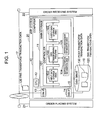
- the eMP system 20 is constituted of a computer 10 and a disk drive 16, and connected to a network 17. Via the network 17, the eMP system 20 is connected to an order placing system 21 which is a transaction system of an order placing enterprise and an order receiving system 22 which is a transaction system of an order receiving enterprise.
- transaction data such as order data and response data is transferred via the network 17.
- a method of transferring transaction data may be a method of directly receiving/supplying a storage medium storing transaction data.
- the computer 10 is connected to the network 17 and disk drive 16.
- the computer 10 has: as its constituent elements, a main storage medium 11 for storing programs and data; a CPU 12 for performing calculations; a communication interface 13 for the network 17; a disk interface 14 for the disk drive 16; and a bus 15 for connecting these elements.
- Pre-transform transaction data 120 such as pre-transform order data and pre-transform response data to be input to the data transforming program 100 in the main storage device 11 is acquired from the network 17 or disk drive 16.
- the data transforming program 100 outputs and writes post-transform transaction data 130 in the disk drive 16.
- the main storage device 11 has: as its constituent elements, a controller 101 for controlling the whole of a series of processes; the data transforming program 100 which is called by the controller 101, input with the pre-transform transaction data 120 and outputs post-transform transaction data 130 to the disk drive 16; an input data storage area 102 which is the working area; an output data storage area 103; a mapping definition information area 104 which is a definition information data area; and a mapping management information area 105 which is a management information data area.
- the controller 101 is a module for controlling the whole of a series of processes including a process of reading the pre-transform transaction data 120 and writing the post-transform transaction data 130 in the disk drive 16.
- the controller 101 reads the pre-transform transaction data 120 via the communication interface 13 or disk interface 14 and stores it in the input data storage area 102.
- the controller 101 calls the data transforming program 100.
- the controller 101 is a module for outputting the transformed data.
- the controller 101 outputs transformed data stored in the output data storage area 103 to the disk drive 16 as the post-transform transaction data 130.
- the output destination of transformed data may be another data structure or another program.
- the input data storage area 102 is a working area for storing data to be transferred between the controller 101 and data transforming program 100.
- the output data storage area 103 is the working area for storing transformed data, the data transforming program 100 operates to write the data, and the controller 101 refers to the written data.
- the mapping definition information area 104 is the data area for storing mapping definition information representative of a correspondence of individual data items between the pre-transform transaction data 120 and post-transform transaction data 130. This mapping definition information is preset prior to the start-up of the controller 101 and referred to by the data transforming program 100.
- the mapping management information area 105 is the data area for storing mapping management information necessary for the data transforming process, the data transforming program 100 writing the mapping management information and referring to it.
- the computer 10 is structured as described above.
- the controller 101 of the eMP system 20 Upon reception of the pre-transform transaction data 120 from the order placing system 21 or order receiving system 22 via the network 17 or disk drive 16, the controller 101 of the eMP system 20 stores the pre-transform transaction data 120 in the input data storage area 102.
- the controller 101 activates the data transforming program 100 and supplies the stored pre-transform transaction data 120.
- the data transforming program 100 Upon reception of the pre-transform transaction data 120, the data transforming program 100 generates the post-transform transaction data 130 in accordance with the mapping definition information stored in the mapping definition information area 104 and the mapping management information stored in the mapping management information area 105 and stores the post-transform transaction data 130 in the output data storage area 103.
- controller 101 receives the post-transform transaction data 130 and outputs it to the disk drive 16.
- the pre-transform transaction data 120 is transformed into the post-transform transaction data 130 and stored in the disk drive 16.
- Fig. 2 is the data flow diagram illustrating the process of transferring order data.
- the order placing system 21 After the order placing system 21 performs an order placing process (600), it transmits pre-transform order data 602 to the eMP system 20 (601). In the example shown in Fig. 2, the pre-transform order data 602 is collectively written with the order data of a plurality of products for orders #1 to #3 (603).
- the eMP system 20 receives the pre-transform order data 602 (604), transforms it into the data having the data format capable of being used by the order receiving system 22, and outputs a plurality of post-transform order data sets if necessary (605).
- the pre-transform order data 602 is divided into three post-transform order data sets each written with the order data of each product (608, 612, 616).
- the eMP system 20 transmits post-transform order data 608 of the order #1 to the order receiving system 22 (606).
- the order receiving system 22 receives the post-transform order data 608 of the order #1 (609) and performs an order receiving process (610).
- the eMP system 20 transmits post-transform order data 612, 616 of the order #2, #3 to the order receiving system 22 (611, 615).
- the order receiving system 22 receives the post-transform order data 612, 616 of the order #2, #3 (613, 617) and performs the order receiving process (614, 618).
- order data is transmitted from the order placing system 21 to the order receiving system 22 via the eMP system 20.
- Fig. 3 is a data flow diagram illustrating the process of transferring response data.
- the order receiving system 22 After the order receiving system 22 performs the order receiving process (620), it transmits pre-transform response data 622 to the eMP system 20 (621). In the example shown in Fig. 3, in addition to the order data of the order #1, response data representative of whether the order conditions are accepted or not is written in the pre-transform response data 622 (639).
- the eMP system 20 receives the pre-transform response data 622 (623), transforms it into the data having the data format capable of being used by the order placing system 21 (624), and stores the response data of the order #1 in the working area (641).
- the order receiving system 22 After the order receiving system 22 performs the order receiving process for the order data of the order #2, #3 (625, 630), it transmits pre-transform response data 627, 632 of the order #2, #3 to the eMP system 20 (626, 631).
- the eMP system 20 receives the pre-transform response data 627, 632 of the order #2, #3, transforms it into the data having the data format capable of being used by the order placing system 21, and if necessary, adds it to the post-transform response data of the order #1 already stored in the working area to thereby form post-transform response data 636 (629, 634).
- the response data of the orders #1, #2 and #3 is collectively written in the post-transform response data 636 (640).
- the eMP system 20 transmits the post-transform response data 636 to the order placing system 21 (635).
- the order receiving system 21 receives the post-transform response data 636 (637) and performs an order placing process (638).
- response data is transmitted from the order receiving system 22 to the order placing system 21 via the eMP system 20.
- the data transforming program 100 is implemented with the first data transforming method among a plurality of data transforming methods provided by the invention.
- the features of the first data transforming method reside in that in accordance with a combination of transform source and destination protocols, whether a process of dividing collective order data into individual order data is to be performed at the time of transforming order data is determined and the type of mapping definition information is determined, that in accordance with a combination of transform source and destination protocols, whether response data sets are to be collected at the time of transforming response data is determined and the type of the mapping definition information is determined, and an error process to be executed when all response data cannot be collected before a predetermined response data arrival time limit.
- Fig. 4 is a diagram illustrating the operation principle of the order data transforming process of the first data transforming method
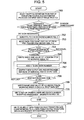
- Fig. 5 is a flow chart illustrating the procedure of the data transforming program 100.
- the data transforming program 100 reads a pair of transform source and destination business protocols from the input data storage area 102, searches a mapping definition name corresponding to the read pair of business protocols from a transform definition table 702 in the mapping definition information area 104, and selects the mapping definition information corresponding to the searched mapping definition name (Step 760).
- a pair 701 of business protocols "A" and "X" stored in the input data storage area 102 corresponds to the mapping definition name "MAP01" 703 in the transform definition table 702. Therefore, a mapping definition "MAP01" 704 in the mapping definition information area 104 is selected.
- a division request for the order data corresponding to the pair of transform source and destination business protocols is searched from the transform definition table 702 in the mapping definition information area 104 (Step 761). If the division request is "No", values are written in the data items of post-transform data corresponding to all the data items of pre-transform data, in accordance with the mapping definition 704 (Step 771).
- the data transforming program 100 enters "0" in a division number field (Step 762) and reads a pair of the name and value of the first data item from the pre-transform order data 710 (Step 763).
- the pair 711 of the name and value of the first data item in the pre-transform order data 710 is "OrderId” and "69201".
- the read name of the data item is searched from the mapping definition 704 in the mapping definition information area 104 to judge whether the data item is a common item or an individual item (Step 764).
- the name of the first data item read from the pre-transform order data 710 is "OrderId" and it can be judged from the mapping definition 704 that the data item is the common item 705.
- the name of the corresponding data item of the post-transform order data is searched from the mapping definition 704 and a pair of the name and value of the data item of the post-transform order data is written in the working area 707 (Step 765).
- "Order number” and "69201" 708 are written in the working area 707 as the pair of the name and value of the data item.
- Step 768 it is judged whether the read data item corresponds to the last data. If not, a pair of the name and value of the second data item is read (Step 763). In the example shown in Fig. 4, the pair 712 of the name and value of the second data item in the pre-transform order data 710 is "ProductId" and "P2689".
- the read name of the data item is searched from the mapping definition 704 in the mapping definition information area 104 to judge whether the data item is a common item or an individual item (Step 764).
- the name of the second data item read from the pre-transform order data 710 is "ProductId" and it can be judged from the mapping definition 704 that the data item is the individual item 706.
- the post-transform order data as an output data is written in the output data storage area 103 by searching the name of the corresponding data item of the post-transform order data from the mapping definition 704 and writing a pair of the name and value of the corresponding data item of the post-transform order data (Step 767).
- post-transform order data 720 of the order #1 is written in the output data storage area 103 by writing "Product Code” and "P2689" as a pair 722 of the name and value of the data item.
- a value "100" 722 of the third data item of the pre-transform order data 710 is written as the value of the third data item "Amount" of the post-transform order data 720.
- Steps 766 and 767 are performed for each individual item of the pre-transform order data 710.
- post-transform order data 730 for the data 713 of the order #2 is generated by writing a pair 732 of the name and value of the data item of the post-transform order data corresponding to each read data item.
- post-transform order data 740 for the data 714 of the order #3 is generated by writing a pair 742 of the name and value of the -data item of the post-transform order data corresponding to each read data item.
- the value of the division number becomes "3".
- Step 768 If the read data item is the last data item (Step 768), the pair of the name and value of the common item in the working area 707 is written in each post-transform data set in the output data storage area 103 (Step 769).
- the "Order number" and "69201" 721, 731, 741 written as the pair of the name and value of the common item written in the working area 707 at Step 765 are written in each of the post-transform order data sets 720, 730 and 740 of the output data storage area 103.
- the order number as the identification number of order data, the division number of order data, an arrival number of response data and an arrival time limit 750 are written in the mapping management information area 105 (Step 770).
- the order number "69201”, the division number "3”, the initial arrival number "0” and the arrival time limit "200106051135" 751 are written, "200106051135" representing July 5, 2001 at 11:35 which is the current time added to a predetermined time defined by the business protocol.
- order data having arbitrary data items or repetition structures defined by a transform source business protocol can be transformed into order data having arbitrary data items defined by a transform destination business protocol.
- each enterprise can transmit collective order data of a plurality of products to be converted as independent order data of each individual product.
- the object of the first data transforming method can therefore be achieved.
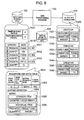
- FIG. 6 is a diagram illustrating the operation principle of the response data transforming process of the first data transforming method
- Fig. 7 is a flow chart illustrating the procedure of the data transforming program 100.
- the data transforming program 100 reads a pair of transform source and destination business protocols from the input data storage area 102, searches a mapping definition name corresponding to the read pair of business protocols from a transform definition table 802 in the mapping definition information area 104, and selects the mapping definition information corresponding to the searched mapping definition name (Step 860).
- a pair 801 of business protocols "X" and "A” stored in the input data storage area 102 corresponds to the mapping definition name "MAP11" 803 in the transform definition table 802. Therefore, a mapping definition "MAP11" 804 in the mapping definition information area 104 is selected.
- a collection request for the response data corresponding to the pair of transform source and destination business protocols is searched from the transform definition table 802 in the mapping definition information area 104 (Step 861). If the collection request is "No", values are written in the data items of post-transform response data corresponding to all the data items of pre-transform response data, in accordance with the mapping definition 804 (Step 872).
- the data transforming program 100 reads the data item corresponding to an identification number of the pre-transform response data 810 from the pre-transform response data (Step 862).
- "Order number” is read as the data item corresponding to the identification number, and the pre-transform identification number is derived from the value "69201" 811 of the data item.
- the pre-transform order number is the same as the post-transform order number, the value "69201" itself of the read data item becomes the pre-transform order number.
- the arrival number corresponding to the order number is read from a response data arrival management table 850 in the mapping management information area 105 (Step 863).
- this value "0" 851 is read.
- Step 864 "1" is added to the read arrival number and the result is written in the response data arrival management table 850.
- the read arrival number is "0"
- the value "1” obtained by adding "1" to the read number is written in the response data arrival management table 850.
- Step 865 it is judged whether the pre-transform response data currently input is the first arrived response data. If the current data is the first arrived response data, Step 866 is executed, whereas if not, Step 867 is executed. At this time, since the arrival number is "1", it can be known that the pre-transform response data 810 currently input is the first arrived response data.
- Step 866 the data transforming program 100 executes Step 866 to newly generate the post-transform response data 840 and store it in the output data storage area 103 as output data (Step 866).
- Step 867 a pair of the name and value of the data item is read from the pre-transform response data.
- "Order number” and "69201" 811 are read as a pair of the data item and name of the first data item from the first arrived pre-transform response data 810.
- Step 868 it is judged whether the read data item corresponds to the identification number of the response data. If the read data item corresponds to the identification number of the response data, Step 869 is executed, whereas if not, Step 870 is executed. At this time, since the name of the read data item is "Order number", the data item corresponds to the data item relative to which the identification number of the response data is written.
- the data transforming program 100 executes Step 869 to write the pre-transform order number derived at Step 862 in the post-transform response data 840 in accordance with the mapping definition 804 (Step 869).
- the "Order number" which is the name of the data item of the order number corresponds to "OrderId” 805. Therefore, the value "69201" of the data item is written in the post-transform response data 840 as the value of the data item "OrderId" 841.
- Step 871 it is judged whether the read data item is the last data item. If the read data item is the last data item, the data transforming program is terminated. If the read data item is not the last data item and there is still the data item to be read, Step 867 is executed again. Since the presently read data item "Order number" 811 is not the last data item of the pre-transform response data 810, Step 867 is executed.
- the data transforming program 100 reads a pair of the name and value of the second data item (Step 867).
- "Product code” and "P2689” are read as the pair of the name and value of the second data item of the pre-transform response data 810, 812.
- Step 868 it is judged whether the read data item corresponds to the identification number of the response data.
- the read data item is not the identification number of the response data, but it is "Product code”.
- Step 870 the data transforming program 100 executes Step 870 to search the name of the read data item from the mapping definition 804 and the value of the read data item is written as the value of the corresponding data item of the post-transform response data (Step 870).
- the data item name "Product code” corresponds to the data item name "ProductId” 806. Therefore, "P2689” 842 is written as the value of the data item "ProductId” of the post-transform response data 840.
- a data item name "Amount” corresponds to the data item name "Quantity” and its value is "100". Therefore, "100” 842 is written as the value of the data item "Quantity” of the post-transform response data 840.
- a data item name "Answer” corresponds to a data item name "Response” and its value is "Accept”. Therefore, "Accept” 842 is written as the value of the data item "Response" of the post-transform response data 840.
- data 843 of the second response data 820 for the order #2 843 and data 844 of the third response data 830 for the order #3 are written as the post-transform response data 840.
- the data transforming program 100 After the post-transform order data is transmitted to the order receiving system 22, the data transforming program 100 periodically searches the response data arrival limit time corresponding to the identification number such as the order number from the response data arrival management table 850 in the mapping management information area 105, to thereby judge whether the current time is over the response data arrival time limit. In this embodiment, if the current time is over the response data arrival limit time, an error is notified to the order receiving system 22.
- response data having arbitrary data items defined by a transform source business protocol can be transformed into response data having arbitrary data items or repetition structures defined by a transform destination business protocol.
- each enterprise can receive individual response data to each individual order data from an order receiving system implemented with a business protocol incompatible with collective order placing, collect the response data sets and transform then into response data of a plurality of products.
- the object of the first data transforming method can therefore be achieved.
- An object of the second data transforming method is to make each of post-transform order data sets to be output as the order data of an individual product have a unique identification number such as an order number. If this object can be achieved, transaction data can be correctly processed at an information system implemented with a business protocol having the restriction that, for example, an order number as the identification number of order data is required to be unique for all order data sets.
- the second data transforming method is realized by a program running on a computer system having the same structure as the first embodiment.
- Different points of the second embodiment from the first embodiment are only a method of supplying the data transforming program with mapping definition information and the procedure of the data transforming program. In the following, these different points will be described and the description of the same functions and operations as those of the first embodiment is omitted.
- a unique identification number for each of post-transform order data sets is given by combining the identification number of pre-transform order data and an order sequence number of each product.
- FIG. 8 is a diagram illustrating the operation principle of the second data transforming method.
- the second data transforming method implemented in the data transforming program 100 has the process contents of the first data transforming method as well as the features that the data item as the identification number of order data can be designated and that a unique identification number can be given to the data item of post-transform order data corresponding to the designated data item.
- the data transforming program 100 transforms the pre-transform order data stored in the input data storage area 102 into post-transform order data which is output to the output data storage area 103, in accordance with the following procedure.
- the data transforming program 100 reads a pair of transform source and destination business protocols from the input data storage area 102, searches a mapping definition name corresponding to the read pair of business protocols stored in the mapping definition information area 104, and selects the mapping definition information.
- a pair 1001 of business protocols is "A" and "X”
- a mapping definition name designated by a transform definition table 1002 in the mapping definition information area 104 is "MAP01" 1003. Therefore, a mapping definition "MAP01" 1004 is read from the mapping definition information area 104.
- a pair of the name and value of the data item is read from the pre-transform order data stored in the input data storage area 102, and post-transform order data to be output is generated.
- the read data item is designated as the identification number of the order data
- a new identification is output which is a combination of the value of the read data item and an order sequence number of each product.
- the value of the data item "OrderId" of pre-transform order data is "69201" and this data item is the identification number of pre-transform order data.
- a sequence number "001" of the order #1 is added to the end of the value "69201" of the data item "OrderId”, and a character string “69201001” is output as the value of the data item "Order number” of post-transform data 1020 of the order #1.
- Data items of the order #1, "ProductId” and “Quantity” correspond to data items, "Product code” and "Amount” designated by the mapping definition 1006. Therefore, the values "P2689” and "100” of the data items "ProductId” and “Amount” 1022 are output as the post-transform order data.
- the procedure of the second data transforming method has been described above. With this procedure, if the data item storing the identification number is designated in the mapping definition, a unique identification number can be given to each post-transform order data set. The object of the second data transforming method can therefore be achieved by this procedure.
- the third embodiment will be described.
- a third data transforming method among a plurality of data transforming methods provided by the invention will be described.
- An object of the third data transforming method is to allow the response data collection process to collect response data received before the response data arrival time limit and transmit the received response data to the order placing system. If this object can be achieved, response data can be transmitted to the order placing system, without discarding the received response data sets even if all the response data sets are not collected before the response data arrival time limit.
- the third data transforming method is realized by a program running on a computer system having the same structure as the first embodiment.
- a different point of the third embodiment from the first embodiment is only the procedure of the data transforming program. In the following, only the different point will be described and the description of the same functions and operations as those of the first embodiment is omitted.
- FIG. 9 is a diagram illustrating the operation principle of the third data transforming method.
- the third data transforming method has the following two characteristic features.
- post-transform response data sets transformed from the response data sets received before the response data arrival time limit are transmitted to the order placing system, without judging as an error even if all response data sets are not collected before the response data arrival time limit.
- the data transforming program 100 is implemented with the third data transforming method providing the above-described two characteristic features, transforms the received response data and transmits it to the order placing system in accordance with the following procedure.
- the data transforming program 100 performs the response data collection process each time response data arrives.
- pre-transform response data 1110 of the order #1 is received (1100) and the collection process (1101) for the received pre-transform response data is performed.
- values 1131, 1132 are written in predetermined data items of post-transform response data 1130.
- pre-transform response data 1120 of the order #2 is received (1102) and the collection process (1103) for the received pre-transform response data is performed.
- values 1133 are written in predetermined data items of the post-transform response data 1130.
- the data transforming program 100 periodically searches the response data arrival time limit corresponding to the identification number such as the order number from a response data arrival management table 1161 in the mapping management information area 105, to thereby judge whether the current time is over the response data arrival time limit. If the current time is over the response data arrival time limit, the post-transform response data output before the response data arrival time limit is transmitted to the order placing system.
- an arrival time limit check process (1104) is performed by reading a character string "2001060514440" representative of the current time of June 5, 2001 at 14:40. Since a character string "200106051135" 1161 representative of the arrival time limit of June 5, 2001 at 11:35 corresponding to the order number "69201" is stored in a response data arrival management table 1160 in the mapping management information area 105, it can be known that the current time is over the response data arrival time limit. Therefore, the post-transform response data 1130 output before the response data arrival time limit is transmitted to an order placing system 501 (1105).
- response data is received after the response data arrival time limit, this response data is transformed and post-transform response data is transmitted to the order placing system.
- pre-transform response data 1140 of the order #3 is received after the response data arrival time limit (1106) and a transforming process (1107) is performed for the received pre-transform response data.
- values 1151, 1152 are written in predetermined data items of post-transform response data 1150 of the order #3.
- the post-transform response data 1150 of the order #3 is transmitted to the order placing system 501 (1108).
- the procedure of the third data transforming method has been described above. With this procedure, output data after the collection process for response data arrived before the response data arrival time limit can be transmitted as the post-transform response data to the order placing system. Also with this procedure, output data after the collection process for response data arrived after the response data arrival time limit can be transmitted as the post-transform response data to the order placing system. The object of the third data transforming method can therefore by achieved by this procedure.
- the fourth embodiment will be described.
- a fourth data transforming method among a plurality of data transforming methods provided by the invention will be described.
- An object of the fourth data transforming method is to enable to determine the transform destination data item during the data transform process. If this object can be achieved, the transform destination data item can be determined during the data transforming process in accordance with a difference of the value of the data item of input data, without increasing the number of data items of input data and by using the data items already defined.
- the fourth data transforming method is realized by a program running on a computer system having the same structure as the first embodiment.
- Different points of the fourth embodiment from the first embodiment are only a method of supplying the data transforming program with mapping definition information and the procedure of the data transforming program. In the following, only the different points will be described and the description of the same functions and operations as those of the first embodiment is omitted.
- FIG. 10 is a diagram illustrating the operation principle of the fourth data transforming method.
- the fourth data transforming method has the feature that the mapping definition information contains a correspondence list between the data items of input data and the data items of transformable output data and designates the type of the process of determining a transform destination data item.
- the data transforming program 100 is implemented with the fourth data transforming method having the above-described feature.
- the data transforming program 100 Upon reception of a pair of transform source and destination protocols stored in the input data storage area 102 and pre-transform data, the data transforming program 100 outputs post-transform data to the output data storage area 103, in accordance with the following procedure.
- the data transforming program 100 reads a pair of transform source and destination protocols from the input data storage area 102, searches the mapping definition name corresponding to the pair of protocols from the mapping definition information area 104, and selects the mapping definition in accordance with the searched mapping name.
- mapping definition "MAP41" 1204 is read from the mapping definition information area 104.
- a pair of the name and value of a data item is read from the pre-transform data stored in the input data storage area 102, and in accordance with the mapping definition information, the data item at the transform destination is determined to generate post-transform data. In this case, if a transform destination data item determining process is being designated, the designated transform destination data item determining process is performed.
- the data item “OrderId” corresponds to the data item “Order number” 1205, and the data items “ProductId” and “Quantity” correspond to the data items “Product code” and "Amount” 1206. Therefore, in the data transforming process for the order #1, a value "69201" of the data item “OrderId” of the pre-transform data 1210 is written in the data item “Order number” 1221 of the post-transform order data 1220, and values "P2689” and "100” of the data items “ProductId” and “Quantity” are written in the data items "Product code” and "Amount” 1222 of the post-transform order data.
- a "currency code judgement process” 1207 is designated as the type of the data transforming process.
- the transform destination data item is determined as "Price apiece (Foreign currency)" from the judgement of a value "USD” 1213 of a data item “Currency” of the pre-transform order data 1210, and a value "1.98” 1014 of a data item "UnitPrice” of the pre-transform order data 1210 is written to the data item "Price apiece (Foreign currency)" 1223 of the post-transform order data 1220.
- the procedure of the fourth data transforming method has been described above. With this procedure, if the correspondence list between the data items of input data and the data items of transformable output data items and the type of the transform destination data item determining process are defined in the mapping definition in the mapping definition information area 104, then the data item at the transform destination can be determined during the data transforming process. The object of the fourth data transforming method can therefore be achieved by this procedure.
- the fifth embodiment will be described.
- a fifth data transforming method among a plurality of data transforming methods provided by the invention will be described.
- An object of the fifth data transforming method is to embed the value of a data item of pre-transform order data which data item does not have a corresponding transform destination data item and to derive the value of this data item from the pre-transform response data. If this can be realized, the value necessary for the response data transforming process can be derived from the input pre-transform response data, by embedding the value in the post-transform order data and writing the value itself in the response data, without storing this value in the data transforming program.
- the fifth data transforming method is realized by a program running on a computer system having the same structure as the first embodiment.
- Different points of the fifth embodiment from the first embodiment are only a method of supplying the data transforming program with mapping definition information and the procedure of the data transforming program. In the following, only the different points will be described and the description of the same functions and operations as those of the first embodiment is omitted.
- FIG. 11 is a diagram illustrating the operation principle of the fifth data transforming method.
- the fifth data transforming method has the feature that the type of the data transforming process can be designated in the mapping definition information in correspondence with a pair of the set of transform source data items and the set of transform destination data items.
- the data transforming program 100 is implemented with the fifth data transforming method having the above-described feature.
- Transaction data is transferred between the order placing system and order receiving system by the following procedure.
- the data transforming program 100 receives pre-transform order data from the order placing system 501, and performs a transforming process in accordance with designations in the mapping definition information to generate post-transform order data. In this case, if the data transforming process is designated in correspondence with the data item to be transformed, the designated data transforming process is executed.
- a pair of data items "Order number” and “Order date” of pre-transform order data 1310 are related to the data item "OrderId” of post-transform order data 1320 and a "coupling process” 1302 is designated as the type of the data transforming process. Therefore, a value “69201" of the data item "Order number” is coupled to a value "010613” of the data item "Order date” and a character string "01061369201" 1321 is written as the value of the data item "OrderId" of the post-transform order data 1320.
- mapping definition 1301 data items "Product code” and “Amount” of the pre-transform order data 1320 are related to data items “ProductId” and “Quantity” 1303 of the post-transform order data 1320. Therefore, values "P5112” and “70” 1322 of the data items “Product code” and “Amount” are written as the values of the data items "ProductId” and “Quantity” of the post-transform order data 1320.
- the data transforming program 100 receives the pre-transform response data from the order receiving system 502 and executes the transforming process in accordance with the designations in the mapping definition information. In this case, if the data transforming process is designated in correspondence with the data item to be transformed, the designated data transforming process is executed.
- the data item "OrderId" of pre-transform response data 1330 is related to a pair of the data items "Order number” and “Order date” of post-transform response data 1340, and a "deriving process” 1305 is designated as the type of the data transforming process. Therefore, character strings “010613” and “69201” are derived from the value “01061369201” of the data item "OrderId”, and the derived character strings are written as the values of the data items "Order number” and "Order date” 1341, 1343 of the post-transform response data 1340.
- the data items "ProductId”, “Quality” and “Response” of the pre-transform response data 1330 are related to the data items “Product code”, “Amount” and “Answer” 1306 of the post-transform response data 1340. Therefore, the values "P5112", “70” and “Accept” of the data items “ProductId”, “quantity” and “Response” are written as the values of the data items "Product code", "Amount” and “Answer” 1342, 1344 of the post-transform response data 1340.
- mapping definition information for order data transforming if a data transforming process of generating the value of a transform destination data item by combining values of a plurality of transform source data items is designated in correspondence with a pair of the set of transform source data items and the set of transform destination data items, then the value of an arbitrary data item of pre-transform order data, which data item does not have a corresponding transform destination data item, can be embedded as the value of a predetermined data item of the post-transform order data.
- mapping definition information for response data transforming if a data transforming process of deriving values of a plurality of data items from the value of a data item of the pre-transform response data is designated in correspondence with a pair of the set of transform source data items and the set of transform destination data items, then the values of an arbitrary data item of pre-transform order data can be derived from the pre-transform response data during the response data transforming process.
- the object of the fifth data transforming method can therefore be achieved by this procedure.
- the sixth embodiment will be described.
- a sixth data transforming method among a plurality of data transforming methods provided by the invention will be described.
- An object of the sixth data transforming method is to designate beforehand in the mapping definition information the value of a data item of pre-transform order data which was embedded in post-transform order data and is necessary for response data transforming. If this can be realized, even if the value of a data item of pre-transform order data is not written in the pre-transform response data transmitted from the order receiving system, the transforming process can be continued by writing the value designated in the mapping definition information in the data item of the post-transform response data.
- the sixth data transforming method is realized by a program running on a computer system having the same structure as the fifth embodiment.
- Different points of the sixth embodiment from the fifth embodiment are only a method of supplying the data transforming program with mapping definition information and the procedure of the data transforming program. In the following, only the different points will be described and the description of the same functions and operations as those of the fifth embodiment is omitted.
- FIG. 12 is a diagram illustrating the operation principle of the sixth data transforming method.
- the sixth data transforming method has the feature that the type of the data transforming process and a specified value of a data item can be designated in the mapping definition information in correspondence with a pair of the set of transform source data items and the set of transform destination data items.
- the data transforming program 100 is implemented with the sixth data transforming method having the above-described feature.
- Transaction data is transferred between the order placing system and order receiving system by the following procedure.
- the data transforming program 100 performs the response data transforming process of deriving values of a plurality of data items from pre-transform response data, in accordance with the data transforming process designated in the mapping definition information area 104. In this case, if a value necessary for the response data transforming process is not written in the pre-transform response data, a specified value designated in the mapping definition information area 104 is written in each transform destination data item. In the example shown in Fig.
- values "P5112”, “70” and “Accept” of the data items “ProductId”, “quantity” and “Response” of pre-transform response data 1410 are written as the values of data items "Product code", "Amount” and “Answer” 1422, 1424 of post-transform response data 1420, in accordance with the designations in the mapping definition information area 104.
- a predetermined data transforming process is executed because a "deriving process” 1401 is designated in the data item "OrderId” of pre-transform response data 1410 in the mapping definition information 104.
- a value 1411 of the data item “OrderId” of the pre-transform response data 1410 necessary for the data transforming process is not written.
- specified values "10000" and "999999" of the data items "Order number” and “Order date” 1421, 1423 designated in the mapping definition information area 104 are written in the predetermined data items of the post-transform response data 1420.
- the procedure of the sixth data transforming method has been described above.
- the mapping definition information for response data transforming if a specified value of each transform destination data item is designated in correspondence with a pair of the set of transform source data items and the set of transform destination data items, then the transforming process can be continued by writing the specified value in each transform destination data item even if the value necessary for the transforming process is not written in the pre-transform response data.
- the object of the sixth data transforming method can therefore be achieved by this procedure.
- the seventh embodiment will be described.
- a seventh data transforming method among a plurality of data transforming methods provided by the invention will be described.
- An object of the seventh data transforming method is to enable to compare a value written in pre-transform response data with the value of a data item of pre-transform order data which value was embedded in post-transform order data and is necessary for the response data transforming process. If this can be achieved, the data transforming process can be switched in accordance with a judgement result of whether the value of a data item was changed by the order placing system.
- the seventh data transforming method is realized by a program running on a computer system having the same structure as the fifth embodiment.
- There are three different points of the seventh embodiment from the fifth embodiment include three points: a method of supplying the data transforming program with mapping definition information; the procedure of the data transforming program; and data stored in the mapping management information area 105. In the following, these different points will be described and the description of the same functions and operations as those of the fifth embodiment is omitted.
- FIG. 13 is a diagram illustrating the operation principle of the seventh data transforming method.
- the sixth data transforming method has two characteristic points.
- the type of the data transforming method and the specified value of a data item can be designated in the mapping definition information in correspondence with a pair of the sets of transform source data items and the set of transform destination data items.
- the value of a data item of pre-transform order data which value was embedded in post-transform order data and is necessary for the response data transforming process can be stored in the mapping management information.
- the data transforming program 100 is implemented with the seventh data transforming method having the above-described characteristic points.
- Transaction data is transferred between the order placing system and order receiving system by the following procedure.
- the data transforming program 100 embeds the value of a data item of pre-transform order data necessary for the response data transforming process in post-transform order data, and at the same time stores a set of the value of a data item of pre-transform order data and an identification number of the order data in the mapping management information area.
- a value "010613" of the data item "Order date" of pre-transform order data 1510 is coupled to a value "69201" of the data item "Order number”, and a character string "01061369201" 1521 is written as the value of the corresponding data item "OrderId" of post-transform order data 1520.
- Values "P5112” and “70” 1522 of the data items "Product code” and “Amount” of the pre-transform order data 1510 are written as the values of the corresponding data items "ProductId” and "Quality” of the post-transform order data 1520.
- the data transforming program 100 executes the response data transforming process of deriving the values of a plurality of data items from the pre-transform response data in accordance with the data transforming method designated by the mapping definition information to thereby output post-transform response data. Then, the values derived from the pre-transform response data are compared with the values stored in the mapping management information area. If the comparison result shows that there is a difference between two sets of the values, the specified values defined in the mapping definition information are written in the transform destination data items. In the example shown in Fig.
- the deriving process is performed for the input character string "01061369201" which is the value of the data item “OrderId” of pre-transform response data 1530, and the values "69201” and “010613” 1541, 1543 of the data items "Order number” and “Order date” of post-transform response data 1540 are written.
- the value of the derived data item "Order date” is compared with the value stored in the mapping management information area 105.
- a pair of the order number "69201" and data item name "Order date” is related to the character string "010613" 1501. It can therefore be known that the value of the derived data item is the same as the value in the mapping management information area 105.
- values "P5112", “70” and “Accept” 1542, 1544 of the data items “ProductId”, “Quantity” and “Response” of the pre-transform response data 1530 are written as the values of the data items "Product code", "Amount” and "Answer” of the post-transform response data 1540.
- the procedure of the seventh data transforming method has been described above. With this procedure, in the mapping definition if the value of a data item of pre-transform order data necessary for the response data transforming process is stored in the mapping management information area, it becomes possible to compare the value of a data item of the pre-transform order data embedded in the post-transform order data with a value written in pre-transform response data. The object of the seventh data transforming method can therefore be achieved by this procedure.
- transaction data can be transferred between information systems implemented with different business protocols.
Landscapes
- Business, Economics & Management (AREA)
- Accounting & Taxation (AREA)
- Finance (AREA)
- Strategic Management (AREA)
- Economics (AREA)
- Marketing (AREA)
- Development Economics (AREA)
- Physics & Mathematics (AREA)
- General Business, Economics & Management (AREA)
- General Physics & Mathematics (AREA)
- Engineering & Computer Science (AREA)
- Theoretical Computer Science (AREA)
- Management, Administration, Business Operations System, And Electronic Commerce (AREA)
- Information Retrieval, Db Structures And Fs Structures Therefor (AREA)
Abstract
A data transforming method is provided which
can perform a transforming process of transforming
collective order data for a plurality of products into
individual order data for each individual product and a
transforming process in which order data is inherited
to a response data transforming process. For each
combination of transform source and destination
protocols, various designation information is stored
beforehand in a mapping definition information area
(104) and transaction data is transferred in accordance
with the designation information. Designation
information includes information of a request for an
individual order data division process (702) and a
collective response data collection process (802) and
information (704) of a correspondence between data
items of transaction data.
Description
The present invention relates to data
transforming techniques of transforming transaction
data among a plurality of business protocols.
The Internet is now prevailing worldwide and
is used not only for the transmission/reception of e-mails
and as a browsing means for home pages but also
as electronic commerce means between enterprises. In
order to realize electronic commerce between
enterprises, it is necessary to stipulate in advance
standard specifications called business protocols which
define the formats and procedures of transaction data
to be exchanged in information systems which
enterprises have configured for order placing/receiving
transactions and the like.
EIAJ-EDI standards by the JEITA (Japan
Electronics and Information Technology Industries
Association) and EDIFACT by the U. N. association
UN/CEFACT are well known as business protocols used to
date. The format of transaction data stipulated by
these business protocols has been designed on the
assumption that the contents of one order are written
in one transaction data set and the contents of a
plurality of orders cannot be written collectively in
one transaction data set. Therefore, if information of
a plurality of orders is to be transmitted at a time, a
plurality of transaction data sets each describing each
independent order are created and these transaction
data sets are transmitted in bundle. In the new trend
of electronic commerce between enterprises, business
protocols using the transaction data format, XML
(Extensible Markup Language), are stipulated one after
another. Such business protocols include: PIP (Partner
Interface Process) stipulated by the XML-EDI
stipulation association for electronic components and
semiconductor industries, RosettaNet; ebXML (Electronic
Business XML) stipulated by OASIS and UN/CEFACT; and
the like. With the format of transaction data defined
by these business protocols, it is possible to
collectively write a plurality of orders in one
transaction data set by repeating XML tags.
Some innovative enterprises have already
adopted new business protocols for electronic commerce
transactions among enterprises, whereas many
enterprises consider to continue electronic commerce
transactions for the present time by using already
existing information systems which implement
conventional business protocols such as EIAJ-EDI
standards and EDIFACT. It is therefore desired to
realize electronic commerce transactions between
enterprises by using transaction data defined by
different business protocols.
Methods for realizing electronic commerce
transactions between enterprises by using transaction
data defined by different business protocols are
disclosed in USP 5,557,780 and USP 5,794,234.
With the method "Electronic data interchange
system for managing non-standard data" of the former
USP 5,557,780, processes in an enterprise information
system are executed by using transaction data of the
format specific to the enterprise. On the other hand,
for the transfer of transaction data to an information
system outside the enterprise, the transaction data of
the format specific to the enterprise is transformed
into the transaction data of an universal format
covering various transaction contents by using a data
conversion program of the enterprise. This transformed
transaction data is transferred to a partner
enterprise. In this manner, electronic commerce
transactions between enterprises become possible while
allowing transaction data having the format specific to
each enterprise to be used by the enterprise.
With "Method and system for providing
electronic commerce between incompatible data
processing systems" of the latter USP 5,794,234,
transaction data received by an e-mail from a partner
enterprise is transformed into the transaction data
having the format specific to an enterprise which
received the e-mail. The transformed transaction data
is stored in the enterprise and used for processes in
an enterprise information system. For the transfer of
transaction data to the external information system,
the transaction data stored as having the specific
format is transformed into the transaction data having
the format of the partner enterprise by using a data
conversion program provided at the enterprise. The
transformed transaction data is transmitted back to the
partner enterprises. In this manner, electronic
commerce transactions between enterprises become
possible while allowing transaction data having the
format specific to each enterprise to be used by the
enterprise.
With such conventional techniques, however,
it is difficult to distinguish between the meanings of
data items of transaction data and to transform
collective order data of a plurality of products into
independent order data of each product and transfer
such order data between enterprises. Also with such
conventional techniques, it is difficult to transfer
information which is lost when order data is
transformed but becomes necessary when response data to
the order data is transformed.
An object of the invention is to mitigate the
above-described problems and provide a data
transforming method capable of transforming order data
of a plurality of products into independent order data
of each product.
In order to achieve the above object, the
invention provides a data transforming method wherein
input data containing a transmission destination
business protocol type and order information of a
plurality of products is divided into a plurality of
data sets each containing order information of each
individual product in accordance with a data
transforming procedure specific to each business
protocol type.
Other objects, features and advantages of the
invention will become apparent from the following
description of the embodiments of the invention taken
in conjunction with the accompanying drawings.
Embodiments of the invention will be
described in detail with reference to the accompanying
drawings. The invention provides a plurality of data
transforming methods having different functions and
being able to achieve the above-described object. In
the first embodiment, a first data transforming method
will be described.
The first data transforming method has the
following two objects.
A first object is to provide a data
transforming method capable of transforming collective
order data of a plurality of produces into individual
order data of each independent product.
A second object is to provide a data
transforming method capable of transforming individual
response data to individual order data of each
individual product into collective response data of a
plurality of products.
The data transforming method provided by the
invention is realized as a data transforming program
running on a general computer.
According to the invention, if each
enterprise prepares only mapping definition information
to be referred to by a data transforming program,
transaction data can be transferred to and from a
partner enterprise even if the information system
implemented with a business protocol used by the
partner enterprise is not prepared at the enterprise.
With reference to Fig. 1, the structure of an
eMP (e-Market Place) system 20 will be described which
runs a data transforming program 100 realizing the data
transforming method provided by the invention.
Referring to Fig. 1, the eMP system 20 is
constituted of a computer 10 and a disk drive 16, and
connected to a network 17. Via the network 17, the eMP
system 20 is connected to an order placing system 21
which is a transaction system of an order placing
enterprise and an order receiving system 22 which is a
transaction system of an order receiving enterprise.
In this embodiment, transaction data such as order data and response data is transferred via thenetwork 17. A
method of transferring transaction data may be a method
of directly receiving/supplying a storage medium
storing transaction data.
In this embodiment, transaction data such as order data and response data is transferred via the
The computer 10 is connected to the network
17 and disk drive 16. The computer 10 has: as its
constituent elements, a main storage medium 11 for
storing programs and data; a CPU 12 for performing
calculations; a communication interface 13 for the
network 17; a disk interface 14 for the disk drive 16;
and a bus 15 for connecting these elements.
Pre-transform transaction data 120 such as
pre-transform order data and pre-transform response
data to be input to the data transforming program 100
in the main storage device 11 is acquired from the
network 17 or disk drive 16. The data transforming
program 100 outputs and writes post-transform
transaction data 130 in the disk drive 16.
The main storage device 11 has: as its
constituent elements, a controller 101 for controlling
the whole of a series of processes; the data
transforming program 100 which is called by the
controller 101, input with the pre-transform
transaction data 120 and outputs post-transform
transaction data 130 to the disk drive 16; an input
data storage area 102 which is the working area; an
output data storage area 103; a mapping definition
information area 104 which is a definition information
data area; and a mapping management information area
105 which is a management information data area.
Next, modules in the main storage device 11
will be described.
The controller 101 is a module for
controlling the whole of a series of processes
including a process of reading the pre-transform
transaction data 120 and writing the post-transform
transaction data 130 in the disk drive 16. The
controller 101 reads the pre-transform transaction data
120 via the communication interface 13 or disk
interface 14 and stores it in the input data storage
area 102. The controller 101 calls the data
transforming program 100. The controller 101 is a
module for outputting the transformed data. In this
embodiment, the controller 101 outputs transformed data
stored in the output data storage area 103 to the disk
drive 16 as the post-transform transaction data 130.
The output destination of transformed data may be
another data structure or another program.
Next, data areas of the main storage device
11 will be described.
The input data storage area 102 is a working
area for storing data to be transferred between the
controller 101 and data transforming program 100.
The output data storage area 103 is the
working area for storing transformed data, the data
transforming program 100 operates to write the data,
and the controller 101 refers to the written data.
The mapping definition information area 104
is the data area for storing mapping definition
information representative of a correspondence of
individual data items between the pre-transform
transaction data 120 and post-transform transaction
data 130. This mapping definition information is
preset prior to the start-up of the controller 101 and
referred to by the data transforming program 100.
The mapping management information area 105
is the data area for storing mapping management
information necessary for the data transforming
process, the data transforming program 100 writing the
mapping management information and referring to it.
The computer 10 is structured as described
above.
Next, the flow of a series of processes will
be described.
Upon reception of the pre-transform
transaction data 120 from the order placing system 21
or order receiving system 22 via the network 17 or disk
drive 16, the controller 101 of the eMP system 20
stores the pre-transform transaction data 120 in the
input data storage area 102.
Next, the controller 101 activates the data
transforming program 100 and supplies the stored pre-transform
transaction data 120. Upon reception of the
pre-transform transaction data 120, the data
transforming program 100 generates the post-transform
transaction data 130 in accordance with the mapping
definition information stored in the mapping definition
information area 104 and the mapping management
information stored in the mapping management
information area 105 and stores the post-transform
transaction data 130 in the output data storage area
103.
Lastly, the controller 101 receives the post-transform
transaction data 130 and outputs it to the
disk drive 16.
With the series of operations described
above, the pre-transform transaction data 120 is
transformed into the post-transform transaction data
130 and stored in the disk drive 16.
Next, with reference to a data flow diagram,
the flow of a series of transaction data among the
three systems including the eMP system 20, order
placing system 21 and order receiving system 22 will be
described.
First, with reference to Fig. 2, a flow of
transaction data when the order placing system 21
transmits order data to the order receiving system 22
via the eMP system 20 will be described. Fig. 2 is the
data flow diagram illustrating the process of
transferring order data.
After the order placing system 21 performs an
order placing process (600), it transmits pre-transform
order data 602 to the eMP system 20 (601). In the
example shown in Fig. 2, the pre-transform order data
602 is collectively written with the order data of a
plurality of products for orders # 1 to #3 (603).
The eMP system 20 receives the pre-transform
order data 602 (604), transforms it into the data
having the data format capable of being used by the
order receiving system 22, and outputs a plurality of
post-transform order data sets if necessary (605). In
the example shown in Fig. 2, the pre-transform order
data 602 is divided into three post-transform order
data sets each written with the order data of each
product (608, 612, 616). The eMP system 20 transmits
post-transform order data 608 of the order # 1 to the
order receiving system 22 (606). The order receiving
system 22 receives the post-transform order data 608 of
the order #1 (609) and performs an order receiving
process (610).
Similarly, the eMP system 20 transmits post-transform
order data 612, 616 of the order # 2, #3 to
the order receiving system 22 (611, 615). The order
receiving system 22 receives the post-transform order
data 612, 616 of the order # 2, #3 (613, 617) and
performs the order receiving process (614, 618).
With the transfer of a series of transaction
data described above, order data is transmitted from
the order placing system 21 to the order receiving
system 22 via the eMP system 20.
Next, with reference to Fig. 3, a flow of
transaction data when the order receiving system 22
returns response data to the order placing system 21
via the eMP system 20 will be described. Fig. 3 is a
data flow diagram illustrating the process of
transferring response data.
After the order receiving system 22 performs
the order receiving process (620), it transmits pre-transform
response data 622 to the eMP system 20 (621).
In the example shown in Fig. 3, in addition to the
order data of the order # 1, response data
representative of whether the order conditions are
accepted or not is written in the pre-transform
response data 622 (639).
The eMP system 20 receives the pre-transform
response data 622 (623), transforms it into the data
having the data format capable of being used by the
order placing system 21 (624), and stores the response
data of the order # 1 in the working area (641).
Similarly, after the order receiving system
22 performs the order receiving process for the order
data of the order # 2, #3 (625, 630), it transmits pre-transform
response data 627, 632 of the order # 2, #3 to
the eMP system 20 (626, 631).
The eMP system 20 receives the pre-transform
response data 627, 632 of the order # 2, #3, transforms
it into the data having the data format capable of
being used by the order placing system 21, and if
necessary, adds it to the post-transform response data
of the order # 1 already stored in the working area to
thereby form post-transform response data 636 (629,
634). In the example shown in Fig. 3, the response
data of the orders # 1, #2 and #3 is collectively
written in the post-transform response data 636 (640).
The eMP system 20 transmits the post-transform
response data 636 to the order placing system
21 (635). The order receiving system 21 receives the
post-transform response data 636 (637) and performs an
order placing process (638).
With the transfer of a series of transaction
data, response data is transmitted from the order
receiving system 22 to the order placing system 21 via
the eMP system 20.
Next, with reference to the accompanying
drawings, the procedure of the data transforming
program 100 will be described. In this embodiment, the
data transforming program 100 is implemented with the
first data transforming method among a plurality of
data transforming methods provided by the invention.
The features of the first data transforming
method reside in that in accordance with a combination
of transform source and destination protocols, whether
a process of dividing collective order data into
individual order data is to be performed at the time of
transforming order data is determined and the type of
mapping definition information is determined, that in
accordance with a combination of transform source and
destination protocols, whether response data sets are
to be collected at the time of transforming response
data is determined and the type of the mapping
definition information is determined, and an error
process to be executed when all response data cannot be
collected before a predetermined response data arrival
time limit.
First, with reference to Figs. 4 and 5, the
procedure of transforming order data among the
procedures of the first data transforming method will
be described. Fig. 4 is a diagram illustrating the
operation principle of the order data transforming
process of the first data transforming method, and Fig.
5 is a flow chart illustrating the procedure of the
data transforming program 100.
The data transforming program 100 reads a
pair of transform source and destination business
protocols from the input data storage area 102,
searches a mapping definition name corresponding to the
read pair of business protocols from a transform
definition table 702 in the mapping definition
information area 104, and selects the mapping
definition information corresponding to the searched
mapping definition name (Step 760). In the example
shown in Fig. 4, a pair 701 of business protocols "A"
and "X" stored in the input data storage area 102
corresponds to the mapping definition name "MAP01" 703
in the transform definition table 702. Therefore, a
mapping definition "MAP01" 704 in the mapping
definition information area 104 is selected.
Next, a division request for the order data
corresponding to the pair of transform source and
destination business protocols is searched from the
transform definition table 702 in the mapping
definition information area 104 (Step 761). If the
division request is "No", values are written in the
data items of post-transform data corresponding to all
the data items of pre-transform data, in accordance
with the mapping definition 704 (Step 771).
In the example shown in Fig. 4, "Yes" 703 is
set in the division request field for the pair of
business protocols "A" and "X".
If the division request is "Yes", the data
transforming program 100 enters "0" in a division
number field (Step 762) and reads a pair of the name
and value of the first data item from the pre-transform
order data 710 (Step 763). In the example shown in
Fig. 4, the pair 711 of the name and value of the first
data item in the pre-transform order data 710 is
"OrderId" and "69201".
Next, the read name of the data item is
searched from the mapping definition 704 in the mapping
definition information area 104 to judge whether the
data item is a common item or an individual item (Step
764). In the example shown in Fig. 4, the name of the
first data item read from the pre-transform order data
710 is "OrderId" and it can be judged from the mapping
definition 704 that the data item is the common item
705. If the read data item is the common item, the
name of the corresponding data item of the post-transform
order data is searched from the mapping
definition 704 and a pair of the name and value of the
data item of the post-transform order data is written
in the working area 707 (Step 765). In the example
shown in Fig. 4, "Order number" and "69201" 708 are
written in the working area 707 as the pair of the name
and value of the data item.
Next, it is judged whether the read data item
corresponds to the last data (Step 768). If not, a
pair of the name and value of the second data item is
read (Step 763). In the example shown in Fig. 4, the
pair 712 of the name and value of the second data item
in the pre-transform order data 710 is "ProductId" and
"P2689".
Next, similar to the first data item, the
read name of the data item is searched from the mapping
definition 704 in the mapping definition information
area 104 to judge whether the data item is a common
item or an individual item (Step 764). In the example
shown in Fig. 4, the name of the second data item read
from the pre-transform order data 710 is "ProductId"
and it can be judged from the mapping definition 704
that the data item is the individual item 706. If the
read data item is the individual item, the post-transform
order data as an output data is written in
the output data storage area 103 by searching the name
of the corresponding data item of the post-transform
order data from the mapping definition 704 and writing
a pair of the name and value of the corresponding data
item of the post-transform order data (Step 767). In
the example shown in Fig. 4, post-transform order data
720 of the order # 1 is written in the output data
storage area 103 by writing "Product Code" and "P2689"
as a pair 722 of the name and value of the data item.
With similar processes, a value "100" 722 of
the third data item of the pre-transform order data 710
is written as the value of the third data item "Amount"
of the post-transform order data 720.
The processes at Steps 766 and 767 are
performed for each individual item of the pre-transform
order data 710. In the example shown in Fig. 4, after
"1" is added to the division number, post-transform
order data 730 for the data 713 of the order # 2 is
generated by writing a pair 732 of the name and value
of the data item of the post-transform order data
corresponding to each read data item. After "1" is
further added to the division number, post-transform
order data 740 for the data 714 of the order # 3 is
generated by writing a pair 742 of the name and value
of the -data item of the post-transform order data
corresponding to each read data item. Up to this Step,
the value of the division number becomes "3".
If the read data item is the last data item
(Step 768), the pair of the name and value of the
common item in the working area 707 is written in each
post-transform data set in the output data storage area
103 (Step 769). In the example shown in Fig. 4, the
"Order number" and "69201" 721, 731, 741 written as the
pair of the name and value of the common item written
in the working area 707 at Step 765 are written in each
of the post-transform order data sets 720, 730 and 740
of the output data storage area 103.
Lastly, the order number as the identification
number of order data, the division number of order
data, an arrival number of response data and an arrival
time limit 750 are written in the mapping management
information area 105 (Step 770). In the example shown
in Fig. 4, the order number "69201", the division
number "3", the initial arrival number "0" and the
arrival time limit "200106051135" 751 are written,
"200106051135" representing July 5, 2001 at 11:35 which
is the current time added to a predetermined time
defined by the business protocol.
The procedure of the order data transforming
process of the first data transforming method has been
described above. With this procedure, depending upon
the contents in the mapping definition information area
104, order data having arbitrary data items or
repetition structures defined by a transform source
business protocol can be transformed into order data
having arbitrary data items defined by a transform
destination business protocol.
Namely, if the mapping definition necessary
for a division process of order data to be referred to
by the data transforming program is prepared, each
enterprise can transmit collective order data of a
plurality of products to be converted as independent
order data of each individual product. The object of
the first data transforming method can therefore be
achieved.
Next, with reference to Figs. 6 and 7, the
procedure of transforming response data among the
procedures of the first data transforming method will
be described. Fig. 6 is a diagram illustrating the
operation principle of the response data transforming
process of the first data transforming method, and Fig.
7 is a flow chart illustrating the procedure of the
data transforming program 100.
The data transforming program 100 reads a
pair of transform source and destination business
protocols from the input data storage area 102,
searches a mapping definition name corresponding to the
read pair of business protocols from a transform
definition table 802 in the mapping definition
information area 104, and selects the mapping
definition information corresponding to the searched
mapping definition name (Step 860). In the example
shown in Fig. 6, a pair 801 of business protocols "X"
and "A" stored in the input data storage area 102
corresponds to the mapping definition name "MAP11" 803
in the transform definition table 802. Therefore, a
mapping definition "MAP11" 804 in the mapping
definition information area 104 is selected.
Next, a collection request for the response
data corresponding to the pair of transform source and
destination business protocols is searched from the
transform definition table 802 in the mapping
definition information area 104 (Step 861). If the
collection request is "No", values are written in the
data items of post-transform response data
corresponding to all the data items of pre-transform
response data, in accordance with the mapping
definition 804 (Step 872).
In the example shown in Fig. 6, "Yes" 803 is
set in the division request field for the pair of
business protocols "X" and "A".
If the collection request is "Yes", the data
transforming program 100 reads the data item
corresponding to an identification number of the pre-transform
response data 810 from the pre-transform
response data (Step 862). In the example shown in Fig.
6, "Order number" is read as the data item
corresponding to the identification number, and the
pre-transform identification number is derived from the
value "69201" 811 of the data item. In this
embodiment, since the pre-transform order number is the
same as the post-transform order number, the value
"69201" itself of the read data item becomes the pre-transform
order number.
Next, the arrival number corresponding to the
order number is read from a response data arrival
management table 850 in the mapping management
information area 105 (Step 863). In the example shown
in Fig. 6, since the arrival number "0" is set relative
to the order number "69201", this value "0" 851 is
read.
Next, "1" is added to the read arrival number
and the result is written in the response data arrival
management table 850 (Step 864). In the example shown
in Fig. 6, since the read arrival number is "0", the
value "1" obtained by adding "1" to the read number is
written in the response data arrival management table
850.
Next, it is judged whether the pre-transform
response data currently input is the first arrived
response data (Step 865). If the current data is the
first arrived response data, Step 866 is executed,
whereas if not, Step 867 is executed. At this time,
since the arrival number is "1", it can be known that
the pre-transform response data 810 currently input is
the first arrived response data.
Therefore, the data transforming program 100
executes Step 866 to newly generate the post-transform
response data 840 and store it in the output data
storage area 103 as output data (Step 866).
Next, a pair of the name and value of the
data item is read from the pre-transform response data
(Step 867). In the example shown in Fig. 6, "Order
number" and "69201" 811 are read as a pair of the data
item and name of the first data item from the first
arrived pre-transform response data 810.
Next, it is judged whether the read data item
corresponds to the identification number of the
response data (Step 868). If the read data item
corresponds to the identification number of the
response data, Step 869 is executed, whereas if not,
Step 870 is executed. At this time, since the name of
the read data item is "Order number", the data item
corresponds to the data item relative to which the
identification number of the response data is written.
Therefore, the data transforming program 100
executes Step 869 to write the pre-transform order
number derived at Step 862 in the post-transform
response data 840 in accordance with the mapping
definition 804 (Step 869). In the example shown in
Fig. 6, the "Order number" which is the name of the
data item of the order number corresponds to "OrderId"
805. Therefore, the value "69201" of the data item is
written in the post-transform response data 840 as the
value of the data item "OrderId" 841.
Next, it is judged whether the read data item
is the last data item (Step 871). If the read data
item is the last data item, the data transforming
program is terminated. If the read data item is not
the last data item and there is still the data item to
be read, Step 867 is executed again. Since the
presently read data item "Order number" 811 is not the
last data item of the pre-transform response data 810,
Step 867 is executed.
Next, the data transforming program 100 reads
a pair of the name and value of the second data item
(Step 867). In the example shown in Fig. 6, "Product
code" and "P2689" are read as the pair of the name and
value of the second data item of the pre-transform
response data 810, 812.
Next, similar to the first data item, it is
judged whether the read data item corresponds to the
identification number of the response data (Step 868).
The read data item is not the identification number of
the response data, but it is "Product code".
Therefore, the data transforming program 100
executes Step 870 to search the name of the read data
item from the mapping definition 804 and the value of
the read data item is written as the value of the
corresponding data item of the post-transform response
data (Step 870). In the example shown in Fig. 6, the
data item name "Product code" corresponds to the data
item name "ProductId" 806. Therefore, "P2689" 842 is
written as the value of the data item "ProductId" of
the post-transform response data 840. Similarly, a
data item name "Amount" corresponds to the data item
name "Quantity" and its value is "100". Therefore,
"100" 842 is written as the value of the data item
"Quantity" of the post-transform response data 840.
Next, a data item name "Answer" corresponds to a data
item name "Response" and its value is "Accept".
Therefore, "Accept" 842 is written as the value of the
data item "Response" of the post-transform response
data 840.
Similarly, data 843 of the second response
data 820 for the order # 2 843 and data 844 of the third
response data 830 for the order # 3 are written as the
post-transform response data 840.
After the post-transform order data is
transmitted to the order receiving system 22, the data
transforming program 100 periodically searches the
response data arrival limit time corresponding to the
identification number such as the order number from the
response data arrival management table 850 in the
mapping management information area 105, to thereby
judge whether the current time is over the response
data arrival time limit. In this embodiment, if the
current time is over the response data arrival limit
time, an error is notified to the order receiving
system 22.
The procedure of the order data transforming
process of the first data transforming method has been
described above. With this procedure, depending upon
the contents in the mapping definition information area
104, response data having arbitrary data items defined
by a transform source business protocol can be
transformed into response data having arbitrary data
items or repetition structures defined by a transform
destination business protocol.
Namely, if the mapping definition necessary
for a collection process of a plurality of response
data sets to be referred to by the data transforming
program is prepared, each enterprise can receive
individual response data to each individual order data
from an order receiving system implemented with a
business protocol incompatible with collective order
placing, collect the response data sets and transform
then into response data of a plurality of products.
The object of the first data transforming method can therefore be achieved.
The object of the first data transforming method can therefore be achieved.
Next, the second embodiment will be
described. In the second embodiment, a second data
transforming method among a plurality of data
transforming methods provided by the invention will be
described.
An object of the second data transforming
method is to make each of post-transform order data
sets to be output as the order data of an individual
product have a unique identification number such as an
order number. If this object can be achieved,
transaction data can be correctly processed at an
information system implemented with a business protocol
having the restriction that, for example, an order
number as the identification number of order data is
required to be unique for all order data sets.
In the second embodiment, the second data
transforming method is realized by a program running on
a computer system having the same structure as the
first embodiment. Different points of the second
embodiment from the first embodiment are only a method
of supplying the data transforming program with mapping
definition information and the procedure of the data
transforming program. In the following, these
different points will be described and the description
of the same functions and operations as those of the
first embodiment is omitted.
In the second data transforming method, when
collective order data of a plurality of products is
divided into individual order data of each product and
output, a unique identification number for each of
post-transform order data sets is given by combining
the identification number of pre-transform order data
and an order sequence number of each product.
With reference to Fig. 8, the procedure of
the second data transforming method will be described.
Fig. 8 is a diagram illustrating the operation principle of the second data transforming method.
Fig. 8 is a diagram illustrating the operation principle of the second data transforming method.
The second data transforming method
implemented in the data transforming program 100 has
the process contents of the first data transforming
method as well as the features that the data item as
the identification number of order data can be
designated and that a unique identification number can
be given to the data item of post-transform order data
corresponding to the designated data item.
The data transforming program 100 transforms
the pre-transform order data stored in the input data
storage area 102 into post-transform order data which
is output to the output data storage area 103, in
accordance with the following procedure.
Similar to the first data transforming
method, the data transforming program 100 reads a pair
of transform source and destination business protocols
from the input data storage area 102, searches a
mapping definition name corresponding to the read pair
of business protocols stored in the mappingdefinition
information area 104, and selects the mapping
definition information. In the example shown in Fig.
8, a pair 1001 of business protocols is "A" and "X" and
a mapping definition name designated by a transform
definition table 1002 in the mapping definition
information area 104 is "MAP01" 1003. Therefore, a
mapping definition "MAP01" 1004 is read from the
mapping definition information area 104.
of business protocols stored in the mapping
Next, a pair of the name and value of the
data item is read from the pre-transform order data
stored in the input data storage area 102, and post-transform
order data to be output is generated. In
this case, if the read data item is designated as the
identification number of the order data, a new
identification is output which is a combination of the
value of the read data item and an order sequence
number of each product. In the example shown in Fig.
8, the value of the data item "OrderId" of pre-transform
order data is "69201" and this data item is
the identification number of pre-transform order data.
Therefore, as an example of a method of generating a
unique identification number, a sequence number "001"
of the order # 1 is added to the end of the value
"69201" of the data item "OrderId", and a character
string "69201001" is output as the value of the data
item "Order number" of post-transform data 1020 of the
order # 1. Data items of the order # 1, "ProductId" and
"Quantity", correspond to data items, "Product code"
and "Amount" designated by the mapping definition 1006.
Therefore, the values "P2689" and "100" of the data
items "ProductId" and "Amount" 1022 are output as the
post-transform order data.
Similarly, a sequence number "002" of the
order # 2 is added to the end of the value "69201" of
the data item "OrderId", and a character string
"69201002" 1031 is output as the value of the data item
"Order number" of post-transform data 1030 of the order
# 2. "P3088" and "140" 1032 are output as the values of
the data items "Product code" and "Amount".
Similarly, a sequence number "003" of the
order # 3 is added to the end of the value "69201" of
the data item "OrderId", and a character string
"69201003" 1041 is output as the value of the data item
"Order number" of post-transform data 1040 of the order
# 3. "P5112" and "70" 1042 are output as the values of
the data items "Product code" and "Amount".
The procedure of the second data transforming
method has been described above. With this procedure,
if the data item storing the identification number is
designated in the mapping definition, a unique
identification number can be given to each post-transform
order data set. The object of the second
data transforming method can therefore be achieved by
this procedure.
The third embodiment will be described. In
the third embodiment, a third data transforming method
among a plurality of data transforming methods provided
by the invention will be described.
An object of the third data transforming
method is to allow the response data collection process
to collect response data received before the response
data arrival time limit and transmit the received
response data to the order placing system. If this
object can be achieved, response data can be
transmitted to the order placing system, without
discarding the received response data sets even if all
the response data sets are not collected before the
response data arrival time limit.
In this embodiment, the third data
transforming method is realized by a program running on
a computer system having the same structure as the
first embodiment. A different point of the third
embodiment from the first embodiment is only the
procedure of the data transforming program. In the
following, only the different point will be described
and the description of the same functions and
operations as those of the first embodiment is omitted.
With reference to Fig. 9, the procedure of
the third data transforming method will be described.
Fig. 9 is a diagram illustrating the operation principle of the third data transforming method.
Fig. 9 is a diagram illustrating the operation principle of the third data transforming method.
The third data transforming method has the
following two characteristic features.
According to the first characteristic
feature, in the response data collection process, post-transform
response data sets transformed from the
response data sets received before the response data
arrival time limit are transmitted to the order placing
system, without judging as an error even if all
response data sets are not collected before the
response data arrival time limit.
According to the second characteristic
feature, if remaining data set or sets arrive after the
response data arrival time limit, post-transform
response data transformed from the response data set or
sets received after the time limit is transmitted to
the order placing system.
In this embodiment, although the two
characteristic features are realized, they can be
realized independently and one of them may be realized.
In this embodiment, the data transforming
program 100 is implemented with the third data
transforming method providing the above-described two
characteristic features, transforms the received
response data and transmits it to the order placing
system in accordance with the following procedure.
Similar to the data transforming method, the
data transforming program 100 performs the response
data collection process each time response data
arrives.
In the example shown in Fig. 9, pre-transform
response data 1110 of the order # 1 is received (1100)
and the collection process (1101) for the received pre-transform
response data is performed. In accordance
with the mapping definition information, values 1131,
1132 are written in predetermined data items of post-transform
response data 1130. Next, pre-transform
response data 1120 of the order # 2 is received (1102)
and the collection process (1103) for the received pre-transform
response data is performed. In accordance
with the mapping definition information, values 1133,
are written in predetermined data items of the post-transform
response data 1130.
The data transforming program 100
periodically searches the response data arrival time
limit corresponding to the identification number such
as the order number from a response data arrival
management table 1161 in the mapping management
information area 105, to thereby judge whether the
current time is over the response data arrival time
limit. If the current time is over the response data
arrival time limit, the post-transform response data
output before the response data arrival time limit is
transmitted to the order placing system.
In the example shown in Fig. 9, an arrival
time limit check process (1104) is performed by reading
a character string "2001060514440" representative of
the current time of June 5, 2001 at 14:40. Since a
character string "200106051135" 1161 representative of
the arrival time limit of June 5, 2001 at 11:35
corresponding to the order number "69201" is stored in
a response data arrival management table 1160 in the
mapping management information area 105, it can be
known that the current time is over the response data
arrival time limit. Therefore, the post-transform
response data 1130 output before the response data
arrival time limit is transmitted to an order placing
system 501 (1105).
If response data is received after the
response data arrival time limit, this response data is
transformed and post-transform response data is
transmitted to the order placing system.
In the example shown in Fig. 9, pre-transform
response data 1140 of the order # 3 is received after
the response data arrival time limit (1106) and a
transforming process (1107) is performed for the
received pre-transform response data. In accordance
with the mapping definition information, values 1151,
1152 are written in predetermined data items of post-transform
response data 1150 of the order # 3. Next,
the post-transform response data 1150 of the order # 3
is transmitted to the order placing system 501 (1108).
The procedure of the third data transforming
method has been described above. With this procedure,
output data after the collection process for response
data arrived before the response data arrival time
limit can be transmitted as the post-transform response
data to the order placing system. Also with this
procedure, output data after the collection process for
response data arrived after the response data arrival
time limit can be transmitted as the post-transform
response data to the order placing system. The object
of the third data transforming method can therefore by
achieved by this procedure.
The fourth embodiment will be described. In
the fourth embodiment, a fourth data transforming
method among a plurality of data transforming methods
provided by the invention will be described.
An object of the fourth data transforming
method is to enable to determine the transform
destination data item during the data transform
process. If this object can be achieved, the transform
destination data item can be determined during the data
transforming process in accordance with a difference of
the value of the data item of input data, without
increasing the number of data items of input data and
by using the data items already defined.
In this embodiment, the fourth data
transforming method is realized by a program running on
a computer system having the same structure as the
first embodiment. Different points of the fourth
embodiment from the first embodiment are only a method
of supplying the data transforming program with mapping
definition information and the procedure of the data
transforming program. In the following, only the
different points will be described and the description
of the same functions and operations as those of the
first embodiment is omitted.
With reference to Fig. 10, the procedure of
the fourth data transforming method will be described.
Fig. 10 is a diagram illustrating the operation principle of the fourth data transforming method.
Fig. 10 is a diagram illustrating the operation principle of the fourth data transforming method.
The fourth data transforming method has the
feature that the mapping definition information
contains a correspondence list between the data items
of input data and the data items of transformable
output data and designates the type of the process of
determining a transform destination data item.
In this embodiment, the data transforming
program 100 is implemented with the fourth data
transforming method having the above-described feature.
Upon reception of a pair of transform source and
destination protocols stored in the input data storage
area 102 and pre-transform data, the data transforming
program 100 outputs post-transform data to the output
data storage area 103, in accordance with the following
procedure.
Similar to the first data transforming
method, the data transforming program 100 reads a pair
of transform source and destination protocols from the
input data storage area 102, searches the mapping
definition name corresponding to the pair of protocols
from the mapping definition information area 104, and
selects the mapping definition in accordance with the
searched mapping name.
In the example shown in Fig. 10, "A" and "X"
1201 are stored in the input data storage area 102 as a
pair of transform source and destination protocols, and
this pair corresponds to a mapping definition name
"MAP41" 1203 in the transform definition table 1202 in
the mapping definition information area 104.
Therefore, a mapping definition "MAP41" 1204 is read from the mappingdefinition information area 104.
Therefore, a mapping definition "MAP41" 1204 is read from the mapping
Next, a pair of the name and value of a data
item is read from the pre-transform data stored in the
input data storage area 102, and in accordance with the
mapping definition information, the data item at the
transform destination is determined to generate post-transform
data. In this case, if a transform
destination data item determining process is being
designated, the designated transform destination data
item determining process is performed.
In the example shown in Fig. 10, the data
item "OrderId" corresponds to the data item "Order
number" 1205, and the data items "ProductId" and
"Quantity" correspond to the data items "Product code"
and "Amount" 1206. Therefore, in the data transforming
process for theorder # 1, a value "69201" of the data
item "OrderId" of the pre-transform data 1210 is
written in the data item "Order number" 1221 of the
post-transform order data 1220, and values "P2689" and
"100" of the data items "ProductId" and "Quantity" are
written in the data items "Product code" and "Amount"
1222 of the post-transform order data. For a data item
"UnitPrice", two data items "Price apiece" and "Price
apiece (Foreign currency)" are designated for transform
destination, and a "currency code judgement process"
1207 is designated as the type of the data transforming
process. With these designations, the transform
destination data item is determined as "Price apiece
(Foreign currency)" from the judgement of a value "USD"
1213 of a data item "Currency" of the pre-transform
order data 1210, and a value "1.98" 1014 of a data item
"UnitPrice" of the pre-transform order data 1210 is
written to the data item "Price apiece (Foreign
currency)" 1223 of the post-transform order data 1220.
process for the
Similarly, in the data transforming process
for the order # 2, a value "69201" of the data item
"OrderId" of the pre-transform data 1210 is written in
the data item "Order number" 1231 of the post-transform
order data 1230, and values "P3088" and "140" of the
data items "ProductId" and "Quantity" are written in
the data items "Product code" and "Amount" 1232. For
the data item "UnitPrice", there is a data transforming
process designation of the "currency code judgement
process". Therefore, the transform destination data
item is determined as the "Price apiece" from the
judgement of a value "JPY" 1216 of the data item
"Currency" of the pre-transform order data 1210. A
value "120" 1017 of the data item "UnitPrice" of the
pre-transform order data 1210 is written to the data
item "Price apiece" 1233 of the post-transform order
data 1230.
The procedure of the fourth data transforming
method has been described above. With this procedure,
if the correspondence list between the data items of
input data and the data items of transformable output
data items and the type of the transform destination
data item determining process are defined in the
mapping definition in the mapping definition
information area 104, then the data item at the
transform destination can be determined during the data
transforming process. The object of the fourth data
transforming method can therefore be achieved by this
procedure.
The fifth embodiment will be described. In
the fifth embodiment, a fifth data transforming method
among a plurality of data transforming methods provided
by the invention will be described.
An object of the fifth data transforming
method is to embed the value of a data item of pre-transform
order data which data item does not have a
corresponding transform destination data item and to
derive the value of this data item from the pre-transform
response data. If this can be realized, the
value necessary for the response data transforming
process can be derived from the input pre-transform
response data, by embedding the value in the post-transform
order data and writing the value itself in
the response data, without storing this value in the
data transforming program.
In this embodiment, the fifth data
transforming method is realized by a program running on
a computer system having the same structure as the
first embodiment. Different points of the fifth
embodiment from the first embodiment are only a method
of supplying the data transforming program with mapping
definition information and the procedure of the data
transforming program. In the following, only the
different points will be described and the description
of the same functions and operations as those of the
first embodiment is omitted.
With reference to Fig. 11, the procedure of
the fifth data transforming method will be described.
Fig. 11 is a diagram illustrating the operation principle of the fifth data transforming method.
Fig. 11 is a diagram illustrating the operation principle of the fifth data transforming method.
The fifth data transforming method has the
feature that the type of the data transforming process
can be designated in the mapping definition information
in correspondence with a pair of the set of transform
source data items and the set of transform destination
data items.
In this embodiment, the data transforming
program 100 is implemented with the fifth data
transforming method having the above-described feature.
Transaction data is transferred between the order
placing system and order receiving system by the
following procedure.
Similar to the first data transforming
method, the data transforming program 100 receives pre-transform
order data from the order placing system 501,
and performs a transforming process in accordance with
designations in the mapping definition information to
generate post-transform order data. In this case, if
the data transforming process is designated in
correspondence with the data item to be transformed,
the designated data transforming process is executed.
In the example shown in Fig. 11, in a mapping
definition 1301, a pair of data items "Order number"
and "Order date" of pre-transform order data 1310 are
related to the data item "OrderId" of post-transform
order data 1320 and a "coupling process" 1302 is
designated as the type of the data transforming
process. Therefore, a value "69201" of the data item
"Order number" is coupled to a value "010613" of the
data item "Order date" and a character string
"01061369201" 1321 is written as the value of the data
item "OrderId" of the post-transform order data 1320.
In the mapping definition 1301, data items
"Product code" and "Amount" of the pre-transform order
data 1320 are related to data items "ProductId" and
"Quantity" 1303 of the post-transform order data 1320.
Therefore, values "P5112" and "70" 1322 of the data
items "Product code" and "Amount" are written as the
values of the data items "ProductId" and "Quantity" of
the post-transform order data 1320.
Similar to the first data transforming
method, the data transforming program 100 receives the
pre-transform response data from the order receiving
system 502 and executes the transforming process in
accordance with the designations in the mapping
definition information. In this case, if the data
transforming process is designated in correspondence
with the data item to be transformed, the designated
data transforming process is executed.
In the example shown in Fig. 11, in a mapping
definition 1304, the data item "OrderId" of pre-transform
response data 1330 is related to a pair of
the data items "Order number" and "Order date" of post-transform
response data 1340, and a "deriving process"
1305 is designated as the type of the data transforming
process. Therefore, character strings "010613" and
"69201" are derived from the value "01061369201" of the
data item "OrderId", and the derived character strings
are written as the values of the data items "Order
number" and "Order date" 1341, 1343 of the post-transform
response data 1340.
In the mapping definition 1304, the data
items "ProductId", "Quality" and "Response" of the pre-transform
response data 1330 are related to the data
items "Product code", "Amount" and "Answer" 1306 of the
post-transform response data 1340. Therefore, the
values "P5112", "70" and "Accept" of the data items
"ProductId", "quantity" and "Response" are written as
the values of the data items "Product code", "Amount"
and "Answer" 1342, 1344 of the post-transform response
data 1340.
The procedure of the fifth data transforming
method has been described above. With this procedure,
in the mapping definition information for order data
transforming, if a data transforming process of
generating the value of a transform destination data
item by combining values of a plurality of transform
source data items is designated in correspondence with
a pair of the set of transform source data items and
the set of transform destination data items, then the
value of an arbitrary data item of pre-transform order
data, which data item does not have a corresponding
transform destination data item, can be embedded as the
value of a predetermined data item of the post-transform
order data. Furthermore, in the mapping
definition information for response data transforming,
if a data transforming process of deriving values of a
plurality of data items from the value of a data item
of the pre-transform response data is designated in
correspondence with a pair of the set of transform
source data items and the set of transform destination
data items, then the values of an arbitrary data item
of pre-transform order data can be derived from the
pre-transform response data during the response data
transforming process. The object of the fifth data
transforming method can therefore be achieved by this
procedure.
The sixth embodiment will be described. In
the sixth embodiment, a sixth data transforming method
among a plurality of data transforming methods provided
by the invention will be described.
An object of the sixth data transforming
method is to designate beforehand in the mapping
definition information the value of a data item of pre-transform
order data which was embedded in post-transform
order data and is necessary for response data
transforming. If this can be realized, even if the
value of a data item of pre-transform order data is not
written in the pre-transform response data transmitted
from the order receiving system, the transforming
process can be continued by writing the value
designated in the mapping definition information in the
data item of the post-transform response data.
In this embodiment, the sixth data
transforming method is realized by a program running on
a computer system having the same structure as the
fifth embodiment. Different points of the sixth
embodiment from the fifth embodiment are only a method
of supplying the data transforming program with mapping
definition information and the procedure of the data
transforming program. In the following, only the
different points will be described and the description
of the same functions and operations as those of the
fifth embodiment is omitted.
With reference to Fig. 12, the procedure of
the sixth data transforming method will be described.
Fig. 12 is a diagram illustrating the operation principle of the sixth data transforming method.
Fig. 12 is a diagram illustrating the operation principle of the sixth data transforming method.
The sixth data transforming method has the
feature that the type of the data transforming process
and a specified value of a data item can be designated
in the mapping definition information in correspondence
with a pair of the set of transform source data items
and the set of transform destination data items.
In this embodiment, the data transforming
program 100 is implemented with the sixth data
transforming method having the above-described feature.
Transaction data is transferred between the order
placing system and order receiving system by the
following procedure.
Similar to the fifth data transforming
method, the data transforming program 100 performs the
response data transforming process of deriving values
of a plurality of data items from pre-transform
response data, in accordance with the data transforming
process designated in the mapping definition
information area 104. In this case, if a value
necessary for the response data transforming process is
not written in the pre-transform response data, a
specified value designated in the mapping definition
information area 104 is written in each transform
destination data item. In the example shown in Fig.
12, values "P5112", "70" and "Accept" of the data items
"ProductId", "quantity" and "Response" of pre-transform
response data 1410 are written as the values of data
items "Product code", "Amount" and "Answer" 1422, 1424
of post-transform response data 1420, in accordance
with the designations in the mapping definition
information area 104. Next, a predetermined data
transforming process is executed because a "deriving
process" 1401 is designated in the data item "OrderId"
of pre-transform response data 1410 in the mapping
definition information 104. However, a value 1411 of
the data item "OrderId" of the pre-transform response
data 1410 necessary for the data transforming process
is not written. In this case, specified values "10000"
and "999999" of the data items "Order number" and
"Order date" 1421, 1423 designated in the mapping
definition information area 104 are written in the
predetermined data items of the post-transform response
data 1420.
The procedure of the sixth data transforming
method has been described above. With this procedure,
in the mapping definition information for response data
transforming, if a specified value of each transform
destination data item is designated in correspondence
with a pair of the set of transform source data items
and the set of transform destination data items, then
the transforming process can be continued by writing
the specified value in each transform destination data
item even if the value necessary for the transforming
process is not written in the pre-transform response
data. The object of the sixth data transforming method
can therefore be achieved by this procedure.
The seventh embodiment will be described. In
the seventh embodiment, a seventh data transforming
method among a plurality of data transforming methods
provided by the invention will be described.
An object of the seventh data transforming
method is to enable to compare a value written in pre-transform
response data with the value of a data item
of pre-transform order data which value was embedded in
post-transform order data and is necessary for the
response data transforming process. If this can be
achieved, the data transforming process can be switched
in accordance with a judgement result of whether the
value of a data item was changed by the order placing
system.
In this embodiment, the seventh data
transforming method is realized by a program running on
a computer system having the same structure as the
fifth embodiment. There are three different points of
the seventh embodiment from the fifth embodiment
include three points: a method of supplying the data
transforming program with mapping definition
information; the procedure of the data transforming
program; and data stored in the mapping management
information area 105. In the following, these
different points will be described and the description
of the same functions and operations as those of the
fifth embodiment is omitted.
With reference to Fig. 13, the procedure of
the seventh data transforming method will be described.
Fig. 13 is a diagram illustrating the operation principle of the seventh data transforming method.
Fig. 13 is a diagram illustrating the operation principle of the seventh data transforming method.
The sixth data transforming method has two
characteristic points.
According to the first characteristic point,
similar to the sixth data transforming method, the type
of the data transforming method and the specified value
of a data item can be designated in the mapping
definition information in correspondence with a pair of
the sets of transform source data items and the set of
transform destination data items.
According to the second characteristic point,
the value of a data item of pre-transform order data
which value was embedded in post-transform order data
and is necessary for the response data transforming
process can be stored in the mapping management
information.
In this embodiment, the data transforming
program 100 is implemented with the seventh data
transforming method having the above-described
characteristic points. Transaction data is transferred
between the order placing system and order receiving
system by the following procedure.
Similar to the fifth data transforming
method, the data transforming program 100 embeds the
value of a data item of pre-transform order data
necessary for the response data transforming process in
post-transform order data, and at the same time stores
a set of the value of a data item of pre-transform
order data and an identification number of the order
data in the mapping management information area. In
the example shown in Fig. 13, a value "010613" of the
data item "Order date" of pre-transform order data 1510
is coupled to a value "69201" of the data item "Order
number", and a character string "01061369201" 1521 is
written as the value of the corresponding data item
"OrderId" of post-transform order data 1520. At the
same time, a three-set 1501 of: the value "69201" of
the data item "Order number" of the pre-transform order
data 1510; the name "Order date" of the data item to be
embedded in the post-transform order data; and the
value "69201" of this data item, is written in the
mapping management information area 105. Values
"P5112" and "70" 1522 of the data items "Product code"
and "Amount" of the pre-transform order data 1510 are
written as the values of the corresponding data items
"ProductId" and "Quality" of the post-transform order
data 1520.
Similar to the fifth data transforming
method, the data transforming program 100 executes the
response data transforming process of deriving the
values of a plurality of data items from the pre-transform
response data in accordance with the data
transforming method designated by the mapping
definition information to thereby output post-transform
response data. Then, the values derived from the pre-transform
response data are compared with the values
stored in the mapping management information area. If
the comparison result shows that there is a difference
between two sets of the values, the specified values
defined in the mapping definition information are
written in the transform destination data items. In
the example shown in Fig. 13, the deriving process is
performed for the input character string "01061369201"
which is the value of the data item "OrderId" of pre-transform
response data 1530, and the values "69201"
and "010613" 1541, 1543 of the data items "Order
number" and "Order date" of post-transform response
data 1540 are written. Next, the value of the derived
data item "Order date" is compared with the value
stored in the mapping management information area 105.
In the mapping management information area 105, a pair
of the order number "69201" and data item name "Order
date" is related to the character string "010613" 1501.
It can therefore be known that the value of the derived
data item is the same as the value in the mapping
management information area 105.
Next, values "P5112", "70" and "Accept" 1542,
1544 of the data items "ProductId", "Quantity" and
"Response" of the pre-transform response data 1530 are
written as the values of the data items "Product code",
"Amount" and "Answer" of the post-transform response
data 1540.
The procedure of the seventh data
transforming method has been described above. With
this procedure, in the mapping definition if the value
of a data item of pre-transform order data necessary
for the response data transforming process is stored in
the mapping management information area, it becomes
possible to compare the value of a data item of the
pre-transform order data embedded in the post-transform
order data with a value written in pre-transform
response data. The object of the seventh data
transforming method can therefore be achieved by this
procedure.
According to the invention, transaction data
can be transferred between information systems
implemented with different business protocols.
It should be further understood by those
skilled in the art that although the foregoing
description has been made on embodiments of the
invention, the invention is not limited thereto and
various changes and modifications may be made without
departing from the spirit of the invention and the
scope of the appended claims.
Claims (12)
- A data transforming method for a data transforming system (20) installed between first and second information processing systems (21, 22), said first information processing system transmitting request data in accordance with a first business protocol and said second information processing system returning response data to the request data in accordance with a second business protocol, said first business protocol being constituted of a format of transaction data containing data item information and data defined by the data item information and a transmission/reception procedure of transmitting request data and returning response data to the request data, the data transforming method comprising steps of:receiving request data (602) containing a plurality of requests transmitted from said first information processing system in accordance with said first business protocol;dividing and transforming said transmitted request data into a plurality of request data sets (608, 612, 616) each containing an independent request having a format defined by said second business protocol, and transmitting said plurality of request data sets transformed to said second information processing system in accordance with said second business protocol;receiving a plurality of response data sets (622, 627, 632) each returned from said second information processing system, corresponding to each of said plurality of requests and having a format defined by said second business protocol; andcollecting said plurality of response data sets, transforming said plurality of response data sets into a plurality of response data sets (636) corresponding to the plurality of requests and having a format defined by said first business protocol, and transmitting said plurality of response data sets transformed to said first information processing system in accordance with said first business protocol.
- A data transforming method for a data transforming system (20) installed between first and second information processing systems (21, 22), said first information processing system transmitting request data in accordance with a first business protocol and said second information processing system returning response data to the request data in accordance with a second business protocol, said first business protocol being constituted of a format of transaction data containing data item information and data defined by the data item information and a transmission/reception procedure of transmitting request data and returning response data to the request data, the data transforming method comprising steps of:receiving request data (1310) transmitted from said first information processing system in accordance with said first business protocol;transforming a value (1313) of a data item to be inherited to response data corresponding to said transmitted request data into a portion of a value (1321) of a data item having a different meaning in request data having a format defined by said second business protocol, and transmitting the transformed request data to said second information processing system in accordance with said second business protocol;receiving the response data corresponding to said request data returned from said second information processing system in accordance with said second business protocol; andderiving the value (1343) of the data item to be inherited to the response data having a format defined by said first business protocol from said received response data containing the value (1331) of said data item having the different meaning to transform the derived value of the data item of said response data, and transmitting said transformed response data to said first information processing system in accordance with said first business protocol.
- A data transforming method according to claim 1, wherein a combination (1021, 1031, 1041) of identification information of said request data containing the plurality of requests and having the format defined by said first business protocol and a sequence number of each of said plurality of requests is output as the request data having the format defined by said second business protocol.
- A data transforming method according to claim 1, wherein if a plurality of response data sets each containing an individual request and having the format defined by said second business protocol are not collected before an arrival time limit (1161), an error is noticed to said second information processing system.
- A data transforming method according to claim 1, wherein if a plurality of response data sets each containing an individual request and having the format defined by said second business protocol are not collected before an arrival time limit (1161), response data sets received before the arrival time limit are collected and output as response data sets containing a plurality of requests and having the format defined by said first business protocol.
- A data transforming method according to claim 2, wherein a value of the response data having the format defined by said second business protocol is not output as a value of the response data having the format defined by said first business protocol, but predetermined data (1402, 1403) corresponding to the data item of the response data is output.
- A data transforming method according to claim 2, wherein a value of the response data having the format defined by said second business protocol is compared with a value (1501) stored in advance to judge whether there is a difference of a value of the data item.
- A data transforming method according to claim 1, wherein a value is output to a data item determined by an output destination data item selecting process and corresponding to a data item of the transaction data used as an input for said transforming step.
- A data transforming method according to claim 1, wherein mapping definition information (704) is selected in accordance with a pair of transform source and destination business protocols (702), the mapping definition information designating a rule of transforming transform source and destination transaction data, and the transform source transaction data is transformed and output in accordance with the selected mapping definition information.
- A data transforming system (20) installed between first and second information processing systems (21, 22), said first information processing system transmitting request data in accordance with a first business protocol and said second information processing system returning response data to the request data in accordance with a second business protocol, said first business protocol being constituted of a format of transaction data containing data item information and data defined by the data item information and a transmission/reception procedure of transmitting request data and returning response data to the request data, the data transforming system comprising:means for receiving request data (602) containing a plurality of requests transmitted from said first information processing system in accordance with said first business protocol;means for dividing and transforming said transmitted request data into a plurality of request data sets (608, 612, 616) each containing an independent request having a format defined by said second business protocol, and transmitting said plurality of request data sets transformed to said second information processing system in accordance with said second business protocol;means for receiving a plurality of response data sets (622, 627, 632) each returned from said second information processing system, corresponding to each of said plurality of requests and having a format defined by said second business protocol; andmeans for collecting said plurality of response data sets, transforming said plurality of response data sets into a plurality of response data sets (636) corresponding to the plurality of requests and having a format defined by said first business protocol, and transmitting said plurality of response data sets transformed to said first information processing system in accordance with said first business protocol.
- A data transforming system (20) installed between first and second information processing systems (21, 22), said first information processing system transmitting request data in accordance with a first business protocol and said second information processing system returning response data to the request data in accordance with a second business protocol, said first business protocol being constituted of a format of transaction data containing data item information and data defined by the data item information and a transmission/reception procedure of transmitting request data and returning response data to the request data, the data transforming system comprising:means for receiving request data (1310) transmitted from said first information processing system in accordance with said first business protocol;means for transforming a value (1313) of a data item to be inherited to response data corresponding to said transmitted request data into a portion of a value (1321) of a data item having a different meaning in request data having a format defined by said second business protocol, and transmitting the transformed request data to said second information processing system in accordance with said second business protocol;means for receiving the response data corresponding to said request data returned from said second information processing system in accordance with said second business protocol; andmeans for deriving the value (1343) of the data item to be inherited to the response data having a format defined by said first business protocol from said received response data containing the value (1531) of said data item having the different meaning to transform the derived value of the data item of said response data, and transmitting said transformed response data to said first information processing system in accordance with said first business protocol.
- A program for executing a data transforming method according to any of claims 1 to 9.
Applications Claiming Priority (2)
| Application Number | Priority Date | Filing Date | Title |
|---|---|---|---|
| JP2001376585A JP2003178222A (en) | 2001-12-11 | 2001-12-11 | Data conversion method and device between business protocols and processing program therefor |
| JP2001376585 | 2001-12-11 |
Publications (1)
| Publication Number | Publication Date |
|---|---|
| EP1320056A2 true EP1320056A2 (en) | 2003-06-18 |
Family
ID=19184742
Family Applications (1)
| Application Number | Title | Priority Date | Filing Date |
|---|---|---|---|
| EP02027778A Withdrawn EP1320056A2 (en) | 2001-12-11 | 2002-12-11 | A method for transforming data between business protocols |
Country Status (3)
| Country | Link |
|---|---|
| US (1) | US7257637B2 (en) |
| EP (1) | EP1320056A2 (en) |
| JP (1) | JP2003178222A (en) |
Families Citing this family (24)
| Publication number | Priority date | Publication date | Assignee | Title |
|---|---|---|---|---|
| AU2001247984A1 (en) * | 2000-02-16 | 2001-08-27 | Bea Systems Inc. | Workflow integration system for enterprise wide electronic collaboration |
| US7562041B2 (en) | 2001-01-09 | 2009-07-14 | International Business Machines Corporation | Method and apparatus for facilitating business processes |
| US8660880B2 (en) | 2004-03-04 | 2014-02-25 | International Business Machines Corporation | System and method for workflow enabled link activation |
| US7433838B2 (en) * | 2004-11-19 | 2008-10-07 | Microsoft Corporation | Realizing legally binding business contracts through service management models |
| US8376745B2 (en) * | 2005-04-01 | 2013-02-19 | Mary Sue Stonisch | Method of using a demonstration dental template with digital representation for modeling dental restorations |
| US7703099B2 (en) * | 2006-02-24 | 2010-04-20 | Microsoft Corporation | Scalable transformation and configuration of EDI interchanges |
| WO2007120731A2 (en) * | 2006-04-13 | 2007-10-25 | Fischer International | Cross domain provisioning methodology and apparatus |
| US8087030B2 (en) * | 2006-12-29 | 2011-12-27 | Sap Ag | Processing a received message |
| JP5169610B2 (en) * | 2008-08-13 | 2013-03-27 | 日本電気株式会社 | Data collection / delivery device, data collection / delivery system, data collection / delivery method and program |
| US8776214B1 (en) | 2009-08-12 | 2014-07-08 | Amazon Technologies, Inc. | Authentication manager |
| US8966291B2 (en) * | 2010-12-23 | 2015-02-24 | Qualcomm Incorporated | Method and apparatus for reducing dynamic power within system-on-a-chip routing resources |
| US10362019B2 (en) | 2011-07-29 | 2019-07-23 | Amazon Technologies, Inc. | Managing security credentials |
| US11444936B2 (en) | 2011-07-29 | 2022-09-13 | Amazon Technologies, Inc. | Managing security credentials |
| US9767262B1 (en) | 2011-07-29 | 2017-09-19 | Amazon Technologies, Inc. | Managing security credentials |
| US8863250B2 (en) | 2012-02-01 | 2014-10-14 | Amazon Technologies, Inc. | Logout from multiple network sites |
| US8955065B2 (en) | 2012-02-01 | 2015-02-10 | Amazon Technologies, Inc. | Recovery of managed security credentials |
| US9330198B1 (en) * | 2012-11-16 | 2016-05-03 | Amazon Technologies, Inc. | Mapping stored client data to requested data using metadata |
| US9282098B1 (en) | 2013-03-11 | 2016-03-08 | Amazon Technologies, Inc. | Proxy server-based network site account management |
| JP5583250B2 (en) * | 2013-08-01 | 2014-09-03 | 株式会社三菱東京Ufj銀行 | Data conversion apparatus, data conversion system, and data conversion method |
| US10475018B1 (en) | 2013-11-29 | 2019-11-12 | Amazon Technologies, Inc. | Updating account data for multiple account providers |
| JP6581395B2 (en) * | 2015-06-08 | 2019-09-25 | 株式会社日立製作所 | Format conversion management apparatus and format conversion management method |
| CN107154834B (en) * | 2017-04-12 | 2018-11-13 | 重庆大学 | A kind of transmission of CAD, GIS, SWMM data collaborative and organization and management method |
| CN107908658B (en) * | 2017-10-17 | 2022-01-04 | 天津大学 | Method for converting computer-aided design (CAD) to Single Wire Multimedia Memory (SWMM) inp file |
| US12282461B2 (en) * | 2021-11-18 | 2025-04-22 | VirtualZ Computing Corporation | System and method for selective migration of mainframe resources to a non-mainframe environment |
Family Cites Families (5)
| Publication number | Priority date | Publication date | Assignee | Title |
|---|---|---|---|---|
| US5557780A (en) * | 1992-04-30 | 1996-09-17 | Micron Technology, Inc. | Electronic data interchange system for managing non-standard data |
| US5794234A (en) * | 1996-08-14 | 1998-08-11 | The Ec Company | Method and system for providing electronic commerce between incompatible data processing systems |
| US6111893A (en) * | 1997-07-31 | 2000-08-29 | Cisco Technology, Inc. | Universal protocol conversion |
| US6976090B2 (en) * | 2000-04-20 | 2005-12-13 | Actona Technologies Ltd. | Differentiated content and application delivery via internet |
| US6976174B2 (en) * | 2001-01-04 | 2005-12-13 | Troika Networks, Inc. | Secure multiprotocol interface |
-
2001
- 2001-12-11 JP JP2001376585A patent/JP2003178222A/en active Pending
-
2002
- 2002-12-10 US US10/316,682 patent/US7257637B2/en not_active Expired - Fee Related
- 2002-12-11 EP EP02027778A patent/EP1320056A2/en not_active Withdrawn
Also Published As
| Publication number | Publication date |
|---|---|
| US20030135482A1 (en) | 2003-07-17 |
| US7257637B2 (en) | 2007-08-14 |
| JP2003178222A (en) | 2003-06-27 |
Similar Documents
| Publication | Publication Date | Title |
|---|---|---|
| US7257637B2 (en) | Method for transforming data between business protocols | |
| US6889260B1 (en) | Method and system for transferring information | |
| US6516328B1 (en) | Digitized document circulating system with circulation history | |
| US7437731B2 (en) | Coordinated collaboration system in an integration platform | |
| US7084998B2 (en) | Method and system for processing files using a printer driver | |
| US5177680A (en) | Electronic mail system with means to transmit data to a plurality of recipients without user intervention | |
| US7809743B2 (en) | Computer program product and system for merging topically related e-mail in a collaborative work environment | |
| WO2001095135A2 (en) | Method and apparatus for automatically converting the format of an electronic message | |
| US20030158805A1 (en) | Method of translating electronic data interchange documents into other formats and in reverse | |
| CN106528275A (en) | Processing method of data tasks and task scheduler | |
| US20120191649A1 (en) | Data Transfer Method and Server Computer System | |
| US7321880B2 (en) | Web services access to classification engines | |
| JP2002312208A (en) | Data warehouse system | |
| CN113806332B (en) | Heterogeneous system integrated data processing method and device and computer equipment | |
| RU2409858C2 (en) | Connections control system based on messaging | |
| US6985894B2 (en) | Document management method and computer-readable storage medium storing program code for executing the same | |
| JP2005043932A (en) | Accounting data processing method and system | |
| US20010051899A1 (en) | Document managing apparatus for managing transaction slip data in electronic commerce | |
| US20090077028A1 (en) | Web services access to classification engines | |
| US7940409B2 (en) | Data exchange in an exchange infrastructure | |
| JP2001014400A (en) | Integrated business system | |
| JP2002041293A (en) | Program control method and program control system | |
| JPH10214287A (en) | How to send and receive service information on the network | |
| JPH1115891A (en) | Linkage system between workflow system and form application | |
| JP3900268B2 (en) | Form processing device for ERP package |
Legal Events
| Date | Code | Title | Description |
|---|---|---|---|
| PUAI | Public reference made under article 153(3) epc to a published international application that has entered the european phase |
Free format text: ORIGINAL CODE: 0009012 |
|
| AK | Designated contracting states |
Designated state(s): AT BE BG CH CY CZ DE DK EE ES FI FR GB GR IE IT LI LU MC NL PT SE SI SK TR |
|
| AX | Request for extension of the european patent |
Extension state: AL LT LV MK RO |
|
| 17P | Request for examination filed |
Effective date: 20060331 |
|
| STAA | Information on the status of an ep patent application or granted ep patent |
Free format text: STATUS: THE APPLICATION HAS BEEN WITHDRAWN |
|
| 18W | Application withdrawn |
Effective date: 20070709 |