EP1320032A1 - Verfahren zum Ändern des Betriebszustandes eines Anwendungsprogramms - Google Patents
Verfahren zum Ändern des Betriebszustandes eines Anwendungsprogramms Download PDFInfo
- Publication number
- EP1320032A1 EP1320032A1 EP01129649A EP01129649A EP1320032A1 EP 1320032 A1 EP1320032 A1 EP 1320032A1 EP 01129649 A EP01129649 A EP 01129649A EP 01129649 A EP01129649 A EP 01129649A EP 1320032 A1 EP1320032 A1 EP 1320032A1
- Authority
- EP
- European Patent Office
- Prior art keywords
- program
- application program
- operating system
- auxiliary
- partner
- Prior art date
- Legal status (The legal status is an assumption and is not a legal conclusion. Google has not performed a legal analysis and makes no representation as to the accuracy of the status listed.)
- Withdrawn
Links
Images


Classifications
-
- G—PHYSICS
- G06—COMPUTING OR CALCULATING; COUNTING
- G06F—ELECTRIC DIGITAL DATA PROCESSING
- G06F9/00—Arrangements for program control, e.g. control units
- G06F9/06—Arrangements for program control, e.g. control units using stored programs, i.e. using an internal store of processing equipment to receive or retain programs
- G06F9/46—Multiprogramming arrangements
- G06F9/48—Program initiating; Program switching, e.g. by interrupt
- G06F9/4806—Task transfer initiation or dispatching
- G06F9/4843—Task transfer initiation or dispatching by program, e.g. task dispatcher, supervisor, operating system
Definitions
- the invention relates to a method in which in a storage unit an operating system program of a data processing system is saved.
- the operating system program manages application programs for which it is viewed from the operating system program different operating states exist.
- the link is generally between an application program and the electronic Components of the data processing system viewed.
- the Operating system enables the execution of application programs.
- the operating system takes on central tasks such as the control of the input and output devices, the control of the Memory management and control of the operating states. Examples of operating systems are the WINDOWS operating system or the SOLARIS operating system.
- Application programs also called applications are used to solve a special problem. So there are Writing programs, graphics programs and game programs.
- an associated Device and associated programs can be specified.
- the invention is based on the consideration that the operations when changing the operating state basically for different Operating systems can be standardized. Is to however, it requires an operating system independent Interface between application program and operating system to define and insert. Regardless of the operating system means especially for different operating systems defined the same way, for example by the same name Function calls or by messages of the same name.
- the partner aid program is for example a library function that is used for Application program has been linked.
- the intermediate requirement differs in the method according to the invention of a request to change the Operating state directly to the operating system program would be judged.
- the utility calls the invention Procedure depending on the one with the intermediate request requested change in the operating state of the Application program a program function of the operating system to change the operating state of the application program in the form specified for the operating system program.
- the inventive method ensures that the Application program cause changes in its operating state can, without directly addressing the operating system have to.
- the intermediate requirements or origin requirements to the partner support program regardless of the operating system always pose the same way.
- the intermediate requirement is the Remove the application program from the memory of the Data processing system requested, i.e. the so-called shut down.
- these commands “systerm (15)” or “kill (9)”.
- RAM released again so that it can be used by other application programs.
- the intermediate request is used an interruption in the execution of the application program, resuming execution of the application program after an interruption, registration or deregistration the application program in the utility program or in the operating system or an output of all registered application programs.
- the application program contains the next training Machine commands that depend on the processor type of a Are the processor that executes the machine commands.
- the processor is a circuit arrangement that includes a Control unit, an instruction register, an operand register and contains an arithmetic unit.
- the aid program is a so-called service delivery program, which is also called a server.
- the partner aid program is a service request program, i.e. on so-called client.
- Client-server principles can be divided, for example Aid program and partner aid program one by one special Interface independent of the operating system realize simple way.
- the intermediate request is sent to the utility via a Message interface, as a message or as a function call transmitted.
- a message interface can be with the help of a memory area to which both the application program and the partner support program and also have access to the utility.
- a message will be sent for example via the message interface or via a Transfer data transmission network to the utility.
- function calls are from the different programming languages, e.g. the programming language C, or also from the operating systems known from here.
- the method according to the invention for changing operating states of several application programs applied that drive a partner support program For example, one application program is a game program and the other application program is an editor program.
- the partner support programs are in this case the same Source code has been generated.
- Another training program involves two aid programs used as an interface to different from each other Operating systems work, e.g. to the operating systems from different manufacturers. Provide the application programs the same function or different functions. In this case too, general parts of the Use aid programs and partner aid programs that are out the same source code was created. For operating systems The machine programs are also for the same processor type general parts and partner support programs equal. The creation, maintenance and modification of application programs and also the aid programs or partner aid programs will be much easier than before than for anybody Operating system for changing the operating states various Source codes were required.
- the data processing system Part of a so-called embedded system, i.e. a special circuit unit designed for a fixed Application has been developed.
- the data processing system is part of a terminal a cellular data transmission network.
- the cellular network works according to the GSM standard (Global System for Mobile Communication) or another Standard for cellular networks.
- GSM Global System for Mobile Communication
- the inventive method is particularly effective can be used.
- the invention also relates to a device for changing the operating state of an application program, which for Implementation of the method according to the invention or its Further training is suitable. Furthermore, the partner support program, the utility program and the application program protected. For the device, the partner support program, the The auxiliary program and the application program apply as above also mentioned technical effects.
- Figure 1 shows the so-called life cycle of an application program.
- the application program Before executing the application program, the application program must from the read-only memory into the main memory copied to the data processing system. This process is also known as a shop. In addition, additional must Memory for the execution of the application program be provided, e.g. for example for storage of variables. This process is called startup, see arrow 2.
- the execution of an application program can be temporary interrupt and for example after execution start other application programs again, see interruption 8. Presets can also be changed. This The process is also referred to as administration, see arrow 6th
- FIG. 2 shows the use of two partner support programs P-HP1 and P-HP2 on two data processing systems 10 and 12.
- the data processing system 10 contains a processor P1 and a storage unit SP1.
- SP1 an operating system BS1 is stored, for example the operating system WINDOWS NT.
- the storage unit also contains SP1 a utility program HP1, which is a utility program for the P-HP1 and P-HP2 partner programs.
- the data processing system 12 also contains a processor P2 and a storage unit SP2.
- the processor has P2 the same processor type as processor P1.
- the storage unit SP2 is an operating system that stores BS2 differs from the BS1 operating system.
- the operating system BS2 the operating system UNIX.
- the storage unit SP2 also stores an HP2 utility, the same in relation to the operating system BS2 Functions such as the HP1 utility related to the operating system BS1 has.
- the partner aid program P-HP1 is an application program Assigned AP1, which is a game program, for example.
- the partner aid program P-HP1 and the help program HP1 serve to forward origin requests 20 by the application program AP1 come to the operating system BS1.
- the Requirements serve to change the operating states of the Application program AP1.
- the structure of the partner aid program P-HP1 is explained in more detail below with reference to FIG. 3.
- the Partner aid program P-HP1 generates intermediate requests 40, that are independent of an operating system BS1 or BS2. Intermediate requests 40 are to utility HP1 directed.
- the utility program HP1 contains a general part AT1, the the interface defined independently of the operating system includes.
- a special part ST1 is used to convert the intermediate requirements set regardless of the operating system 40 in operating system dependent function calls.
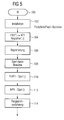
- the Structure of the special part ST1 of the utility program HP1 explained in more detail below with reference to FIG. 4. Based on the figure 5, the process steps are explained below, which before Execution of the application program AP1 with regard to the partner aid program P-HP1, the utility program HP1 and the operating system BS1 run.
- An application program AP2 performs the functions of a Editor.
- the application program AP2 addresses original requirements 24 to the partner aid program P-HP2.
- the origin requirements 24 are on changes in the operating state of the Application program AP2 directed.
- the partner aid program P-HP2 creates 24 intermediate requests based on the origin requirements 42, which are operated by an operating system BS1 or BS2 are independent and sent to the utility program HP1 become.
- the partner support programs P-HP1 and P-HP2 are the same. Also the general parts AT1 and AT2 are at the source code level and same at the machine code level.
- the application programs are AP1 and AP2 with the associated partner support program P-HP1 or P-HP2 have been linked in a link process, see dashed lines Lines 30 and 34.
- FIG. 3 shows the structure of the partner aid program P-HP1.
- the affiliate program P-HP1 contains program functions 50 to 58, the various operating states of the application program or assigned to certain changes in operating states are.
- the program function 50 serves the request of additional RAM, i.e. the so-called ramp-up.
- the program function 50 has two parameters 60 and 62 to hand over.
- the parameter 60 specifies the name of the game, for example the name "ShX”.
- the value of parameter 62 gives, for example, the additional one required by the game Storage space in megabytes.
- It also contains the program function 50 program instructions 64, which the functions of a Communication mechanism for the general part AT1 of the utility HP1 and with the help of one of the Program function 50 corresponding program function of the general Call part AT1 of the utility program HP1.
- “Corresponding" means that this program function also for Startup of the application program AP1 is used.
- the program functions 52 and 56 serve in this order stopping the execution of the application program AP1, the Resumption of execution of the application program AP1 after stopping and registering the application program AP1 for the BS1 operating system.
- the program functions 52 to 56 also contain constants 66, 68, 70, in which the name of the game is given, e.g. the name "ShX". For example, the name of the game is used for testing one Authorization used to check whether the Partner aid program P-HP1 for changing operating states is justified.
- the program function 52 takes for example an optional parameter 67 whose value is the at specifies the amount of time for which an application program is executed to be interrupted. By three points are further program functions 58 are indicated, for example a so-called shutdown.
- Program functions 52 to 58 are also used for communication with the general part AT1 of the utility program HP1.
- the general part AT1 of the auxiliary program HP1 contains program functions, which is independent of a special operating system are set and that enable the partner assistance programs P-HP1 and P-HP2 upcoming intermediate requirements 40 and 42 to take and the special Part ST1 of the utility program HP1.
- the general Part AT1 itself does not call any functions of the operating system BS1 in the manner specified for the operating system BS1 and Way on.
- FIG. 4 shows the structure of the special part ST1 of the auxiliary program HP1.
- the utility program HP1 contains program functions 80 to 88, which correspond to the program functions 50 to 58.
- the Program functions 80 to 86 in this order loading of the application program AP1, the stop of the application program AP1, resuming execution of the application program AP1 after a stop and registration of the application program AP1 for the BS1 operating system.
- the program functions 80 to 86 and also the program functions 88 take effect directly to functions of the operating system BS1, i.e. they generate calls to functions depending on the operating system of the operating system BS1.
- FIG. 5 shows process steps which are carried out until the execution of the Application program AP1 are to be executed.
- the process begins in a method step 100 at a time t0.
- the application program AP1 together with the partner aid program P-HP1 a hard disk stored in the storage unit SP1. Environment settings are also made.
- step 104 the partner support program P-HP1 caused the application program AP1 to register with the operating system BS1.
- the Program function 56 which in turn activates the program function 86 activated.
- step 106 leads the program function 86 registers with the operating system BS1 through.
- the application program AP1 through a user is started. For example, an icon for the application program AP1 using an input unit selected. The selection is made via the user interface Operating system communicated. The operating system BS1 then loads the application program AP1 in the working memory and starts the execution of the application program AP1 on the intended position in the application program AP1.
- a start routine of the Application program AP1 called, with the help of additional RAM should be requested.
- the application program AP1 makes an origin request 20 to that Partner aid program P-HP1, whereby the program function 50 is performed.
- the program function 50 in turn calls the Program function 80 and passes the name of the game and the parameter S1, in which the size of the required memory area is specified.
- the program function 50 is used in one method step 112 the: Program function 80 of the utility program HP1 called.
- the program function 80 in turn calls a function of the operating system BS1, with the help of additional Storage is made available.
- the operating system BS1 also passes parameter S1, i.e. a value for the size of the requested memory area.
- the application programs AP1 and AP2 as well as the partner aid programs P-HP1 and P-HP2 can both use the operating system program BS1 as well as with the help of the operating system program Execute BS2. Accordingly, the partner support program is aimed P-HP1 alternatively intermediate requirements 48 the utility program HP2. The partner aid program P-HP2 judges alternatively, intermediate requirements 50 for the auxiliary program HP2.
- the application program AP1 is used, for example been programmed by runtime libraries that only at runtime depending on the operating system BS1 or BS2 be integrated and functions for input and output provide.
- processors are P1 and P2 of different types. So with two different ones Compiler programs from the same source text P-HP1 and P-HP2 as well as from another source text to produce the general parts AT1 and AT2.
Landscapes
- Engineering & Computer Science (AREA)
- Software Systems (AREA)
- Theoretical Computer Science (AREA)
- Physics & Mathematics (AREA)
- General Engineering & Computer Science (AREA)
- General Physics & Mathematics (AREA)
- Stored Programmes (AREA)
Abstract
Description
- das Programm ist beim Betriebssystem registriert,
- das Programm befindet sich im Arbeitsspeicher,
- das Programm wurde unterbrochen und befindet sich beispielsweise in einer Warteschlange für unterbrochene Programme,
- das Programm wird momentan ausgeführt.
- Figur 1
- den sogenannten Lebenszyklus eines Programms in einer Datenverarbeitungsanlage,
- Figur 2
- den Einsatz von Partnerhilfsprogrammen auf Datenverarbeitungsanlagen mit verschiedenen Betriebssystemen,
- Figur 3
- den Aufbau eines weitestgehend vom Betriebssystem unabhängigen Partnerhilfsprogramms,
- Figur 4
- den Aufbau eines betriebssystemabhängigen Hilfsprogramms, und
- Figur 5
- Verfahrensschritte bis zur Ausführung eines Anwendungsprogramms.
Claims (18)
- Verfahren zum Ändern des Betriebszustandes eines Anwendungsprogramms (AP1),
bei dem in einer Speichereinheit (SP2) einer Datenverarbeitungsanlage (10) ein Betriebssystemprogramm (BS1) und ein Hilfsprogramm (HP1) gespeichert werden,
bei dem ein von einem Anwendungsprogramm (AP1) gesteuertes Partnerhilfsprogramm (P-HP1) eine Zwischenanforderung (40) an das Hilfsprogramm (HP1) richtet,
bei dem mit der Zwischenanforderung (40) für das Anwendungsprogramm (AP1) eine Änderung des Betriebszustandes angefordert wird,
bei dem sich die Zwischenanforderung (40) von einer Anforderung unterscheidet, die zum Ändern des Betriebszustandes an das Betriebssystemprogramm (BS1) zu richten wäre,
und bei dem das Hilfsprogramm (HP1) abhängig von der mit der Zwischenanforderung (40) angeforderten Änderung des Betriebszustandes des Anwendungsprogramms (AP1) eine Programmfunktion des Betriebssystemprogramms (BS1) zum Ändern des Betriebszustandes in der für das Betriebssystemprogramm (BS1) festgelegten Form aufruft. - Verfahren nach Anspruch 1, dadurch gekennzeichnet, dass die Betriebszustände allgemein Steuerzustände angeben, die ein Programm bei seiner Verwaltung durch ein Betriebssystem haben kann.
- Verfahren nach Anspruch 1 oder 2, dadurch gekennzeichnet, dass mit der Zwischenanforderung (40) das Laden des Anwendungsprogramms (AP1) in einen Arbeitsspeicher (SP1) der Datenverarbeitungsanlage (10) angefordert wird,
und/oder dass mit der Zwischenanforderung (40) über den zur Speicherung des Anwendungsprogramms (AP1) erforderlichen Arbeitsspeicher hinaus zusätzlicher Arbeitsspeicher für die Ausführung des Anwendungsprogramms (AP1) angefordert wird,
oder dass mit der Zwischenanforderung (40) das Entfernen des Anwendungsprogramms (AP1) aus dem Arbeitsspeicher (SP1) der Datenverarbeitungsanlage (10) angefordert wird,
und/oder dass mit der Zwischenanforderung (40) das Freigeben des zusätzlichen Arbeitsspeichers angefordert wird, der für die Ausführung des Anwendungsprogramms (AP1) benötigt worden ist,
oder dass mit der Zwischenanforderung (40) eine Unterbrechung (8) der Ausführung des Anwendungsprogramms (AP1) angefordert wird,
oder dass mit der Zwischenanforderung (40) eine Wiederaufnahme der Ausführung des Anwendungsprogramms (AP1) nach einer Unterbrechung (8) angefordert wird,
oder dass mit der Zwischenanforderung (40) eine Registrierung des Anwendungsprogramms (AP1) beim Betriebssystemprogramm (BS1) oder beim Hilfsprogramm (HP1) angefordert wird,
oder dass mit der Zwischenanforderung (40) das Abmelden des Anwendungsprogramms (AP1, AP2) beim Betriebssystemprogramm (BS1) oder beim Hilfsprogramm (HP1) angefordert wird,
oder dass mit der Zwischenanforderung (40) eine Angabe aller registrierten Anwendungsprogramme (AP1, AP2) angefordert wird. - Verfahren nach einem der vorhergehenden Ansprüche, dadurch gekennzeichnet, dass das Anwendungsprogramm (AP1) Maschinenbefehle enthält, die prozessorabhängig sind.
- Verfahren nach einem der vorhergehenden Ansprüche, dadurch gekennzeichnet, dass das Hilfsprogramm (HP1) ein Diensterbringungsprogramm und das Partnerhilfsprogramm (P-HP1) ein Dienstanforderungsprogramm enthalten.
- Verfahren nach einem der vorhergehenden Ansprüche, dadurch gekennzeichnet, dass die Zwischenanforderung (4C) dem Hilfsprogramm (HP1) über eine Meldungsschnittstelle oder als Nachricht oder als Funktionsaufruf übermittelt wird,
und/oder dass die Zwischenanforderung (40) mit Hilfe eines Datenaustauschverfahrens übermittelt wird, das unabhängig von einem speziellen Betriebssystem (BS1, BS2) festgelegt worden ist. - Verfahren nach einem der vorhergehenden Ansprüche, dadurch gekennzeichnet, dass eine weitere Zwischenanforderung (42) von einem durch ein weiteres Anwendungsprogramm (AP2) gesteuertem weiteren Partnerhilfsprogramm (P-HP2) an das Hilfsprogramm (HP1) gerichtet wird,
dass beide Anwendungsprogramme (AP1, AP2) die Funktion voneinander verschiedener Anwendungen erbringen,
und dass beide Partnerhilfsprogramme (P-HP1, P-HP2) aus dem gleichen Quelltext erzeugt worden sind und/oder gleiche Maschinenprogramme haben. - Verfahren nach einem der vorhergehenden Ansprüche, dadurch gekennzeichnet, dass in einer Speichereinheit (SP2) einer weiteren Datenverarbeitungsanlage (12) ein weiteres Betriebssystemprogramm (BS2) und ein weiteres Hilfsprogramm (HP2) gespeichert werden,
wobei sich der Typ der Betriebssystemprogramme (BS1, BS2) voneinander unterscheidet,
ein durch ein nächstes Anwendungsprogramm gesteuertes nächstes Partnerhilfsprogramm (P-HP2) eine nächste Zwischenanforderung (44) an das weitere Hilfsprogramm (HP2) erzeugt,
und dass das zur Kommunikation mit dem Anwendungsprogramm (AP1, AF2) oder zur Kommunikation mit dem Partnerhilfsprogramm dienende allgemeine Teile (AT1, AT2) der Hilfsprogramme (HP1, HF2) und/oder die Partnerhilfsprogramme (P-HP1, P-HP2) aus dem gleichen Quelltext erzeugt worden sind und/oder die gleichen Maschinenprogramme haben. - Verfahren nach Anspruch 8, dadurch gekennzeichnet, dass das nächste Anwendungsprogramm, die gleiche Funktion wie das Anwendungsprogramm (AP1) oder das weitere Anwendungsprogramm (AP2) erbringt,
oder dass das nächste Anwendungsprogramm, eine andere Funktion als das Anwendungsprogramm (AP1) oder das weitere Anwendungsprogramm (AP2) erbringt. - Verfahren nach einem der vorhergehenden Ansprüche, dadurch gekennzeichnet, dass das Verfahren in einer Datenverarbeitungsanlage ausgeführt wird, die in eine Schaltung für eine spezielle Anwendung eingebettet ist
und/oder dass die Datenverarbeitungsanlage (10) Teil eines Endgerätes eines Mobilfunk-Datenübertragungsnetzes ist. - Verfahren nach einem der vorhergehenden Ansprüche, dadurch gekennzeichnet, dass die vom Partnerhilfsprogramm (P-HP1) ausgeführten Verfahrensschritte vom Betriebssystem (BS1, BS2) unabhängig sind.
- Vorrichtung (10, 12) zum Ändern des Betriebszustandes eines Anwendungsprogramms (AP1), insbesondere Datenverarbeitungsanlage (10, 12),
mit einer Speichereinheit (SP1), in der ein Betriebssystemprogramm (BS1) gespeichert ist,
mit einer Hilfseinheit (HP1) zum Empfangen einer Zwischenanforderung (40), die von einem durch ein Anwendungsprogramm (AP1) gesteuertem Partnerhilfsprogramm (P-HP1) kommt,
wobei die Zwischenanforderung (40) für das Anwendungsprogramm (AP1) eine Änderung des Betriebszustandes anfordert,
wobei sich die Zwischenanforderung (40) von einer Anforderung unterscheidet, die zum Ändern des Betriebszustandes an das Betriebssystemprogramm (BS1) zu richten wäre,
und mit einer in der Hilfseinheit (HP1) enthaltenen Umwandlungseinheit (ST1), die abhängig von der mit der Zwischenanforderung (40) angeforderten Änderung des Betriebszustandes des Anwendungsprogramms (AP1) eine Programmfunktion des Betriebssystemprogramms (BS1) in der für das Betriebssystemprogramm (BS1) festgelegten Form aufruft. - Vorrichtung (10, 12) nach Anspruch 12, dadurch gekennzeichnet, dass die Vorrichtung (10, 12) weitere Einheiten enthält, die Verfahrensschritte nach einem der Ansprüche 1 bis 11 ausführen.
- Partnerhilfsprogramm (P-HP1, P-HP2) zum Ändern des Betriebszustandes eines Anwendungsprogramms (AP1, AP2),
mit einer Befehlsfolge, bei deren Ausführung durch einen Prozessor (P1, P2) an ein Hilfsprogramm (HP1) eine Zwischenanforderung (40) gerichtet wird,
wobei mit der Zwischenanforderung (40) für ein das Partnerhilfsprogramm steuerndes Anwendungsprogramm (AP1) eine Änderung des Betriebszustandes angefordert wird,
und wobei sich die Zwischenanforderung (40) von einer Anforderung unterscheidet, die zum Ändern des Betriebszustandes an ein Betriebssystemprogramm (BS1) zu richten wäre. - Partnerhilfsprogramm (P-HP1, P-HP2) nach Anspruch 14 dadurch gekennzeichnet, dass bei seiner Ausführung die auf das Partnerhilfsprogramm (HP1, HP2) bezogenen Verfahrensschritte nach einem der Ansprüche 1 bis 11 ausgeführt werden.
- Hilfsprogramm (HP1, HP2) zum Ändern des Betriebszustandes eines Anwendungsprogramms (AP1, AP2),
mit einer Befehlsfolge, bei deren Ausführung durch einen Prozessor (P1, P2) von einem durch ein Anwendungsprogramm (AP1) gesteuertem Partnerhilfsprogramm (P-HP1, P-HP2) eine Zwischenanforderung (40) empfangen wird,
wobei mit der Zwischenanforderung (40) für das Anwendungsprogramm (AP1) eine Änderung des Betriebszustandes angefordert wird,
wobei sich die Zwischenanforderung (40) von einer Anforderung unterscheidet, die zum Ändern des Betriebszustandes an ein Betriebssystemprogramm (BS1) zu richten wäre,
und wobei das Hilfsprogramm abhängig von der mit der Zwischenanforderung (40) angeforderten Änderung des Betriebszustandes des Anwendungsprogramms (AP1) eine Programmfunktion des Betriebssystemprogramms (BS1) zum Ändern des Betriebszustandes in der für das Betriebssystemprogramm (BS1) festgelegten Form aufruft. - Hilfsprogramm (HP1, HP2) nach Anspruch 16, dadurch gekennzeichnet, dass bei seiner Ausführung die auf das Hilfsprogramm (HP1, HP2) bezogenen Verfahrensschritte nach einem der Ansprüche 1 bis 11 ausgeführt werden.
- Anwendungsprogramm (AP1, AP2) dadurch gekennzeichnet, dass es ein Partnerhilfsprogramm (P-HP1, P-HP2) nach Anspruch 14 oder 15 oder ein Hilfsprogramm (HP1, HP2) nach Anspruch 16 oder 17 steuert.
Priority Applications (1)
| Application Number | Priority Date | Filing Date | Title |
|---|---|---|---|
| EP01129649A EP1320032A1 (de) | 2001-12-12 | 2001-12-12 | Verfahren zum Ändern des Betriebszustandes eines Anwendungsprogramms |
Applications Claiming Priority (1)
| Application Number | Priority Date | Filing Date | Title |
|---|---|---|---|
| EP01129649A EP1320032A1 (de) | 2001-12-12 | 2001-12-12 | Verfahren zum Ändern des Betriebszustandes eines Anwendungsprogramms |
Publications (1)
| Publication Number | Publication Date |
|---|---|
| EP1320032A1 true EP1320032A1 (de) | 2003-06-18 |
Family
ID=8179522
Family Applications (1)
| Application Number | Title | Priority Date | Filing Date |
|---|---|---|---|
| EP01129649A Withdrawn EP1320032A1 (de) | 2001-12-12 | 2001-12-12 | Verfahren zum Ändern des Betriebszustandes eines Anwendungsprogramms |
Country Status (1)
| Country | Link |
|---|---|
| EP (1) | EP1320032A1 (de) |
Citations (2)
| Publication number | Priority date | Publication date | Assignee | Title |
|---|---|---|---|---|
| EP0524071A1 (de) | 1991-07-15 | 1993-01-20 | Bull S.A. | Betriebssystem für eine universelle Koppeleinrichtung zwischen einem Rechnerbus und einem spezifischen Netwerk |
| WO2001004743A2 (en) | 1999-07-13 | 2001-01-18 | Sun Microsystems, Inc. | Methods and apparatus for managing an application according to an application lifecycle |
-
2001
- 2001-12-12 EP EP01129649A patent/EP1320032A1/de not_active Withdrawn
Patent Citations (2)
| Publication number | Priority date | Publication date | Assignee | Title |
|---|---|---|---|---|
| EP0524071A1 (de) | 1991-07-15 | 1993-01-20 | Bull S.A. | Betriebssystem für eine universelle Koppeleinrichtung zwischen einem Rechnerbus und einem spezifischen Netwerk |
| WO2001004743A2 (en) | 1999-07-13 | 2001-01-18 | Sun Microsystems, Inc. | Methods and apparatus for managing an application according to an application lifecycle |
Non-Patent Citations (1)
| Title |
|---|
| "J2ME Building Blocks for Mobile Devices - White Paper on KVM and the Connected, Limited Device Configuration (CLDC)", SUN MICROSYSTEMS WHITE PAPER, XX, XX, 19 May 2000 (2000-05-19), pages 1 - 42, XP002255757 * |
Similar Documents
| Publication | Publication Date | Title |
|---|---|---|
| DE10335989B4 (de) | Online-Änderungen von CIL-Code-Programmen für die Industrieautomatisierung | |
| DE102011089791B4 (de) | Steuergerät für eine Werkzeugmaschine | |
| DE102009047025B3 (de) | Echtzeit-Laufzeitsystem und Funktionsmodul für ein solches Laufzeitsystem | |
| DE102005050304A1 (de) | Verfahren und Programm für die Generierung automatisch verteilbarer Clients von Application-Servern | |
| DE69114905T2 (de) | Verfahren und System zum Optimieren des Abschaltens in Systemen aus programmierbaren Vorrichtungen. | |
| DE4011278A1 (de) | Programmierbare steuereinheit | |
| WO1998025204A1 (de) | Verfahren zum testen von systemkomponenten eines objektorientierten programms | |
| DE10243856B4 (de) | Regler und Verfahren zum Betreiben eines Reglers | |
| EP0799441B1 (de) | Verfahren zur steuerung von technischen vorgängen | |
| EP1287433A2 (de) | Agentensystem, computernetzwerk und verfahren zum laden eines agentensystems von einem host-computer auf einen client-computer eines computernetzwerkes | |
| EP1548527A1 (de) | Steuerungs- oder Regelungseinrichtung einer Werkzeug- oder Produktionsmaschine | |
| EP1352322B1 (de) | Durchführung eines zeitoptimierten austausches einer software-applikation | |
| WO2000019283A1 (de) | Verfahren zum betrieb eines automatisierungssystems | |
| WO1990002996A1 (de) | Betriebsprogramm für eine datenverarbeitungsanlage | |
| EP3977301A1 (de) | Laufzeitserver zum gleichzeitigen ausführen mehrerer laufzeitsysteme einer automatisierungsanlage | |
| DE19901879A1 (de) | Verfahren zum Tracen von Daten | |
| DE102020201002B4 (de) | Maschinensteuervorrichtung | |
| EP1235123A2 (de) | Addon-Mechanismus für ein Steuerungssystem basierend auf einem Typdatenfeld | |
| DE102008048862A1 (de) | Testmodul und Verfahren zum Testen einer O/R-Abbildungs-Middleware | |
| DE2622140B2 (de) | Einrichtung zur Steuerung manueller Operationen | |
| DE69126761T2 (de) | Verfahren zur Entwicklung von Software | |
| DE29622133U1 (de) | Automatisierungsgerät | |
| DE10161321A1 (de) | Verfahren zur Aktualisierung von elektronisch modifizierbaren Komponenten eines Automatisierungsgerätes | |
| EP1044409B1 (de) | Programmablaufverfahren und verfahren zur erweiterung eines programmkomponentensystems | |
| EP0568717A1 (de) | Computerprogrammgesteuertes Verfahren (Tracing) zur schrittweisen Protokollierung der Ausführung eines Zielprogrammes bezüglich der Aufrufe des Zielprogrammes durch andere Programme |
Legal Events
| Date | Code | Title | Description |
|---|---|---|---|
| PUAI | Public reference made under article 153(3) epc to a published international application that has entered the european phase |
Free format text: ORIGINAL CODE: 0009012 |
|
| AK | Designated contracting states |
Designated state(s): AT BE CH CY DE DK ES FI FR GB GR IE IT LI LU MC NL PT SE TR |
|
| AX | Request for extension of the european patent |
Extension state: AL LT LV MK RO SI |
|
| 17P | Request for examination filed |
Effective date: 20030707 |
|
| AKX | Designation fees paid |
Designated state(s): DE FR GB |
|
| RAP1 | Party data changed (applicant data changed or rights of an application transferred) |
Owner name: BENQ MOBILE GMBH & CO. OHG |
|
| 19U | Interruption of proceedings before grant |
Effective date: 20070101 |
|
| 19W | Proceedings resumed before grant after interruption of proceedings |
Effective date: 20070702 |
|
| 19W | Proceedings resumed before grant after interruption of proceedings |
Effective date: 20090803 |
|
| 17Q | First examination report despatched |
Effective date: 20090608 |
|
| RAP1 | Party data changed (applicant data changed or rights of an application transferred) |
Owner name: PALM, INC. |
|
| R17C | First examination report despatched (corrected) |
Effective date: 20090911 |
|
| RAP1 | Party data changed (applicant data changed or rights of an application transferred) |
Owner name: HEWLETT-PACKARD DEVELOPMENT COMPANY, L.P. |
|
| STAA | Information on the status of an ep patent application or granted ep patent |
Free format text: STATUS: THE APPLICATION IS DEEMED TO BE WITHDRAWN |
|
| 18D | Application deemed to be withdrawn |
Effective date: 20110402 |