EP1319699A2 - Foil-less binder tape and binding processes using the tape - Google Patents
Foil-less binder tape and binding processes using the tape Download PDFInfo
- Publication number
- EP1319699A2 EP1319699A2 EP02027687A EP02027687A EP1319699A2 EP 1319699 A2 EP1319699 A2 EP 1319699A2 EP 02027687 A EP02027687 A EP 02027687A EP 02027687 A EP02027687 A EP 02027687A EP 1319699 A2 EP1319699 A2 EP 1319699A2
- Authority
- EP
- European Patent Office
- Prior art keywords
- tape
- adhesive
- coated
- hot melt
- strip
- Prior art date
- Legal status (The legal status is an assumption and is not a legal conclusion. Google has not performed a legal analysis and makes no representation as to the accuracy of the status listed.)
- Granted
Links
- 238000000034 method Methods 0.000 title claims description 25
- 230000008569 process Effects 0.000 title claims description 22
- 239000011230 binding agent Substances 0.000 title description 28
- 230000001070 adhesive effect Effects 0.000 claims abstract description 137
- 239000000853 adhesive Substances 0.000 claims abstract description 135
- 239000012943 hotmelt Substances 0.000 claims abstract description 26
- 239000004831 Hot glue Substances 0.000 claims abstract description 19
- 229920001577 copolymer Polymers 0.000 claims description 32
- 239000000123 paper Substances 0.000 claims description 32
- 238000000576 coating method Methods 0.000 claims description 28
- 239000011248 coating agent Substances 0.000 claims description 27
- 239000011888 foil Substances 0.000 claims description 19
- 239000000463 material Substances 0.000 claims description 19
- 239000004816 latex Substances 0.000 claims description 18
- 229920000126 latex Polymers 0.000 claims description 18
- 229920000642 polymer Polymers 0.000 claims description 16
- -1 poly(ethylvinyl acetate) Polymers 0.000 claims description 8
- 239000004744 fabric Substances 0.000 claims description 7
- VGGSQFUCUMXWEO-UHFFFAOYSA-N Ethene Chemical compound C=C VGGSQFUCUMXWEO-UHFFFAOYSA-N 0.000 claims description 6
- 239000005977 Ethylene Substances 0.000 claims description 6
- 239000004952 Polyamide Substances 0.000 claims description 6
- 229920002647 polyamide Polymers 0.000 claims description 6
- XTXRWKRVRITETP-UHFFFAOYSA-N Vinyl acetate Chemical compound CC(=O)OC=C XTXRWKRVRITETP-UHFFFAOYSA-N 0.000 claims description 5
- 229920003023 plastic Polymers 0.000 claims description 5
- 239000004033 plastic Substances 0.000 claims description 5
- 229920000058 polyacrylate Polymers 0.000 claims description 5
- 229920002451 polyvinyl alcohol Polymers 0.000 claims description 5
- 229920006163 vinyl copolymer Polymers 0.000 claims description 5
- IKZZIQXKLWDPCD-UHFFFAOYSA-N but-1-en-2-ol Chemical compound CCC(O)=C IKZZIQXKLWDPCD-UHFFFAOYSA-N 0.000 claims description 4
- 229920002401 polyacrylamide Polymers 0.000 claims description 4
- 229920006122 polyamide resin Polymers 0.000 claims description 4
- 239000010410 layer Substances 0.000 description 20
- 239000000203 mixture Substances 0.000 description 14
- 229920005989 resin Polymers 0.000 description 9
- 239000011347 resin Substances 0.000 description 9
- 230000004888 barrier function Effects 0.000 description 8
- 229920006223 adhesive resin Polymers 0.000 description 6
- 239000004840 adhesive resin Substances 0.000 description 5
- 238000010438 heat treatment Methods 0.000 description 5
- 239000000654 additive Substances 0.000 description 4
- 238000007607 die coating method Methods 0.000 description 4
- 239000005038 ethylene vinyl acetate Substances 0.000 description 4
- 125000000391 vinyl group Chemical group [H]C([*])=C([H])[H] 0.000 description 4
- 229910052782 aluminium Inorganic materials 0.000 description 3
- XAGFODPZIPBFFR-UHFFFAOYSA-N aluminium Chemical compound [Al] XAGFODPZIPBFFR-UHFFFAOYSA-N 0.000 description 3
- 239000000470 constituent Substances 0.000 description 3
- 239000000178 monomer Substances 0.000 description 3
- 230000009467 reduction Effects 0.000 description 3
- 229920002554 vinyl polymer Polymers 0.000 description 3
- KAKZBPTYRLMSJV-UHFFFAOYSA-N Butadiene Chemical compound C=CC=C KAKZBPTYRLMSJV-UHFFFAOYSA-N 0.000 description 2
- SOGAXMICEFXMKE-UHFFFAOYSA-N Butylmethacrylate Chemical compound CCCCOC(=O)C(C)=C SOGAXMICEFXMKE-UHFFFAOYSA-N 0.000 description 2
- XEEYBQQBJWHFJM-UHFFFAOYSA-N Iron Chemical compound [Fe] XEEYBQQBJWHFJM-UHFFFAOYSA-N 0.000 description 2
- RRHGJUQNOFWUDK-UHFFFAOYSA-N Isoprene Chemical compound CC(=C)C=C RRHGJUQNOFWUDK-UHFFFAOYSA-N 0.000 description 2
- BAPJBEWLBFYGME-UHFFFAOYSA-N Methyl acrylate Chemical compound COC(=O)C=C BAPJBEWLBFYGME-UHFFFAOYSA-N 0.000 description 2
- 229920002472 Starch Polymers 0.000 description 2
- PPBRXRYQALVLMV-UHFFFAOYSA-N Styrene Chemical compound C=CC1=CC=CC=C1 PPBRXRYQALVLMV-UHFFFAOYSA-N 0.000 description 2
- 238000009825 accumulation Methods 0.000 description 2
- NIXOWILDQLNWCW-UHFFFAOYSA-N acrylic acid group Chemical group C(C=C)(=O)O NIXOWILDQLNWCW-UHFFFAOYSA-N 0.000 description 2
- 230000008901 benefit Effects 0.000 description 2
- UAHWPYUMFXYFJY-UHFFFAOYSA-N beta-myrcene Chemical compound CC(C)=CCCC(=C)C=C UAHWPYUMFXYFJY-UHFFFAOYSA-N 0.000 description 2
- 239000001913 cellulose Substances 0.000 description 2
- 229920002678 cellulose Polymers 0.000 description 2
- 235000014113 dietary fatty acids Nutrition 0.000 description 2
- 239000000194 fatty acid Substances 0.000 description 2
- 229930195729 fatty acid Natural products 0.000 description 2
- 150000004665 fatty acids Chemical class 0.000 description 2
- 238000009472 formulation Methods 0.000 description 2
- 239000003292 glue Substances 0.000 description 2
- 238000004519 manufacturing process Methods 0.000 description 2
- 229910052751 metal Inorganic materials 0.000 description 2
- 239000002184 metal Substances 0.000 description 2
- 238000012986 modification Methods 0.000 description 2
- 230000004048 modification Effects 0.000 description 2
- 150000003839 salts Chemical class 0.000 description 2
- 239000008107 starch Substances 0.000 description 2
- 238000003860 storage Methods 0.000 description 2
- 229920003048 styrene butadiene rubber Polymers 0.000 description 2
- 239000000126 substance Substances 0.000 description 2
- 239000000758 substrate Substances 0.000 description 2
- KTZVZZJJVJQZHV-UHFFFAOYSA-N 1-chloro-4-ethenylbenzene Chemical compound ClC1=CC=C(C=C)C=C1 KTZVZZJJVJQZHV-UHFFFAOYSA-N 0.000 description 1
- CVEPFOUZABPRMK-UHFFFAOYSA-N 2-methylprop-2-enoic acid;styrene Chemical class CC(=C)C(O)=O.C=CC1=CC=CC=C1 CVEPFOUZABPRMK-UHFFFAOYSA-N 0.000 description 1
- CFVWNXQPGQOHRJ-UHFFFAOYSA-N 2-methylpropyl prop-2-enoate Chemical compound CC(C)COC(=O)C=C CFVWNXQPGQOHRJ-UHFFFAOYSA-N 0.000 description 1
- HRPVXLWXLXDGHG-UHFFFAOYSA-N Acrylamide Chemical compound NC(=O)C=C HRPVXLWXLXDGHG-UHFFFAOYSA-N 0.000 description 1
- NLHHRLWOUZZQLW-UHFFFAOYSA-N Acrylonitrile Chemical compound C=CC#N NLHHRLWOUZZQLW-UHFFFAOYSA-N 0.000 description 1
- PNEYBMLMFCGWSK-UHFFFAOYSA-N Alumina Chemical class [O-2].[O-2].[O-2].[Al+3].[Al+3] PNEYBMLMFCGWSK-UHFFFAOYSA-N 0.000 description 1
- JIGUQPWFLRLWPJ-UHFFFAOYSA-N Ethyl acrylate Chemical compound CCOC(=O)C=C JIGUQPWFLRLWPJ-UHFFFAOYSA-N 0.000 description 1
- JOYRKODLDBILNP-UHFFFAOYSA-N Ethyl urethane Chemical compound CCOC(N)=O JOYRKODLDBILNP-UHFFFAOYSA-N 0.000 description 1
- VVQNEPGJFQJSBK-UHFFFAOYSA-N Methyl methacrylate Chemical compound COC(=O)C(C)=C VVQNEPGJFQJSBK-UHFFFAOYSA-N 0.000 description 1
- GYCMBHHDWRMZGG-UHFFFAOYSA-N Methylacrylonitrile Chemical compound CC(=C)C#N GYCMBHHDWRMZGG-UHFFFAOYSA-N 0.000 description 1
- 239000004698 Polyethylene Substances 0.000 description 1
- 230000004913 activation Effects 0.000 description 1
- 238000001994 activation Methods 0.000 description 1
- 239000012790 adhesive layer Substances 0.000 description 1
- VYBREYKSZAROCT-UHFFFAOYSA-N alpha-myrcene Natural products CC(=C)CCCC(=C)C=C VYBREYKSZAROCT-UHFFFAOYSA-N 0.000 description 1
- 230000005587 bubbling Effects 0.000 description 1
- DQXBYHZEEUGOBF-UHFFFAOYSA-N but-3-enoic acid;ethene Chemical compound C=C.OC(=O)CC=C DQXBYHZEEUGOBF-UHFFFAOYSA-N 0.000 description 1
- MTAZNLWOLGHBHU-UHFFFAOYSA-N butadiene-styrene rubber Chemical class C=CC=C.C=CC1=CC=CC=C1 MTAZNLWOLGHBHU-UHFFFAOYSA-N 0.000 description 1
- CQEYYJKEWSMYFG-UHFFFAOYSA-N butyl acrylate Chemical compound CCCCOC(=O)C=C CQEYYJKEWSMYFG-UHFFFAOYSA-N 0.000 description 1
- 229910000420 cerium oxide Inorganic materials 0.000 description 1
- DRVWBEJJZZTIGJ-UHFFFAOYSA-N cerium(3+);oxygen(2-) Chemical class [O-2].[O-2].[O-2].[Ce+3].[Ce+3] DRVWBEJJZZTIGJ-UHFFFAOYSA-N 0.000 description 1
- 239000003795 chemical substances by application Substances 0.000 description 1
- 239000003086 colorant Substances 0.000 description 1
- 238000010924 continuous production Methods 0.000 description 1
- 238000001816 cooling Methods 0.000 description 1
- 239000000539 dimer Substances 0.000 description 1
- 230000000694 effects Effects 0.000 description 1
- 150000002148 esters Chemical class 0.000 description 1
- SUPCQIBBMFXVTL-UHFFFAOYSA-N ethyl 2-methylprop-2-enoate Chemical compound CCOC(=O)C(C)=C SUPCQIBBMFXVTL-UHFFFAOYSA-N 0.000 description 1
- 239000000835 fiber Substances 0.000 description 1
- 229920001519 homopolymer Polymers 0.000 description 1
- 239000012535 impurity Substances 0.000 description 1
- 229910052742 iron Inorganic materials 0.000 description 1
- PBOSTUDLECTMNL-UHFFFAOYSA-N lauryl acrylate Chemical compound CCCCCCCCCCCCOC(=O)C=C PBOSTUDLECTMNL-UHFFFAOYSA-N 0.000 description 1
- 150000002763 monocarboxylic acids Chemical class 0.000 description 1
- ANISOHQJBAQUQP-UHFFFAOYSA-N octyl prop-2-enoate Chemical compound CCCCCCCCOC(=O)C=C ANISOHQJBAQUQP-UHFFFAOYSA-N 0.000 description 1
- 238000004806 packaging method and process Methods 0.000 description 1
- 239000012188 paraffin wax Substances 0.000 description 1
- PNJWIWWMYCMZRO-UHFFFAOYSA-N pent‐4‐en‐2‐one Natural products CC(=O)CC=C PNJWIWWMYCMZRO-UHFFFAOYSA-N 0.000 description 1
- WRAQQYDMVSCOTE-UHFFFAOYSA-N phenyl prop-2-enoate Chemical compound C=CC(=O)OC1=CC=CC=C1 WRAQQYDMVSCOTE-UHFFFAOYSA-N 0.000 description 1
- 229920001200 poly(ethylene-vinyl acetate) Polymers 0.000 description 1
- 229920003229 poly(methyl methacrylate) Polymers 0.000 description 1
- 229920000573 polyethylene Polymers 0.000 description 1
- 239000004926 polymethyl methacrylate Substances 0.000 description 1
- 238000002360 preparation method Methods 0.000 description 1
- HXHCOXPZCUFAJI-UHFFFAOYSA-N prop-2-enoic acid;styrene Chemical class OC(=O)C=C.C=CC1=CC=CC=C1 HXHCOXPZCUFAJI-UHFFFAOYSA-N 0.000 description 1
- 230000001681 protective effect Effects 0.000 description 1
- 229920006395 saturated elastomer Polymers 0.000 description 1
- 235000019698 starch Nutrition 0.000 description 1
- 238000007725 thermal activation Methods 0.000 description 1
- 229920001567 vinyl ester resin Polymers 0.000 description 1
- XLYOFNOQVPJJNP-UHFFFAOYSA-N water Chemical compound O XLYOFNOQVPJJNP-UHFFFAOYSA-N 0.000 description 1
- XOOUIPVCVHRTMJ-UHFFFAOYSA-L zinc stearate Chemical compound [Zn+2].CCCCCCCCCCCCCCCCCC([O-])=O.CCCCCCCCCCCCCCCCCC([O-])=O XOOUIPVCVHRTMJ-UHFFFAOYSA-L 0.000 description 1
Images

Classifications
-
- B—PERFORMING OPERATIONS; TRANSPORTING
- B42—BOOKBINDING; ALBUMS; FILES; SPECIAL PRINTED MATTER
- B42D—BOOKS; BOOK COVERS; LOOSE LEAVES; PRINTED MATTER CHARACTERISED BY IDENTIFICATION OR SECURITY FEATURES; PRINTED MATTER OF SPECIAL FORMAT OR STYLE NOT OTHERWISE PROVIDED FOR; DEVICES FOR USE THEREWITH AND NOT OTHERWISE PROVIDED FOR; MOVABLE-STRIP WRITING OR READING APPARATUS
- B42D3/00—Book covers
- B42D3/002—Covers or strips provided with adhesive for binding
-
- C—CHEMISTRY; METALLURGY
- C09—DYES; PAINTS; POLISHES; NATURAL RESINS; ADHESIVES; COMPOSITIONS NOT OTHERWISE PROVIDED FOR; APPLICATIONS OF MATERIALS NOT OTHERWISE PROVIDED FOR
- C09J—ADHESIVES; NON-MECHANICAL ASPECTS OF ADHESIVE PROCESSES IN GENERAL; ADHESIVE PROCESSES NOT PROVIDED FOR ELSEWHERE; USE OF MATERIALS AS ADHESIVES
- C09J7/00—Adhesives in the form of films or foils
- C09J7/30—Adhesives in the form of films or foils characterised by the adhesive composition
- C09J7/35—Heat-activated
-
- C—CHEMISTRY; METALLURGY
- C09—DYES; PAINTS; POLISHES; NATURAL RESINS; ADHESIVES; COMPOSITIONS NOT OTHERWISE PROVIDED FOR; APPLICATIONS OF MATERIALS NOT OTHERWISE PROVIDED FOR
- C09J—ADHESIVES; NON-MECHANICAL ASPECTS OF ADHESIVE PROCESSES IN GENERAL; ADHESIVE PROCESSES NOT PROVIDED FOR ELSEWHERE; USE OF MATERIALS AS ADHESIVES
- C09J2429/00—Presence of polyvinyl alcohol
-
- C—CHEMISTRY; METALLURGY
- C09—DYES; PAINTS; POLISHES; NATURAL RESINS; ADHESIVES; COMPOSITIONS NOT OTHERWISE PROVIDED FOR; APPLICATIONS OF MATERIALS NOT OTHERWISE PROVIDED FOR
- C09J—ADHESIVES; NON-MECHANICAL ASPECTS OF ADHESIVE PROCESSES IN GENERAL; ADHESIVE PROCESSES NOT PROVIDED FOR ELSEWHERE; USE OF MATERIALS AS ADHESIVES
- C09J2431/00—Presence of polyvinyl acetate
-
- C—CHEMISTRY; METALLURGY
- C09—DYES; PAINTS; POLISHES; NATURAL RESINS; ADHESIVES; COMPOSITIONS NOT OTHERWISE PROVIDED FOR; APPLICATIONS OF MATERIALS NOT OTHERWISE PROVIDED FOR
- C09J—ADHESIVES; NON-MECHANICAL ASPECTS OF ADHESIVE PROCESSES IN GENERAL; ADHESIVE PROCESSES NOT PROVIDED FOR ELSEWHERE; USE OF MATERIALS AS ADHESIVES
- C09J2433/00—Presence of (meth)acrylic polymer
-
- C—CHEMISTRY; METALLURGY
- C09—DYES; PAINTS; POLISHES; NATURAL RESINS; ADHESIVES; COMPOSITIONS NOT OTHERWISE PROVIDED FOR; APPLICATIONS OF MATERIALS NOT OTHERWISE PROVIDED FOR
- C09J—ADHESIVES; NON-MECHANICAL ASPECTS OF ADHESIVE PROCESSES IN GENERAL; ADHESIVE PROCESSES NOT PROVIDED FOR ELSEWHERE; USE OF MATERIALS AS ADHESIVES
- C09J2477/00—Presence of polyamide
-
- Y—GENERAL TAGGING OF NEW TECHNOLOGICAL DEVELOPMENTS; GENERAL TAGGING OF CROSS-SECTIONAL TECHNOLOGIES SPANNING OVER SEVERAL SECTIONS OF THE IPC; TECHNICAL SUBJECTS COVERED BY FORMER USPC CROSS-REFERENCE ART COLLECTIONS [XRACs] AND DIGESTS
- Y10—TECHNICAL SUBJECTS COVERED BY FORMER USPC
- Y10T—TECHNICAL SUBJECTS COVERED BY FORMER US CLASSIFICATION
- Y10T428/00—Stock material or miscellaneous articles
- Y10T428/24—Structurally defined web or sheet [e.g., overall dimension, etc.]
- Y10T428/24752—Laterally noncoextensive components
-
- Y—GENERAL TAGGING OF NEW TECHNOLOGICAL DEVELOPMENTS; GENERAL TAGGING OF CROSS-SECTIONAL TECHNOLOGIES SPANNING OVER SEVERAL SECTIONS OF THE IPC; TECHNICAL SUBJECTS COVERED BY FORMER USPC CROSS-REFERENCE ART COLLECTIONS [XRACs] AND DIGESTS
- Y10—TECHNICAL SUBJECTS COVERED BY FORMER USPC
- Y10T—TECHNICAL SUBJECTS COVERED BY FORMER US CLASSIFICATION
- Y10T428/00—Stock material or miscellaneous articles
- Y10T428/28—Web or sheet containing structurally defined element or component and having an adhesive outermost layer
-
- Y—GENERAL TAGGING OF NEW TECHNOLOGICAL DEVELOPMENTS; GENERAL TAGGING OF CROSS-SECTIONAL TECHNOLOGIES SPANNING OVER SEVERAL SECTIONS OF THE IPC; TECHNICAL SUBJECTS COVERED BY FORMER USPC CROSS-REFERENCE ART COLLECTIONS [XRACs] AND DIGESTS
- Y10—TECHNICAL SUBJECTS COVERED BY FORMER USPC
- Y10T—TECHNICAL SUBJECTS COVERED BY FORMER US CLASSIFICATION
- Y10T428/00—Stock material or miscellaneous articles
- Y10T428/28—Web or sheet containing structurally defined element or component and having an adhesive outermost layer
- Y10T428/2813—Heat or solvent activated or sealable
-
- Y—GENERAL TAGGING OF NEW TECHNOLOGICAL DEVELOPMENTS; GENERAL TAGGING OF CROSS-SECTIONAL TECHNOLOGIES SPANNING OVER SEVERAL SECTIONS OF THE IPC; TECHNICAL SUBJECTS COVERED BY FORMER USPC CROSS-REFERENCE ART COLLECTIONS [XRACs] AND DIGESTS
- Y10—TECHNICAL SUBJECTS COVERED BY FORMER USPC
- Y10T—TECHNICAL SUBJECTS COVERED BY FORMER US CLASSIFICATION
- Y10T428/00—Stock material or miscellaneous articles
- Y10T428/28—Web or sheet containing structurally defined element or component and having an adhesive outermost layer
- Y10T428/2813—Heat or solvent activated or sealable
- Y10T428/2817—Heat sealable
-
- Y—GENERAL TAGGING OF NEW TECHNOLOGICAL DEVELOPMENTS; GENERAL TAGGING OF CROSS-SECTIONAL TECHNOLOGIES SPANNING OVER SEVERAL SECTIONS OF THE IPC; TECHNICAL SUBJECTS COVERED BY FORMER USPC CROSS-REFERENCE ART COLLECTIONS [XRACs] AND DIGESTS
- Y10—TECHNICAL SUBJECTS COVERED BY FORMER USPC
- Y10T—TECHNICAL SUBJECTS COVERED BY FORMER US CLASSIFICATION
- Y10T428/00—Stock material or miscellaneous articles
- Y10T428/28—Web or sheet containing structurally defined element or component and having an adhesive outermost layer
- Y10T428/2813—Heat or solvent activated or sealable
- Y10T428/2817—Heat sealable
- Y10T428/2826—Synthetic resin or polymer
-
- Y—GENERAL TAGGING OF NEW TECHNOLOGICAL DEVELOPMENTS; GENERAL TAGGING OF CROSS-SECTIONAL TECHNOLOGIES SPANNING OVER SEVERAL SECTIONS OF THE IPC; TECHNICAL SUBJECTS COVERED BY FORMER USPC CROSS-REFERENCE ART COLLECTIONS [XRACs] AND DIGESTS
- Y10—TECHNICAL SUBJECTS COVERED BY FORMER USPC
- Y10T—TECHNICAL SUBJECTS COVERED BY FORMER US CLASSIFICATION
- Y10T428/00—Stock material or miscellaneous articles
- Y10T428/28—Web or sheet containing structurally defined element or component and having an adhesive outermost layer
- Y10T428/2848—Three or more layers
Definitions
- the present invention is generally directed to a binding article and composition and binding processes thereof. More specifically, the present invention relates to improved binding tapes and binding processes for use, for example, in binding devices and binding operations in printing and copying machines.
- the binding tapes of the present invention do not require a foil moisture barrier and thereby provide a number of advantages over other binding compositions, articles, and automated binding processes.
- a document finisher that includes a printing station for printing on the binding of a book, in one embodiment a printing station prints on the binder tape before the book is bound, and in a second embodiment the printer prints on the binding after the book is bound, and the printing stations are space efficient and designed to be easily incorporated with preexisting stations in document finishers, and wherein ink jet printers and impact-type printers may be utilized.
- the present invention provides:
- the present invention in embodiments provides a binding tape for application to the spine of a book to bind pages of said book together, the tape comprising; a coated backing strip; a first hot melt spine adhesive stripe coated on a coated side of the backing strip, wherein the first hot melt adhesive stripe is located away from the edges of the strip and the first hot melt adhesive stripe runs substantially from one end of the strip to the other end of the strip about the long axis of the strip; and at least two second hot melt flap adhesive stripes coated on a coated side of the backing strip wherein the second adhesive stripes are located in areas other than those covered by the first adhesive stripe; and
- a book page tape binding process comprising:
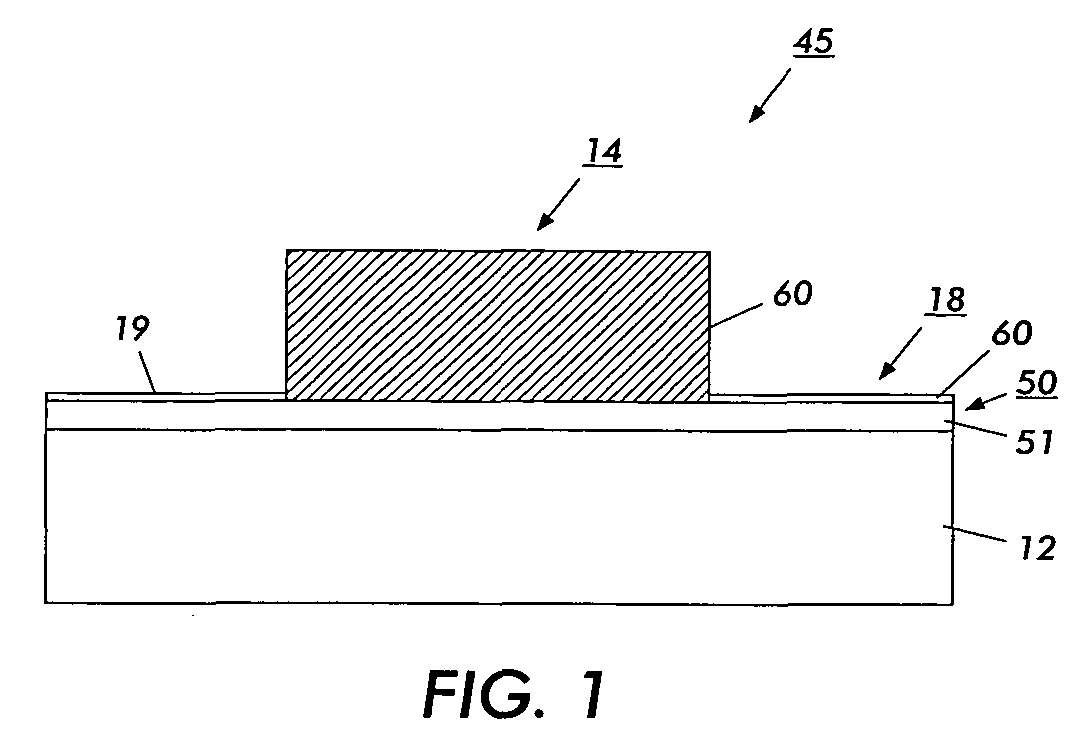
- Fig. 1 illustrates a cross sectional view of the improved moisture proof thermally actuated binding tape.
- Fig. 2 illustrates a cross sectional view of the improved moisture proof thermally actuated binding tape showing the backing strip 12 with an optional second latex coating 63 and an optional aluminum backing layer 65.
- FIG. 1 is a cross sectional view of the improved moisture proof thermally actuated binding tape of the present invention in which the spine adhesive is a non-hygroscopic adhesive.
- the improved moisture proof thermally actuated binding tape of the present invention utilizes a non-hygroscopic adhesive 60 having a very low moisture absorbing capacity for the stripe 14 of spine adhesive.
- Non-hygroscopic adhesive 60 absorbs approximately 1/5 the moisture of prior art spine adhesives, effectively preventing the accumulation of moisture in the adhesive during storage or exposure to high humidity environments.
- One suitable non-hygroscopic adhesive is adhesive formulation Uni-Rez® 2616 of Arizona Chemical Company, Bridgewater, NJ.
- non-hygroscopic adhesive 60 for central stripe 14 of binding tape 45 has enabled the thickness of the layer of adhesive 60 to be reduced to approximately 0.019 inches. This provides faster heating during the binding process and a reduction in the amount, and hence the cost, of the adhesive used.
- the loose pages comprising the book are placed, spine edge first on binding tape 45.
- Sides 18 are turned upwardly to bring the adhesive comprising side stripes 19 into contact with the outside pages or covers of the book.
- Heat and pressure may then be applied, either simultaneously or in stages, to the bottom and sides of backing strip 12 to activate, i.e., melt, the adhesives 60 and bind the pages of the book to one another and to backing strip 12.
- the application of heat and pressure to the bottom of backing strip 12 activates the spine adhesive 60, the relatively large quantity of adhesive that comprises the stripe 14 of adhesive flowing or wicking between and among the edges of the book pages and being absorbed intimately therewith to bond the pages together to one another and to backing strip 12.
- the application of heat and pressure to sides 18 of strip 12 activates the adhesive 21 to establish a tight bond between the sides 18 of strip 12 and the outer pages or covers of book. This prevents sides 18 from unfolding away from the outer pages or covers of book when the source of heat and pressure is removed and the binding is completed.
- FIG. 2 is a cross sectional view of the improved moisture proof thermally actuated binding tape of the present invention in which the spine adhesive is a non-hygroscopic adhesive and also illustrating an optional second latex coating 63 and an optional aluminum backing layer 65.
- binding compositions, articles, and processes of the present invention may be used with advantage in a variety of copying and printing applications.
- An aspect of the present invention is that the improved binder tape composition and article can be prepared and economically used without the need for a conventional foil backing layer which foil backing layer in prior art binder tapes functioned as a moisture barrier to permit proper application and stability of the tape in binding applications.
- the material costs associated with employing and disposing of the foil backing layer required additional protective packaging such as a moisture proof polyethylene bag; the operational costs of applying the foil layer to the tape in tape manufacture; and the use of lower cost substitute adhesive compositions.
- the present invention provides a binding tape for application to the spine of a book to bind pages of said book together.
- a binding tape comprising:
- the tape is free of any metallic foil.
- the backing strip of the coated backing strip is a flexible sheet material.
- the flexible sheet is paper.
- the flexible sheet is plastic.
- the flexible sheet is cloth.
- the flexible sheet is a hygroscopic or non-hygroscopic material of paper, partially hydrolyzed vinyl acetate, cellulose, cloth fabric, or plastic, and mixtures thereof the coating on the coated backing strip is coated on at least one side with a moisture resistant latex.
- the coating on the coated backing strip is coated on both sides with a moisture resistant latex.
- the moisture resistant latex comprises a polyacrylic.
- the first hot melt spine adhesive is poly(ethylvinyl acetate).
- the first hot melt spine adhesive is selected from the group consisting of ethylene and vinyl acetate copolymers and equivalent copolymers, partially hydrolyzed ethylene and vinyl acetate copolymers and equivalent copolymers, ethyl vinyl alcohol polymers and copolymers, partially hydrolyzed vinyl acetate polymers, polyacrylate polymers and copolymers, polyamide polymers and copolymers, polyacrylamide polymers and copolymers and mixtures and copolymers thereof.
- the second hot melt flap adhesive is polyamide resin, such as UNI-REZ® 2616 commercially available from ARIZONA CHEMICAL CO., which material specifics are a trade secret but generically includes a fatty acid dimer-based polyamide resin. or alternatively, commercially available from National Starch and Chemical Company
- the first hot melt spine adhesive covers the middle of the backing strip and the flap adhesive covers areas of the backing strip from the middle areas covered by the spine adhesive to the edges of the backing strip.
- the thickness of the first hot melt spine adhesive as a resin coating is from about 17 mils to about 24 mils prior to thermal activation and binding.
- the thickness of the second hot melt flap adhesive as a resin coating is from about 1.6 mils to about 6.4 mils.
- a book page tape binding process comprising:
- the flexible coated sheet material can be, for example, on one or more papers, one or more plastics, and the like materials.
- a preferred flexible coated sheet material in embodiments is coated paper.
- the coated paper can be comprised of a flexible paper strip and a coating thereover.
- the coating can be any suitable coating, for example, latex, urethane and mixtures thereof.
- the flexible coated sheet material can be a hygroscopic or a non-hygroscopic material, such as partially hydrolyzed vinyl acetate, cellulose, cloth fabric, and mixtures thereof, and optionally the tape material can have a textured or embossed appearance.
- the hot melt adhesive can be any suitable adhesive with a heat activation range above about 100 °C, for example, ethyl vinyl alcohol polymers and copolymers, partially hydrolyzed vinyl alcohol polymers and copolymers, polyacrylate polymers and copolymers, polyamide polymers and copolymers, polyacrylamide polymers and copolymers.
- a preferred hot melt adhesive is coply (ethylene-vinyl acetate) available from National-Starch and Chemical Co.
- the thickness of the adhesive as a resin coating can be for example, from about 15 mils to about 24 mils, such as, from about a 15,000 th of an inch to about a 24,000 th of an inch, preferably from about 17,000 th of an inch to about 21,000 th of an inch, and more preferably from about 18,000 th of an inch to about 20,000 th of an inch.
- the adhesive can be two adjacent and segregated adhesive bands where the two adhesives can be the same or different adhesive formulation. Preferably the two adhesives are different in their adhesive properties.
- the adhesive properties of the two adjacent and segregated adhesive bands there can be formulated a binding tape system which achieves excellent adhesion for both of the applications.
- the spine adhesive has to penetrate the paper and attach to the fibers which requires better flow characteristics that the flap adhesive does not require .
- the flap adhesive only needs to become tacky and attach the first and last page of the bound book and has much more surface area to achieve this adhesion.
- the segregated adhesives can be, for example, a spine adhesive and a flap adhesive.
- Flap and spine are terms associated with the binding art and refer to those portions of the binding tape that cover a portion the front and back cover sheets, and the edges of the bound or bundled sheets, respectively.
- the flap adhesive covers the backing strip in the areas other than those areas covered by the spine adhesive.
- the spine adhesive is intended to contact and bind the bundled sheet edges with the backing strip whereas the flap adhesive is intended to contact and bind the front and back cover sheets with the backing strip adjacent to the spine area.
- the application of the binding tape to the plurality of sheets an be accomplished with, for example, the application of dry heat, moist heat, pressure, and the like methods.
- the heating can be from about 250 °F to about 450 °F, and can be accomplished by any suitable means, such as a binding iron or press.
- the heating can liberate polar constituents contained in the adhesive and the flexible sheet coating, for example, entrapped or adsorbed moisture, adhesive monomer or volatile oligomers, and the like constituents or residual impurities in the formulated binder tape.
- the resulting foil-less binder tape possesses a tape or paper substrate and a thermally activated or hot melt adhesive layer.
- the adhesive layer can have a substantially uniform thickness and provides excellent tape coating and adhesion properties between the binder tape and the bound sheets.
- the adhesive coating resin is a polyacrylate, such as polymethylmethacrylate there is produced a modified resin coated tape that is highly resistant to the effects of moisture.
- the thickness of the adhesive resin can be from about 17 mils to about 24 mils. The thickness unit mils is equivalent to one thousandth, 0.001, of an inch.
- the adhesive resin coated tape can be prepared, for example, in a known batch-wise or continuous processes.
- the foil-less paper is unwound on a coating machine and run through a die coating head that deposits the flap adhesive on the web and controls both the thickness and the width of the adhesive which is deposited, for example, in the form one or several streams or ribbons of adhesive or glue.
- the glue is permitted to cool, at rest or while being conveyed to a second die coating head that deposits a second adhesive, or the so-called spine adhesive.
- the spine adhesive is deposited or coated in between the previously coated flap adhesive streams or ribbons substantially in the middle of the paper tape.
- the cooled paper tape bearing both adhesives can be used directly or can be wound up into rolls for later binding operations.
- the wound up rolls can be optionally slit to produce multiple reels of binder tape from a single roll of coated paper.
- the adhesive resin coating can be any suitable material which provides the requisite binding properties and can withstand the elevated temperatures of the binder tape application of the present invention.
- suitable hot melt adhesive resin coatings include polyamides, copoly (ethylene - vinyl acetate), paraffin, and the mixtures thereof
- Preferred classes of materials include polyamides, copoly(ethylene - vinyl acetate), and the like materials.
- the total weight of the adhesive resin coating can be from about 1 to about 40 weight percent of the total weight of the coated binder tape.
- adhesive resins suitable for combination with the binder tape of the present invention include copoly(ethylene - vinyl acetate) polymers and copolymers, branched styrene acrylates, styrene methacrylates, styrene butadienes, vinyl resins, including linear and branched homopolymers and copolymers of two or more vinyl monomers; vinyl monomers include styrene, p-chlorostyrene, butadiene, isoprene, and myrcene; vinyl esters such as esters of monocarboxylic acids including methyl acrylate, ethyl acrylate, n-butyl acrylate, isobutyl acrylate, dodecyl acrylate, n-octyl acrylate, phenyl acrylate, methyl methacrylate, ethyl methacrylate, and butyl methacrylate; acrylonitrile, meth
- adhesives resins include styrene butadiene copolymers, and mixtures thereof.
- additives to impact performance and or aesthetic characteristics to the binder adhesive or the resulting bound documents including flow aid additives, colloidal silicas, such as AEROSlL®, metal salts and metal salts of fatty acids inclusive of zinc stearate, aluminum oxides, cerium oxides, and mixtures thereof, which additives are generally present in an amount of from about 0.1 percent by weight to about 10 percent by weight, and in embodiments in an amount of from about 0.1 percent by weight to about 5 percent by weight.
- a paper tape such as acrylic latex saturated paper or "book binding tape” commercially available from Kimberly-Clark Corporation was selected as the backing sheet or backing substrate for the foil-less binder tape.
- the paper tape had a moisture content of from about 1 to about 3 weight percent at the time of manufacture and can optionally contain a colorant or tinting agent.
- the paper tape was uniformly coated on one or both sides of the backing sheet with an acrylic latex to form a vapor and moisture barrier.
- the latex barrier prevents the hot melt adhesive from bubbling when the adhesive is heated and applied to the paper binder tape or when the fully formulated foil-less binder tape is applied to bundled paper sheets in a binding operation or whenever heating the paper liberates water vapor.
- the latex coated paper binder tape can be spooled up and later unwound for coating application of the hot melt adhesive and again during the application of the fully formulated foil-less binder during binding operations.
- the latex coated paper was unwound on a coating machine that was capable of continuous operation and included flying splines and a dancer system that provided precise tension control over the latex coated paper.
- Hot melt adhesives were step-wise applied to the latex coated paper web by passing the web firstly through a die coating head to deposit two separated, that is non-adjacent but parallel streams of the so-called flap adhesive near the edges of the paper web.
- the deposited flap adhesive streams or ribbons were able to cool before the web reached and was secondly passed through a second die coating head to deposit the so-called spine adhesive stream or ribbon substantially in the middle of the paper web and between the foregoing flap adhesive streams.
- the web was cooled to allow the spine adhesive harden.
- the thickness and the width of the spine adhesive coat layer was also controlled from about 0.615 to about 0.651 inches to maintain coating quality and performance specifications.
- the width of the flap was from about 0.29 to about 0.34 inches.
- the paper web with both flap adhesive coating streams and the spine adhesive coating stream therebetween was taken up on web take up roll.
- the take up roll can optionally be appropriately subdivided with a slitter to provide multiple reels of binder tape sourced from a single jumbo roll of coated paper. For example, a jumbo roll feed was slit through its diameter-wise dimension to produce 8 initial reels and thereafter each resulting reel was again subdivided by slitting diameter-wise to produce 9 reels for a
- a tilt bed and a binder assembly cooperate to produce a bound book.
- a single spine heater and two flap heaters are activated and thermally equilibrated at operating temperatures of about 218 °C (435 °F) for the spine heater, and about 129 °C (285 °F), for the flap heaters, respectively.
- a tilt bed rotates counterclockwise to the horizontal loading position.
- set support fingers move down and out of the paper path, and the set transport moves towards a group of bindexers.
- the bindexers clamp the set of copy sheets, and moves the set of copy sheets from the bindexers, and then position the stack of copy sheets on the tilt bed.
- the set is clamped by the tilt bed clamp and the tilt bed rotates clockwise.
- the flap regions on the binder tape are mechanically raised to form a bucket or "U"-shaped trough configuration to ensure that the paper set remains close to the spine heater.
- the tilt bed clamps open to an opening proportional to the size of the number of copy sheets of the set, and allows the set of copy sheets to drop onto the spine heater.
- the clamp opening is controlled by a three-step mechanical stop that sets itself as the tilt bed rotates clockwise to the registration position.
- a two level vibrator is turned-on to register the set of copy sheets to the front of the spine heater and against the registration pin on the tilt bed.
- a set registration guide for example, a flat spring, also gently presses the set of copy sheets against the registration guide pin during vibration.
- the set of copy sheets is clamped by the tilt bed clamps and binder calipers to force out any air between the sheets, and to support the lower portion of the set at the spine, and then the set is raised above the spine heater.
- a piece of binder tape cut to the required length, moves under the set of copy sheets and on top of the spine heater.
- the tilt bed lowers the set of copy sheets onto the tape and the set of copy sheets is ready for binding.
- the binder calipers are retracted and the flap, or side portion, of the tape and is moved into position on either side of the page set by the flap heaters.
- Heat and pressure are simultaneously applied to the spine and flaps of the binder tape to affix the tape to the set of copy sheets as a binder. After a period of time, which can depend upon, for example, the number of sheets being bound, the binding is complete.
- the tilt bed clamps the bound set of copy sheets and the tilt bed rotates counterclockwise to place the bound set of copy sheets in the unload position so a bound set transport can thereafter move the set to an output stacker.
Landscapes
- Chemical & Material Sciences (AREA)
- Organic Chemistry (AREA)
- Adhesive Tapes (AREA)
- Adhesives Or Adhesive Processes (AREA)
- Basic Packing Technique (AREA)
- Laminated Bodies (AREA)
Abstract
Description
- The present invention is generally directed to a binding article and composition and binding processes thereof. More specifically, the present invention relates to improved binding tapes and binding processes for use, for example, in binding devices and binding operations in printing and copying machines. The binding tapes of the present invention do not require a foil moisture barrier and thereby provide a number of advantages over other binding compositions, articles, and automated binding processes.
- Attention is directed to commonly owned and assigned U.S. Patent Nos. 5,006,396, issued April 9, 1991, to VanBortel et al., entitled "MOISTURE PROOF THERMALLY ACTUATED BINDING TAPE FOR BOOKS," wherein there is disclosed a moisture proof binding tape for edge binding pages to form a book comprising a non-permeable temperature resistant foil layer covering one side of the backing strip forming a moisture barrier, a high temperature steam resistant adhesive between the foil layer and the backing strip to secure the foil layer to the backing strip, and a relatively thick central stripe of low tack heat activated adhesive flanked by relatively thin side stripes of high tack heat activated adhesive on the foil layer; 5,213,871, issued May 25, 1993, to VanBortel et al., entitled "MOISTURE PROOF THERMALLY ACTUATED BINDING TAPE FOR BOOKS," wherein there is disclosed a moisture proof binding tape for edge binding pages to form a book comprising a non-permeable temperature resistant foil layer covering one side of the backing strip forming a moisture barrier, a high temperature steam resistance adhesive between the foil layer and the backing strip to secure the foil layer to the backing strip, and a relatively thick central stripe of high tack heat activated adhesive flanked by relatively thin side stripes of low tack heat activated adhesive on the foil layer, the central adhesive stripe comprising a non-hygroscopic adhesive; and 5,174,556, issued Dec. 29, 1992, to Taylor et al., entitled "FINISHER WITH BINDER PRINTING," wherein there is disclosed a document finisher that includes a printing station for printing on the binding of a book, in one embodiment a printing station prints on the binder tape before the book is bound, and in a second embodiment the printer prints on the binding after the book is bound, and the printing stations are space efficient and designed to be easily incorporated with preexisting stations in document finishers, and wherein ink jet printers and impact-type printers may be utilized.
- As described in U.S. Pat. No. 5,006,396 to "Moisture Proof Thermally Actuated Binding Tape for Books", issued April 9, 1991, to VanBortel et al., the disclosure of which is herein incorporated by reference, a popular method of binding pages together permanently to form a 'Perfect Bound' book, pamphlet, or the like, uses a binding strip or tape with heat activated adhesive. As discussed more fully in the aforecited VanBortel et al patent, moisture tends to accumulate in the paper backing strip of the binding tape. During the binding process, when heat and pressure are applied, the moisture vaporizes to form steam. The steam rises into the adhesives in the form of bubbles. When the binding process is completed, the steam is trapped in the adhesive, resulting in a degraded and poor bind. The VanBortel et al., patent addressed this problem by placing an impervious moisture proof layer such as aluminum foil between the binding tape backing and the adhesives, thereby preventing any steam created through heating of the binding strip from passing upwardly from the backing strip into the strip adhesives. It has been found, however, that moisture may also accumulate in and thus be present in the adhesives themselves, particularly in the relatively thick spine adhesive. When this occurs, the moisture is turned to steam by heat from the binding process, forming bubbles in the adhesive. On cooling of the adhesive, following completion of the binding process, the bubbles remain, resulting in a weakened and unreliable binding.
- The disclosure of each of the above mentioned patent applications are incorporated herein by reference in their entirety. The appropriate components and processes of those patent applications may be selected for the products and processes of the present invention in embodiments thereof.
- The present invention provides:
- (1) a binding tape comprising:
- a coated backing strip;
- a first hot melt spine adhesive stripe coated on a coated side of the backing strip, wherein the first hot melt adhesive stripe is located away from the edges of the strip and the first hot melt adhesive stripe runs substantially from one end of the strip to the other end of the strip about the long axis of the strip; and
- at least two second hot melt flap adhesive stripes coated on a coated side of the backing strip wherein the second adhesive stripes are located in areas other than those covered by the first adhesive stripe;
- (2) a tape in accordance with (1), wherein the tape is free of any metallic foil;
- (3) a tape in accordance with (1), wherein the backing strip of the coated backing strip is a flexible sheet material;
- (4) a tape in accordance with (3), wherein the flexible sheet is paper;
- (5) a tape in accordance with (3), wherein the flexible sheet is plastic;
- (6) a tape in accordance with (3), wherein the flexible sheet is cloth;
- (7) a tape in accordance with (1), wherein the coating on the coated backing strip is coated on at least one side with a moisture resistant latex;
- (8) a tape in accordance with (1), wherein the coating on the coated backing strip is coated on both sides with a moisture resistant latex;
- (9) a tape in accordance with (7), wherein the moisture resistant latex comprises a polyacrylic;
- (10) a tape in accordance with (1), wherein the first hot melt spine adhesive is poly(ethylvinyl acetate);
- (11) a tape in accordance with (1), wherein the first hot melt spine adhesive is selected from the group consisting of ethylene and vinyl acetate copolymers and equivalent copolymers, partially hydrolyzed ethylene and vinyl acetate copolymers and equivalent copolymers, ethyl vinyl alcohol polymers and copolymers, partially hydrolyzed vinyl acetate polymers, polyacrylate polymers and copolymers, polyamide polymers and copolymers, polyacrylamide polymers and copolymers;
- (12) a tape in accordance with (1), wherein the second hot melt flap adhesive is polyamide resin;
- (13) a tape in accordance with (1), wherein the first hot melt spine adhesive covers the middle of the backing strip and the flap adhesive covers areas of the backing strip from the middle areas covered by the spine adhesive to the edges of the backing strip;
- (14) a tape in accordance with (1), wherein the thickness of the first hot melt spine adhesive as a resin coating is from about 17 mils to about 24 mils;
- (15) a tape in accordance with (1), wherein the thickness of the second hot melt flap adhesive as a resin coating is from about 1.6 mils to about 6.4 mils;
- (16) a tape in accordance with (1), wherein the width of the spine adhesive coat layer is from about 0.615 to about 0.651 inches;
- (17) a tape in accordance with (1), wherein the width of the flap is from about 0.29 to about 0.34 inches;
- (18) a book page tape binding process comprising:
- applying the binding tape in accordance with (1) to a plurality of sheets with heat;
- (19) a process in accordance with (18), wherein the heat is at from about 200°F to about 450 °F; and
- (20) a process in accordance with (18), further comprising applying the tape with pressure.
-
- It is a feature of the present invention to provide an improved moisture proof thermally actuated binding tape for application to the spine of a book to bind the pages together that comprise the book, the tape having a backing strip with at least one stripe of high tack hot melt adhesive on the tape and a layer of non-permeable moisture resistant barrier material between the backing strip and the adhesive stripe to prevent transfer of moisture in the form of steam from the backing strip to the adhesive stripe on application of heat to the tape, application of heat to the tape actuating the adhesive to form a bond between the tape and the book spine, in which the stripe of high tack hot melt adhesive comprises a substantially non-hygroscopic adhesive material to obviate the accumulation of moisture by the adhesive material and the generation of undesirable steam on application of heat to the tape during binding.
- It is another feature of the present invention to provide a simple and economical binding processes for the binding multi-page documents which are produced, for example, in modern electrophotographic, ionographic, ink jet, and the like print engines and processes.
- The present invention in embodiments provides a binding tape for application to the spine of a book to bind pages of said book together, the tape comprising;
a coated backing strip;
a first hot melt spine adhesive stripe coated on a coated side of the backing strip, wherein the first hot melt adhesive stripe is located away from the edges of the strip and the first hot melt adhesive stripe runs substantially from one end of the strip to the other end of the strip about the long axis of the strip; and
at least two second hot melt flap adhesive stripes coated on a coated side of the backing strip wherein the second adhesive stripes are located in areas other than those covered by the first adhesive stripe; and - A book page tape binding process comprising:
- applying the above mentioned binding tape to a plurality of sheets with heat.
-
- These and other embodiments of the present invention are illustrated herein.
- Fig. 1 illustrates a cross sectional view of the improved moisture proof thermally actuated binding tape.
- Fig. 2 illustrates a cross sectional view of the improved moisture proof thermally actuated binding tape showing the
backing strip 12 with an optional second latex coating 63 and an optionalaluminum backing layer 65. - FIG. 1 is a cross sectional view of the improved moisture proof thermally actuated binding tape of the present invention in which the spine adhesive is a non-hygroscopic adhesive.
- Referring to FIG. 1, the improved moisture proof thermally actuated binding tape of the present invention, designated generally by the
numeral 45, utilizes anon-hygroscopic adhesive 60 having a very low moisture absorbing capacity for thestripe 14 of spine adhesive. Non-hygroscopicadhesive 60 absorbs approximately 1/5 the moisture of prior art spine adhesives, effectively preventing the accumulation of moisture in the adhesive during storage or exposure to high humidity environments. One suitable non-hygroscopic adhesive is adhesive formulation Uni-Rez® 2616 of Arizona Chemical Company, Bridgewater, NJ. - Additionally, the use of
non-hygroscopic adhesive 60 forcentral stripe 14 ofbinding tape 45 has enabled the thickness of the layer ofadhesive 60 to be reduced to approximately 0.019 inches. This provides faster heating during the binding process and a reduction in the amount, and hence the cost, of the adhesive used. - In an embodiment, the loose pages comprising the book are placed, spine edge first on
binding tape 45.Sides 18 are turned upwardly to bring the adhesive comprisingside stripes 19 into contact with the outside pages or covers of the book. Heat and pressure may then be applied, either simultaneously or in stages, to the bottom and sides ofbacking strip 12 to activate, i.e., melt, theadhesives 60 and bind the pages of the book to one another and tobacking strip 12. - The application of heat and pressure to the bottom of
backing strip 12 activates the spine adhesive 60, the relatively large quantity of adhesive that comprises thestripe 14 of adhesive flowing or wicking between and among the edges of the book pages and being absorbed intimately therewith to bond the pages together to one another and tobacking strip 12. The application of heat and pressure tosides 18 ofstrip 12 activates the adhesive 21 to establish a tight bond between thesides 18 ofstrip 12 and the outer pages or covers of book. This prevents sides 18 from unfolding away from the outer pages or covers of book when the source of heat and pressure is removed and the binding is completed. - Because of the non-hygroscopic nature of spine adhesive 60, little if any moisture accumulates during shipment and storage of the tape prior to use. As a result, small if any quantities of steam are generated during the binding process, resulting in an improved binding. And since the use of non-hygroscopic adhesive 60 permits the thickness of
stripe 14 to be reduced, a reduction in the amount of adhesive used is achieved as well. - Use of low tack adhesive for
side stripes 19 reduces the amount of heat or thermal energy required to activate adhesive which in turn reduces or eliminates any steam that might be generated from moisture accumulated by the adhesive. And, any steam generated as a result of moisture inbacking strip 12 is prevented from passing into theadhesives 60 by themoisture barrier 50, and instead remains trapped within the backing strip. - FIG. 2 is a cross sectional view of the improved moisture proof thermally actuated binding tape of the present invention in which the spine adhesive is a non-hygroscopic adhesive and also illustrating an optional second latex coating 63 and an optional
aluminum backing layer 65. - The binding compositions, articles, and processes of the present invention may be used with advantage in a variety of copying and printing applications.
- An aspect of the present invention is that the improved binder tape composition and article can be prepared and economically used without the need for a conventional foil backing layer which foil backing layer in prior art binder tapes functioned as a moisture barrier to permit proper application and stability of the tape in binding applications. By eliminating the foil constituent from the binder tape there is realized considerable operational economies including cost reductions and savings.
- The material costs associated with employing and disposing of the foil backing layer, for example, the foil binder tape of the other inventions required additional protective packaging such as a moisture proof polyethylene bag;
the operational costs of applying the foil layer to the tape in tape manufacture;
and
the use of lower cost substitute adhesive compositions. - In embodiments, the present invention provides a binding tape for application to the spine of a book to bind pages of said book together.
- A binding tape comprising:
- a coated backing strip;
- a first hot melt spine adhesive stripe coated on a coated side of the backing strip, wherein the first hot melt adhesive stripe is located away from the edges of the strip and the first hot melt adhesive stripe runs substantially from one end of the strip to the other end of the strip about the long axis of the strip; for example, at the center and
- at least two second hot melt flap adhesive stripes coated on a coated side of the backing strip wherein the second adhesive stripes are located in areas other than those covered by the first adhesive stripe.
-
- For application to the spine of a book to bind pages of said book together, said tape is free of any metallic foil. The backing strip of the coated backing strip is a flexible sheet material. The flexible sheet is paper. The flexible sheet is plastic. The flexible sheet is cloth. The flexible sheet is a hygroscopic or non-hygroscopic material of paper, partially hydrolyzed vinyl acetate, cellulose, cloth fabric, or plastic, and mixtures thereof the coating on the coated backing strip is coated on at least one side with a moisture resistant latex. The coating on the coated backing strip is coated on both sides with a moisture resistant latex. The moisture resistant latex comprises a polyacrylic. The first hot melt spine adhesive is poly(ethylvinyl acetate).
- The first hot melt spine adhesive is selected from the group consisting of ethylene and vinyl acetate copolymers and equivalent copolymers, partially hydrolyzed ethylene and vinyl acetate copolymers and equivalent copolymers, ethyl vinyl alcohol polymers and copolymers, partially hydrolyzed vinyl acetate polymers, polyacrylate polymers and copolymers, polyamide polymers and copolymers, polyacrylamide polymers and copolymers and mixtures and copolymers thereof.
- The second hot melt flap adhesive is polyamide resin, such as UNI-REZ® 2616 commercially available from ARIZONA CHEMICAL CO., which material specifics are a trade secret but generically includes a fatty acid dimer-based polyamide resin.
or alternatively, commercially available from National Starch and Chemical Company - The first hot melt spine adhesive covers the middle of the backing strip and the flap adhesive covers areas of the backing strip from the middle areas covered by the spine adhesive to the edges of the backing strip.
- The thickness of the first hot melt spine adhesive as a resin coating is from about 17 mils to about 24 mils prior to thermal activation and binding.
- The thickness of the second hot melt flap adhesive as a resin coating is from about 1.6 mils to about 6.4 mils.
- A book page tape binding process comprising:
- applying the binding tape in accordance with claim 1 to a plurality of sheets with heat.
- the heat is at from about 200°F to about 450 °F
- further comprising applying the tape with pressure.
-
- The flexible coated sheet material can be, for example, on one or more papers, one or more plastics, and the like materials. A preferred flexible coated sheet material, in embodiments is coated paper. For example, the coated paper can be comprised of a flexible paper strip and a coating thereover. The coating can be any suitable coating, for example, latex, urethane and mixtures thereof.
- The flexible coated sheet material, depending on the application and cost considerations, can be a hygroscopic or a non-hygroscopic material, such as partially hydrolyzed vinyl acetate, cellulose, cloth fabric, and mixtures thereof, and optionally the tape material can have a textured or embossed appearance.
- The hot melt adhesive can be any suitable adhesive with a heat activation range above about 100 °C, for example, ethyl vinyl alcohol polymers and copolymers, partially hydrolyzed vinyl alcohol polymers and copolymers, polyacrylate polymers and copolymers, polyamide polymers and copolymers, polyacrylamide polymers and copolymers. A preferred hot melt adhesive is coply (ethylene-vinyl acetate) available from National-Starch and Chemical Co.
- The thickness of the adhesive as a resin coating can be for example, from about 15 mils to about 24 mils, such as, from about a 15,000th of an inch to about a 24,000th of an inch, preferably from about 17,000th of an inch to about 21,000th of an inch, and more preferably from about 18,000th of an inch to about 20,000th of an inch. In embodiments the adhesive can be two adjacent and segregated adhesive bands where the two adhesives can be the same or different adhesive formulation. Preferably the two adhesives are different in their adhesive properties.
- By varying the adhesive properties of the two adjacent and segregated adhesive bands there can be formulated a binding tape system which achieves excellent adhesion for both of the applications. The spine adhesive has to penetrate the paper and attach to the fibers which requires better flow characteristics that the flap adhesive does not require . The flap adhesive only needs to become tacky and attach the first and last page of the bound book and has much more surface area to achieve this adhesion.
- The segregated adhesives can be, for example, a spine adhesive and a flap adhesive. Flap and spine are terms associated with the binding art and refer to those portions of the binding tape that cover a portion the front and back cover sheets, and the edges of the bound or bundled sheets, respectively. The flap adhesive covers the backing strip in the areas other than those areas covered by the spine adhesive. The spine adhesive is intended to contact and bind the bundled sheet edges with the backing strip whereas the flap adhesive is intended to contact and bind the front and back cover sheets with the backing strip adjacent to the spine area.
- The application of the binding tape to the plurality of sheets an be accomplished with, for example, the application of dry heat, moist heat, pressure, and the like methods. The heating can be from about 250 °F to about 450 °F, and can be accomplished by any suitable means, such as a binding iron or press. The heating can liberate polar constituents contained in the adhesive and the flexible sheet coating, for example, entrapped or adsorbed moisture, adhesive monomer or volatile oligomers, and the like constituents or residual impurities in the formulated binder tape.
- The resulting foil-less binder tape possesses a tape or paper substrate and a thermally activated or hot melt adhesive layer. The adhesive layer can have a substantially uniform thickness and provides excellent tape coating and adhesion properties between the binder tape and the bound sheets.
- In an illustrative example, when the adhesive coating resin is a polyacrylate, such as polymethylmethacrylate there is produced a modified resin coated tape that is highly resistant to the effects of moisture. The thickness of the adhesive resin can be from about 17 mils to about 24 mils. The thickness unit mils is equivalent to one thousandth, 0.001, of an inch.
- In embodiments the adhesive resin coated tape can be prepared, for example, in a known batch-wise or continuous processes. The foil-less paper is unwound on a coating machine and run through a die coating head that deposits the flap adhesive on the web and controls both the thickness and the width of the adhesive which is deposited, for example, in the form one or several streams or ribbons of adhesive or glue. The glue is permitted to cool, at rest or while being conveyed to a second die coating head that deposits a second adhesive, or the so-called spine adhesive. The spine adhesive is deposited or coated in between the previously coated flap adhesive streams or ribbons substantially in the middle of the paper tape. The cooled paper tape bearing both adhesives can be used directly or can be wound up into rolls for later binding operations. The wound up rolls can be optionally slit to produce multiple reels of binder tape from a single roll of coated paper. The adhesive resin coating can be any suitable material which provides the requisite binding properties and can withstand the elevated temperatures of the binder tape application of the present invention.
- Examples of suitable hot melt adhesive resin coatings include polyamides, copoly (ethylene - vinyl acetate), paraffin, and the mixtures thereof Preferred classes of materials include polyamides, copoly(ethylene - vinyl acetate), and the like materials.
- The total weight of the adhesive resin coating can be from about 1 to about 40 weight percent of the total weight of the coated binder tape.
- Illustrative examples of adhesive resins suitable for combination with the binder tape of the present invention include copoly(ethylene - vinyl acetate) polymers and copolymers, branched styrene acrylates, styrene methacrylates, styrene butadienes, vinyl resins, including linear and branched homopolymers and copolymers of two or more vinyl monomers; vinyl monomers include styrene, p-chlorostyrene, butadiene, isoprene, and myrcene; vinyl esters such as esters of monocarboxylic acids including methyl acrylate, ethyl acrylate, n-butyl acrylate, isobutyl acrylate, dodecyl acrylate, n-octyl acrylate, phenyl acrylate, methyl methacrylate, ethyl methacrylate, and butyl methacrylate; acrylonitrile, methacrylonitrile, acrylamide; and the like. In embodiments adhesives resins include styrene butadiene copolymers, and mixtures thereof. There can also be blended with the adhesive of the present invention other additives to impact performance and or aesthetic characteristics to the binder adhesive or the resulting bound documents including flow aid additives, colloidal silicas, such as AEROSlL®, metal salts and metal salts of fatty acids inclusive of zinc stearate, aluminum oxides, cerium oxides, and mixtures thereof, which additives are generally present in an amount of from about 0.1 percent by weight to about 10 percent by weight, and in embodiments in an amount of from about 0.1 percent by weight to about 5 percent by weight. Several of the aforementioned additives are illustrated in U.S. Patents 3,590,000 and 3,800,588, the disclosures of which are totally incorporated herein by reference.
- The invention will further be illustrated in the following non limiting Examples, it being understood that these Examples are intended to be illustrative only and that the invention is not intended to be limited to the materials, conditions, process parameters, and the like, recited herein. Parts and percentages are by weight unless otherwise indicated.
- A paper tape, such as acrylic latex saturated paper or "book binding tape" commercially available from Kimberly-Clark Corporation was selected as the backing sheet or backing substrate for the foil-less binder tape. The paper tape had a moisture content of from about 1 to about 3 weight percent at the time of manufacture and can optionally contain a colorant or tinting agent. The paper tape was uniformly coated on one or both sides of the backing sheet with an acrylic latex to form a vapor and moisture barrier. The latex barrier prevents the hot melt adhesive from bubbling when the adhesive is heated and applied to the paper binder tape or when the fully formulated foil-less binder tape is applied to bundled paper sheets in a binding operation or whenever heating the paper liberates water vapor. The latex coated paper binder tape can be spooled up and later unwound for coating application of the hot melt adhesive and again during the application of the fully formulated foil-less binder during binding operations. For the adhesive coating application the latex coated paper was unwound on a coating machine that was capable of continuous operation and included flying splines and a dancer system that provided precise tension control over the latex coated paper. Hot melt adhesives were step-wise applied to the latex coated paper web by passing the web firstly through a die coating head to deposit two separated, that is non-adjacent but parallel streams of the so-called flap adhesive near the edges of the paper web. The deposited flap adhesive streams or ribbons were able to cool before the web reached and was secondly passed through a second die coating head to deposit the so-called spine adhesive stream or ribbon substantially in the middle of the paper web and between the foregoing flap adhesive streams. The web was cooled to allow the spine adhesive harden. The thickness and the width of the spine adhesive coat layer was also controlled from about 0.615 to about 0.651 inches to maintain coating quality and performance specifications. The width of the flap was from about 0.29 to about 0.34 inches. The paper web with both flap adhesive coating streams and the spine adhesive coating stream therebetween was taken up on web take up roll. The take up roll can optionally be appropriately subdivided with a slitter to provide multiple reels of binder tape sourced from a single jumbo roll of coated paper. For example, a jumbo roll feed was slit through its diameter-wise dimension to produce 8 initial reels and thereafter each resulting reel was again subdivided by slitting diameter-wise to produce 9 reels for a total of 72 reels.
- A tilt bed and a binder assembly cooperate to produce a bound book. A single spine heater and two flap heaters are activated and thermally equilibrated at operating temperatures of about 218 °C (435 °F) for the spine heater, and about 129 °C (285 °F), for the flap heaters, respectively. In a Xerox Model 5090®, when "start print" condition was selected a tilt bed rotates counterclockwise to the horizontal loading position. Next, set support fingers move down and out of the paper path, and the set transport moves towards a group of bindexers. The bindexers clamp the set of copy sheets, and moves the set of copy sheets from the bindexers, and then position the stack of copy sheets on the tilt bed. The set is clamped by the tilt bed clamp and the tilt bed rotates clockwise. After the tilt bed reaches a vertical registration position, the flap regions on the binder tape are mechanically raised to form a bucket or "U"-shaped trough configuration to ensure that the paper set remains close to the spine heater. The tilt bed clamps open to an opening proportional to the size of the number of copy sheets of the set, and allows the set of copy sheets to drop onto the spine heater. The clamp opening is controlled by a three-step mechanical stop that sets itself as the tilt bed rotates clockwise to the registration position. A two level vibrator is turned-on to register the set of copy sheets to the front of the spine heater and against the registration pin on the tilt bed. A set registration guide, for example, a flat spring, also gently presses the set of copy sheets against the registration guide pin during vibration. The set of copy sheets is clamped by the tilt bed clamps and binder calipers to force out any air between the sheets, and to support the lower portion of the set at the spine, and then the set is raised above the spine heater. During the above operation, a piece of binder tape, cut to the required length, moves under the set of copy sheets and on top of the spine heater. The tilt bed lowers the set of copy sheets onto the tape and the set of copy sheets is ready for binding. The binder calipers are retracted and the flap, or side portion, of the tape and is moved into position on either side of the page set by the flap heaters. Heat and pressure are simultaneously applied to the spine and flaps of the binder tape to affix the tape to the set of copy sheets as a binder. After a period of time, which can depend upon, for example, the number of sheets being bound, the binding is complete. The tilt bed clamps the bound set of copy sheets and the tilt bed rotates counterclockwise to place the bound set of copy sheets in the unload position so a bound set transport can thereafter move the set to an output stacker.
- While this invention has been described in conjunction with the specific embodiments described above, other modifications, alternatives, and variations of the present invention may occur to one of ordinary skill in the art based upon a review of the present application and these modifications, including equivalents, substantial equivalents, similar equivalents and the like thereof, are intended to be included within the scope of the present invention. Accordingly, the specific embodiments of the invention, as set forth above, are intended to be illustrative not limiting.
Claims (10)
- A binding tape comprising:a coated backing strip;a first hot melt spine adhesive stripe coated on a coated side of the backing strip, wherein the first hot melt adhesive stripe is located away from the edges of the strip and the first hot melt adhesive stripe runs substantially from one end of the strip to the other end of the strip about the long axis of the strip; andat least two second hot melt flap adhesive stripes coated on a coated side of the backing strip wherein the second adhesive stripes are located in areas other than those covered by the first adhesive stripe.
- A tape in accordance with claim 1, wherein the tape is free of any metallic foil.
- A tape in accordance with claim 1, wherein the backing strip of the coated backing strip is a flexible sheet material selected from the group consisting of paper, plastic and cloth.
- A tape in accordance with claim 1, wherein the coating on the coated backing strip is coated on at least one side with a moisture resistant latex.
- A tape in accordance with claim 4, wherein the moisture resistant latex comprises a polyacrylic.
- A tape in accordance with claim 1, wherein the first hot melt spine adhesive is poly(ethylvinyl acetate).
- A tape in accordance with claim 1, wherein the first hot melt spine adhesive is selected from the group consisting of ethylene and vinyl acetate copolymers and equivalent copolymers, partially hydrolyzed ethylene and vinyl acetate copolymers and equivalent copolymers, ethyl vinyl alcohol polymers and copolymers, partially hydrolyzed vinyl acetate polymers, polyacrylate polymers and copolymers, polyamide polymers and copolymers, polyacrylamide polymers and copolymers.
- A tape in accordance with claim 1, wherein the second hot melt flap adhesive is polyamide resin.
- A tape in accordance with claim 1, wherein the first hot melt spine adhesive covers the middle of the backing strip and the flap adhesive covers areas of the backing strip from the middle areas covered by the spine adhesive to the edges of the backing strip.
- A book page tape binding process comprising:applying the binding tape in accordance with claim 1 to a plurality of sheets with heat.
Applications Claiming Priority (2)
| Application Number | Priority Date | Filing Date | Title |
|---|---|---|---|
| US10/012,424 US6733878B2 (en) | 2001-12-12 | 2001-12-12 | Thermally actuated foil-less binder tape for books |
| US12424 | 2001-12-12 |
Publications (3)
| Publication Number | Publication Date |
|---|---|
| EP1319699A2 true EP1319699A2 (en) | 2003-06-18 |
| EP1319699A3 EP1319699A3 (en) | 2004-06-23 |
| EP1319699B1 EP1319699B1 (en) | 2010-02-17 |
Family
ID=21754903
Family Applications (1)
| Application Number | Title | Priority Date | Filing Date |
|---|---|---|---|
| EP02027687A Expired - Lifetime EP1319699B1 (en) | 2001-12-12 | 2002-12-12 | Foil-less binder tape and binding processes using the tape |
Country Status (6)
| Country | Link |
|---|---|
| US (1) | US6733878B2 (en) |
| EP (1) | EP1319699B1 (en) |
| JP (1) | JP2003206459A (en) |
| BR (1) | BR0204990B1 (en) |
| DE (1) | DE60235341D1 (en) |
| MX (1) | MXPA02012211A (en) |
Families Citing this family (7)
| Publication number | Priority date | Publication date | Assignee | Title |
|---|---|---|---|---|
| FR2828722B1 (en) * | 2001-08-14 | 2003-10-31 | Coflexip | REINFORCING FLAT TEXTILE TAPE FOR CONDUIT AND CONDUCTED STRUCTURE |
| US20080057433A1 (en) * | 2006-08-30 | 2008-03-06 | Xerox Corporation | Adhesive primer |
| US7807015B2 (en) * | 2006-09-18 | 2010-10-05 | Xerox Corporation | Adhesion promoter |
| US7579394B2 (en) * | 2007-01-16 | 2009-08-25 | Xerox Corporation | Adhesion promoter |
| US7754812B2 (en) | 2007-01-16 | 2010-07-13 | Xerox Corporation | Adhesion promoter |
| US8357763B2 (en) * | 2007-05-02 | 2013-01-22 | Xerox Corporation | Adhesion promoter |
| US7970333B2 (en) * | 2008-07-24 | 2011-06-28 | Xerox Corporation | System and method for protecting an image on a substrate |
Citations (1)
| Publication number | Priority date | Publication date | Assignee | Title |
|---|---|---|---|---|
| US5174556A (en) | 1991-11-20 | 1992-12-29 | Xerox Corporation | Finisher with binder printing |
Family Cites Families (12)
| Publication number | Priority date | Publication date | Assignee | Title |
|---|---|---|---|---|
| JPS59207293A (en) * | 1983-05-11 | 1984-11-24 | ダイニツク株式会社 | Simple bookbinding method |
| JPS62136544U (en) * | 1986-02-20 | 1987-08-28 | ||
| JPS635943A (en) * | 1986-06-27 | 1988-01-11 | 池下紙業株式会社 | Damp-proof corrugated board |
| US5006396A (en) * | 1988-07-25 | 1991-04-09 | Xerox Corporation | Moisture proof thermally actuated binding tape for books |
| US5213871A (en) * | 1992-03-09 | 1993-05-25 | Xerox Corporation | Moisture proof thermally actuated binding tape for books |
| JP3486431B2 (en) * | 1993-06-25 | 2004-01-13 | 大福製紙株式会社 | Resin-processed paper for adhesive tape base |
| US5496601A (en) * | 1994-02-14 | 1996-03-05 | Minnesota Mining And Manufacturing Company | Extensible flatback adhesive sheet |
| JP3512240B2 (en) * | 1994-07-29 | 2004-03-29 | 日本合成化学工業株式会社 | Polyvinyl ester resin composition and use thereof |
| US5833423A (en) * | 1995-03-01 | 1998-11-10 | Canon Kabushiki Kaisha | Bind tape used with bookbinding apparatus |
| DE19654177A1 (en) * | 1996-12-23 | 1998-06-25 | Wacker Chemie Gmbh | Paper composite material with anti-repulpable pressure sensitive adhesive coating |
| JPH1120336A (en) * | 1997-06-30 | 1999-01-26 | Xerox Corp | Microwave bookbinding tape |
| JP2000345116A (en) * | 1999-06-07 | 2000-12-12 | Nitto Denko Corp | Tape or sheet for fixing electronic components with leads |
-
2001
- 2001-12-12 US US10/012,424 patent/US6733878B2/en not_active Expired - Fee Related
-
2002
- 2002-12-05 JP JP2002353387A patent/JP2003206459A/en active Pending
- 2002-12-06 BR BRPI0204990-2B1A patent/BR0204990B1/en not_active IP Right Cessation
- 2002-12-10 MX MXPA02012211A patent/MXPA02012211A/en active IP Right Grant
- 2002-12-12 EP EP02027687A patent/EP1319699B1/en not_active Expired - Lifetime
- 2002-12-12 DE DE60235341T patent/DE60235341D1/en not_active Expired - Lifetime
Patent Citations (1)
| Publication number | Priority date | Publication date | Assignee | Title |
|---|---|---|---|---|
| US5174556A (en) | 1991-11-20 | 1992-12-29 | Xerox Corporation | Finisher with binder printing |
Also Published As
| Publication number | Publication date |
|---|---|
| BR0204990A (en) | 2004-06-29 |
| JP2003206459A (en) | 2003-07-22 |
| MXPA02012211A (en) | 2004-10-29 |
| US6733878B2 (en) | 2004-05-11 |
| US20030108737A1 (en) | 2003-06-12 |
| BR0204990B1 (en) | 2013-06-25 |
| EP1319699B1 (en) | 2010-02-17 |
| EP1319699A3 (en) | 2004-06-23 |
| DE60235341D1 (en) | 2010-04-01 |
Similar Documents
| Publication | Publication Date | Title |
|---|---|---|
| EP1355790B1 (en) | System and method of binding a text body | |
| US4244069A (en) | Method and apparatus for binding sheets | |
| CA2077386C (en) | Finisher with binder printing | |
| US6733878B2 (en) | Thermally actuated foil-less binder tape for books | |
| US5156510A (en) | Bookbinding cover | |
| EP1420961B1 (en) | Dispensing solid sheet adhesive in a bookbinding system | |
| US8210788B2 (en) | Systems and methods of attaching a cover to a text body | |
| JPH10502870A (en) | Adhesive cartridge for desktop binding machine | |
| US6042318A (en) | Bookbinding system employing microwave heating | |
| US10737524B2 (en) | Binding method of perfect-bound booklet | |
| WO2001089856A1 (en) | Bookbinding system and method | |
| US6444308B1 (en) | Microwave bookbinder tape | |
| US7780370B2 (en) | Environmentally friendly binding of calendars | |
| JPH03150162A (en) | In-line sheet-laminating device of hot melt type | |
| JP2004175001A (en) | Thermal transfer type laminated film for image protection of printed matter | |
| US20020135176A1 (en) | Method and system for printing and binding folded signatures | |
| JPH0524376U (en) | Book cover | |
| JPH03253396A (en) | Book-binding cover | |
| JPH1067189A (en) | Bookbinding apparatus and bookbinding method | |
| EP2387508B1 (en) | Calendar binding apparatus and related methods | |
| JP2560065Y2 (en) | Bookbinding and bookbinding materials | |
| JPH09240166A (en) | Bookbinding machine | |
| JP2008195051A (en) | On-demand foil printing apparatus | |
| WO1997018274A1 (en) | Laser printer laminating technology | |
| JP2008162178A (en) | Bookbinding device and image forming system equipped therewith |
Legal Events
| Date | Code | Title | Description |
|---|---|---|---|
| PUAI | Public reference made under article 153(3) epc to a published international application that has entered the european phase |
Free format text: ORIGINAL CODE: 0009012 |
|
| AK | Designated contracting states |
Designated state(s): AT BE BG CH CY CZ DE DK EE ES FI FR GB GR IE IT LI LU MC NL PT SE SI SK TR |
|
| AX | Request for extension of the european patent |
Extension state: AL LT LV MK RO |
|
| PUAL | Search report despatched |
Free format text: ORIGINAL CODE: 0009013 |
|
| AK | Designated contracting states |
Kind code of ref document: A3 Designated state(s): AT BE BG CH CY CZ DE DK EE ES FI FR GB GR IE IT LI LU MC NL PT SE SI SK TR |
|
| AX | Request for extension of the european patent |
Extension state: AL LT LV MK RO |
|
| 17P | Request for examination filed |
Effective date: 20041223 |
|
| AKX | Designation fees paid |
Designated state(s): DE FR GB |
|
| 17Q | First examination report despatched |
Effective date: 20090224 |
|
| GRAP | Despatch of communication of intention to grant a patent |
Free format text: ORIGINAL CODE: EPIDOSNIGR1 |
|
| GRAS | Grant fee paid |
Free format text: ORIGINAL CODE: EPIDOSNIGR3 |
|
| GRAA | (expected) grant |
Free format text: ORIGINAL CODE: 0009210 |
|
| AK | Designated contracting states |
Kind code of ref document: B1 Designated state(s): DE FR GB |
|
| REG | Reference to a national code |
Ref country code: GB Ref legal event code: FG4D |
|
| REF | Corresponds to: |
Ref document number: 60235341 Country of ref document: DE Date of ref document: 20100401 Kind code of ref document: P |
|
| PLBE | No opposition filed within time limit |
Free format text: ORIGINAL CODE: 0009261 |
|
| STAA | Information on the status of an ep patent application or granted ep patent |
Free format text: STATUS: NO OPPOSITION FILED WITHIN TIME LIMIT |
|
| 26N | No opposition filed |
Effective date: 20101118 |
|
| PGFP | Annual fee paid to national office [announced via postgrant information from national office to epo] |
Ref country code: DE Payment date: 20141121 Year of fee payment: 13 Ref country code: GB Payment date: 20141126 Year of fee payment: 13 |
|
| PGFP | Annual fee paid to national office [announced via postgrant information from national office to epo] |
Ref country code: FR Payment date: 20141217 Year of fee payment: 13 |
|
| REG | Reference to a national code |
Ref country code: DE Ref legal event code: R119 Ref document number: 60235341 Country of ref document: DE |
|
| GBPC | Gb: european patent ceased through non-payment of renewal fee |
Effective date: 20151212 |
|
| REG | Reference to a national code |
Ref country code: FR Ref legal event code: ST Effective date: 20160831 |
|
| PG25 | Lapsed in a contracting state [announced via postgrant information from national office to epo] |
Ref country code: DE Free format text: LAPSE BECAUSE OF NON-PAYMENT OF DUE FEES Effective date: 20160701 Ref country code: GB Free format text: LAPSE BECAUSE OF NON-PAYMENT OF DUE FEES Effective date: 20151212 |
|
| PG25 | Lapsed in a contracting state [announced via postgrant information from national office to epo] |
Ref country code: FR Free format text: LAPSE BECAUSE OF NON-PAYMENT OF DUE FEES Effective date: 20151231 |