EP1314760A1 - Resin composition, molded object thereof, and use thereof - Google Patents
Resin composition, molded object thereof, and use thereof Download PDFInfo
- Publication number
- EP1314760A1 EP1314760A1 EP01961152A EP01961152A EP1314760A1 EP 1314760 A1 EP1314760 A1 EP 1314760A1 EP 01961152 A EP01961152 A EP 01961152A EP 01961152 A EP01961152 A EP 01961152A EP 1314760 A1 EP1314760 A1 EP 1314760A1
- Authority
- EP
- European Patent Office
- Prior art keywords
- resin
- resin composition
- boron nitride
- ketone
- flaky
- Prior art date
- Legal status (The legal status is an assumption and is not a legal conclusion. Google has not performed a legal analysis and makes no representation as to the accuracy of the status listed.)
- Withdrawn
Links
- BELBYNXGYXBAFK-UHFFFAOYSA-N Cc(cc1)ccc1Oc(cc1)ccc1Sc(cc1)ccc1OC Chemical compound Cc(cc1)ccc1Oc(cc1)ccc1Sc(cc1)ccc1OC BELBYNXGYXBAFK-UHFFFAOYSA-N 0.000 description 1
Classifications
-
- B—PERFORMING OPERATIONS; TRANSPORTING
- B32—LAYERED PRODUCTS
- B32B—LAYERED PRODUCTS, i.e. PRODUCTS BUILT-UP OF STRATA OF FLAT OR NON-FLAT, e.g. CELLULAR OR HONEYCOMB, FORM
- B32B15/00—Layered products comprising a layer of metal
- B32B15/04—Layered products comprising a layer of metal comprising metal as the main or only constituent of a layer, which is next to another layer of the same or of a different material
- B32B15/08—Layered products comprising a layer of metal comprising metal as the main or only constituent of a layer, which is next to another layer of the same or of a different material of synthetic resin
-
- C—CHEMISTRY; METALLURGY
- C08—ORGANIC MACROMOLECULAR COMPOUNDS; THEIR PREPARATION OR CHEMICAL WORKING-UP; COMPOSITIONS BASED THEREON
- C08L—COMPOSITIONS OF MACROMOLECULAR COMPOUNDS
- C08L101/00—Compositions of unspecified macromolecular compounds
-
- B—PERFORMING OPERATIONS; TRANSPORTING
- B32—LAYERED PRODUCTS
- B32B—LAYERED PRODUCTS, i.e. PRODUCTS BUILT-UP OF STRATA OF FLAT OR NON-FLAT, e.g. CELLULAR OR HONEYCOMB, FORM
- B32B27/00—Layered products comprising a layer of synthetic resin
- B32B27/18—Layered products comprising a layer of synthetic resin characterised by the use of special additives
- B32B27/20—Layered products comprising a layer of synthetic resin characterised by the use of special additives using fillers, pigments, thixotroping agents
-
- C—CHEMISTRY; METALLURGY
- C08—ORGANIC MACROMOLECULAR COMPOUNDS; THEIR PREPARATION OR CHEMICAL WORKING-UP; COMPOSITIONS BASED THEREON
- C08K—Use of inorganic or non-macromolecular organic substances as compounding ingredients
- C08K7/00—Use of ingredients characterised by shape
-
- H—ELECTRICITY
- H05—ELECTRIC TECHNIQUES NOT OTHERWISE PROVIDED FOR
- H05K—PRINTED CIRCUITS; CASINGS OR CONSTRUCTIONAL DETAILS OF ELECTRIC APPARATUS; MANUFACTURE OF ASSEMBLAGES OF ELECTRICAL COMPONENTS
- H05K1/00—Printed circuits
- H05K1/02—Details
- H05K1/03—Use of materials for the substrate
- H05K1/0313—Organic insulating material
- H05K1/0353—Organic insulating material consisting of two or more materials, e.g. two or more polymers, polymer + filler, + reinforcement
- H05K1/0373—Organic insulating material consisting of two or more materials, e.g. two or more polymers, polymer + filler, + reinforcement containing additives, e.g. fillers
-
- C—CHEMISTRY; METALLURGY
- C08—ORGANIC MACROMOLECULAR COMPOUNDS; THEIR PREPARATION OR CHEMICAL WORKING-UP; COMPOSITIONS BASED THEREON
- C08K—Use of inorganic or non-macromolecular organic substances as compounding ingredients
- C08K2201/00—Specific properties of additives
- C08K2201/016—Additives defined by their aspect ratio
-
- H—ELECTRICITY
- H05—ELECTRIC TECHNIQUES NOT OTHERWISE PROVIDED FOR
- H05K—PRINTED CIRCUITS; CASINGS OR CONSTRUCTIONAL DETAILS OF ELECTRIC APPARATUS; MANUFACTURE OF ASSEMBLAGES OF ELECTRICAL COMPONENTS
- H05K2201/00—Indexing scheme relating to printed circuits covered by H05K1/00
- H05K2201/01—Dielectrics
- H05K2201/0104—Properties and characteristics in general
- H05K2201/0129—Thermoplastic polymer, e.g. auto-adhesive layer; Shaping of thermoplastic polymer
-
- H—ELECTRICITY
- H05—ELECTRIC TECHNIQUES NOT OTHERWISE PROVIDED FOR
- H05K—PRINTED CIRCUITS; CASINGS OR CONSTRUCTIONAL DETAILS OF ELECTRIC APPARATUS; MANUFACTURE OF ASSEMBLAGES OF ELECTRICAL COMPONENTS
- H05K2201/00—Indexing scheme relating to printed circuits covered by H05K1/00
- H05K2201/01—Dielectrics
- H05K2201/0137—Materials
- H05K2201/0141—Liquid crystal polymer [LCP]
-
- H—ELECTRICITY
- H05—ELECTRIC TECHNIQUES NOT OTHERWISE PROVIDED FOR
- H05K—PRINTED CIRCUITS; CASINGS OR CONSTRUCTIONAL DETAILS OF ELECTRIC APPARATUS; MANUFACTURE OF ASSEMBLAGES OF ELECTRICAL COMPONENTS
- H05K2201/00—Indexing scheme relating to printed circuits covered by H05K1/00
- H05K2201/01—Dielectrics
- H05K2201/0137—Materials
- H05K2201/0154—Polyimide
-
- H—ELECTRICITY
- H05—ELECTRIC TECHNIQUES NOT OTHERWISE PROVIDED FOR
- H05K—PRINTED CIRCUITS; CASINGS OR CONSTRUCTIONAL DETAILS OF ELECTRIC APPARATUS; MANUFACTURE OF ASSEMBLAGES OF ELECTRICAL COMPONENTS
- H05K2201/00—Indexing scheme relating to printed circuits covered by H05K1/00
- H05K2201/01—Dielectrics
- H05K2201/0137—Materials
- H05K2201/0158—Polyalkene or polyolefin, e.g. polyethylene [PE], polypropylene [PP]
-
- H—ELECTRICITY
- H05—ELECTRIC TECHNIQUES NOT OTHERWISE PROVIDED FOR
- H05K—PRINTED CIRCUITS; CASINGS OR CONSTRUCTIONAL DETAILS OF ELECTRIC APPARATUS; MANUFACTURE OF ASSEMBLAGES OF ELECTRICAL COMPONENTS
- H05K2201/00—Indexing scheme relating to printed circuits covered by H05K1/00
- H05K2201/02—Fillers; Particles; Fibers; Reinforcement materials
- H05K2201/0203—Fillers and particles
- H05K2201/0206—Materials
- H05K2201/0209—Inorganic, non-metallic particles
-
- H—ELECTRICITY
- H05—ELECTRIC TECHNIQUES NOT OTHERWISE PROVIDED FOR
- H05K—PRINTED CIRCUITS; CASINGS OR CONSTRUCTIONAL DETAILS OF ELECTRIC APPARATUS; MANUFACTURE OF ASSEMBLAGES OF ELECTRICAL COMPONENTS
- H05K2201/00—Indexing scheme relating to printed circuits covered by H05K1/00
- H05K2201/02—Fillers; Particles; Fibers; Reinforcement materials
- H05K2201/0203—Fillers and particles
- H05K2201/0242—Shape of an individual particle
- H05K2201/0245—Flakes, flat particles or lamellar particles
-
- H—ELECTRICITY
- H05—ELECTRIC TECHNIQUES NOT OTHERWISE PROVIDED FOR
- H05K—PRINTED CIRCUITS; CASINGS OR CONSTRUCTIONAL DETAILS OF ELECTRIC APPARATUS; MANUFACTURE OF ASSEMBLAGES OF ELECTRICAL COMPONENTS
- H05K2201/00—Indexing scheme relating to printed circuits covered by H05K1/00
- H05K2201/06—Thermal details
- H05K2201/068—Thermal details wherein the coefficient of thermal expansion is important
Definitions
- the present invention relates to a resin composition that are used for forming or sealing electrical, electronic and mechanical parts for industrial devices, such as communication devices and automotive devices; a formed article thereof; and a substrate film for printed circuit boards as use thereof.
- Plastic compositions comprising a plastic and an inorganic filler are widely used as important industrial composite materials.
- inorganic fillers that generally influence the mechanical characteristics of inorganic filler-containing plastic compositions are: (1) the form of the fillers, (2) the particle diameter of the fillers, (3) the surface properties of the fillers, (4) the state of dispersion of the fillers in the compositions (morphology), (5) the interaction at the surface boundary of the plastic and filler, and the like. It is well known that, among these properties, the form of inorganic fillers greatly influences the mechanical characteristics of inorganic filler-containing plastic compositions.
- Inorganic fillers are selected according to the intended use, by considering their inherent characteristics (electrical and electronic properties, thermal conductivity, flame retardancy, abrasion resistance, etc.) and form.
- Japanese Unexamined Patent publication No. 1991-287668 discloses a highly thermally conductive resin composition comprising a heat-resistant thermoplastic resin, a polyimide resin that is in a solution state at room temperature, and a highly thermally conductive inorganic filler
- Japanese Unexamined Patent Publication No. 2000-22289 discloses a resin composition for circuit boards comprising an epoxy resin and a boron nitride, which is well known as a thermally conductive filler.
- compositions are prepared by adding, as a thermally conductive filler, 10 to 75 vol.% of a known thermally conductive filler, such as a boron nitride, an aluminium nitride, or a magnesium oxide, relative to the total amount of the resin composition, to impart a desired thermal conductivity.
- a known thermally conductive filler such as a boron nitride, an aluminium nitride, or a magnesium oxide
- the degree to which the inherent characteristics of the inorganic filler can be imparted to the resin composition increases proportionally to the amount of the inorganic filler added.
- it is difficult to achieve sufficient mechanical characteristics as a plastic composition merely by utilizing the inherent characteristics of an inorganic filler.
- inorganic fillers include fine particles, spherical particles, fibrous particles, flaky particles, and the like. The selection of the form is important in controlling the mechanical characteristics of plastic compositions.
- resin compositions are widely known which are prepared by adding, to a heat-resistant resin, a reinforcing filler, such as a fibrous filler (e.g., a glass fiber, a potassium titanate fiber, ⁇ -wollastonite, etc.), or a flaky filler (e.g., natural mica, synthetic mica, talc, etc.), in a proportion of 5 to 70 wt.% relative to the total amount of the composition.
- a reinforcing filler such as a fibrous filler (e.g., a glass fiber, a potassium titanate fiber, ⁇ -wollastonite, etc.), or a flaky filler (e.g., natural mica, synthetic mica, talc, etc.), in a proportion of 5 to 70 wt.% relative to the total amount of the composition.
- the fibrous filler remarkably improves the rigidity and deflection temperature under load of the resin composition, and reduces the mold shrinkage factor of the resin composition, but when used in an increased amount, markedly decreases the IZOD impact strength, elongation characteristics, and the like, making the resin composition susceptible to cracking. Further, the fibrous filler is disadvantageous in that it exhibits anisotropy and reduces the dimensional stability of the formed article.
- the flaky filler when used in an increased amount, reduces the mold shrinkage factor, but greatly decreases the IZOD impact strength, elongation characteristics, and the like, and makes the resin composition susceptible to cracking.
- an oxide-type inorganic filler such as glass fiber, potassium titanate fiber, or mica
- an oxide-type inorganic filler has the problem that it produces hydroxyl groups on its surface by the interaction with moisture in the air, and depolymerizes the plastic that is being mixed with the filler, by hydrolysis or the like, thereby reducing the physical properties of the resin composition.
- the coefficient of linear expansion is correlative to the mold shrinkage factor when producing a formed article from a resin composition.
- the mold shrinkage factor is 0.30% or lower, the formed article has a coefficient of linear expansion not higher than 20 x 10 -6 /K.
- the composition can be used as a forming or sealing material for electrical and electronic parts.
- formed articles of resin compositions comprising a heat-resistant resin and an inorganic filler are often used as substrates for printed circuit boards.
- Printed circuit boards with various structures are known.
- copper-clad laminates obtained by laminating a copper foil on one or both sides of a substrate and forming a circuit pattern on the copper foil are widely used in every electrical or electronic device.
- Copper-clad laminates inherently has high reliability, but are required to have higher performance and a smaller size to cope with the ultrahigh-speed operation of computers that has accompanied the recent rapid increase in the amount of information being handled, and the remarkable spread of cellular phones and other mobile communication devices.
- Known substrates for copper-clad laminates include, for example, those obtained by impregnating paper, glass fabric, nonwoven glass fabric, glass mat, or the like with an epoxy resin, a phenol resin, or the like.
- substrates obtained by impregnating paper with a phenol resin or an epoxy resin have a problem with hygroscopicity, and thus do not meet the demand for high performance.
- Substrates obtained by impregnating glass fabric or nonwoven glass fabric with an epoxy resin retain a good balance of the performance characteristics required of substrates for copper-clad laminates, but these substrates cannot satisfy the demand for miniaturization.
- thermoplastic resin such as polyester, polyimide, or polysulfone
- a suitable inorganic filler such as copper-clad laminates.
- thermoplastic resins have good formability, and thus can contribute to the miniaturization of communication devices or similar devices. Further, these resins can be easily multilayered to meet the demand for high performance. However, they are insufficient in heat resistance, and lack long-term durability and reliability.
- Japanese Unexamined Patent Publication No. 1987-149436 proposes, as a substrate free from the above drawbacks, a film obtained by forming a resin composition comprising a mixed resin of polyetherimide and polyether ether ketone, and an inorganic filler, such as talc, silica powder, mica, or the like.
- the film has good heat resistance because polyether ether ketone is an engineering plastic with excellent heat resistance.
- the coefficient of linear expansion of the film has been adjusted to a value similar to that of copper foils by adding a specific amount of the inorganic filler.
- the addition of the inorganic filler to adjust the coefficient of linear expansion to a value similar to that of copper foils reduces the physical properties, such as elongation characteristics and deflection characteristics, of the film, leading to reduced durability.
- the technique disclosed in the publication it is impossible to obtain a printed circuit board substrate film with long-term high reliability by the technique disclosed in the publication.
- Japanese Unexamined Patent Publication No. 1991-20354 discloses a film obtained by forming a resin composition comprising a mixed resin of a polyether ketone resin, such as polyether ether ketone, and polyetherimide, and, as an inorganic filler, a boron nitride having an average major axis length of about 1 to 50 ⁇ m and an aspect ratio lower than 3.
- a polyether ketone resin such as polyether ether ketone, and polyetherimide
- a boron nitride having an average major axis length of about 1 to 50 ⁇ m and an aspect ratio lower than 3.
- polyether ether ketone is slightly inferior in its processability for adhesion to a copper foil compared to other thermoplastic resins, and is used in combination with polyetherimide to improve the processability for adhesion.
- polyetherimide is used in combination with polyetherimide to improve the processability for adhesion.
- even the combined use cannot sufficiently improve the processability for adhesion, and therefore the film cannot fully meet the demand for the miniaturization of printed circuit boards.
- An object of the present invention is to provide a resin composition capable of forming a formed article that has high heat resistance, a low coefficient of linear expansion in the temperature range from room temperature to 230°C, and high mechanical strength, but has large bending deflection and large tensile elongation; and a formed article of the resin composition.
- Another object of the present invention is to provide a substrate film for printed circuit boards that: has a coefficient of linear expansion similar to that of conductor layers, such as copper foils; is free from curling when laminated with a conductor layer; and has good elongation characteristics, good deflection characteristics, a low mold shrinkage factor, high heat resistance, good processability for adhesion to a metallic conductor, and the like.
- the present invention provides the following resin compositions, formed articles thereof, and substrate films for printed circuit boards as use thereof.
- the present inventors conducted extensive research to achieve the above objects, and found that the use of a resin composition comprising the above-specified (A) heat-resistance thermoplastic resin and (B) flaky inorganic filler makes it possible to produce a formed article that has high heat resistance, a low coefficient of linear expansion in the temperature range from room temperature to 230°C, and high mechanical strength, but has large bending deflection and large tensile elongation.
- the inventors further found that use of a resin composition comprising the above-specified (A') heat-resistant thermoplastic resin and (B') flaky boron nitride makes it possible to produce a substrate film for printed circuit boards that has a coefficient of linear expansion similar to that of conductor layers, such as copper foils, does not curl when laminated with a conductor layer, and has good elongation characteristics, good deflection characteristics, a low mold shrinkage factor, high heat resistance, good processability for adhesion to a metallic conductor, and the like.
- the present invention has been accomplished based on these findings.
- the resin composition of the present invention comprises (A) a heat-resistance thermoplastic resin and (B) a flaky inorganic filler.
- the heat-resistant thermoplastic resin (A) for use in the present invention is at least one resin selected from the group consisting of polyketone resins, polyimide resins, polyethernitrile, polybenzimidazole, polyphenylene sulfide, polysulfone, polyethersulfone, polyarylate, liquid crystal polyester resins, and 1,4-polyphenylene.
- thermoplastic resins are also called super engineering plastics, and have the highest level of heat resistance among thermoplastic resins. These resins are attracting attention as resins which have heat resistance (i.e., resistance to temperatures of 150°C or higher) comparable to that of thermosetting resins used for electrical and electronic parts or in the engine rooms of automotives for many years, and which meet the recent needs for recycling.
- Specific examples of polyketone resins include polyether ether ketone, polyether ketone, polyether ketone ketone, and the like.
- Polyether ether ketone which was developed by ICI in the U.K., is one of the highest performance crystalline thermoplastic resins, and is excellent especially in heat resistance and chemical resistance.
- PEEK has a molecular structure in which benzene rings are attached to one another at the para positions via rigid carbonyl groups or flexible ether linkages, and has a melting point of 344°C and a glass transition temperature of 143°C. Therefore, unreinforced PEEK has a deflection temperature under load of 140°C, which is not particularly high, but PEEK reinforced with 30 wt.% of glass fiber has a deflection temperature under load of 315°C, which is the highest among injection-moldable resins.
- Polyether ketone (PEK) has a melting point of 373°C and a glass transition temperature of 162°C, thus has heat resistance higher than that of PEEK.
- Amoco and Dupont in the U.S. develop polyketone (PK) and polyether ketone ketone (PEKK), respectively.
- polyimide resin as used herein is a generic term for engineering plastics having imido groups in their molecular structures.
- Specific examples of polyimide resins include polyimide (PI), polyamide-imide (PAI), polyetherimide (PEI), and the like.
- the heat resistance of polyimide resins is high because of the intermolecular force derived from the imido groups, and is further increased when an aromatic component is introduced.
- Polyimide resins usually contain a large proportion of aromatic components, and have a relatively symmetric molecular structure.
- PI has the highest heat resistance among all engineering plastics.
- Polyimide resins have a deflection temperature under load of 290°C in an unreinforced state, and 330°C when reinforced with 50 wt.% of glass fiber. On the other hand, they are difficult to injection-mold. Therefore, attempts are being made to improve the moldability by making the resins melt-moldable, rendering the resins soluble in organic solvents, or other means.
- PAI is a resin whose fluidity is increased to such an extent that it becomes injection-moldable, by introducing another component into the molecular structure.
- Heat-resistant resins usable in the present invention include, in addition to polyketone resins and polyimide resins, polyethernitrile (PEN), polybenzimidazole (PBI), polyphenylene sulfide, polyaromatic resins, and the like. These resins are all heat-resistant crystalline resins.
- liquid crystal polyester resins for use in the present invention include those containing a segment represented by the formula (wherein x, y, and z are each an integer of 5 to 10,000).
- liquid crystal polyester resins include those commercially available under the tradenames "Vectra” (Polyplastics, Co., Ltd.), “Rodrun” (Unitika, Ltd.), etc.
- 1,4-Polyphenylene for use in the present invention may be, for example, a rigid polymer commercially available under the tradename "Poly-X” (Maxdem Inc.).
- polysulfone PSF
- polyethersulfone PES
- polyarylate PAR
- PEF polysulfone
- PES polyethersulfone
- PAR polyarylate
- resins and polyetherimide (PEI) are amorphous heat-resistant resins.
- amorphous heat-resistant resins have excellent heat resistance, a high glass transition temperature, and a high deflection temperature under load. Also, they have excellent dimensional accuracy, excellent dimensional stability, and high retentivity of mechanical characteristics at high temperatures, as characteristics of amorphous resins. Further, they are highly resistant to chemicals other than polar solvents. For example, aromatic PSF is highly transparent, and has a deflection temperature under load of 174°C in an unreinforced state, and as high as 181°C when reinforced with a glass fiber (30 wt.%).
- PES is obtained by condensation polymerization reaction using dichlorodiphenyl sulfone as the main raw material, and has a deflection temperature under load of 203°C in an unreinforced state, and as high as 216°C when reinforced with a glass fiber (30 wt.%).
- Polyetherimide which has imide group, can be improved in formability by introducing ether group.
- the resulting resin has a deflection temperature under load of 200°C in an unreinforce state, and 210°C when reinforced with glass fiber (30 wt.%).
- This resin has physical properties similar to those of PES, but has a small specific gravity and a specific strength greater than that of PES.
- Polyarylate is an amorphous heat-resistant resin developed by Unitika, Ltd., and can be provided with heat resistance (a glass transition temperature of 190°C or higher) by varying the aromatic component.
- a polymer alloy of a crystalline heat-resistant resin and amorphous heat-resistant resin may be used as the heat-resistant thermoplastic resin (A), so that the resin (A) has characteristics of both the crystalline heat-resistant resin and amorphous heat-resistant resin.
- Preferably usable is, for example, a polymer alloy of at least one heat-resistant crystalline resin selected from the group consisting of polyketone resins, polyimide, polyamide-imide, polyethernitrile, polybenzimidazole, polyphenylene sulfide, liquid crystal polyester resins, and 1,4-polyphenylene, and at least one heat-resistant amorphous resin selected from the group consisting of polysulfone, polyethersulfone, polyetherimide, and polyarylate.
- a polymer alloy of at least one heat-resistant crystalline resin selected from the group consisting of polyketone resins, polyimide, polyamide-imide, polyethernitrile, polybenzimidazole, polyphenylene sulfide, liquid crystal polyester resins, and 1,4-polyphenylene
- at least one heat-resistant amorphous resin selected from the group consisting of polysulfone, polyethersulfone, polyetherimide, and polyarylate.
- a flaky inorganic filler (B) that: (1) has a Mohs hardness of 3.0 or lower, (2) has a coefficients of linear expansion not higher than 5.0 x 10 -5 /K, (3) is chemically inert and retains a layer structure to at least 500°C, and (4) has an aspect ratio (the average particle diameter/thickness ratio) of 10 or higher.
- a flaky inorganic filler to be added to the heat-resistant resin needs to satisfy the above requirements (1) to (4) from the following viewpoints.
- the formed article is free from the problem of cracking or brittleness and can be used in wide applications.
- the flaky inorganic filler itself needs to be soft.
- a flaky inorganic filler with a Mohs hardness of 3.0 or lower is capable of maintaining the above-specified bending deflection and tensile elongation.
- the Mohs hardness is 2.0 or lower.
- the flaky inorganic filler In order to reduce the mold shrinkage factor of the resin composition, it is necessary for the flaky inorganic filler to have a low coefficient of linear expansion. Specifically, a flaky inorganic filler with a coefficient of linear expansion not higher than 50 x 10 -5 /K, even when used in a small amount, can keep the mold shrinkage factor of the resin composition of the present invention low.
- the flaky inorganic filler is required to be chemically inert and retain a layer structure up to at least 500°C.
- a flaky inorganic filler comprising a metal oxide as the main ingredient
- the bending deflection and tensile elongation of the formed article of the resin is likely to decrease. This is presumably because the metal oxide reacts with moisture in the air to generate a metal hydroxide, which attacks the main chain structure of the resin and causes deterioration.
- a flaky inorganic filler that retains a chemically stable layer structure when heated to at least 500°C does not adversely affect the physical properties, such as bending deflection and tensile elongation, of the formed article.
- the expression "chemically inert” means that a layer structure is stable (a layer structure is retained without being broken) during kneading (pelletization) or formed article extrusion. Whether the layer structure is retained or not is determined from a scanning electron microscope (SEM) photograph.
- the inorganic filler needs to have an aspect ratio (the average particle diameter/thickness ratio) of 10 or higher (preferably 15 or higher), in order to eliminate anisotropy (the differences in the coefficient of linear expansion and mechanical strength between MD and TD), and to improve the dimensional accuracy.
- the average particle diameter is measured with a laser diffraction particle diameter distribution analyzer.
- MD is the flow direction during forming
- TD transverse direction
- the resin composition containing a suitable amount of a flaky inorganic filler with an aspect ratio of 10 or higher has a decreased mold shrinkage factor, and is capable of forming a formed article that has remarkably improved mechanical characteristics, very small anisotropy, and excellent dimensional accuracy.
- the upper limit of the aspect ratio is usually about 50.
- Examples of flaky inorganic fillers that satisfy the above characteristics (1) to (4) include lamellar graphite, h-boron nitride, ⁇ -boron nitride, t-boron nitride, lamellar boron-nitride and -carbide, and molybdenum disulfide.
- these fillers lamellar graphite and h-boron nitride are preferable. All of these flaky inorganic fillers are known.
- Lamellar graphite and h-boron nitride have the following characteristics.
- the flaky inorganic filler for use in the present invention may be subjected to a conventional surface treatment.
- a typical surface treatment is a coupling treatment using a titanate coupling agent, a silane coupling agent, or the like.
- the coupling treatment further improves the physical properties, such as elongation characteristics, of the formed article of the resin composition according to the present invention.
- the flaky inorganic filler when used in a proportion of about 15 to 50 wt.% relative to the total amount of the resin composition, can impart satisfactory physical properties to the resin composition and its formed article. It is desirable to use 20 to 40 wt.% of the flaky inorganic filler relative to the total amount of the composition of the present invention.
- the flaky inorganic filler When the flaky inorganic filler is used in a proportion less than 15 wt.%, a mold shrinkage factor of 0.30 or lower cannot be achieved, while when it is used in a proportion exceeding 50 wt.%, the formed article of the resin composition of the present invention is not satisfactory in bending deflection and tensile elongation, among its physical properties.
- the resin composition of the present invention may contain, within the range that does not disturb the object of the present invention, various known components, such as a heat stabilizer, lubricant, release agent, pigment, dye, ultraviolet absorber, flame retardant, lubricating agent, filler, and reinforcing agent.
- various known components such as a heat stabilizer, lubricant, release agent, pigment, dye, ultraviolet absorber, flame retardant, lubricating agent, filler, and reinforcing agent.
- composition of the present invention can be produced by, for example, supplying a flaky inorganic filler and other components from a side hopper into a heat-resistant resin being melted and kneaded in a twin-screw kneader or the like.
- the formed article of the present invention can be obtained by molding or extruding the resin composition of the present invention, and has a mold shrinkage factor of 0.30% or lower, a bending deflection of 3.6% or more, and a tensile elongation of 4.3% or more.
- the formed article of the present invention can be easily produced by a known forming process using the resin composition of the present invention.
- the composition can be formed into parts of desired shape by injection molding, extrusion, or other means.
- the substrate film for printed circuit boards of the present invention can be obtained by forming a resin composition comprising a specific resin selected from the options for the heat-resistant thermoplastic resin (A) and a specific filler selected from the options for the flaky inorganic filler (B).
- the film of the present invention can be obtained by forming a resin composition comprising:
- the coefficient of linear expansion of the substrate film of the present invention can be adjusted to a value similar to that of copper foils or like conductor layers, without impairing the characteristics, such as good elongation characteristics and deflection characteristics.
- the substrate film of the present invention has a coefficient of linear expansion similar to that of conductor layers, such as copper foils, does not curl when laminated with a conductor layer, and has good elongation characteristics, good deflection characteristics, a low molding shrinkage factor, high heat resistance, and excellent processability for adhesion to a metallic conductor.
- the film of the present invention has, with good balance, high levels of characteristics required of substrates for printed circuit boards. Specifically, for example, the film of the present invention has good dimensional accuracy and high solder heat resistance; is not liable to warp, twist, or have other defects; has a low coefficient of thermal expansion; and is excellent in adhesive strength to conductive layers, bending strength, flexibility, and various electrical characteristic, such as dielectric breakdown voltage, dielectric constant, dielectric loss tangent, and volume resistivity.
- the substrate film for printed circuit boards of the present invention retains high durability and high reliability for a long period of time, and can be used suitably in various electronic and electrical devices.
- the polyether ketone resin for use in the heat-resistant thermoplastic resin (A') in the present invention may be selected from those known.
- Examples of usable polyether ketone resins include those having one or more types of basic repeating units selected from the following:
- the polyether ketone resin for use in the present invention may have one or more types of repeating units selected from the following:
- polyether ketone resins include polyether ketone, polyether ether ketone, polyether ketone ketone, polyether ether ketone ketone, and the like.
- polyether ketone resins are usable in the present invention.
- examples of commercially available polyether ketone resins include polyether ether ketone and polyether ketone both manufactured by Victrex Plc under the tradename "Victrex”, polyether ketone manufactured by BASF A.G. under the tradename “Ultrapek”, polyether ketone manufactured by Hoechst A.G. under the tradename “Hostatec PEK”, polyether ketone manufactured by Amoco Corp. under the tradename "ADEL”, and the like.
- polyether ketone resins polyether ether ketone, polyether ketone ketone, polyether ether ketone ketone, and the like are preferable, and polyether ether ketone and the like are particularly preferable, considering the heat resistance and other properties of the resulting film.
- the polyether ketone resins may be used either singly or in combination.
- the polyetherimide may be selected from those known.
- Examples of usable polyetherimide include polyimide ether having the repeating units of Formulas (1) and/or (2).
- R 1 represents a C 6 to C 30 divalent aromatic hydrocarbon residue or an aliphatic hydrocarbon residue
- R 2 is a divalent C 6 to C 20 aromatic hydrocarbon residue that may be substituted by a halogen atom, a C 3 to C 20 cycloalkylene group, or a group (R 3 represents -S-, -O-, -CO-, -SO 2 -, or - (CH 2 ) n wherein n is an integer of 1 to 5)].
- polyetherimide examples include those having the following repeating unit:
- polyetherimide such as polyetherimide manufactured by General Electric Co. under the tradename “Ultem”, can be used in the present invention.
- the proportions of the polyether ketone resin and polyetherimide can be suitably selected from a wide range. Considering the balance of the heat resistance, mechanical properties (in particular the coefficient of linear expansion), processability for adhesion to a metal conductor, and other characteristics, of the resin composition comprising the two resins and a specific flaky inorganic filler, the proportion of the polyether ketone resin may be 30 to 70 wt.%, preferably 35 to 65 wt.%, relative to the total amount of the two resins, with the remainder being polyetherimide.
- the flaky boron nitride (B') for use in the present invention has the following characteristics (1) to (4).
- the coefficient of linear expansion of the film can be easily adjusted to a value similar to that of conductor layers even when the amount of the flaky boron nitride added is changed.
- the coefficient of linear expansion is measured according to JIS K-7197.
- a flaky inorganic filler containing a metal oxide as the main ingredient when added to a resin, the bending deflection and tensile elongation are likely to decrease. This is presumably because the metal oxide reacts with moisture of in the air and is converted to a metal hydroxide, which attacks the main chain structure of the resin and causes deterioration.
- a flaky boron nitride that retains a chemically stable layer structure when heated to at least 500°C does not adversely affect the physical properties, such as bending deflection and tensile elongation, of the film.
- the expression "chemically inert” means that a layer structure is stable (a layer structure is retained without being broken) during kneading (pelletization) or film extrusion. Whether the layer structure is retained or not is determined from a scanning electron microscope (SEM) photograph.
- a film having homogeneous characteristics without anisotropy, a low mold shrinkage factor, and excellent dimensional accuracy can be obtained by adding a flaky boron nitride with an aspect ratio (the average major axis length/thickness ratio) of 10 or higher, preferably 15 or higher.
- the upper limit of the aspect ratio is usually about 50.
- the aspect ratio is calculated from the major axis length (the maximum diameter) and thickness of the flaky boron nitride measured with a scanning electron microscope.
- flaky boron nitrides that satisfy the above characteristics (1) to (4) include h-boron nitride (hexagonal boron nitride), ⁇ -boron nitride, t-boron nitride, lamellar boron-nitride and -carbide, and the like. Among them, h-boron nitride is preferable. These flaky boron nitrides can be used either singly or in combination.
- the flaky boron nitride used in the present invention may be surface-treated.
- the surface treatment can be carried out in a manner similar to the conventional surface treatment of inorganic fillers, using a coupling agent, such as a titanate coupling agent or a silane coupling agent.
- the surface treatment further improves the physical properties, such as elongation characteristics, of the film of the present invention.
- the proportion of the flaky boron nitride can be selected from a wide range according to conditions, such as the proportions of the polyether ketone resin and polyetherimide, the type of the flaky boron nitride, the thickness of the conductor layer to be laminated on the resulting film, the place of use of the printed circuit board containing the film, and the like.
- the flaky boron nitride can be used in a proportion of 15 to 40 wt.%, preferably 20 to 35 wt.%, relative to the total amount of the blended resin of the polyether ketone resin and polyetherimide, and the flaky boron nitride.
- the resin composition forming the substrate film of the present invention may contain, within the range that does not impair the desirable characteristics of the film, a thermoplastic resin, such as polyketone, polyarylate, polysulfone, polyethersulfone, polyphenylene sulfide, or polyphenylene oxide, and/or one or more known resin additives, such as a heat stabilizer, lubricant, release agent, pigment, dye, ultraviolet absorber, flame retardant, plasticizer, lubricating agent, filler, or reinforcing agent.
- a thermoplastic resin such as polyketone, polyarylate, polysulfone, polyethersulfone, polyphenylene sulfide, or polyphenylene oxide
- resin additives such as a heat stabilizer, lubricant, release agent, pigment, dye, ultraviolet absorber, flame retardant, plasticizer, lubricating agent, filler, or reinforcing agent.
- the resin composition preferably has a knee point of 60 MPa or lower, more preferably 50 MPa or lower, as determined from a stress-strain diagram created according to JIS K7171 (bending test method).
- the knee point is the point at which the stress-strain diagram forms a curve, i.e., the point at which the resin undergoes transition from a fully elastic state to a plastic deformation state and viscoelastic state.
- the above resin composition can be produced by mixing or kneading the essential three components, i.e., a polyether ketone resin, polyetherimide, and a flaky boron nitride, optionally together with additives, by a known process.
- the components in the form of powders, beads, flakes, or pellets are mixed or kneaded using a known extruder, kneader, or the like, to produce the resin composition in the form of pellets.
- extruders include single-screw extruders, twin-screw extruders, multiple-screw extruders, and the like.
- kneaders include co-kneaders, Banbury mixers, pressure kneaders, twin rolls, and the like.
- the substrate film for printed circuit boards of the present invention can be produced by forming the above resin composition into a film by a conventional resin forming process.
- the resin composition is formed into an unoriented film by a casting process (T-die process) in which the resin composition is melted, kneaded, extruded in film form from a T-die, cast on the surface of a roll, and cooled; a tubular process in which the resin composition is melted, kneaded, extruded in tube form from a ring die, and air- or water-cooled; or like process.
- T-die process a casting process in which the resin composition is melted, kneaded, extruded in film form from a T-die, cast on the surface of a roll, and cooled
- tubular process in which the resin composition is melted, kneaded, extruded in tube form from a ring die, and air- or water-cooled; or like process.
- the unoriented film obtained by the casting process, tubular process, or the like can be uniaxially or biaxially oriented at a 50 to 180°C, and optionally subjected to heat setting at a temperature lower than the melting point, to produce an oriented film.
- the substrate film of the present invention may be usually about 5 to about 200 ⁇ m thick, preferably about 20 to 125 ⁇ m thick, in view of its intended use.
- the printed circuit board of the present invention can be obtained by laminating the above substrate film for printed circuit boards with a conductor layer or layers. More specifically, for example, the film may be laminated with a conductive layer on one or both sides, and further, a circuit pattern may be formed on the conductor layer to form a four or more layered structure.
- the conductor layer is made of a good electrical conductor, generally copper.
- Each conductor layer may be usually about 5 to about 50 ⁇ m thick, preferably about 10 to about 40 ⁇ m thick, in view of its intended use.
- the conductive layer can be laminated on the substrate film by any known process, for example, bonding a copper foil by thermocompression at 200°C or higher, preferably at 210 to 250°C; forming a copper layer on the film surface by vapor deposition or electroless plating; or bonding the film and a copper foil via an adhesive layer.
- thermocompression bonding of a copper foil is most generally employed.
- thermocompression bonding of a copper foil to the film may be carried out simultaneously.
- the heat-resistant resins used in the examples are as follows.
- the flaky inorganic fillers used in the examples are as follows.
- the mold shrinkage factor was measured in two directions, i.e., MD (mold direction (flow direction)) and TD (transverse direction (the direction perpendicular to the flow direction)).
- Knee point (MPa) Determined from a stress-strain diagram created according to the bending test method of JIS K7171.
- compositions comprising (A) a heat-resistant thermoplastic resin and (B) a flaky inorganic filler, and formed articles of the compositions
- those marked with * are yield values, which are bending deflection values under the highest stress of the test pieces that were not broken, and the others are breaking values, which are bending deflection values at which the test pieces were broken.
- Examples of substrate films for printed circuit boards obtained by forming resin compositions comprising (A') a heat-resistant thermoplastic resin and (B') a flaky boron nitride
- the above heat-resistant resins and flaky inorganic fillers were supplied to a twin-screw extruder (manufactured by Kobe Steel Ltd. under the tradename "KTX46") in the proportions (wt.%) shown in Table 3, to prepare pellets of the resin compositions of the present invention and comparative resin compositions.
- KTX46 twin-screw extruder
- the obtained pellets were injection-molded, and the formed articles were tested for tensile elongation, bending strength, and bending deflection as mechanical strength indices, mold shrinkage factor as an anisotropy index, and knee point. Table 3 shows the results.
- Example Comparative Example 6 6 7 8 Heat-resistant resin PEEK 37.5 37.5 75.0 37.5 PEI 37.5 37.5 37.5 Flaky inorganic filler h-BN 25.0 25.0 BN powder 25.0 Z-20 25.0 Tensile elongation (%) 4.8 2.8 6.0 4.9 Bending strength (Mpa) 146 120 166 135 Bending deflection (%) 6.2 2.2 5.8* 6.4 Mold shrinkage factor (%) MD 0.22 0.47 0.62 0.52 TD 0.24 0.50 0.63 0.55 Knee point (Mpa) 42 160 38 44
- the one marked with * is a yield value, which is a bending deflection value under the highest stress of the test piece that was not broken, and the others are breaking values, which are bending deflection values at which the test pieces were broken.
- Pellets of a resin composition was prepared by following the procedure of Example 6 and using 38.5 parts by weight of PEEK, 38.5 parts by weight of PEI, and 23 parts by weight of h-BN. The pellets were extruded using a coathanger die extruder to produce a 75 ⁇ m-thick film. The obtained film was evaluated by the following methods. Table 4 shows the results.
- TMA elongation Using a TMA120 thermomechanical analyzer, the elongation (%) of a strip specimen (5 x 25 mm) was measured under a tensile load of 50 g, with heating from 20 to 250°C at a rate of 5°C/min.
- Solder heat resistance The film was dipped in a solder bath at 260°C for 10 seconds, and inspected for deformation. The film was evaluated as "c” when it was severely deformed; as “b” when it was slightly deformed; and as "a” when it had almost no deformation.
- a film was produced by following the procedure of Example 7 except using Z-20 in place of h-BN, and evaluated. Table 4 shows the results.
- a film was produced by following the procedure of Example 7 except using only PEEK in place of the mixture of PEEK and PEI, and evaluated. Table 4 shows the results.
- Example Comparative Example 7 9 10 11 Film extrudability a c a a Toughness (flexibility) a c a a Cu lamination curling properties a b c c Tensile strength (kg /mm 2 ) 19.1 5.0 21.2 16.2 Coefficient of linear expansion (x 10 -5 /K) MD 2.0 3.6 4.8 4.5 TD 2.3 4.0 5.3 4.9 TMA elongation (%) 1.8 6.0 1.4 2.6 Solder heat resistance a c a b
- Table 4 reveals that the film of the present invention has a coefficient of linear expansion similar to that of copper foils; does not curl when laminated with a copper foil; has good elongation characteristics, good deflection characteristics, a low mold shrinkage factor, and the like; and is excellent in heat resistance and processability for adhesion to a metallic conductor.
- a 15 ⁇ m-thick rolled copper foil was placed on both sides of a 25 ⁇ m-thick film produced by following the procedure of Example 7, and compression-bonded to the film using a double belt press at a temperature of 225°C and a pressure of 30 kg/cm 2 for 10 minutes, giving a copper-clad laminate according to the present invention.
- the flexibility of the flexible printed circuit board was evaluated by counting, as an index of flexibility, the number of times of bending (unit: million) that the printed circuit board could withstand. Specifically, the number of times of bending was counted according to IPC-243B, at a bending rate of 1500 times/min, a stroke of 25 mm, a curvature of 5 mm, and a current of 1 mA. The counting was continued until the resistance reached 1800 m ⁇ . Table 5 shows the results.
- a resin composition prepared in the same manner as in Comparative Example 6 was formed into a 25 ⁇ m-thick film. Using this film, the procedure of Example 8 was repeated to produce a flexible printed circuit board.
- a resin composition prepared in the same manner as in Comparative Example 7 was formed into a 25 ⁇ m-thick film. Using this film, the procedure of Example 8 was repeated to produce a flexible printed circuit board.
- the formed article obtained therefrom has a low mold shrinkage factor of 0.30% or lower, and thus has a substantially lowered coefficient of linear expansion and is excellent in dimensional stability in the range from room temperature to higher temperatures.
- the formed article of the resin composition of the present invention is free from the conventional drawbacks regarding bending deflection and tensile elongation, while retaining high mechanical strength.
- the resin composition of the present invention can be suitably used for forming or sealing electrical, electronic, and mechanical parts for industrial devices, such as communication devices and automotive devices.
- the substrate film for printed circuit boards of the present invention has a coefficient of linear expansion similar to that of conductive layers; does not curl when laminated with a conductive layer; has good elongation characteristics, good deflection characteristics, a low mold shrinkage factor, and the like; and is excellent in heat resistance and processability for adhesion to a metallic conductor.
- the substrate film for printed circuit boards of the present invention has, with good balance, high levels of characteristics required of substrates for printed circuit boards.
- the film of the present invention has good dimensional accuracy and good solder heat resistance; is unlikely to warp, twist, or have other defects; has a low coefficient of thermal expansion; is high in mechanical strength characteristics, such as adhesion strength to a copper foil and bending strength; has excellent flexibility; and is excellent in various electrical characteristics, such as dielectric breakdown voltage, dielectric constant, dielectric loss tangent, and volume resistivity.
- the substrate film for printed circuit boards of the present invention retains high durability and high reliability for a long period of time, and can be used suitably in various electronic and electrical devices.
Landscapes
- Chemical & Material Sciences (AREA)
- Health & Medical Sciences (AREA)
- Chemical Kinetics & Catalysis (AREA)
- Medicinal Chemistry (AREA)
- Polymers & Plastics (AREA)
- Organic Chemistry (AREA)
- Engineering & Computer Science (AREA)
- Microelectronics & Electronic Packaging (AREA)
- Compositions Of Macromolecular Compounds (AREA)
- Manufacture Of Macromolecular Shaped Articles (AREA)
- Laminated Bodies (AREA)
Abstract
The present invention provides a resin
composition comprising (A) at least one heat-resistant
thermoplastic resin selected from the group consisting of
a polyketone resin, a polyimide resin, polyethernitrile,
polybenzimidazole, polyphenylene sulfide, polysulfone,
polyethersulfone, polyarylate, a liquid crystal polyester
resin, and 1,4-polyphenylene, and (B) a flaky inorganic
filler that: (1) has a Mohs hardness of 3.0 or lower, (2)
has a coefficient of linear expansion not higher than 5.0
x 10-5/K, (3) is chemically inert and retains a layer
structure to at least 500°C, and (4) has an aspect ratio
(the average particle diameter/thickness ratio) of 10 or
higher; a formed article thereof; and a substrate film for
printed circuit boards as use thereof.
Description
The present invention relates to a resin
composition that are used for forming or sealing
electrical, electronic and mechanical parts for industrial
devices, such as communication devices and automotive
devices; a formed article thereof; and a substrate film
for printed circuit boards as use thereof.
Plastic compositions comprising a plastic and an
inorganic filler are widely used as important industrial
composite materials.
In recent years, the rapid advance of
technologies for controlling the form of inorganic fillers,
in combination with the progress of polymer processing
technologies for producing complexes and composites, makes
it possible to develop high-performance composite
materials. In particular, the technologies for
controlling the form of inorganic fillers, as well as
polymer alloy and nanocomposite technologies, have been
newly recognized as very important technologies for
producing modified or composite plastics.
Properties of inorganic fillers that generally
influence the mechanical characteristics of inorganic
filler-containing plastic compositions are: (1) the form
of the fillers, (2) the particle diameter of the fillers,
(3) the surface properties of the fillers, (4) the state
of dispersion of the fillers in the compositions
(morphology), (5) the interaction at the surface boundary
of the plastic and filler, and the like. It is well known
that, among these properties, the form of inorganic
fillers greatly influences the mechanical characteristics
of inorganic filler-containing plastic compositions.
Inorganic fillers are selected according to the
intended use, by considering their inherent
characteristics (electrical and electronic properties,
thermal conductivity, flame retardancy, abrasion
resistance, etc.) and form.
For example, as plastic compositions prepared in
consideration of the inherent characteristics of inorganic
fillers, Japanese Unexamined Patent publication No. 1991-287668
discloses a highly thermally conductive resin
composition comprising a heat-resistant thermoplastic
resin, a polyimide resin that is in a solution state at
room temperature, and a highly thermally conductive
inorganic filler, and Japanese Unexamined Patent
Publication No. 2000-22289 discloses a resin composition
for circuit boards comprising an epoxy resin and a boron
nitride, which is well known as a thermally conductive
filler.
These compositions are prepared by adding, as a
thermally conductive filler, 10 to 75 vol.% of a known
thermally conductive filler, such as a boron nitride, an
aluminium nitride, or a magnesium oxide, relative to the
total amount of the resin composition, to impart a desired
thermal conductivity. The degree to which the inherent
characteristics of the inorganic filler can be imparted to
the resin composition increases proportionally to the
amount of the inorganic filler added. However, it is
difficult to achieve sufficient mechanical characteristics
as a plastic composition merely by utilizing the inherent
characteristics of an inorganic filler.
Known forms of inorganic fillers include fine
particles, spherical particles, fibrous particles, flaky
particles, and the like. The selection of the form is
important in controlling the mechanical characteristics of
plastic compositions.
As plastic compositions prepared in
consideration of the form of inorganic fillers, resin
compositions are widely known which are prepared by adding,
to a heat-resistant resin, a reinforcing filler, such as a
fibrous filler (e.g., a glass fiber, a potassium titanate
fiber, β-wollastonite, etc.), or a flaky filler (e.g.,
natural mica, synthetic mica, talc, etc.), in a proportion
of 5 to 70 wt.% relative to the total amount of the
composition.
The fibrous filler remarkably improves the
rigidity and deflection temperature under load of the
resin composition, and reduces the mold shrinkage factor
of the resin composition, but when used in an increased
amount, markedly decreases the IZOD impact strength,
elongation characteristics, and the like, making the resin
composition susceptible to cracking. Further, the fibrous
filler is disadvantageous in that it exhibits anisotropy
and reduces the dimensional stability of the formed
article. The flaky filler, when used in an increased
amount, reduces the mold shrinkage factor, but greatly
decreases the IZOD impact strength, elongation
characteristics, and the like, and makes the resin
composition susceptible to cracking.
Further, an oxide-type inorganic filler, such as
glass fiber, potassium titanate fiber, or mica, has the
problem that it produces hydroxyl groups on its surface by
the interaction with moisture in the air, and
depolymerizes the plastic that is being mixed with the
filler, by hydrolysis or the like, thereby reducing the
physical properties of the resin composition.
Electrical, electronic and mechanical parts for
use in communication devices, automotive devices, and
similar industrial devices are required to have high heat
resistance, low coefficient of linear expansion, and such
mechanical characteristics as high mechanical strength and
high flexibility (i.e., large bending deflection and large
tensile elongation). The coefficient of linear expansion
is correlative to the mold shrinkage factor when producing
a formed article from a resin composition. When the mold
shrinkage factor is 0.30% or lower, the formed article has
a coefficient of linear expansion not higher than 20 x
10-6/K. When a formed article of a resin composition has a
bending deflection of 3.6% or more and a tensile
elongation of 4.3% or more, the composition can be used as
a forming or sealing material for electrical and
electronic parts.
Therefore, it is necessary for a resin
composition for use in such applications to have the
above-specified mold shrinkage factor, bending deflection,
and tensile elongation.
On the other hand, formed articles of resin
compositions comprising a heat-resistant resin and an
inorganic filler are often used as substrates for printed
circuit boards.
Printed circuit boards with various structures
are known. In particular, copper-clad laminates obtained
by laminating a copper foil on one or both sides of a
substrate and forming a circuit pattern on the copper foil
are widely used in every electrical or electronic device.
Copper-clad laminates inherently has high
reliability, but are required to have higher performance
and a smaller size to cope with the ultrahigh-speed
operation of computers that has accompanied the recent
rapid increase in the amount of information being handled,
and the remarkable spread of cellular phones and other
mobile communication devices.
Known substrates for copper-clad laminates
include, for example, those obtained by impregnating paper,
glass fabric, nonwoven glass fabric, glass mat, or the
like with an epoxy resin, a phenol resin, or the like.
However, substrates obtained by impregnating paper with a
phenol resin or an epoxy resin have a problem with
hygroscopicity, and thus do not meet the demand for high
performance. Substrates obtained by impregnating glass
fabric or nonwoven glass fabric with an epoxy resin retain
a good balance of the performance characteristics required
of substrates for copper-clad laminates, but these
substrates cannot satisfy the demand for miniaturization.
Besides those mentioned above, films obtained by
forming a thermoplastic resin, such as polyester,
polyimide, or polysulfone, or a mixture of such a
thermoplastic resin and a suitable inorganic filler are
known as substrates for copper-clad laminates. These
thermoplastic resins have good formability, and thus can
contribute to the miniaturization of communication devices
or similar devices. Further, these resins can be easily
multilayered to meet the demand for high performance.
However, they are insufficient in heat resistance, and
lack long-term durability and reliability.
Japanese Unexamined Patent Publication No. 1987-149436
proposes, as a substrate free from the above
drawbacks, a film obtained by forming a resin composition
comprising a mixed resin of polyetherimide and polyether
ether ketone, and an inorganic filler, such as talc,
silica powder, mica, or the like. The film has good heat
resistance because polyether ether ketone is an
engineering plastic with excellent heat resistance.
Further, to prevent the film from curling when it is
laminated with a copper foil, the coefficient of linear
expansion of the film has been adjusted to a value similar
to that of copper foils by adding a specific amount of the
inorganic filler.
However, the addition of the inorganic filler to
adjust the coefficient of linear expansion to a value
similar to that of copper foils reduces the physical
properties, such as elongation characteristics and
deflection characteristics, of the film, leading to
reduced durability. Thus, it is impossible to obtain a
printed circuit board substrate film with long-term high
reliability by the technique disclosed in the publication.
Japanese Unexamined Patent Publication No. 1991-20354
discloses a film obtained by forming a resin
composition comprising a mixed resin of a polyether ketone
resin, such as polyether ether ketone, and polyetherimide,
and, as an inorganic filler, a boron nitride having an
average major axis length of about 1 to 50 µm and an
aspect ratio lower than 3. However, it is very difficult
to adjust the coefficient of linear expansion of this film
to a value similar to that of copper foils, and thus the
film cannot be prevented from curling when laminated with
a copper foil. Further, polyether ether ketone is
slightly inferior in its processability for adhesion to a
copper foil compared to other thermoplastic resins, and is
used in combination with polyetherimide to improve the
processability for adhesion. However, even the combined
use cannot sufficiently improve the processability for
adhesion, and therefore the film cannot fully meet the
demand for the miniaturization of printed circuit boards.
An object of the present invention is to provide
a resin composition capable of forming a formed article
that has high heat resistance, a low coefficient of linear
expansion in the temperature range from room temperature
to 230°C, and high mechanical strength, but has large
bending deflection and large tensile elongation; and a
formed article of the resin composition.
Another object of the present invention is to
provide a substrate film for printed circuit boards that:
has a coefficient of linear expansion similar to that of
conductor layers, such as copper foils; is free from
curling when laminated with a conductor layer; and has
good elongation characteristics, good deflection
characteristics, a low mold shrinkage factor, high heat
resistance, good processability for adhesion to a metallic
conductor, and the like.
Other objects and features of the invention will
become apparent from the following description.
The present invention provides the following
resin compositions, formed articles thereof, and substrate
films for printed circuit boards as use thereof.
The present inventors conducted extensive
research to achieve the above objects, and found that the
use of a resin composition comprising the above-specified
(A) heat-resistance thermoplastic resin and (B) flaky
inorganic filler makes it possible to produce a formed
article that has high heat resistance, a low coefficient
of linear expansion in the temperature range from room
temperature to 230°C, and high mechanical strength, but
has large bending deflection and large tensile elongation.
The inventors further found that use of a resin
composition comprising the above-specified (A') heat-resistant
thermoplastic resin and (B') flaky boron nitride
makes it possible to produce a substrate film for printed
circuit boards that has a coefficient of linear expansion
similar to that of conductor layers, such as copper foils,
does not curl when laminated with a conductor layer, and
has good elongation characteristics, good deflection
characteristics, a low mold shrinkage factor, high heat
resistance, good processability for adhesion to a metallic
conductor, and the like.
The present invention has been accomplished
based on these findings.
The resin composition of the present invention
comprises (A) a heat-resistance thermoplastic resin and
(B) a flaky inorganic filler.
The heat-resistant thermoplastic resin (A) for
use in the present invention is at least one resin
selected from the group consisting of polyketone resins,
polyimide resins, polyethernitrile, polybenzimidazole,
polyphenylene sulfide, polysulfone, polyethersulfone,
polyarylate, liquid crystal polyester resins, and 1,4-polyphenylene.
These heat-resistant resins are also called
super engineering plastics, and have the highest level of
heat resistance among thermoplastic resins. These resins
are attracting attention as resins which have heat
resistance (i.e., resistance to temperatures of 150°C or
higher) comparable to that of thermosetting resins used
for electrical and electronic parts or in the engine rooms
of automotives for many years, and which meet the recent
needs for recycling.
Polyketone resins usable in the present
invention are engineering plastics having ketone groups
(C=O) in the molecular structure. Specific examples of
polyketone resins include polyether ether ketone,
polyether ketone, polyether ketone ketone, and the like.
Polyether ether ketone (PEEK), which was
developed by ICI in the U.K., is one of the highest
performance crystalline thermoplastic resins, and is
excellent especially in heat resistance and chemical
resistance. PEEK has a molecular structure in which
benzene rings are attached to one another at the para
positions via rigid carbonyl groups or flexible ether
linkages, and has a melting point of 344°C and a glass
transition temperature of 143°C. Therefore, unreinforced
PEEK has a deflection temperature under load of 140°C,
which is not particularly high, but PEEK reinforced with
30 wt.% of glass fiber has a deflection temperature under
load of 315°C, which is the highest among injection-moldable
resins.
Polyether ketone (PEK) has a melting point of
373°C and a glass transition temperature of 162°C, thus
has heat resistance higher than that of PEEK. Amoco and
Dupont in the U.S. develop polyketone (PK) and polyether
ketone ketone (PEKK), respectively.
The "polyimide resin" as used herein is a
generic term for engineering plastics having imido groups
in their molecular structures. Specific examples of
polyimide resins include polyimide (PI), polyamide-imide
(PAI), polyetherimide (PEI), and the like.
The heat resistance of polyimide resins is high
because of the intermolecular force derived from the imido
groups, and is further increased when an aromatic
component is introduced. Polyimide resins usually contain
a large proportion of aromatic components, and have a
relatively symmetric molecular structure. PI has the
highest heat resistance among all engineering plastics.
Polyimide resins have a deflection temperature
under load of 290°C in an unreinforced state, and 330°C
when reinforced with 50 wt.% of glass fiber. On the other
hand, they are difficult to injection-mold. Therefore,
attempts are being made to improve the moldability by
making the resins melt-moldable, rendering the resins
soluble in organic solvents, or other means. For example,
PAI is a resin whose fluidity is increased to such an
extent that it becomes injection-moldable, by introducing
another component into the molecular structure.
Heat-resistant resins usable in the present
invention include, in addition to polyketone resins and
polyimide resins, polyethernitrile (PEN),
polybenzimidazole (PBI), polyphenylene sulfide,
polyaromatic resins, and the like. These resins are all
heat-resistant crystalline resins.
Preferred examples of liquid crystal polyester
resins for use in the present invention include those
containing a segment represented by the formula

 (wherein x, y, and z are each an integer of 5 to 10,000).
Specific examples of such liquid crystal
polyester resins include those commercially available
under the tradenames "Vectra" (Polyplastics, Co., Ltd.),
"Rodrun" (Unitika, Ltd.), etc.
1,4-Polyphenylene for use in the present
invention may be, for example, a rigid polymer
commercially available under the tradename "Poly-X"
(Maxdem Inc.).
In the present invention, polysulfone (PSF),
polyethersulfone (PES), or polyarylate (PAR) can also be
used as a heat-resistant resin. These resins and
polyetherimide (PEI) are amorphous heat-resistant resins.
These amorphous heat-resistant resins have
excellent heat resistance, a high glass transition
temperature, and a high deflection temperature under load.
Also, they have excellent dimensional accuracy, excellent
dimensional stability, and high retentivity of mechanical
characteristics at high temperatures, as characteristics
of amorphous resins. Further, they are highly resistant
to chemicals other than polar solvents. For example,
aromatic PSF is highly transparent, and has a deflection
temperature under load of 174°C in an unreinforced state,
and as high as 181°C when reinforced with a glass fiber
(30 wt.%).
PES is obtained by condensation polymerization
reaction using dichlorodiphenyl sulfone as the main raw
material, and has a deflection temperature under load of
203°C in an unreinforced state, and as high as 216°C when
reinforced with a glass fiber (30 wt.%).
Polyetherimide, which has imide group, can be
improved in formability by introducing ether group. The
resulting resin has a deflection temperature under load of
200°C in an unreinforce state, and 210°C when reinforced
with glass fiber (30 wt.%). This resin has physical
properties similar to those of PES, but has a small
specific gravity and a specific strength greater than that
of PES.
Polyarylate (PAR) is an amorphous heat-resistant
resin developed by Unitika, Ltd., and can be provided with
heat resistance (a glass transition temperature of 190°C
or higher) by varying the aromatic component.
In the present invention, a polymer alloy of a
crystalline heat-resistant resin and amorphous heat-resistant
resin may be used as the heat-resistant
thermoplastic resin (A), so that the resin (A) has
characteristics of both the crystalline heat-resistant
resin and amorphous heat-resistant resin. Preferably
usable is, for example, a polymer alloy of at least one
heat-resistant crystalline resin selected from the group
consisting of polyketone resins, polyimide, polyamide-imide,
polyethernitrile, polybenzimidazole, polyphenylene
sulfide, liquid crystal polyester resins, and 1,4-polyphenylene,
and at least one heat-resistant amorphous
resin selected from the group consisting of polysulfone,
polyethersulfone, polyetherimide, and polyarylate.
In the present invention, it is essential to use
a flaky inorganic filler (B) that: (1) has a Mohs hardness
of 3.0 or lower, (2) has a coefficients of linear
expansion not higher than 5.0 x 10⁻⁵/K, (3) is chemically
inert and retains a layer structure to at least 500°C, and
(4) has an aspect ratio (the average particle
diameter/thickness ratio) of 10 or higher.
According to research by the present inventors,
a flaky inorganic filler to be added to the heat-resistant
resin needs to satisfy the above requirements (1) to (4)
from the following viewpoints.
(1) When the bending deflection and tensile
elongation of a formed article of the resin composition
according to the present invention are maintained at 3.6%
or more and 4.3% or more, respectively, the formed article
is free from the problem of cracking or brittleness and
can be used in wide applications. For this purpose, the
flaky inorganic filler itself needs to be soft.
Specifically, a flaky inorganic filler with a Mohs
hardness of 3.0 or lower is capable of maintaining the
above-specified bending deflection and tensile elongation.
Preferably, the Mohs hardness is 2.0 or lower.
(2) In order to reduce the mold shrinkage factor
of the resin composition, it is necessary for the flaky
inorganic filler to have a low coefficient of linear
expansion. Specifically, a flaky inorganic filler with a
coefficient of linear expansion not higher than 50 x
10-5/K, even when used in a small amount, can keep the
mold shrinkage factor of the resin composition of the
present invention low.
(3) The flaky inorganic filler is required to be
chemically inert and retain a layer structure up to at
least 500°C.
Generally, when a flaky inorganic filler
comprising a metal oxide as the main ingredient is added
to a resin, the bending deflection and tensile elongation
of the formed article of the resin is likely to decrease.
This is presumably because the metal oxide reacts with
moisture in the air to generate a metal hydroxide, which
attacks the main chain structure of the resin and causes
deterioration. However, a flaky inorganic filler that
retains a chemically stable layer structure when heated to
at least 500°C does not adversely affect the physical
properties, such as bending deflection and tensile
elongation, of the formed article.
As used herein, the expression "chemically
inert" means that a layer structure is stable (a layer
structure is retained without being broken) during
kneading (pelletization) or formed article extrusion.
Whether the layer structure is retained or not is
determined from a scanning electron microscope (SEM)
photograph.
(4) The inorganic filler needs to have an aspect
ratio (the average particle diameter/thickness ratio) of
10 or higher (preferably 15 or higher), in order to
eliminate anisotropy (the differences in the coefficient
of linear expansion and mechanical strength between MD and
TD), and to improve the dimensional accuracy. The average
particle diameter is measured with a laser diffraction
particle diameter distribution analyzer. MD (mold
direction) is the flow direction during forming, and TD
(transverse direction) is the direction perpendicular to
the flow direction.
The resin composition containing a suitable
amount of a flaky inorganic filler with an aspect ratio of
10 or higher has a decreased mold shrinkage factor, and is
capable of forming a formed article that has remarkably
improved mechanical characteristics, very small anisotropy,
and excellent dimensional accuracy. The upper limit of
the aspect ratio is usually about 50.
Examples of flaky inorganic fillers that satisfy
the above characteristics (1) to (4) include lamellar
graphite, h-boron nitride, γ-boron nitride, t-boron
nitride, lamellar boron-nitride and -carbide, and
molybdenum disulfide. Among these fillers, lamellar
graphite and h-boron nitride are preferable. All of these
flaky inorganic fillers are known.
Lamellar graphite and h-boron nitride have the
following characteristics.
The flaky inorganic filler for use in the
present invention may be subjected to a conventional
surface treatment. A typical surface treatment is a
coupling treatment using a titanate coupling agent, a
silane coupling agent, or the like. The coupling
treatment further improves the physical properties, such
as elongation characteristics, of the formed article of
the resin composition according to the present invention.
The flaky inorganic filler, when used in a
proportion of about 15 to 50 wt.% relative to the total
amount of the resin composition, can impart satisfactory
physical properties to the resin composition and its
formed article. It is desirable to use 20 to 40 wt.% of
the flaky inorganic filler relative to the total amount of
the composition of the present invention.
When the flaky inorganic filler is used in a
proportion less than 15 wt.%, a mold shrinkage factor of
0.30 or lower cannot be achieved, while when it is used in
a proportion exceeding 50 wt.%, the formed article of the
resin composition of the present invention is not
satisfactory in bending deflection and tensile elongation,
among its physical properties.
The resin composition of the present invention
may contain, within the range that does not disturb the
object of the present invention, various known components,
such as a heat stabilizer, lubricant, release agent,
pigment, dye, ultraviolet absorber, flame retardant,
lubricating agent, filler, and reinforcing agent.
The composition of the present invention can be
produced by, for example, supplying a flaky inorganic
filler and other components from a side hopper into a
heat-resistant resin being melted and kneaded in a twin-screw
kneader or the like.
The formed article of the present invention can
be obtained by molding or extruding the resin composition
of the present invention, and has a mold shrinkage factor
of 0.30% or lower, a bending deflection of 3.6% or more,
and a tensile elongation of 4.3% or more.
The formed article of the present invention can
be easily produced by a known forming process using the
resin composition of the present invention. For example,
the composition can be formed into parts of desired shape
by injection molding, extrusion, or other means.
The substrate film for printed circuit boards of
the present invention can be obtained by forming a resin
composition comprising a specific resin selected from the
options for the heat-resistant thermoplastic resin (A) and
a specific filler selected from the options for the flaky
inorganic filler (B).
Specifically, the film of the present invention
can be obtained by forming a resin composition comprising:
Since a resin composition comprising the above
blended resin and flaky boron nitride is used, the
coefficient of linear expansion of the substrate film of
the present invention can be adjusted to a value similar
to that of copper foils or like conductor layers, without
impairing the characteristics, such as good elongation
characteristics and deflection characteristics.
The substrate film of the present invention has
a coefficient of linear expansion similar to that of
conductor layers, such as copper foils, does not curl when
laminated with a conductor layer, and has good elongation
characteristics, good deflection characteristics, a low
molding shrinkage factor, high heat resistance, and
excellent processability for adhesion to a metallic
conductor.
Further, the film of the present invention has,
with good balance, high levels of characteristics required
of substrates for printed circuit boards. Specifically,
for example, the film of the present invention has good
dimensional accuracy and high solder heat resistance; is
not liable to warp, twist, or have other defects; has a
low coefficient of thermal expansion; and is excellent in
adhesive strength to conductive layers, bending strength,
flexibility, and various electrical characteristic, such
as dielectric breakdown voltage, dielectric constant,
dielectric loss tangent, and volume resistivity.
Therefore, the substrate film for printed
circuit boards of the present invention retains high
durability and high reliability for a long period of time,
and can be used suitably in various electronic and
electrical devices.
The polyether ketone resin for use in the heat-resistant
thermoplastic resin (A') in the present
invention may be selected from those known. Examples of
usable polyether ketone resins include those having one or
more types of basic repeating units selected from the
following:



The polyether ketone resin for use in the
present invention may have one or more types of repeating
units selected from the following:
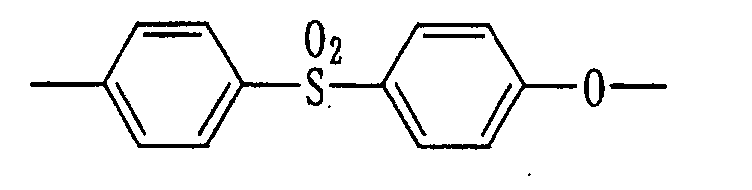


Specific examples of polyether ketone resins
include polyether ketone, polyether ether ketone,
polyether ketone ketone, polyether ether ketone ketone,
and the like.
Commercially available polyether ketone resins
are usable in the present invention. Examples of
commercially available polyether ketone resins include
polyether ether ketone and polyether ketone both
manufactured by Victrex Plc under the tradename "Victrex",
polyether ketone manufactured by BASF A.G. under the
tradename "Ultrapek", polyether ketone manufactured by
Hoechst A.G. under the tradename "Hostatec PEK", polyether
ketone manufactured by Amoco Corp. under the tradename
"ADEL", and the like.
Among these polyether ketone resins, polyether
ether ketone, polyether ketone ketone, polyether ether
ketone ketone, and the like are preferable, and polyether
ether ketone and the like are particularly preferable,
considering the heat resistance and other properties of
the resulting film.
In, the present invention, the polyether ketone
resins may be used either singly or in combination.
The polyetherimide may be selected from those
known. Examples of usable polyetherimide include
polyimide ether having the repeating units of Formulas (1)
and/or (2).
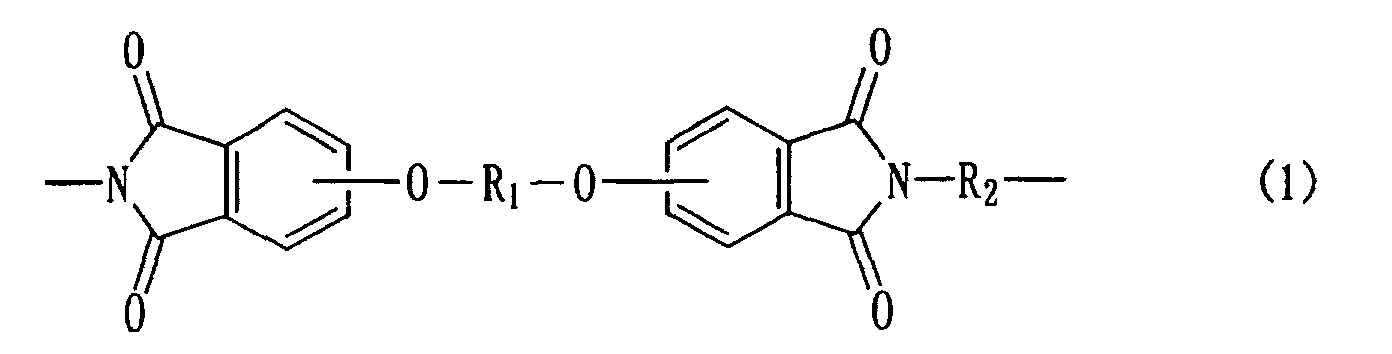
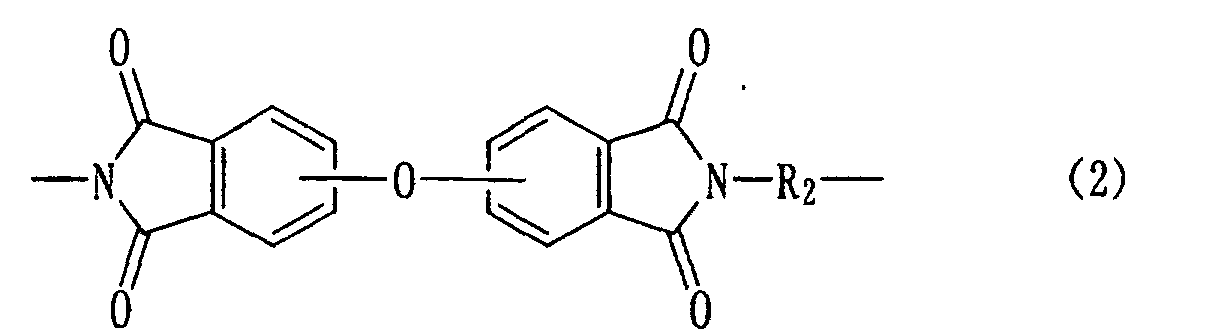 [wherein R1 represents a C6 to C30 divalent aromatic
hydrocarbon residue or an aliphatic hydrocarbon residue;
R2 is a divalent C6 to C20 aromatic hydrocarbon residue
that may be substituted by a halogen atom, a C3 to C20
cycloalkylene group, or a group
[wherein R1 represents a C6 to C30 divalent aromatic
hydrocarbon residue or an aliphatic hydrocarbon residue;
R2 is a divalent C6 to C20 aromatic hydrocarbon residue
that may be substituted by a halogen atom, a C3 to C20
cycloalkylene group, or a group
 (R3 represents -S-, -O-, -CO-, -SO2-, or - (CH2)n wherein n
is an integer of 1 to 5)].
(R3 represents -S-, -O-, -CO-, -SO2-, or - (CH2)n wherein n
is an integer of 1 to 5)].
The following are examples of organic groups
represented by R1 or R2.



Preferred examples of polyetherimide include
those having the following repeating unit:
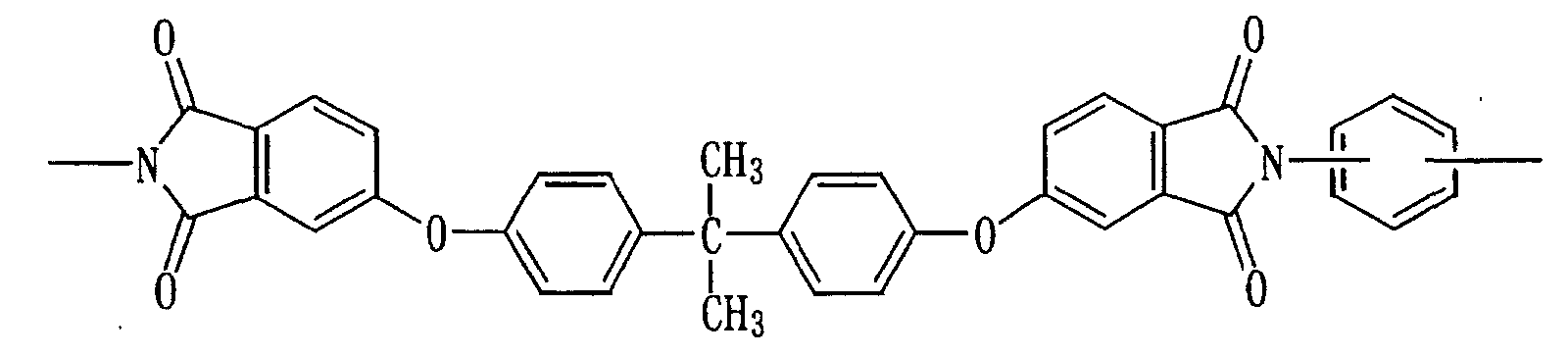
Commercially available polyetherimide, such as
polyetherimide manufactured by General Electric Co. under
the tradename "Ultem", can be used in the present
invention.
The proportions of the polyether ketone resin
and polyetherimide can be suitably selected from a wide
range. Considering the balance of the heat resistance,
mechanical properties (in particular the coefficient of
linear expansion), processability for adhesion to a metal
conductor, and other characteristics, of the resin
composition comprising the two resins and a specific flaky
inorganic filler, the proportion of the polyether ketone
resin may be 30 to 70 wt.%, preferably 35 to 65 wt.%,
relative to the total amount of the two resins, with the
remainder being polyetherimide.
The flaky boron nitride (B') for use in the
present invention has the following characteristics (1) to
(4).
Use of a flaky boron nitride with a Mohs
hardness of 3.0 or lower makes it possible to obtain a
film having good elongation characteristics, good
deflection characteristics, and the like.
When using a flaky boron nitride with a
coefficient of linear expansion not higher than 5.0 x
10-5/K, the coefficient of linear expansion of the film
can be easily adjusted to a value similar to that of
conductor layers even when the amount of the flaky boron
nitride added is changed. The coefficient of linear
expansion is measured according to JIS K-7197.
Generally, when a flaky inorganic filler
containing a metal oxide as the main ingredient is added
to a resin, the bending deflection and tensile elongation
are likely to decrease. This is presumably because the
metal oxide reacts with moisture of in the air and is
converted to a metal hydroxide, which attacks the main
chain structure of the resin and causes deterioration.
However, a flaky boron nitride that retains a chemically
stable layer structure when heated to at least 500°C does
not adversely affect the physical properties, such as
bending deflection and tensile elongation, of the film.
As used herein, the expression "chemically
inert" means that a layer structure is stable (a layer
structure is retained without being broken) during
kneading (pelletization) or film extrusion. Whether the
layer structure is retained or not is determined from a
scanning electron microscope (SEM) photograph.
A film having homogeneous characteristics
without anisotropy, a low mold shrinkage factor, and
excellent dimensional accuracy can be obtained by adding a
flaky boron nitride with an aspect ratio (the average
major axis length/thickness ratio) of 10 or higher,
preferably 15 or higher. The upper limit of the aspect
ratio is usually about 50.
In the present invention, the aspect ratio is
calculated from the major axis length (the maximum
diameter) and thickness of the flaky boron nitride
measured with a scanning electron microscope.
Examples of flaky boron nitrides that satisfy
the above characteristics (1) to (4) include h-boron
nitride (hexagonal boron nitride), γ-boron nitride, t-boron
nitride, lamellar boron-nitride and -carbide, and
the like. Among them, h-boron nitride is preferable.
These flaky boron nitrides can be used either singly or in
combination.
The flaky boron nitride used in the present
invention may be surface-treated. The surface treatment
can be carried out in a manner similar to the conventional
surface treatment of inorganic fillers, using a coupling
agent, such as a titanate coupling agent or a silane
coupling agent. The surface treatment further improves
the physical properties, such as elongation
characteristics, of the film of the present invention.
The proportion of the flaky boron nitride can be
selected from a wide range according to conditions, such
as the proportions of the polyether ketone resin and
polyetherimide, the type of the flaky boron nitride, the
thickness of the conductor layer to be laminated on the
resulting film, the place of use of the printed circuit
board containing the film, and the like. However, for
achieving high levels of characteristics, such as the
coefficient of linear expansion, elongation
characteristics, and mold shrinkage factor, of the film
with good balance, the flaky boron nitride can be used in
a proportion of 15 to 40 wt.%, preferably 20 to 35 wt.%,
relative to the total amount of the blended resin of the
polyether ketone resin and polyetherimide, and the flaky
boron nitride.
The resin composition forming the substrate film
of the present invention may contain, within the range
that does not impair the desirable characteristics of the
film, a thermoplastic resin, such as polyketone,
polyarylate, polysulfone, polyethersulfone, polyphenylene
sulfide, or polyphenylene oxide, and/or one or more known
resin additives, such as a heat stabilizer, lubricant,
release agent, pigment, dye, ultraviolet absorber, flame
retardant, plasticizer, lubricating agent, filler, or
reinforcing agent.
The resin composition preferably has a knee
point of 60 MPa or lower, more preferably 50 MPa or lower,
as determined from a stress-strain diagram created
according to JIS K7171 (bending test method). The knee
point is the point at which the stress-strain diagram
forms a curve, i.e., the point at which the resin
undergoes transition from a fully elastic state to a
plastic deformation state and viscoelastic state.
The above resin composition can be produced by
mixing or kneading the essential three components, i.e., a
polyether ketone resin, polyetherimide, and a flaky boron
nitride, optionally together with additives, by a known
process. For example, the components in the form of
powders, beads, flakes, or pellets, are mixed or kneaded
using a known extruder, kneader, or the like, to produce
the resin composition in the form of pellets.
Examples of extruders include single-screw
extruders, twin-screw extruders, multiple-screw extruders,
and the like. Examples of kneaders include co-kneaders,
Banbury mixers, pressure kneaders, twin rolls, and the
like.
The substrate film for printed circuit boards of
the present invention can be produced by forming the above
resin composition into a film by a conventional resin
forming process.
For example, the resin composition is formed
into an unoriented film by a casting process (T-die
process) in which the resin composition is melted, kneaded,
extruded in film form from a T-die, cast on the surface of
a roll, and cooled; a tubular process in which the resin
composition is melted, kneaded, extruded in tube form from
a ring die, and air- or water-cooled; or like process.
Further, the unoriented film obtained by the
casting process, tubular process, or the like can be
uniaxially or biaxially oriented at a 50 to 180°C, and
optionally subjected to heat setting at a temperature
lower than the melting point, to produce an oriented film.
The substrate film of the present invention may
be usually about 5 to about 200 µm thick, preferably about
20 to 125 µm thick, in view of its intended use.
The printed circuit board of the present
invention can be obtained by laminating the above
substrate film for printed circuit boards with a conductor
layer or layers. More specifically, for example, the film
may be laminated with a conductive layer on one or both
sides, and further, a circuit pattern may be formed on the
conductor layer to form a four or more layered structure.
The conductor layer is made of a good electrical
conductor, generally copper. Each conductor layer may be
usually about 5 to about 50 µm thick, preferably about 10
to about 40 µm thick, in view of its intended use.
The conductive layer can be laminated on the
substrate film by any known process, for example, bonding
a copper foil by thermocompression at 200°C or higher,
preferably at 210 to 250°C; forming a copper layer on the
film surface by vapor deposition or electroless plating;
or bonding the film and a copper foil via an adhesive
layer. Among theses processes, thermocompression bonding
of a copper foil is most generally employed.
The forming of the film and thermocompression
bonding of a copper foil to the film may be carried out
simultaneously.
The following Examples and Comparative Examples
are provided to illustrate the present invention in
further detail.
The heat-resistant resins used in the examples
are as follows.
The flaky inorganic fillers used in the examples
are as follows.
Tensile elongation (%): Measured according to
JIS K7161.
Bending strength (MPa) and bending deflection
(%): Measured according to JIS K7171.
Mold shrinkage factor (%): A formed article was
produced in a mold (90.01 x 49.99 x 3.20 mm) using a film
gate, and the mold shrinkage factor was calculated
according to the following equation.
Mold shrinkage factor (%) =
[(mold size - molded article size)/mold size] x 100
The mold shrinkage factor was measured in two
directions, i.e., MD (mold direction (flow direction)) and
TD (transverse direction (the direction perpendicular to
the flow direction)).
Knee point (MPa): Determined from a stress-strain
diagram created according to the bending test
method of JIS K7171.
The above heat-resistant resins and flaky
inorganic fillers were supplied to a twin-screw extruder
(manufactured by Kobe Steel Ltd. under the tradename
"KTX46") in the proportions (wt.%) shown in Table 1, to
prepare pellets of resin compositions of the present
invention and comparative resin compositions.
| Example | Comparative Example | ||||||||||
| 1 | 2 | 3 | 4 | 5 | 1 | 2 | 3 | 4 | 5 | ||
| Heat-resistant resin | PEEK | 35 | 35 | 35 | 35 | 35 | 35 | ||||
| PSF | 35 | 35 | 35 | 35 | |||||||
| PAR | 70 | 35 | 70 | 35 | |||||||
| PEI | 70 | 70 | |||||||||
| Flaky inorganic filler | h-BN | 30 | 30 | 30 | |||||||
| KEX | 30 | 30 | |||||||||
| BN powder | 30 | 30 | 30 | ||||||||
| Z-20 | 30 | 30 |
The above compositions were tested for tensile
elongation, bending strength, and bending deflection as
mechanical strength indices, and mold shrinkage factor as
an anisotropy index. Table 2 shows the results.
| Example | Comparative Example | ||||||||||
| 1 | 2 | 3 | 4 | 5 | 1 | 2 | 3 | 4 | 5 | ||
| Tensile elongation (%) | 5.0 | 4.5 | 4.6 | 5.2 | 4.6 | 5.1 | 4.6 | 4.7 | 1.7 | 1.5 | |
| Bending strength (Mpa) | 142 | 122 | 113 | 151 | 141 | 104 | 98 | 90 | 107 | 102 | |
| Bending deflection (%) | 5.6* | 5.2 | 5.3 | 5.8* | 5.7 | 5.7* | 5.3 | 5.4 | 2.2 | 1.9 | |
| Mold shrink-age factor (%) | MI | 0.27 | 0.24 | 0.25 | 0.29 | 0.27 | 0.49 | 0.46 | 0.47 | 0.37 | 0.37 |
| TD | 0.28 | 0.26 | 0.27 | 0.30 | 0.28 | 0.50 | 0.48 | 0.50 | 0.38 | 0.38 |
Of the bending deflection values shown in Table
2, those marked with * are yield values, which are bending
deflection values under the highest stress of the test
pieces that were not broken, and the others are breaking
values, which are bending deflection values at which the
test pieces were broken.
The above heat-resistant resins and flaky
inorganic fillers were supplied to a twin-screw extruder
(manufactured by Kobe Steel Ltd. under the tradename
"KTX46") in the proportions (wt.%) shown in Table 3, to
prepare pellets of the resin compositions of the present
invention and comparative resin compositions.
The obtained pellets were injection-molded, and
the formed articles were tested for tensile elongation,
bending strength, and bending deflection as mechanical
strength indices, mold shrinkage factor as an anisotropy
index, and knee point. Table 3 shows the results.
| Example | Comparative Example | ||||
| 6 | 6 | 7 | 8 | ||
| Heat-resistant resin | PEEK | 37.5 | 37.5 | 75.0 | 37.5 |
| PEI | 37.5 | 37.5 | 37.5 | ||
| Flaky inorganic filler | h-BN | 25.0 | 25.0 | ||
| BN powder | 25.0 | ||||
| Z-20 | 25.0 | ||||
| Tensile elongation (%) | 4.8 | 2.8 | 6.0 | 4.9 | |
| Bending strength (Mpa) | 146 | 120 | 166 | 135 | |
| Bending deflection (%) | 6.2 | 2.2 | 5.8* | 6.4 | |
| Mold shrinkage factor (%) | MD | 0.22 | 0.47 | 0.62 | 0.52 |
| TD | 0.24 | 0.50 | 0.63 | 0.55 | |
| Knee point (Mpa) | 42 | 160 | 38 | 44 |
Of the bending deflection values shown in Table
3, the one marked with * is a yield value, which is a
bending deflection value under the highest stress of the
test piece that was not broken, and the others are
breaking values, which are bending deflection values at
which the test pieces were broken.
Pellets of a resin composition was prepared by
following the procedure of Example 6 and using 38.5 parts
by weight of PEEK, 38.5 parts by weight of PEI, and 23
parts by weight of h-BN. The pellets were extruded using
a coathanger die extruder to produce a 75 µm-thick film.
The obtained film was evaluated by the following methods.
Table 4 shows the results.
(1) Film extrudability: The molten resin
composition extruded from the T-die was wound, and
evaluated as "a" when the extruded composition was
processable as a film; as "b" when the composition could
be taken off but was poor in appearance or had air
bubbles; and as "c" when the composition could not be
taken off.
(2) Toughness (flexibility): The film was bent
at 180 degrees to test whether brittle fracture occurred
or not, and evaluated as "c" when the film cracked like
glass or partially or completely broke at the bent
portion; and as "a" when the film had no cracking or
breaking.
(3) Cu lamination curling properties: A 35 µm-thick
electrolytic Cu foil was compression-bonded to the
film at 210°C for 30 minutes, at a pressure of 30 kg/cm2.
The curling of the obtained Cu-laminated film was
inspected, and evaluated as "a" when the radius of
curvature was 200 mm or more; as "b" when the radius of
curvature was 100 to 200 mm; and as "c" when the radius of
curvature was 100 mm or less.
(4) Tensile strength: A tensile test was carried
out according to JIS K 7311 at a rate of 300 mm/min, to
measure the tensile strength.
(5) Coefficient of linear expansion: The
coefficient of linear expansion at 20 to 130°C was
measured, using SSC5200H Disk Station, a TMA120
thermomechanical analyzer manufactured by Seiko
Instruments Inc. The direction of taking off the film is
indicated as MD, and the direction perpendicular to MD was
indicated as TD.
(6) TMA elongation: Using a TMA120
thermomechanical analyzer, the elongation (%) of a strip
specimen (5 x 25 mm) was measured under a tensile load of
50 g, with heating from 20 to 250°C at a rate of 5°C/min.
(7) Solder heat resistance: The film was dipped
in a solder bath at 260°C for 10 seconds, and inspected
for deformation. The film was evaluated as "c" when it
was severely deformed; as "b" when it was slightly
deformed; and as "a" when it had almost no deformation.
A film was produced by following the procedure
of Example 7 except using Z-20 in place of h-BN, and
evaluated. Table 4 shows the results.
A film was produced by following the procedure
of Example 7 except using only PEEK in place of the
mixture of PEEK and PEI, and evaluated. Table 4 shows the
results.
A film was prepared by following the procedure
of Example 7 except using BN powder in place of h-BN, and
evaluated. Table 4 shows the results.
| Example | Comparative Example | ||||
| 7 | 9 | 10 | 11 | ||
| Film extrudability | a | c | a | a | |
| Toughness (flexibility) | a | c | a | a | |
| Cu lamination curling properties | a | b | c | c | |
| Tensile strength (kg /mm2 ) | 19.1 | 5.0 | 21.2 | 16.2 | |
| Coefficient of linear expansion (x 10-5/K) | MD | 2.0 | 3.6 | 4.8 | 4.5 |
| TD | 2.3 | 4.0 | 5.3 | 4.9 | |
| TMA elongation (%) | 1.8 | 6.0 | 1.4 | 2.6 | |
| Solder heat resistance | a | c | a | b |
Table 4 reveals that the film of the present
invention has a coefficient of linear expansion similar to
that of copper foils; does not curl when laminated with a
copper foil; has good elongation characteristics, good
deflection characteristics, a low mold shrinkage factor,
and the like; and is excellent in heat resistance and
processability for adhesion to a metallic conductor.
A 15 µm-thick rolled copper foil was placed on
both sides of a 25 µm-thick film produced by following the
procedure of Example 7, and compression-bonded to the film
using a double belt press at a temperature of 225°C and a
pressure of 30 kg/cm2 for 10 minutes, giving a copper-clad
laminate according to the present invention.
One of the copper layers of this copper-clad
laminate was etched to form a circuit pattern. Then, a 25
µm-thick polyimide film provided with a phenol adhesive
was applied over the circuit pattern to form a protective
layer. Thus, a flexible printed circuit board was
produced.
The flexibility of the flexible printed circuit
board was evaluated by counting, as an index of
flexibility, the number of times of bending (unit:
million) that the printed circuit board could withstand.
Specifically, the number of times of bending was counted
according to IPC-243B, at a bending rate of 1500 times/min,
a stroke of 25 mm, a curvature of 5 mm, and a current of 1
mA. The counting was continued until the resistance
reached 1800 mΩ. Table 5 shows the results.
A resin composition prepared in the same manner
as in Comparative Example 6 was formed into a 25 µm-thick
film. Using this film, the procedure of Example 8 was
repeated to produce a flexible printed circuit board.
A resin composition prepared in the same manner
as in Comparative Example 7 was formed into a 25 µm-thick
film. Using this film, the procedure of Example 8 was
repeated to produce a flexible printed circuit board.
The flexibility of the flexible printed circuit
boards obtained in Comparative Examples 12 to 13 was
evaluated by counting the number of times of bending
(unit: million) that each printed circuit board could
withstand, in the same manner as above. Table 5 shows the
results.
| Example | Comparative Example | ||
| 8 | 12 | 13 | |
| Number of bending (unit: million) | 350 | 220 | 270 |
Since the resin composition of the present
invention comprises a specific heat-resistant resin and a
specific flaky inorganic filler, the formed article
obtained therefrom has a low mold shrinkage factor of
0.30% or lower, and thus has a substantially lowered
coefficient of linear expansion and is excellent in
dimensional stability in the range from room temperature
to higher temperatures. The formed article of the resin
composition of the present invention is free from the
conventional drawbacks regarding bending deflection and
tensile elongation, while retaining high mechanical
strength.
Accordingly, the resin composition of the
present invention can be suitably used for forming or
sealing electrical, electronic, and mechanical parts for
industrial devices, such as communication devices and
automotive devices.
The substrate film for printed circuit boards of
the present invention has a coefficient of linear
expansion similar to that of conductive layers; does not
curl when laminated with a conductive layer; has good
elongation characteristics, good deflection
characteristics, a low mold shrinkage factor, and the
like; and is excellent in heat resistance and
processability for adhesion to a metallic conductor.
Moreover, the substrate film for printed circuit
boards of the present invention has, with good balance,
high levels of characteristics required of substrates for
printed circuit boards. Specifically, for example, the
film of the present invention has good dimensional
accuracy and good solder heat resistance; is unlikely to
warp, twist, or have other defects; has a low coefficient
of thermal expansion; is high in mechanical strength
characteristics, such as adhesion strength to a copper
foil and bending strength; has excellent flexibility; and
is excellent in various electrical characteristics, such
as dielectric breakdown voltage, dielectric constant,
dielectric loss tangent, and volume resistivity.
Therefore, the substrate film for printed
circuit boards of the present invention retains high
durability and high reliability for a long period of time,
and can be used suitably in various electronic and
electrical devices.
Claims (17)
- A resin composition comprising:(A) at least one heat-resistant thermoplastic resin selected from the group consisting of a polyketone resin, a polyimide resin, polyethernitrile, polybenzimidazole, polyphenylene sulfide, polysulfone, polyethersulfone, polyarylate, a liquid crystal polyester resin, and 1,4-polyphenylene; and(B) a flaky inorganic filler that: (1) has a Mohs hardness of 3.0 or lower, (2) has a coefficient of linear expansion not higher than 5.0 x 10⁻⁵/K, (3) is chemically inert and retains a layer structure to at least 500°C, and (4) has an aspect ratio (the average particle diameter/thickness ratio) of 10 or higher.
- A resin composition according to Claim 1, wherein the flaky inorganic filler (B) is at least one member selected from the group consisting of lamellar graphite, h-boron nitride, γ-boron nitride, t-boron nitride, lamellar boron-nitride and -carbide, and molybdenum disulfide.
- A resin composition according to Claim 1, wherein the proportion of the flaky inorganic filler (B) in the composition is 15 to 50 wt.%.
- A resin composition according to Claim 1, wherein the flaky inorganic filler has been subjected to a coupling treatment.
- A resin composition according to Claim 1, wherein the polyketone resin is at least one member selected from the group consisting of polyether ether ketone, polyether ketone, polyketone, and polyether ketone ketone.
- A resin composition according to Claim 1, wherein the polyimide resin is at least one member selected from the group consisting of polyimide, polyamide-imide, and polyetherimide.
- A resin composition according to Claim 1, wherein the component (A) is a polymer alloy of at least one heat-resistant crystalline resin selected from the group consisting of a polyketone resin, polyimide, polyamide-imide, polyethernitrile, polybenzimidazole, polyphenylene sulfide, a liquid crystal polyester resin, and 1,4-polyphenylene, and at least one heat-resistant amorphous resin selected from the group consisting of polysulfone, polyethersulfone, polyetherimide, and polyarylate.
- A formed article obtainable by forming a resin composition according to Claim 1, the formed article having a mold shrinkage factor of 0.30% or lower, a bending deflection of 3.6% or more, and a tensile elongation of 4.3% or more.
- A substrate film for printed circuit boards, obtainable by forming a resin composition comprising:(A') a heat-resistant thermoplastic resin that is a blended resin of a polyether ketone resin and polyetherimide; and(B') a flaky boron nitride that: (1) has a Mohs hardness of 3.0 or lower, (2) has a coefficient of linear expansion not higher than 5.0 x 10⁻⁵/K, (3) is chemically inert and retains a layer structure to at least 500°C; and (4) has an aspect ratio (the average particle diameter/thickness ratio) of 10 or lower.
- A film according to Claim 9, wherein the proportion of the polyether ketone resin in the blended resin is 30 to 70 wt.%.
- A film according to Claim 9, wherein the polyether ketone resin is at least one member selected from the group consisting of polyether ketone, polyether ether ketone, polyether ketone ketone, and polyether ether ketone ketone.
- A film according to Claim 9, wherein the proportion of the flaky boron nitride (B') in the composition is 15 to 40 wt.%.
- A film according to Claim 9, wherein the flaky boron nitride (B') is at least one member selected from the group consisting of h-boron nitride, γ-boron nitride, t-boron nitride, and lamellar boron-nitride and-carbide.
- A resin composition according to Claim 9, wherein the knee point of the resin composition is 60 MPa or less.
- A printed circuit board comprising a substrate film according to Claim 9 and a conductor layer formed on the substrate film.
- A printed circuit board according to Claim 15, wherein the conductor layer is a copper foil.
- A printed circuit board comprising a substrate film according to Claim 9 and a conductor layer formed on the substrate film, the conductor layer having a circuit pattern.
Applications Claiming Priority (5)
| Application Number | Priority Date | Filing Date | Title |
|---|---|---|---|
| JP2000259799A JP3851997B2 (en) | 2000-08-29 | 2000-08-29 | COMPOSITE MATERIAL COMPOSITION AND COMPOSITE MATERIAL MOLDED BODY |
| JP2000259799 | 2000-08-29 | ||
| JP2001216681 | 2001-07-17 | ||
| JP2001216681A JP2003026914A (en) | 2001-07-17 | 2001-07-17 | Printed wiring board film and printed wiring board |
| PCT/JP2001/007405 WO2002018495A1 (en) | 2000-08-29 | 2001-08-29 | Resin composition, molded object thereof, and use thereof |
Publications (2)
| Publication Number | Publication Date |
|---|---|
| EP1314760A1 true EP1314760A1 (en) | 2003-05-28 |
| EP1314760A4 EP1314760A4 (en) | 2004-11-10 |
Family
ID=26598717
Family Applications (1)
| Application Number | Title | Priority Date | Filing Date |
|---|---|---|---|
| EP01961152A Withdrawn EP1314760A4 (en) | 2000-08-29 | 2001-08-29 | Resin composition, molded object thereof, and use thereof |
Country Status (5)
| Country | Link |
|---|---|
| US (1) | US20030181560A1 (en) |
| EP (1) | EP1314760A4 (en) |
| KR (1) | KR20030026353A (en) |
| CA (1) | CA2420843A1 (en) |
| WO (1) | WO2002018495A1 (en) |
Cited By (6)
| Publication number | Priority date | Publication date | Assignee | Title |
|---|---|---|---|---|
| WO2004058916A3 (en) * | 2002-12-18 | 2004-08-26 | Du Pont | High temperature lcp for wear resistance |
| EP1650262A1 (en) * | 2004-10-19 | 2006-04-26 | General Electric Company | Polyetherimide composition, film, process, and article |
| US7354887B2 (en) | 2002-12-18 | 2008-04-08 | E. I. Du Pont De Nemours And Company | High temperature LCP for wear resistance |
| WO2011048093A1 (en) | 2009-10-21 | 2011-04-28 | Evonik Degussa Gmbh | Film made of polyaryleetherketone |
| EP2325000A4 (en) * | 2008-09-08 | 2012-01-04 | Nippon Steel Chemical Co | HIGHLY THERMO-CONDUCTIVE POLYIMIDE FILM, HIGHLY THERMO-CONDUCTIVE SHIELDED LAMINATE AND METHOD FOR PRODUCING THE SAME |
| EP2514590A1 (en) | 2011-04-21 | 2012-10-24 | Evonik Degussa GmbH | Adhesive-free composite made of a polyarylene ether ketone foil and of a metal foil |
Families Citing this family (34)
| Publication number | Priority date | Publication date | Assignee | Title |
|---|---|---|---|---|
| US20030139510A1 (en) * | 2001-11-13 | 2003-07-24 | Sagal E. Mikhail | Polymer compositions having high thermal conductivity and dielectric strength and molded packaging assemblies produced therefrom |
| WO2004003062A1 (en) * | 2002-06-28 | 2004-01-08 | Lofo High Tech Film Gmbh | Membranes made of cast polyarylate film |
| US7975717B2 (en) * | 2003-01-09 | 2011-07-12 | Thomas Industries, Inc. | Pin insert |
| KR101146967B1 (en) * | 2003-12-05 | 2012-05-22 | 스미또모 베이크라이트 가부시키가이샤 | Production process tape for film-shaped wiring board |
| JP4238716B2 (en) * | 2003-12-15 | 2009-03-18 | 富士ゼロックス株式会社 | Electrode for electrochemical measurement and manufacturing method thereof |
| US20070026225A1 (en) * | 2005-07-29 | 2007-02-01 | Jiann-Hsing Chen | Primer composition for high temperature belts |
| US20070026226A1 (en) * | 2005-07-29 | 2007-02-01 | Jiann-Hsing Chen | Epoxy primer layer for fuser belts |
| US8163830B2 (en) * | 2006-03-31 | 2012-04-24 | Intel Corporation | Nanoclays in polymer compositions, articles containing same, processes of making same, and systems containing same |
| KR100706653B1 (en) * | 2006-12-27 | 2007-04-13 | 제일모직주식회사 | Thermally Conductive Resin Compositions and Plastic Molded Articles |
| JP5525682B2 (en) * | 2007-05-15 | 2014-06-18 | 出光ライオンコンポジット株式会社 | Polyarylene sulfide resin composition and molded article comprising the same |
| KR100927702B1 (en) * | 2007-12-21 | 2009-11-18 | 제일모직주식회사 | Electrically insulating high thermal conductive resin composition |
| DE202009018172U1 (en) * | 2009-04-22 | 2011-04-07 | Hottinger Baldwin Messtechnik Gmbh | Optical strain gauge |
| JP5688409B2 (en) | 2010-04-07 | 2015-03-25 | 電気化学工業株式会社 | Heat dissipating resin composition for LED lighting case and heat dissipating case for LED lighting case |
| JP5487010B2 (en) * | 2010-05-27 | 2014-05-07 | 日本発條株式会社 | Circuit board laminate and metal base circuit board |
| CN103998506B (en) | 2011-12-16 | 2016-08-24 | 提克纳有限责任公司 | Boracic nucleator for polyphenylene sulfide |
| WO2013090172A1 (en) | 2011-12-16 | 2013-06-20 | Ticona Llc | Method for low temperature injection molding of polyarylene sulfide compositions and injection molded part obtained thereby |
| EP2791232A1 (en) | 2011-12-16 | 2014-10-22 | Ticona LLC | Nucleating system for polyarylene sulfide compositions |
| US8852487B2 (en) | 2011-12-16 | 2014-10-07 | Ticona Llc | Injection molding of polyarylene sulfide compositions |
| US8980053B2 (en) | 2012-03-30 | 2015-03-17 | Sabic Innovative Plastics Ip B.V. | Transformer paper and other non-conductive transformer components |
| KR102137296B1 (en) * | 2012-12-20 | 2020-07-23 | 다우 글로벌 테크놀로지스 엘엘씨 | Polymer composite components for wireless-communication towers |
| WO2014130275A2 (en) * | 2013-02-22 | 2014-08-28 | Ticona Llc | High performance polymer composition with improved flow properties |
| WO2015091588A1 (en) * | 2013-12-18 | 2015-06-25 | Solvay Specialty Polymers Usa, Llc | Oil and gas recovery articles |
| CN105273366A (en) * | 2014-06-09 | 2016-01-27 | 住友化学株式会社 | Liquid crystal polyester resin composition, connector, and method for producing liquid crystal polyester resin composition |
| US20170158920A1 (en) * | 2014-06-25 | 2017-06-08 | Nok Corporation | Thermoplastic adhesive sheet |
| US10377861B2 (en) * | 2014-12-31 | 2019-08-13 | Sabic Global Technologies B.V. | Polyetherimide compositions, articles made therefrom, and method of manufacture thereof |
| US11352480B2 (en) | 2016-03-18 | 2022-06-07 | Ticona Llc | Polyaryletherketone composition |
| CN109071958B (en) * | 2016-05-02 | 2020-12-18 | 住友化学株式会社 | resin composition |
| JP2018098302A (en) * | 2016-12-09 | 2018-06-21 | 株式会社デンソー | Electronic device |
| US10982060B2 (en) | 2018-02-13 | 2021-04-20 | International Business Machines Corporation | Glass-free dielectric layers for printed circuit boards |
| US11118053B2 (en) | 2018-03-09 | 2021-09-14 | Ticona Llc | Polyaryletherketone/polyarylene sulfide composition |
| JP2021008577A (en) * | 2019-07-02 | 2021-01-28 | 住友化学株式会社 | Resin compositions, moldings, interior materials for airplanes and airplanes |
| CN113930073B (en) * | 2021-11-01 | 2024-02-06 | 沈阳航空航天大学 | Extremely-ultrahigh-temperature polyimide heat-conducting insulating material and preparation method thereof |
| CN115030942B (en) * | 2022-06-08 | 2023-08-18 | 深圳市力合鑫源智能技术有限公司 | Heat conduction film substrate metal resistance strain gauge and preparation method thereof |
| CN118003719B (en) * | 2024-03-11 | 2025-11-07 | 上海华芯晟新材料有限公司 | Polyphenylene sulfide-based copper-clad plate and preparation method thereof |
Family Cites Families (13)
| Publication number | Priority date | Publication date | Assignee | Title |
|---|---|---|---|---|
| CA1196437A (en) * | 1981-12-19 | 1985-11-05 | Kazushi Hirobe | Flame resistant resin composition |
| JPS6295330A (en) * | 1985-10-21 | 1987-05-01 | Kuraray Co Ltd | Foamed thermoplastic resin article |
| JPS62149436A (en) * | 1985-12-25 | 1987-07-03 | 住友ベークライト株式会社 | Heat-resistant composite film |
| JPH01108799A (en) * | 1987-10-22 | 1989-04-26 | Nitto Boseki Co Ltd | Thermoplastic resin molding and manufacture thereof |
| JPH0750837B2 (en) * | 1988-03-10 | 1995-05-31 | 日本電気株式会社 | Method for forming radio wave absorber film and radio wave absorber composition |
| JP2715499B2 (en) * | 1988-12-15 | 1998-02-18 | 住友化学工業株式会社 | Thermoplastic resin composition |
| JP2993065B2 (en) * | 1990-07-27 | 1999-12-20 | 三菱瓦斯化学株式会社 | Metal foil-clad laminate with smooth surface |
| US5391594A (en) * | 1992-06-29 | 1995-02-21 | Dow Corning Corporation | Method for imparting fire retardancy to organic resins |
| JPH06157782A (en) * | 1992-11-17 | 1994-06-07 | Teijin Ltd | Polyester film |
| CN1051330C (en) * | 1993-04-30 | 2000-04-12 | 三菱化学株式会社 | Molded article of thermoplastic resin composition |
| JPH073065A (en) * | 1993-06-16 | 1995-01-06 | Kuraray Co Ltd | Expandable thermoplastic resin composition and method for producing foamed molded article |
| US6011086A (en) * | 1994-07-28 | 2000-01-04 | Morton International, Inc. | Mixture of sorbitan ester, magnesium hydroxide and thermoplastic resin |
| DE59909538D1 (en) * | 1998-09-14 | 2004-06-24 | Albemarle Corp | SURFACE-MODIFIED FILLER COMPOSITION |
-
2001
- 2001-08-29 WO PCT/JP2001/007405 patent/WO2002018495A1/en not_active Ceased
- 2001-08-29 EP EP01961152A patent/EP1314760A4/en not_active Withdrawn
- 2001-08-29 US US10/362,596 patent/US20030181560A1/en not_active Abandoned
- 2001-08-29 KR KR10-2003-7002779A patent/KR20030026353A/en not_active Withdrawn
- 2001-08-29 CA CA002420843A patent/CA2420843A1/en not_active Abandoned
Cited By (10)
| Publication number | Priority date | Publication date | Assignee | Title |
|---|---|---|---|---|
| WO2004058916A3 (en) * | 2002-12-18 | 2004-08-26 | Du Pont | High temperature lcp for wear resistance |
| US7354887B2 (en) | 2002-12-18 | 2008-04-08 | E. I. Du Pont De Nemours And Company | High temperature LCP for wear resistance |
| EP1650262A1 (en) * | 2004-10-19 | 2006-04-26 | General Electric Company | Polyetherimide composition, film, process, and article |
| EP2325000A4 (en) * | 2008-09-08 | 2012-01-04 | Nippon Steel Chemical Co | HIGHLY THERMO-CONDUCTIVE POLYIMIDE FILM, HIGHLY THERMO-CONDUCTIVE SHIELDED LAMINATE AND METHOD FOR PRODUCING THE SAME |
| WO2011048093A1 (en) | 2009-10-21 | 2011-04-28 | Evonik Degussa Gmbh | Film made of polyaryleetherketone |
| DE102009045892A1 (en) | 2009-10-21 | 2011-04-28 | Evonik Degussa Gmbh | Polyarylene ether ketone film |
| US9334356B2 (en) | 2009-10-21 | 2016-05-10 | Evonik Degussa Gmbh | Film made of polyaryleetherketone |
| EP2514590A1 (en) | 2011-04-21 | 2012-10-24 | Evonik Degussa GmbH | Adhesive-free composite made of a polyarylene ether ketone foil and of a metal foil |
| DE102011007837A1 (en) | 2011-04-21 | 2012-10-25 | Evonik Degussa Gmbh | Adhesive-free composite of a polyarylene ether ketone and a metal foil |
| CN102744932B (en) * | 2011-04-21 | 2016-01-20 | 赢创德固赛有限公司 | The adhesive-free compound be made up of polyarylene ether ketone paper tinsel and metal forming |
Also Published As
| Publication number | Publication date |
|---|---|
| US20030181560A1 (en) | 2003-09-25 |
| WO2002018495A1 (en) | 2002-03-07 |
| KR20030026353A (en) | 2003-03-31 |
| CA2420843A1 (en) | 2003-02-27 |
| EP1314760A4 (en) | 2004-11-10 |
Similar Documents
| Publication | Publication Date | Title |
|---|---|---|
| US20030181560A1 (en) | Resin composition, molded object thereof, and use thereof | |
| US7033675B2 (en) | Polyarlketone resin film and a laminate thereof with metal | |
| US6824884B2 (en) | Heat resistant resin composition, a heat resistant film or sheet thereof and a laminate comprising the film or the sheet as a susbstrate | |
| JPWO2001040380A1 (en) | Resin composition and flexible printed wiring board | |
| JP4180661B2 (en) | Polymer composition having a relative dielectric constant stable to temperature | |
| JP2003026914A (en) | Printed wiring board film and printed wiring board | |
| EP3240826B1 (en) | Polyetherimide compositions, articles made therefrom, and method of manufacture thereof | |
| JP2006274073A (en) | Resin composition, resin molded body thereof, and method for producing resin composition | |
| EP0868732A1 (en) | Poly(phenylene sulfide) composites having a high dielectric constant | |
| WO2006082902A1 (en) | Resin composition for electronic and electric components for high-frequency applications and its molded product | |
| JP3851997B2 (en) | COMPOSITE MATERIAL COMPOSITION AND COMPOSITE MATERIAL MOLDED BODY | |
| EP1799769A1 (en) | Sulfone polymer composition | |
| CN116034026A (en) | Resin composition, molding, composite and use thereof | |
| KR102925364B1 (en) | Powder composition, film, and method for producing film | |
| JP2004266105A (en) | Flexible printed wiring board with reinforcing board | |
| JP3875061B2 (en) | Resin composition and molded product | |
| JP2003128944A (en) | Resin composition and molded product | |
| KR20240034188A (en) | Manufacturing method and composite sheet of composite sheet | |
| JP2003128931A (en) | Resin composition and molded material | |
| JP2007197715A (en) | Heat resistant resin composition and print wiring board | |
| JP4849762B2 (en) | Aromatic resin composition, heat-resistant sheet, and flexible circuit board reinforcing sheet | |
| CN100415831C (en) | Thin films and their metal laminates | |
| KR101146967B1 (en) | Production process tape for film-shaped wiring board | |
| TW202224898A (en) | Molding material and molded article | |
| TWI907977B (en) | Thermoplastic resin compositions, molded articles and parts for communication equipment |
Legal Events
| Date | Code | Title | Description |
|---|---|---|---|
| PUAI | Public reference made under article 153(3) epc to a published international application that has entered the european phase |
Free format text: ORIGINAL CODE: 0009012 |
|
| 17P | Request for examination filed |
Effective date: 20030328 |
|
| AK | Designated contracting states |
Designated state(s): AT BE CH CY DE DK ES FI FR GB GR IE IT LI LU MC NL PT SE TR |
|
| RAP1 | Party data changed (applicant data changed or rights of an application transferred) |
Owner name: OTSUKA CHEMICAL HOLDINGS CO., LTD. |
|
| RAP1 | Party data changed (applicant data changed or rights of an application transferred) |
Owner name: OTSUKA CHEMICAL CO., LTD. |
|
| A4 | Supplementary search report drawn up and despatched |
Effective date: 20040924 |
|
| 17Q | First examination report despatched |
Effective date: 20041213 |
|
| STAA | Information on the status of an ep patent application or granted ep patent |
Free format text: STATUS: THE APPLICATION IS DEEMED TO BE WITHDRAWN |
|
| 18D | Application deemed to be withdrawn |
Effective date: 20050426 |