EP1313830B1 - Use of percarbamic acid and diacyl percarbamates and precursors therefor - Google Patents
Use of percarbamic acid and diacyl percarbamates and precursors therefor Download PDFInfo
- Publication number
- EP1313830B1 EP1313830B1 EP01960889A EP01960889A EP1313830B1 EP 1313830 B1 EP1313830 B1 EP 1313830B1 EP 01960889 A EP01960889 A EP 01960889A EP 01960889 A EP01960889 A EP 01960889A EP 1313830 B1 EP1313830 B1 EP 1313830B1
- Authority
- EP
- European Patent Office
- Prior art keywords
- group
- formula
- optionally substituted
- hydrogen
- bleaching
- Prior art date
- Legal status (The legal status is an assumption and is not a legal conclusion. Google has not performed a legal analysis and makes no representation as to the accuracy of the status listed.)
- Expired - Lifetime
Links
- 0 COc(cc1)ccc1[N+]([O-])=* Chemical compound COc(cc1)ccc1[N+]([O-])=* 0.000 description 4
- FLGSETTWZIEYOU-UHFFFAOYSA-N COC1(CC[NH2]CC1)O Chemical compound COC1(CC[NH2]CC1)O FLGSETTWZIEYOU-UHFFFAOYSA-N 0.000 description 1
Classifications
-
- A—HUMAN NECESSITIES
- A61—MEDICAL OR VETERINARY SCIENCE; HYGIENE
- A61Q—SPECIFIC USE OF COSMETICS OR SIMILAR TOILETRY PREPARATIONS
- A61Q5/00—Preparations for care of the hair
- A61Q5/08—Preparations for bleaching the hair
-
- A—HUMAN NECESSITIES
- A61—MEDICAL OR VETERINARY SCIENCE; HYGIENE
- A61K—PREPARATIONS FOR MEDICAL, DENTAL OR TOILETRY PURPOSES
- A61K8/00—Cosmetics or similar toiletry preparations
- A61K8/18—Cosmetics or similar toiletry preparations characterised by the composition
- A61K8/30—Cosmetics or similar toiletry preparations characterised by the composition containing organic compounds
- A61K8/40—Cosmetics or similar toiletry preparations characterised by the composition containing organic compounds containing nitrogen
- A61K8/44—Aminocarboxylic acids or derivatives thereof, e.g. aminocarboxylic acids containing sulfur; Salts; Esters or N-acylated derivatives thereof
-
- A—HUMAN NECESSITIES
- A61—MEDICAL OR VETERINARY SCIENCE; HYGIENE
- A61L—METHODS OR APPARATUS FOR STERILISING MATERIALS OR OBJECTS IN GENERAL; DISINFECTION, STERILISATION OR DEODORISATION OF AIR; CHEMICAL ASPECTS OF BANDAGES, DRESSINGS, ABSORBENT PADS OR SURGICAL ARTICLES; MATERIALS FOR BANDAGES, DRESSINGS, ABSORBENT PADS OR SURGICAL ARTICLES
- A61L2/00—Disinfection or sterilisation of materials or objects, in general; Accessories therefor
- A61L2/16—Disinfection or sterilisation of materials or objects, in general; Accessories therefor using chemical substances
- A61L2/18—Liquid substances
- A61L2/186—Peroxide solutions
-
- C—CHEMISTRY; METALLURGY
- C02—TREATMENT OF WATER, WASTE WATER, SEWAGE, OR SLUDGE
- C02F—TREATMENT OF WATER, WASTE WATER, SEWAGE, OR SLUDGE
- C02F1/00—Treatment of water, waste water, or sewage
- C02F1/50—Treatment of water, waste water, or sewage by addition or application of a germicide or by oligodynamic treatment
-
- C—CHEMISTRY; METALLURGY
- C11—ANIMAL OR VEGETABLE OILS, FATS, FATTY SUBSTANCES OR WAXES; FATTY ACIDS THEREFROM; DETERGENTS; CANDLES
- C11D—DETERGENT COMPOSITIONS; USE OF SINGLE SUBSTANCES AS DETERGENTS; SOAP OR SOAP-MAKING; RESIN SOAPS; RECOVERY OF GLYCEROL
- C11D3/00—Other compounding ingredients of detergent compositions covered in group C11D1/00
- C11D3/39—Organic or inorganic per-compounds
- C11D3/3902—Organic or inorganic per-compounds combined with specific additives
- C11D3/3905—Bleach activators or bleach catalysts
- C11D3/3907—Organic compounds
- C11D3/3917—Nitrogen-containing compounds
-
- C—CHEMISTRY; METALLURGY
- C11—ANIMAL OR VEGETABLE OILS, FATS, FATTY SUBSTANCES OR WAXES; FATTY ACIDS THEREFROM; DETERGENTS; CANDLES
- C11D—DETERGENT COMPOSITIONS; USE OF SINGLE SUBSTANCES AS DETERGENTS; SOAP OR SOAP-MAKING; RESIN SOAPS; RECOVERY OF GLYCEROL
- C11D3/00—Other compounding ingredients of detergent compositions covered in group C11D1/00
- C11D3/39—Organic or inorganic per-compounds
- C11D3/3945—Organic per-compounds
-
- A—HUMAN NECESSITIES
- A61—MEDICAL OR VETERINARY SCIENCE; HYGIENE
- A61L—METHODS OR APPARATUS FOR STERILISING MATERIALS OR OBJECTS IN GENERAL; DISINFECTION, STERILISATION OR DEODORISATION OF AIR; CHEMICAL ASPECTS OF BANDAGES, DRESSINGS, ABSORBENT PADS OR SURGICAL ARTICLES; MATERIALS FOR BANDAGES, DRESSINGS, ABSORBENT PADS OR SURGICAL ARTICLES
- A61L2103/00—Materials or objects being the target of disinfection or sterilisation
- A61L2103/50—Textiles, e.g. bedwear or towels
-
- A—HUMAN NECESSITIES
- A61—MEDICAL OR VETERINARY SCIENCE; HYGIENE
- A61L—METHODS OR APPARATUS FOR STERILISING MATERIALS OR OBJECTS IN GENERAL; DISINFECTION, STERILISATION OR DEODORISATION OF AIR; CHEMICAL ASPECTS OF BANDAGES, DRESSINGS, ABSORBENT PADS OR SURGICAL ARTICLES; MATERIALS FOR BANDAGES, DRESSINGS, ABSORBENT PADS OR SURGICAL ARTICLES
- A61L2202/00—Aspects relating to methods or apparatus for disinfecting or sterilising materials or objects
- A61L2202/10—Apparatus features
- A61L2202/17—Combination with washing or cleaning means
-
- C—CHEMISTRY; METALLURGY
- C02—TREATMENT OF WATER, WASTE WATER, SEWAGE, OR SLUDGE
- C02F—TREATMENT OF WATER, WASTE WATER, SEWAGE, OR SLUDGE
- C02F2209/00—Controlling or monitoring parameters in water treatment
- C02F2209/06—Controlling or monitoring parameters in water treatment pH
Definitions
- the present invention relates to the preparation and application of percarbamic acids and diacyl precarbamates, in particular to their use in bleaching, sterilisation and purification processes.
- the invention further relates to certain novel precursors for such acids.
- bleaches are based on hydrogen peroxide chemistry.
- Convenient solid carriers of hydrogen peroxide favoured by the laundry industry include sodium percarbonate or perborate, these compounds reacting immediately with water to give free hydrogen peroxide.
- Hydrogen peroxide functions as an excellent bleach at temperatures greater than 60°C and at pH greater than 10.
- bleach activators are used.
- bleach activators form the reactive bleach, commonly peracetic acid, by reaction of O-acetyl or N-acetyl species with alkaline hydrogen peroxide.
- bleach activators commonly used in household laundry operations include N,N,N',N'-tetraacetylethylenediamine (TAED), sodium nonanoyloxybenzene-4-sulphonate (SNOBS), glucose-pentaacetate (GPA), di-N-acetyldimethylglyoxin (ADMG) and 1-phenyl-3-acetylhydantoin (PAH).
- TAED N,N,N',N'-tetraacetylethylenediamine
- SNOBS sodium nonanoyloxybenzene-4-sulphonate
- GPA glucose-pentaacetate
- ADMG di-N-acetyldimethylglyoxin
- PAH 1-phenyl-3-acetylhydantoin
- a disadvantage of these compounds is that they do not work effectively at temperatures lower than about 40°C or at acidic and neutral pH.
- cyanamides, dicyanamides and their acid salts are potentially highly toxic, and must therefore be thoroughly rinsed from laundry washed using these compounds as bleach activators.
- JP 9-87685 an aqueous alkaline solution of alkali metal or ammonium cyanate salts, in combination with hydrogen peroxide, is disclosed for use in bleaching/deodorising sports shoes.
- the optimum pH for the process is 9-11, similar to the other bleaching processes described above. There is no mention of the mechanism of bleaching/deodorising.
- EP 543175 discloses the use of cyanate salts and alkaline hydrogen peroxide solutions at pH > 10 for the bleaching of paper pulp. However the disclosure suggests only a small improvement of whiteness.
- percarbamic acids including percarbamic acid itself are effective bleaching agents and/or sterilising and/or bactericidal agents over a wide range of pH and temperatures, and are suitable for a wide range of applications.
- percarbamic acid When the percarbamic acid is formed it is believed that it may be accompanied by the part production of a corresponding diacyl percarbamate.
- a method of treatment of a material comprising: (a) generating percarbamic acid and/or diacyl percarbamate by reacting and hydrogen peroxide, the perhydroxy anion or a precursor therefor, wherein L is a moiety displaced by the anion - OOH and (b) contacting said material with the percarbamic acid and/or diacyl percarbamate thus generated.
- the material is contacted with a percarbamic acid.
- the method of treatment is preferably carried out in the pH range 3 to 11, more preferably 4 to 9 and most preferably 5 to 8.
- the method of treatment is preferably carried out at a temperature in the range 0°C to 95°C, more preferably 0°C to 70°C, and most preferably 20°C to 40°C.
- Materials to be treated may be organic fibres including cellulose, lignin and hair, inorganic fibres, textile materials including cotton, wool and synthetic textiles, metal surfaces, wood surfaces, ceramic surfaces, plastics surfaces, and liquids, especially aqueous liquids.
- the method of treatment is preferably bleaching, for example hair bleaching, textile bleaching, including household laundry and industrial textile bleaching, dye bleaching for both solutions and dyed surfaces, and pulp and paper bleaching.
- the method of treatment may be sterilisation of surfaces or contaminated water/aqueous solutions, including waste water streams containing dyestuffs and humic components.
- a preferred method of the present invention is the bleaching of clothes, especially during washing thereof.
- the aqueous solution also contains detergency agents.
- Another preferred method is bleaching of human hair.
- the percarbamic acid and/or diacyl percarbamate is generated in situ.
- in situ we mean that it is generated during or shortly before the method of treatment.
- the preferred temperature and pH conditions for these three methods are the same as the preferred conditions set out above for the method of treatment.
- L is selected from a phosphonate, phosphinate, thiourea or quaternary ammonium group; or from groups of the formula -SO 3 M where M represents a hydrogen atom, or an alkali metal atom, or an ammonium group; or from groups of the formula - X R 3 or - Y (R 3 ) 2 where X represents an oxygen or sulphur atom, Y represents a nitrogen atom, and R 3 is selected from hydrogen, optionally substituted alkyl, optionally substituted aryl, optionally substituted amino, cyano, hydroxyl and optionally substituted alkylcarbonyl groups wherein when L is -Y(R 3 ) 2 each R 3 group may be the same or different and is independently selected from the above list, or the groups R 3 and Y may together represent an optionally substituted heteroaryl or non-aromatic heterocyclic group.
- Suitable substituents of an aryl or heteroaryl group include halogen, especially fluorine, chlorine and bromine atoms, and nitro, cyano, hydroxyl, alkyl, haloalkyl, haloalkoxy, alkoxyalkyl, aryloxy, alkoxy, alkoxyalkoxy, amino, mono and di-alkylamino, aminoakyl, mono- and di-alkylaminoalkyl, amido, mono- and di-alkylamido groups and groups of formula - SO 3 M or -COOM where M is as defined above.
- An especially preferred substituent of an aryl group is -SO 3 M.
- Any substituted aryl or heteroaryl group may suitably be substituted by one to three substituents, preferably by one substituent.
- Preferred substituents of an alkyl group or of an alkyl moiety within a larger group or of a cycloalkyl or non-aromatic heterocyclic group include halogen, especially fluorine, chlorine or bromine atoms, and nitro, cyano, amidothio (-S-CONH 2 ), amidoamino (-NH-CONH 2 ), hydroxyl, alkoxy, haloalkoxy, -COOM, alkoxycarbonyl, amino and mono- and di-alkylamino and -SO 3 M groups, where M is as defined above.
- Preferred substituents of an amino group include alkyl, cyano, hydroxyl, alkoxy, amino, amido, thioamido (-CSNH 2 ), aminosaccharide, polyaminosaccharide groups (for example glucosamino and polyglucosamino groups).
- an amino group is unsubstituted or mono- substituted, or disubstituted by two alkyl, especially methyl, groups.
- Preferred heteroaryl or non-aromatic heterocyclic groups contain 1-3 hetero ring atoms selected from oxygen, sulphur or nitrogen. Preferred groups have at least one ring nitrogen atom.
- Preferred heteroaryl and non-aromatic heterocyclic groups include pyrazine and pyridine groups which are unsubstituted or substituted by a single group selected from -COOM and -CONH 2, where M is as defined above; piperidine and morpholine groups which are unsubstituted or substituted by a single C 1-4 alkyl group; and bicyclic non-aromatic heterocycles containing one or two nitrogen atoms, for example azabicyclooctane and diazabicyclooctane.
- a preferred sub-class of groups L is those of formula - SO 3 M where M is as defined above.
- a preferred sub-class of groups L is those of formula -SX where X represents a cyano group, SO 3 M (where M is defined above) or an optionally substituted C 1-6 alkyl group (preferably unsubstituted or substituted by one to three substituents independently selected from -COOM, -SO 3 M, hydroxyl, amidothio, optionally substituted amino (preferably NH 2 or -NH-CONH 2 ), optionally substituted alkoxy (preferably unsubstituted), optionally substituted amido (preferably -CONH 2 ) and -COOY, where M is as defined above and Y is an optionally substituted (preferably unsubstituted) alkyl group).
- Especially preferred groups L are -SCN and -SO 3 M.
- M represents hydrogen or an alkali metal atom; and especially hydrogen or sodium.
- a noteworthy sub-class of groups L is those of formula -OX' where X' represents an optionally substituted (preferably unsubstituted) alkyl group, an optionally substituted (preferably unsubstituted) aryl group or an optionally substituted (preferably unsubstituted) alkylcarbonyl group, or a group -CHO or -OCN.
- X' represents an optionally substituted (preferably unsubstituted) alkyl group, an optionally substituted (preferably unsubstituted) aryl group or an optionally substituted (preferably unsubstituted) alkylcarbonyl group, or a group -CHO or -OCN.
- a preferred group L of formula -OX' is -O-PhSO 3 M where M is defined above.
- a noteworthy sub-class of groups L is those of formula -NX" X''' where X" and X''' may both be alkyl groups or X" may be a hydrogen atom and X''' may be a cyano, alkyl, hydroxyl, amido, amino, aminosaccharide or polyaminosaccharide group.
- suitable groups L include: where R 4 is an alkyl group or a hydrogen atom and, especially SO 3 M (especially SO 3 H and SO 3 Na)
- suitable compounds NHR-CO-L include compounds which may have more than one group NHR-CO-, and so many offer more than one point of attack to the peroxyanion.
- One example of compound of this type is biuret.
- Compounds of formula (II) may be prepared by a reaction employing an alkali metal or ammonium cyanate and a compound HL where L is as defined above.
- An alkali metal cyanate notably sodium cyanate, is preferred.
- the resulting compounds (II) may be isolated but if it is wished they may be contacted with hydrogen peroxide, or the perhydroxy anion, in situ to effect the treatment method.
- the process employing an alkali metal or ammonium cyanate and a compound of formula HL is performed in the presence of a solvent, more preferably in aqueous solution.
- a solvent more preferably in aqueous solution.
- the pH of the reaction mixture is maintained between 2 and 10, most preferably between 4 and 8. The pH needed will, however, depend on the nature of L.
- L is a sulphur-containing leaving group
- the pH is preferably maintained between 4 and 5 for the duration of the reaction.
- L is a tertiary amine containing leaving group, such as pyridine
- the pH is preferably maintained between 6.5 and 7.5 for the duration of the reaction.
- L contains an alcoholate residue
- the pH is preferably maintained between 7 and 8 for the duration of the reaction.
- the reaction is carried out at a temperature between 0°C and 100°C, more preferably between 10°C and 50°C, and most preferably at ambient temperature.
- a washing or bleaching or sterilizing or bactericidal composition comprising a compound of formula (II) and hydrogen peroxide or the perhydroxy anion or a precursor therefor.
- the composition may include a solid concentrate or a liquid concentrate.
- the composition may when intended for washing or bleaching contain detergent components.
- a preferred composition comprises a solid, preferably granular, clothes washing composition, comprising a detergent, a compound of formula (II) and a compound which generates perhydroxy anions in water.
- Such compounds may be prepared as described above, and such methods applied for the preparation of novel compounds constitutes a further aspect of the present invention.
- Sodium cyanate (5g, 0.077 mol) was dissolved in water (50 ml) and stirred for 5 minutes; then the pH of the cyanate solution was adjusted to 5 using hydrochloric acid (1 M); Hypophosphorous acid (5g, 50% (w/w) solution, 0.0038 mol) was dissolved in water (20 ml) and gradually added to the stirred cyanate solution over 1 hour; the pH was maintained at 5. After the addition of hypophosphorous acid, the reaction was continued at room temperature until the pH became stable; the reaction was then stopped. During the reaction, a solid product precipitated; when the reaction finished, this solid was filtered off and dried in ambient air.
- a double substitution reaction can occur to give a mixture of products (ASP 2 and ASP 2A); more quantitative yields of ASP 2A can be achieved by giving a larger amount of sodium cyanate.
- ASP 2A is the predominant product.
- Tea-stained cotton fabric was prepared by the following method: Three small tea bags of British-style "brown" tea were placed in 1000 ml of water and boiled for 15 minutes. A plain weave cotton fabric was impregnated by adding this solution (wet pick-up 100%) and this fabric was allowed to dry in ambient air. This fabric was then left in a laboratory oven for 60 minutes at 60°C.
- the bleach solution was made up as follows: Hydrogen peroxide (100%) 5g/l Bleach activator 3g/l pH buffer Goods to liquor ratio 1:10
- Tea stained fabric, as described above, and bleach solution were put in to a 100cm 3 sealed stainless steel dyepot and placed in a laboratory dyeing machine (Rotadyer). The bleaching process was carried out for 45 minutes at the selected temperature. After bleaching, the fabric was washed thoroughly in tap water and dried in ambient air. The CIE whiteness values of the tea stained starting fabric was measured, and found to be - 34.4.
- Sodium cyanate (5g, 0.077 mol) was dissolved in water (50 ml) and stirred for 5 minutes at room temperature; nicotinic acid solid (9.5g, 0.077 mol) was gradually added to the stirred cyanate solution to keep pH maintained at 5 - 5.5 (no other acid was needed). After the addition of nicotinic acid, the reaction was continued at room temperature and at pH 5 - 5.5. When the pH of the solution became stable, the reaction was stopped. The product was precipitated by the addition of 400 ml of acetone to the mixture reaction; the solid was filtered off and dried in ambient air.
- Sodium cyanate (5g, 0.077 mol) was dissolved in water (50 ml) and stirred for 5 minutes at room temperature; then the pH of the cyanate solution was adjusted to 5 using acetic acid. Nicotinic amide solid (12.2g, 0.1 mol) was gradually added to the stirred cyanate solution over 1.5 hour; the pH was maintained at 5. After the addition of nicotinic amide, the reaction was continued at room temperature and at pH 5 ⁇ 5.5. When the pH became stable, the reaction was stopped. The product was precipitated by the addition of acetone (350 ml) to the reaction mixture; the solid was filtered off and dried in ambient air.
- Nicotinic amide solid (12.2g, 0.1 mol) was gradually added to the stirred cyanate solution over 1.5 hour; the pH was maintained at 5. After the addition of nicotinic amide, the reaction was continued at room temperature and at pH 5 ⁇ 5.5. When the pH became stable, the reaction was stopped. The product was precipitated by the addition of
- Sodium cyanate (5g, 0.077 mol) was dissolved in water (50 ml) and stirred for 5 minutes at room temperature; then the pH of the cyanate solution was adjusted to 5 using acetic acid.
- Solid diazabicyclooctane (DABCO) (8.6g, 0.0077 mol) was gradually added to the stirred cyanate solution over 1 hour; the pH was maintained at 5. After the addition of DABCO, the reaction was continued at room temperature and at pH 5-5.5. When the pH became stable, the reaction was stopped. The product was precipitated by the addition of acetone (350 ml) to the reaction mixture; the solid was filtered off and dried in ambient air.
- Bleach activators used were sodium cyanate and TAED.
- CIE whiteness values of fabric bleached at pH 5 at different temperatures Bleaching species 20°C 50°C 95°C H 2 O 2 0.6 23.1 60.8 NaOCN + H 2 O 2 24.8 67.6 83.4 TAED + H 2 O 2 5.8 46.6 76.6
- CIE whiteness values of fabric bleached at pH 7 at different temperatures Bleaching species 20°C 50°C 95°C H 2 O 2 13.6 36.6 81.0 NaOCN + H 2 O 2 51.4 78.2 84.1 TAED + H 2 O 2 49.8 76.6 79.8
- CIE whiteness values fabric bleached at pH 10 at different temperatures Bleaching species 20°C 50°C 95°C H 2 O 2 33.3 62.9 78.2 NaOCN + H 2 O 2 55.4 72.2 82.7 TAED + H 2 O 2 47.0 71.9 71.6
- bleach activators give optimal performance at particular pH and temperature conditions. Accordingly appropriate activators may be selected, having regard to the bleaching processes to be carried out. For example wool is generally bleached under near-neutral and mild conditions whereas cotton is generally bleached under alkaline high temperature conditions.
- Dye solution was prepared by dissolving Remazol Black B (Dystar) (0.1g) in water (1000 ml). For each sample 20 ml of the dye solution was used.
- the bleaching solution was prepared as follows:
- pH 3 was obtained with acetic acid; pH 7 was obtained with sodium dihydrogen phosphate (0.1M) and sodium hydroxide (0.1M); pH 10 was obtained using sodium carbonate.
- the bleaching solutions were left at 20°C, and the absorbance values were measured after 3 hours and 24 hours using UV/visible spectrophotometry at 600 nm.
- the bleach solution was prepared as follows:
- the human black hair tress was impregnated with this solution at 35°C for 15-30 minutes, washed with tap water to remove residual bleach species and allowed to dry in air.
- the black hair was found to be bleached to a different blonde shade depending on the bleaching species concentration and bleach. If sodium cyanate was omitted, no bleaching effect was detected.
- a and B were as expected about the same, C showed a moderate reduction ( ⁇ 66%) due to the presence of peroxide.
- E showed no bacterial growth, indicating 100% kill in the 45 minutes treatment period.
- the decrease in bacteria count in D may be due to toxicity of ASP 1 or possibly to the ASP 1 increasing the toxic effect of endogenously produced peroxide.
- the combination of peroxide and ASP 1 is highly effective.
- the above composition was also an effective bacteriocide against pseudomonas aeruginosa, staphylococcus epidermis and aspergillus niger.
Landscapes
- Chemical & Material Sciences (AREA)
- Life Sciences & Earth Sciences (AREA)
- Health & Medical Sciences (AREA)
- Engineering & Computer Science (AREA)
- Animal Behavior & Ethology (AREA)
- General Health & Medical Sciences (AREA)
- Public Health (AREA)
- Veterinary Medicine (AREA)
- Organic Chemistry (AREA)
- Chemical Kinetics & Catalysis (AREA)
- Wood Science & Technology (AREA)
- Epidemiology (AREA)
- Oil, Petroleum & Natural Gas (AREA)
- Inorganic Chemistry (AREA)
- Water Supply & Treatment (AREA)
- Hydrology & Water Resources (AREA)
- Environmental & Geological Engineering (AREA)
- General Chemical & Material Sciences (AREA)
- Birds (AREA)
- Detergent Compositions (AREA)
- Organic Low-Molecular-Weight Compounds And Preparation Thereof (AREA)
- Agricultural Chemicals And Associated Chemicals (AREA)
- Cosmetics (AREA)
- Indole Compounds (AREA)
- Pyridine Compounds (AREA)
Abstract
Description
- The present invention relates to the preparation and application of percarbamic acids and diacyl precarbamates, in particular to their use in bleaching, sterilisation and purification processes. The invention further relates to certain novel precursors for such acids.
- Many bleaches are based on hydrogen peroxide chemistry. Convenient solid carriers of hydrogen peroxide favoured by the laundry industry include sodium percarbonate or perborate, these compounds reacting immediately with water to give free hydrogen peroxide. Hydrogen peroxide functions as an excellent bleach at temperatures greater than 60°C and at pH greater than 10. In order to facilitate low temperature bleaching under normal household washing temperatures of less than 60°C bleach activators are used. Usually bleach activators form the reactive bleach, commonly peracetic acid, by reaction of O-acetyl or N-acetyl species with alkaline hydrogen peroxide.
- Examples of bleach activators commonly used in household laundry operations include N,N,N',N'-tetraacetylethylenediamine (TAED), sodium nonanoyloxybenzene-4-sulphonate (SNOBS), glucose-pentaacetate (GPA), di-N-acetyldimethylglyoxin (ADMG) and 1-phenyl-3-acetylhydantoin (PAH). Of the examples listed TAED, which forms peracetic acid, has had the most impact, followed by SNOBS, which forms pemonanoic acid. Such compounds are exemplified in GB 836988, GB 907356, EP 98129, US 2,898,181, US 3,163,606 and EP 120591.
- A disadvantage of these compounds is that they do not work effectively at temperatures lower than about 40°C or at acidic and neutral pH.
- Research has described the use of peramidic acid (NH2-(C=NH)OOH), formed from the reaction of cyanamides, dicyanamides and their acid salts with hydrogen peroxide, for laundry bleaching. Examples are disclosed in US 4,086,177, US 3,756,774 and EP 819673. In each of these examples the use of peramidic acid as the bleaching agent enables a pH of between 7.5-13 and temperatures of 20-60°C to be used for laundry washing. However in each case the highest activity is still obtained at pH 9-13 and temperatures of 40°-80°.
- Furthermore cyanamides, dicyanamides and their acid salts are potentially highly toxic, and must therefore be thoroughly rinsed from laundry washed using these compounds as bleach activators.
- In JP 9-87685 an aqueous alkaline solution of alkali metal or ammonium cyanate salts, in combination with hydrogen peroxide, is disclosed for use in bleaching/deodorising sports shoes. The optimum pH for the process is 9-11, similar to the other bleaching processes described above. There is no mention of the mechanism of bleaching/deodorising.
- EP 543175 discloses the use of cyanate salts and alkaline hydrogen peroxide solutions at pH > 10 for the bleaching of paper pulp. However the disclosure suggests only a small improvement of whiteness.
- Surprisingly it has been found that percarbamic acids, including percarbamic acid itself are effective bleaching agents and/or sterilising and/or bactericidal agents over a wide range of pH and temperatures, and are suitable for a wide range of applications. When the percarbamic acid is formed it is believed that it may be accompanied by the part production of a corresponding diacyl percarbamate.
- According to a first aspect of the invention there is provided a method of treatment of a material, comprising: (a) generating percarbamic acid and/or diacyl percarbamate by reactingand hydrogen peroxide, the perhydroxy anion or a precursor therefor, wherein L is a moiety displaced by the anion

- The method of treatment is preferably carried out in the pH range 3 to 11, more preferably 4 to 9 and most preferably 5 to 8.
- The method of treatment is preferably carried out at a temperature in the range 0°C to 95°C, more preferably 0°C to 70°C, and most preferably 20°C to 40°C.
- Materials to be treated may be organic fibres including cellulose, lignin and hair, inorganic fibres, textile materials including cotton, wool and synthetic textiles, metal surfaces, wood surfaces, ceramic surfaces, plastics surfaces, and liquids, especially aqueous liquids.
- The method of treatment is preferably bleaching, for example hair bleaching, textile bleaching, including household laundry and industrial textile bleaching, dye bleaching for both solutions and dyed surfaces, and pulp and paper bleaching.
- Alternatively the method of treatment may be sterilisation of surfaces or contaminated water/aqueous solutions, including waste water streams containing dyestuffs and humic components.
- A preferred method of the present invention is the bleaching of clothes, especially during washing thereof. In such methods the aqueous solution also contains detergency agents.
- Another preferred method is bleaching of human hair.
- Preferably the percarbamic acid and/or diacyl percarbamate is generated in situ. By in situ, we mean that it is generated during or shortly before the method of treatment.
- The preferred temperature and pH conditions for these three methods are the same as the preferred conditions set out above for the method of treatment.
- Preferably L is selected from a phosphonate, phosphinate, thiourea or quaternary ammonium group; or from groups of the formula -SO3M where M represents a hydrogen atom, or an alkali metal atom, or an ammonium group; or from groups of the formula
- Suitable substituents of an aryl or heteroaryl group include halogen, especially fluorine, chlorine and bromine atoms, and nitro, cyano, hydroxyl, alkyl, haloalkyl, haloalkoxy, alkoxyalkyl, aryloxy, alkoxy, alkoxyalkoxy, amino, mono and di-alkylamino, aminoakyl, mono- and di-alkylaminoalkyl, amido, mono- and di-alkylamido groups and groups of formula - SO3M or -COOM where M is as defined above. An especially preferred substituent of an aryl group is -SO3M.
- Any substituted aryl or heteroaryl group may suitably be substituted by one to three substituents, preferably by one substituent.
- Preferred substituents of an alkyl group or of an alkyl moiety within a larger group or of a cycloalkyl or non-aromatic heterocyclic group include halogen, especially fluorine, chlorine or bromine atoms, and nitro, cyano, amidothio (-S-CONH2), amidoamino (-NH-CONH2), hydroxyl, alkoxy, haloalkoxy, -COOM, alkoxycarbonyl, amino and mono- and di-alkylamino and -SO3M groups, where M is as defined above.
- Preferred substituents of an amino group (including of a larger group such as amido) include alkyl, cyano, hydroxyl, alkoxy, amino, amido, thioamido (-CSNH2), aminosaccharide, polyaminosaccharide groups (for example glucosamino and polyglucosamino groups). Preferably an amino group is unsubstituted or mono- substituted, or disubstituted by two alkyl, especially methyl, groups.
- Preferred heteroaryl or non-aromatic heterocyclic groups contain 1-3 hetero ring atoms selected from oxygen, sulphur or nitrogen. Preferred groups have at least one ring nitrogen atom. Preferred heteroaryl and non-aromatic heterocyclic groups include pyrazine and pyridine groups which are unsubstituted or substituted by a single group selected from -COOM and -CONH2, where M is as defined above; piperidine and morpholine groups which are unsubstituted or substituted by a single C1-4 alkyl group; and bicyclic non-aromatic heterocycles containing one or two nitrogen atoms, for example azabicyclooctane and diazabicyclooctane.
- A preferred sub-class of groups L is those of formula - SO3M where M is as defined above.
- A preferred sub-class of groups L is those of formula -SX where X represents a cyano group, SO3M (where M is defined above) or an optionally substituted C1-6 alkyl group (preferably unsubstituted or substituted by one to three substituents independently selected from -COOM, -SO3M, hydroxyl, amidothio, optionally substituted amino (preferably NH2 or -NH-CONH2), optionally substituted alkoxy (preferably unsubstituted), optionally substituted amido (preferably -CONH2) and -COOY, where M is as defined above and Y is an optionally substituted (preferably unsubstituted) alkyl group).
- Especially preferred groups L are -SCN and -SO3M. In relation to any of the foregoing definitions, preferably M represents hydrogen or an alkali metal atom; and especially hydrogen or sodium.
- A noteworthy sub-class of groups L is those of formula -OX' where X' represents an optionally substituted (preferably unsubstituted) alkyl group, an optionally substituted (preferably unsubstituted) aryl group or an optionally substituted (preferably unsubstituted) alkylcarbonyl group, or a group -CHO or -OCN. A preferred group L of formula -OX' is -O-PhSO3M where M is defined above.
- A noteworthy sub-class of groups L is those of formula -NX" X''' where X" and X''' may both be alkyl groups or X" may be a hydrogen atom and X''' may be a cyano, alkyl, hydroxyl, amido, amino, aminosaccharide or polyaminosaccharide group.
- A noteworthy sub-class of groups L is those of formula -P(=O)R'R" where R' represents hydroxy and R" represents hydrogen or hydroxy or amido.
- A noteworthy sub-class Q+ of groups L is those connected to the C=O group by an N+ atom, the group Q being a quaternary ammonium moiety formed from a tertiary amine, or a heteroaryl or non-aromatic heterocyclic group as detailed above.
- Examples of suitable groups L include:where R4 is an alkyl group or a hydrogen atom

and, especially
SO3M (especially SO3H and SO3Na)
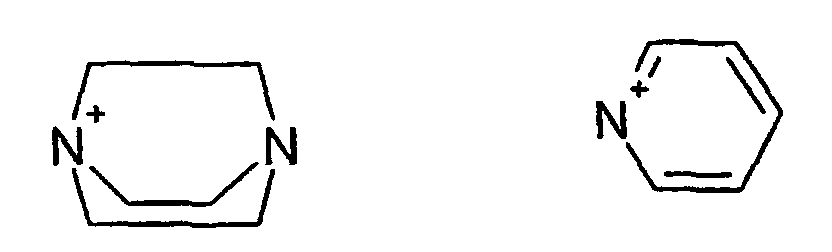

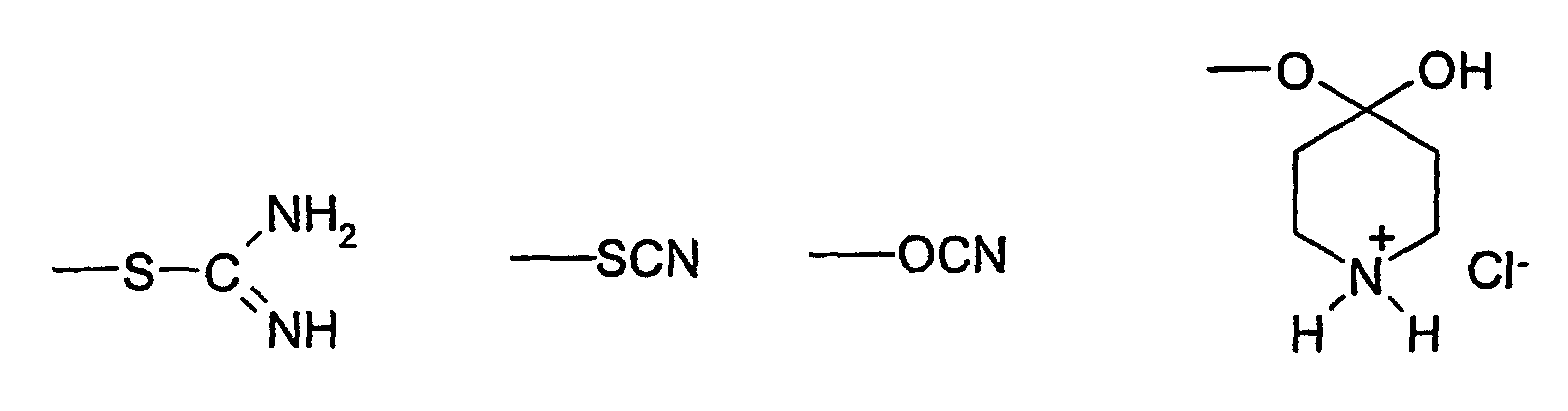
- It should be noted that suitable compounds NHR-CO-L include compounds which may have more than one group NHR-CO-, and so many offer more than one point of attack to the peroxyanion. One example of compound of this type is biuret.
- Compounds of formula (II) may be prepared by a reaction employing an alkali metal or ammonium cyanate and a compound HL where L is as defined above. An alkali metal cyanate, notably sodium cyanate, is preferred. The reaction is believed to proceed via isocyanic acid HN=C=O. The resulting compounds (II) may be isolated but if it is wished they may be contacted with hydrogen peroxide, or the perhydroxy anion, in situ to effect the treatment method.
- Preferably the process employing an alkali metal or ammonium cyanate and a compound of formula HL is performed in the presence of a solvent, more preferably in aqueous solution. Suitably the pH of the reaction mixture is maintained between 2 and 10, most preferably between 4 and 8. The pH needed will, however, depend on the nature of L.
- Where L is a sulphur-containing leaving group the pH is preferably maintained between 4 and 5 for the duration of the reaction.
- Where L is a tertiary amine containing leaving group, such as pyridine, the pH is preferably maintained between 6.5 and 7.5 for the duration of the reaction.
- Where L contains an alcoholate residue the pH is preferably maintained between 7 and 8 for the duration of the reaction.
- Preferably the reaction is carried out at a temperature between 0°C and 100°C, more preferably between 10°C and 50°C, and most preferably at ambient temperature.
- In accordance with a further aspect of the invention there is provided a washing or bleaching or sterilizing or bactericidal composition comprising a compound of formula (II) and hydrogen peroxide or the perhydroxy anion or a precursor therefor. The composition may include a solid concentrate or a liquid concentrate. The composition may when intended for washing or bleaching contain detergent components. A preferred composition comprises a solid, preferably granular, clothes washing composition, comprising a detergent, a compound of formula (II) and a compound which generates perhydroxy anions in water.
- Certain compounds of formula (I) are believed to be novel and accordingly constitute a further aspect of the invention. In this aspect, the invention provides compounds of formulawhere R is as defined above (but is preferably hydrogen)

where L' represents a group selected from the following: and where each group R6 is selected independently from H, OH and CONH2.
- Such compounds may be prepared as described above, and such methods applied for the preparation of novel compounds constitutes a further aspect of the present invention.
- The following examples are used to illustrate the invention. The identity of each of the activators whose preparation was described was confirmed for their IR spectra using a Perkin Elmer 1725 Infrared Fourier Transform Spectrometer, and by microanalysis. Chemicals were obtained from Aldrich unless stated otherwise. Hydrogen peroxide used was 27.5% (w/w) grade; sodium cyanate used was 96% grade.
-

- Sodium cyanate (5g, 0.077 mol) was dissolved in water (50 ml) and stirred for 5 minutes at room temperature; sodium bisulphite (8g, 0.077 mol) was added to this solution. After the sodium bisulphite dissolved, the pH was adjusted pH to 5 using hydrochloric acid (1 M). The reaction was carried out at room temperature, the pH being maintained at 5.0 ~ 5.5. by the addition of hydrochloric acid. When the pH of the solution became stable, the reaction was stopped. The product was precipitated by the addition of 200 ml of ethanol to the reaction solution; the solid was filtered off and dried in ambient air.
- An alternative effective preparation was to dissolve sodium metabisulphite (4g, 0.077 mol) in water 5 ml and then to quickly add sodium cyanate (5g, 0.077 mol) maintaining the pH at 4.5 (acetic acid addition) at room temperature. After 10 minutes the product was precipitated using ethanol as above.
-

- Sodium cyanate (5g, 0.077 mol) was dissolved in water (50 ml) and stirred for 5 minutes; then the pH of the cyanate solution was adjusted to 5 using hydrochloric acid (1 M); Hypophosphorous acid (5g, 50% (w/w) solution, 0.0038 mol) was dissolved in water (20 ml) and gradually added to the stirred cyanate solution over 1 hour; the pH was maintained at 5. After the addition of hypophosphorous acid, the reaction was continued at room temperature until the pH became stable; the reaction was then stopped. During the reaction, a solid product precipitated; when the reaction finished, this solid was filtered off and dried in ambient air.
- A double substitution reaction can occur to give a mixture of products (ASP 2 and ASP 2A); more quantitative yields of ASP 2A can be achieved by giving a larger amount of sodium cyanate. In this example ASP 2A is the predominant product.
-
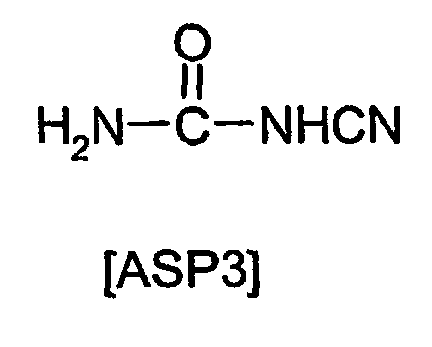
- Sodium cyanate (5g, 0.077 mol) was dissolved in water (50 ml) and stirred for 5 minutes at room temperature; then the pH of the cyanate solution was adjusted to 5 using hydrochloric acid (1 M). Cyanamide (3.2g, 0.077 mol) solid was gradually added to the stirred cyanate solution over 1.5 hour, the pH being maintained at 5. After the addition of cyanamide, the reaction was continued at room temperature and at pH 5 ~ 5.5. When the pH of the solution became stable, the reaction was stopped. During the reaction a solid product precipitated; when the reaction finished, this solid was filtered off and dried in ambient air.
- Tea-stained cotton fabric bleaching using bleach activators ASP 1 to ASP 3 from Examples 1 to 3.
- Tea-stained cotton fabric was prepared by the following method:
Three small tea bags of British-style "brown" tea were placed in 1000 ml of water and boiled for 15 minutes. A plain weave cotton fabric was impregnated by adding this solution (wet pick-up 100%) and this fabric was allowed to dry in ambient air. This fabric was then left in a laboratory oven for 60 minutes at 60°C. - The bleach solution was made up as follows:
Hydrogen peroxide (100%) 5g/l Bleach activator 3g/l pH buffer Goods to liquor ratio 1:10 - pH buffer used was:
- pH 5 or 7 - sodium dihydrogen phosphate (0.1M) and sodium hydroxide (0.1M)
pH 10 - sodium carbonate - Tea stained fabric, as described above, and bleach solution were put in to a 100cm3 sealed stainless steel dyepot and placed in a laboratory dyeing machine (Rotadyer). The bleaching process was carried out for 45 minutes at the selected temperature. After bleaching, the fabric was washed thoroughly in tap water and dried in ambient air. The CIE whiteness values of the tea stained starting fabric was measured, and found to be - 34.4.
CIE whiteness values of fabric bleached at pH 5 at different temperatures CIE Whiteness Bleaching Species 20°C 50°C 95°C H2O2 24.5 35.5 62.2 H2O2 + ASP 1 42.8 44.1 77.0 H2O2 + ASP 2/2A 23.0 34.9 63.7 H2O2 + ASP 3 21.2 41.4 65.2 CIE whiteness values of fabric bleached at pH 7 at different temperatures CIE Whiteness Bleaching Species 20°C 50°C 95°C H2O2 39.1 43.1 75.9 H2O2 + ASP 1 64.2 65.7 84.8 H2O2 + ASP 2/2A 37.6 47.6 74.4 H2O2 + ASP 3 38.3 52.9 73.0 CIE whiteness values of fabric bleached at pH 10 at different temperatures CIE Whiteness Bleaching Species 20°C 50°C 95°C H2O2 61.8 60.7 77.8 H2O2 + ASP 1 72.0 74.0 80.6 H2O2 +ASP 2/2A 58.1 65.7 85.1 H2O2 + ASP 3 57.6 74.4 85.1 -
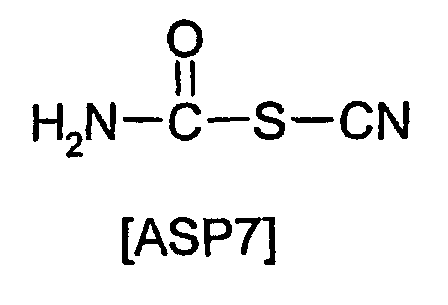
- Sodium cyanate (5g, 0.077 ml) was dissolved in water (50 ml) and stirred for 5 minutes at room temperature; sodium thiocyanate (8.1g, 0.1 mol) was added to this solution. After the sodium thiocyanate dissolved, the pH was adjusted to 5 using acetic acid. The reaction was carried out at room temperature, the pH being maintained at 5.0 - 5.5 by the addition of acetic acid; when the pH of the solution became stable, the reaction was stopped. The product was precipitated by the addition of 300 ml of ethanol to the reaction mixture. The solid was filtered off and dried in ambient air.
-

- Sodium cyanate (5g, 0.077 ml) was dissolved in water (70 ml) and stirred for 5 minutes; then the pH of the cyanate solution was adjusted to 5 using acetic acid. Thiourea solid (7.6g, 0.1 mol) was added to the stirred cyanate solution over 1 hour; the pH was maintained at 5 ∼ 5.5. After the addition of thiourea, the reaction was continued at room temperature until the pH became stable; the reaction was then stopped. The product (an isothiouronium salt) was precipitated by the addition of 300 ml of ethanol to the reaction mixture; the solid was filtered off and dried in ambient air.
-

- Sodium cyanate (5g, 0.077 mol) was dissolved in water (50 ml) and stirred for 5 minutes at room temperature; nicotinic acid solid (9.5g, 0.077 mol) was gradually added to the stirred cyanate solution to keep pH maintained at 5 - 5.5 (no other acid was needed). After the addition of nicotinic acid, the reaction was continued at room temperature and at pH 5 - 5.5. When the pH of the solution became stable, the reaction was stopped. The product was precipitated by the addition of 400 ml of acetone to the mixture reaction; the solid was filtered off and dried in ambient air.
-

- Sodium cyanate (5g, 0.077 mol) was dissolved in water (50 ml) and stirred for 5 minutes at room temperature; then the pH of the cyanate solution was adjusted to 5 using acetic acid. Nicotinic amide solid (12.2g, 0.1 mol) was gradually added to the stirred cyanate solution over 1.5 hour; the pH was maintained at 5. After the addition of nicotinic amide, the reaction was continued at room temperature and at pH 5 ~ 5.5. When the pH became stable, the reaction was stopped. The product was precipitated by the addition of acetone (350 ml) to the reaction mixture; the solid was filtered off and dried in ambient air.
-

- Sodium cyanate (5g, 0.077 mol) was dissolved in water (50 ml) and stirred for 5 minutes at room temperature; then the pH of the cyanate solution was adjusted to 5 using acetic acid. Solid diazabicyclooctane (DABCO) (8.6g, 0.0077 mol) was gradually added to the stirred cyanate solution over 1 hour; the pH was maintained at 5. After the addition of DABCO, the reaction was continued at room temperature and at pH 5-5.5. When the pH became stable, the reaction was stopped. The product was precipitated by the addition of acetone (350 ml) to the reaction mixture; the solid was filtered off and dried in ambient air.
- Tea stained cotton fabric bleaching using bleach activators (ASP 7 to ASP 11) of Examples 5 to 9.
- Tea-stained cotton fabric, the bleach method and conditions, were the same as those described in Example 4; but the CIE whiteness value of the tea-stained starting fabric was -52.4.
CIE whiteness values of fabric bleached at pH 5 at different temperatures Bleaching Species CIE Whiteness 20°C 50°C 95°C H2O2 -27.3 -2.3 33.9 H2O2 + ASP 7 -22.4 42.8 65.8 H2O2 + ASP 8 -25.3 -4.8 52.1 H2O2 + ASP 9 -26.3 -3.6 47.0 H2O2 + ASP 10 -29.8 -5.5 31.5 H2O2 + ASP 11 -27.6 -8.5 35.5 CIE whiteness values of fabric bleached at pH7 at different temperatures Bleaching Species CIE Whiteness 20°C 50°C 95°C H2O2 -0.3 5.3 67.5 H2O2 + ASP 7 39.3 55.8 81.0 H2O2 + ASP 8 7.7 40.7 81.2 H2O2 + ASP 9 8.0 31.9 75.7 H2O2 + ASP 10 0.2 8.4 69.3 H2O2 + ASP 11 1.6 11.2 71.9 CIE whiteness values of fabric bleached at pH 10 at different temperatures Bleaching Species CIE Whiteness 20°C 50°C 95°C H2O2 23.1 54.4 70.6 H2O2+ ASP 7 40.4 68.6 80.5 H2O2 + ASP 8 31.4 62.1 83.5 H2O2 + ASP 9 23.8 68.9 81.3 H2O2 + ASP 10 21.7 60.2 76.9 H2O2 + ASP 11 21.2 64.5 80.1 - Raman analysis of the reaction between hydrogen peroxide and carbamate (ASP 1 from Example 1).
- Raman analysis of the reaction between ASP 1 (10% w/w) and hydrogen peroxide (10% w/w) at pH 6 showed percarbamic acid species formation, as characterised by absorption bands at 896cm-1, 876cm-1, and 853cm-1 (using secondary derivative analysis of the spectrum).
- Tea-stained cotton fabric bleaching using sodium cyanate and TAED (N, N, N', N'-tetraacetylethylenediamine ex Fluka Chemical, 95% grade).
- Tea-stained cotton fabric, bleach solutions, conditions and the method of bleaching were the same as described in Example 4, but the CIE whiteness of the tea-stained starting fabric in these experiments was -30.8.
- Bleach activators used were sodium cyanate and TAED.
CIE whiteness values of fabric bleached at pH 5 at different temperatures Bleaching species 20°C 50°C 95°C H2O2 0.6 23.1 60.8 NaOCN + H2O2 24.8 67.6 83.4 TAED + H2O2 5.8 46.6 76.6 CIE whiteness values of fabric bleached at pH 7 at different temperatures Bleaching species 20°C 50°C 95°C H2O2 13.6 36.6 81.0 NaOCN + H2O2 51.4 78.2 84.1 TAED + H2O2 49.8 76.6 79.8 CIE whiteness values fabric bleached at pH 10 at different temperatures Bleaching species 20°C 50°C 95°C H2O2 33.3 62.9 78.2 NaOCN + H2O2 55.4 72.2 82.7 TAED + H2O2 47.0 71.9 71.6 - Raman analysis of the reaction employing sodium cyanate and hydrogen peroxide.
- Raman analysis of the reaction employing sodium cyanate (10% w/w) and hydrogen peroxide (10% w/w) at pH 8 showed percarbamic acid species formation as characterised by absorption bands at 896 cm-1, 876 cm-1 and 853 cm-1 (second derivative spectra).
- Tea-stained cotton fabric bleaching using sodium cyanate, and TAED.
- Tea-stained cotton fabric, bleach solutions, conditions and the method of bleaching were the same as described in Example 4, except the amount of bleach activator used (sodium cyanate, or TAED) was 0.1g/l as opposed to 3g/l in Example 4.
CIE whiteness values of fabric bleached at pH 7 or 10 at 50°C. Bleaching species pH 7 pH 10 H2O2 38.7 62.9 H2O2 + NaOCN 74.5 66.6 H2O2 + TAED 65.3 63.8 - Tea-stained cotton fabric using formamide
- Tea-stained cotton fabric, the bleach method and conditions, were the same as those described in Example 4.
CIE whiteness values of fabric bleached at 95°C at different pH values Bleaching Species CIE Whiteness pH=7 pH=10 H2O2 69.6 79.5 H2O2 + Formamide 80.6 73.8 CIE whiteness values of fabric bleached at 50°C at different pH values Bleaching Species CIE Whiteness pH=5 pH=7 pH=10 H2O2 35.6 43.6 60.3 H2O2 + Formamide 35.8 48.5 61.6 - It will be seen from the above examples that certain bleach activators give optimal performance at particular pH and temperature conditions. Accordingly appropriate activators may be selected, having regard to the bleaching processes to be carried out. For example wool is generally bleached under near-neutral and mild conditions whereas cotton is generally bleached under alkaline high temperature conditions.
- Dye solution was prepared by dissolving Remazol Black B (Dystar) (0.1g) in water (1000 ml). For each sample 20 ml of the dye solution was used.
- The bleaching solution was prepared as follows:
- Dye solution 20 ml
- Hydrogen peroxide 4g
- Bleach activator 2g/l
- pH 3, 7 or 10
- Total volume 25 ml
-
- pH 3 was obtained with acetic acid; pH 7 was obtained with sodium dihydrogen phosphate (0.1M) and sodium hydroxide (0.1M); pH 10 was obtained using sodium carbonate.
- The bleaching solutions were left at 20°C, and the absorbance values were measured after 3 hours and 24 hours using UV/visible spectrophotometry at 600 nm. The degree of dye removal or bleaching (R%) was calculated using the following equation:
- The results are shown in the following tables.
The degree of dye removal (%R) at pH 3 and 20°C Bleaching Species 3 hours 24 hours Absorbance %R Absorbance %R H2O2 2.243 3.3 2.122 8.5 NaOCN + H2O2 1.853 20.1 1.684 27.4 TAED + H2O2 2.197 5.3 2.187 5.7 Absorbance before bleach 2.320 The degree of dye removal at pH 7 and 20°C Bleaching Species 3 hours 24 hours Absorbance %R Absorbance %R H2O2 2.257 2.7 2.155 7.1 NaOCN + H2O2 0.892 61.6 0.585 74.8 TAED + H2O2 1.695 27.0 1.318 43.2 Absorbance before bleach 2.320 The degree of dye removal at pH 10 and 20°C Bleaching Species 3 hours 24 hours Absorbance %R Absorbance %R H2O2 2.057 11.3 1.625 24.8 NaOCN + H2O2 1.439 38.0 0.891 61.6 TAED + H2O2 2.320 0.0 1.077 53.6 Absorbance before bleach 2.320 - The bleach solution was prepared as follows:
- Hydrogen peroxide (100%) 1-3% W/W
- Sodium cyanate 3-6% W/W
- Ethylenediaminetetraacetic acid disodium salt, 2-3% V/V
- D-gluconic acid 3% W/W
- Balance water
- pH 5
-
- The human black hair tress was impregnated with this solution at 35°C for 15-30 minutes, washed with tap water to remove residual bleach species and allowed to dry in air. The black hair was found to be bleached to a different blonde shade depending on the bleaching species concentration and bleach. If sodium cyanate was omitted, no bleaching effect was detected.
- Cultures of E. Coli in Ringer's saline were exposed to various conditions for 45 minutes at 37°C. These were then serially diluted (eight 10-fold dilutions) and plated onto nutrient agar (treatments were done in triplicate to ensure reproducibility), and five tests were done overall as shown below. Initial E. Coli concentration was approximately 5 x 10⁹/ml and cultures were grown in nutrient broth overnight before being centrifuged and then re-suspended in saline.
- A. E. Coli control - time zero.
- B E. Coli control - time 45 minutes
- C E. Coli plus peroxide at 5g/l for 45 minutes
- D E. Coli plus ASP 1 at 3g/l for 45 minutes
- E E. Coli plus peroxide of 5g/l plus ASP 1 (3g/l) for 45 minutes
-
- Plates were observed and counted after 2 days incubation at 37°C
- Counts recorded were as follows:-
- A 40 x 108 colony forming units ml-1
- B 37 x 108 colony forming units ml-1
- C 12.9 x 10⁸ colony forming units ml-1
- D 7.9 x 10⁸ colony forming units ml-1
- E ~0 colony forming units ml-1
-
- (Results given are the averages of the three experiments and all of the replicates show very close agreement).
- A and B were as expected about the same, C showed a moderate reduction (~66%) due to the presence of peroxide. D showed a reduction of about 80% due to ASP 1. E showed no bacterial growth, indicating 100% kill in the 45 minutes treatment period. In should be pointed out that in disinfecting bacteria, reductions in the order 90-99% are small, given the very large numbers which can be present to start with. The decrease in bacteria count in D may be due to toxicity of ASP 1 or possibly to the ASP 1 increasing the toxic effect of endogenously produced peroxide. Clearly the combination of peroxide and ASP 1 is highly effective. The above composition was also an effective bacteriocide against pseudomonas aeruginosa, staphylococcus epidermis and aspergillus niger.
Claims (23)
- A method of treatment of a material, comprising: (a) generating percarbamic acid and/or diacyl percarbamate by reactingand hydrogen peroxide, the perhydroxy anion or a precursor therefor, wherein L is a moiety displaced by the anion

- A method as claimed in claim 1, wherein the percarbamic acid and/or diacyl percarbamate is in aqueous solution.
- A method as claimed in any preceding claim, wherein the method of treatment is carried out in the pH range 3 to 11.
- A method as claimed in any preceding claim, wherein the method of treatment is carried out at a temperature in the range 0°C to 95°C.
- A method as claimed in any preceding claim, wherein the material to be treated is an organic fibre, such as cellulose, lignin and hair, an inorganic fibre, a textile material such as cotton, wool and synthetic textiles, a metal surface, a wood surface, a ceramic surface, a plastics surface, a liquid, or an aqueous liquid.
- A method as claimed in any preceding claim, wherein the method is a method of bleaching.
- A method as claimed in any of claims 1 to 5, wherein the method is a method of sterilisation of a surface or a contaminated aqueous solution.
- A method as claimed in any preceding claim, wherein the percarbamic acid and/or diacyl percarbamate is generated in situ.
- A method as claimed in any preceding claim, wherein L is selected from a phosphonate, phosphinate, thiourea or quaternary ammonium group; or from groups of the formula -SO3M where M represents a hydrogen atom, or an alkali metal atom, or an ammonium group; or from groups of the formula
- A method as claimed in claim 9, wherein L has the formula -SX where X represents a cyano group, an optionally substituted C1-6 alkyl group or SO3M, where M represents a hydrogen atom, an alkali metal atom, or an ammonium group.
- A method as claimed in claim 9, wherein L is -OX' where X' represents an optionally substituted alkyl group, an optionally substituted aryl group or an optionally substituted alkylcarbonyl group, or a group -CHO or -OCN..
- A method as claimed in claim 9, wherein L is -0 -PhSO3M, where M is a hydrogen atom, an alkali metal atom, or an ammonium group.
- A method as claimed in claim 9, wherein L is -NX" X''' where X" and X''' may both be alkyl groups or X" may be a hydrogen atom and X''' may be a cyano, alkyl, hydroxyl, amido, amino, aminosaccharide or polyaminosaccharide group.
- A method as claimed in claim 9, wherein L is of formula -P(=O)R'R" where R' represents a hydroxyl group and R" represents hydrogen or hydroxyl group or amido group.
- A method as claimed in claim 9, wherein L is Q+ connected to the C=O group by an N+ atom, the group Q being a quaternary ammonium moiety formed from a tertiary amine, or a heteroaryl or non-aromatic heterocyclic group.
- A method as claimed in claim 9, where L is a group selected from the following:

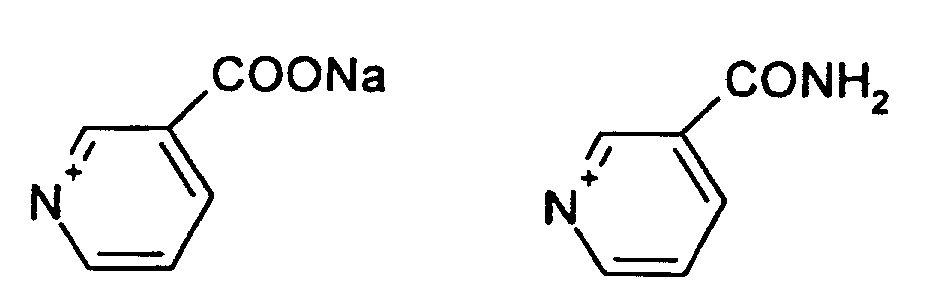
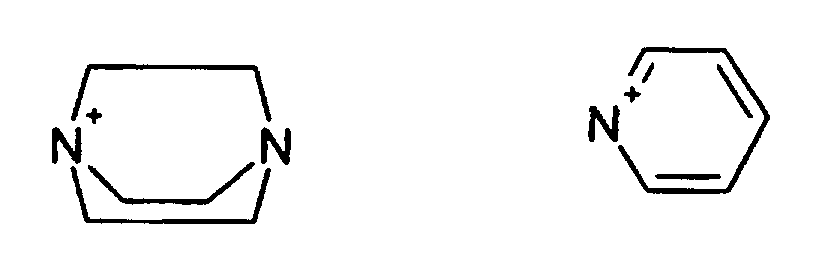
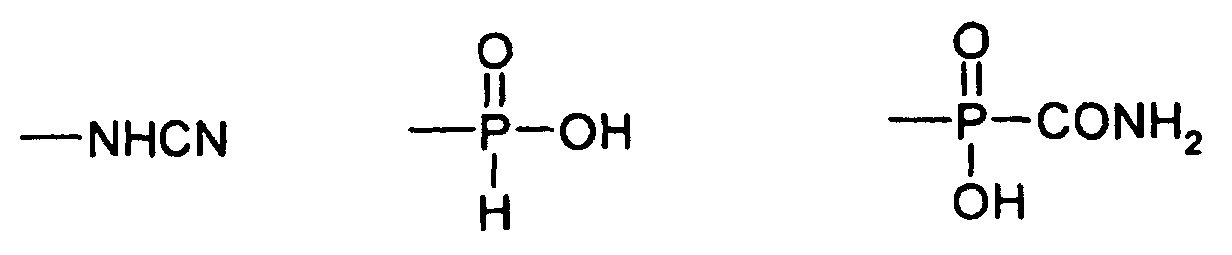 wherein M is a hydrogen atom, an alkali metal, or an ammonium group and where R4 is an alkyl group or a hydrogen atom.
- A method as claimed in any preceding claim, in which R represents hydrogen, wherein the compound of formula (II) is prepared by a reaction employing an alkali metal or an ammonium cyanate and a compound HL where L is a moiety displacable by the perhydroxy anion.
- A method as claimed in any of claim 17, wherein the compound of formula (II) is contacted with hydrogen peroxide, or the perhydroxy anion, in situ.
- A method as claimed in claim 17 or 18, wherein the pH of the reaction mixture is maintained between 2 and 10.
- A washing or bleaching or sterilizing or bactericidal composition comprising a compound of formula (II) as defined in any preceding claim and hydrogen peroxide or the perhydroxy anion or a precursor therefor.
- A composition as claimed in claim 20, wherein the composition is a solid concentrate or a liquid concentrate.
- A composition as claimed in claim 20 or 21, wherein the composition is a solid clothes washing composition, comprising a detergent, a compound of formula (II) and a compound which generates perhydroxy anions in water.
- A compound of formulawhere L' represents a group selected from the following:
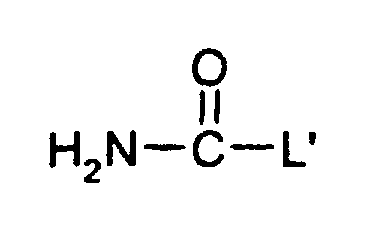
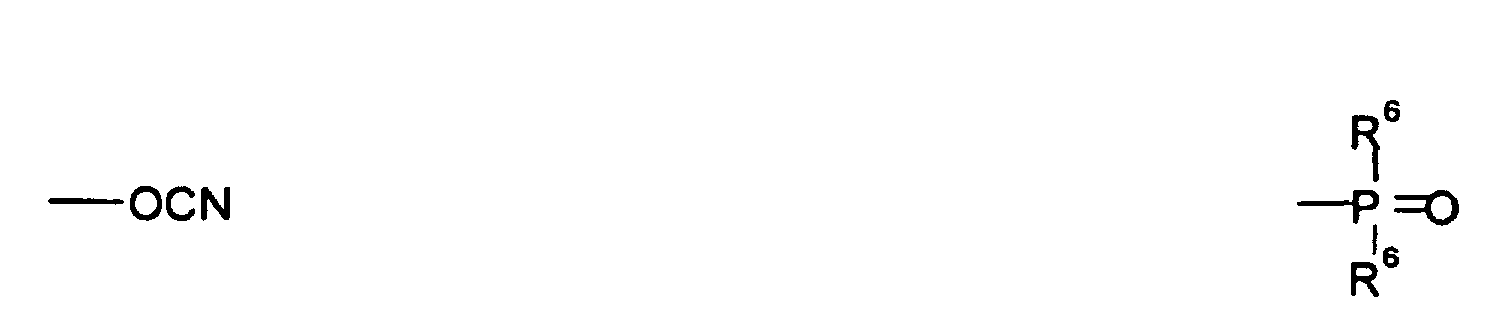 wherein each R6 is selected independently from hydrogen, an amido group and a quaternary ammonium group.
Applications Claiming Priority (3)
| Application Number | Priority Date | Filing Date | Title |
|---|---|---|---|
| GB0020489 | 2000-08-18 | ||
| GBGB0020489.1A GB0020489D0 (en) | 2000-08-18 | 2000-08-18 | Use of percarbamic acids and precursors therefor |
| PCT/GB2001/003656 WO2002016538A1 (en) | 2000-08-18 | 2001-08-16 | Use of percarbamic acids and diacyl percarbamates and precursors therefor |
Publications (2)
| Publication Number | Publication Date |
|---|---|
| EP1313830A1 EP1313830A1 (en) | 2003-05-28 |
| EP1313830B1 true EP1313830B1 (en) | 2005-07-27 |
Family
ID=9897948
Family Applications (1)
| Application Number | Title | Priority Date | Filing Date |
|---|---|---|---|
| EP01960889A Expired - Lifetime EP1313830B1 (en) | 2000-08-18 | 2001-08-16 | Use of percarbamic acid and diacyl percarbamates and precursors therefor |
Country Status (9)
| Country | Link |
|---|---|
| US (1) | US7159333B2 (en) |
| EP (1) | EP1313830B1 (en) |
| JP (1) | JP5101783B2 (en) |
| AT (1) | ATE300602T1 (en) |
| AU (1) | AU2001282282A1 (en) |
| DE (1) | DE60112309T2 (en) |
| ES (1) | ES2244644T3 (en) |
| GB (1) | GB0020489D0 (en) |
| WO (1) | WO2002016538A1 (en) |
Cited By (5)
| Publication number | Priority date | Publication date | Assignee | Title |
|---|---|---|---|---|
| WO2010032030A2 (en) | 2008-09-16 | 2010-03-25 | Perachem Limited | Bleaching methods and compositions |
| EP2502614A2 (en) | 2008-09-16 | 2012-09-26 | Perachem Limited | Hair treatment methods |
| EP2502613A2 (en) | 2008-03-10 | 2012-09-26 | Perachem Limited | Hair treatment composition and methods |
| EP2647408A1 (en) | 2012-04-02 | 2013-10-09 | Perachem Limited | Hair treatment methods |
| US9320695B2 (en) | 2012-04-02 | 2016-04-26 | Perachem Limited | Hair treatment methods |
Families Citing this family (12)
| Publication number | Priority date | Publication date | Assignee | Title |
|---|---|---|---|---|
| GB0020489D0 (en) * | 2000-08-18 | 2000-10-11 | Univ Leeds | Use of percarbamic acids and precursors therefor |
| US6821302B2 (en) | 2002-11-01 | 2004-11-23 | Unilever Home & Personal Care Usa, Division Of Conopco, Inc. | Permanent coloring of hair using carbonate salts and bicarbonate salts and using percarbamic acid precursors |
| FR2852834B1 (en) * | 2003-03-25 | 2008-02-15 | Oreal | OXIDIZING COMPOSITION COMPRISING HYDROXYCARBOXYLIC ACIDS AND THEIR SALTS AS COMPLEXANTS FOR PERMANENT COLORING, DECOLORATION OR DEFORMATION OF KERATINIC FIBERS |
| FR2852832B1 (en) | 2003-03-25 | 2008-06-27 | Oreal | COLORING COMPOSITION FOR KERATIN FIBERS COMPRISING A HYDROXYCARBOXILIC ACID OR SALT, COMPOSITION READY FOR USE INCLUDING THE SAME, PROCESS FOR CARRYING OUT THE METHOD AND DEVICE |
| EP1854449A1 (en) * | 2006-05-04 | 2007-11-14 | Henkel Kommanditgesellschaft auf Aktien | Dying and/or lightening agent with cyanates |
| DE102006026009A1 (en) * | 2006-06-01 | 2007-12-06 | Henkel Kgaa | Brightening and / or coloring agent with urea derivatives |
| DE102006028032A1 (en) * | 2006-06-14 | 2007-12-20 | Henkel Kgaa | Brightening and / or coloring agent with nitriles |
| DE102006028029A1 (en) * | 2006-06-14 | 2007-12-20 | Henkel Kgaa | Brightening and / or coloring agent with azolides |
| WO2008101810A1 (en) * | 2007-02-20 | 2008-08-28 | Henkel Ag & Co. Kgaa | Use of urea derivatives in washing and cleaning compositions |
| GB0816946D0 (en) * | 2008-09-16 | 2008-10-22 | Perachem Ltd | Composition and method |
| US7984567B2 (en) * | 2008-10-07 | 2011-07-26 | Christ Bill Bertakis | Apparatus for cleaning simulated hair articles |
| FR2988088B1 (en) * | 2012-03-16 | 2014-11-07 | Rhodia Operations | PROCESS FOR TREATING EFFLUENTS OF PRODUCTION OF AROMATIC COMPOUND DERIVED FROM BENZENE DIHYDROXYL |
Family Cites Families (32)
| Publication number | Priority date | Publication date | Assignee | Title |
|---|---|---|---|---|
| US3965015A (en) | 1972-08-01 | 1976-06-22 | Colgate-Palmolive Company | Bleach-resistant fabric softener |
| US4063923A (en) * | 1973-07-23 | 1977-12-20 | E. I. Du Pont De Nemours And Company | Carbamoylphosphonic acid brush control agents |
| DE2364636C2 (en) * | 1973-12-24 | 1982-11-04 | Degussa Ag, 6000 Frankfurt | Process for the preparation of 2-benzoyl-6-chloro-3-nitro-pyridines |
| JPS52124758A (en) * | 1976-04-13 | 1977-10-20 | Toa Gosei Chem Ind | Method of treating waste water |
| DE2828724A1 (en) * | 1978-06-30 | 1980-01-10 | Schuelke & Mayr Gmbh | DISINFECTING CLOTH |
| DE2847267C2 (en) * | 1978-10-31 | 1993-12-23 | Decker Gmbh & Co Kg Geb | Stabilizer for an aqueous solution for pickling and / or chemical shining of objects made of copper or copper alloys in a multi-stage process and use of the stabilizer |
| US4272413A (en) | 1979-11-26 | 1981-06-09 | Colgate-Palmolive Company | Dialkylurea textile softening and antistatic agents |
| JPS621793A (en) * | 1985-06-28 | 1987-01-07 | 花王株式会社 | Bleaching composition |
| JPH01245099A (en) * | 1987-11-04 | 1989-09-29 | Lion Corp | Bleaching agent composition |
| US4996359A (en) | 1988-03-14 | 1991-02-26 | Arco Chemical Technology, Inc. | Process for the preparation of aromatic bis dialkyl ureas |
| DE4016980A1 (en) * | 1990-05-25 | 1991-11-28 | Hoechst Ag | UREIDOPEROXICARBONIC ACIDS, METHOD FOR THE PRODUCTION AND USE THEREOF |
| DE4138006A1 (en) * | 1991-11-19 | 1993-05-27 | Degussa | METHOD FOR IMPROVING THE WHITE CONTENT IN THE PEROXIDE BLEACHING OF CELLULAS BY THE ADDITION OF CYANATES |
| FR2704726B1 (en) * | 1993-05-05 | 1995-06-16 | Chemoxal Sa | Aqueous composition comprising an organic peroxyacid and its uses as disinfecting agents. |
| IL109705A (en) * | 1993-06-17 | 1998-07-15 | Allergan Inc | Enzyme compositions and methods for contact lens cleaning |
| JP3811508B2 (en) * | 1994-08-31 | 2006-08-23 | ジョンソン株式会社 | Method for activating peroxide and composition thereof |
| JP3882206B2 (en) * | 1995-03-09 | 2007-02-14 | 三菱瓦斯化学株式会社 | Mold remover composition |
| JP3827022B2 (en) * | 1995-03-09 | 2006-09-27 | 三菱瓦斯化学株式会社 | Bleach composition |
| JP3624916B2 (en) * | 1995-03-29 | 2005-03-02 | 三菱瓦斯化学株式会社 | Oocyst killers |
| DE19518039A1 (en) * | 1995-05-17 | 1996-11-21 | Basf Ag | Use of heterocyclic compounds as activators for inorganic per compounds |
| JP3559627B2 (en) * | 1995-08-11 | 2004-09-02 | ジョンソン株式会社 | Cleaning composition for washing machine tub |
| JP3567029B2 (en) * | 1995-08-29 | 2004-09-15 | ジョンソン株式会社 | Cleaning composition for water red |
| JP3875292B2 (en) * | 1995-09-21 | 2007-01-31 | ジョンソン株式会社 | Cleaning composition for athletic shoes |
| JP3875293B2 (en) * | 1995-09-21 | 2007-01-31 | ジョンソン株式会社 | Cleaning composition for drain pipe |
| DE19541012A1 (en) * | 1995-11-03 | 1997-05-07 | Basf Ag | Use of oxime esters as activators for inorganic per compounds |
| DE19614822A1 (en) * | 1996-04-15 | 1997-10-16 | Hoechst Ag | Use of isocyanuric acid, aliphatic or aromatic mono or di:isocyanate |
| GB2312216A (en) * | 1996-04-17 | 1997-10-22 | Procter & Gamble | Detergent compositions |
| DE19625495A1 (en) * | 1996-06-26 | 1998-01-02 | Hoechst Ag | Quaternary ammonium compounds as bleach activators and their production |
| JPH10175940A (en) * | 1996-12-16 | 1998-06-30 | Lion Corp | Light color α-sulfofatty acid alkyl ester salt and method for producing the same |
| EP0994936A1 (en) * | 1997-07-02 | 2000-04-26 | The Procter & Gamble Company | Dishwashing compositions comprising a phospholipase and an amylase |
| CN1265561A (en) * | 1997-08-14 | 2000-09-06 | 诺沃挪第克公司 | AntimicroBial composition containing a haloperoxidase, a hydrogen peroxide cource, a halide source and an ammonium source |
| GB0020489D0 (en) * | 2000-08-18 | 2000-10-11 | Univ Leeds | Use of percarbamic acids and precursors therefor |
| US6821302B2 (en) * | 2002-11-01 | 2004-11-23 | Unilever Home & Personal Care Usa, Division Of Conopco, Inc. | Permanent coloring of hair using carbonate salts and bicarbonate salts and using percarbamic acid precursors |
-
2000
- 2000-08-18 GB GBGB0020489.1A patent/GB0020489D0/en not_active Ceased
-
2001
- 2001-08-16 ES ES01960889T patent/ES2244644T3/en not_active Expired - Lifetime
- 2001-08-16 WO PCT/GB2001/003656 patent/WO2002016538A1/en not_active Ceased
- 2001-08-16 EP EP01960889A patent/EP1313830B1/en not_active Expired - Lifetime
- 2001-08-16 DE DE60112309T patent/DE60112309T2/en not_active Expired - Lifetime
- 2001-08-16 US US10/344,889 patent/US7159333B2/en not_active Expired - Fee Related
- 2001-08-16 AU AU2001282282A patent/AU2001282282A1/en not_active Abandoned
- 2001-08-16 JP JP2002521615A patent/JP5101783B2/en not_active Expired - Fee Related
- 2001-08-16 AT AT01960889T patent/ATE300602T1/en not_active IP Right Cessation
Cited By (8)
| Publication number | Priority date | Publication date | Assignee | Title |
|---|---|---|---|---|
| EP2502613A2 (en) | 2008-03-10 | 2012-09-26 | Perachem Limited | Hair treatment composition and methods |
| WO2010032030A2 (en) | 2008-09-16 | 2010-03-25 | Perachem Limited | Bleaching methods and compositions |
| EP2502614A2 (en) | 2008-09-16 | 2012-09-26 | Perachem Limited | Hair treatment methods |
| US8999301B2 (en) | 2008-09-16 | 2015-04-07 | Perachem Limited | Bleaching methods and compositions |
| EP2647408A1 (en) | 2012-04-02 | 2013-10-09 | Perachem Limited | Hair treatment methods |
| WO2013150269A1 (en) | 2012-04-02 | 2013-10-10 | Perachem Limited | Hair treatment methods |
| US9320695B2 (en) | 2012-04-02 | 2016-04-26 | Perachem Limited | Hair treatment methods |
| US9364403B2 (en) | 2012-04-02 | 2016-06-14 | Perachem Limited | Hair treatment methods |
Also Published As
| Publication number | Publication date |
|---|---|
| AU2001282282A1 (en) | 2002-03-04 |
| ES2244644T3 (en) | 2005-12-16 |
| US20040055092A1 (en) | 2004-03-25 |
| JP5101783B2 (en) | 2012-12-19 |
| ATE300602T1 (en) | 2005-08-15 |
| US7159333B2 (en) | 2007-01-09 |
| GB0020489D0 (en) | 2000-10-11 |
| JP2004507577A (en) | 2004-03-11 |
| DE60112309D1 (en) | 2005-09-01 |
| EP1313830A1 (en) | 2003-05-28 |
| WO2002016538A1 (en) | 2002-02-28 |
| DE60112309T2 (en) | 2006-05-24 |
Similar Documents
| Publication | Publication Date | Title |
|---|---|---|
| US7159333B2 (en) | Use of percarbamic acids and diacyl percarbamates and precursors therefor | |
| US4318883A (en) | Process for combating micro-organisms, and novel phthalocyanine compounds | |
| US4657554A (en) | Water-soluble azaphthalocyanines and their use as photoactivators in bleaching | |
| US5700742A (en) | Antimicrobial treatment of textile materials | |
| EP0682696B1 (en) | Oxidising agents | |
| US6576154B1 (en) | Method of retaining antimicrobial properties on a halamine-treated textile substrate while simultaneously reducing deleterious odor and skin irritation effects | |
| CN100384973C (en) | Disinfecting compositions and methods | |
| AU2005224051B2 (en) | Fungicidal detergent compositions | |
| CZ2003289A3 (en) | A method for treating textile fiber materials or leather | |
| JPH01198667A (en) | Phthalocyanine compound | |
| JPH08509695A (en) | Oxidant | |
| DE2407906A1 (en) | IMINODIACETONITRILE DERIVATIVES AND THEIR USE AS OXYGEN BLEACH ACTIVATORS | |
| WO2001046264A1 (en) | Partial ester of cellulose with nitrogenous carboxylic acid and process for producing the same | |
| US6962608B1 (en) | Regenerable antimicrobial polymers and fibers with oxygen bleaches | |
| Lee et al. | Preparation and application of an s-triazine-based novel N-halamine biocide for antimicrobial fibers | |
| US5424079A (en) | Solid, dry, chlorine-free antimicrobial compositions, and method of use | |
| US8883077B2 (en) | Disinfecting, nonbleaching N-halamine for use with contact lens | |
| US5929013A (en) | Bleach product | |
| US3986971A (en) | 2,4-diisocyanato-6-halo-s-triazines as peroxygen bleach activators | |
| US3986974A (en) | Aroyl-n-hydroxyformimidoyl halides as bleach activators | |
| CN103265540A (en) | Active isothiazolinone antibiotic finishing agent | |
| JP3859745B2 (en) | Bleach composition | |
| SU1650572A1 (en) | Method for stabilizing hydrogen peroxide aqueous solutions | |
| HU193481B (en) | Bleaching and antibacterial, antiviral furthermore fungicide composition | |
| GB2030609A (en) | Bleaching composition |
Legal Events
| Date | Code | Title | Description |
|---|---|---|---|
| PUAI | Public reference made under article 153(3) epc to a published international application that has entered the european phase |
Free format text: ORIGINAL CODE: 0009012 |
|
| 17P | Request for examination filed |
Effective date: 20030210 |
|
| AK | Designated contracting states |
Designated state(s): AT BE CH CY DE DK ES FI FR GB GR IE IT LI LU MC NL PT SE TR |
|
| AX | Request for extension of the european patent |
Extension state: AL LT LV MK RO SI |
|
| 17Q | First examination report despatched |
Effective date: 20040413 |
|
| RTI1 | Title (correction) |
Free format text: USE OF PERCARBAMIC ACID AND DIACYL PERCARBAMATES AND PRECURSORS THEREFOR |
|
| GRAP | Despatch of communication of intention to grant a patent |
Free format text: ORIGINAL CODE: EPIDOSNIGR1 |
|
| GRAS | Grant fee paid |
Free format text: ORIGINAL CODE: EPIDOSNIGR3 |
|
| GRAA | (expected) grant |
Free format text: ORIGINAL CODE: 0009210 |
|
| AK | Designated contracting states |
Kind code of ref document: B1 Designated state(s): AT BE CH CY DE DK ES FI FR GB GR IE IT LI LU MC NL PT SE TR |
|
| PG25 | Lapsed in a contracting state [announced via postgrant information from national office to epo] |
Ref country code: BE Free format text: LAPSE BECAUSE OF FAILURE TO SUBMIT A TRANSLATION OF THE DESCRIPTION OR TO PAY THE FEE WITHIN THE PRESCRIBED TIME-LIMIT Effective date: 20050727 Ref country code: AT Free format text: LAPSE BECAUSE OF FAILURE TO SUBMIT A TRANSLATION OF THE DESCRIPTION OR TO PAY THE FEE WITHIN THE PRESCRIBED TIME-LIMIT Effective date: 20050727 Ref country code: CH Free format text: LAPSE BECAUSE OF FAILURE TO SUBMIT A TRANSLATION OF THE DESCRIPTION OR TO PAY THE FEE WITHIN THE PRESCRIBED TIME-LIMIT Effective date: 20050727 Ref country code: LI Free format text: LAPSE BECAUSE OF FAILURE TO SUBMIT A TRANSLATION OF THE DESCRIPTION OR TO PAY THE FEE WITHIN THE PRESCRIBED TIME-LIMIT Effective date: 20050727 Ref country code: TR Free format text: LAPSE BECAUSE OF FAILURE TO SUBMIT A TRANSLATION OF THE DESCRIPTION OR TO PAY THE FEE WITHIN THE PRESCRIBED TIME-LIMIT Effective date: 20050727 Ref country code: FI Free format text: LAPSE BECAUSE OF FAILURE TO SUBMIT A TRANSLATION OF THE DESCRIPTION OR TO PAY THE FEE WITHIN THE PRESCRIBED TIME-LIMIT Effective date: 20050727 Ref country code: NL Free format text: LAPSE BECAUSE OF FAILURE TO SUBMIT A TRANSLATION OF THE DESCRIPTION OR TO PAY THE FEE WITHIN THE PRESCRIBED TIME-LIMIT Effective date: 20050727 |
|
| REG | Reference to a national code |
Ref country code: GB Ref legal event code: FG4D |
|
| REG | Reference to a national code |
Ref country code: CH Ref legal event code: EP |
|
| PG25 | Lapsed in a contracting state [announced via postgrant information from national office to epo] |
Ref country code: CY Free format text: LAPSE BECAUSE OF FAILURE TO SUBMIT A TRANSLATION OF THE DESCRIPTION OR TO PAY THE FEE WITHIN THE PRESCRIBED TIME-LIMIT Effective date: 20050816 Ref country code: IE Free format text: LAPSE BECAUSE OF NON-PAYMENT OF DUE FEES Effective date: 20050816 Ref country code: LU Free format text: LAPSE BECAUSE OF NON-PAYMENT OF DUE FEES Effective date: 20050816 |
|
| REG | Reference to a national code |
Ref country code: IE Ref legal event code: FG4D |
|
| PG25 | Lapsed in a contracting state [announced via postgrant information from national office to epo] |
Ref country code: MC Free format text: LAPSE BECAUSE OF NON-PAYMENT OF DUE FEES Effective date: 20050831 |
|
| REF | Corresponds to: |
Ref document number: 60112309 Country of ref document: DE Date of ref document: 20050901 Kind code of ref document: P |
|
| PG25 | Lapsed in a contracting state [announced via postgrant information from national office to epo] |
Ref country code: SE Free format text: LAPSE BECAUSE OF FAILURE TO SUBMIT A TRANSLATION OF THE DESCRIPTION OR TO PAY THE FEE WITHIN THE PRESCRIBED TIME-LIMIT Effective date: 20051027 Ref country code: DK Free format text: LAPSE BECAUSE OF FAILURE TO SUBMIT A TRANSLATION OF THE DESCRIPTION OR TO PAY THE FEE WITHIN THE PRESCRIBED TIME-LIMIT Effective date: 20051027 Ref country code: GR Free format text: LAPSE BECAUSE OF FAILURE TO SUBMIT A TRANSLATION OF THE DESCRIPTION OR TO PAY THE FEE WITHIN THE PRESCRIBED TIME-LIMIT Effective date: 20051027 |
|
| REG | Reference to a national code |
Ref country code: ES Ref legal event code: FG2A Ref document number: 2244644 Country of ref document: ES Kind code of ref document: T3 |
|
| PG25 | Lapsed in a contracting state [announced via postgrant information from national office to epo] |
Ref country code: PT Free format text: LAPSE BECAUSE OF FAILURE TO SUBMIT A TRANSLATION OF THE DESCRIPTION OR TO PAY THE FEE WITHIN THE PRESCRIBED TIME-LIMIT Effective date: 20051227 |
|
| REG | Reference to a national code |
Ref country code: CH Ref legal event code: PL |
|
| NLV1 | Nl: lapsed or annulled due to failure to fulfill the requirements of art. 29p and 29m of the patents act | ||
| ET | Fr: translation filed | ||
| REG | Reference to a national code |
Ref country code: IE Ref legal event code: MM4A |
|
| PLBE | No opposition filed within time limit |
Free format text: ORIGINAL CODE: 0009261 |
|
| STAA | Information on the status of an ep patent application or granted ep patent |
Free format text: STATUS: NO OPPOSITION FILED WITHIN TIME LIMIT |
|
| 26N | No opposition filed |
Effective date: 20060428 |
|
| REG | Reference to a national code |
Ref country code: GB Ref legal event code: 732E |
|
| REG | Reference to a national code |
Ref country code: ES Ref legal event code: PC2A |
|
| REG | Reference to a national code |
Ref country code: FR Ref legal event code: TP |
|
| PGFP | Annual fee paid to national office [announced via postgrant information from national office to epo] |
Ref country code: ES Payment date: 20130816 Year of fee payment: 13 Ref country code: DE Payment date: 20130821 Year of fee payment: 13 |
|
| PGFP | Annual fee paid to national office [announced via postgrant information from national office to epo] |
Ref country code: FR Payment date: 20130823 Year of fee payment: 13 |
|
| PGFP | Annual fee paid to national office [announced via postgrant information from national office to epo] |
Ref country code: IT Payment date: 20130823 Year of fee payment: 13 |
|
| PGFP | Annual fee paid to national office [announced via postgrant information from national office to epo] |
Ref country code: GB Payment date: 20140821 Year of fee payment: 14 |
|
| REG | Reference to a national code |
Ref country code: DE Ref legal event code: R119 Ref document number: 60112309 Country of ref document: DE |
|
| PG25 | Lapsed in a contracting state [announced via postgrant information from national office to epo] |
Ref country code: IT Free format text: LAPSE BECAUSE OF NON-PAYMENT OF DUE FEES Effective date: 20140816 |
|
| REG | Reference to a national code |
Ref country code: FR Ref legal event code: ST Effective date: 20150430 |
|
| PG25 | Lapsed in a contracting state [announced via postgrant information from national office to epo] |
Ref country code: DE Free format text: LAPSE BECAUSE OF NON-PAYMENT OF DUE FEES Effective date: 20150303 |
|
| PG25 | Lapsed in a contracting state [announced via postgrant information from national office to epo] |
Ref country code: FR Free format text: LAPSE BECAUSE OF NON-PAYMENT OF DUE FEES Effective date: 20140901 |
|
| REG | Reference to a national code |
Ref country code: ES Ref legal event code: FD2A Effective date: 20150925 |
|
| PG25 | Lapsed in a contracting state [announced via postgrant information from national office to epo] |
Ref country code: ES Free format text: LAPSE BECAUSE OF NON-PAYMENT OF DUE FEES Effective date: 20140817 |
|
| GBPC | Gb: european patent ceased through non-payment of renewal fee |
Effective date: 20150816 |
|
| PG25 | Lapsed in a contracting state [announced via postgrant information from national office to epo] |
Ref country code: GB Free format text: LAPSE BECAUSE OF NON-PAYMENT OF DUE FEES Effective date: 20150816 |