EP1307402B1 - Method for separating oil in water emulsions - Google Patents
Method for separating oil in water emulsions Download PDFInfo
- Publication number
- EP1307402B1 EP1307402B1 EP01954123A EP01954123A EP1307402B1 EP 1307402 B1 EP1307402 B1 EP 1307402B1 EP 01954123 A EP01954123 A EP 01954123A EP 01954123 A EP01954123 A EP 01954123A EP 1307402 B1 EP1307402 B1 EP 1307402B1
- Authority
- EP
- European Patent Office
- Prior art keywords
- polyhipe
- emulsion
- polymer
- oil
- demulsification
- Prior art date
- Legal status (The legal status is an assumption and is not a legal conclusion. Google has not performed a legal analysis and makes no representation as to the accuracy of the status listed.)
- Expired - Lifetime
Links
- 239000000839 emulsion Substances 0.000 title claims abstract description 103
- XLYOFNOQVPJJNP-UHFFFAOYSA-N water Substances O XLYOFNOQVPJJNP-UHFFFAOYSA-N 0.000 title claims abstract description 58
- 238000000034 method Methods 0.000 title claims abstract description 57
- 238000000926 separation method Methods 0.000 claims abstract description 75
- 229920000642 polymer Polymers 0.000 claims description 63
- 239000003921 oil Substances 0.000 claims description 47
- 230000002209 hydrophobic effect Effects 0.000 claims description 27
- 230000008569 process Effects 0.000 claims description 24
- 239000011148 porous material Substances 0.000 claims description 21
- 159000000000 sodium salts Chemical class 0.000 claims description 21
- 239000010779 crude oil Substances 0.000 claims description 14
- 239000000843 powder Substances 0.000 claims description 10
- 230000005684 electric field Effects 0.000 claims description 9
- 239000011800 void material Substances 0.000 claims description 6
- 238000005119 centrifugation Methods 0.000 claims description 3
- 150000001447 alkali salts Chemical class 0.000 claims description 2
- 239000010409 thin film Substances 0.000 claims description 2
- 239000000463 material Substances 0.000 abstract description 46
- 230000009471 action Effects 0.000 abstract description 2
- 239000002245 particle Substances 0.000 description 54
- 239000012071 phase Substances 0.000 description 51
- 239000008346 aqueous phase Substances 0.000 description 43
- YOSQVMGMENUCDX-UHFFFAOYSA-N 4'-methyl-α-pyrrolidinohexiophenone Chemical compound C=1C=C(C)C=CC=1C(=O)C(CCCC)N1CCCC1 YOSQVMGMENUCDX-UHFFFAOYSA-N 0.000 description 31
- 238000012360 testing method Methods 0.000 description 27
- 238000001000 micrograph Methods 0.000 description 20
- 230000000694 effects Effects 0.000 description 18
- 239000002904 solvent Substances 0.000 description 17
- KDLHZDBZIXYQEI-UHFFFAOYSA-N palladium Substances [Pd] KDLHZDBZIXYQEI-UHFFFAOYSA-N 0.000 description 16
- 238000005191 phase separation Methods 0.000 description 15
- 239000007787 solid Substances 0.000 description 15
- 239000012074 organic phase Substances 0.000 description 14
- 238000005352 clarification Methods 0.000 description 13
- PPBRXRYQALVLMV-UHFFFAOYSA-N Styrene Chemical compound C=CC1=CC=CC=C1 PPBRXRYQALVLMV-UHFFFAOYSA-N 0.000 description 12
- 239000013049 sediment Substances 0.000 description 12
- LFQSCWFLJHTTHZ-UHFFFAOYSA-N Ethanol Chemical compound CCO LFQSCWFLJHTTHZ-UHFFFAOYSA-N 0.000 description 10
- 239000003456 ion exchange resin Substances 0.000 description 10
- 229920003303 ion-exchange polymer Polymers 0.000 description 10
- 239000000203 mixture Substances 0.000 description 10
- 238000004519 manufacturing process Methods 0.000 description 9
- 238000004458 analytical method Methods 0.000 description 8
- 229910052763 palladium Inorganic materials 0.000 description 8
- 239000000126 substance Substances 0.000 description 8
- 239000004094 surface-active agent Substances 0.000 description 8
- 239000012528 membrane Substances 0.000 description 7
- 238000001228 spectrum Methods 0.000 description 7
- YMWUJEATGCHHMB-UHFFFAOYSA-N Dichloromethane Chemical compound ClCCl YMWUJEATGCHHMB-UHFFFAOYSA-N 0.000 description 6
- HEMHJVSKTPXQMS-UHFFFAOYSA-M Sodium hydroxide Chemical compound [OH-].[Na+] HEMHJVSKTPXQMS-UHFFFAOYSA-M 0.000 description 6
- 210000003850 cellular structure Anatomy 0.000 description 6
- 238000004140 cleaning Methods 0.000 description 6
- 230000001965 increasing effect Effects 0.000 description 6
- 239000007788 liquid Substances 0.000 description 6
- VLKZOEOYAKHREP-UHFFFAOYSA-N n-Hexane Chemical compound CCCCCC VLKZOEOYAKHREP-UHFFFAOYSA-N 0.000 description 6
- MYRTYDVEIRVNKP-UHFFFAOYSA-N 1,2-Divinylbenzene Chemical compound C=CC1=CC=CC=C1C=C MYRTYDVEIRVNKP-UHFFFAOYSA-N 0.000 description 5
- NWUYHJFMYQTDRP-UHFFFAOYSA-N 1,2-bis(ethenyl)benzene;1-ethenyl-2-ethylbenzene;styrene Chemical compound C=CC1=CC=CC=C1.CCC1=CC=CC=C1C=C.C=CC1=CC=CC=C1C=C NWUYHJFMYQTDRP-UHFFFAOYSA-N 0.000 description 5
- FAPWRFPIFSIZLT-UHFFFAOYSA-M Sodium chloride Chemical compound [Na+].[Cl-] FAPWRFPIFSIZLT-UHFFFAOYSA-M 0.000 description 5
- 239000002253 acid Substances 0.000 description 5
- 230000015572 biosynthetic process Effects 0.000 description 5
- 230000003247 decreasing effect Effects 0.000 description 5
- 238000005516 engineering process Methods 0.000 description 5
- 238000002474 experimental method Methods 0.000 description 5
- 238000000605 extraction Methods 0.000 description 5
- GOXQRTZXKQZDDN-UHFFFAOYSA-N 2-Ethylhexyl acrylate Chemical compound CCCCC(CC)COC(=O)C=C GOXQRTZXKQZDDN-UHFFFAOYSA-N 0.000 description 4
- QAOWNCQODCNURD-UHFFFAOYSA-N Sulfuric acid Chemical compound OS(O)(=O)=O QAOWNCQODCNURD-UHFFFAOYSA-N 0.000 description 4
- 239000002250 absorbent Substances 0.000 description 4
- 230000002745 absorbent Effects 0.000 description 4
- 210000002421 cell wall Anatomy 0.000 description 4
- 230000007613 environmental effect Effects 0.000 description 4
- 230000005484 gravity Effects 0.000 description 4
- 229930195733 hydrocarbon Natural products 0.000 description 4
- 150000002430 hydrocarbons Chemical class 0.000 description 4
- 229910021645 metal ion Inorganic materials 0.000 description 4
- 238000002156 mixing Methods 0.000 description 4
- 239000002105 nanoparticle Substances 0.000 description 4
- 238000006386 neutralization reaction Methods 0.000 description 4
- 125000002524 organometallic group Chemical class 0.000 description 4
- 238000012958 reprocessing Methods 0.000 description 4
- 239000011734 sodium Substances 0.000 description 4
- 239000000243 solution Substances 0.000 description 4
- 239000001117 sulphuric acid Substances 0.000 description 4
- 235000011149 sulphuric acid Nutrition 0.000 description 4
- OKTJSMMVPCPJKN-UHFFFAOYSA-N Carbon Chemical compound [C] OKTJSMMVPCPJKN-UHFFFAOYSA-N 0.000 description 3
- KFZMGEQAYNKOFK-UHFFFAOYSA-N Isopropanol Chemical compound CC(C)O KFZMGEQAYNKOFK-UHFFFAOYSA-N 0.000 description 3
- NWGKJDSIEKMTRX-AAZCQSIUSA-N Sorbitan monooleate Chemical compound CCCCCCCC\C=C/CCCCCCCC(=O)OC[C@@H](O)[C@H]1OC[C@H](O)[C@H]1O NWGKJDSIEKMTRX-AAZCQSIUSA-N 0.000 description 3
- 239000011149 active material Substances 0.000 description 3
- 210000004027 cell Anatomy 0.000 description 3
- 229920001429 chelating resin Polymers 0.000 description 3
- 239000003086 colorant Substances 0.000 description 3
- 239000003085 diluting agent Substances 0.000 description 3
- SNRUBQQJIBEYMU-UHFFFAOYSA-N dodecane Chemical compound CCCCCCCCCCCC SNRUBQQJIBEYMU-UHFFFAOYSA-N 0.000 description 3
- 238000004945 emulsification Methods 0.000 description 3
- 229910001385 heavy metal Inorganic materials 0.000 description 3
- 229910052698 phosphorus Inorganic materials 0.000 description 3
- 230000009467 reduction Effects 0.000 description 3
- 238000000638 solvent extraction Methods 0.000 description 3
- 238000009987 spinning Methods 0.000 description 3
- STCOOQWBFONSKY-UHFFFAOYSA-N tributyl phosphate Chemical compound CCCCOP(=O)(OCCCC)OCCCC STCOOQWBFONSKY-UHFFFAOYSA-N 0.000 description 3
- NXNPGAAZKYDOPW-UHFFFAOYSA-N 4'-methyl-α-pyrrolidinobutiophenone Chemical compound C=1C=C(C)C=CC=1C(=O)C(CC)N1CCCC1 NXNPGAAZKYDOPW-UHFFFAOYSA-N 0.000 description 2
- 239000004215 Carbon black (E152) Substances 0.000 description 2
- DGAQECJNVWCQMB-PUAWFVPOSA-M Ilexoside XXIX Chemical compound C[C@@H]1CC[C@@]2(CC[C@@]3(C(=CC[C@H]4[C@]3(CC[C@@H]5[C@@]4(CC[C@@H](C5(C)C)OS(=O)(=O)[O-])C)C)[C@@H]2[C@]1(C)O)C)C(=O)O[C@H]6[C@@H]([C@H]([C@@H]([C@H](O6)CO)O)O)O.[Na+] DGAQECJNVWCQMB-PUAWFVPOSA-M 0.000 description 2
- OKIZCWYLBDKLSU-UHFFFAOYSA-M N,N,N-Trimethylmethanaminium chloride Chemical compound [Cl-].C[N+](C)(C)C OKIZCWYLBDKLSU-UHFFFAOYSA-M 0.000 description 2
- 125000000129 anionic group Chemical group 0.000 description 2
- -1 asphaltenes Chemical class 0.000 description 2
- 229910052799 carbon Inorganic materials 0.000 description 2
- 238000004581 coalescence Methods 0.000 description 2
- 239000000470 constituent Substances 0.000 description 2
- 229920001577 copolymer Polymers 0.000 description 2
- 239000007857 degradation product Substances 0.000 description 2
- 230000001419 dependent effect Effects 0.000 description 2
- 238000001035 drying Methods 0.000 description 2
- 239000003995 emulsifying agent Substances 0.000 description 2
- 238000001914 filtration Methods 0.000 description 2
- 239000010419 fine particle Substances 0.000 description 2
- 230000005660 hydrophilic surface Effects 0.000 description 2
- 230000005661 hydrophobic surface Effects 0.000 description 2
- 230000006872 improvement Effects 0.000 description 2
- 230000007246 mechanism Effects 0.000 description 2
- 239000013528 metallic particle Substances 0.000 description 2
- 239000000178 monomer Substances 0.000 description 2
- 239000003758 nuclear fuel Substances 0.000 description 2
- 125000001997 phenyl group Chemical group [H]C1=C([H])C([H])=C(*)C([H])=C1[H] 0.000 description 2
- 239000000047 product Substances 0.000 description 2
- 229910052708 sodium Inorganic materials 0.000 description 2
- 239000002915 spent fuel radioactive waste Substances 0.000 description 2
- CHRJZRDFSQHIFI-UHFFFAOYSA-N 1,2-bis(ethenyl)benzene;styrene Chemical compound C=CC1=CC=CC=C1.C=CC1=CC=CC=C1C=C CHRJZRDFSQHIFI-UHFFFAOYSA-N 0.000 description 1
- ABEXEQSGABRUHS-UHFFFAOYSA-N 16-methylheptadecyl 16-methylheptadecanoate Chemical compound CC(C)CCCCCCCCCCCCCCCOC(=O)CCCCCCCCCCCCCCC(C)C ABEXEQSGABRUHS-UHFFFAOYSA-N 0.000 description 1
- UXVMQQNJUSDDNG-UHFFFAOYSA-L Calcium chloride Chemical compound [Cl-].[Cl-].[Ca+2] UXVMQQNJUSDDNG-UHFFFAOYSA-L 0.000 description 1
- 241000764238 Isis Species 0.000 description 1
- GRYLNZFGIOXLOG-UHFFFAOYSA-N Nitric acid Chemical compound O[N+]([O-])=O GRYLNZFGIOXLOG-UHFFFAOYSA-N 0.000 description 1
- 229910019142 PO4 Inorganic materials 0.000 description 1
- 229910052778 Plutonium Inorganic materials 0.000 description 1
- 239000004793 Polystyrene Substances 0.000 description 1
- 239000004159 Potassium persulphate Substances 0.000 description 1
- 241001085205 Prenanthella exigua Species 0.000 description 1
- 206010044565 Tremor Diseases 0.000 description 1
- 229910052770 Uranium Inorganic materials 0.000 description 1
- 238000002083 X-ray spectrum Methods 0.000 description 1
- 230000002378 acidificating effect Effects 0.000 description 1
- 239000000654 additive Substances 0.000 description 1
- 230000000996 additive effect Effects 0.000 description 1
- 239000003463 adsorbent Substances 0.000 description 1
- 150000001335 aliphatic alkanes Chemical class 0.000 description 1
- 239000003513 alkali Substances 0.000 description 1
- 239000003945 anionic surfactant Substances 0.000 description 1
- 238000013459 approach Methods 0.000 description 1
- 230000008901 benefit Effects 0.000 description 1
- 239000001110 calcium chloride Substances 0.000 description 1
- 229910001628 calcium chloride Inorganic materials 0.000 description 1
- 125000003178 carboxy group Chemical group [H]OC(*)=O 0.000 description 1
- 150000007942 carboxylates Chemical class 0.000 description 1
- 125000002091 cationic group Chemical group 0.000 description 1
- 230000008859 change Effects 0.000 description 1
- 239000003795 chemical substances by application Substances 0.000 description 1
- 239000012459 cleaning agent Substances 0.000 description 1
- 238000010924 continuous production Methods 0.000 description 1
- 239000003431 cross linking reagent Substances 0.000 description 1
- 238000009295 crossflow filtration Methods 0.000 description 1
- 230000007423 decrease Effects 0.000 description 1
- 238000013461 design Methods 0.000 description 1
- 230000004069 differentiation Effects 0.000 description 1
- 239000012154 double-distilled water Substances 0.000 description 1
- 238000005553 drilling Methods 0.000 description 1
- 230000002708 enhancing effect Effects 0.000 description 1
- 239000000835 fiber Substances 0.000 description 1
- 238000009472 formulation Methods 0.000 description 1
- 238000005194 fractionation Methods 0.000 description 1
- ZZUFCTLCJUWOSV-UHFFFAOYSA-N furosemide Chemical compound C1=C(Cl)C(S(=O)(=O)N)=CC(C(O)=O)=C1NCC1=CC=CO1 ZZUFCTLCJUWOSV-UHFFFAOYSA-N 0.000 description 1
- 239000008187 granular material Substances 0.000 description 1
- 229910052739 hydrogen Inorganic materials 0.000 description 1
- 229920001600 hydrophobic polymer Polymers 0.000 description 1
- 238000005417 image-selected in vivo spectroscopy Methods 0.000 description 1
- 239000012535 impurity Substances 0.000 description 1
- 238000011065 in-situ storage Methods 0.000 description 1
- 239000003999 initiator Substances 0.000 description 1
- 238000002347 injection Methods 0.000 description 1
- 239000007924 injection Substances 0.000 description 1
- 238000007689 inspection Methods 0.000 description 1
- 238000012739 integrated shape imaging system Methods 0.000 description 1
- 230000010354 integration Effects 0.000 description 1
- 238000005342 ion exchange Methods 0.000 description 1
- 239000012500 ion exchange media Substances 0.000 description 1
- 150000002500 ions Chemical class 0.000 description 1
- 239000003350 kerosene Substances 0.000 description 1
- 239000007791 liquid phase Substances 0.000 description 1
- DHRRIBDTHFBPNG-UHFFFAOYSA-L magnesium dichloride hexahydrate Chemical compound O.O.O.O.O.O.[Mg+2].[Cl-].[Cl-] DHRRIBDTHFBPNG-UHFFFAOYSA-L 0.000 description 1
- 229910052751 metal Inorganic materials 0.000 description 1
- 239000002184 metal Substances 0.000 description 1
- 229940094933 n-dodecane Drugs 0.000 description 1
- 229910017604 nitric acid Inorganic materials 0.000 description 1
- 229910052757 nitrogen Inorganic materials 0.000 description 1
- 239000002736 nonionic surfactant Substances 0.000 description 1
- 239000007764 o/w emulsion Substances 0.000 description 1
- 150000002894 organic compounds Chemical class 0.000 description 1
- 239000011368 organic material Substances 0.000 description 1
- 239000003960 organic solvent Substances 0.000 description 1
- 150000002940 palladium Chemical class 0.000 description 1
- 239000012188 paraffin wax Substances 0.000 description 1
- 239000011236 particulate material Substances 0.000 description 1
- 230000002572 peristaltic effect Effects 0.000 description 1
- 235000021317 phosphate Nutrition 0.000 description 1
- 150000003013 phosphoric acid derivatives Chemical class 0.000 description 1
- OYEHPCDNVJXUIW-UHFFFAOYSA-N plutonium atom Chemical compound [Pu] OYEHPCDNVJXUIW-UHFFFAOYSA-N 0.000 description 1
- 229920002223 polystyrene Polymers 0.000 description 1
- USHAGKDGDHPEEY-UHFFFAOYSA-L potassium persulfate Chemical compound [K+].[K+].[O-]S(=O)(=O)OOS([O-])(=O)=O USHAGKDGDHPEEY-UHFFFAOYSA-L 0.000 description 1
- 235000019394 potassium persulphate Nutrition 0.000 description 1
- 238000002360 preparation method Methods 0.000 description 1
- 238000003608 radiolysis reaction Methods 0.000 description 1
- 238000011084 recovery Methods 0.000 description 1
- 239000011347 resin Substances 0.000 description 1
- 229920005989 resin Polymers 0.000 description 1
- 238000004062 sedimentation Methods 0.000 description 1
- 238000002791 soaking Methods 0.000 description 1
- 239000011780 sodium chloride Substances 0.000 description 1
- RPACBEVZENYWOL-XFULWGLBSA-M sodium;(2r)-2-[6-(4-chlorophenoxy)hexyl]oxirane-2-carboxylate Chemical compound [Na+].C=1C=C(Cl)C=CC=1OCCCCCC[C@]1(C(=O)[O-])CO1 RPACBEVZENYWOL-XFULWGLBSA-M 0.000 description 1
- 239000012265 solid product Substances 0.000 description 1
- 241000894007 species Species 0.000 description 1
- 230000003019 stabilising effect Effects 0.000 description 1
- 230000003068 static effect Effects 0.000 description 1
- 230000008961 swelling Effects 0.000 description 1
- 239000004753 textile Substances 0.000 description 1
- 231100000331 toxic Toxicity 0.000 description 1
- 230000002588 toxic effect Effects 0.000 description 1
- 238000012546 transfer Methods 0.000 description 1
- JFALSRSLKYAFGM-UHFFFAOYSA-N uranium(0) Chemical compound [U] JFALSRSLKYAFGM-UHFFFAOYSA-N 0.000 description 1
- 238000005406 washing Methods 0.000 description 1
Images







Classifications
-
- C—CHEMISTRY; METALLURGY
- C10—PETROLEUM, GAS OR COKE INDUSTRIES; TECHNICAL GASES CONTAINING CARBON MONOXIDE; FUELS; LUBRICANTS; PEAT
- C10G—CRACKING HYDROCARBON OILS; PRODUCTION OF LIQUID HYDROCARBON MIXTURES, e.g. BY DESTRUCTIVE HYDROGENATION, OLIGOMERISATION, POLYMERISATION; RECOVERY OF HYDROCARBON OILS FROM OIL-SHALE, OIL-SAND, OR GASES; REFINING MIXTURES MAINLY CONSISTING OF HYDROCARBONS; REFORMING OF NAPHTHA; MINERAL WAXES
- C10G33/00—Dewatering or demulsification of hydrocarbon oils
- C10G33/04—Dewatering or demulsification of hydrocarbon oils with chemical means
-
- B—PERFORMING OPERATIONS; TRANSPORTING
- B01—PHYSICAL OR CHEMICAL PROCESSES OR APPARATUS IN GENERAL
- B01D—SEPARATION
- B01D17/00—Separation of liquids, not provided for elsewhere, e.g. by thermal diffusion
- B01D17/02—Separation of non-miscible liquids
- B01D17/0202—Separation of non-miscible liquids by ab- or adsorption
-
- B—PERFORMING OPERATIONS; TRANSPORTING
- B01—PHYSICAL OR CHEMICAL PROCESSES OR APPARATUS IN GENERAL
- B01D—SEPARATION
- B01D17/00—Separation of liquids, not provided for elsewhere, e.g. by thermal diffusion
- B01D17/02—Separation of non-miscible liquids
- B01D17/0217—Separation of non-miscible liquids by centrifugal force
-
- B—PERFORMING OPERATIONS; TRANSPORTING
- B01—PHYSICAL OR CHEMICAL PROCESSES OR APPARATUS IN GENERAL
- B01D—SEPARATION
- B01D17/00—Separation of liquids, not provided for elsewhere, e.g. by thermal diffusion
- B01D17/02—Separation of non-miscible liquids
- B01D17/04—Breaking emulsions
-
- B—PERFORMING OPERATIONS; TRANSPORTING
- B01—PHYSICAL OR CHEMICAL PROCESSES OR APPARATUS IN GENERAL
- B01D—SEPARATION
- B01D17/00—Separation of liquids, not provided for elsewhere, e.g. by thermal diffusion
- B01D17/06—Separation of liquids from each other by electricity
Definitions
- the present invention relates to methods for the separation of oil and water, in particular through the action of a polymeric material on oil/water emulsions (including oil-in-water and water-in-oil emulsions).
- the environmental impact and the capital and operating costs of oil extraction can be reduced by sub-sea separation of oil and water. This has the additional benefit of enhancing the separation process by virtue of a high crude temperature before it is pumped to the oil platform, since by the time it has reached the platform the crude temperature falls rapidly thus reducing the ease of separation of oil and water.
- the integration of oil/water separation with produced water treatment can reduce the environmental impact of crude oil extraction as well as reducing the capital and operating costs of crude production.
- a method of demulsifying an oil/water emulsion wherein the emulsion is contacted with a polymerised High Internal Phase Emulsion (polyHIPE) polymer; characterized in that:
- polyHIPE Polymerised High Internal Phase Emulsion
- water as used herein encompasses all aqueous systems
- oil encompasses all immiscible with aqueous systems
- oil/water emulsion encompasses oil-in-water and water-in-oil emulsions and other similar emulsions.
- the polyHIPE material can be recovered and recycled after the emulsion has been separated.
- the polyHIPE material also removes from the aqueous phase metal ions (including nano-sized organo-metallic clusters) and residual hydrocarbons.
- Hydrocarbon (including alkyl phenols) concentration reduction can be further enhanced (to the levels of around 0.5ppm) by the use of a hydrophobic form of the polyHIPE material which can also be recovered and chemically treated to re-obtain the starting hydrophobic material. Therefore, the oil-water separation process can be integrated with production water cleaning (both residual hydrocarbons and metal ion removal) which can be discharged into, for example, the sea with little environmental impact.
- Embodiment of the invention include a method for the continuous demulsification and/or separation of an oil/water emulsion, wherein the emulsion is contacted with a polymerised High Internal Phase Emulsion (polyHIPE) material and subjected to at least one further process selected from the group comprising: application of an electric field, application of heat, application of pressure, flow induced phase inversion, centrifugation, and passage across a rotating surface.
- polyHIPE polymerised High Internal Phase Emulsion
- An integrated demulsification and water cleaning process can be achieved by using existing separation technology (in the form of hydrocyclones).
- existing separation technology in the form of hydrocyclones.
- a novel, intensified process is needed to address the problems of space availability and proximity to the source of the crude oil (i.e., sub-sea or down hole separation and cleaning are desirable).
- This can be achieved by the intensification of the process using continuous demulsification and cleaning processes.
- the intensive demulsification can be achieved by utilising the flow induced phase inversion phenomenon.
- a novel rotating disk contactor (crude oil-water and demulsifier contact) is proposed where several other demulsification fields (such as flow field, electrical field and pressure) can be superimposed.
- the ultimate aim of these systems is to develop sub-sea or down hole separation and where needed water cleaning.
- the present invention therefore addresses two important problems: the reduction of the environmental impact of crude oil extraction and the simplification of drilling technology and subsequent down stream operations by eliminating production water at source and removing surface active species.
- PolyHIPE materials are obtained through the polymerisation of a High Internal Phase Emulsion (HIPE) in which a continuous phase contains polymerisable components of the emulsion.
- HIPE materials have a micro-cellular and highly porous structure, and can be produced in the form of particles, powders, fibres (including hollow fibres), monolithic structures (such as moulded separation modules or shell-and-tube type structures) or membranes, including hollow fibre membranes and membranes in crossflow filtration configurations.
- polyHIPE polyethylene styrene or styrene / 2-ethyl hexyl acrylate (2-EHA) is used as the polymerising constituent, but other constituents, for example styrene-divinyl benzene, may be used as is well known in the art.
- PolyHIPE materials are generally initially hydrophobic but may be sulphonated, for example by contact with sulphuric acid, to make them hydrophilic. Such sulphonated polyHIPE materials may therefore be used as ion exchange media which due to their highly open pore structure have a very high rate of ion exchange compared to conventional ion exchange resins.
- polyHIPE materials which have been investigated by the present applicant and methods for the production thereof are described in detail in Akay, G, Bhumgara, Z and Wakeman, R J, Self-supported Porous Channel Filtration Modules: Preparation, Properties and Performance, Chem Eng Res Design 73 (1995) 783-796 .
- the void volume of the polyHIPE materials investigated by the present applicant can be as high as 98%, and the pore size can be controlled accurately from hundreds of micrometers to fractions thereof, as described for example in the present applicant's International patent application WO 00/34454 .
- PolyHIPE materials suitable for use with the present invention may be elastic or rigid depending on the type and proportion of monomers used in the oil phase of the HIPE, and they may be hydrophobic or hydrophilic.
- Suitable polyHIPE polymers may be prepared by using the methods described in detail in WO 00/34454 .
- the specific properties of polyHIPE polymers can chosen from a wide range by appropriate manufacturing techniques and may therefore be tailored to specific applications with relative ease.
- Three types of polyHIPE polymer can be used depending on the surfactant system present in the emulsion to be demulsified and separated:
- micro-porous polymers can be obtained in bulk or in powder or granular form.
- the internal architecture of the polymers can also be tailored by controlling the pore size, the interconnecting hole size, the phase volume of the polymer which is usually 5-20% and the secondary porosity of the walls which can be nano-sized.
- the pore size (D) of the polymer can be in the range of 0.5 ⁇ m ⁇ D ⁇ 500 ⁇ m while the ratio of the interconnect size (d) to pore size (D) can be in the range or 0 ⁇ d/D ⁇ 0.5.
- Experiments summarised in the present application were conducted using particulate (powder) form with a pore size of D ⁇ 10 ⁇ m and d ⁇ 3 ⁇ m.
- a suitable polyHIPE polymer In order to demulsify an oil/water emulsion, all that is necessary is to contact the emulsion with a suitable polyHIPE polymer.
- the polymer may be added in powder or granular form, in which case it has been found that the addition of 0.3g per kilogram of emulsion is effective, although a range of 0.05g to 5g of polymer per kilogram of emulsion is effective, with a range of 0.1 g to 1g of polymer per kilogram of emulsion being particularly advantageous.
- the present applicant has found, surprisingly, that the addition of larger amounts of polymer tends to slow down the demulsification and separation process. It is believed that this is due to the excess polymer absorbing too much water from the emulsion.
- Simultaneous demulsification and separation of oil/water phases can be achieved by contacting the emulsion with hydrophobic or hydrophilic surfaces followed by the removal of oil and water from the demulsification zone.
- Demulsification can be enhanced by the application of an electric field in which water droplet-droplet contact is enhanced leading to coalescence and subsequent separation under gravity.
- the target phase is the dispersed droplets in which the droplet coalescence is promoted.
- the intensive demulsification method of the present invention targets the removal in the first instance of surface-active materials present in the emulsion thus causing destabilisation.
- the 'active' surface area of the microporous polyHIPE polymer should be high and accessible.
- phase inversion Flow Induced Phase Inversion in emulsions
- Akay, G, Chem Eng Sci., 53, (1998) 203-223 phase inversion
- the emulsion goes through a co-continuous activated state and this may also cause phase separation in the presence of hydrophilic and hydrophobic regions of the polyHIPE polymer. It is therefore possible to enhance the separation further by using a continuous flow demulsification process in which an emulsion is forced through a polyHIPE component, for example a membrane, packed bed, hollow fibres etc.
- Known oil-water separation processes include: (i) electric field intensification, (ii) Control Deformation Dynamic Mixer (CDDM) technology, (iii) flow induced phase inversion, (iv) high ambient pressure and temperature, and (v) fractionation of oil (including crude oil) during oil-water separation.
- CDDM Control Deformation Dynamic Mixer
- the CDDM can be further modified to have a facility for applying an electric field and in-situ flow induced phase inversion, demulsification and phase disengagement in the presence of a micro-porous polyHIPE demulsifier.
- the flow induced phase inversion should not cause the formation of very small oil droplets. Therefore the flow geometry of the CDDM is important in achieving a phase inversion in the presence of micro-porous polyHIPE demulsifier.
- the efficiency of the polyHIPE demulsifier is dependent on the emulsion type (most probably due to the viscosity of the oil phase) it may be possible to fractionate the oil at the oil-water separation stage.
- powdered or granular demulsifier can be mixed with the crude oil emulsion at high pressure by dispersing the powder or granules into an organic phase (light crude, for example). Injection of the demulsifier can be at several suitable points in the process stream.
- Embodiments of the present invention are particularly suited to the demulsification of interfacial crud (IFC) in the nuclear energy and reprocessing industries.
- IFC interfacial crud
- both the extractant and the diluent are gradually degraded to radiolysis products, including surface active materials which then form emulsions.
- These emulsions can be identified when the extractant and diluent mixture is allowed to rest, the emulsions appearing at the interface between the organic and aqueous phases.
- These emulsions are referred to as interfacial crud (IFC) which can also contain colloidal solids.
- IFC is thought to be either a water-in-oil or an oil-in-water emulsion, but may also be a multiple emulsion such as (oil-in-water)-in-oil and/or (water-in-oil)-in-water.
- IFC may be skimmed off or otherwise removed before or during the solvent extraction process and taken to a separate container or the like where demulsification and/or emulsion separation may take place. Alternatively, demulsification and/or emulsion separation of the IFC may take place at the same time as the solvent extraction process.
- Embodiments of the present invention can be used for demulsifying and/or separating an interfacial crud emulsion generated during the reprocessing of nuclear fuel, wherein the emulsion is contacted with a polymerised High Internal Phase Emulsion (polyHIPE) material.
- polyHIPE polymerised High Internal Phase Emulsion
- the and polymerised High Internal Phase Emulsion (polyHIPE) material may be subjected to at least one further process selected from the group comprising: application of an electric field, application of heat, application of pressure, flow induced phase inversion, centrifugation, and passage across a rotating surface.
- PolyHIPE materials suitable for use with these, as well as the foregoing, aspects of the present invention may have a void volume as high as 98% with pore sizes in the range of hundreds of micrometres down to fractions of micrometres.
- the polyHIPE material may be elastic or rigid depending on the type and proportion of monomers used in the oil phase.
- the polyHIPE materials may be hydrophobic or hydrophilic.
- a continuous oil phase of a High Internal Phase Emulsion for the production of a rigid polyHIPE material is made from a mixture of styrene with divinyl benzene (DVB) as a cross-linking agent and a water-in-oil emulsifier (surfactant) Span 80.
- DVD divinyl benzene
- surfactant surfactant
- a typical oil phase composition is styrene 78%, divinyl benzene 8% and Span 80 14% (all by volume).
- the oil phase may comprise styrene 15%, 2-ethyl hexyl acrylate (2-EHA) 60%, divinyl benzene 10% and Span 80 15% (all by volume).
- the dispersed aqueous phase may comprise a solution of polymerisation initiator, potassium persulphate (0.5% by mass), in double distilled water.
- aqueous to oil phase ratio of 90:10 by volume
- the HIPE may be stirred for a further period of time, e.g. 20 minutes, before being poured into a mould or the like.
- the HIPE may then be polymerised in an oven at 60°C overnight to become polyHIPE and then dried, before being cut into appropriately sized pieces (e.g. lcm cubes).
- the polyHIPE pieces may be washed free of surfactant with isopropyl alcohol or the like and water, and then re-dried.
- PolyHIPE may be sulphonated so as to make it hydrophilic.
- the polyHIPE pieces may be soaked in 98% (by mass) concentrated sulphuric acid at temperatures of 20 to 90°C for varying times so as to achieve varying degrees of sulphonation.
- the pieces may then be washed free of excess acid and dried before being subjected to titrimetric analysis in order to determine the degree of sulphonation. This is possible because sulphonated polyHIPE becomes acidic as -SO 3 - H + groups become attached to benzene rings of any crosslinked polystyrene chains present.
- the degree of sulphonation is expressed as a percentage of available benzene rings in the polymer structure which can attain -SO 3 - H + groups, it can therefore be measured by titrimetric analysis.
- the hydrophilicity of a polyHIPE material may therefore be tailored to any particular application by adjusting the degree of sulphonation.
- alkali salts of the polyHIPE material can be prepared through contact with aqueous alkali solutions after the sulphonation process. This causes an exchange between protons in -SO 3 - H + groups and positively charged ionic species of the alkalis.
- a sodium salt of polyHIPE material may be prepared by soaking polyHIPE samples in, say, 2M sodium hydroxide.
- IFC may be demulsified by way of the present invention in either batch or continuous mode.
- the method of the first aspect further comprises the steps of:
- Separated aqueous and organic phases from the demulsified or separated emulsion may be thrown from a periphery of the rotating surface and collected, as may the polyHIPE material.
- the polyHIPE material may be processed and recycled.
- the emulsion may be a crude oil emulsion, interfacial crud or any other type of emulsion.
- Rotating surface reactors suitable for use with this aspect of the present invention are described in the present applicant's co-pending International patent applications WO 0048728 , WO 0048729 , WO 0048730 , WO 0048731 , WO 0048732 and WO 0160511 .
- Rotating surface reactors may be in the form of spinning disc reactors, spinning cone reactors and other shaped reactors as discussed in the above patent applications.
- Highly stable water/oil emulsions (50% water) were prepared using a formulation given by industry.
- the emulsion is stabilised by organo-metallic nano-particles and indigenous surfactants formed during the emulsification process. These emulsions are stable for several years.
- anionic (either in acid form or Na-salt) microporous polyHIPE polymer particles are added to this emulsion, the emulsion separates out upon standing giving three layers within a few minutes (typically 5 minutes). The top layer is the organic phase while the bottom layer is the aqueous phase.
- the middle layer depending on the emulsion, can contain unbroken emulsion and/or the polyHIPE polymer particles.
- the oil-water separation with the polyHIPE demulsifier resulted in two layers.
- the bottom layer also contained the polyHIPE demulsifier which could be separated by filtration and reused. It was possible to ensure that all of the polyHIPE demulsifier was eventually located in the aqueous phase by ensuring correct density differentiation.
- TOC total organic carbon
- TOC could be further reduced to insignificant levels by treating the aqueous phase with hydrophobic microporous polyHIPE polymer which could later be recovered and chemically changed to form the hydrophilic version for use as the demulsifier.
- the surface chemistry of the hydrophobic demulsifier could be changed to increase the selectivity in order to remove more toxic components from the residual oil in the water.
- heavy metal ions were also reduced during the demulsification process. Therefore, the aqueous phase could be discharged into the sea.
- the table below gives the TOC and metal ion concentrations (Mg and Ca) after various types of treatment.
- a model IFC was prepared and subjected to demulsification in both batch and continuous modes.
- Batch mode demulsification was performed in measuring cylinders of 50 ml capacity.
- Predetermined volumes of the model IFC samples were taken from a well shaken stock bottle into the cylinder, which will be referred as a tube hereafter, and allowed to settle down overnight.
- the volumes of the aqueous phase (if present), emulsion (IFC), and organic phase (if present) were recorded prior to shaking the content with a vortex generator for 2 minutes. These volumes were taken as the initial phase volumes.
- a predetermined mass of polyHIPE material was then added into the tube and shaken for a further 2 minutes.
- D ⁇ V ap ⁇ l - ⁇ V ap ⁇ i M PHP
- V aq is the volume of the aqueous phase
- M PHP the mass of the polyHIPE polymer (PHP) particles.
- Indices i and l denote initial and final, respectively.
- the reason for using the volume of the aqueous phase in calculating the demulsification capacity is that it is easier to determine more accurately than those of the IFC phase, which most of the time contains the polyHIPE particles as well as the organic phase.
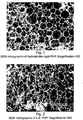
- FIG. 1 shows a typical micrograph for a rigid polyHIPE.
- This figure shows the cellular structure of the polyHIPE material with the main cells interconnected by smaller windows in the cell walls.
- Sulphonated polyHIPE materials have been prepared with varying degrees of the sulphonation. Table 3 summarises the results of the sulphonation tests. The degree of the sulphonation seems to be a function of the particle size of the polyHIPE material, the temperature and the time. Sulphonation degrees of as high as 96% could be obtained by changing these factors.
- Figure 2 shows a micrograph of a typical sulphonated polyHIPE material. It can be seen that during sulphonation, the polyHIPE structure is etched by the acid. This leads to the enlargement of the existing pores and formation of new smaller pores within the cell walls.
- Some typical results for a typical IFC type are shown in Table 4 as well as in Figure 4 .
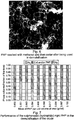
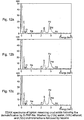
- FIGs 8 and 9 respectively show typical micrographs and EDAX spectrum of the sediments. These micrographs show that small particulate material has been trapped in the cellular structure of the polyHIPE whereas larger particles have accumulated on the surface. These large particles may be (1) the IFC particles adsorbed by polyHIPE and sedimented with polyHIPE, (2) and/or the IFC particles which are not adsorbed by polyHIPE but sediment when polyHIPE demulsifies the IFC resulting in formation of the aqueous phase.
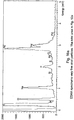
- An EDAX spectrum of the total area shown by micrograph in Figure 8a is given in Figure 9a
- that of a single IFC particle trapped in the a polyHIPE cell is given in Figure 9b . These both indicate the presence of palladium in the sediments.
- Figures 10a and 10b show typical micrographs of polyHIPE particles remaining in the IFC. It is seen from the micrographs that these polyHIPE particles have very little porosity so that they are not able to adsorb IFC solids. Being lighter than the aqueous phase, they are positioned in the remaining IFC phase after demulsification.
- the micrographs indicate that the remaining IFC solids are also in the form of sharp edged disc-shaped particles. These particles again remain in bulk either as individual particles and/or form agglomerates.
- the EDAX spectra of Figure 12 indicate the presence of palladium in the remaining IFC.
- An EDAX spectrum of the total area of the micrograph in Figure 15a shows the presence of a large quantity of palladium whereas the spectrum of the bright area in the same micrograph (i.e. Figure 16b ) indicates very little palladium.
- the spectrum of the dark region of the micrograph also showed a large quantity of palladium but less sodium than that of the total area.
- This and the bright white colour may indicate that the IFC is not only formed from palladium complexes of the degradation products but contains other components. Therefore, the solids in IFC may be in fact two types differentiated by the presence of the organics.
- the degree of the sulphonation of the polyHIPE represents its hydrophilic characteristics.
- the effect of the degree of the sulphonation on the demulsification was investigated with sulphonated sodium salt of polyHIPE particles of size 1000 ⁇ 250 ⁇ m size for varying types of IFC and the ratio of M PHP /V T (in gram/I).
- Table 8 It appears that the degree of the sulphonation is important in the demulsification and that demulsification performance increases with increasing the degree of sulphonation up to a certain point beyond which the demulsification capacity remains unchanged with increasing degree of sulphonation. This data is shown in graph form in Figure 17 (triangular symbol).
- the ion-exchange resins seem to be promising for the treatment of both the degraded solvent phase and the spent aqueous phase.
- Table 1 TOC and metal concentration in the aqueous phase after separation under different conditions Description TOC ppm Mg ppm Ca ppm Aqueous phase only 7 604 126 Aqueous phase with demulsifier 2 574 118 Aqueous phase after demulsification 28 530 109 Aqueous phase after demulsification and treatment with hydrophobic polymer 8 546 113 Aqueous phase separated over a period of three months upon standing 203 - - Aqueous phase separated at 200 Bar after 100 hours 120 - - TABLE 2: Summary of the performances of the materials used in IFC demulsification, degraded solvent treatment, and spent aqueous phase treatment.
- MSOC Membrane Separated Original Crud
- DCMWOC Dicholoromethane Washed Original Crud
- EWOC Ethanol Washed Original Crud
- WWRC Water Washed Remaining Crud
- DCMWRC Dicholoromethane Washed Remaining Crud
- EWRC Ethanol Washed Remaining Crud.
Landscapes
- Chemical & Material Sciences (AREA)
- Chemical Kinetics & Catalysis (AREA)
- Physics & Mathematics (AREA)
- Thermal Sciences (AREA)
- Oil, Petroleum & Natural Gas (AREA)
- General Chemical & Material Sciences (AREA)
- Engineering & Computer Science (AREA)
- Organic Chemistry (AREA)
- Treatment Of Liquids With Adsorbents In General (AREA)
- Production Of Liquid Hydrocarbon Mixture For Refining Petroleum (AREA)
- Solid-Sorbent Or Filter-Aiding Compositions (AREA)
- Addition Polymer Or Copolymer, Post-Treatments, Or Chemical Modifications (AREA)
- Processes Of Treating Macromolecular Substances (AREA)
- Colloid Chemistry (AREA)
Abstract
Description
- The present invention relates to methods for the separation of oil and water, in particular through the action of a polymeric material on oil/water emulsions (including oil-in-water and water-in-oil emulsions).
- The separation of oil and water is an established process which, however, suffers from certain limitations. For example, North Sea crude oil is extracted from undersea deposits as a foamy emulsion that is typically 80% water and may include other impurities like metal ions and unwanted organic compounds. Depending on the nature of any surfactants present, the viscosity of the oil, the phase volume of the dispersed water and its droplet size, current processes may not be able to separate the oil and water phases. The known processes are also intended exclusively for land based operations and hence separation on the sea bed or even on the oil platform presents difficulties regarding the availability of space and sufficiently robust technology capable of operating at sub-sea or downhole conditions. The environmental impact and the capital and operating costs of oil extraction can be reduced by sub-sea separation of oil and water. This has the additional benefit of enhancing the separation process by virtue of a high crude temperature before it is pumped to the oil platform, since by the time it has reached the platform the crude temperature falls rapidly thus reducing the ease of separation of oil and water. The integration of oil/water separation with produced water treatment can reduce the environmental impact of crude oil extraction as well as reducing the capital and operating costs of crude production.
- Other industries where the demulsification and separation of oil/water emulsions is required include pharmaceutical manufacture, chemical manufacture, biotechnology, the nuclear fuel cycle industry and many more.
- Various methods of demulsification and separation have been proposed. Some emulsions can be separated merely by allowing them to settle, but this generally takes an unacceptably long period of time, sometimes even several years. Spinning or centrifuging can speed up this process, but generally not by a great extent.
- According to a first aspect of the present invention, there is provided a method of demulsifying an oil/water emulsion, wherein the emulsion is contacted with a polymerised High Internal Phase Emulsion (polyHIPE) polymer; characterized in that:
- the polyHIPE polymer has a microcellular highly porous structure with a void volume up to 98% and pore sizes in the range of fractions of micrometres to hundreds of micrometres;
- the polyHIPE polymer is in powder or granular form; and
- the emulsion is contacted with 0.05 to 5g of polyHIPE polymer per kilogram of emulsion.
- According to a second aspect of the present invention, there is provided a use of a polymerised High Internal Phase Emulsion (polyHIPE) polymer for demulsifying an oil/water emulsion; characterized in that:
- the polyHIPE polymer has a microcellular highly porous structure with a void volume up to 98% and pore sizes in the range of fractions of micrometres to hundreds of micrometres;
- the polyHIPE polymer is in powder or granular form; and
- the emulsion is contacted with 0.05 to 5g of polyHIPE polymer per kilogram of emulsion.
- For the avoidance of doubt, the expression "water" as used herein encompasses all aqueous systems, "oil" encompasses all immiscible with aqueous systems, and "oil/water emulsion" encompasses oil-in-water and water-in-oil emulsions and other similar emulsions.
- The polyHIPE material can be recovered and recycled after the emulsion has been separated. In addition to the removal of any indigenous surface-active materials (such as organic carboxylates, asphaltenes, phosphates, oxides and the like) which tend to stabilise emulsions, the polyHIPE material also removes from the aqueous phase metal ions (including nano-sized organo-metallic clusters) and residual hydrocarbons. Hydrocarbon (including alkyl phenols) concentration reduction can be further enhanced (to the levels of around 0.5ppm) by the use of a hydrophobic form of the polyHIPE material which can also be recovered and chemically treated to re-obtain the starting hydrophobic material. Therefore, the oil-water separation process can be integrated with production water cleaning (both residual hydrocarbons and metal ion removal) which can be discharged into, for example, the sea with little environmental impact.
- Embodiment of the invention include a method for the continuous demulsification and/or separation of an oil/water emulsion, wherein the emulsion is contacted with a polymerised High Internal Phase Emulsion (polyHIPE) material and subjected to at least one further process selected from the group comprising: application of an electric field, application of heat, application of pressure, flow induced phase inversion, centrifugation, and passage across a rotating surface.
- An integrated demulsification and water cleaning process can be achieved by using existing separation technology (in the form of hydrocyclones). However, for offshore oil-water separation and water cleaning, a novel, intensified process is needed to address the problems of space availability and proximity to the source of the crude oil (i.e., sub-sea or down hole separation and cleaning are desirable). This can be achieved by the intensification of the process using continuous demulsification and cleaning processes. The intensive demulsification can be achieved by utilising the flow induced phase inversion phenomenon. For this purpose, a novel rotating disk contactor (crude oil-water and demulsifier contact) is proposed where several other demulsification fields (such as flow field, electrical field and pressure) can be superimposed. The ultimate aim of these systems is to develop sub-sea or down hole separation and where needed water cleaning.
- The present invention therefore addresses two important problems: the reduction of the environmental impact of crude oil extraction and the simplification of drilling technology and subsequent down stream operations by eliminating production water at source and removing surface active species.
- PolyHIPE materials are obtained through the polymerisation of a High Internal Phase Emulsion (HIPE) in which a continuous phase contains polymerisable components of the emulsion. PolyHIPE materials have a micro-cellular and highly porous structure, and can be produced in the form of particles, powders, fibres (including hollow fibres), monolithic structures (such as moulded separation modules or shell-and-tube type structures) or membranes, including hollow fibre membranes and membranes in crossflow filtration configurations. In a typical polyHIPE polymer, styrene or styrene / 2-ethyl hexyl acrylate (2-EHA) is used as the polymerising constituent, but other constituents, for example styrene-divinyl benzene, may be used as is well known in the art. PolyHIPE materials are generally initially hydrophobic but may be sulphonated, for example by contact with sulphuric acid, to make them hydrophilic. Such sulphonated polyHIPE materials may therefore be used as ion exchange media which due to their highly open pore structure have a very high rate of ion exchange compared to conventional ion exchange resins.
- Various polyHIPE materials and methods for their manufacture are described in
European patent application 0 060 138 . It will be noted that the polyHIPE materials ofEP 0 060 138 - Some polyHIPE materials which have been investigated by the present applicant and methods for the production thereof are described in detail in Akay, G, Bhumgara, Z and Wakeman, R J, Self-supported Porous Channel Filtration Modules: Preparation, Properties and Performance, Chem Eng Res Design 73 (1995) 783-796. The void volume of the polyHIPE materials investigated by the present applicant can be as high as 98%, and the pore size can be controlled accurately from hundreds of micrometers to fractions thereof, as described for example in the present applicant's International patent application
WO 00/34454 - PolyHIPE materials suitable for use with the present invention may be elastic or rigid depending on the type and proportion of monomers used in the oil phase of the HIPE, and they may be hydrophobic or hydrophilic.
- Suitable polyHIPE polymers may be prepared by using the methods described in detail in
WO 00/34454 - 1. Hydrophobic (mainly styrene based homo- or co-polymers) - this is the basic polymer which can be modified to obtain the following ionic co-polymers.
- 2. Anionic/non-ionic (the degree of each group can be changed).
- 3. Cationic/non-ionic (the degree of each group can be changed).
- These micro-porous polymers can be obtained in bulk or in powder or granular form. The internal architecture of the polymers can also be tailored by controlling the pore size, the interconnecting hole size, the phase volume of the polymer which is usually 5-20% and the secondary porosity of the walls which can be nano-sized.
- The pore size (D) of the polymer can be in the range of 0.5µm ≤ D ≤ 500µm while the ratio of the interconnect size (d) to pore size (D) can be in the range or 0 ≤ d/D ≤ 0.5. Experiments summarised in the present application were conducted using particulate (powder) form with a pore size of D ≈ 10µm and d ≈ 3µm.
- In order to demulsify an oil/water emulsion, all that is necessary is to contact the emulsion with a suitable polyHIPE polymer. The polymer may be added in powder or granular form, in which case it has been found that the addition of 0.3g per kilogram of emulsion is effective, although a range of 0.05g to 5g of polymer per kilogram of emulsion is effective, with a range of 0.1 g to 1g of polymer per kilogram of emulsion being particularly advantageous. The present applicant has found, surprisingly, that the addition of larger amounts of polymer tends to slow down the demulsification and separation process. It is believed that this is due to the excess polymer absorbing too much water from the emulsion.
- Simultaneous demulsification and separation of oil/water phases can be achieved by contacting the emulsion with hydrophobic or hydrophilic surfaces followed by the removal of oil and water from the demulsification zone. Demulsification can be enhanced by the application of an electric field in which water droplet-droplet contact is enhanced leading to coalescence and subsequent separation under gravity. In both cases the target phase is the dispersed droplets in which the droplet coalescence is promoted.
- In some embodiments, the intensive demulsification method of the present invention targets the removal in the first instance of surface-active materials present in the emulsion thus causing destabilisation. In order to achieve this selective removal of the surface-active species, it is advantageous to use polyHIPE polymers which have both hydrophobic and hydrophilic sites close to each other at a molecular scale. In order to immobilise the surface-active species, the 'active' surface area of the microporous polyHIPE polymer should be high and accessible. Furthermore, recent studies by the applicant indicate that the behaviour of surfactant phases in the micro-pores of polyHIPE polymers is remarkably different compared with their bulk behaviour, which is believed to explain why particular types of micro-porous polyHIPE materials are so effective in the intensification of oil/water separation. Non-porous polymers with the same chemical structure do not cause any separation.
- There is some evidence that microporous polyHIPE polymers create internal flows due to capillary pressure. The flow effects can also lead to phase inversion, called Flow Induced Phase Inversion in emulsions, as discussed by Akay, G, Chem Eng Sci., 53, (1998) 203-223. During phase inversion, the emulsion goes through a co-continuous activated state and this may also cause phase separation in the presence of hydrophilic and hydrophobic regions of the polyHIPE polymer. It is therefore possible to enhance the separation further by using a continuous flow demulsification process in which an emulsion is forced through a polyHIPE component, for example a membrane, packed bed, hollow fibres etc.
- In a continuous oil-water separation process, many of the known oil-water separation processes can be combined with the demulsification method of the first aspect of the present invention to obtain a continuous intensified process. Known oil-water separation processes include: (i) electric field intensification, (ii) Control Deformation Dynamic Mixer (CDDM) technology, (iii) flow induced phase inversion, (iv) high ambient pressure and temperature, and (v) fractionation of oil (including crude oil) during oil-water separation.
- Central to this intensified continuous process is the CDDM technology as described by Akay et al. in International patent application
WO 96/20270 - Since the efficiency of the polyHIPE demulsifier is dependent on the emulsion type (most probably due to the viscosity of the oil phase) it may be possible to fractionate the oil at the oil-water separation stage. In all cases, powdered or granular demulsifier can be mixed with the crude oil emulsion at high pressure by dispersing the powder or granules into an organic phase (light crude, for example). Injection of the demulsifier can be at several suitable points in the process stream.
- Embodiments of the present invention are particularly suited to the demulsification of interfacial crud (IFC) in the nuclear energy and reprocessing industries.
- In the reprocessing of spent nuclear fuel, recovery of fissionable materials, mainly uranium and plutonium, is performed by solvent extraction. Among existing processes, the most widely used is the PUREX process or thermal oxide reprocessing (THORP), in which the spent fuel is dissolved in 3M to 6M nitric acid. Dissolved heavy metals are extracted using an organic solvent, usually a 30% (by volume) solution of tri-n-butylphosphate (TBP; extractant) in normal paraffin hydrocarbon (diluent), n-dodecane or odourless kerosene (OK; mainly dodecane with other alkanes CnH2n+1; 9 ≤ n ≤ 12).
- In the PUREX process, both the extractant and the diluent are gradually degraded to radiolysis products, including surface active materials which then form emulsions. These emulsions can be identified when the extractant and diluent mixture is allowed to rest, the emulsions appearing at the interface between the organic and aqueous phases. These emulsions are referred to as interfacial crud (IFC) which can also contain colloidal solids. IFC is thought to be either a water-in-oil or an oil-in-water emulsion, but may also be a multiple emulsion such as (oil-in-water)-in-oil and/or (water-in-oil)-in-water. Although the amount of IFC generated tends to be small, it nevertheless causes problems in the extraction of fissionable products due to decreased mass transfer and clogging of extraction and transport equipment. For effective operation of the PUREX process, it is therefore desirable to prevent the formation of IFC or to break down any IFC formed. IFC may be skimmed off or otherwise removed before or during the solvent extraction process and taken to a separate container or the like where demulsification and/or emulsion separation may take place. Alternatively, demulsification and/or emulsion separation of the IFC may take place at the same time as the solvent extraction process.
- Embodiments of the present invention can be used for demulsifying and/or separating an interfacial crud emulsion generated during the reprocessing of nuclear fuel, wherein the emulsion is contacted with a polymerised High Internal Phase Emulsion (polyHIPE) material.
- The and polymerised High Internal Phase Emulsion (polyHIPE) material may be subjected to at least one further process selected from the group comprising: application of an electric field, application of heat, application of pressure, flow induced phase inversion, centrifugation, and passage across a rotating surface.
- PolyHIPE materials suitable for use with these, as well as the foregoing, aspects of the present invention may have a void volume as high as 98% with pore sizes in the range of hundreds of micrometres down to fractions of micrometres. The polyHIPE material may be elastic or rigid depending on the type and proportion of monomers used in the oil phase. The polyHIPE materials may be hydrophobic or hydrophilic. In one preferred embodiment, a continuous oil phase of a High Internal Phase Emulsion for the production of a rigid polyHIPE material is made from a mixture of styrene with divinyl benzene (DVB) as a cross-linking agent and a water-in-oil emulsifier (surfactant)
Span 80. A typical oil phase composition is styrene 78%, divinylbenzene 8% andSpan 80 14% (all by volume). For an elastic polyHIPE material, the oil phase may comprisestyrene 15%, 2-ethyl hexyl acrylate (2-EHA) 60%,divinyl benzene 10% andSpan 80 15% (all by volume). The dispersed aqueous phase may comprise a solution of polymerisation initiator, potassium persulphate (0.5% by mass), in double distilled water. - In order to produce a typical polyHIPE material, sufficient quantity of aqueous phase is dosed into the stirred oil phase until an aqueous to oil phase ratio of 90:10 (by volume) is achieved, over a period of about 10 minutes to form a HIPE. The HIPE may be stirred for a further period of time, e.g. 20 minutes, before being poured into a mould or the like. The HIPE may then be polymerised in an oven at 60°C overnight to become polyHIPE and then dried, before being cut into appropriately sized pieces (e.g. lcm cubes). The polyHIPE pieces may be washed free of surfactant with isopropyl alcohol or the like and water, and then re-dried.
- PolyHIPE may be sulphonated so as to make it hydrophilic. The polyHIPE pieces may be soaked in 98% (by mass) concentrated sulphuric acid at temperatures of 20 to 90°C for varying times so as to achieve varying degrees of sulphonation. The pieces may then be washed free of excess acid and dried before being subjected to titrimetric analysis in order to determine the degree of sulphonation. This is possible because sulphonated polyHIPE becomes acidic as -SO3 -H+ groups become attached to benzene rings of any crosslinked polystyrene chains present. If the degree of sulphonation is expressed as a percentage of available benzene rings in the polymer structure which can attain -SO3 -H+ groups, it can therefore be measured by titrimetric analysis. The hydrophilicity of a polyHIPE material may therefore be tailored to any particular application by adjusting the degree of sulphonation.
- During sulphonation, the internal porous structure of polyHIPE materials is etched by the acid, leading to enlargement of the pores and the formation of new, smaller pores within existing cell walls.
- It is further to be noted that alkali salts of the polyHIPE material can be prepared through contact with aqueous alkali solutions after the sulphonation process. This causes an exchange between protons in -SO3 -H+ groups and positively charged ionic species of the alkalis.
- A sodium salt of polyHIPE material (neutralised polyHIPE) may be prepared by soaking polyHIPE samples in, say, 2M sodium hydroxide.
- IFC may be demulsified by way of the present invention in either batch or continuous mode.
- In a particular embodiment of the present invention, the method of the first aspect further comprises the steps of:
- i) supplying the emulsion to a rotating surface of a rotating surface reactor;
- ii) operating the rotating surface reactor so that the rotating surface spins at a speed sufficient to cause the solution to spread over the rotating surface as a continuously flowing thin film;
- iii) contacting the emulsion on the rotating surface with a polymerised High Internal Phase Emulsion (polyHIPE) polymer so as to cause demulsification of the emulsion.
- Separated aqueous and organic phases from the demulsified or separated emulsion may be thrown from a periphery of the rotating surface and collected, as may the polyHIPE material. The polyHIPE material may be processed and recycled.
- The emulsion may be a crude oil emulsion, interfacial crud or any other type of emulsion.
- Rotating surface reactors suitable for use with this aspect of the present invention are described in the present applicant's co-pending International patent applications
WO 0048728 WO 0048729 WO 0048730 WO 0048731 WO 0048732 WO 0160511 - For a better understanding of the present invention and to show how it may be carried into effect, reference shall now be made by way of example to the accompanying drawings, comprising
Figures 1 through to 21. - Batch experiments using powdered polyHIPE demulsifiers with fixed internal microstructure but varying chemistry and/or solid-surface properties were performed in relation to crude oil emulsions. In these experiments two types of emulsions are used. (1) The first type of emulsion contains, in addition to indigenous surfactants, nano-sized organo-metallic particles. (2) The second type of emulsions are based on crude oils with or without added surfactant. In (1), the kinetics of emulsification and the mechanism of demulsification were also investigated in detail. In (2) the mechanism of emulsification is not investigated in detail but the demulsification under high pressure has been investigated.
- Highly stable water/oil emulsions (50% water) were prepared using a formulation given by industry. The emulsion is stabilised by organo-metallic nano-particles and indigenous surfactants formed during the emulsification process. These emulsions are stable for several years. When anionic (either in acid form or Na-salt) microporous polyHIPE polymer particles are added to this emulsion, the emulsion separates out upon standing giving three layers within a few minutes (typically 5 minutes). The top layer is the organic phase while the bottom layer is the aqueous phase. The middle layer, depending on the emulsion, can contain unbroken emulsion and/or the polyHIPE polymer particles. When these particles are analysed, they are found to be heavily filled with organo-metallic particles forming aggregates within the pores. The separation efficiency can approach 100% depending on the emulsion and the chemical composition of the micro-porous polyHIPE polymer. Effective demulsification requires ~5×10⁻⁴ gram of polymer per gram of emulsion. The location of the polyHIPE demulsifier in the separated system is dependent on the density of the demulsifier which can be controlled as necessary.
- Several water-in-crude oil emulsions were prepared using two types of fresh crude oil (Norsk Hydro). The aqueous phase contained 28.1 g/l NaCl; 0.45 g/l CaCl2; and 5g/l MgCl2.6H2O. Both non-ionic and anionic surfactants were added if necessary in order to obtain an emulsion which is stable at least for five days. However, depending on the type of crude oil, some of the emulsions are stable for months even without the addition of emulsifier.
- The separation dynamics of some of these emulsions (which separate within five days) were studied using static pressure at 200 bar in the absence or presence of CO2. It was shown that the pressure accelerates the rate of separation by as much as 3 fold, while the presence of CO2 does not have any significant effect. However, the rate of separation slowed down considerably after reaching ~80% separation within four days.
- The effect of an electric field on the separation efficiency of the water-in-crude oil emulsions was also tested. An electric field (at 2 kV/cm) had no effect on highly stable emulsions (stable for more than three months) but gave approximately 50% separation after 20 minutes for the samples which yielded 80% separation within four days upon standing.
- Even the highly stable emulsions yielded complete separation if a hydrophilic micro-porous polyHIPE polymer was used for demulsification. The demulsification was almost instantaneous and was found to reach up to 100%, and the phase disengagement took place under gravity. The phase disengagement could be enhanced by using well known techniques after demulsification. The efficiency of the phase separation increased with increasing temperature and decreasing oil phase viscosity. The separation efficiency of the process was less than ~ 3x10⁻⁴ gram additive per gram of emulsion.
- The oil-water separation with the polyHIPE demulsifier resulted in two layers. The bottom layer also contained the polyHIPE demulsifier which could be separated by filtration and reused. It was possible to ensure that all of the polyHIPE demulsifier was eventually located in the aqueous phase by ensuring correct density differentiation.
- Another important aspect of the present technique was that the residual total organic carbon (TOC) in the aqueous phase was also reduced by a factor of 7 compared with gravity separation at atmospheric pressure.
- TOC could be further reduced to insignificant levels by treating the aqueous phase with hydrophobic microporous polyHIPE polymer which could later be recovered and chemically changed to form the hydrophilic version for use as the demulsifier. The surface chemistry of the hydrophobic demulsifier could be changed to increase the selectivity in order to remove more toxic components from the residual oil in the water. Furthermore, heavy metal ions were also reduced during the demulsification process. Therefore, the aqueous phase could be discharged into the sea. The table below gives the TOC and metal ion concentrations (Mg and Ca) after various types of treatment.
- With reference to the demulsification and/or separation of IFC, a model IFC was prepared and subjected to demulsification in both batch and continuous modes. Batch mode demulsification was performed in measuring cylinders of 50 ml capacity. Predetermined volumes of the model IFC samples were taken from a well shaken stock bottle into the cylinder, which will be referred as a tube hereafter, and allowed to settle down overnight. The volumes of the aqueous phase (if present), emulsion (IFC), and organic phase (if present) were recorded prior to shaking the content with a vortex generator for 2 minutes. These volumes were taken as the initial phase volumes. A predetermined mass of polyHIPE material was then added into the tube and shaken for a further 2 minutes. Following the final shaking, the volumes of the three phases were recorded at predetermined intervals over a time period until a measured separation curve reached a plateau. These volumes were taken as the final phase volumes. The initial and the final values were used in to calculate a demulsification capacity, D, defined as:

- Samples of raw IFC and those of remaining IFC after demulsification were analysed by a scanning electron microscope equipped with an energy dispersive analysis with x-ray (EDAX) instrument (Oxford ISIS system). Some of the polyHIPE particles were removed from the test tubes and were subjected to the same analysis. Some demulsification tests were performed with the remaining IFC from the first demulsification tests. Again both the IFC and polyHIPE particles were analysed by SEM/EDAX. The samples of the IFC and the polyHIPE particles used in SEM/EDAX analysis were prepared by drying them in an oven at 60°C until all the liquid contents were removed.
- Experiments have been conducted to clean the degraded solvent as well as the spent aqueous phase by using different types of polyHIPE materials and some other commercially available ion exchange resins and adsorbents (for a list see Table 2). Predetermined volumes of the degraded solvent and the spent aqueous phases were taken into separate test tubes to which were then added predetermined amounts of the cleaning agents. The tubes were shaken for predetermined periods of time and then were allowed to rest for predetermined periods of time. When all the solids had sedimented to the bottom of the tubes, liquids in the tubes were analysed visually with respect to their colours in comparison to their colours at the start. Aliquots of the liquid phases were chemically analysed for their heavy metal (mainly Pd), -COOH and TOC contents.
- Both rigid and elastic polyHIPE materials were prepared and a typical micrograph for a rigid polyHIPE is shown in
Figure 1 . This figure shows the cellular structure of the polyHIPE material with the main cells interconnected by smaller windows in the cell walls. Sulphonated polyHIPE materials have been prepared with varying degrees of the sulphonation. Table 3 summarises the results of the sulphonation tests. The degree of the sulphonation seems to be a function of the particle size of the polyHIPE material, the temperature and the time. Sulphonation degrees of as high as 96% could be obtained by changing these factors.Figure 2 shows a micrograph of a typical sulphonated polyHIPE material. It can be seen that during sulphonation, the polyHIPE structure is etched by the acid. This leads to the enlargement of the existing pores and formation of new smaller pores within the cell walls. - Rigid polyHIPE cubes were soaked in IFC for two days under no external force or pressure. These polyHIPE samples were analysed by SEM. The micrographs indicated that IFC penetrated into the pores of the polyHIPE material and that the material was capable of retaining the solid particles and possibly also surface active dissolved degradation products. Some typical micrographs are shown in
Figures 3a and 3b . - Test tube demulsification tests with rigid hydrophobic polyHIPE particles of size 1000µm ± 250µm demonstrated that polyHIPE could successfully break down IFC. Some typical results for a typical IFC type are shown in Table 4 as well as in
Figure 4 . - The results may be summarised as (MPHP: mass of PHP in grams and VT: the starting volume of raw IFC in cm3 taken into the tubes):
- For MPHP/NT ≅ 0.07 no separation occurs.
- For 0.07 ≤ MPHP/VT < 0.12 insignificant separation takes place.
- For MPHP/VT ≥ 0.12 significant separation occurs.
- No organic phase remains for MPHP/VT above 0.15.
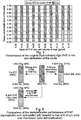
- For MPHP/VT = 0.15, the contents of a few tubes was taken into a separation funnel and the drainage from the funnel under gravity was collected in measuring cylinders. It was observed that no organic phase was released from the cellular structure of polyHIPE and all the liquids in which polyHIPE particles were suspended at the top were indeed aqueous phase. When a vacuum was applied, a small volume of organic phase with respect to that of the aqueous phase was also released. For a particular test with a different type of IFC of 18 ml volume mixed with 1.0g polyHIPE, the volumes of the three phases, namely aqueous, organic, and solid (polyHIPE and absorbed material) were measured as 10 ml (56%), 1.5 ml (8%), and 6.5 ml (36%), respectively. This is schematically shown in
Figure 5 in comparison to the separation performance of sulphonated polyHIPE and that of a membrane of 0.45µm pore size. It is clear from the figure that only 27% of the available organic phase (1.5 ml out of 5.5 ml) is released from the cellular structure of polyHIPE under relatively low vacuum. It is expected that, if the level of the vacuum on the drain side of the funnel (or the pressure on the funnel side) is increased further, it may be possible to extract all of the available organic phase. This may also be achieved by a combined press-filter device. - Some polyHIPE pieces used in the demulsification was removed from the funnel and washed with ethanol followed by water. After drying they were analysed by SEM and a typical micrograph is shown in
Figure 6 . In comparison to deposits displayed by the micrograph inFigure 3 , there is very little deposit in the cells of the polyHIPE shown in the micrograph ofFigure 6 . This indicates that it may be possible to regenerate polyHIPE by a suitable and cheap solvent washing procedure. The solids may then also be separated from wash liquids by a suitable method. - Test tube demulsification experiments with a rigid hydrophilic sulphonated sodium salt of polyHIPE chopped into particles of size 1000µm ± 250µm size demonstrated that hydrophilic polyHIPE could successfully break down IFC. But in contrast to the hydrophobic polyHIPE, the smaller the amount of polyHIPE material used the better the separation was. For a particular test with 18 ml IFC mixed with 0.03 g sulphonated sodium salt of polyHIPE, the volumes of the three phases, namely aqueous, organic, and solid (polyHIPE and adsorbed material) were measured as 9.5 ml (53%), 1.5 ml (8%), and 7 ml (39%), respectively. This is schematically shown in
Figure 5 in comparison to the separation performance of untreated polyHIPE and that of a membrane of 0.45 µm pore size. When there was a separation, some sediments with the appearance of polyHIPE powders occurred in the aqueous phase. These sediments were mainly positioned at the bottom of the tubes but some remained suspended in the aqueous phase. - The results obtained from a typical set of tests with a typical type of IFC are shown in Table 5 as well as in
Figure 7 which can be summarised as: - For 0.034 ≤ MPHP/VT ≤ 0.15 rigid hydrophilic polyHIPE adsorbs everything, no separation occurs.
- For 0.008 ≤ MPBP/VT < 0.034 no separation occurs, some free organic phase remains at the top.
- For MPBP/NT < 0.008 separation occurs. The separation gets better for the smaller ratios.
- For MPHP/VT = 0.001 significant separation occurs and it becomes better with decreasing MPHP/VT.
- The sediments in the aqueous phase, remaining IFC, and polyHIPE particles positioned in the IFC phase were analysed using SEMBDAX
-
Figures 8 and9 respectively show typical micrographs and EDAX spectrum of the sediments. These micrographs show that small particulate material has been trapped in the cellular structure of the polyHIPE whereas larger particles have accumulated on the surface. These large particles may be (1) the IFC particles adsorbed by polyHIPE and sedimented with polyHIPE, (2) and/or the IFC particles which are not adsorbed by polyHIPE but sediment when polyHIPE demulsifies the IFC resulting in formation of the aqueous phase. An EDAX spectrum of the total area shown by micrograph inFigure 8a is given inFigure 9a , and that of a single IFC particle trapped in the a polyHIPE cell is given inFigure 9b . These both indicate the presence of palladium in the sediments. -
Figures 10a and 10b show typical micrographs of polyHIPE particles remaining in the IFC. It is seen from the micrographs that these polyHIPE particles have very little porosity so that they are not able to adsorb IFC solids. Being lighter than the aqueous phase, they are positioned in the remaining IFC phase after demulsification. - Some separate samples of remaining IFC solids were washed with water, ethanol, and dichloromethane followed by hexane to remove any TBP and OK residue which may have remained on the solids and dried. These washed remaining solids were analysed by SEM/EDAX as well as by chemical methods for their C, H, N, Pd and P content. Some typical micrographs and X-ray spectrums are given in
Figures 11a and12a for the samples washed with water,Figures 11b and12b for the samples washed with ethanol andFigures 11c and12c for the samples washed with dichloromethane and hexane. Chemical analysis results for these same samples are given in Table 6 as well as shown inFigure 13 . As for the original IFC the micrographs indicate that the remaining IFC solids are also in the form of sharp edged disc-shaped particles. These particles again remain in bulk either as individual particles and/or form agglomerates. The EDAX spectra ofFigure 12 indicate the presence of palladium in the remaining IFC. - Some detailed demulsification tests were performed to investigate the demulsification of the remaining IFC from the first demulsification test by using both plain polyHIPE and a sulphonated sodium salt of polyHIPE, as well as a combination of the two. In these tests both the type of IFC as well as the ratios of polyHIPE, mass/IFC volume were changed. It was observed that the plain polyHIPE did not cause any further demulsification and polyHIPE itself did not undergo any changes. The sulphonated sodium salt of polyHIPE on the other hand seemed to be absorbing the remaining IFC without causing any further phase separation. In contrast to the first demulsification, the colours of the particles of sulphonated sodium salt of polyHIPE changed into that of the IFC becoming dark brownish-black coloured. These sulphonated sodium salt of polyHIPE particles were analysed by using SEM/EDAX.
Figure 14 shows typical micrographs of these sulphonated sodium salt of polyHIPE particles. It is seen that the cell walls and pores of these sulphonated sodium salt of polyHIPE particles have heavily been plastered by very fine IFC solids which appear to be smaller than those absorbed initially. Furthermore, these particles are more rounded, probably indicating the presence amorphous organics. These results indicates that the polyHIPE is capable of partially demulsifying IFC by removing only certain agents stabilising the IFC. Other means may have to be developed for the demulsification of the remaining IFC following the first partial demulsification by the sulphonated sodium salt of polyHIPE. - Some very fine particles from IFC remained on the top of the polyHIPE layer in the organic phase after re-demulsification. These fine particles were easily dispersed into the solvent phase with slight movement of the tubes. They were also analysed by using SEM/EDAX and typical micrographs and EDAX spectra are shown in
Figures 15 and16 , respectively. Micrographs show that the disk-like shape of the original IFC particles are not observed here and that the fine IFC particles agglomerate into round-edged larger particles.Figure 16a shows an enhanced P peak with respect to that of the Pd.Figure 16b shows markedly low Pd and P peaks but a pronounced sodium peak indicating that it is mainly an organic material. An EDAX spectrum of the total area of the micrograph inFigure 15a (i.e.Figure 16a ) shows the presence of a large quantity of palladium whereas the spectrum of the bright area in the same micrograph (i.e.Figure 16b ) indicates very little palladium. The spectrum of the dark region of the micrograph also showed a large quantity of palladium but less sodium than that of the total area. This and the bright white colour may indicate that the IFC is not only formed from palladium complexes of the degradation products but contains other components. Therefore, the solids in IFC may be in fact two types differentiated by the presence of the organics. - Effect of the particle size of the sulphonated sodium salt of polyHIPE on the demulsification was investigated for MPHP/VT = 2.34 mg/l. The results are shown in Table 7.
- It appears that the larger particles perform slightly better than the smaller particles. The amount of the sediments in the aqueous phase seemed to be the same size for all the polyHIPE particle fractions being investigated and they had the same appearance. The total amount of sediments and the amount of the suspended sediments got smaller with decreasing particle size. This observation indicated that the sediments might have not been only the polyHIPE particles but rather a mixture of the polyHIPE particles with solid products of the demulsification. This was checked by mixing the same amount of polyHIPE particles as above with a mixture of aqueous (15 ml) and organic phase (15 ml) only. It was observed that as soon as the polyHIPE particles came into contact with the liquid in the tube they started crumbling into much smaller particles as a result of differential swelling which induces internal stresses. These polyHIPE particles and those sedimented after the demulsification had the same appearance showing that the sediments were polyHIPE particles. In contrast to the sediments after the demulsification, the smaller particles here were positioned at the top of the aqueous phase. The reason for the particle sedimentation to the bottom of the tubes following the demulsification is that they become heavier as they bind the IFC solids in their cellular structure.
- The degree of the sulphonation of the polyHIPE represents its hydrophilic characteristics. The effect of the degree of the sulphonation on the demulsification was investigated with sulphonated sodium salt of polyHIPE particles of
size 1000 ± 250 µm size for varying types of IFC and the ratio of MPHP/VT (in gram/I). For a typical type of IFC results are shown in Table 8. It appears that the degree of the sulphonation is important in the demulsification and that demulsification performance increases with increasing the degree of sulphonation up to a certain point beyond which the demulsification capacity remains unchanged with increasing degree of sulphonation. This data is shown in graph form inFigure 17 (triangular symbol). Some more tests on the effect of the sulphonation degree have been performed for a different type of IFC and varying MPPHP/VT. The results are given in Tables 9 and 10 as well as shown inFigure 17 . It seems that the demulsification capacity of a sulphonated polyHIPE with a given degree of sulphonation varies depending on the type of IFC. As the degree of the sulphonation becomes greater, polyHIPE becomes more hydrophilic in character and it holds a greater volume of aqueous phase in its cellular structure. Thus in effect a lesser amount of free aqueous phase separates and the separation capacity is decreased with increasing ratio of MPHP/VT. - The effect of neutralisation of the sulphonated polyHIPE on demulsification was investigated for different degree of the sulphonation with sulphonated sodium salt of polyHIPE particles of
size 1000 ± 250 µm size and MS-PHP-Na/VT = mg/l. The results are shown in Table 11. The effect of the neutralisation can be evaluated by comparing the values of demulsification capacity (D) in this table, with that of sulphonated polyHIPE in Table 8. A careful inspection of these tables indicates that neutralisation does not significantly influence the demulsification performance of the sulphonated polyHIPE. - The effect of the time passed from the first mixing and the subsequent mixings during this time period have been investigated for varying sulphonated sodium salt of polyHIPE mass (MPHP). The results are shown in
Figure 18 . It is seen from the figure that at first for MPHP = 0.03 g no separation occurs, but as the time passes it yields the highest separation of all. For 0.1 ≥ MPHP >0.03, the volume of the initially separated aqueous phase does not change much with MPHP. This means that the separation capacity is higher for the smaller MPHP by virtue of its definition (see the equation above). After 25 days, subsequent shakings do not seem to be causing significant changes in the volumes of the separated aqueous phase for each mass of polyHIPE. It was observed that the demulsification performance for a given sulphonated sodium salt of polyHIPE changed not only depending on the type of the IFC (Figure 17 ), as in the case of non-sulphonated PHP, but also depending on the time passed following the first mixing (Figure 18 ). It seems that if a fast separation is required, then a smaller amount of sulphonated sodium salt of polyHIPE with a higher degree of sulphonation (40-80%) performs better as shown inFigure 19 . But if the separation time is not a concern, better separation performances can be achieved by allowing the mixture of sulphonated sodium salt of polyHIPE with a smaller degree of sulphonation and IFC to rest for longer periods. These results indicate that for a maximum separation performance important factors are (i) characteristics of the IFC, (ii) the degree of the sulphonation, (iii) the mass of the sulphonated sodium salt of polyHIPE, and (iv) the time passed from the first contact of sulphonated sodium salt of polyHIPE with IFC. It is to be noted that these factors affect the separation interactively; that is to say that they are interdependent. - The effect of a mixture of rigid hydrophilic and rigid hydrophobic polyHIPE on the demulsification capacity has been investigated for a fixed mass of sulphonated sodium salt of polyHIPE (0.06 g) with varying mass of rigid hydrophobic polyHIPE (0 to 1.06 g). The results are shown in
Figure 20 . For the first week the addition of hydrophobic polyHIPE slightly decreases the separation performance. But as the time passes further, for 1.06 g hydrophobic polyHIPE addition, the separation is reduced dramatically (93%) with respect to its first day separation as well as to the case of no hydrophobic polyHIPE addition. A slight improvement (11%) in the separation is observed for 0.3 g hydrophobic PHP addition in the third week with respect to the case of no hydrophobic polyHIPE addition. The results indicate that in batch mode demulsification, a mixture of rigid hydrophilic and rigid hydrophobic polyHIPE does not cause any significant improvement in the separation performance but may yield dramatic reduction if the mass of the rigid hydrophobic polyHIPE is above a certain limit. - Elastic PHP as produced shows mainly hydrophobic and slightly hydrophilic surface characteristics. Only a few demulsification tests with elastic PHP were performed. The results indicated that elastic PHP was capable of yielding a demulsification capacity D = 10 ml/g for a MPHP/VT value as small as 16.7 mg/ml which is much better than the demulsification capacity of the rigid hydrophobic PHP(D = 0.04 ml/g for MPHP/VT = 83 mg/ml. But the performance of the elastic PHP was poorer than that of the hydrophilic PHP for which MPHP/VT value as small as 1 mg/ml yields a demulsification capacity D = 533 ml/g. This is thought to be due to the fact that hydrophilicity of the elastic PHP is higher than that of the original rigid PHP but smaller than that of the sulphonated rigid PHP.
- Elastic polyHIPE particles were kept in concentrated sulphuric acid (98% by volume) overnight in an oven at 60°C. They were washed free of the acid and used in the demulsification of the IFC which gave a demulsification capacity the same as the original (see the above paragraph). Some of this sulphuric acid treated elastic polyHIPE was then kept in 2M NaOH overnight at room conditions. They were also tested for their demulsification capacities. The results showed that they were capable of yielding a demulsification capacity D = 1 ml/g for a MPHP/VT = 16.7 mg/ml which is ten times smaller than those of the original elastic polyHIPE and its sulphonated forms.
- Some simple tests on continuous mode demulsification with different methods have been performed by using hydrophobic polyHIPE particles: (i) passing IFC through a polyHIPE packed bed with the aid of a peristaltic plump, and (ii) adding IFC to the top surface of a polyHIPE backed bed in a separation funnel and allowing it to drain under a relatively low vacuum. Both methods seemed to be effective in causing aqueous phase separation. But not much solvent phase separated due to the hydrophobic surface characteristics of the polyHIPE. For a typical test with a separation funnel it was possible to separate 84% of all the aqueous phase present in the IFC but only 18% of that of the solvent phase.
- Efforts have been made to treat the degraded solvent phase as well as the spent aqueous phase in batch mode using test tubes. A large number of ion exchange resins as well as some absorbents including different types of polyHIPE have been tested. The results obtained are summarised in Table 2. The results given in Table 2 cover only physical observations. Some of the ion-exchange resins (Amberlite IRC-718, Amberlite IRA-900) caused excellent colour clarification both in the degraded solvent phase and in the spent aqueous phase. Some typical results are shown in
Figure 21 . EDAX and chemical analysis of these samples indicated that Pd and P were reduced dramatically by these resins both in the solvent and the aqueous phases. The ion-exchange resins seem to be promising for the treatment of both the degraded solvent phase and the spent aqueous phase.Table 1. TOC and metal concentration in the aqueous phase after separation under different conditions Description TOC ppm Mg ppm Ca ppm Aqueous phase only 7 604 126 Aqueous phase with demulsifier 2 574 118 Aqueous phase after demulsification 28 530 109 Aqueous phase after demulsification and treatment with hydrophobic polymer 8 546 113 Aqueous phase separated over a period of three months upon standing 203 - - Aqueous phase separated at 200 Bar after 100 hours 120 - - TABLE 2: Summary of the performances of the materials used in IFC demulsification, degraded solvent treatment, and spent aqueous phase treatment. Material IFC demulsification Solvent treatment Aqueous treatment Cetco Europe Ltd. NT75/EA Flocculent no phase separation no colour changes no colour changes Cetco Europe Ltd. NT75/LSK-55 no phase separation no colour changes no colour changes Amberlite IRC-718 Ion-exchange resin no phase separation excellent colour clarification excellent colour clarification Amberlite IRA-900 Ion-exchange resin no phase separation excellent colour clarification excellent colour clarification Amberlite IRC-400(CI) Ion-exchange resin no phase separation colour clarification very good colour clarification Dovex 50WX2-100 Ion-exchange resin no phase separation no colour changes no colour changes Dovex 1WX2-100 Ion-exchange resin no phase separation colour clarification colour clarification Crosfield Textile Chemicals Macrosorb CT100 no phase separation colour clarification colour clarification Paroxite Absorbents J-550 no phase separation no colour changes no colour changes Paroxite Absorbents Aqueous :2 ml no colour changes no colour changes J-500 Solvent :0 ml Initial IFC :22 ml Paroxite Absorbents Aqueous :14 ml no colour changes no colour changes A-200 Solvent :0 ml Initial IFC :22 ml Hydrophilic PHP Aqueous :16 ml no colour changes no colour changes (S-PHP-Na) Solvent :0 ml Initial IFC :22 ml Hydrophobic PHP Aqueous :12 ml no colour changes no colour changes (PHP) Solvent :0 ml Initial IFC :22 ml Elastic PHP Aqueous :5 ml no colour changes no colour changes (EPHP) Solvent :0 ml Initial IFC :22 ml Carbonated PHP no phase separation no colour changes no colour changes Activated Carbon no phase separation colour clarification colour clarification TABLE 3: Summary of the sulphonation test. Particle size (mm) Temperature (°C) Time (hrs) Degree of sulphonation (%) -1+0.25 40 2 10 -1+0.25 40 4 10 -1+0.25 40 23 10 -3*+1 40 4 19 5* 95 24 96 5* 95 1 89 5* 95 0.5 80 10* 75 and 95 3 at 75 °C and 8 at 95 ° C 92 20* 95 16 92 20* room 18 12 20* 95 6 86 20* 95 3.5 70 * Approximate TABLE 4: Demulsification performance of rigid hydrophobic PHP. Raw crud volume, VT = 30ml, room conditions. Test MPHP MPHP/VT [VC]i [VC]l [Vaq]i [Vaq]l [Vor]i [Vor]l D No (g) (g/ml) (ml) (ml) (ml) (ml) (ml) (ml) (ml/g) 1 0.0 0.0000 23.0 23.0 0.0 0.0 7.0 7 0.000 2 0.5 0.0167 24.0 26.5 0.0 0.0 6.0 5.0 0.000 3 1.0 0.0334 22.0 26.5 0.0 0.0 8.0 5.5 0.000 4 1.5 0.0500 21.5 26.7 0.0 0.0 8.5 5.8 0.000 5 2.0 0.0667 21.0 27.5 0.0 0.0 9.0 4.6 0.000 6 2.5 0.0834 20.0 28.8 0.0 0.1 10.0 3.3 0.040 7 3.0 0.1000 21.0 30.0 0.0 0.2 9.0 2.5 0.067 8 3.5 0.1167 21.5 28.7 0.0 3.0 8.5 1.7 0.857 9 4.0 0.1334 22.0 22.5 0.0 11.7 8.0 0.4 2.925 10 4.5 0.1500 22.0 23.7 0.0 11.7 8.0 0.0 2.600 TABLE 5: Demulsification performance of rigid hydrophilic PHP. Raw crud volume, VT = 30ml, room conditions. Test MPHP MPHP/VT [VC]i [VC]l [Vaq]i [Vaq]l [Vor]i [Vor]l D No (g) (g/ml) (ml) (ml) (ml) (ml) (ml) (ml) (ml/g) 1 0.00 0.000 22.0 23 0.0 0 8.0 7 0 2 0.03 0.001 22.0 6 0.0 16 8.0 8 533 3 0.08 0.003 22.5 10 0.0 15 7.5 5 188 4 0.12 0.004 22.0 15 0.0 10 8.0 5 83 5 0.19 0.006 22.0 20 0.0 5 8.0 5 26 6 0.25 0.008 22.0 22 0.0 0 8.0 8 0 7 0.50 0.017 22.0 28 0.0 0 8.0 2 0 8 1.00 0.034 22.0 30 0.0 0 8.0 0 0 9 2.00 0.067 22.0 30 0.0 0 8.0 0 0 10 4.50 0.150 22.0 30 0.0 0 8.0 0 0 TABLE 6 : Chemical analysis of the solids of a typical IFC. MSOC: Membrane Separated Original Crud, DCMWOC: Dicholoromethane Washed Original Crud, EWOC: Ethanol Washed Original Crud, WWRC: Water Washed Remaining Crud, DCMWRC: Dicholoromethane Washed Remaining Crud, EWRC: Ethanol Washed Remaining Crud. Concentration (%) ORIGINAL CRUD REMAINING CRUD AFTER DEMULSIFICATION BY PHP Element MSOC DCMWOC EWOC WWRC DCMWOC EWRC Pd 19.33 35.66 37.17 18.25 22.11 21.58 P 0.58 0.07 0.10 0.62 0.38 0.38 C 39.86 15.72 20.10 60.28 27.78 30.31 H 6.20 0.59 1.34 5.05 1.66 1.96 N 5.82 9.44 10.79 4.10 6.69 6.06 Total 71.79 61.46 69.50 88.30 58.24 60.29 Others 28.21 38.52 30.50 11.70 41.76 39.71 TABLE 7: The effect of the particle size on the demulsification. MPHP/VT = 2.34 mg/ml, room conditions. Test Particle Size [VC]i [VC]l [Vaq]i [Vaq]l [Vor]i [Vor]l D No (µm) (ml) (ml) (ml) (ml) (ml) (ml) (ml/g) 1 +1000 24 13 0.0 14 6 3 200 2 -1000+710 23 13 0.0 13 7 4 186 3 -710+500 23 13 0.0 13 7 4 186 4 -500+250 23 13 0.0 13 7 4 186 5 -250 23 13 0.0 12 7 5 171 TABLE 8 The effect of the degree of the sulphonation on the demulsification. MPHP/VT = 3 mg/ml, room conditions. Test Degree of [VC]i [VC]l [Vaq]i [Vaq]l [Vor]i [Vor]l D No Sulphonation (%) (ml) (ml) (ml) (ml) (ml) (ml) (ml/g) 1 0 24 26 0 0 6 5 0 2 10 23 19 0 5 7 7 125 3 20 23 14 0 16 7 1 400 4 40 22 6 0 16 8 8 533 5 92 23 6 0 16 7 8 533 6 92 23 6 0 16 7 8 533 7 92 23 6 0 16 7 8 533 TABLE 9 : The effect of the degree of the sulphonation on the demulsification. MPHP/VT = 3 mg/ml, room conditions. 27/10/98 Crud Test Degree of [VC]i [VC]l [Vaq]i [Vaq]l [Vor]i [Vor]l D No Sulphonation (%) (ml) (ml) (ml) (ml) (ml) (ml) (ml/g) 1 0 17 18 0 0 3 2 0 2 10 17 10 0 7 3 3 108 3 20 17 8 0 7.5 3 4.5 115 4 40 17 11.5 0 7.5 3 2 115 5 70 17 10 0 7.5 3 3 115 6 80 17 10 0 6.5 3 3.5 100 7 92 17 14 0 2.0 3 4 31 TABLE 10: The effect of the degree of the sulphonation on the demulsification. MPHP/VT = 4 mg/ml, room conditions. 27/10/98 Crud Test Degree of [VC]i [VC]l [Vaq]i [Vaq]l [Vor]i [Vor]l D No Sulphonation (%) (ml) (ml) (ml) (ml) (ml) (ml) (ml/g) 1 0 17 18 0 0 3 2 0 2 10 17 10 0 8 3 2 100 3 20 17 9 0 9.5 3 1.5 119 4 40 17 10.5 0 6.5 3 3.5 81 5 70 17 17 0 1 3 2 13 6 80 17 16 0 2 3 2 25 7 92 17 16 0 1 3 3 13 TABLE 11: The effect of the neutralisation of the sulphonated PHP on the demulsification. MPHP/VT = 3 mg/ml, room conditions. Test Degree of [VC]i [VC]l [Vaq]i [Vq]l [Vor]i [Vor]l D No Sulphonation (%) (ml) (ml) (ml) (ml) (ml) (ml) (ml/g) 1 0 24 26 0 0 6 5 0 2 10 22 17 0 5 8 8 125 3 20 22 12 0 15 8 3 375 4 40 22 6 0 16 8 8 533
Claims (14)
- A method of demulsifying an oil/water emulsion, wherein the emulsion is contacted with a polymerised High Internal Phase Emulsion (polyHIPE) polymer; characterized in that:the polyHIPE polymer has a microcellular highly porous structure with a void volume up to 98% and pore sizes in the range of fractions of micrometres to hundreds of micrometres;the polyHIPE polymer is in powder or granular form; andthe emulsion is contacted with 0.05 to 5g of polyHIPE polymer per kilogram of emulsion.
- Use of a polymerised High Internal Phase Emulsion (polyHIPE) polymer for demulsifying an oil/water emulsion; characterized in that:the polyHIPE polymer has a microcellular highly porous structure with a void volume up to 98% and pore sizes in the range of fractions of micrometres to hundreds of micrometres;the polyHIPE polymer is in powder or granular form; andthe emulsion is contacted with 0.05 to 5g of polyHIPE polymer per kilogram of emulsion.
- A method according to claim 1 for the continuous demulsification of an oil/water emulsion, wherein the emulsion is contacted with a polymerised High Internal Phase Emulsion (polyHIPE) polymer and subjected to at least one further process selected from the group comprising: application of an electric field, application of heat, application of pressure, flow induced phase inversion, centrifugation, and passage across a rotating surface.
- A method of according to claim 1, comprising the steps of:i) supplying the emulsion to a rotating surface of a rotating surface reactor;ii) operating the rotating surface reactor so that the rotating surface spins at a speed sufficient to cause the solution to spread over the rotating surface as a continuously flowing thin film;iii) contacting the emulsion on the rotating surface with the polymerised High Internal Phase Emulsion (polyHIPE) polymer so as to cause demulsification of the emulsion.
- A method or use according to any preceding claim, wherein the oil/water emulsion is a crude oil emulsion.
- A method or use according to any one of claims 1 to 4, wherein the oil/water emulsion is interfacial crud (IFC).
- A method or use according to any preceding claim, wherein the polyHIPE polymer is a rigid polyHIPE polymer.
- A method or use according to any one of claims 1 to 6, wherein the polyHIPE polymer is an elastic polyHIPE polymer.
- A method or use according to any preceding claim, wherein the polyHIPE polymer is a hydrophobic polyHIPE polymer.
- A method or use according to any one of claims 1 to 8, wherein the polyHIPE polymer is a hydrophilic polyHIPE polymer.
- A method or use according to claim 10, wherein the polyHIPE polymer is a sulphonated polyHIPE polymer.
- A method or use according to claim 11, wherein the polyHIPE polymer is a sulphonated alkali salt of a polyHIPE polymer.
- A method or use according to claim 11 or 12, wherein the polyHIPE polymer is a sulphonated sodium salt of a polyHIPE polymer.
- A method or use according to any preceding claim, wherein the polyHIPE polymer is recovered and recycled after separation and/or demulsification of the oil/water emulsion.
Applications Claiming Priority (3)
| Application Number | Priority Date | Filing Date | Title |
|---|---|---|---|
| GB0018573 | 2000-07-29 | ||
| GBGB0018573.6A GB0018573D0 (en) | 2000-07-29 | 2000-07-29 | Improved methods for separating oil and water |
| PCT/GB2001/003412 WO2002010070A2 (en) | 2000-07-29 | 2001-07-30 | Improved methods for separating oil and water |
Publications (2)
| Publication Number | Publication Date |
|---|---|
| EP1307402A2 EP1307402A2 (en) | 2003-05-07 |
| EP1307402B1 true EP1307402B1 (en) | 2012-05-02 |
Family
ID=9896538
Family Applications (1)
| Application Number | Title | Priority Date | Filing Date |
|---|---|---|---|
| EP01954123A Expired - Lifetime EP1307402B1 (en) | 2000-07-29 | 2001-07-30 | Method for separating oil in water emulsions |
Country Status (7)
| Country | Link |
|---|---|
| US (2) | US7780854B2 (en) |
| EP (1) | EP1307402B1 (en) |
| JP (1) | JP5224629B2 (en) |
| AT (1) | ATE556033T1 (en) |
| AU (1) | AU2001276472A1 (en) |
| GB (1) | GB0018573D0 (en) |
| WO (1) | WO2002010070A2 (en) |
Families Citing this family (24)
| Publication number | Priority date | Publication date | Assignee | Title |
|---|---|---|---|---|
| GB0018573D0 (en) * | 2000-07-29 | 2000-09-13 | Univ Newcastle | Improved methods for separating oil and water |
| GB0215832D0 (en) * | 2002-07-09 | 2002-08-14 | Akay Galip | Preparation of composite high internal phase emulsion polymerised microporous polymers and their applications |
| FR2862976B1 (en) * | 2003-11-28 | 2006-01-13 | Commissariat Energie Atomique | VERY LOW DENSITY POLYMER FOAMS AND METHOD OF MANUFACTURING THE SAME |
| US7132651B2 (en) * | 2004-04-23 | 2006-11-07 | Framatome Anp, Inc. | In-situ BWR and PWR CRUD flake analysis method and tool |
| EP1889811A1 (en) * | 2006-08-17 | 2008-02-20 | Unilever N.V. | Aqueous media purification method and device comprising a functionalised polyhipe resin |
| WO2008019940A1 (en) * | 2006-08-17 | 2008-02-21 | Unilever Nv | Aqueous media purification method and device comprising a functionalised polyhipe resin |
| US7621339B2 (en) | 2007-02-14 | 2009-11-24 | Schlumberger Technology Corporation | Downhole production and injection pump system |
| US8986407B2 (en) * | 2008-04-18 | 2015-03-24 | Saint-Gobain Abrasives, Inc. | High porosity abrasive articles and methods of manufacturing same |
| GB0818520D0 (en) | 2008-10-09 | 2008-11-19 | Akay Galip | Preparation of nano-structured micro-porous polymeric, metallic, ceramic and composite foams |
| WO2011159699A2 (en) | 2010-06-14 | 2011-12-22 | The Regents Of The University Of Michigan | Superhydrophilic and oleophobic porous materials and methods for making and using the same |
| AU2012304758B2 (en) | 2011-09-05 | 2016-02-04 | Cytec Technology Corp. | Processes for recovering organic solvent extractant from solid-stabilized emulsions formed in hydrometallurgical solvent extraction circuits |
| WO2013173722A2 (en) * | 2012-05-17 | 2013-11-21 | The Regents Of The University Of Michigan | Devices and methods for electric field driven on-demand separation of liquid-liquid mixtures |
| CA2889424A1 (en) * | 2012-09-12 | 2014-03-20 | The University Of Wyoming Research Corporation D/B/A Western Research Institute | Continuous destabilization of emulsions |
| WO2015054406A1 (en) | 2013-10-09 | 2015-04-16 | The Regents Of The University Of Michigan | Apparatuses and methods for energy efficient separations including refining of fuel products |
| CA2926947A1 (en) | 2013-10-10 | 2015-04-16 | The Regents Of The University Of Michigan | Silane based surfaces with extreme wettabilities |
| US10726172B2 (en) | 2017-04-10 | 2020-07-28 | Harris Corporation | Systems and methods to achieve tailored fluid and energy interaction through surface texturing |
| CN107993810B (en) * | 2017-11-03 | 2024-04-26 | 国家电网公司 | A drying method and drying device for transformer insulating oil |
| CN109091915A (en) * | 2018-10-25 | 2018-12-28 | 桂林理工大学 | A kind of preparation method of easily prepared underwater superoleophobic high flow rate oil-water separating net |
| JP7231574B2 (en) * | 2020-02-27 | 2023-03-01 | 国立大学法人九州大学 | Novel porous crosslinked polymer, immobilized catalyst and device using the same |
| CN111450578B (en) * | 2020-04-03 | 2022-02-18 | 成都理工大学 | A kind of demulsification method of W/O emulsion |
| CN112210397A (en) * | 2020-09-27 | 2021-01-12 | 长江大学 | Carbon fiber/nano silicon dioxide compound and preparation method and application thereof |
| CN112499858A (en) * | 2020-12-01 | 2021-03-16 | 华东理工大学 | Demulsification device and method for coalescence of coupling medium of non-uniform electric field |
| CN113368540B (en) * | 2021-06-16 | 2022-06-10 | 重庆工商大学 | An oil-in-water emulsion breaking method for electric field coupled conductive particle bed |
| WO2025199360A1 (en) * | 2024-03-20 | 2025-09-25 | Ionx Solutions Llc | System and method for reconditioning resin in flow |
Family Cites Families (26)
| Publication number | Priority date | Publication date | Assignee | Title |
|---|---|---|---|---|
| US3974116A (en) * | 1974-03-20 | 1976-08-10 | Petrolite Corporation | Emulsion suspensions and process for adding same to system |
| JPS5353066A (en) * | 1976-10-26 | 1978-05-15 | Shingijiyutsu Sangiyou Kk | Oil and water separator |
| US4126551A (en) * | 1977-04-08 | 1978-11-21 | Freeport Minerals Company | Method and apparatus for handling solvent extraction crud |
| US4120815A (en) * | 1977-10-25 | 1978-10-17 | Calgon Corporation | Polymeric demulsifiers |
| JPS5499082A (en) * | 1978-01-10 | 1979-08-04 | Asahi Chem Ind Co Ltd | Oil-water separating method |
| US4160742A (en) * | 1978-06-15 | 1979-07-10 | Calgon Corporation | Method of resolving oil-in-water emulsions |
| NZ199916A (en) | 1981-03-11 | 1985-07-12 | Unilever Plc | Low density polymeric block material for use as carrier for included liquids |
| NZ205449A (en) * | 1982-09-07 | 1986-10-08 | Unilever Plc | Sulphonated,porous,cross-linked polymeric material |
| US4759913A (en) * | 1987-04-15 | 1988-07-26 | Freeport Research And Engineering Company | Recovery of liquid phases from three phase emulsions formed in solvent extraction processes |
| US4968449A (en) * | 1989-03-17 | 1990-11-06 | Nalco Chemical Company | Alkoxylated vinyl polymer demulsifiers |
| FR2644708B1 (en) * | 1989-03-24 | 1991-07-12 | Total France | DEVICE FOR SEPARATING TWO NON-MISCIBLE LIQUIDS AND APPLICATION THEREOF |
| US5021167A (en) | 1989-07-10 | 1991-06-04 | Nalco Chemical Company | Method for separating liquid from water using amine containing polymers |
| US5100582A (en) | 1989-12-28 | 1992-03-31 | Nalco Chemical Company | Water soluble polymer as water-in-oil demulsifier |
| US5032285A (en) | 1990-01-12 | 1991-07-16 | Nalco Chemical Company | Reverse emulsion breaking method using amine containing polymers |
| US5195847A (en) * | 1992-01-15 | 1993-03-23 | Guymon E Park | Process for cleaning drilling mud contaminated with hydrocarbons |
| JPH05232296A (en) * | 1992-02-19 | 1993-09-07 | Sumitomo Metal Mining Co Ltd | Removing method of phosphate in radioactive organic solvent |
| ZA9510847B (en) | 1994-12-23 | 1997-06-20 | Unilever Plc | Process for the production of liquid compositions |
| US5730882A (en) * | 1995-03-29 | 1998-03-24 | Union Oil Company Of California | Method for remediation of water containing emulsified oils |
| SE9504205D0 (en) | 1995-11-24 | 1995-11-24 | Pharmacia Biotech Ab | A chromatographic separation method and device |
| US5900437A (en) * | 1997-06-02 | 1999-05-04 | Amcol International Corporation | Hydrophilic/oleophilic microcellular foam and method for making same |
| RU2120323C1 (en) * | 1997-12-08 | 1998-10-20 | Общество С Ограниченной Ответственностью "Сибметаллсервис" | Petroleum and petroleum product dehydration process |
| AU8272398A (en) * | 1998-06-29 | 2000-01-17 | Procter & Gamble Company, The | Liquid transport member for high flux rates between two port regions |
| WO2000000701A1 (en) * | 1998-06-29 | 2000-01-06 | The Procter & Gamble Company | Liquid transport member for high flux rates between a port region and an opening |
| US6036868A (en) | 1998-07-23 | 2000-03-14 | Nalco Chemical Company | Use of hydrophilic dispersion polymers for oily wastewater clarification |
| GB9826701D0 (en) | 1998-12-05 | 1999-01-27 | Univ Newcastle | Microcellular polymers as cell growth media and novel polymers |
| GB0018573D0 (en) | 2000-07-29 | 2000-09-13 | Univ Newcastle | Improved methods for separating oil and water |
-
2000
- 2000-07-29 GB GBGB0018573.6A patent/GB0018573D0/en not_active Ceased
-
2001
- 2001-07-30 WO PCT/GB2001/003412 patent/WO2002010070A2/en not_active Ceased
- 2001-07-30 US US10/333,769 patent/US7780854B2/en not_active Expired - Fee Related
- 2001-07-30 AU AU2001276472A patent/AU2001276472A1/en not_active Abandoned
- 2001-07-30 EP EP01954123A patent/EP1307402B1/en not_active Expired - Lifetime
- 2001-07-30 JP JP2002516209A patent/JP5224629B2/en not_active Expired - Fee Related
- 2001-07-30 AT AT01954123T patent/ATE556033T1/en active
-
2010
- 2010-08-24 US US12/862,090 patent/US8177985B2/en not_active Expired - Fee Related
Also Published As
| Publication number | Publication date |
|---|---|
| JP2004504940A (en) | 2004-02-19 |
| US20110124747A1 (en) | 2011-05-26 |
| US7780854B2 (en) | 2010-08-24 |
| ATE556033T1 (en) | 2012-05-15 |
| GB0018573D0 (en) | 2000-09-13 |
| US20050045564A1 (en) | 2005-03-03 |
| AU2001276472A1 (en) | 2002-02-13 |
| WO2002010070A2 (en) | 2002-02-07 |
| US8177985B2 (en) | 2012-05-15 |
| EP1307402A2 (en) | 2003-05-07 |
| JP5224629B2 (en) | 2013-07-03 |
Similar Documents
| Publication | Publication Date | Title |
|---|---|---|
| US8177985B2 (en) | Methods for separating oil and water | |
| Maiti et al. | Removal of oil from oil-in-water emulsion using a packed bed of commercial resin | |
| Salman et al. | Extraction of lead ions from aqueous solution by co-stabilization mechanisms of magnetic Fe2O3 particles and nonionic surfactants in emulsion liquid membrane | |
| KR100375269B1 (en) | Corrosive Liquid Blender | |
| Kargari et al. | Role of emulsifier in the extraction of gold (III) ions from aqueous solutions using the emulsion liquid membrane technique | |
| EP1620194B1 (en) | Method and apparatus for oil water separation | |
| US20230212037A1 (en) | Janus composite for oil in water separation | |
| Gürel et al. | Removal of lead from wastewater using emulsion liquid membrane technique | |
| CN102134344B (en) | Biparental high polymer coalescence degreasing material as well as preparation and application thereof | |
| Sha et al. | Superhydrophilic polyvinyl alcohol-formaldehyde composite sponges with hierachical pore structure for oil/water emulsion separation | |
| Sarkar et al. | Ionic liquids and deep eutectic solvents in wastewater treatment: recent endeavours | |
| Engineering et al. | The treatment of oily water by coalescing | |
| WO2014182779A1 (en) | Metal removal from liquid hydrocarbon streams | |
| WO2015015192A1 (en) | Coalescent hydrocarbon filter | |
| Michelsen et al. | Feasibility study on use of predispersed solvent extraction/flotation techniques for removal of organics from wastewaters | |
| US11648512B2 (en) | Enhanced emulsion liquid membranes for extraction of pollutants from water | |
| Akay et al. | Intensified demulsification and separation of thermal oxide reprocessing interfacial crud (THORP-IFC) simulants. | |
| Al-Khateeb et al. | Phenol extraction from wastewater using emulsion liquid membrane: extraction, stripping and breakage studies | |
| DE10326666A1 (en) | mixtures | |
| Das et al. | Separation of oil-water mixture in tank | |
| Algburi | Continuous separation process of water-in-crude oil emulsion by simultaneous application of an electrical field combined with a novel absorbent based on functionalised PolyHIPE polymer | |
| Harbottle et al. | Particle-stabilized emulsions in heavy oil processing | |
| RU2848106C1 (en) | Method for the destruction and utilisation of unconditioned emulsion semi-finished products of industrial emulsion explosives | |
| Zhou et al. | Separation of oil from oily wastewater by modified resin | |
| EP1599546B1 (en) | Mixture |
Legal Events
| Date | Code | Title | Description |
|---|---|---|---|
| PUAI | Public reference made under article 153(3) epc to a published international application that has entered the european phase |
Free format text: ORIGINAL CODE: 0009012 |
|
| 17P | Request for examination filed |
Effective date: 20030226 |
|
| AK | Designated contracting states |
Designated state(s): AT BE CH CY DE DK ES FI FR GB GR IE IT LI LU MC NL PT SE TR |
|
| AX | Request for extension of the european patent |
Extension state: AL LT LV MK RO SI |
|
| 17Q | First examination report despatched |
Effective date: 20090225 |
|
| GRAP | Despatch of communication of intention to grant a patent |
Free format text: ORIGINAL CODE: EPIDOSNIGR1 |
|
| GRAS | Grant fee paid |
Free format text: ORIGINAL CODE: EPIDOSNIGR3 |
|
| GRAA | (expected) grant |
Free format text: ORIGINAL CODE: 0009210 |
|
| AK | Designated contracting states |
Kind code of ref document: B1 Designated state(s): AT BE CH CY DE DK ES FI FR GB GR IE IT LI LU MC NL PT SE TR |
|
| REG | Reference to a national code |
Ref country code: GB Ref legal event code: FG4D |
|
| REG | Reference to a national code |
Ref country code: AT Ref legal event code: REF Ref document number: 556033 Country of ref document: AT Kind code of ref document: T Effective date: 20120515 Ref country code: CH Ref legal event code: EP |
|
| REG | Reference to a national code |
Ref country code: IE Ref legal event code: FG4D |
|
| REG | Reference to a national code |
Ref country code: DE Ref legal event code: R096 Ref document number: 60146505 Country of ref document: DE Effective date: 20120628 |
|
| REG | Reference to a national code |
Ref country code: NL Ref legal event code: VDEP Effective date: 20120502 |
|
| PG25 | Lapsed in a contracting state [announced via postgrant information from national office to epo] |
Ref country code: SE Free format text: LAPSE BECAUSE OF FAILURE TO SUBMIT A TRANSLATION OF THE DESCRIPTION OR TO PAY THE FEE WITHIN THE PRESCRIBED TIME-LIMIT Effective date: 20120502 Ref country code: CY Free format text: LAPSE BECAUSE OF FAILURE TO SUBMIT A TRANSLATION OF THE DESCRIPTION OR TO PAY THE FEE WITHIN THE PRESCRIBED TIME-LIMIT Effective date: 20120502 Ref country code: FI Free format text: LAPSE BECAUSE OF FAILURE TO SUBMIT A TRANSLATION OF THE DESCRIPTION OR TO PAY THE FEE WITHIN THE PRESCRIBED TIME-LIMIT Effective date: 20120502 |
|
| REG | Reference to a national code |
Ref country code: AT Ref legal event code: MK05 Ref document number: 556033 Country of ref document: AT Kind code of ref document: T Effective date: 20120502 |
|
| PG25 | Lapsed in a contracting state [announced via postgrant information from national office to epo] |
Ref country code: PT Free format text: LAPSE BECAUSE OF FAILURE TO SUBMIT A TRANSLATION OF THE DESCRIPTION OR TO PAY THE FEE WITHIN THE PRESCRIBED TIME-LIMIT Effective date: 20120903 Ref country code: GR Free format text: LAPSE BECAUSE OF FAILURE TO SUBMIT A TRANSLATION OF THE DESCRIPTION OR TO PAY THE FEE WITHIN THE PRESCRIBED TIME-LIMIT Effective date: 20120803 |
|
| PG25 | Lapsed in a contracting state [announced via postgrant information from national office to epo] |
Ref country code: BE Free format text: LAPSE BECAUSE OF FAILURE TO SUBMIT A TRANSLATION OF THE DESCRIPTION OR TO PAY THE FEE WITHIN THE PRESCRIBED TIME-LIMIT Effective date: 20120502 |
|
| PG25 | Lapsed in a contracting state [announced via postgrant information from national office to epo] |
Ref country code: DK Free format text: LAPSE BECAUSE OF FAILURE TO SUBMIT A TRANSLATION OF THE DESCRIPTION OR TO PAY THE FEE WITHIN THE PRESCRIBED TIME-LIMIT Effective date: 20120502 Ref country code: AT Free format text: LAPSE BECAUSE OF FAILURE TO SUBMIT A TRANSLATION OF THE DESCRIPTION OR TO PAY THE FEE WITHIN THE PRESCRIBED TIME-LIMIT Effective date: 20120502 Ref country code: NL Free format text: LAPSE BECAUSE OF FAILURE TO SUBMIT A TRANSLATION OF THE DESCRIPTION OR TO PAY THE FEE WITHIN THE PRESCRIBED TIME-LIMIT Effective date: 20120502 |
|
| PG25 | Lapsed in a contracting state [announced via postgrant information from national office to epo] |
Ref country code: IT Free format text: LAPSE BECAUSE OF FAILURE TO SUBMIT A TRANSLATION OF THE DESCRIPTION OR TO PAY THE FEE WITHIN THE PRESCRIBED TIME-LIMIT Effective date: 20120502 Ref country code: MC Free format text: LAPSE BECAUSE OF NON-PAYMENT OF DUE FEES Effective date: 20120731 |
|
| REG | Reference to a national code |
Ref country code: CH Ref legal event code: PL |
|
| PLBE | No opposition filed within time limit |
Free format text: ORIGINAL CODE: 0009261 |
|
| STAA | Information on the status of an ep patent application or granted ep patent |
Free format text: STATUS: NO OPPOSITION FILED WITHIN TIME LIMIT |
|
| 26N | No opposition filed |
Effective date: 20130205 |
|
| PG25 | Lapsed in a contracting state [announced via postgrant information from national office to epo] |
Ref country code: ES Free format text: LAPSE BECAUSE OF FAILURE TO SUBMIT A TRANSLATION OF THE DESCRIPTION OR TO PAY THE FEE WITHIN THE PRESCRIBED TIME-LIMIT Effective date: 20120813 Ref country code: DE Free format text: LAPSE BECAUSE OF NON-PAYMENT OF DUE FEES Effective date: 20130201 Ref country code: CH Free format text: LAPSE BECAUSE OF NON-PAYMENT OF DUE FEES Effective date: 20120731 Ref country code: LI Free format text: LAPSE BECAUSE OF NON-PAYMENT OF DUE FEES Effective date: 20120731 |
|
| REG | Reference to a national code |
Ref country code: IE Ref legal event code: MM4A |
|
| REG | Reference to a national code |
Ref country code: DE Ref legal event code: R119 Ref document number: 60146505 Country of ref document: DE Effective date: 20130201 |
|
| PG25 | Lapsed in a contracting state [announced via postgrant information from national office to epo] |
Ref country code: IE Free format text: LAPSE BECAUSE OF NON-PAYMENT OF DUE FEES Effective date: 20120730 |
|
| PG25 | Lapsed in a contracting state [announced via postgrant information from national office to epo] |
Ref country code: TR Free format text: LAPSE BECAUSE OF FAILURE TO SUBMIT A TRANSLATION OF THE DESCRIPTION OR TO PAY THE FEE WITHIN THE PRESCRIBED TIME-LIMIT Effective date: 20120502 |
|
| PG25 | Lapsed in a contracting state [announced via postgrant information from national office to epo] |
Ref country code: LU Free format text: LAPSE BECAUSE OF NON-PAYMENT OF DUE FEES Effective date: 20120730 |
|
| REG | Reference to a national code |
Ref country code: FR Ref legal event code: PLFP Year of fee payment: 15 |
|
| PGFP | Annual fee paid to national office [announced via postgrant information from national office to epo] |
Ref country code: GB Payment date: 20150721 Year of fee payment: 15 |
|
| PGFP | Annual fee paid to national office [announced via postgrant information from national office to epo] |
Ref country code: FR Payment date: 20150722 Year of fee payment: 15 |
|
| GBPC | Gb: european patent ceased through non-payment of renewal fee |
Effective date: 20160730 |
|
| PG25 | Lapsed in a contracting state [announced via postgrant information from national office to epo] |
Ref country code: FR Free format text: LAPSE BECAUSE OF NON-PAYMENT OF DUE FEES Effective date: 20160801 |
|
| REG | Reference to a national code |
Ref country code: FR Ref legal event code: ST Effective date: 20170331 |
|
| PG25 | Lapsed in a contracting state [announced via postgrant information from national office to epo] |
Ref country code: GB Free format text: LAPSE BECAUSE OF NON-PAYMENT OF DUE FEES Effective date: 20160730 |
|
| P01 | Opt-out of the competence of the unified patent court (upc) registered |
Effective date: 20230525 |