EP1304887A1 - System for calculating audience rating and mobile communication terminal - Google Patents
System for calculating audience rating and mobile communication terminal Download PDFInfo
- Publication number
- EP1304887A1 EP1304887A1 EP01954343A EP01954343A EP1304887A1 EP 1304887 A1 EP1304887 A1 EP 1304887A1 EP 01954343 A EP01954343 A EP 01954343A EP 01954343 A EP01954343 A EP 01954343A EP 1304887 A1 EP1304887 A1 EP 1304887A1
- Authority
- EP
- European Patent Office
- Prior art keywords
- program
- audience
- audience rating
- identification information
- selection signal
- Prior art date
- Legal status (The legal status is an assumption and is not a legal conclusion. Google has not performed a legal analysis and makes no representation as to the accuracy of the status listed.)
- Withdrawn
Links
Images







Classifications
-
- H—ELECTRICITY
- H04—ELECTRIC COMMUNICATION TECHNIQUE
- H04N—PICTORIAL COMMUNICATION, e.g. TELEVISION
- H04N7/00—Television systems
- H04N7/16—Analogue secrecy systems; Analogue subscription systems
- H04N7/173—Analogue secrecy systems; Analogue subscription systems with two-way working, e.g. subscriber sending a programme selection signal
-
- H—ELECTRICITY
- H04—ELECTRIC COMMUNICATION TECHNIQUE
- H04H—BROADCAST COMMUNICATION
- H04H60/00—Arrangements for broadcast applications with a direct linking to broadcast information or broadcast space-time; Broadcast-related systems
- H04H60/29—Arrangements for monitoring broadcast services or broadcast-related services
- H04H60/31—Arrangements for monitoring the use made of the broadcast services
-
- H—ELECTRICITY
- H04—ELECTRIC COMMUNICATION TECHNIQUE
- H04H—BROADCAST COMMUNICATION
- H04H60/00—Arrangements for broadcast applications with a direct linking to broadcast information or broadcast space-time; Broadcast-related systems
- H04H60/35—Arrangements for identifying or recognising characteristics with a direct linkage to broadcast information or to broadcast space-time, e.g. for identifying broadcast stations or for identifying users
- H04H60/45—Arrangements for identifying or recognising characteristics with a direct linkage to broadcast information or to broadcast space-time, e.g. for identifying broadcast stations or for identifying users for identifying users
-
- H—ELECTRICITY
- H04—ELECTRIC COMMUNICATION TECHNIQUE
- H04H—BROADCAST COMMUNICATION
- H04H60/00—Arrangements for broadcast applications with a direct linking to broadcast information or broadcast space-time; Broadcast-related systems
- H04H60/61—Arrangements for services using the result of monitoring, identification or recognition covered by groups H04H60/29-H04H60/54
- H04H60/64—Arrangements for services using the result of monitoring, identification or recognition covered by groups H04H60/29-H04H60/54 for providing detail information
-
- H—ELECTRICITY
- H04—ELECTRIC COMMUNICATION TECHNIQUE
- H04N—PICTORIAL COMMUNICATION, e.g. TELEVISION
- H04N21/00—Selective content distribution, e.g. interactive television or video on demand [VOD]
- H04N21/20—Servers specifically adapted for the distribution of content, e.g. VOD servers; Operations thereof
- H04N21/25—Management operations performed by the server for facilitating the content distribution or administrating data related to end-users or client devices, e.g. end-user or client device authentication, learning user preferences for recommending movies
- H04N21/258—Client or end-user data management, e.g. managing client capabilities, user preferences or demographics, processing of multiple end-users preferences to derive collaborative data
- H04N21/25866—Management of end-user data
- H04N21/25891—Management of end-user data being end-user preferences
-
- H—ELECTRICITY
- H04—ELECTRIC COMMUNICATION TECHNIQUE
- H04N—PICTORIAL COMMUNICATION, e.g. TELEVISION
- H04N21/00—Selective content distribution, e.g. interactive television or video on demand [VOD]
- H04N21/40—Client devices specifically adapted for the reception of or interaction with content, e.g. set-top-box [STB]; Operations thereof
- H04N21/41—Structure of client; Structure of client peripherals
- H04N21/422—Input-only peripherals, i.e. input devices connected to specially adapted client devices, e.g. global positioning system [GPS]
- H04N21/42204—User interfaces specially adapted for controlling a client device through a remote control device; Remote control devices therefor
-
- H—ELECTRICITY
- H04—ELECTRIC COMMUNICATION TECHNIQUE
- H04N—PICTORIAL COMMUNICATION, e.g. TELEVISION
- H04N21/00—Selective content distribution, e.g. interactive television or video on demand [VOD]
- H04N21/40—Client devices specifically adapted for the reception of or interaction with content, e.g. set-top-box [STB]; Operations thereof
- H04N21/43—Processing of content or additional data, e.g. demultiplexing additional data from a digital video stream; Elementary client operations, e.g. monitoring of home network or synchronising decoder's clock; Client middleware
- H04N21/442—Monitoring of processes or resources, e.g. detecting the failure of a recording device, monitoring the downstream bandwidth, the number of times a movie has been viewed, the storage space available from the internal hard disk
- H04N21/44213—Monitoring of end-user related data
- H04N21/44222—Analytics of user selections, e.g. selection of programmes or purchase activity
-
- H—ELECTRICITY
- H04—ELECTRIC COMMUNICATION TECHNIQUE
- H04N—PICTORIAL COMMUNICATION, e.g. TELEVISION
- H04N21/00—Selective content distribution, e.g. interactive television or video on demand [VOD]
- H04N21/60—Network structure or processes for video distribution between server and client or between remote clients; Control signalling between clients, server and network components; Transmission of management data between server and client, e.g. sending from server to client commands for recording incoming content stream; Communication details between server and client
- H04N21/61—Network physical structure; Signal processing
- H04N21/6106—Network physical structure; Signal processing specially adapted to the downstream path of the transmission network
- H04N21/6131—Network physical structure; Signal processing specially adapted to the downstream path of the transmission network involving transmission via a mobile phone network
-
- H—ELECTRICITY
- H04—ELECTRIC COMMUNICATION TECHNIQUE
- H04N—PICTORIAL COMMUNICATION, e.g. TELEVISION
- H04N21/00—Selective content distribution, e.g. interactive television or video on demand [VOD]
- H04N21/60—Network structure or processes for video distribution between server and client or between remote clients; Control signalling between clients, server and network components; Transmission of management data between server and client, e.g. sending from server to client commands for recording incoming content stream; Communication details between server and client
- H04N21/65—Transmission of management data between client and server
- H04N21/658—Transmission by the client directed to the server
- H04N21/6582—Data stored in the client, e.g. viewing habits, hardware capabilities, credit card number
-
- H—ELECTRICITY
- H04—ELECTRIC COMMUNICATION TECHNIQUE
- H04N—PICTORIAL COMMUNICATION, e.g. TELEVISION
- H04N7/00—Television systems
- H04N7/16—Analogue secrecy systems; Analogue subscription systems
- H04N7/162—Authorising the user terminal, e.g. by paying; Registering the use of a subscription channel, e.g. billing
- H04N7/165—Centralised control of user terminal ; Registering at central
-
- H—ELECTRICITY
- H04—ELECTRIC COMMUNICATION TECHNIQUE
- H04H—BROADCAST COMMUNICATION
- H04H60/00—Arrangements for broadcast applications with a direct linking to broadcast information or broadcast space-time; Broadcast-related systems
- H04H60/76—Arrangements characterised by transmission systems other than for broadcast, e.g. the Internet
- H04H60/81—Arrangements characterised by transmission systems other than for broadcast, e.g. the Internet characterised by the transmission system itself
- H04H60/90—Wireless transmission systems
- H04H60/91—Mobile communication networks
Definitions
- the present invention relates to an audience rating calculating system which calculates an audience rating of a television program, and a mobile communication terminal.
- an audience rating of a television program refers to a household-specific audience rating that indicates the proportion of households which view the television program, out of all households.
- Household-specific audience rating is calculated by introducing devices for monitoring viewing state, each of which is attached to a television receiver and a center which summarizes viewing state data supplied from such devices.
- each monitoring device provides the viewing state data obtained from a television receiver to the center at regular time intervals.
- the center accumulates the viewing state data provided from each monitoring devices and calculates an audience rating on the basis of the data.
- an audience rating survey system employing a so-called "diary questionnaire scheme".
- each audience fills out a predetermined questionnaire according to his/her television viewing state, and a center calculates an attribute-specific audience rating by collecting and summarizing the questionnaires on a regular basis.
- the present invention has been made under those circumstances described above and is aimed at providing an audience rating calculating system and a mobile communication terminal, in order to calculate an attribute-specific audience rating accurately and quickly without imposing inconvenience on audiences.
- a system comprises: a broadcast station which broadcasts a plurality of programs; a plurality of receivers each of which selectively receives and reproduces a program broadcasted from the broadcast station; a plurality of remote controllers each of which transmits a program selection signal representing a program selection request from a user to any one of the plurality of receivers; and an audience rating calculating server which calculates audience ratings of users.
- Each of the remote controllers includes a means for storing audience identification information that uniquely specifies the user, and transmits the audience identification information after adding the audience identification information to the program selection signal in accordance with a program selection operation performed by the user.
- Each of the receivers includes a means for storing program identification information uniquely specifying a program, selection of which is designated by the program selection signal, and the audience identification information.
- Each of the receivers receives the program selection signal and the audience identification signal, and stores the program selection signal, the audience identification information, and a viewing time of the program as viewing history information in which the program selection signal, the audience identification information, and the viewing time are associated with each other.
- the audience rating calculating server includes an audience attribute information storage means for storing the audience identification information and attribute information showing attributes of the audiences so that the audience identification information and the attribute information are associated with each other.
- the audience rating calculating server collects viewing history information stored in the plurality of receivers, and calculates an attribute-specific audience rating on the basis of the collected viewing history information and the attribute information of respective audiences stored in the audience attribute information storage means.
- Each of the remote controllers may be a mobile communication terminal, such as a mobile telephone, which is accommodated in a mobile communication network.
- each remote controller may include a first wireless interface and a second wireless interface.
- the first wireless interface performs wireless communication with a base station of the mobile communication network and the second wireless interface transmits the program selection signal to any one of the plurality of receivers. If each of the receivers is network-connected to the mobile communication network, it is possible to transmit the program selection signal to any one of the receivers via the mobile communication network.
- the program selection signal contains a signal that designates recording of the program, it becomes possible to make a recording reservation.
- Each of the receivers may receive the program via a network, in addition to by a broadcast radio wave.
- each of the receivers is network-connected to the broadcast station.
- each of the receivers judges whether the received signal of program selection is inputted by a user who has been registered at the receiver, it is possible to prevent a situation where an unregistered user operates the receiver remotely.
- the broadcast station is able to obtain the audience rating, which is calculated by the audience rating calculating server, as described above. Furthermore, it is also possible that each of the remote controllers as well as the broadcast stations obtain the audience rating.
- FIG. 1 is a block diagram showing the entire configuration of the audience rating calculating system. As shown in this drawing, this audience rating calculating system includes mobile stations 10a through 10c, a mobile data communication network 20, a fixed data communication network 30, a broadcast station 40, a set-top box 50, a monitor 60, and an audience rating calculating server 70.
- Each of the mobile stations 10a through 10c is a mobile communication terminal, such as a mobile telephone, that is accommodated in a mobile telephone network (not shown) and the mobile data communication network 20.
- Each mobile station 10 has a function of wireless communication.
- each mobile station 10 ia able to obtain wireless communication service provided on the mobile telephone network and also perform wireless data communication via the mobile data communication network 20.
- each mobile station 10 has a function as a remote controller for the set-top box 50, so that a user can perform a remote control of the set-top box 50 using the mobile station 10.
- the mobile data communication network 20 is composed mainly of a plurality of base stations 21, a switching center, which is not shown, communication lines connecting them.
- the mobile data communication network 20 provides each mobile station 10 with data communication service.
- Each base station 21 performs wireless communication with the mobile stations 10a through 10c within a wireless zone.
- the switching center accommodates a plurality of the base stations 21 and switches the communication lines.
- the fixed data communication network 30 is a bi-directional digital communication network, such as ISDN (Integrated Services Digital Network).
- This fixed data communication network 20 accommodates a plurality of fixed stations including the broadcast station 40, the set-top box 50, and the audience rating calculating server 70, and provides data communication service between these fixed stations.
- the fixed data communication network 30 is also connected to the mobile data communication network 20 via a gateway (not shown). Having such a configuration, this system can effect data communication between the fixed stations accommodated in this network 30 and the mobile stations 10 accommodated in the mobile data communication network 20.
- the broadcast station 40 provides terrestrial digital broadcasting of television programs via a broadcast wave transmitting antenna 41.
- the broadcast station 40 includes a broadcast management server 42 that performs processing for broadcasting television programs.
- the set-top box 50 (hereinafter, the "STB" 50) is connected to a broadcast wave receiving antenna and receives, via this antenna, video data and audio data of a program (these data will be hereinafter simply referred to as the "program data") transmitted by the terrestrial digital broadcasting from the broadcast station 40.
- the STB 50 is also connected to the monitor 60, demodulates a received broadcast wave, and outputs the demodulated wave to the monitor 60. Finally, the demodulated wave is reproduced as video and audio. Further, the STB 50 stores information concerning the program outputted to the monitor 60 as a user's viewing history and supplies the stored viewing history to the audience rating calculating server 70 via the fixed data communication network 30.
- the monitor 60 displays a television program represented by video and audio according to video and audio signal supplied from the STB 50.
- FIG. 1 shows only one STB 50 and monitor 60. In actuality, however, the system has a plurality of STBs and monitors each of which is installed in each household.
- the audience rating calculating server 70 receives and stores viewing histories supplied from the plurality of STBs 50 via the fixed data communication network 30 and calculates audience ratings of television programs on the basis of the stored viewing histories.
- A-2 Configuration of Broadcast Management Server 42 of Broadcast Station 40
- FIG. 2 is a block diagram showing a configuration of the broadcast management server 42.
- the broadcast management server 42 includes a broadcast control unit 421, a broadcast timetable 422, a program database 423, and a timer 424.
- program database (hereinafter referred to as the "DB") 423, there is stored program data that should be provided to users.
- Schedule data representing broadcast date and time of each program data is stored in the broadcast timetable 422.
- the broadcast control unit 421 is connected to the broadcast wave transmitting antenna 41 and controls terrestrial digital broadcasting via this antenna 41.
- the broadcast control unit 421 reads out program data for broadcast from the program DB 423 by referring to the broadcast timetable 422.
- the broadcast control unit 421 performs predetermined conversion processing on this program data to generate data with appropriate format for broadcast, and broadcasts the data via the broadcast wave transmitting antenna 41.
- the broadcast control unit 421 also broadcasts a time signal every hour referring to the timer 424.
- FIG. 3 shows a format illustrating an example of data stored in the program DB 423.
- the program DB 423 stores program IDs and program data correspondingly.
- Each of the program IDs is identification information for uniquely specifying a program.
- the program data is stored after being compressed into a predetermined compression format.
- FIG. 4 shows a format illustrating an example of data stored in the broadcast timetable 422.
- the broadcast timetable 422 stores channel numbers on which programs are broadcasted, program IDs of the programs, scheduled broadcast dates and times, and program data addresses in the program DB 424, with these data item being associated with each other.
- the data shown in the figure indicates that a program specified by a program ID "BC0001" will be broadcasted at "September 3, 9:00 a.m.” on a broadcast channel "11” and the program data is stored at an address of "Adrs100001" in the program DB 424.
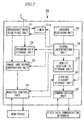
- FIG. 5 is a block diagram showing the configuration of the STB 50.
- the STB 50 has a broadcast wave receiving unit 51, a timer 51a, a program data storage unit 52, a image and sound generating unit53, a monitor control unit 54, an infrared receiving unit 55, a signal interpreting unit 56, a mobile station ID storage unit 57, a viewing history storage unit 58, and a communication unit 59.
- the broadcast wave receiving unit 51 tunes to a broadcast wave channel selected by a user, receives a broadcast wave via the broadcast wave receiving antenna, and demodulates received wave. After the demodulation, received program data is supplied to either the program data storage unit 52 or the image and sound generating unit53. In addition, the broadcast wave receiving unit 51 receives a time signal broadcasted from the broadcast station 40 together with a program data and adjusts the timer 51a referring to the time signal. The timer 51a is referenced when viewing histories is stored. Details will be described later.
- the program data storage unit 52 is a large-capacity storage device, such as a hard drive, which stores program data supplied from the broadcast wave receiving unit 51.
- the stored program data is read out responsive to a request from a user and then supplied to the image and sound generating unit53.
- the image and sound generating unit53 generates digital video and audio signals by decoding compressed program data supplied from either the broadcast wave receiving unit 51 or the program data storage unit 52, to supply the generated signals to the monitor control unit 54.
- the monitor control unit 54 controls the monitor 60 according to operations performed by a user.
- the monitor control unit 54 converts the digital video and audio signals supplied by the image and sound generating unit53 into analog signals that are reproducible in the monitor 60, to output the analog signals to the monitor 60.
- the infrared receiving unit 55 receives infrared signals transmitted from the mobile stations 10, each of which functions as a remote controller for the STB 50 and supplies the received infrared signals to the signal interpreting unit 56.
- Each of these infrared signals is a control signal for controlling the STB 50 and contains a user's request for a channel selection, a recording reservation, volume control, and other instructions.
- the signal interpreting unit 56 interprets instructions included in an infrared signal supplied from the infrared receiving unit 55 and supplies the request to units of the broadcast wave receiving unit 51, the image and sound generating unit53, and the monitor control unit 54 on the basis of the interpretation.
- the mobile station ID storage unit 57 stores mobile station IDs of the mobile stations 10a through 10c that are allowed to remotely control this STB 50.
- the mobile station ID is an identification information for uniquely specify one of the mobile stations 10a through 10c in networks (the mobile data communication network 20 and the fixed data communication network 30).
- the viewing history storage unit 58 stores viewing histories, which are supplied to the communication unit 59 for transmission to the audience rating calculating server 70 on a regular basis.
- the communication unit 59 is an interface for communication with the fixed data communication network 30.
- the communication unit 59 includes a DSU (digital service unit) or a TA (terminal adapter).
- the communication unit 59 transmits the viewing histories, which are supplied from the viewing history storage unit 58, to the audience rating calculating server 70 via the fixed data communication network 30.
- FIG. 6 shows a format illustrating an example of data stored in the mobile station ID storage unit 57.
- mobile station IDs that is, “MS0001", “MS0002”, and “MS0003" of the mobile stations 10a through 10c each of which is capable of remotely controlling the STB 50.
- Each of the mobile station IDs is, for example, assigned to each mobile station 10 owned by respective family members of a household in which the STB 50 is installed. These mobile station ID is registered to the STB 50 in advance in a way that a user inputs the ID by operating the mobile station.
- the infrared signal transmitted from each mobile station 10 to the STB 50 includes the mobile station ID of the mobile station 10. Only if the mobile station ID included in the infrared signal is stored in this mobile station ID storage unit 57, the signal interpreting unit 56 judges that requests indicated by the infrared signal are valid.
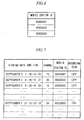
- FIG. 7 shows a format illustrating an example of data stored in the viewing history storage unit 58.
- the data shown in this drawing indicates that a user of the mobile station 10a specified by the mobile station ID "MS00001" started viewing a television program broadcasted on Channel "10" at "September 3, 7:30 a.m.” and finished viewing at "the same day, 8:05 a.m.”.
- the viewing start and end time of date are stored referring to the timer 51a.
- the viewing date and time and a channel number is necessary for the audience calculating server to specify the program viewed by the user.
- the recording flag is set at "ON” if the program was recorded. If not recorded, which means that the program was viewed in real time, the recording flag is set at "OFF". In case that a user records the program while viewing the program in real time, the recording flag is set at "OFF".
- the viewing history storage unit 58 stores, pursuant to the format described above, viewing history for a day, which is obtained from 0:00 a.m. on the day to 0:00 a.m. on the next day. Following this, when the current time reaches 0:00 a.m., the viewing history storage unit 58 transmits the stored viewing history to the audience rating calculating server 70 via the communication unit 59. After the transmission is completed, the viewing history storage unit 58 deletes the viewing history for today and starts again the storing viewing history for the next day.
- the signal interpreting unit 56 stores, into the viewing history storage unit 58, a time when the selection is done (that is, a viewing start time) by referring to the timer 51a. Following this, when the user operates to select another channel, the signal interpreting unit 56 stores, into the viewing history storage unit 58, a time when the channel is switched (that is, a viewing end time). In addition, the signal interpreting unit 56 stores a viewing start time, a channel number, and a mobile station ID included in a viewing history about the newly selected channel. In this way, a viewing history is stored each time when a user selects a channel.
- A-4 Configuration of Mobile Stations 10a through 10c
- Each of the mobile stations 10a through 10c has the same configuration.
- the mobile station 10a will be described as an example.
- FIG. 8 is a block diagram showing a configuration of the mobile station 10a. As shown, this mobile station 10a includes a control unit 11a, a wireless communication unit 12a, a user interface unit 13a (the term “interface” will be hereinafter referred to as the "I/F"), and an infrared transmitting unit 14a.
- this mobile station 10a includes a control unit 11a, a wireless communication unit 12a, a user interface unit 13a (the term “interface” will be hereinafter referred to as the "I/F”), and an infrared transmitting unit 14a.
- I/F user interface unit
- the control unit 11a is composed mainly of a CPU (central processing unit), a memory, and controls units in this mobile station 10a.
- the memory in the control unit 11a stores the mobile station ID and various control programs.
- the control programs include a control program for remotely operating the STB 50 as well as a control program for providing a user with voice and data communication service.
- the wireless communication unit 12a carries out wireless communications with a base station in a mobile telephone network (not shown) and the base station 21 of the mobile data communication network 20 via an antenna 121a.
- the wireless communication unit 12a transmits a recording reservation request signal representing a reservation for recording a television program to the STB 50 via the mobile data communication network 20 and the fixed data communication network 30.
- the user I/F unit 13a is mainly composed of a liquid crystal display for displaying information, a keypad with which a user inputs instructions, a microphone and a speaker with which the user makes a call. By operating this keypad, the user performs a remote control of the STB 50 as well as a wireless call and wireless data communication.
- the infrared transmitting unit 14a transmits, to the STB 50, an infrared signal indicating a remote control designation, which is inputted by the user with the keypad.
- FIG. 9 shows a format of the infrared signal transmitted from the infrared transmitting unit 14a.
- the infrared signal has a configuration arranged in the following order, an instruction command designating an operation, detailed instruction showing a request of a user, and the mobile station ID of the mobile station 10 for specifying from which the infrared signal is transmitted, from the top.
- FIG. 10 shows a format of an infrared signal representing a request for channel selection. As shown, this signal is arranged in the following order such as, a channel selection command as the instruction command, a broadcast channel as the detailed instruction, a mobile station ID, from the top to the end.
- FIG. 11 shows a format of an infrared signal representing a request for a reservation of recording. As shown in this drawing, a recording reservation command is put top as the instruction command and a broadcast channel, a recording start time, a recording end time follow as the detailed instructions, and a mobile station ID is put in the tail.
- FIG. 12 is an external view of the user I/F unit 13a of the mobile station 10a.
- the mobile staticn 10a has a call mode for carrying out voice communications, a data communication mode for carrying out data communication, and a remote control mode in which the mobile station 10a functions as a remote controller for the STB 50.
- the mobile station 10a is set to the call mode at the default.
- Reference symbol 135a denotes a data communication mode key. If a user depresses this key, the mobile station 10a is switched to the data communication mode.
- Reference symbol 136a represents a remote control mode key. If a user depresses this key, the mobile station 10a is switched to the remote control mode.
- the following keys are used in the remote control mode.
- Reference symbol 134a denotes channel switching keys to switch broadcast channels one by one and reference symbol 133a represents volume control keys control the volume.
- Keys 132a constitute a ten-key pad to input instructions such as a request for a reservation of recording or a broadcast channel manually.
- Reference symbol 137a represents a determination key to confirm the entry.
- Reference symbols 138a and 139a denote a speaker and a microphone, respectively.
- A-5 Configuration of Audience Rating Calculating Server 70
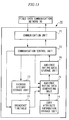
- FIG. 13 is a block diagram showing a configuration of the audience rating server 70.
- the audience rating calculating server 70 includes a communication unit 71, a communication control unit 72, a viewing history storage unit 73, a user attribute information storage unit 74, an audience rating calculating unit 75, an audience rating data storage unit 76, and a broadcast timetable 77.
- the communication unit 71 is connected to the fixed data communication network 30 and performs data communications via the network 30.
- the communication control unit 72 controls the communication unit 71.
- the viewing history storage unit 73 stores viewing histories transmitted from the STB 50 via the fixed data communication network 30.
- the user attribute information storage unit 74 stores attribute information of users mobile stations 10.
- the broadcast timetable 77 stores data of scheduled broadcast dates and times, which is supplied from the broadcast station. In other words, the broadcast timetable 77 stores the same data stored in the broadcast timetable 422 of the broadcast station 40.
- the audience rating data generating unit 75 generates attribute-specific audience rating data by referring to the viewing history storage unit 73, the broadcast timetable 77, and the user attribute information storage unit 74.
- the generated audience rating data is supplied to the audience rating data storage unit 76.
- the audience rating data storage unit 76 stores the audience rating data supplied from the audience rating data generating unit 75.
- the stored audience rating data is read out by the communication control unit 72 and is transmitted to the broadcast station 40 via the fixed data communication network 30.
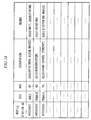
- FIG. 14 shows a format of data stored in the attribute information storage unit 74.
- mobile station IDs As shown, mobile station IDs, genders of users of the mobile stations 10, their ages, their occupation, and their hobby, with these information being associated with each other.
- Each occupation is represented by a code number assigned in advance by a corporation which runs the audience rating calculating system.
- the hobbies are represented by code numbers.
- the STB 50 accumulates viewing histories of users. Then, the audience rating calculating server 70 collects the viewing histories from the STB 50. Finally, the audience rating calculating server 70 generates audience rating data on the basis of the collected viewing histories and sends the audience rating data to the broadcast station 40. Explanations of these operations will be given one by one.
- the viewing histories can be classified into viewing histories concerning real-time viewing and concerning video recording.
- the mobile station 10 receives the input (step Sa1). Specifically, when the user depresses the remote control mode key 136, the mobile station 10 is set to the remote control mode. Following this, when the user inputs a broadcast channel using the ten-key pad and depresses the determination key 137, the mobile station 10 interprets this input as a request for channel selection. Next, the mobile station 10 generates an infrared signal representing a request for channel selection inputted by the user and transmits this signal to the STB 50 (step Sa2). This infrared signal has the format shown in FIG. 10, which includes a channel selection command, a broadcast channel, and a mobile station ID.
- step Sa3 receives the infrared signal sent from the mobile station 10 (step Sa3) and detects the channel selection command, the broadcast channel, and the mobile station ID in the infrared signal (step Sa4).
- step Sa4 the STB 50 checks the detected mobile station ID by referring to the mobile station ID storage unit 57, to judge whether the operation was performed by a user who is registered to control the STB50 (step Sa5).
- the STB 50 is tuned to the detected broadcast channel, interprets received broadcast wave, and outputs the program to the monitor 60 (step Sa6). If the instruction was given by an unregistered user, the STB 50 make the monitor 60 display a message indicating that the channel selection request is not acceptable.
- the STB 50 proceeds to process for storing viewing histories (step Sa7). Specifically, as shown in FIG. 7, the STB 50 stores a channel selection start date and time, a broadcast channel, and a mobile station ID correspondingly. The STB 50 then waits for the user to give the next channel selection. When the user selects another channel, the STB 50 stores an end date and time concerning the channel previously selected.
- a user inputs a request for a video recording reservation into his/her mobile station 10 and the mobile station 10 receives this input (step Sb1). Specifically, after the remote control mode key 136 is depressed to set the mobile station 10 to the remote control mode, the user inputs a broadcast start time, a broadcast end time, and a broadcast channel of a program for recording. Following this, if the determination key 137 is depressed, the mobile station 10 interprets these inputs as a request for video recording reservation. Next, the mobile station 10 generates an infrared signal representing the request for video recording reservation and transmits the signal to the STB 50 (step Sb2). As shown in FIG. 11, this infrared signal includes a recording reservation command, a broadcast channel, a recording start and a recording end time, and a mobile station ID.
- the STB 50 receives the infrared signal transmitted by the mobile station 10 (step Sb3) and extracts the recording reservation command, the broadcast channel, the recording start time and the recording end time, and the mobile station ID contained in this infrared signal (step Sb4). Next, the STB 50 checks the extracted mobile station ID referring to the mobile station ID storage unit 57 and judges whether this instruction was given by a registered user (step Sb5).
- the STB 50 makes a recording reservation indicated by the extracted instruction.
- the STB 50 instructs the broadcast wave receiving unit 51 and the program data storage unit 52 to make a recording reservation (step Sb6). If the instruction is given by an unregistered user, the STB 50 makes the monitor 60 display a message indicating that the request for recording reservation is rejected.
- step Sb7 when the time comes to the recording start time, the STB 50 starts recording and storing a viewing history. That is, a viewing start date and time, a broadcast channel, and a mobile station ID are stored correspondingly in the viewing history storage unit 58.
- a viewing end date and time is stored in the viewing history storage unit 58.
- each STB 50 refers to the timer 51a.
- the STB 50 transmits viewing histories stored in the viewing history storage unit 58 to the audience rating calculating server 70 (step Sc1).
- the audience rating calculating server 70 receives the viewing histories transmitted from the STB 50 (step Sc2) and stores the received viewing histories in the viewing history storage unit 73 (step Sc3). After storing viewing histories is completed, the audience rating calculating server 70 transmits, to the STB 50, a completion notification showing that the viewing history storage processing is completed (step Sc4). The STB 50 receives this completion notification transmitted from the audience rating calculating server 70 (step Sc5) and deletes the viewing histories stored in the viewing history storage unit 58. The audience rating calculating server 70 performs this operation for all the STBs 50.
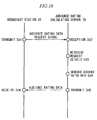
- the broadcast station 40 transmits an audience rating data request signal indicating a request for audience rating data, to the audience rating calculating server 70 (step Sd1).
- This request signal includes a program ID of a television program subjected to a survey and user attribute information necessary for generation of audience rating data.
- the audience rating calculating server 70 receives the request signal (step Sd2) and extracts the program ID and the user attribute information from the received request signal (step Sd3). Next, the audience rating calculating server 70 retrieves viewing histories from the viewing history storage unit 73 on the basis of the detected user attribute information to generates audience rating data (step Sd4). Following this, the audience rating calculating server 70 transmits the generated audience rating data to the broadcast station 40 (step Sd5). The broadcast station 40 receives the audience rating data transmitted from the audience rating calculating server 70 and returns a confirmation signal to the audience rating calculating server 70.
- FIG. 19 is a flowchart showing how the audience rating data generating unit 75 generates the audience rating data.
- the audience rating data generating unit 75 obtains user attribute information and the program ID of a program which is subjected to a survey, via the communication control unit 72 (step Se1).
- the program ID is "BC0001"
- a condition for the user attribute is "twentysomething males”.
- the audience rating data generating unit 75 retrieves mobile station IDs which coincides with the condition "twentysomething males" from the user attribute information storage unit 74 (step Se2). Specifically, mobile station IDs, in each of which the user's age and gender is twentysomething and male, respectively, are retrieved from the attribute information storage unit 74 shown in FIG. 14.
- the audience rating data generating unit 75 accesses to the broadcast timetable 77 to retrieve viewing histories corresponding to the obtained program ID and the extracted mobile station IDs from the viewing history storage unit 73 (step Se3). Specifically, the audience rating data generating unit 75 obtains a broadcast time "September 3, 9:00 a.m. to 10:00 a.m.” corresponding to the program ID "BC0001" from the broadcast timetable 77, and extracts, from the viewing history storage unit 73, viewing histories of the users of the extracted mobile station IDs within the air time.
- the audience rating data generating unit 75 generates audience rating data on the basis of the extracted viewing histories (step Se4).
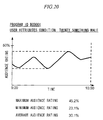
- the audience rating data generating unit 75 counts the number of the retrieved mobile station IDs, which means that is the number of users who viewed the program, for each minute during the air time. The counted number is divided by the total number of users and multiplied by 100, to obtain the audience rating. In addition, the maximum value, the minimum value, and the average value during the airtime.
- FIG. 20 An example of the audience rating data obtained in this way is shown in FIG. 20 by a line graph representing the audience rating at every minute. In this figure the maximum, the minimum, and the average audience rating are obtained.
- condition of user attribute can be set according to the purpose of a survey of the audience rating. Specifically, it is also possible to make a more detailed setting.
- the condition for user attribute may be set to obtain an audience rating concerning, for example, thirty-to-fiftysomethings male office workers whose hobby is golf. Furthermore, it is possible to separately calculate audience rating data concerning real-time viewing and audience rating data concerning recording by referring to the on/off state of each recording flag in the viewing history storage unit 73.
- viewing history about a user is obtained merely by user's operations of the STB 50 using the mobile stations 10 carried by them. Therefore, a user's attribute-specific audience rating can be calculated accurately and quickly, without inconvenience of users.
- the fixed data communication network 30 may be replaced with a communication network other than ISDN described in the above embodiment as an example.
- the Internet a public telephone network, or other suitable network may be used instead.
- the terrestrial digital broadcasting is used as a broadcast form.
- the present invention is not limited to the terrestrial broadcasting.
- wired broadcasting such as a CATV (community antenna television system) or digital satellite broadcasting, such as BS (broadcasting satellite) broadcasting or CS (communication satellite) broadcasting may be used.
- the STB 50 may be accommodated in the mobile data communication network 20 or a mobile data communication network other than this mobile data communication network 20 which is connected with the mobile data communication network 20 for data communication.
- the STB 50 may include a wireless interface for communication with the mobile data communication network 20, as do the mobile stations 10.
- the STB 50 may include a data communication interface for connection with the mobile stations 10.
- each of the mobile stations has the function of voice communication such as a mobile telephone
- each mobile station may be a portable information terminal such as a PHS (personal handy phone system), which is used exclusively for data communication or a PDA (personal digital assistants) having the function of wireless data communication.
- PHS personal handy phone system
- PDA personal digital assistants
- the mobile stations 10 may control the STB 50 by sending signals via the mobile data communication network 20 and the fixed data communication network 30.
- each of the mobile stations 10 first receives from a user an input of a request for remote control.
- the mobile station 10 is then switched to the data communication mode and transmits the request for remote control to the STB 50 via the mobile data communication network 20 and the fixed data communication network 30.
- he main power supply of the STB 50 is turned on at all times, to be ready to receive inputs of data from the fixed data communication network 30 at all times.
- the STB 50 performs operations according to the received request. It is convenient for a user especially to reserve recording of a program.
- a request for audience rating data is issued from the broadcast station 40 to the audience rating calculating server 70.
- the present invention is not limited to this.
- each mobile station 10 issues a request for the audience rating data.
- the mobile station 10 transmits, to the audience rating calculating server 70, an audience rating data request signal including the mobile station ID, and the broadcast date and time and broadcast channel of a television program about which audience rating data is desired.
- the audience rating calculating server 70 receives a signal representing a request for the audience rating data via the mobile data communication network 20 and the fixed data communication network 30, and generates audience rating data responsive to the request.
- the audience rating calculating server 70 generates audience rating data corresponding to the capacity of the memory of the mobile station 10 and the resolutionof the liquid crystal display.
- the mobile station 10 has only a small-capacity memory and a low-resolution display, thus it is often the case that displaying a line graph such as shown in FIG. 20 is difficult.
- the audience rating calculating server 70 supplies the mobile station 10 with only the maximum audience rating, the minimum audience rating, and the average audience rating of a program.
- the audience rating calculating server 70 may spontaneously transmits the audience rating data to the broadcast station 40 without waiting for a signal representing a request for audience rating from the broadcast station 40.
- the audience rating data for transmission may be generated according to user's attributes that are classified by, for example, "all users”, “teenage male”, “teenage females”, ..., “seventysomething females", and "others”. By doing this, the broadcast station 40 is able to obtain audience rating data of users having specific attributes without issuing a request.
- the broadcast station 40 notifies, in advance, the audience rating calculating server 70 of what user base is targeted by the broadcast station 40.
- the audience rating calculating server 70 regularly generates audience rating data according to the notification, to transmit to the broadcast station 40.
- the remote controller for the STB 50 is not limited to specific mobile stations 10. That is, all mobile stations 10 may function as the remote controllers for the STB 50.
- the STB 50 does not judge permission for the remote control in step Sa5 shown in FIG. 15. In this case, for example, even if the user of the mobile station 10a visits someone's home and views a television program using the mobile station 10a as a remote controller at the home, the viewing history of the user is stored in the STB 50 of the home. Therefore, an audience rating is calculated more precisely.
- the program data broadcasted from the broadcast station is program data of television programs
- the present invention is not limited to this.
- program of radio programs, videos, music, and other program data may be broadcasted.
Landscapes
- Engineering & Computer Science (AREA)
- Signal Processing (AREA)
- Multimedia (AREA)
- Databases & Information Systems (AREA)
- General Health & Medical Sciences (AREA)
- Computer Networks & Wireless Communication (AREA)
- Health & Medical Sciences (AREA)
- Social Psychology (AREA)
- Human Computer Interaction (AREA)
- Computer Graphics (AREA)
- Computer Security & Cryptography (AREA)
- Testing, Inspecting, Measuring Of Stereoscopic Televisions And Televisions (AREA)
- Two-Way Televisions, Distribution Of Moving Picture Or The Like (AREA)
Abstract
Description
Claims (17)
- An audience rating calculating system comprising:a broadcast station for broadcasting a plurality of programs;a plurality of receivers each of which selectively receives and reproduces a program broadcasted from the broadcast station;a plurality of remote controllers each of which transmits a program selection signal representing a program selection request from a user to any one of the plurality of receivers; andan audience rating calculating server for calculating audience ratings of users, wherein:each of the remote controllers includes a means for storing audience identification information which uniquely specifies the user, and transmits the audience identification information after adding the audience identification information to the program selection signal, according to a program selection operation performed by the user;each of the receivers includes a storage means, receives from the broadcast station the program selection signal, the audience identification information, and a program which is designated by the program selection signal, and stores in the storage unit program identification information for uniquely specifying the received program, the audience identification information, and a viewing time of the program correspondingly, as viewing history information; andthe audience rating calculating server includes an audience attribute information storage means for storing the audience identification information and attribute information representing attributes of the audiences correspondingly, collects viewing history information stored in the plurality of receivers, and calculates an attribute-specific audience rating on the basis of the collected viewing history information and the attribute information stored in the audience attribute information storage means.
- An audience rating calculating system according to claim 1, wherein each of the remote controllers is a mobile communication terminal which is accommodated in a mobile communication network, and includes a first wireless interface for performing wireless communication with a base station in the mobile communication network and a second wireless interface for transmitting the program selection signal to any one of the plurality of receivers.
- An audience rating calculating system according to claim 2, wherein each of the mobile communication terminals is a mobile telephone that performs conversation in a wireless manner.
- An audience rating calculating system according to claim 2, wherein each of the receivers is network-connected to the mobile communication network; and
the first wireless interface transmits the program selection signal to any one of the plurality of receivers via the mobile communication network. - An audience rating calculating system according to claim 1, wherein the program selection signal includes data representing a request for recording of the program.
- An audience rating calculating system according to claim 1, wherein the program is supplied to each of the receivers by a broadcast radio wave.
- An audience rating calculating system according to claim 1, wherein each of the receivers is connected to the broadcast station via a network, and the program is supplied to each of the receivers via the network.
- An audience rating calculating system according to claim 1, wherein each of the receivers stores audience identification information of audiences who are registered to receive information of the program from the receiver, and includes a judging means for judging whether a request specified by the program selection signal is valid by comparing the audience identification information contained in the received program selection signal with the audience identification information of the audiences who are registered to receive the program information.
- An audience rating calculating system according to claim 1, wherein the broadcast station includes a means for obtaining the audience rating calculated by the audience rating calculating server.
- An audience rating calculating system according to claim 1, wherein the remote controller obtains the audience rating calculated by the audience rating calculating server.
- A mobile communication terminal comprising:a memory for storing identification information for uniquely specifying a user of the mobile communication terminal;a first wireless interface; anda second wireless interface, wherein the first wireless interface performs wireless communication with a base station of on mobile communication network; andthe second wireless interface adds the identification information to a program selection signal representing a program selection request from the user, and transmits the program selection signal containing the identification information to a receiver which selectively receives and reproduces a program broadcasted from a broadcast station according to a selection operation performed by the user.
- A mobile communication terminal according to claim 11, wherein the mobile communication terminal is a mobile telephone which carries out voice communications by radio.
- A mobile communication terminal according to claim 11, wherein the receiver is connected to the mobile communication network, and
the first wireless interface transmits the program selection signal to the receiver via the mobile communication network. - A mobile communication terminal according to claim 11, the program selection signal contains data representing a request for recording of the program.
- A receiver which selectively receives and reproduces a program broadcasted from a broadcast station, has a storage unit, receives a program selection signal representing a program selection request from a user, audience identification information for uniquely identifying the user which is sent from a remote controller, and a program designated by the program selection signal from the broadcast station, and stores program identification information for uniquely identifying the received program, the audience identification information, and a viewing time of the program correspondingly in the storage unit as viewing history information.
- A receiver according to claim 15, further stores audience identification information of audiences who are registered to receive information of the program from the receiver and has a judging means for judging whether a designation specified by the program selection signal is valid by comparing the audience identification information included in the received program selection signal with the audience identification information showing the audiences who are registered to receive the program information.
- An audience rating calculating server comprising an audience attribute information storage means for storing audience identification information uniquely identifying users and attribute information indicating attributes of the audiences correspondingly, which collects viewing history information stored in each of the receivers for selectively receiving and reproducing a program broadcasted from a broadcast station and calculates an attribute-specific audience rating on the basis of the collected viewing history information and the attribute information stored in the audience attribute information storage means.
Applications Claiming Priority (3)
| Application Number | Priority Date | Filing Date | Title |
|---|---|---|---|
| JP2000225729 | 2000-07-26 | ||
| JP2000225729 | 2000-07-26 | ||
| PCT/JP2001/006427 WO2002009447A1 (en) | 2000-07-26 | 2001-07-26 | System for calculating audience rating and mobile communication terminal |
Publications (2)
| Publication Number | Publication Date |
|---|---|
| EP1304887A1 true EP1304887A1 (en) | 2003-04-23 |
| EP1304887A4 EP1304887A4 (en) | 2004-05-12 |
Family
ID=18719454
Family Applications (1)
| Application Number | Title | Priority Date | Filing Date |
|---|---|---|---|
| EP01954343A Withdrawn EP1304887A4 (en) | 2000-07-26 | 2001-07-26 | AUDIENCE MEASUREMENT SYSTEM AND MOBILE COMMUNICATION TERMINAL |
Country Status (5)
| Country | Link |
|---|---|
| US (1) | US20020138830A1 (en) |
| EP (1) | EP1304887A4 (en) |
| KR (1) | KR100466563B1 (en) |
| CN (1) | CN1194556C (en) |
| WO (1) | WO2002009447A1 (en) |
Families Citing this family (83)
| Publication number | Priority date | Publication date | Assignee | Title |
|---|---|---|---|---|
| US8689265B2 (en) * | 1999-03-30 | 2014-04-01 | Tivo Inc. | Multimedia mobile personalization system |
| US6757906B1 (en) | 1999-03-30 | 2004-06-29 | Tivo, Inc. | Television viewer interface system |
| US7146329B2 (en) * | 2000-01-13 | 2006-12-05 | Erinmedia, Llc | Privacy compliant multiple dataset correlation and content delivery system and methods |
| EP1257962A4 (en) * | 2000-01-13 | 2003-05-07 | Erinmedia Inc | Privacy compliant multiple dataset correlation system |
| US8127326B2 (en) | 2000-11-14 | 2012-02-28 | Claussen Paul J | Proximity detection using wireless connectivity in a communications system |
| CA2428946C (en) | 2000-11-14 | 2010-06-22 | Scientific-Atlanta, Inc. | Networked subscriber television distribution |
| KR20030013097A (en) * | 2001-08-07 | 2003-02-14 | 삼성전자주식회사 | Apparatus and method for serving broadcasting service in mobile communication system |
| JP3650084B2 (en) * | 2002-06-14 | 2005-05-18 | エヌ・ティ・ティ・コミュニケーションズ株式会社 | Viewing status data acquisition method, center apparatus, and program |
| CN100446566C (en) * | 2002-06-21 | 2008-12-24 | 索尼株式会社 | sending device, receiving device |
| US7516470B2 (en) * | 2002-08-02 | 2009-04-07 | Cisco Technology, Inc. | Locally-updated interactive program guide |
| US20040049788A1 (en) * | 2002-09-10 | 2004-03-11 | Canon Kabushiki Kaisha | Receiving apparatus, receiving method, and method of predicting audience rating |
| US20040068753A1 (en) * | 2002-10-02 | 2004-04-08 | Robertson Neil C. | Video transmission systems and methods for a home network |
| US7908625B2 (en) | 2002-10-02 | 2011-03-15 | Robertson Neil C | Networked multimedia system |
| US7360235B2 (en) | 2002-10-04 | 2008-04-15 | Scientific-Atlanta, Inc. | Systems and methods for operating a peripheral record/playback device in a networked multimedia system |
| US8046806B2 (en) | 2002-10-04 | 2011-10-25 | Wall William E | Multiroom point of deployment module |
| US20040088729A1 (en) * | 2002-10-30 | 2004-05-06 | Imagic Tv Inc. | Ratings based television guide |
| KR20040040701A (en) * | 2002-11-07 | 2004-05-13 | 엘지전자 주식회사 | A device and a operating method of detecting receiving channel with broadcasting for portable phone |
| GB0229235D0 (en) * | 2002-12-12 | 2003-01-22 | Koninkl Philips Electronics Nv | Rating data collection method and system |
| US8094640B2 (en) | 2003-01-15 | 2012-01-10 | Robertson Neil C | Full duplex wideband communications system for a local coaxial network |
| US7062272B2 (en) | 2003-02-18 | 2006-06-13 | Qualcomm Incorporated | Method and apparatus to track count of broadcast content recipients in a wireless telephone network |
| JP4506141B2 (en) * | 2003-10-03 | 2010-07-21 | 日本電気株式会社 | Portable wireless terminal |
| US8023882B2 (en) * | 2004-01-14 | 2011-09-20 | The Nielsen Company (Us), Llc. | Portable audience measurement architectures and methods for portable audience measurement |
| US7895632B2 (en) * | 2004-02-12 | 2011-02-22 | Sony Corporation | Cable diagnostic and monitoring system |
| JP2005277783A (en) * | 2004-03-24 | 2005-10-06 | Omron Entertainment Kk | Terminal device, server device, communication network system, control method for terminal device, for server device, and for communication network, program, and recording medium with the program recorded thereon |
| KR100658854B1 (en) * | 2004-08-20 | 2006-12-15 | 엘지전자 주식회사 | Channel control system of video display device and its control method |
| CN100499800C (en) * | 2004-11-11 | 2009-06-10 | 华为技术有限公司 | Method and system for obtaining received visual information in wideband video-frequency system |
| KR101147753B1 (en) * | 2005-07-06 | 2012-05-25 | 엘지전자 주식회사 | Mobile Telecommunication Device and Base Station Server Having Function for Transmitting and Receiving Broadcast Program Information and Method thereby |
| US8818343B1 (en) * | 2005-08-03 | 2014-08-26 | Sprint Spectrum L.P. | Method and system for reporting a summary rating of accessed content |
| FR2890822B1 (en) * | 2005-09-09 | 2007-10-26 | Alcatel Sa | DEVICE AND METHOD FOR AUTOMATICALLY OBTAINING INFORMATION RELATING TO PROGRAM HEADINGS TRANSMITTED BY A COMMUNICATION NETWORK |
| JP4700451B2 (en) * | 2005-09-16 | 2011-06-15 | 日本放送協会 | Program information distribution device and portable terminal device |
| JP4828192B2 (en) * | 2005-09-29 | 2011-11-30 | 京セラ株式会社 | Broadcast receiving apparatus and data processing method |
| US20070079341A1 (en) * | 2005-10-05 | 2007-04-05 | Scientific-Atlanta, Inc. | Dvd multi-room playback after headend conversation |
| US7876998B2 (en) * | 2005-10-05 | 2011-01-25 | Wall William E | DVD playback over multi-room by copying to HDD |
| KR100755703B1 (en) * | 2006-01-19 | 2007-09-05 | 삼성전자주식회사 | Dynamic ad allocation method and system based on viewership |
| MX2007015979A (en) | 2006-03-31 | 2009-04-07 | Nielsen Media Res Inc | Methods, systems, and apparatus for multi-purpose metering. |
| US8755335B2 (en) * | 2006-04-13 | 2014-06-17 | At&T Intellectual Property I, L.P. | System and methods for control of a set top box |
| JP2007318665A (en) * | 2006-05-29 | 2007-12-06 | Funai Electric Co Ltd | Remote control device and system thereof |
| KR20080005693A (en) * | 2006-07-10 | 2008-01-15 | 엘지전자 주식회사 | Data broadcast signal, method of processing same and apparatus for receiving |
| JP4728197B2 (en) * | 2006-09-28 | 2011-07-20 | 株式会社ビデオリサーチ | Viewing channel determination method and system, terminal device, and center device |
| JP4396694B2 (en) * | 2006-12-01 | 2010-01-13 | 船井電機株式会社 | Viewing information distribution system and information processing apparatus |
| JP4745947B2 (en) * | 2006-12-07 | 2011-08-10 | 日本電信電話株式会社 | Subjective quality estimation formula derivation method, video parameter determination method, subjective quality estimation formula derivation apparatus, video parameter determination apparatus, subjective quality estimation formula derivation program, video parameter determination program, and computer-readable recording medium recording these programs |
| EP1936910B1 (en) * | 2006-12-22 | 2019-01-23 | Alcatel Lucent | System for media content delivery to a media destination device, a related association device and a related multimedia delivery device |
| US20100005393A1 (en) * | 2007-01-22 | 2010-01-07 | Sony Corporation | Information processing apparatus, information processing method, and program |
| US20090217315A1 (en) * | 2008-02-26 | 2009-08-27 | Cognovision Solutions Inc. | Method and system for audience measurement and targeting media |
| US9497582B2 (en) * | 2007-06-11 | 2016-11-15 | Broadcom Corporation | Smart phone to home gateway/STB data exchange for content delivery |
| WO2009026803A1 (en) | 2007-08-27 | 2009-03-05 | Yuvad Technologies Co., Ltd. | A method for identifying motion video content |
| KR100944029B1 (en) * | 2007-11-05 | 2010-02-24 | 주식회사 다트미디어 | Network broadcasting system and method for counting individual viewing results |
| KR101411001B1 (en) * | 2007-11-12 | 2014-06-23 | 주식회사 케이티 | system and method for service status monitoring of customer |
| US8370382B2 (en) | 2008-05-21 | 2013-02-05 | Ji Zhang | Method for facilitating the search of video content |
| WO2009140819A1 (en) | 2008-05-21 | 2009-11-26 | Yuvad Technologies Co., Ltd. | A system for facilitating the search of video content |
| US8488835B2 (en) | 2008-05-21 | 2013-07-16 | Yuvad Technologies Co., Ltd. | System for extracting a fingerprint data from video/audio signals |
| US8577077B2 (en) | 2008-05-22 | 2013-11-05 | Yuvad Technologies Co., Ltd. | System for identifying motion video/audio content |
| WO2009140822A1 (en) | 2008-05-22 | 2009-11-26 | Yuvad Technologies Co., Ltd. | A method for extracting a fingerprint data from video/audio signals |
| WO2009143668A1 (en) * | 2008-05-26 | 2009-12-03 | Yuvad Technologies Co., Ltd. | A method for automatically monitoring viewing activities of television signals |
| JP4924565B2 (en) | 2008-08-01 | 2012-04-25 | 沖電気工業株式会社 | Information processing system and viewing effect measurement method |
| US9515754B2 (en) * | 2008-08-12 | 2016-12-06 | Iheartmedia Management Services, Inc. | Measuring audience reaction |
| KR20100026799A (en) * | 2008-09-01 | 2010-03-10 | 삼성전자주식회사 | Broadcasting receiving apparatus for communicating with external apparatus and method for using contents |
| US20100162333A1 (en) * | 2008-12-24 | 2010-06-24 | Nortel Networks Limited | Ready access to uniform resource identifiers that are associated with television content |
| TWI388208B (en) * | 2009-03-26 | 2013-03-01 | Avermedia Tech Inc | Tv channel list and method of showing the same |
| TR200905642A1 (en) | 2009-07-21 | 2011-02-21 | Türkcell İleti̇şi̇m.Hi̇zmetleri̇ Anoni̇m Şi̇rketi̇ | A tracking measurement system. |
| US8831399B2 (en) * | 2009-12-07 | 2014-09-09 | Eldon Technology Limited | Systems and methods for managing and identifying the origin of files on a digital video recorder |
| CN101835027B (en) * | 2010-04-16 | 2012-04-18 | 中山大学 | A system and method for video rating statistics and content recommendation based on two-way set-top box |
| CN102036108A (en) * | 2010-11-30 | 2011-04-27 | 青岛海信宽带多媒体技术有限公司 | Method and equipment for realizing audience rating investigation by using digital television terminal |
| CN102572500B (en) * | 2010-12-16 | 2014-12-10 | 康佳集团股份有限公司 | Network TV program rating collecting system and method |
| US8478077B2 (en) | 2011-03-20 | 2013-07-02 | General Electric Company | Optimal gradient pursuit for image alignment |
| US9305357B2 (en) | 2011-11-07 | 2016-04-05 | General Electric Company | Automatic surveillance video matting using a shape prior |
| US8774513B2 (en) | 2012-01-09 | 2014-07-08 | General Electric Company | Image concealing via efficient feature selection |
| CN104519386B (en) * | 2013-09-27 | 2018-03-27 | 思科技术公司 | Media request is realized by one-way set-top box |
| CN103607605B (en) * | 2013-11-20 | 2017-02-01 | 北京国双科技有限公司 | Data processing method and apparatus for audience rating statistics |
| CN104954817A (en) * | 2014-03-24 | 2015-09-30 | 四达时代通讯网络技术有限公司 | Audience data processing method, audience statistics system and related equipment |
| CN104394435B (en) * | 2014-11-28 | 2018-04-06 | 北京国双科技有限公司 | Digital set top box boot detection method and device |
| US9621961B1 (en) * | 2014-12-31 | 2017-04-11 | The Directv Group, Inc. | Method and system for controlling a centralized content distribution system with a remote control |
| US9130685B1 (en) * | 2015-04-14 | 2015-09-08 | Tls Corp. | Optimizing parameters in deployed systems operating in delayed feedback real world environments |
| CN106303598A (en) * | 2015-06-04 | 2017-01-04 | 北京国双科技有限公司 | Television channel rating monitoring method and device |
| US10115404B2 (en) | 2015-07-24 | 2018-10-30 | Tls Corp. | Redundancy in watermarking audio signals that have speech-like properties |
| US9626977B2 (en) | 2015-07-24 | 2017-04-18 | Tls Corp. | Inserting watermarks into audio signals that have speech-like properties |
| CN106470348B (en) * | 2015-08-14 | 2019-10-25 | 北京国双科技有限公司 | Rating number statistical method and device |
| CN105279548A (en) * | 2015-11-19 | 2016-01-27 | 尼尔森网联媒介数据服务有限公司 | Identity recognition card and method for active recognition of medium monitoring personnel |
| US20170272792A1 (en) * | 2016-03-16 | 2017-09-21 | Telefonaktiebolaget Lm Ericsson (Publ) | Distributed content popularity determination in a streaming environment with interconnected set-top boxes |
| KR101722535B1 (en) | 2016-05-13 | 2017-04-03 | 티엔엠에스 주식회사 | Audience rating survey apparatus and audience rating survey system for using the apparatus |
| CN108235068B (en) * | 2016-12-22 | 2020-05-26 | 北京国双科技有限公司 | TV column broadcast statistics method and device |
| KR101951744B1 (en) * | 2018-01-29 | 2019-02-25 | 주식회사 넷온네츠 | System and Method of analyzing watching ratio in TV program |
| JP7014671B2 (en) * | 2018-04-26 | 2022-02-01 | 日本放送協会 | Notification information providing device, viewing log management device and program |
Family Cites Families (12)
| Publication number | Priority date | Publication date | Assignee | Title |
|---|---|---|---|---|
| JPS50120514A (en) * | 1974-03-08 | 1975-09-20 | ||
| US5182646A (en) * | 1990-09-24 | 1993-01-26 | Thomson Consumer Electronics, Inc. | Linkable scan lists for a television receiver |
| JPH0742238U (en) * | 1993-12-21 | 1995-07-21 | 株式会社ビデオ・リサーチ | Remote controller for personal identification signal transmitter and TV operation |
| US5818438A (en) * | 1995-04-25 | 1998-10-06 | Bellsouth Corporation | System and method for providing television services |
| JPH08307942A (en) * | 1995-05-02 | 1996-11-22 | Sony Corp | Cordless telephone, electronic device, and program selection method |
| US5721583A (en) * | 1995-11-27 | 1998-02-24 | Matsushita Electric Industrial Co., Ltd. | Interactive television system for implementing electronic polling or providing user-requested services based on identification of users or of remote control apparatuses which are employed by respective users to communicate with the system |
| JPH10126640A (en) * | 1996-10-18 | 1998-05-15 | Unie Denshi Kk | Wireless transmission / reception method |
| WO1998026608A1 (en) * | 1996-12-13 | 1998-06-18 | Access Co., Ltd. | Method and device for obtaining audience data on tv program |
| JP4003150B2 (en) * | 1998-01-31 | 2007-11-07 | ソニー株式会社 | Program selection history information acquisition apparatus and method |
| JP3056720B2 (en) * | 1998-10-27 | 2000-06-26 | 有限会社ディー・ディー・マーケティング | Commercial message viewing evaluation system |
| US20020059218A1 (en) * | 1999-01-26 | 2002-05-16 | Katherine Grace August | System and method for obtaining real time survey information for media programming using input device |
| US6757906B1 (en) * | 1999-03-30 | 2004-06-29 | Tivo, Inc. | Television viewer interface system |
-
2001
- 2001-07-26 US US10/088,971 patent/US20020138830A1/en not_active Abandoned
- 2001-07-26 EP EP01954343A patent/EP1304887A4/en not_active Withdrawn
- 2001-07-26 CN CNB018021891A patent/CN1194556C/en not_active Expired - Fee Related
- 2001-07-26 KR KR10-2002-7003881A patent/KR100466563B1/en not_active Expired - Fee Related
- 2001-07-26 WO PCT/JP2001/006427 patent/WO2002009447A1/en not_active Ceased
Also Published As
| Publication number | Publication date |
|---|---|
| CN1386383A (en) | 2002-12-18 |
| WO2002009447A1 (en) | 2002-01-31 |
| KR100466563B1 (en) | 2005-01-14 |
| KR20020035615A (en) | 2002-05-11 |
| CN1194556C (en) | 2005-03-23 |
| EP1304887A4 (en) | 2004-05-12 |
| US20020138830A1 (en) | 2002-09-26 |
Similar Documents
| Publication | Publication Date | Title |
|---|---|---|
| US20020138830A1 (en) | System for calculating audience rating and mobile communication terminal | |
| AU776503B2 (en) | Program information transmitter, communication system, program information transmitting method, program recording instructing method, and program purchasing instructing method | |
| KR100500603B1 (en) | Data transfer method and mobile server | |
| KR101005270B1 (en) | A data processing apparatus, a data processing method, and a computer-readable recording medium, and a data processing system | |
| US7212729B2 (en) | Information recording apparatus and method, information processing terminal, method and apparatus, and recording medium | |
| CN100367667C (en) | communication terminal device | |
| KR100453334B1 (en) | Information distribution system, mobile communication terminal, and information distribution method | |
| JPWO2001039411A1 (en) | Information distribution system, mobile communication terminal, and information distribution method | |
| US7587731B1 (en) | Program guide information providing device, program device information providing system, information receiving device, remote operating system, and method thereof | |
| WO2001058161A1 (en) | Broadcasting program guide device and electronic program guide system | |
| US20030115596A1 (en) | Commercial distribution system, commercial processing apparatus, commercial processing method, and commercial processing program | |
| JP4516735B2 (en) | Viewing information collection method, viewing information collection system | |
| KR100762564B1 (en) | Broadcast recording device and method | |
| JPH11220444A (en) | Program selection history information obtaining apparatus and method | |
| JP2002044641A (en) | Content distribution system, information aggregate and medium | |
| JP3378791B2 (en) | Broadcast receiver | |
| JP2005354324A (en) | Mobile phone, television viewing apparatus, and mobile electronic apparatus | |
| JP2006180125A (en) | Audience rating tabulation system and portable device | |
| JPWO2002009447A1 (en) | Audience rating calculation system and mobile communication terminal | |
| JP4823495B2 (en) | Digital broadcast receiver and broadcast system | |
| JP2005006348A (en) | Encoding method | |
| JP2002344926A (en) | Broadcast data distribution device, broadcast data distribution / reception device, broadcast data distribution method of video server, and broadcast data distribution / reception method | |
| JP2003032649A (en) | Broadcast program providing system, broadcast program providing device, viewer terminal device, storage medium, computer program, and broadcast program providing method | |
| JP2003125380A (en) | Program rebroadcast service method | |
| JP2006352438A (en) | Broadcast receiving terminal, viewing information collection system, and viewing information collection method |
Legal Events
| Date | Code | Title | Description |
|---|---|---|---|
| PUAI | Public reference made under article 153(3) epc to a published international application that has entered the european phase |
Free format text: ORIGINAL CODE: 0009012 |
|
| 17P | Request for examination filed |
Effective date: 20020322 |
|
| AK | Designated contracting states |
Designated state(s): AT BE CH CY DE DK ES FI FR GB GR IE IT LI LU MC NL PT SE TR |
|
| AX | Request for extension of the european patent |
Extension state: AL LT LV MK RO SI |
|
| A4 | Supplementary search report drawn up and despatched |
Effective date: 20040326 |
|
| RIC1 | Information provided on ipc code assigned before grant |
Ipc: 7H 04N 7/16 B Ipc: 7H 04H 9/00 B Ipc: 7H 04B 7/26 B Ipc: 7H 04N 5/00 B Ipc: 7H 04N 7/173 B Ipc: 7H 04N 17/00 A |
|
| RBV | Designated contracting states (corrected) |
Designated state(s): AT BE CH DE GB IT LI |
|
| 17Q | First examination report despatched |
Effective date: 20080227 |
|
| STAA | Information on the status of an ep patent application or granted ep patent |
Free format text: STATUS: THE APPLICATION IS DEEMED TO BE WITHDRAWN |
|
| 18D | Application deemed to be withdrawn |
Effective date: 20080910 |