EP1304149A2 - Game system and computer program - Google Patents
Game system and computer program Download PDFInfo
- Publication number
- EP1304149A2 EP1304149A2 EP02257051A EP02257051A EP1304149A2 EP 1304149 A2 EP1304149 A2 EP 1304149A2 EP 02257051 A EP02257051 A EP 02257051A EP 02257051 A EP02257051 A EP 02257051A EP 1304149 A2 EP1304149 A2 EP 1304149A2
- Authority
- EP
- European Patent Office
- Prior art keywords
- stage
- game
- play
- execution control
- user
- Prior art date
- Legal status (The legal status is an assumption and is not a legal conclusion. Google has not performed a legal analysis and makes no representation as to the accuracy of the status listed.)
- Withdrawn
Links
Images



Classifications
-
- A63F13/10—
-
- A—HUMAN NECESSITIES
- A63—SPORTS; GAMES; AMUSEMENTS
- A63F—CARD, BOARD, OR ROULETTE GAMES; INDOOR GAMES USING SMALL MOVING PLAYING BODIES; VIDEO GAMES; GAMES NOT OTHERWISE PROVIDED FOR
- A63F13/00—Video games, i.e. games using an electronically generated display having two or more dimensions
- A63F13/45—Controlling the progress of the video game
- A63F13/47—Controlling the progress of the video game involving branching, e.g. choosing one of several possible scenarios at a given point in time
-
- A—HUMAN NECESSITIES
- A63—SPORTS; GAMES; AMUSEMENTS
- A63F—CARD, BOARD, OR ROULETTE GAMES; INDOOR GAMES USING SMALL MOVING PLAYING BODIES; VIDEO GAMES; GAMES NOT OTHERWISE PROVIDED FOR
- A63F13/00—Video games, i.e. games using an electronically generated display having two or more dimensions
- A63F13/45—Controlling the progress of the video game
-
- A—HUMAN NECESSITIES
- A63—SPORTS; GAMES; AMUSEMENTS
- A63F—CARD, BOARD, OR ROULETTE GAMES; INDOOR GAMES USING SMALL MOVING PLAYING BODIES; VIDEO GAMES; GAMES NOT OTHERWISE PROVIDED FOR
- A63F13/00—Video games, i.e. games using an electronically generated display having two or more dimensions
- A63F13/55—Controlling game characters or game objects based on the game progress
- A63F13/58—Controlling game characters or game objects based on the game progress by computing conditions of game characters, e.g. stamina, strength, motivation or energy level
Definitions
- the present invention relates to a game system for executing video games on a computer and a computer program thereof.
- a combat plane or the like to be operated by a user is arranged on one side of a map which is a field as the first stage.
- the user makes his/her plane move on the map.
- the player must make his/her plane evade obstructions, e.g. constructions arranged on the map, missiles shot from the enemy planes appearing on the map, and so on.
- the user obtains items to make the function of his/her plane improve so that the own plane speeds up, the own missile power increases and so on.
- This item is arranged on the map or appears by shooting down the enemy planes.
- the obstructions are constructed, subject to the function of the user's plane improving by getting the item to make the function improved, so that the number of the obstructions increases or the move of which becomes quicker and more complicated as advancing the map.
- the game is constituted so that the difficulty level thereof gets higher corresponding to the game's progress. If the game becomes over when his/her plane hits some obstructions halfway, the player must start the game from the first stage again. If the predetermined condition e.g. his/her plane arrives at the opposite side of the start position, is satisfied, he/she is allowed to advance the game to the next stage.
- the present invention provides a game system characterized by comprising a stage data storing device for storing data prepared for each of a plurality of stages, a sequential-execution control device for making a character to be an operation target advance to a next stage if the character, operated by a user, reaches a predetermined result in one of the stages and executing a game based on the data in each stage in a predetermined sequence; an ability control device for increasing a parameter specifying a character ability every time a predetermined condition to improve the ability is satisfied under the execution control of the game by said sequential-execution control device, the data being constructed so that the lower the parameter, the comparatively higher a difficulty level of the game in each stage is, and on comparing between the plural stages each other, as the later a stage sequence number given to each stage, the comparatively higher the difficulty level of the game is; a stage selecting device for selecting one of the plural stages corresponding to an indication of the user; a select-execution control device for calling the data corresponding to
- the high difficulty level or the low difficulty level for example, in a shooting game it can be adopted as the high difficulty level where it is hard for the user to operate his/her plane, for example, a lot of enemy planes appear or a lot of missiles are shot from the enemy planes, and as the low difficulty level where it is easy for the user to operate his/her plane, for example, a few enemy planes appear or a few missiles are shot from the enemy planes.
- the condition to improve the predetermined ability in a shooting game, for example, it can be adopted that the user' s plane passes on an item which has an ability to make the speed of the user's plane higher, the missile power bigger, and so on.
- this game system it is possible to provide for the user the play method for playing the game based on the indications of the user within at least part of the range of an arbitrary stage besides the ordinary play method for playing in the predetermined sequence.
- the ability of the character which is the operation target is expected to improve as the game advances, on the other hand, the difficulty level of each stage also gets higher gradually.
- the difficulty level of the stage is extremely high for the improvement of the character ability, it is hard for the beginners to advance. Therefore, in order to attract this kind of the users, the difference of the difficulty level between the stages has to be restricted. Because of that, even the beginners can advance the game.
- the character ability at the play-start moment is set to lower value than the character ability expected if the user plays each stage in the predetermined sequence. Because of that, although the construction of the stage is the same, the user can feel that the difficulty level increases comparatively. It causes, to the seniors who are not satisfied to play each stage only in the predetermined sequence, that it is possible to provide stages where they can feel more difficult in spite of using the same data. Therefore, according to the present invention, it is possible to provide the game system with which both the beginners and the seniors are satisfied without increasing the workload of the software developers.
- the data may include a part which functions as a program to execute the unique procedure in every stage.
- the character ability can be also the items the character carries, arms or magic, and so on, besides the something to be expressed as the strength value, for example, a running ability, a physical strength, a walking ability.
- the meaning of the character includes all things set as the operation objects of the users.
- the stage need not be called a stage in the game, and it can be something to be recognized as a separated unit on advancing the game.
- the concept of the stage includes game boards, maps, dungeons, courses, and so on.
- the difficulty level of each stage can be controlled, for example, by something like the number or the strength of the enemy character which battles with the character as the operation object of the user, or also controlled by the condition to clear the stage.
- the difference of the difficulty level between the stages can be set to get higher as the sequence number of the stage is later even though considering the improvement of the ability of the character, which is the operation object of the user.
- the difficulty level between the stages gets only changed by controlling a unique value to each various elements constructing the stage like the number of the enemy characters, the strength thereof and so on, the present invention can perform the effect.
- the ability setting device may set the parameter to an initial value to be given at a play-start moment of a stage of a first place in an execution sequence by the sequential-execution control device, regardless of which stage has been selected.
- the character ability which is the operation object is always set to the initial state, namely, the state where the improvement of the ability by the play is ignored completely. It causes that, the later the sequence, the difficulty level of the stage increases extremely so that the seniors can be made satisfied enough.
- the stage selecting device may divide a stage into plural areas and provide an opportunity for the user to select one of the areas, and the select-execution control device may execute the game in the range corresponding to the selected area.
- each stage is divided into the smaller areas and the user can select them so that there is no need for the user to play the whole stage.
- the ability control device can manage the process in the same way in both of the cases, where the user plays the stages in order and where the user plays the selected stages. Consequently, corresponding to each of the case, there is no need to make separately the program for the improvement in the character ability.
- the character ability set to the initial value, for example, at the play start is not increased too extremely while playing. Therefore, the seniors are not dissatisfied in the later part of the game. Because of that, both the seniors and the beginners can be satisfied without increasing the workload of the software developers.
- the game system of the present invention may comprise a progress judging device for judging whether a progress of the user has reached a predetermined level under the execution control of the game by the sequential-execution control device, and a select administrating device for forbidding selecting the stage by the stage selecting device and processing corresponding to the selection by the select-execution control device and the ability setting device until the progress judging device judges the progress has reached the predetermined level, and removing the forbidding on at least subject to having been judged that the progress has reached the predetermined level.
- the select administrating device may judge that the progress has reached the predetermined level when the user makes the predetermined result in all the stages. In this case, the user can not select an arbitrary stage and play it until the user achieves the predetermined result in all the stages. Consequently, the present invention can perform the effect to the user who likes to play the game of the higher level in difficulty after playing all the stages in order.
- the game system of the present invention may comprise a model-play data storing device for storing model-play data to replay a model-play as a model for making the character reach the predetermined result in each stage, and a model-play replaying device for displaying the model-play based on the model-play data on the monitor of a display unit within at least part of a range of a particular stage.
- the beginners can find out a hint to make a good result by viewing the model-play. It can make the beginners attract to the game enough without making them getting tired.
- the model-play replaying device may display the model-play within the only range the user has already reached under the execution control of the game by the sequential-execution control device. In this case, the contents of the stage the user has not yet reached is not displayed to the user.
- the computer program of the present invention solves the above mentioned subject, that is, it makes the computer execute procedures of: a sequential-execution control step for executing a game in a predetermined sequence in each of a plurality of stages based on data prepared for each stage and making a character to be an operation target advance to a next stage if the character operated by a user reaches a predetermined result in one of the stages; an ability control step for increasing a parameter specifying a character ability every time a predetermined condition to improve the ability is satisfied under the execution control of the game by the sequential-execution control step, and uses the data being constructed so that as the lower the parameter, the comparatively higher a difficulty level of the game in each stage is, and on comparing between the plural stages each other, as the later a sequence number given to each stage, the comparatively higher the difficulty level of the game is, to be used as the data prepared for each of the plural stages; a stage selecting step for selecting one of the plural stages corresponding to an indication of the user; a select-execution control
- the computer reads the above program and executes the procedures according to the program so that the program makes the computer function as the game system of the present invention.
- the computer program of the present invention may have the preferable embodiment mentioned above. Namely, in the ability setting step, regardless of which stage has been selected, the parameter may be set to the initial value to be given at a play-start moment of a stage of a first place in the execution sequence by the sequential-execution control step.
- the program may be constructed to make the stage selecting step capable of dividing one stage into plural areas and giving an opportunity for the user to select any one of the areas and the select-execution control step capable of executing the game within a range corresponding to the selected area.
- the program may be constructed to make the ability control step increase the parameter if the condition of the ability improvement is satisfied even while the game is executed within the range corresponding to the selected area.
- the computer program may be constructed to make the computer further execute the procedures of a progress judging step for judging whether a progress of the user has reached a predetermined level under the execution control of the game by the sequential-execution control step, and a select administrating step for forbidding selecting the stage by the stage selecting step and processing, corresponding to the selection, in the select-execution control step and the ability setting step until it is judged that the progress has reached the predetermined level in the progress judging step, and removing the forbidding at least subject to having been judged that the progress has reached the predetermined level.
- the program may be constructed to make the select administrating step judge that the progress has reached the predetermined level when the user makes the predetermined result in all the stages.
- the computer program may be constructed to make the computer further execute the procedure of a model-play replaying step for referring a model-play data to replay a model-play which is served as a model for making the character reach the predetermined result in each stage and displaying the model-play based on the model-play data on a monitor of the display unit within at least part of a range of a particular stage.
- the model-play replaying step displays the model-play within an only range the user has already reached under the execution control of the game by said sequential-execution control step.
- the program mentioned above to make the computer function as the game system of the present invention may be provided to users as the memory device containing the program and may be distributed to the users with the communication medium regardless of wired or wireless.
- FIG. 1 is a block diagram showing a control system of the portable game machine constructed as an example of the game system of the present invention.
- the potable game machine 10 is constructed as a computer executing a predetermined game according to the game program recorded in an external storage medium (for example, a cassette-type memory unit built-in a semi-conductor memory) 23.
- This game machine 10 comprises a CPU 11 constructed mainly as a microprocessor, a ROM 12 and a RAM 13 as the main memory unit for the CPU 11, and an image processing unit 14 and a sound processing unit 16 to execute the process which is appropriate to an image processing and a sound processing based on the indication from the CPU 11.
- the operating system as a program needed for a control of all over the game machine is written into the ROM 12.
- An image processing unit 14 renders a predetermined image on a video memory 15 according to the indications from the CPU 11, converses the rendered image data to a predetermined video reproducing signal, and outputs it to the monitor 19.
- monitor 19 a liquid crystal monitor is preferable.
- a game machine sometimes has the image processing unit 14 to function as a graphics accelerator to execute high level calculations for image processing. It is variously changed depending on the hardware construction which processes are managed by the CPU 11 or the image processing unit 14. It is showed that the video memory 15 is provided in the image processing unit 14 as a memory only for drawing images, but the video memory can be reserved in the RAM 13 as the main memory.
- the sound processing unit 16 reproduces data of voice, tune and so on read from the external storage medium 23, or source data etc. to output from a speaker 20.
- an input unit 22 and a communication control unit 24 are connected with the CPU 11 via a BUS B each.
- the input unit 22 contains, for example, a cross key 22a and operate buttons 22b, 22c as operation portions.
- the communication control unit 24 is connected with an appropriate communication device (for example, a cellular phone) via a communication interface 25 and controls data communication via a predetermined network.
- an appropriate communication device for example, a cellular phone
- An external storage medium 23 contains various kinds of computer programs for advancing the game on the screen of the monitor 19, stage data specifying the content of each stage of the game executed according to the programs, and model-play image data for displaying a model-play on the screen.
- the game program recorded the in the external storage medium 23 is constructed as a program, for example, to execute a shooting game.
- the shooting game has stages.
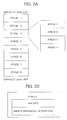
- the stage data recorded in the external storage medium 23, as shown in FIG. 2A, is prepared separately so that each data executes each of the 8 stages from stage 1 to stage 8 the shooting game has.
- the data for a stage is used to execute a particular stage.
- the data for each stage are related to each other to make the difficulty level higher gradually as advancing the game from stage 1 to stage 8.
- the data of each stage includes map data and data of the enemy's appearance pattern.
- the map data is the data for specifying the contents of the game in each stage, and it includes the data with respect to the positions and the shapes of the terrain elements, like mountains and constructions and so on, existing in the range where a character like a battle plane set as an operation target of a user (hereinafter referred to as "a user character") moves.
- the data for each stage also includes the data designating the position on the map of items to improve the ability of the user character.
- the predetermined condition related to the items for example the user character passes over the items, the parameter specifying the ability of the user character (hereinafter sometimes referred to as the ability parameter) increases, that is, the user character becomes stronger comparatively.
- the data of the enemy's appearance pattern includes the data specifying various conditions of the character which is the enemy of the user character, like the kind and the number thereof, or the position, the timing, and so on for the enemy character to appear.
- the difficulty level of each stage is determined comparatively according to the parameter of the ability of the user character, and the number and strength of the enemy character appearing in each stage .
- the conditions to improve the ability parameter of the user character are specified in each stage.
- the difficulty level of each stage is set so that the user with a usual skill can not clear the stage if the user doesn't make the ability parameter improve to more than some degree. Namely, the difficulty level of each stage, subjected to the ability parameter of the user character is expected to improve to some degree in each stage, is controlled so that the level becomes higher as later of the stage sequence.
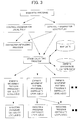
- FIG. 3 shows the control procedure of the game the CPU 11 executes according to the program of the game of FIG. 1. Firstly, the CPU 11 executes the program for a main menu and it causes that the game starts. When the game starts, according to the indicate of the user the CPU 11 selects and executes either the control program for a usual play or the control program for a divided play. The details of the usual play and the divided play are described later.
- the CPU 11 executes the character initiation program to initialize the parameter specifying the ability of the user character. Namely, by the initiation program the ability of the character is set to the initial value.
- the CPU 11 After the character initiation program is executed, the CPU 11 also executes a stage execution program.
- the stage execution program is the program for progressing the game in each stage.
- the CPU 11 reads the data of the stage to be played next and executes the process to display the map of the stage and the items to improve the ability of the user character on the monitor 19. Also the CPU 11 arranges the user character on the map. Furthermore, while executing the stage, the CPU 11 moves the user character on the map corresponding to the operation on the input unit 22 by the user.
- the CPU 11 reads the data of the enemy character appearance pattern related to the stage being executed at the moment and checks whether the predetermined condition has been satisfied, for example, the user character arrives at the predetermined position. If the condition has been satisfied, the program for the enemy movement pattern corresponding to the enemy specified by the enemy's appearance pattern is executed. The CPU 11 displays the enemy on the monitor 19 according to the program for the enemy movement pattern and displays the missiles and so on for the enemy to shoot by executing the program for shooting.
- FIG. 4 is a flow chart showing the procedure that the CPU 11 executes for progressing the game.
- the CPU 11 starts the game by executing the program for the main menu and displays the main menu screen 101, as shown in FIG. 5A, on the monitor 19 (step S1).
- the main menu screen 101 other than the title, the choices 102...102 to select the play mode like "START”, "CONTINUE”, "HINT”, and so on are displayed.
- the user can move up and down an arrowhead 103 displayed on the left of the choices 102...102 through the input unit 22 and can select one of the play modes by a predetermined determination operation.
- step S2 the CPU 11 judges which choice 102 has been selected. Firstly whether the usual play has been selected or not is judged (step S2), if the user has selected "START", the CPU 11 executes the control program for the usual play.
- the usual play is a play mode to be required for the user to clear the stages sequentially from the stage 1 which is the lowest difficulty level, to the stage 8 which is the highest difficulty level.
- the CPU 11 executes the character initiation program to initialize the ability parameter of the character to be operated by the user (step S3).
- the CPU 11 sets the data designating the game start position of the character referred when the stage execution program is executed to the initiation position of the stage 1 which is the lowest difficulty level. After that, the CPU 11 executes the stage execution program and starts the usual play (step S4).
- the CPU 11 refers to the data designating the game start position and starts the game from the start position specified by the data. While the game going on, if the predetermined condition to improve the ability is satisfied (for example, the user character passes over a predetermined item), the CPU 11 increases the ability parameter. As doing this process, the CPU 11 functions as an ability control device. On the other hand, the CPU 11 judges whether the game is over by judging whether a predetermined game over condition is satisfied (for example, the damage of the user character reaches a predetermined level) (step S5). If the game is not over, the CPU 11 judges whether the present stage is cleared by judging whether a predetermined stage-clear condition, e.g. the user character has shot down the enemy, is satisfied. If the present stage has not been cleared yet, the stage execution program is continued.
- a predetermined stage-clear condition e.g. the user character has shot down the enemy
- the CPU 11 stops the stage execution program temporarily. After setting the value designating the game start position to the initial position of the next stage, the CPU 11 executes the stage execution program again. Subsequently, until it is judged that the game is over in step S5 the game is executed continuously in the same way from the stage 1 to the stage 8. When the stage 8 is cleared, it can be judged as the game-over and the game goes to step S6.
- the CPU 11 executes the process from step S3 to the game-over; thus, the CPU 11 functions as a sequential-execution control device.
- step S6 the CPU 11 ends the stage execution program and judges whether the user has gained the predetermined result.
- the CPU 11 executes this process; thus, the CPU 11 functions as a progress judging device. For example, the CPU 11 judges whether the user has gained the score higher than a given score (as an example, the extent of the score gained by clearing all the stages) .
- the CPU 11 ends the control program for usual play and displays again the main menu screen 101 on the monitor 19 (step 31).
- step S7 the CPU 11 makes on a flag showing the area-divided play is practicable.
- the CPU 11 executes this process; thus, the CPU 11 functions as a select administrating device.
- the CPU 11 ends the control program for the usual play and displays the main menu screen 101 on the monitor 19 (step S1).
- the CPU 11, by referring to the flag showing the area-divided play is practicable, displays "CHALLENGE-A" with the same tone as the selectable choices. Additionally, the flag showing the area-divided play is practicable may be made on when the predetermined stage is cleared.
- step S8 the CPU 11 judges whether the area-divided play has been selected. If it is judged that the area-divided play has been selected (that is, the case where the user selects "CHALLENGE-A" on the menu screen 101), the CPU 11 executes the control program for the area-divided play.
- the area-divided play is the play mode where the user selects one of the areas into which the map of each stage is divided and plays the selected area. If the area-divided play is selected, the CPU 11 displays the area-divided-play menu screen 111 as shown in FIG. 5B (step S9 in FIG. 4).
- the area-divided-play menu contains the labels 112...112 showing each stage name and the round items 113...113 arranged on the right of the label 112.
- the number of the items arranged on the right of the label 112...112 is the number of the areas in the stage designated by the label 112. For example, at the stage 3, 4 items 113 are displayed, it means that the map of the stage 3 is divided into 4 areas.
- the item 113a colored black shows the area has been already cleared in the "CHALLENGE-A" zone, on the contrary the item 113b colored white shows the area has not yet been cleared.
- the item 113c with the circle shows the item selected at the moment.
- One cut of the map belonging to the area (area 3-3, in this case) corresponding to this item 113c is displayed on the orthogon 114 in the right center of the area-divided-play menu screen.
- the CPU 11 executes the character initiation program and initializes the ability parameter of the user character (step S10). Namely, in this mode, the user can select any area belonging to any stage, but in whichever area the user starts playing, the user character is set to the initial value without exception.
- the initial value corresponds to the ability of the user character at the start of stage 1 in the usual play.
- the difficulty level of the each stage is set in expectation that the ability of the user character increases by some degrees in each stage.
- the later the sequence of the stage the higher the difficulty level is set, corresponding to the improvement of the ability of the user character.
- the ability of the user character is made start always from the initial value, it is possible that the user feels the difficulty level is extremely high when the user selects the later stage.
- the CPU 11 executes the step S10; thus, the CPU 11 functions as an ability setting device.
- the CPU 11 After executing the character initiation program, the CPU 11 sets the data designating the game start position to the initial position of the area the user has selected in the area-divided menu screen 111. The CPU 11 executes this process; thus, the CPU 11 functions as a stage selecting device. Continuously, the CPU 11 executes the stage execution program and starts the area-divided play (step S11).
- the CPU 11 judges whether the game is over by judging whether the predetermined condition is satisfied, for example the damage of the user character reaches the limit (step S12). When the game is over, the process returns to step 9 and displays the area-divided-play menu screen 111. When the game is not over, the CPU 11 judges whether the area has been cleared by judging whether the user character has reached the end position (the border position to the next area) in the area where the user character is playing at the moment (step S13). When the area is not cleared, the CPU 11 continues the stage execution program. The CPU 11 executes the process from step S11 to the clear; thus, the CPU 11 functions as a select-execution control device.
- step S14 the CPU 11 makes on the flag for judging the cleared area (step S14), after that, the process returns to step S9 and displays the area-divided-play menu screen 111 on the monitor 19.
- the new cleared area is displayed as the item 113a colored black.
- the user displays the main menu screen 101 on the monitor 19 by the predetermined operation on the input unit 22, or selects the area to be played next and continuously plays the area-divided play.
- the order of the judgement of the game over (step S12) and the judgement of the clear (step S13) can be reversed.
- the processes of the CPU 11 are compared between the usual play and the area-divided play mentioned above, they are the same about the processes based on the character initiation program and with respect to the processes based on the stage execution program, only the clear-judgement process is different. Therefore, only when the clear-judgement process of each area in the area-divided play is added to the stage execution program, the usual play and the area-divided play can share the stage execution program, the stage data to execute each stage like the map data, the appearance pattern of the enemy, and so on, the program for the enemy movement pattern, and the shooting program.
- the CPU 11 just only executes the process shown in FIG. 6. Namely, the CPU 11 judges whether the character operated by the user has reached the predetermined position like the border of the area (step S21). If the character has not yet reached the predetermined position, the stage execution program is continuously executed. If the character has reached the predetermined position, the CPU 11 judges whether the present play mode is the area-divided play (step S22). When it is judged that the mode is the area-divided play, the CPU 11 regards it as the clear and ends the stage execution program. When it is judged that the mode is not the area-divided play, the CPU 11 continues the stage execution program. Because of that, without actually dividing stage data, the map of the area data can be divided into arbitrate areas substantially.
- step S21 and step S22 may be reversed, and if it is judged that the mode is the area-divided play, the process may be set so that the clear-judgemant process for the usual play is not executed.
- the game start position and the clear-condition position in the divided play may be set so that the areas overlap each other on the map, or do not adjoin each other thereon.
- the user can select and play an arbitrate area which originally the user can play only after clearing some stages from the stage 1 in sequence, and the player plays the area, the difficulty level of which is set high on the premise that the ability parameter of the character operated by the user improves, with the lower ability than the ability parameter expected for the area.
- the parameter specifying the ability of the character at the play start is set to the initial value (step S10).
- the program and the data are the same as the usual play, the user can play the area the difficulty level of which is substantially made higher than the one in the usual play. Therefore, even the seniors can enjoy the high-difficulty-level game.
- the predetermined condition such as the user gets to the extent of high score got after clearing all the stages
- the area-divided play there is no possibilities that the user who progresses the game slowly in the usual play becomes lack of the interest in the game by knowing the contents of the following stages. Such the possibility can be removed completely if the game system is constructed so that the user can select the area-divided play only after completely clearing the usual play.
- the game system of the present invention can be made still more interesting by including the follow modes.
- "OPTION" in the main menu screen 101 is the choice to set the change of the difficulty level by making a change of the speed of the enemy and the number and the speed of the missile the enemy shoots. If the user selects "OPTION", the screen to set the difficulty level appears on the monitor 19, the user can select any one of the levels A to C. These setting changes are reflected to the parameters to be referred in order for the CPU 11, executing the program for the enemy movement pattern and the shooting program, to specify the speed of the enemy and so on.
- the play mode of the still higher difficulty level may be prepared. For example, about “CHALLENGE-A” mentioned above, the difficulty level is set to the difficulty level A of the lowest level. If the user clears all areas in "CHALLENGE-A", the CPU 11 makes on the flag showing that "CHALLENGE-A" is cleared. According to the flag, when the main menu screen 101 is displayed, “CHALLENGE-B” is displayed as the selectable choice. "CHALLENGE-B" is the divided play and the difficulty level of which is set C.
- HINT in the main menu screen 101 is the choice to view the model-play image.
- the model-play image is described referring to FIG. 7 and FIG. 8.
- FIG. 7 is a flow chat showing the process the CPU 11 executes about the model-play image. Firstly, the main menu screen is displayed (step S31), and the CPU 11 judges whether "START" has been selected (step S32). If the CPU 11 judges it has been selected, the usual play is started (step S31). While the game going on, it is judged whether the game is over (step S34), and if the game is not over, the usual play is continued. If the game is over, the flag showing the game-over area is made on (step S35).
- step S36 the screen, which promotes the user to view the model-play, is displayed on the monitor 19 (step S36). After that, the process returns to step S31, and the main menu screen 101 is displayed.
- step S37 judges whether "HINT" has been selected. If it judges not selected, it progresses the process to judge about the other choices. If it judges that "HINT" has been selected, the model-play menu screen 121 for the usual play is displayed as shown in FIG. 8A (step S38).
- the items 122 to select an area, the orthogon 123 showing one cut of the selected area, and so on are arranged. However, only the areas are displayed from the first area of the stage 1 to the area where the game is over for the user, so that the areas after the game-over area can not be selected.
- the CPU 11 displays the model-play on the monitor 19 based on the model-play image data recorded in the external storage medium 23 (step S39). The CPU 11 executes this process; thus, the CPU 11 functions as a model-play replaying device.
- the user can get the hint to clear the stage in the usual play. Furthermore, also about the stage already cleared, the user can find the way to get the higher score. It causes that it is possible that the beginners are not made bored and are attracted enough to the game. Also, as the model play can be displayed only corresponding to the cleared area, there are no possibilities that they become lack of the game by knowing the content of the following stages.
- the model-play image data may include the data for the area-divided play.
- the CPU 11 refers to the flag showing "CHALLENGE-A" and "CHALLENGE-B" selectable. If they are selectable, the CPU 11 displays the model-play menu screen 131 for the area-divided play as shown in FIG. 8B according to the indication of the user.
- the usual play is the same area as the area-divided play, the comparative difficulty level of the areas for the user character are different, so that the model-plays are also different. Therefore, the user who can clear the usual play but can not clear the area-divided play can get the hint to clear the area-divided play so that it is possible that such the user is attracted to the area-divided play.
- the area-divided play where the user plays the area selected by himself/herself is provided for the user.
- the area-divided play it makes the user select an arbitrate area in the area-divided-play menu screen 111.
- the stage execution program shared with the usual play is executed.
- step S39 the user can view the model-play. In this way, according to the present invention, without increasing the workload of the software developers, it is possible that the game system both the beginners and the seniors are satisfied with is provided.
- the present invention is not restricted to the present embodiment, and is capable of executing by various embodiments .
- the present invention is also applied in the case where each stage is not divided into plural areas and the user can select freely and play the stage he/she likes to play if a predetermined condition is satisfied.
- the present invention is also applied to various kinds of games.
- it is possible that the present invention is applied by regarding maps of role playing games or courses of race games as the "stage". In the race games, if a course is divided into plural sections and the conditions for clearing each section are set to get severer gradually, it is possible that the preset invention is applied by regarding each section as the "stage".
- the character ability is set always to the initial value when the character plays each stage or area. If the improvement value of the ability parameter expected every time the stage is cleared is specified, the ability parameter at the stage start in the case where each stage is played in sequence is estimated, and the ability parameter is set to the lower value than the estimated value, it makes the difficulty level increased comparatively in sharing the stage data with the usual play.
- the game system and the computer program of the preset invention besides the general play method for playing the stages in a predetermined sequence, it is possible that the play method for playing at least part of range of an arbitrate stage based on the indication of the user is provided for the user.
- the later mentioned play method for the seniors who are not satisfied only by playing each stage in sequence, it is possible that the stage the seniors can feel more difficult is provided even with the same data. Namely, without increasing the workload of the software developers, it is possible that the game system both the beginners and the seniors are satisfied with is provided.
Landscapes
- Engineering & Computer Science (AREA)
- Multimedia (AREA)
- Theoretical Computer Science (AREA)
- Human Computer Interaction (AREA)
- Processing Or Creating Images (AREA)
- Slot Machines And Peripheral Devices (AREA)
Abstract
Description
Claims (16)
- A game system characterized by comprising:a stage data storing device (23) for storing data prepared for each of a plurality of stages (112...112);a sequential-execution control device (11) for making a character to be an operation target advance to a next stage (112) if the character, operated by a user, reaches a predetermined result in one of the stages (112...112) and executing a game based on the data in each stage (112) in a predetermined sequence;an ability control device (11) for increasing a parameter specifying a character ability every time a predetermined condition to improve the ability is satisfied under the execution control of the game by said sequential-execution control device(11), the data being constructed so that as the lower the parameter, the comparatively higher a difficulty level of the game in each stage (112) is, and on comparing between the plural stages (112...112) each other, as the later a stage sequence number given to each stage (112), the comparatively higher the difficulty level of the game is;a stage selecting device (11) for selecting one of the plural stages (112...112) corresponding to an indication of the user;a select-execution control device (11) for calling the data corresponding to the selected stage and executing the game in at least part of the selected stage (112); andan ability setting device (11) for setting the parameter at a play-start moment by said select-execution control device (11) to a lower value than an expected value at a play-start moment in the case where the same stage (112) is played under the execution control of said sequential-execution control device (11).
- The game system according to claim 1,
wherein said ability setting device (11) sets the parameter to an initial value to be given at a play-start moment of a stage (112) of a first place in an execution sequence by said sequential-execution control device (112), regardless of which stage (112) has been selected. - The game system according to claim 1,
wherein said stage selecting device (11) is capable of dividing one stage into plural areas (113...113) and giving an opportunity for the user to select any one of the areas (113...113); and
said select-execution control device (11) is capable of executing the game within a range corresponding to the selected area (113). - The game system according to claim 3,
wherein said ability control device (11) increases the parameter if the condition to improve the ability is satisfied even while the game is executed within the range corresponding to the selected area (113). - The game system according to any one of claims 1 to 4, further comprising:a progress judging device (11) for judging whether a progress of the user has reached a predetermined level under the execution control of the game by said sequential-execution control device (11); anda select administrating device (11) for forbidding selecting the stage (112) by said stage selecting device and processing corresponding to the selection by said select-execution control device (11) and said ability setting device (11) until said progress judging device (11) judges the progress has reached the predetermined level and removing the forbidding at least subject to having been judged that the progress has reached the predetermined level.
- The game system according to claim 5,
wherein said select administrating device (11) judges that the progress has reached the predetermined level when the user makes the predetermined result in all the stages (112...112). - The game system according to any one of claims 1 to 6, further comprising:a model-play data storing device (11) for storing model-play data to replay a model-play which is a model for making the character reach the predetermined result in each stage (112); anda model-play replaying device (11) for displaying the model-play based on the model-play data on a monitor (19) of the display unit (14) within at least part of a range of a particular stage (112).
- The game system according to claim 7,
wherein said model-play replaying device (11) displays the model-play within an only range the user has already reached under the execution control of the game by said sequential-execution control device (11). - A computer program characterized by being constructed to make a computer execute procedures of:a sequential-execution control step for executing a game in a predetermined sequence in each of a plurality of stages based on data prepared for each stage (112) and making a character to be an operation target advance to a next stage if the character, operated by a user, reaches a predetermined result in one of the stages (112...112); andan ability control step for increasing a parameter specifying a character ability every time a predetermined condition to improve the ability is satisfied under the execution control of the game by said sequential-execution control step, the data being constructed so that as the lower the parameter, the comparatively higher a difficulty level of the game in each stage (112), and on comparing between the plural stages (112...112) each other, as the later a sequence number given to each stage, the comparatively higher the difficulty level of the game is, to be used as the data prepared for each of the plural stages (112...112);a stage selecting step for selecting one of the plural stages (112...112) corresponding to an indication of the user;a select-execution control step for calling the data corresponding to the selected stage (112) and executing the game in at least part of the stage (112); andan ability setting step for setting the parameter at a play-start moment in said select-execution control step to a lower value than an expected value at a play-start moment in the case where the same stage (112) is played under the execution control by said sequential-execution control step.
- The computer program according to claim 9,
wherein the program is constructed to make said ability setting step set the parameter to an initial value given at the play-start moment of a stage (112) of a first place in the execution sequence in said sequential-execution control step, regardless of which stage (112) has been selected. - The computer program according to claim 9,
wherein the program is constructed to make said stage selecting step capable of dividing one stage (112) into plural areas (113...113) and giving an opportunity for the user to select any one of the areas (113...113); and
said select-execution control step capable of executing the game within a range corresponding to the selected area (113). - The computer program according to claim 11,
wherein the program is constructed to make said ability control step increase the parameter if the condition to improve the ability is satisfied even while the game is executed within the range corresponding to the selected area (113). - The computer program according to any one of claims 9 to 12, further making the computer execute procedures of:a progress judging step for judging whether a progress of the user has reached a predetermined level under the execution control of the game by said sequential-execution control step; anda select administrating step for forbidding selecting the stage (112) by said stage selecting step and processing, corresponding to the selection, said select-execution control step and said ability setting step until it is judged that the progress has reached the predetermined level in said progress judging step, and removing the forbidding at least subject to having been judged that the progress has reached the predetermined level.
- The computer system according to claim 13,
wherein the program is constructed to make said select administrating step judge that the progress has reached the predetermined level when the user makes the predetermined result in all the stages (112...112). - The computer program according to any one of claims 9 to 14, further making the computer execute a procedure of
a model-play replaying step for referring a model-play data to replay a model-play which is served as a model for making the character reach the predetermined result in each stage (112) and displaying the model-play based on the model-play data on a monitor (19) of the display unit (14) within at least part of a range of a particular stage (112). - The computer program according to claim 15,
wherein said model-play replaying step displays the model-play within an only range the user has already reached under the execution control of the game by said sequential-execution control step.
Applications Claiming Priority (2)
| Application Number | Priority Date | Filing Date | Title |
|---|---|---|---|
| JP2001314390 | 2001-10-11 | ||
| JP2001314390A JP3486180B2 (en) | 2001-10-11 | 2001-10-11 | GAME SYSTEM AND COMPUTER PROGRAM |
Publications (2)
| Publication Number | Publication Date |
|---|---|
| EP1304149A2 true EP1304149A2 (en) | 2003-04-23 |
| EP1304149A3 EP1304149A3 (en) | 2004-09-08 |
Family
ID=19132713
Family Applications (1)
| Application Number | Title | Priority Date | Filing Date |
|---|---|---|---|
| EP02257051A Withdrawn EP1304149A3 (en) | 2001-10-11 | 2002-10-10 | Game system and computer program |
Country Status (3)
| Country | Link |
|---|---|
| US (1) | US7367882B2 (en) |
| EP (1) | EP1304149A3 (en) |
| JP (1) | JP3486180B2 (en) |
Cited By (1)
| Publication number | Priority date | Publication date | Assignee | Title |
|---|---|---|---|---|
| US20240416249A1 (en) * | 2020-11-09 | 2024-12-19 | Sony Interactive Entertainment Inc. | Replayable activities for interactive content titles |
Families Citing this family (31)
| Publication number | Priority date | Publication date | Assignee | Title |
|---|---|---|---|---|
| JP3486180B2 (en) * | 2001-10-11 | 2004-01-13 | コナミ株式会社 | GAME SYSTEM AND COMPUTER PROGRAM |
| US9144737B2 (en) * | 2003-08-01 | 2015-09-29 | Turbine, Inc. | Securing goal-activated game content |
| JP2005237823A (en) * | 2004-02-27 | 2005-09-08 | Samii Kk | Game device and program |
| JP3708535B2 (en) * | 2004-03-12 | 2005-10-19 | コナミ株式会社 | Shooting game equipment |
| US20060048092A1 (en) * | 2004-08-31 | 2006-03-02 | Kirkley Eugene H Jr | Object oriented mixed reality and video game authoring tool system and method |
| JP3741285B1 (en) * | 2004-09-22 | 2006-02-01 | コナミ株式会社 | GAME DEVICE, PROGRAM, AND GAME MACHINE CONTROL METHOD |
| US7971226B2 (en) * | 2005-04-01 | 2011-06-28 | The Upper Deck Company, Llc | Interactive game system with computer-animated game pieces |
| US20070118804A1 (en) * | 2005-11-16 | 2007-05-24 | Microsoft Corporation | Interaction model assessment, storage and distribution |
| JP4137128B2 (en) * | 2006-01-25 | 2008-08-20 | 株式会社スクウェア・エニックス | Video game processing apparatus, video game processing method, and video game processing program |
| US20080096643A1 (en) * | 2006-08-10 | 2008-04-24 | Shalini Venkatesh | System and method for using image analysis of user interface signals for program control |
| US7976380B2 (en) * | 2006-08-10 | 2011-07-12 | Avago Technologies General Ip (Singapore) Pte. Ltd. | System and method for using wavelet analysis of a user interface signal for program control |
| WO2009038167A1 (en) * | 2007-09-21 | 2009-03-26 | Konami Digital Entertainment Co., Ltd. | Game device |
| US8313370B2 (en) * | 2008-09-02 | 2012-11-20 | Tetris Holding Llc | Video game systems and methods for providing software-based skill adjustment mechanisms for video game systems |
| JP5072815B2 (en) * | 2008-12-17 | 2012-11-14 | 株式会社スクウェア・エニックス | Video game processing apparatus, video game processing method, and video game processing program |
| US9005028B2 (en) * | 2009-10-20 | 2015-04-14 | Sony Computer Entertainment America Llc | Video game competition notifications |
| JP5248579B2 (en) | 2010-12-02 | 2013-07-31 | 株式会社スクウェア・エニックス | Game server and scenario control program |
| US9999832B2 (en) | 2012-04-19 | 2018-06-19 | Nintendo Co., Ltd. | Game system, computer-readable non-transitory storage medium, game processing method and game apparatus |
| US10456686B2 (en) | 2012-09-05 | 2019-10-29 | Zynga Inc. | Methods and systems for adaptive tuning of game events |
| JP2015029837A (en) * | 2013-08-06 | 2015-02-16 | 株式会社バンダイナムコゲームス | Program and server |
| KR102231236B1 (en) * | 2014-04-04 | 2021-03-24 | 엔에이치엔 주식회사 | Method for playing card game and card game service system using the method |
| US10561944B2 (en) | 2014-09-10 | 2020-02-18 | Zynga Inc. | Adjusting object adaptive modification or game level difficulty and physical gestures through level definition files |
| US9675889B2 (en) | 2014-09-10 | 2017-06-13 | Zynga Inc. | Systems and methods for determining game level attributes based on player skill level prior to game play in the level |
| JP6165129B2 (en) * | 2014-12-26 | 2017-07-19 | 株式会社バンダイナムコエンターテインメント | Program and terminal |
| JP5793770B1 (en) * | 2015-01-22 | 2015-10-14 | 株式会社gloops | Game server, game control method, game program, game program recording medium, and terminal device |
| JP6018266B1 (en) * | 2015-07-17 | 2016-11-02 | 株式会社スクウェア・エニックス | Video game processing program and video game processing system |
| US12053707B2 (en) * | 2020-02-28 | 2024-08-06 | The Regents Of The University Of California | Methods and systems for difficulty-adjusted multi-participant interactivity |
| JP7044818B2 (en) * | 2020-02-28 | 2022-03-30 | 任天堂株式会社 | Information processing system, information processing program, information processing device, and information processing method |
| JP6974773B1 (en) * | 2020-05-26 | 2021-12-01 | 株式会社ミクシィ | Information processing equipment, programs and information processing methods |
| JP7519481B2 (en) * | 2023-02-01 | 2024-07-19 | 任天堂株式会社 | GAME PROGRAM, GAME SYSTEM, GAME DEVICE, AND GAME PROCESSING METHOD |
| JP7664963B2 (en) * | 2023-04-12 | 2025-04-18 | 任天堂株式会社 | GAME PROGRAM, GAME SYSTEM, AND GAME CONTROL METHOD |
| US20250319406A1 (en) * | 2024-04-12 | 2025-10-16 | Sony Interactive Entertainment LLC | System and methods for electronic gaming control and performance normalization using artificial intelligence |
Family Cites Families (15)
| Publication number | Priority date | Publication date | Assignee | Title |
|---|---|---|---|---|
| US4679789A (en) * | 1983-12-26 | 1987-07-14 | Kabushiki Kaisha Universal | Video game apparatus with automatic skill level adjustment |
| JPH0327675Y2 (en) * | 1984-12-12 | 1991-06-14 | ||
| US4858930A (en) * | 1988-06-07 | 1989-08-22 | Namco, Ltd. | Game system |
| USRE34728E (en) * | 1988-12-20 | 1994-09-13 | Heartbeat Corp. | Video game difficulty level adjuster dependent upon player's aerobic activity level during exercise |
| US5265888A (en) * | 1990-06-22 | 1993-11-30 | Nintendo Co., Ltd. | Game apparatus and memory cartridge used therefor |
| USRE36675E (en) * | 1990-06-22 | 2000-04-25 | Nintendo Co., Ltd. | Game apparatus and memory cartridge used therefor |
| US5683082A (en) * | 1992-08-04 | 1997-11-04 | Kabushiki Kaisha Ace Denken | Gaming system controlling termination of playing and degree of playing difficulty |
| US5377100A (en) * | 1993-03-08 | 1994-12-27 | The United States Of America As Represented By The Administrator Of The National Aeronautics And Space Administration | Method of encouraging attention by correlating video game difficulty with attention level |
| JP3506835B2 (en) | 1996-02-20 | 2004-03-15 | 株式会社ナムコ | GAME DEVICE AND ITS STAGE SETTING METHOD |
| JP3882287B2 (en) | 1997-03-07 | 2007-02-14 | 株式会社セガ | Fishing equipment |
| JPH11114227A (en) | 1997-10-20 | 1999-04-27 | Hudson Soft Co Ltd | Method and apparatus for setting level parameter of enemy character |
| JPH11179057A (en) | 1997-12-19 | 1999-07-06 | Konami Co Ltd | Game system and computer-readable recording medium on which game program is recorded |
| JP3781336B2 (en) | 1999-09-20 | 2006-05-31 | 株式会社スクウェア・エニックス | Ability value control method in video game, recording medium storing ability value control program, and game apparatus |
| JP2001170365A (en) | 1999-12-16 | 2001-06-26 | Namco Ltd | GAME DEVICE, GAME METHOD, AND RECORDING MEDIUM |
| JP3486180B2 (en) * | 2001-10-11 | 2004-01-13 | コナミ株式会社 | GAME SYSTEM AND COMPUTER PROGRAM |
-
2001
- 2001-10-11 JP JP2001314390A patent/JP3486180B2/en not_active Expired - Lifetime
-
2002
- 2002-10-09 US US10/267,361 patent/US7367882B2/en not_active Expired - Lifetime
- 2002-10-10 EP EP02257051A patent/EP1304149A3/en not_active Withdrawn
Cited By (1)
| Publication number | Priority date | Publication date | Assignee | Title |
|---|---|---|---|---|
| US20240416249A1 (en) * | 2020-11-09 | 2024-12-19 | Sony Interactive Entertainment Inc. | Replayable activities for interactive content titles |
Also Published As
| Publication number | Publication date |
|---|---|
| JP2003117238A (en) | 2003-04-22 |
| JP3486180B2 (en) | 2004-01-13 |
| US20030109297A1 (en) | 2003-06-12 |
| EP1304149A3 (en) | 2004-09-08 |
| US7367882B2 (en) | 2008-05-06 |
Similar Documents
| Publication | Publication Date | Title |
|---|---|---|
| US7367882B2 (en) | Game system and computer program for permitting user selection of game difficulty and setting of control character ability parameter | |
| JP3343099B2 (en) | Computer readable recording medium storing character breeding control program | |
| US8070573B2 (en) | Video game apparatus and video game program | |
| EP1097738A2 (en) | Game system and computer readable storage medium therefor | |
| KR19990077853A (en) | Image processing method, video game apparatus and storage medium | |
| KR19980032684A (en) | Game processing apparatus, game processing method and recording medium | |
| US7549923B2 (en) | Game apparatus and storage medium storing game program | |
| JP4756632B2 (en) | GAME PROGRAM AND GAME DEVICE | |
| EP1479421A1 (en) | System for displaying game information | |
| JP2000132705A (en) | Image processing apparatus, image processing method, game apparatus, and recording medium | |
| US9433864B2 (en) | Computer device, control method of computer device, and storage medium | |
| JP3862649B2 (en) | GAME DEVICE, GAME PROGRAM, BACKUP WRITE CONTROL METHOD, AND GAME INFORMATION RECORDING MEDIUM | |
| JP2002166048A (en) | Game device, game providing method, and information storage medium | |
| JP3990049B2 (en) | GAME DEVICE AND INFORMATION STORAGE MEDIUM | |
| JP2003088683A (en) | Image generation system, program, and information storage medium | |
| JP2019122567A (en) | Game program, computer device, and game program control method | |
| JP2002191859A (en) | Data collection information, game information, information storage medium, game system and server system | |
| JP2003154163A (en) | Drawing control method, recording medium, drawing control apparatus, and program | |
| JP2002085840A (en) | GAME DEVICE AND GAME CONTROL PROCESSING METHOD | |
| JP3439201B2 (en) | Game progress control program, game progress control method and apparatus | |
| US11623139B2 (en) | Information processing system, storage medium, information processing apparatus, and game processing method | |
| JP2003088680A (en) | Image generation system, program, and information storage medium | |
| JP2001009151A (en) | Game system and information storage medium | |
| JP6827481B2 (en) | Network game systems, game consoles, and programs | |
| JP2006087458A (en) | GAME PROGRAM, COMPUTER-READABLE RECORDING MEDIUM CONTAINING GAME PROGRAM, AND GAME DEVICE |
Legal Events
| Date | Code | Title | Description |
|---|---|---|---|
| PUAI | Public reference made under article 153(3) epc to a published international application that has entered the european phase |
Free format text: ORIGINAL CODE: 0009012 |
|
| AK | Designated contracting states |
Designated state(s): AT BE BG CH CY CZ DE DK EE ES FI FR GB GR IE IT LI LU MC NL PT SE SK TR |
|
| AX | Request for extension of the european patent |
Extension state: AL LT LV MK RO SI |
|
| RAP1 | Party data changed (applicant data changed or rights of an application transferred) |
Owner name: KONAMI CORPORATION |
|
| PUAL | Search report despatched |
Free format text: ORIGINAL CODE: 0009013 |
|
| AK | Designated contracting states |
Kind code of ref document: A3 Designated state(s): AT BE BG CH CY CZ DE DK EE ES FI FR GB GR IE IT LI LU MC NL PT SE SK TR |
|
| AX | Request for extension of the european patent |
Extension state: AL LT LV MK RO SI |
|
| 17P | Request for examination filed |
Effective date: 20050301 |
|
| AKX | Designation fees paid |
Designated state(s): DE FR GB |
|
| RAP1 | Party data changed (applicant data changed or rights of an application transferred) |
Owner name: KONAMI DIGITAL ENTERTAINMENT CO., LTD. |
|
| STAA | Information on the status of an ep patent application or granted ep patent |
Free format text: STATUS: THE APPLICATION IS DEEMED TO BE WITHDRAWN |
|
| 18D | Application deemed to be withdrawn |
Effective date: 20110503 |