Technical Field
-
The invention of the present application relates to a
sugar chain-containing carbosilane dendrimer compound that
shows antiviral activity and neutralizing activity against
verotoxin, and to a method for producing the same. The invention
of the present application also relates to a sugar
chain-containing carbosilane dendrimer compound that contains
terminal sialyl lactose to which viruses are specifically bonded,
and to a process for producing the same.
Background Art
-
Verotoxin, which is produced by enterohemorrhagic
Escherichia coli 0-157 is a protein belonging to the AB5 family
of bacterial toxin similar to shigatoxin derived from Shigella
dysenteriae. It has been known that such toxins recognize and
adhere to the globotriaose moiety in globotriaosyl ceramide
(Gb3; Galα1-4Galβ1-4Glcβ1-Cer) on renal cells and are
incorporated into the cells to exhibit toxicity.
-
Therefore, research and development concerning
substances that effectively inhibit the adhesion process of
the toxin and neutralize the toxin have been vigorously carried
out.
-
Among such substances that show neutralizing activity
against verotoxin, carbosilane dendrimers that uniformly
contain globotriaose with Si as branching points have been known.
-
However, such carbosilane dendrimers that have previously
been reported show insufficient neutralizing activity against
verotoxin and were of no practical value. Therefore, a novel
carbosilane dendrimer with higher neutralizing activity
against verotoxin, for which molecular designing is easier,
and show potential for further development, has been desired.
-
On the other hand, viruses such as the influenza virus
contain various proteins on their surface; infection takes place
when such proteins recognize and adhere to sugar chains or the
like in living organism. As antiviral agents, substances that
inhibit these proteins are common and various types are known.
-
For example, on the surface of the influenza virus, there
are two proteins, sialidase that release sialic acid and
hemagglutinin that recognize sialyllactose. Conventional
antiviral agents for influenza are sialidase inhibitors, which
inhibit the action of sialidase.
-
Further, other than substances that suppress the
infection of viruses to living organisms by inhibiting the action
of the protein on the surface of viruses, substances that
specifically recognize and adhere to such proteins are thought
to be effective as antiviral agents. Such substances may be
expected to be useful not only as pharmaceuticals that are
administered, but as highly effective virus removing filter
packing, as well.
-
From such viewpoint, the inventors of the present
application focused on sialyllactose as a substance that
specifically adheres to hemagglutinin on the surface of viruses
such as the influenza virus, and as a substance that can prevent
viral infection. However, a sialyllactose derivative with a
molecular structure that enables efficient adhesion to viruses
has not been known.
-
Accordingly, the invention of the present patent
application has been made in view of the above problems, and
the object of the present invention is to provide a novel
carbosilane dendrimer compound which enables controlling the
molecular weight, shape and cumulative efficiency by molecular
designing, and shows high neutralizing and antiviral activity
against verotoxin; further, the object of the present invention
is to provide a carbosilane dendrimer compound that is a
sialyllactose-containing substance.
Disclosure of the Invention
-
As a means to solve the above-described problems, the
present invention firstly provides a sugar chain-containing
carbosilane dendrimer represented by the following formula (I) :
(wherein, R
1, R
6 and R
7 may be the same or different and are
hydrocarbon groups that may contain a substituent; R
2, R
3, R
4
and R
5 may be the same or different and are hydrocarbon chains
that may contain a substituent; A is a sugar chain; m is a number
selected from 0 to 3; n is a number selected from 4 to 1; m
+ n - 4; and k and 1 are the same or different numbers selected
from 0 to 2).
-
Secondly, the present invention provides a sugar
chain-containing carbosilane dendrimer represented by the
following formula (II):
(R1)m-Si [―R2-Si(R6)I (R4―S―R5―A)3-I]n
(wherein, R1 and R6 are hydrocarbon groups that may contain a
substituent; R2, R4 and R5 may be the same or different and are
hydrocarbon groups that may contain a substituent; A is a sugar
chain; m is a number selected from 0 to 3; n is a number selected
from 4 to 1; m + n = 4; and 1 is a number selected from 0 to
2).
-
The present invention thirdly provides the above sugar
chain-containing carbosilane dendrimer, wherein R1 is a phenyl
group, m is 1 and n is 3.
-
Further, the present invention fourthly provides the
above sugar chain-containing carbosilane dendrimer, wherein
R1 is a methyl group and m and n are both 2.
-
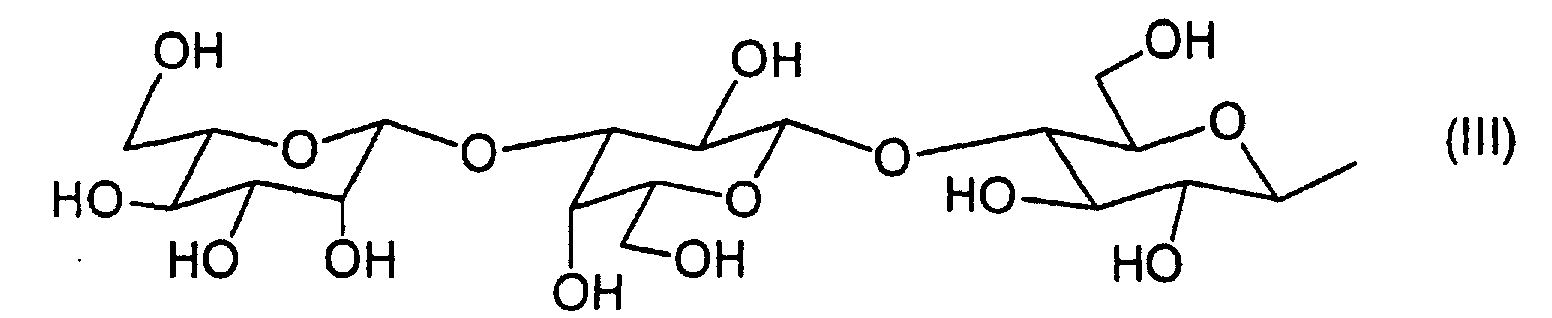
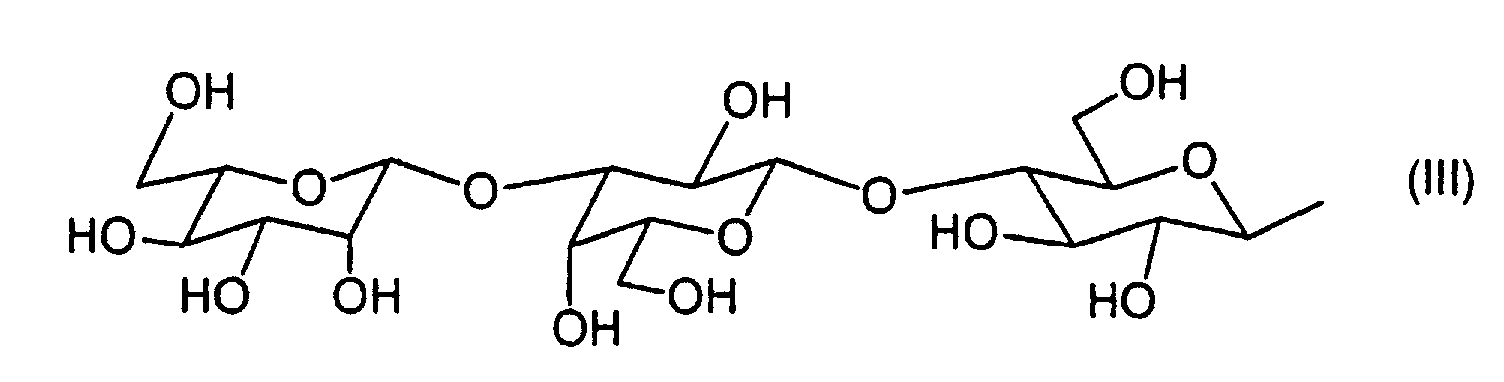
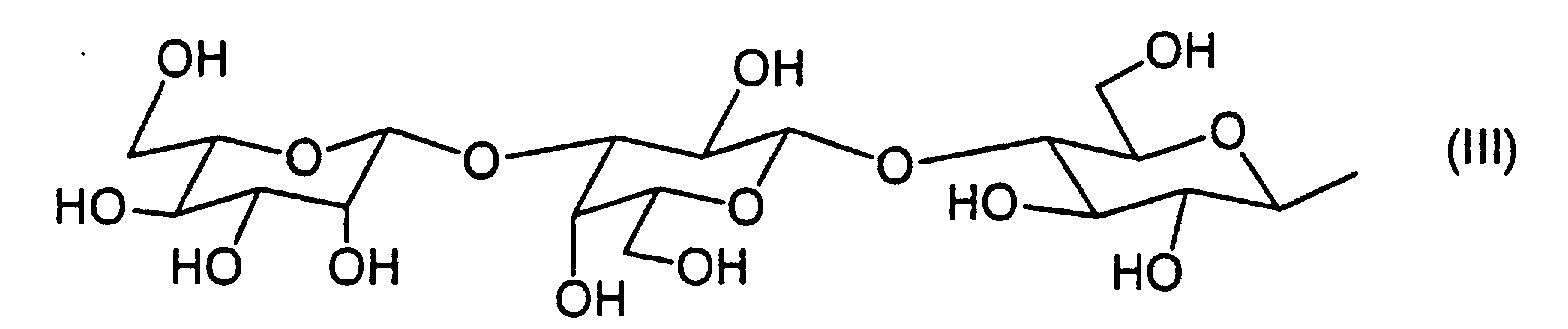
The present invention provides, fifthly, any one of the
above sugar chain-containing carbosilane dendrimer, wherein
the sugar chain A is represented by the following formula (III) :
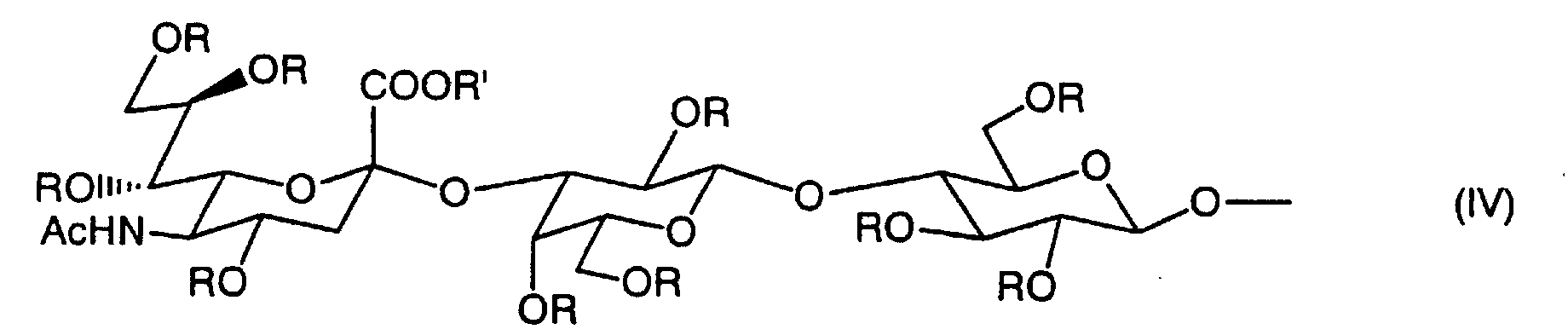
and sixthly, the any one of the above sugar chain-containing
carbosilane dendrimer, wherein the sugar chain A is represented
by the following formula (IV):
(wherein, R is a hydrogen atom or an acetyl group and R
1 is
a hydrogen atom or a methyl group).
-
The present invention seventhly provides a method for
producing the above sugar chain-containing carbosilane
dendrimer, comprising
reacting a halogenated compound represented by the following
formula (V):
(wherein, R
1, R
2, R
3, R
4, R
6, R
7, m, n, k and l are as defined
above and X is halogen atom) with a sulfide compound represented
by the following formula (VI):
A―R5―S―Y
(wherein, R
5 and A are as defined above and Y is a protective
group that is released upon reaction).
-
Furthermore, eighthly, the present invention provides
a method for producing the above sugar chain-containing
carbosilane dendrimer, comprising
reacting a halogenated compound represented by the following
formula (VII):
(wherein, R
1, R
2, R
4, R
6, m, n and l are as defined above and
X is a halogen atom) with a sulfide compound represented by
the following formula (VI):
A―R5―S―Y
(wherein, R
5 and A are as defined above and Y is a protective
group that is released upon reaction).
-
Ninthly, the present invention provides the method for
producing sugar chain-containing carbosilane dendrimer,
wherein A in formula (VI) is represented by the following formula
(III):
-
Further, tenthly, the present invention provides the
method for producing sugar chain-containing carbosilane
dendrimer, wherein A in formula (VI) is represented by the
following formula (IV):
-
Still further, eleventhly, the present invention provides
the above ninth and tenth feature of the present invention,
wherein Y in formula (VI) is an acetyl group.
-
The present invention provides, twelfthly, the method
for producing the above sugar chain-containing carbosilane
dendrimer of the tenth feature of the invention, wherein a
thiomethyl glycoside compound of N-acetylneuraminic acid and
a trimethylsilyl ethyl glycoside 3',4'-diol compound of lactose
are subjected to glycosidation to produce the sialyl lactose
derivative of the following formula (VIII):
to which thioacetic acid is added by radical addition reaction,
thereby producing the acetylthio compound represented by the
following formula (IX)
to which the carbosilane dendrimer of formula (V) or (VII) are
condensated.
-
And present invention provides, thirteenthly, a
neutralizing agent for verotoxin, comprising any of the above
sugar chain-containing carbosilane dendrimer as an effective
ingredient, fourteenthly, an antiviral agent comprising the
same ingredient as an effective ingredient.
Brief Description of the Drawings
-
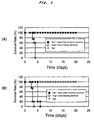
Fig. 1 show the survival rates of mice in the Example
of the present invention; when the compound of the present
invention was solely administered to mice at 50 µg/g body weight
(○), when Stx2 alone was administered at a lethal dose (0.25
ng/g body weight) (×) and when Stx2 (0.25 ng/g body weight)
was administered together with each of the compounds of the
present invention (50 pg/g body weight) ().
-
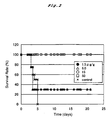
Fig. 2 shows the survival rates of mice in the Examples
of the present invention; when Stx2 at a lethal dose (0.25 ng/g
body weight) and each concentrations (1.5, 5, 15 and 50 µg/g
body weight) of the compound of the present invention were
administered (: 1.5 µg/g body weight; Δ: 5.0 µg/g body weight;
○: 15 µg/g body weight; □: 50 µg/g body weight; ×: no compound
added).
Best Mode for Carrying Out the Invention
-
Features of the present invention are as described above;
hereinafter, further embodiments are described.
-
In any of the compounds (I) and (II) provided by the present
invention, the signs R2, R3, R4 and R5 represent identical or
different hydrocarbon chains, which may contain substituents;
the hydrocarbon chains may be selected from linear or branched
aliphatic hydrocarbon chains, cyclic aliphatic hydrocarbons,
and aromatic hydrocarbons. Among these hydrocarbons, alkylene
chains are typical. For example, -(CH2)r- (wherein r = 2 to 6)
may be listed. The hydrocarbon groups R1, R6, and R7, which
may each contain a substituent, may also be selected from the
same hydrocarbon groups as described above; for example, alkyl
groups, cycloalkyl groups, aryl groups, and arylalkyl groups
may be mentioned.
-
The hydrocarbon chains or hydrocarbon groups may contain
an appropriate substituent. Such substituents include, for
example, alkoxy groups, and ester groups.
-
The sugar chain represented by the sign A is a linking
structure moiety comprising a sugar molecule and may be of
various structure. Specifically, A may be a globotrisaccharide
expressed by the following formula (III) or a sialyllactose
expressed by formula (IV):
-
The sugar chain A may be linked to the hydrocarbon group
R5 via a carbon-carbon bond as shown in formula (III), or via
various types of hetero atoms such as in the case for ether
bonds as shown in formula (IV).
-
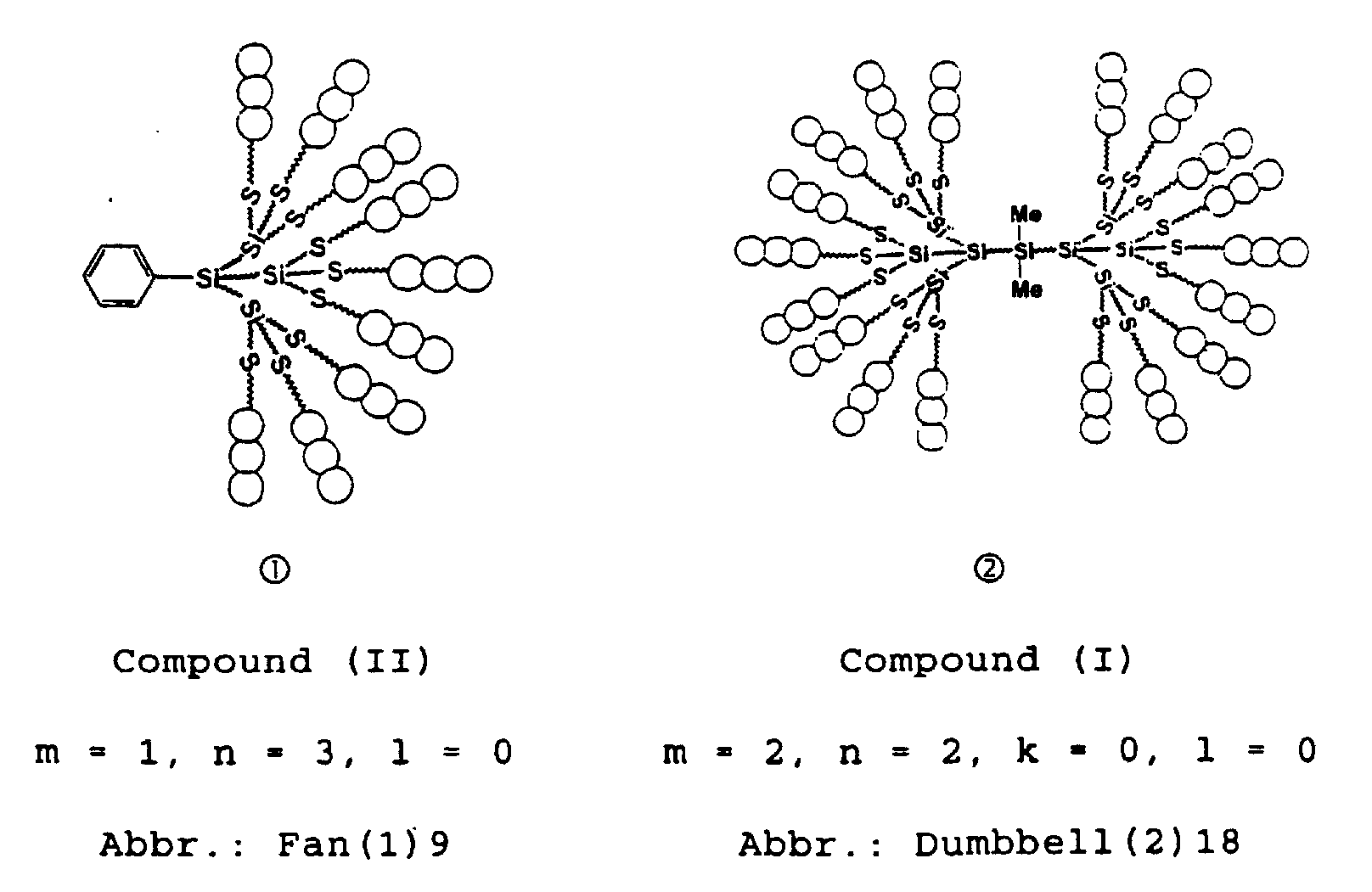
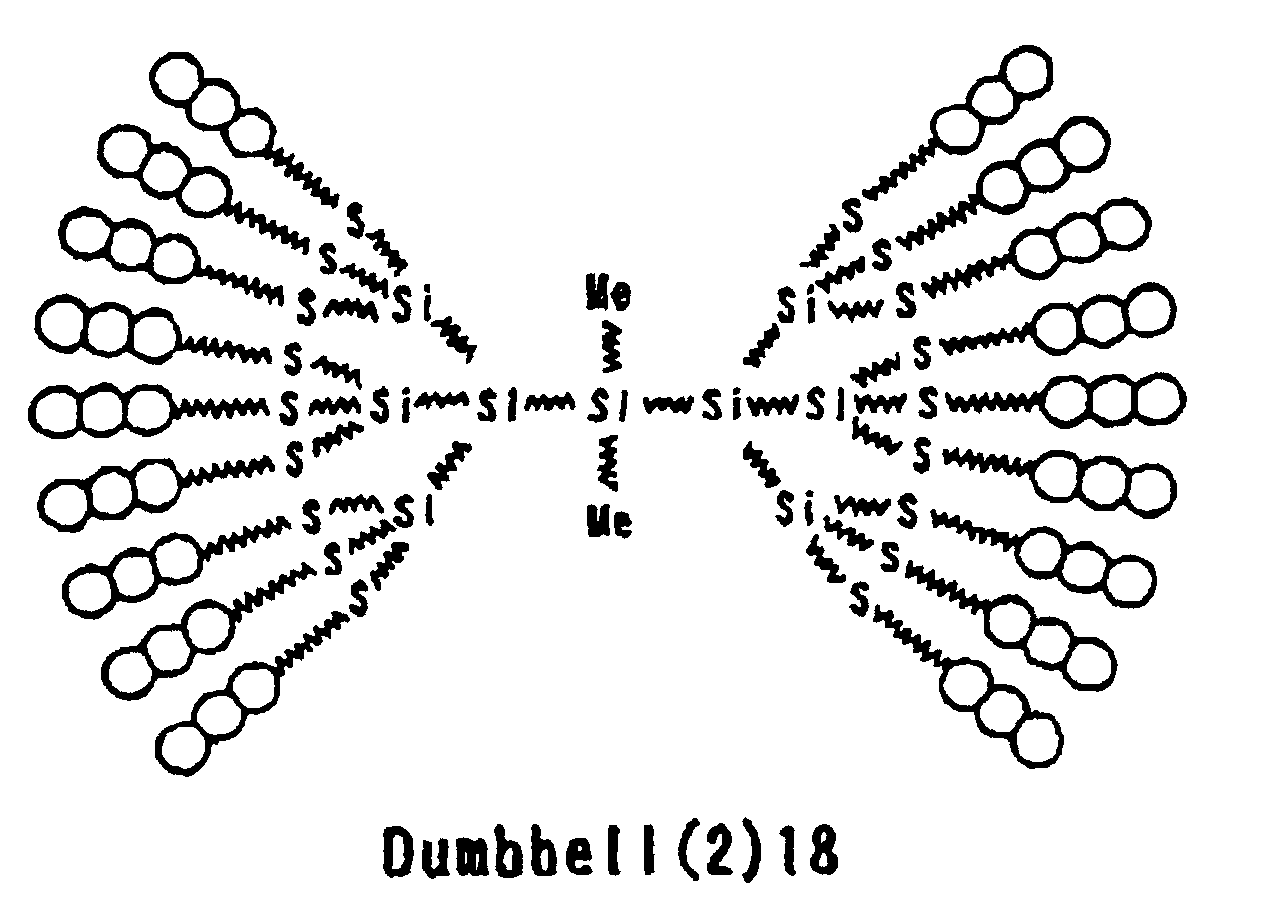
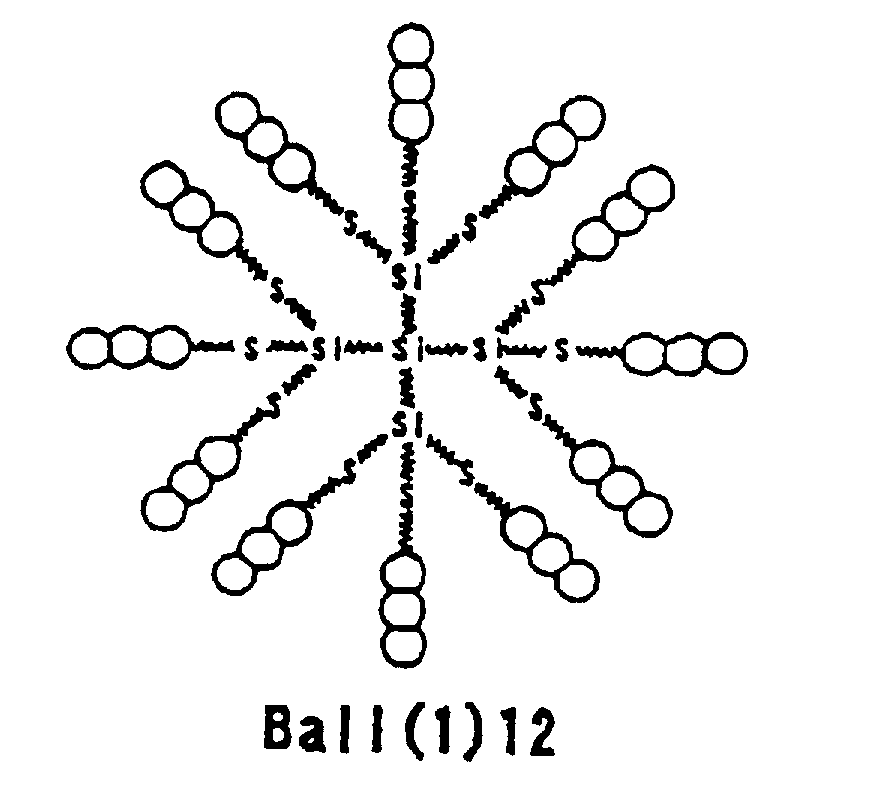
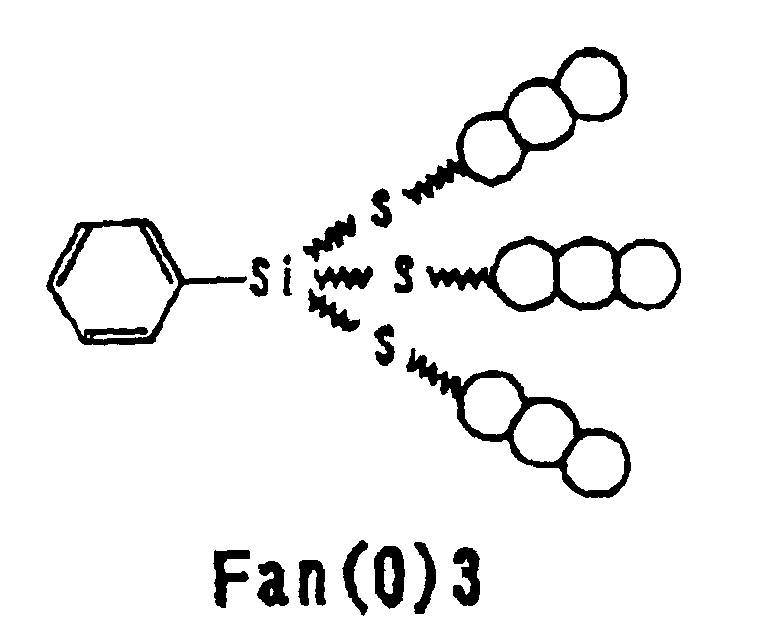
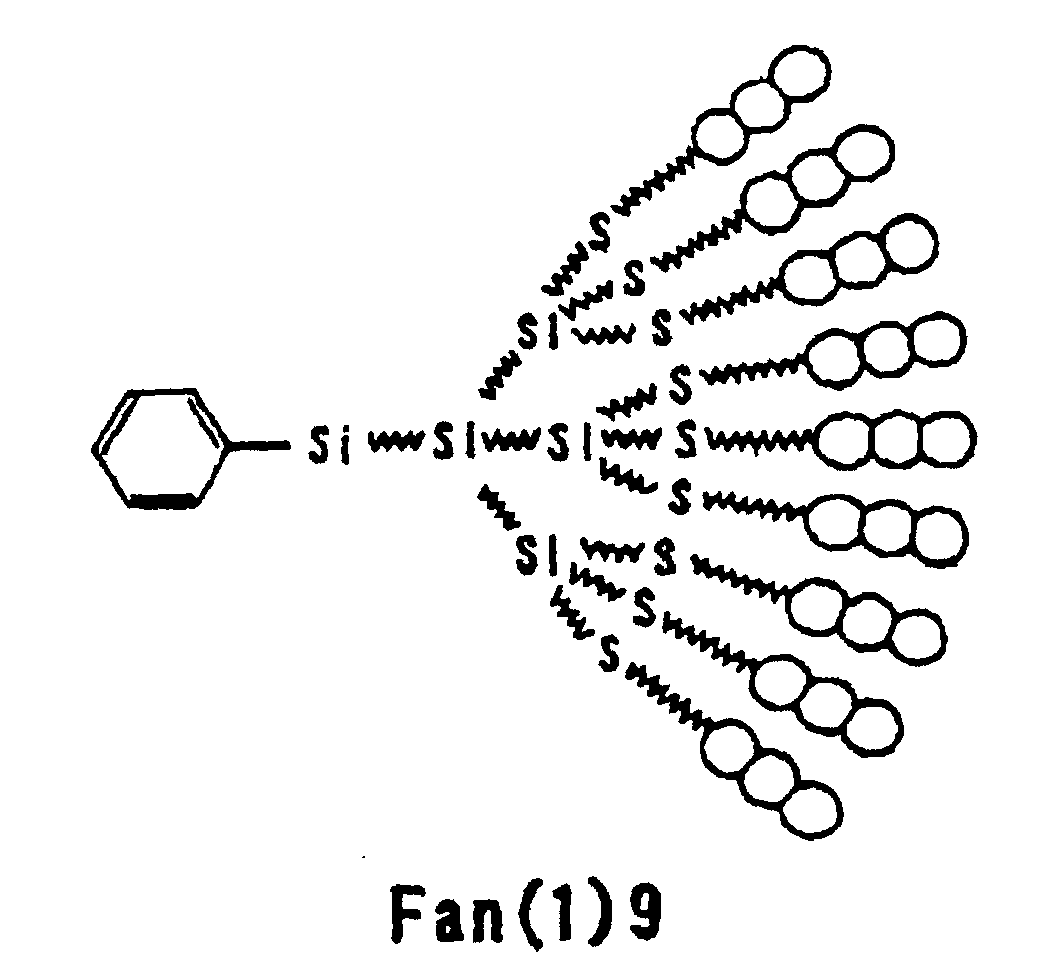
Examples of the structures of compounds (I) and (II) of
the present invention may include the following:
-
The wavy lines in the above formulas indicate hydrocarbon
chains such as R2, R4, R5 or the like, and may be, for example,
alkylene chains such as -(CH2)4- or -(CH2)3 - . Further, the circles
(O) indicate various sugar chains such as those represented
by the above-mentioned formulas (III) and (IV).
-
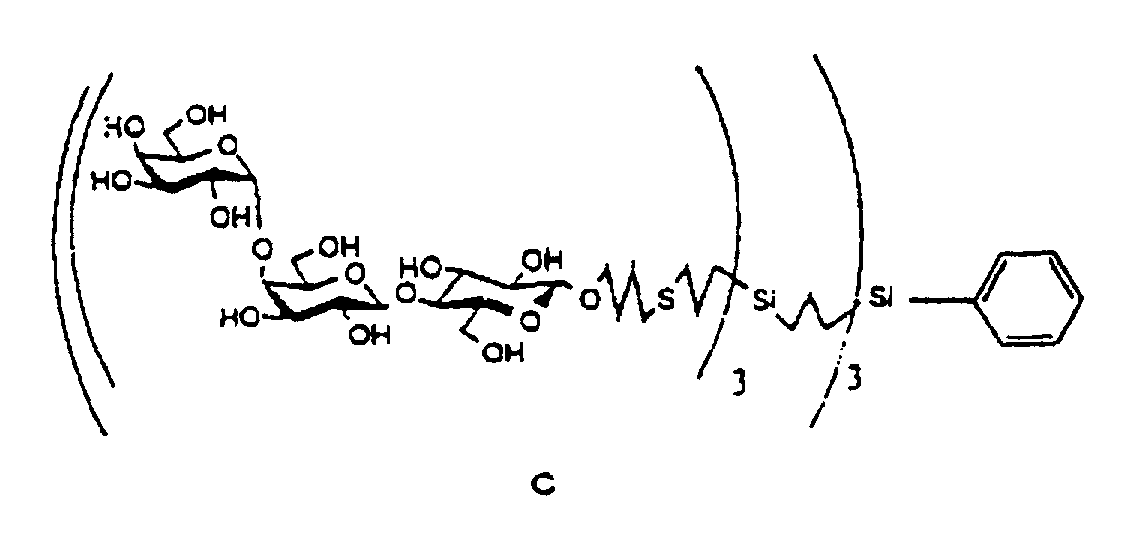
Among the above examples of the compounds, the Fan type
carbosilane dendrimer compound wherein the sugar moiety contain
9 sugar chains (1) (abbreviated as: Fan(1)9) is an example of
compound (II), in which R1 is a phenyl group, m is 1, n is 3
and 1 is 0; the dumbbell type carbosilane dendrimer wherein
the sugar moiety contain 18 sugar chains (2) (abbreviated as:
dumbbell(2)18) is an example of compound (I), in which R1 is
a methyl group, m is 2, n is 2, and k and 1 are both 0; and
the ball type carbosilane dendrimer compound wherein the sugar
moiety contain 36 sugar chains (3) (abbreviated as: ball(2)36)
is an example of compound (I), in which m is 0, n is 4, and
k and l are both 0.
-
Compounds (I) and (II) of the present invention may be
produced by reacting the halide (V) or (VII) with the sulfide
compound (VI), as described above. Here, as the sugar chain
A, compounds expressed by the above formulas (III) or (IV) may
be exemplified. Further, in the sulfide compound (IV), the
protecting group Y that is released upon reaction may preferably
be an acetyl group.
-
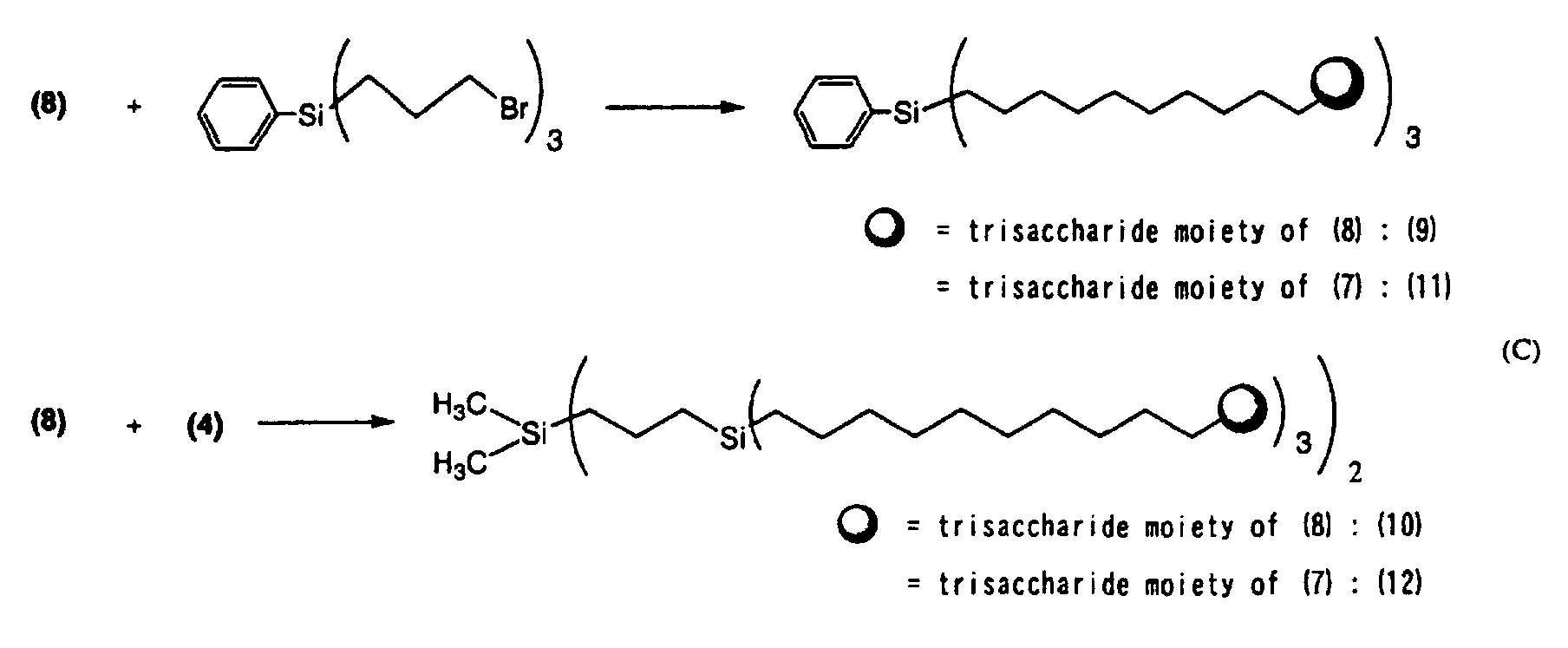
To describe the process in more detail, for example, the
following steps may be employed.
<1> Synthesis of carbosilane dendrimer skeleton
-
Using chlorosilane as the starting material, the skeleton
of compound (I) or (II) is formed by introducing an allyl group
and repeating the hydrosilation reaction and the Grignard
reaction. The terminal allyl group of the resultant dendrimer
is converted to the corresponding alcohol by hydroboration
reaction, followed by mesylation by conventional methods, and
converted to halides wherein the end-groups are substituted
by bromine atom, by processing with sodium bromide.
-
For example, by these methods, the above-described
compounds (V) or (VII) may be prepared. The halogen atom (X)
may be bromine originated from sodium bromide as described above
or others such as chlorine or iodine.
<2> Formation of sugar chain derivatives
-
Globotriaose (III) derivative may be synthesized, for
example, as follows. Namely, the globotrisaccharide skeleton
is synthesized through the one-step glycosidation from sugar
donors and sugar acceptors derived from n-butenyl β -glycoside
originating from D-galactose and D-lactose, respectively.
Further after being subjected to various types of protection
and deprotection reactions, the radical addition of benzyl
mercaptan to the butenyl group, followed by the release of the
protecting group gives a precursor for bonding with the
dendrimer.
-
For example, compound (VI) may be prepared, by such
procedures. The protecting group (V) that is released upon
reaction may be a benzyl group as described above, or any other
group.
-
On the other hand, sialyllactose (IV) derivatives may
be synthesized by the following procedures.
-
Namely, using a thiomethyl glycoside of N-acetyl
neuraminic acid synthesized by known methods (A. Hassegawa et
al., Carbohydr. Res., 212, 277-281 (1991)) as a sialic acid
donor and trimethylsilylethyl glycoside-3',4'-diol
synthesized by known methods (K.P.R. Kartha, etal., J. Carbohydr.
Chem., 8, 145-158 (1989)) as a lactose acceptor, the two compound
are glycosidated, followed by substituting a pentenyl group
as the aglycone, gives a precursor (sialyl lactose derivative)
for bonding to with dendrimer.
<3> Binding of carbosilane dendrimer skeleton and sugar chain
-
The one pot method in liquid ammonia developed by the
present inventors can be used for this purpose. Namely, thioanion
is first prepared by the Birch reduction of the benzyl sulfide
derivative originated from globotriaose, and then subjected
to SN2 reaction with the bromine atom on the dendrimer to obtain
the target compound (1) or (II).
-
For introduction of sialyllactose (IV) into carbosilane
dendrimer, for example, the radical addition of thioacetic acid
with the above-described sialyllactose derivative gives the
acetylthio derivative of formula (VIII), which is then subjected
to condensation with the carbosilane dendrimer containing
halogen atoms such as bromine and chlorine at its terminus.
By subjecting the resultant compound to deprotection, the
carbosilane dendrimer of formula (IV), wherein R and R' are
both hydrogen atoms can be obtained.
-
In the above-described production method, each step of
the reaction is performed by applying known techniques for
chemical experiments such as oxidization, reduction, addition,
condensation, substitution, protection, deprotection, and ion
exchange. The successful synthesis of the dendrimer containing
the sialyl lactose (IV) at its terminus has never been reported.
Reaction conditions such as type of solvent, temperature and
pressure for each reaction steps are not limited.
-
Thus, the sugar-containing carbosilane dendrimer of the
present invention enables relatively easy molecular designing
and synthesis of its carbosilane dendrimer moiety, and allows
the adjustment of the molecular size, density (packing) of the
dendric subunit, and the number of sugar chains in accordance
with its use. In addition, the compound of the present invention
is characteristic in that by changing the sugar chain moiety,
the target can be changed in a wide range. Further the
sugar-containing carbosilane dendrimer of the present
invention has low toxicity because of its structural features.
-
Furthermore, compounds (I) and (II) of the present
invention shows neutralizing activity against verotoxin
produced by Escherlchia coli O-157. The dumbbell type compound
shows especially high neutralizing activity against verotoxin.
These compounds can also be used as inhibitors against viruses
such as the influenza virus and the AIDS virus.
-
The carbosilane dendrimer containing sialyllactose (IV)
as the sugar chain A, which has been synthesized for the first
time, can be used as a substance that allows the efficient
adhesion of viruses, since sialyllactose can specifically bind
to viruses. Therefore, when ingested, the compound acts as
an effective ingredient of an antiviral agent for preventing
infection of the viruses; further, the compound can be used
as packing for filters for the specific adhesion and removal
of viruses from the environment including air.
-
The present invention is described in further detail with
reference to the following Examples. It should be needless
to mention that the present invention is not limited to the
following Examples, and embodiments with various modifications
are possible.
Examples
<Reference Example 1> Synthesis of carbosilane dendrimer
containing bromine atom at its terminus (A)
-
A carbosilane dendrimer containing bromine atoms at its
terminus was synthesized in accordance with the following
reaction formula.
(1) Diallyldimethylsilane (compound i)
-
Dichlorodimethylsilane (0.40 mL, 77.5 mmol) was dissolved
in distilled diethyl ether (20 mL) under argon, after which
a 1M solution of allyl magnesium bromide in diethyl ether (232
mL, 232 mmol) was added dropwise while cooling over ice, followed
by stirring at 50°C for 8 hours. After completion of the reaction,
1N hydrochloric acid (about 150 mL) was added while cooling
over ice, and extracted with diethyl ether; the extract was
then washed with distilled water. The organic layer was dried
with anhydrous sodium sulfate, filtrated and concentrated. The
residue was purified by vacuum distillation (54 mmHg/58°C) and
compound i (7.48 g, 68.8%) was obtained as a liquid.
-
Identification results are shown in Table 1.
| 1H NMR δ (200 MHz, CDCl3), 0.01 (s, 6H, 2Me), 1.54 (m, 4H, 2SiCH 2 |
| CH=CH2), 5.23 (m, 4H, 2SiCH2CH=CH 2), 5.78 (m, 2H, 2SiCH2CH=CH2) |
(2) Bis(triallylsilylpropyl)dimethylsilane (compound ii)
-
Compound i (7.00 g; 49.9 mmol) was dissolved in distilled
THF (50 mL) under argon and a catalytic amount of Speier catalyst
(a 0.1 M solution of hexachloroplatinic (IV) acid hexahydrate
in isopropanol) was added dropwise. Next, trichlorosilane
(20.1 mL, 200 mmol) was added dropwise to the reaction solution
while cooling over ice and the dropping funnel was washed with
distilled THF (30 mL) . After stirring at room temperature for
18.5 hours, the reaction solution was distilled (75-80°C) under
standard pressure to evaporate the solvent and the excessive
trichlorosilane. Distilled THF (60 mL) was added, and a 1 M
solution of allyl magnesium bromide in diethyl ether (645 mL,
645 mmol) was added dropwise while cooling over ice; the mixture
was stirred at 0°C for 1 hour, at room temperature for 1.5 hours
and at 50°C for 18 hours. After completion of the reaction,
1N hydrochloric acid (about 500 mL) was added while cooling
over ice, and extracted with diethyl ether; the extract was
then washed with distilled water. The organic layer was dried
over anhydrous sodium sulfate and the solution was filtrated
and concentrated. The residue was purified by silica gel
chromatography (hexane only) to give compound ii (8.33 g, 37.5%)
as a liquid.
-
Identification results are shown in Table 2.
| 1H NMR δ (200 MHz, CDCl3), -0.05 (s, 6H, 2Me), 0.64 (m, 8H, 2SiMe2 |
| CH2 CH2CH2Si), 1.33 (m, 4H, 2SiMe2CH2CH=CH2 ), 1.59(m, 12H, 6Si |
| CH2 CH=CH2), 4.88 (m, 12H, 6 SiCH2CH=CH2 ), 5.80 (m, 6H, 6 SiCH2 |
| CH=CH2) |
(3) Bis[tris(3-hydroxypropyl)silylpropyl]dimethyl- silane
(compound iii)
-
Compound ii (3.00 g, 6.74 mmol) was dissolved in distilled
THF (90 mL) under argon and a 1.0 M solution of a BH3-THF complex
in THF (27.0 mL, 27.0 mmol) was added dropwise while cooling
over ice; the mixture was stirred at room temperature for 20
hours. Then, distilled water (7.28 mL; 405 mmol) was added
dropwise while cooling over ice, and a 3.0 M aqueous solution
of sodium hydroxide (8.99 mL, 27.0 mmol) and a 30% aqueous
solution of hydrogen peroxide (9.17 mL, 80.9 mmol) were added
consecutively; the mixture was stirred at room temperature for
2 hours. After completion of the reaction, a solution of ferrous
(II) sulfate heptahydrate (22.5 g, 80.9 mmol) dissolved in a
small amount of water was added while cooling over ice, followed
by stirring for 1 hour. The reaction solution separated into
two layers and the upper layer was decanted to an Erlenmeyer
flask, to which sodium chloride was added to separate the THF
layer and the aqueous layer, and the THF layer was washed with
a saturated saline solution. The organic layer was dried over
anhydrous sodium sulfate and the solution was filtrated and
concentrated. The residue was purified by silica gel column
chromatography (a 6:1 mixture of chloroform and methanol) to
give compound iii (1.82 g, 48.9%) as a liquid.
-
Identification results are shown in Table 3.
| 1H NMR δ (200 MHz, DMSO-d6), -0.12 (s, 6H, 2Me), 0.44 (m, 20H, 2Si |
| Me2CH2CH2CH2 Si, 6SiCH2 CH2CH2OH), 1.31(m, 16H, 2SiMe2CH2CH2 |
| CH2Si, 6SiCH2CH2 CH2OH), 3.28 (t, 12H, 6SiCH2CH2CH2 OH) |
| Anal. Calcd for C26H60O6Si3(553.01): C, 56.47; H, 10.94. Found C, 56.21; H, 11.10 |
-
Compound iii was then mesylated to give
bis[tris(3-bromopropyl)silylpropyl]dimethylsilane (compound
iv: 420 mg, 55.0%) as a liquid. Identification results are
shown in Table 4.
| IR(neat) 1239 cm·1 (CH2Br) |
| 1H NMR δ (200 MHz, CDCl3), ·0.02 (s, 6H, 2Me), 0.62 (m, 20H, 2SiMe2 |
| CH2CH2CH2 Si, 6 SiCH2 CH2CH2Br), 1.30 (m, 4H, 2SiMe2CH2CH2 H2Si) |
| 1.81(m, 12H, 6SiCH2CH2 CH2Br), 3.39 (t, 12H, 6SiCH2CH2CH2 Br) |
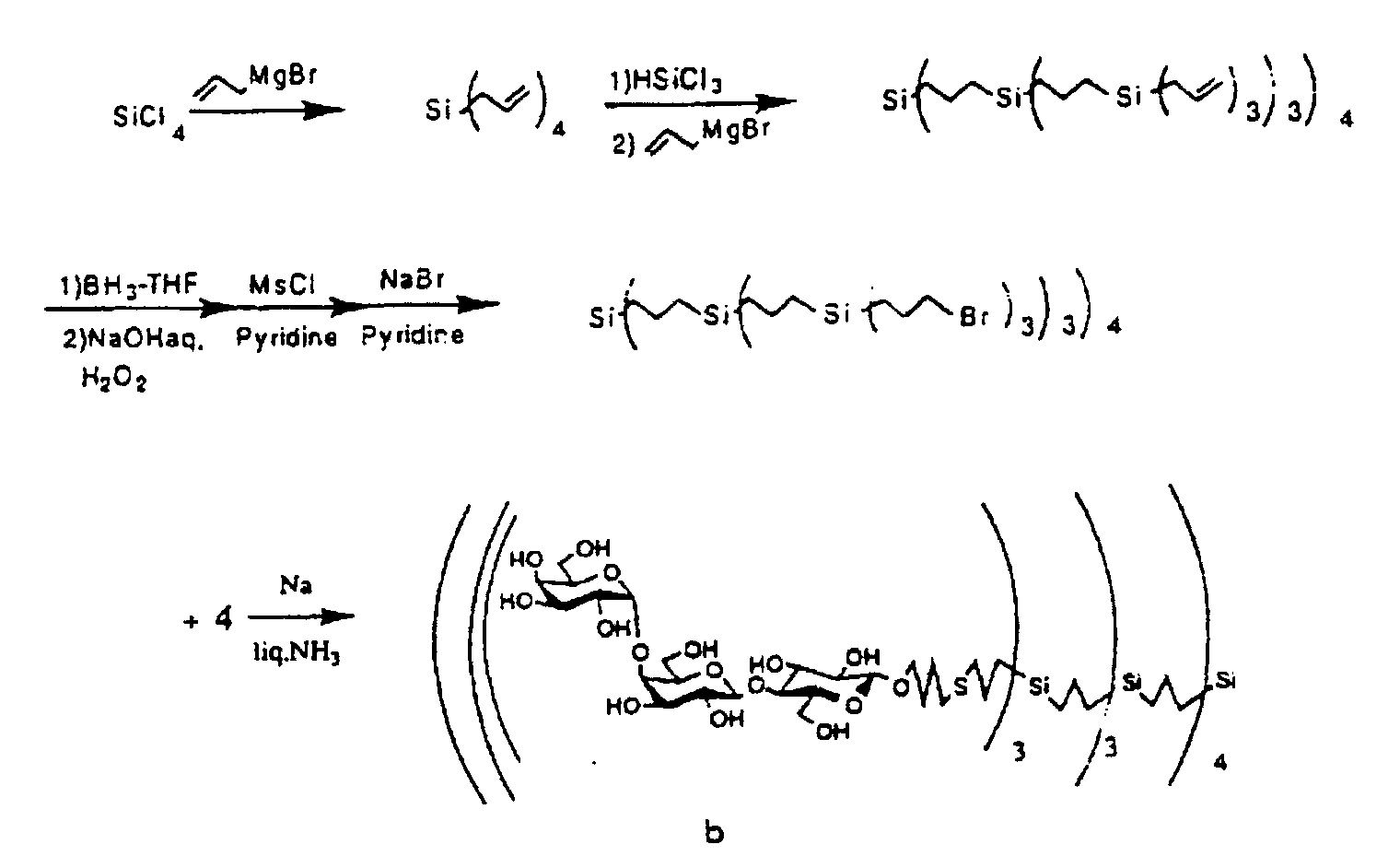
<Reference Example 2> Synthesis of carbosilane dendrimer
containing bromine atom at its terminus (B)
-
In the same manner as described in Reference Example 1,
a halide compound with a carbosilane dendrimer skeleton was
synthesized according to the following reaction formula.
<Reference Example 3> Synthesis of sugar chain derivative (A)
-
A benzylsulfide derivative 4 of globotriaose was
synthesized according to the following reaction formula.
-
Thus, first, the aglycone of lactose was converted to
a butenyl group, which can endure debenzylation that follows,
and only the 4'-OH group was derived to become the free compound
1. Then glycosidation was performed with a known galactosyl
donor 2 using a catalyst to give trisaccharide derivative 3.
-
After debenzylation by Birch reduction, the protective
group was converted to an acetyl group, and the buteny group
was subjected to radical addition with benzyl mercaptan, and
O-deacetylated to obtain 4.
<Reference Example 4> Synthesis of sugar chain derivative (B)
-
A sialyl lactose derivative was synthesized according
to the following reaction formula.
(1) Pentenyl[methyl(5-acetamido-4,7,8,9-tetra-O-acetyl-3,5-dideoxy-D-glycero-α-D-galacto-2-nonulo-pyranosyl)onate]-(2→3)-O-(2,4,6-tri-O-acetyl-β-D-galacto-pyranosyl)-(1→4)-2,3,6-tri-O-acetyl-β-D-glucopyranoside
(compound vi)
-
An α-trichloroacetoimidate compound (compound v: 1.032
mg, 0.853 mmol) was dissolved in dichloromethane (24.0 mL) and
4-penten-1-ol (0.432 mL, 4.265 mmol) and MS 4A (2.0 g) were
added followed by cooling at -25°C. A boron trifluoride ethyl
ether complex (215 µL; 1.71 mmol) was added, followed by stirring
for 20 minutes; the reaction solution was returned to -5°C and
stirred for another 4 hours. The reaction solution was
filtrated, and the Celite filtrate was extracted with a cold
saturated aqueous solution of sodium hydrogen carbonate and
a saturated saline solution consecutively; the organic layer
was dried over anhydrous sodium sulfate. This organic layer
was filtrated and the filtrate was concentrated and purified
by silica gel column chromatography [chloroform-methanol (20:1
v/v)] to give a foamy trisaccharide pentenyl glycoside
derivative (compound vi: 816 mg, 84.3%).
-
Identification results are shown in Table 5.
(2) Pentenyl (5-acetamido-3,5-dideoxy-D-glycero-α-D-galacto-2-nonulopyranosylic
acid)-O-β-D-galactopyranosyl-(1→4)-O-β-D-glucopyranoside
(compound vii)
-
Compound vi (50.0 mg, 0.0440 mmol) was dissolved in
methanol (1.0 mL). A 1 M sodium methoxide-methanole solution
(44 µL) was added followed by stirring at room temperature over
night. The reaction solution was neutralized with a strongly
acidic cation-exchange resin IR-120B (H+ type) (2 mL), after
which the ion-exchange resin was collected by filtration and
the filtrate was concentrated. To the residue was added a 0.05M
aqueous solution of sodium hydroxide (2 mL) followed by stirring
at room temperature for 2 hours. The reaction solution was
neutralized using a strongly acidic cation-exchange resin
IR-120B (H+ type) (1mL), and the ion-exchange resin was collected
by filtration; the filtrate was concentrated to give a
sialyllactose derivative (compound vii: 26.0 mg, 84.4%).
-
Identification results are shown in Table 6.
(3) ω-Acetylthio-pentanyl [methyl (5-acetamido-4,7,8, 9-tetra-O-acetyl-3,5-dideoxy-D-glycero-α-D-galacto-2-nonulo-pyranosyl)onate]-(2→3)-O-(2,4,6-tri-O-acetyl-β-D-galactopyranosyl)-(1→4)-2,3,6-tri-O-acetyl-β-D-glucopyranoside
(compound viii)
-
In a flask equipped with an air-cooling pipe, compound
vi (100 mg, 0.0881 mmol) was dissolved in 1,4-dioxane (209 µL)
and thioacetic acid (209 µL, 3.0 mmol) was added followed by
heating at 50°C. AIBN (24.6 mg, 0.150 mmol) was added followed
by heating at 80°C under stirring. After stirring for 3 hours,
the mixture was cooled down to room temperature; cyclohexane
(608 µL) was added followed by stirring for several minutes.
After adding toluene to the reaction solution, the mixture was
subjected to azeotropic concentration, diluted with chloroform
and successively extracted with a cold saturated aqueous
solution of sodium hydrogen carbonate and saturated saline
solution consecutively; the organic layer was dried over
anhydrous sodium sulfate. This organic layer was filtrated
and the filtrate was concentrated and purified by silica gel
column chromatography [chloroform 100% → chloroform-methanol
(30:1 v/v)] to give a trisaccharide-ω-acetylthiopentyl
glycoside derivative (compound viii; 105 mg; 99.1%).
-
Identification results are shown in Table 7.
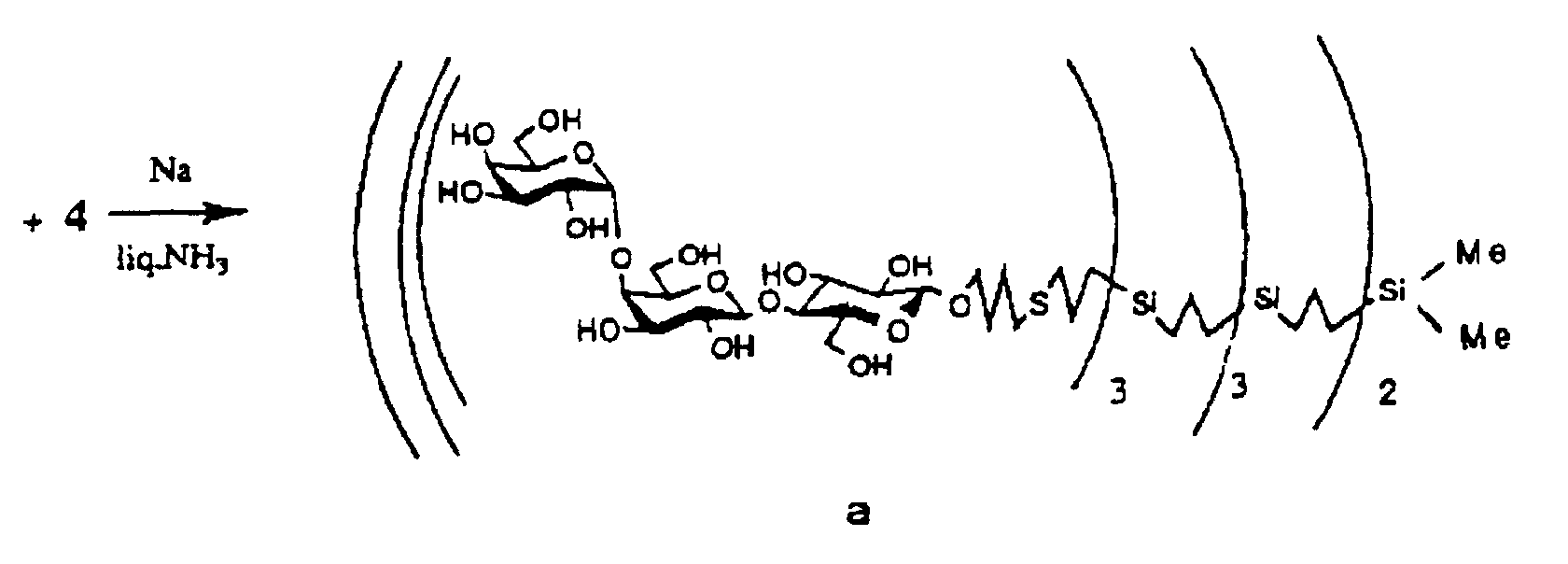
<Example 1> Synthesis of sugar chain-containing carbosilane
dendrimer compound
-
(1) The benzyl sulfide derivative 4 prepared in Reference Example
3 was subjected to Birch reduction to produce a thioanion and
immediately subjected to an SN2 reaction in liquid ammonia with
the dendrimer halide compound containing Br atom synthesized
in the above Reference Example 2, whereupon a sugar
chain-containing carbosilane dendrimer compound (compound a
of the following formula) with a dumbbell structure containing
18 globotriaosides was prepared.
-
Physical properties of this compound a abbreviated as
"dumbbell(2)18" are shown in Table 8.
| MaDLI-TOF-MAS [M+Na]+ |
| Found: 12049.9 |
| Calcd. : 12048.6 |
| IR (KBr) (cm-1) |
| 3361 (ν0-H), 2915 (νC-H), 1420 (νSi-C), 1274 (νC-0-C), 706 (νSi-C) |
-
Compound a was identified from the result of H-NMR (D
2O)
and C-NMR (D
2O) together with the above-mentioned physical
property data.
(2) Similarly, a sugar chain-containing carbosilane dendrimer
compound (compound b) with a ball-type structure containing
36 globotriaosides was synthesized in accordance with the
following reaction formula.
-
Physical properties of this compound b abbreviated as
"ball(2)36" are shown in Table 9.
| MaDLI-TOF-MAS [M+Na]+ |
| Found: 23988.2 |
| Calcd. : 23986.1 |
| IR (KBr) (cm-1) |
| 3402.1 (ν0-H), 2914 (νC-H), 1417 (νSi-C), 1076 (νC-O-C), 702 (νSi-c) |
| CNMR (D2O) |
| δ = 103.41, 102.5, 100.46, 78.71, 77.54, 75.60, 74.95, 74.71, |
| 73.13, 72.40, 71.04, 70.99, 69.97, 69.31, 69.10, 68.75, 60.72, |
| 60.58, 60.43, 35.95, 31.84, 28.81, 26.08, 24.44, |
| GI (23.39, 19.29, 19.05), GO (18.02, 15.26, 13.53), 12.12 |
-
For the identification of compound b, analytical values
by H-NMR (D
2O) were also used.
(3) Similarly, a sugar chain-containing carbosilane dendrimer
compound (compound c of the following formula) with a fan-type
structure containing 9 globotriaosides was synthesized.
-
Physical properties of this compound c abbreviated as
"fan(2)9" are shown in Table 10.
| FAB-MAS [M+H]+ |
| Found: 6019.7 |
| Calcd. : 6019.3 |
| IR (KBr) (cm-1) |
| 3393 (ν0-H), 2915 (νC-H), 1419 (νSi-C), 1073 (νC-O-C), 707 (νSi-C) |
| CNMR (D20) |
| δ = 103.48, 102.54, 100.55, 78.78, 77.60, 75.68, 75.01, 74.81, |
| 73.26, 72.46, 71.14, 70.05, 69.51, 69.27, 69.05, 68.71, 60.77, |
| 60.65, 60.42, GI (35.88, 31.84, 28.89, 26.12, 24.51), |
| G0 (21.07, 18.94, 17.74), 12.11 |
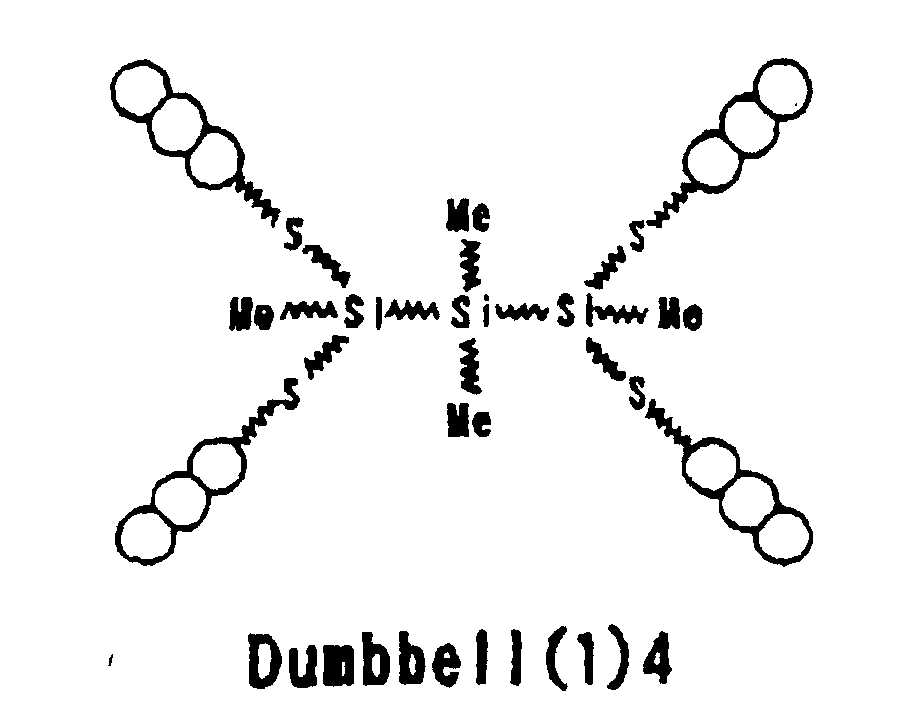
(4) Similarly, a sugar chain-containing carbosilane dendrimer
compound (compound d of the following formula) with a dumbbell
type structure containing 4 globotriaosides was synthesized.
-
Physical properties of this compound d abbreviated as
"dumbbell(1)4" are shown in Table 11.
| FAB-MAS [M+H]+ |
| Found: 2764.1 |
| Calcd. : 2764.1 |
| IR (KBr) (cm-1) |
| 3400 (ν0-H), 2911 (νC-H), 1419 (νSi-C), 1073 (νC-0-C), 705 ( νSi-C) |
| CNMR (D20) |
| δ = 103.43, 102.57, 100.49, 78.71, 77.55, 75.63, 74.96, 74.74, |
| 73.14, 72.42, 71.05, 71.05, 69.92, 69.34, 69.12, 68.76, 60.74, |
| 60.60, 60.44, GI (35.87, 31.81, 28.84, 26.92, 24.45), |
| G0 (20.32, 18.80, 18.80), GI (13.30), Me (-2.31, -4.43) |
-
Identification of compound d was carried out by H-NMR,
as well.
<Example 2>
-
Various sugar chain-containing carbosilane dendrimer
compounds were synthesized according to the following reaction
formula.
(1) Fan-(0)3-2,3-SLac-Ac (compound ix)
-
Fan(0)3-Br dendrimer (abbreviated) (6.48 mg, 0.013748
mmol) and a trisaccharide omega-acetylthiopentanal glycoside
derivative (compound viii: 100 mg, 0.08249 mmol) were dissolved
in DMF (0.2 mL) until a homogeneous system was obtained. After
dissolving, methanol (0.2 mL) was added followed by stirring
at room temperature for 1 hour. Sodium methoxide (4.90 mg)
was added followed by stirring over night, after which acetic
acid (0.1 mL) was added followed by stirring for several minutes
and subjecting to concentration. After concentration, acetic
anhydride (2 mL) and pyridine (2 mL) were added followed by
stirring; after completion of acetylation, the reaction was
concentrated and extracted with cold 1 M hydrochloric acid,
saturated saline solution and chloroform, consecutively; the
organic layer was dried over anhydrous sodium sulfate. The
organic layer was filtrated, and the filtrate was concentrated
and dissolved in methanol and diethyl ether, followed by the
dropwise addition of a solution of diazomethane in ether.
Acetic acid was added to the reaction solution and the mixture
was concentrated, purified by silica gel column chromatography
[chloroform-methanol (30:1 v/v), 20 mL of flush silica gel]
and further subjected to purification by gel filtration using
Sephadex LH-20 (MeOH) to give fan(0)3-2, 3-SLac-Ac (compound
ix: 41.2 mg, 80.2%).
-
Identification results are shown in Table 12.
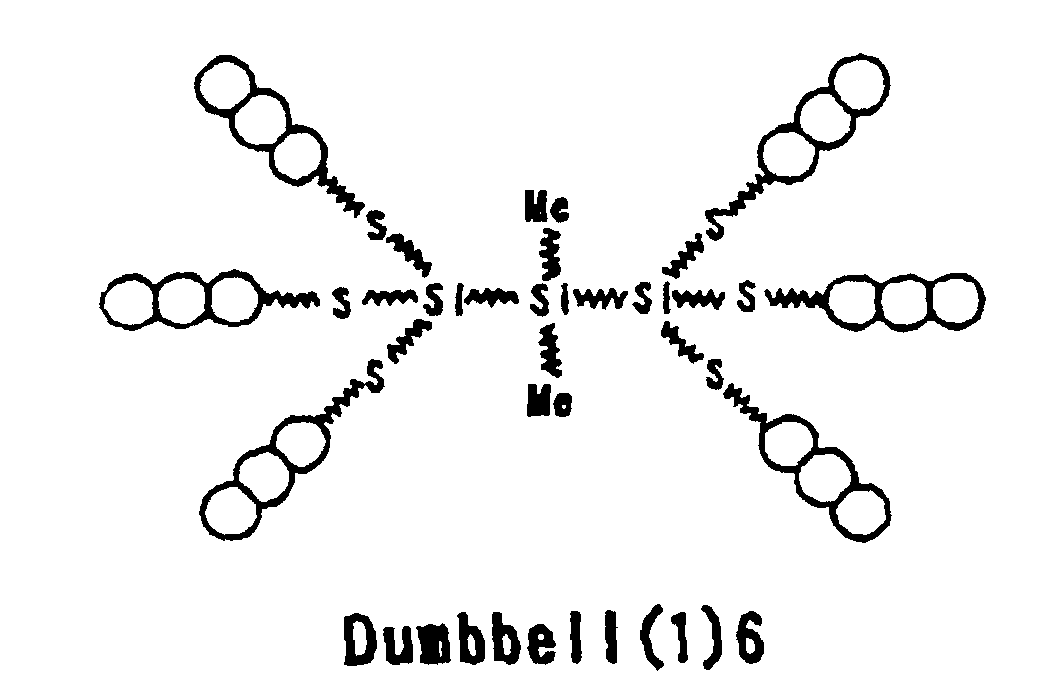
(2) Dumbbell-(1)6-2,3-SLac-Ac (compound x)
-
Dumbbell (1) 6-Br dendrimer (abbreviated) (compound iv:
12.8 mg, 0.01375 mmol) and compound viii (200 mg: 0.165 mmol)
were dissolved in DMF (0.2 mL) until a homogeneous system was
obtained. After dissolving, methanol (0.2 mL) was added
followed by stirring at room temperature for 2 hours. Sodium
methoxide (9.8 mg, 0.182 mmol) was added followed by stirring
over night, and acetic acid (0.1 mL) was added thereto followed
by stirring for several minutes and by subjecting to
concentration. Following concentration, acetic anhydride (1
mL) and pyridine (1 mL) were added followed by stirring; after
the completion of acetylation, the reaction solution was
concentrated and extracted with cold 1 M hydrochloric acid,
saturated saline solution and chloroform, consecutively, and
the organic layer was dried over anhydrous sodium sulfate. The
organic layer was filtrated, the filtrate was concentrated and
dissolved in methanol and diethyl ether (1:1 (v/v)) and a
solution of diazomethane in ether was added dropwise. Acetic
acid was added to the reaction solution and the mixture was
concentrated and purified by silica gel column chromatography
[chloroform-methanol (30:1 v/v) silica gel 30 mL] to give
dumbbell(1)6-2, 3-SLac-Ac (compound x: 79 mg, 76.7%).
-
Identification results are shown in Table 13.
(3) Fan-(O)3-2,3-SLac-OH (compound xi)
-
Fan(0)3-2, 3-SLac-AC dendrimer (abbreviated) (compound
ix) was dissolved in methanol, and sodium methoxide (cat.) was
added there to followed by over night stirring at room temperature.
After the reaction solution was neutralized with a strongly
acidic cation-exchange resin, IR-120B (H+ type), the
ion-exchange resin was collected by filtration and the filtrate
was concentrated and subjected topurificationbygel filtration
using Sephadex G-25 (5%AcOH) to give the deprotected fan (0) 3-2,
3-SLac-OH (compound xi), quantitatively as a freeze-dried
powder.
-
Identification results are shown in Table 14.
(4) Dumbbell (1) 6-2,3-SLac-OH (compound xii)
-
Dumbbell (1) 6-2,3-SLac-AC dendrimer (abbreviated)
(compound x) (45.4 mg, 0.00608 mmol) was dissolved in methanol
(3 mL), and sodium methoxide (1.97 mg, 0.03648 mmol) was added
thereto followed by stirring at room temperature for one night.
After the reaction solution was neutralized with a strongly
acidic cation-exchange resin, IR-120B (H+ type), the
ion-exchange resin was collected by filtration and the filtrate
was concentrated. To the residue was added a 0.05M aqueous
solution of sodium hydroxide (2 mL) followed by stirring at
room temperature over night. After the reaction solution was
neutralized with a strongly acidic cation-exchange resin,
IR-120 B (H+ type), the ion-exchange resin was collected by
filtration and the filtrate was concentrated and subjected to
purification by gel filtration using Sephadex G-25 (5% AcOH)
to give the deprotected dumbbell(1)6-Lac-OH (compound xii),
quantitatively, as a freeze-dried powder.
-
Identification results are shown in Table 15.
<Example 3> Verotoxin neutralizing activity of the sugar
chain-containing carbosilane dendrimer compounds
(1) Preparation
(a) Materials
-
The neutralizing activity of the sugar chain-containing
carbosilane dendrimer compound synthesized in Example 1 as well
as various dendrimer compounds including sugar
chain-containing carbosilane dendrimers which were previously
reported by the inventors against verotoxin were tested. All
of the sugar chain-containing carbosilane dendrimer compounds
used for the tests were synthesized by or in accordance with
Example 1; their structures are as follows.
-
For the tests, verotoxins 1 and 2 (recombinants Stx1 and
Stx2) were prepared according to known methods (such as Microb.
Pathog., 2, 339-349 (1987)).
-
Recombinant glutathione S-transferase (GST)-fused Stx1
(Stx1-A2B5-GST) was obtained by the following method:
BamHI-EcoRI fragment was prepared by PCR using pUC118 vector
having a sequence coding Stx1 (Microb. Lett. 44 , 23-26 (1987))
and using oligonucleotides of SEQ ID NO: 1 and SEQ ID NO: 2
as primers. The resulting fragment was bonded to a BamHI-EcoRI
site of pGEX-2T vector (Pharmacia Co.).
-
This Stx1-A2B5-GST was expressed in bacteria and purified
by known methods using glutathione-Sepharose beads (J. Biol.
Chem., 273, 23126-23133 (1998)).
-
Further, hybridoma 13C4, which produces monoclonal
antibody against the B subunit of Stx1, was obtained from the
American Type Culture Collection.
-
Furthermore, 125I-labeled Stx1 (125I-Stx1) and Stx2 were
prepared by known iodine monochloride methods (J. Biol. Chem.
265, 5226-5231 (1990)).
(b) Cells
-
Vero cells (cells derived from kidney of African green
monkey) were cultured in a 24-well (for the testing binding
property) or 96-well (for testing cytotoxicity) plastic
microplate using Dulbecco's modified Eagle's medium (DMEM).
-
Peritoneal macrophage of mouse was prepared by known
methods (J. Biol. Chem. 265, 5226-5231 (1990)).
(c) Thin layer chromatography (TLC) immunostaining assay
-
Binding assay of Stx to Gb3 was performed according to
known methods (FEBS Lett. 442, 231-234 (1999)). Thus, porcine
erythrocyte Gb3 (500 ng; Wako Pure Chemical) was applied to
an HPTLC plate (Whatmanplc.) and developed using a mixed solvent
of chloroform/methanol/water 60/35/8 (v/v); after blocking,
it was incubated along with Stx1 (100 ng/ml) and an arbitrary
amount of the sugar-containing carbosilane dendrimer. After
washing, Stx1 was detected using monoclonal antibody 13C4.
(2) Methods
(a) Binding inhibition test
-
Vero cells were treated at 4°C for 30 minutes in the presence
of 125I-Stx1 or 125I-Stx2 (7 × 10⁶ cpm/µg or 2 × 10⁸ cpm/µg) and
an arbitrary amount of the sugar-containing carbosilane
dendrimer compound; after washing, the cells were dissolved
in a dissolving solution (0.1 M NaOH, 0.5% SDS).
-
Radiation dose was measured by a γ-counter (Packard Inst.
Comp.) , and the binding inhibition activity the
sugar-containing carbosilane dendrimer compound was determined
from the amount of 125I-Stx1 or 125I-Stx2 that bound to the vero
cells.
(b) Cytotoxicity neutralization activity test
-
Stx1 or Stx2 (10 pg/ml) was added to sub-confluent vero
cells in a 96-well plate in the presence of an arbitrary amount
of the above-described sugar chain-containing carbosilane
dendrimer compound and treated for 72 hours. The relative cell
numbers were determined by conventional methods (FEBS Lett.
442, 231-234 (1999) using a WST-1 cell counting kit (Wako Pure
Chemical).
(c) Intravenous administration test in mice
-
A lethal dose of Stx1 or Stx2 (0.25 ng/g body weight)
was administered from the tail vein of 5-10 ICRmice (body weight:
18-20 g; Nippon SLC) along with the various sugar
chain-containing carbosilane dendrimers mentioned above and
their surval time (days) was measured.
(3) Results
(a) Binfing inhibition activity
-
The 50% inhibition concentrations obtained from the
binding inhibition activity test of the sugar chain-containing
carbosilane dendrimer compounds are shown in Table 16.
-
Table 16 shows that fan(1)9 and the dumbbell type and
a ball type sugar-containing carbosilane dendrimer compounds
all show high binding inhibition activity against verotoxins
1 (Stx1) and 2 (Stx2).
-
When the sugar-containing carbosilane dendrimer compound
was not present, 100% of the 125I-labeled Stx bound to the vero
cells. Since the binding of 125I-labeled Stx to vero cells was
completely inhibited even when the unlabeled Stx1 and Stx2 (50
µg/ml) were used instead of the sugar-containing carbosilane
dendrimer compounds, it was confirmed that 125I-labeled Stx was
bound to the vero cells, specifically.
(b) Cytotoxicity neutralization inhibition activity
-
The 50% suppressive concentration obtained from the
toxicity neutralization inhibition activity test of various
sugar-containing carbosilane dendrimers obtained in the same
manner as in (a) is shown in Table 16.
-
Table 16 shows that all of the sugar chain-containing
carbosilane dendrimers, particularly dumbbell (2) 18, show high
cytotoxicity neutralizing activity against verotoxins 1 (Stx1)
and 2 (Stx2).
| Compounds | Binding Inhibition Activity
IC50 (µg/nL) | Cytotoxin-Neutralization Activity
IC50 (µg/nL) |
| | Stx1 | Stx2 | Stx1 | Stx2 |
| Fan (0) 3 | 43 | >100 | >100 | >100 |
| Fan (1) 9 | 0.32 | 6.1 | 32 | 13 |
| Dumbbell (1) 6 | 0.31 | 2.0 | 0.22 | 0.19 |
| Dumbbell (1) 4 | 0.42 | 0.85 | 0.24 | 0.40 |
| Dumbbell (2) 18 | 0.20 | 1.2 | 0.1 | 0.13 |
| Ball (1) 12 | 0.20 | 1.6 | 0.12 | 0.16 |
| Ball (2) 36 | 0.20 | 5.5 | 22.0 | 14 |
(c) Intravenous administration to mice
-
With regard to the above-mentioned dumbbell(1)6 and
ball(1)12 compounds, the survival rates of mice when 50 µg/g
body weight of the compounds alone were administered (○), when
a lethal dose (0.25 ng/g body weight) of Stx 2 alone was
administered (×) and when Stx2 (0.25 ng/g body weight) was
administered together with each of the compounds (50 µg/g body
weight) () are shown in Fig. 1 (A) and (B).
-
Fig. 1 shows that the ball(1)12 compound is effective
to delay the death of mice caused by Stx2. Further, it is shown
that the dumbbell (1) 12 compound can completely neutralize the
cytotoxicity of Stx2.
-
Similarly, the survival rate of mice when a lethal dose
(0.25 ng/g body weight) of Stx2 and each concentrations (1.5,
5, 15 and 50 µg/g body weight) of the dumbbell(1)12 compound
were administered is shown in Fig. 2.
-
Fig. 2 shows that the survival rate varied among individual
mice when the concentrations were 1.5 and 5 µg/g body weight,
and the survival rate after 20 days was 30% . It was also confirmed
that when 15 µg/g body weight of the dumbbell(1)12 compound
were administered, the cytotoxicity of Stx2 was completely
neutralized.
<Example 4> Anti-influenza virus activity of sugar-containing
carbosilane dendrimer compounds
-
The erythrocytes aggregation inhibition activity, cell
fusion inhibition activity and cell infection inhibition
activity against influenza A virus (A/PR/8/34 strain) of the
sialyl lactose derivative compound vii synthesized in Reference
Example 4, the fan type compound xi and the dumbbell type compound
xii synthesized in Examples 2(3) and 2(4) were tested using
hepatic epithelial cells of dog (MDCK cells).
-
The results are shown in Table 17.
| Compounds | Inhibiting Activity (µM) |
| | Erythrocyte
Aggregation | Cell Fusion
(IC50) | Infection
(IC50) |
| vii | 133.3 | 745.3 | 124.2 |
| xi | 31.3 | 240.7 | 32.3 |
| xii | 15.6 | 31.2 | 5.4 |
-
From Table 17, particularly high activity against
influenza virus was noted for compounds xi and xii, wherein
sialyllactose is bound to carbosilane dendrimer.
Industrial Applicability
-
As described in detail above, a novel sugar
chain-containing carbosilane dendrimer that show functions
such as neutralization activity against verotoxin produced by
Escherichia coli 0-157 is provided by the present invention.
-
Further, the present invention provides a novel
carbosilane dendrimer containing sialyllactose at its terminus
as a substance that shows high antiviral property. In the
carbosilane dendrimer compounds containing sialyllactose,
molecular designing and synthesis of the carbosilane dendrimer
moiety are relatively easy. In addition, such compounds are
capable of binding and holding many sialyllactose molecules
that show antiviral activity; further, their intermolecular
space can be adjusted. Accordingly, they are highly useful
as antiviral agents for the effective adhesion and removal of
viruses.

 (wherein, R is a hydrogen atom or an acetyl group and R1 is a hydrogen atom or a methyl group).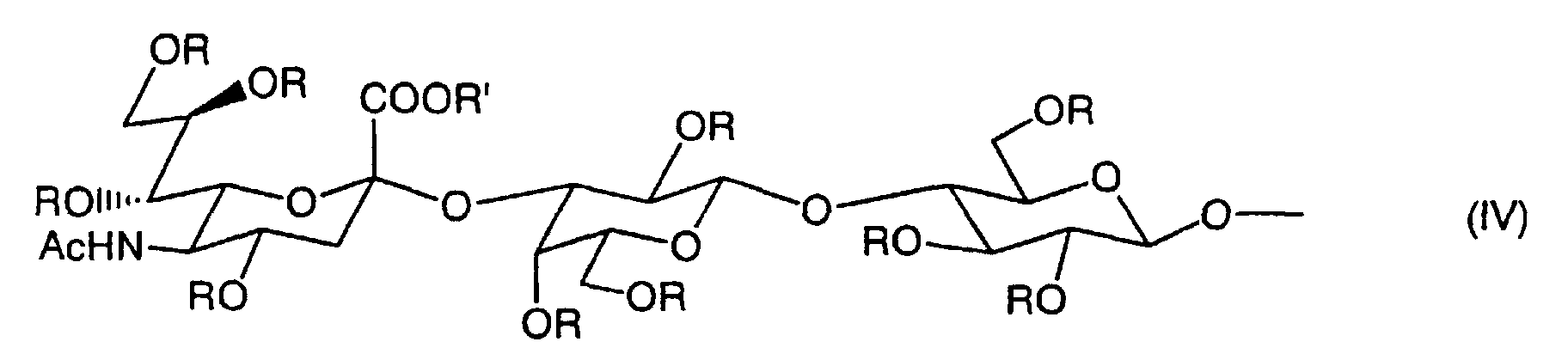




 to which the carbosilane dendrimer of formula (V) or (VII) are condensated.













 to which the carbosilane dendrimer of formula (V) or (VII) are condensated.