EP1301015A2 - Hands-Free device for mobile communication in a vehicle - Google Patents
Hands-Free device for mobile communication in a vehicle Download PDFInfo
- Publication number
- EP1301015A2 EP1301015A2 EP02022226A EP02022226A EP1301015A2 EP 1301015 A2 EP1301015 A2 EP 1301015A2 EP 02022226 A EP02022226 A EP 02022226A EP 02022226 A EP02022226 A EP 02022226A EP 1301015 A2 EP1301015 A2 EP 1301015A2
- Authority
- EP
- European Patent Office
- Prior art keywords
- voice
- telephone conversation
- speaker
- hands
- control unit
- Prior art date
- Legal status (The legal status is an assumption and is not a legal conclusion. Google has not performed a legal analysis and makes no representation as to the accuracy of the status listed.)
- Granted
Links
Images








Classifications
-
- H—ELECTRICITY
- H04—ELECTRIC COMMUNICATION TECHNIQUE
- H04M—TELEPHONIC COMMUNICATION
- H04M1/00—Substation equipment, e.g. for use by subscribers
- H04M1/60—Substation equipment, e.g. for use by subscribers including speech amplifiers
- H04M1/6033—Substation equipment, e.g. for use by subscribers including speech amplifiers for providing handsfree use or a loudspeaker mode in telephone sets
- H04M1/6041—Portable telephones adapted for handsfree use
- H04M1/6075—Portable telephones adapted for handsfree use adapted for handsfree use in a vehicle
-
- H—ELECTRICITY
- H04—ELECTRIC COMMUNICATION TECHNIQUE
- H04B—TRANSMISSION
- H04B1/00—Details of transmission systems, not covered by a single one of groups H04B3/00 - H04B13/00; Details of transmission systems not characterised by the medium used for transmission
- H04B1/38—Transceivers, i.e. devices in which transmitter and receiver form a structural unit and in which at least one part is used for functions of transmitting and receiving
- H04B1/3827—Portable transceivers
- H04B1/3877—Arrangements for enabling portable transceivers to be used in a fixed position, e.g. cradles or boosters
-
- H—ELECTRICITY
- H04—ELECTRIC COMMUNICATION TECHNIQUE
- H04M—TELEPHONIC COMMUNICATION
- H04M1/00—Substation equipment, e.g. for use by subscribers
- H04M1/60—Substation equipment, e.g. for use by subscribers including speech amplifiers
- H04M1/6033—Substation equipment, e.g. for use by subscribers including speech amplifiers for providing handsfree use or a loudspeaker mode in telephone sets
- H04M1/6041—Portable telephones adapted for handsfree use
-
- H—ELECTRICITY
- H04—ELECTRIC COMMUNICATION TECHNIQUE
- H04M—TELEPHONIC COMMUNICATION
- H04M2250/00—Details of telephonic subscriber devices
- H04M2250/02—Details of telephonic subscriber devices including a Bluetooth® interface
Definitions
- the present invention relates to a hands-free device that makes a hands-free telephone conversation in a car, and especially to a hands-free device that outputs voice of the other party of a telephone conversation from speakers provided in a car.
- Fig. 1 is a diagram that shows a structure of a conventional hands-free system.
- the conventional hands-free system shown in Fig. 1 comprises, for example, a driver's cellular phone 90, which the driver brings into a car, and a hands-free device 110 that is installed in the car, communicates with and controls the cellular phone 90, outputs a voice of the other party of a telephone conversation, and transmits the driver's voice to the other party of the telephone conversation.
- the hands-free device 110 comprises a communication unit 111 that communicates with the cellular phone 90, a control unit 112 that controls the communication unit 111, a microphone 115 that captures a driver's voice and outputs driver's voice signals indicating the voice, a speaker 113d that is set up near the driver's seat 116a, a speaker 113a that is set up near a front passenger's seat 116b, two speakers 113b and 113c that are set up near a back seat 116c, and an amplifier 114 that inputs telephone conversation voice signals indicating the other party's voice of a telephone conversation outputted from the communication unit 111, amplifies the telephone conversation voice signals and outputs them to four speakers 113a ⁇ 113d.
- the cellular phone 90 comprises a cellular pone main body 91 that can communicate with another telephone and enables the driver to converse by the telephone, and a hands-free communication unit 92 that communicates with the communication unit 111 of the hands-free device 110, controlled by the cellular phone main body 91.
- This hands-free communication unit 92 of the cellular phone 90 is connected with the communication unit 111 of the hands-free device 110 through wireless.
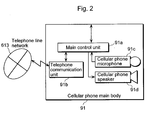
- Fig. 2 is a block diagram that shows the functions of the above-mentioned cellular phone main body 91 of the cellular phone 90.
- the cellular phone main body 91 comprises, as Fig. 2 shows, a telephone communication unit 91b that communicates with another telephone through a telephone line network 613, a cellular phone microphone 91c, a cellular phone speaker 91d, and main control unit 91a that controls the cellular phone microphone 91c, the cellular phone speaker 91d, and the telephone communication unit 91b.
- this cellular phone 90 When this cellular phone 90 is not connected with the hands-free device 110, it enables the user of cellular phone 90 to communicate by telephone with the user of another telephone by using the cellular phone speaker 91d and the cellular phone microphone 91c that are equipped with the cellular phone main body 91.
- the main control unit 91a has the cellular phone microphone 91c capture the user's voice of the cellular phone 90, and has the telephone communication unit 91b transmit signals indicating the voice to another telephone through the telephone line network 613. Then, when the telephone communication unit 91b receives the telephone conversation voice signals indicating the other party's voice of the telephone conversation who uses the other telephone, the main control unit 91a transmits the telephone conversation voice signals to the cellular phone speaker 91d, and has the cellular phone speaker 91d output the other party's voice of telephone conversation.
- the above-mentioned hands-free system comprising the hands-free device 110 and the cellular phone 90, has the microphone 115 of the hands-free device 110 capture the driver's voice, has the speaker 113a ⁇ 113d output the other party's voice of the telephone conversation, without the cellular phone microphone 91c and the cellular phone speaker 91d performing the above-mentioned operations, and enables the driver to make a hands-free telephone conversation.
- the telephone communication unit 91b of the cellular phone main body 91 is called by the other telephone through the telephone line network 613, and outputs incoming call signals indicating an incoming call to the main control unit 91a, which has the hands-free communication unit 92 transmit the incoming call signals to the communication unit 111 of the hands-free device 110.
- the control unit 112 of the hands-free device 110 realizes that the communication unit 111 has received the incoming call signals, and inputs from the outside an answering instruction signal that instructs to answer the incoming call, it has the communication unit 111 transmit the answering instruction signal to the hands-free communication unit 92 of the cellular phone 90.
- the main control unit 91a of the cellular phone main body 91 realizes that the hands-free communication unit 92 has received the answering instruction signal, it controls the telephone communication unit 91b so that the telephone communication unit 91b can receive the telephone conversation voice signals transmitted by the other telephone.
- the main control unit 91a has the hands-free communication unit 92 transmit the telephone conversation voice signals received by the telephone communication 91b to the communication unit 111 of the hands-free device 110.
- the control unit 112 of the hands-free device 110 has the communication unit 111 transmit the telephone conversation voice signals to the amplifier 114.
- the four speakers 113a ⁇ 113d in the car output the other party's voice of the telephone conversation.
- the control unit 112 of the hands-free device 110 realizes that the communication unit 111 has received the incoming call signals and inputs from the outside the answering instruction signal that instructs to answer the incoming call
- the control unit 112 has the communication unit 111 transmit the driver's voice signals outputted from the microphone 115 to the hands-free communication unit 92 of the cellular phone 90.
- the cellular phone main body 91 90 transmits the driver's voice signals received by the hands-free communication unit 92 to the other telephone through the telephone line network 613.
- the microphone 115 captures the driver's voice
- the cellular phone 90 transmits the driver's voice signals indicating the voice to the other telephone, and at the same time, based on the telephone conversation signals received by the cellular phone 90, the speakers 113a ⁇ 113d output the other party's voice of the telephone conversation, and the driver can make a hands-free conversation.
- the hands-free device is a hands-free device for a driver to make a hands-free telephone conversation using a cellular phone in a car comprising: a first speaker to output sound to the driver; a second speaker to output sound widely in the car; a detection unit operable to output a detection signal indicating whether there is a fellow passenger or not; and a control unit operable to communicate with the cellular phone, judge whether there is a fellow passenger or not based on the detection signal outputted from the detection unit, upon receiving a telephone conversation voice signal indicating the telephone conversation voice of the other party of the telephone conversation, have mainly the second speaker output the telephone conversation voice when the control unit judges that there is no fellow passenger, and have mainly the first speaker output the telephone conversation voice when the control unit judges that there is a fellow passenger.
- control unit further has the second speaker output the audio sound when the control unit receives an audio signal indicating the audio sound including at least one of music, radio sound, and TV sound in the case that the telephone conversation voice signals are not received from the cellular phone.
- the hands-free device comprises the plural second speakers, wherein the control unit prohibits the second speaker that is nearest to the driver's seat among the plural second speakers from outputting the audio sound and has the other second speaker output the audio sound when the audio signal is outputted in the car in the case that the control unit receives the telephone conversation voice signals.
- the hands-free device is a hands-free device for a driver to make a hands-free telephone conversation using a cellular phone in a car comprising: a speaker that outputs sounds widely in a car; a display unit operable to display a letter on a display surface aimed at the driver in response to an inputted signal; a detection unit operable to output a detection signal indicating whether there is a fellow passenger in the car or not; and a control unit operable to communicate with the cellular phone, judge whether there is the fellow passenger or not based on the detection signal outputted from the detection unit, upon receiving telephone conversation voice signals indicating the telephone conversation voice of the other party of the telephone conversation, output the telephone conversation voice from the speaker when the control unit judges that there is no fellow passenger, and output the telephone conversation voice signals to the display unit, which displays the telephone conversation voice in letters when the control unit judges that there is the fellow passenger.
- the hands-free device further comprises, a microphone that captures a voice of the driver and outputs voice signals indicating the voice, wherein the control unit transmits the voice signals to the cellular phone when the control unit receives the voice signals from the microphone and, at the same time, erases past letters indicating contents of telephone conversation voice of the other party of the telephone conversation displayed on the display unit.
- the present invention can be realized as an output method of the telephone conversation contents, and a program executed by a computer.
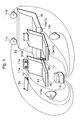
- Fig. 3 is a diagram that shows an outline structure of a hands-free system according to the first embodiment of the present invention.
- This hands-free system detects whether there is a fellow passenger in the car or not, switches the speakers that output the other party's voice of the telephone conversation according to the detection result, and comprises two front speakers (the second speakers) 11a and 11b installed at the front of a car, two rear speakers (the second speakers) 11c and 11d installed at the rear of the car, two driver's speakers (the first speakers) 11e buried in the front part of the headrest 51a of the driver's seat 51, a microphone 12 that captures the driver's voice, a cellular phone that the driver brings into the car, a detection unit 13 that outputs the detection signal according to whether there is a fellow passenger in the car or not, and a control equipment 10 that communicates with the cellular phone 90 and controls the microphone 12 and the six speakers 11a ⁇ 11e based on the communication status with the cellular phone 90 and the detection signal of the detection unit 13.
- the front speaker 11a is, for example, embedded in the door at the side of the driver's seat 51, and the front speaker 11b is embedded in the door at the side of the front passenger seat 52. In other words, the front speaker 11a is located near the driver's seat 51, and the front speaker 11b is located near the front passenger seat 52.
- the rear speakers 11c and 11d are, for example, are installed at the both of the right and the left ends respectively of the upper part of the back seat 53.
- These front speakers 11a, 11b and rear speakers 11c, 11d do not have the directional characteristic for the each output direction.
- all speakers 11a ⁇ 11d output a sound, the sound propagates within the whole body of the car.
- the driver's speakers 11e each have the directional characteristic for the output direction and are buried in the headrest 51a so that each output direction faces to each driver's ear when the driver sits on the driver's seat 51a. Additionally, these driver's speakers 11e are composed so that the output characteristics becomes almost flat at the frequency from 300Hz to 3.4 kHz in order that the voice is outputted for a person to hear clearly.
- the microphone 12 has the directional characteristic to capture the voice from the specified directions, is attached to the sun visor 54 that is in front of the driver's seat 51 with the directional characteristic faced to the driver.
- the detection unit 13 comprises two pressure sensors 13a and 13b, which output the detection signal according to the pressure received, the pressure sensor 13a is placed under the front passenger's seat, and the pressure sensor 13b is placed under the back seat 53.
- the pressure sensor 13a receives pressure by the weight of the fellow passenger, and outputs the detection signal according to the pressure to the control equipment 10.
- the pressure sensor 13b receives pressure by the weight of the fellow passenger, and outputs the detection signal according to the pressure to the control equipment 10.
- the cellular phone 90 like the cellular phone explained in the conventional example, comprises the hands-free communication unit 92 and the cellular phone main body 91, and the cellular phone main body 91 comprises the main control unit 91a, the telephone communication unit 91b, the cellular phone microphone 91c, and the cellular phone speaker 91d as Fig. 1 and Fig. 2 indicate.
- the control equipment 10 is integrated into a front panel, a console box and so forth, and has an operation input unit such as operation buttons and so forth.
- an operation input unit such as operation buttons and so forth.
- a car navigation device may be integrated into this control equipment 10.
- an audio unit 40 that outputs audio signals indicating audio sounds by reading musical data from such a musical recording medium as CD (Compact Disc) and MD (Mini Disc), and receiving electric waves from a TV and a radio, is integrated, like the control equipment 10, into the front panel, the console box and so forth.
- the audio sound is at least one of music based on the musical data and the TV sound and the radio sound based on the received electric waves.
- control equipment 10 which is connected with the audio unit 40 electrically, inputs the audio signals outputted by the audio unit 40, and based on the audio signals, outputs the audio sounds from some or all of the front speakers 11a, 11b and the rear speakers 11c, 11d.
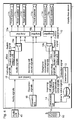
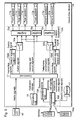
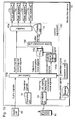
- Fig. 4 is a diagram that shows an structure of a hands-free system 1 according to the present embodiment.
- the hands-free system 1 comprises the front speakers 11a, 11b, rear speakers 11c, 11d, the driver's speakers 11e, the microphone 12, the detection unit 13, and the control equipment 10.
- the control equipment 10 comprises a communication unit 14 that is a communication interface with the cellular phone 90, an amplifier 15a that amplifies the inputted signals and outputs to the front speaker 11b, the rear speakers 11c and 11d, an amplifier 15b that amplifies the inputted signals and outputs them to the front speaker 11a, the amplifier 15c that amplifies the inputted signals and outputs them to the two driver's speakers 11e, selector switches 16a and 16b that output the inputted signals to the selected place to be outputted, switch signal output units 16aa and 16bb that outputs a switch signal to instruct the selector switches 16a and 16b respectively to switch the selected place to be outputted, an operation unit 18 that is equipped with the above-mentioned operation buttons and outputs the operation signals according to operations of the operation buttons, and a control unit 17 that controls the switch signal output units 16aa and 16bb according to the operation signals, the detection signal from the detection unit 13, and an output situation of the audio signals from the audio unit 40.
- a communication unit 14 that is
- a communication unit 14 communicates with the hands-free communication unit 92 of the cellular phone 90 through a wireless medium.
- the communication is done, for example, conforming to the communication standards of Bluetooth (a registered trademark of The Bluetooth SIG Incorporated).
- the cellular phone 90 is compatible with Bluetooth ®.
- the communication unit 14 establishes a communication link with the cellular phone 90.
- control unit 17 of the control equipment 10 not only communicates conforming to the communication standards of Bluetooth ®, but also has the communication unit 14 broadcast an inquiry command that inquires whether the device has the functions as a cellular phone, according to the operations of the operation buttons of the operation unit 18 by a user (driver). Then the control unit 17 waits for the communication unit 14 to receive a response message that it is the device that not only communicates conforming to the communication standards of Bluetooth ® but also has the functions as a cellular phone.
- the hands-free communication unit 92 of the cellular phone 90 receives the above-mentioned inquiry command
- the main control unit 91a of the cellular phone 90 detects the reception, and the main control unit 91a has the hands-free communication 92 transmit the response message to the inquiry command to the communication unit 14 of the control equipment 10.
- the control unit 17 of the control equipment 10 detects that the response message has been received by the communication unit 14, receives an operation signal that instructs to connect the communication unit 14 of the control equipment 10 and the hands-free communication unit 92 of the cellular phone 90, and establishes the communication link between the communication 14 of the control equipment 10 and the hands-free communication unit 92 of the cellular phone 90.
- the cellular phone 90 receives an incoming call, as was stated when the conventional example was mentioned, since the hands-free communication unit 92 of the cellular phone 90 transmits the incoming call signals, the communication unit 14 of the hands-free device 1 receives the incoming call signals and outputs the signals to the control unit 17.
- the communication unit 14 receives from the cellular phone 90 the telephone conversation voice signals indicating the telephone conversation voice of the other party of the telephone conversation, who uses the above-mentioned other telephone, and outputs the telephone conversation voice signals to the control unit 17, and transmits the driver's voice signals indicating the driver's voice captured by the microphone 12 to the cellular phone 90.
- the operation unit 18 is equipped with the plural operation buttons as was stated above. To be more specific, it is equipped with such operation buttons as an input button that inputs the telephone number of the telephone used by the other party of the telephone conversation, a transmission button to urge the cellular phone 90 to transmit to the telephone whose numbers are inputted, and a hook button that instruct the cellular phone 90 to change an on hook status to an off hook status and vise versa.
- the operation unit 18 outputs the operation signals in response to the operations of the operation buttons to the control unit 17, which control the cellular phone 90 and so forth based on the operation signals through the communication unit 14.
- the selector switch 16a inputs the audio signals outputted from the audio unit 40 through the control unit 17 as the input signals and switches the selected place(s) to be outputted from the amplifier 15a to the two amplifiers 15a and 15b and vice versa.
- the selector switch 16b inputs the telephone conversation voice signals outputted from the communication unit 14 through the control unit 17 as the input signals and switches the selected place(s) to be outputted from the amplifier 15c to the two amplifiers 15a and 15b and vice versa.
- the control unit 17 When the control unit 17 inputs the incoming call signals from the communication unit 14, the control unit 17 outputs the incoming call sound signals indicating the incoming call to the two speakers 15a and 15b. Additionally, when the control unit 17 inputs the telephone conversation voice signals from the communication unit 14, the control unit 17 outputs the telephone conversation voice signals to the selector switch 16b, and also switches the selected place to which the signal of the selector switch 16b is outputted to the switch signal output unit 16bb in response to the detection signal from the detection unit 13. As a result, the telephone conversation voice is outputted from the front speakers 11a and 11b and the rear speakers 11c and 11d or from the two driver's speakers 11e.
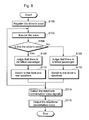
- Fig. 5 is a flow chart that shows the operations of the hands-free system according to the present embodiment.
- the control unit 17 acquires each detection signal from the pressure sensors 13a and 13b of the detection unit 13 (Step S10).
- the control unit 17 judges that there is a fellow passenger on the front passenger seat 52 or the back seat 53 (Yes at Step S12), and outputs to the switch signal output unit 16bb an instruction signal to make the amplifier 15c the selected place to which the signal of the switch unit 16b are outputted.
- the switch signal output unit 16bb outputs the switch signal based on the above-mentioned instruction signal, and switches the selected place to which the signal of the switch unit 16bb is outputted to the amplifier 15c, in other words, the driver's speakers 11e (Step S14).
- Step S16 when the control unit 17 inputs the telephone conversation voice signals from the communication unit 14, the control unit 17 outputs this telephone conversation voice signals to the selector switch 16b (Step S16), the driver's speakers 11e, which are buried in the headrest 51a of the driver's seat 51, outputs the telephone conversation voice of the other party of the telephone conversation (Step S18).
- control unit 17 acquires the detection signal from each of the pressure sensors 13a and 13b of the detection unit 13 (Step S10), and realizes that the voltage readings of the two detection signals do not reach the specified value, the control unit 17 judges that there is no fellow passenger on the front passenger seat52 and the back seat 53 (No at Step S12), and outputs to the switch signal output unit 16bb an instruction signal to make the two amplifier 15a and 15b the selected places to which the signal of the switch unit 16b are outputted.
- the switch signal output unit 16bb outputs the switch signal based on the above-mentioned instruction signal, and switches the selected places to which the signal of the switch unit 16bb is outputted to the amplifier 15a and 15b, in other words, the front speakers 11a and 11b and the rear speakers 11c and 11d (Step S20).
- Step S22 when the control unit 17 inputs the telephone conversation voice signals from the communication unit 14, the control unit 17 outputs this telephone conversation voice signals to the selector switch 16b (Step S22), the front speakers 11a and 11b, and the rear speakers 11c and 11d which are installed in the front and the rear of the car, outputs the telephone conversation voice of the other party of the telephone conversation (Step S24).
- the control unit 17 controls the switch signal output unit 16bb and the selector switch 16b, when there is no fellow passenger, the telephone conversation voice from the other party of the telephone conversation are outputted from the front speakers 11a and 11b and the rear speakers 11c and 11d, and propagate within the whole body of the car, and the driver can hear the telephone conversation voice with good sound quality. Additionally, when there is a fellow passenger, the telephone conversation voice from the other party of the telephone conversation is outputted from the two driver's speakers 11e, which are near the driver's ears, it is possible to prevent the fellow passenger from hearing the telephone conversation voice and to protect the privacy.
- the driver's speakers 11e each have the directional characteristic for the output direction, it is possible to prevent the phenomenon that the sound outputted by the driver's speakers 11e is captured by the microphone 12 and the voice of the driver himself is heard from the telephone of the other party of the telephone conversation like an echo from happening.
- a device that prevents the phenomenon from happening for example, so called echo canceler, in the hands-free system, therefore it is possible to simplify the system composition and reduce the cost.
- the incoming call sounds are outputted from the front speakers 11a and 11b and the rear speaker 11c and 11d, and propagate within the whole body of the car, therefore when there is a fellow passenger, not only the driver but also the fellow passenger can hear the incoming call sounds clearly. As a result, it is possible to inform the fellow passenger that there is an incoming call and the driver may begin a hands-free telephone conversation.
- the switch signal output unit 16aa outputs the switch signal based on the above-mentioned instruction signal, and switches the selected places to which the signal of the selector switch 16a is outputted to the two amplifiers 15a and 15b.
- the control unit 17 inputs audio signals from the audio unit 40, the control unit 17 outputs these audio signals to the selector switch 16a, therefore the audio sounds based on the audio signals are outputted from the front speakers 11a and 11b and the rear speakers 11c and 11d.
- the control unit 17 stops outputting the audio signals to the selector switch 16a. By doing this, the output from the front speaker 11a and 11b and the rear speakers 11c and 11d stop and the incoming call sounds are outputted.
- the control unit 17 acts differently in response to the detection signal.
- the control unit 17 stops outputting the audio signals to the selector switch 16a.
- the output of the audio sounds from the front speakers 11a and 11b and the rear speakers 11c and 11d stops, and only the telephone conversation voice of the other party of the telephone conversation is outputted from the front speakers 11a and 11b and the rear speakers 11c and 11d.
- the control unit 17 outputs to the switch signal output unit 16aa the instruction signal to instruct that the selected place to which the signal from the selector switch 16a is outputted should be the amplifier 15a.
- the switch signal output unit 16aa outputs the switch signal based on the above-mentioned instruction signal, and switches the selected place to which the signal of the selector switch 16a is outputted to the amplifier 15a.
- the audio sounds based on the audio signals are outputted from the front speaker 11b and the rear speaker 11c and 11d, and at the same time, the telephone conversation voice of the other party of the telephone conversation is outputted from the two driver's speakers 11e, which are buried in the headrest 51a, as was stated above.
- the audio unit 40 while the status of the audio unit 40 is on and there is a fellow passenger, when the driver makes a hands-free telephone conversation, because the telephone conversation voice of the other party of the telephone conversation is outputted from the driver's speakers 11e, which are near the driver's ears, and at the same time, the audio sounds are outputted from the front speaker 11b, which is distant from the driver, and the rear speakers 11c and 11d, even if the telephone conversation voice flows into the front passenger seat, the voice is masked by the audio sounds outputted from the front speaker 11b and the rear speakers 11c and 11d, which further prevents the fellow passenger from hearing the telephone conversation voice.
- the front speaker 11a which is the closest to the driver's seat 51, stops outputting the audio sounds, which prevents the driver from having a hard time listening to the telephone conversation voice.
- Fig. 6 is an explanatory diagrams that explains the output situation of the situation of the front speakers 11a and 11b, the rear speakers 11c and 11d, and the driver's speaker 11e while the status of the audio unit 40 is on and when the driver makes a hands-free telephone conversation.
- Fig. 6A is an explanatory diagram when there is no fellow passenger
- Fig. 6B is an explanatory diagram when there is a fellow passenger.
- the audio sounds based on the audio signals are outputted from the front speakers 11a and 11b and the rear speakers 11c and 11d.
- Fig. 6B shows, the front speaker 11b and the rear speakers 11c and 11d output the audio sounds based on the audio signals, the telephone conversation voice of the other party of the telephone conversation is outputted from the two driver's speakers 11e, and the voice output from the front speaker 11a stops.
- the driver can hear easily the telephone conversation voice of the other party of the telephone conversation, and at the same time, the fellow passenger has a hard time hearing the telephone conversation voice.
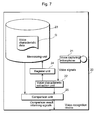
- Fig. 7 is a diagram that shows the inner structure of the voice recognition device 20.
- the hands-free system includes the detection unit 13 comprising the pressure sensor 13a and 13b, the hands-free system according to the variant includes the voice recognition device 20 that captures the propagated voice within the car and recognizes whether the voice is the driver's voice or not instead of this detection unit 13.
- this voice recognition device 20 comprising: a voice capturing microphone 21 that captures the voice propagated in the car and outputs voice signals; a voice characteristic extraction unit 22 that based on the voice signals outputted from the voice capturing microphone 21, extracts characteristic wave form and spectrum and outputs the extracted characteristic wave form and spectrum as voice characteristic data D; a memorizing unit 23 that memorizes the voice characteristic data D; a register unit 24 that registers the voice characteristic data D outputted from the voice characteristic extraction unit 22 in the memorizing unit 23; and a comparison unit 25 that compares the voice characteristic data D memorized in the memorizing unit 23 with the voice characteristic data D outputted from the voice characteristic extraction unit 22, and outputs a comparison result informing signal.
- the voice capturing microphone 21 is installed, for example, in the central part of the ceiling in the car to capture effectively the voice of fellow passengers on the front passenger seat 52 and the back seat 53.
- the driver in advance, pushes a push button switch equipped with the register unit24, sets the register unit 24 in motion, has the voice capturing microphone 21 capture his/her own voice, has the voice characteristic extraction unit 22 output the voice characteristic data D based on the voice, and has the register unit 24 register the voice characteristic data D in the memorizing unit 23.
- the memorizing unit 23 memorizes the voice characteristic data D indicating the characteristic wave form and so forth of the driver's voice.
- this voice recognition device 20 captures the voice propagated in the car by the voice capturing microphone 21, uses the voice characteristic data D memorized in the memorizing unit 23, and recognizes whether the voice is the driver's voice or not.
- the voice characteristic extraction unit 22 base on the voice signals, outputs the voice characteristic data D indicating the characteristics of the voice to the comparison unit 25. Then, when the comparison unit 25 receives the voice characteristic data D from the voice characteristic extraction unit 22, reads the voice characteristic data D memorized in the memorizing unit 23, and compares the two voice characteristic data D.
- the comparison unit 25 judges that the two voice characteristic data D are closely analogous to each other or the same data, it outputs the comparison result informing signal indicating that the voice captured by the voice capturing microphone 21 is the driver's voice and when the comparison unit 25 judges that the two voice characteristic data D are not closely analogous to each other and the different data, the comparison unit 25 outputs the comparison result informing signal indicating that the voice captured by the voice capturing microphone 21 is not the driver's voice.
- the voice recognition device While the voice recognition device is used as the detection unit 13, when the control unit 17 receives the comparison result informing signal indicating that the voice captured by the voice capturing microphone 21 is the driver's voice, it judges that there is no fellow passenger in the car and when the control unit 17 receives the comparison result informing signal indicating that the voice captured by the voice capturing microphone 21 is not the driver's voice, it judges that there is a fellow passenger.
- Fig. 8 is a flow chart that shows operations of a hands-free system when the voice recognition device 20 is used as the recognition unit 13.
- the driver registers his/her voice in the voice recognition device 20 in advance.
- the driver has the memorizing unit 23 memorize the voice characteristic data D based on his/her voice (Step S100).
- the voice recognition device 20 captures the voice within the car.
- the voice capturing microphone 21 of the voice recognition device 20 captures the propagated voice within the car and outputs the voice signals (Step S102).
- the comparison unit 25 not only receives this voice characteristic data D but also reads the voice characteristic data D memorized in the memorizing unit 23, and recognizes whether the voice captured by the voice capturing microphone 21 is the driver's voice or not by comparing the two voice characteristic data D (Step S104).
- Step S106 the control unit 17 judges that there is no fellow passenger in the car because of the comparison result informing signal.
- the control unit 17 similarly as was stated above, outputs the instruction signal to the switch signal output unit 16bb, and the selected places to which the signal of the selector switch 16b is outputted is switched to the amplifiers 15a and 15b for the front speakers 11a and 11b and the rear speakers 11c and 11d (Step S110).
- Step S108 the control unit 17 judges that there is a fellow passenger in the car because of the comparison result informing signal.
- the control unit 17 similarly as was stated above, outputs the instruction signal to the switch signal output unit 16bb, as a result, the selected place to which the signal of the selector switch 16b is outputted is switched to the amplifier 15c for the driver's speakers 11e (Step S112).
- control unit 17 judges that there is a fellow passenger in the car at the Step S108, it controls the switch signal output unit 16bb so that the selected place to which the signal of the selector switch 16b is outputted should be the amplifier 15c during the specified time. Namely, during the specified time, even if the control unit 17 receives the comparison result informing signal indicating that the voice captured by the voice capturing microphone 21 is the driver's voice from the voice recognition device 20, the control unit 17 does not switch the selected place to which the signal of the selector switch 16b is outputted and keeps the amplifier 15a as the selected place to which the signal of the selector 16b is outputted. As a result, even if the driver and the fellow passenger have a conversation, for example, it is possible to prevent the selected place to which the signal of the selector switch 16b is outputted from switching every time the driver and the fellow passenger have a conversation.
- Step S110 or Step S112 the driver operates the operation unit 18 and makes the status of the cellular phone 90 off hook. Then, when the control unit 17 of the control equipment 10 receives the telephone conversation voice signals from the cellular phone 90 through the communication unit 14, the control unit 17 outputs the telephone conversation voice signals to the selector switch 16b (Step S114).
- the voice characteristic data D include recognition information to recognize whether the voice characteristic data D indicate the driver's voice characteristic or the voice characteristic of the person other than the driver. Additionally, it is acceptable that the plural voice recognition data D are memorized by the memorizing unit 23.
- the comparison unit 25 reads the driver's voice characteristic data D from the memorizing unit 23, compares the driver's voice characteristic data D with the voice characteristic data D outputted from the voice characteristic extraction unit 22, even if the two voice characteristic data D are analogous to each other and therefore it is difficult to recognize whether the voice captured by the voice capturing microphone 21 is the driver's voice or not, the comparison unit 25 reads the voice characteristic data D of the person other than the driver from the memorizing unit 23, compares the voice characteristic D with the voice characteristic data D outputted by the voice characteristic extraction unit 22, can easily recognize whether the voice captured by the voice capturing microphone 21 is the driver's voice or not, and the accuracy of the recognition by the comparison unit 25 increases and the processing time to recognize the driver's voice is shortened.
- each voice characteristic data D includes the specific address of the devices (for example, MAC address (Media Access Control address)) assigned to the cellular phone 90 of the person corresponding to the voice characteristic data D.
- MAC address Media Access Control address
- control unit 17 of the control equipment 10 acquires, through the communication unit 14, the above-mentioned address of the cellular phone 90 whose communication link with the communication unit 14 is established, and transmits the address to the comparison unit 25 of the voice recognition device 20. Then, the comparison unit 25 compares the address received from the control unit 17 with the address included in each voice characteristic data D registered in the memorizing unit 23, and recognize the voice characteristic data D that includes the identical address as the driver's voice characteristic data D.
- the cellular phone 90 whose communication link with the communication unit 14 is established also switches to the cellular phone 90 that the person owns, when the person's voice characteristic data D are registered in the memorizing unit 23, it is possible that the user has the voice recognition device 20 output the appropriate comparison result informing signal according to whether there is a fellow passenger in the car or not, without changing the recognition information of the voice characteristic data D registered in the memorizing unit 23.
- Fig. 9 is a diagram that shows a structure of a hands-free system according to a variant.
- the hands-free system comprises a hands-free device 1A and a cellular phone 90.
- the hands-free device 1A includes: front speakers 11a and 11b; rear speakers 11c and 11d; driver's speakers 11e; a microphone 12; and control equipment 10A.
- This control equipment 10A comprising: amplifiers 15a, 15b, and 15c; selection switches 16a and 16b; switch signal output unit 16aa and 16bb; a control unit 17; an operation unit 18, a communication unit 14A; and a detection unit 13A.
- the communication unit 14A not only does similar operations to the above-mentioned communication unit 14, but also outputs a signal indicating the communication status among other communication devices to the outside.
- the detection unit 13A based on the signal outputted from the communication unit 14A, recognizes whether there is only one cellular phone that can communicate with the communication unit 14A or there are plural cellular phones in the car, and outputs a detection signal in response to the recognized result.
- the control device 17 of the control equipment 10A searches a cellular phone 90a in the car that can communicate with the communication unit 14A conforming to the communication standards of Bluetooth ®.
- the control unit 17 has the communication 14A broadcast an inquiry command that inquires whether the cellular phone 90a can communicate with the communication unit 14A. Then, the control unit 17 waits for the communication unit 14A to receive a response message, and finds out the cellular phone 90a that can communicate with the communication unit 14 by the response message received.
- the detection unit 13A recognizes how many response messages the communication unit 14A has received to the inquiry command broadcast once, when there is only one response message, the detection unit 13A judges that there is only one cellular phone 90a and when there are plural response messages, the detection unit 13A judges that there are plural cellular phones 90a, and the detection unit 13A outputs the judgment result to the control unit 17 as a detection signal.
- devices that can communicate conforming to the communication standards of Bluetooth ® for example, PDA (Personal Digital Assistant), a laptop, a digital camera, and so forth, are brought in the car and come into the communication area of the communication unit 14A, these devices transmit a message that includes specific information different from the above-mentioned response message. Therefore, the detection unit 13A does not judge the number of the cellular phone 90a including these devices based on the above-mentioned specific message.
- control unit 17 When the control unit 17, based on the above-mentioned detection signal, recognizes that there is only one cellular phone 90a that can communicate with the communication unit 14A, and judges that there is no fellow passenger. On the other hand, the control unit 17, based on the detection signal, recognizes that there are plural cellular phones 90a that can communicate with the communication unit 14A, and judges that there is a fellow passenger.
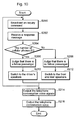
- Fig. 10 is a flow diagram that shows operations of a hands-free device including the above-mentioned detection unit 13A that judges the number of the cellular phone 90a.
- the communication unit 14A of the control equipment 10A broadcasts an inquiry command (Step S200), and receives one or plural response message (Step S202).
- the detection unit 13A judges whether there are plural cellular phones 90a or not, and outputs the judgment result to the control unit 17 as a detection signal (Step S204).
- Step S210 when the detection unit 13A judges that there are plural cellular phones 90a and outputs a signal indicating the result (Yes at Step S204), the control unit 17 judges that there is a fellow passenger in the car based on the detection signal (Step S206). By doing this, the control unit 17, similarly as was stated above, outputs the instruction signal to the switch signal output unit 16bb, and as a result, the selected place to which the signal of the selector switch is outputted is switched to the amplifier 15c or the driver's speakers 11e (Step S210).
- the detection unit 13A judges that there is only one cellular phone 90a, and outputs the detection signal indicating the result (No at Step S204), the control unit 17 judges that there is no fellow passenger in the car (Step S208).
- the control unit 17 similarly as was stated above, outputs the instruction signal to the switch signal output unit 16bb, as a result, the selected places to which the signal of the selector switch 16b is outputted are switched to the amplifiers 15a and 15b for the front speakers 11a and 11b and the rear speakers 11c and 11d (Step S212).
- Step S210 or Step S212 the driver operates the operation unit 18 and makes the status of the cellular phone 90, whose communication link with the communication unit 14A is established, off hook. Then, when the control unit 17 of the control equipment 10A receives the telephone conversation voice signals from the cellular phone 90 through the communication unit 14, the control unit 17 outputs the telephone conversation voice signals to the selector switch 16b (Step S214).
- the audio signals outputted from the control unit 17 are inputted to the amplifiers 15a and 15b through the selector switch 16a. On the contrary, it is acceptable to input the audio signals to the selector switch 16a through the amplifier 15a. Furthermore, according to the present embodiment and the variant, the incoming call signals outputted by the control unit 17 are inputted to the front speakers 11a and 11b and the rear speakers 11c and 11d through the amplifiers 15a and 15b. But it is acceptable to input the incoming call signals only through the amplifier 15b to the front speakers 11a and 11b and the rear speakers 11c and 11d.
- the telephone conversation voice signals outputted by the control unit 17 are inputted to the amplifiers 15a, 15b, and 15c, through the selector switch 16b. But it is acceptable to input the telephone conversation voice signals to the selector switch 16b through the amplifier 15c.
- the selector switch 16a switches the selected places, to which the audio signals outputted by the control unit 17 and amplified by the amplifier 15a are outputted, from the three speakers, the front speaker 11b and the rear speakers 11c and 11d to the four speakers, the front speakers 11a and 11b and the rear speakers 11c and 11d, and vice versa.
- the selector switch 16b switches the selected places, to which the telephone conversation voice signals, outputted by the control unit 17 and amplified by the amplifier 15c are outputted, from the two driver's speakers 11e to the four speakers, the front speakers 11a and 11b and the rear speakers 11c and 11d and vice versa.
- Fig. 11 is a diagram that shows a structure of a hands-free system according to the second embodiment of the present invention.
- This hands-free system comprises a hands-free device 1B and a cellular phone 90.
- the hands-free device 1B includes: a control equipment 10B; front speakers 11a and 11b; rear speakers 11c and 11d; driver's speakers 11e; a detection unit 13; and a microphone 12.
- the control equipment 10B includes: the communication unit 14; amplifiers 15aa and 15cc; the control unit 17A; and an operation unit 18A.
- the same elements as the first embodiment are given the same signs and their explanations are omitted (similarly in the drawings below).
- the features of the hands-free system are to detect whether there is a fellow passenger in the car or not, to change from small to large the volume of the telephone conversation voice of the other party of the telephone conversation outputted from the front speakers 11a and 11b, the rear speakers 11c and 11d, and the two driver's speakers 11e based on the detection result.
- the amplifier 15aa of the operation equipment 10B amplifies input signals and outputs the input signals to the front speakers 11a and 11b and the rear speakers 11c and 11d.
- the amplifier 15cc amplifies input signals and outputs the input signals to the driver's speakers 11e. Additionally, when these amplifiers 15aa and 15cc input amplification control signals that will be explained later, these amplifiers 15aa and 15cc change the amplification rate of the output signals to the input signals.
- the operation unit 18A of the control equipment 10B not only has the same functions as the operation unit 18 of the first embodiment but also has the function that makes it possible to set the each amplification rate of the amplifiers 15aa and 15cc while the control unit 17A outputs the telephone conversation voice signals, and includes a rotary switch and a knob 18a that rotates freely to operate the switch. Additionally, the knob 18a is installed on the surface of the operation unit 18A.
- the operation unit 18A instructs to reduce the amplification rate of the amplifier 15aa and at the same time to increase the amplification rate of the amplifier 15cc when there is no fellow passenger, and the operation unit 18A outputs an operation signal that instructs to increase the amplification rate of the amplifier 15aa and at the same time to reduce the amplification rate of the amplifier 15cc when there is a fellow passenger.
- the operation unit 18A instructs to increase the amplification rate of the amplifier 15aa and at the same time to reduce the amplification rate of the amplifier 15cc when there is no fellow passenger, and the operation unit 18A outputs the operation signal that instructs to reduce the amplification rate of the amplifier 15aa and at the same time to increase the amplification rate of the amplifier 15cc.
- the present embodiment is used with the knob 18a rotated counterclockwise so that a needle 18aa that sticks out form the knob 18a turns to the left.
- the operation unit 18A is set to output an operation signal to instruct that the amplification rate of the amplifier 15aa should be larger than the amplification rate of the amplifier 15cc when there is no fellow passenger and that the amplification rate of the amplifier 15aa should be smaller than the amplification rate of the amplifier 15cc.
- the control unit 17A outputs the incoming call sound signals, the telephone conversation voice signals, and the audio signals to the amplifiers 15aa and 15cc, and at the same time outputs the above-mentioned amplification control signals that instructs the amplification rates of the amplifiers 15aa and 15cc.
- the control unit 17A receives audio signals from the audio unit 40, and outputs the audio signals to the amplifier 15aa. At this time, the control unit 17A outputs the amplification control signals to the amplifier 15aa so that the amplification rate keeps the specified value regardless of the setting of the knob 18a of the operation unit 18A. In other words, when there is no incoming call to the cellular phone 90 and a hands-free telephone conversation is not made, while the status of the audio unit 40 is on, the audio sounds based on the audio signals outputted by the audio unit 40 are outputted from the front speakers 11a and 11b and the rear speakers 11c and 11d.
- the control unit 17A when there is an incoming call to the cellular phone 90 and the control unit 17A receives the incoming call signals from the communication unit 14, the control unit 17A outputs the incoming call sound signals to the amplifier 15a.
- the control unit 17A stops outputting the audio signals and outputs the incoming call sound signals instead of the audio signals.
- the control unit 17A outputs the amplification control signals so that the amplification rate of the amplifier 15aa keeps the specified value regardless of the setting of the knob 18a of the operation unit 18A.
- the incoming call sounds that inform that the cellular phone 90 receives an incoming call are outputted from the front speakers 11a and 11b and the rear speakers 11c and 11d.
- the control unit 17A receives the telephone conversation voice signals from the communication unit 14, and outputs the telephone conversation voice signals to the amplifier 15aa.
- the control unit 17A stops outputting the audio signals or the incoming call sound signals, and outputs the telephone conversation voice signals instead to the amplifiers 15aa and 15cc.
- control unit 17A outputs the telephone conversation voice signals as was stated above, outputs the amplification control signals to each of the amplifiers 15aa and 15cc according to the operation signals outputted by the setting of the above-mentioned knob 18a from the operation unit 18A and the detection signal from the detection unit 13.
- Fig. 12 is a flow diagram that shows operations of a hands-free system when the cellular phone 90 comes to be able to make a hands-free telephone conversation.
- the control 17A receives the telephone conversation voice signals from the communication unit 14 (Step S38).
- control unit 17A which has received the telephone conversation voice signals, acquires the detection signal from the two pressure sensors 13a and 13b of the detection unit 13 (Step S40).
- the control unit 17A realizes that voltage readings acquired from each detection signal are below the specified value, and judges that a hands-free telephone conversation is made when there is no fellow passenger (No at Step S42).
- the control unit 17A outputs the amplification control signals to each of the two amplifiers 15aa and 15cc.
- the amplification rate of the amplifier 15aa at the side of front speakers 11a and 11b and the rear speakers 11c and 11d becomes large, and the amplification rate of the amplifier 15cc at the side of the driver's speakers 11e becomes small (Step S50).
- control unit 17A outputs the telephone conversation voice signals to the both of the amplifiers 15aa and 15cc (Step S52).
- the telephone conversation voice of the other party of the telephone conversation is outputted in a large sound volume from the front speakers 11a and 11b and the rear speakers 11c and 11d and in a small sound volume from the two driver's speakers 11e at the headrest 51a (Step S54).
- the control unit 17A judges that a hands-free telephone conversation is made when there is a fellow passenger (Yes at Step S42).
- the control unit 17A outputs the amplification control signals to each of the two amplifiers 15aa and 15cc.
- the amplification rate of the amplifier 15aa at the side of front speakers 11a and 11b and the rear speakers 11c and 11d becomes small, and the amplification rate of the amplifier 15cc at the side of the driver's speakers 11e becomes large (Step S44)
- control unit 17A outputs the telephone conversation voice signals to the both of the amplifiers 15aa and 15cc (Step S46).
- the telephone conversation voice of the other party of the telephone conversation is outputted in a small sound volume from the front speakers 11a and 11b and the rear speakers 11c and 11d and in a large sound volume from the two driver's speakers 11e at the headrest 51a (Step S48).
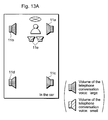
- Fig. 13 is an explanatory diagram that explains the output situation of the front speakers 11a and 11b, the rear speakers 11c and 11d, and the driver's speakers 11e
- Fig. 13A is an explanatory diagram when there is no fellow passenger
- Fig. 13B is an explanatory diagram when there is a fellow passenger.
- the control unit 17A receives the operation signals in response to the above-mentioned setting of the knob 18a from the operation unit 18A, and outputs the amplification control signals to each of the amplifiers 15aa and 15cc so that the amplification rate of 15aa becomes large and the amplification rate of 15cc becomes small.
- the telephone conversation voice of the other party of the telephone conversation is outputted in a small sound volume from the two driver's speakers 11e at the headrest 51a and in a large sound volume from the front speakers 11a and 11b and the rear speakers 11c and 11d.
- a hands-free telephone conversation is made when there is a fellow passenger, and the control unit 17A receives the operation signals in response to the above-mentioned setting of the knob 18a from the operation unit 18A, and outputs the amplification control signals to each of the amplifiers 15aa and 15bb so that the amplification rate of the amplifier 15aa reduces and the amplification rate of the amplifier 15cc increases.
- Fig. 13B shows, the telephone conversation voice of the other party of the telephone conversation is outputted in a large sound volume from the two driver's speakers 11e at the headrest 51a and in a small sound volume from the front speakers 11a and 11b and the rear speakers 11c and 11d.
- the control unit 17A changes the amplification rate of the amplifiers 15aa and 15cc in response to the detection signal of the detection unit 13, when the driver makes a hands-free telephone conversation while there is no fellow passenger, the telephone conversation voice of the other party of the telephone conversation is outputted mainly from the front speakers 11a and 11b and the rear speakers 11c and 11d, and propagates in the car, the driver can hear the telephone conversation voice in a good sound quality.
- the telephone conversation voice of the other party of the telephone conversation is outputted mainly by the two driver's speakers 11e, which are near the driver's ears, and therefore it is possible to prevent the fellow passenger from hearing the telephone conversation voice, and the privacy is protected.
- Fig. 14 is a diagram that shows an outline structure of a hands-free system according to the third embodiment of the present invention.
- this hands-free system comprises: front speakers 11a and 11b; rear speakers 11c and 11d; driver's speakers 11e; a detection unit 13; a microphone 12; a cellular phone 90; and control equipment 10C. Additionally, this hands-free system does not have the driver's speakers 11e in contrast to the first and second embodiments. Incidentally, the same elements as the first and second embodiments are given the same signs and their explanations are omitted (similarly in the drawings below)
- Fig. 15 is a diagram that shows a structure of a hands-free device 1C according to the present embodiment.
- the hands-free device 1C comprising: front speakers 11a and 11b; rear speakers 11c and 11d; a microphone 12; a detection unit 13; and control equipment 10C.
- the control equipment 10C like the first and second embodiments, includes: a communication unit 14; an amplifier 15a; a selector switch 16b; a switch signal output unit 16bb; an operation unit 18; and a control unit 17B.
- the control equipment 10C further includes: a display unit 19 that displays letters and picture images in response to input signals; a letter conversion unit 19a that based on telephone conversation voice signals outputted from the control unit 17B, creates letter signals that display contents of the telephone conversation voice in letters in the display unit 19, and outputs the letter signals as the above-mentioned input signals to the display unit 19.
- the display unit 19 and the letter conversion unit 19a compose display means.
- the display unit 19 is equipped with, for example, a liquid crystal display 19d (refer to Fig. 16), and on this liquid crystal display 19d, the letters in response to the above-mentioned letter signals are displayed. Additionally, the control equipment 10C is installed in the car with the liquid crystal display tilted to the driver's seat so that only the driver can see the contents displayed on the liquid crystal display 19d of the display unit 19.
- the amplifier 15a like the first embodiment, amplifies the input signals, and outputs the signals to the front speakers 11a and 11b and the rear speakers 11c and 11d. Then, the selector switch 16b switches the selected place to which the input signals are outputted from the above-mentioned amplifier 15a to the letter conversion unit 19a and vise versa in response to the switch signal from the switch signal output unit 16bb.
- control unit 17B while the control unit 17B receives the audio signals from the audio unit 40, the control unit 17B outputs the audio signals to the amplifier 15a, and while the control unit 17B receives the incoming call signals from the communication unit 14, the control unit 17B outputs the incoming call sound signals to the amplifier 15a.
- the control 17B receives the audio signals and the incoming call signals, the control 17B gives a priority to the incoming call sound signals and outputs the incoming call sound signals to the amplifier 15a.
- control unit 17B receives the telephone conversation voice signals from the communication unit 14, the control unit 17B outputs the telephone conversation voice signals to the selector switch 16b.
- control unit 17B realizes that there is no fellow passenger on the front passenger seat and the back seat, and outputs to the switch signal output unit 16bb an instruction signal to instruct that the selected place to which the signal of the selector switch is outputted should be the amplifier 15a.
- the control unit 17 judges that there is a fellow passenger in the car, and outputs to the switch signal output unit 16bb an instruction signal to instruct that the selected place to which the signal of the selector switch is outputted should be the letter conversion unit 19a.
- the audio sounds are outputted from the front speakers 11a and 11b and the rear speakers 11c and 11d and at this status when the cellular phone 90 receives an incoming call, the output of the audio sounds is stopped, and the incoming call sounds are outputted from the front speakers 11a and 11b and the rear speakers 11c and 11d.
- the driver operates the operation unit 18 and starts a hands-free telephone conversation, the telephone conversation voice of the other party of the telephone conversation becomes letters, which are displayed on the liquid crystal display 19d of the display unit 19.
- the audio sounds are outputted from the front speakers 11a and 11b and the rear speakers 11c and 11d, and therefore the driver can grasp the telephone conversation voice of the other party of the telephone conversation by reading the letters on the liquid crystal display 19d while listening to the audio sounds.
- Fig. 16 is a screen display diagram that shows an example of a screen displayed on a display unit 19 while a hands-free telephone conversation is made.
- Fig. 16 shows, while a free-hands telephone conversation is made, a telephone number display field 19n, a telephone conversation contents display field 19c, and a status display field 19s are displayed on the liquid crystal display 19d of the display unit.
- the telephone number display field 19n the telephone number of the other party of the telephone conversation, for example, "090-1234-5678" is displayed.
- the telephone conversation contents display field 19c the telephone conversation contents from the other party of the telephone conversation, for example, "Hello. This is Yamada. Is this Mr. Tanaka?", are displayed.
- the letters "ON" are displayed to show that the telephone conversation is going on.
- the driver realizes whether the telephone conversation is going on or not from the status display filed 19s, and at the same time, finds out the telephone number of the other party of the telephone conversation from the telephone number display field 19n, and furthermore, can grasp the telephone conversation contents by reading the letters displayed on the telephone conversation contents display field 19c.
- the telephone conversation voice from the other party of the telephone conversation is outputted from the front speakers 11a and 11b and the rear speakers 11c and 11d, and therefore the driver can hear the telephone conversation voice in good sound quality.
- the telephone conversation contents from the other party of the telephone conversation are displayed on the display unit 19, and therefore it is possible to prevent the fellow passenger from knowing the telephone conversation contents of the other party of the telephone conversation.
- the liquid crystal display 19d of the display unit 19 is tilted to the driver's seat 51, it is possible to prevent the fellow passenger from reading the letters displayed on the liquid crystal display 19d.
- control unit 17B detects that the communication unit 14 receives the driver's voice signals from the microphone 12, the control unit 17B has the communication unit 14 transmit the driver's voice signals to the cellular phone 90, and at the same time has the display unit 19 erase the past letters that show the contents of the telephone conversation voice from the other party of the telephone conversation displayed on the liquid crystal display 19d of the display unit 19.
- the telephone conversation contents display field 19c display the letters that shows the telephone conversation contents like "Hello. This is Yamada. Is this Mr. Tanaka?"
- the driver responds to the telephone conversation contents and utters a voice, "Yes, this is he speaking.” to the microphone 12, the microphone 12 transmits the driver's voice signals indicating the voice, "Yes, this is he speaking.” to the communication unit 14.
- the control unit 17B detects that the communication unit 14 has received the driver's voice signals
- the control unit 17B has the communication 14 transmit the driver's voice signals to the cellular phone 90, and at the same time, has the display unit 19 erase the past letters displayed on the telephone conversation contents display field 19c, "Hello. This is Yamada. Is this Mr. Tanaka?"
- the control unit 17B receives the telephone conversation voice signals afresh from the communication unit 14, as was stated above, the control unit 17B, the letter conversion unit 19a, and the display unit 19 operate, and therefore, on the telephone conversation contents display field 19c of the display unit 19, the telephone conversation contents indicated by the latest telephone conversation voice signals, for example, "Mr. Tanaka. How are you?" only are displayed in letters.
- the control equipment 10C includes the display unit 19, which displays the telephone conversation contents by letters.
- a display device that can display any letters is installed in the car, it is acceptable for the display device to display the telephone conversation contents by letters.
- the display device when the car is equipped with a navigation system that displays maps and guides the driver to the destinations and so forth, it is acceptable for the display device that is equipped with the navigation system and displays the maps (for example, liquid crystal display) to display the telephone conversation contents by letters.
- control equipment 10C and the navigation system are connected by cable or wireless so that the letter signals outputted from the letter conversion unit 19a of the control equipment 10C are inputted to the above-mentioned display device.
- control equipment 10C it is needless for the control equipment 10C to have the display unit 19, and therefore, it is possible to lessen the component parts, to make the equipment 10C smaller, and to reduce the cost.
- the driver's speakers 11e are explained as the speakers with directional characteristic. But it is acceptable that the driver's speakers 11e do not have the directional characteristic in the case of the outputted sound being hard for a fellow passenger to hear. In other words, when each of the driver's speakers 11e is buried in the headrest 51a so that the driver's speakers 11e cover the ears of the driver who sits on the driver's seat 51, it is acceptable that the driver's speakers 11e do not have the directional characteristic.
- a speaker that outputs the sound by vibrating a diaphragm made of a piezoelectric elements for example, like the speaker made by Matsushita Communication Industrial Co., Ltd, (the brand name "card speaker", the model number "WM-R30B” or “WM-R57A") as the driver's speaker 11e.
- the driver's speaker 11e it is possible to make the driver's speaker 11e smaller and thinner, and therefore it is easier to bury the two driver's speakers 11e to the headrest 51a and also it is possible for the headrest 51a and the driver's speakers 11e to look better.
- the two driver's speakers 11e are buried in the headrest 51a. But in the case of the sound outputted by the driver's speakers 11e being hard for a fellow passenger other than the driver to hear, it is acceptable to install the driver's speakers 11e at any place in the car and to install the driver's speakers 11e, for example, on the ceiling of the car.
- the two driver's speakers are buried in the headrest 51a of the driver's seat 51, but it is acceptable to bury two speakers with directional characteristic like the driver's speakers 11e in the headrest of the front passenger's seat and for a fellow passenger who sits on the front passenger's seat to make a hands-free telephone conversation using his/her own cellular phone.
- the hands-free systems 1, 1A, and 1B further include the fellow passenger's microphone that captures the voice of the above-mentioned fellow passenger and outputs the signals indicating the voice to the communication units 14, 14A.
- the control equipment 10, 10A, and 10B further include an amplifier like the amplifier 15c.
- the communication units 14 and 14A communicate not only with the driver's cellular phone 90 but also with the fellow passenger's cellular phone, receives the telephone conversation voice signals indicating the telephone conversation voice of the other party of the telephone conversation of the fellow passenger from the fellow passenger's cellular phone, and output the telephone conversation signals to the above-mentioned amplifier, which amplifies the telephone conversation voice signals and outputs the amplified telephone conversation voice signals to the above-mentioned fellow passenger's speakers buried in the headrest of the front passenger's seat. Then, the communication units 14 and 14A transmit the signals outputted from the above-mentioned fellow passenger's microphone to the fellow passenger's cellular phone.
- the fellow passenger who sits in the front passenger's seat 52 can make a hands-free telephone conversation, preventing the driver and another fellow passenger from hearing the telephone conversation voice of the other party of the telephone conversation.
- each of the front speakers 11a and 11b, the rear speakers 11c and 11d, the driver's speakers 11e, the microphone 12, the detection unit 13, audio unit 40, and the cellular phone 90 is connected with the control equipment 10, 10A, and 10B. But it is acceptable to connect them each other by LAN (Local Area Network), for example, like MOST (Media Oriented System Transport) and so forth installed in the car. Similarly, in the third embodiment, it is acceptable to connect the front speakers 11a and 11b, the rear speakers 11c and 11d, the microphone 12, the detection unit 13, audio unit 40, the cellular phone 90, and the control equipment 10C to each other by LAN (Local Area Network).
- LAN Local Area Network
- the detection unit 13 comprises the pressure sensors 13a and 13b. But it is acceptable for the detection unit 13 to be any of the below: an infrared sensor that receives infrared radiation and detects the change of the received infrared radiation; an ultrasound sensor that transmits ultrasound, receives the ultrasound reflected outside, and detects the change of the ultrasound; a temperature sensor that detects the change of the temperature; a selector that switches on and off by the fastening and unfastening of the seatbelts of the front passenger seat 52 and the back seat 53; a camera that is installed to take pictures of the front passenger seat 52 and the back seat 53 and to detect the change of the picture images taken; and a push button switch that switches on and off by the driver's push operation.
- an infrared sensor that receives infrared radiation and detects the change of the received infrared radiation
- an ultrasound sensor that transmits ultrasound, receives the ultrasound reflected outside, and detects the change of the ultrasound
- a temperature sensor that detects the change of the temperature
- the cellular phone 90 and the control equipment 10, 10A, 10B, and 10C communicate by wireless, conforming to the communication standards of Bluetooth ®, but it is acceptable that the cellular phone 90 and the control equipment 10, 10A, 10B, and 10C communicate by wireless like IEEE 802. 11a, IEEE 802. 11b (common name "WiFi (Wireless Fidelity)") and Home RF (Home Radio Frequency a.k.a. SWAP (Shared Wireless Access Protocol)) or by cable like Home PNA (Home Phone line Networking Alliance).
- IEEE 802. 11a IEEE 802. 11b
- Home RF Home Radio Frequency a.k.a.
- SWAP Shared Wireless Access Protocol
- the control unit 17 of the control equipment 10 and 10A receive the guide voice signals and output to the amplifiers 15a and 15b.
- the control units 17A and 17B of the control equipment 10B and 10C receive the guide voice signals and output to the amplifiers 15a and 15aa.
- the front speakers 11a and 11b and the rear speakers 11c and 11d output the guide voice, and therefore the driver can hear the guide voice in good sound quality, and grasps the guide easily like the destinations and so forth.
- the cellular phone 90 receive electric mails transmitted by another cellular phone, a personal computer, and so forth, and transmit the mail signals that indicate the writing contents of the electric mail to the control equipment 10, 10A, 10B, and 10C.
- the control equipment 10, 10A, 10B, and 10C include a mail voice signal output unit that creates the mail voice signals that indicate the writing contents of the electric mail by voice based on the mail signals and outputs the mail voice signals.
- the communication units 14 and 14A of the control equipment 10, 10A, 10B and 10C receive the above-mentioned mail signals from the cellular phone 90, the communication units 14 and 14A transmit the mail signals to the control units 17, 17A, and 17B, which output the mail signals to the above-mentioned mail voice signal output unit, which inputs the mail signals and then creates the mail voice signals as was stated above and outputs the mail voice signals to the selector switch 16b.
- the writing contents of the electric mail are outputted by voice from the front speakers 11a and 11b and the rear speakers 10c and 10d, and therefore the driver can hear the voice in good sound quality, and grasps the writing contents of the electric mail without reading the letters.
- the writing contents of the electric mail are outputted by voice from the driver's speakers 11e, and therefore the driver hears the voice, grasps the writing contents of the electric mail without reading the letters, and at the same time, makes the voice hard for the fellow passenger to hear.
- the front speakers 11a and 11b and the rear speakers 11c and 11d when a free-hands telephone conversation is not made, the front speakers 11a and 11b and the rear speakers 11c and 11d output the audio sounds like music based on the audio signals, but it is acceptable to output the audio sounds from the two driver's speakers 11e.
- the front speakers 11a and 11b and the rear speakers 11c and 11d output the incoming call sounds, but it is acceptable to output the incoming call sounds from the two driver's speakers 11e.
Landscapes
- Engineering & Computer Science (AREA)
- Signal Processing (AREA)
- Computer Networks & Wireless Communication (AREA)
- Telephone Function (AREA)
Abstract
Description
a detection unit operable to output a detection signal indicating whether there is a fellow passenger or not; and a control unit operable to communicate with the cellular phone, judge whether there is a fellow passenger or not based on the detection signal outputted from the detection unit, upon receiving a telephone conversation voice signal indicating the telephone conversation voice of the other party of the telephone conversation, have mainly the second speaker output the telephone conversation voice when the control unit judges that there is no fellow passenger, and have mainly the first speaker output the telephone conversation voice when the control unit judges that there is a fellow passenger.
Claims (35)
- A hands-free device for a driver to make a hands-free telephone conversation using a cellular phone in a car comprising:a first speaker to output sound to the driver;a second speaker to output sound widely in the car;a detection unit operable to output a detection signal indicating whether there is a fellow passenger or not; anda control unit operable to communicate with the cellular phone, judge whether there is a fellow passenger or not based on the detection signal outputted from the detection unit, upon receiving a telephone conversation voice signal indicating the telephone conversation voice of the other party of the telephone conversation, have the telephone conversation voice outputted mainly from the second speaker when the control unit judges that there is no fellow passenger, and have the telephone conversation voice outputted mainly from the first speaker when the control unit judges that there is a fellow passenger.
- The hands-free device according to Claim 1,
wherein the control unit prohibits the telephone conversation voice from being outputted from the first speaker and outputs the telephone conversation voice from the second speaker when the control unit judges that there is no fellow passenger, and
prohibits the telephone conversation voice from being outputted from the second speaker and outputs the telephone conversation voice from the first speaker when the control unit judges that there is a fellow passenger. - The hands-free device according to Claim 1,
wherein the control unit has the telephone conversation voice outputted from the first and second speakers in the condition that the sound volume of the second speaker is larger than the sound volume of the first speaker when the control unit judges that there is no fellow passenger, and
has the telephone conversation voice outputted from the first and second speakers in the condition that the sound volume of the first speaker is larger than the sound volume of the second speaker when the control unit judges that there is a fellow passenger. - The hands-free device according to Claim 1,
wherein the first speaker has directional characteristic that aims output direction of sound at ears of a driver. - The hands-free device according to Claim 1,
wherein the second speaker is a group of plural speakers that are installed at plural places in the car and do not have directional characteristic of output sound. - The hands-free device according to Claim 1,
wherein the detection unit outputs the detection signal in response to sitting pressure of the fellow passenger. - The hands-free device according to Claim 1,
wherein the detection unit outputs the detection signal by detecting presence of infrared radiation and in response to the detection result. - The hands-free device according to Claim 1,
wherein the detection unit outputs the detection signal by acquiring voice in the car, judging whether the voice is driver's voice or another person's voice, and in response to the judgment result. - The hands-free device according to Claim 1,
wherein the detection unit outputs the detection signal that there is a fellow passenger when the number of the cellular phones brought in the car is plural by detecting the cellular phones and judging whether the number of the cellular phones is one or plural. - The hands-free device according to Claim 1,
wherein the control unit further has the audio sound outputted from the second speaker when an audio signal indicating the audio sound including at least one of music, radio sound, and TV sound is outputted in the car in the case that the telephone conversation voice signals are not received from the cellular phone. - The hands-free device according to Claim 10, further comprising:wherein the control unit has the audio sound outputted from the second and third speakers when the audio signal is outputted in the car in the case that the control unit does not receive the telephone conversation signal from the cellular phone.a third speaker that has the directional characteristic of output sound, and is installed on a seat in which the fellow passenger sits with the output direction of sound of the third speaker aimed at ears of the fellow passenger,
- The hands-free device according to Claim 10 comprising the plural second speakers,
wherein the control unit prohibits the second speaker that is nearest to the driver's seat among the plural second speakers from outputting the audio sound and outputs the audio sound from other second speaker when the audio signal is outputted in the car in the case that the control unit receives the telephone conversation voice signals. - The hands-free device according to Claim 1,
wherein the control unit communicates with the cellular phone through a wireless communication medium. - The hands-free device according to Claim 1,
wherein the first speaker has an output characteristic of sound that is almost flat at a frequency from 300Hz to 3.4kHz. - The hands-free device according to Claim 1,
wherein the control unit has the second speaker output an incoming call sound that announces an incoming call when the control unit is informed of the incoming call from the cellular phone. - The hands-free device according to Claim 1,
wherein the first speaker is a thin speaker that is equipped with a diaphragm made of a piezoelectric element and outputs sound by vibrating the diaphragm. - The hands-free device according to Claim 1 further comprising:wherein the control unit further communicates with a fellow passenger's cellular phone, transmits the voice signal to the fellow passenger's cellular phone, and at the same time, have the fellow passenger's speaker output telephone conversation voice of the other party of telephone conversation of the fellow passenger based on a signal received from the fellow passenger's cellular phone.a microphone for the fellow passenger that captures the fellow passenger's voice and outputs a voice signal; anda speaker for the fellow passenger that outputs sound only to the fellow passenger,
- A hands-free device for a driver to make a hands-free telephone conversation using a cellular phone in a car comprising:a speaker that outputs sounds widely in a car;a display unit operable to display a letter on a display surface aimed at the driver in response to an inputted signal;a detection unit operable to output a detection signal indicating whether there is a fellow passenger in the car or not; anda control unit operable to communicate with the cellular phone, judge whether there is the fellow passenger or not based on the detection signal outputted from the detection unit, upon receiving telephone conversation voice signals indicating the telephone conversation voice of the other party of the telephone conversation, output the telephone conversation voice from the speaker when the control unit judges that there is no fellow passenger, and output the telephone conversation voice signals to the display unit, which displays the telephone conversation voice in letters when the control unit judges that there is the fellow passenger.
- The hands-free device according to Claim 18 further comprising,
a microphone that captures a voice of the driver and outputs a voice signal indicating the voice,
wherein the control unit transmits the voice signal to the cellular phone when the control unit receives the voice signal from the microphone and, at the same time, erases past letters indicating contents of telephone conversation voice of the other party of the telephone conversation displayed on the display unit. - The hands-free device according to Claim 18,
wherein the detection unit outputs the detection signal in response to the sitting pressure of the fellow passenger. - The hands-free device according to Claim 18,
wherein the control unit communicates with the cellular phone through a wireless communication medium. - A method for outputting telephone conversation contents in a hands-free system for a driver to make a hands-free telephone conversation using a cellular phone in a car,
wherein the hands-free system comprises:a cellular phone of a driver of a car;a first speaker to output sound to the driver;a second speaker to output sounds widely in the car;a detection unit operable to output a detection signal indicating whether there is a fellow passenger in the car or not; anda control unit operable to communicate with the cellular phone and to control the first and second speakers based on the detection signal outputted from the detection unit, andthe method is executed in the control unit and includes:a reception step for receiving a telephone conversation voice signal indicating telephone conversation voice from other party of the telephone conversation;a detection signal acquisition step for acquiring the detection signal;a judgment step for judging whether there is a fellow passenger in the car or not based on the detection signal acquired by the detection signal acquisition step;a first voice output step for outputting the telephone conversation voice mainly from the second speaker when it is judged in the judgment step that there is no fellow passenger; anda second voice output step for outputting the telephone conversation voice mainly from the first speaker when it is judged in the judgment step that there is the fellow passenger. - The output method of the telephone conversation contents according to Claim 22,
wherein in the first voice step, the telephone conversation voice is prohibited from being outputted from the first speaker and is outputted from the second speaker, and
in the second voice output step, the telephone conversation voice is prohibited from being outputted from the second speaker and is outputted from the first speaker. - The output method of the telephone conversation contents according to Claim 22,
wherein in the first voice output step, the telephone conversation voice from the first and second speakers is outputted in the condition that the sound volume of the second speaker is larger than the sound volume of the first speaker and
in the second voice output step, the telephone conversation voice from the first and second speakers is outputted in the condition that the sound volume of the first speaker is larger than the sound volume of the second speaker. - The output method of telephone conversation contents according to Claim 22,
wherein the control unit further includes:an audio signal detection step for detecting that an audio signal indicating the audio sound including at least one of music, radio sound, and TV sound is outputted in the car in the case that telephone conversation voice signal are not received from the cellular phone, anda first audio sound output step for outputting the audio sound from the second speaker based on the audio signal. - The output method of the telephone conversation contents according to Claim 25,
wherein the hands-free system comprises the plural second speakers, and
the control unit further includes,
a second audio sound output step for prohibiting the second speaker that is nearest to the driver's seat among the plural second speakers from outputting the audio sound and outputting audio sound from the other second speaker when the control unit detects that the audio signal is outputted at the reception step. - A method for outputting telephone conversation contents in a hands-free system for a driver to make a hands-free telephone conversation in a car using a cellular phone,
wherein the hands-free system comprises:a cellular phone of driver;a speaker to output sound widely in the car;a display unit operable to display letters in response to inputted signals on a display surface aimed at a driver,a detection unit operable to output a detection signal indicating whether there is a fellow passenger in the car or not; anda control unit operable to communicate with the cellular phone and control the speaker and the display unit based on the detection signal outputted from the detection unit, andthe method is executed in the control unit and includes:a reception step for receiving telephone conversation voice signal indicating telephone conversation voice from other party of the telephone conversation;a reception step for receiving a telephone conversation voice signal indicating telephone conversation voice from other party of the telephone conversation;a detection signal acquisition step for acquiring the detection signal;a judgment step for judging whether there is a fellow passenger in the car or not based on the detection signal acquired by the detection signal acquisition step;a voice output step for outputting the telephone conversation voice from the speaker when it is judged in the judgment step that there is no fellow passenger; anda letter output step for outputting the telephone conversation voice to the display unit and having the display unit display the contents of the telephone conversation in letters when it is judged in the judgment step that there is the fellow passenger. - The output method of the telephone conversation contents according to Claim 27,
wherein the hands-free system further comprises,
a microphone that captures a voice of the driver and outputs a voice signal indicating the voice, and
the control unit further includes:a voice signal reception step for receiving the voice signal from the microphone;a voice signal transmission step for transmitting the voice signal received by the voice signal reception step to the cellular phone;an erasure step for erasing past letters indicating contents of telephone conversation voice of the other party of the telephone conversation displayed on the display unit. - A program in a hands-free system for a driver to make a hands-free telephone conversation in a car using a cellular phone,
wherein the hands-free system comprises:a cellular phone of a driver of a car;a first speaker to output sound to the driver;a second speaker to output sounds widely in the car;a detection unit operable to output a detection signal indicating whether there is a fellow passenger in the car or not; anda control unit operable to communicate with the cellular phone and to control the first and second speakers based on the detection signal outputted from the detection unit,the program is executed in the control unit and includes:a reception step for receiving a telephone conversation voice signal indicating telephone conversation voice from other party of the telephone conversation;a detection signal acquisition step for acquiring the detection signal;a judgment step for judging whether there is a fellow passenger in the car or not based on the detection signal acquired by the detection signal acquisition step;a first voice output step for outputting the telephone conversation voice mainly from the second speaker when it is judged in the judgment step that there is no fellow passenger; anda second voice output step for outputting the telephone conversation voice mainly from the first speaker when it is judged in the judgment step that there is the fellow passenger. - The program according to Claim 29,
wherein in the first voice output step, the telephone conversation voice is prohibited from being outputted from the first speaker and is outputted from the second speaker, and
in the second voice output step, the telephone conversation voice is prohibited from being outputted from the second speaker and is outputted from the first speaker. - The program according to Claim 29,
wherein in the first voice output step, the telephone conversation voice from the first and second speakers is outputted in the condition that the sound volume of the second speaker is larger than the sound volume of the first speaker and
in the second voice output step, the telephone conversation voice from the first and second speakers is outputted in the condition that the sound volume of the first speaker is larger than the sound volume of the second speaker. - The program according to Claim 29,
wherein the control unit further includes:an audio signal detection step for detecting that an audio signal indicating the audio sound including at least one of music, radio sound, and TV sound is outputted in the car in the case that telephone conversation voice signal are not received from the cellular phone, and
a first audio sound output step for outputting the audio sound from the second speaker based on the audio signal. - The program according to Claim 32,
wherein the hands-free system comprises the plural second speakers, and
the control unit further includes,
a second audio sound output step for prohibiting the second speaker that is nearest to the driver's seat among the plural second speakers from outputting audio sound and outputting audio sound from the other second speaker when the control unit detects that the audio signal is outputted at the reception step. - A program in a hands-free system for a driver to make a hands-free telephone conversation in a car using a cellular phone,
wherein the hands-free system comprises:a cellular phone of driver;a speaker to output sound widely in the car;a display unit operable to display letters in response to inputted signals on a display surface aimed at a driver,a detection unit operable to output a detection signal indicating whether there is a fellow passenger in the car or not; anda control unit operable to communicate with the cellular phone and control the speaker and the display unit based on the detection signal outputted from the detection unit, andthe method is executed in the control unit and includes:a reception step for receiving telephone conversation voice signal indicating telephone conversation voice from other party of the telephone conversation;a reception step for receiving a telephone conversation voice signal indicating telephone conversation voice from other party of the telephone conversation;a detection signal acquisition step for acquiring the detection signal;a judgment step for judging whether there is a fellow passenger in the car or not based on the detection signal acquired by the detection signal acquisition step;a voice output step for outputting the telephone conversation voice from the speaker when it is judged in the judgment step that there is no fellow passenger; anda letter output step for outputting the telephone conversation voice to the display unit and having the display unit display the contents of the telephone conversation in letters when it is judged in the judgment step that there is the fellow passenger. - The program according to Claim 34,
wherein the hands-free system further comprises,
wherein the hands-free system further comprises,
a microphone that captures a voice of the driver and outputs a voice signal indicating the voice, and
the control unit further includes:a voice signal reception step for receiving the voice signal from the microphone;a voice signal transmission step for transmitting the voice signal received by the voice signal reception step to the cellular phone;an erasure step for erasing past letters indicating contents of telephone conversation voice of the other party of the telephone conversation displayed on the display unit.
Applications Claiming Priority (2)
| Application Number | Priority Date | Filing Date | Title |
|---|---|---|---|
| JP2001309590 | 2001-10-05 | ||
| JP2001309590 | 2001-10-05 |
Publications (3)
| Publication Number | Publication Date |
|---|---|
| EP1301015A2 true EP1301015A2 (en) | 2003-04-09 |
| EP1301015A3 EP1301015A3 (en) | 2004-03-31 |
| EP1301015B1 EP1301015B1 (en) | 2006-01-04 |
Family
ID=19128708
Family Applications (1)
| Application Number | Title | Priority Date | Filing Date |
|---|---|---|---|
| EP02022226A Expired - Lifetime EP1301015B1 (en) | 2001-10-05 | 2002-10-02 | Hands-Free device for mobile communication in a vehicle |
Country Status (3)
| Country | Link |
|---|---|
| US (1) | US6965787B2 (en) |
| EP (1) | EP1301015B1 (en) |
| DE (1) | DE60208480T2 (en) |
Cited By (3)
| Publication number | Priority date | Publication date | Assignee | Title |
|---|---|---|---|---|
| WO2013172827A1 (en) * | 2012-05-16 | 2013-11-21 | Nuance Communications, Inc. | Speech communication system for combined voice recognition, hands-free telephony and in-communication |
| CN103460680A (en) * | 2011-03-23 | 2013-12-18 | 株式会社电装 | Device for vehicle, mobile telephone, and device cooperation system |
| EP4164244A4 (en) * | 2020-06-04 | 2024-03-20 | Nippon Telegraph And Telephone Corporation | VOICE ENVIRONMENT GENERATION METHOD, VOICE ENVIRONMENT GENERATION APPARATUS AND PROGRAM |
Families Citing this family (38)
| Publication number | Priority date | Publication date | Assignee | Title |
|---|---|---|---|---|
| DE50214231D1 (en) * | 2002-04-09 | 2010-04-08 | Palm Inc | Mobile communication terminal with handsfree operation |
| US20050239434A1 (en) * | 2002-12-11 | 2005-10-27 | Marlowe Ira M | Multimedia device integration system |
| US20040151327A1 (en) * | 2002-12-11 | 2004-08-05 | Ira Marlow | Audio device integration system |
| US8155342B2 (en) * | 2002-12-11 | 2012-04-10 | Ira Marlowe | Multimedia device integration system |
| US8849185B2 (en) * | 2003-04-15 | 2014-09-30 | Ipventure, Inc. | Hybrid audio delivery system and method therefor |
| US7079015B2 (en) * | 2003-06-24 | 2006-07-18 | Ford Motor Company | System for connecting wireless devices to a vehicle |
| US20050010417A1 (en) * | 2003-07-11 | 2005-01-13 | Holmes David W. | Simplified wireless device pairing |
| US20050084572A1 (en) * | 2003-10-07 | 2005-04-21 | Lindsay John T. | Method and apparatus for irradiating foodstuffs using low energy x-rays |
| US20050277445A1 (en) * | 2004-06-09 | 2005-12-15 | Bae Hyon S | Hands-free vehicle phone system and method |
| US7580725B2 (en) * | 2004-06-18 | 2009-08-25 | Motorola, Inc. | Intelligent wireless device mode changing device and method |
| KR100713849B1 (en) * | 2005-06-14 | 2007-05-04 | 삼성전자주식회사 | Display device and control method |
| US7474264B2 (en) * | 2005-06-17 | 2009-01-06 | Delphi Technologies, Inc. | Vehicle RF device detection system and method |
| US8514877B2 (en) * | 2006-01-17 | 2013-08-20 | Broadcom Israel Research, Ltd. | Method and system for a plurality of physical layers for network connection |
| US9067565B2 (en) * | 2006-05-22 | 2015-06-30 | Inthinc Technology Solutions, Inc. | System and method for evaluating driver behavior |
| US8102842B2 (en) | 2006-08-04 | 2012-01-24 | Broadcom Corporation | Integrated switch |
| JP2008052029A (en) * | 2006-08-24 | 2008-03-06 | Takata Corp | Photographing system, vehicle crew detection system, operation device controlling system, and vehicle |
| US8165133B2 (en) * | 2006-12-22 | 2012-04-24 | Broadcom Corporation | Physical layer device with integrated switch |
| KR100862151B1 (en) * | 2007-05-17 | 2008-10-09 | 주식회사 케이티프리텔 | Method and system for providing terminal switching service between telematics terminal and mobile communication terminal |
| KR100830832B1 (en) | 2007-05-17 | 2008-05-20 | 주식회사 케이티프리텔 | Terminal switching service method and system between mobile terminal and telematics terminal |
| US7764189B2 (en) * | 2007-09-06 | 2010-07-27 | Tye Rubins | Audio coordinated visual indicator |
| US7876205B2 (en) | 2007-10-02 | 2011-01-25 | Inthinc Technology Solutions, Inc. | System and method for detecting use of a wireless device in a moving vehicle |
| US8688180B2 (en) * | 2008-08-06 | 2014-04-01 | Inthinc Technology Solutions, Inc. | System and method for detecting use of a wireless device while driving |
| US20100297929A1 (en) * | 2009-05-20 | 2010-11-25 | Harris Technology, Llc | Prevention against Texting and other Keyboard Operations While Driving |
| WO2011041802A1 (en) * | 2009-10-02 | 2011-04-07 | Orion Innovations, Llc | Integrated vehicle cellular telephone detection system |
| US8336664B2 (en) * | 2010-07-09 | 2012-12-25 | Telecommunication Systems, Inc. | Telematics basic mobile device safety interlock |
| JP2012121385A (en) * | 2010-12-06 | 2012-06-28 | Fujitsu Ten Ltd | In-vehicle apparatus |
| US8989961B2 (en) * | 2012-04-13 | 2015-03-24 | Htc Corporation | Method of controlling interaction between mobile electronic device and in-vehicle electronic system and devices using the same |
| DE112012006717B4 (en) | 2012-07-17 | 2021-08-05 | Mitsubishi Electric Corporation | Vehicle device |
| US9088842B2 (en) | 2013-03-13 | 2015-07-21 | Bose Corporation | Grille for electroacoustic transducer |
| US9327628B2 (en) | 2013-05-31 | 2016-05-03 | Bose Corporation | Automobile headrest |
| US9172477B2 (en) | 2013-10-30 | 2015-10-27 | Inthinc Technology Solutions, Inc. | Wireless device detection using multiple antennas separated by an RF shield |
| US9699537B2 (en) | 2014-01-14 | 2017-07-04 | Bose Corporation | Vehicle headrest with speakers |
| US9344788B2 (en) * | 2014-08-20 | 2016-05-17 | Bose Corporation | Motor vehicle audio system |
| CN106357877A (en) * | 2015-07-16 | 2017-01-25 | 宇龙计算机通信科技(深圳)有限公司 | Information prompting method, device and terminal |
| US10152296B2 (en) * | 2016-12-28 | 2018-12-11 | Harman International Industries, Incorporated | Apparatus and method for providing a personalized bass tactile output associated with an audio signal |
| JP7310939B2 (en) * | 2020-01-30 | 2023-07-19 | 日本電信電話株式会社 | Evaluation method, evaluation device, and program |
| CN115743007A (en) * | 2022-11-30 | 2023-03-07 | 重庆长安汽车股份有限公司 | Self-adaptive adjustment method and device for in-vehicle loudspeaker, electronic equipment and storage medium |
| CN118524342B (en) * | 2024-03-13 | 2024-12-17 | 镁佳(北京)科技有限公司 | Volume adjusting method, system, equipment and medium |
Family Cites Families (27)
| Publication number | Priority date | Publication date | Assignee | Title |
|---|---|---|---|---|
| US4042791A (en) * | 1975-02-27 | 1977-08-16 | Murriel L. Wiseman | Stereophonic head rest |
| JPS6128468Y2 (en) * | 1981-05-22 | 1986-08-23 | ||
| US5845000A (en) * | 1992-05-05 | 1998-12-01 | Automotive Technologies International, Inc. | Optical identification and monitoring system using pattern recognition for use with vehicles |
| JPH0728456B2 (en) * | 1984-11-30 | 1995-03-29 | パイオニア株式会社 | Audio equipment |
| US4797934A (en) * | 1987-08-27 | 1989-01-10 | Hufnagel Fred M | Speaker headrest |
| FR2623655B1 (en) | 1987-11-23 | 1990-03-02 | Commissariat Energie Atomique | PROCESS FOR CONDITIONING RADIOACTIVE OR TOXIC WASTE IN THERMOSETTING RESINS |
| JPH04336800A (en) | 1991-05-13 | 1992-11-24 | Sony Corp | Audio equipment mounted in vehicle |
| JPH0592741A (en) | 1991-10-03 | 1993-04-16 | Toshiba Corp | Hands-free car telephone system |
| JPH05130010A (en) | 1991-10-31 | 1993-05-25 | Nec Eng Ltd | Portable telephone set and external device |
| DE4300848A1 (en) * | 1992-01-17 | 1993-08-12 | Pioneer Electronic Corp | Car telephone system connected to car radio - transmits telephone signals to car radio for replay over loudspeaker and display on radio display |
| JPH06130973A (en) | 1992-10-20 | 1994-05-13 | Matsushita Electric Ind Co Ltd | Sound field controller |
| JPH0787586A (en) | 1993-06-30 | 1995-03-31 | Sankei Kk | Sound volume control for audio device for automobile |
| JPH07131883A (en) | 1993-10-29 | 1995-05-19 | Kenwood Corp | Intra-cab acoustic field correcting device |
| JPH07329639A (en) | 1994-06-06 | 1995-12-19 | Mitsubishi Electric Corp | In-vehicle human body detection device and in-vehicle device control device |
| US5634209A (en) * | 1995-03-17 | 1997-05-27 | Elden, Inc. | In-vehicle radio antenna |
| JP3410244B2 (en) | 1995-04-17 | 2003-05-26 | 富士通テン株式会社 | Automotive sound system |
| JPH0983277A (en) | 1995-09-18 | 1997-03-28 | Fujitsu Ten Ltd | Sound volume adjustment device |
| WO1997027697A1 (en) * | 1996-01-25 | 1997-07-31 | Oki Telecom | Portable telephone with terminal mode facility |
| KR0180896B1 (en) * | 1996-07-19 | 1999-05-15 | 정인현 | Stored apparatus for a portable personal communication terminal |
| JP3070523B2 (en) * | 1997-05-30 | 2000-07-31 | 日本電気株式会社 | Wireless communication equipment |
| FR2769775B1 (en) * | 1997-10-10 | 2000-03-03 | Renault | EMERGENCY CALL DEVICE AND METHOD |
| US6044161A (en) * | 1997-11-21 | 2000-03-28 | Lee; Keith | Pillow speaker apparatus and method |
| US6505057B1 (en) * | 1998-01-23 | 2003-01-07 | Digisonix Llc | Integrated vehicle voice enhancement system and hands-free cellular telephone system |
| US6131042A (en) * | 1998-05-04 | 2000-10-10 | Lee; Chang | Combination cellular telephone radio receiver and recorder mechanism for vehicles |
| JP3889510B2 (en) * | 1998-05-21 | 2007-03-07 | アルパイン株式会社 | In-vehicle device control system |
| US6089663A (en) * | 1999-02-05 | 2000-07-18 | Spang & Company | Video game accessory chair apparatus |
| JP2001037000A (en) | 1999-07-15 | 2001-02-09 | Kenwood Corp | On-vehicle audio reproducing system and audio reproducing method |
-
2002
- 2002-10-02 EP EP02022226A patent/EP1301015B1/en not_active Expired - Lifetime
- 2002-10-02 DE DE60208480T patent/DE60208480T2/en not_active Expired - Lifetime
- 2002-10-03 US US10/262,862 patent/US6965787B2/en not_active Expired - Lifetime
Cited By (7)
| Publication number | Priority date | Publication date | Assignee | Title |
|---|---|---|---|---|
| CN103460680A (en) * | 2011-03-23 | 2013-12-18 | 株式会社电装 | Device for vehicle, mobile telephone, and device cooperation system |
| CN103460680B (en) * | 2011-03-23 | 2016-01-06 | 株式会社电装 | Vehicle fitting, mobile phone and instrument coherent system |
| WO2013172827A1 (en) * | 2012-05-16 | 2013-11-21 | Nuance Communications, Inc. | Speech communication system for combined voice recognition, hands-free telephony and in-communication |
| US9620146B2 (en) | 2012-05-16 | 2017-04-11 | Nuance Communications, Inc. | Speech communication system for combined voice recognition, hands-free telephony and in-car communication |
| US9978389B2 (en) | 2012-05-16 | 2018-05-22 | Nuance Communications, Inc. | Combined voice recognition, hands-free telephony and in-car communication |
| EP4164244A4 (en) * | 2020-06-04 | 2024-03-20 | Nippon Telegraph And Telephone Corporation | VOICE ENVIRONMENT GENERATION METHOD, VOICE ENVIRONMENT GENERATION APPARATUS AND PROGRAM |
| US12183317B2 (en) | 2020-06-04 | 2024-12-31 | Nippon Telegraph And Telephone Corporation | Call environment generation method, call environment generation apparatus, and program |
Also Published As
| Publication number | Publication date |
|---|---|
| EP1301015B1 (en) | 2006-01-04 |
| US20030069000A1 (en) | 2003-04-10 |
| US6965787B2 (en) | 2005-11-15 |
| DE60208480D1 (en) | 2006-03-30 |
| EP1301015A3 (en) | 2004-03-31 |
| DE60208480T2 (en) | 2006-08-03 |
Similar Documents
| Publication | Publication Date | Title |
|---|---|---|
| EP1301015B1 (en) | Hands-Free device for mobile communication in a vehicle | |
| US6330457B1 (en) | Telephone call service by sensing hand-held state of cellular telephone | |
| US8818459B2 (en) | Hands-free device | |
| US8254900B2 (en) | In-vehicle apparatus, cellular phone device, and method for controlling communication therebetween | |
| CN101808146B (en) | Car equipment with hands-free function | |
| JP2001008274A (en) | Car communication system | |
| US5749057A (en) | Telephone handset for hands-free use in an auto mobile | |
| CN101437064A (en) | Vehicle call device and calling method | |
| JPH11342799A (en) | Conversation support device for vehicles | |
| JP2001339504A (en) | Wireless communication equipment | |
| JP4047683B2 (en) | Hands-free device | |
| JP2005236615A (en) | Vehicular hands-free call system and information notification method using the same | |
| CN107666535B (en) | In-vehicle device, in-vehicle device audio output control method, and audio output control system | |
| JP4506604B2 (en) | Hands-free device | |
| JP2003051896A (en) | In-vehicle communication device and method | |
| JP2004140731A (en) | On-vehicle handsfree telephone unit | |
| JPH11165594A (en) | On-vehicle calling voice insulation device | |
| JP2005328116A (en) | In-vehicle system | |
| JP2003224653A (en) | Hands-free communication device and method for controlling speaker thereof | |
| JP4297276B2 (en) | In-car communication device | |
| CN1938960A (en) | Method for controlling input processing of vehicle-mounted wireless communication interface | |
| JP2019109188A (en) | On-vehicle voice output apparatus, voice output apparatus, voice output method, and voice output program | |
| US20020142727A1 (en) | Warning and telecommunicating system | |
| JPH10210440A (en) | Car telephone, and telephone system using the same | |
| JP2007006211A (en) | In-vehicle terminal |
Legal Events
| Date | Code | Title | Description |
|---|---|---|---|
| PUAI | Public reference made under article 153(3) epc to a published international application that has entered the european phase |
Free format text: ORIGINAL CODE: 0009012 |
|
| AK | Designated contracting states |
Kind code of ref document: A2 Designated state(s): AT BE BG CH CY CZ DE DK EE ES FI FR GB GR IE IT LI LU MC NL PT SE SK TR Designated state(s): AT BE BG CH CY CZ DE DK EE ES FI FR GB GR IE IT LI LU MC NL PT SE SK TR |
|
| AX | Request for extension of the european patent |
Extension state: AL LT LV MK RO SI |
|
| PUAL | Search report despatched |
Free format text: ORIGINAL CODE: 0009013 |
|
| AK | Designated contracting states |
Kind code of ref document: A3 Designated state(s): AT BE BG CH CY CZ DE DK EE ES FI FR GB GR IE IT LI LU MC NL PT SE SK TR |
|
| AX | Request for extension of the european patent |
Extension state: AL LT LV MK RO SI |
|
| 17P | Request for examination filed |
Effective date: 20040702 |
|
| 17Q | First examination report despatched |
Effective date: 20040831 |
|
| AKX | Designation fees paid |
Designated state(s): DE FR IT |
|
| GRAP | Despatch of communication of intention to grant a patent |
Free format text: ORIGINAL CODE: EPIDOSNIGR1 |
|
| RTI1 | Title (correction) |
Free format text: HANDS-FREE DEVICE FOR MOBILE COMMUNICATION IN A VEHICLE |
|
| GRAS | Grant fee paid |
Free format text: ORIGINAL CODE: EPIDOSNIGR3 |
|
| GRAA | (expected) grant |
Free format text: ORIGINAL CODE: 0009210 |
|
| AK | Designated contracting states |
Kind code of ref document: B1 Designated state(s): DE FR IT |
|
| PG25 | Lapsed in a contracting state [announced via postgrant information from national office to epo] |
Ref country code: IT Free format text: LAPSE BECAUSE OF FAILURE TO SUBMIT A TRANSLATION OF THE DESCRIPTION OR TO PAY THE FEE WITHIN THE PRESCRIBED TIME-LIMIT;WARNING: LAPSES OF ITALIAN PATENTS WITH EFFECTIVE DATE BEFORE 2007 MAY HAVE OCCURRED AT ANY TIME BEFORE 2007. THE CORRECT EFFECTIVE DATE MAY BE DIFFERENT FROM THE ONE RECORDED. Effective date: 20060104 |
|
| REF | Corresponds to: |
Ref document number: 60208480 Country of ref document: DE Date of ref document: 20060330 Kind code of ref document: P |
|
| ET | Fr: translation filed | ||
| PLBE | No opposition filed within time limit |
Free format text: ORIGINAL CODE: 0009261 |
|
| STAA | Information on the status of an ep patent application or granted ep patent |
Free format text: STATUS: NO OPPOSITION FILED WITHIN TIME LIMIT |
|
| 26N | No opposition filed |
Effective date: 20061005 |
|
| PGFP | Annual fee paid to national office [announced via postgrant information from national office to epo] |
Ref country code: IT Payment date: 20071027 Year of fee payment: 6 |
|
| PG25 | Lapsed in a contracting state [announced via postgrant information from national office to epo] |
Ref country code: IT Free format text: LAPSE BECAUSE OF NON-PAYMENT OF DUE FEES Effective date: 20081002 |
|
| REG | Reference to a national code |
Ref country code: FR Ref legal event code: PLFP Year of fee payment: 15 |
|
| REG | Reference to a national code |
Ref country code: FR Ref legal event code: PLFP Year of fee payment: 16 |
|
| REG | Reference to a national code |
Ref country code: FR Ref legal event code: PLFP Year of fee payment: 17 |
|
| PGFP | Annual fee paid to national office [announced via postgrant information from national office to epo] |
Ref country code: FR Payment date: 20210310 Year of fee payment: 20 |
|
| PGFP | Annual fee paid to national office [announced via postgrant information from national office to epo] |
Ref country code: DE Payment date: 20210302 Year of fee payment: 20 |
|
| REG | Reference to a national code |
Ref country code: DE Ref legal event code: R071 Ref document number: 60208480 Country of ref document: DE |