EP1293125A1 - Synthetic hydrated organosulfur agent, production process and bactericidal method by using the same - Google Patents
Synthetic hydrated organosulfur agent, production process and bactericidal method by using the same Download PDFInfo
- Publication number
- EP1293125A1 EP1293125A1 EP01977950A EP01977950A EP1293125A1 EP 1293125 A1 EP1293125 A1 EP 1293125A1 EP 01977950 A EP01977950 A EP 01977950A EP 01977950 A EP01977950 A EP 01977950A EP 1293125 A1 EP1293125 A1 EP 1293125A1
- Authority
- EP
- European Patent Office
- Prior art keywords
- sulfur
- starch
- soil
- agent
- fungi
- Prior art date
- Legal status (The legal status is an assumption and is not a legal conclusion. Google has not performed a legal analysis and makes no representation as to the accuracy of the status listed.)
- Granted
Links
- 238000000034 method Methods 0.000 title claims abstract description 32
- 238000004519 manufacturing process Methods 0.000 title claims abstract description 10
- 230000000844 anti-bacterial effect Effects 0.000 title 1
- NINIDFKCEFEMDL-UHFFFAOYSA-N Sulfur Chemical compound [S] NINIDFKCEFEMDL-UHFFFAOYSA-N 0.000 claims abstract description 130
- 239000011593 sulfur Substances 0.000 claims abstract description 130
- 229910052717 sulfur Inorganic materials 0.000 claims abstract description 130
- 239000002689 soil Substances 0.000 claims abstract description 110
- 229920002472 Starch Polymers 0.000 claims abstract description 102
- 239000008107 starch Substances 0.000 claims abstract description 102
- 235000019698 starch Nutrition 0.000 claims abstract description 102
- 239000003795 chemical substances by application Substances 0.000 claims abstract description 94
- 230000000855 fungicidal effect Effects 0.000 claims abstract description 92
- 244000053095 fungal pathogen Species 0.000 claims abstract description 56
- 241000233866 Fungi Species 0.000 claims abstract description 39
- 241000233639 Pythium Species 0.000 claims abstract description 11
- 241000223218 Fusarium Species 0.000 claims abstract description 9
- 150000001720 carbohydrates Chemical class 0.000 claims abstract description 9
- WQZGKKKJIJFFOK-GASJEMHNSA-N Glucose Natural products OC[C@H]1OC(O)[C@H](O)[C@@H](O)[C@@H]1O WQZGKKKJIJFFOK-GASJEMHNSA-N 0.000 claims abstract description 6
- 239000008103 glucose Substances 0.000 claims abstract description 6
- 239000000084 colloidal system Substances 0.000 claims description 63
- 239000000417 fungicide Substances 0.000 claims description 47
- 150000003839 salts Chemical class 0.000 claims description 28
- 230000002209 hydrophobic effect Effects 0.000 claims description 17
- XLYOFNOQVPJJNP-UHFFFAOYSA-N water Substances O XLYOFNOQVPJJNP-UHFFFAOYSA-N 0.000 claims description 15
- 230000001590 oxidative effect Effects 0.000 claims description 14
- 239000000758 substrate Substances 0.000 claims description 13
- 230000007246 mechanism Effects 0.000 claims description 12
- 239000000126 substance Substances 0.000 claims description 11
- 201000010099 disease Diseases 0.000 claims description 9
- 208000037265 diseases, disorders, signs and symptoms Diseases 0.000 claims description 9
- 230000000694 effects Effects 0.000 claims description 8
- 230000001717 pathogenic effect Effects 0.000 claims description 7
- 230000001681 protective effect Effects 0.000 claims description 7
- 238000005507 spraying Methods 0.000 claims description 7
- 102000004190 Enzymes Human genes 0.000 claims description 5
- 108090000790 Enzymes Proteins 0.000 claims description 5
- 150000002500 ions Chemical class 0.000 claims description 4
- 230000029058 respiratory gaseous exchange Effects 0.000 claims description 4
- 238000006243 chemical reaction Methods 0.000 claims description 3
- -1 glucose Chemical class 0.000 claims description 3
- 235000014633 carbohydrates Nutrition 0.000 claims description 2
- 244000038559 crop plants Species 0.000 claims description 2
- 239000005445 natural material Substances 0.000 claims description 2
- 229920000642 polymer Polymers 0.000 claims description 2
- 230000001988 toxicity Effects 0.000 claims description 2
- 231100000419 toxicity Toxicity 0.000 claims description 2
- 125000002887 hydroxy group Chemical group [H]O* 0.000 claims 1
- 238000009413 insulation Methods 0.000 claims 1
- 230000000379 polymerizing effect Effects 0.000 claims 1
- 239000000243 solution Substances 0.000 description 18
- GZUXJHMPEANEGY-UHFFFAOYSA-N bromomethane Chemical compound BrC GZUXJHMPEANEGY-UHFFFAOYSA-N 0.000 description 10
- 241000234314 Zingiber Species 0.000 description 8
- 230000009471 action Effects 0.000 description 5
- 239000003905 agrochemical Substances 0.000 description 5
- 239000012895 dilution Substances 0.000 description 5
- 238000010790 dilution Methods 0.000 description 5
- 229940102396 methyl bromide Drugs 0.000 description 5
- 235000006886 Zingiber officinale Nutrition 0.000 description 4
- 235000008397 ginger Nutrition 0.000 description 4
- 241000196324 Embryophyta Species 0.000 description 3
- 239000003429 antifungal agent Substances 0.000 description 3
- 229940121375 antifungal agent Drugs 0.000 description 3
- 239000000843 powder Substances 0.000 description 3
- OYPRJOBELJOOCE-UHFFFAOYSA-N Calcium Chemical compound [Ca] OYPRJOBELJOOCE-UHFFFAOYSA-N 0.000 description 2
- 208000018380 Chemical injury Diseases 0.000 description 2
- FYYHWMGAXLPEAU-UHFFFAOYSA-N Magnesium Chemical compound [Mg] FYYHWMGAXLPEAU-UHFFFAOYSA-N 0.000 description 2
- 239000011575 calcium Substances 0.000 description 2
- 229910052791 calcium Inorganic materials 0.000 description 2
- 230000015556 catabolic process Effects 0.000 description 2
- 238000006731 degradation reaction Methods 0.000 description 2
- 230000000415 inactivating effect Effects 0.000 description 2
- 239000011777 magnesium Substances 0.000 description 2
- 229910052749 magnesium Inorganic materials 0.000 description 2
- 238000004659 sterilization and disinfection Methods 0.000 description 2
- 206010003694 Atrophy Diseases 0.000 description 1
- 240000008067 Cucumis sativus Species 0.000 description 1
- 235000009849 Cucumis sativus Nutrition 0.000 description 1
- 241000221785 Erysiphales Species 0.000 description 1
- 241001465754 Metazoa Species 0.000 description 1
- CBENFWSGALASAD-UHFFFAOYSA-N Ozone Chemical compound [O-][O+]=O CBENFWSGALASAD-UHFFFAOYSA-N 0.000 description 1
- 230000037444 atrophy Effects 0.000 description 1
- 230000008901 benefit Effects 0.000 description 1
- 230000001112 coagulating effect Effects 0.000 description 1
- 238000007796 conventional method Methods 0.000 description 1
- 230000006378 damage Effects 0.000 description 1
- 239000000645 desinfectant Substances 0.000 description 1
- 238000005516 engineering process Methods 0.000 description 1
- 235000020774 essential nutrients Nutrition 0.000 description 1
- 230000001747 exhibiting effect Effects 0.000 description 1
- 239000003337 fertilizer Substances 0.000 description 1
- 239000012467 final product Substances 0.000 description 1
- 125000001165 hydrophobic group Chemical group 0.000 description 1
- 208000015181 infectious disease Diseases 0.000 description 1
- 244000005700 microbiome Species 0.000 description 1
- 239000011368 organic material Substances 0.000 description 1
- 230000003647 oxidation Effects 0.000 description 1
- 238000007254 oxidation reaction Methods 0.000 description 1
- 230000008569 process Effects 0.000 description 1
- 239000000047 product Substances 0.000 description 1
- 230000009257 reactivity Effects 0.000 description 1
- 239000004094 surface-active agent Substances 0.000 description 1
- 230000002194 synthesizing effect Effects 0.000 description 1
Images



Classifications
-
- A—HUMAN NECESSITIES
- A01—AGRICULTURE; FORESTRY; ANIMAL HUSBANDRY; HUNTING; TRAPPING; FISHING
- A01N—PRESERVATION OF BODIES OF HUMANS OR ANIMALS OR PLANTS OR PARTS THEREOF; BIOCIDES, e.g. AS DISINFECTANTS, AS PESTICIDES OR AS HERBICIDES; PEST REPELLANTS OR ATTRACTANTS; PLANT GROWTH REGULATORS
- A01N59/00—Biocides, pest repellants or attractants, or plant growth regulators containing elements or inorganic compounds
- A01N59/02—Sulfur; Selenium; Tellurium; Compounds thereof
Definitions
- the present invention relates to a synthetic hydrated organosulfur agent that serves as a soil fungicidal and antifungal agent in the field of agriculture. More precisely, the invention relates to a method of producing it by enveloping a conventional hydrated inorganic sulfur agent in starch through the colloidal action of starch, and to a method of using the synthetic hydrated organosulfur inclusion agent for exterminating fungi.
- pathogenic mold fungi e.g., fusariums, pythiums
- soil diseases such as root and stem rotting disease of gingers, and runner dwarfing atrophy of cucumbers.
- pathogenic mold fungi e.g., fusariums, pythiums
- a fungicidal and antifungal agent for soil diseases which is harmless to humans and animals and also to the environment, which causes no chemical injury to crops, which is inexpensive and is not troublesome in spraying it, and which can surely exterminate soil fungi and prevent soil diseases.
- the subject matter of the present invention is to provide a synthetic hydrated sulfur agent that is a novel fungicidal and antifungal agent for soil diseases, and to provide a method for producing it and a method of using it for exterminating soil fungi.
- the inorganic sulfur agent is highly effective for powdery mildew of plants on the ground, but is not effective for the underground parts of plants. Given that situation, I studied the way of inactivating sulfur in soil, and I have specifically noted the protective colloidal action of starch on the hydrated inorganic sulfur agent, and tried synthesizing a hydrated organosulfur agent. As a result, I have succeeded in inactivating sulfur in soil and have produced a synthetic hydrated organosulfur agent.
- the conventional hydrated inorganic sulfur agent is directly sprayed on pathogenic fungi for exterminating them, and a thick stock of the hydrated sulfur agent (a-1) is diluted with water, as in Fig. 3 and Fig. 5. Concretely, 300 liters of water is added to one liter of the thick stock of the agent to prepare a dilution (a-2), and this is actually used.
- the thus-prepared dilution (a-2) is directly sprayed on pathogenic fungi growing on plants, and this is a method of spraying the dilution on the soil surface or on crop plants so as to make it in direct contact with pathogenic fungi to kill them.
- the hydrated inorganic sulfur agent has a sulfur content of 52 %, and it readily reacts with salts (of calcium, magnesium, etc.) in soil to coagulate therein, and loses its fungicidal effect.
- the hydrated sulfur agent is an inorganic sulfur solution, and its thick stock is diluted 300 to 400-fold, and the resulting dilution is directly sprayed on pathogenic fungi to kill them. Therefore, one drawback of the hydrated inorganic sulfur agent is that it loses its fungicidal effect against pathogenic fungi in soil since sulfur therein rapidly undergoes chemical reaction with salts in soil.
- the present invention is as follows:
- the starch component of the fungicide attracts pathogenic fungi in soil, serving as a substrate (feed) for them, and while the starch grains with sulfur therein have begun to degrade to release sulfur, the thus-released sulfur exterminate the pathogenic fungi.
- the subject matter of the invention is to provide a synthetic hydrated organosulfur agent prepared by adding starch to a hydrated inorganic sulfur agent, and to provide a method for producing it and a method of using it for exterminating pathogenic fungi.
- the synthetic hydrated organosulfur agent of the invention is a soil fungicide, and this is applied to soil, in which the starch component of the agent attracts and germinates the microbes (pathogenic fungi, such as fusariums, pythiums and other various mold fungi), and the sulfur component having been enveloped in starch but having been released out through degradation of sulfur-containing starch grains acts to kill the thus-attracted microbes in soil.
- pathogenic fungi such as fusariums, pythiums and other various mold fungi
- novel type of fungicide, synthetic hydrated organosulfur agent of the invention does not lose its fungicidal activity for a long period of time before the sulfur-containing starch grains therein are degraded in soil, and the fungicidal agent of the invention is characterized by this specific feature.
- the invention provides such a novel type of fungicide, synthetic hydrated organosulfur agent which is degraded by microbes in soil and which kills them after having been thus degraded by them.
- the method of producing the synthetic hydrated organosulfur agent of the invention is characterized in that starch is added to a conventional hydrated inorganic sulfur agent to prepare sulfur colloidal grains enveloped in starch, and the fungicidal activity of sulfur in the resulting grains is protected by starch therein.
- a conventional hydrated inorganic sulfur agent fungicide
- pathogenic fungi in soil are extremely difficult to exterminate.
- the conventional hydrated inorganic sulfur agent rapidly reacts with salts in soil and readily coagulates therein to soon lose its fungicidal activity.
- the fungicidal activity of sulfur in the fungicide must be kept completely as it is therein.
- the sulfur grains are enveloped in starch in the invention.
- sulfur grains are enveloped in starch so as not react with salts in soil.
- starch acts as an insulating substance for sulfur in the invention.
- sulfur in the fungicide must keep its strong oxidative activity. Having the oxidative activity, sulfur reacts with the SH enzyme in pathogenic fungi to block the respiration of the fungi, and the fungi are thereby killed.
- the fungicidal activity of sulfur is well known.
- the conventional hydrated inorganic sulfur agent chemically reacts with salts in soil before it acts to kill pathogenic fungi, and its drawback is that it is almost ineffective when applied to soil.
- Sulfur has a property of hydrophobic colloid
- starch has a property of hydrophilic colloid.
- the present inventor have specifically noted the two different properties of sulfur and starch, and have succeeded in producing the novel fungicide of the invention by combining the two, sulfur and starch.
- hydrophilic colloid The hydrophilic colloid, the hydrophobic colloid, and the protected colloid formed of the two colloids are described below.
- the colloidal solution prepared by dissolving starch in water contains starch colloid grains hydrated with many water molecules on their surfaces.
- the colloid is referred to as a hydrophilic colloid.
- Sulfur colloid grains have many hydrophobic groups on their surfaces and therefore they are hydrated little with water molecules. Accordingly, the surface charges of such sulfur colloid grains are readily neutralized even with a small amount of salts, and therefore readily coagulate. The coagulated sulfur grains do no more have active ions for oxidation on their surfaces and therefore lose its chemical reactivity. A lot of salts derived from chemical fertilizer and weathered soil grains exist in soil, and the hydrophobic sulfur colloid is readily coagulated by these salts to thereby lose its strong oxidative activity and even its fungicidal activity.
- the conventional fungicide, hydrated inorganic sulfur agent will lose its fungicidal activity in soil.
- the property of the protected colloid is described.
- a hydrophilic colloid solution is added to a hydrophobic colloid solution, the hydrophilic colloid envelops the hydrophobic colloid therein, and the resulting solution becomes colloidal.
- the present inventor synthesized a protected colloid in which a hydrated starch solution acting as a hydrophilic colloid envelops sulfur grains acting as a hydrophobic colloid therein. Further specifically noted the action of the protected colloid, the present inventor applied it to preparing a synthetic hydrated organosulfur agent and succeeded in producing a novel type of fungicide of the invention.
- Embodiment 1 of the invention is in Fig. 1.
- the agent of the invention is produced from starch and a hydrated inorganic sulfur agent.
- the thick stock of the hydrated sulfur agent (a-1) is comprised of 52 % of sulfur and 48 % of surfactant, and this is diluted with water.
- starch (b-1) is 100 % starch powder.
- One liter of the thick stock (a-1) is diluted with 9 liters of water to prepare a hydrophobic colloid solution (a-2).
- One liter of the starch powder (b-1) is sampled in a separate container, to which is added 9 liters of water to prepare a hydrophilic colloid solution (b-2).
- Theresulting (b-2) is addedto (a-2), and well stirred.
- the sulfur grains in (a-2) are enveloped in the starch grains of (b-2) to give a protected colloid solution (c-1).
- the solution (c-1) is the final product in this process, and this is used as a fungicide.
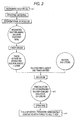
- starch therein prevents sulfur therein from chemically reacting with the salts in soil, therefore ensuring 100 % activity of sulfur to exterminate soil fungi (Fig. 2).
- 20 liters f the solution (c-1) is diluted with 15-fold water, and the resulting dilution is directly sprayed onto the surface of soil.
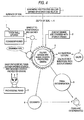
- the fungicide exhibits the action as in Fig. 4.
- 20 liters of the solution (c-1) is the synthetic hydrated organosulfur agent of the invention.
- the synthetic hydrated organosulfur agent of the invention is used as a fungicide against soil fungi.
- the technical idea of the invention is in Fig. 4, which illustrates the novel and epoch-making fungicidal method of the invention.
- the novel fungicide of the invention exterminates soil fungi that could not be exterminated by any conventional fungicide.
- pathogenic fungi to cause a root and stem rotting disease of gingers e.g., pythiums and fusariums
- the present inventor has succeeded in completely exterminating the fungi.
- the fungicidal mechanism of the fungicide is described below.
- the characteristic feature of the invention is that an organic material starch is combined with sulfur.
- the invention takes advantage of the property of starch.
- the starch substrate (feed for fungi) contains a saccharide glucose polymerized with the starch grains. Pathogenic fungi are extremely sensitive to the saccharide, and they first act on it to decompose it. I, the present inventor specifically noted the living habits of the fungi. Since the substrate of the synthetic hydrated organosulfur agent contains starch, the fungi in soil on which the agent has been sprayed react with the substrate grains after they are mixed with the agent, and they sprout to have spores.
- the soil will be filled with various microbes, and they are all attracted by the starch in the agent.
- the starch in the agent is degraded by these microbes, the thus-degraded agent releases sulfur that has been enveloped in the starch therein, and the thus-released sulfur acts to exterminate the pathogenic fungi in the soil.
- the characteristic feature of the fungicidal method of the invention is that the microbes exposed to the fungicide die by themselves (for example, they kill themselves).
- the fungicidal activity-expressing mechanism of the synthetic hydrated organosulfur agent of the invention that comprises sulfur and starch is described below.
- sulfur Based on its strong oxidative activity, sulfur has a strong fungicidal activity, and it acts on the SH enzyme in pathogenic fungi (e.g., fusariums, pythiums and other mold fungi) to block the respiration of the fungi, and the fungi are thereby killed.
- pathogenic fungi e.g., fusariums, pythiums and other mold fungi
- sulfur is enveloped in starch.
- Starch in the fungicide plays the following four roles:
- the synthetic hydrated organosulfur agent of the invention attains the object of the invention.
- Starch is a polymer of saccharides such as glucose, and it gives a lot of saccharides when hydrolyzed. Accordingly, microbes including pathogenic fungi gather around starch and start to degrade it. In this stage, the microbes sprout to form thick-wall spores and conidiosphores therearound, and they also start to degrade starch. While the starch is degraded in that manner, it releases sulfur that it has enveloped therein, and the thus-released sulfur completely exterminates pathogenic fungi.
- the present inventor has recognized the mechanism and has completed the invention.
- the agent of the invention When the agent of the invention is sprayed on the surface of soil and mixed with it according to the method of the invention, the oxidative activity of sulfur in the agent is kept protected by starch therein and the sulfur does not lose its fungicidal activity at all in this stage. After the starch substrate in the agent has been assimilated by pathogenic fungi in soil, the sulfur in the agent exhibits its fungicidal activity. The fungicidal effect of the agent of the invention against pathogenic fungi is complete, and the agent has no residual toxicity and is therefore extremely safe. In addition, the sulfur having remained in soil is utilized by crops as an essential nutrient, and its load to the environment is extremely low. Both sulfur and starch in the agent of the invention are natural substances, and the agent is a novel type of soil fungicide.
- Embodiment 2 of the invention is described with reference to Fig. 4, in which 1 indicates the synthetic hydrated organosulfur agent 1 that is in the form of protected colloid grains of sulfur + starch, and 4 indicates soil. Referring to Fig. 4, the mechanism of the grains of the agent in soil is described.
- the grains 1 do not react with salts 5.
- Each grain 1 is coated with starch grains 2 that envelop and protect sulfur therein.
- the oxidative activity-having sulfur does not react with the salts 5, and it keeps its condition capable of 100 % exhibiting its fungicidal activity.
- the starch grains that cover the sulfur grains are naturally composed of monoses such as glucose, and many pathogenic fungi have a strong affinity for starch. Therefore, when starch is added to soil, it is rapidly degraded by microbes existing in the soil. While the starch in the soil is thus degraded, sulfur enveloped in the starch grains is exposed out, and it inactivates the SH enzyme in pathogenic fungi owing to its oxidative activity.
- the pathogenic fungi could no more breathe and therefore die as indicated by 9.
- Many pathogenic fungi in soil are extremely difficult to exterminate, and conventional fungicidal chemicals often fail to exterminate them since they react with salts in soil before being directly contacted with pathogenic fungi to kill them, and therefore lose their oxidative activity and even their fungicidal activity.
- Presenting herein the agent of the invention that solves the drawbacks of such conventional fungicidal chemicals the present inventor has succeeded in industrial application of the fungicidal agent of the invention.
- Fig. 1 and Fig. 2 are referred to for describing the effect of the embodiment of the invention.
- the hydrophilic colloid property of starch (b-1) is utilized for increasing the fungicidal activity of the hydrated sulfur agent (a-1) in soil.
- the hydrophobic colloid of sulfur grains is enveloped in starch. Accordingly, the fungicidal activity in soil of the conventional hydrated inorganic sulfur agent as in Fig. 3 is significantly enhanced.
- the present invention is based on this finding.
- Fig. 1 and Fig. 2 are referred to for describing the effect of the embodiment of the invention.
- the hydrophilic colloid property of starch (b-1) is utilized for increasing the fungicidal activity of the hydrated sulfur agent (a-1) in soil.
- the hydrophobic colloid of sulfur grains is enveloped in starch. Accordingly, the fungicidal activity in soil of the conventional hydrated inorganic sulfur agent as in Fig. 3 is significantly enhanced.
- the present invention is based on this
- the starch grains 2 act to induce the pathogenic fungi in soil (e.g., fusariums, pythiums and other harmful mold fungi) to go toward the 1, and the pathogenic fungi thus having been attracted are killed as in 9 by the sulfur grains 3 having been exposed out through degradation 8 of the starch-covered grains 1.
- pathogenic fungi e.g., fusariums, pythiums and other harmful mold fungi
- Fig. 3 many conventional fungicides exhibit their fungicidal activity when directly contacted with pathogenic fungi that live in the surface of soil. In the depths of soil, however, the fungicides rapidly react with salts therein, and their fungicidal activity greatly lowers, as in Fig. 5.
- carbohydrates such as starch that microbes well assimilate as a substrate for them are used and put into water to form hydrophilic colloid (Fig. 1).
- Synthetic chemicals that have a property of hydrophobic colloid and will readily react with salts in soil are enveloped in hydrophilic colloid, and according to the method, the chemicals could exhibit their effect even inside soil. (This is illustrated in Fig. 4.)
- ginger plants were planted in the field.
- the ginger plants having grown in the field did not suffer from a root and stem-rotting disease (caused by pythiums) that is serious to gingers.
- the synthetic hydrated organosulfur agent of the invention is prepared by enveloping an inorganic sulfur agent in a hydrophilic colloid of a starch solution.
- the hydrated inorganic sulfur agent therein is prevented from reacting with salts in soil, and it can directly act on pathogenic fungi in soil to exhibit its own fungicidal activity against them. Accordingly, the fungicidal effect of the synthetic hydrated organosulfur agent of the invention is extremely enhanced.
- novel technical idea of the invention of enveloping a hydrophobic colloid of sulfur in a hydrophilic colloid of starch can also apply to any other agricultural chemicals, and the invention has established a novel type of method of efficiently applying agricultural chemicals to farms and plantations. The invention will be greatly helpful in reducing the load of agricultural chemicals to the environment.
Landscapes
- Life Sciences & Earth Sciences (AREA)
- Chemical & Material Sciences (AREA)
- Agronomy & Crop Science (AREA)
- Inorganic Chemistry (AREA)
- Pest Control & Pesticides (AREA)
- Plant Pathology (AREA)
- Health & Medical Sciences (AREA)
- Engineering & Computer Science (AREA)
- Dentistry (AREA)
- General Health & Medical Sciences (AREA)
- Wood Science & Technology (AREA)
- Zoology (AREA)
- Environmental Sciences (AREA)
- Agricultural Chemicals And Associated Chemicals (AREA)
- Pharmaceuticals Containing Other Organic And Inorganic Compounds (AREA)
Abstract
Description
- The present invention relates to a synthetic hydrated organosulfur agent that serves as a soil fungicidal and antifungal agent in the field of agriculture. More precisely, the invention relates to a method of producing it by enveloping a conventional hydrated inorganic sulfur agent in starch through the colloidal action of starch, and to a method of using the synthetic hydrated organosulfur inclusion agent for exterminating fungi.
- Various microorganisms live in soil. Many of them are pathogenic to crops, and it is known that pathogenic mold fungi (e.g., fusariums, pythiums) cause soil diseases such as root and stem rotting disease of gingers, and runner dwarfing atrophy of cucumbers. In cultivating crops, it is indispensable to exterminate such soil pathogenic fungi, and it is very important to prevent crops from being infected by such pathogenic microbes for their healthy growth.
- Heretofore soil disinfection is carried out for preventing soil infection with pathogenic microbes, for which is used an extremely effective methyl bromide agent. Recently, however, the ozone layer destruction by methyl bromide has become a subject of discussion, and the use of methyl bromide has been inhibited since 2000 in US and EC and will be inhibited in 2005 in many other countries. At present, other soil disinfectants also have some negative influence on the environment and often cause some chemical injury, and in addition, they are expensive and troublesome and could not ensure complete disinfection. It is desired to develop a substitute for such a methyl bromide agent. Especially desired is a fungicidal and antifungal agent for soil diseases, which is harmless to humans and animals and also to the environment, which causes no chemical injury to crops, which is inexpensive and is not troublesome in spraying it, and which can surely exterminate soil fungi and prevent soil diseases. The subject matter of the present invention is to provide a synthetic hydrated sulfur agent that is a novel fungicidal and antifungal agent for soil diseases, and to provide a method for producing it and a method of using it for exterminating soil fungi.
- Troubled with the root and stem rotting disease of gingers by pathogenic pythiums, I, the present inventor desired to develop a novel soil fungicide substitutable with a methyl bromide agent. While spraying various chemicals on ginger plants, I have specifically noted a hydrated inorganic sulfur agent.
- The inorganic sulfur agent is highly effective for powdery mildew of plants on the ground, but is not effective for the underground parts of plants. Given that situation, I studied the way of inactivating sulfur in soil, and I have specifically noted the protective colloidal action of starch on the hydrated inorganic sulfur agent, and tried synthesizing a hydrated organosulfur agent. As a result, I have succeeded in inactivating sulfur in soil and have produced a synthetic hydrated organosulfur agent.
- The conventional hydrated inorganic sulfur agent is directly sprayed on pathogenic fungi for exterminating them, and a thick stock of the hydrated sulfur agent (a-1) is diluted with water, as in Fig. 3 and Fig. 5. Concretely, 300 liters of water is added to one liter of the thick stock of the agent to prepare a dilution (a-2), and this is actually used. The thus-prepared dilution (a-2) is directly sprayed on pathogenic fungi growing on plants, and this is a method of spraying the dilution on the soil surface or on crop plants so as to make it in direct contact with pathogenic fungi to kill them.
- However, the hydrated inorganic sulfur agent has a sulfur content of 52 %, and it readily reacts with salts (of calcium, magnesium, etc.) in soil to coagulate therein, and loses its fungicidal effect.
- In the related art technology mentioned hereinabove, the hydrated sulfur agent is an inorganic sulfur solution, and its thick stock is diluted 300 to 400-fold, and the resulting dilution is directly sprayed on pathogenic fungi to kill them. Therefore, one drawback of the hydrated inorganic sulfur agent is that it loses its fungicidal effect against pathogenic fungi in soil since sulfur therein rapidly undergoes chemical reaction with salts in soil.
- Accordingly, the present invention is as follows:
- (1) An organic substance, starch is added to the hydrated inorganic sulfur agent to synthesize a novel type of fungicide in which the sulfur is enveloped in starch, and this is sprayed on soil. Since the sulfur is still kept enveloped in starch in the soil, it does not react with salts (of calcium, magnesium, etc.) in the soil. Therefore, the novel fungicide does not coagulate even in soil and still keeps its fungicidal action of sulfur, and its fungicidal effect does not lower. Accordingly, the present invention herein provides a complete fungicidal method of exterminating soil pathogenic fungi that have heretofore been difficult to exterminate.
- (2) In the novel fungicide of the invention, the starch grains that have formed protective colloid do not react with soil salts and are stably kept therein. When the starch grains are degraded by pathogenic fungi in soil and release sulfur, the sulfur that has been kept stable in the grains exhibits its strong fungicidal activity to completely exterminate pathogenic fungi while the starch grains are degraded. The sulfur grains enveloped in starch do not exhibit their fungicidal effect even when they are brought into contact with fungi, but exhibit the effect only after they are degraded to release sulfur. The fungicidal method of the invention is characterized by this feature.
-
- Specifically, in the fungicidal method of the invention, the starch component of the fungicide attracts pathogenic fungi in soil, serving as a substrate (feed) for them, and while the starch grains with sulfur therein have begun to degrade to release sulfur, the thus-released sulfur exterminate the pathogenic fungi. The subject matter of the invention is to provide a synthetic hydrated organosulfur agent prepared by adding starch to a hydrated inorganic sulfur agent, and to provide a method for producing it and a method of using it for exterminating pathogenic fungi.
- The difference between the fungicidal method with a conventional fungicide and the fungicidal method with the synthetic hydrated organosulfur agent is described below.
- The conventional fungicide is applied to pathogenic fungi to kill them through its direct contact with pathogenic fungi. On the other hand, the synthetic hydrated organosulfur agent of the invention is a soil fungicide, and this is applied to soil, in which the starch component of the agent attracts and germinates the microbes (pathogenic fungi, such as fusariums, pythiums and other various mold fungi), and the sulfur component having been enveloped in starch but having been released out through degradation of sulfur-containing starch grains acts to kill the thus-attracted microbes in soil. The novel type of fungicide, synthetic hydrated organosulfur agent of the invention does not lose its fungicidal activity for a long period of time before the sulfur-containing starch grains therein are degraded in soil, and the fungicidal agent of the invention is characterized by this specific feature.
- As in the description as above, the invention provides such a novel type of fungicide, synthetic hydrated organosulfur agent which is degraded by microbes in soil and which kills them after having been thus degraded by them.
-
- Fig. 1 shows
Embodiment 1 of the invention of how to produce the fungicide of the invention. - Fig. 2 shows a method of spraying the product produced in Fig. 1.
- Fig. 3 shows a conventional production technique.
- Fig. 4 shows
Embodiment 2 of the invention of how to exterminate pathogenic fungi with the fungicide of the invention. - Fig. 5 shows a conventional method of fungicide application to soil.
-
- The invention is described in detail hereinunder with reference to the drawings that illustrate the production method and the fungicidal method of killing pathogenic fungi in soil of the invention.
- First described is the production method. The method of producing the synthetic hydrated organosulfur agent of the invention is characterized in that starch is added to a conventional hydrated inorganic sulfur agent to prepare sulfur colloidal grains enveloped in starch, and the fungicidal activity of sulfur in the resulting grains is protected by starch therein. Using a conventional hydrated inorganic sulfur agent (fungicide), pathogenic fungi in soil are extremely difficult to exterminate. The conventional hydrated inorganic sulfur agent rapidly reacts with salts in soil and readily coagulates therein to soon lose its fungicidal activity. To solve the problem, the fungicidal activity of sulfur in the fungicide must be kept completely as it is therein. For the purpose, the sulfur grains are enveloped in starch in the invention.
- Specifically, sulfur grains are enveloped in starch so as not react with salts in soil. In other words, starch acts as an insulating substance for sulfur in the invention. For exterminating soil pathogenic fungi, sulfur in the fungicide must keep its strong oxidative activity. Having the oxidative activity, sulfur reacts with the SH enzyme in pathogenic fungi to block the respiration of the fungi, and the fungi are thereby killed. Described in the Handbook of Agricultural Chemicals, the fungicidal activity of sulfur is well known. However, the conventional hydrated inorganic sulfur agent chemically reacts with salts in soil before it acts to kill pathogenic fungi, and its drawback is that it is almost ineffective when applied to soil. Sulfur has a property of hydrophobic colloid, while starch has a property of hydrophilic colloid. I, the present inventor have specifically noted the two different properties of sulfur and starch, and have succeeded in producing the novel fungicide of the invention by combining the two, sulfur and starch.
- The hydrophilic colloid, the hydrophobic colloid, and the protected colloid formed of the two colloids are described below.
- In its molecules, starch has many reactive groups of good hydrability. Therefore, the colloidal solution prepared by dissolving starch in water contains starch colloid grains hydrated with many water molecules on their surfaces.
- Accordingly, even when salts are added to it, their ions are cancelled by the hydrated starch colloid grains therein. As a result, the charges of the hydrated starch colloid grains are influenced little by the salt ions, and are still kept stably dispersed in the form of their ions, therefore not coagulating in the solution. Having the property, the colloid is referred to as a hydrophilic colloid.
- Sulfur colloid grains have many hydrophobic groups on their surfaces and therefore they are hydrated little with water molecules. Accordingly, the surface charges of such sulfur colloid grains are readily neutralized even with a small amount of salts, and therefore readily coagulate. The coagulated sulfur grains do no more have active ions for oxidation on their surfaces and therefore lose its chemical reactivity. A lot of salts derived from chemical fertilizer and weathered soil grains exist in soil, and the hydrophobic sulfur colloid is readily coagulated by these salts to thereby lose its strong oxidative activity and even its fungicidal activity.
- Through the mechanism, it is believed that the conventional fungicide, hydrated inorganic sulfur agent will lose its fungicidal activity in soil.
(3) The property of the protected colloid is described. When a hydrophilic colloid solution is added to a hydrophobic colloid solution, the hydrophilic colloid envelops the hydrophobic colloid therein, and the resulting solution becomes colloidal. Specifically noted this mechanism, I, the present inventor synthesized a protected colloid in which a hydrated starch solution acting as a hydrophilic colloid envelops sulfur grains acting as a hydrophobic colloid therein. Further specifically noted the action of the protected colloid, the present inventor applied it to preparing a synthetic hydrated organosulfur agent and succeeded in producing a novel type of fungicide of the invention. -
Embodiment 1 of the invention is in Fig. 1. As illustrated, the agent of the invention is produced from starch and a hydrated inorganic sulfur agent. The thick stock of the hydrated sulfur agent (a-1) is comprised of 52 % of sulfur and 48 % of surfactant, and this is diluted with water. On the other hand, starch (b-1) is 100 % starch powder. One liter of the thick stock (a-1) is diluted with 9 liters of water to prepare a hydrophobic colloid solution (a-2). One liter of the starch powder (b-1) is sampled in a separate container, to which is added 9 liters of water to prepare a hydrophilic colloid solution (b-2). Theresulting (b-2) is addedto (a-2), and well stirred. In this stage, the sulfur grains in (a-2) are enveloped in the starch grains of (b-2) to give a protected colloid solution (c-1). The solution (c-1) is the final product in this process, and this is used as a fungicide. When this is applied to soil, starch therein prevents sulfur therein from chemically reacting with the salts in soil, therefore ensuring 100 % activity of sulfur to exterminate soil fungi (Fig. 2). 20 liters f the solution (c-1) is diluted with 15-fold water, and the resulting dilution is directly sprayed onto the surface of soil. Thus mixed with soil, the fungicide exhibits the action as in Fig. 4. 20 liters of the solution (c-1) is the synthetic hydrated organosulfur agent of the invention. - The synthetic hydrated organosulfur agent of the invention is used as a fungicide against soil fungi. The technical idea of the invention is in Fig. 4, which illustrates the novel and epoch-making fungicidal method of the invention. As illustrated therein, the novel fungicide of the invention exterminates soil fungi that could not be exterminated by any conventional fungicide. In particular, pathogenic fungi to cause a root and stem rotting disease of gingers (e.g., pythiums and fusariums) are serious and troublesome and are difficult to exterminate, and, at present, no one knows any fungicide capable of completely exterminating them. Using the synthetic hydrated organosulfur agent of the invention, the present inventor has succeeded in completely exterminating the fungi.
- The fungicidal mechanism of the fungicide is described below.
- Needless-to-say, the characteristic feature of the invention is that an organic material starch is combined with sulfur. The invention takes advantage of the property of starch. The starch substrate (feed for fungi) contains a saccharide glucose polymerized with the starch grains. Pathogenic fungi are extremely sensitive to the saccharide, and they first act on it to decompose it. I, the present inventor specifically noted the living habits of the fungi. Since the substrate of the synthetic hydrated organosulfur agent contains starch, the fungi in soil on which the agent has been sprayed react with the substrate grains after they are mixed with the agent, and they sprout to have spores. 24 hours after the application of the agent to soil, the soil will be filled with various microbes, and they are all attracted by the starch in the agent. In that stage, when the starch in the agent is degraded by these microbes, the thus-degraded agent releases sulfur that has been enveloped in the starch therein, and the thus-released sulfur acts to exterminate the pathogenic fungi in the soil.
- The characteristic feature of the fungicidal method of the invention is that the microbes exposed to the fungicide die by themselves (for example, they kill themselves). The fungicidal activity-expressing mechanism of the synthetic hydrated organosulfur agent of the invention that comprises sulfur and starch is described below.
- Based on its strong oxidative activity, sulfur has a strong fungicidal activity, and it acts on the SH enzyme in pathogenic fungi (e.g., fusariums, pythiums and other mold fungi) to block the respiration of the fungi, and the fungi are thereby killed. In the fungicide of the invention, sulfur is enveloped in starch.
- Starch in the fungicide plays the following four roles:
- 1. It is a hydrophilic colloid and has the ability to protect sulfur, and sulfur is enveloped in it.
- 2. It acts as an insulating substance, and prevents the reaction of sulfur with salts.
- 3. It serves as a substrate (feed) for pathogenic fungi.
- 4. It assists pathogenic fungi to sprout to form spores around them, and it attracts the thus-sprouted fungi.
-
- Having all these four actions combined, the synthetic hydrated organosulfur agent of the invention attains the object of the invention. Starch is a polymer of saccharides such as glucose, and it gives a lot of saccharides when hydrolyzed. Accordingly, microbes including pathogenic fungi gather around starch and start to degrade it. In this stage, the microbes sprout to form thick-wall spores and conidiosphores therearound, and they also start to degrade starch. While the starch is degraded in that manner, it releases sulfur that it has enveloped therein, and the thus-released sulfur completely exterminates pathogenic fungi. The present inventor has recognized the mechanism and has completed the invention. When the agent of the invention is sprayed on the surface of soil and mixed with it according to the method of the invention, the oxidative activity of sulfur in the agent is kept protected by starch therein and the sulfur does not lose its fungicidal activity at all in this stage. After the starch substrate in the agent has been assimilated by pathogenic fungi in soil, the sulfur in the agent exhibits its fungicidal activity. The fungicidal effect of the agent of the invention against pathogenic fungi is complete, and the agent has no residual toxicity and is therefore extremely safe. In addition, the sulfur having remained in soil is utilized by crops as an essential nutrient, and its load to the environment is extremely low. Both sulfur and starch in the agent of the invention are natural substances, and the agent is a novel type of soil fungicide.
-
Embodiment 2 of the invention is described with reference to Fig. 4, in which 1 indicates the synthetic hydratedorganosulfur agent 1 that is in the form of protected colloid grains of sulfur + starch, and 4 indicates soil. Referring to Fig. 4, the mechanism of the grains of the agent in soil is described. - The
grains 1 do not react withsalts 5. Eachgrain 1 is coated withstarch grains 2 that envelop and protect sulfur therein. Thus protected, the oxidative activity-having sulfur does not react with thesalts 5, and it keeps its condition capable of 100 % exhibiting its fungicidal activity. The starch grains that cover the sulfur grains are naturally composed of monoses such as glucose, and many pathogenic fungi have a strong affinity for starch. Therefore, when starch is added to soil, it is rapidly degraded by microbes existing in the soil. While the starch in the soil is thus degraded, sulfur enveloped in the starch grains is exposed out, and it inactivates the SH enzyme in pathogenic fungi owing to its oxidative activity. As a result, the pathogenic fungi could no more breathe and therefore die as indicated by 9. Many pathogenic fungi in soil are extremely difficult to exterminate, and conventional fungicidal chemicals often fail to exterminate them since they react with salts in soil before being directly contacted with pathogenic fungi to kill them, and therefore lose their oxidative activity and even their fungicidal activity. Presenting herein the agent of the invention that solves the drawbacks of such conventional fungicidal chemicals, the present inventor has succeeded in industrial application of the fungicidal agent of the invention. - Fig. 1 and Fig. 2 are referred to for describing the effect of the embodiment of the invention. As illustrated, the hydrophilic colloid property of starch (b-1) is utilized for increasing the fungicidal activity of the hydrated sulfur agent (a-1) in soil. Concretely, the hydrophobic colloid of sulfur grains is enveloped in starch. Accordingly, the fungicidal activity in soil of the conventional hydrated inorganic sulfur agent as in Fig. 3 is significantly enhanced. The present invention is based on this finding. In addition, as in Fig. 4, the
starch grains 2 act to induce the pathogenic fungi in soil (e.g., fusariums, pythiums and other harmful mold fungi) to go toward the 1, and the pathogenic fungi thus having been attracted are killed as in 9 by thesulfur grains 3 having been exposed out throughdegradation 8 of the starch-coveredgrains 1. One method of increasing the fungicidal activity according to the invention is described below. - As in Fig. 3, many conventional fungicides exhibit their fungicidal activity when directly contacted with pathogenic fungi that live in the surface of soil. In the depths of soil, however, the fungicides rapidly react with salts therein, and their fungicidal activity greatly lowers, as in Fig. 5. In order that the fungicides could also exhibit their fungicidal activity even in the depths of soil like that in the surface of soil, carbohydrates such as starch that microbes well assimilate as a substrate for them are used and put into water to form hydrophilic colloid (Fig. 1). Synthetic chemicals that have a property of hydrophobic colloid and will readily react with salts in soil are enveloped in hydrophilic colloid, and according to the method, the chemicals could exhibit their effect even inside soil. (This is illustrated in Fig. 4.)
- According to the novel method of the invention, agricultural chemicals can be effectively used, and their load to not only the soil environment but also the entire environment to pollute the natural environment could be reduced. Example of the synthetic hydrated organosulfur agent of the invention:
- As in Fig. 1, 9 liters of water was added to one liter of a hydrated inorganic sulfur agent (having a sulfur content of 52 %) to prepare a hydrophobic colloid solution (a-2). On the other hand, 9 liters of water was added to 1 kg of starch powder to prepare a hydrophilic colloid solution (b-2). The resulting (b-2) was added to (a-2) and well stirred to prepare a protected colloid solution (c-1). The thus-obtained, protected colloid solution (c-1) was diluted 15-fold. From 800 to 1,000 liters/10 ares of the resulting soil fungicide is sprayed over the field in which ginger plants are to be cultivated, and it was mixed with the soil in the field. 20 days after the spraying with the soil fungicide, ginger plants were planted in the field. As a result, the ginger plants having grown in the field did not suffer from a root and stem-rotting disease (caused by pythiums) that is serious to gingers.
- As described hereinabove, the synthetic hydrated organosulfur agent of the invention is prepared by enveloping an inorganic sulfur agent in a hydrophilic colloid of a starch solution. When this is applied to soil, the hydrated inorganic sulfur agent therein is prevented from reacting with salts in soil, and it can directly act on pathogenic fungi in soil to exhibit its own fungicidal activity against them. Accordingly, the fungicidal effect of the synthetic hydrated organosulfur agent of the invention is extremely enhanced.
- In addition, the novel technical idea of the invention of enveloping a hydrophobic colloid of sulfur in a hydrophilic colloid of starch can also apply to any other agricultural chemicals, and the invention has established a novel type of method of efficiently applying agricultural chemicals to farms and plantations. The invention will be greatly helpful in reducing the load of agricultural chemicals to the environment.
Claims (4)
- A synthetic agent produced by adding a carbohydrate to a conventional inorganic hydrated sulfur agent so as to envelop colloid grains of sulfur in colloid grains of starch to thereby protect sulfur. The conventional inorganic hydrated sulfur fungicide heretofore used in agriculture chemically reacts with salts in said and readily coagulates therein to lose its fungicidal activity. In order that sulfur could fully exhibit its fungicidal activity, sulfur is enveloped in starch grains and is prevented from chemically reacting with salts in soil. The starch grains act for insulation of sulfur from salts in soil. For exterminating soil pathogenic fungi, sulfur must keep its oxidative activity. Having the oxidative activity, sulfur reacts with the SH enzyme in pathogenic fungi to block the respiration of the fungi, and the fungi are thereby killed.
The effective fungicidal mechanism of sulfur in soil is explained below. Sulfur has the property of hydrophobic colloid, and starch has the property of hydrophilic colloid. In its starch molecules, hydrophilic colloid has many reactive groups of good hydrability such as hydroxyl groups. The colloidal solution prepared by dissolving the molecules in water contains starch colloid grains hydrated with many water molecules on their surfaces. Accordingly, even when a small amount of salt is added to it, its ions hardly bond to the colloid grains to neutralize them and the colloid grains are coagulated little in the solution.
On the other hand, sulfur colloid has the property of hydrophobic colloid. Since it is hydrated with few water molecules, and it is readily coagulated even in the presence or a small amount of salt. Accordingly, since the active site (oxidative power) of the sulfur colloid grains reacts with salts and the activity of the sulfur colloid grains lowers, and sulfur after all loses its fungicidal activity. It can be considered that the reason why the conventional sulfur hydrated agent rapidly loses its activity in soil is because of its mechanism as above.
Utilizing the property of protective colloid, I have succeeded in making sulfur which exhibits its fungicidal activity for a long time in soil. Specifically, I have found that, when hydrophilic colloid is added to a hydrophobic colloid solution, then the hydropilic colloid envelops the hydrophobic colloid therein. Having applied the property of starch as protective coiloid to hydrophobic colloid of sulfur, I have prepared a novel synthetic hydrated organosulfur agent and have invented a novel soil fungicide.
Its production process is described with reference to Fig.1. The matters described above are in Fig. 1 that shows the production process. This gives a synthetic hydrated organosulfur agent that comprises sulfur and protective colloid of starch. - A fungicidal method of using the synthetic hydrated organosulfur agent as a fungicide for soil diseases, wherein pathogenic fungi in soil are attracted by starch, the protective colloid in the agent degrades while the pathogenic fungi take starch and decompose it, and the pathogenic fungi are killed by sulfur.
The mechanism of the fungicidal method with the synthetic hydrated organosulfur agent (sulfur and starch synthetic agent) is clarified. Sulfur reacts with the SH enzyme in pathogenic mold fungi in soil (fusariums, pythiums and other various mold fungi) to block the respiration of the fungi, and the fungi are thereby killed. In the agent, starch plays the following two roles. One includes the properties of starch and sulfur and the production method thereof (described in claim 1). The other is the mechanism of fungicidal potency. Namely, starch is characterized in that it is used as the good substrate for pathogenic fungi. Starch is a polymer of saccharides such as glucose, and many microbes and fungi such as pathogenic mold fungi (fusariums, pythiums and other various mold fungi) gather to take and decompose them. Taking starch as the substrate, the microbes sprout to form thick-wall spores and conidiosphores therearound, and they also start to degrade starch. While the starch is degraded, it releases sulfur enveloped therein, and the thus-released sulfur completely exterminates pathogenis fungi owing to its strong oxidative power. This is the basis of the invention. After attracted and degraded by starch, pathogenic fungi and their spores are, even after sprouted, killed by sulfur. This is the mechanism of the fungicidal method. The sulfur grains to be sprayed on and mixed with soil according to the method are protected with starch, and therefore they do not chemically react with salts in soil and starch still acts as the substrate. This method is extremely complete, and is safe for exterminating fungi in soil. Since sulfur is an essential component necessary for crop plants, it gives no residual toxicity to the soil environment.
On the other hand, the conventional hydrated sulfur agent does not contain a substance capable of being a substrate, and the method of using it comprises spraying it on soil for its direct contact with pathogenic fungi to kill them. However, the sulfur grains directly react with salts in soil and loses their effect (described in Fig. 3). The claim 2 is characterized in that pathogenic fungi are attracted by starch and, when they have begun to degrade, they are killed by sulfur having been enveloped in starch (described in Fig. 4). It includes the method of using the fungicide and the synthetic hydrated organosulfur agent as claimed in claim 1. - The synthetic hydrated organosulfur agent as described in claim 1 or 2. The microbes to be killed are soil pathogenic fungi including fusariums, pythiums, rhizokutonias, baticilliums and other various mold fungi, and these pathogenic fungi are exterminated by spraying and mixing the synthetic hydrated organosulfur agent which reacts with glucose and other saccharides polymerizing with starch, on and with the surface of soil. All the mold fungi in soil begin to sprout, and attract the starch substrate. While the agent is decomposed, it releases sulfur and it efficiently exterminates the fungi owing to the oxidative power of sulfur. This has been developed for a soil fungicide.
- The synthetic hydrated organosulfur agent as described in claim 1, 2 or 3. An inorganic hydrated sulfur agent is reacted with starch in a weight ratio or from 1/1 to 1/0.5 to synthesize the agent. Even when directly contacted with fungi, the agent is not effective for killing them. In soil, the agent is decomposed by fungi, and becomes effective for killing fungi. In addition, the soil fungicide that comprises natural substances, sulfur and starch does not undergo chemical reaction in soil. Owing to its protective colloidal effect, sulfur is enveloped in starch and insulated from salts. The starch acts as the substrate for pathogenic fungi, and assists to sprout them to have spores. It attracts pathogenic fungi, and decomposes by itself. It protects the oxidative power of sulfur, and its fungicidal mechanism is to release sulfur to kill pathogenic fungi. The soil fungicidal agent and the soil fungicidal method are characterized in that they have some characteristic features.
Applications Claiming Priority (3)
| Application Number | Priority Date | Filing Date | Title |
|---|---|---|---|
| JP2000183763 | 2000-05-15 | ||
| JP2000183763 | 2000-05-15 | ||
| PCT/JP2001/003971 WO2001087069A1 (en) | 2000-05-15 | 2001-05-11 | Synthetic hydrated organosulfur agent, production process and bactericidal method by using the same |
Publications (3)
| Publication Number | Publication Date |
|---|---|
| EP1293125A1 true EP1293125A1 (en) | 2003-03-19 |
| EP1293125A4 EP1293125A4 (en) | 2003-07-16 |
| EP1293125B1 EP1293125B1 (en) | 2011-10-05 |
Family
ID=18684297
Family Applications (1)
| Application Number | Title | Priority Date | Filing Date |
|---|---|---|---|
| EP01977950A Expired - Lifetime EP1293125B1 (en) | 2000-05-15 | 2001-05-11 | Synthetic hydrated organosulfur agent, production process and bactericidal method by using the same |
Country Status (8)
| Country | Link |
|---|---|
| US (1) | US20040067258A1 (en) |
| EP (1) | EP1293125B1 (en) |
| JP (1) | JP4174751B2 (en) |
| KR (1) | KR100510217B1 (en) |
| CN (1) | CN1268209C (en) |
| AT (1) | ATE526823T1 (en) |
| AU (2) | AU2001295209B2 (en) |
| WO (1) | WO2001087069A1 (en) |
Cited By (1)
| Publication number | Priority date | Publication date | Assignee | Title |
|---|---|---|---|---|
| US7194964B2 (en) | 2002-04-23 | 2007-03-27 | Basf Aktiengesellschaft | Method for chemically decontaminating soil by applying a mixture of sulphur and complexing agents |
Families Citing this family (4)
| Publication number | Priority date | Publication date | Assignee | Title |
|---|---|---|---|---|
| WO2009146079A2 (en) * | 2008-04-01 | 2009-12-03 | Dow Agrosciences Llc | Compositions and methods to control oomycete fungal pathogens |
| US20100254936A1 (en) * | 2009-04-01 | 2010-10-07 | Dow Agrosciences Llc | Compostions and methods to control fungal pathogens |
| IN2012DN03096A (en) * | 2009-10-13 | 2015-09-18 | Dow Agrosciences Llc | |
| KR102589220B1 (en) * | 2023-05-23 | 2023-10-13 | 주식회사 대한아그로 | Sulfur hydrated colloidal composition for pest control |
Family Cites Families (2)
| Publication number | Priority date | Publication date | Assignee | Title |
|---|---|---|---|---|
| US4859377A (en) | 1987-07-10 | 1989-08-22 | The United States Of America, As Represented By The Secretary Of Agriculture | Starch encapsulation of entomopathogens |
| KR0145740B1 (en) | 1991-05-23 | 1998-08-01 | 채영복 | Immobilized Microbial Pesticides and Manufacturing Method Thereof |
-
2001
- 2001-05-11 AU AU2001295209A patent/AU2001295209B2/en not_active Ceased
- 2001-05-11 EP EP01977950A patent/EP1293125B1/en not_active Expired - Lifetime
- 2001-05-11 JP JP2001583547A patent/JP4174751B2/en not_active Expired - Fee Related
- 2001-05-11 AU AU9520901A patent/AU9520901A/en active Pending
- 2001-05-11 WO PCT/JP2001/003971 patent/WO2001087069A1/en not_active Ceased
- 2001-05-11 KR KR10-2002-7014332A patent/KR100510217B1/en not_active Expired - Fee Related
- 2001-05-11 AT AT01977950T patent/ATE526823T1/en not_active IP Right Cessation
- 2001-05-11 CN CNB018095518A patent/CN1268209C/en not_active Expired - Fee Related
-
2002
- 2002-10-08 US US10/258,088 patent/US20040067258A1/en not_active Abandoned
Non-Patent Citations (2)
| Title |
|---|
| No further relevant documents disclosed * |
| See also references of WO0187069A1 * |
Cited By (1)
| Publication number | Priority date | Publication date | Assignee | Title |
|---|---|---|---|---|
| US7194964B2 (en) | 2002-04-23 | 2007-03-27 | Basf Aktiengesellschaft | Method for chemically decontaminating soil by applying a mixture of sulphur and complexing agents |
Also Published As
| Publication number | Publication date |
|---|---|
| EP1293125A4 (en) | 2003-07-16 |
| ATE526823T1 (en) | 2011-10-15 |
| KR20020093075A (en) | 2002-12-12 |
| JP4174751B2 (en) | 2008-11-05 |
| CN1268209C (en) | 2006-08-09 |
| US20040067258A1 (en) | 2004-04-08 |
| WO2001087069A1 (en) | 2001-11-22 |
| AU2001295209B2 (en) | 2005-12-22 |
| CN1429075A (en) | 2003-07-09 |
| EP1293125B1 (en) | 2011-10-05 |
| HK1055656A1 (en) | 2004-01-21 |
| AU9520901A (en) | 2001-11-26 |
| KR100510217B1 (en) | 2005-08-26 |
Similar Documents
| Publication | Publication Date | Title |
|---|---|---|
| CN104839222B (en) | A kind of cowpea seed inorganic agent and its processing method | |
| KR20060015600A (en) | Antibacterial and antiviral composition | |
| KR20110022908A (en) | Soil protection paper and manufacturing method | |
| EP1293125B1 (en) | Synthetic hydrated organosulfur agent, production process and bactericidal method by using the same | |
| EP2352602B1 (en) | Method of biological soil decontamination | |
| JPS5858322B2 (en) | Plant disease control methods | |
| WO2022064262A1 (en) | Nano-silver for the preservation and treatment of diseases in agriculture | |
| JPWO2001087069A1 (en) | Hydrated organic sulfur compound, its manufacturing method and disinfectant use method | |
| JP2986753B2 (en) | Pest control agent for fish habitat | |
| US20030206964A1 (en) | Pesticide for agricultural and horticultural applications and process for controlling microorganisms on turf surfaces | |
| CN101020766A (en) | Degradable mulching product and its production process | |
| JP2852535B2 (en) | Agricultural and horticultural soil disinfectants | |
| US4020182A (en) | Pesticidal formaldehyde concentrate | |
| CN1977614A (en) | Farm for killing harm-germina and pests in soil, its preparing technology and using method | |
| CN105052940A (en) | Composition for breaking seed dormancy | |
| KR102754376B1 (en) | The environmentally friendly fungicide in which the colloidal sulfur and copper components are included | |
| CN108812128A (en) | A method of improving rice quality | |
| JPH05194129A (en) | Bactericidal agent for agriculturaland gardening purposes | |
| Buzzo | Phytotoxicity with metam sodium | |
| JP2001199810A (en) | Fungicide for field and method for sterilizing field | |
| JP3061174B2 (en) | Disease control materials | |
| US5461077A (en) | Use of perbromides to control diseases in plants | |
| Hodges | Nursery diseases of southern pines | |
| KR20240100702A (en) | A method for reducing damage to agricultural crops by ethyl formate and a protective agent for agricultural crops | |
| ROBERT | PHYTOTOXICITY WITH METAM SODIUM |
Legal Events
| Date | Code | Title | Description |
|---|---|---|---|
| PUAI | Public reference made under article 153(3) epc to a published international application that has entered the european phase |
Free format text: ORIGINAL CODE: 0009012 |
|
| 17P | Request for examination filed |
Effective date: 20021216 |
|
| AK | Designated contracting states |
Designated state(s): AT BE CH CY DE DK ES FI FR GB GR IE IT LI LU MC NL PT SE TR Kind code of ref document: A1 Designated state(s): AT BE CH CY DE DK ES FI FR GB GR IE IT LI LU MC NL PT SE TR |
|
| A4 | Supplementary search report drawn up and despatched |
Effective date: 20030602 |
|
| RIC1 | Information provided on ipc code assigned before grant |
Ipc: 7A 01N 59/02 A Ipc: 7C 08B 31/00 B Ipc: 7A 01N 25/10 B |
|
| 17Q | First examination report despatched |
Effective date: 20080310 |
|
| GRAP | Despatch of communication of intention to grant a patent |
Free format text: ORIGINAL CODE: EPIDOSNIGR1 |
|
| GRAS | Grant fee paid |
Free format text: ORIGINAL CODE: EPIDOSNIGR3 |
|
| GRAA | (expected) grant |
Free format text: ORIGINAL CODE: 0009210 |
|
| AK | Designated contracting states |
Kind code of ref document: B1 Designated state(s): AT BE CH CY DE DK ES FI FR GB GR IE IT LI LU MC NL PT SE TR |
|
| REG | Reference to a national code |
Ref country code: GB Ref legal event code: FG4D |
|
| REG | Reference to a national code |
Ref country code: CH Ref legal event code: EP |
|
| REG | Reference to a national code |
Ref country code: IE Ref legal event code: FG4D |
|
| REG | Reference to a national code |
Ref country code: DE Ref legal event code: R096 Ref document number: 60145464 Country of ref document: DE Effective date: 20111201 |
|
| REG | Reference to a national code |
Ref country code: SE Ref legal event code: TRGR |
|
| REG | Reference to a national code |
Ref country code: NL Ref legal event code: T3 |
|
| REG | Reference to a national code |
Ref country code: AT Ref legal event code: MK05 Ref document number: 526823 Country of ref document: AT Kind code of ref document: T Effective date: 20111005 |
|
| PG25 | Lapsed in a contracting state [announced via postgrant information from national office to epo] |
Ref country code: BE Free format text: LAPSE BECAUSE OF FAILURE TO SUBMIT A TRANSLATION OF THE DESCRIPTION OR TO PAY THE FEE WITHIN THE PRESCRIBED TIME-LIMIT Effective date: 20111005 |
|
| PG25 | Lapsed in a contracting state [announced via postgrant information from national office to epo] |
Ref country code: PT Free format text: LAPSE BECAUSE OF FAILURE TO SUBMIT A TRANSLATION OF THE DESCRIPTION OR TO PAY THE FEE WITHIN THE PRESCRIBED TIME-LIMIT Effective date: 20120206 Ref country code: GR Free format text: LAPSE BECAUSE OF FAILURE TO SUBMIT A TRANSLATION OF THE DESCRIPTION OR TO PAY THE FEE WITHIN THE PRESCRIBED TIME-LIMIT Effective date: 20120106 |
|
| PG25 | Lapsed in a contracting state [announced via postgrant information from national office to epo] |
Ref country code: CY Free format text: LAPSE BECAUSE OF FAILURE TO SUBMIT A TRANSLATION OF THE DESCRIPTION OR TO PAY THE FEE WITHIN THE PRESCRIBED TIME-LIMIT Effective date: 20111005 |
|
| PG25 | Lapsed in a contracting state [announced via postgrant information from national office to epo] |
Ref country code: DK Free format text: LAPSE BECAUSE OF FAILURE TO SUBMIT A TRANSLATION OF THE DESCRIPTION OR TO PAY THE FEE WITHIN THE PRESCRIBED TIME-LIMIT Effective date: 20111005 |
|
| PGFP | Annual fee paid to national office [announced via postgrant information from national office to epo] |
Ref country code: DE Payment date: 20120523 Year of fee payment: 12 Ref country code: IE Payment date: 20120502 Year of fee payment: 12 Ref country code: NL Payment date: 20120601 Year of fee payment: 12 |
|
| PLBE | No opposition filed within time limit |
Free format text: ORIGINAL CODE: 0009261 |
|
| STAA | Information on the status of an ep patent application or granted ep patent |
Free format text: STATUS: NO OPPOSITION FILED WITHIN TIME LIMIT |
|
| PG25 | Lapsed in a contracting state [announced via postgrant information from national office to epo] |
Ref country code: IT Free format text: LAPSE BECAUSE OF FAILURE TO SUBMIT A TRANSLATION OF THE DESCRIPTION OR TO PAY THE FEE WITHIN THE PRESCRIBED TIME-LIMIT Effective date: 20111005 |
|
| PGFP | Annual fee paid to national office [announced via postgrant information from national office to epo] |
Ref country code: SE Payment date: 20120529 Year of fee payment: 12 Ref country code: FR Payment date: 20120621 Year of fee payment: 12 Ref country code: GB Payment date: 20120425 Year of fee payment: 12 |
|
| 26N | No opposition filed |
Effective date: 20120706 |
|
| REG | Reference to a national code |
Ref country code: DE Ref legal event code: R097 Ref document number: 60145464 Country of ref document: DE Effective date: 20120706 |
|
| PG25 | Lapsed in a contracting state [announced via postgrant information from national office to epo] |
Ref country code: MC Free format text: LAPSE BECAUSE OF NON-PAYMENT OF DUE FEES Effective date: 20120531 |
|
| REG | Reference to a national code |
Ref country code: CH Ref legal event code: PL |
|
| PG25 | Lapsed in a contracting state [announced via postgrant information from national office to epo] |
Ref country code: LI Free format text: LAPSE BECAUSE OF NON-PAYMENT OF DUE FEES Effective date: 20120531 Ref country code: AT Free format text: LAPSE BECAUSE OF FAILURE TO SUBMIT A TRANSLATION OF THE DESCRIPTION OR TO PAY THE FEE WITHIN THE PRESCRIBED TIME-LIMIT Effective date: 20111005 Ref country code: CH Free format text: LAPSE BECAUSE OF NON-PAYMENT OF DUE FEES Effective date: 20120531 |
|
| PG25 | Lapsed in a contracting state [announced via postgrant information from national office to epo] |
Ref country code: ES Free format text: LAPSE BECAUSE OF FAILURE TO SUBMIT A TRANSLATION OF THE DESCRIPTION OR TO PAY THE FEE WITHIN THE PRESCRIBED TIME-LIMIT Effective date: 20120116 |
|
| PG25 | Lapsed in a contracting state [announced via postgrant information from national office to epo] |
Ref country code: FI Free format text: LAPSE BECAUSE OF FAILURE TO SUBMIT A TRANSLATION OF THE DESCRIPTION OR TO PAY THE FEE WITHIN THE PRESCRIBED TIME-LIMIT Effective date: 20111005 |
|
| REG | Reference to a national code |
Ref country code: NL Ref legal event code: V1 Effective date: 20131201 |
|
| REG | Reference to a national code |
Ref country code: SE Ref legal event code: EUG |
|
| GBPC | Gb: european patent ceased through non-payment of renewal fee |
Effective date: 20130511 |
|
| PG25 | Lapsed in a contracting state [announced via postgrant information from national office to epo] |
Ref country code: DE Free format text: LAPSE BECAUSE OF NON-PAYMENT OF DUE FEES Effective date: 20131203 Ref country code: SE Free format text: LAPSE BECAUSE OF NON-PAYMENT OF DUE FEES Effective date: 20130512 |
|
| REG | Reference to a national code |
Ref country code: IE Ref legal event code: MM4A |
|
| REG | Reference to a national code |
Ref country code: DE Ref legal event code: R119 Ref document number: 60145464 Country of ref document: DE Effective date: 20131203 |
|
| PG25 | Lapsed in a contracting state [announced via postgrant information from national office to epo] |
Ref country code: NL Free format text: LAPSE BECAUSE OF NON-PAYMENT OF DUE FEES Effective date: 20131201 |
|
| REG | Reference to a national code |
Ref country code: FR Ref legal event code: ST Effective date: 20140131 |
|
| PG25 | Lapsed in a contracting state [announced via postgrant information from national office to epo] |
Ref country code: GB Free format text: LAPSE BECAUSE OF NON-PAYMENT OF DUE FEES Effective date: 20130511 Ref country code: IE Free format text: LAPSE BECAUSE OF NON-PAYMENT OF DUE FEES Effective date: 20130511 Ref country code: TR Free format text: LAPSE BECAUSE OF FAILURE TO SUBMIT A TRANSLATION OF THE DESCRIPTION OR TO PAY THE FEE WITHIN THE PRESCRIBED TIME-LIMIT Effective date: 20111005 |
|
| PG25 | Lapsed in a contracting state [announced via postgrant information from national office to epo] |
Ref country code: LU Free format text: LAPSE BECAUSE OF NON-PAYMENT OF DUE FEES Effective date: 20120511 Ref country code: FR Free format text: LAPSE BECAUSE OF NON-PAYMENT OF DUE FEES Effective date: 20130531 |