EP1289307B1 - Videokodierungsverfahren - Google Patents
Videokodierungsverfahren Download PDFInfo
- Publication number
- EP1289307B1 EP1289307B1 EP02078134.0A EP02078134A EP1289307B1 EP 1289307 B1 EP1289307 B1 EP 1289307B1 EP 02078134 A EP02078134 A EP 02078134A EP 1289307 B1 EP1289307 B1 EP 1289307B1
- Authority
- EP
- European Patent Office
- Prior art keywords
- image
- encoded
- identifying
- header
- images
- Prior art date
- Legal status (The legal status is an assumption and is not a legal conclusion. Google has not performed a legal analysis and makes no representation as to the accuracy of the status listed.)
- Expired - Lifetime
Links
- 238000000034 method Methods 0.000 title claims description 83
- 238000004891 communication Methods 0.000 claims description 5
- 238000004590 computer program Methods 0.000 claims description 2
- 230000005540 biological transmission Effects 0.000 description 20
- 230000006835 compression Effects 0.000 description 4
- 238000007906 compression Methods 0.000 description 4
- 238000001514 detection method Methods 0.000 description 2
- 241000287107 Passer Species 0.000 description 1
- 240000008042 Zea mays Species 0.000 description 1
- 230000001627 detrimental effect Effects 0.000 description 1
- 230000000694 effects Effects 0.000 description 1
- 230000006870 function Effects 0.000 description 1
- 238000011084 recovery Methods 0.000 description 1
- 230000002123 temporal effect Effects 0.000 description 1
Images

Classifications
-
- H—ELECTRICITY
- H04—ELECTRIC COMMUNICATION TECHNIQUE
- H04N—PICTORIAL COMMUNICATION, e.g. TELEVISION
- H04N19/00—Methods or arrangements for coding, decoding, compressing or decompressing digital video signals
- H04N19/70—Methods or arrangements for coding, decoding, compressing or decompressing digital video signals characterised by syntax aspects related to video coding, e.g. related to compression standards
-
- H—ELECTRICITY
- H04—ELECTRIC COMMUNICATION TECHNIQUE
- H04N—PICTORIAL COMMUNICATION, e.g. TELEVISION
- H04N19/00—Methods or arrangements for coding, decoding, compressing or decompressing digital video signals
- H04N19/85—Methods or arrangements for coding, decoding, compressing or decompressing digital video signals using pre-processing or post-processing specially adapted for video compression
- H04N19/89—Methods or arrangements for coding, decoding, compressing or decompressing digital video signals using pre-processing or post-processing specially adapted for video compression involving methods or arrangements for detection of transmission errors at the decoder
Definitions
- the invention relates to a method for encoding an image sequence for delivering a coded image sequence, and a method for decoding said encoded images which, in the event of loss of the image header of a current encoded image. , to be able to decode said current image.
- the invention also relates to a coding system and a video decoding system implementing the different processing steps of said coding and decoding methods.
- Video compression is used in many applications, both in business applications and for consumer use.
- Video compression is in particular used in telephony or video telephony applications, or in addition to the audio data transmitted and exchanged between several correspondents, video type data are simultaneously sent.
- the bandwidth of the communication channels on which the video data are transmitted is still very limited in view of the large volume of video data to be transmitted in order to have an acceptable quality of the images constituting the coded video signal. It is therefore necessary to use video compression standards adapted to low bandwidths, in particular to the H.263 video compression standard which is more particularly dedicated to encoding small format video signals making it possible to generate coded video signals. a few tens of kilobits per second.
- the video signals are transmitted on channels which are often disturbed either because of the saturation of the bandwidth of said channels or of transmission interruptions, in particular during wireless transmission, these disturbances causing loss of data in the transmitted video signals that are received by the decoder.
- the H.263 standard provides for the protection of the video data composing each image of the video signal at the level of the encoder before transmission on the transmission channels. For this, this standard suggests cutting each image into slices that are coded independently of each other. In this way, a loss of data that occurs in a coded slot of a current frame does not affect other slices of said current frame that can thus be decoded under certain conditions. The decoding of the other slices of said current image is possible only if the content of its image header has not been lost.
- the European patent EP1094672 describes a method that can decode in some cases a current image (or some image slices only) having lost its image header. Indeed, this method makes it possible in certain cases to recover the decoding parameters necessary for the decoding of the current image that should have been in the lost image header.
- each coded picture comprises an image header and has the possibility of being sliced comprising a slice header, each slice header including an identifier field to be identified.
- the identifier fields called GFID in the syntax of this standard and comprising two bits, respond to coding rules defined by the following rules: the identifier fields are identical for the slices of the same coded picture, the identity of the headers of images of a current and previous encoded image causes the identity fields of these two images to be identical, a change in the image header of a current encoded image compared to that of a previous encoded image causes the change identifier fields of the current image.
- this known method therefore provides for defining additional coding rules of the identifier field GFID in order to be able to determine at decoding which field of the image header has changed in particular, and what is its new value. to use for the current image.
- This known method has a number of limitations.
- this known method only identifies the change of a single field at a time in the image headers. Thus, if several fields belonging to the image headers of the previous and current image have actually changed, only the field considered to be the highest priority by this method will be detected, and its value for the current image deduced. This method therefore does not make it possible to detect that several fields in the image headers have changed. Therefore, undetected fields can prevent the correct decoding of the current image.
- this method provides that the identifier field GFID (n) of the current image is deduced from the identifier field GFID (n-1) of the preceding image by a binary operation, as a function of the change of a set of arbitrarily classified fields in order of increasing priority.
- the value of the identifier field GFID (n) is thus obtained relative to the field identifier GFID (n-1).
- the object of the invention is to propose an encoding and decoding method that, in the event of loss of the image header in a current image, decodes the current image in a more robust manner by recovering the fields of the image. lost image header.
- the invention is first of all remarkable in that the coding method comprises features as defined in claim 1.
- each bit of the identifier fields are directly filled by coding characteristics specific to the image with which they are associated. Several coding characteristics are therefore conveyed by the same identifier field.
- the invention is also remarkable in that the decoding method comprises features as defined in claim 2.
- the decoding method according to the invention is implemented if the decoding method is able to interpret the contents of the identifier fields GFID filled during the coding of the video signal, which is easily achieved by sending information owner in the decoding process, for example at the beginning of transmission.
- the invention has the advantage of remaining compatible with the H.263 standard, which makes it possible to envisage its use even if all the decoding methods according to the H.263 standard can not interpret the semantics of the coded video signal generated by the method. coding according to the invention.
- the coding characteristics necessary for the decoding of the current image are retrieved on the basis of a comparison between the identifying fields of the current image and the previously decoded image. Thus, no delay in the decoding is introduced, which makes it possible to use this method in real-time applications.
- the invention also relates to a coding system implementing the different processing steps of said coding method, and a decoding system implementing the different processing steps of said decoding method.
- the implementations of the coding and decoding methods according to the invention are inexpensive in terms of resources, which makes it possible to envisage an application in consumer products.
- the invention also relates to a communication system comprising a coding system and a decoding system according to the invention.
- the invention also relates to a mobile phone comprising a coding system and a decoding system according to the invention.
- the invention also relates to a coded video signal generated by said coding method according to the invention.
- the invention also relates to a computer program for implementing one or more steps of said coding method or decoding method.
- the encoding method according to the invention consists of a step of filling the two bits of the identifier field GFID of each of the coded picture slots by respecting the rules for coding the GFID fields imposed by the H.263 standard, and by associating with each of its bits a semantics reflecting the coding characteristics used for encoding images.
- This step of filling the fields GFID can be performed during the encoding of a sequence of uncoded video images, but can also be performed from a video signal previously encoded according to the standard H.263 which must be transmitted on a channel, modifying only the value of the GFID fields.
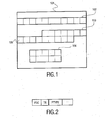
- the figure 1 represents the different types of image slices defined by the H.263 standard.
- it is a QCIF format image 101 in which image slices 102-103-104 are defined, each of these slices being composed of a set of macroblocks of size 16 * 16, such as macroblock 105.
- the image slices of the GOB type are of the type of slice 102 corresponding to a macroblock group of width that of the image and for height that of a macroblock (or of several macroblocks).
- the image slices of the slice type 104 correspond to a group of freeform macroblocks defined by related assembled macroblocks.
- the image slices of the slice type 105 correspond to a group of macroblocks of rectangular shape and of configurable dimensions.
- the free and rectangular shapes are defined when Appendix K of the H.263 standard is used, by a field designated SSS taking a first value for the free form and a second value for the rectangular form.
- the slicing of the images makes it possible to independently code each slice of the same image.
- the value of the bits 1 and 2 of the GFID fields must satisfy certain constraints.
- the value of the GFID fields must be identical in each block group header (if present) or each image slice header, in the same coded image. Moreover, if the PTYPE field in the image header of a current image is the same as in the image header of the previously encoded image, the value of GFID must be identical in these two images, in the extent that the PLUSPTYPE field is not used. However, if the PTYPE field in the image header of a given current image differs from the PTYPE field of the previously encoded image, the GFID value of said current image must be different from the GFID value of said image previously coded.
- the GFID value of the current image must be the same as in the previously coded image, if the value of the fields (PTYPE, PLUSPTYPE, CPFMT, EPAR, CPCFC, SSS, ELNUM , RLNUM, UUI, RPSMF, RPRP as defined by the H.263 standard) remains the same as in the previously coded picture, otherwise, the value of GFID must differ from that of said previously coded picture.
- Table 2 An example of filling of bits 1 and 2 of the GFID field in mode 1 is given in Table 2 for a coded video signal comprising 22 consecutive images.
- Table 2 Example of filling in bits 1 and 2 of the GFID field according to mode 1. image rank 1 2 3 4 5 6 7 8 9 10 11 12 13 14 15 16 17 18 19 20 21 22 image type P I P P P P P P P P P P P I I P P bit 1 of GFID 0 1 0 0 0 0 1 0 0 0 0 0 0 0 0 0 1 1 0 0 1 1 0 bit 2 of GFID 0 X 0 1 0 1 0 1 0 1 0 1 0 1 0 X 0 1 X 0 1 X 0 1 X 0 1 X 0 1 X 0 1 X 0 1 X 1 X 1 0 1 0 1 0 1 0 1 0 X 0 1 X 1 X 1 0 1 0 1
- Table 4 An example of filling of bits 1 and 2 of the GFID field in mode 2 is given in Table 4 for a coded video signal comprising 22 consecutive images.
- Table 4 Example of filling of bits 1 and 2 of the GFID field according to mode 2. image rank 1 2 3 4 5 6 7 8 9 10 11 12 13 14 15 16 17 18 19 20 21 22 image type P I P P P P I P P P P P P P I P P P picture format Q Q Q Q Q Q S S S S S S S S S Q Q Q Q Q Q bit 1 of GFID 0 1 0 0 0 0 0 0 0 0 0 0 0 1 0 0 0 1 0 0 0 0 bit 2 of GFID 1 1 1 1 1 1 0 0 0 0 0 0 0 0 0 0 1 1 1 1 1 1 1 1 1 1 1 1 1 1 1 1 1 1 1 1 0 0 0 0 0 0 0 0 0 0 1 1 1 1 1 1
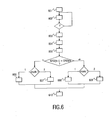
- the figure 6 describes the decoding method according to the invention making it possible, in the event of loss of data in an image, called the current image, to decode image slices of said current image that are not affected by the loss of data, even if the header of image of said current image was lost during transmission.
- the decoding method receives a video signal coded according to the H.263 standard in which the GFID fields have been filled according to the coding method described above.
- This method comprises a detection and initialization step 601 for firstly detecting in which mode the GFID identifier fields have been filled, and secondly initializing parameters of the decoding method so that the interpretation of the bits 1 and 2 GFID fields is concordant with that of the coding method.
- This step 601 is preferably done at the beginning of the sending of the video signal by the coding method, following the sending of proprietary information of the coding method to the decoding method reflecting the filling mode used. In the case where only one mode is envisaged, this initialization step is not performed and the method takes default values corresponding to this mode.
- a new proprietary signal reflecting the value of said new mode is sent to the decoding method so that the latter is able to correctly interpret the GFID fields.
- the coded video signal is scanned by a scanning step 602 in order to locate in the syntax of the coded video signal the presence of the GFID fields.
- a GFID field When a GFID field is located, its value is stored by a storage step 603, as well as the value of the fields of the image header of the image to which said GFID field belongs. Since the GFID fields are always the same for the same image, the storage of a single GFID value per image is sufficient, regardless of the number of image slots per coded image.
- Said GFID field and said stored image header are extracted from a coded frame of rank (n-i) which has preferably not been affected by a loss of data, and which is located chronologically before said current image. It is therefore the identifier field GFID (n-i) and the image_header image header (n-i) belonging to the image Ima (n-i) which are stored.
- the decoding method comprises a step of re-synchronization 604 for re-synchronizing the decoding method on an image slice header, said re-synchronization slice, this re-synchronization occurring in said current image Ima (n) to be decoded.
- the data that make up the coded image Ima (n) are analyzed until a code (GBSC or SSC) is identified in the coding syntax indicating the beginning of an image slice having no not affected by the data loss.
- Said re-synchronization slice comprises the slice_header (n) slice header which itself comprises in particular the GFID (n) field.
- a comparison step 605 compares the values of GFID (n) and GFID (n-i).
- the other coding characteristics of the current image Ima (n) necessary for its decoding in particular to know the fields specifying the coding options of the H.263 standard used during the coding of the video signal, are extracted from the image header of Ima image (ni).
- the decoding step 610 decodes the slices of the current image Ima (n) according to the decoding method of the H.263 standard, using said decoding parameters.
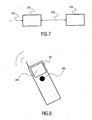
- the figure 7 schematically illustrates a first application of the invention which is a communication system which comprises a coding system 701 and a decoding system 702 exchanging data via the transmission channel 703, for example of the wireless or wired type.
- the coding system 701 includes coding means making it possible to implement the coding method according to the invention described above, on the images of the video input signal 704, the video signal 704 being either a video signal previously coded according to the H.263 standard, or an original uncoded video signal.
- the coding system comprises an encoder according to the H.263 standard operating simultaneously with means implementing the coding method according to the invention.
- the coding system thus delivers on channel 703 a coded video signal according to the H.263 standard, the GFID fields of each coded picture slot being filled according to said coding method.
- the receiver After receiving said coded video signal, and in the event of data loss on the transmission channel 703 leading to the loss of the image header of a current image, the receiver, comprising means for implementing the method of decoding according to the invention, allows the recovery of lost coding characteristics so that the image slots of the said current image not affected by the loss of data can be decoded by a decoder according to the H.263 standard implemented in said system of decoding.
- the coding system as well as the decoding system will be used in particular at signal processors, said processors performing the various steps of described above on video signals by executing instruction sets stored in a memory.
- the figure 8 illustrates a second application of the invention in which the coding method and the decoding method are implemented in a mobile phone 801 having the possibility of operating either in transmission or in reception with a telephone of the same type.
- This phone includes a camera 802 delivering an original uncoded video signal for example to film the person in possession of said phone.
- This telephone comprises an encoder according to the H.263 standard operating simultaneously with the coding means according to the invention, in order to deliver a coded video signal whose GFID fields reflect the characteristics of the coding method according to the invention.
- the image slices of the said current image not affected by the loss of data are decoded by a decoder according to the H.263 standard, using the coding characteristics lost and recovered by the decoding method according to the invention.
- the decoded images are displayed on the 803 screen.
- this type of telephone is used in the context of a data transmission, in particular of video type encoded according to the H.263 standard, over a UMTS transmission network.
Landscapes
- Engineering & Computer Science (AREA)
- Multimedia (AREA)
- Signal Processing (AREA)
- Compression Or Coding Systems Of Tv Signals (AREA)
- Compression, Expansion, Code Conversion, And Decoders (AREA)
Claims (10)
- Codierungsverfahren zur Codierung einer Bildfolge und Lieferung einer Folge codierter Bilder, jedes codierte Bild umfassend eine Bildkopfzeile zur Identifizierung der angewendeten Codiereigenschaften zur Codierung des Bilds, wobei das codierte Bild in Abschnitte umfassend eine Abschnittskopfzeile aufgeteilt wird, und jede Abschnittskopfzeile ein Identifizierungsfeld umfasst, wobei die Identifizierungsfelder für die Abschnitte eines einzelnen codierten Bilds identisch sind, die Identität der Bildkopfzeilen eines aktuell codierten Bilds und eines vorherig codierten Bilds in der Bildfolge die Identität der Identifizierungsfelder der aktuell und vorherig codierten Bilder enthält, eine Änderung in der Bildkopfzeile eines aktuell codierten Bilds zu der eines vorherig codierten Bilds in der codierten Bildfolge zur Änderung der Identifizierungsfelder des aktuellen Bilds in Bezug auf das vorherige Bild führt, wobei das Verfahren dadurch gekennzeichnet ist, dass es ein Füllphase umfasst, um jedes Bit der Identifizierungsfelder mit einem Wert zu füllen, der direkt eine Codiereigenschaft des codierten Bilds identifiziert, mit dem die Identifizierungsfelder verbunden sind, derart, dass die Decodierung mindestens eines Abschnitts eines codierten Bilds bei einem Datenverlust des codierten Bilds möglich ist, der nicht diesen Abschnitt betrifft.
- Decodierungsverfahren zur Decodierung eines aktuellen codierten Bilds, das Teil einer Folge codierter Bilder ist, jedes codierte Bild umfassend eine Bildkopfzeile zur Identifizierung der angewendeten Codiereigenschaften zur Codierung des Bilds, wobei jedes codierte Bild in Abschnitte unterteilt ist, umfassend eine Abschnittskopfzeile, jede Abschnittskopfzeile umfassend ein Identifizierungsfeld, und jedes Bit der Identifizierungsfelder direkt eine Codiereigenschaft des codierten Bilds identifiziert, mit dem diese Identifizierungsfelder verbunden sind, wobei das Verfahren dadurch gekennzeichnet ist, dass es umfasst:eine Phase der Nachsynchronisierung für den Fall eines teilweisen oder vollständigen Verlusts von Daten, der die codierten Bilder übergeordneten Rangs als ein vorher decodiertes Bild betrifft, um das Decodierungsverfahren auf einer Abschnittskopfzeile des Bilds neu zu synchronisieren, die Synchronisierungsphase umfassend eine Analyse der Daten, die das aktuelle codierte Bild zusammensetzen bis zur Erkennung eines Codes, der den Beginn eines Bildabschnitts angibt, der von dem Datenverlust nicht betroffen ist,eine Vergleichsphase zum Vergleich des Identifizierungsfelds des vorherigen decodierten Bilds mit dem Identifizierungsfeld des aktuellen codierten Bilds,eine Decodierungsphase zur Decodierung des Bildabschnitts des aktuellen codierten Bilds, der nicht vom Datenverlust betroffen wurde, unter Verwendung eines Teils der identifizierten Codiereigenschaften durch das Identifizierungsfeld des Bildabschnitts des aktuellen codierten Bilds, das nicht vom Datenverlust betroffen wurde, und unter Verwendung andererseits der identifizierten Codiereigenschaften durch die Bildkopfzeile des vorherigen decodierten Bilds, wenn der Vergleich dieser Identifizierungsfelder nicht ergibt:i) dass das vorher decodierte Bild und das aktuell decodierte Bild vom vorher genannten Typ sind und dass sie unterschiedliche Formate haben,j) oder dass das vorher decodierte Bild vom nicht vorher genannten Typ ist und das aktuell decodierte Bild vom vorher genannten Typ ist, und dass sie unterschiedliche Formate haben.
- Verfahren nach Anspruch 1 oder 2, wo ein erstes Bit der Identifizierungsfelder den Bildtyp der codierten Bilder wiederspiegelt, und ein zweites Bit den verwendeten Rundungstyp für die Codierung der Bilder wiederspiegelt.
- Verfahren nach Anspruch 1 oder 2, wo ein erstes Bit der Identifizierungsfelder den Bildtyp der codierten Bilder wiederspiegelt, und ein zweites Bit das Bildformat der codierten Bilder wiederspiegelt.
- Codierungssystem zur Codierung einer Bildfolge und zum Erhalt einer Folge codierter Bilder, jedes codierte Bild umfassend eine Bildkopfzeile zur Identifizierung der angewendeten Codiereigenschaften zur Codierung des Bilds, wobei das codierte Bild in Abschnitte umfassend eine Abschnittskopfzeile aufgeteilt wird, und jede Abschnittskopfzeile ein Identifizierungsfeld umfasst, wobei die Identifizierungsfelder für die Abschnitte eines einzelnen codierten Bilds identisch sind, die Identität der Bildkopfzeilen eines aktuell codierten Bilds und eines vorherig codierten Bilds in der Bildfolge die Identität der Identifizierungsfelder der aktuell und vorherig codierten Bilder enthält, eine Änderung in der Bildkopfzeile eines aktuell codierten Bilds zu der eines vorherig codierten Bilds in der codierten Bildfolge zur Änderung der Identifizierungsfelder des aktuellen Bilds in Bezug auf das vorherige Bild führt, wobei das System dadurch gekennzeichnet ist, dass es die Füllmittel umfasst, um jedes Bit der Identifizierungsfelder mit einem Wert zu füllen, der direkt eine variable Codiereigenschaft des codierten Bilds identifiziert, mit dem die Identifizierungsfelder verbunden sind, derart, dass die Decodierung mindestens eines Abschnitts eines codierten Bilds bei einem Datenverlust des codierten Bilds möglich ist, der nicht diesen Abschnitt betrifft.
- Decodierungssystem zur Decodierung eines aktuellen codierten Bilds, das Teil einer Folge codierter Bilder ist, jedes codierte Bild umfassend eine Bildkopfzeile zur Identifizierung der angewendeten Codiereigenschaften zur Codierung des Bilds, wobei jedes codierte Bild in Abschnitte unterteilt ist, umfassend eine Abschnittskopfzeile, jede Abschnittskopfzeile umfassend ein Identifizierungsfeld, und jedes Bit der Identifizierungsfelder direkt eine Codiereigenschaft des codierten Bilds identifiziert, mit dem diese Identifizierungsfelder verbunden sind, wobei das System dadurch gekennzeichnet ist, dass es umfasst:Mittel der Nachsynchronisierung für den Fall eines teilweisen oder vollständigen Verlusts von Daten, der die codierten Bilder übergeordneten Rangs als ein vorher decodiertes Bild betrifft, um das Decodierungsverfahren auf einer Abschnittskopfzeile des Bilds neu zu synchronisieren, die Synchronisierungsphase umfassend eine Analyse der Daten, die das aktuelle codierte Bild zusammensetzen bis zur Erkennung eines Codes, der den Beginn eines Bildabschnitts angibt, der von dem Datenverlust nicht betroffen ist,Vergleichsmittel zum Vergleich des Identifizierungsfelds des vorherigen decodierten Bilds mit dem Identifizierungsfeld des aktuellen codierten Bilds,Decodierungsmittel zur Decodierung des Bildabschnitts des aktuellen codierten Bilds, der nicht vom Datenverlust betroffen wurde, unter Verwendung eines Teils der identifizierten Codiereigenschaften durch das Identifizierungsfeld des Bildabschnitts des aktuellen codierten Bilds, das nicht vom Datenverlust betroffen wurde, und unter Verwendung andererseits der identifizierten Codiereigenschaften durch die Bildkopfzeile des vorherigen decodierten Bilds, wenn der Vergleich dieser Identifizierungsfelder nicht ergibt:i) dass das vorher decodierte Bild und das aktuell decodierte Bild vom vorher genannten Typ sind und dass sie unterschiedliche Formate haben,j) oder dass das vorher decodierte Bild vom nicht vorher genannten Typ ist und das aktuell decodierte Bild vom vorher genannten Typ ist, und dass sie unterschiedliche Formate haben.
- Kommunikationssystem umfassend ein Codierungssystem nach Anspruch 5 und ein Decodierungssystemnach Anspruch 6.
- Mobiltelefon umfassend ein Codierungssystem nach Anspruch 5 und ein Decodierungssystem nach Anspruch 6.
- Videosignal definierend eine Folge codierter Bilder erhalten durch Codierung einer Bildfolge, jedes codierte Bild umfassend eine Bildkopfzeile zur Identifizierung der angewendeten Codiereigenschaften zur Codierung des Bilds, wobei das codierte Bild in Abschnitte umfassend eine Abschnittskopfzeile aufgeteilt wird, und jeder Bildabschnitt ein Identifizierungsfeld umfasst, das mit Werten gefüllt wird, die direkt variable Codiereigenschaften des codierten Bilds identifizieren, ein Identifizierungsfeld, das für die Abschnitte eines einzelnen Bilds identisch ist, eine Identität der Codiereigenschaften eines aktuell und vorher codierten Bilds, die zur Identität der Identifizierungsfelder dieser zwei Bilder führt, wobei eine Änderung der Codiereigenschaften eines aktuell codierten Bilds in Bezug auf die eines vorher codierten Bilds zur Änderung der Identifizierungsfelder dieses aktuell codierten Bilds führt, und wobei ein erster Wert der Identifizierungsfelder absolut den Typ des codierten Bilds identifiziert, und ein zweiter Wert der Identifizierungsfelder absolut das Format des codierten Bilds oder den Rundungstyp identifiziert, und die sonstigen Codiereigenschaften festgelegt sind.
- Rechnerprogramm umfassend die Programmcodeanweisungen zur Umsetzung eines Verfahrens nach einem der Ansprüche 1 bis 4.
Applications Claiming Priority (2)
| Application Number | Priority Date | Filing Date | Title |
|---|---|---|---|
| FR0110543A FR2828614A1 (fr) | 2001-08-07 | 2001-08-07 | Methode de codage et de decodage video pour pallier les pertes de donnees dans un signal video code transmis sur un canal |
| FR0110543 | 2001-08-07 |
Publications (2)
| Publication Number | Publication Date |
|---|---|
| EP1289307A1 EP1289307A1 (de) | 2003-03-05 |
| EP1289307B1 true EP1289307B1 (de) | 2015-10-07 |
Family
ID=8866344
Family Applications (1)
| Application Number | Title | Priority Date | Filing Date |
|---|---|---|---|
| EP02078134.0A Expired - Lifetime EP1289307B1 (de) | 2001-08-07 | 2002-07-30 | Videokodierungsverfahren |
Country Status (9)
| Country | Link |
|---|---|
| US (1) | US6909450B2 (de) |
| EP (1) | EP1289307B1 (de) |
| JP (1) | JP4855622B2 (de) |
| KR (1) | KR100927353B1 (de) |
| BR (1) | BRPI0203071B1 (de) |
| DK (1) | DK1289307T3 (de) |
| ES (1) | ES2551437T3 (de) |
| FR (1) | FR2828614A1 (de) |
| PL (1) | PL355366A1 (de) |
Families Citing this family (8)
| Publication number | Priority date | Publication date | Assignee | Title |
|---|---|---|---|---|
| KR100557118B1 (ko) * | 2002-09-03 | 2006-03-03 | 엘지전자 주식회사 | 동영상 디코더 및 이를 이용한 디코딩 방법 |
| KR100557047B1 (ko) * | 2002-10-21 | 2006-03-03 | 엘지전자 주식회사 | 동영상 디코딩 방법 |
| KR100543607B1 (ko) * | 2002-11-05 | 2006-01-20 | 엘지전자 주식회사 | 동영상 디코딩 방법 |
| US8824553B2 (en) * | 2003-05-12 | 2014-09-02 | Google Inc. | Video compression method |
| US8145794B2 (en) | 2008-03-14 | 2012-03-27 | Microsoft Corporation | Encoding/decoding while allowing varying message formats per message |
| US11917206B2 (en) | 2021-12-17 | 2024-02-27 | Lenovo (Singapore) Pte. Ltd. | Video codec aware radio access network configuration and unequal error protection coding |
| US11824653B2 (en) * | 2021-12-17 | 2023-11-21 | Lenovo (Singapore) Pte. Ltd. | Radio access network configuration for video approximate semantic communications |
| US12363316B2 (en) | 2021-12-17 | 2025-07-15 | Lenovo (Singapore) Pte. Ltd. | Video codec importance indication and radio access network awareness configuration |
Family Cites Families (6)
| Publication number | Priority date | Publication date | Assignee | Title |
|---|---|---|---|---|
| EP0674448B1 (de) * | 1994-03-25 | 2002-01-09 | Nec Corporation | Wiedergabe von Videobildern mit erhöhter Geschwindigkeit |
| JPH1174868A (ja) * | 1996-09-02 | 1999-03-16 | Toshiba Corp | 情報伝送方法およびその方法が適用される情報伝送システムにおける符号化装置/復号化装置、並びに符号化・多重化装置/復号化・逆多重化装置 |
| KR100487988B1 (ko) * | 1997-10-23 | 2005-05-09 | 미쓰비시덴키 가부시키가이샤 | 부호화 비트 스트림 변환 장치 |
| KR100644576B1 (ko) * | 1999-10-19 | 2006-11-13 | 삼성전자주식회사 | 디지털 비디오 코딩 방법 및 장치 |
| JP2003519988A (ja) * | 1999-12-22 | 2003-06-24 | ネオムテル・カンパニー・リミテッド | 無線通信を用いた動画像送受信システム及び転送方法 |
| JP2001258031A (ja) * | 2000-03-08 | 2001-09-21 | Sony Corp | 信号処理方法、画像符号化装置及び画像復号装置 |
-
2001
- 2001-08-07 FR FR0110543A patent/FR2828614A1/fr active Pending
-
2002
- 2002-07-30 ES ES02078134.0T patent/ES2551437T3/es not_active Expired - Lifetime
- 2002-07-30 DK DK02078134.0T patent/DK1289307T3/en active
- 2002-07-30 EP EP02078134.0A patent/EP1289307B1/de not_active Expired - Lifetime
- 2002-08-02 US US10/211,896 patent/US6909450B2/en not_active Expired - Lifetime
- 2002-08-05 BR BRPI0203071A patent/BRPI0203071B1/pt active IP Right Grant
- 2002-08-06 JP JP2002228409A patent/JP4855622B2/ja not_active Expired - Lifetime
- 2002-08-06 PL PL02355366A patent/PL355366A1/xx not_active Application Discontinuation
- 2002-08-06 KR KR1020020046341A patent/KR100927353B1/ko not_active Expired - Lifetime
Also Published As
| Publication number | Publication date |
|---|---|
| BRPI0203071B1 (pt) | 2015-09-08 |
| PL355366A1 (en) | 2003-02-10 |
| US6909450B2 (en) | 2005-06-21 |
| ES2551437T3 (es) | 2015-11-19 |
| DK1289307T3 (en) | 2015-12-14 |
| KR20030014135A (ko) | 2003-02-15 |
| US20030108104A1 (en) | 2003-06-12 |
| JP4855622B2 (ja) | 2012-01-18 |
| FR2828614A1 (fr) | 2003-02-14 |
| JP2003078911A (ja) | 2003-03-14 |
| KR100927353B1 (ko) | 2009-11-19 |
| EP1289307A1 (de) | 2003-03-05 |
| BR0203071A (pt) | 2003-05-27 |
Similar Documents
| Publication | Publication Date | Title |
|---|---|---|
| EP2036359B1 (de) | Verfahren zum bestimmen von schutz- und kompressionsparametern zur übertragung von multimedia daten über einen drahtlosen kanal | |
| US7149247B2 (en) | Methods and systems for encoding and decoding video data to enable random access and splicing | |
| EP1997254B1 (de) | Verfahren zum schützen von multimediendaten unter verwendung von zusätzlichen nal (network abstraction layers) | |
| WO2003063500A1 (en) | Methods and systems for encoding and decoding video data to enable random access and splicing | |
| KR101959319B1 (ko) | 비디오 데이터 인코딩 및 디코딩 방법 및 장치 | |
| WO2009147182A1 (fr) | Procede et systeme permettant de proteger un flux video compresse contre les erreurs survenant lors d'une transmission | |
| EP1289307B1 (de) | Videokodierungsverfahren | |
| EP3788789A2 (de) | Verfahren und vorrichtung zur bildverarbeitung und geeignete verfahren und vorrichtung zur decodierung eines mehransichtsvideos | |
| FR2880745A1 (fr) | Procede et dispositif de codage video | |
| EP1779669A1 (de) | Verfahren zum formatieren von videosequenz-vollbildern | |
| US20190007691A1 (en) | Arrangements and methods thereof for processing video | |
| WO2007077178A1 (fr) | Procede de codage et de decodage d'une image ou d'une sequence d'images, dispositifs, programmes d'ordinateur, et signal correspondants | |
| WO2010072636A1 (fr) | Systeme et procede interactif pour la transmission sur un reseau bas debit d'images clefs selectionnees dans un flux video | |
| EP1241894A1 (de) | Verfahren zur Kodierung von digitalen Bildern basierend auf Fehlerverdeckung | |
| EP3840335B1 (de) | Empfang von digitalen inhalten im trickmodus | |
| EP2025174A1 (de) | Verwendung eines feedback-kanals zur rundsendung von bildern | |
| FR2851112A1 (fr) | Dispositif securise pour la diffusion, l'enregistrement et la visualisation a la demande des oeuvres audiovisuelles au format de type mpeg-2ts | |
| EP0674439B1 (de) | Bildkodierungs- und -dekodierungsmethode mit flexiblem Format für Übertragungssystem mit niedriger Datenrate | |
| EP3350931B1 (de) | Optimisierte übertragung von videodaten über ein drahtloses netzwerk | |
| FR2949283A1 (fr) | Procede et installation pour marquer en temps reel un flux video compose d'une succession d'images video codees selon la norme mpeg-2. | |
| EP1854299B1 (de) | Verfahren, einrichtung und system zum verarbeiten von sukzessiven blockcodierten bildern | |
| FR2728129A1 (fr) | Dispositif de multiplexage numerique de programmes video | |
| EP1383336A2 (de) | Dekompressions- und Wiedergabemethode für objektbasierte Multimediadatenströme; entsprechender Apparat und entsprechendes System sowie Signal | |
| WO2008087305A2 (fr) | Selection adaptive d'un mode de codage image/trame dans le cadre d'un transcodage mpeg2 - h. 264 | |
| WO2014029188A1 (en) | Method and apparatus for detecting gradual transition picture in video bitstream |
Legal Events
| Date | Code | Title | Description |
|---|---|---|---|
| PUAI | Public reference made under article 153(3) epc to a published international application that has entered the european phase |
Free format text: ORIGINAL CODE: 0009012 |
|
| AK | Designated contracting states |
Kind code of ref document: A1 Designated state(s): AT BE BG CH CY CZ DE DK EE ES FI FR GB GR IE IT LI LU MC NL PT SE SK TR Designated state(s): AT BE BG CH CY CZ DE DK EE ES FI FR GB GR IE IT LI LU MC NL PT SE SK TR |
|
| AX | Request for extension of the european patent |
Extension state: AL LT LV MK RO SI |
|
| 17P | Request for examination filed |
Effective date: 20030905 |
|
| AKX | Designation fees paid |
Designated state(s): AT BE BG CH CY CZ DE DK EE ES FI FR GB GR IE IT LI LU MC NL PT SE SK TR |
|
| 17Q | First examination report despatched |
Effective date: 20040810 |
|
| RAP1 | Party data changed (applicant data changed or rights of an application transferred) |
Owner name: KONINKLIJKE PHILIPS N.V. |
|
| REG | Reference to a national code |
Ref country code: DE Ref legal event code: R079 Ref document number: 60247525 Country of ref document: DE Free format text: PREVIOUS MAIN CLASS: H04N0007640000 Ipc: H04N0019890000 |
|
| RIC1 | Information provided on ipc code assigned before grant |
Ipc: H04N 19/89 20140101AFI20150323BHEP Ipc: H04N 19/70 20140101ALI20150323BHEP |
|
| GRAP | Despatch of communication of intention to grant a patent |
Free format text: ORIGINAL CODE: EPIDOSNIGR1 |
|
| INTG | Intention to grant announced |
Effective date: 20150430 |
|
| GRAS | Grant fee paid |
Free format text: ORIGINAL CODE: EPIDOSNIGR3 |
|
| GRAA | (expected) grant |
Free format text: ORIGINAL CODE: 0009210 |
|
| AK | Designated contracting states |
Kind code of ref document: B1 Designated state(s): AT BE BG CH CY CZ DE DK EE ES FI FR GB GR IE IT LI LU MC NL PT SE SK TR |
|
| REG | Reference to a national code |
Ref country code: GB Ref legal event code: FG4D Free format text: NOT ENGLISH |
|
| REG | Reference to a national code |
Ref country code: AT Ref legal event code: REF Ref document number: 754338 Country of ref document: AT Kind code of ref document: T Effective date: 20151015 Ref country code: CH Ref legal event code: NV Representative=s name: WEINMANN ZIMMERLI, CH Ref country code: CH Ref legal event code: EP |
|
| REG | Reference to a national code |
Ref country code: IE Ref legal event code: FG4D Free format text: LANGUAGE OF EP DOCUMENT: FRENCH |
|
| REG | Reference to a national code |
Ref country code: DE Ref legal event code: R096 Ref document number: 60247525 Country of ref document: DE Ref country code: ES Ref legal event code: FG2A Ref document number: 2551437 Country of ref document: ES Kind code of ref document: T3 Effective date: 20151119 |
|
| REG | Reference to a national code |
Ref country code: DK Ref legal event code: T3 Effective date: 20151209 |
|
| REG | Reference to a national code |
Ref country code: GB Ref legal event code: 746 Effective date: 20151125 |
|
| REG | Reference to a national code |
Ref country code: SE Ref legal event code: TRGR |
|
| PG25 | Lapsed in a contracting state [announced via postgrant information from national office to epo] |
Ref country code: PT Free format text: LAPSE BECAUSE OF FAILURE TO SUBMIT A TRANSLATION OF THE DESCRIPTION OR TO PAY THE FEE WITHIN THE PRESCRIBED TIME-LIMIT Effective date: 20160208 Ref country code: GR Free format text: LAPSE BECAUSE OF FAILURE TO SUBMIT A TRANSLATION OF THE DESCRIPTION OR TO PAY THE FEE WITHIN THE PRESCRIBED TIME-LIMIT Effective date: 20160108 |
|
| REG | Reference to a national code |
Ref country code: DE Ref legal event code: R097 Ref document number: 60247525 Country of ref document: DE |
|
| REG | Reference to a national code |
Ref country code: NL Ref legal event code: MP Effective date: 20151007 |
|
| REG | Reference to a national code |
Ref country code: FR Ref legal event code: PLFP Year of fee payment: 15 |
|
| PLBE | No opposition filed within time limit |
Free format text: ORIGINAL CODE: 0009261 |
|
| STAA | Information on the status of an ep patent application or granted ep patent |
Free format text: STATUS: NO OPPOSITION FILED WITHIN TIME LIMIT |
|
| PG25 | Lapsed in a contracting state [announced via postgrant information from national office to epo] |
Ref country code: NL Free format text: LAPSE BECAUSE OF FAILURE TO SUBMIT A TRANSLATION OF THE DESCRIPTION OR TO PAY THE FEE WITHIN THE PRESCRIBED TIME-LIMIT Effective date: 20151007 Ref country code: EE Free format text: LAPSE BECAUSE OF FAILURE TO SUBMIT A TRANSLATION OF THE DESCRIPTION OR TO PAY THE FEE WITHIN THE PRESCRIBED TIME-LIMIT Effective date: 20151007 Ref country code: SK Free format text: LAPSE BECAUSE OF FAILURE TO SUBMIT A TRANSLATION OF THE DESCRIPTION OR TO PAY THE FEE WITHIN THE PRESCRIBED TIME-LIMIT Effective date: 20151007 |
|
| 26N | No opposition filed |
Effective date: 20160708 |
|
| PGFP | Annual fee paid to national office [announced via postgrant information from national office to epo] |
Ref country code: NL Payment date: 20160725 Year of fee payment: 15 |
|
| PG25 | Lapsed in a contracting state [announced via postgrant information from national office to epo] |
Ref country code: MC Free format text: LAPSE BECAUSE OF FAILURE TO SUBMIT A TRANSLATION OF THE DESCRIPTION OR TO PAY THE FEE WITHIN THE PRESCRIBED TIME-LIMIT Effective date: 20151007 |
|
| REG | Reference to a national code |
Ref country code: IE Ref legal event code: MM4A |
|
| REG | Reference to a national code |
Ref country code: FR Ref legal event code: PLFP Year of fee payment: 16 |
|
| PG25 | Lapsed in a contracting state [announced via postgrant information from national office to epo] |
Ref country code: IE Free format text: LAPSE BECAUSE OF NON-PAYMENT OF DUE FEES Effective date: 20160730 |
|
| REG | Reference to a national code |
Ref country code: AT Ref legal event code: UEP Ref document number: 754338 Country of ref document: AT Kind code of ref document: T Effective date: 20151007 |
|
| PG25 | Lapsed in a contracting state [announced via postgrant information from national office to epo] |
Ref country code: LU Free format text: LAPSE BECAUSE OF NON-PAYMENT OF DUE FEES Effective date: 20160730 |
|
| PG25 | Lapsed in a contracting state [announced via postgrant information from national office to epo] |
Ref country code: CY Free format text: LAPSE BECAUSE OF FAILURE TO SUBMIT A TRANSLATION OF THE DESCRIPTION OR TO PAY THE FEE WITHIN THE PRESCRIBED TIME-LIMIT Effective date: 20151007 |
|
| REG | Reference to a national code |
Ref country code: DE Ref legal event code: R084 Ref document number: 60247525 Country of ref document: DE |
|
| REG | Reference to a national code |
Ref country code: FR Ref legal event code: PLFP Year of fee payment: 17 |
|
| PG25 | Lapsed in a contracting state [announced via postgrant information from national office to epo] |
Ref country code: BG Free format text: LAPSE BECAUSE OF FAILURE TO SUBMIT A TRANSLATION OF THE DESCRIPTION OR TO PAY THE FEE WITHIN THE PRESCRIBED TIME-LIMIT Effective date: 20151007 |
|
| PGFP | Annual fee paid to national office [announced via postgrant information from national office to epo] |
Ref country code: IT Payment date: 20210722 Year of fee payment: 20 Ref country code: FI Payment date: 20210721 Year of fee payment: 20 Ref country code: CZ Payment date: 20210730 Year of fee payment: 20 Ref country code: AT Payment date: 20210721 Year of fee payment: 20 Ref country code: FR Payment date: 20210726 Year of fee payment: 20 |
|
| PGFP | Annual fee paid to national office [announced via postgrant information from national office to epo] |
Ref country code: ES Payment date: 20210810 Year of fee payment: 20 Ref country code: DK Payment date: 20210722 Year of fee payment: 20 Ref country code: GB Payment date: 20210726 Year of fee payment: 20 Ref country code: TR Payment date: 20210719 Year of fee payment: 20 Ref country code: SE Payment date: 20210722 Year of fee payment: 20 Ref country code: CH Payment date: 20210722 Year of fee payment: 20 Ref country code: BE Payment date: 20210726 Year of fee payment: 20 Ref country code: DE Payment date: 20210729 Year of fee payment: 20 |
|
| REG | Reference to a national code |
Ref country code: DE Ref legal event code: R071 Ref document number: 60247525 Country of ref document: DE |
|
| REG | Reference to a national code |
Ref country code: DK Ref legal event code: EUP Expiry date: 20220730 |
|
| REG | Reference to a national code |
Ref country code: FI Ref legal event code: MAE |
|
| REG | Reference to a national code |
Ref country code: CH Ref legal event code: PL |
|
| REG | Reference to a national code |
Ref country code: BE Ref legal event code: MK Effective date: 20220730 |
|
| REG | Reference to a national code |
Ref country code: GB Ref legal event code: PE20 Expiry date: 20220729 |
|
| REG | Reference to a national code |
Ref country code: SE Ref legal event code: EUG |
|
| REG | Reference to a national code |
Ref country code: AT Ref legal event code: MK07 Ref document number: 754338 Country of ref document: AT Kind code of ref document: T Effective date: 20220730 |
|
| REG | Reference to a national code |
Ref country code: ES Ref legal event code: FD2A Effective date: 20220929 |
|
| PG25 | Lapsed in a contracting state [announced via postgrant information from national office to epo] |
Ref country code: GB Free format text: LAPSE BECAUSE OF EXPIRATION OF PROTECTION Effective date: 20220729 Ref country code: ES Free format text: LAPSE BECAUSE OF EXPIRATION OF PROTECTION Effective date: 20220731 Ref country code: CZ Free format text: LAPSE BECAUSE OF EXPIRATION OF PROTECTION Effective date: 20220730 |