EP1288032A1 - Car air-conditioning system - Google Patents
Car air-conditioning system Download PDFInfo
- Publication number
- EP1288032A1 EP1288032A1 EP02713199A EP02713199A EP1288032A1 EP 1288032 A1 EP1288032 A1 EP 1288032A1 EP 02713199 A EP02713199 A EP 02713199A EP 02713199 A EP02713199 A EP 02713199A EP 1288032 A1 EP1288032 A1 EP 1288032A1
- Authority
- EP
- European Patent Office
- Prior art keywords
- power generation
- air conditioning
- increment
- permissible
- power consumption
- Prior art date
- Legal status (The legal status is an assumption and is not a legal conclusion. Google has not performed a legal analysis and makes no representation as to the accuracy of the status listed.)
- Withdrawn
Links
Images








Classifications
-
- B—PERFORMING OPERATIONS; TRANSPORTING
- B60—VEHICLES IN GENERAL
- B60H—ARRANGEMENTS OF HEATING, COOLING, VENTILATING OR OTHER AIR-TREATING DEVICES SPECIALLY ADAPTED FOR PASSENGER OR GOODS SPACES OF VEHICLES
- B60H1/00—Heating, cooling or ventilating devices
- B60H1/32—Cooling devices
-
- B—PERFORMING OPERATIONS; TRANSPORTING
- B60—VEHICLES IN GENERAL
- B60H—ARRANGEMENTS OF HEATING, COOLING, VENTILATING OR OTHER AIR-TREATING DEVICES SPECIALLY ADAPTED FOR PASSENGER OR GOODS SPACES OF VEHICLES
- B60H1/00—Heating, cooling or ventilating devices
- B60H1/00357—Air-conditioning arrangements specially adapted for particular vehicles
- B60H1/00385—Air-conditioning arrangements specially adapted for particular vehicles for vehicles having an electrical drive, e.g. hybrid or fuel cell
-
- B—PERFORMING OPERATIONS; TRANSPORTING
- B60—VEHICLES IN GENERAL
- B60H—ARRANGEMENTS OF HEATING, COOLING, VENTILATING OR OTHER AIR-TREATING DEVICES SPECIALLY ADAPTED FOR PASSENGER OR GOODS SPACES OF VEHICLES
- B60H1/00—Heating, cooling or ventilating devices
- B60H1/32—Cooling devices
- B60H1/3204—Cooling devices using compression
- B60H1/3205—Control means therefor
- B60H1/3208—Vehicle drive related control of the compressor drive means, e.g. for fuel saving purposes
-
- B—PERFORMING OPERATIONS; TRANSPORTING
- B60—VEHICLES IN GENERAL
- B60H—ARRANGEMENTS OF HEATING, COOLING, VENTILATING OR OTHER AIR-TREATING DEVICES SPECIALLY ADAPTED FOR PASSENGER OR GOODS SPACES OF VEHICLES
- B60H1/00—Heating, cooling or ventilating devices
- B60H1/32—Cooling devices
- B60H1/3204—Cooling devices using compression
- B60H1/3222—Cooling devices using compression characterised by the compressor driving arrangements, e.g. clutches, transmissions or multiple drives
-
- B—PERFORMING OPERATIONS; TRANSPORTING
- B60—VEHICLES IN GENERAL
- B60H—ARRANGEMENTS OF HEATING, COOLING, VENTILATING OR OTHER AIR-TREATING DEVICES SPECIALLY ADAPTED FOR PASSENGER OR GOODS SPACES OF VEHICLES
- B60H1/00—Heating, cooling or ventilating devices
- B60H1/32—Cooling devices
- B60H2001/3236—Cooling devices information from a variable is obtained
- B60H2001/3266—Cooling devices information from a variable is obtained related to the operation of the vehicle
-
- B—PERFORMING OPERATIONS; TRANSPORTING
- B60—VEHICLES IN GENERAL
- B60H—ARRANGEMENTS OF HEATING, COOLING, VENTILATING OR OTHER AIR-TREATING DEVICES SPECIALLY ADAPTED FOR PASSENGER OR GOODS SPACES OF VEHICLES
- B60H1/00—Heating, cooling or ventilating devices
- B60H1/32—Cooling devices
- B60H2001/3269—Cooling devices output of a control signal
- B60H2001/327—Cooling devices output of a control signal related to a compressing unit
- B60H2001/3273—Cooling devices output of a control signal related to a compressing unit related to the operation of the vehicle, e.g. the compressor driving torque
Definitions
- the present invention relates to an automotive air conditioning system for use in an automobile having storage means, power generation means for charging the storage means, and air conditioning means having an electric compressor driven by feeding from the storage means.
- a car air-conditioner air conditioning means for use in a general automobile has had a compressor driven by a fuel engine (an internal combustion engine).
- High-temperature gas refrigerant which has been discharged from the compressor and flowed into an exterior unit heat exchanger, radiates heat through heat exchanges with an air outside the passenger compartment caused by an exterior unit blower and is condensed to a liquid. Thereafter it flows into an interior unit heat exchanger arranged inside the passenger compartment via an expansion valve.
- the liquid refrigerant evaporates there and absorbs heat from circumambient air, thereby taking cooling action.
- This interior unit heat exchanger air-conditions by taking the heat out of the passenger compartment with heat exchanges to the air of the inside of the passenger compartment circulated by the interior unit blower. Then, refrigerant from the interior unit heat exchanger returns to the compressor and the refrigerating cycle is repeated.
- This type of car air-conditioner is provided with a control unit, which turns off a rotation of the compressor when the passenger compartment is air-cooled up to the lower limit temperature among the given upper limit temperature and lower limit temperature set at the top and bottom of the preset temperatures. Then, if the inside temperature of the passenger compartment rises up and reaches the upper limit temperature, the control unit restarts air-cooling the passenger compartment by turning on the compressor. In this manner, the conventional system air-cools the passenger compartment, having a heating action from the heater added, thereby air-conditions the passenger compartment at a preset temperature at all seasons.
- the electric vehicles include a pure electric vehicle (PEV) with a battery (in-vehicle battery) mounted on the automobile, which runs by driving a traveling motor powered by the in-vehicle battery, in addition to a series hybrid vehicle running with charging an in-vehicle battery using power generated by a fuel engine and with driving a traveling motor using power fed from the battery, a parallel hybrid vehicle running with cooperation between a traveling motor and a fuel engine, a series and parallel hybrid vehicle (HEV) having both functions of the series and parallel hybrid vehicles, and a fuel cell powered vehicle (FCEV) running with charging an in-vehicle battery using power generated by a fuel cell and with driving a traveling motor using power fed from the battery.
- PEV pure electric vehicle
- FCEV fuel cell powered vehicle
- an electric compressor driven by feeding from the in-vehicle battery is used as a compressor for the air conditioning means (car air-conditioner). If the in-vehicle battery is discharged by power consumption in the electric compressor, however, it may cause such a problem that traveling itself is disrupted.
- an alternator driven by an engine generates power and the power is used for charging an in-vehicle battery. Therefore, if a compressor for air conditioning means is driven as an electric compressor by using the in-vehicle battery also in this case, a performance control (frequency control) of the compressor can be easily performed and more comfortable air conditioning in the passenger compartment can be achieved. Nevertheless, if the in-vehicle battery is discharged due to power consumption in the electric compressor, an engine control unit, a change gear control unit, and an igniter malfunction, thereby disrupting the traveling itself.
- an automotive air conditioning system which is free from troubles in traveling itself caused by power consumption in air conditioning means in an automobile having storage means, power generation means for charging the storage means, and air conditioning means having an electric compressor driven by feeding from the storage means.
- an automotive air conditioning system which is for use in an automobile having storage means, power generation means for charging the storage means, and air conditioning means having an electric compressor driven by feeding from the storage means, comprising control means for controlling power generation of the power generation means and an operation of the air conditioning means, wherein the control means calculates a permissible power consumption increment in the air conditioning means by adding a permissible power generation increment to a permissible discharging current increment on tha basis of the permissible power generation increment allowable in the power generation means and the permissible discharging current increment allowable in the storage means to increase power consumption of the air conditioning means within the range of the permissible power consumption increment and to increase power generation of the power generation means within the range of the permissible power generation increment according to an increment of power consumption of the air conditioning means.
- the automotive air conditioning system of the present invention is for use in an automobile having storage means, power generation means for charging the storage means, and air conditioning means having an electric compressor driven by feeding from the storage means and comprises control means for controlling power generation of the power generation means and an operation of the air conditioning means, wherein the control means calculates a permissible power consumption increment in the air conditioning means by adding a permissible power generation increment to a permissible discharging current increment on tha basis of the permissible power generation increment allowable in the power generation means and the permissible discharging current increment allowable in the storage means to increase power consumption of the air conditioning means within the range of the permissible power consumption increment and to increase power generation of the power generation means within the range of the permissible power generation increment according to an increment of power consumption of the air conditioning means, by which the increase of the power consumption of the air conditioning means is limited to remain within the range of the permissible power consumption increment calculated by adding the permissible discharging current increment in the storage means to the permissible power generation increment in the power
- the power generation of the power generation means is increased within the range of the permissible power generation increment according to an increment of power consumption of the air conditioning means, thereby ensuring as high air conditioning capability of the air conditioning means as possible, by which a decrease of the air conditioning performance inside the passenger compartment can be prevented or minimized.
- the permissible discharging current increment in the storage means is also considered in the increase of power consumption of the air conditioning means in this condition. Therefore, it becomes possible to discharge the storage means within the allowable range so as to maximize the air conditioning capability of the air conditioning means under such circumstances that traveling loads are reduced, thereby achieving more comfortable air conditioning in the passenger compartment.
- an automotive air conditioning system which is for use in an automobile having storage means, power generation means for charging the storage means, and air conditioning means having an electric compressor driven by feeding from the storage means, comprising control means for controlling power generation of the power generation means and an operation of the air conditioning means, wherein the control means calculates a permissible power consumption increment in the air conditioning means by adding a permissible power generation increment to a permissible discharging current increment on tha basis of the permissible power generation increment allowable in the power generation means and the permissible discharging current increment allowable in the storage means to increase power consumption of the air conditioning means within the range of the permissible power consumption increment and to increase power generation of the power generation means by an excess of an increment of power consumption of the air conditioning means over the permissible discharging current increment.
- the automotive air conditioning system of the present invention is for use in an automobile having storage means, power generation means for charging the storage means, and air conditioning means having an electric compressor driven by feeding from the storage means and comprises control means for controlling power generation of the power generation means and an operation of the air conditioning means, wherein the control means calculates a permissible power consumption increment in the air conditioning means by adding a permissible power generation increment to a permissible discharging current increment on tha basis of the permissible power generation increment allowable in the power generation means and the permissible discharging current increment allowable in the storage means to increase power consumption of the air conditioning means within the range of the permissible power consumption increment and to increase power generation of the power generation means by.an excess of an increment of power consumption of the air conditioning means over the permissible discharging current increment, by which the increase of the power consumption of the air conditioning means is limited to remain within the range of the permissible power consumption increment calculated by adding the permissible discharging current increment in the storage means to the permissible power generation increment in
- the power generation of the power generation means is increased by the excess of an increment of power consumption of the air conditioning means over the permissible discharging current increment, thereby ensuring as high air conditioning capability of the air conditioning means as possible, by which a decrease of the air conditioning performance inside the passenger compartment can be prevented or minimized.
- the permissible discharging current increment in the storage means is also considered in an increase of power consumption of the air conditioning means in this condition.
- the storage means within the allowable range so as to maximize the air conditioning capability of the air conditioning means under such circumstances that traveling loads are reduced, thereby achieving more comfortable air conditioning in the passenger compartment.
- the increase in the power generation is limited to the excess of an increment of power consumption of the air conditioning means over the permissible discharging current increment, by which it becomes possible to minimize the increase in the consumption energy for increasing the power generation in the power generation means.
- the automotive air conditioning system of the present invention further comprises driving means for driving the power generation means, wherein the control means compares margin power generation that the power generation means can output further with margin horsepower that the driving means can output further and considers a lower value to be the permissible power generation increment.
- the automotive air conditioning system of the present invention further comprises driving means for driving the power generation means in addition to the above each aspect of the invention, wherein the control means compares the margin power generation that the power generation means can output further with the margin horsepower that the driving means can output further and considers a lower value to be the permissible power generation increment, by which it becomes possible to calculate the permissible power consumption increment of the air conditioning means from a more accurate permissible power generation increment obtained after considering the margin horsepower of the driving means for driving the power generation means and to execute a control of an increase in the power consumption of the air conditioning means.
- the automotive air conditioning system of the present invention comprises the control means which calculates a margin-power utilization ratio fluctuating within a range of 0 to 1 in proportion to a value obtained by subtracting the margin horsepower from a value of the permissible power generation increment plus the permissible discharging current increment and calculates the permissible power consumption increment by multiplying the permissible power generation increment plus the permissible discharging current increment by the margin-power utilization ratio.
- the control means in the above further calculates a margin-power utilization ratio fluctuating within a range of 0 to 1 in proportion to a value obtained by subtracting the margin horsepower from a value of the permissible power generation increment plus the permissible discharging current increment and calculates the permissible power consumption increment by multiplying the permissible power generation increment plus the permissible discharging current increment by the margin-power utilization ratio, by which the permissible power consumption increment decreases if a proportion of the margin horsepower is high relative to the value of the permissible power generation increment plus the permissible discharging current increment and the margin-power utilization ratio is low, while the permissible power consumption increment increases if the proportion of the margin horsepower is low and the margin-power utilization ratio is high to the contrary.
- an automotive air conditioning system which is for use in an automobile having storage means, power generation means for charging the storage means, and air conditioning means having an electric compressor driven by feeding from the storage means, comprising control means for controlling power generation of the power generation means and an operation of the air conditioning means, wherein the control means calculates a permissible power generation increment allowable in the power generation means to increase power consumption of the air conditioning means within the range of the permissible power generation increment and to increase power generation of the power generation means according to an increment of power consumption of the air conditioning means.
- the automotive air conditioning system of the present invention is for use in an automobile having storage means, power generation means for charging the storage means, and air conditioning means having an electric compressor driven by feeding from the storage means and comprises control means for controlling power generation of the power generation means and an operation of the air conditioning means, wherein the control means calculates a permissible power generation increment allowable in the power generation means to increase power consumption of the air conditioning means within the range of the permissible power generation increment and to increase power generation of the power generation means according to an increment of power consumption of the air conditioning means, by which an increase of the power consumption of the air conditioning means is limited to remain at least within the range of the permissible power generation increment of the power generation means.
- the power generation of the power generation means is increased according to an increment of power consumption of the air conditioning means thereby ensuring as high air conditioning capability of the air conditioning means as possible, by which a decrease of the air conditioning performance inside the passenger compartment can be prevented or minimized.
- the automotive air conditioning system of the present invention further comprises driving means for driving the power generation means, wherein the control means compares margin power generation that the power generation means can output further with margin horsepower that the driving means can output further and considers a lower value to be the permissible power generation increment.
- the automotive air conditioning system of the present invention further comprises driving means for driving the power generation means in the above, wherein the control means compares margin power generation that the power generation means can output further with margin horsepower that the driving means can output further and considers a lower value to be the permissible power generation increment, by which it becomes possible to calculate a more accurate permissible power generation increment obtained after considering the margin horsepower of the driving means for driving the power generation means and to execute a control of an increase in the power consumption of the air conditioning means.
- an automotive air conditioning system which is for use in an automobile having storage means, power generation means for charging the storage means, and air conditioning means having an electric compressor driven by feeding from the storage means, comprising current detecting means for detecting a discharging current value from the storage means and control means for controlling power generation of the power generation means, wherein, if the discharging current value exceeds a given permissible value, the control means increases the power generation of the power generation means from a given initial value on the basis of the discharging current value from the storage means detected by the current detecting means.
- the automotive air conditioning system of the present invention is for use in an automobile having storage means, power generation means for charging the storage means, and air conditioning means having an electric compressor driven by feeding from the storage means and comprises current detecting means for detecting a discharging current value from the storage means and control.
- control means for controlling power generation of the power generation means, wherein, if the discharging current value exceeds a given permissible value, the control means increases the power generation of the power generation means from a given initial value on the basis of the discharging current value from the storage means detected by the current detecting means, thereby enabling an effective elimination of the disadvantage of the traveling malfunction or disabled traveling which may be caused by a decrease of a storage amount or discharging to the fullest of the storage means due to power consumption of the air conditioning means.
- the storage means causes the storage means to be discharged up to a permissible value, by which it becomes possible to discharge the storage means within the allowable range so as to maximize the air conditioning capability of the air conditioning means under the conditions of low traveling loads, thereby achieving more comfortable air conditioning in the passenger compartment.
- the automotive air conditioning system of the present invention comprises the control means controlling power generation of the power generation means so that the discharging current value decreases to a given return value lower than the permissible value and returning the power generation of the power generation means to the initial value if the power generation concerned decreases to a level lower than the initial value.
- the control means controls power generation of the power generation means so that the discharging current value decreases to a given return value lower than the permissible value and returns the power generation of the power generation means to the initial value if the power generation concerned decreases to a level lower than the initial value, thereby eliminating the disadvantage of a decrease of a storage amount or discharging to the fullest of the storage means while the power generation of the power generation means is controlled without any problem.
- the automotive air conditioning system of the present invention comprises the control means controlling an operation of the air conditioning means and executing a control of stopping an increase of power consumption of the air conditioning means or of decreasing the power consumption concerned if the power generation of the power generation means reaches an upper limit.
- the control means further controls an operation of the air conditioning means and executes a control of stopping an increase of power consumption of the air conditioning means or of decreasing the power consumption concerned if the power generation of the power generation means reaches an upper limit, by which it becomes possible to secure as large air conditioning capability of the air conditioning means as possible while it is possible to reliably prevent the disadvantage of the traveling malfunction or disabled traveling which may be caused by a decrease of a storage amount or discharging to the fullest of the storage means due to power consumption of the air conditioning means.
- an automotive air conditioning system which is for use in an automobile having storage means, power generation means for charging the storage means, and air conditioning means having an electric compressor driven by feeding from the storage means, comprising current detecting means for detecting a charging current value to the storage means and control means for controlling power generation of the power generation means, wherein, if the charging current value concerned is lower than a given lower limit, the control means increases the power generation of the power generation means from a given initial value on the basis of the charging current value to the storage means detected by the current detecting means.
- the automotive air conditioning system of the present invention is for use in an automobile having storage means, power generation means for charging the storage means, and air conditioning means having an electric compressor driven by feeding from the storage means and comprises current detecting means for detecting a charging current value to the storage means and control means for controlling power generation of the power generation means, wherein, if the charging current value concerned is lower than a given lower limit, the control means increases the power generation of the power generation means from a given initial value on the basis of the charging current value to the storage means detected by the current detecting means, thereby ensuring charging the storage means.
- the automotive air conditioning system of the present invention comprises the control means controlling power generation of the power generation means so that the charging current value increases to a given return value higher than the lower limit and returning the power generation of the power generation means to the initial value if the power generation concerned decreases to a level lower than the initial value.
- the control means further controls power generation of the power generation means so that the charging current value increases to a given return value higher than the lower limit and returns the power generation of the power generation means to the initial value if the power generation concerned decreases to a level lower than the initial value, thereby ensuring charging the storage means and eliminating the disadvantage of a decrease of a storage amount or discharging to the fullest of the storage means while the power generation of the power generation means is controlled without any problem.
- the automotive air conditioning system of the present invention comprises the control means controlling an operation of the air conditioning means and executing a control of stopping an increase of power consumption of the air conditioning means or of decreasing the power consumption concerned if the power generation of the power generation means reaches an upper limit.
- the control means in the above further controls an operation of the air conditioning means and executes a control of stopping an increase of power consumption of the air conditioning means or of decreasing the power consumption concerned if the power generation of the power generation means reaches an upper limit, by which it becomes possible to secure as large air conditioning capability of the air conditioning means as possible while it is possible to reliably prevent the disadvantage of the traveling malfunction or disabled traveling which may be caused by a decrease of a storage amount or discharging to the fullest of the storage means due to power consumption of the air conditioning means.
- the automobile is an electric vehicle running with a traveling motor fed by the storage means in the above each aspect of the invention.
- the automobile is an electric vehicle running with a traveling motor fed by the storage means in the above each aspect of the invention, by which it is possible to effectively eliminate an adverse effect of the operation of the air conditioning means on traveling of the electric vehicle while the air conditioning means smoothly performs air conditioning in the passenger compartment of the electric vehicle.
- FIG. 1 a constitutional diagram of an automobile 1 as an embodiment to which is applied an automotive air conditioning system of the present invention
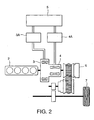
- a constitutional diagram of a driving system of the automobile shown in Fig. 1 a constitutional diagram of an air conditioning unit (AC) as air conditioning means in the present invention
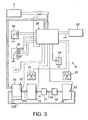
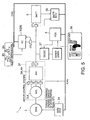
- a refrigerant circuit diagram of the air conditioning unit 9 a block diagram of a control system of the automobile 1 including the automotive air conditioning system of the present invention, respectively.
- the automobile 1 in the embodiment is a hybrid vehicle (HEV) set forth in the above, and there are mounted an engine (an internal combustion engine) 2 and an air conditioning unit (air conditioning means) 9 including an air-conditioner control unit 28 forming control means on the automobile 1.
- the air conditioning unit 9 is used for air-conditioning such as cooling, heating, or dehumidifying an inside of a passenger compartment of the automobile 1, wherein a pipe arrangement 10A located in the discharge side of a compressor (an electric compressor) 10 comprising a rotary compressor or the like is connected to a condenser 13 as an exterior unit heat exchanger, while the condenser 13 is connected in the outlet side to a receiver 17.
- a pipe arrangement 17A located in the outlet side of the receiver 17 is connected to an expansion valve 18 as a decompressor and the expansion valve 18 is connected to an evaporator 19 as an interior unit heat exchanger (a cooler).
- the evaporator 19 is connected in the outlet side to a pipe arrangement 10B located in the suction side of the compressor 10 so as to form a circular refrigerating cycle (refrigerant circuit) (Fig. 4).
- a heater at 33 which is used for heating the passenger compartment.
- the compressor 10, the condenser 13, and the engine 2 are arranged in the outside of the passenger compartment having no passenger and the evaporator 19 is installed inside the passenger compartment having passengers.
- the compressor 10 is provided with a compressor motor (electric motor) 11.
- the compressor motor 11 drives the compressor 10.
- An exterior unit blower motor 16 rotatively drives the exterior unit blower 15.
- An interior unit blower motor 22 rotatively drives the interior unit blower 21.
- a temperature sensor 12 for detecting a refrigerator discharge temperature in the refrigerant discharge side of the compressor 10
- a temperature sensor 14 for detecting a refrigerant outlet temperature in the refrigerant outlet side of the condenser 13
- a temperature sensor 20 for detecting a refrigerant outlet temperature in the refrigerant outlet side of the evaporator 19; they are connected to an air-conditioner control unit 28.
- the air-conditioner control unit 28 is also connected to a temperature sensor 23 for detecting a temperature of an air that is blown out to the inside of the passenger compartment from the interior unit blower 21.
- the air-conditioner control unit 28 is also connected to the exterior unit blower motor 16, the interior unit blower motor 22, and a temperature setting volume 24 or an air-conditioner switch 25 arranged on an air-conditioner operation panel inside the passenger compartment.
- the air-conditioner control unit 28 steps up or down a voltage (for example, DC240V) of an in-vehicle battery (or a capacitor, both of them forming storage means, BAT) 5 to a desired voltage using a given step-up/step-down circuit and converts the voltage to a driving voltage of the compressor motor 11 using an inverter to rotatively drive the compressor 10.
- a voltage for example, DC240V
- BAT storage means
- the air-conditioner control unit 28 is connected to AUTO rotating in proportion to the number of revolutions of the compressor 10 and to a blower fan switch 26 changing the number of revolutions of the interior unit blower 21 in three steps of 1, 2, and 3 at a fixed ratio and manually determining an amount of air blown into the passenger compartment.
- a reference character 27 designates a converter that generates a power supply (auxiliary power supply) for operating a headlight, a direction indicator, and a radio (indicated as "other loads" in Fig. 5), which are not shown, the air-conditioner control unit 28, and the like by converting a voltage of the battery 5 to DC12V.
- the automobile 1 is provided with an engine (internal combustion engine) 2, a traveling motor (an electric motor M as traveling driving means) 3, and a power generator (generating means G) 4 (these form an HEV motor control system 37); the traveling motor 3 is connected to an invehicle battery (DC240V) 5 via a motor control inverter 3A and the power generator 4 is connected to the in-vehicle battery 5 via a power generation inverter (INV) 4A.
- the engine 2, the traveling motor 3, and the power generator 4 are connected to a torque dividing mechanism, which is not shown, and the torque dividing mechanism drives a gearless drive mechanism 6 described later by integrating revolutions of the traveling motor 3 and the power generator 4 and of the engine 2 and the traveling motor 3.
- a detailed description is omitted here on the technology of driving the gearless drive mechanism 6 by integrating revolutions of the traveling motor 3 and the power generator 4 and of the engine 2 and the traveling motor 3 using the torque dividing mechanism, since it is a well-known technology.
- the traveling motor 3 is mainly used for starting the automobile or for running at a low speed having a low thermal efficiency of the engine 2 and is also used as an assist driving source when requiring a driving force more than one obtained with only the engine 2. Then, as the automobile shifts to high-speed running having a high thermal efficiency of the engine 2, the automobile begins to run mainly with the engine 2. Furthermore, during running mainly with the engine 2, the in-vehicle battery 5 is charged with power generated by the power generator 4 according to a charged condition of the in-vehicle battery 5. In addition, the power generator 4 is used as a starter at starting the engine 2 as well as a power generator during rotation of the engine 2.
- the gearless drive mechanism (CVT mechanism; continuously variable transmission) 6 is connected to a wheel 7. Then, the engine 2 or the traveling motor 3 rotates the wheel 7 via the gearless drive mechanism 6 to move the automobile 1.
- CVT mechanism continuously variable transmission
- a detailed description is omitted here on the technology of rotating the wheel 7 via the gearless drive mechanism 6 driven by the engine 2 or the traveling motor 3 to move the automobile 1 since it is a conventionally known technology.
- a reference character 8 in Fig. 5 designates a main control unit (VCU) of the automobile 1 forming control means, which steps up or down the voltage (DC240V) of the invehicle battery 5 to a given voltage using the same step-up/step-down circuit as mentioned above, converts the voltage to a driving voltage of the traveling motor 3 using the inverter (the motor control inverter 3A), and rotates the traveling motor 3.
- VCU main control unit
- the air-conditioner control unit 28 generates a driving signal of the compressor 10. Then, the air-conditioner control unit 28 detects a position of a rotor of the compressor motor 11 from an induced voltage of the compressor motor 11 and controls an operation frequency (the number of revolutions) of the compressor motor 11 using the inverter generating the next excitation pattern with a microcomputer.
- reference characters 32 and 34 designate a battery control unit (BATTECU) for controlling power of the in-vehicle battery 5 and an engine control unit (ENGECU) for transmitting a torque command, an opening amount of an acceleration pedal, and the like to the engine 2 so as to control its operation, respectively.
- a reference character 36 designates a driving control section including an acceleration pedal, a brake pedal, and a shift lever of the automobile 1, and a sensor for detecting their control amounts or control states is connected to the main control unit 8.
- a basic passenger compartment air conditioning operation of the air conditioning unit 9 will be described here.
- the compressor motor 11 and the exterior unit blower motor 16 are powered by the in-vehicle battery 5.
- the air-conditioner control unit 28 controls the operation frequency of the compressor motor 11 to control a performance of the compressor 10.
- a high-temperature and high-pressure gas refrigerant which has been compressed by the compressor 10 and then discharged, flows into the condenser 13 from the pipe arrangement 10A. At this point, the condenser 13 is cooled outside the passenger compartment by the wind from the exterior unit blower 15 (indicated by an outline arrow in Fig. 1).
- the gas refrigerant that has flown into the condenser 13 is condensed to a liquid with a heat release there and then flows into the receiver 17. Subsequently, the liquid refrigerant once stored in the receiver 17 reaches the expansion valve 18 through the pipe arrangement 17A and is wrung there, before flowing into the evaporator 19.
- the refrigerant that has flown into the evaporator 19 evaporates there and absorbs heat from the circumambient air at that time to make its cooling action, and the cooled air in the passenger compartment is circulated in the passenger compartment by the interior unit blower 21 for cooling and air conditioning (indicated by the outline arrow in Fig. 1).
- the refrigerant having getting out of the evaporator 19 enters the accumulator (not shown) and non-evaporating liquid refrigerant is separated into vapor and liquid there, and thereafter only a gas refrigerant is sucked into the compressor 10, where a refrigerating cycle is repeated such that the gas refrigerant is compressed by the compressor 10 and discharged again.
- a targeted operation frequency (F) is determined with PI (proportion and integration) operations based on a deviation ( ⁇ e) of a deviation (e) of "an air plenum temperature from a preset temperature of the evaporator 19" from the previous deviation (em).
- ⁇ e e - em
- ⁇ F Kp ⁇ ⁇ e + Ki ⁇ e
- ⁇ F a targeted operation frequency variation calculated value
- Kp a proportionality constant
- Ki an integral constant
- F ⁇ F + Fm
- Fm the previous targeted operation frequency
- the targeted operation frequency calculated from the above formulas are applied to the following formula to perform a PWM control on an applied voltage (applied voltage adjustment) of the interior unit blower motor 22 for an airflow adjustment of the interior unit blower 21.
- PWM duty (Max. duty - Min. duty) / (Max. frequency - Min. frequency) ⁇ (Targeted frequency - Min. frequency) + Min. duty
- Max. duty the maximum duty for the PWM control of the interior unit blower
- Min. duty the minimum duty for the PWM control of the interior unit blower
- Max. frequency the maximum value of the targeted operation frequency
- Min. frequency the minimum value of the target operation frequency.
- the air-conditioner control unit 28 determines the operation frequency of the compressor motor 11 on the basis of a temperature of the air blown into the passenger compartment by the interior unit blower 21. Then, it controls the number of revolutions of the interior unit blower motor 22 on the basis of the determined operation frequency of the compressor motor 11.
- the control unit slightly increases the operation frequency of the compressor motor 11 and the number of revolutions of the interior unit blower motor 22 (which results in a little increase in the power consumption of the air conditioning unit 9 including the compressor motor 11.) This prevents an extreme increase in the rotation noise of the compressor motor 11 and the interior unit blower motor 22, but holds it down with just a minor increase of the noise.
- the control unit increases the operation frequency of the compressor motor 11 and the number of revolutions of the interior unit blower motor 22 for rapid air conditioning in the passenger compartment, thereby enabling a comfortable passenger compartment air conditioning (which results in a remarkable increase in the power consumption of the air conditioning unit 9 including the compressor motor 11.)
- the control unit increases the operation frequency of the compressor motor 11 and the number of revolutions of the interior unit blower motor 22 for rapid air conditioning in the passenger compartment, thereby enabling a comfortable passenger compartment air conditioning (which results in a remarkable increase in the power consumption of the air conditioning unit 9 including the compressor motor 11.)
- the performance control with the operation frequency control of the compressor motor 11 and a slight airflow control of the interior unit blower 21 determined on the basis thereof.
- the air-conditioner control unit 28 controls the operation frequency of the compressor motor 11 with an inverter on the basis of the deviation of the air plenum temperature of the evaporator 19 from the preset temperature. Therefore, it becomes possible to perform a control such that, as the temperature deviation becomes larger, the revolutions of the compressor motor 11 increases correspondingly (large power consumption), while, as the temperature deviation becomes negligible, the revolutions of the compressor motor 11 decreases to zero (small power consumption).
- the interior unit blower motor 22 is also controlled in the same manner as for the compressor motor 11, by which an airflow can be adapted to the temperature difference felt by a passenger in the passenger compartment, so that the comfortable air conditioning is achieved in the passenger compartment.
- the in-vehicle battery 5 feeds the compressor motor 11 with power, by which the number of revolutions of the compressor motor 11 can be easily controlled. This enables the control of the number of revolutions of the compressor motor 11. Accordingly, the compressor 10 can be preferably driven, thereby enabling comfortable air conditioning in the passenger compartment.
- CT1 designates a current transformer for detecting a charging current value to the in-vehicle battery 5 and a discharging current value from the in-vehicle battery 5 and the charging current value or the discharging current value detected by the current transformer CT1 is input to the battery control unit 32.
- CT2 designates a current transformer for detecting a power generation current value of the power generator 4 and the power generation current value detected by the current transformer CT2 is input to the motor control system 37.
- CT3 designates a current transformer for detecting a power generation current value that has passed through the power generation inverter 4A, and the power generation current value detected by the current transformer CT3 is also input to the motor control system 37.
- CT5 designates a current transformer for detecting a transport current value (a current consumption value) of the air conditioning unit 9 including the compressor motor 11, and the transport current value detected by the current transformer CT5 is input to the air-conditioner control unit 28.
- the main control unit 8, the motor control system 37, the engine control unit 34, the battery control unit 32, and the air-conditioner control unit 28 are connected to a network (hereinafter, referred to as CAN) in the automobile 1, and data is transmitted or received to or from each other via the CAN.
- CAN network
- Data of the detected current values (the discharging current, the charging current, and the power generation current) of the respective current transformers is transmitted from the motor control system 37, the respective control units 32 and 28 to the CAN, by which the data can be used between devices connected to the CAN.
- the motor control system 37 calculates the margin power generation ⁇ G1 that the power generator 4 can further output (the maximum permissible power that can be supplied by the power generator 4 - the currently-output generation power) on the basis of the current power generation current values of the power generator 4 detected by the current transformers CT2 and CT3 or the number of revolutions of the engine 2. Then, it transmits data of the margin power generation ⁇ G1 to the CAN.
- the engine control unit 34 calculates a margin horsepower ⁇ H that the engine 2 can further output by subtracting the currently output torque from the maximum torque curve of the engine 2. Then, it transmits data of the margin horsepower ⁇ H to the CAN.
- the battery control unit 32 estimates an amount of storage of the in-vehicle battery 5 from the integrated value of the discharging current detected by the current transformer CT1 and a voltage of the in-vehicle battery 5 and calculates a permissible discharging current increment ⁇ E, which is an increment of the discharging current permissible in the in-vehicle battery 5 (a limit discharging amount - the current discharging amount of the battery 5), from the discharging current value detected by the current transformer CT1 and the amount of storage of the in-vehicle battery 5. Thereafter, it transmits data of the permissible discharging current amount ⁇ E to the CAN.
- a permissible discharging current increment ⁇ E which is an increment of the discharging current permissible in the in-vehicle battery 5 (a limit discharging amount - the current discharging amount of the battery 5)
- the main control unit 8 compares the margin power generation ⁇ G1 with the margin horsepower ⁇ H transmitted to the CAN in this manner and considers a lower value to be a permissible power generation increment ⁇ G, which is an increment of the power generation permissible in the power generator 4. Then, it transmits data of the permissible power generation increment ⁇ G to the CAN. In addition, the main control unit 8 calculates an electric energy of the permissible power generation increment ⁇ G added to the permissible discharging current increment ⁇ E ( ⁇ G + ⁇ E) and transmits the data to the CAN.
- the main control unit 8 adds the permissible discharging current increment ⁇ E to the permissible power generation increment ⁇ G and then calculates a margin-power utilization ratio ⁇ fluctuating within the range of 0 to 1 in proportion to a value obtained by subtracting the margin horsepower ⁇ H from the sum in the above.
- the margin-power utilization ratio ⁇ gets lower (approximates 0) if a ratio of the margin horsepower ⁇ H is high relative to the sum of the margin power generation increment ⁇ G and the margin discharging current increment ⁇ E, while it gets higher (approximates 1) if the ratio of the margin horsepower ⁇ H is low. Then, data of the margin-power utilization ratio ⁇ is also transmitted to the CAN.
- the main control unit 8 calculates a permissible power consumption increment ⁇ U, which is an amount of power consumption that can be further increased in the air conditioning unit 9 by multiplying the sum of the permissible power generation increment ⁇ G and the permissible discharging current increment ⁇ E by the margin-power utilization ratio ⁇ .
- the permissible power consumption increment ⁇ U gets lower; on the other hand, if the ratio of the margin horsepower ⁇ H is low and the margin-power utilization ratio ⁇ is high, the permissible power consumption increment ⁇ U gets higher. For example, if the margin horsepower ⁇ H is 0 and the margin-power utilization ratio ⁇ is 1, the sum of the permissible power generation increment ⁇ G and the permissible discharging current increment ⁇ E equals the permissible power consumption increment ⁇ U. Then, the main control unit 8 also transmits data of the permissible power consumption increment ⁇ U to the CAN.
- the air-conditioner control unit 28 receives respective data of the margin power generation ⁇ G, the margin horsepower ⁇ H, the permissible power generation increment ⁇ G, the permissible discharging current increment ⁇ E, the margin-power utilization ratio ⁇ , and the permissible power consumption increment ⁇ U transmitted to the CAN and utilizes them for controls as described later.
- the permissible power consumption increment ⁇ U becomes an increment of the power consumption of the air conditioning unit 9 concerned permitted if the power consumption increases in the air conditioning unit 9 when the air-conditioner control unit 28 of the air conditioning unit 9 performs the basic passenger compartment air conditioning operation as mentioned above.
- the air-conditioner control unit 28 of the air conditioning unit 9 compares the margin power generation ⁇ G1 with the margin horsepower ⁇ H transmitted to the CAN and considers a lower value to be the permissible power generation increment ⁇ G, as mentioned above, in step S1 shown in Fig. 6. Subsequently, it calculates an electric energy ( ⁇ G + ⁇ E) by adding the permissible power generation increment ⁇ G to the permissible discharging current increment ⁇ E.
- the air conditioning unit 28 calculates the permissible power consumption increment ⁇ U by multiplying the electric energy ( ⁇ G + ⁇ E) by the margin-power utilization ratio ⁇ . Otherwise, it receives the above permissible power consumption increment ⁇ U calculated in the main control unit 8 as described above.
- step S2 the air-conditioner control unit 28 calculates a power consumption increment ⁇ I of the air conditioning unit 9 required in future (almost all is an increment of the power consumption of the compressor motor 11) in performing the basic passenger compartment air conditioning operation as described above.
- the air-conditioner control unit 28 determined whether the power consumption increment ⁇ I is lower than the permissible power consumption increment ⁇ U in step S3; if so, it controls the compressor motor 11 or the like increasing the power consumption up to ⁇ I in step S4. On the other hand, if the power consumption increment ⁇ I is equal to or higher than the permissible power consumption increment ⁇ U in the step S3, the control progresses to step S5 to execute a control of increasing the power consumption up to the permissible power consumption increment ⁇ U independently of the basic passenger compartment air conditioning operation mentioned above.
- the control in this condition includes restricting the rise of the operation frequency of the compressor motor 11 or each blower motor.
- the air-conditioner control unit 28 transmits the power consumption increment ⁇ I to the main control unit 8 in step S6.
- the main control unit 8 determines whether the received power consumption increment ⁇ I is lower than the permissible power generation increment ⁇ G in step S7; if so, the control progresses to step S8, where the main control unit 8 transmits control data to the engine control unit 34 and then the engine control unit 34 controls the engine 2 to increase the power generation of the power generator 4 by just ⁇ I.
- the control progresses to step S9, where the main control unit 8 increases the power generation of the power generator 4 by just ⁇ G.
- an increase of the power consumption of the air conditioning unit 9 is limited within the range of at least the permissible power consumption increment ⁇ U (it equals an electric energy of the permissible power generation increment ⁇ G of the power generator 4 added to the permissible discharging current increment ⁇ E of the in-vehicle battery 5 if the margin-power utilization ratio ⁇ is 1). Therefore, it prevents the disadvantage of the traveling malfunction or disabled traveling of the traveling motor 3 which may be caused by a decrease of a storage amount or discharging to the fullest of the in-vehicle battery 5 due to power consumption of the air conditioning unit 9 including the compressor motor 11.
- the power generation of the power generator 4 increases within the range of the permissible power generation increment ⁇ G according to the power consumption increment ⁇ I of the air conditioning unit 9 and therefore the air conditioning capability of the air conditioning unit 9 can be secured as much as possible, by which the air conditioning performance in the passenger compartment can be prevented or minimized.
- the permissible discharging current increment ⁇ E of the in-vehicle battery 5 is also considered in the increase of the power consumption of the air conditioning unit 9 in this condition.
- the air conditioning capability of the air conditioning unit 9 can be maximized by discharging the in-vehicle battery 5 within the allowable range, by which more comfortable air conditioning can be achieved in the passenger compartment.
- the air-conditioner control unit 28 of the air conditioning unit 9 also compares the margin power generation ⁇ G1 with the margin horsepower ⁇ H transmitted to the CAN as described above and considers a lower value to be the permissible power generation increment ⁇ G in step S10 shown in Fig. 7. Then, it calculates an electric energy ( ⁇ G + ⁇ E) by adding the permissible power generation increment ⁇ G to the permissible discharging current increment ⁇ E. Next, the air conditioning unit 28 calculates the permissible power consumption increment ⁇ U by multiplying the electric energy ( ⁇ G + ⁇ E) by the margin-power utilization ratio ⁇ . Otherwise, it receives the above permissible power consumption increment ⁇ U calculated in the main control unit 8 as described above.
- step S11 the air-conditioner control unit 28 calculates a power consumption increment ⁇ I of the air conditioning unit 9 required in future (almost all is an increment of the power consumption of the compressor motor 11) in performing the basic passenger compartment air conditioning operation as described above.
- the air-conditioner control unit 28 determined whether the power consumption increment ⁇ I is lower than the permissible power consumption increment ⁇ U in step S12; if so, it controls the compressor motor 11 or the like for increasing the power consumption up to ⁇ I in step S13. On the other hand, if the power consumption increment ⁇ I is equal to or higher than the permissible power consumption increment ⁇ U in the step S12, the control progresses to step S14 to execute a control of increasing the power consumption up to the permissible power consumption increment ⁇ U independently of the basic passenger compartment air conditioning operation mentioned above.
- the control in this condition includes restricting the rise of the operation frequency of the compressor motor 11 or each blower motor.
- the air-conditioner control unit 28 transmits the power consumption increment ⁇ I to the main control unit 8 in step S15.
- the main control unit 8 determines whether the received power consumption increment ⁇ I is higher than the permissible discharging current increment ⁇ E in step S16; if it is equal to or lower than the permissible discharging current increment ⁇ E, the control returns to step S10. If it is higher, the control progresses to step S17, where the main control unit 8 transmits data to the engine control unit 34 and then the engine control unit 34 controls the engine 2 to increase the power generation of the power generator.4 by just ( ⁇ I - ⁇ E). In addition, if ( ⁇ I - ⁇ E) exceeds ⁇ G, the main control unit 8 naturally increases the power generation up to ⁇ G in the same manner as in the above steps S7 to S9.
- an increase of the power consumption of the air conditioning unit 9 is limited within the range of at least the permissible power consumption increment ⁇ U (it equals an electric energy of the permissible power generation increment ⁇ G of the power generator 4 added to the permissible discharging current increment ⁇ E of the in-vehicle battery 5 if the margin-power utilization ratio a is 1). Therefore, it prevents the disadvantage of the traveling malfunction or disabled traveling of the traveling motor 3 which may be caused by a decrease of a storage amount or discharging to the fullest of the in-vehicle battery 5 due to power consumption of the air conditioning unit 9.
- the power generation of the power generator 4 is increased by an excess of the power consumption increment of the air conditioning unit 9 over the permissible discharging current increment ⁇ E, and therefore the air conditioning capability of the air conditioning unit 9 can be secured as much as possible, by which the air conditioning performance in the passenger compartment can be prevented or minimized.
- the permissible discharging current increment ⁇ E of the in-vehicle battery 5 is also considered in the increase of the power consumption of the air conditioning unit 9 in this condition. Therefore, under such circumstances that traveling loads of the automobile 1 are reduced, the air conditioning capability of the air conditioning unit 9 can be maximized by discharging the in-vehicle battery 5 within the allowable range in the same manner, by which more comfortable air conditioning can be achieved in the passenger compartment.
- the increase of the power generation is limited to an excess of the power consumption increment of the air conditioning unit 9 over the permissible discharging current increment, thereby minimizing an increase of the consumption energy for increasing the power generation in the power generator 4.
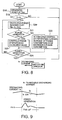
- the main control unit 8 controls the engine 2 so that the initial power generation of the power generator 4 is equal to an initial value Pinit in step S18 of a flowchart shown in Fig. 8 using the engine control unit 34.
- the main control unit 8 determines whether a discharging current value Ie from the in-vehicle battery 5 exceeds a given permissible value Is on the basis of the data transmitted to the CAN as described above in step S19; if not, the control returns to the step S18. If the discharging current value Ie exceeds the permissible value Is as shown in the upper part of Fig.
- step S20 the main control unit 8 progresses to step S20 from the step S19 to calculate such an amount of power generation of the power generator 4 that the discharging current value Ie from the in-vehicle battery 5 is equal to a given return value (Is - ⁇ Ie) lower than the permissible value Is in accordance with a PI feedback operation of formula F(Ie - (Is - ⁇ Ie)).
- the main control unit 8 determines whether the power generation calculated in step S21 is lower than the upper limit of the power that the power generator 4 can generate (the above maximum permissible power) Pmax; if so, the main control unit 8 progresses to step S22 to control the power generation of the power generator 4 to the value calculated in the step S20 and then progresses to step S24. On the other hand, if the power generation calculated in the step S21 is equal to or higher than the upper limit Pmax of the power generation of the power generator 4, the main control unit 8 progresses to step S23 from the step S21 to notify the air-conditioner control unit 28 of the air conditioning unit 9 that the power generation of the power generator 4 has reached the upper limit Pmax and then progresses to step S24.
- the air-conditioner control unit 28 executes a control of preventing the power consumption to increase further or of controlling the compressor motor 11 for reducing the power consumption in the same manner as for the above, independently of the above basic passenger compartment air conditioning operation.
- the main control unit 8 can reduce the power consumption of other electrical loads of the automobile 1.
- the electrical loads of the automobile 1 can be prioritized in advance so as to stop or reduce feeding of the loads in the order of ascending priorities from the lowest priority load (for example, a load that does not cause any trouble in traveling itself of the automobile 1 such as, for example, audio equipment or interior light).
- the power generation of the power generator 4 also shifts from the initial rise to the decline in time as shown in the lower part of Fig. 9. If the power generation of the power generator 4 is equal to or higher than the initial value Pinit, however, the control returns to the step S20 to repeat the above. Then, if the power generation finally gets lower than the initial value (Pinit - ⁇ P) ( ⁇ P: hysteresis), the main control unit 8 returns to the step S18 from the step S24 to return to the initial control with the initial value Pinit as the power generation of the power generator 4.
- the in-vehicle battery 5 is to be discharged up to the permissible value Is, and therefore under such circumstances that traveling loads are reduced, it becomes possible to discharge the in-vehicle battery 5 within the allowable range so as to maximize the air conditioning capability of the air conditioning unit 9, thereby achieving more comfortable air conditioning in the passenger compartment.
- the main control unit 8 controls the power generation of the power generator 4 so that the discharging current value Ie drops to a return value (Is - ⁇ Ie) lower than the permissible value Is, while it brings the power generation of the power generator 4 back to the initial value Pinit if the power generation concerned drops to a value lower than the initial value Pinit, thereby eliminating the disadvantage of a decrease of a storage amount or discharging to the fullest of the in-vehicle battery 5 while the power generation of the power generator 4 is well controlled without trouble.
- the air-conditioner control unit 28 executes controls of stopping the increase of the power consumption in the air conditioning unit 9 or of decreasing the power consumption concerned, thereby enabling the air conditioning capability of the air conditioning unit 9 to be secured as much as possible while it becomes possible to prevent the disadvantage reliably of the traveling malfunction or disabled traveling which may be caused by a decrease of a storage amount or discharging to the fullest of the in-vehicle battery 5 due to power consumption of the air conditioning unit 9.
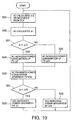
- the air-conditioner control unit 28 of the air conditioning unit 9 compares the margin power generation ⁇ G1 with the margin horsepower ⁇ H transmitted to the CAN as set forth in the above and considers a lower value to be the permissible power generation increment ⁇ G in step S25 shown in Fig. 10. Otherwise, the main control unit 8 receives the permissible power generation increment ⁇ G calculated as set forth in the above.
- the air-conditioner control unit 28 calculates the power consumption increment ⁇ I of the air conditioning unit 9 required in future in performing the basic passenger compartment air conditioning operation as described above.
- the air-conditioner control unit 28 determined whether the power consumption increment ⁇ I is lower than the permissible power generation increment ⁇ G in step S27; if so, it controls the compressor motor 11 or the like for increasing the power consumption up to ⁇ I in step S28. On the other hand, if the power consumption increment ⁇ I is equal to or higher than the permissible power generation increment ⁇ G in the step S27, the control progresses to step S29 to execute a control of the compressor motor 11 for increasing the power consumption up to the permissible power generation increment ⁇ G independently of the basic passenger compartment air conditioning operation mentioned above. Next, the air-conditioner control unit 28 transmits the power consumption increment ⁇ I to the main control unit 8 in step S30.
- the main control unit 8 determines whether the received power consumption increment ⁇ I is lower than the permissible power generation increment ⁇ G in step S31; if so, the control progresses to step S32, where the engine control unit 34 controls the engine 2 to increase the power generation of the power generator 4 by just ⁇ I. On the other hand, if the power consumption increment ⁇ I is equal to or higher than the permissible power generation increment ⁇ G in the step S31, the control progresses to step S33, where the main control unit 8 increases the power generation of the power generator 4 by just ⁇ G.
- an increase of the power consumption of the air conditioning unit 9 is limited within the range of at least the permissible power generation increment ⁇ G (a lower value of the margin power generation ⁇ G1 of the power generator 4 and the margin horsepower ⁇ H of the engine 2).
- This prevents the disadvantage of the traveling malfunction or disabled traveling of the traveling motor 3 which may be caused by a decrease of a storage amount or discharging to the fullest of the in-vehicle battery 5 due to power consumption of the air conditioning unit 9.
- the power generation of the power generator 4 is increased according to the power consumption increment of the air conditioning unit 9, and therefore the air conditioning capability of the air conditioning unit 9 can be secured as much as possible, by which the air conditioning performance in the passenger compartment can be prevented or minimized.
- the main control unit 8 controls the engine 2 so that the initial power generation of the power generator 4 is equal to an initial value Pinit in step S34 of a flowchart shown in Fig. 11.
- the main control unit 8 determines whether a charging current value Ic to the in-vehicle battery 5 transmitted to the CAN as described above is lower than a given lower limit Is1 in step S35; if not, the control returns to the step S34. If the charging current value Ic is lower than the lower limit Is1 as shown in the upper part of Fig.
- step S36 the main control unit 8 progresses to step S36 from the step S35 to calculate such an amount of power generation of the power generator 4 that the charging current value Ic to the in-vehicle battery 5 is equal to a given return value Is2 higher than the lower limit Is1 in accordance with a PI feedback operation of formula (F(Is2 - Ic)).
- the main control unit 8 determines whether the power generation calculated in step S37 is lower than the upper limit of the power that the power generator 4 can generate Pmax; if so, the main control unit 8 progresses to step S38 to control the power generation of the power generator 4 to the value calculated in the step S36 and then progresses to step S40. On the other hand, if the power generation calculated in the step S36 is equal to or higher than the upper limit Pmax of the power generation of the power generator 4, the main control unit 8 progresses to step S39 from the step S37 to notify the air-conditioner control unit 28 of the air conditioning unit 9 that the power generation of the power generator 4 has reached the upper limit Pmax and then progresses to step S40.
- the air-conditioner control unit 28 executes a control of preventing the power consumption to increase further or of controlling the compressor motor 11 for reducing the power consumption in the same manner as for the above, independently of the above basic passenger compartment air conditioning operation.
- the main control unit 8 can also reduce the power consumption of other electrical loads of the automobile 1 in the same manner as in the step S23.
- the power generation of the power generator 4 also shifts from the initial rise to the decline in time as shown in the lower part of Fig. 12. If the power generation of the power generator 4 is equal to or higher than the initial value Pinit, however, the control returns to the step S36 to repeat the above. Then, if the power generation finallygets lower than the initial value (Pinit - ⁇ P) ( ⁇ P: hysteresis), the main control unit 8 returns to the step S34 from the step S40 to return to the initial control with the initial value Pinit as the power generation of the power generator 4.
- the main control unit 8 controls the power generation of the power generator 4 so that the charging current value Ic rises up to a given return value Is2 higher than the lower limit Is1, while it brings the power generation of the power generator 4 back to the initial value Pinit if the power generation concerned drops to a value lower than the initial value Pinit, thereby securing charging for the in-vehicle battery 5 and eliminating the disadvantage of a decrease of a storage amount or discharging to the fullest of the in-vehicle battery 5 while the power generation of the power generator 4 is well controlled without trouble.
- the air-conditioner control unit 28 executes controls of stopping the increase of the power consumption in the air conditioning unit 9 or of decreasing the power consumption concerned, thereby enabling the air conditioning capability of the air conditioning unit 9 to be secured as much as possible while it becomes possible to prevent the disadvantage reliably of the traveling malfunction or disabled traveling which may be caused by a decrease of a storage amount or discharging to the fullest of the in-vehicle battery 5 due to power consumption of the air conditioning unit 9.
- the air-conditioner control unit 28 of the air conditioning unit 9 is also connected to the CAN in the above embodiment, it is not limited to this, but the air-conditioner control unit 28 of the air conditioning unit 9 can be connected to the main control unit 8 via a signal line instead of being connected to the,CAN as shown in Fig. 13. Note that in this case, however, the permissible power consumption increment ⁇ U is not calculated in the air-conditioner control unit 28, but the value calculated in the main control unit 8 is received for use.
- the present invention has been described by giving an example of a hybrid vehicle (HEV) as the automobile 1 in the above embodiment, it is not limited to this, but the present invention is also effective for a fuel cell powered vehicle (FCEV) as shown in Fig. 14.
- FCEV fuel cell powered vehicle
- Fig. 14 those designated by the same reference characters as in Fig. 1 to Fig. 5 have identical or similar functions; in this case, the traveling motor 3 is connected to the in-vehicle battery 5 via the motor control inverter 3A to establish the motor control system 37 and power is generated by the fuel cell (FC) 41. Then, the fuel battery 41 is connected to the in-vehicle battery 5 for charging.
- the power generation current of the fuel cell 41 is detected by the current transformer CT4 and input to the fuel cell 41, and the detected current value is also transmitted to the CAN and the power generation of the fuel cell 41 is controlled in accordance with a command signal from the main control unit 8 via the CAN. Then, data of the permissible power generation increment ⁇ G in the fuel cell 41 is transmitted from the fuel cell 41 to the CAN in the same manner as for the above and data of the margin horsepower ⁇ H obtained by subtracting the current torque from the maximum torque curve of the traveling motor 3 can be transmitted from the motor control system 37 to the CAN, too.
- This enables the power controls related to the air conditioning unit 9 in the same manner as for the above hybrid vehicle.
- Fig. 15 shows an example of an arrangement in which the air-conditioner control unit 28 of the air conditioning unit 9 is not connected to the CAN in Fig. 14.
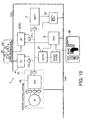
- the margin power generation ⁇ G1 of the power generator 43 is calculated in the engine control unit 34 and its data is transmitted to the CAN. Data of the margin horsepower ⁇ H is also transmitted from the engine control unit 34 to the CAN. This enables the power control related to the air conditioning unit 9 in the same manner as for the above hybrid vehicle. Referring to Fig. 17, there is shown an example of an arrangement in which the air-conditioner control unit 28 of the air conditioning unit 9 is not connected to the CAN in Fig. 16 in the same manner as Fig. 13 and Fig. 15 in the above.
- the main control unit 8 is not provided, but the engine control unit 34 serves as it and that a sensor for detecting a control amount of an accelerator 36A is connected to the engine control unit 34 and a sensor for detecting a control state of a brake 36B and a sensor for detecting a shift position of a shift lever 36C are connected to a change-gear control unit 46 directly.
- the reference numeral 46 which designates the change-gear control unit for controlling the gearless drive mechanism 6, is connected to the CAN. If the power generation of the power generator 43 is enhanced by increasing the number of revolutions of the fuel engine 42, the change-gear control unit 46 executes a control of keeping a constant vehicle velocity by controlling a change gear ratio.
- margin power generation ⁇ G1 is compared with the margin horsepower ⁇ H and a smaller one is considered to be the permissible power generation increment ⁇ G in the above embodiment, it is not limited to this, but such a control is effective in the invention according to claims 1, 2, and 5 that the margin power generation ⁇ G1 is directly as the permissible power generation increment ⁇ G.
- the permissible power consumption increment ⁇ I is calculated by multiplying the permissible power generation increment ⁇ G + the permissible discharging current increment ⁇ E by the margin-power utilization ratio a
- the value of the permissible power generation increment ⁇ G + the permissible discharging current increment ⁇ E can be directly used as the permissible power consumption increment ⁇ I in the invention according to the claims 1, 2, and 3.
- the margin-power utilization ratio ⁇ it can fluctuate linearly in proportion to a value of the permissible power generation increment ⁇ G plus the permissible discharging current increment ⁇ E minus the margin horsepower ⁇ H; it can be proportional to it in curve; or it can fluctuate in incremental steps.
- the margin-power utilization ratio a in the present invention is a value that increases or decreases in response to an increase or a decrease of a value, the permissible power generation increment ⁇ G plus the permissible discharging current increment ⁇ E minus the margin horsepower ⁇ H in the range of 0 to 1.
- various current values or control signals in the embodiments can be transmitted in various communication systems; a serial communication, a parallel communication, an analog communication, a digital communication, or a switch signal. Physically they can be transmitted in both wire and wireless communications. Naturally, it is achieved in a communication system without the CAN.
- the main control unit 8 can switch forcibly from an outside air intake mode to an inside air circulation mode for an air circulation in the passenger compartment so as to reduce the cooling load in the passenger compartment. In this case, if there is any opening window, it can be forcibly closed; furthermore, in this condition, a passenger can be notified of an operation by voice or an indicator or these controls can be invalidated by manual switching.
- an automotive air conditioning system of the present invention it is for use in an automobile having storage means, power generation means for charging the storage means, and air conditioning means having an electric compressor driven by feeding from the storage means and comprises control means for controlling power generation of the power generation means and an operation of the air conditioning means, wherein the control means calculates a permissible power consumption increment in the air conditioning means by adding a permissible power generation increment to a permissible discharging current increment on tha basis of the permissible power generation increment allowable in the power generation means and the permissible discharging current increment allowable in the storage means to increase power consumption of the air conditioning means within the range of the permissible power consumption increment and to increase power generation of the power generation means within the range of the permissible power generation increment according to an increment of power consumption of the air conditioning means, by which the increase of the power consumption of the air conditioning means is limited to remain within the range of the permissible power consumption increment calculated by adding the permissible discharging current increment in the storage means to the
- an automotive air conditioning system of the present invention is for use in an automobile having storage means, power generation means for charging the storage means, and air conditioning means having an electric compressor driven by feeding from the storage means and comprises control means for controlling power generation of the power generation means and an operation of the air conditioning means, wherein the control means calculates a permissible power consumption increment in the air conditioning means by adding a permissible power generation increment to a permissible discharging current increment on tha basis of the permissible power generation increment allowable in the power generation means and the permissible discharging current increment allowable in the storage means to increase power consumption of the air conditioning means within the range of the permissible power consumption increment and to increase power generation of the power generation means by an excess of an increment of power consumption of the air conditioning means over the permissible discharging current increment, by which the increase of the power consumption of the air conditioning means is limited to remain within the range of the permissible power consumption increment calculated by adding the permissible discharging current increment in the storage means to the permissible power generation increment
- the storage means within the allowable range so as to maximize the air conditioning capability of the air conditioning means under such circumstances that traveling loads are reduced, thereby achieving more comfortable air conditioning in the passenger compartment.
- the increase in the power generation is limited to the excess of an increment of power consumption of the air conditioning means over the permissible discharging current increment, by which it becomes possible to minimize the increase in the consumption energy for increasing the power generation in the power generation means.
- the automotive air conditioning system of the present invention further comprises driving means for driving the power generation means in addition to the above each aspect of the invention, wherein the control means compares the margin power generation that the power generation means can output further with the margin horsepower that the driving means can output further and considers a lower value to be the permissible power generation increment, by which it becomes possible to calculate the permissible power consumption increment of the air conditioning means from a more accurate permissible power generation increment obtained after considering the margin horsepower of the driving means for driving the power generation means and to execute a control of an increase in the power consumption of the air conditioning means.
- control means further calculates a margin-power utilization ratio fluctuating within a range of 0 to 1 in proportion to a value obtained by subtracting the margin horsepower from a value of the permissible power generation increment plus the permissible discharging current increment and calculates the permissible power consumption increment by multiplying the permissible power generation increment plus the permissible discharging current increment by the margin-power utilization ratio, by which the permissible power consumption increment decreases if a proportion of the margin horsepower is high relative to the value of the permissible power generation increment plus the permissible discharging current increment and the margin-power utilization ratio is low, while the permissible power consumption increment increases if the proportion of the margin horsepower is low and the margin-power utilization ratio is high to the contrary.
- an automotive air conditioning system of the present invention is for use in an automobile having storage means, power generation means for charging the storage means, and air conditioning means having an electric compressor driven by feeding from the storage means and comprises control means for controlling power generation of the power generation means and an operation of the air conditioning means, wherein the control means calculates a permissible power generation increment allowable in the power generation means to increase power consumption of the air conditioning means within the range of the permissible power generation increment and to increase power generation of the power generation means according to an increment of power consumption of the air conditioning means, by which an increase of the power consumption of the air conditioning means is limited to remain at least within the range of the permissible power generation increment of the power generation means.
- the automotive air conditioning system of the present invention further comprises driving means for driving the power generation means in the above, wherein the control means compares margin power generation that the power generation means can output further with margin horsepower that the driving means can output further and considers a lower value to be the permissible power generation increment, by which it becomes possible to calculate a more accurate permissible power generation increment obtained after considering the margin horsepower of the driving means for driving the power generation means and to execute a control of an increase in the power consumption of the air conditioning means.
- an automotive air conditioning system of the present invention is for use in an automobile having storage means, power generation means for charging the storage means, and air conditioning means having an electric compressor driven by feeding from the storage means and comprises current detecting means for detecting a discharging current value from the storage means and control means for controlling power generation of the power generation means, wherein, if the discharging current value exceeds a given permissible value, the control means increases the power generation of the power generation means from a given initial value on the basis of the discharging current value from the storage means detected by the current detecting means, thereby enabling an effective elimination of the disadvantage of the traveling malfunction or disabled traveling which may be caused by a decrease of a storage amount or discharging to the fullest of the storage means due to power consumption of the air conditioning means.
- the storage means causes the storage means to be discharged up to a permissible value, by which it becomes possible to discharge the storage means within the allowable range so as to maximize the air conditioning capability of the air conditioning means under the conditions of low traveling loads, thereby achieving more comfortable air conditioning in the passenger compartment.
- the control means in the above further controls power generation of the power generation means so that the discharging current value decreases to a given return value lower than the permissible value and returns the power generation of the power generation means to the initial value if the power generation concerned decreases to a level lower than the initial value, thereby eliminating the disadvantage of a decrease of a storage amount or discharging to the fullest of the storage means while the power generation of the power generation means is controlled without any problem.
- the control means in the above further controls an operation of the air conditioning means and executes a control of stopping an increase of power consumption of the air conditioning means or of decreasing the power consumption concerned if the power generation of the power generation means reaches an upper limit, by which it becomes possible to secure as large air conditioning capability of the air conditioning means as possible while it is possible to reliably prevent the disadvantage of the traveling malfunction or disabled traveling which may be caused by a decrease of a storage amount or discharging to the fullest of the storage means due to power consumption of the air conditioning means.
- an automotive air conditioning system of the present invention is for use in an automobile having storage means, power generation means for charging the storage means, and air conditioning means having an electric compressor driven by feeding from the storage means and comprises current detecting means for detecting a charging current value to the storage means and control means for controlling power generation of the power generation means, wherein, if the charging current value concerned is lower than a given lower limit, the control means increases the power generation of the power generation means from a given initial value on the basis of the charging current value to the storage means detected by the current detecting means, thereby ensuring charging the storage means.
- the control means in the above further controls power generation of the power generation means so that the charging current value increases to a given return value higher than the lower limit and returns the power generation of the power generation means to the initial value if the power generation concerned decreases to a level lower than the initial value, thereby ensuring charging the storage means and eliminating the disadvantage of a decrease of a storage amount or discharging to the fullest of the storage means while the power generation of the power generation means is controlled without any problem.
- the control means in the above further controls an operation of the air conditioning means and executes a control of stopping an increase of power consumption of the air conditioning means or of decreasing the power consumption concerned if the power generation of the power generation means reaches an upper limit, by which it becomes possible to secure as large air conditioning capability of the air conditioning means as possible while it is possible to reliably prevent the disadvantage of the traveling malfunction or disabled traveling which may be caused by a decrease of a storage amount or discharging to the fullest of the storage means due to power consumption of the air conditioning means.
- the automobile in each of the above is an electric vehicle running with a traveling motor fed by the storage means in each aspect of the invention, by which it is possible to eliminate an adverse effect of the operation of the air conditioning means on traveling of the electric vehicle effectively while the air conditioning means smoothly performs air conditioning in the passenger compartment of the electric vehicle.
Landscapes
- Engineering & Computer Science (AREA)
- Physics & Mathematics (AREA)
- Thermal Sciences (AREA)
- Mechanical Engineering (AREA)
- Life Sciences & Earth Sciences (AREA)
- Sustainable Development (AREA)
- Sustainable Energy (AREA)
- Air-Conditioning For Vehicles (AREA)
- Electric Propulsion And Braking For Vehicles (AREA)
- Control Of Positive-Displacement Pumps (AREA)
Abstract
Description
Claims (13)
- An automotive air conditioning system for use in an automobile having storage means, power generation means for charging the storage means, and air conditioning means having an electric compressor driven by feeding from said storage means, comprising:wherein said control means calculates a permissible power consumption increment in said air conditioning means by adding a permissible power generation increment to a permissible discharging current increment on tha basis of the permissible power generation increment allowable in said power generation means and the permissible discharging current increment allowable in said storage means to increase power consumption of said air conditioning means within the range of the permissible power consumption increment and to increase power generation of said power generation means within the range of the permissible power generation increment according to an increment of power consumption of the air conditioning means concerned.control means for controlling power generation of said power generation means and an operation of said air conditioning means,
- An automotive air conditioning system for use in an automobile having storage means, power generation means for charging the storage means, and air conditioning means having an electric compressor driven by feeding from said storage means, comprising:wherein said control means calculates a permissible power consumption increment in said air conditioning means by adding a permissible power generation increment to a permissible discharging current increment on tha basis of the permissible power generation increment allowable in said power generation means and the permissible discharging current increment allowable in said storage means to increase power consumption of said air conditioning means within the range of the permissible power consumption increment and to increase power generation of said power generation means by an excess of an increment of power consumption of said air conditioning means concerned over the permissible discharging current increment.control means for controlling power generation of said power generation means and an operation of said air conditioning means,
- The system according to claim 1 or 2, further comprising driving means for driving said power generation means.
wherein said control means compares the margin power generation that said power generation means can output further with the margin horsepower that said driving means can output further and considers a lower value to be the permissible power generation increment. - The system according to claim 3,
wherein said control means calculates a margin-power utilization ratio fluctuating within a range of 0 to 1 in proportion to a value obtained by subtracting the margin horsepower from a value of the permissible power generation increment plus the permissible discharging current increment, and
wherein said control means calculates the permissible power consumption increment by multiplying the permissible power generation increment plus the permissible discharging current increment by the margin-power utilization ratio. - An automotive air conditioning system for use in an automobile having storage means, power generation means for charging the storage means, and air conditioning means having an electric compressor driven by feeding from the storage means, comprising:wherein said control means calculates a permissible power generation increment allowable in said power generation means to increase power consumption of said air conditioning means within the range of the permissible power generation increment and to increase power generation of said power generation means according to an increment of power consumption of the air conditioning means concerned.control means for controlling power generation of said power generation means and an operation of said air conditioning means,
- The system according to claim 5, further comprising driving means for driving said power generation means,
wherein said control means compares margin power generation that said power generation means can output further with margin horsepower that said driving means can output further and considers a lower value to be the permissible power generation increment. - An automotive air conditioning system for use in an automobile having storage means, power generation means for charging the storage means, and air conditioning means having an electric compressor driven by feeding from the storage means, comprising:wherein, if the discharging current value exceeds a given permissible value, said control means increases the power generation of said power generation means from a given initial value on the basis of the discharging current value from the storage means detected by the current detecting means.current detecting means for detecting a discharging current value from said storage means and control means for controlling power generation of said power generation means,
- The system according to claim 7, wherein said control means controls power generation of said power generation means so that the discharging current value decreases to a given return value lower than the permissible value and returns the power generation of said power generation means to the initial value if the power generation concerned decreases to a level lower than the initial value.
- The system according to claim 7 or 8, wherein said control means controls an operation of said air conditioning means and executes a control of stopping an increase of power consumption of said air conditioning means or of decreasing the power consumption concerned if the power generation of said power generation means reaches an upper limit.
- An automotive air conditioning system for use in an automobile having storage means, power generation means for charging the storage means, and air conditioning means having an electric compressor driven by feeding from said storage means, comprising:wherein, if the charging current value concerned is lower than a given lower limit, said control means increases the power generation of said power generation means from a given initial value on the basis of the charging current value to said storage means detected by said current detecting means.current detecting means for detecting a charging current value to said storage means and control means for controlling power generation of said power generation means,
- The system according to claim 10, wherein said control means controls power generation of said power generation means so that the charging current value increases to a given return value higher than the lower limit and returns the power generation of said power generation means to the initial value if the power generation concerned decreases to a level lower than the initial value.
- The system according to claim 10 or 11, wherein said control means controls an operation of said air conditioning means and executes a control of stopping an increase of power consumption of said air conditioning means or of decreasing the power consumption concerned if the power generation of said power generation means reaches an upper limit.
- The system according to claim 1, 2, 3, 4, 5, 6, 7, 8, 9, 10, 11, or 12, wherein said automobile is an electric vehicle running with a traveling motor fed by said storage means.
Applications Claiming Priority (3)
| Application Number | Priority Date | Filing Date | Title |
|---|---|---|---|
| JP2001093899A JP2002283838A (en) | 2001-03-28 | 2001-03-28 | Automotive air conditioning system |
| JP2001093899 | 2001-03-28 | ||
| PCT/JP2002/002949 WO2002078990A1 (en) | 2001-03-28 | 2002-03-27 | Car air-conditioning system |
Publications (2)
| Publication Number | Publication Date |
|---|---|
| EP1288032A1 true EP1288032A1 (en) | 2003-03-05 |
| EP1288032A4 EP1288032A4 (en) | 2005-01-26 |
Family
ID=18948178
Family Applications (1)
| Application Number | Title | Priority Date | Filing Date |
|---|---|---|---|
| EP02713199A Withdrawn EP1288032A4 (en) | 2001-03-28 | 2002-03-27 | AIR CONDITIONING SYSTEM OF A VEHICLE |
Country Status (5)
| Country | Link |
|---|---|
| US (1) | US6886356B2 (en) |
| EP (1) | EP1288032A4 (en) |
| JP (1) | JP2002283838A (en) |
| KR (1) | KR20030005408A (en) |
| WO (1) | WO2002078990A1 (en) |
Cited By (1)
| Publication number | Priority date | Publication date | Assignee | Title |
|---|---|---|---|---|
| DE102004020741A1 (en) * | 2004-04-27 | 2005-11-24 | Behr Gmbh & Co. Kg | Method for controlling an air conditioning and air conditioning system for a vehicle |
Families Citing this family (52)
| Publication number | Priority date | Publication date | Assignee | Title |
|---|---|---|---|---|
| US7942010B2 (en) | 2001-02-09 | 2011-05-17 | Bsst, Llc | Thermoelectric power generating systems utilizing segmented thermoelectric elements |
| US7273981B2 (en) * | 2001-02-09 | 2007-09-25 | Bsst, Llc. | Thermoelectric power generation systems |
| WO2003014634A1 (en) | 2001-08-07 | 2003-02-20 | Bsst Llc | Thermoelectric personal environment appliance |
| US6865901B2 (en) | 2002-05-29 | 2005-03-15 | Webasto Thermosysteme International Gmbh | System with an internal combustion engine, a fuel cell and a climate control unit for heating and/or cooling the interior of a motor vehicle and process for the operation thereof |
| JP4380312B2 (en) * | 2003-12-11 | 2009-12-09 | Jfeエンジニアリング株式会社 | Air conditioner for moving body |
| US7380586B2 (en) | 2004-05-10 | 2008-06-03 | Bsst Llc | Climate control system for hybrid vehicles using thermoelectric devices |
| US7543454B2 (en) * | 2005-03-14 | 2009-06-09 | Zero Emission Systems, Inc. | Method and auxiliary system for operating a comfort subsystem for a vehicle |
| US7743614B2 (en) | 2005-04-08 | 2010-06-29 | Bsst Llc | Thermoelectric-based heating and cooling system |
| US7608777B2 (en) * | 2005-06-28 | 2009-10-27 | Bsst, Llc | Thermoelectric power generator with intermediate loop |
| US20070000263A1 (en) * | 2005-06-30 | 2007-01-04 | Caterpillar Inc. | Method and system for packaging HVAC components |
| US8783397B2 (en) * | 2005-07-19 | 2014-07-22 | Bsst Llc | Energy management system for a hybrid-electric vehicle |
| JP2009514505A (en) * | 2005-10-28 | 2009-04-02 | テミツク・オートモテイーベ・エレクトリツク・モータース・ゲゼルシヤフト・ミツト・ベシユレンクテル・ハフツング | Automobile with electric energy source and method of operating the same |
| US7870745B2 (en) | 2006-03-16 | 2011-01-18 | Bsst Llc | Thermoelectric device efficiency enhancement using dynamic feedback |
| US20100155018A1 (en) | 2008-12-19 | 2010-06-24 | Lakhi Nandlal Goenka | Hvac system for a hybrid vehicle |
| US7779639B2 (en) * | 2006-08-02 | 2010-08-24 | Bsst Llc | HVAC system for hybrid vehicles using thermoelectric devices |
| DE102006042162B4 (en) * | 2006-09-06 | 2012-07-12 | Bsst, Llc | Energy management system for a hybrid vehicle |
| DE102006048821A1 (en) * | 2006-10-09 | 2008-04-10 | Bitzer Kühlmaschinenbau Gmbh | cooling system |
| CN110254159A (en) * | 2007-05-25 | 2019-09-20 | 詹思姆公司 | Distribution formula thermoelectricity heating and cooling system and method |
| KR100957144B1 (en) | 2007-11-07 | 2010-05-11 | 현대자동차주식회사 | Vehicle generation control device and method |
| JP4301341B2 (en) * | 2007-11-16 | 2009-07-22 | ダイキン工業株式会社 | Motor current calculation device and air conditioner |
| JP5107133B2 (en) * | 2008-05-14 | 2012-12-26 | 三菱重工業株式会社 | Inverter-integrated electric compressor |
| US8613200B2 (en) | 2008-10-23 | 2013-12-24 | Bsst Llc | Heater-cooler with bithermal thermoelectric device |
| US9555686B2 (en) | 2008-10-23 | 2017-01-31 | Gentherm Incorporated | Temperature control systems with thermoelectric devices |
| US9447994B2 (en) | 2008-10-23 | 2016-09-20 | Gentherm Incorporated | Temperature control systems with thermoelectric devices |
| CN104914896B (en) | 2009-05-18 | 2017-06-13 | 詹思姆公司 | temperature control system with thermoelectric device |
| KR102218137B1 (en) * | 2009-05-18 | 2021-02-22 | 젠썸 인코포레이티드 | System for thermoelectric heating and cooling |
| CN102549789B (en) * | 2009-07-24 | 2015-03-18 | Bsst有限责任公司 | Thermoelectric-based power generation systems and methods |
| US20110023509A1 (en) * | 2009-07-29 | 2011-02-03 | Paul William Gardiner | Air conditioning system for vehicles using compressed air power source that recovers energy from vehicle braking |
| TWM382216U (en) * | 2010-01-06 | 2010-06-11 | World Friendship Co Ltd | Vehicle energy management device and vehicle energy management module |
| JP2012101616A (en) * | 2010-11-09 | 2012-05-31 | Denso Corp | Control device of series hybrid vehicle |
| WO2012170443A2 (en) | 2011-06-06 | 2012-12-13 | Amerigon Incorporated | Cartridge-based thermoelectric systems |
| US9006557B2 (en) | 2011-06-06 | 2015-04-14 | Gentherm Incorporated | Systems and methods for reducing current and increasing voltage in thermoelectric systems |
| KR101950468B1 (en) | 2011-07-11 | 2019-02-20 | 젠썸 인코포레이티드 | Thermoelectric-based thermal management of electrical devices |
| US8839632B2 (en) | 2012-03-09 | 2014-09-23 | Visteon Global Technologies, Inc. | Control strategy for a zonal heating, ventilating, and air conditioning system of a vehicle |
| JP2015524894A (en) | 2012-08-01 | 2015-08-27 | ゲンサーム インコーポレイテッド | High efficiency thermoelectric power generation |
| US9829230B2 (en) * | 2013-02-28 | 2017-11-28 | Mitsubishi Electric Corporation | Air conditioning apparatus |
| CN106414122A (en) | 2014-03-10 | 2017-02-15 | 老虎工具国际公司 | Heating and cooling systems and methods for truck cabs |
| WO2016004032A1 (en) * | 2014-06-30 | 2016-01-07 | Carrier Corporation | Dual circuit transportation refrigeration system |
| WO2016100697A1 (en) | 2014-12-19 | 2016-06-23 | Gentherm Incorporated | Thermal conditioning systems and methods for vehicle regions |
| JP6360442B2 (en) * | 2015-01-14 | 2018-07-18 | 株式会社日立製作所 | Permanent magnet synchronous motor, winding switching motor drive device, refrigeration and air conditioning equipment using them, and electric vehicle |
| US20160238292A1 (en) * | 2015-02-18 | 2016-08-18 | Tiger Tool International Incorporated | DC Heating and Cooling Systems and Methods |
| WO2017065847A1 (en) | 2015-10-14 | 2017-04-20 | Gentherm Incorporated | Systems and methods for controlling thermal conditioning of vehicle regions |
| AU2017212417B2 (en) | 2016-01-25 | 2022-06-16 | Tiger Tool International Incorporated | Air conditioning systems and methods for vehicle. |
| US11407283B2 (en) | 2018-04-30 | 2022-08-09 | Tiger Tool International Incorporated | Cab heating systems and methods for vehicles |
| WO2020097124A1 (en) | 2018-11-05 | 2020-05-14 | Tiger Tool International Incorporated | Cooling systems and methods for vehicle cabs |
| KR20260006072A (en) | 2018-11-30 | 2026-01-12 | 젠썸 인코포레이티드 | Thermoelectric conditioning system and methods |
| US10857853B2 (en) * | 2019-05-01 | 2020-12-08 | GM Global Technology Operations LLC | Adaptive radiant heating system and method for achieving vehicle occupant thermal comfort |
| US10857852B2 (en) * | 2019-05-01 | 2020-12-08 | GM Global Technology Operations LLC | Adaptive radiant heating for a vehicle |
| US12030368B2 (en) | 2020-07-02 | 2024-07-09 | Tiger Tool International Incorporated | Compressor systems and methods for use by vehicle heating, ventilating, and air conditioning systems |
| US12140359B2 (en) | 2021-10-21 | 2024-11-12 | Copeland Lp | Climate control systems for use with high glide working fluids and methods for operation thereof |
| US12687317B2 (en) | 2021-10-21 | 2026-07-21 | Copeland Lp | Climate control systems for use with high glide working fluids and methods for operation thereof |
| US12320569B2 (en) | 2022-11-17 | 2025-06-03 | Copeland Lp | Climate control systems having ejector cooling for use with moderate to high glide working fluids and methods for operation thereof |
Family Cites Families (22)
| Publication number | Priority date | Publication date | Assignee | Title |
|---|---|---|---|---|
| US561260A (en) * | 1896-06-02 | Johannes gkimhe | ||
| JPS5227137A (en) * | 1975-08-23 | 1977-03-01 | Sanden Corp | Control apparatus of car conditioner |
| DE2909686A1 (en) * | 1979-03-12 | 1980-09-25 | Krupp Gmbh | DEVICE FOR SUPPLYING USERS IN A RAILWAY VEHICLE |
| JPS5830A (en) * | 1981-06-24 | 1983-01-05 | Toyoda Autom Loom Works Ltd | Operation control for variable capacity compressor in cooling apparatus |
| US5086266A (en) * | 1987-10-21 | 1992-02-04 | Toyo Densan Co., Ltd. | Automobile ac generator system |
| US5191766A (en) * | 1991-06-10 | 1993-03-09 | Vines Frank L | Hybrid internal combustion/steam engine |
| JPH0674522A (en) * | 1992-06-26 | 1994-03-15 | Sanyo Electric Co Ltd | Controlling method for air conditioner |
| JP3233712B2 (en) | 1993-02-05 | 2001-11-26 | サンデン株式会社 | Automotive air conditioners |
| JP3304542B2 (en) | 1993-09-22 | 2002-07-22 | 松下電器産業株式会社 | Control drive of electric compressor for automobile |
| JP3286051B2 (en) | 1993-12-20 | 2002-05-27 | サンデン株式会社 | Control device for vehicle air conditioner |
| JP3616152B2 (en) | 1995-02-09 | 2005-02-02 | 松下電器産業株式会社 | Electric compressor drive system for automobile |
| JPH0976740A (en) | 1995-09-08 | 1997-03-25 | Aqueous Res:Kk | Hybrid vehicle |
| US6048288A (en) * | 1997-11-18 | 2000-04-11 | Toyota Jidosha Kabushiki Kaisha | Power train system for a vehicle and method for operating same |
| JP3412525B2 (en) * | 1998-07-13 | 2003-06-03 | トヨタ自動車株式会社 | Power output device, control method therefor, and hybrid vehicle |
| JP3918319B2 (en) * | 1998-09-25 | 2007-05-23 | 株式会社デンソー | Air conditioner for electric vehicles |
| JP3682685B2 (en) * | 1999-03-10 | 2005-08-10 | スズキ株式会社 | Control device for vehicle propulsion device |
| JP3791234B2 (en) * | 1999-03-17 | 2006-06-28 | 株式会社デンソー | Air conditioner for hybrid vehicles. |
| JP3644298B2 (en) * | 1999-03-31 | 2005-04-27 | スズキ株式会社 | Motor drive control device |
| JP3654048B2 (en) * | 1999-05-20 | 2005-06-02 | 日産自動車株式会社 | Drive control apparatus for hybrid vehicle |
| US6394210B2 (en) * | 1999-06-07 | 2002-05-28 | Mitsubishi Heavy Industries, Ltd. | Temperature controller for vehicular battery |
| JP2001099039A (en) * | 1999-09-30 | 2001-04-10 | Suzuki Motor Corp | Control device for engine-coupled motor |
| US6534210B2 (en) * | 2001-01-16 | 2003-03-18 | Visteon Global Technologies, Inc. | Auxiliary convective fuel cell stacks for fuel cell power generation systems |
-
2001
- 2001-03-28 JP JP2001093899A patent/JP2002283838A/en active Pending
-
2002
- 2002-03-27 EP EP02713199A patent/EP1288032A4/en not_active Withdrawn
- 2002-03-27 KR KR1020027016072A patent/KR20030005408A/en not_active Ceased
- 2002-03-27 WO PCT/JP2002/002949 patent/WO2002078990A1/en not_active Ceased
- 2002-03-27 US US10/276,326 patent/US6886356B2/en not_active Expired - Fee Related
Cited By (1)
| Publication number | Priority date | Publication date | Assignee | Title |
|---|---|---|---|---|
| DE102004020741A1 (en) * | 2004-04-27 | 2005-11-24 | Behr Gmbh & Co. Kg | Method for controlling an air conditioning and air conditioning system for a vehicle |
Also Published As
| Publication number | Publication date |
|---|---|
| WO2002078990A1 (en) | 2002-10-10 |
| KR20030005408A (en) | 2003-01-17 |
| US20040025525A1 (en) | 2004-02-12 |
| JP2002283838A (en) | 2002-10-03 |
| EP1288032A4 (en) | 2005-01-26 |
| US6886356B2 (en) | 2005-05-03 |
Similar Documents
| Publication | Publication Date | Title |
|---|---|---|
| US6886356B2 (en) | Car air-conditioning system | |
| US11075417B2 (en) | Battery cooling control system | |
| JP4281575B2 (en) | Compressor control system for vehicle air conditioner | |
| US6840055B2 (en) | Air conditioner for hybrid vehicle | |
| US6515448B2 (en) | Air conditioner for hybrid vehicle | |
| US6530426B1 (en) | Motor drive-control device | |
| US11597375B2 (en) | Vehicle control device | |
| US20040168455A1 (en) | Vehicle air conditioner with regenerative electric power | |
| JP3664118B2 (en) | Control device for vehicle equipped with internal combustion engine | |
| US20080257622A1 (en) | Motor Vehicle Comprising a Solar Module | |
| EP1685991A1 (en) | Control device and method for an electrically driven fan of a vehicle | |
| JP4548479B2 (en) | Air conditioner for hybrid vehicles | |
| US6874330B2 (en) | Air conditioner for hybrid vehicle | |
| US20240067048A1 (en) | Automotive battery system | |
| JP3772338B2 (en) | Air conditioning control device for hybrid vehicle | |
| JP2021040378A (en) | Battery output control device | |
| JP2003146060A (en) | Automotive air conditioning system | |
| JP2002283841A (en) | Automotive air conditioning system | |
| JP2003111201A (en) | Automotive control system | |
| US11511728B2 (en) | Control unit for controlling traveling state and air conditioning state | |
| JP2013166413A (en) | Vehicle air conditioner | |
| JP2022075286A (en) | Control device | |
| JP2003237356A (en) | Automotive control system | |
| JP2005113831A (en) | Hybrid vehicle cooling system | |
| JP4333245B2 (en) | Vehicle control device |
Legal Events
| Date | Code | Title | Description |
|---|---|---|---|
| PUAI | Public reference made under article 153(3) epc to a published international application that has entered the european phase |
Free format text: ORIGINAL CODE: 0009012 |
|
| 17P | Request for examination filed |
Effective date: 20021118 |
|
| AK | Designated contracting states |
Kind code of ref document: A1 Designated state(s): AT BE CH CY DE DK ES FI FR GB GR IE IT LI LU MC NL PT SE TR Designated state(s): AT BE CH CY DE DK ES FI FR GB GR IE IT LI LU MC NL PT SE TR |
|
| RIC1 | Information provided on ipc code assigned before grant |
Ipc: 7B 60K 6/04 B Ipc: 7B 60H 1/32 B Ipc: 7B 60H 1/00 A |
|
| A4 | Supplementary search report drawn up and despatched |
Effective date: 20041208 |
|
| 17Q | First examination report despatched |
Effective date: 20050603 |
|
| STAA | Information on the status of an ep patent application or granted ep patent |
Free format text: STATUS: THE APPLICATION IS DEEMED TO BE WITHDRAWN |
|
| 18D | Application deemed to be withdrawn |
Effective date: 20051014 |