EP1283724B1 - Systems and methods for topical treatment with nitric oxide - Google Patents
Systems and methods for topical treatment with nitric oxide Download PDFInfo
- Publication number
- EP1283724B1 EP1283724B1 EP00932745A EP00932745A EP1283724B1 EP 1283724 B1 EP1283724 B1 EP 1283724B1 EP 00932745 A EP00932745 A EP 00932745A EP 00932745 A EP00932745 A EP 00932745A EP 1283724 B1 EP1283724 B1 EP 1283724B1
- Authority
- EP
- European Patent Office
- Prior art keywords
- gels
- gel
- acid
- composition according
- nitrite
- Prior art date
- Legal status (The legal status is an assumption and is not a legal conclusion. Google has not performed a legal analysis and makes no representation as to the accuracy of the status listed.)
- Expired - Lifetime
Links
- 238000011282 treatment Methods 0.000 title claims abstract description 26
- 230000000699 topical effect Effects 0.000 title claims abstract description 18
- MWUXSHHQAYIFBG-UHFFFAOYSA-N Nitric oxide Chemical compound O=[N] MWUXSHHQAYIFBG-UHFFFAOYSA-N 0.000 title abstract description 184
- 238000000034 method Methods 0.000 title abstract description 29
- 239000000499 gel Substances 0.000 claims abstract description 134
- CIWBSHSKHKDKBQ-JLAZNSOCSA-N Ascorbic acid Chemical compound OC[C@H](O)[C@H]1OC(=O)C(O)=C1O CIWBSHSKHKDKBQ-JLAZNSOCSA-N 0.000 claims abstract description 44
- LPXPTNMVRIOKMN-UHFFFAOYSA-M sodium nitrite Chemical compound [Na+].[O-]N=O LPXPTNMVRIOKMN-UHFFFAOYSA-M 0.000 claims abstract description 42
- 239000000203 mixture Substances 0.000 claims abstract description 27
- 235000010323 ascorbic acid Nutrition 0.000 claims abstract description 18
- 239000011668 ascorbic acid Substances 0.000 claims abstract description 18
- 229960005070 ascorbic acid Drugs 0.000 claims abstract description 17
- 235000010288 sodium nitrite Nutrition 0.000 claims abstract description 17
- 229920000663 Hydroxyethyl cellulose Polymers 0.000 claims abstract description 14
- 235000019447 hydroxyethyl cellulose Nutrition 0.000 claims abstract description 14
- 239000004354 Hydroxyethyl cellulose Substances 0.000 claims abstract description 13
- OFOBLEOULBTSOW-UHFFFAOYSA-N Propanedioic acid Natural products OC(=O)CC(O)=O OFOBLEOULBTSOW-UHFFFAOYSA-N 0.000 claims abstract description 13
- VZCYOOQTPOCHFL-UPHRSURJSA-N maleic acid Chemical compound OC(=O)\C=C/C(O)=O VZCYOOQTPOCHFL-UPHRSURJSA-N 0.000 claims abstract description 13
- 239000011976 maleic acid Substances 0.000 claims abstract description 13
- VZCYOOQTPOCHFL-UHFFFAOYSA-N trans-butenedioic acid Natural products OC(=O)C=CC(O)=O VZCYOOQTPOCHFL-UHFFFAOYSA-N 0.000 claims abstract description 13
- 150000007524 organic acids Chemical class 0.000 claims abstract description 7
- 239000002253 acid Substances 0.000 claims description 26
- IOVCWXUNBOPUCH-UHFFFAOYSA-M Nitrite anion Chemical compound [O-]N=O IOVCWXUNBOPUCH-UHFFFAOYSA-M 0.000 claims description 24
- 239000003638 chemical reducing agent Substances 0.000 claims description 24
- 206010052428 Wound Diseases 0.000 claims description 13
- 208000027418 Wounds and injury Diseases 0.000 claims description 13
- 150000002826 nitrites Chemical class 0.000 claims description 10
- GVJHHUAWPYXKBD-IEOSBIPESA-N α-tocopherol Chemical compound OC1=C(C)C(C)=C2O[C@@](CCC[C@H](C)CCC[C@H](C)CCCC(C)C)(C)CCC2=C1C GVJHHUAWPYXKBD-IEOSBIPESA-N 0.000 claims description 9
- 230000033228 biological regulation Effects 0.000 claims description 5
- 208000037265 diseases, disorders, signs and symptoms Diseases 0.000 claims description 5
- 208000035475 disorder Diseases 0.000 claims description 5
- 201000004384 Alopecia Diseases 0.000 claims description 4
- 229940087168 alpha tocopherol Drugs 0.000 claims description 4
- 238000009792 diffusion process Methods 0.000 claims description 4
- 239000011888 foil Substances 0.000 claims description 4
- 208000024963 hair loss Diseases 0.000 claims description 4
- 230000003676 hair loss Effects 0.000 claims description 4
- 201000001881 impotence Diseases 0.000 claims description 4
- 230000009245 menopause Effects 0.000 claims description 4
- 229910052751 metal Inorganic materials 0.000 claims description 4
- 239000002184 metal Substances 0.000 claims description 4
- 229920003023 plastic Polymers 0.000 claims description 4
- 239000004033 plastic Substances 0.000 claims description 4
- 208000024891 symptom Diseases 0.000 claims description 4
- 229960000984 tocofersolan Drugs 0.000 claims description 4
- 235000004835 α-tocopherol Nutrition 0.000 claims description 4
- 239000002076 α-tocopherol Substances 0.000 claims description 4
- 208000002874 Acne Vulgaris Diseases 0.000 claims description 3
- 206010002383 Angina Pectoris Diseases 0.000 claims description 3
- 208000017701 Endocrine disease Diseases 0.000 claims description 3
- 206010020772 Hypertension Diseases 0.000 claims description 3
- 206010028980 Neoplasm Diseases 0.000 claims description 3
- 208000001132 Osteoporosis Diseases 0.000 claims description 3
- 206010000496 acne Diseases 0.000 claims description 3
- 201000011510 cancer Diseases 0.000 claims description 3
- 230000010339 dilation Effects 0.000 claims description 3
- 208000015181 infectious disease Diseases 0.000 claims description 3
- 230000002401 inhibitory effect Effects 0.000 claims description 3
- 230000004199 lung function Effects 0.000 claims description 3
- 239000012528 membrane Substances 0.000 claims description 3
- 150000007522 mineralic acids Chemical class 0.000 claims description 3
- 206010000599 Acromegaly Diseases 0.000 claims description 2
- 208000024827 Alzheimer disease Diseases 0.000 claims description 2
- 201000001320 Atherosclerosis Diseases 0.000 claims description 2
- 208000023275 Autoimmune disease Diseases 0.000 claims description 2
- 206010004053 Bacterial toxaemia Diseases 0.000 claims description 2
- 201000004624 Dermatitis Diseases 0.000 claims description 2
- 206010013935 Dysmenorrhoea Diseases 0.000 claims description 2
- 108010051696 Growth Hormone Proteins 0.000 claims description 2
- 206010020880 Hypertrophy Diseases 0.000 claims description 2
- 206010021639 Incontinence Diseases 0.000 claims description 2
- 206010036590 Premature baby Diseases 0.000 claims description 2
- 206010036600 Premature labour Diseases 0.000 claims description 2
- 206010036618 Premenstrual syndrome Diseases 0.000 claims description 2
- 201000000660 Pyloric Stenosis Diseases 0.000 claims description 2
- 208000038016 acute inflammation Diseases 0.000 claims description 2
- 230000006022 acute inflammation Effects 0.000 claims description 2
- 208000003455 anaphylaxis Diseases 0.000 claims description 2
- 206010003246 arthritis Diseases 0.000 claims description 2
- 208000006673 asthma Diseases 0.000 claims description 2
- 208000010668 atopic eczema Diseases 0.000 claims description 2
- 230000001363 autoimmune Effects 0.000 claims description 2
- 208000037896 autoimmune cutaneous disease Diseases 0.000 claims description 2
- 230000017531 blood circulation Effects 0.000 claims description 2
- 206010012601 diabetes mellitus Diseases 0.000 claims description 2
- 208000002296 eclampsia Diseases 0.000 claims description 2
- 206010015037 epilepsy Diseases 0.000 claims description 2
- 230000001856 erectile effect Effects 0.000 claims description 2
- 230000004720 fertilization Effects 0.000 claims description 2
- 239000000122 growth hormone Substances 0.000 claims description 2
- 238000002657 hormone replacement therapy Methods 0.000 claims description 2
- 208000026278 immune system disease Diseases 0.000 claims description 2
- 238000002513 implantation Methods 0.000 claims description 2
- 238000000338 in vitro Methods 0.000 claims description 2
- 206010025135 lupus erythematosus Diseases 0.000 claims description 2
- 208000031225 myocardial ischemia Diseases 0.000 claims description 2
- 230000016087 ovulation Effects 0.000 claims description 2
- 201000011461 pre-eclampsia Diseases 0.000 claims description 2
- 210000002307 prostate Anatomy 0.000 claims description 2
- 208000002815 pulmonary hypertension Diseases 0.000 claims description 2
- 230000029865 regulation of blood pressure Effects 0.000 claims description 2
- 208000011580 syndromic disease Diseases 0.000 claims description 2
- 230000002792 vascular Effects 0.000 claims description 2
- 230000002708 enhancing effect Effects 0.000 claims 2
- 230000002035 prolonged effect Effects 0.000 claims 2
- 206010000117 Abnormal behaviour Diseases 0.000 claims 1
- 102000018997 Growth Hormone Human genes 0.000 claims 1
- 208000006011 Stroke Diseases 0.000 claims 1
- 208000011775 arteriosclerosis disease Diseases 0.000 claims 1
- 125000003289 ascorbyl group Chemical class [H]O[C@@]([H])(C([H])([H])O*)[C@@]1([H])OC(=O)C(O*)=C1O* 0.000 claims 1
- 230000005176 gastrointestinal motility Effects 0.000 claims 1
- XLYOFNOQVPJJNP-UHFFFAOYSA-N water Substances O XLYOFNOQVPJJNP-UHFFFAOYSA-N 0.000 abstract description 23
- 150000001875 compounds Chemical class 0.000 abstract description 8
- 239000002674 ointment Substances 0.000 abstract description 8
- 239000004615 ingredient Substances 0.000 abstract description 5
- 239000004264 Petrolatum Substances 0.000 abstract description 3
- 239000012466 permeate Substances 0.000 abstract description 3
- 229940066842 petrolatum Drugs 0.000 abstract description 3
- 235000019271 petrolatum Nutrition 0.000 abstract description 3
- 229940099259 vaseline Drugs 0.000 abstract description 3
- 150000000996 L-ascorbic acids Chemical class 0.000 abstract description 2
- 230000009977 dual effect Effects 0.000 abstract description 2
- 150000002689 maleic acids Chemical class 0.000 abstract description 2
- 238000002474 experimental method Methods 0.000 description 22
- 239000000243 solution Substances 0.000 description 16
- 210000003491 skin Anatomy 0.000 description 15
- 230000035876 healing Effects 0.000 description 14
- 108010010803 Gelatin Proteins 0.000 description 13
- 239000008273 gelatin Substances 0.000 description 13
- 229920000159 gelatin Polymers 0.000 description 13
- 235000019322 gelatine Nutrition 0.000 description 13
- 235000011852 gelatine desserts Nutrition 0.000 description 13
- -1 erythrobate Chemical compound 0.000 description 12
- MGWGWNFMUOTEHG-UHFFFAOYSA-N 4-(3,5-dimethylphenyl)-1,3-thiazol-2-amine Chemical compound CC1=CC(C)=CC(C=2N=C(N)SC=2)=C1 MGWGWNFMUOTEHG-UHFFFAOYSA-N 0.000 description 10
- 239000003795 chemical substances by application Substances 0.000 description 9
- 238000005516 engineering process Methods 0.000 description 9
- JCXJVPUVTGWSNB-UHFFFAOYSA-N nitrogen dioxide Inorganic materials O=[N]=O JCXJVPUVTGWSNB-UHFFFAOYSA-N 0.000 description 8
- 238000002360 preparation method Methods 0.000 description 8
- 230000000694 effects Effects 0.000 description 7
- 239000002609 medium Substances 0.000 description 7
- 229920001983 poloxamer Polymers 0.000 description 7
- 229920000642 polymer Polymers 0.000 description 7
- 241001465754 Metazoa Species 0.000 description 6
- IOVCWXUNBOPUCH-UHFFFAOYSA-N Nitrous acid Chemical compound ON=O IOVCWXUNBOPUCH-UHFFFAOYSA-N 0.000 description 6
- 235000011399 aloe vera Nutrition 0.000 description 6
- 238000001879 gelation Methods 0.000 description 6
- 235000002961 Aloe barbadensis Nutrition 0.000 description 5
- 244000186892 Aloe vera Species 0.000 description 5
- 229920002678 cellulose Polymers 0.000 description 5
- 239000001913 cellulose Substances 0.000 description 5
- 235000010980 cellulose Nutrition 0.000 description 5
- 238000006243 chemical reaction Methods 0.000 description 5
- 238000004090 dissolution Methods 0.000 description 5
- 230000008569 process Effects 0.000 description 5
- 150000003839 salts Chemical class 0.000 description 5
- 239000000126 substance Substances 0.000 description 5
- 229920001817 Agar Polymers 0.000 description 4
- XKRFYHLGVUSROY-UHFFFAOYSA-N Argon Chemical compound [Ar] XKRFYHLGVUSROY-UHFFFAOYSA-N 0.000 description 4
- ZZZCUOFIHGPKAK-UHFFFAOYSA-N D-erythro-ascorbic acid Natural products OCC1OC(=O)C(O)=C1O ZZZCUOFIHGPKAK-UHFFFAOYSA-N 0.000 description 4
- LFQSCWFLJHTTHZ-UHFFFAOYSA-N Ethanol Chemical compound CCO LFQSCWFLJHTTHZ-UHFFFAOYSA-N 0.000 description 4
- SNIOPGDIGTZGOP-UHFFFAOYSA-N Nitroglycerin Chemical compound [O-][N+](=O)OCC(O[N+]([O-])=O)CO[N+]([O-])=O SNIOPGDIGTZGOP-UHFFFAOYSA-N 0.000 description 4
- RVGRUAULSDPKGF-UHFFFAOYSA-N Poloxamer Chemical compound C1CO1.CC1CO1 RVGRUAULSDPKGF-UHFFFAOYSA-N 0.000 description 4
- 229930003268 Vitamin C Natural products 0.000 description 4
- 235000010419 agar Nutrition 0.000 description 4
- 239000003242 anti bacterial agent Substances 0.000 description 4
- 229940088710 antibiotic agent Drugs 0.000 description 4
- 239000007864 aqueous solution Substances 0.000 description 4
- 239000012153 distilled water Substances 0.000 description 4
- 239000003349 gelling agent Substances 0.000 description 4
- 238000010438 heat treatment Methods 0.000 description 4
- 229920002521 macromolecule Polymers 0.000 description 4
- 229960000502 poloxamer Drugs 0.000 description 4
- 230000009885 systemic effect Effects 0.000 description 4
- 210000001519 tissue Anatomy 0.000 description 4
- 235000019154 vitamin C Nutrition 0.000 description 4
- 239000011718 vitamin C Substances 0.000 description 4
- 239000000006 Nitroglycerin Substances 0.000 description 3
- 241000700159 Rattus Species 0.000 description 3
- 150000007513 acids Chemical class 0.000 description 3
- 239000008272 agar Substances 0.000 description 3
- 230000009286 beneficial effect Effects 0.000 description 3
- 230000008901 benefit Effects 0.000 description 3
- 230000015572 biosynthetic process Effects 0.000 description 3
- 238000001816 cooling Methods 0.000 description 3
- 239000003814 drug Substances 0.000 description 3
- 229960003711 glyceryl trinitrate Drugs 0.000 description 3
- 230000008338 local blood flow Effects 0.000 description 3
- 239000003755 preservative agent Substances 0.000 description 3
- 239000000047 product Substances 0.000 description 3
- 230000002829 reductive effect Effects 0.000 description 3
- 230000002441 reversible effect Effects 0.000 description 3
- VEXZGXHMUGYJMC-UHFFFAOYSA-N Hydrochloric acid Chemical compound Cl VEXZGXHMUGYJMC-UHFFFAOYSA-N 0.000 description 2
- 206010061218 Inflammation Diseases 0.000 description 2
- 229940124091 Keratolytic Drugs 0.000 description 2
- 150000000994 L-ascorbates Chemical class 0.000 description 2
- 150000004008 N-nitroso compounds Chemical class 0.000 description 2
- GQPLMRYTRLFLPF-UHFFFAOYSA-N Nitrous Oxide Chemical compound [O-][N+]#N GQPLMRYTRLFLPF-UHFFFAOYSA-N 0.000 description 2
- RJKFOVLPORLFTN-LEKSSAKUSA-N Progesterone Chemical compound C1CC2=CC(=O)CC[C@]2(C)[C@@H]2[C@@H]1[C@@H]1CC[C@H](C(=O)C)[C@@]1(C)CC2 RJKFOVLPORLFTN-LEKSSAKUSA-N 0.000 description 2
- 208000003782 Raynaud disease Diseases 0.000 description 2
- 208000012322 Raynaud phenomenon Diseases 0.000 description 2
- 206010040880 Skin irritation Diseases 0.000 description 2
- 206010042496 Sunburn Diseases 0.000 description 2
- 230000009471 action Effects 0.000 description 2
- 239000000853 adhesive Substances 0.000 description 2
- 230000001070 adhesive effect Effects 0.000 description 2
- 239000003513 alkali Substances 0.000 description 2
- 229940035676 analgesics Drugs 0.000 description 2
- 239000000730 antalgic agent Substances 0.000 description 2
- 239000000739 antihistaminic agent Substances 0.000 description 2
- 229940125715 antihistaminic agent Drugs 0.000 description 2
- 239000012736 aqueous medium Substances 0.000 description 2
- 229910052786 argon Inorganic materials 0.000 description 2
- QVGXLLKOCUKJST-UHFFFAOYSA-N atomic oxygen Chemical compound [O] QVGXLLKOCUKJST-UHFFFAOYSA-N 0.000 description 2
- 230000004071 biological effect Effects 0.000 description 2
- 230000008827 biological function Effects 0.000 description 2
- KGBXLFKZBHKPEV-UHFFFAOYSA-N boric acid Chemical compound OB(O)O KGBXLFKZBHKPEV-UHFFFAOYSA-N 0.000 description 2
- 239000004327 boric acid Substances 0.000 description 2
- 239000002327 cardiovascular agent Substances 0.000 description 2
- 229940125692 cardiovascular agent Drugs 0.000 description 2
- 239000003153 chemical reaction reagent Substances 0.000 description 2
- 239000006071 cream Substances 0.000 description 2
- 230000006870 function Effects 0.000 description 2
- 239000007789 gas Substances 0.000 description 2
- 239000008187 granular material Substances 0.000 description 2
- 230000002209 hydrophobic effect Effects 0.000 description 2
- 230000004054 inflammatory process Effects 0.000 description 2
- 230000001530 keratinolytic effect Effects 0.000 description 2
- 239000003410 keratolytic agent Substances 0.000 description 2
- 239000000463 material Substances 0.000 description 2
- 230000007246 mechanism Effects 0.000 description 2
- LXCFILQKKLGQFO-UHFFFAOYSA-N methylparaben Chemical compound COC(=O)C1=CC=C(O)C=C1 LXCFILQKKLGQFO-UHFFFAOYSA-N 0.000 description 2
- 238000002156 mixing Methods 0.000 description 2
- 229940082615 organic nitrates used in cardiac disease Drugs 0.000 description 2
- 230000003647 oxidation Effects 0.000 description 2
- 238000007254 oxidation reaction Methods 0.000 description 2
- 239000001301 oxygen Substances 0.000 description 2
- 229910052760 oxygen Inorganic materials 0.000 description 2
- 239000002245 particle Substances 0.000 description 2
- 230000018052 penile erection Effects 0.000 description 2
- 239000000843 powder Substances 0.000 description 2
- QELSKZZBTMNZEB-UHFFFAOYSA-N propylparaben Chemical compound CCCOC(=O)C1=CC=C(O)C=C1 QELSKZZBTMNZEB-UHFFFAOYSA-N 0.000 description 2
- 230000001850 reproductive effect Effects 0.000 description 2
- 238000011160 research Methods 0.000 description 2
- 230000036556 skin irritation Effects 0.000 description 2
- 231100000475 skin irritation Toxicity 0.000 description 2
- 239000007787 solid Substances 0.000 description 2
- IMCGHZIGRANKHV-AJNGGQMLSA-N tert-butyl (3s,5s)-2-oxo-5-[(2s,4s)-5-oxo-4-propan-2-yloxolan-2-yl]-3-propan-2-ylpyrrolidine-1-carboxylate Chemical compound O1C(=O)[C@H](C(C)C)C[C@H]1[C@H]1N(C(=O)OC(C)(C)C)C(=O)[C@H](C(C)C)C1 IMCGHZIGRANKHV-AJNGGQMLSA-N 0.000 description 2
- 238000012360 testing method Methods 0.000 description 2
- 230000001225 therapeutic effect Effects 0.000 description 2
- 238000001248 thermal gelation Methods 0.000 description 2
- 230000029663 wound healing Effects 0.000 description 2
- HZLCGUXUOFWCCN-UHFFFAOYSA-N 2-hydroxynonadecane-1,2,3-tricarboxylic acid Chemical compound CCCCCCCCCCCCCCCCC(C(O)=O)C(O)(C(O)=O)CC(O)=O HZLCGUXUOFWCCN-UHFFFAOYSA-N 0.000 description 1
- UBLAMKHIFZBBSS-UHFFFAOYSA-N 3-Methylbutyl pentanoate Chemical compound CCCCC(=O)OCCC(C)C UBLAMKHIFZBBSS-UHFFFAOYSA-N 0.000 description 1
- OGIYDFVHFQEFKQ-UHFFFAOYSA-N 3-[n-(4,5-dihydro-1h-imidazol-2-ylmethyl)-4-methylanilino]phenol;methanesulfonic acid Chemical compound CS(O)(=O)=O.C1=CC(C)=CC=C1N(C=1C=C(O)C=CC=1)CC1=NCCN1 OGIYDFVHFQEFKQ-UHFFFAOYSA-N 0.000 description 1
- ALYNCZNDIQEVRV-UHFFFAOYSA-N 4-aminobenzoic acid Chemical compound NC1=CC=C(C(O)=O)C=C1 ALYNCZNDIQEVRV-UHFFFAOYSA-N 0.000 description 1
- NIXOWILDQLNWCW-UHFFFAOYSA-N Acrylic acid Chemical compound OC(=O)C=C NIXOWILDQLNWCW-UHFFFAOYSA-N 0.000 description 1
- 241001116389 Aloe Species 0.000 description 1
- 206010002091 Anaesthesia Diseases 0.000 description 1
- 206010060965 Arterial stenosis Diseases 0.000 description 1
- 241000416162 Astragalus gummifer Species 0.000 description 1
- 206010006802 Burns second degree Diseases 0.000 description 1
- PTHCMJGKKRQCBF-UHFFFAOYSA-N Cellulose, microcrystalline Chemical compound OC1C(O)C(OC)OC(CO)C1OC1C(O)C(O)C(OC)C(CO)O1 PTHCMJGKKRQCBF-UHFFFAOYSA-N 0.000 description 1
- 241000206575 Chondrus crispus Species 0.000 description 1
- 229910021591 Copper(I) chloride Inorganic materials 0.000 description 1
- 206010012444 Dermatitis diaper Diseases 0.000 description 1
- 208000003105 Diaper Rash Diseases 0.000 description 1
- 208000005171 Dysmenorrhea Diseases 0.000 description 1
- 102000004190 Enzymes Human genes 0.000 description 1
- 108090000790 Enzymes Proteins 0.000 description 1
- 206010070538 Gestational hypertension Diseases 0.000 description 1
- 201000005624 HELLP Syndrome Diseases 0.000 description 1
- 206010019233 Headaches Diseases 0.000 description 1
- DGAQECJNVWCQMB-PUAWFVPOSA-M Ilexoside XXIX Chemical compound C[C@@H]1CC[C@@]2(CC[C@@]3(C(=CC[C@H]4[C@]3(CC[C@@H]5[C@@]4(CC[C@@H](C5(C)C)OS(=O)(=O)[O-])C)C)[C@@H]2[C@]1(C)O)C)C(=O)O[C@H]6[C@@H]([C@H]([C@@H]([C@H](O6)CO)O)O)O.[Na+] DGAQECJNVWCQMB-PUAWFVPOSA-M 0.000 description 1
- ODKSFYDXXFIFQN-BYPYZUCNSA-N L-arginine Chemical compound OC(=O)[C@@H](N)CCCN=C(N)N ODKSFYDXXFIFQN-BYPYZUCNSA-N 0.000 description 1
- 229930064664 L-arginine Natural products 0.000 description 1
- 235000014852 L-arginine Nutrition 0.000 description 1
- 241000124008 Mammalia Species 0.000 description 1
- ZFMITUMMTDLWHR-UHFFFAOYSA-N Minoxidil Chemical compound NC1=[N+]([O-])C(N)=CC(N2CCCCC2)=N1 ZFMITUMMTDLWHR-UHFFFAOYSA-N 0.000 description 1
- 239000004909 Moisturizer Substances 0.000 description 1
- 102100030856 Myoglobin Human genes 0.000 description 1
- 108010062374 Myoglobin Proteins 0.000 description 1
- 102000008299 Nitric Oxide Synthase Human genes 0.000 description 1
- 108010021487 Nitric Oxide Synthase Proteins 0.000 description 1
- 208000005347 Pregnancy-Induced Hypertension Diseases 0.000 description 1
- 208000006399 Premature Obstetric Labor Diseases 0.000 description 1
- 206010037544 Purging Diseases 0.000 description 1
- 235000014220 Rhus chinensis Nutrition 0.000 description 1
- 206010040914 Skin reaction Diseases 0.000 description 1
- FAPWRFPIFSIZLT-UHFFFAOYSA-M Sodium chloride Chemical compound [Na+].[Cl-] FAPWRFPIFSIZLT-UHFFFAOYSA-M 0.000 description 1
- 229920002125 Sokalan® Polymers 0.000 description 1
- 102100038803 Somatotropin Human genes 0.000 description 1
- QAOWNCQODCNURD-UHFFFAOYSA-L Sulfate Chemical compound [O-]S([O-])(=O)=O QAOWNCQODCNURD-UHFFFAOYSA-L 0.000 description 1
- 208000013222 Toxemia Diseases 0.000 description 1
- 241000159241 Toxicodendron Species 0.000 description 1
- 241000159243 Toxicodendron radicans Species 0.000 description 1
- 241000871311 Toxicodendron vernix Species 0.000 description 1
- 229920001615 Tragacanth Polymers 0.000 description 1
- 206010047141 Vasodilatation Diseases 0.000 description 1
- 208000000260 Warts Diseases 0.000 description 1
- AZFNGPAYDKGCRB-XCPIVNJJSA-M [(1s,2s)-2-amino-1,2-diphenylethyl]-(4-methylphenyl)sulfonylazanide;chlororuthenium(1+);1-methyl-4-propan-2-ylbenzene Chemical compound [Ru+]Cl.CC(C)C1=CC=C(C)C=C1.C1=CC(C)=CC=C1S(=O)(=O)[N-][C@@H](C=1C=CC=CC=1)[C@@H](N)C1=CC=CC=C1 AZFNGPAYDKGCRB-XCPIVNJJSA-M 0.000 description 1
- 239000013543 active substance Substances 0.000 description 1
- 230000001154 acute effect Effects 0.000 description 1
- 239000000654 additive Substances 0.000 description 1
- 230000002411 adverse Effects 0.000 description 1
- 238000013019 agitation Methods 0.000 description 1
- 235000010443 alginic acid Nutrition 0.000 description 1
- 229920000615 alginic acid Polymers 0.000 description 1
- 125000001931 aliphatic group Chemical group 0.000 description 1
- 208000026935 allergic disease Diseases 0.000 description 1
- 239000002160 alpha blocker Substances 0.000 description 1
- 229940124308 alpha-adrenoreceptor antagonist Drugs 0.000 description 1
- 125000003277 amino group Chemical group 0.000 description 1
- 230000037005 anaesthesia Effects 0.000 description 1
- 239000003098 androgen Substances 0.000 description 1
- 229940030486 androgens Drugs 0.000 description 1
- 229940035674 anesthetics Drugs 0.000 description 1
- 238000010171 animal model Methods 0.000 description 1
- 239000002260 anti-inflammatory agent Substances 0.000 description 1
- 229940121363 anti-inflammatory agent Drugs 0.000 description 1
- 230000003110 anti-inflammatory effect Effects 0.000 description 1
- 230000001139 anti-pruritic effect Effects 0.000 description 1
- 230000001754 anti-pyretic effect Effects 0.000 description 1
- 229960005475 antiinfective agent Drugs 0.000 description 1
- 239000004599 antimicrobial Substances 0.000 description 1
- 239000002579 antinauseant Substances 0.000 description 1
- 239000003908 antipruritic agent Substances 0.000 description 1
- 229940030999 antipsoriatics Drugs 0.000 description 1
- 239000002221 antipyretic Substances 0.000 description 1
- 229940125716 antipyretic agent Drugs 0.000 description 1
- 239000003443 antiviral agent Substances 0.000 description 1
- 229940072107 ascorbate Drugs 0.000 description 1
- 239000012298 atmosphere Substances 0.000 description 1
- 230000004888 barrier function Effects 0.000 description 1
- 229960000686 benzalkonium chloride Drugs 0.000 description 1
- CADWTSSKOVRVJC-UHFFFAOYSA-N benzyl(dimethyl)azanium;chloride Chemical compound [Cl-].C[NH+](C)CC1=CC=CC=C1 CADWTSSKOVRVJC-UHFFFAOYSA-N 0.000 description 1
- 239000002876 beta blocker Substances 0.000 description 1
- 229940097320 beta blocking agent Drugs 0.000 description 1
- 230000000975 bioactive effect Effects 0.000 description 1
- 239000013060 biological fluid Substances 0.000 description 1
- 229920001400 block copolymer Polymers 0.000 description 1
- 208000030303 breathing problems Diseases 0.000 description 1
- 230000003182 bronchodilatating effect Effects 0.000 description 1
- 235000020992 canned meat Nutrition 0.000 description 1
- 229960001631 carbomer Drugs 0.000 description 1
- 210000000748 cardiovascular system Anatomy 0.000 description 1
- 230000015556 catabolic process Effects 0.000 description 1
- 210000003169 central nervous system Anatomy 0.000 description 1
- 210000003679 cervix uteri Anatomy 0.000 description 1
- 239000012707 chemical precursor Substances 0.000 description 1
- 230000004087 circulation Effects 0.000 description 1
- 238000005354 coacervation Methods 0.000 description 1
- 238000001246 colloidal dispersion Methods 0.000 description 1
- 239000000084 colloidal system Substances 0.000 description 1
- 230000008602 contraction Effects 0.000 description 1
- 230000001276 controlling effect Effects 0.000 description 1
- OXBLHERUFWYNTN-UHFFFAOYSA-M copper(I) chloride Chemical compound [Cu]Cl OXBLHERUFWYNTN-UHFFFAOYSA-M 0.000 description 1
- 239000003246 corticosteroid Substances 0.000 description 1
- 229960001334 corticosteroids Drugs 0.000 description 1
- 238000004132 cross linking Methods 0.000 description 1
- 238000002425 crystallisation Methods 0.000 description 1
- 230000008025 crystallization Effects 0.000 description 1
- 229940045803 cuprous chloride Drugs 0.000 description 1
- GVJHHUAWPYXKBD-UHFFFAOYSA-N d-alpha-tocopherol Natural products OC1=C(C)C(C)=C2OC(CCCC(C)CCCC(C)CCCC(C)C)(C)CCC2=C1C GVJHHUAWPYXKBD-UHFFFAOYSA-N 0.000 description 1
- 230000007423 decrease Effects 0.000 description 1
- 230000007547 defect Effects 0.000 description 1
- 230000002950 deficient Effects 0.000 description 1
- 238000006731 degradation reaction Methods 0.000 description 1
- 230000002939 deleterious effect Effects 0.000 description 1
- 239000002781 deodorant agent Substances 0.000 description 1
- 239000007854 depigmenting agent Substances 0.000 description 1
- 239000003599 detergent Substances 0.000 description 1
- XRKMNJXYOFSTBE-UHFFFAOYSA-N disodium;iron(4+);nitroxyl anion;pentacyanide;dihydrate Chemical compound O.O.[Na+].[Na+].[Fe+4].N#[C-].N#[C-].N#[C-].N#[C-].N#[C-].O=[N-] XRKMNJXYOFSTBE-UHFFFAOYSA-N 0.000 description 1
- 229940079593 drug Drugs 0.000 description 1
- 238000012377 drug delivery Methods 0.000 description 1
- 230000002526 effect on cardiovascular system Effects 0.000 description 1
- 239000003792 electrolyte Substances 0.000 description 1
- 239000003974 emollient agent Substances 0.000 description 1
- 238000006911 enzymatic reaction Methods 0.000 description 1
- 229940011871 estrogen Drugs 0.000 description 1
- 239000000262 estrogen Substances 0.000 description 1
- 210000004996 female reproductive system Anatomy 0.000 description 1
- 229960002089 ferrous chloride Drugs 0.000 description 1
- 235000013305 food Nutrition 0.000 description 1
- 238000009472 formulation Methods 0.000 description 1
- 230000002496 gastric effect Effects 0.000 description 1
- 229940014259 gelatin Drugs 0.000 description 1
- 239000003193 general anesthetic agent Substances 0.000 description 1
- 125000002791 glucosyl group Chemical group C1([C@H](O)[C@@H](O)[C@H](O)[C@H](O1)CO)* 0.000 description 1
- 239000005337 ground glass Substances 0.000 description 1
- 230000003779 hair growth Effects 0.000 description 1
- 231100000869 headache Toxicity 0.000 description 1
- 231100000171 higher toxicity Toxicity 0.000 description 1
- 210000003630 histaminocyte Anatomy 0.000 description 1
- 229940088597 hormone Drugs 0.000 description 1
- 239000005556 hormone Substances 0.000 description 1
- 230000036571 hydration Effects 0.000 description 1
- 238000006703 hydration reaction Methods 0.000 description 1
- 239000001257 hydrogen Substances 0.000 description 1
- 229910052739 hydrogen Inorganic materials 0.000 description 1
- 229920003063 hydroxymethyl cellulose Polymers 0.000 description 1
- 229940031574 hydroxymethyl cellulose Drugs 0.000 description 1
- 230000001939 inductive effect Effects 0.000 description 1
- 238000002347 injection Methods 0.000 description 1
- 239000007924 injection Substances 0.000 description 1
- 230000003993 interaction Effects 0.000 description 1
- NMCUIPGRVMDVDB-UHFFFAOYSA-L iron dichloride Chemical compound Cl[Fe]Cl NMCUIPGRVMDVDB-UHFFFAOYSA-L 0.000 description 1
- 230000007794 irritation Effects 0.000 description 1
- 229960000201 isosorbide dinitrate Drugs 0.000 description 1
- MOYKHGMNXAOIAT-JGWLITMVSA-N isosorbide dinitrate Chemical compound [O-][N+](=O)O[C@H]1CO[C@@H]2[C@H](O[N+](=O)[O-])CO[C@@H]21 MOYKHGMNXAOIAT-JGWLITMVSA-N 0.000 description 1
- 210000003734 kidney Anatomy 0.000 description 1
- 239000003589 local anesthetic agent Substances 0.000 description 1
- 229960005015 local anesthetics Drugs 0.000 description 1
- 239000000314 lubricant Substances 0.000 description 1
- 150000002688 maleic acid derivatives Chemical class 0.000 description 1
- 230000007257 malfunction Effects 0.000 description 1
- 238000005259 measurement Methods 0.000 description 1
- 235000013372 meat Nutrition 0.000 description 1
- 235000013622 meat product Nutrition 0.000 description 1
- 238000002483 medication Methods 0.000 description 1
- 238000002844 melting Methods 0.000 description 1
- 230000008018 melting Effects 0.000 description 1
- 230000002503 metabolic effect Effects 0.000 description 1
- 229920000609 methyl cellulose Polymers 0.000 description 1
- 235000010270 methyl p-hydroxybenzoate Nutrition 0.000 description 1
- 239000004292 methyl p-hydroxybenzoate Substances 0.000 description 1
- 239000001923 methylcellulose Substances 0.000 description 1
- 235000010981 methylcellulose Nutrition 0.000 description 1
- 229960002216 methylparaben Drugs 0.000 description 1
- 230000004089 microcirculation Effects 0.000 description 1
- 230000008336 microcirculatory blood flow Effects 0.000 description 1
- 238000012986 modification Methods 0.000 description 1
- 230000004048 modification Effects 0.000 description 1
- 230000001333 moisturizer Effects 0.000 description 1
- 230000004899 motility Effects 0.000 description 1
- 239000004081 narcotic agent Substances 0.000 description 1
- 229920001206 natural gum Polymers 0.000 description 1
- 210000000653 nervous system Anatomy 0.000 description 1
- 239000002840 nitric oxide donor Substances 0.000 description 1
- 150000004005 nitrosamines Chemical class 0.000 description 1
- 239000001272 nitrous oxide Substances 0.000 description 1
- 239000000041 non-steroidal anti-inflammatory agent Substances 0.000 description 1
- 229940021182 non-steroidal anti-inflammatory drug Drugs 0.000 description 1
- 239000002736 nonionic surfactant Substances 0.000 description 1
- GKWCCSUCDFFLBP-UHFFFAOYSA-N oxirane Chemical compound C1CO1.C1CO1 GKWCCSUCDFFLBP-UHFFFAOYSA-N 0.000 description 1
- 229940094443 oxytocics prostaglandins Drugs 0.000 description 1
- 210000000496 pancreas Anatomy 0.000 description 1
- 230000036961 partial effect Effects 0.000 description 1
- 239000001814 pectin Substances 0.000 description 1
- 235000010987 pectin Nutrition 0.000 description 1
- 229920001277 pectin Polymers 0.000 description 1
- 230000035515 penetration Effects 0.000 description 1
- 239000003208 petroleum Substances 0.000 description 1
- 238000005191 phase separation Methods 0.000 description 1
- RAFRTSDUWORDLA-UHFFFAOYSA-N phenyl 3-chloropropanoate Chemical compound ClCCC(=O)OC1=CC=CC=C1 RAFRTSDUWORDLA-UHFFFAOYSA-N 0.000 description 1
- 239000003504 photosensitizing agent Substances 0.000 description 1
- 229920001223 polyethylene glycol Polymers 0.000 description 1
- 229920001451 polypropylene glycol Polymers 0.000 description 1
- 235000010289 potassium nitrite Nutrition 0.000 description 1
- 239000004304 potassium nitrite Substances 0.000 description 1
- 239000002244 precipitate Substances 0.000 description 1
- 238000001556 precipitation Methods 0.000 description 1
- 208000036335 preeclampsia/eclampsia 1 Diseases 0.000 description 1
- 230000035935 pregnancy Effects 0.000 description 1
- 208000026440 premature labor Diseases 0.000 description 1
- 230000002335 preservative effect Effects 0.000 description 1
- 239000000186 progesterone Substances 0.000 description 1
- 229960003387 progesterone Drugs 0.000 description 1
- 235000010232 propyl p-hydroxybenzoate Nutrition 0.000 description 1
- 239000004405 propyl p-hydroxybenzoate Substances 0.000 description 1
- 229960003415 propylparaben Drugs 0.000 description 1
- 150000003180 prostaglandins Chemical class 0.000 description 1
- 238000010926 purge Methods 0.000 description 1
- 230000009467 reduction Effects 0.000 description 1
- 230000001105 regulatory effect Effects 0.000 description 1
- 230000004044 response Effects 0.000 description 1
- 230000005070 ripening Effects 0.000 description 1
- 229940107889 rogaine Drugs 0.000 description 1
- 239000002453 shampoo Substances 0.000 description 1
- RMAQACBXLXPBSY-UHFFFAOYSA-N silicic acid Chemical compound O[Si](O)(O)O RMAQACBXLXPBSY-UHFFFAOYSA-N 0.000 description 1
- 229960004029 silicic acid Drugs 0.000 description 1
- 235000012239 silicon dioxide Nutrition 0.000 description 1
- 201000010153 skin papilloma Diseases 0.000 description 1
- 230000035483 skin reaction Effects 0.000 description 1
- 231100000430 skin reaction Toxicity 0.000 description 1
- 239000002002 slurry Substances 0.000 description 1
- 229910052708 sodium Inorganic materials 0.000 description 1
- 239000011734 sodium Substances 0.000 description 1
- 235000010378 sodium ascorbate Nutrition 0.000 description 1
- PPASLZSBLFJQEF-RKJRWTFHSA-M sodium ascorbate Substances [Na+].OC[C@@H](O)[C@H]1OC(=O)C(O)=C1[O-] PPASLZSBLFJQEF-RKJRWTFHSA-M 0.000 description 1
- 229960005055 sodium ascorbate Drugs 0.000 description 1
- WXMKPNITSTVMEF-UHFFFAOYSA-M sodium benzoate Chemical compound [Na+].[O-]C(=O)C1=CC=CC=C1 WXMKPNITSTVMEF-UHFFFAOYSA-M 0.000 description 1
- 235000010234 sodium benzoate Nutrition 0.000 description 1
- 239000004299 sodium benzoate Substances 0.000 description 1
- 229940083618 sodium nitroprusside Drugs 0.000 description 1
- PPASLZSBLFJQEF-RXSVEWSESA-M sodium-L-ascorbate Chemical compound [Na+].OC[C@H](O)[C@H]1OC(=O)C(O)=C1[O-] PPASLZSBLFJQEF-RXSVEWSESA-M 0.000 description 1
- 239000002904 solvent Substances 0.000 description 1
- 238000013222 sprague-dawley male rat Methods 0.000 description 1
- 239000007921 spray Substances 0.000 description 1
- 239000003381 stabilizer Substances 0.000 description 1
- 230000001954 sterilising effect Effects 0.000 description 1
- 150000003431 steroids Chemical class 0.000 description 1
- 238000003756 stirring Methods 0.000 description 1
- 229910021653 sulphate ion Inorganic materials 0.000 description 1
- 230000000475 sunscreen effect Effects 0.000 description 1
- 239000000516 sunscreening agent Substances 0.000 description 1
- 239000000829 suppository Substances 0.000 description 1
- 239000007916 tablet composition Substances 0.000 description 1
- RTKIYNMVFMVABJ-UHFFFAOYSA-L thimerosal Chemical compound [Na+].CC[Hg]SC1=CC=CC=C1C([O-])=O RTKIYNMVFMVABJ-UHFFFAOYSA-L 0.000 description 1
- 229960004906 thiomersal Drugs 0.000 description 1
- 235000010384 tocopherol Nutrition 0.000 description 1
- 229930003799 tocopherol Natural products 0.000 description 1
- 239000011732 tocopherol Substances 0.000 description 1
- 229960001295 tocopherol Drugs 0.000 description 1
- 238000011200 topical administration Methods 0.000 description 1
- 239000012049 topical pharmaceutical composition Substances 0.000 description 1
- 239000000196 tragacanth Substances 0.000 description 1
- 235000010487 tragacanth Nutrition 0.000 description 1
- 229940116362 tragacanth Drugs 0.000 description 1
- 239000005526 vasoconstrictor agent Substances 0.000 description 1
- 230000000304 vasodilatating effect Effects 0.000 description 1
- 230000024883 vasodilation Effects 0.000 description 1
- 229940124549 vasodilator Drugs 0.000 description 1
- 239000003071 vasodilator agent Substances 0.000 description 1
- 229940088594 vitamin Drugs 0.000 description 1
- 229930003231 vitamin Natural products 0.000 description 1
- 235000013343 vitamin Nutrition 0.000 description 1
- 239000011782 vitamin Substances 0.000 description 1
- 229920003169 water-soluble polymer Polymers 0.000 description 1
Images




Classifications
-
- A—HUMAN NECESSITIES
- A61—MEDICAL OR VETERINARY SCIENCE; HYGIENE
- A61K—PREPARATIONS FOR MEDICAL, DENTAL OR TOILETRY PURPOSES
- A61K33/00—Medicinal preparations containing inorganic active ingredients
-
- A—HUMAN NECESSITIES
- A61—MEDICAL OR VETERINARY SCIENCE; HYGIENE
- A61K—PREPARATIONS FOR MEDICAL, DENTAL OR TOILETRY PURPOSES
- A61K47/00—Medicinal preparations characterised by the non-active ingredients used, e.g. carriers or inert additives; Targeting or modifying agents chemically bound to the active ingredient
- A61K47/06—Organic compounds, e.g. natural or synthetic hydrocarbons, polyolefins, mineral oil, petrolatum or ozokerite
- A61K47/08—Organic compounds, e.g. natural or synthetic hydrocarbons, polyolefins, mineral oil, petrolatum or ozokerite containing oxygen, e.g. ethers, acetals, ketones, quinones, aldehydes, peroxides
- A61K47/12—Carboxylic acids; Salts or anhydrides thereof
-
- A—HUMAN NECESSITIES
- A61—MEDICAL OR VETERINARY SCIENCE; HYGIENE
- A61K—PREPARATIONS FOR MEDICAL, DENTAL OR TOILETRY PURPOSES
- A61K9/00—Medicinal preparations characterised by special physical form
- A61K9/0012—Galenical forms characterised by the site of application
- A61K9/0014—Skin, i.e. galenical aspects of topical compositions
Definitions
- the present invention relates generally to the fields of tissue malfunction remedies. More particularly, it concerns application of a new nitric oxide-generating mixture to accelerate tissue healing or reduce undesired tissue contractions.
- NO is an endogenous physiological mediator of many biological functions.
- NO donors nitrogenglycerin, sodium nitroprusside, etc .
- Topical applications may be used to help wound and burn healing, hair growth, impotence, and cause vasodilatation where needed ( e . g ., ripening of the cervix in pregnancy).
- Local higher concentrations of NO eye, skin, e . g .
- Smith et al. U.S. 5,519,020
- polymeric nitric oxide sources thought to be useful to promote healing.
- Synthetic NO donors are also of two different types: those that evolve spontaneously NO as such from chemical precursors (Keefer et al ., 1994; Keefer et al ., 1993, U.S. Pat. 5,212,204 ; Hansen et al ., 1992; Keefer et al ., 1996; Garfield et al .,1995, U.S. Pat. App. 08/440,970 ) or from solutions in suitable solvents (Garfield et al ., 1996, U.S. Pat. App.
- NO nitrogen dioxide
- a red-brown gas with much higher toxicity than NO.
- NO nitrogen dioxide
- the reason why the reaction rate of NO with oxygen is very low at minute concentrations is related to the fact that the square of the NO concentration enters the expression of the reaction rate, according to the stoichiometry (eq. 1): 2NO + 0 2 ⁇ 2 NO 2 (1)
- Nitric Oxide Uses and Potential Uses of Nitric Oxide (NO) include
- Cardiovascular hypertension; angina; atherosclerosis; preeclampsia (pregnancy induced hypertension; toxemia; eclampsia; HELP syndrome; regulation of vascular conductance; regulation of blood flow; regulation of blood pressure; and myocardial ischemia.
- Gastrointestinal altered motility; and pyloric stenosis.
- Lung Function asthma; treatment of premature babies to increase lung function; and pulmonary hypertension.
- Inflammation autoimmune and immune diseases; acute inflammation; arthritis; resistance to infection; cancer; SLE-Lupus; anaphylactic reactions; and allograft rejection.
- Central Nervous System behavior; epilepsy; Alzheimer's disease; stroke; and growth hormone disorders (e.g., acromegaly).
- Female Reproductive System or problems ovulation; implantation/in vitro fertilization; premenstrual syndrome; dysmenorrhea; uterine contractile disorders; premature labor; cervical dilation; contraception; menopause symptoms; osteoporosis; endocrine disorders; and hormone replacement therapy.
- eczema skin reaction to foreign particle
- autoimmune skin diseases topical hair loss; acne; wounds; and bums.
- the present invention includes formulations and methods for treating many, if not all, of these problems.
- US-A-5648101 discloses the use of nitrite granules and reductant granules in topical or tablet formulations, the reductants being metallic salt reductants, for example ferrous chloride, cuprous sulphate and cuprous chloride.
- WO-A-9847495 discloses an orally administered composition which relies primarily on physiological nitrite for NO formation.
- the present invention concerns a method for generating medically applicable nitric oxide.
- This method comprises combining a nitrite salt, a reductant and a mild acid.
- the mild acid has sufficient acidity (pKa between about 1 and about 4) to cause degradation of the nitrite to nitric oxide.
- These components are combined in a diffusion inhibiting medium which controls the rate of nitric oxide release and is sufficiently viscous to topically apply. While ascorbic acid or an ascorbate salt is preferred, other acceptable reductants such as erythrobate or ⁇ -tocopherol, for example, may be used.
- the present invention involves a composition for generating and controlling the release rate of nitric oxide for topical applications that involves more than one gel.
- the first aqueous gel comprises a nitrite salt and a second aqueous gel comprises an acid with sufficient acidity to degrade the nitrite salt to nitric oxide.
- a reductant to help retain the nitric oxide in bioactive form is preferably included in the first or second gel.
- the acid is preferably an organic acid such as maleic acid, e.g., although inorganic acids such as boric acid, for example may also be suitable.
- Gellification agents include substances such as hydroxymethyl cellulose, gelatin, agar, and silicic acid, for example.
- nitrite salt is sodium nitrite, although others will also be usable.
- One preferred reductant is ascorbic acid (vitamin C).
- An acid agent may also be a reductant, such as ascorbic acid or an ascorbic acid variant with a lower pKa, for example.
- the first and second gels may be combined in layers with the nitrite-containing gel preferably in contact with skin. Prior to application these gels could be separated by an impermeable plastic or metal foil if desired. They could be applied directly to the skin or with an interposed gas-permeable membrane present to avoid possible skin irritation.
- the aqueous gels may be prepared in isotonic saline solutions and kept sterile prior to use.
- the topical application includes, of course, application to the skin and may also include any intracavitary application desired.
- a mixture of powdered sodium nitrite, ascorbic acid, (or other reductant) and maleic acid (or another organic acid of adequate strength) immediately generates nitric oxide (NO) on treatment with water.
- NO nitric oxide
- aqueous sodium nitrite solution into an aqueous gel with hydroxyethylcellulose (or other gel-forming substance or compound) and combine this gel with another gel obtained from aqueous ascorbic and maleic acids with hydroxyethylcellulose for topical application (on intact skin, bums, intra-cavity, etc .).
- the two gels may be admixed immediately before use (possibly from a single container with separate chambers and dual nozzle, via pushing or squeezing the two gels through the nozzle of a device, see e.g ., FIG. 7 ), or may be applied in sandwich-like fashion (possibly as a transdermal patch) for further slowing down the delivery of NO.
- nitrite salts may be used, most commonly inorganic ones such as sodium nitrite, although potassium nitrite, calcium nitrite, or any alkali or alkali earth nitrite should be usable.
- the preferred reductant is one haying the reductive capability of preventing or slowing the oxidation of nitric oxide to nitrous oxide.
- Preferred reductants include ascorbic acid tocopherol, ascorbate salts, erythrobates or alpha-tocopherol. Other acceptable reductants are well known to those of skill in the arts.
- the acid particularly if it is an organic acid, may also be a reductant.
- Ascorbic acid although slightly weaker an acid than desired for optimal nitric oxide release and control, does have reductive characteristics and may be used under some circumstances as being both a reductant and an acid.
- Maleic acid is one preferred organic acid which is acceptable.
- Inorganic acids with the appropriate pKs should be acceptable, particularly if they are biologically acceptable (e.g ., boric acid).
- the medium for dissolution of a nitrite and acid and/or reductant is an aqueous medium.
- Aqueous media are generally preferred and readily prepared as gels. Methods for the application of these materials to a desired area are manifold, some of which are mentioned here and include applying a nitrite-containing gel or salve layer to the skin or other body site.
- nitric oxide release to contact the desired bodily surface.
- a layer of acid and/or reductant This should give rise to a controlled rate of nitric oxide release to contact the desired bodily surface.
- These can be manually applied or can be applied as premeasured layers.
- the gels may simply be mixed just prior to application to form a relative homogeneous but diffusion-inhibiting salve or gel with all components mixed therein and a sufficiently slow and controlled rate of nitric oxide generation.
- Aqueous gelling agents usable in the methods of the present invention include agars, hydroxyethyl celluloses and many other materials known to those of skill in the art usable in preparing aqueous-based gels.
- the appropriate gels may be prepared in advance and packaged separated by an impermeable plastic or metal layer, meant to be removed just before use. After removal the layers may be topically applied, the nitrite-containing layer being preferably applied closest to the body site.
- the present invention comprises a simple procedure for generating nitric oxide (NO) from water or biological fluids and a mixture of powdered biocompatible solid reagents, and also for converting aqueous solutions of such reagents into gels for topical application and slow delivery of NO.
- NO nitric oxide
- reducing agents only NO is produced, this constituting one of the main aspects of the present invention.
- Biocompatible systems and procedures for generating nitric oxide (NO) are described herein that are particularly useful for topical applications.
- Ascorbic acid (vitamin C) is one preferred biocompatible reducing agent for nitrites; its pK a is 4.10, making it a slightly weaker acid than nitrous acid.
- An acid with a pKa between about 1 and about 4 is preferred for NO generation, maleic acid being particularly preferred.
- the methods described herein include mixing an aqueous solution of sodium nitrite with an aqueous solution of an equimolar amount of maleic acid, in the presence of an excess of ascorbic acid.
- the sodium nitrite is preferably kept separately from the other two ingredients because even ascorbic acid alone slowly generates NO if admixed with sodium nitrite.
- the originality and advantages of the present procedure in one preferred embodiment include employing three safe and inexpensive compounds with convenient characteristics for producing NO free of any other residue that may cause adverse biological effects (as is potentially the case of many newly synthesized NO donors), and also free from the need of enzymatic reactions that may lead to tolerance (as is the case of organic nitrates functioning as NO donors).
- the composition of the mixture selected by the inventors is inventive, because so far no composition has been marketed or used that consists of (i) a nitrite salt with (ii) an organic acid of adequate strength and (iii) a reducing agent, all three ingredients being biocompatible.
- NO-releasing gels have been employed with two gelling agents:
- Both of these particular types of gelling agents are non-ionic surfactants with hydrophobic and hydrophilic segments.
- the non-functionalized cellulose segments are water-insoluble, having numerous hydrogen bonds between the parallel and linear ⁇ -glycosidic segments. On attaching hydroxyethyl groups, the corresponding glucose units become more hydrophilic.
- the poly(oxopropylene) segments are hydrophobic, whereas the poly(hydroxyethylene) segments are hydrophilic. The most interesting property of poloxamer gels in their non-Newtonian behavior, common to many types of polymers.
- the behavior on heating is opposite to that encountered with most other gelling agents such as gelatin: the fluidity of poloxamer gels increases on cooling and decreases on heating reversibly in the temperature range 0°C to 50°C.
- the amount of Pluronic needed for gel formation is 2-3 times higher than that indicated for hydroxyethycellulose.
- Nitrite and acid-containing pluronic gels have been mixed and noted to cause skin reddening when mixed and applied thereto.
- the powdered polymers when added to water, may form temporary masses that slow the process of dissolution. As water diffuses into these loose clumps of powder, their exteriors frequently turn into clumps of solvated particles encasing dry powder. The blobs of gel may dissolve very slowly because of their high viscosity and low diffusion coefficient of the macromolecules.
- the gelatin macromolecules lose kinetic energy. With reduced kinetic energy, or thermal agitation, the gelatin macromolecules are associated through dipole-dipole interaction into elongated or threadlike aggregates. The size of these association chains increases to the extent that the dispersing medium is held in the interstices among the interlacing network of gelatin macromolecules, and the viscosity increases to that of a semisolid. Gums such as agar, Irish moss, algin, pectin and tragacanth, form gels by the same mechanism as gelatin.
- Polymer solutions tend to cast gels because the solute consists of long, flexible chains of molecular thickness that tend to become entangled, attract each other by secondary valency forces, and even crystallize. Cross linking of dissolved polymer molecules also causes the solutions to gel. The reactions produce permanent gels, held together by primary valence forces. Secondary valence forces are responsible for reversible gel formation. For example, gelatin will form a gel when the temperature of a solution is lowered to about 30°C, the gel melting point. Lower temperatures, higher concentrations and higher molecular weights promote gelation and produce stronger gels. The reversible gelation of gelatin will occur at about 25°C for 10% solutions, 30°C for 20% solutions and about 32°C for 30% solutions.
- Gelation is rarely observed for gelatin above 34°C and, regardless of concentration, gelatin solutions do not gel at 37°C.
- the gelation temperature or gel point of gelatin is highest at the isoelectric point.
- Water soluble polymers have the property of thermal gelation, i . e ., they gel on heating, whereas natural gums gel on cooling. Thermal gelation is reversed on cooling. Some substances such as aqueous methyl cellulose solutions will gel when heated above the 50°C because the polymer is less soluble in hot water and precipitates.
- Inorganic salts will compete with the water present in a gel and cause gelation to occur at lower concentrations. This is usually a reversible process and, upon the addition of water, the gels will re-form. Alcohol may cause precipitation or gelation because alcohol is a nonsolvent or precipitant, lowering the dielectric constant of the medium and tending to dehydrate the hydrophilic solute. Alcohol lowers the concentrations at which electrolytes salt out hydrophilic colloids. Phase separation by adding alcohol may cause coacervation.
- Aqueous polymer solutions are stored for approximately 48 hours after dissolution to promote full hydration, maximum viscosity and clarity. If salts are to be added, they are incorporated at this point rather than by dissolving in the water prior to adding the polymer. Otherwise the solutions may not reach their full viscosity and clarity.
- Gels provide the pharmacist with an excellent drug delivery system for different routes of administration and are compatible with many different substances. Gels containing penetration enhances are especially popular for administering anti-inflammatory and anti-nauseant medications. They are relatively easy to prepare and are very efficacious.
- a two gel method for delivery of NO will have the following properties. Dosage (total) can be controlled simply by adjusting the quantity of nitrite and acid. Rate can be independently controlled by adjusting the viscosity of the gel. Thus, a high total dosage can be delivered over a long period of time or a low total dosage can be delivered rapidly, as desired.
- various physical means for applying successive doses can be easily developed. For example, multilayer sandwiches could be formed with each successive layer activated by removing sequential barriers between gels (which themselves could even be of different strengths). Thus, a wound could remain covered for several treatments.
- Another feature of the gels is that they are compatible with the addition of various agents such as sterilizing compounds and antibiotics, e.g ..
- This technology might be used as sprays, suppositories, (aural, nasal, vaginal or rectal) or even injectable form to control many biological functions. It might also be dispensed in dropper form to be used in the eye, ear, nose or throat. Most of these applications deal with treatment of inflammation.
- the IV applications might be useful for acute angina and to regulate the cardiovascular system.
- the gel might also be used in combination with various agents including antibiotics, anesthetics, analgesics, anti-inflammatory agents such as corticosteroids and nonsteroidal anti-inflammatory agents, antiviral agents, vasodilators or vasoconstrictors, sunscreen preparations (PABA), antihistamines, other hormones, such as estrogens, progesterone, androgens, antiseborretic agents, other cardiovascular agents, mast cell stabilizers, scabicides or pediculicides, keratolytics, lubricants, narcotics, shampoos, acne preparations, antiseborrheic agents, burn preparations, cleansing agents, deodorants, depigmenting agents, diaper rash products, emollients and moisturizers, photosensitizing agents, poison ivy or poison oak or sumac products, sunburn preparations, tar-containing preparations, wart preparations, wet dressings and wound care products. This would reduce any potential danger of infection introduced by the process
- the present gel technology is preferably but not necessarily a local NO delivery system as opposed to a systemic one. Therefore, the many systemic side effects of other NO treatments (such as nitroglycerin) should be completely avoided. This is an important advantage for a variety of problems.
- a further advantage of the local application of the gels is that it is self regulating in the sense that when the desired effect of the treatment has been achieved, the remaining amount can simply be wiped off and the release stops. For subjects who might have some allergic response to other treatments, this ability to immediately stop treatment should be beneficial.
- the present gel technology can have important uses in treatments of male reproductive problems, especially penile erection and impotence.
- the ability to control dosage directly may be important here.
- antibiotics, spermicides and/or other additives may be included in such a gel.
- Enhancement of local circulation is important for hair replacement and growth.
- the gel technology can be used to treat topical hair loss, particularly insofar as the hair loss is at least partially caused by microcirculation defects.
- Bums respond to treatment with the gel as demonstrated in animal models - the results of which are included herein.
- Use of the gel technology in conjunction with other compounds may have application to even minor burns such as sunburn and other wounds.
- NO donor compounds are important in the control of cervical dilation.
- the gel technology for this purpose is particularly appealing. First, it can be controlled directly and second, it is purely local as opposed to systemic.
- a powdered combination of sodium nitrite (15 mmoles) and ascorbic acid (20 mmoles) is mixed magnetically with powdered maleic acid (20 mmoles) in a 500 ml four-necked flask connected ( via ground-glass joints having stopcocks) to a vacuum pump, a manometer, an argon inlet, and a stoppered dropping funnel with pressure equalizer. After repeated evacuations and purgings with argon, water from the dropping funnel is admitted into the flask with stirring. A quantitative evolution of colorless NO with effervescence is observed by the pressure increase and corresponds to 15 mmoles of NO.
- the three components mentioned above, in the same ratios, are admixed with a petroleum-based nonaqueous ointment such as petrolatum or Vaseline, forming athick slurry. When applied topically on the skin, this ointment will slowly release NO with water vapor that permeates through the nonaqueous medium.
- a petroleum-based nonaqueous ointment such as petrolatum or Vaseline
- Example 1 The three components of Example 1 are used, but sodium nitrite and maleic acid are kept in separate gels prior to use.
- a warm solution of sodium nitrite (0.1 mole (1 to 5 % concentration) in distilled water is converted into a gel by adding hydroxyethylcellulose (molecular weight 250,000 - 1,250,000) or another gel-forming substance such as another cellulose derivative, gelatin or agar, e . g ., in such a ratio as to obtain the desired consistency of the gel, and to incorporate all the solution, after 24 h at room temperature. For instance, with 1.6 g of hydroxyethylcellulose with average molecular weight 750,000, one obtains a satisfactory transparent gel with 50 ml solution.
- hydroxyethylcellulose molecular weight 250,000 - 1,250,000
- another gel-forming substance such as another cellulose derivative, gelatin or agar, e . g .
- another gel is prepared similarly from distilled water, hydroxyethylcellulose, maleic acid (0.1 moles) and ascorbic acid (0.15-0.2 moles, same concentration as the nitrite).
- hydroxyethylcellulose 0.1 moles
- maleic acid 0.1 moles
- ascorbic acid 0.15-0.2 moles, same concentration as the nitrite.
- NO will be delivered topically. It is preferable (when mixing the two gels is not done or is done on the skin) to have the gel with nitrite in contact with the skin, and to apply the other gel over it, in order to reduce any irritation due to the low pH of the mixture or acid gel.
- thin slices of appropriate dimensions from each of the two gels can be cut and sandwiched, separated by an impermeable plastic or metal foil; immediately before use the foil can be removed, the two slices can be slightly pressed against one another and covered by the air-tight adhesive bandage, if desired, for gradual topical delivery of NO.
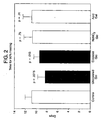
- FIGs. 1-6 present the data from two separate experiments. Both experiments deal with healing of second degree bums on rats as a function of time and treatment methodology.
- Sprague Dawley male rats (average weight 275 grams) were anesthetized with .025 ml of sodium nebutal. Once under anesthesia, the rats' backs were shaved as close as possible, followed by a treatment ofNARE for five minutes to remove any remaining hair.
- a rubber pad template with a removed oval section in the center was used to standardize the burn size among the animals.
- This template was placed over a bath containing 75 degree Celsius water, allowing only a small area of hot water surface area. The anesthetized animal's backs were then pressed against the template for 10 seconds, only being burned by the oval opening. The animals were treated with various applications immediately after being burned. The animals were next allowed to awaken on a heating pad and returned to their cages. In general, wound size increases initially regardless of treatment methodology, as damaged skin sloughs off.
- Measurement of wound areas was done directly by tracing the wound on transparent film every two days with areas measured via planimetry. In each experiment, groups of 5 rats were utilized. Thus, the first experiment, with five different groups, was for a total of 25 animals. In the second experiment with nine groups, a total of 45 animals were involved.
- the first experiment demonstrating the healing effect of the gel technology utilized the following gels.
- NaNO 2 Gel Dissolve 3g NaNO 2 in 200 ml distilled water (some heat required). Upon dissolution, add 1.5 grams of hydroxyethyl cellulose gel (MW 720,000).
- Acid Gel Dissolve 7 grams of Vitamin C and 3.3g Maleic acid in 200 ml distilled water. Upon dissolution, add 1.5 grams of hydroxyethyl cellulose (MW 720,000) was dissolved.
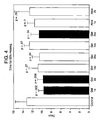
- the second experiment investigated modifications of the gels to higher sodium nitrite concentration and higher viscosity compared to the first experiment and also compared healing to Aloe Vera treatments (Dermaide Aloe Cream, Dermaide Research Corp., Ill.).
- the second experiment also compared treatment frequencies - once (1x) as compared to twice (2x) per day.
- the double viscosity gels a higher molecular weight hydroxyethyl cellulose (MW 1,300,000) was substituted.
- the NaNO 2 concentration was doubled in the sodium nitrite gel ( i.e . use 6 g instead of 3).
- the results from the second experiment are shown in FIGs. 3 , 4 and 6 .
- the gels are preferably sealed after forming.
Landscapes
- Health & Medical Sciences (AREA)
- Chemical & Material Sciences (AREA)
- Animal Behavior & Ethology (AREA)
- General Health & Medical Sciences (AREA)
- Veterinary Medicine (AREA)
- Public Health (AREA)
- Medicinal Chemistry (AREA)
- Pharmacology & Pharmacy (AREA)
- Epidemiology (AREA)
- Life Sciences & Earth Sciences (AREA)
- Engineering & Computer Science (AREA)
- General Chemical & Material Sciences (AREA)
- Chemical Kinetics & Catalysis (AREA)
- Oil, Petroleum & Natural Gas (AREA)
- Dermatology (AREA)
- Inorganic Chemistry (AREA)
- Medicinal Preparation (AREA)
- Pharmaceuticals Containing Other Organic And Inorganic Compounds (AREA)
- Nitrogen And Oxygen Or Sulfur-Condensed Heterocyclic Ring Systems (AREA)
- Cosmetics (AREA)
Abstract
Description
- The present invention relates generally to the fields of tissue malfunction remedies. More particularly, it concerns application of a new nitric oxide-generating mixture to accelerate tissue healing or reduce undesired tissue contractions.
- The biological importance of NO is well documented (Lancaster, 1996; Vincent, 1995; Moncada et al., 1992-1994; Feelisch and Stamler, 1996; Williams, 1996; Butler and Williams 1993; Ignarro and Murad,1995). In mammals, NO is an endogenous physiological mediator of many biological functions. In addition, it is applied pharmacologically in various forms usually referred to as NO donors (nitroglycerin, sodium nitroprusside, etc.) to correct NO deficient states or to regulate the activities of many tissues (see appended list). Topical applications may be used to help wound and burn healing, hair growth, impotence, and cause vasodilatation where needed (e. g., ripening of the cervix in pregnancy). Local higher concentrations of NO (eye, skin, e.g.) are tolerated.
Smith et al. (U.S. 5,519,020 ) describe polymeric nitric oxide sources thought to be useful to promote healing. - Two types of NO synthases (inducible and constitutive) produce NO in living organisms from L-arginine. Synthetic NO donors are also of two different types: those that evolve spontaneously NO as such from chemical precursors (Keefer et al., 1994; Keefer et al., 1993,
U.S. Pat. 5,212,204 ; Hansen et al., 1992; Keefer et al., 1996; Garfield et al.,1995,U.S. Pat. App. 08/440,970 ) or from solutions in suitable solvents (Garfield et al., 1996,U.S. Pat. App. 08/633,337 ), and those that need metabolic redox processes for releasing NO (usually from higher oxidation states). Among the latter ones, organic nitrates (glycerol trinitrate (trivially known as nitroglycerin), isosorbide dinitrate or organic nitrites have been long used in medicine but they are known to produce tolerance, i. e., the need to progressively increase the dose in order to obtain a constant effect. These are also known to produce undesirable systemic side effects (e.g., headache). - Colorless gaseous NO (under some conditions) may react rapidly with atmospheric oxygen, yielding nitrogen dioxide (NO2), a red-brown gas with much higher toxicity than NO. However, at very low concentrations (up to 0.1 parts per million in air), NO may be administered to humans having breathing problems and have beneficial effects due to its bronchodilatory and vasodilatory activity. The reason why the reaction rate of NO with oxygen is very low at minute concentrations is related to the fact that the square of the NO concentration enters the expression of the reaction rate, according to the stoichiometry (eq. 1):
2NO + 02 → 2 NO2 (1)
- Nitrous acid (pKa = 3.37) is produced from inorganic nitrites on treatment with acids (HA) of higher or comparable strength; in the literature, hydrochloric acid is described for this purpose (Feelisch and Stamler, 1996). Nitrous acid is stable in aqueous solution at low temperature, but it decomposes into NO and NO2 readily at room temperature according to the equations (2) and (3):
2 HA + 2 NaNO2 → 2 HNO2 + 2 NaA (2)
2 HNO2 → NO + NO2 + H2O (3)
- There is, under the current U. S. Department of Agriculture regulations, the specification that for curing meat (especially ham and canned meat) and imparting a pink color to it, sodium nitrite must be used in combination with reducing agents such as ascorbate, erythrobate, or α-tocopherol (USDA Federal Registry, 1978; Mirvish, Appl. Pharmacol., 1975; Cornforth, 1996). Also, the literature specifies that sodium ascorbate has a beneficial effect, again for use in meat products (Reith and Szakali,1967). It is conjectured that nitric oxide is the active agent in these meat-curing processes, and that the color is due to the binding of nitric oxide to myoglobin. However, the above-mentioned uses antedate considerably the discovery of NO as an important physiological mediator, and until now the methods and procedures selected by the inventors are not described as a means for topical delivery of nitric oxide.
- Cardiovascular: hypertension; angina; atherosclerosis; preeclampsia (pregnancy induced hypertension; toxemia; eclampsia; HELP syndrome; regulation of vascular conductance; regulation of blood flow; regulation of blood pressure; and myocardial ischemia.
- Gastrointestinal: altered motility; and pyloric stenosis.
- Lung Function: asthma; treatment of premature babies to increase lung function; and pulmonary hypertension.
- Inflammation: autoimmune and immune diseases; acute inflammation; arthritis; resistance to infection; cancer; SLE-Lupus; anaphylactic reactions; and allograft rejection.
- Central Nervous System: behavior; epilepsy; Alzheimer's disease; stroke; and growth hormone disorders (e.g., acromegaly).
- Pancreas: diabetes.
- Female Reproductive System or problems: ovulation; implantation/in vitro fertilization; premenstrual syndrome; dysmenorrhea; uterine contractile disorders; premature labor; cervical dilation; contraception; menopause symptoms; osteoporosis; endocrine disorders; and hormone replacement therapy.
- Male Reproductive Problems: impotence; penile erection; male menopause symptoms; endocrine disorders; osteoporosis; and prostate hypertrophy.
- Bladder and Kidney Problems: incontinence; renal arterial stenosis; and hypertension.
- Dermatological Problems: eczema (skin reaction to foreign particle); autoimmune skin diseases; topical hair loss; acne; wounds; and bums.
- The present invention includes formulations and methods for treating many, if not all, of these problems.
-
US-A-5648101 discloses the use of nitrite granules and reductant granules in topical or tablet formulations, the reductants being metallic salt reductants, for example ferrous chloride, cuprous sulphate and cuprous chloride. -
WO-A-9847495 - Tucker A T et al, in "Effect of nitric-oxide-generating system on microcirculatory blood flow in skin of patients with severe Raynaud's syndrome: A randomised trial." LANCET (NORTH AMERICAN EDITION), VOL 354, , disclose a kit of two gels, one containing sodium nitrite and the other containing ascorbic acid, for topical administration for treatment of Raynaud's syndrome. The ascorbic acid serves both as reducing agent and acid, but has a pKa greater than 4.
- The present invention concerns a method for generating medically applicable nitric oxide. This method comprises combining a nitrite salt, a reductant and a mild acid. The mild acid has sufficient acidity (pKa between about 1 and about 4) to cause degradation of the nitrite to nitric oxide. These components are combined in a diffusion inhibiting medium which controls the rate of nitric oxide release and is sufficiently viscous to topically apply. While ascorbic acid or an ascorbate salt is preferred, other acceptable reductants such as erythrobate or α-tocopherol, for example, may be used.
- The present invention, involves a composition for generating and controlling the release rate of nitric oxide for topical applications that involves more than one gel. In this case, the first aqueous gel comprises a nitrite salt and a second aqueous gel comprises an acid with sufficient acidity to degrade the nitrite salt to nitric oxide. A reductant to help retain the nitric oxide in bioactive form is preferably included in the first or second gel. The acid is preferably an organic acid such as maleic acid, e.g., although inorganic acids such as boric acid, for example may also be suitable. Gellification agents include substances such as hydroxymethyl cellulose, gelatin, agar, and silicic acid, for example. One preferable nitrite salt is sodium nitrite, although others will also be usable. One preferred reductant is ascorbic acid (vitamin C). An acid agent may also be a reductant, such as ascorbic acid or an ascorbic acid variant with a lower pKa, for example. In one aspect, the first and second gels may be combined in layers with the nitrite-containing gel preferably in contact with skin. Prior to application these gels could be separated by an impermeable plastic or metal foil if desired. They could be applied directly to the skin or with an interposed gas-permeable membrane present to avoid possible skin irritation. The aqueous gels may be prepared in isotonic saline solutions and kept sterile prior to use. The topical application includes, of course, application to the skin and may also include any intracavitary application desired. A mixture of powdered sodium nitrite, ascorbic acid, (or other reductant) and maleic acid (or another organic acid of adequate strength) immediately generates nitric oxide (NO) on treatment with water. To slow the NO generation, one may prepare an ointment from a nonaqueous medium (petrolatum, Vaseline, e.g.) and the three powdered ingredients, which, on being applied topically on the skin, will release NO as water permeates through this medium. Alternatively, one may convert the aqueous sodium nitrite solution into an aqueous gel with hydroxyethylcellulose (or other gel-forming substance or compound) and combine this gel with another gel obtained from aqueous ascorbic and maleic acids with hydroxyethylcellulose for topical application (on intact skin, bums, intra-cavity, etc.). The two gels may be admixed immediately before use (possibly from a single container with separate chambers and dual nozzle, via pushing or squeezing the two gels through the nozzle of a device, see e.g.,
FIG. 7 ), or may be applied in sandwich-like fashion (possibly as a transdermal patch) for further slowing down the delivery of NO. - Various nitrite salts may be used, most commonly inorganic ones such as sodium nitrite, although potassium nitrite, calcium nitrite, or any alkali or alkali earth nitrite should be usable. The preferred reductant is one haying the reductive capability of preventing or slowing the oxidation of nitric oxide to nitrous oxide. Preferred reductants include ascorbic acid tocopherol, ascorbate salts, erythrobates or alpha-tocopherol. Other acceptable reductants are well known to those of skill in the arts. Sometimes the acid, particularly if it is an organic acid, may also be a reductant. Ascorbic acid, although slightly weaker an acid than desired for optimal nitric oxide release and control, does have reductive characteristics and may be used under some circumstances as being both a reductant and an acid. Maleic acid is one preferred organic acid which is acceptable. Inorganic acids with the appropriate pKs should be acceptable, particularly if they are biologically acceptable (e.g., boric acid). The medium for dissolution of a nitrite and acid and/or reductant is an aqueous medium. Aqueous media are generally preferred and readily prepared as gels. Methods for the application of these materials to a desired area are manifold, some of which are mentioned here and include applying a nitrite-containing gel or salve layer to the skin or other body site. This would be followed by overlaying a layer of acid and/or reductant. This should give rise to a controlled rate of nitric oxide release to contact the desired bodily surface. These can be manually applied or can be applied as premeasured layers. In some cases the gels may simply be mixed just prior to application to form a relative homogeneous but diffusion-inhibiting salve or gel with all components mixed therein and a sufficiently slow and controlled rate of nitric oxide generation.
- Aqueous gelling agents usable in the methods of the present invention include agars, hydroxyethyl celluloses and many other materials known to those of skill in the art usable in preparing aqueous-based gels. The appropriate gels may be prepared in advance and packaged separated by an impermeable plastic or metal layer, meant to be removed just before use. After removal the layers may be topically applied, the nitrite-containing layer being preferably applied closest to the body site. In some cases, it may be desirable to interpose a gas permeable membrane on the body site prior to the application of the gel or ointment nitric oxide source. This may lessen any skin irritation possibly resulting with certain individuals.
- The following drawings form part of the present specification and are included to further demonstrate certain aspects of the present invention. The invention may be better understood by reference to one or more of these drawings in combination with the detailed description of specific embodiments presented herein.
-
FIG. 1 gives the raw data for healing of second degree burns comparing control with covered and uncovered mixed gels (which release NO) and the individual acid or nitrite gels. -
FIG. 2 compares the time to 50% healing from the initial wound size for the experiment ofFIG. 1 . The error bars and p-values are given. The uncovered gel is statistically shown to be superior to all other methods, with high statistical certainty. -
FIG. 3 compares gels releasing NO applied once or twice daily. -
FIG. 4 is as described forFIG. 3 but comparing higher viscosity gels, higher nitrite concentration gels and aloe vera cream. Again, statistical significance is found favoring the gels. The legend means: control, gel treatment once (1x) per day, gel twice (2x) per day, regular (1XC) or concentrated (2XC) nitrite gel once per day, a normal nitrite concentration (1XV) or more viscous gel (2XV) per day, and finally aloe vera at two viscosities. -
FIG. 5 is for the same experiment asFIGS. 1 and2 but showing a normalized curve where each wound is normalized to one and the ordinate is the percent remaining unhealed. -
FIG. 6 is a normalized curve for the experiment inFIGS. 3 and4 . -
FIG. 7 schematically shows a two ported injection device for administering a nitrite gel and acid gel for mixture and application to a body site. - The present invention comprises a simple procedure for generating nitric oxide (NO) from water or biological fluids and a mixture of powdered biocompatible solid reagents, and also for converting aqueous solutions of such reagents into gels for topical application and slow delivery of NO. However, with reducing agents, only NO is produced, this constituting one of the main aspects of the present invention.
- Biocompatible systems and procedures for generating nitric oxide (NO) are described herein that are particularly useful for topical applications.
- Ascorbic acid (vitamin C) is one preferred biocompatible reducing agent for nitrites; its pKa is 4.10, making it a slightly weaker acid than nitrous acid. An acid with a pKa between about 1 and about 4 is preferred for NO generation, maleic acid being particularly preferred. Maleic acid (pKa = 1.83 for the first ionization step) is about 30 times stronger than nitrous acid, is a crystalline solid without water of crystallization, and its salts are also tolerated biologically; many medicinal drugs with aliphatic amino groups are administered as maleates.
- The methods described herein include mixing an aqueous solution of sodium nitrite with an aqueous solution of an equimolar amount of maleic acid, in the presence of an excess of ascorbic acid. The sodium nitrite is preferably kept separately from the other two ingredients because even ascorbic acid alone slowly generates NO if admixed with sodium nitrite.
- The originality and advantages of the present procedure in one preferred embodiment include employing three safe and inexpensive compounds with convenient characteristics for producing NO free of any other residue that may cause adverse biological effects (as is potentially the case of many newly synthesized NO donors), and also free from the need of enzymatic reactions that may lead to tolerance (as is the case of organic nitrates functioning as NO donors). The composition of the mixture selected by the inventors is inventive, because so far no composition has been marketed or used that consists of (i) a nitrite salt with (ii) an organic acid of adequate strength and (iii) a reducing agent, all three ingredients being biocompatible. Few organic or other acids of the necessary strength are biologically tolerated, and in the absence of a reducing agent such as ascorbic acid the deleterious nitrogen dioxide could also be produced along with NO, as seen in eq. (3). One may therefore assert that the method and procedure described herein are unique in terms of the necessity of having the three types of ingredients selected by the inventors, and among representatives of these types the inventors have selected preferred ones.
- Exemplary NO-releasing gels have been employed with two gelling agents:
- 1. hydroxyethylcellulose obtained from ethylene oxide (oxirane) and cellulose with definite molecular weights, lower than that of natural cellulose; and
- 2. poloxamer (Pluronic), a block copolymer of poly(ethylene glycol) and poly(propylene glycol).
- Both of these particular types of gelling agents are non-ionic surfactants with hydrophobic and hydrophilic segments. In the case of hydroxyethylcellulose, the non-functionalized cellulose segments are water-insoluble, having numerous hydrogen bonds between the parallel and linear β-glycosidic segments. On attaching hydroxyethyl groups, the corresponding glucose units become more hydrophilic. In the case of poloxamer, the poly(oxopropylene) segments are hydrophobic, whereas the poly(hydroxyethylene) segments are hydrophilic. The most interesting property of poloxamer gels in their non-Newtonian behavior, common to many types of polymers. The behavior on heating is opposite to that encountered with most other gelling agents such as gelatin: the fluidity of poloxamer gels increases on cooling and decreases on heating reversibly in the
temperature range 0°C to 50°C. The amount of Pluronic needed for gel formation is 2-3 times higher than that indicated for hydroxyethycellulose. Nitrite and acid-containing pluronic gels have been mixed and noted to cause skin reddening when mixed and applied thereto. - For references in this matter see:
- I.R. Schmolka, Am. Perfum. Cosmet. 1967, 82, (7) 25-30.
- I.R. Schmolka, "Polyalkylene Oxide Block Copolymers" in Nonionic Surfactants. M. Schick, Ed., Dekker, New York, 1967, pp. 300-371.
- L.V. Allen Jr., "Compounding Gels", Secundum Artem, 1994,4 (5).
- Many gels will not promote bacterial or mold growth, nor will they prevent it. Consequently, they need to be sterilized or contain preservatives. A number of preservatives and their concentrations that have been used in the preparation of such gels and more are well known to those of skill in the art. (See Table 1).
Table 1: Compatibility of Selected Preservatives with Carbomer Gels Preservative Concentration Appearance Compatible Benzalkonium Chloride 0.01% Clear Yes 0.1% Cloudy No Sodium Benzoate 0.01% Clear Yes 0.1% Cloudy No Methylparaben 0.18% Clear Yes Propylparaben 0.05% Thiomersal 0.01% Clear Yes 0.1 % Clear Yes - In gel preparation, the powdered polymers, when added to water, may form temporary masses that slow the process of dissolution. As water diffuses into these loose clumps of powder, their exteriors frequently turn into clumps of solvated particles encasing dry powder. The blobs of gel may dissolve very slowly because of their high viscosity and low diffusion coefficient of the macromolecules.
- As a hot, colloidal dispersion of gelatin cools, the gelatin macromolecules lose kinetic energy. With reduced kinetic energy, or thermal agitation, the gelatin macromolecules are associated through dipole-dipole interaction into elongated or threadlike aggregates. The size of these association chains increases to the extent that the dispersing medium is held in the interstices among the interlacing network of gelatin macromolecules, and the viscosity increases to that of a semisolid. Gums such as agar, Irish moss, algin, pectin and tragacanth, form gels by the same mechanism as gelatin.
- Polymer solutions tend to cast gels because the solute consists of long, flexible chains of molecular thickness that tend to become entangled, attract each other by secondary valency forces, and even crystallize. Cross linking of dissolved polymer molecules also causes the solutions to gel. The reactions produce permanent gels, held together by primary valence forces. Secondary valence forces are responsible for reversible gel formation. For example, gelatin will form a gel when the temperature of a solution is lowered to about 30°C, the gel melting point. Lower temperatures, higher concentrations and higher molecular weights promote gelation and produce stronger gels. The reversible gelation of gelatin will occur at about 25°C for 10% solutions, 30°C for 20% solutions and about 32°C for 30% solutions. Gelation is rarely observed for gelatin above 34°C and, regardless of concentration, gelatin solutions do not gel at 37°C. The gelation temperature or gel point of gelatin is highest at the isoelectric point. Water soluble polymers have the property of thermal gelation, i.e., they gel on heating, whereas natural gums gel on cooling. Thermal gelation is reversed on cooling. Some substances such as aqueous methyl cellulose solutions will gel when heated above the 50°C because the polymer is less soluble in hot water and precipitates.
- Inorganic salts will compete with the water present in a gel and cause gelation to occur at lower concentrations. This is usually a reversible process and, upon the addition of water, the gels will re-form. Alcohol may cause precipitation or gelation because alcohol is a nonsolvent or precipitant, lowering the dielectric constant of the medium and tending to dehydrate the hydrophilic solute. Alcohol lowers the concentrations at which electrolytes salt out hydrophilic colloids. Phase separation by adding alcohol may cause coacervation.
- Aqueous polymer solutions, especially of cellulose derivatives, are stored for approximately 48 hours after dissolution to promote full hydration, maximum viscosity and clarity. If salts are to be added, they are incorporated at this point rather than by dissolving in the water prior to adding the polymer. Otherwise the solutions may not reach their full viscosity and clarity.
- Gels provide the pharmacist with an excellent drug delivery system for different routes of administration and are compatible with many different substances. Gels containing penetration enhances are especially popular for administering anti-inflammatory and anti-nauseant medications. They are relatively easy to prepare and are very efficacious.
- A two gel method for delivery of NO will have the following properties. Dosage (total) can be controlled simply by adjusting the quantity of nitrite and acid. Rate can be independently controlled by adjusting the viscosity of the gel. Thus, a high total dosage can be delivered over a long period of time or a low total dosage can be delivered rapidly, as desired. In addition, various physical means for applying successive doses can be easily developed. For example, multilayer sandwiches could be formed with each successive layer activated by removing sequential barriers between gels (which themselves could even be of different strengths). Thus, a wound could remain covered for several treatments.
- Another feature of the gels is that they are compatible with the addition of various agents such as sterilizing compounds and antibiotics, e.g..
- Other mechanisms of application (other than topical) are possible. This technology might be used as sprays, suppositories, (aural, nasal, vaginal or rectal) or even injectable form to control many biological functions. It might also be dispensed in dropper form to be used in the eye, ear, nose or throat. Most of these applications deal with treatment of inflammation. The IV applications might be useful for acute angina and to regulate the cardiovascular system.
- The gel might also be used in combination with various agents including antibiotics, anesthetics, analgesics, anti-inflammatory agents such as corticosteroids and nonsteroidal anti-inflammatory agents, antiviral agents, vasodilators or vasoconstrictors, sunscreen preparations (PABA), antihistamines, other hormones, such as estrogens, progesterone, androgens, antiseborretic agents, other cardiovascular agents, mast cell stabilizers, scabicides or pediculicides, keratolytics, lubricants, narcotics, shampoos, acne preparations, antiseborrheic agents, burn preparations, cleansing agents, deodorants, depigmenting agents, diaper rash products, emollients and moisturizers, photosensitizing agents, poison ivy or poison oak or sumac products, sunburn preparations, tar-containing preparations, wart preparations, wet dressings and wound care products. This would reduce any potential danger of infection introduced by the process.
- The present gel technology is preferably but not necessarily a local NO delivery system as opposed to a systemic one. Therefore, the many systemic side effects of other NO treatments (such as nitroglycerin) should be completely avoided. This is an important advantage for a variety of problems.
- A further advantage of the local application of the gels is that it is self regulating in the sense that when the desired effect of the treatment has been achieved, the remaining amount can simply be wiped off and the release stops. For subjects who might have some allergic response to other treatments, this ability to immediately stop treatment should be beneficial.
- In addition to the list of uses and potential uses of NO, four important specific applications of the gel technology are worthy of more detailed discussion. These are generally related to the fact that the gels produce NO locally which in turn enhances local circulatory response.
- Since topical application of the gels has been shown to immediately enhance local blood flow, the present gel technology can have important uses in treatments of male reproductive problems, especially penile erection and impotence. The ability to control dosage directly may be important here. Of course, if desired, antibiotics, spermicides and/or other additives may be included in such a gel.
- Enhancement of local circulation is important for hair replacement and growth. The gel technology can be used to treat topical hair loss, particularly insofar as the hair loss is at least partially caused by microcirculation defects.
- Bums respond to treatment with the gel as demonstrated in animal models - the results of which are included herein. Use of the gel technology in conjunction with other compounds may have application to even minor burns such as sunburn and other wounds.
- NO donor compounds are important in the control of cervical dilation. The gel technology for this purpose is particularly appealing. First, it can be controlled directly and second, it is purely local as opposed to systemic.
- There are numerous types of compounds which might be added to gels without unfavorably altering the NO donation properties but which would have some added features already known. These include antibiotics, steroids, antihistamines, antiinfective agents, prostaglandins, antipyretics, analgesics, anticycotics, antiseborrheic agents, anti psoriasis agents, antipruritics and local anesthetics. Also they may be combined with locally acting cardiovascular agents, e.g., alpha or beta blockers and Rogaine. Another type of compound which might be added to the gels is vasomax or other penile erectile agents. One can also combine the gels with vitamins, skin softeners, emolients, clearing agents, enzymes and keratolytics.
- The following examples are included to demonstrate preferred embodiments of the invention. It should be appreciated by those of skill in the art that the techniques disclosed in the examples which follow represent techniques discovered by the inventors to function well in the practice of the invention, and thus can be considered to constitute preferred modes for its practice.
- Immediately before use a powdered combination of sodium nitrite (15 mmoles) and ascorbic acid (20 mmoles) is mixed magnetically with powdered maleic acid (20 mmoles) in a 500 ml four-necked flask connected (via ground-glass joints having stopcocks) to a vacuum pump, a manometer, an argon inlet, and a stoppered dropping funnel with pressure equalizer. After repeated evacuations and purgings with argon, water from the dropping funnel is admitted into the flask with stirring. A quantitative evolution of colorless NO with effervescence is observed by the pressure increase and corresponds to 15 mmoles of NO. On admitting air into the flask until the pressure equalizes with atmospheric pressure, the red-brown color of NO2 appears. The chemical reaction (4), where vitamin C is Asc(OH)2 and maleic acid as MalH shows the reaction producing NO:
2NaNO2 + 2 MalH + Asc(OH)2 → 2 NO + 2 NaMal + 2 H2O + AscO2 (4)
- The three components mentioned above, in the same ratios, are admixed with a petroleum-based nonaqueous ointment such as petrolatum or Vaseline, forming athick slurry. When applied topically on the skin, this ointment will slowly release NO with water vapor that permeates through the nonaqueous medium.
- The three components of Example 1 are used, but sodium nitrite and maleic acid are kept in separate gels prior to use. A warm solution of sodium nitrite (0.1 mole (1 to 5 % concentration) in distilled water is converted into a gel by adding hydroxyethylcellulose (molecular weight 250,000 - 1,250,000) or another gel-forming substance such as another cellulose derivative, gelatin or agar, e.g., in such a ratio as to obtain the desired consistency of the gel, and to incorporate all the solution, after 24 h at room temperature. For instance, with 1.6 g of hydroxyethylcellulose with average molecular weight 750,000, one obtains a satisfactory transparent gel with 50 ml solution. Separately, another gel is prepared similarly from distilled water, hydroxyethylcellulose, maleic acid (0.1 moles) and ascorbic acid (0.15-0.2 moles, same concentration as the nitrite). On admixing equal amounts of the two gels immediately before use, placing the mixture on intact skin, and covering it (or not) with an adhesive bandage, NO will be delivered topically. It is preferable (when mixing the two gels is not done or is done on the skin) to have the gel with nitrite in contact with the skin, and to apply the other gel over it, in order to reduce any irritation due to the low pH of the mixture or acid gel. If the two gels have sufficiently high consistency, thin slices of appropriate dimensions from each of the two gels can be cut and sandwiched, separated by an impermeable plastic or metal foil; immediately before use the foil can be removed, the two slices can be slightly pressed against one another and covered by the air-tight adhesive bandage, if desired, for gradual topical delivery of NO.
- In all cases, care should be exercised in order to minimize or avoid any overdosage of NO or of nitrite. Contact between the atmosphere and the mixture producing nitric oxide is preferably avoided or minimized because, under some conditions, NO may be rapidly oxidized by air (unless extremely diluted) to afford undesirable nitrogen dioxide.
- Objective: To investigate the effects of Nitric Oxide on a second degree partial thickness burn. Also, to compare the healing rate of NO treatment with that of Aloe vera. The study will include different gels with different concentrations and viscosities.
-
FIGs. 1-6 present the data from two separate experiments. Both experiments deal with healing of second degree bums on rats as a function of time and treatment methodology. - In both experiments, Sprague Dawley male rats (average weight 275 grams) were anesthetized with .025 ml of sodium nebutal. Once under anesthesia, the rats' backs were shaved as close as possible, followed by a treatment ofNARE for five minutes to remove any remaining hair.
- A rubber pad template with a removed oval section in the center was used to standardize the burn size among the animals. This template was placed over a bath containing 75 degree Celsius water, allowing only a small area of hot water surface area. The anesthetized animal's backs were then pressed against the template for 10 seconds, only being burned by the oval opening. The animals were treated with various applications immediately after being burned. The animals were next allowed to awaken on a heating pad and returned to their cages. In general, wound size increases initially regardless of treatment methodology, as damaged skin sloughs off.
- Measurement of wound areas was done directly by tracing the wound on transparent film every two days with areas measured via planimetry. In each experiment, groups of 5 rats were utilized. Thus, the first experiment, with five different groups, was for a total of 25 animals. In the second experiment with nine groups, a total of 45 animals were involved.
- The first experiment demonstrating the healing effect of the gel technology utilized the following gels.
- NaNO2 Gel: Dissolve 3g NaNO2 in 200 ml distilled water (some heat required). Upon dissolution, add 1.5 grams of hydroxyethyl cellulose gel (MW 720,000).
- Acid Gel: Dissolve 7 grams of Vitamin C and 3.3g Maleic acid in 200 ml distilled water. Upon dissolution, add 1.5 grams of hydroxyethyl cellulose (MW 720,000) was dissolved.
- The results from the first experiment are shown in
FIGs. 1 ,2 and5 . - The second experiment investigated modifications of the gels to higher sodium nitrite concentration and higher viscosity compared to the first experiment and also compared healing to Aloe Vera treatments (Dermaide Aloe Cream, Dermaide Research Corp., Ill.). The second experiment also compared treatment frequencies - once (1x) as compared to twice (2x) per day.
- To obtain the double viscosity gels, a higher molecular weight hydroxyethyl cellulose (MW 1,300,000) was substituted. To obtain the double nitrite concentration, the NaNO2 concentration was doubled in the sodium nitrite gel (i.e. use 6 g instead of 3).
- The results from the second experiment are shown in
FIGs. 3 ,4 and6 . In all cases, the gels are preferably sealed after forming. -
FIG. 1 gives the raw data for healing of second degree bums comparing control with covered and uncovered mixed gels (which release NO) and the individual acid or nitrite gels. The result demonstrates that healing efficacy is the result of the NO released as opposed to the components in the individual gels. The uncovered and covered gels which release NO clearly heal faster in absolute terms. -
FIG. 2 compares the time to ½ healing from the initial wound size for the first experiment. The error bars and p-values are given. The uncovered acid-nitrite gel is statistically shown to be superior to all other methods with high statistical certainty (followed by the covered acid-nitrite gel). -
FIG. 3 compares once and twice daily gel applications. Both applications caused more rapid healing than controls. -
FIG. 4 shows healing ½ time but this time comparing higher viscosity gels, higher nitrite concentration gels and aloe vera creams. Again, statistical significance is found favoring the No producing gels. The legend means: control, gel treatment once (1x) per day, gel twice (2x) per day, nitrite concentration gel (1XC) and twice concentrated (2XC), a normal nitrite concentration but normally viscous gel (1XV) and more viscous gel (2XV) once per day, and finally aloe vera once or twice per day. -
FIG. 5 is for the same experiment asFIGS. 1 and2 but showing a normalized curve where each wound is normalized to one and the ordinate is the percent remaining unhealed. -
FIG. 6 is a normalized curve for experiment two shown inFIGS. 3 and4 . - These tests indicate efficacy of gel treatments for wound healing. This is, however, just one of the applications of the technology. The present invention demonstrates that the systems described herein release NO, and also that they produce increased local blood flow. That observation is independent of these burn experiments and certainly makes the discovery applicable in any case where increased local blood circulation can be therapeutic.
- All of the compositions and/or methods disclosed and claimed herein can be made and executed without undue experimentation in light of the present disclosure.
-
- Butler and Williams, Chem. Soc. Revs., 22:233, 1993
- Cornforth, In: Nitric Oxide. Principles and Actions, Ed. J. Lancaster Jr., Academic Press, San Diego, p. 259, 1996.
- Feelisch and Stamler, (Eds.), "Methods in Nitric Oxide Research," Wiley, New York, 1996
- Feelisch and Stamler, In: Methods in Nitric Oxide Research, Eds. M. Feelisch and J.S. Stamler, Wiley, p. 71, namely p. 102, 1996.
-
Garfield, Balaban, Seitz, Klein, Lesko, U. S. Pat. App. Serial No. 08/440,970, May 15,1995 -
Garfield, Balaban, Seitz, U. S. Pat. App. Serial No. 08/633,337, April 17, 1996 - Hansen, Croisy, Keefer, In: N-Nitroso Compounds: Occurrence and Biological Effects (Eds. Bartsch, H., O'Neill, I. K., Castegnaro, M. and Okada, M.), International Agency for Research on Cancer Publication No. 41, Lyon, p. 21, 1992
- Ignarro and Murad, (Eds.), "Nitric Oxide. Biochemistry, Molecular Biology, and Therapeutic Implications", Advances in Pharmacology, Academic Press, San Diego, 1995.
- Keefer, Christodolou, Dunams, Hrabie, Maragos, Saavedra, Wink, In: Nitrosamines and Related N-Nitroso Compounds: Chemistry and Biochemistry, (Eds. R. N. Loeppky and C. J. Michedja), ACS Symp. Series No. 553, Amer. Chem. Soc., Washington, DC, p. 136-146, 1994
- Keefer, Nims, Davies, Wink, D. A., Methods in Enzymology, 268:281, 1996.
-
Keefer, Wink, Dunams, Hrabie, U. S. Pat. 5,212,204 (May 18, 1993 ); Chem. Abstr, 113:145344,1990 for Pat. Appl.423,279 (March 1, 1990 ) - Lancaster, (Ed.), "Nitric Oxide. Principles and Actions", Academic Press, New York, 1996
- Mirvish, Appl. Pharmacol., 31:325, 1975.
- Moncada, Marletta, Hibbs, Feelisch, Busse, (Eds.), "The Biology of Nitric Oxide", vols. 1-4, Portland Press, Colchester, 1992-1994
- Reith and Szakali, J. Food Sci., 32:188, 194, 1967.
- Smith et al.,(
U.S. Patent 5,519,020), issued May 21, 1996 . - USDA Federal Registry, Washington, DC, 43:20992, 1978.
- Vincent, (Ed.), "Nitric Oxide in the Nervous System", Academic Press, New York, 1995
- Williams, Chem. Soc. Revs., 25:77-84, 1996
Claims (12)
- A topically applicable composition for controlled and prolonged NO delivery, comprising: (a) a first aqueous gel comprising a nitrite salt; and (b) a second aqueous gel comprising an acid having a pKa from 1 to 4, at least one of the first and second gels also comprising a reductant, wherein contacting the first and second gels produces a diffusion-inhibiting medium and results in the prolonged release of NO.
- A composition according to Claim 1, wherein the gel comprises hydroxyethyl cellulose or poloxama.
- A composition according to Claim 1 or Claim 2, wherein the reductant is ascorbic acid, an ascorbate salt, an erythrobate or α-tocopherol.
- A composition according to any preceding claim, wherein the acid is an organic acid.
- A composition according to Claim 4, wherein the acid is maleic acid.
- A composition according to any of Claims 1 to 3, wherein the acid is an inorganic acid.
- A composition according to any preceding claim, wherein the nitrite is sodium nitrite.
- A composition according to Claim 4, wherein the two gels are separated one from the other by means of an impermeable plastic or metal foil until just before use.
- A composition according to any of Claims 1 to 7, in combination with a gas-permeable membrane which, in use, is interposed between the gel or gels and the skin surface to be treated.
- Apparatus containing, and adapted for delivering, the two gels of the composition of Claim 4, the apparatus comprising a single container with two separate chambers containing said two gels, and means for forcing the gels through a nozzle with a hole for each chamber.
- A composition according to any of Claims 1 to 9 for use in the topical treatment of hypertension, angina, atherosclerosis, pre-eclampsia, toxaemia, eclampsia, HELP syndrome, myocardial ischemia, altered gastrointestinal motility, pyloric stenosis, asthma, pulmonary hypertension, autoimmune and immune diseases, acute inflammation, arthritis, cancer, SLE-Lupus, anaphylactic reactions, allograft rejection, behavioural disorders, epilepsy, Alzheimer's disease, stroke, growth hormone disorders (e.g. acromegaly), diabetes, premenstrual syndrome, dysmenorrhoea, uterine contractile disorders, premature labour, cervical dilation, contraception, female menopause symptoms, osteoporosis, endocrine disorders, male impotence and erectile disorders, male menopause symptoms, male prostate hypertrophy, incontinence, renal arterial sclerosis, eczema, autoimmune skin diseases, topical hair loss, acne, wounds and bums.
- A composition according to any of Claims 1 to 9 for use in the regulation of vascular conductance, regulation of blood flow, regulation of blood pressure, treatment of premature babies to increase lung function, treatment to increase resistance to infection, enhancing ovulation, assisting implantation/in vitro fertilization, and enhancing hormone replacement therapy.
Applications Claiming Priority (2)
| Application Number | Priority Date | Filing Date | Title |
|---|---|---|---|
| US09/095,174 US6103275A (en) | 1998-06-10 | 1998-06-10 | Systems and methods for topical treatment with nitric oxide |
| PCT/US2000/014239 WO2001089572A1 (en) | 1998-06-10 | 2000-05-24 | Systems and methods for topical treatment with nitric oxide |
Publications (2)
| Publication Number | Publication Date |
|---|---|
| EP1283724A1 EP1283724A1 (en) | 2003-02-19 |
| EP1283724B1 true EP1283724B1 (en) | 2009-05-06 |
Family
ID=22250448
Family Applications (1)
| Application Number | Title | Priority Date | Filing Date |
|---|---|---|---|
| EP00932745A Expired - Lifetime EP1283724B1 (en) | 1998-06-10 | 2000-05-24 | Systems and methods for topical treatment with nitric oxide |
Country Status (7)
| Country | Link |
|---|---|
| US (2) | US6103275A (en) |
| EP (1) | EP1283724B1 (en) |
| AT (1) | ATE430584T1 (en) |
| AU (2) | AU2000250426B2 (en) |
| CA (1) | CA2410990C (en) |
| DE (1) | DE60042174D1 (en) |
| WO (1) | WO2001089572A1 (en) |
Families Citing this family (215)
| Publication number | Priority date | Publication date | Assignee | Title |
|---|---|---|---|---|
| US6709681B2 (en) * | 1995-02-17 | 2004-03-23 | Aberdeen University | Acidified nitrite as an antimicrobial agent |
| US6207713B1 (en) * | 1997-09-17 | 2001-03-27 | Eric T. Fossel | Topical and oral delivery of arginine to cause beneficial effects |
| US7629384B2 (en) * | 1997-09-17 | 2009-12-08 | Strategic Science & Technologies, Llc | Topical delivery of L-arginine to cause beneficial effects |
| US7914814B2 (en) * | 1997-09-17 | 2011-03-29 | Strategic Science & Technologies, Llc | Topical delivery of arginine of cause beneficial effects |
| US6103275A (en) * | 1998-06-10 | 2000-08-15 | Nitric Oxide Solutions | Systems and methods for topical treatment with nitric oxide |
| US20070086954A1 (en) * | 1998-11-23 | 2007-04-19 | Miller Christopher C | Method and apparatus for treatment of respiratory infections by nitric oxide inhalation |
| CA2254645A1 (en) * | 1998-11-23 | 2000-05-23 | Pulmonox Medical Corporation | Method and apparatus for treatment of respiratory infections by nitric oxide inhalation |
| US20050142218A1 (en) * | 2000-03-09 | 2005-06-30 | Queen Mary & Westfield College | Pharmaceutical composition containing nitrate source and an acidifying agent for treating skin ischaemia |
| GB9905425D0 (en) * | 1999-03-09 | 1999-05-05 | Queen Mary & Westfield College | Pharmaceutical composition |
| DE19945484A1 (en) * | 1999-09-22 | 2001-04-05 | Kolb Bachofen Victoria | NO-releasing topically applicable composition |
| US7516742B2 (en) * | 1999-11-24 | 2009-04-14 | Cardinal Health 207, Inc. | Method and apparatus for delivery of inhaled nitric oxide to spontaneous-breathing and mechanically-ventilated patients with intermittent dosing |
| US20050142217A1 (en) * | 2000-04-26 | 2005-06-30 | Adams Michael A. | Formulations and methods of using nitric oxide mimetics against a malignant cell phenotype |
| US7678391B2 (en) * | 2000-04-26 | 2010-03-16 | Queen's University At Kingston | Formulations and methods of using nitric oxide mimetics against a malignant cell phenotype |
| JP2003531179A (en) | 2000-04-26 | 2003-10-21 | クイーンズ ユニバーシティ アット キングストン | Formulations and methods of using nitric oxide mimetics for malignant cell phenotype |
| GB0021317D0 (en) * | 2000-08-30 | 2000-10-18 | Queen Mary & Westfield College | Transdermal pharmaceutical delivery composition |
| SE0004026D0 (en) * | 2000-11-03 | 2000-11-03 | Peter Wiklund | New use |
| US6432077B1 (en) * | 2000-12-26 | 2002-08-13 | Sensormedics Corporation | Device and method for treatment of surface infections with nitric oxide |
| US7122018B2 (en) * | 2000-12-26 | 2006-10-17 | Sensormedics Corporation | Device and method for treatment of wounds with nitric oxide |
| US6706274B2 (en) * | 2001-01-18 | 2004-03-16 | Scimed Life Systems, Inc. | Differential delivery of nitric oxide |
| GB0119011D0 (en) * | 2001-08-03 | 2001-09-26 | Univ Aberdeen | Treatment of nail infections |
| US7040313B2 (en) * | 2001-09-05 | 2006-05-09 | Cyterra Corporation | Method and apparatus for nitric oxide generation |
| GB0125222D0 (en) * | 2001-10-19 | 2001-12-12 | Barts & London Nhs Trust | Composition for the treatment of microbial infections |
| JP4475959B2 (en) * | 2002-04-24 | 2010-06-09 | インセンス・リミテッド | Wound dressing containing hydrated hydrogels and enzymes |
| US20040018237A1 (en) * | 2002-05-31 | 2004-01-29 | Perricone Nicholas V. | Topical drug delivery using phosphatidylcholine |
| US7531133B2 (en) * | 2002-09-10 | 2009-05-12 | Pulmonox Technologies Corporation | Use of nitric oxide gas in an extracorporeal circuitry to treat blood plasma |
| GB0224986D0 (en) * | 2002-10-28 | 2002-12-04 | Smith & Nephew | Apparatus |
| CA2413834A1 (en) | 2002-12-10 | 2004-06-10 | 1017975 Alberta Limited | Nitric oxide gas generator |
| US9138707B2 (en) | 2002-12-10 | 2015-09-22 | Sy Kimball | Portable, nitric oxide generator |
| FR2850579B1 (en) * | 2003-02-03 | 2006-08-18 | Oreal | USE OF MONO-OR DI-ESTERS OF CINNAMIC ACID OR ONE OF ITS DERIVATIVES AND VITAMIN C, AS DONOR OF NO |
| CA2456035A1 (en) * | 2003-02-03 | 2004-08-03 | L'oreal | Use of n-ary n-arylmethyleneiminodiacetates or n, n1-diarylmethylene ethylenediamineacetates as sources of no lmethylene ethylenediaminetriacetates |
| FR2850578B1 (en) * | 2003-02-03 | 2006-07-28 | Oreal | USE OF N-ARYLMETHYLENE ETHYLENEDIAMINETRIACETATES, N-ARYLMETHYLENEIMINODIACETATES OR N, N'-DIARYLMETHYLENE ETHYLENEDIAMINEACETATES AS DONORS OF NO |
| CA2838369A1 (en) * | 2003-04-23 | 2004-11-04 | The University Of Akron | Sequestered reactive materials |
| GB0313217D0 (en) | 2003-06-09 | 2003-07-16 | Insense Ltd | Improvements in or relating to skin dressings |
| US20050181026A1 (en) * | 2003-06-09 | 2005-08-18 | Insense Limited | Skin dressings |
| CA2530811C (en) | 2003-07-03 | 2013-01-08 | The University Court Of The University Of St Andrews | Zeolites for delivery of nitric oxide |
| WO2005004884A2 (en) * | 2003-07-09 | 2005-01-20 | The Government Of The United States Of America As Represented By The Secretary, Department Of Health And Human Services | Use of nitrite salts for the treatment of cardiovascular conditions |
| EP1648527A4 (en) * | 2003-07-25 | 2008-04-23 | Univ Akron | Stabilization and ionic triggering of nitric oxide release |
| GB0322342D0 (en) * | 2003-09-23 | 2003-10-22 | Gamble Reed | Skin patch |
| US11298453B2 (en) | 2003-10-28 | 2022-04-12 | Smith & Nephew Plc | Apparatus and method for wound cleansing with actives |
| CN100475275C (en) * | 2004-01-05 | 2009-04-08 | 董永华 | Tumor vascular embolization agent and its storage and release device |
| WO2005072784A1 (en) * | 2004-01-30 | 2005-08-11 | Insense Limited | Wound dressings comprising hydrated hydrogels and enzymes |
| EP1732577B1 (en) * | 2004-02-23 | 2013-04-10 | Strategic Science & Technologies, LLC | Topical delivery of l-arginine to improve body and skin appearance |
| US9226909B2 (en) | 2004-04-19 | 2016-01-05 | Strategic Science & Technologies, Llc | Beneficial effects of increasing local blood flow |
| JP2007532697A (en) * | 2004-04-19 | 2007-11-15 | ストラテジック サイエンス アンド テクノロジーズ, エルエルシー | The beneficial effects of increased local blood flow |
| US20090105336A1 (en) * | 2004-04-19 | 2009-04-23 | Strategic Science & Technologies, Llc | Beneficial Effects of Increasing Local Blood Flow |
| US20110028548A1 (en) * | 2004-04-19 | 2011-02-03 | Strategic Science & Technologies, Llc | Beneficial effects of increasing local blood flow |
| US10413644B2 (en) | 2004-04-27 | 2019-09-17 | Smith & Nephew Plc | Wound treatment apparatus and method |
| US8529548B2 (en) | 2004-04-27 | 2013-09-10 | Smith & Nephew Plc | Wound treatment apparatus and method |
| GB0409446D0 (en) | 2004-04-28 | 2004-06-02 | Smith & Nephew | Apparatus |
| US7753894B2 (en) | 2004-04-27 | 2010-07-13 | Smith & Nephew Plc | Wound cleansing apparatus with stress |
| US8518457B2 (en) * | 2004-05-11 | 2013-08-27 | Pulmonox Technologies Corporation | Use of inhaled gaseous nitric oxide as a mucolytic agent or expectorant |
| MXPA06013111A (en) * | 2004-05-11 | 2007-05-23 | Sensormedics Corp | Intermittent dosing of nitric oxide gas. |
| US7362274B1 (en) * | 2004-07-09 | 2008-04-22 | Huan-Cheng Lien | Coupled feed-in butterfly shaped left/right hand circularly polarized microstrip antenna |
| WO2006023616A2 (en) | 2004-08-18 | 2006-03-02 | Geno Llc | Conversion of nitrogen dioxide (no2) to nitric oxide (no) |
| US7618594B2 (en) | 2004-08-18 | 2009-11-17 | Geno Llc | Conversion of nitrogen dioxide (NO2) to nitric oxide (NO) |
| US8635217B2 (en) * | 2004-09-15 | 2014-01-21 | Michael J. Markus | Collections of linked databases |
| WO2006036186A2 (en) * | 2004-09-15 | 2006-04-06 | S.M.A.R.T. Link Medical, Inc. | Collections of linked databases |
| US20070260599A1 (en) * | 2004-09-15 | 2007-11-08 | Mcguire Heather A | Social network analysis |
| US8412706B2 (en) | 2004-09-15 | 2013-04-02 | Within3, Inc. | Social network analysis |
| US8577886B2 (en) * | 2004-09-15 | 2013-11-05 | Within3, Inc. | Collections of linked databases |
| US20070154570A1 (en) * | 2004-09-29 | 2007-07-05 | Miller Christopher C | Use of nitric oxide in the treatment and disinfection of biofilms |
| GB0505035D0 (en) * | 2005-03-11 | 2005-04-20 | Insense Ltd | Improvements relating to skin dressings |
| WO2006097352A1 (en) * | 2005-03-15 | 2006-09-21 | L'oreal | Cosmetic composition containing nitrogen monoxide in a microporous crystalline solid material |
| FR2883163B1 (en) * | 2005-03-15 | 2007-05-18 | Oreal | COSMETIC USE OF MICROPOROUS MICROPOROUS SOLID STATE MATERIAL CONTAINING NO TO IMPROVE THE APPEARANCE AND / OR NATURAL COLORING OF SKIN AND / OR LIP |
| FR2883165B1 (en) * | 2005-03-15 | 2007-05-18 | Oreal | ANHYDROUS COSMETIC COMPOSITION CONTAINING NITROGEN MONOXIDE IN MICROPOROUS CRYSTALLINE SOLID MATERIAL |
| WO2006097349A1 (en) * | 2005-03-15 | 2006-09-21 | L'oreal | Cosmetic use of a microporous solid crystalline material no for improving the natural colouring and/or appearance of the skin and/or lips |
| FR2883166B1 (en) * | 2005-03-15 | 2007-05-18 | Oreal | ANHYDROUS COSMETIC COMPOSITION CONTAINING NITROGEN MONOXIDE IN MICROPOROUS CRYSTALLINE SOLID MATERIAL |
| WO2006097351A1 (en) * | 2005-03-15 | 2006-09-21 | L'oreal | Anhydrous cosmetic composition comprising nitrogen monoxide in a microporous solid crystalline material |
| EP1704876A1 (en) * | 2005-03-24 | 2006-09-27 | NOLabs AB | Cosmetic treatment, device for performing said treatment and manufacturing method thereof |
| US9427605B2 (en) | 2005-03-24 | 2016-08-30 | Novan, Inc. | Cosmetic treatment with nitric oxide, device for performing said treatment and manufacturing method therefor |
| US8557300B2 (en) * | 2005-05-19 | 2013-10-15 | University Of Cincinnati | Methods for treating bacterial respiratory tract infections in an individual using acidified nitrite |
| EP2669269B1 (en) | 2005-05-27 | 2019-05-22 | The University of North Carolina At Chapel Hill | Nitric oxide-releasing particles for nitric oxide therapeutics and biomedical applications |
| WO2007005463A2 (en) * | 2005-06-29 | 2007-01-11 | S.M.A.R.T. Link Medical, Inc. | Collections of linked databases |
| SE529056C2 (en) | 2005-07-08 | 2007-04-17 | Plasma Surgical Invest Ltd | Plasma generating device, plasma surgical device and use of a plasma surgical device |
| SE529058C2 (en) | 2005-07-08 | 2007-04-17 | Plasma Surgical Invest Ltd | Plasma generating device, plasma surgical device, use of a plasma surgical device and method for forming a plasma |
| SE529053C2 (en) | 2005-07-08 | 2007-04-17 | Plasma Surgical Invest Ltd | Plasma generating device, plasma surgical device and use of a plasma surgical device |
| WO2007016252A2 (en) * | 2005-07-27 | 2007-02-08 | S.M.A.R.T. Link Medical, Inc. | Collections of linked databases and systems and methods for communicating about updates thereto |
| CN101257938A (en) | 2005-09-07 | 2008-09-03 | 泰科保健集团有限合伙公司 | Wound dressing with vacuum reservoir |
| US10395326B2 (en) * | 2005-11-15 | 2019-08-27 | 3Degrees Llc | Collections of linked databases |
| WO2007057763A2 (en) * | 2005-11-18 | 2007-05-24 | Pulmonox Technologies Corporation | Nitric oxide as an anti-viral agent, vaccine and vaccine adjuvant |
| CN1990045B (en) * | 2005-12-30 | 2010-12-22 | 北京尼奥克斯生物科技有限公司 | Highly effective plaster for burn and scald and its preparation process |
| US8790715B2 (en) * | 2006-02-16 | 2014-07-29 | Ino Therapeutics Llc | Method and apparatus for generating nitric oxide for medical use |
| GB0614278D0 (en) * | 2006-07-19 | 2006-08-30 | Insense Ltd | Hydrogen peroxide delivery system |
| GB0618711D0 (en) * | 2006-09-22 | 2006-11-01 | Univ Exeter | Agricultural treatment |
| US8079998B2 (en) * | 2006-10-20 | 2011-12-20 | Pulmonox Technologies Corporation | Methods and devices for the delivery of therapeutic gases including nitric oxide |
| WO2008079993A2 (en) * | 2006-12-22 | 2008-07-03 | Ikaria, Inc. | Combinations of nitric oxide and sulfide and methods of use and manufacture thereof |
| US7928338B2 (en) | 2007-02-02 | 2011-04-19 | Plasma Surgical Investments Ltd. | Plasma spraying device and method |
| US20080193385A1 (en) * | 2007-02-08 | 2008-08-14 | Todd Maibach | Compositions and methods for treating neuropathy |
| US20080193566A1 (en) * | 2007-02-09 | 2008-08-14 | Miller Christopher C | Use of high dose concentrations of gaseous nitric oxide |
| AU2008232413B2 (en) | 2007-03-23 | 2013-09-19 | VERO Biotech LLC. | Conversion of nitrogen dioxide (NO2) to nitric oxide (NO) |
| JP5172940B2 (en) * | 2007-03-27 | 2013-03-27 | ノーラブズ エービー | Topical skin delivery device for nitric oxide delivery |
| US20100292280A1 (en) * | 2007-04-15 | 2010-11-18 | Oron Zachar | Anti-pyretic vasodilators |
| US10207927B2 (en) * | 2007-04-26 | 2019-02-19 | Ludlum Measurements, Inc. | Method to produce a calibration, reagent or therapeutic gas by exposing a precursor gas to ultraviolet light |
| US8735766B2 (en) | 2007-08-06 | 2014-05-27 | Plasma Surgical Investments Limited | Cathode assembly and method for pulsed plasma generation |
| US7589473B2 (en) | 2007-08-06 | 2009-09-15 | Plasma Surgical Investments, Ltd. | Pulsed plasma device and method for generating pulsed plasma |
| US9278157B2 (en) | 2007-08-09 | 2016-03-08 | Insense Limited | Nitric oxide-generating skin dressings |
| GB0715556D0 (en) * | 2007-08-09 | 2007-09-19 | Insense Ltd | Improvements relating to skin dressings |
| WO2009055008A1 (en) * | 2007-10-24 | 2009-04-30 | Wharton Innovative Products, Llc | Two part lotion for the delivery of nitrite ions to the skin |
| WO2009065142A2 (en) * | 2007-11-15 | 2009-05-22 | Biomedical Research Foundation Of Northwest Louisiana | Use of nitrite salts in chronic ischemia |
| US20090196930A1 (en) * | 2007-12-27 | 2009-08-06 | Aires Pharmaceuticals, Inc. | Aerosolized nitrite and nitric oxide -donating compounds and uses thereof |
| WO2009093169A1 (en) * | 2008-01-22 | 2009-07-30 | Koninklijke Philips Electronics N.V. | Device for the topical delivery of nitric oxide to a skin surface |
| US8986253B2 (en) | 2008-01-25 | 2015-03-24 | Tandem Diabetes Care, Inc. | Two chamber pumps and related methods |
| AU2009209181B2 (en) | 2008-01-28 | 2014-01-16 | VERO Biotech LLC. | Conversion of nitrogen dioxide (NO2) to nitric oxide (NO) |
| US8720436B2 (en) * | 2008-01-31 | 2014-05-13 | Genosys, Inc. | Nitric oxide gel apparatus and method |
| US8303995B1 (en) * | 2008-06-13 | 2012-11-06 | Board Of Regents, The University Of Texas System | Nitrite formulations and their use as nitric oxide prodrugs |
| JP2011525116A (en) * | 2008-06-24 | 2011-09-15 | マイクロファーマ・リミテッド | Nitric oxide device and method of healing wounds, treating skin disorders and microbial infections |
| US8607785B2 (en) * | 2008-08-21 | 2013-12-17 | Geno Llc | Systems and devices for generating nitric oxide |
| US8408421B2 (en) | 2008-09-16 | 2013-04-02 | Tandem Diabetes Care, Inc. | Flow regulating stopcocks and related methods |
| EP2334234A4 (en) | 2008-09-19 | 2013-03-20 | Tandem Diabetes Care Inc | Solute concentration measurement device and related methods |
| WO2010147742A2 (en) * | 2009-06-18 | 2010-12-23 | Theravasc Inc. | Use of nitrite salts in treating tissue damage |
| US8613958B2 (en) | 2009-06-22 | 2013-12-24 | Geno Llc | Nitric oxide therapies |
| US11684624B2 (en) | 2009-06-24 | 2023-06-27 | Strategic Science & Technologies, Llc | Treatment of erectile dysfunction and other indications |
| CN102481275B (en) | 2009-06-24 | 2014-07-23 | 战略科学技术有限公司 | Topical compositions containing ibuprofen |
| US12138268B2 (en) | 2009-06-24 | 2024-11-12 | Strategic Science & Technologies, Llc | Treatment of erectile dysfunction and other indications |
| EP2445493A1 (en) | 2009-06-24 | 2012-05-02 | Strategic Science & Technologies, LLC | Topical composition containing naproxen |
| US8758323B2 (en) | 2009-07-30 | 2014-06-24 | Tandem Diabetes Care, Inc. | Infusion pump system with disposable cartridge having pressure venting and pressure feedback |
| EP2467173B8 (en) | 2009-08-21 | 2019-06-19 | Novan, Inc. | Wound dressings, methods of using the same and methods of forming the same |
| WO2011022652A1 (en) | 2009-08-21 | 2011-02-24 | Novan, Inc. | Topical gels |
| JP5995724B2 (en) * | 2009-11-20 | 2016-09-21 | ゲノ エルエルシー | Nitric oxide delivery system |
| WO2011085484A1 (en) * | 2010-01-13 | 2011-07-21 | Nitric Solutions Inc. | Antimicrobial nitric oxide compositions |
| US8613742B2 (en) | 2010-01-29 | 2013-12-24 | Plasma Surgical Investments Limited | Methods of sealing vessels using plasma |
| US9089319B2 (en) | 2010-07-22 | 2015-07-28 | Plasma Surgical Investments Limited | Volumetrically oscillating plasma flows |
| US20120107423A1 (en) | 2010-11-01 | 2012-05-03 | Ino Therapeutics Llc | Methods of Using Inhaled Nitric Oxide Gas for Treatment of Acute Respiratory Distress Syndrome |
| US8591876B2 (en) | 2010-12-15 | 2013-11-26 | Novan, Inc. | Methods of decreasing sebum production in the skin |
| EP2658551B1 (en) | 2010-12-29 | 2020-07-01 | Strategic Science & Technologies, LLC | Treatment of erectile dysfunction and other indications |
| CN103442723A (en) | 2010-12-29 | 2013-12-11 | 战略科学与技术有限责任公司 | Systems and methods for treating allergy and other indications |
| WO2012118819A2 (en) | 2011-02-28 | 2012-09-07 | Novan, Inc. | Nitric oxide-releasing s-nitrosothiol-modified silica particles and methods of making the same |
| JP2014508166A (en) | 2011-03-17 | 2014-04-03 | トランスダーマル バイオテクノロジ インコーポレーテッド | Local nitric oxide system and method of use thereof |
| WO2012131412A2 (en) | 2011-03-31 | 2012-10-04 | Szabo Laszlo Gabor | Pharmaceutical composition containing no, process for the preparation and use thereof |
| ES2804263T3 (en) | 2011-07-05 | 2021-02-05 | Novan Inc | Topical compositions |
| WO2013006613A1 (en) | 2011-07-05 | 2013-01-10 | Novan, Inc. | Methods of manufacturing topical compositions and apparatus for same |
| CN103127504A (en) * | 2011-12-05 | 2013-06-05 | 尼奥克斯(文莱)控股有限公司 | Compositions and methods for topical nitric oxide generation |
| US9180242B2 (en) | 2012-05-17 | 2015-11-10 | Tandem Diabetes Care, Inc. | Methods and devices for multiple fluid transfer |
| US9498461B2 (en) | 2012-05-23 | 2016-11-22 | Cellix Bio Private Limited | Compositions and methods for the treatment of inflammatory bowel disease |
| AU2013264896A1 (en) | 2012-05-23 | 2014-11-27 | Cellixbio Private Limited | Compositions and methods for the treatment of multiple sclerosis |
| US9555186B2 (en) | 2012-06-05 | 2017-01-31 | Tandem Diabetes Care, Inc. | Infusion pump system with disposable cartridge having pressure venting and pressure feedback |
| CN103622917B (en) * | 2012-08-23 | 2017-12-29 | 尼奥克斯(文莱)控股有限公司 | Delay based on microencapsulation nitrite and acidifying hydrogel produces nitric oxide production system and method |
| US20140065090A1 (en) * | 2012-08-31 | 2014-03-06 | W. L. Gore & Associates, Inc. | Reactive Oxidative Species Generating Materials and Methods of Use |
| US9259435B2 (en) | 2012-08-31 | 2016-02-16 | W. L. Gore & Associates, Inc. | Reactive oxidative species generating materials and methods of use |
| US8871256B2 (en) | 2012-09-19 | 2014-10-28 | Transdermal Biotechnology, Inc. | Methods and systems for treatment of inflammatory diseases with nitric oxide |
| US8871260B2 (en) | 2012-09-19 | 2014-10-28 | Transdermal Biotechnology, Inc. | Methods and compositions for muscular and neuromuscular diseases |
| US8871261B2 (en) | 2012-09-19 | 2014-10-28 | Transdermal Biotechnology, Inc. | Cancer treatments and compositions for use thereof |
| US8871259B2 (en) | 2012-09-19 | 2014-10-28 | Transdermal Biotechnology, Inc. | Techniques and systems for treatment of neuropathic pain and other indications |
| US8871262B2 (en) | 2012-09-19 | 2014-10-28 | Transdermal Biotechnology, Inc. | Compositions and methods for treatment of osteoporosis and other indications |
| US8871257B2 (en) | 2012-09-19 | 2014-10-28 | Transdermal Biotechnology, Inc. | Prevention and treatment of cardiovascular diseases using systems and methods for transdermal nitric oxide delivery |
| US8871255B2 (en) | 2012-09-19 | 2014-10-28 | Transdermal Biotechnology, Inc. | Treatment of skin and soft tissue infection with nitric oxide |
| US8871254B2 (en) | 2012-09-19 | 2014-10-28 | Transdermal Biotechnology, Inc. | Systems and methods for treatment of acne vulgaris and other conditions with a topical nitric oxide delivery system |
| US8871258B2 (en) * | 2012-09-19 | 2014-10-28 | Transdermal Biotechnology, Inc. | Treatment and prevention of learning and memory disorders |
| US9855211B2 (en) | 2013-02-28 | 2018-01-02 | Novan, Inc. | Topical compositions and methods of using the same |
| US9393265B2 (en) | 2013-03-13 | 2016-07-19 | Transdermal Biotechnology, Inc. | Wound healing using topical systems and methods |
| US9314422B2 (en) | 2013-03-13 | 2016-04-19 | Transdermal Biotechnology, Inc. | Peptide systems and methods for metabolic conditions |
| US9724419B2 (en) | 2013-03-13 | 2017-08-08 | Transdermal Biotechnology, Inc. | Peptide systems and methods for metabolic conditions |
| US20140271731A1 (en) | 2013-03-13 | 2014-09-18 | Transdermal Biotechnology, Inc. | Cardiovascular disease treatment and prevention |
| US9320706B2 (en) | 2013-03-13 | 2016-04-26 | Transdermal Biotechnology, Inc. | Immune modulation using peptides and other compositions |
| US9295636B2 (en) | 2013-03-13 | 2016-03-29 | Transdermal Biotechnology, Inc. | Wound healing using topical systems and methods |
| US9314417B2 (en) | 2013-03-13 | 2016-04-19 | Transdermal Biotechnology, Inc. | Treatment of skin, including aging skin, to improve appearance |
| US9320758B2 (en) | 2013-03-13 | 2016-04-26 | Transdermal Biotechnology, Inc. | Brain and neural treatments comprising peptides and other compositions |
| US9687520B2 (en) | 2013-03-13 | 2017-06-27 | Transdermal Biotechnology, Inc. | Memory or learning improvement using peptide and other compositions |
| US20140271937A1 (en) | 2013-03-13 | 2014-09-18 | Transdermal Biotechnology, Inc. | Brain and neural treatments comprising peptides and other compositions |
| US9314433B2 (en) | 2013-03-13 | 2016-04-19 | Transdermal Biotechnology, Inc. | Methods and systems for treating or preventing cancer |
| US9314423B2 (en) | 2013-03-13 | 2016-04-19 | Transdermal Biotechnology, Inc. | Hair treatment systems and methods using peptides and other compositions |
| US9295647B2 (en) | 2013-03-13 | 2016-03-29 | Transdermal Biotechnology, Inc. | Systems and methods for delivery of peptides |
| US20140271938A1 (en) | 2013-03-13 | 2014-09-18 | Transdermal Biotechnology, Inc. | Systems and methods for delivery of peptides |
| US9393264B2 (en) | 2013-03-13 | 2016-07-19 | Transdermal Biotechnology, Inc. | Immune modulation using peptides and other compositions |
| US9241899B2 (en) | 2013-03-13 | 2016-01-26 | Transdermal Biotechnology, Inc. | Topical systems and methods for treating sexual dysfunction |
| US9295637B2 (en) | 2013-03-13 | 2016-03-29 | Transdermal Biotechnology, Inc. | Compositions and methods for affecting mood states |
| US9387159B2 (en) | 2013-03-13 | 2016-07-12 | Transdermal Biotechnology, Inc. | Treatment of skin, including aging skin, to improve appearance |
| US9750787B2 (en) | 2013-03-13 | 2017-09-05 | Transdermal Biotechnology, Inc. | Memory or learning improvement using peptide and other compositions |
| US9339457B2 (en) | 2013-03-13 | 2016-05-17 | Transdermal Biotechnology, Inc. | Cardiovascular disease treatment and prevention |
| US9849160B2 (en) | 2013-03-13 | 2017-12-26 | Transdermal Biotechnology, Inc. | Methods and systems for treating or preventing cancer |
| US9173998B2 (en) | 2013-03-14 | 2015-11-03 | Tandem Diabetes Care, Inc. | System and method for detecting occlusions in an infusion pump |
| US10517817B2 (en) | 2013-05-09 | 2019-12-31 | Syk Technologies, Llc | Deep topical systemic nitric oxide therapy apparatus and method |
| WO2016022170A1 (en) | 2014-08-08 | 2016-02-11 | Novan, Inc. | Topical emulsions |
| EP3030266B1 (en) | 2013-08-08 | 2020-10-28 | Novan Inc. | Topical compositions and methods of using the same |
| AU2015204616B2 (en) | 2014-01-10 | 2020-04-02 | Mallinckrodt Hospital Products IP Limited | Methods of using inhaled nitric oxide gas for treatment of acute respiratory distress syndrome in children |
| ES2807200T3 (en) | 2014-07-11 | 2021-02-22 | Novan Inc | Topical antiviral compositions and procedures for their use |
| US10322082B2 (en) | 2014-07-11 | 2019-06-18 | Novan, Inc. | Topical antiviral compositions and methods of using the same |
| US20160082040A1 (en) * | 2014-08-18 | 2016-03-24 | Bovicor Pharmatech Inc. | Nitric oxide treatment of mammary tissue |
| EP3240779B1 (en) | 2014-09-26 | 2020-10-28 | Cellixbio Private Limited | Compositions and methods for the treatment of epilepsy and neurological disorders |
| ES2799309T3 (en) | 2014-09-29 | 2020-12-16 | Cellix Bio Private Ltd | Compounds and compositions for the treatment of multiple sclerosis |
| CA2965449C (en) | 2014-10-27 | 2020-11-10 | Cellix Bio Private Limited | Three component salts of fumaric acid monomethyl ester with piperazine or ethylene diamine for the treatment of multiple sclerosis |
| WO2016067297A1 (en) | 2014-10-27 | 2016-05-06 | Cellix Bio Private Limited | Salts of valproic acid with piperazine, ethylenediamine, lysine and/or eicosapentaenoic ecid (epa) amine derivatives for the treatment of epilepsy |
| US10272039B2 (en) * | 2014-11-10 | 2019-04-30 | The United States Of America, As Represented By The Secretary, Department Of Health And Human Services | Topical sodium nitrite formulation |
| CN107207411A (en) | 2014-12-01 | 2017-09-26 | 塞尔利克斯生物私人有限公司 | composition and method for treating multiple sclerosis |
| CA2976187A1 (en) | 2015-02-09 | 2016-08-18 | Cellix Bio Private Limited | Benzydamine salts and compositions thereof useful for the treatment of mucositis |
| ITUB20154719A1 (en) * | 2015-10-21 | 2017-04-21 | Glano Tech Ltd | FORMULATION FOR THE RELEASE OF NITRIC OXIDE |
| WO2017132275A1 (en) | 2016-01-27 | 2017-08-03 | Syk Technologies, Llc | Nitric oxide topical application apparatus and methods |
| WO2017151905A1 (en) | 2016-03-02 | 2017-09-08 | Novan, Inc. | Compositions for treating inflammation and methods of treating the same |
| CN109310630A (en) | 2016-04-13 | 2019-02-05 | 诺万公司 | Compositions, systems, kits and methods for treating infections |
| US11173235B2 (en) | 2016-07-15 | 2021-11-16 | Cook Regentec Llc | Nitrite eluting devices and methods of use thereof |
| WO2018029545A1 (en) | 2016-08-11 | 2018-02-15 | Cellix Bio Private Limited | Compositions and methods for the treatment of irritable bowel syndrome |
| IL265791B (en) | 2016-10-04 | 2022-07-01 | Cellix Bio Private Ltd | Compositions and methods for treating dry mouth |
| EP3554494A4 (en) | 2016-12-19 | 2021-02-17 | Cellixbio Private Limited | COMPOSITIONS AND METHODS FOR THE TREATMENT OF INFLAMMATION |
| AU2018218200B2 (en) * | 2017-02-09 | 2023-11-23 | Noxsano Inc. | Electrochemical gasotransmitter generating compositions and methods of using same and dressings and treatment systems incorporating same |
| JP2020528900A (en) | 2017-07-27 | 2020-10-01 | アラーガン、インコーポレイテッドAllergan,Incorporated | Prostacyclin receptor agonist for body fat reduction |
| CN108096297B (en) * | 2017-10-11 | 2020-12-18 | 河北京鼎生物医药科技有限公司 | Nitric Oxide Delayed Release System and Kit Containing Microencapsulated Spinach Extract and Acidic Microencapsulated Powder |
| CN108096296B (en) * | 2017-10-11 | 2020-10-16 | 河北京鼎生物医药科技有限公司 | System and article for prolonged nitric oxide production based on microencapsulated powders and acidic gels of spinach extracts |
| KR102003876B1 (en) * | 2017-11-01 | 2019-10-04 | 경희대학교 산학협력단 | A water-in-oil type emulsion composition for improving impotence |
| BR112020009361A2 (en) | 2017-11-17 | 2020-10-13 | Cellix Bio Private Limited | compound of formula i, pharmaceutical composition to treat an eye disorder or complications thereof, method of synthesis of compound, method of treating an eye disorder or complications thereof in an individual who needs it and use of a compound |
| EP3709982A4 (en) | 2017-11-17 | 2021-10-13 | Cellix Bio Private Limited | COMPOUNDS, COMPOSITIONS AND METHODS FOR THE TREATMENT OF EYE DISORDERS AND SKIN DISEASES |
| CA3085013A1 (en) | 2017-12-13 | 2019-06-20 | Onquality Pharmaceuticals China Ltd. | A method for preventing or treating egfr-inhibition associated diseases |
| WO2019175674A2 (en) | 2018-03-13 | 2019-09-19 | Regev Gilly | Nitric oxide releasing compositions |
| US10716805B2 (en) * | 2018-03-19 | 2020-07-21 | Glanotech Limited | Formulation for release of nitric oxide |
| CN113975264A (en) | 2018-04-16 | 2022-01-28 | 上海岸阔医药科技有限公司 | Method for preventing or treating side effects of tumor therapy |
| WO2020227367A1 (en) * | 2019-05-06 | 2020-11-12 | Pneuma Nitric Oxide, Llc | Nitric oxide compositions and topical uses thereof |
| AU2020286987B2 (en) | 2019-06-04 | 2025-09-11 | Thirty Respiratory Limited | Methods and compositions for generating nitric oxide and uses thereof to deliver nitric oxide via the respiratory tract |
| US20220370493A1 (en) | 2019-06-04 | 2022-11-24 | Thirty Holdings Limited | Methods and compositions for generating nitric oxide and uses thereof |
| US20210052842A1 (en) * | 2019-08-23 | 2021-02-25 | NOTA Laboratories, LLC | Nitric oxide generating systems for nasal inhalation |
| BR112022005166A2 (en) | 2019-10-07 | 2022-06-14 | Insense Ltd | Skin application composition |
| US20230172973A1 (en) | 2020-04-23 | 2023-06-08 | Thirty Respiratory Limited | Methods and compositions for treating and combatting tuberculosis |
| WO2021214440A1 (en) | 2020-04-23 | 2021-10-28 | Thirty Respiratory Limited | Nitric oxide or nitric oxide releasing compositions for use in treating sars-cov and sars-cov-2 |
| US12459820B2 (en) | 2020-06-11 | 2025-11-04 | J. W. Randolph Miller | Stabilized and NO2-inhibited nitric oxide generating gels for inhaled nitric oxide therapy |
| CA3191050A1 (en) | 2020-08-28 | 2022-03-03 | Nikolay Suslov | Systems, methods, and devices for generating predominantly radially expanded plasma flow |
| GB2644374A (en) * | 2024-09-20 | 2026-04-08 | Thirty Holdings Ltd | Compositions and kits for generating nitric oxide |
| WO2026152067A1 (en) * | 2025-01-13 | 2026-07-16 | Noxy Health Products, Inc. | Liquid medium and methods for delivering no with adjustable ph for dermal/subcutaneous uses |
Family Cites Families (20)
| Publication number | Priority date | Publication date | Assignee | Title |
|---|---|---|---|---|
| DE2054661A1 (en) * | 1970-11-06 | 1972-05-10 | Badische Anilin & Soda Fabrik AG, 6700 Ludwigshafen | N-nitrosa-n-aryl-hydroxylamines prepn - from nitrosa-arenes and nitrogen oxide |
| GB1322812A (en) * | 1971-02-04 | 1973-07-11 | Ilford Ltd | Photographic materials |
| US4535154A (en) * | 1981-07-13 | 1985-08-13 | United States Of America | Reductive destruction of nitrosamines, hydrazines, nitramines, azo- and azoxy-compounds |
| US4954526A (en) * | 1989-02-28 | 1990-09-04 | The United States Of America As Represented By The Department Of Health And Human Services | Stabilized nitric oxide - primary amine complexes useful as cardiovascular agents |
| US5208233A (en) * | 1989-09-15 | 1993-05-04 | The United States Of America As Represented By The Department Of Health And Human Services | Anti-hypertensive compositions of secondary amine-nitric oxide adducts and use thereof |
| US5039705A (en) * | 1989-09-15 | 1991-08-13 | The United States Of America As Represented By The Department Of Health And Human Services | Anti-hypertensive compositions of secondary amine-nitric oxide adducts and use thereof |
| US5212204A (en) * | 1989-10-18 | 1993-05-18 | The United States Of America As Represented By The Department Of Health And Human Services | Antihypertensive compositions and use thereof |
| US5683668A (en) * | 1990-09-20 | 1997-11-04 | The United States Of America As Represented By The Department Of Health And Human Services | Method of generating nitric oxide gas using nitric oxide complexes |
| US5155137A (en) * | 1990-09-20 | 1992-10-13 | The United States Of America As Represented By The Secretary Of The Department Of Health And Human Services | Complexes of nitric oxide with polyamines |
| US5185376A (en) * | 1991-09-24 | 1993-02-09 | The United States Of America As Represented By The Department Of Health And Human Services | Therapeutic inhibition of platelet aggregation by nucleophile-nitric oxide complexes and derivatives thereof |
| CA2155947C (en) * | 1993-02-22 | 2007-08-21 | Mark W. Grinstaff | Methods for in vivo delivery of biologics and compositions useful therefor |
| US5840759A (en) * | 1993-10-08 | 1998-11-24 | The United States Of America As Represented By The Department Of Health And Human Services | Use of nitric oxide releasing compounds to protect noncancerous cells from chemotherapeutic agents |
| AU704173B2 (en) * | 1993-11-02 | 1999-04-15 | Board Of Supervisors Of Louisiana State University And Agricultural And Mechanical College, The | Use of nitric oxide releasing compounds as protective agents in ischemia reperfusion injury |
| US5519020A (en) * | 1994-10-28 | 1996-05-21 | The University Of Akron | Polymeric wound healing accelerators |
| US5648101A (en) * | 1994-11-14 | 1997-07-15 | Tawashi; Rashad | Drug delivery of nitric oxide |
| US5698738A (en) * | 1995-05-15 | 1997-12-16 | Board Of Regents, The University Of Texas System | N-nitroso-N-substituted hydroxylamines as nitric oxide donors |
| US5726209A (en) * | 1995-06-07 | 1998-03-10 | Alliance Pharmaceutical Corp. | Liquid fluorocarbon emulsion as a vascular nitric oxide reservoir |
| SE9700617D0 (en) * | 1997-02-21 | 1997-02-21 | Kjell Alving | New composition |
| US5888528A (en) * | 1997-05-19 | 1999-03-30 | Bernard Technologies, Inc. | Sustained release biocidal powders |
| US6103275A (en) * | 1998-06-10 | 2000-08-15 | Nitric Oxide Solutions | Systems and methods for topical treatment with nitric oxide |
-
1998
- 1998-06-10 US US09/095,174 patent/US6103275A/en not_active Expired - Lifetime
-
2000
- 2000-05-24 AU AU2000250426A patent/AU2000250426B2/en not_active Ceased
- 2000-05-24 DE DE60042174T patent/DE60042174D1/en not_active Expired - Lifetime
- 2000-05-24 AT AT00932745T patent/ATE430584T1/en not_active IP Right Cessation
- 2000-05-24 CA CA2410990A patent/CA2410990C/en not_active Expired - Fee Related
- 2000-05-24 WO PCT/US2000/014239 patent/WO2001089572A1/en not_active Ceased
- 2000-05-24 AU AU5042600A patent/AU5042600A/en active Pending
- 2000-05-24 EP EP00932745A patent/EP1283724B1/en not_active Expired - Lifetime
- 2000-05-24 US US10/296,110 patent/US7048951B1/en not_active Expired - Fee Related
Also Published As
| Publication number | Publication date |
|---|---|
| WO2001089572A1 (en) | 2001-11-29 |
| DE60042174D1 (en) | 2009-06-18 |
| CA2410990A1 (en) | 2001-11-29 |
| US6103275A (en) | 2000-08-15 |
| ATE430584T1 (en) | 2009-05-15 |
| AU5042600A (en) | 2001-12-03 |
| EP1283724A1 (en) | 2003-02-19 |
| AU2000250426B2 (en) | 2005-06-30 |
| US7048951B1 (en) | 2006-05-23 |
| AU2000250426A1 (en) | 2002-02-21 |
| CA2410990C (en) | 2011-08-02 |
Similar Documents
| Publication | Publication Date | Title |
|---|---|---|
| US7048951B1 (en) | Systems and methods for topical treatment with nitric oxide | |
| US20130330244A1 (en) | Compositions and methods for topical nitric oxide generation | |
| US6838095B2 (en) | Ionic silver complex | |
| IE902307A1 (en) | Stable, cosmetically acceptable topical gel formulation and¹method of treatment for acne | |
| JPS61186312A (en) | antibacterial cream | |
| JP2002531526A (en) | Topical skin preparation in anhydrous state | |
| US20120294933A1 (en) | Use of PVP-Iodine Liposomes for Treatment of Acne | |
| US20240293445A1 (en) | System for transporting and delivering of nitric oxide | |
| CN111973549A (en) | Bioadhesive hydrogel for treating gynecological reproductive system inflammation | |
| CN108403637A (en) | A kind of mouthspray preparation and preparation method thereof | |
| JPS6054932B2 (en) | therapeutic composition | |
| RU2144816C1 (en) | Wound-healing composition "lesta" | |
| CN113713000B (en) | Main medicine component composition for treating sore carbuncle, burn, scald and acne, sustained and controlled release pharmaceutical preparation, and preparation method and application thereof | |
| RU2160092C2 (en) | Antimicrobial preparation for treatment of infected wounds | |
| JPH0259519A (en) | Remedy for skin inflammation | |
| JP4672302B2 (en) | Stable local anesthetic composition | |
| CA2390841A1 (en) | Drug preparations | |
| US20210259965A1 (en) | Antiviral preparation for treating human skin | |
| CN102846661A (en) | Compound nano-silver emulsifiable paste and preparation method thereof | |
| ZA200101153B (en) | Transdermally delivered aspirin. | |
| UA16753U (en) | Phimostin, pharmaceutical composition in form of ointment for treating phimosis and balanopostitis | |
| JPS6112618A (en) | Dermal drug for external use | |
| JP2003095935A (en) | Medicinal composition administered via anus, rectum or vagina |
Legal Events
| Date | Code | Title | Description |
|---|---|---|---|
| PUAI | Public reference made under article 153(3) epc to a published international application that has entered the european phase |
Free format text: ORIGINAL CODE: 0009012 |
|
| 17P | Request for examination filed |
Effective date: 20021203 |
|
| AK | Designated contracting states |
Designated state(s): AT BE CH CY DE DK ES FI FR GB GR IE IT LI LU MC NL PT SE |
|
| AX | Request for extension of the european patent |
Extension state: AL LT LV MK RO SI |
|
| RIN1 | Information on inventor provided before grant (corrected) |
Inventor name: SEITZ, WILLIAM, A. Inventor name: GARFIELD, ROBERT, E. Inventor name: BALABAN, ALEXANDRU, T. Inventor name: STEWART, RANDALL, J. |
|
| 17Q | First examination report despatched |
Effective date: 20040301 |
|
| GRAP | Despatch of communication of intention to grant a patent |
Free format text: ORIGINAL CODE: EPIDOSNIGR1 |
|
| GRAS | Grant fee paid |
Free format text: ORIGINAL CODE: EPIDOSNIGR3 |
|
| GRAA | (expected) grant |
Free format text: ORIGINAL CODE: 0009210 |
|
| AK | Designated contracting states |
Kind code of ref document: B1 Designated state(s): AT BE CH CY DE DK ES FI FR GB GR IE IT LI LU MC NL PT SE |
|
| REG | Reference to a national code |
Ref country code: GB Ref legal event code: FG4D |
|
| REG | Reference to a national code |
Ref country code: CH Ref legal event code: EP |
|
| REG | Reference to a national code |
Ref country code: IE Ref legal event code: FG4D |
|
| REF | Corresponds to: |
Ref document number: 60042174 Country of ref document: DE Date of ref document: 20090618 Kind code of ref document: P |
|
| PGFP | Annual fee paid to national office [announced via postgrant information from national office to epo] |
Ref country code: MC Payment date: 20090512 Year of fee payment: 10 |
|
| REG | Reference to a national code |
Ref country code: CH Ref legal event code: PUE Owner name: NIOXX LLC Free format text: NITRIC OXIDE SOLUTIONS#3406 OAK DRIVE#DICKINSON, TX 77539 (US) -TRANSFER TO- NIOXX LLC#3406 OAK DRIVE#DICKINSON, TX 77539 (US) |
|
| REG | Reference to a national code |
Ref country code: CH Ref legal event code: NV Representative=s name: CRONIN INTELLECTUAL PROPERTY |
|
| RAP2 | Party data changed (patent owner data changed or rights of a patent transferred) |
Owner name: NIOXX LLC |
|
| PGFP | Annual fee paid to national office [announced via postgrant information from national office to epo] |
Ref country code: LU Payment date: 20090616 Year of fee payment: 10 |
|
| REG | Reference to a national code |
Ref country code: GB Ref legal event code: 732E Free format text: REGISTERED BETWEEN 20090813 AND 20090819 |
|
| NLT2 | Nl: modifications (of names), taken from the european patent patent bulletin |
Owner name: NIOXX LLC Effective date: 20090819 |
|
| PG25 | Lapsed in a contracting state [announced via postgrant information from national office to epo] |
Ref country code: FI Free format text: LAPSE BECAUSE OF FAILURE TO SUBMIT A TRANSLATION OF THE DESCRIPTION OR TO PAY THE FEE WITHIN THE PRESCRIBED TIME-LIMIT Effective date: 20090506 Ref country code: PT Free format text: LAPSE BECAUSE OF FAILURE TO SUBMIT A TRANSLATION OF THE DESCRIPTION OR TO PAY THE FEE WITHIN THE PRESCRIBED TIME-LIMIT Effective date: 20090906 Ref country code: AT Free format text: LAPSE BECAUSE OF FAILURE TO SUBMIT A TRANSLATION OF THE DESCRIPTION OR TO PAY THE FEE WITHIN THE PRESCRIBED TIME-LIMIT Effective date: 20090506 Ref country code: ES Free format text: LAPSE BECAUSE OF FAILURE TO SUBMIT A TRANSLATION OF THE DESCRIPTION OR TO PAY THE FEE WITHIN THE PRESCRIBED TIME-LIMIT Effective date: 20090817 |
|
| NLV1 | Nl: lapsed or annulled due to failure to fulfill the requirements of art. 29p and 29m of the patents act | ||
| PG25 | Lapsed in a contracting state [announced via postgrant information from national office to epo] |
Ref country code: SE Free format text: LAPSE BECAUSE OF FAILURE TO SUBMIT A TRANSLATION OF THE DESCRIPTION OR TO PAY THE FEE WITHIN THE PRESCRIBED TIME-LIMIT Effective date: 20090806 Ref country code: NL Free format text: LAPSE BECAUSE OF FAILURE TO SUBMIT A TRANSLATION OF THE DESCRIPTION OR TO PAY THE FEE WITHIN THE PRESCRIBED TIME-LIMIT Effective date: 20090506 |
|
| PG25 | Lapsed in a contracting state [announced via postgrant information from national office to epo] |
Ref country code: DK Free format text: LAPSE BECAUSE OF FAILURE TO SUBMIT A TRANSLATION OF THE DESCRIPTION OR TO PAY THE FEE WITHIN THE PRESCRIBED TIME-LIMIT Effective date: 20090506 |
|
| PG25 | Lapsed in a contracting state [announced via postgrant information from national office to epo] |
Ref country code: BE Free format text: LAPSE BECAUSE OF FAILURE TO SUBMIT A TRANSLATION OF THE DESCRIPTION OR TO PAY THE FEE WITHIN THE PRESCRIBED TIME-LIMIT Effective date: 20090506 |
|
| PLBE | No opposition filed within time limit |
Free format text: ORIGINAL CODE: 0009261 |
|
| STAA | Information on the status of an ep patent application or granted ep patent |
Free format text: STATUS: NO OPPOSITION FILED WITHIN TIME LIMIT |
|
| 26N | No opposition filed |
Effective date: 20100209 |
|
| PG25 | Lapsed in a contracting state [announced via postgrant information from national office to epo] |
Ref country code: GR Free format text: LAPSE BECAUSE OF FAILURE TO SUBMIT A TRANSLATION OF THE DESCRIPTION OR TO PAY THE FEE WITHIN THE PRESCRIBED TIME-LIMIT Effective date: 20090807 |
|
| PG25 | Lapsed in a contracting state [announced via postgrant information from national office to epo] |
Ref country code: MC Free format text: LAPSE BECAUSE OF NON-PAYMENT OF DUE FEES Effective date: 20100531 |
|
| PG25 | Lapsed in a contracting state [announced via postgrant information from national office to epo] |
Ref country code: IT Free format text: LAPSE BECAUSE OF FAILURE TO SUBMIT A TRANSLATION OF THE DESCRIPTION OR TO PAY THE FEE WITHIN THE PRESCRIBED TIME-LIMIT Effective date: 20090506 |
|
| PG25 | Lapsed in a contracting state [announced via postgrant information from national office to epo] |
Ref country code: CY Free format text: LAPSE BECAUSE OF FAILURE TO SUBMIT A TRANSLATION OF THE DESCRIPTION OR TO PAY THE FEE WITHIN THE PRESCRIBED TIME-LIMIT Effective date: 20090506 |
|
| PG25 | Lapsed in a contracting state [announced via postgrant information from national office to epo] |
Ref country code: LU Free format text: LAPSE BECAUSE OF NON-PAYMENT OF DUE FEES Effective date: 20100524 |
|
| REG | Reference to a national code |
Ref country code: FR Ref legal event code: PLFP Year of fee payment: 17 |
|
| PGFP | Annual fee paid to national office [announced via postgrant information from national office to epo] |
Ref country code: GB Payment date: 20161121 Year of fee payment: 17 Ref country code: IE Payment date: 20161121 Year of fee payment: 17 Ref country code: CH Payment date: 20161119 Year of fee payment: 17 Ref country code: FR Payment date: 20161125 Year of fee payment: 17 Ref country code: DE Payment date: 20161128 Year of fee payment: 17 |
|
| REG | Reference to a national code |
Ref country code: DE Ref legal event code: R119 Ref document number: 60042174 Country of ref document: DE |
|
| REG | Reference to a national code |
Ref country code: CH Ref legal event code: PL |
|
| GBPC | Gb: european patent ceased through non-payment of renewal fee |
Effective date: 20170524 |
|
| REG | Reference to a national code |
Ref country code: IE Ref legal event code: MM4A |
|
| PG25 | Lapsed in a contracting state [announced via postgrant information from national office to epo] |
Ref country code: CH Free format text: LAPSE BECAUSE OF NON-PAYMENT OF DUE FEES Effective date: 20170531 Ref country code: LI Free format text: LAPSE BECAUSE OF NON-PAYMENT OF DUE FEES Effective date: 20170531 |
|
| REG | Reference to a national code |
Ref country code: FR Ref legal event code: ST Effective date: 20180131 |
|
| PG25 | Lapsed in a contracting state [announced via postgrant information from national office to epo] |
Ref country code: DE Free format text: LAPSE BECAUSE OF NON-PAYMENT OF DUE FEES Effective date: 20171201 Ref country code: GB Free format text: LAPSE BECAUSE OF NON-PAYMENT OF DUE FEES Effective date: 20170524 Ref country code: IE Free format text: LAPSE BECAUSE OF NON-PAYMENT OF DUE FEES Effective date: 20170524 |
|
| PG25 | Lapsed in a contracting state [announced via postgrant information from national office to epo] |
Ref country code: FR Free format text: LAPSE BECAUSE OF NON-PAYMENT OF DUE FEES Effective date: 20170531 |