EP1278503B1 - Fluoropolymeric orthodontic brackets - Google Patents
Fluoropolymeric orthodontic brackets Download PDFInfo
- Publication number
- EP1278503B1 EP1278503B1 EP00928730A EP00928730A EP1278503B1 EP 1278503 B1 EP1278503 B1 EP 1278503B1 EP 00928730 A EP00928730 A EP 00928730A EP 00928730 A EP00928730 A EP 00928730A EP 1278503 B1 EP1278503 B1 EP 1278503B1
- Authority
- EP
- European Patent Office
- Prior art keywords
- bracket
- orthodontic
- transmittance
- color shift
- ethylene
- Prior art date
- Legal status (The legal status is an assumption and is not a legal conclusion. Google has not performed a legal analysis and makes no representation as to the accuracy of the status listed.)
- Expired - Lifetime
Links
- 229920002313 fluoropolymer Polymers 0.000 claims abstract description 12
- 239000004811 fluoropolymer Substances 0.000 claims abstract description 12
- 239000000203 mixture Substances 0.000 claims description 35
- 229920001780 ECTFE Polymers 0.000 claims description 19
- -1 polychlorotrifluoroethylene, ethylene-chlorotrifluoroethylene copolymer Polymers 0.000 claims description 16
- 239000000853 adhesive Substances 0.000 claims description 15
- 230000001070 adhesive effect Effects 0.000 claims description 15
- 150000001412 amines Chemical class 0.000 claims description 13
- 229920000840 ethylene tetrafluoroethylene copolymer Polymers 0.000 claims description 7
- PEVRKKOYEFPFMN-UHFFFAOYSA-N 1,1,2,3,3,3-hexafluoroprop-1-ene;1,1,2,2-tetrafluoroethene Chemical compound FC(F)=C(F)F.FC(F)=C(F)C(F)(F)F PEVRKKOYEFPFMN-UHFFFAOYSA-N 0.000 claims description 5
- 229920013653 perfluoroalkoxyethylene Polymers 0.000 claims description 5
- 229920001721 polyimide Polymers 0.000 claims description 4
- 150000001875 compounds Chemical class 0.000 claims description 3
- 238000002834 transmittance Methods 0.000 abstract description 39
- 238000010998 test method Methods 0.000 abstract description 26
- 238000010186 staining Methods 0.000 description 14
- 238000005259 measurement Methods 0.000 description 11
- 238000000034 method Methods 0.000 description 10
- XLYOFNOQVPJJNP-UHFFFAOYSA-N water Substances O XLYOFNOQVPJJNP-UHFFFAOYSA-N 0.000 description 9
- 241000219198 Brassica Species 0.000 description 7
- 235000003351 Brassica cretica Nutrition 0.000 description 7
- 235000003343 Brassica rupestris Nutrition 0.000 description 7
- 229910000831 Steel Inorganic materials 0.000 description 7
- 229920006355 Tefzel Polymers 0.000 description 7
- QKSKPIVNLNLAAV-UHFFFAOYSA-N bis(2-chloroethyl) sulfide Chemical compound ClCCSCCCl QKSKPIVNLNLAAV-UHFFFAOYSA-N 0.000 description 7
- QHSJIZLJUFMIFP-UHFFFAOYSA-N ethene;1,1,2,2-tetrafluoroethene Chemical compound C=C.FC(F)=C(F)F QHSJIZLJUFMIFP-UHFFFAOYSA-N 0.000 description 7
- 235000010460 mustard Nutrition 0.000 description 7
- 230000037452 priming Effects 0.000 description 7
- 239000010959 steel Substances 0.000 description 7
- 229920006362 Teflon® Polymers 0.000 description 6
- 239000000463 material Substances 0.000 description 6
- 229910052751 metal Inorganic materials 0.000 description 6
- 239000002184 metal Substances 0.000 description 6
- 235000015067 sauces Nutrition 0.000 description 6
- 239000004809 Teflon Substances 0.000 description 5
- 229920011301 perfluoro alkoxyl alkane Polymers 0.000 description 5
- 229920005989 resin Polymers 0.000 description 5
- 239000011347 resin Substances 0.000 description 5
- 229920001774 Perfluoroether Polymers 0.000 description 4
- NBVXSUQYWXRMNV-UHFFFAOYSA-N fluoromethane Chemical compound FC NBVXSUQYWXRMNV-UHFFFAOYSA-N 0.000 description 4
- 238000007654 immersion Methods 0.000 description 4
- 239000000178 monomer Substances 0.000 description 4
- 239000004033 plastic Substances 0.000 description 4
- 229920003023 plastic Polymers 0.000 description 4
- 235000002568 Capsicum frutescens Nutrition 0.000 description 3
- NIXOWILDQLNWCW-UHFFFAOYSA-N acrylic acid group Chemical group C(C=C)(=O)O NIXOWILDQLNWCW-UHFFFAOYSA-N 0.000 description 3
- 230000005540 biological transmission Effects 0.000 description 3
- 239000003795 chemical substances by application Substances 0.000 description 3
- 229920001577 copolymer Polymers 0.000 description 3
- 238000004519 manufacturing process Methods 0.000 description 3
- 210000000214 mouth Anatomy 0.000 description 3
- 239000004417 polycarbonate Substances 0.000 description 3
- 229920000642 polymer Polymers 0.000 description 3
- 238000006116 polymerization reaction Methods 0.000 description 3
- 238000001228 spectrum Methods 0.000 description 3
- JZUHIOJYCPIVLQ-UHFFFAOYSA-N 2-methylpentane-1,5-diamine Chemical compound NCC(C)CCCN JZUHIOJYCPIVLQ-UHFFFAOYSA-N 0.000 description 2
- IJGRMHOSHXDMSA-UHFFFAOYSA-N Atomic nitrogen Chemical compound N#N IJGRMHOSHXDMSA-UHFFFAOYSA-N 0.000 description 2
- 239000004215 Carbon black (E152) Substances 0.000 description 2
- 235000013361 beverage Nutrition 0.000 description 2
- 239000000919 ceramic Substances 0.000 description 2
- 230000000052 comparative effect Effects 0.000 description 2
- 235000021438 curry Nutrition 0.000 description 2
- 235000013305 food Nutrition 0.000 description 2
- 239000011521 glass Substances 0.000 description 2
- 229910052736 halogen Inorganic materials 0.000 description 2
- 229930195733 hydrocarbon Natural products 0.000 description 2
- 150000002430 hydrocarbons Chemical class 0.000 description 2
- 238000005286 illumination Methods 0.000 description 2
- 230000000977 initiatory effect Effects 0.000 description 2
- 238000005065 mining Methods 0.000 description 2
- 229920002493 poly(chlorotrifluoroethylene) Polymers 0.000 description 2
- 229920000515 polycarbonate Polymers 0.000 description 2
- 239000005023 polychlorotrifluoroethylene (PCTFE) polymer Substances 0.000 description 2
- 239000003505 polymerization initiator Substances 0.000 description 2
- 238000002360 preparation method Methods 0.000 description 2
- 230000005855 radiation Effects 0.000 description 2
- 238000000985 reflectance spectrum Methods 0.000 description 2
- 239000000126 substance Substances 0.000 description 2
- 230000000007 visual effect Effects 0.000 description 2
- ZOXJGFHDIHLPTG-UHFFFAOYSA-N Boron Chemical compound [B] ZOXJGFHDIHLPTG-UHFFFAOYSA-N 0.000 description 1
- 235000011371 Brassica hirta Nutrition 0.000 description 1
- 244000140786 Brassica hirta Species 0.000 description 1
- CERQOIWHTDAKMF-UHFFFAOYSA-N Methacrylic acid Chemical compound CC(=C)C(O)=O CERQOIWHTDAKMF-UHFFFAOYSA-N 0.000 description 1
- VVQNEPGJFQJSBK-UHFFFAOYSA-N Methyl methacrylate Chemical compound COC(=O)C(C)=C VVQNEPGJFQJSBK-UHFFFAOYSA-N 0.000 description 1
- 239000004721 Polyphenylene oxide Substances 0.000 description 1
- 239000002253 acid Substances 0.000 description 1
- 229910052796 boron Inorganic materials 0.000 description 1
- CQEYYJKEWSMYFG-UHFFFAOYSA-N butyl acrylate Chemical compound CCCCOC(=O)C=C CQEYYJKEWSMYFG-UHFFFAOYSA-N 0.000 description 1
- 239000003086 colorant Substances 0.000 description 1
- 235000019503 curry powder Nutrition 0.000 description 1
- 238000001514 detection method Methods 0.000 description 1
- 230000002708 enhancing effect Effects 0.000 description 1
- 239000000835 fiber Substances 0.000 description 1
- 239000003365 glass fiber Substances 0.000 description 1
- 150000002367 halogens Chemical class 0.000 description 1
- 230000003301 hydrolyzing effect Effects 0.000 description 1
- 230000010354 integration Effects 0.000 description 1
- 239000007788 liquid Substances 0.000 description 1
- 230000000873 masking effect Effects 0.000 description 1
- 235000013372 meat Nutrition 0.000 description 1
- 229910052757 nitrogen Inorganic materials 0.000 description 1
- 231100000956 nontoxicity Toxicity 0.000 description 1
- 239000003973 paint Substances 0.000 description 1
- 229920001692 polycarbonate urethane Polymers 0.000 description 1
- 229920000728 polyester Polymers 0.000 description 1
- 229920000570 polyether Polymers 0.000 description 1
- 230000000379 polymerizing effect Effects 0.000 description 1
- 229920001343 polytetrafluoroethylene Polymers 0.000 description 1
- 239000004810 polytetrafluoroethylene Substances 0.000 description 1
- 229920002635 polyurethane Polymers 0.000 description 1
- 239000004814 polyurethane Substances 0.000 description 1
- 229910052573 porcelain Inorganic materials 0.000 description 1
- 239000000843 powder Substances 0.000 description 1
- XOFYZVNMUHMLCC-ZPOLXVRWSA-N prednisone Chemical compound O=C1C=C[C@]2(C)[C@H]3C(=O)C[C@](C)([C@@](CC4)(O)C(=O)CO)[C@@H]4[C@@H]3CCC2=C1 XOFYZVNMUHMLCC-ZPOLXVRWSA-N 0.000 description 1
- 238000002310 reflectometry Methods 0.000 description 1
- 238000005070 sampling Methods 0.000 description 1
- 238000000926 separation method Methods 0.000 description 1
- 235000013599 spices Nutrition 0.000 description 1
- 238000007655 standard test method Methods 0.000 description 1
- 238000009864 tensile test Methods 0.000 description 1
- BFKJFAAPBSQJPD-UHFFFAOYSA-N tetrafluoroethene Chemical group FC(F)=C(F)F BFKJFAAPBSQJPD-UHFFFAOYSA-N 0.000 description 1
- 238000000411 transmission spectrum Methods 0.000 description 1
- LALRXNPLTWZJIJ-UHFFFAOYSA-N triethylborane Chemical compound CCB(CC)CC LALRXNPLTWZJIJ-UHFFFAOYSA-N 0.000 description 1
- 229910052721 tungsten Inorganic materials 0.000 description 1
- 239000010937 tungsten Substances 0.000 description 1
Images



Classifications
-
- A—HUMAN NECESSITIES
- A61—MEDICAL OR VETERINARY SCIENCE; HYGIENE
- A61K—PREPARATIONS FOR MEDICAL, DENTAL OR TOILETRY PURPOSES
- A61K6/00—Preparations for dentistry
- A61K6/30—Compositions for temporarily or permanently fixing teeth or palates, e.g. primers for dental adhesives
Definitions
- This invention relates to fluoropolymeric orthodontic brackets.
- Orthodontic treatment often involves the application of mechanical forces to urge improperly positioned teeth into correct alignment.
- One common form of orthodontic treatment includes the use of orthodontic brackets affixed to the surface of a tooth, and a resilient curved arch wire seated in slots on the brackets. The arch wire exerts a restoring force on the teeth which tends to shift the teeth into orthodontically correct alignment.
- Orthodontic articles such as, e.g., brackets, were traditionally formed from metal, but more recently have been formed from plastic and ceramic.
- Plastic brackets can be fabricated to be translucent to transparent in character relative to metal brackets. It is often difficult, however, to maintain the aesthetic characteristics of plastic brackets during use because food and beverages can stain and discolor the brackets while they reside in a patient's mouth.
- GB-A-2 253 420 relates to a process for the production of a homogeneous polymeric monolith characterised in that an assembly of oriented polymer fibres is maintained in intimate contact at an elevated temperature sufficient to melt a proportion of the polymer and is subsequently compressed.
- US-A-3,545,083 describes a dental application of a special polymer of tetrafluoroethylene tubing for masking and cushioning metal clasps and orthodontic wires.
- WO 95/22567 relates to a polymerizable acrylic composition which comprises: (a) at least one acrylic monomer; (b) an effective amount of a specific organoborane amine complex and (c) an effective amount of an acid for initiating polymerization of the acrylic monomer.
- EP-A-498 558 discloses an elastomeric orthodontic device that is sufficiently free of hydrocarbon-based polyether segments and hydrocarbon-based polyester segments to provide resistance to staining, said device being made of a material having per 2 mm thickness a Hunter color difference when using a 2.5 cm illuminated opening of (a) less than 40 when compared to a Hunter white standard tile and (b) less than 33 after immersion in mustard solution for 30 minutes when compared to the material before immersion in mustard solution.
- the invention features an orthodontic bracket comprising a fluoropolymer selected from the group consisting of perfluoroethylene-propylene copolymer, perfluoroalkoxyethylene, ethylene-tetrafluoroethylene copolymer, polychlorotrifluoroethylene, ethylene-chlorotrifluoroethylene copolymer, or a combination thereof.
- a fluoropolymer selected from the group consisting of perfluoroethylene-propylene copolymer, perfluoroalkoxyethylene, ethylene-tetrafluoroethylene copolymer, polychlorotrifluoroethylene, ethylene-chlorotrifluoroethylene copolymer, or a combination thereof.
- the article exhibits a Delta E color shift of no greater than about 2 when tested according to the Hydrophilic Color Shift Test, and a Delta E color shift of no greater than about 5 when tested according to the Oleophilic Color Shift Test.
- the fluoropolymer includes perfluoroethylene-propylene copolymer. In another embodiment, the fluoropolymer includes perfluoroalkoxyethylene. In other embodiments, the fluoropolymer includes ethylene-chlorotrifluoroethylene copolymer.
- the orthodontic bracket may further include a polymeric composition disposed on a surface of said bracket, where the polymeric composition includes an organoborane compound.
- the bracket further includes an organoborane amine complex disposed on a surface of the bracket.
- the orthodontic bracket may further include a metallic component.
- the invention features a kit for adhering an orthodontic bracket to a tooth.
- the kit includes an orthodontic bracket as defined above; and an adhesive system comprising a) a polymerizable component, and b) and organoborane amine complex.
- the kit further includes a polyimide film.
- the orthodontic brackets resistant to staining by food and beverages such as mustard and spaghetti sauce such that the bracket remains aesthetically pleasing in appearance and does not unduly darken or turn yellow during the time the bracket remains in the oral cavity.
- the orthodontic brackets also maintain their essentially translucent to transparent character over the useful life of the bracket such that they transmit the color of the underlying tooth surface to which they are adhered.
- Orthodontic brackets are capable of being mounted on a tooth, and are used to transmit to the tooth a corrective force from an arch wire, spring, elastic, or other activatible force-applying component.
- FIGS. 1 and 2 show an exemplary orthodontic bracket 10.
- the bracket has a base 11 suitable for either direct bonding to a tooth or attachment to any kind of mounting fixture.
- a tooth facing surface 12 of the base 11 can be concavely curved about both mesiodistal axis and an apical axis to match the natural convexity of the tooth labial surface, but other curvatures or flat surfaces can also be used to accommodate bracket positioning.
- a bracket body 13 extends from base 11 to define bracket tie-wings 14 for ligature anchorage, and a mesiodistally oriented arch-wire slot 15 extending from an outer body surface 16 into the bracket body.
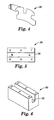
- FIGS. 3 and 4 depict a second embodiment of an orthodontic bracket 20 as seen from the buccolabial side and from the end, respectively.
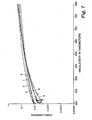
- FIGS. 5 and 6 depict a test article 30 in which a slot 35 is seen from the top in FIG. 5 .
- the article is shown in perspective side view in FIG. 6 .
- the test article of FIGS. 5 and 6 approximates the overall size and thickness of a conventional orthodontic bracket.
- the fluoropolymeric orthodontic brackets described herein are resistant to staining during use such that the brackets maintain their original color as determined by the unaided human eye under common lighting conditions (e.g., sunlight and incandescent light).
- the fluoropolymeric orthodontic brackets are resistant to staining from oil-based staining agents such as, e.g., spaghetti sauce, and water-based staining agents such as, e.g., mustard.
- the fluoropolymeric orthodontic brackets exhibit a Delta E color shift of less than 2 (more preferably less than 1, and most preferably 0) when tested according to the hydrophilic color shift test procedure set forth below, and a Delta E color shift of less than 5 (more preferably less than 3, and most preferably 0) when tested according to the oleophilic color shift test procedure set forth below.
- the orthodontic brackets appear translucent to transparent to the human eye such that when the article is placed on a surface such as, e.g., a tooth, the article transmits the color of the underlying surface through the article.
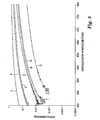
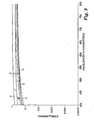
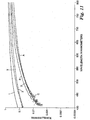
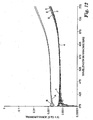
- the bracket exhibits at least about 0.001% transmittance at 546 nm, more preferably 0.01% transmittance at 546 nm when measured according to the Transmittance Test Procedure set forth below.
- Preferred articles exhibit a transmittance of at least about 0.001% over the wavelength range of 400 nm to 800 nm when measured according to the Transmittance Test Procedure.
- the fluoropolymeric orthodontic brackets include fluoropolymer resins that are capable of being hardened and have sufficient strength, hydrolytic stability, and non-toxicity to render them suitable for use in the mouth.
- the fluoropolymers are translucent to transparent.
- Preferred fluoropolymers exhibit at least about 0.001% transmittance, more preferably 0.01 % transmittance, at 546 nm when measured according to the Transmittance Test Procedure.
- Useful fluoropolymers are perfluoroethylene-propylene copolymer, perfluoroalkoxyethylene, ethylene-tetrafluoroethylene copolymer, polychlrorotrifluoroethylene, ethylene-chlorotrifluoroethylene copolymer, or combinations thereof.
- Examples of useful commercially available fluoropolymers include: Tefiel HT 2004 ethylene-tetrafluoroethylene copolymer including glass fibers, Tefzel 200, Tefzel 220, Tefzel 280, Tefzel 210, HT 2055, HT 2055NA, HT 2088NA, HT 2098, HT 2118, HT 2141, HT 2155 and HT 2158 ethylene-tetrafluoroethylene copolymers, and Teflon PFA 340 perfluoroalkoxy fluorocarbon resin, (all available from DuPont); Halar, Halar 300 and Halar 500 DA ethylene-chlorotrifluoroethylene copolymer (all available from Ausimont); and Kel-F81 PCTFE polychlorotrifluoroethylene (available from Minnesota Mining and Manufacturing),
- Preferred adhesive systems for bonding a fluoropolymeric bracket to a tooth surface include a primer composition and a polymerizable component.
- the primer composition is capable of enabling or enhancing the adhesion of a fluoropolymeric bracket to the surface of a tooth.
- Useful primer compositions include an organoborane amine complex capable of initiating polymerization of a polymerizable component.
- the polymerizable component may include, e.g., monomers, oligomers, and combinations thereof that are capable of polymerizing and thereby forming an adhesive composition.
- Preferred adhesive systems also include an effective amount of a compound that is reactive with or will remove the amine portion of the organoborane amine complex so as to liberate the organoborane and thereby allow the organoborane to initiate polymerization of polymerizable components.
- organoborane amine complexes and adhesive systems that include an organoborane amine complex are described, e.g., in U.S. Patent Nos. 5,539,070 (Zharov et al. ), 5,616,796 (Pocius et al. ), 5,681,910 (Pocius ), and 5,310,835 (Skoultchi et al. ), and in WO 98/17694 and WO 97/07151
- the fluoropolymeric orthodontic bracket the tooth, or a combination thereof can be treated (i.e., primed) with a primer composition prior to adhering the bracket to the tooth.
- a primer composition i.e., a primer composition
- a useful priming composition is Transbond XT Light cure priming composition (Minnesota Mining and Manufacturing ("3M"), St. Paul, MN).
- 3M Transbond XT Light cure priming composition
- Other useful priming compositions are described in U.S. Patent No.5,558,516 (Horn et al.)
- the above-described organoborane amine adhesive compositions are also suitable priming compositions.
- One example of a useful method for adhering the fluoropolymeric orthodontic bracket to the surface of a tooth includes contacting the orthodontic bracket with an adhesive composition and adhering the orthodontic bracket to the tooth surface.
- the method can include priming a surface, e.g., the surface of the tooth, the orthodontic bracket, and combinations thereof, with a priming composition prior to adhering the orthodontic bracket to the surface of the tooth.
- the surface can be primed with one or more priming compositions sequentially, simultaneously and in combinations thereof.
- the surface is primed with a composition that includes an organoborane amine complex.
- the surface can be pretreated, e.g., primed, and then packaged for later use as described, for example, in U.S. Patent No. 5,558,516 (Horn et al. ) After pretreatment, the surface can be treated with a primer composition, an adhesive composition and combinations thereof.
- the % transmittance of light through an article is measured as follows. An article is placed in the well of a glass well slide such that the tooth contacting surface of the article is in contact with the slide. The well is filled with immersion liquid having a refractive index ("ND") of 1.515 and covered with a coverslip. The bracket containing slide is then placed under a microscope having a 3.2x objective, a numerical aperture ("N.A.") of 0.06, and a substage condensing lens system having a 0.3 N.A.
- the aperture and field diaphragms on the substage condensor are set up to produce the standard transparency by transmission measurement configuration (t(o/180)) of ASTM E-179-91a "Standard Guide for the Selection of Geometric Conditions for Measurement of Reflection and Transmission Properties of Materials.
- the area of the article that is of interest is then brought into focus.
- the slide is then moved such that a reference area is brought into view (the focus of the microscope is not changed during this procedure).
- the reference area is an area within the well that contains immersion oil but does not contain the article.
- a calibration spectrum is collected from the reference area and is defined as having a transmittance of 1.0 over the wavelength range.
- the slide is then moved such that the area of interest of the article is brought into the field of view and the transmittance spectrum is collected over a predetermined wavelength or wavelength range e.g., 400 nm to 800 nm.
- a series of measurements are taken at a number of locations on the article that are visible to an observer when the article is worn by a user, see, e.g., the numbers and letters indicated on FIGS. 3 , 4, 5, 6 and 13 .
- the measurements are taken in a labial-lingual direction along paths that extend from the labial-most surface of the article to the lingual-most base of the article, being careful to avoid areas in which a metal object is present in the article and would interfere with the path of the beam of radiation.
- the lowest transmittance value obtained for the article at a given wavelength is the transmittance of the article at that wavelength.
- a LABSPHERE certified diffuse white reflectance standard (CSS-99-010 8812A) is placed on the stage of a Leitz Orthoplan Microscope equipped with a Leitz MPV-SP Spectrophotometer illuminated with a tungsten halogen lamp. The microscope is set to 3.2x objective with a numerical aperture ("N.A.") of 0.06.
- N.A. numerical aperture
- a fiber optic ring which produces a 45 degree cone of illumination, is mounted on the objective lens of the microscope producing a standard 45° illumination/ 0° detection color measurement (R(45/0)) according to ASTM E-179-91a, "Standard Guide for the Selection of Geometric Conditions for Measurement of Reflection and Transmission Properties of Materials".
- the spectrophotometer is set to a measuring spot of 1mm x 1mm, slit width of 6 nm, threshold of 1, high voltage of 480v, filter edge 100Hz, and integration 8x. Two scans are taken from 370 nm to 800 nm at a sampling rate of 1/3 nm and data is reported every 1 nm.
- the lamp intensity of the halogen lamp is adjusted such that the signal is never greater than 90% of that needed to saturate the detector.
- a calibration spectrum is collected from the area and is defined as having a reflectivity of 100% over the wavelength range.
- the reflectance standard is removed and a sample is placed on the microscope stage. An area of interest is brought into crisp focus and a reflectance spectrum is collected. The reflectance standard is returned to the microscope stage, brought into focus and the reflectance spectrum is collected. If the spectrum collected is other than 100% for the second measurement of the standard over the wavelength range, the standardization steps are repeated.
- the color measurements and calculations are performed in accordance with ASTM standards E-308-95, "Standard Practice for Computing the Colors of Objects by Using the CIE System", and D 2244-93, "Standard Test Method for Calculation of Color Differences from Instrumentally Measured Color Coordinates" using the L*a*b* color representation.
- the L* value is a measure of the brightness of the sample.
- the a* is a measure of the redness for a positive value or greenness for a negative value
- b* is a measure of yellowness for a positive value or blueness for a negative value.
- Color differences i.e., L*, a* and b*
- the color shift exhibited by an article after contact with a hydrophilic substance is measured as follows. Specimens are immersed for one hour at 60°C in French's 100% pure prepared yellow mustard. The samples are then removed, rinsed thoroughly with water, and air-dried.
- the color shift exhibited by an article after contact with an oleophilic substance is measured as follows. Specimens are immersed for 2.5 hours at 60°C in Ragu Old World Style Flavored Spaghetti sauce with meat. The samples are then removed, rinsed thoroughly with water, and air-dried. The samples are then tested according to the above Color Shift Measurement and Calculation Test Procedure to determine Delta E.
- Samples are adhered to a knurled steel ring and immersed in a 37°C water bath for 16-24 hours.
- the ring with bonded samples is removed from the water, air-dried, and then placed onto the test fixture of an Instron Universal tensile test equipment.
- a wire loop is placed into the upper jaw of the test fixture and through the sample such that it is affixed to the sample.
- the wire is then pulled by the upper jaw of the test fixture at a rate of 0.2 inches per minute (0.5 cm/min) at a full scale load of 100 lbs (45 kg).
- the bond strength (in pounds) at separation of the sample from the metal ring is recorded.
- a primer composition was prepared by combining:
- the 0.231 cm x 0.330 cm surface of a 0.231 cm x 0.330 cm x 0.183 cm embossed cube of Halar 500DA ethylene-chlorotrifluoroethylene copolymer (available from Ausimont U.S.A. Inc.) was dipped into the above-described primer composition such that the primer composition completely covered the surface.
- the primed surface was then pressed against a grooved, knurled steel bonding ring, such that the cube adhered to the bonding ring, and the primer composition was allowed to cure for 48 hours.
- a dab of primer composition prepared as described above was coated onto a polyimide film.
- the 0.231 cm x 0.330 cm surface of a 0.231 cm x 0.330 cm x 0.183cm embossed cube of Halar 500DA ethylene-chlorotrifluoroethylene copolymer (Ausimont) was dipped into the primer composition such that a face of the cube was completely covered with the primer composition.
- the primer composition was allowed to cure for 48 hours, after which the cube was peeled from the polyimide film.
- Transbond XT light cure primer composition (3M) was then applied to the primed surface of the cube.
- the Transbond XT primer was allowed to sit for 60 seconds and then cured with visible light.
- the primed surface was then coated with Transbond XT light cure adhesive composition (3M), and adhered to a knurled steel bonding ring.
- the Transbond XT adhesive was then cured by exposing the Transbond XT adhesive to radiation emitted from an Ortholux XT Visible Light Curing Unit for 10 seconds.
- a base surface of a test sample in a form depicted in Figs. 5 and 6 made from Teflon PFA340 perfluoroalkoxy fluorocarbon resin (DuPont) was primed and adhered to a grooved, knurled steel ring according to the method set forth in Example 6.
- the test sample was then tested according to the Bond Strength Test Method. The results are reported in Table II.
- the bond strength ranged from 7 to 23 pounds ("lbs")/sample (3 to 10 ⁇ g/sample) with an average of 16 lbs/sample (7 ⁇ g/sample).
- the failure mode was adhesive between the primer composition and the sample (i.e., the cube or the test sample).
- TABLE II Example Bond Strength (lbs) / (kg) Standard Deviation 6 22 / 10 3.0 7 5 / 2 1.4 8 20 /9 5.4 9 10/5 3.9 10 13/6 5.3 11 6/3 2.7
- the bracket can be pretreated with a polymerization initiator including, e.g., the above-described organoborane amine complexes, and packaged in a suitable package, e.g., a kit.
- a polymerization initiator including, e.g., the above-described organoborane amine complexes
- the bracket that have been pretreated with a polymerization initiator can also be provided with an adhesive precoat and packaged in a suitable package that optionally includes other components necessary to form an adhesive composition.
- the bracket may include a metallic component, e.g., a framework.
- Orthodontic brackets 20 and 40 including a metal framework 22, 42 depicted by dotted lines are shown in FIGS. 13 and 14 .
- One embodiment of a metallic framework 42 is shown in perspective view in FIG. 15 .
- the metallic framework 22, 42 may be partially or wholly embedded in the body of the bracket 20,40.
- the framework can be coated or otherwise colored, e.g., by ink, paint, or porcelain, to match the color of the tooth or the color of the fluoropolymeric material. Examples of a metallic framework are described in U.S. Patent 5,597,302 (Pospisil et al. ).
- the bracket may also include a nonfluoropolymeric interior and a fluoropolymeric exterior layer.
- the fluoropolymeric exterior layer may extend over the entire surface of the nonfluoropolymeric interior or a portion thereof.
- suitable nonfluoropolymeric materials include glass, ceramic, plastic (e.g., polycarbonate and polyurethane), or a combination thereof.
- One example of such an article would include a polycarbonate bracket having an exterior fluoropolymeric layer, and, optionally, an exposed polycarbonate surface, which can be used for bonding the bracket to a tooth. Referring to FIG.
- an orthodontic bracket 50 having a nonfluoropolymeric interior 52 and a fluoropolymeric layer 54 surrounding a portion of the nonfluoropolymeric interior 52 is shown.
- Surface 56 of nonfluoropolymeric interior 52 is exposed and is available for bonding to a tooth.
Landscapes
- Health & Medical Sciences (AREA)
- Oral & Maxillofacial Surgery (AREA)
- Epidemiology (AREA)
- Life Sciences & Earth Sciences (AREA)
- Animal Behavior & Ethology (AREA)
- General Health & Medical Sciences (AREA)
- Public Health (AREA)
- Veterinary Medicine (AREA)
- Dental Tools And Instruments Or Auxiliary Dental Instruments (AREA)
- Dental Preparations (AREA)
Applications Claiming Priority (1)
| Application Number | Priority Date | Filing Date | Title |
|---|---|---|---|
| PCT/US2000/011938 WO2001082876A1 (en) | 2000-05-03 | 2000-05-03 | Fluoropolymeric orthodontic article |
Publications (2)
| Publication Number | Publication Date |
|---|---|
| EP1278503A1 EP1278503A1 (en) | 2003-01-29 |
| EP1278503B1 true EP1278503B1 (en) | 2008-08-13 |
Family
ID=21741345
Family Applications (1)
| Application Number | Title | Priority Date | Filing Date |
|---|---|---|---|
| EP00928730A Expired - Lifetime EP1278503B1 (en) | 2000-05-03 | 2000-05-03 | Fluoropolymeric orthodontic brackets |
Country Status (5)
| Country | Link |
|---|---|
| EP (1) | EP1278503B1 (enExample) |
| JP (1) | JP2003531681A (enExample) |
| AT (1) | ATE404158T1 (enExample) |
| DE (1) | DE60039917D1 (enExample) |
| WO (1) | WO2001082876A1 (enExample) |
Families Citing this family (3)
| Publication number | Priority date | Publication date | Assignee | Title |
|---|---|---|---|---|
| US20060105179A1 (en) * | 2004-11-17 | 2006-05-18 | Hofman Gerald R A | Elastomeric dental article with a protective fluoropolymer layer |
| US20060105285A1 (en) * | 2004-11-17 | 2006-05-18 | Naiyong Jing | Nonelastomeric dental article with a protective fluoropolymer layer |
| WO2016028783A1 (en) | 2014-08-18 | 2016-02-25 | Lord Corporation | Method for low temperature bonding of elastomers |
Family Cites Families (3)
| Publication number | Priority date | Publication date | Assignee | Title |
|---|---|---|---|---|
| US3545083A (en) * | 1969-05-07 | 1970-12-08 | Lawrence B Krasne | Dental application of special polymer of tetrafluorethylene tubing for masking and cushioning metal clasps and orthodontic wires |
| GB9104781D0 (en) * | 1991-03-07 | 1991-04-17 | Ward Ian M | Polymer materials |
| JP3535167B2 (ja) * | 1994-02-22 | 2004-06-07 | ミネソタ マイニング アンド マニュファクチャリング カンパニー | 有機ホウ素アミン錯体に基づく重合開始剤システムを用いて製造される重合性組成物 |
-
2000
- 2000-05-03 DE DE60039917T patent/DE60039917D1/de not_active Expired - Lifetime
- 2000-05-03 WO PCT/US2000/011938 patent/WO2001082876A1/en not_active Ceased
- 2000-05-03 AT AT00928730T patent/ATE404158T1/de not_active IP Right Cessation
- 2000-05-03 EP EP00928730A patent/EP1278503B1/en not_active Expired - Lifetime
- 2000-05-03 JP JP2001579752A patent/JP2003531681A/ja active Pending
Also Published As
| Publication number | Publication date |
|---|---|
| EP1278503A1 (en) | 2003-01-29 |
| WO2001082876A1 (en) | 2001-11-08 |
| ATE404158T1 (de) | 2008-08-15 |
| DE60039917D1 (de) | 2008-09-25 |
| JP2003531681A (ja) | 2003-10-28 |
Similar Documents
| Publication | Publication Date | Title |
|---|---|---|
| Stamatacos et al. | Cementation of indirect restorations: an overview of resin cements. | |
| Ferracane | Current trends in dental composites | |
| Ryou et al. | Use of flowable composites for orthodontic bracket bonding | |
| Joo et al. | Influence of orthodontic adhesives and clean-up procedures on the stain susceptibility of enamel after debonding | |
| Turp et al. | Influence of monolithic lithium disilicate and zirconia thickness on polymerization efficiency of dual‐cure resin cements | |
| US6799966B1 (en) | Fluoropolymeric orthodontic article | |
| CN102512329A (zh) | 含有杂化单体的牙科组合物 | |
| EP2203144A2 (en) | Orthodontic composition with polymeric fillers | |
| EP0375161B1 (en) | Method of enhancing the curing of a photocurable dental restorative material | |
| De Lacerda et al. | Adhesive systems as an alternative material for color masking of white spot lesions: do they work | |
| Sena et al. | Effect of different bonding protocols on degree of monomer conversion and bond strength between orthodontic brackets and enamel | |
| EP1278503B1 (en) | Fluoropolymeric orthodontic brackets | |
| Bayani et al. | Shear bond strength of orthodontic color-change adhesives with different light-curing times | |
| Balderamos et al. | Color accuracy of resin cements and try-in pastes. | |
| EP1473015A1 (en) | Dental article and process for surface modification of dental article | |
| EP1017354A1 (en) | Translucent wear resistant dental enamel material and method | |
| Baek et al. | The effects of light intensity and light-curing time on the degree of polymerization of dental composite resins | |
| Sundfeld et al. | Resin tag length of one-step and self-etching adhesives bonded to unground enamel | |
| Lee et al. | Curing efficiency of various resin-based materials polymerized through different ceramic thicknesses and curing time | |
| Majumder et al. | An in vitro study to compare the influence of different all-ceramic systems on the polymerization of dual-cure resin cement | |
| Sargison et al. | An ex vivo study of self-, light-, and dual-cured composites for orthodontic bonding | |
| Rai et al. | A comparative study of shear bond strength of four different light cure orthodontic adhesives: An in vitro study | |
| WO2009071966A1 (en) | Decorated pieces with gem materials | |
| Haghighi et al. | Effects of orthodontic adhesives on dental enamel color alteration using chemically cured and light-cured composites | |
| Bolanos-Carmona et al. | Influence of the bracket on bonding and physical behavior of orthodontic resin cements |
Legal Events
| Date | Code | Title | Description |
|---|---|---|---|
| PUAI | Public reference made under article 153(3) epc to a published international application that has entered the european phase |
Free format text: ORIGINAL CODE: 0009012 |
|
| AK | Designated contracting states |
Designated state(s): AT BE CH CY DE DK ES FI FR GB GR IE IT LI LU MC NL PT SE |
|
| 17P | Request for examination filed |
Effective date: 20021128 |
|
| 17Q | First examination report despatched |
Effective date: 20050527 |
|
| 17Q | First examination report despatched |
Effective date: 20050527 |
|
| 17Q | First examination report despatched |
Effective date: 20050527 |
|
| RTI1 | Title (correction) |
Free format text: FLUOROPOLYMERIC ORTHODONTIC BRACKETS |
|
| GRAC | Information related to communication of intention to grant a patent modified |
Free format text: ORIGINAL CODE: EPIDOSCIGR1 |
|
| GRAP | Despatch of communication of intention to grant a patent |
Free format text: ORIGINAL CODE: EPIDOSNIGR1 |
|
| GRAS | Grant fee paid |
Free format text: ORIGINAL CODE: EPIDOSNIGR3 |
|
| GRAA | (expected) grant |
Free format text: ORIGINAL CODE: 0009210 |
|
| AK | Designated contracting states |
Kind code of ref document: B1 Designated state(s): AT BE CH CY DE DK ES FI FR GB GR IE IT LI LU MC NL PT SE |
|
| REG | Reference to a national code |
Ref country code: GB Ref legal event code: FG4D |
|
| REG | Reference to a national code |
Ref country code: CH Ref legal event code: EP |
|
| REG | Reference to a national code |
Ref country code: IE Ref legal event code: FG4D |
|
| REF | Corresponds to: |
Ref document number: 60039917 Country of ref document: DE Date of ref document: 20080925 Kind code of ref document: P |
|
| PG25 | Lapsed in a contracting state [announced via postgrant information from national office to epo] |
Ref country code: ES Free format text: LAPSE BECAUSE OF FAILURE TO SUBMIT A TRANSLATION OF THE DESCRIPTION OR TO PAY THE FEE WITHIN THE PRESCRIBED TIME-LIMIT Effective date: 20081124 Ref country code: NL Free format text: LAPSE BECAUSE OF FAILURE TO SUBMIT A TRANSLATION OF THE DESCRIPTION OR TO PAY THE FEE WITHIN THE PRESCRIBED TIME-LIMIT Effective date: 20080813 |
|
| PG25 | Lapsed in a contracting state [announced via postgrant information from national office to epo] |
Ref country code: AT Free format text: LAPSE BECAUSE OF FAILURE TO SUBMIT A TRANSLATION OF THE DESCRIPTION OR TO PAY THE FEE WITHIN THE PRESCRIBED TIME-LIMIT Effective date: 20080813 Ref country code: FI Free format text: LAPSE BECAUSE OF FAILURE TO SUBMIT A TRANSLATION OF THE DESCRIPTION OR TO PAY THE FEE WITHIN THE PRESCRIBED TIME-LIMIT Effective date: 20080813 |
|
| PG25 | Lapsed in a contracting state [announced via postgrant information from national office to epo] |
Ref country code: BE Free format text: LAPSE BECAUSE OF FAILURE TO SUBMIT A TRANSLATION OF THE DESCRIPTION OR TO PAY THE FEE WITHIN THE PRESCRIBED TIME-LIMIT Effective date: 20080813 |
|
| PG25 | Lapsed in a contracting state [announced via postgrant information from national office to epo] |
Ref country code: DK Free format text: LAPSE BECAUSE OF FAILURE TO SUBMIT A TRANSLATION OF THE DESCRIPTION OR TO PAY THE FEE WITHIN THE PRESCRIBED TIME-LIMIT Effective date: 20080813 |
|
| PG25 | Lapsed in a contracting state [announced via postgrant information from national office to epo] |
Ref country code: PT Free format text: LAPSE BECAUSE OF FAILURE TO SUBMIT A TRANSLATION OF THE DESCRIPTION OR TO PAY THE FEE WITHIN THE PRESCRIBED TIME-LIMIT Effective date: 20090113 |
|
| PLBE | No opposition filed within time limit |
Free format text: ORIGINAL CODE: 0009261 |
|
| STAA | Information on the status of an ep patent application or granted ep patent |
Free format text: STATUS: NO OPPOSITION FILED WITHIN TIME LIMIT |
|
| 26N | No opposition filed |
Effective date: 20090514 |
|
| PG25 | Lapsed in a contracting state [announced via postgrant information from national office to epo] |
Ref country code: IT Free format text: LAPSE BECAUSE OF FAILURE TO SUBMIT A TRANSLATION OF THE DESCRIPTION OR TO PAY THE FEE WITHIN THE PRESCRIBED TIME-LIMIT Effective date: 20080813 |
|
| PG25 | Lapsed in a contracting state [announced via postgrant information from national office to epo] |
Ref country code: MC Free format text: LAPSE BECAUSE OF NON-PAYMENT OF DUE FEES Effective date: 20090531 |
|
| REG | Reference to a national code |
Ref country code: CH Ref legal event code: PL |
|
| GBPC | Gb: european patent ceased through non-payment of renewal fee |
Effective date: 20090503 |
|
| PG25 | Lapsed in a contracting state [announced via postgrant information from national office to epo] |
Ref country code: SE Free format text: LAPSE BECAUSE OF FAILURE TO SUBMIT A TRANSLATION OF THE DESCRIPTION OR TO PAY THE FEE WITHIN THE PRESCRIBED TIME-LIMIT Effective date: 20081113 Ref country code: LI Free format text: LAPSE BECAUSE OF NON-PAYMENT OF DUE FEES Effective date: 20090531 Ref country code: CH Free format text: LAPSE BECAUSE OF NON-PAYMENT OF DUE FEES Effective date: 20090531 |
|
| REG | Reference to a national code |
Ref country code: FR Ref legal event code: ST Effective date: 20100129 |
|
| REG | Reference to a national code |
Ref country code: IE Ref legal event code: MM4A |
|
| PG25 | Lapsed in a contracting state [announced via postgrant information from national office to epo] |
Ref country code: FR Free format text: LAPSE BECAUSE OF NON-PAYMENT OF DUE FEES Effective date: 20090602 Ref country code: IE Free format text: LAPSE BECAUSE OF NON-PAYMENT OF DUE FEES Effective date: 20090503 |
|
| PG25 | Lapsed in a contracting state [announced via postgrant information from national office to epo] |
Ref country code: GB Free format text: LAPSE BECAUSE OF NON-PAYMENT OF DUE FEES Effective date: 20090503 |
|
| PGFP | Annual fee paid to national office [announced via postgrant information from national office to epo] |
Ref country code: DE Payment date: 20100430 Year of fee payment: 11 |
|
| PG25 | Lapsed in a contracting state [announced via postgrant information from national office to epo] |
Ref country code: GR Free format text: LAPSE BECAUSE OF FAILURE TO SUBMIT A TRANSLATION OF THE DESCRIPTION OR TO PAY THE FEE WITHIN THE PRESCRIBED TIME-LIMIT Effective date: 20081114 |
|
| PG25 | Lapsed in a contracting state [announced via postgrant information from national office to epo] |
Ref country code: LU Free format text: LAPSE BECAUSE OF NON-PAYMENT OF DUE FEES Effective date: 20090503 |
|
| PG25 | Lapsed in a contracting state [announced via postgrant information from national office to epo] |
Ref country code: CY Free format text: LAPSE BECAUSE OF FAILURE TO SUBMIT A TRANSLATION OF THE DESCRIPTION OR TO PAY THE FEE WITHIN THE PRESCRIBED TIME-LIMIT Effective date: 20080813 |
|
| REG | Reference to a national code |
Ref country code: DE Ref legal event code: R119 Ref document number: 60039917 Country of ref document: DE Effective date: 20111201 |
|
| PG25 | Lapsed in a contracting state [announced via postgrant information from national office to epo] |
Ref country code: DE Free format text: LAPSE BECAUSE OF NON-PAYMENT OF DUE FEES Effective date: 20111201 |