CROSS REFERENCE TO RELATED APPLICATIONS
All the contents disclosed in Japanese Patent Application No.
2001-202237 (filed on July 19, 2001), including specification, claims,
drawings and abstract and summary are incorporated herein by
reference in its entirety.
BACKGROUND OF THE INVENTION
Field of the invention
This invention relates to billing for the use of user's attribution
stored in user terminals.
Description of the related art
Recently, display images are switched according to user's
attribution in data telecast through BS digital broadcasting. Steps of
carrying out such switching is described briefly as follows; name, address,
birth date and so on of a user are stored in a user terminal as user's
attribution. A script(s) (a program(s)) for reading out user's attribution
is written into BML (Broadcast Markup Language) data transmitted
from a broadcasting station and display images are switched in
accordance with the user's attribution read out. Practical application to
use such switching is, for example, weather forecast in data telecasting.
In such weather forecast, image displays are automatically switched in
accordance with detailed information of address of the user, which is
read therein.
The use of such user's attribution in an appropriate manner
improves the quality of services provided because for users, data
frequently used is automatically displayed without carrying out any
selection, and for a data-distributor, display images are automatically
switched to an image(s) which is interested in the users.
In light of such circumstances, the inventor reaches to an idea for
billing the use of such user's attribution.
I order to do that, the following problems as to billing must be
solved. 1) There is a probability that false amount would be reported
when billing is carried out based on the amount of distribution of data to
be distributed (hereinafter referred to as contents-data) by which
information on user's attribution stored in a receiving devices is referred,
2) the actual number of use for the user's attribution for automatically
performing switching process can not be managed provided the report
itself is done correctly because only thing the distributors can specify is
the number of distribution. These problems occur because the number
of receiving devices is unknown since broadcasting itself is not
interactive. In addition, there would a user who does not record their
user's attribution.
The problem 1) could be a problem when information is distributed
from a data-distributing-server connected to the Internet as well.
SUMMARY OF THE INVENTION
It is an object of the present invention to solve the above-mentioned
problems and to provide a method of billing the use of information
capable of carrying out billing according to the number of use of user's
attribution and a system achieving such a method.
The billing method according to the present invention comprising the
steps of: transmitting from an information distributing device data to be
distributed including a command for reading out user's attribution; at a
user terminal, outputting information on user's attribution being stored
to a designated destination when the received data to be distributed
includes the command for reading out the user's attribution information,
and storing history of the output together with information for specifying
a source of transmitting the data to be distributed as history of use; and
at a billing server, billing for the use of information to the information
transmission source specified by the information for specifying the
source.
In the billing method and the system therefor according to the present
invention, the user terminal outputs information on user's attribution
being stored to a designated destination when data to be distributed
including a command for reading out the user's attribution information
is received from an information distributing device, and history of the
output is stored together with information for specifying a source of
transmitting the data to be distributed as history of use, and the history
of use is outputted to a billing server.
In the billing method and the system therefor according to the present
invention, the user terminal outputs information on user's attribution
being stored to a designated destination when data to be distributed
including a command for reading out the user's attribution information
is received from an information distributing device, and history of the
output is stored together with information for specifying a source of
transmitting the data to be distributed as history of use.
In the billing server and the method therefor according to the present
invention, history of use for the information on user's attribution is read
out from each of user terminals and billing onto a data distributor
specified by information for specifying a source of transmitting the data
to be distributed is carried out, the history of use is a record of
outputting the user's attribution to a designated destination according to
a command for reading out user's attribution contained in data to be
distributed supplied from the data distributor, and the information for
specifying the transmission source is added to the history of use.
The method of receiving data to be distributed according to the
present invention comprising the steps of: outputting information on
user's attribution being stored to a designated destination when data to
be distributed including a command for reading out the user's attribution
information; and storing history of the output together with information
for specifying a source of transmitting the data to be distributed as
history of use.
In the present invention, the term "a receiving device" refers to a
device for receiving data from the transmission device, including both
devices having no display such as set-top-box and having a display such
as television set. This also includes mobile phones, portable terminal,
and PCs.
In the present invention, the term "a communication path" refers to
not only wired communications but also includes wireless
communications.
The term "acquire through a communication line(s) " includes
acquiring information through communications under not only one-to-one
basis, but also one-to-multiple basis.
The term "structure-descriptive-type language description data"
refers to data to which location for assigning document data to be
displayed, size of a character string of the document data, and
information on restricting display regarding graphic data to be referred,
are added. Data written in BML is described in the embodiments herein,
data in HTML, XML-type data, and data defined by MHEG (Multimedia
and Hypermedia information coding Expert Group) standard, for
example, is included.
The term "BML" refers to a sort of contents-description language,
and it is defined by STD-B24 ver1.2 in the ARIB (Association of Radio
Industries and Businesses) Standard.
The term "information on user's attribution" corresponds to user's
attribution in embodiments herein.
The term "recording medium recording a program(s) " in this
invention refers to a recording medium recording a program(s) therein
such as a ROM(s), a RAM(s), a flexible disk(s), a CD-ROM(s), a memory
card(s), a hard disk(s) and the like. The recording medium also forms a
concept in which a phone line(s), a data carrying path (es) and so on are
included therein. Also, the recording medium forms another concept in
which a recording medium such as a hard disk(s), which is connected to
the CPU and information, stored therein is executed directly the CPU.
The recording medium further forms a concept in which a recording
medium such as a CD-ROM(s) recording a program(s) which is executed
after installation therein.
The term "program(s)" in this invention refers to not only a
program(s) which is directly executed by the CPU but also a program(s)
being compressed, a program(s) being encrypted and so on.
The term "recording medium recording data " in this invention
refers to a recording medium recording data therein such as a ROM(s), a
RAM(s), a flexible disk(s), a CD-ROM(s), a memory card(s), a hard disk(s)
and the like.
The term "data" as used herein refers not only data capable of being
processed with a CPU, but also includes decoder data on carrier wave(s)
(i.e. carrier wave(s) modulated with the data)
Other objects and features of the present invention will be more
apparent to those skilled in the art on consideration of the accompanying
drawings and following specification, in which are disclosed several
exemplary embodiments of the present invention. It should be
understood that variations, modifications and elimination of parts might
be made therein as fall within the scope of the appended claims without
departing from the spirit of the invention.
BRIEF DESCRIPTION OF THE DRAWINGS
Fig. 1 is a diagram, which shows outline of the present invention;
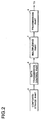
Fig. 2 is a functional block diagram of a transmission device
according to the present invention
Fig. 3 is a diagram showing example hardware of a receiver,
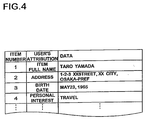
Fig. 4 is a user's attribution table showing data structure thereof;
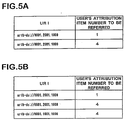
Fig. 5A and Fig, 5B are diagrams showing a history information
table;
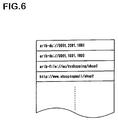
Fig. 6 is a diagram showing a permitted URI table;
Fig. 7 is a functional block diagram of a billing server;
Fig. 8 is a diagram showing an URI/tenant conversion table;
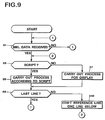
Fig. 9 is a flowchart of a browsing program;
Fig. 10 is an example of script;
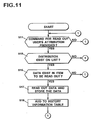
Fig. 11 is a flowchart of a processing program when a script for
acquiring user's attributions is supplied;
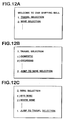
Figs. 12A, 12B and 12C are examples of display to be switched by
utilizing user's attributions;
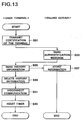
Fig. 13 is a flowchart of process for transmitting history data to the
billing server;
Fig. 14 is a flowchart of process for billing to information users by
the billing server;
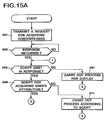
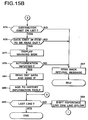
Fig. 15A and Fig. 15B is a flowchart of process for transmitting the
user's attributions;
Fig. 16 is another diagram, which shows outline of the present
invention;
Figs. 17A and 17B are examples of displays for setting outputs in
another embodiment of the present invention;
Fig. 18 is a view showing another data structure of the permitted
URI table; and
Fig. 19 is a view showing another data structure of the permitted
URI table.
DETAILED DESCRIPTION OF THE INVENTION
1. A first embodiment
(1) Overall structure
Fig. 1 shows an overall structure of a communication system using a
receiving device according to an embodiment of the present. A
computer 13 at a data distributor supplies contents-data to an
information-distributing device 15. The distributing device 15
broadcasts the contents-data via a satellite. A user terminal 1 receives
such contents-data with a receiving part 3. A control part 5 judges
whether or not any scripts that read out user's attribution exist in the
contents-data. When a script exists in the contents-data, the control
part 5 further judges whether or not a permission to use user's
attribution is provided to the distributor with reference to a table in
which output of user's attribution is permitted to URI(s) depicted therein
(herein referred to as permitted URI table) shown in Fig. 9c. When a
permission for reading out user's attribution is provided to the
distributor, the user's attribution is read out from a user's attribution
table 9b and is outputted to its designated object while storing ID for
specifying distributor together with items on the user's attribution into a
history information table 9a. A control part 5 transmits to a billing
server 11 history data stored into the history information table 9a at a
predetermined period via a communication part 7. The billing server 11
stores the transmitted history data. Further, the billing server 11
calculates service charge(s) for user's attribution for each tenant, and
sends the calculated charge the distributor's computer 13.
Hence, managing the service charge at user terminals can carry out
billing of service charge(s) for user's attribution in accordance with the
number of use of the user's attribution.
(2) Hardware structure of information distributing device
Fig. 2 shows a functional block diagram of the information-distributing
device 15 (transmission device). A contents-storage part 3
stores contents. A data transmission control part 5 provides to a
multiplexing part 7 new content(s) stored in the contents-storage part 3.
The multiplexing part 7 packetizes the contents-data in order to
generate control data DII for packetizing and provides the control data
to a transmission part 9 together with data DDB. The transmission
part 9 sends the data in a carousel form using a predetermined
transport stream(s).
(3) Hardware structure of receiving device
Now, hardware structure of the user terminal (receiving device) 1
will be described with Fig. 3. The structure of the user terminal is
analogous to the conventional ones. The receiving device 1 comprises a
tuner 32, a transport stream decoder (TS decoder) 34, an AV decoder 36,
an OSD (On Screen Display) 38, a ROM 40, a RAM 42, a CPU 44, a hard
disk 46, a modem 48, and a signal receiver 50 receiving a signal(s) from a
remote controller. The signal receiver 50 is used for receiving a signal(s)
from the remote controller.
The hard disk 46 stores a browsing program, a program for
acquiring information on users, and a program for transmitting history
data. The details of processing performed by these programs will be
described later. The hard disk 46 further stores a user's attribution
table, a history information table, a table for permitted URI. In this
example, items " Taro YAMADA", "1-2-3 XX street, XX City, OSAKA-Pref.",
"may 23 1965", and "travel" are stored respectively in user's
attribution items "full name", "address", "birth date", "personal interest"
in the user's attribution table as shown in Fig. 4. The user inputs such
user's attribution items through a user terminal thereof previously.
Fig. 5A shows a history information table. Both URI(s) (Uniform
Resources Identifiers) that represent information to specify sender of
information, and user's attribution item numbers are stored in the
history information table. Such history information will be described
later in detail.
Fig, 6 show a table for permitted URI. The permitted URI table is
a table for determining whether or not use of a user's attribution item is
permitted to a data-distributor specified by a URI in the table when a
script for reading out a user's attribution item exists in received data.
Contents received by the process described later may be stored in
the hard disk 46 forming storage part.
A set-top-box is shown as the receiving device in this embodiment,
the receiving device may also include a monitor (TV set).
Alternatively, the user's attribution table, the history information
table and the permitted URI table may be stored in a non-volatile
memory (not shown) provided within the receiving device.
(4) Hardware structure of billing server
As shown in Fig. 7, the billing server 11 comprises a CPU 123 a
memory 127, a hard disk 126 a CRT 130, CDD (CD-ROM drive) 125, a
keyboard 128, a communication board 132 and a bus line 129. The CPU
123 controls other parts via the bus line 29 according to the programs
stored in the hard disk 126.
A program 126a for billing that is described later and a URI/tenant
conversion table 126t depicted in Fig. 8 are stored in the hard disk 126.
As shown in Fig. 8, correspondences among URI(s) and tenant codes are
stored in the URI/tenant conversion table. The details of processing
with that table will be described later.
(5) Storing process of history using user's attribution items
Storing process of history for billing that uses user's attribution,
conducted upon receipt of contents-data from a data-distributor stored in
the permitted URI table shown in Fig. 6 will be described hereunder.
Description will be made under the assumption that contents-data
distributed by a data-distributor from the information-distributing
device 15 is transmitted as original-network_id "0001", transport_id
"1001", service_id "1000", event_id "1100", and component_id "40".
The user of the user terminal 1 inputs through a remote-controller
(not shown) a channel selection command in order to receive a desired
service. In response to the input, the CPU 44 sets conditions for
selecting a channel into the tuner 32 and the transport decoder 34
depicted in Fig. 3. The RAM 42 sequentially stores BML data thus
received.
A browsing program depicted in Fig. 9 is stored in the hard disk 46,
interpretation of data and display thereof is performed in accordance
with such browsing program. The details of such process will be
described hereunder.
The CPU 44 judges whether or not BML data is received (step S1,
Fig. 9) and upon receipt of data it further judges whether a line thus
received is a script or not (step S3, Fig. 9). For example, when the BML
data depicted in Fig. 10 is received, process according to a script is
carried out because the description "a=getAdditionalUserInfo(userId, 4)
is judged as a script (step S5, Fig. 9). This script is a script for
acquiring user's attributions in user's attribution item number 4. In
response to the script, the CPU 44 carries out process for acquiring user's
attribution written in the user's attribution item number 4.
Meanwhile, the browsing program has a program for acquiring
user's attribution depicted in Fig. 11, process for acquiring user's
attribution is carried out according to the acquiring program.
The CPU 44 judges whether or not a command for reading out user's
attribution is provided according to the acquiring program (step S11, Fig.
11), and further judges whether or not the distributor of the contents-data
exists on a list in a permitted URI table when the read out
command is provided (step S13, Fig.11). In this case, the contents-data
is transmitted as original-network_id "0001", transport_id "1001",
service_id "1000", event_id "1100, and a distributor's URI "arib-dc://0001.1001.1000.1100"
exist in the list shown in Fig. 6. Since the
distributor is on the list, the CPU 44 judges whether or not data exists in
an item to be read out (step S15, Fig. 11). As shown in Fig. 4, data
"travel" is in user's attribution item number 4 for which a command for
acquiring is carried out, the data is read out therefrom and store it in a
memory region (step S 17, Fig.11). The CPU 44 adds to the history data
table a fact that the user's attribution item number 4 is read out for the
distributor's URI "arib-dc://0001.1001.1000.1100" (step S19, Fig. 11).
In this way, both the user's attribution item number 4 and its URI are
added to the history information table as shown in Fig. 5B. This
finalizes the processes according the script.
Next, the CPU 44 judges whether or not the BML data is the last
line (steep S9, Fig. 9). A referenced line is shifted one line below
because the line is not the final in this case (step S10, Fig. 9), and the
CPU again judges whether or not the new referenced line is a script (step
S3, Fig. 9). Process according to a script is carried out because the line
66 is a script. This script is a script by which each of a file
"/0000/travel.bml"and a file "/0000/wine.bml and a file
"/0000/default.bml" is displayed respectively when data in the user's
attribution 4 is respectively "travel selection", "wine selection" and any
other data. The CPU 44 reads out from the memory data in the user's
attribution item number 4 which has been stored therein in order to
make the above mentioned judgement. In this case, a file
"/0000/travel.bml" existing on the same relative path is determined as an
object to be displayed because the data thus read out agree with a
condition (a[4]=="travel") out of the scripts shown in Fig. 10. In this
way, the display shown in Fig.12B is displayed on the monitor. As
described above, display corresponding to user's attribution can be
displayed on the monitor by switching the display using descriptions of
the user's attribution items. The record of use for the user's attribution
can be stored as history together with information on data-distributor.
Process subsequent to step S9 in Fig. 9 is carried out repeatedly.
In the process, the CPU 44 judges whether or not BML data is received
(step S1, Fig. 9), and outputs basic data for display according to the BML
data (step S7, Fig. 9).
When no information on distributor of the contents-data exists on a
list of a permitted URI table at step S15 in Fig. 11, process for acquiring
user's attribution is finalized without carrying out step S17 and step S19
in Fig. 11. Similar process is carried out when nothing is stored on the
user's attribution item number [4]. In these cases, no process for
acquiring user's attribution is carried out. As a consequence, a file
"arib-dc://0001.1001.1000.1100.40/0000/defualt.bml" is determined as an
object to be displayed according to a line 66 depicted in Fig. 10, so that
display shown in Fig. 12A is displayed on the monitor.
The description is directed to the display when data "wine selection"
is displayed on the user's attribution item number [4] in the user's
attribution table. Both items and URI(s) are added to the history
information table thus read out according to the program. In this case,
a file displayed by the browsing program is switched to "/0000/wine.bml"
according to the line 66 depicted in Fig. 10 because the data in user's
attribution item number [4] which has been read out agrees with a
condition "a[4]=="wine". In this way, the display shown in Fig.12C is
displayed on the monitor. Consequently, display can be switched with
reference to the descriptions in the user's attribution items.
(6) Billing process using history data
The user terminal carries out process for transmitting history
information according to a preset timer condition. Detail of such
process is described with Fig. 13.
Once the preset timer condition is satisfied, the CPU 44 of the user
terminal transmits a certification of that terminal to a billing server 11
after establishing communications between the billing server (step S31,
Fig. 13). On receipt of the certification, a CPU 144 of the billing server
11 sends an authentication message to the user terminal (step S33, Fig.
13). The user terminal sends history information (step S35, Fig. 13).
In above case, history information depicted in Fig. 5B is transmitted.
The billing server 11 stores the information (step S37, Fig. 13). The
user terminal deletes the history information after sending such
information (step S39, Fig. 13). Thereafter, the CPU 144 disconnects
the communication to the billing server (step S41, Fig. 13), and resets
the timer (step S43, Fig. 13). By carrying out such process for each of
the user terminals, the record of use for the user's attribution at a
plurality of user terminals is stored in the billing server 11 for every
URI.
The CPU 114 of the billing server 11 calculates service charge per
history (step S51, Fig. 14). Unit charge may be set at ¥1 per use for the
information on attribution item number 1, ¥2 per use for the information
on attribution the item number 2, and ¥0.1 per use for the information
on attribution the item number 3 and so on, for example. Such unit
charge may be varied for each distributor.
The CPU 144 of the billing server calculates a grand total for each
tenant (step S53, Fig. 14). The amount can be calculated by calculating
a total sum of service charges that are billed on the same tenant. For
example, because URI "arib-dc://0001.1001.1000.1100" is an URI for the
data-distributor of a tenant code 001/0101, history information of the
URI may be sum up in order to calculated the total sum of service
charges for the URI. The reason why the data-distributor of a tenant
code 001/0101 is on another URI in the table shown in Fig. 8 is that the
contents distributed through that URI could be distributed via the
Internet or distributed in a storage method.
Next, the CPU 144 charges service charges to each tenant (step S57,
Fig.14). The amount to be charged may be notified via an e-mail or
transmitted via facsimile, for example.
In this way, billing corresponding to the record of use for user's
attribution can be carried out.
(7) Embodiment using a storage method, or the Internet
While contents are distributed in a real-time basis via BS digital
broadcasting in the above-described embodiment, the principle of the
present invention may also apply to each of the cases such that contents
are stored in a hard disk of a user terminal before distribution, or that
contents are distributed via the Internet.
The storage method is a method in which contents-data transmitted
from the broadcasting station is stored at a user terminal in prior to
display thereof, and then the stored data are read out in an appropriate
manner and are displayed. The communication method used for such
method is recommended to use virtual shopping mall through which
goods and services are supplied because a large amount of data can be
transferred even in use of carousel transmission for transferring data.
In concrete terms, files in a directory tree shown in Fig. 10 are sent
previously and a receiving device stores the data in its hard disk.
Conventional BML data is used for this embodiment in which URI
having BML data at a destination to be linked is described. In the
storage method, a storage device designated by a BML file is the hard
disk 46, that is, a local disk unlike the broadcasting in BS. In the BS
putting an absolute path after "arib-file://" designates digital
broadcasting standard currently available, it is possible to specify which
of a storage file. The whole file is written as "arib-file://ec/tvshopping/shop2.bml",
for example.
In the case of acquiring contents-data from a data-distributing-server
connected to the Internet, the URI used for acquiring can be
written as "http://www.panasonictvshop.co.jp/..." Of course, the source
for acquiring the contents-data can be switched by making destinations
to be linked for each of the changes such as broadcasting to the storage
method, the storage method to the Internet distribution in a desired
manner.
Similar to the above, in the case of distributing contents-data via
the Internet, scripts defining a plurality of conditional transfers may be
put into HTML data. However, since distribution of the contents-data
via the Internet has a complete interactivity, the contents-data can be
send by a data-distributing-server using user's attribution data which
has been send back to the data-distributing-server once. In this case,
there is a probability to leak personal information unintentionally
because user's attribution data is outputted outside of the user terminal.
In order to avoid such problem, the user's attribution data may be sent
back to the data-distributing-server when a notification of sending the
user's personal information to the outside is given to the user and when
the user endorses the output. In such a case, a program performing the
process shown in Figs. 15A and 15B is to be stored as a browsing
program.
In the program, the CPU 44 transmits a request for acquiring
contents-data to a desired data-distributing-server (step S61, Fig. 15A).
Then, the CPU 44 judges whether or not the data-distributing-server
return a response (step S63, Fig. 15A). When a response is received, the
CPU 44 judges whether or not any scripts exist in the response (step S65,
Fig. 15A). When the line reading in is not a script, the CPU 44 carries
out process for display (step S67, Fig. 15A). When the CPU judges the
line as a script, it further judges whether the script is a script for
acquiring user's attribution (step S69, Fig. 15A). The CPU 44 carries
out process according to the script when the script is not an acquiring
script (step S71, Fig. 15A).
In the contrast, when the script is an acquiring script, the CPU 44
judges whether or not the distributor of the contents-data exists on a list
in a permitted URI table (step S73, Fig. 15B). The CPU 44 judges
whether or not data exists in an item to be read out when the distributor
exists on the list shown in Fig. 6 (step S75, Fig. 15B).
When a judgement that data exists in an item to be read out is made
by the CPU 44, it outputs image data for displaying a warning sign "we
receive a request for transmitting your personal information such as
interest in travel listed on the user's attribution item number [4]. Do you
agree this transmission?", for example (step S77, Fig. 15B). The user
looks at the warning display and gives permission for the transmission
when they agree. The CPU 44 watches input of authorization (step S79,
Fig. 15B), and it reads out the data in the user's attribution item when
the input is made (step S81, Fig. 15B), and then add the history
information table (step S83, Fig. 15B). Thereafter, the CPU 44 judges
whether or not the line is the last line (step S85, Fig. 15B). A
referenced line is shifted one line below (step S86, Fig. 15B) and process
subsequent to step S65 in Fig. 15 is carried out repeatedly. When the
line is judged as the last line, the CPU ends its process.
Thus, both the user's attribution and URI used for transmission are
added to the history information table as described above. The data-distributing-server,
which receives such user's attribution, may send
contents-data according to the attribution.
The record of use for user's attribution can be stored as a history
even when a case such that user's attribution data is send to the sender
thereof such as the Internet distribution.
In each of the cases, when no distributor of the contents-data exists
is on the list in step S73, no data exists in the item to be read out in step
S75, and no authorization is provided in step S79, a message indicating
refusal of such process is sent back (step S87, Fig. 15B). In this way, it
is possible to avoid leak of personal information to the outside of the user
terminal without authorization.
For the users, there is no way of recognizing which of distribution is
currently carried out especially when distribution is carried out through
broadcasting, storage method and the Internet. The present invention
can avoid leak of personal information to the outside of the user terminal
without authorization even when the distribution is carried out through
the Internet before the user knew it.
(8) Alteration
Billing corresponding to the record of use for user's attribution can
be carried out because when data is stored in a designated user's
attribution item, it is record as a history in the above embodiment. This
embodiment is not limited to that way, when a command for reading out
a user's attribution items is provided, the recording as a history can be
carried out even when no data exists in that user's attribution item.
There is a case that display in default setting is displayed
eventually, even when data is stored in a designated user's attribution
item. For example, a script for displaying "0000/golf-goods.bml" is
included in received BML data when personal interest of a user is "golf',
and data is read out from a user's attribution item when personal
interest of the user is recorded as "music appreciation" at the user
terminal. This case, however, gives the same result such that nothing
is recorded in the attribution item. In order to solve such a problem, a
plurality of candidates which can be recorded in the user's attribution
item "personal interest" are prepared and selection of personal interest
out of these candidates can be carried out.
In the above embodiment, the description is made under an
assumption of using online shopping, the present invention can apply to
other contents distribution purposes when switching of display image
using user's attribution data is preferred for such an application.
Display image is switched using data, which has been recorded in a
user's attribution item in the above embodiment, the display image data
can be generated according to the data.
In the above embodiment, a network_id, a transport stream_id, and
a service_id are used as information to specify the sender of information
in distribution with broadcasting, and URI(s) are used as the sender
specifying information in distribution with a storage method and with
the Internet. Any information (such as IP address and so on when
contents distribution server are used, for example) which can specify the
sender may be used.
Further, the data stored in the permitted URI table may be changed
using a billing server. Sending broadcasting data including a script(s)
to be changed may also change the permitted URI table.
A set-top-box for receiving BS satellite broadcasting is used as an
example in the above embodiment, the set-top-box may be used for
receiving CS satellite broadcasting, the set-top-box may also be used to
receive digital terrestrial broadcasting.
The user terminal used in the above embodiment may not be a
dedicated device, the terminal can be a PC (including notebook
computer), PDA (personal digital assistance), or a cellular telephone
with browsing function. If no hard disk is equipped in the user terminal,
user's attribution data and history information may be stored in a
nonvolatile memory such as flash-memory.
In this embodiment, software, which uses a CPU realizes the
function shown in Fig.1. A part of or the whole the function may be
realized by hardware such as logic circuits.
A part of the programs executed in the above description may be
performed by the operating system (OS).
2. A second embodiment
Basic display data outputted to the monitor is switched in the above
embodiment, instead of that, external device can be controlled by the
principle of the present invention. For example, variety of control for
air-conditioners, depending upon areas where users reside, can be
carried out according to weather forecast. This control will be described
using Fig. 16.
A computer 113 at a data-distributor supplies today's weather
forecast as contents-data to an information-distributing device 115.
Such contents-data includes a script for reading out a user's attribution
item number [2] and another script for carrying out process such that
"turn on the air-conditioner when the anticipated high temperature is
above 28°C ".
The information-distributing device 115 broadcasts such contents-data
via a satellite. User terminals 121a, 121b...121n receives such
contents-data. Each of the user terminals 121a, 121b...121n judge
whether or not a script for reading out user's attribution is included in
the contents-data. In this case, each terminal judges whether or not a
permission to use user's attribution is provided to the distributor with
reference to the permitted URI table because the script for reading out
does exist in the contents-data. In this case, when a permission to use
user's attribution is provided to the distributor, "address" is read out
from the user attribution table. Subsequently, the script for carrying
out process such that "turn on the air-conditioner when the anticipated
high temperature is above 28°C" is performed. When an area where
user of the user terminal 121a satisfies such temperature condition, a
signal for turning on the air-conditioner 122a is generated and outputted.
Similar control process is carried out to other user terminals 121b,
...121n.
Furthermore, each of the user terminals 121a, 121b...121n stores
data on the user attribution item number [2] together with ID for
specifying the distributor in the history information table. This history
data is transmitted to a billing server 111. The billing server stores
such history data. The billing server 111 calculates service charges for
use of the user's attribution for the distributor's computer 113 by using
history data transmitted from a plurality of user terminals and send the
calculated charges to the computer 113.
Hence, external device(s) can be controlled in response to own user's
attribution data by just broadcasting one contents-data.
Such external device to be controlled needless to say includes
home-appliances such as a microwave oven, a laundry machine, but
includes production facilities of a plant.
3. A third embodiment
While the permitted URI table has been created for each of
information distributors in the embodiment described above, users may
create the table in the following manner. For example, a display image
depicted in Fig. 17A is displayed when a command for switching the
mode into a mode for set-up user attribution item. The display image
prompts the user to input whether or not outputting information on the
user in order to store the inputted data into the permitted URI table.
The display image for set-up depicted in Fig. 17A can be displayed
any time, for example, the image can be displayed whenever a command
for reading out user's information is provided.
When a button 202 on the display image depicted in Fig. 17A is
clicked, a detailed set-up image, through which authorization of output
for each of user's attribution items is set, can be displayed. The detailed
set-up image can be displayed any time similar to the display shown in
Fig. 17A. For example, the detailed set-up image can be displayed
whenever a command for switching the mode into a mode for detailed
set-up of user's attribution items is provided by the user. In this way,
user can amend user's attribution items whenever they desire to do so.
Fig. 18 shows an example of a permitted URI table, which has been
set-up in detail. As shown in the table, each user's attribution item
accompanies its authorization of output or not.
Furthermore, credit rating of privacy policy for each information
distributor may be defined and user's attribution items which can be
outputted according to the privacy policy
Degree of reliability for privacy policy may be provided to each of
the information distributors as shown in Fig. 19. Beside the degree, the
user's attribution items to be outputted corresponding to the reliability
may also be determined, and user's attribution item(s) may be outputted
in accordance with the determined degree.
In addition to determining the degree of reliability and performing
output user's attribution according to thereof, degree of the reliability for
the data-distributing-servers (i.e. information distributors) may be
disclosed to user(s). In response to the disclosed degree, the user(s) can
amend the permitted URI table.
Furthermore, the information distribution device may previously
determine the degree of reliability for the information distributors. In
order to store such degree of reliability for the information distributors
in the user terminals, the degree may be included into transmission data
for example, or transmitted from the billing server 11 via the
communication part 7 (see Fig. 1). The degree may also be stored in a
data-distributing-server of an information distributor and transmitted
from the data-distributing-server to a user terminal.
The permitted URI tables depicted in Figs. 6, 18 may be generated
automatically in accordance with the degree of reliability for the
information distributors.
4. Other embodiments
Data on user's attribution is outputted to a program for processing
stored in a user terminal in the above-described embodiments; the data
may be passed to a designated processor in the user terminal.
In the above-described embodiment, the program for processing
data on user's attribution items is written as a script(s) in contents-data,
such processing program may previously be stored in the user terminal.
Image data for display is generated as data to be recognized by
users in the above-described embodiment, data for making sound may
also be generated therefor instead of image data. For example, filed of
background music (BGM) via satellite broadcasting can be switched to a
certain field(s) according to user's preferences.
In the above described embodiments, information on user is sent to
the data-distributing-server in the case of outputting the user's
information to the outside of the user terminal, the user's information
may be sent to a device to be controlled in order to carry out process for
controlling the device with the user's data provided to the device. Any
data processing device, other than the device to be controlled, can either
user's attribution data or data for processing according to user's
attribution data.
Read out of user's attribution data is set in an all or nothing basis in
the above-described embodiments (i.e. either of reading out the all of
items or can not reading out any items), the data can be read out for
each of the items. For example, it is possible to set for a certain data-distributing-server
to read out only items "1" through "4" for a certain
data-distributing-server, or to set for the content distributor to read out
only the item "2".
the server carrying out billing onto a data-distributor specified by
information for specifying a source of transmitting the data to be
distributed, the information for specifying the transmission source being
in association with the history of use.. 32) In accordance with another aspect, the present invention
provides a method of receiving data to be distributed comprises the
steps of outputting information on user's attribution being stored to a
designated destination when data to be distributed including a command
for reading out the user's attribution information; and storing history of
the output together with information for specifying a source of
transmitting the data to be distributed as history of use. In this way,
billing in accordance with such history can be carried out at the billing
server. 35) In accordance with another aspect, the present invention
provides a method of billing the use of information comprises the steps of
reading out user's attribution information when a command for reading
out user's attribution is received from a source of distributing the
command; storing history of the reading out together with information
for specifying a source of transmitting the data to be distributed as
history of use for user's attribution information; and billing onto the
source of distribution specified by the information on source of
transmission. In this way, billing in accordance with such history can
be carried out at the billing server.
While the embodiments of the present invention, as disclosed herein,
constitute preferred forms, it is to be understood that each term was
used as illustrative and not restrictive, and can be changed within the
scope of the claims without departing from the scope and spirit of the
invention.