Technical Field
The present invention relates to a method for an assay of an activator
or an inhibitor to an enzyme, specially a polymerase, a RNA polymerase and a
RNA-dependent RNA polymerase.
Background Art
A method for an assay of an activator or an inhibitor to an enzyme
generally comprises mixing the enzyme, a substrate of the enzyme, anything
essential to an enzyme reaction such as a metal ion and a test substance,
reacting the mixture under a condition where the enzyme reaction can be
carried out such as a buffer condition, a reaction temperature or the like,
measuring or calculating an enzyme activity by any means and comparing it
with an enzyme activity in the absence of a test substance.
For example, an assay of an activator or an inhibitor to a polymerase
can be carried out as follows. First, a polymerase, a labeled substrate, a
template, a primer, a metal ion and a test substance are mixed at the same
time or in order for the polymerase reaction. The labeled substrate is
incorporated to a reaction product, which is known as an incorporation.
After reaction, an amount of the labeled substrate incorporated to the reaction
product is measured. An enzyme activity calculated on the basis of the above
measured amount is compared with that in the absence of a test substance.
Even if a result of the above assay suggests that a test substance may
possess an activity or inhibitory activity to an enzyme, the activity may be
pseudo-positive due to nonspecifically acting or binding to the enzyme based
on the structure or character of the test substance. Therefore, in order to
prove the result of the assay to be positive, it is necessary to confirm that the
test substance is really an activator or an inhibitor to an enzyme by the other
assay. However, the other assay with a complicated process may not be
suitable for the first assay.
Recently, a high throughput screening (referred to as HTS) is very
important on the early stage of the development of medicine. HTS enables
several hundreds to ten thousands compounds to be assayed at the same time,
but causes a problem of how to analyze an enormous number of data.
Journal of General Virology (2000), 81, 759-767 discloses that a pre-incubation
of HCV RNA-dependent RNA polymerase in the presence of a
template and a primer enhances an enzyme activity, without mentioning an
assay of an activator or an inhibitor to an enzyme at all. The above document
only discloses a character of the enzyme.
It is important to obtain useful information from data obtained by HTS
without pseudo-positive data. A method for an assay of an activator or an
inhibitor to an enzyme with no or little pseudo-positive data has been desired.
Disclosure of Invention
The present inventor found a method for an assay of an activator or an
inhibitor to an enzyme, wherein pseudo-positive data can be reduced by a
pre-incubation, which comprises incubating a solution containing said enzyme
in the absence of a test substance and a substrate of said enzyme.
The present invention provides the following inventions.
The present invention is explained in detail below.
The present invention relates to a method for an assay of an activator
or an inhibitor of an enzyme. In the present specification, an assay of an
activator or an inhibitor to an enzyme includes the first assay which evaluates
test substances that are unknown to be an activator or an inhibitor of an
enzyme and the revaluation assay which evaluates test substances that are
known to be an activator or an inhibitor of an enzyme. The assay of the
present invention can be used for all kinds of assay. For example, the
present assay can be used for an identification of an activator or an inhibitor
to a polymerase, an inhibitor to a virus polymerase, an inhibitor to RNA-dependent
RNA polymerase or an inhibitor to HCV RNA-dependent RNA
polymerase.
The present invention is used for an assay of an activator or an
inhibitor to an enzyme and characterized in that an incubation is carried out
before an enzyme reaction, in detail, that an incubation of a solution
containing said enzyme in the absence of a test substance and a substrate of
said enzyme. In the present specification, the above incubation is also
expressed as a pre-incubation. In detail, the present invention includes
incubating a solution containing an enzyme in the absence of a test substance
and a substrate of the enzyme at a temperature where an effect of a pre-incubation
can be exhibited for an incubation time where an effect of a pre-incubation
can be exhibited.
A temperature where an effect of a pre-incubation can be exhibited is,
for example, approximately 15 °C to 50 °C, preferably 20 °C to 40 °C, and more
preferably 20 °C to 30 °C.
An incubation time where an effect of a pre-incubation can be exhibited
is approximately 15 minutes or more, preferably 0.5 hour or more, more
preferably 1 hour or more. For example, preferred is approximately 15
minutes to 12 hours, 0.5 to 3 hours, 0.5 to 2 hours, especially 1 hour.
An incubation of a solution containing an enzyme in the absence of a
test substance and a substrate of the enzyme seems to form a condition where
an enzyme reaction can easily be preformed.
The term "the absence of a test substance and a substrate of an
enzyme" includes a condition where a test substance and a substrate of an
enzyme are not included. A solution containing said enzyme may be
incubated together with anything essential to an enzyme reaction except a
substrate of an enzyme.
The term "a solution containing an enzyme" includes a solution
containing at least an enzyme, preferably a solution containing an enzyme and
anything essential to an enzyme reaction except a substrate of an enzyme.
Anything essential to an enzyme reaction except a substrate of an
enzyme includes, depending on the enzyme to be used, for example, high
molecular weight compounds, low molecular weight compounds, metal ions,
halogenous ions, amino acids, polypeptides, nucleic acids, polynucleotides or
the like.
The assay of the present invention is useful for an assay of an activator
or an inhibitor of a polymerase, specially an assay relating to a nucleic acid
elongation reaction in the presence of a primer. When an enzyme is a
polymerase, a solution preferably contains a polymerase, a template, a primer
and a metal ion.
A template includes a template DNA or a template RNA, for example, a
homopolymer such as a synthesized homopolymer, poly(dA), poly(dT),
poly(dG), poly(dC), poly(A), poly(U), poly(G), poly(C) or the like or a
heteropolymer such as a natural type of nucleic acid polymer, a synthesized
heteropolymer or the like. A length of a template is not limited and can be
selected depending on a kind of an enzyme. For example, a template of
approximately 8 to 1000 bases, 50 to 800 bases, 100 to 500 bases can be used.
A commercially available template or the like may be used.
A primer includes a primer DNA or a primer RNA. A primer
complementary to a template can be used. When a template is a
homopolymer, a primer such as oligo(dA), oligo(dT), oligo(dG), oligo(dC),
oligo(A), oligo(U), oligo(G), oligo(C) or the like can be used. When a template
is homopolymer, a primer partially complementary to a template can be used.
A length of a primer depends on a kind of an enzyme. A primer of 12 to 18
bases can generally be used.
A metal ion includes Mg2+, Mn2+, Na+, K+ or the like. Mg2+ is
generally essential to a polymerase.
A test substance includes a substance used for an assay, for example, a
protein such as a polypeptide as well as a low molecular weight compound.
An enzyme reaction after a pre-incubation starts by adding a substrate
of the enzyme to a solution containing the enzyme. The prior method
described in The EMBO Journal vol.15, no.1, pp12-22, 1996 requires an
enzyme reaction temperature of approximately 22 °C. An enzyme loses an
activity of itself over such a temperature and does not work below the
temperature. The pre-incubation assay method is different from the prior
method and an enzyme reaction can be carried out at approximately 10 to 40 °C,
preferably 20 to 40 °C. When a human enzyme, an enzyme of a virus
infecting human being or the like is used in the assay of the present invention,
a enzyme reaction can be carried out at the same temperature as a human
temperature, specially 37 °C. Therefore, the present invention is very useful.
Further such temperature heightens an activity of an enzyme activity. As a
result, the detectability of an assay increases.
An activating effect or inhibiting effect of a test substance to an
enzyme can be identified by comparing an enzyme activity, which is measured
by mixing a test substance and a substrate of the enzyme with a solution
incubated and reacting the enzyme with the substrate of the enzyme, with an
enzyme activity, which is measured by mixing only the substrate of the
enzyme with a solution incubated and reacting the enzyme with the substrate
of the enzyme. To a solution incubated may be added a substrate of an
enzyme and an optional test substance. To a substrate of an enzyme and an
optional test substance may be added a solution incubated. The addition
order does not matter as far as a substrate of an enzyme contacts with an
enzyme.
The term "mixing only a substrate of said enzyme" includes mixing no
test substance. As far as no test substance is included, a solution may
include anything other than a substrate of an enzyme. For example, a
reaction solution for dissolving or suspending a substrate of an enzyme may be
included. Anything may be mixed as far as data for being compared with
data in the presence of a test substance can be prepared. An enzyme activity
measured by mixing only a substrate of a enzyme with a non-incubated
solution and reacting the enzyme with the substrate of the enzyme can be used
as a reference. Preferred is an enzyme activity measured by mixing only a
substrate of a enzyme with a solution incubated and reacting the enzyme with
the substrate of the enzyme.
An enzyme activity can be measured by using a labeled substrate of the
enzyme. When a polymerase is used, an amount of the labeled substrate of
the enzyme incorporated to the reaction product can be measured. An
isotope-labeled substrate of an enzyme can be used as a labeled substrate of
the enzyme and a radioactivity can be measured by a scintillation counter or
the like. A labeled substrate of an enzyme or the like can be separate from a
reaction solution by using a commercially available filter such as a filter
modified by a dimethylaminoethyl group or the like.
A low molecular weight compound includes an organic compound of
molecular weight 15 to 1000. Atoms constituting such compound includes
hydrogen, lithium, boron, carbon, nitrogen, oxygen, fluorine, sodium,
magnesium, aluminum, sulfur, chlorine, potassium, calcium, iron, barium,
bromine, iodine or the like.
A polypeptide includes not only a natural peptide but also a modified
peptide such as peptide isoster or the like.
A substrate of an enzyme includes a substance on which an enzyme
acts, for example, a high molecular weight compound, a low molecular weight
compound, an amino acid, a polypeptide, a nucleic acid, a polynucleotide or the
like. An example of a substrate of a polymerase includes dATP, dTTP, dGTP,
dCTP, ATP, UTP, GTP, CTP or the like. An example of a labeled substrate of
an enzyme includes 3H-UTP, 32P-UTP or the like.
An enzyme includes a protein catalyzing an enzyme reaction, for
example, any kind of oxygenase, any kind of phosphotransferase (e.g.,
phosphokinase, protein kinase or the like), any kind of protease, any kind of
polymerase, any kind of synthetase or the like. In the present invention, not
only a full length enzyme but also a deletion mutant, a substitution mutant or
an addition mutant having an enzyme activity can be used. For example, a
recombinant enzyme can be used.
A polymerase includes a polynucleotide chain synthetase, for example,
DNA polymerase (e.g., DNA-dependent DNA polymerase, RNA-dependent
DNA polymerase) or RNA polymerase (e.g., DNA-dependent RNA polymerase,
RNA-dependent RNA polymerase).
A protease includes a proteolytic enzyme, an enzyme catalyzing
hydrolysis of a peptide bond. An example of a protease includes a serine
protease, a cysteine protease, a metalloprotease or an aspartic protease. A
protease includes an endopeptidase and an exopeptidase.
A virus is not limited to the specific virus. An example of a virus
includes HIV (human immunodeficiency virus), HCV (hepatitis C virus), HBV
(hepatitis B virus), HTLV (human T cell leukemia virus), influenza virus or
the like. Preferred is a virus which belongs to Flavivirus genus, especially
HCV.
An enzyme of HIV includes a reverse transcriptase (a RNA-dependent
DNA polymerase, a RNA-dependent DNA polymerase having a RNaseH
activity), an integrase, a protease and the like. An enzyme of HCV includes a
RNA-dependent RNA polymerase, protease (serine protease, metalloprotease),
an helicase and the like. An enzyme of HBV includes a DNA polymerase (an
enzyme having a DNA-dependent DNA polymerase activity, a RNA-dependent
DNA polymerase activity and/or a RNaseH activity) and the like. An enzyme
of HTLV includes a reverse transcriptase, an integrase, a protease and the
like. An enzyme of influenza virus includes a RNA-dependent RNA
polymerase, an endonuclease, a sialidase and the like.
Any enzyme can be used in the present invention. A protein having
an enzyme activity can be used. Preferred is an enzyme relating to a long
length chain of nucleic acids (e.g., an integrase, a helicase, a polymerase or
the like), especially a polymerase. Preferred among polymerases is a RNA-dependent
RNA polymerase (e.g., a virus RNA-dependent RNA polymerase),
especially a virus RNA-dependent RNA polymerase of a flavivirus, more
especially a HCV RNA-dependent RNA polymerase.
An example of a virus having a RNA-dependent RNA polymerase
includes a virus which belongs to Picornaviridae, Caliciviridae, Togaviridae,
Flaviviridae, Coronaviridae, Paramyxoviridae, Orthomyxoviridae,
Rhabdoviridae, Arenaviridae, Bunyaviridae or the like. Preferred is a virus
which belongs to Flaviviridae, especially a virus which belongs to Flaviviridae
family Flavivirus genus.
An example of a virus which belongs to Flavivirus genus includes a
hepatitis C virus, a yellow fever virus, a dengue virus, a Japanese
/encephalitis virus, a West Nile fever virus, a St. Louis encephalitis virus, a
Rocio encephalitis virus, a Murray Valley encephalitis virus, a Venezuelan
equine encephalitis virus or the like. These viruses have a RNA-dependent
RNA polymerase. Since these viruses relate to diseases of a mammal
including human being, it is important to find inhibitors of these virus RNA-dependent
RNA polymerase.
An enzyme includes not only an enzyme having one enzyme activity,
but also an enzyme having two or more enzyme activities. For example, a
example of an enzyme having two or more enzyme activities includes a HBV
DNA polymerase (an enzyme having a DNA-dependent DNA polymerase
activity, a RNA-dependent DNA polymerase activity and/or a RNaseH
activity) or the like.
When a HIV reverse transcriptase (an enzyme having a RNA-dependent
DNA polymerase activity and a RNaseH activity) is used, not only a
part having each enzyme activity but also a part having both enzyme activities
can be used for the present invention.
There are many genotypes of HCV. In the present invention, an
enzyme of any genotype of HCV can be used. An example of genotype of HCV
includes genotype 1a, genotype 1b, genotype 2a, genotype 2b, genotype 3,
genotype 4 or the like.
HCV RNA-dependent RNA polymerase is encoded in the NS5B
(nonstructural protein 5B) region of HCV. In the present invention, any
enzyme having a RNA-dependent RNA polymerase activity can be used. For
example, an enzyme having a RNA-dependent RNA polymerase activity
encoded in NS5B of the above genotype of HCV (e.g., genotype 1a, genotype 1b,
genotype 2a, genotype 2b, genotype 3, genotype 4).
An activator includes a substance activating an enzyme reaction.
An inhibitor includes a substance inhibiting an enzyme reaction.
Preferred is an inhibitor having IC50 of 100 µM or less, specially 10 µM or less,
more specially 1 µM or less.
The present invention relates to a pre-incubation assay method and is
useful for an assay of an enormous number of compounds, especially a high
throughput assay (HTS). The present invention enables pseudo-positive
data to be reduced and lead compounds can efficiently be selected.
An enzyme can be activated or inhibited by contacting a substance
obtained by the assay of the present invention with an enzyme. A replication
of a virus can be activated or inhibited by contacting a substance obtained by
the assay of the present invention with a virus.
Brief Description of Drawings
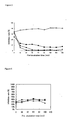
Figure 1 shows an enzyme activity of HCV RNA-dependent RNA
polymerase measured by the prior method.
Figure 2 shows an enzyme activity of HCV RNA-dependent RNA
polymerase measured by the pre-incubation assay method.
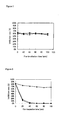
Figure 3 shows a relationship between pre-incubation time and an
enzyme activity of HCV RNA-dependent RNA polymerase when an enzyme
reaction time is 30 minutes. In the figure, ▪ is used when a solvent
dissolving a test substance is DMSO and ▴ is used when the solvent is water.
Figure 4 shows a relationship between the presence or the absence of a
pre-incubation and an enzyme reaction temperature. In the figure, each
symbol represents a relationship between an incorporation of UMP by HCV
RNA-dependent RNA polymerase and an enzyme reaction time. Δ is used
when an enzyme reaction after a pre-incubation is carried out at 37 °C, □ is
used when an enzyme reaction after a pre-incubation is carried out at 25 °C,
is used when an enzyme reaction is carried out at 25 °C without a pre-incubation
and ▪ is used when an enzyme reaction is carried out at 37 °C
without a pre-incubation.
Figure 5 shows a relationship between a pre-incubation time and each
inhibitory activity of 3'-dUTP, Compound A, Compound B and Compound C to
HCV RNA-dependent RNA polymerase. In the figure, o is used when a test
substance is 3'-dUTP, ▪ is used when a test substance is Compound A, ▴ is
used when a test substance is Compound B and is used when a test
substance is Compound C.
Figure 6 shows a relationship between an inhibitory activity of 3'-dUTP
to HCV RNA-dependent RNA polymerase and a pre-incubation
temperature. In the figure, is used when a pre-incubation temperature is
25 °C, ▪ is used when a pre-incubation temperature is 20 °C and ▴ is used
when a pre-incubation temperature is 2 °C.
Figure 7 shows a relationship between an inhibitory activity of
Compound I-1 to HCV RNA-dependent RNA polymerase and a pre-incubation
temperature. In the figure, is used when a pre-incubation temperature is
25 °C, ▪ is used when a pre-incubation temperature is 20 °C and ▴ is used
when a pre-incubation temperature is 2 °C.
Figure 8 shows a relationship between an inhibitory activity of
Compound C to HCV RNA-dependent RNA polymerase and a pre-incubation
temperature. In the figure, is used when a pre-incubation temperature is
25 °C, ▪ is used when a pre-incubation temperature is 20 °C and ▴ is used
when a pre-incubation temperature is 2 °C.
Figure 9 shows a result of random screening carried out through the
prior method.
Figure 10 shows a result of random screening carried out through the
pre-incubation method.
Best Mode for Carrying Out the Invention
A pre-incubation assay method of the present invention is explained
below, compared with a prior method. Though it is explained by using HCV
RNA-dependent RNA polymerase, one of polymerase as an example of an
enzyme, an enzyme is not limited to such polymerase. Any kind of an enzyme
can be used in the present invention. Preferred is a polymerase, specially a
RNA polymerase, especially RNA-dependent RNA polymerase, more especially
HCV RNA-dependent RNA polymerase.
Prior method
A HCV RNA-dependent RNA polymerase, template RNA, primer RNA,
substrate RNA, Mg ion (Mg2+) and a test substance are mixed at the same time
to start an enzyme reaction and measure an enzyme activity. It can be
known whether a test substance activates or inhibits an activity of a HCV
RNA-dependent RNA polymerase by comparing the above value of an enzyme
activity with that measured in the absence of a test substance. IC50 value
can be used, which is a concentration of a test substance able to inhibit 50 % of
an enzyme activity. For example, one of prior methods can be carried out in
accordance with the later described Reference 1.
Pre-incubation assay method
A HCV RNA-dependent RNA polymerase, template RNA, primer RNA
and Mg ion (Mg2+) are pre-incubated at approximately 25 °C for approximately
1 hour. After that, substrate RNA and a test substance are added to start an
enzyme reaction and measure an enzyme activity. IC50 value can be
calculated by comparing with an enzyme activity measured in the absence of a
test substance as well as the above prior method. An inhibitor can be
selected by comparing IC50. An example of a procedure of this method is
shown in the later described Example 1.
A pre-incubation assay method of the present invention is superior to a
prior method in the following points.
1) Higher enzyme activity
Figure 1 and 2 shows charts of enzyme activities at each concentration
of Mg2+ and Mn2+ in a prior method and a pre-incubation assay method.
When a concentration of Mg2+ is 3 mM and a concentration of Mn2+ is 0.1 mM,
an enzyme activity is 29,095 ccpm in a pre-incubation assay method whereas
that is 6,288 ccpm in a prior method. An enzyme activity is 4 to 5 times as
high as that in a prior method. Therefore, assay results can easily be
detected and experimental errors decrease. It is useful for screening
inhibitors.
A relationship between a pre-incubation time and an enzyme activity
was examined. An example of a procedure is described in Examination 1.
An enzyme activity is represented by an amount of an incorporation of uridine
monophosphate (UMP) to a reaction product. A result is shown in Figure 3.
An enzyme activity gradually gets higher until a pre-incubation time is
approximately 60 minutes. The difference of enzyme activities between a
prior method and a pre-incubation assay method gradually gets larger. An
enzyme activity measured after pre-incubating for approximately 60 minutes
is approximately 4 times as high as that measured by a prior method. When
a pre-incubation time is more than 60 minutes, an enzyme activity is the same
as that measured after pre-incubating for approximately 60 minutes. This
results shows that a preferable pre-incubation time is approximately 60
minutes.
2) Higher thermostability
A relationship between the presence or absence of a pre-incubation and
an enzyme reaction temperature is examined and shown in Figure 4. In a
prior method, when an enzyme reaction temperature is approximately 37 °C, a
longer reaction time deactivates an enzyme. Therefore, an accurate enzyme
activity can not be measured and an enzyme reaction must be carried out at
approximately 25 °C in a prior method. On the other hand, an enzyme
reaction in a pre-incubation method proceeds well at approximately 37 °C and
an assay can be carried out at a temperature more close to that of a mammal.
An enzyme activity at approximately 37 °C is higher than that at
approximately 25 °C. Therefore, a pre-incubation method enables an assay
to be carried at approximately 37 °C, which is close to a temperature of a
mammal.
3) Reducing pseudo-positive data
A pre-incubation method enable to pseudo-positive data to decrease.
It is explained by using Figure 5.
In Figure 5, 3'-deoxyuridine triphosphate (3'-dUTP) is used as a
competitive inhibitor. 3'-dUTP is incorporated as a substrate, stops the
elongation of a RNA chain and can inhibit an activity of a HCV RNA-dependent
RNA polymerase. Compound A, B and C show positive data in a
prior method. These compounds (3'-dUTP (0.7 µM), Compound A (100 µg/ml),
Compound B (50 µ/ml) or Compound C (25µ/ml)) inhibit an activity of a HCV
RNA-dependent RNA polymerase at approximately 50 to 70 % of an inhibition
in a prior method which is not accompanied with a pre-incubation. The
structures of Compound A, B and C are shown below.
When these four compounds are assayed in a pre-incubation assay
method, an enzyme inhibition rate of Compound A, B and C are under 15 %,
whereas an enzyme inhibition rate of a positive control compound (3'-dUTP)
does not change. Compound A, B and C are judged to be negative compounds.
Compounds which show positive data in a prior method in spite of no
inhibition activity to a HCV RNA-dependent RNA polymerase are judged to be
negative compounds in a pre-incubation assay.
This is important in a search for an inhibitor to an enzyme which can
not be examined by the other method. Specially, it is important in a search
for an inhibitor to a HCV RNA-dependent RNA polymerase because there is no
HCV infection experiment. It can be judged by a pre-incubation of the
present invention whether it is a real inhibitor or not.
It is specially important in a random screening wherein a large amount
of compounds are examined at the same time. Figure 9 shows a result of a
random screening in a prior method. Figure 10 shows a result of a random
screening in a pre-incubation method. A bar chart shows numbers of samples
at each inhibition rate (left vertical axis: a number of samples, horizontal
axis: an inhibition rate). Right vertical axis shows percentages of positive
compounds to the total number of all assayed compounds. Figure 9 shows a
percentage of compounds wherein their inhibition rates are over 75 % is
approximately 3.8 % to the total number of all test substances in a prior
method. Figure 10 shows a percentage of compounds wherein their
inhibition rates are over 40 % is approximately 3.2 % to the total number of all
test substances in a prior method. Therefore, it is easy to select lead
compounds in a pre-incubation assay because a number of pseudo-positive
data decreases whereas it is difficult to select lead compounds in a prior
method because a number of compounds showing positive date is large.
Lead compounds can effectively be found through a pre-incubation
assay method of the present invention. Results obtained by using compounds
obtained through the above screening are shown as examples. Figure 6
shows a result obtained by using a positive control compound (3'-dUTP).
Figure 7 shows a result obtained by using Compound I-1 which was effectively
found in a pre-incubation assay method. Figure 8 shows a result obtained by
using Compound C. The structure of Compound I-1 is shown below.
Compound I-1 can be selected as an effective lead compound because it
shows a positive result in a pre-incubation method as well as a positive control
compound (3'-dUTP).
On the other hand, Compound C showing a positive result in a prior
method can be excluded from candidates of lead compounds because it shows a
negative result in a pre-incubation method.
Figure 8 shows the effect of the pre-incubation is not found at a pre-incubation
temperature of 2 °C. Preferred as a pre-incubation temperature
is 20 to 30 °C.
Compound I-1 was selected as a lead compound as shown above and
structurally close compounds (compounds of the formula: A-C(=O)-CH=C(OH)-COOH
wherein A is an organic residue) were prepared.
Inhibition activities of them to HCV RNA-dependent RNA polymerase were
examined in accordance with a manner described in the following Example 1.
The results are shown in the following Table 1. A compound of the formula:
A-C(=O)-CH=C(OH)-COOH can form a structure of the formula: A-CH(OH)=CH-C(=O)-COOH
or of the formula: A-C(=O)-CH
2-C(=O)-COOH,
wherein A is an organic residue. A compound of any structure is within the
scope of the present invention.
| Inhibition activities of compounds of the formula: A-C(=O)-CH=C(OH)-COOH to HCV RNA-dependent RNA polymerase |
| Comp. No. | Group of the formula: -A | Inhibition rate at a concentration of 100 µg/ml (%) | IC50 (µg/ml) |
| I-1 | 3-hydroxyphenyl | >99 | 0.4 |
| I-2 | 4-hydroxyphenyl | 99 | 0.9 |
| I-3 | 4-methylphenyl | 99 | 1.0 |
| I-4 | 4-aminophenyl | >99 | 1.4 |
| I-5 | phenyl | 98 | 2.3 |
| I-6 | 5-meyhylthiophen-2-yl | 97 | 3.1 |
| I-7 | naphthalen-2-yl | 95 | 6.9 |
| I-8 | indol-2-yl | 95 | 6.9 |
| I-9 | 4-chlorophenyl | 94 | 7.1 |
| I-10 | thiophen-3-yl | 94 | 7.2 |
| I-11 | 4-fluorophenyl | 94 | 7.4 |
| I-12 | 3-methoxyphenyl | 94 | 8.4 |
| I-13 | thiophen-2-yl | 92 | 8.7 |
| I-14 | 3-bromophenyl | 93 | 8.9 |
| I-15 | 1-methylpyrrol-2-yl | 94 | 9.8 |
| I-16 | pyrrol-2-yl | 92 | 10 |
| I-17 | 4-hydroxy-3-methoxyphenyl | 92 | 11 |
| I-18 | 2,4-dichlorophenyl | 90 | 13 |
An activator or an inhibitor to an enzyme can effectively be found in
the present assay method. A compound of the formula: A-C(=O)-CH=C(OH)-COOH
wherein A is an organic residue has an inhibition activity to a HCV
RNA-dependent RNA polymerase and is useful as an agent for treating
hepatitis C. The above result shows an organic residue in A is not limited to
the specific residue and the structure of the formula: -C(=O)-CH=C(OH)-COOH
is important for exhibiting a inhibition activity to a HCV RNA-dependent
RNA polymerase.
A HCV RNA-dependent RNA polymerase can be inhibited by contacting
a compound obtained through an assay of the present invention and a HCV
RNA-dependent RNA polymerase. A replication of HCV can be inhibited by
contacting a compound obtained through an assay of the present invention and
HCV.
Example
Preparation of HCV RNA-dependent RNA polymerase
A cDNA encoding HCV RNA-dependent RNA polymerase was made by use of
HCV positive human plasma and HCV RNA-dependent RNA polymerase was
expressed using the insect cells or the E. coli. HCV RNA-dependent RNA
polymerase in the cell extract was purified by use of an anion exchange
chromatography, a heparin affinity chromatography, a polyU affinity
chromatography, a cation exchange chromatography and gel filtration
chromatography. The purification was performed at 4°C and Tris buffer
(pH7.5) containing ethylenediaminetetraacetic acid (1 mM), dithiothreitol (10
mM) and glycerol (20%) was used. The enzyme purified was stored at 4°C
until use for the assays.
Example 1
The assay method with pre-incubation using HCV RNA-dependent RNA
polymerase
The concentration of compound at 50% inhibition (IC50 value) was
calculated from the compound concentration used and the inhibitory rate
calculated.
When use of a compound at α µg/ml results in A% inhibition and use of
a compound at β µg/ml results in B% inhibition on condition of A≧50>B the
IC50 value is obtained by the calculation as follows.
IC50 (µg/ml) = 10[(50-B) / (A-B) × (logα - logβ) + logβ]
When compound I-1, 3'-dUTP, compound A, compound B and compound
C were used as test compounds, the inhibitory rates of the compounds for HCV
RNA-dependent RNA polymerase were shown in Table 2. Concentrations of
the compounds were as follows.
| Compound No. (concentration) | Inhibitory rate |
| I-1 (0.5 µg/ml) | 62% |
| 3'-dUTP (0.7 µM) | 79% |
| A (100 µg/ml) | 19% |
| B (50 µg/ml) | 1% |
| C (25 µg/ml) | 2% |
Reference 1
The prior assay method using HCV RNA-dependent RNA polymerase
When compound I-1, 3'-dUTP, compound A, compound B and compound
C were used as test compounds, the inhibitory rates of the compounds for HCV
RNA-dependent RNA polymerase were shown in Table 3. Concentrations of
the compounds were as follows.
| Compound No. (concentration) | Inhibitory rate |
| I-1 (0.5 µg/ml) | 62% |
| 3'-dUTP (0.7 µM) | 68% |
| A (100 µg/ml) | 50% |
| B (50 µg/ml) | 63% |
| C (25 µg/ml) | 67% |
Examination 1
Effects of the pre-incubation that is a special feature of the assay
method as the present invention were evaluated. In this specification,
RdRp or HCV RdRp means HCV RNA-dependent RNA polymerase.
The mixture of the buffer I, poly(A), oligo(U)12 and recombinant RdRp
was pre-incubated for 0 min, 15 min, 30 min, 45 min, 60 min, 90 min, 120 min,
150 min and 180 min respectively, before the enzyme reaction at 25 °C for 30
min (Figure 3). The solvent, DMSO or water was used instead of test
compound solution.
Enzyme activity was estimated by determining 3H-UTP as substrate
incorporated into the product. The enzyme activity increased with an
increase in the pre-incubation time and leveled off after approximately 60 min.
The increase of enzyme activity was appeared in both cases of DMSO and
water as the solvent of compound. When DMSO and water was used, the
enzyme with pre-incubation showed 2.7 times and 4.2 times respectively in the
best case as active as that without pre-incubation.
From the above-mentioned findings, it was confirmed that increase of
enzyme activity was brought about by pre-incubating the buffer I, poly(A),
oligo(U) and recombinant RdRp before the enzyme reaction.
Examination 2
Next, effects of pre-incubation on thermostability of RdRp were
determined.
Time course of HCV RdRp activity at 25 °C or 37 °C, with or without
pre-incubation was shown in Figure 4. In the prior assay method without
pre-incubation, the velocity of enzyme reaction at 37 °C was getting lower
after the enzyme reaction for 20 min and the amount of the product in enzyme
reaction for 60 min at 37 °C was about 50% less than that at 25 °C. On the
other hand, in the pre-incubation assay method, the velocity of enzyme
reaction at 37 °C tended to decrease after the enzyme reaction for 20 min but
the amount of the product in enzyme reaction increased and the amount of the
product in enzyme reaction for 60 min at 37 °C was a higher value at about
125% as compared with that at 25 °C.
These data showed that the pre-incubation of the buffer 1, poly(A),
oligo(U) and recombinant RdRp resulted in increase of thermostability of
RdRp during the enzyme reaction.
Examination 3
In the screening for HCV RNA-dependent RNA polymerase inhibitor,
there is a dissociation of inhibitory effect as a different point between an assay
method of the present invention and a prior assay method. Treatment of
pre-incubation resulted in great decrease of inhibitory effect of many
compounds. Therefore, the influence of pre-incubation on the inhibitory
value of enzyme inhibitor was determined. Using several compounds which
evaluated RdRp inhibition in the prior assay method, the time course of HCV
RdRp inhibitory effect was determined for 0 min, 15 min, 30 min, 45 min, 60
min, 90 min, 120 min, 150 min and 180 min as a pre-incubation time (Figure
5).
There was not a large influence by pre-incubation using 3'-dUTP as an
analog of substrate UTP. However, when the other three compounds,
compound A, compound B and compound C were used, the inhibitory effect
decreased with increasing pre-incubation time and was stable in about 60 min
of pre-incubation time.
These results showed that the treatment of pre-incubation of the buffer
I, poly(A), oligo(U) and recombinant RdRp lead to great change of RdRp
inhibitory effect by kinds of compounds.
Examination 4
Influence of pre-incubation on inhibitory value of enzyme inhibitor
was determined in Examination 3. The temperature of pre-incubation in
Examination 3 was changed and the time course of inhibitory effect was
determined at variant temperature of pre-incubation.
Using several compounds, 3'-dUTP, compound I-1 and compound C,
which evaluated RdRp inhibition in the prior assay method, the time course of
HCV RdRp inhibitory effect was determined at 2 °C, 20 °C and 25 °C as a
pre-incubation temperature for 0 min, 20 min, 40 min, 60 min, 80 min, and 100
min as a pre-incubation time (Figure 6, Figure 7, Figure 8). There was not
influence by pre-incubation at any temperatures using 3'-dUTP as an analog
of substrate UTP and compound I-1. However, when compound C was used,
the inhibitory effect decreased greatly with increasing pre-incubation time at
20 °C and 25 °C but did not appear clear influence by pre-incubation at 2 °C.
These results showed that the treatment of pre-incubation which lead
to great change of RdRp inhibitory effect had variant influence by change of
temperature.
Examination 5
To compare a pre-incubation assay method with the prior assay method,
random screening assay was performed using several ten thousands
compounds with different chemical structures each to each as test substances.
First, the compounds were mixed ten by ten. The concentration of
each test compound mixed was adjusted to 0.83 µg/ml. The inhibitory rate
was obtained according to the prior assay method described in Reference 1.
The result is shown in Figure 9. On the other hand, the compounds were
mixed five by five. The concentration of each test compound mixed was
adjusted to 49 µg/ml. The inhibitory rate was obtained according to a pre-incubation
assay method of the present invention described in Example 1.
The result is shown in Figure 10.
Example 2
The assay method with pre-incubation using HCV RNA-dependent
RNA polymerase without radioisotope-labeled substrate.
In Example 1,
3H-UTP, that is UTP labeled with tritium as
radioisotope was used as substrate in the assay with pre-incubation using
HCV RNA-dependent RNA polymerase. Herein, digoxigenin-labeled UTP
(DIG-UTP) instead of
3H-UTP was used as substrate in the assay with pre-incubation
using HCV RNA-dependent RNA polymerase.
Table 4 summarized the comparison between inhibitory rates in the
assay with the pre-incubation and those in the assay without the pre-incubation.
| Compound No. (concentration) | Inhibitory rate Treatment of pre-incubation |
| | + | - |
| I-1 (0.5 µg/ml) | 52% | 59% |
| 3'-dUTP (0.7 µM) | 50% | 44% |
| A (100 µg/ml) | 24% | 87% |
| B (50 µg/ml) | 20% | 28% |
| C (25 µg/ml) | 15% | 87% |
The pre-incubation assay method can heighten 1) an activity to an
enzyme and 2) thermostability and reduce 3) pseudo-positive data.