EP1259626B1 - Materials and methods involving hybrid vascular endothelial growth factor dnas and proteins and screening methods for modulators - Google Patents
Materials and methods involving hybrid vascular endothelial growth factor dnas and proteins and screening methods for modulators Download PDFInfo
- Publication number
- EP1259626B1 EP1259626B1 EP01914501A EP01914501A EP1259626B1 EP 1259626 B1 EP1259626 B1 EP 1259626B1 EP 01914501 A EP01914501 A EP 01914501A EP 01914501 A EP01914501 A EP 01914501A EP 1259626 B1 EP1259626 B1 EP 1259626B1
- Authority
- EP
- European Patent Office
- Prior art keywords
- vegf
- none
- yes
- seq
- none none
- Prior art date
- Legal status (The legal status is an assumption and is not a legal conclusion. Google has not performed a legal analysis and makes no representation as to the accuracy of the status listed.)
- Expired - Lifetime
Links
Images




Classifications
-
- A—HUMAN NECESSITIES
- A61—MEDICAL OR VETERINARY SCIENCE; HYGIENE
- A61K—PREPARATIONS FOR MEDICAL, DENTAL OR TOILETRY PURPOSES
- A61K31/00—Medicinal preparations containing organic active ingredients
- A61K31/70—Carbohydrates; Sugars; Derivatives thereof
- A61K31/7042—Compounds having saccharide radicals and heterocyclic rings
- A61K31/7052—Compounds having saccharide radicals and heterocyclic rings having nitrogen as a ring hetero atom, e.g. nucleosides, nucleotides
-
- A—HUMAN NECESSITIES
- A61—MEDICAL OR VETERINARY SCIENCE; HYGIENE
- A61K—PREPARATIONS FOR MEDICAL, DENTAL OR TOILETRY PURPOSES
- A61K38/00—Medicinal preparations containing peptides
- A61K38/16—Peptides having more than 20 amino acids; Gastrins; Somatostatins; Melanotropins; Derivatives thereof
-
- A—HUMAN NECESSITIES
- A61—MEDICAL OR VETERINARY SCIENCE; HYGIENE
- A61P—SPECIFIC THERAPEUTIC ACTIVITY OF CHEMICAL COMPOUNDS OR MEDICINAL PREPARATIONS
- A61P17/00—Drugs for dermatological disorders
- A61P17/06—Antipsoriatics
-
- A—HUMAN NECESSITIES
- A61—MEDICAL OR VETERINARY SCIENCE; HYGIENE
- A61P—SPECIFIC THERAPEUTIC ACTIVITY OF CHEMICAL COMPOUNDS OR MEDICINAL PREPARATIONS
- A61P19/00—Drugs for skeletal disorders
- A61P19/02—Drugs for skeletal disorders for joint disorders, e.g. arthritis, arthrosis
-
- A—HUMAN NECESSITIES
- A61—MEDICAL OR VETERINARY SCIENCE; HYGIENE
- A61P—SPECIFIC THERAPEUTIC ACTIVITY OF CHEMICAL COMPOUNDS OR MEDICINAL PREPARATIONS
- A61P29/00—Non-central analgesic, antipyretic or antiinflammatory agents, e.g. antirheumatic agents; Non-steroidal antiinflammatory drugs [NSAID]
-
- A—HUMAN NECESSITIES
- A61—MEDICAL OR VETERINARY SCIENCE; HYGIENE
- A61P—SPECIFIC THERAPEUTIC ACTIVITY OF CHEMICAL COMPOUNDS OR MEDICINAL PREPARATIONS
- A61P35/00—Antineoplastic agents
-
- A—HUMAN NECESSITIES
- A61—MEDICAL OR VETERINARY SCIENCE; HYGIENE
- A61P—SPECIFIC THERAPEUTIC ACTIVITY OF CHEMICAL COMPOUNDS OR MEDICINAL PREPARATIONS
- A61P43/00—Drugs for specific purposes, not provided for in groups A61P1/00-A61P41/00
-
- A—HUMAN NECESSITIES
- A61—MEDICAL OR VETERINARY SCIENCE; HYGIENE
- A61P—SPECIFIC THERAPEUTIC ACTIVITY OF CHEMICAL COMPOUNDS OR MEDICINAL PREPARATIONS
- A61P9/00—Drugs for disorders of the cardiovascular system
- A61P9/10—Drugs for disorders of the cardiovascular system for treating ischaemic or atherosclerotic diseases, e.g. antianginal drugs, coronary vasodilators, drugs for myocardial infarction, retinopathy, cerebrovascula insufficiency, renal arteriosclerosis
-
- C—CHEMISTRY; METALLURGY
- C07—ORGANIC CHEMISTRY
- C07K—PEPTIDES
- C07K14/00—Peptides having more than 20 amino acids; Gastrins; Somatostatins; Melanotropins; Derivatives thereof
- C07K14/435—Peptides having more than 20 amino acids; Gastrins; Somatostatins; Melanotropins; Derivatives thereof from animals; from humans
- C07K14/52—Cytokines; Lymphokines; Interferons
-
- C—CHEMISTRY; METALLURGY
- C12—BIOCHEMISTRY; BEER; SPIRITS; WINE; VINEGAR; MICROBIOLOGY; ENZYMOLOGY; MUTATION OR GENETIC ENGINEERING
- C12N—MICROORGANISMS OR ENZYMES; COMPOSITIONS THEREOF; PROPAGATING, PRESERVING, OR MAINTAINING MICROORGANISMS; MUTATION OR GENETIC ENGINEERING; CULTURE MEDIA
- C12N5/00—Undifferentiated human, animal or plant cells, e.g. cell lines; Tissues; Cultivation or maintenance thereof; Culture media therefor
- C12N5/06—Animal cells or tissues; Human cells or tissues
- C12N5/0602—Vertebrate cells
- C12N5/0634—Cells from the blood or the immune system
- C12N5/0647—Haematopoietic stem cells; Uncommitted or multipotent progenitors
-
- C—CHEMISTRY; METALLURGY
- C12—BIOCHEMISTRY; BEER; SPIRITS; WINE; VINEGAR; MICROBIOLOGY; ENZYMOLOGY; MUTATION OR GENETIC ENGINEERING
- C12N—MICROORGANISMS OR ENZYMES; COMPOSITIONS THEREOF; PROPAGATING, PRESERVING, OR MAINTAINING MICROORGANISMS; MUTATION OR GENETIC ENGINEERING; CULTURE MEDIA
- C12N5/00—Undifferentiated human, animal or plant cells, e.g. cell lines; Tissues; Cultivation or maintenance thereof; Culture media therefor
- C12N5/06—Animal cells or tissues; Human cells or tissues
- C12N5/0602—Vertebrate cells
- C12N5/069—Vascular Endothelial cells
-
- C—CHEMISTRY; METALLURGY
- C12—BIOCHEMISTRY; BEER; SPIRITS; WINE; VINEGAR; MICROBIOLOGY; ENZYMOLOGY; MUTATION OR GENETIC ENGINEERING
- C12N—MICROORGANISMS OR ENZYMES; COMPOSITIONS THEREOF; PROPAGATING, PRESERVING, OR MAINTAINING MICROORGANISMS; MUTATION OR GENETIC ENGINEERING; CULTURE MEDIA
- C12N5/00—Undifferentiated human, animal or plant cells, e.g. cell lines; Tissues; Cultivation or maintenance thereof; Culture media therefor
- C12N5/06—Animal cells or tissues; Human cells or tissues
- C12N5/0602—Vertebrate cells
- C12N5/069—Vascular Endothelial cells
- C12N5/0692—Stem cells; Progenitor cells; Precursor cells
-
- C—CHEMISTRY; METALLURGY
- C07—ORGANIC CHEMISTRY
- C07K—PEPTIDES
- C07K2319/00—Fusion polypeptide
-
- C—CHEMISTRY; METALLURGY
- C12—BIOCHEMISTRY; BEER; SPIRITS; WINE; VINEGAR; MICROBIOLOGY; ENZYMOLOGY; MUTATION OR GENETIC ENGINEERING
- C12N—MICROORGANISMS OR ENZYMES; COMPOSITIONS THEREOF; PROPAGATING, PRESERVING, OR MAINTAINING MICROORGANISMS; MUTATION OR GENETIC ENGINEERING; CULTURE MEDIA
- C12N2501/00—Active agents used in cell culture processes, e.g. differentation
- C12N2501/10—Growth factors
- C12N2501/165—Vascular endothelial growth factor [VEGF]
Definitions
- the PDGF proteins and their receptors are involved in regulation of cell proliferation, survival and migration of several cell types.
- the VEGF proteins and their receptors play important roles in both vasculogenesis, the development of the embryonic vasculature from early differentiating endothelial cells, and angiogenesis, the process of forming new blood vessels from pre-existing ones [ Risau et al., Dev Biol 125 :441-450 (1988) ; Zachary, Intl J Biochem Cell Bio 30:1169-1174 (1998 ), Neufeld et al., FASE J 13:9-22 (1999 ); Ferrara, J Mol Med 77:527-543 (1999 )].
- the PDGF/VEGF family of growth factors includes at least the following members : PDGF-A (see e.g., GenBank Acc. No. X06374), PDGF-B (see e.g. , GenBank Acc. No- M12783), VEGF (see e.g., GenBank Acc. No. Q16989 referred to herein for clarity as VEGF-A or by particular isoform), PIGF (see e.g., GenBank Acc. No. X54936 placental growth factor), VEGF-B (see e.g., GenBank Acc. No.
- VEGF-related factor VRF
- VEGF-C VEGF-see e.g , GeriBank Acc. No. X94216; also known as VEGF related protein (VRP)
- VRP VEGF related protein
- VEGF-D also known as c-fos-induced growth factor (FIGF); see e.g ., Genbank Acc. No. AJ000185
- VEGF-E also known as N27 VEGF or OV NZ7; see e.g ., GenBank Acc. No. S67522
- NZ2 VEGF also known as OV NZ2; see e.g ., GenBank Acc. No.
- VEGF-like protein see e.g., GenBank Acc. No. AF106020; Meyer et al., EMBO J 18:363-374 ), and NZ10 VEGF-like protein (described in International Patent Application PCT/US99/25869 ) [ Stacker and Achen, Growth Factors 17:1-11 (1999 ); Neufeld et al., FASEB J 13:9-22 (1999 ); Ferrara, J Mol Med 77:527-543 (1999 )].
- PDGF/VEGF Members of the PDGF/VEGF family are characterized by a number of structural motifs including a conserved PDGF motif defined by the sequence: P-[PS]-C-V-X(3)-R-C-[GSTA]-G-C-C (SEQ ID NO: 1200).
- the brackets indicate that this position Within the polypeptide can be any one of the amino acids contained within the brackets.
- the number contained within the parentheses indicates the number of amino acids that separate the "V" and "R” residues.
- This conserved motif falls within a large domain of 70-150 amino acids defined in part by eight highly conserved cysteine residues that form inter- and intramolecular disulfide bonds.
- This domain forms a cysteine knot motif composed of two disulfide bonds which form a covalently linked ring structure between two adjacent ⁇ strands, and a third disulfide bond that penetrates the ring [see for example, Fig I in Muller et al., Structure 5:1325-1338 (1997 )], similar to that found in other cysteine knot growth factors, e.g., transforming growth factor- ⁇ (TGF- ⁇ ).
- TGF- ⁇ transforming growth factor- ⁇
- the PDGF/VEGF family proteins are predominantly secreted glycoproteins that form either disulfide-linked or non-covalently bound homo- or heterodimers whose subunits are arranged in an antiparallel manner [ Stacker and Achen, Growth Factors 17:1-11 (1999 ); Muller et al., Structure 5:1325-1338 (1997 )].
- the PDGFs regulate cell proliferation, cell survival and chemotaxis of many cell types in vitro (reviewed in [ Strukturn et al., Biochimica et Biophysica Acta 1378:F79-113 (1998 )].
- the two chains that make up PDGF, PDGF-A and PDGF-B, can homo- or heterodimerize producing three different isoforms: PDGF-AA, PDGF-AB, or PDGF-BB.
- PDGF-A is only able to bind the PDGF ⁇ -receptor (PDGFR- ⁇ ), whereas PDGF-B can bind both the PDGF- ⁇ and a second PDGF receptor (PDGF- ⁇ )-
- the PDGF proteins exert their effects in a paracrine manner since they often are expressed in epithelial (PDGF-A) or endothelial (PDGF-B) cells in close apposition to the PDGF receptor-expressing mesenchyme (reviewed in Ataliotis et al., Int Rev Cytology 172:95-127 (1997 )].
- PDGFs bas been observed in several pathological conditions, including malignancies, atherosclerosis, and fibroproliferative diseases.
- co-expression of the PDGFs and PDGF receptors generates autocrine loops, which are important for cellular transformation [ Betsholtz et al., Cell 39-447-57 (1984 ); Keating et al., Science 239:914-6 (1988 )].
- mice Homozygous null mutations for either PDGF-A or PDGF-B are lethal in mice. Approximately 50 % of the homozygous PDGF-A deficient mice have an early lethal phenotype, while the surviving animals have a complex postnatal phenotype with lung emphysema due to improper alveolar septum formation, and a dermal phenotype characterized by thin dermis, misshapen hair follicles, and thin hair. PDGF-A is also required for normal development of oligodendrocytes and subsequent myelination of the central nervous system.
- the PDGF-B deficient mice develop renal, hematological and cardiovascular abnormalities; where the renal and cardiovascular defects, at least in part, are due to the lack of proper recruitment of mural cells (vascular smooth muscle cells, pericytes or mesangial cells) to blood vessels.
- mural cells vascular smooth muscle cells, pericytes or mesangial cells
- the VEGF subfamily is composed of PDGF/VEGF members which share a VEGF homology domain (VHD) characterized by the sequence: C-X(22-24)-P-[PSR]-C-V-X(3)-R-C-[GSTA]-G-C-C-X(6)-C-X(32-41)-C(SEQ ID NO: 1201).
- VHD domain determined through analysis of the VEGF subfamily members, comprises the PDGF motif but is more specific.
- VEGF-A was originally purified from several sources on the basis of its mitogenic activity toward endothelial cells, and also by its ability to induce microvascular permeability, hence it is also called vascular permeability factor (VPF).
- VEGF-A has subsequently been shown to induce a number of biological processes including the mobilization of intracellular calcium, the induction of plasminogen activator and plasminogen activator inhibitor-1 synthesis, promotion of monocyte migration in vitro, induction of antiapoptotic protein expression in human endothelial cells, induction of fenestrations in endothelial cells, promotion of cell adhesion molecule expression in endothelial cells and induction of nitric oxide mediated vasodilation and hypotension [ Ferrara, J Mol Med 77: 527-543 (1999 ); Neufeld et al., FASEB J 13 : 9-22 (1999) ; Zachary, Intl J Biochem Cell Bio 30: 1169-1174 (1998) ].
- VEGF-A is a secreted, disulfide-linked homodimeric glycoprotein composed of 23 kD subunits.
- each isoform differs in biological activity, receptor specificity, and affinity for cell surface- and extracellular matrix-associated heparan-sulfate proteoglycans, which behave as low affinity receptors for VEGF-A.
- VEGF 121 does not bind to either heparin or heparan-sulfate; VEGF 145 and VEGF 165 (GenBank Acc. No. M32977) are both capable of binding to heparin; and VEGF 189 and VEGF 206 show the strongest affinity for heparin and heparan-sulfates.
- VEGF 121 , VEGF 145 , and VEGF 165 are secreted in a soluble form although most of VEGF 165 is confined to cell surface and extracellular matrix proteoglycans, whereas VEGF 189 and VEGF 206 remain associated with extracellular matrix.
- Both VEGF 189 and VEGF 206 can be released by treatment with heparin or heparinase, indicating that these isoforms are bound to extracellular matrix via proteoglycans.
- Cell-bound VEGF 189 can also be cleaved by proteases such as plasmin, resulting in release of an active soluble VEGF 110 -
- proteases such as plasmin
- Most tissues that express VEGF are observed to express several VEGF isoforms simultaneously, although VEGF 121 and VEGF 165 are the predominant forms, whereas VEGF 206 is rarely detected [ Ferrara, J Mol Med 77:527-543 (1999 )].
- VEGF 145 differs in that it is primarily expressed in cells derived from reproductive organs [ Neufeld et al., FASEB J 13:9-22 (1999 )].
- VEGF-A The pattern of VEGF-A expression suggests its involvement in the development and maintenance of the normal vascular system, and in angiogenesis associated with tumor growth and other pathological conditions such as rheumatoid arthritis.
- VEGF-A is expressed in embryonic tissues associated with the developing vascular system, and is secreted by numerous tumor cell lines. Analysis of mice in which VEGF-A was knocked out by targeted gene disruption indicate that VEGF-A is critical for survival, and that the development of the cardiovascular system is highly sensitive to VEGF-A concentration gradients. Mice lacking a single copy of VEGF-A die between day 11 and 12 of gestation. These embryos show impaired growth and several developmental abnormalities including defects in the developing cardiovasculature.
- VEGF-A is also required post-natally for growth, organ development, regulation of growth plate morphogenesis and endochondral bone formation. The requirement for VEGF-A decreases with age, especially after the fourth postnatal week. In mature animals, VEGF-A is required primarily for active angiogenesis in processes such as wound healing and the development of the corpus luteum. [ Neufeld et al., FASEB J 13:9-32 (1999 ); Ferrara, J Mol Med 77:527-543 (1999 )]. VEGF-A expression is influenced primarily by hypoxia and a number of hormones and cytokines including epidermal growth factor (EGF), TGF- ⁇ , and various interleukins. Regulation occurs transcriptionally and also post-transcriptionally such as by increased mRNA stability [ Ferrara, J Mol Med 77:527-543 (1999 )].
- EGF epidermal growth factor
- PIGF a second member of the VEGF subfamily, is generally a poor stimulator of angiogenesis and endothelial cell proliferation in comparison to VEGF-A, and the in vivo role of PIGF is not well understood.
- Three isoforms of PIGF produced by alternative mRNA splicing have been described [ Hauser et al., Growth Factors 9:259-268 (1993 ); Maglione et al., Oncogene 8:925-931 (1993 )]- PIGF forms both disulfide-liked homodimers and heterodimers with VEGF-A.
- the P1GF-VEGF-A heterodimers are more effective at inducing endothelial cell proliferation and angiogenesis than PIGF homodimers.
- PIGF is primarily expressed in the placenta, and is also co-expressed with VEGF-A during early embryogenesis in the trophoblastic giant cells of the parietal yolk sac [ Stacker and Achen, Growth Factors 17:1-11 (1999 )].
- VEGF-B shares approximately 44% amino acid identity with VEGF-A.
- VEGF-B has been shown to have angiogenic properties, and may also be involved in cell adhesion and migration, and in regulating the degradation of extracellular matrix. It is expressed as two isoforms of 167 and 186 amino acid residues generated by alternative splicing.
- VEGF-B 167 is associated with the cell surface or extracellular matrix via a heparin-binding domain, whereas VEGF-B 186 is secreted.
- Both VEGF-B 167 and VEGF-B 186 can form disulfids-linked homodimers or heterodimers with VEGF-A.
- the association to the cell surface of VEGF 165 -VEGF-B 167 heterodimers appears to be determined by the VEGF-B component, suggesting that heterodimerization may be important for sequestering VEGF-A.
- VEGF-B is expressed primarily in embryonic and adult cardiac and skeletal muscle tissues [ Joukov et al., J Cell Physiol 173:211-215 (1997 ); Stacker and Achen, Growth Factors 17:1-11 (1999 )]. Mice lacking VEGF-B survive but have smaller hearts, dysfunctional coronary vasculature, and exhibit impaired recovery from cardiac ischemia [ Bellomo et al., Circ Res 2000;E29-E35 ].
- a fourth member of the VEGF subfamily, VEGF-C comprises a VHD that is approximately 30% identical at the amino acid level to VEGF-A VEGF-C is originally expressed as a larger precursor protein, prepro-VEGF-C, having extensive amino- and carboxy-terminal peptide sequences flanking the VHD, with the C-terminal peptide containing tandemly repeated cysteine residues in a motif typical of Balbiani ring 3 protein Prepro-VEGF-C undergoes extensive proteolytic maturation involving the successive cleavage of a signal peptide, the C-terminal pro-peptide, and the N-terminal pro-peptide.
- VEGF-C protein consists of a non-covalently-linked homodimer, in which each monomer contains the VHD.
- the intermediate forms of VEGF-C produced by partial proteolytic processing show increasing affinity for the VEGFR-3 receptor, and the mature protein is also able to bind to the VEGFR-2 receptor.
- Joikov et al., EMBOJ. 16:(13):3898-3911 (1997 ). It has also been demonstrated that a mutant VEGF-C, in which a single cysteine at position 156 is either substituted by another amino acid or deleted, loses the ability to bind VEGFR-2 but remains capable of binding and activating VEGFR-3 [ International Patent Publication No. WO 98/33917 ].
- VEGF-C vascular endothelial growth factor-C mRNA is expressed primarily in the allantois, jugular area, and the metanephros. [ Joukov et al., J Cell Physiol 173:211-215 (1997 )]. VEGF-C is involved in the regulation of lymphatic angiogenesis: when VEGF-C was overexpressed in the skin of transgenic mice, a hyperplastic lymphatic vessel network was observed, suggesting that VEGF-C induces lymphatic growth [ Jeltsch et al., Science, 276:1423-1425 (1997 )].
- VEGF-C also shows angiogenic properties: it can stimulate migration of bovine capillary endothelial (BCE) cells in collagen and promote growth of human endothelial cells [see, e.g., International Patent Publication No. WO 98/33917 , incorporated herein by reference].
- BCE bovine capillary endothelial
- VEGF-D is structurally and functionally most closely related to VEGF-C [see International Patent Publ. No. WO 98/07832 , incorporated herein by reference]. Like VEGF-C, VEGF-D is initially expressed as a prepro-peptide that undergoes N-terminal and C-terminal proteolytic processing, and forms non-covalently linked dimers. VEGF-D stimulates mitogenic responses in endothelial cells in vitro. During embryogenesis, VEGF-D is expressed in a complex temporal and spatial pattern, and its expression persists in the heart, lung, and skeletal muscles in adults.
- VEGF-D ⁇ N ⁇ C Isolation of a biologically active fragment of VEGF-D designated VEGF-D ⁇ N ⁇ C, is described in International Patent Publication No. WO 98/07832 , incorporated herein by reference.
- VFGF-D ⁇ N ⁇ C consists of amino acid residues 93 to 201 of VEGF-D linked to the affinity tag peptide FLAG ® .
- VEGF-E and NZ2 VEGF are potent mitogens and permeability enhancing factors. Both show approximately 25% amino acid identity to mammalian VEGF-A, and are expressed as disulfide-liked homodimers. Infection by these viruses is characterized by pustular dermititis which may involve endothelial cell proliferation and vascular permeability induced by these viral VEGF proteins.
- VEGF-like proteins have also been identified from two additional strains of the orf virus, D1701 [GenBank Acc. No. AF106020; described in Meyer et al., EMBO J 18:363-374 (1999 )] and NZ10 [described in International Patent Application PCT/US99/25869 , incorporated herein by reference]. These viral VEGF-like proteins have been shown to bind VEGFR-2 present on host endothelium, and this binding is important for development of infection and viral induction of angiogenesis [ Meyer et al., EMBO J 18:363-374 (1999 ); International Patent Application PCT/US99/25869 ].
- PDGFR- ⁇ see e.g., GenBank Acc. No. NM006206
- PDGFR- ⁇ see e.g., GenBank Acc. No NM002609
- VEGFR-1/Flt-1 fms -like tyrosine kinase-1; GenBank Acc. No. X51602; De Vries et al., Science 255:989-991 (1992 )
- VEGFR-2/KDR/Flk-1 kinase insert domain containing receptor/fetal liver kinase-1; GenBank Acc- Nos.
- VEGF 121 , VEGF 165 , VEGF-B, P1GF-1 and P1GF-2 bind VEGF-R1; VEGF 121 , VEGF 145 , VEGF 165 , VEGF-C, VEGF-D, VEGF-E, and NZ2 VEGF bind VEGF-R2; VEGF-C and VEGF-D bind VEGFR-3; VEGF 165 , PIGF-2, and NZ2 VEGF bind neuropilin-1; and VEGF 165 binds neuropilin-2.[ Neufeld et al., FASEB J 13:9-22 (1999 ); Stacker and Achen, Growth Factors 17:1-11 (1999 ); Ortega et al., Fron Biosci 4:141-152 (1999 ); Zachary, IntI J Biochem Cell Bio 30
- the PDGF receptors are protein tyrosine kinase receptors (PTKs) that contain five immunoglobulin-like loops in their extracellular domains.
- PTKs protein tyrosine kinase receptors
- VEGFR-1, VEGFR-2, and VEGFR-3 comprise a subgroup of the PDGF subfamily of PTKs, distinguished by the presence of seven Ig domains in their extracellular domain and a split kinase domain in the cytoplasmic region.
- Both neuropilin- and neuropilin-2 are non-PTK VEGF receptors.
- NP-1 has an extracellular portion includes a MAM domain; regions of homology to coagulation factors V and VIII, MFGPs and the DDR tyrosine kinase, and two CUB-like domains.
- VEGFR-1 A soluble isoform of VEGFR-1 lacking the seventh Ig-like loop, transmembrane domain, and the cytoplasmic region is expressed in human umbilical vein endothelial cells.
- This VEGFR-1 isoform binds VEGF-A with high affinity and is capable of preventing VEGF-A-induced mitogenic responses [ Ferrara, J Mol Med 77-527-543 (1999 ); Zachary, Intl J Biochem Cell Bio 30;1169-1174 (1998 )].
- a C-terminal truncated from of VEGFR-2 has also been reported [ Zachary, IntI J Biochem Cell Bio 30:1169-1174 (1998 )].
- there are two isoforms of the VEGFR-3 protein which differ in the length of their C-terminal ends. Studies suggest that the longer isoform is responsible for most of the biological properties of VEGFR-3.
- the receptors for the PDGFs, PDGF ⁇ -receptor (PDGFR- ⁇ ) and the ⁇ -receptor (PDGFR- ⁇ ), are expressed by many in vitro grown cell lines, and they are mainly expressed by mesenchymal cells in vivo (reviewed in [ Raines et al., Peptide growth factors and their receptors, Heidelberg, Springer-Verlag (1990 )]. As mentioned above, PDGF-B binds both PDGFRs, while PDGF-A selectively binds PDGFR- ⁇ .
- PDGFR- ⁇ deficient mice die during embryogenesis at e10, and show incomplete cephalic closure, impaired neural crest development, cardiovascular defects, skeletal defects, and odemas.
- the PDGFR- ⁇ deficient mice develop similar phenotypes to animals deficient in PDGF-B, that are characterized by renal, hematological and cardiovascular abnormalities ; where the renal and cardiovascular defects, at least in part, are due to the lack of proper recruitment of mural cells (vascular smooth muscle cells, pericytes or mesangial cells) to blood vessels.
- mural cells vascular smooth muscle cells, pericytes or mesangial cells
- VLGFR-1 occurs mainly in vascular endothelial cells, although some may be present on monocytes, trophoblast cells, and renal mesangial cells [ Neufeld et al., FASEB J 13:9-22 (1999 )]. High levels of VEGFR-1 mRNA are also detected in adult organs, suggesting that VEGFR-1 has a function in quiescent endothelium of mature vessels not related to cell growth. VEGFR-1-/-mice die in utero between day 8.5 and 9.5. Although endothelial cells developed in these animals, the formation of functional blood vessels was severely impaired, suggesting that VEGFR-1 may be involved in cell-cell or cell-matrix interactions associated with cell migration.
- mice expressing a mutated VEGFR-1 in which only the tyrosine kinase domain was missing show normal angiogenesis and survival, suggesting that the signaling capability of VEGFR-1 is not essential.
- VEGFR-2 expression is similar to that of VEGFR-1 in that it is broadly expressed in the vascular endothelium, but it is also present in hematopoietic stem cells, megakaryocytes, and retinal progenitor cells [ Neufeld et al., FASEB J 13:9-22 (1999 )]. Although the expression pattern of VEGFR-1 and VEGFR-2 overlap extensively, evidence suggests that, in most cell types, VEGFR-2 is the major receptor through which most of the VEGFs exert their biological activities.
- VEGFR-3 is expressed broadly in endothelial cells during early embryogenesis. During later stages of development, the expression of VEGFR-3 becomes restricted to developing lymphatic vessels [ Kaipainen, A., et al., Proc. Natl. Acad. Sci. USA, 92: 3566-3570 (1995 )]. In adults, the lymphatic endothelia and some high endothelial venules express VEGFR-3, and increased expression occurs in lymphatic sinuses in metastatic lymph nodes and in lymphangioma. VEGFR-3 is also expressed in a subset of CD34 + hematopoietic cells which may mediate the myelopoietic activity of VEGF-C demonstrated by overexpression studies [ WO 98/33917 ].
- VEGFR-3 Targeted disruption of the VEGFR-3 gene in mouse embryos leads to failure of the remodeling of the primary vascular network, and death after embryonic day 9.5 [ Durnont et al, Science, 282: 946-949 (1998) ]. These studies suggest an essential role for VEGFR-3 in the development of the embryonic vasculature, and also during lymphangiogenesis.
- VEGF receptors Structural analyses of the VEGF receptors indicate that the VEGF-A binding site on VEGFR-1 and VEGFR-2 is located in the second and third Ig-like loops. Similarly, the VEGF-C and VEGF-D binding sites on VEGFR-2 and VEGFR-3 are also contained within the second Ig-loop [ Taipale et al., Curr Top Microbiol Immunol 237:85-96 (1999 )]. The second Ig-like loop also confers ligand specificity as shown by domain swapping experiments [ Ferrara, J Mol Med 77:527-543 (1999 )].
- VEGFR-1 and VEGFR-2 are structurally similar, share common ligands (VEGF 121 and VEGF 165 ), and exhibit similar expression patterns during development.
- the signals mediated through VEGFR-1 and VEGFR-2 by the same ligand appear to be slightly different.
- VEGFR-2 has been shown to undergo autophosphorylation in response to VEGF-A, but phosphorylation of VEGFR-1 under identical conditions was barely detectable.
- VEGFR-2 mediated signals cause striking changes in the morphology, actin reorganization, and membrane ruffling of porcine aortic endothelial cells recombinantly overexpressing this receptor.
- VFGFR-2 also mediated ligand-induced chemotaxis and mitogenicity; whereas VEGFR-1-transfected cells lacked mitogenic responses to VEGF-A- Mutations in VEGF-A that disrupt binding to VEGFR-2 fail to induce proliferation of endothelial cells, whereas VEGF-A mutants that are deficient in binding VEGFR-1 are still capable of promoting endothelial proliferation.
- VEGF stimulation of cells expressing only VEGFR-2 leads to a mitogenic response whereas comparable stimulation of cells expressing only VEGFR-1 also results in cell migration, but does not induce cell proliferation.
- phosphoproteins co-precipitating with VEGFR-1 and VEGFR-2 arc distinct, suggesting that different signaling molecules interact with receptor-specific intracellular sequences.
- VEGFR-1 in angiogenesis may be to negatively regulate the activity of VEGF-A by binding it and thus preventing its interaction with VEGFR-2, whereas VEGFR-2 is thought to be the main transducer of VEGF-A signals in endothelial cells.
- mice deficient in VEGF1Z-1 die as embryos while mice expressing a VEGPR-1 receptor capable of binding VEGF-A but lacking the tyrosine kinase domain survive and do not exhibit abnormal embryonic development or angiogenesis.
- analyses of VEGF-A mutants that bind only VEGFR-2 show that they retain the ability to induce mitogenic responses in endothelial cells.
- VEGFR-1 VEGFR-1 signaling
- Ferrara J Mol Med 77:527-543 (1999 ); Zachary, Intl J Biochem Cell Bio 30:1169-1174 (1998 )].
- Neuropilin-1 was originally cloned as a receptor for the collapsin/semaphorin family of proteins involved in axon guidance [ Stacker and Achen, Growth Factors 17:1-11 (1999 )]. It is expressed in both endothelia and specific subsets of neurons during embryogenesis, and it thought to be involved in coordinating the developing neuronal and vascular system. Although activation of neuropilin-1 does not appear to elicit biological responses in the absence of the VEGF family tyrosine-kinase receptors, their presence on cells leads to more efficient binding of VEGF 165 and VEGFR-2 mediated responses. [ Neufeld et al., FASEB J 13:9-22 (1999 )] Mice lacking neuropilin-1 show abnormalities in the developing embryonic cardiovascular system. [ Neufeld et al., FASEB J 13:9-22 (1999 )]
- Neuropilin-2 was identified by expression cloning and is a collapsin/semaphorin receptor closely related to neuropilin-1. Neuropilin-2 is an isoform-specific VEGF receptor in that it only binds VEGF 165 . Like neuropilin-1, neuropilin-2 is expressed in both endothelia and specific neurons, and is not predicted to function independently due to its relatively short intracellular domain. The function of neuropilin-2 in vascular development is unknown [ Neufeld et al., FASEB J 13:9-22 (1999 ); WO 99/30157 ].
- VEGF-A as a key regulator of vascular development has spurred active research using VEGF-based therapeutic angiogenesis in cardiovascular medicine, as well as for treating diseases characterized by pathological angiogenesis with VEGF antagonists. Subsequent identification of additional VEGF family proteins and their roles in vascularization have also led to the development of therapies based on these growth factors [ Ferrara and Alitalo, Nature Med 5:1359-1364 (1999 )]. Animal studies of hindlimb ischemia, and myocardial ischemia using VEGF-A or VEGF-C, delivered by administration of recombinant protein or gene transfer using naked DNA or adenoviral vectors, implicate these molecules in promoting vascularization and increasing coronary blood flow.
- VEGF growth factors include using VEGF-C to promote lymphangiogenesis in patients whose axillary lymph nodes were removed during breast carcinoma surgery- Therapies using combinations of growth factors to promote vascularization in tissues may also prove to be preferable in treating certain diseases [ Ferrara and Alitalo, Nature Med 5: 1359-1364 (1999 )].
- VEGF expression is upregulated in most human tumors including primary breast cancer and gastric carcinoma.
- Studies in mice indicate that tumor-associated angiogenesis and growth of the tumor cells can be inhibited by treating the animals with monoclonal antibodies against VEGF-A.
- Further animal studies showed that expression of a dominant negative VBGFR-2 mutant that prevents signaling through this receptor, or administration of recombinant VEGFR- 1 or VEGFR-2 mutants, which only contain the extracellular portion of these receptors, suppresses growth of several tumor cell lines.
- rhuMAb VEGF humanized high affinity monoclonal antibodies against VEGF-A
- Phase II studies using rhuMAb VEGF to treat non-small cell lung carcinoma, colorectal carcinoma, breast, and renal cell carcinoma are currently ongoing.
- Compounds targeting inhibition of VEGF-C activity are also being tested for therapeutic uses in cancer patients: small molecule inhibitors of VEGF-C are in Phase II trials, and monoclonal antibodies against VEGF-C are entering clinical trials.
- VEGF-A Retinopathy associated with diabetes mellitus, occlusion of central retinal vein or prematurity has been correlated with increased levels of VEGF-A.
- VEGF-A is also detected in age-related macular degeneration (AMD), and its expression is thought to be the cause of neovascularization in this disease.
- AMD age-related macular degeneration
- Intravitreal delivery of recombinant humanized anti-VEGF-A Fab antibody fragment or injection of 2'-fluoropyrimidine RNA oligonucleotide ligands (aptamers) to treat AMD are currently in clinical trials.
- Compounds that inhibit the activity of VEGF growth factors may also be used to treat other disease states involving abnormal angiogenesis. These include ischemic-reperfusion related brain edema and injury, conditions associated with ovarian hyperplasia and hypervascularity such as the polycystic ovary syndrome, endometriosis, and ovarian hyperstimulation syndrome [ Ferrara and Alitalo, Nature Med 5:1359-1364 (1999 )].
- VEGF family of growth factors, and inhibitors thereof have tremendous potential as therapeutics.
- growth factors and inhibitors are useful to promote or inhibit angiogenesis where needed, such as in the treatment of ischemic disorders, the promotion of wound healing, or the inhibition or elimination of neoplastic disorders that are angiogenesis-dependent.
- the various naturally-occurring members of this growth factor family often bind multiple receptors, and the various known receptors are expressed on multiple cell types and have expression patterns that may vary depending on stage of development and the presence or absence of pathological conditions.
- the biological effects of any particular growth factor may be receptor-dependent, isoform dependent, and cell-type dependent.
- a desirable therapeutic effect mediated through one receptor may be accompanied by undesirable side-effects mediated through another receptor.
- a desirable therapeutic effect might be enhanced through stimulation of multiple receptors that cannot be stimulated with any single known growth factor that occurs in nature. Therefore, a need exists for novel peptide growth factors with their own unique profile of receptor binding and receptor-stimulating or receptor-inhibiting activities.
- the present invention satisfies needs identified above by providing novel polypeptide binding molecules for naturally occurring vascular endothelial growth factor receptors, and polynucleotides that encode the novel polypeptides and are useful for recombinant expression of the polypeptides.
- vascular endothelial growth factor and the abbreviation "VEGF” (without modifier) are used herein in a generic sense, to describe any of a family of growth factor polypeptides including but not limited to Vascular Endothelial Growth Factor-A (VEGF-A), Vascular Endothelial Growth Factor-13 (VEGF-B), Vascular Endothelial Growth Factor-C (VEGF-C), Vascular Endothelial Growth Factor-D (VEGF-D), Platelet Derived Growth Factor-A (PDGF-A), Platelet Derived Growth Factor-B (PDGF-B), Placenta Growth Factor (PIGF), and virally encoded VEGF-like molecules.
- VEGF-A Vascular Endothelial Growth Factor-A
- VEGF-B Vascular Endothelial Growth Factor-13
- VEGF-C Vascular Endothelial Growth Factor-C
- VEGF-D Vascular Endothelial Growth Factor-D
- VEGF-A is commonly referred to in the art as ''Vascular Endothelia) Growth Factor” or as "VEGF,” but for clarity shall be referred to herein as VEGF-A or referred to as specific isoforms (e.g., VEGF 165 ) of VEGF-A.
- a polypeptide comprising an amino acid sequence at least 95% identical to amino acids 1-102 as set forth in SEQ ID NO: 51, SEQ ID NO: 59, SEQ ID NO: 63, or SEQ ID NO: 163, wherein the polypeptide binds to at least one receptor selected from the group consisting of human VEGFR-1, human VEGFR-2 and human VEGFR-3, is provided.
- a second aspect of the invention provides a polypeptide comprising an amino acid sequence at least 95% identical to amino acids 1-104 as set forth in SEQ ID NO: 67, SEQ ID NO: 71, SEQ ID NO. 75, SEQ ID NO: 77, SEQ ID NO: 153, SEQ ID NO: 165, SEQ ID NO: 167, SEQ ID NO: 169, SEQ ID NO: 173 or SEQ ID NO: 175, wherein the polypeptide binds to at least one receptor selected from the group consisting of human VEGFR-1, human VEGFR-2 and human VEGFR-3.
- a third aspect of the invention provides a polypeptide comprising an amino acid sequence at least 95% identical to amino acids 1-105 as set forth in SEQ ID NO: 155, SEQ ID NO: 157 or SEQ ID NO: 159, wherein the polypeptide binds to exactly one receptor selected from the group consisting of human VEGFR-1, human VEGFR-2 and human VEGFR-3.
- a fourth aspect of the invention provides a polypeptide comprising an amino acid sequence at least 95% identical to amino acids 1-103 as set forth in SEQ ID NO: 161, wherein the polypeptide binds to human VEGFR-1, human VBGFR-2 and human VEGFR-3.
- a fifth aspect of the invention provides a hybrid polypeptide comprising an amino acid sequence at least 95% identical to the expression product of clone number 11.9 (SEQ ID NO: 433), 11.13 (SEQ ID NO: 945), 12. 16 (SEQ ID NO: 1185), 13.9 (SEQ ID NO: 465), 13.11 (SEQ ID NO: 529), 13.13 (SEQ ID NO: 977), 13.15 (SEQ ID NO: 1041), 14.1 (SEQ ID NO: 193), 14.5 (SEQ ID NO: 705), 14.7 (SEQ ID NO: 769), 22.3 (SEQ ID NO: 303), 22.4 (SEQ ID NO: 431), 23.12 (SEQ ID NO: 671), 23.14 (SEQ ID NO: 1119), 32.9 (SEQ ID NO: 485), 32.11 (SEQ ID NO: 549), 32.15 (SEQ ID NO: 1061), 32.16 (SEQ ID NO: 1189), 33.1 (SEQ ID NO: 213), 33.3 (SEQ ID
- a polynucleotide, vector or host cell comprising a nucleotide sequence encoding a polynucleotide of any one of the sequences listed in relation to the first to fifth aspects of the invention is also contemplated.
- naturally-occurring vertebrate vascular endothelial growth factor polypeptides means polypeptides having the following characteristics:
- naturally-occurring vertebrate VEGF polypeptides means polypeptides that have certain specified structural and functional properties. The term is not intended in this context to imply a source of origin. Thus, recombinantly produced polypeptides that satisfy the above criteria because they have an amino acid sequences and receptor binding properties of VEGF polypeptides that exist in nature are considered “naturally-occurring”.
- vascular endothelial growth factor polypeptides are already known in the art, including but not limited to human Vascular Endothelial Growth Factor-A (VEGF-A), Vascular Endothelial Growth Factor-B (VEGF-B), Vascular Endothelial Growth Factor-C (VEGF-C), Vascular Endothelial Growth Factor-D (VEGF-D), Platelet Derived Growth Factor-A (PDGF-A), Platelet Derived Growth Factor-B (PDGF-B), Placenta Growth Factor (PIGF); mammalian and avian orthologs thereof (where the term "ortholog” means species homolog); and Vascular Endothelial Growth Factor E (VEGF-E), NZ2 VEGF, and the two VEGF-like proteins identified in strains D1701 and NZ10, which have been identified in poxviruses.
- VEGF-A Vascular Endothelial Growth Factor-A
- VEGF-B Vascular End
- VEGF vascular endothelial growth factor
- Chimeric polypeptides may be derived from any pair, or three, or four, or more of the VEGFs described herein or their species orthologs.
- chimeric requires that the amino acid sequence of the chimeric molecule include at least one stretch of one or more amino acids (preferably stretches of 1, 2, 3, 4, 5, 6, 7, 8, 9, 10, 11, 12, 13, 14, 15, 16, 17, 18, 19, 20, or more amino acids) from each of the naturally-occurring VEGF's from which it was derived.
- the chimeric polypeptide is a "hybrid” or “mosaic” of two or more polypeptides.
- chimeric is meant that the polypeptide of the invention is not identical to any naturally occurring VEGF sequence (or fragment of a natural VEGF sequence).
- derived from means that, when the amino acid sequences of the chimeric polypeptide and the two or more naturally occurring VHGF's are aligned using a standard algorithm, substantially all of the amino acids in the chimeric polypeptide arc aligned with an identical residue in one or more of the naturally occurring VEGF's from which the chimeric was derived.
- Standard protein alignment algorithms for example, the clustral method [ Nucl Acids Res 22:4673-80 (1994 )], the Jotun Hein method [ Methds Enzymol 183:626-645 (1990 )], or the Feng-Doolittle method [ J Mol Evol 25:351-360 (1987 )], can be used to align naturally-occurring vertebrate vascular endothelial growth factor polypeptides, such alignments being greatly facilitated by the presence of the eight highly conserved cysteines dispersed through the V/PHD.
- a chimeric polypeptide is "derived from" two or more naturally occurring VEGFs by performing an alignment using any generally accepted protein alignment algorithm.
- substantially all reflects the fact that techniques described herein for making chimeric polypeptides will sometimes introduce mutations such as insertions, deletions, or substitutions:, preventing 100% correlation to parent sequences. In such cases, at least about 90%, 92%, 94%, 95%. 96%, 97%, 98%, or 99% of the residues of the chimeric polypeptide will align with identical residues from at least one of the natural VEGF's.
- the term "plurality of peptide subunits” means two or more peptide subunits.
- Exemplified herein are chimeric polypeptides obtained by fragmenting two naturally occurring VEGF cDNA's (human VEGF-A and human VEGF-C) into nine subunits of about 8-16 codons each, recombining these fragments into all 512 permutations of the nine subunits (maintaining subunit order), and expressing the resultant chimeric cDNAs. The number and the size of fragments is not intended as a critical feature.
- the "subunits" are joined by peptide bonds to form a polypeptide chain.
- vascular endothelial growth factor receptor binding profile means the determination of the receptors to which a polypeptide will bind and the receptors to which it will not.
- VEGF receptors including VEGFR-1, VEGFR-2, and VEGFR-3, are described in greater detail elsewhere herein.
- Known PDGF receptors are also described in greater detail elsewhere herein.
- a chimeric polypeptide has been derived in part from a naturally occurring PDGF sequence
- screening the chimeric polypeptide for binding to PDGF receptors is contemplated as part of the receptor binding profile determination.
- the chimeric polypeptide has a different receptor binding profile than either of its parent molecules if it binds to only one of the three receptors, or if it binds to all three receptors, or if it binds to VEGFR-1 and VEGFR-3 but not VEGFR-2.
- NP-1 binding is mediated by amino acid residues 142 to 185 of SEQ ID NO: 2 for VEGF-A, and amino acid residues 138 to 182 for VEGF-B [ Soker et al., J Biol Chem 271:5761-7 (1996 ); Makinen et al., J Biol Chem 274:21217-22 (1999 )].
- addition of upstream or downstream sequences to chimeric polypeptides of the invention is contemplated, and some added sequences are contemplated to result in NP-1 or NP-2 binding.
- the present invention is believed to provide the first disclosure of a polypeptide that is capable of binding to all of VEGFR-1, VEGFR-2, and VEGFR-3. All polypeptides having this receptor binding profile are intended as within the scope of the invention.
- Naturally occurring VEGF polypeptides generally bind their respective receptors with high affinity, which is generally understood in this context to mean binding with a sub-nanomolar dissociation constant.
- VEGF-A binds VEGFR-1 and VEGFR-2 with Kd of approximately 16 pM and 760 pM, respectively; and
- VEGF-C binds VEGFR-2 and VEGFR-3 with Kd of approximately 410 pM and 135 pM, respectively.
- chimeric polypeptides having less receptor affinity i.e., higher dissociation constants
- a 50 nanomolar dissociation constant cutoff is selected.
- Chimeric polypeptides of the invention include chimeric (hybrid) receptor binding domains as explained in the preceding paragraphs, and optionally may include additional upstream or downstream sequences from naturally occurring VEGF's, including upstream and downstream sequences that are present in mature isoforms of naturally occurring circulating VEGF's, and/or upstream or downstream pro-peptide sequences that are removed during normal intracellular or extracellular processing.
- Chimeric polypeptides described in Example 1 were prepared using residues 34-135 (SEQ ID NO: 2) of VEGF-A and using 112- 216 of human prepro-VEGF-C (SEQ ID NO: 22).
- Chimeric polypeptides of the invention include the peptides actually exemplified, and also include such peptides modified by the addition of upstream or downstream VEGF-A or VEGF-C sequences from SEQ ID NOs: 2 or 22.
- VEGF-A/VEGF-C chimeric polypeptides as exemplified herein, the addition of upstream and downstream sequences that correspond with amino- and/or carboxyl- terminal sequences characteristic of natural VEGF-A or VEGF-C isoforms is particularly contemplated.
- Chimeric polypeptides according to the invention may comprise any such modifications and additions to the amino acid sequence derived from two or more naturally-occurring vertebrate vascular endothelial growth factor polypeptides.
- K d dissociation constants
- EC 50 or the half effective concentration, is the concentration that produces 50% of a maximal effect.
- An exemplary assay for determining the EC 50 of a putative ligand for a specific receptor is set forth in Example 6, below.
- the fourth fragment (X 4 ) appears to include residues that are important for conferring VEGFR-3 binding affinity.
- Fragments 5 and 8 of VEGF-C also appear to contribute to VEGFR-3 binding.
- the invention provides hybrid polypeptides as described above, wherein the polypeptide further includes one or more amino acid sequences selected from the group consisting of a prepro-VEGF-C signal peptide, a prepro-VEGF-C amino-terminal propeptide, and a prepro-VEGF-C carboxy-terminal pro-peptide.
- hybrid polypeptides of the invention is not restricted to expression only with naturally-occurring flanking VEGF-A or VEGF-C sequences, however.
- Expression of polypeptides of the invention in bacteria may be accomplished by including an initiator methionine or methionine-lysine upstream of the hybrid VEGF sequences, whereas expression and secretion in mammalian, cells is most conveniently accomplished by including at least a signal peptide.
- polypeptides of the invention as fusions with other heterologous sequences, such as tag sequences to facilitate purification or expression as part of larger fusion peptides also is contemplated.
- An exemplary tag of this type is a polyhistidine sequence, generally around six histidine residues, that permits isolation of a compound so labeled using nickel chelation.
- Other labels and tags such as the FLAG ® tag (Eastman Kodak, Rochester, NY), well known and routinely used in the art, are embraced by the invention.
- Exemplary fusions include use of commercially available vectors that express a desired polypeptide as part of glutathione-S-transferase (GST) fusion product. After cleavage of the GST component from the desired polypeptide, an additional glycine residue at position -1 may remain. Variants which result from expression in other vector systems are also contemplated.
- the present application also provides variants (analogs) of the hybrid polypeptides of the invention, wherein one or more amino acids of the hybrid peptide amino acid sequence has been added, deleted, or substituted by another amino acid, and wherein the hybrid retains the receptor binding and/or a biological activity characteristic of the hybrid polypeptide.
- substitution variants wherein merely conservative substitutions have been introduced (e.g., by modification of polynucleotides encoding polypeptides of the invention) are intended as equivalents of hybrid polypeptides of the invention.
- Amino acids can be classified according to physical properties and contribution to secondary and tertiary protein structure.
- a conservative substitution is recognized in the art as a substitution of one amino acid for another amino acid that has similar properties.
- Exemplary conservative substitutions based on amino acid side chain properties are set out in the table immediately below, using standard one letter abbreviations.
- the following table provides still an another alternative, exemplary set of conservative amino acid substitutions.
- hybrid polypeptides of the invention share at least about 70%, 80%, 90%, 95%, 96%, 97%, 98%, or 99% amino acid identity with hybrids that consist entirely of amino acid sequences derived from naturally occurring VEGF's.
- Preferred methods to determine identity and/or similarity are designed to give the largest match between the sequences tested. Methods to determine identity and similarity are described in publicly available computer programs. Preferred computer program methods to determine identity and similarity between two sequences include, but are not limited to, the GCG program package, including GAP (Devereux et al., Nucl. Acid. Res., 12:387 (1984); Genetics Computer Group, University of Wiconsin, Madison, WI), BLASTP, BLASTN, and FASTA ( Altschul et al., J. Mol. Biol., 215:403-410 (1990) )- The BLASTX program is publicly available from the National Center for Biotechnology Information (NCBI) and other sources (BLAST Manual, Altschul ct al. NCB/NLM/NIH Bethesda, MD 20894; Altschul et al., supra). The well known Smith Waterman algorithm may also be used to determine identity.
- NCBI National Center for Biotechnology Information
- Preferred parameters for a polypeptide sequence comparison include the following:
- Preferred parameters for nucleic acid molecule sequence comparisons include the following.
- non-naturally occurring vascular endothelial growth factor amino acid sequence is meant a sequence that is not identical to any known, naturally occurring amino acid sequence, such as, in this case, receptor binding domains from known VEGF-A or VEGF-C sequences.
- the invention provides polynucleotides (e.g., cDNA, cDNA with introns introduced to facilitate expression in eukaryotic systems, synthetic DNA, RNA, or combinations thereof, single or double stranded) that comprise a nucleotide sequence encoding the amino acid sequence of the polypeptides of the invention.
- Purified and isolated polynucleotides are preferred. Due to the well-known degeneracy of the genetic code, several polynucleotides sequences exist that encode each polypeptide amino acid sequence of the invention. Such polynucleotides are useful for recombinantly expressing the polypeptides of the invention.
- Exemplary highly stringent hybridization conditions are as follows: hybridization at 65°C for at least 12 hours in a hybridization solution comprising 5X SSPE, 5X Denhardt's, 0.5% SDS, and 2 mg sonicated non-homologous DNA per 100 ml of hybridization solution; washing twice for 10 minutes at room temperature in a wash solution comprising 2X SSPE and 0-1% SDS, followed by washing once for 15 minutes at 65°C: with 2X SSPE and 0.1% SDS; followed by a final wash for 10 minutes at 65°C with 0.1X SSPE and 0.1% SDS.
- Moderate stringency washes can be achieved by washing with 0.5X SSPE instead of 0.1X SSPE in the final 10 minute wash at 65°C.
- Low stringency washes can be achieved by using 1X SSPE for the 15 minute wash at 65°C, and omitting the final 10 minute wash. It is understood in the art that conditions of equivalent stringency can be achieved through variation of temperature and buffer, or salt concentration as described Ausubel, et al. (Eds.), Protocols in Molecular Biology, John Wiley & Sons (1994), pp. 6.0.3 to 6.4.10 . Modifications in hybridization conditions can be empirically determined or precisely calculated based on the length and the percentage of guanosine/cytosine (GC) base pairing of the probe. The hybridization conditions can be calculated as described in Sambrook et al., (Eds.), Molecular Cloning: A Laboratory Manual, Cold Spring Harbor Laboratory Press: Cold Spring Harbor, New York (1989), pp. 9.47 to 9.51 .
- the invention provides vectors comprising a polynucleotide of the invention- Such vectors are useful, e.g., for amplifying the polynucleotides in host cells to create useful quantities thereof.
- the vector may be an expression vector wherein the polynucleotide of the invention is operatively linked to a polynucleotide comprising an expression control sequence.
- Autonomously replicating recombinant expression constructs such as plasmid and viral DNA vectors incorporating polynucleotides of the invention are specifically contemplated.
- Expression control DNA sequences include promoters, enhancers, and operators, and are generally selected based on the expression systems in which the expression construct is to be utilized. Preferred promoter and enhancer sequences are generally selected for the ability to increase gene expression, while operator sequences are generally selected for the ability to regulate gene expression.
- Expression vectors are useful for recombinant production of polypeptides of the invention.
- Expression constructs of the invention may also include sequences encoding one or more selectable markers that permit identification of host cells bearing the construct. Expression constructs may also include sequences that facilitate, and preferably promote, homologous recombination in a host cell. Preferred constructs of the invention also include sequences necessary for replication in a host cell.
- Vectors also are useful for "gene therapy" treatment regimens, wherein a polynucleotide that encodes a polypeptide of the invention is introduced into a subject in need of treatment involving the modulation (stimulation or blockage) of vascular endothelial growth factor receptors, in a form that causes cells in the subject to express the polypeptide of the invention in vivo.
- the invention provides host cells, including prokaryotic and eukaryotic cells, that are transformed or transfected (stably or transiently) with polynucleotides of the invention or vectors of the invention.
- Polynucleotides of the invention may be introduced into the host cell as part of a circular plasmid, or as linear DNA comprising an isolated protein coding region or a viral vector.
- Methods for introducing DNA into the host cell well known and routinely practiced in the art include transformation, transfection, electroporation, nuclear injection, or fusion with carriers such as liposomes, micelles, ghost cells, and protoplasts.
- host cells are useful for amplifying the polynucleotides and also for expressing the polypeptides of the invention encoded by the polynucleotide.
- Such host cells are useful in assays as described herein.
- any host cell is acceptable, including but not limited to bacterial, yeast, plant, invertebrate ( e.g. , insect), vertebrate, and mammalian host cells.
- invertebrate e.g. , insect
- vertebrate e.g. , and mammalian host cells.
- mammalian host cells Use of mammalian host cells is expected to provide for such post-translational modifications (e.g., glycosylation, truncation, lipidation, and phosphorylation) as may be desirable to confer optimal biological activity on recombinant expression products of the invention.
- Glycosylated and non-glycosylated forms of polypeptides are embraced by the present invention.
- the invention further embraces polypeptides described above that have been covalently modified to include one or more water soluble polymer attachments such as polyethylene glycol, polyoxyethylene glycol, or polypropylene glycol.
- Polypeptides of the invention also may be chemically synthesized.
- Isolation of the polypeptide from the cells or from the medium in which the cells are grown is accomplished by purification methods known in the art, e.g ., conventional chromatographic methods including immunoaffinity chromatography, receptor affinity chromatography, hydrophobic interaction chromatography, lectin affinity chromatography, size exclusion filtration, cation or anion exchange chromatography, high pressure liquid chromatography (IIPLC), reverse phase HPLC, and the like.
- Other methods of purification include those wherein the desired protein is expressed and purified as a fusion protein having a specific tag, label, or chelating moiety that is recognized by a specific binding partner or agent.
- the purified protein can be cleaved to yield the desired protein, or be left as an intact fusion protein. Cleavage of the fusion component may produce a form of the desired protein having additional amino acid residues as a result of the cleavage process.
- compositions comprising polypeptides or polynucleotides of the invention.
- Such compositions may comprise one or more polynucleotides or polypeptides of the invention that have been formulated with a pharmaceutically acceptable (e.g., sterile and nontoxic) diluent or carrier.
- a pharmaceutically acceptable (e.g., sterile and nontoxic) diluent or carrier e.g., sterile and nontoxic) diluent or carrier.
- Liquid, semisolid, or solid diluents that serve as pharmaceutical vehicles, excipients, or media are preferred. Any diluent known in the art may be used.
- Exemplary diluents include, but are not limited to, water, saline solutions, polyoxyethylene sorbitan monolaurate, magnesium stearate, methyl- and propylhydroxybenzoate, talc, alginates, starches, lactose, sucrose, dextrose, sorbitol, mannitol, glycerol, calcium phosphate, mineral oil, and cocoa butter.
- Such formulations are useful, e.g., for administration of polypeptides or polynucleotides of the invention to mammalian (including human) subjects in therapeutic regimens.
- polypeptides or polynucleotides of the invention may be used in the manufacture of a medicament for the treatment of disorders described herein, including but not limited to disorders characterized by undesirable endothelial cell proliferation and/or disorders characterized by ischemia and/or vessel occlusion, wherein neovascularization is desirable.
- a kit comprising a polynucleotide, polypeptide, or composition of the invention packaged in a container, such as a vial or bottle, and further comprising a label attached to or packaged with the container, the label describing the contents of the container and providing indications and/or instructions regarding use of the contents of the container to treat one or more disease states as described herein, is also envisaged.
- Polypeptides of the invention conjugated to cytotoxic agents or other agents that modulate cell growth are contemplated.
- Single-stranded oligonucleotides may be prepared based on knowledge of mammalian VEGF polypeptide sequences and the universal genetic code and using conventional chemical synthesis techniques.
- Example 1 demonstrates such a technique, wherein synthetic oligonucleotide pairs were prepared and annealed to prepare double-stranded polynucleotides having single-stranded cohesive ends that encoded fragments of human VEGF-A and human VEGF-C cDNAs or genomic DNAs (preferably cDNAs) encoding natural VEGF's may be fragmented using one or more restriction endonucleases, using DNaseI, or using Exonuclease III.
- a cDNA (coding or non-coding strand) may be used as a template to synthesize complementary fragments, using DNA polymerase and chain termination reagents.
- DNA polymerase and chain termination reagents See, e.g., Lehtovaara et al., Protein Engineering, 2: 63-68 (1988) ,]
- Polynucleotides may be prepared with complementary cohesive single-stranded ends, to facilitate annealing of fragments in a desired order under conventional annealing and ligation conditions for polynucleotides.
- Example I provides a demonstration of this technique to generate 510 human VEGF-A/VEGF-C hybrids.
- Such a technique also may be suitable for annealing fragment mixtures of two or more VEGF cDNAs that have been digested with restriction endonucleases.
- polynucleotides may be mixed and subjected to a self-priming PCR reaction that involves successive steps of denaturation, annealing, and extension.
- PCR may be performed under conditions that introduce errors (mutations) in the PCR products. Such mutations introduce additional molecular variation, and are expected to reduce the overall percentage of biologically active molecules, but also may produce molecules with unexpectedly superior activities.
- Hybrid DNA molecules are expressed by any means known in the art.
- the molecules are cloned into expression vectors, which are in turn used to transform or transfect cells to express the polypeptides.
- the polynucleotides are cloned into a phage display vector system for screening.
- Screening assays may entail a direct receptor binding assay as described below in Example 3.
- receptor binding may be assayed indirectly by assaying for a biological activity induced by receptor binding. Screening may comprise contacting the hybrid polypeptide to a cell that expresses the receptor, wherein changes in cell growth or cell survival induced by the hybrid polypeptide is indicative of binding between the hybrid polypeptide and the receptor.
- Antibodies that may be generated against polypeptides of the invention, and that bind polypeptides of the invention with an affinity greater than for any natural occurring VEGF, also are contemplated Polypeptides comprising the antigen-binding fragments of such antibodies also are contemplated.
- Antibodies that bind to the polypeptides of the invention but not to vertebrate VEGF's are contemplated.
- polypeptides of the invention are useful for modulating (stimulating or inhibiting) cellular processes that are mediated through any of the PDGF/VEGF family of receptors, such as PDGFR- ⁇ , PDGFR- ⁇ . VEGER-1, VEGFR-2, and/or VEGFR-3. These receptors may be involved singularly in certain processes and in combination, to varying extents, in other processes.
- Polypeptides of the invention possess many different receptor binding profiles, and one of the advantages of the invention is the ability to select a polypeptide with a receptor binding profile that matches the receptor expression profile of the biological process to be modulated.
- the peptides of the present invention may be synthesized using a variety of methods, including those described in the summary of invention and the examples.
- the peptides of the present invention can be synthesized in solution or on a solid support in accordance with conventional techniques.
- Various automatic synthesizers are commercially available and can be used in accordance with known protocols. See, for example, Stewart and Young, Solid Phase Peptide Synthesis, 2d. ed-, Pierce Chemical Co., (1984 ); Tarn et al. J. Am. Chem.
- Solid phase peptide synthesis methods use a copoly(styrene-divinylbenzene) containing 0.1-1.0 mMol amines/g polymer- These methods for peptide synthesis use butyloxycarbonyl (t-BOC) or 9-fluorenylmethyloxy-carbonyl(FMOC) protection of alpha-amino groups.
- Both methods involve stepwise syntheses whereby a single amino acid is added at each step starting from the C-terminus of the peptide (Sec, Coligan, et al., Current Protocols in Immunology, Wiley Interscience, 1991, Unit 9 )
- the peptides can be deprotected to remove the t-t-BOC or FMOC amino acid blocking groups and cleaved from the polymer by treatment with acid at reduced temperature (e.g., liquid HF-10% anisole for about 0.25 to about 1 hours at 0°C).
- acid at reduced temperature e.g., liquid HF-10% anisole for about 0.25 to about 1 hours at 0°C.
- the peptides are extracted from the polymer with 1% acetic acid solution which is then lyophilized to yield the crude material.
- This can normally be purified by such techniques as gel filtration on Sephadex G-15 using 5% acetic acid as a solvent. Lyophilization of appropriate fractions of the column will yield the homogeneous peptide or peptide derivatives, which can then be characterized by such standard techniques as amino acid analysis, thin layer chromatography, high performance liquid chromatography, ultraviolet absorption spectroscopy, molar rotation, solubility, and quantitated by the solid phase Edman degradation.
- Phage display can be particularly effective in identifying binding peptides useful according to the invention. Briefly, one prepares a phage library (using e.g. ml 13, fd, or lambda phage), displaying inserts from 4 to about 80 amino acid residues. The inserts may represent, for example, a completely degenerate or biased array. One then can select phage-bearing inserts which bind to the target VEGF receptor(s). This process can be repeated through several cycles of reselection of phage that bind to the target receptor(s).
- DNA sequence analysis can be conducted to identify the sequences of the expressed polypeptides.
- the minimal linear portion of the sequence that binds to the target receptor(s) can be determined.
- These techniques may identify peptides of the invention with still greater receptor binding affinity than peptides already identified herein. Screening resultant peptide against multiple receptors will identify peptides with multiple receptor binding affinities.
- Yeast two-hybrid screening methods also may be used to identify polypeptides that bind to the target receptor(s).
- expression vector/host systems may be utilized to contain and express the chimeric peptides of the present invention.
- microorganisms such as bacteria transformed with recombinant bacteriophage, plasmid or cosmid DNA expression vectors; yeast transformed with yeast expression vectors; insect cell systems infected with virus expression vectors ( e.g ., baculovirus); plant cell systems transfected with virus expression vectors ( e.g. , cauliflower mosaic virus, CaMV; tobacco mosaic virus, TMV) or transformed with bacterial expression vectors (e.g., Ti or pBR322 plasmid); or animal cell systems.
- microorganisms such as bacteria transformed with recombinant bacteriophage, plasmid or cosmid DNA expression vectors; yeast transformed with yeast expression vectors; insect cell systems infected with virus expression vectors (e.g ., baculovirus); plant cell systems transfected with virus expression vectors (e.g. , cauliflower mosaic virus, CaMV; tobacco mosaic virus
- Mammalian cells that are useful in recombinant protein productions include but are not limited to VERO cells, HeLa cells, Chinese hamster ovary (CHO) cell lines, COS cells (such as COS-7), W138, BHK, HepG2, 3T3, RIN, MDCK, A549, PC12, K562 and 293 cells. Exemplary protocols for the recombinant expression of the protein are described herein below.
- the chimeric peptide may be recombinantly expressed in yeast using a commercially available expression system, e.g ., the Pichia Expression System (Invitrogen, San Diego, CA.), following the manufacturer's instructions.
- This system also relies on the pre-pro-alpha sequence to direct secretion, but transcription of the insert is driven by the alcohol oxidase (AOX1) promoter upon induction by methanol.
- AOX1 alcohol oxidase
- the secreted peptide is purified from the yeast growth medium by, e.g ., the methods used to purify the chimeric peptide from bacterial and mammalian cell supernatants.
- the cDNA encoding the peptide may be cloned into the baculovirus expression vector pVL1393 (PharMingen, San Diego, CA). This vector is then used according to the manufacturer's directions (PharMingen) to infect Spodoptera frugiperda cells in sF9 protein-free media and to produce recombinant protein.
- the protein is purified and concentrated from the media using a heparin-Sepharose column (Pharmacia, Piscataway, NJ) and sequential molecular sizing columns (Amicon, Beverly, MA), and resuspended in PBS. SDS-PAGE analysis shows a single band and confirms the size of the protein, and Edman sequencing on a Porton 2090 Peptide Sequencer confirms its N-terminal sequence.
- the peptide may be expressed in an insect system.
- Insect systems for protein expression are well known to those of skill in the art.
- Autographa californica nuclear polyhedrosis virus (AcNPV) is used as a vector to - express foreign genes in Spodoptera frugiperda cells or in Trichoplusia larvae.
- the peptide coding sequence is cloned into a nonessential region of the virus, such as the polyhedrin gene, and placed under control of the polyhedrin promoter. Successful insertion of the peptide will render the polyhedrin gene inactive and produce recombinant virus lacking coat protein coat. The recombinant viruses are then used to infect S.
- the DNA sequence encoding the peptide is amplified by PCR and cloned into an appropriate vector for example, pGEX-3X (Pharmacia, Piscataway, NJ).
- the pGEX vector is designed to produce a fusion protein comprising glutathione-S-transferase (GST), encoded by the vector, and a protein encoded by a DNA fragment inserted into the vector's cloning site.
- GST glutathione-S-transferase
- the primers for the PCR may be generated to include for example, an appropriate cleavage site.
- the recombinant fusion protein may then be cleaved from the GST portion of the fusion protein.
- the pGEX-3X/chimeric peptide construct is transformed into E . coli XL-1 Blue cells (Stratagene, La Jolla CA), and individual transformants were isolated and grown. Plasmid DNA from individual transformants is purified and partially sequenced using an automated sequencer to confirm the presence of the desired chimeric peptide encoding nucleic acid insert in the proper orientation.
- Particularly preferred peptide compositions of the present invention are those which are conjugated to any anti-tumor peptide such as a tumor necrosis factor (TNF).
- TNF-peptides chimeras are generated as recombinant fusions with peptide-encoding sequences fused in frame to TNF (Novagen) encoding sequences.
- Peptide-TNF cDNA is cloned into pET-11b vector (Novagen) and the expression of TNF-peptides in BL21 E. coli is induced according to the pET11b manufacturer's instruction.
- Soluble TNF-peptides are purified from bacterial lysates by ammonium sulfate preparation, hydrophobic interaction chromatography on Phenyl-Sepharose 6 Fast Flow, ion exchange chromatography on DEAE-Sepharose Fast Flow and gel filtration chromatography on Sephacryl-S-300 HR.
- recombinant protein production also may be used to produce the chimeric peptide compositions.
- induction of the GST/chimeric peptide is achieved by growing the transformed XL-1 Blue culture at 37°C in LB medium (supplemented with carbenicillin) to an optical density at wavelength 600 nm of 0.4, followed by further incubation for 4 hours in the presence of 0.5 mM isopropyl ⁇ -D-Thiogalactopyranoside (Sigma Chemical Co., St. Louis MO).
- the fusion protein expected to be produced as an insoluble inclusion body in the bacteria, may be purified as follows. Cells are harvested by centrifugation; washed in 0.15 M NaCl, 10 mM Tris, pH 8, 1 mM EDTA; and treated with 0.1 mg/ml lysozyme (Sigma Chemical Co.) for 15 minutes at room temperature. The lysate is cleared by sonication, and cell debris is pelleted by centrifugation for 10 minutes at 12,000 X g. The fusion protein-containing pellet is resuspended in 50 mM Tris, pH 8, and 10 mM EDTA, layered over 50% glycerol, and centrifuged for 30 min. at 6000 X g.
- the pellet is resuspended in standard phosphate buffered saline solution (PBS) free of Mg 1+ and Ca ++ .
- PBS phosphate buffered saline solution
- the fusion protein is further purified by fractionating the resuspended pellet in a denaturing SDS polyacrylamide gel (Sambrook et al., supra ) .
- the gel is soaked in 0.4 M KCl to visualize the protein, which is excised and electroeluted in gel-running buffer lacking SDS.
- the GST/chimeric peptide fusion protein is produced in bacteria as a soluble protein, it may be purified using the GST Purification Module (Pharmacia Biotech).
- the fusion protein may be subjected to digestion to cleave the GST from the chimeric peptide of the invention.
- the digestion reaction (20-40 ⁇ g fusion protein, 20-30 units human thrombin (4000 U/mg (Sigma) in 0.5 ml PBS) is incubated 16-48 hrs at room temperature and loaded on a denaturing SDS-PAGE gel to fractionate the reaction products. The gel is soaked in 0.4 M KCl to visualize the protein bands.
- the identity of the protein band corresponding to the expected molecular weight of chimeric peptide may be confirmed by amino acid sequence analysis using an automated sequencer (Applied Biosystems Model 473A, Foster City, CA). Alternatively, the identity may be confirmed by performing HPLC and/or mass spectometry of the peptides.
- the DNA, sequence encoding the chimeric peptide may be cloned into a plasmid containing a desired promoter and, optionally, a leader sequence ( see, e.g. , Better et al., Science, 240:1041-43, 1988 ). The sequence of this construct may be confirmed by automated sequencing.
- the plasmid is then transformed into E. coli strain MC1061 using standard procedures employing CaCl 2 incubation and heat shock treatment of the bacteria (Sambrook et al, supra ) .
- the transformed bacteria are grown in LB medium supplemented with carbenicillin, and production of the expressed protein is induced by growth in a suitable medium. If present, the leader sequence will effect secretion of the chimeric peptide and be cleaved during secretion.
- the secreted recombinant protein is purified from the bacterial culture media by the method described herein below.
- Mammalian host systems for the expression of the recombinant protein also are well known to those of skill in the art.
- Host cell strains may be chosen for a particular ability to process the expressed protein or produce certain post-translation modifications that will be useful in providing protein activity.
- modifications of the polypeptide include, but are not limited to, acetylation, carboxylation, glycosylation, phosphorylation, lipidation and acylation.
- Different host cells such as CHO, HeLa, MDCK, 293, WI38, and the like have specific cellular machinery and characteristic mechanisms for such post-translational activities and may be chosen to ensure the correct modification and processing of the introduced, foreign protein.
- the transformed cells are used for long-term, high-yield protein production and as such stable expression is desirable.
- the cells may be allowed to grow for 1-2 days in an enriched media before they are switched to selective media.
- the selectable marker is designed to confer resistance to selection and its presence allows growth and recovery of cells that successfully express the introduced sequences. Resistant clumps of stably transformed cells can be proliferated using tissue culture techniques appropriate to the cell.
- selection systems may be used to recover the cells that have been transformed for recombinant protein production.
- selection systems include, but are not limited to, HSV thymidine Kinase, hypoxanthine-guanine phosphoribosyltransferase: and adenine phosphoribosyltransferase genes, in tk-, hgprt-or aprt- cells, respectively.
- anti-metabolite resistance can be used as the basis of selection for dhfr, that confers resistance to methotrexate, gpt, that confers resistance to mycophenolic acid; neo, that confers resistance to the aminoglycoside G418; also that confers resistance to chlorsulfuron; and hygro, that confers resistance to hygromycin.
- Additional selectable genes that may be useful include trpB, which allows cells to utilize indole in place of tryptophan, or hisD, which allows cells to utilize histinol in place of histidine.
- Markers that give a visual indication for identification of transformants include anthocyanins, beta-glucuronidase and its substrate, GUS, and luciferase and its substrate, luciferin.
- peptides or polypeptides of the present invention which are resistant to proteolytic digestion.
- Such peptides may include non-hydrolyzable peptide bonds, and peptides having end modifications such as an amide (e.g., CONH 2 ) at the C-terminus or a acetyl group at the N-terminus. It is contemplated that the peptides of the invention are modified such that their in vivo half Life is increased, their physical stability is increased, rate of in vivo release and rale of in vivo clearance also may be affected.
- non-hydrolyzable peptides To prepare non-hydrolyzable peptides, one may select peptides from a library non-hydrolyzable peptides, or introduce modifications to select peptides, such as one or more D-amino acids or one or more non-hydrolyzable peptide bonds linking amino acids. For example, one can select peptides having a desired receptor binding profile and then modify such peptides as necessary to reduce the potential for hydrolysis by proteases.
- peptides may be labeled and incubated with cell extracts or purified proteases and then isolated to determine which peptide bonds are susceptible to proteolysis, e.g., by sequencing peptides and proteolytic fragments.
- potentially susceptible peptide bonds can be identified by comparing the amino acid sequence of the peptides of the present invention with the known cleavage site specificity of a panel of proteases. Based on the results of such assays, individual peptide bonds which are susceptible to proteolysis can be replaced with non-hydrolyzable peptide bonds by in vitro synthesis of the peptide.
- Non-hydrolyzable bonds include -[CH 2 NH]- reduced amide peptide bonds, -[COCH 2 ]- ketomethylene peptide bonds, -[CH(CN)NH]- (cyanomethylene)amino peptide bonds, -[CH 2 CH(OH)]- hydroxyethylene peptide bonds, -[CH 2 O]- peptide bonds, and -[CH 2 S]-- thiomethylene peptide bonds (see e . g ., U-S. Patent 6,172,043 ).
- Peptides useful in the invention can be linear, or maybe circular or cyclized by natural or synthetic means. For example, disulfide bonds between cysteine residues may cyclize a peptide sequence. Bifunctional reagents can be used to provide a linkage between two or more amino acids of a peptide. Other methods for cyclization of peptides, such as those described by Anwer et al. (Int. J Pep. Protein Res. 36:392-399, 1990 ) and Rivera-Baeza et al. (Neuropeptides 30:327-333,1996 ) are also known in the art.
- nonpeptide analogs of peptides which provide a stabilized structure or lessened biodegradation, are also contemplated.
- Peptide mimetic analogs can be prepared based on a selected peptide by replacement of one or more residues by nonpeptide moieties.
- the nonpeptide moieties permit the peptide to retain its natural confirmation, or stabilize a preferred, e.g., bioactive, confirmation.
- One example of methods for preparation of nonpeptide mimetic analogs from peptides is described in Nachman et al., Regul. Pept. 57:359-370 (1995 ).
- Peptide as used herein embraces all of the foregoing.
- polypeptides of the invention include polypeptides that are modified, for instance, by glycosylation, amidation, carboxylation, or phosphorylation, or by the creation of acid addition salts, amides, esters, in particular C-terminal esters, and N-acyl derivatives.
- the invention embraces polypeptides modified by forming covalent or noncovalent complexes with other moieties.
- Covalently-bound complexes can be prepared by linking the chemical moieties to functional groups on the side chains of amino acids comprising the peptides, or at the N- or C-terminus.
- the aforementioned peptides can be conjugated to a reporter group, including, but not limited to a radiolabel, a fluorescent label, an enzyme (e.g., that catalyzes a colorimetric or fluorometric reaction), a substrate, a solid matrix, or a carrier (e.g., biotin or avidin).
- a reporter group including, but not limited to a radiolabel, a fluorescent label, an enzyme (e.g., that catalyzes a colorimetric or fluorometric reaction), a substrate, a solid matrix, or a carrier (e.g., biotin or avidin).
- the invention accordingly provides a molecule comprising a chimeric polypeptide comprising a plurality of peptide subunits derived from two or more vascular endothelial growth factor - polypeptides, wherein the chimeric polypepitde preferably further comprises a reporter group selected from the group consisting of a radiolabel, a fluorescent label, an enzyme, a substrate, a solid matrix, and a carrier.
- a reporter group selected from the group consisting of a radiolabel, a fluorescent label, an enzyme, a substrate, a solid matrix, and a carrier.
- labels that will be useful include but are not limited to radioactive labels, fluorescent labels and chemiluminescent labels.
- U.S. Patents concerning use of such labels include for example U.S. Patent No. 3.817,837 ; U.S. Patent No. 3,850,752 ; U-S. Patent No. 3,939,350 and U.S. Patent No. 3,996,345 . Any of the peptides of the present invention may comprise one, two, or more of any of these labels.
- the many biological activities mediated through the PDGF/VEGF receptor family (including but not limited to affecting growth and migration of vascular endothelial cells and blood vessels; promoting growth of lymphatic endothelial cells and lymphatic vessels; increasing vascular permeability; and affecting myelopoiesis) support numerous diagnostic and in vitro and in vivo clinical utilities for polypeptides of the invention that are capable of binding one of more members of the VEGF receptor family, for modulating (stimulating or inhibiting) these biological activities.
- polypeptides of the invention will act as growth factors (i.e., agonists or receptor stimulants).
- growth factors i.e., agonists or receptor stimulants.
- polypeptides of the invention that form homodimers that bind and activate one or more members of the VEGF receptor family will be useful as vascular endothelial growth factors.
- polypeptides of the invention that form heterodimers with endogenous growth factor polypeptides VEGF-A or VEGF-C or other family members
- VEGF-A or VEGF-C or other family members will also be effective agonists, provided that the heterodimers so formed are capable of binding and activating receptors to induce signal transduction.
- polypeptides of the invention will act as inhibitors (antagonists) of growth factors of the VEGF family.
- Polypeptides of the invention that bind but fail to stimulate one or more receptors will inhibit stimulation of the receptor by endogenous growth factor, thereby acting as an inhibitor of endogenous growth factor.
- Such failure to stimulate may be due, in whole or in part, to an inability to dimerize the receptor, perhaps due to an inability of the hybrid polypeptide of the invention to form growth factor homodimers.
- Polypeptides of the invention that form heterodimers with endogenous growth factor polypeptides will inhibit stimulation of VEGF receptors if the heterodimer fails to bind receptors, or if the heterodimer binds only to an individual receptor or a heterologous receptor pair in a manner that prevents receptor activation and signal transduction.
- polypeptides of the invention that form activity-destroying heterodimers with endogenous VEGF polypeptides (and that do not form active homodimers) are useful as antagonists of natural endogenous VEGF activity.
- any polypeptide that binds a receptor can be conjugated to a cytotoxic or cytostotic agent in order to deliver such agents to target cells.
- VEGF polypeptides exhibit a mitogenic response.
- exemplary toxins include chemotherapeutic, radionuclide, ricin A chain, cholera toxin, pertussis toxin, etc.
- hybrid polypeptides of the invention can be mixed, and that heterodimers so formed will be useful as modulators depending upon their receptor binding and stimulating properties.
- polypeptides of the invention are hybrids derived from naturally-occurring vascular endothelial growth factors that may have different receptor binding profiles it is contemplated that some of the hybrids will act as activators of one or more receptors, and some will act as inhibitors of one or more receptors. Procedures described herein and other procedures known in the art can be used to determine receptor binding, receptor activation, and receptor inhibition properties of polypeptides of the invention.
- polypeptides of the invention that bind and activate one or more VEGF receptors may be useful for promoting angiogenesis and/or lymphangiogenesis, for example, to promote wound healing, to facilitate tissue transplantation, and to promote the formation of collateral vessels around arterial stenoses, and into injured tissues after infarction, to treat ischemia.
- polypeptides of the invention that behave as antagonists of endogenous VEGF proteins can be used in therapeutic applications to treat diseases such as neoplasias, retinopathy, rheumatoid arthritis, and psoriasis, in which suppression of angiogenesis is desirable.
- Polypeptides of the present invention differ from natural VEGF receptor ligands in that some of them selectively bind one of the VEGF receptors and can thus be used to specifically induce signaling through one particular VEGF receptor.
- polypeptides that solely induce VEGFR-3 signaling can be used therapeutically to target the lymphatic endothelia of individuals affected with lymphatic disorders, to improve the structure and function of the lymphatic vasculature of such individuals.
- Such polypeptides also can be used to target neoplasia characterized by cells expressing VEGFR-3 on their surfaces.
- VEGFR-1 Chemotaxis of monocytes/macrophages [ Barleon et al., Blood 87:3336-3343 (1996 )] due to VEGFs is mediated by VEGFR-1.
- molecules that specifically target the VEGFR-1 receptor can be used to direct therapeutic effects on this particular VEGF receptor.
- inhibitors of VEGFR-1 may be used to prevent virally induced angiogenesis, and molecules that specifically activate VEGFR-1 can be used to enhance monocyte/macrophage migration.
- VEGFR-2 is essential for angiogenesis and sufficient for virally-induced angiogenesis.
- inhibitors of VEGFR-2 may be used for inhibiting angiogenesis, including that induced by viral VEGFs., whereas molecules that stimulate VEGFR-2 can be useful for promoting angiogenesis.
- a subset of the polypeptides of the present invention can bind combinations of VEGF receptors not demonstrated for known natural VEGF ligands, or are able to bind all three known VEGF receptors VEGFR-1, R-2, and R-3. These polypeptides may be useful for therapies in which the activation or inhibition of different combinations of VEGF receptors is desired.
- Polypeptides of the invention that can activate VEGFR-3 can be used to promote the endothelial functions of lymphatic vessels and tissues such as to treat loss of lymphatic vessels, occlusions of lymphatic vessels, lymphangiomas, and primary idiopathic lymphedemas, including Milroy's disease and lymphedema praecox, as well as secondary lymphedemas, including those resulting from removal of lymph nodes and vessels, radiotherapy and surgery in treatment of cancer, trauma and infection.
- Polynucleotides or polypeptides of the invention could be administered purely as a prophylactic treatment to prevent lymphedema in subjects at risk for developing lymphedema, or as a therapeutic treatment to subjects afflicted with lymphedema, for the purpose of ameliorating its symptoms (e.g., swelling due to the accumulation of lymph).
- polynucleotides and polypeptides of the invention that activate VBGFR-3 can also be used to promote re-growth or permeability of lymphatic vessels in patients whose axillary lymphatic vessels were removed during surgical interventions in the treatment of cancer (e.g., breast cancer).
- Polynucleotides and polypeptides of the invention can be used to treat vascularization in, for example, organ transplant patients.
- a composition containing the polypeptide(s) of the invention may be directly applied to the isolated vessel segment prior to its being grafted in vivo to minimize rejection of the transplanted material and to stimulate vascularization of the transplanted materials.
- Polypeptides of the invention that activate VEGF receptor activity may be used to treat wounds, surgical incisions, sores, and other indications where healing is reasonably expected to be promoted if the process of neovascularization can be induced and/or accelerated.
- polynucleotides or polypeptides according to the invention may be used to treat or prevent inflammation, infection, or immune disorders by modulating the proliferation, differentiation and maturation, or migration of immune cells or hematopoictic cells.
- Polynucleotides or polypeptides according to the invention may also be useful to promote or inhibit trafficking of leukocytes between tissues and lymphatic vessels and migration in and out of the thymus.
- Polynucleotides and polypeptides of the invention can be used for stimulating myelopoiesis (especially growth of neutrophilic granuloctyes) or inhibiting it.
- Polynucleotides and polypeptides of the invention may also be used in the treatment of lung disorders to improve blood circulation in the lung and/or gaseous exchange between the lungs and the blood stream; to improve blood circulation to the heart and O 2 gas permeability in cases of cardiac insufficiency; to improve blood flow and gaseous exchange in chronic obstructive airway disease; and to treat conditions such as congestive heart failure, involving accumulations of fluid in, for example, the lung resulting from increases in vascular permeability, by exerting an offsetting effect on vascular permeability in order to counteract the fluid accumulation.
- Polynucleotides and polypeptides of the invention could be used to treat malabsorptive syndromes in the intestinal tract as a result of its blood circulation increasing and vascular permeability increasing activities.
- Polypeptides that bind but do not stimulate signaling through one or more of the VEGF receptors may be used to treat chronic inflammation caused by increased vascular permeability, retinopathy associated with diabetes, rheumatoid arthritis and psoriasis.
- Polynucelotides or polypeptides that are able to inhibit the function of one or more VEGF receptors can also be used to treat edema, peripheral arterial disease, Kaposi's sarcoma, or abnormal retinal development in premature newborns.
- polypeptides of the invention may be useful to treat neoplasias including sarcomas, melanomas, carcinomas, and gliomas by inhibiting tumor angiogenesis.
- cancers may be treated using the peptides of the present invention including cancers of the brain (glioblastoma, astrocytoma, oligodendroglioma, ependymomas), lung, liver, spleen, kidney, lymph node, pancreas, small intestine, blood cells, colon, stomach, breast, endometrium, prostate, testicle, ovary, skin, head and neck, esophagus, bone marrow, blood or other tissue.
- the brain glioblastoma, astrocytoma, oligodendroglioma, ependymomas
- lung liver, spleen, kidney, lymph node, pancreas, small intestine, blood cells, colon, stomach, breast, endometrium, prostate, testicle, ovary, skin, head and neck, esophagus, bone marrow, blood or other tissue.
- the tumor cell be killed or induced to undergo normal cell death or "apoptosis.”
- Rattier to accomplish a meaningful "treatment, all that is required is that the tumor growth be slowed to some degree or localized to a specific area and inhibited from spread to disparate sites. It may be that the tumor growth is completely blocked, however, or that some tumor regression is achieved. Clinical terminology such as “remission” and “reduction of tumor” burden also are contemplated given their normal usage.
- the therapeutic effect may result from an inhibition of angiogenesis and/or an inhibition of lymphangiogenesis.
- VEGFR-3 Targeting VEGFR-3 in tumor imaging and anti-tumor therapy is described in PCT/US99/23525 ( WO 00/21560), published 20 April 2000 .
- Other VEGF receptors e.g., VEGFR-1
- VEGFR-1 also have been implicated in tumor angiogenesis or metastasis.
- VEGF-C and VEGF-D of the VEGF family of growth factors have utility for preventing stenosis or restenosis of blood vessels. See International Patent Application No. PCT/US99/24054 ( WO 00/24412 ), "Use of VEGF-C or VEGF-D Gene or Protein to Prevent Restenosis,” filed October 26, 1999. Polypeptides and polynucleotides of the invention also will have utility for these indications.
- Polynucleotides or polypeptides of the invention could be administered purely as a prophylactic treatment to prevent stenosis, or shortly before, and/or concurrently with, and/or shortly after a percutaneous transluminal coronary angioplasty procedure, for the purpose of preventing restenosis of the subject vessel.
- prevention of stenosis or restenosis is meant prophylactic treatment to reduce the amount/severity of, and/or substantially eliminate, the stenosis or restenosis that frequently occurs in such surgical procedures.
- the polynucleotide or polypeptide is included in the composition in an amount and in a form effective to promote stimulation of VEGF receptors in a blood vessel of the mammalian subject, thereby preventing stenosis or restenosis of the blood vessel.
- Polypeptides according to the invention may be administered in any suitable manner using an appropriate pharmaceutically-acceptable vehicle, e.g.. a pharmaceutically-acceptable diluent, adjuvant, excipient or carrier.
- a pharmaceutically-acceptable carrier solution such as water, saline, phosphate-buffered saline, glucose, or other carriers conventionally used to deliver therapeutics intravascularly.
- Multi-gene therapy is also contemplated, in which case the composition optionally comprises both the polynucleotide of the invention/vector and another polynucleotide/vector selected to prevent restenosis.
- Exemplary candidate genes/vectors for co-transfection with transgenes encoding polypeptides of the invention are described in the literature cited above, including genes encoding cytotoxic factors, cytostatic factors, endothelial growth factors, and smooth muscle cell growth/migration inhibitors.
- the "administering" that is performed may be performed using any medically-accepted means for introducing a therapeutic directly or indirectly into the vasculature of a mammalian subject, including but not limited to injections (e.g ., intravenous, intramuscular, subcutaneous, or catheter); oral ingestion; intranasal or topical administration; and the like.
- injections e.g ., intravenous, intramuscular, subcutaneous, or catheter
- oral ingestion e.g., intranasal or topical administration; and the like.
- the therapeutic composition may be delivered to the patient at multiple sites.
- the multiple administrations may be rendered simultaneously or may be administered over a period of several hours. In certain cases it may be beneficial to provide a continuous flow of the therapeutic composition. Additional therapy may be administered on a period basis, for example, daily, weekly or monthly.
- peroral dosage forms for the therapeutic delivery of peptides is ineffective because in order for such a formulation to the efficacious, the peptide must be protected from the enzymatic environment of the gastrointestinal tract. Additionally, the peptide must be formulated such that it is readily absorbed by the epithelial cell barrier in sufficient concentrations to effect a therapeutic outcome.
- the peptides of the present invention may be formulated with uptake or absorption enhancers to increase their efficacy.
- enhancer include for example, salicylate, glycocholate/linoleate, glycholate, aprotinin, bacitracin, SDS caprate and the like.
- the amounts of peptides in a given dosage will vary according to the size of the individual to whom the therapy is being administered as well as the characteristics of the disorder being treated. In exemplary treatments, it may be necessary to administer about 50mg/day, 75 mg/day, 100mg/day, 150mg/day, 200mg/day, 250 mg/day. These concentrations may be administered as a single dosage form or as multiple doses.
- polypeptides may also be employed by expression of such polypeptide in vivo, which is often referred to as gene therapy.
- a recombinant DNA vector containing a heterologous segment encoding a polypeptide of the invention that is capable of being inserted into a microorganism or eukaryotic cell and that is capable of expressing the encoded protein is also envisaged.
- administration directly to the site of angioplasty or bypass is preferred.
- administration may be by catheter-mediated transfer of the transgene-containing composition into a blood vessel of the mammalian subject, especially into a coronary artery of the mammalian subject
- Exemplary materials and methods for local delivery are reviewed in Lincoff et al., Circulation, 90: 2070-2084 (1994) ; and Wilensky et al., Trends Cardiovasc. Med., 3:163-170 (1993)
- the composition may be administered using infusion-perfusion balloon catheters (preferably microporous balloon catheters) such as those that have been described in the literature for intracoronary drug infusions.
- a transgene encoding a polypeptide of the invention is administered in an adenovirus vector
- the vector is preferably administered in a pharmaceutically acceptable carrier at a titer of 10 7 -10 13 viral particles, and more preferably at a titer of 10 9 -10 11 viral particles.
- the adenoviral vector composition preferably is infused over a period of 15 seconds to 30 minutes, more preferably 1 to 10 minutes.
- an exemplary protocol involves performing PTCA through a 7F guiding catheter according to standard clinical practice using the femoral approach.
- an endovascular stent also is implanted (A nonoptimal result is defined as residual stenosis of> 30 % of the luminal diameter according to a visual estimate, and B or C type dissection.)
- Arterial gene transfer at the site of balloon dilatation is performed with a replication-deficient adenoviral vector expressing a polypeptide of the invention immediately after the angioplasty, but before stent implantation, using an infusion-perfusion balloon catheter.
- the size of the catheter will be selected to match the diameter of the artery as measured from the angiogram, varying, e.g., from 3.0 to 3.5F in diameter.
- the balloon is inflated to the optimal pressure and gene transfer is performed during a 10 minute infusion at the rate of 0.5 ml/min with virus titer of 1.15 X 10 10 .
- Intravascular administration with a gel-coated catheter is contemplated, as has been described in the literature to introduce other transgenes. See, e.g., U.S. Patent No. 5,674,192 (Catheter coated with tenaciously-adhered swellable hydrogel polymer); Riessen et al., Human Gene Therapy, 4 : 749-758 (1993) ; and Steg et al., Circulation, 96: 408-411 (1997) and 90: 1648-1656 (1994) .
- DNA in solution e.g., a polynucleotide of the invention
- a hydrogel polymer e.g., Slider with Hydroplus, Mansfield Boston Scientific Corp., Watertown, MA.
- the Hydroplus coating is a hydrophilic polyacrylic acid polymer that is cross-linked to the balloon to form a high molecular weight hydrogel tightly adhered to the balloon.
- the DNA covered hydrogel is permitted to dry before deflating the balloon Re-inflation of the balloon intravascularly, during an angioplasty procedure, causes the transfer of the DNA to the vessel wall.
- An expandable elastic membrane or similar structure mounted to or integral with a balloon angioplasty catheter or stent may be employed to deliver the transgene encoding a polypeptide of the invention. See, e.g., U.S. Patent Nos. 5,707,385 , 5,697,967 , 5,700,286 , 5,800,507 , and 5,776, 184 .
- composition containing the transgene encoding a polypeptide of the invention is administered extravascularly, e.g., using a device to surround or encapsulate a portion of vessel.
- a device to surround or encapsulate a portion of vessel. See, e.g., International Patent Publication WO 98/20027 , describing a collar that is placed around the outside of an artery (e.g. during a bypass procedure) to deliver a transgene to the arterial wall via a plasmid or liposome vector.
- endothelial cells or endothelial progenitor cells may be transfected ex vivo with the transgene encoding a polypeptide of the invention, and the transfected cells may be administered to a mammalian subject.
- Exemplary procedures for seeding a vascular graft with genetically modified endothelial cells are described in U.S. Patent No. 5,785,965 .
- Polynucleotides of the invention may further comprise additional sequences to facilitate gene therapy.
- a "naked" transgene encoding a polypeptide of the invention i.e., a transgene without a viral, liposomal, or other vector to facilitate transfection
- the polynucleotide of the invention preferably comprises a suitable promoter and/or enhancer sequence (e.g., cytomegalovirus promoter/enhancer [ Lehner et al., J. Clin. Microbiol., 29:2494-2502 (1991) ; Boshart et al., Cell, 41-521-530 (1985 )]; Rous sarcoma virus promoter [ Davis et al., Hum.
- cytomegalovirus promoter/enhancer e.g., cytomegalovirus promoter/enhancer [ Lehner et al., J. Clin. Microbiol., 29:2494-2502 (1991) ; Boshart et al., Cell, 41-521-530 (1985 )]
- Rous sarcoma virus promoter e.g., Rous sarcoma virus promoter [ Davis et al., Hum.
- polypeptide-coding sequence preferably further includes a suitable polyadenylation sequence (e.g., the SV40 or human growth hormone gene polyadenylation sequence) operably linked downstream (i.e., 3') of the polypeptide-coding sequence.
- a suitable polyadenylation sequence e.g., the SV40 or human growth hormone gene polyadenylation sequence
- the polynucleotides of the invention also preferably comprise a nucleotide sequence encoding a secretory signal peptide fused in-frame with the polypeptide sequence.
- the secretory signal peptide directs secretion of the polypeptide of the invention by the cells that express the polynucleotide, and is cleaved by the cell from the secreted polypeptide.
- the signal peptide sequence can be that of another secreted protein, or can be a completely synthetic signal sequence effective to direct secretion in cells of the mammalian subject.
- the polynucleotide may further optionally comprise sequences whose only intended function is to facilitate large-scale production of the vector, e.g., in bacteria, such as a bacterial origin of replication and a sequence encoding a selectable marker.
- extraneous sequences are at least partially cleaved off prior to administration to humans.
- Any suitable vector may be used to introduce the transgene encoding one of the polypeptides of the invention, into the host.
- Exemplary vectors that have been described in the literature include replication-deficient retroviral vectors, including but not limited to lentivirus vectors [ Kim et al., J. Virol., 72(1): 811-816 (1998) ; Kingsman & Johnson, Scrip Magazine, October, 1998, pp. 43-46 .]; adeno-associated viral vectors [ U.S. Patent No. 5,474,935 ; U.S. Patent No. 5,139,941 ; U.S. Patent No. 5,622,856 ; U.S. Patent No. 5,658,776 , U.S. Patent No.
- Non-viral delivery mechanisms contemplated include calcium phosphate precipitation ( Graham and Van Der Eb, Virology, 52:456-467, 1973 ; Chen and Okayama, Mol. Cell Biol., 7:2745-2752, 1987 ; Rippe et al., Mol. Cell Biol., 10:689-695, 1990 ) DEAE-dextran ( Gopal, Mol. Cell Biol., 5:1188-1190, 1985 ), electroporation ( Tur-Kaspa et al., Mol. Cell Biol., 6:716-718, 1986 ; Potter et al., Proc. Nat. Acad. Sci. USA, 81:7161-7165, 1984 ), direct microinjection ( Harland and Weintraub, J.
- Liposomes are vesicular structures characterized by a phospholipid bilayer membrane and :an inner aqueous medium. Multilamellar liposomes have multiple lipid layers separated by aqueous medium. They form spontaneously when phospholipids are suspended in an excess of aqueous solution. The lipid components undergo self-rearrangement before the formation of closed structures and entrap water and dissolved solutes between the lipid bilayers ( Ghosh and Bachhawat, In: Liver diseases, targeted diagnosis and therapy using specific receptors and ligands, Wu G, Wu C ed., New York: Marcel Dekker, pp.
- DNA-lipid complexes are potential non-viral vectors for use in gene therapy and delivery.
- Liposome-mediated nucleic acid delivery and expression of foreign DNA in vitro has been very successful. Also contemplated in the present invention are various commercial approaches involving "lipofection" technology.
- a liposome may be complexed with a hemagglutinating virus (HVJ). This has been shown to facilitate fusion with the cell membrane and promote cell entry of liposome-encapsulated DNA ( Kaneda et al., Science. 243:375-378, 1989 ).
- a liposome may be complexed or employed in conjunction with nuclear nonhistone chromosomal proteins (HMG-1) ( Kato et al., J. Biol. Chem., 266:3361-3364, 1991 ) .
- HMG-1 nuclear nonhistone chromosomal proteins
- a liposome may be complexed or employed in conjunction with both HVJ and HMG-1. In that such expression constructs have been successfully employed in transfer and expression of nucleic acid in vitro and in vivo, then they are applicable for the present invention.
- receptor-mediated delivery vehicles that can be employed to deliver a nucleic acid encoding a therapeutic gene into cells. These take advantage of the selective uptake of macromolecules by receptor-mediated endocytosis in almost all eukaryotic cells. Because of the cell type-specific distribution of various receptors, the delivery can be highly specific (Wu and Wu, 1993 , supra ) .
- Receptor-mediated gene targeting vehicles generally consist of two components: a cell receptor-specific ligand and a DNA-binding agent.
- ligands have been used for receptor-mediated gene transfer. The most extensively characterized ligands are asialoorosomucoid (ASOR) (Wu and Wu, 1987, supra ) and transferrin ( Wagner et al., Proc. Nat'l. Acad Sci. USA, 87(9):3410-3414, 1990 ).
- ASOR asialoorosomucoid
- transferrin Wagner et al., Proc. Nat'l. Acad Sci. USA, 87(9):3410-3414, 1990 .
- neoglycoprotein which recognizes the same receptor as ASOR, has been used as a gene delivery vehicle ( Ferkol et al., FASEB J., 7:1081-1091, 1993 ; Perales et al., Proc. Natl. Acad Sci., USA 91
- a delivery vehicle may comprise a ligand and a liposome.
- a ligand for example, Nicolau et al. (Methods Enzymol., 149:157-176, 1987 ) employed lactosy-ceramide, a galactose-terminal asialganglioside, incorporated into liposomes and observed an increase in the uptake of the insulin gene by hepatocytes.
- a nucleic acid encoding a therapeutic gene also may be specifically delivered into a particular cell type by any number of receptor-ligand systems with or without liposomes.
- An expression construct may simply consist of naked recombinant DNA or plasmids. Transfer of the construct may be performed by any of the methods mentioned above that physically or chemically permeabilize the cell membrane. This is applicable particularly for transfer in vitro, however, it may be applied for in vivo use as well.
- Dubensky et al. Proc. Nat. Acad. Sci. USA, 81:7529-7533, 1984 ) successfully injected polyomavirus DNA in the form of CaPO 4 precipitates into liver and spleen of adult and newborn mice demonstrating active viral replication and acute infection. Benvenisty and Neshif (Proc. Nat. Acad. Sci.
- polynucleotides When employing a viral vector, preferred polynucleotides still include a suitable promoter and polyadenylation sequence as described above. Moreover, it will be readily apparent that, the polynucleotide further includes vector polynucleotide sequences (e.g., adenoviral polynucleotide sequences) operably connected to the sequence encoding a polypeptide of the invention.
- vector polynucleotide sequences e.g., adenoviral polynucleotide sequences
- a kit includes a compound or composition described herein as useful for practice of the invention (e.g., polynucleotides or polypeptides of the invention), packaged in a container such as a sealed bottle or vessel, with a label affixed to the container or included in the package that describes use of the compound or composition to practice the method of the invention
- the compound or composition is packaged in a unit dosage form.
- a kit may include a composition of both a polynucleotide or polypeptide packaged together with a physical device useful for implementing methods of the invention, such as a stent, a catheter, an extravascular collar, a polymer film, or the like.
- a kit may include compositions of both a polynucleotide or polypeptide of the invention packaged together with a hydrogel polymer, or microparticle polymers, or other carriers described herein as useful for delivery of the polynucleotides or polypeptides to the patient.
- polypeptides of the present invention are useful in diagnostic or prognostic assays for detecting VEGF receptor protein expression.
- Polypeptides of the invention that bind to one or more VEGF receptors may be used for detecting and measuring the presence of specific receptor proteins in samples for purposes such as e.g., medical imaging, detection, screening, or targeted therapy.
- Detectable labels such as radioactive or non-radioactive labels, including enzyme labels or labels of the biotin/avidin system, may be used to tag the polypeptide of the invention.
- the polypeptide may also be covalently or non-covalently coupled to a suitable supermagnetic, paramagnetic, electron dense, ecogenic or radioactive agent for imaging.
- a diagnostic assay for detecting altered levels of VEGF receptor proteins in various tissues is also envisaged, since over-expression of the proteins compared to normal control tissue samples may detect the presence of a disease or susceptibility to a disease, for example, abnormal cell growth or differentiation.
- Polypeptides of the invention can be used to quantify future metastatic risk by assaying biopsy material for the presence of active receptors or ligands in a binding assay or kit using detectably-labeled polypeptides of the invention.
- Hybrid polypeptides of the invention that bind VEGF receptors may be used as specific markers for particular tissues and cell types. For example, those polypeptides of the invention that specifically bind VEGFR-3 can serve as markers for lymphatic endothelial cells.
- polypeptides of the invention may be screened for an ability to modulate the growth of isolated cells or cell lines.
- certain neoplastic disease states are characterized by the appearance of VEGF receptors on cell surfaces [ Valtola et al., Am J Path 154:1381-90 (1999 )].
- Polypeptides of the invention may be screened to determine the ability of the polypeptide to modulate the growth of the neoplastic cells.
- Other disease states are likely characterized by mutations in VEGF receptors [ Ferrell et al., Hum Mol Genetics 7:2073-78 (1998 )].
- Polypeptides of the invention that modulate the activity of the mutant forms of the VEGF receptor in a manner different than naturally-occurring vascular endothelial growth factors will be useful at modulating the symptoms and severity of the such disease states.
- In vivo imaging or tissue biopsy may reveal that certain neoplastic cells are expressing a particular combination of receptors, thereby providing an indication for polypeptides of the invention that bind the expressed set of receptors and inhibit ligand mediated growth.
- diagnostic imaging is particularly suitable in obtaining an image of, for example, a tumor mass or the neovascularizarion near a tumor mass. It is contemplated that the peptides of the present invention may be employed for imaging in a manner analogous to the antibody-based methods disclosed in U.S. Patent No. 6,107,046 .
- Suitable imaging agents are known in the art, as are methods of attaching the labeling agents to the peptides of the invention (see, e.g ., U.S.Patent No. 4,965,392 , U.S. Patent No. 4,472,509 , U.S. Patent No. 5,021,236 and U.S. Patent No. 5,037,630 .
- the labeled peptides are administered to a subject in a pharmaceutically acceptable carrier, and allowed to accumulate at a target site having the VEGFR-3 receptor.
- This peptide imaging agent serves as a contrast reagent for X-ray, magnetic resonance, sonographic or scintigraphic imaging of the target site.
- the peptides of the present invention are a convenient and important addition to the available arsenal of medical imaging tools for the diagnostic investigation of cancer and other VEGFR-3 related disorders.
- Paramagnetic ions useful in the imaging agents of the present invention include for example chromium (III), manganese (II), iron (III), iron (II), cobalt (II), nickel (II) copper (II), neodymium (III), samarium (III), ytterbium(III), gadolinium (III), vanadium (II), terbium (III), dysprosium (III), holmium (III) and erbium (III).
- Ions useful for X-ray imaging include but are not limited to lantanum (III), gold (III), lead (II) and particularly bismuth (III).
- Radioisotopes for diagnostic applications include for example, 211 astatine, 14 carbon, 51 chromium, 36 chlorine, 57 cobalt, 67 copper, 152 Eu, 67 gallium, 3 hydrogen, 123 iodine, 125 iodine, 111 indium, 59 iron, 32 phosphorus, 186 rhenium, 75 selenuim, 35 sulphur, 99m technicium and 90 yttrium.
- the peptides of the present invention may be labeled according to techniques well known to those of skill in the art.
- the peptides can be iodinated by contacting the peptide with sodium or potassium iodide and a chemical oxidizing agent such as sodium hypochlorite or an enzymatic oxidant such as lactoperoxidase.
- Peptides may be labeled with technetium-99m by ligand exchange, for example, by reducing pertechnate with stannous solution, chelating the reduced technetium onto a Sephadex column and applying the peptide to the column.
- chemo- and radiotherapy Tumor cell resistance to DNA damaging agents represents a major problem in clinical oncology.
- One goal of current cancer research is to find ways to improve the efficacy of chemo- and radiotherapy.
- the peptides of the present invention may be administered in conjunction with chemo- or radiotherapeutic intervention, immunotherapy, or with other anti-angiogenic/anti-lymphangiogenic therapy.
- a "target" cell or tissue e.g ., a tumor and/or its vasculature
- the therapeutic peptides of the present invention either as a peptide composition or as an expression construct that will express the peptide
- at least one other agent which optionally is conjugated to the peptide of the invention.
- compositions would be provided in a combined amount effective to kill or inhibit proliferation of the cancer by killing and/or inhibiting the proliferation of the cancer cells and/or the endothelia of blood and lymphatic vessels supplying and serving the cancer cells.
- This process may involve contacting the cells with the peptide or expression construct and the agent(s) or factor(s) at the same time. This may be achieved by contacting the cell with a single composition or pharmacological formulation that includes both agents, or by contacting the cell with two distinct compositions or formulations, at the same time, wherein one composition includes the peptide or expression construct and the other includes the second agent.
- the therapeutic treatment employing the peptides of the present invention may precede or follow the other agent treatment by intervals ranging from minutes to weeks.
- the other agent and expression construct are administered separately, one would generally ensure that a significant period of time did not expire between the time of each delivery, such that the agent and the peptide-based therapeutic would still be able to exert an advantageously combined effect.
- an anti-cancer therapy may be delivered which directly attacks the cancer cells in a manner to kill, inhibit or necrotize the cancer cell, in addition a therapeutic composition based on the peptides of the present invention also is administered to the individual in amount effective to have an antiangiogenic and/or anti-lymphangiogenic effect.
- the peptide compositions may be administered following the other anti-cancer agent, before the other anti-cancer agent or indeed at the same time as the other anti-cancer agent, optionally conjugated to the other agent.
- Agents or factors suitable for use in a combined therapy are any chemical compound or treatment method that induces DNA damage when applied to a cell.
- Such agents and factors include radiation and waves that induce DNA damage such as, ⁇ -irradiation, X-rays, UV-irradiation, microwaves, electronic emissions, and the like.
- Chemotherapeutic agents contemplated to be of use include, e.g., adriamycin, 5-fluorouracil (5FU), etoposide (VP-16), camptothecin, actinomycin-D, mitomycin C, cisplatin (CDDP) and even hydrogen peroxide.
- adriamycin 5-fluorouracil (5FU)
- VP-16 etoposide
- camptothecin actinomycin-D
- mitomycin C cisplatin
- CDDP cisplatin
- DNA damaging agents whether radiation-based or actual compounds, such as the use of X-rays with cisplatin or the use of cisplatin with etoposide is also envisaged.
- the tumor cells and/or the endothelia of the tumor vessels are contact the tumor cells and/or the endothelia of the tumor vessels with an agent in addition to the therapeutic agent comprising one or more peptides of the present invention.
- an agent in addition to the therapeutic agent comprising one or more peptides of the present invention.
- This may be achieved by irradiating the localized tumor site with radiation such as X-rays, UV-light, gamma-rays or even microwaves.
- the tumor cells may be contacted with the agent by administering to the subject a therapeutically effective amount of a pharmaceutical composition comprising a compound such as, adriamycin, 5-fluorouracil, etoposide, camptothecin, actinomycin-D, mitomycin C, or cisplatin.
- Kinase inhibitors also contemplated to be useful in combination therapies with the peptides of the present invention.
- the agent may be prepared and used as a combined therapeutic composition, or kit, by combining it with a chimeric peptide of the invention, as described above.
- Agents that directly cross-link nucleic acids, specifically DNA, are envisaged to facilitate DNA damage leading to a synergistic, antineoplastic combination with chimeric peptide -based therapy.
- Agents such as cisplatin, and other DNA alkylating agents may be used.
- Cisplatin has been widely used to treat cancer, with efficacious doses used in clinical applications of 20 mg/m 2 for 5 days every three weeks for a total of three courses. Cisplatin is not absorbed orally and must therefore be delivered via injection intravenously, subcutaneously, intratumorally or intraperitoneally.
- Agents that damage DNA also include compounds that interfere with DNA replication, mitosis and chromosomal segregation.
- chemotherapeutic compounds include adriamycin, also known as doxorubicin, etoposide, verapamil, podophyllotoxin, and the like. Widely used in a clinical setting for the treatment of neoplasms, these compounds are administered through bolus injections intravenously at doses ranging from 25-75 mg/m 2 at 21 day intervals for adriamycin, to 35-50 mg/m 2 for etoposide intravenously or double the intravenous dose orally.
- nucleic acid precursors and subunits also lead to DNA damage.
- nucleic acid precursors have been developed.
- agents that have undergone extensive testing and are readily available are particularly useful.
- agents such as 5-fluorouracil (5-FU) are preferentially used by neoplastic tissue, making this agent particularly useful for targeting to neoplastic cells.
- 5-FU is applicable in a wide range of carriers, including topical, however intravenous administration with doses ranging from 3 to 15 mg/kg/day being commonly used.
- chemotherapeutic agents and the cancers which have been shown to be managed by administration of such agents. Combinations of these chemotherapeutics with the peptides of the present invention may prove to be useful in amelioration of various neoplastic disorders.
- adriamycin also known as doxorubicin
- VP-16 also known as etoposide
- daunorubicin intercalates into DNA, blocks DNA-directed RNA polymerase and inhibits DNA synthesis
- mitomycin also known as mutamycin and/or mitomycin-C
- Actinomycin D also may be a useful drug to employ in combination with the peptides of the present invention because tumors which fail to respond to systemic treatment sometimes respond to local perfusion with dactinomycin which also is known to potentiate radiotherapy.
- Bleomycin is a mixture of cytotoxic glycopeptide antibiotics isolated from a strain of Streptomyces verticillus, is effective in the management of the following neoplasms either as a single agent or in proven combinations with other approved chemotherapeutic agents in squamous cell carcinoma such as head and neck (including mouth, tongue, tonsil, nasopharynx, oropharynx, sinus, palate, lip, buccal mucosa, gingiva, epiglottis, larynx), skin, penis, cervix, and vulva. It has also been used in the treatment of lymphomas and testicular carcinoma.
- Cisplatin has been widely used to treat cancels such as metastatic testicular or ovarian carcinoma, advanced bladder cancer, head or neck cancer, cervical cancer, lung cancer or other tumors and may be a useful combination with the peptides of the present invention.
- VP16 etoposide
- VP16 etoposide
- bleomycin and cisplatin etoposide
- cisplatin small-cell carcinoma of the lung. It is also active against non-Hodgkin's lymphomas, acute nonlymphocytic leukemia, carcinoma of the breast, and Kaposi's sarcoma associated with acquired immunodeficiency syndrome (AIDS).
- AIDS acquired immunodeficiency syndrome
- TNF can be quite toxic when used alone in effective doses, so that the optimal regimens probably will use it in lower doses in combination with other drugs. Its immunosuppressive actions are potentiated by ⁇ -interferon, so that the combination potentially is dangerous.
- a hybrid of TNF and interferon- ⁇ also has been found to possess anti-cancer activity.
- Taxol an antimitotic agent original isolated from the bark of the ash tree, Taxus brevifolia, and its derivative paclitaxol have proven useful against breats cancer and may be used in the combination therapies, Beneficial responses to vincristine have been reported in patients with a variety of other neoplasms, particularly Wilms' tumor, neuroblastoma, brain tumors, rhabdomyosarcoma, and carcinomas of the breast, bladder and the male and female reproductive systems. Vinblastine also is indicated as a useful therapeutic in the same cancers as vincristine. The most frequent clinical use of vinblastine is with bleomycin and cisplatin in the curative therapy of metastatic testicular tumors. It is also active in Kaposi's sarcoma, neuroblastoma, and Letterer-Siwe disease (histiocytosis X), as well as in carcinoma of the breast and choriocarcinoma in women.
- Melphalan also known as alkeran, L-phenylalanine mustard, phenylalanine mustard, L-PAM, or L-sarcolysin, is a phenylalanine derivative of nitrogen mustard.
- Melphalan is a bifunctional alkylating agent which is active against selective human neoplastic diseases.
- Melphalan is the active L-isomer of the D-isomer, known as medphalan, which is less active against certain animal tumors, and the dose needed to produce effects on chromosomes is larger than that required with the L-isomer.
- Melphalan is available in form suitable for oral administration and has been used to treat multiple myeloma. Available evidence suggests that about one third to one half of the patients with multiple myeloma show a favorable response to oral administration of the drug.
- Melphalan has been used in the treatment of epithelial ovarian carcinoma.
- Cyclophosphamide is stable in the gastrointestinal tract, tolerated well and effective by the oral and parental routes and does not cause local vesication, necrosis, phlebitis or even pain.
- Chlorambucil a bifunctional alkylating agent of the nitrogen mustard type that has been found active against selected human neoplastic diseases. Chlorambucil is indicated in the treatment of chronic lymphatic (lymphocytic) leukemia, malignant lymphomas including lymphosarcoma, giant follicular lymphoma and Hodgkin's disease. It is not curative in any of these disorders but may produce clinically useful palliation.
- DNA damaging factors include what are commonly known as gamma-rays, X-rays, and/or the directed delivery of radioisotopes to tumor cells.
- Other forms of DNA damaging factors are also contemplated such as microwaves and UV-irradiation. It is most likely that all of these factors effect a broad range of damage DNA, on the precursors of DNA, the replication and repair of DNA, and the assembly and maintenance of chromosomes.
- Dosage ranges for X-rays range from daily doses of 50 to 200 roentgens for prolonged periods of time (3 to 4 weeks), to single doses of 2000 to 6000 roentgens.
- Dosage ranges for radioisotopes vary widely, and depend on the half-life of the isotope, the strength and type of radiation emitted, and the uptake by the neoplastic cells. (See, e.g., Remington's Pharmaceutical Sciences” 15th Edition, chapter 33, in particular pages 624-652 .) Some variation in dosage will necessarily occur depending on the condition of the subject being treated. The person responsible for administration will, in any event, determine the appropriate dose for the individual subject, Moreover, for human administration, preparations should meet sterility, pyrogenicity, general safety and purity standards as required by FDA Office of Biologics standards.
- chimeric peptide -based therapies with chemo- and radiotherapies
- combination with gene therapies will be advantageous-
- targeting of chimeric peptide -based therapies and p53 or p16 mutations at the same time may produce an improved anti-cancer treatment.
- tumor-related gene conceivably can be targeted in this manner, for example, p21, Rb, APC, DCC, NF-1, NF-2, BCRA2, p16, FHIT, WT-I, MEN-I, MEN-II, BRCA1, VHL, FCC, MCC, ras, myc, neu, raf, erb, src, fms, jun, trk, ret, gsp, list, bcl and abl .
- the peptides of the invention may be combined with other angiogenesis inhibitors.
- the peptides of the present invention are expected to have both anti-lymphangiogenic and anti-angiogenic properties.
- Many anti-angiogenic drugs also may have anti-lymphangiogenic properties- http//cancertrials.nci.nih.gov/news/angio is a website maintained by the National Institutes of Health which provides current information on the trials presently being conducted with anti-angiogenic agents.
- Marimastat Bosh Biotech, Annapolis MD; indicated for non-small cell lung, small cell lung and breast cancers
- AG3340 Agouron, LaJolla, CA; for glioblastoma multiforme
- COL-3 Collagenex, Newtown PA; for brain tumors
- Neovastat Acterna, Quebec, Canada; for kidney and non-small cell lung cancer
- BMS-275291 Bristol-Myers Squibb, Wallingford CT; for metastatic non-small cell ling cancer
- Thalidormide (Celgen; for melanoma, head and neck cancer, ovarian, metastatic prostate, and Kaposi's sarcoma, recurrent or metastatic colorectal cancer (with adjuvants); gynecologic sarcomas, liver cancer, multiple myeloma ; CLL, recurrent or progressive brain cancer, multiple myeloma, non-small cell hung, non
- VEGF-A/VEGF-C hybrid molecules Construction of VEGF-A/VEGF-C hybrid molecules :
- the nucleotide sequences of VEGF-A and mature VEGF-C were analyzed to determine localized regions of nucleotide identity which would be suitable for designing short DNA fragments which could be synthesized and readily recombined. Eight corresponding regions of identity were selected in each molecule as sites for fragmentization (into nine fragments) and recombination into chimeric (hybrid) molecules. These fragmentation sites were chosen based on nucleotide sequence and also because the resultant fragments would correspond to structural elements (e.g ., alpha helix, loop, etc.) based on the crystal structure of VEGF-A (see Fig. 1).
- Each oligonucleotide pair comprised a forward primer containing coding sequence and a reverse primer with nucleotide sequence complementary to a portion of the forward primer, to permit annealing of the primers to each other into a double-stranded DNA fragment
- Either the forward or reverse primer of each pair also included a short 5' and 3' nucleotide sequence that was not complementary to any sequence of its paired primer. These short additional sequences correspond to the localized regions of nucleotide identity set forth above. Following annealing of primer pairs, this additional sequence formed single-stranded overhangs compatible with annealing with other double-stranded annealed primer pairs, as described in greater detail below.
- the nucleotide sequences from the VEGF-A forward and reverse primers are set forth below in Tables 1A and 1B, respectively.
- the nucleotide sequences of forward primers A1-F to A9-F are set forth in SEQ ID NOs: 3-11, respectively.
- the top strand shows the DNA sequence and the bottom strand indicates the amino acids encoded by that particular primer, SEQ ID NOs: 128-136, respectively.
- nucleotides of a given codon are contained in one primer, and the remaining nucleotide of the codon is contained in the preceding or following primer.
- amino acid is listed under the primer that contains 2 out of the 3 nucleotides of that particular codon.
- Boldface type indicate nucleotides coding for amino acids that constitute a protein linker region and are not part of the parent VEGF-A or VEGF-C molecule, underlined nucleotides are those that are removed during assembly of the fragments into hybrid constructs; and the lowercase letters are those nucleotides that produce an overhang when the oligonucleotide pairs are annealed to each other to produce the 9 fragments.
- fragment A1 was created by annealing primer A1-F with primer Al-R
- fragment A2 was created by annealing A2-F with A2-R
- Annealing was accomplished by incubating 2 pmol/ ⁇ l of each appropriate primer, 20 mM Tris/HCl, 2mM MgCl 2 , and 50 mM NaCl, pH 7.4 at 95°C for 5 minutes, followed by cooling of the solution to 37°C at a rate of 1°C/minute.
- fragment A1 encodes amino acid residues 34 to 42, and part of amino acid 43 of SEQ ID NO: 2;
- fragment A2 encodes part of amino acid 43, and amino acids 44-53 of SEQ ID NO: 2;
- fragment A3 encodes amino acids 54 to 63, and part of amino acid 64 of SEQ ID NO: 2;
- fragment A4 encodes part of amino acid 64, amino acids 65 to 71, and part of amino acid 72 of SEQ ID NO: 2;
- fragment A5 encodes part of amino acid 72, amino acids 73 to 83, and part of amino acid 84 of SEQ ID NO: 2;
- fragment A6 encodes part of amino acid 84, amino acids 85 to 92, and part of amino acid 93 of SEQ ID NO: 2;
- fragment A 7 encodes part of amino acid 93, amino acids 94 to 107, and part of amino acid 108 of SEQ ID NO: 2;
- fragment A8 encodes part of amino acid 108, and amino acids 109 to 122 of SEQ ID NO: 2
- oligonucleotides were designed and synthesized based upon the amino acid sequence of the receptor binding domain of VEGF-C (corresponding to nucleotides 658 to 999 of SEQ ID NO: 21, which encode amino acid residues 112 to 216 of SEQ ID NO: 22).
- the nucleotide sequences of the nine forward primers and nine reverse primers are set forth in Table 2A (SEQ ID NOs: 23-31) and Table 2B (SEQ ID NOs: 32-40), respectively.
- the amino acid sequences encoded by the nine forward primers are set forth in SEQ ID. NOS: 137-145, respectively.
- Primer pairs were annealed to form nine double-stranded DNA fragments which together encoded the receptor binding domain of VEGF-C, and which possessed appropriate single stranded overhangs for annealing to other fragments, as described above for VPGF-A.
- Fragment Cl encodes amino acid residues 112 to 120, and part of amino acid 121 of SEQ ID NO: 22; Fragment C2 encodes part of amino acid 121 and amino acids 122 to 132 of SEQ ID NO: 22; fragment C3 encodes amino acids 133 to 142, and part of amino acid 143 of SEQ ID NO: 22; fragment C4 encodes part of amino acid 143, amino acids 144 to 150, and part of amino acid 151 of SEQ ID NO: 22; fragment C5 encodes part of amino acid 151, amino acids 152 to 162, and part of amino acid 163 of SEQ ID NO: 22; fragment C6 encodes part of amino acid 163, and amino acids 164 to 171, and part of amino acid 172 of SEQ ID NO: 22; fragment C7 encodes part of amino acid 172, amino acids 173 to 186, and part of amino acid 187 of SEQ ID NO: 22; fragment C8 encodes part of amino acid 187, amino acid 188 to 203 of SEQ ID NO: 22; and fragment C
- Figure 2 is a schematic diagram illustrating the construction of the 9 VEGF-A and 9 VEGF-C DNA fragments.
- the oligonucleotides were designed to produce double-stranded DNA fragments containing unique cohesive ends upon annealing.
- Ligation of the 9 VEGF-A DNA fragments produces a single linear double-stranded DNA encoding amino acids 34-135 of VEGF-A (SEQ ID NO: 2), and ligation of the 9 VEGF-C DNA fragments results in a single DNA encoding amino acids 112-216 of VEGF-C (SEQ ID NO: 22).
- ligation of fragments can also be accomplished without cohesive ends.
- Blunt-end fragments also can be synthesized and annealed to generate hybrid proteins using the method described above. With a blunt-end strategy, the nucleotide sequences of the parent molecules do not need to be examined for the presence of nucleotide identity to enable the creation of cohesive ends. However, additional post-ligation screening may be required to identify hybrids that contain fragments in the desired order and orientation.
- VEGF-A fragment A1 and VEGF-C fragment C1 the first two encoded amino acids, Asp and Pro, constitute a protein linker (encoded by an engineered BamHI recognition site) and do not correspond to either VEGF-A or VEGF-C sequences.
- fragments were designed to correspond to discrete structural elements within the receptor binding domain of VEGF family proteins.
- Fragment 2 corresponds to the N-terminal helix;
- fragment 4 corresponds to ⁇ 2;
- fragment 6 corresponds to the ⁇ 3- ⁇ 4 loop,
- fragment 7 corresponds to ⁇ 5;
- fragment 8 corresponds to the ⁇ 5- ⁇ 6 loop; and
- fragment 9 corresponds to ⁇ 7.
- the thirty-six oligonucleotides that were designed do not correspond exactly with native human VEGF-A or VEGF-C cDNA sequences ( i.e., DNA counterparts of naturally-occurring human mRNA sequences), notwithstanding the fact that the oligonucleotides were designed to retain encoded amino acid sequences of the human VEGF-A and VEGF-C polypeptides.
- the oligonucleotides were designed such that the native (endogenous) human nucleotide sequence encoding the receptor binding domain for both VEGF-A and VEGF-C were modified to generate new restriction sites, to provide longer stretches of nucleotide identity where overlaps were desired between the "A” and “C” fragments, or to improve codon usage for expression in human cell culture. All nucleotide mutations (relevant to the native sequences) were silent.
- the amino acid sequences of the receptor binding domain of VEGF-A resulting from annealing fragments AI-A9
- VEGF-C from annealing fragments C1-C9 are identical to that of the respective parent molecule.
- each of the nine VEGF-A fragments aligns with the corresponding VEGF-C fragment, and has a compatible cohesive end to anneal to adjacent fragments from the other molecule.
- fragments A1 and C1 correspond to the same relative portions of VEGF-A and VEGF-C, respectively, and have identical top strand cohesive ends. These cohesive ends are exactly complementary to bottom strand cohesive ends of both fragments A2 and C2, such that A1 could anneal to either A2 or C2, and C1 also could anneal to A2 or C2.
- Fragments A2 and C2 correspond to the same relative portions of VEGF-A and VEGF-C, and each possesses another bottom strand cohesive end that is exactly complementary to top strand cohesive ends of fragments A3 and C3, and so on.
- each set of nine fragments was designed not only to anneal to adjacent fragments of its parent VEGF-A/VEGF-C molecule, but also to anneal to adjacent fragments of the other molecule.
- the nine VEGF-A fragments and the nine VEGF-C fragments can be recombined and annealed into 512 distinct hybrids, two of which represent naturally-occuring sequences (A1-A,2 A3-A4-A5-A5-A7-A8-A9 and C1-C2-C3-C4-C5-C6-C7-C8-C9) and 510 of which represent novel hybrids. All 512 sequences were reconstructed using the following three step process.
- N123 consists of the first 3 DNA fragments encoding the receptor binding domain of both VEGF-A and VEGF-C N45
- C67 and C89 each consists of 2 DNA fragments where N45 includes fragments 4 and 5, C67 consists of fragments 6 and 7, and C39 includes fragments 8 and 9.
- Continuous DNA's corresponding to the N123 region were constructed by ligating fragments 1, 2, and 3 from either VEGF-A or VEGF-C, thus producing a total of eight possible different N123 DNA segments shown schematically in Figure 3.
- continuous DNAs corresponding to the N45, C67, and C89 regions were constructed by ligating the two appropriate DNA fragments from VEGF-A or VEGF-C. In these cases, all four possible different molecules were produced for each of the regions.
- Figure 4 is a schematic diagram illustrating all four possible N45 DNA segments
- Figure 5 depicts all four possible C67 DNA segments
- Figure 6 shows all four possible C89 DNA segments.
- Figures 7A-7D depict the amino acid sequences encoded by each of fragments A1-A9 and C1-C9; and schematically depict all the permutations of encoded peptides that result from recombinations that form the eight N123 constructs (Fig 7A), four N45 constructs (Fig. 7B), four C67 constructs (Fig. 7C), and four C89 constructs (Fig. 7D).
- the N123 fragments were joined with N45 fragments, and the C67 fragments were joined with C89 fragments.
- the N123 and N45 fragments were removed from their pKO-Scrambler-V912 host vector by digestion with restriction enzymes that allowed ligation of N123 to N45, and which also achieved removal of the non-protein coding regions of fragments 3 and 4 (see Tables 1A, 1B, 2A and 2B).
- restriction enzymes that allowed ligation of N123 to N45, and which also achieved removal of the non-protein coding regions of fragments 3 and 4 (see Tables 1A, 1B, 2A and 2B).
- By ligating each of the eight different N123 regions to all four possible N45 regions 32 distinct N-terminal portions of the receptor binding domains were obtained.
- These clones were further inserted into the pSccTagI vector (SEQ ID NO: 41).
- the pSecTagI vector is a combined E .
- coli /mammalian expression vector which was constructed by modifying the pSecTagA vector (Invitrogen).
- pSccTagA was modified to eliminate specific restriction sites using site-directed mutagenesis and synthetic linkers, and the EM7 promoters from pICZ ⁇ -A (Invitrogen) and pTRACER-CMV were added downstream to the CMV promoter of pSecTagA.
- Both pSecTagI and it's parent vector, pSecTagA allow high level of expression in mammalian cell culture using suitable cell lines e.g.
- the pSecTagI vector differs from the pSpecTagA vector in that expression in E . coli is constitutive and modification of the restriction sites facilitated cloning of the hybrid constructs.
- the C67 and C89 fragments were removed from their pKO-Scrambler-V912 host vector by digestion with appropriate restriction enzymes, which also achieved removal of the non-protein coding regions of fragments 6 and 9 (see Tables 1A, 1B, 2A and 2B). Ligation of the four different C67 molecules to the four different C89 molecules produced 16 distinct C-terminal halves of the receptor binding domain. The C67-C89 fragments were cloned into the pKO-Scrambler vector during these ligations.
- VEGF-A/VEGF-C* Predicted DNA Sequence Predicted Protein Sequence Chimera Seq ID NO: Seq ID NO: AAAAAAAAA 176 177 CAAAAAAAA 178 179 ACAAAAAAA 180 181 CCAAAAAAA 182 183 AACAAAAAA 184 185 CACAAAAAA 186 187 ACCAAAAAA 188 189 CCCAAAAAA 190 191 AAACAAAAA 192 193 CAACAAAAA 194 195 ACACAAAAA 196 197 CCACAAAAA 198 199 AACCAAAAA 200 201 CACCAAAAA 202 203 ACCCAAAAA 204 205 CCCCAAAAA 206 207 AAAACAAAA 208 209 CAAACAAAA 210 211 ACAACAAAA 212 213 CCAACAAAA 214 215 AACACAAAA 216 217 CACACAAAA 218 219 ACCACAAAA 220 221 CCCACAAAA 222 223 AAACCAAAA 224 225
- ACCACACCC 1116 1117 CCCACACCC 1118 1119 AAACCACCC 1120 1121 CAACCACCC 1122 1123 ACACCACCC 1124 1125 CCACCACCC 1126 1127 AACCCACCC 1128 1129 CACCCACCC 1130 1131 ACCCCACCC 1132 1133 CCCCCACCC 1134 1135 AAAAACCCC 1136 1137 CAAAACCCC 1138 1139 ACAAACCCC 1140 1141 CCAAACCCC 1142 1143 AACAACCCC 1144 1145 CACAACCCC 1146 1147 ACCAACCCC 1148 1149 CCCAACCCC 1150 1151 AAACACCCC 1152 1153 CAACACCCC 1154 1155 ACACACCCC 1156 1157 CCACACCCC 1158 1159 AACCACCCC 1160 1161 CACCACCCC 1162 1163 ACCCACCCC 1164 1165 CCCCACCCC 1166 1167 AAAACCCCC 1168 1169 CAAACCCCC 1170 1171 ACAACCCCC 1172 1173 CCAACCCCC 1174 11
- Assembly of the hybrid molecules can also be accomplished in fewer ligation steps than outlined above. For example, ligation of N123, N45, C67 and C89 can be completed in a single ligation reaction. By designing fragments with cohesive ends that are perfect complements only with cohesive ends of adjacent fragments, it is possible to ligate multiple fragments in a correct order in a single ligation reaction.
- Each of the 512 constructs were separately transfected transiently into 293T cells to express the different hybrid constructs
- 293T cells were grown according to standard protocols in medium consisting of Dulbecco's modified Eagle's medium (D-MEM), and 10% fetal bovine serum (FBS). Twenty-four hours prior to transfection, confluent dishes were diluted 1:10 with fresh media into 6 wells. Four hours prior to transfection, the medium was changed. For each construct, 3 ug of DNA was transfected using standard protocols for calcium phosphate-mediated transfection [Sambrook et al, Molecular Cloning: A Laboratory Manual pp. 16.33-16.36 (1989)]. Twenty hours post-transfection, cells were washed twice with warm PBS and 2 ml of medium was added to each well.
- D-MEM Dulbecco's modified Eagle's medium
- FBS fetal bovine serum
- the supernatant was immunoprecipitated with anti-pentahistidine antibody (Qiagen) by mixing 175 ⁇ l of sample supernatant with 100 ⁇ l IP mix (PBS with 1.5% BSA, 0.05% Tween 20, and 12 ⁇ l/ml anti-pentahistidine antibody) at 4°C overnight; with agitation.
- the pSecTag I expression vector was engineered to express each of the hybrid VEGF proteins with a polyhistidine tag.
- To collect immunoprecipitated protein 50 ⁇ l of a 30% protein A sepharose (PAS, Pharmacia) slurry in PBS was added and incubated under agitation for at least 1.5 hr at 4° C.
- the glycosylation sites within VEGF-A are located at a distance from the receptor binding domain, whereas the glycosylation sites within VEGF-C are positioned closer towards the region of the molecule formed by fragment 3 that is predicted to form contacts with the third domain of the receptor.
- the carbohydrate residues may also be involved in the interaction between ligand and receptor.
- Binding assays of hybrid molecules to soluble VEGF receptor-Fc fusion proteins Binding assays of hybrid molecules to soluble VEGF receptor-Fc fusion proteins.
- hybrid proteins that were expressed in 293T cells were tested for the ability to bind soluble VEGF receptor-Fc fusion proteins. Binding of the hybrid proteins to all three VEGF receptors, VEGFR-1, VEGFR-2, and VEGFR-3, was analyzed in this manner. Exemplary binding assays have been described in Achen et al., Proc Nacl Acad Sci USA 95:548-53 (1998 ), incorporated by reference in its entirely.
- binding assays can be performed with any form of naturally occurring VEGF receptors that retain the ability to bind their respective ligands, including but not limited to whole cells that naturally express a receptor or that have been recombinantly modified to express the receptor, truncated, solublized extracellular ligand binding domains of receptors; fusions comprising receptor extracellular domains fused to other proteins such as alkaline phosphatase (e.g., VEGFR-2-AP described in Cao et al., J. Biol. Chem.
- alkaline phosphatase e.g., VEGFR-2-AP described in Cao et al., J. Biol. Chem.
- immunoglobulin sequence and fusions comprising, receptor extracellular domains fused to tag sequences (e.g., a polyhistidine tag) useful for capturing the protein with an antibody or with a solid support; and receptor extracellular domains chemically attached to solid supports such as CNBr-activated Sepharose beads.
- tag sequences e.g., a polyhistidine tag
- VEGFR-1 the extracellular domain of VEGFR-1, VEGFR-2, or VEGFR-3 fused to immunoglobulin constant region chains.
- the first three Ig domains of VEGFR-1 were fused to the Fc fragment from the Signal-pIgPlus vector (Ingenius/Novagen/R&D Systems).
- This construct (VEGFR-1-Fc) was stably expressed in Drosophila Schneider 2 (S2) cells, and purified using Protein A sepharose. Purity was analyzed by silver staining of a PAGE gel and the functionality of the fusion protein was tested by its ability to bind 35 S-labeled VEGF protein.
- the VEGFR-2-Fc receptor composes the first 3 Ig domains of VEGFR-2 (encoded by nucleotides 64-972 of GenBank Acc. No. X61656) fused to the Fe fragment in the pIg vector.
- the VBGFR-3-Fc receptor similarly consists if the first three Ig domains of VEGFR-3 (encoded by nucleotides 20-1005 of CenBank Acc. No. X68203) fused to the Fc fragment of the pIg vector.
- VEGFR-2-Fc and VEGFR-3-Fc proteins were expressed in 293T cells and purified as described above for VEGFR-1-Fc.
- the binding assay procedure was identical to the immunoprecipitation using pentahistidine antibody described in Example 2, apart from the composition of the immunoprecipitation (IP) mixes.
- the IP mixes used for the receptor binding analysis were as follows: For VEGFR-1 binding assays, the IP mix was phosphate buffered saline (PBS) containing 1.5% BSA, 0.06% Tween 20,3 ⁇ g/ml heparin and 400 ng/ml VEGFR-1-Fc fusion protein (100 ⁇ l of this IP mix was added to 200 ⁇ l of sample supernatant); for VEGFR-2 binding assays, the IP mix was 82% conditioned cell supernatant from 293T cells transiently expressing VEGFR-2-Fc fusion protein in mixture with 18% of a PBS solution that contained 5% BSA, 0.2% Tween 20, and 10 ⁇ g/ml heparin (250 ⁇ l of IP mix was added to 200 ⁇ l of sample supernatant); and for V
- a few selected constructs (clones 12-1, 12-5, 12-7, 12-9, 12-11, 12-13, 12-14, 14-9, 23-1, 32-14, 52-15, 53-3, 82-7, 82-9, 82-11, 82-13, 83-15, 84-9, and 84-11) were examined more than one time.
- results from the binding assays using 35 S labeled hybrid proteins are summarized in Table 3 below.
- the apparent molecular weights of the detected proteins were between 18 and 27 kD. Usually two bands were visible with different band intensities. Sometimes, the second band was only detectable after long exposures. The presence of two bands correlates with the origin of fragment 7 and 9 of the hybrid protein being examined Fragment 7 contains a potential N-glycosylation site irrespective of whether it was derived from VEGF-A or VEGF-C, whereas fragment 9 only contains an N- glycosylation site if it originated from VEGF-C. Thus, the multiple bands are likely due to differential glycosylation of the hybrid protein being analyzed. The following are predicted bands for different combinations of glycosylation sites:
- the binding assay data indicate that several of the hybrid molecules exhibit novel binding properties. Although the analysis was not quantitative, some of the hybrid molecules show different relative signal strengths. For example, clone 72-10 appears to have lost much of its affinity for VEGFR-3 while retaining most of its affinity for VEGFR-2. These results suggest that among the hybrid proteins that retained the receptor specificities of either parent protein (VEGF-A or VEGF-C), some may have undergone differential changes in their binding affinities towards the corresponding receptors.
- parent protein VEGF-A or VEGF-C
- column 1 lists the names of the constructs examined.
- Column 3 labeled “EXP” lists the results from the experiments to express the constructs in 293T cells, as described in Example 2. In this column, “none” indicates that no detectable protein was expressed; “weak” indicates that weak expression was detectable; and ''yes” indicates that the expressed protein was readily detectable.. The final three columns list results from the receptor binding assays described in Example 3, where binding to VEGFR-1-Fc; VEGFR-2-Fc; and VEGFR-3-Fc were examined.
- Receptor binding properties were analyzed only for constructs that were expressed If a clone was weakly expressed, its receptor binding properties were analyzed only if its size allowed distinction from endogenous VEGF-A Expression, or if its amino acid composition allowed removal of endogenous VEGF-A using monoclonal anti-VEGF-A antibodies (R&D Systems) prior to assaying receptor binding. Although the epitope recognized by this anti-VEGF-A antibody has not been characterized, our preliminary results indicate that the epitope is located within one or more of fragments 2, 3, 4, 7, or 9 of VEGF-A. Thus, antibody precipitation of endogenous VEGF-A was performed for all constructs in which fragments 2, 3, 4, 7, and 9 were derived from VEGF-C.
- Further mapping of the epitope of this antibody may allow similar examination of additional constructs. For example, if subsequent analysis indicates that the epitope does not reside in fragment 2, constructs in which fragment 2 was derived from VEGF-A can also be analyzed by this method. This procedure was performed for binding to VEGFR-1 or VEGFR-2, to assess how many low affinity binding hybrid molecules were not detected due to interference with endogenous VEGF. Failure to detect a signal or detection of a weak signal in the receptor binding assays does not conclusively demonstrate lack of or low receptor binding affinity. The intrinsic set-up of the experiment does not allow detection of low affinity binders of VEGFR-1 and VEGFR-2 that are weakly expressed. Thus, the binding assays may have failed to detect low affinity binders of VEGFR-1 and VEGFR-2 for some of the hybrid proteins that were weakly expressed.
- a hybrid protein has no receptor-affinity itself, but is able to dimerize with endogenous VEGF-A, such a heterodimer may be capable of binding one of more receptor(s) with low affinity.
- Purification of chimeric polypeptides of the invention using immunoaffinity chromatography with an antibody that recognizes either the myc or HA tag sequences) and using the purified polypeptide in receptor binding assays will resolve any ambiguities caused by endogenous VEGF-A in conditioned media.
- the hybrid proteins will be expressed in insect cells, e.g., S9 cells, to avoid contamination with endogenous VEGF-A.
- Lack of expression or low level expression of a particular construct may be due to properties of the hybrid protein itself, variations in DNA quality, or may reflect mutations in the DNA acquired during construction of the hybrid clone.
- all constructs were sequenced after the first ligation step, and selected clones were sequenced after the second ligation step. Analysis of these sequences indicated that no mutations occurred during the first step, and none of the sequences examined after the second step of construction contained mutations. Thus, any mutations present in the final clone most probably occurred during the final ligation step.
- Clone 12-16 had undergone a loss of two base pairs at the ligation junction between N45 and C67, resulting in a frameshift mutation after the RCG triplet of fragment C5 and a stop codon only a few codons thereafter.
- Clone 12-13 had acquired a point mutation which results in the substitution of Asp by Asn at the last C-terminal amino acid of this hybrid protein.
- constructs 12-13, 12-11, 12-9, and 12-7 indicate that they show novel binding patterns that are not exhibited by known VEGF receptor ligands.
- 12-9 and 12-13 show binding to VEGFR-1 and VEGFR-3 but not VEGFR-2, whereas 12-7 and 12-11 exhibit binding to all three VEGF receptors.
- the VEGF-A/VEGF-C hybrid proteins can be used to examine interactions between VEGF-A or VFGF-C, and their receptors. Analysis of the results from the receptor binding assays, such as those described in Table 3 and Example 3, enable careful investigation of the receptor-binding epitopes of these two VEGF growth factors.
- the ability of particular hybrid proteins to bind one of the VEGF receptors may be correlated with the presence of one or more particular fragments derived from one of the parent molecules. Such data can help define the amino acid residues important for binding to a specific VEGF receptor. Knowledge of the precise receptor binding epitopes of a particular VEGF protein can facilitate the design of inhibitory molecules useful for therapeutic purposes.
- FIG. 8 is a three-dimensional model of the interaction of a VEGF-A dimer with two VEGFR-1 molecules.
- the two VEGF-A monomers are colored in green and blue, respectively.
- Domain 2 of the two VEGFR-1 receptors are depicted in gray. Red represents the location of residues within the VEGF-A monomers important for VEGFR-1 interfacing. These residues are clustered at the two ends of the VEGF dimer and include the N-terminal helix and part of the ⁇ 5 strand.
- VEGF-C-derived fragment 4 (containing the ⁇ 2 strand of the molecule) is absolutely required for VEGFR-3 binding specificity.
- Fragments 5 which includes the ⁇ 3 strand
- 8 appear to represent two other important VEGF-C fragments for VEGFR-3 binding.
- the amino acid sequence of VEGF-C fragments 4 and 5 in EFGVA TNTF FKP P CVSVYRCG (SEQ ID NO: 1205).
- FIG. 1204 The TNTFxxxP quintet of residues (SEQ ID NO: 1204) is particularly noteworthy because these residues are conserved in human, quail, and bovine VEGF-C and human VEGF-D, all af which bind VEGFR-3.
- Figure 10 is a three-dimensional model of the interaction between portions of a VEGF-C dimer and a single VEGFR-3 molecule, extrapolated from the VEGF-A/VEGFR-1 model. Blue and green represent the two VEGF-C monomers and grey represents VEGFR-3. Fragment 5 of the green VEGF-C monomer is shown in orange and fragment 4 of the same monomer is shown in white. Residues in red are those located within fragment 4 or 5 that are probably in contact with the receptor.
- Figure 9 is a three-dimensional model that depicts the groove formed by the fragments that appear to be important for VEGFR-3 specificity. This groove is speculated to accommodate the linker region between domain 2 and 3 of the VEGFR-3 receptor. The entry and the sides of this groove are formed by the fragments that appear to be important for conferring VEGFR-3 specificity.
- the green and blue indicate the two VEGF-C monomers and the gray indicates the VEGFR-3 receptor molecule.
- the VEGF-C residues that are believed to participate in binding VEGFR-3 are indicated in yellow.
- fragments 6 and 9 are involved in interaction with the VEGF receptors, these fragments do not appear to be involved in determining receptor specificity.
- VEGF-A/VEGF-C hybrid proteins may be used for therapeutic applications where either activation of inhibition of one or more VEGF receptors is desired
- a candidate hybrid protein can be added to stable cell lines expressing a particular VEGF receptor whose activation is necessary for cell survival. Survival of the cell line indicates that the candidate hybrid protein is able to bind and activate that particular VEGF receptor. On the other hand, death of the cell line indicates that the candidate hybrid protein fails to activate the receptor.
- Exemplary examples of such cell-survival assays have been described in International Patent Publication No. WO 98/07832 and in Achen et al., Proc Natl Acad Sci USA 95:548-553 (1998 ),
- This assay employs Ba/F3-NYK-EpoR cells, which are Ba/F3 pre-B cells that have been transfected with a plasmid encoding a chimeric receptor consisting of the extracellular domain of VEGFR-2 and the cytoplasmic domain of the erythropoietin receptor (EpoR). These cells are routinely passaged in interleukin-3 (IL-3) and will die in the absence of IL-3. However, if signaling is induced from the cytoplasmic domain of the chimeric receptor, these cells survive and proliferate in the absence of IL-3. Such signaling is induced by ligands which bind to the VEGFR-2 extrarellular domain of the chimeric receptor.
- IL-3 interleukin-3
- binding of VEGF-A or VEGF-D to the VEGFR-2 extracellular domain causes the cells to survive and proliferate in the absence of IL-3.
- Parental Ba/F3 cells which lack the chimeric receptor are not induced by either VEGF-A or VEGF-D to proliferate in the absence of IL-3, indicating that the responses of the Ba/F3-NYK-EpoR cells to these ligands are totally dependent on the chimeric receptor.
- Candidate hybrid proteins can be tested for binding to the VEGFR-2 extracellular domain and subsequent activation of the chimeric receptor by assaying cell survival in the absence of IL-3.
- hybrid proteins that interfere with the binding of VEGFR-2 ligands, such as VEGF-A or VEGF-D, to the extracellular domain, or with the activation of the cytoplasmic domain will cause cell death in the absence of IL-3.
- IL-3 Cells are cultured in the presence of IL-3 until required, then washed three times in phosphate buffered saline (PBS), resuspended in IL-3-frcc cell culture medium (Dulbecco's Modified Eagle's Medium (DMEM) supplemented with fetal calf serum (10%), L-glutamine (1%), geneticin (1mg/ml), streptomycin (100 ⁇ g/ml) and penicillin (60 ⁇ g/ml)), and replated in 72-well culture plates (Nunc, Denmark) at a density of approximately 1000 cells/well.
- PBS phosphate buffered saline
- DMEM Dulbecco's Modified Eagle's Medium
- candidate hybrid proteins are added to culture wells at final concentrations of 10 -10 to 10 -5 M and incubated for 1 hour at 37°C in 10% CO 2 .
- recombinant VEGF-A or VEGF-D is added to the hybrid protein-containing wells at a concentration to produce near-maximal survival of the Ba/F3-NYK-EpoR cells (typically 500nglml).
- Positive control cultures contain either VEGF-A or VEGF-D supernatant alone and negative control cultures contain neither hybrid protein nor growth factor.
- ANOVA analysis of variance
- Bonferroni multiple comparisons test carried out post-hoc to test for differences between individual cultures of hybrid protein alone (to assay binding and activation of the receptor), or hybrid protein + VFGF-A, or VEGF-D (to assay inhibition of receptor activation), with VEGF-A or VEGF-D alone (positive control).
- Repetition of the same assay using cells transfected with different chimeric receptors allows screening for activation of different VEGFRs.
- VEGFR-2 KDR
- VEGFR-3 Flt4
- the ability of a hybrid protein to stimulate autophosphorylation of a particular VEGF receptor can also be examined.
- a candidate hybrid protein is added to cells expressing a particular VEGF receptor. The cells are then lysed and immuoprecipitated with anti-VEGF receptor antiserum and analyzed by Western blotting using anti-phosphotyrosine antibodies to determine hybrid protein-induced phosphorylation of the VEGF receptor.
- An expression vector comprising a polynucleotide encoding a hybrid VEGF molecule of the invention is transfected into an appropriate host cell (e.g., 293-EBNA cells using a calcium phosphate transfection method. About 48 hours after transfection, the growth medium of the transfected cells is changed (e.g., to DMEM medium lacking fetal calf serum) and the cells are incubated (e.g, for 36 more hours) to provide a conditioned medium. The conditioned medium is collected and centrifuged at 5000 x g for 20 minutes, and the supernatant is concentrated.
- an appropriate host cell e.g., 293-EBNA cells using a calcium phosphate transfection method.
- the growth medium of the transfected cells is changed (e.g., to DMEM medium lacking fetal calf serum) and the cells are incubated (e.g, for 36 more hours) to provide a conditioned medium.
- the conditioned medium is collected and centrifuged
- the concentrated conditioned media is used to stimulate cells expressing a VEGF receptor.
- PAE-KDR cells Pajusola et al., Oncogene, 9:3545-55 (1994 ); Waltenberger et al., J. Biol. Chem. 269:26988-26995 (1994 )
- FCS fetal calf serum
- confluent NIH 3T3 cells expressing VEGFR-3 are grown in DMEM medium.
- the cells are starved overnight in DMEM medium or Ham's F12 supplemented with 0.2% bovine scrum albumin (BSA), and then incubated for 5 minutes with the unconcentrated, 2-fold, 5-fold, and/or 10-fold concentrated conditioned media.
- Recombinant human VEGF-A or VEGP-C and conditioned media from mock-transfected cells are exemplary controls.
- purified hybrid polypeptide can be employed in this or other assays described herein.
- the cells After stimulation with conditioned media, the cells are washed twice with ice-cold Tris-Buffered Saline (TBS) containing 100 mM sodium orthovanadate and lysed in RIPA buffer containing 1 mM phenylmethylsulfonyl fluoride (PMSF), 0.1 U/ml aprotinin and 1 mM sodium orthovanadate.
- TBS Tris-Buffered Saline
- RIPA buffer containing 1 mM phenylmethylsulfonyl fluoride (PMSF), 0.1 U/ml aprotinin and 1 mM sodium orthovanadate.
- the lysates are sonicated, clarified by centrifugation at 16,000 x g for 20 minutes and incubated for 3-6 hours on ice with 3-5 ⁇ l of antisera specific for VEGER-3 or VEGER.-2.
- Immunoprecipitates are bound to protein A-Sepharose, washed three times with RIPA buffer containing 1mM PMSF, 1mM sodium orthovanadate, washed twice with 10 mM Tris-HCl (pH 7.4), and subjected to SDS-PAGE using a 7% gel.
- Polypeptides are transferred to nitrocellulose by Western blotting and analyzed using PY20 phosphotyrosine-specific monoclonal antibodies (Transduction Laboratories) or receptor-specific antiserum) and the ECL detection method (Amersham Corp.).
- the ability of a hybrid polypeptide to stimulate autophosphorylation is scored as stimulating the receptor.
- the level of stimulation observed for various concentrations of hybrid polypeptide, relative to known concentrations of VEGF-A or VEGF-C, provide an indication of the potency of receptor stimulation.
- Polypeptides that have been shown to bind the receptor, but are incapable of stimulating receptor phosphorylation are scored as inhibitors.
- Inhibitory activity can be further assayed by mixing a known receptor agonist such as recombinant VEGF-A or VEGF-C with either media alone or with concentrated conditioned media, to determine if the concentrated conditioned media inhibits VEGF-A-mediated or VEGF-C-mediated receptor phosphorylation.
- hybrid protein is expressed in an insect cell system, e.g., S9 cells, to eliminate contamination with endogenous VEGF-A found in mammalian cells.
- an ELISA-type approach is used.
- binding affinity for VEGFR-1
- serial dilutions of competing VEGFR-1-IgG fusion proteins and a subsaturating concentration of the candidate hybrid protein tagged with the myc epitope is added to microtitre plates coated with VEGFR-1, and incubated until equilibrium is established. The plates arc then washed to remove unbound proteins.
- Hybrid molecules that remain bound to the VEGFR-1 coated plates arc detected using an anti- myc antibody conjugated to a readily detectable label e.g. , horseradish peroxidase.
- Binding affinities (EC50) can be calculated as the concentration of competing VEGFR-IgG fusion protein that results in half-maximal binding.
- binding to VEGFR-2 is accomplished by using a VEGFR-2-IgG fusion protein
- binding to VEGFR-3 is determined using a VEGFR-3-IgG fusion protein.
- Both VEGF-A and VEGF-C stimulate endothelial cell migration in collagen gel.
- the hybrid proteins are examined to determine if they are also capable of stimulating endothelial cell migration in collagen gel, thus providing another indicia of biological activity. Exemplary examples of such cell migration assays have been described in International Patent Publication No. WO 98/33917 .
- bovine capillary endothelial cells are seeded on top of a collagen layer in tissue culture plates.
- Conditioned media from cells transfected with an expression vector producing the candidate hybrid protein is placed in wells made in collagen gel approximately 4mm away from the location of the attached BCE cells.
- the number of BCE cells that have migrated from the original area of attachment in the collagen gel towards the wells containing the hybrid protein is then counted to assess the ability of the hybrid protein to induce cell migration.
- BCE cells ( Folkman et al., Proc. Natl. Acad. Sci. (USA), 76:5217-5221 (1979 )) are cultured as described in Pertovaara et al., J. Biol. Chem., 269: 6271-74 (1994 ).
- Collagen gels are prepared by mixing type I collagen stock solution (5 mg/ml in 1 mM HCl) with an equal volume of 2x MEM and 2 volumes of MEM containing 10% newborn calf serum to give a final collagen concentration of 125 mg/ml.
- Tissue culture plates (5 cm diameter) are coated with about I mm thick layer of the solution, which is allowed to polymerize at 37°C. BCE cells are seeded atop this layer.
- the cells are allowed to attach inside a plastic ring (1 cm diameter) placed on top of the first collagen layer. After 30 minutes, the ring is removed and unattached cells are rinsed away. A second layer of collagen and a layer of growth medium (5% newborn calf serum (NCS)), solidified by 0.75% low melting point agar (FMC BioProducts, Rockland, ME), are added. A well (3 mm diameter) is punched through all the layers on both sides of the cell spot at a distance of 4 mm, and media containing a hybrid VEGF polypeptide (or media alone or media containing VEGF-A or VEGF-C to serve as controls) is pipetted daily into the wells.
- NCS newborn calf serum
- FMC BioProducts 0.75% low melting point agar
- Photomicrographs of the cells migrating out from the spot edge are taken, e.g., after six days, through an Olympus CK 2 inverted microscope equipped with phase-contrast optics.
- the migrating cells are counted after nuclear staining with the fluorescent dye bisbenzimide (1 mg/ml, Hoechst 33258, Sigma).
- the number of cells migrating at different distances from the original area of attachment towards wells containing media conditioned by the non-transfected (control) or transfected (mock; hybrid; VEGF-C; or VEGF-A) cells are determined 6 days after addition of the media.
- the number of cells migrating out from the original ring of attachment are counted in five adjacent 0-5 mm x 0.5 mm squares using a microscope ocular lens grid and 10x magnification with a fluorescence microscope. Cells migrating further than 0-5 mm are counted in a similar way by moving the grid in 0.5 mm steps.
- the ability of a hybrid polypeptide to induce migration of BCE cells in indicative of receptor agonist activity is indicative of receptor agonist activity.
- the number of migrating cells in the presence of a hybrid protein versus a similar concentration of VEGF-A or VEGF-C provides an indication of the potency of agonist activity.
- Polypeptides that have been shown to bind the receptors expressed on BCE cells, but are incapable of stimulating migration, are scored as potential inhibitors. Inhibitory activity can be further assayed by mixing a known receptor agonist such as recombinant VEGF-A or VEGF-C with either media alone or with concentrated conditioned media, to determine if the concentrated conditioned media inhibits VEGF-A-mediated or VEGF-C-mediated BCE migration.
- Both VECF-A and VEGF-C are capable of increasing the permeability of blood vessels.
- the hybrid proteins are assayed to determine which of these proteins possess this biological activity and which inhibit it.
- vascular permeability assays according to Miles and Miles, J. Physiol 118:228-257 (1952 ), are used to analyze the hybrid proteins. Briefly, following intravenous injection of a vital dye, such as pontamine sky blue, animals such as guinea pigs are injected intradermally with a composition containing the candidate hybrid protein being examined. For controls, media alone or media containing VEGF-A or VEGF-C is injected in the same manner. After a period of time, the accumulation of dye at the injection site on the skin is measured. Those hybrid proteins that increase permeability will result in greater accumulation of dye at the injection site as compared to those hybrid proteins that fail to induce vascular permeability.
- hybrid polypeptides that are suspected of being inhibitors of VEGF-A or VEGF-C are first mixed with VEGF-A or with VEGF-C at varying ratios (e.g., 50:1, 10:1, 5:1, 2:1, 1:1, 1:2, 1:5, 1:10) and the mixtures are injected intradermally into the animals. In this manner, the ability of the hybrid polypeptide to inhibit VEGF-A-mediated or VEGF-C-mediated vascular permeability is assayed.
- the mitogenic activity of hybrid proteins can be examined using endothelial cell proliferation assays such as that described in Breier et al., Dev 114:521-332 (1992 ), incorporated herein in its entirety.
- the hybrid proteins are expressed in a mammalian cell line e.g ., COS cells.
- Culture supernatants are then collected and assayed for mitogenic activity on bovine aortic endothelial (BAE) cells by adding the supernatants to the BAE cells. After three days, the cells are dissociated with trypsin and counted using a cytometer to determine any effects of the hybrid protein on the proliferative activity of the BAE cells.
- BAE bovine aortic endothelial
- DMEM fetal calf serum
- FCS fetal calf serum
- conditioned media from untransfected COS cells or from COS cells transfected with vector alone
- supernatants from cells transfected with constructs expressing proteins that have been shown to induce proliferation of BAE cells e.g., VEGF-A
- BAE cells e.g., VEGF-A
- mice Experiments are conducted in transgenic mice to analyze the specific effects of overexpression of hybrid proteins in tissues.
- the physiological effects in vivo provide an indication of receptor activation/inhibition profile and an indication of the potential therapeutic action of a hybrid protein.
- the human K14 keratin promoter which is active in the basal cells of stratified squamous epithelia [ Vassar et al., Proc. Natl. Acad Sci. (USA), 86:1563-1567 (1989 )], is used as the expression control element in the recombinant hybrid protein transgene.
- the vector containing the K14 keratin promoter is described in Vassar et al., Genes Dev., 5:714-727 (1991 ) and Nelson et al., J. Cell Biol. 97:244-251 (1983 ).
- a DNA fragment containing the K14 promoter, hybrid protein cDNA, and K14 polyadenylation signal is synthesized, isolated, and injected into fertilized oocytes of the FVB-NIH mouse strain.
- the injected zygote s are transplanted to oviducts of pseudopregnant C57BL/6 x DBA/2J hybrid mice.
- the resulting founder mice are then analyzed for the presence of the transgene by polymerase chain reaction of tail DNA using appropriate primers or by Southern analysis.
- transgenic mice are then examined for evidence of angiogenesis or lymphangiogenesis in the skin, such as the lymphangiogenesis seen in transgenic mice that overexpress VEGF-C [see International Publication WO98/33917 ].
- Histological examination of K14-VEGF-C transgenic mice showed that in comparison to the skin of wildtype littermates, the dorsal dermis was atrophic and connective tissue was replaced by large lacunae devoid of red cells, but lined with a thin endothelial layer. These distended vessel-like structures resembled those seen in human lymphangiomas. The number of skin adnexal organs and hair follicles were reduced. In the snout region, an increased number of vessels was also seen.
- VEGF-C Overexpression of VEGF-C in the skin of K14-VEGF-C transgenic mice correlates with a distinct alteration in leukocyte populations [see International Publication WO98/33917 ]. Notably, the measured populations of neutrophils were markedly increased in the transgenic mice.
- the effects of the hybrid proteins on hematopoiesis can be analyzed using fluorescence-activated cell sorting analysis using antibodies that recognize proteins expressed on specific leukocyte cell populations. Leukocytes populations are analyzed in blood samples taken from the F1 transgenic mice described in Example 13, and from their non-transgenic littermates.
- VEGF-C Addition of VEGF-C to cultures of cord blood CD34+ cells induces cell proliferation Co-culture of GM-CSF, IL-3, GM-CSF + IL-3, or GM-CSF+ SCF with VEGF-C leads to an enhancement of proportions of mycloid cells [see International Publication WO98/33917 ].
- Hybrid proteins of the invention can also be examined for their ability to induce growth of CD34+ progenitor cells in vitro.
- Human CD34+ progenitor cells (IIPC, 10 x 10 3 ) are isolated from bone marrow or cord blood mononuclear cells using the MACS CD34 Progenitor cell Isolation Kit (Mittenyi Biotec, Bergish Gladbach, Germany), according to the instructions of the manufacturer and cultured in RPMI 1640 medium supplemented with L-glutamine (2.5 mM), penicillin (125 IE/ml), streptomycin (125 ⁇ g/ml) and pooled 10 % umbilical cord blood (CB) plasma at 37 °C in a humidified atmosphere in the presence of 5% CO 2 for seven days, with or without hybrid protein at concentrations ranging from 10 ng/ml to I ⁇ g/ml. After seven days, total cell number is evaluated in each culture.
- hybrid proteins in cultures either supplemented with recombinant human stem cell factor (rhSCF, 20 ng/ml Prepro Tech, Rocky Hill, NY) alone or a combination of granulocyte macrophage colony stimulating factor (rhGM-CSF, 100 ng/ml, Sandoz, Basel, Switzerland) plus SCF can also be examined.
- rhSCF human stem cell factor
- rhGM-CSF granulocyte macrophage colony stimulating factor
- SCF granulocyte macrophage colony stimulating factor
- Experiments can also be conducted to analyze the co-stimulatory effects of hybrid protein on total cell yields of serum-free cultures of CB CD34+ HPC cells supplemented with either GM-CSF alone, IL-3 (rhIL-3, 100 U/ml, Behring AG, Marburg, Germany) alone; or a combination of GM-CSF plus IL-3.
- LZ early granulomonocytic marker molecules lysozyme
- MPO myeloperoxidase
- LPS lipopolysaccharide
- CD34+ cells are cultured in medium supplemented with 50 ng/ml M-CSF, with or without 100 ng/ml hybrid protein, for seven days. After seven days, the cultures were analyzed to determine the percentages of CD14+ cells and mean fluorescence intensity.
- CAM choroallantoic membrane
- a window is cut o Lit into the eggshell of chick or quail eggs.
- the embryos are checked for normal development, the window in the eggshell is sealed with cellolape, and the eggs are incubated until day 13 of development.
- Approximately 3.3 ⁇ g of hybrid protein dissolved in 5 ⁇ l of distilled water is added to Thermanox coverslips (Nunc, Naperville, IL), which have been cut into disks with diameters of approximately 5 mm, and air dried. Disks without added protein are used as controls. The dried disks are then applied on the chorioallantoic membrane (CAM) of the eggs.
- CAM chorioallantoic membrane
- the disks are removed and fixed in 3% glutaraldehyde and 2% formaldehyde and rinsed in 0.12 M sodium cacodylate buffer.
- the fixed specimens are photographed and embedded in Epon resin (Serva, Germany) for semi- (0.75 ⁇ m) and ultrathin (70 nm) sectioning. Both semi- and ultrathin sections are cut using an Ultracut S (Leika, Germany). Ultrathins sections are analyzed by an EM 10 (Zeiss, Germany). Specimens are then analyzed for evidence of growth of new capillaries, which would indicate that the hybrid protein being examined is capable of stimulating angiogenesis.
- tyrosine receptors Activation of tyrosine receptors is commonly mediated by ligand-induced receptor dimerization.
- Investigation of interactions between VEGF and VEGFR-2 indicate that receptor dimerization is accomplished via ligand dimerization in which both receptors bind parts of each of the two ligand proteins that constitute the homo- or heterodimer
- VEGF-A and VEGF-C. fail to heterodimerize with each other.
- VEGF-A/VEGF-C hybrid proteins may dimerize with each other or with one or both of the parent molecules.
- the hybrid proteins may also be capable of homodimerization.
- the following protocols are designed to identify dimerization capabilities of the hybrid proteins
- a candidate hybrid protein is co-expressed with a different hybrid protein or one of the parent molecules in a cell line e.g., 293T or S9 cells. Extracts from these cells are prepared and used for immunoprecipitation using an antibody that recognizes only one of the two proteins being examined. The immunoprecipitated proteins are then subjected to SDS-PAGE and analyzed. If both proteins are detected on the gel, heterodimerization occurred between the two proteins being examined.
- dimerization failed to occur between the two proteins. Since dimerization appears to be critical for receptor activation, hybrid proteins that bind receptor but February 16, 2000fail to dimerize with self or with natural VEGF growth factors endogenously expressed by cells are expected to be inhibitors of endogenous vascular endothelial growth factor activity.
- Heterodimers comprising a polypeptide of the invention with other polypeptides of the invention or with naturally occurring members of the VEGF family of growth factors may be generated essentially as described in Cao et al., J. Biol. Chem., 271:3154-62 (1996 ). Briefly, a recombinantly ptuduced hybrid polypeptide is mixed at an equimolar ratio with another recombinantly produced polypeptide of interest, such as a VEGF-A, VEGF-B, VEGF-C, VEGF-D, PIGF, PDGF ⁇ , PDGF ⁇ , or c-fos induced growth factor polypeptide.
- a VEGF-A, VEGF-B, VEGF-C, VEGF-D, PIGF, PDGF ⁇ , PDGF ⁇ , or c-fos induced growth factor polypeptide such as a VEGF-A, VEGF-B, VEGF-
- VEGF-B GenBank Acc. No. U48801
- Maglione et al. Proc, Natl. Acad. Sci. (USA), 88(20):9267-9271 (1996 )
- PIGF GenBank Acc. No. X54936
- Heldin et al. Growth Factors, 8:245-252 (1993 ); Folkman, Nature Med., 1:27-31 (1995 ); Friesel et al., FASEB J, 9:919-25 (1995 ); Mustonen et al., J. Cell. Biol., 129:895-98 (1995 ); Orlandini, S., Proc. Natl.
- the mixed polypeptides are incubated in the presence of guanidine-HCl and DTT.
- the thiol groups are then protected with S-sulfonation, and the protein is dialyzed overnight, initially against urea/glutathione-SH, glutathione-S-S-glutathione, and subsequently against 20 mM Tris-HCl.
- the heterodimers are screened to determine their binding affinity with respect to receptors of the VEGF/PDGF family (especially VEGFR-1, VEGFR-2 and VEGFR-3), and their ability to stimulate the receptors (e.g., assaying for dimer-stimulated receptor phosphorylation in cells expressing the receptor of interest on their surface).
- the binding assays may be competitive binding assays such as those described herein and in the art.
- recombinantly produced proteins comprising the extracellular domains of receptors are employable, as described in preceding examples for VEGFR-2 and VEGFR-3.
- Heterodimers that bind and stimulate receptors arc useful as recombinant growth factor polypeptides.
- Heterodimers that bind but do not stimulate receptors are useful as growth factor antagonists. Heterodimers that display agonistic or antagonistic activities in the screening assays are further screened using, e.g., endothelial cell migration assays, vascular permeability assays, and in vivo assays. It will also be apparent from the preceding examples that dimers comprising two VEGF-C polypeptides (i.e., dimers of identical VEGF-C polypeptides as well as dimers of different VEGF-C polypeptides) are advantageously screened for agonistic and antagonistic activities using the same assays.
- the iodinated protein is purified using PD-10 Sephadex (Pharmacia) according to the manufacturer's instructions 12-16 week old mice (weighing 20-25 g) are anesthetized with sodium pentobarbital (I mg/20 g body weight mouse) during the course of the experiment 5-10 pmol of the radiolabeled protein diluted in 1.00 ⁇ l sterile saline are is injected into the tail vein over 30 seconds. At specific time points (1 min, 2 min, 4 min, 8 min, 15 min, 30 min, 60 min, and 120 min), 40-50 ⁇ l of blood is collected by periorbital bleeding or form the tail artery.
- Example 1 The procedure described in Example 1 can be extended to create hybrid molecules using any of the PDGF/VEGF growth factors.
- Members of the PDGF/VEGF fumily which comprises at least VEGF-A (SEQ ID NOS: 1 and 2), PIGF (SEQ JOD NOS: 114 and 115), VEGF-B (SEQ ID NOS: 116 and 117), VEGF-C (SEQ ID NOS: 21 and 22), VEGF-D (SEQ ID NOS: 118 and 119), VEGF-E (SEQ ID NOS: 120 and 121), and NZ2 VEGF (SEQ ID NOS: 122 and 123), D1701 VEGF (SEQ ID NOS: 150 and 151; NZ 10 VEGF [described in SEQ ID NO: 11 of International Patent Application PCT/US99/25869 , PDGF-A (SEQ ID NO: 124 and 125), PDGF-B (SEQ ID NO: 126 and 127), and fallotein
- oligonucleotides designed to provide double-stranded fragments having cohesive ends as short as 3-6 bases in length are sufficient to permit successful recombination into novel hybrid molecules (with very few unintended mutations).
- ligation of fragments can also be accomplished without cohesive ends.
- Blunt-end fragments also can be synthesized and annealed to generate hybrid proteins using the method described above. With a blunt-end strategy, the nucleotide sequences of the parent molecules do not need to be examined for the presence of nucleotide identity to enable the creation of cohesive ends. However, additional post-ligation screening may be required to identify hybrids that contain fragments in the desired order and orientation.
- oligonucleotide pairs are designed and annealed as described in Example 1 to provide DNA fragments of the receptor for binding domain of two or more VEGF proteins. Combinatorial ligation of the various DNA fragments produces novel hybrid polypeptides that are screened for receptor binding and for biological properties such as ability to stimulate or inhibit endothelial cell growth and migration and modulate vascular permeability.
- DNA shuffling methodology for generating hybrid vascular endothelial growth factor-encoding polynucleotides and polypeptides.
- DNA shuffling procedures have been described in the literature for enzymes such as antibiotic-resistance-conferring proteins, and a few other protein families. [See, e.g., Chang et al., Nature Biotechnology, 17: 793-797 (1999) ; Kikuchi et al., Gene, 236: 159-167 (1999) ; Harayama et al., TIBTECH, 16: 76-82 (1998 ); Crameri et al., Nature, 391: 288-291 (1998 ), Patten et al., Curr.
- Two or more cDNAs encoding vascular endothelial growth factor polypeptides are first cloned and amplified. In a preferred embodiment, only those portions of the cDNAs that encode minimum VEGF receptor-binding domains, and optionally amino 5' and 3' additional sequences from the cDNAs, are amplified.
- the purified and isolated cDNAs are digested into fragments of about 10-75 base pairs using restriction endonucleases and/or DNaseI, and the fragments of this desired size range are purified and isolated (e.g., by agarose gel electrophoresis, and ethanol precipitation).
- the purified and isolated fragments from the two or more VEGFs are mixed and subjected to a self-priming polymerase chain reaction to shuffle the fragments in order to form new hybrid molecules.
- exemplary PCR protocols are set forth in Kikuchi et al. (1999) and Stemmer (1994).
- the annealing temperature in the PCR reactions is adjusted based on the level of sequence identity between the original cDNAs, to assure that annealing of heterologous sequences containing imperfect matches is possible.
- an aliquot from the PCR. reaction is selected and used as template for a second round of PCR with primers based on 5' and 3' sequences of the original cDNAs.
- the primers also include restriction endonuclease recognition sequences to facilitate cloning the resultant second-round PCR products into an expression vector.
- the resultant clones are ligated into an expression vector and transformed or transected into host cells to express the novel hybrid VEGF polypeptides (if any) encoded thereby.
- the proteins are screened using receptor binding and/or activity assays as set forth in the preceding examples, to select those clones which encode polypeptides having desirable receptor agonist/antagonist profiles.
Landscapes
- Health & Medical Sciences (AREA)
- Life Sciences & Earth Sciences (AREA)
- Engineering & Computer Science (AREA)
- Chemical & Material Sciences (AREA)
- Organic Chemistry (AREA)
- Bioinformatics & Cheminformatics (AREA)
- Biomedical Technology (AREA)
- General Health & Medical Sciences (AREA)
- Zoology (AREA)
- Genetics & Genomics (AREA)
- Wood Science & Technology (AREA)
- Medicinal Chemistry (AREA)
- Biotechnology (AREA)
- Public Health (AREA)
- Animal Behavior & Ethology (AREA)
- Pharmacology & Pharmacy (AREA)
- Veterinary Medicine (AREA)
- Biochemistry (AREA)
- Cell Biology (AREA)
- General Engineering & Computer Science (AREA)
- Chemical Kinetics & Catalysis (AREA)
- General Chemical & Material Sciences (AREA)
- Microbiology (AREA)
- Nuclear Medicine, Radiotherapy & Molecular Imaging (AREA)
- Vascular Medicine (AREA)
- Immunology (AREA)
- Hematology (AREA)
- Gastroenterology & Hepatology (AREA)
- Developmental Biology & Embryology (AREA)
- Proteomics, Peptides & Aminoacids (AREA)
- Molecular Biology (AREA)
- Epidemiology (AREA)
- Biophysics (AREA)
- Rheumatology (AREA)
- Toxicology (AREA)
- Dermatology (AREA)
- Heart & Thoracic Surgery (AREA)
- Cardiology (AREA)
- Orthopedic Medicine & Surgery (AREA)
- Physical Education & Sports Medicine (AREA)
Abstract
Description
- The PDGF proteins and their receptors (PDGFRs) are involved in regulation of cell proliferation, survival and migration of several cell types. The VEGF proteins and their receptors (VEGFRs) play important roles in both vasculogenesis, the development of the embryonic vasculature from early differentiating endothelial cells, and angiogenesis, the process of forming new blood vessels from pre-existing ones [Risau et al., Dev Biol 125 :441-450 (1988); Zachary, Intl J Biochem Cell Bio 30:1169-1174 (1998), Neufeld et al., FASE J 13:9-22 (1999); Ferrara, J Mol Med 77:527-543 (1999)]. Both processes depend on the tightly controlled endothelial cell proliferation, differentiation, and survival. Dysfunction of the endothelial cell regulatory system is a key feature of cancer and several diseases associated with abnormal angiogenesis, such as proliferative retinopathies, age-related muscular degeneration, rheumatoid arthritis, and psoriasis. Understanding of the specific biological function of the key players involved in regulating endothelial cells will lead to more effective therapeutic applications to treat such diseases [Zachary, Intl J Biochem Cell Bio 30: 1169-1174 (1998), Neufeld et al., FASEB J 13:9-22 (1999); Ferrara, J Mol Med 77:527-343 (1999)].
- The PDGF/VEGF family of growth factors includes at least the following members : PDGF-A (see e.g., GenBank Acc. No. X06374), PDGF-B (see e.g., GenBank Acc. No- M12783), VEGF (see e.g., GenBank Acc. No. Q16989 referred to herein for clarity as VEGF-A or by particular isoform), PIGF (see e.g., GenBank Acc. No. X54936 placental growth factor), VEGF-B (see e.g., GenBank Acc. No. U48801; also known as VEGF-related factor (VRF)), VEGF-C (see e.g, GeriBank Acc. No. X94216; also known as VEGF related protein (VRP)), VEGF-D (also known as c-fos-induced growth factor (FIGF); see e.g., Genbank Acc. No. AJ000185), VEGF-E (also known as N27 VEGF or OV NZ7; see e.g., GenBank Acc. No. S67522), NZ2 VEGF (also known as OV NZ2; see e.g., GenBank Acc. No. S67520), D1701 VEGF-like protein (see e.g., GenBank Acc. No. AF106020; Meyer et al., EMBO J 18:363-374), and NZ10 VEGF-like protein (described in
International Patent Application PCT/US99/25869 - Members of the PDGF/VEGF family are characterized by a number of structural motifs including a conserved PDGF motif defined by the sequence: P-[PS]-C-V-X(3)-R-C-[GSTA]-G-C-C (SEQ ID NO: 1200). The brackets indicate that this position Within the polypeptide can be any one of the amino acids contained within the brackets. The number contained within the parentheses indicates the number of amino acids that separate the "V" and "R" residues. This conserved motif falls within a large domain of 70-150 amino acids defined in part by eight highly conserved cysteine residues that form inter- and intramolecular disulfide bonds. This domain forms a cysteine knot motif composed of two disulfide bonds which form a covalently linked ring structure between two adjacent β strands, and a third disulfide bond that penetrates the ring [see for example, Fig I in Muller et al., Structure 5:1325-1338 (1997)], similar to that found in other cysteine knot growth factors, e.g., transforming growth factor-β (TGF-β). The amino acid sequence of all known PDGF/VEGF proteins, with the exception of VEGF-E, contains the PDGF domain. The PDGF/VEGF family proteins are predominantly secreted glycoproteins that form either disulfide-linked or non-covalently bound homo- or heterodimers whose subunits are arranged in an antiparallel manner [Stacker and Achen, Growth Factors 17:1-11 (1999); Muller et al., Structure 5:1325-1338 (1997)].
- The PDGFs regulate cell proliferation, cell survival and chemotaxis of many cell types in vitro (reviewed in [Heidin et al., Biochimica et Biophysica Acta 1378:F79-113 (1998)]. The two chains that make up PDGF, PDGF-A and PDGF-B, can homo- or heterodimerize producing three different isoforms: PDGF-AA, PDGF-AB, or PDGF-BB. PDGF-A is only able to bind the PDGF α-receptor (PDGFR-α), whereas PDGF-B can bind both the PDGF-α and a second PDGF receptor (PDGF-β)-In vivo, the PDGF proteins exert their effects in a paracrine manner since they often are expressed in epithelial (PDGF-A) or endothelial (PDGF-B) cells in close apposition to the PDGF receptor-expressing mesenchyme (reviewed in Ataliotis et al., Int Rev Cytology 172:95-127 (1997)]. Overexpression of the PDGFs bas been observed in several pathological conditions, including malignancies, atherosclerosis, and fibroproliferative diseases. In tumor cells and cell lines grown in vitro, co-expression of the PDGFs and PDGF receptors generates autocrine loops, which are important for cellular transformation [Betsholtz et al., Cell 39-447-57 (1984); Keating et al., Science 239:914-6 (1988)].
- The importance of the PDGFs as regulators of cell proliferation and cell survival is well illustrated by recent gene targeting studies in mice. Homozygous null mutations for either PDGF-A or PDGF-B are lethal in mice. Approximately 50 % of the homozygous PDGF-A deficient mice have an early lethal phenotype, while the surviving animals have a complex postnatal phenotype with lung emphysema due to improper alveolar septum formation, and a dermal phenotype characterized by thin dermis, misshapen hair follicles, and thin hair. PDGF-A is also required for normal development of oligodendrocytes and subsequent myelination of the central nervous system. The PDGF-B deficient mice develop renal, hematological and cardiovascular abnormalities; where the renal and cardiovascular defects, at least in part, are due to the lack of proper recruitment of mural cells (vascular smooth muscle cells, pericytes or mesangial cells) to blood vessels.
- The VEGF subfamily is composed of PDGF/VEGF members which share a VEGF homology domain (VHD) characterized by the sequence: C-X(22-24)-P-[PSR]-C-V-X(3)-R-C-[GSTA]-G-C-C-X(6)-C-X(32-41)-C(SEQ ID NO: 1201). The VHD domain, determined through analysis of the VEGF subfamily members, comprises the PDGF motif but is more specific.
- VEGF-A was originally purified from several sources on the basis of its mitogenic activity toward endothelial cells, and also by its ability to induce microvascular permeability, hence it is also called vascular permeability factor (VPF). VEGF-A has subsequently been shown to induce a number of biological processes including the mobilization of intracellular calcium, the induction of plasminogen activator and plasminogen activator inhibitor-1 synthesis, promotion of monocyte migration in vitro, induction of antiapoptotic protein expression in human endothelial cells, induction of fenestrations in endothelial cells, promotion of cell adhesion molecule expression in endothelial cells and induction of nitric oxide mediated vasodilation and hypotension [Ferrara, J Mol Med 77: 527-543 (1999); Neufeld et al., FASEB J 13 : 9-22 (1999); Zachary, Intl J Biochem Cell Bio 30: 1169-1174 (1998)].
- VEGF-A is a secreted, disulfide-linked homodimeric glycoprotein composed of 23 kD subunits. Five human VEGF-A isoforms of 121, 145, 165, 189 or 206 amino acids in length (VEGF121-206), encoded by distinct mRNA splice variants, have been described, all of which are capable of stimulating mitogenesis in endothelial cells. However, each isoform differs in biological activity, receptor specificity, and affinity for cell surface- and extracellular matrix-associated heparan-sulfate proteoglycans, which behave as low affinity receptors for VEGF-A. VEGF121 does not bind to either heparin or heparan-sulfate; VEGF145 and VEGF165 (GenBank Acc. No. M32977) are both capable of binding to heparin; and VEGF189 and VEGF206 show the strongest affinity for heparin and heparan-sulfates. VEGF121, VEGF145, and VEGF165 are secreted in a soluble form although most of VEGF165 is confined to cell surface and extracellular matrix proteoglycans, whereas VEGF189 and VEGF206 remain associated with extracellular matrix. Both VEGF189 and VEGF206 can be released by treatment with heparin or heparinase, indicating that these isoforms are bound to extracellular matrix via proteoglycans. Cell-bound VEGF189 can also be cleaved by proteases such as plasmin, resulting in release of an active soluble VEGF110- Most tissues that express VEGF are observed to express several VEGF isoforms simultaneously, although VEGF121 and VEGF165 are the predominant forms, whereas VEGF206 is rarely detected [Ferrara, J Mol Med 77:527-543 (1999)]. VEGF145 differs in that it is primarily expressed in cells derived from reproductive organs [Neufeld et al., FASEB J 13:9-22 (1999)].
- The pattern of VEGF-A expression suggests its involvement in the development and maintenance of the normal vascular system, and in angiogenesis associated with tumor growth and other pathological conditions such as rheumatoid arthritis. VEGF-A is expressed in embryonic tissues associated with the developing vascular system, and is secreted by numerous tumor cell lines. Analysis of mice in which VEGF-A was knocked out by targeted gene disruption indicate that VEGF-A is critical for survival, and that the development of the cardiovascular system is highly sensitive to VEGF-A concentration gradients. Mice lacking a single copy of VEGF-A die between day 11 and 12 of gestation. These embryos show impaired growth and several developmental abnormalities including defects in the developing cardiovasculature. VEGF-A is also required post-natally for growth, organ development, regulation of growth plate morphogenesis and endochondral bone formation. The requirement for VEGF-A decreases with age, especially after the fourth postnatal week. In mature animals, VEGF-A is required primarily for active angiogenesis in processes such as wound healing and the development of the corpus luteum. [Neufeld et al., FASEB J 13:9-32 (1999); Ferrara, J Mol Med 77:527-543 (1999)]. VEGF-A expression is influenced primarily by hypoxia and a number of hormones and cytokines including epidermal growth factor (EGF), TGF-β, and various interleukins. Regulation occurs transcriptionally and also post-transcriptionally such as by increased mRNA stability [Ferrara, J Mol Med 77:527-543 (1999)].
- PIGF, a second member of the VEGF subfamily, is generally a poor stimulator of angiogenesis and endothelial cell proliferation in comparison to VEGF-A, and the in vivo role of PIGF is not well understood. Three isoforms of PIGF produced by alternative mRNA splicing have been described [Hauser et al., Growth Factors 9:259-268 (1993); Maglione et al., Oncogene 8:925-931 (1993)]- PIGF forms both disulfide-liked homodimers and heterodimers with VEGF-A. The P1GF-VEGF-A heterodimers are more effective at inducing endothelial cell proliferation and angiogenesis than PIGF homodimers. PIGF is primarily expressed in the placenta, and is also co-expressed with VEGF-A during early embryogenesis in the trophoblastic giant cells of the parietal yolk sac [Stacker and Achen, Growth Factors 17:1-11 (1999)].
- VEGF-B, described in detail in
International Patent Publication No. WO 96/26736 5,840,693 and5,607,918 , shares approximately 44% amino acid identity with VEGF-A. Although the biological functions of VEGF-B in vivo remain incompletely understood, it has been shown to have angiogenic properties, and may also be involved in cell adhesion and migration, and in regulating the degradation of extracellular matrix. It is expressed as two isoforms of 167 and 186 amino acid residues generated by alternative splicing. VEGF-B167 is associated with the cell surface or extracellular matrix via a heparin-binding domain, whereas VEGF-B186 is secreted. Both VEGF-B167 and VEGF-B186 can form disulfids-linked homodimers or heterodimers with VEGF-A. The association to the cell surface of VEGF165-VEGF-B167 heterodimers appears to be determined by the VEGF-B component, suggesting that heterodimerization may be important for sequestering VEGF-A. VEGF-B is expressed primarily in embryonic and adult cardiac and skeletal muscle tissues [Joukov et al., J Cell Physiol 173:211-215 (1997); Stacker and Achen, Growth Factors 17:1-11 (1999)]. Mice lacking VEGF-B survive but have smaller hearts, dysfunctional coronary vasculature, and exhibit impaired recovery from cardiac ischemia [Bellomo et al., Circ Res 2000;E29-E35]. - A fourth member of the VEGF subfamily, VEGF-C, comprises a VHD that is approximately 30% identical at the amino acid level to VEGF-A VEGF-C is originally expressed as a larger precursor protein, prepro-VEGF-C, having extensive amino- and carboxy-terminal peptide sequences flanking the VHD, with the C-terminal peptide containing tandemly repeated cysteine residues in a motif typical of
Balbiani ring 3 protein Prepro-VEGF-C undergoes extensive proteolytic maturation involving the successive cleavage of a signal peptide, the C-terminal pro-peptide, and the N-terminal pro-peptide. Secreted VEGF-C protein consists of a non-covalently-linked homodimer, in which each monomer contains the VHD. The intermediate forms of VEGF-C produced by partial proteolytic processing show increasing affinity for the VEGFR-3 receptor, and the mature protein is also able to bind to the VEGFR-2 receptor. [Joikov et al., EMBOJ. 16:(13):3898-3911 (1997).] It has also been demonstrated that a mutant VEGF-C, in which a single cysteine at position 156 is either substituted by another amino acid or deleted, loses the ability to bind VEGFR-2 but remains capable of binding and activating VEGFR-3 [International Patent Publication No. WO 98/33917 International Patent Publication No. WO 98/33917 - VEGF-D is structurally and functionally most closely related to VEGF-C [see International Patent Publ. No.
WO 98/07832 International Patent Publication No. WO 98/07832 - Four additional members of the VEGF subfamily have been identified in poxviruses, which infect humans, sheep and goats. The orf virus-encoded VEGF-E and NZ2 VEGF are potent mitogens and permeability enhancing factors. Both show approximately 25% amino acid identity to mammalian VEGF-A, and are expressed as disulfide-liked homodimers. Infection by these viruses is characterized by pustular dermititis which may involve endothelial cell proliferation and vascular permeability induced by these viral VEGF proteins. [Ferrara, J Mol Med 77:527-543 (1999); Stacker and Achen, Growth Factors 17:1-11 (1999)]. VEGF-like proteins have also been identified from two additional strains of the orf virus, D1701 [GenBank Acc. No. AF106020; described in Meyer et al., EMBO J 18:363-374 (1999)] and NZ10 [described in
International Patent Application PCT/US99/25869 International Patent Application PCT/US99/25869 - Seven cell surface receptors that interact with PDGF/VEGF family members have been identified. These include PDGFR-α (see e.g., GenBank Acc. No. NM006206), PDGFR-β (see e.g., GenBank Acc. No NM002609), VEGFR-1/Flt-1 ( fms-like tyrosine kinase-1; GenBank Acc. No. X51602; De Vries et al., Science 255:989-991 (1992)); VEGFR-2/KDR/Flk-1. (kinase insert domain containing receptor/fetal liver kinase-1; GenBank Acc- Nos. X59397 (Flk-1) and L04947 (KDR); Terman et al., Biochem Biophys Res Comm 187:1579-1586 (1992); Matthews et al., Proc Natl Acad Sci USA 88:9026-9030 (1991)); VEGFR-3/Flt4 (fms-
like tyrosine kinase 4;U.S. Patent No. 5,776,755 and GenBank Acc. No. X68203 and S66407; Pajusola et al., Oncogene 9:3545-3555 (1994)), neuropilin-1 (Gen Bank Acc. No-NM003873), and neuropilin-2 (Gen Bank Acc. No. NM003872)- The two PDGF receptors mediate signaling of PDGFs as described above. VEGF121, VEGF165, VEGF-B, P1GF-1 and P1GF-2 bind VEGF-R1; VEGF121, VEGF145, VEGF165, VEGF-C, VEGF-D, VEGF-E, and NZ2 VEGF bind VEGF-R2; VEGF-C and VEGF-D bind VEGFR-3; VEGF165, PIGF-2, and NZ2 VEGF bind neuropilin-1; and VEGF165 binds neuropilin-2.[Neufeld et al., FASEB J 13:9-22 (1999); Stacker and Achen, Growth Factors 17:1-11 (1999); Ortega et al., Fron Biosci 4:141-152 (1999); Zachary, IntI J Biochem Cell Bio 30:1169-1174 (1998); Petrova et al., Exp Cell Res 253: 117-130 (1999)]. - The PDGF receptors are protein tyrosine kinase receptors (PTKs) that contain five immunoglobulin-like loops in their extracellular domains. VEGFR-1, VEGFR-2, and VEGFR-3 comprise a subgroup of the PDGF subfamily of PTKs, distinguished by the presence of seven Ig domains in their extracellular domain and a split kinase domain in the cytoplasmic region. Both neuropilin- and neuropilin-2 are non-PTK VEGF receptors. NP-1 has an extracellular portion includes a MAM domain; regions of homology to coagulation factors V and VIII, MFGPs and the DDR tyrosine kinase, and two CUB-like domains.
- Several of the VEGF receptors are expressed as more than one isoform. A soluble isoform of VEGFR-1 lacking the seventh Ig-like loop, transmembrane domain, and the cytoplasmic region is expressed in human umbilical vein endothelial cells. This VEGFR-1 isoform binds VEGF-A with high affinity and is capable of preventing VEGF-A-induced mitogenic responses [Ferrara, J Mol Med 77-527-543 (1999); Zachary, Intl J Biochem Cell Bio 30;1169-1174 (1998)]. A C-terminal truncated from of VEGFR-2 has also been reported [Zachary, IntI J Biochem Cell Bio 30:1169-1174 (1998)]. In humans, there are two isoforms of the VEGFR-3 protein which differ in the length of their C-terminal ends. Studies suggest that the longer isoform is responsible for most of the biological properties of VEGFR-3.
- The receptors for the PDGFs, PDGF α-receptor (PDGFR-α) and the β-receptor (PDGFR-β), are expressed by many in vitro grown cell lines, and they are mainly expressed by mesenchymal cells in vivo (reviewed in [Raines et al., Peptide growth factors and their receptors, Heidelberg, Springer-Verlag (1990)]. As mentioned above, PDGF-B binds both PDGFRs, while PDGF-A selectively binds PDGFR-α.
- Gene targeting studies in mice have revealed distinct physiological roles for the PDGF receptors despite the overlapping ligand specificities of the PDGFRs [Rosenkranz et al., Growth Factors 16:201-16 (1999)]. Homozygous null mutations for either of the two PDGF receptors are lethal. PDGFR-α deficient mice die during embryogenesis at e10, and show incomplete cephalic closure, impaired neural crest development, cardiovascular defects, skeletal defects, and odemas. The PDGFR-β deficient mice develop similar phenotypes to animals deficient in PDGF-B, that are characterized by renal, hematological and cardiovascular abnormalities ; where the renal and cardiovascular defects, at least in part, are due to the lack of proper recruitment of mural cells (vascular smooth muscle cells, pericytes or mesangial cells) to blood vessels.
- The expression of VLGFR-1 occurs mainly in vascular endothelial cells, although some may be present on monocytes, trophoblast cells, and renal mesangial cells [Neufeld et al., FASEB J 13:9-22 (1999)]. High levels of VEGFR-1 mRNA are also detected in adult organs, suggesting that VEGFR-1 has a function in quiescent endothelium of mature vessels not related to cell growth. VEGFR-1-/-mice die in utero between day 8.5 and 9.5. Although endothelial cells developed in these animals, the formation of functional blood vessels was severely impaired, suggesting that VEGFR-1 may be involved in cell-cell or cell-matrix interactions associated with cell migration. Recently, it has been demonstrated that mice expressing a mutated VEGFR-1 in which only the tyrosine kinase domain was missing show normal angiogenesis and survival, suggesting that the signaling capability of VEGFR-1 is not essential. [Neufeld et al., FASEB J 13:9-22 (1999); Ferrara, J Mol Med 77:527-543 (1999)].
- VEGFR-2 expression is similar to that of VEGFR-1 in that it is broadly expressed in the vascular endothelium, but it is also present in hematopoietic stem cells, megakaryocytes, and retinal progenitor cells [Neufeld et al., FASEB J 13:9-22 (1999)]. Although the expression pattern of VEGFR-1 and VEGFR-2 overlap extensively, evidence suggests that, in most cell types, VEGFR-2 is the major receptor through which most of the VEGFs exert their biological activities. Examination of mouse embryos deficient in VEGFR-2 further indicate that this receptor is required for both endothelial cell differentiation and the development of hematopoietic cells [Joukov et al., J Cell Physiol 173:211-215 (1997)].
- VEGFR-3 is expressed broadly in endothelial cells during early embryogenesis. During later stages of development, the expression of VEGFR-3 becomes restricted to developing lymphatic vessels [Kaipainen, A., et al., Proc. Natl. Acad. Sci. USA, 92: 3566-3570 (1995)]. In adults, the lymphatic endothelia and some high endothelial venules express VEGFR-3, and increased expression occurs in lymphatic sinuses in metastatic lymph nodes and in lymphangioma. VEGFR-3 is also expressed in a subset of CD34+ hematopoietic cells which may mediate the myelopoietic activity of VEGF-C demonstrated by overexpression studies [
WO 98/33917 - Structural analyses of the VEGF receptors indicate that the VEGF-A binding site on VEGFR-1 and VEGFR-2 is located in the second and third Ig-like loops. Similarly, the VEGF-C and VEGF-D binding sites on VEGFR-2 and VEGFR-3 are also contained within the second Ig-loop [Taipale et al., Curr Top Microbiol Immunol 237:85-96 (1999)]. The second Ig-like loop also confers ligand specificity as shown by domain swapping experiments [Ferrara, J Mol Med 77:527-543 (1999)]. Receptor-ligand studies indicate that dimers formed by the VEGF family proteins are capable of binding two VEGF receptor molecules, thereby dimerizing VEGF receptors. The fourth Ig-like loop on VEGFR-1, and also possibly on VEGFR-2, acts as the receptor dimerization domain that links two receptor molecules upon binding of the receptors to a ligand dimer [Ferrara, J Mol Med 77:527-543 (1999)]. Although the regions of VEGF-A that bind VEGFR-1 and VEGFR-2 overlap to a large extent, studies have revealed two separate domains within VFGF-A that interact with either VEGFR-1 or VEGFR-2, as well as specific amino acid residues within these domains that are critical for ligand-receptor interactions. Mutations within either VEGF receptor-specific domain that specifically prevent binding to one particular VEGF receptor have also been recovered [Neufeld et al., FASEB J 13:9-22 (1999)].
- VEGFR-1 and VEGFR-2 are structurally similar, share common ligands (VEGF121 and VEGF165), and exhibit similar expression patterns during development. However, the signals mediated through VEGFR-1 and VEGFR-2 by the same ligand appear to be slightly different. VEGFR-2 has been shown to undergo autophosphorylation in response to VEGF-A, but phosphorylation of VEGFR-1 under identical conditions was barely detectable. VEGFR-2 mediated signals cause striking changes in the morphology, actin reorganization, and membrane ruffling of porcine aortic endothelial cells recombinantly overexpressing this receptor. In these cells, VFGFR-2 also mediated ligand-induced chemotaxis and mitogenicity; whereas VEGFR-1-transfected cells lacked mitogenic responses to VEGF-A- Mutations in VEGF-A that disrupt binding to VEGFR-2 fail to induce proliferation of endothelial cells, whereas VEGF-A mutants that are deficient in binding VEGFR-1 are still capable of promoting endothelial proliferation. Similarly, VEGF stimulation of cells expressing only VEGFR-2 leads to a mitogenic response whereas comparable stimulation of cells expressing only VEGFR-1 also results in cell migration, but does not induce cell proliferation. In addition, phosphoproteins co-precipitating with VEGFR-1 and VEGFR-2 arc distinct, suggesting that different signaling molecules interact with receptor-specific intracellular sequences.
- The emerging hypothesis is that the primary function of VEGFR-1 in angiogenesis may be to negatively regulate the activity of VEGF-A by binding it and thus preventing its interaction with VEGFR-2, whereas VEGFR-2 is thought to be the main transducer of VEGF-A signals in endothelial cells. In support of this hypothesis, mice deficient in VEGF1Z-1 die as embryos while mice expressing a VEGPR-1 receptor capable of binding VEGF-A but lacking the tyrosine kinase domain survive and do not exhibit abnormal embryonic development or angiogenesis. In addition, analyses of VEGF-A mutants that bind only VEGFR-2 show that they retain the ability to induce mitogenic responses in endothelial cells. However, VEGF-mediated migration of monocytes is dependent on VEGFR-1, indicating that signaling through this receptor is important for at least one biological function. In addition, the ability of VEGF-A to prevent the maturation of dendritic cells is also associated with VEGFR-1 signaling, suggesting that VEGFR-1 may function in cell types other than endothelial cells. [Ferrara, J Mol Med 77:527-543 (1999); Zachary, Intl J Biochem Cell Bio 30:1169-1174 (1998)].
- Neuropilin-1 was originally cloned as a receptor for the collapsin/semaphorin family of proteins involved in axon guidance [Stacker and Achen, Growth Factors 17:1-11 (1999)]. It is expressed in both endothelia and specific subsets of neurons during embryogenesis, and it thought to be involved in coordinating the developing neuronal and vascular system. Although activation of neuropilin-1 does not appear to elicit biological responses in the absence of the VEGF family tyrosine-kinase receptors, their presence on cells leads to more efficient binding of VEGF165 and VEGFR-2 mediated responses. [Neufeld et al., FASEB J 13:9-22 (1999)] Mice lacking neuropilin-1 show abnormalities in the developing embryonic cardiovascular system. [Neufeld et al., FASEB J 13:9-22 (1999)]
- Neuropilin-2 was identified by expression cloning and is a collapsin/semaphorin receptor closely related to neuropilin-1. Neuropilin-2 is an isoform-specific VEGF receptor in that it only binds VEGF165. Like neuropilin-1, neuropilin-2 is expressed in both endothelia and specific neurons, and is not predicted to function independently due to its relatively short intracellular domain. The function of neuropilin-2 in vascular development is unknown [Neufeld et al., FASEB J 13:9-22 (1999);
WO 99/30157 - The discovery of VEGF-A as a key regulator of vascular development has spurred active research using VEGF-based therapeutic angiogenesis in cardiovascular medicine, as well as for treating diseases characterized by pathological angiogenesis with VEGF antagonists. Subsequent identification of additional VEGF family proteins and their roles in vascularization have also led to the development of therapies based on these growth factors [Ferrara and Alitalo, Nature Med 5:1359-1364 (1999)]. Animal studies of hindlimb ischemia, and myocardial ischemia using VEGF-A or VEGF-C, delivered by administration of recombinant protein or gene transfer using naked DNA or adenoviral vectors, implicate these molecules in promoting vascularization and increasing coronary blood flow. These promising results have led to clinical trials in which patients with limb ischemia were treated by arterial or intramuscular gene transfer of naked DNA encoding VEGF165. Patients with myocardial ischemia or Burger's disease (thromboangiitis obliterans) were also injected locally with VEGF165 plasmid DNA. Although these trials were not placebo-controlled, the patients showed clinical improvement and evidence of angiogenesis in ischemic tissues. Trials using gene transfer of VEGF-C naked DNA or gene therapy with VEGF121 using adenoviral vectors to treat patients with myocardial ischemia are currently in Phase I [Ferrara, J Mol Med 77:527-543 (1999); Neufeld et al., FASEB J 13:9-22 (1999); Ferrara and Alitalo, Nature Med 5:1359-1364 (1999)]. The therapeutic effects of administering recombinant VEGF-A protein are also being tested in ongoing clinical trials. Results from a Phase I study of patients with coronary ischemia treated with intracoronary infusion of recombinant VEGF165 show evidence of improved perfusion and collateralization. However, in the subsequent Phase II study, the patients did not show significant improvement over the placebo-controlled group. Other potential therapeutic uses for. VEGF growth factors include using VEGF-C to promote lymphangiogenesis in patients whose axillary lymph nodes were removed during breast carcinoma surgery- Therapies using combinations of growth factors to promote vascularization in tissues may also prove to be preferable in treating certain diseases [Ferrara and Alitalo, Nature Med 5: 1359-1364 (1999)].
- Therapies based on inhibiting the activity of VEGF growth factors are being tested to treat disease states characterized by pathological angiogenesis. VEGF expression is upregulated in most human tumors including primary breast cancer and gastric carcinoma. Studies in mice indicate that tumor-associated angiogenesis and growth of the tumor cells can be inhibited by treating the animals with monoclonal antibodies against VEGF-A. Further animal studies showed that expression of a dominant negative VBGFR-2 mutant that prevents signaling through this receptor, or administration of recombinant VEGFR- 1 or VEGFR-2 mutants, which only contain the extracellular portion of these receptors, suppresses growth of several tumor cell lines. These encouraging results led to clinical trials using humanized high affinity monoclonal antibodies against VEGF-A (rhuMAb VEGF) as VEGF-A inhibitors. Phase II studies using rhuMAb VEGF to treat non-small cell lung carcinoma, colorectal carcinoma, breast, and renal cell carcinoma are currently ongoing. Compounds targeting inhibition of VEGF-C activity are also being tested for therapeutic uses in cancer patients: small molecule inhibitors of VEGF-C are in Phase II trials, and monoclonal antibodies against VEGF-C are entering clinical trials.
- Retinopathy associated with diabetes mellitus, occlusion of central retinal vein or prematurity has been correlated with increased levels of VEGF-A. Animal studies using monoclonal antibodies against VEGF-A or soluble VEGFR-1 or VEGFR-2 mutants containing only the extracellular domain fused to immunoglobulin γFc domain show suppression of retinal angiogenesis. VEGF-A is also detected in age-related macular degeneration (AMD), and its expression is thought to be the cause of neovascularization in this disease. Intravitreal delivery of recombinant humanized anti-VEGF-A Fab antibody fragment or injection of 2'-fluoropyrimidine RNA oligonucleotide ligands (aptamers) to treat AMD are currently in clinical trials. Compounds that inhibit the activity of VEGF growth factors may also be used to treat other disease states involving abnormal angiogenesis. These include ischemic-reperfusion related brain edema and injury, conditions associated with ovarian hyperplasia and hypervascularity such as the polycystic ovary syndrome, endometriosis, and ovarian hyperstimulation syndrome [Ferrara and Alitalo, Nature Med 5:1359-1364 (1999)].
- From the foregoing discussion, it will be apparent that the VEGF family of growth factors, and inhibitors thereof, have tremendous potential as therapeutics. For example, such growth factors and inhibitors are useful to promote or inhibit angiogenesis where needed, such as in the treatment of ischemic disorders, the promotion of wound healing, or the inhibition or elimination of neoplastic disorders that are angiogenesis-dependent. However, the various naturally-occurring members of this growth factor family often bind multiple receptors, and the various known receptors are expressed on multiple cell types and have expression patterns that may vary depending on stage of development and the presence or absence of pathological conditions. The biological effects of any particular growth factor may be receptor-dependent, isoform dependent, and cell-type dependent. A desirable therapeutic effect mediated through one receptor may be accompanied by undesirable side-effects mediated through another receptor. Alternatively, a desirable therapeutic effect might be enhanced through stimulation of multiple receptors that cannot be stimulated with any single known growth factor that occurs in nature. Therefore, a need exists for novel peptide growth factors with their own unique profile of receptor binding and receptor-stimulating or receptor-inhibiting activities.
- The present invention satisfies needs identified above by providing novel polypeptide binding molecules for naturally occurring vascular endothelial growth factor receptors, and polynucleotides that encode the novel polypeptides and are useful for recombinant expression of the polypeptides. For the purpose of describing the invention, the term "vascular endothelial growth factor" and the abbreviation "VEGF" (without modifier) are used herein in a generic sense, to describe any of a family of growth factor polypeptides including but not limited to Vascular Endothelial Growth Factor-A (VEGF-A), Vascular Endothelial Growth Factor-13 (VEGF-B), Vascular Endothelial Growth Factor-C (VEGF-C), Vascular Endothelial Growth Factor-D (VEGF-D), Platelet Derived Growth Factor-A (PDGF-A), Platelet Derived Growth Factor-B (PDGF-B), Placenta Growth Factor (PIGF), and virally encoded VEGF-like molecules. VEGF-A is commonly referred to in the art as ''Vascular Endothelia) Growth Factor" or as "VEGF," but for clarity shall be referred to herein as VEGF-A or referred to as specific isoforms (e.g., VEGF165) of VEGF-A.
- In a first aspect of the invention a polypeptide comprising an amino acid sequence at least 95% identical to amino acids 1-102 as set forth in SEQ ID NO: 51, SEQ ID NO: 59, SEQ ID NO: 63, or SEQ ID NO: 163, wherein the polypeptide binds to at least one receptor selected from the group consisting of human VEGFR-1, human VEGFR-2 and human VEGFR-3, is provided.
- A second aspect of the invention provides a polypeptide comprising an amino acid sequence at least 95% identical to amino acids 1-104 as set forth in SEQ ID NO: 67, SEQ ID NO: 71, SEQ ID NO. 75, SEQ ID NO: 77, SEQ ID NO: 153, SEQ ID NO: 165, SEQ ID NO: 167, SEQ ID NO: 169, SEQ ID NO: 173 or SEQ ID NO: 175, wherein the polypeptide binds to at least one receptor selected from the group consisting of human VEGFR-1, human VEGFR-2 and human VEGFR-3.
- A third aspect of the invention provides a polypeptide comprising an amino acid sequence at least 95% identical to amino acids 1-105 as set forth in SEQ ID NO: 155, SEQ ID NO: 157 or SEQ ID NO: 159, wherein the polypeptide binds to exactly one receptor selected from the group consisting of human VEGFR-1, human VEGFR-2 and human VEGFR-3.
- A fourth aspect of the invention provides a polypeptide comprising an amino acid sequence at least 95% identical to amino acids 1-103 as set forth in SEQ ID NO: 161, wherein the polypeptide binds to human VEGFR-1, human VBGFR-2 and human VEGFR-3.
- A fifth aspect of the invention provides a hybrid polypeptide comprising an amino acid sequence at least 95% identical to the expression product of clone number 11.9 (SEQ ID NO: 433), 11.13 (SEQ ID NO: 945), 12. 16 (SEQ ID NO: 1185), 13.9 (SEQ ID NO: 465), 13.11 (SEQ ID NO: 529), 13.13 (SEQ ID NO: 977), 13.15 (SEQ ID NO: 1041), 14.1 (SEQ ID NO: 193), 14.5 (SEQ ID NO: 705), 14.7 (SEQ ID NO: 769), 22.3 (SEQ ID NO: 303), 22.4 (SEQ ID NO: 431), 23.12 (SEQ ID NO: 671), 23.14 (SEQ ID NO: 1119), 32.9 (SEQ ID NO: 485), 32.11 (SEQ ID NO: 549), 32.15 (SEQ ID NO: 1061), 32.16 (SEQ ID NO: 1189), 33.1 (SEQ ID NO: 213), 33.3 (SEQ ID NO: 277), 33.9 (SEQ ID NO: 469), 43.1 (SEQ ID NO: 219), 52.9 (SEQ ID NO: 487), 52.11 (SEQ ID NO: 551), 52.14 (SEQ ID NO: 1127), 53.1 (SEQ ID NO: 215), 53.7 (SEQ ID NO: 791), 61.3 (SEQ ID NO: 249), 62.1 (SEQ ID NO: 233), 62-8 (SEQ ID NO: 937), 62.10 (SEQ ID NO: 617), 62.13 (SEQ ID NO: 1001), 63.3 (SEQ ID NO:281), 63.6 (SEQ ID NO: 857), 73.7 (SEQ ID NO: 797), 73.15 (SEQ ID NO: 1053), 74.8 (SEQ ID NO: 909), 74.10 (SEQ ID NO: 589), 74.12 (SEQ ID NO: 653), 81.9 (SEQ ID NO: 435), 81.13 (SEQ ID NO: 947), 82.5 (SEQ ID NO:739), 82.14 (SEQ ID NO: 1123), 82.16 (SEQ ID NO: 1187), 83.9 (SEQ ID NO: 467), 83.13 (SEQ ID NO: 979), 84.1 (SEQ ID NO: 195) or 84.5 (SEQ ID NO: 707), wherein the polypeptide binds to exactly one receptor selected from the group consisting of human VEGFR-1, human VEGFR-2 and human VEGFR-3.
- A polynucleotide, vector or host cell comprising a nucleotide sequence encoding a polynucleotide of any one of the sequences listed in relation to the first to fifth aspects of the invention is also contemplated.
- The term "naturally-occurring vertebrate vascular endothelial growth factor polypeptides" means polypeptides having the following characteristics:
- (1) the polypeptide is encoded by genomic DNA of a vertebrate (e.g., a reptile, amphibian, bird, or mammal, preferably a bird or mammal, most preferably a mammal; especially a primate mammal such as a monkey, ape, or human) or is encoded by the genome of a vertebrate pathogen such as mammalian pox viruses;
- (2) the polypeptide comprises all or a portion of an amino acid sequence that is expressed by a vertebrate (i.e., from transcription/translation of the vertebrate's genomic DNA or from virally-induced transcription/translation, in the case of polypeptides encoded by viral nucleic acids);
- (3) the polypeptide or portion comprises a VEGF/PDGF homology domain (V/PHD) of about 70-150 amino acids that binds to naturally-occurring receptors and that is characterised in part by the amino acid motif: C-X(18-28)-P-X-C-X(4)-R-C-X-G-C(1-2)-X(6-12)-C-X(30-46)-C (SEQ ID NO: 1202) where X represents any amino acid and numbers in parentheses represent a permissible range of amino acids (e.g. X(18-28) represents a stretch of any 18-28 amino acids; C(1-2) represents one or two cysteine residues). The V/PHD usually includes eight conserved cysteines which form a cysteine knot motif similar to that found in human Vascular Endothelial Growth Factors A, B, C and D (VEGF-A, -B, -C, and -D), and human platelet-derived growth factors (PDGFs). Preferred polypeptides or portions comprise a V/PHD that is characterised by the more particular amino acid motif C-X(22-24)-P-[PSR]-C-V-X(3)-R-C-X-G-C-C-X(6)-C-X(32-41)-C (SEQ ID NO: 1203), where amino acids in brackets (e.g. [PSR]) represent alternatives for a single position in the amino acid sequence; and
- (4) the polypeptide binds to at least one cell surface receptor that is expressed on endothelial cells that line vertebrate blood or lymphatic vessels or pericytes/smooth muscle cells that line and support blood vessels. Preferred polypeptides bind to a least one cell surface receptor that is expressed on endothelial cells.
- Thus, the term "naturally-occurring vertebrate VEGF polypeptides" means polypeptides that have certain specified structural and functional properties. The term is not intended in this context to imply a source of origin. Thus, recombinantly produced polypeptides that satisfy the above criteria because they have an amino acid sequences and receptor binding properties of VEGF polypeptides that exist in nature are considered "naturally-occurring". Numerous exemplary naturally occurring vascular endothelial growth factor polypeptides are already known in the art, including but not limited to human Vascular Endothelial Growth Factor-A (VEGF-A), Vascular Endothelial Growth Factor-B (VEGF-B), Vascular Endothelial Growth Factor-C (VEGF-C), Vascular Endothelial Growth Factor-D (VEGF-D), Platelet Derived Growth Factor-A (PDGF-A), Platelet Derived Growth Factor-B (PDGF-B), Placenta Growth Factor (PIGF); mammalian and avian orthologs thereof (where the term "ortholog" means species homolog); and Vascular Endothelial Growth Factor E (VEGF-E), NZ2 VEGF, and the two VEGF-like proteins identified in strains D1701 and NZ10, which have been identified in poxviruses. The use of naturally occurring human VEGF's is preferred for the purposes of developing chimeric molecules that are useful as human therapeutics, in order to minimize the likelihood of developing chimerics that generate an immune response in humans. However, in many cases there is very high homology between VEGF species orthologs, especially in receptor binding domains, and it is contemplated that non-human naturally occurring VEGFs also can be used to generate chimeric molecules for use in treating humans.
- Chimeric polypeptides may be derived from any pair, or three, or four, or more of the VEGFs described herein or their species orthologs.
- The term "chimeric requires that the amino acid sequence of the chimeric molecule include at least one stretch of one or more amino acids (preferably stretches of 1, 2, 3, 4, 5, 6, 7, 8, 9, 10, 11, 12, 13, 14, 15, 16, 17, 18, 19, 20, or more amino acids) from each of the naturally-occurring VEGF's from which it was derived. Thus, the chimeric polypeptide is a "hybrid" or "mosaic" of two or more polypeptides. By "chimeric" is meant that the polypeptide of the invention is not identical to any naturally occurring VEGF sequence (or fragment of a natural VEGF sequence).
- The term "derived from" " (as in "derived from two or more naturally occurring VEGF polypeptides") means that, when the amino acid sequences of the chimeric polypeptide and the two or more naturally occurring VHGF's are aligned using a standard algorithm, substantially all of the amino acids in the chimeric polypeptide arc aligned with an identical residue in one or more of the naturally occurring VEGF's from which the chimeric was derived. Standard protein alignment algorithms, for example, the clustral method [ Nucl Acids Res 22:4673-80 (1994)], the Jotun Hein method [Methds Enzymol 183:626-645 (1990)], or the Feng-Doolittle method [J Mol Evol 25:351-360 (1987)], can be used to align naturally-occurring vertebrate vascular endothelial growth factor polypeptides, such alignments being greatly facilitated by the presence of the eight highly conserved cysteines dispersed through the V/PHD. Thus, it is readily established that a chimeric polypeptide is "derived from" two or more naturally occurring VEGFs by performing an alignment using any generally accepted protein alignment algorithm. If, after aligning the amino acid sequences of a chimeric polypeptide and two or more naturally occurring VEGF's using any standard algorithm, substantially all of the amino acids in the chimeric polypeptide are aligned with an identical residue in one or more of the naturally occurring VEGF's, then the chimeric polypeptide was derived from the naturally occurring VEGFs.
- The use of the term "substantially all" reflects the fact that techniques described herein for making chimeric polypeptides will sometimes introduce mutations such as insertions, deletions, or substitutions:, preventing 100% correlation to parent sequences. In such cases, at least about 90%, 92%, 94%, 95%. 96%, 97%, 98%, or 99% of the residues of the chimeric polypeptide will align with identical residues from at least one of the natural VEGF's.
- When presented with a chimeric polypeptide that aligns perfectly or substantially with the natural VEGF polypeptides from which it was derived, it is within the skill of the art to intentionally introduce mutations (especially conserved mutations) into the chimeric polypeptide and test such a modified chimeric polypeptide for its receptor binding profile
- In the context of such chimeric polypeptides, the term "plurality of peptide subunits" means two or more peptide subunits. Exemplified herein are chimeric polypeptides obtained by fragmenting two naturally occurring VEGF cDNA's (human VEGF-A and human VEGF-C) into nine subunits of about 8-16 codons each, recombining these fragments into all 512 permutations of the nine subunits (maintaining subunit order), and expressing the resultant chimeric cDNAs. The number and the size of fragments is not intended as a critical feature.
- As exemplified herein, the "subunits" are joined by peptide bonds to form a polypeptide chain.
- In the context of chimeric polypeptides of the invention or naturally occurring VEGF polypeptides, determination of "vascular endothelial growth factor receptor binding profile" means the determination of the receptors to which a polypeptide will bind and the receptors to which it will not. Known VEGF receptors, including VEGFR-1, VEGFR-2, and VEGFR-3, are described in greater detail elsewhere herein. Known PDGF receptors are also described in greater detail elsewhere herein. Where a chimeric polypeptide has been derived in part from a naturally occurring PDGF sequence, screening the chimeric polypeptide for binding to PDGF receptors is contemplated as part of the receptor binding profile determination.) By way of example, if a chimeric polypeptide was derived from a VEGF-A that binds to VEGFR-1 and VEGFR-2 and from a VEGF-C that binds to VEGFR-2 and VEGFR-3, the chimeric polypeptide has a different receptor binding profile than either of its parent molecules if it binds to only one of the three receptors, or if it binds to all three receptors, or if it binds to VEGFR-1 and VEGFR-3 but not VEGFR-2.
- Screening polypeptides of the invention for binding to the neuropilins NP-1 and NP-2 are not contemplated as part of the receptor binding profile determination, because the portions of VEGF (and other family members) responsible for NP-1 and NP-2 binding are portions outside of the V/PHD core region. NP-1 binding is mediated by amino acid residues 142 to 185 of SEQ ID NO: 2 for VEGF-A, and amino acid residues 138 to 182 for VEGF-B [Soker et al., J Biol Chem 271:5761-7 (1996); Makinen et al., J Biol Chem 274:21217-22 (1999)]. As explained below, addition of upstream or downstream sequences to chimeric polypeptides of the invention is contemplated, and some added sequences are contemplated to result in NP-1 or NP-2 binding.
- The present invention is believed to provide the first disclosure of a polypeptide that is capable of binding to all of VEGFR-1, VEGFR-2, and VEGFR-3. All polypeptides having this receptor binding profile are intended as within the scope of the invention.
- Naturally occurring VEGF polypeptides generally bind their respective receptors with high affinity, which is generally understood in this context to mean binding with a sub-nanomolar dissociation constant. For example, VEGF-A binds VEGFR-1 and VEGFR-2 with Kd of approximately 16 pM and 760 pM, respectively; and VEGF-C binds VEGFR-2 and VEGFR-3 with Kd of approximately 410 pM and 135 pM, respectively. Because it is possible to administer a therapeutic growth factor protein to achieve concentrations exceeding normal serum concentrations, and to formulate such polypeptides to increase biological half-life, it is contemplated that chimeric polypeptides having less receptor affinity (i.e., higher dissociation constants) nonetheless will be useful as receptor agonists and antagonists. For the purposes of scoring receptor binding of chimeric polypeptides, a 50 nanomolar dissociation constant cutoff is selected. Chimeric polypeptides that bind a receptor with a dissociation constant of less than 50 nanomolar as determined by any conventional and recognized method, such as those described in Coligan et al., Current Protocols in Protein Science, Vol. 2, New York, John Wiley & Sons, Inc., p. A.5A.1-A.5A.40 (1998), is scored as binding to a receptor, and polypeptides with lower affinities are scored as non-binding.
- It is well known in the literature that naturally occurring VEGFs are expressed as splice variants and/or as pre-protein molecules and/or as prepro-protein molecules that undergo proteolytic processing. Chimeric polypeptides of the invention include chimeric (hybrid) receptor binding domains as explained in the preceding paragraphs, and optionally may include additional upstream or downstream sequences from naturally occurring VEGF's, including upstream and downstream sequences that are present in mature isoforms of naturally occurring circulating VEGF's, and/or upstream or downstream pro-peptide sequences that are removed during normal intracellular or extracellular processing. By way of illustration, the chimeric polypeptides described in Example 1 were prepared using residues 34-135 (SEQ ID NO: 2) of VEGF-A and using 112- 216 of human prepro-VEGF-C (SEQ ID NO: 22). Chimeric polypeptides of the invention include the peptides actually exemplified, and also include such peptides modified by the addition of upstream or downstream VEGF-A or VEGF-C sequences from SEQ ID NOs: 2 or 22. With respect to VEGF-A/VEGF-C chimeric polypeptides as exemplified herein, the addition of upstream and downstream sequences that correspond with amino- and/or carboxyl- terminal sequences characteristic of natural VEGF-A or VEGF-C isoforms is particularly contemplated.
- It is also well known in the literature to recombinantly express proteins with an initiator methionine, with a heterologous signal peptide, with one or more tag sequences to facilitate purification, as fusions with other polypeptides, and the like. It is also well known to modify polypeptides with glycosylation, pegylation, or other modifications, some of which improve stability, circulating half-life, or (in the case of glycosylation) may make the polypeptide more similar to endogenous vascular endothelial growth factors. Chimeric polypeptides according to the invention may comprise any such modifications and additions to the amino acid sequence derived from two or more naturally-occurring vertebrate vascular endothelial growth factor polypeptides.
- Increased receptor binding affinity is expected to correlate with great potency as receptor activators or inhibitors. Generally, dissociation constants (Kd) determined by any accepted procedure are indicative of receptor affinity, with lower Kd indicative of greater binding affinity.
- EC50, or the half effective concentration, is the concentration that produces 50% of a maximal effect. An exemplary assay for determining the EC50 of a putative ligand for a specific receptor is set forth in Example 6, below.
- The Examples set forth below provide a description of the synthesis and assaying of numerous specific hybrid polypeptides. Initial screens suggest that the following specific constructs (described below in detail) bind to exactly one receptor selected from the group consisting of human VEGFR-1, human VEGFR-2, and human VEGFR-3: 82-14, 82-16, 22-3, 72-6, 12-14, 12-16, 32-9, 32-11, 32-14, 32-15, 32-16, 52-9, 52-11, 52-14, 52-15, 14-7, 23-10, 23-12, 23-14, 33-1, 33-3, 33-6, 33-9, 53-1, 53-3, 53-7, 62-8, 62-10, 62-13, 63-3, 63-6, 73-7, 73-15, -8, 74-10, 74-12, 11-9, 11-13, 12-1, 12-5, 81-9, 81-13, 13-9, 13-11, 13-13, 13-15, 14-1, 14-5, 41-1, 43-1, 83-9, 83-13, 83-15, 61-1, 61-3, 62-1, 82-5, 84-1, 84-5.
- Initial screens suggest that the following specific constructs bind to VEGFR-1 and VEGFR-3, but not to VEGFR-2: 12-9, 12-13, 14-9, 82-9, 82-13, 84-9.
- Initial screens suggest that the following specific constructs bind VEGFR- 1, VEGFR-2 and VEGFR-3: 12-7, 12-11, 82-11, 84-11.
- As taught in greater detail below, the fourth fragment (X4) appears to include residues that are important for conferring VEGFR-3 binding affinity.
-
Fragments 5 and 8 of VEGF-C also appear to contribute to VEGFR-3 binding. - Similarly, the data below suggests that
fragments 2 and 7 of VEGF-A contribute to VEGF-R1 binding - The recombination experiments described below to generate hybrid molecules were performed only with receptor binding domains of human VEGF-A and VEGF-C, rather than with sequences corresponding to natural secreted forms of VEGF-A and VEGF-C or pre-protein or prepro-protein sequences. However, routine recombinant DNA techniques, such as those described in Ausubel, et al. (Eds.), Protocols in Molecular Biology, John Wiley & Sons (1994-1999) or Sambrook et al., (Eds.), Molecular Cloning: A Laboratory Manual, Cold Spring Harbor Laboratory Press: Cold Spring Harbor, New York (1989), can be used to join polynucleotides encoding the hybrid proteins with polynucleotides encoding VEGF-A or VEGF-C sequences that are found upstream or downstream of the receptor binding domain in naturally-occurring proteins, especially sequences found in naturally-occuning secreted and circulating forms of VEGF-A or VEGF-C.
- The invention provides hybrid polypeptides as described above, wherein the polypeptide further includes one or more amino acid sequences selected from the group consisting of a prepro-VEGF-C signal peptide, a prepro-VEGF-C amino-terminal propeptide, and a prepro-VEGF-C carboxy-terminal pro-peptide.
- Expression of hybrid polypeptides of the invention is not restricted to expression only with naturally-occurring flanking VEGF-A or VEGF-C sequences, however. Expression of polypeptides of the invention in bacteria may be accomplished by including an initiator methionine or methionine-lysine upstream of the hybrid VEGF sequences, whereas expression and secretion in mammalian, cells is most conveniently accomplished by including at least a signal peptide.
- Expression of polypeptides of the invention as fusions with other heterologous sequences, such as tag sequences to facilitate purification or expression as part of larger fusion peptides also is contemplated. An exemplary tag of this type is a polyhistidine sequence, generally around six histidine residues, that permits isolation of a compound so labeled using nickel chelation. Other labels and tags, such as the FLAG® tag (Eastman Kodak, Rochester, NY), well known and routinely used in the art, are embraced by the invention. Exemplary fusions include use of commercially available vectors that express a desired polypeptide as part of glutathione-S-transferase (GST) fusion product. After cleavage of the GST component from the desired polypeptide, an additional glycine residue at position -1 may remain. Variants which result from expression in other vector systems are also contemplated.
- By virtue of the receptor binding and activity assays described herein, the present application also provides variants (analogs) of the hybrid polypeptides of the invention, wherein one or more amino acids of the hybrid peptide amino acid sequence has been added, deleted, or substituted by another amino acid, and wherein the hybrid retains the receptor binding and/or a biological activity characteristic of the hybrid polypeptide.
- Substitution variants wherein merely conservative substitutions have been introduced (e.g., by modification of polynucleotides encoding polypeptides of the invention) are intended as equivalents of hybrid polypeptides of the invention. Amino acids can be classified according to physical properties and contribution to secondary and tertiary protein structure. A conservative substitution is recognized in the art as a substitution of one amino acid for another amino acid that has similar properties. Exemplary conservative substitutions based on amino acid side chain properties are set out in the table immediately below, using standard one letter abbreviations.
SIDE CHAIN AMINO ACID CHARACTERISTIC Aliphatic Non-polar G,A,P,I,L,V Polar - uncharged C,S,T,M,N,Q Polar - charged D,E,K,R, Aromatic F,W,Y Other N,Q,D,E Non-polar (hydrophobic) side chain Aliphatic: A, L, I, V, P Aromatic: F, W Sulfur-containing: M Borderline: G Uncharged-polar side chain Hydroxyl: S, T, Y Amides: N,Q Sulfhydryl: C Borderline: G Positively Charged (Basic): K, R, H Negatively Charged (Acidic): D, E Original Conservative Residue Substitutions Ala (A) Val, Leu, Ile Arg (R) Lys, Gln, Asn Asn (N) Gln, His, Lys, Arg Asp (D) Glu Cys (C) Ser GLn(Q) Asn Glu (E) Asp His (H) Asn, Gln, Lys, Arg Ile (I) Leu, Val, Met, Ala, Phe, Leu (L) Ile, Val, Met, Ala, Phe Lys (K) Arg, Gln, Asn Met (M) Leu, Phe, Ile Phe (F) Leu, Val, Ile, Ala Pro (P) Gly Ser (S) Thr Thr (T) Ser TIP (W) Tyr Tyr (Y) Trp, Phe, Thr, Ser Val (V) Ile, Leu, Met, Phe, Ala - Identity and similarity of related nucleic acid molecules and polypeptides can be readily calculated by known methods. Such methods include, but are not limited to, those described in Computational Molecular Biology, Lesk, A.M., ed., Oxford University Press, New York, 1988; Biocomputing: Informatics and Genome Projects, Smith, D.W., ed., Academic Press, New York, 1993; Computer Analysis of Sequence Data, ; Sequence Analysis in Molecular Biology, von Heinje, G-, Academic Press, 1987; Sequence Analysis Primer, Gribskov, M. and Devereux, J., eds., M. Stockton Press, New York, 1991; and Carillo et al., SIAM J. Applied Math., 48: 1073 (1988).
- Preferred methods to determine identity and/or similarity are designed to give the largest match between the sequences tested. Methods to determine identity and similarity are described in publicly available computer programs. Preferred computer program methods to determine identity and similarity between two sequences include, but are not limited to, the GCG program package, including GAP (Devereux et al., Nucl. Acid. Res., 12:387 (1984); Genetics Computer Group, University of Wiconsin, Madison, WI), BLASTP, BLASTN, and FASTA (Altschul et al., J. Mol. Biol., 215:403-410 (1990))- The BLASTX program is publicly available from the National Center for Biotechnology Information (NCBI) and other sources (BLAST Manual, Altschul ct al. NCB/NLM/NIH Bethesda, MD 20894; Altschul et al., supra). The well known Smith Waterman algorithm may also be used to determine identity.
- Preferred parameters for a polypeptide sequence comparison include the following:
- Algorithm: Needleman et al., J. Mol Biol., 48, 443-453 (1970);
- Comparison matrix: BLOSUM 62 from Henikoff et al., Proc Natl Acad-Sci- USA, 89: 10915-10919 (1992);
- Gap Penalty: 12
- Gap Length Penalty: 4
- Threshold of Similarity: 0
- Preferred parameters for nucleic acid molecule sequence comparisons include the following.
- Algorithm: Needleman et al., J. Mol Biol., 48: 443-453 (1970);
- Comparison matrix: matches=+10, mismatch = 0
- Gap Penalty: 50
- Gap Length Penalty: 3
- By "non-naturally occurring vascular endothelial growth factor amino acid sequence" is meant a sequence that is not identical to any known, naturally occurring amino acid sequence, such as, in this case, receptor binding domains from known VEGF-A or VEGF-C sequences.
- The invention provides polynucleotides (e.g., cDNA, cDNA with introns introduced to facilitate expression in eukaryotic systems, synthetic DNA, RNA, or combinations thereof, single or double stranded) that comprise a nucleotide sequence encoding the amino acid sequence of the polypeptides of the invention. Purified and isolated polynucleotides are preferred. Due to the well-known degeneracy of the genetic code, several polynucleotides sequences exist that encode each polypeptide amino acid sequence of the invention. Such polynucleotides are useful for recombinantly expressing the polypeptides of the invention.
- Exemplary highly stringent hybridization conditions are as follows: hybridization at 65°C for at least 12 hours in a hybridization solution comprising 5X SSPE, 5X Denhardt's, 0.5% SDS, and 2 mg sonicated non-homologous DNA per 100 ml of hybridization solution; washing twice for 10 minutes at room temperature in a wash solution comprising 2X SSPE and 0-1% SDS, followed by washing once for 15 minutes at 65°C: with 2X SSPE and 0.1% SDS; followed by a final wash for 10 minutes at 65°C with 0.1X SSPE and 0.1% SDS. Moderate stringency washes can be achieved by washing with 0.5X SSPE instead of 0.1X SSPE in the final 10 minute wash at 65°C. Low stringency washes can be achieved by using 1X SSPE for the 15 minute wash at 65°C, and omitting the final 10 minute wash. It is understood in the art that conditions of equivalent stringency can be achieved through variation of temperature and buffer, or salt concentration as described Ausubel, et al. (Eds.), Protocols in Molecular Biology, John Wiley & Sons (1994), pp. 6.0.3 to 6.4.10. Modifications in hybridization conditions can be empirically determined or precisely calculated based on the length and the percentage of guanosine/cytosine (GC) base pairing of the probe. The hybridization conditions can be calculated as described in Sambrook et al., (Eds.), Molecular Cloning: A Laboratory Manual, Cold Spring Harbor Laboratory Press: Cold Spring Harbor, New York (1989), pp. 9.47 to 9.51.
- The invention provides vectors comprising a polynucleotide of the invention- Such vectors are useful, e.g., for amplifying the polynucleotides in host cells to create useful quantities thereof.
- The vector may be an expression vector wherein the polynucleotide of the invention is operatively linked to a polynucleotide comprising an expression control sequence. Autonomously replicating recombinant expression constructs such as plasmid and viral DNA vectors incorporating polynucleotides of the invention are specifically contemplated. Expression control DNA sequences include promoters, enhancers, and operators, and are generally selected based on the expression systems in which the expression construct is to be utilized. Preferred promoter and enhancer sequences are generally selected for the ability to increase gene expression, while operator sequences are generally selected for the ability to regulate gene expression. Expression vectors are useful for recombinant production of polypeptides of the invention. Expression constructs of the invention may also include sequences encoding one or more selectable markers that permit identification of host cells bearing the construct. Expression constructs may also include sequences that facilitate, and preferably promote, homologous recombination in a host cell. Preferred constructs of the invention also include sequences necessary for replication in a host cell.
- Vectors also are useful for "gene therapy" treatment regimens, wherein a polynucleotide that encodes a polypeptide of the invention is introduced into a subject in need of treatment involving the modulation (stimulation or blockage) of vascular endothelial growth factor receptors, in a form that causes cells in the subject to express the polypeptide of the invention in vivo.
- The invention provides host cells, including prokaryotic and eukaryotic cells, that are transformed or transfected (stably or transiently) with polynucleotides of the invention or vectors of the invention. Polynucleotides of the invention may be introduced into the host cell as part of a circular plasmid, or as linear DNA comprising an isolated protein coding region or a viral vector. Methods for introducing DNA into the host cell well known and routinely practiced in the art include transformation, transfection, electroporation, nuclear injection, or fusion with carriers such as liposomes, micelles, ghost cells, and protoplasts. As stated above, such host cells are useful for amplifying the polynucleotides and also for expressing the polypeptides of the invention encoded by the polynucleotide. Such host cells are useful in assays as described herein. For expression of polypeptides of the invention, any host cell is acceptable, including but not limited to bacterial, yeast, plant, invertebrate (e.g., insect), vertebrate, and mammalian host cells. For developing therapeutic preparations, expression in mammalian cell lines, especially human cell lines, is preferred. Use of mammalian host cells is expected to provide for such post-translational modifications (e.g., glycosylation, truncation, lipidation, and phosphorylation) as may be desirable to confer optimal biological activity on recombinant expression products of the invention. Glycosylated and non-glycosylated forms of polypeptides are embraced by the present invention. Similarly, the invention further embraces polypeptides described above that have been covalently modified to include one or more water soluble polymer attachments such as polyethylene glycol, polyoxyethylene glycol, or polypropylene glycol.
- Polypeptides of the invention also may be chemically synthesized.
- Isolation of the polypeptide from the cells or from the medium in which the cells are grown is accomplished by purification methods known in the art, e.g., conventional chromatographic methods including immunoaffinity chromatography, receptor affinity chromatography, hydrophobic interaction chromatography, lectin affinity chromatography, size exclusion filtration, cation or anion exchange chromatography, high pressure liquid chromatography (IIPLC), reverse phase HPLC, and the like. Other methods of purification include those wherein the desired protein is expressed and purified as a fusion protein having a specific tag, label, or chelating moiety that is recognized by a specific binding partner or agent. The purified protein can be cleaved to yield the desired protein, or be left as an intact fusion protein. Cleavage of the fusion component may produce a form of the desired protein having additional amino acid residues as a result of the cleavage process.
- Also within the scope of the invention are compositions comprising polypeptides or polynucleotides of the invention. Such compositions may comprise one or more polynucleotides or polypeptides of the invention that have been formulated with a pharmaceutically acceptable (e.g., sterile and nontoxic) diluent or carrier. Liquid, semisolid, or solid diluents that serve as pharmaceutical vehicles, excipients, or media are preferred. Any diluent known in the art may be used. Exemplary diluents include, but are not limited to, water, saline solutions, polyoxyethylene sorbitan monolaurate, magnesium stearate, methyl- and propylhydroxybenzoate, talc, alginates, starches, lactose, sucrose, dextrose, sorbitol, mannitol, glycerol, calcium phosphate, mineral oil, and cocoa butter. Such formulations are useful, e.g., for administration of polypeptides or polynucleotides of the invention to mammalian (including human) subjects in therapeutic regimens.
- Similarly, the polypeptides or polynucleotides of the invention may be used in the manufacture of a medicament for the treatment of disorders described herein, including but not limited to disorders characterized by undesirable endothelial cell proliferation and/or disorders characterized by ischemia and/or vessel occlusion, wherein neovascularization is desirable.
- A kit comprising a polynucleotide, polypeptide, or composition of the invention packaged in a container, such as a vial or bottle, and further comprising a label attached to or packaged with the container, the label describing the contents of the container and providing indications and/or instructions regarding use of the contents of the container to treat one or more disease states as described herein, is also envisaged.
- Polypeptides of the invention conjugated to cytotoxic agents or other agents that modulate cell growth are contemplated. Single-stranded oligonucleotides may be prepared based on knowledge of mammalian VEGF polypeptide sequences and the universal genetic code and using conventional chemical synthesis techniques. Example 1 below demonstrates such a technique, wherein synthetic oligonucleotide pairs were prepared and annealed to prepare double-stranded polynucleotides having single-stranded cohesive ends that encoded fragments of human VEGF-A and human VEGF-C cDNAs or genomic DNAs (preferably cDNAs) encoding natural VEGF's may be fragmented using one or more restriction endonucleases, using DNaseI, or using Exonuclease III. [See, e.g., Chang et al., Nature Biotechnology, 17: 793-797 (1999) (DNaseI procedure); Kikuchi et al., Gene, 236: 159-167 (1999) (restriction endonuclease procedure); Harayama et al., TIBTECH, 16: 76-82 (1998) (review); Patten et al., Curr. Opin. Biotechnology, 8: 724-733 (1997) (review, DNase I); Zhang et al, Proc. Natl. Acad. Sci. USA, 94: 4504-09 (1997) (DNase I procedure); Stemmer, Proc. Natl. Accd. Sci. USA. 91: 10747-1014 (1997) (DNase I procedure); Stemmer, Nature, 370: 389-391 (1994) (DNase I procedure); and Ostermeier et al., Nature Biotechnology, 17: 1205-1209 (1999) (ExoIII procedure),
- A cDNA (coding or non-coding strand) may be used as a template to synthesize complementary fragments, using DNA polymerase and chain termination reagents. [See, e.g., Lehtovaara et al., Protein Engineering, 2: 63-68 (1988),]
- Polynucleotides may be prepared with complementary cohesive single-stranded ends, to facilitate annealing of fragments in a desired order under conventional annealing and ligation conditions for polynucleotides. Example I below provides a demonstration of this technique to generate 510 human VEGF-A/VEGF-C hybrids. Such a technique also may be suitable for annealing fragment mixtures of two or more VEGF cDNAs that have been digested with restriction endonucleases. Alternatively, polynucleotides may be mixed and subjected to a self-priming PCR reaction that involves successive steps of denaturation, annealing, and extension. [See, e.g., Chang et al (1999); Kikuchi et al. (1999); Patten et al. (1997); Zhang et al. (1997); Stemmer Proc. Natl. Accd. Sci. USA, 91: 10747-1074 (1994); and Stemmer, Nature, 370:389-391 (1994).]. PCR may be performed under conditions that introduce errors (mutations) in the PCR products. Such mutations introduce additional molecular variation, and are expected to reduce the overall percentage of biologically active molecules, but also may produce molecules with unexpectedly superior activities.
- Hybrid DNA molecules are expressed by any means known in the art. In one variation the molecules are cloned into expression vectors, which are in turn used to transform or transfect cells to express the polypeptides. In another variation, the polynucleotides are cloned into a phage display vector system for screening. [See, e.g., Chang et al (1999).] Screening assays may entail a direct receptor binding assay as described below in Example 3. Alternatively, receptor binding may be assayed indirectly by assaying for a biological activity induced by receptor binding. Screening may comprise contacting the hybrid polypeptide to a cell that expresses the receptor, wherein changes in cell growth or cell survival induced by the hybrid polypeptide is indicative of binding between the hybrid polypeptide and the receptor.
- Antibodies that may be generated against polypeptides of the invention, and that bind polypeptides of the invention with an affinity greater than for any natural occurring VEGF, also are contemplated Polypeptides comprising the antigen-binding fragments of such antibodies also are contemplated.
- Antibodies that bind to the polypeptides of the invention but not to vertebrate VEGF's are contemplated.
- Generally speaking, polypeptides of the invention are useful for modulating (stimulating or inhibiting) cellular processes that are mediated through any of the PDGF/VEGF family of receptors, such as PDGFR-α, PDGFR-β. VEGER-1, VEGFR-2, and/or VEGFR-3. These receptors may be involved singularly in certain processes and in combination, to varying extents, in other processes. Polypeptides of the invention possess many different receptor binding profiles, and one of the advantages of the invention is the ability to select a polypeptide with a receptor binding profile that matches the receptor expression profile of the biological process to be modulated.
- Figure 1 depicts a perspective view of a three-dimensional model of a VEGF-A monomer, in which selected secondary structure elements are identified. A VEGF-A-encoding polynucleotide was divided into nine segments for construction of VEGF-A/VEGF-C chimeras, and labels 1-9 identify the location of the peptides encoded by each of the nine segments.
- Figure 2 is a schematic diagram of the 9 VEGF-A and 9 VEGF-C DNA fragments used to construct the VEGF-A/VEGF-C hybrid molecules. These fragments are numbered 1 through 9 on top. The N123, N45, C67 and C89 groups of fragments are also indicated. N123 consists of 3 VEGF-A fragments and 3 VEGF-C fragments (fragments 1-3), whereas N45 (fragments 4-5), C67 (fragments 6-7), and C89 (fragments 8-9) each consist of 2 VEGF-A fragments and 2 VEGF-C fragments. Selected restriction endonuclease sites also are depicted.
- Figure 3 schematically depicts all 8 possible DNA molecules corresponding to the N123 region, resulting from ligating different combinations of
fragments - Figure 4 schematically depicts all 4 possible DNA molecules corresponding to the N45 region resulting from ligating different combinations of
fragments - Figure 5 schematically depicts all 4 possible DNA molecules corresponding to the C67 region resulting from ligating different combinations of
fragments 6 and 7 from VEGF-A and VEGP-C. - Figure 6 schematically depicts all 4 possible DNA molecules corresponding to the C89 region resulting from ligating different combinations of
fragments 8 and 9 from VEGF-A and VEGF-C. - Figures 7A-7D depict in boxes the amino acid sequences encoded by DNA fragments A1-A9 (SEQ ID NOs: 128 - 136) and C1-C9 (SEQ ID NOs: 137 - 145), and depict the manner in which longer encoded amino acid sequences were formed through the joining of fragments A1-A3 and C1-C3 in the N123 ligation (Fig 7A); of fragments A4-A5 and C4-C5 in the N45 ligation (Fig. 7B); of fragments A6-A7 and C6-C7 in the C67 ligation; and of fragments A8-A9 and C8-C9 in the C89 ligation. In each figure, arrows represent peptide bonds between encoded amino acid sequences that result from proper ligation of compatible DNA fragments and translation of the resultant ligated DNA.
- Figure 8 is a three-dimensional model showing the interaction of a VBGF A dimer with two VEGFR-1 molecules. Residues within the VEGF-A monomers important for interfacing with VEGFR-1 are clustered at the two ends of the VEGF-A dimer and include the N-terminal helix and part of the β5 strand.
- Figure 9 is a three-dimensional model depicting the groove formed by a VEGF-C dimer. The entry and the sides of this groove are formed by the fragments, described in Example 4, that appear to be important for conferring VEGFR-3 specificity.
- Figure 10 is a three-dimensional model of a the interaction between a VEGF-C dimer and a single VEGFR-3 molecule, extrapolated from the VEGF-A/VEGFR-A model.
- The peptides of the present invention may be synthesized using a variety of methods, including those described in the summary of invention and the examples. The peptides of the present invention can be synthesized in solution or on a solid support in accordance with conventional techniques. Various automatic synthesizers are commercially available and can be used in accordance with known protocols. See, for example, Stewart and Young, Solid Phase Peptide Synthesis, 2d. ed-, Pierce Chemical Co., (1984); Tarn et al. J. Am. Chem. Soc., 105:6442, (1983); Merrifield, Science, 232: 341-347, (1986); and Barany and Merrifield, The Peptides, Gross and Meienhofer, eds, Academic Press, New York, 1-284; Barany et al., Int. J. Peptide Protein Res., 30, 705-739 (1987); and
U.S. Pat. No. 5,424,398 ). - Solid phase peptide synthesis methods use a copoly(styrene-divinylbenzene) containing 0.1-1.0 mMol amines/g polymer- These methods for peptide synthesis use butyloxycarbonyl (t-BOC) or 9-fluorenylmethyloxy-carbonyl(FMOC) protection of alpha-amino groups. Both methods involve stepwise syntheses whereby a single amino acid is added at each step starting from the C-terminus of the peptide (Sec, Coligan, et al., Current Protocols in Immunology, Wiley Interscience, 1991, Unit 9) On completion of chemical synthesis, the peptides can be deprotected to remove the t-t-BOC or FMOC amino acid blocking groups and cleaved from the polymer by treatment with acid at reduced temperature (e.g., liquid HF-10% anisole for about 0.25 to about 1 hours at 0°C). After evaporation of the reagents, the peptides are extracted from the polymer with 1% acetic acid solution which is then lyophilized to yield the crude material. This can normally be purified by such techniques as gel filtration on Sephadex G-15 using 5% acetic acid as a solvent. Lyophilization of appropriate fractions of the column will yield the homogeneous peptide or peptide derivatives, which can then be characterized by such standard techniques as amino acid analysis, thin layer chromatography, high performance liquid chromatography, ultraviolet absorption spectroscopy, molar rotation, solubility, and quantitated by the solid phase Edman degradation.
- Other methods, such as selecting peptides from a phage display library, are available for improving upon peptide specifically described herein. Libraries can be prepared from sets of amino acids as described herein. Phage display can be particularly effective in identifying binding peptides useful according to the invention. Briefly, one prepares a phage library (using e.g. ml 13, fd, or lambda phage), displaying inserts from 4 to about 80 amino acid residues. The inserts may represent, for example, a completely degenerate or biased array. One then can select phage-bearing inserts which bind to the target VEGF receptor(s). This process can be repeated through several cycles of reselection of phage that bind to the target receptor(s). Repeated rounds lead to enrichment of phage bearing particular sequences. DNA sequence analysis can be conducted to identify the sequences of the expressed polypeptides. The minimal linear portion of the sequence that binds to the target receptor(s) can be determined. One can repeat the procedure using a biased library containing inserts containing part or all of the minimal linear portion plus one or more additional degenerate residues upstream or downstream thereof. These techniques may identify peptides of the invention with still greater receptor binding affinity than peptides already identified herein. Screening resultant peptide against multiple receptors will identify peptides with multiple receptor binding affinities. Yeast two-hybrid screening methods also may be used to identify polypeptides that bind to the target receptor(s).
- Alternatively, a variety of expression vector/host systems may be utilized to contain and express the chimeric peptides of the present invention. These include but are not limited to microorganisms such as bacteria transformed with recombinant bacteriophage, plasmid or cosmid DNA expression vectors; yeast transformed with yeast expression vectors; insect cell systems infected with virus expression vectors (e.g., baculovirus); plant cell systems transfected with virus expression vectors (e.g., cauliflower mosaic virus, CaMV; tobacco mosaic virus, TMV) or transformed with bacterial expression vectors (e.g., Ti or pBR322 plasmid); or animal cell systems. Mammalian cells that are useful in recombinant protein productions include but are not limited to VERO cells, HeLa cells, Chinese hamster ovary (CHO) cell lines, COS cells (such as COS-7), W138, BHK, HepG2, 3T3, RIN, MDCK, A549, PC12, K562 and 293 cells. Exemplary protocols for the recombinant expression of the protein are described herein below.
- For example, the chimeric peptide may be recombinantly expressed in yeast using a commercially available expression system, e.g., the Pichia Expression System (Invitrogen, San Diego, CA.), following the manufacturer's instructions. This system also relies on the pre-pro-alpha sequence to direct secretion, but transcription of the insert is driven by the alcohol oxidase (AOX1) promoter upon induction by methanol.
- The secreted peptide is purified from the yeast growth medium by, e.g., the methods used to purify the chimeric peptide from bacterial and mammalian cell supernatants.
- Alternatively, the cDNA encoding the peptide may be cloned into the baculovirus expression vector pVL1393 (PharMingen, San Diego, CA). This vector is then used according to the manufacturer's directions (PharMingen) to infect Spodoptera frugiperda cells in sF9 protein-free media and to produce recombinant protein. The protein is purified and concentrated from the media using a heparin-Sepharose column (Pharmacia, Piscataway, NJ) and sequential molecular sizing columns (Amicon, Beverly, MA), and resuspended in PBS. SDS-PAGE analysis shows a single band and confirms the size of the protein, and Edman sequencing on a Porton 2090 Peptide Sequencer confirms its N-terminal sequence.
- Alternatively, the peptide may be expressed in an insect system. Insect systems for protein expression are well known to those of skill in the art. In one such system, Autographa californica nuclear polyhedrosis virus (AcNPV) is used as a vector to - express foreign genes in Spodoptera frugiperda cells or in Trichoplusia larvae. The peptide coding sequence is cloned into a nonessential region of the virus, such as the polyhedrin gene, and placed under control of the polyhedrin promoter. Successful insertion of the peptide will render the polyhedrin gene inactive and produce recombinant virus lacking coat protein coat. The recombinant viruses are then used to infect S. frugiperda cells or Trichoplusia larvae in which peptide is expressed (Smith et al., J Virol 46: 584, 1983; Engelhard EK et al., Proc Nat Acad Sci 91: 3224-7, 1994).
- In another example, the DNA sequence encoding the peptide is amplified by PCR and cloned into an appropriate vector for example, pGEX-3X (Pharmacia, Piscataway, NJ). The pGEX vector is designed to produce a fusion protein comprising glutathione-S-transferase (GST), encoded by the vector, and a protein encoded by a DNA fragment inserted into the vector's cloning site. The primers for the PCR may be generated to include for example, an appropriate cleavage site.
- Where the fusion partner was used solely to facilitate expression or is otherwise not desirable as an attachment to the peptide of interest, the recombinant fusion protein may then be cleaved from the GST portion of the fusion protein. The pGEX-3X/chimeric peptide construct is transformed into E. coli XL-1 Blue cells (Stratagene, La Jolla CA), and individual transformants were isolated and grown. Plasmid DNA from individual transformants is purified and partially sequenced using an automated sequencer to confirm the presence of the desired chimeric peptide encoding nucleic acid insert in the proper orientation.
- Particularly preferred peptide compositions of the present invention are those which are conjugated to any anti-tumor peptide such as a tumor necrosis factor (TNF). In a particularly preferred method, the TNF-peptides chimeras are generated as recombinant fusions with peptide-encoding sequences fused in frame to TNF (Novagen) encoding sequences. Peptide-TNF cDNA is cloned into pET-11b vector (Novagen) and the expression of TNF-peptides in BL21 E. coli is induced according to the pET11b manufacturer's instruction. Soluble TNF-peptides are purified from bacterial lysates by ammonium sulfate preparation, hydrophobic interaction chromatography on Phenyl-
Sepharose 6 Fast Flow, ion exchange chromatography on DEAE-Sepharose Fast Flow and gel filtration chromatography on Sephacryl-S-300 HR. - It is contemplated that recombinant protein production also may be used to produce the chimeric peptide compositions. For example, induction of the GST/chimeric peptide is achieved by growing the transformed XL-1 Blue culture at 37°C in LB medium (supplemented with carbenicillin) to an optical density at wavelength 600 nm of 0.4, followed by further incubation for 4 hours in the presence of 0.5 mM isopropyl β-D-Thiogalactopyranoside (Sigma Chemical Co., St. Louis MO).
- The fusion protein, expected to be produced as an insoluble inclusion body in the bacteria, may be purified as follows. Cells are harvested by centrifugation; washed in 0.15 M NaCl, 10 mM Tris,
pH 8, 1 mM EDTA; and treated with 0.1 mg/ml lysozyme (Sigma Chemical Co.) for 15 minutes at room temperature. The lysate is cleared by sonication, and cell debris is pelleted by centrifugation for 10 minutes at 12,000 X g. The fusion protein-containing pellet is resuspended in 50 mM Tris, pH 8, and 10 mM EDTA, layered over 50% glycerol, and centrifuged for 30 min. at 6000 X g. The pellet is resuspended in standard phosphate buffered saline solution (PBS) free of Mg1+ and Ca++. The fusion protein is further purified by fractionating the resuspended pellet in a denaturing SDS polyacrylamide gel (Sambrook et al., supra). The gel is soaked in 0.4 M KCl to visualize the protein, which is excised and electroeluted in gel-running buffer lacking SDS. If the GST/chimeric peptide fusion protein is produced in bacteria as a soluble protein, it may be purified using the GST Purification Module (Pharmacia Biotech). - The fusion protein may be subjected to digestion to cleave the GST from the chimeric peptide of the invention. The digestion reaction (20-40 µg fusion protein, 20-30 units human thrombin (4000 U/mg (Sigma) in 0.5 ml PBS) is incubated 16-48 hrs at room temperature and loaded on a denaturing SDS-PAGE gel to fractionate the reaction products. The gel is soaked in 0.4 M KCl to visualize the protein bands. The identity of the protein band corresponding to the expected molecular weight of chimeric peptide may be confirmed by amino acid sequence analysis using an automated sequencer (Applied Biosystems Model 473A, Foster City, CA). Alternatively, the identity may be confirmed by performing HPLC and/or mass spectometry of the peptides.
- Alternatively, the DNA, sequence encoding the chimeric peptide may be cloned into a plasmid containing a desired promoter and, optionally, a leader sequence (see, e.g., Better et al., Science, 240:1041-43, 1988). The sequence of this construct may be confirmed by automated sequencing. The plasmid is then transformed into E. coli strain MC1061 using standard procedures employing CaCl2 incubation and heat shock treatment of the bacteria (Sambrook et al, supra). The transformed bacteria are grown in LB medium supplemented with carbenicillin, and production of the expressed protein is induced by growth in a suitable medium. If present, the leader sequence will effect secretion of the chimeric peptide and be cleaved during secretion.
- The secreted recombinant protein is purified from the bacterial culture media by the method described herein below.
- Mammalian host systems for the expression of the recombinant protein also are well known to those of skill in the art. Host cell strains may be chosen for a particular ability to process the expressed protein or produce certain post-translation modifications that will be useful in providing protein activity. Such modifications of the polypeptide include, but are not limited to, acetylation, carboxylation, glycosylation, phosphorylation, lipidation and acylation. Different host cells such as CHO, HeLa, MDCK, 293, WI38, and the like have specific cellular machinery and characteristic mechanisms for such post-translational activities and may be chosen to ensure the correct modification and processing of the introduced, foreign protein.
- It is preferable that the transformed cells are used for long-term, high-yield protein production and as such stable expression is desirable. Once such cells are transformed with vectors that contain selectable markers along with the desired expression cassette, the cells may be allowed to grow for 1-2 days in an enriched media before they are switched to selective media. The selectable marker is designed to confer resistance to selection and its presence allows growth and recovery of cells that successfully express the introduced sequences. Resistant clumps of stably transformed cells can be proliferated using tissue culture techniques appropriate to the cell.
- A number of selection systems may be used to recover the cells that have been transformed for recombinant protein production. Such selection systems include, but are not limited to, HSV thymidine Kinase, hypoxanthine-guanine phosphoribosyltransferase: and adenine phosphoribosyltransferase genes, in tk-, hgprt-or aprt- cells, respectively. Also, anti-metabolite resistance can be used as the basis of selection for dhfr, that confers resistance to methotrexate, gpt, that confers resistance to mycophenolic acid; neo, that confers resistance to the aminoglycoside G418; also that confers resistance to chlorsulfuron; and hygro, that confers resistance to hygromycin. Additional selectable genes that may be useful include trpB, which allows cells to utilize indole in place of tryptophan, or hisD, which allows cells to utilize histinol in place of histidine. Markers that give a visual indication for identification of transformants include anthocyanins, beta-glucuronidase and its substrate, GUS, and luciferase and its substrate, luciferin.
- For certain applications, it may be desirable to produce peptides or polypeptides of the present invention which are resistant to proteolytic digestion. Such peptides may include non-hydrolyzable peptide bonds, and peptides having end modifications such as an amide (e.g., CONH2) at the C-terminus or a acetyl group at the N-terminus. It is contemplated that the peptides of the invention are modified such that their in vivo half Life is increased, their physical stability is increased, rate of in vivo release and rale of in vivo clearance also may be affected.
- To prepare non-hydrolyzable peptides, one may select peptides from a library non-hydrolyzable peptides, or introduce modifications to select peptides, such as one or more D-amino acids or one or more non-hydrolyzable peptide bonds linking amino acids. For example, one can select peptides having a desired receptor binding profile and then modify such peptides as necessary to reduce the potential for hydrolysis by proteases. For example, to determine the susceptibility to proteolytic cleavage, peptides may be labeled and incubated with cell extracts or purified proteases and then isolated to determine which peptide bonds are susceptible to proteolysis, e.g., by sequencing peptides and proteolytic fragments. Alternatively, potentially susceptible peptide bonds can be identified by comparing the amino acid sequence of the peptides of the present invention with the known cleavage site specificity of a panel of proteases. Based on the results of such assays, individual peptide bonds which are susceptible to proteolysis can be replaced with non-hydrolyzable peptide bonds by in vitro synthesis of the peptide.
- Many non-hydrolyzable peptide bonds are known in the art, along with procedures for synthesis of peptides containing such bonds. Non-hydrolyzable bonds include -[CH2NH]- reduced amide peptide bonds, -[COCH2]- ketomethylene peptide bonds, -[CH(CN)NH]- (cyanomethylene)amino peptide bonds, -[CH2 CH(OH)]- hydroxyethylene peptide bonds, -[CH2O]- peptide bonds, and -[CH2S]-- thiomethylene peptide bonds (see e.g., U-S. Patent
6,172,043 ). - Peptides useful in the invention can be linear, or maybe circular or cyclized by natural or synthetic means. For example, disulfide bonds between cysteine residues may cyclize a peptide sequence. Bifunctional reagents can be used to provide a linkage between two or more amino acids of a peptide. Other methods for cyclization of peptides, such as those described by Anwer et al. (Int. J Pep. Protein Res. 36:392-399, 1990) and Rivera-Baeza et al. (Neuropeptides 30:327-333,1996) are also known in the art.
- Furthermore, nonpeptide analogs of peptides which provide a stabilized structure or lessened biodegradation, are also contemplated. Peptide mimetic analogs can be prepared based on a selected peptide by replacement of one or more residues by nonpeptide moieties. Preferably, the nonpeptide moieties permit the peptide to retain its natural confirmation, or stabilize a preferred, e.g., bioactive, confirmation. One example of methods for preparation of nonpeptide mimetic analogs from peptides is described in Nachman et al., Regul. Pept. 57:359-370 (1995). Peptide as used herein embraces all of the foregoing.
- The polypeptides of the invention include polypeptides that are modified, for instance, by glycosylation, amidation, carboxylation, or phosphorylation, or by the creation of acid addition salts, amides, esters, in particular C-terminal esters, and N-acyl derivatives.
- Also, as described above, the invention embraces polypeptides modified by forming covalent or noncovalent complexes with other moieties. Covalently-bound complexes can be prepared by linking the chemical moieties to functional groups on the side chains of amino acids comprising the peptides, or at the N- or C-terminus.
- In particular, it is anticipated that the aforementioned peptides can be conjugated to a reporter group, including, but not limited to a radiolabel, a fluorescent label, an enzyme (e.g., that catalyzes a colorimetric or fluorometric reaction), a substrate, a solid matrix, or a carrier (e.g., biotin or avidin). The invention accordingly provides a molecule comprising a chimeric polypeptide comprising a plurality of peptide subunits derived from two or more vascular endothelial growth factor - polypeptides, wherein the chimeric polypepitde preferably further comprises a reporter group selected from the group consisting of a radiolabel, a fluorescent label, an enzyme, a substrate, a solid matrix, and a carrier. The use of such labels is well known and is described in, e.g.,
U.S. No. Patent 3,817,837 ;U.S. Patent No. 3,850,752 ;U.S. Patent No. 3,996,345 andU.S. Patent No. 4,277,437 - Other labels that will be useful include but are not limited to radioactive labels, fluorescent labels and chemiluminescent labels. U.S. Patents concerning use of such labels include for exampleU.S. Patent No. 3.817,837 ;U.S. Patent No. 3,850,752 ; U-S. Patent No.3,939,350 andU.S. Patent No. 3,996,345 . Any of the peptides of the present invention may comprise one, two, or more of any of these labels. - The many biological activities mediated through the PDGF/VEGF receptor family (including but not limited to affecting growth and migration of vascular endothelial cells and blood vessels; promoting growth of lymphatic endothelial cells and lymphatic vessels; increasing vascular permeability; and affecting myelopoiesis) support numerous diagnostic and in vitro and in vivo clinical utilities for polypeptides of the invention that are capable of binding one of more members of the VEGF receptor family, for modulating (stimulating or inhibiting) these biological activities.
- Multiple mechanisms exist through which polypeptides of the invention will act as growth factors (i.e., agonists or receptor stimulants). For example, polypeptides of the invention that form homodimers that bind and activate one or more members of the VEGF receptor family will be useful as vascular endothelial growth factors. Alternatively, polypeptides of the invention that form heterodimers with endogenous growth factor polypeptides (VEGF-A or VEGF-C or other family members) will also be effective agonists, provided that the heterodimers so formed are capable of binding and activating receptors to induce signal transduction.
- Multiple mechanisms exist through which polypeptides of the invention will act as inhibitors (antagonists) of growth factors of the VEGF family. Polypeptides of the invention that bind but fail to stimulate one or more receptors will inhibit stimulation of the receptor by endogenous growth factor, thereby acting as an inhibitor of endogenous growth factor. Such failure to stimulate may be due, in whole or in part, to an inability to dimerize the receptor, perhaps due to an inability of the hybrid polypeptide of the invention to form growth factor homodimers. Polypeptides of the invention that form heterodimers with endogenous growth factor polypeptides will inhibit stimulation of VEGF receptors if the heterodimer fails to bind receptors, or if the heterodimer binds only to an individual receptor or a heterologous receptor pair in a manner that prevents receptor activation and signal transduction. Whichever the mechanism, polypeptides of the invention that form activity-destroying heterodimers with endogenous VEGF polypeptides (and that do not form active homodimers) are useful as antagonists of natural endogenous VEGF activity. Also, any polypeptide that binds a receptor can be conjugated to a cytotoxic or cytostotic agent in order to deliver such agents to target cells. The attachment of such agent is another means for inhibiting growth of cells in which VEGF polypeptides exhibit a mitogenic response. Exemplary toxins include chemotherapeutic, radionuclide, ricin A chain, cholera toxin, pertussis toxin, etc.
- It also will be apparent that two or more hybrid polypeptides of the invention can be mixed, and that heterodimers so formed will be useful as modulators depending upon their receptor binding and stimulating properties. Because polypeptides of the invention are hybrids derived from naturally-occurring vascular endothelial growth factors that may have different receptor binding profiles it is contemplated that some of the hybrids will act as activators of one or more receptors, and some will act as inhibitors of one or more receptors. Procedures described herein and other procedures known in the art can be used to determine receptor binding, receptor activation, and receptor inhibition properties of polypeptides of the invention.
- The polypeptides of the invention that bind and activate one or more VEGF receptors may be useful for promoting angiogenesis and/or lymphangiogenesis, for example, to promote wound healing, to facilitate tissue transplantation, and to promote the formation of collateral vessels around arterial stenoses, and into injured tissues after infarction, to treat ischemia. On the other hand, polypeptides of the invention that behave as antagonists of endogenous VEGF proteins can be used in therapeutic applications to treat diseases such as neoplasias, retinopathy, rheumatoid arthritis, and psoriasis, in which suppression of angiogenesis is desirable.
- Polypeptides of the present invention differ from natural VEGF receptor ligands in that some of them selectively bind one of the VEGF receptors and can thus be used to specifically induce signaling through one particular VEGF receptor. For example, polypeptides that solely induce VEGFR-3 signaling can be used therapeutically to target the lymphatic endothelia of individuals affected with lymphatic disorders, to improve the structure and function of the lymphatic vasculature of such individuals. Such polypeptides also can be used to target neoplasia characterized by cells expressing VEGFR-3 on their surfaces. Chemotaxis of monocytes/macrophages [Barleon et al., Blood 87:3336-3343 (1996)] due to VEGFs is mediated by VEGFR-1. Thus, molecules that specifically target the VEGFR-1 receptor can be used to direct therapeutic effects on this particular VEGF receptor. For example, inhibitors of VEGFR-1 may be used to prevent virally induced angiogenesis, and molecules that specifically activate VEGFR-1 can be used to enhance monocyte/macrophage migration. VEGFR-2 is essential for angiogenesis and sufficient for virally-induced angiogenesis. Thus, inhibitors of VEGFR-2 may be used for inhibiting angiogenesis, including that induced by viral VEGFs., whereas molecules that stimulate VEGFR-2 can be useful for promoting angiogenesis.
- A subset of the polypeptides of the present invention can bind combinations of VEGF receptors not demonstrated for known natural VEGF ligands, or are able to bind all three known VEGF receptors VEGFR-1, R-2, and R-3. These polypeptides may be useful for therapies in which the activation or inhibition of different combinations of VEGF receptors is desired.
- Polypeptides of the invention that can activate VEGFR-3 can be used to promote the endothelial functions of lymphatic vessels and tissues such as to treat loss of lymphatic vessels, occlusions of lymphatic vessels, lymphangiomas, and primary idiopathic lymphedemas, including Milroy's disease and lymphedema praecox, as well as secondary lymphedemas, including those resulting from removal of lymph nodes and vessels, radiotherapy and surgery in treatment of cancer, trauma and infection. Polynucleotides or polypeptides of the invention could be administered purely as a prophylactic treatment to prevent lymphedema in subjects at risk for developing lymphedema, or as a therapeutic treatment to subjects afflicted with lymphedema, for the purpose of ameliorating its symptoms (e.g., swelling due to the accumulation of lymph).
- The polynucleotides and polypeptides of the invention that activate VBGFR-3 can also be used to promote re-growth or permeability of lymphatic vessels in patients whose axillary lymphatic vessels were removed during surgical interventions in the treatment of cancer (e.g., breast cancer). Polynucleotides and polypeptides of the invention can be used to treat vascularization in, for example, organ transplant patients. A composition containing the polypeptide(s) of the invention may be directly applied to the isolated vessel segment prior to its being grafted in vivo to minimize rejection of the transplanted material and to stimulate vascularization of the transplanted materials.
- Polypeptides of the invention that activate VEGF receptor activity may be used to treat wounds, surgical incisions, sores, and other indications where healing is reasonably expected to be promoted if the process of neovascularization can be induced and/or accelerated.
- As explained in greater detail above and reported in the literature, the expression of receptors for vascular endothelial growth factors have been observed in certain progenitor cells, such as hematopoietic progenitor cells, and VEGF-C has been observed to have myelopoietic activity. These observations provide an indication that polynucleotides or polypeptides according to the invention may be used to treat or prevent inflammation, infection, or immune disorders by modulating the proliferation, differentiation and maturation, or migration of immune cells or hematopoictic cells. Polynucleotides or polypeptides according to the invention may also be useful to promote or inhibit trafficking of leukocytes between tissues and lymphatic vessels and migration in and out of the thymus.
- Polynucleotides and polypeptides of the invention can be used for stimulating myelopoiesis (especially growth of neutrophilic granuloctyes) or inhibiting it.
- Polynucleotides and polypeptides of the invention may also be used in the treatment of lung disorders to improve blood circulation in the lung and/or gaseous exchange between the lungs and the blood stream; to improve blood circulation to the heart and O2 gas permeability in cases of cardiac insufficiency; to improve blood flow and gaseous exchange in chronic obstructive airway disease; and to treat conditions such as congestive heart failure, involving accumulations of fluid in, for example, the lung resulting from increases in vascular permeability, by exerting an offsetting effect on vascular permeability in order to counteract the fluid accumulation.
- Polynucleotides and polypeptides of the invention could be used to treat malabsorptive syndromes in the intestinal tract as a result of its blood circulation increasing and vascular permeability increasing activities.
- Polypeptides that bind but do not stimulate signaling through one or more of the VEGF receptors may be used to treat chronic inflammation caused by increased vascular permeability, retinopathy associated with diabetes, rheumatoid arthritis and psoriasis.
- Polynucelotides or polypeptides that are able to inhibit the function of one or more VEGF receptors can also be used to treat edema, peripheral arterial disease, Kaposi's sarcoma, or abnormal retinal development in premature newborns.
- Since angiogenesis and neovascularization are essential for tumor growth, inhibition of angiogenic activity can prevent further growth and even lead to regression of solid tumors. Likewise inhibition of lymphangrogenesis may be instrumental in preventing metastases. Polynucleotides and polypeptides of the invention may be useful to treat neoplasias including sarcomas, melanomas, carcinomas, and gliomas by inhibiting tumor angiogenesis.
- Thus, it is contemplated that a wide variety of cancers may be treated using the peptides of the present invention including cancers of the brain (glioblastoma, astrocytoma, oligodendroglioma, ependymomas), lung, liver, spleen, kidney, lymph node, pancreas, small intestine, blood cells, colon, stomach, breast, endometrium, prostate, testicle, ovary, skin, head and neck, esophagus, bone marrow, blood or other tissue.
- In many contexts, it is not necessary that the tumor cell be killed or induced to undergo normal cell death or "apoptosis." Rattier, to accomplish a meaningful "treatment, all that is required is that the tumor growth be slowed to some degree or localized to a specific area and inhibited from spread to disparate sites. It may be that the tumor growth is completely blocked, however, or that some tumor regression is achieved. Clinical terminology such as "remission" and "reduction of tumor" burden also are contemplated given their normal usage. In the context of the present invention, the therapeutic effect may result from an inhibition of angiogenesis and/or an inhibition of lymphangiogenesis.
- Targeting VEGFR-3 in tumor imaging and anti-tumor therapy is described in
PCT/US99/23525 WO 00/21560), published 20 April 2000 - Evidence exists that at least VEGF-C and VEGF-D of the VEGF family of growth factors have utility for preventing stenosis or restenosis of blood vessels. See
International Patent Application No. PCT/US99/24054 WO 00/24412 - Polynucleotides or polypeptides of the invention could be administered purely as a prophylactic treatment to prevent stenosis, or shortly before, and/or concurrently with, and/or shortly after a percutaneous transluminal coronary angioplasty procedure, for the purpose of preventing restenosis of the subject vessel.
- By prevention of stenosis or restenosis is meant prophylactic treatment to reduce the amount/severity of, and/or substantially eliminate, the stenosis or restenosis that frequently occurs in such surgical procedures. The polynucleotide or polypeptide is included in the composition in an amount and in a form effective to promote stimulation of VEGF receptors in a blood vessel of the mammalian subject, thereby preventing stenosis or restenosis of the blood vessel.
- Polypeptides according to the invention may be administered in any suitable manner using an appropriate pharmaceutically-acceptable vehicle, e.g.. a pharmaceutically-acceptable diluent, adjuvant, excipient or carrier. The composition to be administered according to methods of the invention preferably comprises (in addition to the polynucleotide or vector) a pharmaceutically-acceptable carrier solution such as water, saline, phosphate-buffered saline, glucose, or other carriers conventionally used to deliver therapeutics intravascularly. Multi-gene therapy is also contemplated, in which case the composition optionally comprises both the polynucleotide of the invention/vector and another polynucleotide/vector selected to prevent restenosis. Exemplary candidate genes/vectors for co-transfection with transgenes encoding polypeptides of the invention are described in the literature cited above, including genes encoding cytotoxic factors, cytostatic factors, endothelial growth factors, and smooth muscle cell growth/migration inhibitors.
- The "administering" that is performed may be performed using any medically-accepted means for introducing a therapeutic directly or indirectly into the vasculature of a mammalian subject, including but not limited to injections (e.g., intravenous, intramuscular, subcutaneous, or catheter); oral ingestion; intranasal or topical administration; and the like.
- The therapeutic composition may be delivered to the patient at multiple sites. The multiple administrations may be rendered simultaneously or may be administered over a period of several hours. In certain cases it may be beneficial to provide a continuous flow of the therapeutic composition. Additional therapy may be administered on a period basis, for example, daily, weekly or monthly.
- In general, peroral dosage forms for the therapeutic delivery of peptides is ineffective because in order for such a formulation to the efficacious, the peptide must be protected from the enzymatic environment of the gastrointestinal tract. Additionally, the peptide must be formulated such that it is readily absorbed by the epithelial cell barrier in sufficient concentrations to effect a therapeutic outcome. The peptides of the present invention may be formulated with uptake or absorption enhancers to increase their efficacy. Such enhancer include for example, salicylate, glycocholate/linoleate, glycholate, aprotinin, bacitracin, SDS caprate and the like. For an additional discussion of oral formulations of peptides for therapeutic delivery, those of skill in the art are referred to Fix (J. Pharm. Sci., 85(12) 1282-1285, 1996) and Oliyai and Stella (Ann. Rev. Pharmacol. Toxicol., 32:521-544, 1993).
- The amounts of peptides in a given dosage will vary according to the size of the individual to whom the therapy is being administered as well as the characteristics of the disorder being treated. In exemplary treatments, it may be necessary to administer about 50mg/day, 75 mg/day, 100mg/day, 150mg/day, 200mg/day, 250 mg/day. These concentrations may be administered as a single dosage form or as multiple doses.
- The polypeptides may also be employed by expression of such polypeptide in vivo, which is often referred to as gene therapy. A recombinant DNA vector containing a heterologous segment encoding a polypeptide of the invention that is capable of being inserted into a microorganism or eukaryotic cell and that is capable of expressing the encoded protein is also envisaged.
- In the context of treating restenosis or stenosis, administration directly to the site of angioplasty or bypass is preferred. For example, administration may be by catheter-mediated transfer of the transgene-containing composition into a blood vessel of the mammalian subject, especially into a coronary artery of the mammalian subject Exemplary materials and methods for local delivery are reviewed in Lincoff et al., Circulation, 90: 2070-2084 (1994); and Wilensky et al., Trends Cardiovasc. Med., 3:163-170 (1993) For example, the composition may be administered using infusion-perfusion balloon catheters (preferably microporous balloon catheters) such as those that have been described in the literature for intracoronary drug infusions. See, e.g.,
U.S. Patent No. 5,713,860 (Intravascular Catheter with Infusion Array);U.S. Patent No. 5,087,244 ;U.S. Patent No. 5,653,689 ; and Wolinsky et al., J. Am. Coll. Cardiol., 15: 475-481 (1990) (Wolinsky Infusion Catheter); and Lambert et al., Coron. Artery Dis., 4: 469-475 (1993). Use of such catheters for site-directed somatic cell gene therapy is described, e.g. in Mazur et al., Texas Heart Institute Journal, 21; 104-111 (1994), - Where a transgene encoding a polypeptide of the invention is administered in an adenovirus vector, the vector is preferably administered in a pharmaceutically acceptable carrier at a titer of 107-1013 viral particles, and more preferably at a titer of 109-1011 viral particles. The adenoviral vector composition preferably is infused over a period of 15 seconds to 30 minutes, more preferably 1 to 10 minutes.
- For example, in patients with angina pectoris due to a single or multiple lesions in coronary arteries and for whom PTCA is prescribed on the basis of primary coronary angiogram findings, an exemplary protocol involves performing PTCA through a 7F guiding catheter according to standard clinical practice using the femoral approach. If an optimal result is not achieved with PTCA alone, then an endovascular stent also is implanted (A nonoptimal result is defined as residual stenosis of> 30 % of the luminal diameter according to a visual estimate, and B or C type dissection.) Arterial gene transfer at the site of balloon dilatation is performed with a replication-deficient adenoviral vector expressing a polypeptide of the invention immediately after the angioplasty, but before stent implantation, using an infusion-perfusion balloon catheter. The size of the catheter will be selected to match the diameter of the artery as measured from the angiogram, varying, e.g., from 3.0 to 3.5F in diameter. The balloon is inflated to the optimal pressure and gene transfer is performed during a 10 minute infusion at the rate of 0.5 ml/min with virus titer of 1.15 X 10¹⁰.
- Intravascular administration with a gel-coated catheter is contemplated, as has been described in the literature to introduce other transgenes. See, e.g.,
U.S. Patent No. 5,674,192 (Catheter coated with tenaciously-adhered swellable hydrogel polymer); Riessen et al., Human Gene Therapy, 4 : 749-758 (1993); and Steg et al., Circulation, 96: 408-411 (1997) and 90: 1648-1656 (1994). Briefly, DNA in solution (e.g., a polynucleotide of the invention) is applied one or more times ex vivo to the surface of an inflated angioplasty catheter balloon coated with a hydrogel polymer (e.g., Slider with Hydroplus, Mansfield Boston Scientific Corp., Watertown, MA). The Hydroplus coating is a hydrophilic polyacrylic acid polymer that is cross-linked to the balloon to form a high molecular weight hydrogel tightly adhered to the balloon. The DNA covered hydrogel is permitted to dry before deflating the balloon Re-inflation of the balloon intravascularly, during an angioplasty procedure, causes the transfer of the DNA to the vessel wall. - An expandable elastic membrane or similar structure mounted to or integral with a balloon angioplasty catheter or stent may be employed to deliver the transgene encoding a polypeptide of the invention. See, e.g.,
U.S. Patent Nos. 5,707,385 ,5,697,967 ,5,700,286 ,5,800,507 , and5,776, 184 . - In another variation, the composition containing the transgene encoding a polypeptide of the invention is administered extravascularly, e.g., using a device to surround or encapsulate a portion of vessel. See, e.g.,
International Patent Publication WO 98/20027 - In still another variation, endothelial cells or endothelial progenitor cells may be transfected ex vivo with the transgene encoding a polypeptide of the invention, and the transfected cells may be administered to a mammalian subject. Exemplary procedures for seeding a vascular graft with genetically modified endothelial cells are described in
U.S. Patent No. 5,785,965 . - Polynucleotides of the invention may further comprise additional sequences to facilitate gene therapy. A "naked" transgene encoding a polypeptide of the invention (i.e., a transgene without a viral, liposomal, or other vector to facilitate transfection) may be employed for gene therapy.
- The polynucleotide of the invention preferably comprises a suitable promoter and/or enhancer sequence (e.g., cytomegalovirus promoter/enhancer [Lehner et al., J. Clin. Microbiol., 29:2494-2502 (1991); Boshart et al., Cell, 41-521-530 (1985)]; Rous sarcoma virus promoter [Davis et al., Hum. Gene Ther., 4:151 (1993)]; Tie promoter [Korhonen et al., Blood, 86(5); 1828-1835 (1995)]; or simian virus 40 promoter) for expression in the target mammalian cells, the promoter being operatively linked upstream (i.e., 5') of the polypeptide-coding sequence. The polynucleotides of the invention also preferably further includes a suitable polyadenylation sequence (e.g., the SV40 or human growth hormone gene polyadenylation sequence) operably linked downstream (i.e., 3') of the polypeptide-coding sequence. The polynucleotides of the invention also preferably comprise a nucleotide sequence encoding a secretory signal peptide fused in-frame with the polypeptide sequence. The secretory signal peptide directs secretion of the polypeptide of the invention by the cells that express the polynucleotide, and is cleaved by the cell from the secreted polypeptide. The signal peptide sequence can be that of another secreted protein, or can be a completely synthetic signal sequence effective to direct secretion in cells of the mammalian subject.
- The polynucleotide may further optionally comprise sequences whose only intended function is to facilitate large-scale production of the vector, e.g., in bacteria, such as a bacterial origin of replication and a sequence encoding a selectable marker.
- It is preferable that such extraneous sequences are at least partially cleaved off prior to administration to humans.
One can manufacture and administer such polynucleotides to achieve successful gene therapy using procedures that have been described in the literature for other transgenes. See, e.g., Isner et al., Circulation, 91 : 2687-2692 (1995); and Isner et al., Human Gene Therapy, 7: 989-1011 (1996). - Any suitable vector may be used to introduce the transgene encoding one of the polypeptides of the invention, into the host. Exemplary vectors that have been described in the literature include replication-deficient retroviral vectors, including but not limited to lentivirus vectors [Kim et al., J. Virol., 72(1): 811-816 (1998); Kingsman & Johnson, Scrip Magazine, October, 1998, pp. 43-46.]; adeno-associated viral vectors [
U.S. Patent No. 5,474,935 ;U.S. Patent No. 5,139,941 ;U.S. Patent No. 5,622,856 ;U.S. Patent No. 5,658,776 ,U.S. Patent No. 5,773,289 ;U.S. Patent No. 5,789,390 ;U.S. Patent No. 5,834,441 ,U.S. Patent No. 5,863,541 ;U.S. Patent No. 5,851,521 ,U.S. Patent No. 5,252,479 ; Gnatenko et al., J. Investig. Med., 45: 87-98 (1997)]; adenoviral vectors [See, e.g.,U.S. Patent No. 5,792,453 ;U.S. Patent No. 5,824,5-44 ;U.S. Patent No. 5,707,618 ;U.S. Patent No. 5,693,509 ;U.S. Patent No. 5,670,488 ;U.S. Patent No. 5,585,362 ; Quantin et al., Proc. Natl. Acad. Sci. USA, 89: 2581-2584 (1992); Stratford-Perricadet et al., J. Clin-Invest 90: 626-630 (1992); and Rosenfeld et al., Cell, 68: 143-155 (1992)] ; an adenoviral-adenoassociated viral hybrid (see for example,U.S. Patent No. 5,856,152 ) or a vaccinia viral or a herpesviral (see for example,U.S. Patent No. 5,879,934 ;U.S. Patent No. 5,849,571 ;U.S. Patent No. 5,830,727 ;U.S. Patent No. 5,661,033 ;U.S. Patent No. 5,328,688 ; Lipofectin-mediated gene transfer (BRL); liposomal vectors [See, e.g.,U.S. Patent No. 5,631,237 (Liposomes comprising Sendai virus proteins)] ; and combinations thereof. Replication-deficient adenoviral vectors are preferable. - Other non-viral delivery mechanisms contemplated include calcium phosphate precipitation (Graham and Van Der Eb, Virology, 52:456-467, 1973; Chen and Okayama, Mol. Cell Biol., 7:2745-2752, 1987; Rippe et al., Mol. Cell Biol., 10:689-695, 1990) DEAE-dextran (Gopal, Mol. Cell Biol., 5:1188-1190, 1985), electroporation (Tur-Kaspa et al., Mol. Cell Biol., 6:716-718, 1986; Potter et al., Proc. Nat. Acad. Sci. USA, 81:7161-7165, 1984), direct microinjection (Harland and Weintraub, J. Cell Biol., 101:1094-1099, 1985.), DNA-loaded liposomes (Nicolau and Senc, Biochim. Biophys. Acta, 721:185-190, 1982; Fraley et al., Proc. Natl. Acad. Sci. USA, 76:3348-3352, 1979; Felgner, Sci Am. 276(6): 102-6,1997; Feigner, Hum Gene Ther. 7(15):1791-3, 1996), cell sonication (Fechheimer et al., Proc. Natl. Acad. Sci. USA, 84:8463-8467, 1987), gene bombardment using high velocity microprojectiles (Yang et al., Proc. Natl. Acad. Sci USA, 87:9568-9572, 1990), and receptor-mediated transfection (Wu and Wu, J. Biol. Chem., 262:4429-4432, 1987; Wu and Wu, Biochemistry, 27:887-892, 1988; Wu and Wu, Adv. Drug Delivery Rev., 12:159-167, 1993).
- An expression construct (or , indeed the peptides discussed above) may be entrapped in a liposome. Liposomes are vesicular structures characterized by a phospholipid bilayer membrane and :an inner aqueous medium. Multilamellar liposomes have multiple lipid layers separated by aqueous medium. They form spontaneously when phospholipids are suspended in an excess of aqueous solution. The lipid components undergo self-rearrangement before the formation of closed structures and entrap water and dissolved solutes between the lipid bilayers (Ghosh and Bachhawat, In: Liver diseases, targeted diagnosis and therapy using specific receptors and ligands, Wu G, Wu C ed., New York: Marcel Dekker, pp. 87-104, 1991). The addition of DNA to cationic liposomes causes a topological transition from liposomes to optically birefringent liquid-crystalline condensed globules (Radler et al., Science, 275(5301):810-4, 1997). These DNA-lipid complexes are potential non-viral vectors for use in gene therapy and delivery.
- Liposome-mediated nucleic acid delivery and expression of foreign DNA in vitro has been very successful. Also contemplated in the present invention are various commercial approaches involving "lipofection" technology.
- A liposome may be complexed with a hemagglutinating virus (HVJ). This has been shown to facilitate fusion with the cell membrane and promote cell entry of liposome-encapsulated DNA (Kaneda et al., Science. 243:375-378, 1989). A liposome may be complexed or employed in conjunction with nuclear nonhistone chromosomal proteins (HMG-1) (Kato et al., J. Biol. Chem., 266:3361-3364, 1991). A liposome may be complexed or employed in conjunction with both HVJ and HMG-1. In that such expression constructs have been successfully employed in transfer and expression of nucleic acid in vitro and in vivo, then they are applicable for the present invention.
- Other vector delivery systems that can be employed to deliver a nucleic acid encoding a therapeutic gene into cells include receptor-mediated delivery vehicles. These take advantage of the selective uptake of macromolecules by receptor-mediated endocytosis in almost all eukaryotic cells. Because of the cell type-specific distribution of various receptors, the delivery can be highly specific (Wu and Wu, 1993, supra).
- Receptor-mediated gene targeting vehicles generally consist of two components: a cell receptor-specific ligand and a DNA-binding agent. Several ligands have been used for receptor-mediated gene transfer. The most extensively characterized ligands are asialoorosomucoid (ASOR) (Wu and Wu, 1987, supra) and transferrin (Wagner et al., Proc. Nat'l. Acad Sci. USA, 87(9):3410-3414, 1990). Recently, a synthetic neoglycoprotein, which recognizes the same receptor as ASOR, has been used as a gene delivery vehicle (Ferkol et al., FASEB J., 7:1081-1091, 1993; Perales et al., Proc. Natl. Acad Sci., USA 91:4086-4090, 1994) and epidermal growth factor (EGF) has also been used to deliver genes to squamous carcinoma cells (Myers,
EPO 0273085 ). - A delivery vehicle may comprise a ligand and a liposome. For example, Nicolau et al. (Methods Enzymol., 149:157-176, 1987) employed lactosy-ceramide, a galactose-terminal asialganglioside, incorporated into liposomes and observed an increase in the uptake of the insulin gene by hepatocytes. Thus, it is feasible that a nucleic acid encoding a therapeutic gene also may be specifically delivered into a particular cell type by any number of receptor-ligand systems with or without liposomes.
- An expression construct may simply consist of naked recombinant DNA or plasmids. Transfer of the construct may be performed by any of the methods mentioned above that physically or chemically permeabilize the cell membrane. This is applicable particularly for transfer in vitro, however, it may be applied for in vivo use as well. Dubensky et al. (Proc. Nat. Acad. Sci. USA, 81:7529-7533, 1984) successfully injected polyomavirus DNA in the form of CaPO4 precipitates into liver and spleen of adult and newborn mice demonstrating active viral replication and acute infection. Benvenisty and Neshif (Proc. Nat. Acad. Sci. USA, 83:9551-9555, 1986) also demonstrated that direct intraperitoneal injection of CaPO4 precipitated plasmids results in expression of the transfected genes. Particle bombardment may also be involved in transferring a naked DNA expression construct into cells This method depends on the ability to accelerate DNA coated microprojectiles to a high velocity allowing them to pierce cell membranes and enter cells without killing them (Klein et al., Nature, 327:70-73, 1987). Several devices for accelerating small particles have been developed. One such device relies on a high voltage discharge to generate an electrical current, which in turn provides the motive force (Yang et al., Proc. Natl. Acad. Sci USA, 87:9568-9572, 1990). The microprojectiles used have consisted of biologically inert substances such as tungsten or gold beads.
- When employing a viral vector, preferred polynucleotides still include a suitable promoter and polyadenylation sequence as described above. Moreover, it will be readily apparent that, the polynucleotide further includes vector polynucleotide sequences (e.g., adenoviral polynucleotide sequences) operably connected to the sequence encoding a polypeptide of the invention.
- A kit includes a compound or composition described herein as useful for practice of the invention (e.g., polynucleotides or polypeptides of the invention), packaged in a container such as a sealed bottle or vessel, with a label affixed to the container or included in the package that describes use of the compound or composition to practice the method of the invention Preferably, the compound or composition is packaged in a unit dosage form. A kit may include a composition of both a polynucleotide or polypeptide packaged together with a physical device useful for implementing methods of the invention, such as a stent, a catheter, an extravascular collar, a polymer film, or the like. A kit may include compositions of both a polynucleotide or polypeptide of the invention packaged together with a hydrogel polymer, or microparticle polymers, or other carriers described herein as useful for delivery of the polynucleotides or polypeptides to the patient.
- The polypeptides of the present invention are useful in diagnostic or prognostic assays for detecting VEGF receptor protein expression. Polypeptides of the invention that bind to one or more VEGF receptors may be used for detecting and measuring the presence of specific receptor proteins in samples for purposes such as e.g., medical imaging, detection, screening, or targeted therapy. Detectable labels such as radioactive or non-radioactive labels, including enzyme labels or labels of the biotin/avidin system, may be used to tag the polypeptide of the invention. The polypeptide may also be covalently or non-covalently coupled to a suitable supermagnetic, paramagnetic, electron dense, ecogenic or radioactive agent for imaging.
A diagnostic assay for detecting altered levels of VEGF receptor proteins in various tissues is also envisaged, since over-expression of the proteins compared to normal control tissue samples may detect the presence of a disease or susceptibility to a disease, for example, abnormal cell growth or differentiation. Polypeptides of the invention can be used to quantify future metastatic risk by assaying biopsy material for the presence of active receptors or ligands in a binding assay or kit using detectably-labeled polypeptides of the invention.
Hybrid polypeptides of the invention that bind VEGF receptors may be used as specific markers for particular tissues and cell types. For example, those polypeptides of the invention that specifically bind VEGFR-3 can serve as markers for lymphatic endothelial cells. - Similarly, polypeptides of the invention may be screened for an ability to modulate the growth of isolated cells or cell lines. For example, certain neoplastic disease states are characterized by the appearance of VEGF receptors on cell surfaces [Valtola et al., Am J Path 154:1381-90 (1999)]. Polypeptides of the invention may be screened to determine the ability of the polypeptide to modulate the growth of the neoplastic cells. Other disease states are likely characterized by mutations in VEGF receptors [Ferrell et al., Hum Mol Genetics 7:2073-78 (1998)]. Polypeptides of the invention that modulate the activity of the mutant forms of the VEGF receptor in a manner different than naturally-occurring vascular endothelial growth factors will be useful at modulating the symptoms and severity of the such disease states.
- In vivo imaging or tissue biopsy may reveal that certain neoplastic cells are expressing a particular combination of receptors, thereby providing an indication for polypeptides of the invention that bind the expressed set of receptors and inhibit ligand mediated growth.
- The use of such diagnostic imaging is particularly suitable in obtaining an image of, for example, a tumor mass or the neovascularizarion near a tumor mass. It is contemplated that the peptides of the present invention may be employed for imaging in a manner analogous to the antibody-based methods disclosed in
U.S. Patent No. 6,107,046 . - Many appropriate imaging agents are known in the art, as are methods of attaching the labeling agents to the peptides of the invention (see, e.g.,
U.S.Patent No. 4,965,392 ,U.S. Patent No. 4,472,509 ,U.S. Patent No. 5,021,236 andU.S. Patent No. 5,037,630 . The labeled peptides are administered to a subject in a pharmaceutically acceptable carrier, and allowed to accumulate at a target site having the VEGFR-3 receptor. This peptide imaging agent then serves as a contrast reagent for X-ray, magnetic resonance, sonographic or scintigraphic imaging of the target site. The peptides of the present invention are a convenient and important addition to the available arsenal of medical imaging tools for the diagnostic investigation of cancer and other VEGFR-3 related disorders. - Paramagnetic ions useful in the imaging agents of the present invention include for example chromium (III), manganese (II), iron (III), iron (II), cobalt (II), nickel (II) copper (II), neodymium (III), samarium (III), ytterbium(III), gadolinium (III), vanadium (II), terbium (III), dysprosium (III), holmium (III) and erbium (III). Ions useful for X-ray imaging include but are not limited to lantanum (III), gold (III), lead (II) and particularly bismuth (III). Radioisotopes for diagnostic applications include for example, 211astatine, 14carbon, 51chromium, 36chlorine, 57cobalt, 67copper, 152Eu, 67gallium, 3hydrogen, 123iodine, 125iodine, 111indium, 59iron, 32phosphorus, 186rhenium, 75selenuim, 35sulphur, 99mtechnicium and 90yttrium.
- The peptides of the present invention may be labeled according to techniques well known to those of skill in the art. For example, the peptides can be iodinated by contacting the peptide with sodium or potassium iodide and a chemical oxidizing agent such as sodium hypochlorite or an enzymatic oxidant such as lactoperoxidase. Peptides may be labeled with technetium-99m by ligand exchange, for example, by reducing pertechnate with stannous solution, chelating the reduced technetium onto a Sephadex column and applying the peptide to the column. These and other techniques for labeling proteins and peptides are well known to those of skill in the art.
- Tumor cell resistance to DNA damaging agents represents a major problem in clinical oncology. One goal of current cancer research is to find ways to improve the efficacy of chemo- and radiotherapy. As described above, the peptides of the present invention may be administered in conjunction with chemo- or radiotherapeutic intervention, immunotherapy, or with other anti-angiogenic/anti-lymphangiogenic therapy.
- To kill cells, inhibit cell growth, inhibit metastasis, inhibit angiogenesis or otherwise reverse or reduce the malignant phenotype of tumor cells via combination therapy, using the methods and compositions of the present invention, one would generally contact a "target" cell or tissue, (e.g., a tumor and/or its vasculature) with the therapeutic peptides of the present invention (either as a peptide composition or as an expression construct that will express the peptide) and at least one other agent, which optionally is conjugated to the peptide of the invention. These compositions would be provided in a combined amount effective to kill or inhibit proliferation of the cancer by killing and/or inhibiting the proliferation of the cancer cells and/or the endothelia of blood and lymphatic vessels supplying and serving the cancer cells. This process may involve contacting the cells with the peptide or expression construct and the agent(s) or factor(s) at the same time. This may be achieved by contacting the cell with a single composition or pharmacological formulation that includes both agents, or by contacting the cell with two distinct compositions or formulations, at the same time, wherein one composition includes the peptide or expression construct and the other includes the second agent.
- Alternatively, the therapeutic treatment employing the peptides of the present invention may precede or follow the other agent treatment by intervals ranging from minutes to weeks. Where the other agent and expression construct are administered separately, one would generally ensure that a significant period of time did not expire between the time of each delivery, such that the agent and the peptide-based therapeutic would still be able to exert an advantageously combined effect. In such instances, it is contemplated that one would administer both modalities within about 12-24 hours of each other and, more preferably, within about 6-12 hours of each other, with a delay time of only about 12 hours being most preferred. In some situations, it may be desirable to extend the time period for treatment significantly, however, where several days (2, 3, 4, 5, 6 or 7) to several weeks (1, 2, 3, 4, 5, 6, 7 or 8) lapse between the respective administrations. Repeated treatments with one or both agents is specifically contemplated. An anti-cancer therapy may be delivered which directly attacks the cancer cells in a manner to kill, inhibit or necrotize the cancer cell, in addition a therapeutic composition based on the peptides of the present invention also is administered to the individual in amount effective to have an antiangiogenic and/or anti-lymphangiogenic effect. The peptide compositions may be administered following the other anti-cancer agent, before the other anti-cancer agent or indeed at the same time as the other anti-cancer agent, optionally conjugated to the other agent.
- Agents or factors suitable for use in a combined therapy are any chemical compound or treatment method that induces DNA damage when applied to a cell. Such agents and factors include radiation and waves that induce DNA damage such as, γ-irradiation, X-rays, UV-irradiation, microwaves, electronic emissions, and the like. A variety of chemical compounds, also described as "chemotherapeutic agents," function to induce DNA damage, all of which are intended to be of use in the combined treatment methods disclosed herein. Chemotherapeutic agents contemplated to be of use, include, e.g., adriamycin, 5-fluorouracil (5FU), etoposide (VP-16), camptothecin, actinomycin-D, mitomycin C, cisplatin (CDDP) and even hydrogen peroxide.
- The use of a combination of one or more DNA damaging agents, whether radiation-based or actual compounds, such as the use of X-rays with cisplatin or the use of cisplatin with etoposide is also envisaged.
- In treating cancer one would contact the tumor cells and/or the endothelia of the tumor vessels with an agent in addition to the therapeutic agent comprising one or more peptides of the present invention. This may be achieved by irradiating the localized tumor site with radiation such as X-rays, UV-light, gamma-rays or even microwaves. Alternatively, the tumor cells may be contacted with the agent by administering to the subject a therapeutically effective amount of a pharmaceutical composition comprising a compound such as, adriamycin, 5-fluorouracil, etoposide, camptothecin, actinomycin-D, mitomycin C, or cisplatin. Kinase inhibitors also contemplated to be useful in combination therapies with the peptides of the present invention. The agent may be prepared and used as a combined therapeutic composition, or kit, by combining it with a chimeric peptide of the invention, as described above.
- Agents that directly cross-link nucleic acids, specifically DNA, are envisaged to facilitate DNA damage leading to a synergistic, antineoplastic combination with chimeric peptide -based therapy. Agents such as cisplatin, and other DNA alkylating agents may be used. Cisplatin has been widely used to treat cancer, with efficacious doses used in clinical applications of 20 mg/m2 for 5 days every three weeks for a total of three courses. Cisplatin is not absorbed orally and must therefore be delivered via injection intravenously, subcutaneously, intratumorally or intraperitoneally.
- Agents that damage DNA also include compounds that interfere with DNA replication, mitosis and chromosomal segregation. Such chemotherapeutic compounds include adriamycin, also known as doxorubicin, etoposide, verapamil, podophyllotoxin, and the like. Widely used in a clinical setting for the treatment of neoplasms, these compounds are administered through bolus injections intravenously at doses ranging from 25-75 mg/m2 at 21 day intervals for adriamycin, to 35-50 mg/m2 for etoposide intravenously or double the intravenous dose orally.
- Agents that disrupt the synthesis and fidelity of nucleic acid precursors and subunits also lead to DNA damage. As such a number of nucleic acid precursors have been developed. Particularly useful are agents that have undergone extensive testing and are readily available. As such, agents such as 5-fluorouracil (5-FU), are preferentially used by neoplastic tissue, making this agent particularly useful for targeting to neoplastic cells. Although quite toxic, 5-FU, is applicable in a wide range of carriers, including topical, however intravenous administration with doses ranging from 3 to 15 mg/kg/day being commonly used.
- By way of example the following is a list of chemotherapeutic agents and the cancers which have been shown to be managed by administration of such agents. Combinations of these chemotherapeutics with the peptides of the present invention may prove to be useful in amelioration of various neoplastic disorders. Examples of these compounds include adriamycin (also known as doxorubicin), VP-16 (also known as etoposide), and the like, daunorubicin (intercalates into DNA, blocks DNA-directed RNA polymerase and inhibits DNA synthesis); mitomycin (also known as mutamycin and/or mitomycin-C) is an antibiotic isolated from the broth of Streptomyces caespitosus which has been shown to have antitumor activity, Actinomycin D also may be a useful drug to employ in combination with the peptides of the present invention because tumors which fail to respond to systemic treatment sometimes respond to local perfusion with dactinomycin which also is known to potentiate radiotherapy. It also is used in combination with primary surgery, radiotherapy, and other drugs, particularly vincristine and cyclophosphamide and has been found to be effective against Ewing's tumor, Kaposi's sarcoma, and soft-tissue sarcomas, choriocarcinoma, metastatic testicular carcinomas, Hodgkin's disease and non-Hodgkin's lymphomas.
- Bleomycin is a mixture of cytotoxic glycopeptide antibiotics isolated from a strain of Streptomyces verticillus, is effective in the management of the following neoplasms either as a single agent or in proven combinations with other approved chemotherapeutic agents in squamous cell carcinoma such as head and neck (including mouth, tongue, tonsil, nasopharynx, oropharynx, sinus, palate, lip, buccal mucosa, gingiva, epiglottis, larynx), skin, penis, cervix, and vulva. It has also been used in the treatment of lymphomas and testicular carcinoma.
- Cisplatin, has been widely used to treat cancels such as metastatic testicular or ovarian carcinoma, advanced bladder cancer, head or neck cancer, cervical cancer, lung cancer or other tumors and may be a useful combination with the peptides of the present invention. VP16 (etoposide) and is used primarily for treatment of testicular tumors, in combination with bleomycin and cisplatin, and in combination with cisplatin for small-cell carcinoma of the lung. It is also active against non-Hodgkin's lymphomas, acute nonlymphocytic leukemia, carcinoma of the breast, and Kaposi's sarcoma associated with acquired immunodeficiency syndrome (AIDS). Tumor Necrosis Factor [TNF, Cachectin] glycoprotein that kills some kinds of cancer cells, activates cytokine production, activates macrophages and endothelial cells, promotes the production of collagen and collagenases, is an inflammatory mediator and also a mediator of septic shock, and promotes catabolism, fever and sleep. TNF can be quite toxic when used alone in effective doses, so that the optimal regimens probably will use it in lower doses in combination with other drugs. Its immunosuppressive actions are potentiated by γ-interferon, so that the combination potentially is dangerous. A hybrid of TNF and interferon-α also has been found to possess anti-cancer activity.
- Taxol an antimitotic agent original isolated from the bark of the ash tree, Taxus brevifolia, and its derivative paclitaxol have proven useful against breats cancer and may be used in the combination therapies, Beneficial responses to vincristine have been reported in patients with a variety of other neoplasms, particularly Wilms' tumor, neuroblastoma, brain tumors, rhabdomyosarcoma, and carcinomas of the breast, bladder and the male and female reproductive systems. Vinblastine also is indicated as a useful therapeutic in the same cancers as vincristine. The most frequent clinical use of vinblastine is with bleomycin and cisplatin in the curative therapy of metastatic testicular tumors. It is also active in Kaposi's sarcoma, neuroblastoma, and Letterer-Siwe disease (histiocytosis X), as well as in carcinoma of the breast and choriocarcinoma in women.
- Melphalan also known as alkeran, L-phenylalanine mustard, phenylalanine mustard, L-PAM, or L-sarcolysin, is a phenylalanine derivative of nitrogen mustard. Melphalan is a bifunctional alkylating agent which is active against selective human neoplastic diseases. Melphalan is the active L-isomer of the D-isomer, known as medphalan, which is less active against certain animal tumors, and the dose needed to produce effects on chromosomes is larger than that required with the L-isomer. Melphalan is available in form suitable for oral administration and has been used to treat multiple myeloma. Available evidence suggests that about one third to one half of the patients with multiple myeloma show a favorable response to oral administration of the drug. Melphalan has been used in the treatment of epithelial ovarian carcinoma.
- Cyclophosphamide is stable in the gastrointestinal tract, tolerated well and effective by the oral and parental routes and does not cause local vesication, necrosis, phlebitis or even pain. Chlorambucil, a bifunctional alkylating agent of the nitrogen mustard type that has been found active against selected human neoplastic diseases. Chlorambucil is indicated in the treatment of chronic lymphatic (lymphocytic) leukemia, malignant lymphomas including lymphosarcoma, giant follicular lymphoma and Hodgkin's disease. It is not curative in any of these disorders but may produce clinically useful palliation.
- Other factors that cause DNA damage and have been used extensively include what are commonly known as gamma-rays, X-rays, and/or the directed delivery of radioisotopes to tumor cells. Other forms of DNA damaging factors are also contemplated such as microwaves and UV-irradiation. It is most likely that all of these factors effect a broad range of damage DNA, on the precursors of DNA, the replication and repair of DNA, and the assembly and maintenance of chromosomes. Dosage ranges for X-rays range from daily doses of 50 to 200 roentgens for prolonged periods of time (3 to 4 weeks), to single doses of 2000 to 6000 roentgens. Dosage ranges for radioisotopes vary widely, and depend on the half-life of the isotope, the strength and type of radiation emitted, and the uptake by the neoplastic cells. (See, e.g., Remington's Pharmaceutical Sciences" 15th Edition, chapter 33, in particular pages 624-652.) Some variation in dosage will necessarily occur depending on the condition of the subject being treated. The person responsible for administration will, in any event, determine the appropriate dose for the individual subject, Moreover, for human administration, preparations should meet sterility, pyrogenicity, general safety and purity standards as required by FDA Office of Biologics standards.
- In addition to combining chimeric peptide -based therapies with chemo- and radiotherapies, it also is contemplated that combination with gene therapies will be advantageous- For example, targeting of chimeric peptide -based therapies and p53 or p16 mutations at the same time may produce an improved anti-cancer treatment. Any other tumor-related gene conceivably can be targeted in this manner, for example, p21, Rb, APC, DCC, NF-1, NF-2, BCRA2, p16, FHIT, WT-I, MEN-I, MEN-II, BRCA1, VHL, FCC, MCC, ras, myc, neu, raf, erb, src, fms, jun, trk, ret, gsp, list, bcl and abl.
- In addition to the anticancer therapeutics discussed above, it is contemplated that the peptides of the invention may be combined with other angiogenesis inhibitors. The peptides of the present invention are expected to have both anti-lymphangiogenic and anti-angiogenic properties. Many anti-angiogenic drugs also may have anti-lymphangiogenic properties- http//cancertrials.nci.nih.gov/news/angio is a website maintained by the National Institutes of Health which provides current information on the trials presently being conducted with anti-angiogenic agents. These agents include, for example, Marimastat (British Biotech, Annapolis MD; indicated for non-small cell lung, small cell lung and breast cancers); AG3340 (Agouron, LaJolla, CA; for glioblastoma multiforme); COL-3 (Collagenex, Newtown PA; for brain tumors); Neovastat (Acterna, Quebec, Canada; for kidney and non-small cell lung cancer) BMS-275291 (Bristol-Myers Squibb, Wallingford CT; for metastatic non-small cell ling cancer); Thalidormide (Celgen; for melanoma, head and neck cancer, ovarian, metastatic prostate, and Kaposi's sarcoma, recurrent or metastatic colorectal cancer (with adjuvants); gynecologic sarcomas, liver cancer, multiple myeloma ; CLL, recurrent or progressive brain cancer, multiple myeloma, non-small cell hung, nonmetastatic prostate, refractory multiple myeloma, and renal cancer); Squalamine (Magainin Pharmaceuticals Plymouth Meeting, PA; non-small cell cancer and ovarian cancer); Endostatin (EntreMEd, Rockville, MD, for solid tumors); SU5416 (Sugen, San Francisco, CA; recurrent head and neck, advanced solid tumors, stage IIIB or IV breast cancer; recurrent or progressive brain (pediatric); Ovarian, AML; glioma, advanced malignancies, advanced colorectal, von-Hippel Lindau disease, advanced soft tissue; prostate cancer, colorectal cancer, metastatic melanoma, multiple myeloma, malignant mesothelioma metastatic renal, advanced or recurrent head and neck metastatic colorectal cancer); SU6668 (Sugen San Francisco, CA; advanced tumors); interferon-α; Anti-VEGF antibody (NAtional Cancer Institute, Bethesda MD; Genentech San Franscisco, CA; refractory solid tumors; metastatic renal cell cancer, in untreated advanced colorectal); EMD121974 (Merck KCgaA, Darmstadt, Germany; HIV related Kaposi's Sarcoma, progressive or recurrent Anaplastic Glioma ); Interleukin 12 (Genetics Institute, Cambridge, MA ; Kaposi's sarcoma) and IM862 (Cytran, Kirkland, WA; ovarian cancer, untreated metastatic cancers of colon and rectal origin and Kaposi's sarcoma). The parenthetical information following the agents indicates the cancers against which the agents are being used in these trials. It is contemplated that any of these disorders may be treated with the peptides of the present invention either alone or in combination with the agents listed.
- Additional features of the invention will be apparent from the following Examples.
- Although the amino acid residues of the receptor binding domain of VEGF family members are share conserved motifs, these proteins exhibit different receptor specificities. In the following experiment, DNA molecules encoding polypeptides containing different portions of the receptor binding domains of either VEGF-A or VEGF-C were constructed using a combinatorial approach to create novel hybrid molecules with unique structural and functional characteristics.
- To generate the novel molecules, the nucleotide sequences of VEGF-A and mature VEGF-C were analyzed to determine localized regions of nucleotide identity which would be suitable for designing short DNA fragments which could be synthesized and readily recombined. Eight corresponding regions of identity were selected in each molecule as sites for fragmentization (into nine fragments) and recombination into chimeric (hybrid) molecules. These fragmentation sites were chosen based on nucleotide sequence and also because the resultant fragments would correspond to structural elements (e.g., alpha helix, loop, etc.) based on the crystal structure of VEGF-A (see Fig. 1).
- Nine pairs of synthetic oligonucleotides were designed based on the coding sequence for VEGF121, for the purpose of forming nine DNA fragments that encompass the receptor binding domain encoding region of VEGF-A (corresponding to nucleotides 156 to 461 of SEQ ID NO: 1, which encode amino acid residues 34 to 135 of SEQ ID NO: 2). Each oligonucleotide pair comprised a forward primer containing coding sequence and a reverse primer with nucleotide sequence complementary to a portion of the forward primer, to permit annealing of the primers to each other into a double-stranded DNA fragment Either the forward or reverse primer of each pair also included a short 5' and 3' nucleotide sequence that was not complementary to any sequence of its paired primer. These short additional sequences correspond to the localized regions of nucleotide identity set forth above. Following annealing of primer pairs, this additional sequence formed single-stranded overhangs compatible with annealing with other double-stranded annealed primer pairs, as described in greater detail below. The nucleotide sequences from the VEGF-A forward and reverse primers are set forth below in Tables 1A and 1B, respectively.
Table 1A. Forward (Coding) Primers for VEGF-A A1-F 
A2-F 
A3-F 
A4-F 
A5-F 
A6-F 
A7-F 
A8-F 
A9-F 
Table 1B - Reverse (Non-Coding) Primers for VEGF-A A1-R CCATTCGTGATGATTCTGCCCAG A2-R tcggATGGCAGTAGCTGCGCTAGTAGACATCCATGAatttca A3 -R tcgaGCTCTTCTATTCCTGGAAGATGTCCACCAGTGTCTCGA A4 -R tggcttgaagatGTACTCGATCTCATCAGGGTATTCGAGAGCTqtac A5-R catgGCCACATCTCATCACGGGCACGCAGGA A6-R gcactCCAGCCCTTCGTCATTGCAGCAACCCGGGTAC A7-R aattCTCATAATCTGCATGGTGATGTTGGACTCCTCGGTGGGAAC A8-R CATCTCTCCGATGTGCTGCCCTTGGTGAGGTTT A9-R GGCCGCGAAGACTCAATCTTTCTTTGGTCTACATTCACATTGTTATGCTGGAGaaagct - Nine VEGF-A polynucleotide fragments were assembled by annealing a matched pair of synthetic oligonucleotide primers. For example, fragment A1 was created by annealing primer A1-F with primer Al-R, fragment A2 was created by annealing A2-F with A2-R, and so on. Annealing was accomplished by incubating 2 pmol/µl of each appropriate primer, 20 mM Tris/HCl, 2mM MgCl2, and 50 mM NaCl, pH 7.4 at 95°C for 5 minutes, followed by cooling of the solution to 37°C at a rate of 1°C/minute. As shown in Table 1A, fragment A1 encodes amino acid residues 34 to 42, and part of amino acid 43 of SEQ ID NO: 2; fragment A2 encodes part of amino acid 43, and amino acids 44-53 of SEQ ID NO: 2; fragment A3 encodes amino acids 54 to 63, and part of amino acid 64 of SEQ ID NO: 2; fragment A4 encodes part of amino acid 64, amino acids 65 to 71, and part of amino acid 72 of SEQ ID NO: 2; fragment A5 encodes part of amino acid 72, amino acids 73 to 83, and part of amino acid 84 of SEQ ID NO: 2; fragment A6 encodes part of amino acid 84, amino acids 85 to 92, and part of amino acid 93 of SEQ ID NO: 2; fragment A 7 encodes part of amino acid 93, amino acids 94 to 107, and part of amino acid 108 of SEQ ID NO: 2; fragment A8 encodes part of amino acid 108, and amino acids 109 to 122 of SEQ ID NO: 2; and fragment A9 encodes amino acids 123 to 135 of SEQ ID NO: 2.
- In a similar manner, nine pairs of oligonucleotides were designed and synthesized based upon the amino acid sequence of the receptor binding domain of VEGF-C (corresponding to nucleotides 658 to 999 of SEQ ID NO: 21, which encode amino acid residues 112 to 216 of SEQ ID NO: 22). The nucleotide sequences of the nine forward primers and nine reverse primers are set forth in Table 2A (SEQ ID NOs: 23-31) and Table 2B (SEQ ID NOs: 32-40), respectively. The amino acid sequences encoded by the nine forward primers are set forth in SEQ ID. NOS: 137-145, respectively.
Table 2A - Forward (Coding) Primers for VEGF-C C1-F 
C2-F 
C3-F 
C4-F 
C5-F 
C6-F 
C7-F 
C8-F 
C9-E 
Table 2B - Forward (Coding) Primers for VEGF-C C1-R GGATCTCGGTATTATAATGTGCAG C2-R tcggCATGCACTGCTCTTTCTCCACTCATTCTCAATCAATtttca C3-R tcgaGCTCTTCTATTCCTTCCCCACGTCGATACACACCTCTC C4-R tggcttgaagaAGGTGTTTGTCGCGACTCCAAATTCGAAGAGCGatac C5-R catgGCCACATCTGTACACGGACACACATGG C6-R gcactGCAGCCCCTCACTATTGCAGCAACCCGGctac C7-R aattTCAAACAGCGTCTTGCTGAGGTAGCTCGTGGACGTGTTCAT C8-R GATTGTCACTGGTTTGGGCCCTTGAGAGAGAGGCACTGT C9-R ggccGCGAAGACTCAATCCAGCTTAGACATGCATCGGCAGGAAGTGTGATTGGCaaagct - Boldface, underlined and lowercase letters are used in Tables 2A and 2B as described in Table 1A.
- Primer pairs were annealed to form nine double-stranded DNA fragments which together encoded the receptor binding domain of VEGF-C, and which possessed appropriate single stranded overhangs for annealing to other fragments, as described above for VPGF-A.
- Fragment Cl encodes amino acid residues 112 to 120, and part of amino acid 121 of SEQ ID NO: 22; Fragment C2 encodes part of amino acid 121 and amino acids 122 to 132 of SEQ ID NO: 22; fragment C3 encodes amino acids 133 to 142, and part of amino acid 143 of SEQ ID NO: 22; fragment C4 encodes part of amino acid 143, amino acids 144 to 150, and part of amino acid 151 of SEQ ID NO: 22; fragment C5 encodes part of amino acid 151, amino acids 152 to 162, and part of amino acid 163 of SEQ ID NO: 22; fragment C6 encodes part of amino acid 163, and amino acids 164 to 171, and part of amino acid 172 of SEQ ID NO: 22; fragment C7 encodes part of amino acid 172, amino acids 173 to 186, and part of amino acid 187 of SEQ ID NO: 22; fragment C8 encodes part of amino acid 187, amino acid 188 to 203 of SEQ ID NO: 22; and fragment C9 encodes amino acid 204 to 216 of SEQ ID NO: 22.
- Thus, by synthesizing and annealing nine pairs of primers designed from the VEGF-A amino acid sequence and nine pairs of primers designed from the VEGF-C amino acid sequence, eighteen DNA fragments were generated. Figure 2 is a schematic diagram illustrating the construction of the 9 VEGF-A and 9 VEGF-C DNA fragments. The oligonucleotides were designed to produce double-stranded DNA fragments containing unique cohesive ends upon annealing. Ligation of the 9 VEGF-A DNA fragments produces a single linear double-stranded DNA encoding amino acids 34-135 of VEGF-A (SEQ ID NO: 2), and ligation of the 9 VEGF-C DNA fragments results in a single DNA encoding amino acids 112-216 of VEGF-C (SEQ ID NO: 22).
- While the insertion of cohesive ends greatly facilitated ligation of fragments in a desired order and orientation, it will be appreciated that ligation of fragments can also be accomplished without cohesive ends. Blunt-end fragments also can be synthesized and annealed to generate hybrid proteins using the method described above. With a blunt-end strategy, the nucleotide sequences of the parent molecules do not need to be examined for the presence of nucleotide identity to enable the creation of cohesive ends. However, additional post-ligation screening may be required to identify hybrids that contain fragments in the desired order and orientation.
- Several additional details regarding the synthetic primers and the double-stranded DNA fragments deserve emphasis. First, it is worth noting that, for VEGF-A fragment A1 and VEGF-C fragment C1, the first two encoded amino acids, Asp and Pro, constitute a protein linker (encoded by an engineered BamHI recognition site) and do not correspond to either VEGF-A or VEGF-C sequences.
- Second, referring to Figures 1 and 2, it is noteworthy that many of the fragments were designed to correspond to discrete structural elements within the receptor binding domain of VEGF family proteins.
Fragment 2 corresponds to the N-terminal helix;fragment 4 corresponds to β2;fragment 6 corresponds to the β3-β4 loop, fragment 7 corresponds to β5; fragment 8 corresponds to the β5-β6 loop; andfragment 9 corresponds to β7. - Third, it is noteworthy that the thirty-six oligonucleotides that were designed do not correspond exactly with native human VEGF-A or VEGF-C cDNA sequences (i.e., DNA counterparts of naturally-occurring human mRNA sequences), notwithstanding the fact that the oligonucleotides were designed to retain encoded amino acid sequences of the human VEGF-A and VEGF-C polypeptides. For example, the oligonucleotides were designed such that the native (endogenous) human nucleotide sequence encoding the receptor binding domain for both VEGF-A and VEGF-C were modified to generate new restriction sites, to provide longer stretches of nucleotide identity where overlaps were desired between the "A" and "C" fragments, or to improve codon usage for expression in human cell culture. All nucleotide mutations (relevant to the native sequences) were silent. Thus, the amino acid sequences of the receptor binding domain of VEGF-A (resulting from annealing fragments AI-A9) and VEGF-C (from annealing fragments C1-C9) are identical to that of the respective parent molecule.
- Fourth, referring again to Figure 2, it is noteworthy that each of the nine VEGF-A fragments aligns with the corresponding VEGF-C fragment, and has a compatible cohesive end to anneal to adjacent fragments from the other molecule. For example, fragments A1 and C1 correspond to the same relative portions of VEGF-A and VEGF-C, respectively, and have identical top strand cohesive ends. These cohesive ends are exactly complementary to bottom strand cohesive ends of both fragments A2 and C2, such that A1 could anneal to either A2 or C2, and C1 also could anneal to A2 or C2. Fragments A2 and C2 correspond to the same relative portions of VEGF-A and VEGF-C, and each possesses another bottom strand cohesive end that is exactly complementary to top strand cohesive ends of fragments A3 and C3, and so on. Thus, each set of nine fragments was designed not only to anneal to adjacent fragments of its parent VEGF-A/VEGF-C molecule, but also to anneal to adjacent fragments of the other molecule.
- Assembly of the 9 VEGF-A and 9 VEGF-C DNA fragments into hybrid DNAs containing regions from both VEGF-A and VEGF-C was accomplished by ligating different combinations of the VEGF-A and VEGF-C DNA fragments. All DNA fragments were isolated after digestion with appropriate restriction enzymes and gel electrophoresis using Qiaex II beads (Qiagen). It will be apparent that, if the proper order (1-2-3-4-5-6-7-8-9) of fragments is preserved, the nine VEGF-A fragments and the nine VEGF-C fragments can be recombined and annealed into 512 distinct hybrids, two of which represent naturally-occuring sequences (A1-A,2 A3-A4-A5-A5-A7-A8-A9 and C1-C2-C3-C4-C5-C6-C7-C8-C9) and 510 of which represent novel hybrids. All 512 sequences were reconstructed using the following three step process.
- First, the receptor binding domains of VEGF-A and VEGF-C were divided into 4 subdomains designated N123, N45, C67 and C89, as shown in Figure 2. N123 consists of the first 3 DNA fragments encoding the receptor binding domain of both VEGF-A and VEGF-C N45, C67 and C89 each consists of 2 DNA fragments where N45 includes
fragments fragments 6 and 7, and C39 includesfragments 8 and 9. - Continuous DNA's corresponding to the N123 region were constructed by ligating
fragments - In the second step, the N123 fragments were joined with N45 fragments, and the C67 fragments were joined with C89 fragments. The N123 and N45 fragments were removed from their pKO-Scrambler-V912 host vector by digestion with restriction enzymes that allowed ligation of N123 to N45, and which also achieved removal of the non-protein coding regions of
fragments 3 and 4 (see Tables 1A, 1B, 2A and 2B). By ligating each of the eight different N123 regions to all four possible N45 regions, 32 distinct N-terminal portions of the receptor binding domains were obtained. These clones were further inserted into the pSccTagI vector (SEQ ID NO: 41). The pSecTagI vector is a combined E. coli/mammalian expression vector which was constructed by modifying the pSecTagA vector (Invitrogen). pSccTagA was modified to eliminate specific restriction sites using site-directed mutagenesis and synthetic linkers, and the EM7 promoters from pICZα-A (Invitrogen) and pTRACER-CMV were added downstream to the CMV promoter of pSecTagA. Both pSecTagI and it's parent vector, pSecTagA, allow high level of expression in mammalian cell culture using suitable cell lines e.g., 293T cells, zeocin selection of stably transfected mammalian cells, contain a mammalian signal peptide for secretion of the expressed protein, and contain a C-terminal myc epitope and polyhistidine tag for detection, quantitation and purification of the expressed protein. The pSecTagI vector differs from the pSpecTagA vector in that expression in E. coli is constitutive and modification of the restriction sites facilitated cloning of the hybrid constructs. - The C67 and C89 fragments were removed from their pKO-Scrambler-V912 host vector by digestion with appropriate restriction enzymes, which also achieved removal of the non-protein coding regions of
fragments 6 and 9 (see Tables 1A, 1B, 2A and 2B). Ligation of the four different C67 molecules to the four different C89 molecules produced 16 distinct C-terminal halves of the receptor binding domain. The C67-C89 fragments were cloned into the pKO-Scrambler vector during these ligations. Finally, 512 final ligations that combined the 32 different N-terminal portions and the 16 distinct C-terminal regions resulted in a total of 512 distinct molecules of which 510 are hybrids composed of both VEGF-A and VEGF-C amino acid residues. During this step the 512 constructs were cloned into the pSecTagI vector which contained the 32 different N-terminal portions. The remaining 2 molecules correspond to the original VEGF-A and VEGF-C sequences encoding the receptor binding domain. The predicted nucleotide and amino acid sequences for all 512 hybrid molecules are set forth in the sequence listing as summarized in Table 2.5.Table 2.5 VEGF-A/VEGF-C* Predicted DNA Sequence Predicted Protein Sequence Chimera Seq ID NO: Seq ID NO: AAAAAAAAA 176 177 CAAAAAAAA 178 179 ACAAAAAAA 180 181 CCAAAAAAA 182 183 AACAAAAAA 184 185 CACAAAAAA 186 187 ACCAAAAAA 188 189 CCCAAAAAA 190 191 AAACAAAAA 192 193 CAACAAAAA 194 195 ACACAAAAA 196 197 CCACAAAAA 198 199 AACCAAAAA 200 201 CACCAAAAA 202 203 ACCCAAAAA 204 205 CCCCAAAAA 206 207 AAAACAAAA 208 209 CAAACAAAA 210 211 ACAACAAAA 212 213 CCAACAAAA 214 215 AACACAAAA 216 217 CACACAAAA 218 219 ACCACAAAA 220 221 CCCACAAAA 222 223 AAACCAAAA 224 225 CAACCAAAA 226 227 ACACCAAAA 228 229 CCACCAAAA 230 231 AACCCAAAA 232 233 CACCCAAAA 234 235 ACCCCAAAA 236 237 CCCCCAAAA 238 239 AAAAACAAA 240 241 CAAAACAAA 242 243 ACAAACAAA 244 245 CCAAACAAA 246 247 AACAACAAA 248 249 CACAACAAA 250 251 ACCAACAAA 252 253 CCCAACAAA 254 255 AAACACAAA 256 257 CAACACAAA 258 259 ACACACAAA 260 261 CCACACAAA 262 263 AACCACAAA 264 265 CACCACAAA 266 267 ACCCACAAA 268 269 CCCCACAAA 270 271 AAACCAAA 272 273 CAAACCAAA 274 275 ACAACCAAA 276 277 CCAACCAAA 278 279 AACACCAAA 280 281 CACACCAAA 282 283 ACCACCAAA 284 285 CCCACCAAA 286 287 AAACCCAAA 288 289 CAACCCAAA 290 291 ACACCCAAA 292 293 CCACCCAAA 294 295 AACCCCAAA 296 297 CACCCCAAA 298 299 ACCCCCAAA 300 301 CCCCCCAAA 302 303 AAAAAACAA 304 305 CAAAAACAA 306 307 ACAAAACAA 308 309 CCAAAACAA 310 311 AACAAACAA 312 313 CACAAACAA 314 315 ACCAAACAA 316 317 CCCAAACAA 318 319 AAACAACAA 320 321 CAACAACAA 322 323 ACACAACAA 324 325 CCACAACAA 326 327 AACCAACAA 328 329 CACCAACAA 330 331 ACCCAACAA 332 333 CCCCAACAA 334 335 AAAACACAA 336 337 CAAACACAA 338 339 ACAACACAA 340 341 CCAACACAA 342 343 AACACACAA 344 345 CACACACAA 346 347 ACCACACAA 348 349 CCCACACAA 350 351 AAACCACAA 352 353 CAACCACAA 354 355 ACACCACAA 356 357 CCACCACAA 358 359 AACCCACAA 360 361 CACCCACAA 362 363 ACCCCACAA 364 365 CCCCCACAA 366 367 AAAAACCAA 368 369 CAAAACCAA 370 371 ACAAACCAA 372 373 CCAAACCAA 374 375 AACAACCAA 376 377 CACAACCAA 378 379 ACCAACCAA 380 381 CCCAACCAA 382 383 AAACACCAA 384 385 CAACACCAA 386 387 ACACACCAA 388 389 CCACACCAA 390 391 AACCACCAA 392 393 CACCACCAA 394 395 ACCCACCAA 396 397 CCCCACCAA 398 399 AAAACCCAA 400 401 CAAACCCAA 402 403 ACAACCCAA 404 405 CCAACCCAA 406 407 AACACCCAA 408 409 CACACCCAA 410 411 ACCACCCAA 412 413 CCCACCCAA 414 415 AAACCCCAA 416 417 CAACCCCAA 418 419 ACACCCCAA 420 421 CCACCCCAA 422 423 AACCCCCAA 424 425 CACCCCCAA 426 427 ACCCCCCAA 428 429 CCCCCCCAA 430 431 AAAAAAACA 432 433 CAAAAAACA 434 435 ACAAAAACA 436 437 CCAAAAACA 438 439 AACAAAACA 440 441 CACAAAACA 442 443 ACCAAAACA 444 445 CCCAAAACA 446 447 AAACAAACA 448 449 CAACAAACA 450 451 ACACAAACA 452 453 CCACAAACA 454 455 AACCAAACA 456 457 CACCAAACA 458 459 ACCCAAACA 460 461 CCCCAAACA 462 463 AAAACAACA 464 465 CAAACAACA 466 467 ACAACAACA 468 469 CCAACAACA 470 471 AACACAACA 472 473 CACACAACA 474 475 ACCACAACA 476 477 CCCACAACA 478 479 AAACCAACA 480 481 CAACCAACA 482 483 ACACCAACA 484 485 CCACCAACA 486 487 AACCCAACA 488 489 CACCCAACA 490 491 ACCCCAACA 492 493 CCCCCAACA 494 495 AAAAACACA 496 497 CAAAACACA 498 499 ACAAACACA 500 501 CCAAACACA 502 503 AACAACACA 504 505 CACAACACA 506 507 ACCAACACA 508 509 CCCAACACA 510 511 AAACACACA 512 513 CAACACACA 514 515 ACACACACA 516 517 CCACACACA 518 519 AACCACACA 520 521 CACCACACA 522 523 ACCCACACA 524 525 CCCCACACA 526 527 AAAACCACA 528 529 CAAACCACA 530 531 ACAACCACA 532 533 CCAACCACA 534 535 AACACCACA 536 537 CACACCACA 538 539 ACCACCACA 540 541 CCCACCACA 542 543 AAACCCACA 544 545 CAACCCACA 546 547 ACACCCACA 548 549 CCACCCACA 550 551 AACCCCACA 552 553 CACCCCACA 554 555 ACCCCCACA 556 557 CCCCCCACA 558 559 AAAAAACCA 560 561 CAAAAACCA 562 563 ACAAAACCA 564 565 CCAAAACCA 566 567 AACAAACCA 568 569 CACAAACCA 570 571 ACCAAACCA 572 573 CCCAAACCA 574 575 AAACAACCA 576 577 CAACAACCA 578 579 ACACAACCA 580 581 CCACAACCA 582 583 AACCAACCA 584 585 CACCAACCA 586 587 ACCCAACCA 588 589 CCCCAACCA 590 591 AAAACACCA 592 593 CAAACACCA 594 595 ACAACACCA 596 597 CCAACACCA 598 599 AACACACCA 600 601 CACACACCA 602 603 ACCACACCA 604 605 CCCACACCA 606 607 AAACCACCA 608 609 CAACCACCA 610 611 ACACCACCA 612 613 CCACCACCA 614 615 AACCCACCA 616 617 CACCCACCA 618 619 ACCCCACCA 620 621 CCCCCACCA 622 623 AAAAACCCA 624 625 CAAAACCCA 626 627 ACAAACCCA 628 629 CCAAACCCA 630 631 AACAACCCA 632 633 CACAACCCA 634 635 ACCAACCCA 636 637 CCCAACCCA 638 639 AAACACCCA 640 641 CAACACCCA 642 643 ACACACCCA 644 645 CCACACCCA 646 647 AACCACCCA 648 649 CACCACCCA 650 651 ACCCACCCA 652 653 CCCCACCCA 654 655 AAAACCCCA 656 657 CAAACCCCA 658 659 ACAACCCCA 660 661 CCAACCCCA 662 663 AACACCCCA 664 665 CACACCCCA 666 667 ACCACCCCA 668 669 CCCACCCCA 670 671 AAACCCCCA 672 673 CAACCCCCA 674 675 ACACCCCCA 676 677 CCACCCCCA 678 679 AACCCCCCA 680 681 CACCCCCCA 682 683 ACCCCCCCA 684 685 CCCCCCCCA 686 687 AAAAAAAAC 688 689 CAAAAAAAC 690 691 ACAAAAAAC 692 693 CCAAAAAAC 694 695 AACAAAAAC 696 697 CACAAAAAC 698 699 ACCAAAAAC 700 701 CCCAAAAAC 702 703 AAACAAAAC 704 705 CAACAAAAC 706 707 ACACAAAAC 708 709 CCACAAAAC 710 711 AACCAAAAC 712 713 CACCAAAAC 714 715 ACCCAAAAC 716 717 CCCCAAAAC 718 719 AAAACAAAC 720 721 CAAACAAAC 722 723 ACAACAAAC 724 725 CCAACAAAC 726 727 AACACAAAC 728 729 CACACAAAC 730 731 ACCACAAAC 732 733 CCCACAAAC 734 735 AAACCAAAC 736 737 CAACCAAAC 738 739 ACACCAAAC 740 741 CCACCAAAC 742 743 AACCCAAAC 744 745 CACCCAAAC 746 747 ACCCCAAAC 748 749 CCCCCAAAC 750 751 AAAAACAAC 752 753 CAAAACAAC 754 755 ACAAACAAC 756 757 CCAAACAAC 758 759 AACAACAAC 760 761 CACAACAAC 762 763 ACCAACAAC 764 765 CCCAACAAC 766 767 AAACACAAC 768 769 CAACACAAC 770 771 ACACACAAC 772 773 CCACACAAC 774 775 AACCACAAC 776 777 CACCACAAC 778 779 ACCCACAAC 780 781 CCCCACAAC 782 783 AAAACCAAC 784 785 CAAACCAAC 786 787 ACAACCAAC 788 789 CCAACCAAC 790 791 AACACCAAC 792 793 CACACCAAC 794 795 ACCACCAAC 796 797 CCCACCAAC 798 799 AAACCCAAC 800 801 CAACCCAAC 802 803 ACACCCAAC 804 805 CCACCCAAC 806 807 AACCCCAAC 808 809 CACCCCAAC 810 811 ACCCCCAAC 812 813 CCCCCCAAC 814 815 AAAAAACAC 816 817 CAAAAACAC 818 819 ACAAAACAC 820 821 CCAAAACAC 822 823 AACAAACAC 824 825 CACAAACAC 826 827 ACCAAACAC 828 829 CCCAAACAC 830 831 AAACAACAC 832 833 CAACAACAC 834 835 ACACAACAC 836 837 CCACAACAC 838 839 AACCAACAC 840 841 CACCAACAC 842 843 ACCCAACAC 844 845 CCCCAACAC 846 847 AAAACACAC 848 849 CAAACACAC 850 851 ACAACACAC 852 853 CCAACACAC 854 855 AACACACAC 856 857 CACACACAC 858 859 ACCACACAC 860 861 CCCACACAC 862 863 AAACCACAC 864 865 CAACCACAC 866 867 ACACCACAC 868 869 CCACCACAC 870 871 AACCCACAC 872 873 CACCCACAC 874 875 ACCCCACAC 876 877 CCCCCACAC 878 879 AAAAACCAC 880 881 CAAAACCAC 882 883 ACAAACCAC 884 885 CCAAACCAC 886 887 AACAACCAC 888 889 CACAACCAC 890 891 ACCAACCAC 892 893 CCCAACCAC 894 895 AAACACCAC 896 897 CAACACCAC 898 899 ACACACCAC 900 901 CCACACCAC 902 903 AACCACCAC 904 905 CACCACCAC 906 907 ACCCACCAC 908 909 CCCCACCAC 910 911 AAAACCCAC 912 913 CAAACCCAC 914 915 ACAACCCAC 916 917 CCAACCCAC 918 919 AACACCCAC 920 921 CACACCCAC 922 923 ACCACCCAC 924 925 CCCACCCAC 926 927 AAACCCCAC 928 929 CAACCCCAC 930 931 ACACCCCAC 932 933 CCACCCCAC 934 935 AACCCCCAC 936 937 CACCCCCAC 938 939 ACCCCCCAC 940 941 CCCCCCCAC 942 943 AAAAAAACC 944 945 CAAAAAACC 946 947 ACAAAAACC 948 949 CCAAAAACC 950 951. AACAAAACC 952 953 CACAAAACC 954 955 ACCAAAACC 956 957 CCCAAAACC 958 959 AAACAAACC 960 961 CAACAAACC 962 963 ACACAAACC 964 965 CCACAAACC 966 967 AACCAAACC 968 969 CACCAAACC 970 971 ACCCAAACC 972 973 CCCCAAACC 974 975 AAAACAACC 976 977 CAAACAACC 978 979 ACAACAACC 980 981 CCAACAACC 982 983 AACACAACC 984 985 CACACAACC 986 987 ACCACAACC 988 989 CCCACAACC 990 991 AAACCAACC 992 993 CAACCAACC 994 995 ACACCAACC 996 997 CCACCAACC 998 999 AACCCAACC 1000 1001 CACCCAACC 1002 1003 ACCCCAACC 1004 1005 CCCCCAACC 1006 1007 AAAAACACC 1008 1009 CAAAACACC 1010 1011 ACAAACACC 1012 1013 CCAAACACC 1014 1015 AACAACACC 1016 1017 CACAACACC 1018 1019 ACCAACACC 1020 1021 CCCAACACC 1022 1023 AAACACACC 1024 1025 CAACACACC 1026 1027 ACACACACC 1028 1029 CCACACACC 1030 1031 AACCACACC 1032 1033 CACCACACC 1034 1035 ACCCACACC 1036 1037 CCCCACACC 1038 1039 AAAACCACC 1040 1041 CAAACCACC 1042 1043 ACAACCACC 1044 1045 CCAACCACC 1046 1047 AACACCACC 1048 1049 CACACCACC 1050 1051 ACCACCACC 1052 1053 CCCACCACC 1054 1055 AAACCCACC 1056 1057 CAACCCACC 1058 1059 ACACCCACC 1060 1061 CCACCCACC 1062 1063 AACCCCACC 1064 1065 CACCCCACC 1066 1067 ACCCCCACC 1068 1069 CCCCCCACC 1070 1071 AAAAAACCC 1072 1073 CAAAAACCC 1074 1075 ACAAAACCC 1076 1077 CCAAAACCC 1078 1079 AACAAACCC 1080 1083 CACAAACCC 1082 1083 ACCAAACCC 1084 1085 CCCAAACCC 1086 1087 AAACAACCC 1088 1091 CAACAACCC 1090 1093 ACACAACCC 1092 1095 CCACAACCC 1094 1097 AACCAACCC 1096 1099 CACCAACCC 1098 1099 ACCCAACCC 1100 1101 CCCCAACCC 1102 1103 AAAACACCC 1104 1105 CAAACACCC 1106 1107 ACAACACCC 1108 1109 CCAACACCC 1110 1111 AACACACCC 1112 1113 CACACACCC 1114 1115. ACCACACCC 1116 1117 CCCACACCC 1118 1119 AAACCACCC 1120 1121 CAACCACCC 1122 1123 ACACCACCC 1124 1125 CCACCACCC 1126 1127 AACCCACCC 1128 1129 CACCCACCC 1130 1131 ACCCCACCC 1132 1133 CCCCCACCC 1134 1135 AAAAACCCC 1136 1137 CAAAACCCC 1138 1139 ACAAACCCC 1140 1141 CCAAACCCC 1142 1143 AACAACCCC 1144 1145 CACAACCCC 1146 1147 ACCAACCCC 1148 1149 CCCAACCCC 1150 1151 AAACACCCC 1152 1153 CAACACCCC 1154 1155 ACACACCCC 1156 1157 CCACACCCC 1158 1159 AACCACCCC 1160 1161 CACCACCCC 1162 1163 ACCCACCCC 1164 1165 CCCCACCCC 1166 1167 AAAACCCCC 1168 1169 CAAACCCCC 1170 1171 ACAACCCCC 1172 1173 CCAACCCCC 1174 1175 AACACCCCC 1176 1177 CACACCCCC 1178 1179 ACCACCCCC 1180 1181 CCCACCCCC 1182 1183 AAACCCCCC 1184 1185 CAACCCCCC 1186 1187 ACACCCCCC 1188 1189 CCACCCCCC 1190 1191 AACCCCCCC 1192 1193 CACCCCCCC 1194 1195 ACCCCCCCC 1196 1197 CCCCCCCCC 1198 1199 *Construct nomenclature is identical to nomenclature of Table 3. - Assembly of the hybrid molecules can also be accomplished in fewer ligation steps than outlined above. For example, ligation of N123, N45, C67 and C89 can be completed in a single ligation reaction. By designing fragments with cohesive ends that are perfect complements only with cohesive ends of adjacent fragments, it is possible to ligate multiple fragments in a correct order in a single ligation reaction.
- Each of the 512 constructs were separately transfected transiently into 293T cells to express the different hybrid constructs 293T cells were grown according to standard protocols in medium consisting of Dulbecco's modified Eagle's medium (D-MEM), and 10% fetal bovine serum (FBS). Twenty-four hours prior to transfection, confluent dishes were diluted 1:10 with fresh media into 6 wells. Four hours prior to transfection, the medium was changed. For each construct, 3 ug of DNA was transfected using standard protocols for calcium phosphate-mediated transfection [Sambrook et al, Molecular Cloning: A Laboratory Manual pp. 16.33-16.36 (1989)]. Twenty hours post-transfection, cells were washed twice with warm PBS and 2 ml of medium was added to each well.
- Initial experiments were conducted to determine if the transfected cells were expressing the hybrid VEGF polypeptides encoded by the hybrid DNA molecules. Thus, 48 hours post-transfection, metabolic labeling with 35S-methionine and 35S-cysteine was initiated using 1.3 ml/well of labeling medium composed of MEM deficient for cysteine and methionine, 0.1 % BSA, 24 µCi 35S-methionine-cysteine/ml (Redivue PRO-MIX, Amersham). The cell supernatant was harvested 72-78 hours post-transfection, cleared by centrifugation, and stored at 4° C.
- The supernatant was immunoprecipitated with anti-pentahistidine antibody (Qiagen) by mixing 175 µl of sample supernatant with 100 µl IP mix (PBS with 1.5% BSA, 0.05% Tween 20, and 12 µl/ml anti-pentahistidine antibody) at 4°C overnight; with agitation. (The pSecTag I expression vector was engineered to express each of the hybrid VEGF proteins with a polyhistidine tag.) To collect immunoprecipitated protein, 50 µl of a 30% protein A sepharose (PAS, Pharmacia) slurry in PBS was added and incubated under agitation for at least 1.5 hr at 4° C. Standard buffer was added to each immunoprecipitation sample and boiled for 5 minutes at 95°C during which the immunopreciptated proteins become dissociated from the protein A sepharose. After centrifugation, 10 µl of each sample was analyzed on 15% SDS-PAGE under reducing conditions. The gels were dried and exposed for either 12 hours on phosphorimager plates or 4 weeks on X-ray film. Results of these experiments are shown in Table 3 below, in the column marked "EXP" for expression. As shown in the table with "Yes", initial attempts to express the vast majority of the hybrid constructs were successful. Constructs for which weak ("weak"), and no expression ("none") were observed in preliminary studies also are indicated. The failure to achieve expression in initial studies is reported for completeness, and not intended to reflect a conclusion of non-viability or other identified problems. However, it is noteworthy that of the non-expressed constructs, almost all were those chimeric molecules in which fragment 3 was derived from VEGF-A and fragment 7 was derived from VEGF-C. Analysis of the physical relationship between these two fragments shows that residues from these two fragments barely contact each other at the atomic level as judged from the VEGF-A crystal structure. The incompatibility of
fragment 3 from VEGF-A and fragment 7 from VEGF-C may arise from incorrect folding of the molecule, perhaps caused in part by rapid glycosylation of the VEGF-C-derived fragment 7 when the molecule appears in the endoplasmic reticulum. The glycosylation sites within VEGF-A are located at a distance from the receptor binding domain, whereas the glycosylation sites within VEGF-C are positioned closer towards the region of the molecule formed byfragment 3 that is predicted to form contacts with the third domain of the receptor. The carbohydrate residues may also be involved in the interaction between ligand and receptor. - The hybrid proteins that were expressed in 293T cells (see Example 2 and Table 1) were tested for the ability to bind soluble VEGF receptor-Fc fusion proteins. Binding of the hybrid proteins to all three VEGF receptors, VEGFR-1, VEGFR-2, and VEGFR-3, was analyzed in this manner. Exemplary binding assays have been described in Achen et al., Proc Nacl Acad Sci USA 95:548-53 (1998), incorporated by reference in its entirely.
- It will be appreciated that binding assays can be performed with any form of naturally occurring VEGF receptors that retain the ability to bind their respective ligands, including but not limited to whole cells that naturally express a receptor or that have been recombinantly modified to express the receptor, truncated, solublized extracellular ligand binding domains of receptors; fusions comprising receptor extracellular domains fused to other proteins such as alkaline phosphatase (e.g., VEGFR-2-AP described in Cao et al., J. Biol. Chem. 271:3154-62 (1996)) of immunoglobulin sequence, and fusions comprising, receptor extracellular domains fused to tag sequences (e.g., a polyhistidine tag) useful for capturing the protein with an antibody or with a solid support; and receptor extracellular domains chemically attached to solid supports such as CNBr-activated Sepharose beads.
- For the present experiments, receptor binding was assayed using constructs comprising the extracellular domain of VEGFR-1, VEGFR-2, or VEGFR-3 fused to immunoglobulin constant region chains. The first three Ig domains of VEGFR-1 were fused to the Fc fragment from the Signal-pIgPlus vector (Ingenius/Novagen/R&D Systems). This construct (VEGFR-1-Fc) was stably expressed in Drosophila Schneider 2 (S2) cells, and purified using Protein A sepharose. Purity was analyzed by silver staining of a PAGE gel and the functionality of the fusion protein was tested by its ability to bind 35S-labeled VEGF protein. The VEGFR-2-Fc receptor composes the first 3 Ig domains of VEGFR-2 (encoded by nucleotides 64-972 of GenBank Acc. No. X61656) fused to the Fe fragment in the pIg vector. The VBGFR-3-Fc receptor similarly consists if the first three Ig domains of VEGFR-3 (encoded by nucleotides 20-1005 of CenBank Acc. No. X68203) fused to the Fc fragment of the pIg vector. VEGFR-2-Fc and VEGFR-3-Fc proteins were expressed in 293T cells and purified as described above for VEGFR-1-Fc.
- The binding assay procedure was identical to the immunoprecipitation using pentahistidine antibody described in Example 2, apart from the composition of the immunoprecipitation (IP) mixes. The IP mixes used for the receptor binding analysis were as follows: For VEGFR-1 binding assays, the IP mix was phosphate buffered saline (PBS) containing 1.5% BSA, 0.06
% Tween 20,3 µg/ml heparin and 400 ng/ml VEGFR-1-Fc fusion protein (100 µl of this IP mix was added to 200 µl of sample supernatant); for VEGFR-2 binding assays, the IP mix was 82% conditioned cell supernatant from 293T cells transiently expressing VEGFR-2-Fc fusion protein in mixture with 18% of a PBS solution that contained 5% BSA, 0.2% Tween 20, and 10 µg/ml heparin (250 µl of IP mix was added to 200 µl of sample supernatant); and for VEGFR-3 binding assays, the IP mix was 82% conditioned cell supernatant from 293T cells transiently expressing VEGFR-3-Fc fusion protein, 18% of PBS containing 5% BSA, 0.2% Tween 20, and 10 µg/ml heparin (250 µl of IP mix was added to 200 µl of sample supernatant). A few selected constructs (clones 12-1, 12-5, 12-7, 12-9, 12-11, 12-13, 12-14, 14-9, 23-1, 32-14, 52-15, 53-3, 82-7, 82-9, 82-11, 82-13, 83-15, 84-9, and 84-11) were examined more than one time. - Results from the binding assays using 35S labeled hybrid proteins are summarized in Table 3 below. The apparent molecular weights of the detected proteins were between 18 and 27 kD. Usually two bands were visible with different band intensities. Sometimes, the second band was only detectable after long exposures. The presence of two bands correlates with the origin of
fragment 7 and 9 of the hybrid protein being examined Fragment 7 contains a potential N-glycosylation site irrespective of whether it was derived from VEGF-A or VEGF-C, whereasfragment 9 only contains an N-glycosylation site if it originated from VEGF-C. Thus, the multiple bands are likely due to differential glycosylation of the hybrid protein being analyzed. The following are predicted bands for different combinations of glycosylation sites: - (1) fragment 7 derived from VEGF-A and
fragment 9 from VEGF-A produces two bands of ~ 18 and ~ 22 kD - (2) fragment 7 derived from VEGF-A and
fragment 9 from VEGF-C produces an ~ 26 kD band (a second band of ~ 22 kD is sometimes missing, a third extremely weak band of ~ 18 kD is sometimes visible) - (3) fragment 7 derived from VEGF-C and
fragment 9 from VEGF-A produces an ~ 22 kD band (a second band of ~ 1 8 kD is sometimes missing) - (4) fragment 7 derived from VEGF-C and
fragment 9 from VEGF-C produces one band of ~ 23 kD. - Results of the binding assays indicate that ifboth glycosylation sites were derived from VEGF-C, less heterogeneous glycosylation is observed. Molecules containing both fragment 7 from VEGF-A and
fragment 9 from VEGF-C appear to promote artificial hyperglycosylation. The VEGF-A glycosylation site contained in fragment 7 is also prone to incomplete glycosylation - The binding assay data indicate that several of the hybrid molecules exhibit novel binding properties. Although the analysis was not quantitative, some of the hybrid molecules show different relative signal strengths. For example, clone 72-10 appears to have lost much of its affinity for VEGFR-3 while retaining most of its affinity for VEGFR-2. These results suggest that among the hybrid proteins that retained the receptor specificities of either parent protein (VEGF-A or VEGF-C), some may have undergone differential changes in their binding affinities towards the corresponding receptors.
- In Table 3 below,
column 1 lists the names of the constructs examined.Column 2 sequentially lists the 9 fragments of each construct, where A=fragment from VEGF-A, and C=fragment from VEGF-C. Column 3 labeled "EXP" lists the results from the experiments to express the constructs in 293T cells, as described in Example 2. In this column, "none" indicates that no detectable protein was expressed; "weak" indicates that weak expression was detectable; and ''yes" indicates that the expressed protein was readily detectable.. The final three columns list results from the receptor binding assays described in Example 3, where binding to VEGFR-1-Fc; VEGFR-2-Fc; and VEGFR-3-Fc were examined. For these last three columns, "yes" indicates binding, "none" indicates no detectable binding to the receptor, and "0" indicates that this construct was not expressed in 293T cells, thus, could not be used for binding assays.Table 3 Results of hybrid molecule expression and receptor binding analysis EXP VEGFR-1 VEGFR-2 VEQFR-3 31-1 ACAAAAAAA yes none none none 31-5 ACAAAACAA none 0 0 0 31-13 ACAAACCAA none 0 0 0 31-9 ACAAACAAA yes none none none 31-2 ACAAAAAAC yes none none none 31-10 ACAAACAAC yes none none none 31-6 ACAAAACAC yes none none none 31-14 ACAAACCAC none 0 0 0 31-12 ACAAACACA yes none none none 31-11 ACAAACACA yes none none none 31-7 ACAAAAGGA none 0 0 0 31-4 ACAAAAACC yes none none none 31-8 ACAAAACCC yes 0 0 0 31-3 ACAAAAACA yes none none none 31-15 ACAAACCCA none 0 0 0 31-16 ACAAACCCC none 0 0 0 21-1 CCCAAAAAA yes none none none 21-2 CCCAAACAA yes none none none 21-3 CCCAACAAA yes none none none 21-4 CCCAACCAA yes none none none 21-5 CCCAAAAAC yes none none none 21-6 CCCAAACAC yes none none none 21-7 CCCAACAAC yes none none none 21-8 CCCAACCAC yes none none none 21-9 CCCAAAACA yes none none none 21-10 CCCAAACCA yes none none none 21-11 CCCAACACA yes none none none 21-12 CCCAACCCA yes none none none 21-13 CCCAAAACC yes none none none 21-14 CCCAAACCC yes none none none 21-15 CCCAACACC yes none none none 21-16 CCCAACCCC yes none none none 22-1 CCCCCAAAA yes none none none 22-2 CCCCCACAA yes none yes yes 22-3 CCCCCCAAA yes none none yes 22-4 CCCCCCCAA yes none yes yes 22-5 CCCCCAAAC yes none none none 22-6 CCCCCACAC yes none yes yes 21-7 CCCCCCAAC yes none none none 22-8 CCCCCCCAC yes none yes yes 22-9 CCCCCAACA yes none none none 22-10 CCCCCACCA yes none yes yes 22-11 CCCCCCACA yes none none none 22-12 CCCCCCCCA yes none yes yes 22-13 CCCCCAACC yes none none none 22-14 CCCCCACCC yes none yes yes 22-15 CCCCCCACC yes none none none 22-16 CCCCCCCCC yes none yes yes 72-1 ACCCCAAAA yes none none none 72-2 ACCCCACAA yes none yes yes 72-3 ACCCCCAAA yes none none none 72-4 ACCCCCCAA yes none yes yes 72-5 ACCCCAAAC yes none none none 72-6 ACCCCACAC yes none none yes 72-7 ACCCCCAAC yes none none none 72-8 ACCCCCCAC yes none yes yes 72-9 ACCCCAACA yes noue none none 72-10- ACCCCACCA yes none yes yes 72-11 ACCCCCACA yes none none none 72-12 ACCCCCCCA yes none yes yes 72-13 ACCCCAACC yes none none none 72-14 ACCCCACCC yes none yes yes 72-15 ACCCCCACC yes none none none 72-16 ACCCCCCCC yes none yes yes 11-1 AAAAAAAAA yes yes yes none 11-2 AAAAAACAA none 0 0 0 11-3 AAAAACAAA yes yes yes none 11-4 AAAAACCAA none 0 0 0 11-5 AAAAAAAAC yes yes yes none 11-6 AAAAAACAC none 0 0 0 11-7 AAAAACAAC yes yes yes none 11-8 AAAAACCAC none 0 0 0 11-9 AAAAAAACA yes yes none none 11-10 AAAAAACCA none 0 0 0 11-11 AAAAACACA yes yes yes none 11-12 AAAAACCCA none 0 0 0 11-13 AAAAAAACC yes yes none none 11-14 AAAAAACCC none 0 0 0 11-15 AAAAACACC yes yes yes none 11-16 AAAAACCCC none 0 0 0 12-1 AAACCAAAA yes yes yes yes 12-2 AAACCACAA none 0 0 0 12-3 AAACCCAAA yes yes yes none 12-4 AAACCCCAA none 0 0 0 12-5 AAACCAAAC yes yes none none 12-6 AAACCACAC none 0 0 0 12-7 AAACCCCAC yes yes yes yes 12-8 AAACCCCAC none 0 0 0 12-9 AAACCAACA yes yes none yes 12-10 AAACCACCA none 0 0 0 12-11 AAACCCACA yes yes yes yes 12-12 AAACCCCCA none 0 0 0 12-13 AAACCAACC yes yes none yes 12-14 AAACCACCC yes none none yes 12-15 AAACCCACC yes none yes yes 12-16 AAACCCCCC yes none none yes 81-1 CAAAAAAAA yes yes yes none 81-2 CAAAAACAA none 0 0 0 81-3 CAAAACAAA yes yes yes none 81-4 CAAAACCAA none 0 0 0 81-5 CAAAAAAAC yes yes yes none 81-6 CAAAAACAC none 0 0 0 81-7 CAAAA CAAC yes yes yes none 81-8 CAAAACCAC none 0 0 0 81-9 CAAAAAACA yes yes none none 81-10 CAAAAACCA none 0 0 0 81-11 CAAAACACA yes yes yes none 81-12 CAAAACCCA none 0 0 0 81-13 CAAAAAACC yes yes none none 81-14 CAAAAACCC none 0 0 0 81.15 CAAAACACC yes yes yes none 81-16 CAAAACCCC none 0 0 0 13-1 AAAACAAAA yes yes yes none 13-2 AAAACACAA none 0 0 0 13-3 AAAACCAAA none 0 0 0 13-4 AAAACCCAA yes none none none 13-5 AAAACAAAC yes yes yes none 13-6 AAAACACAC yes none none none 13-7 AAAACCAAC yes yes yes none 13-8 AAAACCCAC yes none none none 13-9 AAAACAACA yes yes none none 13-10 AAAACACCA none 0 0 0 13-11 AAAACCACA yes yes none none 13-12 AAAACCCCA none 0 0 0 13-13 AAAACAACC yes yes none none 13-14 AAAACACCC yes none none none 13-15 AAAACCACC yes yes none none 13-16 AAACCCCC none 0 0 0 14-1 AAACAAAAA yes yes none none 14-2 AAACAACAA none 0 0 0 14-3 AAACACAAA yes yes yes none 14-4 AAACACCAA none 0 0 0 14-5 AAACAAAAC yes yes none none 14-6 AAACAACAC none 0 0 0 14-7 AAACACAAC yes none yes none 14-3 AAACACCAC none 0 0 0 14-9 AAACAAACA yes yes yes yes 14-10 AAACAACCA none 0 0 0 14-11 AAACACACA none 0 0 0 14-12 AAACACCCA none 0 0 0 14-13 AAACAAACC yes none none none 14-14 AAACAACCC none 0 0 0 14-15 AAACACACC yes none none none 14-16 AAACACCCC none 0 0 0 23-1 CCCACAAAA yes none none none 23-2 CCCACACAA yes none none none 23-3 CCCACCAAA yes none none none 23-4 CCCACCCAA yes none none none 23-5 CCCACAAAC yes none none none 23-6 CCCACACAC yes none none none 23-7 CCCACCAAC yes none none none 23-8 CCCACCCAC yes none none none 23-9 CCCACAACA yes none none none 23-10 CCCACACCA yes none yes none 23-11 CCCACCACA yes none none none 23-12 CCCACCCCA yes none yes none 23-13 CCCACAACC yes none none none 23-14 CCCACACCC yes none yes none 23-15 CCCACCACC yes none none none 23-16 CCCACCCCC yes none none none 33-1 ACAACAAAA yes none yes none 33-2 ACAACACAA yes none none none 33-3 ACAACCAAA yes none yes none 33-4 ACAACCCAA yes none none none 33-5 ACAACAAAC yes none none none 33-6 ACAACACAC yes none none none 33-7 ACAACCAAC yes none none none 33-8 ACAACCCAC yes none none none 33-9 ACAACAACA yes none yes none 33-10 ACAACACCA none 0 0 0 33-11 ACAACCACA yes none none none 33-12 ACAACCCCA none 0 0 0 33-13 ACAACAACC yes none none none 33-14 ACAACACCC yes none none none 33-15 ACAACCACC yes none none none 33-16 ACAACCCCC yes none none none 34-1 ACACAAAAA yes none none none 34-2 ACACAACAA none 0 0 0 34-3 ACACACAAA yes none none none 34.4 ACACACCAA none 0 0 0 34-5 ACACAAAAC yes none none none 34-6 ACACAACAC none 0 0 0 34-7 ACACACAAC yes none none none 34-8 ACACACCAC none 0 0 0 34-9 ACACAAACA yes none none none 34-10 ACACAACCA none 0 0 0 34-11 ACACACACA yes none none none 34-12 ACACACCCA none 0 0 0 34-13 ACACAAACC yes none none none 34-14 ACACAACCC yes none none none 34-15 ACACACACC yes none none none 34-16 ACACACCCC none 0 0 0 41-1 CACAAAAAA yes yes none none 41-2 CACAAACAA none 0 0 0 41-3 CACAACAAA yes none none none 41-4 CACAACCAA none 0 0 0 41-5 CACAAAAAC yes none none none 41-6 CACAAACAC yes none none none 41-7 CACAACAAC yes none none none 41-8 CACAACCAC none 0 0 0 41-9 CACAAAACA yes none none none 41-10 CACAAACCA none 0 0 0 41-11 CACAA CACA yes none none none 41-12 CACAACCCA none 0 0 0 41-13 CACAAAACC yes none none none 41-14 CACAAACCC yes none none none 41-15 CACAACACC yes none none none 41-16 CACAACCCC yes none none none 42-1 CACCCAAAA yes nonc none none 42-2 CACCCACAA none 0 0 0 42-3 CACCCCAAA yes none none none 42-4 CACCCCCAA none 0 0 0 42-5 CACCCAAAC none 0 0 0 42-6 CACCCACAC yes none none none 42-7 CACCCCAAC yes none none none 42-8 CACCCCCAC yes none none none 42-9 CACCCAACA yes none none none 42-10 CACCCACCA yes none none none 42-11 CACCCCACA yes none none none 42-12 CACCCCCCA yes none none none 42-13 CACCCAACC yes none none none 42-14 CACCCACCC yes none none none 42-15 CACCCCACC yes none none none 42-16 CACCCCCCC yes none none none 43-1 CACACAAAA yes yes none none 43-2 CACACACAA none 0 0 0 43-3 CACACCAAA yes none none none 43-4 CACACCCAA none 0 0 0 43-5 CACACAAAC yes none none none 43-6 CACACACAC yes none none none 43-7 CACACCAAC yes none none none 43-8 CACACCCAC yes none none none 43-9 CACACAACA yes none none none 43-10 CACACACCA none 0 0 0 43-11 CACACCACA yes none none none 43-12 CACACCCCA none 0 0 0 43-13 CACACAACC yes none none none 43-14 CACACACCC yes none none none 43-15 CACACCACC yes none none none 43-16 CACACCCCC yes none none none 44-1 CACCAAAAA yes none none none 44-2 CACCAACAA yes none none none 44-3 CACCACAAA yes none none none 44-4 CACCACCAA yes none none none 44-5 CACCAAAAC yes none none none 44-6 CACCAACAC none 0 0 0 44-7 CACCACAAC yes none none none 44-8 CACCACCAC yes none none none 44-9 CACCAAACA yes none none none 44-10 CACCAACCA yes none none none 44-11 CACCACACA yes none none none 44-12 CACCACCCA yes none none none 44-13 CACCAAACC yes none none none 44-14 CACCAACCC yes none none none 44-15 CACCACACC yes none none none 44-16 CACCACCCC yes none none none 54-1 CCACAAAAA yes none none none 54-2 CCACAACAA none 0 0 0 54-3 CCACACAAA yes none none none 54-4 CCACACCAA none 0 0 0 54-5 CCACAAAAC yes none none none 54-6 CCACAACAC none 0 0 0 54-7 CCACACAAC yes none none none 54-8 CCACACCAC none 0 0 0 54-9 CCACAAACA yes none none none 54-10 CCACAACCA yes none none none 54-11 CCACACACA yes none none none 54-12 CCACACCCA none 0 0 0 54-13 CCACAAACC yes none none none 54-14 CCACAACCC none 0 0 0 54-15 CCACACACC yes none none none 54-16 CCACACCCC none 0 0 0 64-1 AACCAAAAA yes none none none 64-2 AACCAACAA yes none none none 64-3 AACCACAAA yes none none none 64-4 AACCACCAA yes none none none 64-5 AACCAAAAC yes none none none 64-6 AACCAACAC yes none none none 64-7 AACCACAAC yes none none none 64-8 AACCACCAC yes none none none 64-9 AACCAAACA yes none none none 64-10 AACCAACCA yes none none none 64-11 AACCACACA yes none none none 64-12 AACCACCCA yes none none none 64-13 AACCAAACC yes none none none 64-14 AACCAACCC yes none none none 64-15 AACCACACC yes none none none 64-16 AACCACCCC yes none none none 83-1 CAAACAAAA yes yes yes none 83-2 CAAACACAA none 0 0 0 83-3 CAAACCAAA yes yes yes none S3-4 CAAACCCAA none 0 0 0 83-5 CAAACAAAC yes yes yes none 83-6 CAAACACAC yes none none none 83-7 CAAACCAAC yes yes yes none 83-3 CAAACCCAC none 0 0 0 83-9 CAAACAACA yes yes none none 83-10 CAAACACCA none 0 0 0 53-11 CAAACCACA yes yes yes none 83-12 CAAACCCCA none 0 0 0 83-13 CAAACAACC yes yes none none 83-14 CAAACACCC none 0 0 0 83-15 CAAACCACC yes yes yes none 83-16 CAAACCCCC none 0 0 0 24-1 CCCCAAAAA yes none none none 24-2 CCCCAACAA yes none none none 24-3 CCCCACAAA yes none none none 24-4 CCCCACCAA yes none none none 24-5 CCCCAAAAC yes none none none 24-6 CCCCAACAC yes none none none 24-7 CCCCACAAC yes none none none 24-8 CCCCACCAC yes none none none 24-9 CCCCAAACA yes none none none 24-10 CCCCAACCA yes none none none 24-11 CCCCACACA yes none none none 24-12 CCCCACCCA yes none none none 24-13 CCCCAAACC yes none none none 24-14 CCCCAACCC yes none none none 24-15 CCCCACACC yes none none none 24-16 CCCCACCCC yes none none none 32-1 ACACCAAAA yes none none none 32-2 ACACCACAA none 0 0 0 32-3 ACACCCAAA yes none none none 32-4 ACACCCCAA none 0 0 0 32-5 ACACCAAAC yes none none none 32-6 ACACCACAC yes none none none 32-7 ACACCCAAC yes none none none 32-8 ACACCCCAC yes none none 32-9 ACACCAACA yes none none yes 32-10 ACACCACCA none 0 0 0 32-11 ACACCCACA yes none none yes 32-12 ACACCCCCA none 0 0 0 32-13 ACACCAACC yes none none none 32-14 ACACCACCC yes none none yes yes 32-15 ACACCCACC yes none none yes yes 32-16 ACACCCCCC yes none none yes yes 51-1 CCAAAAAAA yes none none none 51-2 CCAAAACAA yes none none none 51-3 CCAAACAAA yes none none none 51-4 CCAAACCAA yes none none none 51-5 CCAAAAAAC yes none none none 51-6 CCAAAACAC yes none none none 51-7 CCAAACAAC yes none none none 51-8 CCAAACCAC yes none none none 51-9 CCAAAAACA yes none none none 51-10 CCAAAACCA none 0 0 0 51-11 CCAAACACA yes none none none 51-12 CCAAACCCA none 0 0 0 51-13 CCAAAAACC yes none none none 51-14 CCAAAACCC yes none none none 51-15 CCAAACACC yes none none none 51-16 CCAAACCCC none 0 0 0 52-1 CCACCAAAA yes none none none 52-2 CCACCACAA none 0 0 0 52-3 CCACCCAAA yes none none none 52-4 CCAGCGCAA none 0 0 0 52-5 CCACCAAAC yes none none none 52-6 CCACCACAC yes none none none 52-7 CCACCCAAC yes none none none 52-8 CCACCCCAC yes none none none 52-9 CCACCAACA yes none none yes 52-10 CCACCACCA none 0 0 0 52-11 CCACCCACA yes none none yes 52-12 CCACCCCCA none 0 0 0 52-13 CCACCAACC none 0 0 0 51-14 CCACCACCC yes none none yes 52-15 CCACCCACC yes none none yes 52-16 CCACCCCCC yes none yes yes 53-1 CCAACAAAA yes none yes none 53-2 CCAACACAA none 0 0 0 53-3 CCAACCAAA yes yes yes yes 53-4 CCAACCCAA none 0 0 0 53-5 CCAACAAAC yes none none none 53-6 CCAACACAC yes none none none 53-7 CCAACCAAC yes none yes none 53-8 CCAACCCAC yes none none none 53-9 CCAACAACA yes none none none 53-10 CCAACACCA none 0 0 0 53-11 CCAACCACA yes none none none 53-12 CCAACCCCA none 0 0 0 53-13 CCAACAACC yes none none none 53-14 CCAACACCC yes none none none 53-15 CCAACCACC yes none none none 53-16 CCAACCCCC yes none none none 61-1 AACAAAAAA yes yes none none 61-2 AACAAACAA yes none none none 61-3 AACAACAAA yes yes none none none 61-4 AACAACCAA yes none none none 61-5 AACAAAAAC yes none none none 61-6 AACAAACAC yes none none none 61-7 AACAACAAC yes none none none 61-8 AACAACCAC yes none none none 61-9 AACAAAACA yes none none none 61-10 AACAAACCA yes none none none 61-11 AACAACACA yes none none none 61-12 AACAACCCA yes none none none 61-13 AACAAAACC yes none none none 61-14 AACAAACCC yes none none none 61-15 AACAACACC yes none none none 61-16 AACAACCCC yes none none none 62-1 AACCCAAAA yes yes none none 62-2 AACCCACAA yes 0 0 0 62-3 AACCCCAAA yes none none none 62-4 AACCCCCAA yes none none none 62-5 AACCCAAAC yes none none none 62-6 AACCCACAC yes none none none 62-7 AACCCCAAC yes none none none 62-8 AACCCCCAC yes none yes none 62-9 AACCCAACA yes none none none 62-10 AACCCACCA yes none yes none 62-11 AACCCCACA yes none yes yes 62-12 AACCCCCCA yes none none none 62-13 AACCCAACC yes none yes none 62-14 AACCCACCC yes none none none 62-15 AACCCCACC yes none none none 62-16 AACCCCCCC yes none none none 63-1 AACACAAAA yes yes yes none 63-2 AACACACAA none 0 0 0 63-3 AACACCAAA yes none yes none 63-4 AACACCCAA none 0 0 0 63-5 AACACAAAC yes none none none 63-6 AACACACAC yes none yes none 63-7 AACACGAAC yes none yes yes 63-8 AACACCCAC yes none none none 63-9 AACACAACA yes none none none 63-10 AACACACCA yes none none none 63-11 AACACCACA yes none none none 63-12 AACACCCCA yes 0 0 0 63-13 AACACAACC yes none none none 63-14 AACACACCC yes none none none 63-15 AACACCACC yes none none none 63-16 AACACCCCC yes none none none 71-1 ACCAAAAAA yes none none none 71-2 ACCAAACAA yes none none none 71-3 ACCAACAAA yes none none none 71-4 ACCAACCAA yes none none none 71-5 ACCAAAAAC yes none none none 71-6 ACCAAACAC yes none none none 71-7 ACCAACAAC yes none none none 71-8 ACCAACCAC yes none none none 71-9 ACCAAAACA yes none none none 71-10 ACCAAACCA yes none none none 71-11 ACCAACACA yes none none none 71-12 ACCAACCCA yes none none none 71-13 ACCAAAACC yes none none none 71-14 ACCAAACCC yes none none none 71-15 ACCAACACC yes none none none 71-16 ACCAACCCC yes none none none 73-1 ACCACAAAA yes none none none 73-2 ACCACACAA yes none none none 73-3 ACCACCAAA yes none none none 73-4 ACCACCCAA yes 0 0 0 73-5 ACCACAAAC yes none none none 73-6 ACCACACAC yes none none none 73-7 ACCACCAAC yes none yes none 73-8 ACCACCCAC yes none none none 73-9 ACCACAACA yes none none none 73-10 ACCACACCA yes none none none 73-11 ACCACCACA yes none none none 73-12 ACCACCCCA yes none none none 73-13 ACCACAACC yes none none none 73-14 ACCACACCC yes none none none 73-15 ACCACCACC yes none yes none 73-16 ACCACCCCC yes none none none 74-1 ACCCAAAAA yes none none none 74-2 ACCCAACAA yes none none none 74-3 ACCCACAAA yes none none none 74-4 ACCCACCAA yes none none none 74-5 ACCCAAAAC yes none none none 74-6 ACCCAACAC yes none none none 74-7 ACCCACAAC yes none none none 74-8 ACCCACCAC yes none yes none 74-9 ACCCAAACA yes none none none 74-10 ACCCAACCA yes none yes none 74-11 ACCCACACA yes none none none 74-12 ACCCACCCA yes none yes none 74-13 ACCCAAACC yes none none none 74-14 ACCCAACCC yes none none none 74-15 ACCCACACC yes none none none 74-16 ACCCACCCC yes none none none 82-1 CAACCAAAA yes none none none 82-2 CAACCACAA none none none none 82-3 CAACCCAAA yes none none none 82-4 CAACCCCAA none none none none 82-5 CAACCAAAC yes yes none none 82-6 CAACCACAC none 0 0 0 0 0 82-7 CAACCCAAC yes yes yes yes 82-8 CAACCCCAC none 0 0 0 82-9 CAACCAACA yes yes yes yes 82-10 CAACCACCA none 0 0 0 82-11 CAACCCACA yes yes yes yes 82-12 CAACCCCCA none 0 0 0 82-13 CAACCAACC yes yes none yes 82-14 CAACCACCC yes none none yes 82-15 CAACCCACC yes none yes yes 82-16 CAACCCCCC yes none none yes 84-1 CAACAAAAA yes yes none none 84-2 CAACAACAA none 0 0 0 84-3 CAACACAAA yes yes yes none 84-4 CAACACCAA none 0 0 0 84-5 CAACAAAAC yes yes none none 84-6 CAACAACAC none 0 0 0 84-7 CAACACAAC yes none none none 84-8 CAACACCAC none 0 0 0 84-9 CAACAAACA yes yes yes yes 84-10 CAACAACCA none 0 0 0 84-11 CAACACACA yes yes yes yes 84-12 CAACACCCA none 0 0 0 84-13 CAACAAACC none 0 0 0 84-14 CAACAACCC none 0 0 0 84-15 CAACACACC none 0 0 0 84-16 CAACACCCC none 0 0 0 - Receptor binding properties were analyzed only for constructs that were expressed If a clone was weakly expressed, its receptor binding properties were analyzed only if its size allowed distinction from endogenous VEGF-A Expression, or if its amino acid composition allowed removal of endogenous VEGF-A using monoclonal anti-VEGF-A antibodies (R&D Systems) prior to assaying receptor binding. Although the epitope recognized by this anti-VEGF-A antibody has not been characterized, our preliminary results indicate that the epitope is located within one or more of
fragments fragment 2, constructs in which fragment 2 was derived from VEGF-A can also be analyzed by this method. This procedure was performed for binding to VEGFR-1 or VEGFR-2, to assess how many low affinity binding hybrid molecules were not detected due to interference with endogenous VEGF. Failure to detect a signal or detection of a weak signal in the receptor binding assays does not conclusively demonstrate lack of or low receptor binding affinity. The intrinsic set-up of the experiment does not allow detection of low affinity binders of VEGFR-1 and VEGFR-2 that are weakly expressed. Thus, the binding assays may have failed to detect low affinity binders of VEGFR-1 and VEGFR-2 for some of the hybrid proteins that were weakly expressed. - In this assay, apparent low receptor binding affinity of a low-level-expressed hybrid molecule could be due to heterodimerization with endogenous VEGF. For example, if a hybrid protein has no receptor-affinity itself, but is able to dimerize with endogenous VEGF-A, such a heterodimer may be capable of binding one of more receptor(s) with low affinity. Purification of chimeric polypeptides of the invention using immunoaffinity chromatography with an antibody that recognizes either the myc or HA tag sequences) and using the purified polypeptide in receptor binding assays will resolve any ambiguities caused by endogenous VEGF-A in conditioned media. Alternatively, the hybrid proteins will be expressed in insect cells, e.g., S9 cells, to avoid contamination with endogenous VEGF-A.
- Lack of expression or low level expression of a particular construct may be due to properties of the hybrid protein itself, variations in DNA quality, or may reflect mutations in the DNA acquired during construction of the hybrid clone. In the present case, all constructs were sequenced after the first ligation step, and selected clones were sequenced after the second ligation step. Analysis of these sequences indicated that no mutations occurred during the first step, and none of the sequences examined after the second step of construction contained mutations. Thus, any mutations present in the final clone most probably occurred during the final ligation step.
- Thirty-six of the 512 clones were sequenced to determine the frequency with which constructs acquired mutations during construction of the clones that resulted in changes at the amino acid level. The constructs that were sequenced were clones 11-1 (SEQ ID NOS: 42-43), 11-16 (SEQ ID NOS: 44-45), 22-1 (SEQ ID NOS: 46-47), 22-16 (SEQ ID NOS: 48-49), 12-1 to 12-16 (SEQ ID NOS: 50-81), and 31-1 to 31-16 (SEQ ID NOS: 82-113). Only 2 of the 36 clones, 12-13 and 12-16, showed a deviation from the expected sequence. Clone 12-16 had undergone a loss of two base pairs at the ligation junction between N45 and C67, resulting in a frameshift mutation after the RCG triplet of fragment C5 and a stop codon only a few codons thereafter. Clone 12-13 had acquired a point mutation which results in the substitution of Asp by Asn at the last C-terminal amino acid of this hybrid protein.
- From the 512 hybrid constructs examined, four were chosen for further analysis including sequencing to determine if any mutations occurred during construction of the hybrid protein and repetition of binding assays to confirm initial results. Results from binding assays of these four particular hybrid proteins: constructs 12-13, 12-11, 12-9, and 12-7 indicate that they show novel binding patterns that are not exhibited by known VEGF receptor ligands. 12-9 and 12-13 show binding to VEGFR-1 and VEGFR-3 but not VEGFR-2, whereas 12-7 and 12-11 exhibit binding to all three VEGF receptors.
- These results show that it is possible by combinatorial approaches to provide VEGF-related growth factors having modified properties. The novel molecules constructed in some cases have been shown to have modified biological effects compared to their wild-type ancestors, and thus may be used in applications where specificity and fine-tuning of biological effects are necessary. In particular, these experiments demonstrate that it is possible to construct a "super-VEGF", such as clones 12-7 and 12-11, which binds all three known VEGFRs, and therefore should be uniquely potent in inducing vascular growth.
- The VEGF-A/VEGF-C hybrid proteins can be used to examine interactions between VEGF-A or VFGF-C, and their receptors. Analysis of the results from the receptor binding assays, such as those described in Table 3 and Example 3, enable careful investigation of the receptor-binding epitopes of these two VEGF growth factors. The ability of particular hybrid proteins to bind one of the VEGF receptors may be correlated with the presence of one or more particular fragments derived from one of the parent molecules. Such data can help define the amino acid residues important for binding to a specific VEGF receptor. Knowledge of the precise receptor binding epitopes of a particular VEGF protein can facilitate the design of inhibitory molecules useful for therapeutic purposes.
- Twenty-one VEGF residues important for interfacing with VEGFR-1 are indicated in large bold text:Data from the chimera experiments indicates that those residues from

fragment 2, which corresponds to the N-terminal helix and residues from fragment 7, which corresponds to strand β5 appear particularly important for conferring VEGFR-1 specificity. Figure 8 is a three-dimensional model of the interaction of a VEGF-A dimer with two VEGFR-1 molecules. The two VEGF-A monomers are colored in green and blue, respectively.Domain 2 of the two VEGFR-1 receptors are depicted in gray. Red represents the location of residues within the VEGF-A monomers important for VEGFR-1 interfacing. These residues are clustered at the two ends of the VEGF dimer and include the N-terminal helix and part of the β5 strand. - The corresponding twenty-one residues in VEGF-C that would analogously be involved in interfacing VEGFR-3 are indicated below in large bold text:Interestingly, analysis of the receptor binding patterns from the chimera experiments indicates that a VEGF-C-derived fragment 4 (containing the β2 strand of the molecule) is absolutely required for VEGFR-3 binding specificity. Fragments 5 (which includes the β3 strand) and 8 appear to represent two other important VEGF-C fragments for VEGFR-3 binding The amino acid sequence of VEGF-

C fragments Fragment 5 of the green VEGF-C monomer is shown in orange andfragment 4 of the same monomer is shown in white. Residues in red are those located withinfragment - Figure 9 is a three-dimensional model that depicts the groove formed by the fragments that appear to be important for VEGFR-3 specificity. This groove is speculated to accommodate the linker region between
domain - Although
fragments - The VEGF-A/VEGF-C hybrid proteins may be used for therapeutic applications where either activation of inhibition of one or more VEGF receptors is desired For example, a candidate hybrid protein can be added to stable cell lines expressing a particular VEGF receptor whose activation is necessary for cell survival. Survival of the cell line indicates that the candidate hybrid protein is able to bind and activate that particular VEGF receptor. On the other hand, death of the cell line indicates that the candidate hybrid protein fails to activate the receptor. Exemplary examples of such cell-survival assays have been described in
International Patent Publication No. WO 98/07832 - This assay employs Ba/F3-NYK-EpoR cells, which are Ba/F3 pre-B cells that have been transfected with a plasmid encoding a chimeric receptor consisting of the extracellular domain of VEGFR-2 and the cytoplasmic domain of the erythropoietin receptor (EpoR). These cells are routinely passaged in interleukin-3 (IL-3) and will die in the absence of IL-3. However, if signaling is induced from the cytoplasmic domain of the chimeric receptor, these cells survive and proliferate in the absence of IL-3. Such signaling is induced by ligands which bind to the VEGFR-2 extrarellular domain of the chimeric receptor. For example, binding of VEGF-A or VEGF-D to the VEGFR-2 extracellular domain causes the cells to survive and proliferate in the absence of IL-3. Parental Ba/F3 cells which lack the chimeric receptor are not induced by either VEGF-A or VEGF-D to proliferate in the absence of IL-3, indicating that the responses of the Ba/F3-NYK-EpoR cells to these ligands are totally dependent on the chimeric receptor.
- Candidate hybrid proteins can be tested for binding to the VEGFR-2 extracellular domain and subsequent activation of the chimeric receptor by assaying cell survival in the absence of IL-3. On the other hand, hybrid proteins that interfere with the binding of VEGFR-2 ligands, such as VEGF-A or VEGF-D, to the extracellular domain, or with the activation of the cytoplasmic domain, will cause cell death in the absence of IL-3.
- Cells are cultured in the presence of IL-3 until required, then washed three times in phosphate buffered saline (PBS), resuspended in IL-3-frcc cell culture medium (Dulbecco's Modified Eagle's Medium (DMEM) supplemented with fetal calf serum (10%), L-glutamine (1%), geneticin (1mg/ml), streptomycin (100µg/ml) and penicillin (60µg/ml)), and replated in 72-well culture plates (Nunc, Denmark) at a density of approximately 1000 cells/well. To assay for receptor activity, candidate hybrid proteins are added to culture wells at final concentrations of 10-10 to 10-5 M and incubated for 1 hour at 37°C in 10% CO2, For assaying the ability of the candidate hybrid protein to inhibit activation of the VEGFR-2/EpoR receptor, recombinant VEGF-A or VEGF-D is added to the hybrid protein-containing wells at a concentration to produce near-maximal survival of the Ba/F3-NYK-EpoR cells (typically 500nglml). Positive control cultures contain either VEGF-A or VEGF-D supernatant alone and negative control cultures contain neither hybrid protein nor growth factor. Cells are then grown in culture for 48 hours, after which time a solution of 3-(3,4-dimethylthiazol-2-yl)-2,5-diphenyltetrazolium bromide (MTT; 50µg/ml) is added to the cultures, and incubated for another 30 minutes. MTT is converted to a blue formazan product by mitochondria, thus staining living cells blue. Surviving blue cells in experiments where either activation (hybrid protein alone) or inhibition (hybrid protein + VEGF-A or VEGF-D) was assayed are counted under a microscope with inverted optics (100X magnification) and compared to cell survival in the positive control (VECrF-A or VEGF-D only) wells. Cell survival is normalized such that survival in negative controls is set to 0 (typically no viable cells were seen in negative controls), while survival in positive controls is set to 100% (typically 300-400 cells/well).
- Data is analyzed by one way analysis of variance (ANOVA), with a Bonferroni multiple comparisons test carried out post-hoc to test for differences between individual cultures of hybrid protein alone (to assay binding and activation of the receptor), or hybrid protein + VFGF-A, or VEGF-D (to assay inhibition of receptor activation), with VEGF-A or VEGF-D alone (positive control).
- Repetition of the same assay using cells transfected with different chimeric receptors (e.g., VEGFR-3/EpoR) allows screening for activation of different VEGFRs.
- As an alternative indicator of activity, the ability of a hybrid protein to stimulate autophosphorylation of a particular VEGF receptor can also be examined. A candidate hybrid protein is added to cells expressing a particular VEGF receptor. The cells are then lysed and immuoprecipitated with anti-VEGF receptor antiserum and analyzed by Western blotting using anti-phosphotyrosine antibodies to determine hybrid protein-induced phosphorylation of the VEGF receptor.
- An expression vector comprising a polynucleotide encoding a hybrid VEGF molecule of the invention is transfected into an appropriate host cell (e.g., 293-EBNA cells using a calcium phosphate transfection method. About 48 hours after transfection, the growth medium of the transfected cells is changed (e.g., to DMEM medium lacking fetal calf serum) and the cells are incubated (e.g, for 36 more hours) to provide a conditioned medium. The conditioned medium is collected and centrifuged at 5000 x g for 20 minutes, and the supernatant is concentrated.
- The concentrated conditioned media is used to stimulate cells expressing a VEGF receptor. For example, PAE-KDR cells (Pajusola et al., Oncogene, 9:3545-55 (1994); Waltenberger et al., J. Biol. Chem. 269:26988-26995 (1994)) are grown in Ham's F12 medium-10% fetal calf serum (FCS), or confluent NIH 3T3 cells expressing VEGFR-3 are grown in DMEM medium. The cells are starved overnight in DMEM medium or Ham's F12 supplemented with 0.2% bovine scrum albumin (BSA), and then incubated for 5 minutes with the unconcentrated, 2-fold, 5-fold, and/or 10-fold concentrated conditioned media. Recombinant human VEGF-A or VEGP-C and conditioned media from mock-transfected cells are exemplary controls. In addition to conditional media, purified hybrid polypeptide can be employed in this or other assays described herein.
- After stimulation with conditioned media, the cells are washed twice with ice-cold Tris-Buffered Saline (TBS) containing 100 mM sodium orthovanadate and lysed in RIPA buffer containing 1 mM phenylmethylsulfonyl fluoride (PMSF), 0.1 U/ml aprotinin and 1 mM sodium orthovanadate. The lysates are sonicated, clarified by centrifugation at 16,000 x g for 20 minutes and incubated for 3-6 hours on ice with 3-5 µl of antisera specific for VEGER-3 or VEGER.-2. Immunoprecipitates are bound to protein A-Sepharose, washed three times with RIPA buffer containing 1mM PMSF, 1mM sodium orthovanadate, washed twice with 10 mM Tris-HCl (pH 7.4), and subjected to SDS-PAGE using a 7% gel. Polypeptides are transferred to nitrocellulose by Western blotting and analyzed using PY20 phosphotyrosine-specific monoclonal antibodies (Transduction Laboratories) or receptor-specific antiserum) and the ECL detection method (Amersham Corp.).
- The ability of a hybrid polypeptide to stimulate autophosphorylation (detected using the anti-phosphotyrosine antibodies) is scored as stimulating the receptor. The level of stimulation observed for various concentrations of hybrid polypeptide, relative to known concentrations of VEGF-A or VEGF-C, provide an indication of the potency of receptor stimulation. Polypeptides that have been shown to bind the receptor, but are incapable of stimulating receptor phosphorylation, are scored as inhibitors. Inhibitory activity can be further assayed by mixing a known receptor agonist such as recombinant VEGF-A or VEGF-C with either media alone or with concentrated conditioned media, to determine if the concentrated conditioned media inhibits VEGF-A-mediated or VEGF-C-mediated receptor phosphorylation.
- In initial experiments to study tyrosine phosphorylation of VEGFR-2 and VEGFR-3 mediated by selected hybrid molecules which bind VEGFR-2 or VEGFR-3, it was observed that all hybrid proteins tested were able to induce phosphorylation of the receptors, however to a lesser extent than that mediated by VEGF-A or VEGF-C. Further examination of the expression levels of the hybrid proteins in the baculovirus system used to produce the proteins indicate that the proteins are not all expressed in comparable amounts. Differential expression levels of the hybrid proteins may explain some of the lower activities exhibited by these proteins in assaying their ability to stimulate tyrosine phosphorylation of VEGFR-2 and VEGFR-3. In addition, the extent of phosphorylation induced by these hybrid molecules determined using this particular assay may not correlate with biological activity in vivo.
- Preliminary analysis of the 512 hybrid proteins indicate that a number of them are able to bind one of more of the VEGFRs. In addition, results from these experiments suggest that some show differential binding affinities to one of more VEGFRs. For these experiments, the hybrid protein is expressed in an insect cell system, e.g., S9 cells, to eliminate contamination with endogenous VEGF-A found in mammalian cells. To measure the relative binding affinities of selected hybrid proteins, an ELISA-type approach is used. For example, to examine binding affinity for VEGFR-1, serial dilutions of competing VEGFR-1-IgG fusion proteins and a subsaturating concentration of the candidate hybrid protein tagged with the myc epitope is added to microtitre plates coated with VEGFR-1, and incubated until equilibrium is established. The plates arc then washed to remove unbound proteins. Hybrid molecules that remain bound to the VEGFR-1 coated plates arc detected using an anti-myc antibody conjugated to a readily detectable label e.g., horseradish peroxidase. Binding affinities (EC50) can be calculated as the concentration of competing VEGFR-IgG fusion protein that results in half-maximal binding. These values can be compared with those obtained from analysis of VEGF-A or VEGF-C to determine changes in binding affinity of one or more of the VEGFRs. Similarly, binding to VEGFR-2 is accomplished by using a VEGFR-2-IgG fusion protein, and binding to VEGFR-3 is determined using a VEGFR-3-IgG fusion protein.
- Both VEGF-A and VEGF-C stimulate endothelial cell migration in collagen gel. The hybrid proteins are examined to determine if they are also capable of stimulating endothelial cell migration in collagen gel, thus providing another indicia of biological activity. Exemplary examples of such cell migration assays have been described in
International Patent Publication No. WO 98/33917 - Briefly, bovine capillary endothelial cells (BCE) are seeded on top of a collagen layer in tissue culture plates. Conditioned media from cells transfected with an expression vector producing the candidate hybrid protein is placed in wells made in collagen gel approximately 4mm away from the location of the attached BCE cells. The number of BCE cells that have migrated from the original area of attachment in the collagen gel towards the wells containing the hybrid protein is then counted to assess the ability of the hybrid protein to induce cell migration.
- BCE cells (Folkman et al., Proc. Natl. Acad. Sci. (USA), 76:5217-5221 (1979)) are cultured as described in Pertovaara et al., J. Biol. Chem., 269: 6271-74 (1994). Collagen gels are prepared by mixing type I collagen stock solution (5 mg/ml in 1 mM HCl) with an equal volume of 2x MEM and 2 volumes of MEM containing 10% newborn calf serum to give a final collagen concentration of 125 mg/ml. Tissue culture plates (5 cm diameter) are coated with about I mm thick layer of the solution, which is allowed to polymerize at 37°C. BCE cells are seeded atop this layer.
- For the migration assays, the cells are allowed to attach inside a plastic ring (1 cm diameter) placed on top of the first collagen layer. After 30 minutes, the ring is removed and unattached cells are rinsed away. A second layer of collagen and a layer of growth medium (5% newborn calf serum (NCS)), solidified by 0.75% low melting point agar (FMC BioProducts, Rockland, ME), are added. A well (3 mm diameter) is punched through all the layers on both sides of the cell spot at a distance of 4 mm, and media containing a hybrid VEGF polypeptide (or media alone or media containing VEGF-A or VEGF-C to serve as controls) is pipetted daily into the wells. Photomicrographs of the cells migrating out from the spot edge are taken, e.g., after six days, through an
Olympus CK 2 inverted microscope equipped with phase-contrast optics. The migrating cells are counted after nuclear staining with the fluorescent dye bisbenzimide (1 mg/ml, Hoechst 33258, Sigma). - The number of cells migrating at different distances from the original area of attachment towards wells containing media conditioned by the non-transfected (control) or transfected (mock; hybrid; VEGF-C; or VEGF-A) cells are determined 6 days after addition of the media. The number of cells migrating out from the original ring of attachment are counted in five adjacent 0-5 mm x 0.5 mm squares using a microscope ocular lens grid and 10x magnification with a fluorescence microscope. Cells migrating further than 0-5 mm are counted in a similar way by moving the grid in 0.5 mm steps.
- The ability of a hybrid polypeptide to induce migration of BCE cells in indicative of receptor agonist activity. The number of migrating cells in the presence of a hybrid protein versus a similar concentration of VEGF-A or VEGF-C provides an indication of the potency of agonist activity. Polypeptides that have been shown to bind the receptors expressed on BCE cells, but are incapable of stimulating migration, are scored as potential inhibitors. Inhibitory activity can be further assayed by mixing a known receptor agonist such as recombinant VEGF-A or VEGF-C with either media alone or with concentrated conditioned media, to determine if the concentrated conditioned media inhibits VEGF-A-mediated or VEGF-C-mediated BCE migration.
- Both VECF-A and VEGF-C are capable of increasing the permeability of blood vessels. The hybrid proteins are assayed to determine which of these proteins possess this biological activity and which inhibit it. For example, vascular permeability assays according to Miles and Miles, J. Physiol 118:228-257 (1952), are used to analyze the hybrid proteins. Briefly, following intravenous injection of a vital dye, such as pontamine sky blue, animals such as guinea pigs are injected intradermally with a composition containing the candidate hybrid protein being examined. For controls, media alone or media containing VEGF-A or VEGF-C is injected in the same manner. After a period of time, the accumulation of dye at the injection site on the skin is measured. Those hybrid proteins that increase permeability will result in greater accumulation of dye at the injection site as compared to those hybrid proteins that fail to induce vascular permeability.
- In a variation of this assay, hybrid polypeptides that are suspected of being inhibitors of VEGF-A or VEGF-C are first mixed with VEGF-A or with VEGF-C at varying ratios (e.g., 50:1, 10:1, 5:1, 2:1, 1:1, 1:2, 1:5, 1:10) and the mixtures are injected intradermally into the animals. In this manner, the ability of the hybrid polypeptide to inhibit VEGF-A-mediated or VEGF-C-mediated vascular permeability is assayed.
- The mitogenic activity of hybrid proteins can be examined using endothelial cell proliferation assays such as that described in Breier et al., Dev 114:521-332 (1992), incorporated herein in its entirety. The hybrid proteins are expressed in a mammalian cell line e.g., COS cells. Culture supernatants are then collected and assayed for mitogenic activity on bovine aortic endothelial (BAE) cells by adding the supernatants to the BAE cells. After three days, the cells are dissociated with trypsin and counted using a cytometer to determine any effects of the hybrid protein on the proliferative activity of the BAE cells. As negative controls, DMEM supplemented with 10% FCS and the conditioned media from untransfected COS cells or from COS cells transfected with vector alone can be used. Supernatants from cells transfected with constructs expressing proteins that have been shown to induce proliferation of BAE cells (e.g., VEGF-A) can be used as a positive control.
- Experiments are conducted in transgenic mice to analyze the specific effects of overexpression of hybrid proteins in tissues. The physiological effects in vivo provide an indication of receptor activation/inhibition profile and an indication of the potential therapeutic action of a hybrid protein. In one variation, the human K14 keratin promoter which is active in the basal cells of stratified squamous epithelia [Vassar et al., Proc. Natl. Acad Sci. (USA), 86:1563-1567 (1989)], is used as the expression control element in the recombinant hybrid protein transgene. The vector containing the K14 keratin promoter is described in Vassar et al., Genes Dev., 5:714-727 (1991) and Nelson et al., J. Cell Biol. 97:244-251 (1983).
- A DNA fragment containing the K14 promoter, hybrid protein cDNA, and K14 polyadenylation signal is synthesized, isolated, and injected into fertilized oocytes of the FVB-NIH mouse strain. The injected zygotes are transplanted to oviducts of pseudopregnant C57BL/6 x DBA/2J hybrid mice. The resulting founder mice are then analyzed for the presence of the transgene by polymerase chain reaction of tail DNA using appropriate primers or by Southern analysis.
- These transgenic mice are then examined for evidence of angiogenesis or lymphangiogenesis in the skin, such as the lymphangiogenesis seen in transgenic mice that overexpress VEGF-C [see
International Publication WO98/33917 - Examination of the vessels in the skin of the transgenic mice using antibodies that recognize proteins specific for either blood or lymphatic vessels can further verify the identity of these vessels. Collagen types IV, XVIII [Muragaki et al., Proc. Natl. Acad. Sci. USA, 92: 8763-8776 (1995)] and laminin are expressed in vascular endothelial cells while desmoplakins I and II (Progen) are expressed in lymphatic endothelial cells. See Schmelz et al., Differentiation, 57: 97-117 (1994).
- Overexpression of VEGF-C in the skin of K14-VEGF-C transgenic mice correlates with a distinct alteration in leukocyte populations [see
International Publication WO98/33917 - Addition of VEGF-C to cultures of cord blood CD34+ cells induces cell proliferation Co-culture of GM-CSF, IL-3, GM-CSF + IL-3, or GM-CSF+ SCF with VEGF-C leads to an enhancement of proportions of mycloid cells [see
International Publication WO98/33917 - The co-stimulatory effect of hybrid proteins in cultures either supplemented with recombinant human stem cell factor (rhSCF, 20 ng/ml Prepro Tech, Rocky Hill, NY) alone or a combination of granulocyte macrophage colony stimulating factor (rhGM-CSF, 100 ng/ml, Sandoz, Basel, Switzerland) plus SCF can also be examined. Experiments can also be conducted to analyze the co-stimulatory effects of hybrid protein on total cell yields of serum-free cultures of CB CD34+ HPC cells supplemented with either GM-CSF alone, IL-3 (rhIL-3, 100 U/ml, Behring AG, Marburg, Germany) alone; or a combination of GM-CSF plus IL-3.
- Cells from the (7 day) plasma-supplemented cultures described above are also analyzed for the expression of the early granulomonocytic marker molecules lysozyme (LZ) and myeloperoxidase (MPO) as well as the lipopolysaccharide (LPS) receptor CD14 using immunofluorescence.
- In another series of experiments, CD34+ cells are cultured in medium supplemented with 50 ng/ml M-CSF, with or without 100 ng/ml hybrid protein, for seven days. After seven days, the cultures were analyzed to determine the percentages of CD14+ cells and mean fluorescence intensity.
- The choroallantoic membrane (CAM) assay described in e.g., Ob et al., Dev Biol 188:96-109 (1997), is a commonly used method to examine the in vivo effects of angiogenic factors. Using this assay, VEGF growth factors including both VEGF-A and VEGF-C have been shown to induce the development of blood vessels [Oh er al., Dev Biol 188:96-109 (1997)]. Thus, this method can be used to study the angiogenic properties of the hybrid proteins.
- Briefly, on
day 4 of development, a window is cut o Lit into the eggshell of chick or quail eggs. The embryos are checked for normal development, the window in the eggshell is sealed with cellolape, and the eggs are incubated until day 13 of development. Approximately 3.3 µg of hybrid protein dissolved in 5 µl of distilled water is added to Thermanox coverslips (Nunc, Naperville, IL), which have been cut into disks with diameters of approximately 5 mm, and air dried. Disks without added protein are used as controls. The dried disks are then applied on the chorioallantoic membrane (CAM) of the eggs. After 3 days, the disks are removed and fixed in 3% glutaraldehyde and 2% formaldehyde and rinsed in 0.12 M sodium cacodylate buffer. The fixed specimens are photographed and embedded in Epon resin (Serva, Germany) for semi- (0.75 µm) and ultrathin (70 nm) sectioning. Both semi- and ultrathin sections are cut using an Ultracut S (Leika, Germany). Ultrathins sections are analyzed by an EM 10 (Zeiss, Germany). Specimens are then analyzed for evidence of growth of new capillaries, which would indicate that the hybrid protein being examined is capable of stimulating angiogenesis. - Activation of tyrosine receptors is commonly mediated by ligand-induced receptor dimerization. Investigation of interactions between VEGF and VEGFR-2 indicate that receptor dimerization is accomplished via ligand dimerization in which both receptors bind parts of each of the two ligand proteins that constitute the homo- or heterodimer Mutant VEGF proteins that can bind to VEGFR-2 but are unable to dimerize, cannot activate the receptor [Fuh et al., J Biol Chem 273:11197-11204 (1998)]. All of the VEGF family members are capable of homo- and/or heterodimerization. VEGF-A and VEGF-C. fail to heterodimerize with each other. However, some of the VEGF-A/VEGF-C hybrid proteins may dimerize with each other or with one or both of the parent molecules. The hybrid proteins may also be capable of homodimerization. The following protocols are designed to identify dimerization capabilities of the hybrid proteins A candidate hybrid protein is co-expressed with a different hybrid protein or one of the parent molecules in a cell line e.g., 293T or S9 cells. Extracts from these cells are prepared and used for immunoprecipitation using an antibody that recognizes only one of the two proteins being examined. The immunoprecipitated proteins are then subjected to SDS-PAGE and analyzed. If both proteins are detected on the gel, heterodimerization occurred between the two proteins being examined. On the other hand, if only the protein recognized by the antibody used during immunoprecipitation is detected, dimerization failed to occur between the two proteins. Since dimerization appears to be critical for receptor activation, hybrid proteins that bind receptor but February 16, 2000fail to dimerize with self or with natural VEGF growth factors endogenously expressed by cells are expected to be inhibitors of endogenous vascular endothelial growth factor activity.
- Heterodimers comprising a polypeptide of the invention with other polypeptides of the invention or with naturally occurring members of the VEGF family of growth factors may be generated essentially as described in Cao et al., J. Biol. Chem., 271:3154-62 (1996). Briefly, a recombinantly ptuduced hybrid polypeptide is mixed at an equimolar ratio with another recombinantly produced polypeptide of interest, such as a VEGF-A, VEGF-B, VEGF-C, VEGF-D, PIGF, PDGFα, PDGFβ, or c-fos induced growth factor polypeptide. (See, e.g., Collins et al., Nature, 316:748-750 (1985) (PDGF-β, GenBank Acc. No. X02811); Claesson-Welsh et al., Proc. Natl. Acad. Sci. USA, 86(13):4917-4921 (1989) (PDGF-α, GenBank Acc. No. M22734); Clacsson-Welsh et al., Mol. Cell. Biol. 8:3476-3486 (1988) (PDGF-β, GenBank Acc. No. M21616); Olofsson et al., Proc. Natl. Acad. Sci. (USA), 93:2576-2581 (1996) (VEGF-B, GenBank Acc. No. U48801); Maglione et al., Proc, Natl. Acad. Sci. (USA), 88(20):9267-9271 (1996) (PIGF, GenBank Acc. No. X54936); Heldin et al., Growth Factors, 8:245-252 (1993); Folkman, Nature Med., 1:27-31 (1995); Friesel et al., FASEB J, 9:919-25 (1995); Mustonen et al., J. Cell. Biol., 129:895-98 (1995); Orlandini, S., Proc. Natl. Acad. Sci. USA. 93(21):11675-11680 (1996); and others cited elsewhere herein. The mixed polypeptides are incubated in the presence of guanidine-HCl and DTT. The thiol groups are then protected with S-sulfonation, and the protein is dialyzed overnight, initially against urea/glutathione-SH, glutathione-S-S-glutathione, and subsequently against 20 mM Tris-HCl.
- The heterodimers are screened to determine their binding affinity with respect to receptors of the VEGF/PDGF family (especially VEGFR-1, VEGFR-2 and VEGFR-3), and their ability to stimulate the receptors (e.g., assaying for dimer-stimulated receptor phosphorylation in cells expressing the receptor of interest on their surface). The binding assays may be competitive binding assays such as those described herein and in the art. In the initial binding assays, recombinantly produced proteins comprising the extracellular domains of receptors are employable, as described in preceding examples for VEGFR-2 and VEGFR-3. Heterodimers that bind and stimulate receptors arc useful as recombinant growth factor polypeptides. Heterodimers that bind but do not stimulate receptors are useful as growth factor antagonists. Heterodimers that display agonistic or antagonistic activities in the screening assays are further screened using, e.g., endothelial cell migration assays, vascular permeability assays, and in vivo assays. It will also be apparent from the preceding examples that dimers comprising two VEGF-C polypeptides (i.e., dimers of identical VEGF-C polypeptides as well as dimers of different VEGF-C polypeptides) are advantageously screened for agonistic and antagonistic activities using the same assays.
- Knowledge of the in vivo biological half-life of a compound is valuable for therapeutic applications. Although the biological half-life of the hybrid proteins has not been determined in vivo, preliminary results in vitro indicate that the VEGF-A/VEGF-C hybrid proteins described above exhibit different half-lives. Incubation of cell supernatants containing specific hybrid proteins at 4°C for approximately two months reveal different protein stabilities for the various hybrid proteins. Examination of the in vivo biological half-life can be determined by injecting iodine-labeled hybrid protein into animals. Briefly, 50 µg of hybrid protein are iodinated using IODO-GEN (Pierce) according to the manufacturer's instructions to a specific radioactivity of approximately 2-10 µCi/µg protein. The iodinated protein is purified using PD-10 Sephadex (Pharmacia) according to the manufacturer's instructions 12-16 week old mice (weighing 20-25 g) are anesthetized with sodium pentobarbital (I mg/20 g body weight mouse) during the course of the experiment 5-10 pmol of the radiolabeled protein diluted in 1.00 µl sterile saline are is injected into the tail vein over 30 seconds. At specific time points (1 min, 2 min, 4 min, 8 min, 15 min, 30 min, 60 min, and 120 min), 40-50 µl of blood is collected by periorbital bleeding or form the tail artery. 25 µl of the plasma fraction of each blood sample is then spotted onto Whatman filter paper, precipitated with 10% trichloroacetic acid (TCA), and rinsed with ethanol. The amount of radiolabeled protein present in the plasma fraction is determined by quantifying the radioactivity using a gamma counter Polypeptides that display improved half-life relative to that of naturally occurring VEGFs are a preferred genus of polypeptides of the invention. Polypeptides that show 25%, 50%, 75% or 100% improvement of half-life to that of naturally occurring VEGFs are highly preferred.
- The procedure described in Example 1 can be extended to create hybrid molecules using any of the PDGF/VEGF growth factors. Members of the PDGF/VEGF fumily, which comprises at least VEGF-A (SEQ ID NOS: 1 and 2), PIGF (SEQ JOD NOS: 114 and 115), VEGF-B (SEQ ID NOS: 116 and 117), VEGF-C (SEQ ID NOS: 21 and 22), VEGF-D (SEQ ID NOS: 118 and 119), VEGF-E (SEQ ID NOS: 120 and 121), and NZ2 VEGF (SEQ ID NOS: 122 and 123), D1701 VEGF (SEQ ID NOS: 150 and 151; NZ 10 VEGF [described in SEQ ID NO: 11 of
International Patent Application PCT/US99/25869 - While the presence of cohesive ends greatly facilitated ligation of fragments in a desired order and orientation, it will be appreciated that ligation of fragments can also be accomplished without cohesive ends. Blunt-end fragments also can be synthesized and annealed to generate hybrid proteins using the method described above. With a blunt-end strategy, the nucleotide sequences of the parent molecules do not need to be examined for the presence of nucleotide identity to enable the creation of cohesive ends. However, additional post-ligation screening may be required to identify hybrids that contain fragments in the desired order and orientation.
- Using such guidelines, oligonucleotide pairs are designed and annealed as described in Example 1 to provide DNA fragments of the receptor for binding domain of two or more VEGF proteins. Combinatorial ligation of the various DNA fragments produces novel hybrid polypeptides that are screened for receptor binding and for biological properties such as ability to stimulate or inhibit endothelial cell growth and migration and modulate vascular permeability.
- The following protocol provides an alternative "DNA shuffling" methodology for generating hybrid vascular endothelial growth factor-encoding polynucleotides and polypeptides. DNA shuffling procedures have been described in the literature for enzymes such as antibiotic-resistance-conferring proteins, and a few other protein families. [See, e.g., Chang et al., Nature Biotechnology, 17: 793-797 (1999); Kikuchi et al., Gene, 236: 159-167 (1999); Harayama et al., TIBTECH, 16: 76-82 (1998); Crameri et al., Nature, 391: 288-291 (1998), Patten et al., Curr. Opin. Biotechnology, 8: 724-733 (1997); Zhang et al., Proc. Natl. Acad. Sci. USA, 94: 4504-09 (1997); Stenuner, Proc. Natl. Accd. Sci. USA, 91: 10747-1074 (1994); and Stemmer, Nature, 370: 389-391 (1994), all incorporated herein by reference in their entirety.]
- Two or more cDNAs encoding vascular endothelial growth factor polypeptides are first cloned and amplified. In a preferred embodiment, only those portions of the cDNAs that encode minimum VEGF receptor-binding domains, and optionally amino 5' and 3' additional sequences from the cDNAs, are amplified.
- The purified and isolated cDNAs are digested into fragments of about 10-75 base pairs using restriction endonucleases and/or DNaseI, and the fragments of this desired size range are purified and isolated (e.g., by agarose gel electrophoresis, and ethanol precipitation).
- The purified and isolated fragments from the two or more VEGFs are mixed and subjected to a self-priming polymerase chain reaction to shuffle the fragments in order to form new hybrid molecules. Exemplary PCR protocols are set forth in Kikuchi et al. (1999) and Stemmer (1994). The annealing temperature in the PCR reactions is adjusted based on the level of sequence identity between the original cDNAs, to assure that annealing of heterologous sequences containing imperfect matches is possible. After conducting 25-50 cycles of PCR without primers, an aliquot from the PCR. reaction is selected and used as template for a second round of PCR with primers based on 5' and 3' sequences of the original cDNAs. Preferably, the primers also include restriction endonuclease recognition sequences to facilitate cloning the resultant second-round PCR products into an expression vector.
- The resultant clones are ligated into an expression vector and transformed or transected into host cells to express the novel hybrid VEGF polypeptides (if any) encoded thereby. The proteins are screened using receptor binding and/or activity assays as set forth in the preceding examples, to select those clones which encode polypeptides having desirable receptor agonist/antagonist profiles.
-
- SEQ ID NOS: 1 &2 are the nucleotide and amino acid sequences of VEGF-A
- SEQ ID NOS: 3-11 are VEGF-A forward primers
- SEQ ID NOS: 12-20 are VEGF-A reverse primers
- SEQ ID NOS: 21 & 22 are the nucleotide and amino acid sequences of VEGF-C
- SEQ ID NOS: 23-31 are VEGF-C forward primers
- SEQ ID NOS: 32-40 are VEGF-C reverse primers
- SEQ ID NO: 41 is the nucleotide sequence of pSecTagI
- SEQ ID NOS: 42 & 43 are the nucleotide and amino acid sequences of clone 11-1. The VEGF receptor binding domain (derived from VEGF-A and VEGF-C) correspond to amino acids 1-102 of SEQ ID NO: 43.
- SEQ ID NOS: 44 & 45 are the nucleotide and amino acid sequences of clone 11-16. (VEGF receptor binding domain= amino acids 1-104 of SEQ ID NO: 45).
- SEQ ID NOS: 46 & 47 are the nucleotide and amino acid sequences of clone 22-1. (VEGF receptor binding domain amino acids 1-103 of SEQ ID NO: 47)
- SEQ ID NOS: 48 & 49 are the nucleotide and amino acid sequences of clone 22-16. (VEGF receptor binding domain= amino acids 1-105 of SEQ ID NO: 49)
- SEQ ID NOS: 50-51 arc the nucleotide and amino acid sequences of clone 12-1. (VEGF receptor binding domain= amino acids 1-102 of SEQ ID NO: 51)
- SEQ ID NOS: 52-53 are the nucleotide and amino acid sequences of clone 12-2. (VEGF receptor binding domain= amino acids 1-102 of SEQ ID NO: 53)
- SEQ ID NOS: 54-55 are the nucleotide and amino acid sequences of clone 12-3. (VEGF receptor binding domain= amino acids 1-102 of SEQ ID NO: 55)
- SEQ ID NOS: 56-57 are the nucleotide and amino acid sequences of clone 12-4. (VEGF receptor binding domain= amino acids 1-102 of SEQ ID NO: 57)
- SEQ ID NOS: 58-59 are the nucleotide and amino acid sequences of clone 12-5. (VEGF receptor binding domain= amino acids 1-102 of SEQ ID NO: 59)
- SEQ ID NOS: 60-61 are the nucleotide and amino acid sequences of clone 12-6. (VEGF receptor binding domain= amino acids 1-102 of SEQ ID NO: 61)
- SEQ ID NOS: 62-63 are the nucleotide and amino acid sequences of clone 12-7. (VEGF receptor binding domain= amino acids 1-102 of SEQ ID NO: 63)
- SEQ ID NOS: 64-65 are the nucleotide and amino acid sequences of clone 12-8. (VEGF receptor binding domain= amino acids 1-102 of SEQ ID NO: 65)
- SEQ ID NOS: 66-67 are the nucleotide and amino acid sequences of clone 12-9. (VEGF receptor binding domain= amino acids 1-104 of SEQ ID NO: 67)
- SEQ ID NOS: 68-69 arc the nucleotide and amino acid sequences of clone 12-10. (VEGF receptor binding domain= amino acids 1-104 of SEQ ID NO: 69)
- SEQ ID NOS: 70-71 are the nucleotide and amino acid sequences of clone 12-11. (VRGF receptor binding domain= amino acids 1-104 of SEQ ID NO: 71)
- SEQ ID NOS : 72-73 are the nucleotide and amino acid sequences of clone 12-12. (VEGF receptor binding domain= amino acids 1-104 of SEQ ID NO: 73)
- SEQ ID NOS: 74-75 are the nucleotide and amino acid sequences of clone 12-13. (VEGF receptor binding domain= amino acids 1-104 of SEQ ID NO: 75)
- SEQ ID NOS: 76-77 are the nucleotide and amino acid sequences of clone 12-14. (VEGF receptor binding demain= amino acids 1-104 of SEQ ID NO: 77)
- SEQ ID NOS: 78-79 are the nucleotide and amino acid sequences of clone 12-15. (VEGF receptor binding domain= amino acids 1-104 of SEQ ID NO: 79)
- SEQ ID NOS: 80-81 are the nucleotide and amino acid sequences of clone 12-16. (VEGF receptor binding domain= amino acids 1-54 of SEQ ID NO: 81)
- SEQ ID NOS: 82-83 are the nucleotide and amino acid sequences of clone 31-1 (VEGF receptor binding domain= amino acids 1-103 of SEQ ID NO: 83)
- SEQ ID NOS: 84-85 are the nucleotide and amino acid sequences of clone 31-2 (VEGF receptor binding domain = amino acids 1-103 of SEQ ID NO: 85)
- SEQ ID NOS: 86-87 are the nucleotide and amino acid sequences of clone 31-3 (VEGF receptor binding domain= amino acids 1-103 of SEQ ID NO: 87)
- SEQ ID NOS: 88-89 are the nucleotide and amino acid sequences of clone 31-4 (VEGF receptor binding domain= amino acids 1-103 of SEQ ID NO: 89)
- SEQ ID NOS: 90-91 are the nucleotide and amino acid sequences of clone 31-5 (VEGF receptor binding domain= amino acids 1-103 of SEQ ID NO: 91)
- SEQ ID NOS: 92-93 are the nucleotide and amino acid sequences of clone 31-6 (VEGF receptor binding domain= amino acids 1-103 of SEQ ID NO: 93)
- SEQ ID NOS: 94-95 are the nucleotide and amino acid sequences of clone 31-7 (VEGF receptor binding domain= amino acids 1-103 of SEQ ID NO: 95)
- SEQ ID NOS - 96-97 are the nucleotide and amino acid sequences of clone 31-8 (VEGF receptor binding domain= amino acids 1-103 of SEQ ID NO: 97)
- SEQ ID NOS: 98-99 are the nucleotide and amino acid sequences of clone 31-9 (VEGF receptor binding domain- amino acids 1-105 of SEQ ID NO: 99)
- SEQ ID NOS: 100-101 are the nucleotide and amino acid sequences of clone 31-10 (VEGF receptor binding domain= amino acids 1-105 of SEQ ID NO: 101)
- SEQ ID NOS: 102-103 are the nucleotide and amino acid sequences of clone 31-11 (VEGF receptor binding domain= amino acids 1-105 of SEQ ID NO: 103)
- SEQ ID NOS: 104-105 are the nucleotide and amino acid sequences of clone 31-12 (VEGF receptor binding domain= amino acids 1-105 of SFQ ID NO: 105)
- SEQ ID NOS: 106-107 are the nucleotide and amino acid sequences of clone 31-13 (VEGF receptor binding domain= amino acids 1-105 of SEQ ID NO: 107)
- SEQ ID NOS: 108-109 are the nucleotide and amino acid sequences of clone 31-14 (VEGF receptor binding domain=amino acids 1-105 of SEQ ID NO: 109)
- SEQ ID NOS: 110-111 are the nucleotide and amino acid sequences of clone 31-15 (VEGF receptor binding domain= amino acids 1-105 of SEQ ID NO: 111)
- SEQ ID NOS: 112-113 are the nucleotide and amino acid sequences of clone 31-16 (VEGF receptor binding domain= amino acids 1-105 of SEQ ID NO: 113)
- SEQ ID NOS: 114 & 115 are the nucleotide and amino acid sequences of PIGF
- SEQ ID NOS: 116 & 117 are the nucleotide and amino acid sequences of VEGF-B
- SEQ ID NOS: 118 & 119 are the nucleotide and amino acid sequences of VEGF-D
- SEQ I D NOS: 120 & 121 are the nucleotide and amino acid sequences of VEGF-E
- SEQ ID NOS: 122 & 123 are the nucleotide and amino acid sequences of NZ2 VEGF
- SEQ ID NOS: 124 & 125 are the nucleotide and amino acid sequences of PDGF-A
- SEQ ID NOS: 126 & 127 are the nucleotide and amino acid sequences of PDGF-B
- SEQ ID NOS: 128-136 are the amino acid sequences of fragments A1-A9
- SEQ ID NOS: 137-145 are the amino acid sequences of fragments C1-C9
- SEQ ID NOS: 146 & 147 are the nucleotide and amino acid sequences of the 232 amino acid isoform of VEGF-A
- SEQ ID NOS: 148 & 149 are the nucleotide and amino acid sequences of fallotein
- SEQ ID NOS : 150 & 151 are the nucleotide and amino acid sequences D1701 VEGF
- SEQ ID NOS : 152 & 153 are the nucleotide and amino acid sequences of clone 14-9 (VEGF receptor binding domain= amino acids 1-104 of SEQ ID NO: 153)
- SEQ ID NOS : 154 & 155 are the nucleotide and amino acid sequences of clone 23-10 (VEGF receptor binding domain= amino acids 1-105 of SEQ ID NO: 155)
- SEQ ID NOS : 156 & 157 are the nucleotide and amino acid sequences of clone 32-14 (VEGF receptor binding domain= amino acids 1-105 of SEQ ID NO: 157)
- SEQ ID NOS : 158 & 159 are the nucleotide and amino acid sequences of clone 52-15 (VEGF receptor binding domain= amino acids 1-105 of SEQ ID NO: 159)
- SEQ ID NOS : 160 & 161 are the nucleotide and amino acid sequences of clone 53-3 (VEGF receptor binding domain=amino acids 1-103 of SEQ ID NO: 161)
- SEQ ID NOS : 162 & 163 are the nucleotide and amino acid sequences of clone 82-7 (VEGF receptor binding domain= amino acids 1-102 of SEQ ID NO: 163)
- SEQ ID NOS : 164 & 165 are the nucleotide and amino acid sequences of clone 82-9 (VEGF receptor binding domain= amino acids 1-104 of SEQ ID NO: 165)
- SEQ ID NOS : 166 & 167 are the nucleotide and amino acid sequences of clone 82-11 (VEGF receptor binding domain= amino acids 1-104 of SEQ ID NO: 167)
- SEQ ID NOS : 168 & 169 are the nucleotide and amino acid sequences of clone 82-13 (VEGF receptor binding domain= amino acids 1-104 of SEQ ID NO: 169)
- SEQ ID NOS: 170 & 171 are the nucleotide and amino acid sequences of clone 83-15 (VEGF receptor binding domain= amino acids 1-104 of SEQ ID NO: 171)
- SEQ ID NOS : 172 & 173 are the nucleotide and amino acid sequences of clone 84-9 (VEGF receptor binding domain= amino acids 1-104 of S.EQ ID NO: 173)
- SEQ ID NOS : 174 & 175 are the nucleotide and amino acid sequences of clone 84-11 (VEGF receptor binding domain= amino acids 1-104 of SEQ ID NO: 175)
- SEQ ID NOS: 176-1199 are indexed above in Example 1 in Table 2.5.
- SEQ ID NO: 1200 is the sequence formula P-[PS]-C-V-X(3)-R-C-[GSTA]-G-C-C
- SEQ ID NO: 1201 is the sequence formula C-X(22-24)-P-[PSR]-C-V-X(3)-R-C-[GSTA]-G-C-C-X(6)-C-X(32-41)-C
- SEQ ID NO: 1202 is the sequence formula C-X(18-28)-P-X-C-X(4)-R-C-X-G-C(1-2)-X(6-12)-C-X(30-46)-C
- SEQ ID NO: 1203 is the sequence formula C-X(22-24)-P-[PSR]-C-V-X(3)-R-C-X-G-C-C-X(6)-C-X(32-41)-C
- SEQ ID NO: 1204 is the sequence formula TNTFxxxP
- SEQ ID NO: 1205 is the sequence formula EFGVATNTFFKPPCVSVYRCG
- SEQ ID NO: 1206 is the sequence formula TNTFFKPP
- SEQ ID NO: 1207 is the sequence formula TNTFFKPPCVxxxR
- SEQ ID NO: 1208 is the sequence formula TNTFFKPPCVxxxRCGGCC
- SEQ ID NO: 1209 is a sequence of a VEGF region involved in VEGFR-1-binding
- SEQ ID NO: 1210 is a sequence of a VEGF-C region involved in VEGFR-3 binding
- SEQ ID NO: 1211 is the sequence formula IEYIxxxS
- SEQ ID NO: 1212 is the sequence formula TNTFXnP
-
- <110> Ludwig Institute for Cancer Research Helsinki University Liscensing Ltd. Oy
- <120> MATERIALS AND METHODS INVOLVING HYBRID VASCULAR ENDOTHELIAL GROWTH FACTOR DNAs AND PROTEINS
- <130> 28967/35977A
- <140>
<141> - <150>
US 60/205,331
<151> 2000-05-18 - <150>
US 60/185,205
<151> 2000-02-25 - <160> 175
- <170> Patent In Ver. 2.0
- <210> 1
<211> 990
<212> DNA
<213> Homo sapiens - <220>
<221> CDS
<222> (57)..(629) - <400> 1


- <210> 2
<211> 191
<212> PRT
<213> Homo sapiens - <400> 2


- <210> 3
<211> 34
<212> DNA
<213> Artificial Sequence - <220>
<223> Description of Artificial Sequence: oligonucleotide - <400> 3
gatcctgggc agaatcatca cgaagtggtg aaat 34 - <210> 4
<211> 32
<212> DNA
<213> Artificial Sequence - <220>
<223> Description of Artificial Sequence: oligonucleotide - <400> 4
tcatggatgt ctatcagcgc agctactgcc at 32 - <210> 5
<211> 42
<212> DNA
<213> Artificial Sequence - <220>
<223> Description of Artificial Sequence: oligonucleotide - <400> 5
ccgatcgaga cactggtgga catcttccag gaatagaaga gc 42 - <210> 6
<211> 33
<212> DNA
<213> Artificial Sequence - <220>
<223> Description of Artificial Sequence: oligonucleotide - <400> 6
cgctcttcga ataccctgat gagatcgagt aca 33 - <210> 7
<211> 38
<212> DNA
<213> Artificial Sequence - <220>
<223> Description of Artificial Sequence: oligonucleotide - <400> 7
tcttcaagcc atcctgcgtg cccctgatga gatgtggc 38 - <210> 8
<211> 28
<212> DNA
<213> Artificial Sequence - <220>
<223> Description of Artificial Sequence: oligonucleotide - <400> 8
ccgggttgct gcaatgacga agggctgg 28 - <210> 9
<211> 46
<212> DNA
<213> Artificial Sequence - <220>
<223> Description of Artificial Sequence: oligonucleotide - <400> 9
agtgcgttcc caccgaggag tccaacatca ccatgcagat tatgag 46 - <210> 10
<211> 43
<212> DNA
<213> Artificial Sequence - <220>
<223> Description of Artificial Sequence: oligonucleotide - <400> 10
aattaaacct caccaagggc agcacatcgg agagatgagc ttt 43 - <210> 11
<211> 50
<212> DNA
<213> Artificial Sequence - <220>
<223> Description of Artificial Sequence: oligonucleotide - <400> 11
ctccagcata acaaatgtga atgtagacca aagaaagatt gagtcttcgc 50 - <210> 12
<211> 24
<212> DNA
<213> Artificial Sequence - <220>
<223> Description of Artificial Sequence: oligonucleotide - <400> 12
ccacttcgtg atgattctgc ccag 24 - <210> 13
<211> 42
<212> DNA
<213> Artificial Sequence - <220>
<223> Description of Artificial Sequence: oligonucleotide - <400> 13
tcggatggca gtagctgcgc tgatagacat ccatgaattt ca 42 - <210> 14
<211> 42
<212> DNA
<213> Artificial Sequence - <220>
<223> Description of Artificial Sequence: oligonucleotide - <400> 14
tcgagctctt ctattcctgg aagatgtcca ccagtgtctc ga 42 - <210> 15
<211> 48
<212> DNA
<213> Artificial Sequence - <220>
<223> Description of Artificial Sequence: oligonucleotide - <400> 15
tggcttgaag acgtactcga tctcatcagg gtattcgaag agcggtac 48 - <210> 16
<211> 31
<212> DNA
<213> Artificial Sequence - <220>
<223> Description of Artificial Sequence: oligonucleotide - <400> 16
catggccaca tctcatcagg ggcacgcagg a 31 - <210> 17
<211> 37
<212> DNA
<213> Artificial Sequence - <220>
<223> Description of Artificial Sequence: oligonucleotide - <400> 17
gcactccagc ccttcgtcat tgcagcaacc cgggtac 37 - <210> 18
<211> 45
<212> DNA
<213> Artificial Sequence - <220>
<223> Description of Artificial Sequence: oligonucleotide - <400> 18
aattctcata atctgcatgg tgatgttgga ctcctcggtg ggaac 45 - <210> 19
<211> 33
<212> DNA
<213> Artificial Sequence - <220>
<223> Description of Artificial Sequence: oligonucleotide - <400> 19
catctctccg atgtgctgcc cttggtgagg ttt 33 - <210> 20
<211> 60
<212> DNA
<213> Artificial Sequence - <220>
<223> Description of Artificial Sequence: oligonucleotide - <400> 20
ggccgcgaag actcaatctt tctttggtct acattcacat ttgttatgct ggagaaagct 60 - <210> 21
<211> 1997
<212> DNA
<213> Homo sapiens - <220>
<221> CDS
<222> (352)..(1608) - <400> 21


- <210> 22
<211> 419
<212> PRT
<213> Homo sapiens - <400> 22


- <210> 23
<211> 34
<212> DNA
<213> Artificial Sequence - <220>
<223> Description of Artificial Sequence: oligonucleotide - <400> 23
gatcctgcac attataatac cgagatcctg aaat 34 - <210> 24
<211> 35
<212> DNA
<213> Artificial Sequence - <220>
<223> Description of Artificial Sequence: oligonucleotide - <400> 24
ctattgataa tgagtggaga aagactcagt gcatg 35 - <210> 25
<211> 42
<212> DNA
<213> Artificial Sequence - <220>
<223> Description of Artificial Sequence: oligonucleotide - <400> 25
ccgagagagg tgtgtatcga cgtggggaag gaatagaaga gc 42 - <210> 26
<211> 33
<212> DNA
<213> Artificial Sequence - <220>
<223> Description of Artificial Sequence: oligonucleotide - <400> 26
cgctcttcga atttggagtc gcgacaaaca cct 33 - <210> 27
<211> 38
<212> DNA
<213> Artificial Sequence - <220>
<223> Description of Artificial Sequence: oligonucleotide - <400> 27
tcttcaagcc accatgtgtg tccgtgtaca gatgtggc 38 - <210> 28
<211> 28
<212> DNA
<213> Artificial Sequence - <220>
<223> Description of Artificial Sequence: oligonucleotide - <400> 28
cgggttgct gcaatagtga ggggctgc 28 - <210> 29
<211> 46
<212> DNA
<213> Artificial Sequence - <220>
<223> Description of Artificial Sequence: oligonucleotide - <400> 29
agtgcatgaa cacgtccacg agctacctca gcaagacgct gtttga 46 - <210> 30
<211> 49
<212> DNA
<213> Artificial Sequence - <220>
<223> Description of Artificial Sequence: oligonucleotide - <400> 30
aattacagtg cctctctctc aagggcccaa accagtgaca atcagcttt 49 - <210> 31
<211> 50
<212> DNA
<213> Artificial Sequence - <220>
<223> Description of Artificial Sequence: oligonucleotide - <400> 31
gccaatcaca cttcctgccg atgcatgtct aagctggatt gagtcttcgc 50 - <210> 32
<211> 24
<212> DNA
<213> Artificial Sequence - <220>
<223> Description of Artificial Sequence: oligonucleotide - <400> 32
ggatctcggt attataatgt gcag 24 - <210> 33
<211> 45
<212> DNA
<213> Artificial Sequence - <220>
<223> Description of Artificial Sequence: oligonucleotide - <400> 33
tcggcatgca ctgagtcttt ctccactcat tatcaataga tttca 45 - <210> 34
<211> 42
<212> DNA
<213> Artificial Sequence - <220>
<223> Description of Artificial Sequence: oligonucleotide - <400> 34
tcgagctctt ctattccttc cccacgtcga tacacacctc tc 42 - <210> 35
<211> 48
<212> DNA
<213> Artificial Sequence - <220>
<223> Description of Artificial Sequence: oligonucleotide - <400> 35
tggcttgaag aaggtgtttg tcgcgactcc aaattcgaag agcggtac 48 - <210> 36
<211> 31
<212> DNA
<213> Artificial Sequence - <220>
<223> Description of Artificial Sequence: oligonucleotide - <400> 36
catggccaca tctgtacacg gacacacatg g 31 - <210> 37
<211> 37
<212> DNA
<213> Artificial Sequence - <220>
<223> Description of Artificial Sequence: oligonucleotide - <400> 37
gcactgcagc ccctcactat tgcagcaacc cgggtac 37 - <210> 38
<211> 45
<212> DNA
<213> Artificial Sequence - <220>
<223> Description of Artificial Sequence: oligonucleotide - <400> 38
aatttcaaac agcgtcttgc tgaggtagct cgtggacgtg ttcat 45 - <210> 39
<211> 39
<212> DNA
<213> Artificial Sequence - <220> <223> Description of Artificial Sequence: oligonucleotide
- <400> 39
gattgtcact ggtttgggcc cttgagagag aggcactgt 39 - <210> 40
<211> 60
<212> DNA
<213> Artificial Sequence - <220>
<223> Description of Artificial Sequence: oligonucleotide - <400> 40
ggccgcgaag actcaatcca gcttagacat gcatcggcag gaagtgtgat tggcaaagct 60 - <210> 41
<211> 5070
<212> DNA
<213> Artificial Sequence - <220>
<223> Description of Artificial Sequence: pSecTagI Vector - <400> 41


- <210> 42
<211> 388
<212> DNA
<213> Artificial Sequence - <220>
<223> Description of Artificial Sequence: Hybrid DNA - <220>
<221> CDS
<222> (8)..(385) - <400> 42

- <210> 43
<211> 126
<212> PRT
<213> Artificial Sequence - <400> 43

- <210> 44
<211> 394
<212> DNA
<213> Artificial Sequence - <220>
<223> Description of Artificial Sequence: hybrid DNA - <220>
<221> CDS
<222> (8)..(391) - <400> 44


- <210> 45
<211> 128
<212> PRT
<213> Artificial Sequence - <400> 45

- <210> 46
<211> 391
<212> DNA
<213> Artificial Sequence - <220>
<223> Description of Artificial Sequence: Hybrid DNA - <220>
<221> CDS
<222> (8)..(338) - <400> 46


- <210> 47
<211> 127
<212> PRT
<213> Artificial Sequence - <400> 47

- <210> 48
<211> 397
<212> DNA
<213> Artificial Sequence - <220>
<223> Description of Artificial Sequence: Hybrid DNA - <220>
<221> CDS
<222> (8)..(394) - <400> 48

- <210> 49
<211> 129
<212> PRT
<213> Artificial Sequence - <400> 49


- <210> 50
<211> 322
<212> DNA
<213> Artificial Sequence - <220>
<223> Description of Artificial Sequence: hybrid DNA - <220>
<221> CDS
<222> (8)..(322) - <400> 50

- <210> 51
<211> 105
<212> PRT
<213> Artificial Sequence - <400> 51

- <210> 52
<211> 388
<212> DNA
<213> Artificial Sequence - <220>
<223> Description of Artificial Sequence: Hybrid DNA - <220>
<221> CDS
<222> (8)..(385) - <400> 52


- <210> 53
<211> 126
<212> PRT
<213> Artificial Sequence - <400> 53

- <210> 54
<211> 388
<212> DNA
<213> Artificial Sequence - <220>
<223> Description of Artificial Sequence: Hybrid DNA - <220>
<221> CDS
<222> (8)..(385) - <400> 54


- <210> 55
<211> 126
<212> PRT
<213> Artificial Sequence - <400> 55

- <210> 56
<211> 388
<212> DNA
<213> Artificial Sequence - <220>
<223> Description of Artificial Sequence: Hybrid DNA - <220>
<221> CDS
<222> (8)..(385) - <400> 56

- <210> 57
<211> 126
<212> PRT
<213> Artificial Sequence - <400> 57


- <210> 58
<211> 322
<212> DNA
<213> Artificial Sequence - <220>
<223> Description of Artificial Sequence: hybrid DNA - <220>
<221> CDS
<222> (8)..(322) - <400> 58

- <210> 59
<211> 105
<212> PRT
<213> Artificial Sequence - <400> 59


- <210> 60
<211> 388
<212> DNA
<213> Artificial Sequence - <220>
<223> Description of Artificial Sequence: Hybrid DNA - <220>
<221> CDS
<222> (8)..(385) - <400> 60


- <210> 61
<211> 126
<212> PRT
<213> Artificial Sequence - <400> 61

- <210> 62
<211> 388
<212> DNA
<213> Artificial Sequence - <220>
<223> Description of Artificial Sequence: Hybrid DNA - <220>
<221> CDS
<222> (8)..(385) - <400> 62


- <210> 63
<211> 126
<212> PRT
<213> Artificial Sequence - <400> 63

- <210> 64
<211> 388
<212> DNA
<213> Artificial Sequence - <220>
<223> Description of Artificial Sequence: Hybrid DNA - <220>
<221> CDS
<222> (8)..(335) - <400> 64

- <210> 65
<211> 126
<212> PRT
<213> Artificial Sequence - <400> 65


- <210> 66
<211> 394
<212> DNA
<213> Artificial Sequence - <220>
<223> Description of Artificial Sequence: Hybrid DNA - <220>
<221> CDS
<222> (8)..(391) - <400> 66

- <210> 67
<211> 128
<212> PRT
<213> Artificial Sequence - <400> 67


- <210> 68
<211> 394
<212> DNA
<213> Artificial Sequence - <220>
<223> Description of Artificial Sequence: Hybrid DNA - <220>
<221> CDS
<222> (8)..(391) - <400> 68


- <210> 69
<211> 128
<212> PRT
<213> Artificial Sequence - <400> 69

- <210> 70
<211> 394
<212> DNA
<213> Artificial Sequence - <220>
<223> Description of Artificial Sequence: Hybrid DNA - <220>
<221> CDS
<222> (8)..(391) - <400> 70


- <210> 71
<211> 128
<212> PRT
<213> Artificial Sequence - <400> 71

- <210> 72
<211> 394
<212> DNA
<213> Artificial Sequence - <220>
<223> Description of Artificial Sequence: Hybrid DNA - <220>
<221> CDS
<222> (8)..(391) - <400> 72
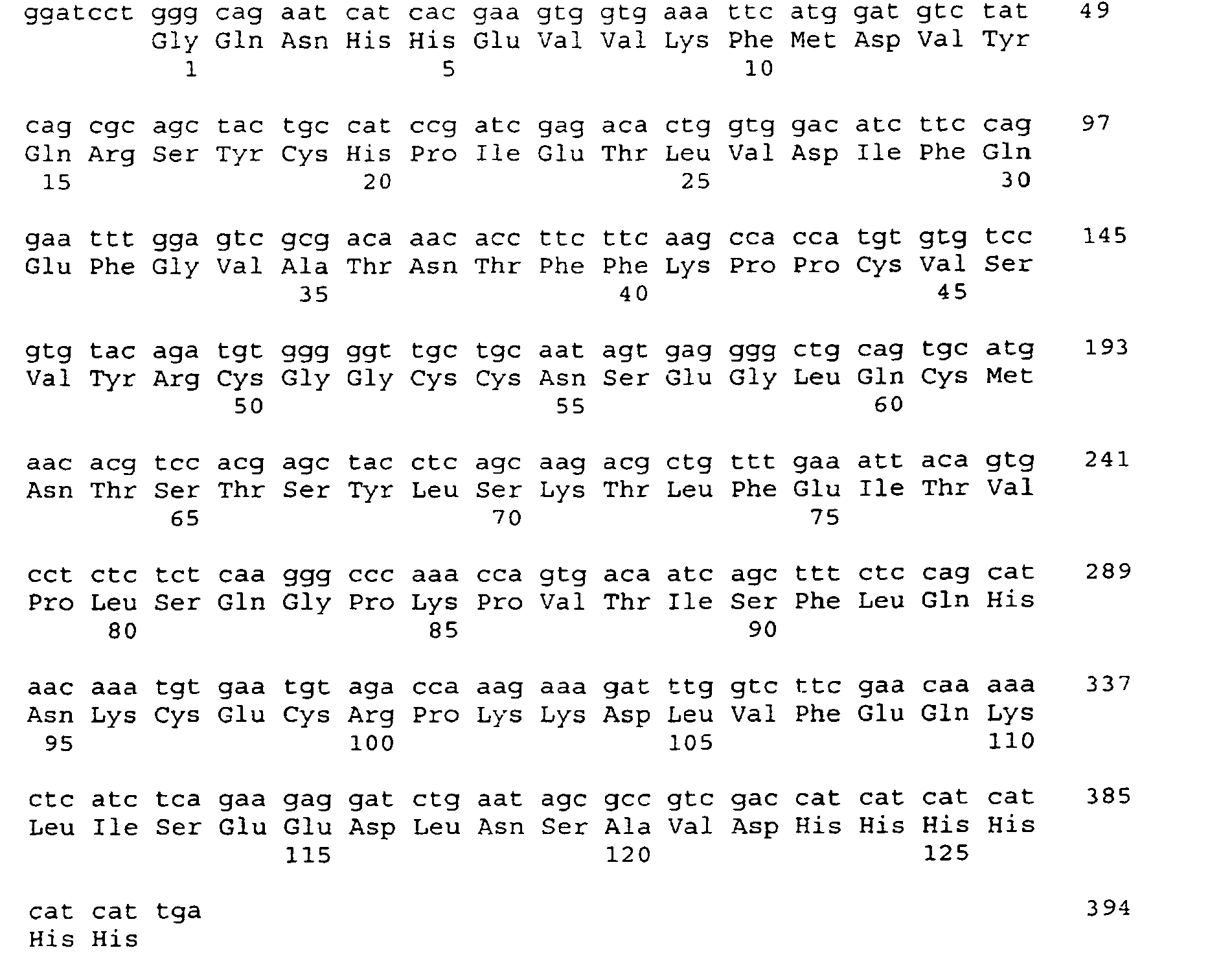
- <210> 73
<211> 128
<212> PRT
<213> Artificial Sequence - <400> 73


- <210> 74
<211> 394
<212> DNA
<213> Artificial Sequence - <220>
<223> Description of Artificial Sequence: Hybrid DNA - <220>
<221> CDS
<222> (8)..(391) - <400> 74
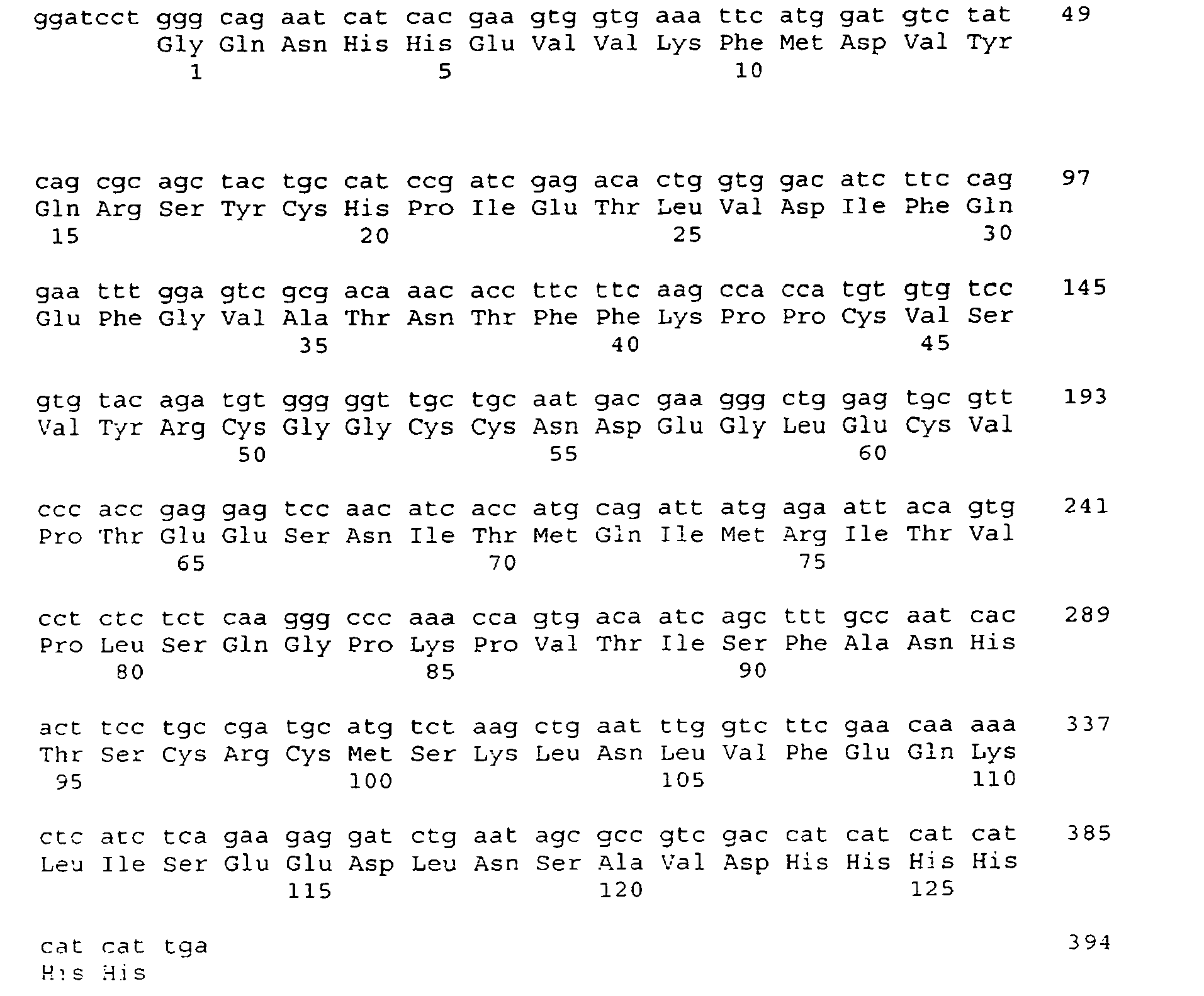
- <210> 75
<211> 128
<212> PRT
<213> Artificial Sequence - <400> 75

- <210> 76
<211> 328
<212> DNA
<213> Artificial Sequence - <220>
<223> Description of Artificial Sequence: hybrid DNA - <220>
<221> CDS
<222> (8)..(322) - <400> 76


- <210> 77
<211> 105
<212> PRT
<213> Artificial Sequence - <400> 77

- <210> 78
<211> 394
<212> DNA
<213> Artificial Sequence - <220>
<223> Description of Artificial Sequence: Hybrid DNA - <220>
<221> CDS
<222> (8)..(391) - <400> 78


- <210> 79
<211> 128
<212> PRT
<213> Artificial Sequence - <400> 79

- <210> 80
<211> 392
<212> DNA
<213> Artificial Sequence - <220>
<223> Description of Artificial Sequence: Hybrid DNA - <220>
<221> CDS
<222> (8)..(169)
- <210> 81
<211> 54
<212> PRT
<213> Artificial Sequence - <400> 81

- <210> 82
<211> 391
<212> DNA
<213> Artificial Sequence - <220>
<223> Description of Artificial Sequence: Hybrid DNA - <220>
<221> CDS
<222> (8)..(388) - <400> 82


- <210> 83
<211> 127
<212> PRT
<213> Artificial Sequence - <400> 83

- <210> 84
<211> 391
<212> DNA
<213> Artificial Sequence - <220>
<223> Description of Artificial Sequence: Hybrid DNA - <220>
<221> CDS
<222> (8)..(388) - <400> 84

- <210> 85
<211> 127
<212> PRT
<213> Artificial Sequence - <400> 85


- <210> 86
<211> 391
<212> DNA
<213> Artificial Sequence - <220>
<223> Description of Artificial Sequence: Hybrid DNA - <220>
<221> CDS
<222> (8)..(388) - <400> 86


- <210> 87
<211> 127
<212> PRT
<213> Artificial Sequence - <400> 87

- <210> 88
<211> 391
<212> DNA
<213> Artificial Sequence - <220>
<223> Description of Artificial Sequence: Hybrid DNA - <220>
<221> CDS
<222> (8)..(388) - <400> 88


- <210> 89
<211> 127
<212> PRT
<213> Artificial Sequence - <400> 89

- <210> 90
<211> 391
<212> DNA
<213> Artificial Sequence - <220>
<223> Description of Artificial Sequence: Hybrid DNA - <220>
<221> CDS
<222> (8)..(388) - <400> 90

- <210> 91
<211> 127
<212> PRT
<213> Artificial Sequence - <400> 91


- <210> 92
<211> 391
<212> DNA
<213> Artificial Sequence - <220>
<223> Description of Artificial Sequence: Hybrid DNA - <220>
<221> CDS
<222> (8)..(388) - <400> 92

- <210> 93
<211> 127
<212> PRT
<213> Artificial Sequence - <400> 93


- <210> 94
<211> 391
<212> DNA
<213> Artificial Sequence - <220>
<223> Description of Artificial Sequence: Hybrid DNA - <220>
<221> CDS
<222> (8)..(388) - <400> 94


- <210> 95
<211> 127
<212> PRT
<213> Artificial Sequence - <400> 95

- <210> 96
<211> 391
<212> DNA
<213> Artificial Sequence - <220>
<223> Description of Artificial Sequence: Hybrid DNA - <220>
<221> CDS
<222> (8) .. (388) - <400> 96
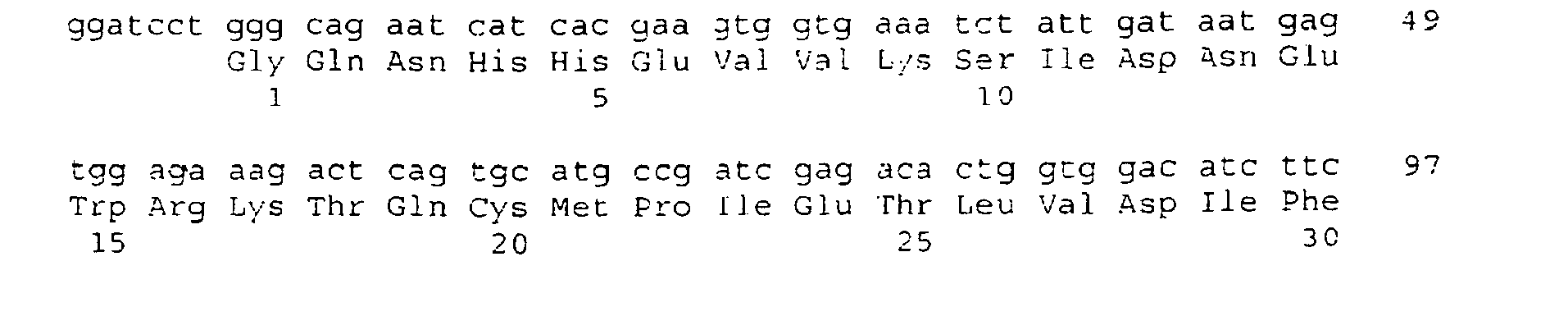

- <210> 97
<211> 127
<212> PRT
<213> Artificial Sequence - <400> 97

- <210> 93
<211> 397
<212> DNA
<213> Artificial Sequence - <220>
<223> Description of Artificial Sequence: Hybrid DNA - <220>
<221> CDS
<222> (8)..(394) - <400> 98

- <210> 99
<211> 129
<212> PRT
<213> Artificial Sequence - <400> 99


- <210> 100
<211> 397
<212> DNA
<213> Artificial Sequence - <220>
<223> Description of Artificial Sequence: Hybrid DNA - <220>
<221> CDS
<222> (8)..(394) - <400> 100

- <210> 101
<211> 129
<212> PRT
<213> Artificial Sequence - <400> 101

- <210> 102
<211> 397
<212> DNA
<213> Artificial Sequence - <220>
<223> Description of Artificial Sequence: Hybrid DNA - <220>
<221> CDS
<222> (8)..(394) - <400> 102


- <210> 103
<211> 129
<212> PRT
<213> Artificial Sequence - <400> 103

- <210> 104
<211> 397
<212> DNA
<213> Artificial Sequence - <220>
<223> Description of Artificial Sequence: Hybrid DNA - <220>
<221> CDS
<222> (8)..(394) - <400> 104

- <210> 105
<211> 129
<212> PRT
<213> Artificial Sequence - <400> 105


- <210> 106
<211> 397
<212> DNA
<213> Artificial Sequence - <220>
<223> Description of Artificial Sequence: Hybrid DNA - <220>
<221> CDS
<222> (8)..(394) - <400> 106

- <210> 107
<211> 129
<212> PRT
<213> Artificial Sequence - <400> 107

- <210> 108
<211> 397
<212> DNA
<213> Artificial Sequence - <220>
<223> Description of Artificial Sequence: Hybrid DNA - <220>
<221> CDS
<222> (8)..(394) - <400> 108


- <210> 109
<211> 129
<212> PRT
<213> Artificial Sequence - <400> 109

- <210> 110
<211> 397
<212> DNA
<213> Artificial Sequence - <220>
<223> Description of Artificial Sequence: Hybrid DNA - <220>
<221> CDS
<222> (8)..(394) - <400> 110


- <210> 111
<211> 129
<212> PRT
<213> Artificial Sequence - <400> 111


- <210> 112
<211> 397
<212> DNA
<213> Artificial Sequence - <220>
<223> Description of Artificial Sequence: Hybrid DNA - <220>
<221> CDS
<222> (8)..(394) - <400> 112

- <210> 113
<211> 129
<212> PRT
<213> Artificial Sequence - <400> 113


- <210> 114
<211> 1645
<212> DNA
<213> Homo sapiens - <220>
<221> CDS
<222> (322)..(768) - <220>
- <400> 114


- <210> 115
<211> 149
<212> PPT
<213> Homo sapiens - <400> 115

- <210> 116
<211> 570
<212> DNA
<213> Homo sapiens - <220>
<221> CDS
<222> (4)..(570) - <400> 116


- <210> 117
<211> 188
<212> PRT
<213> Homo sapiens - <400> 117


- <210> 118
<211> 2029
<212> DNA
<213> Homo sapiens - <220>
<221> CDS
<222> (411)..(1472) - <400> 118


- <210> 119
<211> 354
<212> PRT
<213> Homo sapiens - <400> 119


- <210> 120
<211> 1830
<212> DNA
<213> Orf virus - <220>
<221> CDS
<222> (312)..(755) - <400> 120


- <210> 121
<211> 148
<212> PRT
<213> Orf virus - <400> 121

- <210> 122
<211> 851
<212> DNA
<213> Orf virus - <220>
<221> CDS
<222> (2)..(223) - <400> 122
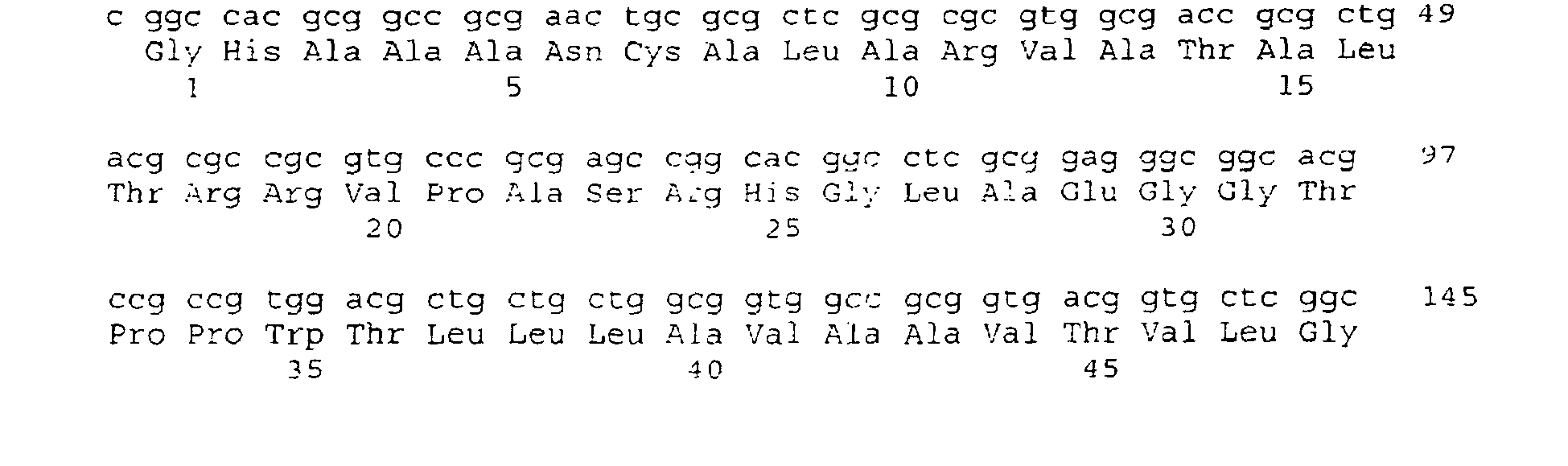

- <210> 123
<211> 73
<212> PRT
<213> Orf virus - <400> 123

- <210> 124
<211> 2305
<212> DNA
<213> Homo sapiens - <220>
<221> CDS
<222> (404)..(991) - <400> 124


- <210> 125
<211> 196
<212> PRT
<213> Homo sapiens - <400> 125


- <210> 126
<211> 2137
<212> DNA
<213> Homo sapiens - <220>
<221> CDS
<222> (983)..(1705) - <400> 126


- <210> 127
<211> 241
<212> PRT
<213> Homo sapiens - <400> 127


- <210> 128
<211> 11
<212> PRT
<213> Artificial Sequence - <220>
<223> Description of Artificial Sequence: synthetic peptide - <400> 128

- <210> 129
<211> 11
<212> PRT
<213> Artificial Sequence - <220>
<223> Description of Artificial Sequence: synthetic peptide - <400> 129

- <210> 130
<211> 10
<212> PRT
<213> Artificial Sequence - <220>
<223> Description of Artificial Sequence: synthetic peptide - <400> 130

- <210> 131
<211> 8
<212> PRT
<213> Artificial Sequence - <220>
<223> Description of Artificial Sequence: synthetic peptide - <400> 131

- <210> 132
<211> 13
<212> PRT
<213> Artificial Sequence - <220>
<223> Description of Artificial Sequence: synthetic peptide - <400> 132

- <210> 133
<211> 8
<212> PRT
<213> Artificial Sequence - <220>
<223> Description of Artificial Sequence: synthetic peptide - <400> 133

- <210> 134
<211> 16
<212> PRT
<213> Artificial Sequence - <220>
<223> Description of Artificial Sequence: synthetic peptide - <400> 134

- <210> 135
<211> 14
<212> PRT
<213> Artificial Sequence - <220>
<223> Description of Artificial Sequence: synthetic peptide - <400> 135

- <210> 136
<211> 13
<212> PRT
<213> Artificial Sequence - <220>
<223> Description of Artificial Sequence: synthetic peptide - <400> 136

- <210> 137
<211> 11
<212> PRT
<213> Artificial Sequence - <220>
<223> Description of Artificial Sequence: synthetic peptide - <400> 137

- <210> 138
<211> 12
<212> PRT
<213> Artificial Sequence - <220>
<223> Description of Artificial Sequence: synthetic peptide - <400> 138

- <210> 139
<211> 10
<212> PRT
<213> Artificial Sequence - <220>
<223> Description of Artificial Sequence: synthetic peptide - <400> 139

- <210> 140
<211> 8
<212> PRT
<213> Artificial Sequence - <220>
<223> Description of Artificial Sequence: synthetic peptide - <400> 140

- <210> 141
<211> 13
<212> PRT
<213> Artificial Sequence - <220>
<223> Description of Artificial Sequence: synthetic peptide - <400> 141

- <210> 142
<211> 8
<212> PRT
<213> Artificial Sequence - <220>
<223> Description of Artificial Sequence: synthetic peptide - <400> 142

- <210> 143
<211> 16
<212> PRT
<213> Artificial Sequence - <220>
<223> Description of Artificial Sequence: synthetic peptide - <400> 143

- <210> 144
<211> 16
<212> PRT
<213> Artificial Sequence - <220>
<223> Description of Artificial Sequence: synthetic peptide - <400> 144

- <210> 145
<211> 13
<212> PRT
<213> Artificial Sequence - <220>
<223> Description of Artificial Sequence: synthetic peptide - <400> 145

- <210> 146
<211> 815
<212> DNA
<213> Homo sapiens - <220>
<221> CDS
<222> (69)..(767) - <400> 146


- <210> 147
<211> 232
<212> PRT
<213> Homo sapiens - <400> 147


- <210> 148
<211> 3007
<212> DNA
<213> Homo sapiens - <220>
<221> CDS
<222> (492)..(1529) - <400> 148


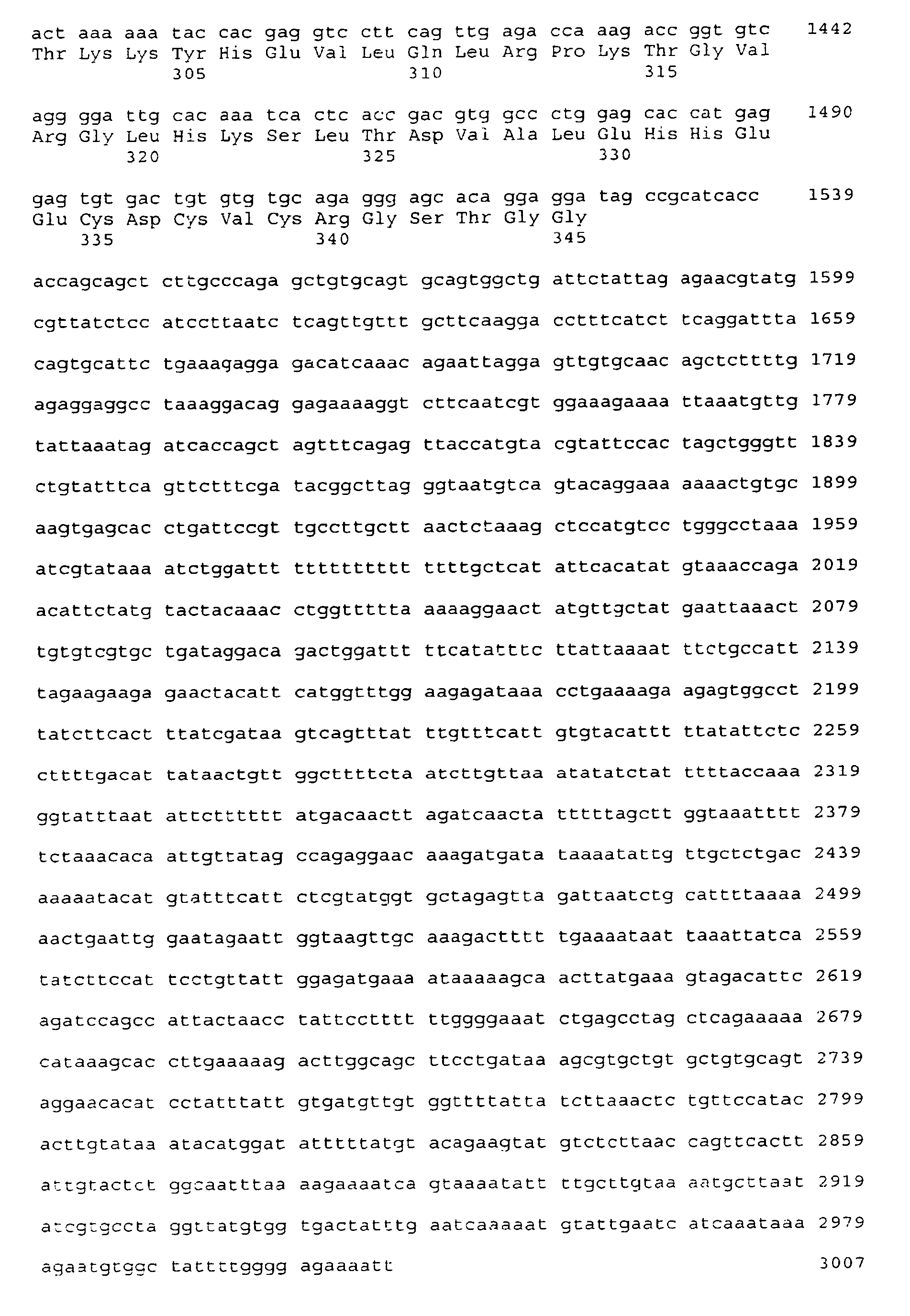
- <210> 149
<211> 345
<212> PRT
<213> Homo sapiens - <400> 149


- <210> 150
<211> 399
<212> DNA
<213> Orf virus - <220>
<221> CDS
<222> (1)..(399) - <400> 150

- <210> 151
<211> 132
<212> PRT
<213> Orf virus - <400> 151

- <210> 152
<211> 328
<212> DNA
<213> Artificial Sequence - <220>
<223> Description of Artificial Sequence: hybrid DNA - <220>
<221> CDS
<222> (8)..(322) - <400> 152


- <210> 153
<211> 105
<212> PRT
<213> Artificial Sequence - <400> 153

- <210> 154
<211> 331
<212> DNA
<213> Artificial Sequence - <220>
<223> Description of Artificial Sequence: hybrid DNA - <220>
<221> CDS
<222> (8)..(322) - <400> 154


- <210> 155
<211> 105
<212> PRT
<213> Artificial Sequence - <400> 155

- <210> 156
<211> 331
<212> DNA
<213> Artificial Sequence - <220>
<223> Description of Artificial Sequence: hybrid DNA - <220>
<221> CDS
<222> (8)..(322) - <400> 156


- <210> 157
<211> 105
<212> PRT
<213> Artificial Sequence - <400> 157

- <210> 158
<211> 331
<212> DNA
<213> Artificial Sequence - <220>
<223> Description of Artificial Sequence: hybrid DNA - <220>
<221> CDS
<222> (8)..(322) - <400> 158

- <210> 159
<211> 105
<212> PRT
<213> Artificial Sequence - <400> 159

- <210> 160
<211> 325
<212> DNA
<213> Artificial Sequence - <220>
<223> Description of Artificial Sequence: hybrid DNA - <220>
<221> CDS
<222> (8)..(322) - <400> 160

- <210> 161
<211> 105
<212> PRT
<213> Artificial Sequence - <400> 161
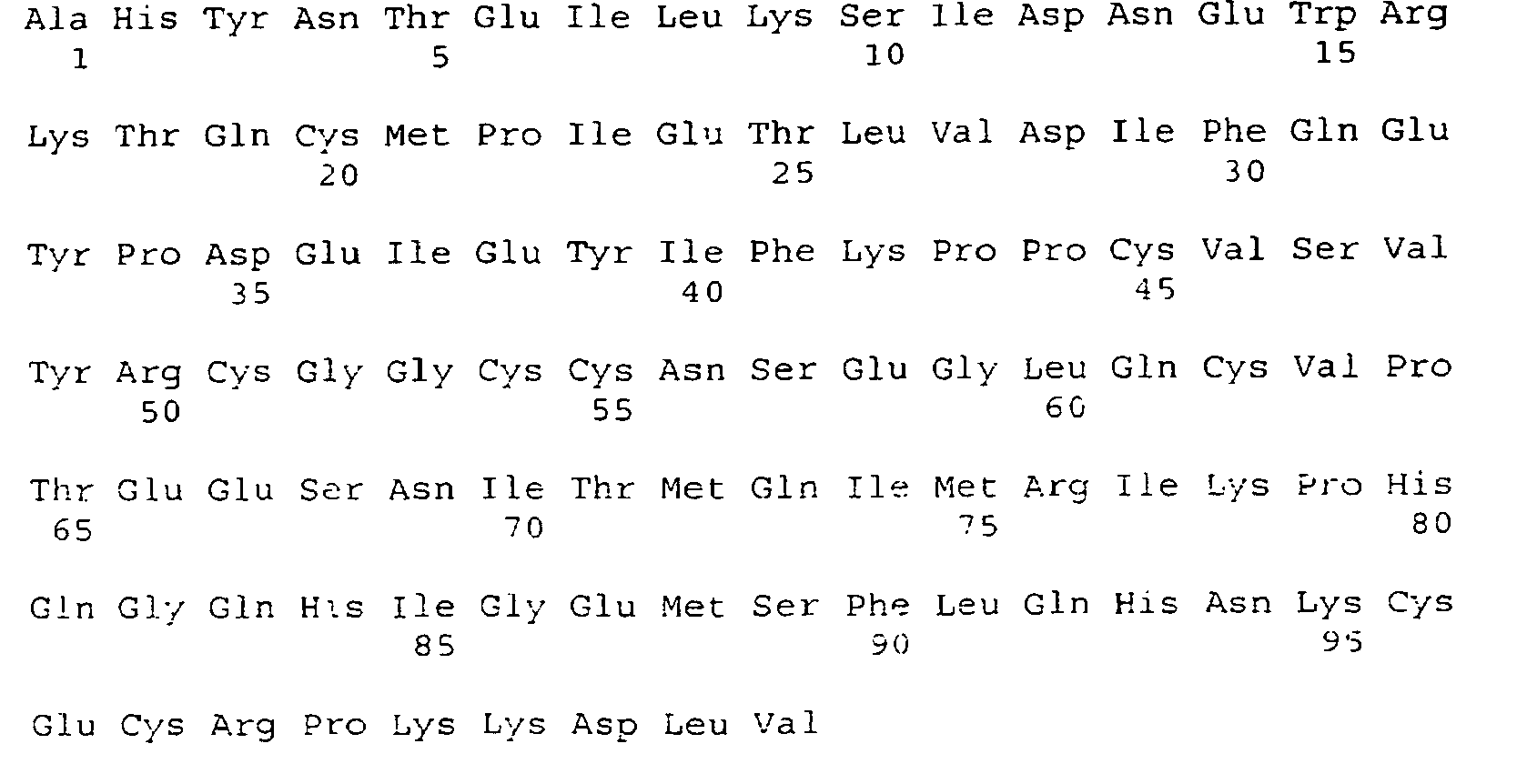

- <210> 162
<211> 322
<212> DNA
<213> Artificial Sequence - <220>
<223> Description of Artificial Sequence: hybrid DNA - <220>
<221> CDS
<222> (8)..(322) - <400> 162

- <210> 163
<211> 105
<212> PRT
<213> Artificial Sequence - <400> 163


- <210> 164
<211> 328
<212> DNA
<213> Artificial Sequence - <220>
<223> Description of Artificial Sequence: hybrid DNA - <220>
<221> CDS
<222> (8)..(322) - <400> 164

- <210> 165
<211> 105
<212> PRT
<213> Artificial Sequence - <400> 165


- <210> 166
<211> 328
<212> DNA
<213> Artificial Sequence - <220>
<223> Description of Artificial Sequence: hybrid DNA - <220>
<221> CDS
<222> (8)..(322) - <400> 166

- <210> 167
<211> 105
<212> PRT
<213> Artificial Sequence - <400> 167

- <210> 168
<211> 328
<212> DNA
<213> Artificial Sequence - <220>
<223> Description of Artificial Sequence: hybrid DNA - <220>
<221> CDS
<222> (8) .. (322) - <400> 168

- <210> 169
<211> 105
<212> PRT
<213> Artificial Sequence - <400> 169

- <210> 170
<211> 328
<212> DNA
<213> Artificial Sequence - <220>
<223> Description of Artificial Sequence: hybrid DNA - <220>
<221> CDS
<222> (8)..(322) - <400> 170


- <210> 171
<211> 105
<212> PRT
<213> Artificial Sequence - <400> 171

- <210> 172
<211> 328
<212> DNA
<213> Artificial Sequence - <220>
<223> Description of Artificial Sequence: hybrid DNA - <220>
<221> CDS
<222> (8)..(322) - <400> 172


- <210> 173
<211> 105
<212> PRT
<213> Artificial Sequence - <400> 173

- <210> 174
<211> 328
<212> DNA
<213> Artificial Sequence - <220>
<223> Description of Artificial Sequence: hybrid DNA - <220>
<221> CDS
<222> (8)..(322) - <400> 174


- <210> 175
<211> 105
<212> PRT
<213> Artificial Sequence - <400> 175

-
- <110> Alitalo et al.
- <120> MATERIALS AND METHODS INVOLVING HYBRID VASCULAR ENDOTHELIAL GROWTH FACTOR DNAs AND PROTEINS
- <130> 28967/35977B
- <140> 09/795,006
<141> 2001-02-26 - <150>
US 60/205,331
<151> 2000-05-18 - <150>
US 60/185,205
<151> 2000-02-25 - <160> 1212
- <170> PatentIn Ver. 3.2
- <210> 1
<211> 990
<212> DNA
<213> Homo sapiens - <220>
<221> CDS
<222> (57)..(629) - <400> 1

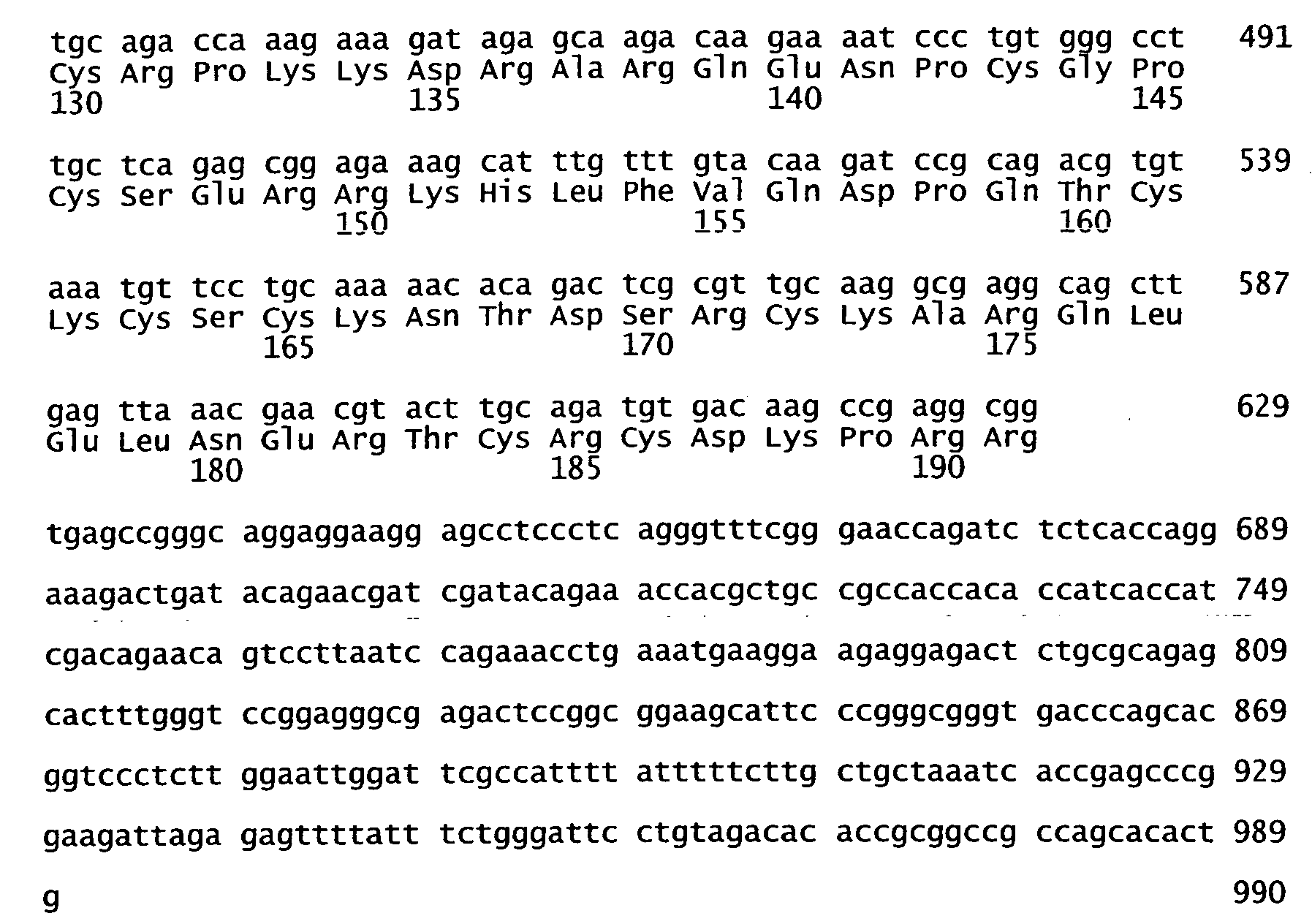
- <210> 2
<211> 191
<212> PRT
<213> Homo sapiens - <400> 2


- <210> 3
<211> 34
<212> DNA
<213> Artificial Sequence - <220>
<223> Description of Artificial Sequence : Artificial chimeric oligonucleotide sequence derived from multiple vertebrate vascular endothelial growth factor - <400> 3
gatcctgggc agaatcatca cgaagtggtg aaat 34 - <210> 4
<211> 32
<212> DNA
<213> Artificial Sequence - <220>
<223> Description of Artificial Sequence: Artificial chimeric oligonucleotide sequence derived from multiple vertebrate vascular endothelial growth factor - <400> 4
tcatggatgt ctatcagcgc agctactgcc at 32 - <210> 5
<211> 42
<212> DNA
<213> Artificial Sequence - <220>
<223> Description of Artificial Sequence: Artificial chimeric oligonucleotide sequence derived from multiple vertebrate vascular endothelial growth factor - <400> 5
ccgatcgaga cactggtgga catcttccag gaatagaaga gc 42 - <210> 6
<211> 33
<212> DNA
<213> Artificial Sequence - <220>
<223> Description of Artificial Sequence: Artificial chimeric oligonucleotide sequence derived from multiple vertebrate vascular endothelial growth factor - <400> 6
cgctcttcga ataccctgat gagatcgagt aca 33 - <210> 7
<211> 38
<212> DNA
<213> Artificial Sequence - <220>
<223> Description of Artificial sequence: Artificial chimeric oligonucleotide sequence derived from multiple vertebrate vascular endothelial growth factor - <400> 7
tcttcaagcc atcctgcgtg cccctgatga gatgtggc 38 - <210> 8
<211> 28
<212> DNA
<213> Artificial Sequence - <220>
<223> Description of Artificial Sequence: Artificial chimeric oligonucleotide sequence derived from multiple vertebrate vascular endothelial growth factor - <400> 8
ccgggttgct gcaatgacga agggctgg 28 - <210> 9
<211> 46
<212> DNA
<213> Artificial Sequence - <220>
<223> Description of Artificial Sequence : Artificial chimeric oligonucleotide sequence derived from multiple vertebrate vascular endothelial growth factor - <400> 9
agtgcgttcc caccgaggag tccaacatca ccatgcagat tatgag 46 - <210> 10
<211> 43
<212> DNA
<213> Artificial Sequence - <220>
<223> Description of Artificial Sequence: Artificial chimeric oligonucleotide sequence derived from multiple vertebrate vascular endothelial growth factor - <400> 10
aattaaacct caccaagggc agcacatcgg agagatgagc ttt 43 - <210> 11
<211> 50
<212> DNA
<213> Artificial Sequence - <220>
<223> Description of Artificial Sequence : Artificial chimeric oligonucleotide sequence derived from multiple vertebrate vascular endothelial growth factor - <400> 11
ctccagcata acaaatgtga atgtagacca aagaaagatt gagtcttcgc 50 - <210> 12
<211> 24
<212> DNA
<213> Artificial Sequence - <220>
<223> Description of Artificial Sequence: Artificial chimeric oligonucleotide sequence derived from multiple vertebrate vascular endothelial growth factor - <400> 12
ccacttcgtg atgattctgc ccag 24 - <210> 13
<211> 42
<212> DNA
<213> Artificial Sequence - <220>
<223> Description of Artificial Sequence: Artificial chimeric oligonucleotide sequence derived from multiple vertebrate vascular endothelial growth factor - <400> 13
tcggatggca gtagctgcgc tgatagacat ccatgaattt ca 42 - <210> 14
<211> 42
<212> DNA
<213> Artificial sequence - <220>
<223> Description of Artificial Sequence: Artificial chimeric oligonucleotide sequence derived from multiple vertebrate vascular endothelial growth factor - <400> 14
tcgagctctt ctattcctgg aagatgtcca ccagtgtctc ga 42 - <210> 15
<211> 48
<212> DNA
<213> Artificial Sequence - <220>
<223> Description of Artificial Sequence: Artificial chimeric oligonucleotide sequence derived from multiple vertebrate vascular endothelial growth factor - <400> 15
tggcttgaag atgtactcga tctcatcagg gtattcgaag agcggtac 48 - <210> 16
<211> 31
<212> DNA
<213> Artificial sequence - <220>
<223> Description of Artificial Sequence: Artificial chimeric oligonucleotide sequence derived from multiple vertebrate vascular endothelial growth factor - <400> 16
catggccaca tctcatcagg ggcacgcagg a 31 - <210> 17
<211> 37
<212> DNA
<213> Artificial Sequence - <220>
<223> Description of Artificial Sequence: Artificial chimeric oligonucleotide sequence derived from multiple vertebrate vascular endothelial growth factor - <400> 17
gcactccagc ccttcgtcat tgcagcaacc cgggtac 37 - <210> 18
<211> 45
<212> DNA
<213> Artificial sequence - <220>
<223> Description of Artificial sequence: Artificial chimeric oligonucleotide sequence derived from multiple vertebrate vascular endothelial growth factor - <400> 18
aattctcata atctgcatgg tgatgttgga ctcctcggtg ggaac 45 - <210> 19
<211> 33
<212> DNA
<213> Artificial Sequence - <220>
<223> Description of Artificial Sequence: Artificial chimeric oligonucleotide sequence derived from multiple vertebrate vascular endothelial growth factor - <400> 19
catctctccg atgtgctgcc cttggtgagg ttt 33 - <210> 20
<211> 60
<212> DNA
<213> Artificial Sequence - <220>
<223> Description of Artificial Sequence: Artificial chimeric oligonucleotide sequence derived from multiple vertebrate vascular endothelial growth factor - <400> 20
ggccgcgaag actcaatctt tctttggtct acattcacat ttgttatgct ggagaaagct 60 - <210> 21
<211> 1997
<212> DNA
<213> Homo sapiens - <220>
<221> CDS
<222> (352)..(1608) - <400> 21


- <210> 22
<211> 419
<212> PRT
<213> Homo sapiens - <400> 22


- <210> 23
<211> 34
<212> DNA
<213> Artificial Sequence - <220>
<223> Description of Artificial Sequence: Artificial chimeric oligonucleotide sequence derived from multiple vertebrate vascular endothelial growth factor - <400> 23
gatcctgcac attataatac cgagatcctg aaat 34 - <219> 24
<211> 35
<212> DNA
<213> Artificial Sequence - <220>
<223> Description of Artificial Sequence: Artificial chimeric oligonucleotide sequence derived from multiple vertebrate vascular endothelial growth factor - <400> 24
ctattgataa tgagtggaga aagactcagt gcatg 35 - <210> 25
<211> 42
<212> DNA
<213> Artificial Sequence - <220>
<223> Description of Artificial Sequence: Artificial chimeric oligonucleotide sequence derived from multiple vertebrate vascular endothelial growth factor - <400> 25
ccgagagagg tgtgtatcga cgtggggaag gaatagaaga gc 42 - <210> 26
<211> 33
<212> DNA
<213> Artificial Sequence - <220>
<223> Description of Artificial Sequence: Artificial chimeric oligonucleotide sequence derived from multiple vertebrate vascular endothelial growth factor - <400> 26
cgctcttcga atttggagtc gcgacaaaca cct 33 - <210> 27
<211> 38
<212> DNA
<213> Artificial Sequence - <220>
<223> Description of Artificial Sequence: Artificial chimeric oligonucleotide sequence derived from multiple vertebrate vascular endothelial growth factor - <400> 27
tcttcaagcc accatgtgtg tccgtgtaca gatgtggc 38 - <210> 28
<211> 28
<212> DNA
<213> Artificial Sequence - <220>
<223> Description of Artificial Sequence: Artificial chimeric oligonucleotide sequence derived from multiple vertebrate vascular endothelial growth factor - <400> 28
ccgggttgct gcaatagtga ggggctgc 28 - <210> 29
<211> 46
<212> DNA
<213> Artificial Sequence - <220>
<223> Description of Artificial Sequence: Artificial chimeric oligonucleotide sequence derived from multiple vertebrate vascular endothelial growth factor - <400> 29
agtgcatgaa cacgtccacg agctacctca gcaagacgct gtttga 46 - <210> 30
<211> 49
<212> DNA
<213> Artificial sequence - <220>
<223> Description of Artificial sequence: Artificial chimeric oligonucleotide sequence derived from multiple vertebrate vascular endothelial growth factor - <400> 30
aattacagtg cctctctctc aagggcccaa accagtgaca atcagcttt 49 - <210> 31
<211> 50
<212> DNA
<213> Artificial Sequence - <220>
<223> Description of Artificial Sequence: Artificial chimeric oligonucleotide sequence derived from multiple vertebrate vascular endothelial growth factor - <400> 31
gccaatcaca cttcctgccg atgcatgtct aagctggatt gagtcttcgc 50 - <210> 32
<211> 24
<212> DNA
<213> Artificial Sequence - <220>
<223> Description of Artificial Sequence: Artificial chimeric oligonucleotide sequence derived from multiple vertebrate vascular endothelial growth factor - <400> 32
ggatctcggt attataatgt gcag 24 - <210> 33
<211> 45
<212> DNA
<213> Artificial Sequence - <220>
<223> Description of Artificial Sequence: Artificial chimeric oligonucleotide sequence derived from multiple vertebrate vascular endothelial growth factor - <400> 33
tcggcatgca ctgagtcttt ctccactcat tatcaataga tttca 45 - <210> 34
<211> 42
<212> DNA
<213> Artificial Sequence - <220>
<223> Description of Artificial Sequence: Artificial chimeric oligonucleotide sequence derived from multiple vertebrate vascular endothelial growth factor - <400> 34
tcgagctctt ctattccttc cccacgtcga tacacacctc tc 42 - <210> 35
<211> 48
<212> DNA
<213> Artificial Sequence - <220>
<223> Description of Artificial Sequence: Artificial chimeric oligonucleotide sequence derived from multiple vertebrate vascular endothelial growth factor - <400> 35
tggcttgaag aaggtgtttg tcgcgactcc aaattcgaag agcggtac 48 - <210> 36
<211> 31
<212> DNA
<213> Artificial Sequence - <220>
<223> Description of Artificial Sequence: Artificial chimeric oligonucleotide sequence derived from multiple vertebrate vascular endothelial growth factor - <400> 36
catggccaca tctgtacacg gacacacatg g 31 - <210> 37
<211> 37
<212> DNA
<213> Artificial Sequence - <220>
<223> Description of Artificial Sequence: Artificial chimeric oligonucleotide sequence derived from multiple vertebrate vascular endothelial growth factor - <400> 37
gcactgcagc ccctcactat tgcagcaacc cgggtac 37 - <210> 38
<211> 45
<212> DNA
<213> Artificial sequence - <220>
<223> Description of Artificial sequence: Artificial chimeric oligonucleotide sequence derived from multiple vertebrate vascular endothelial growth factor - <400> 38
aatttcaaac agcgtcttgc tgaggtagct cgtggacgtg ttcat 45 - <210> 39
<211> 39
<212> DNA
<213> Artificial Sequence - <220>
<223> Description of Artificial sequence: Artificial chimeric oligonucleotide sequence derived from multiple vertebrate vascular endothelial growth factor - <400> 39
gattgtcact ggtttgggcc cttgagagag aggcactgt 39 - <210> 40
<211> 60
<212> DNA
<213> Artificial Sequence - <220>
<223> Description of Artificial Sequence: Artificial chimeric oligonucleotide sequence derived from multiple vertebrate vascular endothelial growth factor - <400> 40
ggccgcgaag actcaatcca gcttagacat gcatcggcag gaagtgtgat tggcaaagct 60 - <210> 41
<211> 5070
<212> DNA
<213> Artificial Sequence - <220>
<223> Description of Artificial Sequence: pSecTagI vector - <400> 41


- <210> 42
<211> 388
<212> DNA
<213> Artificial sequence - <220>
<223> Growth Factor Hybrid Sequence - <220>
<221> CDS
<222> (8)..(385) - <400> 42


- <210> 43
<211> 126
<212> PRT
<213> Artificial Sequence - <220>
<223> Growth Factor Hybrid Sequence - <400> 43
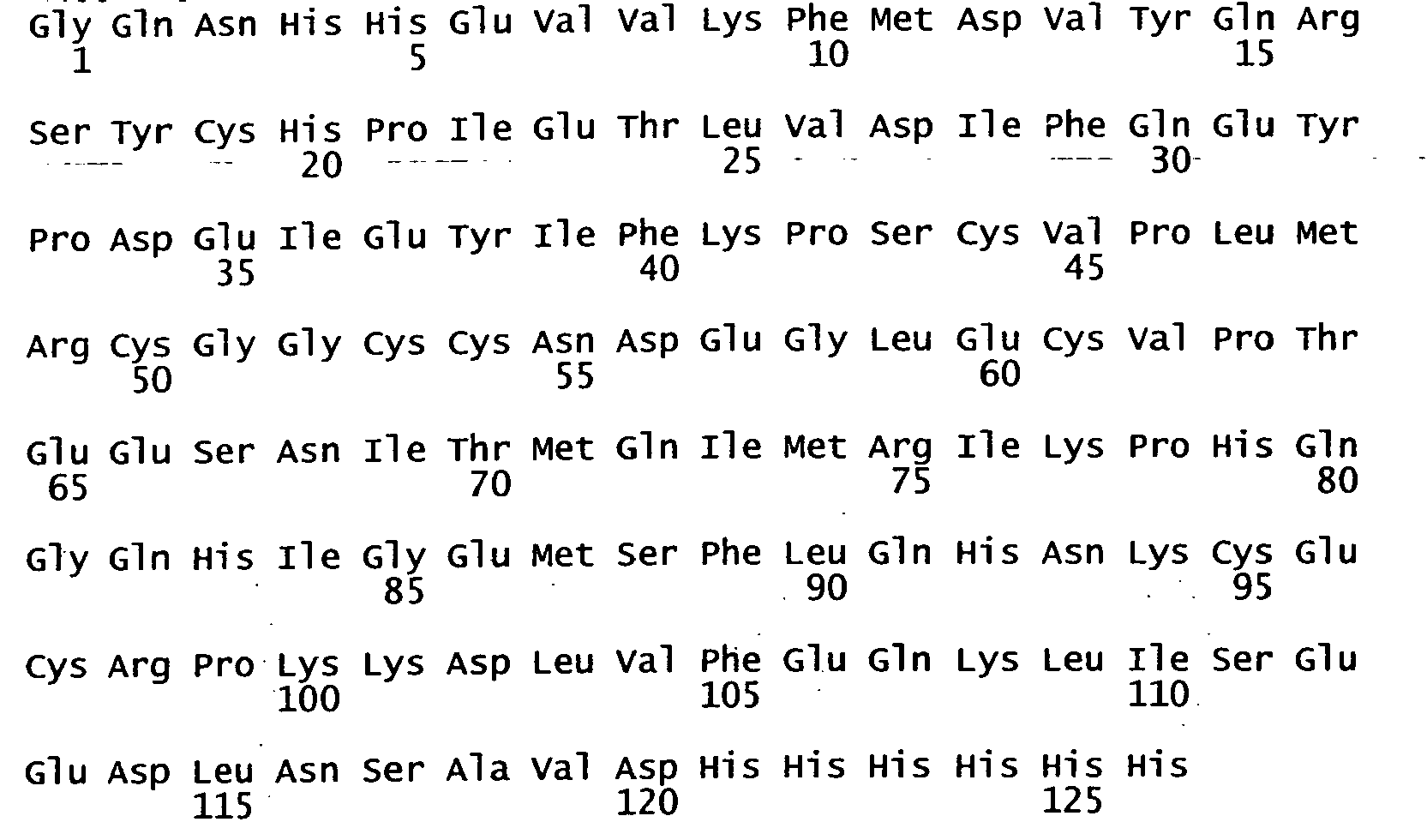
- <210> 44
<211> 394
<212> DNA
<213> Artificial Sequence - <220>
<223> Growth Factor Hybrid Sequence - <220>
<221> CDS
<222> (8)..(391) - <400> 44


- <210> 45
<211> 128
<212> PRT
<213> Artificial Sequence - <220>
<223> Growth Factor Hybrid Sequence - <400> 45

- <210> 46
<211> 391
<212> DNA
<213> Artificial Sequence - <220>
<223> Growth Factor Hybrid Sequence - <220>
<221> CDS
<222> (8)..(388) - <400> 46

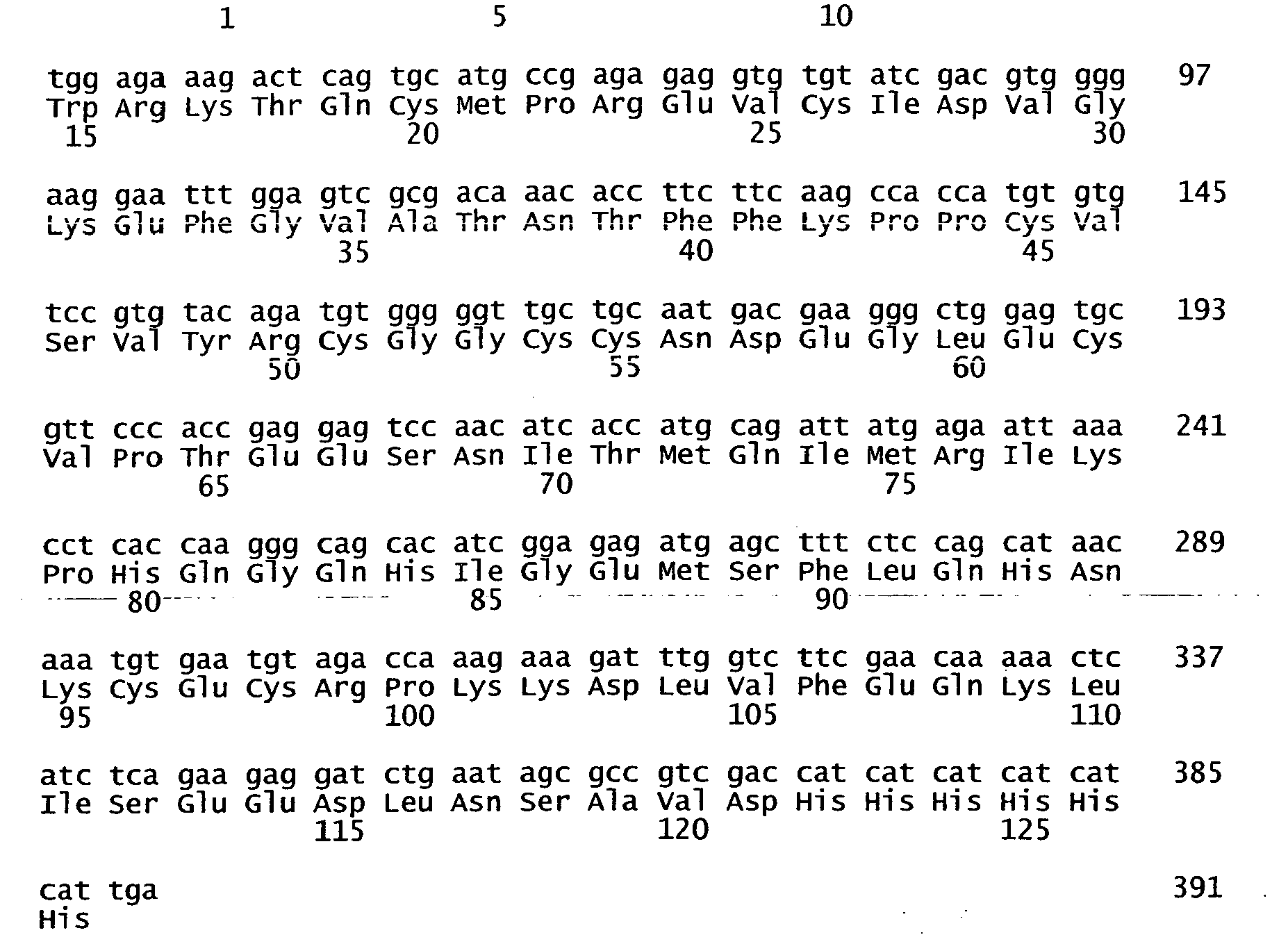
- <210> 47
<211> 127
<212> PRT
<213> Artificial Sequence - <220>
<223> Growth Factor Hybrid Sequence - <400> 47

- <210> 48
<211> 397
<212> DNA
<213> Artificial sequence - <220>
<223> Growth Factor Hybrid Sequence - <220>
<221> CDS
<222> (8)..(394) - <400> 48
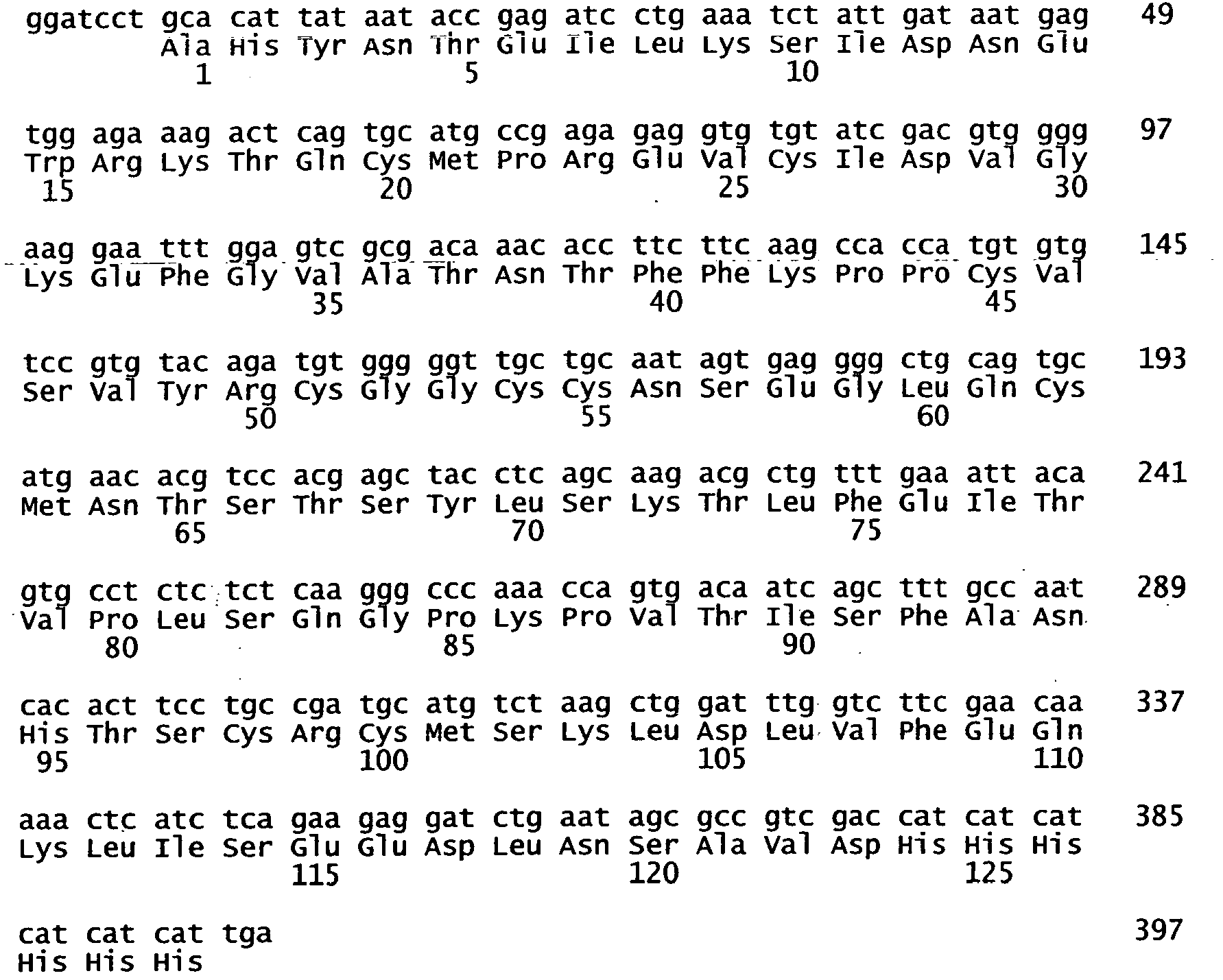
- <210> 49
<211> 129
<212> PRT
<213> Artificial Sequence - <220>
<223> Growth Factor Hybrid Sequence - <400> 49


- <210> 50
<211> 322
<212> DNA
<213> Artificial Sequence - <220>
<223> Growth Factor-Hybrid Sequence - <220>
<221> CDS
<222> (8)..(322) - <400> 50
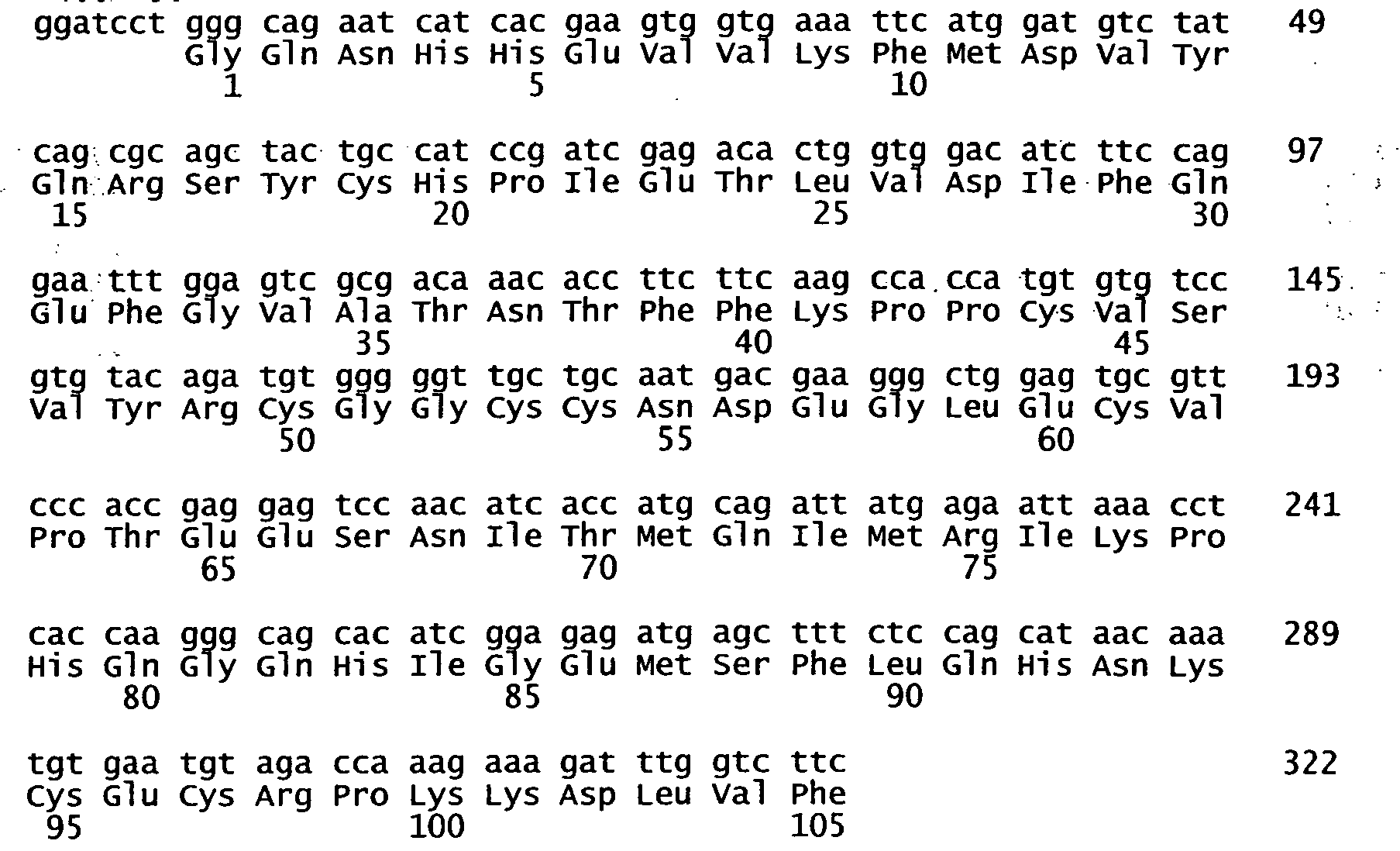
- <210> 51
<211> 105
<212> PRT
<213> Artificial Sequence - <220>
<223> Growth Factor Hybrid Sequence - <400> 51


- <210> 52
<211> 388
<212> DNA
<213> Artificial Sequence - <220>
<223> Growth Factor Hybrid Sequence - <220>
<221> CDS
<222> (8)..(385) - <400> 52

- <210> 53
<211> 126
<212> PRT
<213> Artificial Sequence - <220>
<223> Growth Factor Hybrid sequence - <400> 53

- <210> 54
<211> 388
<212> DNA
<213> Artificial sequence - <220>
<223> Growth Factor Hybrid sequence - <220>
<221> CDS
<222> (8)..(385) - <400> 54
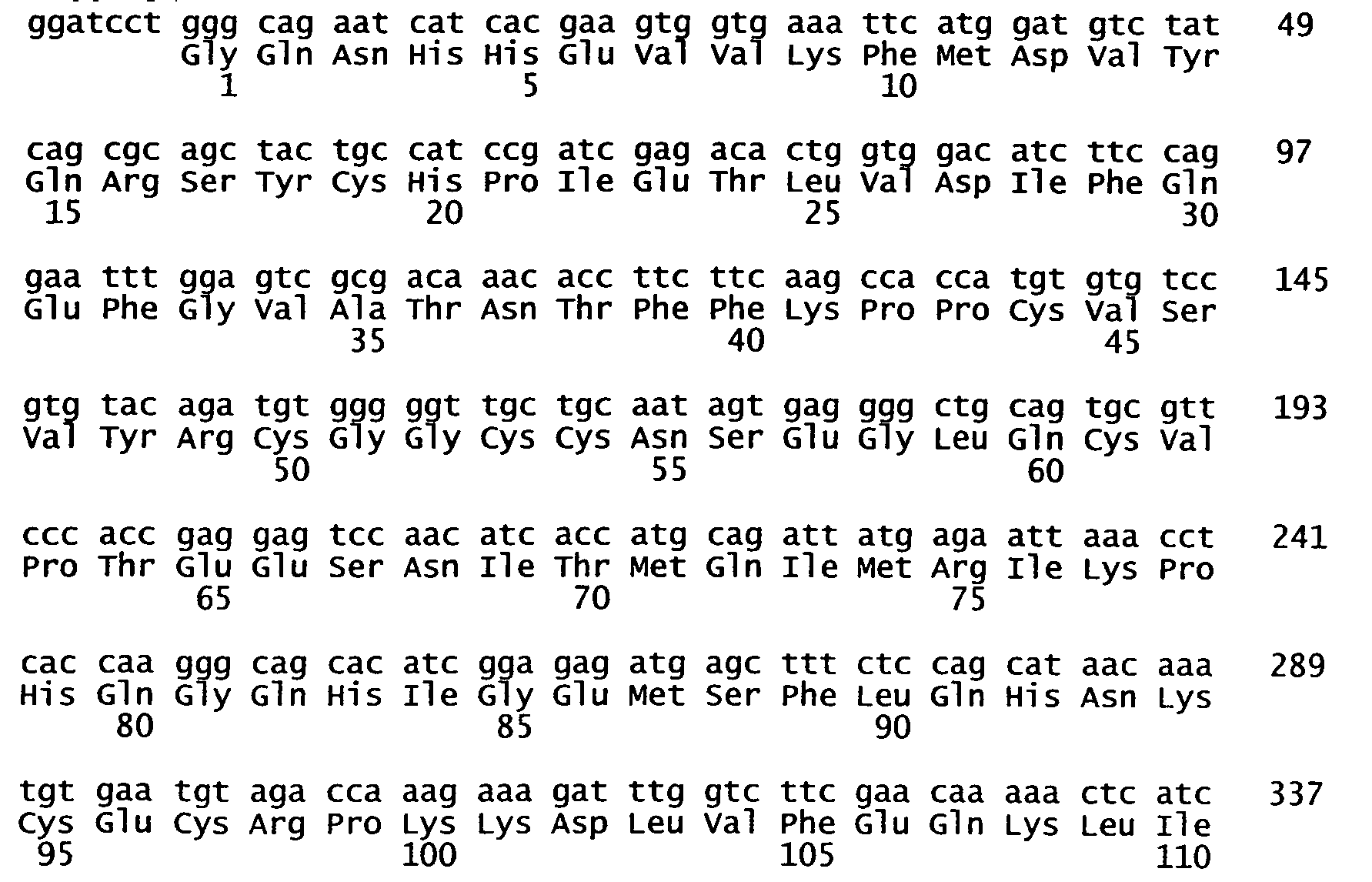

- <210> 55
<211> 126
<212> PRT
<213> Artificial Sequence - <220>
<223> Growth Factor Hybrid Sequence - <400> 55
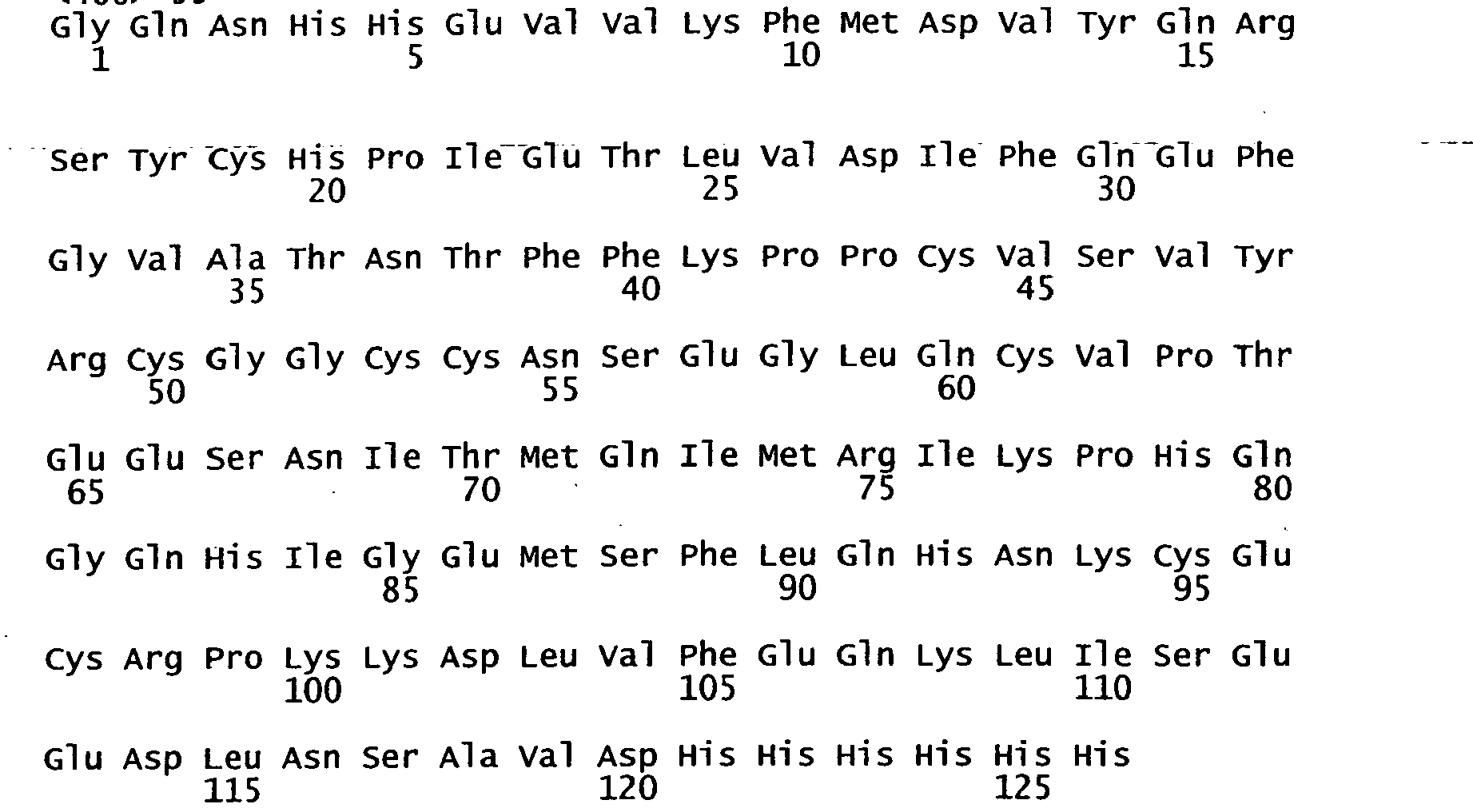
- <210> 56
<211> 388
<212> DNA
<213> Artificial Sequence - <220>
<223> Growth Factor Hybrid Sequence - <220>
<221> CDS
<222> (8)..(385) - <400> 56


- <210> 57
<211> 126
<212> PRT
<213> Artificial sequence - <220>
<223> Growth Factor Hybrid Sequence - <400> 57

- <210> 58
<211> 322
<212> DNA
<213> Artificial Sequence - <220>
<223> Growth Factor Hybrid Sequence - <220>
<221> CDS
<222> (8)..(322) - <400> 58


- <210> 59
<211> 105
<212> PRT
<213> Artificial Sequence - <220>
<223> Growth Factor Hybrid Sequence - <400> 59

- <210> 60
<211> 388
<212> DNA
<213> Artificial Sequence - <220>
<223> Growth Factor Hybrid Sequence - <220>
<221> CDS
<222> (8)..(385) - <400> 60

- <210> 61
<211> 126
<212> PRT
<213> Artificial Sequence - <220>
<223> Growth Factor Hybrid Sequence - <400> 61

- <210> 62
<211> 388
<212> DNA
<213> Artificial Sequence - <220>
<223> Growth Factor Hybrid Sequence - <220>
<221> CDS
<222> (8)..(385) - <400> 62

- <210> 63
<211> 126
<212> PRT
<213> Artificial Sequence - <220>
<223> Growth Factor Hybrid Sequence - <400> 63


- <210> 64
<211> 388
<212> DNA
<213> Artificial Sequence - <220>
<223> Growth Factor Hybrid Sequence - <220>
<221> CDS
<222> (8)..(385) - <400> 64

- <210> 65
<211> 126
<212> PRT
<213> Artificial Sequence - <220>
<223> Growth Factor Hybrid Sequence - <400> 65


- <210> 66
<211> 394
<212> DNA
<213> Artificial Sequence - <220>
<223> Growth Factor Hybrid Sequence - <220>
<221> CDS
<222> (8)..(391) - <400> 66


- <210> 67
<211> 128
<212> PRT
<213> Artificial Sequence - <220>
<223> Growth Factor Hybrid Sequence - <400> 67

- <210> 68
<211> 394
<212> DNA
<213> Artificial Sequence - <220>
<223> Growth Factor Hybrid Sequence - <220>
<221> CDS
<222> (8)..(391) - <400> 68


- <210> 69
<211> 128
<212> PRT
<213> Artificial Sequence - <220>
<223> Growth Factor Hybrid Sequence - <400> 69

- <210> 70
<211> 394
<212> DNA
<213> Artificial Sequence - <220>
<223> Growth Factor Hybrid Sequence - <220>
<221> CDS
<222> (8)..(391) - <400> 70


- <210> 71
<211> 128
<212> PRT
<213> Artificial Sequence - <220>
<223> Growth Factor Hybrid Sequence - <400> 71

- <210> 72
<211> 394
<212> DNA
<213> Artificial Sequence - <220>
<223> Growth Factor Hybrid Sequence - <220>
<221> CDS
<222> (8)..(391) - <400> 72

- <210> 73
<211> 128
<212> PRT
<213> Artificial sequence - <220>
<223> Growth Factor Hybrid Sequence - <400> 73


- <210> 74
<211> 394
<212> DNA
<213> Artificial Sequence - <220>
<223> Growth Factor Hybrid Sequence - <220>
<221> CDS
<222> (8)..(391) - <400> 74

- <210> 75
<211> 128
<212> PRT
<213> Artificial sequence - <220>
<223> Growth Factor Hybrid Sequence - <400> 75


- <210> 76
<211> 328
<212> DNA
<213> Artificial Sequence - <220>
<223> Growth Factor Hybrid Sequence - <220>
<221> CDS
<222> (8)..(322) - <400> 76

- <210> 77
<211> 105
<212> PRT
<213> Artificial Sequence - <220>
<223> Growth Factor Hybrid Sequence - <400> 77


- <210> 78
<211> 394
<212> DNA
<213> Artificial Sequence - <220>
<223> Growth Factor Hybrid Sequence - <220>
<221> CDS
<222> (8)..(391) - <400> 78

- <210> 79
<211> 128
<212> PRT
<213> Artificial Sequence - <220>
<223> Growth Factor Hybrid Sequence - <400> 79

- <210> 80
<211> 392
<212> DNA
<213> Artificial Sequence - <220>
<223> Growth Factor Hybrid Sequence - <220>
<221> CDS
<222> (8)..(169) - <400> 80

- <210> 81
<211> 54
<212> PRT
<213> Artificial Sequence - <220>
<223> Growth Factor Hybrid Sequence - <400> 81

- <210> 82
<211> 391
<212> DNA
<213> Artificial Sequence - <220>
<223> Growth Factor Hybrid Sequence - <220>
<221> CDS
<222> (8)..(388) - <400> 82

- <210> 83
<211> 127
<212> PRT
<213> Artificial sequence - <220>
<223> Growth Factor Hybrid Sequence - <400> 83

- <210> 84
<211> 391
<212> DNA
<213> Artificial Sequence - <220>
<223> Growth Factor Hybrid Sequence - <220>
<221> CDS
<222> (8)..(388) - <400> 84


- <210> 85
<211> 127
<212> PRT
<213> Artificial Sequence - <220>
<223> Growth Factor Hybrid Sequence - <400> 85

- <210> 86
<211> 391
<212> DNA
<213> Artificial Sequence - <220>
<223> Growth Factor Hybrid Sequence - <220>
<221> CDS
<222> (8)..(388) - <400> 86


- <210> 87
<211> 127
<212> PRT
<213> Artificial sequence - <220>
<223> Growth Factor Hybrid Sequence - <400> 87

- <210> 88
<211> 391
<212> DNA
<213> Artificial Sequence - <220>
<223> Growth Factor Hybrid Sequence - <220>
<221> CDS
<222> (8)..(388) - <400> 88

- <210> 89
<211> 127
<212> PRT
<213> Artificial Sequence - <220>
<223> Growth Factor Hybrid sequence - <400> 89


- <210> 90
<211> 391
<212> DNA
<213> Artificial Sequence - <220>
<223> Growth Factor Hybrid Sequence - <220>
<221> CDS
<222> (8)..(388) - <400> 90

- <210> 91
<211> 127
<212> PRT
<213> Artificial Sequence - <220>
<223> Growth Factor Hybrid Sequence - <400> 91


- <210> 92
<211> 391
<212> DNA
<213> Artificial Sequence - <220>
<223> Growth Factor Hybrid Sequence - <220>
<221> CDS
<222> (8)..(388) - <400> 92

- <210> 93
<211> 127
<212> PRT
<213> Artificial Sequence - <220>
<223> Growth Factor Hybrid sequence - <400> 93

- <210> 94
<211> 391
<212> DNA
<213> Artificial Sequence - <220>
<223> Growth Factor Hybrid Sequence - <220>
<221> CDS
<222> (8)..(388) - <400> 94


- <210> 95
<211> 127
<212> PRT
<213> Artificial Sequence - <220>
<223> Growth Factor Hybrid Sequence - <400> 95

- <210> 96
<211> 391
<212> DNA
<213> Artificial Sequence - <220>
<223> Growth Factor Hybrid Sequence - <220>
<221> CDS
<222> (8)..(388) - <400> 96


- <210> 97
<211> 127
<212> PRT
<213> Artificial sequence - <220>
<223> Growth Factor Hybrid Sequence - <400> 97
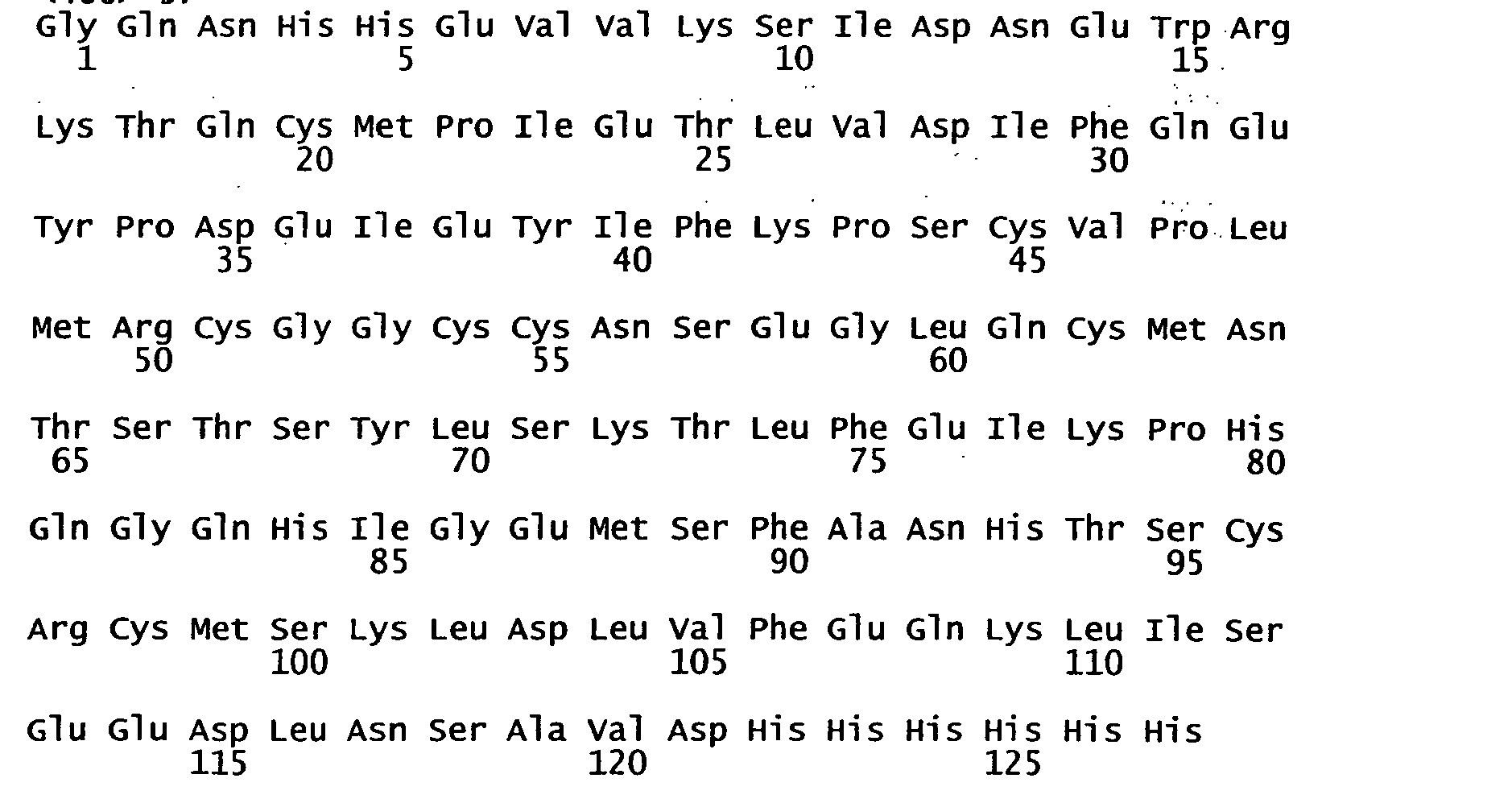
- <210> 98
<211> 397
<212> DNA
<213> Artificial Sequence - <220>
<223> Growth Factor Hybrid Sequence - <220>
<221> CDS
<222> (8)..(394) - <400> 98


- <210> 99
<211> 129
<212> PRT
<213> Artificial Sequence - <220>
<223> Growth Factor Hybrid Sequence - <400> 99

- <210> 100
<211> 397
<212> DNA
<213> Artificial sequence - <220>
<223> Growth Factor Hybrid Sequence - <220>
<221> CDS
<222> (8)..(394) - <400> 100

- <210> 101
<211> 129
<212> PRT
<213> Artificial Sequence - <220>
<223> Growth Factor Hybrid Sequence - <400> 101


- <210> 102
<211> 397
<212> DNA
<213> Artificial Sequence - <220>
<223> Growth Factor Hybrid Sequence - <220>
<221> CDS
<222> (8)..(394) - <400> 102

- <210> 103
<211> 129
<212> PRT
<213> Artificial Sequence - <220>
<223> Growth Factor Hybrid sequence - <400> 103

- <210> 104
<211> 397
<212> DNA
<213> Artificial Sequence - <220>
<223> Growth Factor Hybrid sequence - <220>
<221> CDS
<222> (8)..(394) - <400> 104

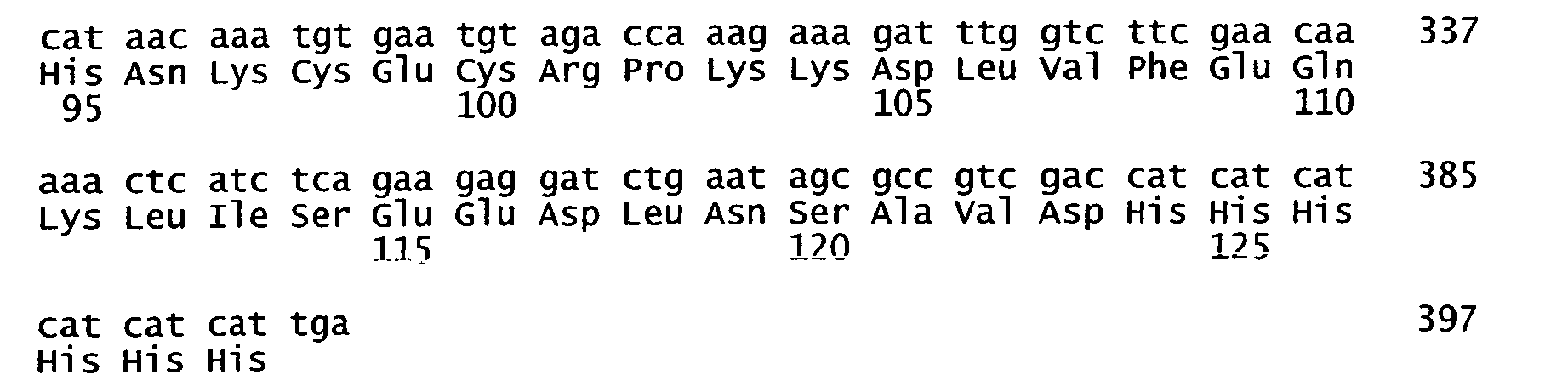
- <210> 105
<211> 129
<212> PRT
<213> Artificial Sequence - <220>
<223> Growth Factor Hybrid Sequence - <400> 105

- <210> 106
<211> 397
<212> DNA
<213> Artificial Sequence - <220>
<223> Growth Factor Hybrid sequence - <220>
<221> CDS
<222> (8)..(394) - <400> 106


- <210> 107
<211> 129
<212> PRT
<213> Artificial Sequence - <220>
<223> Growth Factor Hybrid Sequence - <400> 107

- <210> 108
<211> 397
<212> DNA
<213> Artificial Sequence - <220>
<223> Growth Factor Hybrid Sequence - <220>
<221> CDS
<222> (8)..(394) - <400> 108

- <210> 109
<211> 129
<212> PRT
<213> Artificial Sequence - <220>
<223> Growth Factor Hybrid Sequence - <400> 109
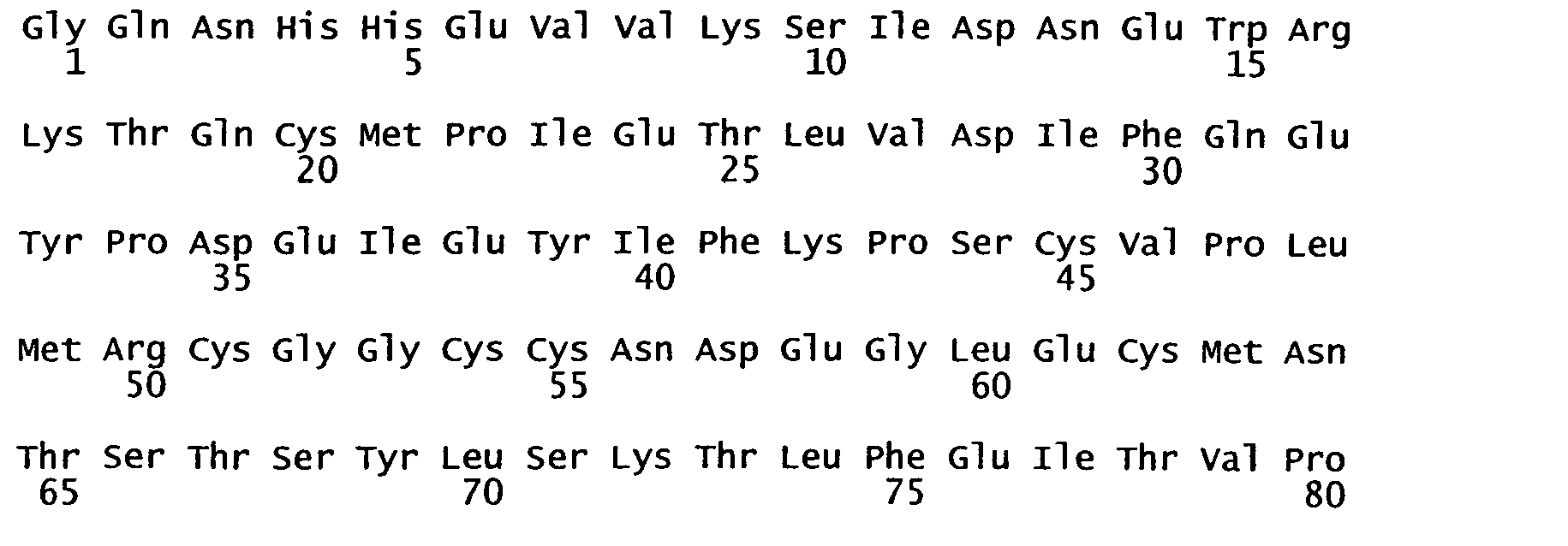

- <210> 110
<211> 397
<212> DNA
<213> Artificial Sequence - <220>
<223> Growth Factor Hybrid Sequence - <220>
<221> CDS
<222> (8)..(394) - <400> 110

- <210> 111
<211> 129
<212> PRT
<213> Artificial Sequence - <220>
<223> Growth Factor Hybrid Sequence - <400> 111

- <210> 112
<211> 397
<212> DNA
<213> Artificial Sequence - <220>
<223> Growth Factor Hybrid Sequence - <220>
<221> CDS
<222> (8)..(394) - <400> 112


- <210> 113
<211> 129
<212> PRT
<213> Artificial Sequence - <220>
<223> Growth Factor Hybrid Sequence - <400> 113

- <210> 114
<211> 1645
<212> DNA
<213> Homo sapiens - <220>
<221> CDS
<222> (322)..(768) - <220>
- <400> 114


- <211> 149
<212> PRT
<213> Homo sapiens - <400> 115

- <210> 116
<211> 570
<212> DNA
<213> Homo sapiens - <220>
<221> CDS
<222> (4)..(570) - <400> 116


- <210> 117
<211> 188
<212> PRT
<213> Homo sapiens - <400> 117

- <212> DNA
<213> Homo sapiens - <220>
<221> CDS
<222> (411)..(1472) - <400> 118


- <210> 119
<211> 354
<212> PRT
<213> Homo sapiens - <400> 119

- <210> 120
<211> 1830
<212> DNA
<213> Orf virus - <220>
<221> CDS
<222> (312)..(755) - <400> 120


- <210> 121
<211> 148
<212> PRT
<213> Orf virus - <400> 121

- <210> 122
<211> 851
<212> DNA
<213> orf virus - <220>
<221> CDS
<222> (2)..(223) - <400> 122

- <210> 123
<211> 73
<212> PRT
<213> Orf virus - <400> 123


- <210> 124
<211> 2305
<212> DNA
<213> Homo sapiens - <220>
<221> CDS
<222> (404)..(991) - <400> 124


- <210> 125
<211> 196
<212> PRT
<213> Homo sapiens - <400> 125


- <210> 126
<211> 2137
<212> DNA
<213> Homo sapiens - <220>
<221> CDS
<222> (983)..(1705) - <400> 126


- <210> 127
<211> 241
<212> PRT
<213> Homo sapiens - <400> 127

- <210> 128
<211> 11
<212> PRT
<213> Artificial sequence - <220>
<223> Description of Artificial Sequence: synthetic peptide - <400> 128

- <210> 129
<211> 11
<212> PRT
<213> Artificial Sequence - <220>
<223> Description of Artificial Sequence: synthetic peptide - <400> 129

- <210> 130
<211> 10
<212> PRT
<213> Artificial Sequence - <220>
<223> Description of Artificial Sequence: synthetic peptide - <400> 130

- <210> 131
<211> 8
<212> PRT
<213> Artificial Sequence - <220>
<223> Description of Artificial sequence: synthetic peptide - <400> 131

- <210> 132
<211> 13
<212> PRT
<213> Artificial Sequence - <220>
<223> Description of Artificial sequence: synthetic peptide - <400> 132

- <210> 133
<211> 8
<212> PRT
<213> Artificial Sequence - <220>
<223> Description of Artificial sequence: synthetic peptide - <400> 133

- <210> 134
<211> 16
<212> PRT
<213> Artificial Sequence - <220>
<223> Description of Artificial Sequence: synthetic peptide - <400> 134

- <210> 135
<211> 14
<212> PRT
<213> Artificial Sequence - <220>
<223> Description of Artificial sequence: synthetic peptide - <400> 135

- <210> 136
<211> 13
<212> PRT
<213> Artificial sequence - <220>
<223> Description of Artificial sequence: synthetic peptide - <400> 136

- <210> 137
<211> 11
<212> PRT
<213> Artificial sequence - <220>
<223> Description of Artificial sequence: synthetic peptide - <400> 137

- <210> 138
<211> 12
<212> PRT
<213> Artificial Sequence - <220>
<223> Description of Artificial Sequence: synthetic peptide - <400> 138

- <210> 139
<211> 10
<212> PRT
<213> Artificial Sequence - <220>
<223> Description of Artificial Sequence: synthetic peptide - <400> 139

- <210> 140
<211> 8
<212> PRT
<213> Artificial Sequence - <220>
<223> Description of Artificial Sequence: synthetic peptide - <400> 140

- <210> 141
<211> 13
<212> PRT
<213> Artificial Sequence - <220>
<223> Description of Artificial Sequence: synthetic peptide - <400> 141

- <210> 142
<211> 8
<212> PRT
<213> Artificial Sequence - <220>
<223> Description of Artificial Sequence: synthetic peptide - <400> 142

- <210> 143
<211> 16
<212> PRT
<213> Artificial sequence - <220>
<223> Description of Artificial Sequence: synthetic peptide - <400> 143

- <210> 144
<211> 16
<212> PRT
<213> Artificial Sequence - <220>
<223> Description of Artificial Sequence: synthetic peptide - <400> 144

- <210> 145
<211> 13
<212> PRT
<213> Artificial Sequence - <220>
<223> Description of Artificial Sequence: synthetic peptide - <400> 145

- <210> 146
<211> 815
<212> DNA
<213> Homo sapiens - <220>
<221> CDS
<222> (69)..(767) - <400> 146


- <210> 147
<211> 232
<212> PRT
<213> Homo sapiens - <400> 147


- <210> 148
<211> 3007
<212> DNA
<213> Homo sapiens - <220>
<221> CDS
<222> (492)..(1529) - <400> 148


- <210> 149
<211> 345
<212> PRT
<213> Homo sapiens - <400> 149


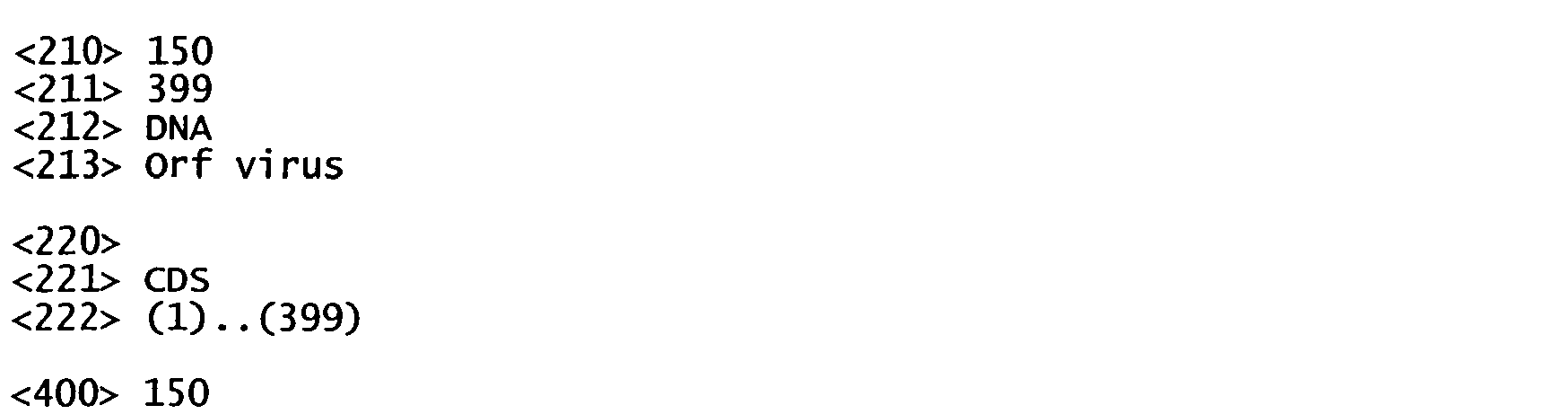


- <210> 151
<211> 132
<212> PRT
<213> Orf virus - <400> 151

- <210> 152
<211> 328
<212> DNA
<213> Artificial Sequence - <220>
<223> Growth Factor Hybrid sequence - <220>
<221> CDS
<222> (8)..(322) - <400> 152

- <210> 153
<211> 105
<212> PRT
<213> Artificial Sequence - <220>
<223> Growth Factor Hybrid Sequence - <400> 153

- <210> 154
<211> 331
<212> DNA
<213> Artificial Sequence - <220>
<223> Growth Factor Hybrid Sequence - <220>
<221> CDS
<222> (8)..(322) - <400> 154

- <210> 155
<211> 105
<212> PRT
<213> Artificial Sequence - <220>
<223> Growth Factor Hybrid sequence - <400> 155

- <210> 156
<211> 331
<212> DNA
<213> Artificial Sequence - <220>
<223> Growth Factor Hybrid Sequence
<220>
<221> CDS
<222> (8)..(322) - <400> 156

- <210> 157
<211> 105
<212> PRT
<213> Artificial sequence - <220>
<223> Growth Factor Hybrid Sequence - <400> 157

- <210> 158
<211> 331
<212> DNA
<212> DNA
<213> Artificial sequence - <220>
<223> Growth Factor Hybrid Sequence - <220>
<221> CDS
<222> (8)..(322) - <400> 158

- <210> 159
<211> 105
<212> PRT
<213> Artificial Sequence - <220>
<223> Growth Factor Hybrid Sequence - <400> 159

- <210> 160
<211> 325
<212> DNA
<213> Artificial Sequence - <220>
<223> Growth Factor Hybrid Sequence - <220>
<221> CDS
<222> (8)..(322) - <400> 160

- <210> 161
<211> 105
<212> PRT
<213> Artificial sequence - <220>
<223> Growth Factor Hybrid Sequence - <400> 161


- <210> 162
<211> 322
<212> DNA
<213> Artificial Sequence - <220>
<223> Growth Factor Hybrid Sequence
<220>
<221> CDS
<222> (8)..(322) - <400> 162

- <210> 163
<211> 105
<212> PRT
<213> Artificial Sequence - <220>
<223> Growth Factor Hybrid sequence - <400> 163


- <210> 164
<211> 328
<212> DNA
<213> Artificial Sequence - <220>
<223> Growth Factor Hybrid Sequence - <220>
<221> CDS
<222> (8)..(322) - <400> 164

- <210> 165
<211> 105
<212> PRT
<213> Artificial Sequence - <220>
<223> Growth Factor Hybrid Sequence - <400> 165


- <210> 166
<211> 328
<212> DNA
<213> Artificial Sequence - <220>
<223> Growth Factor Hybrid sequence - <220>
<221> CDS
<222> (8)..(322) - <400> 166

- <210> 167
<211> 105
<212> PRT
<213> Artificial Sequence - <220>
<223> Growth Factor Hybrid Sequence - <400> 167


- <210> 168
<211> 328
<212> DNA
<213> Artificial Sequence - <220>
<223> Growth Factor Hybrid Sequence - <220>
<221> CDS
<222> (8)..(322) - <400> 168

- <210> 169
<211> 105
<212> PRT
<213> Artificial Sequence - <220>
<223> Growth Factor Hybrid Sequence - <400> 169


- <210> 170
<211> 328
<212> DNA
<213> Artificial sequence - <220>
<223> Growth Factor Hybrid Sequence - <220>
<221> CDS
<222> (8)..(322) - <400> 170

- <210> 171
<211> 105
<212> PRT
<213> Artificial Sequence - <220>
<223> Growth Factor Hybrid Sequence - <400> 171


- <210> 172
<211> 328
<212> DNA
<213> Artificial Sequence - <220>
<223> Growth Factor Hybrid Sequence - <220>
<221> CDS
<222> (8)..(322) - <400> 172

- <210> 173
<211> 105
<212> PRT
<213> Artificial Sequence - <220>
<223> Growth Factor Hybrid Sequence - <400> 173


- <210> 174
<211> 328
<212> DNA
<213> Artificial Sequence - <220>
<223> Growth Factor Hybrid Sequence - <220>
<221> CDS
<222> (8)..(322) - <400> 174

- <210> 175
<211> 105
<212> PRT
<213> Artificial Sequence - <220>
<223> Growth Factor Hybrid sequence - <400> 175

- <210> 176
<211> 306
<212> DNA
<213> Homo sapiens - <220>
<221> CDS
<222> (1)..(306) - <400> 176

- <210> 177
<211> 102
<212> PRT
<213> Homo sapiens - <400> 177

- <210> 178
<211> 306
<212> DNA
<213> Artificial Sequence - <220>
<223> Growth Factor Hybrid Sequence - <220>
<221> CDS
<222> (1)..(306) - <400> 178


- <210> 179
<211> 102
<212> PRT
<213> Artificial sequence - <220>
<223> Growth Factor Hybrid sequence - <400> 179

- <210> 180
<211> 309
<212> DNA
<213> Artificial Sequence - <220>
<223> Growth Factor Hybrid Sequence - <220>
<221> CDS
<222> (1)..(309) - <400> 180


- <210> 181
<211> 103
<212> PRT
<213> Artificial sequence - <220>
<223> Growth Factor Hybrid sequence - <400> 181

- <210> 182
<211> 309
<212> DNA
<213> Artificial Sequence - <220>
<223> Growth Factor Hybrid Sequence - <220>
<221> CDS
<222> (1)..(309) - <400> 182

- <210> 183
<211> 103
<212> PRT
<213> Artificial Sequence - <220>
<223> Growth Factor Hybrid Sequence - <400> 183

- <210> 184
<211> 306
<212> DNA
<213> Artificial Sequence - <220>
<223> Growth Factor Hybrid sequence - <220>
<221> CDS
<222> (1)..(306) - <400> 184

- <210> 185
<211> 102
<212> PRT
<213> Artificial sequence - <220>
<223> Growth Factor Hybrid sequence - <400> 185


- <210> 186
<211> 306
<212> DNA
<213> Artificial Sequence - <220>
<223> Growth Factor Hybrid Sequence - <220>
<221> CDS
<222> (1)..(306) - <400> 186

- <210> 187
<211> 102
<212> PRT
<213> Artificial Sequence - <220>
<223> Growth Factor Hybrid sequence - <400> 187

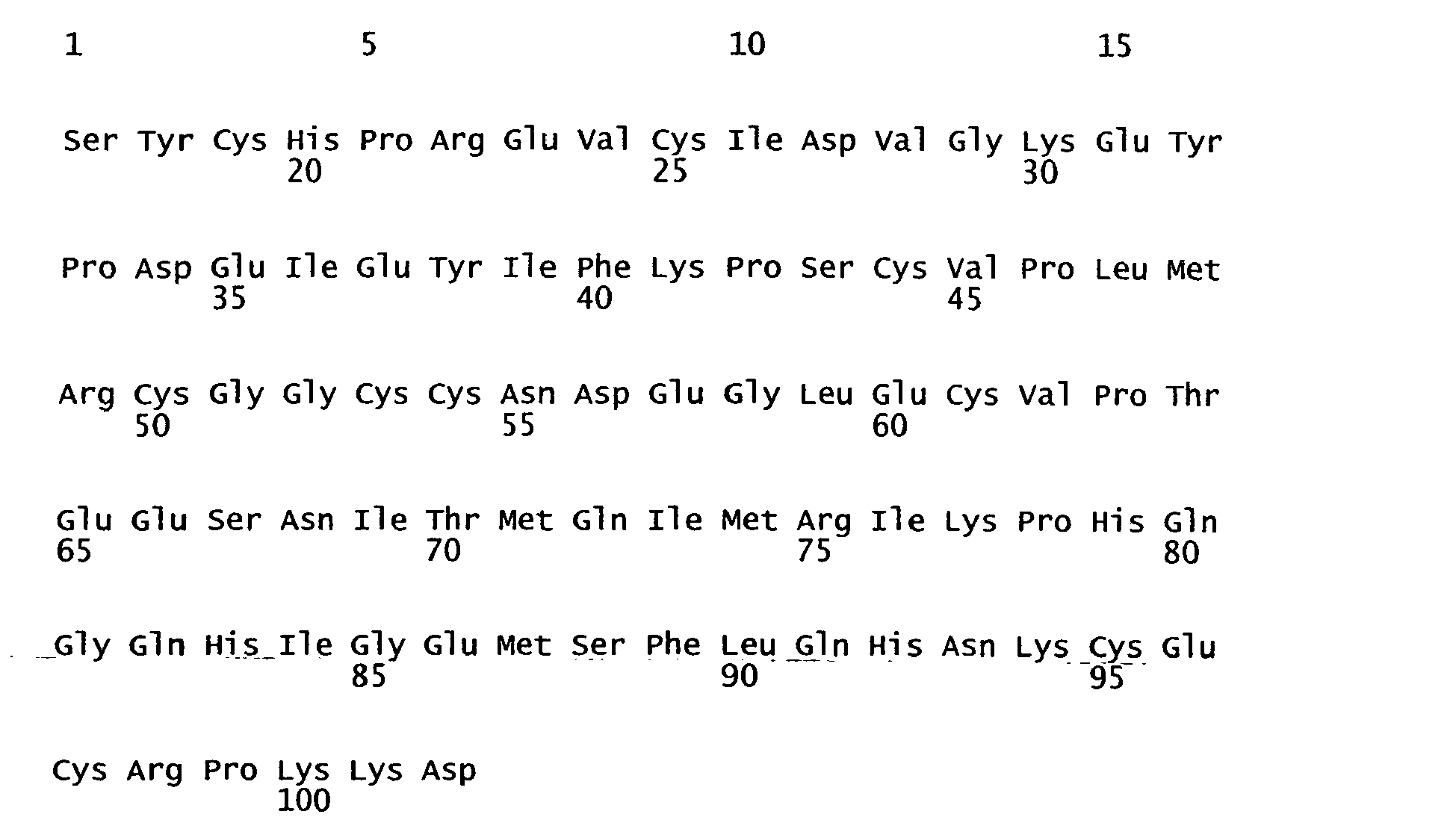
- <210> 188
<211> 309
<212> DNA
<213> Artificial Sequence - <220>
<223> Growth Factor Hybrid Sequence - <220>
<221> CDS
<222> (1)..(309) - <400> 188

- <210> 189
<211> 103
<212> PRT
<213> Artificial sequence - <220>
<223> Growth Factor Hybrid Sequence - <400> 189

- <210> 190
<211> 309
<212> DNA
<213> Artificial Sequence - <220>
<223> Growth Factor Hybrid Sequence - <220>
<221> CDS
<222> (1)..(309) - <400> 190


- <210> 191
<211> 103
<212> PRT
<213> Artificial sequence - <220>
<223> Growth Factor Hybrid sequence - <400> 191

- <210> 192
<211> 306
<212> DNA
<213> Artificial Sequence - <220>
<223> Growth Factor Hybrid sequence - <220>
<221> CDS
<222> (1)..(306) - <400> 192

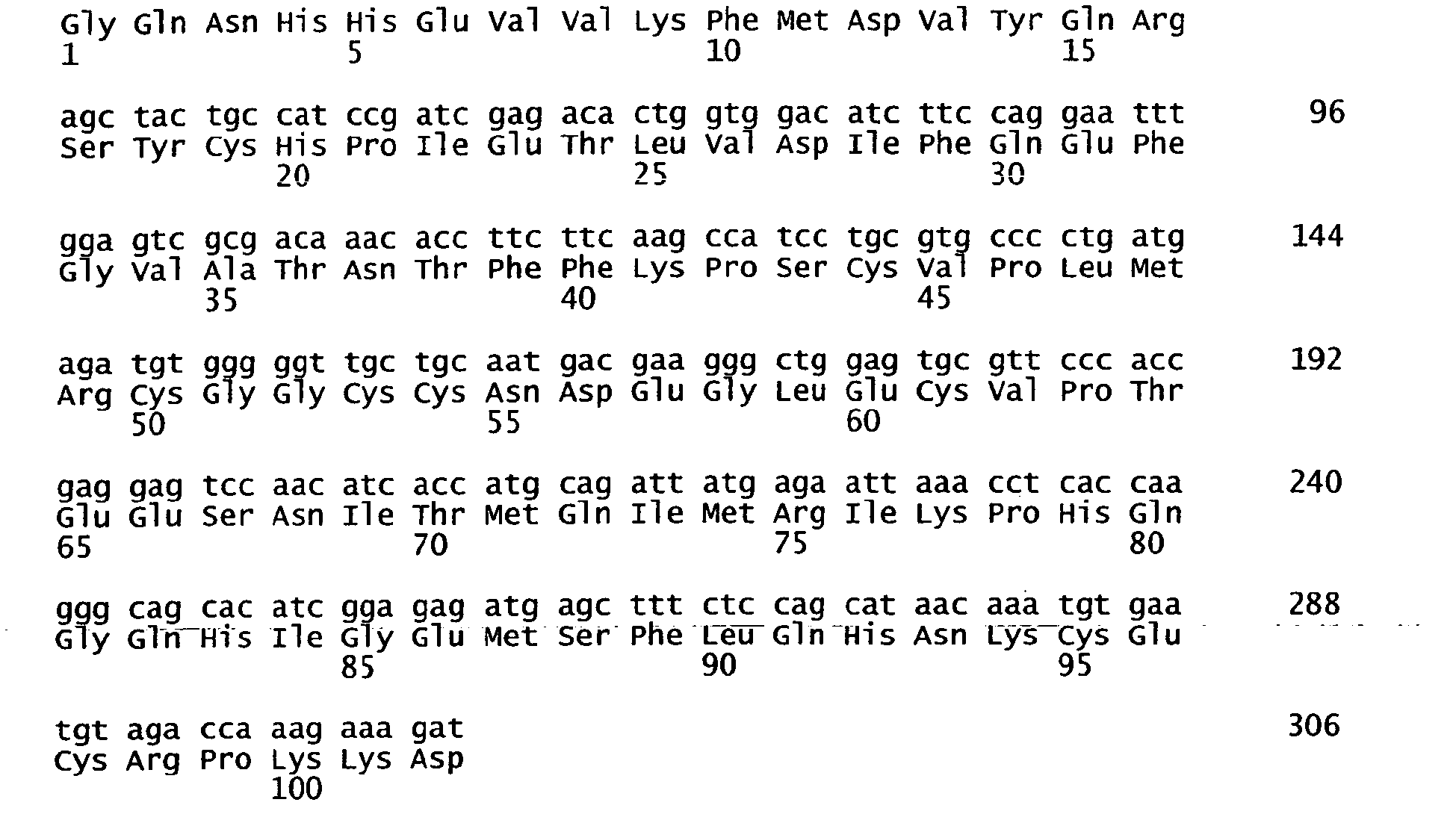
- <210> 193
<211> 102
<212> PRT
<213> Artificial sequence - <220>
<223> Growth Factor Hybrid Sequence - <400> 193

- <210> 194
<211> 306
<212> DNA
<213> Artificial Sequence - <220>
<223> Growth Factor Hybrid Sequence - <220>
<221> CDS
<222> (1)..(306) - <400> 194

- <210> 195
<211> 102
<212> PRT
<213> Artificial sequence - <220>
<223> Growth Factor Hybrid Sequence - <400> 195


- <210> 196
<211> 309
<212> DNA
<213> Artificial Sequence - <220>
<223> Growth Factor Hybrid Sequence - <220>
<221> CDS
<222> (1)..(309) - <400> 196

- <210> 197
<211> 103
<212> PRT
<213> Artificial sequence - <220>
<223> Growth Factor Hybrid Sequence - <400> 197


- <210> 198
<211> 309
<212> DNA
<213> Artificial Sequence - <220>
<223> Growth Factor Hybrid Sequence - <220>
<221> CDS
<222> (1)..(309) - <400> 198

- <210> 199
<211> 103
<212> PRT
<213> Artificial Sequence - <220>
<223> Growth Factor Hybrid Sequence - <400> 199

- <210> 200
<211> 306
<212> DNA
<213> Artificial sequence - <220>
<223> Growth Factor Hybrid sequence - <220>
<221> CDS
<222> (1)..(306) - <400> 200


- <210> 201
<211> 102
<212> PRT
<213> Artificial sequence - <220>
<223> Growth Factor Hybrid Sequence - <400> 201

- <210> 202
<211> 306
<212> DNA
<213> Artificial Sequence - <220>
<223> Growth Factor Hybrid Sequence - <220>
<221> CDS
<222> (1)..(306) - <400> 202


- <210> 203
<211> 102
<212> PRT
<213> Artificial Sequence - <220>
<223> Growth Factor Hybrid Sequence - <400> 203

- <210> 204
<211> 309
<212> DNA
<213> Artificial Sequence - <220>
<223> Growth Factor Hybrid Sequence - <220>
<221> CDS
<222> (1)..(309) - <400> 204

- <210> 205
<211> 103
<212> PRT
<213> Artificial Sequence - <220>
<223> Growth Factor Hybrid Sequence - <400> 205


- <210> 206
<211> 309
<212> DNA
<213> Artificial sequence - <220>
<223> Growth Factor Hybrid sequence - <220>
<221> CDS
<222> (1)..(309) - <400> 206

- <210> 207
<211> 103
<212> PRT
<213> Artificial Sequence - <220>
<223> Growth Factor Hybrid Sequence - <400> 207


- <210> 208
<211> 306
<212> DNA
<213> Artificial Sequence - <220>
<223> Growth Factor Hybrid Sequence - <220>
<221> CDS
<222> (1)..(306) - <400> 208

- <210> 209
<211> 102
<212> PRT
<213> Artificial Sequence - <220>
<223> Growth Factor Hybrid sequence - <400> 209

- <210> 210
<211> 306
<212> DNA
<213> Artificial Sequence - <220>
<223> Growth Factor Hybrid Sequence - <220>
<221> CDS
<222> (1)..(306) - <400> 210


- <210> 211
<211> 102
<212> PRT
<213> Artificial Sequence - <220>
<223> Growth Factor Hybrid Sequence - <400> 211

- <210> 212
<211> 309
<212> DNA
<213> Artificial Sequence - <220>
<223> Growth Factor Hybrid sequence - <220>
<221> CDS
<222> (1)..(309) - <400> 212


- <210> 213
<211> 103
<212> PRT
<213> Artificial Sequence - <220>
<223> Growth Factor Hybrid Sequence - <400> 213

- <210> 214
<211> 309
<212> DNA
<213> Artificial Sequence - <220>
<223> Growth Factor Hybrid Sequence - <220>
<221> CDS
<222> (1)..(309) - <400> 214
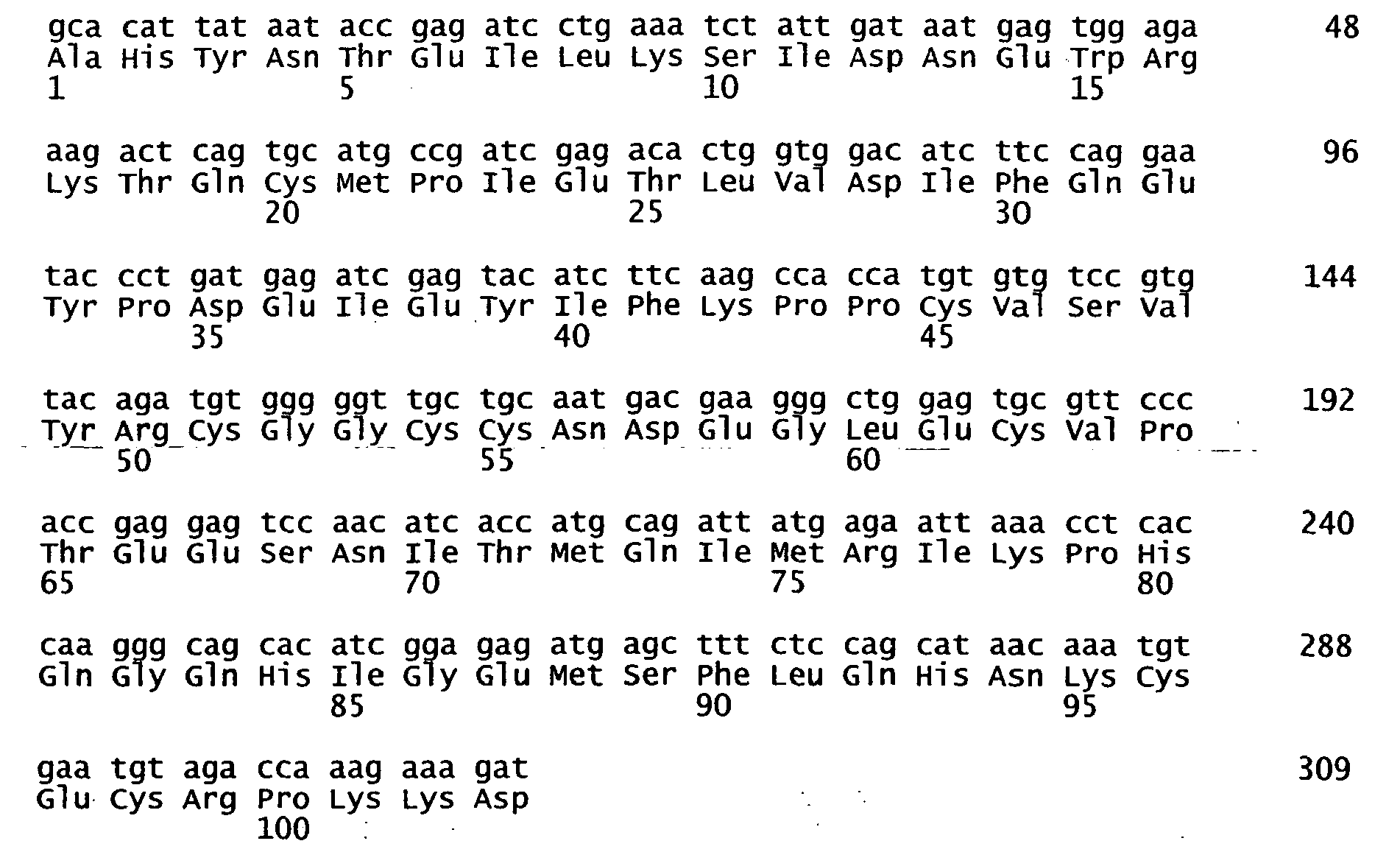
- <210> 215
<211> 103
<212> PRT
<213> Artificial Sequence - <220>
<223> Growth Factor Hybrid Sequence - <400> 215


- <210> 216
<211> 306
<212> DNA
<213> Artificial Sequence - <220>
<223> Growth Factor Hybrid Sequence - <220>
<221> CDS
<222> (1)..(306) - <400> 216

- <210> 217
<211> 102
<212> PRT
<213> Artificial Sequence - <220>
<223> Growth Factor Hybrid sequence - <400> 217


- <210> 218
<211> 306
<212> DNA
<213> Artificial Sequence - <220>
<223> Growth Factor Hybrid Sequence - <220>
<221> CDS
<222> (1)..(306) - <400> 218

- <210> 219
<211> 102
<212> PRT
<213> Artificial Sequence - <220>
<223> Growth Factor Hybrid Sequence - <400> 219
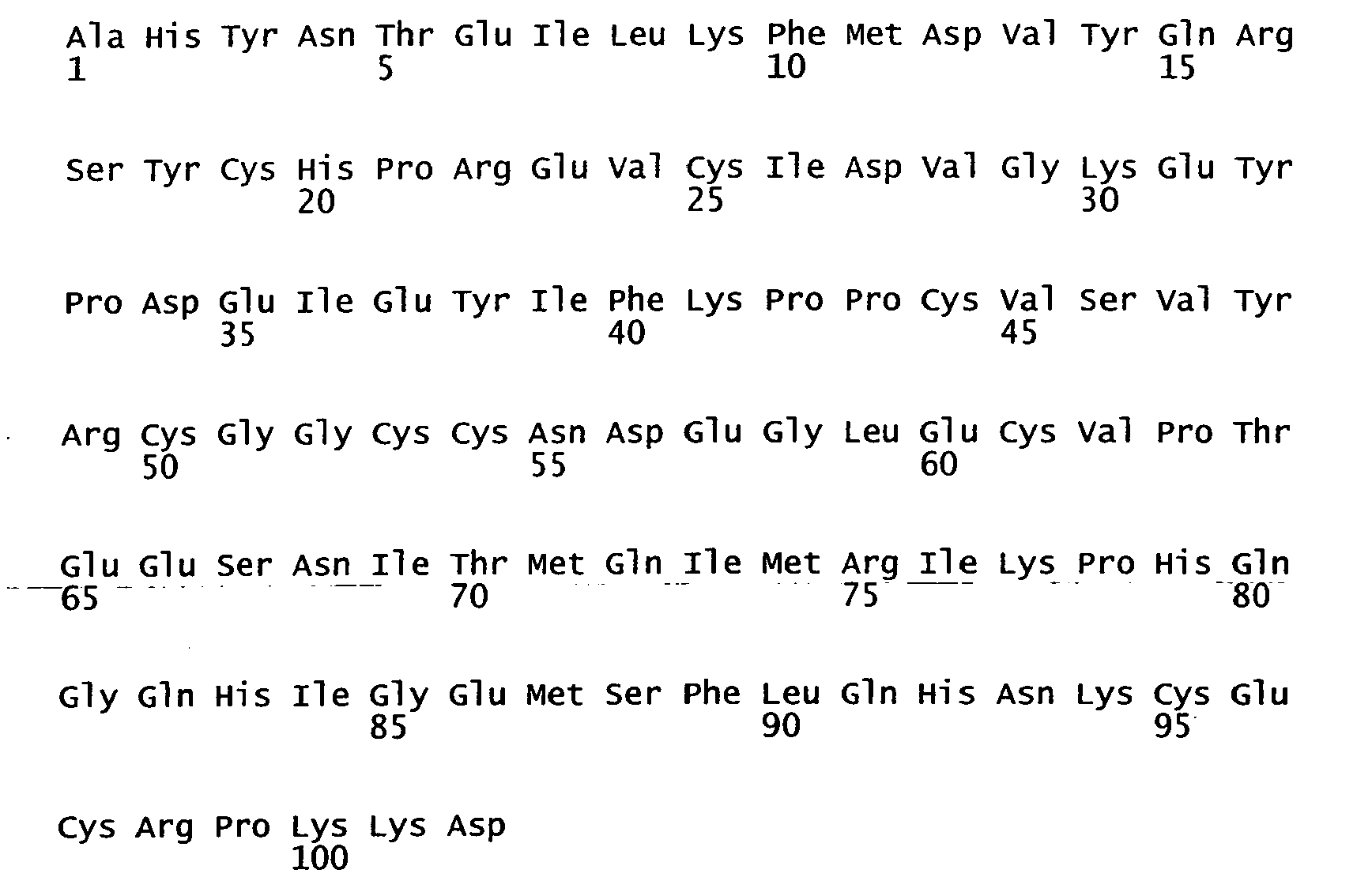
- <210> 220
<211> 309
<212> DNA
<213> Artificial Sequence - <220>
<223> Growth Factor Hybrid Sequence - <220>
<221> CDS
<222> (1)..(309) - <400> 220


- <210> 221
<211> 103
<212> PRT
<213> Artificial Sequence - <220>
<223> Growth Factor Hybrid Sequence - <400> 221

- <210> 222
<211> 309
<212> DNA
<213> Artificial Sequence - <220>
<223> Growth Factor Hybrid sequence - <220>
<221> CDS
<222> (1)..(309) - <400> 222


- <210> 223
<211> 103
<212> PRT
<213> Artificial Sequence - <220>
<223> Growth Factor Hybrid Sequence - <400> 223

- <210> 224
<211> 306
<212> DNA
<213> Artificial Sequence - <220>
<223> Growth Factor Hybrid Sequence - <220>
<221> CDS
<222> (1)..(306) - <400> 224

- <210> 225
<211> 102
<212> PRT
<213> Artificial Sequence - <220>
<223> Growth Factor Hybrid sequence - <400> 225

- <210> 226
<211> 306
<212> DNA
<213> Artificial sequence - <220>
<223> Growth Factor Hybrid Sequence - <220>
<221> CDS
<222> (1)..(306) - <400> 226

- <210> 227
<211> 102
<212> PRT
<213> Artificial Sequence - <220>
<223> Growth Factor Hybrid Sequence - <400> 227


- <210> 228
<211> 309
<212> DNA
<213> Artificial Sequence - <220>
<223> Growth Factor Hybrid sequence - <220>
<221> CDS
<222> (1)..(309) - <400> 228

- <210> 229
<211> 103
<212> PRT
<213> Artificial Sequence - <220>
<223> Growth Factor Hybrid sequence - <400> 229


- <210> 230
<211> 309
<212> DNA
<213> Artificial Sequence - <220>
<223> Growth Factor Hybrid Sequence - <220>
<221> CDS
<222> (1)..(309) - <400> 230

- <210> 231
<211> 103
<212> PRT
<213> Artificial Sequence - <220>
<223> Growth Factor Hybrid Sequence - <400> 231

- <210> 232
<211> 306
<212> DNA
<213> Artificial Sequence - <220>
<223> Growth Factor Hybrid Sequence - <220>
<221> CDS
<222> (1)..(306) - <400> 232


- <210> 233
<211> 102
<212> PRT
<213> Artificial Sequence - <220>
<223> Growth Factor Hybrid Sequence - <400> 233

- <210> 234
<211> 306
<212> DNA
<213> Artificial Sequence - <220>
<223> Growth Factor Hybrid Sequence - <220>
<221> CDS
<222> (1)..(306) - <400> 234


- <210> 235
<211> 102
<212> PRT
<213> Artificial Sequence - <220>
<223> Growth Factor Hybrid Sequence - <400> 235

- <210> 236
<211> 309
<212> DNA
<213> Artificial Sequence - <220>
<223> Growth Factor Hybrid Sequence - <220>
<221> CDS
<222> (1)..(309) - <400> 236

- <210> 237
<211> 103
<212> PRT
<213> Artificial Sequence - <220>
<223> Growth Factor Hybrid Sequence - <400> 237


- <210> 238
<211> 309
<212> DNA
<213> Artificial Sequence - <220>
<223> Growth Factor Hybrid Sequence - <220>
<221> CDS
<222> (1)..(309) - <400> 238

- <210> 239
<211> 103
<212> PRT
<213> Artificial Sequence - <220>
<223> Growth Factor Hybrid Sequence - <400> 239


- <210> 240
<211> 306
<212> DNA
<213> Artificial Sequence - <220>
<223> Growth Factor Hybrid Sequence - <220>
<221> CDS
<222> (1)..(306) - <400> 240

- <210> 241
<211> 102
<212> PRT
<213> Artificial Sequence - <220>
<223> Growth Factor Hybrid sequence - <400> 241

- <210> 242
<211> 306
<212> DNA
<213> Artificial sequence - <220>
<223> Growth Factor Hybrid sequence - <220>
<221> CDS
<222> (1)..(306) - <400> 242


- <210> 243
<211> 102
<212> PRT
<213> Artificial sequence - <220>
<223> Growth Factor Hybrid Sequence - <400> 243

- <210> 244
<211> 309
<212> DNA
<213> Artificial Sequence - <220>
<223> Growth Factor Hybrid Sequence - <220>
<221> CDS
<222> (1)..(309) - <400> 244


- <210> 245
<211> 103
<212> PRT
<213> Artificial Sequence - <220>
<223> Growth Factor Hybrid Sequence - <400> 245

- <210> 246
<211> 309
<212> DNA
<213> Artificial Sequence - <220>
<223> Growth Factor Hybrid Sequence - <220>
<221> CDS
<222> (1)..(309) - <400> 246

- <210> 247
<211> 103
<212> PRT
<213> Artificial Sequence - <220>
<223> Growth Factor Hybrid Sequence - <400> 247


- <210> 248
<211> 306
<212> DNA
<213> Artificial Sequence - <220>
<223> Growth Factor Hybrid Sequence - <220>
<221> CDS
<222> (1)..(306) - <400> 248

- <210> 249
<211> 102
<212> PRT
<213> Artificial Sequence - <220>
<223> Growth Factor Hybrid Sequence - <400> 249


- <210> 250
<211> 306
<212> DNA
<213> Artificial Sequence - <220>
<223> Growth Factor Hybrid Sequence - <220>
<221> CDS
<222> (1)..(306) - <400> 250

- <210> 251
<211> 102
<212> PRT
<213> Artificial sequence - <220>
<223> Growth Factor Hybrid Sequence - <400> 251

- <210> 252
<211> 309
<212> DNA
<213> Artificial Sequence - <220>
<223> Growth Factor Hybrid sequence - <220>
<221> CDS
<222> (1)..(309) - <400> 252


- <210> 253
<211> 103
<212> PRT
<213> Artificial Sequence - <220>
<223> Growth Factor Hybrid Sequence - <400> 253
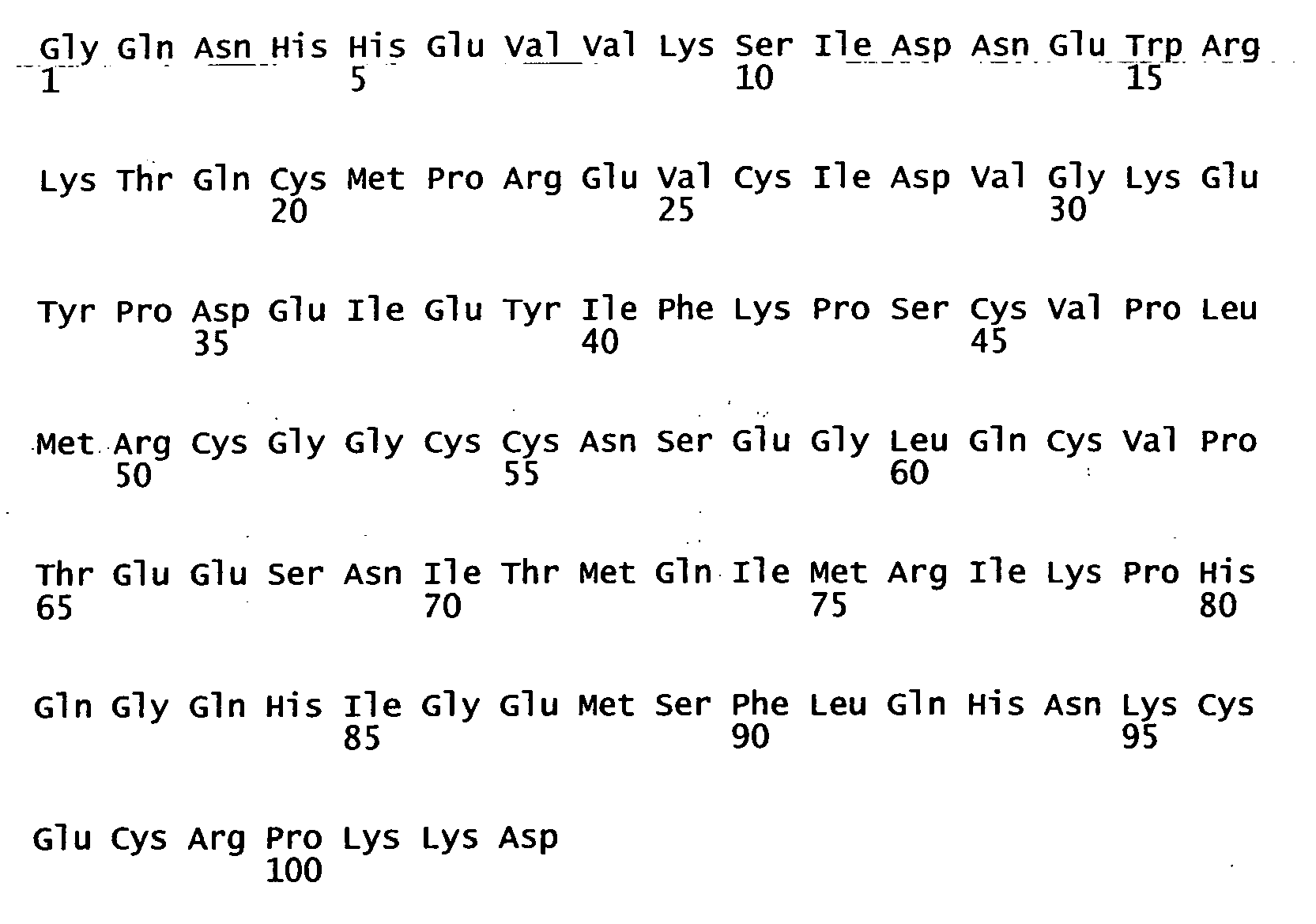
- <210> 254
<211> 309
<212> DNA
<213> Artificial Sequence - <220>
<223> Growth Factor Hybrid Sequence - <220>
<221> CDS
<222> (1)..(309) - <400> 254


- <210> 255
<211> 103
<212> PRT
<213> Artificial Sequence - <220>
<223> Growth Factor Hybrid Sequence - <400> 255

- <210> 256
<211> 306
<212> DNA
<213> Artificial Sequence - <220>
<223> Growth Factor Hybrid Sequence - <220>
<221> CDS
<222> (1)..(306) - <400> 256

- <210> 257
<211> 102
<212> PRT
<213> Artificial Sequence - <220>
<223> Growth Factor Hybrid Sequence - <400> 257


- <210> 258
<211> 306
<212> DNA
<213> Artificial Sequence - <220>
<223> Growth Factor Hybrid Sequence - <220>
<221> CDS
<222> (1)..(306) - <400> 258

- <210> 259
<211> 102
<212> PRT
<213> Artificial Sequence - <220>
<223> Growth Factor Hybrid Sequence - <400> 259


- <210> 260
<211> 309
<212> DNA
<213> Artificial Sequence - <220>
<223> Growth Factor Hybrid Sequence - <220>
<221> CDS
<222> (1)..(309) - <400> 260

- <210> 261
<211> 103
<212> PRT
<213> Artificial Sequence - <220>
<223> Growth Factor Hybrid Sequence - <400> 261

- <210> 262
<211> 309
<212> DNA
<213> Artificial Sequence - <220>
<223> Growth Factor Hybrid Sequence - <220>
<221> CDS
<222> (1)..(309) - <400> 262


- <210> 263
<211> 103
<212> PRT
<213> Artificial Sequence - <220>
<223> Growth Factor Hybrid Sequence - <400> 263

- <210> 264
<211> 306
<212> DNA
<213> Artificial sequence - <220>
<223> Growth Factor Hybrid Sequence - <220>
<221> CDS
<222> (1)..(306) - <400> 264


- <210> 265
<211> 102
<212> PRT
<213> Artificial Sequence - <220>
<223> Growth Factor Hybrid Sequence - <400> 265

- <210> 266
<211> 306
<212> DNA
<213> Artificial Sequence - <220>
<223> Growth Factor Hybrid Sequence - <220>
<221> CDS
<222> (1)..(306) - <400> 266

- <210> 267
<211> 102
<212> PRT
<213> Artificial Sequence - <220>
<223> Growth Factor Hybrid Sequence - <400> 267

- <210> 268
<211> 309
<212> DNA
<213> Artificial Sequence - <220>
<223> Growth Factor Hybrid Sequence - <220>
<221> CDS
<222> (1)..(309) - <400> 268

- <210> 269
<211> 103
<212> PRT
<213> Artificial Sequence - <220>
<223> Growth Factor Hybrid Sequence - <400> 269


- <210> 270
<211> 309
<212> DNA
<213> Artificial sequence - <220>
<223> Growth Factor Hybrid Sequence - <220>
<221> CDS
<222> (1)..(309) - <400> 270
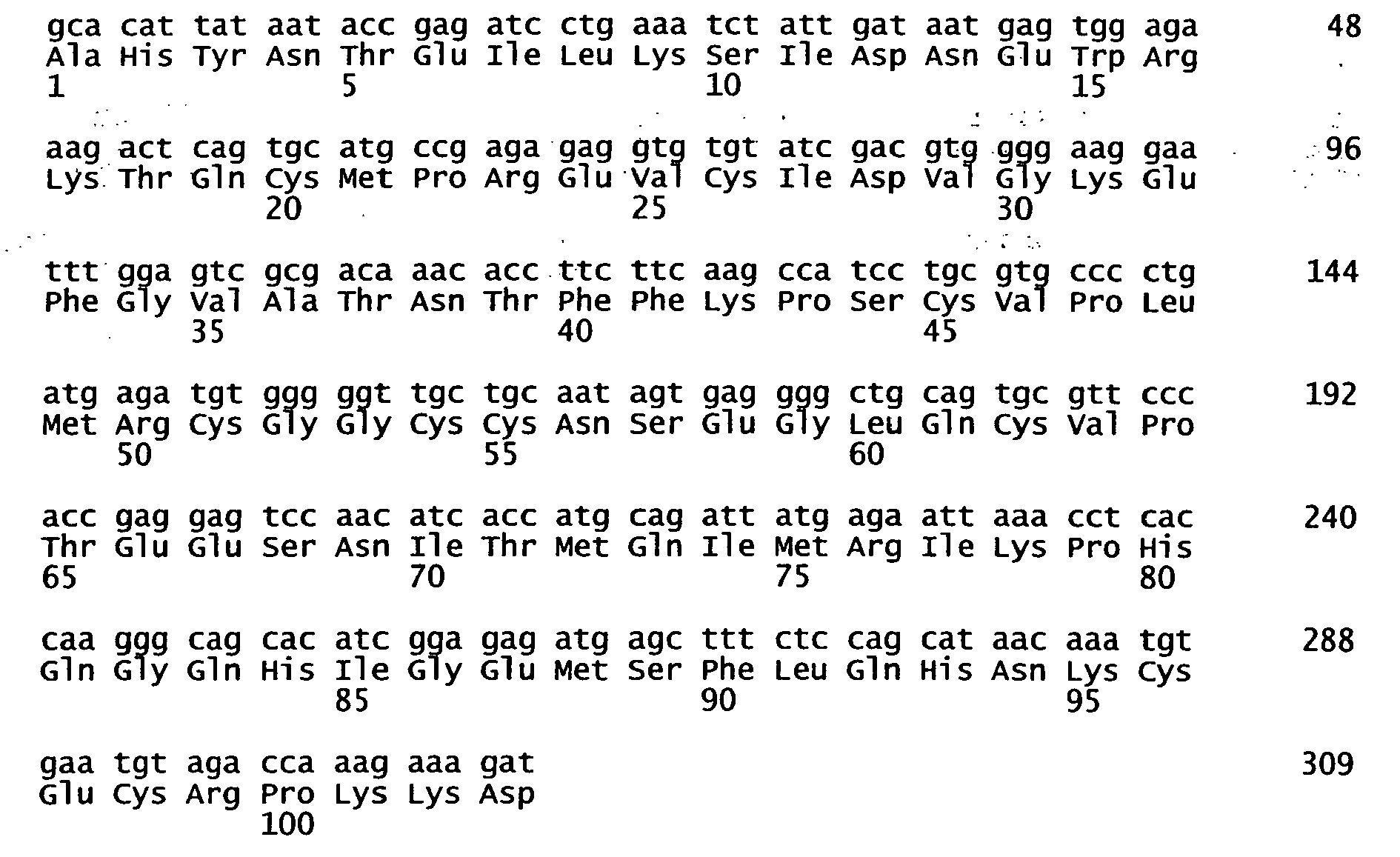
- <210> 271
<211> 103
<212> PRT
<213> Artificial Sequence - <220>
<223> Growth Factor Hybrid Sequence - <400> 271

- <210> 272
<211> 306
<212> DNA
<213> Artificial Sequence - <220>
<223> Growth Factor Hybrid sequence - <220>
<221> CDS
<222> (1)..(306) - <400> 272


- <210> 273
<211> 102
<212> PRT
<213> Artificial Sequence - <220>
<223> Growth Factor Hybrid Sequence - <400> 273

- <210> 274
<211> 306
<212> DNA
<213> Artificial Sequence - <220>
<223> Growth Factor Hybrid Sequence - <220>
<221> CDS
<222> (1) .. (306) - <400> 274


- <210> 275
<211> 102
<212> PRT
<213> Artificial sequence - <220>
<223> Growth Factor Hybrid Sequence - <400> 275

- <210> 276
<211> 309
<212> DNA
<213> Artificial Sequence - <220>
<223> Growth Factor Hybrid sequence - <220>
<221> CDS
<222> (1)..(309) - <400> 276

- <210> 277
<211> 103
<212> PRT
<213> Artificial Sequence - <220>
<223> Growth Factor Hybrid Sequence - <400> 277

- <210> 278
- <211> 309
<211> 309
<212> DNA
<213> Artificial Sequence - <220>
<223> Growth Factor Hybrid Sequence - <220>
<221> CDS
<222> (1)..(309) - <400> 278

- <210> 279
<211> 103
<212> PRT
<213> Artificial Sequence - <220>
<223> Growth Factor Hybrid Sequence - <400> 279


- <210> 280
<211> 306
<212> DNA
<213> Artificial Sequence - <220>
<223> Growth Factor Hybrid sequence - <220>
<221> CDS
<222> (1)..(306) - <400> 280

- <210> 281
<211> 102
<212> PRT
<213> Artificial Sequence - <220>
<223> Growth Factor Hybrid Sequence - <400> 281


- <210> 282
<211> 306
<212> DNA
<213> Artificial Sequence - <220>
<223> Growth Factor Hybrid Sequence - <220>
<221> CDS
<222> (1)..(306) - <400> 282

- <210> 283
<211> 102
<212> PRT
<213> Artificial Sequence - <220>
<223> Growth Factor Hybrid Sequence - <400> 283

- <210> 284
<211> 309
<212> DNA
<213> Artificial sequence - <220>
<223> Growth Factor Hybrid Sequence - <220>
<221> CDS
<222> (1)..(309) - <400> 284


- <210> 285
<211> 103
<212> PRT
<213> Artificial Sequence - <220>
<223> Growth Factor Hybrid Sequence - <400> 285
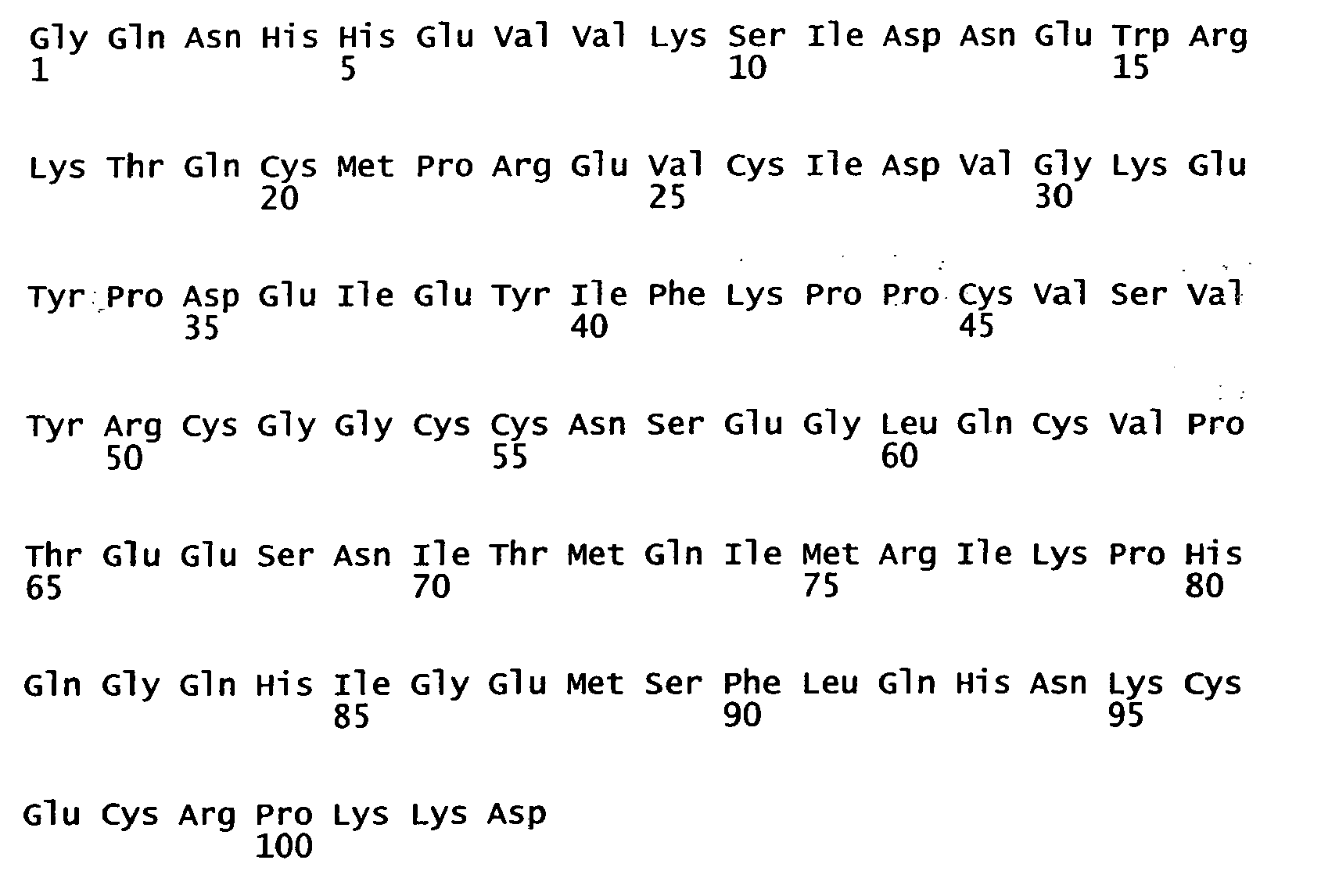
- <210> 286
<211> 309
<212> DNA
<213> Artificial Sequence - <220>
<223> Growth Factor Hybrid Sequence - <220>
<221> CDS
<222> (1)..(309) - <400> 286

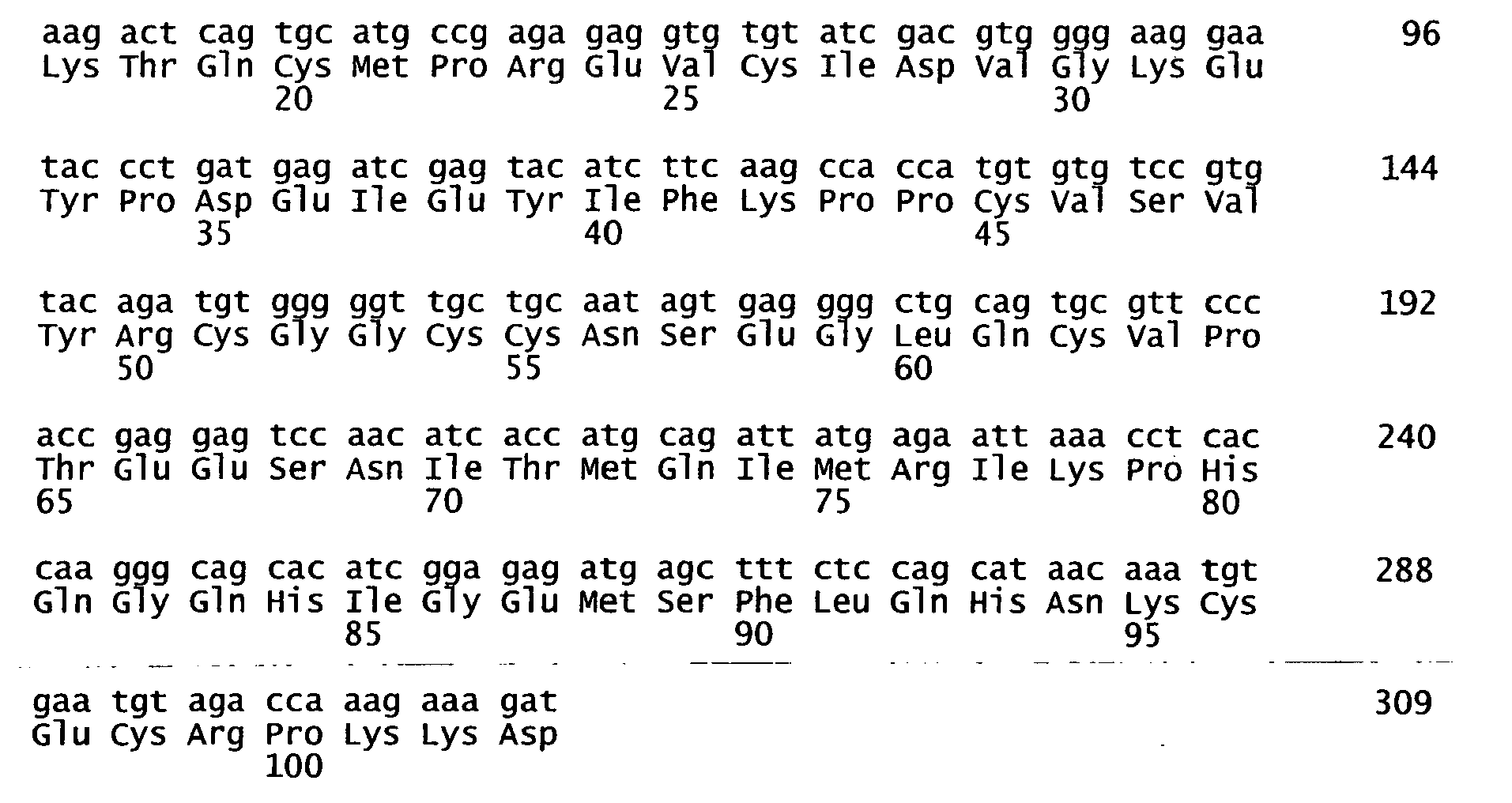
- <210> 287
<211> 103
<212> PRT
<213> Artificial Sequence - <220>
<223> Growth Factor Hybrid Sequence - <400> 287

- <210> 288
<211> 306
<212> DNA
<213> Artificial Sequence - <220>
<223> Growth Factor Hybrid Sequence - <220>
<221> CDS
<222> (1)..(306) - <400> 288

- <210> 289
<211> 102
<212> PRT
<213> Artificial sequence - <220>
<223> Growth Factor Hybrid sequence - <400> 289


- <210> 290
<211> 306
<212> DNA
<213> Artificial Sequence - <220>
<223> Growth Factor Hybrid Sequence - <220>
<221> CDS
<222> (1)..(306) - <400> 290

- <210> 291
<211> 102
<212> PRT
<213> Artificial Sequence - <220>
<223> Growth Factor Hybrid Sequence - <400> 291


- <210> 292
<211> 309
<212> DNA
<213> Artificial Sequence - <220>
<223> Growth Factor Hybrid Sequence - <220>
<221> CDS
<222> (1)..(309) - <400> 292

- <210> 293
<211> 103
<212> PRT
<213> Artificial Sequence - <220>
<223> Growth Factor Hybrid Sequence - <400> 293

- <210> 294
<211> 309
<212> DNA
<213> Artificial Sequence - <220>
<223> Growth Factor Hybrid Sequence - <220>
<221> CDS
<222> (1)..(309) - <400> 294


- <210> 295
<211> 103
<212> PRT
<213> Artificial Sequence - <220>
<223> Growth Factor Hybrid sequence - <400> 295

- <210> 296
<211> 306
<212> DNA
<213> Artificial Sequence - <220>
<223> Growth Factor Hybrid Sequence - <220>
<221> CDS
<222> (1)..(306) - <400> 296


- <210> 297
<211> 102
<212> PRT
<213> Artificial sequence - <220>
<223> Growth Factor Hybrid Sequence - <400> 297

- <210> 298
<211> 306
<212> DNA
<213> Artificial Sequence - <220>
<223> Growth Factor Hybrid Sequence - <220>
<221> CDS
<222> (1)..(306) - <400> 298

- <210> 299
<211> 102
<212> PRT
<213> Artificial Sequence - <220>
<223> Growth Factor Hybrid Sequence - <400> 299


- <210> 300
<211> 309
<212> DNA
<213> Artificial Sequence - <220>
<223> Growth Factor Hybrid Sequence - <220>
<221> CDS
<222> (1)..(309) - <400> 300

- <210> 301
<211> 103
<212> PRT
<213> Artificial Sequence - <220>
<223> Growth Factor Hybrid Sequence - <400> 301


- <210> 302
<211> 309
<212> DNA
<213> Artificial Sequence - <220>
<223> Growth Factor Hybrid Sequence - <220>
<221> CDS
<222> (1)..(309) - <400> 302

- <210> 303
<211> 103
<212> PRT
<213> Artificial sequence - <220>
<223> Growth Factor Hybrid Sequence
<400> 303
- <210> 304
<211> 306
<212> DNA
<213> Artificial sequence - <220>
<223> Growth Factor Hybrid sequence - <220>
<221> CDS
<222> (1)..(306) - <400> 304


- <210> 305
<211> 102
<212> PRT
<213> Artificial Sequence - <220>
<223> Growth Factor Hybrid Sequence - <400> 305

- <210> 306
<211> 306
<212> DNA
<213> Artificial Sequence - <220>
<223> Growth Factor Hybrid Sequence - <220>
<221> CDS
<222> (1)..(306) - <400> 306


- <210> 307
<211> 102
<212> PRT
<213> Artificial Sequence - <220>
<223> Growth Factor Hybrid Sequence - <400> 307

- <210> 308
<211> 309
<212> DNA
<213> Artificial Sequence - <220>
<223> Growth Factor Hybrid sequence - <220>
<221> CDS
<222> (1)..(309) - <400> 308

- <210> 309
<211> 103
<212> PRT
<213> Artificial Sequence - <220>
<223> Growth Factor Hybrid Sequence - <400> 309


- <210> 310
<211> 309
<212> DNA
<213> Artificial Sequence - <220>
<223> Growth Factor Hybrid Sequence - <220>
<221> CDS
<222> (1)..(309) - <400> 310

- <210> 311
<211> 103
<212> PRT
<213> Artificial Sequence - <220>
<223> Growth Factor Hybrid Sequence - <400> 311


- <210> 312
<211> 306
<212> DNA
<213> Artificial Sequence - <220>
<223> Growth Factor Hybrid Sequence - <220>
<221> CDS
<222> (1)..(306) - <400> 312

- <210> 313
<211> 102
<212> PRT
<213> Artificial sequence - <220>
<223> Growth Factor Hybrid Sequence - <400> 313

- <210> 314
<211> 306
<212> DNA
<213> Artificial Sequence - <220>
<223> Growth Factor Hybrid Sequence - <220>
<221> CDS
<222> (1)..(306) - <400> 314


- <210> 315
<211> 102
<212> PRT
<213> Artificial Sequence - <220>
<223> Growth Factor Hybrid Sequence - <400> 315

- <210> 316
<211> 309
<212> DNA
<213> Artificial Sequence - <220>
<223> Growth Factor Hybrid Sequence - <220>
<221> CDS
<222> (1)..(309) - <400> 316

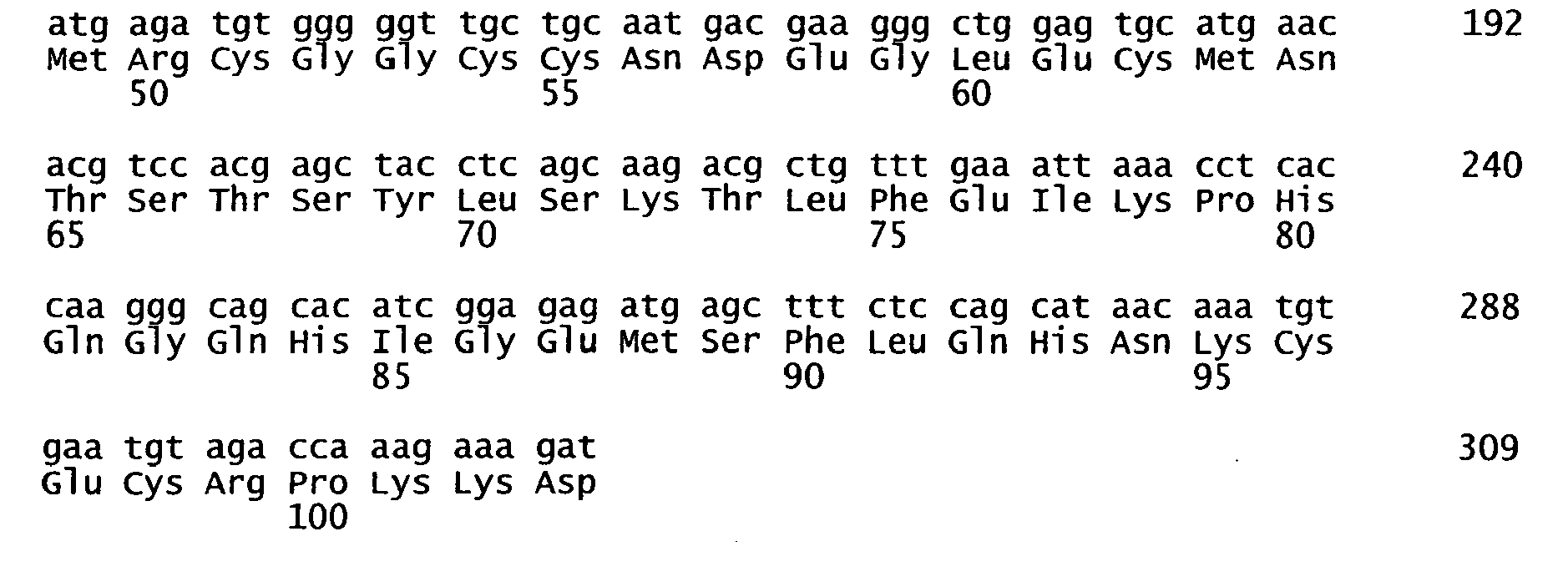
- <210> 317
<211> 103
<212> PRT
<213> Artificial Sequence - <220>
<223> Growth Factor Hybrid Sequence - <400> 317

- <210> 318
<211> 309
<212> DNA
<213> Artificial Sequence - <220>
<223> Growth Factor Hybrid Sequence - <220>
<221> CDS
<222> (1)..(309) - <400> 318

- <210> 319
<211> 103
<212> PRT
<213> Artificial Sequence - <220>
<223> Growth Factor Hybrid Sequence - <400> 319

- <210> 320
<211> 306
<212> DNA
<213> Artificial Sequence - <220>
<223> Growth Factor Hybrid Sequence - <220>
<221> CDS
<222> (1)..(306) - <400> 320

- <210> 321
<211> 102
<212> PRT
<213> Artificial sequence - <220>
<223> Growth Factor Hybrid Sequence - <400> 321


- <210> 322
<211> 306
<212> DNA
<213> Artificial Sequence - <220>
<223> Growth Factor Hybrid sequence - <220>
<221> CDS
<222> (1)..(306) - <400> 322

- <210> 323
<211> 102
<212> PRT
<213> Artificial sequence - <220>
<223> Growth Factor Hybrid Sequence - <400> 323


- <210> 324
<211> 309
<212> DNA
<213> Artificial Sequence - <220>
<223> Growth Factor Hybrid Sequence - <220>
<221> CDS
<222> (1)..(309) - <400> 324
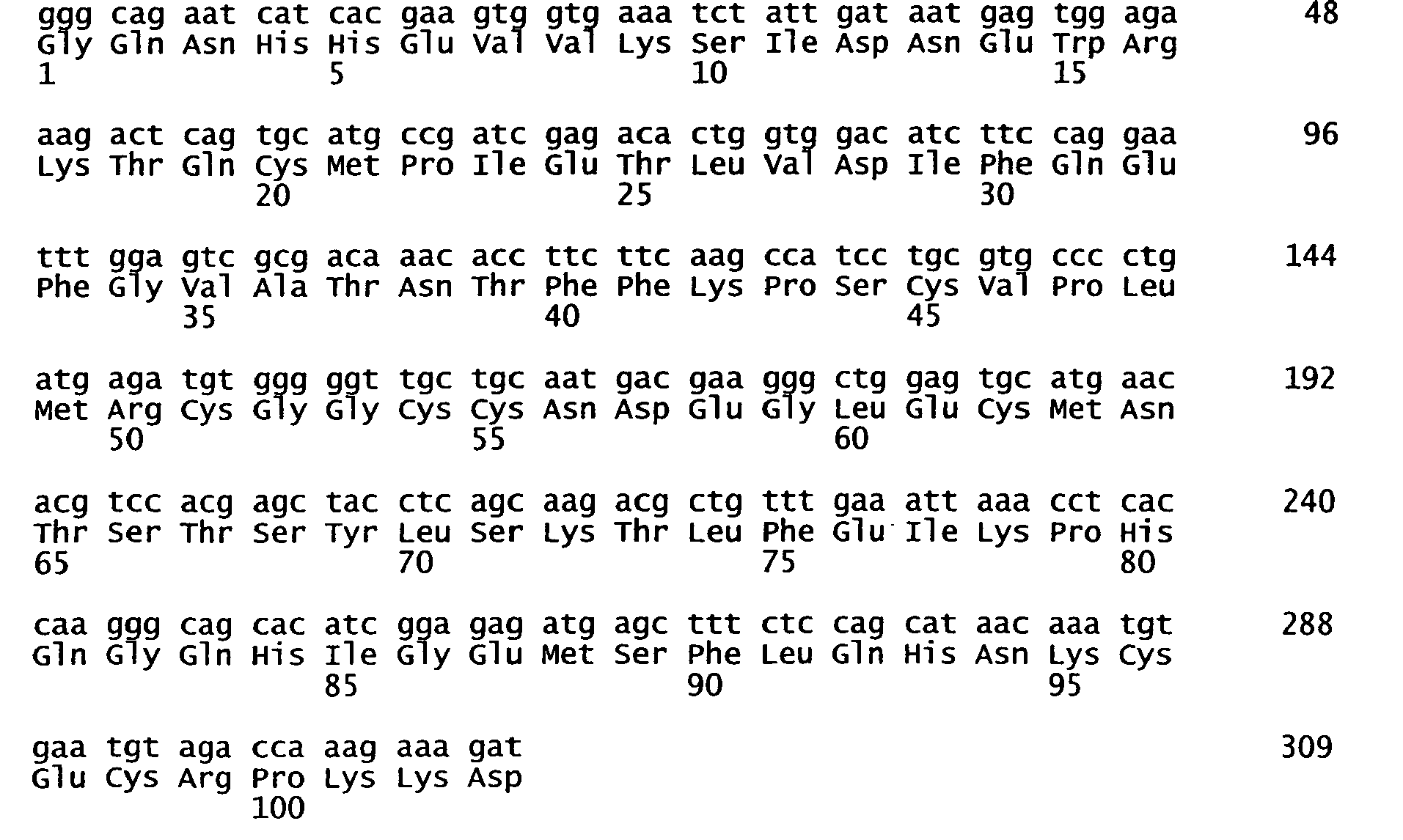
- <210> 325
<211> 103
<212> PRT
<213> Artificial sequence - <220>
<223> Growth Factor Hybrid Sequence - <400> 325

- <210> 326
<211> 309
<212> DNA
<213> Artificial sequence - <220>
<223> Growth Factor Hybrid Sequence - <220>
<221> CDS
<222> (1)..(309) - <400> 326


- <210> 327
<211> 103
<212> PRT
<213> Artificial sequence - <220>
<223> Growth Factor Hybrid Sequence - <400> 327
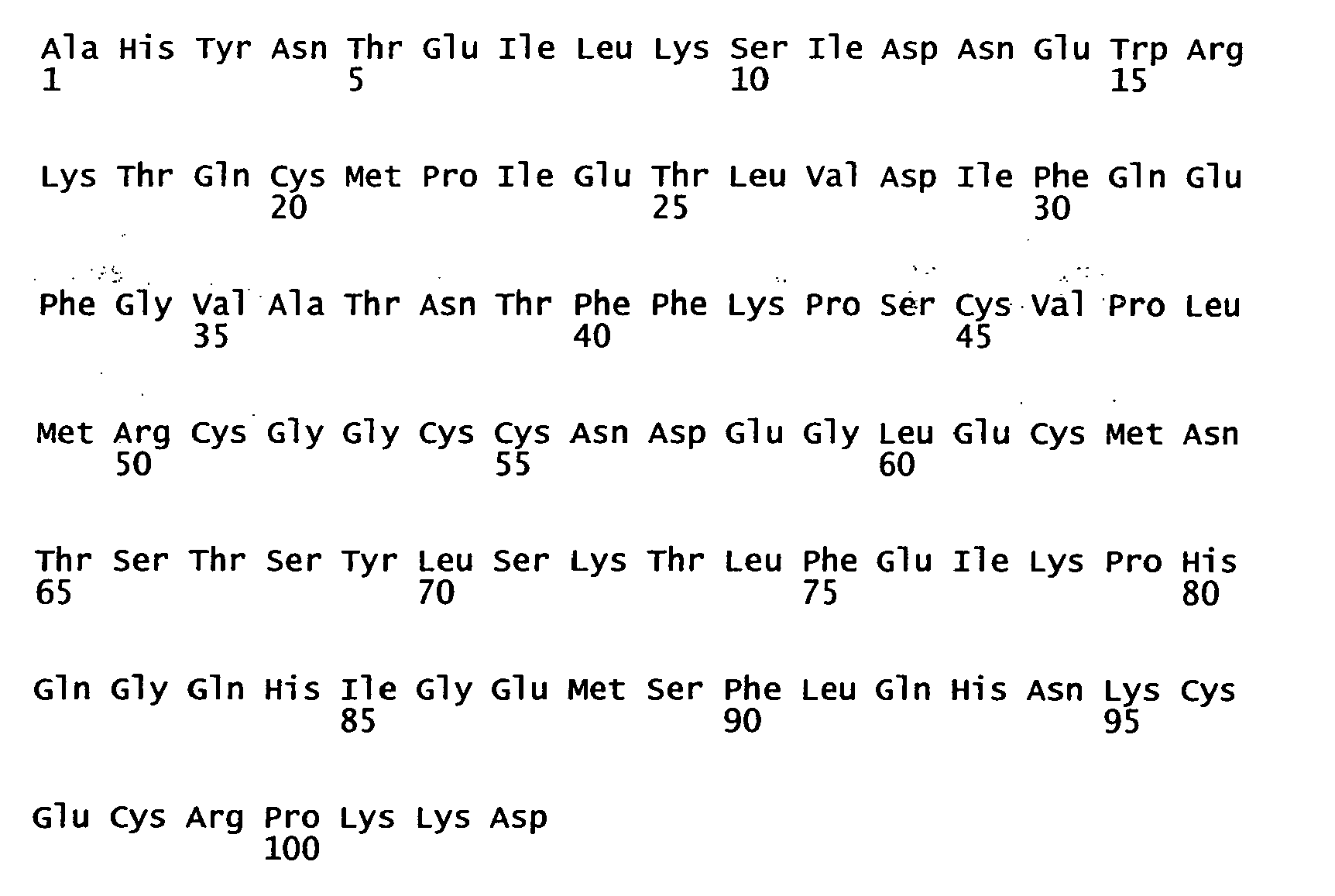
- <210> 328
<211> 306
<212> DNA
<213> Artificial Sequence - <220>
<223> Growth Factor Hybrid Sequence - <220>
<221> CDS
<222> (1)..(306) - <400> 328


- <210> 329
<211> 102
<212> PRT
<213> Artificial Sequence - <220>
<223> Growth Factor Hybrid Sequence - <400> 329

- <210> 330
<211> 306
<212> DNA
<213> Artificial Sequence - <220>
<223> Growth Factor Hybrid Sequence - <220>
<221> CDS
<222> (1)..(306) - <400> 330

- <210> 331
<211> 102
<212> PRT
<213> Artificial Sequence - <220>
<223> Growth Factor Hybrid Sequence - <400> 331


- <210> 332
<211> 309
<212> DNA
<213> Artificial sequence - <220>
<223> Growth Factor Hybrid sequence - <220>
<221> CDS
<222> (1)..(309) - <400> 332

- <210> 333
<211> 103
<212> PRT
<213> Artificial Sequence - <220>
<223> Growth Factor Hybrid Sequence - <400> 333


- <210> 334
<211> 309
<212> DNA
<213> Artificial Sequence - <220>
<223> Growth Factor Hybrid Sequence - <220>
<221> CDS
<222> (1)..(309) - <400> 334

- <210> 335
<211> 103
<212> PRT
<213> Artificial Sequence - <220>
<223> Growth Factor Hybrid Sequence - <400> 335

- <210> 336
<211> 306
<212> DNA
<213> Artificial Sequence - <220>
<223> Growth Factor Hybrid Sequence - <220>
<221> CDS
<222> (1)..(306) - <400> 336


- <210> 337
<211> 102
<212> PRT
<213> Artificial Sequence - <220>
<223> Growth Factor Hybrid Sequence - <400> 337

- <210> 338
<211> 306
<212> DNA
<213> Artificial sequence - <220>
<223> Growth Factor Hybrid Sequence - <220>
<221> CDS
<222> (1)..(306) - <400> 338

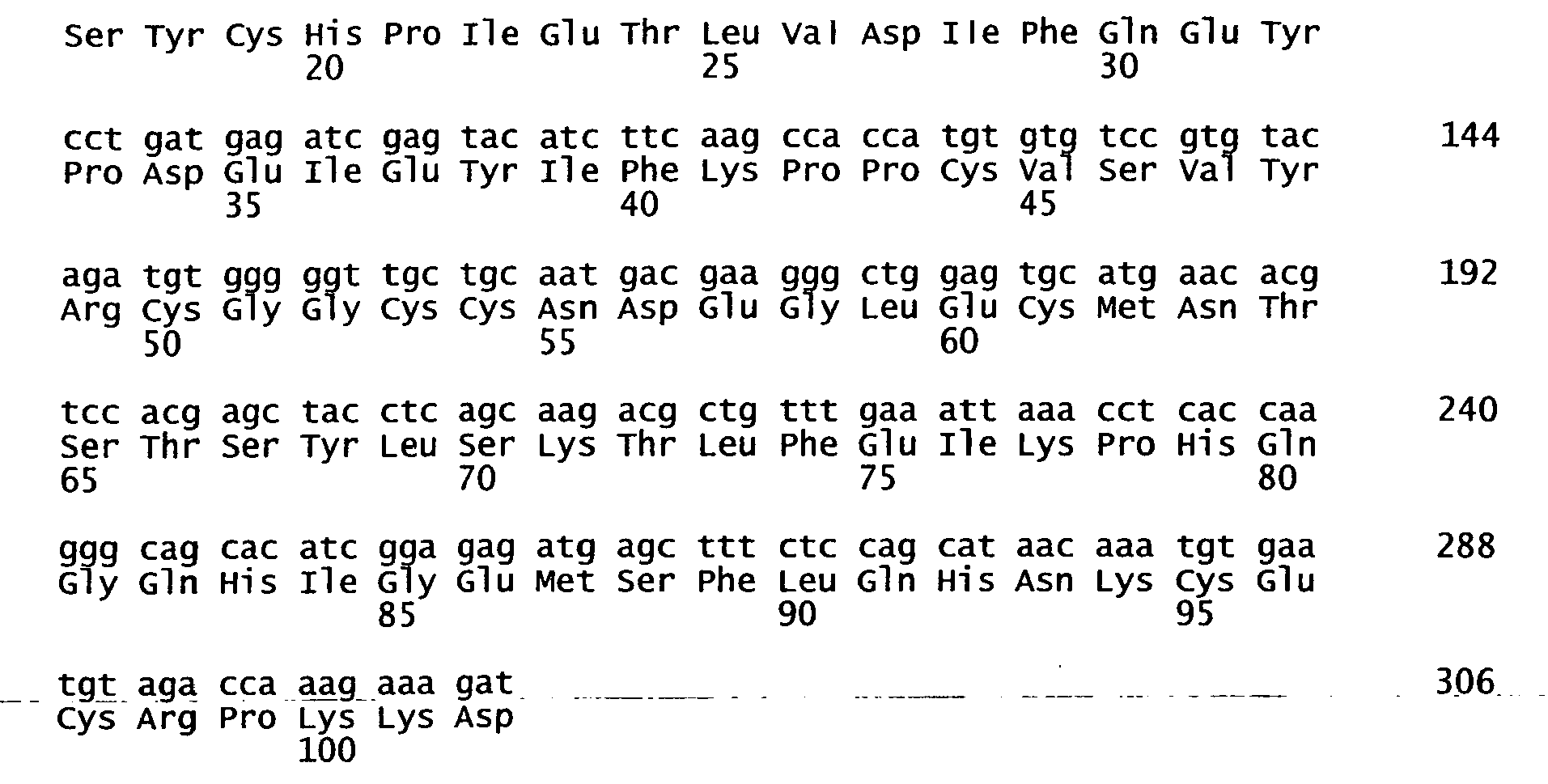
- <210> 339
<211> 102
<212> PRT
<213> Artificial Sequence - <220>
<223> Growth Factor Hybrid Sequence - <400> 339

- <210> 340
<211> 309
<212> DNA
<213> Artificial Sequence - <220>
<223> Growth Factor Hybrid Sequence - <220>
<221> CDS
<222> (1)..(309) - <400> 340

- <210> 341
<211> 103
<212> PRT
<213> Artificial Sequence - <220>
<223> Growth Factor Hybrid Sequence - <400> 341


- <210> 342
<211> 309
<212> DNA
<213> Artificial sequence - <220>
<223> Growth Factor Hybrid Sequence - <220>
<221> CDS
<222> (1)..(309) - <400> 342

- <210> 343
<211> 103
<212> PRT
<213> Artificial Sequence - <220>
<223> Growth Factor Hybrid Sequence - <400> 343


- <210> 344
<211> 306
<212> DNA
<213> Artificial Sequence - <220>
<223> Growth Factor Hybrid Sequence - <220>
<221> CDS
<222> (1)..(306) - <400> 344

- <210> 345
<211> 102
<212> PRT
<213> Artificial Sequence - <220>
<223> Growth Factor Hybrid Sequence - <400> 345

- <210> 346
<211> 306
<212> DNA
<213> Artificial Sequence - <220>
<223> Growth Factor Hybrid sequence - <220>
<221> CDS
<222> (1)..(306) - <400> 346


- <210> 347
<211> 102
<212> PRT
<213> Artificial Sequence - <220>
<223> Growth Factor Hybrid Sequence - <400> 347

- <210> 348
<211> 309
<212> DNA
<213> Artificial sequence - <220>
<223> Growth Factor Hybrid Sequence - <220>
<221> CDS
<222> (1)..(309) - <400> 348


- <210> 349
<211> 103
<212> PRT
<213> Artificial Sequence - <220>
<223> Growth Factor Hybrid Sequence - <400> 349

- <210> 350
<211> 309
<212> DNA
<213> Artificial Sequence - <220>
<223> Growth Factor Hybrid Sequence - <220>
<221> CDS
<222> (1)..(309) - <400> 350

- <210> 351
<211> 103
<212> PRT
<213> Artificial Sequence - <220>
<223> Growth Factor Hybrid Sequence - <400> 351


- <210> 352
<211> 306
<212> DNA
<213> Artificial Sequence - <220>
<223> Growth Factor Hybrid Sequence - <220>
<221> CDS
<222> (1)..(306) - <400> 352

- <210> 353
<211> 102
<212> PRT
<213> Artificial Sequence - <220>
<223> Growth Factor Hybrid Sequence - <400> 353


- <210> 354
<211> 306
<212> DNA
<213> Artificial Sequence - <220>
<223> Growth Factor Hybrid Sequence - <220>
<221> CDS
<222> (1)..(306) - <400> 354

- <210> 355
<211> 102
<212> PRT
<213> Artificial Sequence - <220>
<223> Growth Factor Hybrid sequence - <400> 355

- <210> 356
<211> 309
<212> DNA
<213> Artificial Sequence - <220>
<223> Growth Factor Hybrid Sequence - <220>
<221> CDS
<222> (1)..(309) - <400> 356


- <210> 357
<211> 103
<212> PRT
<213> Artificial Sequence - <220>
<223> Growth Factor Hybrid Sequence - <400> 357

- <210> 358
<211> 309
<212> DNA
<213> Artificial sequence - <220>
<223> Growth Factor Hybrid Sequence - <220>
<221> CDS
<222> (1)..(309) - <400> 358


- <210> 359
<211> 103
<212> PRT
<213> Artificial Sequence - <220>
<223> Growth Factor Hybrid Sequence - <400> 359

- <210> 360
<211> 306
<212> DNA
<213> Artificial Sequence - <220>
<223> Growth Factor Hybrid Sequence - <220>
<221> CDS
<222> (1)..(306)
- <400> 360
- <210> 361
<211> 102
<212> PRT
<213> Artificial Sequence - <220>
<223> Growth Factor Hybrid Sequence - <400> 361

- <210> 362
<211> 306
<212> DNA
<213> Artificial Sequence - <220>
<223> Growth Factor Hybrid Sequence - <220>
<221> CDS
<222> (1)..(306) - <400> 362
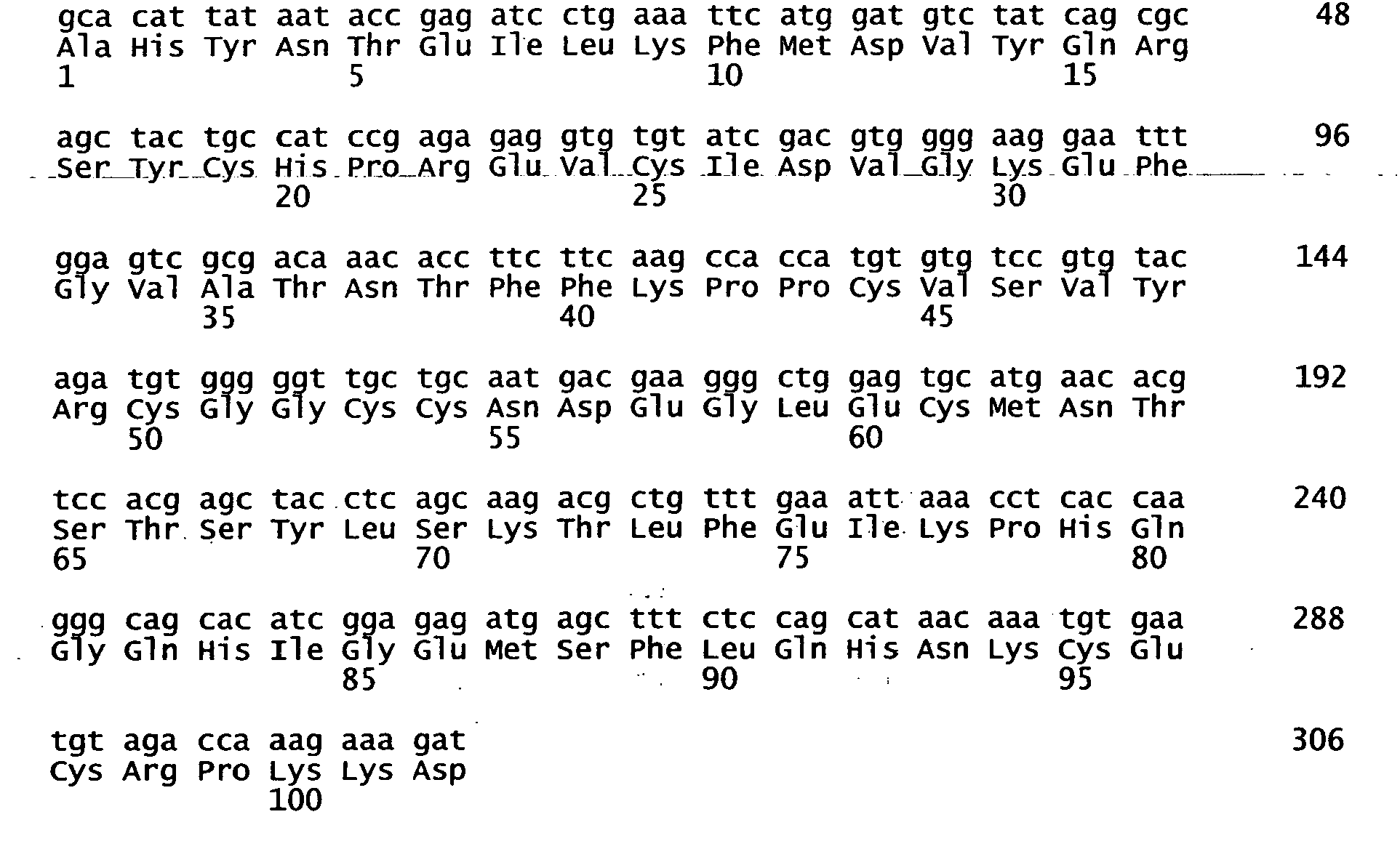
- <210> 363
<211> 102
<212> PRT
<213> Artificial Sequence - <220>
<223> Growth Factor Hybrid Sequence - <400> 363


- <210> 364
<211> 309
<212> DNA
<213> Artificial Sequence - <220>
<223> Growth Factor Hybrid Sequence - <220>
<221> CDS
<222> (1)..(309) - <400> 364

- <210> 365
<211> 103
<212> PRT
<213> Artificial Sequence - <220>
<223> Growth Factor Hybrid Sequence - <400> 365


- <210> 366
<211> 309
<212> DNA
<213> Artificial Sequence - <220>
<223> Growth Factor Hybrid Sequence - <220>
<221> CDS
<222> (1)..(309) - <400> 366

- <210> 367
<211> 103
<212> PRT
<213> Artificial sequence - <220>
<223> Growth Factor Hybrid Sequence - <400> 367

- <210> 368
<211> 306
<212> DNA
<213> Artificial Sequence - <220>
<223> Growth Factor Hybrid Sequence - <220>
<221> CDS
<222> (1)..(306) - <400> 368


- <210> 369
<211> 102
<212> PRT
<213> Artificial Sequence - <220>
<223> Growth Factor Hybrid Sequence - <400> 369
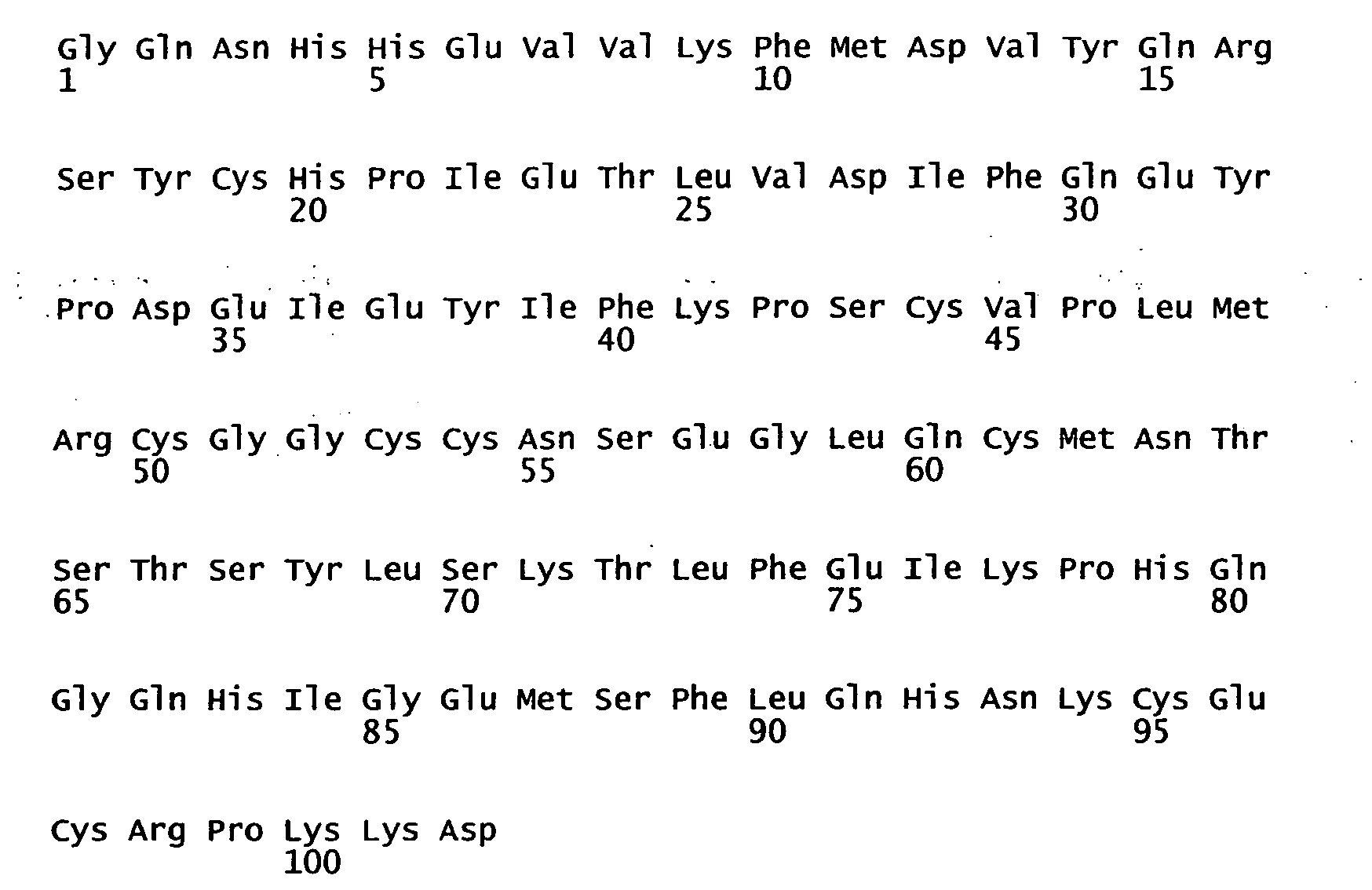
- <210> 370
<211> 306
<212> DNA
<213> Artificial Sequence - <220>
<223> Growth Factor Hybrid Sequence - <220>
<221> CDS
<222> (1)..(306) - <400> 370


- <210> 371
<211> 102
<212> PRT
<213> Artificial sequence - <220>
<223> Growth Factor Hybrid Sequence - <400> 371

- <210> 372
<211> 309
<212> DNA
<213> Artificial Sequence - <220>
<223> Growth Factor Hybrid Sequence - <220>
<221> CDS
<222> (1)..(309) - <400> 372

- <210> 373
<211> 103
<212> PRT
<213> Artificial Sequence - <220>
<223> Growth Factor Hybrid Sequence - <400> 373


- <210> 374
<211> 309
<212> DNA
<213> Artificial Sequence - <220>
<223> Growth Factor Hybrid Sequence - <220>
<221> CDS
<222> (1)..(309) - <400> 374

- <210> 375
<211> 103
<212> PRT
<213> Artificial sequence - <220>
<223> Growth Factor Hybrid Sequence - <400> 375


- <210> 376
<211> 306
<212> DNA
<213> Artificial Sequence - <220>
<223> Growth Factor Hybrid sequence - <220>
<221> CDS
<222> (1)..(306) - <400> 376

- <210> 377
<211> 102
<212> PRT
<213> Artificial sequence - <220>
<223> Growth Factor Hybrid Sequence - <400> 377

- <210> 378
<211> 306
<212> DNA
<213> Artificial Sequence - <220>
<223> Growth Factor Hybrid Sequence - <220>
<221> CDS
<222> (1)..(306) - <400> 378


- <210> 379
<211> 102
<212> PRT
<213> Artificial Sequence - <220>
<223> Growth Factor Hybrid sequence - <400> 379

- <210> 380
<211> 309
<212> DNA
<213> Artificial Sequence - <220>
<223> Growth Factor Hybrid Sequence - <220>
<221> CDS
<222> (1)..(309) - <400> 380


- <210> 381
<211> 103
<212> PRT
<213> Artificial sequence - <220>
<223> Growth Factor Hybrid Sequence - <400> 381

- <210> 382
<211> 309
<212> DNA
<213> Artificial sequence - <220>
<223> Growth Factor Hybrid Sequence - <220>
<221> CDS
<222> (1)..(309) - <400> 382

- <210> 383
<211> 103
<212> PRT
<213> Artificial Sequence - <220>
<223> Growth Factor Hybrid Sequence - <400> 383
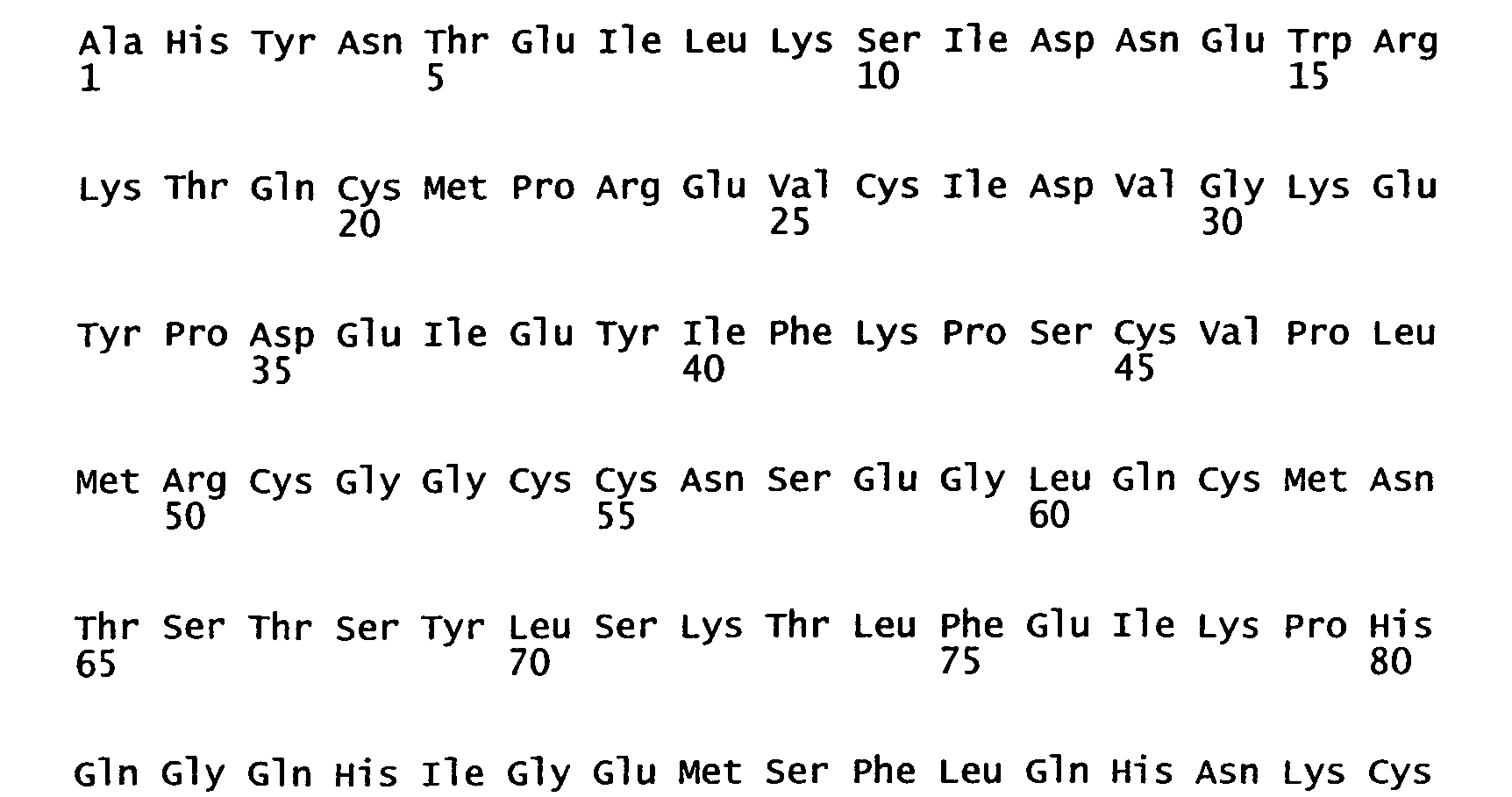

- <210> 384
<211> 306
<212> DNA
<213> Artificial sequence - <220>
<223> Growth Factor Hybrid Sequence - <220>
<221> CDS
<222> (1)..(306) - <400> 384

- <210> 385
<211> 102
<212> PRT
<213> Artificial sequence - <220>
<223> Growth Factor Hybrid Sequence - <400> 385


- <210> 386
<211> 306
<212> DNA
<213> Artificial Sequence - <220>
<223> Growth Factor Hybrid Sequence - <220>
<221> CDS
<222> (1)..(306) - <400> 386
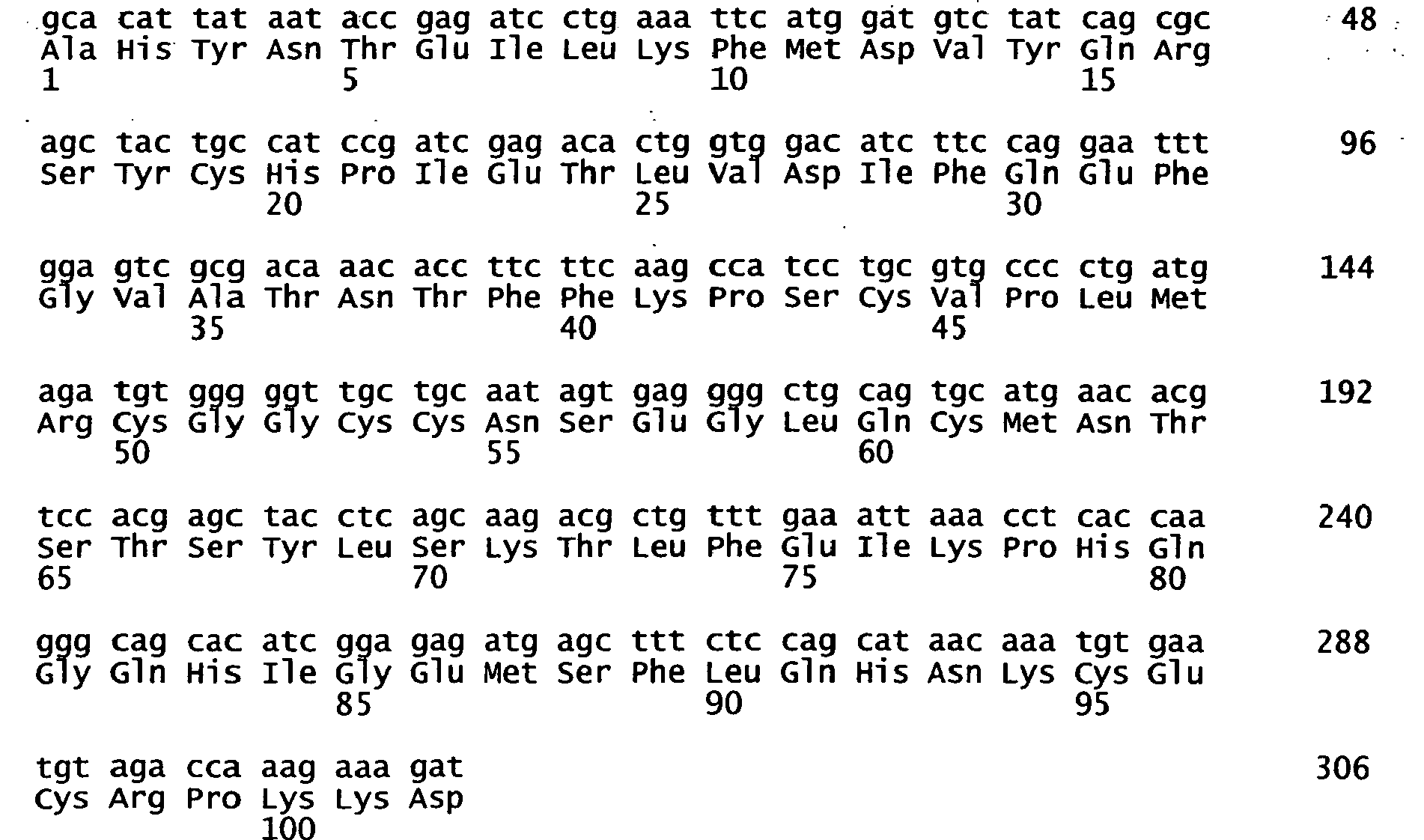
- <210> 387
<211> 102
<212> PRT
<213> Artificial Sequence - <220>
<223> Growth Factor Hybrid Sequence - <400> 387

- <210> 388
<211> 309
<212> DNA
<213> Artificial sequence - <220>
<223> Growth Factor Hybrid Sequence - <220>
<221> CDS
<222> (1)..(309) - <400> 388


- <210> 389
<211> 103
<212> PRT
<213> Artificial sequence - <220>
<223> Growth Factor Hybrid Sequence - <400> 389

- <210> 390
<211> 309
<212> DNA
<213> Artificial Sequence - <220>
<223> Growth Factor Hybrid sequence - <220>
<221> CDS
<222> (1)..(309) - <400> 390


- <210> 391
<211> 103
<212> PRT
<213> Artificial Sequence - <220>
<223> Growth Factor Hybrid Sequence - <400> 391
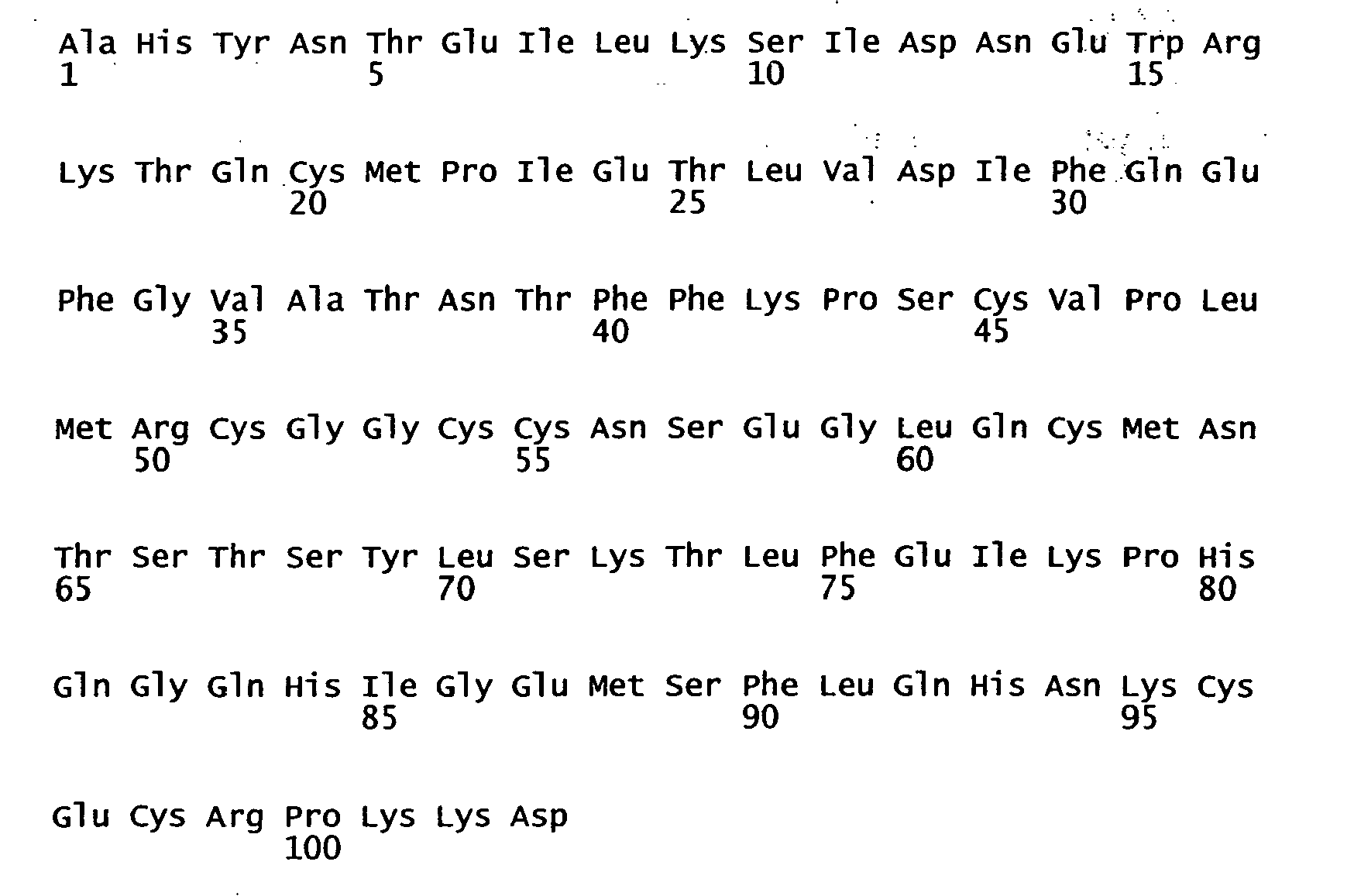
- <210> 392
<211> 306
<212> DNA
<213> Artificial Sequence - <220>
<223> Growth Factor Hybrid Sequence - <220>
<221> CDS
<222> (1)..(306) - <400> 392

- <210> 393
<211> 102
<212> PRT
<213> Artificial Sequence - <220>
<223> Growth Factor Hybrid Sequence - <400> 393


- <210> 394
<211> 306
<212> DNA
<213> Artificial sequence - <220>
<223> Growth Factor Hybrid Sequence - <220>
<221> CDS
<222> (1)..(306) - <400> 394

- <210> 395
<211> 102
<212> PRT
<213> Artificial Sequence - <220>
<223> Growth Factor Hybrid sequence - <400> 395


- <210> 396
<211> 309
<212> DNA
<213> Artificial Sequence - <220>
<223> Growth Factor Hybrid Sequence - <220>
<221> CDS
<222> (1)..(309) - <400> 396

- <210> 397
<211> 103
<212> PRT
<213> Artificial Sequence - <220>
<223> Growth Factor Hybrid Sequence - <400> 397

- <210> 398
<211> 309
<212> DNA
<213> Artificial Sequence - <220>
<223> Growth Factor Hybrid Sequence - <220>
<221> CDS
<222> (1)..(309) - <400> 398


- <210> 399
<211> 103
<212> PRT
<213> Artificial Sequence - <220>
<223> Growth Factor Hybrid sequence - <400> 399

- <210> 400
<211> 306
<212> DNA
<213> Artificial Sequence - <220>
<223> Growth Factor Hybrid Sequence - <220>
<221> CDS
<222> (1)..(306) - <400> 400


- <210> 401
<211> 102
<212> PRT
<213> Artificial Sequence - <220>
<223> Growth Factor Hybrid Sequence - <400> 401

- <210> 402
<211> 306
<212> DNA
<213> Artificial Sequence - <220>
<223> Growth Factor Hybrid Sequence - <220>
<221> CDS
<222> (1)..(306) - <400> 402

- <210> 403
<211> 102
<212> PRT
<213> Artificial Sequence - <220>
<223> Growth Factor Hybrid Sequence - <400> 403

- <210> 404
<211> 309
<212> DNA
<213> Artificial Sequence - <220>
<223> Growth Factor Hybrid Sequence - <220>
<221> CDS
<222> (1)..(309) - <400> 404

- <210> 405
<211> 103
<212> PRT
<213> Artificial Sequence - <220>
<223> Growth Factor Hybrid Sequence - <400> 405

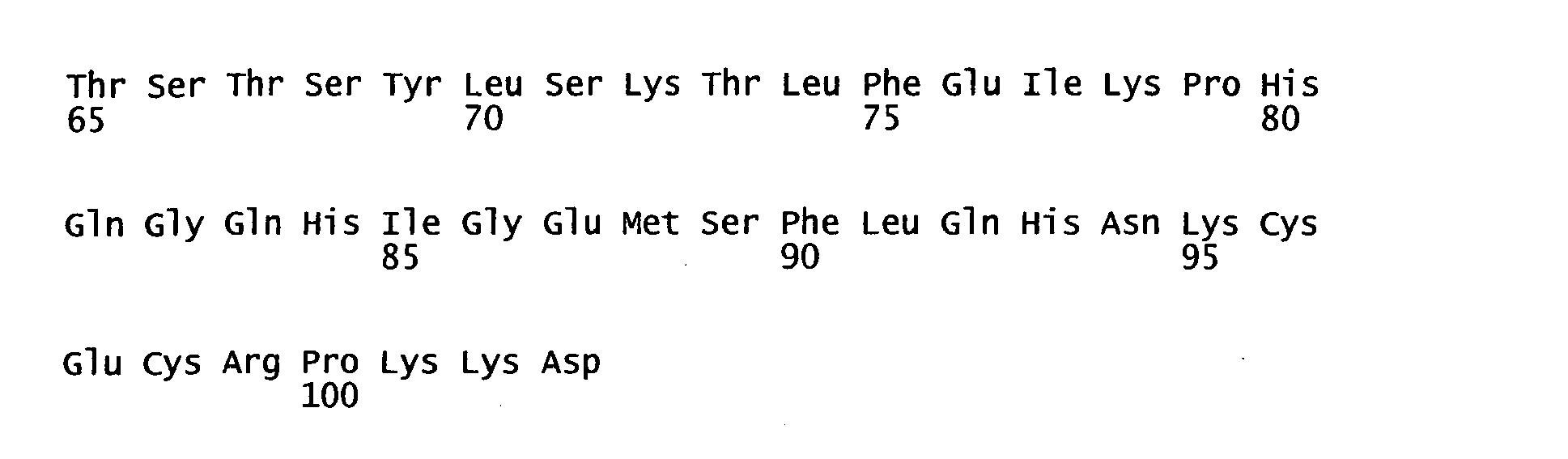
- <210> 406
<211> 309
<212> DNA
<213> Artificial Sequence - <220>
<223> Growth Factor Hybrid Sequence - <220>
<221> CDS
<222> (1)..(309) - <400> 406

- <210> 407
<211> 103
<212> PRT
<213> Artificial sequence - <220>
<223> Growth Factor Hybrid Sequence - <400> 407

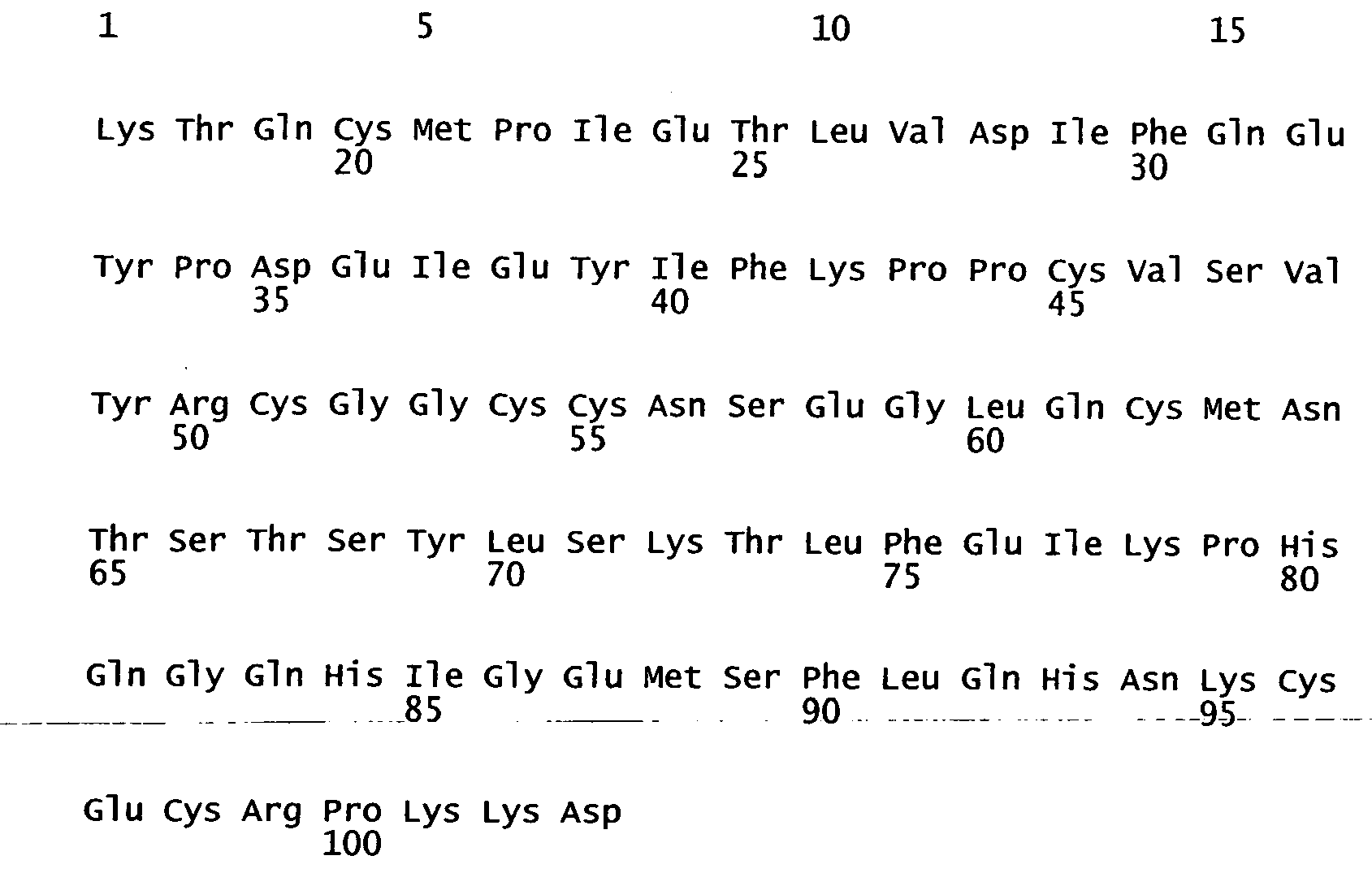
- <210> 408
<211> 306
<212> DNA
<213> Artificial Sequence - <220>
<223> Growth Factor Hybrid Sequence - <220>
<221> CDS
<222> (1)..(306) - <400> 408

- <210> 409
<211> 102
<212> PRT
<213> Artificial sequence - <220>
<223> Growth Factor Hybrid sequence - <400> 409

- <210> 410
<211> 306
<212> DNA
<213> Artificial sequence - <220>
<223> Growth Factor Hybrid sequence - <220>
<221> CDS
<222> (1)..(306) - <400> 410


- <210> 411
<211> 102
<212> PRT
<213> Artificial sequence - <220>
<223> Growth Factor Hybrid sequence - <400> 411

- <210> 412
<211> 309
<212> DNA
<213> Artificial Sequence - <220>
<223> Growth Factor Hybrid Sequence - <220>
<221> CDS
<222> (1)..(309) - <400> 412


- <210> 413
<211> 103
<212> PRT
<213> Artificial Sequence - <220>
<223> Growth Factor Hybrid Sequence - <400> 413

- <210> 414
<211> 309
<212> DNA
<213> Artificial Sequence - <220>
<223> Growth Factor Hybrid Sequence - <220>
<221> CDS
<222> (1)..(309) - <400> 414
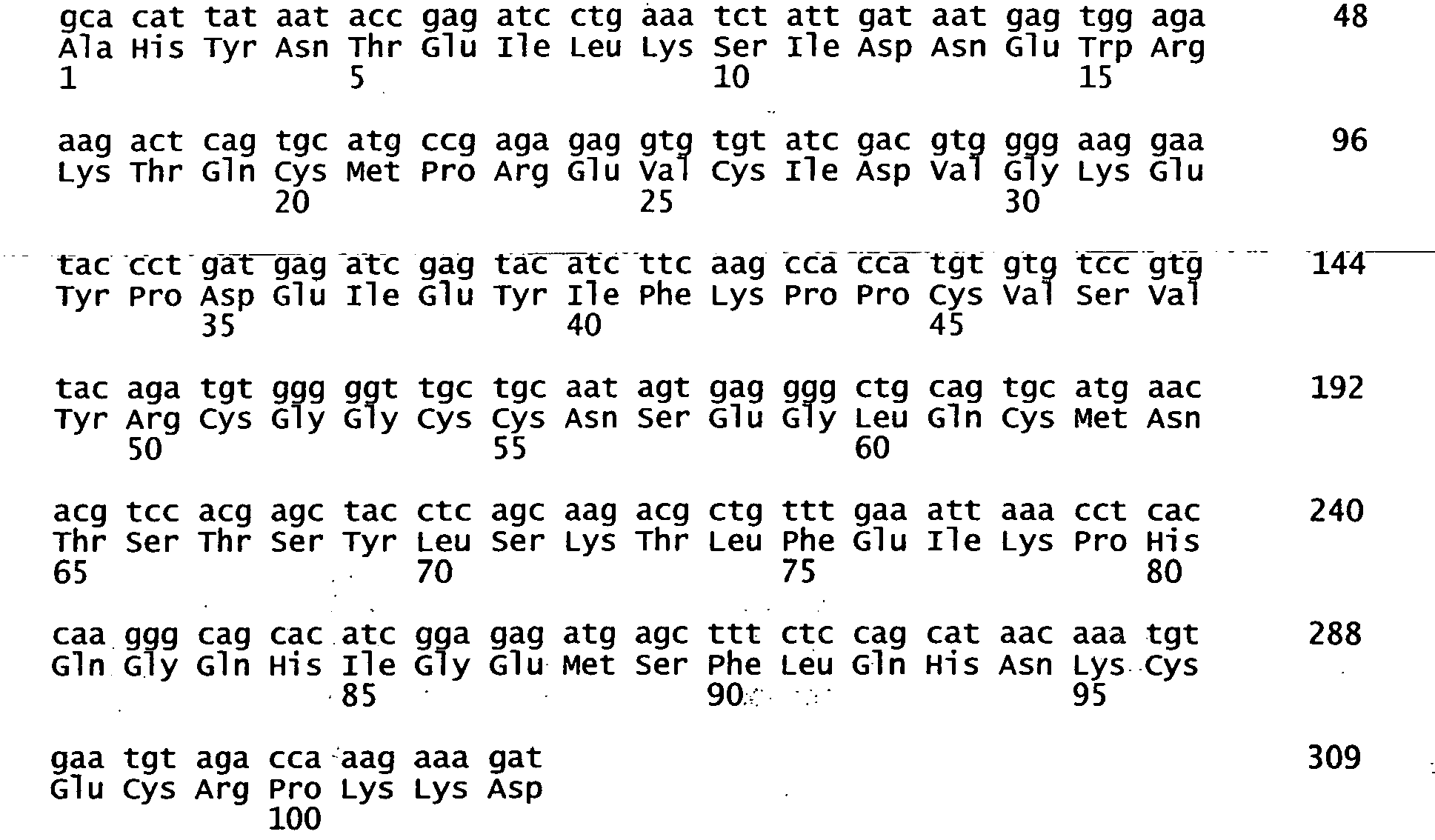
- <210> 415
<211> 103
<212> PRT
<213> Artificial Sequence - <220>
<223> Growth Factor Hybrid Sequence - <400> 415


- <210> 416
<211> 306
<212> DNA
<213> Artificial Sequence - <220>
<223> Growth Factor Hybrid Sequence - <220>
<221> CDS
<222> (1)..(306) - <400> 416

- <210> 417
<211> 102
<212> PRT
<213> Artificial Sequence - <220>
<223> Growth Factor Hybrid Sequence - <400> 417


- <210> 418
<211> 306
<212> DNA
<213> Artificial sequence - <220>
<223> Growth Factor Hybrid Sequence - <220>
<221> CDS
<222> (1)..(306) - <400> 418

- <210> 419
<211> 102
<212> PRT
<213> Artificial Sequence - <220>
<223> Growth Factor Hybrid Sequence - <400> 419

- <210> 420
<211> 309
<212> DNA
<213> Artificial sequence - <220>
<223> Growth Factor Hybrid Sequence - <220>
<221> CDS
<222> (1)..(309) - <400> 420
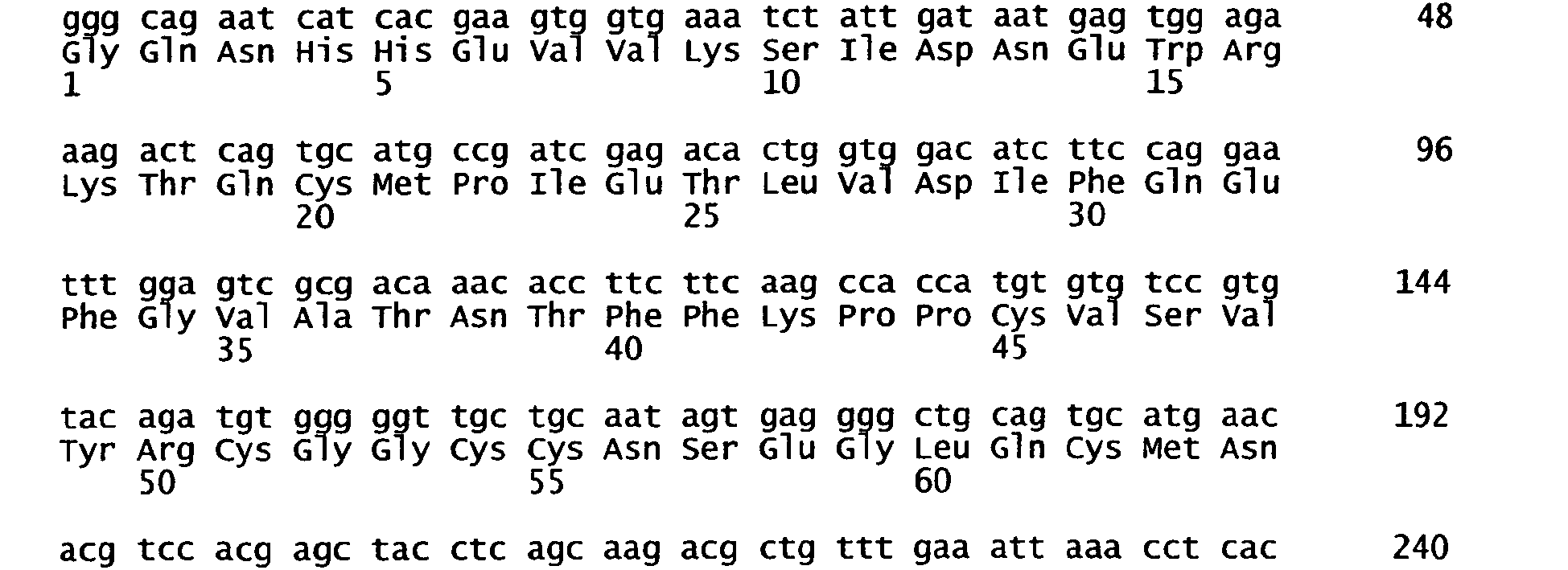

- <210> 421
<211> 103
<212> PRT
<213> Artificial Sequence - <220>
<223> Growth Factor Hybrid Sequence - <400> 421

- <210> 422
<211> 309
<212> DNA
<213> Artificial Sequence - <220>
<223> Growth Factor Hybrid Sequence - <220>
<221> CDS
<222> (1)..(309) - <400> 422


- <210> 423
<211> 103
<212> PRT
<213> Artificial Sequence - <220>
<223> Growth Factor Hybrid Sequence - <400> 423

- <210> 424
<211> 306
<212> DNA
<213> Artificial Sequence - <220>
<223> Growth Factor Hybrid sequence - <220>
<221> CDS
<222> (1)..(306) - <400> 424

- <210> 425
<211> 102
<212> PRT
<213> Artificial Sequence - <220>
<223> Growth Factor Hybrid Sequence - <400> 425


- <210> 426
<211> 306
<212> DNA
<213> Artificial sequence - <220>
<223> Growth Factor Hybrid Sequence - <220>
<221> CDS
<222> (1)..(306) - <400> 426

- <210> 427
<211> 102
<212> PRT
<213> Artificial Sequence - <220>
<223> Growth Factor Hybrid sequence - <400> 427


- <210> 428
<211> 309
<212> DNA
<213> Artificial Sequence - <220>
<223> Growth Factor Hybrid Sequence - <220>
<221> CDS
<222> (1)..(309) - <400> 428

- <210> 429
<211> 103
<212> PRT
<213> Artificial Sequence - <220>
<223> Growth Factor Hybrid Sequence - <400> 429

- <210> 430
<211> 309
<212> DNA
<213> Artificial Sequence - <220>
<223> Growth Factor Hybrid Sequence - <220>
<221> CDS
<222> (1)..(309) - <400> 430


- <210> 431
<211> 103
<212> PRT
<213> Artificial Sequence - <220>
<223> Growth Factor Hybrid Sequence - <400> 431

- <210> 432
<211> 312
<212> DNA
<213> Artificial sequence - <220>
<223> Growth Factor Hybrid Sequence - <220>
<221> CDS
<222> (1)..(312) - <400> 432


- <210> 433
<211> 104
<212> PRT
<213> Artificial Sequence - <220>
<223> Growth Factor Hybrid Sequence - <400> 433

- <210> 434
<211> 312
<212> DNA
<213> Artificial Sequence - <220>
<223> Growth Factor Hybrid Sequence - <220>
<221> CDS
<222> (1)..(312) - <400> 434

- <210> 435
<211> 104
<212> PRT
<213> Artificial Sequence - <220>
<223> Growth Factor Hybrid Sequence - <400> 435


- <210> 436
<211> 315
<212> DNA
<213> Artificial Sequence - <220>
<223> Growth Factor Hybrid Sequence - <220>
<221> CDS
<222> (1)..(315) - <400> 436

- <210> 437
<211> 105
<212> PRT
<213> Artificial Sequence - <220>
<223> Growth Factor Hybrid Sequence - <400> 437


- <210> 438
<211> 315
<212> DNA
<213> Artificial Sequence - <220>
<223> Growth Factor Hybrid Sequence - <220>
<221> CDS
<222> (1)..(315) - <400> 438
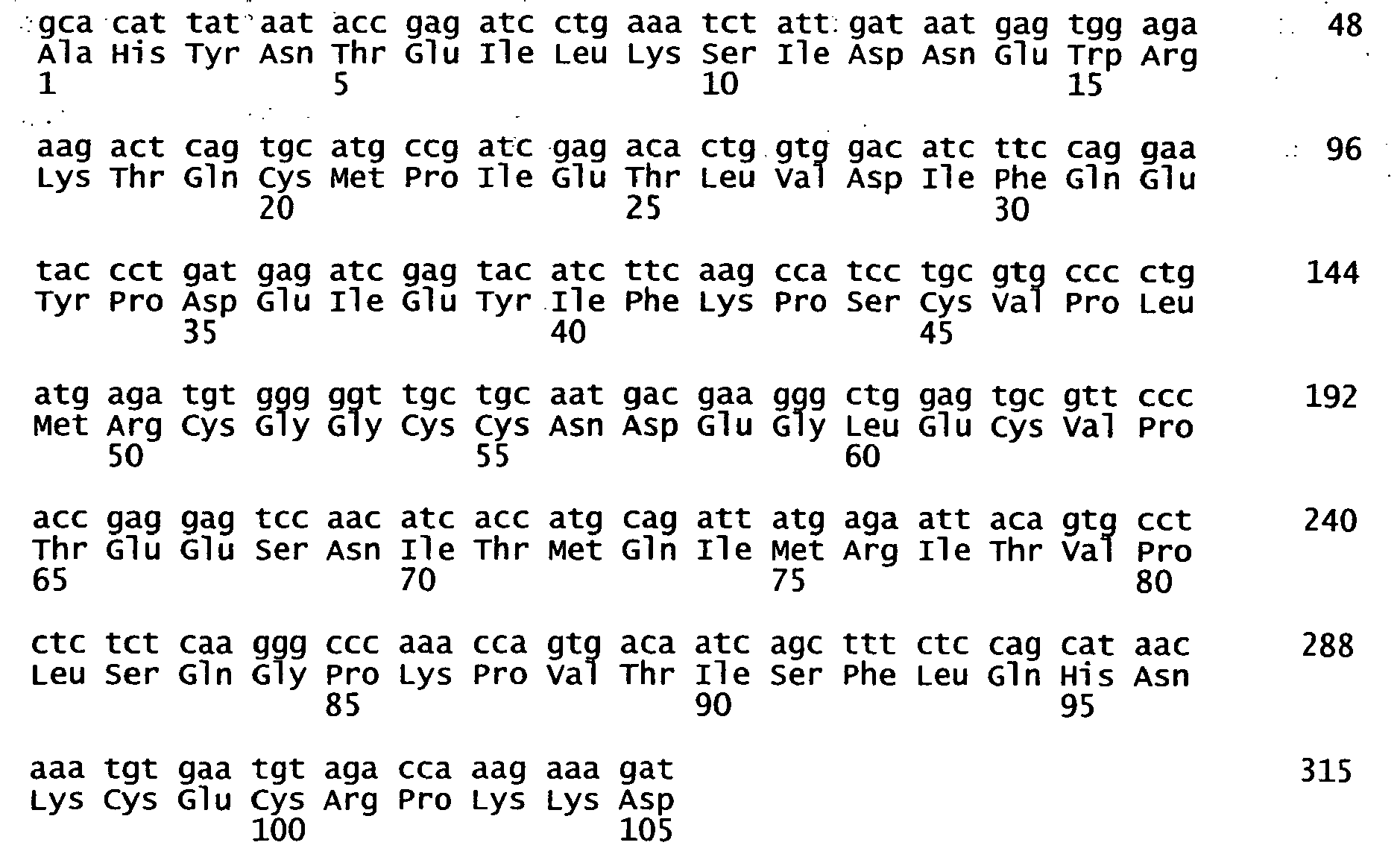
- <210> 439
<211> 105
<212> PRT
<213> Artificial Sequence - <220>
<223> Growth Factor Hybrid Sequence - <400> 439

- <210> 440
<211> 312
<212> DNA
<213> Artificial Sequence - <220>
<223> Growth Factor Hybrid Sequence - <220>
<221> CDS
<222> (1)..(312) - <400> 440


- <210> 441
<211> 104
<212> PRT
<213> Artificial Sequence - <220>
<223> Growth Factor Hybrid Sequence - <400> 441

- <210> 442
<211> 312
<212> DNA
<213> Artificial Sequence - <220>
<223> Growth Factor Hybrid Sequence - <220>
<221> CDS
<222> (1)..(312) - <400> 442


- <210> 443
<211> 104
<212> PRT
<213> Artificial Sequence - <220>
<223> Growth Factor Hybrid sequence - <400> 443

- <210> 444
<211> 315
<212> DNA
<213> Artificial sequence - <220>
<223> Growth Factor Hybrid Sequence - <220>
<221> CDS
<222> (1)..(315) - <400> 444

- <210> 445
<211> 105
<212> PRT
<213> Artificial Sequence - <220>
<223> Growth Factor Hybrid Sequence - <400> 445

- <210> 446
<211> 315
<212> DNA
<213> Artificial Sequence - <220>
<223> Growth Factor Hybrid Sequence - <220>
<221> CDS
<222> (1)..(315) - <400> 446

- <210> 447
<211> 105
<212> PRT
<213> Artificial Sequence - <220>
<223> Growth Factor Hybrid Sequence - <400> 447


- <210> 448
<211> 312
<212> DNA
<213> Artificial Sequence - <220>
<223> Growth Factor Hybrid Sequence - <220>
<221> CDS
<222> (1)..(312) - <400> 448

- <210> 449
<211> 104
<212> PRT
<213> Artificial Sequence - <220>
<223> Growth Factor Hybrid Sequence - <400> 449

- <210> 450
<211> 312
<212> DNA
<213> Artificial Sequence - <220>
<223> Growth Factor Hybrid Sequence - <220>
<221> CDS
<222> (1)..(312) - <400> 450


- <210> 451
<211> 104
<212> PRT
<213> Artificial sequence - <220>
<223> Growth Factor Hybrid Sequence - <400> 451
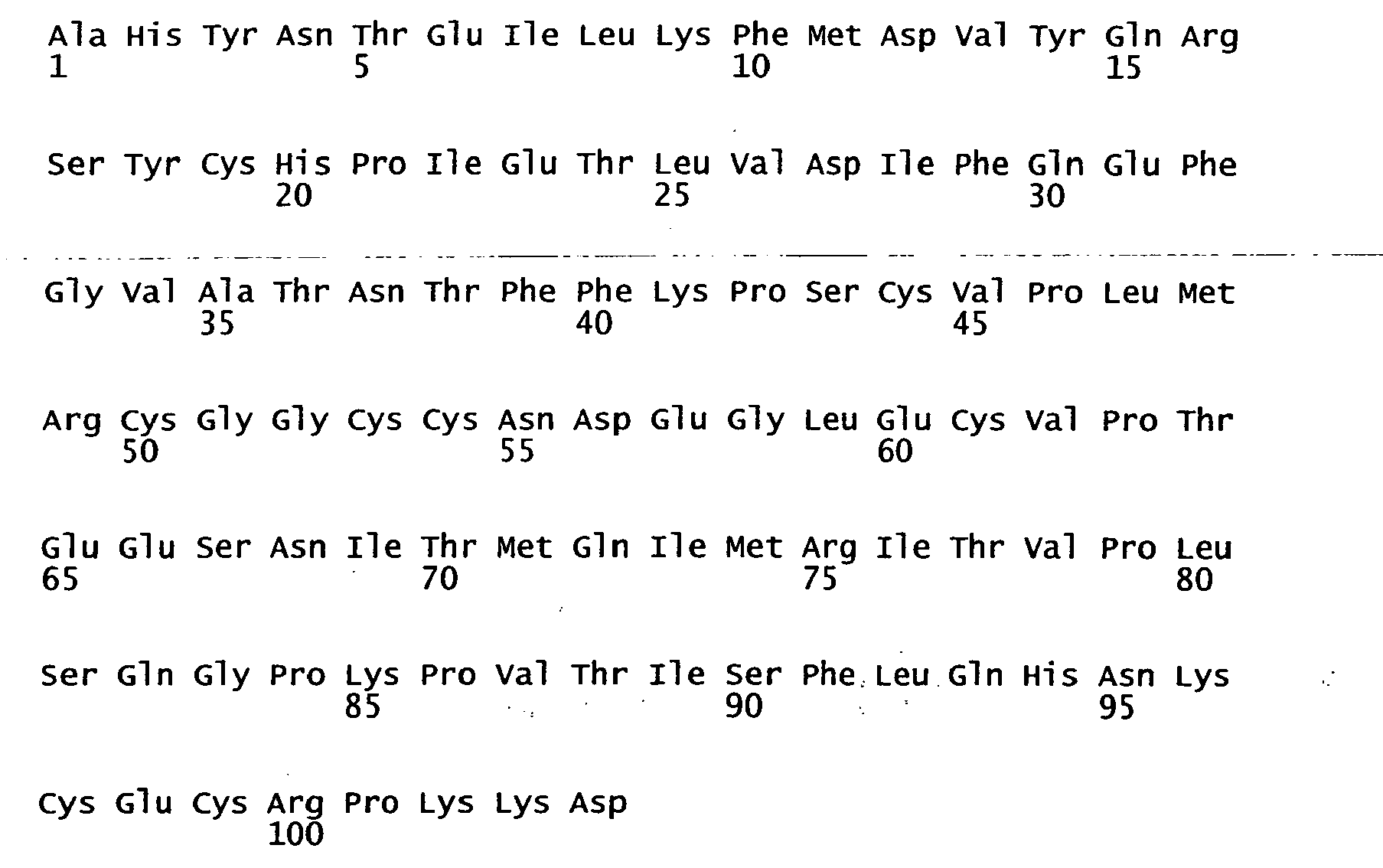
- <210> 452
<211> 315
<212> DNA
<213> Artificial Sequence - <220>
<223> Growth Factor Hybrid Sequence - <220>
<221> CDS
<222> (1)..(315) - <400> 452


- <210> 453
<211> 105
<212> PRT
<213> Artificial Sequence - <220>
<223> Growth Factor Hybrid Sequence - <400> 453

- <210> 454
<211> 315
<212> DNA
<213> Artificial sequence - <220>
<223> Growth Factor Hybrid Sequence - <220>
<221> CDS
<222> (1)..(315) - <400> 454

- <210> 455
<211> 105
<212> PRT
<213> Artificial Sequence - <220>
<223> Growth Factor Hybrid Sequence - <400> 455
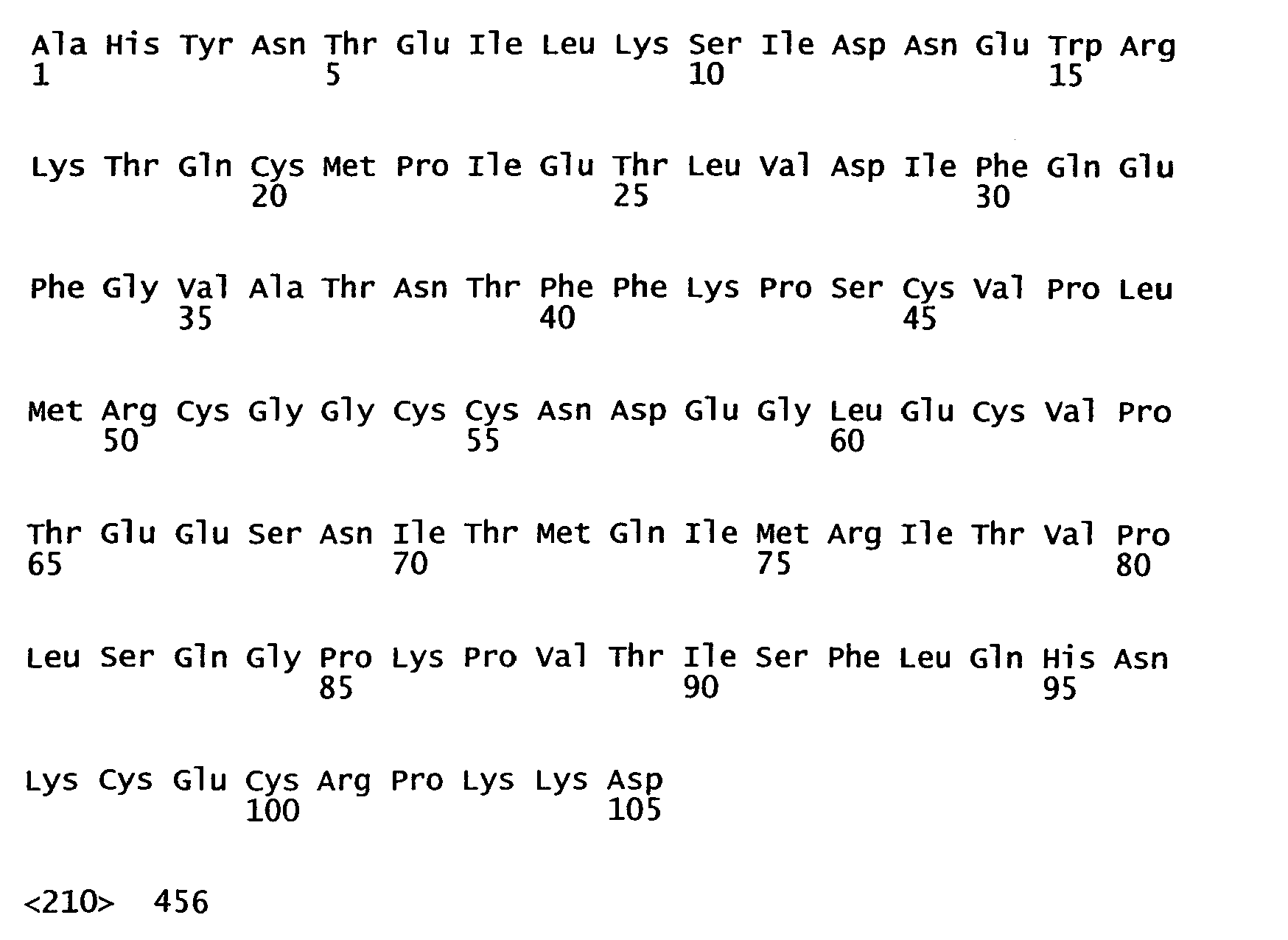
- <211> 312
<212> DNA
<213> Artificial sequence - <220>
<223> Growth Factor Hybrid Sequence - <220>
<221> CDS
<222> (1)..(312) - <400> 456

- <210> 457
<211> 104
<212> PRT
<213> Artificial Sequence - <220>
<223> Growth Factor Hybrid Sequence - <400> 457


- <210> 458
<211> 312
<212> DNA
<213> Artificial Sequence - <220>
<223> Growth Factor Hybrid Sequence - <220>
<221> CDS
<222> (1)..(312) - <400> 458

- <210> 459
<211> 104
<212> PRT
<213> Artificial sequence - <220>
<223> Growth Factor Hybrid sequence - <400> 459


- <210> 460
<211> 315
<212> DNA
<213> Artificial Sequence - <220>
<223> Growth Factor Hybrid Sequence - <220>
<221> CDS
<222> (1)..(315) - <400> 460

- <210> 461
<211> 105
<212> PRT
<213> Artificial sequence - <220>
<223> Growth Factor Hybrid sequence - <400> 461
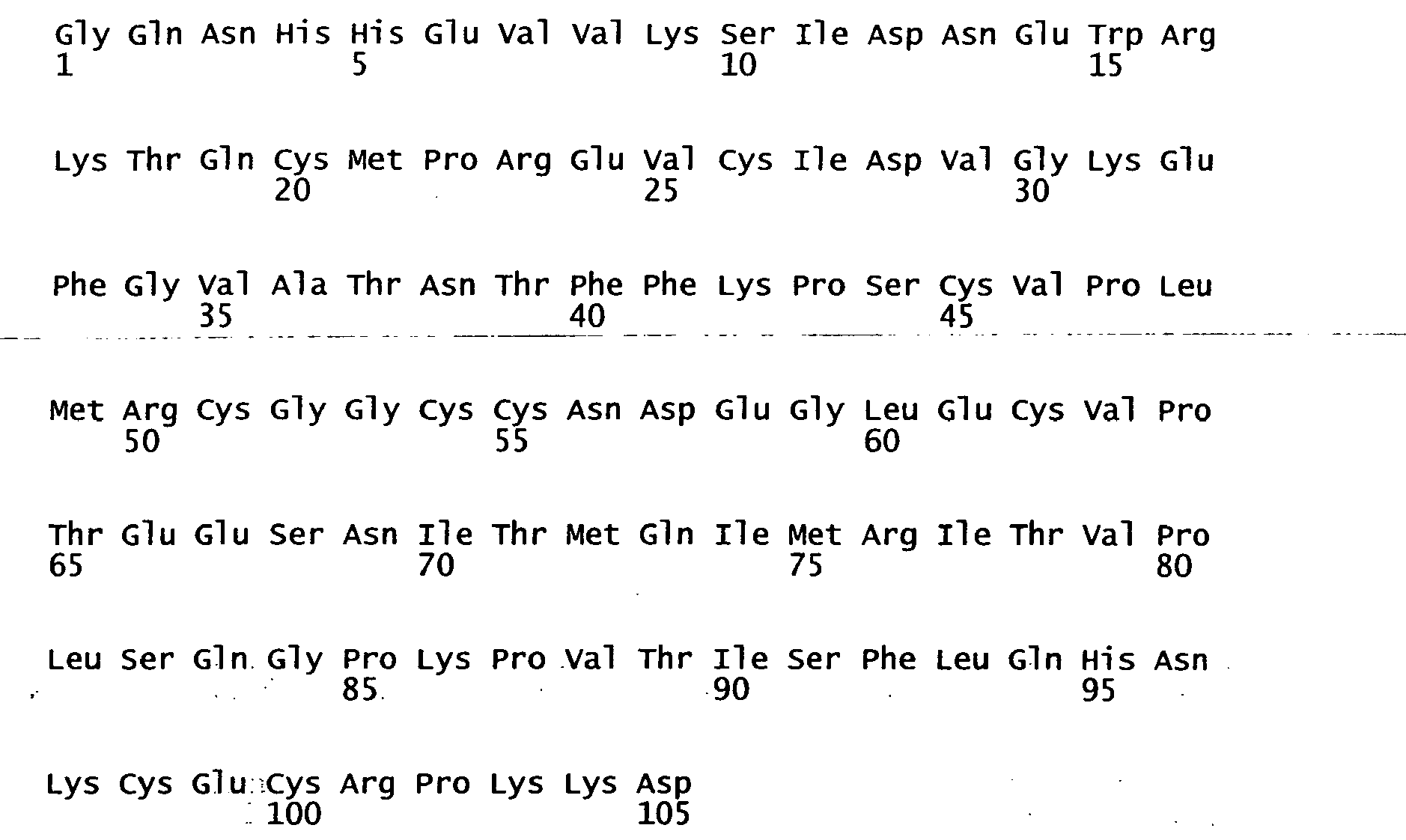
- <210> 462
<211> 315
<212> DNA
<213> Artificial Sequence - <220>
<223> Growth Factor Hybrid Sequence - <220>
<221> CDS
<222> (1)..(315) - <400> 462


- <210> 463
<211> 105
<212> PRT
<213> Artificial Sequence - <220>
<223> Growth Factor Hybrid Sequence - <400> 463

- <210> 464
<211> 312
<212> DNA
<213> Artificial Sequence - <220>
<223> Growth Factor Hybrid sequence - <220>
<221> CDS
<222> (1)..(312) - <400> 464


- <210> 465
<211> 104
<212> PRT
<213> Artificial Sequence - <220>
<223> Growth Factor Hybrid Sequence - <400> 465

- <210> 466
<211> 312
<212> DNA
<213> Artificial Sequence - <220>
<223> Growth Factor Hybrid Sequence - <220>
<221> CDS
<222> (1)..(312) - <400> 466

- <210> 467
<211> 104
<212> PRT
<213> Artificial Sequence - <220>
<223> Growth Factor Hybrid Sequence - <400> 467


- <210> 468
<211> 315
<212> DNA
<213> Artificial Sequence - <220>
<223> Growth Factor Hybrid Sequence - <220>
<221> CDS
<222> (1)..(315) - <400> 468

- <210> 469
<211> 105
<212> PRT
<213> Artificial Sequence - <220>
<223> Growth Factor Hybrid Sequence - <400> 469


- <210> 470
<211> 315
<212> DNA
<213> Artificial Sequence - <220>
<223> Growth Factor Hybrid Sequence - <220>
<221> CDS
<222> (1)..(315) - <400> 470

- <210> 471
<211> 105
<212> PRT
<213> Artificial Sequence - <220>
<223> Growth Factor Hybrid Sequence - <400> 471

- <210> 472
<211> 312
<212> DNA
<213> Artificial Sequence - <220>
<223> Growth Factor Hybrid Sequence - <220>
<221> CDS
<222> (1)..(312) - <400> 472


- <210> 473
<211> 104
<212> PRT
<213> Artificial Sequence - <220>
<223> Growth Factor Hybrid Sequence - <400> 473

- <210> 474
<211> 312
<212> DNA
<213> Artificial Sequence - <220>
<223> Growth Factor Hybrid sequence - <220>
<221> CDS
<222> (1)..(312) - <400> 474


- <210> 475
<211> 104
<212> PRT
<213> Artificial sequence - <220>
<223> Growth Factor Hybrid Sequence - <400> 475

- <210> 476
<211> 315
<212> DNA
<213> Artificial Sequence - <220>
<223> Growth Factor Hybrid Sequence - <220>
<221> CDS
<222> (1)..(315) - <400> 476
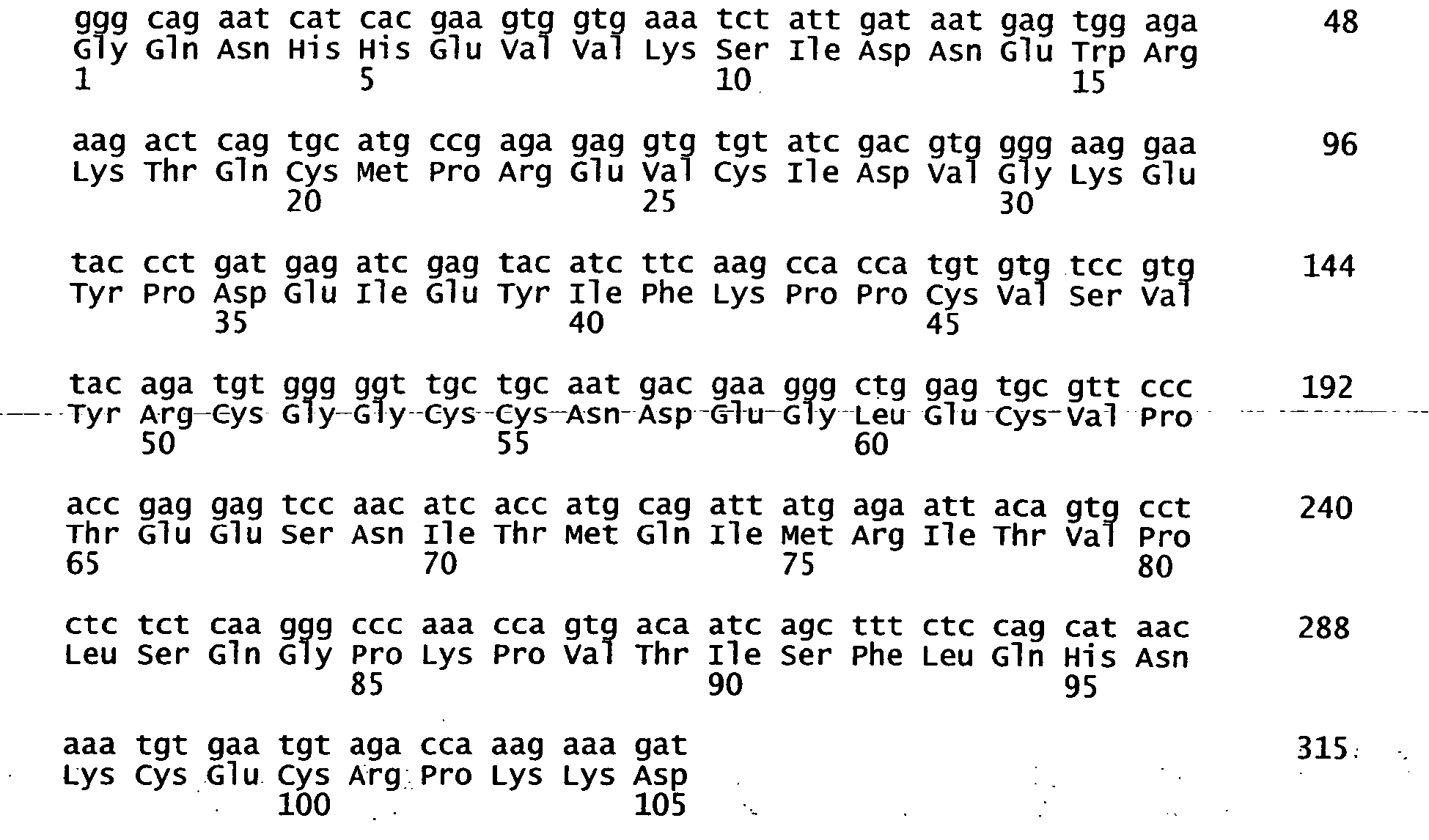
- <210> 477
<211> 105
<212> PRT
<213> Artificial Sequence - <220>
<223> Growth Factor Hybrid Sequence - <400> 477


- <210> 478
<211> 315
<212> DNA
<213> Artificial Sequence - <220>
<223> Growth Factor Hybrid Sequence - <220>
<221> CDS
<222> (1)..(315) - <400> 478

- <210> 479
<211> 105
<212> PRT
<213> Artificial Sequence - <220>
<223> Growth Factor Hybrid Sequence - <400> 479


- <210> 480
<211> 312
<212> DNA
<213> Artificial Sequence - <220>
<223> Growth Factor Hybrid Sequence - <220>
<221> CDS
<222> (1)..(312) - <400> 480

- <210> 481
<211> 104
<212> PRT
<213> Artificial Sequence - <220>
<223> Growth Factor Hybrid Sequence - <400> 481

- <210> 482
<211> 312
<212> DNA
<213> Artificial Sequence - <220>
<223> Growth Factor Hybrid Sequence - <220>
<221> CDS
<222> (1)..(312) - <400> 482


- <210> 483
<211> 104
<212> PRT
<213> Artificial Sequence - <220>
<223> Growth Factor Hybrid Sequence - <400> 483

- <210> 484
<211> 315
<212> DNA
<213> Artificial sequence - <220>
<223> Growth Factor Hybrid Sequence - <220>
<221> CDS
<222> (1)..(315) - <400> 484
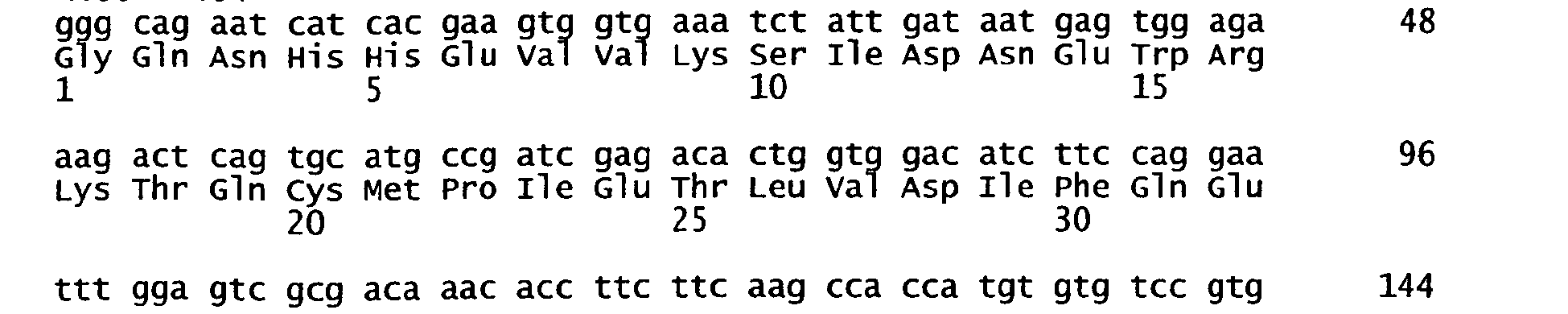

- <210> 485
<211> 105
<212> PRT
<213> Artificial Sequence - <220>
<223> Growth Factor Hybrid Sequence - <400> 485

- <210> 486
<211> 315
<212> DNA
<213> Artificial Sequence - <220>
<223> Growth Factor Hybrid Sequence - <220>
<221> CDS
<222> (1)..(315) - <400> 486

- <210> 487 .
<211> 105
<212> PRT
<213> Artificial Sequence - <220>
<223> Growth Factor Hybrid Sequence - <400> 487


- <210> 488
<211> 312
<212> DNA
<213> Artificial Sequence - <220>
<223> Growth Factor Hybrid Sequence - <220>
<221> CDS
<222> (1)..(312) - <400> 488
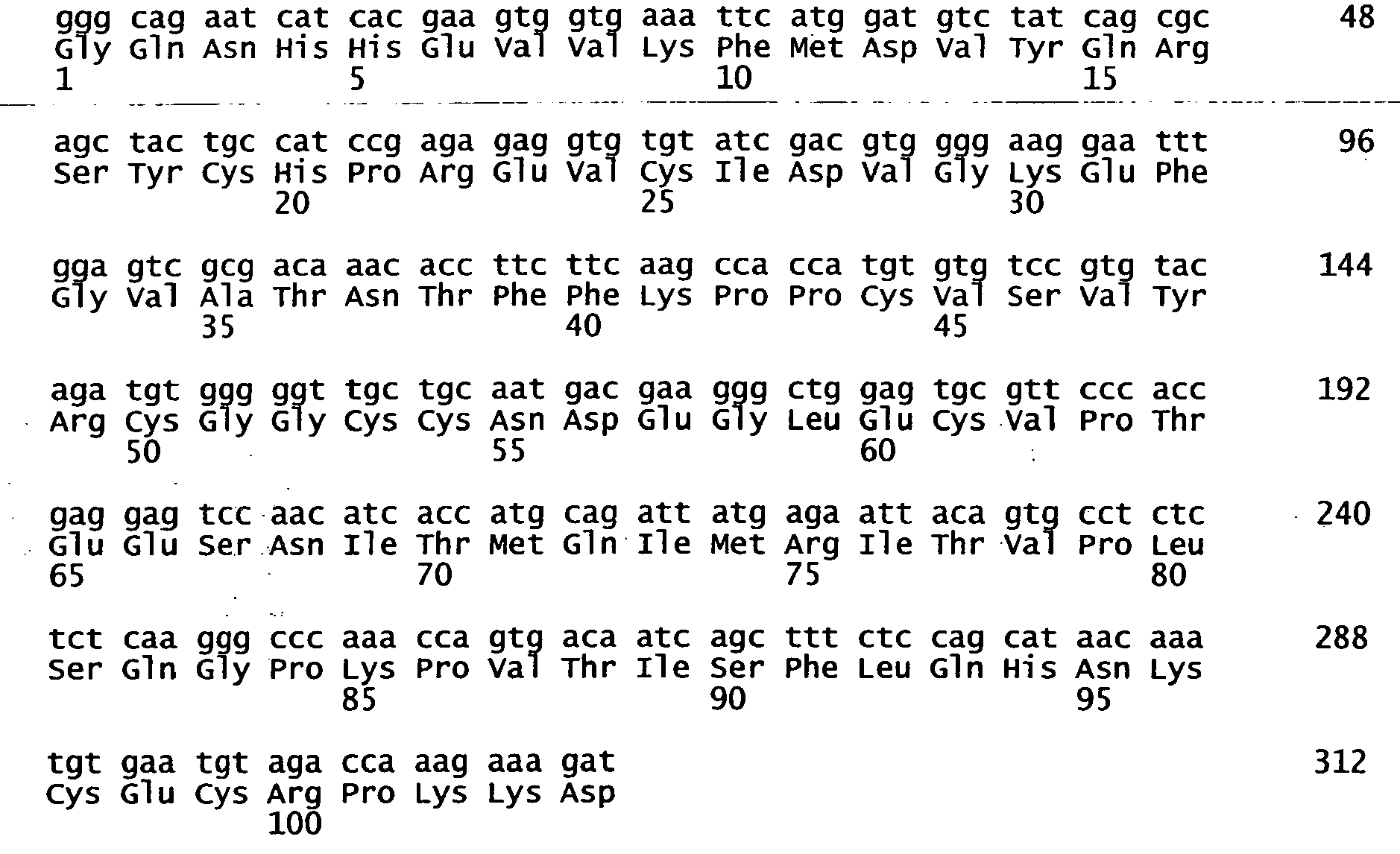
- <210> 489
<211> 104
<212> PRT
<213> Artificial sequence - <220>
<223> Growth Factor Hybrid sequence - <400> 489


- <210> 490
<211> 312
<212> DNA
<213> Artificial Sequence - <220>
<223> Growth Factor Hybrid sequence - <220>
<221> CDS
<222> (1)..(312) - <400> 490

- <210> 491
<211> 104
<212> PRT
<213> Artificial Sequence - <220>
<223> Growth Factor Hybrid Sequence - <400> 491

- <210> 492
<211> 315
<212> DNA
<213> Artificial Sequence - <220>
<223> Growth Factor Hybrid Sequence - <220>
<221> CDS
<222> (1)..(315) - <400> 492


- <210> 493
<211> 105
<212> PRT
<213> Artificial Sequence - <220>
<223> Growth Factor Hybrid Sequence - <400> 493

- <210> 494
<211> 315
<212> DNA
<213> Artificial Sequence - <220>
<223> Growth Factor Hybrid Sequence - <220>
<221> CDS
<222> (1)..(315) - <400> 494


- <210> 495
<211> 105
<212> PRT
<213> Artificial Sequence - <220>
<223> Growth Factor Hybrid Sequence - <400> 495

- <210> 496
<211> 312
<212> DNA
<213> Artificial Sequence - <220>
<223> Growth Factor Hybrid sequence - <220>
<221> CDS
<222> (1)..(312) - <400> 496

- <210> 497
<211> 104
<212> PRT
<213> Artificial sequence - <220>
<223> Growth Factor Hybrid Sequence - <400> 497

- <210> 498
<211> 312
<212> DNA
<213> Artificial Sequence - <220>
<223> Growth Factor Hybrid Sequence - <220>
<221> CDS
<222> (1)..(312) - <400> 498
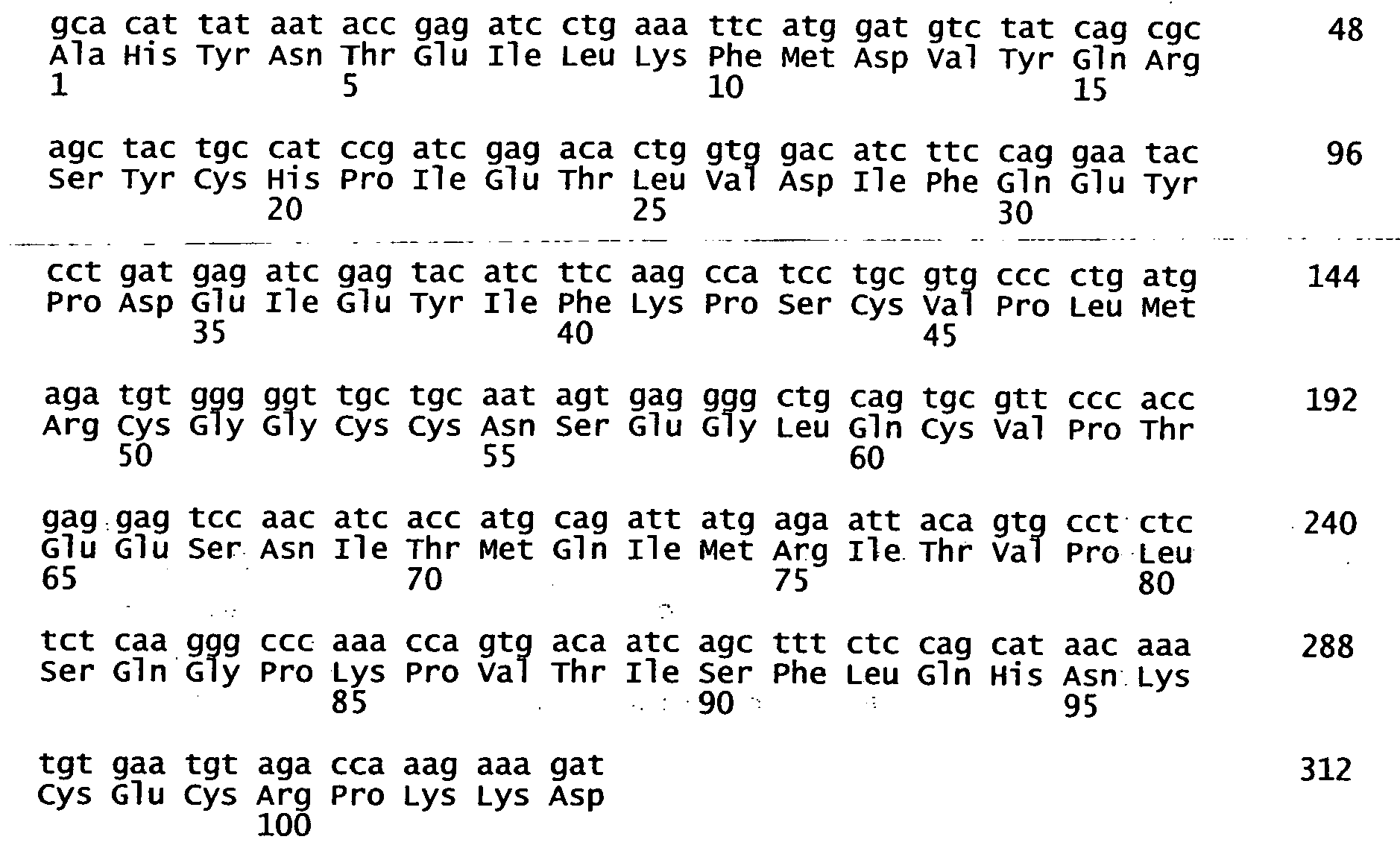
- <210> 499
<211> 104
<212> PRT
<213> Artificial Sequence - <220>
<223> Growth Factor Hybrid Sequence - <400> 499

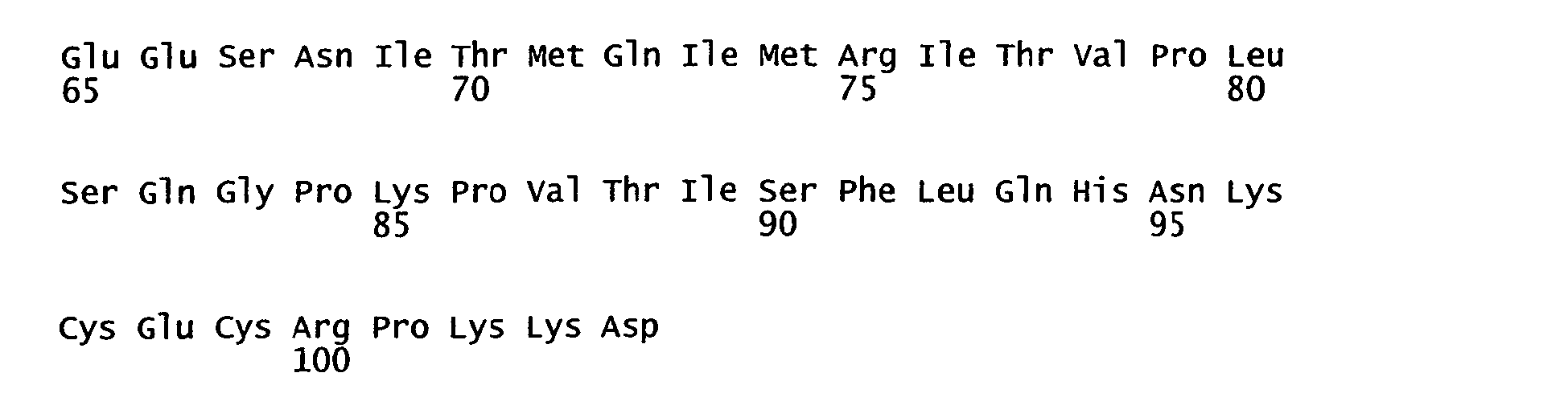
- <210> 500
<211> 315
<212> DNA
<213> Artificial Sequence - <220>
<223> Growth Factor Hybrid Sequence - <220>
<221> CDS
<222> (1)..(315) - <400> 500

- <210> 501
<211> 105
<212> PRT
<213> Artificial Sequence - <220>
<223> Growth Factor Hybrid Sequence - <400> 501


- <210> 502
<211> 315
<212> DNA
<213> Artificial sequence - <220>
<223> Growth Factor Hybrid Sequence - <220>
<221> CDS
<222> (1)..(315) - <400> 502

- <210> 503
<211> 105
<212> PRT
<213> Artificial Sequence - <220>
<223> Growth Factor Hybrid Sequence - <400> 503

- <210> 504
<211> 312
<212> DNA
<213> Artificial Sequence - <220>
<223> Growth Factor Hybrid Sequence - <220>
<221> CDS
<222> (1)..(312) - <400> 504


- <210> 505
<211> 104
<212> PRT
<213> Artificial sequence - <220>
<223> Growth Factor Hybrid Sequence - <400> 505

- <210> 506
<211> 312
<212> DNA
<213> Artificial Sequence - <220>
<223> Growth Factor Hybrid Sequence - <220>
<221> CDS
<222> (1)..(312) - <400> 506


- <210> 507
<211> 104
<212> PRT
<213> Artificial Sequence - <220>
<223> Growth Factor Hybrid Sequence - <400> 507
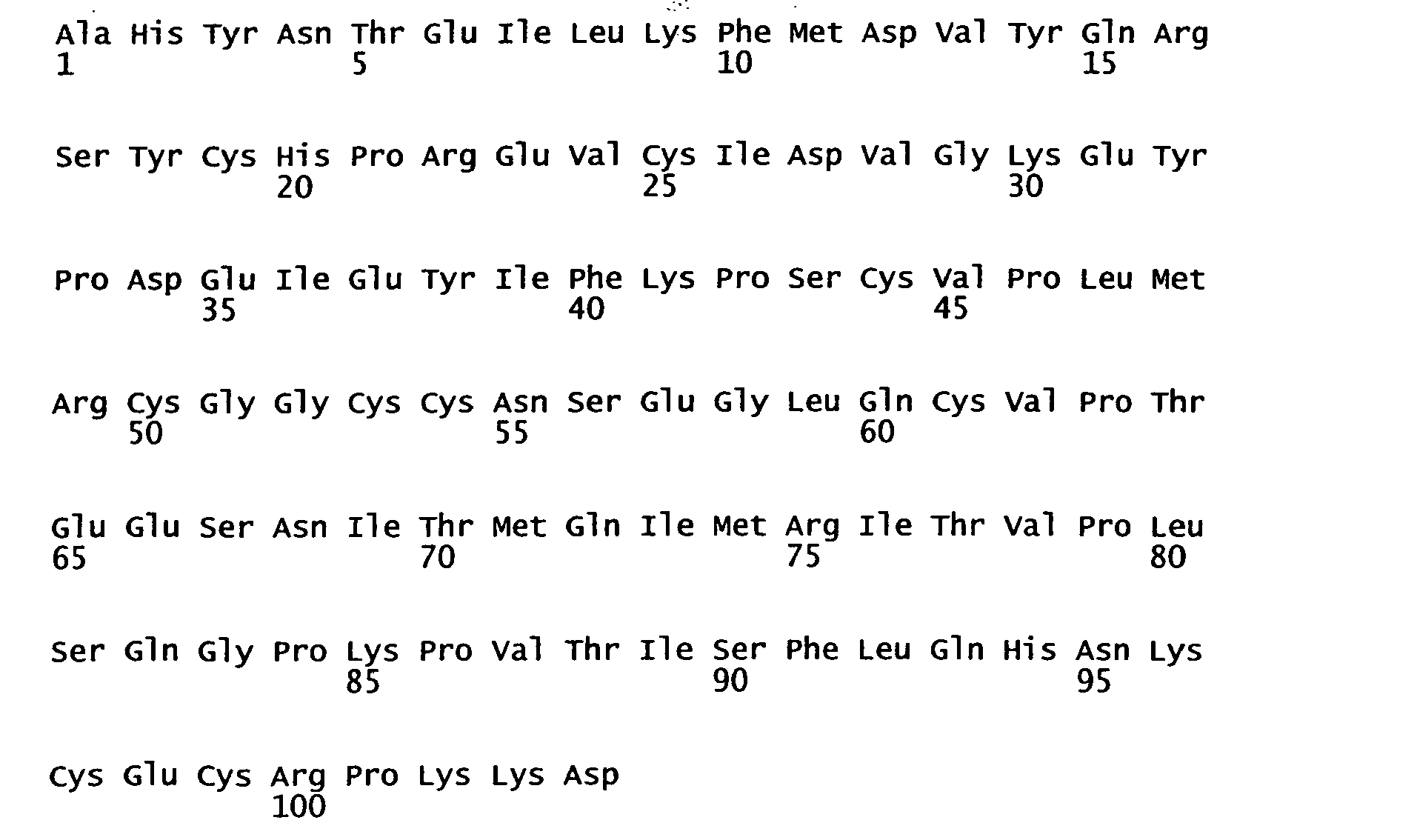
- <210> 508
<211> 315
<212> DNA
<213> Artificial Sequence - <220>
<223> Growth Factor Hybrid Sequence - <220>
<221> CDS
<222> (1)..(315) - <400> 508

- <210> 509
<211> 105
<212> PRT
<213> Artificial Sequence - <220>
<223> Growth Factor Hybrid sequence - <400> 509


- <210> 510
<211> 315
<212> DNA
<213> Artificial Sequence - <220>
<223> Growth Factor Hybrid Sequence - <220>
<221> CDS
<222> (1)..(315) - <400> 510

- <210> 511
<211> 105
<212> PRT
<213> Artificial Sequence - <220>
<223> Growth Factor Hybrid Sequence - <400> 511

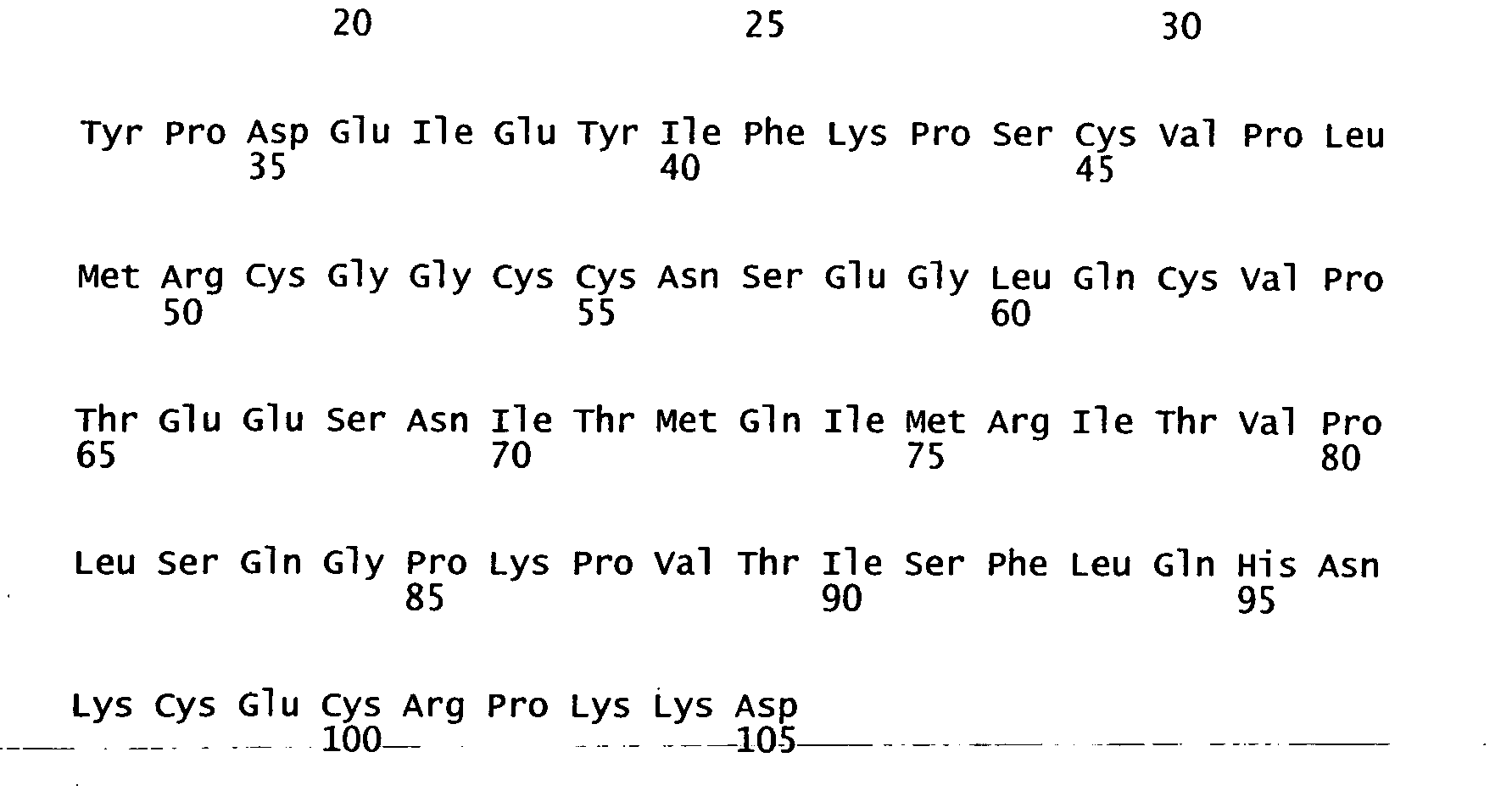
- <210> 512
<211> 312
<212> DNA
<213> Artificial Sequence - <220>
<223> Growth Factor Hybrid Sequence - <220>
<221> CDS
<222> (1)..(312) - <400> 512
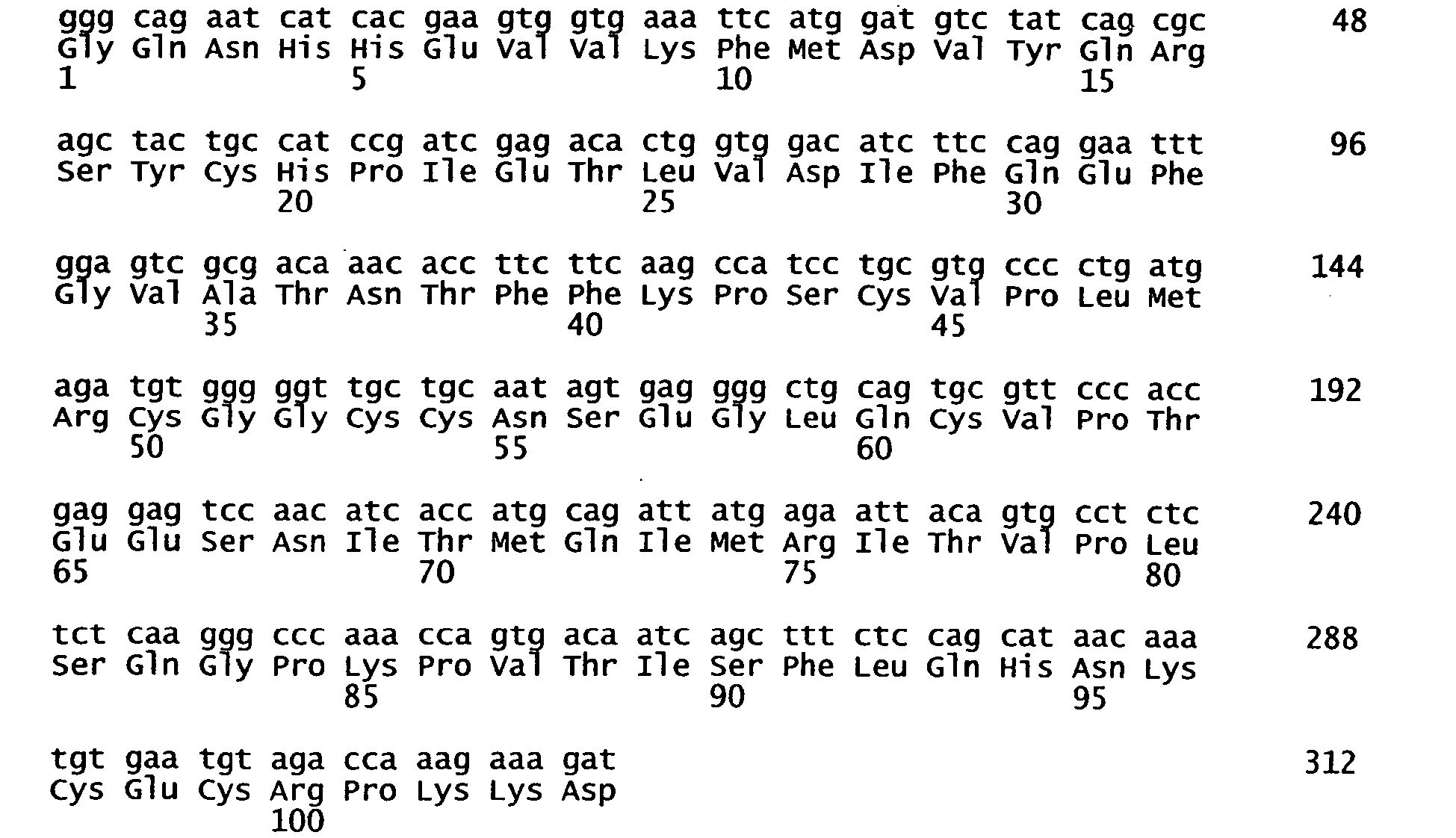
- <210> 513
<211> 104
<212> PRT
<213> Artificial Sequence - <220>
<223> Growth Factor Hybrid Sequence - <400> 513

- <210> 514
<211> 312
<212> DNA
<213> Artificial Sequence - <220>
<223> Growth Factor Hybrid Sequence - <220>
<221> CDS
<222> (1)..(312) - <400> 514


- <210> 515
<211> 104
<212> PRT
<213> Artificial Sequence - <220>
<223> Growth Factor Hybrid sequence - <400> 515

- <210> 516
<211> 315
<212> DNA
<213> Artificial Sequence - <220>
<223> Growth Factor Hybrid Sequence - <220>
<221> CDS
<222> (1)..(315) - <400> 516


- <210> 517
<211> 105
<212> PRT
<213> Artificial Sequence - <220>
<223> Growth Factor Hybrid Sequence - <400> 517

- <210> 518
<211> 315
<212> DNA
<213> Artificial sequence - <220>
<223> Growth Factor Hybrid Sequence - <220>
<221> CDS
<222> (1)..(315) - <400> 518
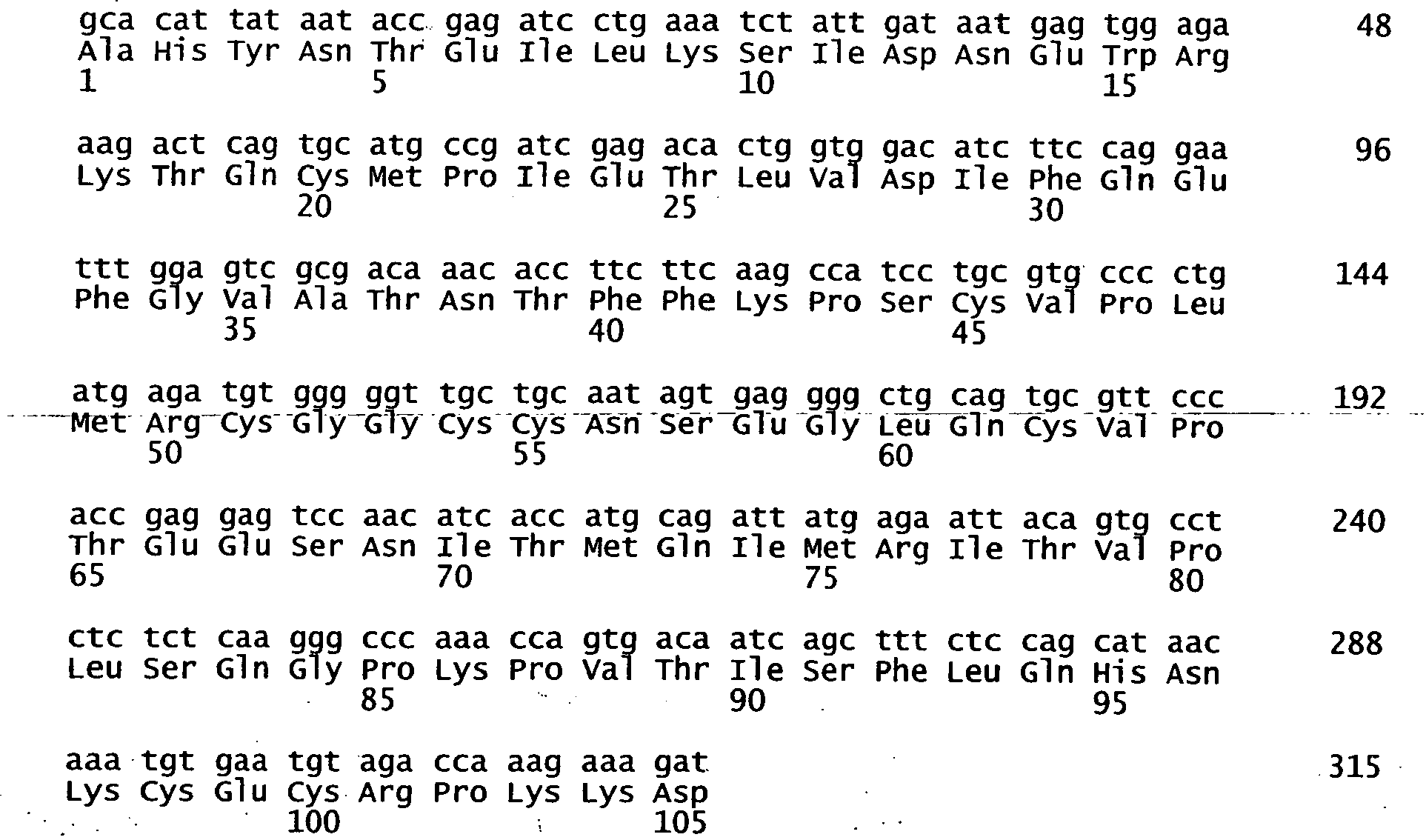
- <210> 519
<211> 105
<212> PRT
<213> Artificial Sequence - <220>
<223> Growth Factor Hybrid Sequence - <400> 519


- <210> 520
<211> 312
<212> DNA
<213> Artificial Sequence - <220>
<223> Growth Factor Hybrid Sequence - <220>
<221> CDS
<222> (1)..(312) - <400> 520

- <210> 521
<211> 104
<212> PRT
<213> Artificial Sequence - <220>
<223> Growth Factor Hybrid Sequence - <400> 521


- <210> 522
<211> 312
<212> DNA
<213> Artificial Sequence - <220>
<223> Growth Factor Hybrid Sequence - <220>
<221> CDS
<222> (1)..(312) - <400> 522

- <210> 523
<211> 104
<212> PRT
<213> Artificial Sequence - <220>
<223> Growth Factor Hybrid Sequence - <400> 523

- <210> 524
<211> 315
<212> DNA
<213> Artificial Sequence - <220>
<223> Growth Factor Hybrid Sequence - <220>
<221> CDS
<222> (1)..(315) - <400> 524


- <210> 525
<211> 105
<212> PRT
<213> Artificial Sequence - <220>
<223> Growth Factor Hybrid Sequence - <400> 525

- <210> 526
<211> 315
<212> DNA
<213> Artificial sequence - <220>
<223> Growth Factor Hybrid Sequence - <220>
<221> CDS
<222> (1)..(315) - <400> 526


- <210> 527
<211> 105
<212> PRT
<213> Artificial Sequence - <220>
<223> Growth Factor Hybrid Sequence - <400> 527

- <210> 528
<211> 312
<212> DNA
<213> Artificial Sequence - <220>
<223> Growth Factor Hybrid Sequence - <220>
<221> CDS
<222> (1)..(312) - <400> 528

- <210> 529
<211> 104
<212> PRT
<213> Artificial Sequence - <220>
<223> Growth Factor Hybrid Sequence - <400> 529


- <210> 530
<211> 312
<212> DNA
<213> Artificial Sequence - <220>
<223> Growth Factor Hybrid Sequence - <220>
<221> CDS
<222> (1)..(312) - <400> 530

- <210> 531
<211> 104
<212> PRT
<213> Artificial sequence - <220>
<223> Growth Factor Hybrid Sequence - <400> 531


- <210> 532
<211> 315
<212> DNA
<213> Artificial Sequence - <220>
<223> Growth Factor Hybrid Sequence - <220>
<221> CDS
<222> (1)..(315) - <400> 532

- <210> 533
<211> 105
<212> PRT
<213> Artificial Sequence - <220>
<223> Growth Factor Hybrid sequence - <400> 533

- <210> 534
<211> 315
<212> DNA
<213> Artificial Sequence - <220>
<223> Growth Factor Hybrid Sequence - <220>
<221> CDS
<222> (1)..(315) - <400> 534


- <210> 535
<211> 105
<212> PRT
<213> Artificial Sequence - <220>
<223> Growth Factor Hybrid Sequence - <400> 535

- <210> 536
<211> 312
<212> DNA
<213> Artificial Sequence - <220>
<223> Growth Factor Hybrid Sequence - <220>
<221> CDS
<222> (1)..(312) - <400> 536


- <210> 537
<211> 104
<212> PRT
<213> Artificial Sequence - <220>
<223> Growth Factor Hybrid Sequence - <400> 537

- <210> 538
<211> 312
<212> DNA
<213> Artificial Sequence - <220>
<223> Growth Factor Hybrid Sequence - <220>
<221> CDS
<222> (1)..(312) - <400> 538

- <210> 539
<211> 104
<212> PRT
<213> Artificial sequence - <220>
<223> Growth Factor Hybrid Sequence - <400> 539

- <210> 540
<211> 315
<212> DNA
<213> Artificial sequence - <220>
<223> Growth Factor Hybrid Sequence - <220>
<221> CDS
<222> (1)..(315) - <400> 540

- <210> 541
<211> 105
<212> PRT
<213> Artificial Sequence - <220>
<223> Growth Factor Hybrid Sequence - <400> 541


- <210> 542
<211> 315
<212> DNA
<213> Artificial Sequence - <220>
<223> Growth Factor Hybrid Sequence - <220>
<221> CDS
<222> (1)..(315) - <400> 542

- <210> 543
<211> 105
<212> PRT
<213> Artificial Sequence - <220>
<223> Growth Factor Hybrid sequence - <400> 543


- <210> 544
<211> 312
<212> DNA
<213> Artificial sequence - <220>
<223> Growth Factor Hybrid Sequence - <220>
<221> CDS
<222> (1)..(312) - <400> 544

- <210> 545
<211> 104
<212> PRT
<213> Artificial sequence - <220>
<223> Growth Factor Hybrid Sequence - <400> 545

- <210> 546
<211> 312
<212> DNA
<213> Artificial Sequence - <220>
<223> Growth Factor Hybrid Sequence - <220>
<221> CDS
<222> (1)..(312) - <400> 546


- <210> 547
<211> 104
<212> PRT
<213> Artificial Sequence - <220>
<223> Growth Factor Hybrid Sequence - <400> 547

- <210> 548
<211> 315
<212> DNA
<213> Artificial Sequence - <220>
<223> Growth Factor Hybrid Sequence - <220>
<221> CDS
<222> (1)..(315) - <400> 548


- <210> 549
<211> 105
<212> PRT
<213> Artificial Sequence - <220>
<223> Growth Factor Hybrid Sequence - <400> 549

- <210> 550
<211> 315
<212> DNA
<213> Artificial Sequence - <220>
<223> Growth Factor Hybrid Sequence - <220>
<221> CDS
<222> (1)..(315) - <400> 550

- <210> 551
<211> 105
<212> PRT
<213> Artificial sequence - <220>
<223> Growth Factor Hybrid Sequence - <400> 551


- <210> 552
<211> 312
<212> DNA
<213> Artificial Sequence - <220>
<223> Growth Factor Hybrid Sequence - <220> CDS
<221> CDS
<222> (1)..(312) - <400> 552
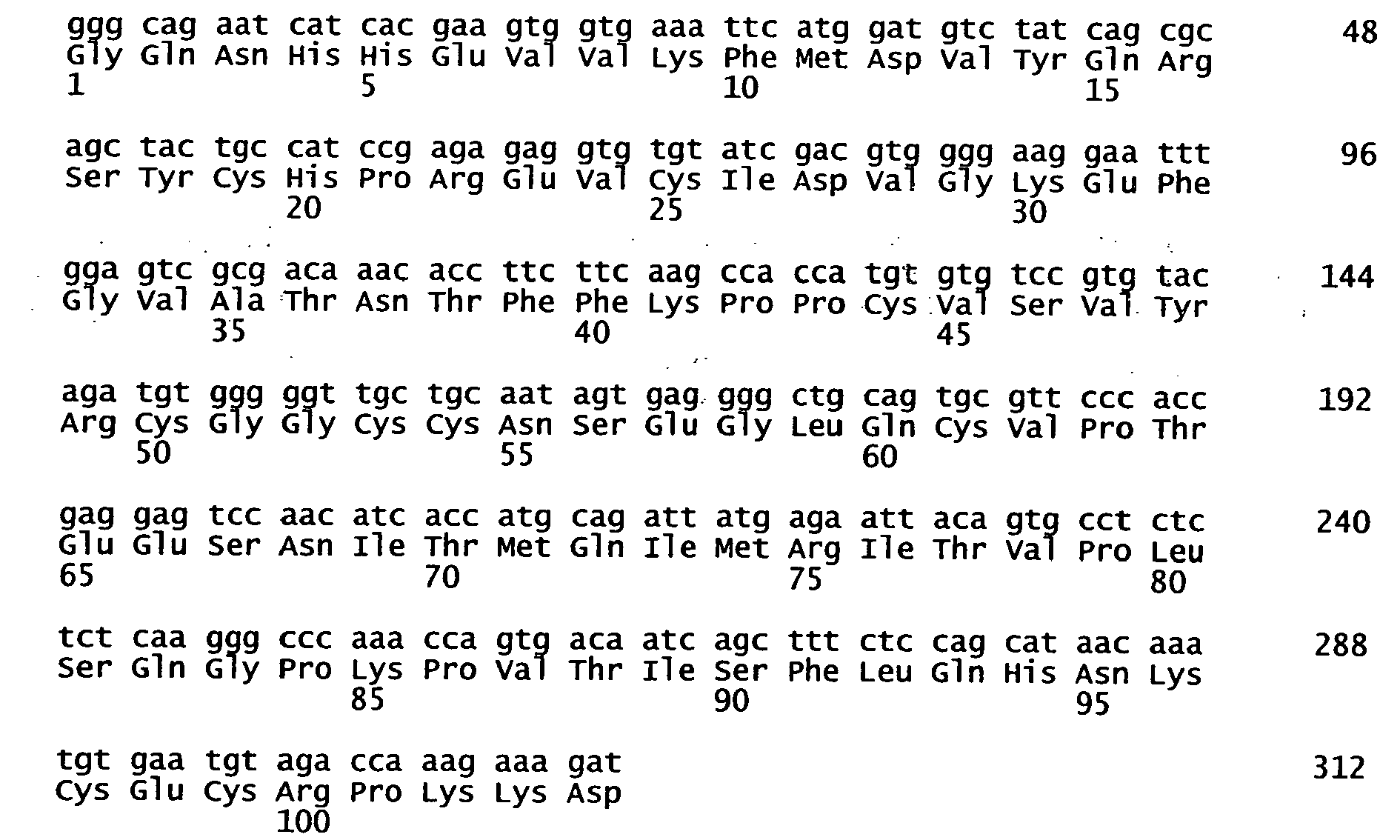
- <210> 553
<211> 104
<212> PRT
<213> Artificial Sequence - <220>
<223> Growth Factor Hybrid Sequence - <400> 553


- <210> 554
<211> 312
<212> DNA
<213> Artificial Sequence - <220>
<223> Growth Factor Hybrid Sequence - <220>
<221> CDS
<222> (1)..(312) - <400> 554

- <210> 555
<211> 104
<211> 104
<212> PRT
<213> Artificial Sequence - <220>
<223> Growth Factor Hybrid sequence - <400> 555

- <210> 556
<211> 315
<212> DNA
<213> Artificial Sequence - <220>
<223> Growth Factor Hybrid Sequence - <220>
<221> CDS
<222> (1)..(315) - <400> 556
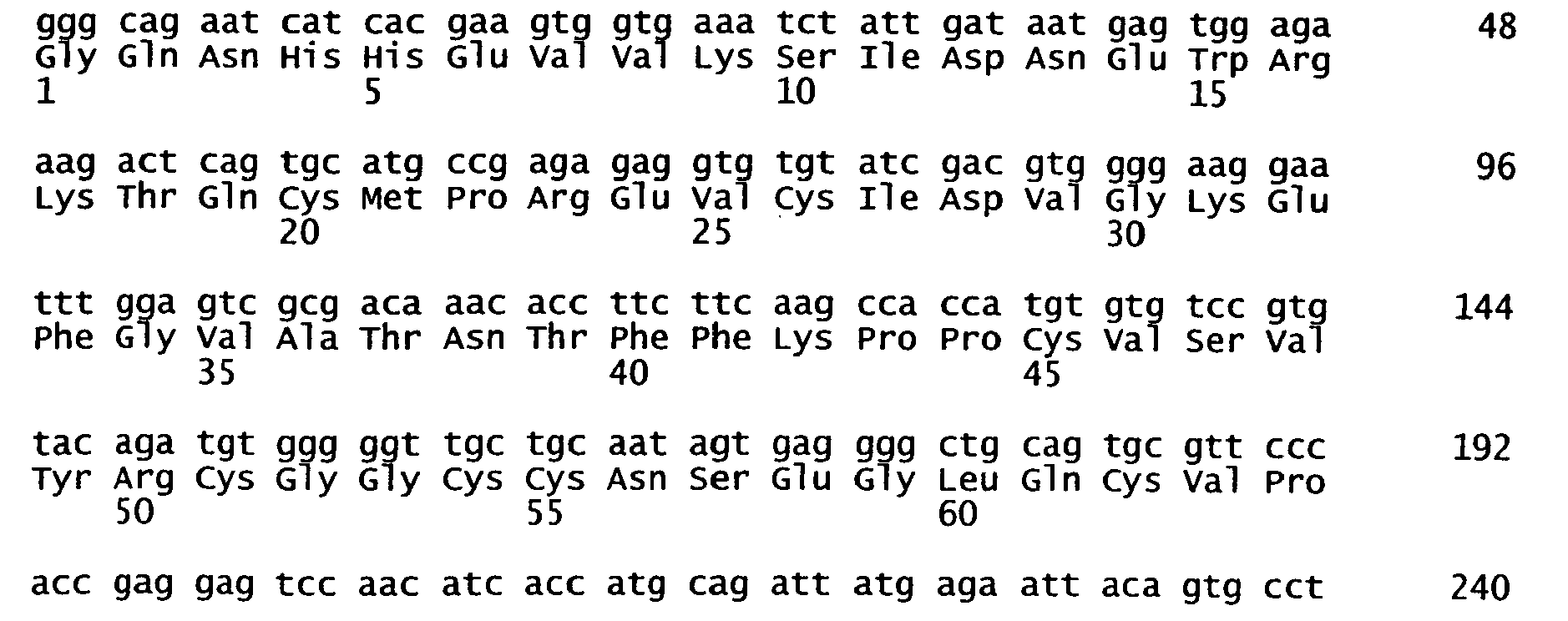

- <210> 557
<211> 105
<212> PRT
<213> Artificial Sequence - <220>
<223> Growth Factor Hybrid Sequence - <400> 557

- <210> 558
<211> 315
<212> DNA
<213> Artificial Sequence - <220>
<223> Growth Factor Hybrid Sequence - <220>
<221> CDS
<222> (1)..(315) - <400> 558


- <210> 559
<211> 105
<212> PRT
<213> Artificial Sequence - <220>
<223> Growth Factor Hybrid sequence - <400> 559
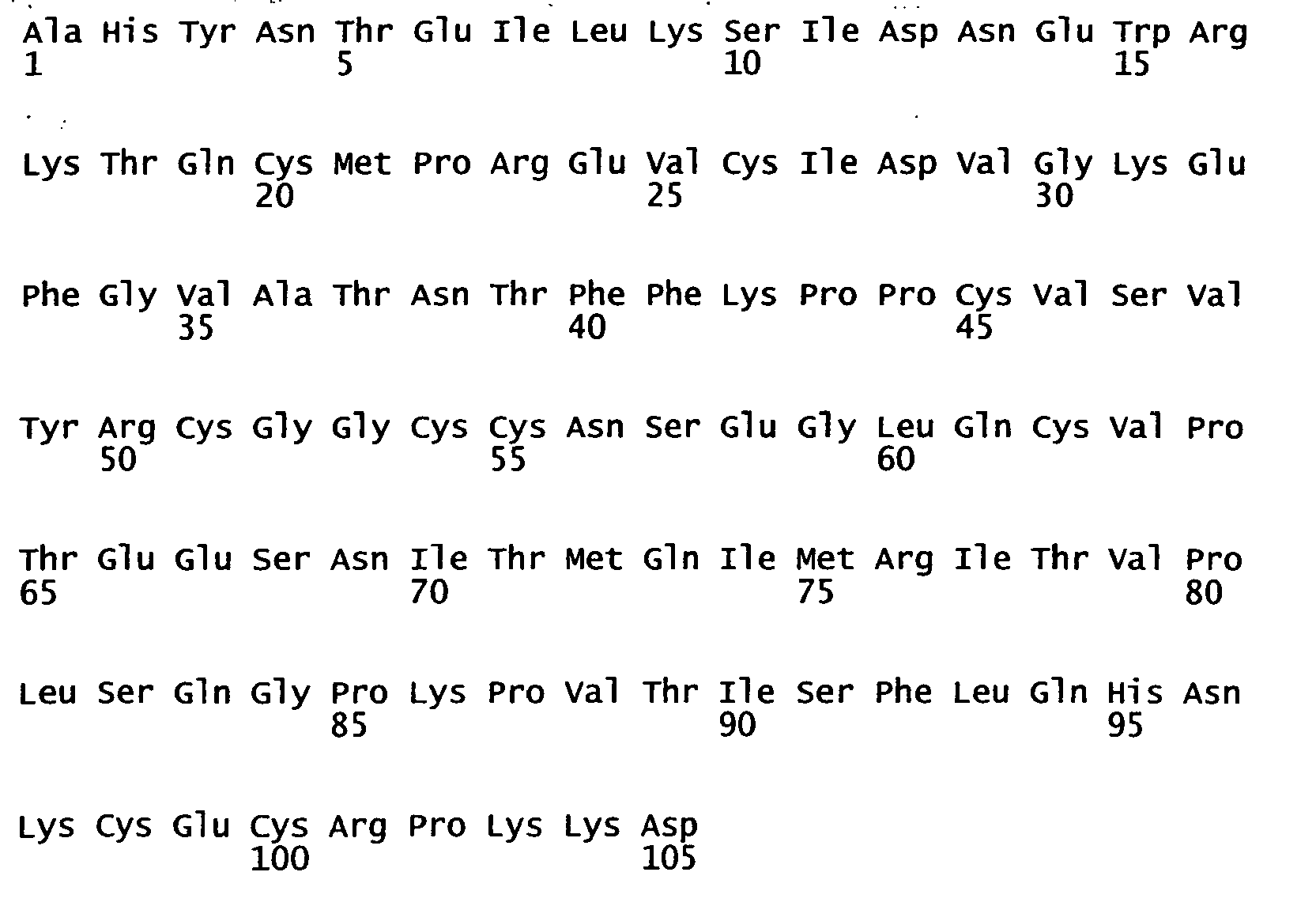
- <210> 560
<211> 312
<212> DNA
<213> Artificial Sequence - <220>
<223> Growth Factor Hybrid Sequence - <220>
<221> CDS
<222> (1)..(312) - <400> 560

- <210> 561
<211> 104
<212> PRT
<213> Artificial Sequence - <220>
<223> Growth Factor Hybrid Sequence - <400> 561


- <210> 562
<211> 312
<212> DNA
<213> Artificial Sequence - <220>
<223> Growth Factor Hybrid Sequence - <220>
<221> CDS
<222> (1)..(312) - <400> 562

- <210> 563
<211> 104
<212> PRT
<213> Artificial Sequence - <220>
<223> Growth Factor Hybrid Sequence - <400> 563


- <210> 564
<211> 315
<212> DNA
<213> Artificial sequence - <220>
<223> Growth Factor Hybrid Sequence - <220>
<221> CDS
<222> (1)..(315) - <400> 564

- <210> 565
<211> 105
<212> PRT
<213> Artificial sequence - <220>
<223> Growth Factor Hybrid Sequence - <400> 565

- <210> 566
<211> 315
<212> DNA
<213> Artificial Sequence - <220>
<223> Growth Factor Hybrid Sequence - <220>
<221> CDS
<222> (1)..(315) - <400> 566


- <210> 567
<211> 105
<212> PRT
<213> Artificial sequence - <220>
<223> Growth Factor Hybrid Sequence - <400> 567
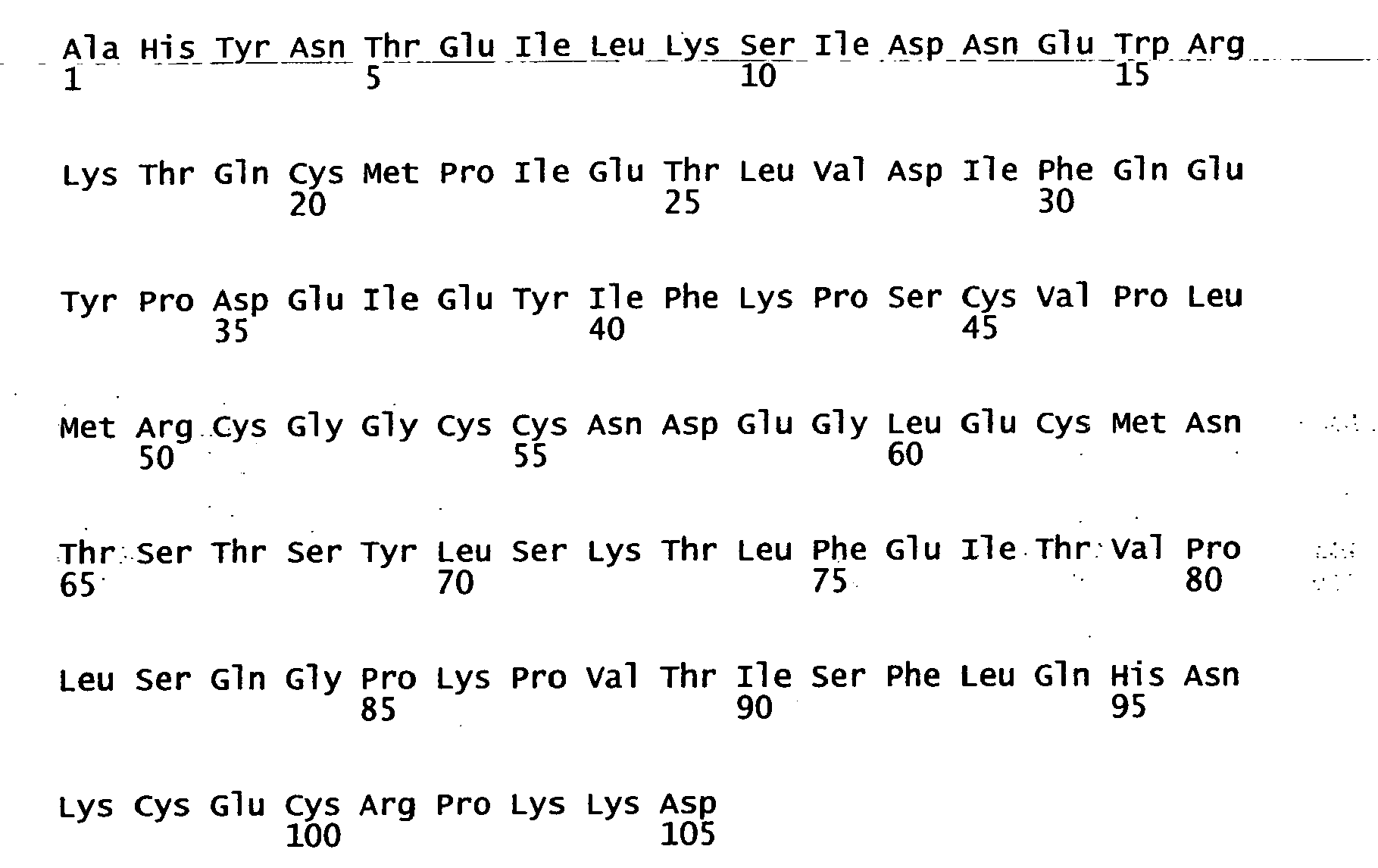
- <210> 568
<211> 312
<212> DNA
<213> Artificial sequence - <220>
<223> Growth Factor Hybrid Sequence - <220>
<221> CDS
<222> (1)..(312) - <400> 568


- <210> 569
<211> 104
<212> PRT
<213> Artificial Sequence - <220>
<223> Growth Factor Hybrid Sequence - <400> 569

- <210> 570
<211> 312
<212> DNA
<213> Artificial Sequence - <220>
<223> Growth Factor Hybrid Sequence - <220>
<221> CDS
<222> (1)..(312) - <400> 570

- <210> 571
<211> 104
<212> PRT
<213> Artificial sequence - <220>
<223> Growth Factor Hybrid Sequence - <400> 571


- <210> 572
<211> 315
<212> DNA
<213> Artificial Sequence - <220>
<223> Growth Factor Hybrid Sequence - <220>
<221> CDS
<222> (1)..(315) - <400> 572
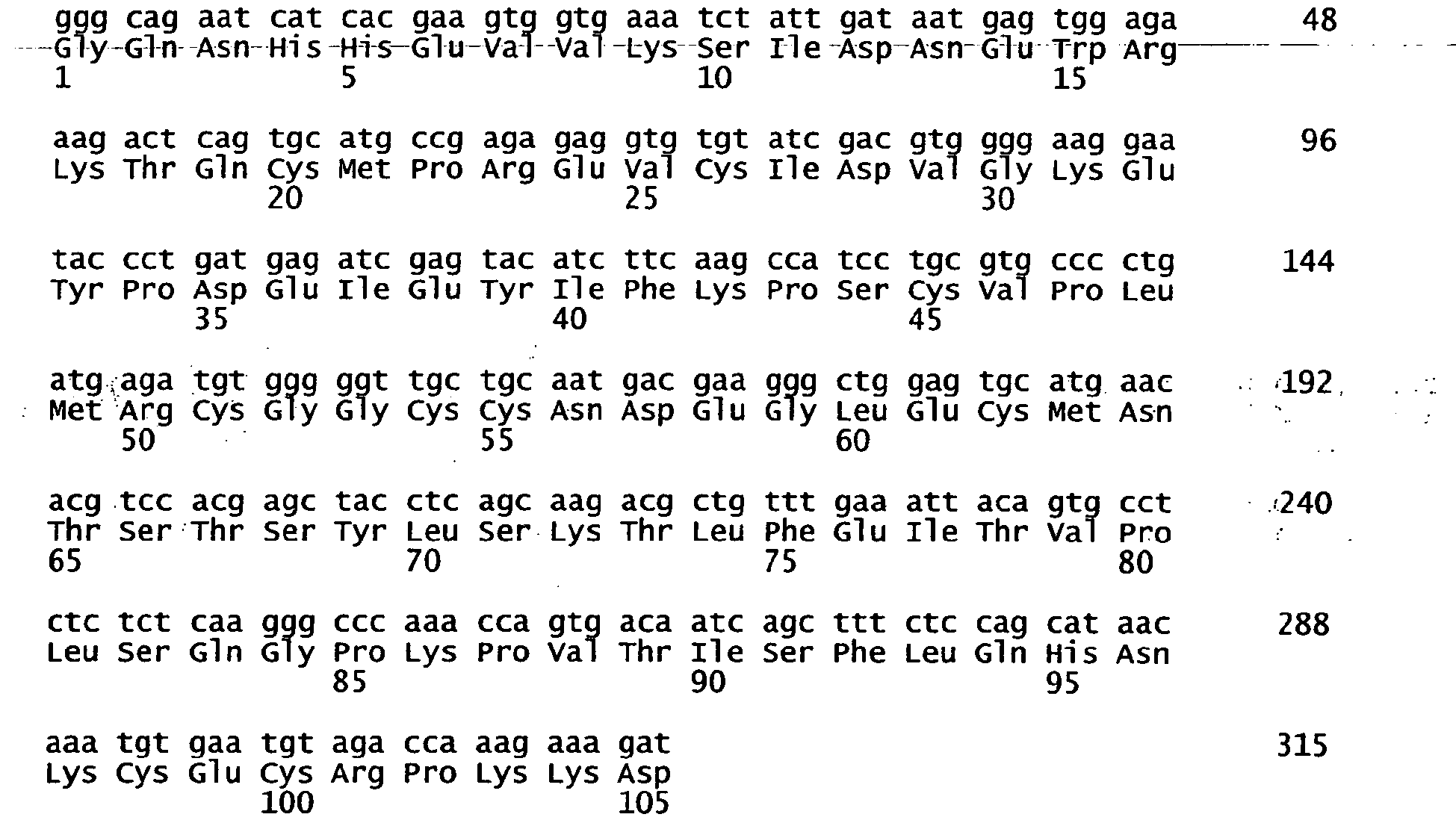
- <210> 573
<211> 105
<212> PRT
<213> Artificial Sequence - <220>
<223> Growth Factor Hybrid Sequence - <400> 573


- <210> 574
<211> 315
<212> DNA
<213> Artificial Sequence - <220>
<223> Growth Factor Hybrid Sequence - <220>
<221> CDS
<222> (1)..(315) - <400> 574

- <210> 575
<211> 105
<212> PRT
<213> Artificial sequence - <220>
<223> Growth Factor Hybrid Sequence - <400> 575
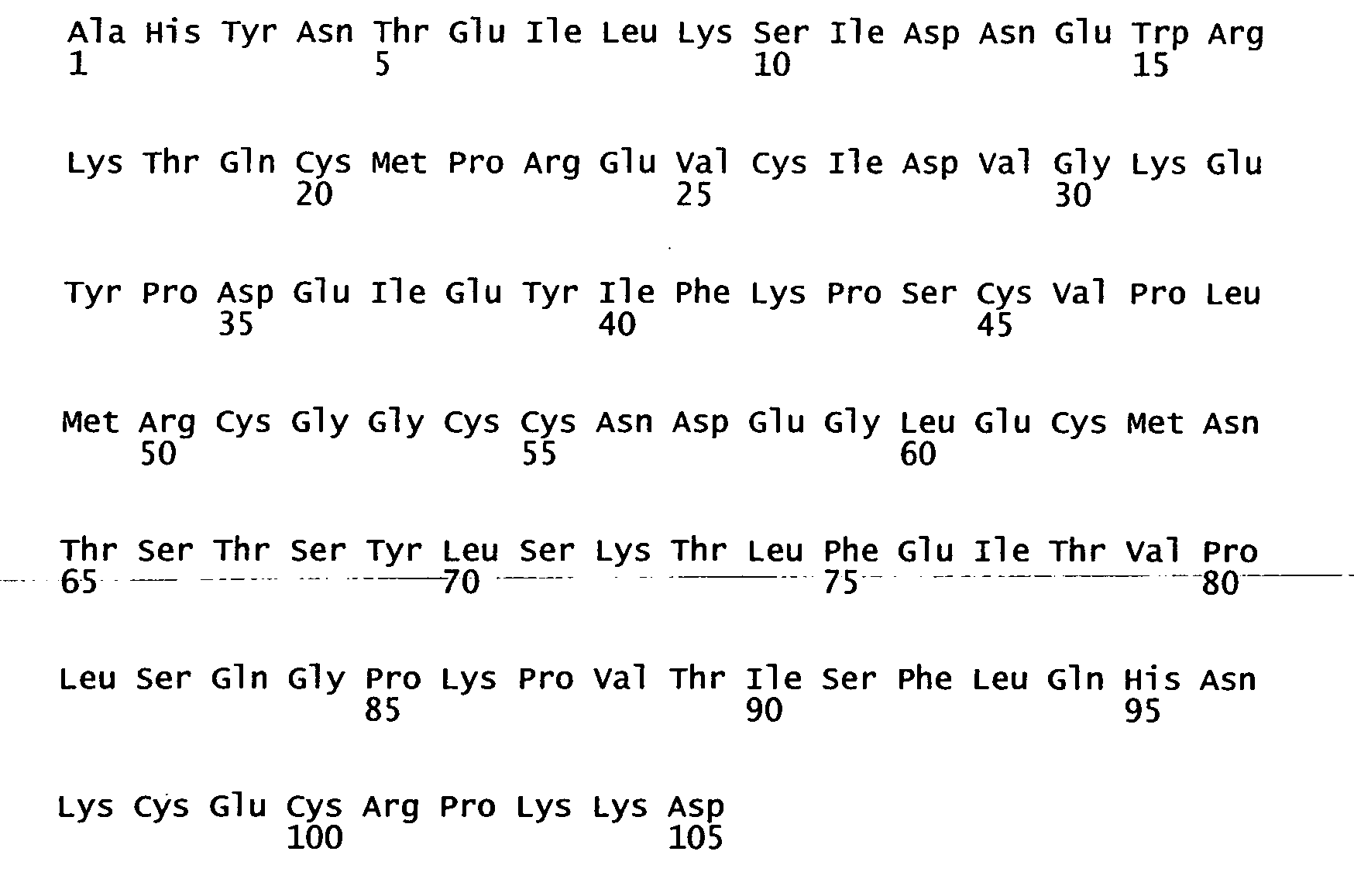
- <210> 576
<211> 312
<212> DNA
<213> Artificial Sequence - <220>
<223> Growth Factor Hybrid Sequence - <220>
<221> CDS
<222> (1) .. (312) - <400> 576


- <210> 577
<211> 104
<212> PRT
<213> Artificial sequence - <220>
<223> Growth Factor Hybrid Sequence - <400> 577

- <210> 578
<211> 312
<212> DNA
<213> Artificial Sequence - <220>
<223> Growth Factor Hybrid Sequence - <220>
<221> CDS
<222> (1)..(312) - <400> 578


- <210> 579
<211> 104
<212> PRT
<213> Artificial Sequence - <220>
<223> Growth Factor Hybrid Sequence - <400> 579

- <210> 580
<211> 315
<212> DNA
<213> Artificial Sequence - <220>
<223> Growth Factor Hybrid Sequence - <220>
<221> CDS
<222< (1)...(315) - <400> 580

- <210> 581
<211> 105
<212> PRT
<213> Artificial Sequence - <220>
<223> Growth Factor Hybrid Sequence - <400> 581

- <210> 582
<211> 315
<212> DNA
<213> Artificial Sequence - <220>
<223> Growth Factor Hybrid Sequence - <220>
<221> CDS
<222> (1)..(315) - <400> 582

- <210> 583
<211> 105
<212> PRT
<213> Artificial Sequence - <220>
<223> Growth Factor Hybrid Sequence - <400> 583

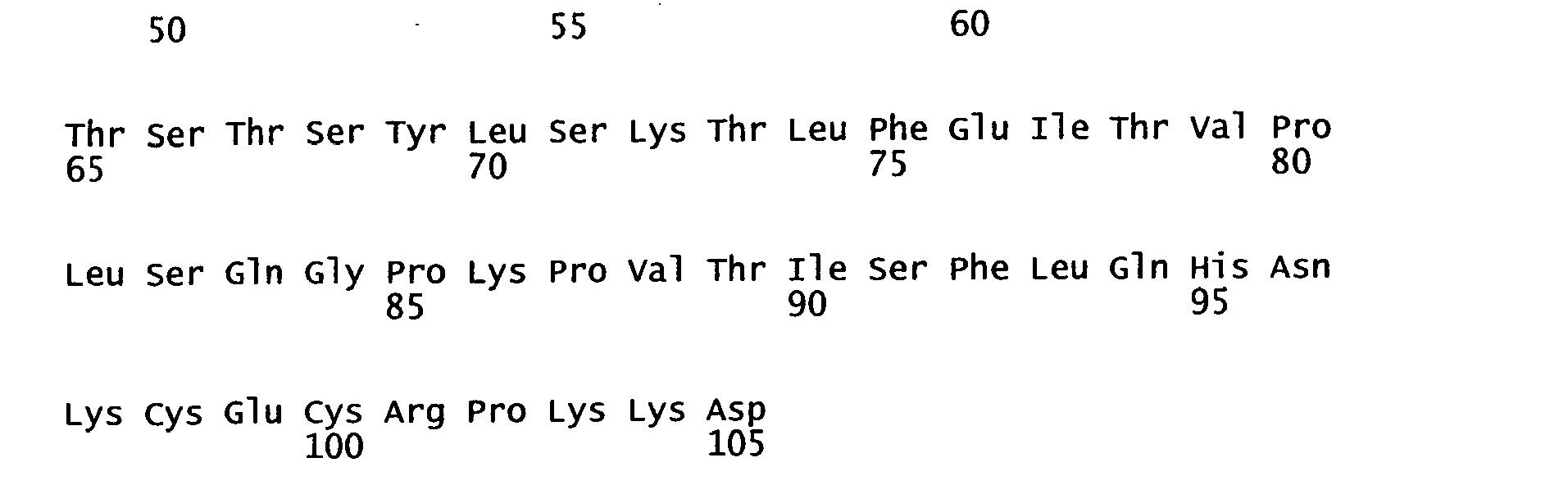
- <210> 584
<211> 312
<212> DNA
<213> Artificial sequence - <220>
<223> Growth Factor Hybrid Sequence - <220>
<221> CDS
<222> (1)..(312) - <400> 584

- <210> 585
<211> 104
<212> PRT
<213> Artificial Sequence - <220>
<223> Growth Factor Hybrid Sequence - <400> 585

- <210> 586
<211> 312
<212> DNA
<213> Artificial Sequence - <220>
<223> Growth Factor Hybrid Sequence - <220>
<221> CDS
<222> (1)..(312) - <400> 586


- <210> 587
<211> 104
<212> PRT
<213> Artificial Sequence - <220>
<223> Growth Factor Hybrid sequence - <400> 587
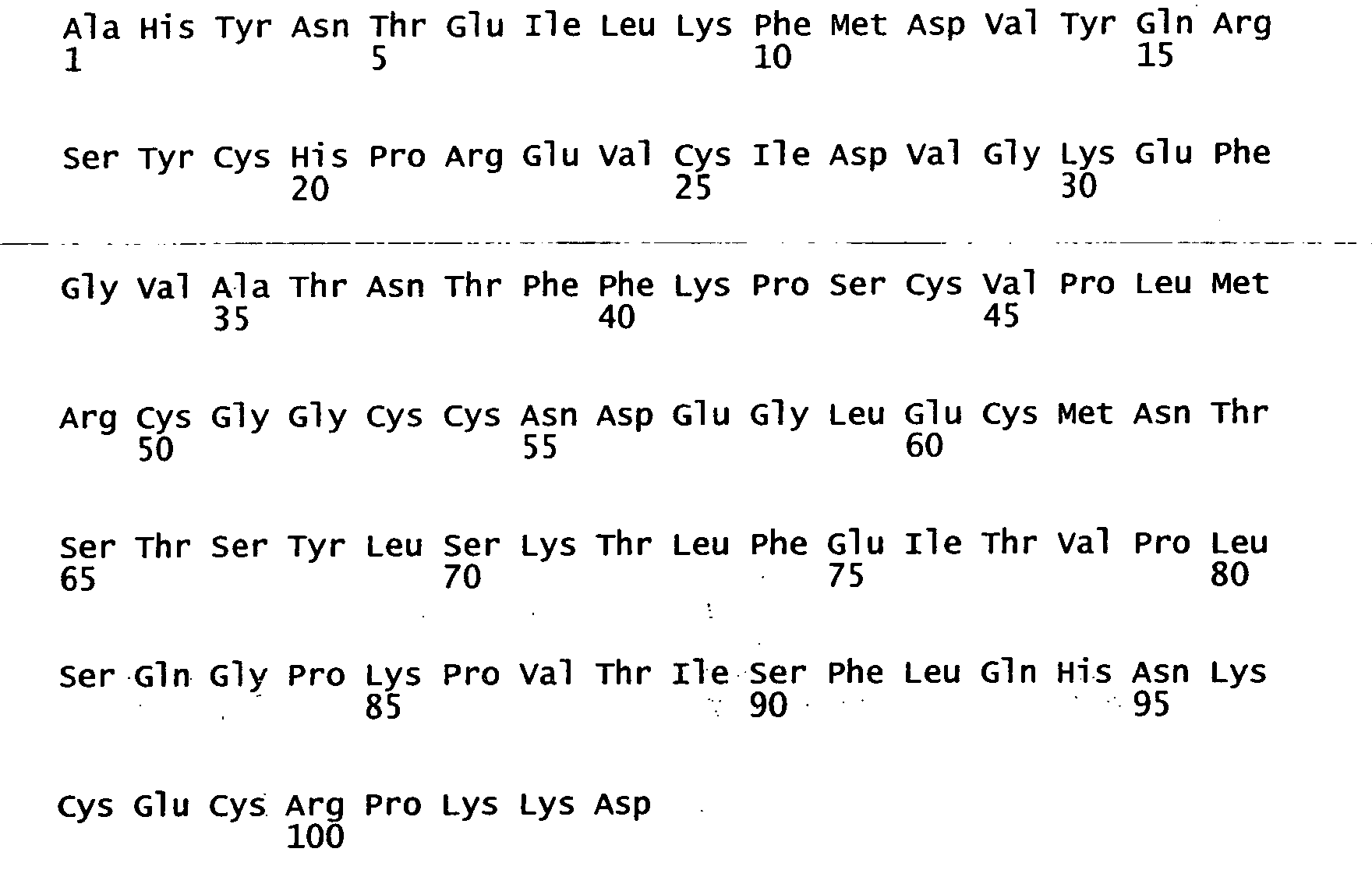
- <210> 588
<211> 315
<212> DNA
<213> Artificial Sequence - <220>
<223> Growth Factor Hybrid Sequence - <220>
<221> CDS
<222> (1)..(315) - <400> 588


- <210> 589
<211> 105
<212> PRT
<213> Artificial sequence - <220>
<223> Growth Factor Hybrid sequence - <400> 589

- <210> 590
<211> 315
<212> DNA
<213> Artificial Sequence - <220>
<223> Growth Factor Hybrid Sequence - <220>
<221> CDS
<222> (1)..(315) - <400> 590

- <210> 591
<211> 105
<212> PRT
<213> Artificial Sequence - <220>
<223> Growth Factor Hybrid Sequence - <400> 591

- <210> 592
<211> 312
<212> DNA
<213> Artificial sequence - <220>
<223> Growth Factor Hybrid sequence - <220>
<221> CDS
<222> (1)..(312) - <400> 592

- <210> 593
<211> 104
<212> PRT
<213> Artificial Sequence - <220>
<223> Growth Factor Hybrid Sequence - <400> 593


- <210> 594
<211> 312
<212> DNA
<213> Artificial Sequence - <220>
<223> Growth Factor Hybrid Sequence - <220>
<221> CDS
<222> (1)..(312) - <400> 594

- <210> 595
<211> 104
<212> PRT
<213> Artificial Sequence - <220>
<223> Growth Factor Hybrid Sequence - <400> 595


- <210> 596
<211> 315
<212> DNA
<213> Artificial Sequence - <220>
<223> Growth Factor Hybrid Sequence - <220>
<221> CDS
<222> (1)..(315) - <400> 596

- <210> 597
<211> 105
<212> PRT
<213> Artificial Sequence - <220>
<223> Growth Factor Hybrid Sequence - <400> 597

- <210> 598
<211> 315
<212> DNA
<213> Artificial Sequence - <220>
<223> Growth Factor Hybrid Sequence - <220>
<221> CDS
<222> (1)..(315) - <400> 598


- <210> 599
<211> 105
<212> PRT
<213> Artificial Sequence - <220>
<223> Growth Factor Hybrid Sequence - <400> 599

- <210> 600
<211> 312
<212> DNA
<213> Artificial sequence - <220>
<223> Growth Factor Hybrid Sequence - <220>
<221> CDS
<222> (1)..(312) - <400> 600


- <210> 601
<211> 104
<212> PRT
<213> Artificial Sequence - <220>
<223> Growth Factor Hybrid Sequence - <400> 601

- <210> 602
<211> 312
<212> DNA
<213> Artificial Sequence - <220>
<223> Growth Factor Hybrid Sequence - <220>
<221> CDS
<222> (1)..(312) - <400> 602

- <210> 603
<211> 104
<212> PRT
<213> Artificial Sequence - <220>
<223> Growth Factor Hybrid Sequence - <400> 603


- <210> 604
<211> 315
<212> DNA
<213> Artificial Sequence - <220>
<223> Growth Factor Hybrid Sequence - <220>
<221> CDS
<222> (1)..(315) - <400> 604

- <210> 605
<211> 105
<212> PRT
<213> Artificial Sequence - <220>
<223> Growth Factor Hybrid Sequence - <400> 605


- <210> 606
<211> 315
<212> DNA
<213> Artificial Sequence - <220>
<223> Growth Factor Hybrid Sequence - <220>
<221> CDS
<222> (1)..(315) - <400> 606

- <210> 607
<211> 105
<212> PRT
<213> Artificial Sequence - <220>
<223> Growth Factor Hybrid Sequence - <400> 607

- <210> 608
<211> 312
<212> DNA
<213> Artificial sequence - <220>
<223> Growth Factor Hybrid Sequence - <220>
<221> CDS
<222> (1)..(312) - <400> 608


- <210> 609
<211> 104
<212> PRT
<213> Artificial Sequence - <220>
<223> Growth Factor Hybrid sequence - <400> 609

- <210> 610
<211> 312
<212> DNA
<213> Artificial Sequence - <220>
<223> Growth Factor Hybrid Sequence - <220>
<221> CDS
<222> (1)..(312) - <400> 610


- <210> 611
<211> 104
<212> PRT
<213> Artificial Sequence - <220>
<223> Growth Factor Hybrid Sequence - <400> 611

- <210> 612
<211> 315
<212> DNA
<213> Artificial sequence - <220>
<223> Growth Factor Hybrid sequence - <220>
<221> CDS
<222> (1)..(315) - <400> 612

- <210> 613
<211> 105
<212> PRT
<213> Artificial Sequence - <220>
<223> Growth Factor Hybrid Sequence - <400> 613


- <210> 614
<211> 315
<212> DNA
<213> Artificial sequence - <220>
<223> Growth Factor Hybrid Sequence - <220>
<221> CDS
<222> (1)..(315) - <400> 614

- <210> 615
<211> 105
<212> PRT
<213> Artificial Sequence - <220>
<223> Growth Factor Hybrid sequence - <400> 615
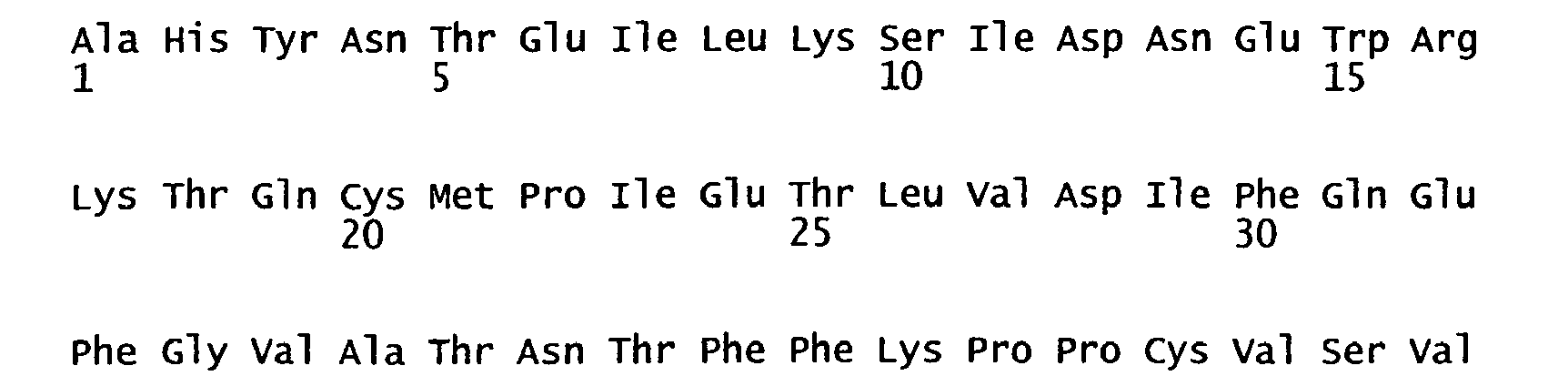

- <210> 616
<211> 312
<212> DNA
<213> Artificial Sequence - <220>
<223> Growth Factor Hybrid Sequence - <220>
<221> CDS
<222> (1)..(312) - <400> 616

- <210> 617
<211> 104
<212> PRT
<213> Artificial Sequence - <220>
<223> Growth Factor Hybrid sequence - <400> 617

- <210> 618
<211> 312
<212> DNA
<213> Artificial Sequence - <220>
<223> Growth Factor Hybrid Sequence - <220>
<221> CDS
<222> (1)..(312) - <400> 618
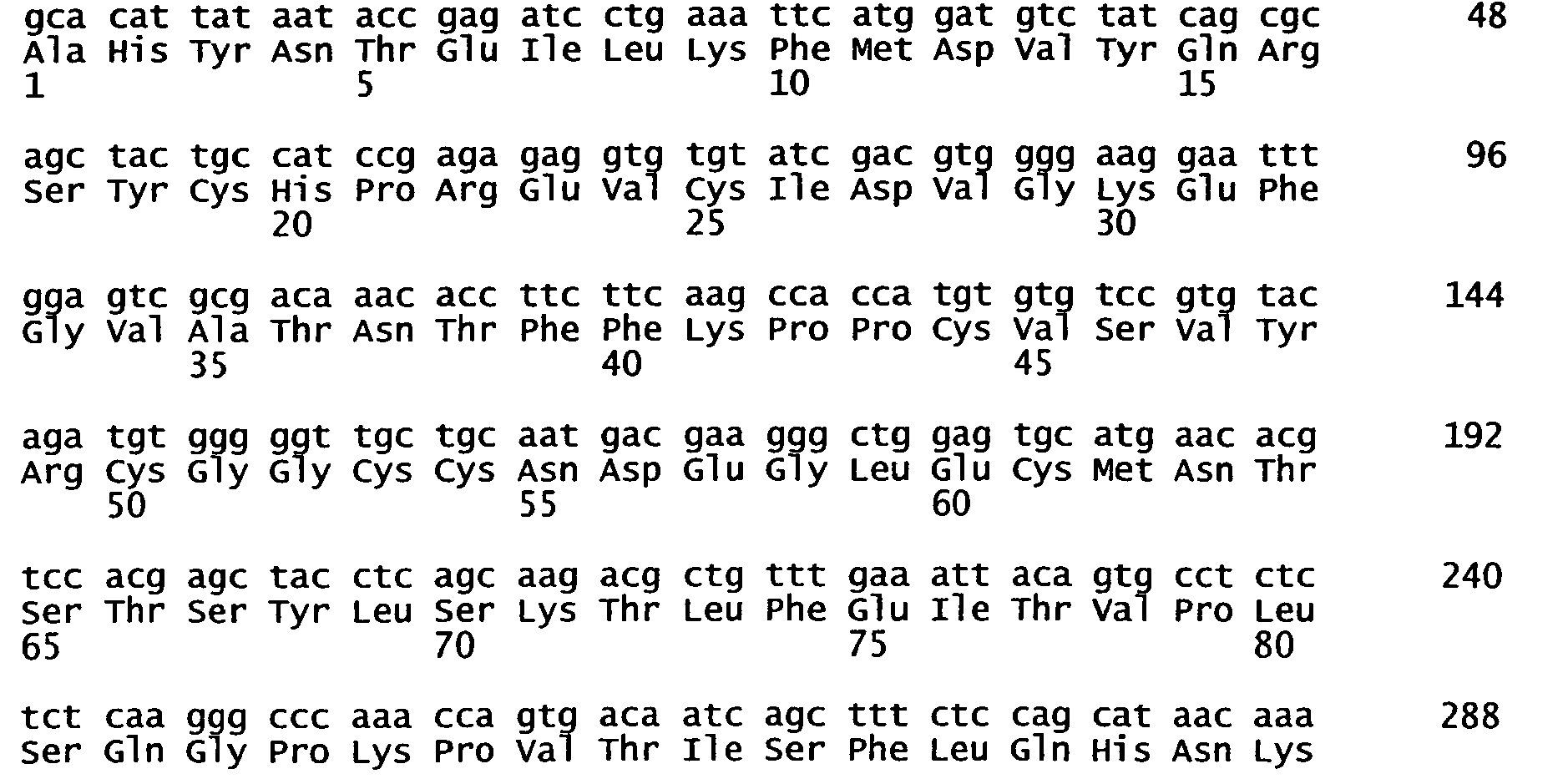

- <210> 619
<211> 104
<212> PRT
<213> Artificial Sequence - <220>
<223> Growth Factor Hybrid Sequence - <400> 619
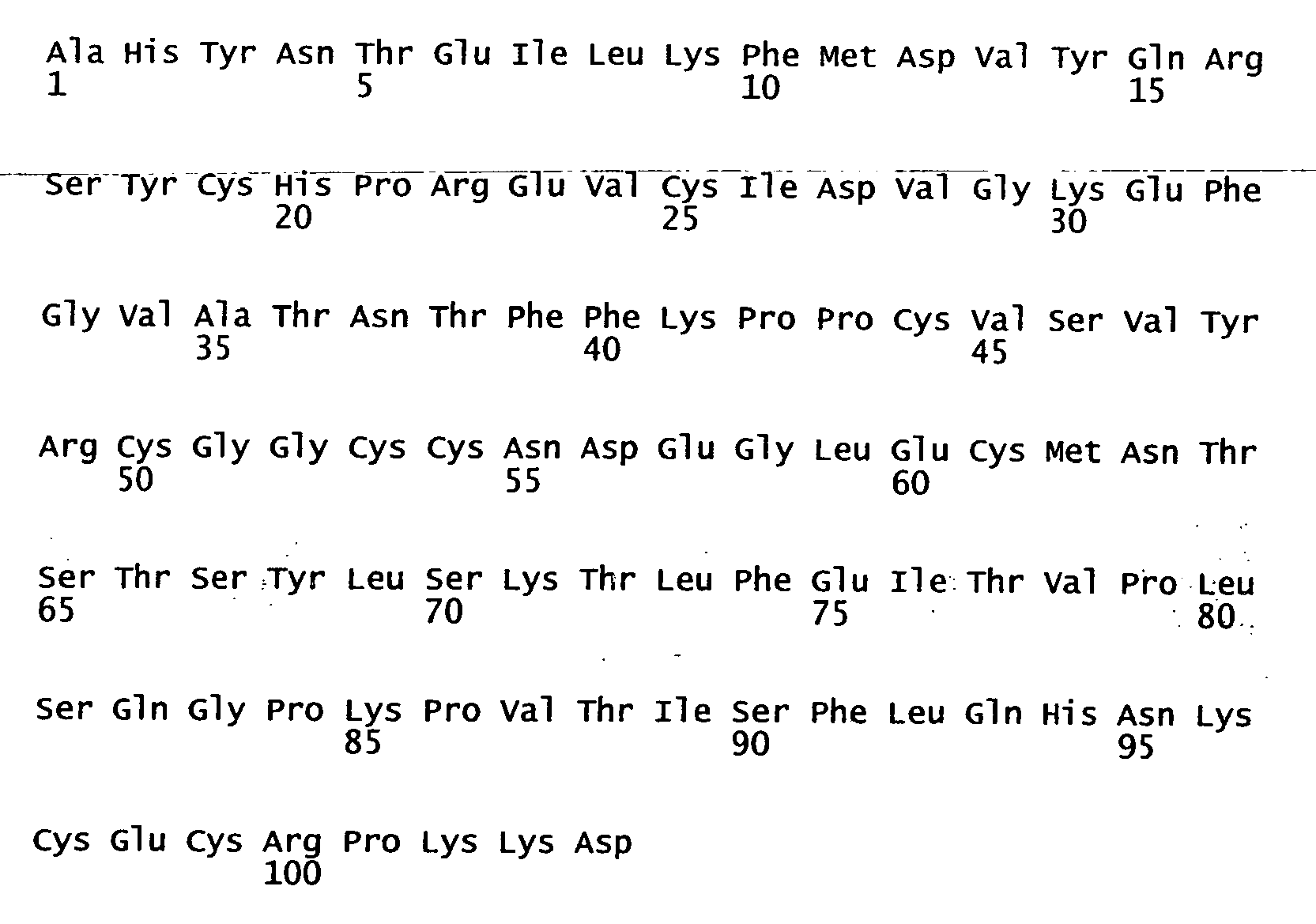
- <210> 620
<211> 315
<212> DNA
<213> Artificial Sequence - <220>
<223> Growth Factor Hybrid Sequence - <220>
<221> CDS
<222> (1)..(315) - <400> 620


- <210> 621
<211> 105
<212> PRT
<213> Artificial Sequence - <220>
<223> Growth Factor Hybrid Sequence - <400> 621

- <210> 622
<211> 315
<212> DNA
<213> Artificial Sequence - <220>
<223> Growth Factor Hybrid Sequence - <220>
<221> CDS
<222> (1)..(315) - <400> 622

- <210> 623
<211> 105
<212> PRT
<213> Artificial sequence - <220>
<223> Growth Factor Hybrid Sequence - <400> 623


- <210> 624
<211> 312
<212> DNA
<213> Artificial Sequence - <220>
<223> Growth Factor Hybrid sequence - <220>
<221> CDS
<222> (1)..(312) - <400> 624

- <210> 625
<211> 104
<212> PRT
<213> Artificial Sequence - <220>
<223> Growth Factor Hybrid Sequence - <400> 625


- <210> 626
<211> 312
<212> DNA
<213> Artificial Sequence - <220>
<223> Growth Factor Hybrid Sequence - <220>
<221> CDS
<222> (1)..(312) - <400> 626

- <210> 627
<211> 104
<212> PRT
<213> Artificial Sequence - <220>
<223> Growth Factor Hybrid Sequence - <400> 627

- <210> 628
<211> 315
<212> DNA
<213> Artificial sequence - <220>
<223> Growth Factor Hybrid Sequence - <220>
<221> CDS
<222> (1)..(315) - <400> 628


- <210> 629
<211> 105
<212> PRT
<213> Artificial Sequence - <220>
<223> Growth Factor Hybrid Sequence - <400> 629

- <210> 630
<211> 315
<212> DNA
<213> Artificial Sequence - <220>
<223> Growth Factor Hybrid Sequence - <220>
<221> CDS
<222> (1)..(315) - <400> 630


- <210> 631
<211> 105
<212> PRT
<213> Artificial Sequence - <220>
<223> Growth Factor Hybrid Sequence - <400> 631
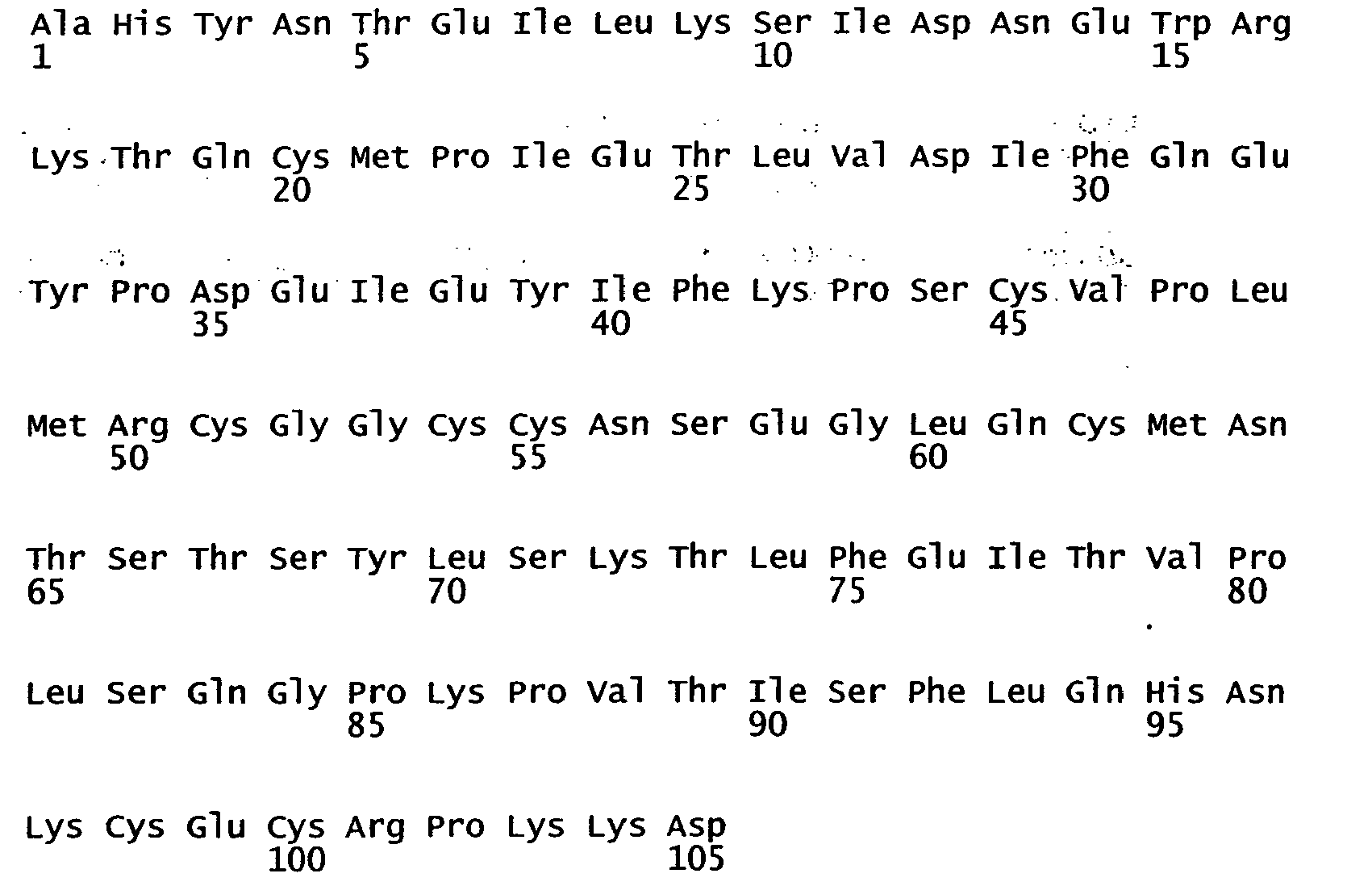
- <210> 632
<211> 312
<212> DNA
<213> Artificial sequence - <220>
<223> Growth Factor Hybrid Sequence - <220>
<221> CDS
<222> (1)..(312)
- <400> 632
- <210> 633
<211> 104.
<212> PRT
<213> Artificial Sequence - <220>
<223> Growth Factor Hybrid Sequence - <400> 633

- <210> 634
<211> 312
<212> DNA
<213> Artificial Sequence - <220>
<223> Growth Factor Hybrid Sequence - <220>
<221> CDS
<222> (1)..(312) - <400> 634

- <210> 635
<211> 104
<212> PRT
<213> Artificial Sequence - <220>
<223> Growth Factor Hybrid Sequence - <400> 635

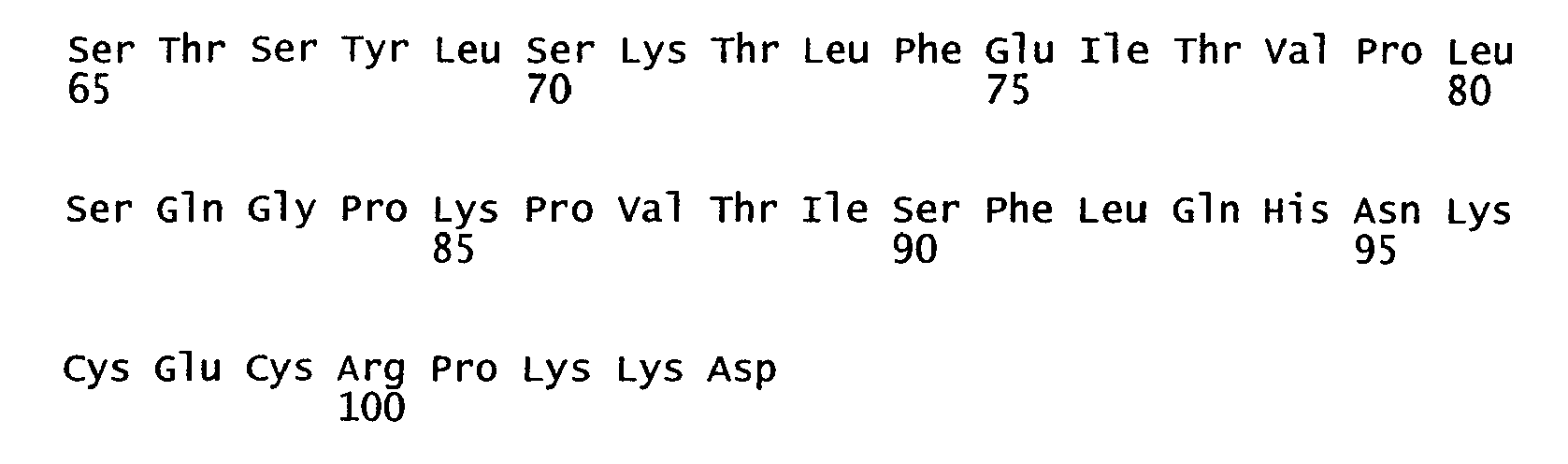
- <210> 636
<211> 315
<212> DNA
<213> Artificial Sequence - <220>
<223> Growth Factor Hybrid Sequence - <220>
<221> CDS
<222> (1)..(315) - <400> 636
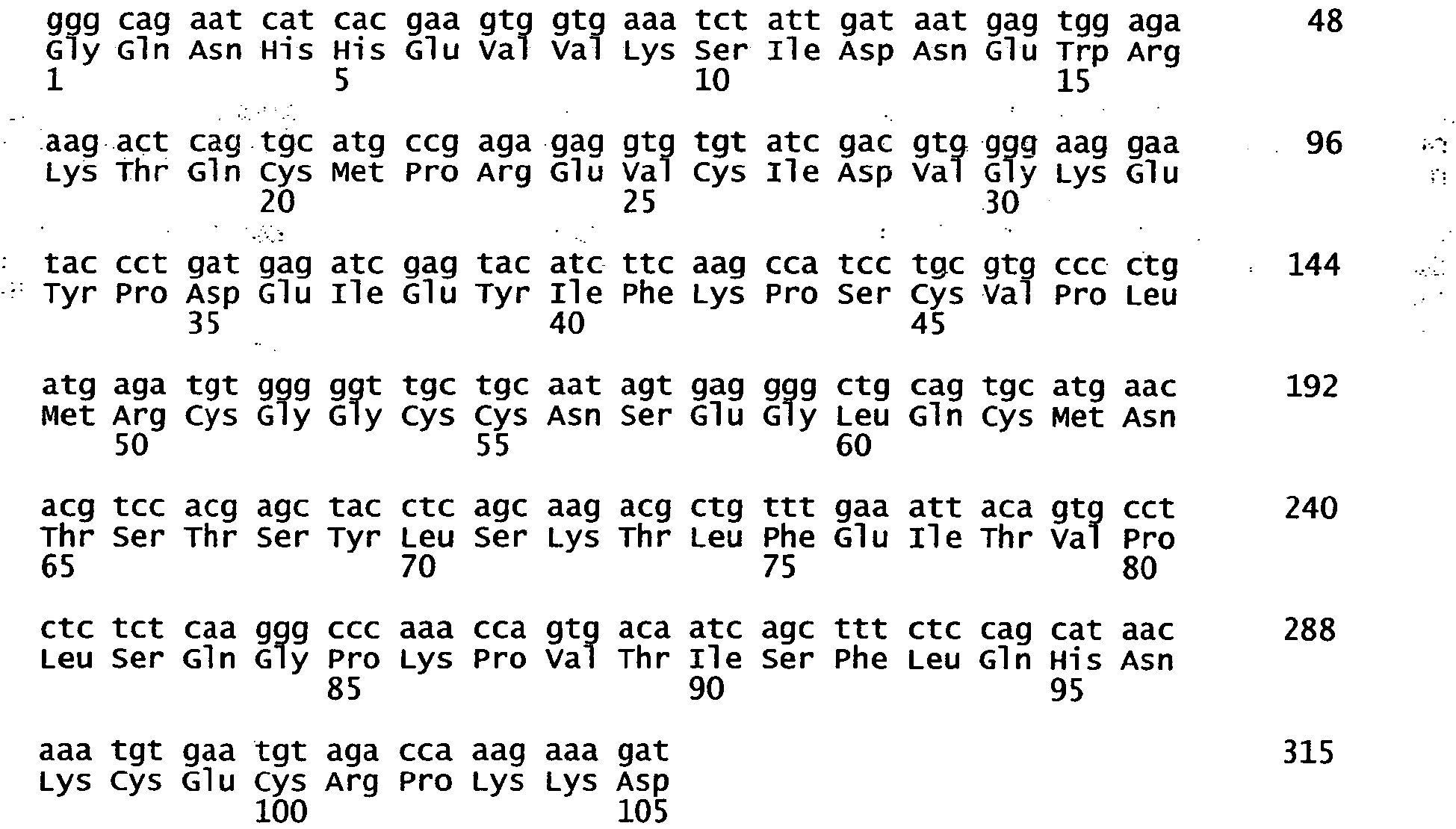
- <210> 637
<211> 105
<212> PRT
<213> Artificial Sequence - <220>
<223> Growth Factor Hybrid Sequence - <400> 637


- <210> 638
<211> 315
<212> DNA
<213> Artificial Sequence - <220>
<223> Growth Factor Hybrid Sequence - <220>
<221> CDS
<222> (1)..(315) - <400> 638

- <210> 639
<211> 105
<212> PRT
<213> Artificial sequence - <220>
<223> Growth Factor Hybrid Sequence - <400> 639

- <210> 640
<211> 312
<212> DNA
<213> Artificial Sequence - <220>
<223> Growth Factor Hybrid Sequence - <220>
<221> CDS
<222> (1)..(312) - <400> 640


- <210> 641
<211> 104
<212> PRT
<213> Artificial Sequence - <220>
<223> Growth Factor Hybrid Sequence - <400> 641

- <210> 642
<211> 312
<212> DNA
<213> Artificial Sequence - <220>
<223> Growth Factor Hybrid Sequence - <220>
<221> CDS
<222> (1)..(312) - <400> 642


- <210> 643
<211> 104
<212> PRT
<213> Artificial Sequence - <220>
<223> Growth Factor Hybrid Sequence - <400> 643

- <210> 644
<211> 315
<212> DNA
<213> Artificial Sequence - <220>
<223> Growth Factor Hybrid Sequence - <220>
<221> CDS
<222> (1)..(315) - <400> 644

- <210> 645
<211> 105
<212> PRT
<213> Artificial Sequence - <220>
<223> Growth Factor Hybrid Sequence - <400> 645


- <210> 646
<211> 315
<212> DNA
<213> Artificial Sequence - <220>
<223> Growth Factor Hybrid Sequence - <220>
<221> CDS
<222> (1)..(315) - <400> 646

- <210> 647
<211> 105
<212> PRT
<213> Artificial Sequence - <220>
<223> Growth Factor Hybrid Sequence - <400> 647


- <210> 648
<211> 312
<212> DNA
<213> Artificial sequence - <220>
<223> Growth Factor Hybrid Sequence - <220>
<221> CDS
<222> (1) .. (312) - <400> 648

- <210> 649
<211> 104
<212> PRT
<213> Artificial Sequence - <220>
<223> Growth Factor Hybrid Sequence - <400> 649
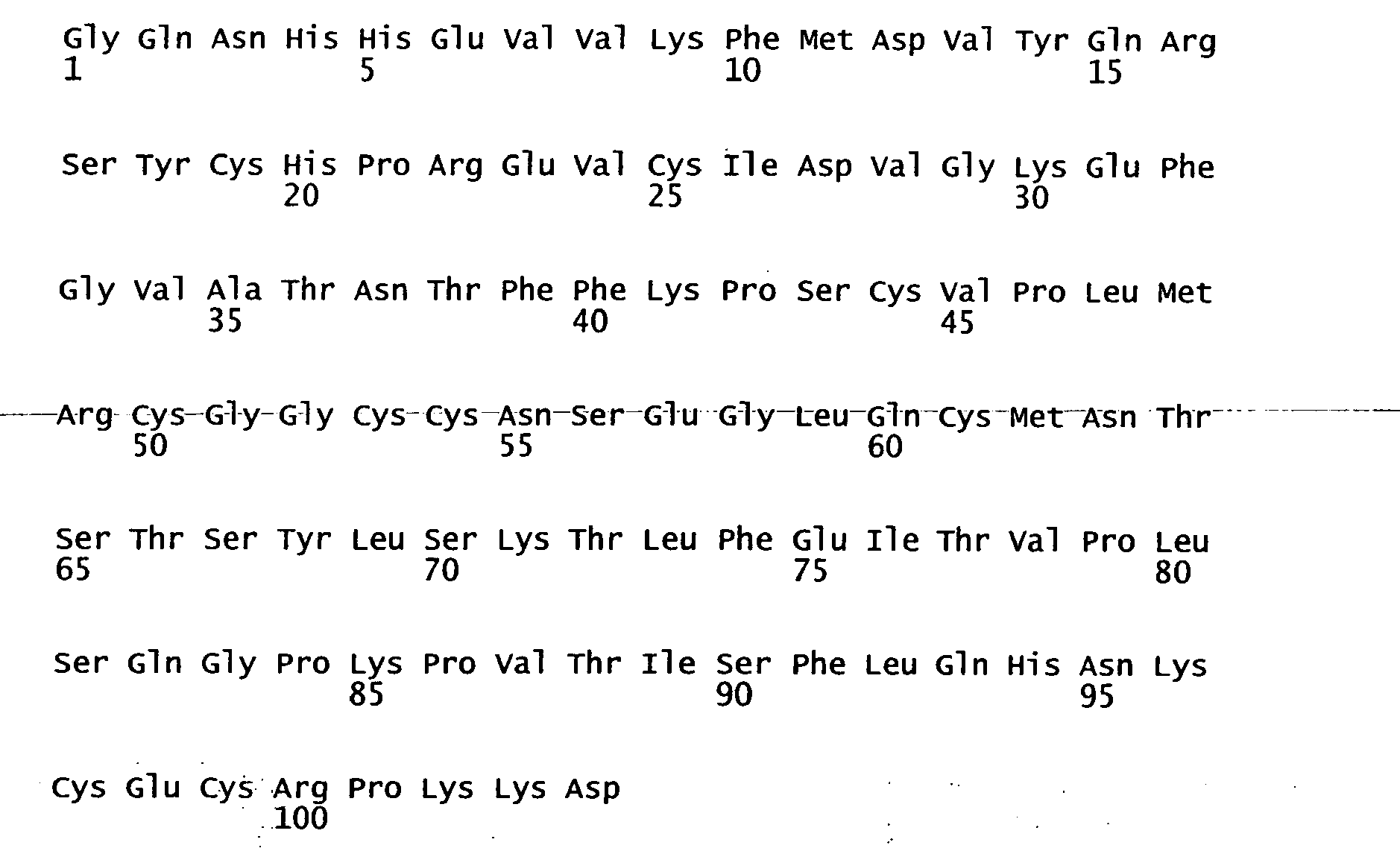
- <210> 650
<211> 312
<212> DNA
<213> Artificial Sequence - <220>
<223> Growth Factor Hybrid Sequence - <220>
<221> CDS
<222> (1)..(312) - <400> 650


- <210> 651
<211> 104
<212> PRT
<213> Artificial sequence - <220>
<223> Growth Factor Hybrid Sequence - <400> 651

- <210> 652
<211> 315
<212> DNA
<213> Artificial Sequence - <220>
<223> Growth Factor Hybrid Sequence - <220>
<221> CDS
<222> (1)..(315) - <400> 652


- <210> 653
<211> 105
<212> PRT
<213> Artificial Sequence - <220>
<223> Growth Factor Hybrid Sequence - <400> 653

- <210> 654
<211> 315
<212> DNA
<213> Artificial Sequence - <220>
<223> Growth Factor Hybrid sequence - <220>
<221> CDS
<222> (1)..(315) - <400> 654

- <210> 655
<211> 105
<212> PRT
<213> Artificial Sequence - <220>
<223> Growth Factor Hybrid Sequence - <400> 655


- <210> 656
<211> 312
<212> DNA
<213> Artificial sequence - <220>
<223> Growth Factor Hybrid Sequence - <220>
<221> CDS
<222> (1)..(312) - <400> 656

- <210> 657
<211> 104
<212> PRT
<213> Artificial Sequence - <220>
<223> Growth Factor Hybrid Sequence - <400> 657


- <210> 658
<211> 312
<212> DNA
<213> Artificial Sequence - <220>
<223> Growth Factor Hybrid Sequence - <220>
<221> CDS
<222> (1)..(312) - <400> 658

- <210> 659
<211> 104
<212> PRT
<213> Artificial Sequence - <220>
<223> Growth Factor Hybrid Sequence - <400> 659

- <210> 660
<211> 315
<212> DNA
<213> Artificial Sequence - <220>
<223> Growth Factor Hybrid Sequence - <220>
<221> CDS
<222> (1)..(315) - <400> 660


- <210> 661
<211> 105
<212> PRT
<213> Artificial Sequence - <220>
<223> Growth Factor Hybrid Sequence - <400> 661

- <210> 662
<211> 315
<212> DNA
<213> Artificial Sequence - <220>
<223> Growth Factor Hybrid Sequence - <220>
<221> CDS
<222> (1)..(315) - <400> 662


- <210> 663
<211> 105
<212> PRT
<213> Artificial Sequence - <220>
<223> Growth Factor Hybrid Sequence - <400> 663

- <210> 664
<211> 312
<212> DNA
<213> Artificial Sequence - <220>
<223> Growth Factor Hybrid Sequence - <220>
<221> CDS
<222> (1)..(312) - <400> 664

- <210> 665
<211> 104
<212> PRT
<213> Artificial Sequence - <220>
<223> Growth Factor Hybrid Sequence - <400> 665


- <210> 666
<211> 312
<212> DNA
<213> Artificial Sequence - <220>
<223> Growth Factor Hybrid Sequence - <220>
<221> CDS
<222> (1)..(312) - <400> 666

- <210> 667
<211> 104
<212> PRT
<213> Artificial Sequence - <220>
<223> Growth Factor Hybrid Sequence - <400> 667


- <210> 668
<211> 315
<212> DNA
<213> Artificial Sequence - <220>
<223> Growth Factor Hybrid Sequence - <220>
<221> CDS
<222> (1)..(315) - <400> 668

- <210> 669
<211> 105
<212> PRT
<213> Artificial sequence - <220>
<223> Growth Factor Hybrid sequence - <400> 669

- <210> 670
<211> 315
<212> DNA
<213> Artificial Sequence - <220>
<223> Growth Factor Hybrid Sequence - <220>
<221> CDS
<222> (1)..(315) - <400> 670


- <210> 671
<211> 105
<212> PRT
<213> Artificial Sequence - <220>
<223> Growth Factor Hybrid Sequence - <400> 671

- <210> 672
<211> 312
<212> DNA
<213> Artificial Sequence - <220>
<223> Growth Factor Hybrid Sequence - <220>
<221> CDS
<222> (1)..(312) - <400> 672


- <210> 673
<211> 104
<212> PRT
<213> Artificial Sequence - <220>
<223> Growth Factor Hybrid Sequence - <400> 673

- <210> 674
<211> 312
<212> DNA
<213> Artificial Sequence - <220>
<223> Growth Factor Hybrid Sequence - <220>
<221> CDS
<222> (1)..(312) - <400> 674

- <210> 675
<211> 104
<212> PRT
<213> Artificial Sequence - <220>
<223> Growth Factor Hybrid Sequence - <400> 675

- <210> 676
<211> 315
<212> DNA
<213> Artificial Sequence - <220>
<223> Growth Factor Hybrid sequence - <220>
<221> CDS
<222> (1)..(315) - <400> 676

- <210> 677
<211> 105
<212> PRT
<213> Artificial Sequence - <220>
<223> Growth Factor Hybrid Sequence - <400> 677


- <210> 678
<211> 315
<212> DNA
<213> Artificial Sequence - <220>
<223> Growth Factor Hybrid Sequence - <220>
<221> CDS
<222> (1)..(315) - <400> 678

- <210> 679
<211> 105
<212> PRT
<213> Artificial Sequence - <220>
<223> Growth Factor Hybrid Sequence - <400> 679


- <210> 680
<211> 312
<212> DNA
<213> Artificial Sequence - <220>
<223> Growth Factor Hybrid Sequence - <220>
<221> CDS
<222> (1)..(312) - <400> 680

- <210> 681
<211> 104
<212> PRT
<213> Artificial Sequence - <220>
<223> Growth Factor Hybrid Sequence - <400> 681

- <210> 682
<211> 312
<212> DNA
<213> Artificial Sequence - <220>
<223> Growth Factor Hybrid Sequence - <220>
<221> CDS
<222> (1)..(312) - <400> 682


- <210> 683
<211> 104
<212> PRT
<213> Artificial Sequence - <220>
<223> Growth Factor Hybrid sequence - <400> 683

- <210> 684
<211> 315
<212> DNA
<213> Artificial sequence - <220>
<223> Growth Factor Hybrid Sequence - <220>
<221> CDS
<222> (1)..(315) - <400> 684


- <210> 685
<211> 105
<212> PRT
<213> Artificial Sequence - <220>
<223> Growth Factor Hybrid Sequence - <400> 685

- <210> 686
<211> 315
<212> DNA
<213> Artificial Sequence - <220>
<223> Growth Factor Hybrid Sequence - <220>
<221> CDS
<222> (1)..(315) - <400> 686

- <210> 687
<211> 105
<212> PRT
<213> Artificial Sequence - <220>
<223> Growth Factor Hybrid Sequence - <400> 687


- <210> 688
<211> 306
<212> DNA
<213> Artificial Sequence - <220>
<223> Growth Factor Hybrid Sequence - <220>
<221> CDS
<222> (1)..(306) - <400> 688

- <210> 689
<211> 102
<212> PRT
<213> Artificial Sequence - <220>
<223> Growth Factor Hybrid Sequence - <400> 689


- <210> 690
<211> 306
<212> DNA
<213> Artificial Sequence - <220>
<223> Growth Factor Hybrid sequence - <220>
<221> CDS
<222> (1)..(306) - <400> 690

- <210> 691
<211> 102
<212> PRT
<213> Artificial sequence - <220>
<223> Growth Factor Hybrid Sequence - <400> 691

- <210> 692
<211> 309
<212> DNA
<213> Artificial Sequence - <220>
<223> Growth Factor Hybrid Sequence - <220>
<221> CDS
<222> (1)..(309) - <400> 692


- <210> 693
<211> 103
<212> PRT
<213> Artificial Sequence - <220>
<223> Growth Factor Hybrid Sequence - <400> 693

- <210> 694
<211> 309
<212> DNA
<213> Artificial Sequence - <220>
<223> Growth Factor Hybrid sequence - <220>
<221> CDS
<222> (1)..(309) - <400> 694


- <210> 695
<211> 103
<212> PRT
<213> Artificial Sequence - <220>
<223> Growth Factor Hybrid Sequence - <400> 695

- <210> 696
<211> 306
<212> DNA
<213> Artificial sequence - <220>
<223> Growth Factor Hybrid Sequence - <220>
<221> CDS
<222> (1)..(306) - <400> 696
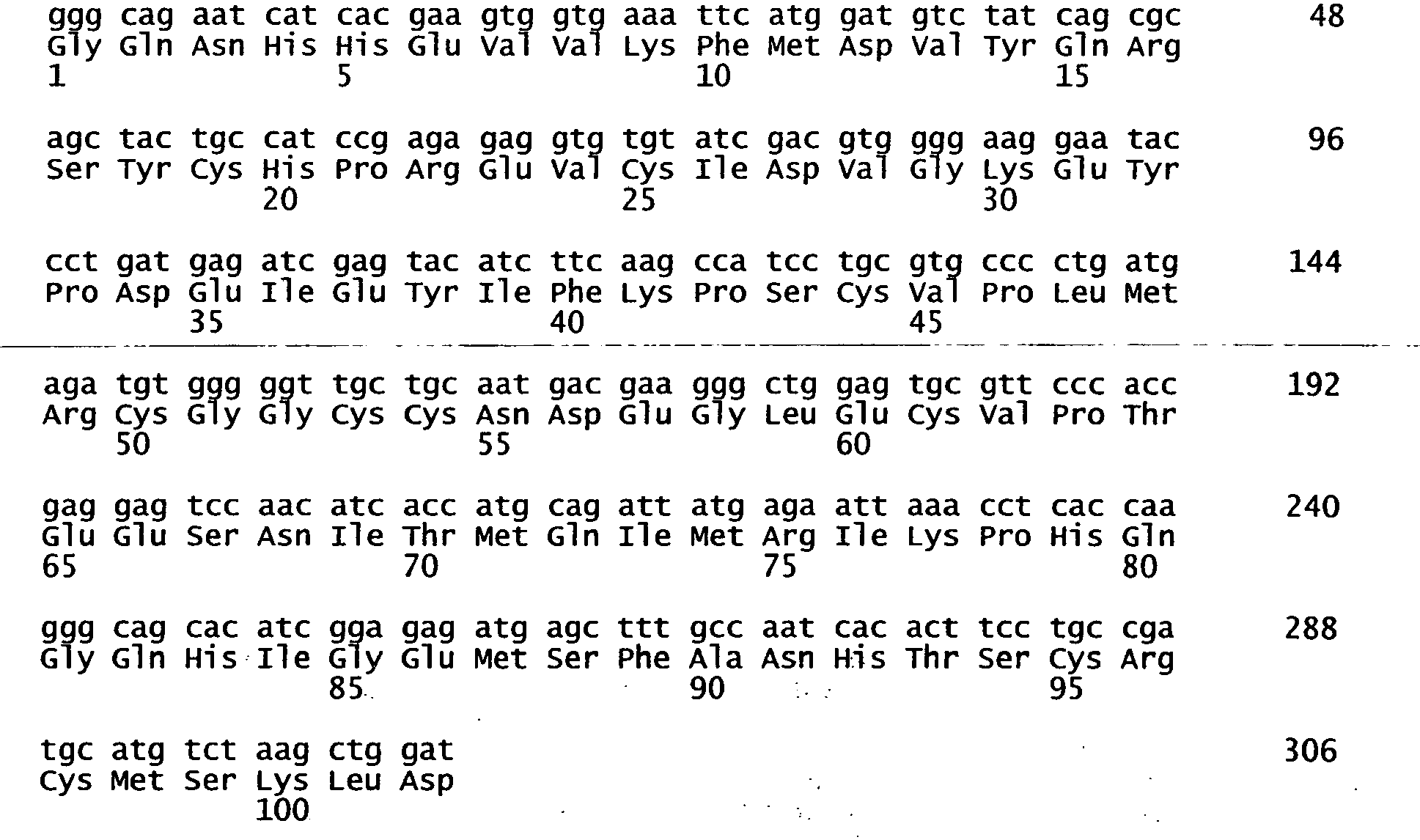
- <210> 697
<211> 102
<212> PRT
<213> Artificial Sequence - <220>
<223> Growth Factor Hybrid Sequence - <400> 697


- <210> 698
<211> 306
<212> DNA
<213> Artificial Sequence - <220>
<223> Growth Factor Hybrid Sequence - <220>
<221> CDS
<222> (1)..(306) - <400> 698

- <210> 699
<211> 102
<212> PRT
<213> Artificial Sequence - <220>
<223> Growth Factor Hybrid Sequence - <400> 699


- <210> 700
<211> 309
<212> DNA
<213> Artificial Sequence - <220>
<223> Growth Factor Hybrid Sequence - <220>
<221> CDS
<222> (1)..(309) - <400> 700

- <210> 701
<211> 103
<212> PRT
<213> Artificial Sequence - <220>
<223> Growth Factor Hybrid sequence - <400> 701
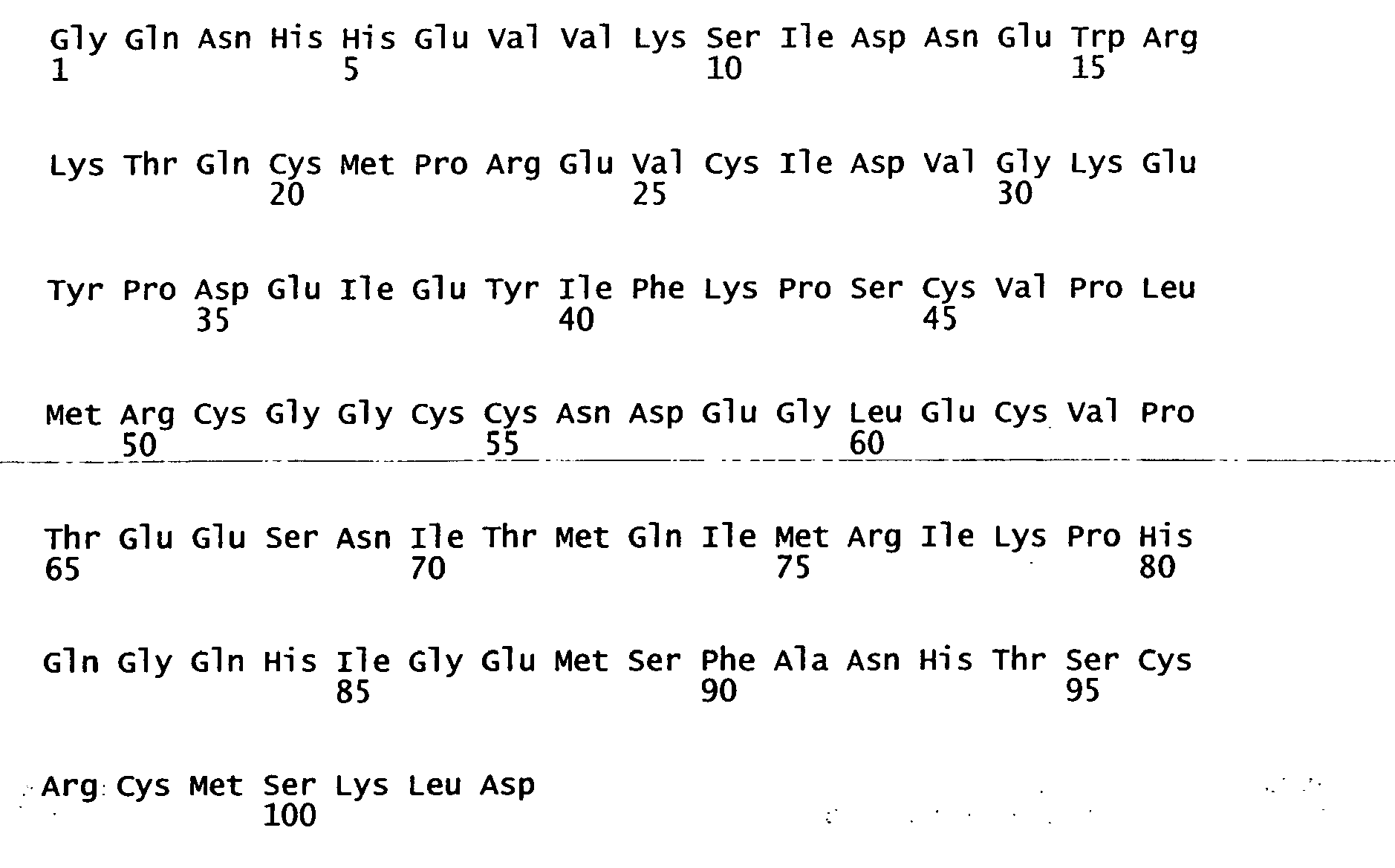
- <210> 702
<211> 309
<212> DNA
<213> Artificial Sequence - <220>
<223> Growth Factor Hybrid Sequence - <220>
<221> CDS
<222> (1)..(309) - <400> 702


- <210> 703
<211> 103
<212> PRT
<213> Artificial sequence - <220>
<223> Growth Factor Hybrid Sequence - <400> 703

- <210> 704
<211> 306
<212> DNA
<213> Artificial Sequence - <220>
<223> Growth Factor Hybrid sequence - <220>
<221> CDS
<222> (1)..(306) - <400> 704

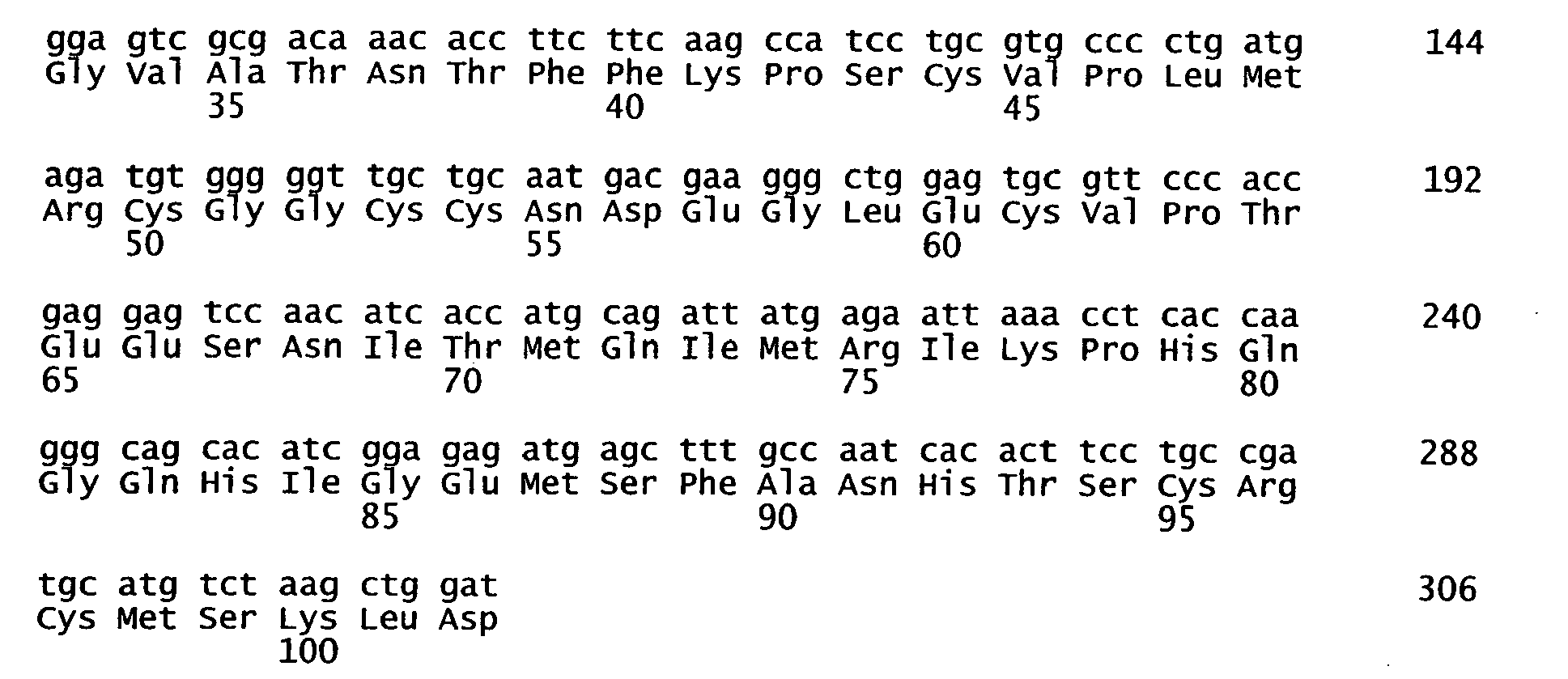
- <210> 705
<211> 102
<212> PRT
<213> Artificial Sequence - <220>
<223> Growth Factor Hybrid Sequence - <400> 705

- <210> 706
<211> 306
<212> DNA
<213> Artificial Sequence - <220>
<223> Growth Factor Hybrid Sequence - <220>
<221> CDS
<222> (1)..(306) - <400> 706

- <210> 707
<211> 102
<212> PRT
<213> Artificial Sequence - <220>
<223> Growth Factor Hybrid Sequence - <400> 707


- <210> 708
<211> 309
<212> DNA
<213> Artificial Sequence - <220>
<223> Growth Factor Hybrid Sequence - <220>
<221> CDS
<222> (1)..(309) - <400> 708

- <210> 709
<211> 103
<212> PRT
<213> Artificial Sequence - <220>
<223> Growth Factor Hybrid Sequence - <400> 709


- <210> 710
<211> 309
<212> DNA
<213> Artificial Sequence - <220>
<223> Growth Factor Hybrid Sequence - <220>
<221> CDS
<222> (1)..(309) - <400> 710

- <210> 711
<211> 103
<212> PRT
<213> Artificial Sequence - <220>
<223> Growth Factor Hybrid sequence - <400> 711

- <210> 712
<211> 306
<212> DNA
<213> Artificial Sequence - <220>
<223> Growth Factor Hybrid Sequence - <220>
<221> CDS
<222> (1)..(306) - <400> 712


- <210> 713
<211> 102
<212> PRT
<213> Artificial sequence - <220>
<223> Growth Factor Hybrid sequence - <400> 713

- <210> 714
<211> 306
<212> DNA
<213> Artificial Sequence - <220>
<223> Growth Factor Hybrid Sequence - <220>
<221> CDS
<222> (1)..(306) - <400> 714


- <210> 715
<211> 102
<212> PRT
<213> Artificial Sequence - <220>
<223> Growth Factor Hybrid sequence - <400> 715

- <210> 716
<211> 309
<212> DNA
<213> Artificial Sequence - <220>
<223> Growth Factor Hybrid Sequence - <220>
<221> CDS
<222> (1)..(309) - <400> 716

- <210> 717
<211> 103
<212> PRT
<213> Artificial Sequence - <220>
<223> Growth Factor Hybrid Sequence - <400> 717

- <210> 718
<211> 309
<212> DNA
<213> Artificial sequence - <220>
<223> Growth Factor Hybrid Sequence - <220>
<221> CDS
<222> (1)..(309) - <400> 718

- <210> 719
<211> 103
<212> PRT
<213> Artificial Sequence - <220>
<223> Growth Factor Hybrid Sequence - <400> 719


- <210> 720
<211> 306
<212> DNA
<213> Artificial Sequence - <220>
<223> Growth Factor Hybrid Sequence - <220>
<221> CDS
<222> (1)..(306) - <400> 720

- <210> 721
<211> 102
<212> PRT
<213> Artificial Sequence - <220>
<223> Growth Factor Hybrid Sequence - <400> 721

- <210> 722
<211> 306
<212> DNA
<213> Artificial Sequence - <220>
<223> Growth Factor Hybrid Sequence - <220>
<221> CDS
<222> (1)..(306) - <400> 722


- <210> 723
<211> 102
<212> PRT
<213> Artificial Sequence - <220>
<223> Growth Factor Hybrid Sequence - <400> 723

- <210> 724
<211> 309
<212> DNA
<213> Artificial sequence - <220>
<223> Growth Factor Hybrid Sequence - <220>
<221> CDS
<222> (1)..(309) - <400> 724


- <210> 725
<211> 103
<212> PRT
<213> Artificial sequence - <220>
<223> Growth Factor Hybrid Sequence - <400> 725

- <210> 726
<211> 309
<212> DNA
<213> Artificial Sequence - <220>
<223> Growth Factor Hybrid Sequence - <220>
<221> CDS
<222> (1)..(309) - <400> 726

- <210> 727
<211> 103
<212> PRT
<213> Artificial Sequence - <220>
<223> Growth Factor Hybrid Sequence - <400> 727

- <210> 728
<211> 306
<212> DNA
<213> Artificial Sequence - <220>
<223> Growth Factor Hybrid Sequence - <220>
<221> CDS
<222> (1)..(306) - <400> 728

- <210> 729
<211> 102
<212> PRT
<213> Artificial Sequence - <220>
<223> Growth Factor Hybrid Sequence - <400> 729


- <210> 730
<211> 306
<212> DNA
<213> Artificial Sequence - <220>
<223> Growth Factor Hybrid Sequence - <220>
<221> CDS
<222> (1)..(306) - <400> 730

- <210> 731
<211> 102
<212> PRT
<213> Artificial Sequence - <200>
<223> Growth Factor Hybrid Seqence

- <210> 732
<211> 309
<212> DNA
<213> Artificial Sequence - <220>
<223> Growth Factor Hybrid Sequence - <220>
<221> CDS
<222> (1)..(309) - <400> 732

- <210> 733
<211> 103
<212> PRT
<213> Artificial Sequence - <220>
<223> Growth Factor Hybrid sequence - <400> 733

- <210> 734
<211> 309
<212> DNA
<213> Artificial sequence - <220>
<223> Growth Factor Hybrid Sequence - <220>
<221> CDS
<222> (1)..(309) - <400> 734
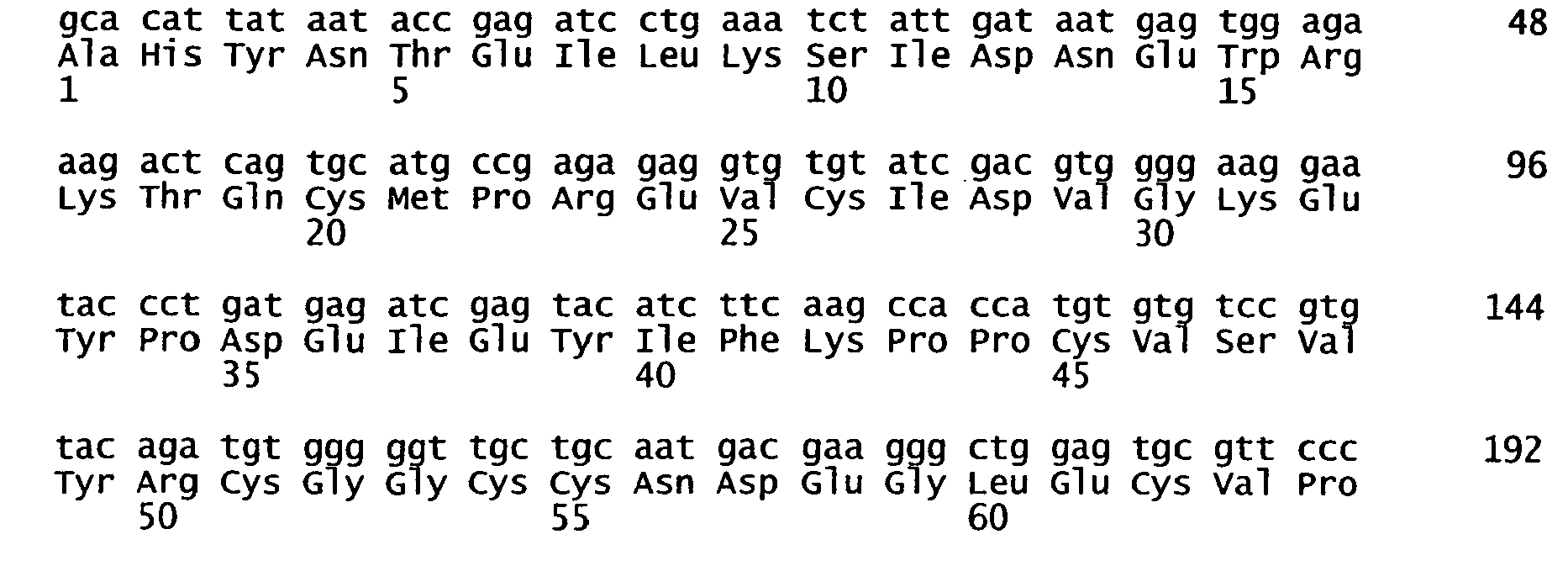

- <210> 735
<211> 103
<212> PRT
<213> Artificial Sequence - <220>
<223> Growth Factor Hybrid Sequence - <400> 735

- <210> 736
<211> 306
<212> DNA
<213> Artificial Sequence - <220>
<223> Growth Factor Hybrid Sequence - <220>
<221> CDS
<222> (1)..(306) - <400> 736


- <210> 737
<211> 102
<212> PRT
<213> Artificial Sequence - <220>
<223> Growth Factor Hybrid Sequence - <400> 737

- <210> 738
<211> 306
<212> DNA
<213> Artificial Sequence - <220>
<223> Growth Factor Hybrid Sequence - <220>
<221> CDS
<222> (1)..(306) - <400> 738

- <210> 739
<211> 102
<212> PRT
<213> Artificial Sequence - <220>
<223> Growth Factor Hybrid Sequence - <400> 739


- <210> 740
<211> 309
<212> DNA
<213> Artificial Sequence - <220>
<223> Growth Factor Hybrid Sequence - <220>
<221> CDS
<222> (1)..(309) - <400> 740

- <210> 741
<211> 103
<212> PRT
<213> Artificial Sequence - <220>
<223> Growth Factor Hybrid Sequence - <400> 741


- <210> 742
<211> 309
<212> DNA
<213> Artificial Sequence - <220>
<223> Growth Factor Hybrid Sequence - <220>
<221> CDS
<222> (1)..(309) - <400> 742

- <210> 743
<211> 103
<212> PRT
<213> Artificial sequence - <220>
<223> Growth Factor Hybrid sequence - <400> 743

- <210> 744
<211> 306
<212> DNA
<213> Artificial sequence - <220>
<223> Growth Factor Hybrid Sequence - <220>
<221> CDS
<222> (1)..(306) - <400> 744


- <210> 745
<211> 102
<212> PRT
<213> Artificial Sequence - <220>
<223> Growth Factor Hybrid sequence - <400> 745

- <210> 746
<211> 306
<212> DNA
<213> Artificial Sequence - <220>
<223> Growth Factor Hybrid Sequence - <220>
<221> CDS
<222> (1)..(306) - <400> 746


- <210> 747
<211> 102
<212> PRT
<213> Artificial Sequence - <220>
<223> Growth Factor Hybrid sequence - <400> 747

- <210> 748
<211> 309
<212> DNA
<213> Artificial Sequence - <220>
<223> Growth Factor Hybrid Sequence - <220>
<221> CDS
<222> (1)..(309) - <400> 748

- <210> 749
<211> 103
<212> PRT
<213> Artificial sequence - <220>
<223> Growth Factor Hybrid sequence - <400> 749


- <210> 750
<211> 309
<212> DNA
<213> Artificial Sequence - <220>
<223> Growth Factor Hybrid Sequence - <220>
<221> CDS
<222> (1)..(309) - <400> 750

- <210> 751
<211> 103
<212> PRT
<213> Artificial sequence - <220>
<223> Growth Factor Hybrid Sequence - <400> 751


- <210> 752
<211> 306
<212> DNA
<213> Artificial sequence - <220>
<223> Growth Factor Hybrid Sequence - <220>
<221> CDS
<222> (1)..(306) - <400> 752

- <210> 753
<211> 102
<212> PRT
<213> Artificial Sequence - <220>
<223> Growth Factor Hybrid Sequence - <400> 753

- <210> 754
<211> 306
<212> DNA
<213> Artificial Sequence - <220>
<223> Growth Factor Hybrid Sequence - <220>
<221> CDS
<222> (1)..(306) - <400> 754


- <210> 755
<211> 102
<212> PRT
<213> Artificial Sequence - <220>
<223> Growth Factor Hybrid Sequence - <400> 755

- <210> 756
<211> 309
<212> DNA
<213> Artificial Sequence - <220>
<223> Growth Factor Hybrid sequence - <220>
<221> CDS
<222> (1)..(309) - <400> 756


- <210> 757
<211> 103
<212> PRT
<213> Artificial sequence - <220>
<223> Growth Factor Hybrid Sequence - <400> 757

- <210> 758
<211> 309
<212> DNA
<213> Artificial Sequence - <220>
<223> Growth Factor Hybrid sequence - <220>
<221> CDS
<222> (1)..(309) - <400> 758

- <210> 759
<211> 103
<212> PRT
<213> Artificial Sequence - <220>
<223> Growth Factor Hybrid Sequence - <400> 759

- <210> 760
<211> 306
<212> DNA
<213> Artificial sequence - <220>
<223> Growth Factor Hybrid Sequence - <220>
<221> CDS
<222> (1)..(306) - <400> 760

- <210> 761
<211> 102
<212> PRT
<213> Artificial Sequence - <220>
<223> Growth Factor Hybrid Sequence - <400> 761


- <210> 762
<211> 306
<212> DNA
<213> Artificial Sequence - <220>
<223> Growth Factor Hybrid Sequence - <220>
<221> CDS
<222> (1)..(306) - <400> 762

- <210> 763
<211> 102
<212> PRT
<213> Artificial Sequence - <220>
<223> Growth Factor Hybrid Sequence - <400> 763

- <210> 764
<211> 309
<212> DNA
<213> Artificial sequence - <220>
<223> Growth Factor Hybrid Sequence - <220>
<221> CDS
<222> (1)..(309) - <400> 764


- <210> 765
<211> 103
<212> PRT
<213> Artificial Sequence - <220>
<223> Growth Factor Hybrid Sequence - <400> 765

- <210> 766
<211> 309
<212> DNA
<213> Artificial sequence - <220>
<223> Growth Factor Hybrid Sequence - <220>
<221> CDS
<222> (1)..(309) - <400> 766

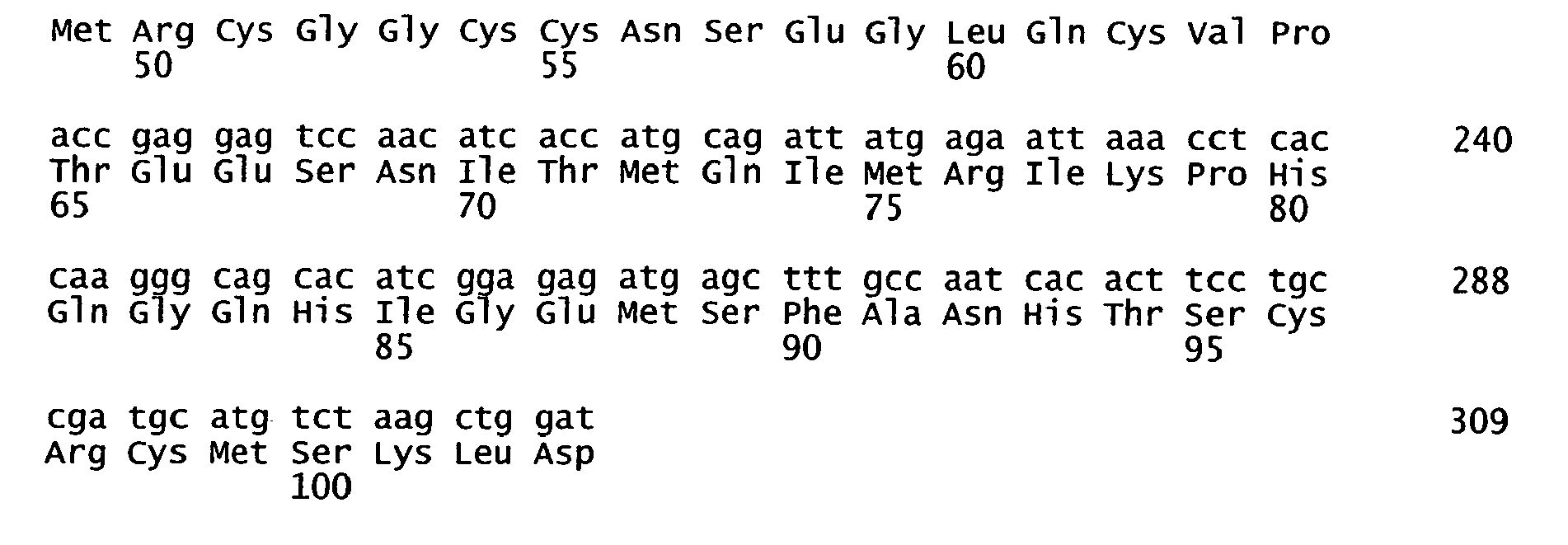
- <210> 767
<211> 103
<212> PRT
<213> Artificial Sequence - <220>
<223> Growth Factor Hybrid Sequence - <400> 767

- <210> 768
<211> 306
<212> DNA
<213> Artificial Sequence - <220>
<223> Growth Factor Hybrid Sequence - <220>
<221> CDS
<222> (1)..(306) - <400> 768

- <210> 769
<211> 102
<212> PRT
<213> Artificial Sequence - <220>
<223> Growth Factor Hybrid Sequence - <400> 769

- <211> 306
<212> DNA
<213> Artificial Sequence - <220>
<223> Growth Factor Hybrid Sequence - <220>
<221> CDS
<222> (1)..(306) - <400> 770

- <210> 771
<211> 102
<212> PRT
<213> Artificial Sequence - <220>
<223> Growth Factor Hybrid sequence - <400> 771


- <210> 772
<211> 309
<212> DNA
<213> Artificial sequence - <220>
<223> Growth Factor Hybrid Sequence - <220>
<221> CDS
<222> (1)..(309) - <400> 772

- <210> 773
<211> 103
<212> PRT
<213> Artificial sequence - <220>
<223> Growth Factor Hybrid Sequence - <400> 773


- <210> 774
<211> 309
<212> DNA
<213> Artificial Sequence - <220>
<223> Growth Factor Hybrid Sequence - <220>
<221> CDS
<222> (1)..(309) - <400> 774

- <210> 775
<211> 103
<212> PRT
<213> Artificial Sequence - <220>
<223> Growth Factor Hybrid Sequence - <400> 775

- <210> 776
<211> 306
<212> DNA
<213> Artificial Sequence - <220>
<223> Growth Factor Hybrid Sequence - <220>
<221> CDS
<222> (1)..(306) - <400> 776


- <210> 777
<211> 102
<212> PRT
<213> Artificial Sequence - <220>
<223> Growth Factor Hybrid Sequence - <400> 777

- <210> 778
<211> 306
<212> DNA
<213> Artificial sequence - <220>
<223> Growth Factor Hybrid Sequence - <220>
<221> CDS
<222> (1)..(306) - <400> 778


- <210> 779
<211> 102
<212> PRT
<213> Artificial Sequence - <220>
<223> Growth Factor Hybrid Sequence - <400> 779

- <210> 780
<211> 309
<212> DNA
<213> Artificial Sequence - <220>
<223> Growth Factor Hybrid Sequence - <220>
<221> CDS
<222> (1)..(309) - <400> 780

- <210> 781
<211> 103
<212> PRT
<213> Artificial Sequence - <220>
<223> Growth Factor Hybrid Sequence - <400> 781
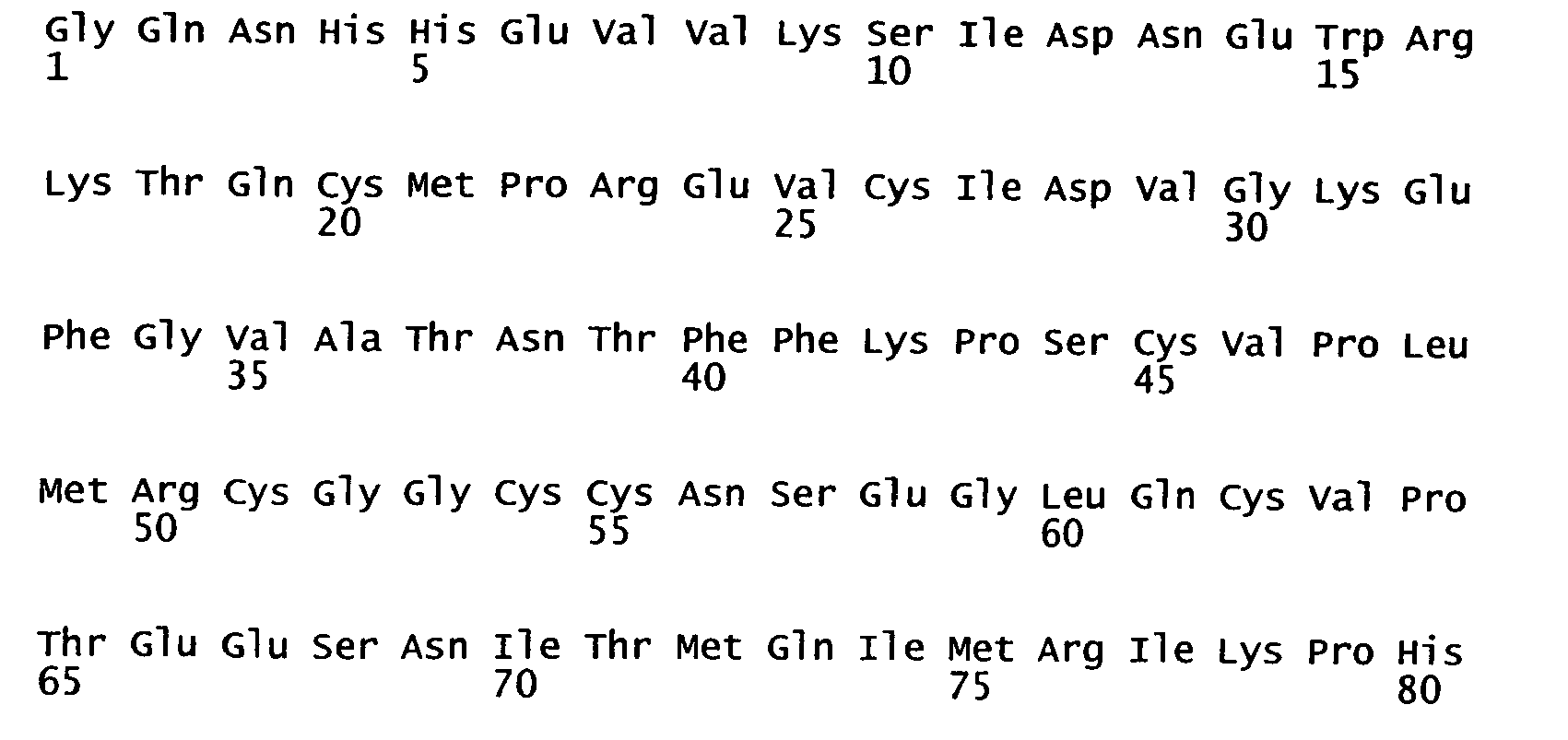

- <210> 782
<211> 309
<212> DNA
<213> Artificial Sequence - <220>
<223> Growth Factor Hybrid Sequence - <220>
<221> CDS
<222> (1)..(309) - <400> 782

- <210> 783
<211> 103
<212> PRT
<213> Artificial sequence - <220>
<223> Growth Factor Hybrid Sequence - <400> 783


- <210> 784
<211> 306
<212> DNA
<213> Artificial Sequence - <220>
<223> Growth Factor Hybrid Sequence - <220>
<221> CDS
<222> (1)..(306) - <400> 784

- <210> 785
<211> 102
<212> PRT
<213> Artificial Sequence - <220>
<223> Growth Factor Hybrid sequence - <400> 785

- <210> 786
<211> 306
<212> DNA
<213> Artificial Sequence - <220>
<223> Growth Factor Hybrid Sequence - <220>
<221> CDS
<222> (1)..(306) - <400> 786


- <210> 787
<211> 102
<212> PRT
<213> Artificial Sequence - <220>
<223> Growth Factor Hybrid Sequence - <400> 787

- <210> 788
<211> 309
<212> DNA
<213> Artificial sequence - <220>
<223> Growth Factor Hybrid Sequence - <220>
<221> CDS
<222> (1)..(309) - <400> 788


- <210> 789
<211> 103
<212> PRT
<213> Artificial Sequence - <220>
<223> Growth Factor Hybrid sequence - <400> 789

- <210> 790
<211> 309
<212> DNA
<213> Artificial Sequence - <220>
<223> Growth Factor Hybrid sequence - <220>
<221> CDS
<222> (1)..(309) - <400> 790

- <210> 791
<211> 103
<212> PRT
<213> Artificial Sequence - <220>
<223> Growth Factor Hybrid Sequence - <400> 791


- <210> 792
<211> 306
<212> DNA
<213> Artificial Sequence - <220>
<223> Growth Factor Hybrid Sequence - <220>
<221> CDS
<222> (1)..(306) - <400> 792

- <210> 793
<211> 102
<212> PRT
<213> Artificial Sequence - <220>
<223> Growth Factor Hybrid sequence - <400> 793


- <210> 794
<211> 306
<212> DNA
<213> Artificial Sequence - <220>
<223> Growth Factor Hybrid Sequence - <220>
<221> CDS
<222> (1)..(306)
- <210> 795
<211> 102
<212> PRT
<213> Artificial Sequence - <220>
<223> Growth Factor Hybrid sequence - <400> 795

- <210> 796
<211> 309
<212> DNA
<213> Artificial Sequence - <220>
<223> Growth Factor Hybrid Sequence - <220>
<221> CDS
<222> (1)..(309) - <400> 796


- <210> 797
<211> 103
<212> PRT
<213> Artificial Sequence - <220>
<400> 797
- <210> 798
<211> 309
<212> DNA
<213> Artificial Sequence - <220>
<223> Growth Factor Hybrid Sequence - <220>
<221> CDS
<222> (1)..(309) - <400> 798


- <210> 799
<211> 103
<212> PRT
<213> Artificial Sequence - <220>
<223> Growth Factor Hybrid Sequence - <400> 799

- <210> 800
<211> 306
<212> DNA
<213> Artificial Sequence - <220>
<223> Growth Factor Hybrid Sequence - <220>
<221> CDS
<222> (1)..(306) - <400> 800

- <210> 801
<211> 102
<212> PRT
<213> Artificial Sequence - <220>
<223> Growth Factor Hybrid sequence - <400> 801

- <210> 802
<211> 306
<212> DNA
<213> Artificial Sequence - <220>
<223> Growth Factor Hybrid Sequence - <220>
<221> CDS
<222> (1)..(306) - <400> 802

- <210> 803
<211> 102
<212> PRT
<213> Artificial Sequence - <220>
<223> Growth Factor Hybrid sequence - <400> 803


- <210> 804
<211> 309
<212> DNA
<213> Artificial Sequence - <220>
<223> Growth Factor Hybrid Sequence - <220>
<221> CDS
<222> (1)..(309) - <400> 804

- <210> 805
<211> 103
<212> PRT
<213> Artificial Sequence - <220>
<223> Growth Factor Hybrid Sequence - <400> 805

- <210> 806
<211> 309
<212> DNA
<213> Artificial Sequence - <220>
<223> Growth Factor Hybrid Sequence - <220>
<221> CDS
<222> (1)..(309) - <400> 806


- <210> 807
<211> 103
<212> PRT
<213> Artificial sequence - <220>
<223> Growth Factor Hybrid Sequence - <400> 807

- <210> 808
<211> 306
<212> DNA
<213> Artificial Sequence - <220>
<223> Growth Factor Hybrid Sequence - <220>
<221> CDS
<222> (1)..(306) - <400> 808


- <210> 809
<211> 102
<212> PRT
<213> Artificial Sequence - <220>
<223> Growth Factor Hybrid Sequence - <400> 809

- <210> 810
<211> 306
<212> DNA
<213> Artificial Sequence - <220>
<223> Growth Factor Hybrid Sequence - <220>
<221> CDS
<222> (1)..(306) - <400> 810

- <210> 811
<211> 102
<212> PRT
<213> Artificial Sequence - <220>
<223> Growth Factor Hybrid Sequence - <400> 811

- <210> 812
<211> 309
<212> DNA
<213> Artificial Sequence - <220>
<223> Growth Factor Hybrid Sequence - <220>
<221> CDS
<222> (1)..(306) - <400> 812

- <210> 813
<211> 102
<212> PRT
<213> Artificial Sequence - <220>
<223> Growth Factor Hybrid sequence - <400> 813


- <210> 814
<211> 309
<212> DNA
<213> Artificial sequence - <220>
<223> Growth Factor Hybrid Sequence - <220>
<221> CDS
<222> (1)..(309) - <400> 814
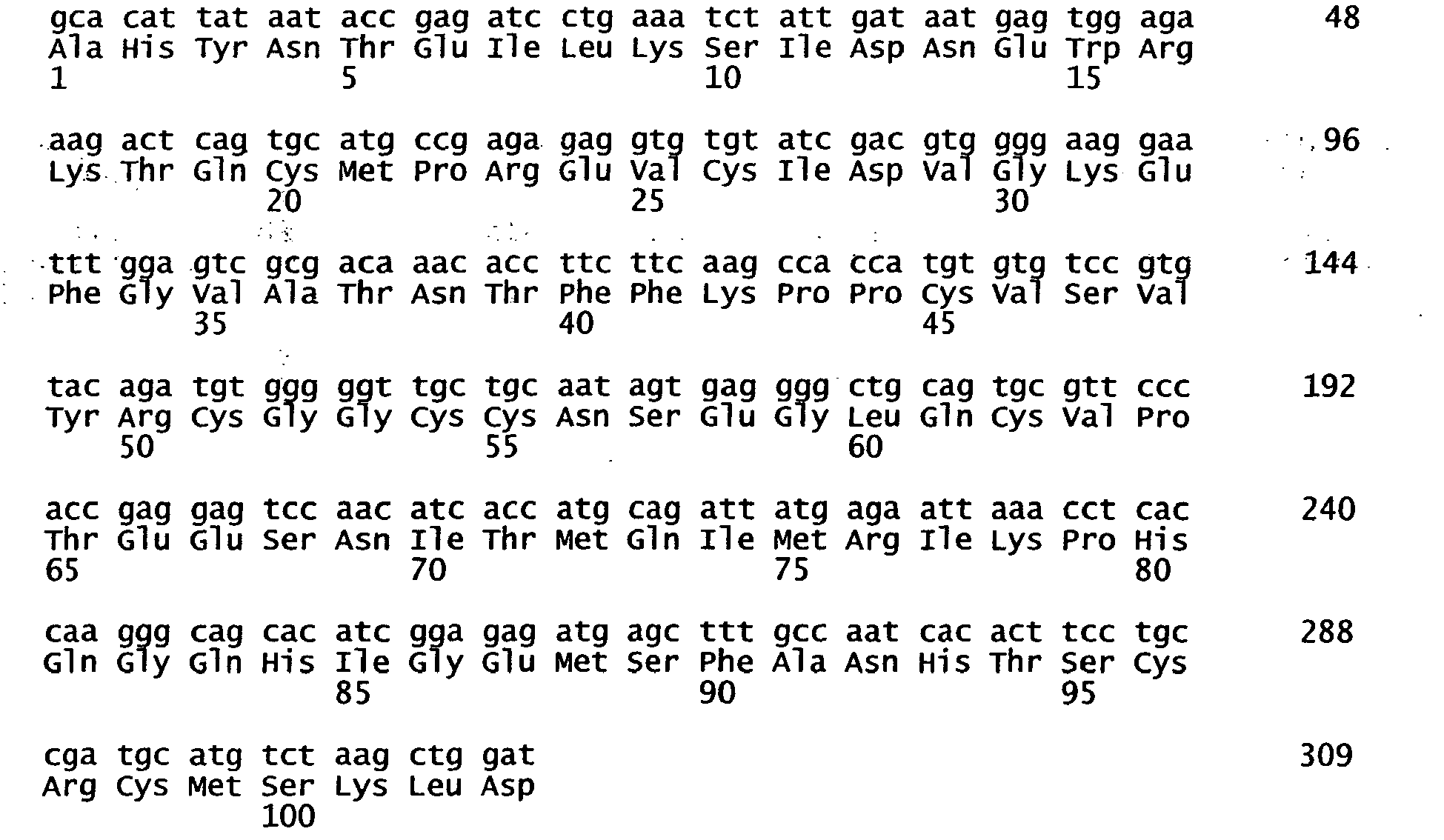
- <210> 815
<211> 103
<212> PRT
<213> Artificial Sequence - <220>
<223> Growth Factor Hybrid sequence - <400> 815


- <210> 816
<211> 306
<212> DNA
<213> Artificial Sequence - <220>
<223> Growth Factor Hybrid Sequence - <220>
<221> CDS
<222> (1)..(306) - <400> 816

- <210> 817
<211> 102
<212> PRT
<213> Artificial Sequence - <220>
<223> Growth Factor Hybrid sequence - <400> 817
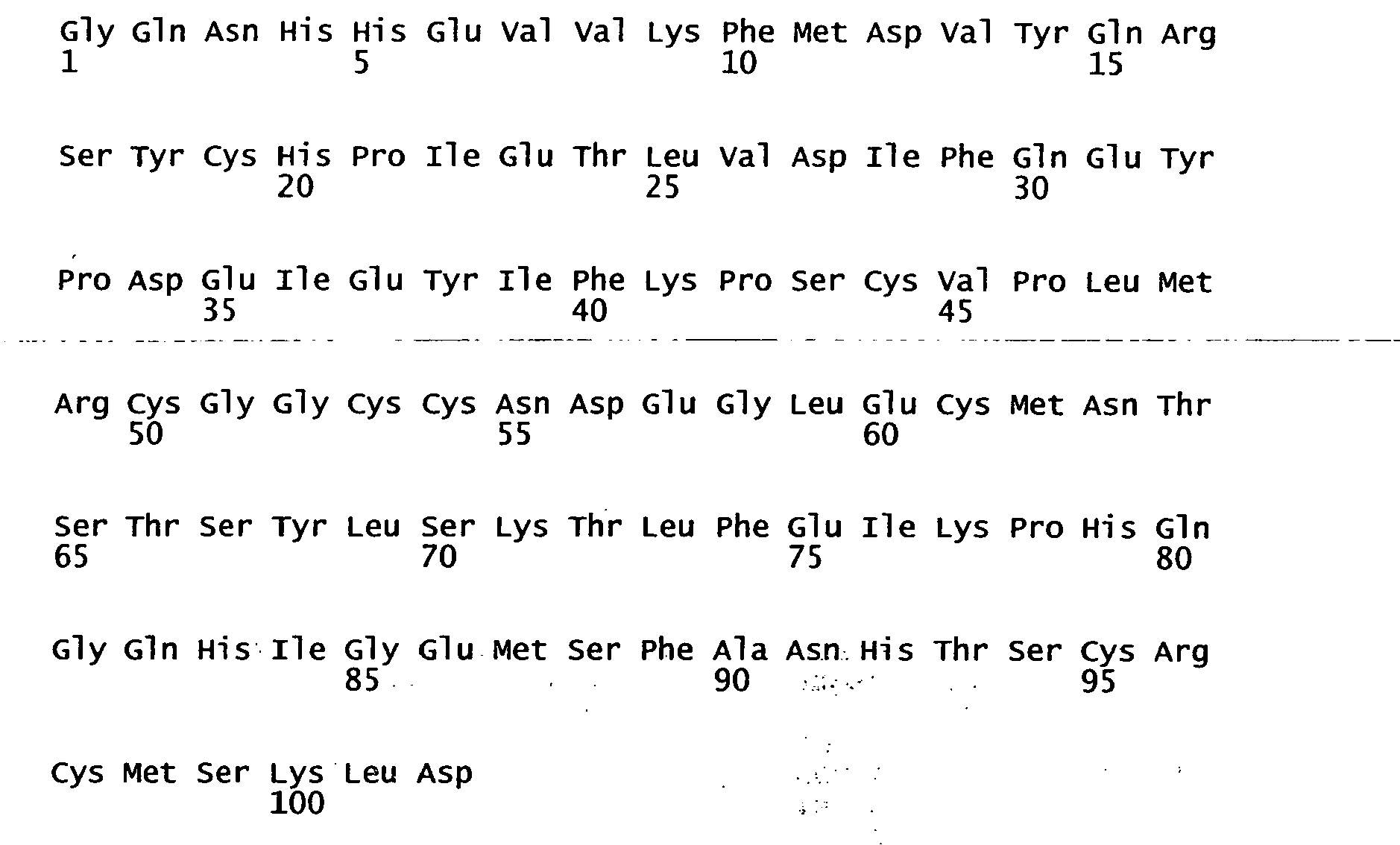
- <210> 818
<211> 306
<212> DNA
<213> Artificial Sequence - <220>
<223> Growth Factor Hybrid Sequence - <220>
<221> CDS
<222> (1)..(306) - <400> 818


- <210> 819
<211> 102
<212> PRT
<213> Artificial Sequence - <220>
<223> Growth Factor Hybrid Sequence - <400> 819

- <210> 820
<211> 309
<212> DNA
<213> Artificial Sequence - <220>
<223> Growth Factor Hybrid Sequence - <220>
<221> CDS
<222> (1)..(309) - <400> 820


- <210> 821
<211> 103
<212> PRT
<213> Artificial sequence - <220>
<223> Growth Factor Hybrid Sequence - <400> 821

- <210> 822
<211> 309
<212> DNA
<213> Artificial Sequence - <220>
<223> Growth Factor Hybrid Sequence - <220>
<221> CDS
<222> (1)..(309) - <400> 822

- <210> 823
<211> 103
<212> PRT
<213> Artificial Sequence - <220>
<223> Growth Factor Hybrid Sequence - <400> 823


- <210> 824
<211> 306
<212> DNA
<213> Artificial sequence - <220>
<223> Growth Factor Hybrid sequence - <220>
<221> CDS
<222> (1)..(306) - <400> 824

- <210> 825
<211> 102
<212> PRT
<213> Artificial sequence - <220>
<223> Growth Factor Hybrid Sequence - <400> 825


- <210> 826
<211> 306
<212> DNA
<213> Artificial sequence - <220>
<223> Growth Factor Hybrid Sequence - <220>
<221> CDS
<222> (1)..(306) - <400> 826

- <210> 827
<211> 102
<212> PRT
<213> Artificial Sequence - <220>
<223> Growth Factor Hybrid Sequence - <400> 827

- <210> 828
<211> 309
<212> DNA
<213> Artificial Sequence - <220>
<223> Growth Factor Hybrid Sequence - <220>
<221> CDS
<222> (1)..(309) - <400> 828


- <210> 829
<211> 103
<212> PRT
<213> Artificial sequence - <220>
<223> Growth Factor Hybrid Sequence - <400> 829

- <210> 830
<211> 309
<212> DNA
<213> Artificial Sequence - <220>
<223> Growth Factor Hybrid Sequence - <220>
<221> CDS
<222> (1)..(309) - <400> 830


- <210> 831
<211> 103
<212> PRT
<213> Artificial sequence - <220>
<223> Growth Factor Hybrid sequence - <400> 831

- <210> 832
<211> 306
<212> DNA
<213> Artificial Sequence - <220>
<223> Growth Factor Hybrid Sequence - <220>
<221> CDS
<222> (1)..(306) - <400> 832

- <210> 833
<211> 102
<212> PRT
<213> Artificial Sequence - <220>
<223> Growth Factor Hybrid Sequence - <400> 833


- <210> 834
<211> 306
<212> DNA
<213> Artificial Sequence - <220>
<223> Growth Factor Hybrid Sequence - <220>
<221> CDS
<222> (1)..(306) - <400> 834

- <210> 835
<211> 102
<212> PRT
<213> Artificial Sequence - <220>
<223> Growth Factor Hybrid Sequence - <400> 835


- <210> 836
<211> 309
<212> DNA
<213> Artificial Sequence - <220>
<223> Growth Factor Hybrid Sequence - <220>
<221> CDS
<222> (1)..(309) - <400> 836

- <210> 837
<211> 103
<212> PRT
<213> Artificial Sequence - <220>
<223> Growth Factor Hybrid sequence - <400> 837

- <210> 838
<211> 309
<212> DNA
<213> Artificial Sequence - <220>
<223> Growth Factor Hybrid Sequence - <220>
<221> CDS
<222> (1)..(309) - <400> 838


- <210> 839
<211> 103
<212> PRT
<213> Artificial Sequence - <220>
<223> Growth Factor Hybrid Sequence - <400> 839

- <210> 840
<211> 306
<212> DNA
<213> Artificial Sequence - <220>
<223> Growth Factor Hybrid sequence - <220>
<221> CDS
<222> (1)..(306) - <400> 840


- <210> 841
<211> 102
<212> PRT
<213> Artificial Sequence - <220>
<223> Growth Factor Hybrid sequence - <400> 841

- <210> 842
<211> 306
<212> DNA
<213> Artificial Sequence - <220>
<223> Growth Factor Hybrid Sequence - <220>
<221> CDS
<222> (1)..(306)
- <210> 843
<211> 102
<212> PRT
<213> Artificial sequence - <220>
<223> Growth Factor Hybrid Sequence - <400> 843


- <210> 844
<211> 309
<212> DNA
<213> Artificial Sequence - <220>
<223> Growth Factor Hybrid Sequence - <220>
<221> CDS
<222> (1)..(309) - <400> 844

- <210> 845
<211> 103
<212> PRT
<213> Artificial Sequence - <220>
<223> Growth Factor Hybrid Sequence - <400> 845


- <210> 846
<211> 309
<212> DNA
<213> Artificial sequence - <220>
<223> Growth Factor Hybrid Sequence - <220>
<221> CDS
<222> (1)..(309) - <400> 846

- <210> 847
<211> 103
<212> PRT
<213> Artificial Sequence - <220>
<223> Growth Factor Hybrid Sequence - <400> 847

- <210> 848
<211> 306
<212> DNA
<213> Artificial Sequence - <220>
<223> Growth Factor Hybrid Sequence - <220>
<221> CDS
<222> (1)..(306) - <400> 848


- <210> 849
<211> 102
<212> PRT
<213> Artificial sequence - <220>
<223> Growth Factor Hybrid Sequence - <400> 849

- <210> 850
<211> 306
<212> DNA
<213> Artificial Sequence - <220>
<223> Growth Factor Hybrid Sequence - <220>
<221> CDS
<222> (1)..(306) - <400> 850


- <210> 851
<211> 102
<212> PRT
<213> Artificial Sequence - <220>
<223> Growth Factor Hybrid sequence - <400> 851

- <210> 852
<211> 309
<212> DNA
<213> Artificial sequence - <220>
<223> Growth Factor Hybrid sequence - <220>
<221> CDS
<222> (1)..(309) - <400> 852

- <210> 853
<211> 103
<212> PRT
<213> Artificial sequence - <220>
<223> Growth Factor Hybrid Sequence - <400> 853

- <210> 854
<211> 309
<212> DNA
<213> Artificial Sequence - <220>
<223> Growth Factor Hybrid Sequence - <220>
<221> CDS
<222> (1)..(309) - <400> 854

- <210> 855
<211> 103
<212> PRT
<213> Artificial sequence - <220>
<223> Growth Factor Hybrid sequence - <400> 855


- <210> 856
<211> 306
<212> DNA
<213> Artificial Sequence - <220>
<223> Growth Factor Hybrid Sequence - <220>
<221> CDS
<222> (1)..(306) - <400> 856

- <210> 857
<211> 102
<212> PRT
<213> Artificial Sequence - <220>
<223> Growth Factor Hybrid Sequence - <400> 857


- <210> 858
<211> 306
<212> DNA
<213> Artificial Sequence - <220>
<223> Growth Factor Hybrid sequence - <220>
<221> CDS
<222> (1)..(306) - <400> 858

- <210> 859
<211> 102
<212> PRT
<213> Artificial Sequence - <220>
<223> Growth Factor Hybrid Sequence - <400> 859

- <210> 860
<211> 309
<212> DNA
<213> Artificial Sequence - <220>
<223> Growth Factor Hybrid Sequence - <220>
<221> CDS
<222> (1)..(309) - <400> 860


- <210> 861
<211> 103
<212> PRT
<213> Artificial Sequence - <220>
<223> Growth Factor Hybrid Sequence - <400> 861

- <210> 862
<211> 309
<212> DNA
<213> Artificial Sequence - <220>
<223> Growth Factor Hybrid Sequence - <220>
<221> CDS
<222> (1)..(309) - <400> 862


- <210> 863
<211> 103
<212> PRT
<213> Artificial Sequence - <220>
<223> Growth Factor Hybrid Sequence - <400> 863

- <210> 864
<211> 306
<212> DNA
<213> Artificial Sequence - <220>
<223> Growth Factor Hybrid Sequence - <220>
<221> CDS
<222> (1)..(306) - <400> 864

- <210> 865
<211> 102
<212> PRT
<213> Artificial sequence - <220>
<223> Growth Factor Hybrid Sequence - <400> 865


- <210> 866
<211> 306
<212> DNA
<213> Artificial Sequence - <220>
<223> Growth Factor Hybrid Sequence - <220>
<221> CDS
<222> (1)..(306) - <400> 866

- <210> 867
<211> 102
<212> PRT
<213> Artificial sequence - <220>
<223> Growth Factor Hybrid Sequence - <400> 867

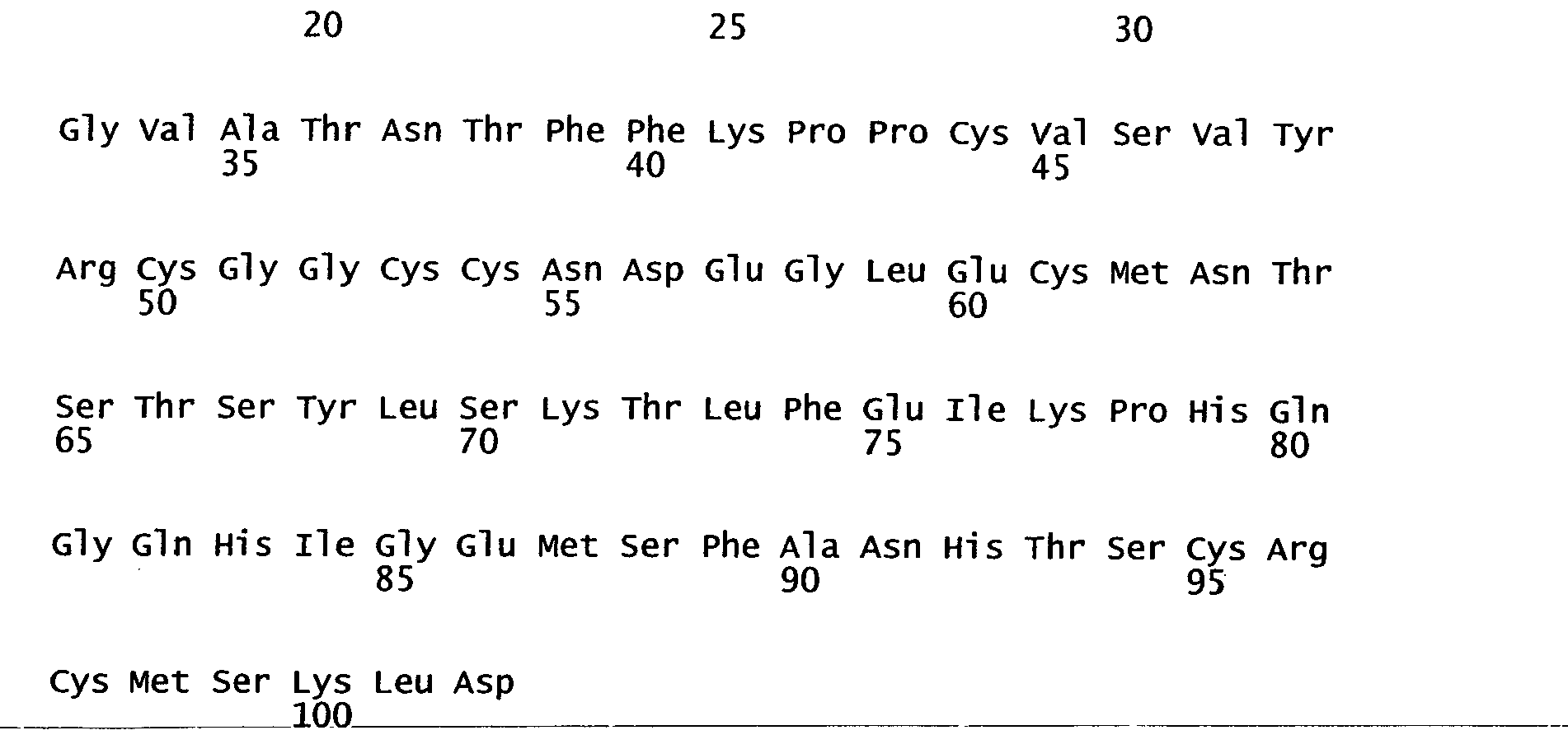
- <210> 868
<211> 309
<212> DNA
<213> Artificial Sequence - <220>
<223> Growth Factor Hybrid sequence - <220>
<221> CDS
<222> (1)..(309) - <400> 868

- <210> 869
<211> 103
<212> PRT
<213> Artificial Sequence - <220>
<223> Growth Factor Hybrid sequence - <400> 869

- <210> 870
<211> 309
<212> DNA
<213> Artificial Sequence - <220>
<223> Growth Factor Hybrid Sequence - <220>
<221> CDS
<222> (1)..(309) - <400> 870


- <210> 871
<211> 103
<212> PRT
<213> Artificial Sequence - <220>
<223> Growth Factor Hybrid Sequence - <400> 871

- <210> 872
<211> 306
<212> DNA
<213> Artificial Sequence - <220>
<223> Growth Factor Hybrid Sequence - <220>
<221> CDS
<222> (1)..(306) - <400> 872


- <210> 873
<211> 102
<212> PRT
<213> Artificial Sequence - <220>
<223> Growth Factor Hybrid Sequence - <400> 873

- <210> 874
<211> 306
<212> DNA
<213> Artificial Sequence - <220>
<223> Growth Factor Hybrid Sequence - <220>
<221> CDS
<222> (1)..(306) - <400> 874

- <210> 875
<211> 102
<212> PRT
<213> Artificial Sequence - <220>
<223> Growth Factor Hybrid Sequence - <400> 875


- <210> 876
<211> 309
<212> DNA
<213> Artificial Sequence - <220>
<223> Growth Factor Hybrid Sequence - <220>
<221> CDS
<222> (1)..(309) - <400> 876

- <210> 877
<211> 103
<212> PRT
<213> Artificial Sequence - <220>
<223> Growth Factor Hybrid Sequence - <400> 877


- <210> 878
<211> 309
<212> DNA
<213> Artificial Sequence - <220>
<223> Growth Factor Hybrid Sequence - <220>
<221> CDS
<222> (1)..(309) - <400> 878

- <210> 879
<211> 103
<212> PRT
<213> Artificial Sequence - <220>
<223> Growth Factor Hybrid Sequence - <400> 879

- <210> 880
<211> 306
<212> DNA
<213> Artificial Sequence - <220>
<223> Growth Factor Hybrid Sequence - <220>
<221> CDS
<222> (1)..(306) - <400> 880
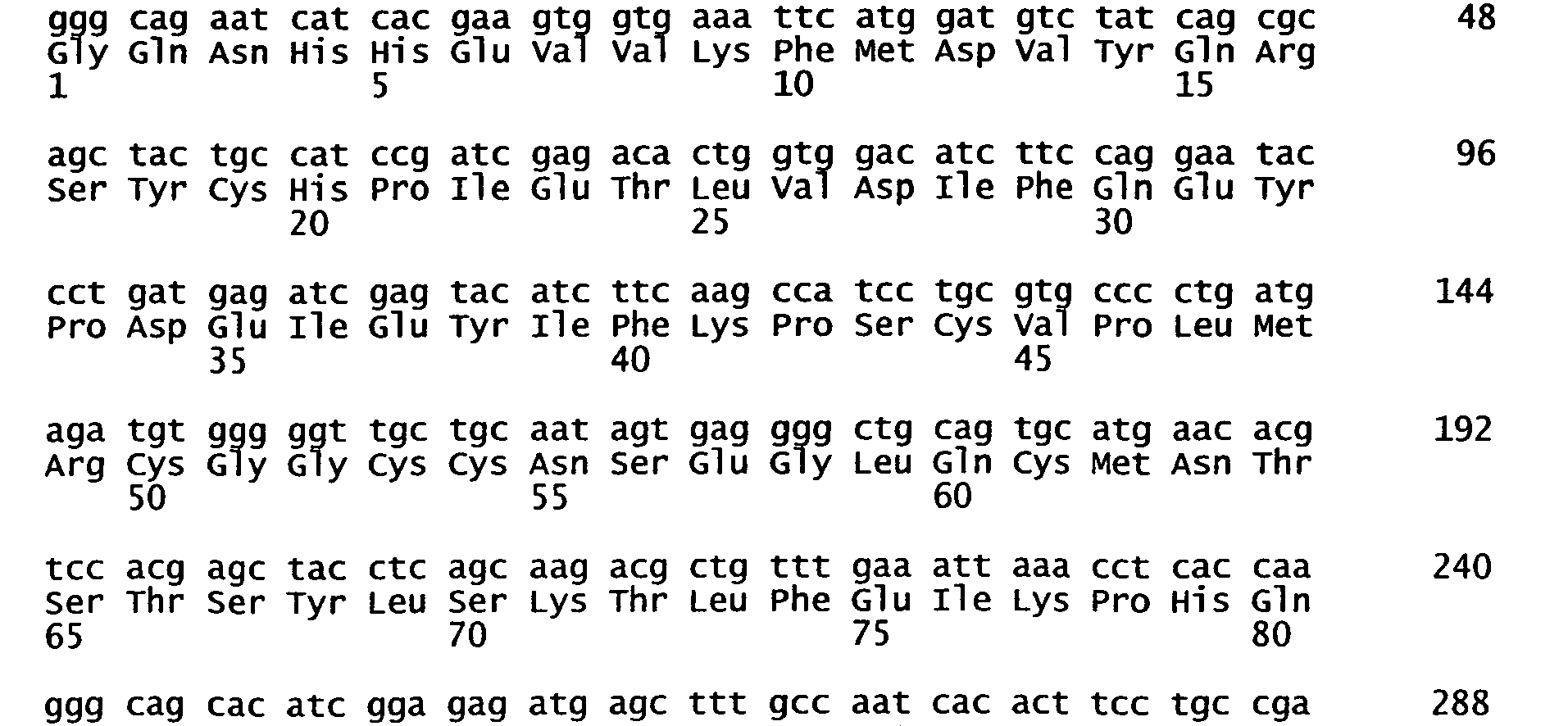

- <210> 881
<211> 102
<212> PRT
<213> Artificial Sequence - <220>
<223> Growth Factor Hybrid Sequence - <400> 881

- <210> 882
<211> 306
<212> DNA
<213> Artificial Sequence - <220>
<223> Growth Factor Hybrid Sequence - <220>
<221> CDS
<222> (1)..(306) - <400> 882


- <210> 883
<211> 102
<212> PRT
<213> Artificial Sequence - <220>
<223> Growth Factor Hybrid Sequence - <400> 883

- <210> 884
<211> 309
<212> DNA
<213> Artificial Sequence - <220>
<223> Growth Factor Hybrid Sequence - <220>
<221> CDS
<222> (1)..(309) - <400> 884

- <210> 885
<211> 103
<212> PRT
<213> Artificial Sequence - <220>
<223> Growth Factor Hybrid Sequence - <400> 885


- <210> 886
<211> 309
<212> DNA
<213> Artificial Sequence - <220>
<223> Growth Factor Hybrid Sequence - <220>
<221> CDS
<222> (1)..(309) - <400> 886

- <210> 887
<211> 103
<212> PRT
<213> Artificial Sequence - <220>
<223> Growth Factor Hybrid Sequence - <400> 887


- <210> 888
<211> 306
<212> DNA
<213> Artificial Sequence - <220>
<223> Growth Factor Hybrid Sequence - <220>
<221> CDS
<222> (1)..(306) - <400> 888

- <210> 889
<211> 102
<212> PRT
<213> Artificial Sequence - <220>
<223> Growth Factor Hybrid Sequence - <400> 889

- <210> 890
<211> 306
<212> DNA
<213> Artificial Sequence - <220>
<223> Growth Factor Hybrid Sequence - <220>
<221> CDS
<222> (1)..(306) - <400> 890


- <210> 891
<211> 102
<212> PRT
<213> Artificial sequence - <220>
<223> Growth Factor Hybrid Sequence - <400> 891

- <210> 892
<211> 309
<212> DNA
<213> Artificial Sequence - <220>
<223> Growth Factor Hybrid Sequence - <220>
<221> CDS
<222> (1)..(309) - <400> 892


- <210> 893
<211> 103
<212> PRT
<213> Artificial Sequence - <220>
<223> Growth Factor Hybrid Sequence - <400> 893

- <210> 894
<211> 309
<212> DNA
<213> Artificial Sequence - <220>
<223> Growth Factor Hybrid Sequence - <220>
<221> CDS
<222> (1)..(309) - <400> 894

- <210> 895
<211> 103
<212> PRT
<213> Artificial Sequence - <220>
<223> Growth Factor Hybrid Sequence - <400> 895

- <210> 896
<211> 306
<212> DNA
<213> Artificial sequence - <220>
<223> Growth Factor Hybrid Sequence - <220>
<221> CDS
<222> (1)..(306) - <400> 896

- <210> 897
<211> 102
<212> PRT
<213> Artificial Sequence - <220>
<223> Growth Factor Hybrid Sequence - <400> 897


- <210> 898
<211> 306
<212> DNA
<213> Artificial Sequence - <220>
<223> Growth Factor Hybrid Sequence - <220>
<221> CDS
<222> (1)..(306) - <400> 898

- <210> 899
<211> 102
<212> PRT
<213> Artificial Sequence - <220>
<223> Growth Factor Hybrid Sequence - <400> 899


- <210> 900
<211> 309
<212> DNA
<213> Artificial Sequence - <220>
<223> Growth Factor Hybrid Sequence - <220>
<221> CDS
<222> (1)..(309) - <400> 900

- <210> 901
<211> 103
<212> PRT
<213> Artificial Sequence - <220>
<223> Growth Factor Hybrid Sequence - <400> 901

- <210> 902
<211> 309
<212> DNA
<213> Artificial Sequence - <220>
<223> Growth Factor Hybrid Sequence - <220>
<221> CDS
<222> (1)..(309) - <400> 902


- <210> 903
<211> 103
<212> PRT
<213> Artificial Sequence - <220>
<223> Growth Factor Hybrid Sequence - <400> 903

- <210> 904
<211> 306
<212> DNA
<213> Artificial Sequence - <220>
<223> Growth Factor Hybrid Sequence - <220>
<221> CDS
<222> (1)..(306) - <400> 904


- <210> 905
<211> 102
<212> PRT
<213> Artificial Sequence - <220>
<223> Growth Factor Hybrid Sequence - <400> 905

- <210> 906
<211> 306
<212> DNA
<213> Artificial Sequence - <220>
<223> Growth Factor Hybrid Sequence - <220>
<221> CDS
<222> (1)..(306) - <400> 906

- <210> 907
<211> 102
<212> PRT
<213> Artificial Sequence - <220>
<223> Growth Factor Hybrid Sequence - <400> 907


- <210> 908
<211> 309
<212> DNA
<213> Artificial sequence - <220>
<223> Growth Factor Hybrid Sequence - <220>
<221> CDS
<222> (1)..(309) - <400> 908

- <210> 909
<211> 103
<212> PRT
<213> Artificial Sequence - <220>
<223> Growth Factor Hybrid Sequence - <400> 909


- <210> 910
<211> 309
<212> DNA
<213> Artificial Sequence - <220>
<223> Growth Factor Hybrid Sequence - <220>
<221> CDS
<222> (1)..(309) - <400> 910

- <210> 911
<211> 103
<212> PRT
<213> Artificial sequence - <220>
<223> Growth Factor Hybrid Sequence - <400> 911

- <210> 912
<211> 306
<212> DNA
<213> Artificial Sequence - <220>
<223> Growth Factor Hybrid Sequence - <220>
<221> CDS
<222> (1)..(306) - <400> 912


- <210> 913
<211> 102
<212> PRT
<213> Artificial Sequence - <220>
<223> Growth Factor Hybrid Sequence - <400> 913

- <210> 914
<211> 306
<212> DNA
<213> Artificial sequence - <220>
<223> Growth Factor Hybrid Sequence - <220>
<221> CDS
<222> (1)..(306) - <400> 914


- <210> 915
<211> 102
<212> PRT
<213> Artificial Sequence - <220>
<223> Growth Factor Hybrid Sequence - <400> 915

- <210> 916
<211> 309
<212> DNA
<213> Artificial Sequence - <220>
<223> Growth Factor Hybrid sequence - <220>
<221> CDS
<222> (1)..(309) - <400> 916

- <210> 917
<211> 103
<212> PRT
<213> Artificial Sequence - <220>
<223> Growth Factor Hybrid Sequence - <400> 917


- <210> 918
<211> 309
<212> DNA
<213> Artificial Sequence - <220>
<223> Growth Factor Hybrid Sequence - <220>
<221> CDS
<222> (1)..(309) - <400> 918

- <210> 919
<211> 103
<212> PRT
<213> Artificial sequence - <220>
<223> Growth Factor Hybrid Sequence - <400> 919


- <210> 920
<211> 306
<212> DNA
<213> Artificial Sequence - <220>
<223> Growth Factor Hybrid Sequence - <220>
<221> CDS
<222> (1)..(306) - <400> 920

- <210> 921
<211> 102
<212> PRT
<213> Artificial sequence - <220>
<223> Growth Factor Hybrid Sequence - <400> 921

- <210> 922
<211> 306
<212> DNA
<213> Artificial Sequence - <220>
<223> Growth Factor Hybrid Sequence - <220>
<221> CDS
<222> (1)..(306) - <400> 922


- <210> 923
<211> 102
<212> PRT
<213> Artificial Sequence - <220>
<223> Growth Factor Hybrid Sequence - <400> 923

- <210> 924
<211> 309
<212> DNA
<213> Artificial Sequence - <220>
<223> Growth Factor Hybrid sequence - <220>
<221> CDS
<222> (1)..(309) - <400> 924


- <210> 925
<211> 103
<212> PRT
<213> Artificial Sequence - <220>
<223> Growth Factor Hybrid Sequence - <400> 925
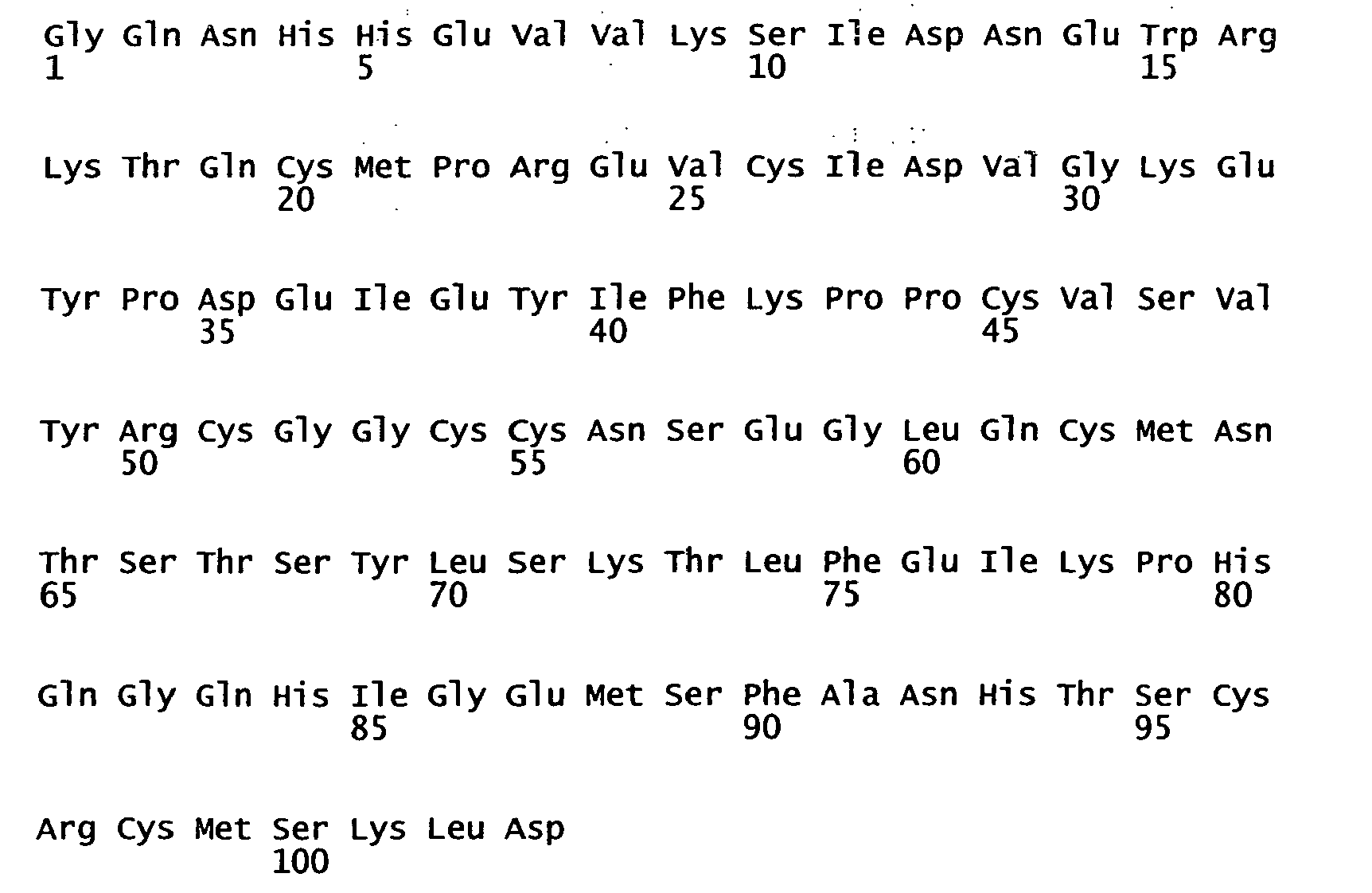
- <210> 926
<211> 309
<212> DNA
<213> Artificial Sequence - <220>
<223> Growth Factor Hybrid Sequence - <220>
<221> CDS
<222> (1)..(309) - <400> 926
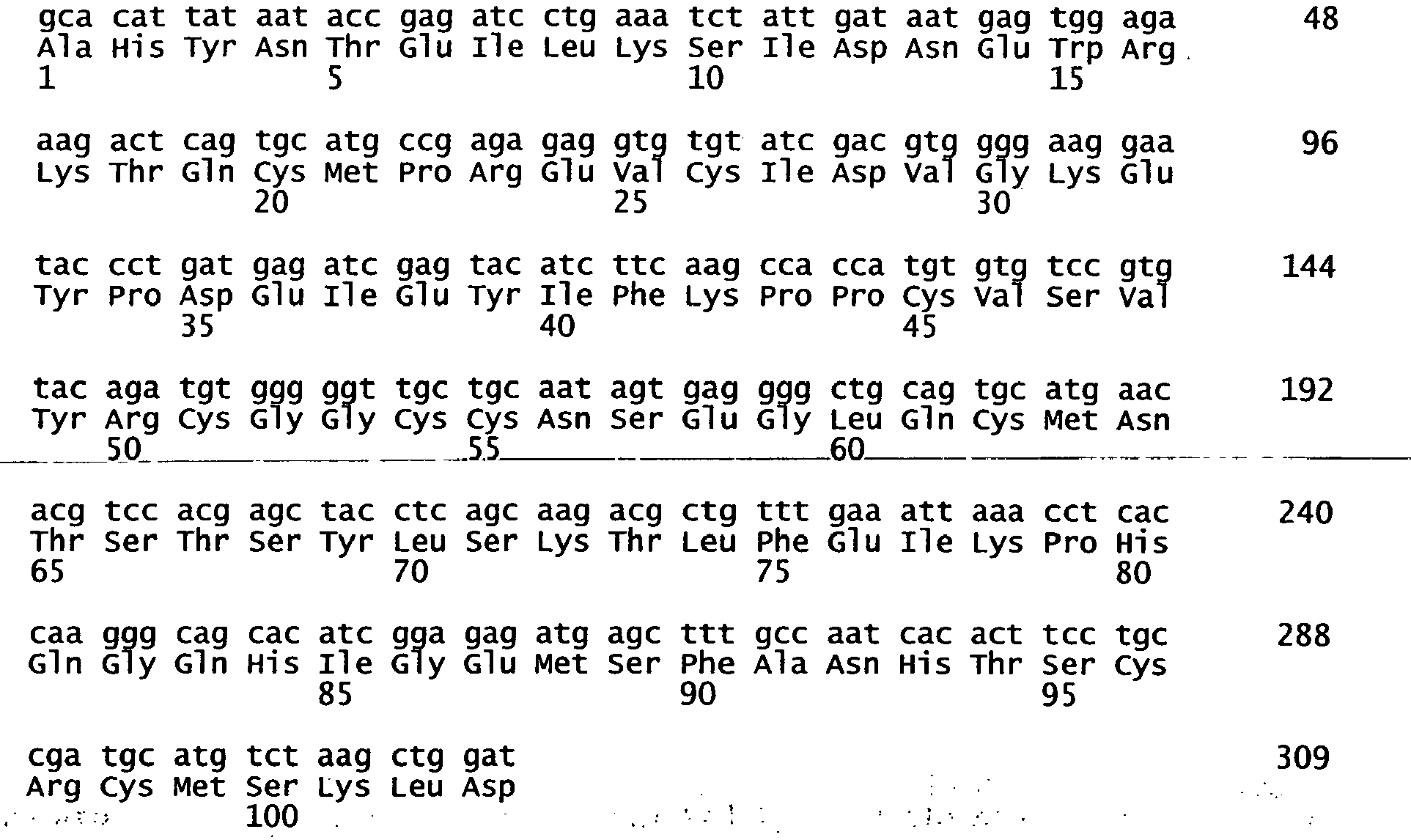
- <210> 927
<211> 103
<212> PRT
<213> Artificial Sequence - <220>
<223> Growth Factor Hybrid Sequence - <400> 927


- <210> 928
<211> 306
<212> DNA
<213> Artificial sequence - <220>
<223> Growth Factor Hybrid Sequence - <220>
<221> CDS
<222> (1)..(306) - <400> 928

- <210> 929
<211> 102
<212> PRT
<213> Artificial Sequence - <220>
<223> Growth Factor Hybrid Sequence - <400> 929


- <210> 930
<211> 306
<212> DNA
<213> Artificial Sequence - <220>
<223> Growth Factor Hybrid Sequence - <220>
<221> CDS
<222> (1)..(306) - <400> 930

- <210> 931
<211> 102
<212> PRT
<213> Artificial Sequence - <220>
<223> Growth Factor Hybrid Sequence - <400> 931

- <210> 932
<211> 309
<212> DNA
<213> Artificial Sequence - <220>
<223> Growth Factor Hybrid sequence - <220>
<221> CDS
<222> (1)..(309) - <400> 932


- <210> 933
<211> 103
<212> PRT
<213> Artificial Sequence - <220>
<223> Growth Factor Hybrid Sequence - <400> 933

- <210> 934
<211> 309
<212> DNA
<213> Artificial sequence - <220>
<223> Growth Factor Hybrid sequence - <220>
<221> CDS
<222> (1)..(309) - <400> 934


- <210> 935
<211> 103
<212> PRT
<213> Artificial Sequence - <220>
<223> Growth Factor Hybrid Sequence - <400> 935

- <210> 936
<211> 306
<212> DNA
<213> Artificial Sequence - <220>
<223> Growth Factor Hybrid Sequence - <220>
<221> CDS
<222> (1)..(306) - <400> 936
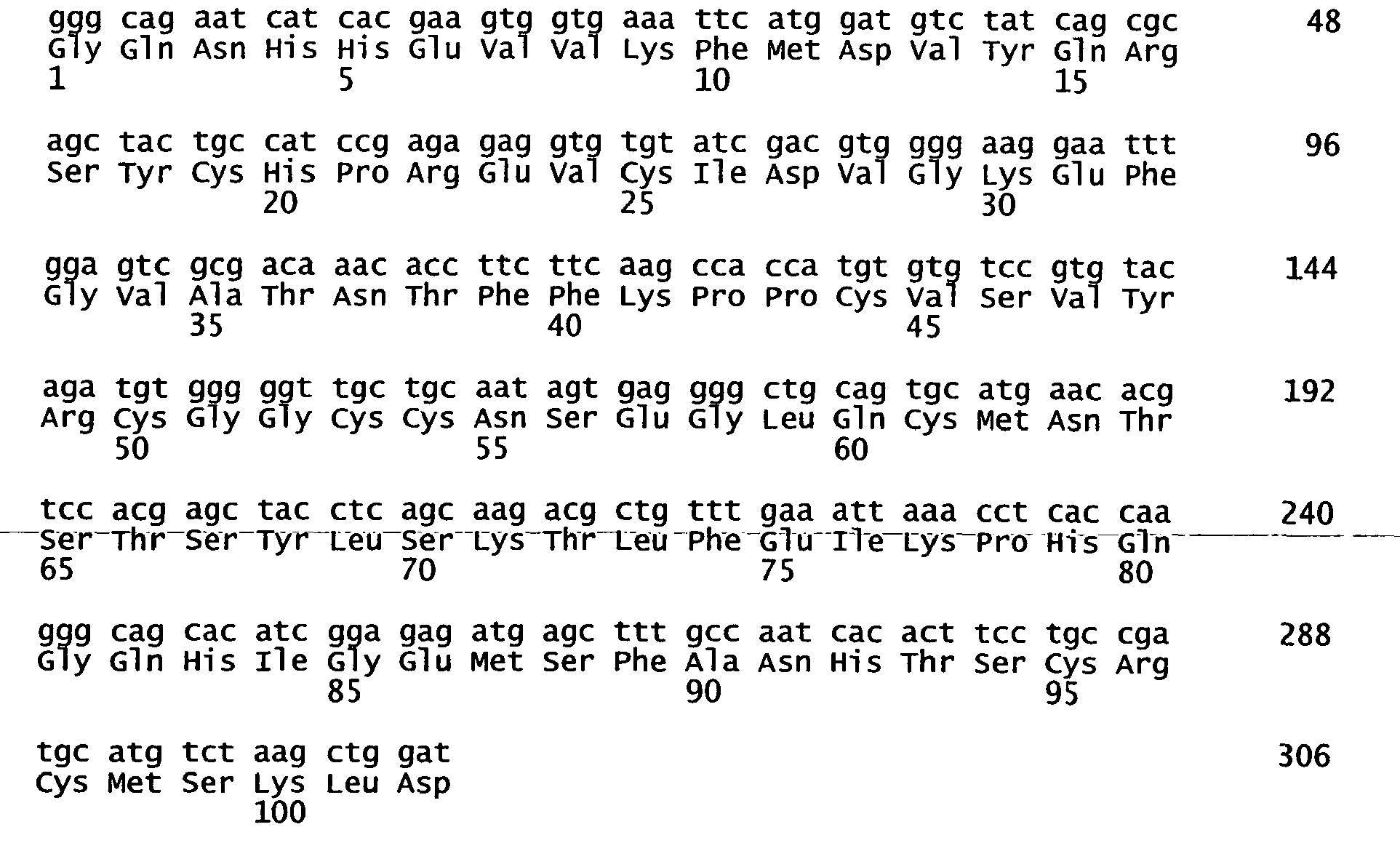
- <210> 937
<211> 102
<212> PRT
<213> Artificial Sequence - <220>
<223> Growth Factor Hybrid sequence - <400> 937

- <210> 938
<211> 306
<212> DNA
<213> Artificial Sequence - <220>
<223> Growth Factor Hybrid Sequence - <220>
<221> CDS
<222> (1)..(306) - <400> 938

- <210> 939
<211> 102
<212> PRT
<213> Artificial Sequence - <220>
<223> Growth Factor Hybrid Sequence - <400> 939
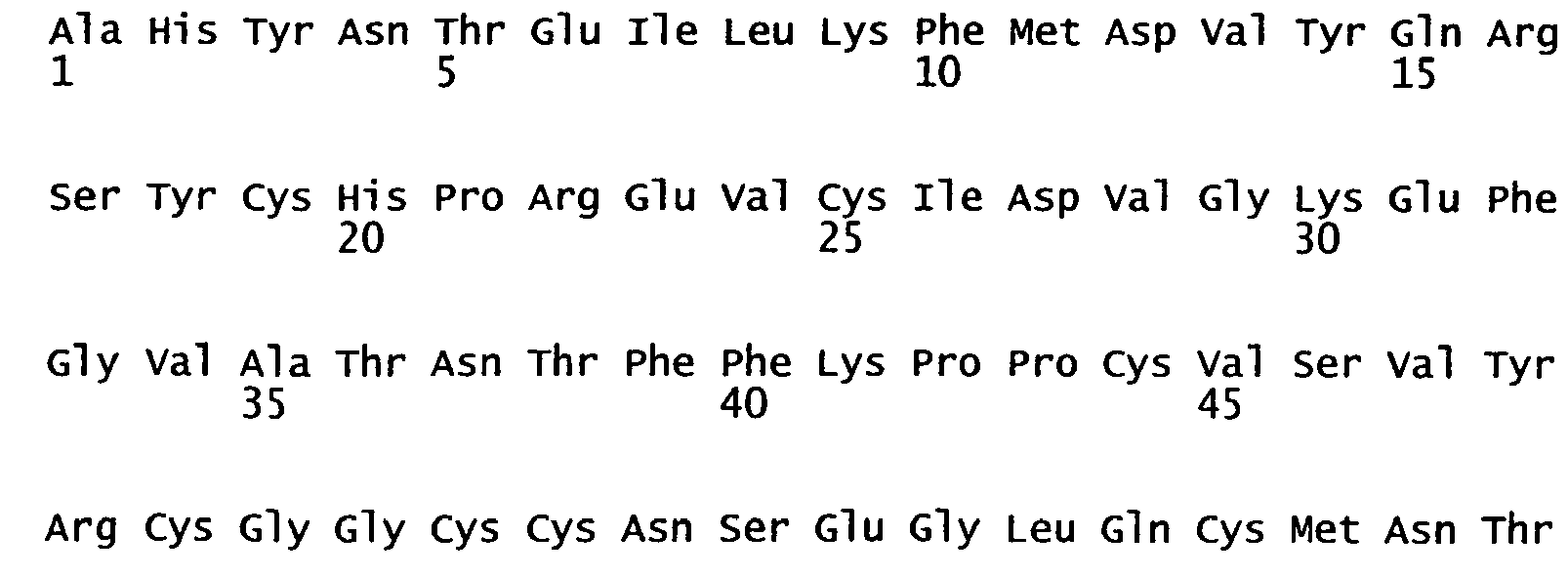

- <210> 940
<211> 309
<212> DNA
<213> Artificial Sequence - <220>
<223> Growth Factor Hybrid Sequence - <220>
<221> CDS
<222> (1)..(309) - <400> 940

- <210> 941
<211> 103
<212> PRT
<213> Artificial Sequence - <220>
<223> Growth Factor Hybrid Sequence - <400> 941

- <210> 942
<211> 309
<212> DNA
<213> Artificial Sequence - <220>
<223> Growth Factor Hybrid Sequence - <220>
<221> CDS
<222> (1)..(309) - <400> 942


- <210> 943
<211> 103
<212> PRT
<213> Artificial Sequence - <220>
<223> Growth Factor Hybrid Sequence - <400> 943

- <210> 944
<211> 312
<212> DNA
<213> Artificial sequence - <220>
<223> Growth Factor Hybrid sequence - <220>
<221> CDS
<222> (1)..(312) - <400> 944


- <210> 945
<211> 104
<212> PRT
<213> Artificial Sequence - <220>
<223> Growth Factor Hybrid Sequence - <400> 945

- <210> 946
<211> 312
<212> DNA
<213> Artificial Sequence - <220>
<223> Growth Factor Hybrid sequence - <220>
<221> CDS
<222> (1)..(312) - <400> 946

- <210> 947
<211> 104
<212> PRT
<213> Artificial sequence - <220>
<223> Growth Factor Hybrid Sequence - <400> 947

- <210> 948
<211> 315
<212> DNA
<213> Artificial Sequence - <220>
<223> Growth Factor Hybrid Sequence - <220>
<221> CDS
<222> (1)..(315) - <400> 948

- <210> 949
<211> 105
<212> PRT
<213> Artificial sequence - <220>
<223> Growth Factor Hybrid Sequence - <400> 949


- <210> 950
<211> 315
<212> DNA
<213> Artificial Sequence - <220>
<223> Growth Factor Hybrid Sequence - <220>
<221> CDS
<222> (1)..(315) - <400> 950

- <210> 951
<211> 105
<212> PRT
<213> Artificial Sequence - <220>
<223> Growth Factor Hybrid Sequence - <400> 951


- <210> 952
<211> 312
<212> DNA
<213> Artificial Sequence - <220>
<223> Growth Factor Hybrid Sequence - <220>
<221> CDS
<222> (1)..(312) - <400> 952

- <210> 953
<211> 104
<212> PRT
<213> Artificial sequence - <220>
<223> Growth Factor Hybrid Sequence - <400> 953

- <210> 954
<211> 312
<212> DNA
<213> Artificial Sequence - <220>
<223> Growth Factor Hybrid Sequence - <220>
<221> CDS
<222> (1)..(312) - <400> 954


- <210> 955
<211> 104
<212> PRT
<213> Artificial Sequence - <220>
<223> Growth Factor Hybrid sequence - <400> 955

- <210> 956
<211> 315
<212> DNA
<213> Artificial Sequence - <220>
<223> Growth Factor Hybrid sequence - <220>
<221> CDS
<222> (1)..(315) - <400> 956


- <210> 957
<211> 105
<212> PRT
<213> Artificial Sequence - <220>
<223> Growth Factor Hybrid Sequence - <400> 957

- <210> 958
<211> 315
<212> DNA
<213> Artificial Sequence - <220>
<223> Growth Factor Hybrid sequence - <220>
<221> CDS
<222> (1)..(315) - <400> 958

- <210> 959
<211> 105
<212> PRT
<213> Artificial Sequence - <220>
<223> Growth Factor Hybrid Sequence - <400> 959


- <210> 960
<211> 312
<212> DNA
<213> Artificial Sequence - <220>
<223> Growth Factor Hybrid Sequence - <220>
<221> CDS
<222> (1)..(312) - <400> 960

- <210> 961
<211> 104
<212> PRT
<213> Artificial Sequence - <220>
<223> Growth Factor Hybrid sequence - <400> 961

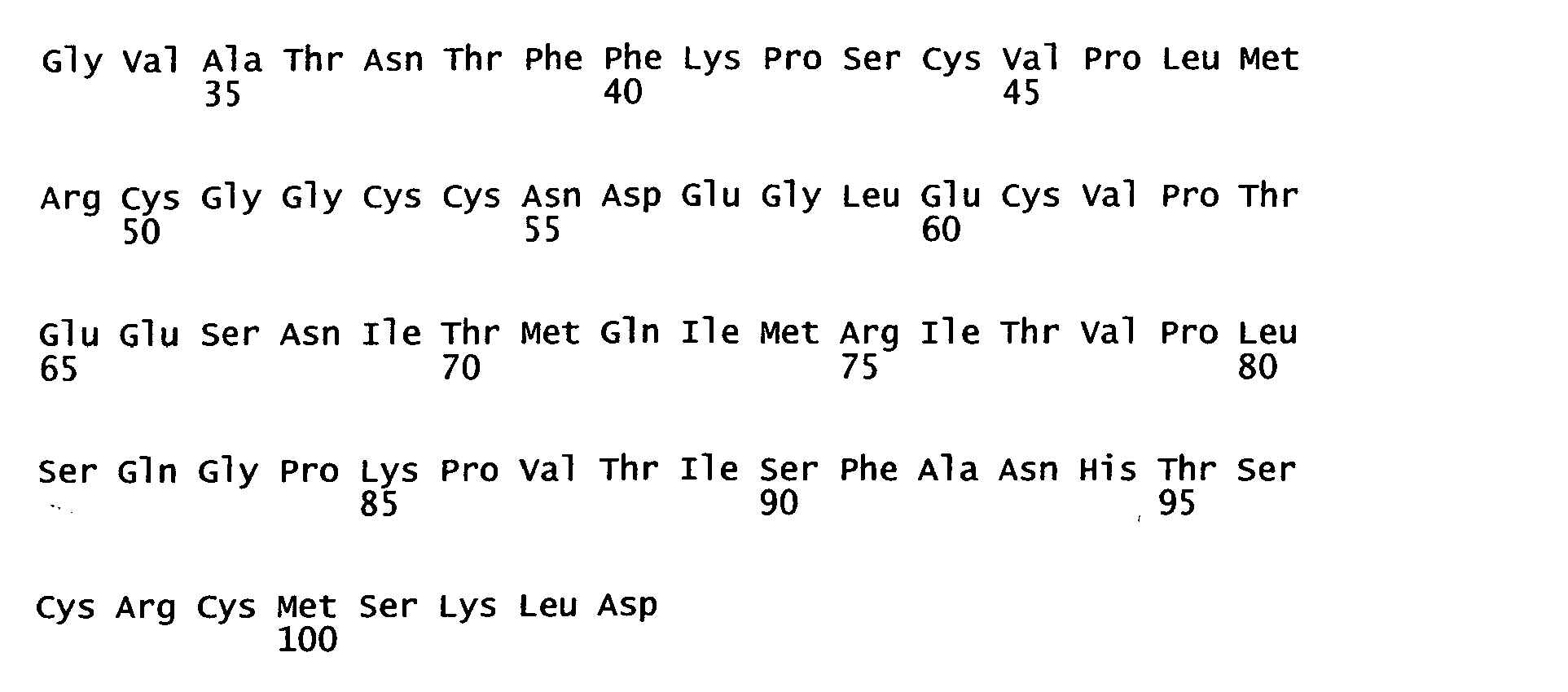
- <210> 962
<211> 312
<212> DNA
<213> Artificial sequence - <220>
<223> Growth Factor Hybrid Sequence - <220>
<221> CDS
<222> (1)..(312) - <400> 962

- <210> 963
<211> 104
<212> PRT
<213> Artificial Sequence - <220>
<223> Growth Factor Hybrid sequence - <400> 963
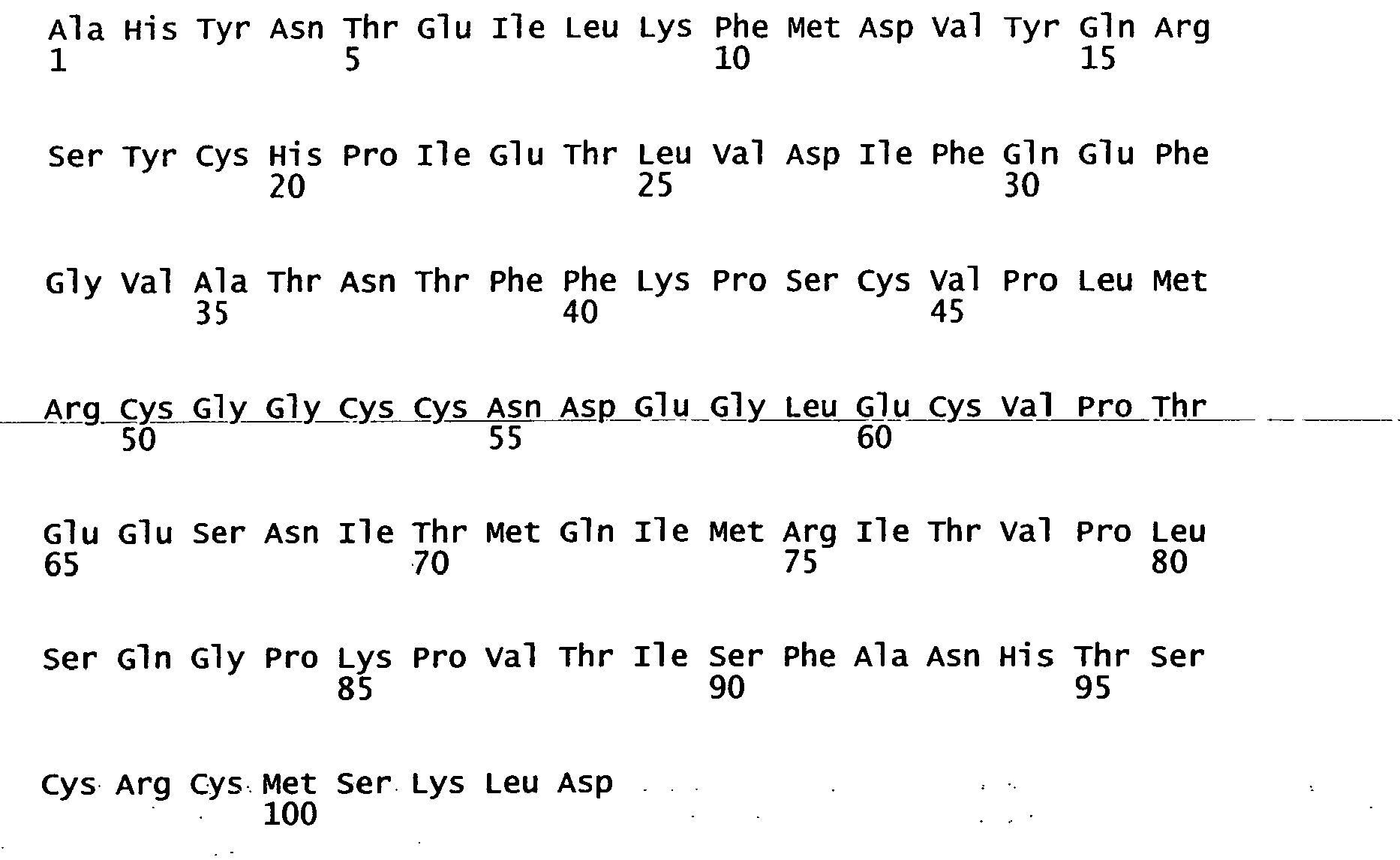
- <210> 964
<211> 315
<212> DNA
<213> Artificial Sequence - <220>
<223> Growth Factor Hybrid Sequence - <220>
<221> CDS
<222> (1)..(315) - <400> 964


- <210> 965
<211> 105
<212> PRT
<213> Artificial Sequence - <220>
<223> Growth Factor Hybrid Sequence - <400> 965

- <210> 966
<211> 315
<212> DNA
<213> Artificial Sequence - <220>
<223> Growth Factor Hybrid Sequence - <220>
<221> CDS
<222> (1)..(315) - <400> 966


- <210> 967
<211> 105
<212> PRT
<213> Artificial Sequence - <220>
<223> Growth Factor Hybrid Sequence - <400> 967

- <210> 968
<211> 312
<212> DNA
<213> Artificial sequence - <220>
<223> Growth Factor Hybrid Sequence - <220>
<221> CDS
<222> (1)..(312) - <400> 968

- <210> 969
<211> 104
<212> PRT
<213> Artificial Sequence - <220>
<223> Growth Factor Hybrid Sequence - <400> 969


- <210> 970
<211> 312
<212> DNA
<213> Artificial sequence - <220>
<223> Growth Factor Hybrid Sequence - <220>
<221> CDS
<222> (1)..(312) - <400> 970

- <210> 971
<211> 104
<212> PRT
<213> Artificial Sequence - <220>
<223> Growth Factor Hybrid Sequence - <400> 971


- <210> 972
<211> 315
<212> DNA
<213> Artificial Sequence - <220>
<223> Growth Factor Hybrid Sequence - <220>
<221> CDS
<222> (1)..(315) - <400> 972

- <210> 973
<211> 105
<212> PRT
<213> Artificial Sequence - <220>
<223> Growth Factor Hybrid Sequence - <400> 973

- <210> 974
<211> 315
<212> DNA
<213> Artificial Sequence - <220>
<223> Growth Factor Hybrid Sequence - <220>
<221> CDS
<222> (1)..(315) - <400> 974


- <210> 975
<211> 105
<212> PRT
<213> Artificial sequence - <220>
<223> Growth Factor Hybrid Sequence - <400> 975
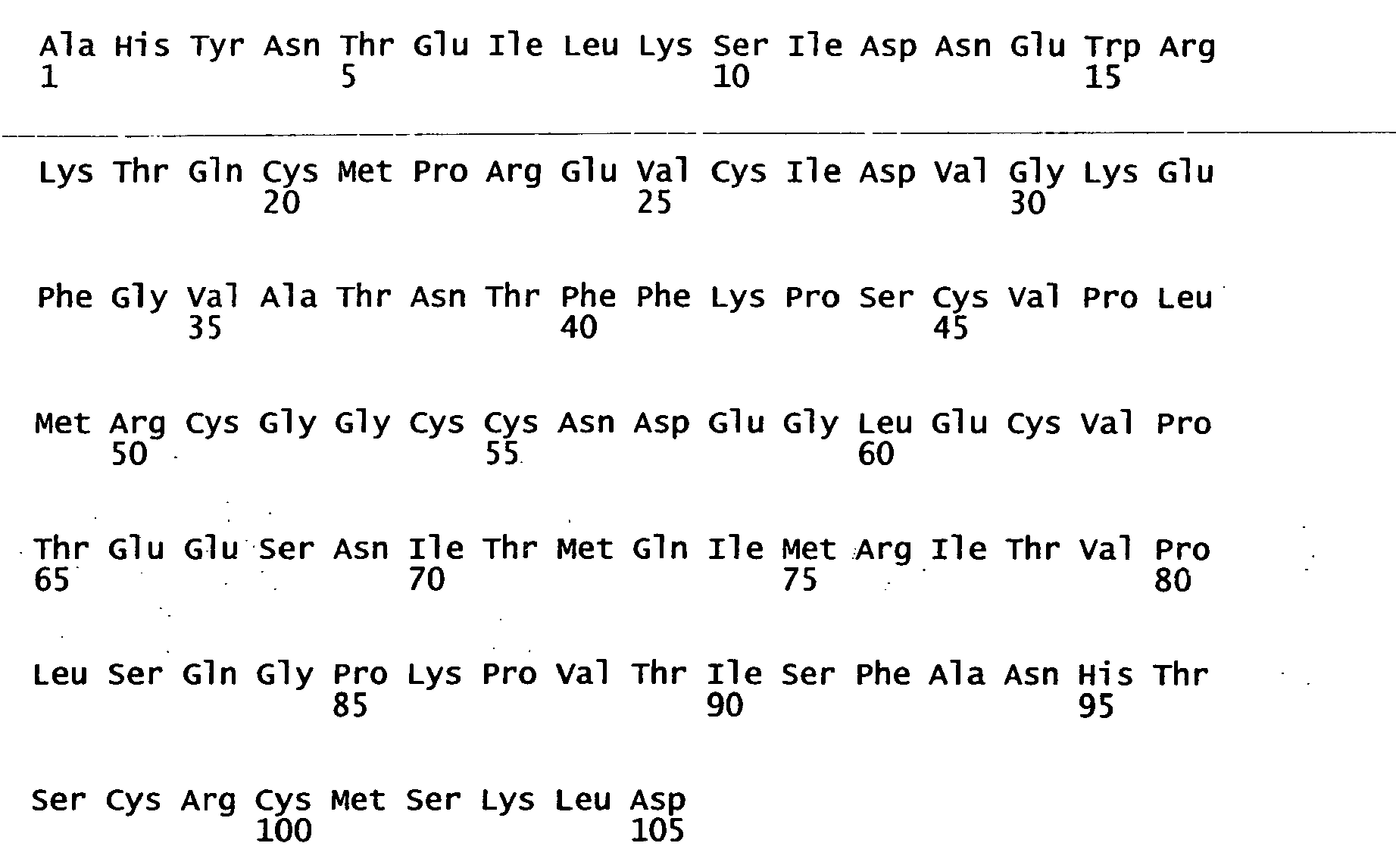
- <210> 976
<211> 312
<212> DNA
<213> Artificial Sequence - <220>
<223> Growth Factor Hybrid Sequence - <220>
<221> CDS
<222> (1)..(312) - <400> 976


- <210> 977
<211> 104
<212> PRT
<213> Artificial Sequence - <220>
<223> Growth Factor Hybrid Sequence - <400> 977
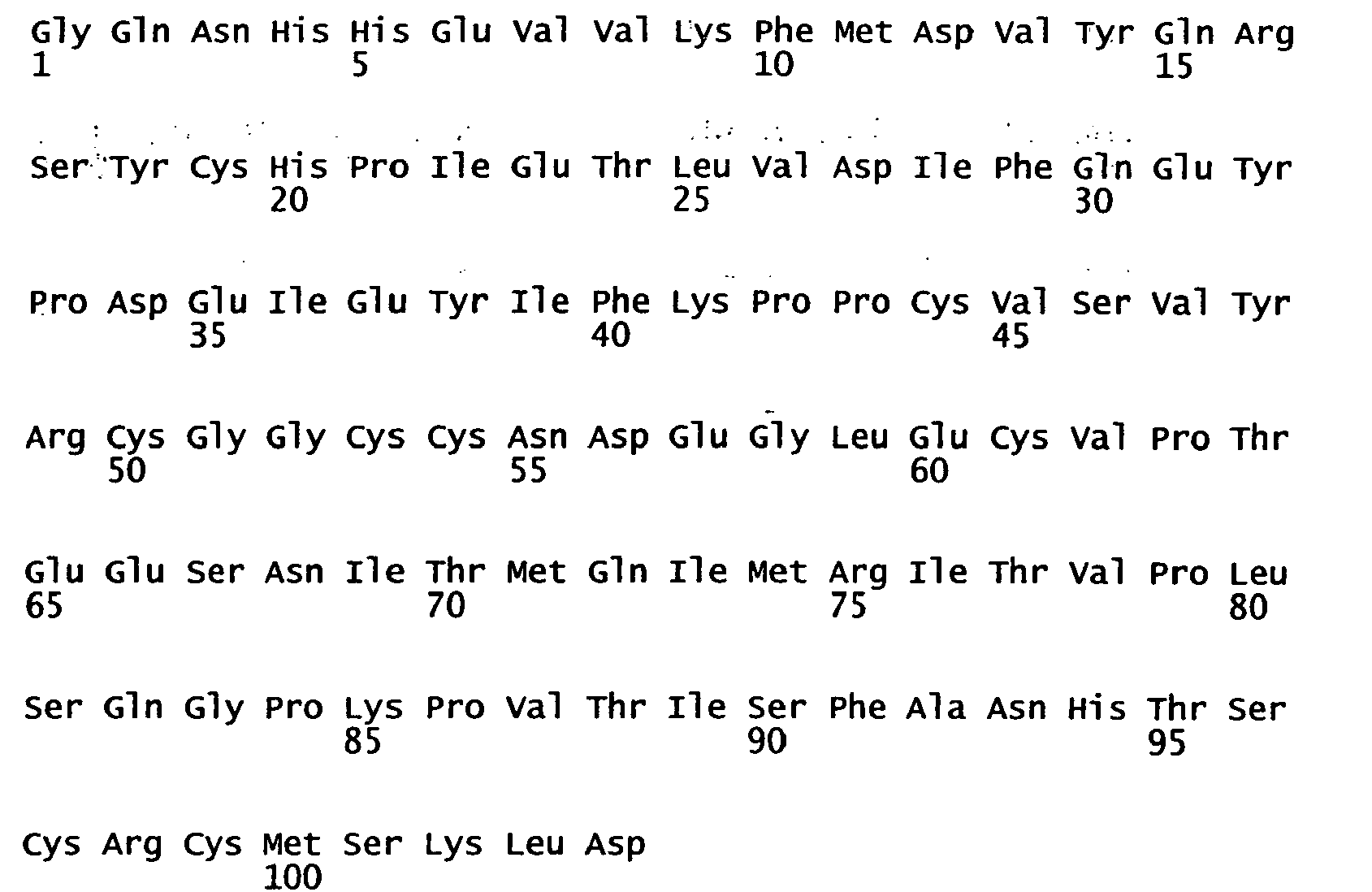
- <210> 978
<211> 312
<212> DNA
<213> Artificial Sequence - <220>
<223> Growth Factor Hybrid Sequence - <220>
<221> CDS
<222> (1)..(312) - <400> 978

- <210> 979
<211> 104
<212> PRT
<213> Artificial sequence - <220>
<223> Growth Factor Hybrid Sequence - <400> 979


- <210> 980
<211> 315
<212> DNA
<213> Artificial Sequence - <220>
<223> Growth Factor Hybrid Sequence - <220>
<221> CDS
<222> (1)..(315) - <400> 980

- <210> 981
<211> 105
<212> PRT
<213> Artificial Sequence - <220>
<223> Growth Factor Hybrid Sequence - <400> 981


- <210> 982
<211> 315
<212> DNA
<213> Artificial sequence - <220>
<223> Growth Factor Hybrid sequence - <220>
<221> CDS
<222> (1)..(315) - <400> 982

- <210> 983
<211> 105
<212> PRT
<213> Artificial sequence - <220>
<223> Growth Factor Hybrid Sequence - <400> 983

- <210> 984
<211> 312
<212> DNA
<213> Artificial sequence - <220>
<223> Growth Factor Hybrid Sequence - <220>
<221> CDS
<222> (1)..(312) - <400> 984
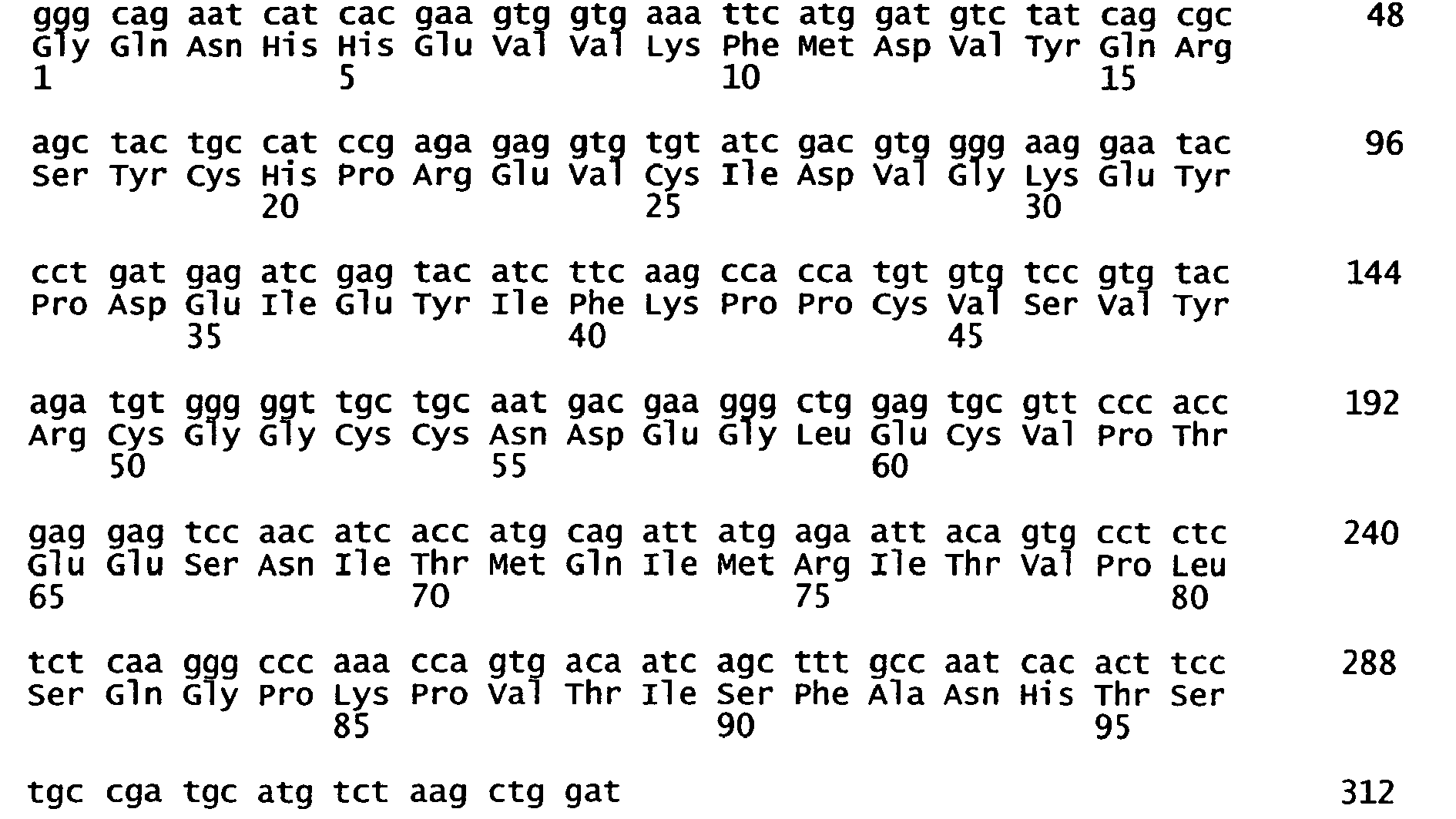

- <210> 985
<211> 104
<212> PRT
<213> Artificial Sequence - <220>
<223> Growth Factor Hybrid Sequence - <400> 985

- <210> 986
<211> 312
<212> DNA
<213> Artificial Sequence - <220>
<223> Growth Factor Hybrid sequence - <220>
<221> CDS
<222> (1)..(312) - <400> 986


- <210> 987
<211> 104
<212> PRT
<213> Artificial Sequence - <220>
<223> Growth Factor Hybrid Sequence - <400> 987

- <210> 988
<211> 315
<212> DNA
<213> Artificial sequence - <220>
<223> Growth Factor Hybrid sequence - <220>
<221> CDS
<222> (1)..(315) - <400> 988

- <210> 989
<211> 105
<212> PRT
<213> Artificial Sequence - <220>
<223> Growth Factor Hybrid Sequence - <400> 989

- <210> 990
<211> 315
<212> DNA
<213> Artificial Sequence - <220>
<223> Growth Factor Hybrid Sequence - <220>
<221> CDS
<222> (1)..(315) - <400> 990

- <210> 991
<211> 105
<212> PRT
<213> Artificial sequence - <220>
<223> Growth Factor Hybrid Sequence - <400> 991


- <210> 992
<211> 312
<212> DNA
<213> Artificial Sequence - <220>
<223> Growth Factor Hybrid sequence - <220>
<221> CDS
<222> (1)..(312) - <400> 992

- <210> 993
<211> 104
<212> PRT
<213> Artificial Sequence - <220>
<223> Growth Factor Hybrid Sequence - <400> 993


- <210> 994
<211> 312
<212> DNA
<213> Artificial Sequence - <220>
<223> Growth Factor Hybrid Sequence. - <220>
<221> CDS
<222> (1)..(312) - <400> 994

- <210> 995
<211> 104
<212> PRT
<213> Artificial sequence - <220>
<223> Growth Factor Hybrid Sequence - <400> 995

- <210> 996
<211> 315
<212> DNA
<213> Artificial Sequence - <220>
<223> Growth Factor Hybrid Sequence - <220>
<221> CDS
<222> (1)..(315) - <400> 996


- <210> 997
<211> 105
<212> PRT
<213> Artificial Sequence - <220>
<223> Growth Factor Hybrid Sequence - <400> 997

- <210> 998
<211> 315
<212> DNA
<213> Artificial Sequence - <220>
<223> Growth Factor Hybrid Sequence - <220>
<221> CDS
<222> (1)..(315) - <400> 998

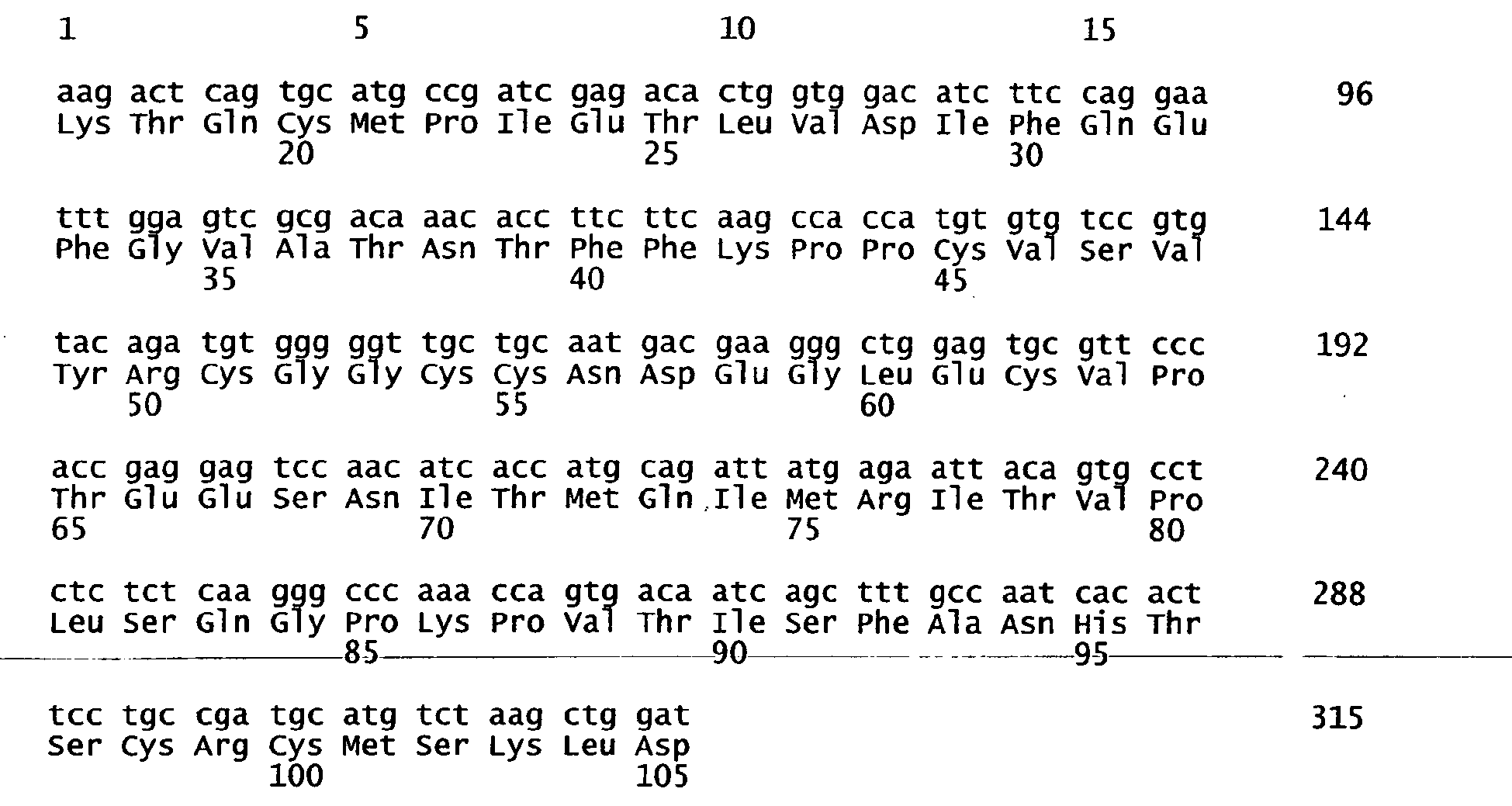
- <210> 999
<211> 105
<212> PRT
<213> Artificial Sequence - <220>
<223> Growth Factor Hybrid Sequence - <400> 999

- <210> 1000
<211> 312
<212> DNA
<213> Artificial sequence - <220>
<223> Growth Factor Hybrid Sequence - <220>
<221> CDS
<222> (1)..(312) - <400> 1000

- <210> 1001
<211> 104
<212> PRT
<213> Artificial Sequence - <220>
<223> Growth Factor Hybrid Sequence - <400> 1001


- <210> 1002
<211> 312
<212> DNA
<213> Artificial Sequence - <220>
<223> Growth Factor Hybrid Sequence - <220>
<221> CDS
<222> (1)..(312) - <400> 1002

- <210> 1003
<211> 104
<212> PRT
<213> Artificial sequence - <220>
<223> Growth Factor Hybrid Sequence - <400> 1003


- <210> 1004
<211> 315
<212> DNA
<213> Artificial Sequence - <220>
<223> Growth Factor Hybrid Sequence - <220>
<221> CDS
<222> (1)..(315) - <400> 1004

- <210> 1005
<211> 105
<212> PRT
<213> Artificial Sequence - <220>
<223> Growth Factor Hybrid Sequence - <400> 1005

- <210> 1006
<211> 315
<212> DNA
<213> Artificial sequence - <220>
<223> Growth Factor Hybrid Sequence - <220>
<221> CDS
<222> (1)..(315) - <400> 1006
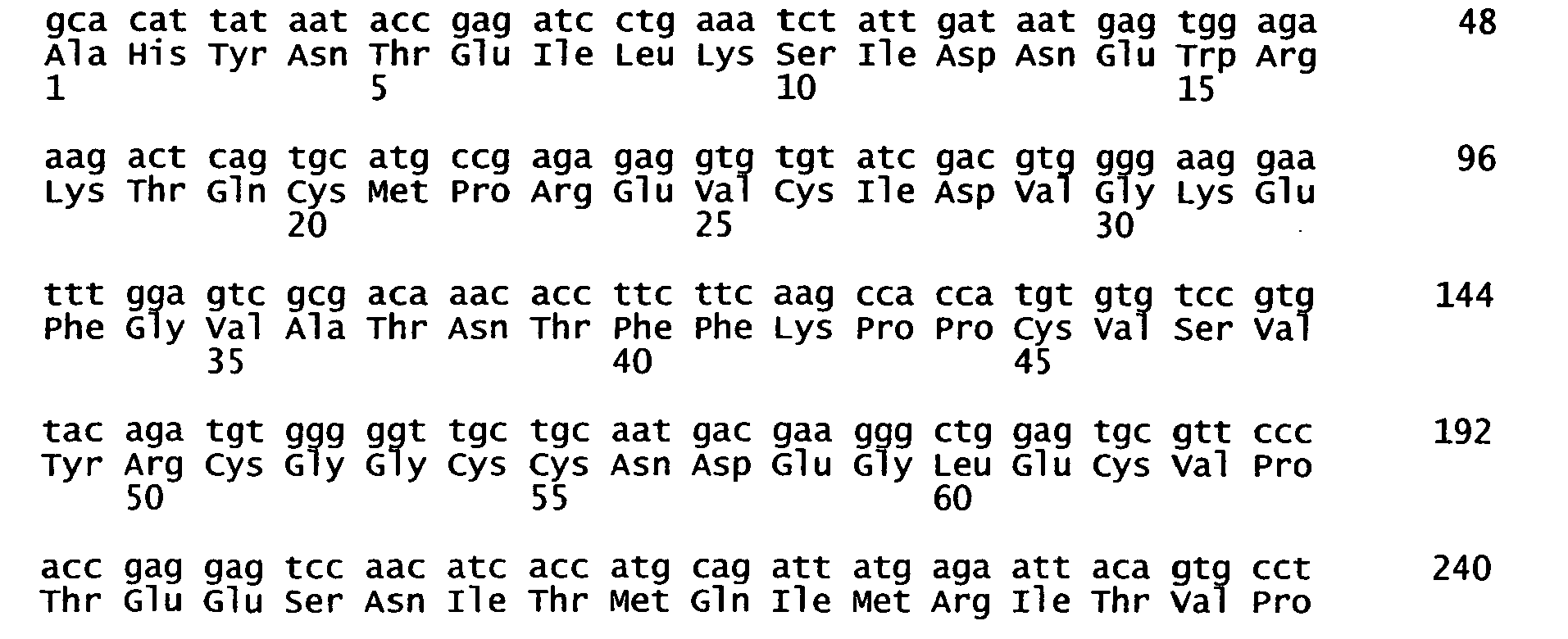

- <210> 1007
<211> 105
<212> PRT
<213> Artificial Sequence - <220>
<223> Growth Factor Hybrid Sequence - <400> 1007

- <210> 1008
<211> 312
<212> DNA
<213> Artificial Sequence - <220>
<223> Growth Factor Hybrid sequence - <220>
<221> CDS
<222> (1)..(312) - <400> 1008


- <210> 1009
<211> 104
<212> PRT
<213> Artificial sequence - <220>
<223> Growth Factor Hybrid Sequence - <400> 1009

- <210> 1010
<211> 312
<212> DNA
<213> Artificial Sequence - <220>
<223> Growth Factor Hybrid Sequence - <220>
<221> CDS
<222> (1)..(312) - <400> 1010

- <210> 1011
<211> 104
<212> PRT
<213> Artificial Sequence - <220>
<223> Growth Factor Hybrid Sequence - <400> 1011


- <210> 1012
<211> 315
<212> DNA
<213> Artificial Sequence - <220>
<223> Growth Factor Hybrid Sequence - <220>
<221> CDS
<222> (1)..(315) - <400> 1012

- <210> 1013
<211> 105
<212> PRT
<213> Artificial Sequence - <220>
<223> Growth Factor Hybrid Sequence - <400> 1013


- <210> 1014
<211> 315
<212> DNA
<213> Artificial Sequence - <220>
<223> Growth Factor Hybrid Sequence - <220>
<221> CDS
<222> (1)..(315) - <400> 1014

- <210> 1015
<211> 105
<212> PRT
<213> Artificial Sequence - <220>
<223> Growth Factor Hybrid Sequence - <400> 1015

- <210> 1016
<211> 312
<212> DNA
<213> Artificial Sequence - <220>
<223> Growth Factor Hybrid Sequence - <220>
<221> CDS
<222> (1)..(312) - <400> 1016


- <210> 1017
<211> 104
<212> PRT
<213> Artificial Sequence - <220>
<223> Growth Factor Hybrid Sequence - <400> 1017

- <210> 1018
<211> 312
<212> DNA
<213> Artificial Sequence - <220>
<223> Growth Factor Hybrid Sequence - <220>
<221> CDS
<222> (1)..(312) - <400> 1018


- <210> 1019
<211> 104
<212> PRT
<213> Artificial Sequence - <220>
<223> Growth Factor Hybrid Sequence - <400> 1019

- <210> 1020
<211> 315
<212> DNA
<213> Artificial Sequence - <220>
<223> Growth Factor Hybrid Sequence - <220>
<221> CDS
<222> (1)..(315) - <400> 1020

- <210> 1021
<211> 105
<212> PRT
<213> Artificial Sequence - <220>
<223> Growth Factor Hybrid Sequence - <400> 1021


- <210> 1022
<211> 315
<212> DNA
<213> Artificial Sequence - <220>
<223> Growth Factor Hybrid Sequence - <220>
<221> CDS
<222> (1)..(315) - <400> 1022

- <210> 1023
<211> 105
<212> PRT
<213> Artificial Sequence - <220>
<223> Growth Factor Hybrid sequence - <400> 1023


- <210> 1024
<211> 312
<212> DNA
<213> Artificial Sequence - <220>
<223> Growth Factor Hybrid Sequence - <220>
<221> CDS
<222> (1)..(312) - <400> 1024

- <210> 1025
<211> 104
<212> PRT
<213> Artificial Sequence - <220>
<223> Growth Factor Hybrid sequence - <400> 1025

- <210> 1026
<211> 312
<212> DNA
<213> Artificial Sequence - <220>
<223> Growth Factor Hybrid Sequence - <220>
<221> CDS
<222> (1)..(312) - <400> 1026


- <210> 1027
<211> 104
<212> PRT
<213> Artificial Sequence - <220>
<223> Growth Factor Hybrid sequence - <400> 1027

- <210> 1028
<211> 315
<212> DNA
<213> Artificial Sequence - <220>
<223> Growth Factor Hybrid sequence - <220>
<221> CDS
<222> (1)..(315) - <400> 1028


- <210> 1029
<211> 105
<212> PRT
<213> Artificial Sequence - <220>
<223> Growth Factor Hybrid Sequence - <400> 1029

- <210> 1030
<211> 315
<212> DNA
<213> Artificial Sequence - <220>
<223> Growth Factor Hybrid Sequence - <220>
<221> CDS
<222> (1)..(315) - <400> 1030

- <210> 1031
<211> 105
<212> PRT
<213> Artificial sequence - <220>
<223> Growth Factor Hybrid Sequence - <400> 1031

- <210> 1032
<211> 312
<212> DNA
<213> Artificial sequence - <220>
<223> Growth Factor Hybrid Sequence - <220>
<221> CDS
<222> (1)..(312) - <400> 1032

- <210> 1033
<211> 104
<212> PRT
<213> Artificial Sequence - <220>
<223> Growth Factor Hybrid Sequence - <400> 1033


- <210> 1034
<211> 312
<212> DNA
<213> Artificial sequence - <220>
<223> Growth Factor Hybrid Sequence - <220>
<221> CDS
<222> (1)..(312) - <400> 1034

- <210> 1035
<211> 104
<212> PRT
<213> Artificial sequence - <220>
<223> Growth Factor Hybrid Sequence - <400> 1035


- <210> 1036
<211> 315
<212> DNA
<213> Artificial Sequence - <220>
<223> Growth Factor Hybrid Sequence - <220>
<221> CDS
<222> (1)..(315) - <400> 1036

- <210> 1037
<211> 105
<212> PRT
<213> Artificial sequence - <220>
<223> Growth Factor Hybrid sequence - <400> 1037

- <210> 1038
<211> 315
<212> DNA
<213> Artificial Sequence - <220>
<223> Growth Factor Hybrid Sequence - <220>
<221> CDS
<222> (1)..(315) - <400> 1038


- <210> 1039
<211> 105
<212> PRT
<213> Artificial sequence - <220>
<223> Growth Factor Hybrid Sequence - <400> 1039

- <210> 1040
<211> 312
<212> DNA
<213> Artificial Sequence - <220>
<223> Growth Factor Hybrid Sequence - <220>
<221> CDS
<222> (1)..(312) - <400> 1040


- <210> 1041
<211> 104
<212> PRT
<213> Artificial Sequence - <220>
<223> Growth Factor Hybrid Sequence - <400> 1041

- <210> 1042
<211> 312
<212> DNA
<213> Artificial sequence - <220>
<223> Growth Factor Hybrid sequence - <220>
<221> CDS
<222> (1)..(312) - <400> 1042

- <210> 1043
<211> 104
<212> PRT
<213> Artificial Sequence - <220>
<223> Growth Factor Hybrid Sequence - <400> 1043
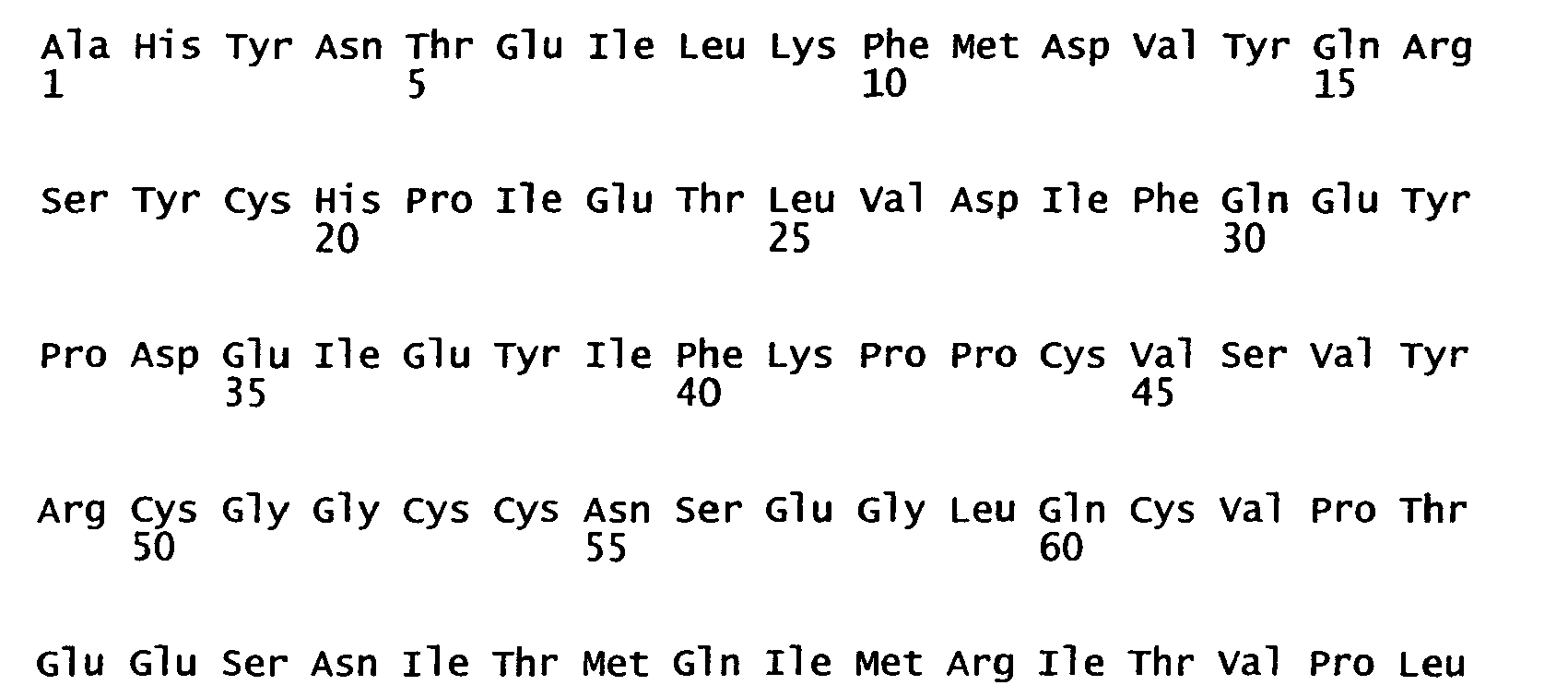

- <210> 1044
<211> 315
<212> DNA
<213> Artificial Sequence - <220>
<223> Growth Factor Hybrid Sequence - <220>
<221> CDS
<222> (1)..(315) - <400> 1044

- <210> 1045
<211> 105
<212> PRT
<213> Artificial Sequence - <220>
<223> Growth Factor Hybrid Sequence - <400> 1045


- <210> 1046
<211> 315
<212> DNA
<213> Artificial Sequence - <220>
<223> Growth Factor Hybrid Sequence - <220>
<221> CDS
<222> (1)..(315) - <400> 1046

- <210> 1047
<211> 105
<212> PRT
<213> Artificial Sequence - <220>
<223> Growth Factor Hybrid Sequence - <400> 1047

- <210> 1048
<211> 312
<212> DNA
<213> Artificial Sequence - <220>
<223> Growth Factor Hybrid Sequence - <220>
<221> CDS
<222> (1)..(312) - <400> 1048


- <210> 1049
<211> 104
<212> PRT
<213> Artificial sequence - <220>
<223> Growth Factor Hybrid sequence - <400> 1049

- <210> 1050
<211> 312
<212> DNA
<213> Artificial Sequence - <220>
<223> Growth Factor Hybrid Sequence - <220>
<221> CDS
<222> (1)..(312) - <400> 1050


- <210> 1051
<211> 104
<212> PRT
<213> Artificial Sequence - <220>
<223> Growth Factor Hybrid Sequence - <400> 1051

- <210> 1052
<211> 315
<212> DNA
<213> Artificial Sequence - <220>
<223> Growth Factor Hybrid Sequence - <220>
<221> CDS
<222> (1)..(315) - <400> 1052

- <210> 1053
<211> 105
<212> PRT
<213> Artificial Sequence - <220>
<223> Growth Factor Hybrid Sequence - <400> 1053


- <210> 1054
<211> 315
<212> DNA
<213> Artificial sequence - <220>
<223> Growth Factor Hybrid Sequence - <220>
<221> CDS
<222> (1) .. (315) - <400> 1054

- <210> 1055
<211> 105
<212> PRT
<213> Artificial Sequence - <220>
<223> Growth Factor Hybrid sequence - <400> 1055


- <210> 1056
<211> 312
<212> DNA
<213> Artificial Sequence - <220>
<223> Growth Factor Hybrid Sequence - <220>
<221> CDS
<222> (1)..(312) - <400> 1056

- <210> 1057
<211> 104
<212> PRT
<213> Artificial sequence - <220>
<223> Growth Factor Hybrid Sequence - <400> 1057

- <210> 1058
<211> 312
<212> DNA
<213> Artificial Sequence - <220>
<223> Growth Factor Hybrid Sequence - <220>
<221> CDS
<222> (1)..(312) - <400> 1058


- <210> 1059
<211> 104
<212> PRT
<213> Artificial Sequence - <220>
<223> Growth Factor Hybrid Sequence - <400> 1059

- <210> 1060
<211> 315
<212> DNA
<213> Artificial sequence - <220>
<223> Growth Factor Hybrid Sequence - <220>
<221> CDS
<222> (1)..(315) - <400> 1060


- <210> 1061
<211> 105
<212> PRT
<213> Artificial Sequence - <220>
<223> Growth Factor Hybrid sequence - <400> 1061

- <210> 1062
<211> 315
<212> DNA
<213> Artificial Sequence - <220>
<223> Growth Factor Hybrid Sequence - <220>
<221> CDS
<222> (1)..(315) - <400> 1062

- <210> 1063
<211> 105
<212> PRT
<213> Artificial Sequence - <220>
<223> Growth Factor Hybrid Sequence - <400> 1063


- <210> 1064
<211> 312
<212> DNA
<213> Artificial Sequence - <220>
<223> Growth Factor Hybrid Sequence - <220>
<221> CDS
<222> (1)..(312) - <400> 1064

- <210> 1065
<211> 104
<212> PRT
<213> Artificial Sequence - <220>
<223> Growth Factor Hybrid Sequence - <400> 1065


- <210> 1066
<211> 312
<212> DNA
<213> Artificial Sequence - <220>
<223> Growth Factor Hybrid Sequence - <220>
<221> CDS
<222> (1)..(312) - <400> 1066

- <210> 1067
<211> 104
<212> PRT
<213> Artificial Sequence - <220>
<223> Growth Factor Hybrid Sequence - <400> 1067

- <210> 1068
<211> 315
<212> DNA
<213> Artificial Sequence - <220>
<223> Growth Factor Hybrid Sequence - <220>
<221> CDS
<222> (1)..(315) - <400> 1068


- <210> 1069
<211> 105
<212> PRT
<213> Artificial Sequence - <220>
<223> Growth Factor Hybrid Sequence - <400> 1069

- <210> 1070
<211> 315
<212> DNA
<213> Artificial Sequence - <220>
<223> Growth Factor Hybrid Sequence - <220>
<221> CDS
<222> (1)..(315) - <400> 1070


- <210> 1071
<211> 105
<212> PRT
<213> Artificial Sequence - <220>
<223> Growth Factor Hybrid Sequence - <400> 1071

- <210> 1072
<211> 312
<212> DNA
<213> Artificial sequence - <220>
<223> Growth Factor Hybrid Sequence - <220>
<221> CDS
<222> (1)..(312) - <400> 1072

- <210> 1073
<211> 104
<212> PRT
<213> Artificial Sequence - <220>
<223> Growth Factor Hybrid Sequence - <400> 1073

- <210> 1074
<211> 312
<212> DNA
<213> Artificial Sequence - <220>
<223> Growth Factor Hybrid Sequence - <220>
<221> CDS
<222> (1)..(312) - <400> 1074

- <210> 1075
<211> 104
<212> PRT
<213> Artificial Sequence - <220>
<223> Growth Factor Hybrid Sequence - <400> 1075


- <210> 1076
<211> 315
<212> DNA
<213> Artificial Sequence - <220>
<223> Growth Factor Hybrid Sequence - <220>
<221> CDS
<222> (1)..(315) - <400> 1076

- <210> 1077
<211> 105
<212> PRT
<213> Artificial Sequence - <220>
<223> Growth Factor Hybrid Sequence - <400> 1077

- <210> 1078
<211> 315
<212> DNA
<213> Artificial Sequence - <220>
<223> Growth Factor Hybrid Sequence - <220>
<221> CDS
<222> (1)..(315) - <400> 1078


- <210> 1079
<211> 105
<212> PRT
<213> Artificial Sequence - <220>
<223> Growth Factor Hybrid sequence - <400> 1079

- <210> 1080
<211> 312
<212> DNA
<213> Artificial Sequence - <220>
<223> Growth Factor Hybrid Sequence - <220>
<221> CDS
<222> (1)..(312) - <400> 1080
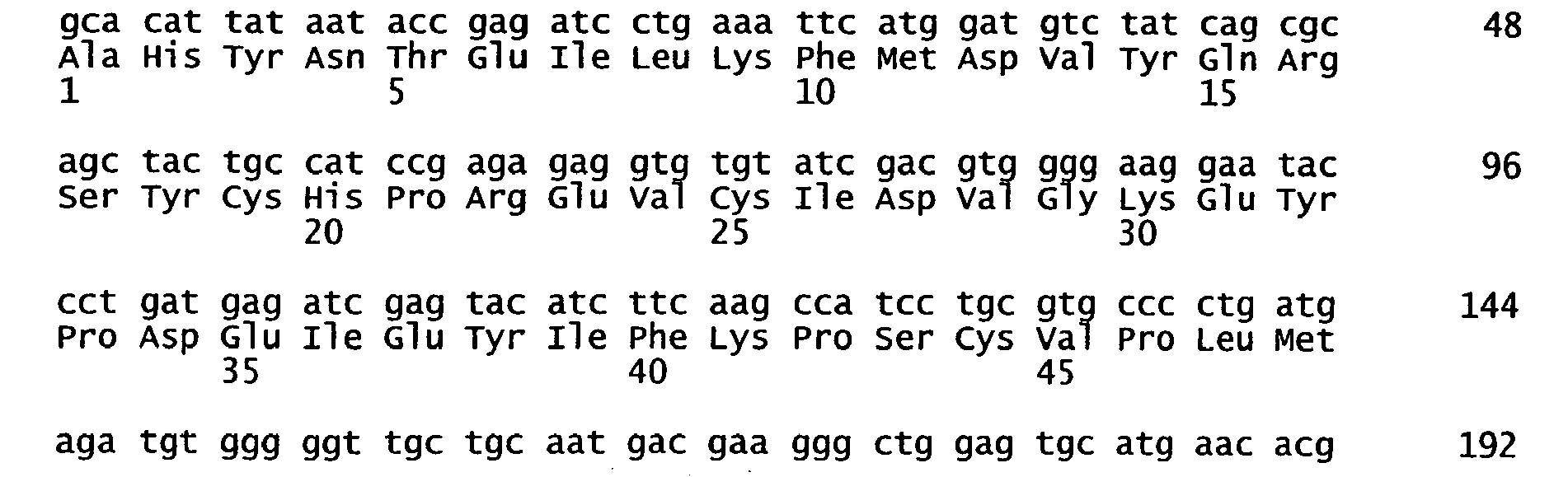

- <210> 1081
<211> 104
<212> PRT
<213> Artificial Sequence - <220>
<223> Growth Factor Hybrid Sequence - <400> 1081

- <210> 1082
<211> 312
<212> DNA
<213> Artificial sequence - <220>
<223> Growth Factor Hybrid Sequence - <220>
<221> CDS
<222> (1)..(312) - <400> 1082

- <210> 1083
<211> 104
<212> PRT
<213> Artificial Sequence - <220>
<223> Growth Factor Hybrid Sequence - <400> 1083

- <210> 1084
- <211> 315
<212> DNA
<213> Artificial Sequence - <220>
<223> Growth Factor Hybrid Sequence - <220>
<221> CDS
<222> (1)..(315) - <400> 1084

- <210> 1085
<211> 105
<212> PRT
<213> Artificial Sequence - <220>
<223> Growth Factor Hybrid Sequence - <400> 1085


- <210> 1086
<211> 315
<212> DNA
<213> Artificial Sequence - <220>
<223> Growth Factor Hybrid sequence - <220>
<221> CDS
<222> (1)..(315) - <400> 1086

- <210> 1087
<211> 105
<212> PRT
<213> Artificial Sequence - <220>
<223> Growth Factor Hybrid sequence - <400> 1087


- <210> 1088
<211> 312
<212> DNA
<213> Artificial Sequence - <220>
<223> Growth Factor Hybrid sequence - <220>
<221> CDS
<222> (1)..(312) - <400> 1088

- <210> 1089
<211> 104
<212> PRT
<213> Artificial sequence - <220>
<223> Growth Factor Hybrid sequence - <400> 1089

- <210> 1090
<211> 312
<212> DNA
<213> Artificial Sequence - <220>
<223> Growth Factor Hybrid Sequence - <220>
<221> CDS
<222> (1)..(312) - <400> 1090


- <210> 1091
<211> 104
<212> PRT
<213> Artificial Sequence - <220>
<223> Growth Factor Hybrid Sequence - <400> 1091

- <210> 1092
<211> 315
<212> DNA
<213> Artificial Sequence - <220>
<223> Growth Factor Hybrid Sequence - <220>
<221> CDS
<222> (1)..(315) - <400> 1092


- <210> 1093
<211> 105
<212> PRT
<213> Artificial Sequence - <220>
<223> Growth Factor Hybrid Sequence - <400> 1093
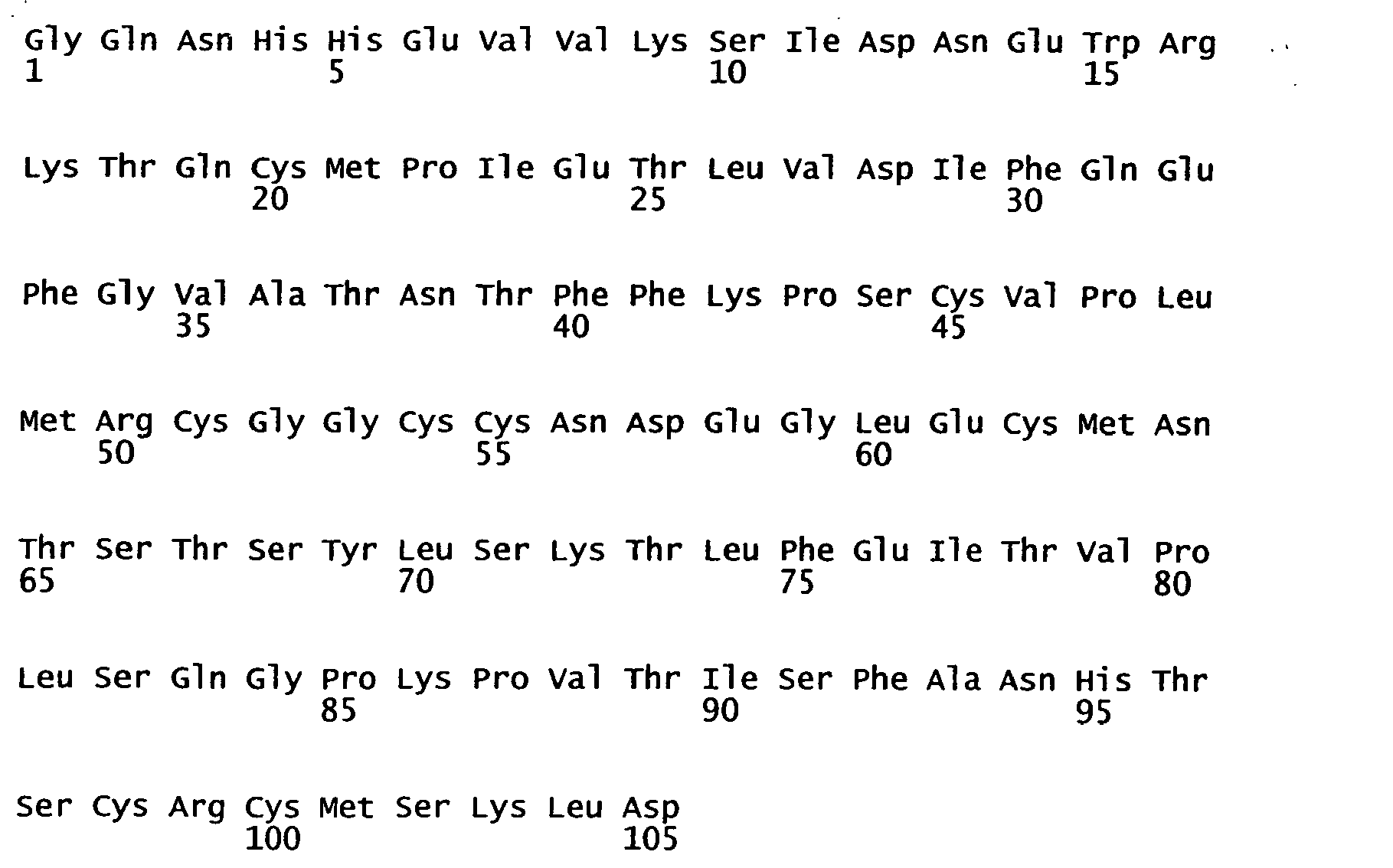
- <210> 1094
<211> 315
<212> DNA
<213> Artificial Sequence - <220>
<223> Growth Factor Hybrid Sequence - <220>
<221> CDS
<222> (1)..(315)
- <210> 1095
<211> 105
<212> PRT
<213> Artificial sequence - <220>
<223> Growth Factor Hybrid sequence - <400> 1095


- <210> 1096
<211> 312
<212> DNA
<213> Artificial Sequence - <220>
<223> Growth Factor Hybrid Sequence - <220>
<221> CDS
<222> (1).. (312) - <400> 1096

- <210> 1097
<211> 104
<212> PRT
<213> Artificial Sequence - <220>
<223> Growth Factor Hybrid Sequence - <400> 1097


- <210> 1098
<211> 312
<212> DNA
<213> Artificial Sequence - <220>
<223> Growth Factor Hybrid sequence - <220>
<221> CDS
<222> (1)..(312) - <400> 1098

- <210> 1099
<211> 104
<212> PRT
<213> Artificial Sequence - <220>
<223> Growth Factor Hybrid Sequence - <400> 1099

- <210> 1100
<211> 315
<212> DNA
<213> Artificial sequence - <220>
<223> Growth Factor Hybrid sequence - <220>
<221> CDS
<222> (1)..(315) - <400> 1100


- <210> 1101
<211> 105
<212> PRT
<213> Artificial Sequence - <220>
<223> Growth Factor Hybrid Sequence - <400> 1101

- <210> 1102
<211> 315
<212> DNA
<213> Artificial Sequence - <220>
<223> Growth Factor Hybrid sequence - <220>
<221> CDS
<222> (1)..(315) - <400> 1102


- <210> 1103
<211> 105
<212> PRT
<213> Artificial Sequence - <220>
<223> Growth Factor Hybrid Sequence - <400> 1103

- <210> 1104
<211> 312
<212> DNA
<213> Artificial sequence - <220>
<223> Growth Factor Hybrid Sequence - <220>
<221> CDS
<222> (1)..(312) - <400> 1104

- <210> 1105
<211> 104
<212> PRT
<213> Artificial sequence - <220>
<223> Growth Factor Hybrid Sequence - <400> 1105


- <210> 1106
<211> 312
<212> DNA
<213> Artificial Sequence - <220>
<223> Growth Factor Hybrid Sequence - <220>
<221> CDS
<222> (1)..(312) - <400> 1106

- <210> 1107
<211> 104
<212> PRT
<213> Artificial Sequence - <220>
<223> Growth Factor Hybrid Sequence - <400> 1107


- <210> 1108
<211> 315
<212> DNA
<213> Artificial sequence - <220>
<223> Growth Factor Hybrid Sequence - <220>
<221> CDS
<222> (1)..(315) - <400> 1108

- <210> 1109
<211> 105
<212> PRT
<213> Artificial Sequence - <220>
<223> Growth Factor Hybrid Sequence - <400> 1109

- <210> 1110
<211> 315
<212> DNA
<213> Artificial Sequence - <220>
<223> Growth Factor Hybrid sequence - <220>
<221> CDS
<222> (1)..(315) - <400> 1110


- <210> 1111
<211> 105
<212> PRT
<213> Artificial Sequence - <220>
<223> Growth Factor Hybrid Sequence - <400> 1111

- <210> 1112
<211> 312
<212> DNA
<213> Artificial Sequence - <220>
<223> Growth Factor Hybrid Sequence - <220>
<221> CDS
<222> (1)..(312) - <400> 1112


- <210> 1113
<211> 104
<212> PRT
<213> Artificial Sequence - <220>
<223> Growth Factor Hybrid Sequence - <400> 1113

- <210> 1114
<211> 312
<212> DNA
<213> Artificial sequence - <220>
<223> Growth Factor Hybrid Sequence - <220>
<221> CDS
<222> (1)..(312) - <400> 1114

- <210> 1115
<211> 104
<212> PRT
<213> Artificial sequence - <220>
<223> Growth Factor Hybrid Sequence - <400> 1115


- <210> 1116
<211> 315
<212> DNA
<213> Artificial Sequence - <220>
<223> Growth Factor Hybrid Sequence - <220>
<221> CDS
<222> (1)..(315) - <400> 1116

- <210> 1117
<211> 105
<212> PRT
<213> Artificial sequence - <220>
<223> Growth Factor Hybrid Sequence - <400> 1117


- <210> 1118
<211> 315
<212> DNA
<213> Artificial Sequence - <220>
<223> Growth Factor Hybrid sequence - <220>
<221> CDS
<222> (1)..(315) - <400> 1118

- <210> 1119
<211> 105
<212> PRT
<213> Artificial Sequence - <220>
<223> Growth Factor Hybrid Sequence - <400> 1119

- <210> 1120
<211> 312
<212> DNA
<213> Artificial sequence - <220>
<223> Growth Factor Hybrid Sequence - <220>
<221> CDS
<222> (1)..(312) - <400> 1120


- <210> 1121
<211> 104
<212> PRT
<213> Artificial sequence - <220>
<223> Growth Factor Hybrid Sequence - <400> 1121

- <210> 1122
<211> 312
<212> DNA
<213> Artificial Sequence - <220>
<223> Growth Factor Hybrid Sequence - <220>
<221> CDS
<222> (1)..(312) - <400> 1122
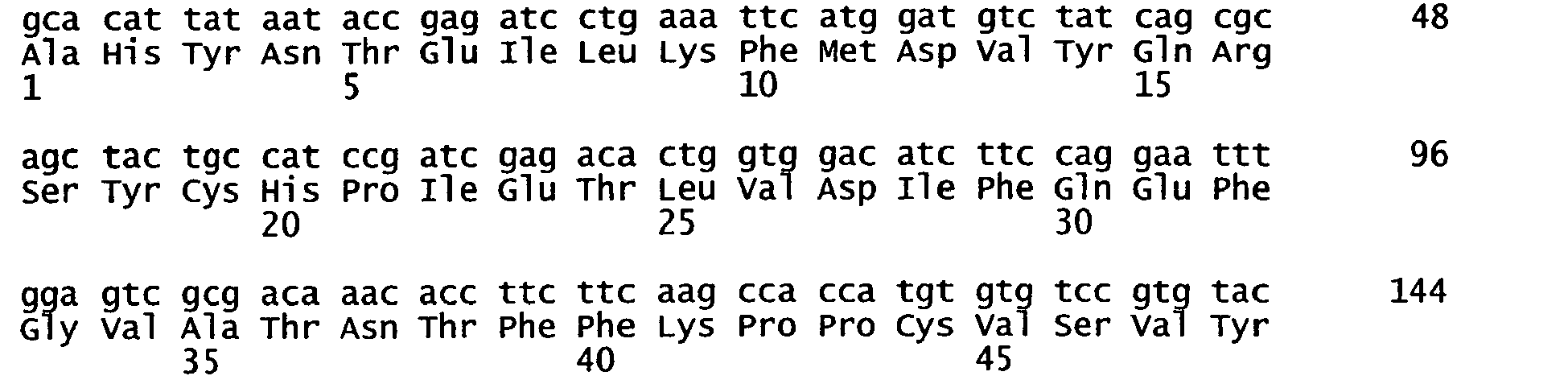

- <210> 1123
<211> 104
<212> PRT
<213> Artificial Sequence - <220>
<223> Growth Factor Hybrid Sequence - <400> 1123

- <210> 1124
<211> 315
<212> DNA
<213> Artificial sequence - <220>
<223> Growth Factor Hybrid Sequence - <220>
<221> CDS
<222> (1)..(315) - <400> 1124

- <210> 1125
<211> 105
<212> PRT
<213> Artificial Sequence - <220>
<223> Growth Factor Hybrid sequence - <400> 1125

- <210> 1126
<211> 315
<212> DNA
<213> Artificial Sequence - <220>
<223> Growth Factor Hybrid Sequence - <220>
<221> CDS
<222> (1)..(315) - <400> 1126

- <210> 1127
<211> 105
<212> PRT
<213> Artificial Sequence - <220>
<223> Growth Factor Hybrid Sequence - <400> 1127


- <210> 1128
<211> 312
<212> DNA
<213> Artificial Sequence - <220>
<223> Growth Factor Hybrid Sequence - <220>
<221> CDS
<222> (1)..(312) - <400> 1128

- <210> 1129
<211> 104
<212> PRT
<213> Artificial Sequence - <220>
<223> Growth Factor Hybrid Sequence - <400> 1129


- <210> 1130
<211> 312
<212> DNA
<213> Artificial Sequence - <220>
<223> Growth Factor Hybrid Sequence - <220>
<221> CDS
<222> (1)..(312) - <400> 1130

- <210> 1131
<211> 104
<212> PRT
<213> Artificial Sequence - <220>
<223> Growth Factor Hybrid sequence - <400> 1131

- <210> 1132
<211> 315
<212> DNA
<213> Artificial Sequence - <220>
<223> Growth Factor Hybrid Sequence - <220>
<221> CDS
<222> (1) .. (315) - <400> 1132


- <210> 1133
<211> 105
<212> PRT
<213> Artificial Sequence - <220>
<223> Growth Factor Hybrid Sequence - <400> 1133

- <210> 1134
<211> 315
<212> DNA
<213> Artificial Sequence - <220>
<223> Growth Factor Hybrid Sequence - <220>
<221> CDS
<222> (1)..(315) - <400> 1134


- <210> 1135
<211> 105
<212> PRT
<213> Artificial sequence - <220>
<223> Growth Factor Hybrid sequence - <400> 1135

- <210> 1136
<211> 312
<212> DNA
<213> Artificial Sequence - <220>
<223> Growth Factor Hybrid Sequence - <220>
<221> CDS
<222> (1)..(312) - <400> 1136

- <210> 1137
<211> 104
<212> PRT
<213> Artificial Sequence - <220>
<223> Growth Factor Hybrid sequence - <400> 1137

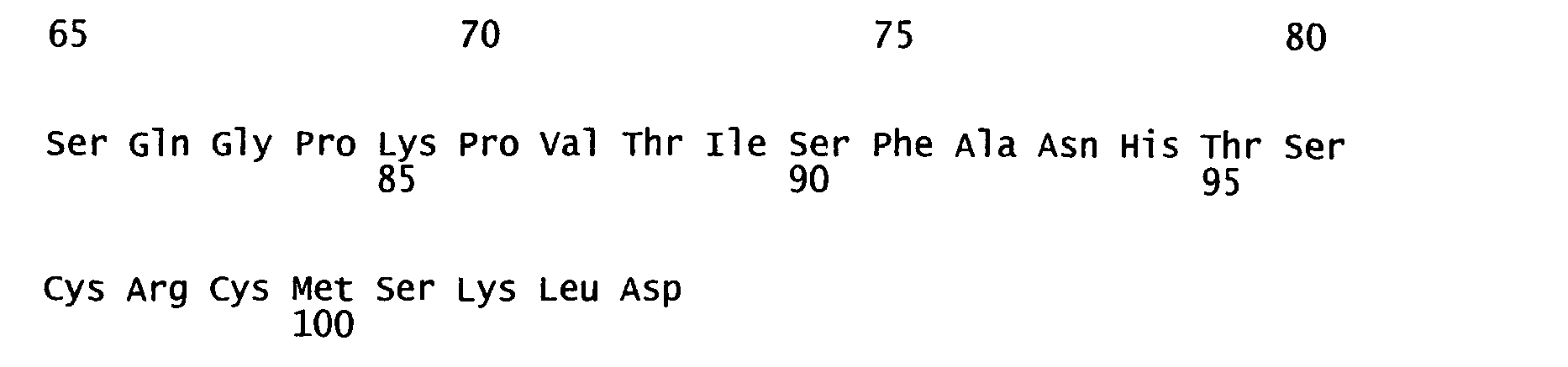
- <210> 1138
<211> 312
<212> DNA
<213> Artificial Sequence - <220>
<223> Growth Factor Hybrid Sequence - <220>
<221> CDS
<222> (1)..(312) - <400> 1138

- <210> 1139
<211> 104
<212> PRT
<213> Artificial sequence - <220>
<223> Growth Factor Hybrid Sequence - <400> 1139


- <210> 1140
<211> 315
<212> DNA
<213> Artificial Sequence - <220>
<223> Growth Factor Hybrid Sequence - <220>
<221> CDS
<222> (1)..(315) - <400> 1140

- <210> 1141
<211> 105
<212> PRT
<213> Artificial Sequence - <220>
<223> Growth Factor Hybrid Sequence - <400> 1141

- <210> 1142
<211> 315
<212> DNA
<213> Artificial Sequence - <220>
<223> Growth Factor Hybrid Sequence - <220>
<221> CDS
<222> (1)..(315) - <400> 1142


- <210> 1143
<211> 105
<212> PRT
<213> Artificial Sequence - <220>
<223> Growth Factor Hybrid sequence - <400> 1143

- <210> 1144
<211> 312
<212> DNA
<213> Artificial Sequence - <220>
<223> Growth Factor Hybrid Sequence - <220>
<221> CDS
<222> (1)..(312) - <400> 1144


- <210> 1145
<211> 104
<212> PRT
<213> Artificial Sequence - <220>
<223> Growth Factor Hybrid sequence - <400> 1145

- <210> 1146
<211> 312
<212> DNA
<213> Artificial sequence - <220>
<223> Growth Factor Hybrid Sequence - <220>
<221> CDS
<222> (1)..(312) - <400> 1146

- <210> 1147
<211> 104
<212> PRT
<213> Artificial Sequence - <220>
<223> Growth Factor Hybrid Sequence - <400> 1147


- <210> 1148
<211> 315
<212> DNA
<213> Artificial sequence - <220>
<223> Growth Factor Hybrid sequence - <220>
<221> CDS
<222> (1)..(315) - <400> 1148

- <210> 1149
<211> 105
<212> PRT
<213> Artificial Sequence - <220>
<223> Growth Factor Hybrid Sequence - <400> 1149


- <210> 1150
<211> 315
<212> DNA
<213> Artificial Sequence - <220>
<223> Growth Factor Hybrid Sequence - <220>
<221> CDS
<222> (1) .. (315) - <400> 1150

- <210> 1151
<211> 105
<212> PRT
<213> Artificial Sequence - <220>
<223> Growth Factor Hybrid sequence - <400> 1151
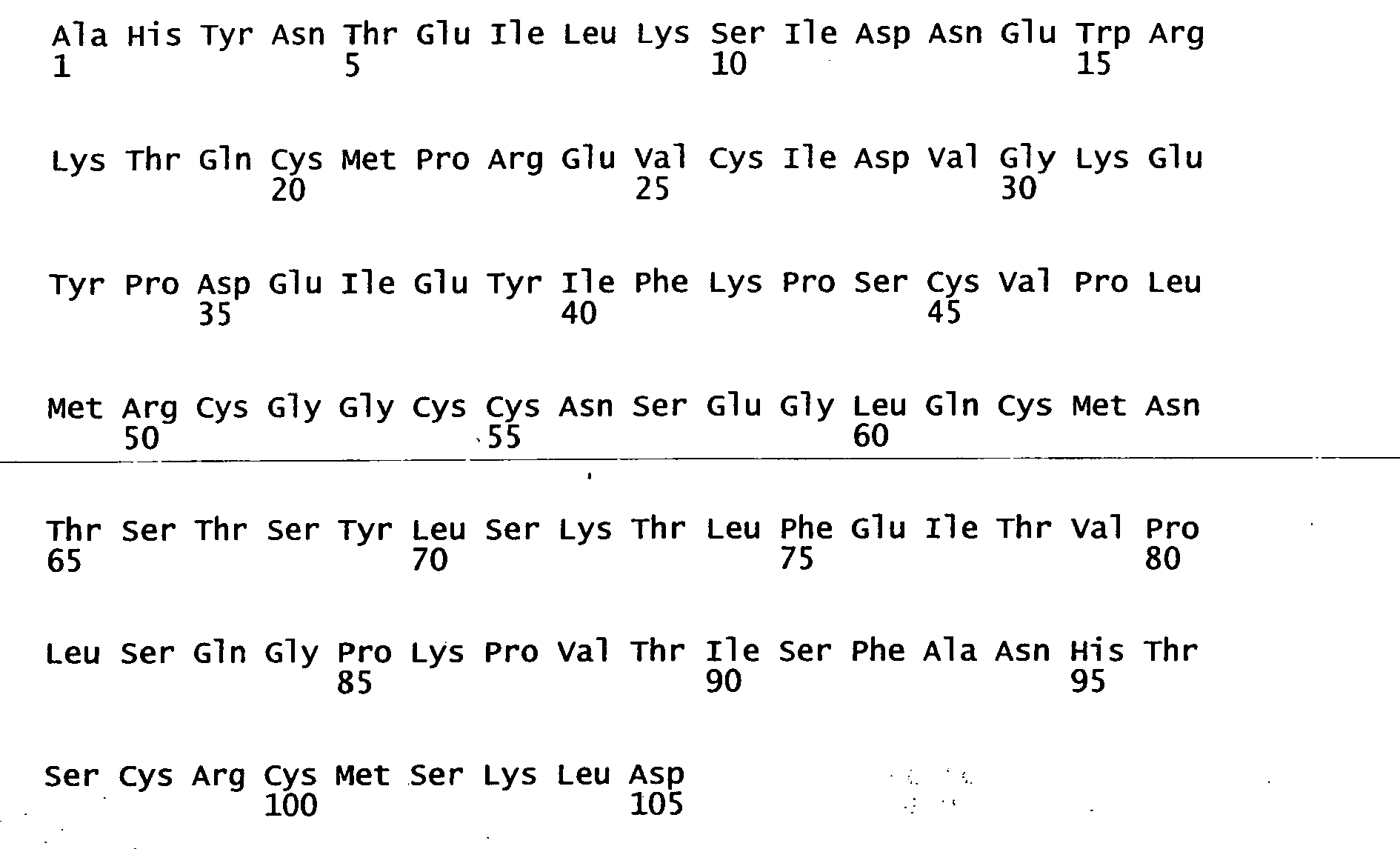
- <210> 1152
<211> 312
<212> DNA
<213> Artificial sequence - <220>
<223> Growth Factor Hybrid Sequence - <220>
<221> CDS
<222> (1)..(312) - <400> 1152


- <210> 1153
<211> 104
<212> PRT
<213> Artificial Sequence - <220>
<223> Growth Factor Hybrid Sequence - <400> 1153

- <210> 1154
<211> 312
<212> DNA
<213> Artificial Sequence - <220>
<223> Growth Factor Hybrid sequence - <220>
<221> CDS
<222> (1)..(312) - <400> 1154


- <210> 1155
<211> 104
<212> PRT
<213> Artificial Sequence - <220>
<223> Growth Factor Hybrid Sequence - <400> 1155

- <210> 1156
<211> 315
<212> DNA
<213> Artificial Sequence - <220>
<223> Growth Factor Hybrid Sequence - <220>
<221> CDS
<222> (1)..(315) - <400> 1156

- <210> 1157
<211> 105
<212> PRT
<213> Artificial Sequence - <220>
<223> Growth Factor Hybrid sequence - <400> 1157


- <210> 1158
<211> 315
<212> DNA
<213> Artificial Sequence - <220>
<223> Growth Factor Hybrid sequence - <220>
<221> CDS
<222> (1)..(315) - <400> 1158

- <210> 1159
<211> 105
<212> PRT
<213> Artificial Sequence - <220>
<223> Growth Factor Hybrid sequence - <400> 1159


- <210> 1160
<211> 312
<212> DNA
<213> Artificial Sequence - <220>
<223> Growth Factor Hybrid sequence - <220>
<221> CDS
<222> (1)..(312) - <400> 1160

- <210> 1161
<211> 104
<212> PRT
<213> Artificial Sequence - <220>
<223> Growth Factor Hybrid Sequence - <400> 1161

- <210> 1162
<211> 312
<212> DNA
<213> Artificial Sequence - <220>
<223> Growth Factor Hybrid sequence - <220>
<221> CDS
<222> (1)..(312) - <400> 1162


- <210> 1163
<211> 104
<212> PRT
<213> Artificial Sequence - <220>
<223> Growth Factor Hybrid sequence - <400> 1163

- <210> 1164
<211> 315
<212> DNA
<213> Artificial Sequence - <220>
<223> Growth Factor Hybrid Sequence - <220>
<221> CDS
<222> (1)..(315) - <400> 1164


- <210> 1165
<211> 105
<212> PRT
<213> Artificial Sequence - <220>
<223> Growth Factor Hybrid Sequence - <400> 1165

- <210> 1166
<211> 315
<212> DNA
<213> Artificial Sequence - <220>
<223> Growth Factor Hybrid Sequence - <220>
<221> CDS - <222> (1)..(315)
- <400> 1166

- <210> 1167
<211> 105
<212> PRT
<213> Artificial sequence - <220>
<223> Growth Factor Hybrid Sequence - <400> 1167

- <210> 1168
<211> 312
<212> DNA
<213> Artificial Sequence - <220>
<223> Growth Factor Hybrid Sequence - <220>
<221> CDS
<222> (1)..(312) - <400> 1168

- <210> 1169
<211> 104
<212> PRT
<213> Artificial Sequence - <220>
<223> Growth Factor Hybrid Sequence - <400> 1169


- <210> 1170
<211> 312
<212> DNA
<213> Artificial Sequence - <220>
<223> Growth Factor Hybrid Sequence - <220>
<221> CDS
<222> (1)..(312) - <400> 1170

- <210> 1171
<211> 104
<212> PRT
<213> Artificial Sequence - <220>
<223> Growth Factor Hybrid sequence - <400> 1171

- <210> 1172
<211> 315
<212> DNA
<213> Artificial Sequence - <220>
<223> Growth Factor Hybrid Sequence - <220>
<221> CDS
<222> (1)..(315) - <400> 1172


- <210> 1173
<211> 105
<212> PRT
<213> Artificial sequence - <220>
<223> Growth Factor Hybrid Sequence - <400> 1173

- <210> 1174
<211> 315
<212> DNA
<213> Artificial sequence - <220>
<223> Growth Factor Hybrid Sequence - <220>
<221> CDS
<222> (1)..(315) - <400> 1174
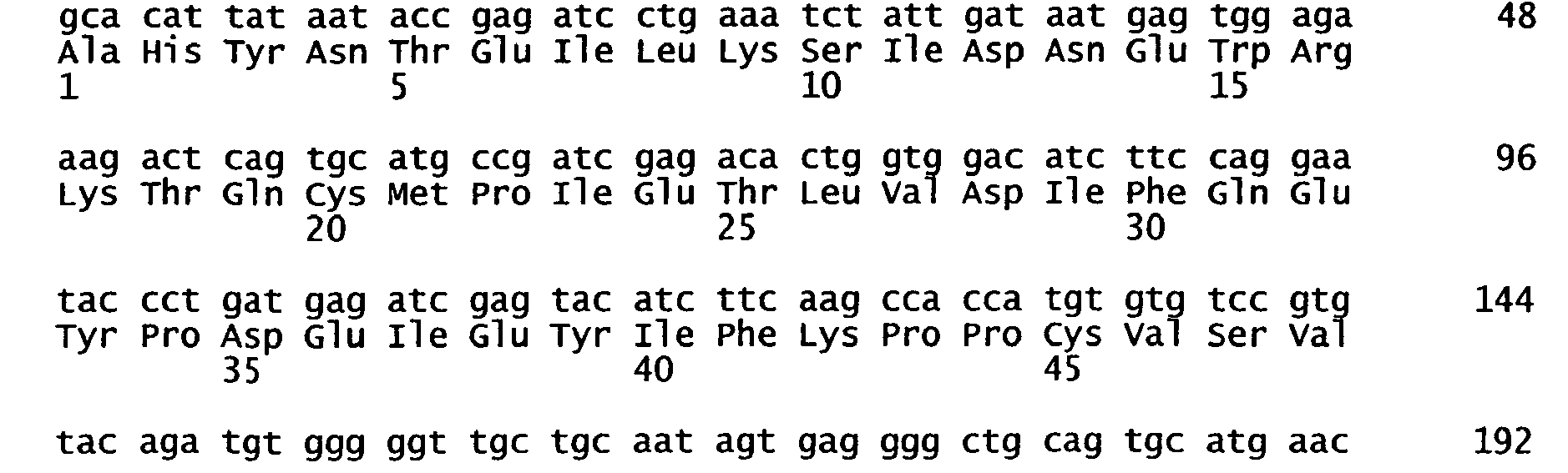

- <210> 1175
<211> 105
<212> PRT
<213> Artificial Sequence - <220>
<223> Growth Factor Hybrid Sequence - <400> 1175

- <210> 1176
<211> 312
<212> DNA
<213> Artificial sequence - <220>
<223> Growth Factor Hybrid sequence - <220>
<221> CDS
<222> (1)..(312) - <400> 1176
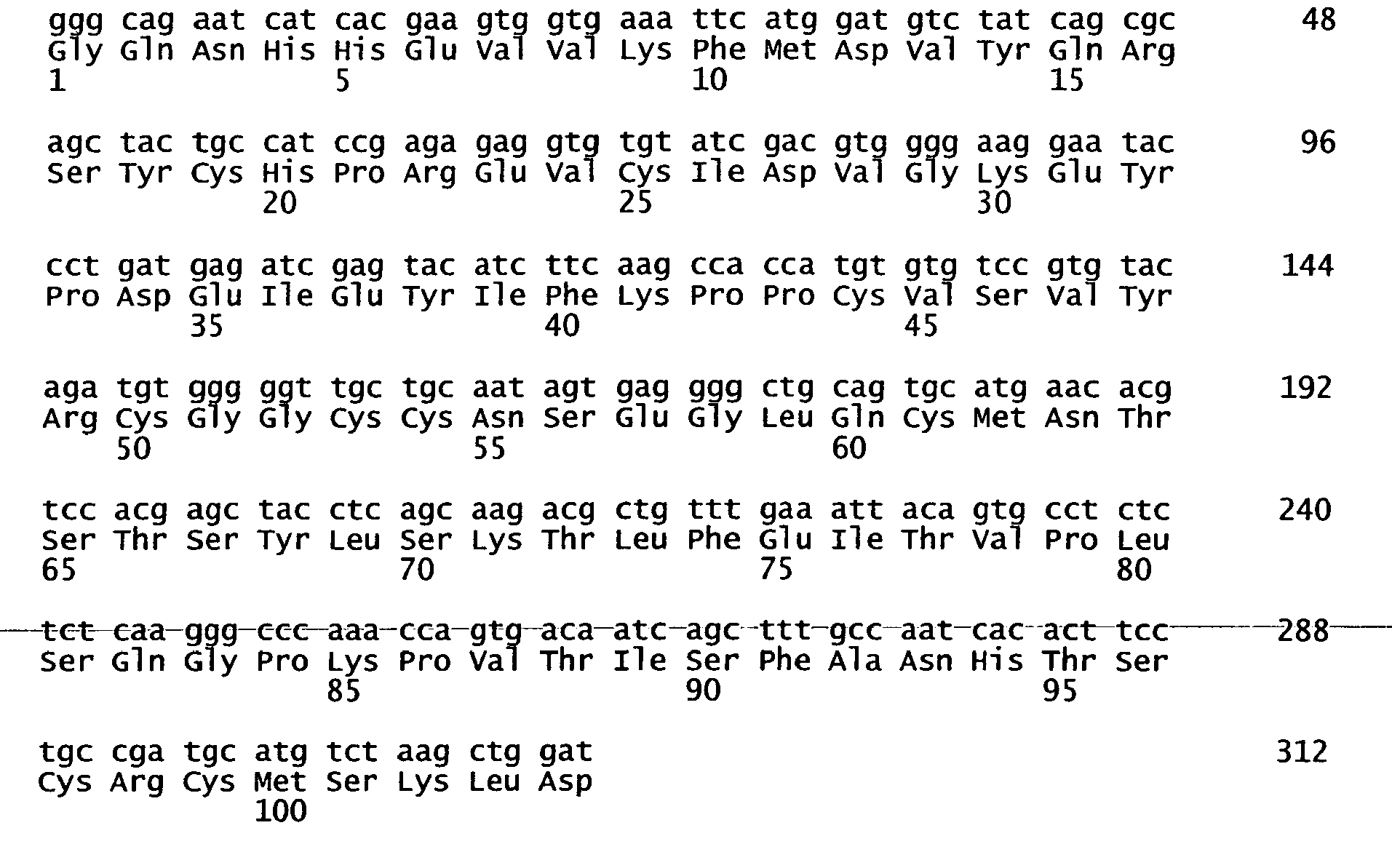
- <210> 1177
<211> 104
<212> PRT
<213> Artificial sequence - <220>
<223> Growth Factor Hybrid Sequence - <400> 1177

- <210> 1178
<211> 312
<212> DNA
<213> Artificial Sequence - <220>
<223> Growth Factor Hybrid Sequence - <220>
<221> CDS
<222> (1)..(312) - <400> 1178
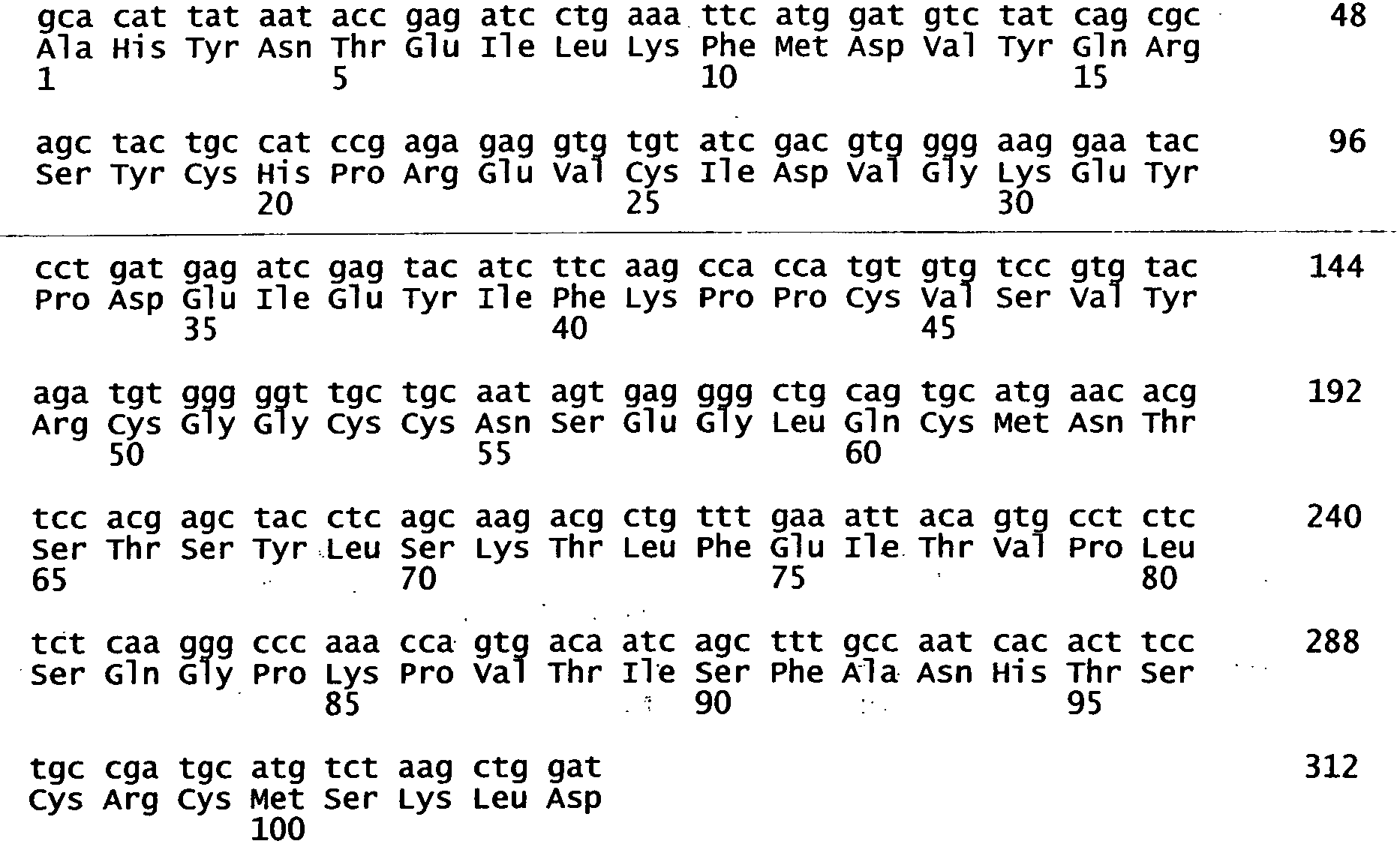
- <210> 1179
<211> 104
<212> PRT
<213> Artificial Sequence - <220>
<223> Growth Factor Hybrid Sequence - <400> 1179


- <210> 1180
<211> 315
<212> DNA
<213> Artificial Sequence - <220>
<223> Growth Factor Hybrid Sequence - <220>
<221> CDS
<222> (1)..(315) - <400> 1180

- <210> 1181
<211> 105
<212> PRT
<213> Artificial Sequence - <220>
<223> Growth Factor Hybrid Sequence - <400> 1181


- <210> 1182
<211> 315
<212> DNA
<213> Artificial Sequence - <220>
<223> Growth Factor Hybrid Sequence - <220>
<221> CDS
<222> (1)..(315) - <400> 1182

- <210> 1183
<211> 105
<212> PRT
<213> Artificial sequence - <220>
<223> Growth Factor Hybrid Sequence - <400> 1183

- <210> 1184
<211> 312
<212> DNA
<213> Artificial sequence - <220>
<223> Growth Factor Hybrid Sequence - <220>
<221> CDS
<222> (1)..(312) - <400> 1184

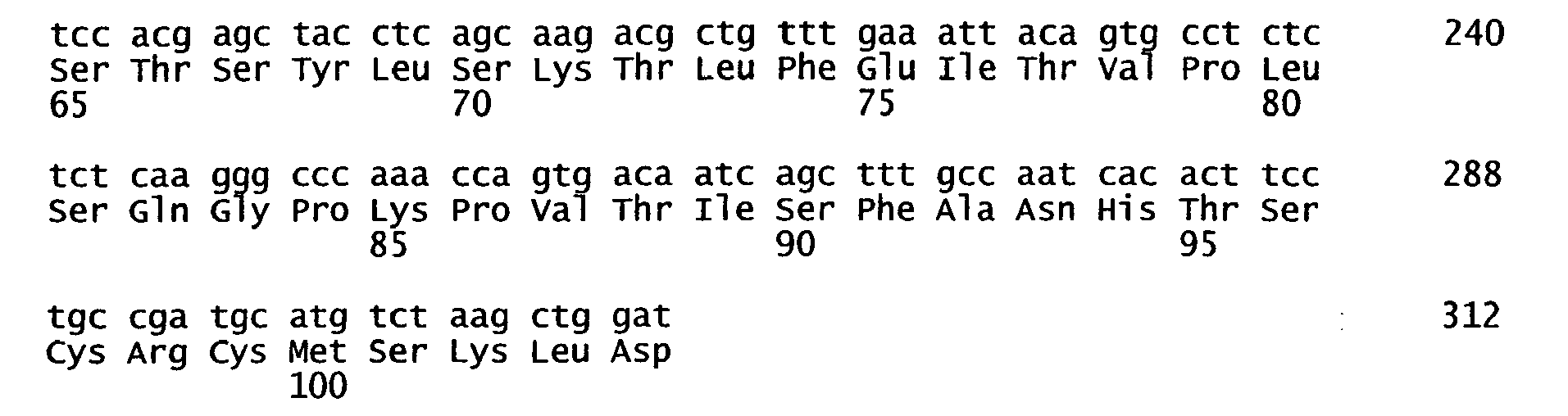
- <210> 1185
<211> 104
<212> PRT
<213> Artificial sequence - <220>
<223> Growth Factor Hybrid Sequence - <400> 1185

- <210> 1186
<211> 312
<212> DNA
<213> Artificial Sequence - <220>
<223> Growth Factor Hybrid Sequence - <220>
<221> CDS
<222> (1)..(312) - <400> 1186


- <210> 1187
<211> 104
<212> PRT
<213> Artificial Sequence - <220>
<223> Growth Factor Hybrid Sequence - <400> 1187

- <210> 1188
<211> 315
<212> DNA
<213> Artificial Sequence - <220>
<223> Growth Factor Hybrid Sequence - <220>
<221> CDS
<222> (1)..(315) - <400> 1188
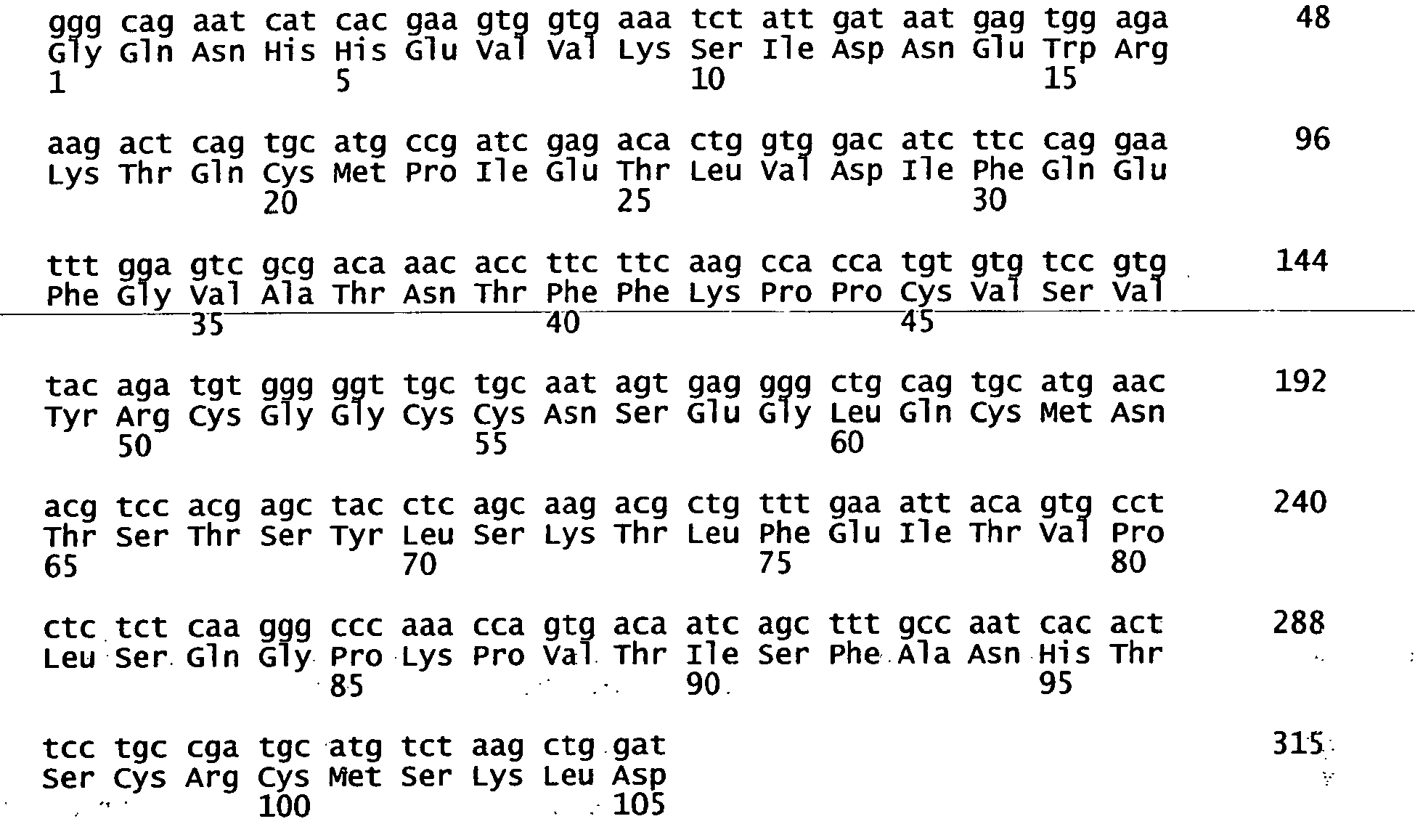
- <210> 1189
<211> 105
<212> PRT
<213> Artificial Sequence - <220>
<223> Growth Factor Hybrid Sequence - <400> 1189


- <210> 1190
<211> 315
<212> DNA
<213> Artificial Sequence - <220>
<223> Growth Factor Hybrid Sequence - <220>
<221> CDS
<222> (1) .. (315) - <400> 1190

- <210> 1191
<211> 105
<212> PRT
<213> Artificial Sequence - <220>
<223> Growth Factor Hybrid Sequence - <400> 1191


- <210> 1192
<211> 312
<212> DNA
<213> Artificial Sequence - <220>
<223> Growth Factor Hybrid Sequence - <220>
<221> CDS
<222> (1)..(312) - <400> 1192

- <210> 1193
<211> 104
<212> PRT
<213> Artificial Sequence - <220>
<223> Growth Factor Hybrid Sequence - <400> 1193

- <210> 1194
<211> 312
<212> DNA
<213> Artificial Sequence - <220>
<223> Growth Factor Hybrid sequence - <220>
<221> CDS
<222> (1)..(312) - <400> 1194
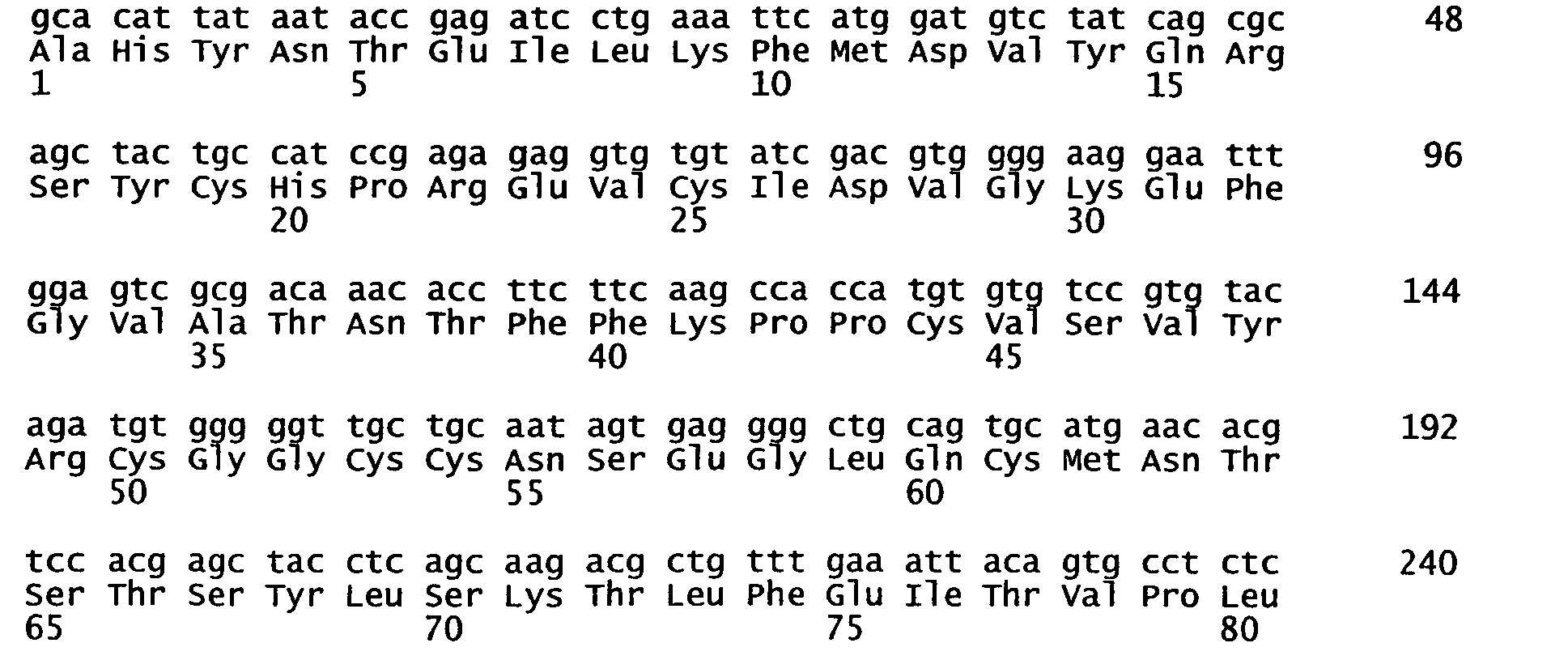

- <210> 1195
<211> 104
<212> PRT
<213> Artificial Sequence - <220>
<223> Growth Factor Hybrid Sequence - <400> 1195

- <210> 1196
<211> 315
<212> DNA
<213> Artificial Sequence - <220>
<223> Growth Factor Hybrid Sequence - <220>
<221> CDS
<222> (1)..(315) - <400> 1196


- <210> 1197
<211> 105
<212> PRT
<213> Artificial Sequence - <220>
<223> Growth Factor Hybrid Sequence - <400> 1197
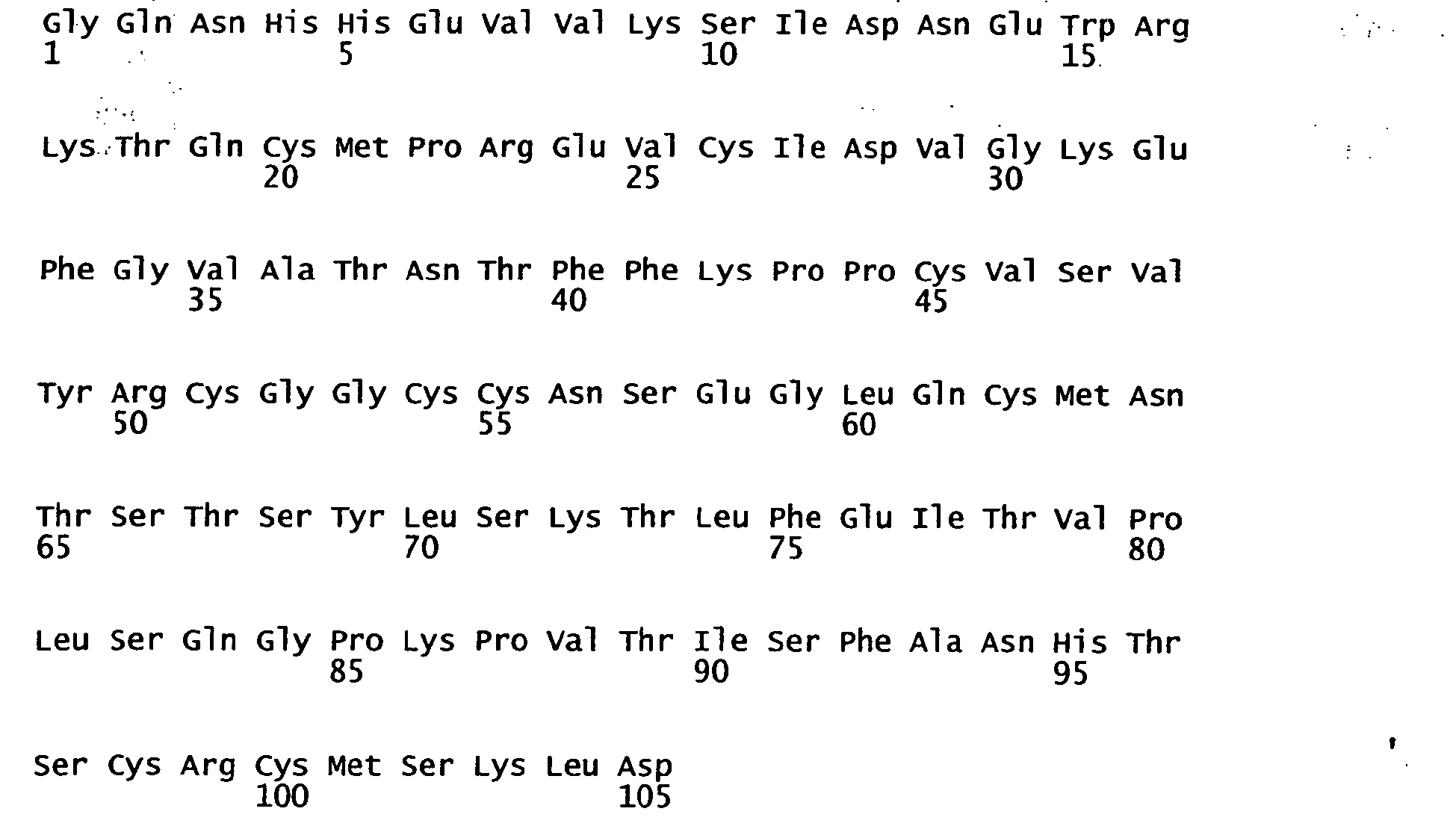
- <210> 1198
<211> 315
<212> DNA
<213> Homo sapiens - <220>
<221> CDS
<222> (1)..(315) - <400> 1198

- <210> 1199
<211> 105
<212> PRT
<213> Homo sapiens - <400> 1199

- <210> 1200
<211> 13
<212> PRT
<213> Artificial sequence - <220>
<223> PDGF motif - <220>
<221> misc_feature
<222> (2)..(2)
<223> Xaa = Proline or serine - <220>
<221> misc_feature
<222> (5)..(7)
<223> Xaa = any or unknown amino acid - <220>
<221> misc_feature
<222> (10) .. (10)
<223> xaa = Arginine, serine, Threonine or Alanine - <400> 1200

- <210> 1201
<211> 87
<212> PRT
<213> Artificial sequence - <220>
<223> VEGF Homology Domain Motif - <220>
<221> misc_feature
<222> (2)..(23)
<223> Xaa = any or unknown amino acid - <220>
<221> misc_feature
<222> (24)..(25) Xaa = any amino acid or unknown amino acid or nothing - <220>
<221> misc_feature
<222> (27)..(27)
<223> Xaa = Proline, Serine or Arginine - <220>
<221> misc_feature
<222> (30)..(32)
<223> Xaa = any or unknown amino acid - <220>
<221> misc_feature
<222> (35)..(35)
<223> Xaa = Glycine, serine, Threonine or Alanine - <220>
<221> misc_feature
<222> (39)..(44)
<223> Xaa = any or unknown amino acid - <220>
<221> misc_feature
<222> (46)..(77)
<223> Xaa = any or unknown amino acid - <220>
<221> misc_feature
<222> (78)..(86)
<223> Xaa = any amino acid or unknown amino acid or nothing - <400> 1201

- <210> 1202
<211> 102
<212> PRT
<213> Artificial sequence - <220>
<223> VEGF/PDGF homology domain motif - <220>
<221> misc_feature
<222> (2)..(19)
<223> Xaa = any or unknown amino acid - <220>
<221> misc_feature
<222> (20)..(29)
<223> Xaa = any amino acid or unknown amino acid or nothing - <220>
<221> misc_feature
<222> (31)..(31)
<223> Xaa = any or unknown amino acid - <220>
<221> misc_feature
<222> (33)..(36)
<223> Xaa = any or unknown amino acid - <220>
<221> misc_feature
<222> (39)..(39)
<223> Xaa = any or unknown amino acid - <220>
<221> misc_feature
<222> (42)..(42)
<223> Xaa = cysteine or nothing - <220>
<221> misc_feature
<222> (43)..(48)
<223> Xaa = any or unknown amino acid - <220>
<221> misc_feature
<222> (49)..(54)
<223> Xaa = Xaa = any amino acid or unknown amino acid or nothing - <220>
<221> misc_feature
<222> (56)..(85)
<223> Xaa = any or unknown amino acid - <220>
<221> misc_feature
<222> (86)..(101)
<223> Xaa = any amino acid or unknown amino acid or nothing - <400> 1202

- <210> 1203
<211> 87
<212> PRT
<213> Artificial sequence - <220>
<223> VEGF/PDGF homology domain motif - <220>
<221> misc_feature
<222> (2)..(23)
<223> Xaa = any or unknown amino acid - <220>
<221> misc_feature
<222> (24)..(25)
<223> Xaa = any amino acid or nothing - <220>
<221> misc_feature
<222> (27)..(27)
<223> Xaa = Proline, serine or Arginine - <220>
<221> misc_feature
<222> (30)..(32)
<223> Xaa = any or unknown amino acid - <220>
<221> misc_feature
<222> (35)..(35)
<223> xaa = any or unknown amino acid - <220>
<221> misc_feature
<222> (39)..(44)
<223> Xaa = any or unknown amino acid - <220>
<221> misc_feature
<222> (46)..(77)
<223> Xaa = any or unknown amino acid - <220>
<221> misc_feature
<222> (78)..(86)
<223> Xaa = any amino acid or unknown amino acid or nothing - <400> 1203

- <210> 1204
<211> 8
<212> PRT
<213> Artificial sequence - <220>
<223> VEGF-C fragment - <220>
<221> misc_feature
<222> (5)..(7)
<223> Xaa = any or unknown amino acid - <400> 1204

- <210> 1205
<211> 21
<212> PRT
<213> Artificial sequence - <220>
<223> VEGF-C fragment - <400> 1205

- <210> 1206
<211> 8
<212> PRT
<213> Artificial sequence - <220>
<223> VEGF-C fragment - <400> 1206

- <210> 1207
<211> 14
<212> PRT
<213> Artificial sequence - <220>
<223> VEGF-C fragment - <220>
- <220>
<221> misc_feature
<222> (11)..(13)
<223> Xaa = any or unknown amino acid - <400> 1207

- <210> 1208
<211> 19
<212> PRT
<213> Artificial sequence - <220>
<223> VEGF-C fragment - <220>
<221> misc_feature
<222> (11)..(13)
<223> Xaa = any or unknown amino acid - <400> 1208

- <210> 1209
<211> 102
<212> PRT
<213> Artificial sequence - <220>
<223> VEGF residues - <400> 1209

- <210> 1210
<211> 105
<212> PRT
<213> Artificial sequence - <220>
<223> VEGF residues - <400> 1210


- <210> 1211
<211> 8
<212> PRT
<213> Artificial sequence - <220>
<223> VEGF-A fragment - <220>
<221> misc_feature
<222> (5)..(7)
<223> Xaa = any or unknown amino acid - <400> 1211

- <210> 1212
<211> 12
<212> PRT
<213> Artificial sequence - <220>
<223> VEGF-C fragment - <220>
<221> misc_feature
<222> (5)..(5)
<223> Xaa = any amino acid or unknown amino acid - <220>
<221> misc_feature
<222> (6)..(11)
<223> Xaa = any amino acid or unknown amino acid or nothing - <400> 1212

Claims (6)
- A polypeptide comprising an amino acid sequence at least 95% identical to amino acids 1-102 as set forth in SEQ ID NO. 51, SEQ ID NO: 59, SEQ ID NO: 63, or SEQ ID NO: 163, wherein the polypeptide binds to at least one receptor selected from the group consisting of human VEGFR-1, human VEGFR-2 and human VEGFR-3.
- A polypeptide comprising an amino acid sequence at least 95% identical to amino acids 1-104 as set forth in SEQ ID NO: 67, SEQ ID NO: 71, SEQ ID NO. 75, SEQ ID NO: 77, SEQ ID NO: 153, SEQ ID NO: 165, SEQ ID NO: 167, SEQ ID NO: 169, SEQ ID NO: 173 or SEQ ID NO: 175, wherein the polypeptide binds to at least one receptor selected from the group consisting of human VEGFR-1, human VEGFR-2 and human VEGFR-3.
- A polypeptide comprising an amino acid sequence at least 95% identical to amino acids 1-105 as set forth in SEQ ID NO: 155, SEQ ID NO: 157 or SEQ ID NO: 159, wherein the polypeptide binds to exactly one receptor selected from the group consisting of human VEGFR-1, human VEGFR-2 and human VEGFR-3.
- A polypeptide comprising an amino acid sequence at least 95% identical to amino acids 1-103 as set forth in SEQ ID NO: 161, wherein the polypeptide binds to human VEGFR-1, human VEGFR-2 and human VEGFR-3.
- A hybrid polypeptide comprising an amino acid sequence at least 95% identical to the expression product of clone number 11.9 (SEQ ID NO: 433), 11.13 (SEQ ID NO: 945), 12. 16 (SEQ ID NO: 1185), 13.9 (SEQ ID NO: 465), 13.11 (SEQ ID NO: 529), 13.13 (SEQ ID NO: 977), 13.15 (SEQ ID NO: 1041), 14.1 (SEQ ID NO: 193), 14.5 (SEQ ID NO: 705), 14.7 (SEQ ID NO: 769), 22.3 (SEQ ID NO: 303), 22.4 (SEQ ID NO: 431), 23.12 (SEQ ID NO: 671), 23.14 (SEQ ID NO: 1119), 32.9 (SEQ ID NO: 485), 32.11 (SEQ ID NO: 549), 32.15 (SEQ ID NO: 1061), 32.16 (SEQ ID NO: 1189), 33.1 (SEQ ID NO: 213), 33.3 (SEQ ID NO: 277), 33.9 (SEQ ID NO: 469), 43.1 (SEQ ID NO: 219), 52.9 (SEQ ID NO: 487), 52.11 (SEQ ID NO: 551), 52.14 (SEQ ID NO: 1127), 53.1 (SEQ ID NO: 215), 53.7 (SEQ ID NO: 791), 61.3 (SEQ ID NO: 249), 62.1 (SEQ ID NO: 233), 62.8 (SEQ ID NO: 937), 62.10 (SEQ ID NO: 617), 62.13 (SEQ ID NO: 1001), 63.3 (SEQ ID NO:281), 63.6 (SEQ ID NO: 857), 73.7 (SEQ ID NO: 797), 73.15 (SEQ ID NO: 1053), 74.8 (SEQ ID NO: 909), 74.10 (SEQ ID NO: 589), 74.12 (SEQ ID NO: 653), 81.9 (SEQ ID NO: 435), 81.13 (SEQ ID NO: 947), 82.5 (SEQ ID NO:739), 82.14 (SEQ ID NO: 1123), 82.16 (SEQ ID NO: 1187), 83.9 (SEQ ID NO: 467), 83.13 (SEQ ID NO: 979), 84.1 (SEQ ID NO: 195) or 84.5 (SEQ ID NO: 707), wherein the polypeptide binds to exactly one receptor selected from the group consisting of human VEGFR-1, human VEGFR-2 and human VEGFR-3.
- A polynucleotide, vector or host cell comprising a nucleotide sequence encoding a polypeptide of any one of claims 1-5.
Applications Claiming Priority (5)
| Application Number | Priority Date | Filing Date | Title |
|---|---|---|---|
| US18520500P | 2000-02-25 | 2000-02-25 | |
| US185205P | 2000-02-25 | ||
| US20533100P | 2000-05-18 | 2000-05-18 | |
| US205331P | 2000-05-18 | ||
| PCT/US2001/006113 WO2001062942A2 (en) | 2000-02-25 | 2001-02-26 | MATERIALS AND METHODS INVOLVING HYBRID VASCULAR ENDOTHELIAL GROWTH FACTOR DNAs AND PROTEINS AND SCREENING METHODS FOR MODULATORS |
Publications (2)
| Publication Number | Publication Date |
|---|---|
| EP1259626A2 EP1259626A2 (en) | 2002-11-27 |
| EP1259626B1 true EP1259626B1 (en) | 2007-10-31 |
Family
ID=26880920
Family Applications (1)
| Application Number | Title | Priority Date | Filing Date |
|---|---|---|---|
| EP01914501A Expired - Lifetime EP1259626B1 (en) | 2000-02-25 | 2001-02-26 | Materials and methods involving hybrid vascular endothelial growth factor dnas and proteins and screening methods for modulators |
Country Status (8)
| Country | Link |
|---|---|
| US (5) | US6965010B2 (en) |
| EP (1) | EP1259626B1 (en) |
| JP (1) | JP4981229B2 (en) |
| AT (1) | ATE377081T1 (en) |
| AU (3) | AU2001239884B2 (en) |
| CA (1) | CA2400948A1 (en) |
| DE (1) | DE60131146T2 (en) |
| WO (1) | WO2001062942A2 (en) |
Families Citing this family (47)
| Publication number | Priority date | Publication date | Assignee | Title |
|---|---|---|---|---|
| CA2374050A1 (en) * | 1999-05-20 | 2000-11-30 | Scios Inc. | Vascular endothelial growth factor dimers |
| US7167615B1 (en) | 1999-11-05 | 2007-01-23 | Board Of Regents, The University Of Texas System | Resonant waveguide-grating filters and sensors and methods for making and using same |
| AU2001239884B2 (en) * | 2000-02-25 | 2006-08-10 | Vegenics Limited | Materials and methods involving hybrid vascular endothelial growth factor DNAs and proteins and screening methods for modulators |
| US8263739B2 (en) | 2000-06-02 | 2012-09-11 | Bracco Suisse Sa | Compounds for targeting endothelial cells, compositions containing the same and methods for their use |
| US7109167B2 (en) | 2000-06-02 | 2006-09-19 | Bracco International B.V. | Compounds for targeting endothelial cells, compositions containing the same and methods for their use |
| WO2002014367A1 (en) * | 2000-08-10 | 2002-02-21 | Center For Advanced Science And Technology Incubation,Ltd. | Chimeric human-type vascular endothelial cell growth factor |
| CA2435503C (en) * | 2001-01-19 | 2011-02-22 | Ludwig Institute For Cancer Research | Flt4(vegfr-3) as a target for tumor imaging and anti-tumor therapy |
| US20040132675A1 (en) * | 2002-02-08 | 2004-07-08 | Calvin Kuo | Method for treating cancer and increasing hematocrit levels |
| AU2002319402B2 (en) * | 2001-06-28 | 2008-09-11 | Domantis Limited | Dual-specific ligand and its use |
| US7794693B2 (en) | 2002-03-01 | 2010-09-14 | Bracco International B.V. | Targeting vector-phospholipid conjugates |
| US7211240B2 (en) | 2002-03-01 | 2007-05-01 | Bracco International B.V. | Multivalent constructs for therapeutic and diagnostic applications |
| US8623822B2 (en) | 2002-03-01 | 2014-01-07 | Bracco Suisse Sa | KDR and VEGF/KDR binding peptides and their use in diagnosis and therapy |
| US7261876B2 (en) | 2002-03-01 | 2007-08-28 | Bracco International Bv | Multivalent constructs for therapeutic and diagnostic applications |
| EP1587944A4 (en) | 2002-03-01 | 2007-03-21 | Dyax Corp | Kdr and vegf/kdr binding peptides and their use in diagnosis and therapy |
| AU2003228762A1 (en) * | 2002-05-03 | 2003-11-17 | Ludwig Institute For Cancer Research | Preventing secondary lymphedema with vegf-d dna |
| EP1600459A3 (en) * | 2002-06-28 | 2005-12-07 | Domantis Limited | Ligand |
| US9321832B2 (en) * | 2002-06-28 | 2016-04-26 | Domantis Limited | Ligand |
| US7696320B2 (en) | 2004-08-24 | 2010-04-13 | Domantis Limited | Ligands that have binding specificity for VEGF and/or EGFR and methods of use therefor |
| US9453251B2 (en) | 2002-10-08 | 2016-09-27 | Pfenex Inc. | Expression of mammalian proteins in Pseudomonas fluorescens |
| JP2006523090A (en) * | 2002-12-27 | 2006-10-12 | ドマンティス リミテッド | Bispecific single domain antibody specific for ligand and for ligand receptor |
| EP2284180B1 (en) | 2003-03-03 | 2015-09-09 | Dyax Corp. | Uses of peptides that specifically bind HGF receptor (cMET) |
| WO2005016963A2 (en) * | 2003-06-12 | 2005-02-24 | Ludwig Institute For Cancer Research | Heparin binding veger-3 ligands |
| EP1635860A2 (en) * | 2003-06-12 | 2006-03-22 | Ludwig Institute For Cancer Research | Use of vegf-c or vegf-d in reconstructive surgery |
| ATE507240T1 (en) | 2004-03-05 | 2011-05-15 | Vegenics Pty Ltd | MATERIALS AND METHODS FOR GROWTH FACTOR BINDING CONSTRUCTS |
| EP1773373A4 (en) * | 2004-03-08 | 2010-11-17 | Ludwig Inst Cancer Res | METHOD FOR MODULATING, REGULATING AND / OR STABILIZING ANGIOGENESIS |
| EP1774017B1 (en) | 2004-07-26 | 2013-05-15 | Pfenex Inc. | Process for improved protein expression by strain engineering |
| US7553496B2 (en) * | 2004-12-21 | 2009-06-30 | University Of Kentucky Research Foundation | VEGF-A as an inhibitor of angiogenesis and methods of using same |
| MX2007012766A (en) * | 2005-04-12 | 2008-10-01 | Intradigm Corp | Composition and methods of rnai therapeutics for treatment of cancer and other neovascularization diseases. |
| US7893244B2 (en) * | 2005-04-12 | 2011-02-22 | Intradigm Corporation | Composition and methods of RNAi therapeutics for treatment of cancer and other neovascularization diseases |
| WO2007022287A2 (en) | 2005-08-15 | 2007-02-22 | Vegenics Limited | Modified vegf and pdgf with improved angiogenic properties |
| CN101454344A (en) * | 2005-12-01 | 2009-06-10 | 杜门蒂斯有限公司 | Noncompetitive domain antibody formats that bind interleukin 1 receptor type 1 |
| US20090214496A1 (en) * | 2006-01-30 | 2009-08-27 | Licentia Ltd. | Bmx/etk tyrosine kinase gene therapy materials and methods |
| CN1903880B (en) * | 2006-08-02 | 2010-05-12 | 中国人民解放军军事医学科学院基础医学研究所 | Anti-tumor vascular endothelial growth factor VEGF-E antigen and its coding gene and application |
| US20080267924A1 (en) * | 2007-02-07 | 2008-10-30 | Vegenics Limited | Autologous lymph node transfer in combination with vegf-c or vegf-d growth factor therapy to treat secondary lymphedema and to improve reconstructive surgery |
| US9580719B2 (en) | 2007-04-27 | 2017-02-28 | Pfenex, Inc. | Method for rapidly screening microbial hosts to identify certain strains with improved yield and/or quality in the expression of heterologous proteins |
| US9394571B2 (en) | 2007-04-27 | 2016-07-19 | Pfenex Inc. | Method for rapidly screening microbial hosts to identify certain strains with improved yield and/or quality in the expression of heterologous proteins |
| NZ580530A (en) | 2007-06-06 | 2012-04-27 | Domantis Ltd | Anti vegf polypeptides, antibody variable domains and antagonists |
| US20110305703A1 (en) * | 2008-12-08 | 2011-12-15 | Vegenics Pty Limited | Isolated vegf-c and vegf-d peptides and uses thereof |
| WO2011154308A1 (en) | 2010-06-08 | 2011-12-15 | Proyecto De Biomedicina Cima, S.L. | New compositions and cell therapy methods for the treatment of cirrhosis |
| WO2012088563A1 (en) * | 2010-11-24 | 2012-07-05 | Vegenics Pty Limited | Vegfr-2-specific forms of vegf-d and vegf-c and uses thereof |
| WO2014081772A1 (en) * | 2012-11-20 | 2014-05-30 | Albert Einstein College Of Medicine Of Yeshiva University | Regeneration of coronary artery by coronary endothelial specific progenitor cells |
| MY199344A (en) | 2013-02-18 | 2023-10-24 | Vegenics Pty Ltd | Ligand binding molecules and uses thereof |
| TW201506036A (en) * | 2013-08-14 | 2015-02-16 | Laurantis Pharma Oy | Therapeutic use of VEGF-C and CCBE1 |
| US20180111972A1 (en) * | 2015-01-16 | 2018-04-26 | The Board Of Trustees Of The Leland Stanford Junior University | Hybrid chimera polypeptides as dual inhibitors of vascular endothelial growth factor receptor and platelet-derived growth factor receptor |
| US11628190B2 (en) * | 2015-08-28 | 2023-04-18 | University Of South Florida | Plasma derived from human umbilical cord blood for the treatment of neurodegenerative disorders |
| US11180535B1 (en) | 2016-12-07 | 2021-11-23 | David Gordon Bermudes | Saccharide binding, tumor penetration, and cytotoxic antitumor chimeric peptides from therapeutic bacteria |
| CN121293293B (en) * | 2025-12-15 | 2026-03-20 | 四川大学 | VEGFR3 receptor-specific binding peptide and its application |
Family Cites Families (81)
| Publication number | Priority date | Publication date | Assignee | Title |
|---|---|---|---|---|
| NL154598B (en) | 1970-11-10 | 1977-09-15 | Organon Nv | PROCEDURE FOR DETERMINING AND DETERMINING LOW MOLECULAR COMPOUNDS AND PROTEINS THAT CAN SPECIFICALLY BIND THESE COMPOUNDS AND TEST PACKAGING. |
| US3817837A (en) | 1971-05-14 | 1974-06-18 | Syva Corp | Enzyme amplification assay |
| US3939350A (en) | 1974-04-29 | 1976-02-17 | Board Of Trustees Of The Leland Stanford Junior University | Fluorescent immunoassay employing total reflection for activation |
| US3996345A (en) | 1974-08-12 | 1976-12-07 | Syva Company | Fluorescence quenching with immunological pairs in immunoassays |
| US4227427A (en) | 1977-09-08 | 1980-10-14 | Dana Corporation | Drive unit assembly |
| US4957939A (en) | 1981-07-24 | 1990-09-18 | Schering Aktiengesellschaft | Sterile pharmaceutical compositions of gadolinium chelates useful enhancing NMR imaging |
| US4472509A (en) | 1982-06-07 | 1984-09-18 | Gansow Otto A | Metal chelate conjugated monoclonal antibodies |
| US5498600A (en) * | 1984-10-12 | 1996-03-12 | Zymogenetics, Inc. | Biologically active mosaic proteins |
| US5037630A (en) | 1985-01-14 | 1991-08-06 | Neorx Corporation | Metal radionuclide labeled proteins for diagnosis and therapy |
| US5139941A (en) | 1985-10-31 | 1992-08-18 | University Of Florida Research Foundation, Inc. | AAV transduction vectors |
| US4965392A (en) | 1987-03-26 | 1990-10-23 | Neorx Corporation | Chelating compounds for metal-radionuclide labeled proteins |
| US5087244A (en) | 1989-01-31 | 1992-02-11 | C. R. Bard, Inc. | Catheter and method for locally applying medication to the wall of a blood vessel or other body lumen |
| US5194596A (en) | 1989-07-27 | 1993-03-16 | California Biotechnology Inc. | Production of vascular endothelial cell growth factor |
| US5585362A (en) | 1989-08-22 | 1996-12-17 | The Regents Of The University Of Michigan | Adenovirus vectors for gene therapy |
| US5674192A (en) | 1990-12-28 | 1997-10-07 | Boston Scientific Corporation | Drug delivery |
| US5670488A (en) | 1992-12-03 | 1997-09-23 | Genzyme Corporation | Adenovirus vector for gene therapy |
| AU7906691A (en) | 1990-05-23 | 1991-12-10 | United States of America, as represented by the Secretary, U.S. Department of Commerce, The | Adeno-associated virus (aav)-based eucaryotic vectors |
| US5328688A (en) | 1990-09-10 | 1994-07-12 | Arch Development Corporation | Recombinant herpes simplex viruses vaccines and methods |
| US5849571A (en) | 1990-10-10 | 1998-12-15 | University Of Pittsburgh Of The Commonwealth System Of Higher Education | Latency active herpes virus promoters and their use |
| US5252479A (en) | 1991-11-08 | 1993-10-12 | Research Corporation Technologies, Inc. | Safe vector for gene therapy |
| US5955291A (en) | 1992-01-09 | 1999-09-21 | Alitalo; Kari | Antibodies recognizing tie receptor tyrosine kinase and uses thereof |
| ATE380243T1 (en) | 1992-03-13 | 2007-12-15 | Biomerieux Bv | EPSTEIN-BARR VIRUS RELATED PEPTIDES AND NUCLEIC ACID SEGMENTS |
| US5599352A (en) | 1992-03-19 | 1997-02-04 | Medtronic, Inc. | Method of making a drug eluting stent |
| DE69326631T2 (en) | 1992-03-19 | 2000-06-08 | Medtronic, Inc. | Intraluminal expansion device |
| US5879934A (en) | 1992-07-31 | 1999-03-09 | University Of Pittsburgh Of The Commonwealth System Of Higher Education | Herpes simplex virus strains for gene transfer |
| US6107046A (en) | 1992-10-09 | 2000-08-22 | Orion Corporation | Antibodies to Flt4, a receptor tyrosine kinase and uses thereof |
| US5776755A (en) | 1992-10-09 | 1998-07-07 | Helsinki University Licensing, Ltd. | FLT4, a receptor tyrosine kinase |
| US5336178A (en) | 1992-11-02 | 1994-08-09 | Localmed, Inc. | Intravascular catheter with infusion array |
| US5661033A (en) | 1992-11-25 | 1997-08-26 | The Board Of Trustees Of The Leland Stanford Junior University | Gene transfer using herpes virus vectors as a tool for neuroprotection |
| US5631237A (en) | 1992-12-22 | 1997-05-20 | Dzau; Victor J. | Method for producing in vivo delivery of therapeutic agents via liposomes |
| DE4311651A1 (en) | 1993-04-08 | 1994-10-13 | Boehringer Ingelheim Int | Virus for the transport of foreign DNA into higher eukaryotic cells |
| US5464650A (en) | 1993-04-26 | 1995-11-07 | Medtronic, Inc. | Intravascular stent and method |
| US5834441A (en) | 1993-09-13 | 1998-11-10 | Rhone-Poulenc Rorer Pharmaceuticals Inc. | Adeno-associated viral (AAV) liposomes and methods related thereto |
| PT733103E (en) | 1993-11-09 | 2004-07-30 | Targeted Genetics Corp | CREATION OF HIGH RECOMBINANT AAV VECTOR TITLES |
| FR2716682B1 (en) | 1994-01-28 | 1996-04-26 | Centre Nat Rech Scient | Process for the preparation of recombinant adeno-associated viruses (AAV) and uses thereof. |
| US5932540A (en) * | 1994-03-08 | 1999-08-03 | Human Genome Sciences, Inc. | Vascular endothelial growth factor 2 |
| EP0751992B1 (en) * | 1994-03-08 | 2005-11-09 | Human Genome Sciences, Inc. | Vascular endothelial growth factor 2 |
| US6608182B1 (en) * | 1994-03-08 | 2003-08-19 | Human Genome Sciences, Inc. | Human vascular endothelial growth factor 2 |
| US6040157A (en) * | 1994-03-08 | 2000-03-21 | Human Genome Sciences, Inc. | Vascular endothelial growth factor 2 |
| US6734285B2 (en) * | 1994-03-08 | 2004-05-11 | Human Genome Sciences, Inc. | Vascular endothelial growth factor 2 proteins and compositions |
| US6204059B1 (en) | 1994-06-30 | 2001-03-20 | University Of Pittsburgh | AAV capsid vehicles for molecular transfer |
| US5856152A (en) | 1994-10-28 | 1999-01-05 | The Trustees Of The University Of Pennsylvania | Hybrid adenovirus-AAV vector and methods of use therefor |
| WO1998033917A1 (en) | 1994-11-14 | 1998-08-06 | The Ludwig Institute For Cancer Research | Vascular endothelial growth factor c (vegf-c) protein and gene, mutants thereof, and uses thereof |
| US6130071A (en) | 1997-02-05 | 2000-10-10 | Helsinki University Licensing, Ltd. | Vascular endothelial growth factor C (VEGF-C) ΔCys156 protein and gene, and uses thereof |
| US6645933B1 (en) * | 1995-08-01 | 2003-11-11 | Helsinki University Licensing Ltd. Oy | Receptor ligand VEGF-C |
| US6221839B1 (en) | 1994-11-14 | 2001-04-24 | Helsinki University Licensing Ltd. Oy | FIt4 ligand and methods of use |
| US6245530B1 (en) | 1995-08-01 | 2001-06-12 | Ludwig Institute For Cancer Research | Receptor ligand |
| US6403088B1 (en) | 1995-08-01 | 2002-06-11 | Helsinki University Licensing, Ltd. | Antibodies reactive with VEGF-C, a ligand for the Flt4 receptor tyrosine kinase (VEGFR-3) |
| US5707385A (en) | 1994-11-16 | 1998-01-13 | Advanced Cardiovascular Systems, Inc. | Drug loaded elastic membrane and method for delivery |
| US5637113A (en) | 1994-12-13 | 1997-06-10 | Advanced Cardiovascular Systems, Inc. | Polymer film for wrapping a stent structure |
| US5792453A (en) | 1995-02-28 | 1998-08-11 | The Regents Of The University Of California | Gene transfer-mediated angiogenesis therapy |
| US5607918A (en) | 1995-03-01 | 1997-03-04 | Ludwig Institute For Cancer Research | Vascular endothelial growth factor-B and DNA coding therefor |
| US5928939A (en) | 1995-03-01 | 1999-07-27 | Ludwig Institute For Cancer Research | Vascular endothelial growth factor-b and dna coding therefor |
| US5707618A (en) | 1995-03-24 | 1998-01-13 | Genzyme Corporation | Adenovirus vectors for gene therapy |
| FR2732357B1 (en) | 1995-03-31 | 1997-04-30 | Rhone Poulenc Rorer Sa | VIRAL VECTORS AND USE FOR THE TREATMENT OF HYPERPROLIFERATIVE DISORDERS, ESPECIALLY RESTENOSIS |
| US5773289A (en) | 1995-06-06 | 1998-06-30 | University Of Pittsburgh | AAV directed targeted integration |
| US6361946B1 (en) | 1997-02-05 | 2002-03-26 | Licentia Ltd | Vascular endothelial growth factor C (VEGF-C) protein and gene, mutants thereof, and uses thereof |
| US5622856A (en) | 1995-08-03 | 1997-04-22 | Avigen | High efficiency helper system for AAV vector production |
| ES2202469T5 (en) | 1995-09-08 | 2011-06-06 | Genentech, Inc. | PROTEIN RELATED TO VEGF. |
| WO1997012972A2 (en) * | 1995-09-29 | 1997-04-10 | Universita'degli Studi Di Siena | Regulated genes and uses thereof |
| US5653689A (en) | 1995-09-30 | 1997-08-05 | Abacus Design & Development, Inc. | Infusion catheter |
| US5830727A (en) | 1995-11-18 | 1998-11-03 | Human Gene Therapy Research Institute | Herpes simplex virus amplicon mini-vector gene transfer system |
| US6100071A (en) | 1996-05-07 | 2000-08-08 | Genentech, Inc. | Receptors as novel inhibitors of vascular endothelial growth factor activity and processes for their production |
| US5785965A (en) | 1996-05-15 | 1998-07-28 | The Board Of Trustees Of The Leland Stanford Junior Univ. | VEGF gene transfer into endothelial cells for vascular prosthesis |
| AU733322B2 (en) | 1996-07-15 | 2001-05-10 | Chugai Seiyaku Kabushiki Kaisha | Novel VEGF-like factor |
| CA2263890C (en) | 1996-08-23 | 2013-05-14 | Ludwig Institute For Cancer Research | Recombinant vascular endothelial cell growth factor d (vegf-d) |
| PT941116E (en) | 1996-11-01 | 2005-05-31 | Ark Therapeutics Ltd | USED VEGF FOR THE MANUFACTURE OF A MEDICINAL PRODUCT FOR THE TREATMENT OR PREVENTION OF INTIMATE HYPERPLASIA AND DELIVERY DEVICE |
| US6172043B1 (en) | 1997-01-10 | 2001-01-09 | Massachusetts Institute Of Technology | Treatments for neurotoxicity in Alzheimer's disease caused by β amyloid peptides |
| WO1999030157A2 (en) | 1997-12-09 | 1999-06-17 | Children's Medical Center Corporation | Neuropilins in methods for diagnosis and prognosis of cancer |
| KR100628697B1 (en) * | 1997-12-24 | 2006-09-28 | 루드빅 인스티튜트 포 캔서 리서치 | Expression Vectors and Cell Lines Expressing Vascular Endothelial Growth Factor D and Methods of Treating Melanoma |
| ATE489108T1 (en) | 1998-10-09 | 2010-12-15 | Vegenics Ltd | FLT4 (VEGFR-3) AS A TARGET FOR TUMOR DETECTION (IMAGING) AND ANTI-TUMOR THERAPY |
| ES2229788T3 (en) | 1998-10-26 | 2005-04-16 | Ludwig Institute For Cancer Research | USE OF THE VEGF-C OR VEGF-D GENE OR PROTEIN TO PREVENT RESTENOSIS. |
| US6541008B1 (en) | 1998-11-02 | 2003-04-01 | University Of Otago | Vascular endothelial growth factor-like protein from orf viruses binds and activates mammalian VEGF receptor-2, and uses thereof |
| CA2355896A1 (en) * | 1998-12-21 | 2000-06-29 | Ludwig Institute For Cancer Research | Antibodies to truncated vegf-d and uses thereof |
| WO2000045835A1 (en) | 1999-02-08 | 2000-08-10 | Human Genome Sciences, Inc. | Vascular endothelial growth factor-2 |
| WO2001012669A1 (en) * | 1999-08-16 | 2001-02-22 | Universita' Degli Studi Di Siena | Vegf-d and angiogenic use thereof |
| AU2001239884B2 (en) * | 2000-02-25 | 2006-08-10 | Vegenics Limited | Materials and methods involving hybrid vascular endothelial growth factor DNAs and proteins and screening methods for modulators |
| AU2001264565B2 (en) * | 2000-05-03 | 2006-12-07 | Vegenics Limited | A method for activating only the vascular endothelial growth factor receptor-3 and uses thereof |
| US20030211988A1 (en) * | 2001-01-09 | 2003-11-13 | Epstein Stephen E | Enhancing lymph channel development and treatment of lymphatic obstructive disease |
| WO2005016963A2 (en) * | 2003-06-12 | 2005-02-24 | Ludwig Institute For Cancer Research | Heparin binding veger-3 ligands |
| WO2007022287A2 (en) * | 2005-08-15 | 2007-02-22 | Vegenics Limited | Modified vegf and pdgf with improved angiogenic properties |
-
2001
- 2001-02-26 AU AU2001239884A patent/AU2001239884B2/en not_active Ceased
- 2001-02-26 WO PCT/US2001/006113 patent/WO2001062942A2/en not_active Ceased
- 2001-02-26 EP EP01914501A patent/EP1259626B1/en not_active Expired - Lifetime
- 2001-02-26 US US09/795,006 patent/US6965010B2/en not_active Expired - Fee Related
- 2001-02-26 AT AT01914501T patent/ATE377081T1/en not_active IP Right Cessation
- 2001-02-26 DE DE60131146T patent/DE60131146T2/en not_active Expired - Lifetime
- 2001-02-26 CA CA002400948A patent/CA2400948A1/en not_active Abandoned
- 2001-02-26 AU AU3988401A patent/AU3988401A/en active Pending
- 2001-02-26 JP JP2001561752A patent/JP4981229B2/en not_active Expired - Fee Related
-
2005
- 2005-02-24 US US11/064,774 patent/US7309604B2/en not_active Expired - Fee Related
-
2006
- 2006-11-10 AU AU2006235995A patent/AU2006235995A1/en not_active Abandoned
-
2007
- 2007-08-28 US US11/846,337 patent/US7566566B2/en not_active Expired - Fee Related
-
2009
- 2009-04-10 US US12/422,048 patent/US7902149B2/en not_active Expired - Fee Related
-
2011
- 2011-01-28 US US13/016,728 patent/US8278098B2/en not_active Expired - Fee Related
Non-Patent Citations (1)
| Title |
|---|
| CHANG C.J. ET AL: "Evolution of a cytokine using DNA family shuffling", NATURE BIOTECHNOLOGY, vol. 17, 1999, pages 793 - 797, XP002165178, DOI: doi:10.1038/70147 * |
Also Published As
| Publication number | Publication date |
|---|---|
| US7902149B2 (en) | 2011-03-08 |
| US20110207664A1 (en) | 2011-08-25 |
| JP2004507208A (en) | 2004-03-11 |
| US20050267024A1 (en) | 2005-12-01 |
| US20080058263A1 (en) | 2008-03-06 |
| US7566566B2 (en) | 2009-07-28 |
| WO2001062942A2 (en) | 2001-08-30 |
| US8278098B2 (en) | 2012-10-02 |
| AU2006235995A1 (en) | 2006-12-07 |
| DE60131146D1 (en) | 2007-12-13 |
| WO2001062942A3 (en) | 2002-03-21 |
| CA2400948A1 (en) | 2001-08-30 |
| JP4981229B2 (en) | 2012-07-18 |
| US20020151680A1 (en) | 2002-10-17 |
| EP1259626A2 (en) | 2002-11-27 |
| US20090318352A1 (en) | 2009-12-24 |
| AU3988401A (en) | 2001-09-03 |
| US7309604B2 (en) | 2007-12-18 |
| AU2001239884B2 (en) | 2006-08-10 |
| DE60131146T2 (en) | 2008-03-06 |
| US6965010B2 (en) | 2005-11-15 |
| AU2001239884C1 (en) | 2001-09-03 |
| ATE377081T1 (en) | 2007-11-15 |
Similar Documents
| Publication | Publication Date | Title |
|---|---|---|
| US7566566B2 (en) | Materials and methods involving hybrid vascular endothelial growth factor DNAs and proteins | |
| AU2001239884A1 (en) | Materials and methods involving hybrid vascular endothelial growth factor DNAs and proteins and screening methods for modulators | |
| US7611711B2 (en) | VEGFR-3 inhibitor materials and methods | |
| JP4524340B2 (en) | Vascular endothelial growth factor C (VEGF-C) protein and its genes, variants, and uses thereof | |
| ES2336731T3 (en) | GROWTH FACTOR D DERIVED FROM PLATES, CODING DNA OF THE SAME AND ITS USES. | |
| EP1126863B1 (en) | Vascular endothelial growth factor-like protein from orf virus nz10 binds and activates mammalian vegf receptor-2 | |
| US20040214766A1 (en) | VEGF-C or VEGF-D materials and methods for treatment of neuropathologies | |
| JP2004507208A5 (en) | ||
| WO2003004529A2 (en) | Ephrin-tie receptor materials and methods | |
| US20080057028A1 (en) | Vegf-C or Vegf-D Materials and Methods for Stimulation of Neural Stem cells | |
| AU2002322461B2 (en) | Lymphatic endothelial cells materials and methods | |
| AU2002322461A1 (en) | Lymphatic endothelial cells materials and methods | |
| JP2002525086A (en) | Platelet-derived growth factor C, DNA encoding the same, and use thereof | |
| US20030113324A1 (en) | Neuropilin/VEGF-C/VEGFR-3 materials and methods | |
| JP2002535006A (en) | Platelet-derived growth factor / vascular endothelial growth factor-like growth factor H and its use | |
| US20040053837A1 (en) | Composition and method for modulating vasculogenesis or angiogenesis | |
| AU2008200559A1 (en) | VEGFR-3 Binding peptides and their use for inhibiting angiogenesis |
Legal Events
| Date | Code | Title | Description |
|---|---|---|---|
| PUAI | Public reference made under article 153(3) epc to a published international application that has entered the european phase |
Free format text: ORIGINAL CODE: 0009012 |
|
| 17P | Request for examination filed |
Effective date: 20020925 |
|
| AK | Designated contracting states |
Kind code of ref document: A2 Designated state(s): AT BE CH CY DE DK ES FI FR GB GR IE IT LI LU MC NL PT SE TR |
|
| AX | Request for extension of the european patent |
Free format text: AL;LT;LV;MK;RO;SI |
|
| 17Q | First examination report despatched |
Effective date: 20030918 |
|
| GRAP | Despatch of communication of intention to grant a patent |
Free format text: ORIGINAL CODE: EPIDOSNIGR1 |
|
| RAP1 | Party data changed (applicant data changed or rights of an application transferred) |
Owner name: LICENTIA OY Owner name: LUDWIG INSTITUTE FOR CANCER RESEARCH |
|
| GRAS | Grant fee paid |
Free format text: ORIGINAL CODE: EPIDOSNIGR3 |
|
| GRAA | (expected) grant |
Free format text: ORIGINAL CODE: 0009210 |
|
| AK | Designated contracting states |
Kind code of ref document: B1 Designated state(s): AT BE CH CY DE DK ES FI FR GB GR IE IT LI LU MC NL PT SE TR |
|
| REG | Reference to a national code |
Ref country code: GB Ref legal event code: FG4D |
|
| REG | Reference to a national code |
Ref country code: IE Ref legal event code: FG4D |
|
| REG | Reference to a national code |
Ref country code: CH Ref legal event code: EP |
|
| REF | Corresponds to: |
Ref document number: 60131146 Country of ref document: DE Date of ref document: 20071213 Kind code of ref document: P |
|
| REG | Reference to a national code |
Ref country code: CH Ref legal event code: NV Representative=s name: MOINAS & SAVOYE SA |
|
| NLV1 | Nl: lapsed or annulled due to failure to fulfill the requirements of art. 29p and 29m of the patents act | ||
| ET | Fr: translation filed | ||
| PG25 | Lapsed in a contracting state [announced via postgrant information from national office to epo] |
Ref country code: ES Free format text: LAPSE BECAUSE OF FAILURE TO SUBMIT A TRANSLATION OF THE DESCRIPTION OR TO PAY THE FEE WITHIN THE PRESCRIBED TIME-LIMIT Effective date: 20080211 Ref country code: SE Free format text: LAPSE BECAUSE OF FAILURE TO SUBMIT A TRANSLATION OF THE DESCRIPTION OR TO PAY THE FEE WITHIN THE PRESCRIBED TIME-LIMIT Effective date: 20080131 Ref country code: NL Free format text: LAPSE BECAUSE OF FAILURE TO SUBMIT A TRANSLATION OF THE DESCRIPTION OR TO PAY THE FEE WITHIN THE PRESCRIBED TIME-LIMIT Effective date: 20071031 |
|
| PG25 | Lapsed in a contracting state [announced via postgrant information from national office to epo] |
Ref country code: PT Free format text: LAPSE BECAUSE OF FAILURE TO SUBMIT A TRANSLATION OF THE DESCRIPTION OR TO PAY THE FEE WITHIN THE PRESCRIBED TIME-LIMIT Effective date: 20080331 |
|
| PG25 | Lapsed in a contracting state [announced via postgrant information from national office to epo] |
Ref country code: AT Free format text: LAPSE BECAUSE OF FAILURE TO SUBMIT A TRANSLATION OF THE DESCRIPTION OR TO PAY THE FEE WITHIN THE PRESCRIBED TIME-LIMIT Effective date: 20071031 |
|
| PG25 | Lapsed in a contracting state [announced via postgrant information from national office to epo] |
Ref country code: DK Free format text: LAPSE BECAUSE OF FAILURE TO SUBMIT A TRANSLATION OF THE DESCRIPTION OR TO PAY THE FEE WITHIN THE PRESCRIBED TIME-LIMIT Effective date: 20071031 |
|
| PG25 | Lapsed in a contracting state [announced via postgrant information from national office to epo] |
Ref country code: BE Free format text: LAPSE BECAUSE OF FAILURE TO SUBMIT A TRANSLATION OF THE DESCRIPTION OR TO PAY THE FEE WITHIN THE PRESCRIBED TIME-LIMIT Effective date: 20071031 |
|
| PLBE | No opposition filed within time limit |
Free format text: ORIGINAL CODE: 0009261 |
|
| STAA | Information on the status of an ep patent application or granted ep patent |
Free format text: STATUS: NO OPPOSITION FILED WITHIN TIME LIMIT |
|
| 26N | No opposition filed |
Effective date: 20080801 |
|
| PG25 | Lapsed in a contracting state [announced via postgrant information from national office to epo] |
Ref country code: MC Free format text: LAPSE BECAUSE OF NON-PAYMENT OF DUE FEES Effective date: 20080228 |
|
| REG | Reference to a national code |
Ref country code: GB Ref legal event code: 732E |
|
| PG25 | Lapsed in a contracting state [announced via postgrant information from national office to epo] |
Ref country code: GR Free format text: LAPSE BECAUSE OF FAILURE TO SUBMIT A TRANSLATION OF THE DESCRIPTION OR TO PAY THE FEE WITHIN THE PRESCRIBED TIME-LIMIT Effective date: 20080201 Ref country code: IE Free format text: LAPSE BECAUSE OF NON-PAYMENT OF DUE FEES Effective date: 20080226 |
|
| PG25 | Lapsed in a contracting state [announced via postgrant information from national office to epo] |
Ref country code: FI Free format text: LAPSE BECAUSE OF FAILURE TO SUBMIT A TRANSLATION OF THE DESCRIPTION OR TO PAY THE FEE WITHIN THE PRESCRIBED TIME-LIMIT Effective date: 20071031 |
|
| REG | Reference to a national code |
Ref country code: FR Ref legal event code: TP |
|
| PG25 | Lapsed in a contracting state [announced via postgrant information from national office to epo] |
Ref country code: CY Free format text: LAPSE BECAUSE OF FAILURE TO SUBMIT A TRANSLATION OF THE DESCRIPTION OR TO PAY THE FEE WITHIN THE PRESCRIBED TIME-LIMIT Effective date: 20071031 |
|
| PG25 | Lapsed in a contracting state [announced via postgrant information from national office to epo] |
Ref country code: LU Free format text: LAPSE BECAUSE OF NON-PAYMENT OF DUE FEES Effective date: 20080226 |
|
| PG25 | Lapsed in a contracting state [announced via postgrant information from national office to epo] |
Ref country code: TR Free format text: LAPSE BECAUSE OF FAILURE TO SUBMIT A TRANSLATION OF THE DESCRIPTION OR TO PAY THE FEE WITHIN THE PRESCRIBED TIME-LIMIT Effective date: 20071031 |
|
| PGFP | Annual fee paid to national office [announced via postgrant information from national office to epo] |
Ref country code: CH Payment date: 20140220 Year of fee payment: 14 Ref country code: DE Payment date: 20140220 Year of fee payment: 14 |
|
| PGFP | Annual fee paid to national office [announced via postgrant information from national office to epo] |
Ref country code: FR Payment date: 20140218 Year of fee payment: 14 Ref country code: IT Payment date: 20140228 Year of fee payment: 14 |
|
| PGFP | Annual fee paid to national office [announced via postgrant information from national office to epo] |
Ref country code: GB Payment date: 20140220 Year of fee payment: 14 |
|
| REG | Reference to a national code |
Ref country code: DE Ref legal event code: R119 Ref document number: 60131146 Country of ref document: DE |
|
| REG | Reference to a national code |
Ref country code: CH Ref legal event code: PL |
|
| GBPC | Gb: european patent ceased through non-payment of renewal fee |
Effective date: 20150226 |
|
| PG25 | Lapsed in a contracting state [announced via postgrant information from national office to epo] |
Ref country code: CH Free format text: LAPSE BECAUSE OF NON-PAYMENT OF DUE FEES Effective date: 20150228 Ref country code: LI Free format text: LAPSE BECAUSE OF NON-PAYMENT OF DUE FEES Effective date: 20150228 |
|
| REG | Reference to a national code |
Ref country code: DE Ref legal event code: R082 Ref document number: 60131146 Country of ref document: DE Representative=s name: ELBPATENT-MARSCHALL & PARTNER MBB, DE |
|
| REG | Reference to a national code |
Ref country code: FR Ref legal event code: ST Effective date: 20151030 |
|
| PG25 | Lapsed in a contracting state [announced via postgrant information from national office to epo] |
Ref country code: IT Free format text: LAPSE BECAUSE OF NON-PAYMENT OF DUE FEES Effective date: 20150226 |
|
| PG25 | Lapsed in a contracting state [announced via postgrant information from national office to epo] |
Ref country code: DE Free format text: LAPSE BECAUSE OF NON-PAYMENT OF DUE FEES Effective date: 20150901 Ref country code: GB Free format text: LAPSE BECAUSE OF NON-PAYMENT OF DUE FEES Effective date: 20150226 |
|
| PG25 | Lapsed in a contracting state [announced via postgrant information from national office to epo] |
Ref country code: FR Free format text: LAPSE BECAUSE OF NON-PAYMENT OF DUE FEES Effective date: 20150302 |