TECHNICAL FIELD
The present invention relates to a safety mechanism that
is incorporated in a prismatic battery having a power-generating
element housed in a relatively flat battery case in
the form of a rectangular prism, for performing degassing by
opening a part of the battery case when the internal gas
pressure rises abnormally. The invention also relates to a
method for manufacturing the safety mechanism.
BACKGROUND ART
Rechargeable batteries for use as power sources in
portable electronic equipment are required to have a high
energy density and also required to have space efficient
configuration in keeping with the demand for weight reduction
and miniaturization in the electronic equipment. As a battery
that satisfies these requirements, increasing attention has
been paid to a prismatic lithium rechargeable battery employing
an aluminum-made, relatively flat battery case in the form of a
rectangular prism. This lithium rechargeable battery has non-aqueous
electrolyte (organic solvent-base electrolyte)
contained in the battery case and is thus required to exhibit
stable hermeticity for a longer period of time. Thus, in
manufacturing the lithium rechargeable battery, after an
electrode group is housed in the battery case in the form of a
rectangular prism with a bottom, an opening of the battery case
is sealed with a sealing plate by laser welding.
In a non-aqueous electrolyte rechargeable battery, like
the lithium rechargeable battery described above, when it is
overcharged, or a short circuit occurs due to wrong use and
consequently the non-aqueous electrolyte is decomposed, gas is
generated. The resultant gas fills inside the battery case
hermetically sealed, and, if this causes the internal pressure
of the battery to rise to a certain value or above, the
battery case may possibly be ruptured. Non-aqueous electrolyte
rechargeable batteries in particular are more susceptible to
such a failure than batteries of other type.
In order to protect a battery case from rupture, there
has conventionally been provided a safety mechanism whereby,
when an internal pressure of the battery case exceeds a
certain value, an opening is created in a part of the battery
case by exploiting the pressure, and, through the resultant
opening, the gas is discharged out of the battery case.
Examples of generally-known safety mechanisms for use
with non-aqueous electrolyte rechargeable batteries are shown
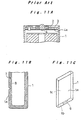
in Figs. 11A to 11C. A first conventional safety mechanism
shown in Fig. 11A is constructed as follows. In a battery case
1 in the form of a rectangular prism with a bottom, an aluminum-made
sealing plate (which is 900 µm in thickness, for example) 2
is provided for sealing an upper-end opening of the battery case
1. The sealing plate 2 has a gas vent hole 3 formed in a part
thereof. Moreover, an aluminum-made thin plate (which is 30 µm
in thickness, for example) 4 is bonded to an under surface of
the sealing plate 2 in a vacuum. In this construction, when an
internal pressure of the battery case 1 rises to a certain
value or above, a portion 4a of the thin plate 4 for covering
the gas vent hole 3 is pressurized by the gas pressure and is
thereby ruptured. As a result of the rupture of the thin plate
4, an opening is created, and, through the resultant opening
and the gas vent hole 3, the internal gas is discharged out of
the battery case 1.
A second conventional safety mechanism shown in Fig. 11B
is constructed as follows. In a battery case 1 in the form of
a rectangular prism with a bottom, a marking groove 7 is formed
on one of elongated side surfaces 1a thereof. The marking
groove 7 has a V-shaped section and appears circular when viewed
from the plane. Between a groove bottom surface of the marking
groove 7 and an inner surface of the battery case 1 is disposed
a thin-walled and circular easily-rupturable portion 8. In this
construction, when the internal pressure of the battery case 1
rises to a certain value or above, the easily-rupturable
portion 8, which is lower in strength than the other portions of
the elongated side surface 1a, is cleaved and opened. Through
the resultant opening, the gas is discharged to the outside.
A third conventional safety mechanism shown in Fig. 11C
is constructed as follows. On a bottom surface of a battery
case 1 is formed a marking groove 9 which is composed of a
linear portion parallel to a ridge line of the battery case 1,
and V-shaped portions extending from both ends of the linear
portion. In this construction, the marking groove 9 is formed
on the bottom surface 1b, i.e. the minimum-area portion, of the
battery case 1. Thus, when both of the elongated side surfaces
1a and 1c of the battery case 1 are expanded outwardly with a
rise in the internal pressure, the bottom surface 1b is deformed
inwardly, and whereby the marking groove 9 is cleaved and opened.
Through the resultant opening, the gas is discharged to the
outside.
However, the first safety mechanism requires a drilling
process for forming the gas vent hole 3 in the relatively small
sealing plate 2 having a rectangular shape, a process for
activating one surface of the sealing plate 2 that becomes an
inner surface when mounted in the battery case 1, and a vacuum
adsorption process for combining the thin plate 4 with the
activated surface by pressing using a roller. This leads to an
undesirable increase in the manufacturing cost. Furthermore,
since the gas vent hole 3 is formed in an end portion of the
sealing plate 2 having a relatively small configuration, the
action of the gas pressure required to rupture the portion 4a
for covering the gas vent hole 3 is exerted only on a strictly
localized region of the battery case 1 as a whole. This
necessitates much time being spent in rupturing the portion 4a
for covering the gas vent hole 3. To address this problem,
conventionally, the thickness of the thin plate 4 has been
reduced from 30 µm to 20 µm in an attempt to rupture the thin
plate 4 rapidly at the instant when the battery internal
pressure reaches a predetermined value. However, reducing the
thickness of the thin plate 4 creates another problem that the
thin plate 4 may possibly be ruptured by an impact caused by
drop tests.
Moreover, in the second safety mechanism, the elongated
side surface 1a, which has a thickness of approximately 300 µm,
of the battery case 1 is subjected to press working using a
punching die or the like to form the circular, wedge-like
marking groove 7. Thereby, a remaining wall thickness of
approximately 80 µm is obtained to form the easily-rupturable
portion 8. In this case, thermal stress developed during the
press working causes work hardening, with the result that, in
the elongated side surface 1a, the physical properties of the
periphery of the easily-rupturable portion 8 are varied. Since
the degree of the change in the physical properties, that is,
the degree of hardening and embrittling is not kept constant,
it is impossible to set the battery internal pressure for the
rupture of the easily-rupturable portion 8 at a fixed value. In
addition, to prevent accidental intrusion of dust or dirt into
the battery case 1, the marking groove 7 is formed in the
battery case 1 with its opening temporarily sealed by the
sealing plate. At this time, the sealing plate 2 is subjected
to stress resulting from the flow of the material during the
press working is conducted on the elongated side surface 1a
having a relatively large area, and is thereby slightly opened
with respect to the opening of the battery case 1. Thus, when
the sealing plate 2 is fixed to the battery case 1 by laser
welding, a blowhole is created. The resultant small hole tends
to cause leakage of electrolyte.
Further, in the third safety mechanism, the marking
groove 9 is formed on the bottom surface 1b, i.e. the minimum-area
portion of the battery case 1. Thus, unlike the second
safety mechanism, the third safety mechanism is free of such a
problem that the sealing plate 2 is inconveniently opened
during press working. However, since the marking groove 9 is
formed by press working, as observed in the second safety
mechanism, work hardening occurs during the press working and
this causes the physical properties of the periphery of the
marking groove 9 to change. Consequently, the battery internal
pressure cannot be kept constant for the operation of the safety
mechanism. In addition, the marking groove 9 is formed on the
bottom surface 1b, i.e. the minimum-area portion of the battery
case 1, which is resistant to deformation under a rising
internal pressure. Thus, in order for the safety mechanism to
operate at a predetermined battery internal pressure, the
remaining wall thickness of the marking groove 9 needs to be
kept as small as possible. The wall thickness needs to be
controlled with high accuracy, and this leads to poor
workability of the marking groove 9. What is worse, the
remaining wall thickness of the groove bottom portion of the
marking groove 9 is so small that the resistance to falling is
extremely low. Further, another problem arises. In a case where
the battery pack is constituted by placing a combination of a
plurality of cells connected in series or parallel with one
another in a pack case, formation of the marking groove 9 on
the bottom surface 1b of the battery case 1 makes difficult
connection of leads by welding.
The present invention has been made in light of the above
stated problems with the conventional art, and accordingly it
is an object of the present invention to provide a prismatic
battery safety mechanism that, despite being constructed at
lower cost, discharges gas out of a battery case properly and
swiftly at an instant when a battery internal pressure reaches
a predetermined value, and it is also an object of the
invention to provide a method for easily manufacturing the
safety mechanism while preventing occurrence of problems.
DISCLOSURE OF THE INVENTION
To achieve the above objects, according to one aspect of
the present invention, there is provided a safety mechanism
that is incorporated in a prismatic battery having an
electrode plate and electrolyte housed in a rectangular prism-shaped
battery case, for performing degassing by opening a part
of the battery case when a gas pressure inside the prismatic
battery rises abnormally, the safety mechanism being
characterized in that, on an elongated side surface of the
battery case is formed a cutting groove, and between a groove
bottom surface of the cutting groove and an inner surface of the
battery case is provided a thin-walled easily-rupturable portion
having a strength which is so set that the easily-rupturable
portion is ruptured at an instant when the internal pressure of
the battery reaches a predetermined value.
In this prismatic battery safety mechanism, the easily-rupturable
portion, which is provided by using a remaining wall
thickness of the groove bottom portion of the cutting groove, is
formed on the elongated side surface, i.e. the wider-area part,
of the battery case that is deformed greatly with a rise in the
battery internal pressure. Consequently, the easily-rupturable
portion is ruptured properly and swiftly at an instant when the
battery internal pressure reaches a working pressure of the
safety mechanism. Moreover, the cutting groove is formed by
cutting work using a cutting blade or the like, instead of
press working, and is thus free from work hardening resulting
from thermal stress. Thus, the physical properties of the
periphery of the cutting groove remain unchanged. Consequently,
the working pressure of the safety mechanism, which is set in
accordance with the wall thickness of the easily-rupturable
portion, is controlled with high accuracy, so that the safety of
the prismatic battery is improved.
According to another aspect of the present invention,
there is provided a method of manufacturing a prismatic battery
safety mechanism, including the steps of: fabricating a
prismatic battery by housing an electrode plate and electrolyte
in a battery case in the form of a rectangular prism having a
bottom, and subsequently sealing an opening of the battery
case; and forming a cutting groove on an elongated side surface
of the battery case of the prismatic battery by bringing a
cutting blade, which is attached to a high-speed rotary body
so as to rotate at a high speed, into cutting engagement with
the elongated side surface until it reaches such a depth as to
form an easily-rupturable portion having a predetermined wall
thickness and is then fixed in a relative position, and
subsequently bringing the high-speed rotary body or the
prismatic battery into rectilinear relative movement to rotate
the cutting blade a number of times.
In this prismatic battery safety mechanism manufacturing
method, the cutting groove is formed on the elongated side
surface of the prismatic battery in finished form. This
prevents accidental intrusion of dust or dirt produced during
the formation of the cutting groove into the battery case.
Moreover, since the cutting groove is formed by performing
cutting work a number of times using the cutting blade
rotating at a high speed, work hardening resulting from
thermal stress never occurs. Thus, the working pressure of the
safety mechanism is controlled with high accuracy, and it never
occurs that the sealing plate is inconveniently opened with
respect to the opening of the battery case because of stress
resulting from the flow of the material during the working.
Further, the cutting groove is formed by bringing the high-speed
rotary body having a cutting blade attached thereto and
the prismatic battery into rectilinear relative movement.
Consequently, a cutting groove is formed with high accuracy that
includes a linear groove bottom portion extending rectilinearly
at an identical depth and two curved groove bottom portions
extending curvedly from both ends of the linear groove bottom
portion toward the outer surface of the battery case.
BRIEF DESCRIPTION OF THE DRAWINGS
Fig. 1 is a perspective view illustrating a prismatic
battery furnished with a safety mechanism according to a first
embodiment of the present invention;
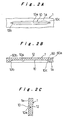
Fig. 2A is a front view of a part of the construction
shown in Fig. 1 in which a cutting groove is formed, Fig. 2B is
a sectional view taken along the line IIB-IIB of Fig. 1, and Fig.
2C is a sectional view taken along the line IIC-IIC of Fig. 1;
Fig. 3 is a sectional view taken along the line III-III of
Fig. 1;
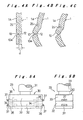
Figs. 4A to 4C are sectional right-hand side views of a
prismatic battery furnished with the safety mechanism according
to a second embodiment of the invention, illustrating a process
of rupture of an easily-rupturable portion under a rising
battery internal pressure step by step;
Figs. 5A and 5B are respectively a front view and a right-hand
side view illustrating a cutting apparatus for use in one
embodiment of a method of manufacturing a prismatic battery
safety mechanism according to the invention;
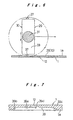
Fig. 6 is a sectional plan view illustrating a state in
which a cutting groove is formed by means of the cutting
apparatus;
Fig. 7 is a cross-sectional view of the prismatic battery
safety mechanism according to a third embodiment of the
invention, illustrating the principal portion thereof;
Fig. 8 is a cross-sectional view of the prismatic battery
safety mechanism according to a fourth embodiment of the
invention, illustrating the principal portion thereof;
Fig. 9 is a cross-sectional view of the prismatic battery
safety mechanism according to a fifth embodiment of the
invention, illustrating the principal portion thereof;
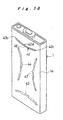
Fig. 10 is a perspective view illustrating a prismatic
battery furnished with the safety mechanism according to a sixth
embodiment of the invention; and
Figs. 11A to 11C are cross-sectional views and a
perspective view respectively illustrating a first conventional
safety mechanism for a prismatic battery, a second conventional
safety mechanism, and a third conventional safety mechanism.
BEST MODE FOR CARRYING OUT THE INVENTION
Hereinafter, preferred embodiments of the present
invention will be described with reference to the accompanying
drawings. Fig. 1 is a perspective view illustrating a prismatic
battery furnished with the safety mechanism according to a first
embodiment of the present invention; Fig. 2A is a front view of
a part of the battery in which a cutting groove is formed; Fig.
2B is a sectional view taken along the line IIB-IIB of Fig. 1;
and Fig. 2C is a sectional view taken along the line IIC-IIC of
Fig. 1. In Fig. 1, a rectangular prism-shaped battery case 1
has, on one of its elongated side surfaces 1a, a single linear
cutting groove 10 arranged parallel to upper and lower edges of
the elongated side surface 1a. As shown in Fig. 2B, between a
groove bottom of the cutting groove 10 and an inner surface of
the battery case 1 is provided a thin-walled easily-rupturable
portion 12 having a thickness which is so set that the easily-rupturable
portion 12 is ruptured at an instant when the
internal pressure of the battery case 1 rises to a
predetermined value. In this embodiment, the easily-rupturable
portion 12 is formed in the vicinity of the upper edge of the
elongated side surface 1a of the battery case 1, more
specifically, formed in one of three vertically-divided
portions of the elongated side surface 1a that is closest to
its upper edge. As shown in Fig. 2C, the cutting groove 10 has
a substantially v-shaped section, as viewed in a width
direction perpendicular to its length direction. Moreover, as
shown in Fig. 2B explicitly, the cutting groove 10 has its
lengthwise sectional profile composed of a combination of a
linear groove bottom portion 10a extending rectilinearly at an
identical depth, of which a remaining wall thickness of the
groove bottom provides the easily-rupturable portion 12, and two
curved groove bottom portions 10b and 10c extending curvedly
from both ends of the linear groove bottom portion 10a toward
the outer surface of the elongated side surface 1a of the
battery case 1.
Fig. 3 is a sectional view taken along the line III-III of
Fig. 1, illustrating a lithium ion rechargeable battery, as an
example of prismatic batteries. Next, the structure of the
lithium ion rechargeable battery will be briefly described.
The lithium ion rechargeable battery has non-aqueous
electrolyte (not shown) contained in the battery case 1 and is
thus required to exhibit stable hermeticity for a longer period
of time. Thus, in manufacturing the lithium ion rechargeable
battery, after an electrode group 13 is housed in the battery
case 1 in the form of a rectangular prism having a bottom, an
opening 14 of the battery case 1 is sealed with a sealing
plate 17 by laser welding. Thereafter, a predetermined amount
of electrolyte is poured into the battery case 1 from an inlet
hole 18 formed in the sealing plate 17. Lastly, the inlet hole
18 is sealed by a sealing member 19.
The battery case 1 is made of a metal plate such as an
aluminum plate, a nickel-plated steel plate, a clad steel
plate, or a stainless steel plate. Inside the battery case 1
is inserted the electrode group 13. The electrode group 13 has
its lower-end portion electrically insulated and separated from
an inner bottom surface of the battery case 1 by an insulating
plate 21, and has its upper-end portion electrically insulated
by an insulating plate 22.
The sealing plate 17 has, in a fitting hole 23 formed in
its central part, a negative electrode terminal 27 that is
electrically insulated therefrom via an insulating gasket 24.
The negative electrode terminal 27 is, at its under surface,
connected by welding to a negative electrode lead 28 that is
delivered, through an insertion hole 22a of the insulating plate
22, from the electrode group 13. The sealing plate 17 is
connected by welding to a positive electrode lead 20 that is
delivered, through an insertion hole 22b of the insulating plate
22, from the electrode group 13. The assembly of the battery
proceeds in the following steps. First, the sealing plate 17 is
fitted in the opening 14 of the battery case 1 and is then fixed,
at its periphery, to an inner circumferential surface of the
battery case 1 by laser welding. Subsequently, a predetermined
amount of electrolyte is poured through the inlet hole 18, and
then the inlet hole 18 is sealed by the sealing member 19.
Note that, whereas the sealing plate belonging to the first
conventional safety mechanism includes the gas vent hole 3 and
the thin plate 4, the sealing plate 17 includes only the inlet
hole 18 and the fitting hole 23, and therefore is produced at
lower cost.
Next, the working of the above-described safety mechanism
will be described below. A battery internal pressure, i.e. a
working pressure required for rupturing the easily-rupturable
portion 12, is set in accordance with the wall thickness of the
easily-rupturable portion 12. In a case where, for example, the
prismatic battery in use is overcharged or suffers from a short
circuit due to wrong use, gas is generated and fills inside the
battery case 1, resulting in a rise in the battery internal
pressure. As a result, the battery case 1 is expanded outwardly.
At this time, in the battery case 1, the central part of
the elongated side surface 1a is wholly expanded outwardly. In
the elongated side surface 1a, the portion closest to the
cutting groove 10 equates a boundary portion between an expanded
area and a barely-expanded area, and is thus defined as one of
the regions that undergo the biggest stress-induced change.
That is, in the cutting groove 10, whereas the upper portion, as
viewed in a width direction perpendicular to its length
direction, is expanded little when the battery internal
pressure rises, the central portion, as viewed in the width
direction, is expanded greatly. In other words, the cutting
groove 10 is so deformed that its groove opening is opened
widely with a rise in the battery internal pressure. This
facilitates the rupture of the easily-rupturable portion 12
provided in the groove bottom portion of the cutting groove 10.
Then, at the instant when the battery internal pressure rises
to a predetermined working pressure level, the easily-rupturable
portion 12 is ruptured by a shear force, thereby
creating an opening. Through the resultant opening, the gas
trapped inside the battery case 1 is discharged to the outside.
In this safety mechanism, the easily-rupturable portion
12 is formed on the elongated side surface 1a, i.e. the wider-area
portion that is deformed greatly with a rise in the battery
internal pressure, of the battery case 1. This arrangement
allows the easily-rupturable portion 12 to be ruptured properly
and swiftly at the instant when the battery internal pressure
reaches a predetermined working pressure level. Thus, as
compared with the conventional safety mechanisms, the easily-rupturable
portion 12 is allowed to have a larger wall thickness,
so that the resistance to falling is improved. Moreover, the
accuracy is controlled with ease, so that the workability of
the cutting groove 10 is improved.
Further, as will be described later, the cutting groove
10 is, unlike the conventional marking grooves 7 and 9, formed
by cutting work using a cutting blade or the like, and is thus
free from work hardening resulting from thermal stress as
observed in press working. Accordingly, the physical
properties of the periphery of the cutting groove 10 remain
unchanged. This makes it possible to set the working pressure
of the safety mechanism in accordance with the wall thickness
of the easily-rupturable portion 12 with high accuracy, so that
the safety of the prismatic battery is significantly improved.
Still further, the cutting groove 10 is formed on the elongated
side surface 1a having a relatively wide area and is
nevertheless provided by cutting work that causes no compression
in the wall thickness of the material. This prevents occurrence
of stress-induced deformation resulting from the flow of the
material during the working. Thus, even in a case where the
cutting groove 10 is formed in the battery case 1 with its
opening 14 temporarily sealed by the sealing plate 17, it is
unlikely that the sealing plate 17 is opened with respect to the
opening 14 of the battery case 1. Consequently, leakage of the
electrolyte is prevented. Moreover, this safety mechanism is
composed solely of a single cutting groove 10, and thus
requires a smaller number of process steps and less
manufacturing cost than in the conventional safety mechanism
shown in Fig. 11A in which the sealing plate 2 with the gas
vent hole 3 has the thin plate 4 bonded to the under surface
thereof.
In addition, the cutting groove 10 has a configuration
composed of a combination of the linear groove bottom portion
10a extending rectilinearly at an identical depth whose groove
bottom provides the easily-rupturable portion 12, and the two
curved groove bottom portions 10b and 10c extending curvedly
from both ends of the linear groove bottom portion 10a toward
the outer surface of the battery case 1. Thus, at the instant
when the battery internal pressure reaches a predetermined
value, the easily-rupturable portion 12, provided by using the
remaining wall thickness of the linear groove bottom portion 10a
in the cutting groove 10, is ruptured properly. By contrast, as
indicated by a dash-dot-dot line in Fig. 2B, in a case of
providing a cutting groove 60 having a rectangular lengthwise
section, when the battery case 1 is expanded outwardly with a
rise in the battery internal pressure, there arises a
possibility that corner portions 60a and 60b at both ends of
the groove bottom portion are ruptured earlier. This may lead
to a problem that the easily-rupturable portion 12 is
inconveniently ruptured before the battery internal pressure
reaches a predetermined working pressure level.
The safety mechanism constituted by the cutting groove 10
having the above-described configuration also presents the
following advantage. That is, the cutting groove 10 has a
substantially V-shaped section when viewed in a width direction
perpendicular to its length direction. Thus, the easily-rupturable
portion 12 is set in the area between the
substantially rectilinear groove bottom portion of the cutting
groove 10 and the inner surface of the battery case 1. This
arrangement facilitates the setting of the working pressure of
the safety mechanism in accordance with the wall thickness of
the easily-rupturable portion 12. By contrast, in a case of
forming a groove having a substantially U-shaped section by
press working or other technique, corner portions at both
widthwise ends of the groove bottom surface tend to rupture
easily. Consequently, the working pressure of the safety
mechanism cannot be kept constant. The cutting groove 10 has
its both lengthwise end portions made smaller in width than the
other portion thereof. Thus, the location of the easily-rupturable
portion 12, provided in the groove bottom portion of
the cutting groove 10, is confined to the lengthwise central
part of the cutting groove 10.
Note that, in this description, the above described
embodiment exemplifies the safety mechanism constituted by a
single cutting groove 10 provided in the vicinity of the upper
edge of the elongated side surface 1a of the battery case 1.
However, even if the safety mechanism is alternatively
constituted by any of cutting grooves 11, 15, and 16 as
indicated by dash-dot-dot lines in Fig. 1, substantially the
same effects as described above are achieved. Specifically,
the cutting groove 11 is provided in the vicinity of the lower
edge of the elongated side surface 1a in parallel with the upper
and lower edges thereof; the cutting groove 15 is provided in
the vicinity of the left-hand side edge of the elongated side
surface 1a in parallel with both side edges thereof; and the
cutting groove 16 is provided in the vicinity of the right-hand
side edge of the elongated side surface 1a in parallel
with both side edges thereof.
That is, in the elongated side surface 1a, the cutting
grooves 11, 15, and 16, likewise to the cutting groove 10, are
each formed in the boundary portion between an expanded area and
a barely-expanded area, i.e. one of the portions that undergo
the biggest stress-induced change. It is needless to say,
however, that, to achieve the effects described above, the
cutting grooves 11, 15, and 16 need to have a similar
configuration to that of the cutting groove 10, and need to be
respectively formed in one of three vertically-divided portions
of the elongated side surface 1a that is closest to the lower
edge thereof, in one of three horizontally-divided portions of
the elongated side surface 1a that is closest to the left-hand
side edge thereof, and in one of three horizontally-divided
portions of the elongated side surface 1a that is closest to
the right-hand side edge thereof.
Next, a description will be given below as to the safety
mechanism according to a second embodiment of the present
invention. As shown in Fig. 1, the safety mechanism of this
embodiment is composed of a cutting groove 10 similar to that
constituting the safety mechanism of the first embodiment, and
a cutting groove 25 which is formed between the cutting groove
10 and the upper edge of the elongated side surface 1a in
parallel with the cutting groove 10. In this safety mechanism,
as in the first embodiment, an easily-rupturable portion 12 is
provided between the groove bottom portion of the cutting groove
10 and the inner surface of the battery case 1. The cutting
groove 25 has substantially the same configuration as that of
the cutting groove 10, except that, in the former, a remaining
wall thickness between the groove bottom portion and the inner
surface of the battery case 1 is not secured for constituting
the easily-rupturable portion. That is, the cutting groove 25
is provided for the purpose of facilitating the rupture of the
easily-rupturable portion 12 of the cutting groove 10.
Figs. 4A to 4C are sectional right-hand side views of the
safety mechanism of the second embodiment of which each is a
sectional view taken along the line IIC-IIC of Fig. 1,
illustrating how the easily-rupturable portion 12 is ruptured
with a rise in the battery internal pressure step by step. Now,
with reference to Figs. 4A to 4C, the working of the safety
mechanism of this embodiment will be described below. Fig. 4A
is a sectional view showing the configurations of the two
cutting grooves 10 and 25 under a normal battery internal
pressure. A working pressure for rupturing the easily-rupturable
portion 12 is set in accordance with a wall thickness
d of the easily-rupturable portion 12. When the prismatic
battery in use is overcharged or suffers from a short circuit
due to wrong use, gas is generated and fills inside the
battery case 1, resulting in a rise in the battery internal
pressure. Consequently, the battery case 1 is expanded
outwardly as shown in Fig. 4B.
At that time, as shown in Fig. 4B explicitly, the cutting
groove 25, formed above the cutting groove 10 in the elongated
side surface 1a, that is, formed in the region less susceptible
to deformation due to a rise in the battery internal pressure,
is so deformed that its opposed groove wall surfaces come closer
to each other, and consequently the part of the elongated side
surface 1a in which the cutting groove 25 is formed is bent
inwardly. The cutting groove 10, formed in the region of the
elongated side surface 1a that is most susceptible to
deformation due to a rise in the battery internal pressure, is
so deformed that its groove opening is widely opened because of
the inward bending of the elongated side surface 1a caused by
the deformation of the cutting groove 25 described above,
thereby facilitating the rupture. Then, at the instant when the
battery internal pressure rises to a predetermined working
pressure level, as shown in Fig. 4C, the easily-rupturable
portion 12 is ruptured, thereby creating an opening. Through
the resultant opening, the gas trapped inside the battery case 1
is discharged to the outside.
In this safety mechanism, various effects as explained in
the first embodiment are achieved. In addition, the cutting
groove 25, formed parallely in close proximity to the cutting
groove 10 having the easily-rupturable portion 12, serves to
facilitate the rupture of the easily-rupturable portion 12 by
causing the groove opening of the cutting groove 10 to be opened
at a greater angle while being deformed. This makes it possible
to set the wall thickness d of the easily-rupturable portion 12,
involved in the setting of the working pressure, to be larger
than in the case of providing the cutting groove 10 alone, just
as with the first embodiment. As a result, the accuracy of the
wall thickness is controlled more easily, so that the
workability of the cutting grooves 10 and 25, as well as the
resistance to falling of the easily-rupturable portion 12, is
enhanced. For example, whereas, in the battery case 1 having a
single cutting groove formed in its bottom surface 1b, the
easily-rupturable portion designed to be ruptured at 1
atmospheric pressure needs to be given a wall thickness of 1 µm,
in the battery case 1 having a pair of cutting grooves 10 and 25
formed in its elongated side surface 1a in proximate relation,
the easily-rupturable portion 12 designed to be ruptured at 1
atmospheric pressure is allowed to have a wall thickness of 10
µm. The larger the wall thickness, the easier the control of
the wall thickness accuracy of the easily-rupturable portion 12
is.
Note that, in this description, the second embodiment
exemplifies the safety mechanism constituted by a pair of
cutting grooves 10 and 25 provided in the vicinity of the upper
edge of the elongated side surface 1a. However, even if the
safety mechanism is alternatively constituted by any of a pair
of the cutting groove 11 shown in Fig. 1 and a cutting groove
provided between the groove 11 and the lower edge of the
elongated side surface 1a, a pair of the cutting groove 15
shown in Fig. 1 and a cutting groove provided between the
groove 15 and the left-hand side edge of the side surface 1a,
and a pair of the cutting groove 16 shown in Fig. 1 and a
cutting groove provided between the groove 16 and the right-hand
side edge of the side surface 1a, substantially the same
effects as achieved in the second embodiment are achieved.
Next, a description will be given below as to a method of
manufacturing a prismatic battery safety mechanism according
to the present invention, for manufacturing the safety
mechanism of the second embodiment. Figs. 5A and 5B are
respectively a front view and a right-hand side view
illustrating a cutting apparatus 29 for use in the above-described
manufacturing method. The cutting apparatus 29 is
composed of a high-speed rotary body 30 having two pairs of
identical cutting blades 37 (four pieces in total) attached
thereto. The high-speed rotary body 30 is constructed by fixing
two fitting blocks 32 and 33 stacked on top of each other to a
lower-end portion of a rotary shaft 31 with fixing screws 34.
The cutting blades 37 are each formed of a high hardness
material, for example, a diamond, and provided with a balancer
38 having a predetermined weight. The pairs of the cutting
blades 37 are respectively used for cutting work to obtain the
cutting grooves 10 and 25 of the above-described safety
mechanism, and are attached so as to be identically located on
the track of the rotating high-speed rotary body 30. The high-speed
rotary body 30 drives the cutting blade 37 of 100 mm in
diameter, for example, to rotate at 3000 rpm or above.
Fig. 6 is a sectional plan view illustrating a state in
which the two cutting grooves 10 and 25 are produced
concurrently by means of the cutting apparatus 29. After the
prismatic battery shown in Fig. 3 is fabricated by sealing the
opening 14 of the battery case 1 with the sealing plate 17, the
cutting grooves 10 and 25 are produced by processing the
elongated side surface 1a of the battery case 1 of the prismatic
battery in finished form. In this way, accidental intrusion of
dust or dirt into the battery case 1 is successfully prevented
during the formation of the cutting grooves 10 and 25.
The working process for the cutting grooves 10 and 25 is
carried out as follows. First, by the action of the high-speed
rotary body 30, the cutting blade 37 rotating at a high speed
is brought into cutting engagement with the elongated side
surface 1a of the battery case 1 until it reaches such a depth
as to form the easily-rupturable portion 12 of the predetermined
wall thickness d and is then fixed. Subsequently, as indicated
by an arrow, the high-speed rotary body 30 is moved
rectilinearly along a direction parallel to the upper and
lower edges of the battery case 1 to rotate a pair of the
cutting blades 37 a number of times. Consequently, the two
cutting grooves 10 and 25 are formed concurrently on the
elongated side surface 1a. Note that it is also possible to
drive the high-speed rotary body 30 to rotate at a high speed
in a fixed position and to move the battery case 1
rectilinearly with respect to the high-speed rotary body 30.
As described thus far, the cutting grooves 10 and 25 are
formed by performing cutting work a number of times using the
cutting blade 37 rotating at a high speed, just as if cutting
into the elongated side surface 1a using a planer. Thus, the
parts of the elongated side surface 1a in which the cutting
grooves 10 and 25 are formed are protected from work hardening
resulting from thermal stress. Consequently, in the easily-rupturable
portion 12 provided by using the remaining wall
thickness of the groove bottom portion of the cutting groove 10,
its wall thickness d is controlled with high accuracy in terms
of micron. Moreover, it never occurs that the sealing plate 17
is opened with respect to the opening 14 of the battery case 1
because of stress resulting from the flow of the material during
the working. Further, the cutting grooves 10 and 25 are
produced by rectilinearly moving the high-speed rotary body 30,
to which the cutting blades 37 are attached, along the
elongated side surface 1a. Thus, as shown in Fig. 2A, the
cutting groove 10 is formed with high accuracy in such a way
that its sectional profile is composed of a combination of the
linear groove bottom portion 10a extending rectilinearly at an
identical groove depth, and the two curved groove bottom
portions 10b and 10c extending curvedly from both ends of the
linear groove bottom portion 10a toward the outer surface of the
battery case 1. Note that the cutting groove 25 is so
configured as to be similar in sectional profile to the cutting
groove 10.
Moreover, the safety mechanism of the first embodiment
constituted by a single cutting groove 10 (or one of the other
cutting grooves 11, 15, and 16) is manufactured basically in
the same manner as in the above-described embodiment except that,
in the former, in the cutting apparatus 29 shown in Figs. 5A, 5B,
and 6, one of the two pairs of four identical cutting blades 37
is removed. In this case, substantially the same effects as
achieved in the above-described embodiment are achieved.
Further, in the manufacturing method of the above-described
embodiment, after the prismatic battery is fabricated
by sealing the opening 14 of the battery case 1 with the sealing
plate 17, the single cutting groove 10 or the pair of cutting
grooves 10 and 25 are formed on the elongated side surface 1a of
the battery case 1 of the prismatic battery in finished form.
However, the single cutting groove 10 or the pair of cutting
grooves 10 and 25 may also be formed beforehand, by using the
cutting apparatus 29, on the elongated side surface 1a of the
battery case 1 which still remains as an independent body. In
this case, if the cutting groove 10 or 25 suffers from a
failure, the battery case 1 can be removed as being defective,
and only the battery case 1 of good quality is allowed to be
subjected to the battery manufacturing process. This enhances
the yields of the battery. Moreover, the manufacturing cost is
reduced, because discarding the battery case as being
defective is less costly than discarding the prismatic battery
as being defective.
Figs. 7 and 8 are cross-sectional views of the prismatic
battery safety mechanisms according to third and fourth
embodiments, illustrating the principal portions thereof. As
shown in Fig. 7, a cutting groove 39 constituting the safety
mechanism of the third embodiment, likewise to the cutting
groove 10 of the first embodiment, has its lengthwise sectional
profile composed of a combination of a linear groove bottom
portion 39a extending rectilinearly at an identical groove depth,
and two curved groove bottom portions 39b and 39c extending
curvedly from both ends of the linear groove bottom portion 39a
toward the outer surface of the battery case 1. In addition, in
the central part of the linear groove bottom portion 39a is
provided a deepest groove bottom portion 39d having the deepest
groove bottom. In this embodiment, the easily-rupturable
portion 12 is provided by using a remaining wall thickness
between a groove bottom surface of the deepest groove bottom
portion 39d and the inner surface of the battery case 1.
In the safety mechanism constituted by the cutting groove
39, it is possible to achieve substantially the same effects as
achieved in the safety mechanism of the first embodiment
constituted by the cutting groove 10. In addition, since the
easily-rupturable portion 12 is provided in a specified region
opposing the small-area deepest groove bottom portion 39d of the
cutting groove 39, the setting of the working pressure is made
more easily and more accurately. Further, since the portion to
be ruptured is limited to a specific small portion, a
significantly improved level of safety is ensured in the battery
during the operation of the safety mechanism.
As shown in Fig. 8, a cutting groove 40 constituting the
safety mechanism of the fourth embodiment has its lengthwise
sectional profile composed of a combination of a discontinuous
groove bottom portion 40a whose groove bottom depth varies
discontinuously, and two curved groove bottom portions 40b and
40c extending curvedly from both ends of the discontinuous
groove bottom portion 40a toward the outer surface of the
battery case 1. Moreover, in the central part of the
discontinuous groove bottom portion 40a is provided a deepest
groove bottom portion 40d having the deepest groove bottom. In
this embodiment, the easily-rupturable portion 12 is provided by
using a remaining wall thickness between a groove bottom surface
of the deepest groove bottom portion 40d and the inner surface
of the battery case 1.
In the safety mechanism constituted by the cutting groove
40, it is possible to achieve substantially the same effects as
achieved in the safety mechanism constituted by the cutting
groove 39 described above. In addition, a plurality of rib-shaped
portions 40e to 40h, formed in the discontinuous groove
bottom portion 40a so as to protrude from the groove bottom
surface into the groove, serve to improve the resistance to
falling of the battery. This prevents the easily-rupturable
portion 12 from being ruptured easily due to a shock caused by
the fall of an equipment incorporating the battery.
Note that the cutting grooves 39 and 40 are processed into
a predetermined shape with high accuracy in the following manner.
During the elongated side surface 1a of the battery case 1 is
subjected to cutting using the cutting blade 37 that is attached
to the high-speed rotary body 30 shown in Fig. 6 so as to rotate
at high speed, the high-speed rotary body 30 is moved
rectilinearly along the prismatic battery, and, as indicated
by an arrow defined by a dash-dot-dot line in the figure, the
cutting blade 37 is displaced by a predetermined distance at a
predetermined timing, in a direction in which it is moved
toward and away from the prismatic battery, in accordance with
an NC control.
Fig. 9 is a cross-sectional view of the safety mechanism
according to a fifth embodiment of the present invention,
illustrating the principal portion thereof. In the figure, the
components that play the same or corresponding roles as in Fig.
2B are identified with the same reference symbols, and
overlapping descriptions will be omitted. In this embodiment,
a cutting groove 10, which is similar to that of the first
embodiment, is filled up with fluorine resin or polyolefin
resin so as to create a protective coating film 41. In general,
the battery case 1 is protected by an oxide film formed
thereon. However, this oxide film is removed concurrently with
the cutting work for forming the cutting groove 10 on the
elongated side surface 1a of the battery case 1. Consequently,
the cutting groove 10 is susceptible to corrosion due to the
leakage of electrolyte or salt water produced when the
electrolyte is poured through the inlet hole 18 shown in Fig. 3.
Such a problem is solved by employing the protective coating
film 41 formed in this embodiment. Note that, in this
description, this embodiment deals with a case where the
protective coating film 41 is created within the cutting
groove 10 formed in the first embodiment. It is needless to
say, however, that a similar protective coating film 41 may be
created in any of the cutting grooves 11, 15, 16, 25, 39, and
40 shown in the other embodiments.
Fig. 10 is a perspective view illustrating a prismatic
battery furnished with the safety mechanism according to a sixth
embodiment of the present invention. In this embodiment, a
rectangular prism-shaped battery case 1 has a single, arc-shaped
cutting groove 42 formed on one of elongated side surfaces 1a
thereof. Likewise to the first embodiment, the cutting groove
42 is formed in one of three vertically-divided portions of the
elongated side surface 1a that is closest to the upper edge.
The cutting groove 42, like the cutting groove 10 of the first
embodiment, has a substantially V-shaped section when viewed in
a width direction perpendicular to its length direction.
Moreover, its lengthwise sectional profile is composed of a
combination of a linear groove bottom portion 42a extending
rectilinearly at an identical groove depth, and two curved
groove bottom portions 42b and 42c extending curvedly from both
ends of the linear groove bottom portion 42a toward the outer
surface of the elongated side surface 1a of the battery case 1.
Between a groove bottom of the linear groove bottom portion 42a
and the inner surface of the battery case 1 is provided a thin-walled
easily-rupturable portion 48 having a thickness which is
so set that the easily-rupturable portion 48 is ruptured at an
instant when the internal pressure of the battery case 1 rises
to a predetermined value.
In the safety mechanism constituted by the cutting groove
42, it is possible to achieve substantially the same various
effects as achieved in the safety mechanism of the first
embodiment constituted by the cutting groove 10. In addition,
the cutting groove 42 is continuously worked on, using a
rotary-type cutting machine, by rotating a rotary cutter on a
plane parallel to the elongated side surface 1a of the battery
case 1. Thus, this safety mechanism provides significantly
improved productivity for practical use.
Note that, in this description, the above-described
embodiment exemplifies the safety mechanism constituted by the
single cutting groove 42 provided in the vicinity of the upper
edge of the elongated side surface 1a of the battery case 1.
However, even if the safety mechanism is alternatively
constituted by any of arc-shaped cutting grooves 43, 44, and
47 as indicated by dash-dot-dot lines in Fig. 10, various
similar effects are achieved. Specifically, the cutting groove
43 is provided in the vicinity of the lower edge of the
elongated side surface 1a; the cutting groove 44 is provided in
the vicinity of the left-hand side edge of the side surface 1a;
and the cutting groove 47 is provided in the vicinity of the
right-hand side edge of the side surface 1a.
INDUSTRIAL APPLICABILITY
As described heretofore, in a prismatic battery safety
mechanism according to the present invention, an easily-rupturable
portion, provided by using a remaining wall thickness
of a cutting groove's groove bottom portion, is formed on an
elongated side surface, i.e. a wider-area portion, of a battery
case that is deformed greatly with a rise in a battery internal
pressure. This allows the easily-rupturable portion to be
ruptured properly and swiftly at an instant when the battery
internal pressure reaches a predetermined working pressure
level. Moreover, the cutting groove is formed by cutting work
and is thus free from work hardening resulting from thermal
stress during the working. Thus, the physical properties of
the periphery of the cutting groove remain unchanged.
Consequently, the working pressure of the safety mechanism,
which is set in accordance with the wall thickness of the
easily-rupturable portion, is controlled with high accuracy.
Further, according to another aspect of the invention, in
a method of manufacturing a prismatic battery safety mechanism,
the cutting groove is formed in the elongated side surface of
the battery case in finished form. This prevents accidental
intrusion of dust or dirt produced during the formation of the
cutting groove into the battery case. Since the cutting groove
is formed by performing cutting work a number of times using a
cutting blade rotating at a high speed, occurrence of work
hardening due to thermal stress is prevented during the
working. Consequently, the working pressure of the safety
mechanism, which is set in accordance with the wall thickness
of the easily-rupturable portion, is controlled with high
accuracy.