CROSS REFERENCE TO RELATED APPLICATIONS
-
This application is based upon and claims the benefit of
priority from the prior Japanese Patent Applications No.
P2001-125682, filed on Apr 24, 2001; the entire contents of which
are incorporated herein by reference.
BACKGROUND OF THE INVENTION
1. Field of the Invention
-
The present invention relates to a product development
management system, a product development management method, a
product reliability decision system and a product reliability
decision method, which store existing technologies and resource
information in their database and perform a development
management such as manufacturing products using them as decision
criteria.
2. Description of the Related Art
-
For example, in an order entry of manufacturing products,
manufacturers such as manufacture of semiconductor products,
machine products, and system establishments, the products have
been sometimes made in accordance with the specification
according to request of customers heretofore. In such a case,
an approver judges a situation under all of conditions as a
decision of the organization of a manufacturing enterprise
(company).
-
To be concrete, in developing semiconductor products, as
representative factors enumerated are (1) a factor relating to
a business profit such as an investment recovery model, (2) a
marketing factor such as a market trend, a customer's demand and
a condition of a competition company, (3) various technical
factors such as manufacturing processes, a constituent circuit,
a material used, a package technology and reliability, (4) a
factor relating to productivity such as resources including
manufacturing plant conformance, man/fund/line capacitor, in
addition to complicated factors such as a relation with a customer
enterprise, an improvement of corporate image and a proof of
technical capability as derivation effects of product
development, differentiation as an enterprise, and conformance
with global standard. An approver having predetermined
authority makes a synthetic judgment based on this information
at several watersheds (for example, an order entry judgment, a
trial manufacturing judgment, a mass production judgment and an
increased production judgment) in the product development.
-
As one of important factors to get CS (customer
satisfaction), product quality (reliability) is mentioned.
Accordingly, this reliability is a very important factor for the
approver when he/she makes the judgment.
-
Herein, as an example of the manufactured product, the
reliability of the semiconductor products will be described.
-
Two-sidedness is required for the quality of the
semiconductor products. One is, as a matter of course, that the
semiconductor products shows a high quality in terms of their
functions, and the other is that the semiconductor products do
not cause problems when they are used. Specifically, as the
quality of the semiconductor products, enumerated are (A) design
quality such as a circuit design (function), a product design
(structural quality), a reliability design (time factor), (B)
production quality such as variations (initial quality),
lot-to-lot variation (initial quality). Characteristics owing
to the production quality sometimes cause faultiness in
reliability. This can be prevented by improving the conformance
of the design quality in many cases. Ideally, it is preferable
to evaluate the production quality on designing perfectly
regardless of time factors.
-
In addition, as deterioration factors of the semiconductor
products, the followings are enumerated.
- (A) Minute crystal defects create characteristic
variations owing to the material constituting the semiconductor
substrate, thus causing an increase in leak current, lowering
of a withstand voltage, an increase in noises, and a variation
of a retention time of a memory.
- (B) New defects are generated in a step of treating the
semiconductor products at a high temperature.
- (C) Contamination brought about from the outside causes
characteristic variations in the long term.
- (D) Breakdown of an insulator
- (E) Electric field stress inside the semiconductor product
becomes serious resulting in the pursuit of microfabrication and
performance improvement, and variations of charges in the
insulator are caused.
- (F) Deterioration due to invasion of water from the outside
and corrosion of wiring.
- (G) Deterioration due to voids by mutual diffusion of
various different metals in a connection wiring, generation of
an intermetallic compound of, for example, aluminum and gold,
and stress from a package accommodating a semiconductor chip
- (H) Deterioration owing to lack of manufacturing apparatus
equipment
-
-
As to these information as the deterioration factors, even
if they can be enumerated as obstacles by manufactures, it is
difficult for the manufactures to link the occurrence cause of
them to the obstacles, and impossible to make them clear.
-
The approver makes an overall judgment for the judgment
factors in the production development based on a personal report,
a conference and an individual system and the like. In this case,
the approver relies on his/her experience and knowledge in many
cases. Also this approver often changes depending on developing
steps.
-
As described above, the judgement based on the conventional
approver's experience and knowledge is roughly divided into a
controversial point viewed from the aspect of manufacturing
enterprise activities and a controversial point viewed from the
aspect of customers.
-
From the viewpoint of the manufacturing enterprise
activities, the following controversial points are enumerated.
- (A) Since a rule for the whole of an enterprise and a macro
system for accumulating knowledge and utilizing the knowledge
do not exist, it is hard to reuse the knowledge such as a
correlation between a judgment and a result in past product
developments, a background for the judgement and a problem
occurrence case.
- (B) Since organizations dispersed for each of
manufacturing enterprise activity factors exist, a difference
may occur in an information update frequency, a determinacy of
information and the like. Accordingly, there is a possibility
that the current information with a definite quality is not
offered in the judgment. To be concrete, information is not
obtained, which is updated in real time for development resources
of products that have been developed in the enterprise or have
possibility of beginning the development (especially for
technical experts) and whole schedule. Moreover, it is sometimes
hard to fix the optimum order of priority as enterprises for the
development. Moreover, atypical information possessed by the
person responsible for organization, which is useful for the
approver's judgement, which is, for example, sensitive current
business information such as customers sense, real time
technology development conditions, a risk of the technology
development condition, and a trend of law revisions, is hard to
convey. Alternatively, much time is taken to convey.
- (C) Since a plurality of specialized organizations
including a product development section and a factor technical
development section such as manufacturing apparatuses and part
materials participate in each development proceeding stage,
there is a possibility that a future problem occurrence forecast
including a development schedule of the factor technology can
not be performed precisely in an early stage of the product
development.
-
-
Particularly, the products like the semiconductor products,
which require precise and complex manufacturing processes which
are rapidly altered, have a risk of incapability of manufacturing
good products with certainty. A system and establishment of
techniques for developing/manufacturing products with the
highest quality at the fastest speed are required.
SUMMARY OF THE INVENTION
-
A product development management system, comprising: a
product database storage unit configured to be registered
information relating to a product for which an order is
registered; a product knowledge database storage unit to be
registered information relating to a product having a past record
of manufactures; and a central processing control unit configured
to have a decision module configured to forecast a product after
manufacturing by referring to said product database storage unit
and said product knowledge database unit and decide whether said
product satisfies predetermined conditions.
-
A computer implemented product development management
method, comprising: registering information relating to a
product for which an order is received with a product database
storage unit; further registering a verification result in each
manufacturing process of said product for which an order is
received with said product database storage unit; and referring
to said product database storage unit and a product knowledge
database storage unit with which information relating to a
product having a past record of manufactures is registered, and
forecasting a product after manufacturing, thus deciding whether
said product satisfies a predetermined condition.
-
A computer implemented product development management
method, comprising: registering information relating to a
product for which an order is received with a product database
storage unit; referring to said product database storage unit
with which the information for which an order is received is
registered and a product knowledge database storage unit in which
information of a product having a past record of manufactures
is stored, and forecasting said product after manufacturing, for
which an order is received, thus first deciding a reliability
of said product for which an order is received; referring to the
reliability of said product form which an order is received, the
reliability being obtained in first deciding the reliability,
and approving a design process of said product for which an order
is received; upon receipt of the approval of the design process,
performing the design process of said product for which an order
is received, and further registering a verification result of
said design process with said product database storage unit;
referring to said product database storage unit with which the
verification result registered and said product knowledge
database storage unit, and forecasting said product after
manufacturing, for which an order is received, thus second
deciding a reliability of said product for which an order is
received; and referring to the reliability of said product for
which an order is received, the reliability being obtained in
second deciding the reliability, and approving a mass production
process of said product for which an order is received.
-
A computer implemented product development management
method, comprising: registering information of a product for
which an order is received with a product database storage unit;
referring to said product database storage unit with which the
information of said product for which an order is received is
registered and a product knowledge database storage unit in which
information of a product having a past record of manufactures
is stored, and forecasting said product after mass manufacturing,
for which an order is received, thus deciding a reliability of
said product for which an order is received; referring to the
reliability of said product for which an order is received, the
reliability being obtained in deciding the reliability, and
approving a design process of said product for which an order
is received; upon receipt of the approval of said design process,
performing the design process of said product for which an order
is received, and further registering a verification result of
said design process with said product database; referring to said
product database storage unit with which the verification result
of said design process is further registered and said product
knowledge database storage unit, and forecasting said product
after mass manufacturing, for which an order is received, thus
second deciding a reliability of said product for which an order
is received; referring to the reliability of said product for
which an order is received, the reliability being obtained in
second deciding the reliability, and approving a simulation
process of said product for which an order is received; upon
receipt of the approval of said simulation process, performing
a simulation process of said product for which an order is
received, and further registering a verification result of said
simulation process with said product database; referring to said
product database storage unit with which the verification result
of said simulation process is further registered and said product
knowledge database storage unit, and forecasting said product
after mass manufacturing, for which an order is receive, thus
deciding a reliability of said product for which an order is
received; and referring to the reliability of said product for
which an order is received, the reliability being obtained in
the third deciding the reliability, and approving a mass
production process of said product for which an order is received.
-
A computer implemented product development management
method, comprising: registering information for which an order
is received with a product database storage unit; referring to
said product database storage unit with which the information
of said product for which an order is received and a product
knowledge database storage unit in which information of a product
having a past record of manufactures is stored, and forecasting
said product after mass manufacturing, for which an order is
received, thus first deciding a reliability of said product for
which an order is received; referring to the reliability of said
product for which an order is received, the reliability being
obtained in first deciding the reliability, and approving a
design process of said product for which an order is received;
upon receipt of the approval of said design process, performing
the design process of said product for which an order is received,
and further registering a verification result of said design
process with said product database storage unit; referring to
said product database storage unit with which the verification
result of said design process is further registered and said
product knowledge database storage unit, and forecasting said
product after manufacturing, for which an order is receive, thus
second deciding a reliability of said product for which an order
is received; referring to the reliability of said product for
which an order is received, the reliability being obtained in
second deciding the reliability, and approving a
simulation/trial manufacturing process of said product for which
an order is received; upon receipt of the approval of said
simulation/trial manufacturing process, performing the
simulation/trail manufacturing process of said product for which
an order is received, and further registering a verification
result of said simulation/trial manufacturing process with said
product database; referring to said product database storage unit
with which the verification result of said simulation/trial
manufacturing process is further registered and said product
knowledge database storage unit, and forecasting said product
after mass manufacturing, for which an order is receive, thus
third deciding a reliability of said product for which an order
is received; and referring to the reliability of said product
for which an order is received, the reliability being obtained
in third deciding the reliability, and approving a mass
production process of said product for which an order is received.
-
A product reliability decision system, comprising: an
essential technology qualification database storage unit
configured to be register a past record of an essential technology
for each manufacturing process; a technology factor
qualification database storage unit configured to be registered
a past record of a technology factor for each; and a central
processing control unit configured to have a reliability decision
module configured to refer to said essential technology
qualification database storage unit and said technology factor
qualification database storage unit, forecasts a product after
manufacturing, and decides whether said product satisfies a
predetermined condition.
-
A computer implemented product reliability decision method,
comprising: referring to an essential technology qualification
database storage unit with which a past record of each of
essential technologies is registered to deciding said essential
technology; referring to a technology factor qualification
database storage unit with which a past record of a technical
factor for each of said essential technologies is registered to
decide the technology factor of each of said essential
technologies; and upon receipt of the decision of said essential
technology obtained in deciding said essential technology and
upon receipt of the decision of said technology factor for each
of said essential technologies obtained in deciding said
technology factor, a product after manufacturing is forecasted,
and a reliability whether said product satisfies a predetermined
condition is decided.
BRIEF DESCRIPTION OF THE DRAWINGS
-
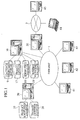
- Fig. 1 is a system configuration view of a product
development management system according to a first embodiment
of the present invention.
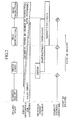
- Fig. 2 is a diagram illustrating a relation between a
dealing stage and a development stage in the product development
management system according to the first embodiment of the
present invention.
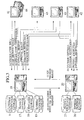
- Fig. 3 is a diagram illustrating a relation between each
server and each terminal in the product development management
system according to the first embodiment of the present
invention.
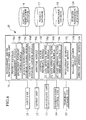
- Fig. 4 is a function block diagram of a management server
for accomplishing functions of the product development
management system according to the first embodiment of the
present invention.
- Fig. 5 is a diagram illustrating concrete data items of
a product database according to the first embodiment of the
present invention.
- Fig. 6 is a diagram illustrating concrete data items of
a verification function database according to the first
embodiment of the present invention.
- Fig. 7 is a diagram illustrating concrete data items of
a knowledge database according to the first embodiment of the
present invention.
- Fig. 8 is a diagram illustrating concrete data items of
a business management database according to the first embodiment
of the present invention.
- Fig. 9 is a diagram illustrating an example of a company
standard model according to the first embodiment of the present
invention.
- Figs. 10A and 10B are diagrams illustrating data items
registered with the product database and the function
verification database in each step of the flowchart of the company
standard model according to the first embodiment of the present
invention.
- Fig. 11 is a flowchart in an approval module of the
management server according to the first embodiment of the
present invention.
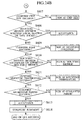
- Fig. 12 is a flowchart illustrating processings of a P1
gate approval factor reference module of the management server
according to the first embodiment of the present invention.
- Fig. 13 is a flowchart illustrating processings of a P2
gate approval factor reference module of the management server
according to the first embodiment of the present invention.
- Fig. 14 is a flowchart illustrating processings of a P3
gate approval factor reference module of the management server
according to the first embodiment of the present invention.
- Fig. 15 is a diagram illustrating an example of a business
unit standard model in the case where the products are ASIC.
- Fig. 16 is a flowchart of the P1 gate approval factor
reference module in step S267 of Fig. 15 in the case where the
products are ASIC.
- Fig. 17 is a diagram illustrating an example of a business
unit standard model in the case where the products are CISC or
ROM.
- Fig. 18 is a decision processing flowchart for a P1 gate
in step S306 of Fig. 17 in the case where the products are CISC
or ROM.
- Fig. 19 is a function block diagram illustration the
details of an IQS decision server 20 in a product reliability
decision system according to a second embodiment of the present
invention.
- Fig. 20 is a schematic view concretely illustrating an
input/output and decision method of the IQS decision server
according to the second embodiment of the present invention.
- Fig. 21 is a diagram for explaining a reliability decision
and a factor technology performed in each manufacturing process
of semiconductor products in an IQS decision according to the
second embodiment of the present invention.
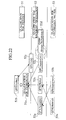
- Fig. 22 is a diagram illustrating a relation between a
technology qualification and a factor technology qualification
in each manufacturing process in the IQS decision according to
the second embodiment of the present invention.
- Fig. 23 is a diagram illustrating a constitution of a
product knowledge database and a decision order of an IQS decision
module according to the second embodiment of the present
invention.
- Figs. 24A and 24B are flowcharts of a QFA decision by the
IQS decision module according to the second embodiment of the
present invention.
-
DETAILED DESCRIPTION OF THE PREFERRED EMBODIMENTS
-
Next, embodiments of the present invention will be
described with reference to the accompanying drawings. In the
following descriptions, the same and similar constituent
components are denoted by the same and similar reference numbers.
Herein, as an example of a manufactured product, an example of
an embodiment of a product development management system, a
product development management method, a product reliability
decision system and a product reliability decision method as to
a semiconductor product will be described.
-
Generally and as it is conventional in the representation
of system, it will be appreciated that the various drawings are
not drawn to scale from one figure to another nor inside a given
figure.
-
In the following descriptions, numerous specific details
are set fourth such as specific input data and output data, etc.
to provide a thorough understanding of the present invention.
However, it will be obvious to those skilled in the art that the
present invention may be practiced without such specific details.
In other instances, well-known systems have been shown in block
diagram form in order not to obscure the present invention in
unnecessary detail.
-
As shown in Fig. 2, dealings in the product development
management system according to the embodiment of the present
invention advances to a mass production stage via a business
inquiry stage, an order entry stage and a trial manufacture stage.
-
Herein, in accordance with the stage of the dealings, a
person in charge of talking with customers changes. To be
concrete, a salesperson who has not so much technical knowledge
is a person in charge of the order entry stage. As the stage of
the dealings advances, a specialized technical knowledge becomes
necessary gradually. In such a case, a technical expert in charge
of contacting with customers is a person responsible for
customers.
-
In response to the dealing stage and the instruction of
the person responsible for customers, a technical expert in
charge of operations changes. Specifically, a technical expert
in charge of a design in the stage from an a business inquiry
to specification determination, a technical expert in charge of
manufacturing technology in the stage at which the design is
completed, and a technical expert, who performs the product
evaluation, in the stage the manufacturing technology is decided.
In addition, the operations are not conducted based on the
specification provisionally determined, and the change and
review of the specification are performed at any time.
Accordingly, a plurality of operators operates in parallel.
-
Furthermore, in accordance with these dealing stages, as
a company decision, an approver having power gives the
responsible approval indicating whether the operations can be
advanced to a next stage in the P1 to P3 gates. For example, in
the dealing stage advances from the business inquiry stage enters
the order entry stage, the approvers gives the approval. Upon
receipt of this approval, the dealings enter the order entry stage,
and the manufacturing technology development is performed. By
the approval of the approver in the order entry stage, the
technical expert in charge of the operations is instructed. Thus,
the approver can give the quick and appropriate instruction, and
the technical expert in charge of the operations can perform the
development smoothly.
(First Embodiment)
(System Configuration)
-
As shown in Fig. 1, a product development management system
according to a first embodiment of the present invention is
constituted by a management server 10, an IQS decision server
20, a gateway server 30, a person responsible-for-customer
terminal 41, a technical expert terminal 42 and an approver
terminal 43. These terminals are coupled to each other through
an intra-LAN (Intranet) 1.
-
Moreover, the gateway server 30 is coupled to the Internet
2, and coupled to a person-responsible-for-customer portable
terminal 44 and a customer terminal 45 through the Internet 2.
The person responsible for customers portable terminal 44 and
the customer terminal 45 are coupled to the intra-LAN (Intranet)
1 through access points such as the gateway server 30, the
Internet 2 and a provider. The person responsible-for-customer
portable terminal 44 and the customer terminal 45 may be coupled
to the in-company LAN 2 through the gateway server 30 without
intervening the Internet 2 therebetween.
-
The management server 10 is a server for controlling the
product development management. To the management server 10,
coupled are a function verification database 9 describing a test
method which is previously set in accordance with the
specification and the delivery date of a product for which an
order was accepted, and information relating to a circuit
verification and the like; a product database 17 storing
information relating to the ordered product; a knowledge database
18 accumulating information such as a development history, a
technical expert information and a market information as
knowledge; and a business management database 19 storing
allocations of resources, and the progress of the development
of manufacturing processes corresponding to a company standard
model or a business unit standard model.
-
Furthermore, the IQS decision server 20 is a server for
deciding the reliability of the product newly developed, based
on existing technical information. To the IQS decision server
20, coupled are a product knowledge database 27 storing the
existing technical information and a decision criterion database
28 storing a reliability decision criterion. The gateway server
30 acts as an intermediary so that the person
responsible-for-customer portable terminal 44 and the customer
terminal 45 can be coupled to the intra-LAN (Intranet) 1, and
a satisfactory security system such as a terminal approval and
fire wall is constructed therein. In addition, when the terminal
is certified, the gateway server 30 may possess a call back
function.
-
The person responsible-for-customer terminal 41, the
technical expert terminal 42, the approver terminal 43, the
person responsible-for-customer portable terminal 44 and the
customer terminal 45 are information appliances such as general
personal computers, PDA, portable telephones. Furthermore, this
management system can be used more extensive environments on the
Internet.
-
Herein, the function verification database 9, the product
database 17, the knowledge database 18, the business management
database 19, the product knowledge database 27 and the decision
criterion database 28 are recorded onto a recording medium such
as an external memory device of computers, a semiconductor memory,
a magnetic disc, an optical disc, a magneto-optical disc and a
magnetic tape. Herein, to be concrete, the recording medium
includes a floppy disc, a hard disc, a CD-ROM, a MO disc, a cassette
tape, an open reel and the like.
-
Fig. 3 is a diagram illustrating a relation between each
server and each terminal in the product development management
system.
- (A) The specification provisionally determined by the
negotiations between the customer and the responsible person of
the manufacturing enterprise for the customer is input to the
management server 10 by use of the person
responsible-for-customer terminal 41 or the person
responsible-for-customer portable terminal 44 (a). Upon receipt
of this information, the management server 10 inputs the
specification to the IQS decision server 20, and request the IQS
decision server 20 to execute the IQS decision (b). The
management server 10 receives the IQS decision result from the
IQS decision server 20 (c), and transmits the IQS decision result
to the person responsible-for-customer terminal 41 or the person
responsible-for-customer portable terminal 44 (d).
- (B) If the decision that the acceptance of the order for
the product is to be permitted was done based on the provisional
specification, the management server 10 inquires more detailed
specification confirmation from the customer terminal 45 (e).
- (C) Depending on the progress of the dealings, the
management server 10 requests the approval from the approver 43
at a timing determined by the company standard model or the
business unit standard model (f). In response to the request,
the approver terminal 43 transmits the approval result to the
management server 10 (g). At this time, the approver terminal
43 can refer to the function verification database 9, the product
database 7, the knowledge database 18 and the business management
database 19 of the management server 10 in accordance with
necessity. Moreover, the approver terminal 43 may request of the
IQS decision server 20 to offer the IQS decision result to the
approver terminal 43, thus acquiring the IQS decision result.
In addition, the approver terminal 43 may register or update,
in the IQS decision server 20, the decision criterion for
performing the IQS decision (h).
- (D) The management server 10 offers the operation
instruction (i), and the technical expert terminal 42 registers
the progress of the manufacturing processes with the management
server 10, and receives the subsequent operation instruction from
the management server 10 (j). Furthermore, the technical expert
terminal 42 allows the IQS decision server 20 to register a past
manufacture record of the product with the product knowledge
database 27 (k).
-
-
As described above, the function verification database 9,
the product database 17, the knowledge database 18, the business
management database 19, the product knowledge database 27 and
the decision criterion database 28 are updated to the newest
information by the person responsible-for-customer terminal 41,
the technical expert terminal 42, the approver terminal 43, the
person responsible-for-customer portable terminal 44 and the
customer terminal 45 at any time.
(Management Server)
-
As shown in Fig. 4, the management server 10 of the product
development management system according to the first embodiment
of the present invention is constituted by an input unit 11, an
output unit 12, an input/output unit 13, a communication control
unit 14, a temporary storage unit 15, a management server
processing control unit 16, the function verification database
9, the product database 17, the knowledge database 18 and the
business management database 19.
-
The input unit 11 is constituted by a keyboard, a mouse
and the like, and the output unit 12 is constituted by a display
device such as a liquid display and a CRT display, and a printing
apparatus such as an ink-jet printer and a laser printer, and
the like. The input/output unit 13 is an interface with an
external device, and the external device is a storage device such
as a CD-ROM, a MO and a ZIP, and the like. The communication
control unit 14 serves as an interface for coupling to the
intra-LAN (Intranet) 1. A ROM and a RAM are installed in the
temporary storage unit 15. The ROM functions as a program memory
and the like storing a program executed in the management server
processing unit 16, and the RAM functions a data memory and the
like, which stores data and the like used during the program
execution processing in the management server processing unit
16 and is used as an operation area.
-
The management server processing control unit 16 is a
central processing control unit composed of a product database
control module 16a, a knowledge database control module 16b, a
business management database control module 16c, a function
verification database control module 16d, an approval module 16e,
an approval factor reference module 16f, a development business
control module 16j, a reliability decision module 16k and an
approver approval module 161 and the like. The product database
control module 16a, the knowledge database control module 16b,
the business management database module 16c, and the function
verification database control module 16d control the product
database 17, the knowledge database 18, the business management
database 19 and the function verification database 9,
respectively, and process the reference and the update request
from the person responsible-for-customer terminal 41, the
technical expert terminal 42 and the approver terminal 43.
-
The approval module 16e is a module performs an approval
for the dealings and the development business management recorded
in the business management database 19 at timings determined by
the company standard model or the business unit standard model.
The company standard model and the business standard model will
be described later in detail.
-
The approval factor reference module 16f refers to the
function verification database 9, the product database 17, the
knowledge database 18 and the business management database 19
in response to the request of the approver terminal 43, and
further can request of the IQS decision server 20 to perform the
IQS decision. The approval factor reference module 16f includes
a P1 gate approval factor reference module 16g, a P2 gate approval
factor reference module 16h and a P3 gate approval factor
reference module 16i in accordance with a P1 gate to P3 gate,
which are determined by the company standard model or the business
unit standard model. In the P1 gate, the processing is executed
based on the P1 gate approval factor reference module 16g.
-
The development business control module 16j is a module
which monitors the business management database 19 and issues
an instruction to the person responsible-for-customer terminal
41, the technical expert terminal 42 and the approval terminal
43 and the like at timings determined by the company standard
model or the business unit standard model.
-
The reliability decision module 16k is a module which
request the IQS decision server 20 to execute the IQS decision.
To be concrete, the reliability decision module 16k is a module
which transmits necessary conditions for the IQS decision to the
IQS decision server 20, receives the decision result transmitted
by the IQS decision server 20, allows the IQS decision server
20 to refer to the product knowledge database 27 and the product
database 17 to execute the IQS decision, receives the result,
and transmits the decision result to terminals which request the
IQS decision.
-
The approver approval module 161 is a module which requests
the approver terminal 43 to decide whether an approval result
obtained by the approval module 16e is approved or not and
receives the decision result by the approval terminal 43.
Specifically, the approval result is an instruction telling
"Procedure May Advance to Next Development Step", "Reexamine
Specification", and the like. Furthermore, detailed information
offered from the person in charge can be acquired. Furthermore,
it is possible to transmit the instruction of the approver as
a concrete instruction relating to the development in accordance
with the company standard model or the business unit standard
model.
-
As shown in Fig. 5, the
product database 17 is constituted
by the following items.
- (A) Specification Information 17a: Product Name, Chip Size,
Body Size, External Member, Mounting Method and the like
- (B) Product Verification Result 17b: Rising-Up Data,
Electrical Characteristic, Reliability and the like
-
-
In the specification information 17a, the information of
the specification determined by business inquiry with the
customer is stored. In the product verification result 17b, the
result of the verification for the product in each of the
respective manufacturing processes is stored.
-
As shown in Fig. 6, the
function verification database 9
is constituted by the following items.
- (A) Circuit Verification 9a: Logic Circuit, Simulation
Result, Layout Data Verification Result, Timing Margin
Verification Result and the like
- (B) Tester 9b: Model of Tester used, Test Program,
Electrical Margin and the like
-
-
As shown in Fig. 7, the
knowledge database 18 is constituted
by the following items.
- (A) Development History Keyword Information 18a:
Classification of Technology Development Stage (e.g., Design,
Evaluation, Process), Result (e.g., Technical Report, Patent,
Qualification), Development Time and the like.
- (B) Technical Expert Map 18b: Employee ID, Name,
Organization Group (e.g., Sales Technique, Design, Application
Technology, Manufacturing Technology, Factory Technology),
Skill Level, Position (e.g., Entrance Date, Official Position,
Carrier in present division), Carrier Information (e.g.,
Occupation for Analog Cell, Occupation for 25 10-6m Process
Development, Occupation for TBGA Package Development, Occupation
For ISO Inspector Qualification, Information Processing
Qualification). Herein, the skill level is judged according to,
for example, an application technology section, a design section,
a product technology section and the like. In the application
technology section, enumerated are the skill level including
"Capability of Evaluation Operation", and "Capability of
Preparation of Test Program" and the like. In the design section,
enumerated are the skill level including "Capability of Layout",
and "Capability of Simulation" and the like. In the product
technology section, enumerated are the skill level including
"Capability of Defective Analysis", and "Capability of Business
Enterprise and Line Planning" and the like.
- (C) External General Information 18c: General Technique,
Market Information and the like.
-
-
As shown in Fig. 8, the
business management database 19
is constituted by the following items.
- (A) Resource Allocation Information 19a: Step (Task),
Resource Name, Period, Operation Time, and Approver Name and the
like. Information of the Whole Resource Relating to the Product
- (B) Progress Management Information 19b: Operation
Progress. When, Who Which Operation Is Executed?
-
-
Data structure of the product database 17, the verification
function database 9, the knowledge database 18 and the business
management database 19, which are shown in Figs. 5 to 8, may be
stored in a storage medium from which a computer is capable of
reading out the data. This storage medium is read in by a computer
system to be stored in the temporary storage unit 15. This data
structure may be executed by the management server processing
control unit 16. Herein, the storage medium includes for example,
a medium capable of recording a program such as a magnetic disc,
an optical disc, a magneto-optical disc and a magnetic tape. An
external memory unit of a computer is included in the recording
medium which is described herein.
(Company Standard Model)
-
Regarding the definition of an approver in an organization,
the timing and the frequency of judgment, the items that are a
judgment object, a judgment method, a full specification model
is defined as the company standard model (common rule in
manufacturing enterprise). In addition, the management model
of the product development is classified into the product
development and the factor technology development and modeled.
The factor technology is further classified, and the current
information can be uniformly obtained under circumstances
decided based on the ownership of the specialized organization.
-
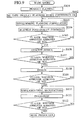
Fig. 9 is an example of the company standard model.
- (A) First, in step S101, product planning is performed.
- (B) Next, in step S102, a product planning study conference
is performed (M1 gate). Herein, the product planning is
determined.
- (C) In step S103, the formulation of the development
planning is performed. To be concrete, the specification
confirmation and the planning study concerning a design,
pre-steps, after-steps and a manufacturing line are performed.
Herein, the specification of the product is provisionally
determined. Next, in step S104, a business potentiality judgment
is performed. Herein, a cost estimation is performed, and the
judgment of the business potentiality is performed in combination
with the market information to consideration.
- (D) Based in the result obtained in steps S103 and S104,
in step S105, the approver performs the judgment of the
development (P1 gate). When the approval is not obtained, the
development planning formulation in step S103 and the business
potentiality judgment in step S104 are performed again. When the
approval is obtained, the procedure advances to step S106.
- (E) In step S106, a concept design is performed. In the
concept design, the specification determined in the business
inquiry with the customer is fixed for an in-company
specification. Herein, the specification of the product is
settled.
- (F) Based on the result obtained in step S106, in step S107,
the approver performs a qualification grade judgment (P1' gate).
When the approval cannot be obtained, the concept design of step
S106 is performed again. When the approval is obtained, the
procedure advances to step S108.
- (G) In step S108, the design is performed. The process
simulation and the device simulation are performed additionally
if necessary. Herein, the design is executed, and the
verification of the design result is performed. In addition, the
development planning and the business potentiality are further
reexamined.
- (H) Based on the result obtained in step S108, in step S109,
the approver performs a mask preparation judgment (P2 gate).
When the approval is not obtained, the design is performed in
step S108 again. When the approval is obtained, the procedure
advances to step S110.
- (I) In step S110, the detailed simulation and the trial
manufacturing based on the detailed simulation are performed.
Moreover, as to the result obtained by the trial manufacturing
in step S110, the evaluation such as the product verification
and the characteristic evaluation is performed in step S111.
Moreover, based on the evaluation result, the preparation of the
manufacturing line and the reexamination of the business
potentiality are performed.
- (J) Based on the evaluation obtained in step S111, the
approver performs the mass production judgment in step S112.
When the approval is not obtained, the simulation and the trial
manufacturing in step S110 and the evaluation in step S111 are
again performed. When the approval is obtained, the procedure
enters the mass production system.
-
-
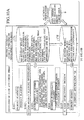
Figs. 10A and 10B are diagrams illustrating data items
registered with the
product database 17 and the
function
verification database 9 in each step of the flowchart of the
company standard model.
- (A) In the development planning formulation step of step S103
and the business potentiality judgment step of step S104,
information is registered with the product database 17c, which
includes the IQS decision result, the knowledge information, the
product information, the business management information, the
demand specification, the design specification, the package
specification, the novelty, the reliability, the resources, the
trial manufacturing line, the equipment, the chip size, a CD (Cost
Down) measure, cost information, ROI (Return on Investment) and
the like. Moreover, based on a specification determined herein,
a test specification concerning the test method, a test procedure,
circuit verification method and the like is prepared, in
accordance with an the desired accuracy of the product, and
registered with the function verification database 9.
- (B) In the concept design step of step S106, information
is registered with the product database 17d, which includes the
IQS decision result, a hardware design specification (RTL
(Register Transfer Level)), the demand specification/system
specification conformance and the like. Herein, the function
verification database 9 is updated as to the determined
specification.
- (C) In the design step of step S108, information is
registered with the product database 17e, which includes the IQS
decision result, a design FMEA (Failure Mode & Effects Analysis),
the design verification result, the development planning review,
the business potentiality review and the like.
- (D) In the sample trial manufacturing processes of step
S110 and the evaluation step of step S111, information is
registered with the product database 17f, which includes the IQS
decision result, customer specification conformance, the
characteristic (margin, yield and the like), the test program,
an IQC (Reliability Decision Of Function Block Included In the
Product), an IQC-QFP decision, MSS (electrical characteristic
specification for factory transfer) the business potentiality
review and the like. Herein, the QFP (Qualification For the
Product) means the product qualification in the IQS decision.
-
-
As described above, the verification data is registered
with the function verification database 9, and the review is
performed.
-
Furthermore, data shown in the product databases 17c to
17f are stored in the product database 17 depending on the
business progress. These data are respectively stored
separately in such a manner that the data before the manufacturing
is stored in the specification information 17a and the
verification result of the completed product is stored in the
product verification result 17b. Furthermore, the result
obtained by the IQS decision is registered with the product
databases 17c to 17f. The IQS decision registered with the
product databases 17c to 17f is results obtained by the
reliability decision while supposing the product after
completion based on the input of the data which is determined
or provisionally determined for each gate in accordance with the
manufacturing processes. Specifically, as the development flow
approaches more closely to the finish, the determined input data
becomes much. Accordingly, as the development flow approaches
more closely to the finish, the reliability of the IQS decision
result becomes higher.
(Approver Approval Method by Approver Approval Module)
-
An approval module and an approval method of the company
standard model will be described by use of Fig. 11.
-
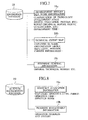
Fig. 11 is a flowchart in the
approver approval module 161.
- (A) When the approval of the approver becomes necessary,
an approval request notification is first transmitted to the
approver in step S151.
- (B) In step S152, when the approver is not enrolled or when
a reply mail is not sent from the approver after passage of a
predetermined time, it is inquired in step S153 whether the
decision from the approval can be waited. When it is possible
to wait the decision by the approver, the decision by the approver
is waited. If it is impossible to wait for the decision from the
approver, contacted the approver by the phone or the like, and
the content of an instruction by the approver is acquired in step
S154.
- (C) In accordance with the instruction content acquired
in step S154, any of the following processings is performed. The
instruction content from the approver is registered by proxy in
the in step S155. The instruction content of an agent designated
by the approver is registered by proxy in step S156. When it is
impossible to contact the approver, the instruction content of
an underagent previously determined is registered by proxy in
step S157.
- (D) In step S158, the approver refers to factors necessary
for the approval by the approval factor reference module 16f.
In step S159, the approver decides whether the approval is
permitted or not. When the approval is permitted, the approver
issues the instruction for the operations in the subsequent step
in step S160. When the approval is not permitted, the approver
issues an instruction in step S161, and performs a readjustment.
Then, the approver performs the approval operation again.
-
(Approval Factor Reference Method by Approval Factor Reference
Module)
-
Next, an approval factor reference method by an approval
factor reference module will be described by use of Figs. 12 to
14.
-
Figs. 12 to 14 are flowcharts by the approval factor
reference module 16f.
-
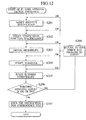
Fig. 12 is a flowchart illustrating processings of the P1
gate approval
factor reference module 16g.
- (A) In the P1 gate, in step S201, the specification
information 17a of the product database 17 is referred to, and
the product specification is verified. Moreover, in step S202,
the function verification database 9 is referred to, and the
method of the function verification designed based on the
specification information 17a and the delivery date is verified
with reference to the function verification database 9.
- (B) Furthermore, in step S203, the reliability of the
product manufactured by the present specification is judged by
the reliability decision module 16k in step S203.
- (C) Furthermore, in step S204, the verification of the
schedule is performed with reference to the business management
database 19. Herein, the verification judgement from the aspect
such as man, a line and a commodity is performed.
- (D) Moreover, the in step S205, the knowledge database 10
and the like are referred to, and the business potentiality is
judged.
- (E) In step S206, the synthetic judgment as the P1 gate
is performed based on the results of the verification and the
decision which were performed in steps S201 to S205. When it is
decided that the approval is permitted, an instruction to move
the procedure of the design step is given in step S207. In
addition, when the approval is not permitted, an instruction for
review is issued in step S208. In step S208, the procedure returns
to any of steps S201 to S205 which have problems.
-
-
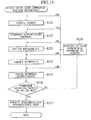
Fig. 13 is a flowchart illustrating the processings of the
P2 gate approval
factor reference module 16h.
- (A) In the P2 gate, the product database 17 is referred
to in step S221, and the verification of the design is performed.
Moreover, in step S222, the function verification database 9 is
referred to, and it is confirmed whether the designed product
was designed according to the test specification. Moreover, it
is confirmed whether the verification method is correct.
- (B) Furthermore, in step S223, the reliability of the
product manufactured by the present specification is judged based
on the design performed by the reliability decision module 16k
until the present step.
- (C) In step S224, the business management database 19 is
referred to, and the verification of the schedule is performed.
Herein, the verification judgment from the aspect such as man,
a line and a commodity is performed.
- (D) In step S225, the knowledge database 18 and the like
are referred to, and the business potentiality is judged.
- (E) In step S226, the synthetic judgment as the P2 gate
is performed based on the results of the verification and the
decision which were performed in steps S221 to S225. When it is
decided that the approval is permitted, an instruction to move
the procedure to the simulation and trial manufacturing process
is given in step S227. In addition, when it is decided that the
approval is not permitted, an instruction for review is issued
in step S228. In step S228, the procedure returns to any of steps
S221 to S225 which have problems.
-
-
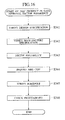
Fig. 14 is a flowchart illustrating the processings of the
P3 gate approval
factor reference module 16i.
- (A) In the P3 gate, the trial product is first evaluated
with reference to the product database 17 in step S241. Moreover,
in step S242, the function verification database 9 is referred
to, and it is confirmed whether the trial product was prepared
according to the test specification. Moreover, it is confirmed
whether the verification method is correct.
- (B) Furthermore, in step S244, the reliability of the
products is judged by the reliability decision module 16k, which
are obtained by mass-manufacturing the trial product, which is
by the mass production by the present step.
- (C) In step S245, the business potentiality is judged with
reference to the knowledge database 18 and the like.
- (D) In step S246, the synthetic judgment as the P3 gate
is performed based on the results of the verification and the
decision which were performed in steps S241 to S245. When it
is decided that the approval is permitted, an instruction to move
the procedure to the mass production is issued to the factory
in step S247. In addition, when it is decided that the approval
is not permitted, an instruction for review is issued in step
S248. In step S248, the procedure returns to any of steps S241
to S245 which have problems.
-
-
The order of the processing contents of the company
standard model is determined by more optimizing the business unit
standard model in accordance the characteristic of the developed
product that is an object. Moreover, the company standard model
itself is brushed up by an appropriate procedure in accordance
with the change of the market and the advance of the technology
and the like.
(Business Unit Standard Model)
-
The decision model is defined for each business section
of the organization while subtracting unnecessary decision
contents for each characteristic of the product group to be
developed. After the approval is given to a reasonable section,
the decision model is defined as the business unit standard model
(the common rule in the product section).
-
The business unit standard model is obtained by allowing
the company standard to correspond to the feature of the product.
-
An example of the business unit standard model in which
the company standard model is applied to the semiconductor
products is illustrated by use of Figs. 15 to 18.
-
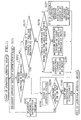
Fig. 15 is an example of the business unit standard model
in the case where the product is an ASIC (Application Specific
Integrated Circuit). Since the ASIC is a custom product for each
of which the customer determines a specification, the judgment
of the order entry is a key.
- (A) First, in step S261, the business inquiry with the
customer is performed. In step S262, the product planning for
the ASIC product is performed. Moreover, in step S263, the
negotiation is carried out in the merchandize planning conference,
and the specification is investigated.
- (B) On the other hand, in step S264, the development
planning is formulated in the manufacturing enterprise, and the
judgment of the business potentiality is performed in step S265.
These steps S261 to S265 are judged with interference with each
other.
- (C) Next, the specification is determined in step S266.
In step S267, based on this specification, the approver decides
whether the next logical design is to be executed, and makes the
approval. When the approval is not permitted, a review is
performed in the merchandize planning in step S262 and in the
development planning formulation in step S264.
- (D) When the approval is permitted in step S267, the logical
design is performed in step S268, and the wiring design is
performed in step S269.
- (E) Based on the design performed in steps S268 and S269,
the approver decides whether a next simulation and trial
manufacture are to be performed. When the approval is not
permitted, a review is performed in the logical design in step
S268 and in the wiring design in step S269.
- (F) When the approval is permitted in step S270, the
simulation and the trial manufacture are performed in step S271,
and the evaluation concerning the simulation and the trial
manufacture is performed in step S272.
- (G) Based on the evaluation performed in step S272, the
approver decides in step S273 whether the mass production it to
be performed or not. When the approval is not permitted, the
review of the simulation and the trial manufacture is performed
in step S271. When the approval is permitted, an instruction of
the mass production is issued to the factory.
-
-
Fig. 16 is a flowchart of the P1 gate approval
factor
reference module 16g in step S267 of Fig. 15.
- (A) First, in step S341, the specification of the design
is verified with reference to the specification information 17a
of the product database 17. Moreover, in step S342, the
manufacture specification of the ASIC product is verified with
reference to the function verification database 9.
- (B) Moreover, in step S343, the reliability of the ASIC
product manufactured according to the present specification is
decided by the reliability decision module 16k.
- (C) Moreover, in step S344, NRE (Non-Recurring Express),
which is a development fee paid for the ASIC vendor, and TOV (Turn
Out of Value), which is a manufacturing cost, are inquired.
- (D) Moreover, in Step S345, schedule verification is
performed with reference to the business management database 19.
- (E) Moreover, in step S346, checking of profitability is
performed with reference to the knowledge database 18 and the
like.
-
-
Fig. 17 is an example of the business unit standard model
in the case where the product is CISCROM (Complex Instruction
Set Computer Read Only Memory). The procedures shown in Fig. 17
has a feature in that steps S301 to S303 and S304 and S306 are
in parallel performed in a short time as to a product which
realizes a specification desired by customers by combinations
of existing ROM circuits.
- (A) First, in step S301, the business inquiry with the
customer is performed. The product planning for the CISC or ROM
product is performed in step S302. In step S303, the negotiation
is carried out in the merchandize planning conference, and the
specification is investigated.
- (B) On the other hand, in step S304, the person responsible
for customer inputs information obtained in the business inquiry
with the customer, and the specification is provisionally
determined in step S305. In step S306, the approver decides
whether the specification provisionally determined in step S305
is approved or not. When the specification is not approved, the
procedure returns to step S304, and the specification is examined.
Then, the person responsible for customers inputs a new
specification.
- (C) Next, in step S307, the customer inputs detailed
information concerning usage conditions such as the desired
delivery date and the usage field, and the final specification
is determined in step S308.
- (D) In step S309, the approver decides whether the
specification determined in Step S308 is approved or not. When
the specification is not approved, the customer again inputs
detailed information concerning usage conditions such as the
desired delivery date and the usage field in step S307.
- (E) In step S309, when the approver approves the
specification, ROM is registered in step S310, and Data is
confirmed in step S311.
- (F) The approver decides in step S312 whether Data
confirmed in step S311 is approved. When the specification is
not approved, the ROM is registered again in step S310.
- (G) When the approver approves the specification in step
S312, the function evaluation is, in step S313, performed for
ES (Engineer Sample) prepared by a trial manufacture, which is
a sample for a function confirmation.
- (H) Upon receipt of the ES function evaluation result in
step S314, the approver decides in step S315 whether the ES is
approved. When the ES is not approved, the procedure returns to
step S313, and the trial manufacture is performed again. When
the approver approves the ES, an instruction of the mass
production is issued to the factory.
-
-
Fig. 18 is a flowchart of the P1 gate approval
factor
reference module 16g in step S 306 of Fig. 17.
- (A) First, in step S381, the inquiry for TOV is performed,
and checking of profitability is performed in step S382.
- (B) Moreover, the specification information 17a of the
product database 17 is referred to. The verification of the
product specification is performed in step S383, and the
confirmation of the usage conditions is performed in step S384.
- (C) Moreover, in step S385, the reliability of the CISC
or ROM product manufactured by the present specification is
decided by the reliability decision module 16k.
- (D) Moveover, in step S386, the verification of the
schedule is performed with reference to the business management
database 19.
-
-
According to the first embodiment of the present invention,
a full-spec model is defined as the company standard model (the
common rule in the manufacturing enterprise) as to the definition
of the approver in the organization, the decision timing and
frequency, the items to be judged, and the judgment method. In
addition, the management model of the product development is
classified into the product development and the factor technology
development, and the factor technology is further classified.
The newest information can be uniformly obtained under
environments determined based on the ownership of each
specialized organization.
-
Moreover, the decision model is defined for each business
section of the organization while subtracting unnecessary
decision contents for each characteristic of the product group
to be developed. After the approval is given to a reasonable
section, the decision model is defined as the business unit
standard model (the common rule in the product section) . A common
platform covering all of the product development businesses and
factor technology businesses is mounted, which includes the
organization, the operation, the definition of the product
development flow, various tools on the computer, and the IT system
defining the relation of various common databases and the
arrangement.
-
Furthermore, the review is performed as to the factors
including the market change, the technology trend, the corporate
strategy, the global standard transition, the problem
occurrence/solution knowledge, and the resource management
technique and the like. The real time improvement and the
execution are performed. Moreover, the approver is defined, who
monitors the total manufacturing processes of each product from
the start of the development to the finish with responsibility
while taking a broad view of things. The most suitable report
and the support for decision are given to the approver.
-
According to the first embodiment of the present invention,
the product development management system and the product
development management method can be provided, which manage all
bits of the factor information necessary for the plural decisions
on the database, perform the optimum and fastest decision by use
of the database in which the newest information is stored, and
can provide information with a certain quality.
-
Furthermore, all bits of the factor information necessary
for the plural decisions are unitary managed on the database,
and the optimum report and decision request are performed
depending on the system, whereby it is possible to perform the
optimum and fastest decision.
-
The rule relating to the provision of the information of
the constant specification and the method thereof is defined for
each organization dispersing for the business activity, and made
use of by the product development management system, whereby the
provision of the newest information with a certain quality can
be secured.
-
Based on the product development model, the factor
technology information necessary for the decision is collected
from each specialized organization at a stage of starting the
development based on the product development model, and shared
by a person responsible for each manufacturing process.
Therefore, it is possible to formulate an exact development
planning such as a problem occurrence forecast in the future,
which includes the factor technology development schedule.
-
Furthermore, by setting the approver managing with a
responsibility during all of the development steps, it is
possible to perform the product development situation
observation such as the arrangement of the problem occurrence
forecast, the resource management and the factor technology
development schedule while taking a broad view of things. It is
also possible to perform the most suitable report for the approver
and the decision support.
-
Furthermore, by providing information useful for the
decision, which relates to a responsible person, to the approver
effectively and securely, the information including, for example,
newest business information such as sensitive current business
information such as customer sense, real time technology
development situations, and a trend of law revisions, it is
possible to perform the optimum and fastest decision.
-
The motivation and owner consciousness at each specialized
organization are enhanced by the classified information and
decision model, and a suitable delegation of power is performed.
At the same time, the proposal and decision and the like of the
responsible person is collected and provided as important
information. Thus, a quality of the decision is enhanced.
-
Initial items of the last time of the whole enterprise and
all resources are unitary managed, and the order of priority as
enterprises for the development is decided, whereby the optimum
and fastest decision can be performed.
-
The customer can judge that the uniform performance is
assured in terms of supplied service, product quality and
validity of cost, speed, and the like, therefore a sufficient
reliability is obtained.
(Second Embodiment)
(IQS Decision Server)
-
An embodiment of a product reliability decision system
according to a second embodiment of the present invention will
be described.
-
An IQS decision is performed in the following manner. The
product after manufacturing is assumed for each manufacturing
process by referring to a product database 17 and a product
knowledge database 27, and it is decided whether the product
satisfies predetermined conditions or not.
-
Fig. 19 is a function block diagram illustrating the
details of an IQS decision server 20 in the product reliability
decision system according to the second embodiment of the present
invention. The IQS decision server 20 shown in Fig. 19 is
identical to the IQS decision server 20 in Fig. 1.
-
The IQS decision server 20 is constituted by an input unit
21, an output unit 22, an input/output unit 23, a communication
control unit 24, a temporary storage unit 25, an IQS decision
server processing control unit 26, a product knowledge database
27 and a decision criterion database 28.
-
The input unit 21 is constituted by a keyboard, a mouse
and the like. The output unit 22 is constituted by a display
device such as a liquid display and a CRT display, and a printing
apparatus such as an ink-jet printer and a laser printer, and
the like. The input/output unit 23 is an interface with an
external device, and the external device is a storage device such
as a CD-ROM, a MO, a ZIP, and the like. The communication control
unit 24 serves as an interface for coupling to the in-company
LAN. A ROM and a RAM are installed in the temporary storage unit
25. The ROM functions as a program memory and the like storing
a program executed in the management server processing unit 26,
and the RAM functions as a data memory and the like, which stores
data and the like used during the program execution processing
and is used as an operation area in the management server
processing unit 26.
-
The product knowledge database 27 is a database in which
existing technology information is stored, and the decision
criterion database 28 is a database which stores a decision
criterion for reliability.
-
The IQS decision server processing control unit 26 is a
central processing control unit composed of a product knowledge
database register module 26a, an IQS decision module 26b and a
decision criterion database update module 26c and the like.
-
The knowledge decision database register module 26a is a
module for accepting registers of the past record, the
specification and the usage conditions and the like of the
manufactured products to the product knowledge database 27. Note
that the past record, the specification and the usage conditions
of the manufactured products are qualified. The IQS decision
module 26b is a module which refers to the product knowledge
database 27, the product database 17 and the decision criterion
database 28 and makes the IQS decision when the IQS decision is
requested from a person responsible-for-customer terminal 41,
a technical expert terminal 42 and an approval terminal 43. The
IQS decision module 26b refers to a product verification result
17b of the product database 17 as to the characteristic confirmed
in the already manufactured step, and then forecasts the
characteristic based on the specification of the product to be
manufactured in the manufacturing process, thus deciding the
reliability of the product to be finally manufactured. The
decision criterion database update module 26c is a module for
updating the criterion of the decision recorded in the decision
criterion database 28.
-
Fig. 20 is a schematic view of a concrete input/output and
decision method of the IQS decision server 20. For example, when
product order entry information is input from the person
responsible-for-customer terminal 41 to the IQS decision server
20, the IQS decision server 20 refers to the product knowledge
database 27, and acquires an IQS result. This IQS result is output
to the person responsible-for-customer terminal 41 as an IQS
decision result. At this time, the final IQS decision result and
the detailed decision result are displayed.
(Technology Qualification and Factor Technology Qualification
of Semiconductor Product)
-
Herein, as an example of the manufacturing product,
semiconductor products will be described. The achievement, the
specification and the usage condition of the manufactured
products and the like, which are qualified, are registered with
the product knowledge database 27 from the technical expert
terminal 42 and the like.
-
Fig. 21 is a drawing for explaining the reliability
decision and the factor technology which are performed for each
reliability manufacturing process of the semiconductor product.
The reliability of the semiconductor product is evaluated by the
individual items such as the product specification, the
technology of the manufacturing process of the wafer process,
the manufacturing line, the circuit design the package and the
like.
-
Specifically, the technology qualification of the
semiconductor product is constituted by QFA (assembly technology
qualification: Qualification For Assembly Process Technology),
QFW (wafer process technology qualification: Qualification For
Wafer Process Technology) and QFC (circuit design qualification:
Qualification For the macro-Cell). The QFA qualifies the
technology of the assembly process; the QFW, the technology of
the wafer process; and the QFC, the technology of the circuit
design process.
-
On the other hand, the qualification of the manufacturing
line is QFL (Qualification For the Line) . In addition, the factor
technology may be constituted by QFM (Qualification For the
Material) and QFE (Qualification For the Equipment). QFA and QFW
may be qualified after QFM and QFE are qualified.
-
When QFA, QFW, QFC and QFL are qualified, QFP
(Qualification For the Product) can be obtained. The technology
qualified in the above described manner is registered with each
database, with which data of an essential technology and factor
technology is registered, by the product knowledge database
register module 26a.
-
As shown in Fig. 22, the product qualification is
constituted by a product qualification 51 of the first layer,
the essential technology qualification of the second layer and
the factor technology of the third layer. The factor technology
qualification 53 is constituted by QFM 53a and QFE 53b. After
these are qualified, the qua¥lification of QFA 52a and QFW 52b
for the essential technology qualification is performed.
Alternatively, on the assumption that these are qualified, QFA
52a and QFW 52b of the essential technology qualification may
be qualified.
-
In addition, QFC has a correlation with QFDM (Qualification
For Design Methodology). When QFA 52a, QFW 52b and QFC 52c are
qualified of the essential technology qualification are
qualified, the technology qualification 51a in the product
qualification 51 is performed. It is possible to acquire QFP 51b
by referring to the technology qualification 51a and QFL 52e.
-
Herein, the product qualification having the first to third
layers was described. The qualification items of the third layer
is further segmentalized, and the third and fifth layer may be
superposed thereon. Note that the qualification item of a lower
layer is qualified and then a qualification item of a layer
directly on this layer may be qualified. In addition, the product
qualification of the semiconductor product was described. As a
matter of course, the same method can be applied to other
products.
(Product Knowledge Database)
-
As shown in Fig. 23, reliability knowledge as to the
manufacturing process, the manufacturing equipment, and part
member is stored in the product knowledge database 27. The
product knowledge database 27 is constituted by a QFA database
27a, a QFW database 27b, a QFC database 27c, a QFL database 27d,
QFE databases 27e and 27g and QFM databases 27f and 27h.
-
The product knowledge database 27 of Fig. 23 is constituted
by the QFA database 27a that is an essential technology, the QFW
database 27b, the QFC database 27c, the QFL database 27d, QFE
database 27e and 27g that are a factor technology of the essential
technology, the QFM databases 27f and 27h. There may be a
database of a second factor technology in which the factor
technology is further classified. Moreover, classification is
further performed, and a multiplex structure in which there are
the database of the third factor technology, the database of the
fourth factor technology and so on besides the database of the
first factor technology and the database of the second factor
technology may be adopted.
-
In the product knowledge database 27, all information
relating to the product is accumulated. In this information, the
name of the product in which troubles occur and the conditions
of the occurrence of the troubles are registered. Accordingly,
the conditions of the product to be manufactured are retrieved
by the product knowledge database 27, and when the retrieve result
is zero, it is proved that no trouble occurs under the condition
of the product.
-
With regard to data to be registered with each database,
data such as the specification of the product, the conditions
to use the product (guarantee condition), and the manufacturing
condition of the product is registered. To be concrete, the
following data items are registered.
-
In the QFA database 27a, data such as the package name,
the number of pins, the resin, and the guarantee temperature is
recorded.
-
In the QFW database 27b, data such as the sort of the
processes, the condition of the metal layer, and the thickness
of the oxide film is recorded.
-
In the QFC database 27c, data such as the function block
circuit lineup and the guarantee frequency is recorded.
-
In the QFL database 27d, data such as the line and the use
conditions is recorded. In addition, the result of the trial
product is registered as information with the QFL database 27d,
and may be added to the qualification factors.
-
In the QFE databases 27e and 27g, data such as the
manufacturing equipment and the use condition is recorded.
-
In the QFM databases 27f and 27h, data such as the wire,
the oxide film material and the name of the wafer is recorded.
-
The data structures of the QFA database 27a, the QFW
database 27b, the QFC database 27c, the QFL database 27d, the
QFE databases 27e and 27g, and the QFM databases 27f and 27h may
be stored in a storage medium from which a computer is capable
of reading out. This storage medium is read in by a computer
system, and stored in the temporary storage unit 25 shown in Fig.
14. This data structure may be executed by the IQS decision server
processing control unit 26. Herein, the storage medium includes
a medium capable of recording a program, for example, a magnetic
disc, an optical disc, a magneto-optical disc, and a magnetic
disc. An external memory unit of computers is included in this
storage medium.
(IQS Decision Method by IQS Decision Module)
-
Next, the decision order of he
IQS decision module 26b will
be described with reference to Fig. 23. The
IQS decision module
26b is module which refers to the
product knowledge database 27
and the
product database 17, and performs the reliability
decision to obtain the QFP result.
- (A) When the product order information is input from the
person responsible-for-customer terminal 41 shown in Fig. 23 in
step S501. the IQS decision module 26b refers to the product
knowledge database 27.
- (B) Next, the reliability database is referred to in step
S502. The QFA database 27a is referred to in step S503, and the
QFE database 27e and the QFM database 27f are referred to. Thus,
the QFA decision result is obtained. Next, the QFW database 27b
is referred to in step S504, and the QFE database 27g and the
QFM database 27h are referred to. Thus, the QFW decision result
is obtained.
- (C) Next, the QFC database 27c is referred to in step S505,
and the QFC decision result is obtained. Subsequently, the QFL
database 27d is referred to in step S506, and the QFL decision
result is obtained. Thus, the QFS decision result is acquired,
and the QFP result is stored in step S507.
- (D) The QFS result obtained in step S507 is returned to
the person responsible-for-customer terminal 41 as the IQS
decision result in step S508. The IQS decision result shows
either "OK" or "NG". When the IQS decision result is "NG", it
is also possible to know the details of the decision indicating
which decision item is "NG".
-
-
Herein, the description was made for the decision order
in the case where the person responsible-for-customer terminal
41 requests the IQS decision. The decision order in the case where
the technical expert terminal 42, the approver terminal 43 or
the like requests the IQS decision is the same as the above.
-
Figs. 24A and 24B are flowcharts of the QFA decision in
the
IQS decision module 26b. The parameter is retrieved as a key
value in each step shown in Figs. 24A and 24B, and the objective
record is narrowed down. When the objective record becomes zero,
there is no past record of manufacture in the retrieved parameter.
The decision result is output.
- (A) First, in step S601, checking of the parameters of the
input items is performed. The input items in the QFA decision
includes the package name, the mounting method, the usage
frequency, pad selection, mount temperature condition, expected
life, the guarantee period, the necessity of the customer bake,
the chip size (X, Y), the assembly line, TjAve (average junction
temperature), the maximum temperature guaranteed during the
operation of IC, and the maximum ambient temperature. When
inputting of the parameters is not correct, the procedure is
finished while deciding the result as "individual decision (lack
of parameter)".
- (B) Next, in step S602, narrowing-down of the record of
the database by the assembly line is performed. When the assembly
line is passed over, investigations for all assembly lines are
conducted.
- (C) In step S603, narrowing-down of the record is performed
using the package name in the determination table. When the
number of objective records is zero, the procedure is finished
while deciding as "non-ATPKG".
- (D) In step S604, narrowing-down is further performed as
to the package life span. When the number of the objective records
is zero, the procedure is finished while deciding the result as
"non-ATPKG life".
- (E) In step S605, narrowing-down is performed as to the
pad decision. When the number of the objective records is zero,
the procedure is finished while deciding the result as "non-AT
pad selection".
- (F) In step S606, PI ("whether polyimide is used?") is
determined.
- (G) In step S607, narrowing-down is performed as to the
chip size. When the number of the objective records is zero, the
procedure is finished while deciding the result as "non-AT chip
size".
- (H) In step S608, narrowing-down is performed as to the
mounting method. When the mounting method is any of a local
heating, TCP (Tape Carrier Packaging), and a socket, the
procedure is finished while deciding the result as "acceptance" .
- (I) In step S609, the narrowing-down is performed as to
the bake decision based on the narrowing-down record of step S607.
When the number of the objective records is zero, the procedure
is finished while deciding the result as "non-AT mount
condition".
- (J) In step S610, narrowing-down is further performed as
to the mounting method. When there is the past record in the
designated mount method, the procedure is finished while deciding
the result as "non-AT mount method".
- (K) In step S611, narrowing-down is performed as to the
mount temperature. When the number of the objective records is
zero, the procedure is finished while deciding the result as
"non-AT mount temperature".
- (L) As a result of narrowing-down as to the guarantee period
in step S612, when the number of the objective records is not
zero, the procedure is finished in step S613 while deciding the
result as "Acceptance". Moreover, in step S614, the synthetic
decision is performed, and the QFA decision is finished.
- (M) In step S612, narrowing down is performed as to the
guarantee period. When the number of the objective record is zero,
the procedure is finished while deciding the result as "non-AT
mount method".
-
-
In the product reliability decision system according to
the second embodiment of the present invention, information
relating to the parts and the product qualified, which have been
developed and manufactured, is stored as knowledge.
-
By inputting the specification of the product, a
salesperson receives the decision indicating whether the product
having performance desired by the customer can be manufactured,
and can reply to the customer.
-
For example, when the product is manufactured from the
parts already qualified, the salesperson replies the performance
of the product that can be manufactured, and the delivery data
to the customer. In addition, when the product is manufactured,
which includes the parts which were not qualified in spite of
having been developed and manufactured, the salesperson replies
that the product having the performance desired by the customer
cannot be manufactured. Moreover, when the product which the
product including parts, which have not been developed and
manufactured, is manufactured, the product is developed after
the parts are qualified. Accordingly, the salesperson replies
that the delivery date of the product will be overdue because
of the necessity of the development period and qualification
periods for the parts. Moreover, the salesperson replies that
there may be a risk that the parts would not be qualified after
the development of the parts.
-
Accordingly, by inputting the specifications of the
several products, the performance, the delivery date, the
development period and the risk in the respective specifications
are output. Therefore, the customer can decide the best
specification based on these.
-
Furthermore, it is possible for the salesperson having poor
technical knowledge to make a reply with a high technical factor
that must be originally replied by a technical expert.
-
Still furthermore, since the specification can be
determined smoothly in the place of the business negotiation with
the customer, it is possible to take full advantage of business
opportunities.
-
Specifically, according to the second embodiment of the
present invention, it is possible to provide the product
reliability decision system and the product reliability decision
method which store the specification, characteristic and
reliability of the product developed in the past are stored as
knowledge, and decide the characteristic and reliability of a
newly developed product at an early stage.
-
Furthermore, the correlation between the decision and the
result in the product development in the past, the background
leading to the decision are stored in the database as knowledge,
and applied to a model shared and provided, whereby the product
development information in the past can be effectively utilized.
-
Furthermore, since the reliability is judged for each
manufacturing process, it is possible to easily detect the step,
the equipment and the part material affecting the reliability.
-
Still furthermore, it is possible to prevent the repeated
occurrence of troubles occurred in the past.
(Other Embodiments)
-
In the first and second embodiments of the present
invention, the descriptions were made for the development of the
semiconductor products. However, the present invention can be
applied to other products. Furthermore, the present invention
is not limited to the product development, and can be applied
to the development of software and the provision of service. As
a matter of course, the items of a database differ depending on
a business applied.
-
In addition, in the first and second embodiments of the
present invention, the three servers including the management
server, though the IQS server and the gateway server share the
function of the product development management system of the
present invention, the same server may realize the same function.
On the contrary, the function realized by the management server
may be divided into the plurality of servers. Any structure of
the server will do as long as the same function realized by the
present invention is exhibited.
-
Furthermore, the individual database may be constructed
in one large scale storage unit structurally without providing
independent storage units respectively. To be concrete, for
example, one database may provide a plurality of tables, thus
realizing the same function.
-
Various modifications will become possible for those
skilled in the art after receiving the teachings of the present
disclosure without departing from the scope thereof.