EP1253492B1 - Hybridmodell und Verfahren zur Bestimmung von Eigenschaften hinsichtlich der Herstellung eines Spritzgiessformteils - Google Patents
Hybridmodell und Verfahren zur Bestimmung von Eigenschaften hinsichtlich der Herstellung eines Spritzgiessformteils Download PDFInfo
- Publication number
- EP1253492B1 EP1253492B1 EP02008142A EP02008142A EP1253492B1 EP 1253492 B1 EP1253492 B1 EP 1253492B1 EP 02008142 A EP02008142 A EP 02008142A EP 02008142 A EP02008142 A EP 02008142A EP 1253492 B1 EP1253492 B1 EP 1253492B1
- Authority
- EP
- European Patent Office
- Prior art keywords
- parameters
- properties
- input
- output
- rigorous
- Prior art date
- Legal status (The legal status is an assumption and is not a legal conclusion. Google has not performed a legal analysis and makes no representation as to the accuracy of the status listed.)
- Expired - Lifetime
Links
Images

Classifications
-
- B—PERFORMING OPERATIONS; TRANSPORTING
- B29—WORKING OF PLASTICS; WORKING OF SUBSTANCES IN A PLASTIC STATE IN GENERAL
- B29C—SHAPING OR JOINING OF PLASTICS; SHAPING OF MATERIAL IN A PLASTIC STATE, NOT OTHERWISE PROVIDED FOR; AFTER-TREATMENT OF THE SHAPED PRODUCTS, e.g. REPAIRING
- B29C45/00—Injection moulding, i.e. forcing the required volume of moulding material through a nozzle into a closed mould; Apparatus therefor
- B29C45/17—Component parts, details or accessories; Auxiliary operations
- B29C45/76—Measuring, controlling or regulating
-
- G—PHYSICS
- G05—CONTROLLING; REGULATING
- G05B—CONTROL OR REGULATING SYSTEMS IN GENERAL; FUNCTIONAL ELEMENTS OF SUCH SYSTEMS; MONITORING OR TESTING ARRANGEMENTS FOR SUCH SYSTEMS OR ELEMENTS
- G05B13/00—Adaptive control systems, i.e. systems automatically adjusting themselves to have a performance which is optimum according to some preassigned criterion
- G05B13/02—Adaptive control systems, i.e. systems automatically adjusting themselves to have a performance which is optimum according to some preassigned criterion electric
- G05B13/0265—Adaptive control systems, i.e. systems automatically adjusting themselves to have a performance which is optimum according to some preassigned criterion electric the criterion being a learning criterion
- G05B13/027—Adaptive control systems, i.e. systems automatically adjusting themselves to have a performance which is optimum according to some preassigned criterion electric the criterion being a learning criterion using neural networks only
-
- G—PHYSICS
- G05—CONTROLLING; REGULATING
- G05B—CONTROL OR REGULATING SYSTEMS IN GENERAL; FUNCTIONAL ELEMENTS OF SUCH SYSTEMS; MONITORING OR TESTING ARRANGEMENTS FOR SUCH SYSTEMS OR ELEMENTS
- G05B17/00—Systems involving the use of models or simulators of said systems
- G05B17/02—Systems involving the use of models or simulators of said systems electric
-
- B—PERFORMING OPERATIONS; TRANSPORTING
- B29—WORKING OF PLASTICS; WORKING OF SUBSTANCES IN A PLASTIC STATE IN GENERAL
- B29C—SHAPING OR JOINING OF PLASTICS; SHAPING OF MATERIAL IN A PLASTIC STATE, NOT OTHERWISE PROVIDED FOR; AFTER-TREATMENT OF THE SHAPED PRODUCTS, e.g. REPAIRING
- B29C2945/00—Indexing scheme relating to injection moulding, i.e. forcing the required volume of moulding material through a nozzle into a closed mould
- B29C2945/76—Measuring, controlling or regulating
- B29C2945/76003—Measured parameter
- B29C2945/7604—Temperature
-
- B—PERFORMING OPERATIONS; TRANSPORTING
- B29—WORKING OF PLASTICS; WORKING OF SUBSTANCES IN A PLASTIC STATE IN GENERAL
- B29C—SHAPING OR JOINING OF PLASTICS; SHAPING OF MATERIAL IN A PLASTIC STATE, NOT OTHERWISE PROVIDED FOR; AFTER-TREATMENT OF THE SHAPED PRODUCTS, e.g. REPAIRING
- B29C2945/00—Indexing scheme relating to injection moulding, i.e. forcing the required volume of moulding material through a nozzle into a closed mould
- B29C2945/76—Measuring, controlling or regulating
- B29C2945/76003—Measured parameter
- B29C2945/76066—Time
-
- B—PERFORMING OPERATIONS; TRANSPORTING
- B29—WORKING OF PLASTICS; WORKING OF SUBSTANCES IN A PLASTIC STATE IN GENERAL
- B29C—SHAPING OR JOINING OF PLASTICS; SHAPING OF MATERIAL IN A PLASTIC STATE, NOT OTHERWISE PROVIDED FOR; AFTER-TREATMENT OF THE SHAPED PRODUCTS, e.g. REPAIRING
- B29C2945/00—Indexing scheme relating to injection moulding, i.e. forcing the required volume of moulding material through a nozzle into a closed mould
- B29C2945/76—Measuring, controlling or regulating
- B29C2945/76003—Measured parameter
- B29C2945/7611—Velocity
-
- B—PERFORMING OPERATIONS; TRANSPORTING
- B29—WORKING OF PLASTICS; WORKING OF SUBSTANCES IN A PLASTIC STATE IN GENERAL
- B29C—SHAPING OR JOINING OF PLASTICS; SHAPING OF MATERIAL IN A PLASTIC STATE, NOT OTHERWISE PROVIDED FOR; AFTER-TREATMENT OF THE SHAPED PRODUCTS, e.g. REPAIRING
- B29C2945/00—Indexing scheme relating to injection moulding, i.e. forcing the required volume of moulding material through a nozzle into a closed mould
- B29C2945/76—Measuring, controlling or regulating
- B29C2945/76177—Location of measurement
- B29C2945/76254—Mould
- B29C2945/76257—Mould cavity
-
- B—PERFORMING OPERATIONS; TRANSPORTING
- B29—WORKING OF PLASTICS; WORKING OF SUBSTANCES IN A PLASTIC STATE IN GENERAL
- B29C—SHAPING OR JOINING OF PLASTICS; SHAPING OF MATERIAL IN A PLASTIC STATE, NOT OTHERWISE PROVIDED FOR; AFTER-TREATMENT OF THE SHAPED PRODUCTS, e.g. REPAIRING
- B29C2945/00—Indexing scheme relating to injection moulding, i.e. forcing the required volume of moulding material through a nozzle into a closed mould
- B29C2945/76—Measuring, controlling or regulating
- B29C2945/76344—Phase or stage of measurement
- B29C2945/76381—Injection
-
- B—PERFORMING OPERATIONS; TRANSPORTING
- B29—WORKING OF PLASTICS; WORKING OF SUBSTANCES IN A PLASTIC STATE IN GENERAL
- B29C—SHAPING OR JOINING OF PLASTICS; SHAPING OF MATERIAL IN A PLASTIC STATE, NOT OTHERWISE PROVIDED FOR; AFTER-TREATMENT OF THE SHAPED PRODUCTS, e.g. REPAIRING
- B29C2945/00—Indexing scheme relating to injection moulding, i.e. forcing the required volume of moulding material through a nozzle into a closed mould
- B29C2945/76—Measuring, controlling or regulating
- B29C2945/76344—Phase or stage of measurement
- B29C2945/76414—Solidification, setting phase
-
- B—PERFORMING OPERATIONS; TRANSPORTING
- B29—WORKING OF PLASTICS; WORKING OF SUBSTANCES IN A PLASTIC STATE IN GENERAL
- B29C—SHAPING OR JOINING OF PLASTICS; SHAPING OF MATERIAL IN A PLASTIC STATE, NOT OTHERWISE PROVIDED FOR; AFTER-TREATMENT OF THE SHAPED PRODUCTS, e.g. REPAIRING
- B29C2945/00—Indexing scheme relating to injection moulding, i.e. forcing the required volume of moulding material through a nozzle into a closed mould
- B29C2945/76—Measuring, controlling or regulating
- B29C2945/76929—Controlling method
- B29C2945/76979—Using a neural network
-
- Y—GENERAL TAGGING OF NEW TECHNOLOGICAL DEVELOPMENTS; GENERAL TAGGING OF CROSS-SECTIONAL TECHNOLOGIES SPANNING OVER SEVERAL SECTIONS OF THE IPC; TECHNICAL SUBJECTS COVERED BY FORMER USPC CROSS-REFERENCE ART COLLECTIONS [XRACs] AND DIGESTS
- Y10—TECHNICAL SUBJECTS COVERED BY FORMER USPC
- Y10S—TECHNICAL SUBJECTS COVERED BY FORMER USPC CROSS-REFERENCE ART COLLECTIONS [XRACs] AND DIGESTS
- Y10S706/00—Data processing: artificial intelligence
- Y10S706/902—Application using ai with detail of the ai system
- Y10S706/903—Control
- Y10S706/904—Manufacturing or machine, e.g. agricultural machinery, machine tool
Definitions
- the invention relates to a neural network and a method for determining a property with regard to the production of an injection molding.
- US Pat. No. 5,914,884 discloses a method for evaluating the properties of a plastic material in a plastic injection molding process.
- An empirical model is used to describe the relationship between process variables and a plurality of quality characteristics.
- the empirical model is created on the basis of empirical data determined by means of a plastic injection process.
- One of the disadvantages of this method is the practical difficulties and the effort required to produce the empirical model.
- DE 19514535 A1 discloses a method for monitoring product properties and regulating a production process, for example an injection molding process, with the aid of a prognosis model, which is both a rigorous model and a neural network, possibly even an unspecified hybrid model.
- a prognosis model which is both a rigorous model and a neural network, possibly even an unspecified hybrid model.
- further details are not disclosed, in particular no details about the actually used model components.
- the invention is therefore based on the object to provide an improved method, with neural network, for determining a property with regard to the production of an injection molding.
- the invention allows the prediction of various properties with regard to the production of an injection molded part, both in terms of the injection molding and in terms of the properties of the resulting injection molded part.
- the characteristic parameter here is the process time of the injection molding machine for the production of a molded part.
- a calculation of the cycle time requires not only a characterization of the material-specific properties by the raw material manufacturer, but also the consideration of the customer-specific application.
- the corresponding cycle times result from the interplay of material properties, the process parameters of the injection molding machine and the design of the injection molding tool.
- neural networks are supplemented by rigorous computational models, which are interconnected with the neural network. For example, the calculation of the plasticizing performance taking into account the screw geometry of the injection molding machine used can be done in such a rigorous calculation model.
- a particular advantage of the invention is that these predictions about the injection molding process and / or the expected molding properties can be realized by the user without special knowledge.
- the hybrid neural network according to the invention allows the feasibility of a new project to be checked already in the earliest planning phase by means of an easily performed computer simulation. This is particularly important for the reduction of the so-called "time to market" phase.
- the invention allows for the computational component design to provide the designer with the appropriate material characteristics by prediction by means of the hybrid model according to the invention. Due to the complex material behavior of plastics, such material parameters may be indispensable for reliable component design. The invention makes it possible to determine such material parameters without the performance of test series or the like.
- the invention also allows a prognosis with regard to the machine and process parameters of the plastic injection molding machine required for a desired molding. This can also be checked in advance, whether a particular part on an existing injection molding machine can be produced at all.
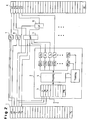
- the hybrid neural network of FIG. 1 has an input 1 for inputting parameters P1, P2, P3... P i .
- These parameters can be material or formulation parameters, for example for specifying formulations composed of commercial products, and / or process and machine parameters relating to the injection molding process or the injection molding machine and / or design and molding parameters, for example in terms of wall thickness of the molding and the flow length.
- the input 1 serves, among other things, for the input of the following parameters: Molding parameters recipe process parameters machine parameters Sample thickness, molding volume, customer-specific filling length ... Pocan, Glass Fiber, Makrolon, Citric Acid, Paraloid, Talcum ... Melt temperature, tool temperature, holding pressure Shear rate, injection speed, screw diameter, gear pitch of the metering zone, gear depth of the metering zone, channel width of the metering zone, length of the metering zone, back pressure, screw speed
- Molding parameters recipe process parameters machine parameters Sample thickness, molding volume, customer-specific filling length ... Pocan, Glass Fiber, Makrolon, Citric Acid, Paraloid, Talcum ... Melt temperature, tool temperature, holding pressure Shear rate, injection speed, screw diameter, gear pitch of the metering zone, gear depth of the metering zone, channel width of the metering zone, length of the metering zone, back pressure, screw speed
- the hybrid model has a neural network module 2.
- the neural network module 2 has an input 3 for input of parameters PN1, PN2, PN3 ... PN j .
- the input 3 is connected to the input 1, so that some of the parameters P 1 to P i of the input 1 are also input to the input 3 of the neural network module 2.
- the input parameter PN1 of the neural network module 2 is identical to the parameter P3 of the input 1 of the hybrid model.
- parameters PN2 and P4 as well as PN3 and P5 are identical in the example shown.
- the parameters PN1 to PN j therefore form a subset of the parameters P1 to P i .
- the further corresponding interconnections between the input 1 and the input 3 are not shown in detail in FIG. 1 for the sake of clarity.
- the input 3 of the neural network module 2 is connected to an imaging module 4.
- the imaging module 4 is in turn connected to the neural networks NN1 k, NN2, NN3, NN4, ... NN.
- Each of the neural networks NN1 to NN k has a corresponding output AN1 k to AN.
- Each of the neural networks NN1 to NN is trained k for the prediction of a specific property, which is output from the respective output, when the required input parameters are applied to the input of the neural network in question.
- the number of required input parameters can be different.
- the mapping module 4 carries out appropriate transformations of the PN to j consisting of the parameters of the input parameter vector PN1. 3 If, for example, the neural network NN1 requires only the input parameters PN1, PN2 and PN3, but not the other parameters PN4 to PN j , then the mapping module 4 ensures that only the parameters PN1 to PN3 are present at the input of the neural network NN1. The same applies to the other neural networks.
- the mapping or “mapping" can be carried out by multiplying the parameter vector of the input 3 in each case with a specific matrix adapted to the relevant neural network.
- the neural network module 2 further has a training module 5, which is active in a training mode of the neural network module 2.
- the training module 5 is connected to the mapping module 4 and to the neural networks NN1 to NN k and their respective outputs, respectively.
- the training of the individual neural networks can be carried out sequentially, that is, the individual neural networks are independent trained by applying different input parameters under control of the training module 5 in a conventional manner.
- the hybrid neural network also has a number of rigorous models R1, R2, R3, R4, ....
- the rigorous models are partial models that can be represented by mathematical formulas. Those parts of the model for which such mathematical formulas can not be specified are detected by means of the neural network module 2.
- the rigorous models can be interconnected with each other and with the neural network module.
- the rigorous model R1 is connected only to the input 1 but not to other rigorous models or to an output of the neural network module 2.
- the output of the rigorous model R1 is connected to the output A1 of the output 6.
- the rigorous model R2 is connected to the parameter P1 of the input 1 and to the output AN1 of the neural network module 2.
- the output of the rigorous model R2 is connected to the output A2.
- the rigorous model R3 is connected to the parameters P3, P4 and P5 of the input 1 as well as to the outputs AN2 and AN3 of the neural network module 2.
- the output of the rigorous model R3 is both with the Output A3 as well as connected to the input of the rigorous model R4.
- the rigorous model R4 has another input connected to parameter P3.
- the output of the rigorous model R4 is connected to the output A4.
- the parameters PN1 to PN j of the input 3 can be the parameters formulation, thickness, melt temperature, mold temperature, shear rate and holding pressure.
- the output variables which are present at the outputs AN1 to AN k can correspondingly be the quantities density, sealing time, sealing temperature, demolding temperature, standard filling pressure, zero viscosity, reciprocal transition shear rate, carrier decay and mechanical properties.
- the rigorous models can then be used to calculate, for example, the molding compound, the mold filling time, the effective thermal conductivity, the cooling time, the filling pressure, the metering time, the cycle time and other mechanical properties.
- processing properties mechanical properties thermal properties Cycle time forecast rheological properties
- Filling pressure plasticizing performance, static friction, sliding friction, shrinkage Modulus of elasticity (longitudinal, transverse), yield stress, elongation at break, tensile stress (longitudinal, transverse), elongation at break (longitudinal, transverse), work to yield stress, work to break, nominal elongation at break, flexural modulus, bending stress, marginal fiber elongation, flexural strength
- Ejection temperature density, non-flow temperature, molding mass Sealing time, cycle time, mold filling time (injection time), dosing time, cooling time
- Melt viscosity Carreau parameter, Carreath melt viscosity
- the further input parameters of the input 1 are not shown in FIG. 2 for the sake of simplicity.
- the parameters vft and ve enter the rigorous model 7 for calculating the mold filling time.
- the mold filling time zff calculated with the rigorous model 7 is output via the output A1.
- the inputs of the rigorous model 8 are linked to the parameter vft of the input 1 or to the output of the neural network NN1.
- the output of the neural network NN1 provides the density rho. From the input parameter vft or the prediction value rho, the rigorous model 8 then calculates the molding mass mft, which is output via the output A2.
- the input of the rigorous model 9 is connected to the corresponding parameters s, t m and t w of the input 1. Furthermore, the input of the rigorous model 9 is also connected to the outputs of the neural networks NN2 and NN3, which provide the sealing time zs and the sealing temperature t s as prognosis values, respectively. The thus determined effective thermal conductivity aeff is output from the rigorous model 9 via the output A3.
- the effective thermal conductivity aeff is also supplied from the output of the rigorous model 9 to an input of the rigorous model 10.
- the rigorous model 10 has a further input which is connected to the parameter s of the input 1 as well as further inputs, not shown in FIG. 2 for the sake of clarity, which are connected to the input parameters t m and t w and to the prediction value t e of FIG Output of the neural network NN4 are connected.
- the cooling time zk determined on the basis of these input parameters or on the basis of the prognosis value and the effective temperature conductivity is output by the rigorous model 10 via the output A4.
- the hybrid neural model may include further rigorous models, for example, for the calculation of the filling pressure for the application of the customer, the calculation of the dosing time, the process time and the transformation of certain mechanical properties. These further rigorous partial models are not shown in FIG. 2 for the sake of clarity shown. Corresponding calculation instructions for the realization of such further rigorous partial models can be found, for example, in the publication Application-related Information 1104, "Optimized Tool Temperature Control", Olaf Zöllner, Bayer AG, Plastics Division.
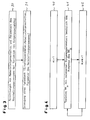
- FIG. 3 shows the procedure for generating a database for training the neural networks of the hybrid model.
- step 30 a series of experiments is carried out in which, by varying, for example, recipes and injection molds (thickness) and variations of process and machine parameters of the plastic injection molding machine corresponding plastic molded parts are produced, which are then subjected to analysis.
- step 31 a database is generated from the data obtained in step 30.
- This database contains the input parameters for each data record, that is, the respective recipe and shape parameters as well as the process and machine parameters and the corresponding resulting properties of the produced plastic molded part, in particular its mechanical properties, as well as the characteristics of the manufacturing process, ie the processing properties, thermal properties, rheological properties and the cycle time.
- FIG. 4 shows the procedure for training the individual neural networks of the hybrid model.
- step 40 first the run variable m is initialized with the value 1.
- step 41 the first neural network NN1 is trained.
- the database is accessed in order to retrieve the input parameters required for training the relevant neural network NN1.
- the running variable m is incremented in step 42, and step 41 is repeatedly executed until all the neural networks NN m have been trained.
Landscapes
- Engineering & Computer Science (AREA)
- Artificial Intelligence (AREA)
- Physics & Mathematics (AREA)
- Evolutionary Computation (AREA)
- General Physics & Mathematics (AREA)
- Automation & Control Theory (AREA)
- Mechanical Engineering (AREA)
- Health & Medical Sciences (AREA)
- Computer Vision & Pattern Recognition (AREA)
- Medical Informatics (AREA)
- Software Systems (AREA)
- Manufacturing & Machinery (AREA)
- Injection Moulding Of Plastics Or The Like (AREA)
Description
- Die Erfindung betrifft ein neuronales Netzwerk und ein Verfahren zur Bestimmung einer Eigenschaft hinsichtlich der Herstellung eines Spritzgießformteils.
- Aus der US - A 5 914 884 ist ein Verfahren zur Bewertung der Eigenschaften eines Kunststoffmaterials in einem Kunststoffspritzverfahren bekannt. Ein empirisches Modell dient zur Beschreibung der Beziehung zwischen Prozessvariablen und einer Mehrzahl von Qualitätscharakteristiken. Das empirische Modell wird anhand von mittels eines Kunststoffspritzprozesses ermittelten empirischen Daten erstellt. Einer der Nachteile dieses Verfahrens besteht in den praktischen Schwierigkeiten und dem erforderlichen Aufwand für die Erstellung des empirischen Modells.
- DE 19514535 A1 offenbart ein Verfahren zur Überwachung von Produkteigenschaften und Regelung eines Herstellprozesses, beispielsweise eines Spritzgusprozesses, mit Hilfe eines Prognosemodells, bei dem es sich sowohl um ein rigoroses Modell als auch um ein neuronales Netzwerk, womöglich sogar um ein nicht näher spezifiziertes Hybridmodell handelt. Weitere Details sind allerdings nicht offenbart, insbesondere keine Details über die tatsächlich verwendeten Modellkomponenten.
- Psichogios et al. offenbaren in "Process modeling using structured neural networks" (Proceedings of the American Control Conference (ACC) Chicago, June 24-26, 1992, New York, IEEE, US, Bd. 3, 24.Juni 1992, s. 1917-1921) Prozessmodelle mit neuronalen Netzen und rigorosen Modellen in Kombination. Dabei bleibt die Anzahl und Anordnung der Komponenten sowie die Verteilung der Eingangsparameter auf dieselben allerdings unklar.
- Der Erfindung liegt daher die Aufgabe zu Grunde, ein verbessertes Verfahren, mit neuronalem Netzwerk, zur Bestimmung einer Eigenschaft hinsichtlich der Herstellung eines Spritzgießformteils zu schaffen.
- Die der Erfindung zu Grunde liegende Aufgabe wird jeweils mit den Merkmalen der unabhängigen Patentansprüche gelöst. Bevorzugte Ausführungsformen der Erfindung sind in den abhängigen Patentansprüchen angegeben.
- Die Erfindung erlaubt die Prognose verschiedener Eigenschaften hinsichtlich der Herstellung eines Spritzgießformteils und zwar sowohl hinsichtlich des Spritzgießverfahrens als auch hinsichtlich der Eigenschaften des resultierenden Spritzgießformteils.
- Insbesondere ist die Prognose von Prozesszeiten und Verarbeitungseigenschaften beim Spritzgießen von Kunststoff-Formteilen von großer praktischer Bedeutung, da die Herstellungskosten von Spritzgießformteilen maßgeblich durch die Produktivität der Spritzgießfertigung beeinflusst werden. Der charakteristische Parameter ist hierbei die Prozesszeit der Spritzgießmaschine für die Herstellung eines Formteils.
- Eine Berechnung der Zykluszeit erfordert nicht nur eine Charakterisierung der materialspezifischen Eigenschaften durch den Rohstoffhersteller, sondern auch die Berücksichtigung des kundenspezifischen Anwendungsfalls. Die entsprechenden Zykluszeiten ergeben sich so aus dem Zusammenspiel von Materialeigenschaften, den Prozessparametern der Spritzgießmaschine und der Konstruktion des Spritzgießwerkzeugs.
- Diese komplexen Zusammenhänge können mit Hilfe von neuronalen Netzen abgebildet werden. Die neuronalen Netze werden durch rigorose Rechenmodelle ergänzt, die mit dem neuronalen Netz verschaltet werden. Beispielsweise kann die Berechnung der Plastifizierleistung unter Berücksichtigung der Schneckengeometrie der eingesetzten Spritzgießmaschine in einem solchen rigorosen Rechenmodell erfolgen.
- Die umfassende Modellierung des Spritzgießprozesses ermöglicht über die Zykluszeitprognose hinaus eine Vielzahl von Aussagen über wichtige Qualitätsmerkmale des Spritzgießformteils. Unter Berücksichtigung der Prozessführung können beispielsweise die Maßhaltigkeit der Formteile, die Elastizitätsmodule, die Bruchspannungen und -dehnungen in Abhängigkeit von Fließrichtung und Wanddicke, die Wärmeformbeständigkeit und weitere Eigenschaften prognostiziert werden.
- Ein besonderer Vorteil der Erfindung besteht darin, dass diese Prognosen über den Spritzgießprozess und/oder die zu erwartenden Formteileigenschaften vom Anwender ohne Spezialkenntnisse realisierbar sind. Von besonderem Vorteil ist dabei der Einsatz der Erfindung für die Projektierung neuer Spritzgießanwendungen. Das erfindungsgemäße hybride neuronale Netzwerk erlaubt bereits in einer frühesten Planungsphase durch eine einfach durchführbare Computersimulation die Machbarkeit eines neuen Projekts zu prüfen. Dies ist insbesondere von großer Bedeutung für die Reduzierung der sogenannten "time to market" Phase.
- Ferner erlaubt es die Erfindung zur rechnerischen Bauteilauslegung dem Konstrukteur die geeigneten Werkstoffkennwerte durch Prognose mittels des erfindungsgemäßen hybriden Modells zur Verfügung zu stellen. Aufgrund eines komplexen Materialverhaltens von Kunststoffen können solche Werkstoffkennwerte unerlässlich sein für eine sichere Bauteilauslegung. Die Erfindung erlaubt es, solche Werkstoffkennwerte ohne die Durchführung von Versuchsreihen oder dergleichen zu ermitteln.
- Ferner erlaubt die Erfindung auch eine Prognose hinsichtlich der für ein gewünschtes Formteil erforderlichen Maschinen- und Prozessparameter der Kunststoffspritzgießmaschine. Damit läßt sich auch vorab prüfen, ob ein bestimmtes Teil auf einer vorhandenen Spritzgießmaschine überhaupt herstellbar ist.
- Im Weiteren wird eine Ausführungsform der Erfindung mit Bezugnahme auf die Zeichnungen näher erläutert. Es zeigen:
- Fig. 1
- ein Blockdiagramm einer Ausführungsform des erfindungsgemäßen hybriden Modells,
- Fig.2
- eine Anwendung des hybriden neuronalen Netzes der Fig. 1,
- Fig. 3
- die Schritte zur Erzeugung einer Datenbank für das Training des neuronalen Netzes und
- Fig. 4
- das Training der in dem hybriden neuronalen Netz beinhalteten neuronalen Netze.
- Das hybride neuronale Netz der Fig. 1 hat einen Eingang 1 zur Eingabe von Parametern P1, P2, P3... Pi. Bei diesen Parametern kann es sich um Stoff- oder Rezepturparameter handeln, beispielsweise zur Spezifizierung von aus Handelsprodukten zusammengesetzten Rezepturen, und/oder um Prozess- und Maschinenparameter hinsichtlich des Spritzgießvorgangs bzw. der Spritzgießmaschine und/oder um Konstruktions- und Formteilparameter, beispielsweise hinsichtlich der Wanddicke des Formteils und der Fließlänge.
- In dem hier betrachteten Ausführungsbeispiel dient der Eingang 1 zur Eingabe unter anderem der nachfolgenden Parameter:
Formteilparameter Rezeptur Prozessparameter Maschinenparameter Probendicke, Formteilvolumen, kundenspezifische Fülllänge ... Pocan, Glasfaser, Makrolon, Zitronensäure, Paraloid, Talcum ... Massetemperatur, Werkzeugtemperatur, Nachdruck Schergeschwindigkeit, Einspritzgeschwindigkeit, Schneckendurchmesser, Gangsteigung der Meteringzone, Gangtiefe der Meteringzone, Kanalbreite der Metering-zone, Länge der Meteringzone, Staudruck, Schneckendrehzahl - Ferner weist das hybride Modell ein neuronales Netzmodul 2 auf. Das neuronale Netzmodul 2 hat einen Eingang 3 zur Eingabe von Parametern PN1, PN2, PN3 ... PNj. Der Eingang 3 ist mit dem Eingang 1 verbunden, so dass einige der Parameter P 1 bis Pi des Eingangs 1 auch in den Eingang 3 des neuronalen Netzmoduls 2 eingegeben werden.
- Aufgrund einer entsprechenden Verbindung zwischen dem Eingang 3 und dem Eingang 1 ist daher der Eingangsparameter PN1 des neuronalen Netzmoduls 2 identisch mit dem Parameter P3 des Eingangs 1 des hybriden Modells. Ebenso sind die Parameter PN2 und P4 sowie PN3 und P5 in dem gezeigten Beispiel identisch.
- Die Parameter PN1 bis PNj bilden daher eine Teilmenge der Parameter P1 bis Pi. Die weiteren entsprechenden Verschaltungen zwischen dem Eingang 1 und dem Eingang 3 sind in der Fig. 1 der Übersichtlichkeit halber nicht im Detail dargestellt.
- Der Eingang 3 des neuronalen Netzmoduls 2 ist mit einem Abbildungsmodul 4 verbunden. Das Abbildungsmodul 4 ist seinerseits mit den neuronalen Netzen NN1, NN2, NN3, NN4, ...NNk verbunden. Jedes der neuronalen Netze NN1 bis NNk hat einen entsprechenden Ausgang AN1 bis ANk.
- Jedes der neuronalen Netze NN1 bis NNk ist für die Prognose einer bestimmten Eigenschaft trainiert, die über den entsprechenden Ausgang ausgegeben wird, wenn an dem Eingang des betreffenden neuronalen Netzes die erforderlichen Eingangsparameter angelegt werden. Die Anzahl der erforderlichen Eingangsparameter kann dabei unterschiedlich sein.
- Um die für ein bestimmtes neuronales Netz erforderlichen Eingangsparameter an den Eingang dieses Netzes anzulegen, führt das Abbildungsmodul 4 entsprechende Transformationen des aus den Parametern PN1 bis PNj bestehenden Parametervektors des Eingangs 3 aus. Wenn beispielsweise das neuronale Netz NN1 lediglich die Eingangsparameter PN1, PN2 und PN3 benötigt, nicht aber die weiteren Parameter PN4 bis PNj, so sorgt das Abbildungsmodul 4 dafür, dass an dem Eingang des neuronalen Netzes NN1 lediglich die Parameter PN1 bis PN3 anstehen. Entsprechendes gilt für die weiteren neuronalen Netze. Die Abbildung oder "mapping" kann durch Multiplikation des Parametervektors des Eingangs 3 jeweils mit einer bestimmten auf das betreffende neuronale Netz angepasste Matrix durchgeführt werden.
- Das neuronale Netzmodul 2 hat ferner ein Trainingsmodul 5, welches in einem Trainingsmodus des neuronalen Netzmoduls 2 aktiv ist. Das Trainingsmodul 5 ist mit dem Abbildungsmodul 4 und mit den neuronalen Netzen NN1 bis NNk sowie deren entsprechenden Ausgängen jeweils verbunden. Das Training der einzelnen neuronalen Netze kann dabei sequentiell erfolgen, dass heißt die einzelnen neuronalen Netze werden unabhängig voneinander durch Anlegen verschiedener Eingangsparameter unter Kontrolle des Trainingsmoduls 5 in an sich bekannter Art und Weise trainiert.
- Dazu eignet sich beispielsweise das sogenannte back-propagation oder das Programm "NN-Tool 2000", welches kommerziell erhältlich ist von Professor Frank Bärmann, Fachhochschule Gelsenkirchen, Fachbereich physikalische Technik. Das entsprechende Trainingsverfahren ist auch in der Publikation "Neural Network", Volume 5, Seiten 139 bis 144, 1992, "On a class of efficient learning algorithms for neural networks", Frank Bärmann, Friedrich Biegler-König, beschrieben.
- Das hybride neuronale Netz hat ferner eine Anzahl von rigorosen Modellen R1, R2, R3, R4,.... Bei den rigorosen Modellen handelt es sich um Teilmodelle, die sich mittels mathematischer Formeln darstellen lassen. Diejenigen Teile des Modells, für die sich solche mathematischen Formeln nicht angeben lassen, werden mittels des neuronalen Netzmoduls 2 erfasst. Die rigorosen Modelle können untereinander und mit dem neuronalen Netzmodul verschaltet sein.
- In dem gezeigten Ausführungsbeispiel ist das rigorose Modell R1 lediglich mit dem Eingang 1, aber nicht mit anderen rigorosen Modellen oder einem Ausgang des neuronalen Netzmoduls 2 verbunden. Der Ausgang des rigorosen Modells R1 ist mit dem Ausgang A1 des Ausgangs 6 verbunden.
- Das rigorose Modell R2 hingegen ist mit dem Parameter P1 des Eingangs 1 sowie mit dem Ausgang AN1 des neuronalen Netzmoduls 2 verbunden. Der Ausgang des rigorosen Modells R2 ist mit dem Ausgang A2 verbunden.
- Das rigorose Modell R3 ist mit den Parametern P3, P4 und P5 des Eingangs 1 sowie mit den Ausgängen AN2 und AN3 des neuronalen Netzmoduls 2 verbunden. Der Ausgang des rigorosen Modells R3 ist sowohl mit dem Ausgang A3 als auch mit dem Eingang des rigorosen Modells R4 verbunden. Das rigorose Modell R4 hat einen weiteren Eingang, der mit dem Parameter P3 verbunden ist. Der Ausgang des rigorosen Modells R4 ist mit dem Ausgang A4 verbunden.
- In dem betrachteten Ausführungsbeispiel kann es sich bei den Parametern PN1 bis PNj des Eingangs 3 um die Parameter Rezeptur, Dicke, Massetemperatur, Werkzeugtemperatur, Schergeschwindigkeit und Nachdruck handeln.
- Bei den Ausgangsgrößen, die an den Ausgängen AN1 bis ANk anstehen, kann es sich entsprechend um die Größen Dichte, Siegelzeit, Siegeltemperatur, Entformungstemperatur, Normfülldruck, Nullviskosität, reziproke Übergangsschergeschwindigkeit, Carreausteigung und mechanische Eigenschaften handeln.
- Mit den rigorosen Modellen können dann beispielsweise die Formteilmasse, die Formfüllzeit, die effektive Temperaturleitfähigkeit, die Kühlzeit, der Fülldruck, die Dosierzeit, die Zykluszeit sowie weitere mechanische Eigenschaften rechnerisch ermittelt werden.
- Entsprechend stehen dann am Ausgang 6 beispielsweise die folgenden Werte zur Verfügung:
Verarbeitungseigenschaften mechanische Eigenschaften thermische Eigenschaften Zykluszeitprognose rheologische Eigenschaften Fülldruck, Plastifizierleistung, Haftreibung, Gleitreibung, Schwindung Elastizitätsmodul (längs, quer), Streckspannung, Streckdehnung, Reißspannung (längs, quer), Reißdehnung (längs, quer), Arbeit bis Streckspannung, Arbeit bis zum Bruch, nominelle Reißdehnung, Biegemodul, Biegespannung, Randfaserdehnung, Biegefestigkeit Auswurftemperatur, Dichte, non-flow Temperatur, Formteilmasse Siegelzeit, Zykluszeit, Formfüllzeit (Einspritzzeit), Dosierzeit, Kühlzeit Schmelzeviskosität, Carreauparameter, Carreauschmelzeviskosität - Die Fig. 2 zeigt einen Anwendungsfall des hybriden neuronalen Netzes der Fig. 1. In dem Eingang 1 sind die folgenden Parameter P1 bis P5 exemplarisch gezeigt:
- vft =
- Formteilvolumen
- ve =
- Einspritzgeschwindigkeit
- s =
- Dicke
- tm =
- Masse, Temperatur
- tw =
- Werkzeugtemperatur
- Die weiteren Eingangsparameter des Eingangs 1 sind in der Fig. 2 der Einfachheit halber nicht dargestellt.
- Die Parameter vft und ve gehen in das rigorose Modell 7 zur Berechnung der Formfüllzeit ein. In dem rigorosen Modell 7 ist dazu die folgende Formel hinterlegt:

- Die mit dem rigorosem Modell 7 berechnete Formfüllzeit zff wird über den Ausgang A1 ausgegeben.
- In dem rigorosem Modell 8 zur Berechnung der Formteilmasse mft ist die folgende Formel hinterlegt:

- Dementsprechend sind die Eingänge des rigorosen Modells 8 mit dem Parameter vft des Eingangs 1 bzw. mit dem Ausgang des neuronalen Netzes NN1 verknüpft. Der Ausgang des neuronalen Netzes NN1 liefert die Dichte rho. Aus dem Eingangsparameter vft bzw. den Prognosewert rho berechnet das rigorose Modell 8 dann die Formteilmasse mft, die über den Ausgang A2 ausgegeben wird.
- Das rigorose Modell 9 dient zur Berechnung der effektiven Temperaturleitfähigkeit aeff. Zur Berechnung der effektiven Temperaturleitfähigkeit ist in dem rigorosem Modell 9 die folgende Formel hinterlegt:

- Entsprechend ist der Eingang des rigorosen Modells 9 mit den entsprechenden Parametern s, tm und tw des Eingangs 1 verbunden. Ferner ist der Eingang des rigorosen Modells 9 auch mit den Ausgängen der neuronalen Netze NN2 und NN3 verbunden, welche die Siegelzeit zs bzw. die Siegeltemperatur ts als Prognosewerte liefern. Die so ermittelte effektive Temperaturleitfähigkeit aeff wird über den Ausgang A3 von dem rigorosen Modell 9 ausgegeben.
- Ferner wird die effektive Temperaturleitfähigkeit aeff auch von dem Ausgang des rigorosen Modells 9 einem Eingang des rigorosen Modells 10 zugeführt. Das rigorose Modell 10 dient zur Berechnung der Kühlzeit zk. Zur Berechnung der Kühlzeit ist in dem rigorosen Modell 10 die folgende Formel hinterlegt:

- Entsprechend hat des rigorose Modell 10 einen weiteren Eingang, der mit dem Parameter s des Eingangs 1 verbunden ist sowie weitere in der Fig. 2 der Übersichtlichkeit halber nicht gezeigte Eingänge, die mit den Eingabeparametern tm und tw sowie mit dem Prognosewert te des Ausgangs des neuronalen Netzes NN4 verbunden sind. Die aufgrund dieser Eingabeparameter bzw. aufgrund des Prognosewerts und der effektiven Temperaturleitfähigkeit ermittelte Kühlzeit zk wird von dem rigorosen Modell 10 über den Ausgang A4 ausgegeben.
- Das hybride neuronale Modell kann weitere rigorose Modelle z.B. für die Berechnung des Fülldrucks für den Anwendungsfall des Kunden, die Berechnung der Dosierzeit, der Prozesszeit sowie die Transformation bestimmter mechanischer Eigenschaften beinhalten. Diese weiteren rigorosen Teilmodelle sind der Übersichtlichkeit halber in der Fig. 2 nicht dargestellt. Entsprechende Berechnungsvorschriften für die Realisierung solcher weiterer rigoroser Teilmodelle sind beispielsweise der Publikation Anwendungstechnische Information 1104, "optimierte Werkzeugtemperierung", Olaf Zöllner, Bayer AG, Geschäftsbereich Kunststoffe, entnehmbar.
- Die Fig. 3 zeigt den Ablauf für die Erzeugung einer Datenbank, zum Training der neuronalen Netze des Hybridmodells . Zunächst wird in dem Schritt 30 eine Serie von Versuchen durchgeführt, bei der unter Variation beispielsweise von Rezepturen und Spritzgießformen (Dicke) und Variationen von Prozess- und Maschinenparametern der Kunststoffspritzgießmaschine entsprechende Kunststoff- Formteile hergestellt werden, die danach einer Analyse unterzogen werden. In dem Schritt 31 wird aus den in dem Schritt 30 ermittelten Daten eine Datenbank erzeugt. Diese Datenbank beinhaltet pro Datensatz die Eingangsparameter, dass heißt, die jeweiligen Rezeptur- und Formparameter sowie die Prozess- und Maschinenparameter und die entsprechenden resultierenden Eigenschaften des hergestellten Kunststoffformteils, insbesondere dessen mechanischer Eigenschaften, sowie die Charakteristika des Herstellungsprozesses, also die Verarbeitungseigenschaften, thermischen Eigenschaften, rheologische Eigenschaften und die Zykluszeit.
- Die Fig. 4 zeigt das Vorgehen zum Training der einzelnen neuronalen Netze des hybriden Modells. In dem Schritt 40 wird zunächst die Laufvariable m mit dem Wert 1 initialisiert.
- In dem Schritt 41 wird das erste neuronale Netz NN1 trainiert. Dazu wird auf die Datenbank zugegriffen, um die zum Training des betreffenden neuronalen Netzes NN1 erforderlichen Eingangsparameter abzurufen. Der Ausgang des neuronalen Netzes NN1 - in dem Beispiel der Fig. 2 die Dichte - wird mit dem im Experiment ermittelten Wert verglichen. Bei einer Abweichung zwischen den prognostizierten und dem tatsächlichen Wert werden die Gewichtungen der Neuronen des neuronalen Netzes NN1 entsprechend angepasst, wie es an sich bekannt ist. Nachdem das Training des neuronalen Netzes NN1 in dem Schritt 41 abgeschlossen ist, wird die Laufvariable m in dem Schritt 42 inkrementiert und der Schritt 41 wird wiederholt so oft ausgeführt, bis alle neuronalen Netze NNm trainiert worden sind.
-
- Eingang
- 1
- neuronales Netz
- 2
- Eingang
- 3
- Abbildungsmodul
- 4
- Trainingsmodul
- 5
- Ausgang
- 6
- rigoroses Model
- 7
- rigoroses Model
- 8
- rigoroses Model
- 9
- rigoroses Model
- 10
Claims (13)
- Hybridmodell zur Bestimmung von Eigenschaften hinsichtlich der Herstellung eines Spritzgießformteils mit- einem ersten Eingang (1) zur Eingabe von Parametern,- zumindest einem neuronalen Netz (NN1,...NNk) zur Eingabe einer oder mehrerer der Parameter in das neuronale Netz und mit einem ersten Ausgang zur Ausgabe eines Prognosewerts,- zumindest einem rigorosen Modell (R1, R2, R3; R4, R5,...)mit einem weiteren Eingang zur Eingabe von einem oder mehrerer Parameter und/oder des Prognosewerts und einem zweiten Ausgang zur Ausgabe eines berechneten Werts hinsichtlich der Eigenschaften,dadurch gekennzeichnet, dass es mindestens ein zweites rigoroses Modell aufweist, wobei ein Eingang des zweiten rigorosen Modells mit zumindest einem Ausgang eines anderen rigorosen Modells zur Eingabe des berechneten Werts verbunden ist.
- Hybridmodell nach Anspruch 1 mit einer Mehrzahl von neuronalen Netzen (NN1,...NNk) zur Ausgabe einer entsprechenden Mehrzahl von Prognosewerten.
- Hybridmodell nach Anspruch 1 oder 2 mit Mitteln zur Abbildung eines Eingangsvektors von Parametern (P1, P2, P3, P4, P5, ..., Pi) auf eine Teilmenge (PN1, PN2, PN3,...,PNj) und mit Mitteln (4) zur Abbildung der Teilmenge auf entsprechende Eingänge der neuronalen Netze.
- Hybridmodell nach Anspruch 1, 2 oder 3, bei dem es sich bei den Parametern um Formteilparameter, Rezepturparameter, Prozessparameter und /oder Maschinenparameter handelt.
- Hybridmodell nach einem der vorhergehenden Ansprüche, bei dem der oder die Prognosewerte einen oder mehrere der folgenden Eigenschaften betreffen: Rheologische Eigenschaften, Verarbeitungseigenschaften, mechanische Eigenschaften, thermische Eigenschaften, Eigenschaften der Prozesszeit, wie z.B. Dosierzeit, Kühlzeit etc..
- Hybridmodell nach einem der vorhergehenden Ansprüche, bei dem der oder die Ausgänge des oder der rigorosen Modelle eine oder mehrere der folgenden Eigenschaften betreffen: Rheologische Eigenschaften, Verarbeitungseigenschaften, mechanische Eigenschaften, thermische Eigenschaften, Eigenschaften der Prozesszeit.
- Hybridmodell nach einem der vorhergehenden Ansprüche, bei dem das oder die neuronalen Netze einen oder mehrere der folgenden Prognosewerte ausgeben: Schmelzeviskosität, Carreauparameter, Fülldruck, Plastifizierleistung, Elastizitätsmodul, Streckspannung, Streckdehnung, Reißspannung, Reißdehnung, Arbeit bis Streckspannung, Arbeit bis zum Bruch, nominelle Reißdehnung, Haftreibung, Gleitreibung, Schwindung, Auswurftemperatur, Biegemodul, Biegespannung, Randfaserdehnung, Biegefestigkeit, Dichte, Siegeltemperatur, Formteilmasse.
- Hybridmodell nach einem der vorhergehenden Ansprüche, bei dem das oder die rigorosen Modelle einen oder mehrere berechnete Werte hinsichtlich zumindest einer der folgenden Eigenschaften ausgeben: Zykluszeit, Formfüllzeit, Einspritzzeit, Dosierzeit, Kühlzeit, kundenspezifischer Fülldruck, Carreau-Schmelzeviskosität, effektiver Wärmeleitwert, Querelastizitätsmodul, Querreißspannung, Querreißdehnung.
- Hybridmodell nach einem der vorhergehenden Ansprüche, mit einem rigorosen Modell zur Berechnung der Formfüllzeit aus dem Formteilvolumen und der Einspritzgeschwindigkeit.
- Hybridmodell nach einem der vorhergehenden Ansprüche, mit einem rigorosen Modell zur Berechnung der Formteilmasse aus dem Formteilvolumen und der Dichte.
- Hybridmodell nach einem der vorhergehenden Ansprüche, mit einem rigorosen Modell zur Berechnung der effektiven Temperaturleitfähigkeit aus der Dicke, der Siegelzeit, der Massetemperatur, der Werkzeugtemperatur, der Siegeltemperatur.
- Hybridmodell nach einem der vorhergehenden Ansprüche, mit einem rigorosen Modell zur Berechnung der Kühlzeit aus der effektiven Temperaturleitfähigkeit, der Dicke, der Massetemperatur, der Werkzeugtemperatur, der Entformungstemperatur.
- Verfahren zur Bestimmung einer Eigenschaft hinsichtlich der Herstellung eines Spritzgießformteils mit folgenden Schritten:- Auswahl einer Anzahl von Parametern,- Eingabe der Parameter in ein Hybridmodell nach einem der vorhergehenden Ansprüche und Ausgabe eines Prognosewerts und / oder eines berechneten Werts hinsichtlich zumindest der einen Eigenschaft.
Applications Claiming Priority (2)
| Application Number | Priority Date | Filing Date | Title |
|---|---|---|---|
| DE10120476 | 2001-04-25 | ||
| DE10120476A DE10120476A1 (de) | 2001-04-25 | 2001-04-25 | Hybridmodell und Verfahren zur Bestimmung von Eigenschaften hinsichtlich der Herstellung eines Spritzgießformteils |
Publications (3)
| Publication Number | Publication Date |
|---|---|
| EP1253492A2 EP1253492A2 (de) | 2002-10-30 |
| EP1253492A3 EP1253492A3 (de) | 2003-07-09 |
| EP1253492B1 true EP1253492B1 (de) | 2006-10-18 |
Family
ID=7682818
Family Applications (1)
| Application Number | Title | Priority Date | Filing Date |
|---|---|---|---|
| EP02008142A Expired - Lifetime EP1253492B1 (de) | 2001-04-25 | 2002-04-12 | Hybridmodell und Verfahren zur Bestimmung von Eigenschaften hinsichtlich der Herstellung eines Spritzgiessformteils |
Country Status (4)
| Country | Link |
|---|---|
| US (1) | US6845289B2 (de) |
| EP (1) | EP1253492B1 (de) |
| AT (1) | ATE343161T1 (de) |
| DE (2) | DE10120476A1 (de) |
Families Citing this family (7)
| Publication number | Priority date | Publication date | Assignee | Title |
|---|---|---|---|---|
| US20040008481A1 (en) * | 2002-07-11 | 2004-01-15 | Samsung Electronics Co., Ltd | Computer system and method of controlling the same |
| JP4177399B2 (ja) * | 2006-10-27 | 2008-11-05 | 日精樹脂工業株式会社 | 射出成形機の制御方法 |
| DE102010002174A1 (de) | 2010-02-22 | 2011-08-25 | Robert Bosch GmbH, 70469 | Verfahren zur Regelung eines Spritzgießprozesses |
| DE102011075723A1 (de) | 2011-05-12 | 2012-11-15 | Robert Bosch Gmbh | Verfahren zur Regelung eines Spritzgießprozesses |
| EP2743866B1 (de) * | 2012-12-14 | 2016-07-27 | Ul Llc | Verfahren zur Bestimmung des Alterungsverhaltens eines Materials |
| AT519096B1 (de) | 2016-12-23 | 2018-04-15 | Engel Austria Gmbh | Verfahren zum Einstellen einer Formgebungsmaschine |
| JP7021052B2 (ja) * | 2018-11-06 | 2022-02-16 | 株式会社東芝 | 製品状態推定装置 |
Family Cites Families (12)
| Publication number | Priority date | Publication date | Assignee | Title |
|---|---|---|---|---|
| US5197114A (en) * | 1990-08-03 | 1993-03-23 | E. I. Du Pont De Nemours & Co., Inc. | Computer neural network regulatory process control system and method |
| US5671335A (en) * | 1991-05-23 | 1997-09-23 | Allen-Bradley Company, Inc. | Process optimization using a neural network |
| JP3345930B2 (ja) * | 1993-01-06 | 2002-11-18 | 日産自動車株式会社 | アクティブコントロール装置 |
| DE4416317B4 (de) * | 1993-05-17 | 2004-10-21 | Siemens Ag | Verfahren und Regeleinrichtung zur Regelung eines materialverarbeitenden Prozesses |
| DE4338608B4 (de) * | 1993-11-11 | 2005-10-06 | Siemens Ag | Verfahren und Vorrichtung zur Führung eines Prozesses in einem geregelten System |
| US5796920A (en) * | 1994-08-19 | 1998-08-18 | Harris Corporation | Multiprocessor system and method for identification and adaptive control of dynamic systems |
| DE19514535A1 (de) * | 1995-04-20 | 1996-10-31 | Johannes Prof Dr Wortberg | Verfahren zur Überwachung von Produkteigenschaften und Regelung eines Herstellungsprozesses |
| US6047221A (en) * | 1997-10-03 | 2000-04-04 | Pavilion Technologies, Inc. | Method for steady-state identification based upon identified dynamics |
| US5914884A (en) * | 1997-01-02 | 1999-06-22 | General Electric Company | Method for evaluating moldability characteristics of a plastic resin in an injection molding process |
| DE19743600B4 (de) * | 1997-10-02 | 2006-03-23 | Fraunhofer-Gesellschaft zur Förderung der angewandten Forschung e.V. | Verfahren zur Überwachung eines zyklischen Produktionsprozesses |
| TW567132B (en) * | 2000-06-08 | 2003-12-21 | Mirle Automation Corp | Intelligent control method for injection molding machine |
| TW584591B (en) * | 2000-06-08 | 2004-04-21 | Mirle Automation Corp | Method of setting parameters for injection molding machine |
-
2001
- 2001-04-25 DE DE10120476A patent/DE10120476A1/de not_active Ceased
-
2002
- 2002-04-12 AT AT02008142T patent/ATE343161T1/de not_active IP Right Cessation
- 2002-04-12 EP EP02008142A patent/EP1253492B1/de not_active Expired - Lifetime
- 2002-04-12 DE DE50208465T patent/DE50208465D1/de not_active Expired - Lifetime
- 2002-04-22 US US10/127,367 patent/US6845289B2/en not_active Expired - Lifetime
Also Published As
| Publication number | Publication date |
|---|---|
| EP1253492A3 (de) | 2003-07-09 |
| EP1253492A2 (de) | 2002-10-30 |
| US20030014152A1 (en) | 2003-01-16 |
| ATE343161T1 (de) | 2006-11-15 |
| US6845289B2 (en) | 2005-01-18 |
| DE50208465D1 (de) | 2006-11-30 |
| DE10120476A1 (de) | 2002-11-21 |
Similar Documents
| Publication | Publication Date | Title |
|---|---|---|
| EP1253491B1 (de) | Hybridmodell und Verfahren zur Bestimmung von mechanischen Eigenschaften und von Verarbeitungseigenschaften eines Spritzgiessformteils | |
| AT519096B1 (de) | Verfahren zum Einstellen einer Formgebungsmaschine | |
| DE69622483T2 (de) | Verfahren zum Simulieren des Verhalten von Harz beim Druckgiessen | |
| DE69528870T2 (de) | Vorrichtung und Verfahren zur Optimierung des Fliessverhaltens eines Fluids und Methode zur Herstellung eines Spritzgussteiles | |
| DE69729533T2 (de) | Formwerzeugdesign, verfahren und vorrichtung | |
| EP2207664B1 (de) | Blasmaschine für kunststoffbehältnisse und verfahren zu deren steuerung | |
| DE102017131025A9 (de) | Verfahren zur Optimierung eines Prozessoptimierungssystems und Verfahren zum Simulieren eines Formgebungsprozesses | |
| DE102015107024B3 (de) | Ermitteln von Prozessparameterwerten in einem Spritzgussprozess | |
| DE69116477T2 (de) | Vorrichtung und Verfahren zur Steuerung des Einspritzens aus mehreren Spritzeinheiten in eine Form | |
| CN104589606B (zh) | 一种注塑成型过程在线监控方法 | |
| EP3892440A1 (de) | Verfahren zur einstellung einer spritzgiessmaschine | |
| DE112022001901B4 (de) | Suchhilfsvorrichtung für spritzgiessbedingung und verfahren dafür, programm und aufzeichnungsmedium | |
| DE102015107025A1 (de) | Ermittlung und Anzeige von Prozessparameterwerten in einem Spritzgussprozess | |
| EP3479178B1 (de) | Simulations-basierte regelung eines fertigungssystems unter beruecksichtigung eines vorab berechneten verarbeitungsfensters | |
| EP0756219A2 (de) | Verfahren zur Überwachung von Produkteigenschaften und Verfahren zur Regelung eines Herstellungs-prozesses | |
| DE102022102395A1 (de) | Verfahren und Vorrichtung zur Reduzierung des Nachbearbeitungsaufwands an Urform-Kavitäten vor deren Verwendung im Serienbetrieb | |
| DE4434654C2 (de) | Verfahren zur Beeinflussung zyklisch ablaufender Prozesse | |
| EP1253492A2 (de) | Hybridmodell und Verfahren zur Bestimmung von Eigenschaften hinsichtlich der Herstellung eines Spritzgiessformteils | |
| EP0784535B1 (de) | Verfahren zur beeinflussung von maschineneinstellgrössen sowie vorrichtung zur durchführung des verfahrens | |
| EP4274723B1 (de) | Computerimplementiertes verfahren und system zur bestimmung wenigstens einer maschine | |
| EP4327171B1 (de) | Verfahren zur steuerung von prozessen an kunststoff verarbeitenden maschinen | |
| CH716122A1 (de) | Verfahren zum Betreiben einer Vorrichtung zur Herstellung eines Produktes, Computerprogrammprodukt und Vorrichtung zum Herstellen eines Produktes. | |
| DE3713400C2 (de) | ||
| EP4337444B1 (de) | Verfahren zur herstellung von folie aus einer gesamtmenge an rohstoffen mit einer folienextrusionsmaschine sowie computerprogrammprodukt zur durchführung des verfahrens | |
| DE102022117959A1 (de) | Verfahren zum Berechnen eines Soll-Profils für die Bewegung eines Einspritzaktuators einer Formgebungsmaschine und/oder Simulieren des Einspritzens der Formmasse in eine Kavität |
Legal Events
| Date | Code | Title | Description |
|---|---|---|---|
| PUAI | Public reference made under article 153(3) epc to a published international application that has entered the european phase |
Free format text: ORIGINAL CODE: 0009012 |
|
| AK | Designated contracting states |
Kind code of ref document: A2 Designated state(s): AT BE CH CY DE DK ES FI FR GB GR IE IT LI LU MC NL PT SE TR |
|
| AX | Request for extension of the european patent |
Free format text: AL;LT;LV;MK;RO;SI |
|
| PUAL | Search report despatched |
Free format text: ORIGINAL CODE: 0009013 |
|
| AK | Designated contracting states |
Designated state(s): AT BE CH CY DE DK ES FI FR GB GR IE IT LI LU MC NL PT SE TR |
|
| AX | Request for extension of the european patent |
Extension state: AL LT LV MK RO SI |
|
| 17P | Request for examination filed |
Effective date: 20040109 |
|
| AKX | Designation fees paid |
Designated state(s): AT BE CH CY DE DK ES FI FR GB GR IE IT LI LU MC NL PT SE TR |
|
| RAP1 | Party data changed (applicant data changed or rights of an application transferred) |
Owner name: BAYER MATERIALSCIENCE AG |
|
| 17Q | First examination report despatched |
Effective date: 20050511 |
|
| GRAP | Despatch of communication of intention to grant a patent |
Free format text: ORIGINAL CODE: EPIDOSNIGR1 |
|
| GRAS | Grant fee paid |
Free format text: ORIGINAL CODE: EPIDOSNIGR3 |
|
| GRAA | (expected) grant |
Free format text: ORIGINAL CODE: 0009210 |
|
| AK | Designated contracting states |
Kind code of ref document: B1 Designated state(s): AT BE CH CY DE DK ES FI FR GB GR IE IT LI LU MC NL PT SE TR |
|
| PG25 | Lapsed in a contracting state [announced via postgrant information from national office to epo] |
Ref country code: IT Free format text: LAPSE BECAUSE OF FAILURE TO SUBMIT A TRANSLATION OF THE DESCRIPTION OR TO PAY THE FEE WITHIN THE PRESCRIBED TIME-LIMIT;WARNING: LAPSES OF ITALIAN PATENTS WITH EFFECTIVE DATE BEFORE 2007 MAY HAVE OCCURRED AT ANY TIME BEFORE 2007. THE CORRECT EFFECTIVE DATE MAY BE DIFFERENT FROM THE ONE RECORDED. Effective date: 20061018 Ref country code: FI Free format text: LAPSE BECAUSE OF FAILURE TO SUBMIT A TRANSLATION OF THE DESCRIPTION OR TO PAY THE FEE WITHIN THE PRESCRIBED TIME-LIMIT Effective date: 20061018 Ref country code: IE Free format text: LAPSE BECAUSE OF FAILURE TO SUBMIT A TRANSLATION OF THE DESCRIPTION OR TO PAY THE FEE WITHIN THE PRESCRIBED TIME-LIMIT Effective date: 20061018 |
|
| REG | Reference to a national code |
Ref country code: GB Ref legal event code: FG4D Free format text: NOT ENGLISH |
|
| REG | Reference to a national code |
Ref country code: IE Ref legal event code: FG4D Free format text: LANGUAGE OF EP DOCUMENT: GERMAN Ref country code: CH Ref legal event code: EP |
|
| REF | Corresponds to: |
Ref document number: 50208465 Country of ref document: DE Date of ref document: 20061130 Kind code of ref document: P |
|
| PG25 | Lapsed in a contracting state [announced via postgrant information from national office to epo] |
Ref country code: DK Free format text: LAPSE BECAUSE OF FAILURE TO SUBMIT A TRANSLATION OF THE DESCRIPTION OR TO PAY THE FEE WITHIN THE PRESCRIBED TIME-LIMIT Effective date: 20070118 Ref country code: SE Free format text: LAPSE BECAUSE OF FAILURE TO SUBMIT A TRANSLATION OF THE DESCRIPTION OR TO PAY THE FEE WITHIN THE PRESCRIBED TIME-LIMIT Effective date: 20070118 |
|
| PG25 | Lapsed in a contracting state [announced via postgrant information from national office to epo] |
Ref country code: ES Free format text: LAPSE BECAUSE OF FAILURE TO SUBMIT A TRANSLATION OF THE DESCRIPTION OR TO PAY THE FEE WITHIN THE PRESCRIBED TIME-LIMIT Effective date: 20070129 |
|
| GBT | Gb: translation of ep patent filed (gb section 77(6)(a)/1977) |
Effective date: 20070111 |
|
| PG25 | Lapsed in a contracting state [announced via postgrant information from national office to epo] |
Ref country code: PT Free format text: LAPSE BECAUSE OF FAILURE TO SUBMIT A TRANSLATION OF THE DESCRIPTION OR TO PAY THE FEE WITHIN THE PRESCRIBED TIME-LIMIT Effective date: 20070320 |
|
| ET | Fr: translation filed | ||
| REG | Reference to a national code |
Ref country code: IE Ref legal event code: FD4D |
|
| PLBE | No opposition filed within time limit |
Free format text: ORIGINAL CODE: 0009261 |
|
| STAA | Information on the status of an ep patent application or granted ep patent |
Free format text: STATUS: NO OPPOSITION FILED WITHIN TIME LIMIT |
|
| 26N | No opposition filed |
Effective date: 20070719 |
|
| REG | Reference to a national code |
Ref country code: CH Ref legal event code: PL |
|
| BERE | Be: lapsed |
Owner name: BAYER MATERIALSCIENCE A.G. Effective date: 20070430 |
|
| PG25 | Lapsed in a contracting state [announced via postgrant information from national office to epo] |
Ref country code: LI Free format text: LAPSE BECAUSE OF NON-PAYMENT OF DUE FEES Effective date: 20070430 Ref country code: CH Free format text: LAPSE BECAUSE OF NON-PAYMENT OF DUE FEES Effective date: 20070430 |
|
| PG25 | Lapsed in a contracting state [announced via postgrant information from national office to epo] |
Ref country code: BE Free format text: LAPSE BECAUSE OF NON-PAYMENT OF DUE FEES Effective date: 20070430 |
|
| PG25 | Lapsed in a contracting state [announced via postgrant information from national office to epo] |
Ref country code: GR Free format text: LAPSE BECAUSE OF FAILURE TO SUBMIT A TRANSLATION OF THE DESCRIPTION OR TO PAY THE FEE WITHIN THE PRESCRIBED TIME-LIMIT Effective date: 20070119 |
|
| PG25 | Lapsed in a contracting state [announced via postgrant information from national office to epo] |
Ref country code: AT Free format text: LAPSE BECAUSE OF NON-PAYMENT OF DUE FEES Effective date: 20070412 |
|
| PG25 | Lapsed in a contracting state [announced via postgrant information from national office to epo] |
Ref country code: MC Free format text: LAPSE BECAUSE OF NON-PAYMENT OF DUE FEES Effective date: 20070430 |
|
| REG | Reference to a national code |
Ref country code: FR Ref legal event code: TP |
|
| PG25 | Lapsed in a contracting state [announced via postgrant information from national office to epo] |
Ref country code: CY Free format text: LAPSE BECAUSE OF FAILURE TO SUBMIT A TRANSLATION OF THE DESCRIPTION OR TO PAY THE FEE WITHIN THE PRESCRIBED TIME-LIMIT Effective date: 20061018 Ref country code: LU Free format text: LAPSE BECAUSE OF NON-PAYMENT OF DUE FEES Effective date: 20070412 |
|
| NLS | Nl: assignments of ep-patents |
Owner name: UL INTERNATIONAL TTC GMBH Effective date: 20090616 |
|
| PG25 | Lapsed in a contracting state [announced via postgrant information from national office to epo] |
Ref country code: TR Free format text: LAPSE BECAUSE OF FAILURE TO SUBMIT A TRANSLATION OF THE DESCRIPTION OR TO PAY THE FEE WITHIN THE PRESCRIBED TIME-LIMIT Effective date: 20061018 |
|
| REG | Reference to a national code |
Ref country code: GB Ref legal event code: 732E Free format text: REGISTERED BETWEEN 20091105 AND 20091111 |
|
| NLS | Nl: assignments of ep-patents |
Owner name: UNDERWRITERS LABORATORIES INC. Effective date: 20091027 |
|
| REG | Reference to a national code |
Ref country code: FR Ref legal event code: TP |
|
| REG | Reference to a national code |
Ref country code: GB Ref legal event code: 732E Free format text: REGISTERED BETWEEN 20100429 AND 20100505 |
|
| REG | Reference to a national code |
Ref country code: FR Ref legal event code: PLFP Year of fee payment: 15 |
|
| REG | Reference to a national code |
Ref country code: FR Ref legal event code: PLFP Year of fee payment: 16 |
|
| PGFP | Annual fee paid to national office [announced via postgrant information from national office to epo] |
Ref country code: NL Payment date: 20170426 Year of fee payment: 16 |
|
| PGFP | Annual fee paid to national office [announced via postgrant information from national office to epo] |
Ref country code: GB Payment date: 20170427 Year of fee payment: 16 Ref country code: DE Payment date: 20170427 Year of fee payment: 16 Ref country code: FR Payment date: 20170426 Year of fee payment: 16 |
|
| PGFP | Annual fee paid to national office [announced via postgrant information from national office to epo] |
Ref country code: IT Payment date: 20170421 Year of fee payment: 16 |
|
| REG | Reference to a national code |
Ref country code: DE Ref legal event code: R119 Ref document number: 50208465 Country of ref document: DE |
|
| REG | Reference to a national code |
Ref country code: NL Ref legal event code: MM Effective date: 20180501 |
|
| GBPC | Gb: european patent ceased through non-payment of renewal fee |
Effective date: 20180412 |
|
| PG25 | Lapsed in a contracting state [announced via postgrant information from national office to epo] |
Ref country code: NL Free format text: LAPSE BECAUSE OF NON-PAYMENT OF DUE FEES Effective date: 20180501 Ref country code: DE Free format text: LAPSE BECAUSE OF NON-PAYMENT OF DUE FEES Effective date: 20181101 |
|
| PG25 | Lapsed in a contracting state [announced via postgrant information from national office to epo] |
Ref country code: GB Free format text: LAPSE BECAUSE OF NON-PAYMENT OF DUE FEES Effective date: 20180412 |
|
| PG25 | Lapsed in a contracting state [announced via postgrant information from national office to epo] |
Ref country code: FR Free format text: LAPSE BECAUSE OF NON-PAYMENT OF DUE FEES Effective date: 20180430 Ref country code: IT Free format text: LAPSE BECAUSE OF NON-PAYMENT OF DUE FEES Effective date: 20180412 |