EP1250665B1 - Procede et systeme pour gerer et utiliser un fichier d'items dans un espace d'informations, notamment d'informations medicales, et application a des systemes d'information - Google Patents
Procede et systeme pour gerer et utiliser un fichier d'items dans un espace d'informations, notamment d'informations medicales, et application a des systemes d'information Download PDFInfo
- Publication number
- EP1250665B1 EP1250665B1 EP01907638A EP01907638A EP1250665B1 EP 1250665 B1 EP1250665 B1 EP 1250665B1 EP 01907638 A EP01907638 A EP 01907638A EP 01907638 A EP01907638 A EP 01907638A EP 1250665 B1 EP1250665 B1 EP 1250665B1
- Authority
- EP
- European Patent Office
- Prior art keywords
- classification
- item
- file
- items
- codes
- Prior art date
- Legal status (The legal status is an assumption and is not a legal conclusion. Google has not performed a legal analysis and makes no representation as to the accuracy of the status listed.)
- Expired - Lifetime
Links
Images


Classifications
-
- G—PHYSICS
- G06—COMPUTING OR CALCULATING; COUNTING
- G06F—ELECTRIC DIGITAL DATA PROCESSING
- G06F16/00—Information retrieval; Database structures therefor; File system structures therefor
- G06F16/30—Information retrieval; Database structures therefor; File system structures therefor of unstructured textual data
- G06F16/35—Clustering; Classification
- G06F16/353—Clustering; Classification into predefined classes
-
- G—PHYSICS
- G16—INFORMATION AND COMMUNICATION TECHNOLOGY [ICT] SPECIALLY ADAPTED FOR SPECIFIC APPLICATION FIELDS
- G16H—HEALTHCARE INFORMATICS, i.e. INFORMATION AND COMMUNICATION TECHNOLOGY [ICT] SPECIALLY ADAPTED FOR THE HANDLING OR PROCESSING OF MEDICAL OR HEALTHCARE DATA
- G16H15/00—ICT specially adapted for medical reports, e.g. generation or transmission thereof
Definitions
- the present invention relates to a method for managing and use an item file in a space information, including medical information. She also relates to a system implementing this method, as well as its application in particular to systems of information.
- databases are become the essential tools and vectors of access to information. This information necessarily subject to classifications and codifications allowing automated identification and access to information sought.
- the object of the invention is to remedy these disadvantages by proposing a generation process and use of an item file which allows a user of this file to evolve in a universe semantics and a language, especially language natural, familiar to him without imposing know and use classifications and codifications.
- the above objectives are achieved with a process to generate and use an item file in a information space, especially information medical, stored in at least one database and can be classified according to a plurality of systems of classification, this item file being generated by accumulation of items written in a language whose natural language.
- This process includes, for each item at within this item file, an attribution, in addition to its own characteristics, of several codes of classification each belonging to a system of classification, so the classification codes thus assigned provide links with others features or databases.
- the innovative solution provided by the process according to the invention is thus based on the combination of a file of items with their individual links to the codes of associated classifications, on knowledge of items of the file of items which are linked to a code of a classification, and on the ability to know the items from the file of items underlying a code and which are the place of a relation "1" - "1" (and not plus "1" to "n") between the codes of the two classifications or versions of classifications.
- the items in the item file each constitute a finer intermediate level, designated in the followed by the acronym 'IBL' ('In Between Level'), which represents the smallest common, intermediate part between codes of a first classification system to a code of an i-th classification code.
- 'IBL' 'In Between Level'
- it is in further arranged to provide transcoding between a first classification system and a second classification system classification among the plurality of classification via the item file generated with this process.
- This transcoding can in particular take into account characteristics of items, especially frequency characteristics, accessible via code single or via the item.
- the method according to the invention can also understand a treatment of characteristics, in particular frequency, of items in the items file to weight actual observations of the items constituting the most small common part between several systems of classification.
- the unique code attached to each item within the item file is preferably but not restrictively, allocated sequentially. This unique code is preferably arranged to also provide a link simple with other characteristics of the item, including observation characteristics earlier.
- the method according to the invention can also include a selection, within the item file, items that meet a user's expectations, so to constitute a result file extracted from the file of items and provided with the same characteristics of link with external bases and functionalities. He can too be arranged to generate, for each line of the file of items, a label that can be written in language natural and constituting the item, as well as a unique code attached to this label and several codes from several classifications.
- the system according to the invention can also advantageously include means for achieving a transcoding between a first classification system and a second classification system among the plurality of classification systems via the coding file generated with this process.
- the management and use process and system of a file of items according to the invention can be put implemented in a medical information system, each item then consisting of a label of diseases, diagnoses or reasons for medical consultation.
- the item file providing in particular access to databases and functionalities which use or contain at least one of the classifications used in this item file or in a file resulting from a choice made within said item file.
- the method according to the invention further allows, in cases where data is only known in the form a code from a previous classification, reassign according to a more recent classification or different, using the results of tables of code-to-code weighting of one towards the other of these classification systems.
- Mention may be made, by way of nonlimiting example, of data collected in fine under the sole information of the WHO CIM9 code and the conservation of which is useful, but whose conversion to CIM10 structure is essential. This allows re-generation of data historical in case of delicate context, limiting at least generating artifacts.
- each label is itself unique in the file offered to users' choice.
- the unique code is only one of the qualifiers, among others, of this unique wording. This unique code allows a simple link with other characteristics including example, characteristics of previous observations which qualify the item by notions of frequency and original.
- codification thus obtained comes from a work of collection and processing upstream and then offered to choice of a user. This one chooses within this coding file one or more items corresponding to its hold which are stored in a file resulting from the user choice.
- the process according to the invention is arranged to generate, for each line of the coding file, a label written in natural language and constituting the item, a code unique attached to this label, and one or more codes one or more classifications.
- a code of a target classification can correspond to or be linked to several items of a file of items assigned to it.
- Each item of a item file can benefit from a unique identifier its own. This unique identifier can be fixed and continuous and can for example be generated sequentially.
- Each item can be qualified for example by results of observations (frequencies, %) then by sound its unique DFCC identification code.
- the implementation of the method according to the invention contributes to a simplification of systems information, better transparency in matters access to information and transcoding and many induced benefits.
- the items can be freely written in natural language, which provides great ease of use by users, for example doctors.
- the method according to the invention allows access to advanced functions without action direct volunteer. For example, from an entry in natural language of diagnostics (or symptoms or syndromes) medical, the doctor obtains without difficulty the underlying generation of a classification code whose export is for example required for reason Administrative.
- the doctor using this process can then devote most of his time to medicine during the interview with the patient, by carrying out inter alia the simple choice of diagnostic terms, symptoms or syndromes. It is therefore not forced to transform as a coder or coding specialist, but can, without loss of time, meet its legal obligations complementary.
- the doctor using a generated item file by implementing the method according to the invention can besides benefiting from services induced by use common elements such as a diagnostic code which, on the one hand, results from the only choice of an IBL item of the FC item files and, on the other hand, is a code of pathology also present in a product base that he qualifies positively or negatively in term of indication or on the contrary of counter indication.
- a diagnostic code which, on the one hand, results from the only choice of an IBL item of the FC item files and, on the other hand, is a code of pathology also present in a product base that he qualifies positively or negatively in term of indication or on the contrary of counter indication.
- the implementation of the management process and using an item file also provides significant advantages in terms of reproducibility and of constant coding results. So, for the same context, the management and use process will lead to the same result with regard to the code of the classification to be generated in fine, regardless of competence of users even though these users would be skill levels different.
- This consistency in the coding results provided by the process according to the invention is particularly advantageous for such a user than a doctor, both for his own use in his medical practice by ensuring the consistency of its decisions, that to satisfy effectively and in a way transparent legal obligations regarding codification of pathologies and transmission of codes to third parties.
- the fact that the coding result obtained by implementing the method according to the invention does not not depend on the competence of multiple users of coding or coding item files the economic impact of the chosen code on the reimbursement or payment of an act but that it does depends only on the nature of the item selected in entry, can help limit the risk of deliberate or fortuitous diversion from the choice of code to a "more profitable" but wrong code.
- the method according to the invention provides the user ease of updating and correction of the score on a classification code.
- FC file of items IBL in natural or other language This opens the possibility of carrying out basic material corrections (FC file of items IBL in natural or other language) for their relationships with related classifications. Indeed, there is a possibility of making corrections to codes related to each individual element without questioning the nature of the items that were initially retained (natural or other language item files). This is a corollary of the possibility of relationship with "N" classifications whose versions may evolve.
- the applications of the method according to the invention are important in that it is possible to separate the notion of statement or choice of IBL item on the one hand, and on the other hand to update offline the links which qualify these items. We can thus make a collection (qualified choice of IBL items) anticipating knowledge of the classification structure according to which it will analyzed later.
- DFCC's own code for the item IBL, or the IBL item itself is one of the items it just keep, itself being invariant during the time.
- Updating links in the item file can be carried out locally or be subject to updating day shared by many file users of items.
- This standardization can be implemented in the medical field, with the provision of a item files resulting from an accumulation of items commonly sought to describe pathologies and whose links to classifications are the subject of a consensus also regularly updated by competent authorities, for example by a medical college representative and competent.
- the beneficial impact of this standardization is important in this area where computerization is emerging and where codification sometimes becomes a legal and also a personal requirement.
- the method according to the invention allows the activation of underlying functionality, including the Inconsistency or danger reporting functionality.
- a doctor who may have describe in a simple way the context of sound pathologies patient by IBL item choices within the FC file, transparently generates the corresponding codes by example of WHO ICD10 classification codes. he also prescribes treatment products.
- the method according to the invention can also take take into account a data processing according to an evolution predictable classification, before it is implemented by an official review. So we can for example and without limitation anticipate improvements in the evolution of a classification while retaining the ability to communicate according to its standard of the moment, which introduces the notion of evolution intermediate of a classification.
- the method according to the invention can be implemented in contexts of great movement logics of grouping or classification when the items of most basic levels are of an acceptation relatively well shared.
- the factual description initial must be communicated according to a quasi standard imposed or recognized as such by the need to communication of a code with the same meaning, while retaining the possibility of reasoning on its own classification.
- the management process can also be applied to reprocessing of information stored according to a system of treatment become obsolete.
- a situation can by example intervene in a context of evolution of the service providers' offer to medical users computerized. This may concern doctors whose previously stored data must evolve by example following the obsolescence of their software professional, but whose content, and in particular patient records, should not go but on the contrary, integrate into a new system which must receive them. These data must be included in keeping the history of the corresponding observations and this with the possibility of adding the same link features and functionality.
- ASTHMA 5503 5552 493-90 J45.9 CONTINUOUS DYSPNEA ASTHMA 5542 4 493-97 J46.0 ACUTE ASTHMA 5539 3 493-96 J46.0 ALLERGIC ASTHMA 5529 660 493-93 J45.0 ALLERGIC MITE ASTHMA 22498 26 493-0 J45.0 ANCIENT ASTHMA 5504 17 493-90 J45.9 ATOPIC ASTHMA 5492 4 493-0 J45.0 BRONCHICAL ASTHMA 5525 82 493-92 J45.9 CARDIAC ASTHMA 4337 9 428-11 I50.1 CHRONIC ASTHMA 5505 48 493-90 J45.9 CORTICO-DEPENDENT ASTHMA 5549 25 493-99 J45.9 CORTISONE ASTHMA 17146 12 493-99 J45.9 RELIEF ASTHMA 5540 1 493-96 J46.0 EFFORT ASTHMA 5506 36 493-90 J45.9 EXTRINSIC ASTHMA
- a first CO1 operation is carried out coding according to a first classification system CL1, - for example the 9th revision of the WHO (Organization World Health Organization) -, and a second CO2 operation of classification according to a second classification system CL2, - for example the 10th WHO revision.
- CL1 a first classification system
- CL2 a second CO2 operation of classification according to a second classification system CL2, - for example the 10th WHO revision.
- These two codification operations lead to the allocation of two classification codes C1, C2 for the item concerned.
- an AC operation to assign a code single DFCC for the item concerned is performed.
- This code unique designated by way of nonlimiting example under the term of "Diagnosis Fixed Continuity Code (DFCC)", is preferably assigned sequentially. But we can course within the framework of this provide for other forms of attribution of the unique code.
- DFCC Diagnosis Fixed Continuity Code
- This coding file can of course do subject to updates by entering new items or new codifications according to the evolution of classification systems in the area concerned.
- an extract from a codification file is given below: DFCC Classification 1 Classification 2 Diagnostic label ... ... ... ... 596 140-9 C00.9 SPINOCELLULAR CARCINOMA LIPS 597 140-9 C00.9 MALIGNANT TUMOR LIPS 598 141-0 C01.0 MALIGNANT TUMOR BASE LANGUAGE 599 141-9 C02.9 MALIGNANT TUMOR LANGUAGE ... ... ...
- the doctor accesses the file of codification and between a request expressed in language natural, for example, "Malignant tumor on a lip”.
- An automated search procedure allows it go directly to the item closest to his request. But we can also foresee that this research is carried out using keywords according to classical techniques used in the engines of research.
- the corresponding C1 and C2 classification codes respectively to the two CL1 classification systems enable dynamic links LD1, LD2 with features available from the microcomputer from the doctor.
- the code of C2 classification can automatically activate a link dynamic with an FS scientific database for provide IS scientific and medical information corresponding to the diagnostic object of the request and with an FM pharmaceutical database to provide IM information on pharmaceutical specialties from reference, while the other classification code C1 provides a dynamic link with a functionality of FG management to automatically provide this functionality requesting GI information specifically a classification code corresponding to the first classification system.
- codification generated with the method according to the invention are part of a relationship context, for example of type relational databases and implement the computer tools conventionally used in this context.
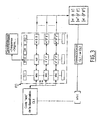
- the method according to the invention can also be found an advantageous application in transcoding between two coexisting classification systems, like illustrated in figure 3.
- an "abc" code belonging to a first CL1 classification system it is possible to identify all of the items in the FC coding file to which this first "abc" code has been assigned. These identified items each have a code Single DFCC xyz, .., x'y'z ', .., x''y''z' 'and are also each assigned a classification code according to the second CL2 classification system.
- the invention is not limited to the examples which have just been described and numerous arrangements can be brought to these examples without departing from the framework of the invention.
- the number of classifications used is not limited to two and other techniques for assigning the unique DFCC code can be considered.
- this invention can find applications in other fields of information science and technology, especially in electronic document management.
Landscapes
- Engineering & Computer Science (AREA)
- Theoretical Computer Science (AREA)
- Physics & Mathematics (AREA)
- Databases & Information Systems (AREA)
- General Engineering & Computer Science (AREA)
- General Physics & Mathematics (AREA)
- Data Mining & Analysis (AREA)
- Health & Medical Sciences (AREA)
- Epidemiology (AREA)
- General Health & Medical Sciences (AREA)
- Medical Informatics (AREA)
- Primary Health Care (AREA)
- Public Health (AREA)
- Medical Treatment And Welfare Office Work (AREA)
- Information Retrieval, Db Structures And Fs Structures Therefor (AREA)
Description
- affecter à chaque item la propriété de constituer la plus petite partie commune entre différents codes de classification attribués,
- attribuer à chaque item constituant la plus petite partie commune entre les différents codes de classification attribués audit item, un code unique qui lui est propre, et
- détecter ceux des items issus du fichier d'items, qui sont liés à « n » codes de « n » systèmes de classification et qui sont le lieu d'une relation bijective entre les codes de ces « n » systèmes de classification dont lesdits items sont l'intersection.
- des moyens pour accumuler, au sein de ce fichier d'items, des items rédigés dans un langage tel que le langage naturel par des utilisateurs de cette base de données, et des moyens pour attribuer à chaque item au sein dudit fichier d'items plusieurs codes de classification appartenant chacun à un système de classification parmi la pluralité de systèmes de classification, de sorte que les codes de classification ainsi attribués procurent des liens avec d'autres fonctionnalités ou bases de données.
- des moyens pour attribuer à chaque item constituant la plus petite partie commune entre les différents codes de classification attribués audit item, un code unique qui lui est propre,
- des moyens pour associer à chaque code de classification appartenant à un système de classification, les items auxquels ledit code de classification a été attribué, et
- des moyens pour identifier ceux des items issus du fichier d'items, qui sont liés à « n » codes de classification de « n » systèmes de classification et sont le lieu d'une relation bijective entre les codes de ces « n » systèmes de classification dont lesdits items sont l'intersection.
ou contiennent l'une au moins des classifications utilisées dans ce fichier d'items ou dans un fichier résultant d'un choix effectué au sein dudit fichier d'items.
- une transition (transcodage) entre classifications et/ou systèmes liés, par exemple entre des classifications médicales telles que la classification CIM et la classification DSM ;
- une limitation ou même une disparition des artefacts de la transition de classification induits par des éclatements ou regroupements de codes quand cette transition était tentée sans connaissance plus fine ;
- une continuité de séries temporelles d'observations dans un contexte de changement de version de la (ou des) classification(s), qui permet de générer un historique de données antérieurement collectées, converties selon la nouvelle classification. On peut citer par exemple les différentes versions consécutives (CIM9-CIM10) de classification des maladies émises par l'Organisation Mondiale de la Santé (OMS);
- une mise en oeuvre des transitions dont la finesse peut être spécifique des observations spécifiques du pays ou du contexte local de cette transition, ce qui revient à la création de passerelles générales, mais dont l'application peut être modulée par des observations locales (régionales ou nationales) et/ou catégorielles (médecin généralistes et/ou médecins spécialistes, ...).
- la figure 1 illustre les étapes essentielles du procédé de gestion d'un fichier d'items selon l'invention;
- la figure 2 illustre un mode d'utilisation d'un fichier d'items généré avec le procédé selon l'invention, avec accès par liens dynamiques à des fonctionnalités extérieures; et
- la figure 3 illustre une opération de transcodage entre deux classifications réalisée avec le procédé selon l'invention.
- « Ulcère gastrique», « Ulcère cutané », « Ulcère cornéen », ...
et
Toux,
Expectoration extériorisée ou non,
Toux au moins trois mois par ans depuis 2 ans,
- Fièvre,
- Réduction du débit expiratoire de pointe, ... .
| Libelle fichier FC | Code DFCC | Fréquence | Code CIM 9 | Code CIM 10 |
| .... | ||||
| ASTHME | 5503 | 5552 | 493-90 | J45.9 |
| ASTHME A DYSPNEE CONTINUE | 5542 | 4 | 493-97 | J46.0 |
| ASTHME AIGU | 5539 | 3 | 493-96 | J46.0 |
| ASTHME ALLERGIQUE | 5529 | 660 | 493-93 | J45.0 |
| ASTHME ALLERGIQUE ACARIENS | 22498 | 26 | 493-0 | J45.0 |
| ASTHME ANCIEN | 5504 | 17 | 493-90 | J45.9 |
| ASTHME ATOPIQUE | 5492 | 4 | 493-0 | J45.0 |
| ASTHME BRONCHIQUE | 5525 | 82 | 493-92 | J45.9 |
| ASTHME CARDIAQUE | 4337 | 9 | 428-11 | I50.1 |
| ASTHME CHRONIQUE | 5505 | 48 | 493-90 | J45.9 |
| ASTHME CORTICO-DEPENDANT | 5549 | 25 | 493-99 | J45.9 |
| ASTHME CORTISONE | 17146 | 12 | 493-99 | J45.9 |
| ASTHME DECOMPENSE | 5540 | 1 | 493-96 | J46.0 |
| ASTHME EFFORT | 5506 | 36 | 493-90 | J45.9 |
| ASTHME EXTRINSEQUE | 5495 | 2 | 493-0 | J45.0 |
| ASTHME GRAVE | 15779 | 22 | 493-90 | J46.0 |
| ASTHME HYPEREOSINOPHILE | 21120 | 2 | 493-90 | J82.0 |
| ASTHME INFANTILE | 5496 | 65 | 493-0 | J45.0 |
| ASTHME INFECTIEUX | 5545 | 32 | 493-98 | J45.9 |
| ASTHME INTRINSEQUE | 5501 | 16 | 493-1 | J45.1 |
| ASTHME MODERE | 13847 | 11 | 493-90 | J45.9 |
| ASTHME PAROXYSTIQUE | 5514 | 2 | 493-90 | J45.9 |
| ASTHME POLLINIQUE . | 5497 | 7 | 493-0 | J45.0 |
| ASTHME PROFESSIONNEL | 5531 | 5 | 493-93 | J45.0 |
| ASTHME SEVERE | 5515 | 97 | 493-90 | J46.0 |
| ASTHME SURINFECTE | 5546 | 176 | 493-98 | J45.9 |
| ASTHME TARDIF | 5502 | 12 | 493-1 | J45.9 |
| ATC ASTHME | 10863 | 3 | V12-6 | Z87.0 |
| BPCO ASTHMATIFORME | 5556 | 11 | 496-01 | J44.8 |
| BRONCHITE AIGUE ASTHMATIFORME | 16710 | 3 | 490-04 | J45.9 |
| BRONCHITE ASTHMATIFORME | 5422 | 1420 | 490-04 | J45.9 |
| BRONCHITE ASTHMATIFORME A REPETITION | 5423 | 6 | 490-04 | J45.9 |
| BRONCHITE ASTHMATIFORME ALLERGIQUE | 24489 | 5 | 493-95 | J45.0 |
| BRONCHITE ASTHMATIQUE | 5535 | 171 | 493-94 | J45.9 |
| BRONCHITE CHRONIQUE ASTHMATIFORME | 12174 | 25 | 491-21 | J44.8 |
| BRONCHOPATHIE ASTHMATIFORME | 5428 | 10 | 490-04 | J45.9 |
| CRISE ASTHME | 5541 | 192 | 493-96 | J46.0 |
| ..... |
- CARCINOME SPINOCELLULAIRE LEVRE
- TUMEUR MALIGNE LEVRE
- TUMEUR MALIGNE BASE LANGUE
- TUMEUR MALIGNE GLANDE PAROTIDE
- d'utiliser ou de constituer des tables de fréquences et d'origines de ces items,
- de moduler l'usage du fichier en fonction des données de fréquence et d'origine,
- de moduler l'usage des tables en transcodage par ces notions de fréquences en cas de relation de type "1:n" entre codes de classifications CL1 et CL2.
| DFCC | Classification 1 | Classification 2 | Libellé Diagnostic |
| ... | ... | ... | ... |
| 596 | 140-9 | C00.9 | CARCINOME SPINOCELLULAIRE LEVRE |
| 597 | 140-9 | C00.9 | TUMEUR MALIGNE LEVRE |
| 598 | 141-0 | C01.0 | TUMEUR MALIGNE BASE LANGUE |
| 599 | 141-9 | C02.9 | TUMEUR MALIGNE LANGUE |
| ... | ... | ... |
Claims (13)
- Procédé pour gérer et utiliser un fichier (FC) d'items (IBL) dans un espace d'informations, notamment d'informations médicales, stockées dans au moins une base de données et pouvant être classées selon une pluralité de systèmes de classification (CL1, CL2), ce fichier d'items (FC) étant généré par accumulation d'items rédigés dans un langage dont le langage naturel,
ce procédé comprenant une attribution à chaque item (IBL), en plus de ses caractéristiques propres, de codes de classification (C1, C2) appartenant chacun à un système de classification (CL1, CL2) parmi la pluralité de systèmes de classification, de sorte que les codes de classification ainsi attribués procurent des liens (LD1, LD2) avec d'autres fonctionnalités ou bases de données,
caractérisé en ce qu'il comprend en outre les étapes consistant à :affecter à chaque item (IBL) la propriété de constituer la plus petite partie commune entre différents codes de classification attribués,attribuer à chaque item (IBL) constituant la plus petite partie commune entre les différents codes de classification attribués audit item, un code unique (DFCC) qui lui est propre, etdétecter ceux des items (IBL) issus du fichier d'items, qui sont liés à « n » codes de « n » systèmes de classification et qui sont le lieu d'une relation bijective entre les codes de ces « n » systèmes de classification dont lesdits items sont l'intersection. - Procédé selon la revendication 1, caractérisé en ce qu'il est en outre agencé pour procurer un transcodage entre un premier système de classification (CL1) et un second système de classification (CL2) parmi la pluralité de systèmes de classification via le fichier d'items (FC) généré avec ce procédé.
- Procédé selon la revendication 2, caractérisé en ce que ce transcodage prend en compte des caractéristiques des items, notamment des caractéristiques de fréquence, accessibles via le code unique (DFCC)ou via l'item (IBL).
- Procédé selon l'une quelconque des revendications précédentes, caractérisé en ce que des items du fichier d'items revêtent la nature de terme ou locution de type nomenclature, chacun de ces items constituant un élément commun d'intersection de l'acception de deux codes de deux classifications différentes.
- Procédé selon l'une quelconque des revendications précédentes, caractérisé en ce qu'il comprend en outre un traitement de caractéristiques, notamment de fréquence, d'items (IBL) du fichier (FC) d'items pour pondérer des observations réelles des items constituant la plus petite partie commune entre plusieurs systèmes de classifications.
- Procédé selon l'une quelconque des revendications précédentes, caractérisé en ce que le code unique (DFCC) attaché à chaque item au sein du fichier d'items est attribué séquentiellement.
- Procédé selon l'une quelconque des revendications précédentes, caractérisé en ce que le code unique (DFCC) est agencé pour procurer lui aussi un lien simple avec d'autres caractéristiques de l'item (IBL), notamment des caractéristiques d'observations antérieures.
- Procédé selon l'une quelconque des revendications précédentes, caractérisé en ce qu'il comprend en outre une sélection, au sein du fichier d'items (FC), d'items répondant aux attentes d'un utilisateur, de façon à constituer un fichier résultat (FR) extrait du fichier d'items (FC) et pourvu des mêmes caractéristiques de lien avec des bases et fonctionnalités extérieures.
- Procédé selon l'une des revendications précédentes, caractérisé en ce qu'il est agencé pour générer, pour chaque ligne du fichier d'items (IBL) , un libellé (LIB) pouvant être rédigé en langage naturel et constituant l'item, un code unique (DFCC) attaché à ce libellé, et plusieurs codes (C1, C2) issus de plusieurs classifications (CL1, CL2).
- Système pour gérer et utiliser un fichier (FC) d'items (IBL) dans un espace d'informations, notamment d'informations médicales, stockées dans au moins une base de données et pouvant être classées selon une pluralité de systèmes de classification (CL1, CL2), mettant en oeuvre le procédé selon l'une quelconque des revendications précédentes,
ce système comprenant :caractérisé en ce qu'il comprend en outre :des moyens pour accumuler au sein de ce fichier d'items (FC) des items rédigés dans un langage tel que le langage naturel par des utilisateurs de cette base de données, et des moyens pour attribuer à chaque item au sein dudit fichier d'items (FC) plusieurs codes de classification (C1, C2) appartenant chacun à un système de classification (CL1, CL2) parmi la pluralité de systèmes de classification, de sorte que les codes de classification (C1, C2) ainsi attribués procurent des liens avec d'autres fonctionnalités ou bases de données,des moyens pour attribuer à chaque item constituant la plus petite partie commune entre les différents codes de classification attribués audit item, un code unique (DFCC) qui lui est propre,des moyens pour associer à chaque code de classification appartenant à un système de classification, les items auxquels ledit code de classification a été attribué, etdes moyens pour identifier ceux des items issus du fichier d'items, qui sont liés à « n» codes de « n » systèmes de classification et sont le lieu d'une relation bijective entre les codes de deux systèmes de classification. - Système selon la revendication 10, caractérisé en ce qu'il comprend en outre des moyens pour réaliser un transcodage entre un premier système de classification (CL1) et un second système de classification (CL2) parmi la pluralité de systèmes de classification via le fichier de codification (FC) généré avec ce procédé.
- Application du procédé selon l'une des revendications 1 à 9 à un système d'information médicale, dans laquelle chaque item (IBL) consiste en un libellé de maladies, diagnostics ou raisons de consultation médicale.
- Application du procédé selon l'une quelconque des revendications 1 à 9, à un système d'information, notamment un système d'information médicale, caractérisée en ce que le fichier de codification procure notamment un accès à des bases de données et fonctionnalités qui utilisent ou contiennent l'une au moins des classifications utilisées dans ledit fichier de codification ou dans un fichier résultant d'un choix effectué au sein dudit fichier de codification.
Applications Claiming Priority (3)
| Application Number | Priority Date | Filing Date | Title |
|---|---|---|---|
| WOPCT/FR00/00131 | 2000-01-20 | ||
| PCT/FR2000/000131 WO2001053986A1 (fr) | 2000-01-20 | 2000-01-20 | Procede et systeme pout gerer et utiliser un fichier d'items dansun espace d'informations, notamment d'informations medicales, et application a des systemes d'information |
| PCT/FR2001/000173 WO2001053987A2 (fr) | 2000-01-20 | 2001-01-19 | Procede et systeme pour gerer et utiliser un fichier d'items dans un espace d'informations, notamment d'informations medicales, et application a des systemes d'information |
Publications (2)
| Publication Number | Publication Date |
|---|---|
| EP1250665A2 EP1250665A2 (fr) | 2002-10-23 |
| EP1250665B1 true EP1250665B1 (fr) | 2003-09-24 |
Family
ID=8845665
Family Applications (1)
| Application Number | Title | Priority Date | Filing Date |
|---|---|---|---|
| EP01907638A Expired - Lifetime EP1250665B1 (fr) | 2000-01-20 | 2001-01-19 | Procede et systeme pour gerer et utiliser un fichier d'items dans un espace d'informations, notamment d'informations medicales, et application a des systemes d'information |
Country Status (8)
| Country | Link |
|---|---|
| EP (1) | EP1250665B1 (fr) |
| JP (1) | JP2003521042A (fr) |
| AT (1) | ATE250780T1 (fr) |
| AU (2) | AU3057600A (fr) |
| BR (1) | BR0107773A (fr) |
| CA (1) | CA2398347A1 (fr) |
| DE (1) | DE60100846T2 (fr) |
| WO (2) | WO2001053986A1 (fr) |
Families Citing this family (3)
| Publication number | Priority date | Publication date | Assignee | Title |
|---|---|---|---|---|
| EP1436728A1 (fr) * | 2001-10-18 | 2004-07-14 | Yeong Kuang Oon | Systeme et procede d'enregistrement ameliore des transactions medicales |
| JP4170296B2 (ja) * | 2003-03-19 | 2008-10-22 | 富士通株式会社 | 事例分類装置および方法 |
| US8862578B2 (en) * | 2004-08-30 | 2014-10-14 | Sap Ag | Categorizing an object |
Family Cites Families (4)
| Publication number | Priority date | Publication date | Assignee | Title |
|---|---|---|---|---|
| US5812995A (en) * | 1993-10-14 | 1998-09-22 | Matsushita Electric Industrial Co., Ltd. | Electronic document filing system for registering and retrieving a plurality of documents |
| US5678038A (en) * | 1994-06-21 | 1997-10-14 | International Business Machines Corporation | Storing and retrieving heterogeneous classification systems utilizing globally unique identifiers |
| WO1996027161A1 (fr) * | 1995-02-27 | 1996-09-06 | Informations Medicales Et Statistiques | Procede de traitement et d'acces a des objets d'information, notamment des documents, et systeme pour sa mise en ×uvre |
| US5930788A (en) * | 1997-07-17 | 1999-07-27 | Oracle Corporation | Disambiguation of themes in a document classification system |
-
2000
- 2000-01-20 WO PCT/FR2000/000131 patent/WO2001053986A1/fr not_active Ceased
- 2000-01-20 AU AU30576/00A patent/AU3057600A/en not_active Abandoned
-
2001
- 2001-01-19 JP JP2001554213A patent/JP2003521042A/ja active Pending
- 2001-01-19 BR BR0107773-2A patent/BR0107773A/pt not_active Application Discontinuation
- 2001-01-19 DE DE60100846T patent/DE60100846T2/de not_active Expired - Fee Related
- 2001-01-19 EP EP01907638A patent/EP1250665B1/fr not_active Expired - Lifetime
- 2001-01-19 AT AT01907638T patent/ATE250780T1/de not_active IP Right Cessation
- 2001-01-19 AU AU35554/01A patent/AU3555401A/en not_active Abandoned
- 2001-01-19 CA CA002398347A patent/CA2398347A1/fr not_active Abandoned
- 2001-01-19 WO PCT/FR2001/000173 patent/WO2001053987A2/fr not_active Ceased
Also Published As
| Publication number | Publication date |
|---|---|
| WO2001053986A1 (fr) | 2001-07-26 |
| EP1250665A2 (fr) | 2002-10-23 |
| JP2003521042A (ja) | 2003-07-08 |
| DE60100846T2 (de) | 2004-07-08 |
| AU3057600A (en) | 2001-07-31 |
| WO2001053987A2 (fr) | 2001-07-26 |
| DE60100846D1 (de) | 2003-10-30 |
| AU3555401A (en) | 2001-07-31 |
| ATE250780T1 (de) | 2003-10-15 |
| BR0107773A (pt) | 2002-11-12 |
| WO2001053987A3 (fr) | 2002-02-07 |
| CA2398347A1 (fr) | 2001-07-26 |
Similar Documents
| Publication | Publication Date | Title |
|---|---|---|
| Aldridge et al. | Causes of death among homeless people: a population-based cross-sectional study of linked hospitalisation and mortality data in England | |
| Schaller et al. | The main cost drivers in dementia: a systematic review | |
| Malpass et al. | Usefulness of PHQ-9 in primary care to determine meaningful symptoms of low mood: a qualitative study | |
| Dyrvig et al. | Checklists for external validity: a systematic review | |
| James et al. | A review and update of the Health of the Nation Outcome Scales (HoNOS) | |
| Kathol et al. | General medical and pharmacy claims expenditures in users of behavioral health services | |
| Neves et al. | A deep-big data approach to health care in the AI age | |
| US20170109502A1 (en) | System and method for clinical trial candidate matching | |
| Delespierre et al. | Empirical advances with text mining of electronic health records | |
| Baskauf et al. | Darwin-SW: Darwin Core-based terms for expressing biodiversity data as RDF | |
| Sarıyer et al. | Analyzing main and interaction effects of length of stay determinants in emergency departments | |
| Yue et al. | Using Taiwan National Health Insurance Database to model cancer incidence and mortality rates | |
| Ong et al. | A framework for classification of electronic health data extraction-transformation-loading challenges in data network participation | |
| Ye et al. | Validation of drug prescription records for senior patients in Alberta's Tomorrow Project: Assessing agreement between two population‐level administrative pharmaceutical databases in Alberta, Canada | |
| Logeart et al. | Feasibility and accuracy of linking a heart failure registry to the national claims database using indirect identifiers | |
| US20210286821A1 (en) | Auto-generating ground truth on clinical text by leveraging structured electronic health record data | |
| Ramji et al. | Psychometric properties of the WHOQOL-BREF in citizens from a disadvantaged neighborhood in Southern Sweden | |
| CA2398347A1 (fr) | Procede et systeme pour gerer et utiliser un fichier d'items dans un espace d'informations, notamment d'informations medicales, et application a des systemes d'information | |
| US20130246425A1 (en) | Document visualization system | |
| Leming et al. | Differential dementia detection from multimodal brain images in a real‐world dataset | |
| Torri et al. | A NLP-based semi-automatic identification system for delays in follow-up examinations: an Italian case study on clinical referrals | |
| Helm et al. | Adopting standard clinical descriptors for process mining case studies in healthcare | |
| Lambotte et al. | Maintaining and Repairing the Cancer Registries’ Regime of Knowing in the Turbulent Context of the French National AI Strategy | |
| Darragh et al. | Building a dashboard to inform policy and clinical practice using the Irish epilepsy electronic patient record: Towards a learning health system | |
| Hovenga et al. | Clinical decision support systems: data quality management and governance |
Legal Events
| Date | Code | Title | Description |
|---|---|---|---|
| PUAI | Public reference made under article 153(3) epc to a published international application that has entered the european phase |
Free format text: ORIGINAL CODE: 0009012 |
|
| 17P | Request for examination filed |
Effective date: 20020812 |
|
| AK | Designated contracting states |
Kind code of ref document: A2 Designated state(s): AT BE CH CY DE DK ES FI FR GB GR IE IT LI LU MC NL PT SE TR |
|
| AX | Request for extension of the european patent |
Free format text: AL;LT;LV;MK;RO;SI |
|
| GRAH | Despatch of communication of intention to grant a patent |
Free format text: ORIGINAL CODE: EPIDOS IGRA |
|
| GRAS | Grant fee paid |
Free format text: ORIGINAL CODE: EPIDOSNIGR3 |
|
| GRAA | (expected) grant |
Free format text: ORIGINAL CODE: 0009210 |
|
| AK | Designated contracting states |
Kind code of ref document: B1 Designated state(s): AT BE CH CY DE DK ES FI FR GB GR IE IT LI LU MC NL PT SE TR |
|
| PG25 | Lapsed in a contracting state [announced via postgrant information from national office to epo] |
Ref country code: AT Free format text: LAPSE BECAUSE OF FAILURE TO SUBMIT A TRANSLATION OF THE DESCRIPTION OR TO PAY THE FEE WITHIN THE PRESCRIBED TIME-LIMIT Effective date: 20030924 Ref country code: IT Free format text: LAPSE BECAUSE OF FAILURE TO SUBMIT A TRANSLATION OF THE DESCRIPTION OR TO PAY THE FEE WITHIN THE PRESCRIBED TIME-LIMIT;WARNING: LAPSES OF ITALIAN PATENTS WITH EFFECTIVE DATE BEFORE 2007 MAY HAVE OCCURRED AT ANY TIME BEFORE 2007. THE CORRECT EFFECTIVE DATE MAY BE DIFFERENT FROM THE ONE RECORDED. Effective date: 20030924 Ref country code: FI Free format text: LAPSE BECAUSE OF FAILURE TO SUBMIT A TRANSLATION OF THE DESCRIPTION OR TO PAY THE FEE WITHIN THE PRESCRIBED TIME-LIMIT Effective date: 20030924 Ref country code: IE Free format text: LAPSE BECAUSE OF FAILURE TO SUBMIT A TRANSLATION OF THE DESCRIPTION OR TO PAY THE FEE WITHIN THE PRESCRIBED TIME-LIMIT Effective date: 20030924 Ref country code: CY Free format text: LAPSE BECAUSE OF FAILURE TO SUBMIT A TRANSLATION OF THE DESCRIPTION OR TO PAY THE FEE WITHIN THE PRESCRIBED TIME-LIMIT Effective date: 20030924 Ref country code: NL Free format text: LAPSE BECAUSE OF FAILURE TO SUBMIT A TRANSLATION OF THE DESCRIPTION OR TO PAY THE FEE WITHIN THE PRESCRIBED TIME-LIMIT Effective date: 20030924 Ref country code: TR Free format text: LAPSE BECAUSE OF FAILURE TO SUBMIT A TRANSLATION OF THE DESCRIPTION OR TO PAY THE FEE WITHIN THE PRESCRIBED TIME-LIMIT Effective date: 20030924 |
|
| REG | Reference to a national code |
Ref country code: GB Ref legal event code: FG4D Free format text: NOT ENGLISH |
|
| REG | Reference to a national code |
Ref country code: CH Ref legal event code: EP |
|
| REG | Reference to a national code |
Ref country code: IE Ref legal event code: FG4D Free format text: FRENCH |
|
| REF | Corresponds to: |
Ref document number: 60100846 Country of ref document: DE Date of ref document: 20031030 Kind code of ref document: P |
|
| PG25 | Lapsed in a contracting state [announced via postgrant information from national office to epo] |
Ref country code: SE Free format text: LAPSE BECAUSE OF FAILURE TO SUBMIT A TRANSLATION OF THE DESCRIPTION OR TO PAY THE FEE WITHIN THE PRESCRIBED TIME-LIMIT Effective date: 20031224 Ref country code: GR Free format text: LAPSE BECAUSE OF FAILURE TO SUBMIT A TRANSLATION OF THE DESCRIPTION OR TO PAY THE FEE WITHIN THE PRESCRIBED TIME-LIMIT Effective date: 20031224 Ref country code: DK Free format text: LAPSE BECAUSE OF FAILURE TO SUBMIT A TRANSLATION OF THE DESCRIPTION OR TO PAY THE FEE WITHIN THE PRESCRIBED TIME-LIMIT Effective date: 20031224 |
|
| PG25 | Lapsed in a contracting state [announced via postgrant information from national office to epo] |
Ref country code: ES Free format text: LAPSE BECAUSE OF FAILURE TO SUBMIT A TRANSLATION OF THE DESCRIPTION OR TO PAY THE FEE WITHIN THE PRESCRIBED TIME-LIMIT Effective date: 20040104 |
|
| PG25 | Lapsed in a contracting state [announced via postgrant information from national office to epo] |
Ref country code: LU Free format text: LAPSE BECAUSE OF NON-PAYMENT OF DUE FEES Effective date: 20040119 |
|
| GBT | Gb: translation of ep patent filed (gb section 77(6)(a)/1977) |
Effective date: 20040107 |
|
| PG25 | Lapsed in a contracting state [announced via postgrant information from national office to epo] |
Ref country code: MC Free format text: LAPSE BECAUSE OF NON-PAYMENT OF DUE FEES Effective date: 20040131 |
|
| NLV1 | Nl: lapsed or annulled due to failure to fulfill the requirements of art. 29p and 29m of the patents act | ||
| LTIE | Lt: invalidation of european patent or patent extension |
Effective date: 20030924 |
|
| REG | Reference to a national code |
Ref country code: IE Ref legal event code: FD4D |
|
| PLBE | No opposition filed within time limit |
Free format text: ORIGINAL CODE: 0009261 |
|
| STAA | Information on the status of an ep patent application or granted ep patent |
Free format text: STATUS: NO OPPOSITION FILED WITHIN TIME LIMIT |
|
| 26N | No opposition filed |
Effective date: 20040625 |
|
| PG25 | Lapsed in a contracting state [announced via postgrant information from national office to epo] |
Ref country code: GB Free format text: LAPSE BECAUSE OF NON-PAYMENT OF DUE FEES Effective date: 20050119 |
|
| PG25 | Lapsed in a contracting state [announced via postgrant information from national office to epo] |
Ref country code: CH Free format text: LAPSE BECAUSE OF NON-PAYMENT OF DUE FEES Effective date: 20050131 Ref country code: LI Free format text: LAPSE BECAUSE OF NON-PAYMENT OF DUE FEES Effective date: 20050131 |
|
| GBPC | Gb: european patent ceased through non-payment of renewal fee |
Effective date: 20050119 |
|
| REG | Reference to a national code |
Ref country code: CH Ref legal event code: PL |
|
| PGFP | Annual fee paid to national office [announced via postgrant information from national office to epo] |
Ref country code: DE Payment date: 20070203 Year of fee payment: 7 |
|
| PGFP | Annual fee paid to national office [announced via postgrant information from national office to epo] |
Ref country code: BE Payment date: 20070223 Year of fee payment: 7 |
|
| PG25 | Lapsed in a contracting state [announced via postgrant information from national office to epo] |
Ref country code: PT Free format text: LAPSE BECAUSE OF NON-PAYMENT OF DUE FEES Effective date: 20040224 |
|
| BERE | Be: lapsed |
Owner name: *IMS HEALTH Effective date: 20080131 |
|
| PG25 | Lapsed in a contracting state [announced via postgrant information from national office to epo] |
Ref country code: DE Free format text: LAPSE BECAUSE OF NON-PAYMENT OF DUE FEES Effective date: 20080801 |
|
| PG25 | Lapsed in a contracting state [announced via postgrant information from national office to epo] |
Ref country code: BE Free format text: LAPSE BECAUSE OF NON-PAYMENT OF DUE FEES Effective date: 20080131 |
|
| PGFP | Annual fee paid to national office [announced via postgrant information from national office to epo] |
Ref country code: FR Payment date: 20100210 Year of fee payment: 10 |
|
| REG | Reference to a national code |
Ref country code: FR Ref legal event code: ST Effective date: 20110930 |
|
| PG25 | Lapsed in a contracting state [announced via postgrant information from national office to epo] |
Ref country code: FR Free format text: LAPSE BECAUSE OF NON-PAYMENT OF DUE FEES Effective date: 20110131 |