EP1247526B1 - Perfusion liquid preparations for ophthalmic operations - Google Patents
Perfusion liquid preparations for ophthalmic operations Download PDFInfo
- Publication number
- EP1247526B1 EP1247526B1 EP00900174A EP00900174A EP1247526B1 EP 1247526 B1 EP1247526 B1 EP 1247526B1 EP 00900174 A EP00900174 A EP 00900174A EP 00900174 A EP00900174 A EP 00900174A EP 1247526 B1 EP1247526 B1 EP 1247526B1
- Authority
- EP
- European Patent Office
- Prior art keywords
- salts
- preparation
- solution
- less
- solutions
- Prior art date
- Legal status (The legal status is an assumption and is not a legal conclusion. Google has not performed a legal analysis and makes no representation as to the accuracy of the status listed.)
- Expired - Lifetime
Links
- 238000002360 preparation method Methods 0.000 title claims abstract description 60
- 230000010412 perfusion Effects 0.000 title abstract 3
- 239000007788 liquid Substances 0.000 title abstract 2
- BVKZGUZCCUSVTD-UHFFFAOYSA-M Bicarbonate Chemical compound OC([O-])=O BVKZGUZCCUSVTD-UHFFFAOYSA-M 0.000 claims abstract description 32
- 150000003839 salts Chemical class 0.000 claims abstract description 27
- WHBMMWSBFZVSSR-UHFFFAOYSA-N R3HBA Natural products CC(O)CC(O)=O WHBMMWSBFZVSSR-UHFFFAOYSA-N 0.000 claims abstract description 26
- WHBMMWSBFZVSSR-GSVOUGTGSA-N (R)-3-hydroxybutyric acid Chemical compound C[C@@H](O)CC(O)=O WHBMMWSBFZVSSR-GSVOUGTGSA-N 0.000 claims abstract description 15
- 239000001736 Calcium glycerylphosphate Substances 0.000 claims abstract description 11
- UHHRFSOMMCWGSO-UHFFFAOYSA-L calcium glycerophosphate Chemical compound [Ca+2].OCC(CO)OP([O-])([O-])=O UHHRFSOMMCWGSO-UHFFFAOYSA-L 0.000 claims abstract description 11
- 229940095618 calcium glycerophosphate Drugs 0.000 claims abstract description 11
- 235000019299 calcium glycerylphosphate Nutrition 0.000 claims abstract description 11
- 239000013010 irrigating solution Substances 0.000 claims description 40
- 238000001356 surgical procedure Methods 0.000 claims description 23
- KRKNYBCHXYNGOX-UHFFFAOYSA-N citric acid Chemical compound OC(=O)CC(O)(C(O)=O)CC(O)=O KRKNYBCHXYNGOX-UHFFFAOYSA-N 0.000 claims description 15
- 150000001875 compounds Chemical class 0.000 claims description 10
- WQZGKKKJIJFFOK-GASJEMHNSA-N Glucose Natural products OC[C@H]1OC(O)[C@H](O)[C@@H](O)[C@@H]1O WQZGKKKJIJFFOK-GASJEMHNSA-N 0.000 claims description 9
- 239000008103 glucose Substances 0.000 claims description 9
- 208000002177 Cataract Diseases 0.000 claims description 5
- 239000007951 isotonicity adjuster Substances 0.000 claims description 5
- 159000000003 magnesium salts Chemical class 0.000 claims description 5
- 208000010412 Glaucoma Diseases 0.000 claims description 4
- 238000002513 implantation Methods 0.000 claims description 4
- 230000000149 penetrating effect Effects 0.000 claims description 3
- 159000000001 potassium salts Chemical class 0.000 claims description 3
- 159000000000 sodium salts Chemical class 0.000 claims description 3
- 125000002059 L-arginyl group Chemical class O=C([*])[C@](N([H])[H])([H])C([H])([H])C([H])([H])C([H])([H])N([H])C(=N[H])N([H])[H] 0.000 claims description 2
- 125000002066 L-histidyl group Chemical class [H]N1C([H])=NC(C([H])([H])[C@](C(=O)[*])([H])N([H])[H])=C1[H] 0.000 claims description 2
- 125000001176 L-lysyl group Chemical class [H]N([H])[C@]([H])(C(=O)[*])C([H])([H])C([H])([H])C([H])([H])C(N([H])[H])([H])[H] 0.000 claims description 2
- 159000000009 barium salts Chemical class 0.000 claims description 2
- 229910003002 lithium salt Inorganic materials 0.000 claims description 2
- 159000000002 lithium salts Chemical class 0.000 claims description 2
- 239000000243 solution Substances 0.000 abstract description 59
- 230000000694 effects Effects 0.000 abstract description 24
- 238000012360 testing method Methods 0.000 abstract description 20
- 210000004087 cornea Anatomy 0.000 abstract description 15
- 241000283973 Oryctolagus cuniculus Species 0.000 abstract description 10
- 239000011734 sodium Substances 0.000 abstract description 7
- 239000007864 aqueous solution Substances 0.000 abstract description 5
- UIIMBOGNXHQVGW-UHFFFAOYSA-M Sodium bicarbonate Chemical compound [Na+].OC([O-])=O UIIMBOGNXHQVGW-UHFFFAOYSA-M 0.000 abstract description 4
- DGAQECJNVWCQMB-PUAWFVPOSA-M Ilexoside XXIX Chemical compound C[C@@H]1CC[C@@]2(CC[C@@]3(C(=CC[C@H]4[C@]3(CC[C@@H]5[C@@]4(CC[C@@H](C5(C)C)OS(=O)(=O)[O-])C)C)[C@@H]2[C@]1(C)O)C)C(=O)O[C@H]6[C@@H]([C@H]([C@@H]([C@H](O6)CO)O)O)O.[Na+] DGAQECJNVWCQMB-PUAWFVPOSA-M 0.000 abstract description 2
- 230000002829 reductive effect Effects 0.000 abstract description 2
- 229910052708 sodium Inorganic materials 0.000 abstract description 2
- 235000017557 sodium bicarbonate Nutrition 0.000 abstract description 2
- 229910000030 sodium bicarbonate Inorganic materials 0.000 abstract description 2
- WHBMMWSBFZVSSR-GSVOUGTGSA-M (R)-3-hydroxybutyrate Chemical compound C[C@@H](O)CC([O-])=O WHBMMWSBFZVSSR-GSVOUGTGSA-M 0.000 abstract 1
- 230000010534 mechanism of action Effects 0.000 abstract 1
- 230000000451 tissue damage Effects 0.000 abstract 1
- 231100000827 tissue damage Toxicity 0.000 abstract 1
- -1 glycerophosphate ions Chemical class 0.000 description 21
- 230000000052 comparative effect Effects 0.000 description 16
- 230000006870 function Effects 0.000 description 16
- 229940082649 blood substitutes and perfusion irrigating solutions Drugs 0.000 description 13
- 210000000399 corneal endothelial cell Anatomy 0.000 description 12
- 238000012404 In vitro experiment Methods 0.000 description 10
- 230000008859 change Effects 0.000 description 10
- 210000001519 tissue Anatomy 0.000 description 10
- AWUCVROLDVIAJX-UHFFFAOYSA-N alpha-glycerophosphate Natural products OCC(O)COP(O)(O)=O AWUCVROLDVIAJX-UHFFFAOYSA-N 0.000 description 9
- 230000003204 osmotic effect Effects 0.000 description 8
- 238000011534 incubation Methods 0.000 description 7
- NBIIXXVUZAFLBC-UHFFFAOYSA-K phosphate Chemical compound [O-]P([O-])([O-])=O NBIIXXVUZAFLBC-UHFFFAOYSA-K 0.000 description 7
- 238000004321 preservation Methods 0.000 description 7
- 210000001525 retina Anatomy 0.000 description 7
- 239000000872 buffer Substances 0.000 description 6
- 210000001742 aqueous humor Anatomy 0.000 description 5
- 210000001508 eye Anatomy 0.000 description 5
- 238000000034 method Methods 0.000 description 5
- 238000001556 precipitation Methods 0.000 description 5
- 239000000126 substance Substances 0.000 description 5
- 210000002159 anterior chamber Anatomy 0.000 description 4
- 210000004027 cell Anatomy 0.000 description 4
- 210000000695 crystalline len Anatomy 0.000 description 4
- UQDJGEHQDNVPGU-UHFFFAOYSA-N serine phosphoethanolamine Chemical compound [NH3+]CCOP([O-])(=O)OCC([NH3+])C([O-])=O UQDJGEHQDNVPGU-UHFFFAOYSA-N 0.000 description 4
- QTBSBXVTEAMEQO-UHFFFAOYSA-N Acetic acid Chemical compound CC(O)=O QTBSBXVTEAMEQO-UHFFFAOYSA-N 0.000 description 3
- BHPQYMZQTOCNFJ-UHFFFAOYSA-N Calcium cation Chemical compound [Ca+2] BHPQYMZQTOCNFJ-UHFFFAOYSA-N 0.000 description 3
- 230000008901 benefit Effects 0.000 description 3
- 229910001424 calcium ion Inorganic materials 0.000 description 3
- 239000013065 commercial product Substances 0.000 description 3
- 238000002474 experimental method Methods 0.000 description 3
- 230000002262 irrigation Effects 0.000 description 3
- 238000003973 irrigation Methods 0.000 description 3
- 239000000203 mixture Substances 0.000 description 3
- TWRXJAOTZQYOKJ-UHFFFAOYSA-L Magnesium chloride Chemical compound [Mg+2].[Cl-].[Cl-] TWRXJAOTZQYOKJ-UHFFFAOYSA-L 0.000 description 2
- CSNNHWWHGAXBCP-UHFFFAOYSA-L Magnesium sulfate Chemical compound [Mg+2].[O-][S+2]([O-])([O-])[O-] CSNNHWWHGAXBCP-UHFFFAOYSA-L 0.000 description 2
- XYFCBTPGUUZFHI-UHFFFAOYSA-N Phosphine Chemical compound P XYFCBTPGUUZFHI-UHFFFAOYSA-N 0.000 description 2
- WCUXLLCKKVVCTQ-UHFFFAOYSA-M Potassium chloride Chemical compound [Cl-].[K+] WCUXLLCKKVVCTQ-UHFFFAOYSA-M 0.000 description 2
- FAPWRFPIFSIZLT-UHFFFAOYSA-M Sodium chloride Chemical compound [Na+].[Cl-] FAPWRFPIFSIZLT-UHFFFAOYSA-M 0.000 description 2
- 230000005856 abnormality Effects 0.000 description 2
- 239000004480 active ingredient Substances 0.000 description 2
- 210000000170 cell membrane Anatomy 0.000 description 2
- 238000001035 drying Methods 0.000 description 2
- VEXZGXHMUGYJMC-UHFFFAOYSA-N hydrochloric acid Substances Cl VEXZGXHMUGYJMC-UHFFFAOYSA-N 0.000 description 2
- 238000001727 in vivo Methods 0.000 description 2
- 239000007924 injection Substances 0.000 description 2
- 238000002347 injection Methods 0.000 description 2
- 210000004185 liver Anatomy 0.000 description 2
- 230000007774 longterm Effects 0.000 description 2
- 230000003287 optical effect Effects 0.000 description 2
- 230000002207 retinal effect Effects 0.000 description 2
- 239000003381 stabilizer Substances 0.000 description 2
- 230000008961 swelling Effects 0.000 description 2
- UPXRTVAIJMUAQR-UHFFFAOYSA-N 4-(9h-fluoren-9-ylmethoxycarbonylamino)-1-[(2-methylpropan-2-yl)oxycarbonyl]pyrrolidine-2-carboxylic acid Chemical compound C1C(C(O)=O)N(C(=O)OC(C)(C)C)CC1NC(=O)OCC1C2=CC=CC=C2C2=CC=CC=C21 UPXRTVAIJMUAQR-UHFFFAOYSA-N 0.000 description 1
- TYJOQICPGZGYDT-UHFFFAOYSA-N 4-methylsulfonylbenzenesulfonyl chloride Chemical compound CS(=O)(=O)C1=CC=C(S(Cl)(=O)=O)C=C1 TYJOQICPGZGYDT-UHFFFAOYSA-N 0.000 description 1
- KRKNYBCHXYNGOX-UHFFFAOYSA-K Citrate Chemical compound [O-]C(=O)CC(O)(CC([O-])=O)C([O-])=O KRKNYBCHXYNGOX-UHFFFAOYSA-K 0.000 description 1
- FBPFZTCFMRRESA-FSIIMWSLSA-N D-Glucitol Natural products OC[C@H](O)[C@H](O)[C@@H](O)[C@H](O)CO FBPFZTCFMRRESA-FSIIMWSLSA-N 0.000 description 1
- FBPFZTCFMRRESA-KVTDHHQDSA-N D-Mannitol Chemical compound OC[C@@H](O)[C@@H](O)[C@H](O)[C@H](O)CO FBPFZTCFMRRESA-KVTDHHQDSA-N 0.000 description 1
- FBPFZTCFMRRESA-JGWLITMVSA-N D-glucitol Chemical compound OC[C@H](O)[C@@H](O)[C@H](O)[C@H](O)CO FBPFZTCFMRRESA-JGWLITMVSA-N 0.000 description 1
- 229920002307 Dextran Polymers 0.000 description 1
- FYYHWMGAXLPEAU-UHFFFAOYSA-N Magnesium Chemical compound [Mg] FYYHWMGAXLPEAU-UHFFFAOYSA-N 0.000 description 1
- 241000124008 Mammalia Species 0.000 description 1
- 229930195725 Mannitol Natural products 0.000 description 1
- 239000007983 Tris buffer Substances 0.000 description 1
- TVXBFESIOXBWNM-UHFFFAOYSA-N Xylitol Natural products OCCC(O)C(O)C(O)CCO TVXBFESIOXBWNM-UHFFFAOYSA-N 0.000 description 1
- 239000002253 acid Substances 0.000 description 1
- 230000003213 activating effect Effects 0.000 description 1
- 239000002671 adjuvant Substances 0.000 description 1
- 238000005904 alkaline hydrolysis reaction Methods 0.000 description 1
- 239000008280 blood Substances 0.000 description 1
- 210000004369 blood Anatomy 0.000 description 1
- KGBXLFKZBHKPEV-UHFFFAOYSA-N boric acid Chemical compound OB(O)O KGBXLFKZBHKPEV-UHFFFAOYSA-N 0.000 description 1
- 239000004327 boric acid Substances 0.000 description 1
- 239000007853 buffer solution Substances 0.000 description 1
- 210000005252 bulbus oculi Anatomy 0.000 description 1
- 159000000007 calcium salts Chemical class 0.000 description 1
- 150000001720 carbohydrates Chemical class 0.000 description 1
- 235000014633 carbohydrates Nutrition 0.000 description 1
- BVKZGUZCCUSVTD-UHFFFAOYSA-N carbonic acid Chemical class OC(O)=O BVKZGUZCCUSVTD-UHFFFAOYSA-N 0.000 description 1
- 230000015556 catabolic process Effects 0.000 description 1
- 239000003054 catalyst Substances 0.000 description 1
- 238000006243 chemical reaction Methods 0.000 description 1
- 230000001427 coherent effect Effects 0.000 description 1
- 210000000795 conjunctiva Anatomy 0.000 description 1
- 230000003247 decreasing effect Effects 0.000 description 1
- 230000007850 degeneration Effects 0.000 description 1
- 238000011161 development Methods 0.000 description 1
- 235000014113 dietary fatty acids Nutrition 0.000 description 1
- 239000012153 distilled water Substances 0.000 description 1
- 229940079593 drug Drugs 0.000 description 1
- 239000003814 drug Substances 0.000 description 1
- 210000002889 endothelial cell Anatomy 0.000 description 1
- 238000005516 engineering process Methods 0.000 description 1
- 210000003560 epithelium corneal Anatomy 0.000 description 1
- 150000002148 esters Chemical class 0.000 description 1
- XYIBRDXRRQCHLP-UHFFFAOYSA-N ethyl acetoacetate Chemical compound CCOC(=O)CC(C)=O XYIBRDXRRQCHLP-UHFFFAOYSA-N 0.000 description 1
- 239000003889 eye drop Substances 0.000 description 1
- 229940012356 eye drops Drugs 0.000 description 1
- 239000000194 fatty acid Substances 0.000 description 1
- 229930195729 fatty acid Natural products 0.000 description 1
- 150000004665 fatty acids Chemical class 0.000 description 1
- 238000001914 filtration Methods 0.000 description 1
- 238000002695 general anesthesia Methods 0.000 description 1
- 239000011521 glass Substances 0.000 description 1
- 239000003978 infusion fluid Substances 0.000 description 1
- 239000004615 ingredient Substances 0.000 description 1
- 230000002401 inhibitory effect Effects 0.000 description 1
- 238000010255 intramuscular injection Methods 0.000 description 1
- 239000007927 intramuscular injection Substances 0.000 description 1
- FZWBNHMXJMCXLU-BLAUPYHCSA-N isomaltotriose Chemical compound O[C@@H]1[C@@H](O)[C@H](O)[C@@H](CO)O[C@@H]1OC[C@@H]1[C@@H](O)[C@H](O)[C@@H](O)[C@@H](OC[C@@H](O)[C@@H](O)[C@H](O)[C@@H](O)C=O)O1 FZWBNHMXJMCXLU-BLAUPYHCSA-N 0.000 description 1
- 229960004184 ketamine hydrochloride Drugs 0.000 description 1
- 125000000468 ketone group Chemical group 0.000 description 1
- 238000002690 local anesthesia Methods 0.000 description 1
- 229910052749 magnesium Inorganic materials 0.000 description 1
- 239000011777 magnesium Substances 0.000 description 1
- 229910001629 magnesium chloride Inorganic materials 0.000 description 1
- 229910052943 magnesium sulfate Inorganic materials 0.000 description 1
- 235000019341 magnesium sulphate Nutrition 0.000 description 1
- 230000014759 maintenance of location Effects 0.000 description 1
- 239000000594 mannitol Substances 0.000 description 1
- 235000010355 mannitol Nutrition 0.000 description 1
- HEBKCHPVOIAQTA-UHFFFAOYSA-N meso ribitol Natural products OCC(O)C(O)C(O)CO HEBKCHPVOIAQTA-UHFFFAOYSA-N 0.000 description 1
- 230000004060 metabolic process Effects 0.000 description 1
- 229910052751 metal Inorganic materials 0.000 description 1
- 239000002184 metal Substances 0.000 description 1
- 239000002858 neurotransmitter agent Substances 0.000 description 1
- 235000015097 nutrients Nutrition 0.000 description 1
- 230000003647 oxidation Effects 0.000 description 1
- 238000007254 oxidation reaction Methods 0.000 description 1
- PRGUDWLMFLCODA-UHFFFAOYSA-N oxybuprocaine hydrochloride Chemical compound [Cl-].CCCCOC1=CC(C(=O)OCC[NH+](CC)CC)=CC=C1N PRGUDWLMFLCODA-UHFFFAOYSA-N 0.000 description 1
- 239000003002 pH adjusting agent Substances 0.000 description 1
- 230000036961 partial effect Effects 0.000 description 1
- 230000002093 peripheral effect Effects 0.000 description 1
- 229910000073 phosphorus hydride Inorganic materials 0.000 description 1
- 235000015497 potassium bicarbonate Nutrition 0.000 description 1
- 229910000028 potassium bicarbonate Inorganic materials 0.000 description 1
- 239000011736 potassium bicarbonate Substances 0.000 description 1
- 239000001103 potassium chloride Substances 0.000 description 1
- 235000011164 potassium chloride Nutrition 0.000 description 1
- 239000001508 potassium citrate Substances 0.000 description 1
- 229960002635 potassium citrate Drugs 0.000 description 1
- QEEAPRPFLLJWCF-UHFFFAOYSA-K potassium citrate (anhydrous) Chemical compound [K+].[K+].[K+].[O-]C(=O)CC(O)(CC([O-])=O)C([O-])=O QEEAPRPFLLJWCF-UHFFFAOYSA-K 0.000 description 1
- 235000011082 potassium citrates Nutrition 0.000 description 1
- TYJJADVDDVDEDZ-UHFFFAOYSA-M potassium hydrogencarbonate Chemical compound [K+].OC([O-])=O TYJJADVDDVDEDZ-UHFFFAOYSA-M 0.000 description 1
- 230000008569 process Effects 0.000 description 1
- 239000000047 product Substances 0.000 description 1
- 235000018102 proteins Nutrition 0.000 description 1
- 102000004169 proteins and genes Human genes 0.000 description 1
- 108090000623 proteins and genes Proteins 0.000 description 1
- 230000009467 reduction Effects 0.000 description 1
- 230000004243 retinal function Effects 0.000 description 1
- 238000011076 safety test Methods 0.000 description 1
- 239000011780 sodium chloride Substances 0.000 description 1
- 239000001509 sodium citrate Substances 0.000 description 1
- NLJMYIDDQXHKNR-UHFFFAOYSA-K sodium citrate Chemical compound O.O.[Na+].[Na+].[Na+].[O-]C(=O)CC(O)(CC([O-])=O)C([O-])=O NLJMYIDDQXHKNR-UHFFFAOYSA-K 0.000 description 1
- 239000000600 sorbitol Substances 0.000 description 1
- 235000010356 sorbitol Nutrition 0.000 description 1
- 238000013112 stability test Methods 0.000 description 1
- 238000006467 substitution reaction Methods 0.000 description 1
- 230000002459 sustained effect Effects 0.000 description 1
- 208000024891 symptom Diseases 0.000 description 1
- 238000002054 transplantation Methods 0.000 description 1
- 229940006076 viscoelastic substance Drugs 0.000 description 1
- 239000003190 viscoelastic substance Substances 0.000 description 1
- 230000000007 visual effect Effects 0.000 description 1
- XLYOFNOQVPJJNP-UHFFFAOYSA-N water Chemical compound O XLYOFNOQVPJJNP-UHFFFAOYSA-N 0.000 description 1
- 238000005303 weighing Methods 0.000 description 1
- 229960004175 xylazine hydrochloride Drugs 0.000 description 1
- 239000000811 xylitol Substances 0.000 description 1
- 235000010447 xylitol Nutrition 0.000 description 1
- HEBKCHPVOIAQTA-SCDXWVJYSA-N xylitol Chemical compound OC[C@H](O)[C@@H](O)[C@H](O)CO HEBKCHPVOIAQTA-SCDXWVJYSA-N 0.000 description 1
- 229960002675 xylitol Drugs 0.000 description 1
Images




Classifications
-
- A—HUMAN NECESSITIES
- A61—MEDICAL OR VETERINARY SCIENCE; HYGIENE
- A61K—PREPARATIONS FOR MEDICAL, DENTAL OR TOILETRY PURPOSES
- A61K47/00—Medicinal preparations characterised by the non-active ingredients used, e.g. carriers or inert additives; Targeting or modifying agents chemically bound to the active ingredient
- A61K47/06—Organic compounds, e.g. natural or synthetic hydrocarbons, polyolefins, mineral oil, petrolatum or ozokerite
- A61K47/26—Carbohydrates, e.g. sugar alcohols, amino sugars, nucleic acids, mono-, di- or oligo-saccharides; Derivatives thereof, e.g. polysorbates, sorbitan fatty acid esters or glycyrrhizin
-
- A—HUMAN NECESSITIES
- A61—MEDICAL OR VETERINARY SCIENCE; HYGIENE
- A61K—PREPARATIONS FOR MEDICAL, DENTAL OR TOILETRY PURPOSES
- A61K31/00—Medicinal preparations containing organic active ingredients
- A61K31/185—Acids; Anhydrides, halides or salts thereof, e.g. sulfur acids, imidic, hydrazonic or hydroximic acids
- A61K31/19—Carboxylic acids, e.g. valproic acid
-
- A—HUMAN NECESSITIES
- A61—MEDICAL OR VETERINARY SCIENCE; HYGIENE
- A61K—PREPARATIONS FOR MEDICAL, DENTAL OR TOILETRY PURPOSES
- A61K31/00—Medicinal preparations containing organic active ingredients
- A61K31/66—Phosphorus compounds
- A61K31/662—Phosphorus acids or esters thereof having P—C bonds, e.g. foscarnet, trichlorfon
-
- A—HUMAN NECESSITIES
- A61—MEDICAL OR VETERINARY SCIENCE; HYGIENE
- A61K—PREPARATIONS FOR MEDICAL, DENTAL OR TOILETRY PURPOSES
- A61K33/00—Medicinal preparations containing inorganic active ingredients
- A61K33/06—Aluminium, calcium or magnesium; Compounds thereof, e.g. clay
-
- A—HUMAN NECESSITIES
- A61—MEDICAL OR VETERINARY SCIENCE; HYGIENE
- A61K—PREPARATIONS FOR MEDICAL, DENTAL OR TOILETRY PURPOSES
- A61K33/00—Medicinal preparations containing inorganic active ingredients
- A61K33/06—Aluminium, calcium or magnesium; Compounds thereof, e.g. clay
- A61K33/10—Carbonates; Bicarbonates
-
- A—HUMAN NECESSITIES
- A61—MEDICAL OR VETERINARY SCIENCE; HYGIENE
- A61K—PREPARATIONS FOR MEDICAL, DENTAL OR TOILETRY PURPOSES
- A61K47/00—Medicinal preparations characterised by the non-active ingredients used, e.g. carriers or inert additives; Targeting or modifying agents chemically bound to the active ingredient
- A61K47/02—Inorganic compounds
-
- A—HUMAN NECESSITIES
- A61—MEDICAL OR VETERINARY SCIENCE; HYGIENE
- A61K—PREPARATIONS FOR MEDICAL, DENTAL OR TOILETRY PURPOSES
- A61K47/00—Medicinal preparations characterised by the non-active ingredients used, e.g. carriers or inert additives; Targeting or modifying agents chemically bound to the active ingredient
- A61K47/06—Organic compounds, e.g. natural or synthetic hydrocarbons, polyolefins, mineral oil, petrolatum or ozokerite
- A61K47/08—Organic compounds, e.g. natural or synthetic hydrocarbons, polyolefins, mineral oil, petrolatum or ozokerite containing oxygen, e.g. ethers, acetals, ketones, quinones, aldehydes, peroxides
- A61K47/12—Carboxylic acids; Salts or anhydrides thereof
-
- A—HUMAN NECESSITIES
- A61—MEDICAL OR VETERINARY SCIENCE; HYGIENE
- A61K—PREPARATIONS FOR MEDICAL, DENTAL OR TOILETRY PURPOSES
- A61K47/00—Medicinal preparations characterised by the non-active ingredients used, e.g. carriers or inert additives; Targeting or modifying agents chemically bound to the active ingredient
- A61K47/06—Organic compounds, e.g. natural or synthetic hydrocarbons, polyolefins, mineral oil, petrolatum or ozokerite
- A61K47/24—Organic compounds, e.g. natural or synthetic hydrocarbons, polyolefins, mineral oil, petrolatum or ozokerite containing atoms other than carbon, hydrogen, oxygen, halogen, nitrogen or sulfur, e.g. cyclomethicone or phospholipids
-
- A—HUMAN NECESSITIES
- A61—MEDICAL OR VETERINARY SCIENCE; HYGIENE
- A61K—PREPARATIONS FOR MEDICAL, DENTAL OR TOILETRY PURPOSES
- A61K9/00—Medicinal preparations characterised by special physical form
- A61K9/0012—Galenical forms characterised by the site of application
- A61K9/0019—Injectable compositions; Intramuscular, intravenous, arterial, subcutaneous administration; Compositions to be administered through the skin in an invasive manner
-
- A—HUMAN NECESSITIES
- A61—MEDICAL OR VETERINARY SCIENCE; HYGIENE
- A61K—PREPARATIONS FOR MEDICAL, DENTAL OR TOILETRY PURPOSES
- A61K9/00—Medicinal preparations characterised by special physical form
- A61K9/0012—Galenical forms characterised by the site of application
- A61K9/0048—Eye, e.g. artificial tears
-
- A—HUMAN NECESSITIES
- A61—MEDICAL OR VETERINARY SCIENCE; HYGIENE
- A61K—PREPARATIONS FOR MEDICAL, DENTAL OR TOILETRY PURPOSES
- A61K9/00—Medicinal preparations characterised by special physical form
- A61K9/08—Solutions
-
- A—HUMAN NECESSITIES
- A61—MEDICAL OR VETERINARY SCIENCE; HYGIENE
- A61P—SPECIFIC THERAPEUTIC ACTIVITY OF CHEMICAL COMPOUNDS OR MEDICINAL PREPARATIONS
- A61P27/00—Drugs for disorders of the senses
- A61P27/02—Ophthalmic agents
Definitions
- the present invention relates to a one solution-pack preparation of irrigating solution for ocular surgery which is excellent in a living body safety and preparation stability. More specifically, it relates to a one solution-pack preparation of irrigating solution for ocular surgery which is suitable for protecting intraocular tissues, removing the substances left in the eye after surgery by suction and preventing the corneal epithelium and the conjunctiva from drying, and it is in order to perform the surgery of cataract, intraocular lens implantation, glaucoma, vitrectomy or penetrating keratoplasty and the like safely and effectively.
- An irrigating solution which is used as a surgical adjuvant plays an important role in order to perform the above surgery safely and effectively.
- the periphery of the cornea is incised by a scalpel at the start of the surgery of cataract, the aqueous humor flows out from the anterior chamber immediately. Therefore, injection of an irrigating solution and a viscoelastic substance is indispensable for protecting intraocular tissues and cells and for maintaining the space of the anterior chamber.
- the irrigating solution is present in the eye at the time of breaking the opaque crystalline lens into pieces and extracting them, the pieces can be removed smoothly by suction.
- the irrigating solution is also used for preventing the surface of the cornea from drying during surgery.
- the preparation for achieving such application purposes of the irrigating solution are as follows: 1) the osmotic pressure and pH of the preparation must be physiologically harmonized with the intraocular tissues and the corneal endothelial cell; 2) aqueous humor components such as inorganic salts and energy sources must be added; 3) the preparation must be biologically safe; and 4) the preparation must be able to be preserved at room temperature for the long term.
- Preparations of irrigating solution for ocular surgery which are currently available in the market include a commercial product containing oxyglutathione as an active ingredient and another commercial product having a bicarbonate ion-based buffer system.
- a commercial product containing oxyglutathione as an active ingredient and another commercial product having a bicarbonate ion-based buffer system.
- a preparation of irrigating solution for ocular surgery which is composed essentially of 3-hydroxybutyric acid as an energy source is disclosed in the specifications of U.S. Patent Nos. 5,116,868 and 5,298,487.
- the preparations described in the specifications do not contain bicarbonate ions necessary to sustain the function of the corneal endothelial cell.
- the reasons disclosed in the specifications why the preparation does not have to contain the bicarbonate ions in advance are that 3-hydroxybutyric acid generates CO 2 through metabolism and the CO 2 changes into the bicarbonate ions which are therefore supplied automatically, and that when the bicarbonate ions exist in the preparation, the pH of the preparation fluctuates due to a CO 2 partial pressure, whereby the preparation becomes unstable. That is, it is disclosed that the bicarbonate ions do not have to be contained in the preparation in advance.
- D-3-hydroxybutyric acid or its salts used as active ingredients in the present invention are known to be biological substances existing in humans and most of other mammals, biosynthesized through an oxidation process of fatty acids in the liver, and carried into the cornea as well as peripheral tissues out of the liver by blood to be utilized as an efficient energy source (refer to Lehninger, NEW BIOCHEM., 2nd Ed., p625, 1993 and NATURE, No. 4,841, p597, 1962). It is also known that the substances are much more useful for corneal tissues as an energy source than glucose (refer to TRANSPLANTATION, 57, p1778-1785, 1994).
- Japanese Patent Laid-Open Publication No. 11-5737 discloses a preparation of irrigating solution for ocular surgery which comprises at least one compound selected from the group consisting of D-3-hydroxybutyric acid and its salts and bicarbonates.
- It is another object of the present invention is to provide a one solution-pack preparation of irrigating solution for ocular surgery which not only has the above excellent properties but also is stable under severe temperature conditions.
- a one solution-pack preparation of irrigating solution for ocular surgery which comprises
- the D-form is used to maximize the effectiveness of a preparation of irrigating solution for ocular surgery. This is because when the difference in activity based on the optical isomers with regard to an effect of activating the corneal endothelial cell, which is one of methods for evaluating the effectiveness of the preparation, is studied, activity is obtained with the D-form while it is hardly obtained with the L-form, and because less activity is obtained with the DL-form than with the D-form since activity is not obtained with the L-form.
- D-3-hydroxybutyric acid and its salts can be synthesized with ease and at high asymmetric yields by asymmetrically hydrogenating the ketone groups of an acetoacetic ester in the presence of a ruthenium-optically active phosphine complex as a catalyst and subjecting the ester to alkaline hydrolysis, the compounds can be obtained at relatively low cost (refer to Japanese Patent Publication No. 6-99367.
- the salts of D-3-hydroxybutyric acid in the present invention are preferably water-soluble salts, as exemplified by sodium salts, potassium salts, barium salts, magnesium salts, lithium salts, L-lysine salts, L-histidine salts and L-arginine salts.
- D-3-hydroxybutyric acid and its water-soluble salts can be used solely or in combination of two or more.
- the concentration of D-3-hydroxybutyric acid and/or its salts in the aqueous solution preparation is preferably at least 0.01 mM but less than 200 mM, more preferably at least 1 mM but less than 100 mM, and much more preferably at least 5 mM but less than 40 mM.
- the addition of bicarbonates exerts a remarkable influence on a cornea-swelling-inhibiting effect, which is one of important indexes for sustaining corneal functions.
- the preparation containing bicarbonates restored the cornea to a nearly normal condition, whereas the preparation containing no bicarbonates accelerated the corneal swelling, proving that it was lacking in the effect of protecting the cornea.
- the above was also true in an in vivo experiment using the eyes of rabbits; that is, the preparation containing bicarbonates restored the cornea to a normal condition, whereas the preparation containing no bicarbonates accelerated the corneal swelling.
- bicarbonates (bicarbonate ions) must be contained in the D-3-hydroxybutiryic acid-containing preparation of the present invention.
- the bicarbonates are preferably sodium bicarbonate and potassium bicarbonate.
- the concentration of the bicarbonates is preferably at least 0.1 mM but less than 100 mM, more preferably at least 1 mM but less than 60 mM, and much more preferably at least 10 mM but less than 60 mM, as bicarbonate ions (HCO 3 - ).
- calcium glycerophosphate is used for the purpose of improving the preparation stability under severe temperature conditions.
- glycerophosphate ions are hardly dissociated into phosphate ions in an aqueous solution under normal conditions, it has been confirmed that the glycerophosphate ions can sufficiently exhibit the same effect as the phosphate ions do.
- the glycerophosphate ions in an aqueous solution under severe temperature conditions, while sometimes the phosphate ions are reacted with the calcium ions to cause precipitation, the glycerophosphate ions never cause such precipitation.
- the concentration of calcium glycerophosphate is preferably at least 0.1 mM but less than 50 mM, and more preferably at least 1 mM but less than 10 mM.
- the calcium ions are contained in the same concentration in which the glycerophosphate ions are contained.
- the preparation of the present invention preferably contains glucose as an additional energy source.
- glucose in the present invention, D-3-hydroxybutyric acid and/or its salts are used as energy sources, and it has been confirmed that when they are used in the co-presence of glucose, a cornea-activating effect is enhanced more than when they are used alone.
- concentration of glucose is preferably at least 0.01 mM but less than 50 mM, and more preferably at least 0.1 mM but less than 20 mM.
- the preparation of present invention further contain citric acid and its salts (citrate ions).
- the citrate ions are added as a pH adjuster and a stabilizer.
- the citrate ions are preferably supplied as citric acid, they may also be supplied in the form of sodium citrate or potassium citrate.
- the citrate ions, in combination with bicarbonate salts also serve as a buffer.
- citric acid when citric acid is used, there is an advantage that the final fine adjustment of pH is not needed in preparing the preparation. However, even if the citrate ions are used in the form of citrate, there is no problem in making the final fine adjustment of pH.
- the concentration of the citrate ions is at least 0.01 mM but less than 50 mM, and more preferably at least 0.1 mM but less than 10 mM.
- concentration of the citrate ions is set to be within the above range, the pH does not seem to be changed much during observed at 40° C and a relative humidity of 75% for 6 months.
- inorganic salts present in human aqueous humor, isotonic agents and buffers for harmonizing the osmotic pressure and the pH with the intraocular tissues and the corneal endothelial cells, stabilizers and the like are preferably used as appropriate.
- inorganic salts and isotonic agents used in the present invention inorganic salts such as the above calcium salts, magnesium salts and alkaline metal salts, e.g., sodium chloride and potassium chloride, and isotonic agents such as carbohydrates, e.g., mannitol, sorbitol, xylitol and dextran, are preferably used.
- the magnesium salts are added as salts comprising the D-3-hydroxybutyric acid ions and bicarbonate ions as described above and magnesium, or as other water-soluble salts such as magnesium chloride and magnesium sulfate.
- the concentration of the magnesium salts is preferably at least 0.01 mM but less than 50 mM, more preferably at least 0.1 mM but less than 20 mM, much more preferably at least 0.5 mM but less than 10 mM.
- the concentration of the above inorganic salts and that of the above isotonic agents are preferably at least 0.01 mM but less than 1,000 mM.
- the osmotic pressure of the preparation is sustained preferably within the range of 270 to 350 mOsm. These can be used solely or in combination of two or more.
- the pH of the aqueous solution preparation of the present invention is preferably in the range of 6.8 to 8.2, within which no damages are caused on intraocular tissues and corneal endothelial cells and which is required to sustain those functions. Further, a pH of 7.2 to 8.0 is more preferable, and the range has been found to be permissible as an irrigating solution for ocular surgery as the result of the efficacy and safety tests using the eyes of rabbits. To have the above range of pH, the above buffer comprising bicarbonates and citrate ions is preferable. In addition, an acetic acid-based buffer, a boric acid-based buffer, and a tris(hydroxy)aminomethane-hydrochloric acid-based buffer can also be used. The present invention will be described in detail with reference to Examples hereinafter.
- Irrigating solutions Nos. 1 to 7 for testing were prepared by dissolving the predetermined amounts of the components listed in Table 1 and, finally, sodium D-3-hydroxybutyric acid (to be referred to as "D-3-HBA ⁇ Na" hereinafter) in distilled water so as to adjust the total amounts of the solutions to be 1 liter each; adjusting the pHs of the solutions by diluted hydrochloric acid as required, and subjecting the solutions to aseptic filtration.
- Comparative Solutions 2 to 5 were prepared in the same manner as described above, and the components of Commercial Product B (Comparative Solution 1) used as Comparative Example and the concentrations of the components are also shown in Table 1.
- a preparation stability test was performed by using the Solutions Nos. 1 to 5 of Example 1.
- Five bottles of the solution to be tested were prepared by charging 500 mL of the preparation into 600mL transparent glass containers and capping the bottles. Those were preserved for 6 months in a constant-temperature and constant-humidity instrument maintained at 40°C ⁇ 0.5°C and a relative humidity of 75% ⁇ 5%.
- the appearances, insoluble matter tests, osmotic pressures and pHs of the solutions were evaluated in accordance with the Japanese pharmacopeia, thirteenth Edition. As a result, no changes occurred in the appearances of the solutions the insoluble matter tests and the osmotic pressures.
- Example 2 To evaluate the preparation stability under severe temperature conditions, the appearances of the testing solutions prepared in the same manner as in Example 2 were evaluated. These were preserved in a constant-temperature instrument kept at 60°C for one month and evaluated after one-week preservation and after one-month preservation. As a result, no precipitation was observed in the solutions No. 1 and No. 2 after the one-month preservation, while precipitation was observed in the solutions Nos. 3 to 5 after the one-week preservation, and the amount of the precipitation was increased after the one-month preservation. Therefore, it was found that the solutions No. 1 and No. 2 of the present invention were excellent in stability under severe temperature conditions.
- Corneoscleral pieces having about 5mm-wide sclerae around the corneas were extracted from mature rabbits and incubated in the testing irrigating solutions at 36° C for 6 hours.
- the corneal thicknesses after the 6-hour incubation were measured by an ultrasonic pachymeter (DGH-500 PACHETTE, a product of DGH TECHNOLOGY).
- the amount of change in the corneal thickness after the 6-hour incubation by each testing solution are shown in Fig. 1.
- the amount of change in the corneal thickness was indicated by a negative value when the corneal thickness after the incubation was decreased to smaller than that before the incubation and by a positive value when the corneal thickness after the incubation was increased to larger than that before the incubation.
- the cells incubated by the all of testing solutions containing D-3-HBA ⁇ Na were kept with the corneal thickness further reduced.
- the Solution No. 2 containing 20 mM of D-3-HBA ⁇ Na exhibited the most prominent cornea-protecting effect.
- the glycerophosphate ions served the same function as that of the phosphate ions which are the essential components of aqueous humor.
- the corneal thickness-adjusting function did not function in the absence of calcium glycerophosphate and that as the content of calcium glycerophosphate increased, that is, with the Solution No. 2 rather than the Solution No. 1, the corneal thickness-adjusting function functioned more effectively.
- Example 2 Using two types of testing irrigating solutions, i.e., the Solution No. 2 described in Example 1 and a comparative irrigating solution having the same composition as that of the Solution No. 2 except for the absence of bicarbonate ions and having its osmotic pressure adjusted to the same level as that of the Solution No. 2, their cornea-protecting effects were compared with each other by using the corneal thickness-adjusting function of a corneal endothelial cell (in vitro experiment) in the same manner as in Example 5. The results are shown in Fig. 4.
- the corneal thickness-adjusting function did not function normally in the absence of bicarbonate ions and that the bicarbonate ions must therefore be contained.
- testing irrigating solutions described in Example 1 Two types of the testing irrigating solutions described in Example 1, i.e., the testing irrigating solution No. 2 and Comparative Solution 1, were examined for their effects to the corneal thickness by an in vivo experiment in which the solutions were irrigated in the anterior chambers of Dutch rabbits (male and female weighing 1.9 to 2.9 kg).
- the amount of change in the corneal thickness by each solution was measured by the above ultrasonic pachymeter before the start of the irrigation and every 30 minutes until 120 minutes after the start of the irrigation under local anesthesia maintained by giving eye drops of a 0.4% oxybuprocaine hydrochloride solution.
- the amounts of changes in the corneal thicknesses with time are shown in Fig. 6.
- the Solution No. 2 which was the present invention, caused a significantly small change in the corneal thickness especially during irrigation and had an excellent cornea-protecting effect, as compared with the Comparative Solution No. 1, which was a commercially available irrigating solution preparation.
- the a-wave and b-wave implicit time (time until the reaction occurs) of ERG were then observed at intervals of 10 minutes (reference time: 0 minute).
- the rate of change in each implicit time of ERG was based on the implicit time immediately before the substitution of the testing solutions.
- the change of amplitude in each measuring time was converted into a percentage.
- the change with time of the a wave is shown in Fig. 7, and the change with time of the b wave is shown in Fig. 8.
- ERG is one of the methods which are effective in acquiring general information about the retina, including a change in the retinal function, that is, the degree of reduction in the number of retinal cells, in other words, the range of seriousness of its symptom, the degree of qualitative and quantitative abnormalities of a visual substance and a neurotransmitter, the abnormalities of retinal cells and a cell membrane potential, and the degree of degeneration of a cell membrane (Ophthalmology Coherent Structure, Vol. 1, pp. 69-70, published by NAKAYAMA SYOTEN, 1993).
- the present invention provides a one solution-pack irrigating solution for ocular surgery, which has a high living body safety and is stable as a preparation under severe temperature conditions, by using a combination of at least one compound selected from the group consisting of D-3-hydroxybutyric acid and its salts as an energy source, bicarbonates and calcium glycerophosphate.
- the preparation of irrigating solution for ocular surgery has an excellent effect of protecting ocular tissues including corneal endothelial cells and an excellent effect of recovering physically damaged ocular tissues.
Landscapes
- Health & Medical Sciences (AREA)
- Chemical & Material Sciences (AREA)
- Life Sciences & Earth Sciences (AREA)
- Pharmacology & Pharmacy (AREA)
- Veterinary Medicine (AREA)
- Public Health (AREA)
- General Health & Medical Sciences (AREA)
- Medicinal Chemistry (AREA)
- Animal Behavior & Ethology (AREA)
- Epidemiology (AREA)
- General Chemical & Material Sciences (AREA)
- Chemical Kinetics & Catalysis (AREA)
- Engineering & Computer Science (AREA)
- Inorganic Chemistry (AREA)
- Oil, Petroleum & Natural Gas (AREA)
- Molecular Biology (AREA)
- Ophthalmology & Optometry (AREA)
- Bioinformatics & Cheminformatics (AREA)
- Dermatology (AREA)
- Biophysics (AREA)
- Organic Chemistry (AREA)
- Nuclear Medicine, Radiotherapy & Molecular Imaging (AREA)
- Biochemistry (AREA)
- Medicinal Preparation (AREA)
- Pharmaceuticals Containing Other Organic And Inorganic Compounds (AREA)
- Agricultural Chemicals And Associated Chemicals (AREA)
Abstract
Description
- The present invention relates to a one solution-pack preparation of irrigating solution for ocular surgery which is excellent in a living body safety and preparation stability. More specifically, it relates to a one solution-pack preparation of irrigating solution for ocular surgery which is suitable for protecting intraocular tissues, removing the substances left in the eye after surgery by suction and preventing the corneal epithelium and the conjunctiva from drying, and it is in order to perform the surgery of cataract, intraocular lens implantation, glaucoma, vitrectomy or penetrating keratoplasty and the like safely and effectively.
- Recently, development of ocular surgery methods for surgery of cataract, intraocular lens implantation, glaucoma and the like has remarkably progressed. An irrigating solution which is used as a surgical adjuvant plays an important role in order to perform the above surgery safely and effectively. For example, when the periphery of the cornea is incised by a scalpel at the start of the surgery of cataract, the aqueous humor flows out from the anterior chamber immediately. Therefore, injection of an irrigating solution and a viscoelastic substance is indispensable for protecting intraocular tissues and cells and for maintaining the space of the anterior chamber. Further, when the irrigating solution is present in the eye at the time of breaking the opaque crystalline lens into pieces and extracting them, the pieces can be removed smoothly by suction. The irrigating solution is also used for preventing the surface of the cornea from drying during surgery.
- Some important points in the preparation for achieving such application purposes of the irrigating solution are as follows: 1) the osmotic pressure and pH of the preparation must be physiologically harmonized with the intraocular tissues and the corneal endothelial cell; 2) aqueous humor components such as inorganic salts and energy sources must be added; 3) the preparation must be biologically safe; and 4) the preparation must be able to be preserved at room temperature for the long term.
- Preparations of irrigating solution for ocular surgery which are currently available in the market include a commercial product containing oxyglutathione as an active ingredient and another commercial product having a bicarbonate ion-based buffer system. However, since these are a two-pack preparation which requires two types of solutions to be mixed prior to use and contain no ingredients effective for protecting the corneal endothelial cells, they have not a few problems to be solved with regard to stability, simplicity at the time of use and efficacy as a preparation.
- A preparation of irrigating solution for ocular surgery which is composed essentially of 3-hydroxybutyric acid as an energy source is disclosed in the specifications of U.S. Patent Nos. 5,116,868 and 5,298,487. However, the preparations described in the specifications do not contain bicarbonate ions necessary to sustain the function of the corneal endothelial cell. The reasons disclosed in the specifications why the preparation does not have to contain the bicarbonate ions in advance are that 3-hydroxybutyric acid generates CO2 through metabolism and the CO2 changes into the bicarbonate ions which are therefore supplied automatically, and that when the bicarbonate ions exist in the preparation, the pH of the preparation fluctuates due to a CO2 partial pressure, whereby the preparation becomes unstable. That is, it is disclosed that the bicarbonate ions do not have to be contained in the preparation in advance.
- D-3-hydroxybutyric acid or its salts used as active ingredients in the present invention are known to be biological substances existing in humans and most of other mammals, biosynthesized through an oxidation process of fatty acids in the liver, and carried into the cornea as well as peripheral tissues out of the liver by blood to be utilized as an efficient energy source (refer to Lehninger, NEW BIOCHEM., 2nd Ed., p625, 1993 and NATURE, No. 4,841, p597, 1962). It is also known that the substances are much more useful for corneal tissues as an energy source than glucose (refer to TRANSPLANTATION, 57, p1778-1785, 1994). As for the application of D-3-hydroxybutyric acid and its salts to drugs, it has been reported that they are mixed into an infusion solution for supplying nutrients to patients in the accelerated state as to biological protein catabolism or those having an invaded body (refer to Japanese Patent Laid-Open Publication No. 2-191212).
- Japanese Patent Laid-Open Publication No. 11-5737 discloses a preparation of irrigating solution for ocular surgery which comprises at least one compound selected from the group consisting of D-3-hydroxybutyric acid and its salts and bicarbonates.
- It is an object of the present invention to provide a one solution-pack preparation of irrigating solution for ocular surgery of cataract, intraocular lens implantation, glaucoma, vitrectomy or penetrating keratoplasty, which is excellent in the protection of ocular tissues and endothelial cells during and after the surgery and has excellent in a living body safety.
- It is another object of the present invention is to provide a one solution-pack preparation of irrigating solution for ocular surgery which not only has the above excellent properties but also is stable under severe temperature conditions.
- Other objects and advantages of the present invention will become apparent from the following description.
- According to the present invention, the above objects and advantages can be attained by a one solution-pack preparation of irrigating solution for ocular surgery, which comprises
- (i) at least one compound selected from the group consisting of D-3-hydroxybutyric acid and its salts,
- (ii) bicarbonates, and
- (iii) calcium glycerophosphate.
-
-
- Fig. 1 shows the protection effects (in vitro experiments) of the optical isomers of 3-hydroxybutyric acid (to be sometimes referred to "3-HBA" hereinafter) on the corneas.
- Fig. 2 shows the protection effects (in vitro experiments) of glycerophosphate ions and phosphate ions on the corneas.
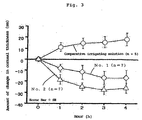
- Fig. 3 shows the protection effect (in vitro experiments) of calcium glycerophosphate on the cornea.
- Fig. 4 shows the protection effect (in vitro experiments) of bicarbonate ions on the cornea.
- Fig. 5 shows the protection effects (in vitro experiments) of D-3-HBA·Na and glucose on the corneas.
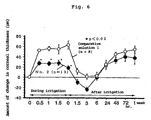
- Fig. 6 shows the amounts of changes in the corneal thickness with time by the solution of the present invention and a comparative solution.
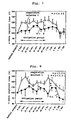
- Fig. 7 shows an electroretinogram (to be referred to as "ERG" hereinafter) showing the a-wave implicit time with time of the solution of the present invention and a comparative solution.
- Fig. 8 shows an ERG showing the b-wave implicit time with time of the solution of the present invention and a comparative solution.
-
- The preparation of the present invention will be described in detail hereinafter.
- As for the absolute configuration at the C3 position in the chemical structural formula of 3-hydroxybutyric acid, there is a group of a D-form, a DL-form and an L-form. Of these, in the present invention, the D-form is used to maximize the effectiveness of a preparation of irrigating solution for ocular surgery. This is because when the difference in activity based on the optical isomers with regard to an effect of activating the corneal endothelial cell, which is one of methods for evaluating the effectiveness of the preparation, is studied, activity is obtained with the D-form while it is hardly obtained with the L-form, and because less activity is obtained with the DL-form than with the D-form since activity is not obtained with the L-form.
- Since D-3-hydroxybutyric acid and its salts can be synthesized with ease and at high asymmetric yields by asymmetrically hydrogenating the ketone groups of an acetoacetic ester in the presence of a ruthenium-optically active phosphine complex as a catalyst and subjecting the ester to alkaline hydrolysis, the compounds can be obtained at relatively low cost (refer to Japanese Patent Publication No. 6-99367.
- The salts of D-3-hydroxybutyric acid in the present invention are preferably water-soluble salts, as exemplified by sodium salts, potassium salts, barium salts, magnesium salts, lithium salts, L-lysine salts, L-histidine salts and L-arginine salts.
- D-3-hydroxybutyric acid and its water-soluble salts can be used solely or in combination of two or more.
- In the present invention, the concentration of D-3-hydroxybutyric acid and/or its salts in the aqueous solution preparation is preferably at least 0.01 mM but less than 200 mM, more preferably at least 1 mM but less than 100 mM, and much more preferably at least 5 mM but less than 40 mM.
- In the present invention, the addition of bicarbonates exerts a remarkable influence on a cornea-swelling-inhibiting effect, which is one of important indexes for sustaining corneal functions. Actually, when the corneoscleral pieces extracted from rabbits were incubated by using a preparation containing bicarbonates or no bicarbonates respectively, and changes in the corneal thicknesses were measured, the preparation containing bicarbonates restored the cornea to a nearly normal condition, whereas the preparation containing no bicarbonates accelerated the corneal swelling, proving that it was lacking in the effect of protecting the cornea. Further, the above was also true in an in vivo experiment using the eyes of rabbits; that is, the preparation containing bicarbonates restored the cornea to a normal condition, whereas the preparation containing no bicarbonates accelerated the corneal swelling.
- In consideration of the above facts, bicarbonates (bicarbonate ions) must be contained in the D-3-hydroxybutiryic acid-containing preparation of the present invention.
- The bicarbonates are preferably sodium bicarbonate and potassium bicarbonate. The concentration of the bicarbonates is preferably at least 0.1 mM but less than 100 mM, more preferably at least 1 mM but less than 60 mM, and much more preferably at least 10 mM but less than 60 mM, as bicarbonate ions (HCO3 -).
- In the present invention, in place of phosphate ions and calcium ions which are aqueous humor components necessary as the components of the irrigating solution, calcium glycerophosphate is used for the purpose of improving the preparation stability under severe temperature conditions. Although glycerophosphate ions are hardly dissociated into phosphate ions in an aqueous solution under normal conditions, it has been confirmed that the glycerophosphate ions can sufficiently exhibit the same effect as the phosphate ions do. Further, in an aqueous solution under severe temperature conditions, while sometimes the phosphate ions are reacted with the calcium ions to cause precipitation, the glycerophosphate ions never cause such precipitation. In addition, it has also been found that the coexistence of D-3-hydroxybutyric acid ions and the glycerophosphate ions can further improve the retention of the function of the cornea. The concentration of calcium glycerophosphate is preferably at least 0.1 mM but less than 50 mM, and more preferably at least 1 mM but less than 10 mM. Inevitably, in the present invention, the calcium ions are contained in the same concentration in which the glycerophosphate ions are contained.
- The preparation of the present invention preferably contains glucose as an additional energy source. In the present invention, D-3-hydroxybutyric acid and/or its salts are used as energy sources, and it has been confirmed that when they are used in the co-presence of glucose, a cornea-activating effect is enhanced more than when they are used alone. The concentration of glucose is preferably at least 0.01 mM but less than 50 mM, and more preferably at least 0.1 mM but less than 20 mM.
- It is preferable that the preparation of present invention further contain citric acid and its salts (citrate ions). The citrate ions are added as a pH adjuster and a stabilizer. Although the citrate ions are preferably supplied as citric acid, they may also be supplied in the form of sodium citrate or potassium citrate. In the present invention, the citrate ions, in combination with bicarbonate salts, also serve as a buffer. In the present invention, when citric acid is used, there is an advantage that the final fine adjustment of pH is not needed in preparing the preparation. However, even if the citrate ions are used in the form of citrate, there is no problem in making the final fine adjustment of pH. The concentration of the citrate ions is at least 0.01 mM but less than 50 mM, and more preferably at least 0.1 mM but less than 10 mM. When the concentration of the citrate ions is set to be within the above range, the pH does not seem to be changed much during observed at 40° C and a relative humidity of 75% for 6 months.
- As for the compounds used in the irrigating solution preparation in the present invention, inorganic salts present in human aqueous humor, isotonic agents and buffers for harmonizing the osmotic pressure and the pH with the intraocular tissues and the corneal endothelial cells, stabilizers and the like are preferably used as appropriate.
- As the inorganic salts and isotonic agents used in the present invention, inorganic salts such as the above calcium salts, magnesium salts and alkaline metal salts, e.g., sodium chloride and potassium chloride, and isotonic agents such as carbohydrates, e.g., mannitol, sorbitol, xylitol and dextran, are preferably used. The magnesium salts are added as salts comprising the D-3-hydroxybutyric acid ions and bicarbonate ions as described above and magnesium, or as other water-soluble salts such as magnesium chloride and magnesium sulfate. The concentration of the magnesium salts is preferably at least 0.01 mM but less than 50 mM, more preferably at least 0.1 mM but less than 20 mM, much more preferably at least 0.5 mM but less than 10 mM. The concentration of the above inorganic salts and that of the above isotonic agents are preferably at least 0.01 mM but less than 1,000 mM. In addition, the osmotic pressure of the preparation is sustained preferably within the range of 270 to 350 mOsm. These can be used solely or in combination of two or more.
- The pH of the aqueous solution preparation of the present invention is preferably in the range of 6.8 to 8.2, within which no damages are caused on intraocular tissues and corneal endothelial cells and which is required to sustain those functions. Further, a pH of 7.2 to 8.0 is more preferable, and the range has been found to be permissible as an irrigating solution for ocular surgery as the result of the efficacy and safety tests using the eyes of rabbits. To have the above range of pH, the above buffer comprising bicarbonates and citrate ions is preferable. In addition, an acetic acid-based buffer, a boric acid-based buffer, and a tris(hydroxy)aminomethane-hydrochloric acid-based buffer can also be used. The present invention will be described in detail with reference to Examples hereinafter.
- Irrigating solutions Nos. 1 to 7 for testing were prepared by dissolving the predetermined amounts of the components listed in Table 1 and, finally, sodium D-3-hydroxybutyric acid (to be referred to as "D-3-HBA·Na" hereinafter) in distilled water so as to adjust the total amounts of the solutions to be 1 liter each; adjusting the pHs of the solutions by diluted hydrochloric acid as required, and subjecting the solutions to aseptic filtration. Further,
Comparative Solutions 2 to 5 were prepared in the same manner as described above, and the components of Commercial Product B (Comparative Solution 1) used as Comparative Example and the concentrations of the components are also shown in Table 1.
- A preparation stability test was performed by using the Solutions Nos. 1 to 5 of Example 1. Five bottles of the solution to be tested were prepared by charging 500 mL of the preparation into 600mL transparent glass containers and capping the bottles. Those were preserved for 6 months in a constant-temperature and constant-humidity instrument maintained at 40°C±0.5°C and a relative humidity of 75%± 5%. The appearances, insoluble matter tests, osmotic pressures and pHs of the solutions were evaluated in accordance with the Japanese pharmacopeia, thirteenth Edition. As a result, no changes occurred in the appearances of the solutions the insoluble matter tests and the osmotic pressures. As for the pHs of the solutions, while they were 7.43±0.02 at the start of the preservation, they became 7.52±0.02 after the 6-month preservation, showing relatively small changes. Accordingly, it was found that the preparations could be preserved stably at room temperature for the long term.
- To evaluate the preparation stability under severe temperature conditions, the appearances of the testing solutions prepared in the same manner as in Example 2 were evaluated. These were preserved in a constant-temperature instrument kept at 60°C for one month and evaluated after one-week preservation and after one-month preservation. As a result, no precipitation was observed in the solutions No. 1 and No. 2 after the one-month preservation, while precipitation was observed in the solutions Nos. 3 to 5 after the one-week preservation, and the amount of the precipitation was increased after the one-month preservation. Therefore, it was found that the solutions No. 1 and No. 2 of the present invention were excellent in stability under severe temperature conditions.
- Using the Solutions No. 2, No. 6 and No. 7 and
Comparative Solutions 2 to 4 as described in Example 1, their cornea-protecting effects were compared with one another by using the corneal thickness-adjusting function of a corneal endothelial cell (in vitro experiment). - Corneoscleral pieces having about 5mm-wide sclerae around the corneas were extracted from mature rabbits and incubated in the testing irrigating solutions at 36° C for 6 hours. The corneal thicknesses after the 6-hour incubation were measured by an ultrasonic pachymeter (DGH-500 PACHETTE, a product of DGH TECHNOLOGY).
- The amount of change in the corneal thickness after the 6-hour incubation by each testing solution are shown in Fig. 1. The amount of change in the corneal thickness was indicated by a negative value when the corneal thickness after the incubation was decreased to smaller than that before the incubation and by a positive value when the corneal thickness after the incubation was increased to larger than that before the incubation.
- As for the amount of change in the corneal thickness by each of the testing solutions containing the D-form or the L-form, the cells incubated by the all of testing solutions containing D-3-HBA·Na were kept with the corneal thickness further reduced. Of the testing solutions, the Solution No. 2 containing 20 mM of D-3-HBA·Na exhibited the most prominent cornea-protecting effect.
- Using three types of testing irrigating solutions, i.e., the Solutions No. 2 and No. 3 described in Example 1 and a comparative irrigating solution having the same composition as that of the Solution No. 2 except for the absence of phosphate ions and glycerophosphate ions and having its osmotic pressure adjusted to the same level as those of the Solutions No. 2 and No. 3, their cornea-protecting effects were compared with one another by using the corneal thickness-adjusting function of a corneal endothelial cell (in vitro experiment) in the same manner as in Example 4 (except that only the incubation time was changed). The results are shown in Fig. 2.
- As a result, it was found that the glycerophosphate ions served the same function as that of the phosphate ions which are the essential components of aqueous humor.
- Using three types of testing irrigating solutions, i.e., the Solutions No. 1 and No. 2 described in Example 1 and a comparative irrigating solution having the same composition as that of the Solution No. 2 except for the absence of glycerophosphate ions and having its osmotic pressure adjusted to the same level as those of the Solutions No. 1 and No. 2, their cornea-protecting effects were compared with one another by using the corneal thickness-adjusting function of a corneal endothelial cell (in vitro experiment) in the same manner as in Example 5. The results are shown in Fig. 3.
- As a result, it was found that the corneal thickness-adjusting function did not function in the absence of calcium glycerophosphate and that as the content of calcium glycerophosphate increased, that is, with the Solution No. 2 rather than the Solution No. 1, the corneal thickness-adjusting function functioned more effectively.
- Using two types of testing irrigating solutions, i.e., the Solution No. 2 described in Example 1 and a comparative irrigating solution having the same composition as that of the Solution No. 2 except for the absence of bicarbonate ions and having its osmotic pressure adjusted to the same level as that of the Solution No. 2, their cornea-protecting effects were compared with each other by using the corneal thickness-adjusting function of a corneal endothelial cell (in vitro experiment) in the same manner as in Example 5. The results are shown in Fig. 4.
- As a result, it was found that the corneal thickness-adjusting function did not function normally in the absence of bicarbonate ions and that the bicarbonate ions must therefore be contained.
- Using two types of testing irrigating solutions, i.e., the Solution No. 2 and the
Comparative Solution 5 described in Example 1, their cornea-protecting effects were compared with each other by using the corneal thickness-adjusting function of a corneal endothelial cell (in vitro experiment) in the same manner as in Example 5. The results are shown in Fig. 5. - As a result, it was found that the corneal thickness-adjusting function functioned more effectively with the solution (No. 2) containing a combination of D-3-HBA·Na and glucose as an energy source than with the solution (Comparative Solution 5) containing only glucose as an energy source.
- Two types of the testing irrigating solutions described in Example 1, i.e., the testing irrigating solution No. 2 and
Comparative Solution 1, were examined for their effects to the corneal thickness by an in vivo experiment in which the solutions were irrigated in the anterior chambers of Dutch rabbits (male and female weighing 1.9 to 2.9 kg). - After putting the rabbits under general anesthesia by injecting xylazine hydrochloride and ketamine hydrochloride through intramuscular injection, a 3.2-mm-long incision was made around the corneas of the left and right eyes of each rabbit using a scalpel for ocular surgery. Subsequently, 18-gauge injection needles having a rounded tip were inserted in the anterior chambers through the incisions, and the two types of testing irrigating solutions were allowed to irrigate at a flow rate of 10 ml/min for 120 minutes. The amount of change in the corneal thickness by each solution was measured by the above ultrasonic pachymeter before the start of the irrigation and every 30 minutes until 120 minutes after the start of the irrigation under local anesthesia maintained by giving eye drops of a 0.4% oxybuprocaine hydrochloride solution. The amounts of changes in the corneal thicknesses with time are shown in Fig. 6.
- As a result, it was found that the Solution No. 2, which was the present invention, caused a significantly small change in the corneal thickness especially during irrigation and had an excellent cornea-protecting effect, as compared with the Comparative Solution No. 1, which was a commercially available irrigating solution preparation.
- Using two types of testing irrigating solutions, i.e., the Solution No. 2 and Comparative Solution No. 1 described in Example 1, an electrophysiologic examination by ERG was conducted in the following experiment procedure in order to study the influences of the irrigating solutions on the retina extracted from a rabbit. The retina extracted from the rear portion of the eye ball of a rabbit was set in a chamber in which the retina was to be reacted with the testing solutions. By allowing a gas comprising 95% of O2 and 5% of CO2 to pass through the solutions, they were substituted by standard irrigating solutions at 35° C. After the retina was incubated for 60 minutes, the irrigating solutions were again substituted by standard irrigating solutions and the retina was incubated for another 60 minutes. The a-wave and b-wave implicit time (time until the reaction occurs) of ERG were then observed at intervals of 10 minutes (reference time: 0 minute). The rate of change in each implicit time of ERG was based on the implicit time immediately before the substitution of the testing solutions. The change of amplitude in each measuring time was converted into a percentage. The change with time of the a wave is shown in Fig. 7, and the change with time of the b wave is shown in Fig. 8.
- As a result, it was found that the Solution No. 2, which was the solution of the present invention exerted a smaller influence on the retina than the
Comparative Solution 1, which was a commercially available irrigating solution preparation. - ERG is one of the methods which are effective in acquiring general information about the retina, including a change in the retinal function, that is, the degree of reduction in the number of retinal cells, in other words, the range of seriousness of its symptom, the degree of qualitative and quantitative abnormalities of a visual substance and a neurotransmitter, the abnormalities of retinal cells and a cell membrane potential, and the degree of degeneration of a cell membrane (Ophthalmology Coherent Structure, Vol. 1, pp. 69-70, published by NAKAYAMA SYOTEN, 1993).
- As described above, the present invention provides a one solution-pack irrigating solution for ocular surgery, which has a high living body safety and is stable as a preparation under severe temperature conditions, by using a combination of at least one compound selected from the group consisting of D-3-hydroxybutyric acid and its salts as an energy source, bicarbonates and calcium glycerophosphate. Further, the preparation of irrigating solution for ocular surgery has an excellent effect of protecting ocular tissues including corneal endothelial cells and an excellent effect of recovering physically damaged ocular tissues.
Claims (12)
- A one solution-pack irrigating solution preparation for ocular surgery, which comprises(i) at least one compound selected from the group consisting of D-3-hydroxybutyric acid and its salts,(ii) bicarbonates, and(iii) calcium glycerophosphate.
- The preparation of claim 1, which further comprises glucose.
- The preparation of claim 1, which further comprises at least one compound selected from the group consisting of citric acid and its salts.
- The preparation of claim 1, wherein D-3-hydroxybutyric acid and its salts are selected from the group consisting of sodium salts, potassium salts, barium salts, magnesium salts, lithium salts, L-lysine salts, L-histidine salts and L-arginine salts.
- The preparation of claim 1, wherein the bicarbonates are sodium salts and potassium salts.
- The preparation of claim 1, wherein the concentration of at least one compound selected from the group consisting of D-3-hydroxybutyric acid and its salts is at least 0.01 mM but less than 200 mM.
- The preparation of claim 1, wherein the concentration of the bicarbonates is at least 0.1 mM but less than 100 mM.
- The preparation of claim 1, wherein the concentration of calcium glycerophosphate is at least 0.1 mM but less than 50 mM.
- The preparation of claim 2, wherein the concentration of glucose is at least 0.01 mM but less than 50 mM.
- The preparation of claim 3, wherein the concentration of at least one compound selected from the group consisting of citric acid and its salts is at least 0.01 mM but less than 50 mM.
- The preparation of claim 1, which further comprises at least one compound selected from the group consisting of inorganic salts as biological components and isotonic agents.
- The one solution-pack irrigating solution preparation of claims 1, 2, 3 and 11 for use in the surgery of cataract, intraocular lens implantation, glaucoma, vitrectomy body or penetrating keratoplasty.
Applications Claiming Priority (1)
| Application Number | Priority Date | Filing Date | Title |
|---|---|---|---|
| PCT/JP2000/000081 WO2001051065A1 (en) | 2000-01-11 | 2000-01-11 | Perfusion liquid preparations for ophthalmic operations |
Publications (3)
| Publication Number | Publication Date |
|---|---|
| EP1247526A1 EP1247526A1 (en) | 2002-10-09 |
| EP1247526A4 EP1247526A4 (en) | 2005-01-05 |
| EP1247526B1 true EP1247526B1 (en) | 2005-12-14 |
Family
ID=11735564
Family Applications (1)
| Application Number | Title | Priority Date | Filing Date |
|---|---|---|---|
| EP00900174A Expired - Lifetime EP1247526B1 (en) | 2000-01-11 | 2000-01-11 | Perfusion liquid preparations for ophthalmic operations |
Country Status (9)
| Country | Link |
|---|---|
| EP (1) | EP1247526B1 (en) |
| KR (1) | KR100550023B1 (en) |
| CN (1) | CN1196489C (en) |
| AT (1) | ATE312614T1 (en) |
| CA (1) | CA2396130C (en) |
| DE (1) | DE60024875T2 (en) |
| ES (1) | ES2253201T3 (en) |
| TW (1) | TW524689B (en) |
| WO (1) | WO2001051065A1 (en) |
Families Citing this family (6)
| Publication number | Priority date | Publication date | Assignee | Title |
|---|---|---|---|---|
| WO2005032534A1 (en) * | 2003-10-06 | 2005-04-14 | Ophtecs Corporation | Ophthalmic composition for treating lacrimal disorders |
| KR100680109B1 (en) * | 2005-07-27 | 2007-02-07 | 웅진코웨이주식회사 | Polyamide Reverse Osmosis Composite Membrane and Manufacturing Method Thereof |
| US20090239957A1 (en) * | 2007-12-21 | 2009-09-24 | Alcon Research, Ltd. | Stabilized glycerophosphate-containing surgical irrigating solution |
| TW200940054A (en) * | 2007-12-21 | 2009-10-01 | Alcon Res Ltd | Intraocular irrigating solutions and methods for treating corneal edema |
| RU2414196C1 (en) * | 2009-09-28 | 2011-03-20 | Александр Ливиевич Ураков | Method of increasing ophthalmosurgery safety by ml kashkovskiy |
| SG10201913250SA (en) | 2015-08-18 | 2020-03-30 | Astellas Inst For Regenerative Medicine | Clinical formulations |
Family Cites Families (4)
| Publication number | Priority date | Publication date | Assignee | Title |
|---|---|---|---|---|
| US4238482A (en) * | 1978-09-29 | 1980-12-09 | Peyman Gholam A | Intraocular infusion irrigation solution and method |
| US4886786A (en) * | 1985-08-01 | 1989-12-12 | Lindstrom Richard L | Additive for irrigation solution or surgical solution |
| US4975419A (en) * | 1988-09-09 | 1990-12-04 | Entravision, Inc. | Tissue irrigating solution |
| FR2656527B1 (en) * | 1989-12-29 | 1992-04-10 | Anben | EYE IRRIGATION SOLUTION USED IN THERAPEUTICS FOR ENDOTHELIAL PROTECTION AND CONSERVATION OF THE CORNEA. |
-
2000
- 2000-01-11 EP EP00900174A patent/EP1247526B1/en not_active Expired - Lifetime
- 2000-01-11 DE DE60024875T patent/DE60024875T2/en not_active Expired - Lifetime
- 2000-01-11 ES ES00900174T patent/ES2253201T3/en not_active Expired - Lifetime
- 2000-01-11 KR KR1020027008337A patent/KR100550023B1/en not_active Expired - Fee Related
- 2000-01-11 CN CNB008183325A patent/CN1196489C/en not_active Expired - Fee Related
- 2000-01-11 CA CA002396130A patent/CA2396130C/en not_active Expired - Fee Related
- 2000-01-11 AT AT00900174T patent/ATE312614T1/en not_active IP Right Cessation
- 2000-01-11 WO PCT/JP2000/000081 patent/WO2001051065A1/en not_active Ceased
- 2000-01-15 TW TW089100674A patent/TW524689B/en not_active IP Right Cessation
Also Published As
| Publication number | Publication date |
|---|---|
| CA2396130C (en) | 2008-03-11 |
| EP1247526A1 (en) | 2002-10-09 |
| CN1423562A (en) | 2003-06-11 |
| KR20020063271A (en) | 2002-08-01 |
| CN1196489C (en) | 2005-04-13 |
| WO2001051065A1 (en) | 2001-07-19 |
| ES2253201T3 (en) | 2006-06-01 |
| KR100550023B1 (en) | 2006-02-09 |
| ATE312614T1 (en) | 2005-12-15 |
| DE60024875D1 (en) | 2006-01-19 |
| DE60024875T2 (en) | 2006-08-24 |
| CA2396130A1 (en) | 2001-07-19 |
| EP1247526A4 (en) | 2005-01-05 |
| TW524689B (en) | 2003-03-21 |
Similar Documents
| Publication | Publication Date | Title |
|---|---|---|
| US6495598B1 (en) | Perfusate preparation for ophthalmic operation | |
| US5654266A (en) | Composition for tissues to sustain viability and biological functions in surgery and storage | |
| US4238482A (en) | Intraocular infusion irrigation solution and method | |
| US6899877B2 (en) | Process for generating plasmin in the vitreous of the eye and inducing separation of the posterior hyaloid from the retina | |
| US6585972B2 (en) | Process for crosslinking of collagen in the vitreous of the eye and inducing separation of the posterior hyaloid from the retina | |
| EP0414373B2 (en) | Stable solution of hyaluronate in a balanced salt medium | |
| US4837021A (en) | Two part tissue irrigating solution | |
| EP1408929B1 (en) | Ophthalmic composition containing n-acetylcysteine for the treatment of dry-eye syndrom | |
| JPWO1993024121A1 (en) | Glaucoma treatment | |
| CA2396130C (en) | Preparation of irrigating solution for ocular surgery | |
| JP4033510B2 (en) | Ophthalmic pharmaceutical composition containing trehalose | |
| EP1125575B1 (en) | Perfusate preparation for ophthalmic operation | |
| JP2563336B2 (en) | Eye drops for promoting corneal penetration | |
| WO1997024129A1 (en) | Pharmaceutical composition containing trehalose | |
| EP1380302B1 (en) | Remedies for retina and choroid diseases containing steroids as the active ingredient | |
| JP3407384B2 (en) | Intraocular perfusion / cleansing agent and eyeball preservative | |
| MXPA04007802A (en) | Treatment of ophthalmic disorders using urea and urea derivatives. | |
| Karaman et al. | Treatment of post-traumatic trabecular Mashwork thrombosis and secondary glaucoma with intracameral tissue plasminogen activator in previously unrecognized sickle cell anemia | |
| RU2234309C2 (en) | Irrigation solution for ophthalmology | |
| KR20010106511A (en) | Perfusate preperation for ophthalmic operation | |
| JP2001240536A (en) | Perfusate preparation for ophthalmic operation | |
| McLEAN | Lens and vitreous | |
| WO2025181000A1 (en) | Composition for the treatment of keratoconus | |
| JP2001089366A (en) | Cornea turbidity inhibitor | |
| TW519492B (en) | Irrigation composition comprised D-3- hydroxybutyricacid and water soluble salt for an ophthalmic operation |
Legal Events
| Date | Code | Title | Description |
|---|---|---|---|
| PUAI | Public reference made under article 153(3) epc to a published international application that has entered the european phase |
Free format text: ORIGINAL CODE: 0009012 |
|
| 17P | Request for examination filed |
Effective date: 20020717 |
|
| AK | Designated contracting states |
Kind code of ref document: A1 Designated state(s): AT BE CH CY DE DK ES FI FR GB GR IE IT LI LU MC NL PT SE |
|
| A4 | Supplementary search report drawn up and despatched |
Effective date: 20041123 |
|
| GRAP | Despatch of communication of intention to grant a patent |
Free format text: ORIGINAL CODE: EPIDOSNIGR1 |
|
| GRAS | Grant fee paid |
Free format text: ORIGINAL CODE: EPIDOSNIGR3 |
|
| GRAA | (expected) grant |
Free format text: ORIGINAL CODE: 0009210 |
|
| AK | Designated contracting states |
Kind code of ref document: B1 Designated state(s): AT BE CH CY DE DK ES FI FR GB GR IE IT LI LU MC NL PT SE |
|
| PG25 | Lapsed in a contracting state [announced via postgrant information from national office to epo] |
Ref country code: NL Free format text: LAPSE BECAUSE OF FAILURE TO SUBMIT A TRANSLATION OF THE DESCRIPTION OR TO PAY THE FEE WITHIN THE PRESCRIBED TIME-LIMIT Effective date: 20051214 Ref country code: LI Free format text: LAPSE BECAUSE OF FAILURE TO SUBMIT A TRANSLATION OF THE DESCRIPTION OR TO PAY THE FEE WITHIN THE PRESCRIBED TIME-LIMIT Effective date: 20051214 Ref country code: FI Free format text: LAPSE BECAUSE OF FAILURE TO SUBMIT A TRANSLATION OF THE DESCRIPTION OR TO PAY THE FEE WITHIN THE PRESCRIBED TIME-LIMIT Effective date: 20051214 Ref country code: CH Free format text: LAPSE BECAUSE OF FAILURE TO SUBMIT A TRANSLATION OF THE DESCRIPTION OR TO PAY THE FEE WITHIN THE PRESCRIBED TIME-LIMIT Effective date: 20051214 Ref country code: AT Free format text: LAPSE BECAUSE OF FAILURE TO SUBMIT A TRANSLATION OF THE DESCRIPTION OR TO PAY THE FEE WITHIN THE PRESCRIBED TIME-LIMIT Effective date: 20051214 Ref country code: BE Free format text: LAPSE BECAUSE OF FAILURE TO SUBMIT A TRANSLATION OF THE DESCRIPTION OR TO PAY THE FEE WITHIN THE PRESCRIBED TIME-LIMIT Effective date: 20051214 |
|
| REG | Reference to a national code |
Ref country code: GB Ref legal event code: FG4D |
|
| REG | Reference to a national code |
Ref country code: CH Ref legal event code: EP |
|
| PG25 | Lapsed in a contracting state [announced via postgrant information from national office to epo] |
Ref country code: IE Free format text: LAPSE BECAUSE OF NON-PAYMENT OF DUE FEES Effective date: 20060111 |
|
| REG | Reference to a national code |
Ref country code: IE Ref legal event code: FG4D |
|
| REF | Corresponds to: |
Ref document number: 60024875 Country of ref document: DE Date of ref document: 20060119 Kind code of ref document: P |
|
| PG25 | Lapsed in a contracting state [announced via postgrant information from national office to epo] |
Ref country code: LU Free format text: LAPSE BECAUSE OF NON-PAYMENT OF DUE FEES Effective date: 20060131 Ref country code: MC Free format text: LAPSE BECAUSE OF NON-PAYMENT OF DUE FEES Effective date: 20060131 |
|
| PG25 | Lapsed in a contracting state [announced via postgrant information from national office to epo] |
Ref country code: SE Free format text: LAPSE BECAUSE OF FAILURE TO SUBMIT A TRANSLATION OF THE DESCRIPTION OR TO PAY THE FEE WITHIN THE PRESCRIBED TIME-LIMIT Effective date: 20060314 Ref country code: DK Free format text: LAPSE BECAUSE OF FAILURE TO SUBMIT A TRANSLATION OF THE DESCRIPTION OR TO PAY THE FEE WITHIN THE PRESCRIBED TIME-LIMIT Effective date: 20060314 Ref country code: GR Free format text: LAPSE BECAUSE OF FAILURE TO SUBMIT A TRANSLATION OF THE DESCRIPTION OR TO PAY THE FEE WITHIN THE PRESCRIBED TIME-LIMIT Effective date: 20060314 |
|
| PG25 | Lapsed in a contracting state [announced via postgrant information from national office to epo] |
Ref country code: PT Free format text: LAPSE BECAUSE OF FAILURE TO SUBMIT A TRANSLATION OF THE DESCRIPTION OR TO PAY THE FEE WITHIN THE PRESCRIBED TIME-LIMIT Effective date: 20060515 |
|
| NLV1 | Nl: lapsed or annulled due to failure to fulfill the requirements of art. 29p and 29m of the patents act | ||
| REG | Reference to a national code |
Ref country code: ES Ref legal event code: FG2A Ref document number: 2253201 Country of ref document: ES Kind code of ref document: T3 |
|
| REG | Reference to a national code |
Ref country code: CH Ref legal event code: PL |
|
| ET | Fr: translation filed | ||
| REG | Reference to a national code |
Ref country code: IE Ref legal event code: MM4A |
|
| PLBE | No opposition filed within time limit |
Free format text: ORIGINAL CODE: 0009261 |
|
| STAA | Information on the status of an ep patent application or granted ep patent |
Free format text: STATUS: NO OPPOSITION FILED WITHIN TIME LIMIT |
|
| 26N | No opposition filed |
Effective date: 20060915 |
|
| PG25 | Lapsed in a contracting state [announced via postgrant information from national office to epo] |
Ref country code: CY Free format text: LAPSE BECAUSE OF FAILURE TO SUBMIT A TRANSLATION OF THE DESCRIPTION OR TO PAY THE FEE WITHIN THE PRESCRIBED TIME-LIMIT Effective date: 20051214 |
|
| PGFP | Annual fee paid to national office [announced via postgrant information from national office to epo] |
Ref country code: ES Payment date: 20131211 Year of fee payment: 15 |
|
| PGFP | Annual fee paid to national office [announced via postgrant information from national office to epo] |
Ref country code: DE Payment date: 20140108 Year of fee payment: 15 |
|
| PGFP | Annual fee paid to national office [announced via postgrant information from national office to epo] |
Ref country code: IT Payment date: 20140108 Year of fee payment: 15 Ref country code: FR Payment date: 20140108 Year of fee payment: 15 |
|
| PGFP | Annual fee paid to national office [announced via postgrant information from national office to epo] |
Ref country code: GB Payment date: 20140108 Year of fee payment: 15 |
|
| REG | Reference to a national code |
Ref country code: DE Ref legal event code: R119 Ref document number: 60024875 Country of ref document: DE |
|
| GBPC | Gb: european patent ceased through non-payment of renewal fee |
Effective date: 20150111 |
|
| PG25 | Lapsed in a contracting state [announced via postgrant information from national office to epo] |
Ref country code: DE Free format text: LAPSE BECAUSE OF NON-PAYMENT OF DUE FEES Effective date: 20150801 Ref country code: GB Free format text: LAPSE BECAUSE OF NON-PAYMENT OF DUE FEES Effective date: 20150111 |
|
| REG | Reference to a national code |
Ref country code: FR Ref legal event code: ST Effective date: 20150930 |
|
| PG25 | Lapsed in a contracting state [announced via postgrant information from national office to epo] |
Ref country code: FR Free format text: LAPSE BECAUSE OF NON-PAYMENT OF DUE FEES Effective date: 20150202 |
|
| PG25 | Lapsed in a contracting state [announced via postgrant information from national office to epo] |
Ref country code: IT Free format text: LAPSE BECAUSE OF NON-PAYMENT OF DUE FEES Effective date: 20150111 |
|
| REG | Reference to a national code |
Ref country code: ES Ref legal event code: FD2A Effective date: 20160226 |
|
| PG25 | Lapsed in a contracting state [announced via postgrant information from national office to epo] |
Ref country code: ES Free format text: LAPSE BECAUSE OF NON-PAYMENT OF DUE FEES Effective date: 20150112 |