BACKGROUND OF THE INVENTION
Field of the Invention
The present invention relates to an improvemed sealing
structure for an organic electroluminescent display comprising
an organic electroluminescent element formed on a substrate.
Description of the Related Art
Conventionally, there has been proposed organic
electroluminescent displays having an organic electroluminescent
element comprising a TFT, an organic luminescent layer, or the
like, formed on a substrate. Because such organic
electroluminescent elements rapidly deteriorate when exposed to
any moisture, they cannot be directly exposed to air. Therefore,
to prevent exposure to moisture and air, organic electroluminescent
elements are generally sealed with an airtight sealing member.
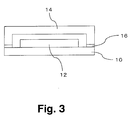
Fig. 3 shows a sectional diagram of an example sealing
structure of such a conventional organic electroluminescent
display. In Fig. 3, an organic electroluminescent element 12 is
formed on a substrate 10 and its periphery is covered with a metallic
sealing member 14. The sealing member 14 is bonded to the substrate
10 with an adhesive agent 16 to provide a structure to seal the
organic electroluminescent element 12, in which dry nitrogen is
then sealed.
However, the sealing structure of the above-described
conventional organic electroluminescent display has a
disadvantage in that, when a photo-setting resin is used as the
adhesive agent 16, light for curing the photo-setting resin must
be projected from the side of the substrate 10 because the sealing
member 14 is made of metal. This necessity severely limits
production. There is also a problem that the overall size must
be made sufficiently large to provide a sealing region to which
the adhesive agent 16 can be applied; this disadvantageously
increases both the weight and size of the device.
It is also necessary to bond the sealing member 14 to the
substrate 10 with high bonding strength to prevent moisture from
entering within the sealing structure.
SUMMARY OF THE INVENTION
The present invention was made in view of the above
circumstances, and it is an object of the invention to provide
an organic electroluminescent display sealing structure which can
adequately bond a sealing member to a substrate and which does
not contribute to deterioration of an organic electroluminescent
element during manufacture.
In order to achieve the above object, the present invention
is directed to a sealing structure of an organic electroluminescent
display for excluding air from an organic electroluminescent
element formed on a substrate, wherein a sealing member made of
glass for sealing the organic electroluminescent element is bonded
to the substrate with an ultraviolet curing resin. The sealing
member transmits 50% or more of light in a wavelength of 300 to
320 nm.
With such a structure, the glass sealing member is bonded
to the substrate with the ultraviolet curing resin, and, because
this sealing member is one which exhibits high transmittance of
ultraviolet light (light with a wavelength of 300 to 320 nm), the
sealing member can be bonded firmly to the substrate. By a
employing an ultraviolet curing resin with absorbing efficiency
of light at a wavelength in a low region at 300 to 320 nm, a resin
resistant to heat generation can be chosen. For this reason and
because, unlike in the conventional art, heat curing is unnecessary,
the organic electroluminescent element will not be exposed to
thermal stresses.
In the sealing structure of the organic electroluminescent
display, the sealing member may be sheet glass.
By employing the structure of the present invention,
material costs can be reduced and, because the sealing member is
made of a material such as sheet glass, manufacturing flexibility
is enhanced because light for curing the photo-setting resin can
be irradiated from any side of the sealing member. This in turn
allows further manufacturing cost reductions and increased
manufacturing efficiency.
BRIEF DESCRIPTION OF THE DRAWINGS
Fig. 1 is a sectional diagram of an embodiment of a sealing
structure of an organic electroluminescent display according to
the present invention;
Fig. 2 is a diagram showing light transmittance of glass
as a material for a sealing member used in the embodiment and light
absorbing efficiency of an ultraviolet curing resin used as an
adhesive agent; and
Fig. 3 is a sectional diagram of an example sealing structure
of a conventional organic electroluminescent display.
DESCRIPTION OF THE PREFERRED EMBODIMENT
An embodiment of the present invention will be described
with reference to the accompanying drawings.
Fig. 1 shows a sectional diagram of an embodiment of the
sealing structure of an organic electroluminescent display
according to the present invention. In the structure shown in
Fig. 1, an organic electroluminescent element 12 is formed on a
substrate 10. A sealing member 14 is bonded to the substrate 10
with an adhesive agent 16 consisting of an ultraviolet-curing resin
to form an airtight seal for the organic electroluminescent element
12. In the present embodiment, the sealing member 14 is made of
sheet glass, which is an example material transmitting 50% or more
of ultraviolet light, more particularly light in the 300 to 320
nm band. Thus, a curing reaction of the adhesive agent 16
sufficient to produce the sealing structure according to this
embodiment can be ensured, and sufficiency of the strength of the
bond of the sealing member 14 to the substrate 10 can be relied
upon. A suitable gas, such as dry nitrogen, is sealed into a void
space of the sealing structure comprised of the substrate 10, the
sealing member 14 and the adhesive agent 16.
Thus, when an appropriate ultraviolet curing resin is used
as the adhesive agent 16 for bonding the sealing member 14 to the
substrate 10, the organic electroluminescent element 12 inside
the sealing structure is less subject to deterioration, and the
service life of the element can be extended because the resin
provides superior waterproofing. When a thermosetting resin is
used as the adhesive agent 16, it is necessary to heat the adhesive
agent 16 to bond the sealing member 14 to the substrate 10. This
exposes the organic electroluminescent element 12 to high
temperatures and increased risk of deterioration. Heating is not
required when an ultraviolet curing resin is used and, when the
light irradiated to cure the resin has a wavelength of 300 to 320
nm and the resin absorbs light in such a short wavelength region,
very little heat is produced. Accordingly, thermal deterioration
of the organic electroluminescent element 12 can be prevented and
the element life can be extended. Further, distortion of the glass
substrate due to heat, as is common in the conventional art, can
be prevented.
The sheet glass sealing member 14 according to the present
example can be easily produced and material production costs can
be reduced.
Furthermore, to bond the sealing member 14 to the substrate
10 with the adhesive agent 16 which is an ultraviolet curing resin,
ultraviolet rays can be irradiated from either side of the substrate
10 and the sealing member 14. Therefore, the sealing structure
of the organic electroluminescent display according to this
embodiment enables improvement of the flexibility of the production
method. When the present invention is applied to devices wherein
a peripheral driver for driving the organic electroluminescent
display is formed on the substrate 10, because light can be
irradiated from the side of the sealing member 14 it is not necessary
to provide a sealing area for application of the adhesive agent
16, as required in the related art. As such, further
miniaturization becomes possible.
Fig. 2 is a diagram showing light transmittance of glass
as a material for the sealing member 14 of the present invention,
and light absorbing efficiency of the ultraviolet curing resin
used as the adhesive agent 16 for different wavelengths of light.
Transmittance characteristics of three types of glass materials
G1, G2, G3 are shown in Fig. 2. For the ultraviolet curing resin,
2 types of absorbing efficiency, R1 and R2, are shown.
It is apparent from Fig. 2 that the light absorbing efficiency
of the ultraviolet curing resin is high in the ultraviolet region,
and particularly high in the 300 to 320 nm region. The glass
materials G1, G2 shown in Fig. 2 transmit 50% or more of light
with a wavelength in a range of 300 to 320 nm, the region in which
the light absorbing efficiency of the ultraviolet curing resin
is especially high. The glass material G3, on the other hand,
exhibits low transmittance of light in the 300 to 320 nm wavelength
range, and, therefore, the glass material G3 is judged to be an
inappropriate material for the sealing member 14 of the present
invention.
When the glass materials G1, G2 shown in Fig. 2 are used
as a material for the sealing member 14, the product of the light
transmittance and the light absorbing efficiency of the ultraviolet
curing resin is shown as GR1 and GR2 for respective types of
ultraviolet curing resins. A rate of curing reaction of the
ultraviolet curing resin can be determined from the product of
the light transmittance of the sealing member 14 and the light
absorbing efficiency of the ultraviolet curing resin. More
specifically, the curing reaction becomes faster as the product
becomes larger, enabling firm bonding of the sealing material 14
to the substrate 10. As shown in Fig. 2, when the glass materials
G1, G2 are used as the material for the sealing member 14, the
product of the transmittance by the absorbing efficiency of light
having a wavelength of 300 to 320 nm becomes large (see GR1, GR2),
and a bonding strength of the adhesive agent 16 of the photo-curing
resin can be sufficiently enhanced.
Non-alkali glass which is also used as a material for the
substrate 10, can be used as glass exhibiting high transmittance
of light in the 300 to 320 nm range. An example of a suitable
ultraviolet curing resin may be cationic epoxy resin or the like.
As described above, because according to the present
invention the sealing member is configured of a material such as
glass transmitting 50% or more of light with a wavelength of 300
to 320 nm, the bonding strength of the ultraviolet curing resin
for bonding the sealing member to the substrate can be enhanced
sufficiently.
Production can be facilitated and the material cost can be
reduced by using a suitable common materials such as sheet glass
for the sealing member.
While there has been described that what is at present
considered to be a preferred embodiment of the invention, it is
to be understood that various modifications may be made thereto,
and it is intended that the appended claims cover all such
modifications as fall within the true spirit and scope of the
invention.