EP1241822B1 - ARQ-Sendeeinheit zum Senden von Datenblöcken an eine Mobilstation - Google Patents
ARQ-Sendeeinheit zum Senden von Datenblöcken an eine Mobilstation Download PDFInfo
- Publication number
- EP1241822B1 EP1241822B1 EP02290638.2A EP02290638A EP1241822B1 EP 1241822 B1 EP1241822 B1 EP 1241822B1 EP 02290638 A EP02290638 A EP 02290638A EP 1241822 B1 EP1241822 B1 EP 1241822B1
- Authority
- EP
- European Patent Office
- Prior art keywords
- blocks
- transmission
- block
- sequence
- acknowledgement
- Prior art date
- Legal status (The legal status is an assumption and is not a legal conclusion. Google has not performed a legal analysis and makes no representation as to the accuracy of the status listed.)
- Expired - Lifetime
Links
- 230000005540 biological transmission Effects 0.000 claims description 80
- 238000000034 method Methods 0.000 claims description 23
- 238000001514 detection method Methods 0.000 claims description 8
- 238000004891 communication Methods 0.000 claims description 6
- 230000004044 response Effects 0.000 claims description 6
- 238000012545 processing Methods 0.000 claims description 4
- 230000000694 effects Effects 0.000 claims description 3
- 101000741965 Homo sapiens Inactive tyrosine-protein kinase PRAG1 Proteins 0.000 claims 2
- 102100038659 Inactive tyrosine-protein kinase PRAG1 Human genes 0.000 claims 2
- 230000003213 activating effect Effects 0.000 claims 2
- 238000005562 fading Methods 0.000 description 22
- 230000007246 mechanism Effects 0.000 description 10
- 238000012360 testing method Methods 0.000 description 8
- 238000010586 diagram Methods 0.000 description 7
- 230000006978 adaptation Effects 0.000 description 5
- 230000001413 cellular effect Effects 0.000 description 4
- 230000001934 delay Effects 0.000 description 4
- 230000008569 process Effects 0.000 description 4
- 230000000903 blocking effect Effects 0.000 description 3
- 238000000605 extraction Methods 0.000 description 3
- 238000004080 punching Methods 0.000 description 3
- 230000000630 rising effect Effects 0.000 description 3
- 230000011664 signaling Effects 0.000 description 3
- 238000007796 conventional method Methods 0.000 description 2
- 230000007423 decrease Effects 0.000 description 2
- 238000006073 displacement reaction Methods 0.000 description 2
- 230000004907 flux Effects 0.000 description 2
- 238000003780 insertion Methods 0.000 description 2
- 230000037431 insertion Effects 0.000 description 2
- 230000000717 retained effect Effects 0.000 description 2
- 230000001360 synchronised effect Effects 0.000 description 2
- 206010042772 syncope Diseases 0.000 description 2
- 238000012546 transfer Methods 0.000 description 2
- 108700026140 MAC combination Proteins 0.000 description 1
- 101710116852 Molybdenum cofactor sulfurase 1 Proteins 0.000 description 1
- 101100465000 Mus musculus Prag1 gene Proteins 0.000 description 1
- 238000005314 correlation function Methods 0.000 description 1
- 230000003247 decreasing effect Effects 0.000 description 1
- 229940082150 encore Drugs 0.000 description 1
- 238000005259 measurement Methods 0.000 description 1
- 238000010295 mobile communication Methods 0.000 description 1
- 230000008520 organization Effects 0.000 description 1
- 230000011218 segmentation Effects 0.000 description 1
Images




Classifications
-
- H—ELECTRICITY
- H04—ELECTRIC COMMUNICATION TECHNIQUE
- H04L—TRANSMISSION OF DIGITAL INFORMATION, e.g. TELEGRAPHIC COMMUNICATION
- H04L1/00—Arrangements for detecting or preventing errors in the information received
- H04L1/12—Arrangements for detecting or preventing errors in the information received by using return channel
- H04L1/16—Arrangements for detecting or preventing errors in the information received by using return channel in which the return channel carries supervisory signals, e.g. repetition request signals
- H04L1/18—Automatic repetition systems, e.g. Van Duuren systems
- H04L1/1825—Adaptation of specific ARQ protocol parameters according to transmission conditions
-
- H—ELECTRICITY
- H04—ELECTRIC COMMUNICATION TECHNIQUE
- H04L—TRANSMISSION OF DIGITAL INFORMATION, e.g. TELEGRAPHIC COMMUNICATION
- H04L1/00—Arrangements for detecting or preventing errors in the information received
- H04L1/0001—Systems modifying transmission characteristics according to link quality, e.g. power backoff
- H04L1/0023—Systems modifying transmission characteristics according to link quality, e.g. power backoff characterised by the signalling
- H04L1/0026—Transmission of channel quality indication
-
- H—ELECTRICITY
- H04—ELECTRIC COMMUNICATION TECHNIQUE
- H04L—TRANSMISSION OF DIGITAL INFORMATION, e.g. TELEGRAPHIC COMMUNICATION
- H04L1/00—Arrangements for detecting or preventing errors in the information received
- H04L1/004—Arrangements for detecting or preventing errors in the information received by using forward error control
- H04L1/0072—Error control for data other than payload data, e.g. control data
-
- H—ELECTRICITY
- H04—ELECTRIC COMMUNICATION TECHNIQUE
- H04L—TRANSMISSION OF DIGITAL INFORMATION, e.g. TELEGRAPHIC COMMUNICATION
- H04L1/00—Arrangements for detecting or preventing errors in the information received
- H04L1/12—Arrangements for detecting or preventing errors in the information received by using return channel
- H04L1/16—Arrangements for detecting or preventing errors in the information received by using return channel in which the return channel carries supervisory signals, e.g. repetition request signals
- H04L1/1607—Details of the supervisory signal
- H04L1/1614—Details of the supervisory signal using bitmaps
-
- H—ELECTRICITY
- H04—ELECTRIC COMMUNICATION TECHNIQUE
- H04L—TRANSMISSION OF DIGITAL INFORMATION, e.g. TELEGRAPHIC COMMUNICATION
- H04L1/00—Arrangements for detecting or preventing errors in the information received
- H04L1/12—Arrangements for detecting or preventing errors in the information received by using return channel
- H04L1/16—Arrangements for detecting or preventing errors in the information received by using return channel in which the return channel carries supervisory signals, e.g. repetition request signals
- H04L1/1607—Details of the supervisory signal
- H04L1/1671—Details of the supervisory signal the supervisory signal being transmitted together with control information
-
- H—ELECTRICITY
- H04—ELECTRIC COMMUNICATION TECHNIQUE
- H04L—TRANSMISSION OF DIGITAL INFORMATION, e.g. TELEGRAPHIC COMMUNICATION
- H04L1/00—Arrangements for detecting or preventing errors in the information received
- H04L1/12—Arrangements for detecting or preventing errors in the information received by using return channel
- H04L1/16—Arrangements for detecting or preventing errors in the information received by using return channel in which the return channel carries supervisory signals, e.g. repetition request signals
- H04L1/1607—Details of the supervisory signal
- H04L1/1685—Details of the supervisory signal the supervisory signal being transmitted in response to a specific request, e.g. to a polling signal
-
- H—ELECTRICITY
- H04—ELECTRIC COMMUNICATION TECHNIQUE
- H04L—TRANSMISSION OF DIGITAL INFORMATION, e.g. TELEGRAPHIC COMMUNICATION
- H04L1/00—Arrangements for detecting or preventing errors in the information received
- H04L1/12—Arrangements for detecting or preventing errors in the information received by using return channel
- H04L1/16—Arrangements for detecting or preventing errors in the information received by using return channel in which the return channel carries supervisory signals, e.g. repetition request signals
- H04L1/18—Automatic repetition systems, e.g. Van Duuren systems
- H04L1/1809—Selective-repeat protocols
-
- H—ELECTRICITY
- H04—ELECTRIC COMMUNICATION TECHNIQUE
- H04L—TRANSMISSION OF DIGITAL INFORMATION, e.g. TELEGRAPHIC COMMUNICATION
- H04L1/00—Arrangements for detecting or preventing errors in the information received
- H04L1/12—Arrangements for detecting or preventing errors in the information received by using return channel
- H04L1/16—Arrangements for detecting or preventing errors in the information received by using return channel in which the return channel carries supervisory signals, e.g. repetition request signals
- H04L1/18—Automatic repetition systems, e.g. Van Duuren systems
- H04L1/1867—Arrangements specially adapted for the transmitter end
- H04L1/187—Details of sliding window management
-
- H—ELECTRICITY
- H04—ELECTRIC COMMUNICATION TECHNIQUE
- H04L—TRANSMISSION OF DIGITAL INFORMATION, e.g. TELEGRAPHIC COMMUNICATION
- H04L1/00—Arrangements for detecting or preventing errors in the information received
- H04L1/12—Arrangements for detecting or preventing errors in the information received by using return channel
- H04L1/16—Arrangements for detecting or preventing errors in the information received by using return channel in which the return channel carries supervisory signals, e.g. repetition request signals
- H04L1/18—Automatic repetition systems, e.g. Van Duuren systems
- H04L1/1867—Arrangements specially adapted for the transmitter end
- H04L1/1887—Scheduling and prioritising arrangements
-
- H—ELECTRICITY
- H04—ELECTRIC COMMUNICATION TECHNIQUE
- H04L—TRANSMISSION OF DIGITAL INFORMATION, e.g. TELEGRAPHIC COMMUNICATION
- H04L1/00—Arrangements for detecting or preventing errors in the information received
- H04L1/004—Arrangements for detecting or preventing errors in the information received by using forward error control
- H04L1/0056—Systems characterized by the type of code used
- H04L1/007—Unequal error protection
-
- H—ELECTRICITY
- H04—ELECTRIC COMMUNICATION TECHNIQUE
- H04W—WIRELESS COMMUNICATION NETWORKS
- H04W24/00—Supervisory, monitoring or testing arrangements
-
- H—ELECTRICITY
- H04—ELECTRIC COMMUNICATION TECHNIQUE
- H04W—WIRELESS COMMUNICATION NETWORKS
- H04W28/00—Network traffic management; Network resource management
- H04W28/02—Traffic management, e.g. flow control or congestion control
- H04W28/06—Optimizing the usage of the radio link, e.g. header compression, information sizing, discarding information
Definitions
- the present invention relates to the use of acknowledged mode packet transmission techniques in radio communication systems.
- the invention relates in particular to techniques which make use of an automatic repetition of packets or blocks whose emitter observes, from the acknowledgment information returned by the receiver, that they have not been correctly received (methods of type ARQ, "Automatic Repeat reQuest").
- An acknowledgment message returned by the recipient of the blocks usually relates to a series of issued blocks.
- This series ends in a period of fading of the channel, there is a good chance that one or more subsequent blocks have also been poorly received.
- the transmitter repeats the blocks which it has been able to note the bad reception, but it must wait for the next message of acknowledgment before being able to repeat these subsequent blocks. This waiting leads to delays in the transmission of the blocks. Transmission delay is often a critical problem in this kind of system.
- the patent US 5,602,831 describes a unit for transmitting data blocks on a communication channel, comprising a radio link between two stations, including a mobile. Acknowledgment information may be transmitted by the receiving station to the transmitting unit. The size of the data blocks can be varied according to the speed of the mobile station.
- An object of the present invention is to provide an efficient method of transmitting data in packet mode over radio links. Another goal is to reduce transmission delays that may result from the ARQ mechanisms employed in these systems.
- the invention thus proposes a unit for transmitting data blocks on a communication channel according to claim 1 and a method according to claim 8 comprising a radio link between two stations including a mobile station, comprising means for obtaining a sequence of data blocks to be transmitted on said channel, means for receiving information for acknowledging the blocks of the sequence from a destination unit and means for controlling the transmission of the blocks of the sequence on the channel on the base transmission control information including the acknowledgment information received from the destination unit and a fade indicator derived from said acknowledgment information and an estimated magnitude related to a moving speed of the mobile station.
- This unit takes into account the speed of the mobile station in the process of controlling the emission of the blocks.
- This control can concern the selection of the blocks to be repeated in an ARQ-type mechanism, or other aspects such as, for example, the block-by-block selection of the level of protection against transmission errors used on the radio interface.
- the emission control means can in particular take appropriate measures by anticipating the bad reception of one or more blocks when the acknowledgment information received reveals the beginning of a channel fading over a shorter duration than a typical duration. fading corresponding to the moving speed of the mobile station.
- the invention is described below in its application to GPRS networks ("General Packet Radio Service”). These networks have been developed to allow the transmission of packet data in GSM cellular networks ("Global System for Mobile Communications"). For the illustration, we will consider the transmission of packets in the downward direction, that is to say from the infrastructure of the network to the mobile stations. However, it will be understood that the invention is applicable in both directions of communication. It is also applicable to various other systems, including UMTS type ("Universal Mobile Telecommunications System").
- the GPRS network illustrated on the figure 1 is built on a GSM infrastructure, and classically divided into a core network, also called network and switching subsystem or NSS ("Network and Switching Subsystem"), and a radio access network also called subsystem base stations or BSS ("Base Station Subsystem").
- NSS network and switching subsystem
- BSS Base Station Subsystem
- the switches of the NSS are called GPRS or GSN support nodes ("GPRS Support Node").
- GPRS Support Node There are the SGSNs ("Serving GSN") 5 which are connected to the BSS via an interface called Gb, and the GGSNs ("Gateway GSN", not shown) which serve as a gateway with external transmission networks.
- packets such as for example the Internet network.
- a general description of the radio interface, called Um, between the mobile stations (MS) 10 and the base stations (BTS) 20 of the BSS is provided in the technical specification ETSI TS 101 350, "Digital cellular telecommunications system (Phase 2 +); General Packet Radio Service (GPRS); Overall description of the GPRS radio interface; Stage 2 (GSM 03.64, version 8.5.0, Release 1999), published by the ETSI (European Telecommunications Standards Institute) in August 2000.
- ETSI TS 101 350 “Digital cellular telecommunications system (Phase 2 +); General Packet Radio Service (GPRS); Overall description of the GPRS radio interface; Stage 2 (GSM 03.64, version 8.5.0, Release 1999), published by the ETSI (European Telecommunications Standards Institute) in August 2000.
- Each base station 20 is supervised by a base station controller (BSC) 21 via an interface called Abis.
- the BSS further comprises an entity 22 called Packet Control Unit (PCU).
- PCU Packet Control Unit
- the location of the PCU inside the BSS is not standardized.
- the PCU 22 is located between the BSC 21, with which it communicates through an interface called Agprs, and the NSS, with which it communicates through the interface Gb.
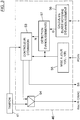
- the figure 2 illustrates a possible structure of a PCU 22 located between an SGSN 5 and a BSC 21, as in the example of the figure 1 .
- Reference 40 designates the Gb interface controller for the link with the SGSN 5.
- the interface Gb is of asynchronous type. It is based on the Frame Relay (FR) protocol and a protocol called BSSGPRS (BSSGP Protocol) that carries routing and quality of service information between the BSS and the SGSN.
- BSSGPRS BSSGP Protocol
- the Gb 40 interface controller provides the physical link with the SGSN 5, as well as the procedures specific to the FR and BSSGP protocols.
- the links between the PCU 22 and the BTS 20 through the Agprs interface are of the synchronous type.
- the data manipulated by the PCU 22 between the Gb interface controller 40 and the Agprs interface controller 42 passes through a buffer 41 where packet queues are recorded.
- TRAU Transcoder / Rate Adapter Unit
- a module 44 and transmitted via synchronous interface circuits 45 which realize 16 kbit / s PCM sub-channels with the BTS 20.
- Several 16 kbit sub-channels can be multiplexed on the Agprs interface and separated by the BSC 21 for routing to the BTS.
- a module 46 of the Agprs interface controller 42 implements the radio protocols of the layer 2 of the ISO model, namely the RLC / MAC (Radio Link Control / Medium Access Control) protocols described in the European standard ETSI EN 301.
- the RLC sublayer interfaces with the higher layer protocol, called LLC ("Logical Link Control"). It provides segmentation and reassembly of the LLC protocol data units (LLC-PDUs), which are exchanged asynchronously on the Gb interface. It produces RLC data blocks to which the MAC sublayer adds a one-byte MAC header.
- LLC Logical Link Control
- the MAC sublayer also manages the multiplexing of the blocks belonging to the different active TBFs on the available physical channels, by arbitrating between the different mobile users by a scheduling mechanism.
- the PCU On receipt of the PDAN message, the PCU updates for the TBF an acknowledgment status variable V (A) which contains the BSN of the oldest block which has not been positively acknowledged, as well as a table V ( B) at WS entries indicating the respective acknowledgment states of WS consecutive blocks from that designated V (A), these consecutive WS blocks forming a transmission window.
- the possible acknowledgment states are: positive acknowledgment (ACK); negative acknowledgment (NACK); and acknowledgment not yet received (ACK_PENDING).
- the state variables V (A) and V (B) are directly deduced from the fields SSN and RBB received in the last message PDAN.
- the RLC / MAC protocol allows the transmission of blocks only within the transmission window thus managed by the PCU. Outside this window, block transmission is inhibited.
- a variable protection level can be selected block by block within a TBF, by choosing a CS coding scheme ( "Coding Scheme") among four CS-1 to CS-4 schemes specified in the European standard ETSI EN 300 909, Digital cellular telecommunications system (Phase 2+); Channel coding (GSM 05.03, version 8.5.1, Release 1999), published by ETSI in November 2000.
- CS coding scheme "Coding Scheme”
- CS-4 does not use error-correcting coding, i.e., the coding efficiency is 1: only one Block Check Sequence (BCS) is attached to the blocks. of data.
- BCS Block Check Sequence
- Schemes CS-1 to CS-3 use a 1/2 convolutional code after the addition of the BCS sequence. No punching is done in CS-1 (which offers the highest level of protection), while punching is applied in CS-2 and CS-3 schemes to give coding efficiencies. overall values of about 2/3 and about 3/4, respectively.
- the CS-i channel coding (1 ⁇ i ⁇ 4) is applied at the physical layer protocol level, that is, in the BTS for the downlinks.
- Each coded RLC / MAC block consists of 456 bits and is transmitted in corresponding time intervals of four TDMA frames on a carrier frequency, the successive TDMA frames (Time-Division Multiple Access) being each broken down into eight time slots. to provide time multiplexing of channels.
- a pattern of eight SB signal bits is inserted into each coded frame (two bits per time slot) to indicate in particular which coding scheme has been applied by the transmitter.
- the coding scheme applied on the downlink is determined in a manner known per se by the PCU according to measurements of reception quality on the radio link, according to link adaptation mechanisms that seek to achieve an objective in terms of erroneous block rate in order to optimize the raw throughput.
- the selected scheme is inserted in the TRAU frame carrying the block to be applied by the BTS.
- ETSI standards also specify an extension of the GPRS system, using EDGE modulation ("Enhanced Data for GSM Evolution"). This extension is called EGPRS (EDGE-GPRS).
- the RLC and MAC headers are grouped into a single RLC / MAC header that no longer has the "Payload" field Type "and in which the S / P bit is replaced by a two-bit ES / P subfield to specify different acknowledgment formats for polling (ES / P ⁇ 00).
- MCS-1 to MCS-9 Nine modulation and coding schemes, called MCS-1 to MCS-9, are planned.
- the schema used for a given block, as well as a punching scheme that may be applied, are indicated in a CPS field ("Coding and Puncturing Scheme indicator") of the RLC / MAC EGPRS header.
- the entire RLC / MAC EGPRS header is channel coded separately from the block data.
- the protection level of this header against transmission errors is higher than that of the data to ensure better robustness of the signaling information.
- the RLC / MAC block delivered by the module 54 and the SB bits are part of the information placed in a TRAU frame transmitted to the BTS concerned.
- the module 55 shown on the figure 3 processes the received PDAN messages from the destination MS to update the V (A) and V (B) state variables of the TBF.
- the blocks of the TBF that were issued by the PCU after the "polling" block to which a PDAN message responds remain in the ACK_PENDING state, while the other blocks that have been sent up to this "polling" block are set in the ACK or NACK state according to the value of the corresponding bit of the RBB bitmap (in EGPRS, this RBB bitmap can be transmitted in compressed form, and it must then be decoded correspondingly by the module 55).
- control of the transmission of the blocks on a TBF also depends on an estimation of the speed of displacement v of the mobile station concerned. More generally, any parameter, measured or estimated, related to this speed of displacement can be used.
- the speed v can be estimated in a manner known per se by analyzing the variations in time of the power of the radio signals received by the BTS 20 coming from the MS 10 (or in the opposite direction by the MS 10 from the BTS 20).
- a possible example of an estimation method is described in FR-A-2,782,227 .
- the velocity estimates reach the PCU 22 in rising TRAU frames.
- This duration D can in particular be an average calculable fading duration such as the width of the peak of the correlation function of the Rayleigh fading statistical process according to a given model, for example the Jakes model.
- the values of the duration D as a function of v can be calculated once and for all and stored in a correspondence table of the module 56. These values of D are advantageously expressed in integers of emitted blocks, knowing that there is typically one block every 20 ms by TBF.
- a fading detection module 57 of the RLC / MAC entity examines the PDAN messages (or the state variables V (A) and V (B) derived therefrom by the module 55) to detect certain fading of the channel. radio on the basis of negatively acknowledged blocks.
- the fainting events that are the subject of this detection are those that relate to one or more consecutive blocks issued at the end of the "polling" period that ends with the "polling" block to which the PDAN message responds, and whose duration detected is less than D.
- the output of the detection module 57 after receiving a PDAN message is a number N estimating the number of blocks to ACK_PENDING state that issued just after the "polling" block by presumably experiencing fade conditions detected according to this PDAN message.
- the controller 53 can select block by block the applied coding scheme CS-i.
- the procedure is as follows. Whenever an encoding scheme other than CS-1 is determined by the link adaptation mechanisms, the controller 53 selects a more robust error-aware scheme for each block whose MAC header has the S / P bit
- the CS-1 scheme maximum level of protection
- the detection by the module 57 of a fading on M GPRS blocks just at the end of the "polling" period results from the observation of M-1 consecutive blocks in the NACK state in V (B). followed by a block in the ACK state corresponding to the "polling" block transmitted more robustly.
- the figure 4 shows a procedure applicable by the controller 53 for controlling the transmission of a block of a TBF that has been selected by the transmission planning process, in accordance with the RLC protocol.
- the controller first examines Table V (B) to determine if it designates one or more blocks in the NACK state (test 60). If so, the NACK block having the smallest BSN sequence number is selected in step 61 to repeated, and this block is then changed to ACK_PENDING in Table V (B) in step 62.
- the controller 53 takes account of a fading whose beginning has been detected by the module 57. It determines whether the N blocks issued during the N transmission periods allocated to the TBF after the "polling" block responded to by the PDAN message that gave rise to this N> 0 value have already been issued at least once. additional times after these N emission periods. Each state variable in array V (B) that corresponds to one of these N blocks that has not been re-transmitted has changed from state ACK_PENDING to state NACK. This has the effect of forcing a blind repetition of these blocks, which are presumably poorly received (step 69). This blind repetition takes place just after the repetition of the or blocks that have actually been the subject of a negative acknowledgment.
- the controller 53 can furthermore select, for each of these repetitions of the step 69 (blind or not), a level of protection against transmission errors higher than that resulting from the general mechanisms of link adaptation, in order to increase the probability of good reception of the repeated block.
- Another possibility is to send, as a repetition of this block, incremental redundancy according to a known hybrid ARQ mechanism.
- the typical duration of fading D which is related to the speed v, can be directly estimated by a statistical average of the fade times, in numbers of blocks, observed from the negative acknowledgments reported in the PDAN messages.
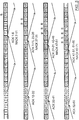
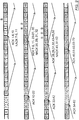
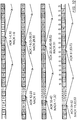
- the Figures 5 to 10 illustrate the fact that speed information is taken into account in the block emission control on a TBF.
- the numbers drawn are the BSN of the blocks.
- Each diagram corresponds to a case where the PCU activates the acknowledgment control field (falling arrows) every twelve blocks.
- the dashed blocks are negatively acknowledged (they were emitted during channel fading).
- the rising arrows represent the messages PDAN responding to the "polling" blocks.
- the blocks of the transmission window are indicated which are respectively in states ACK and NACK after taking into account a message PDAN (the unspecified blocks are in the state ACK_PENDING) .
- the figures 5 , 7 and 9 correspond to the implementation of the invention and are to be compared respectively with the figures 6 , 8 and 10 corresponding to the implementation of the same method without taking into account the speed information.
- the example of figures 5 and 6 is a case EGPRS: the message PDAN can be elaborated and returned to the PCU while the data of the block of "polling" to which it answers are paid negatively. It has been assumed that the round-trip time between the issuance of a "polling" block by the PCU and its receipt of the PDAN message that responds to it corresponds to a period of about twelve blocks (a value typical of the case where the PCU is located at same location as the SGSN).
- the symbol "B" on the figure 5 represents the blocks re-emitted blind by the PCU, because they were artificially placed in the NACK state in response to the detection of a fainting start.
- the controller 53 keeps it in the NACK state so that it can be re-transmitted without waiting for the reception and processing of the next message PDAN.
- the controller 53 does not maintain this block 71 in the NACK state after its first transmission, but it chooses for this first transmission a coding scheme that is more robust to errors than that applied to the other blocks of the TBF, in order to anticipate difficult propagation conditions thanks to the speed information.
- the example of figures 9 and 10 is a GPRS case, with a round-trip time of about twelve blocks. It can be seen that in this case too, the taking into Speed information count decreases the transmission delay on the TBF and reduces the probability of window blocking.
Landscapes
- Engineering & Computer Science (AREA)
- Computer Networks & Wireless Communication (AREA)
- Signal Processing (AREA)
- Quality & Reliability (AREA)
- Mobile Radio Communication Systems (AREA)
Claims (14)
- Einheit zum Senden von Datenblöcken auf einem Kommunikationskanal, umfassend eine Funkverbindung zwischen zwei Stationen, die eine Mobilstation umfassen, umfassend Mittel (41, 53) zum Erhalten einer Sequenz von Datenblöcken, die auf dem Kanal zu senden sind, Mittel (55) zum Empfangen von Bestätigungsinformationen der Blöcke der Sequenz von einer Empfängereinheit und Mittel zum Kontrollieren des Sendens der Blöcke der Sequenz auf dem Kanal auf der Grundlage von Informationen zum Kontrollieren des Sendens, umfassend die Bestätigungsinformationen, die von der Empfängereinheit empfangen werden, und einen Schwund-Indikator N, der aus den Bestätigungsinformationen und einer geschätzten Größe v abgeleitet ist, die mit einer Bewegungsgeschwindigkeit der Mobilstation verbunden ist, wobei die Mittel zum Kontrollieren Mittel (56) zum Bestimmen einer typischen Kanalschwund-Dauer D in Abhängigkeit von der geschätzten Größe v, die mit der Geschwindigkeit der Mobilstation verbunden ist, und Mittel zum Erfassen von Kanalschwund aufweisen, der jeweils einen oder mehrere Blöcke abdeckt, die nacheinander gesendet werden, wobei der Beginn und das Ende eines Schwunds auf der Grundlage der Bestätigungsinformationen erfasst werden, die von der Empfängereinheit empfangen werden, und wobei die Mittel zum Kontrollieren ausgebildet sind, um das Senden der Blöcke zu kontrollieren, indem der Schwund berücksichtigt wird, der über eine Dauer erfasst wird, die kürzer als die bestimmte typische Dauer ist, deren Beginn nach dem Empfangen von Bestätigungsinformationen erkannt worden ist, aber deren Ende noch nicht erfasst worden ist, was zur Folge hat, dass ein blindes Wiederholen der Blöcke erzwungen wird, die nicht bereits mindestens ein zusätzliches Mal nach N Sendeperioden gesendet worden sind, die auf den Block folgen, auf den die Bestätigungsinformationen geantwortet haben.
- Einheit zum Senden nach Anspruch 1, wobei die Mittel zum Kontrollieren Mittel zum Auswählen (53) von Blöcken der Sequenz aufweisen, die jeweils auf dem Kanal im Laufe von aufeinanderfolgenden Sendeperioden, die der Empfängereinheit zugeordnet sind, zu senden sind, wobei der Block, der für eine Sendeperiode ausgewählt ist, von den Bestätigungsinformationen, die von der Empfängereinheit empfangen werden und von der geschätzten Größe v abhängig ist, die mit der Geschwindigkeit der Mobilstation verbunden ist.
- Einheit zum Senden nach Anspruch 2, umfassend Mittel (53) zum intermittierenden Aktivieren eines Bestätigungskontrollfeldes, das in einer Kopfzeile von jedem Block vorgesehen ist, der auf dem Kanal gesendet wird, um eine Bestätigung von Blöcken von der Empfängereinheit anzufordern, wobei die Mittel zum Kontrollieren Mittel (55) zum Verarbeiten der Bestätigungsinformationen, die von der Empfängereinheit empfangen werden, als Antwort auf das Empfangen eines Blocks, der das Bestätigungskontrollfeld aktiviert hat, aufweisen, um einen ersten Zustand (ACK) den Blöcken der Sequenz, die von der Empfängereinheit bestätigt werden, einen zweiten Zustand (NACK) den Blöcken, die von der Sequenz nicht bestätigt werden, die nicht nach dem Block gesendet worden sind, der das Bestätigungskontrollfeld aktiviert hat, und einen dritten Zustand (ACK_PENDING) den Blöcken zuzuordnen, die von der Sequenz nicht bestätigt werden, die nach dem Block gesendet worden sind, der das Bestätigungskontrollfeld aktiviert hat, und wobei die Mittel zum Auswählen von Blöcken (53) ausgebildet sind, um einen Block der Sequenz für jede Sendeperiode, die der Empfängereinheit zugeordnet ist, auf der Grundlage der Zustände, die jeweils den Blöcken zugeordnet sind, die zuvor auf dem Kanal gesendet worden sind, und der geschätzten Größe v, die mit der Geschwindigkeit der Mobilstation verbunden ist, auszuwählen.
- Einheit zum Senden nach Anspruch 3, wobei als Antwort auf das Erfassen eines Schwunds über eine Dauer, die kürzer als die bestimmte typische Dauer D ist, deren Beginn nach dem Empfangen von Bestätigungsinformationen erkannt worden ist, die auf das Empfangen eines Blocks antworten, der das Bestätigungskontrollfeld aktiviert hat, aber deren Ende noch nicht erfasst worden ist, die Mittel zum Kontrollieren ausgebildet sind, um den zweiten Zustand mindestens einem nicht erfassten Block der Sequenz zuzuordnen, der nach dem Block gesendet worden ist, der das Bestätigungskontrollfeld aktiviert hat, und bevor die bestimmte typische Dauer ab Beginn des erfassten Schwunds abgelaufen ist.
- Einheit zum Senden nach Anspruch 4, wobei ein stärkerer Schutz gegen die Sendefehler auf das Bestätigungskontrollfeld als auf mindestens einen Teil der Daten von jedem Block angewendet wird.
- Einheit zum Senden nach Anspruch 4, wobei ein stärkerer Schutz gegen die Sendefehler auf Blöcke, die das Bestätigungskontrollfeld aktiviert haben, als auf die Blöcke, die das Bestätigungskontrollfeld nicht aktiviert haben, angewendet wird.
- Einheit zum Senden nach Anspruch 1, wobei die Mittel zum Kontrollieren Mittel (53) zum Auswählen eines Schutzniveaus gegen die Fehler für das Senden von jedem Block der Sequenz aufweisen, die jeweils auf dem Kanal im Laufe von aufeinanderfolgenden Sendeperioden, die der Empfängereinheit zugeordnet sind, zu senden sind, wobei das Schutzniveau, das für eine Sendeperiode ausgewählt ist, von den Bestätigungsinformationen, die von der Empfängereinheit empfangen werden, und von der geschätzten Größe v abhängig ist, die mit der Geschwindigkeit der Mobilstation verbunden ist, wobei die Schutzniveaus gegen die Fehler optional aus einer einstellbaren Codierung des Leistungskanals resultieren, der die Blöcke unterzogen werden.
- Verfahren zum Erhalten von Datenblöcken auf einem Kommunikationskanal, umfassend eine Funkverbindung zwischen zwei Stationen, die eine Mobilstation umfassen, das die Schritte aufweist, die darin bestehen:- eine Sequenz von Datenblöcken zu erhalten, die auf dem Kanal zu senden sind,- die Bestätigungsinformationen der Blöcke der Sequenz von einer Empfängereinheit zu empfangen und- das Senden der Blöcke der Sequenz auf dem Kanal auf der Grundlage von Informationen zum Kontrollieren des Sendens zu kontrollieren, umfassend die Bestätigungsinformationen, die von der Empfängereinheit empfangen werden, und einen Schwund-Indikator N, der aus den Bestätigungsinformationen und einer geschätzten Größe v abgeleitet wird, die mit einer Bewegungsgeschwindigkeit der Mobilstation verbunden ist,- wobei der Schritt, der darin besteht, das Senden der Blöcke der Sequenz auf dem Kanal zu kontrollieren, die Schritte aufweist, die darin bestehen:
die typische Kanalschwund-Dauer D in Abhängigkeit von der geschätzten Größe v, die mit der Geschwindigkeit der Mobilstation verbunden ist, zu bestimmen und den Kanalschwund zu erfassen, der jeweils einen oder mehrere Blöcke abdeckt, die nacheinander gesendet werden, wobei der Beginn und das Ende eines Schwunds auf der Grundlage der Bestätigungsinformationen erfasst werden, die von der Empfängereinheit empfangen werden, wobei der Schritt, der darin besteht, das Senden der Blöcke der Sequenz auf dem Kanal zu kontrollieren, durchgeführt wird, indem der Schwund berücksichtigt wird, der über eine Dauer erfasst wird, die kürzer als die bestimmte typische Dauer ist, deren Beginn nach dem Empfangen von Bestätigungsinformationen erkannt worden ist, aber deren Ende noch nicht erfasst worden ist, was zur Folge hat, dass ein blindes Wiederholen der Blöcke erzwungen wird, die nicht bereits mindestens ein zusätzliches Mal nach N Sendeperioden gesendet worden sind, die auf den Block folgen, auf den die Bestätigungsinformationen geantwortet haben. - Verfahren zum Senden nach Anspruch 8, wobei der Schritt, der darin besteht, das Senden der Blöcke der Sequenz auf dem Kanal zu kontrollieren, einen Schritt aufweist, der darin besteht, Blöcke der Sequenz auszuwählen, die jeweils auf dem Kanal im Laufe von aufeinanderfolgenden Sendeperioden, die der Empfängereinheit zugeordnet werden, zu senden sind, wobei der Block, der für eine Sendeperiode ausgewählt wird, von den Bestätigungsinformationen, die von der Empfängereinheit empfangen werden, und von der geschätzten Größe v abhängig ist, die mit der Geschwindigkeit der Mobilstation verbunden ist.
- Verfahren zum Senden nach Anspruch 9, umfassend einen Schritt, der darin besteht:- intermittierend ein Bestätigungskontrollfeld zu aktivieren, das in einer Kopfzeile von jedem Block vorgesehen wird, der auf dem Kanal gesendet wird, um eine Bestätigung von Blöcken von der Empfängereinheit anzufordern, und wobei- der Schritt, der darin besteht, das Senden der Blöcke der Sequenz auf dem Kanal zu kontrollieren, einen Schritt aufweist, der darin besteht:- Bestätigungsinformationen, die von der Empfängereinheit empfangen werden, als Antwort auf das Empfangen eines Blocks, der das Bestätigungskontrollfeld aktiviert hat, zu verarbeiten, um einen ersten Zustand (ACK) den Blöcken der Sequenz, die von der Empfängereinheit bestätigt werden, einen zweiten Zustand (NACK) den Blöcken, die von der Sequenz nicht bestätigt werden, die nicht nach dem Block gesendet worden sind, der das Bestätigungskontrollfeld aktiviert hat, und einen dritten Zustand (ACK_PENDING) den Blöcken zuzuordnen, die von der Sequenz nicht bestätigt werden, die nach dem Block gesendet worden sind, der das Bestätigungskontrollfeld aktiviert hat, und wobei- der Schritt, der darin besteht, Blöcke (53) auszuwählen, das Auswählen eines Blocks der Sequenz für jede Sendeperiode, die der Empfängereinheit zugeordnet wird, auf der Grundlage der Zustände, die jeweils den Blöcken zugeordnet werden, die zuvor auf dem Kanal gesendet worden sind, und der geschätzten Größe v, die mit der Geschwindigkeit der Mobilstation verbunden ist, aufweist.
- Verfahren zum Senden nach einem der Ansprüche 8 und 10, wobei der Schritt, der darin besteht, das Senden der Blöcke der Sequenz auf dem Kanal zu kontrollieren, einen Schritt aufweist, der darin besteht:- als Antwort auf das Erfassen eines Schwunds über eine Dauer, die kürzer als die bestimmte typische Dauer D ist, deren Beginn nach dem Empfangen von Bestätigungsinformationen erkannt worden ist, die auf das Empfangen eines Blocks antworten, der das Bestätigungskontrollfeld aufweist, das auf das Empfangen eines Blocks antwortet, aber deren Ende noch nicht erfasst worden ist, den zweiten Zustand mindestens einem nicht erfassten Block der Sequenz zuzuordnen, der nach dem Block gesendet worden ist, der das Bestätigungskontrollfeld aktiviert hat, und bevor die bestimmte typische Dauer ab Beginn des erfassten Schwunds abgelaufen ist.
- Verfahren zum Senden nach Anspruch 11, umfassend einen Schritt, der darin besteht, einen stärkeren Schutz gegen die Sendefehler auf das Bestätigungskontrollfeld als auf mindestens einen Teil der Daten von jedem Block anzuwenden.
- Verfahren zum Senden nach Anspruch 11, umfassend einen Schritt, der darin besteht, einen stärkeren Schutz gegen die Sendefehler auf Blöcke, die das Bestätigungskontrollfeld aktiviert haben, als auf die Blöcke, die das Bestätigungskontrollfeld nicht aktiviert haben, anzuwenden.
- Verfahren zum Senden nach Anspruch 8, wobei der Schritt, der darin besteht, das Senden der Blöcke der Sequenz auf dem Kanal zu kontrollieren, einen Schritt aufweist, der darin besteht:- ein Schutzniveau gegen die Fehler für das Senden von jedem Block der Sequenz auszuwählen, die jeweils auf dem Kanal im Laufe von aufeinanderfolgenden Sendeperioden, die der Empfängereinheit zugeordnet werden, zu senden sind, wobei das Schutzniveau, das für eine Sendeperiode ausgewählt wird, von den Bestätigungsinformationen, die von der Empfängereinheit empfangen werden, und von der geschätzten Größe v abhängig ist, die mit der Geschwindigkeit der Mobilstation verbunden ist, wobei die Schutzniveaus gegen die Fehler optional aus einer einstellbaren Codierung des Leistungskanals resultieren, der die Blöcke unterzogen werden.
Priority Applications (1)
| Application Number | Priority Date | Filing Date | Title |
|---|---|---|---|
| EP10195884.1A EP2326038B1 (de) | 2001-03-16 | 2002-03-13 | ARQ-Sendeverfahren zum Senden von Datenblöcken an eine Mobilstation |
Applications Claiming Priority (2)
| Application Number | Priority Date | Filing Date | Title |
|---|---|---|---|
| FR0103614 | 2001-03-16 | ||
| FR0103614A FR2822317B1 (fr) | 2001-03-16 | 2001-03-16 | Unite d'emission de blocs de donnees en mode acquitte sur un canal comportant un lien radio avec une station mobile |
Related Child Applications (1)
| Application Number | Title | Priority Date | Filing Date |
|---|---|---|---|
| EP10195884.1A Division-Into EP2326038B1 (de) | 2001-03-16 | 2002-03-13 | ARQ-Sendeverfahren zum Senden von Datenblöcken an eine Mobilstation |
Publications (2)
| Publication Number | Publication Date |
|---|---|
| EP1241822A1 EP1241822A1 (de) | 2002-09-18 |
| EP1241822B1 true EP1241822B1 (de) | 2019-05-08 |
Family
ID=8861223
Family Applications (2)
| Application Number | Title | Priority Date | Filing Date |
|---|---|---|---|
| EP10195884.1A Expired - Lifetime EP2326038B1 (de) | 2001-03-16 | 2002-03-13 | ARQ-Sendeverfahren zum Senden von Datenblöcken an eine Mobilstation |
| EP02290638.2A Expired - Lifetime EP1241822B1 (de) | 2001-03-16 | 2002-03-13 | ARQ-Sendeeinheit zum Senden von Datenblöcken an eine Mobilstation |
Family Applications Before (1)
| Application Number | Title | Priority Date | Filing Date |
|---|---|---|---|
| EP10195884.1A Expired - Lifetime EP2326038B1 (de) | 2001-03-16 | 2002-03-13 | ARQ-Sendeverfahren zum Senden von Datenblöcken an eine Mobilstation |
Country Status (3)
| Country | Link |
|---|---|
| US (1) | US7197050B2 (de) |
| EP (2) | EP2326038B1 (de) |
| FR (1) | FR2822317B1 (de) |
Families Citing this family (41)
| Publication number | Priority date | Publication date | Assignee | Title |
|---|---|---|---|---|
| FR2843670B1 (fr) * | 2002-08-14 | 2005-01-14 | Evolium Sas | Procede pour l'allocation de ressources en mode paquet dans un systeme de radiocommunications mobiles |
| US7542471B2 (en) | 2002-10-30 | 2009-06-02 | Citrix Systems, Inc. | Method of determining path maximum transmission unit |
| US8270423B2 (en) * | 2003-07-29 | 2012-09-18 | Citrix Systems, Inc. | Systems and methods of using packet boundaries for reduction in timeout prevention |
| US7630305B2 (en) | 2003-07-29 | 2009-12-08 | Orbital Data Corporation | TCP selective acknowledgements for communicating delivered and missed data packets |
| US7616638B2 (en) | 2003-07-29 | 2009-11-10 | Orbital Data Corporation | Wavefront detection and disambiguation of acknowledgments |
| US8233392B2 (en) * | 2003-07-29 | 2012-07-31 | Citrix Systems, Inc. | Transaction boundary detection for reduction in timeout penalties |
| US7385926B2 (en) * | 2002-11-25 | 2008-06-10 | Intel Corporation | Apparatus to speculatively identify packets for transmission and method therefor |
| FR2850516B1 (fr) * | 2003-01-29 | 2005-06-03 | Evolium Sas | Procede pour obtimiser les performances d'un systeme de radiocommunications mobile |
| DE10325298B4 (de) * | 2003-06-04 | 2007-07-05 | Siemens Ag | Verfahren und Vorrichtung zur Erfassung der Rauigkeit von Gefäßen |
| US6845235B1 (en) * | 2003-07-18 | 2005-01-18 | Motorola, Inc. | Method and apparatus in a wireless communication system for expediting a request for uplink resources |
| KR100568232B1 (ko) * | 2003-07-28 | 2006-04-07 | 삼성전자주식회사 | 모바일 애드 혹 네트워크에서 전송층을 이용한 효율적인데이터 송수신 방법 및 상기 방법을 이용한 네트워크 장치 |
| US8432800B2 (en) | 2003-07-29 | 2013-04-30 | Citrix Systems, Inc. | Systems and methods for stochastic-based quality of service |
| US7698453B2 (en) | 2003-07-29 | 2010-04-13 | Oribital Data Corporation | Early generation of acknowledgements for flow control |
| US7656799B2 (en) | 2003-07-29 | 2010-02-02 | Citrix Systems, Inc. | Flow control system architecture |
| US8238241B2 (en) | 2003-07-29 | 2012-08-07 | Citrix Systems, Inc. | Automatic detection and window virtualization for flow control |
| US8437284B2 (en) | 2003-07-29 | 2013-05-07 | Citrix Systems, Inc. | Systems and methods for additional retransmissions of dropped packets |
| US7978716B2 (en) | 2003-11-24 | 2011-07-12 | Citrix Systems, Inc. | Systems and methods for providing a VPN solution |
| KR101008623B1 (ko) * | 2003-12-02 | 2011-01-17 | 엘지전자 주식회사 | 순방향 수신 확인 채널의 전송 전력 제어 방법 및 수신확인 제어 방법 |
| US7190980B2 (en) * | 2004-01-30 | 2007-03-13 | Hewlett-Packard Development Company, L.P. | Method and system for power control in wireless portable devices using wireless channel characteristics |
| US20050180325A1 (en) * | 2004-02-13 | 2005-08-18 | Nokia Corporation | Method of controlling data transmission, radio system, packet control unit, and remote network element |
| US7757074B2 (en) | 2004-06-30 | 2010-07-13 | Citrix Application Networking, Llc | System and method for establishing a virtual private network |
| US8495305B2 (en) | 2004-06-30 | 2013-07-23 | Citrix Systems, Inc. | Method and device for performing caching of dynamically generated objects in a data communication network |
| US8739274B2 (en) | 2004-06-30 | 2014-05-27 | Citrix Systems, Inc. | Method and device for performing integrated caching in a data communication network |
| US8223647B2 (en) * | 2004-07-21 | 2012-07-17 | Nokia Corporation | System and method for increasing data throughout using a block acknowledgement |
| CA2572401A1 (en) | 2004-07-23 | 2006-02-02 | Citrix Systems, Inc. | A method and systems for securing remote access to private networks |
| KR20070045282A (ko) | 2004-07-23 | 2007-05-02 | 사이트릭스 시스템스, 인크. | 네트워크 노드 간의 통신을 최적화하기 위한 시스템 및방법 |
| US8706877B2 (en) | 2004-12-30 | 2014-04-22 | Citrix Systems, Inc. | Systems and methods for providing client-side dynamic redirection to bypass an intermediary |
| US8549149B2 (en) | 2004-12-30 | 2013-10-01 | Citrix Systems, Inc. | Systems and methods for providing client-side accelerated access to remote applications via TCP multiplexing |
| US8954595B2 (en) | 2004-12-30 | 2015-02-10 | Citrix Systems, Inc. | Systems and methods for providing client-side accelerated access to remote applications via TCP buffering |
| US7810089B2 (en) | 2004-12-30 | 2010-10-05 | Citrix Systems, Inc. | Systems and methods for automatic installation and execution of a client-side acceleration program |
| US8700695B2 (en) | 2004-12-30 | 2014-04-15 | Citrix Systems, Inc. | Systems and methods for providing client-side accelerated access to remote applications via TCP pooling |
| KR20070104566A (ko) | 2005-01-24 | 2007-10-26 | 사이트릭스 시스템스, 인크. | 네트워크에서 동적으로 발생된 객체들의 캐싱을 수행하는시스템 및 방법 |
| US8255456B2 (en) | 2005-12-30 | 2012-08-28 | Citrix Systems, Inc. | System and method for performing flash caching of dynamically generated objects in a data communication network |
| US7921184B2 (en) | 2005-12-30 | 2011-04-05 | Citrix Systems, Inc. | System and method for performing flash crowd caching of dynamically generated objects in a data communication network |
| US8301839B2 (en) | 2005-12-30 | 2012-10-30 | Citrix Systems, Inc. | System and method for performing granular invalidation of cached dynamically generated objects in a data communication network |
| US20070249343A1 (en) * | 2006-04-19 | 2007-10-25 | Andreas Olsson | Method and system of communications |
| US8031680B2 (en) * | 2006-05-18 | 2011-10-04 | Motorola Mobility, Inc. | Communicating non-scheduling information in wireless networks |
| US10372527B2 (en) | 2013-07-15 | 2019-08-06 | Intel Corporation | Method of encoding data |
| US10834065B1 (en) | 2015-03-31 | 2020-11-10 | F5 Networks, Inc. | Methods for SSL protected NTLM re-authentication and devices thereof |
| US10404698B1 (en) | 2016-01-15 | 2019-09-03 | F5 Networks, Inc. | Methods for adaptive organization of web application access points in webtops and devices thereof |
| US12341617B2 (en) | 2019-07-26 | 2025-06-24 | Samsung Electronics Co., Ltd. | Method and apparatus for improving HARQ in a non-terrestrial network |
Family Cites Families (5)
| Publication number | Priority date | Publication date | Assignee | Title |
|---|---|---|---|---|
| JPH0618358B2 (ja) * | 1985-04-09 | 1994-03-09 | 沖電気工業株式会社 | 誤り制御符号化方式 |
| US5602831A (en) * | 1995-03-31 | 1997-02-11 | Seiko Communications Systems, Inc. | Optimizing packet size to eliminate effects of reception nulls |
| US5828677A (en) * | 1996-03-20 | 1998-10-27 | Lucent Technologies Inc. | Adaptive hybrid ARQ coding schemes for slow fading channels in mobile radio systems |
| JP3389508B2 (ja) * | 1998-08-25 | 2003-03-24 | 日本電信電話株式会社 | 無線パケット伝送装置 |
| US6907005B1 (en) * | 2000-07-24 | 2005-06-14 | Telefonaktiebolaget L M Ericsson (Publ) | Flexible ARQ for packet data transmission |
-
2001
- 2001-03-16 FR FR0103614A patent/FR2822317B1/fr not_active Expired - Lifetime
-
2002
- 2002-03-12 US US10/095,729 patent/US7197050B2/en not_active Expired - Lifetime
- 2002-03-13 EP EP10195884.1A patent/EP2326038B1/de not_active Expired - Lifetime
- 2002-03-13 EP EP02290638.2A patent/EP1241822B1/de not_active Expired - Lifetime
Non-Patent Citations (1)
| Title |
|---|
| None * |
Also Published As
| Publication number | Publication date |
|---|---|
| US7197050B2 (en) | 2007-03-27 |
| FR2822317B1 (fr) | 2003-08-08 |
| EP2326038B1 (de) | 2013-07-10 |
| EP1241822A1 (de) | 2002-09-18 |
| US20020150064A1 (en) | 2002-10-17 |
| EP2326038A1 (de) | 2011-05-25 |
| FR2822317A1 (fr) | 2002-09-20 |
Similar Documents
| Publication | Publication Date | Title |
|---|---|---|
| EP2326038B1 (de) | ARQ-Sendeverfahren zum Senden von Datenblöcken an eine Mobilstation | |
| EP1179910B1 (de) | Funkverbindungssteuerung mit begrenzten Wiederholungsübertragungen für Streamingdienste | |
| EP1123601B1 (de) | Arq protokoll mit packetbasierter zuverlässigkeitseinstellung | |
| EP2567490B1 (de) | Verfahren und anordnungen für frühe harq-rückkopplung in einem mobilen kommunikationssystem | |
| CN100512087C (zh) | 用于否定帧应答的控制的空闲帧的利用 | |
| US20040013114A1 (en) | Methods and devices for the retransmission of data packets | |
| EP2052484B1 (de) | Transiente analyse von paketwarteschlangenverlusten in einem rundfunknetzwerk | |
| JP2001237858A (ja) | データパケットを通信するための方法およびデータパケットを受信または送信するためのデバイスおよびコンピュータプログラムおよびデータキャリア | |
| FR2819661A1 (fr) | Procede et dispositifs de transmission de donnees avec mecanisme d'acquittement | |
| CN102301632A (zh) | 用于多载波 lte系统的rlc | |
| CA2637595A1 (en) | A radio communication apparatus and a method of transmitting a retransmission packet | |
| EP2003810A2 (de) | Einrichtung zur Empfangsverwaltung durch Endgeräten von Multimedia-Inhalten übertragen über Infrastrukturen unter Verwendung von verschiedenen Übertragungstechniken | |
| Luo et al. | Delay analysis of selective-repeat ARQ with applications to link adaptation in wireless packet data systems | |
| EP1370020B1 (de) | Verfahren und Steuereinheit zur Funkverbindungsanpassung | |
| EP1362449B1 (de) | Verfahren zur datenübertragung mit einem fehlerschutzniveau, das unter mehreren verschiedenen vorbestimmten niveaus ausgewählt ist | |
| EP1274265B1 (de) | Verfahren zur Übertragung von Signalblöcke eines moduliertes Signals, Sendestation und Datenquelle dafür | |
| EP1179911A1 (de) | Verfahren zum Beurteilen der Qualität einer Funkverbindung in einem mobilen Funkkommunikationssystem | |
| MX2011007713A (es) | Esquema de retransmision de datos. | |
| EP1411689A1 (de) | Sendewiederholungssteuerungsverfahren von Daten und Vorrichtung zur Durchführung des Verfahrens | |
| EP1473839B1 (de) | Verfahren und Vorrichtung zum Empfang von Datenblöcken mit Fehlerkorrektur und -erkennung | |
| WO2006024994A1 (en) | A method and system for error differentiating in wireless networks | |
| EP1471758A1 (de) | Verfahren und Gerät für die Regelung eines Kodierungsschemawechsels (coding scheme CS) in einem drahtlosen Übertragungssystem | |
| EP1873995A2 (de) | Datensendevorrichtung, Datenempfangsvorrichtung und Datenkommunikationsverfahren | |
| EP2003807A1 (de) | Verfahren und Vorrichtung zur Dekodierung eines Kontrollwortes durch Maximierung der aposteriori Wahrscheinlichkeit | |
| EP1443778A1 (de) | Verfharen zur Optimizierung der Leistungen eines Mobilfunkkommunicationssystem |
Legal Events
| Date | Code | Title | Description |
|---|---|---|---|
| PUAI | Public reference made under article 153(3) epc to a published international application that has entered the european phase |
Free format text: ORIGINAL CODE: 0009012 |
|
| AK | Designated contracting states |
Kind code of ref document: A1 Designated state(s): AT BE CH CY DE DK ES FI FR GB GR IE IT LI LU MC NL PT SE TR |
|
| AX | Request for extension of the european patent |
Free format text: AL;LT;LV;MK;RO;SI |
|
| 17P | Request for examination filed |
Effective date: 20020912 |
|
| AKX | Designation fees paid |
Designated state(s): AT BE CH CY DE DK ES FI FR GB GR IE IT LI LU MC NL PT SE TR |
|
| 17Q | First examination report despatched |
Effective date: 20081218 |
|
| RAP1 | Party data changed (applicant data changed or rights of an application transferred) |
Owner name: RESEARCH IN MOTION LIMITED |
|
| RAP1 | Party data changed (applicant data changed or rights of an application transferred) |
Owner name: BLACKBERRY LIMITED |
|
| RAP1 | Party data changed (applicant data changed or rights of an application transferred) |
Owner name: BLACKBERRY LIMITED |
|
| STAA | Information on the status of an ep patent application or granted ep patent |
Free format text: STATUS: EXAMINATION IS IN PROGRESS |
|
| RIC1 | Information provided on ipc code assigned before grant |
Ipc: H04L 1/16 19680901AFI20180905BHEP Ipc: H04W 24/00 20090101ALN20180905BHEP Ipc: H04W 28/06 20090101ALN20180905BHEP Ipc: H04L 1/00 19680901ALI20180905BHEP Ipc: H04L 1/18 19680901ALI20180905BHEP |
|
| GRAP | Despatch of communication of intention to grant a patent |
Free format text: ORIGINAL CODE: EPIDOSNIGR1 |
|
| STAA | Information on the status of an ep patent application or granted ep patent |
Free format text: STATUS: GRANT OF PATENT IS INTENDED |
|
| RIC1 | Information provided on ipc code assigned before grant |
Ipc: H04L 1/00 19680901ALI20180911BHEP Ipc: H04W 24/00 20090101ALN20180911BHEP Ipc: H04L 1/16 19680901AFI20180911BHEP Ipc: H04L 1/18 19680901ALI20180911BHEP Ipc: H04W 28/06 20090101ALN20180911BHEP |
|
| INTG | Intention to grant announced |
Effective date: 20181012 |
|
| RIC1 | Information provided on ipc code assigned before grant |
Ipc: H04L 1/00 19680901ALI20181001BHEP Ipc: H04L 1/18 19680901ALI20181001BHEP Ipc: H04W 24/00 20090101ALN20181001BHEP Ipc: H04L 1/16 19680901AFI20181001BHEP Ipc: H04W 28/06 20090101ALN20181001BHEP |
|
| RIC1 | Information provided on ipc code assigned before grant |
Ipc: H04L 1/00 20060101ALI20181001BHEP Ipc: H04W 28/06 20090101ALN20181001BHEP Ipc: H04W 24/00 20090101ALN20181001BHEP Ipc: H04L 1/16 20060101AFI20181001BHEP Ipc: H04L 1/18 20060101ALI20181001BHEP |
|
| GRAS | Grant fee paid |
Free format text: ORIGINAL CODE: EPIDOSNIGR3 |
|
| GRAJ | Information related to disapproval of communication of intention to grant by the applicant or resumption of examination proceedings by the epo deleted |
Free format text: ORIGINAL CODE: EPIDOSDIGR1 |
|
| GRAL | Information related to payment of fee for publishing/printing deleted |
Free format text: ORIGINAL CODE: EPIDOSDIGR3 |
|
| STAA | Information on the status of an ep patent application or granted ep patent |
Free format text: STATUS: EXAMINATION IS IN PROGRESS |
|
| REG | Reference to a national code |
Ref country code: DE Ref legal event code: R079 Ref document number: 60249891 Country of ref document: DE Free format text: PREVIOUS MAIN CLASS: H04L0001180000 Ipc: H04L0001160000 |
|
| GRAR | Information related to intention to grant a patent recorded |
Free format text: ORIGINAL CODE: EPIDOSNIGR71 |
|
| STAA | Information on the status of an ep patent application or granted ep patent |
Free format text: STATUS: GRANT OF PATENT IS INTENDED |
|
| GRAA | (expected) grant |
Free format text: ORIGINAL CODE: 0009210 |
|
| STAA | Information on the status of an ep patent application or granted ep patent |
Free format text: STATUS: THE PATENT HAS BEEN GRANTED |
|
| INTG | Intention to grant announced |
Effective date: 20190306 |
|
| RIC1 | Information provided on ipc code assigned before grant |
Ipc: H04L 1/00 20060101ALI20190304BHEP Ipc: H04W 28/06 20090101ALN20190304BHEP Ipc: H04L 1/16 20060101AFI20190304BHEP Ipc: H04L 1/18 20060101ALI20190304BHEP Ipc: H04W 24/00 20090101ALN20190304BHEP |
|
| AK | Designated contracting states |
Kind code of ref document: B1 Designated state(s): AT BE CH CY DE DK ES FI FR GB GR IE IT LI LU MC NL PT SE TR |
|
| REG | Reference to a national code |
Ref country code: GB Ref legal event code: FG4D Free format text: NOT ENGLISH |
|
| REG | Reference to a national code |
Ref country code: CH Ref legal event code: EP Ref country code: AT Ref legal event code: REF Ref document number: 1131888 Country of ref document: AT Kind code of ref document: T Effective date: 20190515 |
|
| REG | Reference to a national code |
Ref country code: DE Ref legal event code: R096 Ref document number: 60249891 Country of ref document: DE Ref country code: IE Ref legal event code: FG4D Free format text: LANGUAGE OF EP DOCUMENT: FRENCH |
|
| REG | Reference to a national code |
Ref country code: NL Ref legal event code: FP |
|
| PG25 | Lapsed in a contracting state [announced via postgrant information from national office to epo] |
Ref country code: SE Free format text: LAPSE BECAUSE OF FAILURE TO SUBMIT A TRANSLATION OF THE DESCRIPTION OR TO PAY THE FEE WITHIN THE PRESCRIBED TIME-LIMIT Effective date: 20190508 Ref country code: ES Free format text: LAPSE BECAUSE OF FAILURE TO SUBMIT A TRANSLATION OF THE DESCRIPTION OR TO PAY THE FEE WITHIN THE PRESCRIBED TIME-LIMIT Effective date: 20190508 Ref country code: FI Free format text: LAPSE BECAUSE OF FAILURE TO SUBMIT A TRANSLATION OF THE DESCRIPTION OR TO PAY THE FEE WITHIN THE PRESCRIBED TIME-LIMIT Effective date: 20190508 Ref country code: PT Free format text: LAPSE BECAUSE OF FAILURE TO SUBMIT A TRANSLATION OF THE DESCRIPTION OR TO PAY THE FEE WITHIN THE PRESCRIBED TIME-LIMIT Effective date: 20190908 |
|
| PG25 | Lapsed in a contracting state [announced via postgrant information from national office to epo] |
Ref country code: GR Free format text: LAPSE BECAUSE OF FAILURE TO SUBMIT A TRANSLATION OF THE DESCRIPTION OR TO PAY THE FEE WITHIN THE PRESCRIBED TIME-LIMIT Effective date: 20190809 |
|
| REG | Reference to a national code |
Ref country code: AT Ref legal event code: MK05 Ref document number: 1131888 Country of ref document: AT Kind code of ref document: T Effective date: 20190508 |
|
| PG25 | Lapsed in a contracting state [announced via postgrant information from national office to epo] |
Ref country code: DK Free format text: LAPSE BECAUSE OF FAILURE TO SUBMIT A TRANSLATION OF THE DESCRIPTION OR TO PAY THE FEE WITHIN THE PRESCRIBED TIME-LIMIT Effective date: 20190508 Ref country code: AT Free format text: LAPSE BECAUSE OF FAILURE TO SUBMIT A TRANSLATION OF THE DESCRIPTION OR TO PAY THE FEE WITHIN THE PRESCRIBED TIME-LIMIT Effective date: 20190508 |
|
| REG | Reference to a national code |
Ref country code: DE Ref legal event code: R097 Ref document number: 60249891 Country of ref document: DE |
|
| PG25 | Lapsed in a contracting state [announced via postgrant information from national office to epo] |
Ref country code: IT Free format text: LAPSE BECAUSE OF FAILURE TO SUBMIT A TRANSLATION OF THE DESCRIPTION OR TO PAY THE FEE WITHIN THE PRESCRIBED TIME-LIMIT Effective date: 20190508 |
|
| PLBE | No opposition filed within time limit |
Free format text: ORIGINAL CODE: 0009261 |
|
| STAA | Information on the status of an ep patent application or granted ep patent |
Free format text: STATUS: NO OPPOSITION FILED WITHIN TIME LIMIT |
|
| PG25 | Lapsed in a contracting state [announced via postgrant information from national office to epo] |
Ref country code: TR Free format text: LAPSE BECAUSE OF FAILURE TO SUBMIT A TRANSLATION OF THE DESCRIPTION OR TO PAY THE FEE WITHIN THE PRESCRIBED TIME-LIMIT Effective date: 20190508 |
|
| 26N | No opposition filed |
Effective date: 20200211 |
|
| PG25 | Lapsed in a contracting state [announced via postgrant information from national office to epo] |
Ref country code: MC Free format text: LAPSE BECAUSE OF FAILURE TO SUBMIT A TRANSLATION OF THE DESCRIPTION OR TO PAY THE FEE WITHIN THE PRESCRIBED TIME-LIMIT Effective date: 20190508 |
|
| REG | Reference to a national code |
Ref country code: CH Ref legal event code: PL |
|
| REG | Reference to a national code |
Ref country code: BE Ref legal event code: MM Effective date: 20200331 |
|
| PG25 | Lapsed in a contracting state [announced via postgrant information from national office to epo] |
Ref country code: LU Free format text: LAPSE BECAUSE OF NON-PAYMENT OF DUE FEES Effective date: 20200313 |
|
| PG25 | Lapsed in a contracting state [announced via postgrant information from national office to epo] |
Ref country code: CH Free format text: LAPSE BECAUSE OF NON-PAYMENT OF DUE FEES Effective date: 20200331 Ref country code: LI Free format text: LAPSE BECAUSE OF NON-PAYMENT OF DUE FEES Effective date: 20200331 Ref country code: IE Free format text: LAPSE BECAUSE OF NON-PAYMENT OF DUE FEES Effective date: 20200313 |
|
| PG25 | Lapsed in a contracting state [announced via postgrant information from national office to epo] |
Ref country code: BE Free format text: LAPSE BECAUSE OF NON-PAYMENT OF DUE FEES Effective date: 20200331 |
|
| PGFP | Annual fee paid to national office [announced via postgrant information from national office to epo] |
Ref country code: FR Payment date: 20210325 Year of fee payment: 20 |
|
| PGFP | Annual fee paid to national office [announced via postgrant information from national office to epo] |
Ref country code: DE Payment date: 20210329 Year of fee payment: 20 Ref country code: GB Payment date: 20210329 Year of fee payment: 20 |
|
| PGFP | Annual fee paid to national office [announced via postgrant information from national office to epo] |
Ref country code: NL Payment date: 20210326 Year of fee payment: 20 |
|
| REG | Reference to a national code |
Ref country code: DE Ref legal event code: R071 Ref document number: 60249891 Country of ref document: DE |
|
| REG | Reference to a national code |
Ref country code: NL Ref legal event code: MK Effective date: 20220312 |
|
| REG | Reference to a national code |
Ref country code: GB Ref legal event code: PE20 Expiry date: 20220312 |
|
| PG25 | Lapsed in a contracting state [announced via postgrant information from national office to epo] |
Ref country code: GB Free format text: LAPSE BECAUSE OF EXPIRATION OF PROTECTION Effective date: 20220312 |
|
| PG25 | Lapsed in a contracting state [announced via postgrant information from national office to epo] |
Ref country code: CY Free format text: LAPSE BECAUSE OF FAILURE TO SUBMIT A TRANSLATION OF THE DESCRIPTION OR TO PAY THE FEE WITHIN THE PRESCRIBED TIME-LIMIT Effective date: 20190508 |