EP1240407B1 - Procede de traitement d'un puits de forage - Google Patents
Procede de traitement d'un puits de forage Download PDFInfo
- Publication number
- EP1240407B1 EP1240407B1 EP00973102A EP00973102A EP1240407B1 EP 1240407 B1 EP1240407 B1 EP 1240407B1 EP 00973102 A EP00973102 A EP 00973102A EP 00973102 A EP00973102 A EP 00973102A EP 1240407 B1 EP1240407 B1 EP 1240407B1
- Authority
- EP
- European Patent Office
- Prior art keywords
- emulsion
- demulsifier
- oil
- admixture
- formation
- Prior art date
- Legal status (The legal status is an assumption and is not a legal conclusion. Google has not performed a legal analysis and makes no representation as to the accuracy of the status listed.)
- Expired - Lifetime
Links
- 238000000034 method Methods 0.000 title claims abstract description 28
- 239000003129 oil well Substances 0.000 title description 2
- 239000000839 emulsion Substances 0.000 claims abstract description 140
- 239000004094 surface-active agent Substances 0.000 claims abstract description 52
- 230000015572 biosynthetic process Effects 0.000 claims abstract description 45
- 239000008346 aqueous phase Substances 0.000 claims abstract description 17
- 229930195733 hydrocarbon Natural products 0.000 claims abstract description 17
- 150000002430 hydrocarbons Chemical class 0.000 claims abstract description 17
- 239000012071 phase Substances 0.000 claims abstract description 17
- 239000004215 Carbon black (E152) Substances 0.000 claims abstract description 16
- 239000000126 substance Substances 0.000 claims abstract description 15
- 239000007788 liquid Substances 0.000 claims abstract description 14
- 239000006185 dispersion Substances 0.000 claims abstract description 10
- 239000003112 inhibitor Substances 0.000 claims description 31
- 239000002455 scale inhibitor Substances 0.000 claims description 27
- -1 poly di-methyl amino propyl Chemical group 0.000 claims description 23
- 238000002347 injection Methods 0.000 claims description 21
- 239000007924 injection Substances 0.000 claims description 21
- 239000007789 gas Substances 0.000 claims description 18
- 239000000243 solution Substances 0.000 claims description 14
- YXFVVABEGXRONW-UHFFFAOYSA-N Toluene Chemical compound CC1=CC=CC=C1 YXFVVABEGXRONW-UHFFFAOYSA-N 0.000 claims description 9
- 229920001577 copolymer Polymers 0.000 claims description 9
- XLYOFNOQVPJJNP-UHFFFAOYSA-N water Substances O XLYOFNOQVPJJNP-UHFFFAOYSA-N 0.000 claims description 9
- 150000003839 salts Chemical class 0.000 claims description 8
- 230000007797 corrosion Effects 0.000 claims description 7
- 238000005260 corrosion Methods 0.000 claims description 7
- WSFSSNUMVMOOMR-UHFFFAOYSA-N formaldehyde Substances O=C WSFSSNUMVMOOMR-UHFFFAOYSA-N 0.000 claims description 5
- 229920000570 polyether Polymers 0.000 claims description 5
- 229920000642 polymer Polymers 0.000 claims description 5
- LYCAIKOWRPUZTN-UHFFFAOYSA-N Ethylene glycol Chemical compound OCCO LYCAIKOWRPUZTN-UHFFFAOYSA-N 0.000 claims description 4
- IAYPIBMASNFSPL-UHFFFAOYSA-N Ethylene oxide Chemical compound C1CO1 IAYPIBMASNFSPL-UHFFFAOYSA-N 0.000 claims description 4
- GOOHAUXETOMSMM-UHFFFAOYSA-N Propylene oxide Chemical compound CC1CO1 GOOHAUXETOMSMM-UHFFFAOYSA-N 0.000 claims description 4
- 150000001412 amines Chemical class 0.000 claims description 4
- JBKVHLHDHHXQEQ-UHFFFAOYSA-N epsilon-caprolactam Chemical compound O=C1CCCCCN1 JBKVHLHDHHXQEQ-UHFFFAOYSA-N 0.000 claims description 4
- 229920001223 polyethylene glycol Polymers 0.000 claims description 4
- 238000002360 preparation method Methods 0.000 claims description 4
- UWHCKJMYHZGTIT-UHFFFAOYSA-N tetraethylene glycol Chemical compound OCCOCCOCCOCCO UWHCKJMYHZGTIT-UHFFFAOYSA-N 0.000 claims description 4
- RWSOTUBLDIXVET-UHFFFAOYSA-N Dihydrogen sulfide Chemical compound S RWSOTUBLDIXVET-UHFFFAOYSA-N 0.000 claims description 3
- 150000001299 aldehydes Chemical class 0.000 claims description 3
- 230000008021 deposition Effects 0.000 claims description 3
- 229920000768 polyamine Polymers 0.000 claims description 3
- 125000006850 spacer group Chemical group 0.000 claims description 3
- ODCMOZLVFHHLMY-UHFFFAOYSA-N 1-(2-hydroxyethoxy)hexan-2-ol Chemical compound CCCCC(O)COCCO ODCMOZLVFHHLMY-UHFFFAOYSA-N 0.000 claims description 2
- DPBJAVGHACCNRL-UHFFFAOYSA-N 2-(dimethylamino)ethyl prop-2-enoate Chemical compound CN(C)CCOC(=O)C=C DPBJAVGHACCNRL-UHFFFAOYSA-N 0.000 claims description 2
- CTQNGGLPUBDAKN-UHFFFAOYSA-N O-Xylene Chemical compound CC1=CC=CC=C1C CTQNGGLPUBDAKN-UHFFFAOYSA-N 0.000 claims description 2
- 229920002873 Polyethylenimine Polymers 0.000 claims description 2
- 239000007795 chemical reaction product Substances 0.000 claims description 2
- 150000004985 diamines Chemical class 0.000 claims description 2
- 125000005442 diisocyanate group Chemical group 0.000 claims description 2
- FHKSXSQHXQEMOK-UHFFFAOYSA-N hexane-1,2-diol Chemical compound CCCCC(O)CO FHKSXSQHXQEMOK-UHFFFAOYSA-N 0.000 claims description 2
- 229920002401 polyacrylamide Polymers 0.000 claims description 2
- 229920000728 polyester Polymers 0.000 claims description 2
- 229920000036 polyvinylpyrrolidone Polymers 0.000 claims description 2
- 239000001267 polyvinylpyrrolidone Substances 0.000 claims description 2
- 235000013855 polyvinylpyrrolidone Nutrition 0.000 claims description 2
- 125000002924 primary amino group Chemical group [H]N([H])* 0.000 claims description 2
- 229920005989 resin Polymers 0.000 claims description 2
- 239000011347 resin Substances 0.000 claims description 2
- 150000003626 triacylglycerols Chemical class 0.000 claims description 2
- 239000008096 xylene Substances 0.000 claims description 2
- 239000002904 solvent Substances 0.000 claims 1
- 239000003921 oil Substances 0.000 description 31
- 239000011162 core material Substances 0.000 description 25
- 238000002156 mixing Methods 0.000 description 19
- 239000007864 aqueous solution Substances 0.000 description 18
- 239000012267 brine Substances 0.000 description 18
- HPALAKNZSZLMCH-UHFFFAOYSA-M sodium;chloride;hydrate Chemical compound O.[Na+].[Cl-] HPALAKNZSZLMCH-UHFFFAOYSA-M 0.000 description 18
- 239000000203 mixture Substances 0.000 description 15
- 230000035699 permeability Effects 0.000 description 15
- 238000009472 formulation Methods 0.000 description 9
- 239000011148 porous material Substances 0.000 description 8
- 239000011435 rock Substances 0.000 description 8
- 239000013535 sea water Substances 0.000 description 7
- 238000011282 treatment Methods 0.000 description 7
- 238000006424 Flood reaction Methods 0.000 description 6
- 229920003171 Poly (ethylene oxide) Polymers 0.000 description 6
- 239000003350 kerosene Substances 0.000 description 6
- 239000012530 fluid Substances 0.000 description 5
- 238000004519 manufacturing process Methods 0.000 description 5
- ABLZXFCXXLZCGV-UHFFFAOYSA-N Phosphorous acid Chemical compound OP(O)=O ABLZXFCXXLZCGV-UHFFFAOYSA-N 0.000 description 4
- 150000001875 compounds Chemical class 0.000 description 4
- 238000003795 desorption Methods 0.000 description 4
- 238000002474 experimental method Methods 0.000 description 4
- 230000002401 inhibitory effect Effects 0.000 description 4
- UHOVQNZJYSORNB-UHFFFAOYSA-N Benzene Chemical compound C1=CC=CC=C1 UHOVQNZJYSORNB-UHFFFAOYSA-N 0.000 description 3
- NIXOWILDQLNWCW-UHFFFAOYSA-N acrylic acid group Chemical group C(C=C)(=O)O NIXOWILDQLNWCW-UHFFFAOYSA-N 0.000 description 3
- 125000001931 aliphatic group Chemical group 0.000 description 3
- 230000015556 catabolic process Effects 0.000 description 3
- 230000001419 dependent effect Effects 0.000 description 3
- RAXXELZNTBOGNW-UHFFFAOYSA-N imidazole Natural products C1=CNC=N1 RAXXELZNTBOGNW-UHFFFAOYSA-N 0.000 description 3
- 125000001570 methylene group Chemical group [H]C([H])([*:1])[*:2] 0.000 description 3
- VLKZOEOYAKHREP-UHFFFAOYSA-N n-Hexane Chemical compound CCCCCC VLKZOEOYAKHREP-UHFFFAOYSA-N 0.000 description 3
- 125000004433 nitrogen atom Chemical group N* 0.000 description 3
- 230000002028 premature Effects 0.000 description 3
- 238000000926 separation method Methods 0.000 description 3
- ZORQXIQZAOLNGE-UHFFFAOYSA-N 1,1-difluorocyclohexane Chemical compound FC1(F)CCCCC1 ZORQXIQZAOLNGE-UHFFFAOYSA-N 0.000 description 2
- SMZOUWXMTYCWNB-UHFFFAOYSA-N 2-(2-methoxy-5-methylphenyl)ethanamine Chemical compound COC1=CC=C(C)C=C1CCN SMZOUWXMTYCWNB-UHFFFAOYSA-N 0.000 description 2
- POAOYUHQDCAZBD-UHFFFAOYSA-N 2-butoxyethanol Chemical compound CCCCOCCO POAOYUHQDCAZBD-UHFFFAOYSA-N 0.000 description 2
- HGINCPLSRVDWNT-UHFFFAOYSA-N Acrolein Chemical compound C=CC=O HGINCPLSRVDWNT-UHFFFAOYSA-N 0.000 description 2
- XDTMQSROBMDMFD-UHFFFAOYSA-N Cyclohexane Chemical compound C1CCCCC1 XDTMQSROBMDMFD-UHFFFAOYSA-N 0.000 description 2
- RTZKZFJDLAIYFH-UHFFFAOYSA-N Diethyl ether Chemical compound CCOCC RTZKZFJDLAIYFH-UHFFFAOYSA-N 0.000 description 2
- RPNUMPOLZDHAAY-UHFFFAOYSA-N Diethylenetriamine Chemical compound NCCNCCN RPNUMPOLZDHAAY-UHFFFAOYSA-N 0.000 description 2
- YNQLUTRBYVCPMQ-UHFFFAOYSA-N Ethylbenzene Chemical compound CCC1=CC=CC=C1 YNQLUTRBYVCPMQ-UHFFFAOYSA-N 0.000 description 2
- TTZMPOZCBFTTPR-UHFFFAOYSA-N O=P1OCO1 Chemical compound O=P1OCO1 TTZMPOZCBFTTPR-UHFFFAOYSA-N 0.000 description 2
- WCUXLLCKKVVCTQ-UHFFFAOYSA-M Potassium chloride Chemical compound [Cl-].[K+] WCUXLLCKKVVCTQ-UHFFFAOYSA-M 0.000 description 2
- 229910000831 Steel Inorganic materials 0.000 description 2
- QAOWNCQODCNURD-UHFFFAOYSA-L Sulfate Chemical compound [O-]S([O-])(=O)=O QAOWNCQODCNURD-UHFFFAOYSA-L 0.000 description 2
- 239000002253 acid Substances 0.000 description 2
- 150000007513 acids Chemical class 0.000 description 2
- 150000001298 alcohols Chemical class 0.000 description 2
- 239000002199 base oil Substances 0.000 description 2
- 239000003225 biodiesel Substances 0.000 description 2
- 239000010779 crude oil Substances 0.000 description 2
- DIOQZVSQGTUSAI-UHFFFAOYSA-N decane Chemical compound CCCCCCCCCC DIOQZVSQGTUSAI-UHFFFAOYSA-N 0.000 description 2
- 239000008367 deionised water Substances 0.000 description 2
- 239000002283 diesel fuel Substances 0.000 description 2
- 235000014113 dietary fatty acids Nutrition 0.000 description 2
- OSVXSBDYLRYLIG-UHFFFAOYSA-N dioxidochlorine(.) Chemical compound O=Cl=O OSVXSBDYLRYLIG-UHFFFAOYSA-N 0.000 description 2
- 238000006073 displacement reaction Methods 0.000 description 2
- 238000009826 distribution Methods 0.000 description 2
- 238000004945 emulsification Methods 0.000 description 2
- NLVXSWCKKBEXTG-UHFFFAOYSA-M ethenesulfonate Chemical compound [O-]S(=O)(=O)C=C NLVXSWCKKBEXTG-UHFFFAOYSA-M 0.000 description 2
- 239000000194 fatty acid Substances 0.000 description 2
- 229930195729 fatty acid Natural products 0.000 description 2
- 150000004665 fatty acids Chemical class 0.000 description 2
- DCAYPVUWAIABOU-UHFFFAOYSA-N hexadecane Chemical compound CCCCCCCCCCCCCCCC DCAYPVUWAIABOU-UHFFFAOYSA-N 0.000 description 2
- 229920001519 homopolymer Polymers 0.000 description 2
- 125000001183 hydrocarbyl group Chemical group 0.000 description 2
- 125000002887 hydroxy group Chemical group [H]O* 0.000 description 2
- 229910052751 metal Inorganic materials 0.000 description 2
- 239000002184 metal Substances 0.000 description 2
- 125000000962 organic group Chemical group 0.000 description 2
- 239000003208 petroleum Substances 0.000 description 2
- 238000005191 phase separation Methods 0.000 description 2
- 125000005328 phosphinyl group Chemical group [PH2](=O)* 0.000 description 2
- 229920006395 saturated elastomer Polymers 0.000 description 2
- 239000001593 sorbitan monooleate Substances 0.000 description 2
- 235000011069 sorbitan monooleate Nutrition 0.000 description 2
- 229940035049 sorbitan monooleate Drugs 0.000 description 2
- 238000001179 sorption measurement Methods 0.000 description 2
- 239000010959 steel Substances 0.000 description 2
- BDHFUVZGWQCTTF-UHFFFAOYSA-N sulfonic acid Chemical group OS(=O)=O BDHFUVZGWQCTTF-UHFFFAOYSA-N 0.000 description 2
- 229910021653 sulphate ion Inorganic materials 0.000 description 2
- 239000008399 tap water Substances 0.000 description 2
- 235000020679 tap water Nutrition 0.000 description 2
- 230000000007 visual effect Effects 0.000 description 2
- VBICKXHEKHSIBG-UHFFFAOYSA-N 1-monostearoylglycerol Chemical compound CCCCCCCCCCCCCCCCCC(=O)OCC(O)CO VBICKXHEKHSIBG-UHFFFAOYSA-N 0.000 description 1
- RZRNAYUHWVFMIP-KTKRTIGZSA-N 1-oleoylglycerol Chemical compound CCCCCCCC\C=C/CCCCCCCC(=O)OCC(O)CO RZRNAYUHWVFMIP-KTKRTIGZSA-N 0.000 description 1
- OAYXUHPQHDHDDZ-UHFFFAOYSA-N 2-(2-butoxyethoxy)ethanol Chemical compound CCCCOCCOCCO OAYXUHPQHDHDDZ-UHFFFAOYSA-N 0.000 description 1
- PWVUXRBUUYZMKM-UHFFFAOYSA-N 2-(2-hydroxyethoxy)ethyl octadecanoate Chemical compound CCCCCCCCCCCCCCCCCC(=O)OCCOCCO PWVUXRBUUYZMKM-UHFFFAOYSA-N 0.000 description 1
- FKOKUHFZNIUSLW-UHFFFAOYSA-N 2-Hydroxypropyl stearate Chemical compound CCCCCCCCCCCCCCCCCC(=O)OCC(C)O FKOKUHFZNIUSLW-UHFFFAOYSA-N 0.000 description 1
- 125000000022 2-aminoethyl group Chemical group [H]C([*])([H])C([H])([H])N([H])[H] 0.000 description 1
- CNPVJWYWYZMPDS-UHFFFAOYSA-N 2-methyldecane Chemical compound CCCCCCCCC(C)C CNPVJWYWYZMPDS-UHFFFAOYSA-N 0.000 description 1
- OYPRJOBELJOOCE-UHFFFAOYSA-N Calcium Chemical compound [Ca] OYPRJOBELJOOCE-UHFFFAOYSA-N 0.000 description 1
- 239000004155 Chlorine dioxide Substances 0.000 description 1
- PIICEJLVQHRZGT-UHFFFAOYSA-N Ethylenediamine Chemical compound NCCN PIICEJLVQHRZGT-UHFFFAOYSA-N 0.000 description 1
- SXRSQZLOMIGNAQ-UHFFFAOYSA-N Glutaraldehyde Chemical compound O=CCCCC=O SXRSQZLOMIGNAQ-UHFFFAOYSA-N 0.000 description 1
- UFHFLCQGNIYNRP-UHFFFAOYSA-N Hydrogen Chemical compound [H][H] UFHFLCQGNIYNRP-UHFFFAOYSA-N 0.000 description 1
- DGAQECJNVWCQMB-PUAWFVPOSA-M Ilexoside XXIX Chemical compound C[C@@H]1CC[C@@]2(CC[C@@]3(C(=CC[C@H]4[C@]3(CC[C@@H]5[C@@]4(CC[C@@H](C5(C)C)OS(=O)(=O)[O-])C)C)[C@@H]2[C@]1(C)O)C)C(=O)O[C@H]6[C@@H]([C@H]([C@@H]([C@H](O6)CO)O)O)O.[Na+] DGAQECJNVWCQMB-PUAWFVPOSA-M 0.000 description 1
- 229920002845 Poly(methacrylic acid) Polymers 0.000 description 1
- 239000004952 Polyamide Substances 0.000 description 1
- 239000004698 Polyethylene Substances 0.000 description 1
- 239000004721 Polyphenylene oxide Substances 0.000 description 1
- IYFATESGLOUGBX-YVNJGZBMSA-N Sorbitan monopalmitate Chemical compound CCCCCCCCCCCCCCCC(=O)OC[C@@H](O)[C@H]1OC[C@H](O)[C@H]1O IYFATESGLOUGBX-YVNJGZBMSA-N 0.000 description 1
- HVUMOYIDDBPOLL-XWVZOOPGSA-N Sorbitan monostearate Chemical compound CCCCCCCCCCCCCCCCCC(=O)OC[C@@H](O)[C@H]1OC[C@H](O)[C@H]1O HVUMOYIDDBPOLL-XWVZOOPGSA-N 0.000 description 1
- 239000004147 Sorbitan trioleate Substances 0.000 description 1
- PRXRUNOAOLTIEF-ADSICKODSA-N Sorbitan trioleate Chemical compound CCCCCCCC\C=C/CCCCCCCC(=O)OC[C@@H](OC(=O)CCCCCCC\C=C/CCCCCCCC)[C@H]1OC[C@H](O)[C@H]1OC(=O)CCCCCCC\C=C/CCCCCCCC PRXRUNOAOLTIEF-ADSICKODSA-N 0.000 description 1
- FEWJPZIEWOKRBE-UHFFFAOYSA-N Tartaric Acid Chemical class [H+].[H+].[O-]C(=O)C(O)C(O)C([O-])=O FEWJPZIEWOKRBE-UHFFFAOYSA-N 0.000 description 1
- 235000009470 Theobroma cacao Nutrition 0.000 description 1
- PHYFQTYBJUILEZ-UHFFFAOYSA-N Trioleoylglycerol Natural products CCCCCCCCC=CCCCCCCCC(=O)OCC(OC(=O)CCCCCCCC=CCCCCCCCC)COC(=O)CCCCCCCC=CCCCCCCCC PHYFQTYBJUILEZ-UHFFFAOYSA-N 0.000 description 1
- IJCWFDPJFXGQBN-RYNSOKOISA-N [(2R)-2-[(2R,3R,4S)-4-hydroxy-3-octadecanoyloxyoxolan-2-yl]-2-octadecanoyloxyethyl] octadecanoate Chemical compound CCCCCCCCCCCCCCCCCC(=O)OC[C@@H](OC(=O)CCCCCCCCCCCCCCCCC)[C@H]1OC[C@H](O)[C@H]1OC(=O)CCCCCCCCCCCCCCCCC IJCWFDPJFXGQBN-RYNSOKOISA-N 0.000 description 1
- 229910052783 alkali metal Inorganic materials 0.000 description 1
- 125000000217 alkyl group Chemical group 0.000 description 1
- 125000004103 aminoalkyl group Chemical group 0.000 description 1
- 150000001449 anionic compounds Chemical class 0.000 description 1
- 150000001450 anions Chemical class 0.000 description 1
- 239000003125 aqueous solvent Substances 0.000 description 1
- CREXVNNSNOKDHW-UHFFFAOYSA-N azaniumylideneazanide Chemical group N[N] CREXVNNSNOKDHW-UHFFFAOYSA-N 0.000 description 1
- 229910052788 barium Inorganic materials 0.000 description 1
- DSAJWYNOEDNPEQ-UHFFFAOYSA-N barium atom Chemical compound [Ba] DSAJWYNOEDNPEQ-UHFFFAOYSA-N 0.000 description 1
- 229920001400 block copolymer Polymers 0.000 description 1
- 244000240602 cacao Species 0.000 description 1
- 239000011575 calcium Substances 0.000 description 1
- 229910052791 calcium Inorganic materials 0.000 description 1
- BVKZGUZCCUSVTD-UHFFFAOYSA-N carbonic acid Chemical class OC(O)=O BVKZGUZCCUSVTD-UHFFFAOYSA-N 0.000 description 1
- 125000002843 carboxylic acid group Chemical group 0.000 description 1
- 239000003795 chemical substances by application Substances 0.000 description 1
- 235000019398 chlorine dioxide Nutrition 0.000 description 1
- 238000004581 coalescence Methods 0.000 description 1
- 230000000052 comparative effect Effects 0.000 description 1
- 230000006378 damage Effects 0.000 description 1
- 230000002939 deleterious effect Effects 0.000 description 1
- MTHSVFCYNBDYFN-UHFFFAOYSA-N diethylene glycol Chemical compound OCCOCCO MTHSVFCYNBDYFN-UHFFFAOYSA-N 0.000 description 1
- 238000009792 diffusion process Methods 0.000 description 1
- 239000003085 diluting agent Substances 0.000 description 1
- 239000002270 dispersing agent Substances 0.000 description 1
- 230000001804 emulsifying effect Effects 0.000 description 1
- 238000005538 encapsulation Methods 0.000 description 1
- 150000002148 esters Chemical class 0.000 description 1
- XOHQAXXZXMHLPT-UHFFFAOYSA-N ethyl(phosphonooxy)phosphinic acid Chemical compound CCP(O)(=O)OP(O)(O)=O XOHQAXXZXMHLPT-UHFFFAOYSA-N 0.000 description 1
- 239000005038 ethylene vinyl acetate Substances 0.000 description 1
- 239000003502 gasoline Substances 0.000 description 1
- 229940075529 glyceryl stearate Drugs 0.000 description 1
- 150000002398 hexadecan-1-ols Chemical class 0.000 description 1
- 239000001257 hydrogen Substances 0.000 description 1
- 229910052739 hydrogen Inorganic materials 0.000 description 1
- 125000001165 hydrophobic group Chemical group 0.000 description 1
- 125000002768 hydroxyalkyl group Chemical group 0.000 description 1
- 125000002636 imidazolinyl group Chemical group 0.000 description 1
- 238000011065 in-situ storage Methods 0.000 description 1
- 238000007689 inspection Methods 0.000 description 1
- 235000014655 lactic acid Nutrition 0.000 description 1
- 238000012417 linear regression Methods 0.000 description 1
- 239000007791 liquid phase Substances 0.000 description 1
- 239000012528 membrane Substances 0.000 description 1
- 239000000178 monomer Substances 0.000 description 1
- 125000001117 oleyl group Chemical group [H]C([*])([H])C([H])([H])C([H])([H])C([H])([H])C([H])([H])C([H])([H])C([H])([H])C([H])([H])/C([H])=C([H])\C([H])([H])C([H])([H])C([H])([H])C([H])([H])C([H])([H])C([H])([H])C([H])([H])C([H])([H])[H] 0.000 description 1
- 239000003960 organic solvent Substances 0.000 description 1
- 239000007800 oxidant agent Substances 0.000 description 1
- RGSFGYAAUTVSQA-UHFFFAOYSA-N pentamethylene Natural products C1CCCC1 RGSFGYAAUTVSQA-UHFFFAOYSA-N 0.000 description 1
- 125000004817 pentamethylene group Chemical group [H]C([H])([*:2])C([H])([H])C([H])([H])C([H])([H])C([H])([H])[*:1] 0.000 description 1
- 230000000737 periodic effect Effects 0.000 description 1
- 150000002978 peroxides Chemical class 0.000 description 1
- UEZVMMHDMIWARA-UHFFFAOYSA-M phosphonate Chemical compound [O-]P(=O)=O UEZVMMHDMIWARA-UHFFFAOYSA-M 0.000 description 1
- 125000005499 phosphonyl group Chemical group 0.000 description 1
- 229920001200 poly(ethylene-vinyl acetate) Polymers 0.000 description 1
- 229920000058 polyacrylate Polymers 0.000 description 1
- 229920002647 polyamide Polymers 0.000 description 1
- 229920000573 polyethylene Polymers 0.000 description 1
- 229920001522 polyglycol ester Polymers 0.000 description 1
- 229920000098 polyolefin Polymers 0.000 description 1
- 239000001103 potassium chloride Substances 0.000 description 1
- 235000011164 potassium chloride Nutrition 0.000 description 1
- 239000002244 precipitate Substances 0.000 description 1
- 230000001737 promoting effect Effects 0.000 description 1
- 238000005086 pumping Methods 0.000 description 1
- 238000000518 rheometry Methods 0.000 description 1
- 125000006413 ring segment Chemical group 0.000 description 1
- 238000004062 sedimentation Methods 0.000 description 1
- FAPWRFPIFSIZLT-UHFFFAOYSA-M sodium chloride Inorganic materials [Na+].[Cl-] FAPWRFPIFSIZLT-UHFFFAOYSA-M 0.000 description 1
- 239000011780 sodium chloride Substances 0.000 description 1
- PFUVRDFDKPNGAV-UHFFFAOYSA-N sodium peroxide Chemical compound [Na+].[Na+].[O-][O-] PFUVRDFDKPNGAV-UHFFFAOYSA-N 0.000 description 1
- 159000000000 sodium salts Chemical class 0.000 description 1
- 239000001570 sorbitan monopalmitate Substances 0.000 description 1
- 235000011071 sorbitan monopalmitate Nutrition 0.000 description 1
- 229940031953 sorbitan monopalmitate Drugs 0.000 description 1
- 239000001587 sorbitan monostearate Substances 0.000 description 1
- 235000011076 sorbitan monostearate Nutrition 0.000 description 1
- 229940035048 sorbitan monostearate Drugs 0.000 description 1
- 235000019337 sorbitan trioleate Nutrition 0.000 description 1
- 229960000391 sorbitan trioleate Drugs 0.000 description 1
- 239000001589 sorbitan tristearate Substances 0.000 description 1
- 235000011078 sorbitan tristearate Nutrition 0.000 description 1
- 229960004129 sorbitan tristearate Drugs 0.000 description 1
- 238000003756 stirring Methods 0.000 description 1
- 235000002906 tartaric acid Nutrition 0.000 description 1
- 229920002554 vinyl polymer Polymers 0.000 description 1
- 239000007762 w/o emulsion Substances 0.000 description 1
- 229920003169 water-soluble polymer Polymers 0.000 description 1
- 238000009736 wetting Methods 0.000 description 1
Images
Classifications
-
- C—CHEMISTRY; METALLURGY
- C09—DYES; PAINTS; POLISHES; NATURAL RESINS; ADHESIVES; COMPOSITIONS NOT OTHERWISE PROVIDED FOR; APPLICATIONS OF MATERIALS NOT OTHERWISE PROVIDED FOR
- C09K—MATERIALS FOR MISCELLANEOUS APPLICATIONS, NOT PROVIDED FOR ELSEWHERE
- C09K8/00—Compositions for drilling of boreholes or wells; Compositions for treating boreholes or wells, e.g. for completion or for remedial operations
- C09K8/60—Compositions for stimulating production by acting on the underground formation
- C09K8/82—Oil-based compositions
-
- C—CHEMISTRY; METALLURGY
- C09—DYES; PAINTS; POLISHES; NATURAL RESINS; ADHESIVES; COMPOSITIONS NOT OTHERWISE PROVIDED FOR; APPLICATIONS OF MATERIALS NOT OTHERWISE PROVIDED FOR
- C09K—MATERIALS FOR MISCELLANEOUS APPLICATIONS, NOT PROVIDED FOR ELSEWHERE
- C09K8/00—Compositions for drilling of boreholes or wells; Compositions for treating boreholes or wells, e.g. for completion or for remedial operations
- C09K8/52—Compositions for preventing, limiting or eliminating depositions, e.g. for cleaning
-
- C—CHEMISTRY; METALLURGY
- C09—DYES; PAINTS; POLISHES; NATURAL RESINS; ADHESIVES; COMPOSITIONS NOT OTHERWISE PROVIDED FOR; APPLICATIONS OF MATERIALS NOT OTHERWISE PROVIDED FOR
- C09K—MATERIALS FOR MISCELLANEOUS APPLICATIONS, NOT PROVIDED FOR ELSEWHERE
- C09K8/00—Compositions for drilling of boreholes or wells; Compositions for treating boreholes or wells, e.g. for completion or for remedial operations
- C09K8/54—Compositions for in situ inhibition of corrosion in boreholes or wells
-
- C—CHEMISTRY; METALLURGY
- C09—DYES; PAINTS; POLISHES; NATURAL RESINS; ADHESIVES; COMPOSITIONS NOT OTHERWISE PROVIDED FOR; APPLICATIONS OF MATERIALS NOT OTHERWISE PROVIDED FOR
- C09K—MATERIALS FOR MISCELLANEOUS APPLICATIONS, NOT PROVIDED FOR ELSEWHERE
- C09K8/00—Compositions for drilling of boreholes or wells; Compositions for treating boreholes or wells, e.g. for completion or for remedial operations
- C09K8/60—Compositions for stimulating production by acting on the underground formation
- C09K8/602—Compositions for stimulating production by acting on the underground formation containing surfactants
-
- C—CHEMISTRY; METALLURGY
- C09—DYES; PAINTS; POLISHES; NATURAL RESINS; ADHESIVES; COMPOSITIONS NOT OTHERWISE PROVIDED FOR; APPLICATIONS OF MATERIALS NOT OTHERWISE PROVIDED FOR
- C09K—MATERIALS FOR MISCELLANEOUS APPLICATIONS, NOT PROVIDED FOR ELSEWHERE
- C09K2208/00—Aspects relating to compositions of drilling or well treatment fluids
- C09K2208/20—Hydrogen sulfide elimination
-
- C—CHEMISTRY; METALLURGY
- C09—DYES; PAINTS; POLISHES; NATURAL RESINS; ADHESIVES; COMPOSITIONS NOT OTHERWISE PROVIDED FOR; APPLICATIONS OF MATERIALS NOT OTHERWISE PROVIDED FOR
- C09K—MATERIALS FOR MISCELLANEOUS APPLICATIONS, NOT PROVIDED FOR ELSEWHERE
- C09K2208/00—Aspects relating to compositions of drilling or well treatment fluids
- C09K2208/22—Hydrates inhibition by using well treatment fluids containing inhibitors of hydrate formers
-
- Y—GENERAL TAGGING OF NEW TECHNOLOGICAL DEVELOPMENTS; GENERAL TAGGING OF CROSS-SECTIONAL TECHNOLOGIES SPANNING OVER SEVERAL SECTIONS OF THE IPC; TECHNICAL SUBJECTS COVERED BY FORMER USPC CROSS-REFERENCE ART COLLECTIONS [XRACs] AND DIGESTS
- Y10—TECHNICAL SUBJECTS COVERED BY FORMER USPC
- Y10S—TECHNICAL SUBJECTS COVERED BY FORMER USPC CROSS-REFERENCE ART COLLECTIONS [XRACs] AND DIGESTS
- Y10S507/00—Earth boring, well treating, and oil field chemistry
- Y10S507/921—Specified breaker component for emulsion or gel
Definitions
- the present invention relates to a method for inhibiting deleterious processes in a well such as an oil well, particularly, but not exclusively, for inhibiting scale deposition.
- US 4,517,102 teaches that generally, emulsions may be broken by adding demulsifiers to the pre-existing emulsions.
- the demulsifiers act with the surfactants (which induce emulsification and encapsulation) to cause an inversion and separation of the emulsion phase. It is stated that, unfortunately, adding demulsifiers to injected emulsions is impossible. When the fluids are not being pumped, mixing is limited to the interface. Pumping would require further displacement of the emulsion within the formation. Thus, stepwise injection of an emulsion and a demulsifier is not deemed feasible. US 4,517,102 is silent concerning simultaneous injection of an admixture of an emulsion and a demulsifier.
- a mixture of surfactants is selected so that the emulsion will become unstable above a certain temperature. As the fluid temperature rises toward the formation temperature, the emulsion breaks. In a third system, the emulsion may be broken mechanically. The emulsion droplets break when they are squeezed into pores within the formation.
- the demulsifier acts by breaking down the emulsion within the formation (by inversion) to release the oil or gas field chemical into contact with the surfaces of the pores ofthe formation.
- the aqueous phase ofthe emulsion contains a scale inhibitor
- the inhibitor will adsorb or precipitate onto the surfaces ofthe pores of the formation, while the oil phase will remain in continuity with any hydrocarbon, for example, oil present in adjacent pores so that subsequent flow of hydrocarbon through the formation is not suppressed.
- An advantage of the process of the present invention is that the emulsion breaks more cleanly in the presence of the demulsifier than when relying on the inherent properties of the emulsion and the temperature, time, or mechanical stresses to which it is subjected to separate the phases.
- the emulsion employed in the present invention may be made in a basic three step approach.
- the first step is to form either (i) an aqueous solution of a suitable water-soluble oil or gas field chemical or (ii) an aqueous dispersion of a suitable water-dispersible oil or gas field chemical.
- the water which is used to form the aqueous solution or dispersion may be pure water, tap water, deionised water, seawater, sulphate reduced seawater or a synthetic brine. It will be appreciated that the aqueous solution or dispersion may also include liquids other than water, for example alcohols, as long as they are not soluble in the oil phase.
- Suitable water-soluble or water-dispersible oil or gas field chemicals may be (i) scale inhibitors, (ii) corrosion inhibitors, (iii) inhibitors of asphaltene deposition, (iv) hydrogen sulphide scavengers or (v) hydrate inhibitors.
- Scale inhibitors include water-soluble organic molecules having at least 2 carboxylic and/or phosphonic acid and/or sulphonic acid groups e.g. 2-30 such groups.
- Preferred scale inhibitors are oligomers or polymers, or may be monomers with at least one hydroxyl group and/or amino nitrogen atom, especially in hydroxycarboxylic acids or hydroxy or aminophosphonic, or, sulphonic acids.
- Scale inhibitors are used primarily for inhibiting calcium and/or barium scale. Examples of such compounds used as scale inhibitors are aliphatic phosphonic acids having 2-50 carbons, such as hydroxyethyl diphosphonic acid, and aminoalkyl phosphonic acids, e.g.
- polyaminomethylene phosphonates with 2-10 N atoms e.g. each bearing at least one methylene phosphonic acid group; examples of the latter are ethylenediamine tetra(methylene phosphonate), diethylenetriamine penta(methylene phosphonate) and the triamine- and tetramine-polymethylene phosphonates with 2-4 methylene groups between each N atom, at least 2 of the numbers of methylene groups in each phosphonate being different (e.g. as described further in published EP-A-479462, the disclosure of which is herein incorporated by reference).
- scale inhibitors are polycarboxylic acids such as acrylic, maleic, lactic or tartaric acids, and polymeric anionic compounds such as polyvinyl sulphonic acid and poly(meth)acrylic acids, optionally with at least some phosphonyl or phosphinyl groups as in phosphinyl polyacrylates.
- the scale inhibitors are suitably at least partly in the form of their alkali metal salts e.g. sodium salts.
- corrosion inhibitors are compounds for inhibiting corrosion on steel, especially under anaerobic conditions, and may especially be film formers capable of being deposited as a film on a metal surface e.g. a steel surface such as a pipeline wall.
- Such compounds may be non- quaternised long aliphatic chain hydrocarbyl N-heterocyclic compounds, where the aliphatic hydrocarbyl group may be as defined for the hydrophobic group above; mono- or di-ethylenically unsaturated aliphatic groups e.g. of 8-24 carbons such as oleyl are preferred.
- the N-heterocyclic group can have 1-3 ring nitrogen atoms with 5-7 ring atoms in each ring; imidazole and imidazoline rings are preferred.
- the ring may also have an aminoalkyl e.g. 2-aminoethyl or hydroxyalkyl e.g. 2-hydroxyethyl substituent.
- Oleyl imidazoline may be used.
- Asphaltene inhibitors include amphoteric fatty acid or a salt of an alkyl succinate while the wax inhibitor may be a polymer such as an olefin polymer e.g. polyethylene or a copolymeric ester, e.g. ethylene- vinyl acetate copolymer, and the wax dispersant may be a polyamide.
- Hydrogen sulphide scavengers include oxidants, such as inorganic peroxides, e.g. sodium peroxide, or chlorine dioxide, or aldehydes e.g. of 1-10 carbons such as formaldehyde or glutaraldehyde or (meth)acrolein.
- oxidants such as inorganic peroxides, e.g. sodium peroxide, or chlorine dioxide, or aldehydes e.g. of 1-10 carbons such as formaldehyde or glutaraldehyde or (meth)acrolein.
- Hydrate inhibitors include salts of the formula [R 1 (R 2 )XR 3 ] + Y - , wherein each of R 1 , R 2 and R 3 is bonded directly to X, each of R 1 and R 2 , which may the same or different is an alkyl group of at least 4 carbons, X is S, NR 4 or PR 4 , wherein each of R 3 and R 4 , which may be the same or different, represents hydrogen or an organic group with the proviso that at least one of R 3 and R 4 is an organic group of at least 4 carbons and Y is an anion.
- These salts may be used in combination with a corrosion inhibitor and optionally a water soluble polymer of a polar ethylenically unsaturated compound.
- the polymer is a homopolymer or a copolymer of an ethylenically unsaturated N-heterocyclic carbonyl compound, for example, a homopolymer or copolymer of N-vinyl-omega caprolactam.
- hydrate inhibitors are disclosed in EP 0770169 and WO 96/29501.
- the oil or gas field chemical may be dissolved or dispersed in the internal aqueous phase ofthe emulsion in an amount in the range offrom 1 to 50 percent by weight, preferably 5 to 30 percent by weight.
- the second step is to blend a suitable liquid hydrocarbon with a suitable oil-soluble surfactant.
- the liquid hydrocarbon selected may be a crude oil or a refined petroleum fraction such as diesel oil, gas condensate, gas oil, kerosene, gasoline and the like, or may be a biodiesel.
- Particular hydrocarbons such as benzene, toluene, ethylbenzene, cyclohexane, hexane, decane, hexadecane, long chains alcohols (e.g. C10), and the like may also be used.
- the liquid hydrocarbon is kerosene or a base oil (a refined hydrocarbon)
- the oil-soluble surfactant must have a hydrophilic/lipophilic balance (HLB) suited to the other liquids present in the emulsion.
- HLB hydrophilic/lipophilic balance
- the oil-soluble surfactant has an HLB value of less than 8, preferably less than 6, more preferably in the range 4 to 6.
- surfactants include sorbitan monooleate, sorbitan monostearate, sorbitan trioleate, sorbitan monopalmitate, sorbitan tristearate, non-ionic block co-polymers, polyoxyethylene stearyl alcohols, polyoxyethylene cocoa amines, fatty amine ethoxylates, polyoxyethylene oleyl alcohols, polyoxyethylene stearyl alcohols, polyoxyethylene cetyl alcohols, fatty acid polyglycol esters, glyceryl stearate, glyceryl oleate, propylene glycol stearate, polyoxyethylene oleates, polyoxyethylene stearates, and diethylene glycol stearate. More than one oil-soluble surfactant may be employed.
- oil-soluble surfactant is blended with the liquid hydrocarbon.
- concentration of oil-soluble surfactant in the blend of oil-soluble surfactant and liquid hydrocarbon may be in the range of from 0.1 to 6 percent by weight, preferably 0.2 to 2 percent by weight.
- first and second steps may be reversed or the first and second steps may be performed simultaneously.
- the third step is to form the emulsion, which is preferably accomplished by slowly pouring the aqueous solution or dispersion into the blend of the liquid hydrocarbon/oil-soluble surfactant while intensive blending is applied.
- the blending operation for the emulsion should be designed to minimise the size of the internal phase water droplets since this may increase the stability of the emulsion.
- Small aqueous droplets can be prepared by thoroughly emulsifying the aqueous and hydrocarbon phases.
- emulsification is accomplished by slowly pouring the aqueous solution or dispersion into the blend of liquid hydrocarbon/oil-soluble surfactant while intensive blending is applied.
- the mixture should be vigorously stirred or sheared for about 5 to 20 minutes, the rate of shear being highly dependent on the size and type of mixing device employed. In oil or gas field operations, mechanical mixing equipment or blenders may be used to impart the desired shear to the mixture. Stirring rate and times should be designed to form small aqueous droplets having average diameters of from about 0.01 to about 100 microns and preferably from about 0.1 to about 10 microns.
- the internal aqueous phase of the emulsion should amount to from 10 to 70 percent, more preferably from 30 to 60 percent of the total volume of the emulsion.
- Density control of the emulsion may be used to enhance the stability of the emulsion (measured in the absence of the demulsifier). This may be accomplished by addition of weighting agents to the internal aqueous phase of the emulsion. For example, minor amounts of soluble salts such as sodium or potassium chloride may be added to the internal aqueous phase. Suitably, the aqueous phase may comprise from 0.5 to 20 percent by weight of soluble salts.
- the emulsion is stable, in the absence of the demulsifier, at the most extreme conditions of temperature and pressure existing in the well bore and/or the formation.
- the demulsifier comprises a solution of a surfactant having a cloud point temperature of at least 40°C, preferably at least 50°C, more preferably at least 60°C.
- the cloud point temperature of a surfactant is defined as the temperature at which an aqueous solution of the surfactant becomes cloudy as the surfactant comes out of the solution.
- the cloud point temperature is dependent upon both the nature of the surfactant and its concentration. It will be appreciated that the temperature in the region of the formation into which the admixture of the demulsifier and the emulsion is to be injected or in which the admixture is to be generated will be different for different wells, and so breakdown of the emulsion has to be suited to that well. For example, in one well it may be desirable for the emulsion to break down at a temperature of 115°C, while in another well the break-down temperature might be 130°C or 75°C.
- the demulsifier should therefore comprise a surfactant selected to suit the particular well at a concentration which allows breakage of the emulsion at the optimum temperature for that well.
- the demulsifier comprises a surfactant at a concentration such that the demulsifier has a cloud point temperature of at least 15°C less, preferably at least 30°C less, more preferably at least 50°C less than the formation temperature.
- the demulsifier comprises more than one surfactant.
- the demulsifier comprises at least one surfactant selected from the group consisting of
- the demulsifier comprises a solution of the surfactant(s) dissolved in an aqueous or organic solvent such as monoethylene glycol (MEG), tetraethylene glycol (TEG), butylethylene glycol (BGE), butyldiethylene glycol (BDGE), water, xylene and toluene.
- the demulsifier contains minor amounts of surfactant(s) since the use of excessive quantities of surfactant(s) may prematurely result in destruction of the emulsion by inversion.
- the concentration of surfactant(s) in the demulsifier is generally in the range of from 0.01 to 5 percent by weight, preferably 0.1 to 2 percent by weight, for example, 0.2 to 1 percent by weight.
- the cloud point of a surfactant is concentration dependent.
- the temperature at which the emulsion breaks can be precisely controlled by adjusting the concentration of surfactant(s) in the demulsifier.
- the admixture of emulsion and demulsifier may be generated within the formation by injecting the emulsion into the well bore prior to the injection of the demulsifier. This ensures that the emulsion will be uncontaminated by any of the demulsifier during injection down the well bore.
- the demulsifier may be injected down the well bore prior to injection of the emulsion without premature breaking of the emulsion in the well bore.
- a spacer may be employed between the emulsion and demulsifier to ensure that mixing does not take place before the emulsion and demulsifier enter the formation.
- the spacer may be aqueous (for example, pure water, tap water, deionised water, seawater, sulphate reduced seawater, production water or a synthetic brine, such as a KCI brine) or a liquid hydrocarbon (for example, a glycol ether such as butyl glycol ether, butyl diglycol ether and ethylene glycol monobutyl ether, or crude oil, or a refined petroleum fraction such as kerosene, diesel and base oil or a biodiesel).
- a glycol ether such as butyl glycol ether, butyl diglycol ether and ethylene glycol monobutyl ether
- crude oil or a refined petroleum fraction such as kerosene, diesel and base oil or a biodiesel
- the demulsifier is less viscous than the emulsion and will have a higher velocity than the emulsion within the formation. Accordingly, the demulsifier will overtake the emulsion in the formation leading to in situ generation of an admixture of the emulsion and demulsifier.
- the demulsifier will enter the formation before the emulsion.
- the difference in the velocities of the emulsion and demulsifier within the formation will result in the demulsifier being back produced over the emulsion (when the well is put back into production) thereby generating an admixture of the emulsion and demulsifier.
- a method of treating a subterranean formation comprising the steps of:
- the admixture is injected down the well bore at a rate such that the residence time of the admixture of emulsion and demulsifier in the well bore is less than the breakage time of the emulsion under the conditions within the wellbore.
- breakage time is meant the time taken for demulsifier to cause inversion of the emulsion at the most extreme conditions of temperature and pressure within the wellbore, for example, the conditions at the bottom of the wellbore.
- the temperature in the well bore and formation should be modeled so that a demulsifier may be selected having at least one surfactant chosen to suit the conditions in the well bore and formation at a concentration chosen so as to avoid premature breakage of the emulsion in the well bore and to allow breakage of the emulsion in the formation at a targeted radial distance from the well bore.
- the demulsifier should comprise a surfactant having a cloud point temperature, at the chosen concentration of surfactant, which is substantially above ambient temperature so as to mitigate the risk of the emulsion breaking as the demulsifier is admixed with the emulsion.
- the admixture of the emulsion and demulsifier may be prepared by on-the-fly mixing of the emulsion and demulsifier.
- the admixture may be prepared using surface mixing equipment.
- the time interval between preparation of the admixture, using the surface mixing equipment, and injection of the admixture down the wellbore is typically less than 12 hours, preferably less than 5 hours, more preferably less than 1 hour and most preferably less than 0.5 hours.
- the admixture will be injected down the wellbore immediately after its preparation using the surface mixing equipment.
- the aqueous solution of scale inhibitor used in the Comparative test comprised 10 wt% DETAPMP [diethylenetriamine(pentamethylene) phosphonic acid].
- Emulsion size distributions of Emulsions A to C were determined using a Galai Computerised Inspection System, CIS-1. Prior to analysis, the emulsions were diluted either in cyclohexane or kerosene (1-2 drops of emulsion in approximately 5 ml diluent). The median diameters of the droplets of the aqueous phase are given in Table 2 below.
- Emulsions A to C The stability of Emulsions A to C was assessed mainly by visual observation. Some limited periodic determinations of droplet size were also carried out. The formulations were designed to be stable towards coalescence and bulk phase separation under ambient conditions, although some creaming and sedimentation with time is inevitable. In addition to the ambient temperature observations, aliquots (10-20 ml) of the emulsions were also incubated in tightly-stoppered vials at 80, 100 and (when necessary) 120°C for visual observation of stability. In this way, phase separation and the formation of any middle phases were evaluated qualitatively as a function oftime. Stability-temperature data for the emulsions are given in Table 2 below.
- Emulsions A to C The rheology of Emulsions A to C was examined in order to determine whether the emulsions could be pumped downhole under "worst case" conditions at the oil or gas field production site.
- the C25 measuring system of a Bohlin VOR rheometer was used to measure apparent viscosity as a function of shear rate at 5°C, chosen as a typical ambient temperature. The data is provided in Table 2 below. The measured apparent viscosities would allow the emulsions to be deployed downhole under typical field conditions.
- a core plug was saturated with the brine, and the pore volume was determined.
- the core plug was then equilibrated to the test temperature (100°C).
- the absolute permeability of the core plug to the brine (K abs ), the relative permeabilities of the core plug to brine and oil together with the end state saturation levels of the core plug were measured.
- the core plug was cooled to the injection temperature (60°C).
- 8 pore volumes of scale inhibitor formulation (admixtures of Emulsion C with 4.7g of Baker Petrolite ML 3407 demulsifier per 100 g of emulsion; or the aqueous solution of scale inhibitor) was then injected. In each case, the injected scale inhibitor formulation contained 10 wt% scale inhibitor in the aqueous phase.
- the core plug was shut in and the temperature raised to 100°C.
- the core plug was then backflushed with oil, and, the permeability of the core plug to oil was measured (once steady-state conditions were attained).
- the residual brine saturation was then calculated and the inhibitor content of the eluted brine analysed.
- the core plug was then backflushed with brine (seawater), and an inhibitor desorption profile was determined.
- the permeability of the core plug to brine was also determined.
- the core plug was then flushed with oil to attain the residual brine saturation, and the permeability of the core plug to oil was re-measured. Permeabilities were calculated from a linear regression of at least 4 pressure drop/fluid flow rate data pairs.
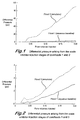
- Figure 1 compares the injection pressures observed in Floods I and 2, from which it can be seen that the injection pressure of the admixture of emulsion C and demulsifier is much greater than would be expected from the viscosity difference between Emulsion C and the aqueous solution of scale inhibitor (12cP compared with 0.82cP).
- Examination of Emulsion C under a microscope indicated a droplet size of approximately 5 ⁇ m, which falls into the region where bridging of the Berea rock pore throats may be expected.
- a build up of droplets at the inlet end of the core may explain the high pressure observed.
- the inhibitor is known to have entered the core plug from the measured fluid saturations, and also because a good desorption profile was obtained.
- Emulsion C used in Flood 3 underwent additional mixing which gave an approximate droplet size of 1 - 2 ⁇ m.
- the resultant injection pressure is shown in Figure 2 together with that of the aqueous solution of the scale inhibitor for comparison (Flood 1), and it can be seen that a much lower pressure drop was generated by the admixture of Emulsion C and demulsifier of Flood 3 than in Flood 2.
- Reference to the viscosity and relative permeability differences between the admixtures of Emulsion C and the aqueous scale inhibitor solution can account for the observed pressure difference. All the data therefore indicate that formulations comprising admixtures of Emulsion C and demulsifier remain emulsified during injection.
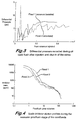
- FIG. 3 shows the pressure recorded during the oil back flush in Floods 1 and 2, from which it can be seen that a lower pressure was observed after the treatment with the admixture of Emulsion C and demulsifier.
- the inhibitor desorption profiles are shown in Figure 4 for the sandstone tests.
- the data indicate that for the core floods which employed the admixture of Emulsion C and demulsifier (Floods 2 and 3) the scale inhibitor is eluted from the core plug slightly faster than in the experiment which used the aqueous DETAPMP solution (Flood 1). Without wishing to be bound by any theory, this could be due to the surfactants in the emulsion promoting oil-wetting of the rock and hence reducing inhibitor adsorption, or the emulsion may not contact as much of the rock as the test using the aqueous solution of scale inhibitor.
- the inhibitor concentration in the brine phase is such that the rock will be saturated if it contacts the injected slug, and furthermore, the inhibitor solution in the emulsion is twice as concentrated as the aqueous solution of scale inhibitor, which would promote adsorption if the equilibrium concentration is below the saturation value. It is believed that dispersion during injection and diffusion during shut in occurs less readily with the higher viscosity and reduced brine volume of the admixture of Emulsion C and demulsifier compared to the aqueous solution of scale inhibitor.
- the inhibitor will be able to adsorb on the rock between the treatment placement depth and the well bore, since that part ofthe formation will be separated from the inhibitor by the emulsions' external oil phase during injection. This could reduce the high initial returns typically observed with squeeze treatments, and extend the squeeze lifetime.
- Emulsion Inhibitor Vol% kerosene Wt% surfactant Mixing conditions A copolymer of vinyl sulfonate and acrylic acid (ex Baker Petrolite; ML 3263) 52.4 0.65% sorbitan monooleate High shear mixing at 15,000 rpm, 30s B copolymer of vinyl sulfonate and acrylic acid (ex Baker Petrolite; ML 3263) 52.5 0.61% Hypermer B246 (ex ICI) High shear mixing at 15,000 rpm, 30s C DETAPMP neutralised to pH 2.3 47.2 1.13 % Hypermer B246 Aqueous phase added to kerosene phase over 30s with high shear mixing at 5,000 rpm followed by high shear mixing at 20,000 rpm, 60s * containing 10 vol% scale inhibitor in the aqueous phase Physical characteristics of the emulsions Emulsion Median diameter ( ⁇ m) Viscosity (mPas) at 5°
Landscapes
- Chemical & Material Sciences (AREA)
- Life Sciences & Earth Sciences (AREA)
- General Life Sciences & Earth Sciences (AREA)
- Engineering & Computer Science (AREA)
- Materials Engineering (AREA)
- Organic Chemistry (AREA)
- Oil, Petroleum & Natural Gas (AREA)
- Colloid Chemistry (AREA)
- Lubricants (AREA)
- Glass Compositions (AREA)
- Iron Core Of Rotating Electric Machines (AREA)
- Catching Or Destruction (AREA)
Claims (17)
- Procédé de traitement d'une formation souterraine, le procédé comprenant les étapes consistant à :(A) injecter dans un puits de forage dans la formation un mélange de (a) une émulsion ayant une phase aqueuse interne comprenant un composé chimique du champ de pétrole ou de gaz naturel soluble dans l'eau, ou une dispersion aqueuse d'un composé chimique du champ de pétrole ou de gaz naturel pouvant être dispersé dans l'eau, et une phase huileuse externe comprenant un hydrocarbure. liquide et un surfactant soluble dans l'huile et (b) un désémulsifiant comprenant une solution d'un surfactant ayant une température de point de trouble supérieure à 40°C ; ou,(B) injecter séparément dans un puits de forage dans la formation, l'émulsion (a) et le désémulsifiant (b) et générer un mélange de l'émulsion (a) et du désémulsifiant (b) à l'intérieur de la formation.
- Procédé selon la revendication 1 dans lequel le mélange de l'émulsion et du désémulsifiant est généré à l'intérieur de la formation en injectant l'émulsion dans le puits de forage avant l'injection du désémulsifiant.
- Procédé selon la revendication 1 dans lequel le mélange de l'émulsion et du désémulsifiant est généré à l'intérieur de la formation en injectant le désémulsifiant dans le puits de forage avant l'injection de l'émulsion et en renversant le désémulsifiant au-dessus de l'émulsion.
- Procédé selon l'une des revendications 2 et 3 dans lequel un régleur d'écartement est injecté dans le puits de forage entre l'émulsion et le désémulsifiant.
- Procédé selon la revendication 1 comprenant les étapes consistant à :A) préparer un mélange de l'émulsion et du désémulsifiant ; et,B) injecter le mélange dans un puits de forage dans la formation.
- Procédé selon la revendication 5 dans lequel l'intervalle de temps entre la préparation du mélange et l'injection du mélange dans le puits de forage, est inférieur à 5 heures.
- Procédé selon l'une quelconque des revendications précédentes dans lequel le composé chimique du champ de pétrole ou de gaz naturel soluble dans l'eau ou pouvant être dispersé dans l'eau est choisi dans le groupe composé des (i) anti-incrustants, (ii) inhibiteurs de corrosion, (iii) inhibiteurs de dépôt d'asphaltène, (iv) fixateurs de sulfure d'hydrogène et (v) inhibiteurs d'hydrate.
- Procédé selon l'une quelconque des revendications précédentes dans lequel le composé chimique du champ de pétrole ou de gaz naturel est dissout ou dispersé dans la phase aqueuse interne de l'émulsion dans une quantité dans l'intervalle de 5 à 30 pour cent en poids.
- Procédé selon l'une quelconque des revendications précédentes dans lequel lé surfactant soluble dans l'huile de l'émulsion a une valeur d'équilibre hydrophile/lipophile (HLB, hydrophilic/lipophilic balance) dans l'intervalle de 4 à 6.
- Procédé selon l'une quelconque des revendications précédentes dans lequel l'émulsion contient des gouttelettes de la phase aqueuse interne ayant un diamètre moyen de 0,1 à 10 microns.
- Procédé selon l'une quelconque des revendications précédentes dans lequel la phase aqueuse interne de l'émulsion s'élève à une valeur variant de 30 à 60 pour cent du volume total de l'émulsion.
- Procédé.selon l'une quelconque dès revendications précédentes dans lequel le désémulsifiant comprend une solution d'un surfactant ayant une température de point de trouble d'au moins 60°C.
- Procédé selon l'une quelconque des revendications précédentes dans lequel la température du point de trouble du désémulsifiant est contrôlée de manière à avoir une valeur d'au moins 50°C inférieure à celle de la température de la formation en ajustant la concentration du surfactant dans le désémulsifiant.
- Procédé selon l'une quelconque.des revendications précédentes dans lequel le désémulsifiant comprend au moins un surfactant choisi dans le groupe composé des :(a) sels de polyamine tels que les amines de polyester, le polyacrylamide amino méthlé, le polydiméthylaminopropylméthacrylamide, le polydiméthylaminoéthylacrylate, la polyéthylèneimine, la polyvinylpyrrolidone, les polymères à base de caprolactame et les versions quaternisées de ceux-ci ;(b) polyéthers multifonctionnels tels que les triglycérides sulfatés ;(c) polyéthers, tels que les copolymères d'oxyde d'éthylène et d'oxyde de propylène et les produits de réaction de tels copolymères avec des diacides, diépoxydes, diisocyanates, aldéhydes et diamines ; et,(d) résines de p-alkylphénol-formaldéhyde et dérivés oxyde d'éthylène et/ou oxyde de propylène de celles-ci.
- Procédé selon l'une quelconque des revendications précédentes dans lequel le désémulsifiant comprend une solution d'au moins un surfactant dissout dans un solvant choisi dans le groupe composé de monoéthylèneglycol (MG), tétraéthylèneglycol (TEG), butyléthylèneglycol (BGE), butyldiéthylèneglycol (BDGE), eau, xylène et toluène.
- Procédé selon l'une quelconque des revendications précédentes dans lequel la concentration de surfactant dans le désémulsifiant est dans l'intervalle de 0,1 à 2 pour cent en poids.
- Utilisation d'un mélange d'une émulsion et d'un désémulsifiant tels que définis dans l'une quelconque des revendications précédentes pour traiter un puits de pétrole ou de gaz.
Applications Claiming Priority (3)
| Application Number | Priority Date | Filing Date | Title |
|---|---|---|---|
| GB9930219 | 1999-12-21 | ||
| GBGB9930219.2A GB9930219D0 (en) | 1999-12-21 | 1999-12-21 | Process |
| PCT/GB2000/004294 WO2001046553A1 (fr) | 1999-12-21 | 2000-11-09 | Procede de traitement d'un puits de forage |
Publications (2)
| Publication Number | Publication Date |
|---|---|
| EP1240407A1 EP1240407A1 (fr) | 2002-09-18 |
| EP1240407B1 true EP1240407B1 (fr) | 2003-12-03 |
Family
ID=10866761
Family Applications (1)
| Application Number | Title | Priority Date | Filing Date |
|---|---|---|---|
| EP00973102A Expired - Lifetime EP1240407B1 (fr) | 1999-12-21 | 2000-11-09 | Procede de traitement d'un puits de forage |
Country Status (11)
| Country | Link |
|---|---|
| US (3) | US6939832B2 (fr) |
| EP (1) | EP1240407B1 (fr) |
| AT (1) | ATE255675T1 (fr) |
| AU (1) | AU1165201A (fr) |
| CA (1) | CA2394028C (fr) |
| DE (1) | DE60006999T2 (fr) |
| DK (1) | DK1240407T3 (fr) |
| EA (1) | EA003986B1 (fr) |
| GB (1) | GB9930219D0 (fr) |
| NO (1) | NO328725B1 (fr) |
| WO (1) | WO2001046553A1 (fr) |
Cited By (1)
| Publication number | Priority date | Publication date | Assignee | Title |
|---|---|---|---|---|
| US8349772B2 (en) | 2008-07-01 | 2013-01-08 | Dequest Ag | Method of secondary oil recovery using an aminoalkylene phosphonic acid and an amine neutralizing agent |
Families Citing this family (67)
| Publication number | Priority date | Publication date | Assignee | Title |
|---|---|---|---|---|
| US6806233B2 (en) * | 1996-08-02 | 2004-10-19 | M-I Llc | Methods of using reversible phase oil based drilling fluid |
| GB9930219D0 (en) * | 1999-12-21 | 2000-02-09 | Bp Exploration Operating | Process |
| GB0030555D0 (en) * | 2000-12-14 | 2001-01-31 | Amerada Hess Ltd | Hydrogen sulphide scavenging method |
| GB0213599D0 (en) * | 2002-06-13 | 2002-07-24 | Bp Exploration Operating | Process |
| US20050137432A1 (en) * | 2003-12-17 | 2005-06-23 | Chevron U.S.A. Inc. | Method and system for preventing clathrate hydrate blockage formation in flow lines by enhancing water cut |
| US20050288380A1 (en) | 2004-06-29 | 2005-12-29 | Ian Macpherson | Emulsifier/demulsifier system |
| US7493957B2 (en) * | 2005-07-15 | 2009-02-24 | Halliburton Energy Services, Inc. | Methods for controlling water and sand production in subterranean wells |
| DE102005033920A1 (de) * | 2005-07-20 | 2007-01-25 | Kennametal Inc. | Schneideinsatz, Werkzeug sowie Verfahren zur spanenden Bearbeitung eines Werkstücks |
| GB0524520D0 (en) * | 2005-12-01 | 2006-01-11 | Premier Chance Ltd | Product |
| FR2897362B1 (fr) * | 2006-02-13 | 2008-04-18 | Inst Francais Du Petrole | Methode de traitement des puits par emulsions de petite taille contenant des additifs |
| US7806185B2 (en) | 2006-03-03 | 2010-10-05 | Halliburton Energy Services, Inc. | Treatment fluids comprising friction reducers and antiflocculation additives and associated methods |
| US8697613B2 (en) * | 2006-03-03 | 2014-04-15 | Halliburton Energy Services, Inc. | Treatment fluids comprising friction reducers and antiflocculation additives and associated methods |
| BRPI0621644A2 (pt) * | 2006-05-05 | 2012-10-09 | Halliburton Energy Serv Inc | composição e método para remover um material orgánico de uma porção de um furo de poço, tubular de furo de poço, sistema de fraturas, ou matriz de uma formação subterránea |
| US8101921B2 (en) * | 2007-06-04 | 2012-01-24 | Carl Zeiss Sms Ltd | Apparatus and method for inducing controllable jets in liquids |
| US8282266B2 (en) * | 2007-06-27 | 2012-10-09 | H R D Corporation | System and process for inhibitor injection |
| US9222013B1 (en) | 2008-11-13 | 2015-12-29 | Cesi Chemical, Inc. | Water-in-oil microemulsions for oilfield applications |
| RU2422488C2 (ru) * | 2009-08-14 | 2011-06-27 | Владимир Владимирович Чендарёв | Состав для обработки призабойной зоны пласта |
| US9004167B2 (en) | 2009-09-22 | 2015-04-14 | M-I L.L.C. | Methods of using invert emulsion fluids with high internal phase concentration |
| US20110077311A1 (en) * | 2009-09-25 | 2011-03-31 | Chevron U.S.A. Inc. | Method for handling viscous liquid crude hydrocarbons |
| US20120034313A1 (en) * | 2010-08-06 | 2012-02-09 | Baker Hughes Incorporated | Microbiocide/Sulfide Control Blends |
| US20140090897A1 (en) * | 2011-03-21 | 2014-04-03 | M-I L.L.C. | Invert wellbore fluid |
| GB201104691D0 (en) * | 2011-03-21 | 2011-05-04 | M I Drilling Fluids Uk Ltd | Fluids |
| US8895482B2 (en) | 2011-08-05 | 2014-11-25 | Smart Chemical Services, Lp | Constraining pyrite activity in shale |
| US9637676B2 (en) * | 2012-01-24 | 2017-05-02 | Baker Hughes Incorporated | Asphaltene inhibitors for squeeze applications |
| EP2838970B1 (fr) | 2012-04-15 | 2016-12-28 | Flotek Chemistry, LLC | Formulations de tensio-actif pour injection de mousse |
| US11407930B2 (en) | 2012-05-08 | 2022-08-09 | Flotek Chemistry, Llc | Compositions and methods for enhancement of production of liquid and gaseous hydrocarbons |
| US9200192B2 (en) | 2012-05-08 | 2015-12-01 | Cesi Chemical, Inc. | Compositions and methods for enhancement of production of liquid and gaseous hydrocarbons |
| BR112015003073A2 (pt) * | 2012-08-21 | 2017-12-05 | Lonza Ag | método para reduzir compostos sulfidrílicos de uma corrente fluida de hidrocarbonetos e método para reduzir compostos sulfidrílicos de um poço de produção de óleo e gás ou de um poço de injeção. |
| US20140096969A1 (en) * | 2012-10-04 | 2014-04-10 | Syed Afaq Ali | Compositions and methods for preventing emulsion formation |
| WO2014100052A1 (fr) * | 2012-12-19 | 2014-06-26 | Nalco Company | Piégeage de sulfure d'hydrogène |
| CA2889622C (fr) * | 2012-12-19 | 2021-02-02 | Nalco Company | Fixateurs de sulfure d'hydrogene fonctionnalises |
| US9631467B2 (en) * | 2012-12-19 | 2017-04-25 | Ecolab Usa Inc. | Squeeze treatment for in situ scavenging of hydrogen sulfide |
| US20140190692A1 (en) * | 2013-01-04 | 2014-07-10 | Independence Oilfield Chemicals | Production-treating chemicals added to polymer slurries used in treatment of oil and gas wells |
| US11254856B2 (en) | 2013-03-14 | 2022-02-22 | Flotek Chemistry, Llc | Methods and compositions for use in oil and/or gas wells |
| US10421707B2 (en) | 2013-03-14 | 2019-09-24 | Flotek Chemistry, Llc | Methods and compositions incorporating alkyl polyglycoside surfactant for use in oil and/or gas wells |
| US10577531B2 (en) | 2013-03-14 | 2020-03-03 | Flotek Chemistry, Llc | Polymers and emulsions for use in oil and/or gas wells |
| US9868893B2 (en) | 2013-03-14 | 2018-01-16 | Flotek Chemistry, Llc | Methods and compositions for use in oil and/or gas wells |
| US9321955B2 (en) | 2013-06-14 | 2016-04-26 | Flotek Chemistry, Llc | Methods and compositions for stimulating the production of hydrocarbons from subterranean formations |
| US10000693B2 (en) | 2013-03-14 | 2018-06-19 | Flotek Chemistry, Llc | Methods and compositions for use in oil and/or gas wells |
| US9884988B2 (en) | 2013-03-14 | 2018-02-06 | Flotek Chemistry, Llc | Methods and compositions for use in oil and/or gas wells |
| US10941106B2 (en) | 2013-03-14 | 2021-03-09 | Flotek Chemistry, Llc | Methods and compositions incorporating alkyl polyglycoside surfactant for use in oil and/or gas wells |
| US10287483B2 (en) | 2013-03-14 | 2019-05-14 | Flotek Chemistry, Llc | Methods and compositions for use in oil and/or gas wells comprising a terpene alcohol |
| US11180690B2 (en) | 2013-03-14 | 2021-11-23 | Flotek Chemistry, Llc | Diluted microemulsions with low surface tensions |
| US10053619B2 (en) | 2013-03-14 | 2018-08-21 | Flotek Chemistry, Llc | Siloxane surfactant additives for oil and gas applications |
| US10717919B2 (en) | 2013-03-14 | 2020-07-21 | Flotek Chemistry, Llc | Methods and compositions for use in oil and/or gas wells |
| US9068108B2 (en) | 2013-03-14 | 2015-06-30 | Cesi Chemical, Inc. | Methods and compositions for stimulating the production of hydrocarbons from subterranean formations |
| US9464223B2 (en) | 2013-03-14 | 2016-10-11 | Flotek Chemistry, Llc | Methods and compositions for use in oil and/or gas wells |
| US10590332B2 (en) | 2013-03-14 | 2020-03-17 | Flotek Chemistry, Llc | Siloxane surfactant additives for oil and gas applications |
| US9428683B2 (en) | 2013-03-14 | 2016-08-30 | Flotek Chemistry, Llc | Methods and compositions for stimulating the production of hydrocarbons from subterranean formations |
| US9890624B2 (en) | 2014-02-28 | 2018-02-13 | Eclipse Ior Services, Llc | Systems and methods for the treatment of oil and/or gas wells with a polymeric material |
| US9890625B2 (en) | 2014-02-28 | 2018-02-13 | Eclipse Ior Services, Llc | Systems and methods for the treatment of oil and/or gas wells with an obstruction material |
| CA2891278C (fr) | 2014-05-14 | 2018-11-06 | Cesi Chemical, Inc. | Methodes et compositions destinees aux puits de petrole ou de gaz |
| US10294757B2 (en) | 2014-07-28 | 2019-05-21 | Flotek Chemistry, Llc | Methods and compositions related to gelled layers in oil and/or gas wells |
| US9902894B2 (en) | 2014-10-31 | 2018-02-27 | Chevron U.S.A. Inc. | Polymer compositions |
| US9663666B2 (en) * | 2015-01-22 | 2017-05-30 | Baker Hughes Incorporated | Use of hydroxyacid to reduce the localized corrosion potential of low dose hydrate inhibitors |
| CA2974979C (fr) * | 2015-02-03 | 2023-08-01 | Schlumberger Canada Limited | Calcul de coefficient de viscosite de cisaillement de polymere a plusieurs phases en deroulement des operations d'etude de simulation par injection de polymere dans une carotte |
| US10882771B2 (en) | 2015-02-06 | 2021-01-05 | Baker Hughes, A Ge Company, Llc | Use of phosphino polymer and polyhydroxypolycarboxylic acid as corrosion inhibitor |
| CA2997138C (fr) | 2015-09-02 | 2022-07-26 | Chevron U.S.A. Inc. | Compositions de recuperation amelioree d'huile et procedes associes |
| US10213757B1 (en) | 2015-10-23 | 2019-02-26 | Tetra Technologies, Inc. | In situ treatment analysis mixing system |
| US10934472B2 (en) | 2017-08-18 | 2021-03-02 | Flotek Chemistry, Llc | Compositions comprising non-halogenated solvents for use in oil and/or gas wells and related methods |
| US11053433B2 (en) | 2017-12-01 | 2021-07-06 | Flotek Chemistry, Llc | Methods and compositions for stimulating the production of hydrocarbons from subterranean formations |
| WO2019209312A1 (fr) | 2018-04-27 | 2019-10-31 | Halliburton Energy Services, Inc. | Polyamines polyéthers utilisés comme constituants non émulsifiants |
| US11104843B2 (en) | 2019-10-10 | 2021-08-31 | Flotek Chemistry, Llc | Well treatment compositions and methods comprising certain microemulsions and certain clay control additives exhibiting synergistic effect of enhancing clay swelling protection and persistency |
| US11365607B2 (en) * | 2020-03-30 | 2022-06-21 | Saudi Arabian Oil Company | Method and system for reviving wells |
| US11512243B2 (en) | 2020-10-23 | 2022-11-29 | Flotek Chemistry, Llc | Microemulsions comprising an alkyl propoxylated sulfate surfactant, and related methods |
| CN115703961B (zh) * | 2021-08-03 | 2023-10-20 | 中国石油化工股份有限公司 | 一种液相伤害预防体系及其制备方法与应用 |
| US12072328B2 (en) | 2021-12-08 | 2024-08-27 | Saudi Arabian Oil Company | Dynamic in-situ measurement of calcium ion concentration in porous media experiments |
Family Cites Families (23)
| Publication number | Priority date | Publication date | Assignee | Title |
|---|---|---|---|---|
| US2681889A (en) * | 1951-12-29 | 1954-06-22 | Stanolind Oil & Gas Co | Emulsified acids for well treating |
| US2742426A (en) * | 1952-07-28 | 1956-04-17 | Stanolind Oil & Gas Co | Composition for hydraulically fracturing formations |
| US2801218A (en) * | 1954-06-18 | 1957-07-30 | Pan American Petroleum Corp | Emulsion gels for well servicing |
| US2779734A (en) * | 1954-11-12 | 1957-01-29 | Stanolind Oil & Gas Co | Composition for use in wells |
| US3403522A (en) * | 1965-04-26 | 1968-10-01 | Walter L. Henry | Apparatus for low temperature dehydration of gases |
| US4025443A (en) * | 1975-03-17 | 1977-05-24 | Jackson Jack M | Clay-free wellbore fluid |
| US4089803A (en) * | 1976-08-12 | 1978-05-16 | Petrolite Corporation | Demulsification of surfactant-petroleum-water flood emulsions |
| US4359391A (en) * | 1978-05-24 | 1982-11-16 | Exxon Production Research Co. | Well treatment with emulsion dispersions |
| US4517102A (en) | 1980-06-30 | 1985-05-14 | Exxon Production Research Co. | Method of breaking an emulsion and an emulsion-emulsion breaker composition |
| US4602683A (en) * | 1984-06-29 | 1986-07-29 | Atlantic Richfield Company | Method of inhibiting scale in wells |
| US4986353A (en) * | 1988-09-14 | 1991-01-22 | Conoco Inc. | Placement process for oil field chemicals |
| GB8902762D0 (en) * | 1989-02-08 | 1989-03-30 | Shell Int Research | Surfactant composition |
| US5076364A (en) * | 1990-03-30 | 1991-12-31 | Shell Oil Company | Gas hydrate inhibition |
| US5294353A (en) * | 1991-06-27 | 1994-03-15 | Halliburton Company | Methods of preparing and using stable oil external-aqueous internal emulsions |
| US5547022A (en) * | 1995-05-03 | 1996-08-20 | Chevron U.S.A. Inc. | Heavy oil well stimulation composition and process |
| US5741758A (en) * | 1995-10-13 | 1998-04-21 | Bj Services Company, U.S.A. | Method for controlling gas hydrates in fluid mixtures |
| US5905061A (en) * | 1996-08-02 | 1999-05-18 | Patel; Avind D. | Invert emulsion fluids suitable for drilling |
| US6165945A (en) * | 1998-01-20 | 2000-12-26 | Baker Hughes Incorporated | Blends of glycol derivatives as gas hydrate inhibitors in water base drilling, drill-in, and completion fluids |
| US6284714B1 (en) * | 1998-07-30 | 2001-09-04 | Baker Hughes Incorporated | Pumpable multiple phase compositions for controlled release applications downhole |
| GB2342110B (en) * | 1998-10-01 | 2000-11-15 | Baker Hughes Inc | Shale stabilizing drilling fluids comprising calcium chloride and low molecular weight low charge cationic polyacrylamide copolymers |
| US6281172B1 (en) * | 1999-04-07 | 2001-08-28 | Akzo Nobel Nv | Quaternary nitrogen containing amphoteric water soluble polymers and their use in drilling fluids |
| GB9930219D0 (en) * | 1999-12-21 | 2000-02-09 | Bp Exploration Operating | Process |
| US6608006B2 (en) * | 2001-09-14 | 2003-08-19 | Halliburton Energy Services, Inc. | Methods of drilling well bores using invertible oil external-water internal drilling fluids |
-
1999
- 1999-12-21 GB GBGB9930219.2A patent/GB9930219D0/en not_active Ceased
-
2000
- 2000-11-09 AU AU11652/01A patent/AU1165201A/en not_active Abandoned
- 2000-11-09 WO PCT/GB2000/004294 patent/WO2001046553A1/fr not_active Ceased
- 2000-11-09 CA CA002394028A patent/CA2394028C/fr not_active Expired - Fee Related
- 2000-11-09 EP EP00973102A patent/EP1240407B1/fr not_active Expired - Lifetime
- 2000-11-09 DE DE60006999T patent/DE60006999T2/de not_active Expired - Lifetime
- 2000-11-09 EA EA200200637A patent/EA003986B1/ru not_active IP Right Cessation
- 2000-11-09 AT AT00973102T patent/ATE255675T1/de not_active IP Right Cessation
- 2000-11-09 DK DK00973102T patent/DK1240407T3/da active
-
2002
- 2002-06-17 NO NO20022902A patent/NO328725B1/no not_active IP Right Cessation
- 2002-06-21 US US10/175,896 patent/US6939832B2/en not_active Expired - Fee Related
-
2005
- 2005-03-29 US US11/091,757 patent/US7417010B2/en not_active Expired - Fee Related
- 2005-03-29 US US11/091,907 patent/US7419938B2/en not_active Expired - Fee Related
Cited By (1)
| Publication number | Priority date | Publication date | Assignee | Title |
|---|---|---|---|---|
| US8349772B2 (en) | 2008-07-01 | 2013-01-08 | Dequest Ag | Method of secondary oil recovery using an aminoalkylene phosphonic acid and an amine neutralizing agent |
Also Published As
| Publication number | Publication date |
|---|---|
| US7419938B2 (en) | 2008-09-02 |
| WO2001046553A1 (fr) | 2001-06-28 |
| NO20022902D0 (no) | 2002-06-17 |
| US20030069143A1 (en) | 2003-04-10 |
| EA200200637A1 (ru) | 2002-12-26 |
| CA2394028A1 (fr) | 2001-06-28 |
| CA2394028C (fr) | 2008-08-05 |
| GB9930219D0 (en) | 2000-02-09 |
| EP1240407A1 (fr) | 2002-09-18 |
| US7417010B2 (en) | 2008-08-26 |
| EA003986B1 (ru) | 2003-12-25 |
| DE60006999T2 (de) | 2004-05-27 |
| DE60006999D1 (de) | 2004-01-15 |
| US20050170975A1 (en) | 2005-08-04 |
| NO328725B1 (no) | 2010-05-03 |
| US6939832B2 (en) | 2005-09-06 |
| ATE255675T1 (de) | 2003-12-15 |
| US20050170974A1 (en) | 2005-08-04 |
| AU1165201A (en) | 2001-07-03 |
| NO20022902L (no) | 2002-08-16 |
| DK1240407T3 (da) | 2004-04-05 |
Similar Documents
| Publication | Publication Date | Title |
|---|---|---|
| US6939832B2 (en) | Process for treating an oil well | |
| EP1198536B1 (fr) | Micro-emulsions eau dans huile utiles pour des applications sur des champs de petrole ou de gaz | |
| AU2006206524C1 (en) | Microemulsion containing oilfield chemicals useful for oil and gas field applications | |
| AU695513B2 (en) | Oil and gas field chemicals | |
| EP3174951B1 (fr) | Methode pour la récupération de pétrole, utilisant une émulsion polymère | |
| US10035946B2 (en) | Hydrazide crosslinked polymer emulsions for use in crude oil recovery | |
| US6379612B1 (en) | Scale inhibitors | |
| US20150119300A1 (en) | Biodegradable non-acidic oil-in-water nanoemulsion | |
| US6173780B1 (en) | Process for increasing effectiveness of production chemicals by reducing number of squeezing and shut-in operations required to increase production rate from an oil well | |
| EP1446549A1 (fr) | Inhibiteurs d'entartrage solubles dans l'huile utilises dans une composition ne nuisant pas a l'environnement | |
| US20090298723A1 (en) | Method for Treating Wells by Small-Size Additive-Containing Emulsions |
Legal Events
| Date | Code | Title | Description |
|---|---|---|---|
| PUAI | Public reference made under article 153(3) epc to a published international application that has entered the european phase |
Free format text: ORIGINAL CODE: 0009012 |
|
| 17P | Request for examination filed |
Effective date: 20020523 |
|
| AK | Designated contracting states |
Kind code of ref document: A1 Designated state(s): AT BE CH CY DE DK ES FI FR GB GR IE IT LI LU MC NL PT SE TR |
|
| AX | Request for extension of the european patent |
Free format text: AL;LT;LV;MK;RO;SI |
|
| GRAH | Despatch of communication of intention to grant a patent |
Free format text: ORIGINAL CODE: EPIDOS IGRA |
|
| GRAS | Grant fee paid |
Free format text: ORIGINAL CODE: EPIDOSNIGR3 |
|
| GRAA | (expected) grant |
Free format text: ORIGINAL CODE: 0009210 |
|
| AK | Designated contracting states |
Kind code of ref document: B1 Designated state(s): AT BE CH CY DE DK ES FI FR GB GR IE IT LI LU MC NL PT SE TR |
|
| PG25 | Lapsed in a contracting state [announced via postgrant information from national office to epo] |
Ref country code: IT Free format text: LAPSE BECAUSE OF FAILURE TO SUBMIT A TRANSLATION OF THE DESCRIPTION OR TO PAY THE FEE WITHIN THE PRESCRIBED TIME-LIMIT;WARNING: LAPSES OF ITALIAN PATENTS WITH EFFECTIVE DATE BEFORE 2007 MAY HAVE OCCURRED AT ANY TIME BEFORE 2007. THE CORRECT EFFECTIVE DATE MAY BE DIFFERENT FROM THE ONE RECORDED. Effective date: 20031203 Ref country code: LI Free format text: LAPSE BECAUSE OF FAILURE TO SUBMIT A TRANSLATION OF THE DESCRIPTION OR TO PAY THE FEE WITHIN THE PRESCRIBED TIME-LIMIT Effective date: 20031203 Ref country code: AT Free format text: LAPSE BECAUSE OF FAILURE TO SUBMIT A TRANSLATION OF THE DESCRIPTION OR TO PAY THE FEE WITHIN THE PRESCRIBED TIME-LIMIT Effective date: 20031203 Ref country code: CY Free format text: LAPSE BECAUSE OF FAILURE TO SUBMIT A TRANSLATION OF THE DESCRIPTION OR TO PAY THE FEE WITHIN THE PRESCRIBED TIME-LIMIT Effective date: 20031203 Ref country code: FR Free format text: LAPSE BECAUSE OF FAILURE TO SUBMIT A TRANSLATION OF THE DESCRIPTION OR TO PAY THE FEE WITHIN THE PRESCRIBED TIME-LIMIT Effective date: 20031203 Ref country code: TR Free format text: LAPSE BECAUSE OF FAILURE TO SUBMIT A TRANSLATION OF THE DESCRIPTION OR TO PAY THE FEE WITHIN THE PRESCRIBED TIME-LIMIT Effective date: 20031203 Ref country code: BE Free format text: LAPSE BECAUSE OF FAILURE TO SUBMIT A TRANSLATION OF THE DESCRIPTION OR TO PAY THE FEE WITHIN THE PRESCRIBED TIME-LIMIT Effective date: 20031203 Ref country code: FI Free format text: LAPSE BECAUSE OF FAILURE TO SUBMIT A TRANSLATION OF THE DESCRIPTION OR TO PAY THE FEE WITHIN THE PRESCRIBED TIME-LIMIT Effective date: 20031203 Ref country code: CH Free format text: LAPSE BECAUSE OF FAILURE TO SUBMIT A TRANSLATION OF THE DESCRIPTION OR TO PAY THE FEE WITHIN THE PRESCRIBED TIME-LIMIT Effective date: 20031203 |
|
| REG | Reference to a national code |
Ref country code: GB Ref legal event code: FG4D |
|
| REG | Reference to a national code |
Ref country code: CH Ref legal event code: EP |
|
| REG | Reference to a national code |
Ref country code: IE Ref legal event code: FG4D |
|
| REF | Corresponds to: |
Ref document number: 60006999 Country of ref document: DE Date of ref document: 20040115 Kind code of ref document: P |
|
| PG25 | Lapsed in a contracting state [announced via postgrant information from national office to epo] |
Ref country code: SE Free format text: LAPSE BECAUSE OF FAILURE TO SUBMIT A TRANSLATION OF THE DESCRIPTION OR TO PAY THE FEE WITHIN THE PRESCRIBED TIME-LIMIT Effective date: 20040303 Ref country code: GR Free format text: LAPSE BECAUSE OF FAILURE TO SUBMIT A TRANSLATION OF THE DESCRIPTION OR TO PAY THE FEE WITHIN THE PRESCRIBED TIME-LIMIT Effective date: 20040303 |
|
| PG25 | Lapsed in a contracting state [announced via postgrant information from national office to epo] |
Ref country code: ES Free format text: LAPSE BECAUSE OF FAILURE TO SUBMIT A TRANSLATION OF THE DESCRIPTION OR TO PAY THE FEE WITHIN THE PRESCRIBED TIME-LIMIT Effective date: 20040314 |
|
| REG | Reference to a national code |
Ref country code: DK Ref legal event code: T3 |
|
| LTIE | Lt: invalidation of european patent or patent extension |
Effective date: 20031203 |
|
| REG | Reference to a national code |
Ref country code: CH Ref legal event code: PL |
|
| PLBE | No opposition filed within time limit |
Free format text: ORIGINAL CODE: 0009261 |
|
| STAA | Information on the status of an ep patent application or granted ep patent |
Free format text: STATUS: NO OPPOSITION FILED WITHIN TIME LIMIT |
|
| PG25 | Lapsed in a contracting state [announced via postgrant information from national office to epo] |
Ref country code: LU Free format text: LAPSE BECAUSE OF NON-PAYMENT OF DUE FEES Effective date: 20041109 |
|
| 26N | No opposition filed |
Effective date: 20040906 |
|
| PG25 | Lapsed in a contracting state [announced via postgrant information from national office to epo] |
Ref country code: MC Free format text: LAPSE BECAUSE OF NON-PAYMENT OF DUE FEES Effective date: 20041130 |
|
| EN | Fr: translation not filed | ||
| PG25 | Lapsed in a contracting state [announced via postgrant information from national office to epo] |
Ref country code: PT Free format text: LAPSE BECAUSE OF NON-PAYMENT OF DUE FEES Effective date: 20040503 |
|
| PGFP | Annual fee paid to national office [announced via postgrant information from national office to epo] |
Ref country code: DK Payment date: 20141126 Year of fee payment: 15 |
|
| PGFP | Annual fee paid to national office [announced via postgrant information from national office to epo] |
Ref country code: IE Payment date: 20141126 Year of fee payment: 15 Ref country code: GB Payment date: 20141127 Year of fee payment: 15 Ref country code: DE Payment date: 20141128 Year of fee payment: 15 |
|
| PGFP | Annual fee paid to national office [announced via postgrant information from national office to epo] |
Ref country code: NL Payment date: 20141126 Year of fee payment: 15 |
|
| REG | Reference to a national code |
Ref country code: DE Ref legal event code: R119 Ref document number: 60006999 Country of ref document: DE |
|
| REG | Reference to a national code |
Ref country code: DK Ref legal event code: EBP Effective date: 20151130 |
|
| GBPC | Gb: european patent ceased through non-payment of renewal fee |
Effective date: 20151109 |
|
| REG | Reference to a national code |
Ref country code: NL Ref legal event code: MM Effective date: 20151201 |
|
| REG | Reference to a national code |
Ref country code: IE Ref legal event code: MM4A |
|
| PG25 | Lapsed in a contracting state [announced via postgrant information from national office to epo] |
Ref country code: NL Free format text: LAPSE BECAUSE OF NON-PAYMENT OF DUE FEES Effective date: 20151201 |
|
| PG25 | Lapsed in a contracting state [announced via postgrant information from national office to epo] |
Ref country code: IE Free format text: LAPSE BECAUSE OF NON-PAYMENT OF DUE FEES Effective date: 20151109 Ref country code: GB Free format text: LAPSE BECAUSE OF NON-PAYMENT OF DUE FEES Effective date: 20151109 Ref country code: DK Free format text: LAPSE BECAUSE OF NON-PAYMENT OF DUE FEES Effective date: 20151130 Ref country code: DE Free format text: LAPSE BECAUSE OF NON-PAYMENT OF DUE FEES Effective date: 20160601 |