EP1239037A1 - PROCESS FOR PRODUCING KiSS-1 PEPTIDE - Google Patents
PROCESS FOR PRODUCING KiSS-1 PEPTIDE Download PDFInfo
- Publication number
- EP1239037A1 EP1239037A1 EP00981702A EP00981702A EP1239037A1 EP 1239037 A1 EP1239037 A1 EP 1239037A1 EP 00981702 A EP00981702 A EP 00981702A EP 00981702 A EP00981702 A EP 00981702A EP 1239037 A1 EP1239037 A1 EP 1239037A1
- Authority
- EP
- European Patent Office
- Prior art keywords
- peptide
- terminal
- kiss
- acid sequence
- amino acid
- Prior art date
- Legal status (The legal status is an assumption and is not a legal conclusion. Google has not performed a legal analysis and makes no representation as to the accuracy of the status listed.)
- Withdrawn
Links
Images


Classifications
-
- C—CHEMISTRY; METALLURGY
- C07—ORGANIC CHEMISTRY
- C07K—PEPTIDES
- C07K19/00—Hybrid peptides, i.e. peptides covalently bound to nucleic acids, or non-covalently bound protein-protein complexes
-
- C—CHEMISTRY; METALLURGY
- C12—BIOCHEMISTRY; BEER; SPIRITS; WINE; VINEGAR; MICROBIOLOGY; ENZYMOLOGY; MUTATION OR GENETIC ENGINEERING
- C12P—FERMENTATION OR ENZYME-USING PROCESSES TO SYNTHESISE A DESIRED CHEMICAL COMPOUND OR COMPOSITION OR TO SEPARATE OPTICAL ISOMERS FROM A RACEMIC MIXTURE
- C12P21/00—Preparation of peptides or proteins
- C12P21/02—Preparation of peptides or proteins having a known sequence of two or more amino acids, e.g. glutathione
-
- C—CHEMISTRY; METALLURGY
- C07—ORGANIC CHEMISTRY
- C07K—PEPTIDES
- C07K14/00—Peptides having more than 20 amino acids; Gastrins; Somatostatins; Melanotropins; Derivatives thereof
- C07K14/435—Peptides having more than 20 amino acids; Gastrins; Somatostatins; Melanotropins; Derivatives thereof from animals; from humans
- C07K14/46—Peptides having more than 20 amino acids; Gastrins; Somatostatins; Melanotropins; Derivatives thereof from animals; from humans from vertebrates
- C07K14/47—Peptides having more than 20 amino acids; Gastrins; Somatostatins; Melanotropins; Derivatives thereof from animals; from humans from vertebrates from mammals
- C07K14/4701—Peptides having more than 20 amino acids; Gastrins; Somatostatins; Melanotropins; Derivatives thereof from animals; from humans from vertebrates from mammals not used
- C07K14/4702—Regulators; Modulating activity
- C07K14/4703—Inhibitors; Suppressors
-
- C—CHEMISTRY; METALLURGY
- C07—ORGANIC CHEMISTRY
- C07K—PEPTIDES
- C07K5/00—Peptides containing up to four amino acids in a fully defined sequence; Derivatives thereof
- C07K5/04—Peptides containing up to four amino acids in a fully defined sequence; Derivatives thereof containing only normal peptide links
- C07K5/08—Tripeptides
- C07K5/0802—Tripeptides with the first amino acid being neutral
- C07K5/0804—Tripeptides with the first amino acid being neutral and aliphatic
- C07K5/081—Tripeptides with the first amino acid being neutral and aliphatic the side chain containing O or S as heteroatoms, e.g. Cys, Ser
-
- C—CHEMISTRY; METALLURGY
- C12—BIOCHEMISTRY; BEER; SPIRITS; WINE; VINEGAR; MICROBIOLOGY; ENZYMOLOGY; MUTATION OR GENETIC ENGINEERING
- C12N—MICROORGANISMS OR ENZYMES; COMPOSITIONS THEREOF; PROPAGATING, PRESERVING, OR MAINTAINING MICROORGANISMS; MUTATION OR GENETIC ENGINEERING; CULTURE MEDIA
- C12N15/00—Mutation or genetic engineering; DNA or RNA concerning genetic engineering, vectors, e.g. plasmids, or their isolation, preparation or purification; Use of hosts therefor
- C12N15/09—Recombinant DNA-technology
- C12N15/11—DNA or RNA fragments; Modified forms thereof; Non-coding nucleic acids having a biological activity
- C12N15/62—DNA sequences coding for fusion proteins
-
- C—CHEMISTRY; METALLURGY
- C12—BIOCHEMISTRY; BEER; SPIRITS; WINE; VINEGAR; MICROBIOLOGY; ENZYMOLOGY; MUTATION OR GENETIC ENGINEERING
- C12P—FERMENTATION OR ENZYME-USING PROCESSES TO SYNTHESISE A DESIRED CHEMICAL COMPOUND OR COMPOSITION OR TO SEPARATE OPTICAL ISOMERS FROM A RACEMIC MIXTURE
- C12P21/00—Preparation of peptides or proteins
- C12P21/06—Preparation of peptides or proteins produced by the hydrolysis of a peptide bond, e.g. hydrolysate products
-
- C—CHEMISTRY; METALLURGY
- C07—ORGANIC CHEMISTRY
- C07K—PEPTIDES
- C07K2319/00—Fusion polypeptide
-
- C—CHEMISTRY; METALLURGY
- C07—ORGANIC CHEMISTRY
- C07K—PEPTIDES
- C07K2319/00—Fusion polypeptide
- C07K2319/70—Fusion polypeptide containing domain for protein-protein interaction
- C07K2319/74—Fusion polypeptide containing domain for protein-protein interaction containing a fusion for binding to a cell surface receptor
- C07K2319/75—Fusion polypeptide containing domain for protein-protein interaction containing a fusion for binding to a cell surface receptor containing a fusion for activation of a cell surface receptor, e.g. thrombopoeitin, NPY and other peptide hormones
Definitions
- the present invention relates to a method of producing KiSS-1 peptide or a salt thereof by preparing a fusion protein or polypeptide, and then subjecting said fusion protein or polypeptide to the reaction of cleaving the peptide bond.
- peptides When producing peptides using genetic recombinant technology, peptides are frequently expressed in the form of a fusion protein because peptides are prone to be decomposed inside the cell.
- Well-known methods of excising a target peptide from a fusion protein include chemical cleavage using bromcyan (Itakura, et al., Science, 198, 1056 (1977)), and enzymatic cleavage using factor Xa (Nagai, et. al., Methods in Enzymology, 153, 46(1987)).
- KiSS-1 peptide or a salt thereof can be efficiently produced by preparing a fusion protein or polypeptide, in which a KiSS-1 peptide is ligated to the N-terminal of a protein or polypeptide having cysteine at the N-terminal, and then subjecting the fusion protein or polypeptide to the reaction of cleaving the peptide bond.
- the present invention provides:
- the present invention provides:
- the KiSS-1 peptide used in the method of the present invention includes, for example, the human KiSS-1 peptide described in WO00/24890 (International Patent Application No. PCT/JP99/05905), and specifically, a peptide that contains the 47 th to 54 th residues from the N-terminal of the amino acid sequence represented by SEQ ID NO: 1, and consists of 8 to 54 amino acids.
- the peptide that contains the 47 th to 54 th residues from the N-terminal of the amino acid sequence represented by SEQ ID NO: 1, and consists of 8 to 54 amino acids may be selected from any peptides which contain the 47 th to 54 th residues from the N-terminal of the amino acid sequence represented by SEQ ID NO: 1 and consists of 8 to 54 amino acids.
- this means that the peptide activity (for example, binding activity between the peptide and its receptor, or cell stimulation activity on the cell expressing the receptor caused by the peptide, etc.) is retained to the substantially same extent.
- the following may be used: (i) the peptide having the amino acid sequence represented by SEQ ID NO: 1; and (ii) peptides comprising the 47 th to 54 th residues from the N-terminal of the amino acid sequence represented by SEQ ID NO: 1 at the C-terminal portion, and consisting of 8 to 15 amino acids.
- KiSS-1 peptide (i) the peptide havingthe amino acid sequence represented by SEQ ID NO: 1; (ii) the peptide havingthe 40 th to 54 th residues from the N-terminal of the amino acid sequence represented by SEQ ID NO: 1; (iii) the peptide having the 45 th to 54 th residues from the N-terminal of the amino acid sequence represented by SEQ ID NO: 1; (iv) the peptide havingthe 46 th to 54 th residues from the N-terminal of the amino acid sequence represented by SEQ ID NO: 1; and (v) the peptide havingthe 47 th to 54 th residues from the N-terminal of the amino acid sequence represented by SEQ ID NO: 1.
- KiSS-1 peptides have ligand activity in relation to the receptor protein OT7T175 described in WO00/24890 (International Patent Application No. PCT/JP99/05905).
- the N-terminal (amino terminal) is placed on the left side and the C-terminal (carboxyl terminal) on the right side.
- the C-terminal of the peptide represented by SEQ ID NO: 1 may be amide (-CONH 2 ), carboxyl group (-COOH), carboxylate (-COO - ), alkylamide (-CONHR), or ester (-COOR).
- R of the ester or alkylamide includes, for example, C 1-6 alkyl group such as methyl, ethyl, n-propyl, isopropyl, or n-butyl; a C 3-8 cycloalkyl group such as cyclopenthyl, or cyclohexyl; a C 6-12 aryl group such as phenyl, or ⁇ -naphthyl; a phenyl-C 1-2 alkyl such as benzyl, phenethyl, or benzhydryl; or a C 7-14 aralkyl group such as an ⁇ -naphthyl-C 1-2 alkyl, such as ⁇ -naphthylmethyl; or a pivaloyloxymethyl group generally used as an oral ester.
- C 1-6 alkyl group such as methyl, ethyl, n-propyl, isopropyl, or n-butyl
- Salts of the KiSS-1 peptide of the present invention may be salts with physiologically acceptable bases (for example, alkali metals, etc.) and acids (organic acids, inorganic acids), and physiologically acceptable acid added salts are preferable.
- physiologically acceptable bases for example, alkali metals, etc.
- acids organic acids, inorganic acids
- physiologically acceptable acid added salts are preferable.
- Such salts includes, for example, ones with inorganic acids (for example, hydrochloric acid, phosphoric acid, hydrobromic acid, sulfuric acid), or with organic acids (for example, acetic acid, formic acid, propionic acid, fumaric acid, maleic acid, succinic acid, tartinic acid, citric acid, malic acid, oxalic acid, benzoic acid, methane sulfonic acid, benzene sulfonic acid).
- inorganic acids for example, hydrochloric acid, phosphoric acid, hydrobromic acid, sulfuric acid
- organic acids
- the proteins or peptides having cysteine at the N-terminal are not limited. If there is no cysteine at the N-terminal, a protein or peptide may be given cysteine at the N-terminal using well-known methods.
- the protein or peptide having cysteine at the N-terminal preferably has a molecular weight of 100 to 100,000, and more preferably a molecular weight of 300 to 50,000.
- the protein or peptide having cysteine at the N-terminal preferably has 1 to 1,000 amino acids, and more preferably 3 to 500 amino acids.
- the above-mentioned proteins or peptides includes for example, interferon, interleukin, various growth factors such as fibroblast growth factor (aFGF, bFGF, etc.), (pro)urokinase, lymphotoxin, tumor necrosis factor (TNF), oxygen proteins such as ⁇ -galactosidase, storage proteins, streptoavisine; protein A, protein G, tissue plasminogen activator (TPA), or muteins or fragments thereof.
- fibroblast growth factors (aFGF, bFGF, etc.) or the muteins thereof, or a part thereof (a fragment) (for example, bFGF CS23 mutein, etc.) are preferably used.
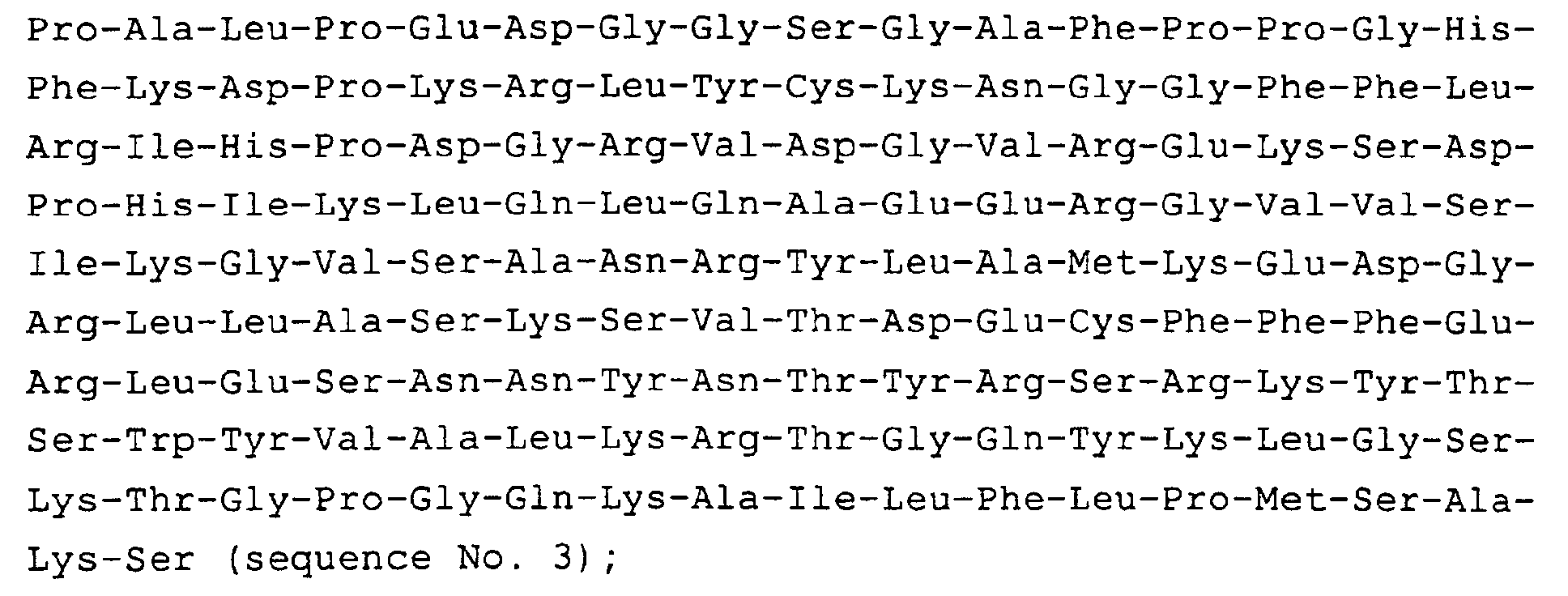
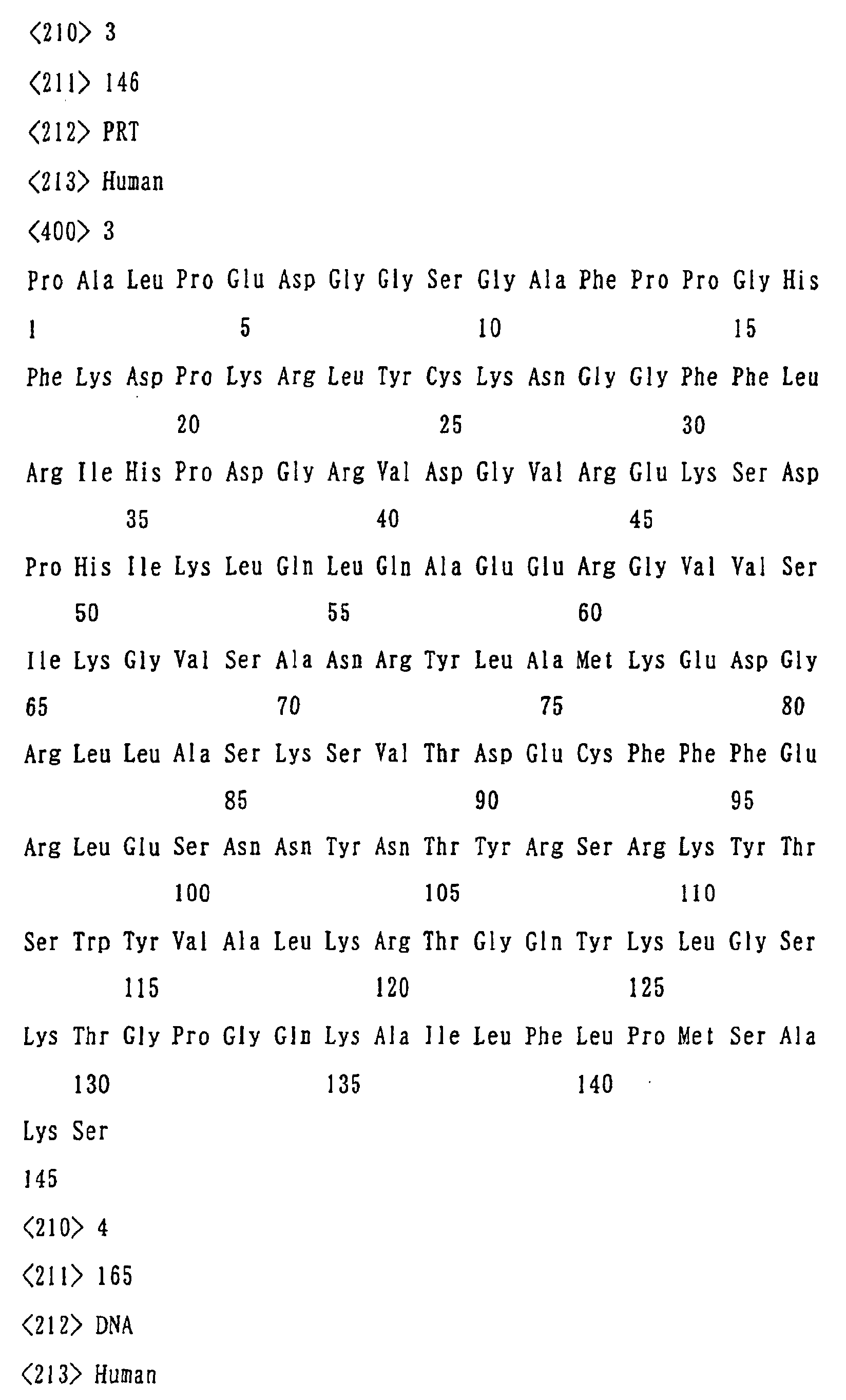
- bFGF CS23 mutein is a protein that comprises the following amino acid sequence: and that has a cysteine residue added to the N-terminal.
- the entire nucleic acid sequence may be chemically synthesized; (2) said DNA may be constructed by adding the nucleic acid sequence encoding cysteine to the N-terminal of the nucleic acid sequence encoding a protein, and then adding the nucleic acid sequence encoding the KiSS-1 peptide to the N-terminal; or (3) to obtain a fragment of said peptide, the DNA may be constructed using a technique such as site-directed mutagenesis for substituting the amino acid residue immediately after the desired fragment with cysteine.
- the well-known methods for example, phosphoamidide method, triester phosphate method, diester method, or hydrogen phosphonate method may be used.
- a protein or peptide of short lenght may be synthesized completely at once, and a protein or peptide of long length may be produced by synthesizing parts and ligating the parts using T4DNA ligase.
- the DNA encoding the protein on the C-terminal side is obtained by excising the DNA from chromosomes or cDNA with a suitable restriction enzyme and then subcloning into a vector; or cDNA is obtained. Subsequently, the DNA is cleaved with an appropriate restriction enzyme so that the protein has cysteine at the N-terminal, or a synthetic DNA is ligated to 5'-terminal of the DNA encoding the protein or a part thereof so that the protein is modified to have cysteine at the N-terminal.
- the DNA encoding the target protein (chemically synthesized, or cloned from an organism) is ligated to the 5'-terminal.
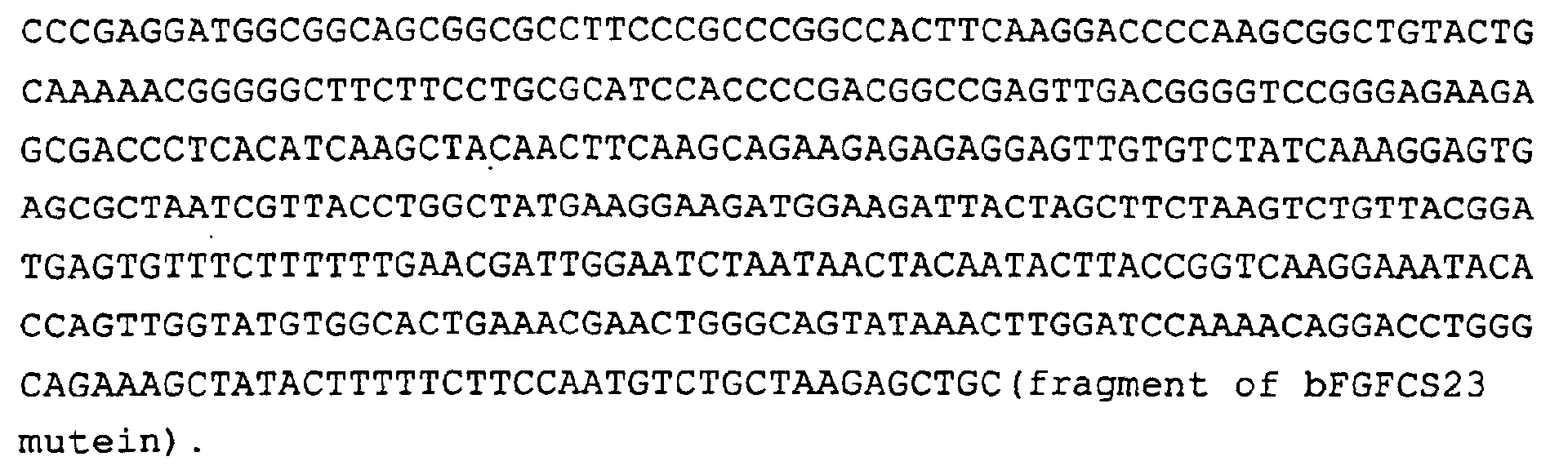
- Examples of the DNA encoding the fusion protein obtained in the above manner includes DNAs represented by the following formula: (In the formula, R indicates the following nucleic acid sequence:
- the above formula (I) means that the nucleic acid sequence represented by R is ligated to the DNA sequence (SEQ ID NO: 2) encoding a peptide comprising a human KiSS-1 peptide through the nucleic acid sequence encoding cysteine.
- the DNA encoding a KiSS-1 peptide may also be produced according to a well-known method using DNA represented by formula (I), or DNA encoding a KiSS-1 peptide mature form represented by SEQ ID NO: 15, or modified DNA thereof (for example, J. Natl. Cancer Inst., 88, 1731, 1996; WO98/39448).
- DNA (plasmid) having ATG on the 5'-terminal, a downstream region encoding the aforementioned fusion protein and a translation termination codon can be produced by chemical synthesis or by processing a cDNA encoding a well-known protein, which is prepared by genetic engineering, or by processing a DNA encoding the aforementioned proteins, which is derived from chromosomes.
- the DNA encoding the fusion protein or peptides in which KiSS-1 peptide is bound to the N-terminal of the protein having cysteine at the N-terminal can be modified to encode the desired mutein by using conventional DNA technology, for example, site directed mutagenesis technology.
- a plasmid vector derived from Escherichia Coli for example, pBR322 (Gene 2 , 95(1977)), pBR313 (Gene 2 , 75(1977)), pBR324, pBR325 (Gene 4 , 124(1978)), pBR327, pBR328 (Gene 9 , 287(1980)), pBR329 (Gene 17 , 79(1982)), pKY2289 (Gene 3 , 1(1978)), pKY2700 (Biochemistry 52 , 770(1980)), pACYC177, pACYC184 (Journal of Bacteriology, 134, 1141 (1978)), pRK248, pRK646, pDF (Methods in Enzymology, 68 , 268(1979)), and pUC18, pUC19 (
- vectors using bacteriophages such as ⁇ gt-vectors using ⁇ -phage, for example, ⁇ gt- ⁇ C (Proc. Natl. Acad. Sci. U.S.A. 71 , 4579(1974)), ⁇ gt- ⁇ B (Proc. Natl. Acad. Sci. U.S.A.
- the above DNA preferably has a promoter upstream of the ATG, and said promoter may be any promoter suitable for the host used in the production of a transformant.
- trp promoter for Escherichia coli, trp promoter, lac promoter, rec promoter, ⁇ promoter, lpp promoter, and T7 promoter, etc.; for Bacillus subtilis, SP01 promoter, SP02 promoter, and penP promoter; for Saccharomyces cerevisiae, PHO5 promoter, PGK promoter, GAP promoter, and ADH promoter; and for animal cells, promoters derived from SV40, may be used.
- the SD (Shine and Delgarno) sequence may be inserted downstream of the promoter if necessary.
- any of 17 different T7 promoters located on T7 DNA may be used as the T7 promoter.
- ⁇ 10 promoter A.H. Rosenberg et. al., Gene, 56 : 125-135 (1987) is preferred.
- a terminator that functions in Escherichia strains preferably T ⁇ terminator (F.W. Studier et. al., J. Mol. Biol., 189: 113-130 (1986)) may be used.
- T7 RNA polymerase Genes for a T7 RNA polymerase include T7 Gene (F.W. Studier et. al., J. Mol. Biol., 189: 113-130 (1986)).
- the vector is preferably constructed by incorporating T7 promoter and T7 terminator into the aforementioned vector.
- a vector includes pET-1, pET-2, pET-3, pET-4, pET-5 (A. H. Rosenberg, Gene 56 : 125-135 (1987), and pTB960-2 (EP-A-499990)), but pTB960-2 is preferably used.
- the transformant of the present invention can be produced by transforming a host with the plasmid for expression obtained by the aforementioned method, using a well-known method (example, S.N. Cohen, et al, Proceedings of the National Academy of Science (U.S.A.), 69 , 2110 (1972)).
- Microorganism hosts to be transformed include Escherichia bacteria, Bacillus bacteria, yeast, and animal cells.
- Said Escherichia bacteria include Escherichia coli (E. coli), specifically, E.coli K12DH1 (Proceedings of the National Academy of Science (U.S.A.), 60 , 160 (1968)), JM-103 (Nucleic Acids Research, 9 , 309 (1981)), JA221 (Journal of Molecular Biology, 120, 517 (1978)), HB101 (Journal of Molecular Biology, 41 , 459 (1969)), C600 (Genetics, 39 , 440 (1954)), N4830 (Cell, 25 , 713 (1981)), K-12MM294 (Proceedings of the National Academy of Science (U.S.A.), 73 , 4174 (1976)) BL-21.
- E. coli Escherichia coli
- E.coli K12DH1 Proceedings of the National Academy of Science (U.S.A.), 60 , 160 (1968)
- JM-103 Nucleic Acids
- Said bacillus bacteria include Bacillus subtilis, specifically, Bacillus subtilis MI114 (Gene, 24 , 255 (1983)), and 207-21 (Journal of Biochemistry), 95 , 87 (1984)).
- Said yeast includes Saccharomyces cerevisiae, specifically, Saccharomyces cerevisiae AH22 (Proceedings of the National Academy of Science (U.S.A.), 75 , 1929 (1978)), XSB5 2-23C(Proceedings of the National Academy of Science (U.S.A.), 77 , 2173 (1980)), BH-641A (ATCC 28339), 20B-12 (Genetics, 85 , 23 (1976)), and GM3C-2 (Proceedings of the National Academy of Science (U.S.A.), 78 , 2258 (1981)).
- Said animal cells includes Monkey cell COS-7 (Cell, 23 , 175 (1981)), Vero (Nihon Rinshou [Japan Clinic] 21 , 1209 (1963)), Chinese hamster cells CHO (Journal of Experimental Medicine, 108, 945 (1985)), mouse L cells (Journal of National Cancer Institute, 4 , 165 (1943)), human FL cells (Proceedings of the Society of Experimental Biology and Medicine, 94 , 532 (1957)), and hamster C cells, etc.
- an E.coli strain having T7 RNA polymerase genes (T7 gene 1) (F.W. Studier et al.: Journal of Molecular Biology, 189: 113-130 (1986)) may be used as the host for transformantion, which includes, for example, E.coli MM294, DH-1, C600, JM109, BL21.
- an E.coli strain having T7 RNA polymerase genes (T7 gene 1) in combination with another plasmid may also be used.
- MM294 starin or BL21 strain is used in which a ⁇ phage having a T7 gene 1 is lysogenized.
- the promoter for T7 gene 1 may be lac promoter, the expression of which is induced by isopropyl-1-thio- ⁇ -D-galactopyranoside (IPTG).
- Escherichia bacteria can be carried out according to, for example, methods described in the Proceedings of the National Academy of Science of the USA, vol. 69, 2110 (1972), and Gene, vol. 17, 107 (1982).
- Bacillus bacteria hosts can be carried out according to a well-known method, such as one described in Molecular and General Genetics, 168, 111 (1979).
- yeast hosts can be carried out according to a well-known method, such as one described in the Proceedings of the National Academy of Science of the USA, 75, 1929 (1978).
- the transformation of animal cell hosts can be carried out according to a well-known method, such as one described in the Virology, 52 , 456 (1973).
- the fusion protein can be produced by culturing the above-described transformant in a medium, and collecting the fusion protein produced.
- a culture medium with a pH of approximately 6 to 8 is desirable.
- M9 medium containing glucose and casamino acid is preferable as the medium for culturing Escherichia bacteria.
- Agents such as 3 ⁇ -indolyl acrylate or isopropyl ⁇ -D-thiogalactopyranside (IPTG) may be added to the medium in order to increase the efficiency of the promoter, if necessary.
- culturing is normally conducted at approximately 15 to 43° C for approximately 3 to 24 hours, and aeration and agitation may be applied if necessary.
- culturing is normally conducted at approximately 30 to 40° C for approximately 6 to 24 hours, and aeration and agitation may be applied if necessary.
- Burkholder minimum medium (Bostian, K.L. et al., Proceedings of the National Academy of Science, U.S.A., 77 , 4505 (1980)) may be used. It is preferable to adjust the pH of the culture medium to approximately 5 to 8. Culturing is normally conducted at approximately 20 to 35° C for approximately 24 to 72 hours, and aeration and agitation may be applied if necessary.
- MEM medium Science, 122, 501 (1952)
- DME medium Virology, 8 , 396 (1959)
- RPMI 1640 medium The Journal of the American Medical Association, 199 , 519 (1967)
- 199 medium Proceedings of the Society for Biological Medicine, 73 , 1 (1950)
- the pH is preferably approximately 6 to 8.
- Culturing is normally conducted at approximately 30 to 40° C for approximately 15 to 60 hours, and aeration and agitation may be applied if necessary.
- the fusion protein can be produced by culturing the aforementioned transformants, expressing and accumulating the aforementioned fusion protein in the culture medium, and then harvesting it.
- M9 medium including glucose and casamino acid (J. Miller, Experiments in Molecular Genetics, 431-433 (Cold Spring Harbor Laboratory, New York 1972)), 2XYT medium (Messing, Methods in Enzymology, 101, 20 (1983))
- LB medium may be used for culture media.
- Culturing is normally conducted at approximately 15 to 43° C for approximately 3 to 24 hours, and aeration and agitation may be applied if necessary.
- culturing is conducted at a temperature of 15 to 36° C, preferably approximately 30 to 36° C, and it is preferable to inactivate the ⁇ cI-ts repressor at approximately 37 to 42° C.
- agents such as mitomycin C and nalidixic acid may be added, the medium may be irradiated with ultraviolet light, or the pH of the medium may be changed to alkali side.
- T7 promoter sysytem When using T7 promoter sysytem, (1) IPTG, etc. is added if expressing a T7 gene (RNA polymerase gene) ligated downstream of the lac promoter; or (2) the temperature of the culture medium is increased, if expressing T7 gene (RNA polymerase gene) ligated downstream of the ⁇ PL-promoter. As the result, the expressed T7 phage RNA polymerase 1 specifically acts on the T7 promoter.
- T7 gene RNA polymerase gene
- the bacteria After culturing, the bacteria are collected by a well-known method, suspended in buffer solution, etc., and then crushed by treating with a protein denaturing agent, ultrasonication, enzymes such as lysozyme, glass bead, French press, or freeze-thawing.
- the supernatant is obtained by a well-known method, such as centrifugation.
- fusion protein purification methods may be employed to isolate the fusion protein from the supernatant obtained above.
- An appropriate combination of, for example, gel filteration, ion-exchange chromatography, absorption chromatography, high speed liquid chromatography, affinity chromatography, hydrophobic chromatography, or electrophoresis may be used.
- the aforementioned fusion protein may be used in the next reaction process without purification, or with partial purification.
- the aforementioned cleavage reaction may be, for example, S-cyanation reaction which is followed by a hydrolysis reaction. If an amide form of KiSS-1 peptide or salt thereof is desired as the final product, the S-cyanation reaction is followed by ammonolysis for the cleavage reaction.
- the S-cyanation reaction is conducted by reacting an S-cyanation reagent with the source material.
- S-cyanation reagents include 2-nitro-5-thiocyanobenzoic acid (NTCB), 1-cyano-4-dimethyl aminopyridinium salts (DMAP-CN), and CN - ions.
- NTCB 2-nitro-5-thiocyanobenzoic acid
- DMAP-CN 1-cyano-4-dimethyl aminopyridinium salts
- CN - ions CN - ions.
- the used amount of the S-cyanation reagents may be approximately 2 to 50 times to the total amount of thiol group in mole, and preferably approximately 5 to 10 times.
- the reaction temperature may be between approximately 0 and 80°C, and preferably between approximately 0 and 50°C.
- Any buffer solution may be used as the solvent as long as it does not react with the S-cyanation reagent, including tris-hydrochloride buffer solution, tris-acetate buffer solution, phosphate buffer solution, and borate buffer solution.
- An organic solvent may be furhter contained as long as it does not react with the S-cyanation reagent.
- the cleavage reaction may be carried out at a pH of 1 to 12.
- pH 7 to 10 is preferable when using NTCB
- pH 2 to 7 is preferable when using DMAP-CN in order to prevent an S-S exchange reaction.
- the reaction solution may further contain a denaturing agent such as guanidine hydrochloride.
- Alkali treatment may be carried out for the aforementioned ammonolysis or hydrolysis reaction.
- the alkali treatment is conducted by adjusting the pH of an aqueous solution containing the source material to 7 to 14.
- the pH adjustment is conducted by adding a suitable amount of a solution of ammonia, sodium hydroxide, amino compound (to be described later), trizma base (tris(hydroxymethyl)-aminomethane), sodium II phosphate, potassium hydroxide, or barium hydroxide to the aqueous solution containing the source material.
- ammonia solution is preferable.
- each solution may be used: approximately 0.01 to 15 N, preferably approximately 0.1 to 3 N, for ammonia or amino compound; approximately 0.01 to 2 N, preferably approximately 0.05 to 1 N, for sodium hydroxide; approximately 1 mM to 1 M, preferably approximately 20 mM to 200 mM, for trizma base; approximately 1 mM to 1 M, preferably approximately 10 mM to 100 mM, for sodium II phosphate; approximately 0.01 to 4 N, preferably approximately 0.1 to 2 N, for potassium hydroxide.
- the reaction temperature may be between approximately -20 to 80°C, and preferably between approximately -10 to 50° C.
- the reaction time for S-cyanation reaction may be approximately 1 to 60 min., preferably approximately 15 to 30 min.; for hydrolysis reaction, approximately 5 min. to 100 hours, preferably approximately 10 min. to 15 hours; and for ammonolysis, approximately 5 min. to 24 hours, preferably approximately 10 to 180 min..
- the aforementioned amino compound includes a compound represented by the formula R 1 -(NR 2 )-H, wherein R 1 and R 2 may be the same or different, and indicate (i) a hydrogen atom; (ii) C 1-20 alkyl group, C 3-8 cycloalkyl group, C 6-14 aryl group, or C 6-14 aryl-C 1-3 alkyl group (these may have no substituent groups, or may have 1 to 3 amino groups or hydroxyl groups on a carbon atom); (iii) substitutable amino groups; (iv) hydroxyl groups or C 1-6 alkoxy groups.
- the C-terminal of the KiSS-1 peptide obtainable by the producing method of the present invention may be amide (-CONH 2 ), carboxyl group (-COOH), carboxylate (-COO - ), alkylamide (-CONHR), or ester (-COOR).
- Amide, carboxyl group or alkylamide is preferable, and in particular, amide or alkylamide is suitable.
- the C-terminal of the KiSS-1 peptide obtainable by the producing method of the present invention may be the -CO-X indicated in Figure 1, wherein X indicates R 1 -(NR 2 )-(R 1 and R 2 indicate the same meanings as above) or OH.
- the aforementioned C 1-20 alkyl indicates, for examples, methyl, ethyl, propyl, isopropyl, butyl, sec-butyl, penthyl, isopenthyl, neopenthyl, 1- ethylpenthyl, hexyl, isohexyl, heptyl, octyl, nonanyl, decanyl, undecanyl, dodecanyl, tetradecanyl, pentadecanyl, hexadecanyl, heptadecanyl, octadecanyl, nonadecanyl, and eicosanyl.
- C 3-8 cycloalkyl indicates, for examples, cyclopropyl, cyclobutyl, cyclopenthyl, cyclohexyl, cycloheptyl, and cyclooctyl.
- the aforementioned C 6-14 aryl indicates, for examples, phenyl, naphthyl, anthryl, phenanthryl, and acenaphthylenyl.
- C 6-14 aryl-C 1-3 -alkyl indicates, for examples, benzyl, phenethyl, 3-phenylpropyl, (1-naphthyl)methyl, and (2-naphthyl)methyl.
- C 1-6 alkoxy indicates, for examples, methoxy, ethoxy, propoxy, butoxy, penthyloxy, and hexyloxy.
- Substituents for the substitutable amino groups described in (iii) above include amino acids, and peptides comprising 2 to 10 amino acids.
- the above amino acids may be L-form or D-form, including Ala, Arg, Asp, Asn, Glu, Gln, Gly, His, Ile, Met, Leu, Lys, Phe, Pro, Ser, Thr, Trp, Tyr, and Val.
- the above peptides include, for examples, H-D-Leu-Leu-Arg-Pro-NH-C 2 H 5 , and H-Val-Ala-Leu-D-Ala-Ala-Pro-Leu-Ala-Pro-Arg-OH.
- R 2 is a hydrogen atom
- R 1 is a hydrogen atom or a C 1-20 alkyl group.
- peptide purification methods may be used to isolate the excised target peptide.
- An appropriate combination of, for example, gel filtering, ion-exchange chromatography, absorption chromatography, high speed liquid chromatography, affinity chromatography, hydrophobic chromatography, thin layer chromatography or electrophoresis may be used.
- the KiSS-1 peptide or salt thereof obtained in this way may also be isolated and purified from the reaction solution by well-known purification technique, for example, extraction, salting out, distribution, re-crystallization, or chromatography.
- the preferable purification method is ion-exchange chromatography via SP-sepharose (Pharmacia Biotech, Co., Ltd.), DEAE-5PW (Tosoh Co., Ltd.), or SP-5PW (Tosoh Co., Ltd.), etc.
- the KiSS-1 peptide or salt thereof thus obtained may be lyophilized to form a powder if necessary.
- stabilizers such as sorbitol, mannitol, dextrose, maltose, trehalose, or glycerol may be added.
- the KiSS-1 peptide or salt thereof produced by the method of the present invention may be formulated with sterilized water, human serum albumin (HSA), physiological saline and other well-known physiologically acceptable carriers, and then may be administered to mammals (e.g., a human) parenterally or locally.
- mammals e.g., a human
- a daily dose per person of approximately 0.01 to 50 mg, preferably approximately 0.1 to 10 mg, may be administered parenterally by intravenous or intramuscular injection.
- compositions containing the KiSS-1 peptide or salt thereof produced by the method of the present invention may further contain other physiologically acceptable active components, such as a salt, diluent, adjuvant, other carriers, buffers, binders, surfactants, and preservatives.
- physiologically acceptable active components such as a salt, diluent, adjuvant, other carriers, buffers, binders, surfactants, and preservatives.
- Parenteral dosage formulations may be provided as an ampoule of a suspension with a sterilized water solution or physiologically acceptable solvent, or as an ampoule of sterilized powder (normally obtained by lyophilization of the peptide solution) which can be diluted with a physiologically acceptable diluent at use.
- the KiSS-1 peptide or salt thereof produced by the method of the present invention has an activity of inhibiting tumor metastasis, and is therefore useful as a prophylactic or therapeutic drug for all kinds of cancers (for example, lung cancer, stomach cancer, liver cancer, pancreatic cancer, colorectal cancer, rectal cancer, colon cancer, prostate cancer, ovarian cancer, uterine cancer, or breast cancer, etc.).
- cancers for example, lung cancer, stomach cancer, liver cancer, pancreatic cancer, colorectal cancer, rectal cancer, colon cancer, prostate cancer, ovarian cancer, uterine cancer, or breast cancer, etc.
- the KiSS-1 peptide or salt thereof has an activity of controlling placenta function, and is therefore useful as a prophylactic or therapeutic drug for choriocarcenoma, hydatid mole, invasive mole, miscarriage, fetal maldevelopment, saccharometabolic disorder, lipidosis, or induction of delivery.
- codes of amino acids, peptides, protecting groups, active groups, and other substances are denoted on the base of the IUPAC-IUB (Commission on Biochemical Nomenclature) or conventional codes used in the related field. Examples are shown below.
- amino acids can have optical isomers, unless specifically noted, the L-form is indicated.
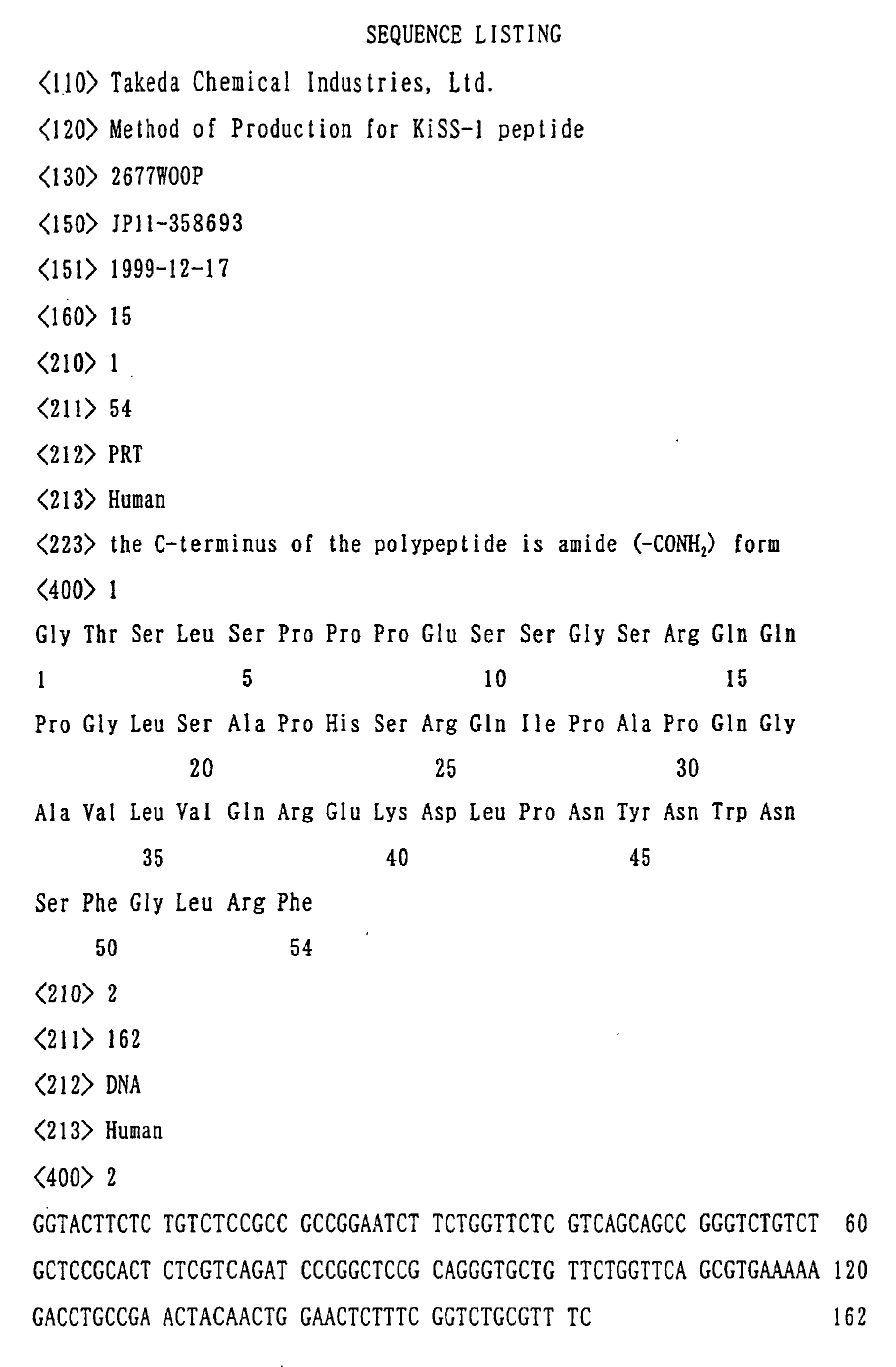
- the SEQ ID NO. in the Sequence Listing indicates the following sequence.
- the structural gene of a KiSS-1 peptide was prepared (Fig. 3) using eight different DNA fragments (#1, #4, #5, #8: Amersham Pharmacia Biotech Co.; #2, #3, #6, #7: Kikotek Co. (SEQ ID NOs.: 7 to 14)) shown in Fig. 2.
- the phophorylation of 5' terminals of the 6 oligomers(#2 to #7) (SEQ ID NO: 8 to 13), excluding #1 (SEQ ID NO: 7) and #8 (SEQ ID NO: 14), was conducted by incubating each DNA oligomer at 37° C for one hour in 25 ⁇ L phophorylation reaction solution(DNA oligomer 10 ⁇ g, 50 mM tris-HCl, pH 7.6, 10 mM MgCl 2 , 1 mM spermidine, 10 mM dithiothreitol (DTT), 0.1 mg/mL bovine serum albumin (BSA), 1 mM ATP, and 10 units T4 polynucleotide kinase (manufactured by Takara)). After doing phenol treatment, adding 2 times vol. of ethanol, and cooling to -70° C, the DNA was precipitated by centrifugation.
- the DNA fragments thus obtained in a) above, #1 fragment, and #8 fragment were mixed to make 120 ⁇ l solution. After incubating this mixed solution at 90° C for 10 min., annealing was conducted by cooling slowly to room temperature. The ligation was conducted using the TaKaRa DNA Ligation Kit ver. 2 (manufactured by Takara). After adding 30 ⁇ L of the Ligation Kit II solution to 30 ⁇ L of the annealing solution, then adding 60 ⁇ L Ligation Kit I solution, the ligation was conducted at 37° C for one hour. After doing phenol treatment, adding 2 times vol. of ethanol to the aqueous layer recovered, and cooling to -70° C, the DNA was precipitated by centrifugation. The DNA fragment obtained in this way was phosphorylated using T4 polynucleotide kinase (manufactured by Takara) for the next (d) step.
- pTFC Publication of Patent Application: No.2000-270871, Patent Application: No.11-080303
- NdeI and AvaI manufactured by Takara
- 4.4 kb DNA fragment was extracted using the QIAquick Gel Extraction Kit (QIAGEN Co.) and was dissolved in 25 ⁇ L TE buffer solution.
- This NdeI/AvaI fragment of pTFC and the structural genes of the KiSS-1 peptides prepared as above were ligated using the TaKaRa DNA Ligation Kit ver. 2 (manufactured by Takara).
- Escherichia coli JM109 competent cells (Toyobo Co.) were transformed with 10 ⁇ L of the ligation solution, inoculated on an LB agar medium containing 10 ⁇ g/mL tetracycline. After cultured overnight at 37° C, tetracycline resistant colonies were selected. These transformants were cultured overnight at 37° C in LB medium, and plasmid pTFC-KiSS-1 was prepared using the QIAprep8 Miniprep Kit (QIAGEN Co.). The nucleic acid sequence of this KiSS-1 structural gene partion was confirmed using the Applied Biosystems Co. Model 377 DNA sequencer.
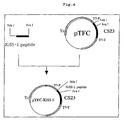
- Escherichia coli MM294 (DE3) was transformed with plasmid pTFC-KiSS-1, and a strain which can express KiSS-1 peptide-CS23 fusion protein, M294(DE3)/pTFC-KiSS-1, was obtained ( Figure 4).
- Escherichia coli MM294(DE3)/pTFC-KiSS-1 was deposited at the National Institute of Bioscience and Human-Technology, AIST, MITI on October 4, 1999, as the deposit No. FERM BP-6907. This was also deposited at the Institute for Fermentation, Osaka (IFO) on September 16, 1999, as the deposit No. IFO 16321.
- MM294(DE3)/pTFC-KiSS-1 was cultured with shaking in 1 L of LB medium (1% peptone, 0.5% yeast extract, 0.5% sodium chloride) containing 5.0 mg/L tetracycline in a 2-L flask at 37° C for 8 hours.
- LB medium 1% peptone, 0.5% yeast extract, 0.5% sodium chloride
- the culture obtained was transferred to a 50-L fermentor containing 19 L of a main fermentation medium (1.68% sodium monohydrogen phosphate, 0.3% potassium dihydrogen phosphate, 0.1% ammonium chloride, 0.05% sodium chloride, 0.025% magnesium sulfate, 0.02% defoaming agent, 0.00025% ferrous sulfate, 0.0005% thiamin hydrochloride, 1.5% glucose, and 1.5% casamino acid), and aeration and agitation was started at 30° C.
- aeration and agitation was started at 30° C.
- the turbidity of the culture solution reached 500 kleet
- isopropyl- ⁇ -D-thiogalactopiranoside was added at a final concentration of 12 mg/L, and the cultivation was carried out for another 6 hours. After the cultivation was finished, approximately 600 g(wet weight) cells was obtained by centrifugation of the culture medium, and stored at -80° C.
- B 50 mM phosphate buffer solution + 2M NaCl, pH 6.0
- the fraction containing KiSS-1 peptide-CS23 fusion protein was obtained (the fraction at an elution time of approximately 100 min. in the 100-min. gradient elution).
- KiSS-1 peptide(amide form) fraction was obtained. This fraction was passed through an SP-5PW (21.5 mm ID x 150 mm L, Tosoh), which had been equilibrated with 50 mM MES containing 3 M urea, + 3 M urea (pH4.5), for absorption.
- This fraction was further passed through a C4P-50 (21.5 mm ID x 300 mm L, Showa Denko), which had been equilibrated with 0.1% trifluoroacetate, for absorption.
- KiSS-1 peptide(amide form) fraction (the fraction at an elution time of approximately 45 min. in the 60-min. gradient elution) was pooled and lyophilized. Thus, approximately 40 mg powder of lyophilized KiSS-1 peptide(amide form) was obtained.
- the amino acid composition was determined using an amino acid analyzer(Hitachi L-8500A). The result was consistent with the amino acid composition predicted from the DNA sequence of KiSS-1 peptide (Table 1). Amino acid Number of residues per mol Value predicted from the DNA sequence of KiSS-1 peptide Asx 3.5 4 Thr 0.9 1 Ser 7.3 8 Glx 7.0 7 Pro 8.1 8 Gly 4.9 5 Ala 2.9 3 Cys 0 0 Val 2.0 2 Met 0 0 Ile 0.9 1 Leu 5 5 Tyr 1.0 1 Phe 1.9 2 His 1.1 1 Lys 1.0 1 Arg 3.8 4 Trp 0.4 1 Acid hydrolysis (mean value after acid hydrolysis in 6N HCl-4% thioglycolic acid for 24-48 hrs)
- the N-terminal amino acid sequence was determined using a gas phase protein sequencer (PE Applied Biosystems Model 492). The result was consistent with the N-terminal amino acid sequence predicted from the DNA sequence of KiSS-1 peptide (Table 2). Residue No. PTH-amino acid detected Amino acid predicted from the DNA sequence of KiSS-1 peptide 1 Gly (28) Gly 2 Thr (24) Thr 3 Ser (12) Ser 4 Leu (14) Leu 5 Ser (9) Ser 6 Pro (16) Pro 7 Pro (17) Pro 8 Pro (14) Pro 9 Glu (7) Glu 10 Ser (4) Ser 11 Ser (6) Ser 100 pmol of the peptide was used.
- the activity of the human KiSS-1 peptide obtained in Example 2 was measured by the method described in Example 3 of WO 99/33976 (activity of increasing intracellular calcium ion concentration), confirming that the activity is equivalent to that of a standard product isolated from human placenta extract.
- B 50 mM phosphate buffer solution + 2M NaCl, pH 6.0
- the fraction containing KiSS-1 peptide-CS23 fusion protein was obtained (the fraction at an elution time of approximately 100 min. in the 100-min. gradient elution).
- the reaction solution was passed through a Sephadex G-25 column (46 mm ID x 600 mm L, Pharmacia) equilibrated with 50 mM monopotassium phosphate.
- 50 mM monopotassium phosphate used for equilibration at a flow rate of 6 mL/min
- the fraction containing the S-cyanized KiSS-1 peptide-CS23 fusion protein was obtained.
- a Pellicon mini-cassette(Millipore Co.) By concentrating and desalting the fraction with a Pellicon mini-cassette(Millipore Co.), and a desalted solution of KiSS-1 peptide-CS23 fusion protein was obtained.
- KiSS-1 peptide (non-amide form) was obtained.
- B 80% acetonitrile / 0.1% trifluoroacetate
- the KiSS-1 peptide (non-amide form) fraction (the fraction at an elution time of approximately 45 min. in the 60-min. gradient elution) was pooled and lyophilized. Thus, approximately 30 mg powder of lyophilized KiSS-1 peptide(non-amide form) was obtained.
- the amino acid composition was determined using an amino acid analyzer (Hitachi L-8500A). The result was consistent with the amino acid composition predicted from the DNA sequence of KiSS-1 peptide (Table 4). Amino acid Number of residues per mol Value predicted from the DNA sequence of KiSS-1 peptide Asx 3.3 4 Thr 0.9 1 Ser 7.0 8 Glx 7.0 7 Pro 7.8 8 Gly 4.7 5 Ala 2.8 3 Cys 0 0 Val 1.9 2 Met 0 0 Ile 0.9 1 Leu 5 5 Tyr 1.0 1 Phe 1.9 2 His 0.9 1 Lys 0.9 1 Arg 3.7 4 Trp 0.4 1 Acid hydrolysis (mean value after acid hydrolysis in 6N HCl-4% thioglycolic acid for 24-48 hrs)
- the N-terminal amino acid sequence was determined using a gas phase protein sequencer(PE Applied Biosystems Model 492). The result was consistent with the N-terminal amino acid sequence predicted from the DNA sequence of KiSS-1 peptide (Table 5).
- Residue No. PTH-amino acid detected Amino acid predicted from the DNA sequence of KiSS-1 peptide 1 Gly (17) Gly 2 Thr (13) Thr 3 Ser (11) Ser 4 Leu (15) Leu 5 Ser (8) Ser 6 Pro (10) Pro 7 Pro (11) Pro 8 Pro (10) Pro 9 Glu (5) Glu 10 Ser (5) Ser 100 pmol of the peptide was used.
- the C-terminal amino acid was analyzed using an amino acid analyzer (Hitachi L-8500A) (Table 6). Analysis of C-terminal amino acid Kiss-1 peptide C-terminal amino acid Recovery (%) Phe 48.5 Gas phase hydrazinolysis (100°C, 3.5 hrs)
- the peptide which can be used as a prophylactic or therapeutic drug for all kinds of cancers (for example, lung cancer, stomach cancer, liver cancer, pancreatic cancer, colorectal cancer, rectal cancer, colon cancer, prostate cancer, ovarian cancer, uterine cancer, or breast cancer, etc.) as well as for choriocarcenoma, hydatid mole, invasive mole, miscarriage, fetal maldevelopment, saccharometabolic disorder, lipidosis, or induction of delivery.
- cancers for example, lung cancer, stomach cancer, liver cancer, pancreatic cancer, colorectal cancer, rectal cancer, colon cancer, prostate cancer, ovarian cancer, uterine cancer, or breast cancer, etc.
- choriocarcenoma for example, lung cancer, stomach cancer, liver cancer, pancreatic cancer, colorectal cancer, rectal cancer, colon cancer, prostate cancer, ovarian cancer, uterine cancer, or breast cancer, etc.
- choriocarcenoma
Landscapes
- Chemical & Material Sciences (AREA)
- Life Sciences & Earth Sciences (AREA)
- Health & Medical Sciences (AREA)
- Organic Chemistry (AREA)
- Genetics & Genomics (AREA)
- Engineering & Computer Science (AREA)
- Zoology (AREA)
- Molecular Biology (AREA)
- Wood Science & Technology (AREA)
- Biochemistry (AREA)
- General Health & Medical Sciences (AREA)
- Biotechnology (AREA)
- Bioinformatics & Cheminformatics (AREA)
- General Engineering & Computer Science (AREA)
- Proteomics, Peptides & Aminoacids (AREA)
- Biophysics (AREA)
- Microbiology (AREA)
- Biomedical Technology (AREA)
- Medicinal Chemistry (AREA)
- Chemical Kinetics & Catalysis (AREA)
- General Chemical & Material Sciences (AREA)
- Gastroenterology & Hepatology (AREA)
- Toxicology (AREA)
- Physics & Mathematics (AREA)
- Plant Pathology (AREA)
- Preparation Of Compounds By Using Micro-Organisms (AREA)
- Peptides Or Proteins (AREA)
Abstract
Description

- DNA
- Deoxyribonucleic acid
- A
- Adenine
- T
- Thymine
- G
- Guanine
- C
- Cytosine
- RNA
- Ribonucleic acid
- EDTA
- Ethylene diamine tetra acetic acid
- Gly
- Glycine
- Ala
- Alanine
- Val
- Valine
- Leu
- Leucine
- Ile
- Isoleucine
- Ser
- Serine
- Thr
- Threonine
- Met
- Methionine
- Glu
- Glutamic acid
- Asp
- Aspartic acid
- Lys
- Lysine
- Arg
- Arginine
- His
- Histidine
- Phe
- Phenylalanine
- Tyr
- Tyrosine
- Trp
- Tryptophan
- Pro
- Proline
- Asn
- Asparagine
- Gln
- Glutamine
- Cys
- Cysteine
- Asx
- Asparagine or aspartic acid
- Glx
- Glutamine or glutamic acid
- ATP
- Adenosine triphospate
| Amino acid | Number of residues per mol | Value predicted from the DNA sequence of KiSS-1 peptide |
| Asx | 3.5 | 4 |
| Thr | 0.9 | 1 |
| Ser | 7.3 | 8 |
| Glx | 7.0 | 7 |
| Pro | 8.1 | 8 |
| Gly | 4.9 | 5 |
| Ala | 2.9 | 3 |
| | 0 | 0 |
| Val | 2.0 | 2 |
| | 0 | 0 |
| Ile | 0.9 | 1 |
| | 5 | 5 |
| Tyr | 1.0 | 1 |
| Phe | 1.9 | 2 |
| His | 1.1 | 1 |
| Lys | 1.0 | 1 |
| Arg | 3.8 | 4 |
| Trp | 0.4 | 1 |
| Acid hydrolysis (mean value after acid hydrolysis in 6N HCl-4% thioglycolic acid for 24-48 hrs) |
| Residue No. | PTH-amino acid detected | Amino acid predicted from the DNA sequence of KiSS-1 |
| 1 | Gly (28) | |
| 2 | Thr (24) | |
| 3 | Ser (12) | |
| 4 | Leu (14) | |
| 5 | Ser (9) | |
| 6 | Pro (16) | Pro |
| 7 | Pro (17) | Pro |
| 8 | Pro (14) | Pro |
| 9 | Glu (7) | Glu |
| 10 | Ser (4) | |
| 11 | Ser (6) | Ser |
| 100 pmol of the peptide was used. |
| Analysis of C-terminal amino acid | |
| Kiss-1 peptide C-terminal amino acid | Recovery (%) |
| Phe | - |
| Gas phase hydrazinolysis (100°C, 3.5 hrs) |
| Amino acid | Number of residues per mol | Value predicted from the DNA sequence of KiSS-1 peptide |
| Asx | 3.3 | 4 |
| Thr | 0.9 | 1 |
| Ser | 7.0 | 8 |
| Glx | 7.0 | 7 |
| Pro | 7.8 | 8 |
| Gly | 4.7 | 5 |
| Ala | 2.8 | 3 |
| | 0 | 0 |
| Val | 1.9 | 2 |
| | 0 | 0 |
| Ile | 0.9 | 1 |
| | 5 | 5 |
| Tyr | 1.0 | 1 |
| Phe | 1.9 | 2 |
| His | 0.9 | 1 |
| Lys | 0.9 | 1 |
| Arg | 3.7 | 4 |
| Trp | 0.4 | 1 |
| Acid hydrolysis (mean value after acid hydrolysis in 6N HCl-4% thioglycolic acid for 24-48 hrs) |
| Residue No. | PTH-amino acid detected | Amino acid predicted from the DNA sequence of KiSS-1 |
| 1 | Gly (17) | |
| 2 | Thr (13) | |
| 3 | Ser (11) | |
| 4 | Leu (15) | |
| 5 | Ser (8) | |
| 6 | Pro (10) | Pro |
| 7 | Pro (11) | Pro |
| 8 | Pro (10) | Pro |
| 9 | Glu (5) | Glu |
| 10 | Ser (5) | Ser |
| 100 pmol of the peptide was used. |
| Analysis of C-terminal amino acid | |
| Kiss-1 peptide C-terminal amino acid | Recovery (%) |
| Phe | 48.5 |
| Gas phase hydrazinolysis (100°C, 3.5 hrs) |


Claims (16)
- A method of producing a KiSS-1 peptide or a salt thereof, which comprises subjecting a fusion protein, polypeptide or a salt thereof in which a KiSS-1 peptide is ligated to the N-terminal of a protein or peptide having cysteine at the N-terminal, to the reaction of cleaving the peptide bond on the amino group side of said cysteine residue.
- A method of producing a KiSS-1 peptide or a salt thereof, which comprises expressing a fusion protein, polypeptide or a salt thereof in which a KiSS-1 peptide is ligated to the N-terminal of a protein or peptide having cysteine at the N-terminal by culturing a transformant having a vector comprising DNA encoding the fusion protein or polypeptide; and subjecting the expressed fusion protein, polypeptide or the salt thereof to the reaction of cleaving the peptide bond on the amino group side of said cysteine residue.
- A producing method according to claim 1 or 2 wherein the C-terminal of the KiSS-1 peptide is an amide.
- A producing method according to claim 1 or 2 wherein the cleavage reaction is S-cyanation reaction followed by an ammonolysis or hydrolysis reaction.
- A producing method according to claim 1 or 2 wherein the KiSS-1 peptide is a peptide comprising an amino acid sequence represented by SEQ ID NO: 1.
- A producing method according to claim 1 or 2 wherein the KiSS-1 peptide is (i) a peptide having the amino acid sequence from the 40th to 54th residues from the N-terminal of the amino acid sequence represented by SEQ ID NO: 1; (ii) a peptide having the amino acid sequence from the 45th to 54th residues from the N-terminal of the amino acid sequence represented by SEQ ID NO: 1; (iii) a peptide having the amino acid sequence from the 46th to 54th residues from the N-terminal of the amino acid sequence represented by SEQ ID NO: 1; or (iv) a peptide having the amino acid sequence from the 47th to 54th residues from the N-terminal of the amino acid sequence represented by SEQ ID NO: 1.
- A producing method according to claim 1 or 2 wherein the protein or peptide having cysteine at the N-terminal is any of the following having cysteine at the N-terminal: interferon, interleukin, fibroblast growth factor, (pro)urokinase, lymphotoxin, tumor necrosis factor (TNF), β-galactosidase, storage proteins, streptoavidine, protein A, protein G, tissue plasminogen activator (TPA), or muteins or fragments thereof.
- A producing method according to claim 1 or 2 wherein the protein or peptide having cysteine at the N-terminal is a protein or peptide that comprises an amino acid sequence represented by SEQ ID NO: 3 and has a cysteine residue added to the N-terminal.
- A producing method according to claim 1 or 2 wherein the protein or peptide having cysteine at the N-terminal is a protein that comprises an amino acid sequence represented by SEQ ID NO: 3 and has a cysteine residue added to the N-terminal; the KiSS-1 peptide is a peptide having an amino acid sequence represented by SEQ ID NO: 1; and the KiSS-1 peptide to be produced is a peptide having an amino acid sequence represented by SEQ ID NO: 1 with an amide form of the C-terminal.
- A fusion protein, polypeptide or a salt thereof, in which KiSS-1 peptide is ligated to the N-terminal of a protein or peptide having cysteine at the N-terminal.
- A fusion protein, polypeptide or a salt thereof according to claim 10, in which a KiSS-1 peptide comprising an amino acid sequence represented by SEQ ID NO: 1 is ligated to the N-terminal of a protein comprising an amino acid sequence represented by SEQ ID NO: 3 and having a cysteine residue added to the N-terminal.
- DNA comprising DNA encoding the fusion protein or peptide according to claim 10.
- DNA according to claim 12, which has:(i)a nucleic acid sequence represented by SEQ ID NO: 4; or (ii) a nucleic acid sequence represented by SEQ ID NO: 5.
- A vector comprising the DNA according to claim 12.
- A transformant having the vector according to claim 14.
- Escherichia coli MM294 (DE3)/pTFC-KiSS-1 identified as FERM BP-6907.
Applications Claiming Priority (3)
| Application Number | Priority Date | Filing Date | Title |
|---|---|---|---|
| JP35869399 | 1999-12-17 | ||
| JP35869399 | 1999-12-17 | ||
| PCT/JP2000/008837 WO2001044469A1 (en) | 1999-12-17 | 2000-12-14 | PROCESS FOR PRODUCING KiSS-1 PEPTIDE |
Publications (2)
| Publication Number | Publication Date |
|---|---|
| EP1239037A1 true EP1239037A1 (en) | 2002-09-11 |
| EP1239037A4 EP1239037A4 (en) | 2004-03-31 |
Family
ID=18460632
Family Applications (1)
| Application Number | Title | Priority Date | Filing Date |
|---|---|---|---|
| EP00981702A Withdrawn EP1239037A4 (en) | 1999-12-17 | 2000-12-14 | PROCESS FOR PRODUCING KiSS-1 PEPTIDE |
Country Status (7)
| Country | Link |
|---|---|
| US (1) | US6838259B2 (en) |
| EP (1) | EP1239037A4 (en) |
| KR (1) | KR20020065510A (en) |
| CN (1) | CN1411509A (en) |
| AU (1) | AU1889101A (en) |
| CA (1) | CA2394404A1 (en) |
| WO (1) | WO2001044469A1 (en) |
Cited By (2)
| Publication number | Priority date | Publication date | Assignee | Title |
|---|---|---|---|---|
| WO2010033224A1 (en) * | 2008-09-19 | 2010-03-25 | Nektar Therapeutics | Polymer conjugates of kiss1 peptides |
| US9682153B2 (en) | 2008-09-19 | 2017-06-20 | Nektar Therapeutics | Polymer conjugates of therapeutic peptides |
Families Citing this family (13)
| Publication number | Priority date | Publication date | Assignee | Title |
|---|---|---|---|---|
| EP1466976A4 (en) * | 2002-01-11 | 2005-11-09 | Takeda Pharmaceutical | PROCESS FOR PRODUCING KISS-1 PEPTIDE |
| AU2003292696A1 (en) | 2002-12-26 | 2004-08-10 | Takeda Pharmaceutical Company Limited | Metastin derivative and use thereof |
| EP1604682A4 (en) | 2003-03-12 | 2009-06-24 | Takeda Chemical Industries Ltd | Gonadal function improving agents |
| EP1464652A1 (en) * | 2003-04-02 | 2004-10-06 | Institut National De La Sante Et De La Recherche Medicale (Inserm) | GPR54 receptor agonist and antagonist useful for the treatment of gonadotropin related diseases |
| MXPA06014206A (en) * | 2004-06-25 | 2007-02-14 | Takeda Pharmaceutical | Metastin derivatives and use thereof. |
| TWI386417B (en) | 2005-12-22 | 2013-02-21 | Takeda Pharmaceutical | Metastin derivatives and use thereof |
| US20090099334A1 (en) * | 2005-12-22 | 2009-04-16 | Takeda Pharmaceutical Company Limited | Metastin derivatives and use thereof |
| US8404643B2 (en) * | 2005-12-22 | 2013-03-26 | Takeda Pharmaceutical Company Limited | Metastin derivatives and use thereof |
| TWI404726B (en) * | 2006-10-25 | 2013-08-11 | Takeda Pharmaceutical | Metastin derivatives and use thereof |
| US20110212890A1 (en) * | 2008-07-30 | 2011-09-01 | Takeda Pharmaceutical Company Limited | Metastin derivative and use thereof |
| KR102209869B1 (en) * | 2017-12-12 | 2021-02-01 | 코스맥스 주식회사 | Composition for anti-aging or anti-inflammation comprising kisspeptin |
| WO2019117577A1 (en) * | 2017-12-12 | 2019-06-20 | 코스맥스 주식회사 | Anti-aging or anti-inflammatory composition comprising kisspeptin |
| CN113637660B (en) * | 2021-08-05 | 2023-09-08 | 云南师范大学 | A kind of β-galactosidase GalNC3-89 and its preparation method and application |
Family Cites Families (5)
| Publication number | Priority date | Publication date | Assignee | Title |
|---|---|---|---|---|
| ATE138102T1 (en) * | 1991-02-19 | 1996-06-15 | Takeda Chemical Industries Ltd | METHOD FOR PRODUCING CYSTEIN-FREE PEPTIDES |
| WO1997013778A1 (en) * | 1995-10-11 | 1997-04-17 | The Penn State Research Foundation | A metastasis suppressor gene |
| CA2283299A1 (en) | 1997-03-07 | 1998-09-11 | Human Genome Sciences, Inc. | 186 human secreted proteins |
| EP0887417A3 (en) * | 1997-06-27 | 1999-01-13 | Takeda Chemical Industries, Ltd. | Method of producing a 19P2 ligand by cleavage of a fusion protein containing it |
| AU3085699A (en) * | 1998-03-13 | 1999-09-27 | Entremed, Inc | Metastatin and hyaluronate binding proteins and methods of use |
-
2000
- 2000-12-14 WO PCT/JP2000/008837 patent/WO2001044469A1/en not_active Ceased
- 2000-12-14 CN CN00817291A patent/CN1411509A/en active Pending
- 2000-12-14 CA CA002394404A patent/CA2394404A1/en not_active Abandoned
- 2000-12-14 EP EP00981702A patent/EP1239037A4/en not_active Withdrawn
- 2000-12-14 AU AU18891/01A patent/AU1889101A/en not_active Abandoned
- 2000-12-14 KR KR1020027005950A patent/KR20020065510A/en not_active Withdrawn
- 2000-12-14 US US10/168,050 patent/US6838259B2/en not_active Expired - Fee Related
Cited By (2)
| Publication number | Priority date | Publication date | Assignee | Title |
|---|---|---|---|---|
| WO2010033224A1 (en) * | 2008-09-19 | 2010-03-25 | Nektar Therapeutics | Polymer conjugates of kiss1 peptides |
| US9682153B2 (en) | 2008-09-19 | 2017-06-20 | Nektar Therapeutics | Polymer conjugates of therapeutic peptides |
Also Published As
| Publication number | Publication date |
|---|---|
| KR20020065510A (en) | 2002-08-13 |
| CN1411509A (en) | 2003-04-16 |
| WO2001044469A1 (en) | 2001-06-21 |
| EP1239037A4 (en) | 2004-03-31 |
| US20030096956A1 (en) | 2003-05-22 |
| AU1889101A (en) | 2001-06-25 |
| CA2394404A1 (en) | 2001-06-21 |
| US6838259B2 (en) | 2005-01-04 |
Similar Documents
| Publication | Publication Date | Title |
|---|---|---|
| US6838259B2 (en) | Process for producing kiss-1 peptide | |
| US6287806B1 (en) | Method for producing a biologically active recombinant cysteine-free peptide | |
| US6258561B1 (en) | Method of producing a 19P2 ligand | |
| US20040185525A1 (en) | Process for producing peptide | |
| EP1466976A1 (en) | PROCESS FOR PRODUCING KiSS-1 PEPTIDE | |
| JPH05271279A (en) | Human parathyroid hormone mutein and its production | |
| US20030170811A1 (en) | Process for the production of alpha-human atrial natriuretic polypeptide | |
| US11739305B2 (en) | Sialyltransferase variants having neosialidase activity | |
| EP1138772A1 (en) | Process for producing apelin | |
| EP1347053A1 (en) | Process for producing rfrp | |
| JP2001231581A (en) | METHOD FOR PRODUCING KiSS-1 PEPTIDE | |
| JP2000228991A (en) | Apelin production method | |
| JP2003265191A (en) | METHOD FOR PRODUCING KiSS-1 PEPTIDE | |
| WO2002036762A1 (en) | Process for producing peptide | |
| JPH1171396A (en) | Method for producing 19P2 ligand | |
| KR100818982B1 (en) | E. coli producing the blood pressure lowering peptide and mass production method of the blood pressure lowering peptide using the same | |
| KR100440460B1 (en) | Gene, recombinant vector and transformant of hG-CSF and method of producing hG-CSF using the same | |
| KR100209921B1 (en) | A novel producing method for calcitonin | |
| JPWO2000036122A1 (en) | Apelin manufacturing method | |
| JP2002325585A (en) | Process for producing rfrp | |
| JP2003009867A (en) | Method for producing ligand for gp8 polypeptide | |
| JP3252916B2 (en) | Synthetic gene encoding human parathyroid hormone | |
| JP2003079380A (en) | Method for manufacturing peptide | |
| JPH05304976A (en) | Production of peptide |
Legal Events
| Date | Code | Title | Description |
|---|---|---|---|
| PUAI | Public reference made under article 153(3) epc to a published international application that has entered the european phase |
Free format text: ORIGINAL CODE: 0009012 |
|
| 17P | Request for examination filed |
Effective date: 20020610 |
|
| AK | Designated contracting states |
Kind code of ref document: A1 Designated state(s): AT BE CH CY DE DK ES FI FR GB GR IE IT LI LU MC NL PT SE TR |
|
| AX | Request for extension of the european patent |
Free format text: AL PAYMENT 20020610;LT PAYMENT 20020610;LV PAYMENT 20020610;MK PAYMENT 20020610;RO PAYMENT 20020610;SI PAYMENT 20020610 |
|
| A4 | Supplementary search report drawn up and despatched |
Effective date: 20040217 |
|
| RIC1 | Information provided on ipc code assigned before grant |
Ipc: 7C 07K 1/107 B Ipc: 7C 07K 19/00 B Ipc: 7C 07K 14/47 B Ipc: 7C 12P 21/02 B Ipc: 7C 12N 15/12 A Ipc: 7C 12R 1/19 B Ipc: 7C 12N 1/21 B |
|
| 17Q | First examination report despatched |
Effective date: 20040511 |
|
| RAP1 | Party data changed (applicant data changed or rights of an application transferred) |
Owner name: TAKEDA PHARMACEUTICAL COMPANY LIMITED |
|
| STAA | Information on the status of an ep patent application or granted ep patent |
Free format text: STATUS: THE APPLICATION IS DEEMED TO BE WITHDRAWN |
|
| 18D | Application deemed to be withdrawn |
Effective date: 20060701 |