BACKGROUND OF INVENTION
Field of invention
The present invention relates to a vital sign display monitor,
and more particularly, to a bedside monitor capable of displaying
numerical values and waveforms pertaining to vital signs or setting
information, which is input to another bedside monitor connected
to the bedside monitor via a network.
Related Art
In a medical institution, a vital sign display monitor (e.g.,
a bedside monitor) is disposed at a beside of each bed for monitoring
a patient in a bed situated in a ward, a CCU (coronary care unit),
an ICU (intensive care unit), or an operating room.
Displayed on a display screen of such a bedside monitor are
numerical values or waveforms pertaining to vital signs of a patient
in a bed measured by external hardware, or a message pertaining
to alarm information.
Individual bedside monitor is connected to a network, and
the conditions of patients can be intensively monitored on a vital
sign display monitor (central monitor) disposed in a doctor anteroom
or a nurse's station.
In recent years, there is a tendency toward a shortage
developing in the number of nurses and nursing personnel available.
When a nurse is in a patient care visit at midnight or nobody is
present at a nurse's station, a doctor or nurse attending a patient
at a bedside is required to simultaneously monitor vital signs of
other patients in beds.
In order to meet such a demand, a display screen of the bedside
monitor connected to the network can also display vital signs of
patients in other beds, by means of switching display screens.
However, vital signs to be displayed at one time on a display
screen of the bedside monitor connected to the network is limited
solely for one patient in a bed except for a patient where the bedside
monitor is disposed. Hence, if vital signs of a patient in another
bed is to be displayed, a display screen must be switched.
If an attempt is made to monitor a plurality of patients
simultaneously, an operation for switching display screens becomes
intricate. when an alarm is generated, a current display screen
is required to be switched to a display screen for the patient who
has caused the alarm and the display screen, for the patient is
checked for determination of a factor of the alarm. Moreover, if
a plurality of alarms have generated simultaneously, the number
of this switching operations increases, and consequently is takes
much time to determine factors responsible for the alarms .
SUMMARY OF THE INVENTION
The present invention has been conceived in light of the
foregoing problem and aims at providing a bedside monitor capable
of simultaneously displaying, on a display screen, vital signs of
a plurality of patients in beds and alarm information by a simple
operation; which lessens the burden imposed on a limited number
of personnel inmedical care by helping them reduce tasks and shorten
working hours; and which enables appropriate and speedy assistance.
To achieve the object, the present invention provides a method
of displaying vital signs for use with a bedside monitor, comprising
the steps of: simultaneously displaying parameter values of a
plurality of sets of vital signs measured for a plurality of patients
respectively; and displaying alarm information in a parameter
display area or an alarm display area when vital signs relevant
to the parameters are in a state where an alarm is to be generated.
As a result, parameter values measured in connection with
a plurality of patients can be ascertained simultaneously, and it
is possible to ascertain the parameter and patient in an alarm
condition.
The present invention also provides a method of displaying
vital signs for use with a bedside monitor, comprising the steps
of: simultaneously displaying parameter values of a plurality of
sets of vital signs measured for a plurality of patients respectively;
displaying alarm information in a parameter display area when vital
signs relevant to the parameters are in a state where an alarm is
to be generated; and displaying prioritized alarm information from
among alarm information s pertaining to parameters of the plurality
of vital signs in an alarm display area for each patient.
As a result, parameter values measured in connection with
a plurality of patients can be ascertained simultaneously, and it
is possible to ascertain the parameter and patient in an alarm
condition. Further, the most prioritized alarm is displayed and
can be ascertained.
The present invention also provides a bedside monitor
comprising: first display means for simultaneously displaying
parameter values of a plurality of sets of vital signs measured
for a plurality of patients respectively in a display area and for
displaying alarm information within a parameter display area or
an alarm display area in the display area when vital signs relevant
to the parameters are in a state where an alarm is to be generated;
second display means for displaying parameter values of the vital
signs and at least a vital sign waveform regarding vital signs of
a specified patient among the plurality of patients in the display
area; and display changeover means, the display area having the
function of a touch panel selectable per each display area for
each patient when the display area is displayed by the first display
means, for displaying the parameter values of the vital signs and
the vital sign waveform of a patient selected as a result of pressing
the touch panel by the second display means as the specified patient.
As a result, by means of a display by the first display means,
parameter values measured in connection with a plurality of patients
can be ascertained simultaneously, and it is possible to ascertain
the parameter and patient in an alarm condition. When further
detailed vital signs of a specific patient are desired to be known,
detailed vital signs of the patient can be displayed by the second
display means by means of the display changeover means.
The present invention also provides a bedside monitor
comprising: first display means for simultaneously displaying
parameter values of a plurality of sets of vital signs measured
for a plurality of patients respectively in a display area and for
displaying prioritized alarm information from among alarm
information pertaining to the plurality of vital sign parameters
for each patient in the display area; second display means for
displaying parameter values of the vital signs and at least a vital
sign waveform regarding vital signs of a specified patient among
the plurality of patients in the display area; and display changeover
means, the display area having the function of a touch panel
selectable per each display area for each patient when the display
area is displayed by the first display means, for displaying the
parameter values of the vital sign and the vital sign waveform of
a patient selected as a result of pressing the touch panel on the
second display means as the specified patient.
As a result, by means of a display by the first display means,
parameter values measured in connection with a plurality of patients
can be ascertained simultaneously, and the most prioritized alarm
displayed and can be ascertained. When detailed vital signs of a
specific patient are desired to be known, detailed vital signs of
the patient can be displayed by the second display means by means
of the display changeover means.
The present invention also provides A bedside monitor
comprising: first display means for simultaneously displaying
parameter values of a plurality of sets of vital signs measured
for a plurality of patients respectively in a display area, when
vital signs relevant to the parameters are in a state where an alarm
is to be generated, for displaying alarm information in a parameter
display area and for displaying prioritized alarm information from
among alarm information pertaining to the plurality of vital sign
parameters in an alarm display area for each patient; second display
means for displaying parameter values of the vital signs and at
least a vital sign waveform regarding vital signs of a specified
patient among the plurality of patients and alarm information
pertaining to the respective parameters in the display area; and
display changeover means, the display area having the function of
a touch panel selectable per each display area for each patient
when the display area is displayed by the first display means, for
displaying the parameter values of the vital signs and the vital
sign waveform of a patient selected as a result of pressing the
touch panel by the second display means as the specified patient.
As a result, by means of a display by the first display means,
parameter values measured in connection with a plurality of patients
can be ascertained simultaneously, and it is possible to ascertain
the parameter and patient in an alarm condition. Moreover, the most
prioritized alarm is displayed and can be ascertained. When
detailed vital signs of a specific patient are desired to be known,
further detailed vital signs of the patient can be displayed by
the second display means.
The present invention also provides a vital sign display
monitor system comprising: a plurality of bedside monitors described
above wherein the plurality of bedside monitors are interconnected
via a network, thereby enabling display of vital signs of a plurality
of patients.
As a result, a plurality of bedside monitors are disposed
in the vicinity of respective patients, and the bedside monitors
are connected to a network, whereby vital signs can be shared.
Consequently, vital signs of a plurality of patients can be
ascertained with a single bedside monitor.
BRIEF DESCRIPTION OF DRAWING
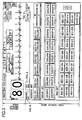
Fig. 1 is a view showing a display screen of a bedside monitor
when tag B "PERSONAL DISP" has been selected;
Fig. 2 is a view showing a display screen of a bedside monitor
when tag A "BED DISP" has been selected;
Fig. 3 is a view showing a display screen of a bedside monitor
when tag C "SELECTED BED" has been selected; and
Fig. 4 is a view for describing a network to which vital sign
display monitors including a central monitor and bedside monitors
are connected.
DETAILED DESCRIPTION OF PREFERRED EMBODIMENTS
An embodiment of a bedside monitor according to the present
invention will be described hereinbelow in detail by reference to
the accompanying drawings.
Figs. 1, 2, and 3 are views showing various types of display
screens on a bedside monitor.
The area of a display screen is roughly divided into a first
display area and a second display area. In various types of display
screens, these display areas are fixed.
The first display area includes a bed display (showing vital
signs of a plurality of patients in beds), a personal display
(displaying vital signs of a selected individual), and bed selection
tags (A, B, and C). In accordance with a display mode selected by
a tag, various vital signs and alarm information are displayed in
the first display area.
At the outset, a display screen for displaying a specified
person will be described by reference to Fig. 1. Fig. 1 is a display
screen for a case where tag B "PERSONAL DISPLAY" has been selected.
Provided below Tag B are bed number tags (i.e., Bed 1 through
Bed 8) to be used for selecting a patient whose vital signs are
desired to be displayed by reference to a bed number. By pressing
a bed number tag, a current display can be switched to a display
of vital signs of an arbitrary patient. When a parameter for a certain
patient who is being monitored has changed to an alarm condition,
the bed number tag of the patient is highlighted or caused to blink.
Thus, a patient in alarm condition is ascertained at first sight.
The current display can be switched to a display of the vital signs
of a patient in alarm condition, by pressing the bed number tag.
The first display area is divided into an upper display area
and a lower display area. In the upper display area, numerical value
parameters and relevant vital sign waveforms are displayed in two
rows.
Information pertaining to an electrocardiogram, which is one
of most important vital signs and needs to be monitored continuously,
is fixedly set in an upper row of the upper display area as numerical
value parameters and a vital sign waveform relevant thereto. Aheart
rate (HR) obtained by detecting R waves in an electrocardiogram
is displayed on the left side of the upper row of the upper display
area as a numerical value parameter. An electrocardiogram wave form
is displayed on the right side of the upper row of the upper display
area as the vital sign waveform. Displayed in the vicinity of the
electrocardiogram waveform are the number of ventricular premature
contractions (VPC) during a predetermined time period and parameters
relevant to an ST (an electrocardiogram S-T segment).
Numerical value parameters and a vital sign waveform relevant
thereto to be displayed in a lower row of the upper display area
are arbitrarily selected and displayed at any time, and can be
selected from various parameters displayed in the lower display
area.
More specifically, an arbitrary parameter display area in
the lower display area has the function of a touch panel. Numerical
value parameters and a vital sign such as a vital sign waveform
relevant thereto which are to be displayed in a lower row in the
upper display area are selected by touching the touch panel with
a finger. Here, the lower display area displays a plurality of
parameters simultaneously, and hence numerical value parameters
are displayed in the lower display area; no waveforms are displayed
in the lower display area.
An alarm display area for displaying alarms related to
parameters is provided in the numerical value parameter display
area. Alarms for all the parameters being displayed can be
ascertained simultaneously.
A vital sign waveform to be displayed can be selected from
a respiration waveform, a CO2 waveform, a SpO2 waveform (a pulse
wave waveform), a PRESS waveform (a pressure waveform), and OFF
(no waveform).
Displayed as numerical-value parameters of vital signs are
a heart rate (HR), a pulse rate (PR), the number of ventricular
premature contractions (VPC) during a given time period, an
electrocardiogram S-T segment (ST), an electrocardiogram R-R
interval (RR), a carbon dioxide partial pressure (CO2), oxygen
saturation in arterial blood (SpO2), a non-invasive blood pressure
(NIBP), a pressure value (PRESS), an inspired oxygen fractional
concentration (FiO2), and a body temperature (TEMP).
Different labels are affixed to pressure values (PRESS) of
individual sites in the body. Indication of such a label enables
a distinction between sites to be measured. Labels showing the
following sites can be selected and used.
- ART:
- arterial pressure
- RAD:
- radial artery pressure
- DORS:
- dorsal artery pressure
- AO:
- aortic pressure
- FEM:
- femoral artery pressure
- UA:
- umbilical artery (UA) pressure
- UV:
- umbilical vein (UV) pressure
- PAP:
- pulmonary artery pressure (PAP)
- CVP:
- central venous pressure (CVP)
- RAP:
- right artery pressure (RAP)
- RVP:
- right ventricular pressure (RVP)
- PRESS:
- Others
- ICP:
- intracranial pressure (ICP)
Numerical values and waveforms pertaining to vital signs set
forth can be displayed.
Alarm information provided in Table 1 is one type of alarm
information pertaining to various vital signs and an alarm message
for reporting changes in condition of a patient when a threshold
value is exceeded.
Table 1 provides types of vital signs and threshold values
(upper limit, lower limit, and upper and lower limits) responsible
for an alarm, and a character string of an alarm message to be displayed
(highlighting of a measured numerical value or display of a specific
character string).
| ALARM FACTORS | ALARM MESSAGES |
| HR (ECG) | UPPER AND LOWER LIMITS | HIGHLIGHTING OF NUMERICAL VALUE |
| PACING | PACING |
| ST | UPPER AND LOWER LIMITS | HIGHLIGHTING OF NUMERICAL VALUE |
| VPC | UPPER LIMIT | HIGHLIGHTING OF NUMERICAL VALUE |
| PR | UPPER AND LOWER LIMITS | HIGHLIGHTING OF NUMERICAL VALUE |
| PRESS | UPPER AND LOWER LIMITS | HIGHLIGHTING OF NUMERICAL VALUE |
| NIBP | UPPER AND LOWER LIMITS | HIGHLIGHTING OF NUMERICAL VALUE |
| SpO2 | UPPER AND LOWER LIMITS | HIGHLIGHTING OF NUMERICAL VALUE |
| RR | UPPER AND LOWER LIMITS | HIGHLIGHTING OF NUMERICAL VALUE |
| APNEA | APNEA |
| TEMP (ΔT) | UPPER AND LOWER LIMITS | HIGHLIGHTING OF NUMERICAL VALUE |
| CO2 | UPPER AND LOWER LIMITS | HIGHLIGHTING OF NUMERICAL VALUE |
| FiO2 | UPPER AND LOWER LIMITS | HIGHLIGHTING OF NUMERICAL VALUE |
Alarm information pertaining to a specific vital sign includes
for instance alarm information pertaining to arrhythmia.
Table 2 provided below provides categories of arrhythmia
responsible for an alarm and character strings of alarm messages
to be displayed (i.e., display of a specific character string).
| ARRHYTHMIA CAUSING ALARM | ALARM MESSAGES |
| Asystole | ASYSTOLE |
| ventricular fibration | VF |
| ventricular tachycardia | VT |
| Tachycardia | TACHYCARDIA |
| Bradycardia | BRADYCARDIA |
| short-run-type VPCs | VPC RUN |
| couplet = paired VPCs | COUPLET |
| Early VPC | EARLY VPC |
| Ventricular bigeminy | BIGEMINY |
| Frequent VPC | FREQ. VPC |
Categories of arrhythmia provided in Table 2 and conditions
for displaying alarm messages will be described below.
ASYSTOLE means asystole. If asystole continoues over a time
period longer than a preset time, ASYSTOLE is displayed.
VF means ventricular fibrillation. When ventricular
fibrillation has been detected, VF is displayed.
VT means ventricular tachycardia. When ventricular
premature contraction (VPC) has occurred continuously nine beats
or more, VT is displayed (when the number of heart beats exceeds
100).
TACHYCARDIA means tachycardia. When heart rate exceeds a
specified value, TACHYCARDIA is displayed.
BRADYCARDIA means bradycardia. When heart rate is smaller
than a specified value, BRADYCARDIA is displayed.
VPC RUN means a short-run-type VCP. When VPC has occurred
continuously more than specified times, VPC RUN is displayed.
COUPLET means couplet. When VPC has occurred twice
continuously, COUPLET is displayed.
EARLY VPC means early systolic ventricular premature
contraction. When VPC has occurred and the R-R interval is
one-third of a normal one , EARLYVPC is displayed.
BIGEMINY means ventricular bigeminy. When three or more sets
of ventricular bigeminy have occurred, BIGEMINY is displayed.
FREQ. VPC means frequent VPC. When the number of VPCs becomes
more than preset numbers in one minute, FREQ. VPC is displayed.
Alarm information pertaining to an environment of an
instrument used for measuring the foregoing vital signs including
alarm information is provided in Table 3.
| Vital Sign | Cause of alarm | Alarm message |
| ECG | Connector off | CONNECTOR OFF |
| Electrode check | CHECK ELECTRODES |
| Noise | NOISE |
| An electrocardiogram being learned | LEARNING |
| PRESS | Connector off | CONNECTOR OFF |
| Sensor check | CHECK SENSOR |
| Out of measuring range | OUT OF RANGE |
| No zero setting | CAL?? |
| Out of zero range | ZERO OUT OF RANGE |
| NIBP | Connector off | CONNECTOR OFF |
| Check cuff or hose | AIR LEAK |
| SpO2 | Connector off | CONNECTOR OFF |
| Probe check | CHECK PROBE |
| Detection of a pulse wave is impossible | NO PULSE |
| Pulse wave being retrieved | PULSE SEARCH |
| RR | Connector off | CONNECTOR OFF |
| TEMP | Connector off | CONNECTOR OFF |
| Sensor check | CHECK SENSOR |
| CO2 | Connector off | CONNECTOR OFF |
| Sensor check | CHECK SENSOR |
| FiO2 | Connector off | CONNECTOR OFF |
| Sensor check | CHECK SENSOR |
| Uncalibrated | CAL?? |
As an alarm pertaining to a bedside monitor itself, there
may also be displayed an alarm for warning of occurrence of a glitch
or failure in the vital sign display monitor, such as an anomaly
in the SpO2 circuit, an anomaly in an NIBP safety circuit, or a battery
drain.
Display colors on a display screen for the foregoing alarm
maybe set in compliance with international standards, such as those
of IEC, so that the vital sign display monitor can be used throughout
the world.
By means of sensitivity scale keys provided beside respective
waveforms in the first display area, the sensitivity of a display
waveform can be switched.
Vital signs for one patient in a bed are displayed in the
second display area. Settings are usually effected so as to monitor
vital signs of a patient in a bed where the bedside monitor is situated.
An electrocardiogram (ECG) is primarily displayed as a
waveform of a vital sign. The bedside monitor may be set so that
a waveform can be selected from a respiration waveform (RESP), a
CO2 waveform (CO2), a pulse wave waveform (SpO2), a pressure waveform
(PRESS), and no waveform (OFF).
Displayed as numerical-value parameters of vital signs are
a heart rate (HR), a pulse rate (PR), the number of ventricular
premature contractions (VPC) in a predetermined time period, an
electrocardiogram S-T segment (ST), an electrocardiogram R-R
interval (RR), a carbon dioxide partial pressure (CO2), oxygen
saturation in an arterial blood (SpO2), non-invasive blood pressure
(NIBP), a pressure value (PRESS), an inspired oxygen fractional
concentration (FiO2), and a body temperature (TEMP).
Next, a display screen for displaying vital signs of a plurality
of patients in beds will now be described. Fig. 2 shows a display
screen for a case where tag A"BED DISP" has been selected.
Here, vital signs and alarm information pertaining to patients
in eight selected beds are displayed. Numerical value parameters
of vital signs measured from the respective patients are displayed
concurrently. In order to indicate an alarm condition of each of
the parameters or vital signs relevant thereto, an area in which
a numerical value parameter of a vital sign in an alarm condition
is displayed in a highlighting or blinking manner (e.g., an HR display
area of a bed 222).
In connection with alarm information messages, an alarm
considered to be most prioritized to other alarms is displayed in
an alarm display area as a result of comprehensively considering
the kind of alarm for each vital sign signal, whether or not a
threshold value delineating a dangerous range in the numerical
value has been exceeded, and a measurement environment alarm or
a like factor. If the currently-displayed alarm cannot be ignored,
the alarm display area can be visually notified by highlighting
or blinking.
Consequently, by means of the first display area, all numerical
value parameters which have been measured with regard to vital signs
of all the patients in the eight displayed beds can be visually
ascertained simultaneously. At that time, a determination can also
be made as to whether all the parameters fall within normal ranges
or whether they constitute alarm conditions. Moreover, the nature
of the most important alarm for each patient and a determination
as to whether or not an urgent measure is necessary can also be
ascertained.
Each bed display area in the first display area has the function
of a touch panel. By touching a display area for any patient in
a bed with a finger, the display screen in the first displaying
area is switched to the personal display shown in Fig. 1, for the
patient.
The display screen shown in Fig. 2 shows a detailed alarm
condition for each parameter. Further, if a vital sign waveform
or a detailed alarm condition for each parameter of a certain patient
is desired to be ascertained, a bed display screen of the patient
in the bed selected as shown in Fig. 1 is displayed, by touching
a display area for the patient, thereby enabling ascertainment of
the detailed alarm condition or the vital sign waveform for each
parameter.
The second display area is identical with the second display
area shown in Fig. 1.
A bed selection display screen will now be described by
reference to Fig. 3.
Fig. 3 shows a display screen for a case where tag C "SELECT
BED" has been selected.
Displayed in the first display area are keys for selecting
a specific bed from all beds for each item (i.e., MONITOR BED keys,
GROUP LIST keys, and BED LIST keys) for registering a bed to be
displayed on the personal display screen (Fig. 1) or the bed display
screen (Fig. 2).
There will now be described a method of registering eight
beds to be displayed in the first display area on the bed display
screen, provided that all beds have already been classified into
groups.
First, a key to be registered is selected from the MONITOR
BED keys.
Next, a group to which the bed to be registered belongs is
selected from the GROUP LIST keys. A list of selected groups are
displayed in the BED LIST keys. The number of keys to be displayed
is limited by the width of an area in display screen (21 for the
case of the display screen shown in Fig. 3). Hence, if the number
of beds is large, keys to be displayed can be switched, by means
of a scroll key provided beside the BED LIST keys.
By pressing a specific key from among the BED LIST keys, the
bed can be registered into the selected MONITOR BED key.
The thus-determined bed is displayed in the display areas
for each "BED" on the bed display screen.
When a bed registered in a bedside monitor is to be deleted,
a key to be deleted is selected from the MONITOR BED keys, and
"UNMONITORED key" in the BED LIST keys is pressed, thus the bed
is deleted.
The second display area is identical with that mentioned
previously.
A network to which a plurality of bedside monitors according
to the present embodiment are connected will now be described by
reference to Fig. 4.
As shown in Fig. 4, bedside monitors provided for respective
patients can be grouped into categories; for example, Group 1 and
Group 2. The groups can be used; for example, as a group for a ward,
a CCU, an ICU, or an operating room.
In order to intensive monitoring, a vital sign display monitor
(i.e., central monitor) for management purpose can be provided in
a doctor anteroom or a nurse's station.
Bedside monitors assigned to respective groups and the central
monitor are connected to a network, such as a LAN, and can effect
data communication.
According to the present invention, there is provided a method
of displaying vital signs for use with a bedside monitor, comprising
the steps of: simultaneously displaying parameter values of a
plurality of sets of vital signs measured for a plurality of patients
respectively; and displaying alarm information in a parameter
display area or an alarm display area when vital signs relevant
to the parameters are in a state where an alarm is to be generated.
As a result, there can be provided a vital sign display method which
enables simultaneous ascertainment of parameter values measured
in connection with a plurality of patients and ascertainment of
the parameter and patient in an alarm condition.
According to the present invention, there is provided a method
of displaying vital signs for use with a bedside monitor comprising
the steps of : simultaneously displaying parameter values of a
plurality of sets of vital signs measured for a plurality of patients
respectively; displaying alarm information in a parameter display
area when vital signs relevant to the parameters are in a state
where an alarm is to be generated; and displaying prioritized alarm
information, from among alarm information pertaining to parameters
of the plurality of vital signs, in an alarm display area for each
patient. As a result, there can be provided a vital sign display
method which enables simultaneous ascertainment of parameter values
measured in connection with a plurality of patients, ascertainment
of the parameter and patient in an alarm condition, and ascertainment
of the most prioritized alarm.
According to the present invention, there is provided a bedside
monitor comprising: first display means for simultaneously
displaying, in a display area, parameter values of a plurality of
sets of vital signs measured for a plurality of patients respectively
and displaying alarm information within a parameter display area
or an alarm display area in the display area when vital signs relevant
to the parameters are in a state where an alarm is to be generated;
second display means for displaying, in the display area, parameter
values of the vital signs and at least a vital sign waveform regarding
vital signs of a specified patient of the plurality of patients;
and display changeover means, wherein the display area has the
function of a touch panel selectable per each display area for each
patient when the display area is displayed by the first display
means, and the parameter values of the vital signs and the vital
sign waveform of a patient selected as a result of pressing the
touch panel is displayed by the second display means as the specified
patient. As a result, there can be provided a bedside monitor which
enables, by means of a display by the first display means,
simultaneous ascertainment of parameter values measured in
connection with a plurality of patients, ascertainment of the
parameter and patient in an alarm condition, and instantaneous
display of further detailed vital signs of the patient by the second
display means by means of the display changeover means when further
detailed vital signs of a specific patient are desired to be known.
According to the present invention, there is provided a bedside
monitor comprising: first display means for simultaneously
displaying, in a display area, parameter values of a plurality of
sets of vital signs measured for a plurality of patients respectively
and displaying, in the display area, prioritized alarm information
from among alarm information pertaining to the plurality of vital
sign parameters for each patient; second display means for displaying,
in the display area, parameter values of the vital signs and at
least a vital sign waveform regarding vital signs of a specified
patient among the plurality of patients; and display changeover
means, wherein the display area has the function of a touch panel
selectable per each display area for each patient when the display
area is displayed by the first display means, and the parameter
values of the vital signs and the vital sign waveform of a patient
selected as a result of pressing the touch panel is displayed by
the second display means as the specified patient. As a result,
there can be provided a bedside monitor which enables, by means
of a display by the first display means, simultaneous ascertainment
of parameter values measured in connection with a plurality of
patients, ascertainment of the most prioritized displayed alarm ,
and instantaneous display of further detailed vital signs of the
patient by the second display means by means of the display changeover
means when detailed vital signs of a specific patient are desired
to be known.
According to the present invention, there is provided a bedside
monitor comprising: first display means for simultaneously
displaying, in a display area, parameter values of a plurality of
sets of vital signs measured for a plurality of patients respectively
and displaying alarm information in a parameter display area, thereby
displaying, in an alarm display area and for each patient, prioritized
alarm information from among alarm information pertaining to the
plurality of vital sign parameters; second display means for
displaying, in the display area, parameter values of the vital signs,
and at least a vital sign waveform regarding vital signs of a
specified patient among the plurality of patients, and alarm
information pertaining to the respective parameters; and display
changeover means, wherein the display area has the function of a
touch panel selectable per each display area for each patient when
the display area is displayed by the first display means, and the
parameter values of the vital signs and the vital sign waveform
of a patient selected through pressing of the touch panel is displayed
by the second display means as the specified patient. As a result,
there can be provided a bedside monitor which enables, by means
of a display by the first display means, simultaneous ascertainment
of parameter values measured in connection with a plurality of
patients, ascertainment of the parameter and patient in an alarm
condition, ascertainment of the most prioritized displayed alarm,
and instantaneous display of further detailed vital signs of the
patient by the second display means when detailed vital signs of
a specific patient are desired to be known.
According to the present invention, there is provided a vital
sign display monitor system comprising: a plurality of bedside
monitors described above, wherein the plurality of bedside monitors
are interconnected via a network, thereby enabling display of vital
signs of a plurality of patients. As a result, there can be provided
a vital sign display monitor system, in which a plurality of bedside
monitors are disposed in the vicinity of respective patients and
the bedside monitors are connected to a network, whereby vital signs
can be shared, and vital signs of a plurality of patients can be
ascertained with a single bedside monitor.