EP1237384B1 - Benutzer-Markierung von Standorten eines Mobiltelefons - Google Patents
Benutzer-Markierung von Standorten eines Mobiltelefons Download PDFInfo
- Publication number
- EP1237384B1 EP1237384B1 EP02003570A EP02003570A EP1237384B1 EP 1237384 B1 EP1237384 B1 EP 1237384B1 EP 02003570 A EP02003570 A EP 02003570A EP 02003570 A EP02003570 A EP 02003570A EP 1237384 B1 EP1237384 B1 EP 1237384B1
- Authority
- EP
- European Patent Office
- Prior art keywords
- cellular telephone
- location
- user
- cell
- location information
- Prior art date
- Legal status (The legal status is an assumption and is not a legal conclusion. Google has not performed a legal analysis and makes no representation as to the accuracy of the status listed.)
- Expired - Lifetime
Links
- 230000001413 cellular effect Effects 0.000 title claims abstract description 289
- 238000004891 communication Methods 0.000 claims abstract description 50
- 230000006854 communication Effects 0.000 claims abstract description 50
- 238000000034 method Methods 0.000 claims description 63
- 230000005540 biological transmission Effects 0.000 claims description 8
- 230000008569 process Effects 0.000 description 30
- 238000010586 diagram Methods 0.000 description 12
- 230000006870 function Effects 0.000 description 4
- 230000004044 response Effects 0.000 description 4
- 230000001419 dependent effect Effects 0.000 description 2
- 230000009545 invasion Effects 0.000 description 2
- 238000010295 mobile communication Methods 0.000 description 2
- 238000010606 normalization Methods 0.000 description 2
- 230000007175 bidirectional communication Effects 0.000 description 1
- 230000008859 change Effects 0.000 description 1
- 238000006243 chemical reaction Methods 0.000 description 1
- 238000004883 computer application Methods 0.000 description 1
- 238000012423 maintenance Methods 0.000 description 1
- 230000003287 optical effect Effects 0.000 description 1
- 230000009467 reduction Effects 0.000 description 1
- 239000004065 semiconductor Substances 0.000 description 1
- 230000008054 signal transmission Effects 0.000 description 1
- 230000009466 transformation Effects 0.000 description 1
- 230000001960 triggered effect Effects 0.000 description 1
Images



Classifications
-
- H—ELECTRICITY
- H04—ELECTRIC COMMUNICATION TECHNIQUE
- H04W—WIRELESS COMMUNICATION NETWORKS
- H04W4/00—Services specially adapted for wireless communication networks; Facilities therefor
- H04W4/02—Services making use of location information
-
- H—ELECTRICITY
- H04—ELECTRIC COMMUNICATION TECHNIQUE
- H04W—WIRELESS COMMUNICATION NETWORKS
- H04W8/00—Network data management
- H04W8/02—Processing of mobility data, e.g. registration information at HLR [Home Location Register] or VLR [Visitor Location Register]; Transfer of mobility data, e.g. between HLR, VLR or external networks
- H04W8/08—Mobility data transfer
- H04W8/16—Mobility data transfer selectively restricting mobility data tracking
-
- H—ELECTRICITY
- H04—ELECTRIC COMMUNICATION TECHNIQUE
- H04W—WIRELESS COMMUNICATION NETWORKS
- H04W8/00—Network data management
- H04W8/02—Processing of mobility data, e.g. registration information at HLR [Home Location Register] or VLR [Visitor Location Register]; Transfer of mobility data, e.g. between HLR, VLR or external networks
- H04W8/08—Mobility data transfer
-
- H—ELECTRICITY
- H04—ELECTRIC COMMUNICATION TECHNIQUE
- H04W—WIRELESS COMMUNICATION NETWORKS
- H04W8/00—Network data management
- H04W8/02—Processing of mobility data, e.g. registration information at HLR [Home Location Register] or VLR [Visitor Location Register]; Transfer of mobility data, e.g. between HLR, VLR or external networks
- H04W8/08—Mobility data transfer
- H04W8/14—Mobility data transfer between corresponding nodes
Definitions
- the present invention relates to digital cellular telephones, and in particular to a cellular telephone location application and service that are controlled by a cellular telephone user.
- a mobile or wireless cellular telephone can be moved among communication cells of a cellular telephone network and maintain seamless communication with the network.
- cellular telephones were used solely for voice communications.
- digital processing capabilities such as in GSM-style digital cellular telephones
- other communication capabilities have been added, such as text messaging of the type referred to as short message service (SMS) messaging that is commonly used in GSM cellular telephones.
- SMS short message service
- EP-A-0 833 494 discloses an image input apparatus such as a digital cordless telephone having a radio communication function for communicating with a base station.
- Position information obtained on the basis of identification information of a base station is added to a photographed image as photographing position information.
- the position information may for instance be "at Shimomaruko Store”.
- the base station identification code is constituted by a provider identification code and an outdoor public telephone additional ID. Only the outdoor public telephone additional ID needs to be stored.
- the position information name is input by the user by alphabetic keys and a conversion key.
- the position information and the base station identification code are stored in position information storage means.
- WO 99/52316 describes a technique for exploiting location-dependent services in a cellular radio system. It is described that it would be advantageous if network initiated services could be offered. Services provided by a network are made available to the user in various ways depending on the location of the user. Information on the basis of which the mobile station recognizes that it is situated in a given localized service area is stored in the memory of the mobile station. The mobile station sends a message addressed to an apparatus responsible for providing localized services. Information about the location of a mobile station may be generated at the mobile station itself. General control information comprises the unequivocal identifier of the base transceiver station. The user may be given a choice about whether or not to give notification about his arrival in the localized service area.
- WO 99/56144 A1 describes a technique for distributing location-based information to a client, which may be a mobile satellite positioning system receiver, via the internet.
- a client which may be a mobile satellite positioning system receiver
- a combined system including a GPS receiver and a cellular telephone send route location service requests to a regional SMS center, which may route the request to a GPS location server.
- the GPS location server calculates a position of the mobile receiver and transmits this position to an application server.
- the message from the mobile unit will typically include data, such as a cell sector ID or a base station location or identification.
- An aspect of the present invention is the addition of a user-controlled cellular telephone positioning feature by which a cellular telephone user may correlate a user-specified location name with a cellular telephone location among one or more cells of a cellular telephone network.
- a user-controlled cellular telephone positioning feature maintains user privacy by maintaining location data on a user's cellular telephone.
- cellular telephone network operators conventionally have been able to identify a cell within which a cellular telephone is located without a user's knowledge or permission. Such information has sometimes been used in law enforcement situations, but as a generally available resource would be viewed by many users as an undesirable invasion of privacy.
- a cellular telephone location tagging application is stored and operated on a cellular telephone.
- the application obtains a cell identification string corresponding to a cell of a cellular telephone system with which cell the cellular telephone is in communication.
- the user associates a location name and the cell identification string as location information for a selected location.
- the user may also specify that the location information may be transmitted from the cellular telephone to a cellular telephone location service center that receives the location information and selectively forwards it to a predefined recipient (e.g., a telephonic or computer network service or user).
- a predefined recipient e.g., a telephonic or computer network service or user.
- Fig. 1 illustrates a GSM cellular telephone 10 as an exemplary cellular telephone operating environment for an embodiment of the present invention.
- GSM cellular telephone 10 may conform, for example, to the European Telecommunications Standards Institute (ETSI) specifications GSM 11.11 and GSM 11.14 for Global Systems for Mobile communications. It will be appreciated, however, that GSM cellular telephone 10 could instead conform to another cellular telephone standard or a standard not yet developed, such as the ETSI 3rd Generation Mobile System standard that is sometimes referred to as the Third Generation Partnership Project or "3GPP".
- ETSI European Telecommunications Standards Institute
- 3GPP Third Generation Partnership Project
- GSM cellular telephone 10 includes a removable Subscriber Identity Module (SIM) 12, which is sometimes called a smart card or chip card.
- SIM 12 can be of a smart card format that has the well-known size of credit cards (e.g., standardized dimensions of 53.98 mm ⁇ 85.60 mm ⁇ 0.76 mm), or can be of a smaller format that is sometimes called a "plug-in SIM”.
- SIM 12 includes a medium 14 that supports a SIM electronic circuit 16 (e.g., one or more semiconductor integrated circuits or chips).
- Medium 14 typically includes multiple laminated synthetic layers, with one or more internal layers being between outer layers. SIM electronic circuit 16 is incorporated into or on at least one of the internal layers.
- SIM electronic circuit 16 includes a central processing unit or CPU 20 (e.g., a microprocessor or microcontroller) in conjunction with a memory system 22, a data transmit interface 24, and a data receive interface 26, all of which are interconnected by a bus structure 28.
- GSM cellular telephone 10 includes a central processing unit or CPU 30 (e.g., a microprocessor or microcontroller) in conjunction with a memory system 32, a data transmit interface 34, and a data receive interface 36, all of which are interconnected by a bus structure 38.
- GSM cellular telephone 10 includes a system display 40 and a user input device or keypad 42, as well as a power supply (e.g., a battery), telephonic audio input and output elements, and radio frequency transmitting and receiving elements that are not shown.
- a power supply e.g., a battery
- telephonic audio input and output elements e.g., a microphone
- radio frequency transmitting and receiving elements e.g., radio frequency transmitting and receiving elements that are not shown.
- SIM electronic circuit 16 includes the basic elements of a simple computer, neither SIM 12 nor SIM electronic circuit 16 is capable of functioning as a stand-alone computer. Neither SIM 12 nor SIM electronic circuit 16 includes a power source or user interface components by which a user could interact with SIM 12 or SIM electronic circuit 16.
- the computer functionality of SIM 12 can be accessed only by connecting it to another computer, such as GSM cellular telephone 10 or a SIM reader that is connected to a personal computer, as is known in the art.
- GSM cellular telephone 10 When connected to another computer, such as GSM cellular telephone 10, SIM 12 is powered and communicates through its interfaces 24 and 26 to receive data from and provide data to the other computer.
- GSM cellular telephone 10 supports a fixed length text message service by which radiated (i.e., wireless) fixed length text messages of up to a maximum fixed length may be transmitted or received by GSM cellular telephone 10.
- the fixed length text message service could include or conform to the short message service (SMS) standard that is part of the GSM Phase 1 standard.
- SMS short message service
- the SMS standard allows transmission of radiated fixed length text messages of up to about 160 characters in length.
- Such a fixed length text message service conforms to memory constraints and arrangements in GSM cellular telephone 10 and so may be distinguished from conventional network connections or services in which files of generally arbitrary size may be transmitted.
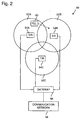
- Fig. 2 is a schematic diagram of a conventional cellular telephone system 50 having multiple communication cells 52A, 52B, 52C, etc.
- Each of communication cells 52A, 52B, and 52C corresponds to at least one wireless or radiating transceiver station 54A, 54B, and 54C, respectively.
- Transceiver stations 54A, 54B, and 54C communicate with one or more communication gateways 56 (only one shown), which are in communication with a communication network 58 such as a public switched telephone network.
- a mobile or wireless cellular telephone 60 which is an exemplary one of typically many cellular telephones (not shown), can be moved among communication cells 52A, 52B, and 52C and maintain seamless communication with communication network 58.
- Cellular telephone 60 may be of the GSM-type, with the characteristics of GSM cellular telephone 10, or may be based upon any other cellular telephone format or standard.
- cellular telephone 60 within a cell communicates with communication network 58 by establishing a wireless or radiating link with the corresponding transceiver station (e.g., 54A).
- the communication between cellular telephone 60 and communication network 58 is maintained as cellular telephone 60 passes between cells (e.g., cell 54A to cell 54B) when the link from cellular telephone 60 is passed between the corresponding transceiver stations (e.g., station 54A to station 54B).
- the link from cellular telephone 60 may be passed between transceiver stations (e.g., station 54A to station 54B) when cellular telephone detects that the radiated signal power from one transceiver station (e.g., station 54B) exceeds the radiated signal power from another transceiver station (e.g., station 54A).
- transceiver stations e.g., station 54A to station 54B
- the cell 52 with which cellular telephone 60 is linked at any time is identified within cellular telephone 60 by a cell identification data string. Since cells 52 typically cover overlapping areas to maintain seamless communication as it is moved between them, cellular telephone 60 utilizes the cell identification data string to specify the station 54 with which cellular telephone 60 is linked. Cellular telephone 60 may simultaneously be within range of multiple cells 52 and may have stored in it a cell identification data string for each cell.
- Fig. 3 is a block diagram illustrating operation of a user-controlled cellular telephone location tagging application 80 stored in a memory of cellular telephone 60.
- the memory of cellular telephone 60 also includes in a cell identification memory space 82 a cell identification string 84 corresponding to each of the one or more cells 52 (only one shown) with which cellular telephone 60 is in communication.
- cell identification string 84 is utilized by cellular telephone 60 to identify a particular one of cells 52 through which communications are to be transmitted.
- location tagging application 80 allows or prompts a user to tag a current location of cellular telephone 60, such as by making a predefined entry on the cellular telephone keypad (e.g., keypad 42) or selection of an interface option rendered on the cellular telephone display (e.g., display 40).
- location tagging application 80 copies the at least one cell identification string 84 in cell identification memory space 82 to a tagged location data file 86.
- Location tagging application 80 also allows or prompts the user to enter a location name 88 for the current location, such as by entering the name with the cellular telephone keypad (e.g., keypad 42).
- location name 88 could be "home,” “work,” “friend's house,” etc.
- Location name 88 is associated with the corresponding cell identification string 84 in tagged location data file 86.
- location name 88 and cell identification string 84 form in location data file 86 a data structure for user-controlled cellular telephone location data.
- location data file 86 could be implemented as a look-up table that correlates a cell identification string 84 with a location name 88. It will be appreciated that location data file 86 would typically include user-controlled cellular telephone location data for multiple locations.
- An aspect of location tagging application 80 is that it maintains user privacy by maintaining location data on a user's cellular telephone.
- cellular telephone system operators have been able to identify a cell 52 within which a cellular telephone 60 is located. Such information has sometimes been used in law enforcement situations, but as a generally available resource would be viewed by many users as an invasion of privacy.
- location data maintained on a user's cellular telephone the user can selectively make the location information available to others.
- location tagging application 80 may allow or prompt the user to enter a public/private indication 90 that establishes whether location data on the user's cellular telephone is to be made available to others, such as by transmitting the location data from the cellular telephone to cellular telephone system 50.
- the location data (e.g., location name 88 only) would be transmitted only if a public state were indicated.
- the location data may be transmitted to cellular telephone system 50 in a standard text message format, such as a SMS message format.
- location tagging application 80 may also allow or prompt the user to enter a frequency indication 92 to establish a frequency at which the location data on the user's cellular telephone is to be made available to others.
- the location information is made available to others according to a list (e.g., other cell phones or computers) that is created by the user and identifies who (i.e., what device) is to receive updated location data.
- the location data would be transmitted at a frequency that could be indicated as a time period between each transmission or "update" (e.g., 60, 30, 15 minutes). For example, one time period could be a default frequency that is used by location tagging application 80 in the absence of another frequency specified by the user.
- a location information update is triggered when the cellular telephone is switched on and upon a change of the main cell that the cellular telephone is using.
- the cellular telephone sends the update to registered or identified "users" (e.g., other cellular telephones or computers) by sending SMS messages to each one. In an implementation that reduces messaging costs, it the cellular telephone sends the location update to one server that in turn broadcasts the information to the same registered "users.”
- Fig. 4 is a flow diagram of a user-controlled cellular telephone location tagging method 100 by which a cellular telephone user may register a cellular telephone location on a cellular telephone, the location corresponding to the position of a cellular telephone 60 in a region encompassed by one or more cells 52 of a cellular telephone system 50.
- User-controlled cellular telephone location tagging method 100 may be executed by a location tagging application (i.e., software instructions) stored on the cellular telephone 60.
- a location tagging application i.e., software instructions
- the location tagging application may be stored on GSM cellular telephone 10 or SIM electronic circuit 16 of SIM 12.
- Process block 102 indicates that a cellular telephone is in communication with at least one cell of a cellular telephone system.
- Process block 104 indicates that a user enters a location tag command on the cellular telephone. For example, with a location tagging application running on the cellular telephone, the user may actuate a selection of a location tag command with reference to a command prompt displayed on the cellular telephone.
- Process block 106 indicates that a cell identification string of a cell with which the cellular telephone is communicating is saved on the cellular telephone as a tagged location cell identification string.
- Process block 108 indicates that the user enters a location name on the cellular telephone, such as in response to a prompt from the cellular telephone.
- Process block 110 indicates that the location name is saved in association with the tagged location cell identification string.
- the location name and tagged location cell identification string may be stored in a look-up table that correlates location names with corresponding tagged location cell identification strings.
- Process block 112 indicates that the user enters on the cellular telephone a public/private indication of whether the location is to be made publicly available to others. This entry can be made in response to a prompt from the cellular telephone.
- Process block 114 indicates that the public/private indication is saved in association with the tagged location cell identification string and the location name.
- process block 116 indicates that the user enters a location update frequency representing the frequency at which the location, or all publicly available locations, are to be made available to others. This entry can be made in response to a prompt from the cellular telephone.
- Process block 118 indicates that the location update frequency is saved in association with the other location data.
- each cell 52 in a cellular telephone system 50 will encompass an area of several square miles. If only one cell identification string of only one cell 52 is associated with each location name, a user could unambiguously identify only one location for each cell 52. While such a coarse location resolution could be suitable for many users, some users might wish to specify more than one location within the region encompassed by a particular cell 52.
- Fig. 5 is a flow diagram of another implementation of a user-controlled cellular telephone location tagging method 120 by which a cellular telephone user may register a cellular telephone location on a cellular telephone.
- Process block 122 indicates that a cellular telephone is in communication with at least one cell of a cellular telephone system.
- Process block 124 indicates that a user enters a location tag command on the cellular telephone.
- Process block 126 indicates that each cell identification string for each cell with which the cellular telephone is communicating is saved on the cellular telephone as one or more tagged location cell identification strings.
- Process block 128 indicates that a cell signal characteristic (e.g., power) indication for each cell with which the cellular telephone is communicating is obtained on the cellular telephone for each of the tagged location cell identification strings.
- Cell signal power indications could correspond to the radiated signal transmission power for each cell as determined by the cellular telephone.
- Process block 130 indicates that the cell signal power indications are normalized with respect to a normalization factor to form normalized cell signal power indications.
- the multiple cell signal power indications provide multiple power indications that can identify many locations with a much higher resolution than can a single cell. Normalization of the power indications is an optional step maintains the improved location correlation even when transmission power received by the cellular telephone varies for all cells, such as when the cellular telephone is in or out of a building or automobile.
- Process block 132 indicates that the normalized cell signal power indications are saved on the cellular telephone as a tagged location cell identification string.
- Process block 134 indicates that the user is prompted to enter a location name on the cellular telephone.
- Process block 136 indicates that that the user enters the location name.
- Process block 138 indicates that the location name is saved in association with the tagged location cell identification string and the cell signal characteristics.
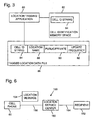
- Fig. 6 is a block diagram illustrating operation of a user-controlled cellular telephone location posting system 150 for posting or otherwise providing location information regarding a cellular telephone 60 in a cellular telephone system 50.
- this illustration is directed to providing location information in only direction: from cellular telephone 60 to location posting system 150.
- cellular telephone 60 and location posting system 150 could be capable of bi-directional communication so that the following description would be similarly applicable to communication from location posting system 150 to cellular telephone 60.
- a user-specific location message 154 created at cellular telephone 60 is transmitted over a communication channel 158 to a cellular telephone location service center 160 that functions as a store and forward center for transmitting location information.
- cellular telephone location service center 160 may be associated with or included in a short message service center that processes SMS-format text messages available with many GSM cellular telephones, or may be transmitted over another communication channel or in another communication format.
- location service center 160 receives an encrypted text location message 154 from cellular telephone 60 and stores location message 154 until it is to be forwarded to a recipient 162.
- Location message 154 includes a cellular telephone user identity (e.g., a cellular telephone number, sometimes referred to herein as a telephonic address) and a location indicator (e.g., a location name).
- the cellular telephone user identity may be associated at location service center 160 with other registered identities of the user (e.g., instant messaging identities, network user identities, etc.).
- Recipient 162 may be or include any telephonic, cellular telephonic, or computer network (e.g., Internet) based user or service, including instant messaging services (MSN, Yahoo, AOL, etc.) or users, email services or users, cellular telephone users, etc., or any other computer-based program that can register the state string sent by the phone, correlate the information with a user identity, store it and display it on the web or within any computer application to be queried.
- the location information can appear in addition to the status information currently used (e.g., typing, away, busy, logged off).
- Location service center 160 transmits location information from location message 154 to recipient 162 over a communication channel 164.
- Location service center 160 may transmit the location information in response to a query from a recipient 162 or may automatically broadcast the location information to specified recipients 162.
- Location service center 160 can actively send status and location status updates to specified services in specified formats and therefore publish the information regarding the cellular user status and location status.
- Communication channels 158 and 164 may be or include any public or private computer network (e.g., the global computer network called the Internet) or any telephone network (e.g., any PSTN or any cellular or other wireless communication network).
- location information is obtained and managed by a cellular telephone user independently of a cellular telephone system operator. It will be appreciated, however, that in other implementations the cell identification data string or strings included in the location information could be transmitted from a user cellular telephone to a cellular telephone system operator as part of a location information service.
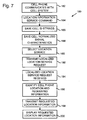
- Fig. 7 is a flow diagram of a cellular telephone location information method 180 by which a cellular telephone system operator can provide a location information service to a cellular telephone user.
- Process block 182 indicates that a cellular telephone is in communication with at least one cell of a cellular telephone system.
- Process block 184 indicates that a user enters a location information service command on the cellular telephone.
- Process block 186 indicates that each cell identification string for each cell with which the cellular telephone is communicating is saved on the cellular telephone as one or more tagged location cell identification strings.
- Process block 188 indicates that normalized cell signal power indications are saved on the cellular telephone with the tagged location cell identification strings.
- Process block 190 indicates that the user indicates on the cellular telephone a location service command for selecting a location service, such as from the cellular telephone system operator or another service provider.
- a location service command for selecting a location service, such as from the cellular telephone system operator or another service provider.
- a location service command for selecting a location service, such as from the cellular telephone system operator or another service provider.
- an "I am lost" service command could function as a request for a description or name of a current location of the cellular telephone.
- An " I need instructions to get to my destination” service could function as a request for directions from a current location of the cellular telephone to a destination location entered by the user.
- An "Assisted tagging" service could assist a user with tagging or naming a location being tagged by the user by providing a suggested name or description, thereby freeing the user from manually entering it.
- Process block 192 indicates that the normalized cell signal power indications, together with an indication of the location service being requested, are transmitted as a localized location service request from the cellular telephone to the cellular telephone system operator or another service provider.
- Process block 194 indicates that the localized location service request is received by the cellular telephone system operator or another service provider.
- Process block 196 indicates that the location of the cellular telephone user is identified from the normalized cell signal power indications and the information corresponding to that cellular telephone location and the requested location service is determined.
- the location service information could be a description or name of a current location of the cellular telephone (e.g., street intersection).
- the location service information could be text directions from a current location of the cellular telephone to the destination location entered by the user.
- the location service information could be a suggested name or description of the current location, thereby freeing the user from manually entering it.
- Process block 198 indicates that the requested location service information is transmitted to the cellular telephone.
- Process block 200 indicates that the requested location service information is displayed on the cellular telephone.
- Location information method 180 is described with reference to an implementation in which information is provided back to a cellular telephone user. It will be appreciated that in other implementations, the information service could provide the information to a recipient other than the cellular telephone user.
- the cellular telephone system operator or another service provider could periodically translate the cellular telephone location information into a location name or description that could be forwarded to a different recipient, such as a dispatcher for the cellular telephone user.
- a delivery vehicle could be tracked by a delivery dispatcher.
- Such a system could be an inexpensive substitute for a satellite-based tracking system, as is used by some delivery companies.
- the cellular telephone system operator or another service provider could translate the cellular telephone location information into a location name or description that could be forwarded to a different recipient only upon a singular event, such as a request for a particular service (e.g., a taxi service).
- a singular event such as a request for a particular service (e.g., a taxi service).
- a taxi dispatcher could send the nearest available taxi based on location status.
- the same feature could be applied to a call to an emergency (e.g., 911) service.
- the present invention is described above with reference to acts and symbolic representations of operations that are performed by various computer systems, including mobile communication devices and "smart cards.” Such acts and operations are sometimes referred to as being computer-executed and may be associated with the operating system or the application program as appropriate. It will be appreciated that the acts and symbolically represented operations include the manipulation by a CPU of electrical signals representing data bits, which causes a resulting transformation or reduction of the electrical signal representation, and the maintenance of data bits at memory locations in a memory system to thereby reconfigure or otherwise alter the computer system operation, as well as other processing of signals.
- the memory locations where data bits are maintained are physical locations that have particular electrical, magnetic, or optical properties corresponding to the data bits.
Landscapes
- Engineering & Computer Science (AREA)
- Computer Networks & Wireless Communication (AREA)
- Signal Processing (AREA)
- Databases & Information Systems (AREA)
- Mobile Radio Communication Systems (AREA)
- Telephone Function (AREA)
- Telephone Set Structure (AREA)
Claims (42)
- Mobiltelefon-Standortbereitstellungssystem, umfassend:ein Mobiltelefon (10, 60), das darauf eine Mobiltelefon-Standortidentifizierungsanwendung (80) gespeichert hat, die geeignet ist, eine Zellidentifikationszeichenfolge zugehörig zu einer Zelle eines Mobiltelefonsystems zu erlangen, mit der das Mobiltelefon in Kommunikation steht; undein Mobiltelefon-Standort-Servicecenter (160) zum Empfangen von Standortinformationen von dem Mobiltelefon,dadurch gekennzeichnet, dassdie Mobiltelefon-Standortidentifizierungsanwendung des Weiteren imstande ist, auf dem Mobiltelefon einen Standortnamen und die Zellidentifikationszeichenfolge als die Standortinformation für einen ausgewählten Standort zu assoziieren; unddas Mobiltelefon-Standort-Servicecenter des Weiteren eingerichtet ist, die Standortinformation wahlweise von dem Mobiltelefon an einen vordefinierten Empfänger (162) gemäß einer Standortstatusangabe, die in der Standortinformation enthalten ist, weiterzuleiten.
- System nach Anspruch 1, in dem das Mobiltelefon einen zugehörigen Benutzer hat, der eine oder mehrere Netzwerkidentitäten hat, und in dem das Mobiltelefon-Standort-Servicecenter die Standortinformation mit den ein oder mehreren Netzwerkidentitäten des Benutzers assoziiert.
- System nach Anspruch 1 oder 2, in dem die Standortinformation wahlweise zu dem vordefinierten Empfänger zu einer Computernetzwerkadresse weitergeleitet wird.
- System nach Anspruch 1 oder 2, in dem die Standortinformation wahlweise zu dem vordefinierten Empfänger zu einer telefonischen Adresse weitergeleitet wird.
- System nach einem der Ansprüche 1 bis 4, wobei das Mobiltelefon ein Computer-lesbares Medium umfasst, das Instruktionen speichert, um die Mobiltelefon-Standortidentifizierungsanwendung auszuführen, wobei die Instruktionen umfassen:Instruktionen zum Erlangen von Standortinformationsdaten, die einem Standort des Mobiltelefons in einem Mobiltelefonsystem entsprechen; undInstruktionen zum Assoziieren eines Standortnamens und den Standortinformationsdaten auf dem Mobiltelefon.
- System nach Anspruch 5, wobei das Computer-lesbares Medium des Weiteren umfasst:Instruktionen zum wahlweise Übermitteln der Standortinformationsdaten von dem Mobiltelefon gemäß einer benutzerspezifizierten Standortstatusangabe.
- System nach Anspruch 6, wobei das Computer-lesbares Medium des Weiteren umfasst:Instruktionen zum separaten Erstellen einer benutzerspezifizierten Standortstatusangabe mit der Standortinformation für jeden ausgewählten Standort.
- System nach Anspruch 5, wobei das Computer-lesbares Medium des Weiteren umfasst:Instruktionen zum Erstellen eines benutzerspezifizierten Empfängers der Standortinformation.
- System nach Anspruch 8, in dem der benutzerspezifizierte Empfänger eine telefonische oder Computernetzwerkadresse ist, die einem bestimmten Benutzer zugeordnet ist.
- System nach Anspruch 8, in dem der benutzerspezifizierte Empfänger ein Computernetzwerkservice oder telefonischer Service ist.
- System nach einem der Ansprüche 5 bis 10, in dem die Standortinformationsdaten mehrere Zellidentifikationszeichenfolgen einschliessen, die mehreren Zellen eines Mobiltelefonsystems entsprechen, mit dem das Mobiltelefon in Kommunikation steht, und in dem die mehreren Zellidentifikationszeichenfolgen mit dem Standortnamen assoziiert sind.
- System nach Anspruch 11, wobei das Computer-lesbares Medium des Weiteren umfasst:Instruktionen zum Erlangen einer Zellsignalcharakteristik auf dem Mobiltelefon, die ein zellulares Übertragungssignal für jede der mehreren Zellen, mit denen das Mobiltelefon in Kommunikation steht, charakterisiert; undInstruktionen zum Assoziieren der Zellsignalcharakteristik auf dem Mobiltelefon mit dem Standortnamen und jeder entsprechenden Zellidentifikationszeichenfolge.
- System nach Anspruch 12, in dem die Zellsignalcharakteristik die Signalstärke einschliesst.
- System nach einem der Ansprüche 5 bis 13, wobei das Computer-lesbares Medium des Weiteren umfasst:Instruktionen zum Erstellen eines Computernetzwerk-Instant-Massaging-Service als einen Empfänger der Standortinformation.
- System nach einem der Ansprüche 1 bis 4, wobei das Mobiltelefon ein Computer-lesbares Medium umfasst, das eine Mobiltelefon-Standortidentifizierungs-Datenstruktur speichert, die umfasst:eine Zellidentifikationszeichenfolge, die einer Zelle eines Mobiltelefonsystems entspricht, mit der das Mobiltelefon in Kommunikation steht; undein Standortname, zugehörig zu der Zellidentifikationszeichenfolge, die zusammen eine Mobiltelefonstandortinformation darstellen.
- System nach Anspruch 15, wobei die Mobiltelefon-Standortidentifizierungs-Datenstruktur des Weiteren eine benutzerspezifizierte Standortstatusangabe umfasst, die festlegt, ob die Standortinformation von dem Mobiltelefon übertragen werden soll.
- System nach Anspruch 15 oder 16, wobei die Mobiltelefon-Standortidentifizierungs-Datenstruktur des Weiteren eine benutzerspezifizierte Empfängerangabe umfasst, die einen Empfänger der Standortinformation identifiziert.
- System nach einem der Ansprüche 15 bis 17, in dem die Zellidentifikationszeichenfolge mehrere Zellidentifikationszeichenfolgen einschliesst, die mehreren Zellen eines Mobiltelefonsystems entsprechen, mit denen das Mobiltelefon in Kommunikation steht, und in dem die mehreren Zellidentifikationszeichenfolgen mit dem Standortnamen assoziiert sind.
- System nach Anspruch 18, wobei die Mobiltelefon-Standort-Datenstruktur des Weiteren eine Zellsignalcharakteristik umfasst, die ein zellulares Übertragungssignal für jede der mehreren Zellen, mit denen das Mobiltelefon in Kommunikation steht, charakterisiert, und wobei jede Zellsignalcharakteristik auf dem Mobiltelefon mit dem Standortnamen und jeder entsprechenden Zellidentifikationszeichenfolge assoziiert ist.
- System nach Anspruch 1, wobei der Standortname ein benutzerspezifizierter Standortname ist, der von dem Benutzer erlangt wurde, und in dem der benutzerspezifizierter Standortname und die Standortinformationsdaten auf dem Mobiltelefon assoziiert werden.
- System nach Anspruch 1, in dem die Mobiltelefon-Standortidentifizierungsanwendung zum Erlangen des vordefinierten Empfängers von dem Benutzer des Mobiltelefons entwickelt ist.
- Mobiltelefon-Standortinformationsverfahren, umfassend:Erlangen einer Zellidentifikationszeichenfolge auf dem Mobiltelefon, die einer Zelle entspricht, mit der das Mobiltelefon in Kommunikation steht;auf dem Mobiltelefon Assoziieren (184-190) einer Standort-Service-Anfrage und der Zellidentifikationszeichenfolge als eine örtlich gebundene Standort-Service-Anfrage für einen ausgewählten Standort;Übertragen (192) der örtlich gebundenen Standort-Service-Anfrage zu einem Mobiltelefon-Standortinformations-Service-Anbieter;bei dem Mobiltelefon-Standortinformations-Service-Anbieter Identifizieren (196) des ausgewählten Standorts und Standort-Service-Information entsprechend dem ausgewählten Standort; undÜbertragen (198) der Standort-Service-Information zu einem festgelegten Empfänger,wobei das Verfahren des Weiteren umfasst:Herstellen (102, 122) einer Kommunikation zwischen einem Mobiltelefon und einer Zelle des Mobiltelefonsystems; undauf dem Mobiltelefon Assoziieren (106-110, 126-138) eines Standortnamens und der Zellidentifikationszeichenfolge als Standortinformation für einen ausgewählten Standort,wobei das Verfahren des Weiteren umfasst:auf dem Mobiltelefon Erlangen und Speichern einer benutzerspezifizierten Standortstatusangabe; undwahlweises Übertragen der Standortinformation von dem Mobiltelefon gemäß der benutzerspezifizierten Standortstatusangabe.
- Verfahren nach Anspruch 22, in dem der festgelegte Empfänger ein Mobiltelefon ist.
- Verfahren nach Anspruch 22, in dem der festgelegte Empfänger anders ist als das Mobiltelefon.
- Verfahren nach einem der Ansprüche 22 bis 24, in dem das Erlangen einer Zellidentifikationszeichenfolge das Erlangen mehrerer Zellidentifikationszeichenfolgen einschliesst, die mehreren Zellen eines Mobiltelefonsystems entsprechen, mit denen das Mobiltelefon in Kommunikation steht, und in dem die mehreren Zellidentifikationszeichenfolgen mit der Standort-Service-Anfrage assoziiert sind.
- Verfahren nach Anspruch 25, das des Weiteren umfasst:Erlangen einer Zellsignalcharakteristik auf dem Mobiltelefon, die ein zellulares Übertragungssignal für jede der mehreren Zellen, mit denen das Mobiltelefon in Kommunikation steht, charakterisiert; undAssoziieren der Zellsignalcharakteristik auf dem Mobiltelefon mit dem Standortnamen und jeder entsprechenden Zellidentifikationszeichenfolgen.
- Verfahren nach Anspruch 22, das des Weiteren das separaten Erlangen einer benutzerspezifizierten Standortstatusangabe mit der Standortinformation für jeden ausgewählten Standort umfasst.
- Verfahren nach einem der Ansprüche 22 bis 27, das des Weiteren das Erlangen und Speichern eines benutzerspezifizierten Empfängers der Standortinformation auf dem Mobiltelefon umfasst.
- Verfahren nach Anspruch 28, in dem der benutzerspezifizierte Empfänger eine telefonische oder Computernetzwerkadresse ist, die einer Person zugeordnet ist.
- Verfahren nach Anspruch 28, in dem der benutzerspezifizierte Empfänger ein Computernetzwerk oder telefonischer Service ist.
- Verfahren nach einem der Ansprüche 22 bis 30, in dem das Erlangen einer Zellidentifikationszeichenfolge das Erlangen mehrerer Zellidentifikationszeichenfolgen einschliesst, die mehreren Zellen eines Mobiltelefonsystems entsprechen, mit denen das Mobiltelefon in Kommunikation steht, und in dem die mehreren Zellidentifikationszeichenfolgen mit dem Standortnamen assoziiert sind.
- Verfahren nach Anspruch 31, das des Weiteren umfasst:Erlangen einer Zellsignalcharakteristik auf dem Mobiltelefon, die ein zellulares Übertragungssignal für jede der mehreren Zellen, mit denen das Mobiltelefon in Kommunikation steht, charakterisiert; undAssoziieren der Zellsignalcharakteristik auf dem Mobiltelefon mit dem Standortnamen und jeder entsprechenden Zellidentifikationszeichenfolgen.
- Verfahren nach Anspruch 32, in dem die Zellsignalcharakteristik die Signalstärke einschliesst.
- Verfahren nach einem der Ansprüche 22 bis 33, das des Weiteren das Erstellen eines Computernetzwerk-Instant-Massaging-Service als einen Empfänger der Standortinformation umfasst.
- Verfahren nach Anspruch 22, das des Weiteren das Erlangen des Standortnamens von dem Benutzer des Mobiltelefons umfasst.
- Computer-lesbares Medium auf einem Mobiltelefon, das Computer-ausführbare Instruktionen hat, um Schritte auszuführen, die umfassen:Erlangen einer Zellidentifikationszeichenfolge auf dem Mobiltelefon, die einer Zelle eines Mobiltelefonsystems entspricht, mit dem das Mobiltelefon in Kommunikation steht;auf dem Mobiltelefon Assoziieren einer Standort-Service-Anfrage und der Zellidentifikationszeichenfolge als eine örtlich gebundene Standort-Service-Anfrage; undÜbertragen der örtlich gebundenen Standort-Service-Anfrage zu einem Mobiltelefon-Standortinformations-Service-Anbieter,des Weiteren Instruktionen umfassend zum:Herstellen (102, 122) einer Kommunikation zwischen einem Mobiltelefon und einer Zelle eines Mobiltelefonsystems; undauf dem Mobiltelefon Assoziieren (106-110, 126-138) eines Standortnamens und der Zellidentifikationszeichenfolge als Standortinformation für einen ausgewählten Standort,des Weiteren Instruktionen umfassend zum:auf dem Mobiltelefon Erlangen und Speichern einer benutzerspezifizierten Standortstatusangabe; undwahlweisen Übertragen der Standortinformation von dem Mobiltelefon gemäß der benutzerspezifizierten Standortstatusangabe.
- Medium nach Anspruch 36, in dem die Instruktionen zum Erlangen einer Zellidentifikationszeichenfolge Instruktionen zum Erlangen mehrerer Zellidentifikationszeichenfolgen einschliesst, die mehreren Zellen eines Mobiltelefonsystems entsprechen, mit denen das Mobiltelefon in Kommunikation steht, und in dem die Instruktionen zum Assoziieren auf dem Mobiltelefon Instruktionen zum Assoziieren auf dem Mobiltelefon der Standort-Service-Anfrage und den mehreren Zellidentifikationszeichenfolgen als eine örtlich gebundene Standort-Service-Anfrage einschliesst.
- Medium nach Anspruch 37, das des Weiteren Instruktionen zum Erlangen eines zellularen Übertragungssignals für jede der mehreren Zellen umfasst, mit denen das Mobiltelefon in Kommunikation steht; und
Instruktionen zum Assoziieren, auf dem Mobiltelefon, der Zellsignalcharakteristik mit der Standort-Service-Anfrage und jeder entsprechenden Zellidentifikationszeichenfolge. - Verfahren umfassend:in einem Service-Center Empfangen von Standortinformation von einem Mobiltelefon, wobei die Standortinformation eine Zellidentifikationszeichenfolge, die einer Zelle eines Mobiltelefonsystems entspricht, mit denen das Mobiltelefon in Kommunikation steht, und einen Standortnamen einschliesst;wahlweise Weiterleiten der Standortinformation an einen vordefinierten Empfänger,wobei das Verfahren des Weiteren umfasst:Empfangen einer Standortstatusangabe von dem Mobiltelefon,wobei das wahlweise Weiterleiten das wahlweise Weiterleiten der Standortinformation basierend auf der Standortstatusangabe einschliesst.
- Verfahren nach Anspruch 39, das des Weiteren das Assoziieren der Standortinformation mit einer oder mehreren Netzwerkidentitäten eines Benutzers des Mobiltelefons umfasst.
- Verfahren nach Anspruch 39, in dem das wahlweise Weiterleiten das wahlweise Weiterleiten der Standortinformation an den vordefinierten Empfänger zu einer Computernetzwerkadresse einschliesst.
- Verfahren nach Anspruch 39, in dem das wahlweise Weiterleiten das wahlweise Weiterleiten der Standortinformation an den vordefinierten Empfänger zu einer telefonischen Adresse einschliesst.
Applications Claiming Priority (2)
| Application Number | Priority Date | Filing Date | Title |
|---|---|---|---|
| US09/789,434 US7444156B2 (en) | 2001-02-20 | 2001-02-20 | User-tagging of cellular telephone locations |
| US789434 | 2001-02-20 |
Publications (3)
| Publication Number | Publication Date |
|---|---|
| EP1237384A2 EP1237384A2 (de) | 2002-09-04 |
| EP1237384A3 EP1237384A3 (de) | 2002-09-11 |
| EP1237384B1 true EP1237384B1 (de) | 2006-08-23 |
Family
ID=25147633
Family Applications (1)
| Application Number | Title | Priority Date | Filing Date |
|---|---|---|---|
| EP02003570A Expired - Lifetime EP1237384B1 (de) | 2001-02-20 | 2002-02-15 | Benutzer-Markierung von Standorten eines Mobiltelefons |
Country Status (4)
| Country | Link |
|---|---|
| US (1) | US7444156B2 (de) |
| EP (1) | EP1237384B1 (de) |
| AT (1) | ATE337689T1 (de) |
| DE (1) | DE60214062T2 (de) |
Cited By (10)
| Publication number | Priority date | Publication date | Assignee | Title |
|---|---|---|---|---|
| US7590696B1 (en) | 2002-11-18 | 2009-09-15 | Aol Llc | Enhanced buddy list using mobile device identifiers |
| US8452849B2 (en) | 2002-11-18 | 2013-05-28 | Facebook, Inc. | Host-based intelligent results related to a character stream |
| US8577972B1 (en) | 2003-09-05 | 2013-11-05 | Facebook, Inc. | Methods and systems for capturing and managing instant messages |
| US8701014B1 (en) | 2002-11-18 | 2014-04-15 | Facebook, Inc. | Account linking |
| US8874672B2 (en) | 2003-03-26 | 2014-10-28 | Facebook, Inc. | Identifying and using identities deemed to be known to a user |
| US8965964B1 (en) | 2002-11-18 | 2015-02-24 | Facebook, Inc. | Managing forwarded electronic messages |
| US9203879B2 (en) | 2000-03-17 | 2015-12-01 | Facebook, Inc. | Offline alerts mechanism |
| US9203794B2 (en) | 2002-11-18 | 2015-12-01 | Facebook, Inc. | Systems and methods for reconfiguring electronic messages |
| US9203647B2 (en) | 2002-11-18 | 2015-12-01 | Facebook, Inc. | Dynamic online and geographic location of a user |
| US9246975B2 (en) | 2000-03-17 | 2016-01-26 | Facebook, Inc. | State change alerts mechanism |
Families Citing this family (30)
| Publication number | Priority date | Publication date | Assignee | Title |
|---|---|---|---|---|
| US6714791B2 (en) * | 2001-02-23 | 2004-03-30 | Danger, Inc. | System, apparatus and method for location-based instant messaging |
| US7392191B2 (en) * | 2001-03-29 | 2008-06-24 | Intellisist, Inc. | Method and device to distinguish between voice conversation and automated speech recognition |
| US8054971B2 (en) * | 2001-04-27 | 2011-11-08 | Comverse Ltd | Free-hand mobile messaging-method and device |
| US20030046273A1 (en) * | 2001-08-28 | 2003-03-06 | Intel Corporation | Personal assistance service with instant messaging |
| US20030064712A1 (en) * | 2001-09-28 | 2003-04-03 | Jason Gaston | Interactive real world event system via computer networks |
| US8977284B2 (en) | 2001-10-04 | 2015-03-10 | Traxcell Technologies, LLC | Machine for providing a dynamic data base of geographic location information for a plurality of wireless devices and process for making same |
| US7027821B2 (en) * | 2002-01-28 | 2006-04-11 | Bellsouth Intellectual Property Corporation | System and method for accessing computer services via a wireless network |
| US7599983B2 (en) | 2002-06-18 | 2009-10-06 | Wireless Ink Corporation | Method, apparatus and system for management of information content for enhanced accessibility over wireless communication networks |
| US7373144B1 (en) | 2002-09-30 | 2008-05-13 | Danger, Inc. | System and method for automatically providing user status in a messaging service |
| US20040137921A1 (en) * | 2002-11-08 | 2004-07-15 | Vinod Valloppillil | Asynchronous messaging based system for publishing and accessing content and accessing applications on a network with mobile devices |
| US7343168B2 (en) * | 2002-11-08 | 2008-03-11 | Openwave Systems Inc. | Asynchronous messaging based system for publishing and accessing content and accessing applications on a network with mobile devices |
| US20040092273A1 (en) * | 2002-11-08 | 2004-05-13 | Openwave Systems Inc. | Asynchronous messaging based system for publishing and accessing content and accessing applications on a network with mobile devices |
| US7302254B2 (en) | 2002-11-08 | 2007-11-27 | Openwave Systems Inc. | MMS based photo album publishing system |
| US7428580B2 (en) | 2003-11-26 | 2008-09-23 | Aol Llc | Electronic message forwarding |
| WO2004046867A2 (en) | 2002-11-18 | 2004-06-03 | America Online, Inc. | People lists |
| US7899862B2 (en) | 2002-11-18 | 2011-03-01 | Aol Inc. | Dynamic identification of other users to an online user |
| US7660870B2 (en) * | 2003-01-03 | 2010-02-09 | Openwave Systems Inc. | Method and apparatus for enhancing discoverability and usability of data network capability of a mobile device |
| US8250168B2 (en) * | 2003-01-03 | 2012-08-21 | Openwave Systems Inc. | Methods for accessing published contents from a mobile device |
| US7853250B2 (en) | 2003-04-03 | 2010-12-14 | Network Security Technologies, Inc. | Wireless intrusion detection system and method |
| US8626146B2 (en) * | 2003-10-29 | 2014-01-07 | Qualcomm Incorporated | Method, software and apparatus for performing actions on a wireless device using action lists and versioning |
| TWI246346B (en) * | 2004-10-21 | 2005-12-21 | Inventec Appliances Corp | Method for positioning query by utilizing personal handyphone system (PHS) |
| DE102005053783A1 (de) * | 2005-11-09 | 2007-05-10 | T-Mobile International Ag & Co. Kg | Verfahren zum Betreiben eines mobilen Kommunikationssystems und entsprechendes mobiles Kommunikationssystem |
| US8750892B2 (en) | 2006-06-21 | 2014-06-10 | Scenera Mobile Technologies, Llc | System and method for naming a location based on user-specific information |
| US8407213B2 (en) | 2006-08-31 | 2013-03-26 | Ektimisi Semiotics Holdings, Llc | System and method for identifying a location of interest to be named by a user |
| US8023965B2 (en) * | 2008-05-09 | 2011-09-20 | Mitel Networks Corporation | Method, system and apparatus for locating a mobile communications device |
| US9068837B2 (en) * | 2010-01-29 | 2015-06-30 | Here Global B.V. | Method of operating a navigation system |
| US8611869B2 (en) * | 2011-02-17 | 2013-12-17 | Cisco Technology, Inc. | Identification of an alternate contact for use in reaching a mobile device user |
| US9710837B1 (en) * | 2011-03-22 | 2017-07-18 | Bsm Technologies Ltd. | System and method enabling ownership, trade, and marketplace for named geographic locations |
| US9202016B2 (en) * | 2012-08-15 | 2015-12-01 | Verizon Patent And Licensing Inc. | Management of private information |
| CN104302000B (zh) * | 2014-10-15 | 2018-08-03 | 上海交通大学 | 基于信号接收强度指示相关性的室内定位方法 |
Family Cites Families (41)
| Publication number | Priority date | Publication date | Assignee | Title |
|---|---|---|---|---|
| US5131020A (en) * | 1989-12-29 | 1992-07-14 | Smartroutes Systems Limited Partnership | Method of and system for providing continually updated traffic or other information to telephonically and other communications-linked customers |
| US5155689A (en) * | 1991-01-17 | 1992-10-13 | By-Word Technologies, Inc. | Vehicle locating and communicating method and apparatus |
| US5208756A (en) * | 1991-01-28 | 1993-05-04 | Song Han L | Vehicle locating and navigating system |
| JP3057913B2 (ja) * | 1992-06-11 | 2000-07-04 | 日本電気株式会社 | 所在地表示機能付き電話装置 |
| US5317323A (en) * | 1993-03-05 | 1994-05-31 | E-Systems, Inc. | Passive high accuracy geolocation system and method |
| US5548816A (en) * | 1993-11-16 | 1996-08-20 | Astronet | Method and system for locating mobile units in a cellular telephone system by use of virtual location areas |
| CA2170737A1 (en) * | 1994-02-07 | 1995-08-10 | Harold Ii Pace | Mobile location reporting apparatus and methods |
| US5561704A (en) * | 1994-03-16 | 1996-10-01 | At&T Corp. | Proximity based toll free communication services |
| US5519760A (en) * | 1994-06-22 | 1996-05-21 | Gte Laboratories Incorporated | Cellular network-based location system |
| EP0703432B1 (de) * | 1994-09-22 | 2002-11-27 | Aisin Aw Co., Ltd. | Navigationssystem |
| US6075993A (en) * | 1994-11-16 | 2000-06-13 | Sony Corporation | Personal station and information providing system |
| US6131067A (en) | 1995-10-09 | 2000-10-10 | Snaptrack, Inc. | Client-server based remote locator device |
| EP0785535A1 (de) | 1996-01-16 | 1997-07-23 | Mitsubishi Denki Kabushiki Kaisha | Integriertes Führungssystem für Fahrzeuge |
| US5950125A (en) * | 1996-02-20 | 1999-09-07 | At&T Wireless Services | Location-dependent cellular service profile |
| JP3209090B2 (ja) | 1996-05-22 | 2001-09-17 | セイコーエプソン株式会社 | 位置情報提供システム |
| JPH1089976A (ja) | 1996-09-13 | 1998-04-10 | Hitachi Ltd | 情報表示装置およびナビゲーションシステム |
| JPH10155046A (ja) * | 1996-09-25 | 1998-06-09 | Canon Inc | 画像入力装置及びその制御方法 |
| US6061337A (en) * | 1996-12-02 | 2000-05-09 | Lucent Technologies Inc. | System and method for CDMA handoff using telemetry to determine the need for handoff and to select the destination cell site |
| US5926133A (en) * | 1997-07-21 | 1999-07-20 | Denso Corporation | Differentially corrected position location system and method for mobile communication networks |
| WO1999005611A1 (de) | 1997-07-23 | 1999-02-04 | Siemens Aktiengesellschaft | Verfahren zum abspeichern von suchmerkmalen einer bildsequenz |
| FI106089B (fi) * | 1997-12-23 | 2000-11-15 | Sonera Oyj | Liikkuvan päätelaitteen seuranta matkaviestinjärjestelmässä |
| FI980654L (fi) * | 1998-03-23 | 1999-09-24 | Nokia Networks Oy | Menetelmä ja järjestelmä sijainnista riippuvien palvelujen käyttämisek si solukkoradiojärjestelmässä |
| WO1999056144A1 (en) | 1998-04-28 | 1999-11-04 | Snaptrack, Inc. | Method and apparatus for providing location-based information via a computer network |
| US6360101B1 (en) * | 1998-12-31 | 2002-03-19 | Ericsson Inc. | Cellular phone that displays or sends messages upon its arrival at a predetermined location |
| US6477363B1 (en) * | 1999-06-29 | 2002-11-05 | Mohamad Ayoub | System and method for communicating the location of an emergency caller through a telephone network to a control station |
| GB9916408D0 (en) * | 1999-07-13 | 1999-09-15 | Nokia Telecommunications Oy | Personal organiser equipment |
| US6756913B1 (en) * | 1999-11-01 | 2004-06-29 | Mourad Ben Ayed | System for automatically dispatching taxis to client locations |
| US6385458B1 (en) * | 1999-12-10 | 2002-05-07 | Ericsson Inc. | Priority handling of location services in a mobile communications network |
| US7058036B1 (en) * | 2000-02-25 | 2006-06-06 | Sprint Spectrum L.P. | Method and system for wireless instant messaging |
| US7072665B1 (en) * | 2000-02-29 | 2006-07-04 | Blumberg Brad W | Position-based information access device and method of searching |
| US6487495B1 (en) * | 2000-06-02 | 2002-11-26 | Navigation Technologies Corporation | Navigation applications using related location-referenced keywords |
| US6680675B1 (en) * | 2000-06-21 | 2004-01-20 | Fujitsu Limited | Interactive to-do list item notification system including GPS interface |
| US6716101B1 (en) * | 2000-06-28 | 2004-04-06 | Bellsouth Intellectual Property Corporation | System and method for monitoring the location of individuals via the world wide web using a wireless communications network |
| US6771971B2 (en) * | 2000-10-10 | 2004-08-03 | Sws Development, L.L.C. | Subscriber information service center (SISC) |
| US6603405B2 (en) * | 2000-12-05 | 2003-08-05 | User-Centric Enterprises, Inc. | Vehicle-centric weather prediction system and method |
| US6377793B1 (en) * | 2000-12-06 | 2002-04-23 | Xybernaut Corporation | System and method of accessing and recording messages at coordinate way points |
| US6668173B2 (en) * | 2000-12-15 | 2003-12-23 | Motorola, Inc. | Instant message user location tracking system |
| US7130630B1 (en) * | 2000-12-19 | 2006-10-31 | Bellsouth Intellectual Property Corporation | Location query service for wireless networks |
| US6993564B2 (en) * | 2000-12-22 | 2006-01-31 | At&T Corp. | Method of authorizing receipt of instant messages by a recipient user |
| US6757544B2 (en) * | 2001-08-15 | 2004-06-29 | Motorola, Inc. | System and method for determining a location relevant to a communication device and/or its associated user |
| US6699757B1 (en) * | 2003-03-26 | 2004-03-02 | Macronix International Co., Ltd. | Method for manufacturing embedded non-volatile memory with sacrificial layers |
-
2001
- 2001-02-20 US US09/789,434 patent/US7444156B2/en not_active Expired - Fee Related
-
2002
- 2002-02-15 EP EP02003570A patent/EP1237384B1/de not_active Expired - Lifetime
- 2002-02-15 AT AT02003570T patent/ATE337689T1/de not_active IP Right Cessation
- 2002-02-15 DE DE60214062T patent/DE60214062T2/de not_active Expired - Lifetime
Cited By (34)
| Publication number | Priority date | Publication date | Assignee | Title |
|---|---|---|---|---|
| US9203879B2 (en) | 2000-03-17 | 2015-12-01 | Facebook, Inc. | Offline alerts mechanism |
| US9246975B2 (en) | 2000-03-17 | 2016-01-26 | Facebook, Inc. | State change alerts mechanism |
| US9253136B2 (en) | 2002-11-18 | 2016-02-02 | Facebook, Inc. | Electronic message delivery based on presence information |
| US9171064B2 (en) | 2002-11-18 | 2015-10-27 | Facebook, Inc. | Intelligent community based results related to a character stream |
| US8701014B1 (en) | 2002-11-18 | 2014-04-15 | Facebook, Inc. | Account linking |
| US8775560B2 (en) | 2002-11-18 | 2014-07-08 | Facebook, Inc. | Host-based intelligent results related to a character stream |
| US8819176B2 (en) | 2002-11-18 | 2014-08-26 | Facebook, Inc. | Intelligent map results related to a character stream |
| US9571439B2 (en) | 2002-11-18 | 2017-02-14 | Facebook, Inc. | Systems and methods for notification delivery |
| US8954531B2 (en) | 2002-11-18 | 2015-02-10 | Facebook, Inc. | Intelligent messaging label results related to a character stream |
| US8954530B2 (en) | 2002-11-18 | 2015-02-10 | Facebook, Inc. | Intelligent results related to a character stream |
| US9075867B2 (en) | 2002-11-18 | 2015-07-07 | Facebook, Inc. | Intelligent results using an assistant |
| US8965964B1 (en) | 2002-11-18 | 2015-02-24 | Facebook, Inc. | Managing forwarded electronic messages |
| US9047364B2 (en) | 2002-11-18 | 2015-06-02 | Facebook, Inc. | Intelligent client capability-based results related to a character stream |
| US9053173B2 (en) | 2002-11-18 | 2015-06-09 | Facebook, Inc. | Intelligent results related to a portion of a search query |
| US9053174B2 (en) | 2002-11-18 | 2015-06-09 | Facebook, Inc. | Intelligent vendor results related to a character stream |
| US9053175B2 (en) | 2002-11-18 | 2015-06-09 | Facebook, Inc. | Intelligent results using a spelling correction agent |
| US9571440B2 (en) | 2002-11-18 | 2017-02-14 | Facebook, Inc. | Notification archive |
| US9560000B2 (en) | 2002-11-18 | 2017-01-31 | Facebook, Inc. | Reconfiguring an electronic message to effect an enhanced notification |
| US8954534B2 (en) | 2002-11-18 | 2015-02-10 | Facebook, Inc. | Host-based intelligent results related to a character stream |
| US9075868B2 (en) | 2002-11-18 | 2015-07-07 | Facebook, Inc. | Intelligent results based on database queries |
| US8452849B2 (en) | 2002-11-18 | 2013-05-28 | Facebook, Inc. | Host-based intelligent results related to a character stream |
| US9203794B2 (en) | 2002-11-18 | 2015-12-01 | Facebook, Inc. | Systems and methods for reconfiguring electronic messages |
| US9203647B2 (en) | 2002-11-18 | 2015-12-01 | Facebook, Inc. | Dynamic online and geographic location of a user |
| US8156193B1 (en) | 2002-11-18 | 2012-04-10 | Aol Inc. | Enhanced buddy list using mobile device identifiers |
| US7590696B1 (en) | 2002-11-18 | 2009-09-15 | Aol Llc | Enhanced buddy list using mobile device identifiers |
| US9313046B2 (en) | 2002-11-18 | 2016-04-12 | Facebook, Inc. | Presenting dynamic location of a user |
| US9319356B2 (en) | 2002-11-18 | 2016-04-19 | Facebook, Inc. | Message delivery control settings |
| US9356890B2 (en) | 2002-11-18 | 2016-05-31 | Facebook, Inc. | Enhanced buddy list using mobile device identifiers |
| US9515977B2 (en) | 2002-11-18 | 2016-12-06 | Facebook, Inc. | Time based electronic message delivery |
| US9516125B2 (en) | 2003-03-26 | 2016-12-06 | Facebook, Inc. | Identifying and using identities deemed to be known to a user |
| US9531826B2 (en) | 2003-03-26 | 2016-12-27 | Facebook, Inc. | Managing electronic messages based on inference scores |
| US8874672B2 (en) | 2003-03-26 | 2014-10-28 | Facebook, Inc. | Identifying and using identities deemed to be known to a user |
| US9070118B2 (en) | 2003-09-05 | 2015-06-30 | Facebook, Inc. | Methods for capturing electronic messages based on capture rules relating to user actions regarding received electronic messages |
| US8577972B1 (en) | 2003-09-05 | 2013-11-05 | Facebook, Inc. | Methods and systems for capturing and managing instant messages |
Also Published As
| Publication number | Publication date |
|---|---|
| US7444156B2 (en) | 2008-10-28 |
| EP1237384A3 (de) | 2002-09-11 |
| ATE337689T1 (de) | 2006-09-15 |
| DE60214062D1 (de) | 2006-10-05 |
| DE60214062T2 (de) | 2007-07-26 |
| US20020115446A1 (en) | 2002-08-22 |
| EP1237384A2 (de) | 2002-09-04 |
Similar Documents
| Publication | Publication Date | Title |
|---|---|---|
| US7444156B2 (en) | User-tagging of cellular telephone locations | |
| US7577441B2 (en) | Method and device for determining a position of a portable electronic device | |
| US7058385B2 (en) | Emergency call system within a telecommunication network | |
| EP0874529B1 (de) | Mobiles Informationsgerät mit Benutzerinformationsdienst in einem lokalen Gebiet | |
| JP4790814B2 (ja) | 移動通信機器から緊急性のショートメッセージを通信する際に用いるための方法および装置 | |
| US7392042B2 (en) | Method, apparatus and system for notifying a user of a portable wireless device | |
| US8036630B2 (en) | Method and apparatus for making an emergency call using a mobile communication terminal | |
| US7522882B2 (en) | Presence update system and method therefor, and mobile communication terminal and non-contact communication apparatus used therefor | |
| US7200387B1 (en) | Application invocation on a mobile station using messaging service | |
| US20030083080A1 (en) | Facility and method for wireless transmission of data | |
| EP1168716A2 (de) | Gerät und System zur Funkkommunikation, und stationäre Station | |
| CN1324202A (zh) | 便携式电话机终端装置和采用该装置的便携式电话系统 | |
| GB2375921A (en) | Location-based matching service | |
| US20070140439A1 (en) | Method for presenting location information on a mobile terminal | |
| US20120289210A1 (en) | Method and system for providing transfer service between mobile terminal and telematics terminal | |
| KR20010029049A (ko) | 이동통신 시스템의 지피에스를 이용한 관광정보 서비스 방법 | |
| US20050208954A1 (en) | User-tagging of cellular telephone locations | |
| JP2912332B1 (ja) | 携帯通信端末の位置検索方法 | |
| KR100619810B1 (ko) | 이동 통신 단말기의 전화번호 저장 방법 | |
| US20070202862A1 (en) | Method And Arrangement For Redirecting Data To be Transferred To A Mobile Station | |
| KR20070073150A (ko) | 단말 위치 정보 제공 시스템 및 방법 | |
| KR101087664B1 (ko) | 단문 메시지 서비스를 활용하여 네비게이션 서비스를제공하는 방법 및 시스템 | |
| KR101215869B1 (ko) | 이동 통신 단말기를 이용한 목표 위치 안내 서비스 시스템및 그 방법 | |
| KR20060063406A (ko) | 이동통신단말기 및 이를 이용한 일정 관리 방법 | |
| KR20090009378A (ko) | 근거리무선통신용 단말과 이동통신 단말기간 메시지 전송시스템 및 방법 |
Legal Events
| Date | Code | Title | Description |
|---|---|---|---|
| PUAI | Public reference made under article 153(3) epc to a published international application that has entered the european phase |
Free format text: ORIGINAL CODE: 0009012 |
|
| PUAL | Search report despatched |
Free format text: ORIGINAL CODE: 0009013 |
|
| AK | Designated contracting states |
Kind code of ref document: A2 Designated state(s): AT BE CH CY DE DK ES FI FR GB GR IE IT LI LU MC NL PT SE TR |
|
| AX | Request for extension of the european patent |
Free format text: AL;LT;LV;MK;RO;SI |
|
| AK | Designated contracting states |
Kind code of ref document: A3 Designated state(s): AT BE CH CY DE DK ES FI FR GB GR IE IT LI LU MC NL PT SE TR |
|
| AX | Request for extension of the european patent |
Free format text: AL;LT;LV;MK;RO;SI |
|
| 17P | Request for examination filed |
Effective date: 20030306 |
|
| 17Q | First examination report despatched |
Effective date: 20030331 |
|
| AKX | Designation fees paid |
Designated state(s): AT BE CH CY DE DK ES FI FR GB GR IE IT LI LU MC NL PT SE TR |
|
| GRAP | Despatch of communication of intention to grant a patent |
Free format text: ORIGINAL CODE: EPIDOSNIGR1 |
|
| GRAS | Grant fee paid |
Free format text: ORIGINAL CODE: EPIDOSNIGR3 |
|
| GRAA | (expected) grant |
Free format text: ORIGINAL CODE: 0009210 |
|
| AK | Designated contracting states |
Kind code of ref document: B1 Designated state(s): AT BE CH CY DE DK ES FI FR GB GR IE IT LI LU MC NL PT SE TR |
|
| PG25 | Lapsed in a contracting state [announced via postgrant information from national office to epo] |
Ref country code: IT Free format text: LAPSE BECAUSE OF FAILURE TO SUBMIT A TRANSLATION OF THE DESCRIPTION OR TO PAY THE FEE WITHIN THE PRESCRIBED TIME-LIMIT;WARNING: LAPSES OF ITALIAN PATENTS WITH EFFECTIVE DATE BEFORE 2007 MAY HAVE OCCURRED AT ANY TIME BEFORE 2007. THE CORRECT EFFECTIVE DATE MAY BE DIFFERENT FROM THE ONE RECORDED. Effective date: 20060823 Ref country code: AT Free format text: LAPSE BECAUSE OF FAILURE TO SUBMIT A TRANSLATION OF THE DESCRIPTION OR TO PAY THE FEE WITHIN THE PRESCRIBED TIME-LIMIT Effective date: 20060823 Ref country code: LI Free format text: LAPSE BECAUSE OF FAILURE TO SUBMIT A TRANSLATION OF THE DESCRIPTION OR TO PAY THE FEE WITHIN THE PRESCRIBED TIME-LIMIT Effective date: 20060823 Ref country code: BE Free format text: LAPSE BECAUSE OF FAILURE TO SUBMIT A TRANSLATION OF THE DESCRIPTION OR TO PAY THE FEE WITHIN THE PRESCRIBED TIME-LIMIT Effective date: 20060823 Ref country code: CH Free format text: LAPSE BECAUSE OF FAILURE TO SUBMIT A TRANSLATION OF THE DESCRIPTION OR TO PAY THE FEE WITHIN THE PRESCRIBED TIME-LIMIT Effective date: 20060823 |
|
| REG | Reference to a national code |
Ref country code: GB Ref legal event code: FG4D |
|
| REG | Reference to a national code |
Ref country code: CH Ref legal event code: EP |
|
| REG | Reference to a national code |
Ref country code: IE Ref legal event code: FG4D |
|
| REF | Corresponds to: |
Ref document number: 60214062 Country of ref document: DE Date of ref document: 20061005 Kind code of ref document: P |
|
| PG25 | Lapsed in a contracting state [announced via postgrant information from national office to epo] |
Ref country code: DK Free format text: LAPSE BECAUSE OF FAILURE TO SUBMIT A TRANSLATION OF THE DESCRIPTION OR TO PAY THE FEE WITHIN THE PRESCRIBED TIME-LIMIT Effective date: 20061123 Ref country code: SE Free format text: LAPSE BECAUSE OF FAILURE TO SUBMIT A TRANSLATION OF THE DESCRIPTION OR TO PAY THE FEE WITHIN THE PRESCRIBED TIME-LIMIT Effective date: 20061123 |
|
| PG25 | Lapsed in a contracting state [announced via postgrant information from national office to epo] |
Ref country code: ES Free format text: LAPSE BECAUSE OF FAILURE TO SUBMIT A TRANSLATION OF THE DESCRIPTION OR TO PAY THE FEE WITHIN THE PRESCRIBED TIME-LIMIT Effective date: 20061204 |
|
| PG25 | Lapsed in a contracting state [announced via postgrant information from national office to epo] |
Ref country code: PT Free format text: LAPSE BECAUSE OF FAILURE TO SUBMIT A TRANSLATION OF THE DESCRIPTION OR TO PAY THE FEE WITHIN THE PRESCRIBED TIME-LIMIT Effective date: 20070124 |
|
| ET | Fr: translation filed | ||
| PG25 | Lapsed in a contracting state [announced via postgrant information from national office to epo] |
Ref country code: MC Free format text: LAPSE BECAUSE OF NON-PAYMENT OF DUE FEES Effective date: 20070228 |
|
| REG | Reference to a national code |
Ref country code: CH Ref legal event code: PL |
|
| PLBE | No opposition filed within time limit |
Free format text: ORIGINAL CODE: 0009261 |
|
| STAA | Information on the status of an ep patent application or granted ep patent |
Free format text: STATUS: NO OPPOSITION FILED WITHIN TIME LIMIT |
|
| 26N | No opposition filed |
Effective date: 20070524 |
|
| PG25 | Lapsed in a contracting state [announced via postgrant information from national office to epo] |
Ref country code: IE Free format text: LAPSE BECAUSE OF NON-PAYMENT OF DUE FEES Effective date: 20070215 |
|
| PG25 | Lapsed in a contracting state [announced via postgrant information from national office to epo] |
Ref country code: GR Free format text: LAPSE BECAUSE OF FAILURE TO SUBMIT A TRANSLATION OF THE DESCRIPTION OR TO PAY THE FEE WITHIN THE PRESCRIBED TIME-LIMIT Effective date: 20061124 |
|
| PG25 | Lapsed in a contracting state [announced via postgrant information from national office to epo] |
Ref country code: LU Free format text: LAPSE BECAUSE OF NON-PAYMENT OF DUE FEES Effective date: 20070215 Ref country code: CY Free format text: LAPSE BECAUSE OF FAILURE TO SUBMIT A TRANSLATION OF THE DESCRIPTION OR TO PAY THE FEE WITHIN THE PRESCRIBED TIME-LIMIT Effective date: 20060823 |
|
| PG25 | Lapsed in a contracting state [announced via postgrant information from national office to epo] |
Ref country code: TR Free format text: LAPSE BECAUSE OF FAILURE TO SUBMIT A TRANSLATION OF THE DESCRIPTION OR TO PAY THE FEE WITHIN THE PRESCRIBED TIME-LIMIT Effective date: 20060823 |
|
| REG | Reference to a national code |
Ref country code: DE Ref legal event code: R079 Ref document number: 60214062 Country of ref document: DE Free format text: PREVIOUS MAIN CLASS: H04Q0007320000 Ipc: H04W0088000000 Ref country code: DE Ref legal event code: R082 Ref document number: 60214062 Country of ref document: DE Representative=s name: GRUENECKER, KINKELDEY, STOCKMAIR & SCHWANHAEUS, DE |
|
| REG | Reference to a national code |
Ref country code: GB Ref legal event code: 732E Free format text: REGISTERED BETWEEN 20150108 AND 20150114 |
|
| REG | Reference to a national code |
Ref country code: DE Ref legal event code: R082 Ref document number: 60214062 Country of ref document: DE Representative=s name: GRUENECKER PATENT- UND RECHTSANWAELTE PARTG MB, DE Effective date: 20150126 Ref country code: DE Ref legal event code: R079 Ref document number: 60214062 Country of ref document: DE Free format text: PREVIOUS MAIN CLASS: H04Q0007320000 Ipc: H04W0088000000 Effective date: 20150126 Ref country code: DE Ref legal event code: R081 Ref document number: 60214062 Country of ref document: DE Owner name: MICROSOFT TECHNOLOGY LICENSING, LLC, REDMOND, US Free format text: FORMER OWNER: MICROSOFT CORP., REDMOND, WASH., US Effective date: 20150126 |
|
| REG | Reference to a national code |
Ref country code: NL Ref legal event code: SD Effective date: 20150706 |
|
| REG | Reference to a national code |
Ref country code: FR Ref legal event code: TP Owner name: MICROSOFT TECHNOLOGY LICENSING, LLC, US Effective date: 20150724 |
|
| REG | Reference to a national code |
Ref country code: FR Ref legal event code: PLFP Year of fee payment: 15 |
|
| REG | Reference to a national code |
Ref country code: FR Ref legal event code: PLFP Year of fee payment: 16 |
|
| PGFP | Annual fee paid to national office [announced via postgrant information from national office to epo] |
Ref country code: FR Payment date: 20170112 Year of fee payment: 16 Ref country code: FI Payment date: 20170209 Year of fee payment: 16 |
|
| PGFP | Annual fee paid to national office [announced via postgrant information from national office to epo] |
Ref country code: GB Payment date: 20170215 Year of fee payment: 16 |
|
| PGFP | Annual fee paid to national office [announced via postgrant information from national office to epo] |
Ref country code: NL Payment date: 20180214 Year of fee payment: 17 |
|
| PGFP | Annual fee paid to national office [announced via postgrant information from national office to epo] |
Ref country code: DE Payment date: 20180130 Year of fee payment: 17 |
|
| GBPC | Gb: european patent ceased through non-payment of renewal fee |
Effective date: 20180215 |
|
| PG25 | Lapsed in a contracting state [announced via postgrant information from national office to epo] |
Ref country code: FI Free format text: LAPSE BECAUSE OF NON-PAYMENT OF DUE FEES Effective date: 20180215 |
|
| REG | Reference to a national code |
Ref country code: FR Ref legal event code: ST Effective date: 20181031 |
|
| PG25 | Lapsed in a contracting state [announced via postgrant information from national office to epo] |
Ref country code: GB Free format text: LAPSE BECAUSE OF NON-PAYMENT OF DUE FEES Effective date: 20180215 Ref country code: FR Free format text: LAPSE BECAUSE OF NON-PAYMENT OF DUE FEES Effective date: 20180228 |
|
| REG | Reference to a national code |
Ref country code: DE Ref legal event code: R119 Ref document number: 60214062 Country of ref document: DE |
|
| REG | Reference to a national code |
Ref country code: NL Ref legal event code: MM Effective date: 20190301 |
|
| PG25 | Lapsed in a contracting state [announced via postgrant information from national office to epo] |
Ref country code: DE Free format text: LAPSE BECAUSE OF NON-PAYMENT OF DUE FEES Effective date: 20190903 Ref country code: NL Free format text: LAPSE BECAUSE OF NON-PAYMENT OF DUE FEES Effective date: 20190301 |