The invention relates to a label provided with a carrier web, a cover layer,
which is joined to the carrier web by means of adhesive, and a leaflet which lies
between the cover layer and the carrier web and has a first leaflet side edge and a
second leaflet side edge, the cover layer being provided with a first cover-layer side
edge, a first side region, which lies between the first cover-layer side edge and the first
leaflet side edge, and a second side region, which lies between the second leaflet side
edge and the second cover-layer side edge, via which side regions the cover layer is
releasably joined to the carrier web and, after it has been released, can be stuck to a
base, the cover layer comprising a line of weakening, which lies in the second side
region, to allow the cover layer to be torn through.
A label with leaflet of this type is known from an American patent
US 4,621,837.
The known label has a leaflet which is folded in accordion form and is
enclosed between a removable cover layer and a backing layer, which backing layer is,
in used condition, adhesively bonded to a base over its entire surface, and which
backing layer is, in ready for use condition, bonded to a releasable carrier web. After
the cover layer has been removed on one side from the backing layer, it can be folded
back and the leaflet can be unfolded and read. In this case, one side of the leaflet
remains permanently joined to the cover layer. The cover layer and leaflet can be
detached from the base along a second perforated line.
The known label has the drawback that the continuous backing layer, after
removal of the carrier web, is stuck adhesively to a base over its entire length. If this
base is curved, such as for example a cylindrical container such as a medicine bottle,
stresses are produced in the label. As a result, the perforations in the cover layer may
undesirably break open and undesired deformation of the label may occur.
It is an object of the present invention to provide a label with leaflet of the
abovementioned type in which relatively little label material is used and in which no
stresses are formed in the label when it is stuck to a cylindrical base.
It is a further object of the invention to provide a label in which the leaflet
can be removed entirely and in which the upper side of the leaflet is also provided with
readable information.
It is a further object of the invention to provide a label which, after removal
of the line of weakening and reading of the leaflet, possibly after the label has been
removed, can be stuck back onto the base.
For this purpose, the label according to the invention is characterized in that
the cover layer is joined with the side regions sticking directly to the carrier web, and
the leaflet bearing directly, by means of a rear side, against the carrier web.
The fact that the side regions of the cover layer, after the carrier web has
been released, are arranged so as to stick directly onto the base while the leaflet rests at
least virtually freely against this base, prevents undesirable stresses when the label is
being stuck around the base. As a result, there is no unnecessary tension imposed on the
lines of weakening and deformation of the label is prevented. Since the leaflet, if
desired, has a low adhesive force or, preferably, is even not provided with an adhesive
at all, this leaflet, when the label is being applied to a curved surface, can slide over it
so that the stresses can be absorbed and the position of the label is determined solely by
the position of the side regions of the cover layer.
Preferably, a release layer is positioned between the side regions of the
cover layer, beneath a central part thereof, against which release layer the leaflet is
positioned, if appropriate releasably via an adhesive. The release layer prevents the
cover layer from sticking to the carrier web before the leaflet is put in place under the
cover layer and prevents adhesion of the leaflet to the central part of the cover layer.
Cutting through the cover layer in order to form the lines of weakening is also made
easier by the release layer.
According to a preferred embodiment, the upper side of the leaflet bears
freely against the release layer. This counteracts undesirable stresses when the label is
being stuck around a curved base. Further this facilitates removal of the leaflet from the
label.
According to a further preferred embodiment, the leaflet is, in the region of
the first leaflet side edge, releasably adhered to the cover layer. This facilitates opening
the label as well as the leaflet without necessitating to remove the leaflet from the label
to be able to read it.
In order to improve the adhesion of the leaflet to the cover layer, whilst still
being able to remove the leaflet from the cover layer or to read the leaflet while still
being adhered to the cover layer, it is according to the invention advantageous when the
release layer has a first release layer side edge at the side of the first leaflet side edge,
and when the leaflet has a projecting region projection beyond the first release layer
side edge and releasably adhering to the cover layer.
In order to simplify production and to avoid applying adhesive to specific
regions of the label, it is according to the invention advantageous when the cover layer
is provided with an adhesive on its underside. This adhesive layer can be utilised for
adhering the release layer, preferably releasable, to the cover layer, for adhering the
leaflet releasable to the cover layer as well as for adhering the label to the carrier web
or an object/base.
After the label has been released from the carrier web, the side regions of
the cover layer come off the carrier web, while the leaflet adheres releasably to the
cover layer. Then, the side regions are applied to a base and the leaflet can be removed
by detaching the line of weakening, folding open the cover layer and pulling the leaflet
off the cover layer. In the process, the top side, the rear side and the inside of the leaflet
can be provided with relevant information. The leaflet may, for example, be in the form
of a booklet, the pages of which are joined to one another on one side, or may be folded
in accordion form. As the release layer is not removed, information provided on it, will
still be present after removal of the leaflet.
The release layer may comprise a second line of weakening which, in the
direction of the first leaflet side edge, lies at a distance from the first line of weakening
in the release layer, the release layer being releasable between the two side edge
regions of the cover layer. After the line of weakening of the cover layer and of the
release layer has been broken, the label can be folded back. Then, the section of the
release layer which lies along the free edge of the folded-open cover layer can be
removed and the narrow cover-layer strip which has been exposed and is also provided
with adhesive can be stuck back onto the base.
In a preferred embodiment of a label according to the invention, a machine-readable
code is applied to the cover layer and to the leaflet, the cover-layer material
having been removed or being transparent at the location of the code. In this way, it is
possible to verify that both the leaflet and the cover layer are provided with
corresponding, for example identical, information, so that even after removal of the
leaflet it can be related to the cover layer. This is desirable, for example, if the label is
stuck to a medicine bottle, the leaflet is removed and is subsequently stuck onto a
patient's records card or into a record book.
The invention further relates to an assembly of a base and label according
to the invention without carrier web, the label without carrier web being stuck on the
base via the first and second side region.
An embodiment of a label according to the present invention will be
explained in more detail with reference to the appended drawing, in which:
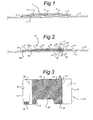
Fig. 1 shows a known label 1, comprising a continuous carrier web 2 which
is wound, for example, onto a reel. The carrier web 2 is provided on an upper side 3
with a release layer, such as for example a layer of silicones, to which a backing layer 4
is releasably joined, for example by means of a pressure-sensitive adhesive. A cover
layer 5 is fixedly joined to the backing layer 4 and a leaflet 6 is accommodated between
the cover layer 5 and the backing layer 4. The backing layer 4, cover layer 5 and leaflet
6 can be removed from the carrier web 3 as a single unit and stuck to a base. The cover
layer 5 can then be detached along a line of weakening 7, which may, for example,
comprise two parallel series of perforations, so that the central part 8 of the cover layer
5 can be folded back and the leaflet 6 comes away from the backing layer 4. The leaflet
6 can then be pulled out in the manner of an accordion and the information on the
leaflet can be read.
Fig. 2 shows a preform 10 from which the label according to the invention
can be formed by applying a leaflet. The preform 10 comprises a carrier web 11
provided with an upper side 12 with a silicone release layer. However, the carrier web
11 may also be formed from paper, in which case the upper side 12 is provided with
clay or a layer of polypropylene applied by co-extrusion. The preform 10 comprises a
release layer 13 and a cover layer 14. The release layer is provided with a first release
layer side edge 42 and a second release layer side edge 43. The cover layer 14 is
provided with a first and a second cover- layer side edge 15, 16. Furthermore, the cover
layer 14 comprises a line of weakening 17 in the form of two parallel series of
perforations 18, 19 which extend through the material of the cover layer 14. Side
regions 20, 21 of the cover layer 14 are releasably joined to the carrier web 11 via an
adhesive. A central region 22 of the cover layer 14 is joined, via its adhesive, to the
release layer 13, which in turn lies, in a non-adhesive manner, on the carrier web 11.
The release layer 13 comprises two series of perforations 23, 24 which extend beneath
the series of perforations 18, 19 of the cover layer 14, so that a tear strip 39 is formed.
Furthermore, a line of weakening 25 is provided in the release layer 13, in the vicinity
of the edge of the central region 22 of the cover layer 14, so that a strip of release
material 39' is formed which can be detached from the cover layer 14. Preferably the
entire underside 46 of the cover layer is coated with an adhesive.
Fig. 3 shows a plan view of the preform, clearly illustrating how a tear strip
26 is formed between the two parallel series of perforations 18, 19. The release layer 13
extends primarily beneath the central region 22 of the cover layer 14, as indicated by
the shaded area. Furthermore, the central region 22 is provided with a cutout 27 and
with a further line of weakening 28. By detaching the side region 21 and folding open
the cover layer 14 and release layer 13 as shown in Fig. 3 along the line of weakening
28, it is possible to slide a leaflet between the carrier web 11 and the release layer 13,
as shown in Fig. 4. In this case, a first leaflet side edge 40 is located in the vicinity of
the line of weakening 28, where it sticks to the cover layer 14. A second leaflet side
edge 41 is located in the vicinity of the tear strip 26. On an upper side 32, the leaflet 30
is not provided with an adhesive and bears virtually freely against the release layer 13,
and is securely but releasably joined to the adhesive of the cover layer 14 in the region
of the line of weakening 28. The backing layer 31 of the leaflet 30 is not provided with
an adhesive or at most is provided with a weakly adhering adhesive, so that this
backing layer is joined in a non-adhesive or weakly adhesive manner to the carrier web
11.
Fig. 5 shows a plan view of the assembled label 35 according to the
invention, clearly illustrating that a machine-readable code 36, which has been applied
to the leaflet, such as for example a bar code which corresponds to a machine-readable
code 37 on the cover layer 14, is visible in the cutout 27.
Fig. 6 shows the label according to the present invention which has been
stuck to a base 38, after which the tear strips 26 and 39 have been detached and the
leaflet beneath the cover layer 14 has been removed. As a result, the side region 21 has
been completely detached from the central region 22. After removal of the tear strip 26
and the strip of release material 39 located beneath it, the central part 22 can be folded
back away from the base 38 and the leaflet 30 can be removed. Then, the strip 39' of
the release layer 13 (cf. Fig. 4) can be removed from the cover layer 14 along the line
of weakening 25, so that the adhesive of the cover layer 14 lying against it is exposed.
That part of the cover part 14 which is located between the series of perforations 18 and
the line of weakening 25 can be stuck back onto the base 38, so that the cover layer 14,
after removal of the leaflet, can continue to fulfil its information function. If the cover
layer 14 is to be repeatedly attached to and removed from a base, it is possible for a
plurality of lines of weakening 25 to be arranged parallel to and at a distance from one
another in the release layer 13.