EP1236724A1 - NEUTRALIZING AGENT FOR TOXIN OF MICROORGANISM BELONGING TO THE GENUS i CLOSTRIDIUM /i - Google Patents
NEUTRALIZING AGENT FOR TOXIN OF MICROORGANISM BELONGING TO THE GENUS i CLOSTRIDIUM /i Download PDFInfo
- Publication number
- EP1236724A1 EP1236724A1 EP00979015A EP00979015A EP1236724A1 EP 1236724 A1 EP1236724 A1 EP 1236724A1 EP 00979015 A EP00979015 A EP 00979015A EP 00979015 A EP00979015 A EP 00979015A EP 1236724 A1 EP1236724 A1 EP 1236724A1
- Authority
- EP
- European Patent Office
- Prior art keywords
- neutralizing agent
- clostridium
- thearubigin
- tea
- toxins produced
- Prior art date
- Legal status (The legal status is an assumption and is not a legal conclusion. Google has not performed a legal analysis and makes no representation as to the accuracy of the status listed.)
- Granted
Links
Images

Classifications
-
- A—HUMAN NECESSITIES
- A61—MEDICAL OR VETERINARY SCIENCE; HYGIENE
- A61K—PREPARATIONS FOR MEDICAL, DENTAL OR TOILETRY PURPOSES
- A61K31/00—Medicinal preparations containing organic active ingredients
- A61K31/70—Carbohydrates; Sugars; Derivatives thereof
- A61K31/7042—Compounds having saccharide radicals and heterocyclic rings
- A61K31/7048—Compounds having saccharide radicals and heterocyclic rings having oxygen as a ring hetero atom, e.g. leucoglucosan, hesperidin, erythromycin, nystatin, digitoxin or digoxin
-
- A—HUMAN NECESSITIES
- A23—FOODS OR FOODSTUFFS; TREATMENT THEREOF, NOT COVERED BY OTHER CLASSES
- A23B—PRESERVATION OF FOODS, FOODSTUFFS OR NON-ALCOHOLIC BEVERAGES; CHEMICAL RIPENING OF FRUIT OR VEGETABLES
- A23B2/00—Preservation of foods or foodstuffs, in general
- A23B2/70—Preservation of foods or foodstuffs, in general by treatment with chemicals
- A23B2/725—Preservation of foods or foodstuffs, in general by treatment with chemicals in the form of liquids or solids
- A23B2/729—Organic compounds; Microorganisms; Enzymes
- A23B2/742—Organic compounds containing oxygen
- A23B2/75—Organic compounds containing oxygen with doubly-bound oxygen
-
- A—HUMAN NECESSITIES
- A23—FOODS OR FOODSTUFFS; TREATMENT THEREOF, NOT COVERED BY OTHER CLASSES
- A23L—FOODS, FOODSTUFFS OR NON-ALCOHOLIC BEVERAGES, NOT OTHERWISE PROVIDED FOR; PREPARATION OR TREATMENT THEREOF
- A23L33/00—Modifying nutritive qualities of foods; Dietetic products; Preparation or treatment thereof
- A23L33/10—Modifying nutritive qualities of foods; Dietetic products; Preparation or treatment thereof using additives
- A23L33/105—Plant extracts, their artificial duplicates or their derivatives
-
- A—HUMAN NECESSITIES
- A61—MEDICAL OR VETERINARY SCIENCE; HYGIENE
- A61K—PREPARATIONS FOR MEDICAL, DENTAL OR TOILETRY PURPOSES
- A61K31/00—Medicinal preparations containing organic active ingredients
- A61K31/33—Heterocyclic compounds
- A61K31/335—Heterocyclic compounds having oxygen as the only ring hetero atom, e.g. fungichromin
- A61K31/35—Heterocyclic compounds having oxygen as the only ring hetero atom, e.g. fungichromin having six-membered rings with one oxygen as the only ring hetero atom
- A61K31/352—Heterocyclic compounds having oxygen as the only ring hetero atom, e.g. fungichromin having six-membered rings with one oxygen as the only ring hetero atom condensed with carbocyclic rings, e.g. methantheline
- A61K31/353—3,4-Dihydrobenzopyrans, e.g. chroman, catechin
-
- A—HUMAN NECESSITIES
- A61—MEDICAL OR VETERINARY SCIENCE; HYGIENE
- A61K—PREPARATIONS FOR MEDICAL, DENTAL OR TOILETRY PURPOSES
- A61K36/00—Medicinal preparations of undetermined constitution containing material from algae, lichens, fungi or plants, or derivatives thereof, e.g. traditional herbal medicines
- A61K36/18—Magnoliophyta (angiosperms)
- A61K36/185—Magnoliopsida (dicotyledons)
- A61K36/82—Theaceae (Tea family), e.g. camellia
-
- A—HUMAN NECESSITIES
- A61—MEDICAL OR VETERINARY SCIENCE; HYGIENE
- A61P—SPECIFIC THERAPEUTIC ACTIVITY OF CHEMICAL COMPOUNDS OR MEDICINAL PREPARATIONS
- A61P31/00—Antiinfectives, i.e. antibiotics, antiseptics, chemotherapeutics
-
- A—HUMAN NECESSITIES
- A61—MEDICAL OR VETERINARY SCIENCE; HYGIENE
- A61P—SPECIFIC THERAPEUTIC ACTIVITY OF CHEMICAL COMPOUNDS OR MEDICINAL PREPARATIONS
- A61P39/00—General protective or antinoxious agents
- A61P39/02—Antidotes
-
- C—CHEMISTRY; METALLURGY
- C07—ORGANIC CHEMISTRY
- C07D—HETEROCYCLIC COMPOUNDS
- C07D311/00—Heterocyclic compounds containing six-membered rings having one oxygen atom as the only hetero atom, condensed with other rings
- C07D311/02—Heterocyclic compounds containing six-membered rings having one oxygen atom as the only hetero atom, condensed with other rings ortho- or peri-condensed with carbocyclic rings or ring systems
- C07D311/04—Benzo[b]pyrans, not hydrogenated in the carbocyclic ring
- C07D311/58—Benzo[b]pyrans, not hydrogenated in the carbocyclic ring other than with oxygen or sulphur atoms in position 2 or 4
- C07D311/60—Benzo[b]pyrans, not hydrogenated in the carbocyclic ring other than with oxygen or sulphur atoms in position 2 or 4 with aryl radicals attached in position 2
- C07D311/62—Benzo[b]pyrans, not hydrogenated in the carbocyclic ring other than with oxygen or sulphur atoms in position 2 or 4 with aryl radicals attached in position 2 with oxygen atoms directly attached in position 3, e.g. anthocyanidins
-
- A—HUMAN NECESSITIES
- A23—FOODS OR FOODSTUFFS; TREATMENT THEREOF, NOT COVERED BY OTHER CLASSES
- A23V—INDEXING SCHEME RELATING TO FOODS, FOODSTUFFS OR NON-ALCOHOLIC BEVERAGES AND LACTIC OR PROPIONIC ACID BACTERIA USED IN FOODSTUFFS OR FOOD PREPARATION
- A23V2002/00—Food compositions, function of food ingredients or processes for food or foodstuffs
Definitions
- the invention of the present application relates to a neutralizing agent for the toxin of Clostridium microorganisms . More specifically, the invention of the present application relates to a neutralizing agent for the toxin of Clostridium microorganisms, and pharmaceuticals or foods and drinks containing same.
- Tea which is regularly consumed all over the world, has been known to have various effects from old-times. In line with the recent health-boom, the capabilities of tea has attracted a great deal of attention and active studies are currently underway in such fields as chemistry and medicine.
- tea leaves are generally obtained from Camellia sinensis (L) O. Kuntze, a perpetual evergreen tree belonging to the genus theaceous camellia, and are classified into various names according to their processing methods.
- Tea leaves contain various ingredients, including organic substances such as proteins, free amino acids, caffeine, alkaloids, polyphenols, carbohydrates, organic acids, fat, pigments such as chlorophyll and carotinoids, and vitamins, as well as soluble and insoluble inorganic substances. These ingredients vary greatly depending on the processing methods of the tea leaves, and ingredients that are extracted by hot water or contained in the aroma are even more diverse.
- Tea contains catechin, which is a type of polyphenol, and enzymes such as polyphenol oxidase that oxidize the catechins.
- catechin which is a type of polyphenol
- enzymes such as polyphenol oxidase that oxidize the catechins.
- Green tea is obtained when the enzymes are deactivated by heating in the early stage of the processing of tea leaves, while black tea is obtained by allowing the enzymes to fully oxidize the catechins.
- Green tea is referred to as non-fermented tea, and is obtained by first heating the tea leaves by steam or panning to deactivate the enzymes such as polyphenol oxidase, and then drying them.
- the main components of green tea are amino acids such as theanine, glutamic acid, and aspartic acid; catechins such as epigallocatechin gallate, epicatechin gallate, epigallocatechin, and epicatechin; caffeine; sugars such as sucrose, glucose, and fructose; and chlorophyll, which is the source of the green color of tea leaves, and the color, flavor, and aroma of green tea varies depending on the balance of these components.
- the components comprising the aroma of green tea include various compounds such as dimethylsulfide, phenylethylalcohol, benzylalcohol, ⁇ -ionone, nerolidol, 4-vinylphenol, pyrazines, and pyrrols, and constitute its fragrance.
- black tea is referred to as fermented tea, and is obtained by spreading out the tea leaves and evaporating water at a low temperature to activate the enzymes and soften the leaves, followed by addition of pressure to expose components such as catechins to air for the promotion of oxidation.
- the unique red-brown color of black tea is due to pigments such as theaflavin, which is formed by the oxidation of catechins such as epicatechin and epigallocatechin by polyphenol oxidase; thearubigin, which is a polymer formed by the further oxidation of theaflavin; and high molecular-weight oxidation polymers formed by even further oxidation polymerization of thearubigin.
- raw leaves contain only a small amount of alcohol
- processing significantly increases the amount of linallol, geraniol, methyl salicylate, ionone compounds, lactones, trance-2-hexenal, a heat-aroma component formed from sugars and amino acids, and the like.
- tea in addition to these, there are various other types of tea, such as roasted green tea and red tea, which are obtained by the secondary processing of green tea; oolong tea, which is known as half-fermented tea; and those blended with various plants.
- roasted green tea and red tea which are obtained by the secondary processing of green tea
- oolong tea which is known as half-fermented tea
- blended with various plants Each contain various components, as well as a variety of components that are extracted with hot water, and different aromatic components; the effect of each component have received attention and are being actively investigated.
- polyphenols such as catechin, tannin, and tannic acid have various effects such as antioxidant effect, antibacterial effect, inhibitory effects against the elevation of cholesterol, lipids, blood pressure, and blood sugar, and antitumor effect, and various products containing catechins and tannin, such as health foods, drinks, medicines, deodorants, and antibacterial agents, are being searched and developed.
- Clostridium botulinum and Clostridium tetani are both anaerobic bacteria abundant in soil that belong to the genus Clostridium , and the toxins produced by them are known to be similar with almost identical molecular weights.
- the toxins of these Clostridium microorganisms cause paralyzing effects on the motoneuronal skeletal muscle system with a very high death rate, and preventing infection is a necessity.
- Clostridium botulinum forms spores particularly resistant to heat and disinfectants, grows in, for instance, food, at 3-40°C, pH 4.5, without oxygen, in the presence of water and nutrients, and produces toxin.
- the latent period of the bacteria is 12-36 hours, but the toxin produced is a potential neurotoxin that, if ingested, causes exhaustion, dizziness, and gastrointestinal symptoms such as nausea and vomiting, which then gradually leads to nervous disorders such as headache, visual impairment, difficulty in swallowing, and difficulty in walking, and if serious, eventually leads to dyspnea and results in death.
- botulism antitoxin is usually administered as a remedy.
- Clostridium tetani is a gram-positive anaerobe that exists not only in soil and water but also in human intestinal tracts. However, when entered from a contaminated external wound, such as a traffic accident injury or punctures caused by bamboo, pieces of wood, or old nails, a toxin is produced and released into the blood stream.
- the latent period of Clostridium tetani is normally 1-2 weeks, and when the toxin is produced, it initially causes symptoms of neural convulsion such as trismus and canine laugh, gradually leading to convulsion and ankylosis of all body muscles, and causes dyspnea, resulting in death.
- the death rate of infection by this toxin is as high as 70-80%.
- Clostridium microorganisms are often recognized only after symptoms caused by the toxins appear, thus exposing patients to highly dangerous conditions and requiring immediate medical treatment by a physician.
- Clostridium botulinum loses its toxicity only after a long period of treatment at high-temperature, which may not be applicable for some types of food. Further, Clostridium botulinum prefers anaerobic conditions found in preserved foods such as bottled and canned preserves, making its prevention even more difficult.
- the object of the present invention is to solve the problems of the conventional technologies and to provide a safe and convenient neutralizing agent that is effective against the toxins produced by Clostridium microorganisms using tea leaf-extracts as its effective component.
- the invention of the present application firstly provides a neutralizing agent for toxins produced by Clostridium microorganisms, comprising thearubigin as its effective component.
- the invention of the present application secondly provides the neutralizing agent for toxins produced by Clostridium microorganisms, wherein the thearubigin is a type of brown-colored pigment contained in tea leaves.
- the invention of the present application provides, thirdly, the neutralizing agent for toxins produced by Clostridium microorganisms, wherein the thearubigin is a water or hot-water extract of tea leaves, and fourthly, the neutralizing agent for toxins produced by Clostridium microorganisms, wherein thearubigin is an alcohol extract of tea leaves obtained after extraction by water or hot water.
- the invention of the present application fifthly provides the neutralizing agent for toxins produced by Clostridium microorganisms, wherein the thearubigin in the first to forth invention is a type of oxidative polymer of theaflavin represented by the following chemical formula [1] (wherein R is a hydrogen atom or galloyl group).
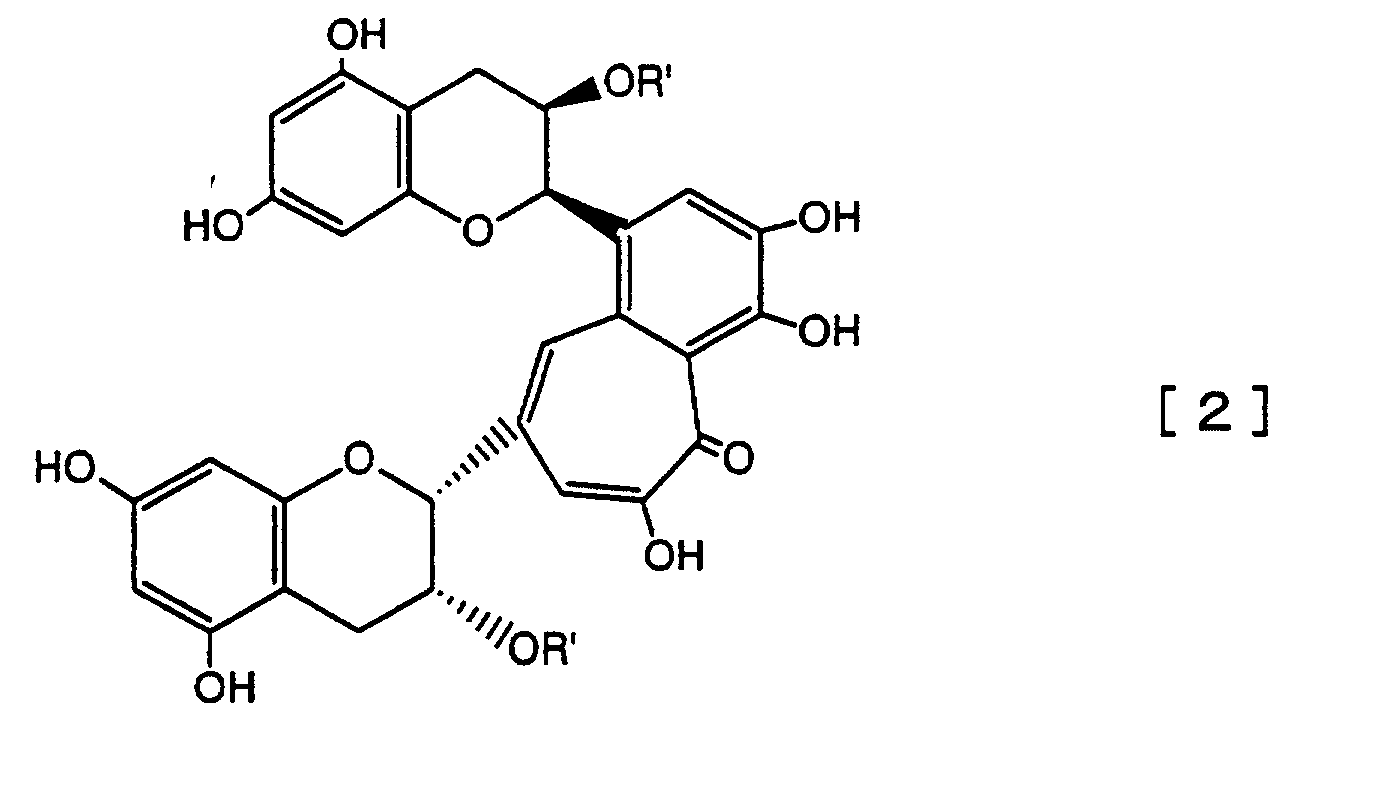
- the invention of the present application sixthly provides the neutralizing agent for toxins produced by Clostridium microorganisms, wherein the thearubigin in the fifth invention is a type of oxidative polymer of theaflavin represented by the following chemical formula [2] (wherein R' is a hydrogen atom or galloyl group) with a structure of the following formula [3] (wherein R is a hydrogen atom or galloyl group).
- the invention of the present application seventhly provides a pharmaceutical comprising any of the above neutralizing agent for toxins produced by Clostridium microorganisms, and eighthly, a food or drink comprising any one of the above the neutralizing agent for toxins produced by Clostridium microorganisms as an additive.
- Fig.1 is a diagram showing the reaction of a motoneuronal skeletal muscle system infected by Clostridium botulinum to electric stimulation.
- IT represents muscle contraction against electric stimulation of the nerve trunk
- DT represents muscle contraction on direct electric stimulation of the skeletal muscle system
- a represents the system to which botulinum neurotoxin (15 ⁇ l of a solution BoNT/A 1 mg/ml was added to a 20 ml test tube to make a solution of 1.5 nM) was added
- b represents the system to which a mixture of botulinum neurotoxin and thearubigin (15 ⁇ l of a solution of BoNT/A 1 mg/ml) was added
- c represents the system to which only thearubigin (10 ⁇ l of the extract solution) was added.
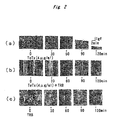
- Fig.2 is a diagram showing the reaction of nerve trunk of the motoneuronal skeletal muscle system to electric stimulation in a test tube to which tetanus toxin (330 ⁇ l of a solution of TeTx 1 mg/ml was added to a 20 ml test tube to make a solution of 4 ⁇ g/ml) was added.
- tetanus toxin 330 ⁇ l of a solution of TeTx 1 mg/ml was added to a 20 ml test tube to make a solution of 4 ⁇ g/ml
- a represents the system to which tetanus toxin was added
- b represents the system to which a mixture of tetanus toxin and thearubigin (330 ⁇ l of a solution of TeTx 1 mg/ml) and thearubigin (10 ⁇ l of the extract solution) were added
- c represents the system to which only thearubigin (10 ⁇ l of the extract solution) was added.
- the present inventors noted that black tea weakens the neurotoxin of Clostridium botulinum, and found through extensive research that thearubigin, the brown-colored pigment contained in tea leaves, has a function of neutralizing the toxin produced by Clostridium botulinum, and through further examination of these findings, developed the present invention.
- the neutralizing agent for the toxins of Clostridium microorganisms of the invention of the present application comprises thearubigin as its effective ingredient.
- the effective ingredient, thearubigin has been reported as one type of brown-colored pigment contained in black tea and the like. It has also been reported as an oxidative polymer of theaflavin, the compound [1] described earlier.
- Theaflavin and thearubigin are said to be formed through the oxidation of catechins in tea leaves by polyphenol oxydase, and thearubigin is considered to be a polymer resulting from such oxidation.
- R is a galloyl group
- Katiyar et al. Korean, S.K. and Mukhtar, H., Caroinogenesis 18, 1911-16 (1997).
- the galloyl group is a substituent represented by the following chemical formula [4].
- the neutralizing agent for the toxins of Clostridium microorganisms of the present invention contains the above described thearubigin as an effective ingredient, and is more specifically exemplified as the water or hot-water extract of tea leaves, especially tea leaves containing the brown-colored pigments such as black tea.
- the extract is preferably that of fermented tea obtained by increasing the enzymatic activity and oxidizing catechins during the processing of tea leaves. Further, black tea is most preferable as such fermented tea.
- the neutralizing agent for the toxins of Clostridium microorganisms of the present invention may be the extract from tea leaves such as roasted green tea obtained by the secondary processing of non-fermented tea.
- Extraction with water or hot water is carried out, for example, using water of an ambient temperature (approximately 10-30°C) or hot water (above 30°C to boiling) . More effectively, extraction is carried out using hot water of 60oC or above.
- the extracted aqueous phase may further be extracted using alcohol following washing with organic solvents such as esters.
- alcohols such as butanol, isopropanol, isobutanol, hexanol, in particular butanol, are exemplified as suitable neutralizing agents.
- the neutralizing agent for the toxins of Clostridium microorganisms of the presentinvention is effective for any Clostridium microorganism, it is especially effective in neutralizing the neurotoxins produced by Clostridium botulinum and Clostridium tetani.
- neutralization used herein refers to the inhibition, reduction, and annihilation of any negative function of the toxins produced by microorganisms belonging to the genus Clostridium .
- the neutralizing agent for the toxins of Clostridium microorganisms of the present invention can be used, for example, to detoxify the Clostridium microorganism toxins in foods contaminated with Clostridium mocroorganisms, as medicine such as a cleaning agent or disinfectant, which may be applied on wounds infected by Clostridium microorganisms and its toxins by spreading, spraying or wiping.
- the neutralizing agent for the toxins of Clostridium microorganisms of the present invention may be added during the production process of various foods, and be used as a preventive agent for food poisoning caused by Clostridium microorganism toxins.
- examples of such foods are canned foods, bottled foods, ham, sausage, kamaboko (fish sausage), izushi , and honey, but are not limited to these.
- the addition of this neutralizing agent may be done at any step of food production including processing and wrapping.
- the neutralizing agent of the present invention is a natural pigment extracted from tea leaves, the neutralizing agent of the present invention is harmless to humans and the environment; therefore, it is highly safe and may preferably be used as a pharmaceutical or food additive.
- the thearubigin obtained was dissolved in 3 ml of water to prepare a TRB solution.
- Live specimens of the motoneuronal skeletal muscle system were prepared, and contraction of the skeletal muscle in reaction to electrostimulation applied to the nerve trunk in a test tube, as well as similar contraction of the skeletal muscle in reaction to a direct electrostimulation applied to the skeletal muscle, were confirmed.
- BoNT Botulinum neurotoxin
- Fig. 1 shows the reaction of the motoneuronal skeletal muscle system to electrostimulation.
- IT muscle contraction by electrostimulation of the nerve trunk
- DT muscle contraction when electrostimulation was directly applied to the skeletal muscle.
- Muscle contraction reaction to direct electrostimulation of the skeletal muscle was not inhibited by BoNT, but muscle contraction reaction to electrostimulation of the nerve trunk was found to be inhibited (Fig. 1a).
- thearubigin neutralizes botulinum neurotoxin. Also, thearubigin alone was found to show no effect on the contraction of the motoneuronal skeletal muscle systems.
- TeTx tetanus toxin
- TeTX TeTX
- TRB TRB alone
- Fig. 2 shows the reaction of the motoneuronal skeletal muscle system to electrostimulation. Muscle contraction due to electrostimulation of the nerve trunk was inhibited when TeTx was added (Fig.2a), while muscle contraction was found to occur as usual when TeTX and TRB were added (Fig. 2b). Further, muscle contraction against electrostimulation was not inhibited by TRB alone either (Fig. 2c).
- Table 1 shows the botulinum neurotoxin neutralization effect of each component.
- BoNT neutralization effects of tea-leaf extract ingredients Extracted Component Effect Example 1, 2 Thearubigin + 3 Black Tea + 4 Roasted Green Tea + Comparative Example 1 Green Tea - 2 Tannic Acid - 3 Catechin - 4 Theaflavin - +: Effective in neutralization ⁇ : Ineffective in neutralization
- Mixed TRB the solution extracted above
- Table 2 The results are shown in Table 2.
- the present invention provides a neutralizing agent for toxins of Clostridium microorganisms, which can neutralize toxins of Clostridium microorganisms such as Clostridium botulinum and Clostridium tetani, is highly safe against living organisms and the environment, and which can be used easily.
Landscapes
- Health & Medical Sciences (AREA)
- Life Sciences & Earth Sciences (AREA)
- Chemical & Material Sciences (AREA)
- Veterinary Medicine (AREA)
- Public Health (AREA)
- Medicinal Chemistry (AREA)
- General Health & Medical Sciences (AREA)
- Animal Behavior & Ethology (AREA)
- Pharmacology & Pharmacy (AREA)
- Natural Medicines & Medicinal Plants (AREA)
- Engineering & Computer Science (AREA)
- Organic Chemistry (AREA)
- Epidemiology (AREA)
- Polymers & Plastics (AREA)
- Food Science & Technology (AREA)
- Mycology (AREA)
- Botany (AREA)
- Microbiology (AREA)
- Nutrition Science (AREA)
- Biotechnology (AREA)
- Zoology (AREA)
- Medical Informatics (AREA)
- Molecular Biology (AREA)
- Chemical Kinetics & Catalysis (AREA)
- Wood Science & Technology (AREA)
- Nuclear Medicine, Radiotherapy & Molecular Imaging (AREA)
- Alternative & Traditional Medicine (AREA)
- General Chemical & Material Sciences (AREA)
- Oncology (AREA)
- Communicable Diseases (AREA)
- Toxicology (AREA)
- Pharmaceuticals Containing Other Organic And Inorganic Compounds (AREA)
- Medicines Containing Plant Substances (AREA)
- Medicines Containing Material From Animals Or Micro-Organisms (AREA)
Abstract
Description
- The invention of the present application relates to a neutralizing agent for the toxin of Clostridium microorganisms . More specifically, the invention of the present application relates to a neutralizing agent for the toxin of Clostridium microorganisms, and pharmaceuticals or foods and drinks containing same.
- Tea, which is regularly consumed all over the world, has been known to have various effects from old-times. In line with the recent health-boom, the capabilities of tea has attracted a great deal of attention and active studies are currently underway in such fields as chemistry and medicine.
- Although there are various types of tea, including green tea, oolong tea, and black tea, tea leaves are generally obtained from Camellia sinensis (L) O. Kuntze, a perpetual evergreen tree belonging to the genus theaceous camellia, and are classified into various names according to their processing methods.
- Tea leaves contain various ingredients, including organic substances such as proteins, free amino acids, caffeine, alkaloids, polyphenols, carbohydrates, organic acids, fat, pigments such as chlorophyll and carotinoids, and vitamins, as well as soluble and insoluble inorganic substances. These ingredients vary greatly depending on the processing methods of the tea leaves, and ingredients that are extracted by hot water or contained in the aroma are even more diverse.
- Tea contains catechin, which is a type of polyphenol, and enzymes such as polyphenol oxidase that oxidize the catechins. Green tea is obtained when the enzymes are deactivated by heating in the early stage of the processing of tea leaves, while black tea is obtained by allowing the enzymes to fully oxidize the catechins.
- Green tea is referred to as non-fermented tea, and is obtained by first heating the tea leaves by steam or panning to deactivate the enzymes such as polyphenol oxidase, and then drying them. The main components of green tea are amino acids such as theanine, glutamic acid, and aspartic acid; catechins such as epigallocatechin gallate, epicatechin gallate, epigallocatechin, and epicatechin; caffeine; sugars such as sucrose, glucose, and fructose; and chlorophyll, which is the source of the green color of tea leaves, and the color, flavor, and aroma of green tea varies depending on the balance of these components. The components comprising the aroma of green tea include various compounds such as dimethylsulfide, phenylethylalcohol, benzylalcohol, β-ionone, nerolidol, 4-vinylphenol, pyrazines, and pyrrols, and constitute its fragrance.
- On the other hand, black tea is referred to as fermented tea, and is obtained by spreading out the tea leaves and evaporating water at a low temperature to activate the enzymes and soften the leaves, followed by addition of pressure to expose components such as catechins to air for the promotion of oxidation. The unique red-brown color of black tea is due to pigments such as theaflavin, which is formed by the oxidation of catechins such as epicatechin and epigallocatechin by polyphenol oxidase; thearubigin, which is a polymer formed by the further oxidation of theaflavin; and high molecular-weight oxidation polymers formed by even further oxidation polymerization of thearubigin.
- Although raw leaves contain only a small amount of alcohol, processing significantly increases the amount of linallol, geraniol, methyl salicylate, ionone compounds, lactones, trance-2-hexenal, a heat-aroma component formed from sugars and amino acids, and the like.
- In addition to these, there are various other types of tea, such as roasted green tea and red tea, which are obtained by the secondary processing of green tea; oolong tea, which is known as half-fermented tea; and those blended with various plants. Each contain various components, as well as a variety of components that are extracted with hot water, and different aromatic components; the effect of each component have received attention and are being actively investigated.
- In particular, it has recently been scientifically proven that polyphenols such as catechin, tannin, and tannic acid have various effects such as antioxidant effect, antibacterial effect, inhibitory effects against the elevation of cholesterol, lipids, blood pressure, and blood sugar, and antitumor effect, and various products containing catechins and tannin, such as health foods, drinks, medicines, deodorants, and antibacterial agents, are being searched and developed.
- However, except for catechin and tannin, very little is known about the large number of components found in tea. Especially regarding the antibacterial effects, it is unclear as to what kind of component shows effect against which particular microorganism or toxin. Therefore, its understanding has been limited to the fact that green tea shows the highest antibacterial effect, and specific components that show neutralizing effect against specific bacteria is yet to be known.
- Among the various microorganisms that are hazardous to the human body, Clostridium botulinum and Clostridium tetani are both anaerobic bacteria abundant in soil that belong to the genus Clostridium, and the toxins produced by them are known to be similar with almost identical molecular weights. The toxins of these Clostridium microorganisms cause paralyzing effects on the motoneuronal skeletal muscle system with a very high death rate, and preventing infection is a necessity.
- Clostridium botulinum forms spores particularly resistant to heat and disinfectants, grows in, for instance, food, at 3-40°C, pH 4.5, without oxygen, in the presence of water and nutrients, and produces toxin. The latent period of the bacteria is 12-36 hours, but the toxin produced is a potential neurotoxin that, if ingested, causes exhaustion, dizziness, and gastrointestinal symptoms such as nausea and vomiting, which then gradually leads to nervous disorders such as headache, visual impairment, difficulty in swallowing, and difficulty in walking, and if serious, eventually leads to dyspnea and results in death.
- Although many cases of botulism in Japan are caused by fish "izushi," cases caused by imported bottled or canned foods, ham, sausage, and the like have often occurred in recent years, and botulism antitoxin is usually administered as a remedy.
- On the other hand, Clostridium tetani is a gram-positive anaerobe that exists not only in soil and water but also in human intestinal tracts. However, when entered from a contaminated external wound, such as a traffic accident injury or punctures caused by bamboo, pieces of wood, or old nails, a toxin is produced and released into the blood stream. The latent period of Clostridium tetani is normally 1-2 weeks, and when the toxin is produced, it initially causes symptoms of neural convulsion such as trismus and canine laugh, gradually leading to convulsion and ankylosis of all body muscles, and causes dyspnea, resulting in death. The death rate of infection by this toxin is as high as 70-80%.
- To prevent tetanus, vaccination is the most effective and is enforced. Althoughmixed vaccines are also used today, adults are generally vaccinated with tetanus toxoid. However, because additional vaccination is required, and if infected more than five years after the additional vaccination, subcutaneous injection of tetanus toxoid is also required, relatively few people are actually vaccinated for tetanus.
- Therefore, infection by such Clostridium microorganisms are often recognized only after symptoms caused by the toxins appear, thus exposing patients to highly dangerous conditions and requiring immediate medical treatment by a physician.
- Also, food poisoning is dreaded especially among food-processing businesses, and various methods of sterilization and disinfection are being studied and implemented. However, as described above, Clostridium botulinum loses its toxicity only after a long period of treatment at high-temperature, which may not be applicable for some types of food. Further, Clostridium botulinum prefers anaerobic conditions found in preserved foods such as bottled and canned preserves, making its prevention even more difficult.
- On the other hand, there is another problem in that although various neutralizing agents and disinfectants are being developed, most neutralizing agents and disinfectants that are highly effective against these toxins also tend to be harmful to the human body. In recent years, especially due to problems such as allergies, repulsion against food additives are spreading among the public, and foods with few or no additives are favored.
- Therefore, an easy and effective method of safely neutralizing or removing the Clostridium microorganisms and the deadly neurotoxins they produce have not been known.
- Hence, the invention of the present application has been developed in view of the facts described above, and the object of the present invention is to solve the problems of the conventional technologies and to provide a safe and convenient neutralizing agent that is effective against the toxins produced by Clostridium microorganisms using tea leaf-extracts as its effective component.
- In order to solve the problems of the conventional technologies, the following inventions are provided.
- In other words, the invention of the present application firstly provides a neutralizing agent for toxins produced by Clostridium microorganisms, comprising thearubigin as its effective component.
- Also, for the above-described first invention, the invention of the present application secondly provides the neutralizing agent for toxins produced by Clostridium microorganisms, wherein the thearubigin is a type of brown-colored pigment contained in tea leaves.
- For the first and second inventions described above, the invention of the present application provides, thirdly, the neutralizing agent for toxins produced by Clostridium microorganisms, wherein the thearubigin is a water or hot-water extract of tea leaves, and fourthly, the neutralizing agent for toxins produced by Clostridium microorganisms, wherein thearubigin is an alcohol extract of tea leaves obtained after extraction by water or hot water.
- Also, the invention of the present application fifthly provides the neutralizing agent for toxins produced by Clostridium microorganisms, wherein the thearubigin in the first to forth invention is a type of oxidative polymer of theaflavin represented by the following chemical formula [1](wherein R is a hydrogen atom or galloyl group).

- Further, the invention of the present application sixthly provides the neutralizing agent for toxins produced by Clostridium microorganisms, wherein the thearubigin in the fifth invention is a type of oxidative polymer of theaflavin represented by the following chemical formula [2](wherein R' is a hydrogen atom or galloyl group) with a structure of the following formula [3]
 (wherein R is a hydrogen atom or galloyl group).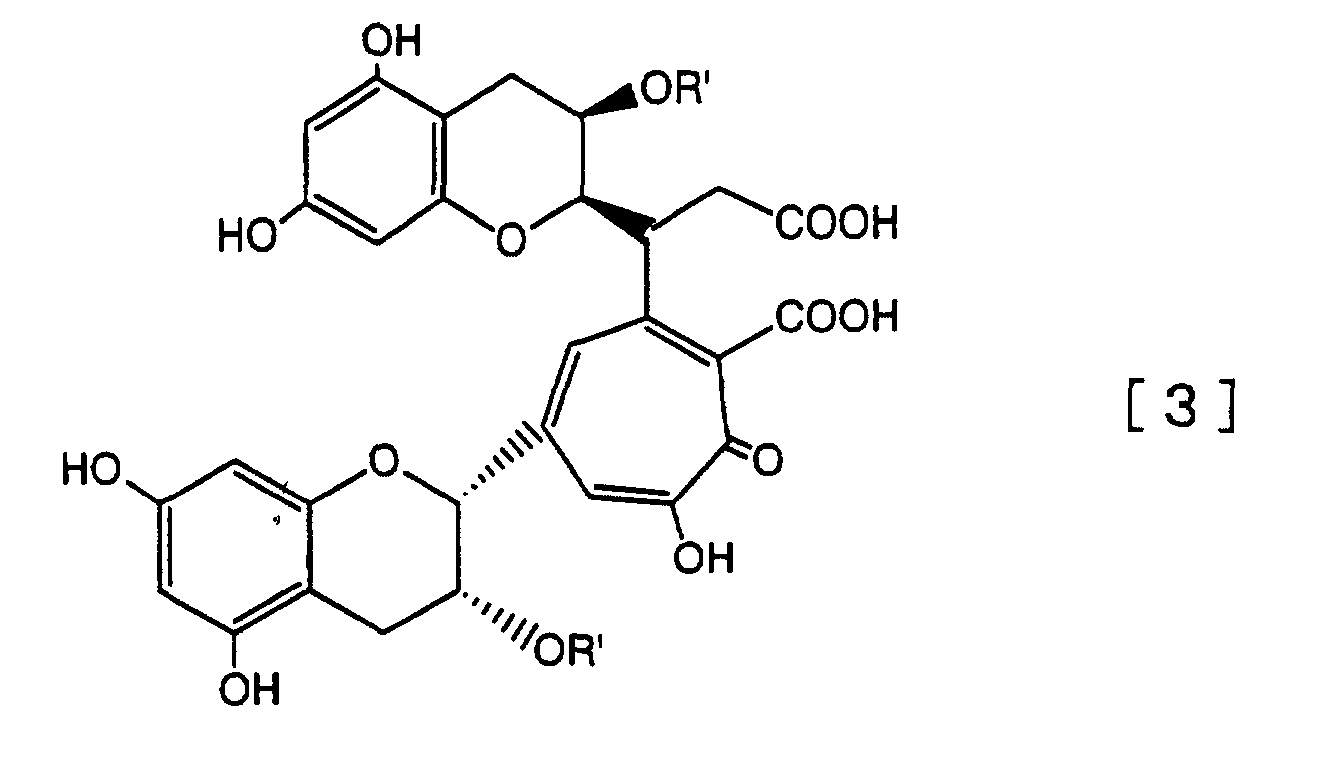
- Still further, the invention of the present application seventhly provides a pharmaceutical comprising any of the above neutralizing agent for toxins produced by Clostridium microorganisms, and eighthly, a food or drink comprising any one of the above the neutralizing agent for toxins produced by Clostridium microorganisms as an additive.
- Fig.1 is a diagram showing the reaction of a motoneuronal skeletal muscle system infected by Clostridium botulinum to electric stimulation. Here, IT represents muscle contraction against electric stimulation of the nerve trunk, DT represents muscle contraction on direct electric stimulation of the skeletal muscle system, a represents the system to which botulinum neurotoxin (15 µl of a solution BoNT/A 1 mg/ml was added to a 20 ml test tube to make a solution of 1.5 nM) was added, b represents the system to which a mixture of botulinum neurotoxin and thearubigin (15 µl of a solution of BoNT/A 1 mg/ml) was added, and c represents the system to which only thearubigin (10 µl of the extract solution) was added.
- Fig.2 is a diagram showing the reaction of nerve trunk of the motoneuronal skeletal muscle system to electric stimulation in a test tube to which tetanus toxin (330 µl of a solution of TeTx 1 mg/ml was added to a 20 ml test tube to make a solution of 4 µg/ml) was added. Here, a represents the system to which tetanus toxin was added, b represents the system to which a mixture of tetanus toxin and thearubigin (330 µl of a solution of TeTx 1 mg/ml) and thearubigin (10 µl of the extract solution) were added, and c represents the system to which only thearubigin (10 µl of the extract solution) was added.
- The present inventors noted that black tea weakens the neurotoxin of Clostridium botulinum, and found through extensive research that thearubigin, the brown-colored pigment contained in tea leaves, has a function of neutralizing the toxin produced by Clostridium botulinum, and through further examination of these findings, developed the present invention.
- As described earlier, the number of ingredients contained in tea leaves that are known today is enormous, but the neutralizing agent for the toxins of Clostridium microorganisms of the invention of the present application comprises thearubigin as its effective ingredient. Here, the effective ingredient, thearubigin, has been reported as one type of brown-colored pigment contained in black tea and the like. It has also been reported as an oxidative polymer of theaflavin, the compound [1] described earlier.
- Theaflavin and thearubigin are said to be formed through the oxidation of catechins in tea leaves by polyphenol oxydase, and thearubigin is considered to be a polymer resulting from such oxidation. Although the structure of thearubigin has not been completely clarified, a compound having the structure of the following chemical formula [3](wherein R is a galloyl group) has been proposed by Katiyar et al. (Katiyar, S.K. and Mukhtar, H., Caroinogenesis 18, 1911-16 (1997)). Here, the galloyl group is a substituent represented by the following chemical formula [4].


- The neutralizing agent for the toxins of Clostridium microorganisms of the present invention contains the above described thearubigin as an effective ingredient, and is more specifically exemplified as the water or hot-water extract of tea leaves, especially tea leaves containing the brown-colored pigments such as black tea. In this case, the extract is preferably that of fermented tea obtained by increasing the enzymatic activity and oxidizing catechins during the processing of tea leaves. Further, black tea is most preferable as such fermented tea. In addition, the neutralizing agent for the toxins of Clostridium microorganisms of the present invention may be the extract from tea leaves such as roasted green tea obtained by the secondary processing of non-fermented tea.
- Extraction with water or hot water is carried out, for example, using water of an ambient temperature (approximately 10-30°C) or hot water (above 30°C to boiling) . More effectively, extraction is carried out using hot water of 60ºC or above.
- If necessary, the extracted aqueous phase may further be extracted using alcohol following washing with organic solvents such as esters.
- More specifically, in the invention of the present application, as described in the following examples, after estraction by water or hot water, contents extracted by alcohol, preferably alcohols such as butanol, isopropanol, isobutanol, hexanol, in particular butanol, are exemplified as suitable neutralizing agents.
- Although the neutralizing agent for the toxins of Clostridium microorganisms of the presentinvention is effective for any Clostridium microorganism, it is especially effective in neutralizing the neurotoxins produced by Clostridium botulinum and Clostridium tetani. Incidentally, the term "neutralization" used herein refers to the inhibition, reduction, and annihilation of any negative function of the toxins produced by microorganisms belonging to the genus Clostridium.
- The neutralizing agent for the toxins of Clostridium microorganisms of the present invention can be used, for example, to detoxify the Clostridium microorganism toxins in foods contaminated with Clostridium mocroorganisms, as medicine such as a cleaning agent or disinfectant, which may be applied on wounds infected by Clostridium microorganisms and its toxins by spreading, spraying or wiping.
- Further, the neutralizing agent for the toxins of Clostridium microorganisms of the present invention may be added during the production process of various foods, and be used as a preventive agent for food poisoning caused by Clostridium microorganism toxins. Examples of such foods are canned foods, bottled foods, ham, sausage, kamaboko (fish sausage), izushi, and honey, but are not limited to these. Further, the addition of this neutralizing agent may be done at any step of food production including processing and wrapping.
- Since the thearubigin contained in the neutralizing agent for the Clostridium microorganism toxins of the present invention is a natural pigment extracted from tea leaves, the neutralizing agent of the present invention is harmless to humans and the environment; therefore, it is highly safe and may preferably be used as a pharmaceutical or food additive.
- The embodiments of the present invention is described in more detail by the following Examples, with reference to the attached drawings. It is needless to say, that the invention of the present application is not limited by the following examples, and that various details are available.
- To 12 g of black tea leaves, 90 ml of hot water (boiling water) was added and left for 2 minutes, after which it was filtrated through a Whatman No. 2 filter. To 40 ml of the extract obtained, 40 ml of chloroform was added, and after 3 minutes of vigorous stirring, the aqueous layer was separated from the organic layer. To 40 ml of the aqueous layer, 40 ml of ethyl acetate was added, and vigorously stirred for 3 minutes. Once again, the aqueous and organic layers were separated, and 1-butanol was added to 40 ml of the aqueous layer and vigorously stirred for an additional 3 minutes. The organic layer (1-butanol layer) alone was recovered and evaporated to dryness in a rotary evaporator to obtain the extract (thearubigin = TRB). The thearubigin obtained was dissolved in 3 ml of water to prepare a TRB solution.
- Live specimens of the motoneuronal skeletal muscle system were prepared, and contraction of the skeletal muscle in reaction to electrostimulation applied to the nerve trunk in a test tube, as well as similar contraction of the skeletal muscle in reaction to a direct electrostimulation applied to the skeletal muscle, were confirmed.
- Botulinum neurotoxin (BoNT), a mixture of BoNT and TRB, and TRB alone were separately added to test tubes containing the prepared live specimens of the motoneuronal skeletal muscle system.
- Fig. 1 shows the reaction of the motoneuronal skeletal muscle system to electrostimulation. (IT: muscle contraction by electrostimulation of the nerve trunk; DT: muscle contraction when electrostimulation was directly applied to the skeletal muscle.)
- Muscle contraction reaction to direct electrostimulation of the skeletal muscle was not inhibited by BoNT, but muscle contraction reaction to electrostimulation of the nerve trunk was found to be inhibited (Fig. 1a).
- On the other hand, the muscle contraction reaction to electrostimulation of the nerve trunk was not inhibited by the mixture of BoNT and TRB (Fig. 1b).
- Further, TRB alone did not affect the contraction of the skeletal mustle (Fig.1c).
- Therefore it was confirmed that thearubigin neutralizes botulinum neurotoxin. Also, thearubigin alone was found to show no effect on the contraction of the motoneuronal skeletal muscle systems.
- In a similar manner as in Example 1, tetanus toxin (TeTx), TeTX and TRB, and TRB alone were added respectively to live specimens of the motoneuronal skeletal muscle system, and reactions of the motoneuronal skeletal muscle system against electrostimulation were compared.
- Fig. 2 shows the reaction of the motoneuronal skeletal muscle system to electrostimulation. Muscle contraction due to electrostimulation of the nerve trunk was inhibited when TeTx was added (Fig.2a), while muscle contraction was found to occur as usual when TeTX and TRB were added (Fig. 2b). Further, muscle contraction against electrostimulation was not inhibited by TRB alone either (Fig. 2c).
- Therefore, it was confirmed that thearubigin exhibits a neutralization effect against tetanus toxin, as well.
- In a similar manner as in Examples 1 and 2, the muscle contraction reaction of the motoneuronal skeletal muscle system to electrostimulation was compared for samples with hot-water extracts of black tea (Example 3) and roasted green tea (Example 4) added with BoNT, and a sample with BoNT alone.
- Further, the muscle contraction reaction of the motoneuronal skeletal muscle system to electrostimulation was studied in a similar manner when green tea (Comparative Example 1), tannic acid (Comparative Example 2), catechin (Comparative Example 3), and theaflavin (Comparative Example 4) were added with BoNT, respectively.
- Table 1 shows the botulinum neurotoxin neutralization effect of each component.
BoNT neutralization effects of tea-leaf extract ingredients Extracted Component Effect Example 1, 2 Thearubigin + 3 Black Tea + 4 Roasted Green Tea + Comparative Example 1 Green Tea - 2 Tannic Acid - 3 Catechin - 4 Theaflavin - +: Effective in neutralization ―: Ineffective in neutralization - The systems to which black tea, roasted green tea, or thearubigin was added showed BoNT neutralizing effect, but green tea, tannic acid, catechin, and theaflavin showed no neutralizing effect. In particular, the BoNT neutralizing effect was high for the system to which black tea was added. This result indicates that black-tea extracts exhibit a high neutralizing effect for botulinum neurotoxin, and since extracts of black tea and roasted green tea that exhibit neutralizing effect contain, as at least one type of brown-colored pigment, thearubigins, it was suggested that these exhibit neutralizing effect for botulinum neurotoxin.
- A dose of 100 µl (=100 µg) of 1 mg/ml botulinum neurotoxin dissolved in 0.05 M acetate-0.2 M sodium chloride buffer solution (pH 6.0) were orally administered to each mouse. Mixed TRB (the solution extracted above) was orally administered alone at equal volume (1 times volume extract), twice the volume extract, or 4 times the volume extract, or as a mixture with BoNT (mixing ratio: 1, 2, and 4). The results are shown in Table 2.
Survival rate of mice with oral administration of BoNT and TRB Addition number of survivor/number of test TRB (1) 8/8 TRB (2) 8/8 TRB (4) 12/12 BoNT/A(1) 0/8 BoNTIB (1) 0/8 BoNT/E (1) 0/8 BoNT/A (1) + TRB (1) 0/8 BoNT/A (1) + TRB (2) 3/8 BoNT/A (1) + TRB (4) 8/8 BoNT/B (1) + TRB (4) 8/8 BoNT/E (1) + TRB (4) 8/8 BoNT : 100 µg/100 µl/individual TRB (n) : n × volume of Thearubigin BoNT : Botulinum neurotoxin /A,/B,/E : A, B, E type - All mice to which BoNT (A, B, and E types) was orally administered were killed. On the other hand, 100% of the mice to which mixtures of BoNT (A, B, and E types) and TRB (4 times volume BoNT) were orally administered survived.
- Since all mice to which BoNT (A type) and an equal volume of TRB were administered were killed, and 3/8 of the mice to which BoNT and twice as much TRB were administered survived, TRB was found to exhibit a BoNT neutralizing effect without fail when administered at approximately 4 times the volume of the toxin. On the other hand, all mice to which TRB alone was orally administered survived, indicating that TRB shows no toxicity at this dose range.
- As described above in detail, the present invention provides a neutralizing agent for toxins of Clostridium microorganisms, which can neutralize toxins of Clostridium microorganisms such as Clostridium botulinum and Clostridium tetani, is highly safe against living organisms and the environment, and which can be used easily.
Claims (8)
- A neutralizing agent for toxins produced by Clostridium microorganisms, comprising thearubigin as its effective component.
- The neutralizing agent for toxins produced by Clostridium microorganisms of Claim 1, wherein the thearubigin is at least one type of brown-colored pigment component of tea leaves.
- The neutralizing agent for toxins produced by Clostridium microorganisms of Claims 1 or 2, wherein the thearubigin is a water or hot-water extract of tea leaves.
- The neutralizing agent for toxins produced by Clostridium microorganisms of Claims 1 or 2, wherein thearubigin is an alcohol extract of tea leaves obtained after extraction by water or hot water.
- The neutralizing agent for toxins produced by Clostridium microorganisms of any one of Claims 1 to 4, wherein the thearubigin is a type of oxidative polymer of theaflavin represented by the following chemical formula [1](wherein R is a hydrogen atom or galloyl group).

- The neutralizing agent for toxins produced by Clostridium microorganisms of any one of Claims 1 to 5, wherein the thearubigin is a type of oxidative polymer of theaflavin represented by the following chemical formula [2](wherein R' is a hydrogen atom or galloyl group) with a structure of the following formula [3]
 (wherein R is a hydrogen atom or galloyl group).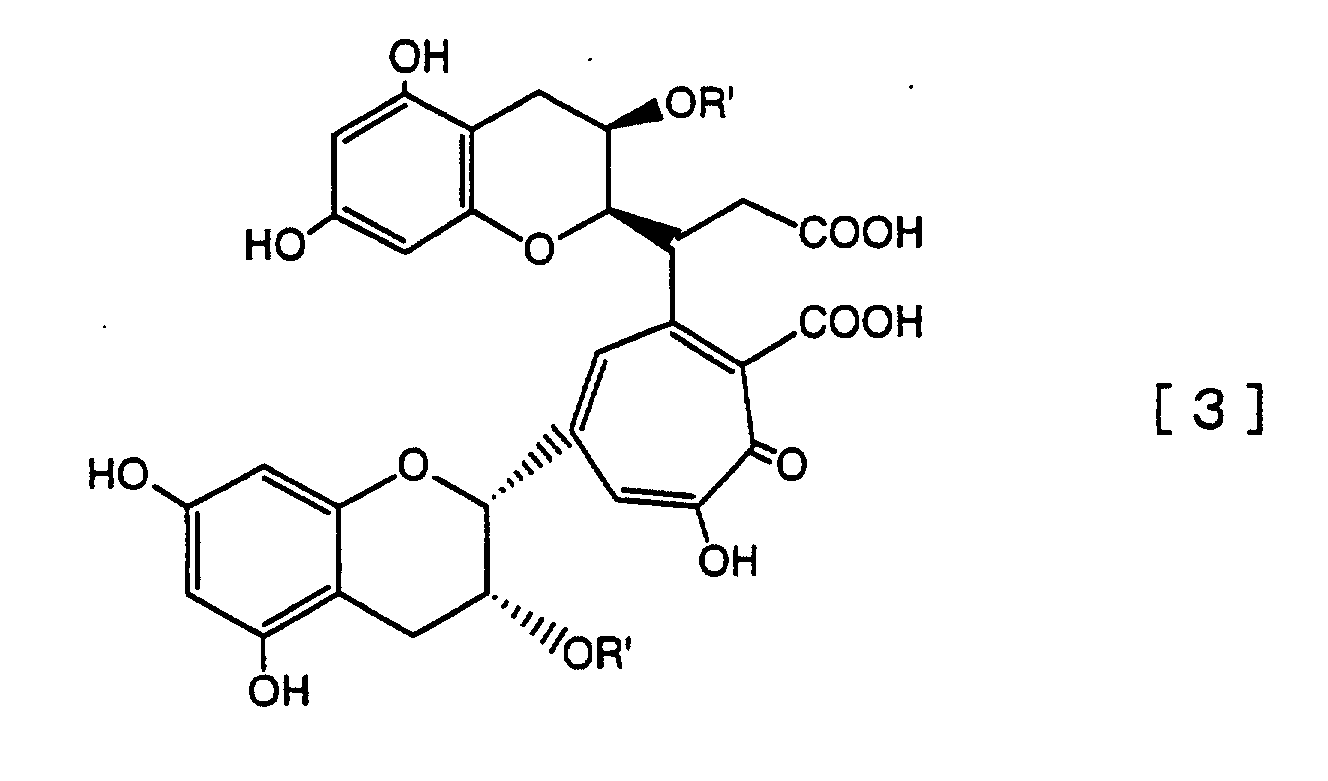
- A pharmaceutical comprising the neutralizing agent for toxins produced by Clostridium microorganisms of any one of Claims 1 to 6.
- A food or drink comprising, as an additive, the neutralizing agent for toxins produced by Clostridium microorganisms of any one of Claims 1 to 6.
Applications Claiming Priority (3)
| Application Number | Priority Date | Filing Date | Title |
|---|---|---|---|
| JP33882999 | 1999-11-29 | ||
| JP33882999 | 1999-11-29 | ||
| PCT/JP2000/008426 WO2001040213A1 (en) | 1999-11-29 | 2000-11-29 | Neutralizing agent for toxin of microorganism belonging to the genus clostridium |
Publications (3)
| Publication Number | Publication Date |
|---|---|
| EP1236724A1 true EP1236724A1 (en) | 2002-09-04 |
| EP1236724A4 EP1236724A4 (en) | 2003-04-02 |
| EP1236724B1 EP1236724B1 (en) | 2005-08-17 |
Family
ID=18321831
Family Applications (1)
| Application Number | Title | Priority Date | Filing Date |
|---|---|---|---|
| EP00979015A Expired - Lifetime EP1236724B1 (en) | 1999-11-29 | 2000-11-29 | Neutralizing agent for toxin of microorganism belonging to the genus clostridium |
Country Status (7)
| Country | Link |
|---|---|
| US (3) | US20030069396A1 (en) |
| EP (1) | EP1236724B1 (en) |
| KR (1) | KR100509288B1 (en) |
| CN (1) | CN1196693C (en) |
| AU (1) | AU1648901A (en) |
| DE (1) | DE60022083T2 (en) |
| WO (1) | WO2001040213A1 (en) |
Cited By (2)
| Publication number | Priority date | Publication date | Assignee | Title |
|---|---|---|---|---|
| EP1417966A1 (en) * | 2002-11-07 | 2004-05-12 | Ito En, Ltd. | Flavonol glycosides as neutralizing agent for clostridium bacterial neurotoxins and preparation method thereof |
| WO2004046334A3 (en) * | 2002-11-19 | 2004-07-15 | Univ Michigan State | Antioxidant and antimicrobial agents and methods of use thereof |
Families Citing this family (4)
| Publication number | Priority date | Publication date | Assignee | Title |
|---|---|---|---|---|
| US7829132B2 (en) * | 2004-11-03 | 2010-11-09 | Unilever Bestfoods, North America Division Of Conopco, Inc. | Consumable tea composition with antioxidants |
| EP2432485B1 (en) * | 2009-05-19 | 2013-07-31 | Unilever PLC | Prebiotic composition |
| KR101651370B1 (en) | 2015-08-26 | 2016-08-26 | 한국항공우주연구원 | Drive control method for thruster and computer readable recording medium storing program performing the method |
| KR102397708B1 (en) * | 2020-04-29 | 2022-05-16 | 한국화학연구원 | Botulinum toxin pharmaceutical composition comprising tannic acid |
Family Cites Families (7)
| Publication number | Priority date | Publication date | Assignee | Title |
|---|---|---|---|---|
| US4748033A (en) * | 1986-05-07 | 1988-05-31 | The Procter & Gamble Company | Tea concentrate having freeze thaw stability and enhanced cold water solubility |
| JPH02276562A (en) * | 1989-04-19 | 1990-11-13 | Mitsui Norin Kk | Antimicrobial agent |
| EP0397914A1 (en) * | 1989-05-17 | 1990-11-22 | Mitsui Norin Co., Ltd. | Antitoxins for bacterial exotoxins |
| US5118514A (en) * | 1990-10-19 | 1992-06-02 | Nestec S.A. | Browning composition |
| JP2718653B2 (en) * | 1995-01-31 | 1998-02-25 | 日本配合飼料株式会社 | New egg and egg quality improvement method |
| US5532012A (en) * | 1995-06-02 | 1996-07-02 | Thomas J. Lipton Co., Division Of Conopco, Inc. | Process for preparation of purified tea components using preconcentration by cream separation and solubilization followed by medium pressure chromatography and/or preparative HPLC |
| WO1999015033A1 (en) * | 1997-09-24 | 1999-04-01 | Richards Geoffrey N | Composition and method for reducing pathogenic bacteria in food products |
-
2000
- 2000-11-29 AU AU16489/01A patent/AU1648901A/en not_active Abandoned
- 2000-11-29 DE DE60022083T patent/DE60022083T2/en not_active Expired - Fee Related
- 2000-11-29 CN CNB008164436A patent/CN1196693C/en not_active Expired - Fee Related
- 2000-11-29 EP EP00979015A patent/EP1236724B1/en not_active Expired - Lifetime
- 2000-11-29 KR KR10-2002-7005939A patent/KR100509288B1/en not_active Expired - Fee Related
- 2000-11-29 US US10/148,412 patent/US20030069396A1/en not_active Abandoned
- 2000-11-29 WO PCT/JP2000/008426 patent/WO2001040213A1/en not_active Ceased
-
2004
- 2004-09-29 US US10/951,777 patent/US20050064050A1/en not_active Abandoned
-
2006
- 2006-08-28 US US11/510,799 patent/US20060292247A1/en not_active Abandoned
Non-Patent Citations (2)
| Title |
|---|
| DATABASE WPI Section Ch, Week 199101 Derwent Publications Ltd., London, GB; Class B05, AN 1991-002162 XP002230091 & JP 02 276562 A (MITSUI NORIN KK), 13 November 1990 (1990-11-13) * |
| See also references of WO0140213A1 * |
Cited By (3)
| Publication number | Priority date | Publication date | Assignee | Title |
|---|---|---|---|---|
| EP1417966A1 (en) * | 2002-11-07 | 2004-05-12 | Ito En, Ltd. | Flavonol glycosides as neutralizing agent for clostridium bacterial neurotoxins and preparation method thereof |
| US6987126B2 (en) | 2002-11-07 | 2006-01-17 | Ito En, Ltd. | Neutralizing agent for clostridium bacterial neurotoxins and preparation method thereof |
| WO2004046334A3 (en) * | 2002-11-19 | 2004-07-15 | Univ Michigan State | Antioxidant and antimicrobial agents and methods of use thereof |
Also Published As
| Publication number | Publication date |
|---|---|
| CN1402718A (en) | 2003-03-12 |
| EP1236724A4 (en) | 2003-04-02 |
| CN1196693C (en) | 2005-04-13 |
| DE60022083D1 (en) | 2005-09-22 |
| EP1236724B1 (en) | 2005-08-17 |
| DE60022083T2 (en) | 2006-03-30 |
| AU1648901A (en) | 2001-06-12 |
| US20060292247A1 (en) | 2006-12-28 |
| KR100509288B1 (en) | 2005-08-22 |
| KR20030019299A (en) | 2003-03-06 |
| US20030069396A1 (en) | 2003-04-10 |
| WO2001040213A1 (en) | 2001-06-07 |
| US20050064050A1 (en) | 2005-03-24 |
Similar Documents
| Publication | Publication Date | Title |
|---|---|---|
| JP4201898B2 (en) | Antibacterial preparation | |
| EP1236724B1 (en) | Neutralizing agent for toxin of microorganism belonging to the genus clostridium | |
| KR102243591B1 (en) | Antimicrobial composition comprising the extract of rodgersia podophylla | |
| JP6239057B2 (en) | Verotoxin deactivator | |
| US20030147930A1 (en) | Antibiotic, functional cosmetic and functional food containing levulinic acid and their derivatives | |
| Badr et al. | Antimicrobial effect of natural products against bacteria, fungi, and yeasts | |
| JP2010526125A (en) | New use of hibiscus, especially pharmaceutical use | |
| KR102252009B1 (en) | Antiviral or antibacterial composition containing extracts of Torreya nucifera leaf | |
| WO2023213550A1 (en) | Method of preventing and/or inhibiting the outgrowth, sporulation, germination or toxin formation of clostridium | |
| EP1374884A1 (en) | Proteotoxin neutralizer | |
| KR100976927B1 (en) | Antimicrobial Composition for Salmonella Containing Ciprofloxacin, an Existing Antibiotic, | |
| KR100584223B1 (en) | Vaginal cleaning composition comprising green tea extract | |
| JP2562355B2 (en) | Antibacterial agent for plant pathogenic bacteria | |
| JPWO2001040213A1 (en) | Neutralizers for Clostridial toxins | |
| TWI279231B (en) | Neutralization agent of vacuolization toxin | |
| CN108472283A (en) | Anti- norovirus composition and its utilization | |
| JP3245307B2 (en) | Antibacterial agent | |
| KR102074558B1 (en) | ANTIBACTERAL COMPOSITION AGAINST PATHOGENIC BACTERIA COMPRISING EXTRACT OF Forsythia suspensa | |
| KR100512098B1 (en) | Antibiotic, cosmetic and food containing levulinic acid and their derivatives | |
| JP2846657B2 (en) | Antitoxin for botulinum exotoxin | |
| KR20020072486A (en) | Yoghurt formular to inhibit Helicobacter pylori growth in gastrointestinal tract | |
| JP2001114687A (en) | Anticancer drug | |
| KR20180063597A (en) | Composition for inhibiting a growth of Helicobacter Pylori | |
| Tao | Antimicrobial Activity of Tea Products | |
| KR20240079040A (en) | Composition containing the extract of mugwort pellet with exosome and the extract of thyme pellet with exosome and use thereof |
Legal Events
| Date | Code | Title | Description |
|---|---|---|---|
| PUAI | Public reference made under article 153(3) epc to a published international application that has entered the european phase |
Free format text: ORIGINAL CODE: 0009012 |
|
| 17P | Request for examination filed |
Effective date: 20020626 |
|
| AK | Designated contracting states |
Kind code of ref document: A1 Designated state(s): AT BE CH CY DE DK ES FI FR GB GR IE IT LI LU MC NL PT SE TR |
|
| A4 | Supplementary search report drawn up and despatched |
Effective date: 20030217 |
|
| RBV | Designated contracting states (corrected) |
Designated state(s): CH DE FR LI |
|
| 17Q | First examination report despatched |
Effective date: 20040712 |
|
| RAP1 | Party data changed (applicant data changed or rights of an application transferred) |
Owner name: JAPAN SCIENCE AND TECHNOLOGY AGENCY |
|
| GRAP | Despatch of communication of intention to grant a patent |
Free format text: ORIGINAL CODE: EPIDOSNIGR1 |
|
| RTI1 | Title (correction) |
Free format text: NEUTRALIZING AGENT FOR TOXIN OF MICROORGANISM BELONGING TO THE GENUS CLOSTRIDIUM |
|
| GRAS | Grant fee paid |
Free format text: ORIGINAL CODE: EPIDOSNIGR3 |
|
| GRAA | (expected) grant |
Free format text: ORIGINAL CODE: 0009210 |
|
| AK | Designated contracting states |
Kind code of ref document: B1 Designated state(s): CH DE FR LI |
|
| REG | Reference to a national code |
Ref country code: CH Ref legal event code: EP |
|
| REF | Corresponds to: |
Ref document number: 60022083 Country of ref document: DE Date of ref document: 20050922 Kind code of ref document: P |
|
| REG | Reference to a national code |
Ref country code: CH Ref legal event code: NV Representative=s name: A. BRAUN, BRAUN, HERITIER, ESCHMANN AG PATENTANWAE |
|
| ET | Fr: translation filed | ||
| PLBE | No opposition filed within time limit |
Free format text: ORIGINAL CODE: 0009261 |
|
| STAA | Information on the status of an ep patent application or granted ep patent |
Free format text: STATUS: NO OPPOSITION FILED WITHIN TIME LIMIT |
|
| 26N | No opposition filed |
Effective date: 20060518 |
|
| PGFP | Annual fee paid to national office [announced via postgrant information from national office to epo] |
Ref country code: CH Payment date: 20061114 Year of fee payment: 7 |
|
| PGFP | Annual fee paid to national office [announced via postgrant information from national office to epo] |
Ref country code: DE Payment date: 20061124 Year of fee payment: 7 |
|
| REG | Reference to a national code |
Ref country code: CH Ref legal event code: PFA Owner name: JAPAN SCIENCE AND TECHNOLOGY AGENCY Free format text: JAPAN SCIENCE AND TECHNOLOGY AGENCY#1-8, HONCHO 4-CHOME#KAWAGUCHI-SHI, SAITAMA 332-0012 (JP) -TRANSFER TO- JAPAN SCIENCE AND TECHNOLOGY AGENCY#1-8, HONCHO 4-CHOME#KAWAGUCHI-SHI, SAITAMA 332-0012 (JP) |
|
| PG25 | Lapsed in a contracting state [announced via postgrant information from national office to epo] |
Ref country code: LI Free format text: LAPSE BECAUSE OF NON-PAYMENT OF DUE FEES Effective date: 20071130 Ref country code: CH Free format text: LAPSE BECAUSE OF NON-PAYMENT OF DUE FEES Effective date: 20071130 |
|
| REG | Reference to a national code |
Ref country code: CH Ref legal event code: PL |
|
| PG25 | Lapsed in a contracting state [announced via postgrant information from national office to epo] |
Ref country code: DE Free format text: LAPSE BECAUSE OF NON-PAYMENT OF DUE FEES Effective date: 20080603 |
|
| PGFP | Annual fee paid to national office [announced via postgrant information from national office to epo] |
Ref country code: FR Payment date: 20071130 Year of fee payment: 8 |
|
| REG | Reference to a national code |
Ref country code: FR Ref legal event code: ST Effective date: 20111209 |
|
| PG25 | Lapsed in a contracting state [announced via postgrant information from national office to epo] |
Ref country code: FR Free format text: LAPSE BECAUSE OF NON-PAYMENT OF DUE FEES Effective date: 20071130 |