EP1233338A2 - Verfahren zum Transformieren von Predikatbedingter Ausführung zu statischer Spekulation - Google Patents
Verfahren zum Transformieren von Predikatbedingter Ausführung zu statischer Spekulation Download PDFInfo
- Publication number
- EP1233338A2 EP1233338A2 EP02100114A EP02100114A EP1233338A2 EP 1233338 A2 EP1233338 A2 EP 1233338A2 EP 02100114 A EP02100114 A EP 02100114A EP 02100114 A EP02100114 A EP 02100114A EP 1233338 A2 EP1233338 A2 EP 1233338A2
- Authority
- EP
- European Patent Office
- Prior art keywords
- instruction
- eliminating
- predicate
- predicates
- technique
- Prior art date
- Legal status (The legal status is an assumption and is not a legal conclusion. Google has not performed a legal analysis and makes no representation as to the accuracy of the status listed.)
- Withdrawn
Links
Images




Classifications
-
- G—PHYSICS
- G06—COMPUTING OR CALCULATING; COUNTING
- G06F—ELECTRIC DIGITAL DATA PROCESSING
- G06F8/00—Arrangements for software engineering
- G06F8/40—Transformation of program code
- G06F8/41—Compilation
- G06F8/44—Encoding
- G06F8/445—Exploiting fine grain parallelism, i.e. parallelism at instruction level
- G06F8/4451—Avoiding pipeline stalls
-
- G—PHYSICS
- G06—COMPUTING OR CALCULATING; COUNTING
- G06F—ELECTRIC DIGITAL DATA PROCESSING
- G06F9/00—Arrangements for program control, e.g. control units
- G06F9/06—Arrangements for program control, e.g. control units using stored programs, i.e. using an internal store of processing equipment to receive or retain programs
- G06F9/30—Arrangements for executing machine instructions, e.g. instruction decode
- G06F9/32—Address formation of the next instruction, e.g. by incrementing the instruction counter
- G06F9/322—Address formation of the next instruction, e.g. by incrementing the instruction counter for non-sequential address
- G06F9/323—Address formation of the next instruction, e.g. by incrementing the instruction counter for non-sequential address for indirect branch instructions
Definitions
- Computer processors comprise arithmetic, logic, and control circuitry that interpret and execute instructions from a computer program.
- a typical computer system includes a microprocessor (22) having, among other things, a CPU (24), a memory controller (26), and an on -chip cache memory (30).
- the microprocessor (22) is connected to external cache memory (32) and a main memory (34) that both hold data and program instructions to be executed by the microprocessor (22). Internally, the execution of program instructions is carried out by the CPU (24). Data needed by the CPU (24) to carry out an instruction are fetched by the memory controller (26) and loaded into internal registers (28) of the CPU (24).
- the fast on -chip cache memory (30) is searched. If the data is not found, then the external cache memory (32) and t he slow main memory (34) is searched in turn using the memory controller (26). Finding the data in the cache memory is referred to as a "hit.” Not finding the data in the cache memory is referred to as a "miss.”
- the time between when a CPU requests data and when the data is retrieved and available for use by the CPU is termed the "latency" of the system. If requested data is found in cache memory, i . e ., a data hit occurs, the requested data can be accessed at the speed of the cache and the latency of the system is reduced. If, on the other hand, the data is not found in cache, i . e ., a data miss occurs, and thus the data must be retrieved from the external cache or the main memory at increased latencies.
- the time one stage takes determines the cycle time, or its inverse, the clock rate of a processor. If a pipeline is kept full without disruptions (stalls) instructions can finish at the rate of one per cycle. In additi on, in a superscalar pipelined processors multiple instructions up to the issue width (called scalarity) can finish per cycle. Thus, by multiple issue and pipelining the peak performance is increased by a factor, the number of stages multiplied by the issu e width. During such peak large number of instructions close to this factor are executing concurrently. This concurrent execution of many instructions (said to be "in flight”) gives rise to the speedup achieved.
- Instruction fetching The process of retrieving instructions fro m memory is called instruction fetching.
- the rate at which instructions can be fetched and decoded is critical to processor performance.
- Instruction buffer is introduced between the fetch pipeline (frontend) and the execution pipeline (backend) so that stall in one end does not cause stall in the other end. Both pipelines consist of multiple stages achieving a high clock rate.
- Instructions are continuously processed by fetch pipeline and buffered into the instruction buffer. Simultaneously the execution pipeline processes instructions from the instruction buffer. A peak performance can result if the rate at which instructions enter the buffer (fetch rate) matches the rate at which instructions leave the buffer (e xecution rate).
- misprediction penalty As the depth of a pipeline is increased (to increase the clock rate), the branch misprediction penalty increases in p roportion causing a major performance degradation.
- Dynamic branch prediction relies only on run -time behavior of branch.
- Static and dynamic combined techniques involve compiler transformations (static) that selectively eliminate branching and reorganize code to improve performance.
- the static techniques may also resort to modified branch instructions with a pre diction hint bit, such as predict taken or predict not -taken.
- GSHARE prediction scheme One leading example of dynamic branch prediction technique is the so - called GSHARE prediction scheme.
- This technique exploits the property of branch, often observed, that branching is correlate d with its past behavior (at run time) and the behavior of earlier neighboring branches.
- the global history (behavior of a fixed number of neighboring branches) is combined with a specified number of low-order address bits of a branch to index a 2 -bit entry in a branch prediction table.
- the 2 -bit entry is used to distinguish four cases (states), taken and not-taken, each of weak and strong variety.
- the branch is either predicted taken or not -taken. Both the global h istory and the entry is updated according to the outcome.
- a trace is a sequence of instructions corresponding to an execution path across multiple branch instructions.
- a trace is thus characterized by its beginning point and a consecutive number of branch outcomes contained in it.
- the conventional instruction cache is replaced by the trace cache storing traces.
- the unit of prediction is not a basic block corresponding to a single branch but the entire trace involving multiple branch instructions. The fetch bandwidth is significantly increased thus by dealing with trace rather than with an individual branch .
- trace cache There are several additional benefits inherent in trace cache. The detrimental effect (taken-branch penalty) of taken branch is eliminated, since widely separated basic blocks appear contiguous in a trace. In addition, if one is dealing with complex instruction set architecture (CISC) the overhead of translating CISC instruction to internal micro -operation is reduced by storing trace cache of translated code. Repeated translations are avoided, if traces are found.
- CISC complex instruction set architecture
- resource conflicts and data dependencies contribute to pipeline stalls.
- Resource conflicts occur, since a given processor consists of a fixed number of pipelines in a particular mix in pipeline types. For example, a processor may consist of six pipelines in the mix of two integer, two floating-point, one memory, and one branch type, against which up to four independent instructions of matching type can be grouped and dispatched per cycle
- processor instructions are grouped in the program order, that is, the order of instructions determined by the compiler.
- a mismatch between resource requirement patterns of instructions and available pipelines causes break in grouping and idle cycles in pipelines.
- an instruction (consumer) dependent on earlier instruction (producer) can cause stall depending on the latency of producer instruction. For example, if the producer instruction is a memory read operation (load), then the stall cycles between produce consumer pair can be large including various cache miss penalties.
- Compilers perform instruction scheduling to rearrange instructions to minimize idle issue slots due to resource conflicts and hide the latency between producer and consumer pairs by filling with other independent instructions.
- compilers static techniques depend on the processor model and latencies assumed at compiler time.
- the processor rearranges instructions dynamically by issuing independent instructions regardless of the program order. For example, in the load-use stall mentioned above the load instruction can issue earlier than in the program order thus having a similar effect as static scheduling. All instructions, however, must retire in the same order as the program order in order to preserve program correctness, maintain precise exceptions, and to recover from mispredicted speculative execution. This reordering requirement increases hardware complexity of an out-of-order processor when compared to in-order kind.
- the dynamic technique has the advantage of dynamically adapting to changes in machine model and latencies without having to recompile. Speedup can result in processing binaries of old models. However, the size of window (instruction buffer) from which instructions are issued and the processing time limits the effectiveness. Since compiling techniques are without such limitation in size or processing time, one resorts to recompiling for higher performance in out - of-order as well as in -order processors.
- predicated execution predication, for short
- static speculation techniques More recently, in order to improve instruction -level parallelism beyond that attainable using traditional approaches, more aggressive techniques, namely, predicated execution (predication, for short) and static speculation techniques, have begun to be investigated.
- Predication is a form of conditional execution, in which instructions can be guarded with predicates.
- Predicates are special 1 -bit registers that can be set true (1) or false (0) using predicate setting instructions. During execution an instruction behaves normally when the guarding predicate has true value. When the guarding predicate has false value, the instruction has no semantic effect (that is, does not modify architectural state) as if the instruction is conditionally skipped.
- Predication allows for branch elimination leading to larger basic blocks and more effective instruction scheduling. Furthermore, branch misprediction penalties and taken-branch penalties are naturally avoided.
- if-conversion transforms a code including branch instructions into a predicated code without branching.
- predicated code instru ctions including the predicate setting instructions introduced, are guarded by appropriately assigned predicates.
- An optimal if-conversion technique must minimize the number of predicates in use as well as the number of predicate setting instructions introduced.
- if-conversion transforms control dependence caused by branching into data dependence through predicates. Since the control dependence is removed, the outcome is closer to pure data flow in its new form. This new form facilitates various instruction scheduling techniques giving rise to improved performance.
- the branch prediction is a dynamic form of control speculation.
- One is predicting the outcome of a branch and executing instructions speculating that the prediction is correct. As discussed earlier this technique incurs misprediction penalties when the prediction turns out to be incorrect.
- compiler moves instructions above "guarding" branch. In this form, one is executing instructions sp eculating that the results produced by speculated instructions are ultimately used. If the results are not used, the execution of "unused" instructions can cause performance penalties.
- the speculated load must be distinguished from ordinary load so that special actions can take place in order to detect incorrect speculation and to perform recovery on detecting an incorrect speculation.
- the recovery may include re-issuing the load to take into account the effect of store operations detected to be interfering. Such corrective actio ns incur performance penalties.
- an extensible rule -based technique for optimizing predicated code comprises if-converting an abstract internal representation; and mapping the if-conversion to a machine representation.
- the technique may further comprise eliminating predicates from the mapped if-conversion.
- the eliminating of predicates may comprise eliminating a predicate defining instruction by interpretation.
- the eliminating of predicates may comprise eliminating a guarding predicate of a safe instruction by speculation.
- the eliminating of predicates may comprise eliminating a guarding predicate of an unsafe instruction by compensation.
- the eliminating of predicates may comprise eliminating a guarding p redicate of an unsuitable instruction by reverse if-conversion.
- the technique may further comprise optimizing the machine representation.
- an extensible rule -based system for optimizing predicate code comprises a processor for executing instructions; and an instruction.
- the instruction is for defining predicates; testing a branch instruction; and assigning a defined predicate to the branch instruction based on a result of the test.
- an extensible rul e-based method for optimizing predicate code comprises defining a predicate; testing a branch instruction; and selectively assigning the defined predicate to the branch instruction based on a result of the test.
- an apparatus for optimizing predicate code comprises means for if-converting an abstract internal representation; and means for mapping the if-conversion to machine representation.
- the apparatus may further comprise means fo r eliminating predicates from the mapped if-conversion.
- the eliminating of predicates may comprise means for eliminating a predicate defining instruction by interpretation.
- the eliminating of predicates may comprise means for eliminating a guarding predicate of a safe instruction by speculation.
- the eliminating of predicates may comprise means for eliminating a guarding predicate of an unsafe instruction by compensation.
- the eliminating of predicates may comprise means for eliminating a guarding predicate of an unsuitable instruction by reverse if-conversion.
- the apparatus may further comprise means for optimizing the machine representation.
- an extensible rule -based technique for optimizing predicated code comprises if-converting an abstract internal representation; mapping the if-conversion to a machine representation; eliminating predicates from the mapped if-conversion; and optimizing the machine representation.
- the eliminating of predicates comprises eliminating a p redicate defining instruction by interpretation; eliminating a guarding predicate of a safe instruction by speculation; eliminating a guarding predicate of an unsafe instruction by compensation; eliminating a guarding predicate of an unsuitable instruction by reverse if-conversion.
- a technique of supporting predicated execution without explicit predicate hardware comprising implementing a test branch instruction.
- the test branch instruction may convert a branching condition based on condition codes to Boolean data in a general register so that a full logical instruction set can be used to produce optimal code.
- a system of supporting predicated execution without explicit predicate hardware comprises a processor for executing instructions; and an instruction for converting a branching condition based on condition codes to Boolean data in a general register so that a full logical instruction set produces op timal code; and guarding a set of instructions unsuitable to speculate enclosed by a branch.
- a method of supporting predicated execution without explicit predicate hardware comprises implementing a test branch instruction.
- the test branch instruction may convert a branching condition based on condition codes to Boolean data in a general register so that a full logical instruction set can be used to produce optimal code.
- an apparatus of supporting predicated execution without explicit predicate hardware comprises means for implementing a test branch instruction; and means for eliminating predicates using the implemented test branch instruction.
- Figure 1 is a block diagram of a prior art computer system.
- Figure 2 is a block diagram of an embodiment of the pr esent invention.
- Figure 3 is a flow chart describing a process in accordance with an embodiment of the present invention.
- Figure 4 shows an innermost loop.
- Figure 5 shows an internal Representation of Loop Body prior to If - conversion.
- Figure 6 shows a Loop Body predicated in Abstract IR, AIR.
- Figure 7 shows a Loop Body transformed into Machine IR, MIR.
- Figure 8 shows an Improved Loop Body in Machine IR, MIR'.
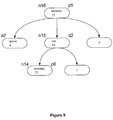
- Figure 9 shows a Subgraph of Depth 2 for Covering Node n16.
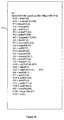
- Figure 10 shows Effect of Test Branc h in Improved Loop Body, MIR+.
- PE Predicated Execution
- ISA Instruction Set Architecture
- the present invention involves new compiling techniques and associated hardware support for an alternate approach designed to gain or possibly exceed performance of explicitly guarded architecture while minimizing the impact on the ex isting architecture.
- the exemplary architecture that will be discussed herein for purposes of illustration is the SPARCTM architecture developed by Sun Microsystems, Inc. of Palo Alto, CA.
- the processor (122) has, among other things, a CPU (124), a memory controller (126), and an on -chip cache memory (130).
- the microprocessor (122) is connected to external cache memory (132) and a main memory (134) that both hold data and program instructions to be executed by the microprocessor (122). Internally, the execution of program instructions is carried out by the CPU (124). Data needed by the CPU (124) to carry out an instruction are fetched by the memory controller (126) and loaded into internal registers (128) of the CPU (124).
- the processor (122) includes n ew instructions that test a given conditional branch instruction to determine whether the branch will be taken or not. If the conditional branch tested is true (taken), then a general register specified as the destination register is set to 1 (true). Otherwise, the destination register is set to 0 (false).
- the effect is to convert condition in the specified condition code registe r, floating-point as well as integer kind, (%fccn, %icc, and %xcc) into normalized Boolean data (1 or 0) in the destination register.
- the destination register subsequently acts as a predicate.
- This has the additional benefit of replacing condition codes with general registers and, thereby, eliminating the use of condition codes that degrade instruction -level parallelism.
- the Boolean data in general registers are normalized true or false so that Boolean operations can be performed in combination with othe r predicates using ordinary logical operations. Thus, the need for special operations dealing with predicates is avoided.
- the new instructions may be, for example, Test Branch on Floating -Point Condition Codes (tfbx) and Test Branch on Integer Condition Codes (tbx). These instructions, described in detail below, improve the efficiency if -conversion on a traditional architecture without explicit support for predicated execution. In the defined instructions included below, notations used are consistent wi th the conventions of the SPARCTM Architecture Manual (Version 9).
- the exemplary instructions Test Branch on Floating -Point Condition Codes (tfbx) and Test Branch on Integer Condition Codes (tbx) have the following characteristics:
- condition codes (%icc or %xcc) are tested for the specified condition (x). As above, if the condition is true, then the general register designated the destination register (rd) is set to 1. Alternatively, if the condition is false, then the destination register is set to 0.
- the conditions always (a) and never (n) are not needed because the control edge associated can never be a control dependence edge.
- the process begins with if-converting on an abstract internal representation (AIR) (step 50) for a virtual machine with full guard support.
- AIR abstract internal representation
- MIR machine representation
- the AIR to MIR transformations consist of four parts.
- the predicate defining instructions are eliminated by interpretation (step 54). Then, guarding predicates of safe instructions are eliminated by speculation (step 56) and guarding predicates of unsafe instructions are eliminated by compensation (step 58). Finally, guarding predicates of unsuitable instructions are eliminated by reverse if-conversion (step 60). Which instruction s constitute safe, unsafe, and unsuitable instructions will be discussed in more detail below.
- the discussed process converts predicated execution to static speculation without explicit predicate hardware.
- predicated execution PE is a key feature of modern microprocessor architecture emphasizing instruction -level parallelism.
- PE on guarded (predicated) architecture has been studied by many as a hardware -software combined technique for eliminating branching, i . e ., if-conversion. The performance is gained in several ways, ranging from software -pipeline of loop s with control dependence to selective elimination of mispredicting branch instructions.
- a guarded architecture to support PE severely impact existing instruction -set architecture (ISA).
- ISA instruction -set architecture
- a fully guarded architecture must include new predicate registers, predicate defining (setting) instructions, and an additional field in instruction word for addressing a guarding predicate.
- the present invention is a technique that minimizes ISA change in traditional RISC architecture while retaining the performance advantage of PE.
- the technique exploits PE in the existing architecture. This is achieved by transforming PE on guarded architecture into static speculation (SS) without the full guard support.
- SS static speculation
- a SPARC TM processor is used.
- the technique is equally applicable to other processors, possibly in conjunction with some notational modifications.
- the technique referred to herein as RK for SPARC TM (RK/Sparc)
- RK/Sparc effectively captures the performance advantage of predicated execution on the existing SPARC TM-V9.
- the enhan cements made to the SPARC TM-V9 have a modest impact on the existing instruction set architecture.
- RK/Sparc achieves performance comparable to that of a fully guarded architecture.
- Embodiments of the present invention extend PE to an unguarded architecture in such a way that explicit predicate hardware is superseded by static speculation using gener al registers as implicit predicates.
- the RK/Sparc technique achieves this in three steps employing two representations, and transformations on these representations.
- the two representations both low -level in character, are an abstract internal representation (AIR) and a physical SPARC TM-V9 machine representation (MIR).
- AIR represents a virtual SPARC TM-V9 architecture with full predicate support whereas MIR represents the existing SPARC TM-V9 unguarded architecture.
- RK/Sparc For a given a region R, for example, the body of an innermost loop, RK/Sparc transforms R in three steps:
- Figure 4 shows an innermost loop (200).
- the internal representation (202) of the loop (200) prior to if-conversion is shown in Figure 5.
- Each basic block is annotated with its kind (ki), flag (fl) indicating region head/tail (H/T), number of operations (op), immediate dominator (do), and immediate postdominator (po).
- SPARC TM-V9 AIR has a number of predicates (as many as needed, since virtual) and the proposed predicate defining instructions, Test Branch on Floating -Point Condition Codes (tfbx) and Test Branch on Integer Condition Codes (tbx). These instructions convert branching conditions into Boolean values in general registers as described.
- R(x) gives the predicate P to be assigned to the node.
- K set, K(p) gives defining operations to be placed.
- PE algorithm yields the two maps R and K shown in Table 1 and 2.
- R map of block to predicate p R(B) B 1 2 3 4 5 6 7 8 9 P 2 7 6 5 4 3 2 1 1
- K map of predicate to K set K(p) P 1 2 3 4 5 6 7 K ⁇ ⁇ 8 ⁇ ⁇ 3,1 ⁇ ⁇ -4,-8 ⁇ ⁇ 2,-3,-8 ⁇ ⁇ -2,-8 ⁇ ⁇ -1 ⁇
- Blocks 8 (Start) and 9 (End) are introduced to augment the control flow graph in order to compute the control dependence (CD) as discussed in the technical report, "On Predicated Execution” by J.C.H. Park and M.S. Schlansker, Hewlett-Packard Laboratories, Palo Alto, CA, 1991, which is he reby incorporated by reference in its entirety.
- the requirement for reset operations is one of the subtle aspects of predication. A missing reset can cause incorrect behavior of a predicated code due to use of a predicate that has not been set earlier.
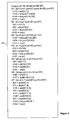
- the final result of PE, predication followed by collapse of multiple blocks into a straight line code, is shown in Figure 6.
- the predicated code (204) in Figure 6 would apply if one were dealing with a fully guarded version of SPARC TM-V9.
- the effectiveness of RK/Sparc in eliminating the full predicate support is to be judged with respect to th is fully guarded code.
- a store instruction may be taken to be either unsafe or unsuitable depending on its context as well as the effect of a choic e on the final outcome.
- Figure 6 the four kinds of transformations listed above are illustrated.
- the guarding predicate is eliminated by speculating the guarded instruction tfbl and conditionally committing the appropriate result using movrnz.
- Guarding predicates of instructions classified as safe are eliminated by speculation using a new working register (designated with W prefix) followed by a conditional commit using movrnz with the guarding predicate as the condi tion.
- SPARCTM-V9 provides non-faulting load to avoid fatal exceptions but does not provide speculative kind that can defer unnecessary TLB or expensive cache miss.
- Large-scale experimental data is needed for the engineering trade -off between performance loss and complexity of introducing speculative load of various kinds in SPARCTM-V9.
- An instruction like integer divide is unsafe because it can cause divide check when speculated. Even if known to be safe, the instruction is unsuitable to speculate, when the execution probability associated is low, because o f dispatching restrictions like multi -cycle blocking. Such cases are handled by reverse if-conversion, in which branch is reintroduced to play the role of guarding the unsuitable instruction.
- the new technique developed comprises rule -based automorphic MIR-to-MIR transformations based on symbolic analysis known as cover.
- These transformations are designed to improve a code in a variety of ways: (1) reduce instruction count such as elimination of predicate reset operations; (2) reduce dispatching cost by replacing condition al move with ordinary logical operations; (3) eliminate use of condition code; and the like. Transformations in our scheme are implemented as rewriting rules in terms of covering dag. This framework facilitates experimental analysis and incremental impro vement.
- cover associates a symbolic expression with each text expression of a given code such that the two have the same value in any execution of the code.
- the covering symbolic expression conveniently captures dataflow information at any point in a code text.
- each instruction (the text expression on LHS of!) is associated with a node of this graph.
- the subgraph rooted at the node n16 (shown in Figure 9) represents the covering symbolic expression associated with this instruction. Since each instruction is associated with a node of this cover, one can fully describe the graph by giving the tuple of instruction numbers such as [15 4 14] together with the node name.
- the tuple [15 4 14] has the meaning that the node of instruction 15 has successor nodes associated with instruction 4 and 14.
- Leaf nodes like constants and invariants do not appear in such tuples.
- Figure 9 shows a subgraph of depth 2 for Covering Node n16.
- LHS of instruction like P5
- instruction movingnrz
- instruction number 15 (207) are shown together with the node name (n16).
- a signature (of depth 2) is a string obtained by depth -first traversal of the cover (limiting the depth to 2). During the traversal visiting a node produces the string, (operation: definition operands.)
- the remaining inefficiency is architectural in nature, such as in having to convert floating point condition code to Boolean value in integer register and in handling unsafe store instructions.
- the SPARC TM-V9 instruction set architecture is augmented with Test Branch instructions and Predicated Store. Instead of the instruction count as a measure, we next turn to more precise comparison based on software pipeline.
- MII minimum initiation interval
- the ratio MIR+/AIR in terms of MII drops from 1.2 (9/7.5) for (2A 1F 1M) to 0.93 (7/7.5) for (2A 1F 2M). That is, the performance gap of 20% vanishes for the model (2A 1F 2M).
- additional factors are taken into account such as the difference in instruction fetch rate due to word size increase in a guarded architecture, the performance gap between PE and SS can actually become insignificant in practic e.
- large-scale experiments with suitable compilers and simulators are required.
- MII tables contain fractional values like 7.5. Such cases are handled by unrolling the loop body before Modulo Scheduling is performed. Often this leads to a result effectively better than implied by the fractional value, since the loop count code and other induction code need only be repeated o nce per iteration of unrolled loop.
- the RK technique transforms predicated execution (PE) on a fully guarded architecture into static speculation (SS) on an unguarded architecture.
- PE predicated execution
- SS static speculation
- the performance gap between SS an PE narrows provided the current SPARC -V9 architecture is enhanced in several ways. These enhancements include predicated store and control speculative load that are well known. In addition, new instructions, i . e ., test branch, are proposed.
- Test Branch on Floating -Point Condition Codes (tbfx) and Test Branch on Integer Condition Codes (tbx).
- a Test Branch instruction, tb ⁇ x> icc_or_xcc,%rd tests Integer Condition Code %icc or %xcc for the specified condition ⁇ x> and sets the destination register %rd to 1 (0) if tr ue (false).
- Floating -Point kind tbf ⁇ x> works in a similar manner.
- the condition ⁇ x> is one of many associated with Branch instruction as specified in the SPARC TM Architecture Manual (Version 9). The effect of these Test Branch instructions is to convert a given branching condition into Boolean value in the specified destination register %rd.
- Test Branch in two source operand maps to the proposed instruction with one source operand using the second source operand to determine whether the condition is inverted or not.
- the instruction tfbe(t114,0) above maps to tfbne t1 14,P7 by inverting the condition "equal” to "not -equal".
- predicate defining instructions are used as predicate defining instructions.
- predicate value is brought to a general register, the entire logical instructions set is available for general processing unlike the case of dedicated predicate registers without full logical in struction set support.
- the full logical instruction support allows the handling of optimizing predicated code as Boolean expression optimization.
- th e present invention presents an alternative approach that minimizes ISA changes in existing architecture yet gains performance advantages of fully predicated architecture.
- the method RK/Sparc allows transforming predicated execution on a fully guarded architecture to static speculation without a full guard support.
- the technique is capable of yielding the performance advantage of predication execution on the existing SPARC TM-V9 with a few enhancements that have modest impact on the existing instruction set architecture.
- Test Branch converts branching condition based on condition codes to Boolean data in a general register so that full logical instruction set can be utilized to produce "optimal" code.
- the performance gain achieved depends critically on the quality of analysis and transformations in use.
- the method RK/Sparc thus, includes a new, powerful technique based on symbolic analysis (cover) for optimizin g predicated code.
- the technique being general and extensible, can easily be adapted to tackle other problems that are text-rewriting in nature.
Landscapes
- Engineering & Computer Science (AREA)
- Theoretical Computer Science (AREA)
- General Engineering & Computer Science (AREA)
- Software Systems (AREA)
- Physics & Mathematics (AREA)
- General Physics & Mathematics (AREA)
- Devices For Executing Special Programs (AREA)
- Executing Machine-Instructions (AREA)
- Advance Control (AREA)
Applications Claiming Priority (2)
| Application Number | Priority Date | Filing Date | Title |
|---|---|---|---|
| US09/778,424 US20030023959A1 (en) | 2001-02-07 | 2001-02-07 | General and efficient method for transforming predicated execution to static speculation |
| US778424 | 2001-02-07 |
Publications (2)
| Publication Number | Publication Date |
|---|---|
| EP1233338A2 true EP1233338A2 (de) | 2002-08-21 |
| EP1233338A3 EP1233338A3 (de) | 2005-02-02 |
Family
ID=25113305
Family Applications (1)
| Application Number | Title | Priority Date | Filing Date |
|---|---|---|---|
| EP02100114A Withdrawn EP1233338A3 (de) | 2001-02-07 | 2002-02-07 | Verfahren zum Transformieren von Predikatbedingter Ausführung zu statischer Spekulation |
Country Status (6)
| Country | Link |
|---|---|
| US (1) | US20030023959A1 (de) |
| EP (1) | EP1233338A3 (de) |
| JP (1) | JP2002312181A (de) |
| KR (1) | KR100576794B1 (de) |
| CA (1) | CA2371184A1 (de) |
| TW (1) | TW565778B (de) |
Families Citing this family (39)
| Publication number | Priority date | Publication date | Assignee | Title |
|---|---|---|---|---|
| US7140006B2 (en) * | 2001-10-11 | 2006-11-21 | Intel Corporation | Method and apparatus for optimizing code |
| US6834383B2 (en) * | 2001-11-26 | 2004-12-21 | Microsoft Corporation | Method for binary-level branch reversal on computer architectures supporting predicated execution |
| US20030145190A1 (en) * | 2001-12-07 | 2003-07-31 | Paolo Faraboschi | Compiler algorithm to implement speculative stores |
| US20030191893A1 (en) * | 2002-04-09 | 2003-10-09 | Miller John Alan | Method, system, and apparatus for efficient trace cache |
| US7222226B1 (en) * | 2002-04-30 | 2007-05-22 | Advanced Micro Devices, Inc. | System and method for modifying a load operation to include a register-to-register move operation in order to forward speculative load results to a dependent operation |
| US7308682B2 (en) * | 2003-04-25 | 2007-12-11 | Intel Corporation | Method and apparatus for recovering data values in dynamic runtime systems |
| US7380276B2 (en) * | 2004-05-20 | 2008-05-27 | Intel Corporation | Processor extensions and software verification to support type-safe language environments running with untrusted code |
| US20060259752A1 (en) * | 2005-05-13 | 2006-11-16 | Jeremiassen Tor E | Stateless Branch Prediction Scheme for VLIW Processor |
| US7707394B2 (en) | 2006-05-30 | 2010-04-27 | Arm Limited | Reducing the size of a data stream produced during instruction tracing |
| US7752425B2 (en) * | 2006-05-30 | 2010-07-06 | Arm Limited | Data processing apparatus having trace and prediction logic |
| US8677104B2 (en) * | 2006-05-30 | 2014-03-18 | Arm Limited | System for efficiently tracing data in a data processing system |
| US8181168B1 (en) * | 2007-02-07 | 2012-05-15 | Tilera Corporation | Memory access assignment for parallel processing architectures |
| US8341612B2 (en) * | 2007-05-16 | 2012-12-25 | International Business Machines Corporation | Method and apparatus for run-time statistics dependent program execution using source-coding |
| US8381192B1 (en) * | 2007-08-03 | 2013-02-19 | Google Inc. | Software testing using taint analysis and execution path alteration |
| KR101579589B1 (ko) * | 2009-02-12 | 2015-12-22 | 삼성전자 주식회사 | 파이프라인 프로세서를 위한 정적 분기 예측 방법과 이를 위한 컴파일 방법 |
| US8433885B2 (en) * | 2009-09-09 | 2013-04-30 | Board Of Regents Of The University Of Texas System | Method, system and computer-accessible medium for providing a distributed predicate prediction |
| US10698859B2 (en) | 2009-09-18 | 2020-06-30 | The Board Of Regents Of The University Of Texas System | Data multicasting with router replication and target instruction identification in a distributed multi-core processing architecture |
| US9021241B2 (en) | 2010-06-18 | 2015-04-28 | The Board Of Regents Of The University Of Texas System | Combined branch target and predicate prediction for instruction blocks |
| US9304776B2 (en) | 2012-01-31 | 2016-04-05 | Oracle International Corporation | System and method for mitigating the impact of branch misprediction when exiting spin loops |
| US8819382B2 (en) | 2012-08-09 | 2014-08-26 | Apple Inc. | Split heap garbage collection |
| US9286039B2 (en) * | 2013-03-14 | 2016-03-15 | Microsoft Technology Licensing, Llc | Operating system support for contracts |
| US9684514B2 (en) * | 2014-09-10 | 2017-06-20 | International Business Machines Corporation | Inference based condition code generation |
| US9916164B2 (en) * | 2015-06-11 | 2018-03-13 | Intel Corporation | Methods and apparatus to optimize instructions for execution by a processor |
| US10678544B2 (en) | 2015-09-19 | 2020-06-09 | Microsoft Technology Licensing, Llc | Initiating instruction block execution using a register access instruction |
| US10936316B2 (en) | 2015-09-19 | 2021-03-02 | Microsoft Technology Licensing, Llc | Dense read encoding for dataflow ISA |
| US11126433B2 (en) | 2015-09-19 | 2021-09-21 | Microsoft Technology Licensing, Llc | Block-based processor core composition register |
| US10180840B2 (en) | 2015-09-19 | 2019-01-15 | Microsoft Technology Licensing, Llc | Dynamic generation of null instructions |
| US11977891B2 (en) | 2015-09-19 | 2024-05-07 | Microsoft Technology Licensing, Llc | Implicit program order |
| US10768936B2 (en) | 2015-09-19 | 2020-09-08 | Microsoft Technology Licensing, Llc | Block-based processor including topology and control registers to indicate resource sharing and size of logical processor |
| US10719321B2 (en) | 2015-09-19 | 2020-07-21 | Microsoft Technology Licensing, Llc | Prefetching instruction blocks |
| US11681531B2 (en) | 2015-09-19 | 2023-06-20 | Microsoft Technology Licensing, Llc | Generation and use of memory access instruction order encodings |
| US10871967B2 (en) | 2015-09-19 | 2020-12-22 | Microsoft Technology Licensing, Llc | Register read/write ordering |
| US10198263B2 (en) | 2015-09-19 | 2019-02-05 | Microsoft Technology Licensing, Llc | Write nullification |
| US11016770B2 (en) | 2015-09-19 | 2021-05-25 | Microsoft Technology Licensing, Llc | Distinct system registers for logical processors |
| US10776115B2 (en) | 2015-09-19 | 2020-09-15 | Microsoft Technology Licensing, Llc | Debug support for block-based processor |
| US10452399B2 (en) | 2015-09-19 | 2019-10-22 | Microsoft Technology Licensing, Llc | Broadcast channel architectures for block-based processors |
| CN114020277B (zh) * | 2021-11-17 | 2025-02-07 | 湖南科技大学 | 面向谓词执行向量处理器的指令间变量依赖关系分析方法 |
| CN114817927B (zh) * | 2022-03-30 | 2024-01-09 | 北京邮电大学 | 基于分支覆盖指导的有效符号执行方法 |
| CN115979671B (zh) * | 2023-01-05 | 2025-09-23 | 上海瓶钵信息科技有限公司 | 基于时间限制的车辆下线检测方法、系统介质及设备 |
Family Cites Families (12)
| Publication number | Priority date | Publication date | Assignee | Title |
|---|---|---|---|---|
| US5627981A (en) * | 1994-07-01 | 1997-05-06 | Digital Equipment Corporation | Software mechanism for accurately handling exceptions generated by instructions scheduled speculatively due to branch elimination |
| US5920716A (en) * | 1996-11-26 | 1999-07-06 | Hewlett-Packard Company | Compiling a predicated code with direct analysis of the predicated code |
| US5937195A (en) * | 1996-11-27 | 1999-08-10 | Hewlett-Packard Co | Global control flow treatment of predicated code |
| US5943499A (en) * | 1996-11-27 | 1999-08-24 | Hewlett-Packard Company | System and method for solving general global data flow predicated code problems |
| US5999738A (en) * | 1996-11-27 | 1999-12-07 | Hewlett-Packard Company | Flexible scheduling of non-speculative instructions |
| US5999736A (en) * | 1997-05-09 | 1999-12-07 | Intel Corporation | Optimizing code by exploiting speculation and predication with a cost-benefit data flow analysis based on path profiling information |
| JP3570855B2 (ja) * | 1997-05-29 | 2004-09-29 | 株式会社日立製作所 | 分岐予測装置 |
| JP3595158B2 (ja) * | 1998-03-13 | 2004-12-02 | 株式会社東芝 | 命令割り当て方法及び命令割り当て装置 |
| JP3565314B2 (ja) * | 1998-12-17 | 2004-09-15 | 富士通株式会社 | 分岐命令実行制御装置 |
| US6513109B1 (en) * | 1999-08-31 | 2003-01-28 | International Business Machines Corporation | Method and apparatus for implementing execution predicates in a computer processing system |
| US6637026B1 (en) * | 2000-03-01 | 2003-10-21 | Intel Corporation | Instruction reducing predicate copy |
| US6732356B1 (en) * | 2000-03-31 | 2004-05-04 | Intel Corporation | System and method of using partially resolved predicates for elimination of comparison instruction |
-
2001
- 2001-02-07 US US09/778,424 patent/US20030023959A1/en not_active Abandoned
-
2002
- 2002-02-06 TW TW091102051A patent/TW565778B/zh active
- 2002-02-07 JP JP2002030860A patent/JP2002312181A/ja active Pending
- 2002-02-07 EP EP02100114A patent/EP1233338A3/de not_active Withdrawn
- 2002-02-07 KR KR1020020007089A patent/KR100576794B1/ko not_active Expired - Fee Related
- 2002-02-07 CA CA002371184A patent/CA2371184A1/en not_active Abandoned
Non-Patent Citations (3)
| Title |
|---|
| AUGUST D I ET AL: "A framework for balancing control flow and predication" PROCEEDINGS OF THE 30TH ANNUAL IEEE/ACM INTERNATIONAL SYMPOSIUM ON MICROARCHITECTURE. MICRO-30. RESEARCH TRIANGLE PARK, NC, DEC. 1 - 3, 1997, PROCEEDINGS OF THE ANNUAL INTERNATIONAL SYMPOSIUM ON MICROARCHITEC TURE, LOS ALAMITOS, CA : IEEE COMPUTER SO, vol. 30TH CONF, 1 December 1997 (1997-12-01), pages 92-103, XP010261287 ISBN: 0-8186-7977-8 * |
| DZ-CHING JU R ET AL: "A unified compiler framework for control and data speculation" PARALLEL ARCHITECTURES AND COMPILATION TECHNIQUES, 2000. PROCEEDINGS. INTERNATIONAL CONFERENCE ON PHILADELPHIA, PA, USA 15-19 OCT. 2000, LOS ALAMITOS, CA, USA,IEEE COMPUT. SOC, US, 15 October 2000 (2000-10-15), pages 157-168, XP010526038 ISBN: 0-7695-0622-4 * |
| JOSEPH C. H. PARK, MIKE SCHLANSKER: "On predicated execution"[Online] 1 May 1991 (1991-05-01), pages 0-25, XP002306084 Retrieved from the Internet: URL:http://www.hpl.hp.com/techreports/91/H PL-91-58.pdf> [retrieved on 2004-11-17] * |
Also Published As
| Publication number | Publication date |
|---|---|
| TW565778B (en) | 2003-12-11 |
| KR100576794B1 (ko) | 2006-05-10 |
| US20030023959A1 (en) | 2003-01-30 |
| KR20020065864A (ko) | 2002-08-14 |
| EP1233338A3 (de) | 2005-02-02 |
| CA2371184A1 (en) | 2002-08-07 |
| JP2002312181A (ja) | 2002-10-25 |
Similar Documents
| Publication | Publication Date | Title |
|---|---|---|
| EP1233338A2 (de) | Verfahren zum Transformieren von Predikatbedingter Ausführung zu statischer Spekulation | |
| US11340908B2 (en) | Reducing data hazards in pipelined processors to provide high processor utilization | |
| US6675376B2 (en) | System and method for fusing instructions | |
| US8505002B2 (en) | Translation of SIMD instructions in a data processing system | |
| US6988183B1 (en) | Methods for increasing instruction-level parallelism in microprocessors and digital system | |
| US7594102B2 (en) | Method and apparatus for vector execution on a scalar machine | |
| KR101417597B1 (ko) | 제로 프레디케이트 브랜치 예측실패에 대한 브랜치 예측실패 거동 억제 | |
| KR101511837B1 (ko) | 벡터 분할 루프들의 성능 향상 | |
| US6301705B1 (en) | System and method for deferring exceptions generated during speculative execution | |
| KR102256188B1 (ko) | 데이터 처리장치 및 벡터 오퍼랜드를 처리하는 방법 | |
| US9110683B2 (en) | Predicting branches for vector partitioning loops when processing vector instructions | |
| US8762444B2 (en) | Fast condition code generation for arithmetic logic unit | |
| US6324639B1 (en) | Instruction converting apparatus using parallel execution code | |
| US6505345B1 (en) | Optimization of initialization of parallel compare predicates in a computer system | |
| US7228528B2 (en) | Building inter-block streams from a dynamic execution trace for a program | |
| Li et al. | Software value prediction for speculative parallel threaded computations | |
| US20030005422A1 (en) | Technique for improving the prediction rate of dynamically unpredictable branches | |
| KR20030017982A (ko) | 브이.엘.아이.더블유. 프로세서에서 부분적으로파이프라인으로 연결된 명령을 동기시키는 방법 | |
| Finlayson et al. | Improving processor efficiency by statically pipelining instructions | |
| Andorno | Design of the frontend for LEN5, a RISC-V Out-of-Order processor | |
| Santana et al. | A comparative analysis between EPIC static instruction scheduling and DTSVLIW dynamic instruction scheduling | |
| Kreahling | Reducing the cost of comparisons within conditional transfers of control | |
| Appelbe et al. | Future branches-beyond speculative execution | |
| HAICHEN | A general framework to realize an abstract machine as an ILP processor with application to java | |
| Shah | Improving Low Power Processor Efficiency with Static Pipelining |
Legal Events
| Date | Code | Title | Description |
|---|---|---|---|
| PUAI | Public reference made under article 153(3) epc to a published international application that has entered the european phase |
Free format text: ORIGINAL CODE: 0009012 |
|
| AK | Designated contracting states |
Kind code of ref document: A2 Designated state(s): AT BE CH CY DE DK ES FI FR GB GR IE IT LI LU MC NL PT SE TR |
|
| AX | Request for extension of the european patent |
Free format text: AL;LT;LV;MK;RO;SI |
|
| PUAL | Search report despatched |
Free format text: ORIGINAL CODE: 0009013 |
|
| AK | Designated contracting states |
Kind code of ref document: A3 Designated state(s): AT BE CH CY DE DK ES FI FR GB GR IE IT LI LU MC NL PT SE TR |
|
| AX | Request for extension of the european patent |
Extension state: AL LT LV MK RO SI |
|
| 17P | Request for examination filed |
Effective date: 20050331 |
|
| AKX | Designation fees paid |
Designated state(s): AT BE CH CY DE DK ES FI FR GB GR IE IT LI LU MC NL PT SE TR |
|
| 17Q | First examination report despatched |
Effective date: 20060918 |
|
| STAA | Information on the status of an ep patent application or granted ep patent |
Free format text: STATUS: THE APPLICATION IS DEEMED TO BE WITHDRAWN |
|
| 18D | Application deemed to be withdrawn |
Effective date: 20070130 |