EP1229330A1 - Probe for analyzing protein-protein interaction and method of analyzing protein-protein interactions with the use of the same - Google Patents
Probe for analyzing protein-protein interaction and method of analyzing protein-protein interactions with the use of the same Download PDFInfo
- Publication number
- EP1229330A1 EP1229330A1 EP00987766A EP00987766A EP1229330A1 EP 1229330 A1 EP1229330 A1 EP 1229330A1 EP 00987766 A EP00987766 A EP 00987766A EP 00987766 A EP00987766 A EP 00987766A EP 1229330 A1 EP1229330 A1 EP 1229330A1
- Authority
- EP
- European Patent Office
- Prior art keywords
- protein
- probe
- intein
- terminal
- interaction analysis
- Prior art date
- Legal status (The legal status is an assumption and is not a legal conclusion. Google has not performed a legal analysis and makes no representation as to the accuracy of the status listed.)
- Granted
Links
- 0 CC1*2C(*)C1CC2 Chemical compound CC1*2C(*)C1CC2 0.000 description 2
Images




Classifications
-
- C—CHEMISTRY; METALLURGY
- C40—COMBINATORIAL TECHNOLOGY
- C40B—COMBINATORIAL CHEMISTRY; LIBRARIES, e.g. CHEMICAL LIBRARIES
- C40B30/00—Methods of screening libraries
- C40B30/04—Methods of screening libraries by measuring the ability to specifically bind a target molecule, e.g. antibody-antigen binding, receptor-ligand binding
-
- G—PHYSICS
- G01—MEASURING; TESTING
- G01N—INVESTIGATING OR ANALYSING MATERIALS BY DETERMINING THEIR CHEMICAL OR PHYSICAL PROPERTIES
- G01N33/00—Investigating or analysing materials by specific methods not covered by groups G01N1/00 - G01N31/00
- G01N33/48—Biological material, e.g. blood, urine; Haemocytometers
- G01N33/50—Chemical analysis of biological material, e.g. blood, urine; Testing involving biospecific ligand binding methods; Immunological testing
- G01N33/53—Immunoassay; Biospecific binding assay; Materials therefor
- G01N33/531—Production of immunochemical test materials
-
- G—PHYSICS
- G01—MEASURING; TESTING
- G01N—INVESTIGATING OR ANALYSING MATERIALS BY DETERMINING THEIR CHEMICAL OR PHYSICAL PROPERTIES
- G01N33/00—Investigating or analysing materials by specific methods not covered by groups G01N1/00 - G01N31/00
- G01N33/48—Biological material, e.g. blood, urine; Haemocytometers
- G01N33/50—Chemical analysis of biological material, e.g. blood, urine; Testing involving biospecific ligand binding methods; Immunological testing
- G01N33/58—Chemical analysis of biological material, e.g. blood, urine; Testing involving biospecific ligand binding methods; Immunological testing involving labelled substances
- G01N33/581—Chemical analysis of biological material, e.g. blood, urine; Testing involving biospecific ligand binding methods; Immunological testing involving labelled substances with enzyme label (including co-enzymes, co-factors, enzyme inhibitors or substrates)
-
- G—PHYSICS
- G01—MEASURING; TESTING
- G01N—INVESTIGATING OR ANALYSING MATERIALS BY DETERMINING THEIR CHEMICAL OR PHYSICAL PROPERTIES
- G01N33/00—Investigating or analysing materials by specific methods not covered by groups G01N1/00 - G01N31/00
- G01N33/48—Biological material, e.g. blood, urine; Haemocytometers
- G01N33/50—Chemical analysis of biological material, e.g. blood, urine; Testing involving biospecific ligand binding methods; Immunological testing
- G01N33/58—Chemical analysis of biological material, e.g. blood, urine; Testing involving biospecific ligand binding methods; Immunological testing involving labelled substances
- G01N33/582—Chemical analysis of biological material, e.g. blood, urine; Testing involving biospecific ligand binding methods; Immunological testing involving labelled substances with fluorescent label
-
- G—PHYSICS
- G01—MEASURING; TESTING
- G01N—INVESTIGATING OR ANALYSING MATERIALS BY DETERMINING THEIR CHEMICAL OR PHYSICAL PROPERTIES
- G01N33/00—Investigating or analysing materials by specific methods not covered by groups G01N1/00 - G01N31/00
- G01N33/48—Biological material, e.g. blood, urine; Haemocytometers
- G01N33/50—Chemical analysis of biological material, e.g. blood, urine; Testing involving biospecific ligand binding methods; Immunological testing
- G01N33/68—Chemical analysis of biological material, e.g. blood, urine; Testing involving biospecific ligand binding methods; Immunological testing involving proteins, peptides or amino acids
- G01N33/6803—General methods of protein analysis not limited to specific proteins or families of proteins
- G01N33/6845—Methods of identifying protein-protein interactions in protein mixtures
Definitions
- the invention of the present application has been made in consideration of the above described situations, and its object is to solve the problems of the prior art and to provide an all-purpose probe applicable for various protein-protein interaction analysis and a method of protein-protein interaction analysis using such probe, which enables accurate and simple assay of the interaction of proteins.
- the invention provides the probe for protein-protein interaction analysis, wherein the labeled protein is a fluorescent protein; and seventhly, the invention provides the probe for protein-protein interaction analysis, wherein the fluorescent protein is a green fluorescent protein (GFP).
- the fluorescent protein is a green fluorescent protein (GFP).
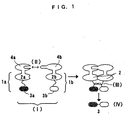
- the two probes a (1a) and b (1b) are separately connected to the respective proteins A (4a) and B (4b) for which interaction is to be analyzed, to detect the protein A-protein B interaction.
- protein A (4a) and protein B (4b) each connected to probe a (1a) and probe b (1b) respectively, coexist (I) and when the two proteins (4a, 4b) interact with each other (II), the intein (2) is excised through splicing (III).
- the labeled protein sites (3a, 3b) bonded to the intein (2) are ligated (IV), thereby enabling the confirmation of the protein-protein interaction through detection of the signal resulting from the labeled protein (3).
- probes a and b (1a and 1b) may each be composed of the intein polypeptide and the labeled protein polypeptide, but may contain other parts such as a linker sequence. Accordingly, in probes a and b (1a and 1b), the intein polypeptides (2a, 2b) and the labeled protein polypeptides (3a, 3b) may be directly bonded to each other, or may be bonded via any other polypeptide such as linker sequence.
- probes 1a and 1b For effective intein splicing (III) with the probes for protein-protein interaction analysis (1a, 1b) of the present invention, probes 1a and 1b must be correctly folded so that the two sites participating in protein splicing are adjacent to each other and are correctly aligned (Duan, X., Gimble, F. S. and Quiocho, F. A., Cell 1997, 89, 555-564). Accordingly, as the inteins, those derived from organisms may directly be used or may be suitably modified for facilitating the intended intein splicing by, for example, partly substituting the amino acid residues of the organisms-derived intein with any other residue, partly deleting amino acid residues, or introducing a suitable linker sequence thereinto.
- the invention of this application provides the probe for protein-protein interaction analysis.
- one probe e.g., probe a
- the target protein protein A
- another probe probe b
- the two probes are made to coexist in a system to thereby confirm the presence or absence of interaction between proteins A and B by the above-mentioned principle and mechanism.
- pGEX-NVC was expressed at 25°C in E. coli.
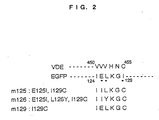
- the splitting was realized by substituting the nonfunctional endonuclease motif that exists in the 185th to 389th amino acid region of the mutant with a cassette of ((translation termination codon) - (Shine-Dalgarno sequence) - (translation initiation codon)).
- the resulting plasmid pET-NVC ⁇ SD(/) was a two-gene operon essentially composed of gene 1 that encodes the N-terminal polypeptide of EGFP and VDE (N-EGFP-VDE) and gene 2 that encodes the C-terminal polypeptide of VDE and EGFP (C-VDE-EGFP).
- the protein expression was effected at 25°C for 12 hours; the cells were stored at 4°C for 1 or 2 days.
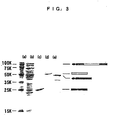
- the gene 2 protein product was identified by an anti-GFP monoclonal antibody, and was found to be the C-terminal polypeptide of EGFP.
- the size of the expression protein obtained from the gene operon well corresponded with that of the precursor protein of N-VDE-EGFP (20 kDa) with M13 (3 kDa) (Fig. 5B, a) or the linker-containing M13 (4 kDa) (Fig. 5B, d) .
- the control plasmid expressed the expected protein (Fig. 5B, f). The expression levels of all three proteins obtained from operon II were the same.
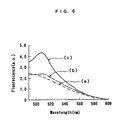
- Fig. 6 shows the fluorescent spectra of lysates of E. coli cells each carrying one of the above-mentioned plasmids.
- E. coli carrying pET-NVC ⁇ SD linker (/) no spectral change was observed.
- pET-NVC ⁇ SD(C/M) and having co-expressed CaM and M13 a slight change in fluorescence emission at 510 nm was observed.
- N-EGFP-VDE and C-VDE-EGFP with a peptide linker therebetween and having co-expressed CaM and M13 a significant change in the fluorescence emission was observed at 510 nm.
- the distance between the N-terminal of CaM and the C-terminal of M13 is 50 ⁇ (from Brookhaven Protein Data Bank). This distance is too large for N-VDE to be close to C-VDE, and the large distance was expected to interfere with the correct folding of the N- and C-terminals of VDE in E. coli carrying the plasmid pET-NVC ⁇ SD linker (C/M).
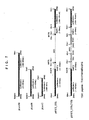
- Fig. 7 shows the structure of the luciferase and luciferase segments.
- the CHO-HIR cells were transfected with 1 ⁇ g of each plasmid (pLucAll, pLucN, and pLucC) or with 0.01 ⁇ g of a control plasmid (pRL-TK), and incubated in a 12-well plate for 45 hours. After incubation, the emission of the cells in each well was measured using a luminometer.
- Synechocystis sp. PCC6803-derived DnaE was split into an N-terminal segment of 123 amino acid residues and a C-terminal segment of 36 amino acid residues.
- Fig. 7 shows the structure of pIRES-DSL.
- a plasmid pIRES-DSL (Y/S) with Y941 inserted into MCS-A and SH2N into MCS-B, and a pRL-TK vector were transiently coexpressed in CHO-HIR cells.
- CHO-HIR cells were transfected with 2 ⁇ g of the plasmid pIRES-DSL (Y/S) or 0.02 ng of the control plasmid pRL-TK. The cells were incubated for 45 hours, and then the culture was substituted with an FBS-free solution of 1.0 ⁇ 10 -7 M human insulin; the CHO-HIR cells were excited through incubation (at 37°C) for 72 hours, 3 hours or 5 minutes. The cells incubated for 5 minutes were further incubated for 175 minutes in an FCS-free culture with no insulin therein.
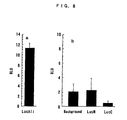
- Fig. 9 shows the relative emission intensity, RLU, of the insulin-excited cells.
- the relative emission intensity, RLU of the cells excited with insulin for 3 hours or longer is more than 4 times that of the background.
- the kinase activity of the cells tested herein results from the specific interaction between the peptide Y941 (the 941 amino acid of which is tyrosine) phosphorylated with an insulin receptor, and SH2N. This enabled the efficient in-trans folding and splicing of DnaE in probe ⁇ 2>, thereby causing the ligation of LucN and LucC to realize luciferase emission reproduction.
- Probe ⁇ 2> constructed in Example 5 was tested for quantitative analysis of insulin-induced protein-protein interaction in CHO-HIR cells.
Landscapes
- Health & Medical Sciences (AREA)
- Life Sciences & Earth Sciences (AREA)
- Engineering & Computer Science (AREA)
- Molecular Biology (AREA)
- Immunology (AREA)
- Chemical & Material Sciences (AREA)
- Biomedical Technology (AREA)
- Hematology (AREA)
- Urology & Nephrology (AREA)
- Physics & Mathematics (AREA)
- Medicinal Chemistry (AREA)
- Biochemistry (AREA)
- General Health & Medical Sciences (AREA)
- Cell Biology (AREA)
- Food Science & Technology (AREA)
- Biotechnology (AREA)
- Analytical Chemistry (AREA)
- General Physics & Mathematics (AREA)
- Pathology (AREA)
- Microbiology (AREA)
- Organic Chemistry (AREA)
- Bioinformatics & Cheminformatics (AREA)
- Biophysics (AREA)
- Proteomics, Peptides & Aminoacids (AREA)
- Chemical Kinetics & Catalysis (AREA)
- General Chemical & Material Sciences (AREA)
- Bioinformatics & Computational Biology (AREA)
- Measuring Or Testing Involving Enzymes Or Micro-Organisms (AREA)
- Investigating Or Analysing Biological Materials (AREA)
- Peptides Or Proteins (AREA)
- Investigating Or Analysing Materials By The Use Of Chemical Reactions (AREA)
Abstract
Description
Claims (11)
- A probe for analyzing protein-protein interaction between two proteins, wherein protein splicing is induced by protein-protein interaction, thereby regenerating a physiochemically or biochemically detectable protein.
- The probe for protein-protein interaction analysis of claim 1, consisting of two probes that are:probe a which comprises the N-terminal polypeptide of an intein and the N-terminal polypeptide of a labeled protein; andprobe b which comprises the C-terminal polypeptide of the intein and the C-terminal polypeptide of the labeled protein.
- The probe for protein-protein interaction analysis of claim 2, wherein the C-terminal of probe a and the N-terminal of probe b each contain a linker sequence.
- The probe for protein-protein interaction analysis of claim 2 or 3, wherein the intein is an endonuclease derived from yeast VMA.
- The probe for protein-protein interaction analysis of claim 2 or 3, wherein the intein is DnaE derived from cyanobacterium.
- The probe for protein-protein interaction analysis of claims 2 to 5, wherein the labeled protein is a fluorescent protein.
- The probe for protein-protein interaction analysis of claim 6, wherein the fluorescent protein is a green fluorescent protein.
- The probe for protein-protein interaction analysis of claims 2 to 5, wherein the labeled protein is a luminescent enzyme.
- The probe for protein-protein interaction analysis of claim 8, wherein the luminescent enzyme is a luciferase.
- A method for analyzing protein-protein interaction, comprising:making a protein linked with probe a as described in claims 2 to 9 and a protein linked with probe b as described in claims 2 to 9 coexist in a system;and detecting the signal emitted by the labeled protein.
- The method of protein-protein interaction analysis of claim 10, wherein a polynucleotide that expresses the probe of any one of claims 1 to 9 is introduced into a eucaryotic cell, thereby making the probe a-linked protein and the probe b-linked protein coexist in the cell.
Applications Claiming Priority (3)
| Application Number | Priority Date | Filing Date | Title |
|---|---|---|---|
| JP2000224939 | 2000-07-26 | ||
| JP2000224939 | 2000-07-26 | ||
| PCT/JP2000/009348 WO2002008766A1 (en) | 2000-07-26 | 2000-12-27 | Probe for analyzing protein-protein interaction and method of analyzing protein-protein interactions with the use of the same |
Publications (3)
| Publication Number | Publication Date |
|---|---|
| EP1229330A1 true EP1229330A1 (en) | 2002-08-07 |
| EP1229330A4 EP1229330A4 (en) | 2002-11-04 |
| EP1229330B1 EP1229330B1 (en) | 2007-02-21 |
Family
ID=18718794
Family Applications (1)
| Application Number | Title | Priority Date | Filing Date |
|---|---|---|---|
| EP00987766A Expired - Lifetime EP1229330B1 (en) | 2000-07-26 | 2000-12-27 | Probe for analyzing protein-protein interaction and method of analyzing protein-protein interactions with the use of the same |
Country Status (6)
| Country | Link |
|---|---|
| US (1) | US7166447B2 (en) |
| EP (1) | EP1229330B1 (en) |
| JP (1) | JP3772193B2 (en) |
| CA (1) | CA2385830C (en) |
| DE (1) | DE60033551T2 (en) |
| WO (1) | WO2002008766A1 (en) |
Cited By (10)
| Publication number | Priority date | Publication date | Assignee | Title |
|---|---|---|---|---|
| WO2003089464A1 (en) * | 2002-04-19 | 2003-10-30 | Bioimage A/S | Two green fluorescent protein fragments and their use in a method for detecting protein - protein interactions |
| WO2004027057A1 (en) * | 2002-09-18 | 2004-04-01 | Japan Science And Technology Agency | Method of analyzing organelle-localized protein and materials for analysis |
| EP1811031A1 (en) | 2006-01-18 | 2007-07-25 | Millegen | Method for selecting a peptide or polypeptide which binds to a target molecule |
| EP1752544A4 (en) * | 2004-02-12 | 2008-03-26 | Japan Science & Tech Agency | PROBE FOR DETECTING A NUCLEAR RECEPTOR AGONIST OR ANTAGONIST AND METHOD OF SCREENING AN AGONIST OR ANTAGONIST TO A NUCLEAR RECEPTOR USING THE SAME |
| US8183036B2 (en) | 2003-10-10 | 2012-05-22 | Promega Corporation | Luciferase biosensor |
| US8658777B2 (en) | 2007-05-09 | 2014-02-25 | The University Of Tokyo | Activated protease indicator |
| US8735559B2 (en) | 2010-05-11 | 2014-05-27 | Promega Corporation | Mutant protease biosensors with enhanced detection characteristics |
| US9045730B2 (en) | 2008-05-19 | 2015-06-02 | Promega Corporation | Luciferase biosensors for cAMP |
| US9290794B2 (en) | 2010-05-11 | 2016-03-22 | Promega Corporation | Mutant protease biosensors with enhanced detection characteristics |
| US9359635B2 (en) | 2006-04-03 | 2016-06-07 | Promega Corporation | Permuted and nonpermuted luciferase biosensors |
Families Citing this family (9)
| Publication number | Priority date | Publication date | Assignee | Title |
|---|---|---|---|---|
| US7855167B2 (en) * | 1998-02-02 | 2010-12-21 | Odyssey Thera, Inc. | In vivo screening of protein-protein interactions with protein-fragment complementation assays |
| WO2004104222A1 (en) * | 2003-05-22 | 2004-12-02 | Japan Science And Technology Agency | Probes for analyzing interaction between proteins and method of analyzing interaction between proteins using the same |
| WO2005118790A2 (en) * | 2004-06-03 | 2005-12-15 | The Trustees Of Columbia University In The City Of New York | Combinatorial marking of cells and cell structures with reconstituted fluorescent proteins |
| US20070026428A1 (en) * | 2005-05-02 | 2007-02-01 | Chelur Dattananda S | Combinatorial expression of split caspase molecules |
| JP5816412B2 (en) * | 2010-03-25 | 2015-11-18 | 東洋ビーネット株式会社 | Target protein detection method using split reporter protein |
| CN101975776B (en) * | 2010-10-22 | 2012-06-27 | 上海交通大学 | Genetic engineering kit for detecting environmental estrogen pollutants and application thereof |
| EP4252698B1 (en) * | 2016-07-27 | 2025-04-30 | Align Technology, Inc. | Intraoral scanner with dental diagnostics capabilities |
| JP6955243B2 (en) * | 2017-02-24 | 2021-10-27 | 学校法人北里研究所 | Necrosis detection kit and its use |
| IL297237B2 (en) | 2020-04-17 | 2025-08-01 | Regeneron Pharma | Detection tests for neutralizing antibodies against coronavirus |
Family Cites Families (17)
| Publication number | Priority date | Publication date | Assignee | Title |
|---|---|---|---|---|
| ATE280233T1 (en) * | 1992-12-09 | 2004-11-15 | New England Biolabs Inc | MODIFIED PROTEINS CONTAINING CONTROLLABLE INTERMEDIATE SEQUENCES AND METHOD FOR THE PRODUCTION THEREOF |
| US5834247A (en) * | 1992-12-09 | 1998-11-10 | New England Biolabs, Inc. | Modified proteins comprising controllable intervening protein sequences or their elements methods of producing same and methods for purification of a target protein comprised by a modified protein |
| US6770446B1 (en) * | 1994-06-14 | 2004-08-03 | Wyeth | Cell systems having specific interaction of peptide binding pairs |
| US5998136A (en) * | 1996-08-19 | 1999-12-07 | Arcaris, Inc. | Selection systems and methods for identifying genes and gene products involved in cell proliferation |
| US5795731A (en) * | 1996-08-26 | 1998-08-18 | Health Research Incorporated | Inteins as antimicrobial targets: genetic screens for intein function |
| US6875594B2 (en) * | 1997-11-13 | 2005-04-05 | The Rockefeller University | Methods of ligating expressed proteins |
| EP1117693B1 (en) | 1998-09-30 | 2006-05-17 | New England Biolabs, Inc. | Intein mediated peptide ligation |
| FR2786788B1 (en) | 1998-12-08 | 2002-04-19 | Proteus | METHOD FOR SCREENING SUBSTANCES CAPABLE OF ALTERING THE ACTIVITY OF ONE OR MORE TARGET PROTEINS OR OF A TARGET SET OF PROTEINS EXPRESSED IN VITRO |
| EP1141250B1 (en) * | 1998-12-18 | 2006-03-01 | The Penn State Research Foundation | Intein-mediated cyclization of peptides |
| US6858775B1 (en) * | 1999-05-24 | 2005-02-22 | New England Biolabs, Inc. | Method for generating split, non-transferable genes that are able to express an active protein product |
| WO2001029243A1 (en) * | 1999-10-15 | 2001-04-26 | Dalhousie University | Method and vector for producing and transferring trans-spliced peptides |
| WO2001057183A2 (en) * | 2000-02-04 | 2001-08-09 | New England Biolabs, Inc. | Method for producing circular or multimeric protein species in vivo or in vitro and related methods |
| WO2002014867A2 (en) * | 2000-08-11 | 2002-02-21 | Agilix Corporation | Ultra-sensitive detection systems |
| US6551786B2 (en) * | 2001-01-04 | 2003-04-22 | Myriad Genetics, Inc. | Screen assay for selecting protein-protein interaction modulators |
| AU2002254314A1 (en) * | 2001-03-20 | 2002-10-03 | The Pennsylvania State Research Foundation | Trans inteins for protein domain shuffling and biopolymerization |
| US6841352B2 (en) * | 2001-06-29 | 2005-01-11 | Myriad Genetics, Inc. | Mating-based method for detecting protein—protein interaction |
| US20030167533A1 (en) * | 2002-02-04 | 2003-09-04 | Yadav Narendra S. | Intein-mediated protein splicing |
-
2000
- 2000-12-27 WO PCT/JP2000/009348 patent/WO2002008766A1/en not_active Ceased
- 2000-12-27 JP JP2002514409A patent/JP3772193B2/en not_active Expired - Fee Related
- 2000-12-27 DE DE60033551T patent/DE60033551T2/en not_active Expired - Lifetime
- 2000-12-27 EP EP00987766A patent/EP1229330B1/en not_active Expired - Lifetime
- 2000-12-27 CA CA002385830A patent/CA2385830C/en not_active Expired - Fee Related
- 2000-12-27 US US10/089,040 patent/US7166447B2/en not_active Expired - Fee Related
Cited By (17)
| Publication number | Priority date | Publication date | Assignee | Title |
|---|---|---|---|---|
| WO2003089464A1 (en) * | 2002-04-19 | 2003-10-30 | Bioimage A/S | Two green fluorescent protein fragments and their use in a method for detecting protein - protein interactions |
| WO2004027057A1 (en) * | 2002-09-18 | 2004-04-01 | Japan Science And Technology Agency | Method of analyzing organelle-localized protein and materials for analysis |
| US9290745B2 (en) | 2003-10-10 | 2016-03-22 | Promega Corporation | Luciferase biosensor |
| US8183036B2 (en) | 2003-10-10 | 2012-05-22 | Promega Corporation | Luciferase biosensor |
| US8673558B2 (en) | 2003-10-10 | 2014-03-18 | Promega Corporation | Luciferase biosensor |
| EP1752544A4 (en) * | 2004-02-12 | 2008-03-26 | Japan Science & Tech Agency | PROBE FOR DETECTING A NUCLEAR RECEPTOR AGONIST OR ANTAGONIST AND METHOD OF SCREENING AN AGONIST OR ANTAGONIST TO A NUCLEAR RECEPTOR USING THE SAME |
| EP1811031A1 (en) | 2006-01-18 | 2007-07-25 | Millegen | Method for selecting a peptide or polypeptide which binds to a target molecule |
| US10077433B2 (en) | 2006-04-03 | 2018-09-18 | Promega Corporation | Permuted and nonpermuted luciferase biosensors |
| US9359635B2 (en) | 2006-04-03 | 2016-06-07 | Promega Corporation | Permuted and nonpermuted luciferase biosensors |
| US8658777B2 (en) | 2007-05-09 | 2014-02-25 | The University Of Tokyo | Activated protease indicator |
| US9045730B2 (en) | 2008-05-19 | 2015-06-02 | Promega Corporation | Luciferase biosensors for cAMP |
| US9879306B2 (en) | 2008-05-19 | 2018-01-30 | Promega Corporation | Luciferase biosensors for cAMP |
| US9290794B2 (en) | 2010-05-11 | 2016-03-22 | Promega Corporation | Mutant protease biosensors with enhanced detection characteristics |
| US9339561B2 (en) | 2010-05-11 | 2016-05-17 | Promega Corporation | Mutant protease biosensors with enhanced detection characteristics |
| US9248201B2 (en) | 2010-05-11 | 2016-02-02 | Promega Corporation | Mutant protease biosensors with enhanced detection characteristics |
| US9757478B2 (en) | 2010-05-11 | 2017-09-12 | Promega Corporation | Mutant protease biosensors with enhanced detection characteristics |
| US8735559B2 (en) | 2010-05-11 | 2014-05-27 | Promega Corporation | Mutant protease biosensors with enhanced detection characteristics |
Also Published As
| Publication number | Publication date |
|---|---|
| EP1229330A4 (en) | 2002-11-04 |
| US20030003506A1 (en) | 2003-01-02 |
| CA2385830A1 (en) | 2002-01-31 |
| EP1229330B1 (en) | 2007-02-21 |
| DE60033551D1 (en) | 2007-04-05 |
| JP3772193B2 (en) | 2006-05-10 |
| CA2385830C (en) | 2005-12-20 |
| US7166447B2 (en) | 2007-01-23 |
| WO2002008766A1 (en) | 2002-01-31 |
| DE60033551T2 (en) | 2007-11-08 |
Similar Documents
| Publication | Publication Date | Title |
|---|---|---|
| EP1229330B1 (en) | Probe for analyzing protein-protein interaction and method of analyzing protein-protein interactions with the use of the same | |
| US6828112B2 (en) | Method of detecting protein-protein interactions | |
| Xing et al. | Techniques for the analysis of protein-protein interactions in vivo | |
| US7062219B2 (en) | Protein fragment complementation assays for high-throughput and high-content screening | |
| US8349619B2 (en) | Method for detecting and analyzing protein interactions in-vivo | |
| EP1295121B1 (en) | A bioluminescence resonance energy transfer (bret) system with broad spectral resolution between donor and acceptor emission wavelengths and its use | |
| WO2001046694A2 (en) | A bioluminescence resonance energy transfer (bret) fusion molecule and method of use | |
| JPWO2002008766A1 (en) | Probe for analyzing protein-protein interactions and method for analyzing protein-protein interactions using the same | |
| Johnsson et al. | A fusion of disciplines: chemical approaches to exploit fusion proteins for functional genomics | |
| CA2698362C (en) | Identifying molecules that modulate protein- protein interactions using protease activated reporters | |
| AU2005314231A1 (en) | Protein subcellular localization assays using split fluorescent proteins | |
| JP2007508841A (en) | Self-organizing split fluorescent protein system | |
| US20110129935A1 (en) | Protein stability assay using a fluorescent reporter of protein folding | |
| US8148110B2 (en) | Detection of molecular interactions by β-lactamase reporter fragment complementation | |
| Pichlerova et al. | Technologies for the identification and validation of protein-protein interactions | |
| JP2008511310A (en) | Methods for determining protein solubility | |
| WO2003058197A2 (en) | Detection of molecular interactions by beta-lactamase reporter fragment complementation | |
| US20240132859A1 (en) | Modified dehalogenase with extended surface loop regions | |
| EP1279963A1 (en) | Protein-target screening method using near-infrared fluorescent dyes | |
| Richardson | Expanding the LexA Bacterial Two-Hybrid System for Human Protein-Protein Interaction Screening: Application to Tumor Suppressor Par-4 | |
| Ozawa | Methods of analysis for protein dynamics in living cells based on protein splicing | |
| WO2007037482A1 (en) | Kit and method for use in the detection of protein-protein interaction in eukaryotic cell |
Legal Events
| Date | Code | Title | Description |
|---|---|---|---|
| PUAI | Public reference made under article 153(3) epc to a published international application that has entered the european phase |
Free format text: ORIGINAL CODE: 0009012 |
|
| 17P | Request for examination filed |
Effective date: 20020426 |
|
| AK | Designated contracting states |
Kind code of ref document: A1 Designated state(s): AT BE CH CY DE DK ES FI FR GB GR IE IT LI LU MC NL PT SE TR |
|
| A4 | Supplementary search report drawn up and despatched | ||
| AK | Designated contracting states |
Kind code of ref document: A4 Designated state(s): AT BE CH CY DE DK ES FI FR GB GR IE IT LI LU MC NL PT SE TR |
|
| A4 | Supplementary search report drawn up and despatched |
Effective date: 20021104 |
|
| RBV | Designated contracting states (corrected) |
Designated state(s): CH DE FR GB LI NL SE |
|
| RAP1 | Party data changed (applicant data changed or rights of an application transferred) |
Owner name: JAPAN SCIENCE AND TECHNOLOGY AGENCY |
|
| 17Q | First examination report despatched |
Effective date: 20050420 |
|
| GRAP | Despatch of communication of intention to grant a patent |
Free format text: ORIGINAL CODE: EPIDOSNIGR1 |
|
| GRAS | Grant fee paid |
Free format text: ORIGINAL CODE: EPIDOSNIGR3 |
|
| GRAA | (expected) grant |
Free format text: ORIGINAL CODE: 0009210 |
|
| AK | Designated contracting states |
Kind code of ref document: B1 Designated state(s): CH DE FR GB LI NL SE |
|
| REG | Reference to a national code |
Ref country code: GB Ref legal event code: FG4D |
|
| REG | Reference to a national code |
Ref country code: CH Ref legal event code: EP |
|
| REF | Corresponds to: |
Ref document number: 60033551 Country of ref document: DE Date of ref document: 20070405 Kind code of ref document: P |
|
| REG | Reference to a national code |
Ref country code: CH Ref legal event code: NV Representative=s name: A. BRAUN, BRAUN, HERITIER, ESCHMANN AG PATENTANWAE |
|
| REG | Reference to a national code |
Ref country code: SE Ref legal event code: TRGR |
|
| ET | Fr: translation filed | ||
| PLBE | No opposition filed within time limit |
Free format text: ORIGINAL CODE: 0009261 |
|
| STAA | Information on the status of an ep patent application or granted ep patent |
Free format text: STATUS: NO OPPOSITION FILED WITHIN TIME LIMIT |
|
| 26N | No opposition filed |
Effective date: 20071122 |
|
| REG | Reference to a national code |
Ref country code: CH Ref legal event code: PFA Owner name: JAPAN SCIENCE AND TECHNOLOGY AGENCY Free format text: JAPAN SCIENCE AND TECHNOLOGY AGENCY#1-8, HONCHO 4-CHOME#KAWAGUCHI-SHI, SAITAMA 332-0012 (JP) -TRANSFER TO- JAPAN SCIENCE AND TECHNOLOGY AGENCY#1-8, HONCHO 4-CHOME#KAWAGUCHI-SHI, SAITAMA 332-0012 (JP) |
|
| REG | Reference to a national code |
Ref country code: CH Ref legal event code: PCAR Free format text: NEW ADDRESS: HOLBEINSTRASSE 36-38, 4051 BASEL (CH) |
|
| REG | Reference to a national code |
Ref country code: FR Ref legal event code: PLFP Year of fee payment: 16 |
|
| REG | Reference to a national code |
Ref country code: FR Ref legal event code: PLFP Year of fee payment: 17 |
|
| PGFP | Annual fee paid to national office [announced via postgrant information from national office to epo] |
Ref country code: CH Payment date: 20161109 Year of fee payment: 17 Ref country code: GB Payment date: 20161109 Year of fee payment: 17 Ref country code: NL Payment date: 20161109 Year of fee payment: 17 Ref country code: DE Payment date: 20161108 Year of fee payment: 17 Ref country code: FR Payment date: 20161114 Year of fee payment: 17 |
|
| PGFP | Annual fee paid to national office [announced via postgrant information from national office to epo] |
Ref country code: SE Payment date: 20161109 Year of fee payment: 17 |
|
| REG | Reference to a national code |
Ref country code: DE Ref legal event code: R119 Ref document number: 60033551 Country of ref document: DE |
|
| REG | Reference to a national code |
Ref country code: CH Ref legal event code: PL |
|
| REG | Reference to a national code |
Ref country code: NL Ref legal event code: MM Effective date: 20180101 |
|
| GBPC | Gb: european patent ceased through non-payment of renewal fee |
Effective date: 20171227 |
|
| PG25 | Lapsed in a contracting state [announced via postgrant information from national office to epo] |
Ref country code: SE Free format text: LAPSE BECAUSE OF NON-PAYMENT OF DUE FEES Effective date: 20171228 |
|
| PG25 | Lapsed in a contracting state [announced via postgrant information from national office to epo] |
Ref country code: NL Free format text: LAPSE BECAUSE OF NON-PAYMENT OF DUE FEES Effective date: 20180101 |
|
| REG | Reference to a national code |
Ref country code: FR Ref legal event code: ST Effective date: 20180831 |
|
| PG25 | Lapsed in a contracting state [announced via postgrant information from national office to epo] |
Ref country code: DE Free format text: LAPSE BECAUSE OF NON-PAYMENT OF DUE FEES Effective date: 20180703 Ref country code: FR Free format text: LAPSE BECAUSE OF NON-PAYMENT OF DUE FEES Effective date: 20180102 |
|
| PG25 | Lapsed in a contracting state [announced via postgrant information from national office to epo] |
Ref country code: CH Free format text: LAPSE BECAUSE OF NON-PAYMENT OF DUE FEES Effective date: 20171231 Ref country code: LI Free format text: LAPSE BECAUSE OF NON-PAYMENT OF DUE FEES Effective date: 20171231 Ref country code: GB Free format text: LAPSE BECAUSE OF NON-PAYMENT OF DUE FEES Effective date: 20171227 |