EP1221663A2 - Verfahren zur Prüfung von Schaltungen in dem digitalen Entwurf - Google Patents
Verfahren zur Prüfung von Schaltungen in dem digitalen Entwurf Download PDFInfo
- Publication number
- EP1221663A2 EP1221663A2 EP01108653A EP01108653A EP1221663A2 EP 1221663 A2 EP1221663 A2 EP 1221663A2 EP 01108653 A EP01108653 A EP 01108653A EP 01108653 A EP01108653 A EP 01108653A EP 1221663 A2 EP1221663 A2 EP 1221663A2
- Authority
- EP
- European Patent Office
- Prior art keywords
- property
- reduced
- rtl
- bit
- width
- Prior art date
- Legal status (The legal status is an assumption and is not a legal conclusion. Google has not performed a legal analysis and makes no representation as to the accuracy of the status listed.)
- Granted
Links
Images







Classifications
-
- G—PHYSICS
- G06—COMPUTING OR CALCULATING; COUNTING
- G06F—ELECTRIC DIGITAL DATA PROCESSING
- G06F30/00—Computer-aided design [CAD]
- G06F30/30—Circuit design
- G06F30/32—Circuit design at the digital level
- G06F30/33—Design verification, e.g. functional simulation or model checking
- G06F30/3323—Design verification, e.g. functional simulation or model checking using formal methods, e.g. equivalence checking or property checking
Definitions
- the present invention relates to a method of circuit verification in digital design and in particular relates to a method of register transfer level property checking to enable the same.
- Abstraction techniques are used as a pre-process in high-level property checking of digital circuits.
- the majority of today's industrial hardware verification tools use bit-level decision procedures, like decision procedures for the Boolean satisfiability problem (SAT) or decision procedures based on binary decision diagrams (BDDs).
- SAT procedures In electronic design automation, SAT procedures have many direct applications, including test pattern generation, timing analysis, logic verification, functional testing, etc.
- SAT belongs to the class of NP-complete problems, with algorithmic solutions having exponential worst case complexity. This problem has been widely investigated and continues to be so because efficient SAT techniques can greatly affect the operation of many EDA tools. For example in VLSI CAD, SAT formulations start from an abstract circuit description, for which a required output value needs to be validated.
- Conjunctive Normal Form (CNF) formulae can be used and several versions of this procedure incorporate a chronological backtrack-determination: at each node in the search tree, an assignment is selected and a subsequent search procedure is controlled by iterative application of "unit clauses" and "pure literal rules". Non-chronological backtrack determinations are also known.
- An alternative to SAT are BDDs: a set of BDD's can be constructed representing output value constraints. The conjunction of all the constraints expressed as a Boolean product of the corresponding BDD (termed as a product BDD) represents the set of all satisfying solutions. Any element of the resulting constraint set gives a feasible SAT solution.
- the present invention seeks to provide an improved circuit verification procedure.
- a digital circuit design verification method wherein, prior to a property checking process for each property of a non-reduced RTL model, a reduced RTL model is determined, which reduced RTL model retains specific signal properties of a non-reduced RTL model which are to be checked.
- the design verification process comprises, in a step prior to the determination of a reduced width RTL model, of determining the design specification of the digital circuit design and the specification of the properties to be investigated, synthesising an RTL netlist of high level primitives whereby the circuit is defined as an interconnection of control and data path portions, wherein in signals of a width n are determined such that: wherein bitvectors of respective length determine the signal value.
- an internal bit level representation contains a bit level variable for each bit of each word signal.
- This bit-level representation is passed to a verification engine and then to a property test unit which operates to provide a positive result if the investigated property holds true for the circuit and which operates to provide a counter-example if the property does not hold.
- signal width enhancement is performed to create a counter-example for the original RTL.
- a digital circuit design verification tool wherein a pre-property checking unit is operable to reduce the widths of the signals occurring in an RTL model of an input design specification and an input property specification, which reduced width RTL model retains the specific signal property of a non-reduced RTL model.
- the tool further comprises a front end unit operable to receive input data relating to a design specification and the property characteristics of a design to be verified and is operable to provide an RTL netlist of the circuit design and property whereby the circuit can be defined as an interconnection of control and data path portions, wherein in signals of a width n are determined such that n ⁇ ; and bitvectors of a respective length determine the signal value.
- a property checking unit is operable to create an internal bit level representation having received a reduced RTL representation. This representation is sequentially passed to a verification engine and to a property test unit.
- the property test unit being operable to provide a positive result if the circuit property holds true and which is operable to provide a counter-example in the case of the property does not hold.
- the signal width enhancement unit is operable to receive counter-examples for reduced RTL data and to expand the signal width to provide a counter example for the original RTL.
- a linear signal width reduction causes an exponential reduction of the induced state space. Reducing state space sizes in general goes hand in hand with reduced verification runtimes. Thus the technique holds a high potential for speeding up verification tasks. Tests have shown that the present invention can significantly reduce the runtimes of existing prover tools. Furthermore, the present invention will be able to process design sizes which have, hitherto, exceeded the capacities of existing verification tools and which could not be taken into account before due to resource limitations. FIFO's, queues, stacks, bridges and interface protocols comprise part of a class of digital hardware designs to which the present invention is particularly well suited to processing.
- a further advantage of the present invention is that, if the analysis yields that no reduction at all is possible for a given design and a given property, then reduced model and original design are identical.
- the verification task itself cannot be impaired by using the proposed method as a pre-process, and in all case studies pre-processing runtimes were negligible
- the technique can be applied in high-level equivalence checking and high-level simulation.
- High-level equivalence checking for example, can be considered a special case of high-level property checking.
- the design specification can include two different implementations of the same circuit and the property can require functional equivalence, or the property itself can be written in a hardware description language representing a functional specification of the circuit.
- FIG. 1a there is shown a prior-art property checking flow diagram.
- a property specification, 112, and a design specification, 114 is presented to a bounded property checker, 120.
- the property and design specifications, 112, 114 are input to a front end processor which converts the specifications to Register Transfer Level (RTL) specifications.
- RTL Register Transfer Level
- a decision relating to the property is made at decision point 122: if the property holds then the design feature is confirmed 124; if the property does not hold, then a counterexample 126 is determined.
- a counterexample is an indication that a circuit does not function in the way intended by the designer; a counterexample is given in terms of assignments of values to the circuit inputs such that a violation of the desired behaviour which is described by the property specification can be observed when looking a the values of the circuit outputs resulting from the circuit inputs.
- a design modification would be made to eliminate the occurrence of the counterexample and, indeed, further counterexamples which may consequentially arise.
- the present invention employs the use of properties described in a linear time logic over finite bounded intervals of time.
- Properties consist of an assumption part which implies a commitment part: Property ⁇ Assumptions ⁇ Commitment
- Properties specify the intended behaviour of the design within a finite interval of time and consist of temporal operators and state expressions, involving relationships among data words. As an example consider:
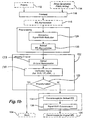
- FIG. 1b there is shown a property-checking flow in accordance with the invention.
- design and property are synthesized into a flattened netlist of high-level primitives, called an RTL netlist, as is known.
- RTL netlist include word-level signals, word-level gates, arithmetic units, comparators (data to control), multiplexors (control to data) and memory elements
- Each signal x has a fixed given width n and takes bitvectors of respective length as values.
- the RTL representation of the design is handed to a property checker which translates the netlist into a bit-level representation and either proves that the property holds for the given design, or returns a counterexample.
- the RTL netlist is obtained, 118, and a scaled down RTL model 130 is computed by signal-width reduction processor, 128, in which signal widths are reduced, while guaranteeing that: The property holds for the original RTL ⁇ The property holds for the reduced RTL
- the reduced RTL, 130 is given to the property checker, 132, instead of the original RTL.
- the internal bit-level representation, 138, used by the property checker contains a bit-level variable for each bit of each word-level signal of the RTL representation, and, depending on the degree of reduction of the signal widths, now can contain significantly less variables for the reduced RTL.
- the property checker, 132 includes a verification engine (SAT, BDD%), 140. If the property does not hold, the property checker returns a counterexample in terms of an assignment of values to all inputs of the reduced RTL, 134.
- the method provides a technique which takes such counterexample and generates an assignment of values to the inputs of the original design in a signal width enhancement step by signal width enhancement processor, 136, such that the property does not hold when these input values are applied to the circuit, and provides a counterexample, 126.
- the invention conveniently uses structural data-path dependency analyses for minimum width abstractions.
- the basic idea is illustrated by the following introductory examples.
- signals x [8] and y [8] both could be reduced to a width of one bit.
- reduction depends on the structural data dependencies occurring in the cone of influence of a signal in a given design.
- Signals x [8] and y [8] are both split into two parts, and each part can be reduced to a width of one bit, resulting in an overall width of 2 bits for x ' [2] and y ' [2] .
- Equations containing dynamic data dependencies, e.g. if-then-else operators, require an analysis of all possible inequalities between signals, as shown in the following example.
- x [8] , y [8] and z [8] be data signals of width 8
- a [1] , b [1] and c [1] be control signals.
- the satisfiability of the following system of equations can be characterised as: Obviously, x [8] , y [8] and z [8] cannot be reduced to a width of only one bit, because x [8] ⁇ y [8] ⁇ y [8] ⁇ z [8] ⁇ z [8] ⁇ x [8] is satisfiable, while x ' [1] ⁇ y ' [1] ⁇ y ' [1] ⁇ z ' [1] ⁇ z ' [1] ⁇ x ' [1] is not.
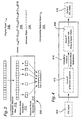
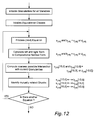
- the coarsest granularity of each word-level signal x [16] is computed, as determined by the structural data dependencies in a granularity analysis step, 210.
- a granularity is a separation of a signal into several contiguous chunks, 218, which indicate the coarsest possible subsumptions of individual bits of the signal, which are treated in the exact same manner with respect to structural data dependencies.
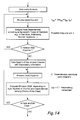
- the necessary minimum width, 220 is computed, as required by dynamical data dependencies in a minimum width abstraction step, 212. According to these computed minimum chunk widths, the reduced width for the corresponding variable is reassembled, in a reduced model generation step, 214, to be provide a reduced signal, 222.
- the present invention provides an equational theory BV ext of fixed-size bitvectors, derived from the core theory of bitvectors.
- B ⁇ 0, 1 ⁇ denote the set of bit values 0 and 1.
- a bitvector of width n ⁇ is a vector element of B n , consisting of n individual bits which are indexed from right to left, starting with index 0.
- Bitvectors are written as binary bitstrings, and, accordingly, the set B n of bitvectors of length n is denoted by B [n] .
- the invention provides a bitvector variable definition wherein, for n ⁇ , a bitvector variable x [n] of width n is a typed variable, representing fixed-size bitvectors v ⁇ B [n] of width n.
- n is a fixed (but arbitrary) positive natural number.
- x [n] [ i ] refers to the i th bit of x [n] .
- BV ext includes bitvector variables and bitvector constants c [n] , n ⁇ and c ⁇ B [n] .
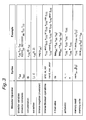
- the present invention compared to the core theory of bitvectors, provides additional high-level operators as tabulated in Figure 3. Further operators, like shifts, rotations or further comparisons, are conveniently expressed within this theory.
- the set of terms is defined over a set of free bitvector variables and the operators shown in Figure 3. If the terms are "well-formed” then the terms require variable widths to comply with operator demands, and index expressions must not exceed the widths of argument terms.
- a valuation is an assignment of values to the bitvector variables occurring in the terms.
- a system E of equations over such terms is satisfiable if there exists a valuation of the variables such that all equations of E hold simultaneously.
- valid such that E is universally valid if all possible valuations satisfy E.
- x [16] y [4] and z [4] are bitvector variables.
- E' is translated back to an RTL netlist, 418, representing a scaled down version of the original design. According to (7), the property checking task can be completely carried out on the reduced model.
- Chunks are used to describe the above-mentioned contiguous parts of bitvector variables.
- x [16] is a bitvector variable.
- ⁇ x [16] ⁇ 15,18>, x [16] ⁇ 7,4>, x [16] ⁇ 3,0> ⁇ is a granularity of x [16] , whereas ⁇ x [16] ⁇ 15,10>, x [16] ⁇ 5,0> ⁇ and ⁇ x [16] ⁇ 15,5>, x [16] ⁇ 10,0> ⁇ is not.
- Granularities are used to describe how different data dependencies exist for different chunks of a bitvector variable.
- Non-uniform structural dependencies occur whenever a variable (or a term) is not treated as a whole, but separated into parts upon which different operations are performed, e.g. by extractions or concatenations.
- Granularity analysis and functional dependencies are shown in another example.
- the equation given in the fourth example imposes functional dependencies between x [8] [7,4] and y [4] [3,0] and between x [8] [3,0] and z [4] [3,0].
- the resulting equivalence classes are ⁇ x [8] ⁇ 7,4>, y [4] ⁇ 3,0> ⁇ and ⁇ x [8] ⁇ 3,0>, z [4] ⁇ 3,0> ⁇ .
- x [16] y [16] or z [16] .
- x [16] , y [16] and z [16] are related to each other by a bitwise Boolean operator, requiring that all three go into the same equivalence class ⁇ x [16] ⁇ 15,0>, y [16] ⁇ 15,0>, z [16] ⁇ 15,0> ⁇ .
- variable x [n] resides in its own singleton equivalence class: ⁇ x [n] ⁇ n - 1,0> ⁇ .
- Find ( x [n] , i ) yields the (non ambiguous) equivalence class, which includes a chunk of x [n] which contains bit position i
- union() performs the usual set union of two classes
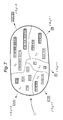
- slice ( x [n] , j , i ) calls find ( x [n] , i ) and find ( x [n] , j ) and splits all chunks of the respective classes at the bit positions corresponding to i and j and groups the originating parts in two new equivalence classes, as illustrated in Figure 5, with a second group of classes, 512.
- Figure 6 exemplifies a granularity analysis in terms of bitvectors, dependency classes of bitvectors chunks and granularities.
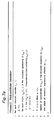
- Each bitvector equation e is processed sequentially by the analyser and the next state of the equivalence class structure is computed by means of the procedure gran(e), which is outlined in process 1 as shown in Figure 6a.
- the coarsest possible granularity is given by the state of the equivalence classes.
- the granularity analysis decomposes the initial satisfiability problem for E into a number of independent satisfiability problems, characterized by the computed equivalence classes.
- the solutions of these problems can be characterized by bitwise bitvector functions, as will be defined as follows:
- n ⁇ ; and k ⁇ a k-ary bitvector function on bitvectors of width n is a function.
- Bitvector functions G [1] : B x ... x B ⁇ B on bitvectors of width 1 are called Boolean functions.
- n ⁇ , k ⁇ , and F [n] be a k-ary bitvector function on bitvectors of width n.
- F [n] is a bitwise bitvector function if there exists a k-ary Boolean function G [1] such that: F [n] ⁇ ( G [1] , G [1] ,... G [1] ) i.e.
- F [n] operates uniformly on all bit positions of its arguments according to G [1] . If two k-ary bitwise Boolean functions F 1 [n] and F 2 [m] , one taking bitvectors of width n as arguments and the other bitvectors of width m, operate according to the same Boolean function G [1] , then this correspondence is denoted by F 1 [n] ⁇ F 2 [m] .
- x [8] , y [8] , z [8] are bit-vector variables of width 8 and let x ' [4] , y ' [4] , z ' [4] , be bit-vector variables of width 4.
- G F 3 [8] ( x [8] , y [8] , z [8] ): ( x [8] [7,4] and y [8] [7,4]) ⁇ z [8] [3,0];
- F 3 [8] is a bitvector function, but not bit-wise.
- C be one of the equivalence classes computed by the granularity analysis.
- an equivalence class C i containing chunks of width n i .
- a ⁇ ( C i ) ⁇ n i is computed, ⁇ ( C i ) depending on the number of chunks residing in C i and on the number of possible inequalities between these chunks, as determined by the guards of if-then-else expressions in the bitvector equations.
- the satisfiability problem B [ni] which is related to C i according to method 1, is satisfiable if and only if the modified satisfiability problem B [ ⁇ (Ci)] , in which each chunk of C i is replaced by a corresponding chunk of width ⁇ (C i ) , i.e. we have B [ni] ⁇ B [ ⁇ (Ci)] , is satisfiable.
- V [ n ] ⁇ x 1 [ n ] , x 2 [ n ] , x k [ n ] ⁇ be a finite set of k bitvector variables of width n ⁇ .
- y [16] The granularity of y [16] , for example , is given by: ⁇ y [16] ⁇ 15,8>, y [16] ⁇ 7,0> ⁇ , i.e. y [16] [15,8] ⁇ y [16] [7,0]
- Method 1 and method 2 yield that the original system E of bitvector equations is satisfiable if and only if the reduced system E' , where all chunks of each class C i are reduced to a width, ⁇ (C i ) , is satisfiable.
- ⁇ ( C ) depends only on the sizes and number of the connected components of the corresponding undirected graph of C and I .
- the computation of the number of connected graph components for each class can efficiently be done by using a union-find algorithm, and, moreover, can be embedded within the computation of the equivalence classes during the granularity analysis.
- V [n] ⁇ x 1 [n] ,.., x k [n] ⁇ be a set of bitvector variables
- B [n] ( x 1 [n] ,..., x k [n] ) be a bitwise bitvector function and I ⁇ V [n] ⁇ V [n] .
- B [m] denote the corresponding bitwise bitvector function with B [m] ⁇ B [n] on bitvector variables x ' 1 [m] ,..., x ' k [m] of width m
- P ( B [m] , I ) denote the following satisfiability problem:
- each satisfiability problem belonging to an equivalence class C can be described by a bitwise bitvector function B [n] and a set of inequalities I .
- V [n] ⁇ x 1 [n] ,... , x k [n] ⁇ be a finite set of k bitvector variables of width n ⁇ .
- I ⁇ V [n]
- m max ⁇ ⁇ (V [n] , I ), 1 ⁇ .
- B [n] k-ary bitwise bitvector function
- P ( B [m] , I ) ⁇ P ( B [n] , I ) and not ( P ( B [m -1 ] , I ) ⁇ P ( B [n] , I ))
- m is the minimum width for which P ( B [m] , I ) is satisfiable if and only if P ( B [n] , I ) is satisfiable.
- the RTL unit incorporates 16 FIFO queue buffers, 810, and complex control logic, 812. Memory addresses are fed to 33 input channels to the multiplexer unit, 804, stored in FIFO's and, upon request, output from one of 17 output channels, 816, while the cell sequence is preserved and no addresses are allowed to be dropped from the management unit.
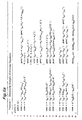
- the prototype was used as preprocessor to a collection of known property checking tools. Three different properties, nop, read and write were required to be verified, which specified the intended behaviour within a range of 4 timesteps (nop, write), respectively 6 timesteps (read). It transpired that the write property did not hold due to a design bug in the Verilog code.
- a counterexample for the reduced model was found by the property checkers and recomputed by the prototype into a counterexample for the original design, whereupon the bug was fixed by the designers and the property was again checked on the corrected design (write fail, write hold). All runtimes on the reduced models were compared to those achieved on the original design without preprocessing. The results are given in CPU seconds (respectively minutes) and are shown in Figure 9.
- the present invention provides a significant reduction in the different sizes of the design models and a tremendous drop in the runtimes of the property checkers.
- Design sizes could be reduced to approximately 30% of the original sizes, and runtimes dropped from between half and three quarters of an hour to minutes or even seconds. Note, in particular, that the computation times the prototype took to analyse the designs and generate the reduced models, ranging between 3 and 7 seconds, are negligible compared to the runtimes of the property checkers.
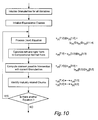
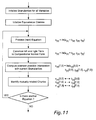
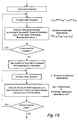
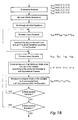
- Figures 10-18 show flow charts for granularity analysis, minimal width abstraction, model generation, together with three corresponding examples.
- the present invention provides an abstraction technique which, given a high-level circuit and a property specification, scales down the design by reducing the widths of input, output and internal signals.
- the method provides a one-to-one abstraction, which yields minimal models with respect to the minimality statement we have given. If a property fails, counterexamples for the original design can be computed from counterexamples for the reduced model. Pre- and post-processing of design and counterexample and the property checking process itself are strictly separated.
- the proposed method is independent of the system realization of the property checker and can be combined with a variety of existing verification techniques which take RTL netlists as input, no matter if the underlying prover engines operate on bit-level (like SAT or BDD-based approaches), or use high-level techniques (e.g. Integer Linear Programming, Arithmetic Constraint Solving).
- the approach is particularly well suited to SAT and BDD-based hardware verification, since the complexity of those techniques depends on the number of variables such provers have to deal with.
Landscapes
- Engineering & Computer Science (AREA)
- Computer Hardware Design (AREA)
- Physics & Mathematics (AREA)
- Theoretical Computer Science (AREA)
- Evolutionary Computation (AREA)
- Geometry (AREA)
- General Engineering & Computer Science (AREA)
- General Physics & Mathematics (AREA)
- Design And Manufacture Of Integrated Circuits (AREA)
Priority Applications (1)
| Application Number | Priority Date | Filing Date | Title |
|---|---|---|---|
| US10/038,870 US6728939B2 (en) | 2001-01-08 | 2002-01-08 | Method of circuit verification in digital design |
Applications Claiming Priority (2)
| Application Number | Priority Date | Filing Date | Title |
|---|---|---|---|
| DE10100433 | 2001-01-08 | ||
| DE10100433 | 2001-01-08 |
Publications (3)
| Publication Number | Publication Date |
|---|---|
| EP1221663A2 true EP1221663A2 (de) | 2002-07-10 |
| EP1221663A3 EP1221663A3 (de) | 2006-04-05 |
| EP1221663B1 EP1221663B1 (de) | 2009-06-24 |
Family
ID=7669908
Family Applications (1)
| Application Number | Title | Priority Date | Filing Date |
|---|---|---|---|
| EP01108653A Expired - Lifetime EP1221663B1 (de) | 2001-01-08 | 2001-04-05 | Verfahren zur Prüfung von Schaltungen in dem digitalen Entwurf |
Country Status (2)
| Country | Link |
|---|---|
| EP (1) | EP1221663B1 (de) |
| DE (1) | DE60139063D1 (de) |
Cited By (2)
| Publication number | Priority date | Publication date | Assignee | Title |
|---|---|---|---|---|
| US8813019B1 (en) | 2013-04-30 | 2014-08-19 | Nvidia Corporation | Optimized design verification of an electronic circuit |
| CN113076622A (zh) * | 2021-02-22 | 2021-07-06 | 南京远思智能科技有限公司 | Fmu仿真模型规范性分析与校验系统及方法 |
Families Citing this family (1)
| Publication number | Priority date | Publication date | Assignee | Title |
|---|---|---|---|---|
| US8726205B1 (en) | 2013-04-15 | 2014-05-13 | Nvidia Corporation | Optimized simulation technique for design verification of an electronic circuit |
Family Cites Families (2)
| Publication number | Priority date | Publication date | Assignee | Title |
|---|---|---|---|---|
| US5465216A (en) * | 1993-06-02 | 1995-11-07 | Intel Corporation | Automatic design verification |
| US5926622A (en) * | 1997-03-18 | 1999-07-20 | Lucent Technologies Inc. | Efficient regression verification |
-
2001
- 2001-04-05 EP EP01108653A patent/EP1221663B1/de not_active Expired - Lifetime
- 2001-04-05 DE DE60139063T patent/DE60139063D1/de not_active Expired - Lifetime
Cited By (3)
| Publication number | Priority date | Publication date | Assignee | Title |
|---|---|---|---|---|
| US8813019B1 (en) | 2013-04-30 | 2014-08-19 | Nvidia Corporation | Optimized design verification of an electronic circuit |
| CN113076622A (zh) * | 2021-02-22 | 2021-07-06 | 南京远思智能科技有限公司 | Fmu仿真模型规范性分析与校验系统及方法 |
| CN113076622B (zh) * | 2021-02-22 | 2023-12-12 | 南京远思智能科技有限公司 | Fmu仿真模型规范性分析与校验系统及方法 |
Also Published As
| Publication number | Publication date |
|---|---|
| DE60139063D1 (de) | 2009-08-06 |
| EP1221663B1 (de) | 2009-06-24 |
| EP1221663A3 (de) | 2006-04-05 |
Similar Documents
| Publication | Publication Date | Title |
|---|---|---|
| US6728939B2 (en) | Method of circuit verification in digital design | |
| Bloem et al. | Efficient decision procedures for model checking of linear time logic properties | |
| CN101842789B (zh) | 用于存储器抽象和使用该存储器抽象来验证的方法和装置 | |
| US6148436A (en) | System and method for automatic generation of gate-level descriptions from table-based descriptions for electronic design automation | |
| CN101849235A (zh) | 用于存储器抽象以及用于使用该存储器抽象进行字级网表简化及其验证的方法和设备 | |
| US8255848B2 (en) | Logic design verification techniques for liveness checking with retiming | |
| US7506292B2 (en) | Method for clock synchronization validation in integrated circuit design | |
| KR100329896B1 (ko) | 응용 주문형 집적 회로 설계 방법 | |
| US7882483B2 (en) | Method for checking constraints equivalence of an integrated circuit design | |
| US7856609B2 (en) | Using constraints in design verification | |
| US7890894B2 (en) | Phase abstraction for formal verification | |
| Lee et al. | Unbounded scalable verification based on approximate property-directed reachability and datapath abstraction | |
| US20080201671A1 (en) | Method for generating timing exceptions | |
| US6131080A (en) | Method of monitoring a computer simulation of an electrical circuit | |
| Benini et al. | Automatic synthesis of large telescopic units based on near-minimum timed supersetting | |
| US20050160392A1 (en) | System & method for asynchronous logic synthesis from high-level synchronous descriptions | |
| US7257786B1 (en) | Method and apparatus for solving constraints | |
| EP1221663B1 (de) | Verfahren zur Prüfung von Schaltungen in dem digitalen Entwurf | |
| Fujita | Equivalence checking between behavioral and RTL descriptions with virtual controllers and datapaths | |
| Ranjan et al. | Using combinational verification for sequential circuits | |
| US20090044033A1 (en) | Method for computing power savings and determining the preferred clock gating circuit of an integrated circuit design | |
| Johannsen et al. | Formal verification on the RT level computing one-to-one design abstractions by signal width reduction | |
| Johannsen | Reducing bitvector satisfiability problems to scale down design sizes for RTL property checking | |
| Clarke et al. | Abstract BDDs: a technique for using abstraction in model checking | |
| Clarke et al. | Predicate abstraction and refinement techniques for verifying Verilog |
Legal Events
| Date | Code | Title | Description |
|---|---|---|---|
| PUAI | Public reference made under article 153(3) epc to a published international application that has entered the european phase |
Free format text: ORIGINAL CODE: 0009012 |
|
| AK | Designated contracting states |
Kind code of ref document: A2 Designated state(s): AT BE CH CY DE DK ES FI FR GB GR IE IT LI LU MC NL PT SE TR |
|
| AX | Request for extension of the european patent |
Free format text: AL;LT;LV;MK;RO;SI |
|
| RAP1 | Party data changed (applicant data changed or rights of an application transferred) |
Owner name: INFINEON TECHNOLOGIES AG |
|
| RAP1 | Party data changed (applicant data changed or rights of an application transferred) |
Owner name: ONESPIN SOLUTIONS GMBH |
|
| PUAL | Search report despatched |
Free format text: ORIGINAL CODE: 0009013 |
|
| AK | Designated contracting states |
Kind code of ref document: A3 Designated state(s): AT BE CH CY DE DK ES FI FR GB GR IE IT LI LU MC NL PT SE TR |
|
| AX | Request for extension of the european patent |
Extension state: AL LT LV MK RO SI |
|
| 17P | Request for examination filed |
Effective date: 20060512 |
|
| AKX | Designation fees paid |
Designated state(s): DE FR GB IT NL |
|
| 17Q | First examination report despatched |
Effective date: 20061208 |
|
| GRAP | Despatch of communication of intention to grant a patent |
Free format text: ORIGINAL CODE: EPIDOSNIGR1 |
|
| GRAS | Grant fee paid |
Free format text: ORIGINAL CODE: EPIDOSNIGR3 |
|
| GRAA | (expected) grant |
Free format text: ORIGINAL CODE: 0009210 |
|
| AK | Designated contracting states |
Kind code of ref document: B1 Designated state(s): DE FR GB IT NL |
|
| REG | Reference to a national code |
Ref country code: GB Ref legal event code: FG4D |
|
| REF | Corresponds to: |
Ref document number: 60139063 Country of ref document: DE Date of ref document: 20090806 Kind code of ref document: P |
|
| NLV1 | Nl: lapsed or annulled due to failure to fulfill the requirements of art. 29p and 29m of the patents act | ||
| PG25 | Lapsed in a contracting state [announced via postgrant information from national office to epo] |
Ref country code: NL Free format text: LAPSE BECAUSE OF FAILURE TO SUBMIT A TRANSLATION OF THE DESCRIPTION OR TO PAY THE FEE WITHIN THE PRESCRIBED TIME-LIMIT Effective date: 20090624 |
|
| PLBE | No opposition filed within time limit |
Free format text: ORIGINAL CODE: 0009261 |
|
| STAA | Information on the status of an ep patent application or granted ep patent |
Free format text: STATUS: NO OPPOSITION FILED WITHIN TIME LIMIT |
|
| 26N | No opposition filed |
Effective date: 20100325 |
|
| PG25 | Lapsed in a contracting state [announced via postgrant information from national office to epo] |
Ref country code: IT Free format text: LAPSE BECAUSE OF FAILURE TO SUBMIT A TRANSLATION OF THE DESCRIPTION OR TO PAY THE FEE WITHIN THE PRESCRIBED TIME-LIMIT Effective date: 20090624 |
|
| REG | Reference to a national code |
Ref country code: FR Ref legal event code: PLFP Year of fee payment: 16 |
|
| REG | Reference to a national code |
Ref country code: FR Ref legal event code: PLFP Year of fee payment: 17 |
|
| REG | Reference to a national code |
Ref country code: DE Ref legal event code: R081 Ref document number: 60139063 Country of ref document: DE Owner name: ONESPIN SOLUTIONS GMBH, DE Free format text: FORMER OWNER: ONESPIN SOLUTIONS GMBH, 80339 MUENCHEN, DE |
|
| REG | Reference to a national code |
Ref country code: FR Ref legal event code: PLFP Year of fee payment: 18 |
|
| REG | Reference to a national code |
Ref country code: FR Ref legal event code: CA Effective date: 20180625 |
|
| REG | Reference to a national code |
Ref country code: DE Ref legal event code: R079 Ref document number: 60139063 Country of ref document: DE Free format text: PREVIOUS MAIN CLASS: G06F0017500000 Ipc: G06F0030000000 |
|
| PGFP | Annual fee paid to national office [announced via postgrant information from national office to epo] |
Ref country code: DE Payment date: 20200423 Year of fee payment: 20 Ref country code: FR Payment date: 20200421 Year of fee payment: 20 |
|
| PGFP | Annual fee paid to national office [announced via postgrant information from national office to epo] |
Ref country code: GB Payment date: 20200423 Year of fee payment: 20 |
|
| REG | Reference to a national code |
Ref country code: DE Ref legal event code: R071 Ref document number: 60139063 Country of ref document: DE |
|
| REG | Reference to a national code |
Ref country code: GB Ref legal event code: PE20 Expiry date: 20210404 |
|
| PG25 | Lapsed in a contracting state [announced via postgrant information from national office to epo] |
Ref country code: GB Free format text: LAPSE BECAUSE OF EXPIRATION OF PROTECTION Effective date: 20210404 |