EP1211251A1 - Chromone derivatives, process for the preparation of the same and uses thereof - Google Patents
Chromone derivatives, process for the preparation of the same and uses thereof Download PDFInfo
- Publication number
- EP1211251A1 EP1211251A1 EP00956835A EP00956835A EP1211251A1 EP 1211251 A1 EP1211251 A1 EP 1211251A1 EP 00956835 A EP00956835 A EP 00956835A EP 00956835 A EP00956835 A EP 00956835A EP 1211251 A1 EP1211251 A1 EP 1211251A1
- Authority
- EP
- European Patent Office
- Prior art keywords
- oxo
- group
- benzopyran
- methyl
- salt
- Prior art date
- Legal status (The legal status is an assumption and is not a legal conclusion. Google has not performed a legal analysis and makes no representation as to the accuracy of the status listed.)
- Withdrawn
Links
- 0 *C1=C(C(O)=O)Oc2ccccc2C1=O Chemical compound *C1=C(C(O)=O)Oc2ccccc2C1=O 0.000 description 1
Classifications
-
- C—CHEMISTRY; METALLURGY
- C07—ORGANIC CHEMISTRY
- C07D—HETEROCYCLIC COMPOUNDS
- C07D405/00—Heterocyclic compounds containing both one or more hetero rings having oxygen atoms as the only ring hetero atoms, and one or more rings having nitrogen as the only ring hetero atom
- C07D405/02—Heterocyclic compounds containing both one or more hetero rings having oxygen atoms as the only ring hetero atoms, and one or more rings having nitrogen as the only ring hetero atom containing two hetero rings
- C07D405/12—Heterocyclic compounds containing both one or more hetero rings having oxygen atoms as the only ring hetero atoms, and one or more rings having nitrogen as the only ring hetero atom containing two hetero rings linked by a chain containing hetero atoms as chain links
-
- A—HUMAN NECESSITIES
- A61—MEDICAL OR VETERINARY SCIENCE; HYGIENE
- A61P—SPECIFIC THERAPEUTIC ACTIVITY OF CHEMICAL COMPOUNDS OR MEDICINAL PREPARATIONS
- A61P19/00—Drugs for skeletal disorders
- A61P19/02—Drugs for skeletal disorders for joint disorders, e.g. arthritis, arthrosis
-
- A—HUMAN NECESSITIES
- A61—MEDICAL OR VETERINARY SCIENCE; HYGIENE
- A61P—SPECIFIC THERAPEUTIC ACTIVITY OF CHEMICAL COMPOUNDS OR MEDICINAL PREPARATIONS
- A61P19/00—Drugs for skeletal disorders
- A61P19/08—Drugs for skeletal disorders for bone diseases, e.g. rachitism, Paget's disease
-
- A—HUMAN NECESSITIES
- A61—MEDICAL OR VETERINARY SCIENCE; HYGIENE
- A61P—SPECIFIC THERAPEUTIC ACTIVITY OF CHEMICAL COMPOUNDS OR MEDICINAL PREPARATIONS
- A61P19/00—Drugs for skeletal disorders
- A61P19/08—Drugs for skeletal disorders for bone diseases, e.g. rachitism, Paget's disease
- A61P19/10—Drugs for skeletal disorders for bone diseases, e.g. rachitism, Paget's disease for osteoporosis
-
- A—HUMAN NECESSITIES
- A61—MEDICAL OR VETERINARY SCIENCE; HYGIENE
- A61P—SPECIFIC THERAPEUTIC ACTIVITY OF CHEMICAL COMPOUNDS OR MEDICINAL PREPARATIONS
- A61P29/00—Non-central analgesic, antipyretic or antiinflammatory agents, e.g. antirheumatic agents; Non-steroidal antiinflammatory drugs [NSAID]
-
- C—CHEMISTRY; METALLURGY
- C07—ORGANIC CHEMISTRY
- C07D—HETEROCYCLIC COMPOUNDS
- C07D311/00—Heterocyclic compounds containing six-membered rings having one oxygen atom as the only hetero atom, condensed with other rings
- C07D311/02—Heterocyclic compounds containing six-membered rings having one oxygen atom as the only hetero atom, condensed with other rings ortho- or peri-condensed with carbocyclic rings or ring systems
- C07D311/04—Benzo[b]pyrans, not hydrogenated in the carbocyclic ring
- C07D311/22—Benzo[b]pyrans, not hydrogenated in the carbocyclic ring with oxygen or sulfur atoms directly attached in position 4
- C07D311/24—Benzo[b]pyrans, not hydrogenated in the carbocyclic ring with oxygen or sulfur atoms directly attached in position 4 with carbon atoms having three bonds to hetero atoms with at the most one bond to halogen, e.g. ester or nitrile radicals, directly attached in position 2
-
- C—CHEMISTRY; METALLURGY
- C07—ORGANIC CHEMISTRY
- C07D—HETEROCYCLIC COMPOUNDS
- C07D413/00—Heterocyclic compounds containing two or more hetero rings, at least one ring having nitrogen and oxygen atoms as the only ring hetero atoms
- C07D413/02—Heterocyclic compounds containing two or more hetero rings, at least one ring having nitrogen and oxygen atoms as the only ring hetero atoms containing two hetero rings
- C07D413/12—Heterocyclic compounds containing two or more hetero rings, at least one ring having nitrogen and oxygen atoms as the only ring hetero atoms containing two hetero rings linked by a chain containing hetero atoms as chain links
-
- C—CHEMISTRY; METALLURGY
- C07—ORGANIC CHEMISTRY
- C07D—HETEROCYCLIC COMPOUNDS
- C07D417/00—Heterocyclic compounds containing two or more hetero rings, at least one ring having nitrogen and sulfur atoms as the only ring hetero atoms, not provided for by group C07D415/00
- C07D417/02—Heterocyclic compounds containing two or more hetero rings, at least one ring having nitrogen and sulfur atoms as the only ring hetero atoms, not provided for by group C07D415/00 containing two hetero rings
- C07D417/12—Heterocyclic compounds containing two or more hetero rings, at least one ring having nitrogen and sulfur atoms as the only ring hetero atoms, not provided for by group C07D415/00 containing two hetero rings linked by a chain containing hetero atoms as chain links
-
- C—CHEMISTRY; METALLURGY
- C07—ORGANIC CHEMISTRY
- C07D—HETEROCYCLIC COMPOUNDS
- C07D493/00—Heterocyclic compounds containing oxygen atoms as the only ring hetero atoms in the condensed system
- C07D493/02—Heterocyclic compounds containing oxygen atoms as the only ring hetero atoms in the condensed system in which the condensed system contains two hetero rings
- C07D493/04—Ortho-condensed systems
Definitions
- the present invention relates to chromone derivatives having an osteogenesis promoting effect, their production and use.
- Osteoporosis is a pathological state or disorder in which certain symptoms or risks occur due to a decrease in bone quantity that has reached a certain level.
- a major symptom of it is kyphosis, and a fracture in thoracic and lumbar vertebrae and vertebral bodies, femoral neck, distal extremity of radius, costa, proximal extremity of humerus, and the like.
- osseous tissue bone formation and destruction by bone resorption occur continuously, with a balance between them being kept, and osteoblasts in osteogenesis and osteoclasts in bone resorption play a central role in that. Loss of the balance between bone formation and bone resorption results in osteoporosis accompanied by a decrease in quantity of the bone.
- bone resorption-suppressing substances such as estrogens, calcitonins, bisphoshonates, and the like have primarily been used.
- these bone resorption-suppression agents are given, however, in some cases, the patients to whom the agents can be administered are limited, or the effect is uncertain, and no sufficient effect is attained. Accordingly, it is desirable to develop osteogenesis promoting agents, which increase the decreased bone quantity actively as preventive or therapeutic agents for osteoporosis.
- JP-A 7-291983 Japanese Unexamined Patent Publication No.
- the present invention provides chromone derivatives having an excellent osteogenesis promoting effect, the production thereof and osteogenesis promoting agents containing them as effective components.
- the present inventors worked diligently to investigate and develop a compound having an osteogenesis promoting effect and they discovered that chromone derivatives having a non-aromatic heterocyclic group have a prominent osteogenesis promoting effect.
- the present inventors made further investigations based on these findings and succeeded in establishing the present invention.
- the present invention relates to:
- substituent on the optionally substituted benzene ring represented by the ring A for example, halogen atom, nitro, optionally substituted alkyl group, optionally substituted hydroxy group, optionally substituted mercapto group, optionally substituted amino group, acyl group, mono- or di-alkoxyphosphoryl group, phosphono group, optionally substituted aryl group, optionally substituted aralkyl group, or optionally substituted aromatic heterocyclic group may be used, and these may be the same or different, of which 1 to 4, preferably 1 to 3, maybe substituted on the benzene ring.
- halogen atom includes, for example, fluorine, chlorine, bromine and iodine.
- alkyl group of the "optionally substituted alkyl group” includes, preferably, alkyl of 1-10 carbon atoms, e.g., methyl, ethyl, propyl, isopropyl, butyl, sec-butyl, tert-butyl, pentyl, isopentyl, neopentyl, hexyl, heptyl, octyl, nonyl, decyl, and the like, and cycloalkyl of 3-7 carbon atoms, e.g., cyclopropyl, cyclobutyl, cyclohexyl or cycloheptyl, and the like, which may be substituted by 1 to 3 substituents such as, for example, halogen atom, e.g., fluorine, chlorine, bromine, iodine, etc., hydroxy, alkoxy group of 1-6 carbon atoms, e.g., methoxy,
- the substituted alkyl group is exemplified by tri-fluoromethyl, trifluoroethyl, trichloromethyl, hydroxymethyl, 2-hydroxyethyl, 1-methoxyethyl, 2-methoxyethyl, 2,2-diethoxyethyl, 2-diethoxyphosphorylethyl, phosphonomethyl, and the like.
- the substituted hydroxy group in the "optionally substituted hydroxy group” includes alkoxy group, alkenyloxy group, aralkyloxy group, acyloxy group, aryloxy group, and the like.
- the "alkoxy group” includes, preferably, alkoxy group of 1-10 carbon atoms, e.g., methoxy, ethoxy, propoxy, butoxy, tert-butoxy, pentyloxy, hexyloxy, heptyloxy, nonyloxy, and the like, and cycloalkoxy group of 4-6 carbon atoms, e.g., cyclobutoxy, cyclopentoxy, cyclohexyloxy, and the like.
- alkenyloxy group includes, preferably, those of 2-10 carbon atoms, e.g., allyloxy, crotyloxy, 2-pentenyloxy, 3-hexenyloxy, 2-cyclopentenylmethoxy, 2-cyclohexenylmethoxy, and the like.
- aralkyloxy group includes, preferably, those of 7-19 carbon atoms, more preferably C 6-14 aryl-C 1-4 alkyloxy, e.g., benzyloxy, phenethyloxy, and the like.
- the "acyloxy group” includes, preferably, alkanoyloxy group, carbamoyloxy group, alkoxylcarbonyloxy group, preferably C 1-10 alkoxylcarbonyloxy, and the like.
- the "acyloxy group” includes, preferably, alkanoyloxy group, for example, those of 2-10 carbon atoms, e.g., acetyloxy, propionyloxy, n-butyryloxy, i-butyryloxy, hexanoyloxy, and the like.
- the "carbamoyloxy group” mentioned in the above includes, not only a carbamoyloxy group, but an optionally substituted carbamoyloxy group as well, for example, carbamoyloxy group substituted by 1 or 2 alkyl groups.
- the alkyl group in the carbamoyloxy group substituted by 1 or 2 alkyl groups includes alkyl group of 1-10 carbon atoms, e.g., methyl, ethyl, propyl, isopropyl, butyl, isobutyl, sec-butyl, tert-butyl, pentyl, isopentyl, neopentyl, hexyl, heptyl, octyl, nonyl, decyl, and the like, cycloalkyl group of 3-7 carbon atoms, e.g., cyclopropyl, cyclobutyl, cyclohexyl, cycloheptyl, and the like, and preferably alkyl group of 1-6 carbon atoms.
- alkyl group of 1-10 carbon atoms e.g., methyl, ethyl, propyl, isopropyl, butyl, isobutyl
- the "carbamoyloxy group” mentioned in the above includes, preferably, carbamoyloxy, methylcarbamoyloxy, dimethylcarbamoyloxy, ethylcarbamoyloxy, and diethylcarbamoyloxy, and the like.
- the "allyloxy group” includes, allyloxy group of 6-14 carbon atoms, e.g., phenoxy, biphenyloxy. These groups may be substituted by 1 to 3 substituents such as, for example, halogen atom mentioned in the above, hydroxy, alkoxy group of 1-6 carbons, mono- or di-(C 1-6 alkoxy) phosphoryl group, phosphono group, and the like.
- the substituted hydroxy group is exemplified by trifluoromethoxy, 2,2,2-trifluoroethoxy, difluoromethoxy, 2-methoxyethoxy, 4-chlorobenzyloxy, 2-(3,4-dimethoxyphenyl) ethoxy, methoxy, methylenedioxy, acetyloxy, n-butyryloxy, i-butyryloxy, diethylcarbamoyloxy, and the like.
- the mercapto group in the "optionally substituted mercapto group” includes, mercapto group substituted by the same group as the substituent of "optionally substituted hydroxy group” described above, and for example, alkylthio group, aralkylthio group, acylthio group, and the like.
- the alkylthio group includes, preferably, alkylthio group of 1-10 carbon atoms, e.g., methylthio, ethylthio, propylthio, butylthio, pentylthio, hexylthio, heptylthio, nonylthio, and the like, and cycloalkylthio group of 4-6 carbon atoms, e.g., cyclobutylthio, cyclopentylthio, cyclohexylthio, and the like.
- the "aralkylthio group” includes, preferably, those of 7-19 carbon atoms, more preferably, C 6-14 -aryl-C 1-4 alkylthio, e.g., benzylthio, phenethylthio, and the like.
- the "acylthio group” includes, preferably, alkanoylthio, for example, those of 2-10 carbon atoms, e.g., acetylthio, propionylthio, n-butyrylthio, hexanoylthio, and the like.
- These groups may further be substituted by 1-3 substituents such as, for example, the above-mentioned halogen atom, hydroxy group, alkoxy group of 1-6 carbon atoms, mono- or di-(C 1-6 alkoxy) phosphoryl group, phosphono group, and the like.
- the substituted thiol group is exemplified by trifluoromethylthio, 2,2,2-trifluoroethylthio, 2- methoxyethylthio, 4-chlorobenzylthio, 3,4-dichlorobenzylthio, 4-fluorobenzylthio, 2-(3,4-dimethoxyphenyl) ethylthio, and the like.
- the substituent of the substituted amino group in the "optionally substituted amino group” includes the above-mentioned alkyl group of 1-10 carbon atoms, alkenyl group of 2-10 carbon atoms, e.g., allyl, vinyl, 2-penten-1-yl, 3-penten-1-yl, 2-hexen-1-yl, 3-hexen-1-yl, 2-cyclohexenyl, 2-cyclopentenyl, 2-methyl-2-propen-1-yl, 3-methyl-2-buten-1-yl, and the like, aryl group of 6-14 carbon atoms, and aralkyl group of 7-19 carbon atoms, and these may be used alone or as two identical or different groups.
- These groups may be substituted by the above-mentioned halogen atom, alkoxy group of 1-6 carbon atoms, mono- or di-(C 1-6 alkoxy) phosphoryl group, phosphono, and the like.
- the substituted amino acid group is exemplified by methylamino, dimethylamino, ethylamino, diethylamino, dibutylamino, diallylamino, cyclohexylamino, phenylamino, or N-methyl-N-phenylamino, N-methyl-N-(4-chlorobenzyl)amino, N,N-di-(2-methoxyethyl)amino, and the like.
- acyl group includes an organic carboxylic acyl group, sulfonic acyl group having a hydrocarbon group of 1-6 carbon atoms (e.g., methyl, ethyl, n-propyl, hexyl, phenyl, etc.), carbamoyl group, and the like.
- the "organic carboxylic acyl group" used includes, for example, formyl, alkyl-carbonyl group of 1-10 carbon atoms, e.g., acetyl, propionyl, butyryl, valeryl, pivaloyl, hexanoyl, octanoyl, cyclobutanecarbonyl, cyclohexanecarbonyl, cycloheptanecarbonyl, etc., alkenyl-carbonyl group of 2-10 carbon atoms, e.g., crotonyl, 2-cyclohexenecarbonyl, etc., aryl-carbonyl group of 6-14 atoms, e.g., benzoyl, etc., aralkyl-carbonyl group of 7-19 carbon atoms, e.g., benzylcarbonyl, benzhydrylcarbonyl, etc., 5- or 6- membered aromatic heterocyclic carbonyl group,
- the "sulfonic acyl group having a hydrocarbon group of 1-6 carbon atoms” includes, for example, alkane sulfonyl group of 1-6 carbon atoms, e.g., methanesulfonyl, ethanesufonyl, and the like. These groups may further be substituted by 1-3 substituents, for example, the above-mentioned halogen atom, hydroxy, alkoxy group of 1-6 carbon atoms, amino, and the like.
- the acyl group is exemplified by trifluoroacetyl, trichloroacetyl, 4-methoxybutyryl, 3-cyclohexyloxypropionyl, 4-chlorobenzoyl, 3,4-dimethoxybenzoyl, and the like.
- the "carbamoyl group” mentioned in the above includes, not only a carbamoyl group, but an optionally substituted carbamoyl group as well, for example, carbamoyl group substituted by 1 or 2 alkyl groups.
- the alkyl group in the carbamoyl group substituted by 1 or 2 alkyl groups includes alkyl group of 1-10 carbon atoms, e.g., methyl, ethyl, propyl, isopropyl, butyl, isobutyl, sec-butyl, tert-butyl, pentyl, isopentyl, neopentyl, hexyl, heptyl, octyl, nonyl, decyl, and the like, cycloalkyl group of 3-7 carbon atoms, e.g., cyclopropyl, cyclobutyl, cyclohexyl, cycloheptyl, and the like
- the "carbamoyl group” mentioned in the above includes, preferably, carbamoyl, methylcarbamoyl, dimethylcarbamoyl, ethylcarbamoyl, and diethylcarbamoyl, and the like.
- the "mono- or di-alkoxyphosphoryl group” includes mono-C 1-6 alkoxyphosporyl group, such as methoxyphosphoryl, ethoxyphosphoryl, propoxyphosphoryl, isopropoxyphosphoryl, butoxyphosphoryl, pentyloxyphosphoryl, hexyloxyphosphoryl, and the like, and di-C 1-6 alkoxyphosphoryl group such as dimethoxyphosphoryl, diethoxyphosphoryl, dipropoxyphosphoryl, diisopropoxyphosphoryl, dibutoxyphosphoryl, dipentyloxyphosphoryl, dihexyloxyphosphoryl, and the like.
- di-C 1-6 alkoxyphosphoryl group for example, dimethoxyphosphoryl, diethoxyphosphoryl, dipropoxyphosphoryl, diisopropoxyphosphoryl, ethylenedioxyphosphoryl, dibutoxyphosphoryl, and the like may be used.
- the aryl group in the "optionally substituted aryl group” includes, preferably, those of 6-14 carbon atoms, for example, phenyl, naphthyl, anthryl, and the like. These groups may be substituted by 1-3 substituents such as alkyl group of 1-10 carbon atoms, halogen atom, hydroxy, alkoxy group of 1-6 carbon atoms, and the like.
- the substituted aryl group is exemplified by 4-chlorophenyl, 3,4-dimethoxyphenyl, 4-cyclohexylphenyl, 5,6,7,8-tetrahydro-2-naphthyl, and the like.
- the aralkyl group in the "optionally substituted aralkyl group” includes, preferably, those of 7-19 carbon atoms, for example, benzyl, naphthylethyl, trityl, and the like, and these groups may be substituted on the aromatic ring by 1-3 substituents such as the above-mentioned alkyl group of 1-10 carbon atoms, halogen atom, hydroxy, alkoxy group of 1-6 carbon atoms, and the like.
- the substituted aralkyl group is exemplified by 4-chlorobenzyl, 3,4-dimethoxybenzyl, 4-cyclohexylbenzyl, 5,6,7,8-tetrahydro -2-naphthylethyl, and the like.
- the aromatic heterocyclic group in the "optionally substituted aromatic heterocyclic group” includes, preferably, 5- or 6-membered ones having 1 to 4 heteroatoms selected from nitrogen, oxygen and/or sulfur , for example, furyl, thienyl, imidazolyl, thiazolyl, oxazolyl, thiadiazolyl, and the like. These groups may be substituted by 1-3 substituents such as the above-mentioned alkyl group of 1-10 carbon atoms, halogen atom, hydroxy, alkoxy group of 1-6 carbon atoms, and the like.
- alkyl groups When two alkyl groups are placed adjacent to each other on the benzene ring A, they may be bound to each other to form an alkylene group of the formula: -(CH 2 ) L - [wherein L is an integer of 3-5] e.g., trimethylene, tetramethylene, pentamethylene, etc.), and when two alkoxy groups are placed adjacent to each other, they may form an alkylenedioxy group of the formula: -O-(CH 2 ) m -O-[wherein m is an integer of 1-4](e.g., methylenedioxy, ethylenedioxy, trimethylenedioxy, etc.). In such cases, a 5- to 8- membered ring is formed together with the carbon atoms on the benzene ring.
- the preferred substituent on the ring A includes, for example, hydroxy group, C 2-10 alkanoyloxy group, carbamoyloxy group substituted by 1 or 2 C 1-10 alkyl groups, mercapto group, halogen atom, C 1-10 alkyl group, C 1-10 alkoxy group, C 1-10 alkylthio group, alkylenedioxy group of the formula: -O-(CH 2 )m-O-[wherein m is an integer of 1-4], and the like, wherein the number of substituents is preferably 1 to 3.
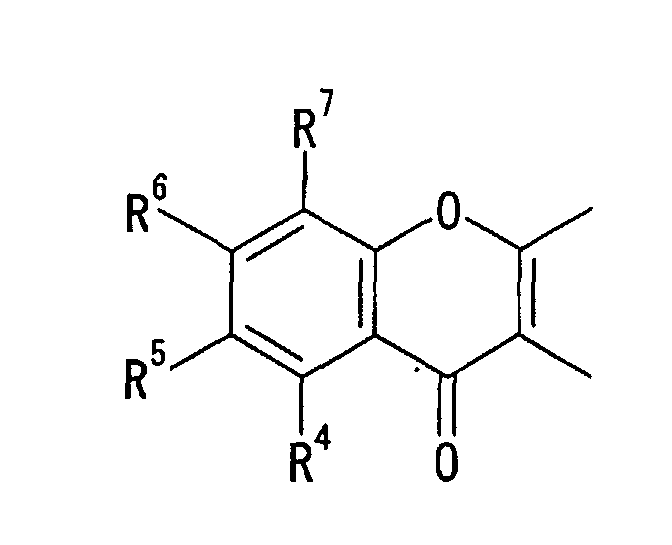
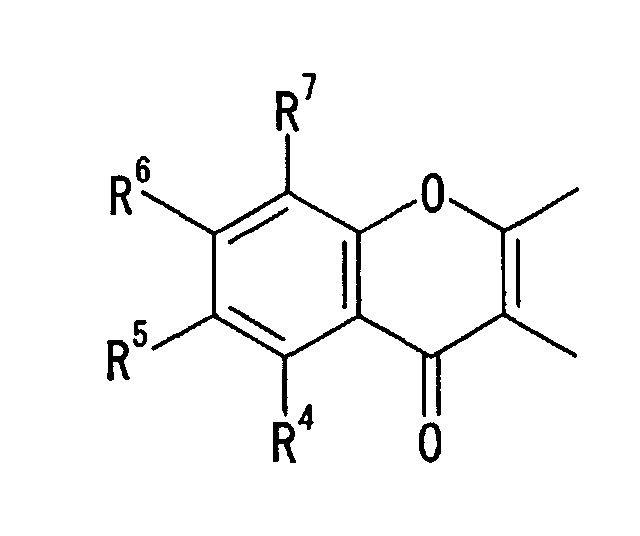
- R 4 is hydrogen atom or hydroxy group
- R 5 to R 7 are independently hydrogen atom, halogen atom, C 1-10 alkyl, or C 1-10 alkoxy; each may be the same or different
- R 4 hydrogen atom or hydroxy group are preferred and hydroxy is more preferred.
- the non-aromatic heterocycle in the optionally substituted non-aromatic heterocyclic group represented by R 1 includes 3- to 8-membered (preferably 5- to 7-membered) ones containing 1 to 4 heteroatoms selected from the group consisting of nitrogen atom, sulfur atom and oxygen atom, preferably, non-aromatic heterocycle wherein the heteroatom is selected from nitrogen atom, sulfur atom and oxygen atom, more preferably, 3- to 8-membered non-aromatic heterocycle, wherein the hetero atom is selected from nitrogen atom, sulfur atom and oxygen atom.
- Such a heterocycle is exemplified by oxirane, azetidine, oxetane, thietane, pyrrolidine, tetrahydrofuran, thiolane, piperidine, tetrahydropyran, morpholine, thiomorpholine, piperazine, homopiperidine, pyrroline, imidazolidine, thiazoline, isothiazoline, thiazolidine, isothiazolidine, imidazolidine, oxazoline, oxazolidine, oxadiazolidine, oxathiazolidine, dithiazolidine, thiadiazolidine, and the like.
- 5- to 7-membered non-aromatic heterocycles which contain at least a nitrogen atom are preferred, and especially, pyrrolidine, imidazolidine, thiazolidine, isothiazolidine, oxazolidine, oxadiazolidine, piperidine, piperazine, thiomorpholine and morpholine.
- the substituent on the optionally substituted non-aromatic heterocyclic group includes, for example, (i) halogen atom (e.g., fluorine, chlorine, bromine, iodine, etc.), (ii) hydroxy or oxo, (iii) C 1-10 alkyl (e.g., methyl, ethyl, propyl isopropyl, butyl, isobutyl, sec-butyl, tert-butyl, pentyl, neopentyl, hexyl, heptyl, octyl, nonyl, or decyl, etc.), (iv) C 1-6 alkoxy (e.g., methoxy, ethoxy, propoxy, butoxy, tert-butoxy, pentyloxy, hexyloxy, etc.), (v) C 1-6 acyl (e.g., acetyl (e.g., acet
- the optionally substituted non-aromatic heterocyclic group is exemplified by oxiranyl, azetidinyl oxetanyl, thietanyl, pyrrolidinyl, tetrahydrofuryl, thiolanyl, piperidyl, tetrahydropyranyl, morpholinyl, thiomorpholinyl, piperazinyl, homopiperidyl, 4-oxopiperidyl, pyrrolinyl, imidazolidinyl, 4-formylpiperazinyl, 4-methanesulfonylpiperazinyl, 3-hydroxypyrrolidinyl, 2,4-dioxothiazolidin-5-yl, 2,4-dioxothiazolidin-3-yl, hydantoin-3-yl, glutarimido-4-yl, 1-methylhydantoin-3-yl, succinimido, 2-oxazolidon-3-y
- non-aromatic heterocyclic groups may be condensed with a benzene ring, a 6-membered ring containing 2 or less nitrogen atoms, or a 5-membered ring containing one sulfur atom.
- the condensed non-aromatic heterocyclic group is exemplified by chromanyl, isochromanyl, indolinyl, isoindolinyl, thiochromanyl, isothiochromanyl, and the like.
- alkyl group preferably, alkyl of 1-10 carbon atoms, e.g., methyl, ethyl, propyl, isopropyl, butyl, isobutyl, sec-butyl, tert-butyl, pentyl, isopentyl, neopentyl, hexyl, and the like
- alkenyl group preferably, alkenyl of 2-10 carbon atoms, e.g., vinyl, aryl, isopropenyl, 2-methylallyl, 1-propenyl, 2-methyl-1-propenyl, 1-butenyl, 2-butenyl, 3-butenyl, 2-ethyl-1-butenyl, 2-methyl-2-butenyl, 3-methyl-2-butenyl, 1-pentenyl, 2-pentenyl, 3-pentenyl
- hydrocarbon groups for example, a straight or branched C 1-6 alkyl group such as methyl, ethyl, propyl, isopropyl, butyl, isobutyl, sec-butyl, tert-butyl, pentyl, isopentyl, neopentyl, hexyl, and the like, is preferred. Particularly, a C 1-4 alkyl group is preferred.
- a hydrogen atom or a C 1-6 alkyl group is preferred, and particularly, a hydrogen atom is preferred.
- n is an integer of 0-3, preferably 1 or 2.
- salts of the compounds of the present invention pharmaceutically acceptable salts are preferred, including, for example, salts with inorganic bases, salts with organic bases, salts with inorganic acids, salts with organic acids, and salts with basic or acidic amino acids, and the like.
- the preferred salts with inorganic bases are exemplified by alkali metal salts, e.g., sodium salts, potassium salts, etc.; alkaline earth metal salts, e.g., calcium salts, magnesium salts, etc.; as well as aluminum salts, ammonium salts, and the like.
- the preferred salts with organic bases are exemplified by salts of trimethylamine, triethylamine, pyridine, picoline, ethanolamine, diethanolamine, dicyclohexylamine, N,N'-dibenzylethylenediamine, and the like.
- the preferred salts with inorganic acids are exemplified by those of hydrochloric acid, hydrobromic acid, nitric acid, sulfuric acid, phosphoric acid, and the like.
- the preferred salts with organic acids are exemplified by those of formic acid, acetic acid, trifluoroacetic acid, fumaric acid, oxalic acid, tartaric acid, maleic acid, citric acid, succinic acid, malic acid, methanesulfonic acid, benzensulfonic acid, p-toluene sulfonic acid, and the like.
- the preferred salts with basic amino acids are exemplified by those of arginine, lysine, ornithine, and the like.
- the salts with acidic amino acids are those of aspartic acid, glutamic acid, and the like.
- the present invention further provides a process for producing the compound described in the above Formula (I), or a salt thereof.
- a salt of the compounds represented by the Formula (II) and Formula (III) includes the same salt as the salt of the compound represented by the Formula (I). wherein each symbol has the same meaning as mentioned above.
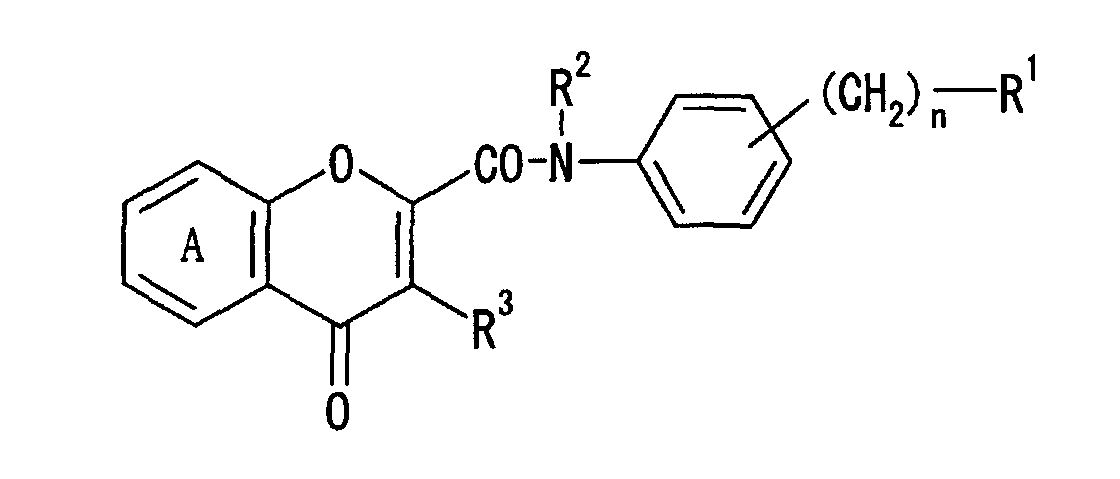
- Compounds (I) can be prepared by reacting Compounds (II) [equivalent to the compound of the Formula (II) or a salt thereof] with Compounds (III) [equivalent to the compound of the Formula (III) or a salt thereof].
- the condensation reaction of Compounds (II) with Compounds (III) can be conducted by the general method of peptide synthesis. Publicly known methods for the peptide synthesis, for example, are described in 1) - 3) below.
- solvents for example, dimethylformamide, dimethylsulfoxide, pyridine, chloroform, dichloromethane, tetrahydrofuran, dioxane, acetonitrile, and appropriate mixtures of these solvents are used.
- the reaction temperature is usually selected in the range of approximately -20°C to 50°C, more preferably -10°C to 30°C.
- the reaction time is usually about 1 to 100 hours, more preferably 2 to 40 hours approximately.
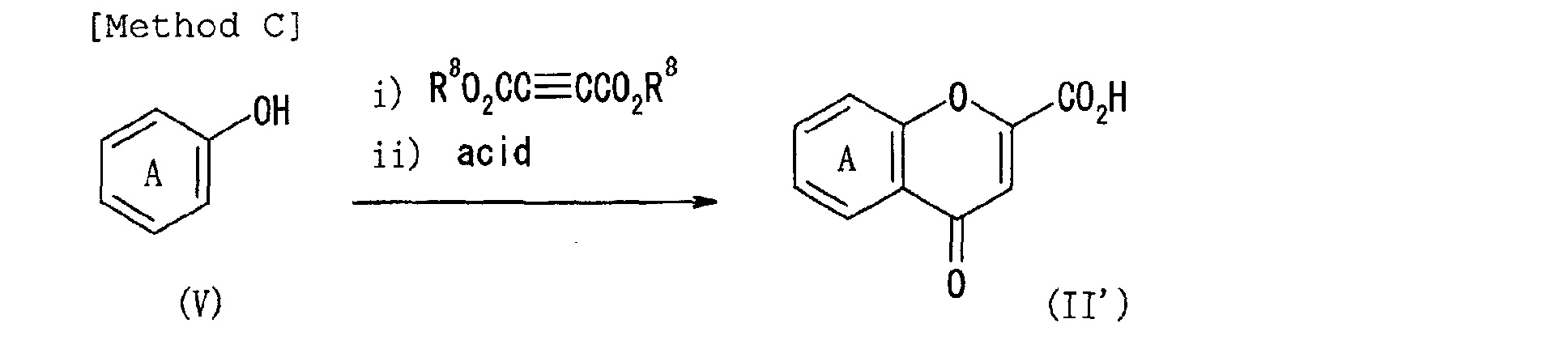
- the above-mentioned starting Compounds (II) can be produced according to publicly known method such as the method described in Progress in Medicinal Chemistry, vol. 9, 65, 1973, Liebigs Annalen der Chemie, 1552, 1973 and Journal of Chemical Society Parkin Transactions I, 2597, 1987. More specifically, for example, it can be prepared by [Method B] or [Method C] described next. wherein R 8 represents C 1-10 alkyl group and other symbols have the same meaning as mentioned above.
- R 1 - R 3 exemplified in the above is used to represent the C 1-10 alkyl group represented by R 8 .
- the compound shown in the formula (II) or its salt is exemplified by 5,6-methylenedioxy-4-oxo-4H-1-benzopyran-2-carboxylic acid, 5,6-dihydroxy-4-oxo-4H-1-benzopyran-2-carboxylic acid, or 5-hydroxy-7-methyl-4-oxo-4H-1-benzopyran-2-carboxylic acid, or a salt thereof, and the like.
- the reaction of the 1 st step is conducted in solvents in the presence of a base.
- suitable solvents are aromatic hydrocarbons such as benzene, toluene, xylene, etc.; halogenated hydrocarbons such as chloroform, dichloromethane, 1,2-dichloroethane, 1,1,2,2-tetrachloroethane, etc.; ethers such as diethylether, tetrahydrofuran, dioxane, etc.; alcohols such as methanol, ethanol, propanol, 2-methoxyethanol, etc.; N,N-dimethylformamide; dimethylsulfoxide; and appropriate mixtures of these solvents.
- Suitable bases are sodium alkoxides such as sodium methoxide, sodium ethoxide, etc.; potassium alkoxides such as potassium methoxide, potassium, tert-butoxide, etc.; sodium hydride; potassium hydride; sodium hydroxide; potassium hydroxide.
- the molar ratio of the amount of oxalic acid ester used to Compounds (IV) is about 1 - 3 mol to 1 mol.
- the amount of the base used to Compounds (IV) is about 1 to 10 mol per 1 mol, preferably 2 to 5 mol per 1 mol.
- the reaction temperature is from about -20 to 150°C, more preferably from about 0 to 120°C.
- the reaction time is from about 0.5 to 10 hours.
- Compound (II) is manufactured according to the 2 nd step of reaction.
- the 2 nd step is conducted by heating with inorganic acids such as hydrochloric acid, sulfuric acid, etc. in solvents.
- suitable solvents are ethers such as diethylether, tetrahydrofuran, dioxane, etc.; alcohols such as methanol, ethanol, propanol, 2-methoxyethanol, etc.; acetic acid; N,N-dimethyl formamide; dimethyl sulfoxide; acetonitrile; 2-butanone; water; and mixtures of these solvents.
- An excess amount of inorganic acid is normally used.
- the reaction temperature is from about 20 to 180°C.
- the reaction time is from about 0.5 to 30 hours.
- the compounds (II) thus obtained can be isolated and purified by publicly known methods for separation and purification, for example, concentration, reduced pressure concentration, solvent extraction, crystallization, recrystallization, solvent exchange and chromatography.
- R 8 has the same meaning as mentioned above.
- the compound represented by Formula (V) or its salt [referred to as Compounds (V)] is reacted with acetylene dicarboxylic acid ester (the 1 st step of reaction), then, treated with acids (the 2 nd step of the reaction) in order to manufacture Compounds (II') [equivalent to Compounds represented by formula (II') or its salt thereof].
- the 1 st step of the reaction is conducted in solvents in the presence of a base.
- suitable solvents are aromatic hydrocarbons such as benzene, toluene, xylene, etc.; halogenated hydrocarbons such as chloroform, dichloromethane, 1,2-dichloroethane, 1,1,2,2-tetrachloroethane, etc.; ethers such as diethyl ether, tetrahydrofuran, dioxane, etc.; alcohols such as methanol, ethanol, propanol, 2-methoxyethanol, etc.; N,N-dimethylformamide; dimethylsulfoxide; and appropriate mixtures of these solvents.
- phase transfer catalysts such as tetrabutylammonium fluoride (TBAF); sodium alkoxides such as sodium methoxide, sodium ethoxide, etc.; potassium alkoxides such as potassium methoxide, potassium tert-butoxide, etc.; sodium hydride; potassium hydride; sodium hydroxide; potassium hydroxide.
- TBAF tetrabutylammonium fluoride
- sodium alkoxides such as sodium methoxide, sodium ethoxide, etc.
- potassium alkoxides such as potassium methoxide, potassium tert-butoxide, etc.
- sodium hydride potassium hydride
- sodium hydroxide potassium hydroxide
- the molar ratio of the acetylene dicarboxylic acid ester used to Compounds (V) is about 1 to 3 mol per 1 mol.
- the molar ratio of the base used to Compounds (V) is about 0.1 to 10 mol per 1
- Compound II is manufactured according to the 2 nd step of reaction.
- the 2 nd step is conducted by heating with inorganic acids such as hydrochloric acid, sulfuric acid, etc. in solvents.
- suitable solvents are ethers such as diethylether, tetrahydrofuran, dioxane, etc.; alcohols such as methanol, ethanol, propanol, 2-methoxyethanol, etc.; acetic acid; N,N-dimethylformamide; dimethylsulfoxide; acetonitrile; 2-butanone; water; and mixtures of these solvents.
- An excess amount of inorganic acid is normally used.
- the reaction temperature is about 20°C to 180°C.
- the reaction time is about 0.5 to 30 hours.
- the compounds (II') thus obtained can be isolated and purified by publicly known methods for separation and purification, for example, concentration, reduced pressure concentration, solvent extraction, crystallization, recrystallization, solvent exchange and chromatography.
- the prodrugs of Compounds (I) of the invention mean compounds convertible into Compounds (I) under the action of enzymes or gastric acid under physiological conditions in a living body, that is, compounds which are enzymatically oxidized, reduced or hydrolyzed to give Compounds (I), or compounds which are hydrolyzed with gastric acid or the like to give Compounds (I).
- the prodrugs of Compounds (I) include: the compound in which the amino group of Compounds (I) is acylated, alkylated or phosphorylated (e.g., the compound in which the amino acid group of Compounds (I) is eicosanoylated, alanylated, pentylaminocarbonylated, (5-methyl-2-oxo-1, 3-dioxolene-4-yl) methoxycarbonylated, tetrahydrofuranylated, pyrrolidylmethylated, pivaloyloxymethylated, tert-butylated etc.); the compound in which the hydroxyl group of Compounds (I) is acylated, alkylated, phosphorylated or boracylated (e.g., the compound in which the hydroxyl group of Compounds (I) is acetylated, palmitoylated, propanoylated, pivaloylated, succinylated
- the prodrug of Compounds (I) may be those which can be converted into Compounds (I) under physiological conditions as described in "Development of Drugs", vol. 7, Molecular Design, pp. 163-198 (1990), Hirokawa Publishing Company.
- Compounds (I) may be hydrates of those mentioned.
- Compounds (I) of the present invention since they exhibit a potent alkaline phosphatase-inducing activity, have a potent osteogenesis promoting effect, chondrogenesis promoting effect, cartilage destruction suppressing effect, and cartilage cell differentiation inducing promoting effect, and in addition they are superior in clinically useful characteristics such as stability, absorption, (particularly, oral absorption), bioavailability, and the like. In addition, their toxicity is low. Accordingly, they can be used safely in mammals (e.g., human, rat, mouse, dog, rabbit, cat, cattle, horse, pig, etc.).
- mammals e.g., human, rat, mouse, dog, rabbit, cat, cattle, horse, pig, etc.
- the osteogenesis promoting agents, preventive agents for bone diseases, preventive agents for bone fractures and preventive agents for cartilage diseases which contain Compounds (I) of the present invention having such effects, can be used as preventive or therapeutic agents for bone diseases and cartilage diseases such as fracture, refracture, bone defect, osteomalacia, Paget's disease of bone, sclerosing myelitis, chronic rheumatoid arthritis, osteoarthritis (e.g., osteoarthritis of the knee), osteoarthritis involving cartilage, and the like in the orthopaedic region, as well as used as osseous tissue restoration agents after surgery for multiple myeloma, lung cancer, breast cancer, and the like.
- they are expected to apply to treatment of periodontal diseases, restoration of periodontal tissue defects in periodontal diseases, stabilization of artificial tooth roots, residual ridge formation and repair of cleft palate.
- Compounds (I) of the present invention when used as preventive or therapeutic agents for osteoporosis, fracture, cartilage defect, etc., may be administered orally at a daily dose of about 1 mg to about 500 mg, preferably about 10mg to about 100mg, as active ingredient [Compound (I) of the present invention] for an adult (body weight 50kg) in 1 to 3 divided doses, while the dose varies depending on the state or weight of a patient, the administration manner and the like.
- parenteral administration they may be administered at a daily dose of about 1 mg to about 300 mg, as active ingredients [Compound (I) of the present invention] for an adult (body weight 50 kg) in 1 to 3 divided doses.
- Compounds (I) of the present invention can be used in combination with other bone resorption suppressing agents or osteogenesis promoting agents.
- the agents used in combination are exemplified by vitamins D 3 (e.g., 1 ⁇ -hydroxyvitamin D 3 , 1 ⁇ , 25-dihydroxyvitamin D 3 , flocalcitriol, secalciferol, etc.), calcitonins (e.g., eel calcitonin, salmon calcitonin, porcine calcitonins, avicatonin, etc.), bisphosphonic acids (e.g., etidronate, simadronate, alendronate, tiludronate, risedronate, clodronate, etc.), sex hormone related compounds (e.g., tibolone, estradiol, osaterone, raloxifene, droloxifene, ormeloxifene, tamoxifene, mifepristone, etc
- Compounds (I) of the present invention may be combined with pharmaceutically acceptable carriers to form solid preparations such as tablets, capsules, granules, powder, and the like; or liquid preparations such as syrup, injection, and the like, and administered orally or parenterally. They may also be formed into percutaneously administrable preparations such as patch, poultice, ointment (including cream), plaster, tape, lotion, liquid preparation, suspension, emulsion, aerosol, and the like.
- the pharmaceutically acceptable carriers a variety of conventional organic or inorganic carrier materials usually added to pharmaceutical preparations can be used, including excipients, lubricants, binders, disintegrators, etc., in solid preparations; solvents, dissolution aids, suspending agents, isotonization agents, buffering agents, soothing agents, etc., in liquid preparations. If required, pharmaceutical additives such as preservatives, antioxidants, stabilizers, coloring agents, sweeteners, and the like may be added.
- the preferred excipients include, for example, lactose, refined sugar, D-mannitol, starch, crystalline cellulose, light silicic anhydride, and the like.
- the preferred lubricants include, for example, magnesium stearate, calcium stearate, talc, colloidal silica, and the like.
- the preferred binders include, for example, crystalline cellulose, ⁇ -starch, refined sugar, D-mannitol, dextrin, hydroxypropyl cellulose, hydroxypropyl methyl cellulose, polyvinylpyrrolidone, and the like.
- the preferred disintegrators include, for example, starch, carboxymethyl cellulose, carboxymethyl cellulose calcium, croscarmellos sodium, carboxymethyl starch sodium, low-substituted hydroxypropyl cellulose, and the like.
- the preferred solvents include, for example, water for injection, alcohol, propylene glycol, macrogol, sesame oil, corn oil, and the like.
- the preferred dissolution aids include, for example, polyethylene glycol, propylene glycol, D-mannitol, benzyl benzoate, ethanol, trisaminomethane, cholesterol, triethanolamine, sodium carbonate, sodium citrate, and the like.
- the preferred suspending agents include, for example, surface activators such as stearyl triethanolamine, sodium lauryl-sulfate, laurylaminopropionic acid, lecithin, benzalkonium chloride, glycerin monostearate, etc.; and hydrophilic high molecular materials such as polyvinyl alcohol, polyvinylpyrrolidone, carboxymethylcellulose sodium, methylcellulose, hydroxymethyl cellulose, hydroxyethyl cellulose, hydroxypropyl cellulose, etc.
- the preferred isotonization agents include, for example, sodium chloride, glycerin, D-Mannitol, and the like.
- the preferred buffering agents include, for example, buffer solutions containing phosphate, acetate, carbonate, citrate, and the like.
- the preferred soothing agents include, for example, benzyl alcohol, etc.
- the preferred preservatives include, for example, paraoxybenzoic acid esters, chlorobutanol, benzyl alcohol, phenethyl alcohol, dehydroacetic acid, sorbic acid, and the like.
- the preferred anti-oxidants include, for example, sulfites, ascorbic acid, and the like.
- the oral preparation may be coated in a per se conventional manner in order to mask its taste or give enteric coating preparations or sustained-release preparations.
- the coating agents include, for example, hydroxypropyl methyl cellulose, ethyl cellulose, hydroxymethy cellulose, hydroxypropyl cellulose, polyoxyethylene glycol, Tween 80, Pluronic F68, cellulose acetate phthalate, hydroxypropyl methyl cellulose phthalate, hydroxymethyl cellulose acetate succinate, Eudragit (methacrylic acid/acrylic acid copolymer; Rohm Pharma GmbH, Germany), and the like.
- Compounds (I) of the present invention may also be formulated into sustained-release preparations according to a technique for sustained-release formulation.
- a method for preparing sustained-release preparations comprises dispersing Compound (I) into an aliphatic polyester such as lactic acid/glycolic acid copolymer according to the in-water drying method, phase separation method, spray drying method, and the like.
- the sustained-release preparations prepared by these methods can be applied locally as a suspension of microcapsules or microspheres.
- Compounds (I) of the invention are preferably added to a pharmaceutical composition together with polyethylene glycol, as described in JP-A 10-338646/1998.
- Compound (I) when administered directly into the cavitas articularis as a local medicament, Compound (I) maybe dispersed into a hyaluronic acid preparation for injection (for example, Kaken Pharm. Co., Ltd.; ARTZ injection) as a dispersing agent.
- Hyaluronic acid used in a dispersing medium may be used in a form of non-toxic salts, for example, alkali metal salts, e.g., salts with sodium, potassium, etc., or alkaline earth metal salts, e.g., salts with magnesium, calcium, etc., and particularly, the sodium salt is preferably used.
- the average molecular weight of hyaluronic acid or its non-toxic salts to be used is approximately 200,000-5,000,000, preferably, approximately 500,000-3,000,000, more preferably, approximately 700,000-2,500,000 (viscometrically).
- the final concentration of hyaluronic acid or its sodium salt in the dispersing medium is preferably fixed at less than 1% (w/v) giving an appropriate viscosity to facilitate various operations or administration, particularly less than 0.02-1%, more preferably about 0.1-1% (w/v).
- dispersing medium it is possible to add a pH regulator, local anesthetic, antibiotic, dissolution acid, isotonization agent, adsorption preventing agent, glycosaminoglycan, polysaccharide, and the like in a per se known manner.
- the preferred additives are, for example, mannitol, sorbitol, sodium chloride, glycine, ammonium acetate, or substantially pharmaceutically inactive water-soluble proteins injectable into the body.
- the glycosaminoglycan includes, for example, hyaluronic acid, chondroitin, chondroitin sulfate A, chondroitin sulfate C, dermatan sulfate, heparin, heparan sulfate, keutan sulfate, and the like.
- the polysacchride includes acidic ones such as alginic acid.
- water-soluble proteins include those that are soluble in water, physiological saline, or buffer solution, for example, human serum albumin, human serum globulin, collagen, gelatin, and the like.
- a water-soluble protein is contained in a dispersing medium, the content of the protein is preferably 0.05-50 mg per dosage, more preferably 0.5-20 mg, particularly 0.75-10mg.
- the above-mentioned pH regulator includes, for example, glycine, ammonium acetate, citric acid, hydrochloric acid, sodium hydroxide, and the like.
- the above-mentioned local anesthetic includes, for example, chlorobutanol, lidocaine hydrochloride, and the like.
- the above-mentioned antibiotics include, for example, gentamicin, etc.
- the above-mentioned dissolution aids includes, for example, glycerin, polyethylene glycol 400, and the like.
- the above-mentioned isotonization agents include, for example, mannitol, sorbitol, sodium chloride, and the like.
- the above-mentioned adsorption preventing agents include, for example, polyoxyethylene sorbitan mono-oleate, etc.
- the pharmaceutical preparation may also contain phosphoric acid or its salts (for example, sodium phosphate, potassium phosphate, etc.).
- phosphoric acid or its salts for example, sodium phosphate, potassium phosphate, etc.
- the concentration of sodium phosphate or potassium phosphate is about 0.1mM to 500mM, preferably about 1mM to 100mM.
- the compound (10mg) prepared in Example 1, lactose (90mg), fine crystalline cellulose (70mg) and magnesium stearate (5mg) are mixed and formulated into granules. Magnesium stearate (5mg) was added thereto, and the whole is included in a gelatin capsule.
- the compound (10mg) prepared in Example 16, lactose (35mg), corn starch (150mg), fine crystalline cellulose (20mg) and magnesium stearate (2.5mg) are mixed and formulated into granules. Fine crystalline cellulose (10mg) and magnesium stearate (2.5mg) are added to the granules, mixed and formulated into a tablet under pressure.
- the compound (10mg) prepared in Example 16, lactose (35mg), corn starch (150mg), fine crystalline cellulose (20mg) and magnesium stearate (2.5mg) are mixed and formulated into granules. Fine crystalline cellulose (10mg) and magnesium stearate (2.5mg) are added to the granules, mixed and formulated into a tablet under pressure.
- an alkaline phosphatase activity was measured as an index of osteogenesis.
- the stromal cells were prepared from the femur bone of a Sprague-Dawley male rat, 7 weeks of age, and cultured in an ⁇ -MEM (minimum essential medium) solution containing dexamethasone (10 -7 M) and ⁇ -glycerophosphoric acid (10 -2 M)in order to generate calcified bony tissue.
- ⁇ -MEM minimum essential medium
- the confluent primary cells were treated with 0.25% trypsin-0.25% EDTA solution, recovered, and subclutured on a culture plate at a cell density of 1.6x10 -4 cells/cm -2 , (cultured day 0).
- a test compound (10 -5 M) was added to the above culture medium, and cultured for an additional 5 days.
- the cells were washed with a phosphate buffer, and after addition of 0.2% Nonidet P-40, they were homogenized and centrifuged at 3000 rpm for 10 minutes. The supernatant was measured for an alkaline phosphatase activity according to the method of Lowry et al.
- Compounds (I) of the present invention have a potent osteogenesis promoting effect, chondrogenesis promoting effect, cartilage destruction suppressing effect, and cartilage cell differentiation promoting effect, and are superior in clinically useful characteristics such as stability, absorption (particularly, oral absorption), bioavailability, and the like. They, accordingly, can be used in prevention and treatment of bone diseases or chondropathy, for example, osteoporosis, fracture, cartilage defect, chronic rheumatoid arthritis, involving a cartilage, and osteoarthritis involving a cartilage.
- bone diseases or chondropathy for example, osteoporosis, fracture, cartilage defect, chronic rheumatoid arthritis, involving a cartilage, and osteoarthritis involving a cartilage.
Landscapes
- Organic Chemistry (AREA)
- Chemical & Material Sciences (AREA)
- Health & Medical Sciences (AREA)
- Physical Education & Sports Medicine (AREA)
- Rheumatology (AREA)
- Life Sciences & Earth Sciences (AREA)
- General Health & Medical Sciences (AREA)
- Nuclear Medicine, Radiotherapy & Molecular Imaging (AREA)
- General Chemical & Material Sciences (AREA)
- Pharmacology & Pharmacy (AREA)
- Chemical Kinetics & Catalysis (AREA)
- Animal Behavior & Ethology (AREA)
- Medicinal Chemistry (AREA)
- Public Health (AREA)
- Veterinary Medicine (AREA)
- Orthopedic Medicine & Surgery (AREA)
- Engineering & Computer Science (AREA)
- Bioinformatics & Cheminformatics (AREA)
- Immunology (AREA)
- Pain & Pain Management (AREA)
- Pharmaceuticals Containing Other Organic And Inorganic Compounds (AREA)
Abstract

Description


N-[4-[(2,4-dioxo-oxazolidin-5-yl)methyl]phenyl]-4-oxo-4H-1-benzopyran-2-carboxamide,
N-[4-[(4-morpholinyl)methyl]phenyl]-4-oxo-4H-1-benzopyran-2 -carboxamide,
5,7-dihydroxy-N-[4-(2,4-dioxothiazolidin-5-yl)methyl]phenyl ]-4-oxo-4H-1-benzopyran-2-carboxamide,
N-[4-[2,4-dioxothiazolidin-5-yl]methyl]phenyl]-5-hydroxy-7-methoxy-4-oxo-4H-1-benzopyran-2-carboxamide,
5,7-dihydroxy-N-[4-[(4-morpholinyl)methyl]phenyl]-4-oxo-4H-1-benzopyran-2-carboxamide,
5-hydroxy-N-[4-[(4-morpholinyl)methyl]phenyl]-4-oxo-4H-1-be nzopyran-2-carboxamide,
N-[4-[(2-oxazolidon-3-yl)methyl]phenyl]-4-oxo-4H-1-benzopyr an-2-carboxamide,
N-[4-(2,6-dioxo-1-piperidinyl)methyl]phenyl]-4-oxo-4H-1-ben zopyran-2-carboxamide,
N-[4-(2,4-dioxo-oxazolidin-5-yl)methyl]phenyl]-5-hydroxy-4-oxo-4H-1-benzopyran-2-carboxamide,
5-hydroxy-N-methyl-N-[4-(4-morpholinyl)methyl]phenyl]-4-oxo -4H-1-benzopyran-2-carboxamide, or 4-oxo-N-[4-[(4-oxo-1-piperidinyl)methyl]phenyl]-4H-1-benzop yran-2-carboxamide, or a salt thereof,

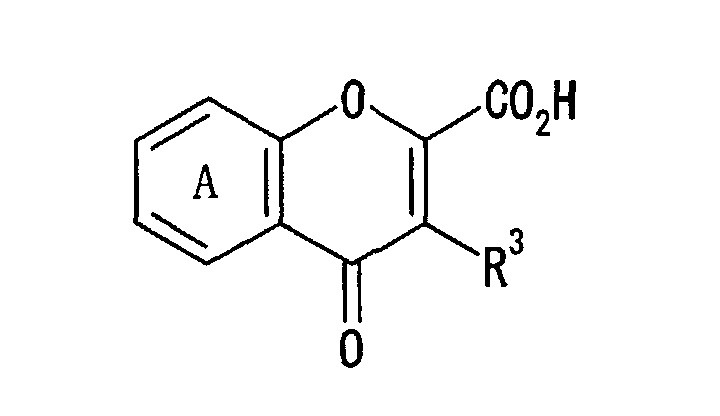
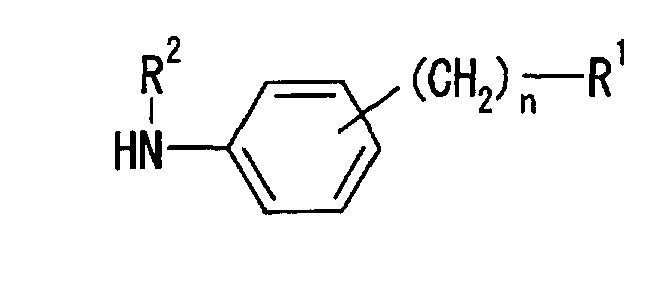
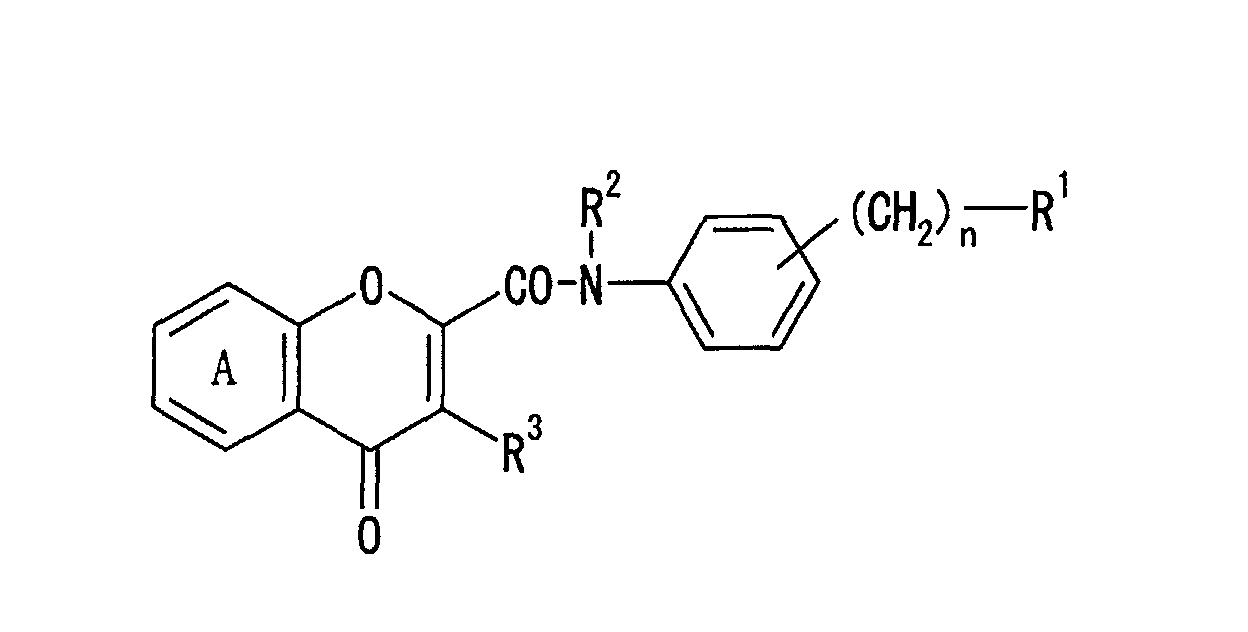

Compounds (I) can be prepared by reacting
Compounds (II) [equivalent to the compound of the Formula (II) or a salt thereof] with Compounds (III) [equivalent to the compound of the Formula (III) or a salt thereof]. The condensation reaction of Compounds (II) with Compounds (III) can be conducted by the general method of peptide synthesis.
Publicly known methods for the peptide synthesis, for example, are described in 1) - 3) below.
The methods used include, for example, the acyl azide method, acyl chloride method, acid anhydride method, mixed acid anhydride method, DCC method, activated ester method, the method using Woodward's reagent K, carbonylimidazole method, oxidation-reduction method, DCC/HONB method and the method using diethylcyanophosphonate (DEPC). The condensation reaction can be carried out in solvents.

These compounds may be prepared from Compounds (I) in a per se known method.
| Compound | Concentration (M) | Alkaline phosphatase activity (A405) |
| Example no.1 | 10-5 | 0.564±0.041** |
| Example no.2 | 10-5 | 0.310±0.008** |
| Example no.5 | 10-5 | 0.558±0.040** |
| Control | No addition | 0.175±0.009 |
| Mean±S.E.. (n=4), **:p<0.01 vs control (Student's t-test) |
| Compound | Concentration (M) | alkaline phosphatase activity (A405) |
| Example no.16 | 10-5 | 0.720±0.033** |
| Example no.18 | 10-5 | 0.720±0.037 |
| Control | No addition | 0.180±0.008 |
| Mean±S.E.. (n=4), **:p<0.01 vs control (Student' s t-test) |
Claims (21)
- A compound of the formula:wherein the ring A is an optionally substituted benzene ring; R1 is an optionally substituted non-aromatic heterocyclic group; R2 is a hydrogen atom or a hydrocarbon group; R3 is a hydrogen atom, a hydrocarbon group or halogen; n is an integer of 0 to 3; or a salt thereof.
- A compound according to claim 1, wherein the ring A is a benzene ring which may be substituted by 1 to 3 substituents selected from the group consisting of hydroxy, acyloxy, mercapto, halogen atom, C1-10 alkyl, C1-10 alkoxy, C1-10 alkylthio and alkylenedioxy of the formula:-O-(CH2)m-O-(wherein m is an integer of 1-4); R2 is a hydrogen atom or a C1-6 alkyl; and R3 is a hydrogen atom; or a salt thereof.
- A compound according to claim 1, wherein the substructure containing the ring A is represented by the formula:(wherein R4 is a hydrogen atom or a hydroxy group, each of R5 to R7 may be same or different and each is a hydrogen atom, a halogen atom, a C1-10 alkyl or a C1-10 alkoxy), R2 is a hydrogen atom or a C1-6 alkyl group; R3 is a hydrogen atom, or a salt thereof.
- A compound according to claim 1, wherein the non-aromatic heterocyclic group of the optionally substituted non-aromatic heterocyclic group represented by R1 is a 5- to 7-membered non-aromatic heterocyclic group containing from 1 to 4 heteroatoms selected from the group consisting of nitrogen atom, sulfur atom and oxygen atom, or a salt thereof.
- A compound according to claim 4, wherein the 5- to 7-membered non-aromatic heterocyclic group of the optionally substituted 5- to 7-membered non-aromatic heterocyclic group is one containing at least 1 nitrogen atom, or a salt thereof.
- A compound according to claim 5, wherein the 5- to 7-membered non-aromatic heterocyclic group of the optionally substituted 5- to 7-membered non-aromatic heterocyclic group is pyrrolidine, imidazolidine, thiazolidine, isothiazolidine, oxazolidine, oxadiazolidine, piperidine, piperazine, thiomorpholine or morpholine, or a salt thereof.
- A compound according to claim 1, wherein the substituents in the optionally substituted non-aromatic heterocyclic group represented by R1 are 1 to 4 substituents selected from the group consisting of halogen atom, hydroxy, oxo, C1-10 alkyl, C1-6 alkoxy, C1-6 acyl, amino, mono- or di-C1-6 alkylamino, C1-6 alkylsulfonyl, carboxy, C1-6 alkoxy-carbonyl or phosphono, or a salt thereof.
- A compound according to claim 3, wherein R2 is a hydrogen atom and R4 is a hydroxy group, or a salt thereof.
- A compound according to claim 3, wherein R2 and R4 are each a hydrogen atom, or a salt thereof.
- A prodrug of the compound according to claim 1, or a salt thereof.
- N-4- (2,4-dioxothiazolidin-5-yl)methyl]phenyl]-4-oxo-4 H-1-benzopyran-2-carboxamide,
N-[4-[(2,4-dioxo-oxazolidin-5-yl)methyl]phenyl]-4-oxo-4H-1-benzopyran-2-carboxamide,
N-[4-[(4-morpholinyl)methyl]phenyl]-4-oxo-4H-1-benzopyran-2 -carboxamide,
5,7-dihydroxy-N-[4-(2,4-dioxothiazolidin-5-yl)methyl]phenyl ]-4-oxo-4H-1-benzopyran-2-carboxamide,
N-[4-[2,4-dioxothiazolidin-5-yl]methyl]phenyl]-5-hydroxy-7-methoxy-4-oxo-4H-1-benzopyran-2-carboxamide,
5,7-dihydroxy-N-[4-[(4-morpholinyl)methyl]phenyl]-4-oxo-4H-1-benzopyran-2-carboxamide,
5-hydroxy-N-[4-[(4-morpholinyl)methyl]phenyl]-4-oxo-4H-1-be nzopyran-2-carboxamide,
N-[4-[(2-oxazolidon-3-yl)methyl]phenyl]-4-oxo-4H-1-benzopyr an-2-carboxamide,
N-[4-(2,6-dioxo-1-piperidinyl)methyl]phenyl]-4-oxo-4H-1-ben zopyran-2-carboxamide,
N-[4-(2,4-dioxo-oxazolidin-5-yl)methyl]phenyl]-5-hydroxy-4-oxo-4H-1-benzopyran-2-carboxamide,
5-hydroxy-N-methyl-N-[4-(4-morpholinyl)methyl]phenyl]-4-oxo -4H-1-benzopyran-2-carboxamide, or
4-oxo-N-[4-[(4-oxo-1-piperidinyl)methyl]phenyl]-4H-1-benzop yran-2-carboxamide, or a salt thereof. - A process for producing chromone derivatives of the formula:wherein the ring A is an optionally substituted benzene ring; R1 is an optionally substituted non-aromatic heterocyclic group; R2 is a hydrogen atom or a hydrocarbon group; R3 is a hydrogen atom, a hydrocarbon group, or a halogen; and n is an integer of 0-3; or a salt thereof, which comprises reacting a compound of the formula:
 wherein each symbol has the same meaning as mentioned above; or a reactive derivative at the carboxy group thereof or a salt thereof, with a compound of the formula:
 wherein each symbol has the same meaning as mentioned above; or a reactive derivative at the amino group thereof or a salt thereof.
- 5,6-methylenedioxy-4-oxo-4H-1-benzopyran-2-carboxylic acid, 5,6-dihydroxy-4-oxo-4H-1-benzopyran-2-carboxylic acid, or 5-hydroxy-7-methyl-4-oxo-4H-1-benzopyran-2-carboxylic acid; or a salt thereof.
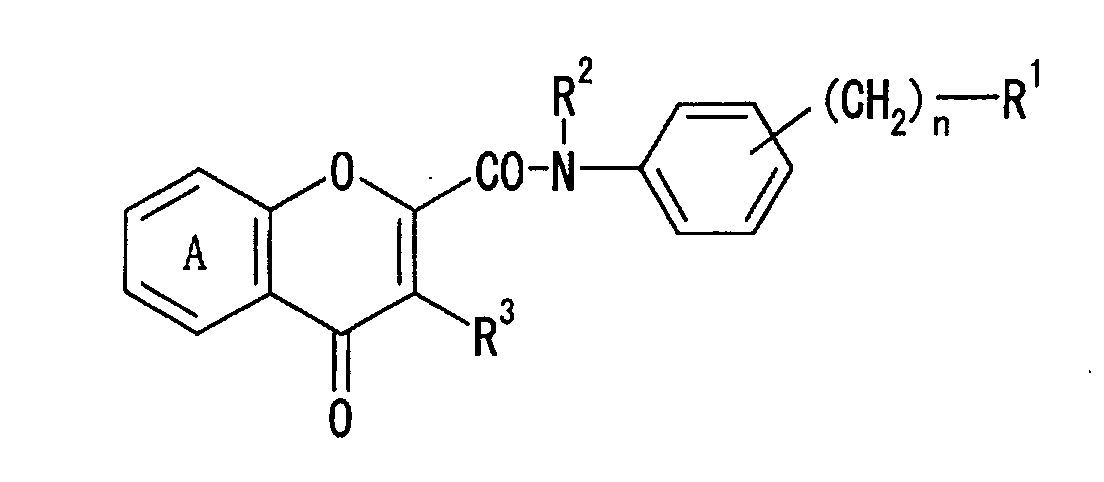
- A pharmaceutical composition which comprises a compound of the formula:wherein the ring A is an optionally substituted benzene ring; R1 is an optionally substituted non-aromatic heterocyclic group; R2 is a hydrogen atom or a hydrocarbon group, R3 is a hydrogen atom, a hydrocarbon group, or halogen; and n is an integer of 0-3; or a salt thereof.
- A pharmaceutical composition according to claim 14, which is an osteogenesis promoting agent.
- A pharmaceutical composition according to claim 14, which is a preventive or therapeutic agent for bone disease.
- A pharmaceutical composition according to claim 14, which is a preventive or therapeutic agent for fracture.
- A pharmaceutical composition according to claim 14, which is a preventive or therapeutic agent for chondropathy.
- A pharmaceutical composition which comprises a prodrug according to claim 10.
- A method for promoting osteogenesis which comprises administering a compound according to claim 1 or a salt thereof.
- Use of a compound according to claim 1 or a salt thereof for manufacturing an osteogenesis promoting agent.
Applications Claiming Priority (3)
| Application Number | Priority Date | Filing Date | Title |
|---|---|---|---|
| JP24741899 | 1999-09-01 | ||
| JP24741899 | 1999-09-01 | ||
| PCT/JP2000/005910 WO2001016127A1 (en) | 1999-09-01 | 2000-08-31 | Chromone derivatives, process for the preparation of the same and uses thereof |
Publications (2)
| Publication Number | Publication Date |
|---|---|
| EP1211251A1 true EP1211251A1 (en) | 2002-06-05 |
| EP1211251A4 EP1211251A4 (en) | 2003-04-09 |
Family
ID=17163152
Family Applications (1)
| Application Number | Title | Priority Date | Filing Date |
|---|---|---|---|
| EP00956835A Withdrawn EP1211251A4 (en) | 1999-09-01 | 2000-08-31 | Chromone derivatives, process for the preparation of the same and uses thereof |
Country Status (4)
| Country | Link |
|---|---|
| US (1) | US6552054B1 (en) |
| EP (1) | EP1211251A4 (en) |
| AU (1) | AU6866500A (en) |
| WO (1) | WO2001016127A1 (en) |
Cited By (1)
| Publication number | Priority date | Publication date | Assignee | Title |
|---|---|---|---|---|
| EP1382688A4 (en) * | 2001-04-25 | 2005-04-27 |
Families Citing this family (9)
| Publication number | Priority date | Publication date | Assignee | Title |
|---|---|---|---|---|
| JP2004517129A (en) | 2001-01-16 | 2004-06-10 | アストラゼネカ・アクチエボラーグ | Therapeutic chromone compounds |
| SE0103646D0 (en) * | 2001-11-01 | 2001-11-01 | Astrazeneca Ab | Therapeutic chroman compounds |
| SE0103647D0 (en) * | 2001-11-01 | 2001-11-01 | Astrazeneca Ab | Therapeutic chromone compounds |
| KR20080079341A (en) | 2001-01-16 | 2008-08-29 | 아스트라제네카 아베 | Therapeutic Heterocyclic Compounds |
| EP1640010A1 (en) * | 2003-07-01 | 2006-03-29 | Astellas Pharma Inc. | Agent inducing increase in bone mass |
| US20070122843A1 (en) * | 2005-09-23 | 2007-05-31 | Fazlul Sarkar | Isoflavonoid analogs and their metal complexes as anti-cancer agents |
| GB2446652A (en) * | 2007-02-16 | 2008-08-20 | Inion Ltd | Osteogenic compounds |
| EP2262366A4 (en) * | 2008-04-18 | 2012-02-22 | Shenogen Pharma Group Ltd | Compounds and methods for treating estrogen receptor-related diseases |
| CN103755673A (en) * | 2009-09-11 | 2014-04-30 | 盛诺基医药科技有限公司 | Compounds and methods for treating estrogen receptor-related diseases |
Family Cites Families (5)
| Publication number | Priority date | Publication date | Assignee | Title |
|---|---|---|---|---|
| BE654149A (en) * | 1964-10-08 | 1965-04-08 | ||
| BE769146A (en) * | 1970-07-01 | 1971-11-03 | Takeda Chemical Industries Ltd | CHROMON-CARBOXYLIC ACID DERIVATIVES |
| ATE169924T1 (en) * | 1993-05-18 | 1998-09-15 | Takeda Chemical Industries Ltd | BENZOPYRAN DERIVATIVES AND THEIR USE |
| WO2000006550A1 (en) * | 1998-07-31 | 2000-02-10 | Nippon Soda Co., Ltd. | Phenylazole compounds, process for producing the same and drugs for hyperlipemia |
| JP2000256358A (en) * | 1999-03-10 | 2000-09-19 | Yamanouchi Pharmaceut Co Ltd | Pyrazole derivative |
-
2000
- 2000-08-31 EP EP00956835A patent/EP1211251A4/en not_active Withdrawn
- 2000-08-31 WO PCT/JP2000/005910 patent/WO2001016127A1/en not_active Ceased
- 2000-08-31 US US10/070,150 patent/US6552054B1/en not_active Expired - Fee Related
- 2000-08-31 AU AU68665/00A patent/AU6866500A/en not_active Abandoned
Cited By (1)
| Publication number | Priority date | Publication date | Assignee | Title |
|---|---|---|---|---|
| EP1382688A4 (en) * | 2001-04-25 | 2005-04-27 |
Also Published As
| Publication number | Publication date |
|---|---|
| WO2001016127A1 (en) | 2001-03-08 |
| AU6866500A (en) | 2001-03-26 |
| US6552054B1 (en) | 2003-04-22 |
| EP1211251A4 (en) | 2003-04-09 |
Similar Documents
| Publication | Publication Date | Title |
|---|---|---|
| US6355672B1 (en) | Benzothiepin derivatives, process for the preparation of the same and uses thereof | |
| US5158943A (en) | Sulfur-containing heterocyclic compounds | |
| US5716944A (en) | Phosphonic acid compounds, their production and use | |
| KR100618663B1 (en) | Nucleotide Homolog Compositions | |
| JP4860148B2 (en) | Inhibitors of cyclin-dependent kinases and their use | |
| JPWO2005002590A1 (en) | Bone mass increase inducer | |
| CZ20032696A3 (en) | Thiohydantoins and their use when treating diabetes mellitus | |
| EP1211251A1 (en) | Chromone derivatives, process for the preparation of the same and uses thereof | |
| IE74217B1 (en) | Benzopyran derivatives with antihypertensive activity | |
| EP0376197B1 (en) | Sulfur-containing heterocyclic compounds | |
| EP0460488B1 (en) | Sulfur-containing heterocyclic compounds | |
| KR20000029705A (en) | Nucleotide analogs | |
| KR100624238B1 (en) | Pharmaceutical composition for the prevention and treatment of metabolic bone disease containing alpha-arylmethoxyacrylate derivative | |
| JP2001139571A (en) | Chromone derivative, method for producing the same, and use | |
| EP1293197A1 (en) | Process for producing phospholipid-containing drugs | |
| JPWO2001016127A1 (en) | Chromone derivatives, their production method and uses | |
| EP1857108A1 (en) | Preventive or therapeutic agent for herpesvirus-related disease | |
| RU2041875C1 (en) | Sulfur-containing heterocyclic compounds or pharmaceutically acceptable salts thereof | |
| US6262060B1 (en) | Azacycloalkane derivatives, preparation and therapeutic application | |
| JPH07291983A (en) | Benzopyran derivative and medicine containing the same | |
| KR20040094464A (en) | Pyridinyl pyrazole derivatives | |
| RU2182149C2 (en) | Crystalline (-)-3r,4r-trans-7-methoxy-2,2- dimethyl-3-phenyl-4-4-[2- (pyrrolidin-1- yl)ethoxy]phenylchroman hydrofumarate, method of its synthesis, pharmaceutical composition, method of decrease or prophylaxis of bone resorption | |
| JPH0873476A (en) | Phosphonic acid derivative and medicine containing the same | |
| JP2000198780A (en) | Oxygen-containing heterocyclic compound, its production and use thereof | |
| JPH03130216A (en) | Bone resorption inhibitory agent |
Legal Events
| Date | Code | Title | Description |
|---|---|---|---|
| PUAI | Public reference made under article 153(3) epc to a published international application that has entered the european phase |
Free format text: ORIGINAL CODE: 0009012 |
|
| 17P | Request for examination filed |
Effective date: 20020308 |
|
| AK | Designated contracting states |
Kind code of ref document: A1 Designated state(s): AT BE CH CY DE DK ES FI FR GB GR IE IT LI LU MC NL PT SE |
|
| AX | Request for extension of the european patent |
Free format text: AL;LT;LV;MK;RO;SI |
|
| RIC1 | Information provided on ipc code assigned before grant |
Free format text: 7C 07D 311/24 A, 7C 07D 405/12 B, 7C 07D 413/12 B, 7C 07D 417/12 B, 7A 61K 31/352 B, 7A 61K 31/4178 B, 7A 61K 31/422 B, 7A 61K 31/427 B, 7A 61K 31/453 B, 7A 61K 31/5377 B, 7C 07D 493/04 B |
|
| A4 | Supplementary search report drawn up and despatched |
Effective date: 20030220 |
|
| 17Q | First examination report despatched |
Effective date: 20030611 |
|
| STAA | Information on the status of an ep patent application or granted ep patent |
Free format text: STATUS: THE APPLICATION IS DEEMED TO BE WITHDRAWN |
|
| 18D | Application deemed to be withdrawn |
Effective date: 20040629 |