EP1209935B1 - Fraud detection method for mobile telecommunication networks - Google Patents
Fraud detection method for mobile telecommunication networks Download PDFInfo
- Publication number
- EP1209935B1 EP1209935B1 EP00204177A EP00204177A EP1209935B1 EP 1209935 B1 EP1209935 B1 EP 1209935B1 EP 00204177 A EP00204177 A EP 00204177A EP 00204177 A EP00204177 A EP 00204177A EP 1209935 B1 EP1209935 B1 EP 1209935B1
- Authority
- EP
- European Patent Office
- Prior art keywords
- authentication
- fraud
- indicators
- fraud detection
- mobile
- Prior art date
- Legal status (The legal status is an assumption and is not a legal conclusion. Google has not performed a legal analysis and makes no representation as to the accuracy of the status listed.)
- Expired - Lifetime
Links
- 238000001514 detection method Methods 0.000 title claims abstract description 42
- 238000000034 method Methods 0.000 claims abstract description 67
- 238000012545 processing Methods 0.000 claims abstract description 6
- 238000012423 maintenance Methods 0.000 claims description 4
- 238000004891 communication Methods 0.000 claims description 3
- 238000012546 transfer Methods 0.000 claims description 3
- 230000000694 effects Effects 0.000 description 14
- 239000013598 vector Substances 0.000 description 11
- 230000004044 response Effects 0.000 description 9
- 230000007246 mechanism Effects 0.000 description 6
- 238000004846 x-ray emission Methods 0.000 description 6
- 238000004458 analytical method Methods 0.000 description 5
- 230000002265 prevention Effects 0.000 description 5
- 230000005540 biological transmission Effects 0.000 description 3
- 238000010586 diagram Methods 0.000 description 3
- 238000002955 isolation Methods 0.000 description 3
- 230000008901 benefit Effects 0.000 description 2
- 230000008569 process Effects 0.000 description 2
- 238000007792 addition Methods 0.000 description 1
- 230000001413 cellular effect Effects 0.000 description 1
- 238000010367 cloning Methods 0.000 description 1
- 238000005516 engineering process Methods 0.000 description 1
- 230000000977 initiatory effect Effects 0.000 description 1
- 230000003993 interaction Effects 0.000 description 1
- 230000005012 migration Effects 0.000 description 1
- 238000013508 migration Methods 0.000 description 1
- 238000010295 mobile communication Methods 0.000 description 1
- 238000012805 post-processing Methods 0.000 description 1
- 230000011664 signaling Effects 0.000 description 1
- CSRZQMIRAZTJOY-UHFFFAOYSA-N trimethylsilyl iodide Substances C[Si](C)(C)I CSRZQMIRAZTJOY-UHFFFAOYSA-N 0.000 description 1
Images




Classifications
-
- H—ELECTRICITY
- H04—ELECTRIC COMMUNICATION TECHNIQUE
- H04W—WIRELESS COMMUNICATION NETWORKS
- H04W12/00—Security arrangements; Authentication; Protecting privacy or anonymity
- H04W12/06—Authentication
-
- H—ELECTRICITY
- H04—ELECTRIC COMMUNICATION TECHNIQUE
- H04W—WIRELESS COMMUNICATION NETWORKS
- H04W12/00—Security arrangements; Authentication; Protecting privacy or anonymity
- H04W12/04—Key management, e.g. using generic bootstrapping architecture [GBA]
- H04W12/043—Key management, e.g. using generic bootstrapping architecture [GBA] using a trusted network node as an anchor
- H04W12/0431—Key distribution or pre-distribution; Key agreement
-
- H—ELECTRICITY
- H04—ELECTRIC COMMUNICATION TECHNIQUE
- H04W—WIRELESS COMMUNICATION NETWORKS
- H04W12/00—Security arrangements; Authentication; Protecting privacy or anonymity
- H04W12/12—Detection or prevention of fraud
Definitions
- This invention relates generally to the fraud detection in mobile telecommunication networks. More specifically, this invention relates to a method for obtaining, storing and processing significant data for fraud detection.
- 3GPP 3rd Generation Partnership Project
- 3GPP 3rd Generation Partnership Project
- 3GPP TS 3rd Generation Partnership Project
- SA3 Technical Specification Group Services and System Aspects 33.102 v3.5.0
- 3G TS 33.102 Technical Specification Group Services and System Aspects 33.102 v3.5.0
- MAP Mobile Application Part
- 3GPP TS 29.002 3GPP Technical Specification Group Core Network
- IS-41 Interim Specification number 41
- 3G 3 rd mobile systems generation
- UMTS Universal Mobile Telecommunication System
- security features and security architecture such as those related to subscriber Authentication and network entity Authentication, are described in the technical specification above mentioned, 3G TS 33.102.
- any mobile network like the one in Fig.-1- can be regarded as consisting of a Home Environment (N-1000) (hereinafter referred to as HE), a Serving Network (N-2000) (hereinafter referred to as SN), and a number of mobile terminals, namely User Equipment (N-3000) (hereinafter abbreviated as UE).
- N-1000 Home Environment
- N-2000 Serving Network
- UE User Equipment
- such a mobile network in Fig.-1- can be regarded as consisting of a Core Network (N-0100) and an Access Network (N-2200) wherein the former consists of the Home Environment plus the Serving Network excluding network entities from the Access Network.
- N-0100 Core Network
- N-2200 Access Network
- CS Circuit Switched
- PS Packet Switched
- GPRS GSM Packet Radio System
- the HE represents all the network entities which uniquely handle and give support to home subscribers of a certain Public Land Mobile Network (hereinafter PLMN).
- PLMN Public Land Mobile Network
- N-1102 the Home Location Register
- HLR Home Location Register
- AUC Authentication Centre
- the SN represents all the network entities or resources in a certain PLMN that give service to mobile subscribers roaming in such a PLMN irrespective of being home or visitor subscribers.
- the Mobile Service Switching Centre also called Mobile Switching Centre, and hereinafter abbreviated as MSC
- MSC Mobile Service Switching Centre
- Said MSC is the network entity in charge of all switching functions related to Circuit Switching (CS), controlling the location and routing area wherein a certain subscriber is roaming, and thus part of the SN.
- CS Circuit Switching
- VLR Visitor Location Register
- Said VLR is a subscriber database holding relevant subscription data from all the subscribers currently roaming in the area controlled by such a VLR, and which were obtained from the corresponding HLR where each subscriber has his or her own subscription.
- MSC/VLR a unique entity
- 3G MSC/VLR the evolved version of said MSC/VLR for the 3G mobile systems.
- the Serving GPRS Support Node (N-2111) (hereinafter abbreviated as SGSN) performs similar tasks for PS functions and corresponding subscribers.
- the SGSN holds relevant subscription data from all the subscribers currently roaming in the area controlled by such an SGSN, and which were obtained from the corresponding HLR where each subscriber has his or her own subscription.
- Said SGSN is also in charge of all switching functions related to Packet Switching (PS), controlling the location and routing area wherein a certain subscriber is roaming, and thus part of the SN.
- PS Packet Switching
- the evolved version of said SGSN for the 3G mobile systems is generally referred to as 3G SGSN.
- Fig.-1- also shows a representative access network node for completeness purpose, namely the UMTS Terrestrial Radio Access Network (N2201) (hereinafter referred to as UTRAN).
- N2201 UMTS Terrestrial Radio Access Network
- the authentication procedure is initially performed at the first radio contact from a mobile subscriber trying to gain access to the mobile network.
- the method was chosen in such a way as to achieve maximum compatibility with the current GSM security architecture and facilitate migration from GSM to UMTS.
- the method is composed of a challenge/response protocol identical to the GSM subscriber authentication and key establishment protocol combined with a sequence number-based one-pass protocol for network authentication. Even though this procedure is basically described following this, an interested reader could get more detailed explanations by reading said specification 3G TS 33.102 version 3.5.0, sections 5.1.1 and 6.3.1.
- the challenge/response method from GSM formally starts by a request from the SN VLR/SGSN to the HE HLR/AUC to generate and provide authentication triplets (authentication vectors under 3G).
- Said authentication triplet consists of a random number RAND, an expected response XRES, and a ciphering Key CK.
- Each authentication triplet is valid, in principle, for just one authentication process, though they can be reused under certain circumstances.
- the VLR/SGSN sends to the GSM Subscriber Identity Module (hereinafter abbreviated as SIM), which is responsible for performing GSM subscriber authentication and key agreement at the subscriber side, the received random number RAND.
- SIM GSM Subscriber Identity Module
- the RAND and a pre-stored subscriber identity key KI are used as inputs to algorithms A3 and A8 to produce a signed response SRES and a ciphering key CK.
- the SIM returns the SRES obtained to the challenger VLR/SGSN, which will check the lately received SRES versus the stored XRES. Provided that they match each other, the authentication is found to be successful and the CK, that both VLR/SGSN and SIM have, can be locally used to cipher further communication through the radio path.
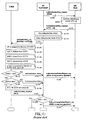
- Fig.-2- schematically presents how this challenge/response authentication method evolves for UMTS networks.
- the HE HLR/AUC is requested (S-200) to generate and provide authentication vectors consisting of a random number RAND, an expected user response XRES, a cipher key CK, an integrity key IK, and a network authentication token AUTN.
- the HE HLR/AUC Upon receipt of such a request from the SN VLR/SGSN, the HE HLR/AUC generates (B-090) and sends an ordered array of n Authentication Vectors (S-210) (the equivalent of GSM "triplets", and hereinafter referred to as AV) to the SN VLR/SGSN wherein these authentication vectors are stored (B-100).
- S-210 the equivalent of GSM "triplets", and hereinafter referred to as AV
- AV GSM "triplets”, and hereinafter referred to as AV
- each authentication vector is valid for one authentication and key agreement process between the VLR/SGSN and the User Services Identity Module (hereinafter referred to as USIM).
- USIM User Services Identity Module
- these vectors cannot be reused.
- such a USIM is responsible for performing UMTS subscriber and network authentication, and key agreement.
- Said USIM should also be capable of performing GSM authentication and key agreement to enable the subscriber to roam easily into a GSM Radio Access Network.
- the VLR/SGSN initiates an authentication and key agreement, it selects the next authentication vector from the array (B-110) and sends the parameters RAND and AUTN to the user (S-220).
- the USIM checks whether AUTN can be accepted by computing the anonymity key AK as a function of RAND (B-120) and then, once AK is known, by extracting from the received AUTN the sequence number SQN (B-130), the authentication management field AMF (B-140), and the message authentication code MAC (B-150).
- USIM computes XMAC as a function of RAND, SQN, and AMF (B-160) and compares such an XMAC value with the previously extracted MAC (B-170). Provided that these values are found to be different, the user sends a " user authentication reject " (S-230) back to the VLR/SGSN with an indication of the cause, and the procedure is abandoned. This result is understood as an unsuccessful network authentication. In this case, the SN VLR/SGSN shall initiate an Authentication Failure Report (S-240) towards the HE HLR indicating "wrong network signature" as failure cause. On the other hand, when MAC and XMAC match each other, USIM verifies that SQN value is in the correct range (B-180).
- USIM considers SQN is not in due range, it sends a " synchronisation failure " (S-250) back to the VLR/SGSN including an appropriate parameter, and the procedure is abandoned.
- SQN is in range
- Said response RES is sent back to the VLR/SGSN (S-260).
- the VLR/SGSN compares the received RES with XRES (B-200). If said RES and XRES match each other the VLR/SGSN considers the authentication and key agreement exchange to be successfully completed.
- the established keys, CK and IK, will be locally used to cipher further communication through the radio path. But, if XRES and RES are found to be different, the SN VLR/SGSN shall initiate an Authentication Failure Report (S-270) procedure towards the HLR indicating "wrong user response" as failure cause. Moreover, the SN VLR/SGSN may also decide to re-attempt a new identification and authentication procedure towards the user.
- S-270 Authentication Failure Report
- this mechanism somewhat described above achieves mutual authentication by the user and by the network, showing knowledge of a secret key K which is shared between and available only to the USIM and the AUC in the user's HE. Moreover, a network authentication failure detected at the user side, namely by USIM, or a user authentication failure detected at the network side, namely by SN VLR/SGSN, they both trigger the new procedure "Authentication Failure Report".
- the aim of this new procedure is to inform the Home Environment (HE) when an authentication has failed, including the failures due to an unsuccessful network authentication or unsuccessful user authentication.
- HE Home Environment
- this procedure is not applicable to synchronisation failures, which are reported by a different procedure.
- IMSI International Mobile Subscriber Identity
- FDS Fraud Detection System
- Such an FDS is supposed to post-process these indicators to determine whether a fraudulent activity is occurring or, at least, suspicious of occurring.
- MSC/VLR logs all the relevant failure data, and activates an alarm.
- Said logging of authentication failure includes data such as date, time, IMSI, Mobile Subscriber ISDN number (hereinafter referred to as MSISDN, wherein ISDN stands for Integrated Services Digital Network), Cell Global Identifier (hereinafter CGI), and whether the MAP message "Authentication Reject" was sent or not.
- MSISDN Mobile Subscriber ISDN number
- CGI Cell Global Identifier
- Fig.-3- One of the most common architecture to support fraud detection in mobile networks is illustrated in Fig.-3- where the FDS (N-1301) gathers the indicators required to perform the fraud analysis from the Call Data Records (hereinafter referred to as CDR) generated in the MSC/VLR (N-2122) or the SGSN (N-2112). Said CDRs are submitted through the Billing Gateway (N-2301) (hereinafter referred to as BGW), or any other Billing Mediation Device.
- BGW Billing Gateway
- the information received by the FDS is just related with the establishment of a call, whereas any other fraud related information, not call related, does not reach the FDS.
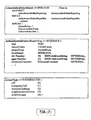
- Fig.-4- shows the existing operation Authentication_Failure_Report as specified in 3G TS 29.002 for the Mobile Application Part protocol, in terms of Operation and Parameters.
- a further method for fraud prevention in cellular networks is described in US - A 5 991 617, in that an authentication based on user interactions is described.
- a 'Roaming Restrictor' is introduced to monitor roaming subscribers, request a manual authentication from roaming users, collect data from authentication failures and restrict access within a roaming network.
- the proposed method is complex to implement and demands roaming users to run uncomfortable manual authentication procedures.
- the object of the present invention is a method for providing relevant information for fraud detection which overcomes the above mentioned drawbacks.
- data related with unsuccessful authentication procedures such 25 access type, authentication reattempt and server address, could be used for fraud detection.
- the method gets advantage from the new introduced mechanism to report authentication failures in order to provide more valuable information from a fraud detection perspective towards the Home Environment, including the steps of:
- Another object of the method of the present invention is the forwarding of these fraud-related data collected in the Home Environment towards an appropriate operator specific device for Fraud Detection for processing in conjunction with primary fraud indicators for fraud detection purposes.
- MAP AFR_req MAP message Authentication Failure Report request
- the access type parameter can be used to evaluate the seriousness of the failure since it can be considered more serious a failure produced in a location updating than in a call set up, and the latter more serious than the one produced in a short message transfer. These considerations are based on some facts; for example, a successful location updating has to be performed previous to an unsuccessful call.
- the authentication reattempt parameter is sent in order to know if the failure was produced on a first authentication procedure or during a reattempt.
- An authentication reattempt is performed in current networks since the failure could have been provoked by a Temporary Mobile Station Identity (hereinafter TMSI) mismatch, or by erroneous Authentication Vectors received from the previous MSC/VLR or SGSN server (the reattempt is performed after requesting new Authentication Vectors to the HLR).
- TMSI Temporary Mobile Station Identity
- the reattempt is performed after requesting new Authentication Vectors to the HLR.
- the interest of the server address from a fraud-detection point of view resides in the fact that some fraudulent activities like call selling in current mobile networks are associated with concrete geographical location.
- known data at the MSC/VLR or SGSN which are significant for fraud detection, can be included in the MAP AFR_req message. In this way, these data can be eventually submitted to the HE HLR and from there forwarded to an appropriate Fraud Detection System like the FDS.
- the proposal of a preferred embodiment of the present invention is that these data, namely the Access Type, the Authentication Reattempt, and the Server Address should be including as new specific parameters within the MAP AFR_req message.
- the Server Address should be better expressed in terms of different parameters such as MSC/VLR_address and SGSN_address in order to identify on what service, Circuit or Packet, the authentication has failed.
- AccessType could also be declared following the ASN.1 notation as "ENUMERATED” with the following assignations: Call (0), emergencyCall (1), locationUpdating (2), supplementaryServices (3), shortMessage (4).
- assignations Call (0), emergencyCall (1), locationUpdating (2), supplementaryServices (3), shortMessage (4).
- the MAP AFR_req message definition allows the introduction of new parameters in an extension container. All the data proposed in the present invention, as fraud indicators, could be included in the mentioned extension container.
- Said extension container can be regarded as the means to introduce proprietary information in a standard message and thus, provided that the fraud indicators are included there, the result will be a proprietary solution to some extent.
- one of the main objects of the present invention is that any operator can gather all the fraud information related with authentication faults from its own subscribers. With a proprietary solution this would not be achieved since the reception of that information would directly depend on the VLR/SGSN supplier and therefore it would indirectly depend on the serving operator (roaming situation for the subscriber). As a consequence, an operator could not gather all the fraud information regarding authentication fraud from its own subscribers. Nevertheless, though less efficient than the preferred embodiment, this second embodiment of the present invention also proposes reasonable means to provide an FDS with the required secondary indicators for fraud detection.
- a further process step of the present invention is the reception of these new fraud related data, included in the MAP AFR_req operation, in the HE as Fig.-8- illustrates.
- the HLR At reception of the MAP AFR_req message (S-700) the HLR will store the received data together with the time and date of the report (B-500).
- an "Authentication Failure Alarm” (S-710) will be addressed to the Operation and Maintenance Gateway (hereinafter referred to as OMG) in the operator network. Then, through that Gateway said Authentication Failure Alarm (S-720) will reach the FDS.
- OMG Operation and Maintenance Gateway
- S-720 Gateway said Authentication Failure Alarm
- the FDS On reception of such an alarm, the FDS would use the commands through the Operation and Maintenance Gateway (S-730) to request the stored logging of authentication failures (S-740) in HLR.
- the HLR logging regarding authentication failure report log shall be addressed as well to the Operation and Maintenance Gateway (S-750), so that they can be eventually forwarded to the FDS (S-760).
- the FDS can analyse the received secondary indicators for fraud in conjunction with applicable fraud criteria (B-530). Moreover, these secondary indicators will be used in the FDS in conjunction with some primary indicators, as the number of call forwarding within a defined time interval, to detect fraud situations such as SIM cloning.
Landscapes
- Engineering & Computer Science (AREA)
- Computer Security & Cryptography (AREA)
- Computer Networks & Wireless Communication (AREA)
- Signal Processing (AREA)
- Mobile Radio Communication Systems (AREA)
- Telephonic Communication Services (AREA)
- Alarm Systems (AREA)
- Burglar Alarm Systems (AREA)
- Pinball Game Machines (AREA)
Priority Applications (10)
| Application Number | Priority Date | Filing Date | Title |
|---|---|---|---|
| DE60023155T DE60023155T2 (de) | 2000-11-24 | 2000-11-24 | Betrugsfeststellungsverfahren für Mobiltelekommunikationsnetze |
| ES00204177T ES2251347T3 (es) | 2000-11-24 | 2000-11-24 | Metodo de deteccion de fraude para redes de telecomunicaciones moviles. |
| EP00204177A EP1209935B1 (en) | 2000-11-24 | 2000-11-24 | Fraud detection method for mobile telecommunication networks |
| AT00204177T ATE306799T1 (de) | 2000-11-24 | 2000-11-24 | Betrugsfeststellungsverfahren für mobiltelekommunikationsnetze |
| PCT/EP2001/012771 WO2002043424A1 (en) | 2000-11-24 | 2001-10-31 | Fraud detection method for mobile telecommunication networks |
| AU2002216994A AU2002216994A1 (en) | 2000-11-24 | 2001-10-31 | Fraud detection method for mobile telecommunication networks |
| JP2001356390A JP4004275B2 (ja) | 2000-11-24 | 2001-11-21 | 移動通信網における不正利用検出方法 |
| CA2363667A CA2363667C (en) | 2000-11-24 | 2001-11-22 | Fraud detection method for mobile telecommunication networks |
| AU93394/01A AU782981B2 (en) | 2000-11-24 | 2001-11-23 | Fraud detection method for mobile telecommunication networks |
| CNB011338903A CN1174576C (zh) | 2000-11-24 | 2001-11-24 | 移动电信网络中的欺骗检测方法 |
Applications Claiming Priority (1)
| Application Number | Priority Date | Filing Date | Title |
|---|---|---|---|
| EP00204177A EP1209935B1 (en) | 2000-11-24 | 2000-11-24 | Fraud detection method for mobile telecommunication networks |
Publications (2)
| Publication Number | Publication Date |
|---|---|
| EP1209935A1 EP1209935A1 (en) | 2002-05-29 |
| EP1209935B1 true EP1209935B1 (en) | 2005-10-12 |
Family
ID=8172325
Family Applications (1)
| Application Number | Title | Priority Date | Filing Date |
|---|---|---|---|
| EP00204177A Expired - Lifetime EP1209935B1 (en) | 2000-11-24 | 2000-11-24 | Fraud detection method for mobile telecommunication networks |
Country Status (9)
| Country | Link |
|---|---|
| EP (1) | EP1209935B1 (https=) |
| JP (1) | JP4004275B2 (https=) |
| CN (1) | CN1174576C (https=) |
| AT (1) | ATE306799T1 (https=) |
| AU (2) | AU2002216994A1 (https=) |
| CA (1) | CA2363667C (https=) |
| DE (1) | DE60023155T2 (https=) |
| ES (1) | ES2251347T3 (https=) |
| WO (1) | WO2002043424A1 (https=) |
Cited By (2)
| Publication number | Priority date | Publication date | Assignee | Title |
|---|---|---|---|---|
| US9633201B1 (en) | 2012-03-01 | 2017-04-25 | The 41St Parameter, Inc. | Methods and systems for fraud containment |
| US11538063B2 (en) | 2018-09-12 | 2022-12-27 | Samsung Electronics Co., Ltd. | Online fraud prevention and detection based on distributed system |
Families Citing this family (44)
| Publication number | Priority date | Publication date | Assignee | Title |
|---|---|---|---|---|
| GB0210241D0 (en) * | 2002-05-03 | 2002-06-12 | Cerebrus | Local usage monitoring and fraud detection for radio communication networks |
| FI113924B (fi) * | 2002-09-06 | 2004-06-30 | Tellabs Oy | Menetelmä, järjestelmä ja laite dataliikenteen aitouden osoittamiseksi |
| ATE286342T1 (de) * | 2002-10-21 | 2005-01-15 | Swisscom Mobile Ag | Verfahren zum detektieren eines duplizierten identifizierungsmoduls |
| DE50202932D1 (de) * | 2002-10-21 | 2005-06-02 | Swisscom Mobile Ag | Verfahren, System und Vorrichtungen zur Teilnehmerauthentifizierung in einem Telekommunikationsnetz |
| GB0227777D0 (en) | 2002-11-28 | 2003-01-08 | Nokia Corp | Performing authentication |
| US7069000B1 (en) * | 2003-02-10 | 2006-06-27 | Flarion Technologies, Inc. | Security methods for use in a wireless communications system |
| US7016690B2 (en) * | 2003-02-10 | 2006-03-21 | Flarion Technologies, Inc. | Methods and apparatus for updating mobile node location information |
| US7729686B2 (en) | 2003-04-02 | 2010-06-01 | Qualcomm Incorporated | Security methods for use in a wireless communications system |
| US9412123B2 (en) | 2003-07-01 | 2016-08-09 | The 41St Parameter, Inc. | Keystroke analysis |
| EP1515507A1 (en) * | 2003-09-09 | 2005-03-16 | Axalto S.A. | Authentication in data communication |
| CN1324909C (zh) * | 2003-10-15 | 2007-07-04 | 华为技术有限公司 | 认证服务器与归属位置寄存器数据同步方法 |
| US7069024B2 (en) * | 2003-10-31 | 2006-06-27 | Symbol Technologies, Inc. | System and method for determining location of rogue wireless access point |
| US10999298B2 (en) | 2004-03-02 | 2021-05-04 | The 41St Parameter, Inc. | Method and system for identifying users and detecting fraud by use of the internet |
| US7248856B2 (en) * | 2004-03-15 | 2007-07-24 | Symbol Technologies, Inc. | System and method for client-server-based wireless intrusion detection |
| DE102004013658B3 (de) | 2004-03-19 | 2005-12-08 | Siemens Ag | Protokollerweiterung einer Signalisierungsnachricht |
| JP2006025374A (ja) | 2004-07-09 | 2006-01-26 | Fujitsu Ltd | ワイヤレス通信不正使用検証システム |
| KR100632118B1 (ko) | 2004-09-06 | 2006-10-04 | 주식회사 팬택앤큐리텔 | 음성 호 접속 자동 차단이 가능한 이동통신 단말기 및이동통신 단말기의 호 처리 방법 |
| US7783756B2 (en) * | 2005-06-03 | 2010-08-24 | Alcatel Lucent | Protection for wireless devices against false access-point attacks |
| US11301585B2 (en) | 2005-12-16 | 2022-04-12 | The 41St Parameter, Inc. | Methods and apparatus for securely displaying digital images |
| US8938671B2 (en) | 2005-12-16 | 2015-01-20 | The 41St Parameter, Inc. | Methods and apparatus for securely displaying digital images |
| US8151327B2 (en) | 2006-03-31 | 2012-04-03 | The 41St Parameter, Inc. | Systems and methods for detection of session tampering and fraud prevention |
| CN1913439B (zh) * | 2006-09-08 | 2011-05-04 | 中国移动通信集团公司 | 一种鉴权方法以及发送鉴权成功信息的方法 |
| CN101141439B (zh) * | 2006-09-08 | 2012-09-05 | 上海贝尔阿尔卡特股份有限公司 | 报告用户设备接入类型和分配网络配置信息的方法及装置 |
| US9779403B2 (en) | 2007-12-07 | 2017-10-03 | Jpmorgan Chase Bank, N.A. | Mobile fraud prevention system and method |
| JP4759621B2 (ja) * | 2009-01-09 | 2011-08-31 | 株式会社エヌ・ティ・ティ・ドコモ | 移動通信システム、加入者認証方法、加入者認証モジュール、移動機システム、認証エラー検出方法、認証ベクトル生成装置、及び認証ベクトル生成方法 |
| US9112850B1 (en) | 2009-03-25 | 2015-08-18 | The 41St Parameter, Inc. | Systems and methods of sharing information through a tag-based consortium |
| JP4856214B2 (ja) * | 2009-06-08 | 2012-01-18 | 株式会社東芝 | 携帯可能電子媒体 |
| CN101742497B (zh) * | 2009-12-24 | 2013-03-20 | 中兴通讯股份有限公司 | 接入认证的实现方法和客户端 |
| WO2012054646A2 (en) | 2010-10-19 | 2012-04-26 | The 41St Parameter, Inc. | Variable risk engine |
| US10754913B2 (en) | 2011-11-15 | 2020-08-25 | Tapad, Inc. | System and method for analyzing user device information |
| JP5670933B2 (ja) * | 2012-02-15 | 2015-02-18 | 日本電信電話株式会社 | 認証情報変換装置及び認証情報変換方法 |
| US9521551B2 (en) | 2012-03-22 | 2016-12-13 | The 41St Parameter, Inc. | Methods and systems for persistent cross-application mobile device identification |
| WO2014022813A1 (en) | 2012-08-02 | 2014-02-06 | The 41St Parameter, Inc. | Systems and methods for accessing records via derivative locators |
| WO2014078569A1 (en) | 2012-11-14 | 2014-05-22 | The 41St Parameter, Inc. | Systems and methods of global identification |
| US10902327B1 (en) | 2013-08-30 | 2021-01-26 | The 41St Parameter, Inc. | System and method for device identification and uniqueness |
| CN106465110B (zh) | 2014-05-20 | 2020-05-12 | 诺基亚技术有限公司 | 蜂窝认证中的异常处理 |
| CN106465109A (zh) | 2014-05-20 | 2017-02-22 | 诺基亚技术有限公司 | 蜂窝网络认证 |
| US10091312B1 (en) | 2014-10-14 | 2018-10-02 | The 41St Parameter, Inc. | Data structures for intelligently resolving deterministic and probabilistic device identifiers to device profiles and/or groups |
| JP6459014B2 (ja) | 2015-03-31 | 2019-01-30 | エスゼット ディージェイアイ テクノロジー カンパニー リミテッドSz Dji Technology Co.,Ltd | ジオフェンシング装置 |
| EP3633653B1 (en) * | 2015-03-31 | 2021-03-31 | SZ DJI Technology Co., Ltd. | Systems and methods for mutual authentication between an unmanned aerial vehicle and an authentication center |
| CN107409051B (zh) | 2015-03-31 | 2021-02-26 | 深圳市大疆创新科技有限公司 | 用于生成飞行管制的认证系统和方法 |
| JP6931535B2 (ja) * | 2017-02-06 | 2021-09-08 | 株式会社Nttドコモ | 通信制御装置 |
| CN114302398B (zh) * | 2020-09-23 | 2023-11-21 | 中国移动通信集团重庆有限公司 | 基于大数据的预留诈骗号码识别方法、装置及计算设备 |
| WO2025098573A1 (de) | 2023-11-09 | 2025-05-15 | Oculeus Gmbh | Roaming-abfragesystem |
Family Cites Families (10)
| Publication number | Priority date | Publication date | Assignee | Title |
|---|---|---|---|---|
| DE69230716T2 (de) * | 1991-11-25 | 2000-12-28 | Motorola, Inc. | Verringerte Interferenzstörungen durch Frequenzaufteilung in zellularen Kommunikationssystemen |
| CA2078195C (en) * | 1991-11-27 | 1999-03-09 | Jack Kozik | Arrangement for detecting fraudulently identified mobile stations in a cellular mobile telecommunications network |
| JPH07327271A (ja) * | 1994-06-02 | 1995-12-12 | Fujitsu Ltd | サービス規制制御方式 |
| JPH0898248A (ja) * | 1994-09-22 | 1996-04-12 | Nec Commun Syst Ltd | 交換機の認証結果管理方式 |
| US5991617A (en) * | 1996-03-29 | 1999-11-23 | Authentix Network, Inc. | Method for preventing cellular telephone fraud |
| GB2321362A (en) * | 1997-01-21 | 1998-07-22 | Northern Telecom Ltd | Generic processing capability |
| US6064875A (en) * | 1997-01-31 | 2000-05-16 | Usa Telecommunications Services, Inc. | Wireless communications system and method of operation for reducing fraud |
| US6295446B1 (en) * | 1998-10-19 | 2001-09-25 | Telefonaktiebolaget Lm Ericsson (Publ) | Method and apparatus to detect fraudulent calls in a radio network |
| US6211462B1 (en) * | 1998-11-05 | 2001-04-03 | Texas Instruments Incorporated | Low inductance power package for integrated circuits |
| JP2000165512A (ja) * | 1998-11-24 | 2000-06-16 | Hitachi Ltd | 不正利用検出方法及び装置及び不正利用検出プログラムを記録したコンピュータ読み取り可能な記憶媒体 |
-
2000
- 2000-11-24 EP EP00204177A patent/EP1209935B1/en not_active Expired - Lifetime
- 2000-11-24 ES ES00204177T patent/ES2251347T3/es not_active Expired - Lifetime
- 2000-11-24 DE DE60023155T patent/DE60023155T2/de not_active Expired - Lifetime
- 2000-11-24 AT AT00204177T patent/ATE306799T1/de not_active IP Right Cessation
-
2001
- 2001-10-31 WO PCT/EP2001/012771 patent/WO2002043424A1/en not_active Ceased
- 2001-10-31 AU AU2002216994A patent/AU2002216994A1/en not_active Abandoned
- 2001-11-21 JP JP2001356390A patent/JP4004275B2/ja not_active Expired - Lifetime
- 2001-11-22 CA CA2363667A patent/CA2363667C/en not_active Expired - Lifetime
- 2001-11-23 AU AU93394/01A patent/AU782981B2/en not_active Expired
- 2001-11-24 CN CNB011338903A patent/CN1174576C/zh not_active Expired - Lifetime
Cited By (2)
| Publication number | Priority date | Publication date | Assignee | Title |
|---|---|---|---|---|
| US9633201B1 (en) | 2012-03-01 | 2017-04-25 | The 41St Parameter, Inc. | Methods and systems for fraud containment |
| US11538063B2 (en) | 2018-09-12 | 2022-12-27 | Samsung Electronics Co., Ltd. | Online fraud prevention and detection based on distributed system |
Also Published As
| Publication number | Publication date |
|---|---|
| AU9339401A (en) | 2002-05-30 |
| ES2251347T3 (es) | 2006-05-01 |
| JP2002247654A (ja) | 2002-08-30 |
| AU2002216994A1 (en) | 2002-06-03 |
| EP1209935A1 (en) | 2002-05-29 |
| CN1357986A (zh) | 2002-07-10 |
| DE60023155D1 (de) | 2005-11-17 |
| CA2363667A1 (en) | 2002-05-24 |
| JP4004275B2 (ja) | 2007-11-07 |
| ATE306799T1 (de) | 2005-10-15 |
| CA2363667C (en) | 2011-04-12 |
| CN1174576C (zh) | 2004-11-03 |
| WO2002043424A1 (en) | 2002-05-30 |
| DE60023155T2 (de) | 2006-07-06 |
| AU782981B2 (en) | 2005-09-15 |
Similar Documents
| Publication | Publication Date | Title |
|---|---|---|
| EP1209935B1 (en) | Fraud detection method for mobile telecommunication networks | |
| US11071043B2 (en) | Enhanced handling on forbidden PLMN list | |
| US9032205B2 (en) | Robust authentication and key agreement protocol for net-generation wireless networks | |
| US9819810B2 (en) | Method and system for enabling usage of mobile telephone services on a donor device | |
| EP2888893B1 (en) | Redirecting cellular telephone communications through a data network | |
| CN100394728C (zh) | 向合法侦听系统通知服务于侦听目标的服务系统 | |
| EP1754390B1 (en) | Method and radio communication network for detecting the presence of fraudulent subscriber identity modules | |
| US20090049526A1 (en) | Method, system and apparatus for accessing a visited network | |
| CN106028331A (zh) | 一种识别伪基站的方法及设备 | |
| EP1457074A1 (en) | Intercepting a call connection to a mobile subscriber roaming in a visited plmn (vplmn) | |
| EP2139180A1 (en) | A method to unify multiple subscriber identity profiles in a telecommunication system | |
| US11792633B2 (en) | Device authentication verification for device registration | |
| US8504024B2 (en) | Method for implementing an intelligent service and communications system | |
| CN106470408B (zh) | 一种国际漫游短信保护方法、装置和系统 | |
| JP7513302B2 (ja) | 学習装置、判定システム、学習方法及びプログラム | |
| KR100983653B1 (ko) | 이동 통신 단말기 인증 장치 및 방법 | |
| US8559920B2 (en) | Method of checking access rights in a mobile radio system | |
| CN106664309B (zh) | 一种移动网络安全的处理方法、警示方法及用户终端 | |
| CA2390637C (en) | Method for monitoring authentication performance in wireless communication networks | |
| EP2139170A1 (en) | A method to unify multiple subscriber identity profiles in a telecommunication system | |
| WO2020065628A1 (en) | Mobile node neighbor identity register apparatus and method | |
| CN108702619A (zh) | 获取、发送用户设备标识的方法及设备 | |
| JP2000156892A (ja) | 移動電話の盗聴に対する機密保護の改善 |
Legal Events
| Date | Code | Title | Description |
|---|---|---|---|
| PUAI | Public reference made under article 153(3) epc to a published international application that has entered the european phase |
Free format text: ORIGINAL CODE: 0009012 |
|
| AK | Designated contracting states |
Kind code of ref document: A1 Designated state(s): AT BE CH CY DE DK ES FI FR GB GR IE IT LI LU MC NL PT SE TR |
|
| AX | Request for extension of the european patent |
Free format text: AL;LT;LV;MK;RO;SI |
|
| 17P | Request for examination filed |
Effective date: 20020716 |
|
| AKX | Designation fees paid |
Designated state(s): AT BE CH CY DE DK ES FI FR GB GR IE IT LI LU MC NL PT SE TR |
|
| RAP1 | Party data changed (applicant data changed or rights of an application transferred) |
Owner name: TELEFONAKTIEBOLAGET LM ERICSSON (PUBL) |
|
| 17Q | First examination report despatched |
Effective date: 20040420 |
|
| GRAP | Despatch of communication of intention to grant a patent |
Free format text: ORIGINAL CODE: EPIDOSNIGR1 |
|
| GRAS | Grant fee paid |
Free format text: ORIGINAL CODE: EPIDOSNIGR3 |
|
| GRAA | (expected) grant |
Free format text: ORIGINAL CODE: 0009210 |
|
| AK | Designated contracting states |
Kind code of ref document: B1 Designated state(s): AT BE CH CY DE DK ES FI FR GB GR IE IT LI LU MC NL PT SE TR |
|
| PG25 | Lapsed in a contracting state [announced via postgrant information from national office to epo] |
Ref country code: AT Free format text: LAPSE BECAUSE OF FAILURE TO SUBMIT A TRANSLATION OF THE DESCRIPTION OR TO PAY THE FEE WITHIN THE PRESCRIBED TIME-LIMIT Effective date: 20051012 Ref country code: CH Free format text: LAPSE BECAUSE OF FAILURE TO SUBMIT A TRANSLATION OF THE DESCRIPTION OR TO PAY THE FEE WITHIN THE PRESCRIBED TIME-LIMIT Effective date: 20051012 Ref country code: NL Free format text: LAPSE BECAUSE OF FAILURE TO SUBMIT A TRANSLATION OF THE DESCRIPTION OR TO PAY THE FEE WITHIN THE PRESCRIBED TIME-LIMIT Effective date: 20051012 Ref country code: LI Free format text: LAPSE BECAUSE OF FAILURE TO SUBMIT A TRANSLATION OF THE DESCRIPTION OR TO PAY THE FEE WITHIN THE PRESCRIBED TIME-LIMIT Effective date: 20051012 Ref country code: BE Free format text: LAPSE BECAUSE OF FAILURE TO SUBMIT A TRANSLATION OF THE DESCRIPTION OR TO PAY THE FEE WITHIN THE PRESCRIBED TIME-LIMIT Effective date: 20051012 Ref country code: FI Free format text: LAPSE BECAUSE OF FAILURE TO SUBMIT A TRANSLATION OF THE DESCRIPTION OR TO PAY THE FEE WITHIN THE PRESCRIBED TIME-LIMIT Effective date: 20051012 Ref country code: TR Free format text: LAPSE BECAUSE OF FAILURE TO SUBMIT A TRANSLATION OF THE DESCRIPTION OR TO PAY THE FEE WITHIN THE PRESCRIBED TIME-LIMIT Effective date: 20051012 |
|
| REG | Reference to a national code |
Ref country code: GB Ref legal event code: FG4D |
|
| REG | Reference to a national code |
Ref country code: CH Ref legal event code: EP |
|
| REG | Reference to a national code |
Ref country code: IE Ref legal event code: FG4D |
|
| REF | Corresponds to: |
Ref document number: 60023155 Country of ref document: DE Date of ref document: 20051117 Kind code of ref document: P |
|
| PG25 | Lapsed in a contracting state [announced via postgrant information from national office to epo] |
Ref country code: CY Free format text: LAPSE BECAUSE OF FAILURE TO SUBMIT A TRANSLATION OF THE DESCRIPTION OR TO PAY THE FEE WITHIN THE PRESCRIBED TIME-LIMIT Effective date: 20051124 Ref country code: IE Free format text: LAPSE BECAUSE OF NON-PAYMENT OF DUE FEES Effective date: 20051124 |
|
| PG25 | Lapsed in a contracting state [announced via postgrant information from national office to epo] |
Ref country code: MC Free format text: LAPSE BECAUSE OF NON-PAYMENT OF DUE FEES Effective date: 20051130 |
|
| PG25 | Lapsed in a contracting state [announced via postgrant information from national office to epo] |
Ref country code: LU Free format text: LAPSE BECAUSE OF NON-PAYMENT OF DUE FEES Effective date: 20051212 |
|
| PG25 | Lapsed in a contracting state [announced via postgrant information from national office to epo] |
Ref country code: GR Free format text: LAPSE BECAUSE OF FAILURE TO SUBMIT A TRANSLATION OF THE DESCRIPTION OR TO PAY THE FEE WITHIN THE PRESCRIBED TIME-LIMIT Effective date: 20060112 Ref country code: DK Free format text: LAPSE BECAUSE OF FAILURE TO SUBMIT A TRANSLATION OF THE DESCRIPTION OR TO PAY THE FEE WITHIN THE PRESCRIBED TIME-LIMIT Effective date: 20060112 Ref country code: SE Free format text: LAPSE BECAUSE OF FAILURE TO SUBMIT A TRANSLATION OF THE DESCRIPTION OR TO PAY THE FEE WITHIN THE PRESCRIBED TIME-LIMIT Effective date: 20060112 |
|
| PG25 | Lapsed in a contracting state [announced via postgrant information from national office to epo] |
Ref country code: PT Free format text: LAPSE BECAUSE OF FAILURE TO SUBMIT A TRANSLATION OF THE DESCRIPTION OR TO PAY THE FEE WITHIN THE PRESCRIBED TIME-LIMIT Effective date: 20060313 |
|
| NLV1 | Nl: lapsed or annulled due to failure to fulfill the requirements of art. 29p and 29m of the patents act | ||
| REG | Reference to a national code |
Ref country code: CH Ref legal event code: PL |
|
| REG | Reference to a national code |
Ref country code: ES Ref legal event code: FG2A Ref document number: 2251347 Country of ref document: ES Kind code of ref document: T3 |
|
| ET | Fr: translation filed | ||
| PLBE | No opposition filed within time limit |
Free format text: ORIGINAL CODE: 0009261 |
|
| STAA | Information on the status of an ep patent application or granted ep patent |
Free format text: STATUS: NO OPPOSITION FILED WITHIN TIME LIMIT |
|
| REG | Reference to a national code |
Ref country code: IE Ref legal event code: MM4A |
|
| 26N | No opposition filed |
Effective date: 20060713 |
|
| REG | Reference to a national code |
Ref country code: FR Ref legal event code: PLFP Year of fee payment: 16 |
|
| REG | Reference to a national code |
Ref country code: FR Ref legal event code: PLFP Year of fee payment: 17 |
|
| REG | Reference to a national code |
Ref country code: FR Ref legal event code: PLFP Year of fee payment: 18 |
|
| PGFP | Annual fee paid to national office [announced via postgrant information from national office to epo] |
Ref country code: DE Payment date: 20191127 Year of fee payment: 20 |
|
| PGFP | Annual fee paid to national office [announced via postgrant information from national office to epo] |
Ref country code: ES Payment date: 20191202 Year of fee payment: 20 Ref country code: IT Payment date: 20191125 Year of fee payment: 20 Ref country code: FR Payment date: 20191125 Year of fee payment: 20 |
|
| PGFP | Annual fee paid to national office [announced via postgrant information from national office to epo] |
Ref country code: GB Payment date: 20191127 Year of fee payment: 20 |
|
| REG | Reference to a national code |
Ref country code: DE Ref legal event code: R071 Ref document number: 60023155 Country of ref document: DE |
|
| REG | Reference to a national code |
Ref country code: GB Ref legal event code: PE20 Expiry date: 20201123 |
|
| PG25 | Lapsed in a contracting state [announced via postgrant information from national office to epo] |
Ref country code: GB Free format text: LAPSE BECAUSE OF EXPIRATION OF PROTECTION Effective date: 20201123 |
|
| REG | Reference to a national code |
Ref country code: ES Ref legal event code: FD2A Effective date: 20210303 |
|
| PG25 | Lapsed in a contracting state [announced via postgrant information from national office to epo] |
Ref country code: ES Free format text: LAPSE BECAUSE OF EXPIRATION OF PROTECTION Effective date: 20201125 |