EP1203774A1 - Process for removing protein aggregates and virus from a protein solution - Google Patents
Process for removing protein aggregates and virus from a protein solution Download PDFInfo
- Publication number
- EP1203774A1 EP1203774A1 EP01304942A EP01304942A EP1203774A1 EP 1203774 A1 EP1203774 A1 EP 1203774A1 EP 01304942 A EP01304942 A EP 01304942A EP 01304942 A EP01304942 A EP 01304942A EP 1203774 A1 EP1203774 A1 EP 1203774A1
- Authority
- EP
- European Patent Office
- Prior art keywords
- protein
- virus
- membrane
- filtration
- ultrafiltration membrane
- Prior art date
- Legal status (The legal status is an assumption and is not a legal conclusion. Google has not performed a legal analysis and makes no representation as to the accuracy of the status listed.)
- Granted
Links
- 102000004169 proteins and genes Human genes 0.000 title claims abstract description 52
- 108090000623 proteins and genes Proteins 0.000 title claims abstract description 52
- 241000700605 Viruses Species 0.000 title claims abstract description 47
- 238000000034 method Methods 0.000 title claims abstract description 32
- 230000008569 process Effects 0.000 title claims abstract description 31
- 239000012460 protein solution Substances 0.000 title claims abstract description 29
- 239000012528 membrane Substances 0.000 claims abstract description 55
- 238000001914 filtration Methods 0.000 claims abstract description 35
- 238000000108 ultra-filtration Methods 0.000 claims abstract description 23
- 239000002245 particle Substances 0.000 claims abstract description 18
- 238000009295 crossflow filtration Methods 0.000 claims abstract description 17
- 239000012466 permeate Substances 0.000 claims abstract description 15
- 239000012465 retentate Substances 0.000 claims abstract description 13
- 230000000717 retained effect Effects 0.000 claims description 12
- 239000000178 monomer Substances 0.000 claims description 8
- 239000013636 protein dimer Substances 0.000 claims description 5
- 238000011010 flushing procedure Methods 0.000 claims description 4
- 238000005406 washing Methods 0.000 claims description 2
- 239000007864 aqueous solution Substances 0.000 claims 5
- 238000004064 recycling Methods 0.000 claims 1
- XLYOFNOQVPJJNP-UHFFFAOYSA-N water Substances O XLYOFNOQVPJJNP-UHFFFAOYSA-N 0.000 abstract description 8
- 239000012062 aqueous buffer Substances 0.000 abstract description 6
- 230000014759 maintenance of location Effects 0.000 abstract description 4
- 239000000243 solution Substances 0.000 description 11
- 238000011084 recovery Methods 0.000 description 4
- HEMHJVSKTPXQMS-UHFFFAOYSA-M Sodium hydroxide Chemical compound [OH-].[Na+] HEMHJVSKTPXQMS-UHFFFAOYSA-M 0.000 description 3
- 229920000642 polymer Polymers 0.000 description 3
- 229920002981 polyvinylidene fluoride Polymers 0.000 description 3
- 239000013638 trimer Substances 0.000 description 3
- 239000000872 buffer Substances 0.000 description 2
- 238000005374 membrane filtration Methods 0.000 description 2
- 239000004627 regenerated cellulose Substances 0.000 description 2
- 241000725303 Human immunodeficiency virus Species 0.000 description 1
- 108060003951 Immunoglobulin Proteins 0.000 description 1
- 239000004695 Polyether sulfone Substances 0.000 description 1
- 239000004642 Polyimide Substances 0.000 description 1
- 230000015572 biosynthetic process Effects 0.000 description 1
- 239000007853 buffer solution Substances 0.000 description 1
- 239000006227 byproduct Substances 0.000 description 1
- 238000004113 cell culture Methods 0.000 description 1
- 238000004587 chromatography analysis Methods 0.000 description 1
- 239000012459 cleaning agent Substances 0.000 description 1
- 239000000356 contaminant Substances 0.000 description 1
- 238000011109 contamination Methods 0.000 description 1
- 238000010586 diagram Methods 0.000 description 1
- 238000011143 downstream manufacturing Methods 0.000 description 1
- 230000000694 effects Effects 0.000 description 1
- 230000004907 flux Effects 0.000 description 1
- 238000005227 gel permeation chromatography Methods 0.000 description 1
- 208000006454 hepatitis Diseases 0.000 description 1
- 231100000283 hepatitis Toxicity 0.000 description 1
- 102000018358 immunoglobulin Human genes 0.000 description 1
- 230000002779 inactivation Effects 0.000 description 1
- 210000004962 mammalian cell Anatomy 0.000 description 1
- 239000000203 mixture Substances 0.000 description 1
- 230000007935 neutral effect Effects 0.000 description 1
- 238000001139 pH measurement Methods 0.000 description 1
- 238000009928 pasteurization Methods 0.000 description 1
- 238000000053 physical method Methods 0.000 description 1
- 230000010287 polarization Effects 0.000 description 1
- 229920002492 poly(sulfone) Polymers 0.000 description 1
- 229920006393 polyether sulfone Polymers 0.000 description 1
- 229920001721 polyimide Polymers 0.000 description 1
- 230000002028 premature Effects 0.000 description 1
- 239000000047 product Substances 0.000 description 1
- 230000004952 protein activity Effects 0.000 description 1
- 238000005086 pumping Methods 0.000 description 1
- 230000009467 reduction Effects 0.000 description 1
- 238000007873 sieving Methods 0.000 description 1
- 238000001542 size-exclusion chromatography Methods 0.000 description 1
- 239000003381 stabilizer Substances 0.000 description 1
- 239000000126 substance Substances 0.000 description 1
- 230000008791 toxic response Effects 0.000 description 1
- 239000013621 viresolve pro solution Substances 0.000 description 1
Images
Classifications
-
- B—PERFORMING OPERATIONS; TRANSPORTING
- B01—PHYSICAL OR CHEMICAL PROCESSES OR APPARATUS IN GENERAL
- B01D—SEPARATION
- B01D61/00—Processes of separation using semi-permeable membranes, e.g. dialysis, osmosis or ultrafiltration; Apparatus, accessories or auxiliary operations specially adapted therefor
- B01D61/14—Ultrafiltration; Microfiltration
- B01D61/145—Ultrafiltration
- B01D61/146—Ultrafiltration comprising multiple ultrafiltration steps
-
- B—PERFORMING OPERATIONS; TRANSPORTING
- B01—PHYSICAL OR CHEMICAL PROCESSES OR APPARATUS IN GENERAL
- B01D—SEPARATION
- B01D61/00—Processes of separation using semi-permeable membranes, e.g. dialysis, osmosis or ultrafiltration; Apparatus, accessories or auxiliary operations specially adapted therefor
- B01D61/14—Ultrafiltration; Microfiltration
- B01D61/16—Feed pretreatment
-
- C—CHEMISTRY; METALLURGY
- C07—ORGANIC CHEMISTRY
- C07K—PEPTIDES
- C07K1/00—General methods for the preparation of peptides, i.e. processes for the organic chemical preparation of peptides or proteins of any length
- C07K1/14—Extraction; Separation; Purification
- C07K1/34—Extraction; Separation; Purification by filtration, ultrafiltration or reverse osmosis
-
- B—PERFORMING OPERATIONS; TRANSPORTING
- B01—PHYSICAL OR CHEMICAL PROCESSES OR APPARATUS IN GENERAL
- B01D—SEPARATION
- B01D2311/00—Details relating to membrane separation process operations and control
- B01D2311/04—Specific process operations in the feed stream; Feed pretreatment
Definitions
- This invention relates to a process for selectively removing protein aggregates from a protein solution. More particularly, this is invention relates to a process for selectively removing protein aggregates and virus from a protein solution.
- Protein solutions such as immunoglobulin protein (IgG) including polyclonal antibodies routinely contain protein aggregates comprising protein trimers or higher polymers. In order to administer this solution to a patient, it is necessary to first remove these aggregates to avoid a toxic response by the patient. When utilizing conventional filtration processes, aggregates are undesirable since the filter rapidly becomes plugged by the aggregates even at low aggregate concentrations of 0.1 - 0.2 %. Accordingly, it has been necessary to utilize expensive gel chromatography or size exclusion chromatography processes to effect selective aggregate removal.
- IgG immunoglobulin protein
- Virus also are a potential contaminant in parenteral and other solutions containing a protein which are derived from either whole organisms or mammalian cell culture sources.
- heat pasteurization is used in solutions where protein denaturization can be minimized through the addition of stabilizers.
- strategies have been adopted that combine several inactivation or removal steps in the downstream process to maximize virus removal capability and protein recovery.
- the operations used are generally those operations optimized to purify the parenteral product and are validated for the virus removal capability. Thus, virus removal is an additional capability from a by-product of normal operation.
- steps such as chromatography, filtration or heat may be added to increase overall virus clearance.
- This strategy has two shortcomings; (1) the virus clearance of these operations may not apply to putative virus that cannot be assayed; and (2) the virus clearance of the process needs to be monitored continually. It is necessary to remove virus at a log retention value at least 3, i.e., at least about 99.9% removal.
- the present invention provides a process for removing protein aggregates comprising protein dimers, protein trimers and higher protein polymers from a protein solution.
- the protein solution containing the aggregates are filtered through a cellulosic ultrafiltration membrane having a molecular weight cutoff between about 500 kD and about 1000 kD (the molecular weight of the solute that is 90% rejected by the membrane under low polarization conditions).
- the feed is filtered by tangential flow filtration wherein the feed is passed tangentially across the membrane surface to produce a retentate stream and a permeate stream. Filtration is effected using a transmembrane pressure between about 1 and about 10 psi.
- the retentate is recycled to a reservoir for the protein solution feed under conditions of essentially constant protein concentration in the feed by adding a buffer solution to the retentate.
- the filter utilized can retain virus particles.
- the filtration membrane is periodically washed with water or aqueous buffer to remove retained protein aggregates thereby to permit reuse of the membrane.
- filtration can be effected with an ultrafiltration membrane either by tangential flow filtration (TFF) or by dead end (normal) filtration (NFF) wherein a permeate stream is produced while avoiding the formation of a retentate stream.
- the ultrafiltration membrane retains virus particles while permitting passage of protein monomer therethrough.
- TFF tangential flow filtration
- NVF dead end filtration
- the retentate stream is recycled to a reservoir and then into contact with membrane(s) until substantially all of the protein is passed through the membrane.
- the membrane can be flushed with water or an aqueous buffer solution to recover any protein retained by the membrane.
- the use of the two step process of this invention to remove protein aggregates and virus particles from a protein solution provides substantial advantages over the one step filtration process of the prior art. Since the membrane used in the first step of removing aggregates is washed with water, buffer or a cleaning agent to remove the retained aggregate, the membrane can be reused for the same purpose of removing protein aggregates from a protein solution. In addition, since the membrane utilized in the second step of removing virus particles does not foul with protein aggregates, its useful life is extended since it does not become plugged with protein aggregates.
- a protein solution is first filtered with an ultrafiltration membrane to selectively retain protein aggregates comprising protein trimers and higher protein polymers while permitting passage of protein monomers therethrough.
- a portion of protein dimers in the protein solution are retained by the membrane while a portion of protein dimers in solution are passed through the membrane.
- This filtration step is effected under specific conditions utilizing a cellulosic ultrafiltration membrane having a molecular weight cutoff between about 500 and about 1000 kilodaltons (kD).
- Filtration is effected by tangential flow filtration (TFF) while utilizing a transmembrane pressure between about 1 and about 10 psi, preferably between about 1 and about 4 psi.
- substantially complete protein aggregate removal is effected while permitting recovery of greater than about 85% protein monomer, preferably greater than about 90% protein monomer.
- suitable cellulosic ultrafiltration membranes include those formed from regenerated cellulose such as or Vira PureTM cellulosic ultrafiltration membranes available from Millipore Corporation, Bedford, Massachusetts, USA. Filtration can be effected with one or a plurality of ultrafiltration membranes wherein the feed protein solution is contacted with the membrane in parallel flow.
- the permeate from the first membrane filtration step described above is directed to a second membrane filtration step.
- the second filtration step also utilizing one of more ultrafiltration membranes which can be conducted either in the TFF mode or the NFF mode. In either mode, the filtration is conducted under conditions to retain the virus generally having a 20 to 100 nanometer (nm) diameter on the membrane while permitting passage of protein monomer and a portion of protein dimer through the membrane.
- the membrane is flushed with water or an aqueous buffer solution to remove any retained proteins. The use of the flushing step permits obtaining high yield of protein solution substantially free of virus.
- ultrafiltration membranes which can be utilized in the virus removal step include those formed from regenerated cellulose, polyethersulfone, polysulfone, polyimide, polyvinylidenedifluoride (PVDF) or the like.
- the ultrafiltration membranes utilized in the process of this invention are characterized by a log retention value (LRV; the negative logarithm of the sieving coefficient) for virus particles and other, particles that increase monotomically with the diameter of the particle; in the size range of interest for virus of 20 to 100 nm diameter.
- LRV log retention value
- the LRV increases continuously with the size of the particle projected area (the square of the particle diameter).
- satisfactory LRV of at least about 3 are obtained.
- the molecular weight cutoff is reduced thereby reducing protein recovery. Therefore, the user will choose a membrane which gives satisfactory LRV and protein recovery.
- the membranes utilized in the process of this invention are capable of producing an LRV for virus of 3 and can extend to as high as about 8 or greater where the virus particle size is between a 10 and 100 nm diameter.
- the virus removal membranes utilized in the process of this invention are characterized by a protein molecular weight cut off of between about 500 and 1000 kD. In all cases, the empirical relationship with particle projected area is retained. Log reduction values for virus particles (single solutes in solution; in absence of protein) depends upon the virus particle size. With small sized virus such as hepatitis an LRV of greater than about 3 can be obtained and with larger sized virus such as the AIDS virus, a LRV of greater than 6 can be obtain for example.
- the first stage requires 16 m 2 membrane area. Since the protein aggregate retained by this membrane is renewed by flushing with water or aqueous buffer after the filtration, its useful life is about one year. Assuming a target process cost for the virus removal at $ 1 per gram, the operating cost per gram for this first stage filtration is $0.043. With the addition of the second system to remove virus, only 10 m 2 filter area are required. The operating cost of the second stage is $0.71. Added together, the total operating cost is $0.77, a saving of 30%.
- a protein solution 12 is retained by reservoir 14 and is pumped to TFF filtration unit 16 by pump 18 through conduits 20 and 22.
- the retentate is recirculated from filtration unit 16 to reservoir 14 through conduit 24.
- Permeate from the filtration unit is passed through conduit 28 by permeate pump 30 and through conduit 32 for processing in second stage 34.
- a constant volume in reservoir 14 is maintained by pumping aqueous buffer through valve 38 and conduit 40 into reservoir 14.
- the flow of buffer is controlled by measuring the protein concentration using an ultraviolet sensor 42 which regulates valve 38.
- the membrane 14 is normally cleaned to remove protein aggregate and other debris and then re-used after the end of a process run in a cleansing cycle.
- An aqueous 0.1M NaOH solution at 50°C is circulated through the system for 30 minutes.
- the system is then flushed with water and the water checked for contamination by pH measurement. When the pH returns to neutral, the system is ready for the next use with protein solution.
- a drain 25 is provided from conduit 24 for the washing cycle.
- the cleansing cycle greatly increases the usable life of ultrafiltration membrane 14.
- virus removal from the permeate protein solution can be effected either with a TFF system 50 or with a NFF system 52.
- permeate from the first stage is directed from conduit 32, into conduit 54 and then into dead ended filtration unit 56.
- Substantially virus free protein solution is recovered through conduit 58.
- the TFF system 50 is generally similar to the system used in the first stage 10 and like parts and are designated with the same numeral with a prime.
- the permeate 12' received from the first stage 10 is retained by reservoir 14' and is pumped to TFF filtration unit 16' by pump 18'.
- the retenate is recirculated from filtration unit 16' to reservoir 14'.
- Permeate from the filtration unit 16' comprising virus free protein solution is passed to outlet 36 by permeate pump 30'.
- the reservoir 14' is also a constant volume reservoir.
- the ultrafiltration membrane 44' may be the same or different in precise composition from membrane 44 as explained above. Ultrafiltration membrane 44' is used for removing virus from the solution and ultrafiltration membrane 44' will not normally be cleaned, but rather disposed of after each process run.
Landscapes
- Chemical & Material Sciences (AREA)
- Engineering & Computer Science (AREA)
- Water Supply & Treatment (AREA)
- Chemical Kinetics & Catalysis (AREA)
- Organic Chemistry (AREA)
- Biophysics (AREA)
- Life Sciences & Earth Sciences (AREA)
- Biochemistry (AREA)
- Health & Medical Sciences (AREA)
- General Health & Medical Sciences (AREA)
- Genetics & Genomics (AREA)
- Medicinal Chemistry (AREA)
- Molecular Biology (AREA)
- Proteomics, Peptides & Aminoacids (AREA)
- Analytical Chemistry (AREA)
- Separation Using Semi-Permeable Membranes (AREA)
- Peptides Or Proteins (AREA)
- Medicines That Contain Protein Lipid Enzymes And Other Medicines (AREA)
Abstract
Description
- This invention relates to a process for selectively removing protein aggregates from a protein solution. More particularly, this is invention relates to a process for selectively removing protein aggregates and virus from a protein solution.
- Protein solutions such as immunoglobulin protein (IgG) including polyclonal antibodies routinely contain protein aggregates comprising protein trimers or higher polymers. In order to administer this solution to a patient, it is necessary to first remove these aggregates to avoid a toxic response by the patient. When utilizing conventional filtration processes, aggregates are undesirable since the filter rapidly becomes plugged by the aggregates even at low aggregate concentrations of 0.1 - 0.2 %. Accordingly, it has been necessary to utilize expensive gel chromatography or size exclusion chromatography processes to effect selective aggregate removal.
- Virus also are a potential contaminant in parenteral and other solutions containing a protein which are derived from either whole organisms or mammalian cell culture sources. Currently several chemical and physical methods exist to inactivate virus. These methods are not generic to all virus equally and some operate at the expense of protein activity. For example, heat pasteurization is used in solutions where protein denaturization can be minimized through the addition of stabilizers. In the biotechnology industry, strategies have been adopted that combine several inactivation or removal steps in the downstream process to maximize virus removal capability and protein recovery. The operations used are generally those operations optimized to purify the parenteral product and are validated for the virus removal capability. Thus, virus removal is an additional capability from a by-product of normal operation. Finally, at the end of the process, steps such as chromatography, filtration or heat may be added to increase overall virus clearance. This strategy has two shortcomings; (1) the virus clearance of these operations may not apply to putative virus that cannot be assayed; and (2) the virus clearance of the process needs to be monitored continually. It is necessary to remove virus at a log retention value at least 3, i.e., at least about 99.9% removal.
- Accordingly, it would be desirable to provide a process for removing protein aggregates from a protein solution by a filtration process which avoids premature plugging of the filtration membrane utilized in the process. In addition, it would be desirable to provide such a process which can be utilized in conjunction with a process for removing virus from the protein solution at a log retention value of at least 3.
- The present invention provides a process for removing protein aggregates comprising protein dimers, protein trimers and higher protein polymers from a protein solution. The protein solution containing the aggregates are filtered through a cellulosic ultrafiltration membrane having a molecular weight cutoff between about 500 kD and about 1000 kD (the molecular weight of the solute that is 90% rejected by the membrane under low polarization conditions). The feed is filtered by tangential flow filtration wherein the feed is passed tangentially across the membrane surface to produce a retentate stream and a permeate stream. Filtration is effected using a transmembrane pressure between about 1 and about 10 psi. The retentate is recycled to a reservoir for the protein solution feed under conditions of essentially constant protein concentration in the feed by adding a buffer solution to the retentate. When filtering a protein solution containing virus, the filter utilized can retain virus particles. The filtration membrane is periodically washed with water or aqueous buffer to remove retained protein aggregates thereby to permit reuse of the membrane.
- When utilizing a second filtration step to selectively retain virus, filtration can be effected with an ultrafiltration membrane either by tangential flow filtration (TFF) or by dead end (normal) filtration (NFF) wherein a permeate stream is produced while avoiding the formation of a retentate stream. The ultrafiltration membrane retains virus particles while permitting passage of protein monomer therethrough. When utilizing TFF, the retentate stream is recycled to a reservoir and then into contact with membrane(s) until substantially all of the protein is passed through the membrane. Subsequent to the filtration step, the membrane can be flushed with water or an aqueous buffer solution to recover any protein retained by the membrane.
- The use of the two step process of this invention to remove protein aggregates and virus particles from a protein solution provides substantial advantages over the one step filtration process of the prior art. Since the membrane used in the first step of removing aggregates is washed with water, buffer or a cleaning agent to remove the retained aggregate, the membrane can be reused for the same purpose of removing protein aggregates from a protein solution. In addition, since the membrane utilized in the second step of removing virus particles does not foul with protein aggregates, its useful life is extended since it does not become plugged with protein aggregates.
-
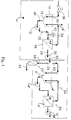
- Fig. 1 is a flow diagram illustrating the process of this invention.
-
- In accordance with this invention, a protein solution is first filtered with an ultrafiltration membrane to selectively retain protein aggregates comprising protein trimers and higher protein polymers while permitting passage of protein monomers therethrough. A portion of protein dimers in the protein solution are retained by the membrane while a portion of protein dimers in solution are passed through the membrane. This filtration step is effected under specific conditions utilizing a cellulosic ultrafiltration membrane having a molecular weight cutoff between about 500 and about 1000 kilodaltons (kD). Filtration is effected by tangential flow filtration (TFF) while utilizing a transmembrane pressure between about 1 and about 10 psi, preferably between about 1 and about 4 psi. When utilizing these conditions, substantially complete protein aggregate removal is effected while permitting recovery of greater than about 85% protein monomer, preferably greater than about 90% protein monomer.
- Representative suitable cellulosic ultrafiltration membranes include those formed from regenerated cellulose such as or Vira Pure™ cellulosic ultrafiltration membranes available from Millipore Corporation, Bedford, Massachusetts, USA. Filtration can be effected with one or a plurality of ultrafiltration membranes wherein the feed protein solution is contacted with the membrane in parallel flow.
- When removing virus from a protein solution substantially free of protein aggregates, the permeate from the first membrane filtration step described above is directed to a second membrane filtration step. The second filtration step also utilizing one of more ultrafiltration membranes which can be conducted either in the TFF mode or the NFF mode. In either mode, the filtration is conducted under conditions to retain the virus generally having a 20 to 100 nanometer (nm) diameter on the membrane while permitting passage of protein monomer and a portion of protein dimer through the membrane. In addition, when filtration of the feed stream is completed, the membrane is flushed with water or an aqueous buffer solution to remove any retained proteins. The use of the flushing step permits obtaining high yield of protein solution substantially free of virus.
- Representative suitable ultrafiltration membranes which can be utilized in the virus removal step include those formed from regenerated cellulose, polyethersulfone, polysulfone, polyimide, polyvinylidenedifluoride (PVDF) or the like.
- The ultrafiltration membranes utilized in the process of this invention are characterized by a log retention value (LRV; the negative logarithm of the sieving coefficient) for virus particles and other, particles that increase monotomically with the diameter of the particle; in the size range of interest for virus of 20 to 100 nm diameter. Empirically, the LRV increases continuously with the size of the particle projected area (the square of the particle diameter). Where one is concerned with removing small sized virus particles from protein solution, satisfactory LRV of at least about 3 are obtained. However, the molecular weight cutoff is reduced thereby reducing protein recovery. Therefore, the user will choose a membrane which gives satisfactory LRV and protein recovery. In any event, the membranes utilized in the process of this invention are capable of producing an LRV for virus of 3 and can extend to as high as about 8 or greater where the virus particle size is between a 10 and 100 nm diameter. In addition, the virus removal membranes utilized in the process of this invention are characterized by a protein molecular weight cut off of between about 500 and 1000 kD. In all cases, the empirical relationship with particle projected area is retained. Log reduction values for virus particles (single solutes in solution; in absence of protein) depends upon the virus particle size. With small sized virus such as hepatitis an LRV of greater than about 3 can be obtained and with larger sized virus such as the AIDS virus, a LRV of greater than 6 can be obtain for example.
- The following example illustrates the present invention and is not intended to limit the same.
- Using a two-stage filtration system set forth in the drawing, to process a 3,000
liter 20 g.l IgG solution in 20 hours, the first stage requires 16 m2 membrane area. Since the protein aggregate retained by this membrane is renewed by flushing with water or aqueous buffer after the filtration, its useful life is about one year. Assuming a target process cost for the virus removal at $ 1 per gram, the operating cost per gram for this first stage filtration is $0.043. With the addition of the second system to remove virus, only 10 m2 filter area are required. The operating cost of the second stage is $0.71. Added together, the total operating cost is $0.77, a saving of 30%. When the IgG solution has a high monomer content (>94%), then normal flow filtration with a PVDF membrane such as a Viresolve 180 membrane available from Millipore Corporation, Bedford, MA, USA can be used for the virus clearance stage. Assuming a mass flux of 525 gm/h, the operating cost of the second stage is $0.34 per gram and for both stages is $0.40 per gram; a saving of 60%.
- In the
first stage 10 of the process of this invention, aprotein solution 12 is retained byreservoir 14 and is pumped toTFF filtration unit 16 bypump 18 throughconduits filtration unit 16 toreservoir 14 throughconduit 24. Permeate from the filtration unit is passed throughconduit 28 bypermeate pump 30 and throughconduit 32 for processing insecond stage 34. Essentially a constant volume inreservoir 14 is maintained by pumping aqueous buffer throughvalve 38 andconduit 40 intoreservoir 14. The flow of buffer is controlled by measuring the protein concentration using anultraviolet sensor 42 which regulatesvalve 38. By operating in this manner, protein aggregates are retained bymembrane 44 while protein monomer is passed throughmembrane 44. - The
membrane 14 is normally cleaned to remove protein aggregate and other debris and then re-used after the end of a process run in a cleansing cycle. An aqueous 0.1M NaOH solution at 50°C is circulated through the system for 30 minutes. The system is then flushed with water and the water checked for contamination by pH measurement. When the pH returns to neutral, the system is ready for the next use with protein solution. A drain 25 is provided fromconduit 24 for the washing cycle. The cleansing cycle greatly increases the usable life ofultrafiltration membrane 14. - In the
second stage 34, virus removal from the permeate protein solution can be effected either with aTFF system 50 or with aNFF system 52. - When utilizing the
NFF system 52, permeate from the first stage is directed fromconduit 32, intoconduit 54 and then into dead endedfiltration unit 56. Substantially virus free protein solution is recovered throughconduit 58. - When utilizing the
TFF system 50, protein solution fromconduit 32 is directed intoconduit 60. TheTFF system 50 is generally similar to the system used in thefirst stage 10 and like parts and are designated with the same numeral with a prime. Thus inTFF system 50, the permeate 12' received from thefirst stage 10 is retained by reservoir 14' and is pumped to TFF filtration unit 16' by pump 18'. The retenate is recirculated from filtration unit 16' to reservoir 14'. Permeate from the filtration unit 16' comprising virus free protein solution is passed tooutlet 36 by permeate pump 30'. The reservoir 14' is also a constant volume reservoir. Notably the ultrafiltration membrane 44' may be the same or different in precise composition frommembrane 44 as explained above. Ultrafiltration membrane 44' is used for removing virus from the solution and ultrafiltration membrane 44' will not normally be cleaned, but rather disposed of after each process run.
Claims (8)
- A process for selectively removing protein aggregates from an aqueous solution of proteins which comprises:filtering by a tangential flow filtration step a protein solution containing said protein aggregate through an ultrafiltration membrane at a transmembrane pressure between about 1 and about 10 psi to produce a permeate stream comprising an aqueous solution of protein monomer, protein dimer and a retentate stream,adding an aqueous solution to said retentate stream to retain a substantially constant volume of said retentate stream andrecycling said retentate having a substantially constant concentration to said tangential flow filtration step.
- The process of claim 1, wherein said transmembrane pressure is between about 1 and about 4 psi.
- The process of claim 1 or claim 2, further including the additional step of flushing retained protein aggregate from said ultrafiltration membrane.
- The process of any one of claims 1 to 3, further including the step of washing the ultrafiltration membrane after processing said aqueous solution of proteins to remove any protein aggregates or other debris from said membrane.
- A process for selectively removing protein aggregates and virus particles from an aqueous solution of proteins which comprises the process of any one of claims 1 to 4, followed by filtering said permeate stream through a second ultrafiltration membrane having a molecular weight cut off of between about 500 kD and about 1000 kD to retain virus particles in said second ultrafiltrate membrane at a level of at least 3 LRV, and to form a second permeate stream comprising an aqueous, virus-free protein solution.
- The process of claim 5 which includes the further step of flushing retained protein from said second ultrafiltration membrane.
- The process of claim 5 or claim 6, wherein filtration with said second ultrafiltration membrane is effected by tangential flow filtration.
- The process of claim 5 or claim 6, wherein filtration with said second ultrafiltration membrane is effected by dead end flow filtration.
Applications Claiming Priority (2)
| Application Number | Priority Date | Filing Date | Title |
|---|---|---|---|
| US706003 | 2000-11-03 | ||
| US09/706,003 US6365395B1 (en) | 2000-11-03 | 2000-11-03 | Process for removing protein aggregates and virus from a protein solution |
Publications (2)
| Publication Number | Publication Date |
|---|---|
| EP1203774A1 true EP1203774A1 (en) | 2002-05-08 |
| EP1203774B1 EP1203774B1 (en) | 2005-12-28 |
Family
ID=24835813
Family Applications (1)
| Application Number | Title | Priority Date | Filing Date |
|---|---|---|---|
| EP01304942A Expired - Lifetime EP1203774B1 (en) | 2000-11-03 | 2001-06-06 | Process for removing protein aggregates and virus from a protein solution |
Country Status (5)
| Country | Link |
|---|---|
| US (1) | US6365395B1 (en) |
| EP (1) | EP1203774B1 (en) |
| JP (1) | JP3746223B2 (en) |
| AU (1) | AU5176701A (en) |
| DE (1) | DE60116237T2 (en) |
Cited By (5)
| Publication number | Priority date | Publication date | Assignee | Title |
|---|---|---|---|---|
| WO2003066669A3 (en) * | 2002-02-04 | 2003-12-11 | Millipore Corp | Process for removing protein aggregates and virus from a protein solution |
| WO2004103530A1 (en) * | 2003-05-19 | 2004-12-02 | Millipore Corporation | Process for prefiltration of a protein solution |
| EP1577319A1 (en) | 2004-03-19 | 2005-09-21 | Millipore Corporation | Prefilter system for biological systems |
| EP3187582A4 (en) * | 2014-08-27 | 2018-03-28 | Godo Shusei Co., Ltd. | Lactase solution and milk using same |
| US11884703B2 (en) | 2016-08-16 | 2024-01-30 | Genzyme Corporation | Methods of processing a fluid including a recombinant therapeutic protein and use thereof |
Families Citing this family (45)
| Publication number | Priority date | Publication date | Assignee | Title |
|---|---|---|---|---|
| US7108791B2 (en) * | 1999-09-14 | 2006-09-19 | Millipore Corporation | High-resolution virus removal methodology and filtration capsule useful therefor |
| EP1440304A2 (en) * | 2001-11-02 | 2004-07-28 | Millipore Corporation | Membrane adsorber device |
| US20030201229A1 (en) * | 2002-02-04 | 2003-10-30 | Martin Siwak | Process for prefiltration of a protein solution |
| JP4500683B2 (en) * | 2002-11-01 | 2010-07-14 | バイエル・ヘルスケア・エルエルシー | Macromolecule concentration method |
| AU2003901515A0 (en) * | 2003-04-02 | 2003-04-17 | Norika Holdings | Sterilisation process for pharmaceutical product |
| WO2005070954A1 (en) * | 2004-01-21 | 2005-08-04 | Toray Industries, Inc. | Fractionator and method of fractionation |
| ES2329607T3 (en) * | 2004-02-23 | 2009-11-27 | Crucell Holland B.V. | VIRUS PURIFICATION METHODS |
| US20050214737A1 (en) * | 2004-03-26 | 2005-09-29 | Dejneka Matthew J | Transparent filtered capillaries |
| US20080004205A1 (en) | 2006-06-30 | 2008-01-03 | Millipore Corporation | Ultrafiltration membranes and methods of making |
| JP4748655B2 (en) * | 2004-06-25 | 2011-08-17 | ミリポア・コーポレイション | Ultrafiltration membrane and manufacturing method |
| WO2006137815A2 (en) * | 2004-07-29 | 2006-12-28 | Pure Protein Plus, Inc. | Method for purifying mixtures of immunoglobulin & albumin |
| US7695966B2 (en) * | 2005-01-18 | 2010-04-13 | Canopus Bioscience Limited | Method for the separation and sorting of different biological objects utilizing differences in their viscoelastic properties |
| US20090170199A1 (en) * | 2005-01-18 | 2009-07-02 | Canopus Bioscience Limited | Separation and sorting of different biological objects |
| US8574595B2 (en) * | 2005-04-11 | 2013-11-05 | Crucell Holland B.V. | Virus purification using ultrafiltration |
| US8007568B2 (en) * | 2006-04-12 | 2011-08-30 | Millipore Corporation | Filter with memory, communication and pressure sensor |
| US20070243113A1 (en) | 2006-04-12 | 2007-10-18 | Dileo Anthony | Filter with memory, communication and concentration sensor |
| US20070240578A1 (en) * | 2006-04-12 | 2007-10-18 | Dileo Anthony | Filter with memory, communication and temperature sensor |
| US20110094310A1 (en) * | 2006-04-12 | 2011-04-28 | Millipore Corporation | Filter with memory, communication and pressure sensor |
| EP2043767B1 (en) | 2006-07-14 | 2020-03-25 | Wisconsin Alumni Research Foundation | Adsorptive membranes for trapping viruses |
| JP5099930B2 (en) * | 2007-06-19 | 2012-12-19 | 旭化成株式会社 | Method for separating immunoglobulin monomer |
| US8741600B2 (en) | 2007-06-19 | 2014-06-03 | Asahi Kasei Kabushiki Kaisha | Method for separation of immunoglobulin monomers |
| CA2693443C (en) * | 2007-07-17 | 2018-02-13 | F. Hoffmann-La Roche Ag | Variable tangential flow filtration |
| CN101874040A (en) * | 2007-11-29 | 2010-10-27 | 弗·哈夫曼-拉罗切有限公司 | immunoglobulin aggregates |
| CN101397339B (en) * | 2008-09-24 | 2012-07-25 | 上海天伟生物制药有限公司 | Method for removing/inactivating virus in glucoprotein |
| JP6141597B2 (en) | 2009-02-27 | 2017-06-07 | イー・エム・デイー・ミリポア・コーポレイシヨン | Membrane containing sulfone groups for removing protein aggregates |
| WO2011127456A2 (en) | 2010-04-09 | 2011-10-13 | Pacira Pharmaceuticals, Inc. | Method for formulating large diameter synthetic membrane vesicles |
| EP2725033B1 (en) | 2011-06-24 | 2017-08-09 | Asahi Kasei Medical Co., Ltd. | Method for producing protein preparation |
| US10294267B2 (en) * | 2013-12-04 | 2019-05-21 | Pall Corporation | Membrane with surface channels |
| WO2015088677A1 (en) | 2013-12-12 | 2015-06-18 | Emd Millipore Corporation | Protein separations using an acrylamide containing filter |
| EP2957335B1 (en) * | 2014-06-16 | 2020-05-27 | EMD Millipore Corporation | Single-pass filtration systems and processes |
| EP4144434B1 (en) * | 2014-06-16 | 2024-04-17 | EMD Millipore Corporation | Single-pass filtration systems and processes |
| US10550148B2 (en) | 2014-06-16 | 2020-02-04 | Emd Millipore Corporation | Methods for increasing the capacity of flow-through processes |
| WO2015195452A2 (en) | 2014-06-16 | 2015-12-23 | Emd Millipore Corporation | Single-pass filtration systems and processes |
| CN115463546A (en) | 2014-06-25 | 2022-12-13 | Emd 密理博公司 | Filter element, tangential flow filtration system, method of producing a feed screen |
| ES2935333T3 (en) | 2014-08-29 | 2023-03-06 | Emd Millipore Corp | Processes for filtering liquids using single pass tangential flow filtration systems and tangential flow filtration systems with recirculation of retentate |
| CN105745009B (en) | 2014-08-29 | 2018-09-28 | Emd 密理博公司 | Single-pass tangential flow filtration systems and tangential flow filtration systems with recirculation of retentate |
| WO2016154290A1 (en) | 2015-03-23 | 2016-09-29 | Alexion Pharmaceuticals, Inc. | Virus filtration |
| JP6887957B2 (en) * | 2015-12-25 | 2021-06-16 | 第一三共株式会社 | Purification method of oligosaccharide peptide using ultrafiltration membrane |
| CA3023486C (en) | 2016-06-09 | 2022-03-29 | Emd Millipore Corporation | Radial-path filter elements, systems and methods of using same |
| EP3535047A1 (en) * | 2016-12-09 | 2019-09-11 | Lonza Ltd | Method for the reduction of viral titer in pharmaceuticals |
| US11206851B2 (en) * | 2017-01-17 | 2021-12-28 | Zea 10, LLC | Process for producing protein concentrate or isolate and cellulosic thermochemical feedstock from brewers spent grains |
| GB201911685D0 (en) | 2019-08-15 | 2019-10-02 | Fujifilm Diosynth Biotechnologies Uk Ltd | Process for purifying monoclonal antibodies |
| GB201911687D0 (en) | 2019-08-15 | 2019-10-02 | Fujifilm Diosynth Biotechnologies Uk Ltd | Apparatus for purifying a liquid comprising a target substance |
| GB201911686D0 (en) | 2019-08-15 | 2019-10-02 | Fujifilm Diosynth Biotechnologies Uk Ltd | Process for purifying target substances |
| JP2022174217A (en) * | 2022-09-12 | 2022-11-22 | 旭化成メディカル株式会社 | Method for purifying antibody |
Citations (3)
| Publication number | Priority date | Publication date | Assignee | Title |
|---|---|---|---|---|
| WO1997045140A1 (en) * | 1996-05-24 | 1997-12-04 | Glaxo Group Limited | Concentrated antibody preparation |
| WO1999019343A1 (en) * | 1997-10-14 | 1999-04-22 | Ortho Diagnostic Systems, Inc. | Viral clearance process |
| EP0976759A2 (en) * | 1998-07-10 | 2000-02-02 | ZLB Zentrallaboratorium Blutspendedienst SRK | Preparation of protein formulations with reduced content of aggregates |
Family Cites Families (2)
| Publication number | Priority date | Publication date | Assignee | Title |
|---|---|---|---|---|
| DE69425966T2 (en) * | 1993-04-27 | 2001-03-29 | Haemonetics Corp., Braintree | Apheresis device |
| US5630946A (en) * | 1995-02-15 | 1997-05-20 | Pall Corporation | Method for processing a biological fluid including leukocyte removal in an extracorporeal circuit |
-
2000
- 2000-11-03 US US09/706,003 patent/US6365395B1/en not_active Expired - Fee Related
-
2001
- 2001-06-05 AU AU51767/01A patent/AU5176701A/en not_active Abandoned
- 2001-06-06 EP EP01304942A patent/EP1203774B1/en not_active Expired - Lifetime
- 2001-06-06 DE DE60116237T patent/DE60116237T2/en not_active Expired - Lifetime
- 2001-11-01 JP JP2001336210A patent/JP3746223B2/en not_active Expired - Fee Related
Patent Citations (3)
| Publication number | Priority date | Publication date | Assignee | Title |
|---|---|---|---|---|
| WO1997045140A1 (en) * | 1996-05-24 | 1997-12-04 | Glaxo Group Limited | Concentrated antibody preparation |
| WO1999019343A1 (en) * | 1997-10-14 | 1999-04-22 | Ortho Diagnostic Systems, Inc. | Viral clearance process |
| EP0976759A2 (en) * | 1998-07-10 | 2000-02-02 | ZLB Zentrallaboratorium Blutspendedienst SRK | Preparation of protein formulations with reduced content of aggregates |
Non-Patent Citations (2)
| Title |
|---|
| LITZEN A ET AL: "SEPARATION AND QUANTITATION OF MONOCLONAL ANTIBODY AGGREGATES BY ASYMMETRICAL FLOW FIELD-FLOW FRACTIONATION AND COMPARISON TO GEL PERMEATION CHROMATOGRAPHY", ANALYTICAL BIOCHEMISTRY,US,ACADEMIC PRESS, SAN DIEGO, CA, vol. 212, 1993, pages 469 - 480, XP002069237, ISSN: 0003-2697 * |
| LUELLAU E ET AL: "Development of a downstream process for the isolation and separation of monoclonal immunoglobulin A monomers, dimers and polymers from cell culture supernatant", JOURNAL OF CHROMATOGRAPHY A,NL,ELSEVIER SCIENCE, vol. 796, no. 1, 13 February 1998 (1998-02-13), pages 165 - 175, XP004108678, ISSN: 0021-9673 * |
Cited By (8)
| Publication number | Priority date | Publication date | Assignee | Title |
|---|---|---|---|---|
| WO2003066669A3 (en) * | 2002-02-04 | 2003-12-11 | Millipore Corp | Process for removing protein aggregates and virus from a protein solution |
| US7465397B2 (en) | 2002-02-04 | 2008-12-16 | Millipore Corporation | Process for removing protein aggregates and virus from a protein solution |
| WO2004103530A1 (en) * | 2003-05-19 | 2004-12-02 | Millipore Corporation | Process for prefiltration of a protein solution |
| EP1577319A1 (en) | 2004-03-19 | 2005-09-21 | Millipore Corporation | Prefilter system for biological systems |
| US7390403B2 (en) | 2004-03-19 | 2008-06-24 | Millipore Corporation | Prefilter system for biological systems |
| US9072988B2 (en) | 2004-03-19 | 2015-07-07 | Emd Millipore Corporation | Prefilter system for biological systems |
| EP3187582A4 (en) * | 2014-08-27 | 2018-03-28 | Godo Shusei Co., Ltd. | Lactase solution and milk using same |
| US11884703B2 (en) | 2016-08-16 | 2024-01-30 | Genzyme Corporation | Methods of processing a fluid including a recombinant therapeutic protein and use thereof |
Also Published As
| Publication number | Publication date |
|---|---|
| EP1203774B1 (en) | 2005-12-28 |
| DE60116237D1 (en) | 2006-02-02 |
| AU5176701A (en) | 2002-05-09 |
| DE60116237T2 (en) | 2006-07-27 |
| US6365395B1 (en) | 2002-04-02 |
| JP3746223B2 (en) | 2006-02-15 |
| JP2003012693A (en) | 2003-01-15 |
Similar Documents
| Publication | Publication Date | Title |
|---|---|---|
| EP1203774B1 (en) | Process for removing protein aggregates and virus from a protein solution | |
| US7465397B2 (en) | Process for removing protein aggregates and virus from a protein solution | |
| EP0312104B1 (en) | Process for removing pyrogens | |
| EP0448075B1 (en) | Immunoglobulin G and process for the production thereof | |
| US5338456A (en) | Water purification system and method | |
| CN112473390A (en) | Ultrafiltration membrane cleaning agent and cleaning method thereof | |
| US6773600B2 (en) | Use of a clathrate modifier, to promote passage of proteins during nanofiltration | |
| CN217139563U (en) | Concentration and separation system adopting membrane technology | |
| JP2000317273A (en) | Membrane separation method | |
| JP2009148661A (en) | Filtration apparatus of solution containing impurities and filtration method | |
| JP2005102519A (en) | Treatment method of sugar solution | |
| US4970001A (en) | Use of chitosan to improve membrane filter performance | |
| Higuchi et al. | Rejection of single stranded and double stranded DNA by porous hollow fiber membranes | |
| JP2001079361A (en) | Method and apparatus for membrane separation of cell-containing liquid | |
| JPH04267933A (en) | Method for washing separation membrane | |
| EP1930419B1 (en) | Method for production of enzyme | |
| JPH05329339A (en) | Filtration system | |
| JP2005329296A (en) | Recycle method for membrane constituted of particulate and cascade type recycle application for reproduced membrane | |
| JPH08187086A (en) | Purification of viral gene | |
| JPH04277018A (en) | Method for washing porous plate-shaped membrane for filtering pasteurized soy sauce | |
| JP2000319294A (en) | Purification of solution of polymer originating from organism | |
| JPH089992A (en) | Protein recovery method | |
| Schlegel et al. | Effects of different membrane modular systems on the performance of crossflow filtration of Pichia pastoris suspensions | |
| CN120647711A (en) | Secondary nano-membrane separation and purification method for immune protein and application | |
| JPH10156146A (en) | Brine desalination method and apparatus therefor |
Legal Events
| Date | Code | Title | Description |
|---|---|---|---|
| PUAI | Public reference made under article 153(3) epc to a published international application that has entered the european phase |
Free format text: ORIGINAL CODE: 0009012 |
|
| AK | Designated contracting states |
Kind code of ref document: A1 Designated state(s): AT BE CH CY DE DK ES FI FR GB GR IE IT LI LU MC NL PT SE TR |
|
| AX | Request for extension of the european patent |
Free format text: AL;LT;LV;MK;RO;SI |
|
| 17P | Request for examination filed |
Effective date: 20020613 |
|
| AKX | Designation fees paid |
Designated state(s): BE CH DE FR GB LI NL |
|
| RAP1 | Party data changed (applicant data changed or rights of an application transferred) |
Owner name: MILLIPORE CORPORATION |
|
| 17Q | First examination report despatched |
Effective date: 20050204 |
|
| GRAP | Despatch of communication of intention to grant a patent |
Free format text: ORIGINAL CODE: EPIDOSNIGR1 |
|
| GRAS | Grant fee paid |
Free format text: ORIGINAL CODE: EPIDOSNIGR3 |
|
| GRAA | (expected) grant |
Free format text: ORIGINAL CODE: 0009210 |
|
| AK | Designated contracting states |
Kind code of ref document: B1 Designated state(s): BE CH DE FR GB LI NL |
|
| REG | Reference to a national code |
Ref country code: GB Ref legal event code: FG4D |
|
| REG | Reference to a national code |
Ref country code: CH Ref legal event code: EP |
|
| REF | Corresponds to: |
Ref document number: 60116237 Country of ref document: DE Date of ref document: 20060202 Kind code of ref document: P |
|
| REG | Reference to a national code |
Ref country code: CH Ref legal event code: NV Representative=s name: PATENTANWAELTE SCHAAD, BALASS, MENZL & PARTNER AG |
|
| ET | Fr: translation filed | ||
| PLBE | No opposition filed within time limit |
Free format text: ORIGINAL CODE: 0009261 |
|
| STAA | Information on the status of an ep patent application or granted ep patent |
Free format text: STATUS: NO OPPOSITION FILED WITHIN TIME LIMIT |
|
| 26N | No opposition filed |
Effective date: 20060929 |
|
| REG | Reference to a national code |
Ref country code: CH Ref legal event code: PFA Owner name: EMD MILLIPORE CORPORATION Free format text: MILLIPORE CORPORATION#290 CONCORD ROAD,#BILLERICA, MASSACHUSETTS 01821 (US) -TRANSFER TO- EMD MILLIPORE CORPORATION#290 CONCORD ROAD#BILLERICA, MA 01821 (US) |
|
| REG | Reference to a national code |
Ref country code: NL Ref legal event code: TD Effective date: 20120227 |
|
| REG | Reference to a national code |
Ref country code: FR Ref legal event code: CD Owner name: EMD MILLIPORE CORPORATION Effective date: 20120327 |
|
| REG | Reference to a national code |
Ref country code: DE Ref legal event code: R082 Ref document number: 60116237 Country of ref document: DE Representative=s name: VOLLMANN & HEMMER, DE |
|
| PGFP | Annual fee paid to national office [announced via postgrant information from national office to epo] |
Ref country code: CH Payment date: 20120625 Year of fee payment: 12 Ref country code: DE Payment date: 20120627 Year of fee payment: 12 Ref country code: NL Payment date: 20120626 Year of fee payment: 12 |
|
| REG | Reference to a national code |
Ref country code: DE Ref legal event code: R081 Ref document number: 60116237 Country of ref document: DE Owner name: EMD MILLIPORE CORPORATION, US Free format text: FORMER OWNER: MILLIPORE CORP., BILLERICA, US Effective date: 20120613 Ref country code: DE Ref legal event code: R082 Ref document number: 60116237 Country of ref document: DE Representative=s name: PATENTANWAELTE VOLLMANN & HEMMER, DE Effective date: 20120613 |
|
| PGFP | Annual fee paid to national office [announced via postgrant information from national office to epo] |
Ref country code: GB Payment date: 20120625 Year of fee payment: 12 Ref country code: FR Payment date: 20120705 Year of fee payment: 12 |
|
| PGFP | Annual fee paid to national office [announced via postgrant information from national office to epo] |
Ref country code: BE Payment date: 20120625 Year of fee payment: 12 |
|
| BERE | Be: lapsed |
Owner name: *EMD MILLIPORE CORP. Effective date: 20130630 |
|
| REG | Reference to a national code |
Ref country code: NL Ref legal event code: V1 Effective date: 20140101 |
|
| REG | Reference to a national code |
Ref country code: CH Ref legal event code: PL |
|
| GBPC | Gb: european patent ceased through non-payment of renewal fee |
Effective date: 20130606 |
|
| REG | Reference to a national code |
Ref country code: FR Ref legal event code: ST Effective date: 20140228 |
|
| PG25 | Lapsed in a contracting state [announced via postgrant information from national office to epo] |
Ref country code: BE Free format text: LAPSE BECAUSE OF NON-PAYMENT OF DUE FEES Effective date: 20130630 |
|
| REG | Reference to a national code |
Ref country code: DE Ref legal event code: R119 Ref document number: 60116237 Country of ref document: DE Effective date: 20140101 |
|
| PG25 | Lapsed in a contracting state [announced via postgrant information from national office to epo] |
Ref country code: NL Free format text: LAPSE BECAUSE OF NON-PAYMENT OF DUE FEES Effective date: 20140101 Ref country code: CH Free format text: LAPSE BECAUSE OF NON-PAYMENT OF DUE FEES Effective date: 20130630 Ref country code: LI Free format text: LAPSE BECAUSE OF NON-PAYMENT OF DUE FEES Effective date: 20130630 Ref country code: DE Free format text: LAPSE BECAUSE OF NON-PAYMENT OF DUE FEES Effective date: 20140101 Ref country code: GB Free format text: LAPSE BECAUSE OF NON-PAYMENT OF DUE FEES Effective date: 20130606 |
|
| PG25 | Lapsed in a contracting state [announced via postgrant information from national office to epo] |
Ref country code: FR Free format text: LAPSE BECAUSE OF NON-PAYMENT OF DUE FEES Effective date: 20130701 |