EP1192450B1 - High energy phototherapeutic agents - Google Patents
High energy phototherapeutic agents Download PDFInfo
- Publication number
- EP1192450B1 EP1192450B1 EP99967402.1A EP99967402A EP1192450B1 EP 1192450 B1 EP1192450 B1 EP 1192450B1 EP 99967402 A EP99967402 A EP 99967402A EP 1192450 B1 EP1192450 B1 EP 1192450B1
- Authority
- EP
- European Patent Office
- Prior art keywords
- agent
- disodium salt
- eosin
- xanthene
- rose bengal
- Prior art date
- Legal status (The legal status is an assumption and is not a legal conclusion. Google has not performed a legal analysis and makes no representation as to the accuracy of the status listed.)
- Expired - Lifetime
Links
- 239000003795 chemical substances by application Substances 0.000 claims description 101
- 150000003732 xanthenes Chemical class 0.000 claims description 25
- 230000005855 radiation Effects 0.000 claims description 21
- 239000002534 radiation-sensitizing agent Substances 0.000 claims description 20
- 238000003384 imaging method Methods 0.000 claims description 19
- 230000008685 targeting Effects 0.000 claims description 17
- 230000005865 ionizing radiation Effects 0.000 claims description 16
- QDLAGTHXVHQKRE-UHFFFAOYSA-N lichenxanthone Natural products COC1=CC(O)=C2C(=O)C3=C(C)C=C(OC)C=C3OC2=C1 QDLAGTHXVHQKRE-UHFFFAOYSA-N 0.000 claims description 15
- ZDTNHRWWURISAA-UHFFFAOYSA-N 4',5'-dibromo-3',6'-dihydroxyspiro[2-benzofuran-3,9'-xanthene]-1-one Chemical compound O1C(=O)C2=CC=CC=C2C21C1=CC=C(O)C(Br)=C1OC1=C(Br)C(O)=CC=C21 ZDTNHRWWURISAA-UHFFFAOYSA-N 0.000 claims description 12
- SEACYXSIPDVVMV-UHFFFAOYSA-L eosin Y Chemical compound [Na+].[Na+].[O-]C(=O)C1=CC=CC=C1C1=C2C=C(Br)C(=O)C(Br)=C2OC2=C(Br)C([O-])=C(Br)C=C21 SEACYXSIPDVVMV-UHFFFAOYSA-L 0.000 claims description 12
- GVKCHTBDSMQENH-UHFFFAOYSA-L phloxine B Chemical compound [Na+].[Na+].[O-]C(=O)C1=C(Cl)C(Cl)=C(Cl)C(Cl)=C1C1=C2C=C(Br)C(=O)C(Br)=C2OC2=C(Br)C([O-])=C(Br)C=C21 GVKCHTBDSMQENH-UHFFFAOYSA-L 0.000 claims description 12
- GJCOSYZMQJWQCA-UHFFFAOYSA-N 9H-xanthene Chemical compound C1=CC=C2CC3=CC=CC=C3OC2=C1 GJCOSYZMQJWQCA-UHFFFAOYSA-N 0.000 claims description 11
- 239000002872 contrast media Substances 0.000 claims description 11
- 230000000637 radiosensitizating effect Effects 0.000 claims description 11
- -1 xanthene compound Chemical class 0.000 claims description 11
- 102000053602 DNA Human genes 0.000 claims description 9
- 108020004414 DNA Proteins 0.000 claims description 9
- 229920002477 rna polymer Polymers 0.000 claims description 9
- ZBQZBWKNGDEDOA-UHFFFAOYSA-N eosin B Chemical compound O1C(=O)C2=CC=CC=C2C21C1=CC([N+]([O-])=O)=C(O)C(Br)=C1OC1=C2C=C([N+]([O-])=O)C(O)=C1Br ZBQZBWKNGDEDOA-UHFFFAOYSA-N 0.000 claims description 8
- WBLLWHYYHNSTFH-UHFFFAOYSA-N 2',4',5',7'-tetrachloro-3',6'-dihydroxyspiro[2-benzofuran-3,9'-xanthene]-1-one Chemical compound O1C(=O)C2=CC=CC=C2C21C1=CC(Cl)=C(O)C(Cl)=C1OC1=C(Cl)C(O)=C(Cl)C=C21 WBLLWHYYHNSTFH-UHFFFAOYSA-N 0.000 claims description 7
- VFNKZQNIXUFLBC-UHFFFAOYSA-N 2',7'-dichlorofluorescein Chemical compound O1C(=O)C2=CC=CC=C2C21C1=CC(Cl)=C(O)C=C1OC1=C2C=C(Cl)C(O)=C1 VFNKZQNIXUFLBC-UHFFFAOYSA-N 0.000 claims description 7
- WLHLYHWMNUCWEV-UHFFFAOYSA-N 4',5'-dichloro-3',6'-dihydroxyspiro[2-benzofuran-3,9'-xanthene]-1-one Chemical compound O1C(=O)C2=CC=CC=C2C21C1=CC=C(O)C(Cl)=C1OC1=C(Cl)C(O)=CC=C21 WLHLYHWMNUCWEV-UHFFFAOYSA-N 0.000 claims description 7
- UKZQEOHHLOYJLY-UHFFFAOYSA-M ethyl eosin Chemical compound [K+].CCOC(=O)C1=CC=CC=C1C1=C2C=C(Br)C(=O)C(Br)=C2OC2=C(Br)C([O-])=C(Br)C=C21 UKZQEOHHLOYJLY-UHFFFAOYSA-M 0.000 claims description 7
- 239000003981 vehicle Substances 0.000 claims description 7
- GNBHRKFJIUUOQI-UHFFFAOYSA-N fluorescein Chemical compound O1C(=O)C2=CC=CC=C2C21C1=CC=C(O)C=C1OC1=CC(O)=CC=C21 GNBHRKFJIUUOQI-UHFFFAOYSA-N 0.000 claims description 6
- 102000004169 proteins and genes Human genes 0.000 claims description 6
- 108090000623 proteins and genes Proteins 0.000 claims description 6
- 230000000717 retained effect Effects 0.000 claims description 6
- 230000004913 activation Effects 0.000 claims description 5
- 150000001298 alcohols Chemical class 0.000 claims description 5
- 150000001299 aldehydes Chemical class 0.000 claims description 5
- 125000001931 aliphatic group Chemical group 0.000 claims description 5
- 150000001408 amides Chemical class 0.000 claims description 5
- 150000001412 amines Chemical class 0.000 claims description 5
- 150000001413 amino acids Chemical class 0.000 claims description 5
- 150000004945 aromatic hydrocarbons Chemical class 0.000 claims description 5
- 150000001540 azides Chemical class 0.000 claims description 5
- 230000001413 cellular effect Effects 0.000 claims description 5
- 239000002738 chelating agent Substances 0.000 claims description 5
- 150000002148 esters Chemical class 0.000 claims description 5
- 229910052740 iodine Inorganic materials 0.000 claims description 5
- 150000002576 ketones Chemical class 0.000 claims description 5
- 239000003446 ligand Substances 0.000 claims description 5
- 239000012528 membrane Substances 0.000 claims description 5
- 150000002825 nitriles Chemical class 0.000 claims description 5
- 229910052794 bromium Inorganic materials 0.000 claims description 4
- 125000003178 carboxy group Chemical group [H]OC(*)=O 0.000 claims description 4
- 125000002887 hydroxy group Chemical group [H]O* 0.000 claims description 4
- 238000002347 injection Methods 0.000 claims description 4
- 239000007924 injection Substances 0.000 claims description 4
- 239000000693 micelle Substances 0.000 claims description 4
- ZCYVEMRRCGMTRW-UHFFFAOYSA-N 7553-56-2 Chemical compound [I] ZCYVEMRRCGMTRW-UHFFFAOYSA-N 0.000 claims description 3
- 239000011630 iodine Substances 0.000 claims description 3
- 239000002502 liposome Substances 0.000 claims description 3
- 239000002105 nanoparticle Substances 0.000 claims description 3
- 238000002360 preparation method Methods 0.000 claims description 3
- GDTBXPJZTBHREO-UHFFFAOYSA-N bromine Substances BrBr GDTBXPJZTBHREO-UHFFFAOYSA-N 0.000 claims description 2
- QXNVGIXVLWOKEQ-UHFFFAOYSA-N Disodium Chemical class [Na][Na] QXNVGIXVLWOKEQ-UHFFFAOYSA-N 0.000 claims 33
- IINNWAYUJNWZRM-UHFFFAOYSA-L erythrosin B Chemical compound [Na+].[Na+].[O-]C(=O)C1=CC=CC=C1C1=C2C=C(I)C(=O)C(I)=C2OC2=C(I)C([O-])=C(I)C=C21 IINNWAYUJNWZRM-UHFFFAOYSA-L 0.000 claims 8
- 238000011961 computed axial tomography Methods 0.000 claims 2
- XAEFZNCEHLXOMS-UHFFFAOYSA-M potassium benzoate Chemical compound [K+].[O-]C(=O)C1=CC=CC=C1 XAEFZNCEHLXOMS-UHFFFAOYSA-M 0.000 claims 2
- WKBOTKDWSSQWDR-UHFFFAOYSA-N Bromine atom Chemical compound [Br] WKBOTKDWSSQWDR-UHFFFAOYSA-N 0.000 claims 1
- STRXNPAVPKGJQR-UHFFFAOYSA-N rose bengal A Natural products O1C(=O)C(C(=CC=C2Cl)Cl)=C2C21C1=CC(I)=C(O)C(I)=C1OC1=C(I)C(O)=C(I)C=C21 STRXNPAVPKGJQR-UHFFFAOYSA-N 0.000 claims 1
- 210000001519 tissue Anatomy 0.000 description 51
- 206010028980 Neoplasm Diseases 0.000 description 22
- 239000000126 substance Substances 0.000 description 14
- 230000003013 cytotoxicity Effects 0.000 description 12
- 231100000135 cytotoxicity Toxicity 0.000 description 12
- 238000000034 method Methods 0.000 description 9
- 238000002428 photodynamic therapy Methods 0.000 description 8
- 229910052736 halogen Inorganic materials 0.000 description 7
- 150000002367 halogens Chemical class 0.000 description 7
- 238000013459 approach Methods 0.000 description 6
- 238000002591 computed tomography Methods 0.000 description 6
- 230000001225 therapeutic effect Effects 0.000 description 6
- 238000010521 absorption reaction Methods 0.000 description 5
- 230000001105 regulatory effect Effects 0.000 description 5
- OALHHIHQOFIMEF-UHFFFAOYSA-N 3',6'-dihydroxy-2',4',5',7'-tetraiodo-3h-spiro[2-benzofuran-1,9'-xanthene]-3-one Chemical compound O1C(=O)C2=CC=CC=C2C21C1=CC(I)=C(O)C(I)=C1OC1=C(I)C(O)=C(I)C=C21 OALHHIHQOFIMEF-UHFFFAOYSA-N 0.000 description 4
- 201000011510 cancer Diseases 0.000 description 4
- 230000008569 process Effects 0.000 description 4
- 238000001959 radiotherapy Methods 0.000 description 4
- 238000000638 solvent extraction Methods 0.000 description 4
- 230000008512 biological response Effects 0.000 description 3
- 239000008139 complexing agent Substances 0.000 description 3
- 231100000433 cytotoxic Toxicity 0.000 description 3
- 230000001472 cytotoxic effect Effects 0.000 description 3
- 238000003745 diagnosis Methods 0.000 description 3
- 230000000694 effects Effects 0.000 description 3
- 230000002209 hydrophobic effect Effects 0.000 description 3
- 239000000463 material Substances 0.000 description 3
- 239000000243 solution Substances 0.000 description 3
- 238000012360 testing method Methods 0.000 description 3
- GZAJOEGTZDUSKS-UHFFFAOYSA-N 5-aminofluorescein Chemical compound C12=CC=C(O)C=C2OC2=CC(O)=CC=C2C21OC(=O)C1=CC(N)=CC=C21 GZAJOEGTZDUSKS-UHFFFAOYSA-N 0.000 description 2
- 206010070834 Sensitisation Diseases 0.000 description 2
- FAPWRFPIFSIZLT-UHFFFAOYSA-M Sodium chloride Chemical compound [Na+].[Cl-] FAPWRFPIFSIZLT-UHFFFAOYSA-M 0.000 description 2
- 238000009825 accumulation Methods 0.000 description 2
- 239000007864 aqueous solution Substances 0.000 description 2
- 210000000988 bone and bone Anatomy 0.000 description 2
- 210000004027 cell Anatomy 0.000 description 2
- 210000000170 cell membrane Anatomy 0.000 description 2
- 210000002421 cell wall Anatomy 0.000 description 2
- 150000001875 compounds Chemical class 0.000 description 2
- 238000009472 formulation Methods 0.000 description 2
- 230000006870 function Effects 0.000 description 2
- 238000005286 illumination Methods 0.000 description 2
- 230000003993 interaction Effects 0.000 description 2
- 239000000203 mixture Substances 0.000 description 2
- 230000003287 optical effect Effects 0.000 description 2
- 230000035699 permeability Effects 0.000 description 2
- 239000003504 photosensitizing agent Substances 0.000 description 2
- 230000000704 physical effect Effects 0.000 description 2
- 230000008313 sensitization Effects 0.000 description 2
- 231100000489 sensitizer Toxicity 0.000 description 2
- 230000001235 sensitizing effect Effects 0.000 description 2
- 239000011780 sodium chloride Substances 0.000 description 2
- 238000006467 substitution reaction Methods 0.000 description 2
- 239000000725 suspension Substances 0.000 description 2
- QCPFFGGFHNZBEP-UHFFFAOYSA-N 4,5,6,7-tetrachloro-3',6'-dihydroxyspiro[2-benzofuran-3,9'-xanthene]-1-one Chemical compound O1C(=O)C(C(=C(Cl)C(Cl)=C2Cl)Cl)=C2C21C1=CC=C(O)C=C1OC1=CC(O)=CC=C21 QCPFFGGFHNZBEP-UHFFFAOYSA-N 0.000 description 1
- 206010024774 Localised infection Diseases 0.000 description 1
- 239000006096 absorbing agent Substances 0.000 description 1
- 125000004429 atom Chemical group 0.000 description 1
- 230000009286 beneficial effect Effects 0.000 description 1
- 230000004071 biological effect Effects 0.000 description 1
- 125000001246 bromo group Chemical group Br* 0.000 description 1
- 230000030833 cell death Effects 0.000 description 1
- 230000008859 change Effects 0.000 description 1
- 238000006243 chemical reaction Methods 0.000 description 1
- 239000000470 constituent Substances 0.000 description 1
- 230000001276 controlling effect Effects 0.000 description 1
- 238000007796 conventional method Methods 0.000 description 1
- 239000006071 cream Substances 0.000 description 1
- 238000001514 detection method Methods 0.000 description 1
- 238000009792 diffusion process Methods 0.000 description 1
- 239000012895 dilution Substances 0.000 description 1
- 238000010790 dilution Methods 0.000 description 1
- 201000010099 disease Diseases 0.000 description 1
- 208000037265 diseases, disorders, signs and symptoms Diseases 0.000 description 1
- 230000005670 electromagnetic radiation Effects 0.000 description 1
- 238000005538 encapsulation Methods 0.000 description 1
- 230000032050 esterification Effects 0.000 description 1
- 238000005886 esterification reaction Methods 0.000 description 1
- 230000005284 excitation Effects 0.000 description 1
- 238000002474 experimental method Methods 0.000 description 1
- 239000007850 fluorescent dye Substances 0.000 description 1
- 125000005843 halogen group Chemical group 0.000 description 1
- 230000006872 improvement Effects 0.000 description 1
- 238000000338 in vitro Methods 0.000 description 1
- 238000001990 intravenous administration Methods 0.000 description 1
- 238000011835 investigation Methods 0.000 description 1
- NTHXOOBQLCIOLC-UHFFFAOYSA-N iohexol Chemical compound OCC(O)CN(C(=O)C)C1=C(I)C(C(=O)NCC(O)CO)=C(I)C(C(=O)NCC(O)CO)=C1I NTHXOOBQLCIOLC-UHFFFAOYSA-N 0.000 description 1
- 229960001025 iohexol Drugs 0.000 description 1
- 230000003902 lesion Effects 0.000 description 1
- 208000032839 leukemia Diseases 0.000 description 1
- 150000002632 lipids Chemical class 0.000 description 1
- 239000007788 liquid Substances 0.000 description 1
- 239000006210 lotion Substances 0.000 description 1
- 231100000053 low toxicity Toxicity 0.000 description 1
- 230000007246 mechanism Effects 0.000 description 1
- 239000002184 metal Substances 0.000 description 1
- 238000005192 partition Methods 0.000 description 1
- 230000000149 penetrating effect Effects 0.000 description 1
- CLSUSRZJUQMOHH-UHFFFAOYSA-L platinum dichloride Chemical compound Cl[Pt]Cl CLSUSRZJUQMOHH-UHFFFAOYSA-L 0.000 description 1
- 230000003389 potentiating effect Effects 0.000 description 1
- 238000010926 purge Methods 0.000 description 1
- 230000004044 response Effects 0.000 description 1
- PYWVYCXTNDRMGF-UHFFFAOYSA-N rhodamine B Chemical class [Cl-].C=12C=CC(=[N+](CC)CC)C=C2OC2=CC(N(CC)CC)=CC=C2C=1C1=CC=CC=C1C(O)=O PYWVYCXTNDRMGF-UHFFFAOYSA-N 0.000 description 1
- 239000002904 solvent Substances 0.000 description 1
- 238000005507 spraying Methods 0.000 description 1
- 230000004936 stimulating effect Effects 0.000 description 1
- 239000004094 surface-active agent Substances 0.000 description 1
- 238000011287 therapeutic dose Methods 0.000 description 1
- 238000002560 therapeutic procedure Methods 0.000 description 1
- 230000004797 therapeutic response Effects 0.000 description 1
- 230000000699 topical effect Effects 0.000 description 1
- 210000004881 tumor cell Anatomy 0.000 description 1
Images



Classifications
-
- A—HUMAN NECESSITIES
- A61—MEDICAL OR VETERINARY SCIENCE; HYGIENE
- A61K—PREPARATIONS FOR MEDICAL, DENTAL OR TOILETRY PURPOSES
- A61K8/00—Cosmetics or similar toiletry preparations
- A61K8/18—Cosmetics or similar toiletry preparations characterised by the composition
- A61K8/30—Cosmetics or similar toiletry preparations characterised by the composition containing organic compounds
- A61K8/33—Cosmetics or similar toiletry preparations characterised by the composition containing organic compounds containing oxygen
- A61K8/34—Alcohols
-
- A—HUMAN NECESSITIES
- A61—MEDICAL OR VETERINARY SCIENCE; HYGIENE
- A61K—PREPARATIONS FOR MEDICAL, DENTAL OR TOILETRY PURPOSES
- A61K41/00—Medicinal preparations obtained by treating materials with wave energy or particle radiation ; Therapies using these preparations
- A61K41/0038—Radiosensitizing, i.e. administration of pharmaceutical agents that enhance the effect of radiotherapy
-
- A—HUMAN NECESSITIES
- A61—MEDICAL OR VETERINARY SCIENCE; HYGIENE
- A61K—PREPARATIONS FOR MEDICAL, DENTAL OR TOILETRY PURPOSES
- A61K49/00—Preparations for testing in vivo
- A61K49/04—X-ray contrast preparations
- A61K49/0433—X-ray contrast preparations containing an organic halogenated X-ray contrast-enhancing agent
-
- A—HUMAN NECESSITIES
- A61—MEDICAL OR VETERINARY SCIENCE; HYGIENE
- A61P—SPECIFIC THERAPEUTIC ACTIVITY OF CHEMICAL COMPOUNDS OR MEDICINAL PREPARATIONS
- A61P35/00—Antineoplastic agents
-
- A—HUMAN NECESSITIES
- A61—MEDICAL OR VETERINARY SCIENCE; HYGIENE
- A61P—SPECIFIC THERAPEUTIC ACTIVITY OF CHEMICAL COMPOUNDS OR MEDICINAL PREPARATIONS
- A61P43/00—Drugs for specific purposes, not provided for in groups A61P1/00-A61P41/00
-
- Y—GENERAL TAGGING OF NEW TECHNOLOGICAL DEVELOPMENTS; GENERAL TAGGING OF CROSS-SECTIONAL TECHNOLOGIES SPANNING OVER SEVERAL SECTIONS OF THE IPC; TECHNICAL SUBJECTS COVERED BY FORMER USPC CROSS-REFERENCE ART COLLECTIONS [XRACs] AND DIGESTS
- Y10—TECHNICAL SUBJECTS COVERED BY FORMER USPC
- Y10S—TECHNICAL SUBJECTS COVERED BY FORMER USPC CROSS-REFERENCE ART COLLECTIONS [XRACs] AND DIGESTS
- Y10S436/00—Chemistry: analytical and immunological testing
- Y10S436/811—Test for named disease, body condition or organ function
- Y10S436/813—Cancer
-
- Y—GENERAL TAGGING OF NEW TECHNOLOGICAL DEVELOPMENTS; GENERAL TAGGING OF CROSS-SECTIONAL TECHNOLOGIES SPANNING OVER SEVERAL SECTIONS OF THE IPC; TECHNICAL SUBJECTS COVERED BY FORMER USPC CROSS-REFERENCE ART COLLECTIONS [XRACs] AND DIGESTS
- Y10—TECHNICAL SUBJECTS COVERED BY FORMER USPC
- Y10S—TECHNICAL SUBJECTS COVERED BY FORMER USPC CROSS-REFERENCE ART COLLECTIONS [XRACs] AND DIGESTS
- Y10S436/00—Chemistry: analytical and immunological testing
- Y10S436/819—Multifunctional antigen or antibody
Definitions
- the present invention is directed to high energy phototherapeutic agents, or specifically to radiosensitizing and methods of treating and imaging using such phototherapeutic or radiosensitizer agents. More specifically, the treating and imaging is of diseased tissue, such as tumors, particularly cancerous tumors.
- Diseased tissue or tumors are often treated using ionizing radiation, in a process known as radiation therapy.
- Radiation therapy (which typically uses electromagnetic radiation with energies of 1 keV or higher) for cancer typically works by attacking rapidly growing cells with highly penetrating ionizing radiation. Use of such radiation is attractive due to its ability to penetrate deeply into tissue, especially when diseased tissue is, or is located within, bone or other dense or opaque structures. Unfortunately, using rapid growth as the sole targeting criterion does not limit the effects of such treatment to cancer cells.
- Photodynamic therapy is the combination of a photosensitive agent with site-specific illumination (using non-ionizing, optical radiation) to produce a therapeutic response in diseased tissue, such as a tumor.
- site-specific illumination using non-ionizing, optical radiation
- a preferential concentration of photosensitizer is to be located in the diseased tissue, either through natural processes or via localized application, and not in the healthy surrounding tissue. This provides an additional level of tissue specificity relative to that achievable through standard radiation therapy since PDT is effective only when a photosensitizer is present in tissue. As a result, damage to surrounding, healthy tissue can be avoided by controlling the distribution of agent.
- Radiosensitizers agents used with such radiation. It is also desirable to achieve preferential concentration of the radiosensitizer in the diseased tissue, either through natural processes or via localized application, so as to provide additional specificity relative to that achievable through standard radiation therapy. The desired result is for radiation to become more efficacious when the radiosensitizer is present in tissue, so that less radiation is needed to treat the lesion tumor or other diseased tissue, and accordingly, potential damage to surrounding healthy tissue, resulting from collateral exposure to the radiation is reduced. Hence, safety and efficacy would then be improved.
- WO-A-96/07431 discloses rhodamine derivatives for photodynamic therapy of cancer and in vitro purging of leukemias.
- US-A-4,490,543 discloses bis(5-amino fluorescein) dichloroplatinum (II) and substituted fluoresceinamine derivatives of this compound as radiation sensitisers.
- WO-A-07/03697 discloses fluorogenic substrates for diagnosis and photodynamic treatment of tumours.
- radiosensitizers The ultimate success or failure of the radiosensitizers approach depends on: (1) therapeutic performance of agents, and (2) disease specificity in the site of activation. Currently used agents and targeting approaches, however, have had unacceptable results in each of these categories.
- the therapeutic performance of a radiosensitizer is primarily a function of enhanced absorption of the applied radiation dose in sensitized tissues relative to that in non-sensitized tissues.
- This differential absorption is commonly effected by use of agents having a high absorption cross-section for a particular type of radiation (such as x-rays).
- agents having a high absorption cross-section for a particular type of radiation such as x-rays.
- metal or halogen atoms are often used, either in atomic form or incorporated into a molecular carrier, due to their high x-ray cross-section. Absorption of x-rays by such atoms appears to lead to secondary radiative emissions, ionization, and other chemical or physical processes that increase the localized cytotoxicity of the applied energy (i.e., radiation-induced cell death, or "light cytotoxicity").
- a high light cytotoxicity is not enough to make an agent an acceptable agent.
- the agents must also have a negligible effect when energy is not applied (i.e., have a low toxicity in the absence of radiation, or "dark cytotoxicity").
- many agents presently under investigation as radiosensitizers have the disadvantage of either: (a) a relatively high dark cytotoxicity or (b) a low light (cytotoxicity)-to-dark cytotoxicity ratio which limits their effectiveness and acceptability.
- Agents having a high light-to-dark cytotoxicity ratio are desirable because they (1) can be safely used over a range of dosages. (2) will exhibit improved efficacy at the treatment site (due to the compatibility with use at higher dosages as a consequence of their relative safety), and (3) will be better tolerated throughout the patient's body.
- radiosensitizers do not achieve significant preferential concentration in tumors.
- most radiosensitizer targeting has been based on physical targeting, such as diffusion into tumors through leaky neurovasculature, which ultimately succeed or fail based on permeability of the tumor to agents that are aqueously soluble or are in a suspension formulation.
- large doses of the agent typically need to be administered, either locally or systemically, so as to saturate all tissues, hopefully reaching a therapeutic level in the desired treatment region or target.
- a patient has to wait a clearance time of hours to days to allow excess agent to hopefully clear from healthy living tissues surrounding the desired treatment site.
- the radiosensitizer could be used to improve identification of target size, location and depth so that the therapeutic radiation could be more precisely delivered to the target, such as a cancerous tumor.
- Combined diagnostic use (as a contrast agent) and therapeutic use (as a radiosensitizer) of the agent would reduce risk to the patient by (1) reducing the number of required procedures necessary for diagnosis and treatment, (2) reducing the overall diagnosis and treatment time, and (3) reducing cost.
- one object of the present invention is to develop new radiosensitizers that have one or more of the following characteristics: (1) improved light-to-dark cytotoxicity ratio; (2) improved accumulation of agent into diseased tissue with strong contrast between diseased and healthy tissue; (3) rapid clearance from normal tissue; and (4) capability of combined imaging and therapy. Further desirable characteristics include low agent cost, and significant regulatory history (so as to facilitate acceptance by the regulatory and medical communities).
- the present invention is directed to a radiosensitizer agent for treatment of diseased tissue using radiosensitization or ionizing radiation, which agent comprises a xanthene compound selected from fluorescein, 4',5'-Dichlorofluorescein, 2',7'-Dichlorofluorescein, 4,5,6,7,-Tetrachlorofluorescein, 2',4',5',7'-Tetrachlorofluorescein, Dibromofluorescein, Solvent Red 72, Diiodofluorescein, Eosin B, Eosin Y, Ethyl Eosin, Erythrosin B, Phloxine B, Rose Bengal, and 4,5,6,7-Tetrabromoerythrosin and wherein the carboxyl group and/or the hydroxyl group of the halogenated xanthene may comprise deoxyribonucleic acid (DNA), ribonucleic acid (RNA), amino acids
- the radiosensitizer agent also acts as an imaging contrast agent.
- An embodiment of the present invention is also directed to said radiosensitiser agent for treatment of diseased tissue using radiosensitisation or ionizing radiation wherein the agent exhibits a preference for concentration in biologically sensitive structures in tissue, such as, for example, cellular membranes.
- the agent biologically or chemically targets the biologically sensitive structures.
- a second aspect of the present invention is directed to use of a xanthene for the preparation of a radiosensitizing agent for treatment of diseased tissue, wherein a portion of the agent is capable of being retained in a diseased tissue when administered to a patient and the retained agent is capable of being activated in the diseased tissue when treated with x-rays or other ionizing radiation, which xanthene is selected from fluorescein, 4',5'-Dichlorofluorescein, 2',7'-Dichlorofluorescein, 4,5,6,7,-Tetrachlorofluorescein, 2',4',5',7'-Tetrachlorofluorescein, Dibromofluorescein, Solvent Red 72, Diiodofluorescein, Eosin B, Eosin Y, Ethyl Eosin, Erythrosin B, Phloxine B, Rose Bengal, and 4,5,6,7-Tetrabromo
- the present invention is directed to agents that can efficiently interact with x-rays or other types of ionizing radiation to produce a beneficial biological response and to methods of treatment and imaging using such agents.
- radio dense agents such as the halogenated xanthenes discussed infra, which exhibit a preference for concentration in cellular membranes and other key components and structures of diseased tissue, will exhibit additional therapeutic dose enhancement over that possible with previously known agents or enhancement mechanisms.
- This additional dose enhancement is a consequence of increased radiosensitization yield of such agents owing to improved proximity of such agents, upon interaction with diseased tissue, to sensitive structures during irradiation and subsequent radiosensitization.
- radiosensitizers function by absorbing highly-penetrating energy (which in itself has little direct interaction with tissue), and then releasing this energy in a less-penetrating, more cytotoxic form (such as lower-energy re-emission) that is capable of interacting primarily only with proximal, biologically-sensitive structures or materials (such as cellular membranes and genetic material).
- any radiodense agent such as halogenated xanthenes, that exhibits chemical or biological targeting to such biologically-sensitive structures or materials, and which thereby becomes substantially concentrated in areas in physical proximity to such structures or materials, will increase the overall efficiency of radiosensitization (i.e. conversion of high-energy stimulating excitation into localized cytotoxic effects).
- This yield enhancement results from the increased probability that proximally-released energy will interact favorably with the sensitive target (before annihilating or otherwise dissipating in an inefficacious manner) whenever the agent responsible for such re-emission is concentrated as close as possible to such a target.
- the released energy having a short mean free path, will have a higher probability of interacting with the target if it is emitted from an agent located closer to the target.
- targeting uses the superior approach based on chemical or biological targeting.
- This type of targeting can be effected by chemical partitioning of the agent at, near or into the target (for example, using an agent that partitions into cell walls, such as Rose Bengal discussed infra, the chemical structure of which is illustrated in Figure 1a ), by controlled agent delivery at, near or into the target (for example by encapsulation of an agent, such as Rose Bengal, into a delivery vehicle, such as a micelle, nanoparticle, or liposome, that interacts preferentially with a target site, such as cell walls, and may adhere, fuse, combine, or otherwise interact in such a way that agent is delivered to the target), or by physically increasing local concentration of agent at near or into the target, for example by localized delivery via injection, flooding, or spraying.
- these agents have a large x-ray cross-section, a high light-to-dark cytotoxicity ratio, a preference for accumulation in diseased tissue, low agent co st, rapid clearance from normal tissue, and a significant regulatory history (so as to facilitate acceptance by the regulatory and medical communities).
- halogenated xanthenes are referred to as halogenated xanthenes and are illustrated in Figure 1b , where the symbols X, Y, and Z represent various elements present at the designated positions, and the symbols R 1 and R 2 represent various functionalities present at the designated positions.
- Chemical and physical properties (such as the chemical constituents at positions X, Y, and Z and the functionalities R 1 and R 2 , along with molecular weight) of representative halogenated xanthenes are summarized in attached Table 1. While many of the halogenated xanthenes are highly soluble in aqueous solution, in general all demonstrate a preference for selective partitioning into hydrophobic environments, such as within cell membranes.
- halogenated xanthenes are characterized by a low dark cytotoxicity and chemical properties that are substantially unaffected by the local chemical environment or the attachment of functional derivatives at positions R 1 and R 2 . Moreover, the halogenated xanthenes will target some tumors or other diseased tissues based on their inherent selective partitioning properties.
- Rose Bengal 4,5,6,7-tetrachloro-2',4'.5',7'-tetraiodofluorescein; see 10 in Figure 1a ).
- Rose Bengal has been found to accumulate preferentially in (i.e. target) some tumors and other diseased tissues.
- Rose Bengal has other desirable characteristics such as a negligible dark cytotoxicity, relatively low cost, the ability to clear rapidly from the body, and a partially established regulatory history.
- the inventors have found that the special chemical properties of Rose Bengal allow it to be dissolved in aqueous solution at high concentrations while retaining a significant preference for hydrophobic environments, such as within cell membranes.
- the facility with which the halogenated xanthenes target specific tissues or other sites can be optimized by attachment of specific functional derivatives at positions R 1 and R 2 , so as to change the chemical partitioning or biological activity of the agent.
- attachment of one targeting moiety or more at positions R 1 or R 2 can be used to improve targeting to specific tissues, such as cancerous tumor tissues or sites of localized infection.
- targeting moieties include DNA, RNA, amino acids, proteins, antibodies, ligands, haptens, carbohydrate receptors or complexing agents, lipid receptors or complexing agents, protein receptors or complexing agents, chelators, encapsulating vehicles, short- or long-chain aliphatic or aromatic hydrocarbons, including those containing aldehydes, ketones, alcohols, esters, amides, amines, nitriles, azides, or other hydrophilic or hydrophobic moieties.
- This feature would be to combine Rose Bengal with a lipid (at position R 1 , via esterification, so as to increase the lipophilicity of Rose Bengal, and thereby modify its targeting properties in a patient.
- a modified agent could be administered directly as a micelle suspension, or delivered in conjunction with a delivery vehicle, such as a surfactant, and would exhibit increased targeting to tumor cells.
- Suitable formulations of such an agent include topical creams and lotions, and liquids for intravenous or parenteral injection.
- Figure 4 demonstrates that strong absorption for the halogens of the halogenated xanthenes occurs well below the energies used for standard diagnostic or therapeutic x-ray devices, which generally use energies greater than 30 keV.
- the halogen content of the halogenated xanthenes makes this class of agent potent x-ray absorbers, and thus highly suitable as radiosensitizers.
- x-ray cross-section increases substantially in the order F ⁇ Cl ⁇ Br ⁇ I, it is preferred that those halogenated xanthenes with a large content of I or Br be used for x-ray sensitization.
- tests indicate that the presence of I or Br yields enhanced sensitization relative to that possible with other halogens.
- Tetrabromoerythrosin, Rose Bengal, Phloxine B, Erythrosin B, and Eosin Y have larger x-ray cross-sections than Solvent Red or Eosin B as a consequence of respective differences in halogen content, and thereby are preferred for use as x-ray sensitizing agents. More preferably, the high iodine content of Rose Bengal and its derivatives and the additional bromine substitution of 4,5,6,7-Tetrabromoerythrosin and its derivatives, makes these agents the most preferred x-ray sensitizing agents of this class.
- At least one halogenated xanthene is used as an x-ray sensitizer or radiosensitizer agent for treatment of diseased tissue using radiosensitization.
- the agent Prior to radiosensitization, the agent can be administered orally, systemically (e.g. by an injection), or topically, in a manner well known in the art.
- Rose Bengal or 4,5,6,7-Tetrabromoerythrosin is the radiosensitizer agent.
- x-rays or other ionizing radiation with energy ⁇ approximately 1 keV and ⁇ 1000 MeV be used to activate the agent.
- the agent is activated using x-rays having an energy in excess of 30 keV.
- halogenated xanthenes can be used as an imaging contrast agent for x-ray or other ionizing radiation imaging, such as CAT scan, fluorography or other related procedures.
- halogenated xanthenes are particularly proficient as imaging contrast agents because of their large x-ray cross-sections and because their chemical structure, which has a high electron density due to their significant halogen content, renders them opaque to x-rays or other ionizing radiation used for imaging.
- Rose Bengal is highly opaque to the x-rays used for CAT scan or normal x-ray imaging.
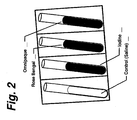
- Figures 2 and 3 illustrate the opaqueness of Rose Bengal versus standard x-ray contrast agents and a control.
- a CAT scan image of various dilutions of these same solutions (held in wells in a 96-well sample plate) illustrated in the drawing in Figure 3 further demonstrates that Rose Bengal shows comparable response to that of the standard x-ray contrast agents across a range of concentrations.
- At least one halogenated xanthene agent as an imaging contrast agent for x-ray or ionization radiation based imaging and detection of diseased tissue, and then treat the detected diseased tissue by radiosensitization of the residual agent present in such tissue.
Landscapes
- Health & Medical Sciences (AREA)
- Life Sciences & Earth Sciences (AREA)
- Veterinary Medicine (AREA)
- Public Health (AREA)
- General Health & Medical Sciences (AREA)
- Animal Behavior & Ethology (AREA)
- Epidemiology (AREA)
- Medicinal Chemistry (AREA)
- Chemical & Material Sciences (AREA)
- Pharmacology & Pharmacy (AREA)
- Nuclear Medicine, Radiotherapy & Molecular Imaging (AREA)
- Organic Chemistry (AREA)
- General Chemical & Material Sciences (AREA)
- Chemical Kinetics & Catalysis (AREA)
- Emergency Medicine (AREA)
- Bioinformatics & Cheminformatics (AREA)
- Engineering & Computer Science (AREA)
- Birds (AREA)
- Medicines That Contain Protein Lipid Enzymes And Other Medicines (AREA)
- Medicines Containing Antibodies Or Antigens For Use As Internal Diagnostic Agents (AREA)
- Pharmaceuticals Containing Other Organic And Inorganic Compounds (AREA)
- Radiation-Therapy Devices (AREA)
- Medicinal Preparation (AREA)
- Saccharide Compounds (AREA)
Description
- The present invention is directed to high energy phototherapeutic agents, or specifically to radiosensitizing and methods of treating and imaging using such phototherapeutic or radiosensitizer agents. More specifically, the treating and imaging is of diseased tissue, such as tumors, particularly cancerous tumors.
- Diseased tissue or tumors, such as those for cancer, are often treated using ionizing radiation, in a process known as radiation therapy.
- Radiation therapy (which typically uses electromagnetic radiation with energies of 1 keV or higher) for cancer typically works by attacking rapidly growing cells with highly penetrating ionizing radiation. Use of such radiation is attractive due to its ability to penetrate deeply into tissue, especially when diseased tissue is, or is located within, bone or other dense or opaque structures. Unfortunately, using rapid growth as the sole targeting criterion does not limit the effects of such treatment to cancer cells.
- As a result, improvements have been made in the methods for delivery of the ionizing radiation to the site of the cancerous tumor so as to limit the effects of such radiation to the general area of the cancerous tumor. However, since healthy tissue and cancerous tissue typically have a similar biological response to radiation, a need exists to improve the potency of (or biological response to) the delivered radiation within and in the vicinity of the tumor, while not affecting the surrounding healthy tissue.
- As an alternative to the use of ionizing radiation, photodynamic therapy (PDT) has been developed and shows considerable promise for treatment of a variety of cancers. Photodynamic therapy is the combination of a photosensitive agent with site-specific illumination (using non-ionizing, optical radiation) to produce a therapeutic response in diseased tissue, such as a tumor. In PDT, a preferential concentration of photosensitizer is to be located in the diseased tissue, either through natural processes or via localized application, and not in the healthy surrounding tissue. This provides an additional level of tissue specificity relative to that achievable through standard radiation therapy since PDT is effective only when a photosensitizer is present in tissue. As a result, damage to surrounding, healthy tissue can be avoided by controlling the distribution of agent. Unfortunately, when using conventional methods for the illumination step in PDT (1) the light required for such treatment is unable to penetrate deeply into tissue, and (2) the physician has minimal spatial control of the treatment site. This is particularly troublesome whenever the diseased tissue or tumor is deeply seated or located within bone or other opaque structures. Some of the inventors of the present invention have been able to resolve many of these problems for PDT, as shown in commonly-assigned
U.S. Patent No. 5,829,448 . - Others, however, have focused their efforts on developing agents that are sensitized or activated by the ionizing radiation mentioned above. Potentially, the use of such radiation would enable treatment of more deeply seated diseased tissue than that possible with optical radiation. The agents used with such radiation are known as radiosensitizers. It is also desirable to achieve preferential concentration of the radiosensitizer in the diseased tissue, either through natural processes or via localized application, so as to provide additional specificity relative to that achievable through standard radiation therapy. The desired result is for radiation to become more efficacious when the radiosensitizer is present in tissue, so that less radiation is needed to treat the lesion tumor or other diseased tissue, and accordingly, potential damage to surrounding healthy tissue, resulting from collateral exposure to the radiation is reduced. Hence, safety and efficacy would then be improved.
-
WO-A-96/07431 -
US-A-4,490,543 discloses bis(5-amino fluorescein) dichloroplatinum (II) and substituted fluoresceinamine derivatives of this compound as radiation sensitisers. -
WO-A-07/03697 - The ultimate success or failure of the radiosensitizers approach depends on: (1) therapeutic performance of agents, and (2) disease specificity in the site of activation. Currently used agents and targeting approaches, however, have had unacceptable results in each of these categories.
- The therapeutic performance of a radiosensitizer is primarily a function of enhanced absorption of the applied radiation dose in sensitized tissues relative to that in non-sensitized tissues. This differential absorption is commonly effected by use of agents having a high absorption cross-section for a particular type of radiation (such as x-rays). For example, metal or halogen atoms are often used, either in atomic form or incorporated into a molecular carrier, due to their high x-ray cross-section. Absorption of x-rays by such atoms appears to lead to secondary radiative emissions, ionization, and other chemical or physical processes that increase the localized cytotoxicity of the applied energy (i.e., radiation-induced cell death, or "light cytotoxicity").
- However, a high light cytotoxicity is not enough to make an agent an acceptable agent. The agents must also have a negligible effect when energy is not applied (i.e., have a low toxicity in the absence of radiation, or "dark cytotoxicity"). Unfortunately, many agents presently under investigation as radiosensitizers have the disadvantage of either: (a) a relatively high dark cytotoxicity or (b) a low light (cytotoxicity)-to-dark cytotoxicity ratio which limits their effectiveness and acceptability. Agents having a high light-to-dark cytotoxicity ratio are desirable because they (1) can be safely used over a range of dosages. (2) will exhibit improved efficacy at the treatment site (due to the compatibility with use at higher dosages as a consequence of their relative safety), and (3) will be better tolerated throughout the patient's body.
- An additional problem with many current radiosensitizers is that the agent does not achieve significant preferential concentration in tumors. Specifically, most radiosensitizer targeting has been based on physical targeting, such as diffusion into tumors through leaky neurovasculature, which ultimately succeed or fail based on permeability of the tumor to agents that are aqueously soluble or are in a suspension formulation. As a result, large doses of the agent typically need to be administered, either locally or systemically, so as to saturate all tissues, hopefully reaching a therapeutic level in the desired treatment region or target. After such agent administration, a patient has to wait a clearance time of hours to days to allow excess agent to hopefully clear from healthy living tissues surrounding the desired treatment site. Thereafter, irradiation of residual agent at the treatment site hopefully produces the desired cytotoxic effect in the diseased tissue. This approach may unfortunately also damage healthy surrounding tissue by undesired but unavoidable activation of residual agent still present in the healthy surrounding tissue. One approach to solving this problem is to couple the radiosensitizer with a moiety capable of providing improved biotargetting of the diseased tissue. This, however, has proven to be very difficult to achieve.
- It would also be highly desirable if the radiosensitizer could be used to improve identification of target size, location and depth so that the therapeutic radiation could be more precisely delivered to the target, such as a cancerous tumor. Combined diagnostic use (as a contrast agent) and therapeutic use (as a radiosensitizer) of the agent would reduce risk to the patient by (1) reducing the number of required procedures necessary for diagnosis and treatment, (2) reducing the overall diagnosis and treatment time, and (3) reducing cost.
- Accordingly, one object of the present invention is to develop new radiosensitizers that have one or more of the following characteristics: (1) improved light-to-dark cytotoxicity ratio; (2) improved accumulation of agent into diseased tissue with strong contrast between diseased and healthy tissue; (3) rapid clearance from normal tissue; and (4) capability of combined imaging and therapy. Further desirable characteristics include low agent cost, and significant regulatory history (so as to facilitate acceptance by the regulatory and medical communities).
- The present invention is directed to a radiosensitizer agent for treatment of diseased tissue using radiosensitization or ionizing radiation, which agent comprises a xanthene compound selected from fluorescein, 4',5'-Dichlorofluorescein, 2',7'-Dichlorofluorescein, 4,5,6,7,-Tetrachlorofluorescein, 2',4',5',7'-Tetrachlorofluorescein, Dibromofluorescein, Solvent Red 72, Diiodofluorescein, Eosin B, Eosin Y, Ethyl Eosin, Erythrosin B, Phloxine B, Rose Bengal, and 4,5,6,7-Tetrabromoerythrosin and wherein the carboxyl group and/or the hydroxyl group of the halogenated xanthene may comprise deoxyribonucleic acid (DNA), ribonucleic acid (RNA), amino acids, proteins, antibodies, ligands, haptens, carbohydrate receptors, lipid receptors, protein receptors, chelators, short- or long-chain aliphatic or aromatic hydrocarbons, including those containing aldehydes, ketones, alcohols, esters, amides, amines, nitriles and azides.
- In a further embodiment of the present invention, the radiosensitizer agent also acts as an imaging contrast agent.
- An embodiment of the present invention is also directed to said radiosensitiser agent for treatment of diseased tissue using radiosensitisation or ionizing radiation wherein the agent exhibits a preference for concentration in biologically sensitive structures in tissue, such as, for example, cellular membranes. Preferably, the agent biologically or chemically targets the biologically sensitive structures.
- A second aspect of the present invention is directed to use of a xanthene for the preparation of a radiosensitizing agent for treatment of diseased tissue, wherein a portion of the agent is capable of being retained in a diseased tissue when administered to a patient and the retained agent is capable of being activated in the diseased tissue when treated with x-rays or other ionizing radiation, which xanthene is selected from fluorescein, 4',5'-Dichlorofluorescein, 2',7'-Dichlorofluorescein, 4,5,6,7,-Tetrachlorofluorescein, 2',4',5',7'-Tetrachlorofluorescein, Dibromofluorescein, Solvent Red 72, Diiodofluorescein, Eosin B, Eosin Y, Ethyl Eosin, Erythrosin B, Phloxine B, Rose Bengal, and 4,5,6,7-Tetrabromoerythrosin and wherein the carboxyl group and/or the hydroxyl group of the halogenated xanthene may comprise deoxyribonucleic acid (DNA), ribonucleic acid (RNA), amino acids, proteins, antibodies, ligands, haptens, carbohydrate receptors, lipid receptors, protein receptors, chelators, short- or long-chain aliphatic or aromatic hydrocarbons, including those containing aldehydes, ketones, alcohols, esters, amides, amines, nitriles and azides.
-
-
FIGURE 1 is an illustration of the chemical structure of Rose Bengal; -
FIGURE 1b is an illustration of the chemical structure of a xanthene; -
FIGURE 2 illustrates the CAT scan image of test tubes of Rose Bengal, standard x-ray contrast agents and a control; -
FIGURE 3 illustrates a CAT scan of a range of concentrations of the solutions ofFigure 3 ; -
FIGURE 4 is a graph of energy versus x-ray cross-section for halogens. - The present invention is directed to agents that can efficiently interact with x-rays or other types of ionizing radiation to produce a beneficial biological response and to methods of treatment and imaging using such agents.
- The inventors of the present invention have discovered that radio dense agents, such as the halogenated xanthenes discussed infra, which exhibit a preference for concentration in cellular membranes and other key components and structures of diseased tissue, will exhibit additional therapeutic dose enhancement over that possible with previously known agents or enhancement mechanisms. This additional dose enhancement is a consequence of increased radiosensitization yield of such agents owing to improved proximity of such agents, upon interaction with diseased tissue, to sensitive structures during irradiation and subsequent radiosensitization. Specifically, most radiosensitizers function by absorbing highly-penetrating energy (which in itself has little direct interaction with tissue), and then releasing this energy in a less-penetrating, more cytotoxic form (such as lower-energy re-emission) that is capable of interacting primarily only with proximal, biologically-sensitive structures or materials (such as cellular membranes and genetic material).
- Thus, any radiodense agent, such as halogenated xanthenes, that exhibits chemical or biological targeting to such biologically-sensitive structures or materials, and which thereby becomes substantially concentrated in areas in physical proximity to such structures or materials, will increase the overall efficiency of radiosensitization (i.e. conversion of high-energy stimulating excitation into localized cytotoxic effects). This yield enhancement results from the increased probability that proximally-released energy will interact favorably with the sensitive target (before annihilating or otherwise dissipating in an inefficacious manner) whenever the agent responsible for such re-emission is concentrated as close as possible to such a target. Stated in simple terms, the released energy, having a short mean free path, will have a higher probability of interacting with the target if it is emitted from an agent located closer to the target.
- Such approaches to radiosensitization enhancement are not taught in the prior art, which are based primarily on permeability-based targeting. In contrast, targeting as taught by the present invention uses the superior approach based on chemical or biological targeting. This type of targeting can be effected by chemical partitioning of the agent at, near or into the target (for example, using an agent that partitions into cell walls, such as Rose Bengal discussed infra, the chemical structure of which is illustrated in
Figure 1a ), by controlled agent delivery at, near or into the target (for example by encapsulation of an agent, such as Rose Bengal, into a delivery vehicle, such as a micelle, nanoparticle, or liposome, that interacts preferentially with a target site, such as cell walls, and may adhere, fuse, combine, or otherwise interact in such a way that agent is delivered to the target), or by physically increasing local concentration of agent at near or into the target, for example by localized delivery via injection, flooding, or spraying. - Preferably, these agents have a large x-ray cross-section, a high light-to-dark cytotoxicity ratio, a preference for accumulation in diseased tissue, low agent co st, rapid clearance from normal tissue, and a significant regulatory history (so as to facilitate acceptance by the regulatory and medical communities).
- Applicants have discovered a class ofagents that fits this criteria and is used in the present invention. These agents are referred to as halogenated xanthenes and are illustrated in
Figure 1b , where the symbols X, Y, and Z represent various elements present at the designated positions, and the symbols R1 and R2 represent various functionalities present at the designated positions. Chemical and physical properties (such as the chemical constituents at positions X, Y, and Z and the functionalities R1 and R2, along with molecular weight) of representative halogenated xanthenes are summarized in attached Table 1. While many of the halogenated xanthenes are highly soluble in aqueous solution, in general all demonstrate a preference for selective partitioning into hydrophobic environments, such as within cell membranes. - In general, halogenated xanthenes are characterized by a low dark cytotoxicity and chemical properties that are substantially unaffected by the local chemical environment or the attachment of functional derivatives at positions R1 and R2. Moreover, the halogenated xanthenes will target some tumors or other diseased tissues based on their inherent selective partitioning properties.
- A specific example of a halogenated xanthene is Rose Bengal (4,5,6,7-tetrachloro-2',4'.5',7'-tetraiodofluorescein; see 10 in
Figure 1a ). In particular, Rose Bengal has been found to accumulate preferentially in (i.e. target) some tumors and other diseased tissues. Moreover, Rose Bengal has other desirable characteristics such as a negligible dark cytotoxicity, relatively low cost, the ability to clear rapidly from the body, and a partially established regulatory history. Furthermore, the inventors have found that the special chemical properties of Rose Bengal allow it to be dissolved in aqueous solution at high concentrations while retaining a significant preference for hydrophobic environments, such as within cell membranes. - The present inventors have also discovered that the facility with which the halogenated xanthenes target specific tissues or other sites can be optimized by attachment of specific functional derivatives at positions R1 and R2, so as to change the chemical partitioning or biological activity of the agent. For example, attachment of one targeting moiety or more at positions R1 or R2 can be used to improve targeting to specific tissues, such as cancerous tumor tissues or sites of localized infection. These targeting moieties include DNA, RNA, amino acids, proteins, antibodies, ligands, haptens, carbohydrate receptors or complexing agents, lipid receptors or complexing agents, protein receptors or complexing agents, chelators, encapsulating vehicles, short- or long-chain aliphatic or aromatic hydrocarbons, including those containing aldehydes, ketones, alcohols, esters, amides, amines, nitriles, azides, or other hydrophilic or hydrophobic moieties.
- An example of this feature would be to combine Rose Bengal with a lipid (at position R1, via esterification, so as to increase the lipophilicity of Rose Bengal, and thereby modify its targeting properties in a patient. Such a modified agent could be administered directly as a micelle suspension, or delivered in conjunction with a delivery vehicle, such as a surfactant, and would exhibit increased targeting to tumor cells. Suitable formulations of such an agent include topical creams and lotions, and liquids for intravenous or parenteral injection.
-
Figure 4 demonstrates that strong absorption for the halogens of the halogenated xanthenes occurs well below the energies used for standard diagnostic or therapeutic x-ray devices, which generally use energies greater than 30 keV. In fact, the halogen content of the halogenated xanthenes makes this class of agent potent x-ray absorbers, and thus highly suitable as radiosensitizers. Further, since x-ray cross-section increases substantially in the order F < Cl < Br < I, it is preferred that those halogenated xanthenes with a large content of I or Br be used for x-ray sensitization. Furthermore, tests indicate that the presence of I or Br yields enhanced sensitization relative to that possible with other halogens. Therefore, as shown in Table I, Tetrabromoerythrosin, Rose Bengal, Phloxine B, Erythrosin B, and Eosin Y have larger x-ray cross-sections than Solvent Red or Eosin B as a consequence of respective differences in halogen content, and thereby are preferred for use as x-ray sensitizing agents. More preferably, the high iodine content of Rose Bengal and its derivatives and the additional bromine substitution of 4,5,6,7-Tetrabromoerythrosin and its derivatives, makes these agents the most preferred x-ray sensitizing agents of this class. - Accordingly, in the present invention, at least one halogenated xanthene is used as an x-ray sensitizer or radiosensitizer agent for treatment of diseased tissue using radiosensitization. Prior to radiosensitization, the agent can be administered orally, systemically (e.g. by an injection), or topically, in a manner well known in the art. In a further preferred embodiment of the present invention, Rose Bengal or 4,5,6,7-Tetrabromoerythrosin is the radiosensitizer agent. It is also preferred that x-rays or other ionizing radiation with energy ≥ approximately 1 keV and ≤ 1000 MeV be used to activate the agent. Preferably, the agent is activated using x-rays having an energy in excess of 30 keV.
- Applicants have also discovered that halogenated xanthenes can be used as an imaging contrast agent for x-ray or other ionizing radiation imaging, such as CAT scan, fluorography or other related procedures. In particular, the inventors have discovered that halogenated xanthenes are particularly proficient as imaging contrast agents because of their large x-ray cross-sections and because their chemical structure, which has a high electron density due to their significant halogen content, renders them opaque to x-rays or other ionizing radiation used for imaging. For example, Rose Bengal is highly opaque to the x-rays used for CAT scan or normal x-ray imaging.
Figures 2 and3 illustrate the opaqueness of Rose Bengal versus standard x-ray contrast agents and a control. These figures are drawings of actual pictures of experiments done by the inventors of the present invention. For example, the CAT scan image of test tubes containing various solutions shown inFigure 2 demonstrates that iodine (350 mgI/mL in aqueous base), Rose Bengal (225 mg halogen/mL in saline), and Omnipaque™ (350 mgI/mL Iohexol) have similar x-ray densities. Furthermore, these densities are dramatically greater than that of a control (saline). A CAT scan image of various dilutions of these same solutions (held in wells in a 96-well sample plate) illustrated in the drawing inFigure 3 further demonstrates that Rose Bengal shows comparable response to that of the standard x-ray contrast agents across a range of concentrations. - Accordingly, it is a further preferred embodiment of the present invention to use at least one halogenated xanthene agent as an imaging contrast agent for x-ray or ionization radiation based imaging and detection of diseased tissue, and then treat the detected diseased tissue by radiosensitization of the residual agent present in such tissue.
- This description has been offered for illustrative purposes only and is not intended to limit the invention of this application, which is defined in the claims below.
Table I. Physical Properties of Example Halogenated Xanthenes: Compound Substitution MW (g) X Y Z R1 R2 4',5'-Dichlorofluorescein Cl H H Na Na 445 2',7'-Dichlorofluorescein H Cl H Na Na 445 4,5,6,7-Tetrachlorofluorescein H H Cl H H 470 2',4',5',7'-Tetrachlorofluorescein Cl Cl H Na Na 514 Dibromofluorescein Br H H Na Na 534 Solvent Red 72 H Br H H H 490 Diiodofluorescein I H H Na Na 628 Eosin B NO2 Br H Na Na 624 Eosin Y Br Br H Na Na 692 Ethyl Eosin Br Br H C2H5 K 714 Erythrosin B I I H Na Na 880 Phloxine B Br Br Cl Na Na 830 Rose Bengal I I Cl Na Na 1018 4,5,6,7-Tetrabromoerythrosin I I Br Na Na 1195
Claims (30)
- A radiosensitizer agent for treatment of diseased tissue using radiosensitization or ionizing radiation, which agent comprises a xanthene compound selected from fluorescein, 4',5'-Dichlorofluorescein, 2',7'-Dichlorofluorescein, 4,5,6, 7,-Tetrachlorofluorescein, 2',4',5',7'-Tetrachlorofluorescein, Dibromofluorescein, Solvent Red 72, Diiodofluorescein, Eosin B, Eosin Y, Ethyl Eosin, Erythrosin B, Phloxine B, Rose Bengal, and 4,5,6,7-Tetrabromoerythrosin and wherein the carboxyl group and/or the hydroxyl group of the halogenated xanthene may comprise deoxyribonucleic acid (DNA), ribonucleic acid (RNA), amino acids, proteins, antibodies, ligands, haptens, carbohydrate receptors, lipid receptors, protein receptors, chelators, short- or long-chain aliphatic or aromatic hydrocarbons, including those containing aldehydes, ketones, alcohols, esters, amides, amines, nitriles and azides.
- A radiosensitizer agent for treatment of diseased tissue using radiosensitization or ionizing radiation, which agent comprises a xanthene compound selected from the disodium salt of fluorescein, the disodium salt of 4',5'-Dichlorofluorescein, the disodium salt of 2',7'-Dichlorofluorescein, the disodium salt of 2',4',5',7'-Tetrachlorofluorescein, the disodium salt of Dibromofluorescein, the disodium salt of Diiodofluorescein, the disodium salt of Eosin B, the disodium salt of Eosin Y, the potassium salt of Ethyl Eosin, the disodium salt of Erythrosin B, the disodium salt of Phloxine B, the disodium salt of Rose Bengal, a lipid ester of Rose Bengal, and the disodium salt of 4,5,6,7-Tetrabromoerythrosin.
- The agent of claim 1 or claim 2, wherein said agent exhibits a preference for concentration in biologically sensitive structures in tissue.
- The agent of any of claims 1-3, wherein said diseased tissue is cancerous tissue.
- The agent of any preceding claim, wherein said xanthene is Rose Bengal, a lipid ester of Rose Bengal, or the disodium salt of Rose Bengal.
- The agent of any of claims 1-4, wherein said xanthene is 4, 5, 6, 7-Tetrabromoerythrosin or the disodium salt of 4,5,6,7-Tetrabromoerythrosin.
- The agent of any of claims 1-4, wherein said xanthene is Phloxine B, Erythrosin B, Eosin Y, the disodium salt of Phloxine B, the disodium salt of Erythrosin B, or the disodium salt of Eosin Y.
- The agent of any preceding claim, wherein said xanthene has a large content of iodine or bromine.
- The agent of any preceding claim, wherein said radiosensitizer agent is also capable of acting as an imaging contrast agent.
- The agent of claim 9, wherein said radiosensitizer is capable of acting as an imaging contrast agent for computed axial tomography scan.
- The agent of claim 9 or claim 10, wherein said radiosensitizer is capable of acting as an imaging contrast agent for X-ray imaging.
- The agent of any preceding claim, wherein said agent is capable of activation by ionising radiation having an energy approximately greater than or equal to 1 keV and less than or equal to approximately 1000 MeV.
- The agent of claim 12, wherein said agent is capable of activation by x-rays having an energy greater than 30 keV.
- The agent of any preceding claim, wherein said agent is encapsulated in a delivery vehicle.
- The agent of claim 14, wherein said delivery vehicle is a micelle, a nanoparticle or a liposome.
- The agent of any of claims 2 to 14, wherein said agent exhibits a preference for concentration in cellular membranes.
- The agent of any of claims 3-16, wherein said agent is capable of biologically targeting said biologically sensitive structures.
- The agent of any of claims 3-17, wherein said agent is capable of chemically targeting said biologically sensitive structures.
- Use of a xanthene for the preparation of a radiosensitizing agent for treatment of diseased tissue, wherein a portion of the agent is capable of being retained in a diseased tissue when administered to a patient and the retained agent is capable of being activated in the diseased tissue when treated with x-rays or other ionizing radiation, which xanthene is selected from fluorescein, 4',5'-Dichlorofluorescein, 2',7'-Dichlorofluorescein, 4,5,6, 7,-Tetrachlorofluorescein, 2',4',5',7'-Tetrachlorofluorescein, Dibromofluorescein, Solvent Red 72, Diiodofluorescein, Eosin B, Eosin Y, Ethyl Eosin, Erythrosin B, Phloxine B, Rose Bengal, and 4,5,6,7-Tetrabromoerythrosin and wherein the carboxyl group and/or the hydroxyl group of the halogenated xanthene may comprise deoxyribonucleic acid (DNA), ribonucleic acid (RNA), amino acids, proteins, antibodies, ligands, haptens, carbohydrate receptors, lipid receptors, protein receptors, chelators, short- or long-chain aliphatic or aromatic hydrocarbons, including those containing aldehydes, ketones, alcohols, esters, amides, amines, nitriles and azides.
- Use of a xanthene for the preparation of a radiosensitizing agent for treatment of diseased tissue, wherein a portion of the agent is capable of being retained in a diseased tissue when administered to a patient and the retained agent is capable of being activated in the diseased tissue when treated with x-rays or other ionizing radiation, which xanthene is selected from the disodium salt of fluorescein, the disodium salt of 4',5'-Dichlorofluorescein, the disodium salt of 2',7'-Dichlorofluorescein, the disodium salt of 2',4',5',7'-Tetrachlorofluorescein, the disodium salt of Dibromofluorescein, the disodium salt of Diiodofluorescein, the disodium salt of Eosin B, the disodium salt of Eosin Y, the potassium salt of Ethyl Eosin, the disodium salt of Erythrosin B, the disodium salt of Phloxine B, the disodium salt of Rose Bengal, a lipid ester of Rose Bengal, and the disodium salt of 4,5,6,7-Tetrabromoerythrosin.
- Use according to claim 19 or claim 20, wherein said xanthene is an iodinated or brominated halogenated xanthene.
- Use according to claim 21, wherein said halogenated xanthene is Rose Bengal a lipid ester of Rose Bengal, or the disodium salt of Rose Bengal.
- Use according to claim 21, wherein said halogenated xanthene is Phloxine B, Erythrosin B, Eosin Y, the disodium salt of Phloxine B, the disodium salt of Erythrosin B, or the disodium salt of Eosin Y.
- Use according to any of claims 18 to 21, wherein said agent is further suitable for facilitating imaging of the patient using radiation to identify the diseased tissue.
- Use according to claim 24, wherein the imaging is accomplished through computed axial tomography or x-ray imaging.
- Use according to any of claims 19 to 25, wherein said agent is suitable for administration via injection.
- Use according to any of claims 19 to 26, wherein said agent is encapsulated in a delivery vehicle, said vehicle being a micelle, nanoparticle, and/or liposome.
- Use according to any of claims 19 to 27, wherein the agent is capable of biologically targeting a biologically sensitive structure in said diseased tissue.
- Use according to claim 28, wherein said biologically sensitive structure is cellular membranes in the diseased tissue.
- Use according to any of claims 19 to 29, wherein said agent is capable of activation by ionising radiation having an energy approximately greater than or equal to 1 keV and less than or equal to approximately 1000 MeV.
Applications Claiming Priority (3)
| Application Number | Priority Date | Filing Date | Title |
|---|---|---|---|
| US09/216,787 US6331286B1 (en) | 1998-12-21 | 1998-12-21 | Methods for high energy phototherapeutics |
| US216787 | 1998-12-21 | ||
| PCT/US1999/030156 WO2000037927A1 (en) | 1998-12-21 | 1999-12-16 | High energy phototherapeutic agents |
Publications (3)
| Publication Number | Publication Date |
|---|---|
| EP1192450A1 EP1192450A1 (en) | 2002-04-03 |
| EP1192450A4 EP1192450A4 (en) | 2003-05-21 |
| EP1192450B1 true EP1192450B1 (en) | 2014-12-03 |
Family
ID=22808515
Family Applications (1)
| Application Number | Title | Priority Date | Filing Date |
|---|---|---|---|
| EP99967402.1A Expired - Lifetime EP1192450B1 (en) | 1998-12-21 | 1999-12-16 | High energy phototherapeutic agents |
Country Status (14)
| Country | Link |
|---|---|
| US (2) | US6331286B1 (en) |
| EP (1) | EP1192450B1 (en) |
| JP (1) | JP3735770B2 (en) |
| KR (1) | KR20010089658A (en) |
| CN (1) | CN1331797A (en) |
| AR (1) | AR021967A1 (en) |
| AU (1) | AU2368700A (en) |
| BR (1) | BR9916398A (en) |
| CA (1) | CA2352094C (en) |
| ES (1) | ES2526460T3 (en) |
| HK (1) | HK1041726A1 (en) |
| IL (1) | IL143468A0 (en) |
| TW (1) | TWI231368B (en) |
| WO (1) | WO2000037927A1 (en) |
Families Citing this family (46)
| Publication number | Priority date | Publication date | Assignee | Title |
|---|---|---|---|---|
| US7036516B1 (en) | 1996-10-30 | 2006-05-02 | Xantech Pharmaceuticals, Inc. | Treatment of pigmented tissues using optical energy |
| US6493570B1 (en) | 1998-11-02 | 2002-12-10 | Photogen, Inc. | Method for improved imaging and photodynamic therapy |
| US20060095097A1 (en) * | 1996-10-30 | 2006-05-04 | Provectus Devicetech, Inc. | Treatment of pigmented tissue using optical energy |
| US6331286B1 (en) * | 1998-12-21 | 2001-12-18 | Photogen, Inc. | Methods for high energy phototherapeutics |
| US7390668B2 (en) * | 1996-10-30 | 2008-06-24 | Provectus Pharmatech, Inc. | Intracorporeal medicaments for photodynamic treatment of disease |
| US8974363B2 (en) | 1997-12-11 | 2015-03-10 | Provectus Pharmatech, Inc. | Topical medicaments and methods for photodynamic treatment of disease |
| US7648695B2 (en) * | 1998-08-06 | 2010-01-19 | Provectus Pharmatech, Inc. | Medicaments for chemotherapeutic treatment of disease |
| US8557298B2 (en) | 1998-08-06 | 2013-10-15 | Provectus Pharmatech, Inc. | Medicaments for chemotherapeutic treatment of disease |
| US6986740B2 (en) * | 1998-11-02 | 2006-01-17 | Xantech Pharmaceuticals, Inc. | Ultrasound contrast using halogenated xanthenes |
| US20020001567A1 (en) * | 1998-12-21 | 2002-01-03 | Photogen, Inc. | Intracorporeal medicaments for high energy phototherapeutic treatment of disease |
| US8470296B2 (en) * | 1998-12-21 | 2013-06-25 | Provectus Pharmatech, Inc. | Intracorporeal medicaments for high energy phototherapeutic treatment of disease |
| US7384623B1 (en) | 1998-12-21 | 2008-06-10 | Provectus Pharmatech, Inc. | High energy phototherapeutic agents |
| AR022404A1 (en) * | 1999-01-25 | 2002-09-04 | Photogen Inc | METHOD AND AGENTS FOR IMPROVED RADIATION THERAPY |
| CN1372467A (en) | 1999-08-13 | 2002-10-02 | 福托金公司 | Improved topical medicaments and methods for photodynamic treatment of disease |
| GB0017084D0 (en) * | 2000-07-13 | 2000-08-30 | Univ Bristol | Inhibition of the cystic fibrosis transmembrane conductance regulator chloride channel |
| EP1320811A1 (en) * | 2000-09-14 | 2003-06-25 | Koninklijke Philips Electronics N.V. | Method of and system for storing a data item |
| US20020107281A1 (en) * | 2000-09-22 | 2002-08-08 | Photogen, Inc. | Phototherapeutic and chemotherapeutic immunotherapy against tumors |
| US6500630B2 (en) * | 2001-01-12 | 2002-12-31 | Mayo Foundation For Medical Education And Research | Marker for inflammatory conditions |
| KR100968657B1 (en) * | 2002-04-02 | 2010-07-06 | 네르비아노 메디칼 사이언시스 에스.알.엘. | Combination tumor therapy including substituted acryloyl disamycin derivatives and radiotherapy |
| US7981928B2 (en) * | 2002-09-05 | 2011-07-19 | Nanodynamics, Inc. | Chemotherapy method using x-rays |
| US20050053895A1 (en) | 2003-09-09 | 2005-03-10 | The Procter & Gamble Company Attention: Chief Patent Counsel | Illuminated electric toothbrushes emitting high luminous intensity toothbrush |
| KR101125678B1 (en) | 2004-02-06 | 2012-03-28 | 롬 앤드 하스 일렉트로닉 머트어리얼즈, 엘.엘.씨. | Improved imaging compositions and methods |
| US7144676B2 (en) | 2004-02-06 | 2006-12-05 | Rohm And Haas Electronic Materials Llc | Imaging compositions and methods |
| US20050175941A1 (en) | 2004-02-06 | 2005-08-11 | Rohm And Hass Electronic Materials, L.L.C. | Imaging composition and method |
| US7977026B2 (en) | 2004-02-06 | 2011-07-12 | Rohm And Haas Electronic Materials Llc | Imaging methods |
| CA2570687C (en) * | 2004-06-10 | 2013-07-09 | Xantech Pharmaceuticals, Inc. | Diagnostic agents for positron emission imaging using radiolabeled halogenated xanthenes and methods for positron emission imaging with radiolabeled halogenated xanthene diagnostic agents |
| RU2270045C1 (en) * | 2004-06-24 | 2006-02-20 | Федеральное государственное унитарное предприятие Государственный научный центр - Институт биофизики Федерального медико-биологического агентства (ГНЦ-ИБФ) | Method for applying photon-capturing tumor therapy |
| WO2006037081A2 (en) * | 2004-09-28 | 2006-04-06 | The Regents Of The University Of California | Nanoparticle radiosensitizers |
| KR100651728B1 (en) * | 2004-11-10 | 2006-12-06 | 한국전자통신연구원 | Compound for an electronic device having a fixing group, an electronic device comprising the same and a method of manufacturing the same |
| WO2006055960A2 (en) * | 2004-11-20 | 2006-05-26 | Scenterra, Inc. | Device for emission of high frequency signals |
| US7280078B2 (en) * | 2004-11-20 | 2007-10-09 | Scenterra, Inc. | Sensor for detecting high frequency signals |
| US8109981B2 (en) | 2005-01-25 | 2012-02-07 | Valam Corporation | Optical therapies and devices |
| US20080269065A1 (en) * | 2007-04-30 | 2008-10-30 | Syntrix Biosystems, Inc. | Conformationally Constrained Analytical Probes |
| US20090104212A1 (en) * | 2007-08-06 | 2009-04-23 | Immunolight | Methods and systems for treating cell proliferation disorders using two-photon simultaneous absorption |
| US9273022B2 (en) | 2009-09-18 | 2016-03-01 | Provectus Pharmaceuticals, Inc. | Process for the synthesis of 4,5,6,7-tetrachloro-3′,6′-dihydroxy-2′, 4′, 5′7′-tetraiodo-3H-spiro[isobenzofuran-1,9′-xanthen]-3-one (Rose Bengal) and related xanthenes |
| JP5671040B2 (en) * | 2009-09-18 | 2015-02-18 | プロヴェクタス ファーマスーティカルズ,インク. | 4,5,6,7-tetrachloro-3 ', 6'-dihydroxy-2', 4 ', 5', 7'-tetraiodo-3H-spiro [isobenzofuran-1,9'-xanthene] -3- Process for synthesizing on (rose bengal) and related xanthenes |
| US9642687B2 (en) | 2010-06-15 | 2017-05-09 | The Procter & Gamble Company | Methods for whitening teeth |
| RU2533267C1 (en) * | 2013-10-07 | 2014-11-20 | Государственное бюджетное образовательное учреждение высшего профессионального образования "Тихоокеанский государственный медицинский университет" Министерства здравоохранения Российской Федерации (ГБОУ ВПО ТГМУ Минздрава России) | Method for photon capture therapy of tumours |
| EP3700520B1 (en) | 2017-11-29 | 2024-05-01 | The Rockefeller University | Combination of local and systemic therapies for enhanced treatment of dermatologic conditions |
| EP3773548B1 (en) | 2018-05-16 | 2023-08-09 | Provectus Pharmatech, Inc. | In vitro and xenograft anti-tumor activity of a halogenated-xanthene against refractory pediatric solid tumors |
| CN111317731A (en) * | 2018-12-17 | 2020-06-23 | 中山大学 | Preparation of FTO inhibitors from 9-(2-carboxyphenyl)xanthene compounds and their therapeutic effects |
| US20200222564A1 (en) * | 2019-01-15 | 2020-07-16 | Tianjin University | Compound Amphiphilic Peptide Nanomicelle, Preparation and Use Thereof |
| US12064507B2 (en) | 2019-11-19 | 2024-08-20 | Provectus Pharmatech, Inc. | Composition and method for oral treatment of leukemia |
| US11419844B2 (en) | 2019-11-19 | 2022-08-23 | Provectus Pharmatech, Inc. | Halogenated xanthene composition and method for treating hematologic cancers |
| EP4103283A4 (en) | 2020-03-26 | 2024-02-28 | Provectus Pharmatech, Inc. | Novel uses of halogenated xanthenes in oncology and virology |
| US11938182B2 (en) | 2020-03-26 | 2024-03-26 | Provectus Pharmatech, Inc. | Halogenated xanthenes as vaccine adjuvants |
Family Cites Families (65)
| Publication number | Priority date | Publication date | Assignee | Title |
|---|---|---|---|---|
| US3868950A (en) | 1970-09-24 | 1975-03-04 | Yoshio Kato | Body treating apparatus |
| US4066650A (en) | 1971-02-11 | 1978-01-03 | Egyud Laszlo G | Keto-aldehyde-amine addition products and method of making same |
| US3986513A (en) | 1976-01-29 | 1976-10-19 | Joseph Lester Stuhl | Apparatus for irradiating the skin |
| IE47132B1 (en) | 1977-08-19 | 1983-12-28 | Roche Products Ltd | Novel nitroimidazoles and pharmaceutical preparations containing these as well as their manufacture |
| US4172979A (en) | 1978-06-15 | 1979-10-30 | Morrison Richard A | Method and apparatus for automatically providing radiation therapy treatment conforming to a desired volume of tissue |
| US4282232A (en) | 1979-04-26 | 1981-08-04 | Research Corporation | Nitroimidazole radiosensitizers for hypoxic tumor cells and compositions thereof |
| US4371540A (en) | 1979-09-14 | 1983-02-01 | The United States Of America As Represented By The Secretary Of The Department Of Health And Human Services | Nitroimidazoles of low toxicity and high activity as radiosensitizers of hypoxic tumor cells |
| US4444189A (en) | 1981-12-21 | 1984-04-24 | Seiverd Paul J | Phototherapy booth |
| US4462992A (en) | 1982-02-08 | 1984-07-31 | Research Corporation | Nitroimidazole radiosensitizers for hypoxic tumor cells and compositions thereof |
| US4490543A (en) * | 1982-11-12 | 1984-12-25 | University Of Northern Iowa Foundation | Low toxicity radiation sensitizer |
| US4691332A (en) | 1983-03-14 | 1987-09-01 | American Science And Engineering, Inc. | High energy computed tomography |
| US4599227A (en) | 1983-11-07 | 1986-07-08 | Wisconsin Alumni Research Foundation | Injectable pharmaceutical preparation for the induction of multiple follicular growth |
| US4681091A (en) | 1984-08-03 | 1987-07-21 | Picker Donald H | Combination modality cancer therapy |
| US4789501A (en) | 1984-11-19 | 1988-12-06 | The Curators Of The University Of Missouri | Glass microspheres |
| US5215738A (en) | 1985-05-03 | 1993-06-01 | Sri International | Benzamide and nicotinamide radiosensitizers |
| HU195487B (en) | 1985-06-04 | 1988-05-30 | Egyt Gyogyszervegyeszeti Gyar | Process for producing quinoline derivatives |
| FR2596989B1 (en) | 1986-04-14 | 1990-05-18 | Air Liquide | RADIOSENSITIZATION PRODUCT FOR BIOLOGICAL TISSUES IN RADIOTHERAPY |
| US5175287A (en) | 1986-09-25 | 1992-12-29 | S R I International | Process for preparing 1,2,4-benzotriazine oxides |
| US5624925A (en) | 1986-09-25 | 1997-04-29 | Sri International | 1,2,4-benzotriazine oxides as radiosensitizers and selective cytotoxic agents |
| US5019368A (en) | 1989-02-23 | 1991-05-28 | Cancer Biologics, Inc. | Detection of necrotic malignant tissue and associated therapy |
| US5026694A (en) | 1987-04-13 | 1991-06-25 | The British Columbia Cancer Foundation | Platinum complexes with one radiosensitizing ligand |
| US4921963A (en) | 1987-04-13 | 1990-05-01 | British Columbia Cancer Foundation | Platinum complexes with one radiosensitizing ligand |
| CA1329206C (en) | 1987-06-10 | 1994-05-03 | Tsutomu Kagiya | Fluorine-containing nitroazole derivatives and radiosensitizer comprising the same |
| US5304654A (en) | 1987-06-10 | 1994-04-19 | Yasunori Nishijima | Fluorine-containing nitroimidazole compounds |
| US4856528A (en) | 1987-06-26 | 1989-08-15 | John Hopkins University | Tumor volume determination |
| US4957481A (en) | 1987-10-01 | 1990-09-18 | U.S. Bioscience | Photodynamic therapeutic technique |
| JPH0819111B2 (en) | 1987-10-22 | 1996-02-28 | ポーラ化成工業株式会社 | 2-Nitroimidazole derivative and radiosensitizer containing the same as active ingredient |
| US5053006A (en) | 1988-04-19 | 1991-10-01 | Watson Brant D | Method for the permanent occlusion of arteries |
| US4897423A (en) | 1988-08-02 | 1990-01-30 | Merck & Co. Inc. | Dinitrobenzenesulfonamides |
| US4880821A (en) | 1988-08-17 | 1989-11-14 | Merck & Co., Inc. | α-nitroalkylnitrobenzenesulfonamides |
| US5036096A (en) | 1988-11-25 | 1991-07-30 | Warner-Lambert Company | Aziridino derivatives of nitroimidazoles and pharmaceutical compositions of selected derivatives |
| US4954515A (en) | 1988-11-25 | 1990-09-04 | Warner-Lambert Company | Haloalkylaminomethyl-2-nitro-1H-imidazoles |
| US5036089A (en) | 1988-11-25 | 1991-07-30 | Warner-Lambert Company | 2-oxazolidinone derivatives of nitroimidazoles and pharmaceutical compositions useful as sensitizing agents |
| IL92597A0 (en) | 1988-12-14 | 1990-08-31 | Yasunori Nishijima President K | Novel fluorine-containing 2-nitroimidazole derivatives and radiosensitizer comprising the same |
| US5457183A (en) | 1989-03-06 | 1995-10-10 | Board Of Regents, The University Of Texas System | Hydroxylated texaphyrins |
| US5599923A (en) | 1989-03-06 | 1997-02-04 | Board Of Regents, University Of Tx | Texaphyrin metal complexes having improved functionalization |
| US5641764A (en) | 1989-03-31 | 1997-06-24 | Peter Maccallum Institute | Halogenated DNA ligand radiosensitizers for cancer therapy |
| US5008907A (en) | 1989-05-31 | 1991-04-16 | The Regents Of The University Of California | Therapy x-ray scanner |
| US4973848A (en) | 1989-07-28 | 1990-11-27 | J. Mccaughan | Laser apparatus for concurrent analysis and treatment |
| US5733572A (en) | 1989-12-22 | 1998-03-31 | Imarx Pharmaceutical Corp. | Gas and gaseous precursor filled microspheres as topical and subcutaneous delivery vehicles |
| JP2626727B2 (en) | 1990-01-26 | 1997-07-02 | ポーラ化成工業株式会社 | 2-Nitroimidazole derivative, process for producing the same and radiosensitizer containing the same as an active ingredient |
| US5147652A (en) | 1990-07-03 | 1992-09-15 | Cell Research Corporation | Autobiotics and their use in eliminating nonself cells in vivo |
| US5282781A (en) | 1990-10-25 | 1994-02-01 | Omnitron International Inc. | Source wire for localized radiation treatment of tumors |
| US5149801A (en) | 1990-11-21 | 1992-09-22 | The Regents Of The University Of California | Boronated porphyrin compounds |
| US5654423A (en) | 1990-11-21 | 1997-08-05 | Regents Of The University Of California | Boronated metalloporphyrine and therapeutic methods |
| US5294715A (en) | 1991-02-01 | 1994-03-15 | University Of Pittsburgh | Acridine-intercalator based hypoxia selective cytotoxins |
| US5128139A (en) | 1991-02-15 | 1992-07-07 | Nu Skin International, Inc. | Composition containing liposome-entrapped grapefruit seed extract and method for making |
| US5225182A (en) | 1991-10-31 | 1993-07-06 | Sharma Yash P | Vectored drug delivery system using a cephaloplastin linking agent and a methed of using the system |
| MX9304399A (en) | 1992-07-31 | 1994-02-28 | Warner Lambert Co | NOVEL PROCESS TO PREPARE [[2-BROMOETHYL) -AMINO] METHYL] -2-NITRO-1H-IMIDAZOL-1-ETHANOL CHIRAL AND RELATED COMPOUNDS. |
| ZA952485B (en) | 1994-03-28 | 1995-12-15 | Nycomed Imaging As | Liposomes |
| US5502094A (en) | 1994-05-20 | 1996-03-26 | Minnesota Mining And Manufacturing Company | Physiologically acceptable emulsions containing perfluorocarbon ether hydrides and methods for use |
| US5556992A (en) * | 1994-09-02 | 1996-09-17 | Universite De Montreal | Novel rhodamine derivatives for photodynamic therapy of cancer and in vitro purging of the leukemias |
| US5935942A (en) * | 1994-12-14 | 1999-08-10 | Zeimer; Ran | Selective and non-invasive visualization or treatment of vasculature |
| US5602142A (en) | 1994-12-21 | 1997-02-11 | Evanston Hospital Corporation | DNA-affinic hypoxia selective cytotoxins |
| US5576013A (en) | 1995-03-21 | 1996-11-19 | Eastern Virginia Medical School | Treating vascular and neoplastic tissues |
| US5700825A (en) | 1995-03-31 | 1997-12-23 | Florida State University | Radiosensitizing diamines and their pharmaceutical preparations |
| US5780052A (en) | 1995-04-24 | 1998-07-14 | Northeastern University | Compositions and methods useful for inhibiting cell death and for delivering an agent into a cell |
| US5591422A (en) | 1995-06-02 | 1997-01-07 | Pharmacyclics, Inc. | Texaphyrin complexes having improved functionalization |
| US5780653A (en) | 1995-06-07 | 1998-07-14 | Vivorx Pharmaceuticals, Inc. | Nitrophenyl, 10-deacetylated substituted taxol derivatives as dual functional cytotoxic/radiosensitizers |
| IT1275571B (en) * | 1995-07-19 | 1997-08-07 | Consiglio Nazionale Ricerche | FLUOROGENIC SUBSTRATES SUSCEPTIBLE FOR PHOTOACTIVATION AFTER ENZYMATIC TRANSFORMATION SUITABLE FOR DIAGNOSIS AND PHOTODYNAMIC CANCER THERAPY |
| US6331286B1 (en) * | 1998-12-21 | 2001-12-18 | Photogen, Inc. | Methods for high energy phototherapeutics |
| US5832931A (en) | 1996-10-30 | 1998-11-10 | Photogen, Inc. | Method for improved selectivity in photo-activation and detection of molecular diagnostic agents |
| US5829448A (en) | 1996-10-30 | 1998-11-03 | Photogen, Inc. | Method for improved selectivity in photo-activation of molecular agents |
| US5827186A (en) | 1997-04-11 | 1998-10-27 | Light Sciences Limited Partnership | Method and PDT probe for minimizing CT and MRI image artifacts |
| EP1124580A1 (en) | 1998-10-29 | 2001-08-22 | The General Hospital Corporation | Enhanced radiation therapy |
-
1998
- 1998-12-21 US US09/216,787 patent/US6331286B1/en not_active Expired - Lifetime
-
1999
- 1999-12-16 JP JP2000589937A patent/JP3735770B2/en not_active Expired - Fee Related
- 1999-12-16 KR KR1020017007788A patent/KR20010089658A/en not_active Withdrawn
- 1999-12-16 EP EP99967402.1A patent/EP1192450B1/en not_active Expired - Lifetime
- 1999-12-16 CA CA2352094A patent/CA2352094C/en not_active Expired - Lifetime
- 1999-12-16 WO PCT/US1999/030156 patent/WO2000037927A1/en not_active Ceased
- 1999-12-16 CN CN99814880A patent/CN1331797A/en active Pending
- 1999-12-16 IL IL14346899A patent/IL143468A0/en unknown
- 1999-12-16 BR BR9916398-5A patent/BR9916398A/en not_active IP Right Cessation
- 1999-12-16 AU AU23687/00A patent/AU2368700A/en not_active Abandoned
- 1999-12-16 HK HK02103333.8A patent/HK1041726A1/en unknown
- 1999-12-16 ES ES99967402.1T patent/ES2526460T3/en not_active Expired - Lifetime
- 1999-12-20 TW TW088122437A patent/TWI231368B/en not_active IP Right Cessation
- 1999-12-21 AR ARP990106641A patent/AR021967A1/en unknown
-
2005
- 2005-05-09 US US11/124,654 patent/US20050207976A1/en not_active Abandoned
Also Published As
| Publication number | Publication date |
|---|---|
| KR20010089658A (en) | 2001-10-08 |
| JP3735770B2 (en) | 2006-01-18 |
| BR9916398A (en) | 2001-09-11 |
| CA2352094C (en) | 2010-12-07 |
| CN1331797A (en) | 2002-01-16 |
| JP2002533355A (en) | 2002-10-08 |
| TWI231368B (en) | 2005-04-21 |
| US6331286B1 (en) | 2001-12-18 |
| IL143468A0 (en) | 2002-04-21 |
| EP1192450A1 (en) | 2002-04-03 |
| AR021967A1 (en) | 2002-09-04 |
| EP1192450A4 (en) | 2003-05-21 |
| WO2000037927A1 (en) | 2000-06-29 |
| US20050207976A1 (en) | 2005-09-22 |
| ES2526460T3 (en) | 2015-01-12 |
| AU2368700A (en) | 2000-07-12 |
| CA2352094A1 (en) | 2000-06-29 |
| HK1041726A1 (en) | 2002-07-19 |
Similar Documents
| Publication | Publication Date | Title |
|---|---|---|
| US6331286B1 (en) | Methods for high energy phototherapeutics | |
| EP1126782B1 (en) | Method for improved imaging and photodynamic therapy | |
| US20070274909A1 (en) | Radiation Therapy and Medical Imaging Using Uv Emitting Nanoparticles | |
| WO2000043045A1 (en) | Method for improved radiation therapy | |
| DE60127552T2 (en) | INTRAKORPORAL MEDICAMENTS FOR THE HIGH-ENERGETIC PHOTOTHERAPEUTIC TREATMENT OF A DISEASE | |
| US7384623B1 (en) | High energy phototherapeutic agents | |
| CZ401898A3 (en) | Novel pharmaceutical preparations and matrix and use thereof | |
| MXPA01006368A (en) | High energy phototherapeutic agents | |
| US8470296B2 (en) | Intracorporeal medicaments for high energy phototherapeutic treatment of disease | |
| MXPA01004375A (en) | Method for improved imaging and photodynamic therapy | |
| MXPA01007487A (en) | Method for improved radiation therapy | |
| RU2271801C2 (en) | Means and method for applying photodynamic therapy |
Legal Events
| Date | Code | Title | Description |
|---|---|---|---|
| PUAI | Public reference made under article 153(3) epc to a published international application that has entered the european phase |
Free format text: ORIGINAL CODE: 0009012 |
|
| 17P | Request for examination filed |
Effective date: 20010717 |
|
| AK | Designated contracting states |
Kind code of ref document: A1 Designated state(s): AT BE CH CY DE DK ES FI FR GB GR IE IT LI LU MC NL PT SE |
|
| AX | Request for extension of the european patent |
Free format text: AL;LT;LV;MK;RO;SI |
|
| A4 | Supplementary search report drawn up and despatched |
Effective date: 20030403 |
|
| RIC1 | Information provided on ipc code assigned before grant |
Ipc: 7A 61K 51/00 B Ipc: 7A 61K 41/00 B Ipc: 7G 01N 23/00 A |
|
| 17Q | First examination report despatched |
Effective date: 20041018 |
|
| 17Q | First examination report despatched |
Effective date: 20041018 |
|
| 17Q | First examination report despatched |
Effective date: 20041018 |
|
| RAP1 | Party data changed (applicant data changed or rights of an application transferred) |
Owner name: PROVECTUS PHARMATECH, INC. |
|
| GRAP | Despatch of communication of intention to grant a patent |
Free format text: ORIGINAL CODE: EPIDOSNIGR1 |
|
| INTG | Intention to grant announced |
Effective date: 20140521 |
|
| GRAS | Grant fee paid |
Free format text: ORIGINAL CODE: EPIDOSNIGR3 |
|
| GRAP | Despatch of communication of intention to grant a patent |
Free format text: ORIGINAL CODE: EPIDOSNIGR1 |
|
| INTG | Intention to grant announced |
Effective date: 20140924 |
|
| GRAA | (expected) grant |
Free format text: ORIGINAL CODE: 0009210 |
|
| AK | Designated contracting states |
Kind code of ref document: B1 Designated state(s): AT BE CH CY DE DK ES FI FR GB GR IE IT LI LU MC NL PT SE |
|
| REG | Reference to a national code |
Ref country code: GB Ref legal event code: FG4D |
|
| REG | Reference to a national code |
Ref country code: AT Ref legal event code: REF Ref document number: 699643 Country of ref document: AT Kind code of ref document: T Effective date: 20141215 Ref country code: CH Ref legal event code: EP |
|
| REG | Reference to a national code |
Ref country code: IE Ref legal event code: FG4D |
|
| REG | Reference to a national code |
Ref country code: ES Ref legal event code: FG2A Ref document number: 2526460 Country of ref document: ES Kind code of ref document: T3 Effective date: 20150112 |
|
| REG | Reference to a national code |
Ref country code: DE Ref legal event code: R096 Ref document number: 69945231 Country of ref document: DE Effective date: 20150115 |
|
| REG | Reference to a national code |
Ref country code: NL Ref legal event code: T3 |
|
| REG | Reference to a national code |
Ref country code: FR Ref legal event code: PLFP Year of fee payment: 16 |
|
| REG | Reference to a national code |
Ref country code: CH Ref legal event code: NV Representative=s name: BOVARD AG, CH |
|
| REG | Reference to a national code |
Ref country code: GR Ref legal event code: EP Ref document number: 20150400112 Country of ref document: GR Effective date: 20150220 |
|
| PG25 | Lapsed in a contracting state [announced via postgrant information from national office to epo] |
Ref country code: FI Free format text: LAPSE BECAUSE OF FAILURE TO SUBMIT A TRANSLATION OF THE DESCRIPTION OR TO PAY THE FEE WITHIN THE PRESCRIBED TIME-LIMIT Effective date: 20141203 |
|
| PG25 | Lapsed in a contracting state [announced via postgrant information from national office to epo] |
Ref country code: SE Free format text: LAPSE BECAUSE OF FAILURE TO SUBMIT A TRANSLATION OF THE DESCRIPTION OR TO PAY THE FEE WITHIN THE PRESCRIBED TIME-LIMIT Effective date: 20141203 Ref country code: CY Free format text: LAPSE BECAUSE OF FAILURE TO SUBMIT A TRANSLATION OF THE DESCRIPTION OR TO PAY THE FEE WITHIN THE PRESCRIBED TIME-LIMIT Effective date: 20141203 |
|
| PG25 | Lapsed in a contracting state [announced via postgrant information from national office to epo] |
Ref country code: PT Free format text: LAPSE BECAUSE OF FAILURE TO SUBMIT A TRANSLATION OF THE DESCRIPTION OR TO PAY THE FEE WITHIN THE PRESCRIBED TIME-LIMIT Effective date: 20150403 |
|
| REG | Reference to a national code |
Ref country code: DE Ref legal event code: R097 Ref document number: 69945231 Country of ref document: DE |
|
| PG25 | Lapsed in a contracting state [announced via postgrant information from national office to epo] |
Ref country code: MC Free format text: LAPSE BECAUSE OF FAILURE TO SUBMIT A TRANSLATION OF THE DESCRIPTION OR TO PAY THE FEE WITHIN THE PRESCRIBED TIME-LIMIT Effective date: 20141203 |
|
| PLBE | No opposition filed within time limit |
Free format text: ORIGINAL CODE: 0009261 |
|
| STAA | Information on the status of an ep patent application or granted ep patent |
Free format text: STATUS: NO OPPOSITION FILED WITHIN TIME LIMIT |
|
| PG25 | Lapsed in a contracting state [announced via postgrant information from national office to epo] |
Ref country code: DK Free format text: LAPSE BECAUSE OF FAILURE TO SUBMIT A TRANSLATION OF THE DESCRIPTION OR TO PAY THE FEE WITHIN THE PRESCRIBED TIME-LIMIT Effective date: 20141203 |
|
| 26N | No opposition filed |
Effective date: 20150904 |
|
| REG | Reference to a national code |
Ref country code: FR Ref legal event code: PLFP Year of fee payment: 17 |
|
| REG | Reference to a national code |
Ref country code: AT Ref legal event code: UEP Ref document number: 699643 Country of ref document: AT Kind code of ref document: T Effective date: 20141203 |
|
| PG25 | Lapsed in a contracting state [announced via postgrant information from national office to epo] |
Ref country code: LU Free format text: LAPSE BECAUSE OF NON-PAYMENT OF DUE FEES Effective date: 20141216 |
|
| REG | Reference to a national code |
Ref country code: FR Ref legal event code: PLFP Year of fee payment: 18 |
|
| REG | Reference to a national code |
Ref country code: FR Ref legal event code: PLFP Year of fee payment: 19 |
|
| PGFP | Annual fee paid to national office [announced via postgrant information from national office to epo] |
Ref country code: AT Payment date: 20181228 Year of fee payment: 20 Ref country code: IE Payment date: 20181228 Year of fee payment: 20 Ref country code: GR Payment date: 20181224 Year of fee payment: 20 Ref country code: NL Payment date: 20181228 Year of fee payment: 20 |
|
| PGFP | Annual fee paid to national office [announced via postgrant information from national office to epo] |
Ref country code: GB Payment date: 20181224 Year of fee payment: 20 Ref country code: FR Payment date: 20181224 Year of fee payment: 20 Ref country code: CH Payment date: 20181228 Year of fee payment: 20 |
|
| REG | Reference to a national code |
Ref country code: DE Ref legal event code: R082 Ref document number: 69945231 Country of ref document: DE Representative=s name: PAGE, WHITE & FARRER GERMANY LLP, DE |
|
| PGFP | Annual fee paid to national office [announced via postgrant information from national office to epo] |
Ref country code: ES Payment date: 20190102 Year of fee payment: 20 Ref country code: IT Payment date: 20181227 Year of fee payment: 20 Ref country code: DE Payment date: 20190104 Year of fee payment: 20 |
|
| PGFP | Annual fee paid to national office [announced via postgrant information from national office to epo] |
Ref country code: BE Payment date: 20181231 Year of fee payment: 20 |
|
| REG | Reference to a national code |
Ref country code: DE Ref legal event code: R071 Ref document number: 69945231 Country of ref document: DE |
|
| REG | Reference to a national code |
Ref country code: NL Ref legal event code: MK Effective date: 20191215 |
|
| REG | Reference to a national code |
Ref country code: CH Ref legal event code: PL |
|
| REG | Reference to a national code |
Ref country code: GB Ref legal event code: PE20 Expiry date: 20191215 |
|
| REG | Reference to a national code |
Ref country code: BE Ref legal event code: MK Effective date: 20191216 |
|
| PG25 | Lapsed in a contracting state [announced via postgrant information from national office to epo] |
Ref country code: GB Free format text: LAPSE BECAUSE OF EXPIRATION OF PROTECTION Effective date: 20191215 |
|
| REG | Reference to a national code |
Ref country code: IE Ref legal event code: MK9A |
|
| REG | Reference to a national code |
Ref country code: AT Ref legal event code: MK07 Ref document number: 699643 Country of ref document: AT Kind code of ref document: T Effective date: 20191216 |
|
| PG25 | Lapsed in a contracting state [announced via postgrant information from national office to epo] |
Ref country code: IE Free format text: LAPSE BECAUSE OF EXPIRATION OF PROTECTION Effective date: 20191216 |
|
| REG | Reference to a national code |
Ref country code: ES Ref legal event code: FD2A Effective date: 20200805 |
|
| PG25 | Lapsed in a contracting state [announced via postgrant information from national office to epo] |
Ref country code: ES Free format text: LAPSE BECAUSE OF EXPIRATION OF PROTECTION Effective date: 20191217 |