EP1191443A2 - Method and system for testing a processor - Google Patents
Method and system for testing a processor Download PDFInfo
- Publication number
- EP1191443A2 EP1191443A2 EP01118672A EP01118672A EP1191443A2 EP 1191443 A2 EP1191443 A2 EP 1191443A2 EP 01118672 A EP01118672 A EP 01118672A EP 01118672 A EP01118672 A EP 01118672A EP 1191443 A2 EP1191443 A2 EP 1191443A2
- Authority
- EP
- European Patent Office
- Prior art keywords
- processor
- microcode
- testing
- hardware
- code
- Prior art date
- Legal status (The legal status is an assumption and is not a legal conclusion. Google has not performed a legal analysis and makes no representation as to the accuracy of the status listed.)
- Withdrawn
Links
Images
Classifications
-
- G—PHYSICS
- G06—COMPUTING OR CALCULATING; COUNTING
- G06F—ELECTRIC DIGITAL DATA PROCESSING
- G06F11/00—Error detection; Error correction; Monitoring
- G06F11/22—Detection or location of defective computer hardware by testing during standby operation or during idle time, e.g. start-up testing
- G06F11/26—Functional testing
- G06F11/261—Functional testing by simulating additional hardware, e.g. fault simulation
Definitions
- the present invention relates to the field of test and verification of a new digital system combining software and processor hardware. Particularly, the present invention relates to a method and system for verifying the correctness of the system behavior of a processor cooperating with software.
- central processing unit refers to a portion of a computer that controls all the other parts and provides an architectural interface for application programs running on the computer.
- processor refers to a portion of the CPU that is implemented in hardware and comprises a control unit, i.e., a part of the processor responsible for performing the machine cycle comprising the steps of fetching, decoding, executing, storing, an arithmetic and logic unit (ALU) and memory, such as registers, cache, RAM (Random Access Memory) and ROM (Read-Only Memory) as well as various temporary buffers and other logic.
- ALU arithmetic and logic unit
- microcode denotes a technique for implementing the instruction set of a CPU as a sequence of microcode instructions, also called “microinstructions”.
- the instruction set of the CPU is also called “macroinstrutions” or “machine language” and actually defines the architectural interface of the CPU.
- Each of the microinstructions typically consists of a large number of bit fields and the address of the next microinstruction to execute.
- Each bit field controls some specific part of the processor's operation, such as a gate which allows some functional unit to drive a value onto the bus or the operation to be performed by the ALU (Arithmetic and Logic Unit).
- a functional unit is basically a subsystem of the central processing unit of a computer and the bus is basically one of the sets of conductors, e.g., wires or connections in an integrated circuit, connecting the various functional units in a processor and computer respectively.
- microinstructions will usually be required to fetch, decode and execute each machine language instruction, also referred to as "macroinstruction”.
- the microcode may also be responsible for polling for hardware interrupts between each macroinstruction, e.g., checking the status of an input line, sensor, or memory location to see if a particular external event has been registered.
- Writing microcode is known as "microprogramming”.
- the developers seek for a method and system for eliminating architectural errors and verifying proper microcode operation as early in the design stage as possible in order to avoid propagation of early development errors.
- US 4,520,440 discloses a method of testing the hardware and the microcode associated with a processor under test having a limited instruction set.
- a minimum test driver under control of a test processor, loads the data necessary to execute the instruction being tested. After execution of that instruction, the test driver directs capture of the execution results for appropriate use. As an aid in performing the verification test, the test driver is provided with an invalid command that forces return of control to the test processor.
- the test driver is loaded and run under control of the support processor which provides actual or simulated I/O capabilities.
- the processor to be microcoded is tested instruction by instruction, via shared memory, with microcode corrections being made on the same basis to avoid error propagation.
- the aforementioned method of testing the processor hardware and the microcode enables the test crew to start testing the microcode together with the associated processor hardware in an earlier stage, before the complete functionality has been implemented in the processor hardware.
- a test or verification that covers all the functionality of the microcode and the processor hardware can still only be started when all the components of the processor hardware are available.
- the software can be any kind of computer program interacting with the processor, like basic routines used to start or stop the processor or microcode.
- the inventive method can be used to verify the correctness of the system behavior of a processor having at least a part of its instructions implemented with microcode.
- the software or microcode is independently tested by using a functional emulator performing in the same way like the hardware of said processor according to the processor's functional specification.
- the software or microcode is tested by using a hardware emulator behaving in the same way like said hardware of said processor according to the design of said processor's logic gates.
- the software or microcode is tested against the real hardware.
- the method is suitable for verifying a processor implemented with microcode consisting of different kinds of microcode that have to be tested differently.
- the method further comprises the step of testing the different kinds of microcode separately by using simulators behaving like the functional specification of the hardware the different kinds of code is supposed to run on. Only after completion of such tests the different kinds of microcode are combined and tested together, still using a simulation environment.
- the present invention also suggests a system for verifying the architectural correctness of a CPU having at least a part of its instruction set implemented with microcode. It can be used for testing microcode that includes different kinds of microcode, namely, millicode procedures and processor code functions.
- the system comprising a functional emulator performing in the same way like the hardware of the processor according to the processor's functional specification for testing the millicode, a simulator controlling a virtual machine providing a platform for testing the processor code functions, and a hardware emulator behaving in the same way like the hardware of the processor according to the design of the processor's logic gates for testing the microcode.
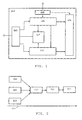
- FIG. 1 there is depicted a high level block diagram of a CPU 100 and the implementation of its machine language in microcode and hardware respectively.
- the parts forming the CPU 100 as shown in Fig. 1 are described and, second, a method for verifying the architectural correctness of a CPU having at least a part of its instruction set implemented with microcode according to the present invention is explained in greater detail with reference to the CPU 100.
- the method described here by way of example with reference to a CPU being partly implemented in microcode, can also be used for a verification of system software communicating with a CPU that does not contain microcode, where the CPU basically consists of the processor and some additional hardware components, such as some RISC (Reduced Instruction Set Computer) processors.
- RISC Reduced Instruction Set Computer
- the CPU 100 comprises a first interface 110 forming an architectural interface for providing its machine language instruction to the outside world, e.g., external software, like an application program being executed on the CPU 100.
- a first interface 110 forming an architectural interface for providing its machine language instruction to the outside world, e.g., external software, like an application program being executed on the CPU 100.
- Many of the functions of the CPU 100 are implemented in microcode, like the current CMOS S/390 systems manufactured by International Business Machines Corporation.
- the processor hardware makes simple instructions of the processor's architecture directly available to the software, referred to as hardware implemented instructions 120.
- the hardware implemented instructions 120 can be accessed from outside of the CPU 100 via the first interface 110.
- Microcode denotes micro instructions being executed within the processor hardware which are neither accessible nor visible for an application program running on the particular CPU.
- the micro instructions build functions that can be called via the first interface 110 from outside of the CPU 100.
- Two different kinds of microcode can be distinguished: millicode and processor code.
- millicode routines 130 In the case of more complex instructions, like interrupts and other system functions, the CPU branches to microcode functions. The performance-critical ones of such functions, e.g., most of the instructions running exclusively within the CPU, are implemented solely in millicode forming millicode routines 130. Millicode is written in assembly language, i.e., a symbolic representation of the machine language of a specific processor. The millicode routines 130 itself are able to use the processor's hardware implemented instructions 120.
- processor code functions 140 are executed in combination with processor code forming processor code functions 140.
- Processor code comprises almost all the instructions of the processor's machine language that is accessible from application programs outside of the CPU 100.
- the processor code might comprise additional internal instructions implemented in millicode providing the CPU with access to strictly defined hardware elements and configuration data.
- the processor code functions 140 are able to call millicode routines 130 as well as hardware implemented instructions 120 and hidden hardware instructions 150.
- processor code functions 140 implement system functionality such as Reset and IPL (Initial Program Load).
- IML Initial Microcode Load
- the processor code is responsible for initializing the processor's I/O system.
- the processor code functions 140 might also be written in a high level language like PL.8 or C.
- a third kind of code which is closely tied to the processor hardware and not reachable by application programs is called service element code or short "SE-code".
- a service element is a separate computer system (not shown) that is used to control the CPU 100. For example, by using the service element a user is able to start IPL and IML, to collect information about the status of operation of the CPU and to configure the CPU via the service element.
- the service element uses a distinguished second interface 160 to access the hidden hardware instructions 150 and to run processor code functions 140 respectively.
- FIG. 2 there is depicted a flow chart illustrating a method for verifying the correctness of the functional behavior of a CPU having at least a part of its instruction set implemented with microcode.
- Arrow 200 denotes a time axis illustrating the preceding in time in relation to the steps of the method.
- a first step all different kinds of code that are closely tied to the processor hardware are tested separately.
- these tests are performed concurrently in order to save time in the overall CPU development.
- the first, second and third test 210 to 230 can also be performed sequentially in any possible order.
- the service element code mainly consists of a program running on a independent computer system providing a user interface for controlling the CPU. Without having a connection established to the CPU the SE-code is executed in an 'office mode'. In the office mode an interface used for establishing a communication between the service element to the CPU is deactivated and replaced with simulation routines. These simulation routines behave in a way in accordance with the specified behavior of the CPU connected to the service element.
- the processor code functions mainly implement instructions of the processor's machine language. Therefore, the processor code functions can be run on a simulator using a virtual machine, such as the VM/CMS system (Virtual Machine / Conversational Monitor System) developed by International Business Machines Corporation.
- a virtual machine is basically a software emulation of a physical computing environment. Depending on the computation capacity of the used hardware a system offering the concept of virtual machines provides one or more simultaneous execution environments in which operating systems or other programs may execute as though they were running "on the bare iron", that is, without a particular control program.
- the code being simulated controls all system resources, e.g., the entire memory, all registers and the interrupt control.
- system resources e.g., the entire memory, all registers and the interrupt control.
- using the new approach by utilizing the concept of virtual machines to test the processor code functions allows to run exactly the piece of code implemented for a future CPU, not resulting in different program flow in the IML simulation, such as a completely different loader program for loading the microcode into the simulated processor CPU than used in the real machine.
- the third task of the first step is the test of the millicode procedures.
- a functional emulator is provided offering the functional behavior of the processor hardware the millicode procedures interact with.
- An emulator is a system that performs in exactly the same way, though perhaps not at the same speed as another system to be emulated. A typical example would be emulation of one computer by another.
- the functional description of the processor's behavior is taken.
- the emulator is used for testing the millicode procedures.
- test coverage is a measure of how thoroughly a test suite exercises a program. This will typically involve collecting information about which parts of a program are actually executed when running the test suite in order to identify branches of conditional statements which have not been taken.
- the enhanced simulator is implemented in a similar way as the virtual machine used for testing the processor code procedures used in the first step. It also makes use of the concept of the virtual machine.
- the code to be tested runs on a virtual machine. This approach has got the advantage that a complete address space from zero to a defined size, as well as all the registers, are available to the processor hardware being simulated by running the processor code functions.
- the links between the virtual machine running the processor code functions, the service element running the SE-code and the functional emulator running the millicode procedures are established using TCP/IP (Transmission Control Protocol over Internet Protocol).
- a third step 250 is performed.
- the microcode is tested by using a hardware emulator behaving in the same way like the processor hardware according to the design of the processor's logic gates.
- the hardware emulator allows the precise and detailed mapping of the new processor at the level of the logic gates.
- VHSIC Very High Speed Integrated Circuit
- a fourth step 260 the microcode is tested by running it on the newly designed processor hardware and the service element code is tested by letting it communicate with the processor hardware as well.
- This inventive concept allows to check the initialization and loading phase of the new CPU in the simulation, even before actual system integration.
- many problems in this area, relating to the interaction of the microcode and the hardware can be found before the actual hardware is manufactured.
- the ongoing verification of the newly designed CPU using the method according to the present invention allows to detect hardware problems at a comparable early stage.
- the present invention can be realized in hardware, software, or a combination of hardware and software. Any kind of computer system - or other apparatus adapted for carrying out the methods described herein - is suited.
- a typical combination of hardware and software could be a general purpose computer system with a computer program that, when being loaded and executed, controls the computer system such that it carries out the methods described herein.
- the present invention can also be embedded in a computer program product, which comprises all the features enabling the implementation of the methods described herein, and which - when loaded in a computer system - is able to carry out these methods.
- Computer program means or computer program in the present context mean any expression, in any language, code or notation, of a set of instructions intended to cause a system having an information processing capability to perform a particular function either directly or after either or both of the following a) conversion to another language, code or notation; b) reproduction in a different material form.
Landscapes
- Engineering & Computer Science (AREA)
- Computer Hardware Design (AREA)
- General Engineering & Computer Science (AREA)
- Theoretical Computer Science (AREA)
- Quality & Reliability (AREA)
- Physics & Mathematics (AREA)
- General Physics & Mathematics (AREA)
- Debugging And Monitoring (AREA)
- Test And Diagnosis Of Digital Computers (AREA)
Abstract
Description
Claims (17)
- A method for verifying the correctness of the system behavior of a processor cooperating with software, the method comprising the steps of:testing said software by using a functional simulator performing in the same way like the hardware of said processor according to the processor's functional specification;testing said microcode by using a hardware emulator behaving in the same way like said hardware of said processor according to the design of said processor's logic gates.
- The method according to claim 1, whereby the method includes to verify the correctness of the system behavior of a CPU comprising processor hardware and having at least a part of its instructions implemented in microcode.
- The method according to claim 2, whereby said microcode includes millicode procedures and processor code functions, the method further comprising an initial step of testing said millicode procedures and said processor code functions independently.
- The method according to one of the claims 2 or 3, whereby testing said millicode procedures includes the step of running said millicode procedures on an functional emulator offering the functional behavior of said processor hardware said millicode interacts with.
- The method according to one of the claims 2 to 4, whereby testing said processor code functions includes the step of running a virtual machine emulating a physical computing environment corresponding to said processor to be verified.
- The method according to claim 5, whereby testing said processor code functions includes the step of providing a simulator interpreting such processor code instructions which are not provided by said virtual machine.
- The method according to one of the preceding claims, whereby said processor is communicating to a service element code that has to be validated as well, the method further comprising the step of testing said service element code independently.
- The method according to claim 7, whereby testing the service element code includes the steps of disconnecting a service element on which said service element is executed from said processor and providing simulation routines behaving like an attached processor according to its functional specification.
- The method according to one of the claims 3 to 8, further comprising the step of testing the different kinds of microcode in an environment in which all said codes interact as they would run on said processor.
- The method according to claim 9, whereby the step of testing the different kind of microcode comprises the step of communicating with said service element code.
- The method according to claim 9 or 10, whereby testing the different kinds of code comprises the step of providing a TCP/IP connection between the different systems executing the different kinds of codes.
- The method according to one of the claims 9 to 11, whereby testing the different kinds of microcode includes the step of specifying particular processor code instructions that are not executed by said virtual machine, but by using said microcode procedures instead.
- The method according to one of the preceding claims, further comprising the step of testing said microcode by running it on said processor.
- The method according to one of the preceding claims, further comprising the step of testing said service element code by letting it communicate with said processor.
- The method according to one of the preceding claims, whereby testing said software includes the step of providing a high-level description of said processor's functional behavior in a hardware description language, such as VHDL.
- A computer program product stored on a computer usable medium, comprising computer readable program means for causing a computer to perform a method according to anyone of the preceding claims 1 to 15.
- A system for verifying the correctness of the functional behavior of a processor having at least a part of its instruction set implemented with microcode, said microcode includes millicode procedures and processor code functions, the system comprisinga simulator performing in the same way like the hardware of said processor according to the processor's functional specification for testing said millicode,a virtual machine providing a platform for testing said processor code functions, anda hardware emulator behaving in the same way like said hardware of said processor according to the design of said processor's logic gates for testing said microcode.
Priority Applications (1)
| Application Number | Priority Date | Filing Date | Title |
|---|---|---|---|
| EP01118672A EP1191443A3 (en) | 2000-09-22 | 2001-08-03 | Method and system for testing a processor |
Applications Claiming Priority (3)
| Application Number | Priority Date | Filing Date | Title |
|---|---|---|---|
| EP00120734 | 2000-09-22 | ||
| EP00120734 | 2000-09-22 | ||
| EP01118672A EP1191443A3 (en) | 2000-09-22 | 2001-08-03 | Method and system for testing a processor |
Publications (2)
| Publication Number | Publication Date |
|---|---|
| EP1191443A2 true EP1191443A2 (en) | 2002-03-27 |
| EP1191443A3 EP1191443A3 (en) | 2004-03-03 |
Family
ID=8169921
Family Applications (1)
| Application Number | Title | Priority Date | Filing Date |
|---|---|---|---|
| EP01118672A Withdrawn EP1191443A3 (en) | 2000-09-22 | 2001-08-03 | Method and system for testing a processor |
Country Status (2)
| Country | Link |
|---|---|
| US (1) | US6834359B2 (en) |
| EP (1) | EP1191443A3 (en) |
Families Citing this family (13)
| Publication number | Priority date | Publication date | Assignee | Title |
|---|---|---|---|---|
| US20030093258A1 (en) * | 2001-11-14 | 2003-05-15 | Roman Fishstein | Method and apparatus for efficient simulation of memory mapped device access |
| US7580826B2 (en) * | 2004-06-30 | 2009-08-25 | Microsoft Corporation | Systems and methods for development of emulated devices in a virtual machine environment |
| WO2007000078A1 (en) * | 2005-06-28 | 2007-01-04 | Intel Corporation | Method and system for non-intrusive code coverage |
| US20070055911A1 (en) * | 2005-09-02 | 2007-03-08 | Harald Boehm | A Method and System for Automatically Generating a Test-Case |
| US7486096B2 (en) * | 2006-10-31 | 2009-02-03 | International Business Machines Corporation | Method and apparatus for testing to determine minimum operating voltages in electronic devices |
| US7904289B2 (en) * | 2007-11-12 | 2011-03-08 | International Business Machines Corporation | Method and system for testing functionality of a chip checker |
| US20090198988A1 (en) * | 2008-01-31 | 2009-08-06 | Inventec Corporation | Method for verifying refreshed bios content |
| US8423968B2 (en) * | 2008-02-11 | 2013-04-16 | International Business Machines Corporation | Template-based vertical microcode instruction trace generation |
| US8776019B2 (en) | 2008-12-05 | 2014-07-08 | Invensys Systems, Inc. | Configurator with embedded firmware for offline instrument user settings implementation |
| US8046639B1 (en) * | 2010-07-29 | 2011-10-25 | Oracle International Corporation | Cycle accurate fault log modeling for a digital system |
| US9582410B2 (en) * | 2010-10-27 | 2017-02-28 | International Business Machines Corporation | Testing software on a computer system |
| US8479172B2 (en) * | 2010-11-23 | 2013-07-02 | International Business Machines Corporation | Virtual machine testing |
| CN110632857B (en) * | 2019-09-25 | 2022-05-17 | 中国工程物理研究院计算机应用研究所 | Control performance verification method for large-scale hierarchical control system |
Family Cites Families (2)
| Publication number | Priority date | Publication date | Assignee | Title |
|---|---|---|---|---|
| SE505783C2 (en) * | 1995-10-03 | 1997-10-06 | Ericsson Telefon Ab L M | Method of manufacturing a digital signal processor |
| US6625759B1 (en) * | 2000-02-18 | 2003-09-23 | Hewlett-Packard Development Company, L.P. | Method and apparatus for verifying the fine-grained correctness of a behavioral model of a central processor unit |
-
2001
- 2001-08-03 EP EP01118672A patent/EP1191443A3/en not_active Withdrawn
- 2001-09-21 US US09/960,154 patent/US6834359B2/en not_active Expired - Fee Related
Also Published As
| Publication number | Publication date |
|---|---|
| US20020087917A1 (en) | 2002-07-04 |
| EP1191443A3 (en) | 2004-03-03 |
| US6834359B2 (en) | 2004-12-21 |
Similar Documents
| Publication | Publication Date | Title |
|---|---|---|
| CN113961453B (en) | Aviation airborne software full digital simulation test system | |
| CN117422026B (en) | RISC-V architecture-based processor verification system | |
| US7139936B2 (en) | Method and apparatus for verifying the correctness of a processor behavioral model | |
| US6834359B2 (en) | Method and system for testing a processor | |
| US5613098A (en) | Testing and debugging new Y architecture code on existing X architecture system by using an environment manager to switch between direct X code execution and simulated Y code execution | |
| JP7321839B2 (en) | General Purpose Virtualization Platform for Systems Using Hardware Abstraction Software Layers | |
| US20050165597A1 (en) | Apparatus and method for performing hardware and software co-verification testing | |
| JPH09293002A (en) | Simulation system of computer system connected with mutual activation of hardware and software and method therefor | |
| US5680584A (en) | Simulator system for code execution and debugging within a multi-architecture environment | |
| JP2004514995A (en) | System and method for generating hardware description code | |
| US5363501A (en) | Method for computer system development verification and testing using portable diagnostic/testing programs | |
| WO2008024701A2 (en) | System and method for testing software code for use on a target processor | |
| US20030093258A1 (en) | Method and apparatus for efficient simulation of memory mapped device access | |
| Lv et al. | Armiss: An instruction set simulator for the arm architecture | |
| Li et al. | FEMU: A firmware-based emulation framework for SoC verification | |
| CN121605409A (en) | System and method for developing firmware using collaborative simulation based on system virtualization | |
| CN108604205B (en) | Test point creating method, device and system | |
| CN109753308B (en) | Instruction path verification system and instruction path monitoring method | |
| CN115185638B (en) | A method and computing device for obtaining the call stack when simulating the running of an application. | |
| CN116974945A (en) | Hardware debugging system and method based on QEMU simulation | |
| JP2828590B2 (en) | Microprogram verification method | |
| CN116450431A (en) | Instruction function test system of CPU reference model, method thereof, computer equipment and storage medium | |
| CN114116116A (en) | A virtual machine for developing and testing object code for hardware design | |
| JP3424548B2 (en) | Software logic simulator for embedded devices | |
| JP3270729B2 (en) | Extended instruction set simulator |
Legal Events
| Date | Code | Title | Description |
|---|---|---|---|
| PUAI | Public reference made under article 153(3) epc to a published international application that has entered the european phase |
Free format text: ORIGINAL CODE: 0009012 |
|
| AK | Designated contracting states |
Kind code of ref document: A2 Designated state(s): AT BE CH CY DE DK ES FI FR GB GR IE IT LI LU MC NL PT SE TR |
|
| AX | Request for extension of the european patent |
Free format text: AL;LT;LV;MK;RO;SI |
|
| PUAL | Search report despatched |
Free format text: ORIGINAL CODE: 0009013 |
|
| AK | Designated contracting states |
Kind code of ref document: A3 Designated state(s): AT BE CH CY DE DK ES FI FR GB GR IE IT LI LU MC NL PT SE TR |
|
| AX | Request for extension of the european patent |
Extension state: AL LT LV MK RO SI |
|
| RIC1 | Information provided on ipc code assigned before grant |
Ipc: 7G 06F 11/26 A |
|
| 17P | Request for examination filed |
Effective date: 20040728 |
|
| AKX | Designation fees paid |
Designated state(s): AT BE CH CY DE DK ES FI FR GB GR IE IT LI LU MC NL PT SE TR |
|
| STAA | Information on the status of an ep patent application or granted ep patent |
Free format text: STATUS: THE APPLICATION IS DEEMED TO BE WITHDRAWN |
|
| 18D | Application deemed to be withdrawn |
Effective date: 20051124 |