The present invention relates to a method for treating
soil or ash containing organohalogen compounds, and more
particularly, to a method for treating an organohalogen
compound-containing soil or ash in order to effectively
decompose dioxins and dioxin precursors such as aromatic
organohalogen compounds or aliphatic organohalogen compounds,
e.g., trichloroethylene and dichloromethane, which are
contained in the soil or ash.
Exhaust gases, fly ashes and deposited ashes generated
from an incinerator upon burning municipal solid wastes and
industrial wastes therein, contain dioxins which are aromatic
halogen compounds showing an extremely strong toxicity to
human bodies, though the contents thereof are very small. The
dioxins generally include compounds having such a structure
that hydrogen atoms of dibenzo-p-dioxine, dibenzofuran, etc.
are substituted with chlorine atoms.
Also, the aliphatic organohalogen compounds such as
trichloroethylene and tetrachloroethylene have been
extensively used in many applications such as degreasing of
metals, dry-cleaning and the like.
The organohalogen compounds have caused significant
environmental problems such as air pollution due to discharge
thereof into atmospheric air, and contamination of ground
water and soils upon disposal thereof, because these compounds
are difficult to decompose and show carcinogenesis. In
particular, ashes discharged from incinerators or soils
contaminated with wastes have a high content of the
organohalogen compounds. Therefore, it has been required to
decompose these organohalogen compounds and convert these
compounds into harmless ones. Although various methods for
removing the organohalogen compounds have been conventionally
proposed, satisfactory techniques capable of decomposing the
organohalogen compounds and converting these compounds into
harmless ones in economical and effective manner, have not
been established.
Hitherto, various techniques for decomposing
organohalogen compounds contained in soils or ashes and
converting these compounds into harmless ones have been
reported. For example, there are known a method of
decomposing poly-halogenated aromatic compounds having at
least five carbon atoms by heating at a temperature of 200 to
550°C in the presence of a catalyst such as iron oxide
(Japanese Patent Publication (KOKOKU) No. 6-38863(1994)); a
method of removing halogenated aromatic compounds or the like
from an exhaust gas or reducing amounts thereof by heat-treating
at a temperature of 300 to 700°C in the presence of a
catalyst containing iron oxide (Japanese Patent Application
Laid-Open (KOAKI) No. 2-280816(1990)); a method of introducing
an inhibitor for preventing the generation of dioxins composed
of an amine-carrying activated carbon, into an exhaust gas
passing through flues of an incinerator (Japanese Patent
Application Laid-Open (KOAKI) No. 11-9960(1999)); a method of
mixing ashes to be treated, and a dechlorinating agent, and
then heat-treating the resultant mixture (Japanese Patent
Application Laid-Open (KOAKI) No. 11-19616(1999)); a method of
decomposing organohalogen compounds in the presence of oxygen
using a solid catalyst containing iron oxide, etc. and/or
titanium dioxide as base components (Japanese Patent
Application Laid-Open (KOAKI) Nos. 11-188235(1999) and 11-188236(1999));
a method of adding phosphorous acids,
hypophosphorous acids with an aluminum compound, and/or a
titanium compound to solid wastes and then heat-treating the
resultant mixture (Japanese Patent Application Laid-Open
(KOAKI) No. 11-290824(1999)); or the like.
In addition, there are also known an iron compound
catalyst having a specific catalytic activity, and a method of
spraying the iron compound catalyst into a combustion chamber
of an incinerator in order to prevent the generation of
dioxins (Japanese Patent Application Laid-Open (KOAKI) No. 11-267507(1999)).
However, although it has been presently required to
provide an process for decomposing the organohalogen compounds
contained in soils or ashes and converting these compounds
into harmless ones, the methods described in the above
publications are still unsatisfactory.
Namely, in the method described in Japanese Patent
Publication (KOKOKU) No. 6-38863(1994), poly-halogenated
compounds which are contained in fly ashes generated in an
incinerator or solid wastes are decomposed under an oxygen-lack
atmosphere or an inert gas atmosphere in a non-pass-through-type
or closed-type apparatus using fly ashes, metals,
metal oxides containing iron oxide, carbonates, silicates and
the like as a catalyst. However, this method must be
performed under the specific conditions, i.e., under the
closed system or the inert gas atmosphere, thereby requiring
large-scale apparatuses with high air-tightness as well as
high costs for installation and maintenance thereof.
Therefore, the above method is unsatisfactory from industrial
viewpoints.
In the method described in Japanese Patent Application
Laid-Open (KOAKI) No. 11-19616(1999), after incineration ashes,
fly ashes or the like are mixed with a dechlorinating agent
composed of alkali substances, the resultant mixture is heat-treated.
In this method, it is required to contact chlorine-containing
gases generated by heating the wastes to be treated,
with the alkali substances. Thus, the wastes to be treated
must be heated to an elevated temperature in order to generate
the chlorine-containing gases. Namely, the method is not
directly concerned with such techniques for decomposing the
organohalogen compounds and converting these compounds into
harmless ones. Therefore, the above method is also
unsatisfactory to convert dioxins into harmless compounds.
In the method described in Japanese Patent Application
Laid-Open (KOAKI) No. 11-9960(1999), the amine-carrying
activated carbon is introduced into exhaust gases containing
dioxins in order to adsorb the dioxins in the activated carbon
by high adsorptivity of the activated carbon, and then react
the dioxins with the amine compound for decomposition of the
dioxins. The amine-carrying activated carbon exhibits a high
dioxin-adsorptivity, but is insufficient in dioxin-decomposition
activity. Further, the activated carbon cannot
sufficiently prevent the generation of dioxins. Also, the
activated carbon tends to be ignitable and flammable when
heated to an elevated temperature. Therefore, the above
method is undesirable in view of safety.
In the method described in Japanese Patent Application
Laid-Open (KOAKI) Nos. 11-188235(1999) and 11-188236(1999),
organohalogen compounds contained in gases are decomposed in
the presence of oxygen using a solid catalyst containing iron
oxide, etc. and/or titanium dioxide as base components. Thus,
the organohalogen compounds treated by the method are only
those contained in gases, the above method is unsatisfactory
for decomposing organohalogen compounds contained in solids.
In the method described in Japanese Patent Application
Laid-Open (KOAKI) No. 11-290824(1999), there is used a
treating agent containing phosphorous acids and
hypophosphorous acids. As shown in Comparative Examples below,
the treating agent is poor in dioxin-decomposition percentage.
Therefore, the above method is also unsatisfactory for
decomposing dioxins.
Further, the catalyst described in Japanese Patent
Application Laid-Open (KOAKI) No. 11-267507(1999), is
effective to reduce the amount of dioxins contained in soils
or ashes. However, the activity of the catalyst is still
unsatisfactory as shown in Comparative Examples below.
As a result of the present inventors' earnest studies for
solving the above problems, it has been found that by mixing
organohalogen compound-containing soil or ash with a specific
organohalogen compound-decomposition catalyst and then heat-treating
the resultant mixture at a temperature of 150 to
600°C, it is possible to effectively decompose dioxins or
dioxin precursors contained in the soil or ash. The present
invention has been attained on the basis of this finding.
It is an object of the present invention to provide a
method for effectively treating an organohalogen compound-containing
soil or ash using a simple apparatus without
specifying a gas atmosphere, in order to decompose dioxins as
well as dioxin precursors such as aromatic organohalogen
compounds and aliphatic organohalogen compounds, e.g.,
trichloroethylene, dichloromethane or the like, which are
contained in the soil or ash.
To accomplish the aim of the present invention, there is
provided a process for treating an organohalogen compound-containing
soil or ash, comprising:
In a second aspect of the present invention, there is
provided a process for treating an organohalogen compound-containing
soil or ash, comprising:
In a third aspect of the present invention, there is
provided a process for treating an organohalogen compound-containing
soil or ash, comprising:
The present invention will now be described in detail
below.
First, an organohalogen compound-decomposition catalyst
used in the method of the present invention is described.
The organohalogen compound-decomposition catalyst used in
the method of the present invention is constituted by a
composite catalyst comprising iron compound particles and an
amine compound.
The iron compound particles used in the present invention
have an average particle size of usually 0.01 to 2.0 µm,
preferably 0.02 to 2.0 µm, more preferably 0.02 to 1.0 µm.
When the average particle size of the iron compound
particles is more than 2.0 µm, the contact efficiency between
the obtained decomposition catalyst and the organohalogen
compounds is deteriorated, so that the decomposition catalyst
may fail to show a sufficient organohalogen compound-decomposition
activity. The mass-production of the iron
compound particles having an average particle size of less
than 0.01 µm, is industrially difficult. Further, a large
amount of energy is required to pulverize agglomerated
particles produced by a large coagulation force between too
fine particles. Therefore, the use of such fine iron compound
particles becomes difficult practically.
The iron compound particles used in the present invention,
have a BET specific surface area of usually 0.2 to 200 m2/g,
preferably 1.0 to 200 m2/g, more preferably 2.0 to 150 m2/g.
As the iron compound particles used in the present
invention, there may be exemplified iron oxide hydroxide
particles such as goethite, akaganeite and lepidocrocite; and
iron oxide particles such as hematite, maghemite and magnetite.
These iron compound particles may be used alone or in
combination of any two or more thereof. Among these iron
compound particles, goethite particles, hematite particles and
magnetite particles are preferred, and goethite particles and
hematite particles are more preferred.
The iron compound particles used in the present invention
may be granular particles having either a spherical shape, a
cubical shape, an octahedral shape, a hexahedral shape and a
polyhedral shape, or acicular particles having either an
needle-like shape, a spindle shape or a rice-grain shape.
Among these particles, spindle-shaped particles or acicular
particles are preferred.
The iron compound particles used in the present invention,
have a phosphorus content of usually not more than 0.02% by
weight, preferably not more than 0.01 % by weight, more
preferably not more than 0.005% by weight based on the weight
of the particles. When the phosphorus content is more than
0.02% by weight, since the catalyst poison ability of the
phosphorus becomes large, the catalytic activity for the
decomposition of the organohalogen compounds may be
deteriorated.
The iron compound particles used in the present invention,
have a sulfur content of usually not more than 0.3% by weight,
preferably not more than 0.1% by weight, more preferably not
more than 0.07% by weight based on the weight of the particles.
When the sulfur content is more than 0.3% by weight, since the
catalyst poison ability of the sulfur becomes large, the
catalytic activity for the decomposition of the organohalogen
compounds may be deteriorated.
The iron compound particles used in the present invention,
have a sodium content of usually not more than 0.3% by weight,
preferably not more than 0.2% by weight, more preferably not
more than 0.15% by weight based on the weight of the particles.
When the sodium content is more than 0.3 % by weight, since
the catalyst poison ability of the sodium becomes large, the
catalytic activity for decomposition of the organohalogen
compounds may be deteriorated.
Further, the iron compound particles used in the present
invention, have a total content of phosphorus, sulfur and
sodium of preferably not more than 0.5% by weight, more
preferably not more than 0.3% by weight, still more preferably
not more than 0.2% by weight based on the weight of the
particles. When the total content of phosphorus, sulfur and
sodium is more than 0.5% by weight, the catalytic activity for
decomposition of the organohalogen compounds may be
deteriorated.
The iron compound particles used in the present invention
exhibit a catalytic activity capable of decomposing not less
than 20% of monochlorobenzene when measured by the following
method. That is, 50 mg of iron oxide particles obtained by
heat-treating the above iron compound particles at 300°C for
60 minutes in air, is instantaneously contacted with 5.0 x 10-
7 mol of monochlorobenzene at 300°C at a hourly space velocity
of 150,000 h-1 in an inert gas atmosphere using a pulse
catalytic reactor to determine the percentage of the
monochlorobenzene decomposed.
In case of composite catalyst produced by using the iron
compound particles having the decomposition activity of
monochlorobenzene of less than 20%, the aimed effects of the
present invention cannot be obtained. The iron compound
particles have a catalytic activity capable of decomposing
monochlorobenzene of preferably not less than 25%, more
preferably not less than 30%. That is, 50 mg of the iron
compound particles are heat-treated at 300°C for 60 minutes in
air and then instantaneously contacted with 5.0 x 10⁻⁷ mol of
monochlorobenzene at 300°C at a hourly space velocity of
150,000 h-1 in an inert gas atmosphere using a pulse catalytic
reactor to determine the percentage of the monochlorobenzene
decomposed.
Examples of the amine compound used in the present
invention may include alkylamines such as diethylenetriamine
and triethylenetetramine; alkanolamines such as
triethanolamine and diethanolamine; cyclic amines such as
aniline; or the like. These amine compounds may be used alone
or in combination of any two or more thereof.
The amine compound used in the present invention has a
boiling point of usually not less than 150°C. When the
boiling point of the amine compound is less than 150°C, the
amine compound tends to be vaporized when treating the
organohalogen compounds therewith, so that the obtained
organohalogen compound-decomposition catalyst may fail to show
the aimed effects of the present invention.
The organohalogen compound-decomposition catalyst of the
present invention has substantially the same particle shape,
particle size and the content of the impurities such as
phosphorus, sulfur, sodium or the like as those of the iron
compound particles used. More specifically, the organohalogen
compound-decomposition catalyst has an average particle size
of usually 0.01 to 2.0 µm, preferably 0.02 to 2.0 µm, more
preferably 0.02 to 1.0 µm. The organohalogen compound-decomposition
catalyst has a phosphorus content of usually not
more than 0.02% by weight, preferably not more than 0.01 % by
weight, more preferably not more than 0.005% by weight based
on the weight of the composite particles. The organohalogen
compound-decomposition catalyst has a sulfur content of
usually not more than 0.3% by weight, preferably not more than
0.1% by weight, more preferably not more than 0.07% by weight
based on the weight of the composite particles. The
organohalogen compound-decomposition catalyst has a sodium
content of usually not more than 0.3% by weight, preferably
not more than 0.2% by weight, more preferably not more than
0.15% by weight based on the weight of the composite particles.
The organohalogen compound-decomposition catalyst has have a
total content of phosphorus, sulfur and sodium of preferably
not more than 0.5% by weight, more preferably not more than
0.3% by weight, still more preferably not more than 0.2% by
weight based on the weight of the composite particles.
Also, the organohalogen compound-decomposition catalyst
of the present invention has an apparent density (ρa) of
usually not more than 0.8 g/ml, preferably not more than 0.6
g/ml. When the apparent density of the organohalogen
compound-decomposition catalyst is more than 0.8 g/ml, the
pulverization of agglomerated particles may be insufficiently
conducted, so that it is difficult to intimately mix the
organohalogen compound-decomposition catalyst with materials
to be treated.
The organohalogen compound-decomposition catalyst of the
present invention has a BET specific surface area of
preferably 0.2 to 200 m2/g, more preferably 1.0 to 200 m2/g,
still more preferably 2.0 to 150 m2/g.
The amount of the amine compound contained in the
organohalogen compound-decomposition catalyst is preferably
0.01 to 10 parts by weight, more preferably 0.05 to 5.0 parts
by weight based on the weight of the iron compound particles.
When the content of the amine compound is less than 0.01 part
by weight, the amine compound may show an insufficient effect
of promoting the decomposition of organohalogen compounds
because of a small amount of the amine compound contained in
the catalyst. When the content of the amine compound is more
than 10 parts by weight, the organohalogen compound-decomposition
activity thereof may lower because of a small
amount of the iron compound particles contained in the
composite catalyst.
The organohalogen compound-decomposition catalyst of the
present invention exhibits a catalytic activity capable of
decomposing preferably not less than 50 %, more preferably not
less than 55 %, still more preferably not less than 60 % of
monochlorobenzene when measured by the following method. That
is, 50 mg of the organohalogen compound-decomposition catalyst
is heat-treated at 300°C for 60 minutes in air and then
instantaneously contacted with 5.0 x 10⁻⁷ mol of
monochlorobenzene at 300°C at a hourly space velocity of
150,000 h-1 in an inert gas atmosphere using a pulse catalytic
reactor to determine the percentage of the monochlorobenzene
decomposed. Incidentally, the catalytic activity obtained by
the above is substantially equal to a value when measured by
the method: 50 mg of a composite material produced from iron
oxide particles obtained by heat-treating the iron compound
particles at 300°C for 60 minutes in air and the amine
compound, is instantaneously contacted with 5.0 x 10⁻⁷ mol of
monochlorobenzene at 300°C at a hourly space velocity of
150,000 h-1 in an inert gas atmosphere using a pulse catalytic
reactor.
When the catalytic activity of the organohalogen
compound-decomposition catalyst for the decomposition of
monochlorobenzene is less than 50%, it is difficult to
effectively decompose the organohalogen compounds.
In general, since monochlorobenzene is a typical one of
the organohalogen compounds and is also known as a precursor
of dioxin, the catalytic activity for the decomposition of
monochlorobenzene is regarded as an index of the catalytic
activity for the decomposition of the organohalogen compounds
such as dioxins. Meanwhile, the decomposition percentage
(conversion) of monochlorobenzene is represented by the
following formula:
Conversion (%) = [1-(amount of monochlorobenzene
detected after reaction/amount of monochlorobenzene
initially charged)] × 100
Next, the process for producing the organohalogen
compound-decomposition catalyst of the present invention is
described.
First, the process for producing the iron compound used
in the present invention is described.
Among the iron compounds used in the present invention,
the acicular-shaped, a spindle-shaped or a rice-grain-shaped
goethite particles and granular-shaped magnetite particles may
be produced, for example, by passing an oxygen-containing gas
such as air through a suspension containing a ferrous-containing
precipitate such as hydroxides of iron or iron
carbonates which are obtained by reacting a ferrous salt with
at least one compound selected from the group consisting of
alkali hydroxides, alkali carbonates and ammonia.
Among the iron compounds used in the present invention,
the hematite particles may be produced, for example, by heat-dehydrating
or heat-treating the above obtained goethite
particles or magnetite particles at a temperature of 200 to
800°C in air; the magnetite particles may be produced, for
example, by heat-reducing the above obtained goethite
particles or hematite particles at a temperature of 300 to
600°C in a reducing atmosphere; and the maghemite particles
may be produced, for example, by heat-oxidizing the above
obtained magnetite particles in a temperature of 200 to 600°C
in air.
In the production of the iron compound used in the
present invention, it is necessary to restrict the contents of
phosphorus, sulfur and sodium as catalyst poisons to not more
than the above-mentioned predetermined amounts. More
specifically, as the ferrous iron salt solution, there may be
preferably used those having low contents of phosphorus,
sulfur and the like as catalyst poisons. In addition, the
contents of phosphorus, sulfur and sodium are preferably
reduced by avoiding the use of sodium hexametaphosphate or the
like usually added as a sintering preventive upon heat-calcination
step, and by removing sulfate ions derived from
the raw ferrous materials or sodium ions derived from raw
alkali materials by means of purification treatments such as
washing with water or the like.
Meanwhile, the iron compound particles may be previously
deaggregated in order to reduce the apparent density of the
obtained composite catalyst.
The composite catalyst composed of the iron compound
particles and the amine compound may be produced by dry-mixing
the iron compound particles with the amine compound using
mixers such as a sand mill, a Henschel mixer and a Nauter
mixer, or pulverizers such as a fine mill and a pin mill.
In the above dry-mixing treatment, a solvent such as
water or alcohol (e.g. ethanol or isopropyl alcohol) may be
present therein, if required, in order to improve a
wettability of the particles. When any solvent is used, it is
preferred that the solvent be evaporated by heating or under
reduced pressure after the dry-mixing treatment.
The above dry-mixing treatment is preferably conducted
under the following conditions.
In case of using the sand mill, the dry-mixing is
conducted at a linear load of 5 to 50 Kg for 15 to 90 minutes.
In case of using the Henschel mixer, the dry-mixing is
conducted at a temperature of 10 to 100°C and a stirring speed
of 500 to 3,000 rpm for 1 to 30 minutes.
In case of using the Nauter mixer, the dry-mixing is
conducted at a rotating velocity of 25 to 200 rpm and a
revolving velocity of 1 to 5 rpm for 15 to 60 minutes.
In case of using the fine mill or pin mill, the milling
or dry-mixing is conducted at a stirring speed of 1,000 to
10,000 rpm while adding the amine compound to the iron
compound particles.
The thus obtained composite particles constituting the
organohalogen compound-decomposition catalyst of the present
invention have such a configuration that the amine compound is
carried on a part of the surface of each iron compound
particle.
Next, the method for treating the organohalogen compound-containing
soil or ash is described.
In the treating method of the present invention, the
organohalogen compound-containing soil or ash and the
organohalogen compound-decomposition catalyst are first mixed
together, and then heat-treated.
Thus, in the present invention, the soil or ash is
previously mixed with the organohalogen compound-decomposition
catalyst. The mixing may be conducted by an ordinary dry-mixing
method using a sand mill, a Henschel mixer, a concrete
mixer and a Nauter mixer; a semi-dry-mixing method using the
above-mentioned mixers as well as a single-screw or twin-screw
kneader-type mixer in which water may be added thereto, if
required; or the like. The resultant mixture may be further
subjected to compression-molding or the like molding method in
order to enhance the contact efficiency between the
organohalogen compound-decomposition catalyst and the ash or
soil to be treated.
The amount of the organohalogen compound-decomposition
catalyst added is preferably 0.1 to 100 parts by weight, more
preferably 1.0 to 50 parts by weight, still more preferably
1.0 to 30 parts by weight based on 100 parts by weight of the
materials to be treated. When the amount of the organohalogen
compound-decomposition catalyst added is less than 0.1 part by
weight, the aimed dioxin-decomposition effect of the present
invention cannot be sufficiently obtained. When the amount of
the organohalogen compound-decomposition catalyst added is
more than 100 parts by weight, the aimed effect is already
saturated. Therefore, the use of such a large amount of the
organohalogen compound-decomposition catalyst is unnecessary
and meaningless.
The above heat-treatment may be conducted in air, an
oxygen-containing gas or an inert gas atmosphere, within a
closed container or the like, though not particularly
restricted. It is possible to enhance the oxidative
decomposition efficiency, by conducting the heat-treatment
under an oxygen-containing gas flow.
The treating temperature may be varied according to the
reaction time, and is preferably 150 to 600°C, more preferably
200 to 400°C. When the treating temperature is less than
150°C, the decomposition activity of the organohalogen
compound-decomposition catalyst may be deteriorated. When the
treating temperature is more than 600°C, although the
organohalogen compounds can be decomposed, the effect of
decomposing the organohalogen compounds cannot be enhanced to
such a high level as estimated from a large energy required
for the heating.
The heat-treatment of the present invention may be
conducted using a continuous-type or batch-type rotary kiln,
multiple-hearth furnace or a batch continuous-type pressure
furnace. Among them, the use of the continuous-type or batch-type
rotary kiln, multiple-hearth furnace is preferred.
When the organohalogen compound-containing soil or ash is
treated by the process of the present invention, it is
possible to reduce the organohalogen compound content in the
soil or ash up to not more than 20%, preferably not more than
17%, more preferably not more than 10% of the organohalogen
compound content in untreated soil or ash.
In case of treating soil or ash with the specific
organohalogen compound-decomposition catalyst of the present
invention, the organohalogen compounds contained in the soil
or ash can be effectively and economically decomposed.
The reason why the organohalogen compounds contained in
the soil or ash can be effectively decomposed, is considered
as follows. That is, it is considered that the organohalogen
compound-decomposition catalyst can exhibit a high catalytic
activity for the decomposition of organohalogen compounds, and
can be sufficiently contacted with the soil or ash.
The reason why the organohalogen compound-decomposition
catalyst can exhibit a high catalytic activity for the
decomposition of organohalogen compounds, is considered as
follows. That is, it is considered that the iron compound
itself can exhibit an excellent decomposition activity for the
organohalogen compounds; the amine compound carried on a part
of the surface of each iron compound particle can accelerate
the adsorption of the organohalogen compounds thereonto; and
both the iron compound and the amine compound can be contacted
with each other, so that the decomposition reaction of the
organohalogen compounds adsorbed by the amine compound can be
accelerated. Further, it is considered that the amine
compound can accelerate not only the adsorption of the
organohalogen compounds but also the dechlorination reaction
thereof.
Also, since the organohalogen compound-decomposition
catalyst of the present invention has a low apparent density,
the soil or ash to be treated can be readily mixed therewith,
and the resultant mixture can be kept under a close contact
condition.
Thus, the process for treating the organohalogen
compound-containing soil or ash according to the present
invention, can effectively decompose dioxins or dioxin
precursors and, therefore, is suitable as the process for
treating the soil or ash.
EXAMPLES
The present invention is described in more detail by
Examples and Comparative Examples, but the Examples are only
illustrative and, therefore, not intended to limit the scope
of the present invention.
Various properties were measured by the following methods.
That is, 50 mg of the composite catalyst was heat-treated
at 300°C for 60 minutes in air and then instantaneously
contacted with 5.0 x 10⁻⁷ mol of monochlorobenzene at 300°C at
an hourly space velocity of 150,000 h-1 in an inert gas
atmosphere using a pulse catalytic reactor. The catalyst
property of the composite catalyst is determined by measuring
the amount of monochlorobenzene decomposed in the above
process.
The pulse catalytic reactor used above is constituted by
a reactor portion and a gas chromatography portion which is
constituted by Gas Chromatography-Mass Spectroscopy GC/MSQP-5050
(manufactured by Shimadzu Co., Ltd.).
Meanwhile, the evaluation method used herein was
conducted by referring to methods described in the literatures
(e.g., R. J. Kobes, et al, "J. Am. Chem. Soc.", 77, 5860(1955)
or "Experimental Chemistry II-Reaction and Velocity" edited by
Chemical Society of Japan and published by Maruzen, Tokyo
(1993)).
Example 1:
<Iron Compound Particles>
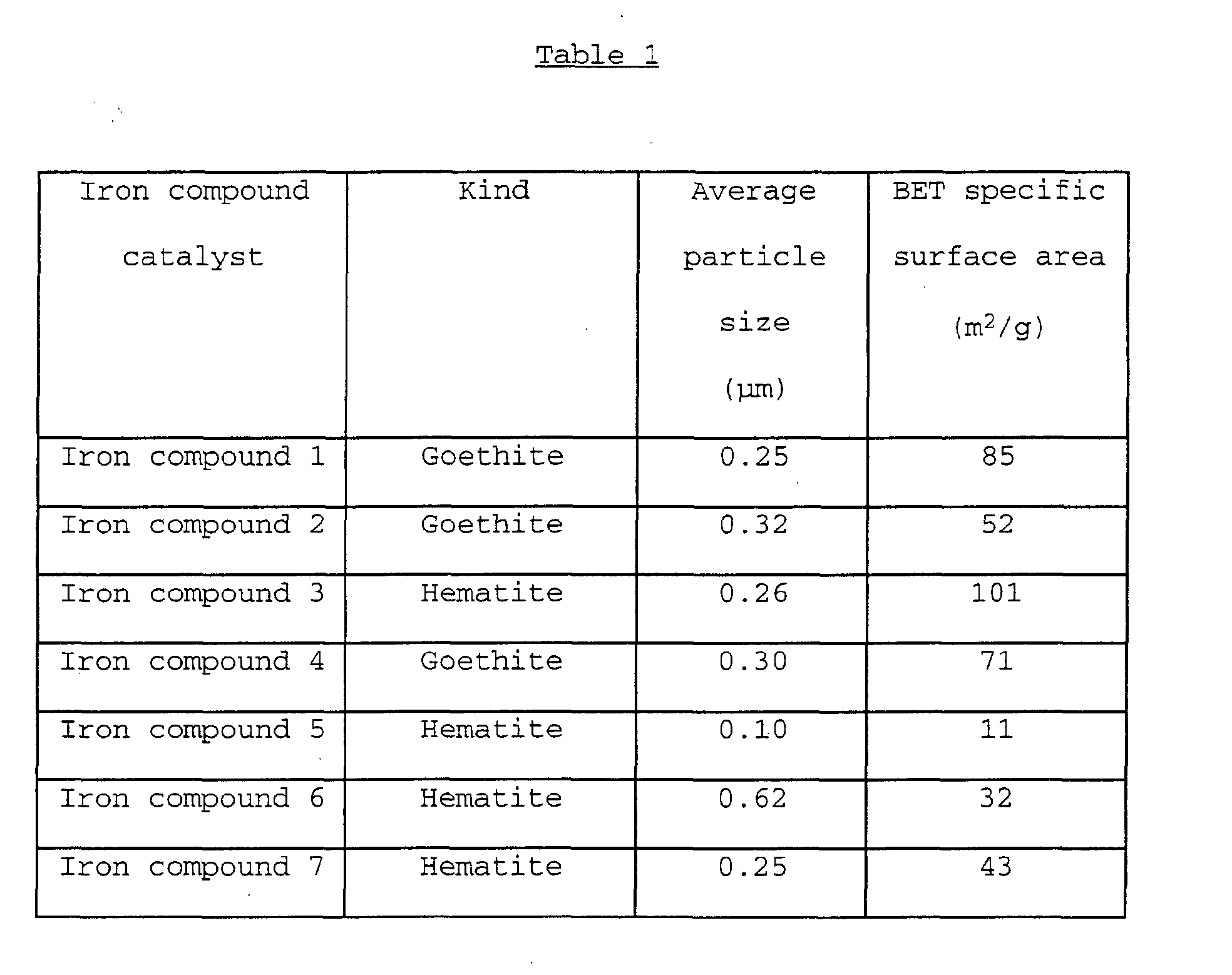
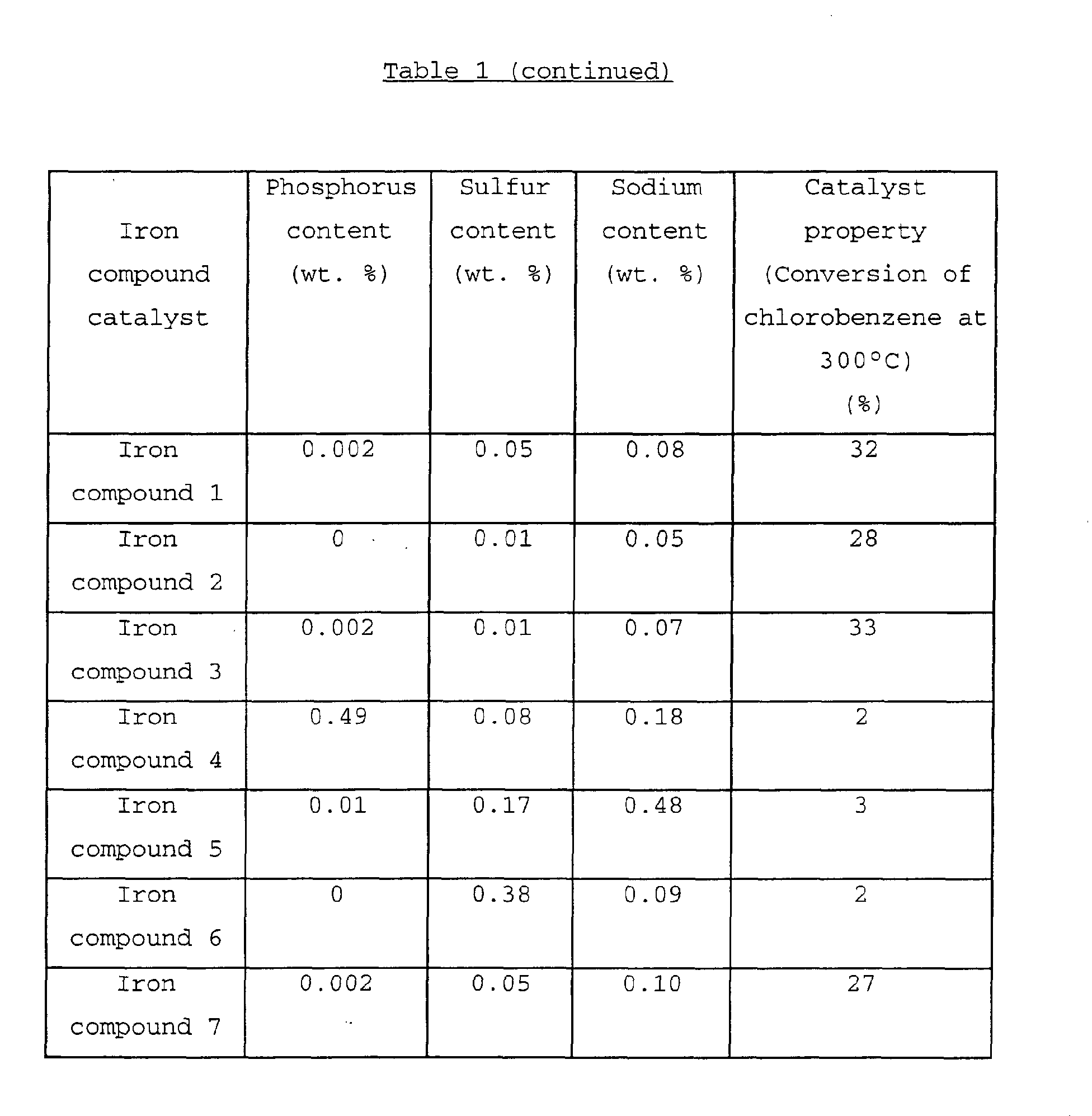
As the iron compound particles 1, there were used
spindle-shaped goethite particles having an average particle
size of 0.25 µm, a phosphorus content of 0.002% by weight, a
sulfur content of 0.05% by weight, a sodium content of 0.08%
by weight and a BET specific surface area of 85 m2/g.
When measured by the above evaluation method, the
goethite particles exhibited a monochlorobenzene decomposition
percentage at a temperature of 300°C of 32%.
<Production of Organohalogen Compound-Decomposition Catalyst>
1.5 kg of the above spindle-shaped goethite particles and
75 g of triethanolamine (boiling point: 360°C)(5.0% by weight
based on the weight of the goethite particles) were dry-mixed
together at a temperature of 50°C for 5 minutes in a Henschel
mixer (nominal capacity: 10 liters) operated at 1,440 rpm,
thereby obtaining goethite particles carrying triethanolamine
thereon (amount of triethanolamine: 5.0 % by weight based on
the weight of the goethite particles).
The thus obtained triethanolamine-carrying goethite
particles (composite particles 1) had an average particle size
of 0.25 µm, a phosphorus content of 0.002% by weight, a sulfur
content of 0.05% by weight, a sodium content of 0.08% by
weight, a BET specific surface area of 78 m2/g and an apparent
density of 0.43 g/ml, and exhibited a monochlorobenzene
decomposition percentage at a temperature of 300°C of 88% when
measured by the above evaluation method.
<Decomposition Test for Dioxins>
400 g of fly ashes sampled beneath an electric dust
collector in an incineration facility for municipal solid
wastes (concentration of dioxins: 6.9 ng-TEQ/g) and 4 g of the
above-prepared triethanolamine-carrying goethite particles
(1.0 part by weight based on 100 parts by weight of the fly
ashes to be treated) were dry-mixed together for 0.5 minute in
a Henschel mixer (nominal capacity: 10 liters) operated at
1,440 rpm. Next, the resultant mixture was transferred into a
batch-type rotary kiln having a capacity of 11 liters, and
heat-treated therein at a temperature of 300°C under an air
flow (flow rate: 3 liters/min.) for 60 minutes.
<Measurement of Concentration of Dioxins>
The measurement of the concentration of dioxins contained
in the fly ashes was conducted by the "Method for Measurement
of Dioxins and Coplanar PCB" prescribed in Notification No. 6
of Ministry of Public Welfare. As a result, it was confirmed
that the concentration of dioxins contained in the fly ashes
was reduced to 0.32 ng-TEQ/g, namely 4.6% of the dioxin
content of untreated fly ashes.
<Iron Compounds 2 to 7>
As the iron compound for the organohalogen compound-decomposition
catalyst, iron compounds 2 to 7 were prepared.
The iron compound 7 has an apparent density of 0.98 g/ml.
<Composite Catalysts 2 to 10>
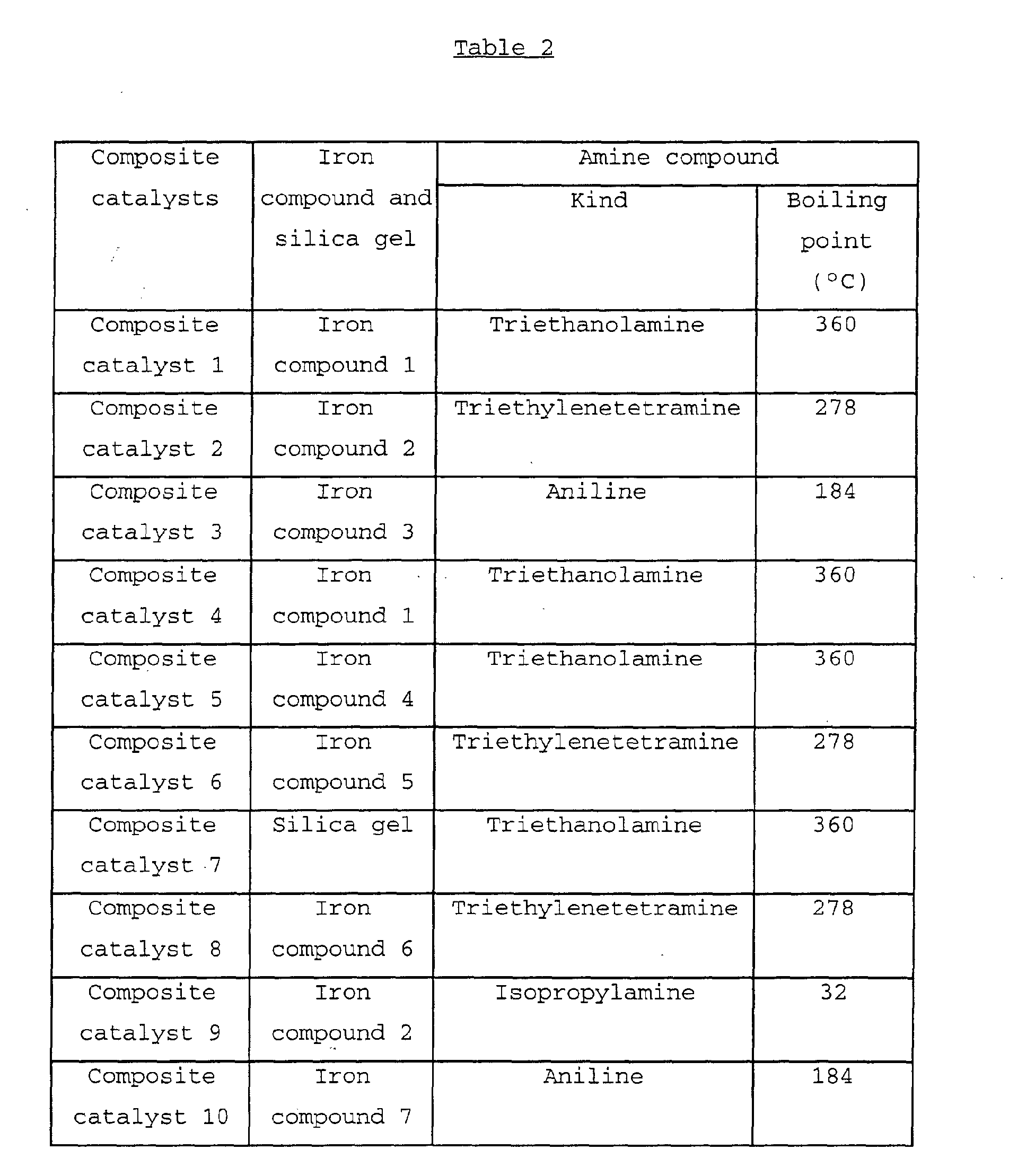
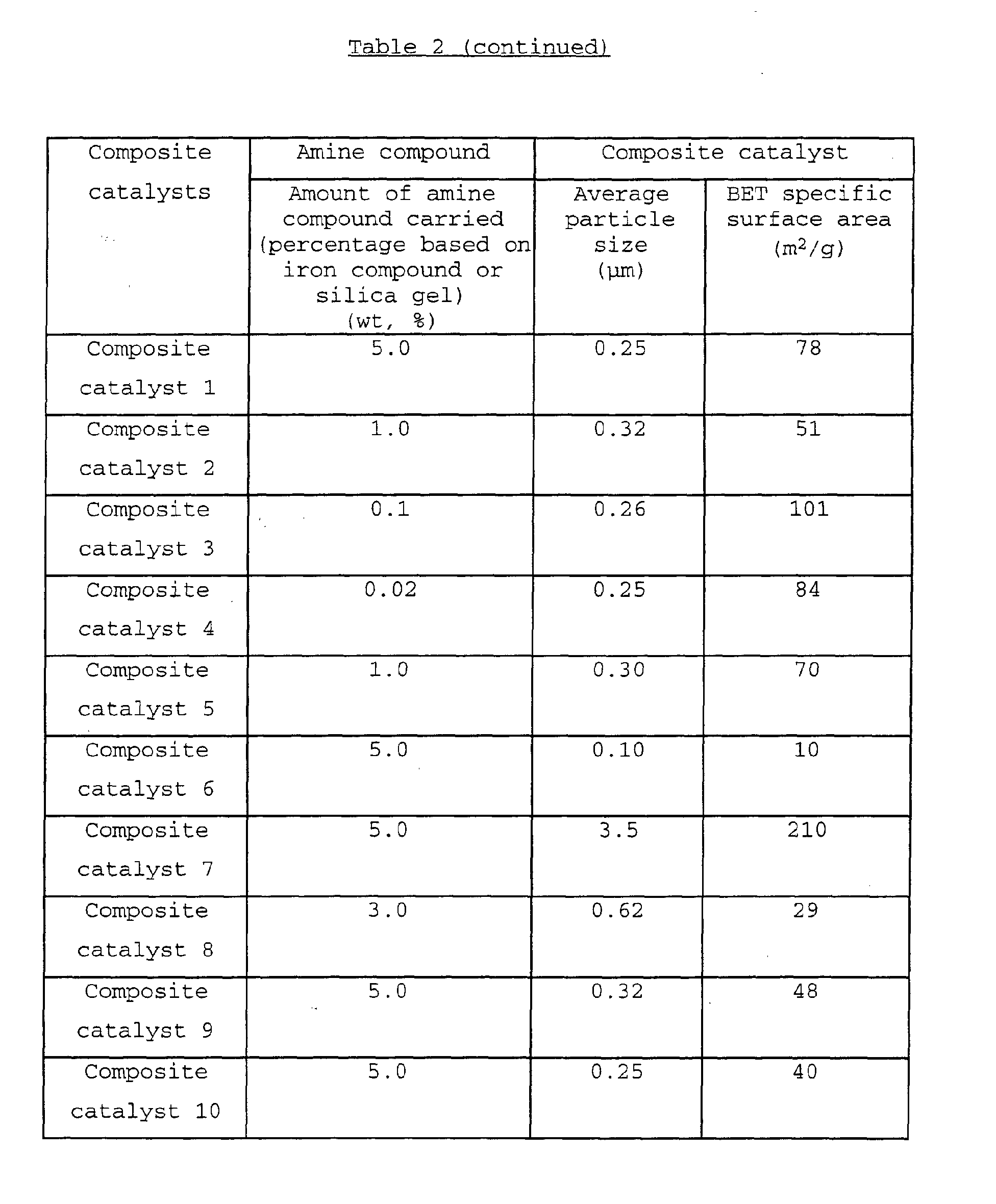
As the organohalogen compound-decomposition catalyst,
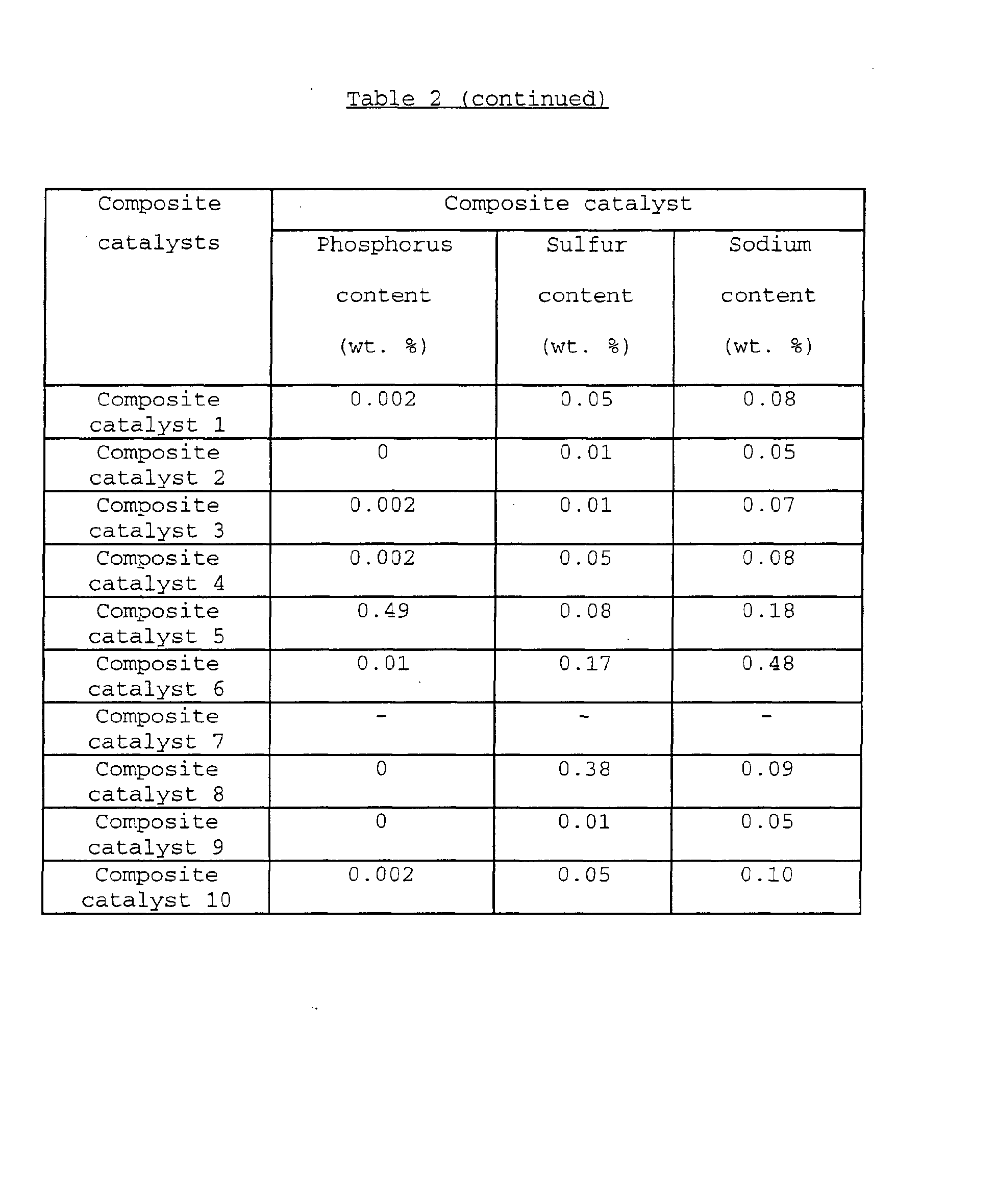
composite catalysts 2 to 10 were prepared. In the composite
catalyst 7, silica gel having no catalytic activity in itself
was used instead of the iron compound. Various properties of
the obtained composite catalysts are shown in Table 2. The
composite catalyst 10 was obtained by dry-mixing the iron
compound 7 with aniline in Nauter mixer (rotating velocity: 30
rpm, revolving velocity: 2 rpm, mixing time: 5 minutes).
Examples 2 to 7, Comparative Examples 1 to 8 and Reference
Examples 1 and 2:
<Decomposition Test for Dioxins>
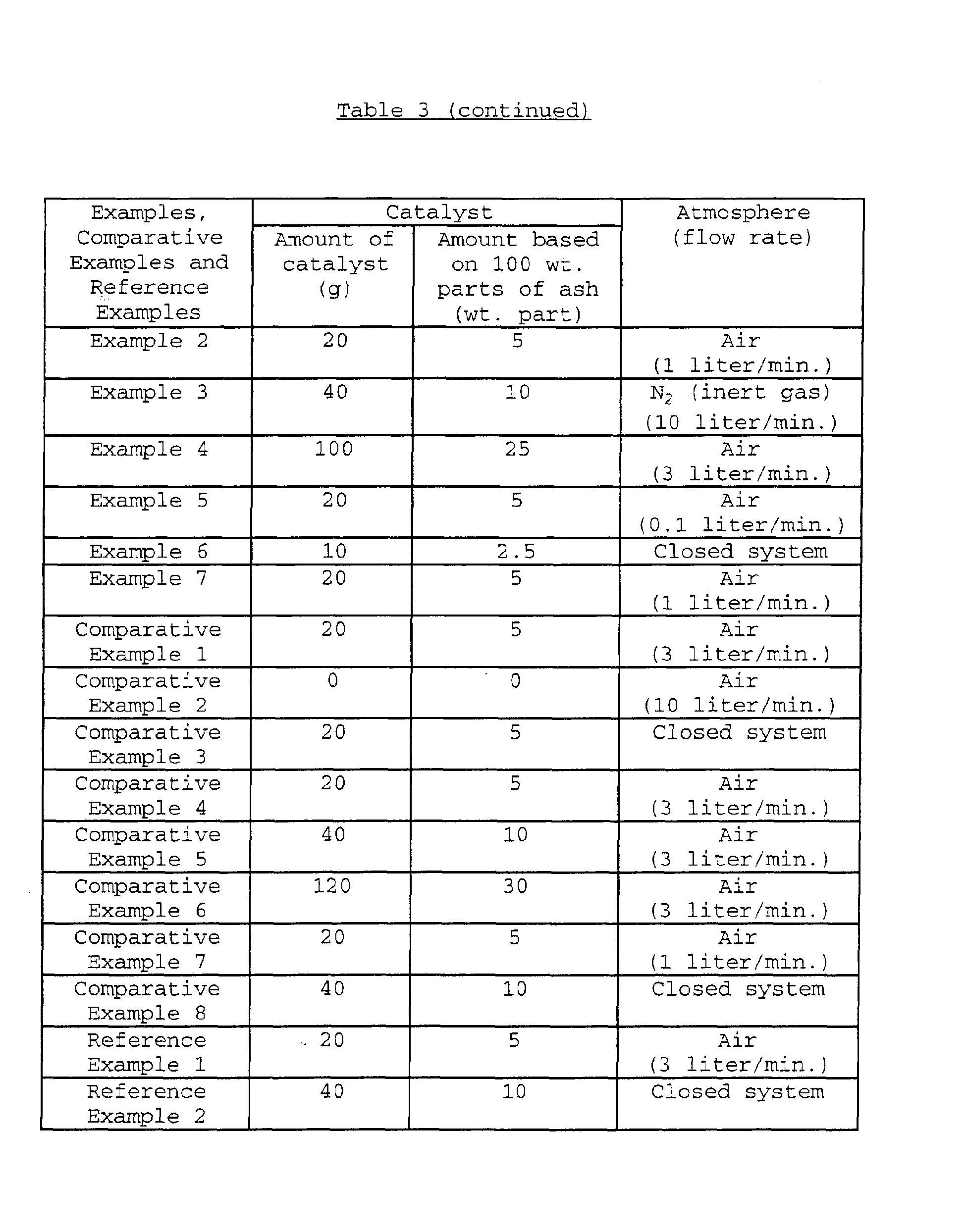
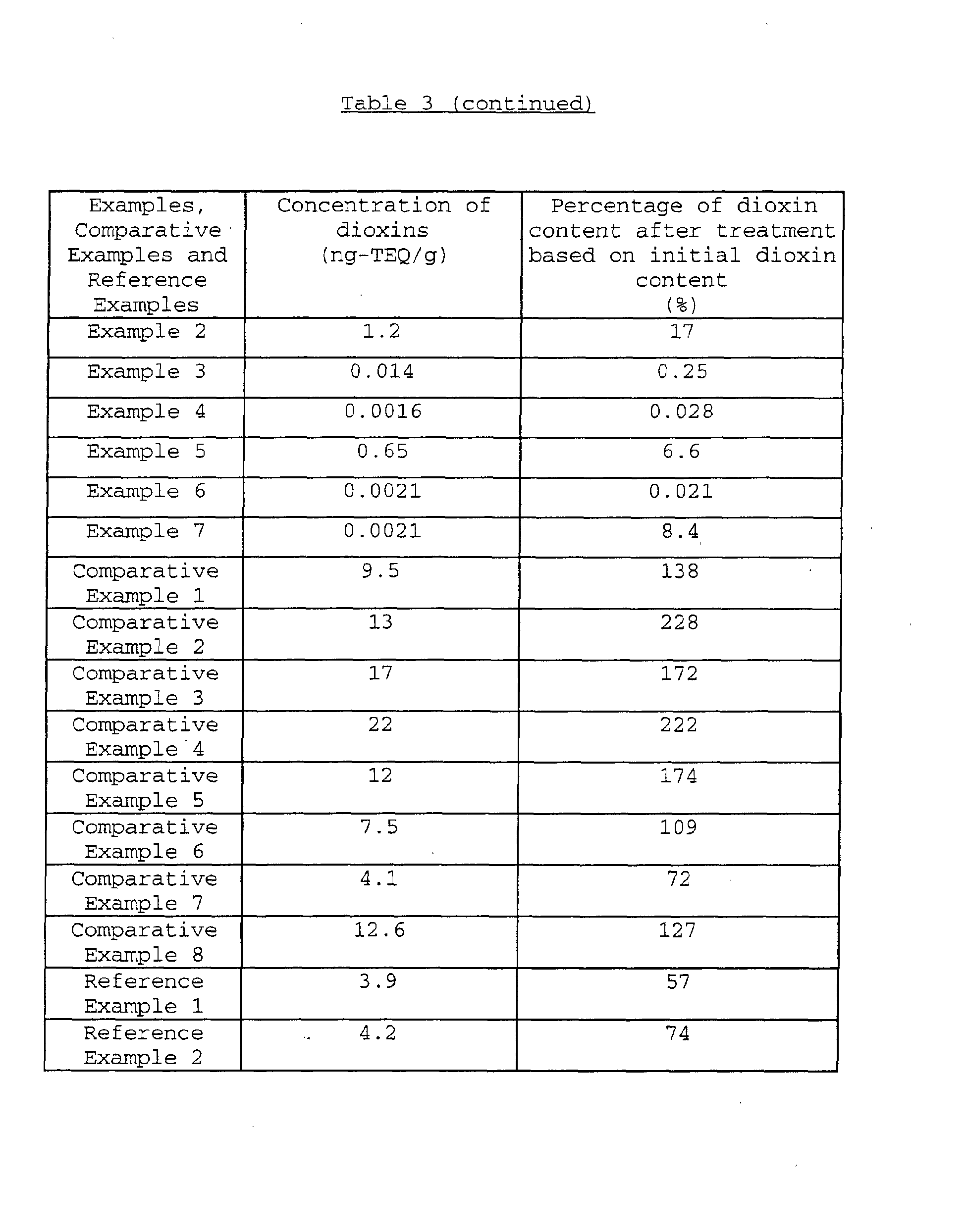
The same decomposition test for organohalogen compounds
contained in ashes or soil as defined in Example 1 was
conducted except that kind of ash, kind of composite catalyst,
heat-treating atmosphere, heat-treating temperature and
retention time were varied.