EP1185712B1 - New mutational profiles in hiv-1 reverse transcriptase correlated with phenotypic drug resistance - Google Patents
New mutational profiles in hiv-1 reverse transcriptase correlated with phenotypic drug resistance Download PDFInfo
- Publication number
- EP1185712B1 EP1185712B1 EP00936827A EP00936827A EP1185712B1 EP 1185712 B1 EP1185712 B1 EP 1185712B1 EP 00936827 A EP00936827 A EP 00936827A EP 00936827 A EP00936827 A EP 00936827A EP 1185712 B1 EP1185712 B1 EP 1185712B1
- Authority
- EP
- European Patent Office
- Prior art keywords
- mutation
- hiv
- resistance
- mutations
- reverse transcriptase
- Prior art date
- Legal status (The legal status is an assumption and is not a legal conclusion. Google has not performed a legal analysis and makes no representation as to the accuracy of the status listed.)
- Expired - Lifetime
Links
- 206010059866 Drug resistance Diseases 0.000 title claims abstract description 41
- 230000002596 correlated effect Effects 0.000 title abstract description 25
- 230000000869 mutational effect Effects 0.000 title abstract description 23
- 101900297506 Human immunodeficiency virus type 1 group M subtype B Reverse transcriptase/ribonuclease H Proteins 0.000 title abstract description 5
- 230000035772 mutation Effects 0.000 claims abstract description 267
- 229940079593 drug Drugs 0.000 claims abstract description 66
- 239000003814 drug Substances 0.000 claims abstract description 66
- 241000700605 Viruses Species 0.000 claims abstract description 51
- 238000000034 method Methods 0.000 claims abstract description 45
- 238000002560 therapeutic procedure Methods 0.000 claims abstract description 32
- 238000013461 design Methods 0.000 claims abstract description 5
- 239000003419 rna directed dna polymerase inhibitor Substances 0.000 claims description 49
- 239000002726 nonnucleoside reverse transcriptase inhibitor Substances 0.000 claims description 40
- 108010078851 HIV Reverse Transcriptase Proteins 0.000 claims description 29
- 238000003556 assay Methods 0.000 claims description 28
- 150000007523 nucleic acids Chemical class 0.000 claims description 27
- 102000039446 nucleic acids Human genes 0.000 claims description 26
- 108020004707 nucleic acids Proteins 0.000 claims description 26
- 239000000137 peptide hydrolase inhibitor Substances 0.000 claims description 23
- 229940122313 Nucleoside reverse transcriptase inhibitor Drugs 0.000 claims description 16
- 229940124158 Protease/peptidase inhibitor Drugs 0.000 claims description 16
- 230000009120 phenotypic response Effects 0.000 claims description 15
- 108010010369 HIV Protease Proteins 0.000 claims description 13
- 229940042402 non-nucleoside reverse transcriptase inhibitor Drugs 0.000 claims description 11
- 108090000623 proteins and genes Proteins 0.000 claims description 7
- 230000035945 sensitivity Effects 0.000 claims description 7
- 108091028043 Nucleic acid sequence Proteins 0.000 claims description 6
- 230000000840 anti-viral effect Effects 0.000 claims description 6
- 102000004169 proteins and genes Human genes 0.000 claims description 4
- 239000003443 antiviral agent Substances 0.000 claims description 2
- 241000725303 Human immunodeficiency virus Species 0.000 abstract description 51
- 238000011282 treatment Methods 0.000 abstract description 24
- 238000004458 analytical method Methods 0.000 abstract description 21
- 238000009509 drug development Methods 0.000 abstract description 5
- 238000012512 characterization method Methods 0.000 abstract description 4
- 238000009510 drug design Methods 0.000 abstract description 4
- 230000004048 modification Effects 0.000 abstract description 4
- 238000012986 modification Methods 0.000 abstract description 4
- 108010016183 Human immunodeficiency virus 1 p16 protease Proteins 0.000 abstract description 3
- 229960002555 zidovudine Drugs 0.000 description 82
- HBOMLICNUCNMMY-XLPZGREQSA-N zidovudine Chemical compound O=C1NC(=O)C(C)=CN1[C@@H]1O[C@H](CO)[C@@H](N=[N+]=[N-])C1 HBOMLICNUCNMMY-XLPZGREQSA-N 0.000 description 81
- 102100034349 Integrase Human genes 0.000 description 51
- 108010092799 RNA-directed DNA polymerase Proteins 0.000 description 49
- 241000713772 Human immunodeficiency virus 1 Species 0.000 description 39
- 230000003612 virological effect Effects 0.000 description 38
- 108020004705 Codon Proteins 0.000 description 36
- 238000003780 insertion Methods 0.000 description 30
- 230000037431 insertion Effects 0.000 description 30
- 108091005804 Peptidases Proteins 0.000 description 27
- 239000004365 Protease Substances 0.000 description 24
- 102100038132 Endogenous retrovirus group K member 6 Pro protein Human genes 0.000 description 23
- 230000000798 anti-retroviral effect Effects 0.000 description 19
- 239000003795 chemical substances by application Substances 0.000 description 16
- 239000000523 sample Substances 0.000 description 16
- 230000002068 genetic effect Effects 0.000 description 15
- JTEGQNOMFQHVDC-NKWVEPMBSA-N lamivudine Chemical compound O=C1N=C(N)C=CN1[C@H]1O[C@@H](CO)SC1 JTEGQNOMFQHVDC-NKWVEPMBSA-N 0.000 description 15
- 239000002777 nucleoside Substances 0.000 description 15
- XNKLLVCARDGLGL-JGVFFNPUSA-N Stavudine Chemical compound O=C1NC(=O)C(C)=CN1[C@H]1C=C[C@@H](CO)O1 XNKLLVCARDGLGL-JGVFFNPUSA-N 0.000 description 14
- WREGKURFCTUGRC-POYBYMJQSA-N Zalcitabine Chemical compound O=C1N=C(N)C=CN1[C@@H]1O[C@H](CO)CC1 WREGKURFCTUGRC-POYBYMJQSA-N 0.000 description 14
- 150000001413 amino acids Chemical class 0.000 description 14
- 230000000694 effects Effects 0.000 description 14
- 229940024606 amino acid Drugs 0.000 description 13
- 235000001014 amino acid Nutrition 0.000 description 13
- 239000003112 inhibitor Substances 0.000 description 13
- 238000003752 polymerase chain reaction Methods 0.000 description 12
- 229960001627 lamivudine Drugs 0.000 description 11
- 238000012360 testing method Methods 0.000 description 11
- 230000029812 viral genome replication Effects 0.000 description 11
- 238000011225 antiretroviral therapy Methods 0.000 description 10
- WHBIGIKBNXZKFE-UHFFFAOYSA-N delavirdine Chemical compound CC(C)NC1=CC=CN=C1N1CCN(C(=O)C=2NC3=CC=C(NS(C)(=O)=O)C=C3C=2)CC1 WHBIGIKBNXZKFE-UHFFFAOYSA-N 0.000 description 10
- NQDJXKOVJZTUJA-UHFFFAOYSA-N nevirapine Chemical compound C12=NC=CC=C2C(=O)NC=2C(C)=CC=NC=2N1C1CC1 NQDJXKOVJZTUJA-UHFFFAOYSA-N 0.000 description 10
- 238000006467 substitution reaction Methods 0.000 description 10
- 210000004027 cell Anatomy 0.000 description 9
- 150000001875 compounds Chemical class 0.000 description 9
- 239000002773 nucleotide Substances 0.000 description 9
- 125000003729 nucleotide group Chemical group 0.000 description 9
- 238000002741 site-directed mutagenesis Methods 0.000 description 9
- 238000011269 treatment regimen Methods 0.000 description 9
- BXZVVICBKDXVGW-NKWVEPMBSA-N Didanosine Chemical compound O1[C@H](CO)CC[C@@H]1N1C(NC=NC2=O)=C2N=C1 BXZVVICBKDXVGW-NKWVEPMBSA-N 0.000 description 8
- 238000002648 combination therapy Methods 0.000 description 8
- 230000007423 decrease Effects 0.000 description 8
- 229940127073 nucleoside analogue Drugs 0.000 description 8
- 108020004414 DNA Proteins 0.000 description 7
- 238000012300 Sequence Analysis Methods 0.000 description 7
- 229960004748 abacavir Drugs 0.000 description 7
- 229940042399 direct acting antivirals protease inhibitors Drugs 0.000 description 7
- 102200056403 rs115047866 Human genes 0.000 description 7
- 206010034133 Pathogen resistance Diseases 0.000 description 6
- 230000008859 change Effects 0.000 description 6
- 238000011161 development Methods 0.000 description 6
- 229960002656 didanosine Drugs 0.000 description 6
- 239000012634 fragment Substances 0.000 description 6
- -1 nucleoside triphosphates Chemical class 0.000 description 6
- 230000001566 pro-viral effect Effects 0.000 description 6
- 102220328919 rs1555631387 Human genes 0.000 description 6
- QAGYKUNXZHXKMR-UHFFFAOYSA-N CPD000469186 Natural products CC1=C(O)C=CC=C1C(=O)NC(C(O)CN1C(CC2CCCCC2C1)C(=O)NC(C)(C)C)CSC1=CC=CC=C1 QAGYKUNXZHXKMR-UHFFFAOYSA-N 0.000 description 5
- MCGSCOLBFJQGHM-SCZZXKLOSA-N abacavir Chemical compound C=12N=CN([C@H]3C=C[C@@H](CO)C3)C2=NC(N)=NC=1NC1CC1 MCGSCOLBFJQGHM-SCZZXKLOSA-N 0.000 description 5
- WOZSCQDILHKSGG-UHFFFAOYSA-N adefovir depivoxil Chemical compound N1=CN=C2N(CCOCP(=O)(OCOC(=O)C(C)(C)C)OCOC(=O)C(C)(C)C)C=NC2=C1N WOZSCQDILHKSGG-UHFFFAOYSA-N 0.000 description 5
- 229960005319 delavirdine Drugs 0.000 description 5
- 238000009396 hybridization Methods 0.000 description 5
- 229960000884 nelfinavir Drugs 0.000 description 5
- QAGYKUNXZHXKMR-HKWSIXNMSA-N nelfinavir Chemical compound CC1=C(O)C=CC=C1C(=O)N[C@H]([C@H](O)CN1[C@@H](C[C@@H]2CCCC[C@@H]2C1)C(=O)NC(C)(C)C)CSC1=CC=CC=C1 QAGYKUNXZHXKMR-HKWSIXNMSA-N 0.000 description 5
- 229960000689 nevirapine Drugs 0.000 description 5
- 230000008707 rearrangement Effects 0.000 description 5
- 230000010076 replication Effects 0.000 description 5
- 230000003362 replicative effect Effects 0.000 description 5
- 102200009479 rs141772938 Human genes 0.000 description 5
- 238000012163 sequencing technique Methods 0.000 description 5
- 102220571991 Claudin-17_K65R_mutation Human genes 0.000 description 4
- 108091026890 Coding region Proteins 0.000 description 4
- NCDNCNXCDXHOMX-UHFFFAOYSA-N Ritonavir Natural products C=1C=CC=CC=1CC(NC(=O)OCC=1SC=NC=1)C(O)CC(CC=1C=CC=CC=1)NC(=O)C(C(C)C)NC(=O)N(C)CC1=CSC(C(C)C)=N1 NCDNCNXCDXHOMX-UHFFFAOYSA-N 0.000 description 4
- 102220621838 Transcription factor Sp4_E44D_mutation Human genes 0.000 description 4
- 108020000999 Viral RNA Proteins 0.000 description 4
- 229960001830 amprenavir Drugs 0.000 description 4
- YMARZQAQMVYCKC-OEMFJLHTSA-N amprenavir Chemical compound C([C@@H]([C@H](O)CN(CC(C)C)S(=O)(=O)C=1C=CC(N)=CC=1)NC(=O)O[C@@H]1COCC1)C1=CC=CC=C1 YMARZQAQMVYCKC-OEMFJLHTSA-N 0.000 description 4
- 229940124522 antiretrovirals Drugs 0.000 description 4
- 230000008901 benefit Effects 0.000 description 4
- 238000003776 cleavage reaction Methods 0.000 description 4
- 230000009977 dual effect Effects 0.000 description 4
- 238000002474 experimental method Methods 0.000 description 4
- 238000003205 genotyping method Methods 0.000 description 4
- 238000000338 in vitro Methods 0.000 description 4
- 229960001936 indinavir Drugs 0.000 description 4
- CBVCZFGXHXORBI-PXQQMZJSSA-N indinavir Chemical compound C([C@H](N(CC1)C[C@@H](O)C[C@@H](CC=2C=CC=CC=2)C(=O)N[C@H]2C3=CC=CC=C3C[C@H]2O)C(=O)NC(C)(C)C)N1CC1=CC=CN=C1 CBVCZFGXHXORBI-PXQQMZJSSA-N 0.000 description 4
- 238000012544 monitoring process Methods 0.000 description 4
- 230000036457 multidrug resistance Effects 0.000 description 4
- 125000003835 nucleoside group Chemical group 0.000 description 4
- 229960000311 ritonavir Drugs 0.000 description 4
- NCDNCNXCDXHOMX-XGKFQTDJSA-N ritonavir Chemical compound N([C@@H](C(C)C)C(=O)N[C@H](C[C@H](O)[C@H](CC=1C=CC=CC=1)NC(=O)OCC=1SC=NC=1)CC=1C=CC=CC=1)C(=O)N(C)CC1=CSC(C(C)C)=N1 NCDNCNXCDXHOMX-XGKFQTDJSA-N 0.000 description 4
- 102220013439 rs181092713 Human genes 0.000 description 4
- 229960001852 saquinavir Drugs 0.000 description 4
- QWAXKHKRTORLEM-UGJKXSETSA-N saquinavir Chemical compound C([C@@H]([C@H](O)CN1C[C@H]2CCCC[C@H]2C[C@H]1C(=O)NC(C)(C)C)NC(=O)[C@H](CC(N)=O)NC(=O)C=1N=C2C=CC=CC2=CC=1)C1=CC=CC=C1 QWAXKHKRTORLEM-UGJKXSETSA-N 0.000 description 4
- 230000007017 scission Effects 0.000 description 4
- 230000001629 suppression Effects 0.000 description 4
- 108091093088 Amplicon Proteins 0.000 description 3
- 102220567821 Claudin-17_E44A_mutation Human genes 0.000 description 3
- 108020004635 Complementary DNA Proteins 0.000 description 3
- XPOQHMRABVBWPR-UHFFFAOYSA-N Efavirenz Natural products O1C(=O)NC2=CC=C(Cl)C=C2C1(C(F)(F)F)C#CC1CC1 XPOQHMRABVBWPR-UHFFFAOYSA-N 0.000 description 3
- 108010061833 Integrases Proteins 0.000 description 3
- 102220470514 Proteasome subunit beta type-3_V82A_mutation Human genes 0.000 description 3
- 108700008625 Reporter Genes Proteins 0.000 description 3
- 229960001997 adefovir Drugs 0.000 description 3
- 230000003321 amplification Effects 0.000 description 3
- 239000003903 antiretrovirus agent Substances 0.000 description 3
- 238000010804 cDNA synthesis Methods 0.000 description 3
- 238000007621 cluster analysis Methods 0.000 description 3
- 239000002299 complementary DNA Substances 0.000 description 3
- 230000000120 cytopathologic effect Effects 0.000 description 3
- 230000003247 decreasing effect Effects 0.000 description 3
- 238000001514 detection method Methods 0.000 description 3
- 229960003804 efavirenz Drugs 0.000 description 3
- XPOQHMRABVBWPR-ZDUSSCGKSA-N efavirenz Chemical compound C([C@]1(C2=CC(Cl)=CC=C2NC(=O)O1)C(F)(F)F)#CC1CC1 XPOQHMRABVBWPR-ZDUSSCGKSA-N 0.000 description 3
- 238000005516 engineering process Methods 0.000 description 3
- 238000002744 homologous recombination Methods 0.000 description 3
- 230000006801 homologous recombination Effects 0.000 description 3
- 230000007774 longterm Effects 0.000 description 3
- 238000003199 nucleic acid amplification method Methods 0.000 description 3
- 108700004029 pol Genes Proteins 0.000 description 3
- 101150088264 pol gene Proteins 0.000 description 3
- 102000054765 polymorphisms of proteins Human genes 0.000 description 3
- 230000009467 reduction Effects 0.000 description 3
- 102200115907 rs121918081 Human genes 0.000 description 3
- 102200156914 rs1553778274 Human genes 0.000 description 3
- 102220011161 rs727504317 Human genes 0.000 description 3
- 102200069353 rs8103142 Human genes 0.000 description 3
- 238000009097 single-agent therapy Methods 0.000 description 3
- 229960000523 zalcitabine Drugs 0.000 description 3
- 108091032973 (ribonucleotides)n+m Proteins 0.000 description 2
- DCXYFEDJOCDNAF-UHFFFAOYSA-N Asparagine Natural products OC(=O)C(N)CC(N)=O DCXYFEDJOCDNAF-UHFFFAOYSA-N 0.000 description 2
- DCXYFEDJOCDNAF-REOHCLBHSA-N L-asparagine Chemical compound OC(=O)[C@@H](N)CC(N)=O DCXYFEDJOCDNAF-REOHCLBHSA-N 0.000 description 2
- KDXKERNSBIXSRK-UHFFFAOYSA-N Lysine Natural products NCCCCC(N)C(O)=O KDXKERNSBIXSRK-UHFFFAOYSA-N 0.000 description 2
- 239000004472 Lysine Substances 0.000 description 2
- 102220570933 N-acetylgalactosamine-6-sulfatase_M41L_mutation Human genes 0.000 description 2
- 108010076039 Polyproteins Proteins 0.000 description 2
- 101150104269 RT gene Proteins 0.000 description 2
- 206010058874 Viraemia Diseases 0.000 description 2
- WMHSRBZIJNQHKT-FFKFEZPRSA-N abacavir sulfate Chemical compound OS(O)(=O)=O.C=12N=CN([C@H]3C=C[C@@H](CO)C3)C2=NC(N)=NC=1NC1CC1.C=12N=CN([C@H]3C=C[C@@H](CO)C3)C2=NC(N)=NC=1NC1CC1 WMHSRBZIJNQHKT-FFKFEZPRSA-N 0.000 description 2
- 230000004075 alteration Effects 0.000 description 2
- 125000000539 amino acid group Chemical group 0.000 description 2
- 229960001230 asparagine Drugs 0.000 description 2
- 235000009582 asparagine Nutrition 0.000 description 2
- 230000001447 compensatory effect Effects 0.000 description 2
- 238000010276 construction Methods 0.000 description 2
- 230000000875 corresponding effect Effects 0.000 description 2
- 239000005546 dideoxynucleotide Substances 0.000 description 2
- 238000002651 drug therapy Methods 0.000 description 2
- 230000002255 enzymatic effect Effects 0.000 description 2
- 230000008029 eradication Effects 0.000 description 2
- 238000010348 incorporation Methods 0.000 description 2
- 230000002401 inhibitory effect Effects 0.000 description 2
- 230000005764 inhibitory process Effects 0.000 description 2
- 238000011221 initial treatment Methods 0.000 description 2
- 230000010354 integration Effects 0.000 description 2
- 230000003993 interaction Effects 0.000 description 2
- 150000003833 nucleoside derivatives Chemical class 0.000 description 2
- 210000003819 peripheral blood mononuclear cell Anatomy 0.000 description 2
- 230000003389 potentiating effect Effects 0.000 description 2
- 239000002243 precursor Substances 0.000 description 2
- 102220278845 rs1554568336 Human genes 0.000 description 2
- 102200011314 rs782290433 Human genes 0.000 description 2
- 102220077495 rs797044924 Human genes 0.000 description 2
- 238000001228 spectrum Methods 0.000 description 2
- 229960001203 stavudine Drugs 0.000 description 2
- 238000003239 susceptibility assay Methods 0.000 description 2
- 210000002845 virion Anatomy 0.000 description 2
- 102000040650 (ribonucleotides)n+m Human genes 0.000 description 1
- 208000030507 AIDS Diseases 0.000 description 1
- CURLTUGMZLYLDI-UHFFFAOYSA-N Carbon dioxide Chemical compound O=C=O CURLTUGMZLYLDI-UHFFFAOYSA-N 0.000 description 1
- 108700010070 Codon Usage Proteins 0.000 description 1
- 238000001712 DNA sequencing Methods 0.000 description 1
- 230000006820 DNA synthesis Effects 0.000 description 1
- 206010061818 Disease progression Diseases 0.000 description 1
- 101710091045 Envelope protein Proteins 0.000 description 1
- 102000010911 Enzyme Precursors Human genes 0.000 description 1
- 108010062466 Enzyme Precursors Proteins 0.000 description 1
- 101710177291 Gag polyprotein Proteins 0.000 description 1
- 208000031886 HIV Infections Diseases 0.000 description 1
- 208000037357 HIV infectious disease Diseases 0.000 description 1
- KJHKTHWMRKYKJE-SUGCFTRWSA-N Kaletra Chemical compound N1([C@@H](C(C)C)C(=O)N[C@H](C[C@H](O)[C@H](CC=2C=CC=CC=2)NC(=O)COC=2C(=CC=CC=2C)C)CC=2C=CC=CC=2)CCCNC1=O KJHKTHWMRKYKJE-SUGCFTRWSA-N 0.000 description 1
- AGPKZVBTJJNPAG-WHFBIAKZSA-N L-isoleucine Chemical compound CC[C@H](C)[C@H](N)C(O)=O AGPKZVBTJJNPAG-WHFBIAKZSA-N 0.000 description 1
- FFEARJCKVFRZRR-BYPYZUCNSA-N L-methionine Chemical compound CSCC[C@H](N)C(O)=O FFEARJCKVFRZRR-BYPYZUCNSA-N 0.000 description 1
- KZSNJWFQEVHDMF-BYPYZUCNSA-N L-valine Chemical compound CC(C)[C@H](N)C(O)=O KZSNJWFQEVHDMF-BYPYZUCNSA-N 0.000 description 1
- 108060001084 Luciferase Proteins 0.000 description 1
- 239000005089 Luciferase Substances 0.000 description 1
- 102000018697 Membrane Proteins Human genes 0.000 description 1
- 108010052285 Membrane Proteins Proteins 0.000 description 1
- 108090001074 Nucleocapsid Proteins Proteins 0.000 description 1
- 229940123527 Nucleotide reverse transcriptase inhibitor Drugs 0.000 description 1
- 108091034117 Oligonucleotide Proteins 0.000 description 1
- 241001364096 Pachycephalidae Species 0.000 description 1
- 102000035195 Peptidases Human genes 0.000 description 1
- 102220542872 Presenilins-associated rhomboid-like protein, mitochondrial_T69D_mutation Human genes 0.000 description 1
- 101710188315 Protein X Proteins 0.000 description 1
- 238000010802 RNA extraction kit Methods 0.000 description 1
- 238000013381 RNA quantification Methods 0.000 description 1
- 101710172711 Structural protein Proteins 0.000 description 1
- 210000001744 T-lymphocyte Anatomy 0.000 description 1
- 101800001690 Transmembrane protein gp41 Proteins 0.000 description 1
- KZSNJWFQEVHDMF-UHFFFAOYSA-N Valine Natural products CC(C)C(N)C(O)=O KZSNJWFQEVHDMF-UHFFFAOYSA-N 0.000 description 1
- 102220513284 Vasopressin V1b receptor_Y115F_mutation Human genes 0.000 description 1
- 108020005202 Viral DNA Proteins 0.000 description 1
- 108010067390 Viral Proteins Proteins 0.000 description 1
- JLCPHMBAVCMARE-UHFFFAOYSA-N [3-[[3-[[3-[[3-[[3-[[3-[[3-[[3-[[3-[[3-[[3-[[5-(2-amino-6-oxo-1H-purin-9-yl)-3-[[3-[[3-[[3-[[3-[[3-[[5-(2-amino-6-oxo-1H-purin-9-yl)-3-[[5-(2-amino-6-oxo-1H-purin-9-yl)-3-hydroxyoxolan-2-yl]methoxy-hydroxyphosphoryl]oxyoxolan-2-yl]methoxy-hydroxyphosphoryl]oxy-5-(5-methyl-2,4-dioxopyrimidin-1-yl)oxolan-2-yl]methoxy-hydroxyphosphoryl]oxy-5-(6-aminopurin-9-yl)oxolan-2-yl]methoxy-hydroxyphosphoryl]oxy-5-(6-aminopurin-9-yl)oxolan-2-yl]methoxy-hydroxyphosphoryl]oxy-5-(6-aminopurin-9-yl)oxolan-2-yl]methoxy-hydroxyphosphoryl]oxy-5-(6-aminopurin-9-yl)oxolan-2-yl]methoxy-hydroxyphosphoryl]oxyoxolan-2-yl]methoxy-hydroxyphosphoryl]oxy-5-(5-methyl-2,4-dioxopyrimidin-1-yl)oxolan-2-yl]methoxy-hydroxyphosphoryl]oxy-5-(4-amino-2-oxopyrimidin-1-yl)oxolan-2-yl]methoxy-hydroxyphosphoryl]oxy-5-(5-methyl-2,4-dioxopyrimidin-1-yl)oxolan-2-yl]methoxy-hydroxyphosphoryl]oxy-5-(5-methyl-2,4-dioxopyrimidin-1-yl)oxolan-2-yl]methoxy-hydroxyphosphoryl]oxy-5-(6-aminopurin-9-yl)oxolan-2-yl]methoxy-hydroxyphosphoryl]oxy-5-(6-aminopurin-9-yl)oxolan-2-yl]methoxy-hydroxyphosphoryl]oxy-5-(4-amino-2-oxopyrimidin-1-yl)oxolan-2-yl]methoxy-hydroxyphosphoryl]oxy-5-(4-amino-2-oxopyrimidin-1-yl)oxolan-2-yl]methoxy-hydroxyphosphoryl]oxy-5-(4-amino-2-oxopyrimidin-1-yl)oxolan-2-yl]methoxy-hydroxyphosphoryl]oxy-5-(6-aminopurin-9-yl)oxolan-2-yl]methoxy-hydroxyphosphoryl]oxy-5-(4-amino-2-oxopyrimidin-1-yl)oxolan-2-yl]methyl [5-(6-aminopurin-9-yl)-2-(hydroxymethyl)oxolan-3-yl] hydrogen phosphate Polymers Cc1cn(C2CC(OP(O)(=O)OCC3OC(CC3OP(O)(=O)OCC3OC(CC3O)n3cnc4c3nc(N)[nH]c4=O)n3cnc4c3nc(N)[nH]c4=O)C(COP(O)(=O)OC3CC(OC3COP(O)(=O)OC3CC(OC3COP(O)(=O)OC3CC(OC3COP(O)(=O)OC3CC(OC3COP(O)(=O)OC3CC(OC3COP(O)(=O)OC3CC(OC3COP(O)(=O)OC3CC(OC3COP(O)(=O)OC3CC(OC3COP(O)(=O)OC3CC(OC3COP(O)(=O)OC3CC(OC3COP(O)(=O)OC3CC(OC3COP(O)(=O)OC3CC(OC3COP(O)(=O)OC3CC(OC3COP(O)(=O)OC3CC(OC3COP(O)(=O)OC3CC(OC3COP(O)(=O)OC3CC(OC3COP(O)(=O)OC3CC(OC3CO)n3cnc4c(N)ncnc34)n3ccc(N)nc3=O)n3cnc4c(N)ncnc34)n3ccc(N)nc3=O)n3ccc(N)nc3=O)n3ccc(N)nc3=O)n3cnc4c(N)ncnc34)n3cnc4c(N)ncnc34)n3cc(C)c(=O)[nH]c3=O)n3cc(C)c(=O)[nH]c3=O)n3ccc(N)nc3=O)n3cc(C)c(=O)[nH]c3=O)n3cnc4c3nc(N)[nH]c4=O)n3cnc4c(N)ncnc34)n3cnc4c(N)ncnc34)n3cnc4c(N)ncnc34)n3cnc4c(N)ncnc34)O2)c(=O)[nH]c1=O JLCPHMBAVCMARE-UHFFFAOYSA-N 0.000 description 1
- 230000009471 action Effects 0.000 description 1
- 239000002259 anti human immunodeficiency virus agent Substances 0.000 description 1
- 239000000427 antigen Substances 0.000 description 1
- 108091007433 antigens Proteins 0.000 description 1
- 102000036639 antigens Human genes 0.000 description 1
- 238000013459 approach Methods 0.000 description 1
- 230000015572 biosynthetic process Effects 0.000 description 1
- 210000000601 blood cell Anatomy 0.000 description 1
- 102200027218 c.217G>A Human genes 0.000 description 1
- 210000000234 capsid Anatomy 0.000 description 1
- 235000011089 carbon dioxide Nutrition 0.000 description 1
- 230000003197 catalytic effect Effects 0.000 description 1
- 238000000423 cell based assay Methods 0.000 description 1
- 210000000170 cell membrane Anatomy 0.000 description 1
- 210000003855 cell nucleus Anatomy 0.000 description 1
- 238000007385 chemical modification Methods 0.000 description 1
- 210000000349 chromosome Anatomy 0.000 description 1
- 238000010367 cloning Methods 0.000 description 1
- 230000000052 comparative effect Effects 0.000 description 1
- 238000012258 culturing Methods 0.000 description 1
- 238000007405 data analysis Methods 0.000 description 1
- 238000012217 deletion Methods 0.000 description 1
- 230000037430 deletion Effects 0.000 description 1
- 230000005750 disease progression Effects 0.000 description 1
- 239000000890 drug combination Substances 0.000 description 1
- 230000036267 drug metabolism Effects 0.000 description 1
- 238000003255 drug test Methods 0.000 description 1
- 230000004927 fusion Effects 0.000 description 1
- 108010027225 gag-pol Fusion Proteins Proteins 0.000 description 1
- 238000001502 gel electrophoresis Methods 0.000 description 1
- 238000012252 genetic analysis Methods 0.000 description 1
- 208000033519 human immunodeficiency virus infectious disease Diseases 0.000 description 1
- 125000002887 hydroxy group Chemical group [H]O* 0.000 description 1
- 230000008676 import Effects 0.000 description 1
- 238000001727 in vivo Methods 0.000 description 1
- 208000015181 infectious disease Diseases 0.000 description 1
- 230000002458 infectious effect Effects 0.000 description 1
- 238000011835 investigation Methods 0.000 description 1
- 229960000310 isoleucine Drugs 0.000 description 1
- AGPKZVBTJJNPAG-UHFFFAOYSA-N isoleucine Natural products CCC(C)C(N)C(O)=O AGPKZVBTJJNPAG-UHFFFAOYSA-N 0.000 description 1
- 239000011159 matrix material Substances 0.000 description 1
- 238000005259 measurement Methods 0.000 description 1
- 230000007246 mechanism Effects 0.000 description 1
- 230000001404 mediated effect Effects 0.000 description 1
- 230000002503 metabolic effect Effects 0.000 description 1
- 229930182817 methionine Natural products 0.000 description 1
- 238000002703 mutagenesis Methods 0.000 description 1
- 231100000350 mutagenesis Toxicity 0.000 description 1
- 230000036438 mutation frequency Effects 0.000 description 1
- 230000036963 noncompetitive effect Effects 0.000 description 1
- 238000004806 packaging method and process Methods 0.000 description 1
- 239000002245 particle Substances 0.000 description 1
- 238000011349 peptide receptor radionuclide therapy Methods 0.000 description 1
- 239000000816 peptidomimetic Substances 0.000 description 1
- 230000003285 pharmacodynamic effect Effects 0.000 description 1
- 238000012247 phenotypical assay Methods 0.000 description 1
- 229920002401 polyacrylamide Polymers 0.000 description 1
- 230000002265 prevention Effects 0.000 description 1
- 230000037452 priming Effects 0.000 description 1
- 230000008569 process Effects 0.000 description 1
- 238000004393 prognosis Methods 0.000 description 1
- 230000001915 proofreading effect Effects 0.000 description 1
- 230000006337 proteolytic cleavage Effects 0.000 description 1
- 230000004044 response Effects 0.000 description 1
- 108091008146 restriction endonucleases Proteins 0.000 description 1
- 230000001177 retroviral effect Effects 0.000 description 1
- 238000010839 reverse transcription Methods 0.000 description 1
- 230000002441 reversible effect Effects 0.000 description 1
- 102200089571 rs104893827 Human genes 0.000 description 1
- 102200042996 rs1057521927 Human genes 0.000 description 1
- 102200156953 rs121964883 Human genes 0.000 description 1
- 102220288746 rs140563222 Human genes 0.000 description 1
- 102220274636 rs144712084 Human genes 0.000 description 1
- 102220278104 rs1554096640 Human genes 0.000 description 1
- 102220067568 rs202141764 Human genes 0.000 description 1
- 102220282908 rs772319724 Human genes 0.000 description 1
- 102200138902 rs9606756 Human genes 0.000 description 1
- 102220278876 rs977251189 Human genes 0.000 description 1
- 238000009118 salvage therapy Methods 0.000 description 1
- 230000002195 synergetic effect Effects 0.000 description 1
- 230000002194 synthesizing effect Effects 0.000 description 1
- JFVZFKDSXNQEJW-CQSZACIVSA-N tenofovir disoproxil Chemical compound N1=CN=C2N(C[C@@H](C)OCP(=O)(OCOC(=O)OC(C)C)OCOC(=O)OC(C)C)C=NC2=C1N JFVZFKDSXNQEJW-CQSZACIVSA-N 0.000 description 1
- VCMJCVGFSROFHV-WZGZYPNHSA-N tenofovir disoproxil fumarate Chemical compound OC(=O)\C=C\C(O)=O.N1=CN=C2N(C[C@@H](C)OCP(=O)(OCOC(=O)OC(C)C)OCOC(=O)OC(C)C)C=NC2=C1N VCMJCVGFSROFHV-WZGZYPNHSA-N 0.000 description 1
- 210000001519 tissue Anatomy 0.000 description 1
- 231100000419 toxicity Toxicity 0.000 description 1
- 230000001988 toxicity Effects 0.000 description 1
- 230000007704 transition Effects 0.000 description 1
- 239000001226 triphosphate Substances 0.000 description 1
- 235000011178 triphosphate Nutrition 0.000 description 1
- 238000011295 triple combination therapy Methods 0.000 description 1
- 241001430294 unidentified retrovirus Species 0.000 description 1
- 239000004474 valine Substances 0.000 description 1
- 230000009265 virologic response Effects 0.000 description 1
Images

Classifications
-
- C—CHEMISTRY; METALLURGY
- C12—BIOCHEMISTRY; BEER; SPIRITS; WINE; VINEGAR; MICROBIOLOGY; ENZYMOLOGY; MUTATION OR GENETIC ENGINEERING
- C12Q—MEASURING OR TESTING PROCESSES INVOLVING ENZYMES, NUCLEIC ACIDS OR MICROORGANISMS; COMPOSITIONS OR TEST PAPERS THEREFOR; PROCESSES OF PREPARING SUCH COMPOSITIONS; CONDITION-RESPONSIVE CONTROL IN MICROBIOLOGICAL OR ENZYMOLOGICAL PROCESSES
- C12Q1/00—Measuring or testing processes involving enzymes, nucleic acids or microorganisms; Compositions therefor; Processes of preparing such compositions
- C12Q1/70—Measuring or testing processes involving enzymes, nucleic acids or microorganisms; Compositions therefor; Processes of preparing such compositions involving virus or bacteriophage
- C12Q1/701—Specific hybridization probes
- C12Q1/702—Specific hybridization probes for retroviruses
- C12Q1/703—Viruses associated with AIDS
-
- A—HUMAN NECESSITIES
- A61—MEDICAL OR VETERINARY SCIENCE; HYGIENE
- A61P—SPECIFIC THERAPEUTIC ACTIVITY OF CHEMICAL COMPOUNDS OR MEDICINAL PREPARATIONS
- A61P31/00—Antiinfectives, i.e. antibiotics, antiseptics, chemotherapeutics
- A61P31/12—Antivirals
- A61P31/14—Antivirals for RNA viruses
- A61P31/18—Antivirals for RNA viruses for HIV
-
- Y—GENERAL TAGGING OF NEW TECHNOLOGICAL DEVELOPMENTS; GENERAL TAGGING OF CROSS-SECTIONAL TECHNOLOGIES SPANNING OVER SEVERAL SECTIONS OF THE IPC; TECHNICAL SUBJECTS COVERED BY FORMER USPC CROSS-REFERENCE ART COLLECTIONS [XRACs] AND DIGESTS
- Y10—TECHNICAL SUBJECTS COVERED BY FORMER USPC
- Y10S—TECHNICAL SUBJECTS COVERED BY FORMER USPC CROSS-REFERENCE ART COLLECTIONS [XRACs] AND DIGESTS
- Y10S435/00—Chemistry: molecular biology and microbiology
- Y10S435/8215—Microorganisms
- Y10S435/911—Microorganisms using fungi
-
- Y—GENERAL TAGGING OF NEW TECHNOLOGICAL DEVELOPMENTS; GENERAL TAGGING OF CROSS-SECTIONAL TECHNOLOGIES SPANNING OVER SEVERAL SECTIONS OF THE IPC; TECHNICAL SUBJECTS COVERED BY FORMER USPC CROSS-REFERENCE ART COLLECTIONS [XRACs] AND DIGESTS
- Y10—TECHNICAL SUBJECTS COVERED BY FORMER USPC
- Y10S—TECHNICAL SUBJECTS COVERED BY FORMER USPC CROSS-REFERENCE ART COLLECTIONS [XRACs] AND DIGESTS
- Y10S435/00—Chemistry: molecular biology and microbiology
- Y10S435/8215—Microorganisms
- Y10S435/911—Microorganisms using fungi
- Y10S435/912—Absidia
Definitions
- the present invention is directed to the field of nucleic acid diagnostics and the identification of base variation in target nucleic acid sequences. More particularly, the present invention relates to the use of such genotypic characterization of a target population of HIV and the subsequent association, i.e., correlation, of this information to phenotypic interpretation in order to correlate virus mutational profiles with drug resistance. The invention also relates to methods of utilizing the mutational profiles of the invention in drug development, i.e., drug design, drug modification, and drug development, therapy and treatment design, clinical management and diagnostic analysis.
- the main target cell for HIV infection was identified as the CD4+ subset ofT-cells.
- HIV In order to replicate, HIV first interacts with cells expressing the CD4 surface protein and co-receptor via binding through the gp120 envelope protein. Following fusion via the gp41 domain of the envelope, entry is achieved, the viral particle degraded and the RNA genome transcribed into double-stranded complementary DNA (cDNA). This genetic material is transported into the cell nucleus as part of the pre-integration complex, where the DNA is processed by viral integrase and incorporated into the host genome. In an activated cell, the viral genome is transcribed and subsequently translated into structural proteins and enzyme precursors.
- cDNA double-stranded complementary DNA
- the polyproteins, Gag and Gag-Pol containing matrix, capsid, nucleocapsid as well as the enzymes reverse transcriptase, protease and integrase are directed to the cell membrane where proteolytic cleavage by viral protease and virion packaging occurs.
- Most of these events have been extensively studied and a number of stages for possible intervention to prevent viral replication have been identified. These include attachment and entry into the host cell, formation of proviral DNA by reverse transcriptase enzymes, integration of proviral DNA into the host cell chromosomes by integrase, as well as virus assembly, including cleavage of the precursor viral proteins, by viral protease.
- Clinically relevant agents have been developed against two of these target stages B reverse transcription (reverse transcriptase inhibitors (RTI)) and viral assembly (protease inhibitors (PI)).
- Retroviral inhibitors may block viral replication in various ways.
- Nucleoside Reverse Transcriptase Inhibitors compete with the natural nucleoside triphosphates for incorporation into elongating viral DNA by reverse transcriptase. Chemical modifications that distinguish these compounds from natural nucleosides result in DNA chain termination events.
- NRTIs that are currently available include zidovudine (ZDV), didanosine (ddl), zalcitabine (ddC), stavudine (d4T), lamivudine (3TC) and abacavir (ABC).
- NtRTIs Nucleotide reverse transcriptase inhibitors
- Adefovir bis-POM-PMEA
- bis-POC PMPA belong to this category of treatments.
- NRTIs Non-Nucleoside Reverse Transcriptase inhibitor
- NTP nevirapine
- DLV delavirdine
- efavirenz efavirenz
- Protease Inhibitors are peptidomimetic and bind to the active site of the viral protease enzyme, thereby inhibiting the cleavage of precursor polyproteins necessary to produce the structural and enzymatic components of infectious virions.
- PIs that are currently available include saquinavir (SQV), ritonavir (RTV), indinavir (IDV) nelfinavir (NFV), amprenavir (APV) and ABT-378.
- HAART highly active antiviral therapy
- retroviruses such as HIV have no proof-reading mechanisms when synthesizing new nucleic acids strands. Errors that occur in the process of incorporating nucleotides during chain elongation are not corrected. This allows for the continuous generation of a number of genetic variants in a replicating viral population. The estimates are that there are 3 x 10 -5 mutations per nucleotides per HIV replication cycle and the type of substitution mutation is of course random at any one location. Consequently, given the frequency of the errors and the high rate at which the virus replicates, virtually all possible genetic changes are likely to be generated within a very short time period.
- the genetic changes may alter the configuration of the RT and protease molecules in such a way that they are no longer susceptible to inhibition by the compounds that have been developed to target them. If antiretroviral therapy is ongoing and if viral replication cannot be completely suppressed, the selection of such genetic variants is inevitable. The viral population will become resistant to the drug(s) administered. Clearly, effective suppression of the viral population is vital to effective treatment. Viral drug resistance can be defined as any change in the virus that improves replication in the presence of an inhibitor. HIV-1 drug resistance was first described in 1989 and involved patients that had been treated with zidovudine monotherapy, which represented the only treatment option at that time. See Larder, B.A., et al., Science 243, 1731-1734 (1989).
- zidovudine resistance was detected phenotypically in vitro: for a number of patients, the viral isolates required 100-fold higher zidovudine concentrations to inhibit replication to the same extent as pretreatment isolates from the same individual. Subsequently, the genetic basis for zidovudine resistance was characterized.
- Emergence of resistance is almost always being observed during the course of treatment of patients with single antiretroviral drugs.
- in vitro passage of viral cultures through several rounds of replication in the presence of antiretroviral compounds leads to the selection of viruses whose replication cycle is no longer susceptible to the compounds used.
- Resistance development has also been observed with the introduction of dual NRTI combination therapy as well as during the administering of the more potent NNRTIs and Pls.
- Individual antiretroviral agents differ in the rate at which resistance develops: selection for resistant variants may occur within weeks of treatment or resistance may emerge after a longer treatment period.
- the degree of susceptibility may encompass the whole range from slight reduction in susceptibility to complete resistance, depending on the type of mutation(s) harbored by the virus and the type and concentration of compound used.
- the degree of susceptibility of a genetic variant to an antiretroviral compound is expressed herein relative to the wild-type virus (HIV IIIB/LA1 reference sequence) as found, for example, in GenBank, the sequence of which is hereby incorporated by reference. Susceptibilities are generally expressed as ratios of IC 50 or IC 90 values (the IC 50 or IC 90 value being the drug concentration at which 50% or 90% respectively of the viral population is inhibited from replicating). Additionally, the genetic mutation is normally written as in reference to the wild type virus, i.e., K101N refers to replacement of a Lysine at codon 101 with a Asparagine.
- the mutations of the invention do not depend on the wild-type example listed in order to be within the practice of the invention.
- the mutation 101N refers to an Asparagine at the 101 codon regardless of the whether there was a Lysine at 101 prior to mutation.
- the effect is mediated through the mutational interaction between M184V and ZDV-resistance substitutions.
- the time to resistance may be affected as shown for ZDV-resistance in ZDV/3TC or ZDV/NNRTI combinations.
- resistance to one of the agents in the combination in these cases, lamivudine or the NNRTI
- zidovudine may appear more consistently/frequently than resistance to the other (here, zidovudine).
- salvage therapy options may be severely restricted due to cross-resistance within each drug class.
- the present invention in one aspect, provides a computer system comprising a database correlating the presence of at least one mutation in an HIV reverse transcriptase and the resistance of at least one strain of HIV to a reverse transcriptase inhibitor (RTI); and/or a database correlating the presence of at least one mutation in an HIV protease and the resistance of at least one strain of HIV to a protease inhibitor (PI). More specifically, the database comprises a set of records corresponding to a correlation between a mutation and drug resistance.
- RTI reverse transcriptase inhibitor
- PI protease inhibitor
- the correlations of the present invention between a mutation and drug resistance are: if the HIV reverse transcriptase mutation is 88E, 101H, 101N, 101P, 101Q, 101T, 103H, 103S, 179I, 179E, 181V, 190E, 190S, 190T or the combination of 103R and 179D, or any combination of these mutations, the strain of HIV is resistant to at least one NNRTI; if the HIV reverse transcriptase mutation is 69S-[S-S], 184G, 184L, 215 V, 44D, 44A, or 118I, or any combination thereof, the strain of HIV is resistant to at least one NRTI; and if the protease mutation is 88T and/or the combination of mutations 33F and 90M, or any combination thereof, the strain of HIV is resistant to at least one PI.
- the invention is drawn to a method of evaluating the effectiveness of antiretroviral therapy of an HIV-infected patient comprising: collecting a sample from an HIV-infected patient; determining whether the sample comprises at least one nucleic acid encoding HIV reverse transcriptase having at least one mutation described herein or HIV protease having at least one mutation described herein; and using the presence of the nucleic acid to evaluate the effectiveness of the antiviral therapy.
- the invention provides for a method of identifying drugs effective against NNRTI or NRTI resistant strains of HIV, the method comprising the steps of: providing at least one strain of HIV comprising HIV reverse transcriptase containing at least one mutation described herein, determining the phenotypic response of the drug to the strain of HIV, and using the phenotypic response to determine the effectiveness of the drug.
- the invention provides a method of identifying drugs effective against PI resistant strains of HIV, wherein the strain of HIV comprises HIV protease containing at least one mutation described herein, determining the phenotypic response of said drug to said strain of HIV, and using the phenotypic response to determine the effectiveness of the drug.
- the invention provides for the drug identified using the methods of the invention.
- the invention also provides for a method of designing therapy for treating patients infected with HIV comprising:collecting a sample from an HIV-infected patient; determining whether the sample comprises at least one nucleic acid encoding HTV reverse transcriptase having at least one mutation described herein or HIV protease having at least one mutation described herein; and using the presence of the nucleic acid to design a therapy for the patient.
- the invention also includes isolated HIV reverse transcriptase complexes resistant to at least one NNRTI or at least one NRTI comprising at least one mutation described above and an isolated HIV protease complex resistant to a PI comprising at least one mutation described above. Additional objects and advantages of the invention will be set forth in part in the description that follows, and in part will be apparent from the description, or may be learned by practice of the invention. The objects and advantages of the invention will be realized and attained by means of the elements and combinations particularly pointed out in the appended claims. It is to be understood that both the foregoing general description and the following detailed description are exemplary and explanatory only and are not restrictive of the invention as claimed.
- the invention in one aspect, provides novel mutations or mutational profiles of HIV-1 reverse transcriptase and/or protease genes correlated with phenotypic resistance to anti-HIV drugs. More particularly, the present invention also relates to the use of genotypic characterization of a target population of HIV and the subsequent correlation of this information to phenotypic interpretation in order to correlate virus mutational profiles with drug resistance. The invention also relates to methods of utilizing the mutational profiles of the invention in databases, drug development, i.e., drug design, and drug modification, therapy and treatment design, clinical management and diagnostic analysis.
- the invention utilizes a combinational approach involving genotypic and phenotypic resistance testing to correlate mutations with resistance phenotypes. Without the specific combination of the technologies mentioned above, this correlation between mutation and resistance would not have been detected. In addition to the observation of these genotypic and phenotypic profiles in isolates from routine clinical practice, site-directed mutants were generated to confirm that these mutations actually form the basis of this pattern of drug resistance. Resistance of HIV to antiretroviral drugs may be determined at the genotypic level by identifying mutations in the HIV-1 genome and by inferring the resistance of HIV-1 to antiretroviral drugs through searching for mutational patterns known to correlate with resistance.
- resistance of HIV to antiretroviral drugs may be determined at the phenotypic level by culturing the virus in the presence of the inhibitors, and by measuring to what extent the drug inhibits viral replication. In this case, one measures the effect of all mutational interactions, the effects of genetic changes as yet unknown or not previously identified, the effect of the background genotype, etc., on the phenotype.
- Assays for detection of mutations in HIV-1 are based on polymerase chain reaction (PCR) amplification of viral genomic sequences. These amplified sequences are then analyzed using either hybridization or sequencing techniques.
- Hybridization-based assays include primer-specific PCR, which makes use of synthetic oligonucleotides designed to allow selective priming of DNA synthesis. See Larder, B.A., et al., AIDS 5, 137-144 (1991); Richman, D.D., et al., J. Infect. Dis. 164, 1075-1081 (1991); Gingeras, T.R., et at., J. Infect. Dis. 164, 1066-1074 (1991).
- primer sequences match the target sequence (wild-type or mutant) at the 3' end, is amplification of target sequences possible and DNA fragments are produced.
- Knowledge of the primer sequences allows one to infer the sequence of the viral isolate under investigation, but only for the region covered by the primer sequences.
- Other hybridization-based assays include differential hybridization (Eastman, P.S., et al., J. Acq. Imm. Def. Syndr. Human Retrovirol. 9, 264-273 (1995); Holodniy, M., et al., J. Virol. 69, 3510-3516 (1995); Eastman, P.S., et al., J. Clin. Micro.
- Sequence analysis is primarily based on the incorporation of dideoxy chain-terminating nucleotides (lacking 3' hydroxyl groups) in elongating DNA sequences and gel-electrophoretic analysis of the resulting molecules.
- Most sequencing technologies are semi-automated and make use of fluorescently labeled primers or ddNTPs to "read" off the sequence from a polyacrylamide gel.
- Phenotyping assays measure the ability of a replicating virus to grow in the presence of specific inhibitors compared to a wild-type sensitive reference virus. Consequently, these assays directly measure the degree of viral resistance or susceptibility to specific inhibitors.
- Applicable phenotyping assays include but are not limited to: the PBMC (peripheral blood mononuclear cells) p24 Antigen Assay, which was the first standardized assay for determination of viral drug resistance in clinical HIV-1 isolates (Japour, A.J., et al., Antimicrob. Agents Chemother, 37, 1095-1101 (1993); Kusumi, K. et al., J. Virol.
- the recombinant virus assay starts with the amplification of viral target sequences by means of PCR.
- the amplicons are incorporated into a proviral laboratory clone with sequences homologous to those present in the amplicon deleted. This generates a stock of chimeric viruses.
- the viruses are tested for their ability to grow in the presence of different concentrations of drugs. Results are obtained by calculating IC 50 values for each inhibitor and by reporting the results as IC 50 values, expressed in ⁇ M concentrations, or by computing the ratio of the IC 50 values found for the chimeric virus to the IC 50 values found for a wild type susceptible laboratory virus tested in parallel. In the latter case, resistance is expressed as "fold-resistance" compared to a wild-type susceptible HIV-1 strain.
- the AntivirogramJ assay (Virco) (WO 97/27480) is based on homologous recombination of patient derived HIV-1 gag /PR/RT sequences into a proviral HIV-1 clone correspondingly deleted for the gag/PR/RT sequences. See Pauwels, et al., J, Virol, Methods 20, 309-321 (1998). The resulting replication-competent recombinant viruses are analyzed in a reporter gene-based cellular assay in the presence of various concentrations of antiretroviral drugs.
- HIV-1 specific reporter-gene signals are generated as a result of viral replication in the target cells. Automated high-resolution optics are used to monitor ongoing viral replication at the single cell level. All currently available HIV-1 protease and reverse transcriptase inhibitors are analyzed in a single-microtitre plate susceptibility assay. A similar assay (ViroLogic) is based on enzymatic ligation of patient-derived PR/RT sequences into a correspondingly deleted proviral vector carrying an indicator gene, luciferase, inserted in the deleted HIV-1 envelope gene. See Deeks, S. G., et al., 2nd International Workshop on HIV Drug Resistance and Treatment Strategies , Lake Maggiore, Italy. Abstr. 53 (1998).
- L74V decreases the effect of zidovudine resistance mutation T215Y.
- K65R in mutational background decreases zidovudine resistance.
- Y181C decreases the effect of zidovudine resistance mutation T215Y.
- the invention contemplates resistance-correlated mutations to any type of HIV treatment therapy including but not limited to mutations conferring resistance to Protease Inhibitors and Reverse Transcriptase Inhibitors (NRTIs, NtRTIs, and NNRTIs) in addition to Multi-Drug Resistant Mutations.
- NRTIs Protease Inhibitors and Reverse Transcriptase Inhibitors
- NtRTIs Reverse Transcriptase Inhibitors
- NNRTIs Reverse Transcriptase Inhibitors
- the invention contemplates mutations conferring resistance to Protease Inhibitors (Pls).
- Table I lists two categories of mutations for all Pls: primary and secondary mutations.
- Primary mutations may be the major contributor to the development of resistance to a particular drug.
- Secondary mutations appear either later during the course of therapy and also lead to resistance, or are already present as natural polymorphisms in a PI-naive viral isolate.
- a great number of secondary mutations enhance resistance to several PI-inhibitors simultaneously. This may lead to broad cross-resistance to this class of inhibitors, although subtle different phenotypic effects of those secondary mutations may exist.
- mutations occurring in the protease gene may impair cleaving efficiency of the polyprotein by the protease.
- Compensatory mutations have been found at the gag cleavage sites that allow more efficient cleaving of the sites by proteases that have mutated.
- Several studies of clinical isolates from protease-treated patients who have acquired PI resistance-correlated mutations have shown mutations at gag p7/p1 and/or pl/p6 sites significantly raised the replicative efficiency of the mutant viruses.
- mutations within the practice of the invention may confer resistance to NRTIs and NNRTIs.
- the mutations typically conferring resistance to the NRTI zidovudine are M41L, D67N, K70R, L210W, T215Y and K219Q.
- Multiple mutations in HIV-1 reverse transcriptase also may confer high-level resistance to zidovudine and other NRTIs.
- Multiple mutations, when present, may act synergistically, and susceptibility decreases as the number of resistance-correlated mutations increases.
- mutations correlated with resistance to didanosine are L74V, K65R.
- Resistance to lamivudine is also correlated with the emergence of mutations M184V and M 184I that confer very high resistance levels in addition to low-level resistance to didanosine, and zalcitabine.
- a low-level resistance to lamivudine may also be present in the absence of the 184 mutation while resistance to abacavir is correlated with mutations K65R, L74V, Y115F and M184V.
- MDR multi-drug resistance mutations
- NRTIs NRTIs
- the RT mutational constellation A62V, V75T, F77L, F 116Y and Q151M together causes resistance to all nucleoside analogues.
- Mutations conferring resistance to Non-Nucleoside Reverse Transcriptase inhibitor (NNRTIs) are also contemplated by the invention.
- resistance-correlated mutations for nevirapine are A98G, L100I, K103N, V106A, V108I, Y181C/l, Y188C and G190A.
- mutations are K103/N/T, Y181C and P236L for delavirdine and for resistance to efavirenz, the mutations are L100I, K101E, K103N, V108I, V179D. Y181C and Y188L.
- Another aspect of the invention concerns reversal mutations.
- the M 184V lamivudine resistance mutation decreases the effect of zidovudine resistance mutations M41 L and T215Y
- the L74V didanosine resistance mutation decreases the effect of zidowdine resistance mutation T215Y.
- Whether the described reversal effects are phenotypically significant or not, however, may depend on the combinations of mutations that are present.
- mutations may increase sensitivity to inhibitors.
- the delavirdine mutation, P236L increases sensitivity of this mutant to inhibition by nevirapine and the lamivudine-resistance mutation M184V causes increased susceptibility to adefovir and to PMPA above the non-mutant sequence. This increased sensitivity seems to be reflected in an enhanced treatment outcome.
- Novel mutations of HIV-1 reverse transcriptase (Table 2a) and protease (Table 2b) within the practice of the invention, and their correlated phenotypic drug resistance include but are not limited to those shown in Table 2.
- mutations 88E, K101H, K101N, K101P, K101Q, K101T, K103H, K103S, K103S + K101P, K103R + K179D, V179I, V179E, Y181V, G190E, G190S, and G190T are MDRs and confer resistance to multiple NNRTls, while mutations M I 84G and M184L have only been found to confer resistance to 3TC, and mutation 215V has only been found to confer resistance to AZT.
- the protease mutation at 88T confers resistance to nelfinavir
- the combination of protease mutations, 33F + 90M confers resistance to amprenavir.
- the appropriate tools such as those described herein, e.g., the Vircogen
- the invention also provides other novel mutations and/or combinational mutations and their correlated drug resistance.
- one object of the present invention is the mutations E44D, E44A and V118I.
- Each mutation independently may be capable of generating resistance to an NRTI (3TC).
- the invention provides a correlation between any combination of two or more of the HIV RT mutations E44D, E44A, V118I and/or M184V and resistance to one or more NRTIs, and more specifically to ZDV and/or 3TC.
- NRTI NRTI
- one or more of the mutations E44D, E44A, and V118I in combination with one or more of the mutations 41L, 67N, 69D, 70R, 210W, 211K, 214F, 215Y, 215F, 219Q and 219E may confer resistance to one or more NRTIs, and more specifically to ZDV and/or 3TC.
- Another aspect of the invention is a group of MDR mutations with one, two or three amino acid insertions and/or rearrangements between codons 67 and 70 of RT, with the insertions preferably being 69S-[S-S] or 69S-[S-G]. These patterns of mutations may be correlated with high-level phenotypic multi-nucleoside or multi-drug resistance.
- the codon 69 insertion mutants may be alone or in combination with other mutations.
- Other preferred mutations and/or rearrangements between codons 67 and 70 of RT are shown in Table 3. (The resistance data for several of these mutations and combinations is shown in Table 4.) These mutations also may confer resistance alone or in combination with other mutations.
- mutations and/or rearrangements between codons 67 and 70 of RT confer resistance in combination with one or more of the mutations 62V, 210W, and/or 215Y. Spectrum of genetic heterogeneity seen between RT codons 67 and 70 in clinical samples containing amino acid insertions.
- Wild-type amino acid residues are shown in the main headings and amino acid insertions are marked as an 'X'. Samples having only the substitution of Thr69Ser are also shown. Alternative amino acid residues are shown at various positions for different samples, or where mixed nucleotides were detected within a single sample. Positions where no amino acid was seen are indicated by a dash (-). Nucleoside analogue susceptibility of HIV-1 variants constructed by site-directed mutagenesis.
- mutant viruses were created in HIV-1 RT by site-directed mutagenesis and the mutant RT was then transferred into the HXB2-D wild-type virus background. The specific mutations created in this background are indicated.
- the nucleoside susceptibility of mutant viruses fold increase in IC 50 value relative to wild-type HXB2-D virus control
- the mean IC 50 values for the wild-type control virus in these experiments were as follows: AZT, 0.04 ⁇ M, d4T, 2.39 ⁇ M, 3TC, 1.67 ⁇ M, ddl, 4.6 ⁇ M, ddC, 1.41 ⁇ M and 1592U89, 2.9 ⁇ M.
- the present invention is also drawn to methods of using the correlations of the invention.
- the invention provides for a database comprising the correlation between: the presence of at least one mutation in HIV reverse transcriptase and the resistance of at least one strain of HIV to a reverse transcriptase inhibitor (RTI); or the presence of at least one mutation in HIV protease and the resistance of at least one strain of HIV to a protease inhibitor (PI).
- RTI reverse transcriptase inhibitor
- PI protease inhibitor
- the database may assist a physician in developing a treatment program or in determining the appropriate HIV therapy or combination therapy.
- the VircoGENJ genotypic assay system is a diagnostic tool for monitoring HIV-1 drug resistance. The system can be used for studying resistance development in clinical trials of anti-HIV-1 drugs, for improved clinical management of HIV-1 infected patients and for studying epidemiological aspects of drug resistance. It allows for a rapid determination of the drug sensitivity of the HIV-1 population circulating in the plasma of patients who have been exposed to antiretroviral drugs or who have been infected with drug resistant HIV-1 strains.
- the invention also provides for a method of monitoring HIV-1 drug resistance using a method such as the one used in the VircoGENTM, which combines in one test the determination of the genetic sequence of patient-derived HIV-1 genetic material and the interpretation of sequence variations found in the patient HIV strain with respect to the possible existence ofantiviral drug resistance.
- the interpretation of the genotype may be based on lists of drug resistance-associated mutations published in peer-reviewed journals.
- the methods of monitoring HIV-1 drug resistance may also be used in combination with phenotypic drug resistance testing of viral isolates.
- a phenotypic test is utilized that is based upon the construction of chimaeric HIV-1 strains composed of the protease (PR) and reverse transcriptase (RT) gene sequences which are isolated and amplified from the patient viral RNA. These strains may subsequently be recombined inside CD4+ T cells with a standard laboratory isogenic (HXB2) HIV-1 DNA construct from which the PR/RT gene sequences were deleted.
- PR protease
- RT reverse transcriptase
- the recombinant strains may then be grown in the presence of the above-mentioned antiviral drugs and the susceptibilty of the viral isolates may be expressed as fold-change value of the IC50 of the drug on the patient isolates over the IC50 of the drug on a wild-type laboratory reference strain.
- the sample to be tested is prepared from a patient and the genotypic assay is performed through automated population-based full-sequence analysis (ABI). Therefore, the sequencing method used may provide information on all nucleotides of the sequenced region. Sequencing results may be reported as amino acid changes at positions in the protease gene and the reverse transcriptase gene compared to the wild-type reference sequence. The changes included in the genotyping report may be limited to mutations at positions known to manifest drug resistance-associated polymorphisms. Polymorphisms at positions not associated with drug resistance are not required.
- a report may be generated that shows the region of the patient virus that has been sequenced, the mutations detected by the test, and/or an interpretation of the evidence obtained.
- the interpretation may include the antiretroviral drugs, the drug(s) for which a known resistance-associated mutation has been identified and/or to what extent the observed mutations are indicative of resistance to the drugs.
- Knowledge of correlated geno- and phenotypes, together with knowledge of the catalytic site on the viral target for new compounds may also be utilized to tailor the construction of new molecules and the implementation of new (combination) treatments for HIV.
- the invention is drawn to a method of evaluating the effectiveness of antiretroviral therapy of an HIV-infected patient comprising: collecting a sample from an HIV-infected patient; and determining whether the sample comprises at least one nucleic acid encoding HTV reverse transcriptase having at least one mutation or HIV protease having at least one mutation.
- the sample may be a plasma sample, blood cells, or other tissue.
- the invention has the potential to ameliorate HIV genotypic resistance diagnostics and can, in principle, lead to a better therapy and, under certain conditions, even be life saving.
- the invention provides for a method of identifying or designing drugs effective against NNRTI or NRTI resistant HIV, the method comprising the steps of: providing at least one strain of HIV comprising a nucleic acid encoding HIV reverse transcriptase containing at least one mutation, and determining the phenotypic response of the HIV strain to a drug.
- the invention provides a method of identifying drugs effective against PI resistant strains of HIV, wherein the strain of HIV comprises HIV protease containing at least one mutation, and determining the phenotypic response of said strain of HIV to said drug.
- the invention is also useful for interpretation of resistance of HIV isolates. It can also be used in full sequence analysis of HIV.
- the invention has applications for hybridization-based HIV analyses or in drug design, development, testing and marketing.
- the invention includes the drugs designed by the methods of the invention.
- the invention also provides for a method of designing therapy for treating patients infected with HIV comprising correlating the presence ofHIV reverse transcriptase having at least one mutation described above with resistance to at least one NNRTI or at least one NRTI, or correlating the presence of HIV protease having at least one mutation with resistance to at least one PI.
- the identification of the comparative mutations of the invention may lead to improved antiretroviral drug treatment programs.
- improved antiretroviral drug treatment programs As outlined above, there is ample evidence demonstrating that poor virologic response to drug therapy may be correlated with the existence of genotypic and/or phenotypic viral resistance to one, several, or in the worst case, all available antiretroviral drugs. As a consequence, resistance testing using the correlations of the invention may be used as a tool for identifying those drugs that no longer contribute towards decreasing the plasma viral load.
- Example 1 The Identification of Novel Mutational Pattems in H1V-1 Reverse Transcriptase and the Correlated Phenotypic Resistance.
- Plasma samples were obtained from HIV-1-infected individuals from routine clinical practice in Europe and the US and were shipped to the laboratory on dry ice and stored at -70°C until analysis. Phenotypic analysis was performed using the recombinant virus assay. See Kellam, P., and B. A. Larder. Antimicrob Agents Chemother 38:23-30 (1994); Hertogs, K., et al., Agents Chemother. 42:269-276 (1998); Pauwels, R., et al., Abstracts of the 2nd International Workshop on HIV Drug Resistance and Treatment Strategies, Abstr. 51. Lake Maggiore, Italy (1998).
- protease (PR) and reverse transcriptase (RT) coding sequences were amplified from patient-derived viral RNA with HIV-1 specific primers. After homologous recombination of amplicons into a PRRT deleted proviral clone, the resulting recombinant viruses were harvested, titrated and used for in vitro susceptibility testing to antiretroviral drugs. The results of this analysis were expressed as fold-resistance values, reflecting the fold-increase in mean IC 50 ( ⁇ M) of a particular drug when tested with patient-derived recombinant virus isolates, relative to the mean IC 50 ( ⁇ M) of the same drug obtained when tested with a reference wild-type virus isolate (IIIB/LAI).
- Genotypic analysis was performed by automated population-based full-sequence analysis (ABI). Results of the genotypic analysis are reported as amino acid changes at positions along the reverse transcriptase gene compared to the wild-type (HXB2) reference sequence.
- Cluster analysis by VircoGEN J interpretational software allowed detection of the occurrence of mutational pattern in the database containing the genetic sequences of the clinical isolates and linkage with the corresponding resistance profiles of the same isolates. See Pauwels, R., et al. 2nd International Workshop on HIV Drug Resistance and Treatment Strategies , Lake Maggiore, Italy. Abstr. 51 (1998).
- mutations were generated in the RT gene of HXB2, a wild-type laboratory HIV-1 strain, using the QuikChange" Site-Directed Mutagenesis Kit, Stratagene®, Stratagene Cloning systems, La Jolla, California, USA.
- Table 5 reports the frequency of mutations 44D/A, 118I, 184V, 215Y, and 41L in RT in clinical isolates with various levels of phenotypic resistance to zidovudine (ZDV) and lamivudine (3TC).
- ZDV zidovudine
- 3TC lamivudine
- Isolates that are resistant to ZDV (>10-fold, n 220): Table 5 shows that the ZDV resistance-correlated mutations 215Y, 41L and 70R were high in frequency in this category and throughout all 3TC resistance categories.
- Mutation 184V was the predominant mutation in the high-resistance 3TC class (> 50-fold), whereas 184V was rare in the intermediate 3TC resistance group and absent in the low-level resistance group and the 3TC susceptible group.
- the mutations 44D/A and 118I were present in all 3TC resistance categories.
- Table 5 shows that the frequency of the high-level 3TC resistance-correlated mutation, 184V, was high in all ZDV resistance categories (low, intermediate and high) and was the predominant mutation in the ZDV susceptible and intermediate-resistance group. As the resistance to ZDV increased, so did the frequency of the ZDV resistance-correlated mutations 41L, 70R and 215Y, while the frequency of mutation 184V decreased. Mutations 44D/A and 118I also substantially increased in frequency as resistance to ZDV increased. The results thus far show that low and intermediate resistance to 3TC was not related to the presence of mutation 184V. Indeed, this mutation was practically absent in these classes.
- Table 5 further indicates that mutations 44D/A and 118I were present in high frequencies only in the presence of ZDV resistance mutations 215Y, 41 L and 70R. In the isolates that were susceptible to ZDV, the frequency of ZDV resistance-correlated mutations was low and 44A/D and 118I were also rare, even though 3TC resistance was greater than 10-fold. In this group the high frequency of 184V accounted for the resistance to 3TC.
- Table 6 shows the codon changes introduced into a wild-type HXB2 background together with the fold-resistance values obtained when the different mutants were tested in the drug susceptibility assay. All six mutants carrying mutation 184V were highly resistant to 3TC. Two of them carried both 44D/A and 118I, while all but one (SDM23) carried ZDV resistance-correlated mutations.
- Results for 1181 subset were similar in that 55/88 samples originated from patients who were on lamivudine at the sample date and 2 patients had never received lamivudine (both had received zidovudine plus didanosine). Most patients, 83/88, had received zidovudine in combination with other NRTI's, and 70 had also received zidovudine monotherapy. The 5/88 zidovudine naive patients had received stavudine. For a few patients, consecutive samples showing the evolution of 44D or 118I were available.
- Mutations 44D/A and 118I each are capable of independently generating resistance to 3TC.
- the experiment with site-directed mutagenesis does not indicate the existence of synergistic effects between the two mutants with respect to their phenotypic effect on 3TC resistance.
- This study was designed to investigate the occurrence of HIV-1 multi-nucleoside resistance in a relatively large number of clinical samples and to determine the genetic basis of this resistance.
- 892 HIV-1 samples were surveyed in our resistance database from patients failing therapy using a standardized recombinant-based phenotypic assay and by DNA sequence analysis. Multi-nucleoside resistance was correlated with complex mutational patterns in the RT coding region.
- Plasma samples were obtained from patients who had received antiretroviral therapy. Selection was on the basis of a viral load >1000 HIV-1 RNA copies/ml and for the purpose of this study, patients with this level of plasma HIV-1 were considered to be failing therapy.
- Viral RNA was extracted from 200 ⁇ I patient plasma using the QIAamp Viral RNA Extraction Kit (Qiagen, Hilden, Germany), according to the manufacturers instructions.
- cDNA encompassing part of the pol gene was produced using ExpandTM reverse transcriptase (Boehringer Mannheim) as described previously. See Hertogs K., et al., Antimicrob. Agents Chemother. 42: 269-276 (1998).
- a 2.2kb fragment encoding the protease and RT regions was then amplified by nested polymerase chain reaction (PCR) using PCR primers and conditions as described. ld. This genetic material was subsequently used in both phenotyping and genotyping experiments.
- MT-4 cells (Harada S., et al, Science 229: 563-566 (1985).) were co-transfected with pol gene PCR fragments and the protease-RT deleted HIV-1 molecular clone, pGEM3 ⁇ PRT, as described. See Hertogs K., et al., Antimicrob. Agents Chemother. 42: 269-276 (1998). This resulted in viable recombinant viruses containing protease/RT from the donor PCR fragment. Phenotypic susceptibility to nucleoside analogues was determined using an MT-4 cell viral cytopathic effect (CPE) protection assay as described. Id.
- CPE viral cytopathic effect
- Fold resistance values were derived by dividing the mean IC 50 for a patient's recombinant virus by the mean IC 50 for wild-type control virus (strain HXB2-D).
- the PCR products obtained from patient plasma samples were genotyped by dideoxynucleotide-based sequence analysis. Samples were sequenced using the Big Dye terminator kit (Applied Biosystems) and resolved on an ABI 377 DNA sequencer. Mutations in the RT coding region were created by site-directed mutagenesis of a wild-type HXB2-D EcoRl-Pstl restriction enzyme fragment, encompassing the HIV-1 pol gene and cloned into pGEM3 (Promega).
- the recombinant virus assay (AntivirogramTM) was used to determine simultaneously the susceptibility of the samples to AZT, 3TC, d4T ddl and ddC. From this analysis, 302 samples were identified with four-fold or greater increases in IC 50 (relative to a wild-type control virus) to at least four of these inhibitors. Thus, a substantial number of MDR viruses were present in the sample population.
- Genotypic analysis was performed on all 892 samples by dideoxy-nucleotide sequencing. Complex patterns of multiple mutations were seen in the RT coding regions of the MDR samples. These included combinations of AZT and 3TC resistance mutations (particularly 41L, 67N, 210W and 215Y with 184V/I) plus mutations at codons 69 (T69A/N) and/or 75 (V75M).
- Fig. 1 This analysis highlighted the incidence of the codon 151 mutational cluster in the MDR group.
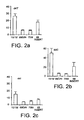
- a novel family of amino acid insertions and rearrangements between codons 67 and 70 were also prevalent in the MDR group. These two patterns of mutations were correlated with high-level phenotypic multi-nucleoside resistance (Fig. 2), 27 samples having the codon 151 cluster and 45 samples having insertions and rearrangements (typically a T69S substitution, followed by insertion of two amino acids). The mean fold increases in IC 50 to d4T, ddl and ddC for these different groups are shown in Fig. 2. This analysis indicated that codon 69 insertion mutants had a high degree of d4T and ddC resistance (> 10-fold), which was also seen with the codon 151 cluster.
- the codon 69 insertions were always present in a background of AZT resistance mutations, especially T215Y/F. This may not be surprising as therapy histories from many of the patients whose samples were analyzed in this study revealed a common pattern of AZT therapy, followed by combination therapy with nucleosides and protease inhibitors (data not shown).
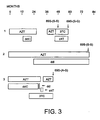
- Fig. 3 shows typical treatment patterns for three patients, indicating the time samples were obtained for virological analysis. It was not possible from these histories to determine precisely the nucleoside analog(s) responsible for selecting codon 69 insertions.
- Sequential samples from patient I revealed an interesting transition of 69S-[S-S] to 69S-[S-G] during a period of 3TC/d4T combination therapy.
Landscapes
- Health & Medical Sciences (AREA)
- Life Sciences & Earth Sciences (AREA)
- Chemical & Material Sciences (AREA)
- Virology (AREA)
- Organic Chemistry (AREA)
- Immunology (AREA)
- Zoology (AREA)
- Proteomics, Peptides & Aminoacids (AREA)
- Engineering & Computer Science (AREA)
- Wood Science & Technology (AREA)
- General Health & Medical Sciences (AREA)
- Molecular Biology (AREA)
- AIDS & HIV (AREA)
- Bioinformatics & Cheminformatics (AREA)
- Microbiology (AREA)
- Biotechnology (AREA)
- Biophysics (AREA)
- Biochemistry (AREA)
- Analytical Chemistry (AREA)
- General Engineering & Computer Science (AREA)
- Physics & Mathematics (AREA)
- Genetics & Genomics (AREA)
- General Chemical & Material Sciences (AREA)
- Pharmacology & Pharmacy (AREA)
- Oncology (AREA)
- Chemical Kinetics & Catalysis (AREA)
- Tropical Medicine & Parasitology (AREA)
- Medicinal Chemistry (AREA)
- Nuclear Medicine, Radiotherapy & Molecular Imaging (AREA)
- Communicable Diseases (AREA)
- Animal Behavior & Ethology (AREA)
- Public Health (AREA)
- Veterinary Medicine (AREA)
- Measuring Or Testing Involving Enzymes Or Micro-Organisms (AREA)
- Medicines That Contain Protein Lipid Enzymes And Other Medicines (AREA)
- Enzymes And Modification Thereof (AREA)
- Micro-Organisms Or Cultivation Processes Thereof (AREA)
- Investigating Or Analysing Biological Materials (AREA)
Abstract
Description
Additional objects and advantages of the invention will be set forth in part in the description that follows, and in part will be apparent from the description, or may be learned by practice of the invention. The objects and advantages of the invention will be realized and attained by means of the elements and combinations particularly pointed out in the appended claims.
It is to be understood that both the foregoing general description and the following detailed description are exemplary and explanatory only and are not restrictive of the invention as claimed.
Resistance of HIV to antiretroviral drugs may be determined at the genotypic level by identifying mutations in the HIV-1 genome and by inferring the resistance of HIV-1 to antiretroviral drugs through searching for mutational patterns known to correlate with resistance. Alternatively, resistance of HIV to antiretroviral drugs may be determined at the phenotypic level by culturing the virus in the presence of the inhibitors, and by measuring to what extent the drug inhibits viral replication. In this case, one measures the effect of all mutational interactions, the effects of genetic changes as yet unknown or not previously identified, the effect of the background genotype, etc., on the phenotype.
| Examples of commonly occurring resistance-correlated mutations appearing in clinical isolates after treatment with antiretroviral drugs. | ||
| Protease Inhibitors | ||
| Primary Mutations: | D30N | Nelfinavir |
| M46L,V82A | Indinavir | |
| G48V,L90M | Saquinavir | |
| V82A | Ritonavir | |
| 150V | Amprenavir | |
| Secondary Mutations:L101/F/R/V, K20R/M, L241, V32I, L33F, M36I, M461,147V, 154V/L, L63P, A71 V/T, G73S, V771, V82A/F/T/S, 184V, N88D,L90M | ||
| Compensatory Mutations: In a PI-resistant mutational background, mutations at gag cleavage site(s) may partially restore viral replicative efficiency | ||
| Reverse Transcriptase Inhibitors | ||
| NRTI Mutations: | M41L, K65R, D67N, T69D, K70R, L74V, V75T/M, M184V, L210W, T215Y/F, K219Q/E | |
| MDR Mutations: | A62V, V751, F77L, Fll6Y, Q151 M T69S with associated insertions of 1 to 3 amino acids between codons 68 and 70 of RT | |
| NNRTI Mutations: | A98G, L100I, K101E, K103N/T, V106A, V1081, V 179D/E, Y181 C/l, Y188C/L/H, G190A, P225H, P236L | |
| Reversal Mutations: | M184I/V decreases the effect of zidovudine resistance mutations M41 L and T2I5Y. | |
| L74V decreases the effect of zidovudine resistance mutation T215Y. | ||
| K65R in mutational background (D67N, K70R, T215Y and K219Q) decreases zidovudine resistance. | ||
| Y181C decreases the effect of zidovudine resistance mutation T215Y. |
Mutations conferring resistance to Non-Nucleoside Reverse Transcriptase inhibitor (NNRTIs) are also contemplated by the invention. For example, resistance-correlated mutations for nevirapine are A98G, L100I, K103N, V106A, V108I, Y181C/l, Y188C and G190A. These mutations are K103/N/T, Y181C and P236L for delavirdine and for resistance to efavirenz, the mutations are L100I, K101E, K103N, V108I, V179D. Y181C and Y188L.
| Novel RT Mutations and the Correlated Drug Resistance | |||
| Reverse Transcriptase Mutation | Resistant to: | Reverse Transcriptase Mutation | Resistant to: |
| 88E | NNRTI | 44D | NRTI |
| K101H | NNRTI | 44A | NRTI |
| K101N | NNRTI | 118I | NRTI |
| K101P | NNRTI | M184G | NRTI |
| K101Q | NNRTI | M184L | NRTI |
| K101T | NNRTI | 215V | NRTI |
| K103H | NNRTI | ||
| K103S | NNRTI | ||
| K103S + K101P | NNRTI | ||
| K103R + K179D | NNRTI | ||
| V179I | NNRTI | ||
| V179E | NNRTI | ||
| Y181V | NNRTI | ||
| G190E | NNRTI | ||
| G190S | NNRTI | ||
| G190T | NNRTI |
| Novel Protease Mutations and the Correlated Drug Resistance | |
| Protease Mutation | Resistant to: |
| 33F + 90M | PI |
| 88T | Pi |
| Spectrum of genetic heterogeneity seen between RT codons 67 and 70 in clinical samples containing amino acid insertions. | ||||||||
| Amino Acid Sequence | n | |||||||
| D67 | S68 | T69 | X | X | K70 | |||
| D | S | S | - | - | K/R | 4 | ||
| G | Y | T | D | - | R | 1 | ||
| D/E | S | S | S | S | K/R | 16 | ||
| D/E | S/N | S | S | G | K | 10 | ||
| D/E | S | S | E | E | K | 3 | ||
| D/E | S/N | S | S | A | K | 3 | ||
| D/E | S | S | V | G | K/R | 2 | ||
| D | S | S | A | G | K | 1 | ||
| D | S | A | | G | K | 1 | ||
| D37 | S68 | X | X | X | T69 | K70 | ||
| D/E | S | S | V | - | T | K | 2 | |
| D | S | S | T | - | T | K | 1 | |
| D/E | S | S | S | - | T | K | 3 | |
| S | S | S | S | G | T/A | - | I | |
| G | S | G | G | G | T | - | 1 |
| Nucleoside analogue susceptibility of HIV-1 variants constructed by site-directed mutagenesis. | |||||||
| Mutant genotype | Fold increase in IC50 | ||||||
| d4T | AZT | 3TC | 1592 | | ddC | ||
| 69S-[S-S] | 2.3 | 2.2 | 6.2 | 2.6 | 1.7 | 2.1 | |
| 210W, 215Y | 1.1 | 10 | 3.8 | 1.5 | 1.2 | 1.2 | |
| 210W, 215Y, 62V | 0.7 | 8 | 1.3 | 0.7 | 0.5 | 0.8 | |
| 69S-[S-S], 210W, 215Y | 4.8 | 220 | 20 | 4.6 | 2.1 | 4.2 | |
| 69S-[S-S], 210W, 215Y, 62V | 5.2 | >2500 | 15 | 5.4 | 1.8 | 2.7 |
In one embodiment, mutations associated with resistance to the different nucleoside reverse transcriptase inhibitors zidovudine, (AZT), didanosine (ddI), zalcitabine (ddC), stavudine (d4T), lamivudine (3TC) and abacavir, the nucleotide reverse transcriptase inhibitor adefovir (PMEA), the non-nucleoside reverse transcriptase inhibitors nevirapine, delavirdine and efavirenz, and the protease inhibitors saquinavir, ritonavir, indinavir and nelfinavir, are evaluated. The interpretation of the genotype may be based on lists of drug resistance-associated mutations published in peer-reviewed journals.
| Frequency of ZDV and 3TC Resistance-correlated Mutations in Clinical Isolates Susceptible or Resistant to ZDV and/or 3TC Compared to a Sample of Fully Susceptible Isolates | ||||||
| Frequency (%) of mutations | ||||||
| Resistance Class | ZDV resistance-correlated mutations | 3TC resistance-correlated mutations | No. of samples | |||
| 41L | 215Y | 184V | 44D/A | 118I | ||
| ZDV (<4), 3TC (<4) | 4.5 | 4.8 | 0 | 1.3 | 3.1 | 314 |
| ZDV (<4), 3TC (>10) | 18.3 | 18.8 | 90 | 1.3 | 6.3 | 240 |
| ZDV (>10), 3TC (<4) | 59.5 | 68.9 | 0 | 14.9 | 18.9 | 74 |
| ZDV (>10), 3TC (≥4, <50) | 77 | 72.2 | 4 | 30.2 | 39.7 | 126 |
| ZDV (>10), 3TC (≥50) | 77.5 | 66.9 | 84.1 | 28.5 | 37.8 | 151 |
Isolates that are resistant to ZDV (>10-fold, n=220): Table 5 shows that the ZDV resistance-correlated mutations 215Y, 41L and 70R were high in frequency in this category and throughout all 3TC resistance categories. Mutation 184V was the predominant mutation in the high-resistance 3TC class (> 50-fold), whereas 184V was rare in the intermediate 3TC resistance group and absent in the low-level resistance group and the 3TC susceptible group. The mutations 44D/A and 118I were present in all 3TC resistance categories.
Isolates that are resistant to 3TC (> 10-fold, n=295): Table 5 shows that the frequency of the high-level 3TC resistance-correlated mutation, 184V, was high in all ZDV resistance categories (low, intermediate and high) and was the predominant mutation in the ZDV susceptible and intermediate-resistance group. As the resistance to ZDV increased, so did the frequency of the ZDV resistance-correlated mutations 41L, 70R and 215Y, while the frequency of mutation 184V decreased. Mutations 44D/A and 118I also substantially increased in frequency as resistance to ZDV increased.
The results thus far show that low and intermediate resistance to 3TC was not related to the presence of mutation 184V. Indeed, this mutation was practically absent in these classes. Table 5 further indicates that mutations 44D/A and 118I were present in high frequencies only in the presence of ZDV resistance mutations 215Y, 41 L and 70R. In the isolates that were susceptible to ZDV, the frequency of ZDV resistance-correlated mutations was low and 44A/D and 118I were also rare, even though 3TC resistance was greater than 10-fold. In this group the high frequency of 184V accounted for the resistance to 3TC.
| 3TC and ZDV resistance-correlated mutations and phenotypic resistance in mutants with site-directed mutations | ||||||
| Mutant | 3TC resistance profile | AZT resistance profile | ||||
| Mutation(s) | Fold resistancea | n | Mutations | Fold resistance | n | |
| SDM05 | 4(0.3) | 4 | 41L, 210W, 211K,214F,215Y | 64(15.0) | 5 | |
| SDM18 | 2(0.6) | 3 | 41L, 67N,210W,211K,214F,215Y | 45(13.4) | 3 | |
| SDM19 | 4(0.7) | 3 | 41L,67N,69D,210W,211K,214F,215Y | 46(18.2) | 2 | |
| SDM28 | 44D | 1(0.1) | 6 | 2(0.3) | 6 | |
| SDM31 | 44D | 22(2.5) | 5 | 41L, 67N,210W,211K,214F,215Y | 48(11.8) | 4 |
| SDM32 | 44D | 8(2.2) | 4 | 41L, 67N,69D,210W,211K,214F,215Y | 49(5.9) | 6 |
| SDM29 | 118I | 2(0.2) | 6 | 2(0.4) | 6 | |
| SDM33 | 118I | 7(1.0) | 5 | 41L, 67N,210W,211K,214F,215Y | 49(8.0) | 6 |
| SDM34 | 118I | 32(3.9) | 5 | 41L, 67N,69D,210W,211K,214F,215Y | 34(14.4) | 5 |
| SDM30 | 44D,118I | 3(0.3) | 6 | 1 (0.4) | 6 | |
| SDM35 | 44D,118I | 14 (1.4) | 6 | 41L, 67N,210W,211K,214F,215Y | 49 (9.6) | 5 |
| SDM36 | 44D,118I | 15 (2.1) | 6 | 41L, 67N,69D,210W,211K,214D,213Y | 49 (10.6) | 5 |
| SDM22 | 184V | 78 (16.3) | 5 | 41L, 210W,211K,214F,215Y | 7 (0.9) | 5 |
| SDM23 | 184V | 82 (13.6) | 6 | 2 (0.5) | 6 | |
| SDM24 | 184V | 85(14.2) | 6 | 69S-S-S, 210W,211K,214D,215Y | 27 (16.2) | 5 |
| SDM26 | 184V | 72 (13.8) | 5 | 41L, 67N,210W,211K,214F, 215Y | 25 (1.4) | 5 |
| SDM38 | 184V,44D,118I | 82(13.5) | 6 | 41L, 67N,210W,211K,214F,215Y | 20 (4.1) | 6 |
| SDM39 | 184V,44D,118I | 84 (13.9) | 6 | 41L, 67N, 69D,210W,211K,214F,215Y | 21 (5.3) | 5 |
MT-4 cells (Harada S., et al, Science 229: 563-566 (1985).) were co-transfected with pol gene PCR fragments and the protease-RT deleted HIV-1 molecular clone, pGEM3ΔPRT, as described. See Hertogs K., et al., Antimicrob. Agents Chemother. 42: 269-276 (1998). This resulted in viable recombinant viruses containing protease/RT from the donor PCR fragment. Phenotypic susceptibility to nucleoside analogues was determined using an MT-4 cell viral cytopathic effect (CPE) protection assay as described. Id. Fold resistance values were derived by dividing the mean IC50 for a patient's recombinant virus by the mean IC50 for wild-type control virus (strain HXB2-D). The PCR products obtained from patient plasma samples were genotyped by dideoxynucleotide-based sequence analysis. Samples were sequenced using the Big Dye terminator kit (Applied Biosystems) and resolved on an ABI 377 DNA sequencer.
Mutations in the RT coding region were created by site-directed mutagenesis of a wild-type HXB2-D EcoRl-Pstl restriction enzyme fragment, encompassing the HIV-1 pol gene and cloned into pGEM3 (Promega). Single and multiple nucleotide changes were introduced into RT using the ExSite mutagenesis kit (Strategene). All mutant clones were verified by DNA sequence analysis of the entire RT. PCR fragments were prepared from the mutated clones and the altered RT coding regions were transferred into the HIV-1 HXB2-D genetic background by homologous recombination as described above. The susceptibility of these recombinant viruses to nucleoside analogues was subsequently determined by the MT-4 cell CPE protection assay. Id.
Claims (27)
- A computer system directed by software wherein the software correlates the presence of at least one mutation in an HIV reverse transcriptase and resistance of at least one strain of HIV to a reverse transcriptase inhibitor, characterized in that,
the software uses a first set of records corresponding to a correlation between at least one first mutation chosen from 88E, 101H, 101N, 101P, 101Q, 101T, 103H, 103S, 179I, 179E, 181 V, 190E, 190S, 190T or the combination of 103R and 179D, and resistance to at least one non-nucleoside reverse transcriptase inhibitor; and
a second set of records corresponding to a correlation between at least one second mutation chosen from 69S-[S-S], 184G, 184L, 215 V, 44D, 44A, or 118I, and resistance to at least one nucleoside reverse transcriptase inhibitor. - The computer system according to claim 1, wherein said at least one first mutation is 103S and said HIV reverse transcriptase further comprises at least one additional mutation 101P.
- The computer system according to claim 1, wherein said at least one second mutation is chosen from 44D, 44A or 118I and said HIV reverse transcriptase further comprises at least one additional mutation chosen from 41 L, 67N, 69D, 70R, 210W, 211K, 214F, 215Y, 215F, 219Q or 219E.
- The computer system according to claim 3 wherein said at least one second mutation is a combination of mutations chosen from 118I and 44D; 118I and 44A; and 1181,44A and 44D.
- The computer system according to claim 1 wherein said at least one second mutation is 69S-[S-S] and said HIV reverse transcriptase further comprises at least one additional mutation chosen from 62V, 210W, 215Y.
- A computer system directed by software wherein the software correlatesthe presence of at least one mutation in a HIV protease and resistance of at least one strain of HIV to a protease inhibitor, characterized in that, the software uses a database comprising a first set of records corresponding to a coaelation between at least one first mutation chosen from 88T.and the combination of mutations 33F and 90M.
- A method of evaluating the effectiveness of an antiviral therapy of an HIV-infected patient comprising:(i) determining whether a sample collected from an HIV infected patient comprises at least one nucleic acid chosen from:(a) a first nucleic acid encoding HIV reverse transcriptase having at least one mutation chosen from 88E, 101H, 101N, 101P, 101Q, 101T, 103H, 103 S, 179I, 179E, 181 V, 190E, 190S, 190T and the combination of mutations 103 R and 179D, in which the presence of said at least one mutation correlates with resistance to at least one NNRTI;(b) a second nucleic acid encoding HIV reverse transcriptase having at least one mutation chosen from 69S-[S-S], 184G, 184L, 215 V, 44D, 44A, and 118I, in which the presence of said at least one mutation correlates with resistance to at least one NRTI; and(c) a third nucleic acid encoding HIV protease having at least one mutation chosen from 88T and the combination of mutations 33F and 90M, in which the presence of said at least one mutation correlates with resistance to at least one PI; and(ii) using the presence of said at least one nucleic acid to evaluate the effectiveness of said antiviral therapy.
- The method according to claim 7 wherein said at least one mutation of said first nucleic acid is 103S and said HIV reverse transcriptase further comprises at least one additional mutation 101 P.
- The method according to claim 7 wherein said at least one mutation of said second nucleic acid is chosen from 44D, 44A and 118I and said HIV reverse transcriptase further comprises at least one additional mutation chosen from 41 L, 67N, 69D, 70R, 210W, 211K, 214F, 215Y, 215F, 219Q and 219E.
- The method according to claim 9 wherein said at least one mutation of said second nucleic acid is a combination of mutations chosen from 118I and 44D; 118I and 44A; and 118I, 44A and 44D.
- The method according to claim 7 wherein said at least one mutation of said second nucleic acid is 69S-[S-S] and said HIV reverse transcriptase further comprises at least one additional mutation chosen from 62V, 210W, 215Y.
- A method of identifying a drug effective against NNRTI resistant strains of HIV, comprising:(a) providing at least one strain of HIV comprising HIV reverse transcriptase containing at least one mutation chosen from 88E, 101H, 101N, 101P, 101 Q, 101T, 103H, 103S, 179I, 179E, 181 V, 190E, 190S, 190T or the combination of mutations 103 R and 179D;(b) determining a phenotypic response of said strain of HIV to said drug; and(c) using said phenotypic response to determine the effectiveness of said drug.
- The method of claim 12 wherein said phenotypic response is determined using the recombinant virus assay.
- The method according to claim 12 wherein said at least one mutation is 103S and said HIV reverse transcriptase further comprises at least one additional mutation 101P.
- A method of identifying a drug effective against NRTI resistant strains of HIV, comprising:(a) providing at least one strain of HIV comprising HIV reverse transcriptase containing at least one mutation chosen from 69S-[S-S], 184G, 184L, 215 V, 44D, 44A, or 118I;(b) determining a phenotypic response of said strain of HIV to said drug; and(c) using said phenotypic response to determine the effectiveness of said drug.
- The method of claim 15 wherein said phenotypic response is determined using the recombinant virus assay.
- The method according to claim 15 wherein said at least one mutation is chosen from 44D, 44A and 118I and said HIV reverse transcriptase further comprises at least one additional mutation chosen from 41L, 67N, 69D, 70R, 210W, 211K, 214F, 215Y, 215F, 219Q or 219E.
- The method according to claim 17 wherein said at least one mutation is a combination of mutations chosen from 118I and 44D; 118I and 44A; or 118I, 44A and 44D.
- The method according to claim 15 wherein said at least one mutation is 69S-[S-S] and said HIV reverse transcriptase further comprises at least one additional mutation chosen from 62V, 210W, or 215Y.
- A method of identifying a drug effective against PI resistant strains of HIV, the comprising:(a) providing at least one strain of HIV comprising HIV protease containing at least one mutation chosen from 88T or the combination of mutations 33F and 90M;(b) determining a phenotypic response of said strain of HIV to said drug; and(c) using said phenotypic response to determine the effectiveness of said drug.
- The method of claim 20 wherein said phenotypic response is determined using the recombinant virus assay.
- A method of designing a therapy for treating a patient infected with HIV comprising(i) determining whether a sample collected from an HIV infected patient comprises at least one nucleic acid chosen from:(a) a first nucleic acid encoding HIV reverse transcriptase having at least one mutation chosen from 88E, 101H, 101N, 101P, 101Q, 101T, 103H, 103S, 179I, 179E, 181 V, 190E, 190S, 190T and the combination of mutations 103 R and 179D, in which the presence of said at least one mutation correlates with resistance to at least one NNRTI;(b) a second nucleic acid encoding HIV reverse transcriptase having at least one mutation chosen from 69S-[S-S], 184G, 184L, 215 V, 44D, 44A, and 118I, in which the presence of said at least one mutation correlates with resistance to at least one NRTI; and(c) a third nucleic acid encoding HIV protease having at least one mutation chosen from 88T and the combination of mutations 33F and 90M, in which the presence of said at least one mutation correlates with resistance to at least one PI; and(ii) using the presence of said at least one nucleic acid to design the therapy for said patient.
- The method according to claim 22 wherein said at least one mutation of said first nucleic acid is 103S and said HIV reverse transcriptase further comprises at least one additional mutation 101P.
- The method according to claim 22 wherein said at least one mutation of said second nucleic acid is chosen from 44D, 44A and 118I and said HIV reverse transcriptase further comprises at least one additional mutation chosen from 41 L, 67N, 69D, 70R, 210W, 211K, 214F, 215Y, 215F, 219Q and 219E.
- The method according to claim 24 wherein said at least one mutation of said second nucleic acid is chosen from a combination of mutations chosen from 118I and 44D; 118I and 44A; and 118I, 44A and 44D.
- The method according to claim 22 wherein said at least one mutation of said second nucleic acid is 69S-[S-S] and said HIV reverse transcriptase further comprises at least one additional mutation chosen from 62V, 210W, 215Y.
- A method for determining drug sensitivity of an HIV population circulating in a patient comprising(a) determining a genetic sequence of HIV genetic material from a sample collected from an HIV infected patient;(b) determining whether at least one mutation is present in the genetic sequence;(c) identifying if the mutation matches a drug resistance-associated mutation selected from(i) 88E, 101H, 101N, 101P, 101Q, 101T, 103H, 103S, 179I, 179E, 181V, 190E, 190S, 190T and the combination of mutations 103 R and 179D, in which the presence of such mutation correlates with resistance to at least one non-nucleoside reverse transcriptase inhibitor;(ii) 69S-[S-S], 184G, 184L, 215 V, 44D, 44A, and 118I, in which the presence of such mutation correlates with resistance to at least one nucleoside reverse transcriptase inhibitor; and(iii) 88T and the combination of mutations 33F and 90M, in which the presence of such mutation correlates with resistance to at least one PI; and(d) generating a report that lists antiviral drugs for which drug resistance-associated mutations have been identified in step (c), wherein the report is used to determine drug sensitivity of the HIV population circulating in the patient.
Applications Claiming Priority (3)
| Application Number | Priority Date | Filing Date | Title |
|---|---|---|---|
| US13674399P | 1999-05-28 | 1999-05-28 | |
| US136743P | 1999-05-28 | ||
| PCT/EP2000/004915 WO2000073511A1 (en) | 1999-05-28 | 2000-05-25 | New mutational profiles in hiv-1 reverse transcriptase correlated with phenotypic drug resistance |
Publications (3)
| Publication Number | Publication Date |
|---|---|
| EP1185712A1 EP1185712A1 (en) | 2002-03-13 |
| EP1185712B1 true EP1185712B1 (en) | 2005-08-17 |
| EP1185712B8 EP1185712B8 (en) | 2005-10-19 |
Family
ID=22474176
Family Applications (1)
| Application Number | Title | Priority Date | Filing Date |
|---|---|---|---|
| EP00936827A Expired - Lifetime EP1185712B8 (en) | 1999-05-28 | 2000-05-25 | New mutational profiles in hiv-1 reverse transcriptase correlated with phenotypic drug resistance |
Country Status (12)
| Country | Link |
|---|---|
| US (2) | US7494768B1 (en) |
| EP (1) | EP1185712B8 (en) |
| JP (1) | JP2003501051A (en) |
| AT (1) | ATE302287T1 (en) |
| AU (1) | AU783235B2 (en) |
| BR (1) | BR0011555A (en) |
| CA (1) | CA2374215C (en) |
| DE (1) | DE60022036T2 (en) |
| ES (1) | ES2246859T3 (en) |
| MX (1) | MXPA01012270A (en) |
| NZ (1) | NZ516259A (en) |
| WO (1) | WO2000073511A1 (en) |
Cited By (1)
| Publication number | Priority date | Publication date | Assignee | Title |
|---|---|---|---|---|
| US8790870B2 (en) | 2006-02-03 | 2014-07-29 | Virco Bvba | Quantitative HIV phenotype or tropism assay |
Families Citing this family (20)
| Publication number | Priority date | Publication date | Assignee | Title |
|---|---|---|---|---|
| JP3657002B2 (en) | 1992-08-25 | 2005-06-08 | ジー.ディー.サール アンド カンパニー | Alpha- and beta-amino acid hydroxyethylaminosulfonamides useful as retroviral protease inhibitors |
| GB9909793D0 (en) * | 1999-04-28 | 1999-06-23 | Glaxo Group Ltd | Improved assay and reagents therefor |
| WO2000073511A1 (en) | 1999-05-28 | 2000-12-07 | Virco Nv | New mutational profiles in hiv-1 reverse transcriptase correlated with phenotypic drug resistance |
| GB0009374D0 (en) * | 2000-04-14 | 2000-05-31 | Glaxo Group Ltd | Phenotyping assay and reagents therefor |
| EP1332231B1 (en) | 2000-04-18 | 2008-08-13 | Virco Bvba | Methods for measuring drug resistance |
| RU2318213C2 (en) | 2000-10-20 | 2008-02-27 | Вирко Бвба | New mutation profiles of reverse transcriptase hiv-1 that correlate with phenotypic resistance to medicinal preparations |
| AU1234402A (en) * | 2000-10-20 | 2002-04-29 | Virco Nv | Establishment of biological cut-off values for predicting resistance to therapy |
| US7306901B2 (en) | 2001-08-08 | 2007-12-11 | Tibotec Pharmaceuticals, Ltd. | Methods and means for assessing HIV envelope inhibitor therapy |
| WO2004003227A1 (en) * | 2002-07-01 | 2004-01-08 | Tibotec Pharmaceuticals Ltd. | New mutational profiles in hiv-1 reverse transcriptase correlated with phenotypic drug resistance |
| US7217506B2 (en) | 2002-07-01 | 2007-05-15 | Tibotec Pharmaceuticals, Ltd. | Mutational profiles in HIV-1 protease correlated with phenotypic protease inhibitor resistance |
| US20050214744A1 (en) * | 2002-07-01 | 2005-09-29 | Hilde Azjin | New mutational profiles in hiv-1 reverse transcriptase correlated with phenotypic drug resistance |
| DE60321466D1 (en) * | 2002-07-01 | 2008-07-17 | Tibotec Pharm Ltd | MUTATION PROFILES CORRELATED WITH PHENOTYPIC MEDICAMENT RESISTANCE IN HIV-1 REVERSE TRANSCRIPTASE |
| WO2005121376A2 (en) * | 2004-06-07 | 2005-12-22 | Umc Utrecht Holding B.V. | Hiv variants showing a novel resistance mechanism against protease inhibitors, diagnostic assays for detecting the variant, and methods for identifying drugs effective against the resistant variant |
| EP1605064A1 (en) * | 2004-06-07 | 2005-12-14 | UMC Utrecht Holding B.V. | HIV Variant showing a novel resistance mechanism against protease inhibitors, diagnostic assays for detecting the variant, and methods for identifying drugs effective against the resistant virus |
| AU2008257703A1 (en) | 2007-05-25 | 2008-12-04 | Tibotec Pharmaceuticals | New mutational profile in HIV-1 Gag cleavage site correlated with phenotypic drug resistance |
| ES2354785B2 (en) * | 2008-09-30 | 2011-10-13 | Universidade De Santiago De Compostela | METHOD OF EVALUATION OF RESISTANCE OF HIV-1 PHENOTYPES TO ANTIRRETROVIRALES. |
| ES2355027B2 (en) * | 2008-09-30 | 2011-10-13 | Universidade De Santiago De Compostela | PLASMIDS INCLUDING THE SEQUENCE OF HIV-1 AND ITS USES. |
| AU2010247444A1 (en) * | 2009-05-12 | 2011-11-24 | Virco Bvba | HIV-1-C resistance monitoring |
| CN104838384B (en) | 2012-11-26 | 2018-01-26 | 皇家飞利浦有限公司 | Diagnostic Genetic Analysis of Variant-Disease Associations Using Patient-Specific Association Assessments |
| CN110106288B (en) * | 2019-05-13 | 2021-08-31 | 昆明理工大学 | A primer set, method and application for detecting drug resistance mutations in HIV-1 PR and RT regions |
Family Cites Families (33)
| Publication number | Priority date | Publication date | Assignee | Title |
|---|---|---|---|---|
| NZ234186A (en) | 1989-07-07 | 1991-10-25 | Janssen Pharmaceutica Nv | Imidazo quinazolin-one derivatives and pharmaceutical compositions |
| GB8918226D0 (en) | 1989-08-09 | 1989-09-20 | Wellcome Found | Dna assays |
| EP0428000A1 (en) | 1989-11-03 | 1991-05-22 | Abbott Laboratories | Fluorogenic substrates for the detection of proteolytic enzyme activity |
| US5235039A (en) | 1991-06-10 | 1993-08-10 | Eli Lilly And Company | Substrates for hiv protease |
| WO1993023574A1 (en) | 1992-05-14 | 1993-11-25 | Kozal Michael J | Polymerase chain reaction assays for monitoring antiviral therapy |
| US6063562A (en) | 1994-09-16 | 2000-05-16 | Sepracor, Inc. | In vitro method for predicting the evolutionary response of HIV protease to a drug targeted thereagainst |
| JPH11502727A (en) * | 1996-01-26 | 1999-03-09 | イノジェネティックス・ナムローゼ・フェンノートシャップ | Methods for detecting drug-induced mutations in the reverse transcriptase gene |
| ES2177922T3 (en) * | 1996-01-26 | 2002-12-16 | Virco Bvba | METHOD OF ASSESSMENT CHEMOTHERAPY OF HIV-POSITIVE PATIENTS BASED ON PHENOTYTIC SENSITIVITY TO PHARMACOS OF THE DELIVERY HIV STEMS. |
| PL328068A1 (en) | 1996-01-29 | 1999-01-04 | Virologic | Compositions for and methods of determining susceptibility to and immunity against an antiviral drug and selecting appropriate antiviral drug |
| JP3062459B2 (en) | 1996-08-14 | 2000-07-10 | 理化学研究所 | Polyester synthase gene and method for producing polyester |
| CA2329140A1 (en) | 1998-05-26 | 1999-12-02 | Virologic, Inc. | Means and methods for monitoring non-nucleoside reverse transcriptase inhibitor antiretroviral therapy |
| WO1999061666A1 (en) | 1998-05-28 | 1999-12-02 | Visible Genetics Inc. | Use of polymorphisms as a predictor of drug-resistance mutations |
| JP4776775B2 (en) | 1998-06-23 | 2011-09-21 | アメリカ合衆国 | Pharmaceutical composition for treating an HIV-infected mammal |
| JP2003503004A (en) | 1998-06-24 | 2003-01-28 | バイロロジック・インコーポレイテッド | Means and methods for monitoring nucleotide reverse transcriptase inhibitor antiretroviral therapy and guiding therapeutic decisions in the treatment of HIV / AIDS |
| EP1090147A2 (en) | 1998-06-24 | 2001-04-11 | Innogenetics N.V. | Method for detection of drug-selected mutations in the hiv protease gene |
| WO2000073511A1 (en) | 1999-05-28 | 2000-12-07 | Virco Nv | New mutational profiles in hiv-1 reverse transcriptase correlated with phenotypic drug resistance |
| BR0011939A (en) | 1999-06-22 | 2002-03-12 | Virologic Inc | Resources and methods for monitoring protease-inhibiting antiretroviral therapy and guiding therapeutic decisions in the treatment of HIV / AIDS |
| AU5883300A (en) | 1999-06-23 | 2001-01-09 | Penn State Research Foundation, The | Compositions and methods for the quantification of sterol biosynthetic flux |
| EP1332231B1 (en) | 2000-04-18 | 2008-08-13 | Virco Bvba | Methods for measuring drug resistance |
| CA2406830C (en) | 2000-04-20 | 2012-10-02 | Virco Bvba | Method for mutation detection in hiv using pol sequencing |
| CA2415832C (en) | 2000-06-08 | 2012-07-24 | Brendan Larder | Method and system for predicting therapeutic agent resistance and for defining the genetic basis of drug resistance using neural networks |
| US7058616B1 (en) | 2000-06-08 | 2006-06-06 | Virco Bvba | Method and system for predicting resistance of a disease to a therapeutic agent using a neural network |
| CA2422815A1 (en) | 2000-09-15 | 2002-03-21 | Virologic, Inc. | Means and methods for monitoring protease inhibitor antiretroviral therapy and guiding therapeutic decisions in the treatment of hiv/aids |
| RU2318213C2 (en) | 2000-10-20 | 2008-02-27 | Вирко Бвба | New mutation profiles of reverse transcriptase hiv-1 that correlate with phenotypic resistance to medicinal preparations |
| AU1234402A (en) | 2000-10-20 | 2002-04-29 | Virco Nv | Establishment of biological cut-off values for predicting resistance to therapy |
| JP2002199890A (en) | 2000-10-23 | 2002-07-16 | Inst Of Physical & Chemical Res | Method for modifying biodegradable polyester synthase |
| AU2305202A (en) | 2000-11-10 | 2002-05-21 | Bioalliance Pharma | Novel method for analysing phenotypic characteristics of human immunodeficiency virus (hiv) |
| BR0207862A (en) | 2001-02-14 | 2004-06-22 | Tibotec Pharm Ltd | Broad spectrum 2- (amino-substituted) -benzothiazole sulfonamide hiv protease inhibitors |
| DE60321466D1 (en) | 2002-07-01 | 2008-07-17 | Tibotec Pharm Ltd | MUTATION PROFILES CORRELATED WITH PHENOTYPIC MEDICAMENT RESISTANCE IN HIV-1 REVERSE TRANSCRIPTASE |
| US20050214744A1 (en) | 2002-07-01 | 2005-09-29 | Hilde Azjin | New mutational profiles in hiv-1 reverse transcriptase correlated with phenotypic drug resistance |
| US7217506B2 (en) | 2002-07-01 | 2007-05-15 | Tibotec Pharmaceuticals, Ltd. | Mutational profiles in HIV-1 protease correlated with phenotypic protease inhibitor resistance |
| NZ538625A (en) | 2002-09-06 | 2008-05-30 | Pharmacia & Upjohn Co Llc | 1,3-Diamino-2-hydroxypropane prodrug derivatives |
| EP1605064A1 (en) | 2004-06-07 | 2005-12-14 | UMC Utrecht Holding B.V. | HIV Variant showing a novel resistance mechanism against protease inhibitors, diagnostic assays for detecting the variant, and methods for identifying drugs effective against the resistant virus |
-
2000
- 2000-05-25 WO PCT/EP2000/004915 patent/WO2000073511A1/en not_active Ceased
- 2000-05-25 NZ NZ516259A patent/NZ516259A/en not_active IP Right Cessation
- 2000-05-25 AT AT00936827T patent/ATE302287T1/en not_active IP Right Cessation
- 2000-05-25 ES ES00936827T patent/ES2246859T3/en not_active Expired - Lifetime
- 2000-05-25 JP JP2001500820A patent/JP2003501051A/en active Pending
- 2000-05-25 MX MXPA01012270A patent/MXPA01012270A/en active IP Right Grant
- 2000-05-25 BR BR0011555-0A patent/BR0011555A/en not_active Application Discontinuation
- 2000-05-25 CA CA2374215A patent/CA2374215C/en not_active Expired - Lifetime
- 2000-05-25 DE DE60022036T patent/DE60022036T2/en not_active Expired - Lifetime
- 2000-05-25 AU AU52175/00A patent/AU783235B2/en not_active Expired
- 2000-05-25 EP EP00936827A patent/EP1185712B8/en not_active Expired - Lifetime
- 2000-05-30 US US09/580,491 patent/US7494768B1/en not_active Expired - Fee Related
-
2009
- 2009-01-13 US US12/352,626 patent/US8563236B2/en not_active Expired - Fee Related
Cited By (1)
| Publication number | Priority date | Publication date | Assignee | Title |
|---|---|---|---|---|
| US8790870B2 (en) | 2006-02-03 | 2014-07-29 | Virco Bvba | Quantitative HIV phenotype or tropism assay |
Also Published As
| Publication number | Publication date |
|---|---|
| CA2374215C (en) | 2011-05-24 |
| EP1185712A1 (en) | 2002-03-13 |
| ATE302287T1 (en) | 2005-09-15 |
| MXPA01012270A (en) | 2003-06-24 |
| DE60022036D1 (en) | 2005-09-22 |
| US8563236B2 (en) | 2013-10-22 |
| CA2374215A1 (en) | 2000-12-07 |
| AU5217500A (en) | 2000-12-18 |
| US7494768B1 (en) | 2009-02-24 |
| EP1185712B8 (en) | 2005-10-19 |
| JP2003501051A (en) | 2003-01-14 |
| BR0011555A (en) | 2002-02-26 |
| DE60022036T2 (en) | 2006-06-08 |
| NZ516259A (en) | 2004-02-27 |
| US20090162867A1 (en) | 2009-06-25 |
| WO2000073511A1 (en) | 2000-12-07 |
| ES2246859T3 (en) | 2006-03-01 |
| AU783235B2 (en) | 2005-10-06 |
Similar Documents
| Publication | Publication Date | Title |
|---|---|---|
| US8563236B2 (en) | Mutational profiles in HIV-1 reverse transcriptase correlated with phenotypic drug resistance | |
| Parkin et al. | Antiretroviral drug resistance in non-subtype B HIV-1, HIV-2 and SIV | |
| US8574831B2 (en) | Mutational profiles in HIV-1 reverse transcriptase correlated with phenotypic drug resistance | |
| US8076062B2 (en) | Mutational profiles in HIV-1 protease correlated with phenotypic drug resistance | |
| US7217506B2 (en) | Mutational profiles in HIV-1 protease correlated with phenotypic protease inhibitor resistance | |
| US8546076B2 (en) | Mutational profile in HIV-1 GAG cleavage site correlated with phenotypic drug resistance | |
| US20050214744A1 (en) | New mutational profiles in hiv-1 reverse transcriptase correlated with phenotypic drug resistance | |
| NZ537961A (en) | Compositions and methods for determining the replication capacity of HIV-1 | |
| CN100592309C (en) | Novel mutation profiles in HIV-1 reverse transcriptase associated with phenotypic drug resistance | |
| Jørgensen et al. | Genotypic and phenotypic nevirapine resistance correlates with virological failure during salvage therapy including abacavir and nevirapine | |
| EP1520036B1 (en) | New mutational profiles in hiv-1 reverse transcriptase correlated with phenotypic drug resistance | |
| Maldarelli | HIV drug resistance | |
| Deminie et al. | In Vitro Resistance Profile of the Human |
Legal Events
| Date | Code | Title | Description |
|---|---|---|---|
| PUAI | Public reference made under article 153(3) epc to a published international application that has entered the european phase |
Free format text: ORIGINAL CODE: 0009012 |
|
| 17P | Request for examination filed |
Effective date: 20011228 |
|
| AK | Designated contracting states |
Kind code of ref document: A1 Designated state(s): AT BE CH CY DE DK ES FI FR GB GR IE IT LI LU MC NL PT SE |
|
| AX | Request for extension of the european patent |
Free format text: AL;LT;LV;MK;RO;SI |
|
| 17Q | First examination report despatched |
Effective date: 20030707 |
|
| GRAP | Despatch of communication of intention to grant a patent |
Free format text: ORIGINAL CODE: EPIDOSNIGR1 |
|
| GRAS | Grant fee paid |
Free format text: ORIGINAL CODE: EPIDOSNIGR3 |
|
| GRAA | (expected) grant |
Free format text: ORIGINAL CODE: 0009210 |
|
| AK | Designated contracting states |
Kind code of ref document: B1 Designated state(s): AT BE CH CY DE DK ES FI FR GB GR IE IT LI LU MC NL PT SE |
|
| PG25 | Lapsed in a contracting state [announced via postgrant information from national office to epo] |
Ref country code: FI Free format text: LAPSE BECAUSE OF FAILURE TO SUBMIT A TRANSLATION OF THE DESCRIPTION OR TO PAY THE FEE WITHIN THE PRESCRIBED TIME-LIMIT Effective date: 20050817 Ref country code: AT Free format text: LAPSE BECAUSE OF FAILURE TO SUBMIT A TRANSLATION OF THE DESCRIPTION OR TO PAY THE FEE WITHIN THE PRESCRIBED TIME-LIMIT Effective date: 20050817 Ref country code: NL Free format text: LAPSE BECAUSE OF FAILURE TO SUBMIT A TRANSLATION OF THE DESCRIPTION OR TO PAY THE FEE WITHIN THE PRESCRIBED TIME-LIMIT Effective date: 20050817 |
|
| REG | Reference to a national code |
Ref country code: GB Ref legal event code: FG4D |
|
| REG | Reference to a national code |
Ref country code: CH Ref legal event code: EP |
|
| RAP2 | Party data changed (patent owner data changed or rights of a patent transferred) |
Owner name: VIRCO BVBA |
|
| REG | Reference to a national code |
Ref country code: IE Ref legal event code: FG4D |
|
| REF | Corresponds to: |
Ref document number: 60022036 Country of ref document: DE Date of ref document: 20050922 Kind code of ref document: P |
|
| PG25 | Lapsed in a contracting state [announced via postgrant information from national office to epo] |
Ref country code: SE Free format text: LAPSE BECAUSE OF FAILURE TO SUBMIT A TRANSLATION OF THE DESCRIPTION OR TO PAY THE FEE WITHIN THE PRESCRIBED TIME-LIMIT Effective date: 20051117 Ref country code: GR Free format text: LAPSE BECAUSE OF FAILURE TO SUBMIT A TRANSLATION OF THE DESCRIPTION OR TO PAY THE FEE WITHIN THE PRESCRIBED TIME-LIMIT Effective date: 20051117 Ref country code: DK Free format text: LAPSE BECAUSE OF FAILURE TO SUBMIT A TRANSLATION OF THE DESCRIPTION OR TO PAY THE FEE WITHIN THE PRESCRIBED TIME-LIMIT Effective date: 20051117 |
|
| NLT2 | Nl: modifications (of names), taken from the european patent patent bulletin |
Owner name: VIRCO BVBA Effective date: 20050921 |
|
| PG25 | Lapsed in a contracting state [announced via postgrant information from national office to epo] |
Ref country code: PT Free format text: LAPSE BECAUSE OF FAILURE TO SUBMIT A TRANSLATION OF THE DESCRIPTION OR TO PAY THE FEE WITHIN THE PRESCRIBED TIME-LIMIT Effective date: 20060117 |
|
| NLV1 | Nl: lapsed or annulled due to failure to fulfill the requirements of art. 29p and 29m of the patents act | ||
| REG | Reference to a national code |
Ref country code: ES Ref legal event code: FG2A Ref document number: 2246859 Country of ref document: ES Kind code of ref document: T3 |
|
| PG25 | Lapsed in a contracting state [announced via postgrant information from national office to epo] |
Ref country code: IE Free format text: LAPSE BECAUSE OF NON-PAYMENT OF DUE FEES Effective date: 20060525 |
|
| ET | Fr: translation filed | ||
| PG25 | Lapsed in a contracting state [announced via postgrant information from national office to epo] |
Ref country code: MC Free format text: LAPSE BECAUSE OF NON-PAYMENT OF DUE FEES Effective date: 20060531 |
|
| PLBE | No opposition filed within time limit |
Free format text: ORIGINAL CODE: 0009261 |
|
| STAA | Information on the status of an ep patent application or granted ep patent |
Free format text: STATUS: NO OPPOSITION FILED WITHIN TIME LIMIT |
|
| 26N | No opposition filed |
Effective date: 20060518 |
|
| REG | Reference to a national code |
Ref country code: IE Ref legal event code: MM4A |
|
| PG25 | Lapsed in a contracting state [announced via postgrant information from national office to epo] |
Ref country code: LU Free format text: LAPSE BECAUSE OF NON-PAYMENT OF DUE FEES Effective date: 20060525 |
|
| PG25 | Lapsed in a contracting state [announced via postgrant information from national office to epo] |
Ref country code: CY Free format text: LAPSE BECAUSE OF FAILURE TO SUBMIT A TRANSLATION OF THE DESCRIPTION OR TO PAY THE FEE WITHIN THE PRESCRIBED TIME-LIMIT Effective date: 20050817 |
|
| REG | Reference to a national code |
Ref country code: FR Ref legal event code: PLFP Year of fee payment: 17 |
|
| REG | Reference to a national code |
Ref country code: FR Ref legal event code: PLFP Year of fee payment: 18 |
|
| REG | Reference to a national code |
Ref country code: FR Ref legal event code: PLFP Year of fee payment: 19 |
|
| PGFP | Annual fee paid to national office [announced via postgrant information from national office to epo] |
Ref country code: IT Payment date: 20190527 Year of fee payment: 20 Ref country code: DE Payment date: 20190514 Year of fee payment: 20 Ref country code: ES Payment date: 20190603 Year of fee payment: 20 |
|
| PGFP | Annual fee paid to national office [announced via postgrant information from national office to epo] |
Ref country code: BE Payment date: 20190417 Year of fee payment: 20 Ref country code: FR Payment date: 20190410 Year of fee payment: 20 |
|
| PGFP | Annual fee paid to national office [announced via postgrant information from national office to epo] |
Ref country code: CH Payment date: 20190516 Year of fee payment: 20 |
|
| PGFP | Annual fee paid to national office [announced via postgrant information from national office to epo] |
Ref country code: GB Payment date: 20190522 Year of fee payment: 20 |
|
| REG | Reference to a national code |
Ref country code: DE Ref legal event code: R071 Ref document number: 60022036 Country of ref document: DE |
|
| REG | Reference to a national code |
Ref country code: CH Ref legal event code: PL |
|
| REG | Reference to a national code |
Ref country code: GB Ref legal event code: PE20 Expiry date: 20200524 |
|
| REG | Reference to a national code |
Ref country code: BE Ref legal event code: MK Effective date: 20200525 |
|
| PG25 | Lapsed in a contracting state [announced via postgrant information from national office to epo] |
Ref country code: GB Free format text: LAPSE BECAUSE OF EXPIRATION OF PROTECTION Effective date: 20200524 |
|
| REG | Reference to a national code |
Ref country code: ES Ref legal event code: FD2A Effective date: 20200901 |
|
| PG25 | Lapsed in a contracting state [announced via postgrant information from national office to epo] |
Ref country code: ES Free format text: LAPSE BECAUSE OF EXPIRATION OF PROTECTION Effective date: 20200526 |