EP1184270A2 - A method of renovating and recycling a vehicle - Google Patents
A method of renovating and recycling a vehicle Download PDFInfo
- Publication number
- EP1184270A2 EP1184270A2 EP01120588A EP01120588A EP1184270A2 EP 1184270 A2 EP1184270 A2 EP 1184270A2 EP 01120588 A EP01120588 A EP 01120588A EP 01120588 A EP01120588 A EP 01120588A EP 1184270 A2 EP1184270 A2 EP 1184270A2
- Authority
- EP
- European Patent Office
- Prior art keywords
- vehicle
- parts
- renovating
- recycling
- those
- Prior art date
- Legal status (The legal status is an assumption and is not a legal conclusion. Google has not performed a legal analysis and makes no representation as to the accuracy of the status listed.)
- Granted
Links
Images


Classifications
-
- B—PERFORMING OPERATIONS; TRANSPORTING
- B29—WORKING OF PLASTICS; WORKING OF SUBSTANCES IN A PLASTIC STATE IN GENERAL
- B29B—PREPARATION OR PRETREATMENT OF THE MATERIAL TO BE SHAPED; MAKING GRANULES OR PREFORMS; RECOVERY OF PLASTICS OR OTHER CONSTITUENTS OF WASTE MATERIAL CONTAINING PLASTICS
- B29B17/00—Recovery of plastics or other constituents of waste material containing plastics
- B29B17/04—Disintegrating plastics, e.g. by milling
-
- B—PERFORMING OPERATIONS; TRANSPORTING
- B09—DISPOSAL OF SOLID WASTE; RECLAMATION OF CONTAMINATED SOIL
- B09B—DISPOSAL OF SOLID WASTE NOT OTHERWISE PROVIDED FOR
- B09B3/00—Destroying solid waste or transforming solid waste into something useful or harmless
- B09B3/30—Destroying solid waste or transforming solid waste into something useful or harmless involving mechanical treatment
- B09B3/35—Shredding, crushing or cutting
-
- B—PERFORMING OPERATIONS; TRANSPORTING
- B29—WORKING OF PLASTICS; WORKING OF SUBSTANCES IN A PLASTIC STATE IN GENERAL
- B29B—PREPARATION OR PRETREATMENT OF THE MATERIAL TO BE SHAPED; MAKING GRANULES OR PREFORMS; RECOVERY OF PLASTICS OR OTHER CONSTITUENTS OF WASTE MATERIAL CONTAINING PLASTICS
- B29B17/00—Recovery of plastics or other constituents of waste material containing plastics
- B29B17/02—Separating plastics from other materials
-
- B—PERFORMING OPERATIONS; TRANSPORTING
- B62—LAND VEHICLES FOR TRAVELLING OTHERWISE THAN ON RAILS
- B62D—MOTOR VEHICLES; TRAILERS
- B62D67/00—Systematic disassembly of vehicles for recovery of salvageable components, e.g. for recycling
-
- G—PHYSICS
- G06—COMPUTING OR CALCULATING; COUNTING
- G06Q—INFORMATION AND COMMUNICATION TECHNOLOGY [ICT] SPECIALLY ADAPTED FOR ADMINISTRATIVE, COMMERCIAL, FINANCIAL, MANAGERIAL OR SUPERVISORY PURPOSES; SYSTEMS OR METHODS SPECIALLY ADAPTED FOR ADMINISTRATIVE, COMMERCIAL, FINANCIAL, MANAGERIAL OR SUPERVISORY PURPOSES, NOT OTHERWISE PROVIDED FOR
- G06Q10/00—Administration; Management
- G06Q10/30—Administration of product recycling or disposal
-
- B—PERFORMING OPERATIONS; TRANSPORTING
- B29—WORKING OF PLASTICS; WORKING OF SUBSTANCES IN A PLASTIC STATE IN GENERAL
- B29K—INDEXING SCHEME ASSOCIATED WITH SUBCLASSES B29B, B29C OR B29D, RELATING TO MOULDING MATERIALS OR TO MATERIALS FOR MOULDS, REINFORCEMENTS, FILLERS OR PREFORMED PARTS, e.g. INSERTS
- B29K2313/00—Use of textile products or fabrics as reinforcement
-
- B—PERFORMING OPERATIONS; TRANSPORTING
- B29—WORKING OF PLASTICS; WORKING OF SUBSTANCES IN A PLASTIC STATE IN GENERAL
- B29K—INDEXING SCHEME ASSOCIATED WITH SUBCLASSES B29B, B29C OR B29D, RELATING TO MOULDING MATERIALS OR TO MATERIALS FOR MOULDS, REINFORCEMENTS, FILLERS OR PREFORMED PARTS, e.g. INSERTS
- B29K2705/00—Use of metals, their alloys or their compounds, for preformed parts, e.g. for inserts
-
- B—PERFORMING OPERATIONS; TRANSPORTING
- B29—WORKING OF PLASTICS; WORKING OF SUBSTANCES IN A PLASTIC STATE IN GENERAL
- B29L—INDEXING SCHEME ASSOCIATED WITH SUBCLASS B29C, RELATING TO PARTICULAR ARTICLES
- B29L2031/00—Other particular articles
- B29L2031/30—Vehicles, e.g. ships or aircraft, or body parts thereof
-
- B—PERFORMING OPERATIONS; TRANSPORTING
- B29—WORKING OF PLASTICS; WORKING OF SUBSTANCES IN A PLASTIC STATE IN GENERAL
- B29L—INDEXING SCHEME ASSOCIATED WITH SUBCLASS B29C, RELATING TO PARTICULAR ARTICLES
- B29L2031/00—Other particular articles
- B29L2031/30—Vehicles, e.g. ships or aircraft, or body parts thereof
- B29L2031/3055—Cars
-
- B—PERFORMING OPERATIONS; TRANSPORTING
- B29—WORKING OF PLASTICS; WORKING OF SUBSTANCES IN A PLASTIC STATE IN GENERAL
- B29L—INDEXING SCHEME ASSOCIATED WITH SUBCLASS B29C, RELATING TO PARTICULAR ARTICLES
- B29L2031/00—Other particular articles
- B29L2031/778—Windows
- B29L2031/7782—Glazing
-
- Y—GENERAL TAGGING OF NEW TECHNOLOGICAL DEVELOPMENTS; GENERAL TAGGING OF CROSS-SECTIONAL TECHNOLOGIES SPANNING OVER SEVERAL SECTIONS OF THE IPC; TECHNICAL SUBJECTS COVERED BY FORMER USPC CROSS-REFERENCE ART COLLECTIONS [XRACs] AND DIGESTS
- Y02—TECHNOLOGIES OR APPLICATIONS FOR MITIGATION OR ADAPTATION AGAINST CLIMATE CHANGE
- Y02W—CLIMATE CHANGE MITIGATION TECHNOLOGIES RELATED TO WASTEWATER TREATMENT OR WASTE MANAGEMENT
- Y02W30/00—Technologies for solid waste management
- Y02W30/50—Reuse, recycling or recovery technologies
- Y02W30/56—Reuse, recycling or recovery technologies of vehicles
-
- Y—GENERAL TAGGING OF NEW TECHNOLOGICAL DEVELOPMENTS; GENERAL TAGGING OF CROSS-SECTIONAL TECHNOLOGIES SPANNING OVER SEVERAL SECTIONS OF THE IPC; TECHNICAL SUBJECTS COVERED BY FORMER USPC CROSS-REFERENCE ART COLLECTIONS [XRACs] AND DIGESTS
- Y02—TECHNOLOGIES OR APPLICATIONS FOR MITIGATION OR ADAPTATION AGAINST CLIMATE CHANGE
- Y02W—CLIMATE CHANGE MITIGATION TECHNOLOGIES RELATED TO WASTEWATER TREATMENT OR WASTE MANAGEMENT
- Y02W30/00—Technologies for solid waste management
- Y02W30/50—Reuse, recycling or recovery technologies
- Y02W30/62—Plastics recycling; Rubber recycling
-
- Y—GENERAL TAGGING OF NEW TECHNOLOGICAL DEVELOPMENTS; GENERAL TAGGING OF CROSS-SECTIONAL TECHNOLOGIES SPANNING OVER SEVERAL SECTIONS OF THE IPC; TECHNICAL SUBJECTS COVERED BY FORMER USPC CROSS-REFERENCE ART COLLECTIONS [XRACs] AND DIGESTS
- Y02—TECHNOLOGIES OR APPLICATIONS FOR MITIGATION OR ADAPTATION AGAINST CLIMATE CHANGE
- Y02W—CLIMATE CHANGE MITIGATION TECHNOLOGIES RELATED TO WASTEWATER TREATMENT OR WASTE MANAGEMENT
- Y02W90/00—Enabling technologies or technologies with a potential or indirect contribution to greenhouse gas [GHG] emissions mitigation
-
- Y—GENERAL TAGGING OF NEW TECHNOLOGICAL DEVELOPMENTS; GENERAL TAGGING OF CROSS-SECTIONAL TECHNOLOGIES SPANNING OVER SEVERAL SECTIONS OF THE IPC; TECHNICAL SUBJECTS COVERED BY FORMER USPC CROSS-REFERENCE ART COLLECTIONS [XRACs] AND DIGESTS
- Y10—TECHNICAL SUBJECTS COVERED BY FORMER USPC
- Y10T—TECHNICAL SUBJECTS COVERED BY FORMER US CLASSIFICATION
- Y10T29/00—Metal working
- Y10T29/49—Method of mechanical manufacture
- Y10T29/49718—Repairing
-
- Y—GENERAL TAGGING OF NEW TECHNOLOGICAL DEVELOPMENTS; GENERAL TAGGING OF CROSS-SECTIONAL TECHNOLOGIES SPANNING OVER SEVERAL SECTIONS OF THE IPC; TECHNICAL SUBJECTS COVERED BY FORMER USPC CROSS-REFERENCE ART COLLECTIONS [XRACs] AND DIGESTS
- Y10—TECHNICAL SUBJECTS COVERED BY FORMER USPC
- Y10T—TECHNICAL SUBJECTS COVERED BY FORMER US CLASSIFICATION
- Y10T29/00—Metal working
- Y10T29/49—Method of mechanical manufacture
- Y10T29/49751—Scrap recovering or utilizing
-
- Y—GENERAL TAGGING OF NEW TECHNOLOGICAL DEVELOPMENTS; GENERAL TAGGING OF CROSS-SECTIONAL TECHNOLOGIES SPANNING OVER SEVERAL SECTIONS OF THE IPC; TECHNICAL SUBJECTS COVERED BY FORMER USPC CROSS-REFERENCE ART COLLECTIONS [XRACs] AND DIGESTS
- Y10—TECHNICAL SUBJECTS COVERED BY FORMER USPC
- Y10T—TECHNICAL SUBJECTS COVERED BY FORMER US CLASSIFICATION
- Y10T29/00—Metal working
- Y10T29/49—Method of mechanical manufacture
- Y10T29/49751—Scrap recovering or utilizing
- Y10T29/49755—Separating one material from another
Definitions
- the present invention relates to a method of renovating and recycling vehicles such as automobiles.
- Automobiles are required quite high reliability and thus the designed lifetime of the automobiles tends to be excessively long. As a result, usual automobiles may have no operational problems at all when they are disused due to little user needs for them.
- Japanese Patent Application Laid-Open No.11-348855 has proposed a method of recycling a disused automobile in that the disused automobile is carried by a loop-type carrier suspended by a hanger, and while the automobile is slowly conveyed through a plurality of stations, parts detached from the disused automobile are divided into to-be-recycled parts and unusable parts and stored accordingly, and the vehicle body is processed by pressing, shearing, etc.
- this method is just a flow-processing of a conventional one-by-one disused automobile dismantling process mainly carried out manually, and thus cannot sufficiently fulfil the social requirements of effective use of recycled materials and reduction in the total amount of discarded waste.
- a primary object of the present invention is to provide a vehicle renovating and recycling method that can satisfy the user's demand of changing cars at short intervals while not opposing the effective usage of resources.
- a second object of the present invention is to provide a vehicle renovating and recycling method that can ensure that substantially all the parts of the vehicle are recycled appropriately to thereby eliminate or considerably reduce the discarded waste.
- a third object of the present invention is to provide a vehicle renovating and recycling method that can avoid manufacturing the vehicle with excessively high quality and reduce the vehicle manufacturing cost.
- a fourth object of the present invention is to provide a vehicle renovating and recycling method that allows the vehicle to be disassembled and recycled at shorter period of time and lower cost.
- such objects can be accomplished by providing a method of renovating and recycling a vehicle, comprising the steps of: (a) designing the vehicle, wherein the step of designing comprises the steps of: (a-1) determining a way of treatment, such as melting, crushing or renovating, for each part of the vehicle; and (a-2) designing each part of the vehicle so as to form an easily disassemblable structure; (b) manufacturing the vehicle according to the design made in the step (a); (c) selling the vehicle with a limited usable period; (d) having the sold vehicle returned after the limited usable period has lapsed; (e) separating parts of the returned vehicle into those to be reused and those to be replaced with new parts; and (f) separating the to-be-replaced parts into those to be renovated or those to be processed into materials.
- the step (a-2) comprises a step of modularizing some of the parts into one or more modules so that the parts in each module can be detached as a batch.
- the modules comprise an engine module, door module and instrument panel module.
- the step (a-2) comprises the step of designing each part of the vehicle so that parts to be treated differently can be detached from each other. This ensures that each part can be treated independently from other parts so that each part is treated in a way most appropriate to recycle the same.
- the design step (a) may further comprise the step of: (a-3) setting a lifetime for each part based on the limited usable period of the vehicle. In this way, it is possible to set an optimum designed lifetime (durability) for each part, to thereby prevent the total quality of the vehicle from being excessively high and reduce the vehicle manufacturing cost. Owing to the predetermined limited period of use of the vehicle, the user can use the vehicle with high reliability substantially without having to take care of daily maintenance.
- the parts are separated depending on the set lifetime of each part. In this way, a personnel can judge whether a part should be reused or replaced with a new one without carefully inspecting the part, to thereby reduce an effort and time for separating the detached parts of the vehicle. It is also possible, however, that in the step (e), the parts are separated additionally depending on the set lifetime of each part.
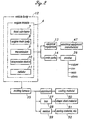
- a way of treatment such as melting 1, crushing 2, parts renovation 3, etc. is determined for each part of a vehicle such as an automobile.
- parts mainly consisting of a metallic material that can be divided into aluminum, iron and residue by heating and melting are designated as to-be-melted parts; parts that can be divided into metal and non-metal after being crushed into pieces by a crusher are designated as to-be-crushed parts; and parts that each have an independent function as a single unit and that can be reused after overhaul or reassmblage are designated as to-be-renovated parts.
- some parts are collectively modularized into an engine module 4, door module 5, instrument panel module 6, etc., so that the parts can be handled by batch.
- the parts can be detached module by module from a vehicle main body, facilitating the disassembly of the vehicle.
- as many parts that can be treated in a same way of treatment as possible should be incorporated in the same module.
- the modules of the vehicle are designed as follows in order to facilitate the disassembly of the vehicle:
- the engine module 4 is designed such that an engine main body 8, transmission 9, suspension device 10 as well as a radiator 11, etc. are disposed on a front sub-frame 7 that constitutes a part of a vehicle body frame and is secured to the vehicle body 12 by a disengageable joint means such as a bolt and nut, so that the engine main body 8 and the other parts can all be detached from the vehicle main body 12 by just detaching the front sub-frame 7 from the vehicle body 12.
- a design is also made so that detachment of electrical equipment 13 such as an AC electric generator, starter-motor, wiring harnesses, etc. as well as resin parts 14 such as an air cleaner, radiator fan shroud, rubber hose, etc. can be achieved easily.
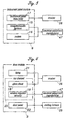
- the instrument panel module 6 is designed so that a first portion 15 comprising electrical equipment such as a car navigation system, audio system, etc. and a second portion 16 comprising meters or the like can be detached as a batch from an instrument panel main body 17 by means of a lock mechanism using a snap-fit lock and an eccentric cam, for example.
- the door module 5 is designed so that a glass sheet 18 and window regulator actuator 19 are attached on a run channel 20 made of a synthetic resin, for example, in such a manner that metallic parts and non-metallic parts can be separated only by detaching the run channel 20 from a door panel 22 after removing a lining 21.
- a floor mat for example, is provided with a thin fracture portion passing through a hole for connection between a seat and the vehicle body so that the floor mat can be detached by tearing up the thin fracture portion without detaching the seat from the vehicle body.
- the electrical equipment of various kinds should use as many flat wire harnesses and one-touch couplers as possible so that the cables can be detached easily.
- the floor mat or the like which conventionally comprised separate surface material and lining material, should be made of a single material so long as no problems arise. Further, a cooling water sub-tank and a window washer liquid tank are unified to the radiator fan shroud and a container of an electronic control unit is provided to an air cleaner case so that the parts made of a same material or those that can be processed in a same way of treatment are made in a unit as much as possible.
- the vehicle designed as above is manufactured at a manufacturing factory 41 which also serves to renovate disused vehicles.
- a manufacturing factory 41 which also serves to renovate disused vehicles.
- the manufactured vehicle is sold with a kind of "lease contract" made between a dealer 42 and a user 43 specifying that the vehicle should be returned when its predetermined period of use has lapsed (for instance, when three years has passed or thirty-thousand km traveling distance has been reached).
- This makes it possible to assign at a design stage an optimum lifetime (or durability) to each part of the vehicle based on the predetermined usable period of the vehicle, to thereby prevent the total quality of the vehicle from being excessively high and reduce the vehicle manufacturing cost.
- the vehicle returned from the user 43 to the dealer 42 is sent back to the manufacturing factory 41 where a selection line 44 divides the vehicle parts into those that should be replaced for each cycle (e.g., three years) and those that can be used for several cycles (e.g., three cycles (nine years)). In other words, the parts can be separated into the two groups depending on their respective designed lifetime.
- a selection line 44 divides the vehicle parts into those that should be replaced for each cycle (e.g., three years) and those that can be used for several cycles (e.g., three cycles (nine years)). In other words, the parts can be separated into the two groups depending on their respective designed lifetime.
- the parts When used for less than a prescribed number of cycles, the parts such as a transmission, engine, etc., which are required high rigidity and precision to achieve high reliability and smoothness of operation and thus inevitably result in highly durable design, are reused after they have passed through a check and tune-up line 45. If a damage sensor is installed, the data acquired by the sensor over an extended period of time may be used in the selection process. These parts are replaced with new ones, however, when they have been used for more than the prescribed number of cycles (i.e., the lifetime has lapsed) or otherwise damaged or worn and the overhaul of them would rather increase the cost.
- the prescribed number of cycles i.e., the lifetime has lapsed
- the engine module 4 When determined to be replaced, the engine module 4 is put into a melting furnace 25 after the electrical equipment 13 and resin parts 14 have been removed ( Figure 2).
- the door module 5 is also put into the melting furnace 25 after the glass sheet 18, window regulator actuator 19 and lining 21 have been removed ( Figure 4).
- the instrument panel module 6 the first portion 15 comprising the navigation system and audio system as well as the second portion 16 comprising the meters are detached from the instrument panel main body 17, and only the instrument panel main body 17 is processed by a crusher 26 ( Figure 3).
- the detached electrical equipment 13, audio system, etc. 15 and meters 16 are all returned to an electrical equipment manufacturer(s) 47 except for those that can be determined at a brief visual inspection that they are unable to be reused. Then, the returned parts are renovated according to the standards of the electrical equipment manufacturer 27, and delivered to the manufacturing factory 41 and subsequently installed into vehicles at an assembly line 46.
- Synthetic resin parts or fabric parts such as a seat assembly 23, lining 21 and floor mat can be stained relatively easily in daily use, and tend to affect the appearance significantly. Thus, these parts are all replaced with new parts. And the removed parts are processed by a crusher 26 and recycled as material.
- the removed parts are processed by the crusher 26 and recycled as material.
- the vehicle body 12 is divided into a frame and outer plates, and among the outer plates, those that require repairing are reused after being repainted. Those that have a damage or distortion are removed and processed by the melting furnace 25 or by the crusher 26 so that they can be recycled as material.
- the vehicle body 12 which has been used for the prescribed number of cycles or has a damage due to a car accident or the like are pressed and put into the melting furnace 25 together with the metallic parts of the engine module 4 and door module 5, and divided into aluminum 27, iron 28 and residue 29.
- the aluminum 27 is further refined so as to be used as a material 30 for engine casting, etc.
- the iron 28 is processed at an ironmaster so as to be used as a material 31 for reinforcing bars, shape steel or the like.
- the residue 29 which may comprise inorganic materials such as glass is reused for example by being mixed into bricks or paving material 32.
- the data associated with the state of use and wear acquired at the selection line or the long term data obtained from the damage sensor are fed back to a vehicle development and design department so that the data can be used in optimizing the lifetime of each component part with respect to the prescribed limited period of use.
- the way of treatment for each part of the vehicle is predetermined at the design stage, it is ensured that all the parts can be properly recycled, to thereby substantially eliminate the discarded waste. Further according to the present invention, due to the predetermined limited usable period of the vehicle, an appropriate lifetime can be set for each part, to thereby avoid excessively high quality or high performance of the vehicle, leading to a lower manufacturing cost. Further, instead of being used until such a state as that the interior has become stained or the vehicle design has become out of fashion is encountered, it is ensured that the vehicle is renewed at a prescribed cycle, and therefore, the user can use a highly reliable car substantially without having to take care of daily maintenance. Thus, the present invention can be of great advantage in reducing the manufacturing and maintenance cost as well as in minimizing the amount of waste material.
Landscapes
- Engineering & Computer Science (AREA)
- Mechanical Engineering (AREA)
- Environmental & Geological Engineering (AREA)
- Business, Economics & Management (AREA)
- Life Sciences & Earth Sciences (AREA)
- Sustainable Development (AREA)
- Human Resources & Organizations (AREA)
- Marketing (AREA)
- Tourism & Hospitality (AREA)
- Combustion & Propulsion (AREA)
- Economics (AREA)
- Entrepreneurship & Innovation (AREA)
- Chemical & Material Sciences (AREA)
- Operations Research (AREA)
- Quality & Reliability (AREA)
- Strategic Management (AREA)
- Transportation (AREA)
- Physics & Mathematics (AREA)
- General Business, Economics & Management (AREA)
- General Physics & Mathematics (AREA)
- Theoretical Computer Science (AREA)
- Automobile Manufacture Line, Endless Track Vehicle, Trailer (AREA)
- Processing Of Solid Wastes (AREA)
- Body Structure For Vehicles (AREA)
- Vehicle Step Arrangements And Article Storage (AREA)
- Vehicle Cleaning, Maintenance, Repair, Refitting, And Outriggers (AREA)
Abstract
Description
Claims (9)
- A method of renovating and recycling a vehicle, comprising the steps of:(a) designing the vehicle, wherein the step of designing comprises the steps of:(a-1) determining away of treatment for each part of the vehicle; and(a-2) designing each part of the vehicle so as to form an easily disassemblable structure;(b) manufacturing the vehicle according to the design made in the step (a);(c) selling the vehicle with a limited usable period;(d) having the sold vehicle returned after the limited usable period has lapsed;(e) separating parts of the returned vehicle into those to be reused and those to be replaced with new parts; and(f) separating the to-be-replaced parts into those to be renovated or those to be processed into materials.
- A method of renovating and recycling a vehicle according to claim 1, wherein the way of treatment comprises either one of melting, crushing or renovating.
- A method of renovating and recycling a vehicle according to claim 1, wherein the step (a-2) comprises a step of modularizing some of the parts into one or more modules so that the parts in each module can be detached as a batch.
- A method of renovating and recycling a vehicle according to claim 3, wherein the modules comprise an engine module, door module and instrument panel module.
- A method of renovating and recycling a vehicle according to claim 1, wherein the step (a-2) comprises the step of designing each part of the vehicle so that parts to be treated differently can be detached from each other.
- A method of renovating and recycling a vehicle according to claim 1, wherein the step (a) further comprises the step of:(a-3) setting a lifetime for each part based on the limited usable period of the vehicle.
- A method of renovating and recycling a vehicle according to claim 6, wherein in the step (e), the parts are separated depending on the set lifetime of each part.
- A method of renovating and recycling a vehicle according to claim 7, wherein in the step (e), the parts are separated also depending on a state of use of each part.
- A method of renovating and recycling a vehicle according to claim 1, further comprising the step of;(g) manufacturing a vehicle using the parts separated into the group of parts to be reused in the step (e).
Applications Claiming Priority (4)
| Application Number | Priority Date | Filing Date | Title |
|---|---|---|---|
| JP2000260733 | 2000-08-30 | ||
| JP2000260733 | 2000-08-30 | ||
| JP2000293247A JP2002104142A (en) | 2000-09-27 | 2000-09-27 | Vehicle recycling method |
| JP2000293247 | 2000-09-27 |
Publications (3)
| Publication Number | Publication Date |
|---|---|
| EP1184270A2 true EP1184270A2 (en) | 2002-03-06 |
| EP1184270A3 EP1184270A3 (en) | 2004-05-19 |
| EP1184270B1 EP1184270B1 (en) | 2006-01-18 |
Family
ID=26598768
Family Applications (1)
| Application Number | Title | Priority Date | Filing Date |
|---|---|---|---|
| EP20010120588 Expired - Lifetime EP1184270B1 (en) | 2000-08-30 | 2001-08-29 | A method of renovating and recycling a vehicle |
Country Status (3)
| Country | Link |
|---|---|
| US (1) | US6694588B2 (en) |
| EP (1) | EP1184270B1 (en) |
| DE (1) | DE60116695T8 (en) |
Cited By (2)
| Publication number | Priority date | Publication date | Assignee | Title |
|---|---|---|---|---|
| US7393225B2 (en) | 2005-06-03 | 2008-07-01 | Yazaki Corporation | Electrical equipment disassembly structure |
| CN106807722A (en) * | 2016-12-23 | 2017-06-09 | 格林美股份有限公司 | It is a kind of for abandoned car entirety recycling processing method and equipment |
Families Citing this family (8)
| Publication number | Priority date | Publication date | Assignee | Title |
|---|---|---|---|---|
| JP3613516B2 (en) * | 2000-08-28 | 2005-01-26 | 本田技研工業株式会社 | Dismantling management system and dismantling management method for managing the number of recycling of resin parts of products |
| US20060136239A1 (en) * | 2004-12-17 | 2006-06-22 | Kagan Lloyd D | Method for recycling used items |
| CN103702828B (en) * | 2011-08-10 | 2016-01-27 | 英派尔科技开发有限公司 | There is the thermoplastic article of the coating can removing coating |
| DE102016002587A1 (en) * | 2016-03-04 | 2017-09-07 | Seton Autoleather Gmbh | Seat cover made of leather for a vehicle seat |
| CN111828398B (en) * | 2020-07-20 | 2021-06-29 | 淮南矿业(集团)有限责任公司 | Method for replacing bearing box in main ventilator hub reconstruction |
| JP7323588B2 (en) * | 2021-10-20 | 2023-08-08 | 本田技研工業株式会社 | REUSE DETERMINATION SYSTEM, REUSE DETERMINATION METHOD AND PROGRAM |
| CN114872337A (en) * | 2022-04-07 | 2022-08-09 | 摩拜(北京)信息技术有限公司 | Renewing method of shared vehicle and shared vehicle |
| CN114798687B (en) * | 2022-04-13 | 2023-09-01 | 中铁物总资源科技有限公司 | Railway scrapped locomotive disassembling method |
Family Cites Families (6)
| Publication number | Priority date | Publication date | Assignee | Title |
|---|---|---|---|---|
| US3783964A (en) * | 1972-03-02 | 1974-01-08 | G Telesio | Vehicle with quick-disconnect engine module |
| US4037302A (en) * | 1976-02-23 | 1977-07-26 | Hollander John M | Used vehicle parts disassembly system and method |
| JPH06171477A (en) * | 1992-12-04 | 1994-06-21 | Mazda Motor Corp | Recycled vehicle manufacturing system and manufacturing method, and rebuilt vehicle manufacturing system and manufacturing method |
| JPH08244572A (en) * | 1995-03-15 | 1996-09-24 | Honda Motor Co Ltd | Vehicle remanufacturing system |
| US5819408A (en) * | 1996-07-10 | 1998-10-13 | Xcorp, Inc. | Recyclable, low cost, collision-resistant automobile chassis and body |
| JPH1191661A (en) * | 1997-09-19 | 1999-04-06 | Hitachi Ltd | Vehicle recycling method and apparatus |
-
2001
- 2001-08-29 DE DE2001616695 patent/DE60116695T8/en active Active
- 2001-08-29 EP EP20010120588 patent/EP1184270B1/en not_active Expired - Lifetime
- 2001-08-30 US US09/942,124 patent/US6694588B2/en not_active Expired - Fee Related
Cited By (4)
| Publication number | Priority date | Publication date | Assignee | Title |
|---|---|---|---|---|
| US7393225B2 (en) | 2005-06-03 | 2008-07-01 | Yazaki Corporation | Electrical equipment disassembly structure |
| DE102006026210B4 (en) * | 2005-06-03 | 2009-12-03 | Yazaki Corp. | Disassembly arrangement for electrical appliances |
| CN106807722A (en) * | 2016-12-23 | 2017-06-09 | 格林美股份有限公司 | It is a kind of for abandoned car entirety recycling processing method and equipment |
| CN106807722B (en) * | 2016-12-23 | 2019-08-20 | 格林美股份有限公司 | A kind of abandoned car entirety recycling processing method and equipment |
Also Published As
| Publication number | Publication date |
|---|---|
| DE60116695D1 (en) | 2006-04-06 |
| DE60116695T8 (en) | 2006-11-09 |
| US20020049609A1 (en) | 2002-04-25 |
| EP1184270B1 (en) | 2006-01-18 |
| DE60116695T2 (en) | 2006-07-13 |
| US6694588B2 (en) | 2004-02-24 |
| EP1184270A3 (en) | 2004-05-19 |
Similar Documents
| Publication | Publication Date | Title |
|---|---|---|
| US6694588B2 (en) | Method of renovating and recycling a vehicle | |
| JP2000085649A (en) | Vehicle assembly line | |
| US4905363A (en) | Modular process for dismantling light automobile vehicles | |
| Yi et al. | Design and implementation of an end-of-life vehicle recycling center based on IoT (Internet of Things) in Korea | |
| CN104176153B (en) | Retired passenger car disassembly system | |
| US20020148090A1 (en) | Dismantlilng system for product and its method | |
| KR100783923B1 (en) | Decommissioning system and method | |
| CN105903897A (en) | Movable resin sand regeneration and lamination production line | |
| JP2002104142A (en) | Vehicle recycling method | |
| Sawyer-Beaulieu | Gate-to-gate life cycle inventory assessment of North American end-of-life vehicle management processes | |
| CN105159246A (en) | Scrap motor vehicle dismantling process | |
| CN210910751U (en) | Recycling device for polymer composite rubber material | |
| JP3989427B2 (en) | Vehicle assembly line | |
| JP4928053B2 (en) | How to design a car | |
| JP2000168647A (en) | Car dismantling line | |
| CN113978754B (en) | Repairing process for return air grille of passenger cabin of Boeing 737 passenger plane | |
| CN221246024U (en) | Automobile spare and accessory part processing waste material screening structure | |
| CN210363823U (en) | Embedded part for transverse cover plate of sliding plug door | |
| CN206317697U (en) | A kind of adjustable clutch pedal of power-assisted | |
| CN219464738U (en) | Automatic cleaning device for shakeout of auto-parts automatic production line | |
| Zajac et al. | Rationalisation of the Functioning of Vehicle Recycling | |
| KR20060054834A (en) | Information based junk car demolition system and used car information system and junk car demolition plant | |
| CN201555010U (en) | Lubricating circulation system suitable for electric injection oil sprayer tool structure | |
| WO2025205299A1 (en) | Automobile dismantling and crushing method | |
| Das | Product Disassembly and Recycling in the Automotive Industry |
Legal Events
| Date | Code | Title | Description |
|---|---|---|---|
| PUAI | Public reference made under article 153(3) epc to a published international application that has entered the european phase |
Free format text: ORIGINAL CODE: 0009012 |
|
| AK | Designated contracting states |
Kind code of ref document: A2 Designated state(s): AT BE CH CY DE DK ES FI FR GB GR IE IT LI LU MC NL PT SE TR |
|
| AX | Request for extension of the european patent |
Free format text: AL;LT;LV;MK;RO;SI |
|
| PUAL | Search report despatched |
Free format text: ORIGINAL CODE: 0009013 |
|
| AK | Designated contracting states |
Kind code of ref document: A3 Designated state(s): AT BE CH CY DE DK ES FI FR GB GR IE IT LI LU MC NL PT SE TR |
|
| AX | Request for extension of the european patent |
Extension state: AL LT LV MK RO SI |
|
| RIC1 | Information provided on ipc code assigned before grant |
Ipc: 7B 29B 17/02 B Ipc: 7B 09B 5/00 B Ipc: 7B 29B 17/00 A |
|
| 17P | Request for examination filed |
Effective date: 20040617 |
|
| 17Q | First examination report despatched |
Effective date: 20041019 |
|
| AKX | Designation fees paid |
Designated state(s): DE FR GB |
|
| GRAP | Despatch of communication of intention to grant a patent |
Free format text: ORIGINAL CODE: EPIDOSNIGR1 |
|
| GRAS | Grant fee paid |
Free format text: ORIGINAL CODE: EPIDOSNIGR3 |
|
| GRAA | (expected) grant |
Free format text: ORIGINAL CODE: 0009210 |
|
| AK | Designated contracting states |
Kind code of ref document: B1 Designated state(s): DE FR GB |
|
| REG | Reference to a national code |
Ref country code: GB Ref legal event code: FG4D |
|
| REF | Corresponds to: |
Ref document number: 60116695 Country of ref document: DE Date of ref document: 20060406 Kind code of ref document: P |
|
| ET | Fr: translation filed | ||
| PLBE | No opposition filed within time limit |
Free format text: ORIGINAL CODE: 0009261 |
|
| STAA | Information on the status of an ep patent application or granted ep patent |
Free format text: STATUS: NO OPPOSITION FILED WITHIN TIME LIMIT |
|
| 26N | No opposition filed |
Effective date: 20061019 |
|
| PGFP | Annual fee paid to national office [announced via postgrant information from national office to epo] |
Ref country code: FR Payment date: 20080818 Year of fee payment: 8 |
|
| PGFP | Annual fee paid to national office [announced via postgrant information from national office to epo] |
Ref country code: GB Payment date: 20080903 Year of fee payment: 8 |
|
| GBPC | Gb: european patent ceased through non-payment of renewal fee |
Effective date: 20090829 |
|
| REG | Reference to a national code |
Ref country code: FR Ref legal event code: ST Effective date: 20100430 |
|
| PG25 | Lapsed in a contracting state [announced via postgrant information from national office to epo] |
Ref country code: FR Free format text: LAPSE BECAUSE OF NON-PAYMENT OF DUE FEES Effective date: 20090831 |
|
| PG25 | Lapsed in a contracting state [announced via postgrant information from national office to epo] |
Ref country code: GB Free format text: LAPSE BECAUSE OF NON-PAYMENT OF DUE FEES Effective date: 20090829 |
|
| PGFP | Annual fee paid to national office [announced via postgrant information from national office to epo] |
Ref country code: DE Payment date: 20100825 Year of fee payment: 10 |
|
| REG | Reference to a national code |
Ref country code: DE Ref legal event code: R119 Ref document number: 60116695 Country of ref document: DE Effective date: 20120301 |
|
| PG25 | Lapsed in a contracting state [announced via postgrant information from national office to epo] |
Ref country code: DE Free format text: LAPSE BECAUSE OF NON-PAYMENT OF DUE FEES Effective date: 20120301 |