EP1183393B1 - Pcr-based identification of eimeria species and strains - Google Patents
Pcr-based identification of eimeria species and strains Download PDFInfo
- Publication number
- EP1183393B1 EP1183393B1 EP01911285A EP01911285A EP1183393B1 EP 1183393 B1 EP1183393 B1 EP 1183393B1 EP 01911285 A EP01911285 A EP 01911285A EP 01911285 A EP01911285 A EP 01911285A EP 1183393 B1 EP1183393 B1 EP 1183393B1
- Authority
- EP
- European Patent Office
- Prior art keywords
- seq
- pcr
- oligonucleotide
- dna
- species
- Prior art date
- Legal status (The legal status is an assumption and is not a legal conclusion. Google has not performed a legal analysis and makes no representation as to the accuracy of the status listed.)
- Expired - Lifetime
Links
- 241000223924 Eimeria Species 0.000 title claims abstract description 81
- 241000894007 species Species 0.000 claims abstract description 120
- 238000000034 method Methods 0.000 claims abstract description 52
- 238000000137 annealing Methods 0.000 claims abstract description 44
- 238000003752 polymerase chain reaction Methods 0.000 claims description 128
- 108020004414 DNA Proteins 0.000 claims description 108
- 108091034117 Oligonucleotide Proteins 0.000 claims description 52
- 108091028043 Nucleic acid sequence Proteins 0.000 claims description 33
- 230000000295 complement effect Effects 0.000 claims description 18
- 238000009396 hybridization Methods 0.000 claims description 10
- 238000001502 gel electrophoresis Methods 0.000 claims description 9
- JLCPHMBAVCMARE-UHFFFAOYSA-N [3-[[3-[[3-[[3-[[3-[[3-[[3-[[3-[[3-[[3-[[3-[[5-(2-amino-6-oxo-1H-purin-9-yl)-3-[[3-[[3-[[3-[[3-[[3-[[5-(2-amino-6-oxo-1H-purin-9-yl)-3-[[5-(2-amino-6-oxo-1H-purin-9-yl)-3-hydroxyoxolan-2-yl]methoxy-hydroxyphosphoryl]oxyoxolan-2-yl]methoxy-hydroxyphosphoryl]oxy-5-(5-methyl-2,4-dioxopyrimidin-1-yl)oxolan-2-yl]methoxy-hydroxyphosphoryl]oxy-5-(6-aminopurin-9-yl)oxolan-2-yl]methoxy-hydroxyphosphoryl]oxy-5-(6-aminopurin-9-yl)oxolan-2-yl]methoxy-hydroxyphosphoryl]oxy-5-(6-aminopurin-9-yl)oxolan-2-yl]methoxy-hydroxyphosphoryl]oxy-5-(6-aminopurin-9-yl)oxolan-2-yl]methoxy-hydroxyphosphoryl]oxyoxolan-2-yl]methoxy-hydroxyphosphoryl]oxy-5-(5-methyl-2,4-dioxopyrimidin-1-yl)oxolan-2-yl]methoxy-hydroxyphosphoryl]oxy-5-(4-amino-2-oxopyrimidin-1-yl)oxolan-2-yl]methoxy-hydroxyphosphoryl]oxy-5-(5-methyl-2,4-dioxopyrimidin-1-yl)oxolan-2-yl]methoxy-hydroxyphosphoryl]oxy-5-(5-methyl-2,4-dioxopyrimidin-1-yl)oxolan-2-yl]methoxy-hydroxyphosphoryl]oxy-5-(6-aminopurin-9-yl)oxolan-2-yl]methoxy-hydroxyphosphoryl]oxy-5-(6-aminopurin-9-yl)oxolan-2-yl]methoxy-hydroxyphosphoryl]oxy-5-(4-amino-2-oxopyrimidin-1-yl)oxolan-2-yl]methoxy-hydroxyphosphoryl]oxy-5-(4-amino-2-oxopyrimidin-1-yl)oxolan-2-yl]methoxy-hydroxyphosphoryl]oxy-5-(4-amino-2-oxopyrimidin-1-yl)oxolan-2-yl]methoxy-hydroxyphosphoryl]oxy-5-(6-aminopurin-9-yl)oxolan-2-yl]methoxy-hydroxyphosphoryl]oxy-5-(4-amino-2-oxopyrimidin-1-yl)oxolan-2-yl]methyl [5-(6-aminopurin-9-yl)-2-(hydroxymethyl)oxolan-3-yl] hydrogen phosphate Polymers Cc1cn(C2CC(OP(O)(=O)OCC3OC(CC3OP(O)(=O)OCC3OC(CC3O)n3cnc4c3nc(N)[nH]c4=O)n3cnc4c3nc(N)[nH]c4=O)C(COP(O)(=O)OC3CC(OC3COP(O)(=O)OC3CC(OC3COP(O)(=O)OC3CC(OC3COP(O)(=O)OC3CC(OC3COP(O)(=O)OC3CC(OC3COP(O)(=O)OC3CC(OC3COP(O)(=O)OC3CC(OC3COP(O)(=O)OC3CC(OC3COP(O)(=O)OC3CC(OC3COP(O)(=O)OC3CC(OC3COP(O)(=O)OC3CC(OC3COP(O)(=O)OC3CC(OC3COP(O)(=O)OC3CC(OC3COP(O)(=O)OC3CC(OC3COP(O)(=O)OC3CC(OC3COP(O)(=O)OC3CC(OC3COP(O)(=O)OC3CC(OC3CO)n3cnc4c(N)ncnc34)n3ccc(N)nc3=O)n3cnc4c(N)ncnc34)n3ccc(N)nc3=O)n3ccc(N)nc3=O)n3ccc(N)nc3=O)n3cnc4c(N)ncnc34)n3cnc4c(N)ncnc34)n3cc(C)c(=O)[nH]c3=O)n3cc(C)c(=O)[nH]c3=O)n3ccc(N)nc3=O)n3cc(C)c(=O)[nH]c3=O)n3cnc4c3nc(N)[nH]c4=O)n3cnc4c(N)ncnc34)n3cnc4c(N)ncnc34)n3cnc4c(N)ncnc34)n3cnc4c(N)ncnc34)O2)c(=O)[nH]c1=O JLCPHMBAVCMARE-UHFFFAOYSA-N 0.000 claims description 6
- 101000829171 Hypocrea virens (strain Gv29-8 / FGSC 10586) Effector TSP1 Proteins 0.000 claims 2
- 241000224483 Coccidia Species 0.000 abstract description 6
- 239000013615 primer Substances 0.000 description 105
- 239000000047 product Substances 0.000 description 50
- 108091023242 Internal transcribed spacer Proteins 0.000 description 46
- 241000223931 Eimeria acervulina Species 0.000 description 33
- 241000179199 Eimeria mitis Species 0.000 description 30
- 241000499544 Eimeria praecox Species 0.000 description 29
- 241000223932 Eimeria tenella Species 0.000 description 28
- 210000003250 oocyst Anatomy 0.000 description 28
- 239000000499 gel Substances 0.000 description 27
- 241000223934 Eimeria maxima Species 0.000 description 25
- 239000000523 sample Substances 0.000 description 21
- 241000499566 Eimeria brunetti Species 0.000 description 20
- 241000287828 Gallus gallus Species 0.000 description 20
- 235000013330 chicken meat Nutrition 0.000 description 19
- 108020001027 Ribosomal DNA Proteins 0.000 description 16
- XSQUKJJJFZCRTK-UHFFFAOYSA-N Urea Chemical compound NC(N)=O XSQUKJJJFZCRTK-UHFFFAOYSA-N 0.000 description 16
- 241000499563 Eimeria necatrix Species 0.000 description 15
- 238000001514 detection method Methods 0.000 description 15
- 239000002773 nucleotide Substances 0.000 description 14
- 125000003729 nucleotide group Chemical group 0.000 description 14
- 244000144992 flock Species 0.000 description 13
- 230000003321 amplification Effects 0.000 description 11
- 238000001962 electrophoresis Methods 0.000 description 11
- 238000003199 nucleic acid amplification method Methods 0.000 description 11
- TWRXJAOTZQYOKJ-UHFFFAOYSA-L Magnesium chloride Chemical compound [Mg+2].[Cl-].[Cl-] TWRXJAOTZQYOKJ-UHFFFAOYSA-L 0.000 description 10
- 239000011543 agarose gel Substances 0.000 description 10
- 238000004458 analytical method Methods 0.000 description 10
- 108090000623 proteins and genes Proteins 0.000 description 10
- 238000012163 sequencing technique Methods 0.000 description 10
- KDELTXNPUXUBMU-UHFFFAOYSA-N 2-[2-[bis(carboxymethyl)amino]ethyl-(carboxymethyl)amino]acetic acid boric acid Chemical compound OB(O)O.OB(O)O.OB(O)O.OC(=O)CN(CC(O)=O)CCN(CC(O)=O)CC(O)=O KDELTXNPUXUBMU-UHFFFAOYSA-N 0.000 description 8
- 238000003556 assay Methods 0.000 description 8
- 239000004202 carbamide Substances 0.000 description 8
- 238000012408 PCR amplification Methods 0.000 description 7
- 238000006243 chemical reaction Methods 0.000 description 7
- 108091093088 Amplicon Proteins 0.000 description 6
- 238000013459 approach Methods 0.000 description 6
- 229920002401 polyacrylamide Polymers 0.000 description 6
- 208000003495 Coccidiosis Diseases 0.000 description 5
- 206010023076 Isosporiasis Diseases 0.000 description 5
- 238000004925 denaturation Methods 0.000 description 5
- 230000036425 denaturation Effects 0.000 description 5
- 229910001629 magnesium chloride Inorganic materials 0.000 description 5
- 108020004463 18S ribosomal RNA Proteins 0.000 description 4
- 241000271566 Aves Species 0.000 description 4
- 102000053602 DNA Human genes 0.000 description 4
- ZHNUHDYFZUAESO-UHFFFAOYSA-N Formamide Chemical compound NC=O ZHNUHDYFZUAESO-UHFFFAOYSA-N 0.000 description 4
- 230000004075 alteration Effects 0.000 description 4
- 230000002238 attenuated effect Effects 0.000 description 4
- 238000003745 diagnosis Methods 0.000 description 4
- 201000010099 disease Diseases 0.000 description 4
- 208000037265 diseases, disorders, signs and symptoms Diseases 0.000 description 4
- 230000002068 genetic effect Effects 0.000 description 4
- 230000003902 lesion Effects 0.000 description 4
- 238000002844 melting Methods 0.000 description 4
- 230000008018 melting Effects 0.000 description 4
- 108700022487 rRNA Genes Proteins 0.000 description 4
- 241000224482 Apicomplexa Species 0.000 description 3
- KCXVZYZYPLLWCC-UHFFFAOYSA-N EDTA Chemical compound OC(=O)CN(CC(O)=O)CCN(CC(O)=O)CC(O)=O KCXVZYZYPLLWCC-UHFFFAOYSA-N 0.000 description 3
- 241001465754 Metazoa Species 0.000 description 3
- HEMHJVSKTPXQMS-UHFFFAOYSA-M Sodium hydroxide Chemical compound [OH-].[Na+] HEMHJVSKTPXQMS-UHFFFAOYSA-M 0.000 description 3
- 108010006785 Taq Polymerase Proteins 0.000 description 3
- 239000007900 aqueous suspension Substances 0.000 description 3
- 238000000376 autoradiography Methods 0.000 description 3
- 239000011324 bead Substances 0.000 description 3
- ZMMJGEGLRURXTF-UHFFFAOYSA-N ethidium bromide Chemical compound [Br-].C12=CC(N)=CC=C2C2=CC=C(N)C=C2[N+](CC)=C1C1=CC=CC=C1 ZMMJGEGLRURXTF-UHFFFAOYSA-N 0.000 description 3
- 229960005542 ethidium bromide Drugs 0.000 description 3
- 210000003608 fece Anatomy 0.000 description 3
- 239000011521 glass Substances 0.000 description 3
- 208000015181 infectious disease Diseases 0.000 description 3
- 238000002955 isolation Methods 0.000 description 3
- 239000000203 mixture Substances 0.000 description 3
- 244000144977 poultry Species 0.000 description 3
- 235000013594 poultry meat Nutrition 0.000 description 3
- 239000006228 supernatant Substances 0.000 description 3
- 238000012360 testing method Methods 0.000 description 3
- YBJHBAHKTGYVGT-ZKWXMUAHSA-N (+)-Biotin Chemical compound N1C(=O)N[C@@H]2[C@H](CCCCC(=O)O)SC[C@@H]21 YBJHBAHKTGYVGT-ZKWXMUAHSA-N 0.000 description 2
- QKNYBSVHEMOAJP-UHFFFAOYSA-N 2-amino-2-(hydroxymethyl)propane-1,3-diol;hydron;chloride Chemical compound Cl.OCC(N)(CO)CO QKNYBSVHEMOAJP-UHFFFAOYSA-N 0.000 description 2
- 239000003155 DNA primer Substances 0.000 description 2
- 238000001712 DNA sequencing Methods 0.000 description 2
- 108010067770 Endopeptidase K Proteins 0.000 description 2
- 241000206602 Eukaryota Species 0.000 description 2
- 241000233866 Fungi Species 0.000 description 2
- 240000004808 Saccharomyces cerevisiae Species 0.000 description 2
- 108020004682 Single-Stranded DNA Proteins 0.000 description 2
- FAPWRFPIFSIZLT-UHFFFAOYSA-M Sodium chloride Chemical class [Na+].[Cl-] FAPWRFPIFSIZLT-UHFFFAOYSA-M 0.000 description 2
- DBMJMQXJHONAFJ-UHFFFAOYSA-M Sodium laurylsulphate Chemical compound [Na+].CCCCCCCCCCCCOS([O-])(=O)=O DBMJMQXJHONAFJ-UHFFFAOYSA-M 0.000 description 2
- 238000005273 aeration Methods 0.000 description 2
- 238000000246 agarose gel electrophoresis Methods 0.000 description 2
- KGBXLFKZBHKPEV-UHFFFAOYSA-N boric acid Chemical compound OB(O)O KGBXLFKZBHKPEV-UHFFFAOYSA-N 0.000 description 2
- 239000004327 boric acid Substances 0.000 description 2
- 238000010367 cloning Methods 0.000 description 2
- 108091036078 conserved sequence Proteins 0.000 description 2
- 239000000470 constituent Substances 0.000 description 2
- 230000001351 cycling effect Effects 0.000 description 2
- OPTASPLRGRRNAP-UHFFFAOYSA-N cytosine Chemical compound NC=1C=CNC(=O)N=1 OPTASPLRGRRNAP-UHFFFAOYSA-N 0.000 description 2
- 238000011161 development Methods 0.000 description 2
- 230000018109 developmental process Effects 0.000 description 2
- 238000002405 diagnostic procedure Methods 0.000 description 2
- 238000010790 dilution Methods 0.000 description 2
- 239000012895 dilution Substances 0.000 description 2
- 230000002255 enzymatic effect Effects 0.000 description 2
- 239000012634 fragment Substances 0.000 description 2
- 210000001035 gastrointestinal tract Anatomy 0.000 description 2
- UYTPUPDQBNUYGX-UHFFFAOYSA-N guanine Chemical compound O=C1NC(N)=NC2=C1N=CN2 UYTPUPDQBNUYGX-UHFFFAOYSA-N 0.000 description 2
- 230000002401 inhibitory effect Effects 0.000 description 2
- 238000004519 manufacturing process Methods 0.000 description 2
- 239000003550 marker Substances 0.000 description 2
- 238000012544 monitoring process Methods 0.000 description 2
- 238000013425 morphometry Methods 0.000 description 2
- 230000035772 mutation Effects 0.000 description 2
- 244000045947 parasite Species 0.000 description 2
- 230000003071 parasitic effect Effects 0.000 description 2
- 238000002264 polyacrylamide gel electrophoresis Methods 0.000 description 2
- 230000002285 radioactive effect Effects 0.000 description 2
- 238000000163 radioactive labelling Methods 0.000 description 2
- 239000011541 reaction mixture Substances 0.000 description 2
- 238000011160 research Methods 0.000 description 2
- 230000002441 reversible effect Effects 0.000 description 2
- 238000012216 screening Methods 0.000 description 2
- 238000000926 separation method Methods 0.000 description 2
- 229940083575 sodium dodecyl sulfate Drugs 0.000 description 2
- 235000019333 sodium laurylsulphate Nutrition 0.000 description 2
- 238000010561 standard procedure Methods 0.000 description 2
- 239000000725 suspension Substances 0.000 description 2
- RWQNBRDOKXIBIV-UHFFFAOYSA-N thymine Chemical compound CC1=CNC(=O)NC1=O RWQNBRDOKXIBIV-UHFFFAOYSA-N 0.000 description 2
- FWMNVWWHGCHHJJ-SKKKGAJSSA-N 4-amino-1-[(2r)-6-amino-2-[[(2r)-2-[[(2r)-2-[[(2r)-2-amino-3-phenylpropanoyl]amino]-3-phenylpropanoyl]amino]-4-methylpentanoyl]amino]hexanoyl]piperidine-4-carboxylic acid Chemical compound C([C@H](C(=O)N[C@H](CC(C)C)C(=O)N[C@H](CCCCN)C(=O)N1CCC(N)(CC1)C(O)=O)NC(=O)[C@H](N)CC=1C=CC=CC=1)C1=CC=CC=C1 FWMNVWWHGCHHJJ-SKKKGAJSSA-N 0.000 description 1
- 108020004565 5.8S Ribosomal RNA Proteins 0.000 description 1
- 229930024421 Adenine Natural products 0.000 description 1
- GFFGJBXGBJISGV-UHFFFAOYSA-N Adenine Chemical compound NC1=NC=NC2=C1N=CN2 GFFGJBXGBJISGV-UHFFFAOYSA-N 0.000 description 1
- 229920000936 Agarose Polymers 0.000 description 1
- 241001479434 Agfa Species 0.000 description 1
- 241000222120 Candida <Saccharomycetales> Species 0.000 description 1
- 108020004635 Complementary DNA Proteins 0.000 description 1
- 230000006820 DNA synthesis Effects 0.000 description 1
- 108010014303 DNA-directed DNA polymerase Proteins 0.000 description 1
- 102000016928 DNA-directed DNA polymerase Human genes 0.000 description 1
- 229920002307 Dextran Polymers 0.000 description 1
- 206010012735 Diarrhoea Diseases 0.000 description 1
- 241000701959 Escherichia virus Lambda Species 0.000 description 1
- 101100175482 Glycine max CG-3 gene Proteins 0.000 description 1
- 206010024642 Listless Diseases 0.000 description 1
- 108700005084 Multigene Family Proteins 0.000 description 1
- 108010021757 Polynucleotide 5'-Hydroxyl-Kinase Proteins 0.000 description 1
- 102000008422 Polynucleotide 5'-hydroxyl-kinase Human genes 0.000 description 1
- 102100029812 Protein S100-A12 Human genes 0.000 description 1
- 101710110949 Protein S100-A12 Proteins 0.000 description 1
- 108091081021 Sense strand Proteins 0.000 description 1
- 238000012300 Sequence Analysis Methods 0.000 description 1
- 208000032140 Sleepiness Diseases 0.000 description 1
- 206010041349 Somnolence Diseases 0.000 description 1
- 229960000643 adenine Drugs 0.000 description 1
- 208000007502 anemia Diseases 0.000 description 1
- 230000015572 biosynthetic process Effects 0.000 description 1
- 229960002685 biotin Drugs 0.000 description 1
- 235000020958 biotin Nutrition 0.000 description 1
- 239000011616 biotin Substances 0.000 description 1
- UDSAIICHUKSCKT-UHFFFAOYSA-N bromophenol blue Chemical compound C1=C(Br)C(O)=C(Br)C=C1C1(C=2C=C(Br)C(O)=C(Br)C=2)C2=CC=CC=C2S(=O)(=O)O1 UDSAIICHUKSCKT-UHFFFAOYSA-N 0.000 description 1
- 239000000872 buffer Substances 0.000 description 1
- 238000005251 capillar electrophoresis Methods 0.000 description 1
- 238000005119 centrifugation Methods 0.000 description 1
- 238000012512 characterization method Methods 0.000 description 1
- 238000010835 comparative analysis Methods 0.000 description 1
- 238000011109 contamination Methods 0.000 description 1
- 239000013068 control sample Substances 0.000 description 1
- 238000012864 cross contamination Methods 0.000 description 1
- 230000009089 cytolysis Effects 0.000 description 1
- 229940104302 cytosine Drugs 0.000 description 1
- 230000006378 damage Effects 0.000 description 1
- 230000018044 dehydration Effects 0.000 description 1
- 238000006297 dehydration reaction Methods 0.000 description 1
- 238000012631 diagnostic technique Methods 0.000 description 1
- 230000000694 effects Effects 0.000 description 1
- 210000002919 epithelial cell Anatomy 0.000 description 1
- 238000001704 evaporation Methods 0.000 description 1
- 230000008020 evaporation Effects 0.000 description 1
- 230000007717 exclusion Effects 0.000 description 1
- 210000003746 feather Anatomy 0.000 description 1
- GNBHRKFJIUUOQI-UHFFFAOYSA-N fluorescein Chemical compound O1C(=O)C2=CC=CC=C2C21C1=CC=C(O)C=C1OC1=CC(O)=CC=C21 GNBHRKFJIUUOQI-UHFFFAOYSA-N 0.000 description 1
- 239000007850 fluorescent dye Substances 0.000 description 1
- 230000002538 fungal effect Effects 0.000 description 1
- 238000003384 imaging method Methods 0.000 description 1
- 230000001900 immune effect Effects 0.000 description 1
- 238000010348 incorporation Methods 0.000 description 1
- 230000002458 infectious effect Effects 0.000 description 1
- 230000001524 infective effect Effects 0.000 description 1
- 230000000968 intestinal effect Effects 0.000 description 1
- 210000000936 intestine Anatomy 0.000 description 1
- 238000002372 labelling Methods 0.000 description 1
- 238000007834 ligase chain reaction Methods 0.000 description 1
- 230000000670 limiting effect Effects 0.000 description 1
- 238000012417 linear regression Methods 0.000 description 1
- 208000017971 listlessness Diseases 0.000 description 1
- 239000012160 loading buffer Substances 0.000 description 1
- 238000011068 loading method Methods 0.000 description 1
- 208000020442 loss of weight Diseases 0.000 description 1
- 239000006166 lysate Substances 0.000 description 1
- 239000000463 material Substances 0.000 description 1
- 238000013508 migration Methods 0.000 description 1
- 230000005012 migration Effects 0.000 description 1
- 239000002480 mineral oil Substances 0.000 description 1
- 235000010446 mineral oil Nutrition 0.000 description 1
- 239000003068 molecular probe Substances 0.000 description 1
- 230000000877 morphologic effect Effects 0.000 description 1
- 210000003205 muscle Anatomy 0.000 description 1
- 239000013642 negative control Substances 0.000 description 1
- 238000005457 optimization Methods 0.000 description 1
- 244000052769 pathogen Species 0.000 description 1
- 230000001717 pathogenic effect Effects 0.000 description 1
- 230000007918 pathogenicity Effects 0.000 description 1
- 239000008188 pellet Substances 0.000 description 1
- 239000013600 plasmid vector Substances 0.000 description 1
- 239000002987 primer (paints) Substances 0.000 description 1
- 244000000040 protozoan parasite Species 0.000 description 1
- 238000000746 purification Methods 0.000 description 1
- 238000003908 quality control method Methods 0.000 description 1
- 239000011535 reaction buffer Substances 0.000 description 1
- 238000003753 real-time PCR Methods 0.000 description 1
- 230000001850 reproductive effect Effects 0.000 description 1
- 238000007894 restriction fragment length polymorphism technique Methods 0.000 description 1
- 238000011309 routine diagnosis Methods 0.000 description 1
- 230000035945 sensitivity Effects 0.000 description 1
- 230000001568 sexual effect Effects 0.000 description 1
- 239000011343 solid material Substances 0.000 description 1
- 239000000243 solution Substances 0.000 description 1
- 125000006850 spacer group Chemical group 0.000 description 1
- 210000003046 sporozoite Anatomy 0.000 description 1
- 230000028070 sporulation Effects 0.000 description 1
- 238000000856 sucrose gradient centrifugation Methods 0.000 description 1
- 208000024891 symptom Diseases 0.000 description 1
- 238000001308 synthesis method Methods 0.000 description 1
- ABZLKHKQJHEPAX-UHFFFAOYSA-N tetramethylrhodamine Chemical compound C=12C=CC(N(C)C)=CC2=[O+]C2=CC(N(C)C)=CC=C2C=1C1=CC=CC=C1C([O-])=O ABZLKHKQJHEPAX-UHFFFAOYSA-N 0.000 description 1
- 229940113082 thymine Drugs 0.000 description 1
- 238000011144 upstream manufacturing Methods 0.000 description 1
- 229960005486 vaccine Drugs 0.000 description 1
- 230000000007 visual effect Effects 0.000 description 1
- NLIVDORGVGAOOJ-MAHBNPEESA-M xylene cyanol Chemical compound [Na+].C1=C(C)C(NCC)=CC=C1C(\C=1C(=CC(OS([O-])=O)=CC=1)OS([O-])=O)=C\1C=C(C)\C(=[NH+]/CC)\C=C/1 NLIVDORGVGAOOJ-MAHBNPEESA-M 0.000 description 1
Images



Classifications
-
- C—CHEMISTRY; METALLURGY
- C12—BIOCHEMISTRY; BEER; SPIRITS; WINE; VINEGAR; MICROBIOLOGY; ENZYMOLOGY; MUTATION OR GENETIC ENGINEERING
- C12Q—MEASURING OR TESTING PROCESSES INVOLVING ENZYMES, NUCLEIC ACIDS OR MICROORGANISMS; COMPOSITIONS OR TEST PAPERS THEREFOR; PROCESSES OF PREPARING SUCH COMPOSITIONS; CONDITION-RESPONSIVE CONTROL IN MICROBIOLOGICAL OR ENZYMOLOGICAL PROCESSES
- C12Q1/00—Measuring or testing processes involving enzymes, nucleic acids or microorganisms; Compositions therefor; Processes of preparing such compositions
- C12Q1/68—Measuring or testing processes involving enzymes, nucleic acids or microorganisms; Compositions therefor; Processes of preparing such compositions involving nucleic acids
- C12Q1/6876—Nucleic acid products used in the analysis of nucleic acids, e.g. primers or probes
- C12Q1/6888—Nucleic acid products used in the analysis of nucleic acids, e.g. primers or probes for detection or identification of organisms
- C12Q1/6893—Nucleic acid products used in the analysis of nucleic acids, e.g. primers or probes for detection or identification of organisms for protozoa
Definitions
- the present invention relates to a PCR-based method of identifying various species of the genus Eimeria (commonly known as coccidia). More particularly, the present invention relates to a PCR-based method which is genus-specific, utilises novel PCR primers, and has the potential to identify species of Eimeria which may differ only by relatively minor sequence variation.
- ITS internal transcribed spacer
- ITS-1 first internal transcribed spacer
- ITS-2 second internal transcribed spacer
- rDNA ribosomal DNA
- TBE Tris-borate-EDTA
- DPGE denaturing polyacrylamide gel electrophoresis
- SSCP single-strand conformation polymorphism
- Coccidiosis is a disease of animals and birds caused by protozoan parasites ( Eimeria ) known as coccidia. This disease is of major economic importance to the poultry industry worldwide.
- Eimeria species have complicated life cycles, details of which are well described. Briefly, when a sporulated (infective) coccidial oocyst is ingested, sporozoites are released to initiate asexual and sexual cycles that lead to the production of thousands of new oocysts, which are shed in the faeces of the host. These oocycts sporulate in the environment within days and are then infectious to na ⁇ ve birds. A single sporulated oocyst may give rise to thousands of progeny. Eimeria species produce lesions in the gut by destruction of the epithelial cells in which they develop and multiply, and cause lesions in the intestinal wall.
- coccidiosis The clinical signs of coccidiosis include diarrhoea, which may be mucoid or bloody, and dehydration. These symptoms are generally followed by ruffling of feathers, anaemia, listlessness, loss of weight, retraction of the head and neck and somnolence. Coccidiosis in laying hens is usually detected by a decrease in egg production. Infected birds cease to grow satisfactorily. With highly virulent strains of Eimeria morality in chickens is usually high.
- Eimeria have been identified by a variety of methods. For example, morphological features and/or morphometry of their oocysts or sporocysts (size, shape, length and width), their patterns of development, the nature of the lesions they produce, their predilection site in the gut, or sporulation times and reproductive index.
- these criteria can be unreliable (Eckert et al, 1995).
- Biochemical, immunological and molecular methods can overcome such limitations but may themselves have other limitations.
- PCR Polymerase chain reaction
- rDNA ribosomal DNA
- the rDNA of eukaryotes is a multigene family consisting of tandemly repeated units. Each unit comprises, an external transcribed spacer (ETS), the genes encoding the 18S, 5.8S and 28S rRNAs, separated by internal transcribed spacer regions (ITS-1 and ITS-2, respectively), and an intergenic spacer (IGS).
- ETS external transcribed spacer
- ITS-1 and ITS-2 the genes encoding the 18S, 5.8S and 28S rRNAs, separated by internal transcribed spacer regions (ITS-1 and ITS-2, respectively)
- IGS intergenic spacer
- ITS-1 and ITS-2 are useful genetic markers for the identification of species of Eimeria (Tsuji et al, 1997; Molloy et al, 1998; Schnitzler et al, 1999) or detection of population variation (Barta et al, 1998).
- a PCR-based assay using species-specific primers in the ITS-1 for the typing of samples to species based on the detection of a product of a particular size on agarose gels has been developed (Schnitzler et al, 1999).
- such an assay does not allow sequence variation within a specific PCR product to be analysed and may further be disadvantaged by the fact that it is species-specific.
- EP-A-0516381 relates to a method for identifying individual species of Eimeria, by PCR amplification of genomic DNA and subsequent hybridization of the PCR products with Eimeria species-specific small subunit rRNA (ssrRNA) gene probes.
- ssrRNA small subunit rRNA
- PCR primers are used which make it possible to selectively amplify each of the ssrRNA gene units or fragments thereof.
- nucleotide sequences for the ssrRNA genes of the various Eimeria species are also disclosed.
- ITS-2 region of various Candida yeasts did not reveal intra-specific variability among species for which more than one strain was tested. Therefore, the inter-specific sequence variability of the ITS-2 region may be used for the species-specific diagnosis of clinical fungal isolates.
- PCR with fungus-specific primers targeted toward conserved sequences of the 5.8S and 28S rRNA genes results in amplification of the species-specific ITS-2 regions which are variable in amplicon length.
- ssrRNA gene is amplified using conserved sequences for the Apicomplexa ssrRNA genes as primers.
- the PCR products are subjected to a second PCR which is a RAPD-PCR (random amplification of polymorphic DNA), using arbitrary primers. Gel analysis of the RAPD-PCR products yields banding patterns which can be used to identify individual Eimeria species.
- the problem to be solved by the present invention was to provide primers suitable for the amplification by PCR of specific regions of rDNA of Eimeria in a genus-specific manner, and to provide methods for detection and discrimination of Eimeria species based on PCR amplification of said regions of rDNA.
- This problem is solved by the present invention as follows:
- an oligonucleotide comprising at least 15 consecutive bases of the DNA sequence designated SEQ ID NO: 25, or an annealing equivalent thereof, wherein said oligonucleotide is capable of specific hybridisation under PCR conditions to a target sequence being complementary to said at least 15 consecutive bases, and said oligonucleotide is adapted to prime the extension of DNA during PCR.
- the oligonucleotide comprises the sequence designated SEQ ID NO: 25.
- the oligonucleotide is chosen from the group consisting: SEQ ID NO: 9; SEQ ID NO: 11; SEQ ID NO: 13; and SEQ ID NO: 15.
- an oligonucleotide comprising at least 15 consecutive bases of the DNA sequence designated SEQ ID NO: 26, or an annealing equivalent thereof, wherein said oligonucleotide is capable of specific hybridisation under PCR conditions to a target sequence being complementary to said at least 15 consecutive bases, and said oligonucleotide is adapted to prime the extension of DNA during PCR.
- the oligonucleotide comprises the sequence designated SEQ ID NO: 26.
- the oligonucleotide is chosen from the group consisting: SEQ ID NO: 10; SEQ ID NO: 12; SEQ ID NO: 14; and SEQ ID NO: 16.
- an oligonucleotide comprising at least 15 consecutive bases of the DNA sequence designated SEQ ID NO: 27, or an annealing equivalent thereof, wherein said oligonucleotide is capable of specific hybridisation under PCR conditions to a target sequence being complementary to said at least 15 consecutive bases, and said oligonucleotide is adapted to prime the extension of DNA during PCR.
- the oligonucleotide comprises the sequence designated SEQ ID NO: 27.
- the oligonucleotide is chosen from the group consisting: SEQ ID NO: 17; SEQ ID NO: 19; SEQ ID NO: 21; and SEQ ID NO: 23.
- an oligonucleotide comprising at least 15 consecutive bases of the DNA sequence designated SEQ ID NO: 28, or an annealing equivalent thereof, wherein said oligonucleotide is capable of specific hybridisation under PCR conditions to a target sequence being complementary to said at least 15 consecutive bases, and said oligonucleotide is adapted to prime the extension of DNA during PCR.
- the oligonucleotide comprises the sequence designated SEQ ID NO: 28.
- the oligonucleotide is chosen from the group consisting: SEQ ID NO: 18; SEQ ID NO: 20; SEQ ID NO: 22; and SEQ ID NO: 24.
- a pair of PCR primers one primer comprising at least 15 consecutive bases of the DNA sequence designated the SEQ ID NO: 25, or an annealing equivalent thereof, and a second primer comprising at least 15 consecutive bases of the DNA sequence designated SEQ ID NO: 26, or an annealing equivalent thereof.
- said pair of PCR primers comprises one primer comprising the DNA sequence designated SEQ ID NO: 25 and a second primer comprising the DNA sequence designated SEQ ID NO: 26.
- said pair of PCR primers comprises one of SEQ ID NO: 9; SEQ ID NO: 11; SEQ ID NO: 13; or SEQ ID NO: 15 and one of SEQ ID NO: 10; SEQ ID NO: 12; SEQ ID NO: 14; or SEQ ID NO: 16.
- a pair of PCR primers one primer comprising at least 15 consecutive bases of the DNA sequence designated SEQ ID NO: 27, or an annealing equivalent thereof, and a second primer comprising at least 15 consecutive bases of the DNA sequence designated SEQ ID NO: 28, or an annealing equivalent thereof.
- said pair of PCR primers comprises a primer comprising the DNA sequence designated SEQ ID NO: 27 and a primer comprising the DNA sequence designated SEQ ID NO: 28.
- said pair of PCR primers comprises one of SEQ ID NO: 17; SEQ ID NO: 19; SEQ ID NO: 21; or SEQ ID NO: 23; and one of SEQ ID NO: 18; SEQ ID NO: 20 SEQ ID NO: 22; or SEQ ID NO: 24.
- said pairs of PCR primers as described herein are adapted to amplify specified regions of the rDNA of Eimeria in a genus-specific manner.
- said pair of PCR primers comprises the primers comprising the sequences designated SEQ ID NO: 25 and SEQ ID NO: 26.
- said pair of PCR primers comprises one of SEQ ID NO: 9; SEQ ID NO: 11; SEQ ID NO: 13; or SEQ ID NO: 15 and one of SEQ ID NO: 10; SEQ ID NO: 12; SEQ ID NO: 14; or SEQ ID NO: 16.
- said pair of PCR primers comprises the primers comprising the sequences designated SEQ ID NO: 27 and SEQ ID NO: 28.
- said pair of PCR primers comprises one of SEQ ID NO: 17; SEQ ID NO: 19; SEQ ID NO: 21; or SEQ ID NO: 23 and one of SEQ ID NO: 18; SEQ ID NO: 20; SEQ ID NO: 22; or SEQ ID NO: 24.
- PCRs are run per sample to be tested, wherein each PCR uses a different primer pair.
- one PCR is run per sample to be tested and both primer pairs are provided within said one PCR.
- said one or more PCR products derived from said sample are compared against said one or more PCR products of said one or more standard of known identity by means of gel electrophoresis.
- the gel electrophoresis is DPGE.
- the gel electrophoresis is SSCP.
- both DPGE and SSCP may be employed.
- gel electrophoresis is conducted in an automated system.
- PCRs referred to as “species-specific” are those which are adapted to amplify designated regions of DNA from a single species only. Those PCRs referred to as “genus-specific” are adapted to amplify designated regions of DNA from a number of species within a particular genus.
- faecal samples obtained from chickens are processed such that the genomic DNA of any parasitic element present in the sample is isolated. It will be appreciated that any method suitable for the isolation of genomic DNA of Eimeria may be used, however, a preferred method is described under the heading "Experimental Basis of the Invention; 1 Parasites and Isolation of Genomic DNA”.
- DNA isolated as above mentioned is subsequently used in the invention as a template in a PCR using either of the novel PCR primer pairs of the invention; WW1 (SEQ ID NO: 25) and WW3r (SEQ ID NO: 26), or, WW2 (SEQ ID NO: 27) and WW4r (SEQ ID NO: 28).
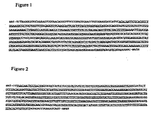
- the sequences of each of these primers is provided under the sub-heading "Experimental Basis of the Invention; 2 Enzymatic amplification of rDNA" and the position of each of the primers in relation to ITS 1 and ITS2 of Eimeria rDNA is depicted in Figures 1 and 2, respectively.
- the primer pairs of the present invention enable genus-specific PCR amplification of Eimeria ITS DNA and thus each pair is applicable to any sample of suspected coccidia and the identification of any number of different species within the genus Eimeria.
- a PCR primer (or, an oligonucleotide primer) is an oligonucleotide capable of specific hybridisation under particular PCR conditions to a region of the template DNA, which has a sequence which is substantially complementary to the primer sequence, and is adapted to prime the extension of DNA during PCR. It will be realised that a complementary sequence is capable of forming Watson-Crick bonds with its complement, in which adenine pairs with thymine or guanine pairs with cytosine.
- Each primer is typically used as a member of a primer pair, including a 5' upstream primer that hybridises with the 5' end of the template DNA to be amplified and a 3' downstream primer that hybridises with the complement of the 3' end of the template DNA to be amplified.
- the term "substantially complementary”, as used herein, means that the primer may not have 100% complementarity to its target template sequence but is still capable of annealing thereto in a specific manner under appropriate PCR annealing conditions.
- the primers of the present invention may be prepared by any number of conventional DNA synthesis methods.
- the primers were manufactured and purchased commercially from GeneWorks Pty Ltd, PO Box 11, Rundle Mall, Sydney, SA 5000, Australia.
- primers which are identical in length and sequence to the primers WW1 and WW3r and/or, WW2 and WW4r as abovementioned.
- a person of ordinary skill in the art will recognise that alterations may be made to the primers while still maintaining the genus-specificity of the PCR amplification and the efficacy of the present inventive diagnostic method.
- the length of the primers used may be varied.
- the present invention contemplates that shorter primers containing at least 15 consecutive bases of the nucleotide sequences of these primers may be suitable.
- the primers may be lengthened.
- the exact upper limit of the length of the primers is not critical. However, typically primers will be less than or equal to approximately 30 bases and preferably less than or equal to 26 bases.
- primer WW1 may be extended by up to 10 nucleotides from its 3' end (TCT AAA GGA T), (SEQ ID NO: 3), WW2 may be extended by up to 4 nucleotides at its 5' end (CAGC), (SEQ ID NO: 4), WW3r may be extended by up to 5 nucleotides from its 3' end (GTT TT), (SEQ ID NO: 5) or up to 10 nucleotides from its 5' end (ATG CGT GAG C), (SEQ ID NO: 6) and WW4r may be extended by up to 10 nucleotides at either end (3' end, ACT GAT TTC A, (SEQ ID NO: 7) and 5' end, TGA TAT GCT T, (SEQ ID NO: 8)).
- non-complementary nucleotide fragments may also be attached to the 5' end of the primers, effectively increasing their length.
- the present invention contemplates minor changes (or conservative alterations) to the sequence of the primers which do not substantially alter their ability to anneal to their specific target DNA and subsequently prime extension during PCR.
- any particular nucleotide, or plurality of nucleotides, of a primer may be substituted for alternative nucleotides, which may not allow for Watson-Crick base-pairing at the particular site of alteration on annealing of the primer to the template DNA during PCR, but nonetheless does not substantially affect the ability of the primer to prime extension during PCR.
- Such alternative primers may be referred to as "annealing equivalents" of the primers WW1, WW3r, WW2 or WW4r and variants thereof, as described herein.
- Such annealing equivalents will be at least 15 nucleotides in length and adapted to anneal to a target sequence under appropriate PCR annealing conditions.
- appropriate PCR annealing conditions for such annealing equivalents include the use of a PCR reaction mix or buffer having 3-7mM MgCl 2 . It is considered that annealing temperatures of between 45° C and 52°C may be appropriate for most annealing equivalents.
- a target sequence as referred to in this paragraph, means a sequence being complementary to at least 15 consecutive bases of the sequence of either one of the primers WW1, WW3r, WW2 or WW4r.
- any alternative PCR primer sets designed around WW1 and WW3r, and/or, WW2 and WW4r, of the present invention may be evaluated, at least notionally, using appropriate software and the ITS-1 and ITS-2 and flanking region DNA sequence information.
- Such software packages include, for example, PC Oligo5 (National Bioscience Inc) or Amplify (University of Wisconsin).
- Examples of variations on the primers WW1 , WW3r, WW2 and WW4r which may be appropriate in the present invention include: Table 1A Variations of WW1 (5'-3') Variations of WW3r (5'-3') AGTTGCGTAAATAGAGCCC (SEQ ID NO: 9) AAGACATCCATTGCTGAAA (SEQ ID NO: 10) AAGTTGCGTAAAAG AGCC (SEQ ID NO: 11) CAAGACATCCATTGC TGAA (SEQ ID NO: 12) AAGTTGCGTAAATAGAGC (SEQ ID NO: 13) CAAGACATCCATTGCTGA (SEQ ID NO: 14) TTGCGTAAATAGAGCCC (SEQ ID NO: 15) GACATCCATTGCTGAAA (SEQ ID NO: 16) Variations of WW2 (5'-3') Variations of WW4r (5'-3') CGTCTGTTTCAGTGTCT (SEQ ID NO: 17) AATTCAGCGGGTAACCTCG (SEQ ID NO: 18) ACGTCTGTTTCAG
- novel oligonucleotides or primers and variants thereof disclosed herein have been designed to enable genus-specific PCR amplification of regions of ITS-1 and ITS-2, it will be appreciated that they may also be applied, individually or in combination, to various other applications. For example they may be used as molecular probes, or primers for alternative diagnostic techniques (such as LCR, ligase chain reaction, or quantitative PCR). Those skilled in the art will readily appreciate the means by which such applications may be effected using standard methodology in the art.
- the primers are preferably end-labelled with [ ⁇ - 33 P]ATP.
- other means of labelling the PCR products may be utilised; for example, incorporation of [ ⁇ - 32 P]dNTPs during PCR amplification.
- non-radioactive labelling systems using digoxygenin, biotin and the like, may be employed.
- Such non-radioactive labelling systems are well known in the art and accordingly may be readily applied by a person of ordinary skill.
- one example is provided herein under the heading "Experimental Basis for the Invention - 7 Example of use of Fluorescence-based Electrophoretic Detection". It will be appreciated that the non-radioactive label may be used to end-label a particular primer or may be incorporated into the primer and/or PCR product.
- Each PCR is run with at least one monospecific control sample or standard of known species identity. It will be appreciated that control samples containing more than one known species may be entertained. Negative controls in which no Eimeria template DNA is present are also run against the samples. It will be appreciated that other standard controls routinely used in the art may also be run against the samples.
- the Eimeria genomic DNA of the control or standards of known Eimeria species may be purified in a like manner to the genomic DNA of unknown samples.
- Laboratory lines of known Eimeria identity obtained from Medichick Laboratories (Australia) or Animal Research Institute of the Queensland Department of Primary Industries (Australia), for example, may be utilised for this purpose.
- Amplification is conducted according to conventional procedures in the art to which this invention relates; such as described in US Patent No 4,683,202.
- standard PCRs according to the invention include 0. 1 ⁇ M-1 ⁇ M of each primer, 200 ⁇ M each dNTP, 3-7mM MgCl 2 , and 1U Taq DNA polymerase (Promega).
- each PCR is overlayed with mineral oil or the like to prevent evaporation of the reaction mix during cycling.
- PCR cycling is preferably run under the following conditions: denaturation at a temperature of 94 °C for approximately 15 to 30 seconds, annealing at a temperature of from 45°C to 60°C for 15 to 30 seconds and extension at a temperature of 72°C for 15 to 30 seconds.
- PCR conditions may be for the preferred pairs of primers, WW1 and WW3r, and WW2 and WW4r, of the invention: Denaturation Annealing Extension Cycles 94°C, 30 seconds 45°C, 30 seconds 72°C, 30 seconds 30 94°C, 30 seconds 50°C, 30 seconds 72°C, 30 seconds 30 94°C, 30 seconds 60°C, 30 seconds 72°C, 30 seconds 30 94°C, 15 seconds 60°C, 15 seconds 72°C, 30 seconds 30
- PCR conditions are merely exemplary and may be varied so as to optimise conditions where, for example, alternative PCR cyclers or DNA polymerases are used, where the quality of the template DNA differs, or where variations of the primers not specifically exemplified herein are used, without departing from the scope of the present invention.
- the PCR conditions may be altered or optimised by changing the concentration of the various constituents within the reaction and/or changing the constituents of the reaction, altering the number of amplification cycles, the denaturation, annealing or extension times or temperatures, or the quantity of template DNA, for example.
- PCR conditions may be optimised to overcome variability between reactions.
- PCR conditions may be optimised by routine analysis based on the above mentioned factors which are commonly understood in the art.
- PCR annealing temperatures for any primer within the scope of the present invention may be derived from the calculated melting temperature of that primer. Such melting temperatures may be calculated using standard formulas, such as that described in Sambrook, 1989. As will be understood by those of ordinary skill in the art to which this invention relates annealing temperatures may be above or below the melting temperature but generally an annealing temperature of approximately 5°C above the calculated melting temperature of the primer may be suitable.
- PCR products obtained from the amplification of regions of ITS-1 and ITS-2 of both unknown samples and relevant control samples or standards of known identity, may be detected by electrophoretic separation.
- Electrophoretic techniques which are particularly sensitive to minor differences in PCR product size and/or sequence are preferred.
- the techniques of SSCP (single-strand conformation polymorphism) and/or DPGE (denaturing polyacrylamide gel electrophoresis) are particularly suitable when conditions are optimised as they have the ability to detect single base changes in sequence or variation in length by a single nucleotide between samples.
- these techniques are readily applicable to the screening of large numbers of samples.
- any particular PCR product may be separated as single-stranded molecules by electrophoresis in a non-denaturing polyacrylamide gel.
- the technique is based on the fact that a molecule of single-stranded DNA folds differently from another such molecule if it differs in sequence by a single base or more; differences in tertiary structure result in differences in mobility during electrophoresis.
- DPGE has previously been described and is well known in the art to which this invention relates.
- each strand of a DNA molecule is separated from its complementary strand and run on a polyacrylamide gel under denaturing conditions. Under such conditions, the two strands of any particular DNA molecule are prevented from re-hybridising to one another during electrophoresis such that individual strands will migrate separately within the gel.
- DPGE is a sensitive system which is capable of identifying differences in the length of any two DNA molecules to a single nucleotide.
- DPGE DPGE
- the following range of conditions are preferable, however, as with the SSCP conditions, they may be altered to take account of many other laboratory variables, without departing from the scope of the present invention; 0.4mm thick gel between 4 and 6% polyacrylamide, containing 42% urea and 1xTBE, subjected to electrophoresis at between 20 to 50W for approximately 4 hours at 40°C.
- the following conditions may be utilised in the present invention: Gel (polyacrylamide) Power (W) Time (Hours) Temperature (°C) 0.4mm thick (6%) containing 42% urea and 1xTBE 40 4 40 0.4mm thick (4%) containing 42% urea and 1xTBE 40 4 40 0.4mm thick (5.5%) containing 42% urea and 1xTBE 40 4 40 0.4mm thick (5%) containing 42% urea and 1xTBE 20 4 40 0.4mm thick (5%) containing 42% urea and 1xTBE 30 4 40 0.4mm thick (5%) containing 42% urea and 1xTBE 50 4 40
- DPGE is preferred for species identification while SSCP is preferred for the detection of population variation within a species, although both techniques are applicable to species identification.
- either one of SSCP or DPGE may be used alone to effect identification or diagnosis of Eimeria species.
- the present invention also contemplates both techniques being used in parallel in order to gain a better understanding of the identity of the species of Eimeria within a particular sample.
- the present invention considers the use of other complementary techniques such as agarose gel electrophoresis and DNA sequencing.
- gels may be processed according to standard techniques (for example, in the case of polyacrylamide gels, dried on to filter or blotting paper), and subjected to autoradiography for a time appropriate to be able to demonstrate the position of the PCR product bands on a gel.
- the methodology of the present invention is preferably adapted to an automated (fluorescence-based) electrophoretic system; for example, and Applied BioSystems (ABI) automated sequencing apparatus coupled with appropriate computer hard- and software.
- an automated (fluorescence-based) electrophoretic system for example, and Applied BioSystems (ABI) automated sequencing apparatus coupled with appropriate computer hard- and software.
- specific "fingerprints" for individual species of Eimeria may be recorded, stored (for protocol and reporting purposes) and compared against standard samples of known species status.
- electrophoretic methods are standard procedures commonly used and understood by those of general skill in the art.
- specific exemplification of one such system is provided herein under "Experimental Basis of the Invention - 7 Example of Use of Fluorescence-based Electrophoretic detection".
- faeces were collected from groups of chickens and the Eimeria oocysts allowed to sporulate under constant aeration at 30°C for a minimum of 48 hours.
- Oocysts were isolated using saturated NaCl (Shirley et al, 1995), washed extensively in 50 ml volumes of H 2 O and made up to a final aqueous suspension (10 ml containing 5x10 6 oocysts).
- oocysts were then purified using a sucrose-gradient centrifugation method (Gasser et al, 1987), which removed faecal components inhibitory to the PCR, washed (as above) and then resuspended in 1 ml of H 2 O. DNA was isolated from oocysts using a Wizard® Genomic DNA Purification Kit (Promega, WI, USA). In brief, each aqueous suspension of oocysts was transferred to a 1.5 ml Eppendorf tube, centrifuged at 13000g for 5 min and resuspended in 300 ⁇ l of Nuclei Lysis Solution (Promega, WI, USA).
- This lysate was then centrifuged at 13000g for 5 min to pellet the oocyst and sporocyst walls, and the supernatant transferred to a fresh tube.
- the DNA was purified from the supernatant according to the "yeast DNA protocol" (Promega) and eluted into 50 ⁇ l of H 2 O.
- Oligonucleotide primers were designed to regions of the 18S, 5.8S and 28S rRNA gene sequences considered to be specific for the genus Eimeria.
- the ITS-1 (plus flanking sequence) was amplified by PCR using the primers WW1 (forward: 5'-AAG TTG CGT AAA TAG AGC CC-3') and WW3r (reverse: 5'-CAA GAC ATC CAT TGC TGA AA-3'), while ITS-2 was amplified using the primers WW2 (forward: 5'-ACG TCT GTT TCA GTG TCT-3') and WW4r (reverse: 5'-AAA TTC AGC GGG TAA CCT CG-3').
- the 18S gene was amplified using primers WW5 (5'- ACC TGG TTG ATC CTG CCA G-3'), (SEQ ID NO: 29), and WW6r (5'-CTT CCG CAG GTT CAC CTA CGG-3'), (SEQ ID NO: 30).
- Primers used to amplify ITS-1 or ITS-2 were endlabelled with [ ⁇ - 33 P]ATP (NEN Life Science Products) using T4 polynucleotide kinase according to the manufacturer's protocol (Promega, WI, USA).
- PCR reactions were performed in 30 ⁇ l volumes using -50 ng of template, 50 pmol primer, 200 ⁇ M of each dNTP, 7 mM MgCl 2 (for ITS-1) or 3 mM MgCl 2 (for ITS-2) and 1 U Taq DNA polymerase (Promega, WI, USA) under the following thermocycling conditions: 94°C, 30 s (denaturation); 55°C, 30 s (annealing); 72°C, 30 s (extension) for 30 cycles in a DNA Thermal Cycler 480 (Perkin Elmer, USA). Control samples without DNA were included in each PCR run.
- PCR products were denatured at 95°C for 5 min and snap-cooled on a freeze block (-20°C) for 2 min before loading on to gels.
- DPGE 5 ⁇ l of each sample were loaded into the wells of a 0.4 mm thick 5% polyacrylamide gel containing 42% urea and 1 x TBE, and subjected to electrophoresis at 40 W for 4 h at 40°C.
- SSCP single-strand conformation polymorphism
- 3 ⁇ l of each sample were loaded into the wells of a 0.4 mm thick non-denaturing gel (0.6x MDETM, mutation detection enhancement; FMC BioProducts, Rockland, ME, USA) containing 0.6x TBE, and electrophoresis performed at 7 W for 17 h at 15°C. Optimization was as described previously (Zhu and Gasser, 1998). Both electrophoretic procedures were performed in a conventional sequencing rig (BaseRunner; IBI, New Haven, CT, USA). Gels were dried on to blotting paper and subjected to autoradiography using RP1 film (Agfa).
- PCR products were purified over Wizard® PCR Preps columns (Promega, WI, USA) and eluted into 40 ⁇ l H 2 O.
- 18S rRNA gene an aliquot (1 ⁇ l) was subjected directly to cycle-sequencing with the fmol® DNA Cycle Sequencing System (Promega, WI, USA) using the same primers as for PCR and an annealing temperature of 55°C.
- ITS-1 an aliquot of column-purified PCR product (100 ng) was cloned into the pGEM®-T plasmid vector (Promega, WI, USA), and 12 clones (per PCR product) isolated for cycle-sequencing.
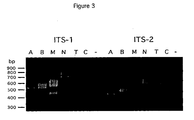
- ITS-1 PCR products On agarose gels (Fig. 3), the sizes of ITS-1 PCR products varied from -450-770 bp, whereas those for the ITS-2 were -370-620 bp (Table 2).
- the band size(s) were unique to each species as no intraspecific variation in band profiles was detected between or among multiple isolates.
- ITS-1 PCR products one band was detected for E. acervulina and E. tenella, whereas 2-3 bands were resolved for the other 3 species (Table 2).
- ITS-2 PCR products one band was detected for E . tenella, while 2 bands were displayed for all other species (Table 2).
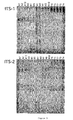
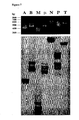
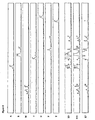
- DPGE and SSCP were then evaluated for their ability to display size or sequence variation in denatured PCR products. Both techniques allowed the unequivocal identification of all Eimeria species using either ITS-1 and/or ITS-2 PCR products (Figs. 4 and 5).
- ITS-1 and/or ITS-2 PCR products Figs. 4 and 5
- the banding profiles were relatively simple, each consisting of 2-5 single-strand bands, with no detectable differences in the number or size(s) of bands between multiple isolates of the same species.
- ITS-1 banding profiles for E. acervulina and E. brunetti were similar, the two species could be more readily distinguished using ITS-2.
- E. necatrix and E. tenella were more easily differentiated using the ITS-1 rather than ITS-2 profile.
- the banding profiles were relatively complex, each consisting of -6-15 single-strand bands (depending on ITS region and species).
- the complex profiles are the result of the formation of multiple conformational types of single-stranded molecule(s).
- No variation in ITS-1 or ITS-2 profiles was detected among multiple isolates representing the same laboratory line for any of the five species (c.f. Table 1).
- no differences were detected among multiple different laboratory lines for both E. necatrix and E. tenella.
- a significant difference in ITS-1 and ITS-2 profiles was detected between isolates representing the RA and MCK lines of E .
- acervulina which remained undetected by DPGE (Fig. 1; lanes A7 and A2 versus lanes A12 and A3). This difference related to polymorphism (or ⁇ 1% difference) in both the ITS-1 and ITS-2 sequences between these laboratory lines (unpublished).
- acervulina mixed with differing ratios of E. maxima are shown in Fig. 6A.
- a template ratio of 1:10 -4 a band representing the first species was detected, while using a template ratio of 1:10 -3 faint bands representing the second species were detectable for most samples (not all results shown).
- the species present at the lower genomic DNA concentration was detected for all combinations (Fig. 6B).
- DPGE of ITS-2 has been used (in a blind test) to correctly identify all species present in mixed oocyst isolates, indicating that this technique is useful for detecting mixed-species infections in chickens.
- Eimeria oocysts were allowed to sporulate in the faecal samples under constant aeration at 30°C for a minimum of 48 h. They were then isolated using saturated NaCl (Shirley, 1995), washed extensively in 50ml volumes of H 2 O and made up to a final aqueous suspension (10ml containing 5x10 6 oocysts). The oocysts were then purified over a sucrose-gradient (Gasser et al., 1987), which removed faecal components inhibitory to the PCR, washed and then resuspended in 0.5 ml of H 2 O.
- the ITS-2 region was PCR-amplified from individual genomic DNA samples using the primers WW2 and WW4r.
- Primer WW2 was 5' end-labelled with the fluorescent dye, FAM (Fluorescein).
- PCR reactions were performed in 25 ⁇ l volumes usually containing 1-20ng of genomic DNA template, 50pmol primer, 200 ⁇ M of each dNTP, 3mM MgCl 2 and 1 U Taq DNA polymerase (Promega, WI, USA) under the following thermocycling conditions: 94°C, 15 s (denaturation); 60°C, 15 s (annealing); 72°C, 30 s (extension) for 30 cycles in a DNA Thermal Cycler 2400 (Perkin Elmer).
- ITS-2 sequences determined for isolates M1 (E. maxima) and T6 (E. tenella) showed concordance with sequences deposited in GenBankTM (accession numbers AF027722, AF027723, AF027724, AF027725, AF027726 and AF026388).
- GenBankTM accession numbers AF027722, AF027723, AF027724, AF027725, AF027726 and AF026388.
- E. praecox X5 E. mitis X7 E. acervulina, E. maxima, E. mitis, E. praecox, E. tenella X8 E. acervulina, E. maxima, E. mitis X9 E. acervulina, E. mitis, E. praecox X10 E. praecox X11 E. acervulina, E. mitis X13 E. praecox X14 E. acervulina, E. praecox X15 E. acervulina, E. brunetti, E. maxima, E. mitis, E. praecox X 16 E. praecox
- the assay of the present invention has a number of advantages over previous known techniques used to identify species of Eimeria.
- the present assay does not require the use of multiple primer sets, specific to each of the species of Eimeria which one wishes to detect, but rather a single genus-specific primer set may be utilised.
- multiple species may be co-amplified from a single test sample and run in a single lane on an appropriate electrophoretic gel.
- the electrophoretic gel systems (SSCP and/or DFGE) used in the invention to visualise the amplification products, and thus identify the species present within a sample, are extremely sensitive and have the ability to differentiate species which may differ in length by a single nucleotide, or by minor sequence variations.
- the fluorescence-based electrophoretic detection technique described herein also has great advantages compared with previous techniques utilised to identify species of Eimeria, particularly in combination with the novel primers of the present invention.
- the use of such a detection system obviates the need to use radioactive nucleotides, and hence is safer for the operator to carry out.
- reading of electrophoretic gels is performed automatically using a computer imaging system, which eliminates the need for handling and exposure of thereof, and significantly reduces time.
- the chromatograms representing different samples (run on different gels and days) can be recorded and stored electronically as well as retrieved for comparative analysis at any time.
- this automated electrophoretic approach is time and cost effective, is well suited for the typing of large numbers of oocyst samples and may provide a useful epidemiological tool for prevalence studies as well as the monitoring of coccidiosis outbreaks.
- the invention described herein offers significant advantages over RAPD-PCR (Johnston et al, 1995; Greif et al, 1996; Shirley et al, 1994 (Parasitol Res); Shirley et al, 1994 (Res Vet Sci)) in that it employs well-defined primers to a specific region of rDNA for PCR at relatively high stringency, thereby keeping to a minimum problems with the amplification of contaminating host DNA, and with reproducibility as a consequence of non-specificity of primers and the low annealing temperature in PCR (Ellsworth et al, 1993; MacPherson et al, 1993).
- the above novel features allow for the rapid, high resolution, qualitative screening of large numbers of samples for any species of the genus Eimeria. Further, the invention obviates the need to conduct DNA sequence analysis (in the first instance), which reduces time, labour and expense.
- the present invention may be used, experimentally or on a commercial scale, as a means of routine diagnosis and monitoring of coccidia, particularly avian coccidia.
- the invention may be applicable to the quality control of species status of monospecific laboratory lines of Eimeria. It may further be useful as a complementary tool in the development of future commercial vaccines and diagnostic tests.
Landscapes
- Chemical & Material Sciences (AREA)
- Life Sciences & Earth Sciences (AREA)
- Health & Medical Sciences (AREA)
- Analytical Chemistry (AREA)
- Proteomics, Peptides & Aminoacids (AREA)
- Organic Chemistry (AREA)
- Zoology (AREA)
- Wood Science & Technology (AREA)
- Engineering & Computer Science (AREA)
- Molecular Biology (AREA)
- Biochemistry (AREA)
- Microbiology (AREA)
- Biotechnology (AREA)
- Biophysics (AREA)
- Physics & Mathematics (AREA)
- Tropical Medicine & Parasitology (AREA)
- Immunology (AREA)
- Bioinformatics & Cheminformatics (AREA)
- General Engineering & Computer Science (AREA)
- General Health & Medical Sciences (AREA)
- Genetics & Genomics (AREA)
- Measuring Or Testing Involving Enzymes Or Micro-Organisms (AREA)
- Compounds Of Unknown Constitution (AREA)
- Preparation Of Compounds By Using Micro-Organisms (AREA)
- Investigating Or Analysing Biological Materials (AREA)
Applications Claiming Priority (3)
| Application Number | Priority Date | Filing Date | Title |
|---|---|---|---|
| AUPQ622900 | 2000-03-15 | ||
| AUPQ6229A AUPQ622900A0 (en) | 2000-03-15 | 2000-03-15 | Pcr-based identification of eimeria species and strains |
| PCT/AU2001/000291 WO2001068909A1 (en) | 2000-03-15 | 2001-03-15 | Pcr-based identification of eimeria species and strains |
Publications (3)
| Publication Number | Publication Date |
|---|---|
| EP1183393A1 EP1183393A1 (en) | 2002-03-06 |
| EP1183393A4 EP1183393A4 (en) | 2003-05-14 |
| EP1183393B1 true EP1183393B1 (en) | 2006-06-21 |
Family
ID=3820327
Family Applications (1)
| Application Number | Title | Priority Date | Filing Date |
|---|---|---|---|
| EP01911285A Expired - Lifetime EP1183393B1 (en) | 2000-03-15 | 2001-03-15 | Pcr-based identification of eimeria species and strains |
Country Status (7)
| Country | Link |
|---|---|
| EP (1) | EP1183393B1 (enExample) |
| JP (1) | JP2003527112A (enExample) |
| AT (1) | ATE331042T1 (enExample) |
| AU (1) | AUPQ622900A0 (enExample) |
| DE (1) | DE60120856T2 (enExample) |
| ES (1) | ES2266167T3 (enExample) |
| WO (1) | WO2001068909A1 (enExample) |
Families Citing this family (4)
| Publication number | Priority date | Publication date | Assignee | Title |
|---|---|---|---|---|
| EP2296698A1 (en) | 2008-05-29 | 2011-03-23 | Intervet International BV | Coccidiosis vaccines |
| EP2355844A2 (en) | 2008-11-13 | 2011-08-17 | Intervet International BV | Eimeria vaccine for turkeys |
| CN110453005B (zh) * | 2019-08-28 | 2020-04-21 | 广西壮族自治区农业科学院微生物研究所 | 一种鉴别低温刺激型秀珍菇的issr-scar标记及其应用方法 |
| CN116064880B (zh) * | 2022-07-28 | 2025-11-11 | 广东省农业科学院动物卫生研究所 | 用于鉴别巨型艾美耳球虫的野毒虫株和疫苗虫株的特异性引物对、鉴别产品及方法 |
Family Cites Families (1)
| Publication number | Priority date | Publication date | Assignee | Title |
|---|---|---|---|---|
| CA2069523A1 (en) * | 1991-05-29 | 1992-11-30 | Jennifer W. Anderson | Species-specific method for identifying infectivity of eimeria species |
-
2000
- 2000-03-15 AU AUPQ6229A patent/AUPQ622900A0/en not_active Abandoned
-
2001
- 2001-03-15 ES ES01911285T patent/ES2266167T3/es not_active Expired - Lifetime
- 2001-03-15 DE DE60120856T patent/DE60120856T2/de not_active Expired - Lifetime
- 2001-03-15 AT AT01911285T patent/ATE331042T1/de not_active IP Right Cessation
- 2001-03-15 EP EP01911285A patent/EP1183393B1/en not_active Expired - Lifetime
- 2001-03-15 WO PCT/AU2001/000291 patent/WO2001068909A1/en not_active Ceased
- 2001-03-15 JP JP2001567388A patent/JP2003527112A/ja active Pending
Also Published As
| Publication number | Publication date |
|---|---|
| WO2001068909A1 (en) | 2001-09-20 |
| EP1183393A1 (en) | 2002-03-06 |
| AUPQ622900A0 (en) | 2000-04-06 |
| JP2003527112A (ja) | 2003-09-16 |
| DE60120856T2 (de) | 2006-12-28 |
| DE60120856D1 (de) | 2006-08-03 |
| ES2266167T3 (es) | 2007-03-01 |
| EP1183393A4 (en) | 2003-05-14 |
| ATE331042T1 (de) | 2006-07-15 |
Similar Documents
| Publication | Publication Date | Title |
|---|---|---|
| Zampieri et al. | High resolution melting analysis targeting hsp70 as a fast and efficient method for the discrimination of Leishmania species | |
| Cacciò et al. | The β-tubulin gene of Babesia and Theileria parasites is an informative marker for species discrimination | |
| Morris et al. | Biotechnological advances in the diagnosis of avian coccidiosis and the analysis of genetic variation in Eimeria | |
| Fernandez et al. | A multiplex PCR assay for the simultaneous detection and discrimination of the seven Eimeria species that infect domestic fowl | |
| Wilke et al. | Diagnosis of haploidy and triploidy based on measurement of gene copy number by real‐time PCR | |
| Chaisi et al. | Evaluation of a real-time PCR test for the detection and discrimination of Theileria species in the African buffalo (Syncerus caffer) | |
| WO1992014844A1 (en) | Consensus sequence primed polymerase chain reaction method for fingerprinting genomes | |
| KR102470985B1 (ko) | 브루셀라균 감별을 위한 단일염기다형성 마커 및 이를 검출하기 위한 프라이머 세트 | |
| Carrera et al. | Salmon and trout analysis by PCR‐RFLP for identity authentication | |
| Gasser et al. | Automated, fluorescence‐based approach for the specific diagnosis of chicken coccidiosis | |
| Kubota et al. | Analysis of immunodominant piroplasm surface antigen alleles in mixed populations of Theileria sergenti and T. buffeli | |
| Gasser et al. | High‐throughput capillary electrophoresis for the identification and differentiation of seven species of Eimeria from chickens | |
| EP0948643B1 (en) | Genetic markers and methods for the detection of listeria monocytogenes and listeria spp | |
| US7816502B2 (en) | Authentication of biologic materials using DNA-DNA hybridization on a solid support | |
| Ceré et al. | A New Approach for the Identification and the Diagnosis ofEimeria mediaParasite of the Rabbit | |
| Soares et al. | Identification of Hammondia heydorni oocysts by a heminested-PCR (hnPCR-AP10) based on the H. heydorni RAPD fragment AP10 | |
| Johnston et al. | Eimeria spp. of the domestic fowl: analysis of genetic variability between species and strains using DNA polymorphisms amplified by arbitrary primers and denaturing gradient-gel electrophoresis | |
| US6432646B1 (en) | PCR-based identification of Eimeria species and strains | |
| Al-Qassab et al. | A second generation multiplex PCR for typing strains of Neospora caninum using six DNA targets | |
| Li et al. | Rapid detection and identification of four major Schistosoma species by high-resolution melt (HRM) analysis | |
| WO2001068909A1 (en) | Pcr-based identification of eimeria species and strains | |
| AU785298C (en) | PCR-based identification of eimeria species and strains | |
| Depoix et al. | Chromosome number, genome size and polymorphism of European and South African isolates of large Babesia parasites that infect dogs | |
| US6326485B1 (en) | Assay for perkinsus in shellfish | |
| Pangasa et al. | Highly sensitive non‐isotopic restriction endonuclease fingerprinting of nucleotide variability in the gp60 gene within Cryptosporidium species, genotypes and subgenotypes infective to humans, and its implications |
Legal Events
| Date | Code | Title | Description |
|---|---|---|---|
| PUAI | Public reference made under article 153(3) epc to a published international application that has entered the european phase |
Free format text: ORIGINAL CODE: 0009012 |
|
| AK | Designated contracting states |
Kind code of ref document: A1 Designated state(s): AT BE CH CY DE DK ES FI FR GB GR IE IT LI LU MC NL PT SE TR |
|
| AX | Request for extension of the european patent |
Free format text: AL;LT;LV;MK;RO;SI |
|
| 17P | Request for examination filed |
Effective date: 20020315 |
|
| A4 | Supplementary search report drawn up and despatched |
Effective date: 20030331 |
|
| 17Q | First examination report despatched |
Effective date: 20030513 |
|
| RAP1 | Party data changed (applicant data changed or rights of an application transferred) |
Owner name: EIMERIA PTY LTD |
|
| GRAP | Despatch of communication of intention to grant a patent |
Free format text: ORIGINAL CODE: EPIDOSNIGR1 |
|
| GRAS | Grant fee paid |
Free format text: ORIGINAL CODE: EPIDOSNIGR3 |
|
| GRAA | (expected) grant |
Free format text: ORIGINAL CODE: 0009210 |
|
| AK | Designated contracting states |
Kind code of ref document: B1 Designated state(s): AT BE CH CY DE DK ES FI FR GB GR IE IT LI LU MC NL PT SE TR |
|
| PG25 | Lapsed in a contracting state [announced via postgrant information from national office to epo] |
Ref country code: AT Free format text: LAPSE BECAUSE OF FAILURE TO SUBMIT A TRANSLATION OF THE DESCRIPTION OR TO PAY THE FEE WITHIN THE PRESCRIBED TIME-LIMIT Effective date: 20060621 Ref country code: CH Free format text: LAPSE BECAUSE OF FAILURE TO SUBMIT A TRANSLATION OF THE DESCRIPTION OR TO PAY THE FEE WITHIN THE PRESCRIBED TIME-LIMIT Effective date: 20060621 Ref country code: LI Free format text: LAPSE BECAUSE OF FAILURE TO SUBMIT A TRANSLATION OF THE DESCRIPTION OR TO PAY THE FEE WITHIN THE PRESCRIBED TIME-LIMIT Effective date: 20060621 Ref country code: FI Free format text: LAPSE BECAUSE OF FAILURE TO SUBMIT A TRANSLATION OF THE DESCRIPTION OR TO PAY THE FEE WITHIN THE PRESCRIBED TIME-LIMIT Effective date: 20060621 Ref country code: IT Free format text: LAPSE BECAUSE OF FAILURE TO SUBMIT A TRANSLATION OF THE DESCRIPTION OR TO PAY THE FEE WITHIN THE PRESCRIBED TIME-LIMIT;WARNING: LAPSES OF ITALIAN PATENTS WITH EFFECTIVE DATE BEFORE 2007 MAY HAVE OCCURRED AT ANY TIME BEFORE 2007. THE CORRECT EFFECTIVE DATE MAY BE DIFFERENT FROM THE ONE RECORDED. Effective date: 20060621 |
|
| REG | Reference to a national code |
Ref country code: GB Ref legal event code: FG4D |
|
| REG | Reference to a national code |
Ref country code: CH Ref legal event code: EP |
|
| REG | Reference to a national code |
Ref country code: IE Ref legal event code: FG4D |
|
| REF | Corresponds to: |
Ref document number: 60120856 Country of ref document: DE Date of ref document: 20060803 Kind code of ref document: P |
|
| PG25 | Lapsed in a contracting state [announced via postgrant information from national office to epo] |
Ref country code: SE Free format text: LAPSE BECAUSE OF FAILURE TO SUBMIT A TRANSLATION OF THE DESCRIPTION OR TO PAY THE FEE WITHIN THE PRESCRIBED TIME-LIMIT Effective date: 20060921 Ref country code: DK Free format text: LAPSE BECAUSE OF FAILURE TO SUBMIT A TRANSLATION OF THE DESCRIPTION OR TO PAY THE FEE WITHIN THE PRESCRIBED TIME-LIMIT Effective date: 20060921 |
|
| RAP2 | Party data changed (patent owner data changed or rights of a patent transferred) |
Owner name: EIMERIA PTY LTD |
|
| PG25 | Lapsed in a contracting state [announced via postgrant information from national office to epo] |
Ref country code: PT Free format text: LAPSE BECAUSE OF FAILURE TO SUBMIT A TRANSLATION OF THE DESCRIPTION OR TO PAY THE FEE WITHIN THE PRESCRIBED TIME-LIMIT Effective date: 20061121 |
|
| REG | Reference to a national code |
Ref country code: GR Ref legal event code: EP Ref document number: 20060403266 Country of ref document: GR |
|
| NLT2 | Nl: modifications (of names), taken from the european patent patent bulletin |
Owner name: EIMERIA PTY LTD Effective date: 20061018 |
|
| REG | Reference to a national code |
Ref country code: CH Ref legal event code: PL |
|
| ET | Fr: translation filed | ||
| REG | Reference to a national code |
Ref country code: ES Ref legal event code: FG2A Ref document number: 2266167 Country of ref document: ES Kind code of ref document: T3 |
|
| PLBE | No opposition filed within time limit |
Free format text: ORIGINAL CODE: 0009261 |
|
| STAA | Information on the status of an ep patent application or granted ep patent |
Free format text: STATUS: NO OPPOSITION FILED WITHIN TIME LIMIT |
|
| 26N | No opposition filed |
Effective date: 20070322 |
|
| BECA | Be: change of holder's address |
Owner name: *EIMERIA PTY LTD36 CHARTER STREET RINGWOOD, MELBOU Effective date: 20060621 |
|
| PG25 | Lapsed in a contracting state [announced via postgrant information from national office to epo] |
Ref country code: MC Free format text: LAPSE BECAUSE OF NON-PAYMENT OF DUE FEES Effective date: 20070331 |
|
| PGFP | Annual fee paid to national office [announced via postgrant information from national office to epo] |
Ref country code: GR Payment date: 20090312 Year of fee payment: 9 |
|
| PG25 | Lapsed in a contracting state [announced via postgrant information from national office to epo] |
Ref country code: LU Free format text: LAPSE BECAUSE OF NON-PAYMENT OF DUE FEES Effective date: 20070315 Ref country code: CY Free format text: LAPSE BECAUSE OF FAILURE TO SUBMIT A TRANSLATION OF THE DESCRIPTION OR TO PAY THE FEE WITHIN THE PRESCRIBED TIME-LIMIT Effective date: 20060621 |
|
| PG25 | Lapsed in a contracting state [announced via postgrant information from national office to epo] |
Ref country code: GR Free format text: LAPSE BECAUSE OF NON-PAYMENT OF DUE FEES Effective date: 20101004 |
|
| PGFP | Annual fee paid to national office [announced via postgrant information from national office to epo] |
Ref country code: FR Payment date: 20120319 Year of fee payment: 12 Ref country code: IE Payment date: 20120312 Year of fee payment: 12 |
|
| PGFP | Annual fee paid to national office [announced via postgrant information from national office to epo] |
Ref country code: TR Payment date: 20120227 Year of fee payment: 12 |
|
| PGFP | Annual fee paid to national office [announced via postgrant information from national office to epo] |
Ref country code: BE Payment date: 20120328 Year of fee payment: 12 Ref country code: IT Payment date: 20120320 Year of fee payment: 12 Ref country code: GB Payment date: 20120314 Year of fee payment: 12 |
|
| PGFP | Annual fee paid to national office [announced via postgrant information from national office to epo] |
Ref country code: DE Payment date: 20120411 Year of fee payment: 12 Ref country code: NL Payment date: 20120321 Year of fee payment: 12 |
|
| PGFP | Annual fee paid to national office [announced via postgrant information from national office to epo] |
Ref country code: ES Payment date: 20120419 Year of fee payment: 12 |
|
| BERE | Be: lapsed |
Owner name: *EIMERIA PTY LTD Effective date: 20130331 |
|
| REG | Reference to a national code |
Ref country code: NL Ref legal event code: V1 Effective date: 20131001 |
|
| GBPC | Gb: european patent ceased through non-payment of renewal fee |
Effective date: 20130315 |
|
| REG | Reference to a national code |
Ref country code: FR Ref legal event code: ST Effective date: 20131129 |
|
| REG | Reference to a national code |
Ref country code: IE Ref legal event code: MM4A |
|
| REG | Reference to a national code |
Ref country code: DE Ref legal event code: R119 Ref document number: 60120856 Country of ref document: DE Effective date: 20131001 |
|
| PG25 | Lapsed in a contracting state [announced via postgrant information from national office to epo] |
Ref country code: BE Free format text: LAPSE BECAUSE OF NON-PAYMENT OF DUE FEES Effective date: 20130331 Ref country code: IE Free format text: LAPSE BECAUSE OF NON-PAYMENT OF DUE FEES Effective date: 20130315 Ref country code: FR Free format text: LAPSE BECAUSE OF NON-PAYMENT OF DUE FEES Effective date: 20130402 Ref country code: DE Free format text: LAPSE BECAUSE OF NON-PAYMENT OF DUE FEES Effective date: 20131001 Ref country code: GB Free format text: LAPSE BECAUSE OF NON-PAYMENT OF DUE FEES Effective date: 20130315 |
|
| PG25 | Lapsed in a contracting state [announced via postgrant information from national office to epo] |
Ref country code: IT Free format text: LAPSE BECAUSE OF NON-PAYMENT OF DUE FEES Effective date: 20130315 Ref country code: NL Free format text: LAPSE BECAUSE OF NON-PAYMENT OF DUE FEES Effective date: 20131001 Ref country code: TR Free format text: LAPSE BECAUSE OF NON-PAYMENT OF DUE FEES Effective date: 20130315 |
|
| REG | Reference to a national code |
Ref country code: ES Ref legal event code: FD2A Effective date: 20140606 |
|
| PG25 | Lapsed in a contracting state [announced via postgrant information from national office to epo] |
Ref country code: ES Free format text: LAPSE BECAUSE OF NON-PAYMENT OF DUE FEES Effective date: 20130316 |