EP1170494A2 - Procédé de régulation de la richesse du mélange carburant/air d'alimentation d'un moteur à combustion - Google Patents
Procédé de régulation de la richesse du mélange carburant/air d'alimentation d'un moteur à combustion Download PDFInfo
- Publication number
- EP1170494A2 EP1170494A2 EP01401653A EP01401653A EP1170494A2 EP 1170494 A2 EP1170494 A2 EP 1170494A2 EP 01401653 A EP01401653 A EP 01401653A EP 01401653 A EP01401653 A EP 01401653A EP 1170494 A2 EP1170494 A2 EP 1170494A2
- Authority
- EP
- European Patent Office
- Prior art keywords
- richness
- engine
- value
- parameter
- bprop
- Prior art date
- Legal status (The legal status is an assumption and is not a legal conclusion. Google has not performed a legal analysis and makes no representation as to the accuracy of the status listed.)
- Granted
Links
Images



Classifications
-
- F—MECHANICAL ENGINEERING; LIGHTING; HEATING; WEAPONS; BLASTING
- F02—COMBUSTION ENGINES; HOT-GAS OR COMBUSTION-PRODUCT ENGINE PLANTS
- F02D—CONTROLLING COMBUSTION ENGINES
- F02D41/00—Electrical control of supply of combustible mixture or its constituents
- F02D41/02—Circuit arrangements for generating control signals
- F02D41/14—Introducing closed-loop corrections
- F02D41/1438—Introducing closed-loop corrections using means for determining characteristics of the combustion gases; Sensors therefor
- F02D41/1477—Introducing closed-loop corrections using means for determining characteristics of the combustion gases; Sensors therefor characterised by the regulation circuit or part of it,(e.g. comparator, PI regulator, output)
- F02D41/1482—Integrator, i.e. variable slope
-
- F—MECHANICAL ENGINEERING; LIGHTING; HEATING; WEAPONS; BLASTING
- F02—COMBUSTION ENGINES; HOT-GAS OR COMBUSTION-PRODUCT ENGINE PLANTS
- F02D—CONTROLLING COMBUSTION ENGINES
- F02D41/00—Electrical control of supply of combustible mixture or its constituents
- F02D41/02—Circuit arrangements for generating control signals
- F02D41/021—Introducing corrections for particular conditions exterior to the engine
- F02D41/0235—Introducing corrections for particular conditions exterior to the engine in relation with the state of the exhaust gas treating apparatus
-
- F—MECHANICAL ENGINEERING; LIGHTING; HEATING; WEAPONS; BLASTING
- F02—COMBUSTION ENGINES; HOT-GAS OR COMBUSTION-PRODUCT ENGINE PLANTS
- F02D—CONTROLLING COMBUSTION ENGINES
- F02D41/00—Electrical control of supply of combustible mixture or its constituents
- F02D41/02—Circuit arrangements for generating control signals
- F02D41/14—Introducing closed-loop corrections
- F02D41/1438—Introducing closed-loop corrections using means for determining characteristics of the combustion gases; Sensors therefor
- F02D41/1477—Introducing closed-loop corrections using means for determining characteristics of the combustion gases; Sensors therefor characterised by the regulation circuit or part of it,(e.g. comparator, PI regulator, output)
-
- F—MECHANICAL ENGINEERING; LIGHTING; HEATING; WEAPONS; BLASTING
- F02—COMBUSTION ENGINES; HOT-GAS OR COMBUSTION-PRODUCT ENGINE PLANTS
- F02D—CONTROLLING COMBUSTION ENGINES
- F02D41/00—Electrical control of supply of combustible mixture or its constituents
- F02D41/02—Circuit arrangements for generating control signals
- F02D41/14—Introducing closed-loop corrections
- F02D41/1438—Introducing closed-loop corrections using means for determining characteristics of the combustion gases; Sensors therefor
- F02D41/1477—Introducing closed-loop corrections using means for determining characteristics of the combustion gases; Sensors therefor characterised by the regulation circuit or part of it,(e.g. comparator, PI regulator, output)
- F02D41/1483—Proportional component
-
- F—MECHANICAL ENGINEERING; LIGHTING; HEATING; WEAPONS; BLASTING
- F02—COMBUSTION ENGINES; HOT-GAS OR COMBUSTION-PRODUCT ENGINE PLANTS
- F02D—CONTROLLING COMBUSTION ENGINES
- F02D41/00—Electrical control of supply of combustible mixture or its constituents
- F02D41/02—Circuit arrangements for generating control signals
- F02D41/14—Introducing closed-loop corrections
- F02D41/1438—Introducing closed-loop corrections using means for determining characteristics of the combustion gases; Sensors therefor
- F02D41/1486—Introducing closed-loop corrections using means for determining characteristics of the combustion gases; Sensors therefor with correction for particular operating conditions
-
- F—MECHANICAL ENGINEERING; LIGHTING; HEATING; WEAPONS; BLASTING
- F02—COMBUSTION ENGINES; HOT-GAS OR COMBUSTION-PRODUCT ENGINE PLANTS
- F02D—CONTROLLING COMBUSTION ENGINES
- F02D41/00—Electrical control of supply of combustible mixture or its constituents
- F02D41/02—Circuit arrangements for generating control signals
- F02D41/14—Introducing closed-loop corrections
- F02D41/1401—Introducing closed-loop corrections characterised by the control or regulation method
- F02D2041/1409—Introducing closed-loop corrections characterised by the control or regulation method using at least a proportional, integral or derivative controller
-
- F—MECHANICAL ENGINEERING; LIGHTING; HEATING; WEAPONS; BLASTING
- F02—COMBUSTION ENGINES; HOT-GAS OR COMBUSTION-PRODUCT ENGINE PLANTS
- F02D—CONTROLLING COMBUSTION ENGINES
- F02D41/00—Electrical control of supply of combustible mixture or its constituents
- F02D41/02—Circuit arrangements for generating control signals
- F02D41/14—Introducing closed-loop corrections
- F02D41/1401—Introducing closed-loop corrections characterised by the control or regulation method
- F02D2041/1413—Controller structures or design
- F02D2041/1422—Variable gain or coefficients
Definitions
- the invention relates to a method for regulating the richness of the fuel / air supply mixture of a combustion.
- the invention relates more particularly to a method of regulation of the richness of the fuel / feed air mixture of a combustion engine of a motor vehicle whose line exhaust is equipped with a gas treatment device exhaust.
- exhaust systems are equipped in a known manner with catalysts, in particular with "three-way" catalysts so as to cause the reaction polluting substances passing through them, to reduce harmful emissions.
- three-way type catalysts have a maximum yield when the richness of the mixture is stoichiometric.
- the richness of the fuel / air mixture corresponds to ratio of fuel mass to air mass.
- the stoichiometric richness corresponds to the mixture of 1 gram of fuel and 14.7 grams of air. Such a mixture theoretically allows the complete combustion of the fuel.
- the fuel / air mixture When wealth is greater than wealth stoichiometric, the fuel / air mixture has an excess fuel. The mixture is said to be rich.
- sensors for example of the lambda type, which allow, when the temperature is above a minimum operating temperature, to provide a information representative of the richness of the mixture Fuel / air.
- this representative information of the richness of the fuel / air mixture is used to determine the amount of fuel injected so that the richness of the mixture is close to the stoichiometric richness.
- This operating process is in a closed loop.
- the invention provides a method for regulating the richness of the fuel / air mixture supplying a combustion engine of a motor vehicle whose exhaust line is equipped with a exhaust gas treatment device, to minimize the production of polluting substances, such as hydrocarbons, carbon monoxide, of the type in which the quantity of fuel injected depends in particular on a proportional term and an integral term which are determined in particular from the pressure prevailing in the intake manifold and the engine speed, characterized in that during a particular phase of engine operation which causes a variation in the richness of the mixture, the proportional term Bprop and the integral term Bint are multiplied by a first and a second coefficients D 1 , D 2 respectively which are greater than or equal to 1, so as to accelerate the ret or to the stoichiometric richness and to minimize the production of polluting substances.
- polluting substances such as hydrocarbons, carbon monoxide
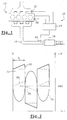
- FIG. 1 a processing device 10 of the exhaust gases G of a combustion engine 12, in particular of a combustion engine of a motor vehicle.
- the engine 12 is a spark-ignition engine with injection direct or indirect.
- An exhaust line 14 allows the evacuation of gases G from the engine to the atmosphere.
- a processing device intended for purifying the exhaust gases G is interposed in line 14. It mainly consists of a processing device 16 such than a three-way type catalyst.
- Catalyst 16 of the three-way type makes it possible to treat simultaneously several polluting substances such as nitrogen oxides, unburnt hydrocarbons and oxides of carbon. Treatment of polluting substances is possible when the catalyst temperature is higher than one minimum ignition temperature. Its efficiency is optimal when the richness of the fuel / air mixture corresponds to the stoichiometric richness.
- An electronic control system 18 makes it possible to determine the quantity Q of fuel to be injected into each cylinder so that the richness of the fuel / air mixture is the as close as possible to the stoichiometric richness.
- the electronic control system 18 determines the fuel injection time that corresponds the quantity Q of fuel injected, in particular as a function of the type of injector and injection pressure.
- the electronic control system 18 is connected, in accordance with FIG. 1, to a pressure sensor 20 to determine the pressure prevailing in the manifold intake, to a sensor 22 making it possible to determine the number of passages in top dead center of at least one of the pistons of the motor 12, as well as a probe 24, for example of the lambda type which provides information representative of the richness of the fuel / air mixture.
- the method of regulating the richness of the mixture fuel / air cannot be initialized before respondent 24 has reaches its operating temperature.
- the regulation coefficient B is determined from a proportional term Bprop and an integral term Bint, as well as from the information provided by the lambda sensor 24.
- proportional Bprop and integral Bint can be determined by means of a mapping according to the pressure in the intake manifold and engine speed engine.
- the sign + or - is determined according to the value of the information provided by the lambda sensor 24.
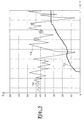
- the information provided by the lambda 24 probe is a voltage, in accordance with sinusoid 26 whose scale is represented on the right of figure 2.
- the threshold value 450mV is supplied by the lambda 24 probe when the richness of the fuel / air mixture is stoichiometric.
- the curve 28 represented in FIG. 2 corresponds to the evolution of the regulation coefficient B over time.
- the pressure prevailing in the manifold intake and engine speed are constant so that the proportional term Bprop, as well as the evolution (or slope) of the integral term Bint, are also constant.
- the first part of the graph corresponding to the first sinusoid lobe 26, illustrates an operation of the motor in which the richness of the fuel / air mixture is less than stoichiometric richness.
- the regulation coefficient B then corresponds to the sum of the integral term Bint represented in dashed lines 30 and of the product of the constant C 2 is of the proportional term Bprop represented in broken dashed lines.
- regulation period P the time elapsed between two passages to the stoichiometric richness is substantially constant, it is called regulation period P, here regulation period P 1 .
- the processing device 16 When the processing device 16 is not sufficiently hot, i.e. its temperature is below its minimum ignition temperature, almost all polluting substances is emitted into the atmosphere.
- the present invention reduces the amount of polluting substances emitted into the atmosphere by decreasing especially the difference between the richness of the mixture fuel / air and stoichiometric richness, as well as the period P.
- the regulation method according to the invention modifies the calculation of the regulation coefficient B during the phases engine operation, such as accelerations or decelerations, which cause variation of the richness of the mixture.
- the regulation process can take place according to the flowchart shown in Figure 3.
- the first step 50 is an initialization step. Certain conditions must be fulfilled in order for the regulation can determine the quantity Q of fuel injected.
- the first step 50 is activated when the engine starts 12. It can consist of the comparison of a first parameter of engine operation, called initialization parameter with a threshold value.
- the signal supplied by the probe 24 is representative of the richness of the fuel / air mixture, when the temperature of the probe is greater than an actuation value.
- the first parameter can be representative of the probe temperature 24.
- the first parameter can also correspond to time since the engine 12 started, or the number of passages of a piston in top dead center.
- the threshold value of first parameter then corresponds to the time or the number of passages of the piston in top dead center necessary for the probe 24 to reach its activation temperature.
- the probe 24 is a type probe "planar" whose temperature value quickly reaches the threshold value after starting the engine 12.
- the threshold value of the first parameter can be variable according to a second operating parameter of the engine, such as the temperature of the fluid in the engine start cooling.
- the temperature of probe 24 during startup of the engine may vary. So, depending on the value of this temperature, the time or the number of passages of a piston in top dead center necessary for the temperature of probe 24 to reach its activation temperature is more or less important.
- the temperature of probe 24 may still be higher than its activation temperature.
- the threshold value of the first parameter is weak, even zero.
- the second parameter of the motor 12 can correspond at the time elapsed between the engine 12 stopping and the next start, or at the temperature of the liquid in the engine start cooling 12.
- a particular phase of operation in particular a acceleration or deceleration phase. Indeed, it is during such operating phases of the engine 12 that the difference between the richness of the fuel / air mixture and the stoichiometric richness is the most important, that is to say that the production of polluting substances is the highest.
- the method according to the invention makes it possible to modify the determination of the wealth regulation coefficient B during of a particular phase to reduce the differences in wealth the fuel / air mixture with the stoichiometric richness, and therefore decrease the production and emission of polluting substances.
- the determination of a particular phase is carried out at from a third engine operating parameter.
- the third parameter is the intake manifold pressure motor 12 which can be measured by the pressure sensor 20.
- a device for processing the electronic system of command 18 can also determine a pressure parameter of the manifold calculated from the manifold pressure measured by the pressure sensor 20 as well as the engine speed.
- Determination of the manifold pressure calculated allows to anticipate the evolution of the pressure value of the manifold measured as a function in particular of the engine speed, which makes it possible to overcome the variation in the pressure of the collector between the instant at which it is measured by the sensor 20 and when it is used by the electronic system 18.
- a particular phase can be detected when the value the difference between the manifold pressure measured or calculated and a filtered manifold pressure is greater than one high threshold value or lower than a low threshold value.
- the absolute values of the high and low thresholds can be equal.
- the filtered manifold pressure is the result of a calculation which is carried out by the electronic control system 18 and which takes into account, in particular the pressure of the filtered manifold, calculated in the previous iteration, as well as the pressure of the collector measured or calculated.
- Collector pressure filtered somehow defines an average value whose deviation from the measured or calculated pressure value determines a variation in the pressure of the intake manifold, and by therefore a particular phase such as an acceleration or deceleration.
- a particular phase of deceleration is detected when the difference between the manifold pressure measured or calculated and the filtered manifold pressure is below a low threshold.
- the regulation coefficient B of the wealth is determined by known step 54, in accordance with the figure 3.
- the proportional term Bprop and the integral term Bint are multiplied by first and second coefficients D 1 , D 2 respectively which are greater than or equal to 1, so as to accelerate the return. to stoichiometric richness and to minimize the production of polluting substances.
- the first and the second coefficient D 1 , D 2 can be constants determined during the development of the engine. They can also be variable and depend for example on the engine speed.
- the first and second coefficient D 1 , D 2 can be natural numbers. They can also be decimal numbers greater than 1.
- FIG. 4 represents a curve 70 which illustrates the evolution of the regulation coefficient B, determined according to the state of the technique, during a cycle of the engine 12 represented by the curve 72.
- FIG. 5 represents a curve 74 which illustrates the evolution of the regulation coefficient B, determined according to the invention, during the cycle of the engine 12 represented by the curve 72.
- Determination of the regulation coefficient B according to the invention is shown in FIG. 5 by an increase in the slope of curve 74 relative to the slope of curve 70. That is to say that for an identical duration the value of regulation coefficient B determined according to the invention evolves more that the regulation coefficient B determined according to the state of the technical.
- the portion of the curve 72 represented in FIGS. 4 and 5 illustrates a phase of acceleration of the engine 12.
- Figure 5 shows the detection of a phase particular to point 76. Indeed, we notice a change in brutal slope which is the translation of the calculation of the coefficient of regulation B according to the invention.
- Calculation of the regulation coefficient B according to the invention optimizes the regulation of stoichiometric richness of the fuel / air mixture.
- Figure 6 illustrates the evolution of wealth during a engine acceleration and stabilization phase.
- Curve 78 illustrates the evolution of average wealth according to the state of the art
- curve 80 illustrates the evolution of the average wealth according to the invention.
- the regulation of richness to stoichiometric richness is more efficient according to the invention.
- the regulation method according to the invention makes it possible to greatly reduce the "peak" of wealth 82, ie its scale and duration, which greatly reduces the production of polluting substances compared to the state of the art.
- the process according to the invention allows to determine a regulation coefficient B which allows optimize wealth regulation.
- Step 58 then makes it possible to determine in a known manner the quantity Q of fuel injected.
- Such a process makes it possible to minimize the production of polluting substances without reducing engine performance 12 and without deteriorating the driving pleasure of the vehicle.
- the regulation method according to the invention makes it possible to divide by half the "peak" of wealth 82, ie its magnitude and its duration, which greatly reduces the production of substances polluting compared to the state of the art.
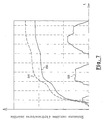
- Figure 7 shows two curves 84 and 86 which represent the cumulative emissions of unburnt hydrocarbons, when the fuel injection is managed by a process of regulating the richness according to the state of the art and according to the process of wealth regulation according to the invention respectively, at during an engine operating cycle represented by a curve 88.
- Determining the quantity Q of fuel injected according to the regulatory process of the invention can in certain case, cause combustion instabilities inside a engine chamber 12, when the engine speed is constant.
- step 52 allows to determine the particular phases corresponding to variations in engine speed 12.
- step 60 makes it possible to stop the process of regulation.
- the stop can be obtained when a fourth parameter of operation of the motor 12 reaches a threshold value.
- the fourth parameter is also called stop parameter.
- the stop parameter can correspond to a signal representative of the temperature of the treatment device 16 of exhaust gas G.
- the threshold value can be minimum priming temperature of the treatment device 16.
- the stop parameter can also be representative of the number of passages of a piston in top dead center or engine coolant water temperature 12. In these two cases, it is possible to establish a link between the stop parameter, and the temperature of the treatment device 16.
- the value threshold of the fourth stop parameter may depend on the second parameter.
- the method according to the invention makes it possible to regulate the richness of the fuel / air mixture, especially between the instant at which the probe 24 has reached its operating temperature, and the instant at which the processing device 16 reaches its minimum ignition temperature.
Landscapes
- Engineering & Computer Science (AREA)
- Chemical & Material Sciences (AREA)
- Combustion & Propulsion (AREA)
- Mechanical Engineering (AREA)
- General Engineering & Computer Science (AREA)
- Electrical Control Of Air Or Fuel Supplied To Internal-Combustion Engine (AREA)
Abstract
Description
- la quantité de carburant injectée est déterminée selon la formule Q=A1+A2*(1+B/C1), dans laquelle A1, A2 et C1 sont des constantes, et B est un coefficient de régulation de la richesse qui est déterminé à partir du terme proportionnel et du terme intégral;
- lorsque la richesse est inférieure au mélange stoechiométrique, le coefficient de régulation de la richesse est déterminé par la formule B=C2* D1* Bprop+ D2* Bint, dans laquelle C2 est une constante ;
- lorsque la richesse est supérieure au mélange stoechiométrique, le coefficient de régulation de la richesse est déterminé par la formule B=-(C2* D1* Bprop+ D2* Bint), dans laquelle C2 est une constante ;
- l'un au moins du premier et/ou du second coefficients est un entier naturel ;
- le procédé est initialisé lorsqu'un premier paramètre de fonctionnement du moteur atteint une valeur de seuil ;
- la valeur de seuil du premier paramètre est variable en fonction d'au moins un deuxième paramètre de fonctionnement du moteur, tel que la température du liquide du circuit de refroidissement au démarrage du moteur ;
- le premier paramètre est représentatif de la température d'une sonde ;
- la sonde est de type lambda ;
- la sonde est de type planar ;
- l'un au moins des termes proportionnel et/ou intégral est déterminé par une cartographie notamment à partir de la pression régnant dans le collecteur d'admission et du régime du moteur ;
- ladite phase particulière de fonctionnement est détectée à partir d'une valeur représentative d'un troisième paramètre de fonctionnement du moteur ;
- le troisième paramètre de fonctionnement du moteur correspond à la pression du collecteur d'admission du moteur dont la valeur est fournie par un capteur ;
- la valeur de la pression du collecteur correspond au résultat du traitement, par un dispositif de traitement, de la valeur de la pression du collecteur fournie par le capteur de façon à anticiper son évolution ;
- la valeur de la pression du collecteur est filtrée de façon à définir une valeur filtrée, et en ce que la phase particulière de fonctionnement est détectée lorsque la valeur de la différence entre la pression du collecteur mesurée ou calculée par le dispositif de traitement et la pression du collecteur filtrée est supérieure à une valeur de seuil haut ou est inférieure à une valeur de seuil bas;
- le procédé est arrêté lorsqu'un quatrième paramètre de fonctionnement du moteur atteint une valeur de seuil ;
- le quatrième paramètre est représentatif de la température du dispositif de traitement des gaz d'échappement ;
- le premier et/ou le quatrième paramètre est représentatif du nombre de passages d'un piston au point mort haut ;
- le dispositif de traitement des gaz d'échappement comporte un catalyseur de type catalyseur trois voies.
- la figure 1 représente schématiquement une ligne d'échappement d'un moteur à combustion équipée d'un catalyseur;
- la figure 2 représente schématiquement l'évolution du coefficient de régulation, ainsi que la richesse du mélange carburant/air dans un moteur régulé selon l'état de la technique ;
- la figure 3 représente l'organigramme du procédé selon l'invention ;
- la figure 4 représente l'évolution du coefficient de régulation, déterminé selon l'état de la technique ;
- la figure 5 représente l'évolution du coefficient de régulation, déterminé selon l'invention ;
- la figure 6 représente deux courbes illustrant l'évolution de la richesse, l'une selon l'état de la technique, l'autre selon l'invention ;
- la figure 7 représente deux courbes illustrant l'évolution le cumul des émissions d'hydrocarbures imbrûlés, l'une selon l'état de la technique, l'autre selon l'invention.
Claims (19)
- Procédé de régulation de la richesse du mélange carburant/air d'alimentation d'un moteur (12) à combustion d'un véhicule automobile dont la ligne d'échappement est équipée d'un dispositif de traitement (10) des gaz d'échappement, pour minimiser la production de substances polluantes, telles que des hydrocarbures, du monoxyde de carbone, du type dans lequel la quantité de carburant injectée (Q) dépend notamment d'un terme proportionnel (Bprop) et d'un terme intégral (Bint) qui sont déterminés notamment à partir de la pression régnant dans le collecteur d'admission et du régime du moteur, caractérisé en ce que lors d'une phase particulière de fonctionnement du moteur (12) qui provoque une variation de la richesse du mélange, le terme proportionnel (Bprop) et le terme intégral (Bint) sont multipliés par un premier et un second coefficients (D1, D2) respectivement qui sont supérieurs ou égaux à 1, de façon à accélérer le retour à la richesse stoechiométrique et à minimiser la production de substances polluantes.
- Procédé selon la revendication précédente, caractérisé en ce que la quantité de carburant injectée (Q) est déterminée selon la formule Q=A1+A2*(1+B/C1), dans laquelle A1, A2 et C1 sont des constantes, et B est un coefficient de régulation de la richesse qui est déterminé à partir du terme proportionnel (Bprop) et du terme intégral (Bint).
- Procédé selon la revendication précédente, caractérisé en ce que lorsque la richesse est inférieure au mélange stoechiométrique, le coefficient (B) de régulation de la richesse est déterminé par la formule B=C2* D1* Bprop+ D2* Bint, dans laquelle C2 est une constante.
- Procédé selon la revendication 2, caractérisé en ce que lorsque la richesse est supérieure au mélange stoechiométrique, le coefficient (B) de régulation de la richesse est déterminé par la formule B=-(C2* D1* Bprop+ D2* Bint), dans laquelle C2 est une constante.
- Procédé selon l'une quelconque des revendications précédentes, caractérisé en ce que l'un au moins du premier et/ou du second coefficients (D1, D2) est un entier naturel.
- Procédé selon l'une quelconque des revendications précédentes, caractérisé en ce qu'il est initialisé lorsqu'un premier paramètre de fonctionnement du moteur (12) atteint une valeur de seuil.
- Procédé selon la revendication précédente, caractérisé en ce que la valeur de seuil du premier paramètre est variable en fonction d'au moins un deuxième paramètre de fonctionnement du moteur (12), tel que la température du liquide du circuit de refroidissement au démarrage du moteur (12).
- Procédé selon l'une des revendications 6 ou 7, caractérisé en ce que le premier paramètre est représentatif de la température d'une sonde (24).
- Procédé selon la revendication précédente, caractérisé en ce que la sonde (24) est de type lambda.
- Procédé selon la revendication 8, caractérisé en ce que la sonde (24) est de type planar.
- Procédé selon l'une quelconque des revendications précédentes, caractérisé en ce que l'un au moins des termes proportionnel Bprop et/ou intégral Bint est déterminé par une cartographie notamment à partir de la pression régnant dans le collecteur d'admission et du régime du moteur (12).
- Procédé selon l'une quelconque des revendications précédentes, caractérisé en ce que ladite phase particulière de fonctionnement est détectée à partir d'une valeur représentative d'un troisième paramètre de fonctionnement du moteur (12).
- Procédé selon la revendication précédente, caractérisé en ce que le troisième paramètre de fonctionnement du moteur (12) correspond à la pression du collecteur d'admission du moteur (12) dont la valeur est fournie par un capteur (20).
- Procédé selon la revendication précédente, caractérisé en ce que la valeur de la pression du collecteur correspond au résultat du traitement, par un dispositif de traitement (18), de la valeur de la pression du collecteur fournie par le capteur (20) de façon anticiper son évolution.
- Procédé selon l'une des revendications 13 ou 14, caractérisé en ce que la valeur de la pression du collecteur est filtrée de façon à définir une valeur filtrée, et en ce que la phase particulière de fonctionnement est détectée lorsque la valeur de la différence entre la pression du collecteur mesurée ou calculée par le dispositif de traitement (18) et la pression du collecteur filtrée est supérieure à une valeur de seuil haut ou est inférieure à une valeur de seuil bas.
- Procédé selon l'une quelconques des revendications précédentes, caractérisé en ce qu'il est arrêté lorsqu'un quatrième paramètre de fonctionnement du moteur (12) atteint une valeur de seuil.
- Procédé selon la revendication précédente, caractérisé en ce que le quatrième paramètre est représentatif de la température du dispositif de traitement des gaz d'échappement.
- Procédé selon l'une des revendications 13 à 17, caractérisé en ce que le premier et/ou le quatrième paramètre est représentatif du nombre de passages d'un piston au point mort haut.
- Procédé selon l'une quelconque des revendications précédentes, caractérisé en ce que le dispositif de traitement (16) des gaz d'échappement comporte un catalyseur de type catalyseur trois voies.
Applications Claiming Priority (2)
| Application Number | Priority Date | Filing Date | Title |
|---|---|---|---|
| FR0008889A FR2811375B1 (fr) | 2000-07-07 | 2000-07-07 | Procede de regulation de la richesse du melange carburant/ air d'alimentation d'un moteur a combustion |
| FR0008889 | 2000-07-07 |
Publications (3)
| Publication Number | Publication Date |
|---|---|
| EP1170494A2 true EP1170494A2 (fr) | 2002-01-09 |
| EP1170494A3 EP1170494A3 (fr) | 2003-01-22 |
| EP1170494B1 EP1170494B1 (fr) | 2006-08-02 |
Family
ID=8852240
Family Applications (1)
| Application Number | Title | Priority Date | Filing Date |
|---|---|---|---|
| EP20010401653 Expired - Lifetime EP1170494B1 (fr) | 2000-07-07 | 2001-06-22 | Procédé de régulation de la richesse du mélange carburant/air d'alimentation d'un moteur à combustion |
Country Status (4)
| Country | Link |
|---|---|
| EP (1) | EP1170494B1 (fr) |
| DE (1) | DE60121872T2 (fr) |
| ES (1) | ES2264680T3 (fr) |
| FR (1) | FR2811375B1 (fr) |
Family Cites Families (5)
| Publication number | Priority date | Publication date | Assignee | Title |
|---|---|---|---|---|
| JPS6460744A (en) * | 1987-08-31 | 1989-03-07 | Honda Motor Co Ltd | Air-fuel ratio feedback control method for internal combustion engine |
| DE4024213A1 (de) * | 1990-07-31 | 1992-02-06 | Bosch Gmbh Robert | Verfahren zur lambdaregelung einer brennkraftmaschine mit katalysator |
| JP3035390B2 (ja) * | 1991-08-30 | 2000-04-24 | 本田技研工業株式会社 | 内燃エンジンの空燃比制御装置 |
| JP3680178B2 (ja) * | 1992-07-17 | 2005-08-10 | 株式会社日立製作所 | 内燃機関の空燃比制御装置 |
| JP2778383B2 (ja) * | 1992-10-02 | 1998-07-23 | 日産自動車株式会社 | エンジンの空燃比制御装置 |
-
2000
- 2000-07-07 FR FR0008889A patent/FR2811375B1/fr not_active Expired - Lifetime
-
2001
- 2001-06-22 EP EP20010401653 patent/EP1170494B1/fr not_active Expired - Lifetime
- 2001-06-22 DE DE2001621872 patent/DE60121872T2/de not_active Expired - Lifetime
- 2001-06-22 ES ES01401653T patent/ES2264680T3/es not_active Expired - Lifetime
Also Published As
| Publication number | Publication date |
|---|---|
| EP1170494A3 (fr) | 2003-01-22 |
| FR2811375A1 (fr) | 2002-01-11 |
| FR2811375B1 (fr) | 2003-02-21 |
| DE60121872T2 (de) | 2007-02-15 |
| EP1170494B1 (fr) | 2006-08-02 |
| DE60121872D1 (de) | 2006-09-14 |
| ES2264680T3 (es) | 2007-01-16 |
Similar Documents
| Publication | Publication Date | Title |
|---|---|---|
| EP1815118B1 (fr) | Dispositif et procede de determination de la quantite de nox emise par un moteur diesel de vehicule automobile et systemes de diagnostic et de controle du fonctionnement du moteur comprenant un tel dispositif. | |
| FR2490730A1 (fr) | Procede de fonctionnement d'un moteur a combustion interne | |
| FR2823254A1 (fr) | Appareil de commande d'emission d'un moteur a combustion interne et procede pour retarder la deterioration du catalyseur de commande d'emission | |
| FR2466633A1 (fr) | Systeme de commande de synchronisation d'etincelles pour moteurs a combustion interne | |
| FR3033364A1 (fr) | Dispositif et procede de regulation de la richesse d'un moteur a combustion interne | |
| FR2918712A1 (fr) | Procede de demarrage d'un moteur a combustion interne. | |
| EP0886039B1 (fr) | Procédé et ensemble d'élimination des oxydes d'azote présents dans des gaz d'échappement, utilisant un echangeur thermique | |
| WO2001027455A1 (fr) | Procede d'injection de carburant pour un moteur a combustion | |
| EP0931923A1 (fr) | Procédé de commande de purge d'un pot catalytique de traitement des gaz d'échappement d'un moteur à combustion interne | |
| FR3076862A1 (fr) | Dispositif de controle d'injection de carburant et système de controle d'injection de carburant | |
| EP1170494B1 (fr) | Procédé de régulation de la richesse du mélange carburant/air d'alimentation d'un moteur à combustion | |
| EP0774059B1 (fr) | Procede de controle du bon fonctionnement de l'assistance en air d'un injecteur de carburant pour moteur a combustion interne et dispositif correspondant | |
| EP1115965B1 (fr) | Procede et dispositif de commande du mode de combustion d'un moteur a combustion interne | |
| EP1877657B1 (fr) | Procede de commande d'un moteur de vehicule pour reguler la temperature d'un filtre a particules | |
| EP4311927B1 (fr) | Procédé de contrôle de l'injection de carburant dans un moteur à combustion interne et système associé | |
| EP4301970A1 (fr) | Procédé et système de commande d'un moteur à combustion interne à allumage commandé en phase de levé de pied | |
| FR3072418A1 (fr) | Procede de controle d'un moteur a combustion interne a allumage commande, a l'etat non allume | |
| FR2905421A1 (fr) | Procede et appareil de commande pour gerer un moteur diesel. | |
| EP0852667B1 (fr) | Procede de determination de la richesse optimale d'un melange air/carburant alimentant un moteur a combustion interne et dispositif correspondant | |
| EP0931914B1 (fr) | Procédé de surveillance du fonctionnement d'un pot catalytique de véhicule automobile | |
| FR2721653A1 (fr) | Procédé et dispositif de réduction des émissions de polluants d'un moteur à combustion interne. | |
| FR3152293A1 (fr) | Procédé de réglage de richesse dans un moteur à combustion interne | |
| FR2769044A1 (fr) | Procede de commande du recyclage de gaz d'echappement dans un moteur a combustion interne | |
| EP1375885B1 (fr) | Procédé de traitement des gaz d'échappement d'un moteur à combustion à essence | |
| WO2008139091A2 (fr) | Moteur a combustion interne avec regulation de la quantite de carburant injecte et procede d'elaboration d'une valeur de consigne de carburant injecte |
Legal Events
| Date | Code | Title | Description |
|---|---|---|---|
| PUAI | Public reference made under article 153(3) epc to a published international application that has entered the european phase |
Free format text: ORIGINAL CODE: 0009012 |
|
| AK | Designated contracting states |
Kind code of ref document: A2 Designated state(s): AT BE CH CY DE DK ES FI FR GB GR IE IT LI LU MC NL PT SE TR |
|
| AX | Request for extension of the european patent |
Free format text: AL;LT;LV;MK;RO;SI |
|
| RAP1 | Party data changed (applicant data changed or rights of an application transferred) |
Owner name: RENAULT S.A.S. |
|
| 17P | Request for examination filed |
Effective date: 20020625 |
|
| PUAL | Search report despatched |
Free format text: ORIGINAL CODE: 0009013 |
|
| AK | Designated contracting states |
Kind code of ref document: A3 Designated state(s): AT BE CH CY DE DK ES FI FR GB GR IE IT LI LU MC NL PT SE TR |
|
| AX | Request for extension of the european patent |
Free format text: AL;LT;LV;MK;RO;SI |
|
| RIC1 | Information provided on ipc code assigned before grant |
Free format text: 7F 02D 41/14 A, 7F 02D 41/02 B, 7F 02D 41/06 B |
|
| AKX | Designation fees paid |
Designated state(s): DE ES GB IT |
|
| GRAP | Despatch of communication of intention to grant a patent |
Free format text: ORIGINAL CODE: EPIDOSNIGR1 |
|
| RTI1 | Title (correction) |
Free format text: PROCESS FOR REGULATING THE RICHNESS OF AN AIR/FUEL MIXTURE FEEDING AN INTERNAL-COMBUSTION ENGINE |
|
| GRAS | Grant fee paid |
Free format text: ORIGINAL CODE: EPIDOSNIGR3 |
|
| GRAA | (expected) grant |
Free format text: ORIGINAL CODE: 0009210 |
|
| AK | Designated contracting states |
Kind code of ref document: B1 Designated state(s): DE ES GB IT |
|
| PG25 | Lapsed in a contracting state [announced via postgrant information from national office to epo] |
Ref country code: IT Free format text: LAPSE BECAUSE OF FAILURE TO SUBMIT A TRANSLATION OF THE DESCRIPTION OR TO PAY THE FEE WITHIN THE PRESCRIBED TIME-LIMIT;WARNING: LAPSES OF ITALIAN PATENTS WITH EFFECTIVE DATE BEFORE 2007 MAY HAVE OCCURRED AT ANY TIME BEFORE 2007. THE CORRECT EFFECTIVE DATE MAY BE DIFFERENT FROM THE ONE RECORDED. Effective date: 20060802 |
|
| REG | Reference to a national code |
Ref country code: GB Ref legal event code: FG4D Free format text: NOT ENGLISH |
|
| REF | Corresponds to: |
Ref document number: 60121872 Country of ref document: DE Date of ref document: 20060914 Kind code of ref document: P |
|
| GBT | Gb: translation of ep patent filed (gb section 77(6)(a)/1977) |
Effective date: 20060906 |
|
| REG | Reference to a national code |
Ref country code: ES Ref legal event code: FG2A Ref document number: 2264680 Country of ref document: ES Kind code of ref document: T3 |
|
| PLBE | No opposition filed within time limit |
Free format text: ORIGINAL CODE: 0009261 |
|
| STAA | Information on the status of an ep patent application or granted ep patent |
Free format text: STATUS: NO OPPOSITION FILED WITHIN TIME LIMIT |
|
| 26N | No opposition filed |
Effective date: 20070503 |
|
| PGFP | Annual fee paid to national office [announced via postgrant information from national office to epo] |
Ref country code: GB Payment date: 20170620 Year of fee payment: 17 Ref country code: DE Payment date: 20170621 Year of fee payment: 17 |
|
| PGFP | Annual fee paid to national office [announced via postgrant information from national office to epo] |
Ref country code: ES Payment date: 20170724 Year of fee payment: 17 |
|
| REG | Reference to a national code |
Ref country code: DE Ref legal event code: R119 Ref document number: 60121872 Country of ref document: DE |
|
| GBPC | Gb: european patent ceased through non-payment of renewal fee |
Effective date: 20180622 |
|
| PG25 | Lapsed in a contracting state [announced via postgrant information from national office to epo] |
Ref country code: DE Free format text: LAPSE BECAUSE OF NON-PAYMENT OF DUE FEES Effective date: 20190101 Ref country code: GB Free format text: LAPSE BECAUSE OF NON-PAYMENT OF DUE FEES Effective date: 20180622 |
|
| REG | Reference to a national code |
Ref country code: ES Ref legal event code: FD2A Effective date: 20190916 |
|
| PG25 | Lapsed in a contracting state [announced via postgrant information from national office to epo] |
Ref country code: ES Free format text: LAPSE BECAUSE OF NON-PAYMENT OF DUE FEES Effective date: 20180623 |