EP1164212A2 - Silica-group composite oxide fiber and process for the production thereof - Google Patents
Silica-group composite oxide fiber and process for the production thereof Download PDFInfo
- Publication number
- EP1164212A2 EP1164212A2 EP01305136A EP01305136A EP1164212A2 EP 1164212 A2 EP1164212 A2 EP 1164212A2 EP 01305136 A EP01305136 A EP 01305136A EP 01305136 A EP01305136 A EP 01305136A EP 1164212 A2 EP1164212 A2 EP 1164212A2
- Authority
- EP
- European Patent Office
- Prior art keywords
- fiber
- phase
- oxide
- silica
- polycarbosilane
- Prior art date
- Legal status (The legal status is an assumption and is not a legal conclusion. Google has not performed a legal analysis and makes no representation as to the accuracy of the status listed.)
- Granted
Links
Images


Classifications
-
- C—CHEMISTRY; METALLURGY
- C03—GLASS; MINERAL OR SLAG WOOL
- C03C—CHEMICAL COMPOSITION OF GLASSES, GLAZES OR VITREOUS ENAMELS; SURFACE TREATMENT OF GLASS; SURFACE TREATMENT OF FIBRES OR FILAMENTS MADE FROM GLASS, MINERALS OR SLAGS; JOINING GLASS TO GLASS OR OTHER MATERIALS
- C03C13/00—Fibre or filament compositions
-
- B—PERFORMING OPERATIONS; TRANSPORTING
- B01—PHYSICAL OR CHEMICAL PROCESSES OR APPARATUS IN GENERAL
- B01J—CHEMICAL OR PHYSICAL PROCESSES, e.g. CATALYSIS OR COLLOID CHEMISTRY; THEIR RELEVANT APPARATUS
- B01J21/00—Catalysts comprising the elements, oxides, or hydroxides of magnesium, boron, aluminium, carbon, silicon, titanium, zirconium, or hafnium
- B01J21/06—Silicon, titanium, zirconium or hafnium; Oxides or hydroxides thereof
- B01J21/08—Silica
-
- B—PERFORMING OPERATIONS; TRANSPORTING
- B01—PHYSICAL OR CHEMICAL PROCESSES OR APPARATUS IN GENERAL
- B01J—CHEMICAL OR PHYSICAL PROCESSES, e.g. CATALYSIS OR COLLOID CHEMISTRY; THEIR RELEVANT APPARATUS
- B01J35/00—Catalysts, in general, characterised by their form or physical properties
- B01J35/50—Catalysts, in general, characterised by their form or physical properties characterised by their shape or configuration
- B01J35/58—Fabrics or filaments
-
- C—CHEMISTRY; METALLURGY
- C04—CEMENTS; CONCRETE; ARTIFICIAL STONE; CERAMICS; REFRACTORIES
- C04B—LIME, MAGNESIA; SLAG; CEMENTS; COMPOSITIONS THEREOF, e.g. MORTARS, CONCRETE OR LIKE BUILDING MATERIALS; ARTIFICIAL STONE; CERAMICS; REFRACTORIES; TREATMENT OF NATURAL STONE
- C04B35/00—Shaped ceramic products characterised by their composition; Ceramics compositions; Processing powders of inorganic compounds preparatory to the manufacturing of ceramic products
- C04B35/622—Forming processes; Processing powders of inorganic compounds preparatory to the manufacturing of ceramic products
- C04B35/62227—Forming processes; Processing powders of inorganic compounds preparatory to the manufacturing of ceramic products obtaining fibres
- C04B35/62231—Forming processes; Processing powders of inorganic compounds preparatory to the manufacturing of ceramic products obtaining fibres based on oxide ceramics
- C04B35/6224—Fibres based on silica
-
- C—CHEMISTRY; METALLURGY
- C04—CEMENTS; CONCRETE; ARTIFICIAL STONE; CERAMICS; REFRACTORIES
- C04B—LIME, MAGNESIA; SLAG; CEMENTS; COMPOSITIONS THEREOF, e.g. MORTARS, CONCRETE OR LIKE BUILDING MATERIALS; ARTIFICIAL STONE; CERAMICS; REFRACTORIES; TREATMENT OF NATURAL STONE
- C04B35/00—Shaped ceramic products characterised by their composition; Ceramics compositions; Processing powders of inorganic compounds preparatory to the manufacturing of ceramic products
- C04B35/622—Forming processes; Processing powders of inorganic compounds preparatory to the manufacturing of ceramic products
- C04B35/62227—Forming processes; Processing powders of inorganic compounds preparatory to the manufacturing of ceramic products obtaining fibres
- C04B35/62231—Forming processes; Processing powders of inorganic compounds preparatory to the manufacturing of ceramic products obtaining fibres based on oxide ceramics
- C04B35/6224—Fibres based on silica
- C04B35/62245—Fibres based on silica rich in aluminium oxide
-
- C—CHEMISTRY; METALLURGY
- C04—CEMENTS; CONCRETE; ARTIFICIAL STONE; CERAMICS; REFRACTORIES
- C04B—LIME, MAGNESIA; SLAG; CEMENTS; COMPOSITIONS THEREOF, e.g. MORTARS, CONCRETE OR LIKE BUILDING MATERIALS; ARTIFICIAL STONE; CERAMICS; REFRACTORIES; TREATMENT OF NATURAL STONE
- C04B35/00—Shaped ceramic products characterised by their composition; Ceramics compositions; Processing powders of inorganic compounds preparatory to the manufacturing of ceramic products
- C04B35/622—Forming processes; Processing powders of inorganic compounds preparatory to the manufacturing of ceramic products
- C04B35/62227—Forming processes; Processing powders of inorganic compounds preparatory to the manufacturing of ceramic products obtaining fibres
- C04B35/62231—Forming processes; Processing powders of inorganic compounds preparatory to the manufacturing of ceramic products obtaining fibres based on oxide ceramics
- C04B35/6225—Fibres based on zirconium oxide, e.g. zirconates such as PZT
-
- C—CHEMISTRY; METALLURGY
- C04—CEMENTS; CONCRETE; ARTIFICIAL STONE; CERAMICS; REFRACTORIES
- C04B—LIME, MAGNESIA; SLAG; CEMENTS; COMPOSITIONS THEREOF, e.g. MORTARS, CONCRETE OR LIKE BUILDING MATERIALS; ARTIFICIAL STONE; CERAMICS; REFRACTORIES; TREATMENT OF NATURAL STONE
- C04B35/00—Shaped ceramic products characterised by their composition; Ceramics compositions; Processing powders of inorganic compounds preparatory to the manufacturing of ceramic products
- C04B35/622—Forming processes; Processing powders of inorganic compounds preparatory to the manufacturing of ceramic products
- C04B35/62227—Forming processes; Processing powders of inorganic compounds preparatory to the manufacturing of ceramic products obtaining fibres
- C04B35/62231—Forming processes; Processing powders of inorganic compounds preparatory to the manufacturing of ceramic products obtaining fibres based on oxide ceramics
- C04B35/62259—Fibres based on titanium oxide
-
- C—CHEMISTRY; METALLURGY
- C04—CEMENTS; CONCRETE; ARTIFICIAL STONE; CERAMICS; REFRACTORIES
- C04B—LIME, MAGNESIA; SLAG; CEMENTS; COMPOSITIONS THEREOF, e.g. MORTARS, CONCRETE OR LIKE BUILDING MATERIALS; ARTIFICIAL STONE; CERAMICS; REFRACTORIES; TREATMENT OF NATURAL STONE
- C04B35/00—Shaped ceramic products characterised by their composition; Ceramics compositions; Processing powders of inorganic compounds preparatory to the manufacturing of ceramic products
- C04B35/622—Forming processes; Processing powders of inorganic compounds preparatory to the manufacturing of ceramic products
- C04B35/626—Preparing or treating the powders individually or as batches ; preparing or treating macroscopic reinforcing agents for ceramic products, e.g. fibres; mechanical aspects section B
- C04B35/63—Preparing or treating the powders individually or as batches ; preparing or treating macroscopic reinforcing agents for ceramic products, e.g. fibres; mechanical aspects section B using additives specially adapted for forming the products, e.g.. binder binders
- C04B35/632—Organic additives
- C04B35/6325—Organic additives based on organo-metallic compounds
-
- D—TEXTILES; PAPER
- D01—NATURAL OR MAN-MADE THREADS OR FIBRES; SPINNING
- D01F—CHEMICAL FEATURES IN THE MANUFACTURE OF ARTIFICIAL FILAMENTS, THREADS, FIBRES, BRISTLES OR RIBBONS; APPARATUS SPECIALLY ADAPTED FOR THE MANUFACTURE OF CARBON FILAMENTS
- D01F9/00—Artificial filaments or the like of other substances; Manufacture thereof; Apparatus specially adapted for the manufacture of carbon filaments
- D01F9/08—Artificial filaments or the like of other substances; Manufacture thereof; Apparatus specially adapted for the manufacture of carbon filaments of inorganic material
-
- C—CHEMISTRY; METALLURGY
- C04—CEMENTS; CONCRETE; ARTIFICIAL STONE; CERAMICS; REFRACTORIES
- C04B—LIME, MAGNESIA; SLAG; CEMENTS; COMPOSITIONS THEREOF, e.g. MORTARS, CONCRETE OR LIKE BUILDING MATERIALS; ARTIFICIAL STONE; CERAMICS; REFRACTORIES; TREATMENT OF NATURAL STONE
- C04B2235/00—Aspects relating to ceramic starting mixtures or sintered ceramic products
- C04B2235/02—Composition of constituents of the starting material or of secondary phases of the final product
- C04B2235/30—Constituents and secondary phases not being of a fibrous nature
- C04B2235/32—Metal oxides, mixed metal oxides, or oxide-forming salts thereof, e.g. carbonates, nitrates, (oxy)hydroxides, chlorides
- C04B2235/3201—Alkali metal oxides or oxide-forming salts thereof
-
- C—CHEMISTRY; METALLURGY
- C04—CEMENTS; CONCRETE; ARTIFICIAL STONE; CERAMICS; REFRACTORIES
- C04B—LIME, MAGNESIA; SLAG; CEMENTS; COMPOSITIONS THEREOF, e.g. MORTARS, CONCRETE OR LIKE BUILDING MATERIALS; ARTIFICIAL STONE; CERAMICS; REFRACTORIES; TREATMENT OF NATURAL STONE
- C04B2235/00—Aspects relating to ceramic starting mixtures or sintered ceramic products
- C04B2235/02—Composition of constituents of the starting material or of secondary phases of the final product
- C04B2235/30—Constituents and secondary phases not being of a fibrous nature
- C04B2235/32—Metal oxides, mixed metal oxides, or oxide-forming salts thereof, e.g. carbonates, nitrates, (oxy)hydroxides, chlorides
- C04B2235/3201—Alkali metal oxides or oxide-forming salts thereof
- C04B2235/3203—Lithium oxide or oxide-forming salts thereof
-
- C—CHEMISTRY; METALLURGY
- C04—CEMENTS; CONCRETE; ARTIFICIAL STONE; CERAMICS; REFRACTORIES
- C04B—LIME, MAGNESIA; SLAG; CEMENTS; COMPOSITIONS THEREOF, e.g. MORTARS, CONCRETE OR LIKE BUILDING MATERIALS; ARTIFICIAL STONE; CERAMICS; REFRACTORIES; TREATMENT OF NATURAL STONE
- C04B2235/00—Aspects relating to ceramic starting mixtures or sintered ceramic products
- C04B2235/02—Composition of constituents of the starting material or of secondary phases of the final product
- C04B2235/30—Constituents and secondary phases not being of a fibrous nature
- C04B2235/32—Metal oxides, mixed metal oxides, or oxide-forming salts thereof, e.g. carbonates, nitrates, (oxy)hydroxides, chlorides
- C04B2235/3205—Alkaline earth oxides or oxide forming salts thereof, e.g. beryllium oxide
- C04B2235/3206—Magnesium oxides or oxide-forming salts thereof
-
- C—CHEMISTRY; METALLURGY
- C04—CEMENTS; CONCRETE; ARTIFICIAL STONE; CERAMICS; REFRACTORIES
- C04B—LIME, MAGNESIA; SLAG; CEMENTS; COMPOSITIONS THEREOF, e.g. MORTARS, CONCRETE OR LIKE BUILDING MATERIALS; ARTIFICIAL STONE; CERAMICS; REFRACTORIES; TREATMENT OF NATURAL STONE
- C04B2235/00—Aspects relating to ceramic starting mixtures or sintered ceramic products
- C04B2235/02—Composition of constituents of the starting material or of secondary phases of the final product
- C04B2235/30—Constituents and secondary phases not being of a fibrous nature
- C04B2235/32—Metal oxides, mixed metal oxides, or oxide-forming salts thereof, e.g. carbonates, nitrates, (oxy)hydroxides, chlorides
- C04B2235/3205—Alkaline earth oxides or oxide forming salts thereof, e.g. beryllium oxide
- C04B2235/3208—Calcium oxide or oxide-forming salts thereof, e.g. lime
-
- C—CHEMISTRY; METALLURGY
- C04—CEMENTS; CONCRETE; ARTIFICIAL STONE; CERAMICS; REFRACTORIES
- C04B—LIME, MAGNESIA; SLAG; CEMENTS; COMPOSITIONS THEREOF, e.g. MORTARS, CONCRETE OR LIKE BUILDING MATERIALS; ARTIFICIAL STONE; CERAMICS; REFRACTORIES; TREATMENT OF NATURAL STONE
- C04B2235/00—Aspects relating to ceramic starting mixtures or sintered ceramic products
- C04B2235/02—Composition of constituents of the starting material or of secondary phases of the final product
- C04B2235/30—Constituents and secondary phases not being of a fibrous nature
- C04B2235/32—Metal oxides, mixed metal oxides, or oxide-forming salts thereof, e.g. carbonates, nitrates, (oxy)hydroxides, chlorides
- C04B2235/3205—Alkaline earth oxides or oxide forming salts thereof, e.g. beryllium oxide
- C04B2235/3215—Barium oxides or oxide-forming salts thereof
-
- C—CHEMISTRY; METALLURGY
- C04—CEMENTS; CONCRETE; ARTIFICIAL STONE; CERAMICS; REFRACTORIES
- C04B—LIME, MAGNESIA; SLAG; CEMENTS; COMPOSITIONS THEREOF, e.g. MORTARS, CONCRETE OR LIKE BUILDING MATERIALS; ARTIFICIAL STONE; CERAMICS; REFRACTORIES; TREATMENT OF NATURAL STONE
- C04B2235/00—Aspects relating to ceramic starting mixtures or sintered ceramic products
- C04B2235/02—Composition of constituents of the starting material or of secondary phases of the final product
- C04B2235/30—Constituents and secondary phases not being of a fibrous nature
- C04B2235/32—Metal oxides, mixed metal oxides, or oxide-forming salts thereof, e.g. carbonates, nitrates, (oxy)hydroxides, chlorides
- C04B2235/3224—Rare earth oxide or oxide forming salts thereof, e.g. scandium oxide
- C04B2235/3225—Yttrium oxide or oxide-forming salts thereof
-
- C—CHEMISTRY; METALLURGY
- C04—CEMENTS; CONCRETE; ARTIFICIAL STONE; CERAMICS; REFRACTORIES
- C04B—LIME, MAGNESIA; SLAG; CEMENTS; COMPOSITIONS THEREOF, e.g. MORTARS, CONCRETE OR LIKE BUILDING MATERIALS; ARTIFICIAL STONE; CERAMICS; REFRACTORIES; TREATMENT OF NATURAL STONE
- C04B2235/00—Aspects relating to ceramic starting mixtures or sintered ceramic products
- C04B2235/02—Composition of constituents of the starting material or of secondary phases of the final product
- C04B2235/30—Constituents and secondary phases not being of a fibrous nature
- C04B2235/32—Metal oxides, mixed metal oxides, or oxide-forming salts thereof, e.g. carbonates, nitrates, (oxy)hydroxides, chlorides
- C04B2235/3231—Refractory metal oxides, their mixed metal oxides, or oxide-forming salts thereof
- C04B2235/3232—Titanium oxides or titanates, e.g. rutile or anatase
-
- C—CHEMISTRY; METALLURGY
- C04—CEMENTS; CONCRETE; ARTIFICIAL STONE; CERAMICS; REFRACTORIES
- C04B—LIME, MAGNESIA; SLAG; CEMENTS; COMPOSITIONS THEREOF, e.g. MORTARS, CONCRETE OR LIKE BUILDING MATERIALS; ARTIFICIAL STONE; CERAMICS; REFRACTORIES; TREATMENT OF NATURAL STONE
- C04B2235/00—Aspects relating to ceramic starting mixtures or sintered ceramic products
- C04B2235/02—Composition of constituents of the starting material or of secondary phases of the final product
- C04B2235/30—Constituents and secondary phases not being of a fibrous nature
- C04B2235/32—Metal oxides, mixed metal oxides, or oxide-forming salts thereof, e.g. carbonates, nitrates, (oxy)hydroxides, chlorides
- C04B2235/3231—Refractory metal oxides, their mixed metal oxides, or oxide-forming salts thereof
- C04B2235/3244—Zirconium oxides, zirconates, hafnium oxides, hafnates, or oxide-forming salts thereof
-
- C—CHEMISTRY; METALLURGY
- C04—CEMENTS; CONCRETE; ARTIFICIAL STONE; CERAMICS; REFRACTORIES
- C04B—LIME, MAGNESIA; SLAG; CEMENTS; COMPOSITIONS THEREOF, e.g. MORTARS, CONCRETE OR LIKE BUILDING MATERIALS; ARTIFICIAL STONE; CERAMICS; REFRACTORIES; TREATMENT OF NATURAL STONE
- C04B2235/00—Aspects relating to ceramic starting mixtures or sintered ceramic products
- C04B2235/02—Composition of constituents of the starting material or of secondary phases of the final product
- C04B2235/30—Constituents and secondary phases not being of a fibrous nature
- C04B2235/32—Metal oxides, mixed metal oxides, or oxide-forming salts thereof, e.g. carbonates, nitrates, (oxy)hydroxides, chlorides
- C04B2235/3231—Refractory metal oxides, their mixed metal oxides, or oxide-forming salts thereof
- C04B2235/3244—Zirconium oxides, zirconates, hafnium oxides, hafnates, or oxide-forming salts thereof
- C04B2235/3248—Zirconates or hafnates, e.g. zircon
- C04B2235/3249—Zirconates or hafnates, e.g. zircon containing also titanium oxide or titanates, e.g. lead zirconate titanate (PZT)
-
- C—CHEMISTRY; METALLURGY
- C04—CEMENTS; CONCRETE; ARTIFICIAL STONE; CERAMICS; REFRACTORIES
- C04B—LIME, MAGNESIA; SLAG; CEMENTS; COMPOSITIONS THEREOF, e.g. MORTARS, CONCRETE OR LIKE BUILDING MATERIALS; ARTIFICIAL STONE; CERAMICS; REFRACTORIES; TREATMENT OF NATURAL STONE
- C04B2235/00—Aspects relating to ceramic starting mixtures or sintered ceramic products
- C04B2235/02—Composition of constituents of the starting material or of secondary phases of the final product
- C04B2235/30—Constituents and secondary phases not being of a fibrous nature
- C04B2235/32—Metal oxides, mixed metal oxides, or oxide-forming salts thereof, e.g. carbonates, nitrates, (oxy)hydroxides, chlorides
- C04B2235/3262—Manganese oxides, manganates, rhenium oxides or oxide-forming salts thereof, e.g. MnO
-
- C—CHEMISTRY; METALLURGY
- C04—CEMENTS; CONCRETE; ARTIFICIAL STONE; CERAMICS; REFRACTORIES
- C04B—LIME, MAGNESIA; SLAG; CEMENTS; COMPOSITIONS THEREOF, e.g. MORTARS, CONCRETE OR LIKE BUILDING MATERIALS; ARTIFICIAL STONE; CERAMICS; REFRACTORIES; TREATMENT OF NATURAL STONE
- C04B2235/00—Aspects relating to ceramic starting mixtures or sintered ceramic products
- C04B2235/02—Composition of constituents of the starting material or of secondary phases of the final product
- C04B2235/30—Constituents and secondary phases not being of a fibrous nature
- C04B2235/32—Metal oxides, mixed metal oxides, or oxide-forming salts thereof, e.g. carbonates, nitrates, (oxy)hydroxides, chlorides
- C04B2235/327—Iron group oxides, their mixed metal oxides, or oxide-forming salts thereof
- C04B2235/3272—Iron oxides or oxide forming salts thereof, e.g. hematite, magnetite
-
- C—CHEMISTRY; METALLURGY
- C04—CEMENTS; CONCRETE; ARTIFICIAL STONE; CERAMICS; REFRACTORIES
- C04B—LIME, MAGNESIA; SLAG; CEMENTS; COMPOSITIONS THEREOF, e.g. MORTARS, CONCRETE OR LIKE BUILDING MATERIALS; ARTIFICIAL STONE; CERAMICS; REFRACTORIES; TREATMENT OF NATURAL STONE
- C04B2235/00—Aspects relating to ceramic starting mixtures or sintered ceramic products
- C04B2235/02—Composition of constituents of the starting material or of secondary phases of the final product
- C04B2235/30—Constituents and secondary phases not being of a fibrous nature
- C04B2235/32—Metal oxides, mixed metal oxides, or oxide-forming salts thereof, e.g. carbonates, nitrates, (oxy)hydroxides, chlorides
- C04B2235/327—Iron group oxides, their mixed metal oxides, or oxide-forming salts thereof
- C04B2235/3279—Nickel oxides, nickalates, or oxide-forming salts thereof
-
- C—CHEMISTRY; METALLURGY
- C04—CEMENTS; CONCRETE; ARTIFICIAL STONE; CERAMICS; REFRACTORIES
- C04B—LIME, MAGNESIA; SLAG; CEMENTS; COMPOSITIONS THEREOF, e.g. MORTARS, CONCRETE OR LIKE BUILDING MATERIALS; ARTIFICIAL STONE; CERAMICS; REFRACTORIES; TREATMENT OF NATURAL STONE
- C04B2235/00—Aspects relating to ceramic starting mixtures or sintered ceramic products
- C04B2235/02—Composition of constituents of the starting material or of secondary phases of the final product
- C04B2235/30—Constituents and secondary phases not being of a fibrous nature
- C04B2235/32—Metal oxides, mixed metal oxides, or oxide-forming salts thereof, e.g. carbonates, nitrates, (oxy)hydroxides, chlorides
- C04B2235/3284—Zinc oxides, zincates, cadmium oxides, cadmiates, mercury oxides, mercurates or oxide forming salts thereof
-
- C—CHEMISTRY; METALLURGY
- C04—CEMENTS; CONCRETE; ARTIFICIAL STONE; CERAMICS; REFRACTORIES
- C04B—LIME, MAGNESIA; SLAG; CEMENTS; COMPOSITIONS THEREOF, e.g. MORTARS, CONCRETE OR LIKE BUILDING MATERIALS; ARTIFICIAL STONE; CERAMICS; REFRACTORIES; TREATMENT OF NATURAL STONE
- C04B2235/00—Aspects relating to ceramic starting mixtures or sintered ceramic products
- C04B2235/02—Composition of constituents of the starting material or of secondary phases of the final product
- C04B2235/30—Constituents and secondary phases not being of a fibrous nature
- C04B2235/32—Metal oxides, mixed metal oxides, or oxide-forming salts thereof, e.g. carbonates, nitrates, (oxy)hydroxides, chlorides
- C04B2235/3296—Lead oxides, plumbates or oxide forming salts thereof, e.g. silver plumbate
-
- C—CHEMISTRY; METALLURGY
- C04—CEMENTS; CONCRETE; ARTIFICIAL STONE; CERAMICS; REFRACTORIES
- C04B—LIME, MAGNESIA; SLAG; CEMENTS; COMPOSITIONS THEREOF, e.g. MORTARS, CONCRETE OR LIKE BUILDING MATERIALS; ARTIFICIAL STONE; CERAMICS; REFRACTORIES; TREATMENT OF NATURAL STONE
- C04B2235/00—Aspects relating to ceramic starting mixtures or sintered ceramic products
- C04B2235/02—Composition of constituents of the starting material or of secondary phases of the final product
- C04B2235/30—Constituents and secondary phases not being of a fibrous nature
- C04B2235/34—Non-metal oxides, non-metal mixed oxides, or salts thereof that form the non-metal oxides upon heating, e.g. carbonates, nitrates, (oxy)hydroxides, chlorides
- C04B2235/3409—Boron oxide, borates, boric acids, or oxide forming salts thereof, e.g. borax
-
- C—CHEMISTRY; METALLURGY
- C04—CEMENTS; CONCRETE; ARTIFICIAL STONE; CERAMICS; REFRACTORIES
- C04B—LIME, MAGNESIA; SLAG; CEMENTS; COMPOSITIONS THEREOF, e.g. MORTARS, CONCRETE OR LIKE BUILDING MATERIALS; ARTIFICIAL STONE; CERAMICS; REFRACTORIES; TREATMENT OF NATURAL STONE
- C04B2235/00—Aspects relating to ceramic starting mixtures or sintered ceramic products
- C04B2235/02—Composition of constituents of the starting material or of secondary phases of the final product
- C04B2235/30—Constituents and secondary phases not being of a fibrous nature
- C04B2235/34—Non-metal oxides, non-metal mixed oxides, or salts thereof that form the non-metal oxides upon heating, e.g. carbonates, nitrates, (oxy)hydroxides, chlorides
- C04B2235/3418—Silicon oxide, silicic acids or oxide forming salts thereof, e.g. silica sol, fused silica, silica fume, cristobalite, quartz or flint
-
- C—CHEMISTRY; METALLURGY
- C04—CEMENTS; CONCRETE; ARTIFICIAL STONE; CERAMICS; REFRACTORIES
- C04B—LIME, MAGNESIA; SLAG; CEMENTS; COMPOSITIONS THEREOF, e.g. MORTARS, CONCRETE OR LIKE BUILDING MATERIALS; ARTIFICIAL STONE; CERAMICS; REFRACTORIES; TREATMENT OF NATURAL STONE
- C04B2235/00—Aspects relating to ceramic starting mixtures or sintered ceramic products
- C04B2235/02—Composition of constituents of the starting material or of secondary phases of the final product
- C04B2235/30—Constituents and secondary phases not being of a fibrous nature
- C04B2235/44—Metal salt constituents or additives chosen for the nature of the anions, e.g. hydrides or acetylacetonate
- C04B2235/441—Alkoxides, e.g. methoxide, tert-butoxide
-
- C—CHEMISTRY; METALLURGY
- C04—CEMENTS; CONCRETE; ARTIFICIAL STONE; CERAMICS; REFRACTORIES
- C04B—LIME, MAGNESIA; SLAG; CEMENTS; COMPOSITIONS THEREOF, e.g. MORTARS, CONCRETE OR LIKE BUILDING MATERIALS; ARTIFICIAL STONE; CERAMICS; REFRACTORIES; TREATMENT OF NATURAL STONE
- C04B2235/00—Aspects relating to ceramic starting mixtures or sintered ceramic products
- C04B2235/02—Composition of constituents of the starting material or of secondary phases of the final product
- C04B2235/30—Constituents and secondary phases not being of a fibrous nature
- C04B2235/48—Organic compounds becoming part of a ceramic after heat treatment, e.g. carbonising phenol resins
- C04B2235/483—Si-containing organic compounds, e.g. silicone resins, (poly)silanes, (poly)siloxanes or (poly)silazanes
-
- C—CHEMISTRY; METALLURGY
- C04—CEMENTS; CONCRETE; ARTIFICIAL STONE; CERAMICS; REFRACTORIES
- C04B—LIME, MAGNESIA; SLAG; CEMENTS; COMPOSITIONS THEREOF, e.g. MORTARS, CONCRETE OR LIKE BUILDING MATERIALS; ARTIFICIAL STONE; CERAMICS; REFRACTORIES; TREATMENT OF NATURAL STONE
- C04B2235/00—Aspects relating to ceramic starting mixtures or sintered ceramic products
- C04B2235/02—Composition of constituents of the starting material or of secondary phases of the final product
- C04B2235/50—Constituents or additives of the starting mixture chosen for their shape or used because of their shape or their physical appearance
- C04B2235/52—Constituents or additives characterised by their shapes
- C04B2235/5208—Fibers
- C04B2235/5264—Fibers characterised by the diameter of the fibers
-
- C—CHEMISTRY; METALLURGY
- C04—CEMENTS; CONCRETE; ARTIFICIAL STONE; CERAMICS; REFRACTORIES
- C04B—LIME, MAGNESIA; SLAG; CEMENTS; COMPOSITIONS THEREOF, e.g. MORTARS, CONCRETE OR LIKE BUILDING MATERIALS; ARTIFICIAL STONE; CERAMICS; REFRACTORIES; TREATMENT OF NATURAL STONE
- C04B2235/00—Aspects relating to ceramic starting mixtures or sintered ceramic products
- C04B2235/70—Aspects relating to sintered or melt-casted ceramic products
- C04B2235/74—Physical characteristics
- C04B2235/75—Products with a concentration gradient
-
- C—CHEMISTRY; METALLURGY
- C04—CEMENTS; CONCRETE; ARTIFICIAL STONE; CERAMICS; REFRACTORIES
- C04B—LIME, MAGNESIA; SLAG; CEMENTS; COMPOSITIONS THEREOF, e.g. MORTARS, CONCRETE OR LIKE BUILDING MATERIALS; ARTIFICIAL STONE; CERAMICS; REFRACTORIES; TREATMENT OF NATURAL STONE
- C04B2235/00—Aspects relating to ceramic starting mixtures or sintered ceramic products
- C04B2235/70—Aspects relating to sintered or melt-casted ceramic products
- C04B2235/80—Phases present in the sintered or melt-cast ceramic products other than the main phase
-
- C—CHEMISTRY; METALLURGY
- C04—CEMENTS; CONCRETE; ARTIFICIAL STONE; CERAMICS; REFRACTORIES
- C04B—LIME, MAGNESIA; SLAG; CEMENTS; COMPOSITIONS THEREOF, e.g. MORTARS, CONCRETE OR LIKE BUILDING MATERIALS; ARTIFICIAL STONE; CERAMICS; REFRACTORIES; TREATMENT OF NATURAL STONE
- C04B2235/00—Aspects relating to ceramic starting mixtures or sintered ceramic products
- C04B2235/70—Aspects relating to sintered or melt-casted ceramic products
- C04B2235/96—Properties of ceramic products, e.g. mechanical properties such as strength, toughness, wear resistance
-
- Y—GENERAL TAGGING OF NEW TECHNOLOGICAL DEVELOPMENTS; GENERAL TAGGING OF CROSS-SECTIONAL TECHNOLOGIES SPANNING OVER SEVERAL SECTIONS OF THE IPC; TECHNICAL SUBJECTS COVERED BY FORMER USPC CROSS-REFERENCE ART COLLECTIONS [XRACs] AND DIGESTS
- Y10—TECHNICAL SUBJECTS COVERED BY FORMER USPC
- Y10T—TECHNICAL SUBJECTS COVERED BY FORMER US CLASSIFICATION
- Y10T428/00—Stock material or miscellaneous articles
- Y10T428/249921—Web or sheet containing structurally defined element or component
- Y10T428/249924—Noninterengaged fiber-containing paper-free web or sheet which is not of specified porosity
-
- Y—GENERAL TAGGING OF NEW TECHNOLOGICAL DEVELOPMENTS; GENERAL TAGGING OF CROSS-SECTIONAL TECHNOLOGIES SPANNING OVER SEVERAL SECTIONS OF THE IPC; TECHNICAL SUBJECTS COVERED BY FORMER USPC CROSS-REFERENCE ART COLLECTIONS [XRACs] AND DIGESTS
- Y10—TECHNICAL SUBJECTS COVERED BY FORMER USPC
- Y10T—TECHNICAL SUBJECTS COVERED BY FORMER US CLASSIFICATION
- Y10T442/00—Fabric [woven, knitted, or nonwoven textile or cloth, etc.]
- Y10T442/60—Nonwoven fabric [i.e., nonwoven strand or fiber material]
- Y10T442/608—Including strand or fiber material which is of specific structural definition
- Y10T442/609—Cross-sectional configuration of strand or fiber material is specified
Definitions
- the present invention relates to a silica-group composite oxide fiber having excellent photocatalyst function, electrical function and/or thermal-catalyst function and having high strength and a process for the production thereof.
- the present invention relates to a fiber which is composed of a central portion (silica phase) covering mechanical properties and an oxide phase constituting a surface layer and a layer close to the surface layer which oxide phase covers various functions and which has a slope constitution toward the surface layer and a process for the production thereof.
- JP-A-5-184923 discloses a method of synthesizing a fiber composed of crystals of anatase type titania and vanadium oxide which method comprises dissolving titanium alkoxide and a vanadium compound in alcohol, carrying out hydrolysis to prepare a sol-like material, forming the sol-like material into a fiber-like material, gelating the fiber-like material and heat-treating the gel in the range of from 200 to 700°C.
- a fiber containing titania and vanadia there is mainly described a fiber containing titania and vanadia and further containing quantities of a silica component.
- catalyst activity as a fabric using the above fiber there is shown only catalyst activity of a fabric obtained by mixing only 20 % of the above fiber into an E glass fiber made of silica.
- a titania fiber synthesized by the sol-gel method is extremely fragile.
- "Yogyo-Kyokai-shi", vol 94 (12), pages 1,243 to 1,245, (1986) describes the coexistence of a silica component.
- JP-A-5-184923 exactly adopts this method.
- JP-A-11-5036 publication discloses a silica-titania fiber for a photocatalyst according to the sol-gel method and a production process thereof. In this case, likewise, the fiber has an extremely low strength of 0.1 to 1.0 GPa.
- Each of these fibers is formed through an agglomeration step of primary particles of titania so that the inside of each fiber has a serious defect. Even when a photocatalyst function is recognized, therefore, it is extremely fragile. Accordingly, it is required to solve many problems for practical uses. Further, in systems where a silica component coexists in order to improve strength, titania and silica exist in a mixed state so that these systems can not provide sufficient photocatalyst activity when compared with titania alone. This is also a significant problem for practical uses.
- the photocatalyst fiber When a photocatalyst fiber is used as a filter, it is naturally preferred that the photocatalyst fiber has a higher fiber strength since the photocatalyst fiber is exposed to a high-speed gas flow for a long period of time. Particularly, in consideration of its application to a gas emitted from an aircraft engine or a motor vehicle engine, it is strongly desired to develop a fiber having high-strength photocatalyst function or thermal-catalyst function that goes beyond conventional common sense.
- a silica-group composite oxide fiber formed of a composite oxide phase of an oxide phase (first phase) mainly made of a silica component and a metal oxide phase (second phase) excluding silica, in which the existent ratio of at least one metal element of a metal oxide constituting the second phase upward slopingly increases toward the surface layer of the fiber.
- a silica-group composite oxide fiber according to above, wherein the existent ratio of the first phase based on the fiber as a whole is 98 to 40 % by weight and the existent ratio of the second phase based on the fiber as a whole is 2 to 60 % by weight.
- a silica-group composite oxide fiber according to above, wherein the oxide phase mainly made of a silica component contains a metal element or a metal compound which can form a solid solution or a eutectic compound with the silica.
- silica-group composite oxide fiber according to above, wherein the metal oxide phase excluding silica is made of titania, its eutectic compound or an lead/zirconium/titanium type oxide.
- a silica-group composite oxide fiber according to above, wherein the slope in the existent ratio of at least one metal element of a metal oxide constituting the metal oxide phase excluding silica exists from the fiber surface to a depth in the range of 5 nm to 500 nm.
- a silica-group composite oxide fiber according to above, wherein the slope in the existent ratio of at least one metal element of a metal oxide constituting the metal oxide phase excluding silica exists to a depth of 1/3 of the diameter of the fiber.
- a silica-group composite oxide fiber according to above, wherein the metal oxide of the second phase is titania which has a crystal particle diameter of 15 nm or less and has photocatalyst and/or thermal catalyst functions.
- a process for the production of the silica-group composite oxide fiber which process comprises melt-spinning a modified polycarbosilane having a structure obtained by modification of a polycarbosilane having a main chain structure represented by the formula, in which R is a hydrogen atom, a lower alkyl group or a phenyl group and n is an integer of 1 to 30, and having a number average molecular weight of 200 to 10,000 with an organic metal compound, or a mixture of the modified polycarbosilane and an organic metal compound to obtain a spun fiber, infusibilizing the spun fiber, and then calcining the infusible fiber in air or in oxygen.
- the organic metal compound is a compound having a basic structure of the formula M(OR')n or the formula MR"m, in which M is a metal element, R' is an alkyl group having 1 to 20 carbon atoms or a phenyl group, R" is acetyl acetonate, and each of m and n is an integer of more than 1.
- the modified polycarbosilane is a product in which the organic metal compound is bonded to the polycarbosilane as a monofunctional polymer.
- the mixture is formed of the modified polycarbosilane and a low-molecular weight organic metal compound which is a monomer, a dimer or a trimer.
- the modified polycarbosilane contains a modified polycarbosilane having a low molecular weight.
- the present inventors have found that a precursor fiber made of an organosilicon polymer is heat-treated and then the heat-treated precursor fiber is calcined in air at a high temperature, whereby a dense silica fiber having high strength can be obtained. Then, the present inventors have found that when an organic metal compound having a low molecular weight or a reaction substance of a low molecular-weight organosilicon polymer with a organic metal compound having a low molecular weight coexists in the above organosilicon polymer, low molecular weight substances including the above organic metal compound component selectively move to the fiber surface by bleeding in a heat-treatment step after spinning and an oxide layer (oxide layer having an intended catalyst function) derived from the above low molecular weight substances is effectively formed on the fiber surface by calcination in air after the heat-treatment. Furthermore, it is also found that the fibers obtained by the above method are remarkably dense and have high strength.
- a step of producing silica from an organosilicon polymer as a starting material includes an oxidation step converting a silicon-carbon bond to a silicon-oxygen bond. In this step, it is expected that its volume is increased by approximately 1.37 times. This change is attained at a relatively low temperature of at least 600°C so that a dense silica-group composite fiber may be effectively obtained by calcination. It is supposed that the increase in strength described above is accordingly attained.
- the present invention relates to a silica-group composite oxide fiber formed of a composite oxide phase of an oxide phase (first phase) mainly made of a silica component and a metal oxide phase (second phase) excluding silica, which silica-group composite oxide fiber is characterized in that the existent ratio of at least one metal element of a metal oxide constituting the second phase upward slopingly increases toward the surface layer of the fiber.
- the oxide phase (first phase) mainly made of a silica component may be amorphous or crystalline. Further, it may contain a metal element or a metal compound which can form a solid solution or a eutectic compound with silica.
- a metal element (A) which can form a solid solution with silica or a metal element (B) whose oxide can form a compound having a specific constitution with silica is not specially limited, for example, (A) includes titaniuim and (B) includes aluminum, zirconium, yttrium, lithium, sodium, barium, calcium, boron, zinc, nickel, manganese, magnesium and iron.
- the first phase forms an inside phase of the fiber provided by the present invention and it plays an important role in covering mechanical properties.
- the existent ratio of the first phase based on the fiber as a whole is preferably 98 to 40 % by weight. It is preferred to control the existent ratio of the first phase in the range of from 50 to 95 % by weight for expressing functions of the second phase sufficiently and for expressing high mechanical properties concurrently.
- the metal oxide constituting the second phase plays an important role in expressing intended functions in the present invention and it is selected depending upon the intended functions.
- photocatalyst function when photocatalyst function is required, it includes titania, its eutectic compound or a titania type solid solution substituted with a specific element.
- a lead/zirconium/titanium type oxide or the like is selected.
- the metal oxide constituting the second phase preferably has a crystal particle diameter of 15 nm or less, particularly preferably 10 nm or less.
- the existent ratio of the second phase constituting a surface layer portion of the fiber differs depending upon the kind of the oxide, it is preferably 2 to 60 % by weight. It is preferred to control the existent ratio of the second phase in the range of from 5 to 50 % by weight for expressing its functions sufficiently and for expressing high strength concurrently.
- each of the existent ratios of the first phase and the second phase independently refers to "% by weight" of a metal oxide of the first phase or a metal oxide of the second phase based on the whole metal oxides composed of the metal oxide constituting the first phase and the metal oxide constituting the second phase, i.e., based on the whole fiber.
- the first step of the process of the present invention is a step of producing a modified polycarbosilane having a number average molecular weight of 1, 000 to 50, 000 as a starting material used for producing the silica-group composite fiber.
- the fundamental production process of the above modified polycarbosilane is remarkably similar to that of JP-A-56-74126. However, in the present invention, it is required to carefully control the bonding state of a functional group described therein. The general outlines thereof will be explained hereinafter.
- the modified polycarbosilane as a starting material is derived mainly from a polycarbosilane having a main chain structure represented by the formula, in which R is a hydrogen atom, a lower alkyl group or a phenyl group and n is an integer of 1 to 30, and having a number average molecular weight of 200 to 10,000 and an organic metal compound having a basic structure of the formula M(OR')n or the formula MR"m, in which M is a metal element, R' is an alkyl group having 1 to 20 carbon atoms or a phenyl group, R" is acetyl acetonate, and each of m and n is an integer of more than 1.
- the present invention for producing the fiber having a slope constitution, provided by the present invention, it is required to select slow reaction conditions under which the above organic metal compound forms a monofunctional polymer with the polycarbosilane and only part of the organic metal compound forms a bond with the polycarbosilane.
- it is required to carry out the reaction at a temperature of 280°C or lower, preferably 250°C or lower, in an inert gas.
- the reaction of the above organic metal compound with the polycarbosilane is a bonding as a monofunctional polymer (i.e., a pendant-like bonding) and no large increase in molecular weight occurs.
- the thus obtained modified polycarbosilane in which the organic metal compound is partially bonded plays an important role in improving the compatibility of the polycarbosilane and an organic metal compound.
- the polycarbosilane forms a cross-linking structure and a noticeable increase in molecular weight is observed. In this case, sudden heat generation and an increase in melt viscosity occur in the reaction. On the other hand, when the above mono functional polymer is formed and an unreacted organic metal compound remains, conversely, a decrease in melt viscosity is observed.
- the present invention uses mainly, as a starting material, a substance in which the above modified polycarbosilane coexists with an organic metal compound in an unreacted state or an organic metal compound which is dimer, trimer or so.
- the modified polycarbosilane alone may be similarly used as a starting material when the modified polycarbosilane contains a modified polycarbosilane component having an extremely low molecular weight.
- the modified polycarbosilane obtained in the first step or a mixture of the modified polycarbosilane and an organic metal compound having a low molecular weight is thermally melted to form a spinning solution, optionally the spinning solution is filtered to remove substances which are to be detriment at the time of spinning such as a microgel or impurities, and the spinning solution is spun with a generally used synthetic fiber-spinning machine. While the temperature of the spinning solution at the spinning time differs depending upon a softening temperature of the modified polycarbosilane as raw materials, it is advantageous to select a temperature in the range of from 50 to 200°C.
- the above spinning machine may be provided with a humidifying and heating cylinder in a nozzle bottom portion as required.
- the diameter of a fiber is adjusted by changing the amount of ejection from a nozzle and the take-up speed of a high-speed take-up unit attached to a bottom portion of the spinning machine.
- the second step of the process of the present invention can give an intended fiber by dissolving the modified polycarbosilane obtained in the first step or a mixture of the modified polycarbosilane and an organic metal compound having a low molecular weight in, for example, benzene, toluene, xylene or a solvent which can dissolve the modified polycarbosilane and the organic metal compound having a low molecular weight, to form a spinning solution, optionally filtering the spinning solution to remove substances which are to be detriment at the time of spinning such as a microgel or impurities, and spinning the spinning solution with a generally used synthetic fiber-spinning machine by a dry spinning method while controlling the take-up speed.
- an organic metal compound having a low molecular weight in, for example, benzene, toluene, xylene or a solvent which can dissolve the modified polycarbosilane and the organic metal compound having a low molecular weight
- a spinning cylinder may be attached to the spinning machine as required and an atmosphere in the cylinder is replaced with a mixed atmosphere with at least one gas selected from the above solvents or with an atmosphere of air, an inert gas, heated air, a heated inert gas, steam, an ammonia gas, a hydrocarbon gas or an organosilicon compound gas, whereby the solidification of a fiber in the spinning cylinder can be controlled.
- the above spun fiber is preliminarily heated in an oxidizing atmosphere under the action of tension or no tension, to infusibilize the spun fiber.
- the purpose of this step is to prevent the fiber from melting in the following step of calcination and to prevent adjacent fibers from bonding to each other.
- the temperature for the treatment and the time for the treatment differ depending upon a constitution. Although not specially limited, generally, the reaction is carried out under conditions in the range of 50 to 400°C for several hours to 30 hours.
- the above oxidizing atmosphere may contain moisture, nitrogen oxide, ozone, etc., which increase the oxidation strength of the spun fiber, and an oxygen partial pressure may be changed intentionally.
- the softening temperature of the spun fiber becomes less than 50°C according to the ratio of substances having a low molecular weight in raw materials.
- a treatment for promoting the oxidation of a fiber surface is previously carried out at a temperature lower than the above treatment temperature in some cases.
- the third step and the second step there is advanced the bleedout of a compound having a low-molecular weight, contained in the raw material, to the fiber surface. It is considered that the ground of an intended slope constitution is accordingly formed.
- the above infusible fiber is calcined under tension or no tension at a temperature in the range of 500 to 1,800°C in an oxidizing atmosphere, to obtain an intended silica-group composite oxide fiber formed of a composite oxide phase of an oxide phase (first phase) mainly made of a silica component and a metal oxide phase (second phase) excluding silica, in which the existent ratio of at least one metal element of a metal oxide constituting the second phase upward slopingly increases toward the surface layer of the fiber.
- organic components contained in the infusible fiber are fundamentally oxidized. However, the organic components remain in the fiber as carbon or carbide in some cases according to selected conditions.
- Fig.1 schematically shows steps of the generation of an oxide fiber having an intended slope constitution, provided by the present invention.
- a composite oxide fiber having a metal oxide phase (first phase) covering mechanical properties and mainly made of a silica component and having a metal oxide phase (second phase) expressing various functions and mainly made of a metal different from a metal oxide of the first phase on its surface layer or in a region close to the surface layer and a process for the production thereof.
- a composite oxide fiber having excellent strength and having excellent effect of expressing various functions such as photocatalyst function or thermal-catalyst function and a process for the production thereof.
- the modified polycarbosilane was dissolved in xylene, the mixture was placed in a spinning machine made of glass, the mixture was temperature-increased in the spinning machine in which nitrogen had been sufficiently substituted to distill the xylene off and the resultant mixture was melt-spun at 155°C.
- the spun fiber was stepwise heated up to 135°C in air to form an infusible fiber, and the infusible fiber was calcined at 1,300°C in air for 1 hour to obtain a titania/silica fiber.
- the above obtained fiber (average diameter: 10 ⁇ m) was analyzed by X-ray diffraction and it was found that the fiber was composed of an amorphous silica and an anatase type titania. Constitutional changes from the surface of the fiber toward the inside of the fiber were analyzed by Auger electron spectrum, and Fig.2 shows the results. According to the analysis, it was found that the titanium upward slopingly increased toward the surface in a region of from the surface to a depth of approximately 60 nm in the above fiber.
- the existent ratio of titanium oxide based on the fiber as a whole was 15 % by weight.
- the titanium oxide of the fiber surface had an average crystal particle diameter of 8 nm.
- the fiber was confirmed for photocatalyst activity by checking its killing activity of coliform as follows.
- 0.2 g of the above fiber was added to 20 milliliters of an aqueous solution having a coliform counting of 100,000 per milliliter, the resultant solution was exposed to ultraviolet light of 0.2 mW/cm 2 with a black-light, and a coliform counting living in the solution was measured with the passage of time.
- Fig.3 shows the results.
- an aqueous solution which was different from the above aqueous solution in that the fiber was not contained, was prepared for comparison, and this aqueous solution was similarly exposed to the same ultraviolet light as above. This aqueous solution-was also checked. According to the results, it was found that the aqueous solution containing the above fiber had an excellent disinfecting effect.
- the mixture of the modified polycarbosilane and the organic metal compound having a low molecular weight was dissolved in toluene, the solution was placed in a spinning machine made of glass, the mixture was temperature-increased in the spinning machine in which nitrogen had been sufficiently substituted to distill the toluene off, and the resultant solution was melt-spun at 180°C.
- the spun fiber was stepwise heated up to 150°C in air to form an infusible fiber, and the infusible fiber was calcined at 1,200°C in air for 1 hour to obtain a titania/silica fiber.
- the above-obtained fiber (average diameter: 13 ⁇ m) was analyzed by X-ray diffraction and it was found that the fiber was composed of an amorphous silica and an anatase type titania. The molar ratio of Ti/Si in the fiber as a whole was 0.17. Further, the fiber was examined for the distribution state of constitutive atoms by EPMA (electro probe microanalysis).
- the molar ratio of Ti/Si was 0.87 in a region of from the outermost periphery portion to a depth of 1 ⁇ m, the molar ratio of Ti/Si was 0.15 in the region of from a depth of 3 ⁇ m to 4 ⁇ m below the outermost periphery portion, and the molar ratio of Ti/Si was 0.04 in the central portion. Accordingly, it was confirmed that the fiber had a slope constitution in which the titanium increased toward the surface.
- the fiber had a tensile strength of 1.5 GPa.
- the above tensile strength of the fiber was remarkably higher than that of an anatase type titania/silica fiber obtained by the conventional sol-gel method.
- the existent ratio of titanium oxide based on the fiber as a whole was 46 % by weight.
- the titanium oxide of the fiber surface had an average crystal particle diameter of 8 nm.
- Edible oil attached to the surface of the above fiber was effectively decomposed by irradiation with ultraviolet light of 300 to 400 nm, and it was confirmed that the fiber had photocatalyst function.
- a modified polycarbosilane was synthesized in the same manner as in Example 2, and the modified polycarbosilane was dissolved in toluene, the mixture was poured in ethanol to precipitate and remove substances having a low molecular weight. Thereafter, the addition of an organic metal compound having a low molecular weight, carried out in Example 2, was not carried out. The resultant solution was melt-spun at 220°C.
- the spun fiber was infusibilized in the same manner as in Example 2, and the infusible fiber was calcined at 1,200°C to obtain a titania/silica fiber.
- the above-obtained fiber (average diameter: 13 ⁇ m) was analyzed by X-ray diffraction and it was found that the fiber was composed of an amorphous silica and an anatase type titania.
- the molar ratio of Ti/Si based on the fiber as a whole was 0.04. Further, the fiber was examined for the distribution state of constitutive atoms by EPMA.
- the molar ratio of Ti/Si was 0.05 in the region of from the outermost periphery portion to a depth of 100 nm, the molar ratio of Ti/Si was 0.04 in the region of from a depth of 3 ⁇ m to 4 ⁇ m below the outermost periphery portion, and the molar ratio of Ti/Si was 0.05 in the central portion. Accordingly, the fiber did not have a slope constitution but had a uniform constitution distribution.
- the fiber had a tensile strength of 1.6 GPa.
- the above tensile strength of the fiber was remarkably higher than that of an anatase type titania/silica fiber obtained by the conventional sol-gel method.
- the fiber did not show the photocatalyst function shown by the fiber of Example 2.
- each R moiety independently represents a hydrogen atom, a C 1 -C 4 alkyl group or a phenyl group.
Landscapes
- Chemical & Material Sciences (AREA)
- Engineering & Computer Science (AREA)
- Manufacturing & Machinery (AREA)
- Ceramic Engineering (AREA)
- Materials Engineering (AREA)
- Organic Chemistry (AREA)
- Inorganic Chemistry (AREA)
- Structural Engineering (AREA)
- Chemical Kinetics & Catalysis (AREA)
- General Chemical & Material Sciences (AREA)
- Life Sciences & Earth Sciences (AREA)
- Geochemistry & Mineralogy (AREA)
- Textile Engineering (AREA)
- Inorganic Fibers (AREA)
- Catalysts (AREA)
- Silicon Compounds (AREA)
Abstract
Description

and having a number average molecular weight of 200 to 10,000 with an organic metal compound, or a mixture of the modified polycarbosilane and an organic metal compound to obtain a spun fiber, infusibilizing the spun fiber, and then calcining the infusible fiber in air or in oxygen.
in which M is a metal element, R' is an alkyl group having 1 to 20 carbon atoms or a phenyl group, R" is acetyl acetonate, and each of m and n is an integer of more than 1.

and having a number average molecular weight of 200 to 10,000 with an organic metal compound, or a mixture of the modified polycarbosilane and an organic metal compound is melt-spun to obtain a spun fiber, the spun fiber is infusibilized, and then the infusible fiber is calcined in air or in oxygen, whereby the silica-group composite oxide fiber can be produced.
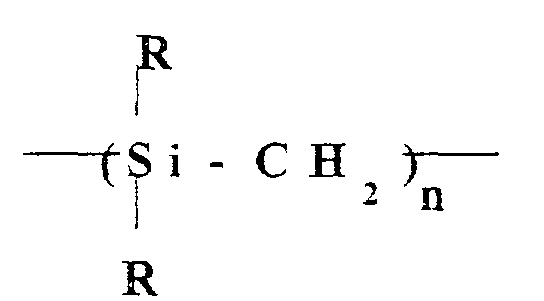
and having a number average molecular weight of 200 to 10,000 and an organic metal compound having a basic structure of the formula M(OR')n or the formula MR"m,
in which M is a metal element, R' is an alkyl group having 1 to 20 carbon atoms or a phenyl group, R" is acetyl acetonate, and each of m and n is an integer of more than 1.

Claims (17)
- A silica-group composite oxide fiber comprising:wherein the concentration of said at least one oxide in the second phase increases towards the surface of the fiber.(a) a first oxide phase mainly made of a silica component; and, provided thereon;(b) a second phase containing at least one oxide of a metal other than silicon,
- A fiber according to claim 1, wherein the amount of the first oxide phase based on the fiber as a whole is 98 to 40 % by weight and the amount of the second phase based on the fiber as a whole is 2 to 60 % by weight.
- A fiber according to claim 1 or 2, wherein the first oxide phase is amorphous or crystalline.
- A fiber according to any one of the preceding claims, wherein the first oxide phase contains a metal element or a metal compound which can form a solid solution or a eutectic compound with the silica.
- A fiber according to claim 4, wherein the metal element is at least one metal selected from titanium, aluminum, zirconium, yttrium, lithium, sodium, barium, calcium, boron, zinc, nickel, manganese, magnesium and iron.
- A fiber according to any one of the preceding claims, wherein the at least one metal oxide in the second phase is titania, its eutectic compound or a lead/zirconium/titanium oxide.
- A fiber according to any one of the preceding claims, wherein the second phase exists from the fiber surface to a depth of 5 nm to 500 nm.
- A fiber according to any one of the preceding claims, wherein the second phase exists to a depth of 1/3 of the diameter of the fiber.
- A fiber according to any one of the preceding claims, wherein the at least one metal oxide in the second phase is titania which has a crystal particle diameter of 15 nm or less and has photocatalyst and/or thermal catalyst functions.
- A process for the production of a fiber as defined in any one of the preceding claims, which process comprises(a) melt-spinning a modified polycarbosilane obtainable by reacting an organic metal compound and a polycarbosilane having (i) a main chain structure represented by the formula,in which each R can be the same or different and is a hydrogen atom, a lower alkyl group or a phenyl group and n is an integer of 1 to 30, and (ii) a number average molecular weight of 200 to 10,000, or melt-spinning a mixture of the modified polycarbosilane and an organic metal compound, to obtain a spun fiber;
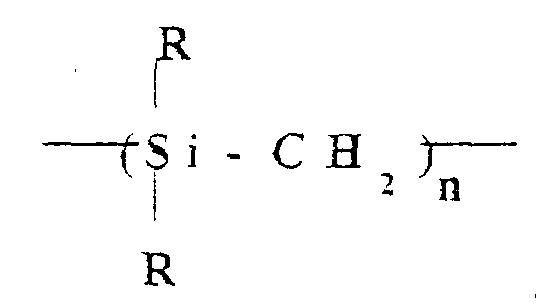 (b) infusibilizing the thus obtained spun fiber; and(c) calcining the infusible fiber in air or in oxygen.
 - A process according to claim 10, wherein the organic metal compound is a compound having a basic structure of the formula M(OR')n or the formula MR''m, in which M is a metal, R' is an alkyl group having 1 to 20 carbon atoms or a phenyl group, R" is acetyl acetonate, and each of m and n is an integer of more than 1.
- A process according to claim 10 or 11, wherein the modified polycarbosilane is a product obtainable by reacting the polycarbosilane with the organic metal compound at a temperature of 280°C or lower in an inert gas.
- A process according to any one of claims 10 to 12, wherein the modified polycarbosilane is a product in which the organic metal compound is bonded to the polycarbosilane as a monofunctional polymer.
- A process according to any one of claims 10 to 13, wherein the mixture of the modified polycarbosilane and organic metal compound contains the modified polycarbosilane and an organic metal compound which is a monomer, a dimer or a trimer.
- A process according to any one of claims 10 to 14, wherein the modified polycarbosilane contains a modified polycarbosilane having a low molecular weight.
- Use of a fiber according to any one of claims 1 to 9 as a filter for an engine exhaust.
- An engine exhaust containing a fiber according to any one of claims 1 to 9.
Applications Claiming Priority (2)
| Application Number | Priority Date | Filing Date | Title |
|---|---|---|---|
| JP2000176377 | 2000-06-13 | ||
| JP2000176377 | 2000-06-13 |
Publications (3)
| Publication Number | Publication Date |
|---|---|
| EP1164212A2 true EP1164212A2 (en) | 2001-12-19 |
| EP1164212A3 EP1164212A3 (en) | 2002-01-23 |
| EP1164212B1 EP1164212B1 (en) | 2005-08-17 |
Family
ID=18678108
Family Applications (1)
| Application Number | Title | Priority Date | Filing Date |
|---|---|---|---|
| EP20010305136 Expired - Lifetime EP1164212B1 (en) | 2000-06-13 | 2001-06-13 | Silica-group composite oxide fiber and process for the production thereof |
Country Status (3)
| Country | Link |
|---|---|
| US (1) | US6541416B2 (en) |
| EP (1) | EP1164212B1 (en) |
| DE (1) | DE60112661T2 (en) |
Cited By (3)
| Publication number | Priority date | Publication date | Assignee | Title |
|---|---|---|---|---|
| EP1359237A1 (en) * | 2002-05-01 | 2003-11-05 | Ube Industries, Ltd. | Silica-based photocatalyst fiber having visible-light activity and process for the production thereof |
| EP1431431A4 (en) * | 2001-04-05 | 2005-07-27 | Ube Industries | INORGANIC FIBER BASED ON ZIRCONIA AND PROCESS FOR PRODUCING THE SAME |
| EP2128312A4 (en) * | 2007-03-19 | 2016-09-21 | Ube Industries | SILICA-BASED COMPOSITE OXIDE FIBER, CATALYST FIBER COMPRISING THE SAME, AND PROCESS FOR THE PRODUCTION THEREOF |
Families Citing this family (4)
| Publication number | Priority date | Publication date | Assignee | Title |
|---|---|---|---|---|
| JP4122891B2 (en) * | 2002-08-09 | 2008-07-23 | 宇部興産株式会社 | Ceramic thin film coating material having gradient composition and method for producing the same |
| US7385220B2 (en) * | 2004-04-12 | 2008-06-10 | Lucent Technologies Inc. | Fiber having dielectric polymeric layer on electrically conductive surface |
| CN101522306B (en) * | 2006-09-27 | 2011-06-08 | 宇部兴产株式会社 | Silica base composite photocatalyst and process for producing the same |
| US8137748B2 (en) * | 2008-08-27 | 2012-03-20 | Korea University Research And Business Foundation | Fiber including silica and metal oxide |
Family Cites Families (18)
| Publication number | Priority date | Publication date | Assignee | Title |
|---|---|---|---|---|
| US4215033A (en) * | 1978-09-08 | 1980-07-29 | American Dental Association Health Foundation | Composite dental material |
| US4732879A (en) * | 1985-11-08 | 1988-03-22 | Owens-Corning Fiberglas Corporation | Method for applying porous, metal oxide coatings to relatively nonporous fibrous substrates |
| US5332699A (en) * | 1986-02-20 | 1994-07-26 | Manville Corp | Inorganic fiber composition |
| US4961990A (en) * | 1986-06-17 | 1990-10-09 | Kabushiki Kaisha Toyota Chuo Kenkyusho | Fibrous material for composite materials, fiber-reinforced composite materials produced therefrom, and process for producing same |
| US4770935A (en) * | 1986-08-08 | 1988-09-13 | Ube Industries, Ltd. | Inorganic fibrous material as reinforcement for composite materials and process for production thereof |
| US5069816A (en) * | 1988-01-11 | 1991-12-03 | Mmii Incorporated | Zirconium silica hydrogel compositions and methods of preparation |
| JP2989394B2 (en) * | 1992-10-22 | 1999-12-13 | 三菱重工業株式会社 | Manufacturing method of catalytic filter for combustion exhaust gas treatment |
| JPH06146115A (en) * | 1992-11-06 | 1994-05-27 | Ube Ind Ltd | Inorganic filament |
| US6030910A (en) * | 1995-10-30 | 2000-02-29 | Unifrax Corporation | High temperature resistant glass fiber |
| CN1124239C (en) * | 1995-10-30 | 2003-10-15 | 尤尼弗瑞克斯有限公司 | High temperature resistant fiberglass |
| US6043170A (en) * | 1996-02-06 | 2000-03-28 | Isover Saint-Gobain | Mineral fiber composition |
| US6086844A (en) | 1996-12-26 | 2000-07-11 | Sumitomo Chemical Company, Ltd. | Titania fiber, method for producing the fiber and method for using the fiber |
| JP2945925B2 (en) * | 1996-12-28 | 1999-09-06 | 工業技術院長 | Manufacturing method of composite fiber |
| JPH115036A (en) * | 1997-04-25 | 1999-01-12 | Sumitomo Chem Co Ltd | Catalyst component-supported titania fiber and method for producing the same |
| JPH10316444A (en) * | 1997-05-12 | 1998-12-02 | Minolta Co Ltd | Method for producing metal oxide fiber and metal oxide fiber produced by the method |
| FR2768144B1 (en) * | 1997-09-10 | 1999-10-01 | Vetrotex France Sa | GLASS YARNS SUITABLE FOR REINFORCING ORGANIC AND / OR INORGANIC MATERIALS |
| JP3588244B2 (en) * | 1998-02-03 | 2004-11-10 | ニチアス株式会社 | Catalyst and method for producing the same |
| US6358871B1 (en) * | 1999-03-23 | 2002-03-19 | Evanite Fiber Corporation | Low-boron glass fibers and glass compositions for making the same |
-
2001
- 2001-06-06 US US09/874,041 patent/US6541416B2/en not_active Expired - Lifetime
- 2001-06-13 DE DE2001612661 patent/DE60112661T2/en not_active Expired - Lifetime
- 2001-06-13 EP EP20010305136 patent/EP1164212B1/en not_active Expired - Lifetime
Cited By (5)
| Publication number | Priority date | Publication date | Assignee | Title |
|---|---|---|---|---|
| EP1431431A4 (en) * | 2001-04-05 | 2005-07-27 | Ube Industries | INORGANIC FIBER BASED ON ZIRCONIA AND PROCESS FOR PRODUCING THE SAME |
| EP1359237A1 (en) * | 2002-05-01 | 2003-11-05 | Ube Industries, Ltd. | Silica-based photocatalyst fiber having visible-light activity and process for the production thereof |
| US6753292B2 (en) | 2002-05-01 | 2004-06-22 | Ube Industries, Ltd. | Silica-based photocatalyst fiber having visible-light activity and process for the production thereof |
| KR100936447B1 (en) * | 2002-05-01 | 2010-01-13 | 우베 고산 가부시키가이샤 | Silica-based photocatalyst fiber having visible light activity and its manufacturing method |
| EP2128312A4 (en) * | 2007-03-19 | 2016-09-21 | Ube Industries | SILICA-BASED COMPOSITE OXIDE FIBER, CATALYST FIBER COMPRISING THE SAME, AND PROCESS FOR THE PRODUCTION THEREOF |
Also Published As
| Publication number | Publication date |
|---|---|
| EP1164212B1 (en) | 2005-08-17 |
| US6541416B2 (en) | 2003-04-01 |
| EP1164212A3 (en) | 2002-01-23 |
| DE60112661T2 (en) | 2006-06-08 |
| DE60112661D1 (en) | 2005-09-22 |
| US20020001702A1 (en) | 2002-01-03 |
Similar Documents
| Publication | Publication Date | Title |
|---|---|---|
| US6753292B2 (en) | Silica-based photocatalyst fiber having visible-light activity and process for the production thereof | |
| KR101041208B1 (en) | Whisker-free silicon carbide and its preparation | |
| EP1164212B1 (en) | Silica-group composite oxide fiber and process for the production thereof | |
| CN101522306B (en) | Silica base composite photocatalyst and process for producing the same | |
| JP3465699B2 (en) | Silica-based composite oxide fiber and method for producing the same | |
| EP2554261A1 (en) | Photocatalyst fibers and method for producing the same | |
| US6881693B2 (en) | Zirconia-containing inorganic fiber and process for the production thereof | |
| EP1300491B1 (en) | Process for the production of a silicon carbide fiber having boron nitride layer in fiber surface | |
| Yu et al. | Preparation of TiO 2/SiO 2 composite fiber by thermal decomposition of polycarbosilane–tetrabutyl titanate hybrid precursor | |
| EP2128312A1 (en) | Silica-based composite oxide fiber, catalyst fiber comprising the same, and process for producing the same | |
| KR100684649B1 (en) | Method for producing metal-doped polycarbosilane, method for producing nanocrystalline silicon carbide fiber comprising same, and SiC fiber produced thereby | |
| US20050031866A1 (en) | Silicon carbide fiber having boron nitride layer in fiber surface and process for the production thereof | |
| JP2004060095A (en) | Nonwoven fabric and method for producing the same | |
| JP3812481B2 (en) | Hazardous substance removal filter | |
| US20050064189A1 (en) | Silicon carbide fiber having boron nitride layer in fiber surface and process for the production thereof | |
| JP2003055842A (en) | Zirconia-containing inorganic fiber and method for producing the same |
Legal Events
| Date | Code | Title | Description |
|---|---|---|---|
| PUAI | Public reference made under article 153(3) epc to a published international application that has entered the european phase |
Free format text: ORIGINAL CODE: 0009012 |
|
| PUAL | Search report despatched |
Free format text: ORIGINAL CODE: 0009013 |
|
| AK | Designated contracting states |
Kind code of ref document: A2 Designated state(s): AT BE CH CY DE DK ES FI FR GB GR IE IT LI LU MC NL PT SE TR Kind code of ref document: A2 Designated state(s): DE FR GB |
|
| AX | Request for extension of the european patent |
Free format text: AL;LT;LV;MK;RO;SI |
|
| AK | Designated contracting states |
Kind code of ref document: A3 Designated state(s): AT BE CH CY DE DK ES FI FR GB GR IE IT LI LU MC NL PT SE TR |
|
| AX | Request for extension of the european patent |
Free format text: AL;LT;LV;MK;RO;SI |
|
| 17P | Request for examination filed |
Effective date: 20020424 |
|
| AKX | Designation fees paid |
Free format text: DE FR GB |
|
| 17Q | First examination report despatched |
Effective date: 20040507 |
|
| GRAP | Despatch of communication of intention to grant a patent |
Free format text: ORIGINAL CODE: EPIDOSNIGR1 |
|
| GRAS | Grant fee paid |
Free format text: ORIGINAL CODE: EPIDOSNIGR3 |
|
| GRAA | (expected) grant |
Free format text: ORIGINAL CODE: 0009210 |
|
| AK | Designated contracting states |
Kind code of ref document: B1 Designated state(s): DE FR GB |
|
| REG | Reference to a national code |
Ref country code: GB Ref legal event code: FG4D |
|
| REF | Corresponds to: |
Ref document number: 60112661 Country of ref document: DE Date of ref document: 20050922 Kind code of ref document: P |
|
| ET | Fr: translation filed | ||
| PLBE | No opposition filed within time limit |
Free format text: ORIGINAL CODE: 0009261 |
|
| STAA | Information on the status of an ep patent application or granted ep patent |
Free format text: STATUS: NO OPPOSITION FILED WITHIN TIME LIMIT |
|
| 26N | No opposition filed |
Effective date: 20060518 |
|
| REG | Reference to a national code |
Ref country code: FR Ref legal event code: PLFP Year of fee payment: 16 |
|
| REG | Reference to a national code |
Ref country code: FR Ref legal event code: PLFP Year of fee payment: 17 |
|
| PGFP | Annual fee paid to national office [announced via postgrant information from national office to epo] |
Ref country code: DE Payment date: 20170606 Year of fee payment: 17 Ref country code: FR Payment date: 20170511 Year of fee payment: 17 Ref country code: GB Payment date: 20170607 Year of fee payment: 17 |
|
| REG | Reference to a national code |
Ref country code: DE Ref legal event code: R119 Ref document number: 60112661 Country of ref document: DE |
|
| GBPC | Gb: european patent ceased through non-payment of renewal fee |
Effective date: 20180613 |
|
| PG25 | Lapsed in a contracting state [announced via postgrant information from national office to epo] |
Ref country code: DE Free format text: LAPSE BECAUSE OF NON-PAYMENT OF DUE FEES Effective date: 20190101 Ref country code: FR Free format text: LAPSE BECAUSE OF NON-PAYMENT OF DUE FEES Effective date: 20180630 Ref country code: GB Free format text: LAPSE BECAUSE OF NON-PAYMENT OF DUE FEES Effective date: 20180613 |