EP1158394A1 - Interface graphique permettant des associations entre éléments graphiques - Google Patents
Interface graphique permettant des associations entre éléments graphiques Download PDFInfo
- Publication number
- EP1158394A1 EP1158394A1 EP01401225A EP01401225A EP1158394A1 EP 1158394 A1 EP1158394 A1 EP 1158394A1 EP 01401225 A EP01401225 A EP 01401225A EP 01401225 A EP01401225 A EP 01401225A EP 1158394 A1 EP1158394 A1 EP 1158394A1
- Authority
- EP
- European Patent Office
- Prior art keywords
- graphic
- interface
- event
- elements
- graphic element
- Prior art date
- Legal status (The legal status is an assumption and is not a legal conclusion. Google has not performed a legal analysis and makes no representation as to the accuracy of the status listed.)
- Withdrawn
Links
Images
Classifications
-
- G—PHYSICS
- G06—COMPUTING OR CALCULATING; COUNTING
- G06F—ELECTRIC DIGITAL DATA PROCESSING
- G06F3/00—Input arrangements for transferring data to be processed into a form capable of being handled by the computer; Output arrangements for transferring data from processing unit to output unit, e.g. interface arrangements
- G06F3/01—Input arrangements or combined input and output arrangements for interaction between user and computer
- G06F3/048—Interaction techniques based on graphical user interfaces [GUI]
- G06F3/0481—Interaction techniques based on graphical user interfaces [GUI] based on specific properties of the displayed interaction object or a metaphor-based environment, e.g. interaction with desktop elements like windows or icons, or assisted by a cursor's changing behaviour or appearance
Definitions
- the present invention relates to graphical user interfaces (GUI for graphic user interface , in English) allowing interactions between an information processing system (for example a computer) and an operator.
- GUI graphical user interface
- the invention applies particularly well as soon as the graphical user interface comprises a large number of graphical elements, as may for example be the case in supervisory systems.
- a user interface can include graphic elements which are represented within a graphic window, in addition to interface elements (windows, buttons, check boxes, etc.).
- supervision systems for example a telecommunications management network or TMN for Telecommunication Management Network
- TMN telecommunications management network
- provision may be made to display one or more graphical elements for each element supervised by the system for example a symbolic representation of the supervised element and the associated textual information. Since the supervised systems are often large, it can happen that the screen is saturated with graphic elements, to the point that reading becomes difficult.
- several graphic elements are linked together by a semantic dependency link, for example because they relate to the same supervised element. In this case, they are generally handled by the user in a similar way by applying identical actions to them (iconization, movement, etc.).
- the invention also relates to a graphical interface allowing to implement this process, that is to say a graphical interface composed of a set of graphic and interface elements whose behavior is determined by events which is characterized in that each first graphic or interface element has means of association for associate it with a second graphic element, and in that this second element graphic has means to transmit the events it receives towards these first graphic or interface elements with which it is associated.
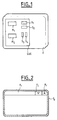
- FIG. 1 represents an example of a graphical interface comprising a set of graphical elements.
- Figure 2 illustrates a graphic element.
- a display means E such as a screen of a computer on which is displayed the user interface of software.
- This graphical user interface comprises a set of graphical or interface elements (S 1 , S 2 , S 3 , S 4 , M 1 , M 2 ).
- these graphic or interface elements are capable of receiving events, for example from the user and for example by means of a pointing device such as a mouse. These events can be a resizing of the graphic element, a displacement, a closing, an icon setting, etc.
- Another event can be caused in the case where the graphic or interface element is hidden by another graphic or interface element or else because an unfolding of an interface element, such as a graphic window, the container brought it out of the visible area.
- FIG. 2 shows an enlarged diagram of a particular interface element.
- it has several means to receive events.
- it has an outline F c allowing its resizing, a title bar F T allowing its displacement, a first button F F allowing its closing and a second button F I allowing its iconization .
- the behavior of each graphical or interface element is determined by events originating in particular from the user. More precisely, in the example of FIG. 2, the interface element will be resized, moved, closed or set as an icon depending on whether the user uses his pointing means to act on, respectively, the contour F c , the title bar F T , the first button F F , or the second button F I.
- each graphic element has moreover means of association which make it possible to create dependency links between the graphic elements. For example, it is possible to link the graphic or interface elements S 1 , S 2 , S 3 and S 4 to the graphic element M 1 . To take a concrete case, this can be useful if the graphic elements S 1 , S 2 , S 3 , and S 4 include information detailing that represented in the graphic element M 1 in a more summary manner.
- the graphic element M 1 can represent a sub-network while the graphic elements S 1 , S 2 , S 3 and S 4 can represent the network elements (c ' i.e. a switch) that make up this subnet.
- the graphic element M 1 can represent a network element schematically or symbolically, while the graphic elements S 1 , S 2, S 3 , and S 4 represent detailed views of this same network element (e.g. text data).
- the principle of the invention can be used in order to associate the graphic elements S 1 , S 2 , S 3 and S 4 with the graphic element M 1 , so that the graphic elements S 1 , S 2 , S 3 and S 4 follow the evolution of the state of the graphic element M 1 .
- the association means are accessible by the user of the user interface, during its operation, using the event mechanism for example.
- the user can at any time choose to associate one graphic element with another, or on the contrary to end an existing association, by sending an event to the graphic element concerned.
- This can be achieved by adding a button allowing access to the means of association.
- This button can, for example, be similar to the buttons F F , F I as shown in FIG. 2.
- the user chooses the graphic element to which he will associate the graphic element concerned. This can be done by means of a drop-down list containing all the graphic elements, or, more simply, by clicking on a graphic element, or by any other imaginable means.
- the graphic element concerned (S 1 , S 2 , S 3 or S 4 ) can send a message (as is conventionally done) to the graphic element M 1 with which it has been associated. in order to make him aware of this new association.
- the same principle is implemented when terminating an association.
- the graphic element M 1 having the knowledge of the associations concerning it, it is able, on reception of an event, to transmit it to the graphic elements S 1 , S 2 , S 3 and S 4 . To do this, the graphic element M 1 therefore has a storage means, enabling it to keep up to date the list of graphic elements with which it is associated.
- the graphic elements S 1 , S 2 , S 3 and S 4 can either have the behavior corresponding to this event, or ignore it. This choice can be determined by the user during the operation of the graphical interface. Indeed, preferably, the graphic elements S 1 , S 2 , S 3 and S 4 have means for storing parameters associated with each type of event, in order to determine their behavior upon reception of an event.
- these parameters can also specify more subtle behaviors. For example, we can specify a distance between the two associated graphic elements, this distance being associated with a type of “displacement” event. This means, for example, that when the graphic element M 1 is moved, the graphic element S 1 (for example) will only be moved if the distance between them is greater than the distance specified in parameter.
- the user when the user sends an event of predetermined type, such as a displacement, to a graphic element S 1 , S 2 , S 3 or S 4 , this means that the association with the graphic element must be completed.
- the termination of an association can be carried out by sending a message to the graphic element M 1 .
- the association is maintained but the parameters are fixed so that the graphic element in question no longer takes into account future events which come to it from the graphic element M 1 , except possibly those of the type " closing ".
Landscapes
- Engineering & Computer Science (AREA)
- General Engineering & Computer Science (AREA)
- Theoretical Computer Science (AREA)
- Human Computer Interaction (AREA)
- Physics & Mathematics (AREA)
- General Physics & Mathematics (AREA)
- User Interface Of Digital Computer (AREA)
- Digital Computer Display Output (AREA)
Abstract
- On associe au moins un premier élément graphique ou élément d'interface à un second élément graphique,
- À la réception d'un événement, ledit second élément graphique transmet ledit événement audit au moins un premier élément graphique ou élément d'interface.
Description
Dans les systèmes de supervision (par exemple un réseau de gestion des télécommunications ou TMN pour Telecommunication Management Network, en anglais), il est courant de devoir afficher de nombreuses informations à l'utilisateur. Par exemple, on peut prévoir d'afficher une ou plusieurs élément graphique pour chaque élément supervisé par le système (par exemple une représentation symbolique de l'élément supervisé et des informations textuelles associées). Dans la mesure où les systèmes supervisés sont souvent de taille importante, il peut arriver que l'écran soit saturé d'éléments graphiques, au point que la lecture en devienne difficile.
Le plus souvent, plusieurs éléments graphiques sont liés entre eux par un lien de dépendance sémantique, par exemple du fait qu'ils concernent un même élément supervisé. Dans ce cas, ils sont généralement manipulés par l'utilisateur de façon similaire en leur appliquant des actions identiques (mise en icône, déplacement etc.). De façon similaire, il est possible d'associer à un élément graphique, un élément d'interface, typiquement une fenêtre.
Or, d'une façon générale, plus le nombre d'éléments graphiques ou d'interface affichés simultanément sur un écran est important, plus l'utilisateur aura de difficultés à trouver l'information pertinente.
De même, si l'opérateur veut modifier l'apparence physique d'un élément graphique (c'est-à-dire le déplacer, le réduire ou l'agrandir, le transformer en icône etc.), il aura généralement à répéter sa manoeuvre pour l'ensemble des éléments graphiques ou d'interface qui lui sont liés, ce qui, là encore, surcharge l'utilisateur et est susceptible d'amoindrir sa vitesse de réaction à une défaillance.
À cette fin, l'invention a pour objet un procédé pour manipuler sur un moyen de visualisation, un ensemble d'éléments graphiques et d'interfaces dont le comportement est déterminé par des événements. Ce procédé se caractérise en ce qu'il comporte les étapes suivantes :
- On associe au moins un premier élément graphique ou d'interface à un second élément graphique,
- À la réception d'un événement, ce second élément graphique transmet l'événement à ce ou ces premiers éléments graphiques ou d'interface.
La figure 1 représente un exemple d'interface graphique comportant un ensemble d'éléments graphiques.
La figure 2 illustre un élément graphique.
Conformément à l'invention, ces éléments graphiques ou d'interface sont susceptibles de recevoir des événements, par exemple de la part de l'utilisateur et par exemple au moyen d'un dispositif de pointage tel une souris. Ces événements peuvent être un redimensionnement de l'élément graphique, un déplacement, une fermeture, une mise en icône etc. Un autre événement peut être provoqué dans le cas où l'élément graphique ou d'interface est caché par un autre élément graphique ou d'interface ou bien parce qu'un déroulement d'un élément d'interface, telle une fenêtre graphique, le contenant l'a fait sortir en dehors de la zone visible.
Le comportement de chaque élément graphique ou d'interface est déterminé par les événements provenant notamment de l'utilisateur. Plus précisément, dans l'exemple de la figure 2, l'élément d'interface sera redimensionné, déplacé, fermé ou mis en icône suivant que l'utilisateur utilise son moyen de pointage pour agir sur, respectivement, le contour Fc, la barre de titre FT, le premier bouton FF, ou le second bouton FI.
Pour prendre un cas concret, cela peut être utile si les éléments graphiques S1, S2, S3, et S4 comportent des informations détaillant celles représentées dans l'élément graphique M1 de façon plus sommaire.
Dans l'exemple d'un système de gestion de réseau, l'élément graphique M1 peut représenter un sous-réseau tandis que les éléments graphiques S1, S2, S3 et S4 peuvent représenter les éléments de réseau (c'est-à-dire, par exemple, un commutateur) qui composent ce sous-réseau.
Dans un autre exemple, l'élément graphique M1 peut représenter un élément de réseau de façon schématique ou symbolique, alors que les éléments graphiques S1, S2, S3, et S4 représentent des vues détaillées de ce même élément de réseau (par exemple des données textuelles).
De la même façon, si les éléments graphiques M1, M2, S1, S2, S3 et S4 sont contenus dans une fenêtre possédant des dispositifs (communément appelés « ascenseurs ») permettant de faire dérouler son contenu dans une fenêtre de visualisation, il peut arriver que l'élément graphique M1 (par exemple) passe d'un état visible à un état invisible ou réciproquement. En un tel cas, on peut utiliser le principe de l'invention afin d'associer les éléments graphiques S1, S2, S3 et S4 à l'élément graphique M1, afin que les éléments graphiques S1, S2, S3 et S4 suivent l'évolution de l'état de l'élément graphique M1.
Ceci peut être réalisé en ajoutant un bouton permettant l'accès aux moyens d'association. Ce bouton peut, par exemple, être similaire aux boutons FF, FI tels que représentées sur la figure 2. Après avoir cliqué sur ce bouton, l'utilisateur choisit l'élément graphique auquel il va associer l'élément graphique concerné. Ceci peut être fait au moyen d'une liste déroulante reprenant l'ensemble des éléments graphiques, ou, plus simplement, en cliquant sur un élément graphique, ou par tout autre moyen imaginable.
Le même principe est mis en oeuvre lors de la terminaison d'une association.
Selon une autre mise en oeuvre, l'association est maintenue mais les paramètres sont fixées de sorte que l'élément graphique en question ne prenne plus en compte les événements futurs qui lui proviennent de l'élément graphique M1, sauf éventuellement ceux du type « fermeture ».
Claims (8)
- Procédé pour manipuler sur un moyen de visualisation (E), un ensemble d'éléments graphiques et d'interface (M1, M2, S1, S2, S3, S4) représentés sur une fenêtre graphique et dont le comportement est déterminé par des événements, caractérisé en ce queOn associe au moins un premier élément graphique ou d'interface (S1, S2, S3, S4) à un second élément graphique (M1, M2),À la réception d'un événement, ledit second élément graphique transmet ledit événement audit au moins un premier élément graphique ou élément d'interface.
- Procédé selon la revendication 1, dans lequel l'association est faite par l'utilisateur en envoyant un événement à l'élément graphique ou à l'élément d'interface concerné.
- Procédé selon l'une des revendications 1 ou 2, dans lequel pour chacun desdits au moins un premier élément, on détermine des paramètres associés à chaque type d'événements afin de déterminer le comportement dudit premier élément à la réception d'un événement.
- Procédé selon l'une des revendications précédentes, dans lequel lorsque l'un desdits premiers éléments reçoit un événement de type prédéterminé, l'association avec ledit second élément graphique est terminée.
- Procédé selon la revendication 3, dans lequel lorsque l'un desdits premiers éléments reçoit un événement de type prédéterminé, lesdits paramètres sont fixés de sorte que ledit premier élément ne réagisse plus audits événements futurs transmis par ledit second élément graphique.
- Interface graphique composée d'un ensemble d'éléments graphiques ou d'interface (S1, S2, S3, S4, M1, M2) dont le comportement est déterminé par des événements, caractérisée en ce que chaque premier élément graphique ou d'interface (S1, S2, S3, S4) possède des moyens d'association pour l'associer à un second élément graphique (M1, M2), et en ce que ledit second élément graphique possède des moyens pour transmettre les événements qu'il reçoit vers lesdits premiers éléments graphiques ou d'interface auquel il est associé.
- Interface graphique selon la revendication précédente, dans laquelle chaque premier élément graphique ou d'interface possède des moyens pour mémoriser des paramètres associés à chaque type d'événements, afin de déterminer le comportement dudit premier élément graphique ou d'interface à la réception d'un événement.
- Interface graphique selon l'une des revendications précédentes, dans laquelle lesdits moyens d'association sont accessibles par l'utilisateur durant le fonctionnement de ladite interface graphique.
Applications Claiming Priority (2)
| Application Number | Priority Date | Filing Date | Title |
|---|---|---|---|
| FR0006500 | 2000-05-22 | ||
| FR0006500A FR2809213A1 (fr) | 2000-05-22 | 2000-05-22 | Interface graphique permettant des associations entre elements graphiques |
Publications (1)
| Publication Number | Publication Date |
|---|---|
| EP1158394A1 true EP1158394A1 (fr) | 2001-11-28 |
Family
ID=8850466
Family Applications (1)
| Application Number | Title | Priority Date | Filing Date |
|---|---|---|---|
| EP01401225A Withdrawn EP1158394A1 (fr) | 2000-05-22 | 2001-05-14 | Interface graphique permettant des associations entre éléments graphiques |
Country Status (3)
| Country | Link |
|---|---|
| US (1) | US20020054140A1 (fr) |
| EP (1) | EP1158394A1 (fr) |
| FR (1) | FR2809213A1 (fr) |
Families Citing this family (4)
| Publication number | Priority date | Publication date | Assignee | Title |
|---|---|---|---|---|
| US6892352B1 (en) | 2002-05-31 | 2005-05-10 | Robert T. Myers | Computer-based method for conveying interrelated textual narrative and image information |
| US20060109242A1 (en) * | 2004-11-19 | 2006-05-25 | Simpkins Daniel S | User interface for impaired users |
| US20080229238A1 (en) * | 2007-03-14 | 2008-09-18 | Microsoft Corporation | Scalable images using bitmaps and vector images |
| US20090031224A1 (en) * | 2007-07-25 | 2009-01-29 | International Business Machines Corporation | Method, system, and computer program product for visually associating a static graphic image and html text on a web page |
Citations (3)
| Publication number | Priority date | Publication date | Assignee | Title |
|---|---|---|---|---|
| EP0858030A2 (fr) * | 1997-01-27 | 1998-08-12 | International Business Machines Corporation | Système de traitement de données et procédé pour simuler des objets composés |
| US5923326A (en) * | 1997-06-13 | 1999-07-13 | International Business Machines Corporation | Edge docking foster window |
| JP2000039947A (ja) * | 1998-05-27 | 2000-02-08 | Internatl Business Mach Corp <Ibm> | 二つ以上の表示ウィンドウを連動させる方法およびコンピュ―タ・システム |
Family Cites Families (5)
| Publication number | Priority date | Publication date | Assignee | Title |
|---|---|---|---|---|
| US6005570A (en) * | 1993-03-05 | 1999-12-21 | Inprise Corporation | Graphical user interface system and methods for improved user feedback |
| US5956030A (en) * | 1993-06-11 | 1999-09-21 | Apple Computer, Inc. | Computer system with graphical user interface including windows having an identifier within a control region on the display |
| US5717880A (en) * | 1993-09-06 | 1998-02-10 | Kabushiki Kaisha Toshiba | Method and apparatus for relaying events and requests in a windows systems |
| JP2972510B2 (ja) * | 1993-11-25 | 1999-11-08 | 株式会社日立製作所 | 文書作成装置 |
| US6501488B2 (en) * | 1998-12-30 | 2002-12-31 | Intel Corporation | System and method for managing a plurality of associated windows for an application |
-
2000
- 2000-05-22 FR FR0006500A patent/FR2809213A1/fr not_active Withdrawn
-
2001
- 2001-05-14 EP EP01401225A patent/EP1158394A1/fr not_active Withdrawn
- 2001-05-18 US US09/859,442 patent/US20020054140A1/en not_active Abandoned
Patent Citations (3)
| Publication number | Priority date | Publication date | Assignee | Title |
|---|---|---|---|---|
| EP0858030A2 (fr) * | 1997-01-27 | 1998-08-12 | International Business Machines Corporation | Système de traitement de données et procédé pour simuler des objets composés |
| US5923326A (en) * | 1997-06-13 | 1999-07-13 | International Business Machines Corporation | Edge docking foster window |
| JP2000039947A (ja) * | 1998-05-27 | 2000-02-08 | Internatl Business Mach Corp <Ibm> | 二つ以上の表示ウィンドウを連動させる方法およびコンピュ―タ・システム |
Non-Patent Citations (1)
| Title |
|---|
| PATENT ABSTRACTS OF JAPAN vol. 2000, no. 05 14 September 2000 (2000-09-14) * |
Also Published As
| Publication number | Publication date |
|---|---|
| US20020054140A1 (en) | 2002-05-09 |
| FR2809213A1 (fr) | 2001-11-23 |
Similar Documents
| Publication | Publication Date | Title |
|---|---|---|
| US9674227B2 (en) | Communicating status regarding application of compliance policy updates | |
| US8739058B2 (en) | Sidebar engine, object model and schema | |
| CN101484894B (zh) | 继承维基页面的维基页面布局的方法 | |
| US7487464B2 (en) | Enhanced visualization and selection of multi-layered elements in a containment hierarchy | |
| US10277601B1 (en) | System and method for recursive propagating application access control | |
| US9613340B2 (en) | Method and system for shared document approval | |
| US20030081003A1 (en) | System and method to facilitate analysis and removal of errors from an application | |
| WO1997017660A1 (fr) | Interface administrateur pour base de donnees dans un environnement informatique distribue | |
| JP2009199606A (ja) | 処理状態を把握するウェブ・ベースのコンピュータ・システムと方法 | |
| EP4268104A1 (fr) | Système et procédé de création, de distribution et d'utilisation dynamiques en temps réel d'applications web personnalisables | |
| CA2791743C (fr) | Navigation privee sur le web a l'aide de chiffrement | |
| FR2980605A1 (fr) | Procede de restitution d'une representation d'un document web annote, programme d'ordinateur et dispositif electronique associes | |
| EP2169569B1 (fr) | Procédé et système de communication entre applications web distinctes | |
| EP1158394A1 (fr) | Interface graphique permettant des associations entre éléments graphiques | |
| WO2009121808A1 (fr) | Procede de gestion de messages electroniques a partir d'un client de messagerie et systeme pour mettre en oeuvre le procede | |
| CN109491687B (zh) | 一种应用软件的热更新方法、装置、终端及可读介质 | |
| US20130007769A1 (en) | Tracking File-Centric Events | |
| EP2726985B1 (fr) | Dispositif et procede de synchronisation de taches executees en parallele sur une plateforme comprenant plusieurs unites de calcul | |
| US20180275833A1 (en) | System and method for managing and displaying graphical elements | |
| US20240086482A1 (en) | Cross application meta history link | |
| Lewis | The Borrowing Update System: current status, future plans and technical elements | |
| US20200242089A1 (en) | File conflict detection | |
| WO2007063248A1 (fr) | Procede de creation d'un graphe d'approximation des comportements de l'interface homme-machine d'une application |
Legal Events
| Date | Code | Title | Description |
|---|---|---|---|
| PUAI | Public reference made under article 153(3) epc to a published international application that has entered the european phase |
Free format text: ORIGINAL CODE: 0009012 |
|
| AK | Designated contracting states |
Kind code of ref document: A1 Designated state(s): AT BE CH CY DE DK ES FI FR GB GR IE IT LI LU MC NL PT SE TR |
|
| AX | Request for extension of the european patent |
Free format text: AL;LT;LV;MK;RO;SI |
|
| 17P | Request for examination filed |
Effective date: 20020528 |
|
| AKX | Designation fees paid |
Free format text: AT BE CH CY DE DK ES FI FR GB GR IE IT LI LU MC NL PT SE TR |
|
| 17Q | First examination report despatched |
Effective date: 20041129 |
|
| STAA | Information on the status of an ep patent application or granted ep patent |
Free format text: STATUS: THE APPLICATION IS DEEMED TO BE WITHDRAWN |
|
| 18D | Application deemed to be withdrawn |
Effective date: 20041201 |