TECHNICAL FIELD
The present invention relates to a method for
polishing a work and an apparatus for polishing a work,
more particularly to a method for polishing a plane portion
of a work, such as a surface of a semiconductor wafer, with
a polishing pad. More particularly, the present invention
relates to a method of releasing a work from a polishing
pad after polishing and a polishing apparatus for
conducting the method.
BACKGROUND ART
Conventionally, an apparatus equipped with work
holding plates made of metal, ceramics, glass or the like
which are attached respectively to rotary a plurality of
holders which can rotate and a polishing pad attached to a
polishing turn table which can rotate is known as an
apparatus for polishing a surface of a work, such as a
semiconductor wafer.
The method for polishing a surface of a work using
such a polishing apparatus is generally conducted as
follows. The side opposite to the surface to be polished
of each of the works is attached to a work holding surface
of each of the work holding plates so that the work is held,
which are then moved relatively to the polishing pad so
that the plural works are polished at the same time, with
pressing the side to be polished of the work on the
polishing pad and with supplying polishing liquid on the
polishing pad.
There are various methods for holding a work,
including a method wherein one or more wafers are adhered
to a work holding plate with wax, or a method of holding a
wafer by vacuum-sucking to a work holding plate.
A method of polishing using a four axes polishing
apparatus equipped with four work holding plates will be
explained hereinafter in more detail. Predetermined number
of works are held on each of the work holding plates, they
are polished at the same time by rotating both a polishing
turn table and all of the work holding plates, with
supplying polishing liquid on a polishing pad and with
pressing four works on the polishing pad simultaneously.
In this case, in order to press the surface to be polished
of the work on the polishing pad by predetermined pressure,
in addition to the pressure by its own weight of the work
holding plate or the like, compulsory pressure (this
pressure applied compulsorily is called press pressure) is
suitably applied between the surface to be polished of a
work and a polishing pad through a work holding plate by a
pressure applying means. After polishing the work surface
to a desired polishing amount, press pressure of each of
four works to a polishing pad is set about 0 simultaneously,
to terminate polishing substantially. Subsequently, the
work holding plates are pulled up, and the works are
released from the polishing pad, and further the works are
removed from a holding plate.
For example, when a work is a semiconductor wafer,
the wafer polished and released from the polishing pad as
described above is usually transferred to the following
cleaning process. In many cases, the work is kept in pure
water or a solution wherein ozone, hydrogen peroxide, or
the surface-active agent is added to pure water until it is
transferred to the cleaning process after polishing process.
It is conducted in order to remove the polishing liquid
adhered to the wafer surface after polishing. Furthermore,
if the polished wafer is left as it is in the atmosphere,
particles adhered to the wafer surface at the polishing
process are dried and stuck thereto, and it is difficult to
remove them by cleaning in the following process.
Accordingly, it is temporarily kept in pure water or the
like as described above.
Removal of the polishing liquid or particles adhered
to the surface as described above is necessary not only
after a semiconductor wafer is polished, but also after any
works are polished.
As described above, after the works held on the work
holding plate are simultaneously pressed on the polishing
pad and polished, to a desired polishing amount, the
applied pressure is set about 0 simultaneously to terminate
polishing. At this time, the work is in contact with the
polishing pad and is left on the polishing pad.
Subsequently, the work is released from the polishing pad
by pulling up the work holding plate further. The works
are not released from the polishing pad simultaneously, but
are released from the polishing pad one by one.
Accordingly, time until the work is released from the
polishing pad after termination of polishing (hereinafter
referred to as "leaving time") varies depending on works.
Evaluation of each surface of each work with a particle
counter revealed that there was a tendency that on the
wafer left on the polishing pad after polishing for longer
time, the number of counts was larger.
Generally, the defect represented as particles by a
particle counter using optical measurement is called LPD
(abbreviation for Light Point Defect), which includes, in
addition to particles adhering to the work surface,
depression formed as a result of corrosion of the defect on
the work surface caused by a chemical action of a polishing
liquid (hereinafter referred to as pit), and other form
irregularities or the like which may cause optical
scattering. Therefore, the measured value represents the
sum of them.
Usually, polishing of a semiconductor wafer, such as
silicon wafer is conducted by chemical mechanical polishing
(CMP) which is combination of the mechanical polishing
action by the polishing particle or the like and the
chemical polishing action by the substance having an
etching action for works, such as alkali, amines or the
like, in order to prevent the damage from remaining on a
polished side. Therefore, a chemical action with polishing
liquid can be uneven etching with the substance having an
etching action.
Accordingly, it is considered that the reason why the
count number measured with the particle counter is larger
when the leaving time of the wafer is longer, may be that
fine particles such as polishing particles contained in a
polishing liquid remaining and adhered on the polished
surface of the work are increased, that local corrosion of
the polished surface of the work by the chemical action of
the polishing liquid progresses with time and the number of
fine depressions (pits) increases, or both of them.
It is possible to remove the fine particles adhering
to the surface of the polished work by cleaning. However,
in order to clean the plural works at the same time and to
remove particles from all of the works, it is necessary to
clean the works so that a work to which the largest amount
of particles are adhered may be cleaned, and cleaning for a
long time must be performed after all.
Such long time cleaning causes, in addition to the
problem that cost is raised as a result of using a lot of
cleaning liquid, a disadvantage that efficiency is low,
since a work to which a little amount of particles are
adhered is cleaned for a unnecessarily long time.
Moreover, in the work to which too many particles are
adhered, it is difficult to remove them by usual cleaning,
which may cause the problem of contamination by particles
in a product after all.
The reason why a difference appears in the value of
LPDs depending on the leaving time after termination of
polishing until releasing of the work from a polishing pad
is not certain. However, in a multi axes apparatus, while
the number of works that can be processed (polished) at
once is increased, but it comes to require time until all
works are collected in a storage tank. It is thought that
the wafer surface is very active immediately after
processing and is easy to receive contamination by the
metal ion or the foreign substance, and therefore, the
particle level of the wafer gets worse as the time
necessary for collection of the wafer becomes long.
Among of them, the most serious problem is increase
of pits as a result of corrosion with polishing liquid.
Once they are formed on the surface of a work, they cannot
be removed by cleaning, and thus lowering of the quality of
the work cannot be avoided.
DISCLOSURE OF THE INVENTION
The present invention has been accomplished to solve
the above-mentioned problems, and an object of the present
invention is to provide a method for polishing a work
wherein formation of pits on the surface of a work due to
polishing liquid can be prevented, an amount of the
cleaning liquid used in a cleaning process can be reduced,
particles can be removed efficiently in a short time, the
value of LPD detected on the surface is low, and there is
almost no deviation between works, and a work polishing
apparatus therefor.
In order to achieve the above-mentioned purpose, the
present invention provides a method for polishing a work
wherein polishing liquid is supplied to a polishing pad,
and a relative movement is carried out between the work and
the polishing pad with pressing the work on the polishing
pad, characterized in that the work of which press pressure
was set to 0 to terminate polishing is released from the
polishing pad within 45 seconds after the termination of
polishing.
As described above, concerning the defect on the
surface of a work, since formation of pits is caused by
corrosion due to the polishing liquid, it is desirable to
release the work from the polishing pad as early as
possible after polishing.
The inventors of the present invention investigated
the relation between time until a work is released from a
polishing pad after polishing and the number of counts on
the work surface measured with the particle counter, and
found that if the work was released from the polishing pad
within 45 seconds after polishing was terminated by setting
press pressure of the work to 0 as mentioned above, the
number of counts measured by the particle counter could be
controlled to be small, and thus it was satisfactory in
quality. Namely, by releasing the work from the polishing
pad within 45 seconds as described above, the corrosion on
the surface of the work due to the polishing liquid on the
polishing pad can be suppressed, and LPD due to pits can be
suppressed.
Moreover, the amount of the particles adhered on the
surface of a work can also be decreased by releasing the
work after polishing from a polishing pad in a short time
of 45 seconds or less as described above. Therefore, an
amount of the cleaning liquid used in a cleaning process
can be reduced, and particles can be removed surely and
efficiently in a short time.
In the present invention, "setting press pressure to
0" means canceling compulsory force of the work held on the
work holding plate against the polishing pad. The load by
weight of the work itself or the ceramic plate or the like
to which the work is adhered is not included in the press
pressure as used in the present invention.
Moreover, according to the present invention, in the
polishing method wherein plural works are simultaneously
polished by relative movement between the works and a
polishing pad with pressing the works on the polishing pad
and supplying the polishing liquid to the polishing pad,
wherein only the work of which press pressure was set to 0
to terminate polishing is released from the polishing pad
within 45 seconds, while polishing of the other works can
be continued.
As described above, if only the work of which press
pressure was set to 0 to terminate polishing is released
from the polishing pad, and the other works are kept to be
polished, the work which had been polished as described
above can be released from the polishing pad within 45
seconds, corrosion due to the polishing liquid of the
surface can be suppressed, and only few amount of particles
are adhered thereon. The other works are not left on a
polishing pad unlike in a conventional method, since these
works are kept to be polished.
In some cases, the so-called water polishing
supplying only water may be performed after stopping supply
of the polishing liquid. Also in this case, increase in
pits of the surface occurs due to the remaining polishing
liquid, and thus it is desirable to release the work within
45 seconds after pressing of a work is stopped.
Moreover, when a work is a semiconductor wafer,
polishing is often conducted in several steps. The
polishing method of the present invention is effective for
polishing in each step. However, in the stepwise polishing,
the amount of polishing is fewer in the latter step, and
therefore, influence with polishing liquid needs to be
suppressed more in the latter step. Therefore, the present
invention is especially effective for polishing in the last
step in which the amount of polishing is the fewest, namely
so-called finish polishing.
Furthermore in this case, it is desirable that the
press pressure of the plural works is set to 0 in turn so
that the work is released from the polishing pad.
Namely, only the work of which press pressure was set
to 0 to terminate polishing is released from the polishing
pad within 45 seconds after polishing, whereas the other
works are kept to be polished. Subsequently, polishing of
either of the works which are kept to be polished is
terminated one by one or simultaneously. Then, only the
work after termination of polishing is released from the
polishing pad within 45 seconds after polishing, whereas
the other works are still kept to be polished. When the
press pressure of plural works is set to 0 to release the
work from the polishing pad in turn, one set of works of
which press pressure against the polishing pad are
simultaneously controlled may be released as a group,
namely group by group.
The remaining works which are being polished are also
released from the polishing pad one by one according to the
above-mentioned procedure. By releasing all works from the
polishing pad within 45 seconds after polishing, there can
be obtained works wherein corrosion due to the polishing
liquid on the work surface is suppressed, only few
particles are adhered, LPD value is significantly small,
and there is little variation between the works.
Furthermore, the present invention provides a
polishing apparatus for works having at least one or more
work holding plates for holding works and a turn table on
which a polishing pad is fixed, and polishing plural works
simultaneously by relatively moving the works and the
polishing pad with pressing the works held on the work
holding plate to the polishing pad and with supplying the
polishing liquid to the polishing pad, characterized in
that each of the work holding plates has a function of
setting press pressure to 0 to terminate polishing
independently and releasing the work after polishing from
the polishing pad within 45 seconds.
As described above, if a work is polished using a
work polishing apparatus equipped with not only single work
holding plate but also plural work holding plates having a
function of setting press pressure to 0 to terminate the
respective polishing independently and releasing the work
after polishing from the polishing pad within 45 seconds,
each of the works held on the work holding plate can be
released one by one from the polishing pad within 45
seconds after termination of polishing, and thereby there
can be obtained works having excellent surface quality
wherein corrosion due to polishing liquid can be suppressed,
only few amounts of particles are adhered, and thus LPD
value is significantly small, and there is no variation
between the works.
As described above, the present invention relates to
a method for polishing works wherein polishing liquid is
supplied to a polishing pad, and a relative movement is
carried out between the work and the polishing pad with
pressing the work on the polishing pad, characterized in
that the work of which press pressure was set to 0 to
terminate polishing is released from the polishing pad
within 45 seconds after the termination of polishing. As
described above, the work released from the polishing pad
in a short time after termination of polishing as described
above has almost no pits formed as a result of corrosion
due to polishing liquid, and has excellent surface quality.
Furthermore, only few amounts of particles are adhered, and
there is no deviation in the works. Accordingly, an amount
of the cleaning liquid used in a cleaning process can be
reduced, and particles can be removed efficiently and
certainly in a short time. Thus, a work having an
excellent surface quality can be surely obtained.
BRIEF DESCRIPTION OF THE DRAWINGS
Fig.1 is a schematic view showing an example of the
work polishing apparatus according to the present invention.
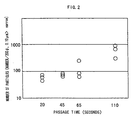
Fig.2 is a graph which shows the number of particles
on the cleaned semiconductor wafer surface after polishing
in Example 1 and Comparative Example 1.
Fig.3 is a graph which shows the number of particles
on the cleaned semiconductor wafer surface after polishing
in Example 2 and Comparative Example 2.
BEST MODE FOR CARRYING OUT THE INVENTION
The present invention will be further described below
in detail, referring to drawings, but is not limited
thereto.
Fig.1 is a schematic view showing an example of the
work polishing apparatus according to the present invention.
The polishing apparatus 1 shown in the figure is equipped
with work holding plates 3 each of which is attached on
four rotary holders 2 respectively and a turn table 4. The
polishing pad 5 is fixed on the turn table 4. Plural holes
(not shown) perpendicular to a work holding surface are
formed in the work holding plate 3. The holes communicate
a vacuum line (not shown) in the rotary holder 2.
The works 6 such as a semiconductor wafer to be
polished are held on the holding plate 3 by vacuum sucking
to the work holding surface through the hole and the vacuum
line. The figure illustrates the case that one work is
held on one work holding plate.
The polishing apparatus 1 is also equipped with a
robot arm 7, wherein the vacuum sucking mechanism is
provided at the tip part, for releasing the work 6 from the
polishing pad 5.
As shown in Fig.1, each of the work holding plate 3
can set press pressure to 0 to terminate polishing
independently, enabling release from the polishing pads 5
within 45 seconds in the polishing apparatus of the present
invention. Namely, by controlling an operation speed of
the robot arm 7, the work can be released from the
polishing pad 5 within 45 seconds after setting press
pressure against the work to 0. In the figure, polishing
is completed only on the right-hand side axis (rotary
holder 2), the work is released from the polishing pad 5,
and polishing is continued with the other three axes.
The manner until termination of polishing in the
method of polishing a work 6 using such a polishing
apparatus 1 is fundamentally the same as the case of the
conventional polishing apparatus mentioned above.
Namely, each work 6 held on the work holding plate 3
and the polishing pad 5 are relatively moved with pressing
the work to the polishing pad 5 which is fixed on the turn
table 4, and with supplying polishing liquid. Thereby,
plural works 6 are polished simultaneously to a certain
stock removal. When polishing a semiconductor wafer as a
work, foamed polyurethane, a velour type pad, and suede
type pad may be used as a polishing pad, and colloidal
silica to which alkali, ammonia, amine or the like is added
may be used as polishing liquid, using suitably a thing.
According to the conventional method, after polishing
as mentioned above, polishing is terminated substantially
by setting all press pressures by four holding plates to 0
at the same time, and then the holding plates are pulled up
one by one to release vacuum sucking. Thereby, the works
are removed from the holding plates.
However, the present invention is characterized in
termination of polishing and release of the work from the
polishing pad.
Namely, the work to which press pressure is set to 0
to terminate polishing is released from a polishing pad
within 45 seconds according to the present invention. In
order to release a work from a polishing pad within 45
seconds after polishing as described above, all the work
holding plates 3 may be released from the polishing pad 5
at once after polishing. Alternatively, one work 6 may be
released from the polishing pad 5 first, the while the
other three works 6 may be kept to be polished, and all
works may be released from the polishing pad 5 within 45
seconds after each polishing is terminated so that these
three works are released from the polishing pad 5 one by
one.
Thereby, the work of which polishing was terminated
can be taken out quickly, and time until the work is
released from the polishing pad after termination of
polishing in each work can be made almost the same.
Therefore, the LPD value measured by a particle counter for
every work can be small, and the deviation is also small.
In this case, although the difference in stock
removal will be made between the work first released from
the polishing pad after termination of polishing and the
work last released from the polishing pad after termination
of polishing, the difference is only about 0.1 to 1 % of
the total polishing amount in practice, which does not
become a problem.
The present invention will be described in more
detail by the following Examples and Comparative Examples.
(Example 1 and Comparative Example 1)
A semiconductor ingot produced according to
Czochralski method was subjected to slicing, chamfering,
lapping, and etching in accordance with a conventional
method, to produce semiconductor wafers having a diameter
of 200 mm. Three wafers were adhered to every glass plates
with wax, and planarization was achieved by two steps of
rough polishing (primary polishing, secondary polishing)
using a polishing apparatus. Then, the surfaces of the
wafers were simultaneously subjected to finish polishing
with supplying polishing liquid (colloidal silica +
ammonia) to the polishing pad for finish (suede type).
When polishing at the desired polishing amount was
performed, the press pressure to the polishing pad of all
wafers was set to 0, and polishing was terminated (this
time is defined as 0 second). The wafer adhered to the
first plate was released from the polishing pad after 20
seconds, and was kept in pure water. Furthermore, after 45
seconds, 65 seconds, and 110 seconds, respectively, the
wafers on each plate were released from the polishing pad,
and were kept in pure water.
The wafers polished as mentioned above and kept in
pure water were taken out, and cleaned with SC-1 solution
(mixed cleaning liquid consisting of ammonia, hydrogen
peroxide and water) and SC-2 solution (mixed cleaning
liquid consisting of hydrochloric acid, hydrogen peroxide
and water). Then, the surface of each wafer was evaluated
by narrow channel using a particle counter SP-1
(manufactured by KLA-Tencor corporation).
The results were shown in the graph of Fig.2 as the
number of counts of particles having a size of 0.1 µm or
more. The counted number includes not only particles
adhering to the wafer surface, but also the pits formed on
the surface. For convenience, all of them are called the
number of counts, or the number of particles.
As shown in the graph of Fig.2, all of the numbers of
particles on the wafers released from the polishing pad in
20 seconds or 45 seconds after polishing was terminated
were 100 particles/200 (0.32 particles/cm2) or less, and
therefore the wafers with no problem in quality could be
produced. The number of particles on the wafers released
in 65 seconds after the termination of polishing were 100
particles/200 or less as for two of three wafers, and
therefore the wafers have no problem in quality, but more
than 100 particles/200 as for one of three wafers. It is
considered that quality of the wafers were deteriorated,
since the time until the wafer was released from the
polishing pad after the termination of polishing was
somewhat long.
Furthermore, the numbers of particles of all wafers
released in 110 seconds after polishing were more than 100
particles/200. The quality of the wafers was
significantly lowered.
(Example 2)
A semiconductor ingot produced according to
Czochralski method was subjected to slicing, chamfering,
lapping, and etching in accordance with a conventional
method, to produce semiconductor wafers having a diameter
of 200 mm. Using a four axis polishing apparatus as shown
in Fig.1, seven wafers were held on each of the work
holding plate actuated by each axis, and subjected to
planarization achieved by two steps of rough polishing
(primary polishing, secondary polishing). Then, the
surface of wafers was subjected to finish polishing with
supplying polishing liquid (colloidal silica + ammonia) to
the polishing pad for finish (suede type). The surfaces of
28 wafers were polished at the same time at a desired
polishing amount. When polishing at a desired polishing
amount was performed, the press pressure to the polishing
pad on the work holding plate actuated by one of the axes
was set to 0, and polishing of seven wafers was terminated,
whereas the wafers on the work holding plates actuated by
the other three axes were kept to be polished. Subsequently,
the wafers after polishing were released from a polishing
pad using a robot arm, and kept in pure water. Furthermore,
the wafers with which finish polishing was continued were
released from the polishing pad one axis by one axis in the
same procedure as above, and they were kept in pure water.
The time until the wafer was released from the
polishing pad after termination of the polishing as for
seven wafers of the first axis (this time is defined as 0
second) was about 10 seconds, and the time was almost the
same as the wafers of the remaining three axes. It took
only about 90 seconds to release the wafers of the 4th axis
from the polishing pad after polishing for the wafers of
the first axis was terminated. Such time was no problem
for stock removal.
(Comparative Example 2)
Using the four axis polishing apparatus similar to
the above, wafers were subjected to planarization achieved
by two steps of rough polishing (primary polishing,
secondary polishing), and then to finish polishing with
supplying polishing liquid (colloidal silica + ammonia) to
the polishing pad for finish (suede type). The surfaces of
28 wafers wherein 7 wafers are held per each of the work
holding plates were polished at the same time at a desired
polishing amount. Then, according to the conventional
method, the press pressure by all of four axes was set to 0
at the same time, and polishing was terminated. Then, with
leaving the wafers on the polishing pad, the wafers were
released from the polishing pad on each of the wafer
holding plates one axis by one axis, and kept in pure water.
The time until the wafers of the first axis were
released from the polishing pad after the termination of
the finish polishing (this time is defined as 0 second) was
about 10 seconds. The time until the wafers of the 4 th
axis were released from the polishing pad was about 90
seconds. Namely, the time that the wafers held on each of
the work holding plates were left on the polishing pad
depends on the axis. When the wafer was released from the
polishing pad later, the time was longer.
The wafers polished and kept in pure water as
mentioned above were taken out from the pure water and
cleaned with SC-1 solution and SC-2 solution, the surface
of each wafer was evaluated by the narrow channel using the
particle counter SP-1 (manufactured by KLA-Tencor), as
described above in Example 1 and Comparative Example 1.
The results as for the wafers polished and cleaned as
described above were shown in the graph of Fig.3 as the
number of counts of particles.
As shown in the graph of Fig.3, the numbers of
particles of all wafers polished in Example 2 were 100
particles/200 or less, and deviation was small.
The numbers of particles of the wafers polished in
Comparative Example 2 were near 10000 particles /200 at
the highest, and deviation was significantly large.
As shown in the results of Examples and Comparative
Examples, the LPD value, namely the number of pits or
adhered particles, or both of them on the surface of the
wafers polished according to the present invention was
hardly influenced by the order of releasing from the
polishing pad and small, and the deviation was very little.
The present invention is not limited to the above-described
embodiment. The above-described embodiment is a
mere example, and those having the substantially same
structure as that described in the appended claims and
providing the similar action and effects are included in
the scope of the present invention.
For example, the polishing apparatus which has four
work holding plates was explained in the above embodiment.
However, the number of the work holding plates is not
limited thereto. For example, the polishing apparatus
which has three or less, or five or more work holding
plates can be used of course.
Moreover, although the semiconductor wafer was
polished in Examples, the polishing method and a polishing
apparatus of the present invention can be applied without
being limited thereto. They can be applied to all works
polished by the rotating polishing pad, such as a glass
substrate, a quartz substrate, an oxide single crystal, and
a magnetic disk or the like.