EP1154143A1 - Egr cooler - Google Patents

Egr cooler Download PDF

Info

Publication number
EP1154143A1
EP1154143A1 EP00900810A EP00900810A EP1154143A1 EP 1154143 A1 EP1154143 A1 EP 1154143A1 EP 00900810 A EP00900810 A EP 00900810A EP 00900810 A EP00900810 A EP 00900810A EP 1154143 A1 EP1154143 A1 EP 1154143A1
Authority
EP
European Patent Office
Prior art keywords
shell
tubes
exhaust gas
fixed
plate
Prior art date
Legal status (The legal status is an assumption and is not a legal conclusion. Google has not performed a legal analysis and makes no representation as to the accuracy of the status listed.)
Withdrawn
Application number
EP00900810A
Other languages
German (de)
French (fr)
Other versions
EP1154143A4 (en
Inventor
Keiichi Hino Motors Ltd NAKAGOME
Takashi Hino Motors Ltd TAKAKURA
Current Assignee (The listed assignees may be inaccurate. Google has not performed a legal analysis and makes no representation or warranty as to the accuracy of the list.)
Hino Motors Ltd
Original Assignee
Hino Motors Ltd
Priority date (The priority date is an assumption and is not a legal conclusion. Google has not performed a legal analysis and makes no representation as to the accuracy of the date listed.)
Filing date
Publication date
Application filed by Hino Motors Ltd filed Critical Hino Motors Ltd
Publication of EP1154143A1 publication Critical patent/EP1154143A1/en
Publication of EP1154143A4 publication Critical patent/EP1154143A4/en
Withdrawn legal-status Critical Current

Links

Images

Classifications

    • FMECHANICAL ENGINEERING; LIGHTING; HEATING; WEAPONS; BLASTING
    • F28HEAT EXCHANGE IN GENERAL
    • F28FDETAILS OF HEAT-EXCHANGE AND HEAT-TRANSFER APPARATUS, OF GENERAL APPLICATION
    • F28F9/00Casings; Header boxes; Auxiliary supports for elements; Auxiliary members within casings
    • F28F9/02Header boxes; End plates
    • F28F9/04Arrangements for sealing elements into header boxes or end plates
    • F28F9/16Arrangements for sealing elements into header boxes or end plates by permanent joints, e.g. by rolling
    • F28F9/18Arrangements for sealing elements into header boxes or end plates by permanent joints, e.g. by rolling by welding
    • F28F9/182Arrangements for sealing elements into header boxes or end plates by permanent joints, e.g. by rolling by welding the heat-exchange conduits having ends with a particular shape, e.g. deformed; the heat-exchange conduits or end plates having supplementary joining means, e.g. abutments
    • FMECHANICAL ENGINEERING; LIGHTING; HEATING; WEAPONS; BLASTING
    • F02COMBUSTION ENGINES; HOT-GAS OR COMBUSTION-PRODUCT ENGINE PLANTS
    • F02MSUPPLYING COMBUSTION ENGINES IN GENERAL WITH COMBUSTIBLE MIXTURES OR CONSTITUENTS THEREOF
    • F02M26/00Engine-pertinent apparatus for adding exhaust gases to combustion-air, main fuel or fuel-air mixture, e.g. by exhaust gas recirculation [EGR] systems
    • F02M26/11Manufacture or assembly of EGR systems; Materials or coatings specially adapted for EGR systems
    • FMECHANICAL ENGINEERING; LIGHTING; HEATING; WEAPONS; BLASTING
    • F02COMBUSTION ENGINES; HOT-GAS OR COMBUSTION-PRODUCT ENGINE PLANTS
    • F02MSUPPLYING COMBUSTION ENGINES IN GENERAL WITH COMBUSTIBLE MIXTURES OR CONSTITUENTS THEREOF
    • F02M26/00Engine-pertinent apparatus for adding exhaust gases to combustion-air, main fuel or fuel-air mixture, e.g. by exhaust gas recirculation [EGR] systems
    • F02M26/13Arrangement or layout of EGR passages, e.g. in relation to specific engine parts or for incorporation of accessories
    • F02M26/22Arrangement or layout of EGR passages, e.g. in relation to specific engine parts or for incorporation of accessories with coolers in the recirculation passage
    • F02M26/29Constructional details of the coolers, e.g. pipes, plates, ribs, insulation or materials
    • F02M26/32Liquid-cooled heat exchangers
    • FMECHANICAL ENGINEERING; LIGHTING; HEATING; WEAPONS; BLASTING
    • F28HEAT EXCHANGE IN GENERAL
    • F28FDETAILS OF HEAT-EXCHANGE AND HEAT-TRANSFER APPARATUS, OF GENERAL APPLICATION
    • F28F9/00Casings; Header boxes; Auxiliary supports for elements; Auxiliary members within casings
    • F28F9/02Header boxes; End plates
    • F28F9/0229Double end plates; Single end plates with hollow spaces
    • FMECHANICAL ENGINEERING; LIGHTING; HEATING; WEAPONS; BLASTING
    • F28HEAT EXCHANGE IN GENERAL
    • F28DHEAT-EXCHANGE APPARATUS, NOT PROVIDED FOR IN ANOTHER SUBCLASS, IN WHICH THE HEAT-EXCHANGE MEDIA DO NOT COME INTO DIRECT CONTACT
    • F28D21/00Heat-exchange apparatus not covered by any of the groups F28D1/00 - F28D20/00
    • F28D21/0001Recuperative heat exchangers
    • F28D21/0003Recuperative heat exchangers the heat being recuperated from exhaust gases

Definitions

  • This invention relates to an EGR cooler attached to an EGR apparatus, which recirculates exhaust gas from an engine to suppress generation of nitrogen oxides, so as to cool the exhaust gas for recirculation.
  • EGR apparatus which recirculates part of exhaust gas from an engine in a vehicle or the like to the engine to suppress generation of nitrogen oxides.
  • cooling the exhaust gas to be recirculated to the engine will drop the temperature of and reduce the volume of the exhaust gas to lower the combustion temperature in the engine without substantial decrease of output thereof, thereby effectively suppressing generation of nitrogen oxides.
  • some EGR apparatuses are equipped with, midway of exhaust gas recirculation lines to the engines, EGR coolers for cooling the exhaust gas.
  • Fig. 1 is a sectional view showing an example of the above-described EGR cooler wherein reference numeral 1 denotes a cylindrical shell with axial opposite ends to which plates 2 are respectively fixed to close the ends of the shell 1. Penetratingly fixed to the respective plates 2 are opposite ends of a number of tubes 3 which extend axially within the shell 1.
  • a cooling water inlet 4 is attached from outside to the shell 1 near one end thereof and a cooling water outlet 5 is attached from outside to the shell 1 near the other end thereof so that cooling water 9 is supplied via the cooling water inlet 4 into the shell 1, flows outside of the tubes 3 and is discharged via the cooling water outlet 5 out of the shell 1.
  • the respective plates 2 have, on their sides away from the shell 1, bowl-shaped hoods 6 fixed to the plates 2 so as to enclose end faces of the plates 2.
  • the one and the other hoods 6 provide central exhaust gas inlet and outlet 7 and 8, respectively, so that the exhaust gas 10 from the engine enters via the exhaust gas inlet 7 into the one hood 6, is cooled, during passage through the tubes 3, by heat exchange with the cooling water 9 flowing outside of the tubes 3 and is discharged to the other hood 6 to be recirculated to the engine via the exhaust gas outlet 8.
  • the end of the tube 3 penetrates into and is fixed to the plate 2 via a brazed portion 11 as shown in Fig. 2 in an enlarged scale.
  • cooling the exhaust gas 10 in the tube 3 will generate condensate containing a vitriolic component which may flow out via the outlet of the tube 3 and corrode the brazing metal (generally nickel brazing metal) constituting the brazed portion 11. If the cooling water 9 should leak therethrough, it may be guided to the engine, causing a trouble.
  • laser radiation L is effected from directly above, with the tube 3 being stood upright. Therefore, to merely increase the laser intensity for the purpose of increasing the weld depth will disadvantageously result in an increased possibility that the molten portion may flow into the tube 3 to narrow the flow channel. Thus, to increase the laser intensity is inherently limitative.
  • the tube 3 is welded to a through-hole 13 of the plate 2 over only a small area on the side away from the shell 1. Therefore, minute crevice may be formed over a major part of the boundary between the through-hole 13 and the tube 3. In this crevice, cavitation may occur due to variation of hydraulic pressure derived from minute vibrations of the tube 3, resulting in generation of crevice corrosion in a deepest portion of the crevice (a portion abutting on the laser weld 12). As a result, the end of the tube 3 may be damaged to cause leakage of the cooling water 9.
  • the present invention was made in view of the above facts and has its object to prevent the cooling water from leaking out to the flow channels of the exhaust gas, thereby preventing engine trouble from occurring.
  • the inner periphery of the tapered portion has a shape divergent to the side away from the shell to have a bevel in the form of mortar, so that laser radiation from the side away from the shell can be readily carried out throughout the inner periphery of the tapered portion.
  • a resulting laser weld has a high bonding strength, the weld depth being increased to an extent corresponding to the thickness of the plate. Moreover, formation of minute crevice between the tube and the through-hole of the plate is avoided so that no crevice corrosion occurs.
  • any condensate containing a vitriolic component which may be generated by cooling the exhaust gas in the tube and may flow out via the outlet of the tube, to be isolated by the sub plate to which the tubes penetratingly fixed via the laser welds having high resistance against corrosion such that no condensate contacts the brazed portions of the plate.
  • corrosion of the brazing filler metal constituting the brazed portions due to the condensate is positively avoided while the bonding strength of the tubes to the plate is kept high by the brazed portions. Even if water should leak due to any crack created in the brazed portions, the cooling water is dammed by the sub plate to stay between the sub plate and the plate.
  • An EGR cooler comprises a shell in the form of a cylindrical container, tubes extending axially within the shell and having opposite ends penetratingly fixed to axial opposite ends of said shell, cooling water being supplied into and discharged from said shell, exhaust gas being passed through said tubes for thermal exchange of said exhaust gas with said cooling water, and is characterized in that the tubes have increased diameter and thickness so as to increase cross sectional areas and strength of flow channels, a gas flange being fitted over tips of the respective tubes extruded out of the shell.
  • Figs. 4 and 5 show an embodiment of the invention as set forth in claim 1 in which the same parts as those in Figs. 1 to 3 are denoted by the same reference numerals.
  • an end of a tube 3 penetrating a plate 2 is formed as a tapered portion 14 with diameter gradually increased toward the side away from a shell 1; the tapered portion 14 is wholly welded to the plate 2 by laser radiation L from the side away from the shell 1.
  • the inner periphery of the tapered portion 14 has a shape divergent to the side away from the shell 1 to have a bevel in the form of mortar, so that laser radiation L from the side away from the shell 1 can be readily carried out throughout the inner periphery of the tapered portion.
  • a resulting laser weld 12 has a high bonding strength, the weld depth D being increased to an extent corresponding to the thickness of the plate 2. Moreover, formation of minute crevice between the tube 3 and a through-hole 13 of the plate 2 is avoided so that no crevice corrosion occurs.
  • the laser weld 12 highly resistant against corrosion allows the tube 3 to be penetratingly fixed to the plate 2 with a high bonding strength, the weld depth D being increased in comparison with the conventional cases. Moreover, formation of minute crevice between the tube 3 and the through-hole 13 of the plate 2 is avoided to prevent crevice corrosion from occurring. As a result, the cooling water 9 can be positively prevented from leaking out to the flow channel of the exhaust gas 10, which eliminates any possibility of the cooling water 9 being guided to the engine, thereby preventing engine trouble from occurring.
  • Figs. 6 and 7 show an embodiment of the invention as set forth in claim 2.
  • an end of a tube 3 penetrates into a through-hole 13 of a plate 2 which is formed with a notch 15 on the side toward the shell 1, and is welded to the plate 2 by laser radiation L from the side away from the shell 1 such that a laser weld 12 reaches the notch 15.
  • Fig. 8 shows an embodiment of the invention as set forth in claim 3.
  • tubes 3 penetrate into and are fixed to a plate 2 via brazed portions 11 such that an end of the tube 3 extends out from the plate 2 by a predetermined length and the extending end of the tube 3 penetrates into and is fixed to a sub plate 16 by laser weld 12.
  • the sub plate 16 covers the brazed portions 11.
  • an outer periphery of the plate 2 is bent toward the axial direction of the tube 3 with a stepped portion being intervened, and the shell 1 and the bonnet 6 are butt-welded with the outer periphery of the plate 2 being therebetween.
  • the brazed portion 11 can be protected by the sub plate 16 against the condensate of the exhaust gas 10 while kept high is the bonding strength of the tubes 3 to the plate 2 by the brazed portions 11. As a result, corrosion of the brazed portions 11 can be prevented from occurring. Even if a crack may occur in the brazed portion 11 due to a factor other than the condensate of the exhaust gas 10, resulting in water leakage, the cooling water 9 can be dammed by the sub plate 16 to be accumulated between the sub plate 16 and the plate 2. As a result, the cooling water 9 may not be guided to the engine, and engine trouble can be prevented from occurring.
  • Fig. 9 shows an embodiment of the invention as set forth in claim 4. Used in this embodiment is a structure with a shell 1 in the form of a cylindrical container; opposite ends of tubes 3 axially extend in a shell 1 and are penetratingly fixed to opposite axial ends of the shell 1, respectively; the tubes 3 are increased in diameter and thickness in comparison with the conventional cases to increase flow sectional areas and strengths of flow channels, which allows the number of tubes 3 to be reduced to a required minimum (for example, three or so).
  • a gas flange 17 is fitted over tips of the respective tubes 3 extruded out of the shell 1.
  • the tubes 3 are decreased in diameter and thickness for effective cooling of the recirculated exhaust gas 10, which causes a cross sectional area per tube 3 to be decreased, resulting in necessity of using a great number of tubes 3 and of using a structure in which the tubes are supported by the plates 2 for passing of all the tubes 3 into the hoods 6.
  • the tubes 3 are increased in diameter and thickness in comparison with the conventional cases to increase the cross sectional areas and the strengths of the flow channels, which allows the number of tubes 3 to be reduced to a required minimum.
  • the shell 1 and tube 3 must be properly increased in length so as to maintain the cooling efficiency as before.
  • the condensate of the exhaust gas 10 has an adverse effect such as corrosion on the penetrating, fixed portions of the tubes 3 to the shell 1. Moreover, even if a crack should occur in the penetrating, fixed portions due to a factor other than the condensate of the exhaust gas 10 to cause water leakage, the leaked cooling water 9 can be positively prevented from intruding into the flow channels of the exhaust gas 10. As a result, the cooling water 9 may not be guided to the engine and engine trouble is prevented from occurring.
  • EGR cooler of the invention is not limited to the above embodiments and that various changes and modifications may be made without departing from the scope of the invention.
  • the outlet side of the exhaust gas is shown in the drawings; however, similar construction may be applicable on the inlet side of the exhaust gas.
  • the EGR cooler according to the invention is suitable for use in an EGR apparatus for recirculating exhaust gas from the engine to suppress generation of nitrogen oxides.
Landscapes

  • Engineering & Computer Science (AREA)
  • Mechanical Engineering (AREA)
  • General Engineering & Computer Science (AREA)
  • Physics & Mathematics (AREA)
  • Thermal Sciences (AREA)
  • Chemical & Material Sciences (AREA)
  • Combustion & Propulsion (AREA)
  • Manufacturing & Machinery (AREA)
  • Exhaust-Gas Circulating Devices (AREA)
  • Heat-Exchange Devices With Radiators And Conduit Assemblies (AREA)
  • Laser Beam Processing (AREA)

Abstract

The invention relates to an EGR cooler in which cooling water is supplied into and discharged from a shell, exhaust gas being passed through tubes from one of hoods to the other hood for thermal exchange of the exhaust gas with the cooling water. Employed is a structure in which the cooling water is prevented from leaking to flow channels of the exhaust gas, so that engine trouble can be prevented from occurring

Description

Technical Field
This invention relates to an EGR cooler attached to an EGR apparatus, which recirculates exhaust gas from an engine to suppress generation of nitrogen oxides, so as to cool the exhaust gas for recirculation.
Background Art
Known is an EGR apparatus which recirculates part of exhaust gas from an engine in a vehicle or the like to the engine to suppress generation of nitrogen oxides. In such an EGR apparatus, cooling the exhaust gas to be recirculated to the engine will drop the temperature of and reduce the volume of the exhaust gas to lower the combustion temperature in the engine without substantial decrease of output thereof, thereby effectively suppressing generation of nitrogen oxides. To this end, some EGR apparatuses are equipped with, midway of exhaust gas recirculation lines to the engines, EGR coolers for cooling the exhaust gas.
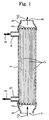
Fig. 1 is a sectional view showing an example of the above-described EGR cooler wherein reference numeral 1 denotes a cylindrical shell with axial opposite ends to which plates 2 are respectively fixed to close the ends of the shell 1. Penetratingly fixed to the respective plates 2 are opposite ends of a number of tubes 3 which extend axially within the shell 1.
A cooling water inlet 4 is attached from outside to the shell 1 near one end thereof and a cooling water outlet 5 is attached from outside to the shell 1 near the other end thereof so that cooling water 9 is supplied via the cooling water inlet 4 into the shell 1, flows outside of the tubes 3 and is discharged via the cooling water outlet 5 out of the shell 1.
The respective plates 2 have, on their sides away from the shell 1, bowl-shaped hoods 6 fixed to the plates 2 so as to enclose end faces of the plates 2. The one and the other hoods 6 provide central exhaust gas inlet and outlet 7 and 8, respectively, so that the exhaust gas 10 from the engine enters via the exhaust gas inlet 7 into the one hood 6, is cooled, during passage through the tubes 3, by heat exchange with the cooling water 9 flowing outside of the tubes 3 and is discharged to the other hood 6 to be recirculated to the engine via the exhaust gas outlet 8.
In such conventional EGR cooler, however, the end of the tube 3 penetrates into and is fixed to the plate 2 via a brazed portion 11 as shown in Fig. 2 in an enlarged scale. Especially on an outlet side of the exhaust gas 10 as shown, cooling the exhaust gas 10 in the tube 3 will generate condensate containing a vitriolic component which may flow out via the outlet of the tube 3 and corrode the brazing metal (generally nickel brazing metal) constituting the brazed portion 11. If the cooling water 9 should leak therethrough, it may be guided to the engine, causing a trouble.
Contemplated nowadays is welding the end of the tube 3 to the plate 2 by laser radiation L as shown in Fig. 3. Use of this kind of laser radiation will advantageously bring about laser weld 12 highly resistive against corrosion by the condensate; on the other hand, the weld penetration by the laser radiation L does not reach deep and sufficient weld depth D is hard to obtain, resulting in the laser weld 12 with low bonding strength. If the tube 3 should have undergone excessive thermal expansion, the laser weld 12 may be damaged to cause leakage of the cooling water 9.
More specifically, upon laser-welding the end of the tube 3 to the plate 2, generally effected is laser radiation L on the side of the plate 2 away from the shell 1 and in parallel with the axis of the tube 3, and welded is a boundary between the plate 2 and the end face of the tube 3 with weld depth D of the order of a wall thickness of the tube 3. As a result, only obtainable is the laser weld 12 having strength lower than that of the tube 3 itself.
In an actual operation, laser radiation L is effected from directly above, with the tube 3 being stood upright. Therefore, to merely increase the laser intensity for the purpose of increasing the weld depth will disadvantageously result in an increased possibility that the molten portion may flow into the tube 3 to narrow the flow channel. Thus, to increase the laser intensity is inherently limitative.
Furthermore, as described above, with the laser weld 12 having the shallow weld depth D, the tube 3 is welded to a through-hole 13 of the plate 2 over only a small area on the side away from the shell 1. Therefore, minute crevice may be formed over a major part of the boundary between the through-hole 13 and the tube 3. In this crevice, cavitation may occur due to variation of hydraulic pressure derived from minute vibrations of the tube 3, resulting in generation of crevice corrosion in a deepest portion of the crevice (a portion abutting on the laser weld 12). As a result, the end of the tube 3 may be damaged to cause leakage of the cooling water 9.
The present invention was made in view of the above facts and has its object to prevent the cooling water from leaking out to the flow channels of the exhaust gas, thereby preventing engine trouble from occurring.
Summary of The Invention
An EGR cooler according to claim 1 of the invention comprises a cylindrical shell, plates fixed to axial opposite ends of said shell so as to close the ends of the shell, hoods fixed to sides of the plates away from said shell so as to enclose end faces of the plates, tubes extending axially within the shell and having opposite ends penetratingly fixed to the respective plates, cooling water being supplied into and discharged from said shell, exhaust gas being passed through said tubes from one of the hoods to the other hood for thermal exchange of said exhaust gas with said cooling water, and is characterized in that an end of the tube penetrating the plate is formed as a tapered portion with diameter gradually increased toward the side away from the shell, the tapered portion being wholly welded to the plate by laser radiation from the side away from the shell.
In this manner, when the end of the tube is formed as the tapered portion with diameter gradually increased toward the side away from the shell, the inner periphery of the tapered portion has a shape divergent to the side away from the shell to have a bevel in the form of mortar, so that laser radiation from the side away from the shell can be readily carried out throughout the inner periphery of the tapered portion.
Then, a resulting laser weld has a high bonding strength, the weld depth being increased to an extent corresponding to the thickness of the plate. Moreover, formation of minute crevice between the tube and the through-hole of the plate is avoided so that no crevice corrosion occurs.
An EGR cooler according to claim 2 of the invention comprises a cylindrical shell, plates fixed to axial opposite ends of said shell so as to close the ends of the shell, hoods fixed to sides of the plates away from said shell so as to enclose end faces of the plates, tubes extending axially within the shell and having opposite ends penetratingly fixed to the respective plates, cooling water being supplied into and discharged from said shell, exhaust gas being passed through said tubes from one of the hoods to the other hood for thermal exchange of said exhaust gas with said cooling water, and is characterized in that an end of the tube penetrates into a through-hole of the plate which is formed with a notch on the side toward the shell, and is welded to the plate by laser radiation from the side away from the shell such that a laser weld reaches the notch.
In this manner, with the through-hole of the plate being formed with the notch on the side toward the shell, an unwelded portion is left as the notch widely opened to the shell when the end of the tube is welded to the plate by means of laser radiation from the side away from the shell such that the laser weld reaches the notch. As a result, no minute crevice is formed between the tube and the through-hole of the plate and no crevice corrosion occurs. It is therefore possible to have a structure which, under the condition that no crevice corrosion occurs, has the laser intensity increased to such a degree that no portion melted by the laser radiation will flow into the tube to narrow the channel, and the weld depth increased as much as possible to increase the bonding strength of the laser weld as high as possible.
An EGR cooler according to claim 3 of the invention comprises a cylindrical shell, plates fixed to axial opposite ends of said shell so as to close the ends of the shell, hoods fixed to sides of the plates away from said shell so as to enclose end faces of the plates, tubes extending axially within the shell and having opposite ends penetratingly fixed to the respective plates, cooling water being supplied into and discharged from said shell, exhaust gas being passed through said tubes from one of the hoods to the other hood for thermal exchange of said exhaust gas with said cooling water, and is characterized in that the tubes penetrate into and are fixed to the plate via brazed portions such that an end of the tube extends out from the plate by a predetermined length and the extending end of the tube penetrates into and is fixed to a sub plate by laser weld, whereby said sub plate covers said brazed portions.
Thus, such covering of the plate with the sub plate will cause any condensate containing a vitriolic component, which may be generated by cooling the exhaust gas in the tube and may flow out via the outlet of the tube, to be isolated by the sub plate to which the tubes penetratingly fixed via the laser welds having high resistance against corrosion such that no condensate contacts the brazed portions of the plate. As a result, corrosion of the brazing filler metal constituting the brazed portions due to the condensate is positively avoided while the bonding strength of the tubes to the plate is kept high by the brazed portions. Even if water should leak due to any crack created in the brazed portions, the cooling water is dammed by the sub plate to stay between the sub plate and the plate.
An EGR cooler according to claim 4 of the invention comprises a shell in the form of a cylindrical container, tubes extending axially within the shell and having opposite ends penetratingly fixed to axial opposite ends of said shell, cooling water being supplied into and discharged from said shell, exhaust gas being passed through said tubes for thermal exchange of said exhaust gas with said cooling water, and is characterized in that the tubes have increased diameter and thickness so as to increase cross sectional areas and strength of flow channels, a gas flange being fitted over tips of the respective tubes extruded out of the shell.
This allows the number of tubes to be reduced to a required minimum and line for recirculation of exhaust gas may be properly branched and directly connected to the gas flange at the tips of the respective tubes extruded out of the shell. Therefore, even if condensate containing a vitriolic component is generated due to cooling of the exhaust gas in the tubes, avoided is its adverse effect such as corrosion on the penetrating fixed portions of the tubes to the shell. If a crack should be generated on the penetrating fixed portions of the tubes to the shell to cause water leakage, the leaked, cooling water leaks out only outside of the shell and is prevented from intruding into the flow channels of the exhaust gas.
Brief Description of Drawings
  • Fig. 1 is a sectional view showing a conventional EGR cooler;
  • Fig. 2 is an enlarged sectional view showing details of a penetrating, fixed portion between a tube and a plate in Fig. 1;
  • Fig. 3 is an enlarged sectional view showing another example of the penetrating, fixed portion between the tube and the plate;
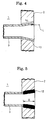
  • Fig. 4 is an enlarged sectional view showing an embodiment of the invention as set forth in claim 1;
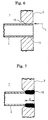
  • Fig. 5 is an enlarged sectional view showing the tube laser-welded to the plate in Fig. 4;
  • Fig. 6 is an enlarged sectional view showing an embodiment of the invention as set forth in claim 2;
  • Fig. 7 is an enlarged sectional view showing the tube laser-welded to the plate in Fig. 6;
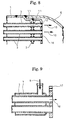
  • Fig. 8 is an enlarged sectional view showing an embodiment of the invention as set forth in claim 3; and
  • Fig. 9 is an enlarged sectional view showing an embodiment of the invention as set forth in claim 4.
  • Best Mode for Carrying Out the Invention
    Now, embodiments of the invention will be described with reference to the drawings.
    Figs. 4 and 5 show an embodiment of the invention as set forth in claim 1 in which the same parts as those in Figs. 1 to 3 are denoted by the same reference numerals.
    In this embodiment, with regard to an EGR cooler constructed substantially in the same manner as that described above with reference to Fig. 1, an end of a tube 3 penetrating a plate 2 is formed as a tapered portion 14 with diameter gradually increased toward the side away from a shell 1; the tapered portion 14 is wholly welded to the plate 2 by laser radiation L from the side away from the shell 1.
    In this manner, when the end of the tube 3 is formed as the tapered portion 14 with diameter gradually increased toward the side away from the shell 1, the inner periphery of the tapered portion 14 has a shape divergent to the side away from the shell 1 to have a bevel in the form of mortar, so that laser radiation L from the side away from the shell 1 can be readily carried out throughout the inner periphery of the tapered portion.
    Then, a resulting laser weld 12 has a high bonding strength, the weld depth D being increased to an extent corresponding to the thickness of the plate 2. Moreover, formation of minute crevice between the tube 3 and a through-hole 13 of the plate 2 is avoided so that no crevice corrosion occurs.
    Therefore, according to the above embodiment, the laser weld 12 highly resistant against corrosion allows the tube 3 to be penetratingly fixed to the plate 2 with a high bonding strength, the weld depth D being increased in comparison with the conventional cases. Moreover, formation of minute crevice between the tube 3 and the through-hole 13 of the plate 2 is avoided to prevent crevice corrosion from occurring. As a result, the cooling water 9 can be positively prevented from leaking out to the flow channel of the exhaust gas 10, which eliminates any possibility of the cooling water 9 being guided to the engine, thereby preventing engine trouble from occurring.
    Figs. 6 and 7 show an embodiment of the invention as set forth in claim 2. In this embodiment, an end of a tube 3 penetrates into a through-hole 13 of a plate 2 which is formed with a notch 15 on the side toward the shell 1, and is welded to the plate 2 by laser radiation L from the side away from the shell 1 such that a laser weld 12 reaches the notch 15.
    In this manner, with the through-hole 13 of the plate 2 being formed with the notch 15 on the side toward the shell 1, an unwelded portion is left as the notch 15 widely opened to the shell 1 when the end of the tube 3 is welded to the plate 2 by laser radiation L from the side away from the shell 1 such that the laser weld 12 reaches the notch 15. As a result, no minute crevice is formed between the tube 3 and the through-hole 13 of the plate 2 and no crevice corrosion occurs. It is therefore possible to have a structure which, under the condition that no crevice corrosion occurs, has the laser intensity increased to such a degree that no portion melted by the laser radiation L will flow into the tube 3 to narrow the channel, and the weld depth D increased as much as possible to increase the bonding strength of the laser weld 12 as high as possible.
    Accordingly, also in this embodiment, formation of minute crevice between the tube 3 and the through-hole 13 of the plate 2 can be avoided to prevent crevice corrosion from occurring. As a result, the cooling water 9 can be positively prevented from leaking out to the flow channel of the exhaust gas 10, which eliminates the possibility of the cooling water 9 being guided to the engine, thereby preventing engine trouble from occurring.
    Fig. 8 shows an embodiment of the invention as set forth in claim 3. In this embodiment, tubes 3 penetrate into and are fixed to a plate 2 via brazed portions 11 such that an end of the tube 3 extends out from the plate 2 by a predetermined length and the extending end of the tube 3 penetrates into and is fixed to a sub plate 16 by laser weld 12. Thus, the sub plate 16 covers the brazed portions 11.
    Especially in this embodiment, an outer periphery of the plate 2 is bent toward the axial direction of the tube 3 with a stepped portion being intervened, and the shell 1 and the bonnet 6 are butt-welded with the outer periphery of the plate 2 being therebetween.
    Thus, such covering of the plate 2 with the sub plate 16 will cause any condensate containing a vitriolic component, which may be generated by cooling the exhaust gas 10 in the tube 3 and may flow out via the outlet of the tube 3, to be isolated by the sub plate 16 to which the tubes 3 penetratingly fixed via the laser welds 12 having high resistance against corrosion such that no condensate contacts the brazed portions 11 of the plate 2. As a result, corrosion of the brazing filler metal constituting the brazed portions 11 due to the condensate is positively avoided while the bonding strength of the tubes 3 to the plate 2 is kept high by the brazed portions 11. Even if water should leak due to any crack created in the brazed portions 11, the cooling water 9 is dammed by the sub plate 16 to stay between the sub plate 16 and the plate 2.
    Therefore, according to the above embodiment, the brazed portion 11 can be protected by the sub plate 16 against the condensate of the exhaust gas 10 while kept high is the bonding strength of the tubes 3 to the plate 2 by the brazed portions 11. As a result, corrosion of the brazed portions 11 can be prevented from occurring. Even if a crack may occur in the brazed portion 11 due to a factor other than the condensate of the exhaust gas 10, resulting in water leakage, the cooling water 9 can be dammed by the sub plate 16 to be accumulated between the sub plate 16 and the plate 2. As a result, the cooling water 9 may not be guided to the engine, and engine trouble can be prevented from occurring.
    Fig. 9 shows an embodiment of the invention as set forth in claim 4. Used in this embodiment is a structure with a shell 1 in the form of a cylindrical container; opposite ends of tubes 3 axially extend in a shell 1 and are penetratingly fixed to opposite axial ends of the shell 1, respectively; the tubes 3 are increased in diameter and thickness in comparison with the conventional cases to increase flow sectional areas and strengths of flow channels, which allows the number of tubes 3 to be reduced to a required minimum (for example, three or so). A gas flange 17 is fitted over tips of the respective tubes 3 extruded out of the shell 1.
    More specifically, in the conventional EGR coolers, the tubes 3 are decreased in diameter and thickness for effective cooling of the recirculated exhaust gas 10, which causes a cross sectional area per tube 3 to be decreased, resulting in necessity of using a great number of tubes 3 and of using a structure in which the tubes are supported by the plates 2 for passing of all the tubes 3 into the hoods 6. By contrast, according to this embodiment, the tubes 3 are increased in diameter and thickness in comparison with the conventional cases to increase the cross sectional areas and the strengths of the flow channels, which allows the number of tubes 3 to be reduced to a required minimum.
    However, of course, the shell 1 and tube 3 must be properly increased in length so as to maintain the cooling efficiency as before.
    As described above, when the number of tubes 3 is reduced to a required minimum and the ends of the respective tubes 3 are penetratingly fixed to the axial opposite ends of the shell 1, line for recirculation of exhaust gas 10 may be properly branched and directly connected to the gas flange 17 at the tips of the respective tubes 3 extruded out of the shell 1. Therefore, even if condensate containing a vitriolic component is generated due to cooling of the exhaust gas 10 in the tubes 3, avoided is its adverse effect such as corrosion on the penetrating fixed portions of the tubes 3 to the shell 1. If a crack should be generated on the penetrating fixed portions of the tubes 3 to the shell 1 to cause water leakage, the leaked, cooling water 9 leaks out only outside of the shell 1 and is prevented from intruding into the flow channels of the exhaust gas 10.
    Therefore, according to the above embodiment, it can be positively avoided that the condensate of the exhaust gas 10 has an adverse effect such as corrosion on the penetrating, fixed portions of the tubes 3 to the shell 1. Moreover, even if a crack should occur in the penetrating, fixed portions due to a factor other than the condensate of the exhaust gas 10 to cause water leakage, the leaked cooling water 9 can be positively prevented from intruding into the flow channels of the exhaust gas 10. As a result, the cooling water 9 may not be guided to the engine and engine trouble is prevented from occurring.
    It is to be understood that the EGR cooler of the invention is not limited to the above embodiments and that various changes and modifications may be made without departing from the scope of the invention. For example, the outlet side of the exhaust gas is shown in the drawings; however, similar construction may be applicable on the inlet side of the exhaust gas.
    Industrial Applicability
    As described above, the EGR cooler according to the invention is suitable for use in an EGR apparatus for recirculating exhaust gas from the engine to suppress generation of nitrogen oxides.

    Claims (4)

    1. An EGR cooler comprising a cylindrical shell, plates fixed to axial opposite ends of said shell so as to close the ends of the shell, hoods fixed to sides of the plates away from said shell so as to enclose end faces of the plates, tubes extending axially within the shell and having opposite ends penetratingly fixed to the respective plates, cooling water being supplied into and discharged from said shell, exhaust gas being passed through said tubes from one of the hoods to the other hood for thermal exchange of said exhaust gas with said cooling water, characterized in that an end of the tube penetrating the plate is formed as a tapered portion with diameter gradually increased toward the side away from the shell, the tapered portion being wholly welded to the plate by laser radiation from the side away from the shell.
    2. An EGR cooler comprising a cylindrical shell, plates fixed to axial opposite ends of said shell so as to close the ends of the shell, hoods fixed to sides of the plates away from said shell so as to enclose end faces of the plates, tubes extending axially within the shell and having opposite ends penetratingly fixed to the respective plates, cooling water being supplied into and discharged from said shell, exhaust gas being passed through said tubes from one of the hoods to the other hood for thermal exchange of said exhaust gas with said cooling water, characterized in that an end of the tube penetrates into a through-hole of the plate which is formed with a notch on the side toward the shell, and is welded to the plate by laser radiation from the side away from the shell such that a laser weld reaches the notch.
    3. An EGR cooler comprising a cylindrical shell, plates fixed to axial opposite ends of said shell so as to close the ends of the shell, hoods fixed to sides of the plates away from said shell so as to enclose end faces of the plates, tubes extending axially within the shell and having opposite ends penetratingly fixed to the respective plates, cooling water being supplied into and discharged from said shell, exhaust gas being passed through said tubes from one of the hoods to the other hood for thermal exchange of said exhaust gas with said cooling water, characterized in that the tubes penetrate into and are fixed to the plate via brazed portions such that an end of the tube extends out from the plate by a predetermined length and the extending end of the tube penetrates into and is fixed to a sub plate by laser weld, whereby said sub plate covers said brazed portions.
    4. An EGR cooler comprising a shell in the form of a cylindrical container, tubes extending axially within the shell and having opposite ends penetratingly fixed to axial opposite ends of said shell, cooling water being supplied into and discharged from said shell, exhaust gas being passed through said tubes for thermal exchange of said exhaust gas with said cooling water, characterized in that the tubes have increased diameter and thickness so as to increase cross sectional areas and strength of flow channels, a gas flange being fitted over tips of the respective tubes extruded out of the shell.
    EP00900810A 1999-01-20 2000-01-19 Egr cooler Withdrawn EP1154143A4 (en)

    Applications Claiming Priority (3)

    Application Number Priority Date Filing Date Title
    JP1177799 1999-01-20
    JP11011777A JP2000213425A (en) 1999-01-20 1999-01-20 Egr cooler
    PCT/JP2000/000217 WO2000043662A1 (en) 1999-01-20 2000-01-19 Egr cooler

    Publications (2)

    Publication Number Publication Date
    EP1154143A1 true EP1154143A1 (en) 2001-11-14
    EP1154143A4 EP1154143A4 (en) 2008-03-26

    Family

    ID=11787396

    Family Applications (1)

    Application Number Title Priority Date Filing Date
    EP00900810A Withdrawn EP1154143A4 (en) 1999-01-20 2000-01-19 Egr cooler

    Country Status (4)

    Country Link
    EP (1) EP1154143A4 (en)
    JP (1) JP2000213425A (en)
    KR (1) KR100709027B1 (en)
    WO (1) WO2000043662A1 (en)

    Cited By (14)

    * Cited by examiner, † Cited by third party
    Publication number Priority date Publication date Assignee Title
    WO2004001203A3 (en) * 2002-06-25 2004-03-04 Behr Gmbh & Co Exhaust gas heat exchanger and method for the production thereof
    WO2005038376A1 (en) * 2003-10-17 2005-04-28 Behr Gmbh & Co. Kg Heat exchanger, in particular for motor vehicles
    EP1553371A1 (en) * 2004-01-12 2005-07-13 Behr GmbH & Co. KG Heat exchanger, particularly exhaust gas heat exchanger for vehicles
    WO2007082515A1 (en) * 2006-01-23 2007-07-26 Alstom Technology Ltd. Tube bundle heat exchanger
    DE102006031606A1 (en) * 2006-07-06 2008-01-17 Behr Gmbh & Co. Kg Heat exchanger for cooling of exhaust gas for motor vehicle, has base exhibiting tapering device for tapering base depth within region of connection of base and flow channel, where base accommodates flow channel
    WO2008125485A1 (en) * 2007-04-13 2008-10-23 Valeo Termico S.A. Heat exchanger for gas and method for making same
    CN103104378A (en) * 2012-11-12 2013-05-15 无锡双翼汽车环保科技有限公司 Exhaust gas recirculation (EGR) cooler core body
    EP2031338A3 (en) * 2007-08-28 2013-08-14 Behr GmbH & Co. KG Heat exchanger
    WO2014167041A1 (en) * 2013-04-11 2014-10-16 Spx Flow Technology Danmark A/S Hygienic heat exchanger
    US10094626B2 (en) 2015-10-07 2018-10-09 Arvos Ljungstrom Llc Alternating notch configuration for spacing heat transfer sheets
    US10175006B2 (en) 2013-11-25 2019-01-08 Arvos Ljungstrom Llc Heat transfer elements for a closed channel rotary regenerative air preheater
    US10197337B2 (en) 2009-05-08 2019-02-05 Arvos Ljungstrom Llc Heat transfer sheet for rotary regenerative heat exchanger
    US10378829B2 (en) 2012-08-23 2019-08-13 Arvos Ljungstrom Llc Heat transfer assembly for rotary regenerative preheater
    EP4206599A1 (en) * 2021-12-30 2023-07-05 Robert Bosch GmbH Heat exchanger, water treatment system, heat pump

    Families Citing this family (17)

    * Cited by examiner, † Cited by third party
    Publication number Priority date Publication date Assignee Title
    JP2007051576A (en) * 2005-08-17 2007-03-01 Tokyo Roki Co Ltd EGR cooler
    JP4715800B2 (en) * 2007-04-17 2011-07-06 トヨタ自動車株式会社 Fuel cooling device
    FR2933178A1 (en) * 2008-06-26 2010-01-01 Valeo Systemes Thermiques HEAT EXCHANGER AND CARTER FOR THE EXCHANGER
    US9511151B2 (en) 2010-11-12 2016-12-06 Uti Limited Partnership Compositions and methods for the prevention and treatment of cancer
    JP5923886B2 (en) * 2011-07-20 2016-05-25 株式会社デンソー Exhaust cooling device
    US10988516B2 (en) 2012-03-26 2021-04-27 Uti Limited Partnership Methods and compositions for treating inflammation
    US9603948B2 (en) 2012-10-11 2017-03-28 Uti Limited Partnership Methods and compositions for treating multiple sclerosis and related disorders
    JP6132130B2 (en) * 2012-11-30 2017-05-24 株式会社ノーリツ Manufacturing method of heat exchanger
    JP6153060B2 (en) * 2013-03-30 2017-06-28 株式会社ノーリツ Heat exchanger and manufacturing method thereof
    SG10201912301XA (en) 2013-11-04 2020-02-27 Uti Lp Methods and compositions for sustained immunotherapy
    KR102230075B1 (en) * 2015-02-16 2021-03-19 (주)다우정밀 Cooling water course type egr cooler
    JP2016156592A (en) * 2015-02-26 2016-09-01 カルソニックカンセイ株式会社 Heat exchanger
    JP6342834B2 (en) * 2015-03-20 2018-06-13 株式会社ユタカ技研 Manufacturing method of heat exchanger and heat exchanger
    HK1252348A1 (en) 2015-05-06 2019-05-24 Uti Limited Partnership Nanoparticle compositions for sustained therapy
    KR20180010364A (en) 2016-07-20 2018-01-31 현대자동차주식회사 Combination structure of egr cooler
    EP3716949A4 (en) 2017-11-29 2022-05-18 UTI Limited Partnership METHODS OF TREATING AN AUTOIMMUNE DISEASE
    DE102017222740B3 (en) * 2017-12-14 2019-03-14 Hanon Systems Exhaust gas cooler and exhaust gas recirculation system with an exhaust gas cooler

    Family Cites Families (18)

    * Cited by examiner, † Cited by third party
    Publication number Priority date Publication date Assignee Title
    JPS4527697Y1 (en) * 1968-12-19 1970-10-26
    JPS599265B2 (en) * 1975-01-24 1984-03-01 株式会社日立製作所 Tube end welding method for heat exchanger
    JPS56114596A (en) * 1980-02-14 1981-09-09 Toshiba Corp Welding method of tube and tube plate in heat exchanger
    JPS572995A (en) * 1980-06-06 1982-01-08 Toshiba Corp Multitube type heat exchanger
    JPS63154281A (en) * 1986-12-18 1988-06-27 Mitsubishi Heavy Ind Ltd Laser seal welding method
    JPH02126031A (en) * 1988-11-05 1990-05-15 Sugiura Hirotsugu Cold air feeding device and cooling filter used in this cold air feeding device
    JPH0379066A (en) * 1989-08-22 1991-04-04 Nec Corp Lead frame for semiconductor device
    JPH0749241Y2 (en) * 1989-11-29 1995-11-13 株式会社宇野澤組鐵工所 Cooler for multi-stage vacuum pump
    JPH06207795A (en) * 1993-01-08 1994-07-26 Nippon Steel Corp Heat transfer tube mounting structure for heat exchanger
    JPH0749241A (en) * 1993-08-05 1995-02-21 Sumitomo Electric Ind Ltd Navigation display
    JPH09133492A (en) * 1995-11-02 1997-05-20 Ebara Corp Heat exchanger
    JP3781386B2 (en) * 1996-05-22 2006-05-31 臼井国際産業株式会社 EGR gas cooling device
    JPH10185489A (en) * 1996-11-11 1998-07-14 Usui Internatl Ind Co Ltd Egr gas cooler
    GB2319333B (en) * 1996-11-11 2000-08-09 Usui Kokusai Sangyo Kk EGR Gas cooling apparatus
    US5732688A (en) * 1996-12-11 1998-03-31 Cummins Engine Company, Inc. System for controlling recirculated exhaust gas temperature in an internal combustion engine
    US5785030A (en) * 1996-12-17 1998-07-28 Dry Systems Technologies Exhaust gas recirculation in internal combustion engines
    JP3948638B2 (en) * 1997-05-14 2007-07-25 臼井国際産業株式会社 EGR gas cooling device
    JPH1113551A (en) * 1997-06-23 1999-01-19 Isuzu Motors Ltd Egr cooler

    Cited By (27)

    * Cited by examiner, † Cited by third party
    Publication number Priority date Publication date Assignee Title
    US7278473B2 (en) 2002-06-25 2007-10-09 Behr Gmbh & Co. Exhaust gas heat exchanger and method for the production thereof
    WO2004001203A3 (en) * 2002-06-25 2004-03-04 Behr Gmbh & Co Exhaust gas heat exchanger and method for the production thereof
    WO2005038376A1 (en) * 2003-10-17 2005-04-28 Behr Gmbh & Co. Kg Heat exchanger, in particular for motor vehicles
    EP1553371A1 (en) * 2004-01-12 2005-07-13 Behr GmbH & Co. KG Heat exchanger, particularly exhaust gas heat exchanger for vehicles
    US7048042B2 (en) 2004-01-12 2006-05-23 Behr Gmgh & Co. Kg Heat exchanger, in particular exhaust gas heat exchanger for motor vehicles, and method for producing same
    US9534850B2 (en) 2006-01-23 2017-01-03 Arvos Technology Limited Tube bundle heat exchanger
    WO2007082515A1 (en) * 2006-01-23 2007-07-26 Alstom Technology Ltd. Tube bundle heat exchanger
    US10914527B2 (en) 2006-01-23 2021-02-09 Arvos Gmbh Tube bundle heat exchanger
    AU2007207217B2 (en) * 2006-01-23 2010-04-29 Arvos Gmbh Tube bundle heat exchanger
    DE102006031606A1 (en) * 2006-07-06 2008-01-17 Behr Gmbh & Co. Kg Heat exchanger for cooling of exhaust gas for motor vehicle, has base exhibiting tapering device for tapering base depth within region of connection of base and flow channel, where base accommodates flow channel
    EP1906130A3 (en) * 2006-07-06 2008-04-09 Behr GmbH & Co. KG Heat exchanger for cooling exhaust gas, method for manufacturing a heat exchanger
    WO2008125485A1 (en) * 2007-04-13 2008-10-23 Valeo Termico S.A. Heat exchanger for gas and method for making same
    EP2031338A3 (en) * 2007-08-28 2013-08-14 Behr GmbH & Co. KG Heat exchanger
    US8881796B2 (en) 2007-08-28 2014-11-11 Behr Gmbh & Co. Kg Heat exchanger
    US9897396B2 (en) 2007-08-28 2018-02-20 Mahle International Gmbh Heat exchanger
    US10982908B2 (en) 2009-05-08 2021-04-20 Arvos Ljungstrom Llc Heat transfer sheet for rotary regenerative heat exchanger
    US10197337B2 (en) 2009-05-08 2019-02-05 Arvos Ljungstrom Llc Heat transfer sheet for rotary regenerative heat exchanger
    US11092387B2 (en) 2012-08-23 2021-08-17 Arvos Ljungstrom Llc Heat transfer assembly for rotary regenerative preheater
    US10378829B2 (en) 2012-08-23 2019-08-13 Arvos Ljungstrom Llc Heat transfer assembly for rotary regenerative preheater
    CN103104378A (en) * 2012-11-12 2013-05-15 无锡双翼汽车环保科技有限公司 Exhaust gas recirculation (EGR) cooler core body
    WO2014167041A1 (en) * 2013-04-11 2014-10-16 Spx Flow Technology Danmark A/S Hygienic heat exchanger
    US10627169B2 (en) 2013-04-11 2020-04-21 Spx Flow Technology Danmark A/S Hygienic heat exchanger
    CN105283730A (en) * 2013-04-11 2016-01-27 斯必克流体技术丹麦公司 Hygienic heat exchanger
    US11885574B2 (en) 2013-04-11 2024-01-30 Spx Flow Technology Danmark A/S Hygienic heat exchanger
    US10175006B2 (en) 2013-11-25 2019-01-08 Arvos Ljungstrom Llc Heat transfer elements for a closed channel rotary regenerative air preheater
    US10094626B2 (en) 2015-10-07 2018-10-09 Arvos Ljungstrom Llc Alternating notch configuration for spacing heat transfer sheets
    EP4206599A1 (en) * 2021-12-30 2023-07-05 Robert Bosch GmbH Heat exchanger, water treatment system, heat pump

    Also Published As

    Publication number Publication date
    JP2000213425A (en) 2000-08-02
    EP1154143A4 (en) 2008-03-26
    WO2000043662A1 (en) 2000-07-27
    KR20010102980A (en) 2001-11-17
    KR100709027B1 (en) 2007-04-19

    Similar Documents

    Publication Publication Date Title
    US20020162651A1 (en) EGR cooler
    EP1154143A1 (en) Egr cooler
    US8261815B2 (en) Heat exchanger, in particular charge air cooler or exhaust gas cooler for an internal combustion engine of a motor vehicle and method for manufacturing it
    US10914527B2 (en) Tube bundle heat exchanger
    JP5048695B2 (en) EGR cooler
    US5732769A (en) Double-pipe heat exchanger and process for manufacturing same
    KR101793752B1 (en) Heat exchanger for gases, in particular for the exhaust gases of an engine
    US20100175861A1 (en) Laser-welded heat exchanger tube assembly
    JP4931390B2 (en) EGR gas cooling device
    CN1704563B (en) Cooled Seat Ring
    RU2267635C1 (en) Rocket engine and method of assembling of its combustion chamber
    JP4199511B2 (en) EGR cooler
    US11655745B2 (en) Exhaust gas heat exchanger
    US7322403B2 (en) Heat exchanger with modified tube surface feature
    KR102335327B1 (en) Water cooled egr cooler
    JP5581247B2 (en) Waste heat recovery device
    JP2000054916A (en) Egr gas cooling device
    JP2000008971A (en) Exhaust gas recirculation cooler
    CN210833213U (en) Connecting structure of porous flat tube and tube plate of aluminum air cooler
    KR20180010364A (en) Combination structure of egr cooler
    KR102406998B1 (en) Intercooler
    KR101947963B1 (en) Combination structure of egr cooler
    CN213984661U (en) Water tank internal reinforcement structure
    KR102371237B1 (en) Water-cooled egr cooler, and the manufacutring method thereof
    WO2019031090A1 (en) Heat exchanger

    Legal Events

    Date Code Title Description
    PUAI Public reference made under article 153(3) epc to a published international application that has entered the european phase

    Free format text: ORIGINAL CODE: 0009012

    17P Request for examination filed

    Effective date: 20010627

    AK Designated contracting states

    Kind code of ref document: A1

    Designated state(s): AT BE CH CY DE DK ES FI FR GB GR IE IT LI LU MC NL PT SE

    RBV Designated contracting states (corrected)

    Designated state(s): DE FR GB SE

    A4 Supplementary search report drawn up and despatched

    Effective date: 20080227

    17Q First examination report despatched

    Effective date: 20080704

    GRAP Despatch of communication of intention to grant a patent

    Free format text: ORIGINAL CODE: EPIDOSNIGR1

    STAA Information on the status of an ep patent application or granted ep patent

    Free format text: STATUS: THE APPLICATION IS DEEMED TO BE WITHDRAWN

    18D Application deemed to be withdrawn

    Effective date: 20090429