EP1154067A1 - Softener composition - Google Patents
Softener composition Download PDFInfo
- Publication number
- EP1154067A1 EP1154067A1 EP00974873A EP00974873A EP1154067A1 EP 1154067 A1 EP1154067 A1 EP 1154067A1 EP 00974873 A EP00974873 A EP 00974873A EP 00974873 A EP00974873 A EP 00974873A EP 1154067 A1 EP1154067 A1 EP 1154067A1
- Authority
- EP
- European Patent Office
- Prior art keywords
- group
- alkyl
- weight
- formula
- percent
- Prior art date
- Legal status (The legal status is an assumption and is not a legal conclusion. Google has not performed a legal analysis and makes no representation as to the accuracy of the status listed.)
- Granted
Links
- 0 *[n+]1ccccc1 Chemical compound *[n+]1ccccc1 0.000 description 1
Classifications
-
- C—CHEMISTRY; METALLURGY
- C11—ANIMAL OR VEGETABLE OILS, FATS, FATTY SUBSTANCES OR WAXES; FATTY ACIDS THEREFROM; DETERGENTS; CANDLES
- C11D—DETERGENT COMPOSITIONS; USE OF SINGLE SUBSTANCES AS DETERGENTS; SOAP OR SOAP-MAKING; RESIN SOAPS; RECOVERY OF GLYCEROL
- C11D3/00—Other compounding ingredients of detergent compositions covered in group C11D1/00
- C11D3/0005—Other compounding ingredients characterised by their effect
- C11D3/001—Softening compositions
- C11D3/0015—Softening compositions liquid
-
- C—CHEMISTRY; METALLURGY
- C11—ANIMAL OR VEGETABLE OILS, FATS, FATTY SUBSTANCES OR WAXES; FATTY ACIDS THEREFROM; DETERGENTS; CANDLES
- C11D—DETERGENT COMPOSITIONS; USE OF SINGLE SUBSTANCES AS DETERGENTS; SOAP OR SOAP-MAKING; RESIN SOAPS; RECOVERY OF GLYCEROL
- C11D1/00—Detergent compositions based essentially on surface-active compounds; Use of these compounds as a detergent
- C11D1/38—Cationic compounds
- C11D1/62—Quaternary ammonium compounds
-
- C—CHEMISTRY; METALLURGY
- C11—ANIMAL OR VEGETABLE OILS, FATS, FATTY SUBSTANCES OR WAXES; FATTY ACIDS THEREFROM; DETERGENTS; CANDLES
- C11D—DETERGENT COMPOSITIONS; USE OF SINGLE SUBSTANCES AS DETERGENTS; SOAP OR SOAP-MAKING; RESIN SOAPS; RECOVERY OF GLYCEROL
- C11D1/00—Detergent compositions based essentially on surface-active compounds; Use of these compounds as a detergent
- C11D1/38—Cationic compounds
- C11D1/65—Mixtures of anionic with cationic compounds
-
- C—CHEMISTRY; METALLURGY
- C11—ANIMAL OR VEGETABLE OILS, FATS, FATTY SUBSTANCES OR WAXES; FATTY ACIDS THEREFROM; DETERGENTS; CANDLES
- C11D—DETERGENT COMPOSITIONS; USE OF SINGLE SUBSTANCES AS DETERGENTS; SOAP OR SOAP-MAKING; RESIN SOAPS; RECOVERY OF GLYCEROL
- C11D3/00—Other compounding ingredients of detergent compositions covered in group C11D1/00
- C11D3/16—Organic compounds
- C11D3/26—Organic compounds containing nitrogen
- C11D3/28—Heterocyclic compounds containing nitrogen in the ring
-
- C—CHEMISTRY; METALLURGY
- C11—ANIMAL OR VEGETABLE OILS, FATS, FATTY SUBSTANCES OR WAXES; FATTY ACIDS THEREFROM; DETERGENTS; CANDLES
- C11D—DETERGENT COMPOSITIONS; USE OF SINGLE SUBSTANCES AS DETERGENTS; SOAP OR SOAP-MAKING; RESIN SOAPS; RECOVERY OF GLYCEROL
- C11D1/00—Detergent compositions based essentially on surface-active compounds; Use of these compounds as a detergent
- C11D1/38—Cationic compounds
- C11D1/40—Monoamines or polyamines; Salts thereof
-
- C—CHEMISTRY; METALLURGY
- C11—ANIMAL OR VEGETABLE OILS, FATS, FATTY SUBSTANCES OR WAXES; FATTY ACIDS THEREFROM; DETERGENTS; CANDLES
- C11D—DETERGENT COMPOSITIONS; USE OF SINGLE SUBSTANCES AS DETERGENTS; SOAP OR SOAP-MAKING; RESIN SOAPS; RECOVERY OF GLYCEROL
- C11D1/00—Detergent compositions based essentially on surface-active compounds; Use of these compounds as a detergent
- C11D1/38—Cationic compounds
- C11D1/46—Esters of carboxylic acids with amino alcohols; Esters of amino carboxylic acids with alcohols
-
- C—CHEMISTRY; METALLURGY
- C11—ANIMAL OR VEGETABLE OILS, FATS, FATTY SUBSTANCES OR WAXES; FATTY ACIDS THEREFROM; DETERGENTS; CANDLES
- C11D—DETERGENT COMPOSITIONS; USE OF SINGLE SUBSTANCES AS DETERGENTS; SOAP OR SOAP-MAKING; RESIN SOAPS; RECOVERY OF GLYCEROL
- C11D1/00—Detergent compositions based essentially on surface-active compounds; Use of these compounds as a detergent
- C11D1/38—Cationic compounds
- C11D1/52—Carboxylic amides, alkylolamides or imides or their condensation products with alkylene oxides
- C11D1/528—Carboxylic amides (R1-CO-NR2R3), where at least one of the chains R1, R2 or R3 is interrupted by a functional group, e.g. a -NH-, -NR-, -CO-, or -CON- group
Definitions
- the present invention relates to a softener composition.
- JP-A 10-512015 discloses a softener composition comprising a water-insoluble quaternary ammonium salt as a softener and a water-soluble quaternary ammonium salt as an antimicrobial agent compounded therein.
- JP-A 7-3649 discloses a fiber product-softener composition, having pH 2 to 5, comprising a di-long-chain-alkyl amine (C 6-24 alkyl or alkenyl group which may be interrupted by an ether linkage, ester linkage or acid amide linkage) and a mono-long-chain-alkyl quaternary ammonium salt (C 6-24 alkyl or alkenyl group which may be interrupted by an ether linkage, ester linkage or acid amide linkage), at a weight ratio of from 9 : 1 to 5 : 5.
- a di-long-chain-alkyl amine C 6-24 alkyl or alkenyl group which may be interrupted by an ether linkage, ester linkage or acid amide linkage
- a mono-long-chain-alkyl quaternary ammonium salt C 6-24 alkyl or alkenyl group which may be interrupted by an ether linkage, ester linkage or acid amide linkage
- WO 98/56886 discloses an antimicrobial fiber softener composition, being suitable for conferring antimicrobial performance on fibers, comprising a conventional fiber softener composition and one or more cationic antimicrobial agents in a larger amount than required for antimicrobial performance.
- Such a composition is provided with only a small effect to suppress a nasty smell of clothes washed and dried in a room and a body smell derived from sweat at the time of wearing. Especially it has a low effect to chemical fiber clothes. It does not meet any of storage stability or a softening effect and the above mentioned smell -suppressing effect. Especially the softening effect is not sufficient to chemical fiber clothes.
- the purpose of the present invention is to provide a softener composition which suppresses a body smell etc. of clothes, derived from sweat, and is excellent in the storage stability and the softening effect.
- the present invention relates to a softener composition
- a softener composition comprising:
- the component (a) of the invention is a tertiary amine and/or a salt thereof, having in the molecule thereof an ester and/or an amide and at least one alkyl or alkenyl having 10 to 22 carbon atoms.
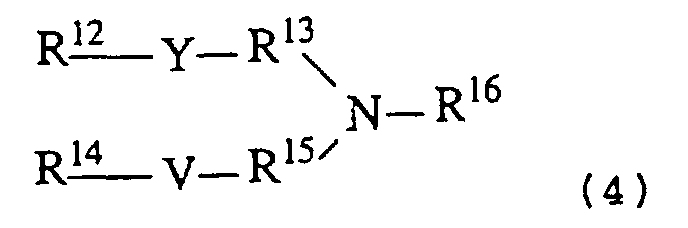
- the compound having the formula (4) and a salt of the compound having the formula (4) with an acid agent are preferable from the feeling in touch of clothes.
- R 12 and R 14 independently represent an alkyl or alkenyl group having 10 to 22 of carbon atoms, preferably 12 to 18, Y and V are independently -COO-, -CONR 17 -, -OCO- or -NR 17 CO-, preferably at least one of them being -COO- or -OCO-.
- R 17 represents a hydrogen atom or a C 1-3 alkyl or hydroxyalkyl group, preferably hydrogen atom.
- R 13 and R 15 independently represent a C 1-5 alkylene group,
- R 16 represents a C 1-3 alkyl or hydroxyalkyl group or R 12 -Y-R 13 -.
- the acid for the salt is preferably hydrochloric acid, sulfuric acid, phosphoric acid, a C 1-12 fatty acid or a C 1-3 alkylsulfuric acid.
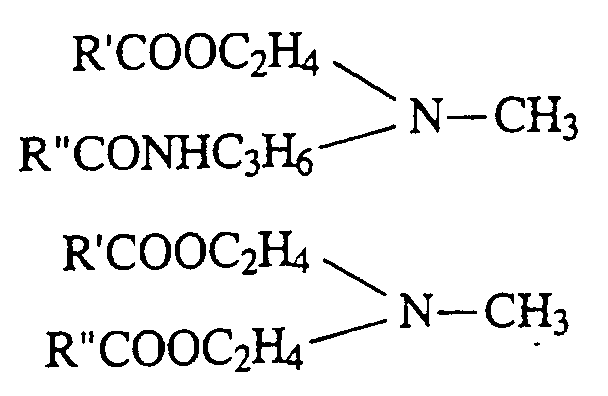
- the following compound and a salt thereof are especially preferable.
- the salt is preferably a salt with hydrochloric acid, sulfuric acid or phosphoric acid. in which R' and R" are the same as or different from each other and a C 12-18 alkyl or alkenyl.
- a compound having the formula (5) may be preferably added to the compound (4) from the viewpoint of feeling in touch of clothes.
- R 18 represents a C 12-22 , preferably C 14-18 , more preferably C 12-18 , alkyl or alkenyl group
- B is -COO-, -CONR 22 -, -OCO- or -NR 22 CO-, preferably -COO- or -CONR 22 -
- R 22 represents a hydrogen atom or a C 1-3 alkyl or hydroxyalkyl group, preferably a hydrogen atom
- R 19 represents a C 1-5 alkylene group
- R 20 represents a C 1-3 alkyl or hydroxyalkyl group or -R 25 -OH
- R 25 is a C 1-5 alkylene group
- R 21 represents a C 1-3 alkyl or hydroxyalkyl group or R 21 may represent R 18 -B-R 19 .
- the compound (5) may be in the form of a salt thereof, preferably being used in the form of an acid salt neutralized with an inorganic or organic acid from the viewpoint of the softening effect.
- the acid is preferably at least one selected from sulfuric acid, hydrochloric acid, phosphoric acid, a C 1-12 fatty acid and a C 1-3 alkylsulfuric acid.
- the neutralization may be effected in advance to incorporation of the compound (5) into the composition. It may be effected after incorporation of the compound (5).
- the softener of the invention including the component (b) may preferably contain the compound (4) and the compound (5) at the weight ratio of (4) to (5) in the range of from 70:30 to 99:1, especially from 80:20 to 95:5 from the viewpoint of the softening effect.
- the softener of the invention including the component (c) may preferably contain the compound (5) and the compound (4) at the weight ratio of (5) to (4) in the range of from 1/1 to 1/50, more preferably from 1/2 to 1/30, much more preferably from 1/3 to 1/20 from the viewpoint of the softening effect.
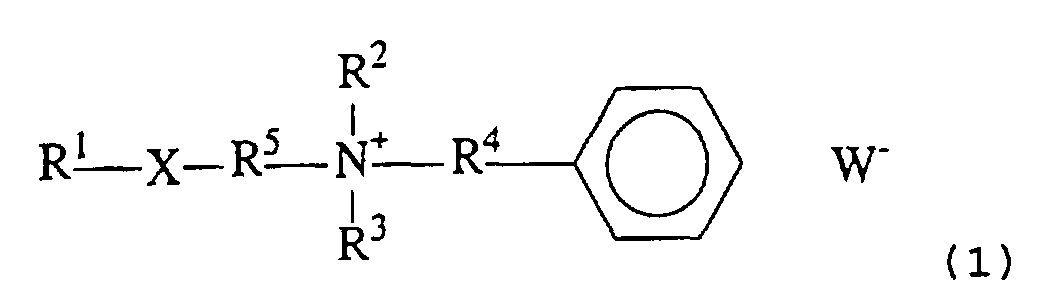
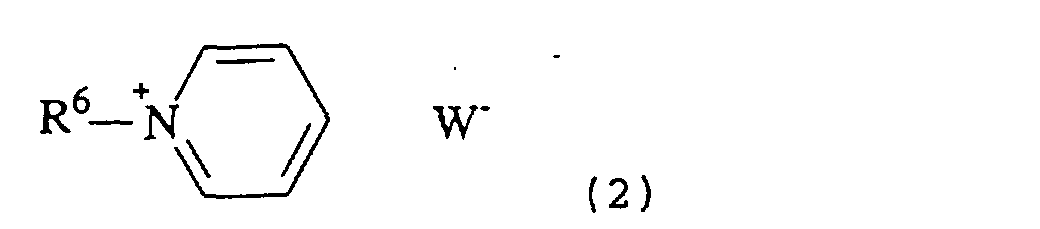
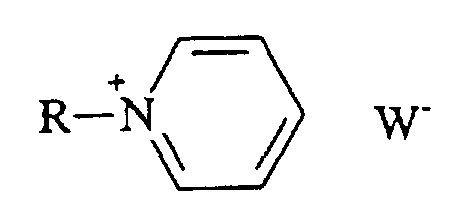
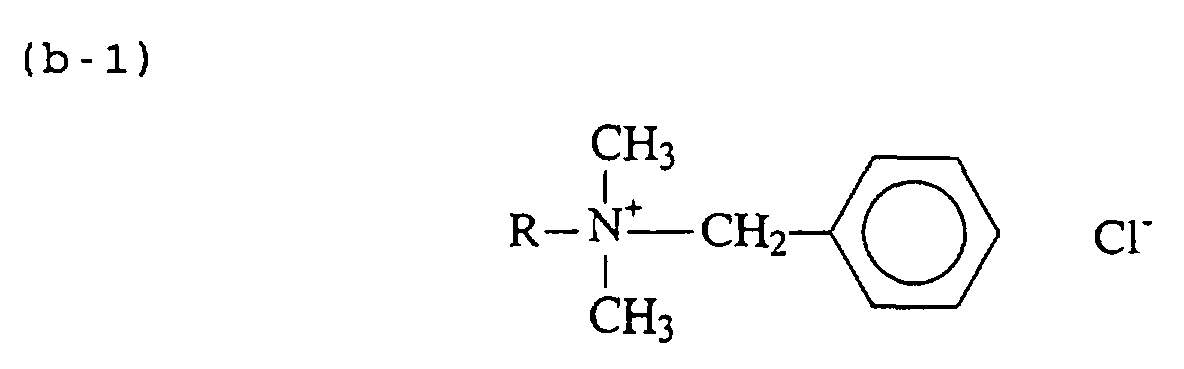
- the softening composition of the invention includes the above shown compounds (1) and/or compounds (2) as the component (b).
- the most preferable component (b) is the following compound in which W - is above defined. in which R is a C 12-16 alkyl. in which R is a C 6-10 alkyl and m is a number of 1 to 5. in which R is a C 8-18 alkyl.
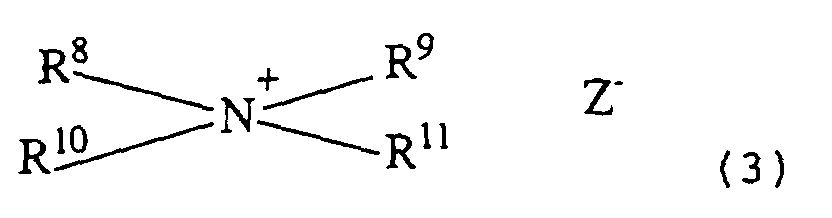
- the invention includes the above shown compound (3) as the component ( c).
- the anionic ion shown by Z - is preferably sulfuric ion, a halogen ion, a C 1-12 fatty acid ion or a C 1-3 alkylsulfuric acid ion.
- the softener composition of the invention comprises 3 to 50 percent by weight, preferably 3 to 40 percent by weight, especially preferably 5 to 35 percent by weight, of the component (a). It further comprises either the above shwon component (b) or (c).
- the component (b) may be contained in an amount of 0.1 to 15 percent by weight, preferably 1 to 15 percent by weight, especially preferably 1 to 10 percent by weight.
- the weight ratio of (b)/(a) is preferably 1/30 to 1/1, more preferably 1/10 to 1/1 from the viewpoint of storage stability, the feeling in touch of clothes and offensive smell-suppressing effect to chemical fiber.
- the component (c) may be contained in an amount of 0.01 to 15 percent by weight, preferably 0.1 to 10 percent by weight.
- the weight ratio of (c)/(a) is preferably 1/50 to 1/1, more preferably 1/30 to 1/2, much more preferably 1/20 to 1/2 from the viewpoint of storage stability, the feeling in touch of clothes and offensive smell-suppressing effect to chemical fiber.
- the softener composition of the present invention is preferably in the form of an aqueous solution comprising at least the component (a) and the component (b) or the component (c), diluted in water.
- the water used is preferably distilled water or deionized water. It is desirable for storage stability that water is incorporated in an amount of 40 to 90 % by weight, more preferably 50 to 85 % by weight and particularly preferably 60 to 85 % by weight into the composition.
- composition of the present invention is adjusted to a pH value of 2 to 5, and particularly 2.5 to 4 at 20 °C.
- a nonionic surfactant and/or an anionic surfactant (d) may be preferably incorporated in addition to the above components (a) and (b) or (c) for storage stability.
- the nonionic surfactant is preferably a polyoxyethylene alkyl ether containing a C 8-20 alkyl or alkenyl group, particularly preferably a nonionic surfactant of the formula (6): R 23 -T- [(R 24 O) p -H] q wherein R 23 is a C 10-18 , preferably C 12-18 , alkyl or alkenyl group, R 24 is a C 2 or C 3 alkylene group, preferably ethylene group; p is a number of 2 to 100, preferably 5 to 80, more preferably 10 to 80 and particularly preferably 20 to 60; and T is -O-, -CON- or -N- and when T is -O-, q is 1, and when T is -CON- or -N-, q is 2.
- the compound of the formula (6) includes for example the following compounds: R 23 -O- (C 2 H 4 O) r-H wherein R 23 has the same meanings as defined above; and when the component (b) is contained, r is a number of 8 to 100, preferably 20 to 60, and when the component (c) is contained, r is a number of 5 to 100, preferably 10 to 80.
- R 23 has the same meanings as defined above
- s and t are independently a number of 2 to 40, preferably 5 to 40, and the sum in total of s and t is preferably an integer of 10 to 80, and ethylene oxide units and propylene oxide units may be a random- or block-addition product.
- R 23 has the same meanings as defined above; and when the component (b) is contained, the sum in total of u and v is a number of 5 to 100, preferably 5 to 80, and when the component (c) is contained, the sum in total thereof is a number of 10 to 100.
- the amount of the nonionic surfactant incorporated is 0.5 to 10 % by weight, preferably 1 to 8 % by weight.
- an anionic surfactant especially a fatty acid or a salt thereof.
- a fatty acid or a salt thereof for example are included caprylic acid, capric acid, lauric acid, myristic acid, palmitic acid, stearic acid, oleic acid and a mixture thereof.
- fatty acids having an alkyl composition derived from coconut oil, palm oil, palm kernel oil or tallow are also preferable. They may be used in the form of a salt thereof preferably with sodium, potassium, magnesium or calcium. The sodium salt is more preferable.
- the amount of the above shown anionic surfactant is preferably 0.01 t 5 percent by weight, especially 0.5 to 3 percent by weight.
- an ester compound of a C 8-22 saturated or unsaturated fatty acid and a polyhydric alcohol is incorporated in an amount of 0.1 to 10 % by weight, particularly 0.5 to 5 % by weight into the composition.
- the ester compound is preferably triglycerides, diglycerides, monoglycerides, a mono-, di- or tri-ester of pentaerythritol and sorbitan ester.
- inorganic salts such as calcium chloride are added in an amount of 0 to 1000 ppm, preferably 1 to 1000 ppm, and more preferably 10 to 500 ppm.
- Sodium salts and potassium salts are contained in surfactants such as fatty acid salts and the inorganic salts mixed in the composition by using such surfactants are not subject to the above limitation.
- a solvent component selected from ethanol, isopropanol, glycerin, ethylene glycol, propylene glycol, diethylene glycol, dipropylene glycol and polyoxyethylene phenyl ether is further preferably incorporated for storage stability.
- These solvent components are incorporated in an amount of preferably 0 to 20 % by weight, more preferably 0.1 to 20 % by weight and particularly preferably 0.5 to 10 % by weight into the composition.
- ethanol it is desirable to use a polyoxyethylene alkyl ether sulfate-modified ethanol or an 8-acetylated sucrose-modified ethanol.
- ingredients such as silicone which is ordinarily incorporated into a fiber-treating agent, a perfume (particularly preferably a combination of aroma components shown as the components (c) and (d) described in JP-A 8-11387) and a coloring matter may be incorporated into the softener composition of the present invention.
- the softener composition of the invention is provided with the suppressing effect of smell attached to clothes such as a body smell derived from sweat, especially in chemical fiber clothes.
- R: a mixed C 18 and C 16 saturated alkyl group (ratio by weight of C 18 group/C 16 group 60/40)
- R: a mixed C 17 and C 15 saturated alkyl group (ratio by weight of C 17 group/C 15 group 60/40)
- R: a mixted C 17 and C 15 saturated alkyl group (ratio by weight of C 17 group/C 15 group 60/40)
- R: a mixed C 17 and C 15 saturated alkyl group (ratio by weight of C 17 group/C 15 group 60/40)
- R: a mixed C 17 and C 15 saturated alkyl group (ratio by weight of C 17 group/C 15 group 60/40)
- R: a mixed C 17 and C 15 saturated alkyl group (ratio by weight of C 17 group/C 15 group 60/40)
- the softener compositions shown in Table 1 were prepared (invention products 1 to 7 and comparative products 1 to 3).
- Five blouses (60% of acryl, 205 of polyester and 20% of nylon) were washed with a commercial weakly alkaline detergent (AttackTM of Kao Corporation) in a laundering machine (two-tank system laundering machine VH-360S1 manufactured by Toshiba Corp.; detergent concentration of 0.0667 % by weight; 30 L tap water used; water temperature of 20 °C; 10 minutes). Thereafter, the washing water was discharged and the clothes were dehydrated for 1 minute.
- 30 L tap water was poured into the tank, the clothes were rinsed for 5 minutes, the water was discharged, and the clothes were dehydrated for 1 minute.
- 30 L tap water was again poured into the tank and 7 ml g of each softener composition of Table 1 was added thereto. It was stirred for 5 minutes. Thereafter, the clothes were dehydrated and dried in air.
- the softener compositions (invention products 8 to 12) shown in Table 2 were prepared in the same manner as in Example 1.
- the used perfume was a mixture of 100 parts by weight of a composition of Table 3 and 10 parts by weight of dipropylene glycol.
- These softener compositions were evaluated in the same manner as in Example 1. They were all recognized to exhibit an excellent smell-preventing effect and the storage stability.
- Perfume Ingredient (wt%) Perfume 1 Perfume 2 Perfume 3 Perfume 4 Perfume 5 hexyl cinnamic aldehyde 0 0 13 0 0 nerolin yarayara 0 0 3 0 0 tricyclodecenyl acetate 0 0 3 0 0 benzyl acetate 0 0 7 0 0 musk ketone 0 0 3 0 0 0 anisyl acetone 0 0 1 0 0 0 0 Sandalmysore core 0 0 1 0 0 aldehyde C14 peach 0 0 1 0 0 Methyl ionone- ⁇ 7 0 0 3 0 Iso E Super 7 0 0 3 0 Tentarome 14 0 0 7 0 4-t-butylcyclohexylacetate 14 0 0 7 0 Lilial 20 0 0
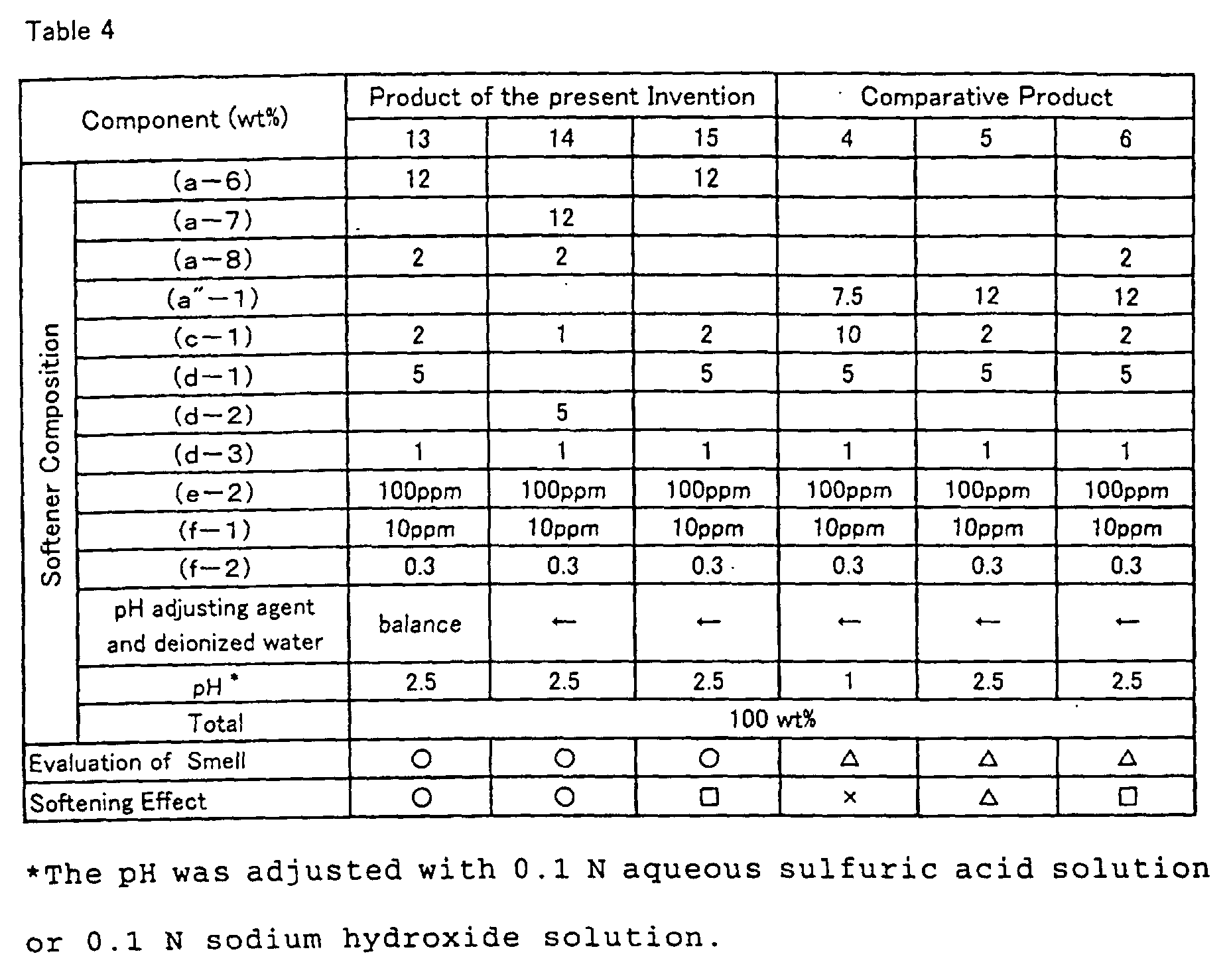
- the softener compositions shown in Table 4 were prepared. Five shirts (100 % polyester) , weighing 1.5 kg, were washed with a commercial weakly alkaline detergent (AttackTM of Kao Corporation) in a laundry machine (two-tank system laundering machine VH-360S1 manufactured by Toshiba Corp.; detergent concentration of 0.0667 % by weight; 30 L of tap water used; water temperature of 20 °C; 10 minutes) . Thereafter, the washing water was discharged and the clothes were dehydrated for 1 minute. After 30 L tap water was poured into the tank, the clothes were rinsed for 5 minutes, the water was discharged and the clothes were dehydrated for 1 minute. Then, 30 L of tap water was again poured into the tank and 7 ml of each composition of Table 1 was added thereto. It was stirred for 5 minutes. Thereafter the clothes were dehydrated and air-dried.
- a commercial weakly alkaline detergent AttackTM of Kao Corporation
- the clothes treated as above were worn for 12 hours by 5 males aged twenties and then the smell generated from the worn shirts were judged by a panel of 10 male persons, aged thirties, using the following criteria to determine the mean value.
- ⁇ was assigned to the mean value of less than 1, ⁇ to the mean value of 1 to less than 1.5, and X to the mean value of 1.5 or more. Results are shown in Table 1.
Landscapes
- Chemical & Material Sciences (AREA)
- Life Sciences & Earth Sciences (AREA)
- Engineering & Computer Science (AREA)
- Chemical Kinetics & Catalysis (AREA)
- Oil, Petroleum & Natural Gas (AREA)
- Wood Science & Technology (AREA)
- Organic Chemistry (AREA)
- Treatments For Attaching Organic Compounds To Fibrous Goods (AREA)
Abstract
(b) 0.1 to 15 percent by weight of the compound represented by the formula (1) and/or the compound represented by the formula (2) :

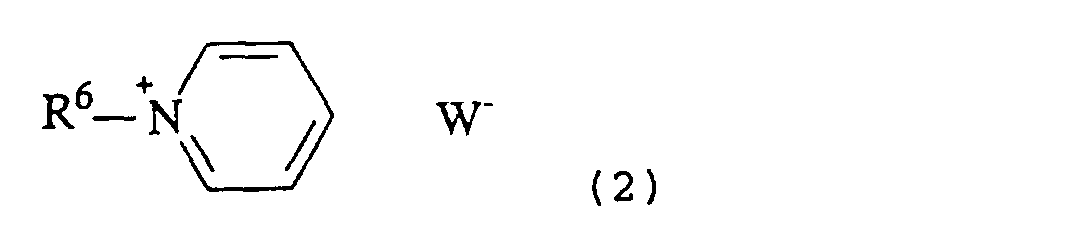
(C) 0.01 to 15 % by weight of a compound represented by formula (3):
Description






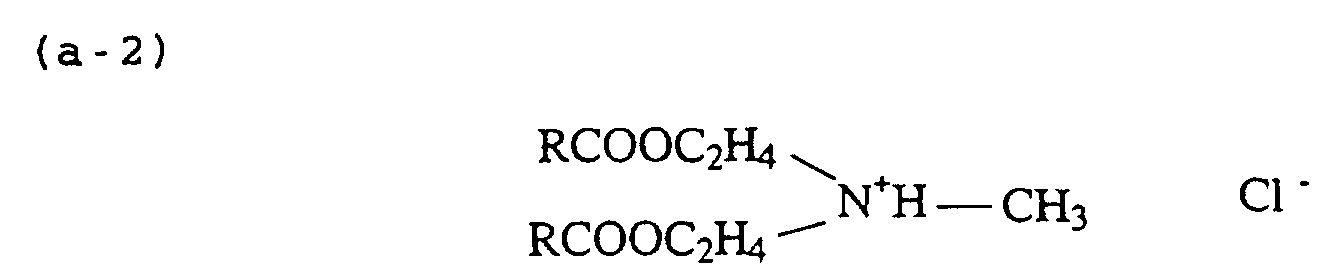


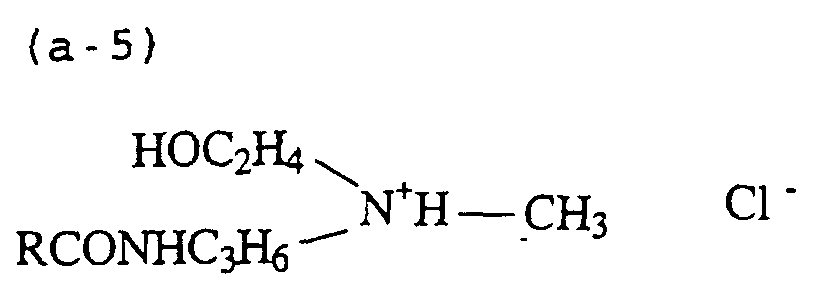
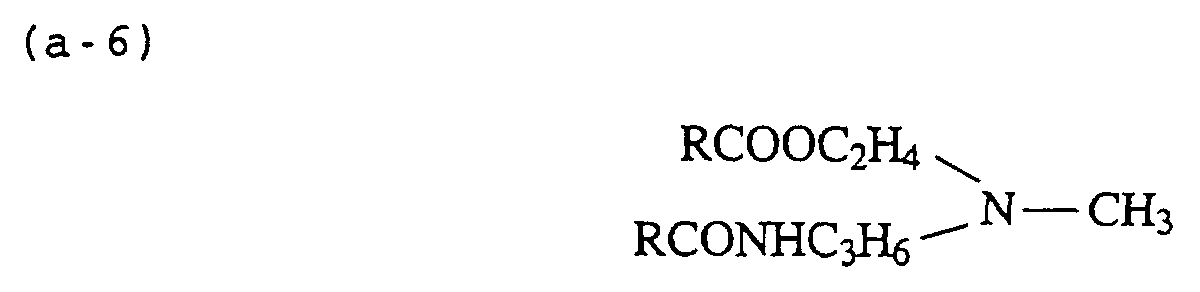
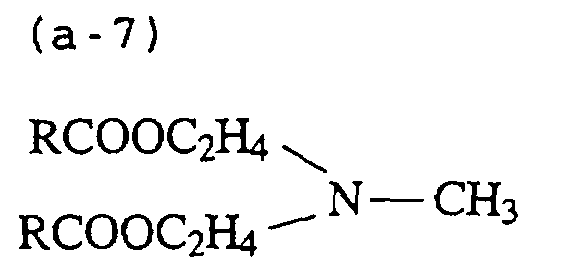

(a'-1) Dioleoyl hydroxyethyl dimethyl ammonium methyl sulfate (a"-1) dioleyldimethylammonium chloride


Dihydromyrcenol (8), borneol (4), cedrol (4), Muguol (5), benzyl alcohol (5) and dipropylene glycol (10), the figures shown in the parentheses meaning a percent by weight in the perfume mixture.].
○ ... no change in the appearance
X ... changes observed in appearance such s gelation, separation and precipitates


| Perfume Ingredient (wt%) | Perfume 1 | Perfume 2 | Perfume 3 | Perfume 4 | Perfume 5 |
| hexyl cinnamic aldehyde | 0 | 0 | 13 | 0 | 0 |
| nerolin yarayara | 0 | 0 | 3 | 0 | 0 |
| tricyclodecenyl acetate | 0 | 0 | 3 | 0 | 0 |
| benzyl acetate | 0 | 0 | 7 | 0 | 0 |
| musk ketone | 0 | 0 | 3 | 0 | 0 |
| anisyl acetone | 0 | 0 | 1 | 0 | 0 |
| Sandalmysore core | 0 | 0 | 1 | 0 | 0 |
| aldehyde C14 peach | 0 | 0 | 1 | 0 | 0 |
| Methyl ionone-γ | 7 | 0 | 0 | 3 | 0 |
| Iso E Super | 7 | 0 | 0 | 3 | 0 |
| Tentarome | 14 | 0 | 0 | 7 | 0 |
| 4-t-butylcyclohexylacetate | 14 | 0 | 0 | 7 | 0 |
| Lilial | 20 | 0 | 0 | 10 | 0 |
| Herional | 3 | 0 | 0 | 2 | 0 |
| Coumarin | 3 | 0 | 0 | 1 | 0 |
| Ambroxan | 1 | 0 | 0 | 0 | 0 |
| alpha-Terpinyl acetate | 0 | 12 | 0 | 0 | 20 |
| Cedryl acetate | 0 | 8 | 0 | 0 | 13 |
| Lyral | 0 | 8 | 0 | 0 | 13 |
| Pearlide | 0 | 4 | 0 | 0 | 7 |
| Sandal synth | 0 | 4 | 0 | 0 | 7 |
| phenylacetoaldehyde 50% PEA | 0 | 0 | 0 | 0 | 1 |
| aldehyde C12MNA | 0 | 0 | 0 | 0 | 1 |
| cinnamyl cinnamate | 0 | 2 | 0 | 0 | 3 |
| Benzyl isoeugenol | 0 | 2 | 0 | 0 | 3 |
| linalool | 0 | 0 | 0 | 0 | 13 |
| Dihydromyrcenal | 0 | 0 | 0 | 0 | 7 |
| borneol | 0 | 0 | 0 | 0 | 3 |
| cedrol | 0 | 0 | 0 | 0 | 3 |
| Muguol | 0 | 0 | 0 | 0 | 3 |
| benzyl alcohol | 0 | 0 | 0 | 0 | 3 |
| phenylethyl alcohol | 12 | 0 | 29 | 0 | 0 |
| citronellol | 6 | 0 | 13 | 0 | 0 |
| terpineol | 6 | 0 | 13 | 0 | 0 |
| phenylethyldimethyl carbinol | 3 | 0 | 7 | 0 | 0 |
| Styrallyl alcohol | 2 | 0 | 3 | 0 | 0 |
| cinnamic alcohol | 2 | 0 | 3 | 0 | 0 |
| 1-Menthol | 0 | 24 | 0 | 27 | 0 |
| geraniol | 0 | 12 | 0 | 13 | 0 |
| Dihydromyrcenol | 0 | 12 | 0 | 13 | 0 |
| Phenyl hexanol | 0 | 6 | 0 | 7 | 0 |
| dimethylbenzyl carbinol | 0 | 6 | 0 | 7 | 0 |
| Total (wt%) | 100 | 100 | 100 | 100 | 100 |
Claims (2)
- A softener composition comprising (a) 3 to 50 percent by weight of a tertiary amine and/or a salt thereof, having an ester and/or an amide and at least one alkyl or alkenyl having 10 to 22 carbon atoms and (b) the below shown component or (c) the below shown component.
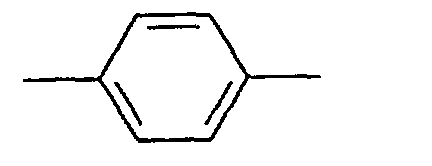
(b) 0.1 to 15 percent by weight of the compound represented by the formula (1) and/or the compound represented by the formula (2) : wherein R1 and R6 independently represent a C5-19 alkyl or alkenyl group, R2 and R3 independently represent a C1-3 alkyl or hydroxyalkyl group and X is -COO-, -OCO-, -CONH-, -NHCO-,
 or a linkage, R4 represents a C1-3 alkylene group, R5 represents a C1-6 alkylene group or -(O-R7)n -, R7 is ethylene group or propylene group and n is a number of 1 to 10; and W- is an anionic group;
(C) 0.01 to 15 % by weight of a compound represented by formula (3) :wherein two or three of R8, R9, R10 and R11 are a C8-12 alkyl, the remainders of them are a C1-3 alkyl, a C1-3 hydroxyalkyl or an arylalkyl having 7 to 15 of the total carbon number and Z- is an anionic group.
- The softener composition according to claim 1, which further comprises (d) a nonionic surfactant and/or an anionic surfactant.
Applications Claiming Priority (7)
| Application Number | Priority Date | Filing Date | Title |
|---|---|---|---|
| JP32316499 | 1999-11-12 | ||
| JP32316499 | 1999-11-12 | ||
| JP2000102427 | 2000-04-04 | ||
| JP2000102427A JP3325255B2 (en) | 1999-11-12 | 2000-04-04 | Softener composition |
| JP2000114095A JP3365989B2 (en) | 2000-04-14 | 2000-04-14 | Softener composition |
| JP2000114095 | 2000-04-14 | ||
| PCT/JP2000/007896 WO2001036736A1 (en) | 1999-11-12 | 2000-11-09 | Softener composition |
Publications (3)
| Publication Number | Publication Date |
|---|---|
| EP1154067A1 true EP1154067A1 (en) | 2001-11-14 |
| EP1154067A4 EP1154067A4 (en) | 2004-12-15 |
| EP1154067B1 EP1154067B1 (en) | 2006-04-19 |
Family
ID=27339961
Family Applications (1)
| Application Number | Title | Priority Date | Filing Date |
|---|---|---|---|
| EP00974873A Expired - Lifetime EP1154067B1 (en) | 1999-11-12 | 2000-11-09 | Softener composition |
Country Status (6)
| Country | Link |
|---|---|
| US (1) | US6660710B1 (en) |
| EP (1) | EP1154067B1 (en) |
| CN (1) | CN1195920C (en) |
| DE (1) | DE60027412T2 (en) |
| ES (1) | ES2260064T3 (en) |
| WO (1) | WO2001036736A1 (en) |
Families Citing this family (1)
| Publication number | Priority date | Publication date | Assignee | Title |
|---|---|---|---|---|
| US6838427B2 (en) * | 2001-06-08 | 2005-01-04 | Kao Corporation | Softener composition |
Family Cites Families (9)
| Publication number | Priority date | Publication date | Assignee | Title |
|---|---|---|---|---|
| GB8805837D0 (en) * | 1988-03-11 | 1988-04-13 | Unilever Plc | Fabric conditioning composition |
| CA2016423C (en) | 1989-05-19 | 1997-04-22 | Toan Trinh | Rinse-added fabric conditioning compositions containing fabric softening agents and cationic polyester soil release polymers |
| JPH0759792B2 (en) * | 1990-08-22 | 1995-06-28 | 花王株式会社 | Softening agent |
| US5232612A (en) | 1991-08-28 | 1993-08-03 | The Procter & Gamble Company | Solid, particulate fabric softener with protected, dryer-activated, cyclodextrin/perfume complex |
| JPH073649A (en) | 1993-06-15 | 1995-01-06 | Lion Corp | Textile product softening finish composition and textile product treatment method using the same |
| JPH0765267A (en) | 1993-08-23 | 1995-03-10 | Matsushita Electric Works Ltd | Fire alarm device and thermal sensor |
| DE4439570A1 (en) * | 1994-11-05 | 1996-05-09 | Henkel Kgaa | Laundry after-treatment agent |
| IL121037A0 (en) | 1997-06-09 | 1997-11-20 | Innoscent Ltd | Laundry fabric softener which inhibits bacterial growth and odor formation |
| WO2018150942A1 (en) * | 2017-02-15 | 2018-08-23 | パナソニックIpマネジメント株式会社 | Light source device and light projecting device |
-
2000
- 2000-11-09 WO PCT/JP2000/007896 patent/WO2001036736A1/en not_active Ceased
- 2000-11-09 ES ES00974873T patent/ES2260064T3/en not_active Expired - Lifetime
- 2000-11-09 CN CNB008048312A patent/CN1195920C/en not_active Expired - Fee Related
- 2000-11-09 US US09/889,153 patent/US6660710B1/en not_active Expired - Fee Related
- 2000-11-09 DE DE60027412T patent/DE60027412T2/en not_active Expired - Lifetime
- 2000-11-09 EP EP00974873A patent/EP1154067B1/en not_active Expired - Lifetime
Also Published As
| Publication number | Publication date |
|---|---|
| EP1154067B1 (en) | 2006-04-19 |
| EP1154067A4 (en) | 2004-12-15 |
| ES2260064T3 (en) | 2006-11-01 |
| WO2001036736A1 (en) | 2001-05-25 |
| CN1343278A (en) | 2002-04-03 |
| CN1195920C (en) | 2005-04-06 |
| DE60027412D1 (en) | 2006-05-24 |
| US6660710B1 (en) | 2003-12-09 |
| DE60027412T2 (en) | 2006-12-14 |
Similar Documents
| Publication | Publication Date | Title |
|---|---|---|
| CA1340346C (en) | Fabric treatment composition and the preparation thereof | |
| AU2011375735B2 (en) | Fabric wrinkle reduction composition | |
| CA2230298A1 (en) | Stable fabric softener compositions | |
| ES2353066T3 (en) | TEXTILE MATERIAL CONDITIONER COMPOSITIONS. | |
| EP0760243B1 (en) | Use of allylic alcohol perfumes as a malodour reduction agent | |
| JP3592849B2 (en) | Soft finish composition | |
| EP2931857B1 (en) | Esterquat composition having high triesterquat content | |
| EP1154067B1 (en) | Softener composition | |
| US6780833B1 (en) | Softener composition | |
| EP1154068B1 (en) | Softener composition | |
| JP2757892B2 (en) | Composition for softening liquid textile products | |
| US20030236181A1 (en) | Fabric softeners and treatment agents and methods of use thereof | |
| EP1290120B1 (en) | Fabric softening compositions containing cationic softeners and fatty amides | |
| JP3776273B2 (en) | Softener composition | |
| JP3372930B2 (en) | Softener composition | |
| CA1192003A (en) | Fabric softening composition | |
| JP3325255B2 (en) | Softener composition | |
| JP3526434B2 (en) | Softener composition | |
| JP3389549B2 (en) | Softener composition | |
| JP3365989B2 (en) | Softener composition | |
| JP3389550B2 (en) | Softener composition | |
| JP3910343B2 (en) | Softener composition | |
| JP3883791B2 (en) | Softener composition | |
| JPH06200476A (en) | Soft-finishing agent | |
| JPH09256273A (en) | Softener composition |
Legal Events
| Date | Code | Title | Description |
|---|---|---|---|
| PUAI | Public reference made under article 153(3) epc to a published international application that has entered the european phase |
Free format text: ORIGINAL CODE: 0009012 |
|
| AK | Designated contracting states |
Kind code of ref document: A1 Designated state(s): AT BE CH CY DE DK ES FI FR GB GR IE IT LI LU MC NL PT SE TR |
|
| 17P | Request for examination filed |
Effective date: 20011113 |
|
| RBV | Designated contracting states (corrected) |
Designated state(s): DE ES FR GB |
|
| A4 | Supplementary search report drawn up and despatched |
Effective date: 20041102 |
|
| RIC1 | Information provided on ipc code assigned before grant |
Ipc: 7C 11D 3/00 B Ipc: 7C 11D 1/52 B Ipc: 7C 11D 1/62 B Ipc: 7C 11D 1/46 B Ipc: 7C 11D 3/28 B Ipc: 7C 11D 1/645 B Ipc: 7D 06M 13/463 A Ipc: 7C 11D 1/835 B |
|
| GRAP | Despatch of communication of intention to grant a patent |
Free format text: ORIGINAL CODE: EPIDOSNIGR1 |
|
| GRAS | Grant fee paid |
Free format text: ORIGINAL CODE: EPIDOSNIGR3 |
|
| GRAA | (expected) grant |
Free format text: ORIGINAL CODE: 0009210 |
|
| AK | Designated contracting states |
Kind code of ref document: B1 Designated state(s): DE ES FR GB |
|
| REG | Reference to a national code |
Ref country code: GB Ref legal event code: FG4D |
|
| REF | Corresponds to: |
Ref document number: 60027412 Country of ref document: DE Date of ref document: 20060524 Kind code of ref document: P |
|
| REG | Reference to a national code |
Ref country code: ES Ref legal event code: FG2A Ref document number: 2260064 Country of ref document: ES Kind code of ref document: T3 |
|
| ET | Fr: translation filed | ||
| PLBE | No opposition filed within time limit |
Free format text: ORIGINAL CODE: 0009261 |
|
| STAA | Information on the status of an ep patent application or granted ep patent |
Free format text: STATUS: NO OPPOSITION FILED WITHIN TIME LIMIT |
|
| 26N | No opposition filed |
Effective date: 20070122 |
|
| PGFP | Annual fee paid to national office [announced via postgrant information from national office to epo] |
Ref country code: DE Payment date: 20101104 Year of fee payment: 11 |
|
| PGFP | Annual fee paid to national office [announced via postgrant information from national office to epo] |
Ref country code: GB Payment date: 20101103 Year of fee payment: 11 |
|
| PGFP | Annual fee paid to national office [announced via postgrant information from national office to epo] |
Ref country code: FR Payment date: 20111118 Year of fee payment: 12 Ref country code: ES Payment date: 20111122 Year of fee payment: 12 |
|
| GBPC | Gb: european patent ceased through non-payment of renewal fee |
Effective date: 20121109 |
|
| REG | Reference to a national code |
Ref country code: FR Ref legal event code: ST Effective date: 20130731 |
|
| REG | Reference to a national code |
Ref country code: DE Ref legal event code: R119 Ref document number: 60027412 Country of ref document: DE Effective date: 20130601 |
|
| PG25 | Lapsed in a contracting state [announced via postgrant information from national office to epo] |
Ref country code: DE Free format text: LAPSE BECAUSE OF NON-PAYMENT OF DUE FEES Effective date: 20130601 |
|
| PG25 | Lapsed in a contracting state [announced via postgrant information from national office to epo] |
Ref country code: FR Free format text: LAPSE BECAUSE OF NON-PAYMENT OF DUE FEES Effective date: 20121130 Ref country code: GB Free format text: LAPSE BECAUSE OF NON-PAYMENT OF DUE FEES Effective date: 20121109 |
|
| REG | Reference to a national code |
Ref country code: ES Ref legal event code: FD2A Effective date: 20140509 |
|
| PG25 | Lapsed in a contracting state [announced via postgrant information from national office to epo] |
Ref country code: ES Free format text: LAPSE BECAUSE OF NON-PAYMENT OF DUE FEES Effective date: 20121110 |