EP1151667A2 - Plant-activating agent - Google Patents
Plant-activating agent Download PDFInfo
- Publication number
- EP1151667A2 EP1151667A2 EP01110052A EP01110052A EP1151667A2 EP 1151667 A2 EP1151667 A2 EP 1151667A2 EP 01110052 A EP01110052 A EP 01110052A EP 01110052 A EP01110052 A EP 01110052A EP 1151667 A2 EP1151667 A2 EP 1151667A2
- Authority
- EP
- European Patent Office
- Prior art keywords
- group
- plant
- carbon atoms
- acid
- activating agent
- Prior art date
- Legal status (The legal status is an assumption and is not a legal conclusion. Google has not performed a legal analysis and makes no representation as to the accuracy of the status listed.)
- Granted
Links
Classifications
-
- C—CHEMISTRY; METALLURGY
- C05—FERTILISERS; MANUFACTURE THEREOF
- C05G—MIXTURES OF FERTILISERS COVERED INDIVIDUALLY BY DIFFERENT SUBCLASSES OF CLASS C05; MIXTURES OF ONE OR MORE FERTILISERS WITH MATERIALS NOT HAVING A SPECIFIC FERTILISING ACTIVITY, e.g. PESTICIDES, SOIL-CONDITIONERS, WETTING AGENTS; FERTILISERS CHARACTERISED BY THEIR FORM
- C05G3/00—Mixtures of one or more fertilisers with additives not having a specially fertilising activity
-
- A—HUMAN NECESSITIES
- A01—AGRICULTURE; FORESTRY; ANIMAL HUSBANDRY; HUNTING; TRAPPING; FISHING
- A01N—PRESERVATION OF BODIES OF HUMANS OR ANIMALS OR PLANTS OR PARTS THEREOF; BIOCIDES, e.g. AS DISINFECTANTS, AS PESTICIDES OR AS HERBICIDES; PEST REPELLANTS OR ATTRACTANTS; PLANT GROWTH REGULATORS
- A01N25/00—Biocides, pest repellants or attractants, or plant growth regulators, characterised by their forms, or by their non-active ingredients or by their methods of application, e.g. seed treatment or sequential application; Substances for reducing the noxious effect of the active ingredients to organisms other than pests
- A01N25/30—Biocides, pest repellants or attractants, or plant growth regulators, characterised by their forms, or by their non-active ingredients or by their methods of application, e.g. seed treatment or sequential application; Substances for reducing the noxious effect of the active ingredients to organisms other than pests characterised by the surfactants
-
- A—HUMAN NECESSITIES
- A01—AGRICULTURE; FORESTRY; ANIMAL HUSBANDRY; HUNTING; TRAPPING; FISHING
- A01N—PRESERVATION OF BODIES OF HUMANS OR ANIMALS OR PLANTS OR PARTS THEREOF; BIOCIDES, e.g. AS DISINFECTANTS, AS PESTICIDES OR AS HERBICIDES; PEST REPELLANTS OR ATTRACTANTS; PLANT GROWTH REGULATORS
- A01N31/00—Biocides, pest repellants or attractants, or plant growth regulators containing organic oxygen or sulfur compounds
- A01N31/02—Acyclic compounds
-
- A—HUMAN NECESSITIES
- A01—AGRICULTURE; FORESTRY; ANIMAL HUSBANDRY; HUNTING; TRAPPING; FISHING
- A01N—PRESERVATION OF BODIES OF HUMANS OR ANIMALS OR PLANTS OR PARTS THEREOF; BIOCIDES, e.g. AS DISINFECTANTS, AS PESTICIDES OR AS HERBICIDES; PEST REPELLANTS OR ATTRACTANTS; PLANT GROWTH REGULATORS
- A01N37/00—Biocides, pest repellants or attractants, or plant growth regulators containing organic compounds containing a carbon atom having three bonds to hetero atoms with at the most two bonds to halogen, e.g. carboxylic acids
- A01N37/02—Saturated carboxylic acids or thio analogues thereof; Derivatives thereof
-
- A—HUMAN NECESSITIES
- A01—AGRICULTURE; FORESTRY; ANIMAL HUSBANDRY; HUNTING; TRAPPING; FISHING
- A01N—PRESERVATION OF BODIES OF HUMANS OR ANIMALS OR PLANTS OR PARTS THEREOF; BIOCIDES, e.g. AS DISINFECTANTS, AS PESTICIDES OR AS HERBICIDES; PEST REPELLANTS OR ATTRACTANTS; PLANT GROWTH REGULATORS
- A01N37/00—Biocides, pest repellants or attractants, or plant growth regulators containing organic compounds containing a carbon atom having three bonds to hetero atoms with at the most two bonds to halogen, e.g. carboxylic acids
- A01N37/06—Unsaturated carboxylic acids or thio analogues thereof; Derivatives thereof
-
- A—HUMAN NECESSITIES
- A01—AGRICULTURE; FORESTRY; ANIMAL HUSBANDRY; HUNTING; TRAPPING; FISHING
- A01N—PRESERVATION OF BODIES OF HUMANS OR ANIMALS OR PLANTS OR PARTS THEREOF; BIOCIDES, e.g. AS DISINFECTANTS, AS PESTICIDES OR AS HERBICIDES; PEST REPELLANTS OR ATTRACTANTS; PLANT GROWTH REGULATORS
- A01N37/00—Biocides, pest repellants or attractants, or plant growth regulators containing organic compounds containing a carbon atom having three bonds to hetero atoms with at the most two bonds to halogen, e.g. carboxylic acids
- A01N37/12—Biocides, pest repellants or attractants, or plant growth regulators containing organic compounds containing a carbon atom having three bonds to hetero atoms with at the most two bonds to halogen, e.g. carboxylic acids containing the group, wherein Cn means a carbon skeleton not containing a ring; Thio analogues thereof
-
- A—HUMAN NECESSITIES
- A01—AGRICULTURE; FORESTRY; ANIMAL HUSBANDRY; HUNTING; TRAPPING; FISHING
- A01N—PRESERVATION OF BODIES OF HUMANS OR ANIMALS OR PLANTS OR PARTS THEREOF; BIOCIDES, e.g. AS DISINFECTANTS, AS PESTICIDES OR AS HERBICIDES; PEST REPELLANTS OR ATTRACTANTS; PLANT GROWTH REGULATORS
- A01N37/00—Biocides, pest repellants or attractants, or plant growth regulators containing organic compounds containing a carbon atom having three bonds to hetero atoms with at the most two bonds to halogen, e.g. carboxylic acids
- A01N37/36—Biocides, pest repellants or attractants, or plant growth regulators containing organic compounds containing a carbon atom having three bonds to hetero atoms with at the most two bonds to halogen, e.g. carboxylic acids containing at least one carboxylic group or a thio analogue, or a derivative thereof, and a singly bound oxygen or sulfur atom attached to the same carbon skeleton, this oxygen or sulfur atom not being a member of a carboxylic group or of a thio analogue, or of a derivative thereof, e.g. hydroxy-carboxylic acids
-
- C—CHEMISTRY; METALLURGY
- C05—FERTILISERS; MANUFACTURE THEREOF
- C05F—ORGANIC FERTILISERS NOT COVERED BY SUBCLASSES C05B, C05C, e.g. FERTILISERS FROM WASTE OR REFUSE
- C05F11/00—Other organic fertilisers
-
- C—CHEMISTRY; METALLURGY
- C05—FERTILISERS; MANUFACTURE THEREOF
- C05G—MIXTURES OF FERTILISERS COVERED INDIVIDUALLY BY DIFFERENT SUBCLASSES OF CLASS C05; MIXTURES OF ONE OR MORE FERTILISERS WITH MATERIALS NOT HAVING A SPECIFIC FERTILISING ACTIVITY, e.g. PESTICIDES, SOIL-CONDITIONERS, WETTING AGENTS; FERTILISERS CHARACTERISED BY THEIR FORM
- C05G3/00—Mixtures of one or more fertilisers with additives not having a specially fertilising activity
- C05G3/50—Surfactants; Emulsifiers
Definitions
- the present invention relates to a plant-activating agent, a plant-activating composition or a method of activating a plant by applying thereof in the state of a solution or a solid to roots, stems, phylloplanes or fruits of a plant, such as spraying onto phylloplanes or irrigating into soil.
- plant means products that can be recognized from the term itself, vegetables, fruits, fruit trees, crops, bulbs, flowers, grass, herbs, plants defined in taxonomy, and so on.
- plant growth includes increasing the amount of growth, increasing the weight of a plant on both sides of the aboveground and the underground. Further increasing greenness of leaves in terms of SPAD, increasing the height of grasses, improving harvest or crop, increasing photosynthesis, accelerating growth of green cells, improving absorption of a fertilizer, increasing sugar content and ascorbic acid of leaves and fruit. More in details, it extends to improving: gloss of leaves, rising-up of leaves, firmness of leaves, an increased thickness of leaves, firmness of stem, short joints of stem, thickness of stem, whiteness of root, the number of fine roots, vivacity or strength of grasses or trees, gloss of fruit, size of fruit, fruiting, color of fruit etc.
- Various nutrient elements are necessary for growth of plants. It is known that lack of some of the elements causes the hindrance of the growth of the plants.
- the big three fertilizer components function as follows. Nitrogen is a component element of proteins, and phosphorus is a formation element of nucleic acid or phospholipid and further plays an important part in energy metabolism and synthetic or decomposing reaction of a substance. Potassium has a physiological action of substance metabolism or substance migration. If these main components lack, the growth of plants generally becomes poor. Calcium is an important component constituting plants and cells, and further plays an important part in maintenance of the balance of the metabolic system. The lacking state of calcium causes physiological troubles. Besides, various nutrients as follows are necessary for plants: magnesium, iron, sulfur, boron, manganese, copper, zinc, molybdenum, chlorine, silicon, sodium and the like.
- Nutritious components such as nitrogen, phosphorus and potassium are applied as basal fertilizer or additional fertilizer. Alternatively, they are applied by diluting liquid fertilizer and irrigating the diluted fertilizer into soil or by spraying the diluted fertilizer onto phylloplanes. These fertilizers are necessary and/or essential for the growth of plants. However, even if they are applied at larger concentrations than some values, the growth of plants and the yield of the plants cannot be further improved.
- the plant growth regulators are used to regulate growth reaction or form-producing reaction such as germination, rooting, expansion, flowering and bearing.
- gibberellin and auxin are used to regulate growth reaction or form-producing reaction such as germination, rooting, expansion, flowering and bearing.
- JP-A 55-100304 discloses that a plant growth regulator characterized by comprising an organic acid as an effective component is useful for graminoids, leaf vegetables and root vegetables.
- JP-A 62-242604 also discloses that a composition for regulating plant growth, which comprises lactic acid, is useful for promoting growth and/or production of fruits and suppressing growth of undesired plants.
- US-A 5482529 discloses a preparation for fertilizer comprising a plant nutrient, water, a lipophilic organic material and a fatty acid having 1 to 10 carbon atoms in order to improve absorbing phosphoric acid.
- JP-A 4-31382 also discloses that propionic acid or a polyhydric carboxylic acid makes a phosphoric acid-absorbing effect high.
- JP-A 9-512274 discloses a method for regulating plant growth which comprises suppressing a height of the plant by applying a growth-suppressing composition comprising a polyol in an effective amount for growth-suppression to a root sphere of the plant and then increasing the diameter of its stem.
- An object of the present invention is to suffer no chemical injury to a plant, to promote a green-degree of its leaves, its leaf-area and its rooting power and to heighten an efficiency for absorbing a fertilizer, thereby activating the plant and improving a yield and quality thereof.
- the present invention is a plant-activating agent selected from the group consisting of
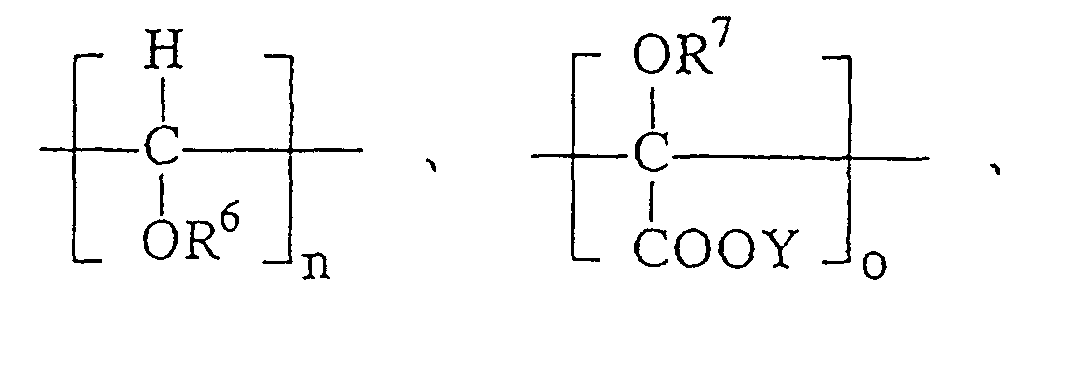
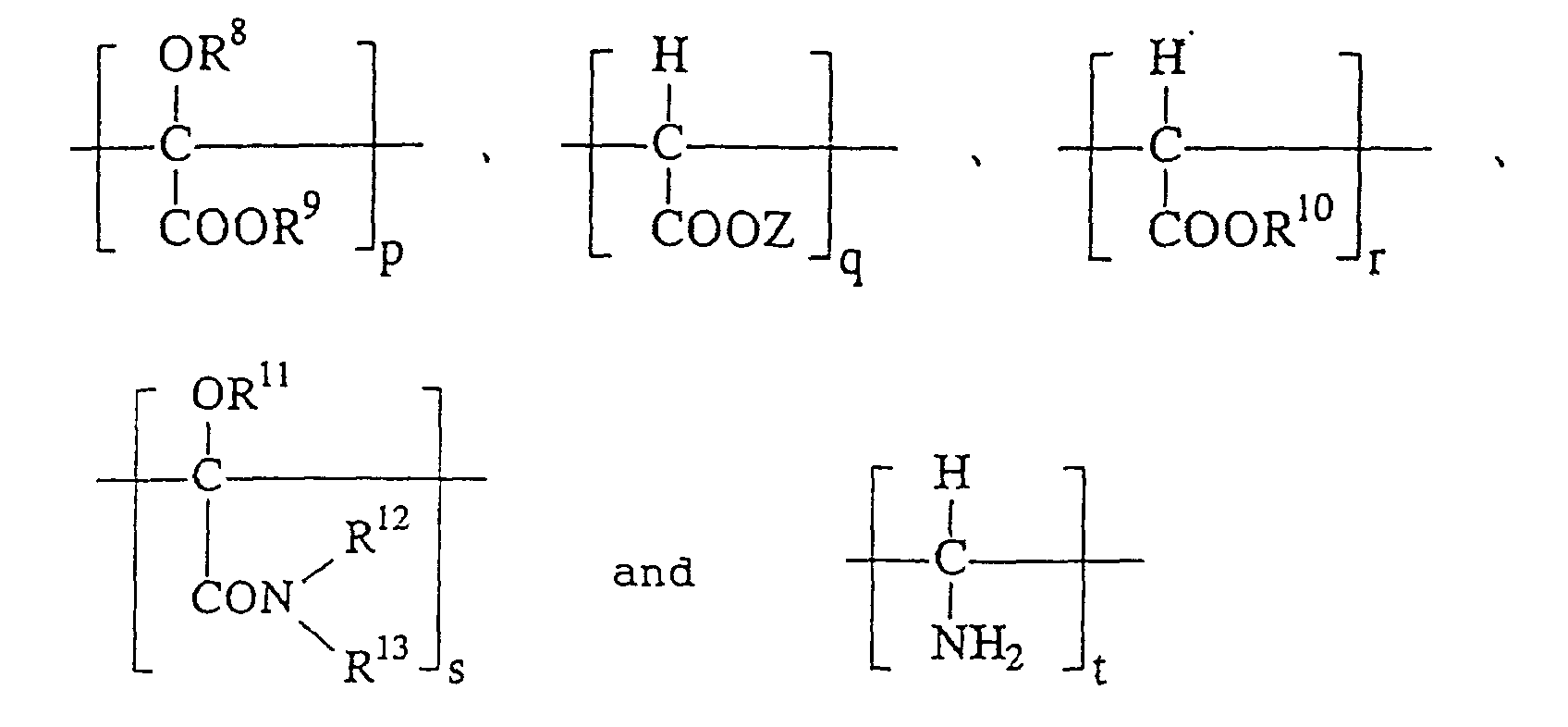
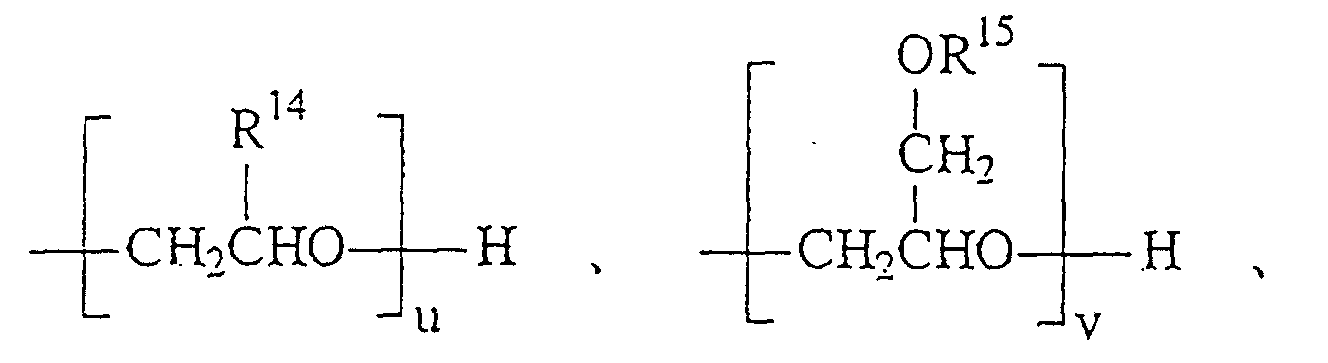
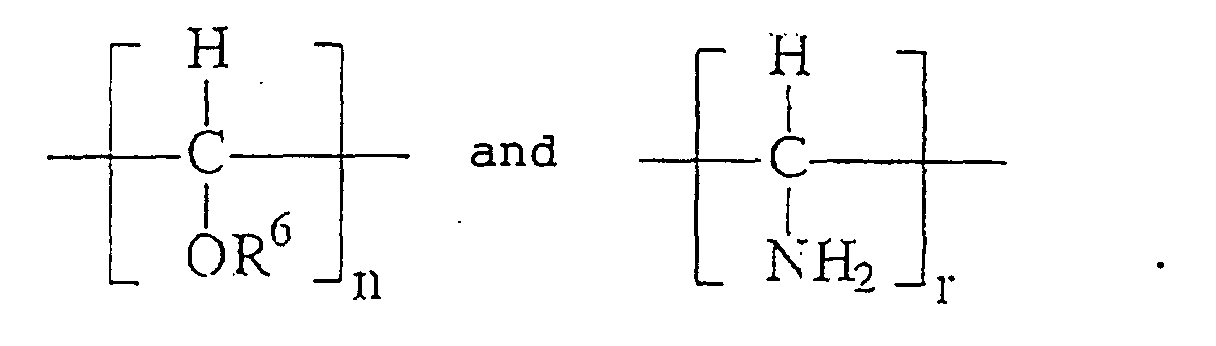
- the organic acid derivative (1) is preferably a compound represented by the following formula (I): A-(B) a -C wherein A and C are independent each other and each thereof is
- the organic acid derivative (1) preferably has at least one hydroxyl group as a functional group.
- n is zero to 20
- R represents an alkyl or alkenyl group having 13 to 21 carbon atoms
- X 1 represents a hydrogen atom, an alkyl or acyl group having 1 to 22 carbon atoms, an alkenyl group having 2 to 22 carbon atoms, or a counter ion (when n is not zero, the counter ion is not included).
- the glycerol derivative is preferably selected from the group consisting of an ester of glycerol and an acid, an ether of glycerol and a hydroxyl group-containing compound, a condensate of glycerol or a derivative thereof, and glyceric acid or a derivative thereof.
- the present invention provides a plant-activating composition
- a plant-activating composition comprising the above-mentioned plant-activating agent and at least one of a fertilizer agent, a surfactant and a chelating agent.
- the above-mentioned surfactant is preferably selected from a nonionic surfactant, an anionic surfactant and an amphoteric surfactant.
- the present invention also relates to a method of activating a plant by applying the above-mentioned plant-activating agent to the plant or use of the above-mentioned plant-activating agent for activating a plant.
- the present invention relates to a method of promoting the green degree of leaves, a leaf-area and rooting power without a chemical injury by the above-mentioned plant-activating agent. It also relates a method of increasing the efficiency for absorbing a fertilizer by the above-mentioned plant-activating agent and further relates to a method of improving a yield and the quality of a plant by activating the plant.
- the present invention relates to a method of growing a plant by the above-mentioned plant-activating agent.
- an organic acid derivative having at least two functional groups wherein a group having 1 to 30 carbon atoms is bonded to at least one of the functional groups because of being able to give a plant activity efficiently without a chemical injury.
- the functional group includes carboxyl, hydroxyl and amino groups.
- the organic acid has preferably at least one hydroxyl group.
- the group bonded to the functional group includes an alkyl, alkenyl, alkylamino, oxyalkylene groups.
- the organic acid derivative is preferably a compound represented by the above-mentioned formula (I).
- R 1 , R 4 and R 9 in the formula (I) represents a hydrocarbon group having 1 to 30 carbon atoms.
- R 1 and R 12 are preferably hydrocarbon groups having 12 to 26 carbon atoms and more preferably those having 14 to 22 carbon atoms.
- R 4 is a hydrocarbon group having preferably 1 to 10 carbon atoms and more preferably 1 to 5 carbon atoms.
- R 1 , R 4 and R 9 are preferably alkyl and alkenyl groups.
- the hydrocarbon group of R 1 , R 4 or R 9 preferably alkyl or alkenyl group, may be saturated or unsaturated and are preferably saturated. It may be linear, branched or cyclic and is preferably linear or branched and more preferably linear.
- R 1 , R 4 and R 9 include an alkyl group such as lauryl group, tetradecyl group, hexadecyl group, octadecy group, eicosyl group (which is an alkyl group having 20 carbon atoms) and behenyl group (which is an alkyl group having 22 carbon atoms); and an alkenyl group such as a C14F1 group (wherein the number next to C means the number of carbon atoms and the number next to F means the number of unsaturated bonds and this is the same hereinafter), a C16F1 group, a C18F1 group, a C20F1 group and a C22F1 group.
- an alkyl group such as lauryl group, tetradecyl group, hexadecyl group, octadecy group, eicosyl group (which is an alkyl group having 20 carbon atoms) and behenyl group (which is an
- Each of R 2 , R 3 , R 6 , R 7 , R 8 , R 10 , R 11 , R 12 , R 13 , R 14 and R 15 in the formula (I) represents a hydrogen atom or a hydrocarbon group having 1 to 30 carbon atoms, preferably 12 to 26 carbon atoms and more preferably 14 to 22 carbon atoms. It is preferably a hydrocarbon group.
- the hydrocarbon groups are preferably alkyl and alkenyl groups.
- the hydrocarbon group, preferably an alkyl or alkenyl group may be saturated or unsaturated and preferably saturated. It may be linear, branched or cyclic, is preferably linear or branched, and is more preferably linear.
- Each of X, Y and Z in the formula (I) represents a hydrogen atom or a counter ion.
- the counter ion include an alkali metal such as sodium and potassium, an alkali earth metal such as calcium and magnesium, an alkylamine salt such as trimethylamine and triethylamine, and an alkanolamine salt such as ethanolamine.
- An alkali metal or an alkali earth metal is preferable.
- a in the formula (I) is the total number of B.
- B may be the same or different among the groups defined above.
- the organic acid constituting the organic acid derivative in the present invention is preferably a hydroxycarboxylic acid such as citric acid, gluconic acid, malic acid, lactic acid or tartaric acid, and is more preferably citric acid.
- the organic acid derivative in the present invention has a hydrophilic group and a lipophilic group
- its HLB measured by Griffin's method is preferably not more than 10, more preferably not more than 8, and most preferably not more than 5.
- R in the formula (II) has 11 to 29 carbon atoms, preferably 13 to 21 carbon atoms, and more preferably 15 to 19 carbon atoms because of being able to give a plant activity efficiently without a chemical injury. It may be saturated or unsaturated and is preferably saturated. On the other hand, it may be linear, branched or cyclic and is preferably linear or branched and more preferably linear.
- R examples include alkyl groups such as undecyl, tridecyl, pentadecyl, heptadecyl, nonadecyl and henicosyl groups, and alkenyl groups such as pentadecenyl, heptadecenyl and nonadecenyl groups .
- alkyl groups such as pentadecyl, heptadecyl and nonadecyl groups
- alkenyl groups such as pentadecenyl, heptadecenyl and nonadecenyl groups.
- alkyl groups such as pentadecyl, heptadecyl and nonadecyl groups.
- X 1 in the formula (II) represents a hydrogen atom, an alkyl or acyl group having 1 to 30 carbon atoms (preferably an alkyl or acyl group having 1 to 22 carbon atoms), an alkenyl group having 2 to 30 carbon atoms (preferably an alkenyl group having 2 to 22 carbon atoms), or a counter ion.
- X 1 examples include alkyl groups such as lauryl, tetradecyl, hexadecyl, octadecyl, arachinyl and behenyl groups; acyl groups such as lauroyl, myristoyl, palmitoyl, stearoyl, arachidoyl and behenoyl groups; and alkenyl groups such as tetradecenyl, hexadecenyl, oleyl, codoyl, eicosenyl and docosenyl groups.
- alkyl groups such as lauryl, tetradecyl, hexadecyl, octadecyl, arachinyl and behenyl groups
- acyl groups such as lauroyl, myristoyl, palmitoyl, stearoyl, arachidoyl and behenoyl groups
- alkenyl groups such as te
- alkyl groups such as hexadecyl, octadecyl and arachinyl groups; acyl groups such as palmitoyl, stearoyl and arachidoyl groups; and alkenyl groups such as hexadecenyl, oleyl, codoyl and eicosenyl groups.
- alkyl groups such as hexadecyl, octadecyl and arachinyl groups.
- the counter ion may be one of alkali metals such as sodium and potassium; alkali earth metals such as calcium and magnesium; alkylamine salts such as trimethylamine and triethylamine; and alkanolamine salts such as ethanolamine.
- alkali metals and alkali earth metals are preferably alkali metals and alkali earth metals.
- AO represents at least one group selected from oxyethylene, oxypropylene and oxybutylene groups.
- the number of AO units being n, AO's may be the same or different. It may be random or block, and n represents an average number of moles added of zero to 30, preferably zero to 20 and more preferably zero to 10.
- HLB measured by Griffin's method is preferably not more than 10, more preferably not more than 8, and most preferably not more than 5.
- n is zero to 20
- R is an alkyl or alkenyl group having 13 to 21 carbon atoms
- X is a hydrogen atom, an alkyl or acyl group having 1 to 22 carbon atoms, an alkenyl group having 2 to 22 carbon atoms, or a counter ion (when n is not zero, the counter ion is excluded).
- a glycerol derivative is used because of giving a plant activity efficiently without a chemical injury.
- the glycerol derivative is preferably selected from the group consisting of an ester of glycerol and an acid (referred to hereinafter as a glycerol ester), an ether of glycerol and a hydroxyl group-containing compound (referred to hereinafter as a glycerol ether), a condensate of glycerol or a derivative thereof, and glyceric acid or a derivative thereof.
- the acid constituting the glycerol derivative may be an organic acid or an inorganic acid.
- the organic acid may have 1 to 30 carbon atoms, preferably 4 to 30 carbon atoms and more preferably 12 to 24 carbon atoms.
- the inorganic acid may be phosphoric acid, sulfuric acid or carbonic acid.
- the ester of the inorganic acid is used, the inorganic acid may be in a salt form.
- the glycerol ester is preferably an ester of glycerol and an organic acid, that is, a monoester, diester or triester of glycerol and an organic acid.
- a synthesized triester such as beef tallow, pork lard, fish oil and whale oil, or a vegetable fat and/or oil such as coconut oil, palm oil, palm-stearin oil, castor oil, bean oil or olive oil.
- a fat and/or oil is preferable.
- the hydroxyl group-containing compound constituting the glycerol ether may be an alcohol having 1 to 30 carbon atoms, preferably 4 to 30 and more preferably 12 to 24.
- the glycerol ester may be a glycerol monoalkyl ether such as batyl alcohol, isostearyl glyceryl ether and behenyl glyceryl ether. It may be diether or triether.
- the glycerol ether in the present invention includes an alkylene oxide (referred to hereinafter as AO) adduct to glycerol.
- the average number of AO moles added in the adduct is preferably 1 to 30, more preferably 1 to 10 and most preferably 1 to 5.
- An AO adduct to a mixture of glycerol and an oil and/or fat can be used.
- the average number of AO moles added in the adduct is preferably 1 to 30, more preferably 1 to 10 and most preferably 1 to 5.
- the condensate of glycerol or a derivative thereof may be a polyglycerol represented by the following formula or a derivative thereof: wherein n is a number selected from 2 to 50, R represents a hydrogen atom or an acyl group having 2 to 31 carbon atoms, X represents an alkylene group having 2 to 4 carbon atoms, and each of m 1 , m 2 and m 3 is a number selected from zero to 30.
- Glyceric acid can be obtained by oxidizing glycerol or glyceraldehyde.
- a glyceric acid derivative such as a glyceric acid ester and a glyceric acid amide may be also used.
- the glycerol derivative in the present invention has a hydrophilic group and a lipophilic group
- its HLB measured by Griffin's method is preferably not more than 10, more preferably not more than 8, and most preferably not more than 5.
- the form of the above-mentioned plant-activating agent may be any one of liquid, flowable, wettable powder, granule, dust formulation and tablet.
- the agent When the agent is treated as an aqueous solution or an aqueous dispersion, the plant-activating agent is usually diluted into a concentration of 0.01 to 5000 ppm, preferably 0.1 to 1000 ppm, and more preferably 0.5 to 500 ppm to be applied onto phylloplanes or roots of a plant.
- the method supplying the plant-activating agent of the present invention to a plant various techniques may be used. For example, it includes a method of applying directly a dust formulation or a granule as a fertilizer, a method of spraying a diluted aqueous solution directly on phylloplanes, stems or fruits of a plant, a method of injecting a diluted aqueous solution into soil, and a method of supplying to dilute and to mix into a liquid for hydroponics and a supplying water which are contacted with roots and which are such as hydroponics and a rock wool.
- Plants which can be treated with the plant-activating agent of the present invention, may be fruit vegetables such as a cucumber, a pumpkin, a watermelon-plant, a melon, a tomato, an eggplant, a green pepper, a strawberry, an okra, kidney beans in a pod, a broad bean, a pea, green soybeans in a pod and a corn; leaf vegetables such as a Chinese cabbage, greens for pickling, a Brassica campestris (a Chinese spinach-like green vegetable), a cabbage, a cauliflower, a broccoli, a Brussels sprout, an onion, a Welsh onion, a garlic, a scallion, a leek, an asparagus, a lettuce, a green for salad (which is called Saladana in Japan), a celery, a spinach, a crown daisy, a parsley, a trefoil (which is called Mitsuba in Japan and is useful as herb), a dropwort, an udo (which is an Aralia cordata),
- nonionic surfactants anionic surfactants, cationic surfactants and amphoteric surfactants.
- Nonionic surfactants, anionic surfactants and amphoteric surfactants are preferable.
- nonionic surfactants include sorbitan fatty acid esters, polyoxyalkylene sorbitan fatty acid esters, polyoxyalkylene fatty acid esters, glycerol fatty acid esters, polyoxyalkylene glycerol fatty acid esters, polyglycerol fatty acid esters, polyoxyalkylene polyglycerol fatty acid esters, sucrose fatty acid esters, resin acid esters, polyoxyalkylene resin acid esters, polyoxyalkylene alkyl ethers, polyoxyalkylene alkylphenyl ethers, alkyl(poly)glycosides and polyoxyalkylenealkyl(poly)glycosides.
- an ether group-containing nonionic surfactant having no nitrogen atom and an ester group-containing nonionic surfactant.
- anionic surfactants include carboxylic, sulfonic, sulfuric ester group-containing and phosphoric ester group-containing surfactants.
- carboxylic surfactants include fatty acids having 6 to 30 carbon atoms or salts thereof, polyhydric carboxylic acid salts, polyoxyalkylene alkyl ether carboxylic acid salts, polyoxyalkylene alkylamide ether carboxylic acid salts, rhodinic acid salts, dimmer acid salts, polymer acid salts and tall oil fatty acid salts.
- sulfonic surfactants examples include alkylbenezenesulfonates, alkyl sulfonates, alkylnaphthalenesulfonates, naphthalenesulfonates, diphenyl ether sulfonic acid salts, condensates of alkylnaphthalenesulfonates and condensates of naphthalenesulfonates.
- sulfuric ester group-containing surfactants examples include alkylsulfates, polyoxyalkylene alkylsulfates, polyoxyalkylene alkyl phenyl ether sulfuric acid salts, tristyrenated phenol sulfuric acid ester salts, polyoxyalkylene distyrenated phenol sulfuric acid ester salts and alkylpolyglycoside sulfuric acid salts.
- Examples of phosphoric acid ester group-containig surfactants include alkyl phosphoric acid ester salts, alkylphenylphosphoric acid ester salts, polyoxyalkylene alkylphosphoric acid ester salts and polyoxyalkylene alkylpheneylphosphoric acid ester salts.
- salts examples include salts of metals (such as Na, K, Ca, Mg and Zn), ammonium salts, alkanolamine salts and aliphatic amine salts.
- amphoteric surfactants include amino acid group-containing, betaine group-containing, imidazoline group-containing and amine oxide group-containing surfactants.
- amino acid group-containing surfactants examples include acylamino acid salts, acylsarcosine acid salts, acyloylmethylaminopropionic acid salts, alkylaminopropionic acid salts and acylamide ethylhydroxyethylmethylcarboxylic acid salts.
- betaine group-containing surfactants examples include alkyldimethylbetaine, alkylhydroxyethylbetaine, acylamide propylhydroxypropylammonia sulfobetaine and ricinoleic acid amide propyl dimethylcarboxymethylammonia betaine.
- imidazoline group-containing surfactants examples include alkylcarboxymethylhydroxyethyl imidazolinium betaine and alkylethoxycarboxymethyl imidazolinium betaine.
- amine oxide group-containing surfactants examples include alkyldimethylamine oxide, alkyldiethanolamine oxide and alkylamidepropylamine oxide.
- the above-mentioned surfactants may be used, and a mixture of two or more kinds thereof may be used.
- one of these surfactants comprises a polyoxyalkylene group
- the polyoxyalkylene group has a polyoxyethylene group and the average number of moles added of alkylene oxide is from 1 to 50.
- the surfactant is preferably a highly hydrophilic surfactant and its HLB measured by Griffin's method is preferably not less than 10 and more preferably not less than 12.
- the following fertilizer components may be used together therewith.
- inorganic or organic compounds which can supply elements such as N, P, K, Ca, Mg, S, B, Fe, Mn, Cu, Zn, Mo, Cl, Si and Na, in particular N, P, K, Ca and Mg.
- inorganic compounds include ammonium nitrate, potassium nitrate, ammonium sulfate, ammonium chloride, ammonium phosphate, sodium nitrate, urea, ammonium carbonate, potassium phosphate, calcium superphosphate, fused phosphate fertilizer (3MgO ⁇ CaO ⁇ P 2 O 5 ⁇ 3CaSiO 2 ), potassium sulfate, potassium chloride, nitrate of lime, slaked lime, carbonate of lime, magnesium sulfate, magnesium hydroxide and magnesium carbonate.
- organic compounds examples include fowl droppings, cow dung, Bark compost, amino acid, peptone, amino acid solution (which is called Mieki in Japan), fermentation extracts, calcium salts of organic acids (such as citric acid, gluconic acid and succinic acid), and calcium salts of fatty acids (such as formic acid, acetic acid, propionic acid, caprylic acid, capric acid and caproic acid).
- organic acids such as citric acid, gluconic acid and succinic acid
- calcium salts of fatty acids such as formic acid, acetic acid, propionic acid, caprylic acid, capric acid and caproic acid.
- a cultivation form is such as a fertigation (a hydroponic soil culture) or hydroponics
- a fertilizer component is preferably mixed.
- the plant-activating composition of the present invention is mixed with a chelating agent such as the following organic acid having chelating ability and a salt thereof, the growth and the efficiency for absorbing a fertilizer are further improved.
- a chelating agent such as the following organic acid having chelating ability and a salt thereof
- Specific examples thereof include oxycarboxylic acids such as citric acid, gluconic acid, malic acid, heptonic acid, oxalic acid, malonic acid, lactic acid, tartaric acid, succinic acid, fumaric acid, maleic acid, adipic acid and glutaric acid; polycarboxylic acids; and salts thereof such as potassium salt, sodium salt, alkanolamine salt and aliphatic amine salt.
- the chelating agent to be mixed includes aminocarboxylic group-containing chelating agents such as ethylenediaminetetraacetic acid (EDTA), nitrilotriacetic acid (NTA) and cyclohexanediaminetetraacetic acid (CDTA).
- EDTA ethylenediaminetetraacetic acid
- NTA nitrilotriacetic acid
- CDTA cyclohexanediaminetetraacetic acid
- At least one selected from a fertilizer component, a surfactant and a chelating agent may be used together therewith. It is particularly preferable to use both of a surfactant and a chelating agent together therewith. If a fertilizer is required at the time of application thereof, it is preferable to use a surfactant, a fertilizer and a chelating agent together with the plant-activating agent of the present invention, for example. If no fertilizer is required at the time of application thereof, it is preferable to use a surfactant and a chelating agent together the plant-activating agent of the present invention, for example.
- the ratio of the respective components in the plant-activating composition of the present invention 10 to 20000 parts by weight and particularly 100 to 2000 parts by weight of a surfactant, zero to 50000 parts by weight and particularly 10 to 5000 parts by weight of a fertilizer component, zero to 10000 parts by weight and particularly 10 to 5000 parts by weight of a chelating agent, and zero to 50000 parts by weight and particularly 10 to 5000 parts by weight of other nutrients (such as sacchrides, amino acids, vitamins) are preferable per 100 parts by weight of the activating agent.
- the activating agent in a dust formulation or granule state as a fertilizer is generally applied to soil, it is preferable to use the dust formulation or granule containing the above-mentioned components other than water at the same ratio as above.
- This dust formulation or granule may contain a vehicle to prevent caking thereof.
- the activity of a plant can be efficiently improved without a chemical injury to the plant.
- the plant-activating agent can be used for various farm products.
- the present invention causes improvement in plant-growth, such as promotion of taking root of a plant, increase of SPAD value, and increase of the efficiency for absorbing a fertilizer. Germination of seeds of a plant is promoted.
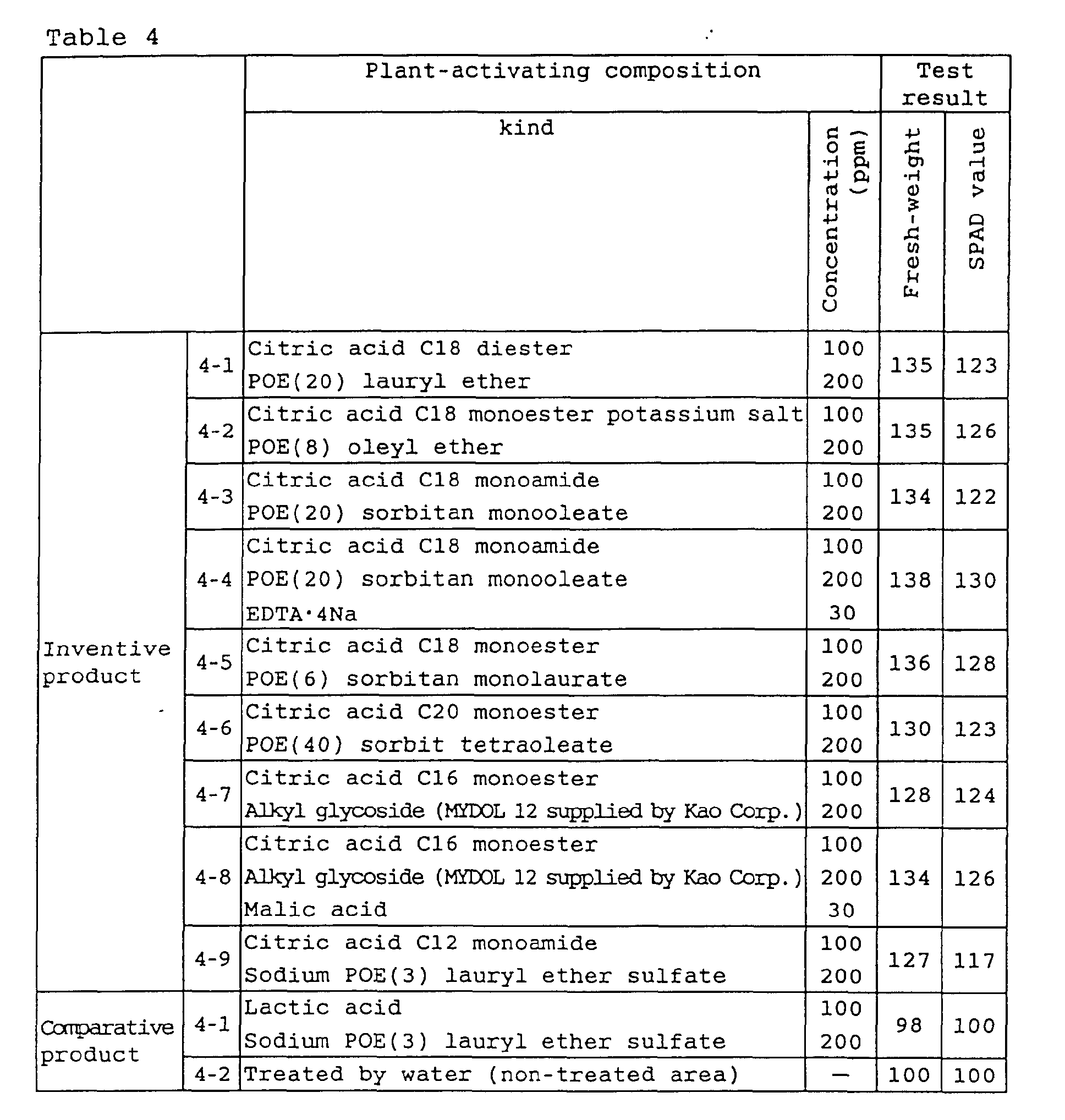
- Examples 1 to 4 Examples A1 to A4, and Examples B1 to B4 represent examples with regard to (1), (2) and (3), respectively.
- Chlorella cells which were green cells of a higher plant were cultured with vibration in an inorganic salt medium.
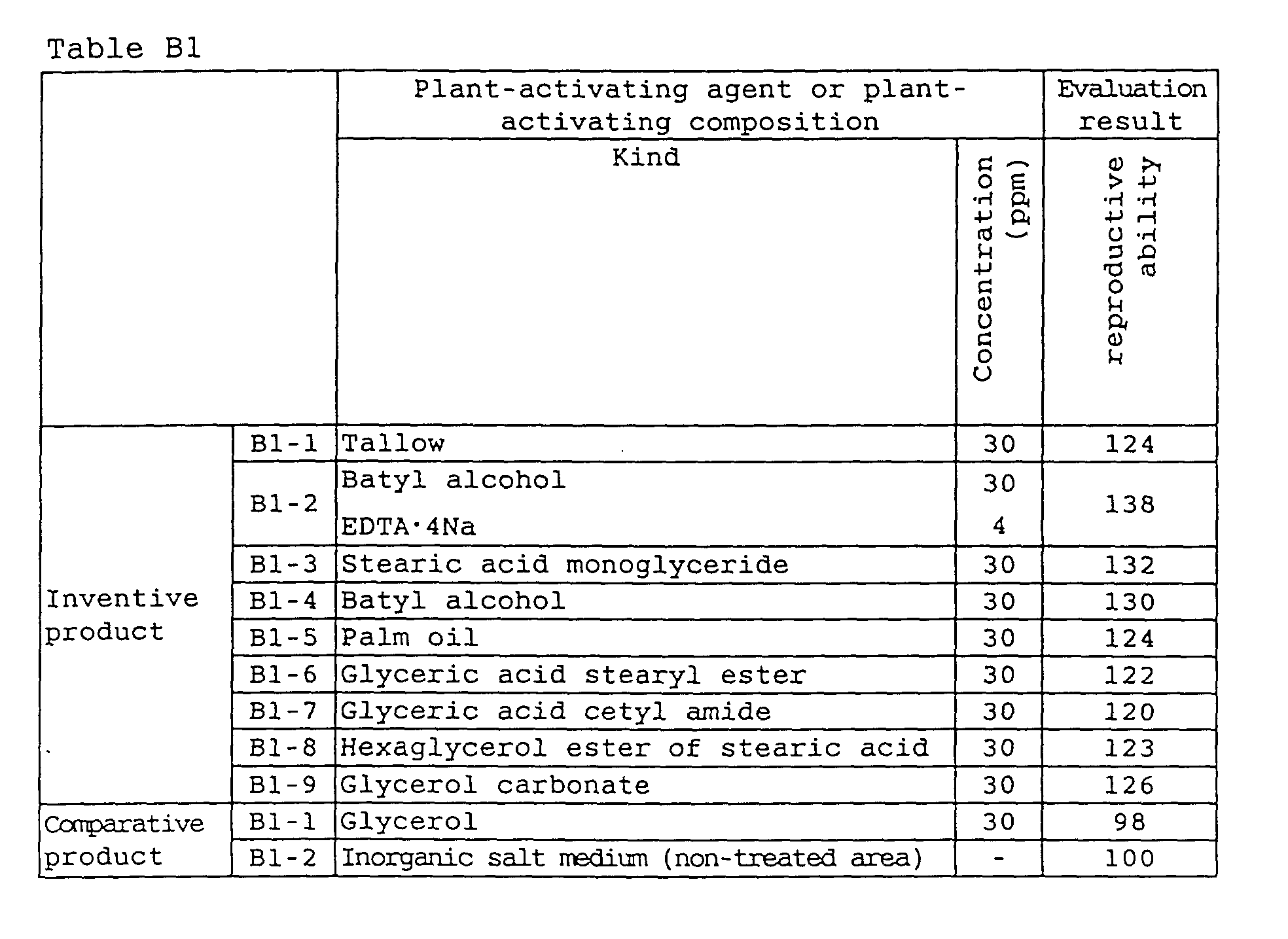
- the reproductive ability using chlorella cells was evaluated by comparing the treated area to which the plant-activating agent or the plant-activating composition shown in Table 1 was added in an effective concentration shown in Table 1 with non-treated area (i.e., only original nutrients of the inorganic salt medium).
- the concentration of the cells was set to 1.00 ⁇ 10 5 (cells per ml) at the start of the test.
- the reproductive ability of the cells is respected by each of the relative values in the number of the chlorella cells after 14 days from adding the respective plant-activating agents or compositions followed by culturing the cells when the number of cells on the non-treated area is made to be 100.
- As the inorganic salt medium a Linsmaier-Skoog (LS) medium was used. Three media were used as the treated areas and the non-treated areas every the plant-activating agent or the plant-activating composition. The average thereof was compared with that in the non-treated areas.
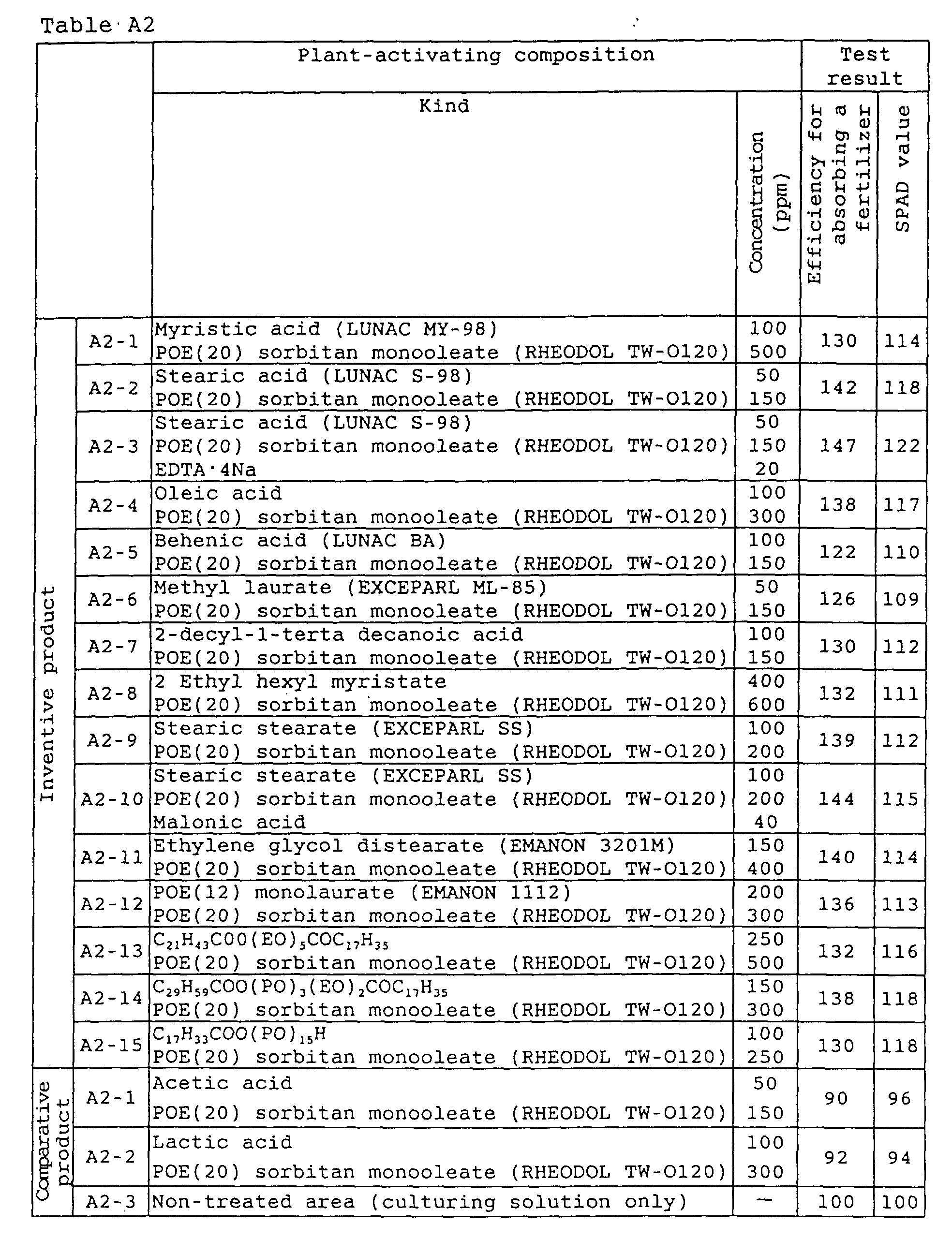
- the culturing solution was collected to measure the concentration of nitrate ions with RQ Flex (supplied by Merk) and to calculate the efficiency for absorbing a nitrate nitrogen fertilizer.
- RQ Flex supplied by Merk
- the concentration of nitrate ions was measured one time about each of three containers that were arbitrarily selected. Three data were obtained about the respective areas and then the average of the calculated efficiencies of the absorption was defined as the efficiency for absorbing the nitrate nitrogen fertilizer.
- SPAD values chlorophyll values showing the green degree of leaves
- SPAD502 supplied by Minolta Co., Ltd.
- SPAD value was measured 10 times for each of the three individuals (that is, the number of data is 30). The average thereof was made as SPAD value.
- the SPAD value was measured at different positions of the third true leaf in each of the individuals.
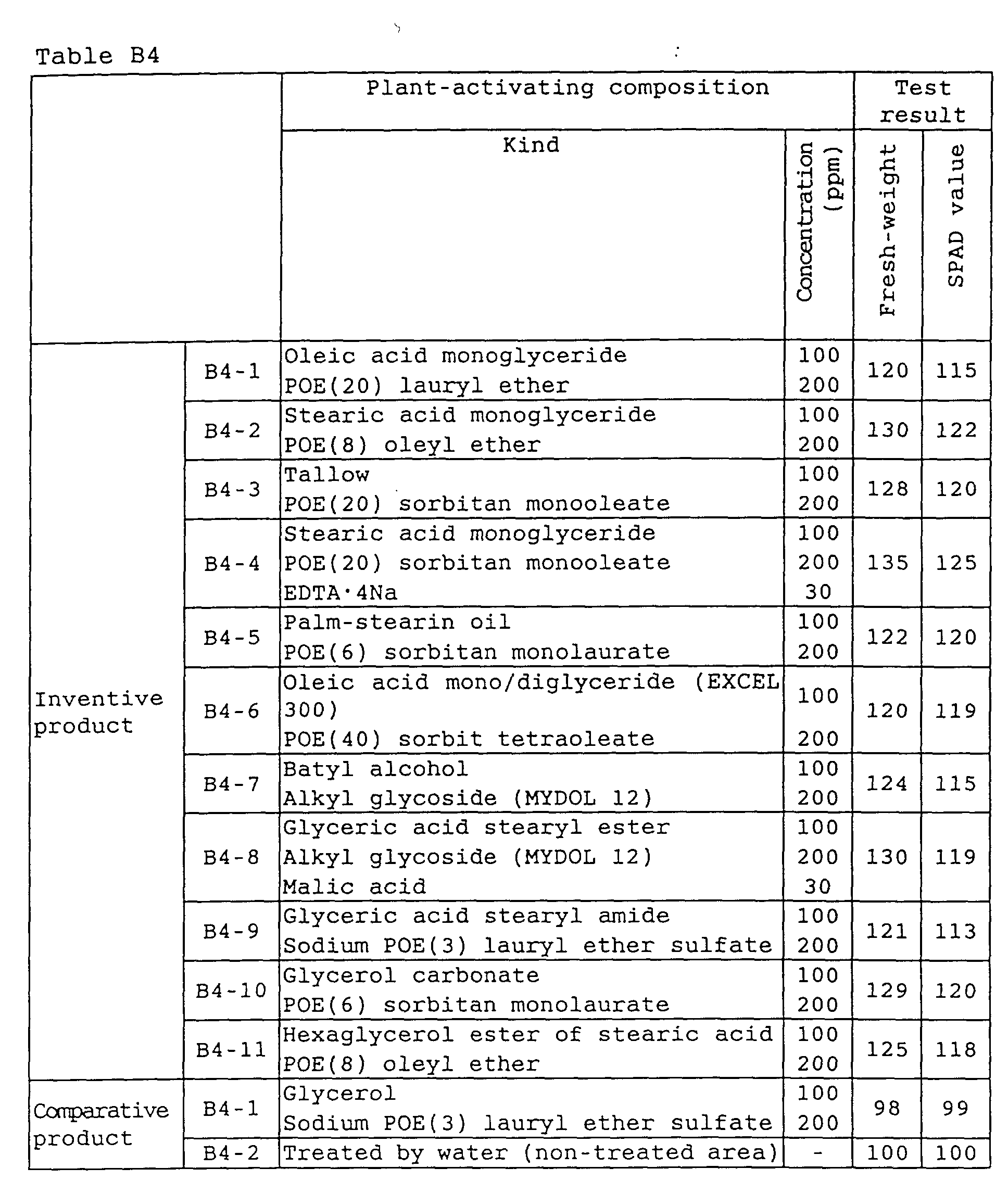
- each of the plant-activating compositions used were forcibly emulsified with a home mixer. This treatment was repeated 5 times. After 6 days from finishing the 5 treatments, the fresh-weight of the plants was measured. Then, the SPAD value thereof was measured by the same manner as in Example 2. In the present example, however, the number of the used individual was 10, the result of the fresh-weight was the average of 10 data thereof, and the result of the SPAD value was the average of 30 data thereof (that is, 3 points every individual were measured). The SPAD value was measured about the third true leaf.
- each of the plant-activating compositions used was forcibly emulsified with a home mixer. This treatment was repeated 4 times. After 6 days from finishing the 4 treatments, the fresh-weights and SPAD values of the plants were measured in the same manner as in Example 2. In the present example, however, the number of the used individuals was 10, the result of the fresh-weight was the average of 10 data thereof, and the result of the SPAD value was the average of 30 data thereof (that is, 3 points every individual were measured). The SPAD value was measured about the second true leaf.
- Examples A1 to A4 were carried out by the same manner as in Examples 1 to 4 except that the plant-activating agents described in Tables A1 to A4 were used. Results are shown in Tables A1 to A4 respectively.
- POE is an abbreviation of polyoxyethylene.
- the number in the parentheses is the average number of ethylene oxide moles added.
- the wording in the parentheses subsequent to the kinds of the activating agents and the compositions represents a tradename of a product supplied by Kao Corp.
- Examples B1 to B4 were carried out by the same manner as in Examples 1 to 4 except that the plant-activating agents described in Tables B1 to B4 were used. Results are shown in Tables B1 to B4 respectively.
- POE is an abbreviation of polyoxyethylene and the number in the parentheses is the average number of ethylene oxide moles added.
- the wording in the parentheses subsequent to the kinds of the activating agents and the compositions represents a tradename of a product supplied by Kao Corp.
- the plant-activating compositions in which starting ingredients shown in Table C1 and OKF2 (supplied by Otsuka Chemical Co., Ltd.) as a fertilizer component in concentration of 230 ppm (2000-fold diluted solution) were blended, were used to treat the soil with the treating amount of 60 ml/individual every 7 days 4 times in total.
- the blended concentrations of the starting ingredients were as shown in Table C1 and the balance was water.
- the fresh-weight and the SPAD value (SPAD502 supplied by Minolta Co., Ltd.) showing the green degree of leaves of the plants were measured. The measured values as the relative values were compared, when that of the non-treated was made as 100.
- the number of the individuals was 10
- the result of the fresh-weight was the average of 10 data thereof
- the result of the SPAD value was the average of 30 data (that is, 3 points were measured every individuals) measured about the third true leaf.
- POE is an abbreviation of polyoxyethylene and the number in the parentheses is the average number of ethylene oxide moles added.
- the wording in the brackets represents a tradename of a product supplied by Kao Corp. In particular, the mark is a tradename of Dai-Ichi Kogyo Seiyaku Co., Ltd.
Landscapes
- Life Sciences & Earth Sciences (AREA)
- Pest Control & Pesticides (AREA)
- Health & Medical Sciences (AREA)
- General Health & Medical Sciences (AREA)
- Dentistry (AREA)
- Plant Pathology (AREA)
- Agronomy & Crop Science (AREA)
- Engineering & Computer Science (AREA)
- Wood Science & Technology (AREA)
- Zoology (AREA)
- Environmental Sciences (AREA)
- Organic Chemistry (AREA)
- Chemical & Material Sciences (AREA)
- Toxicology (AREA)
- Agricultural Chemicals And Associated Chemicals (AREA)
- Fertilizers (AREA)
- Cultivation Of Plants (AREA)
Abstract
Description


| Plant-activating agent or plant-activating composition | Evaluation result | |||
| Kind | Concentration (ppm) | Reproductive ability | ||
| Inventive product | 1-1 | Citric acid C18 monoester | 30 | 142 |
| 1-2 | Citric acid C18 monoester Citric acid C16 monoester | 15 15 | 140 | |
| 1-3 | Citric acid C18 monoester potassium salt | 30 | 138 | |
| 1-4 | Citric acid C18 monoester EDTA · 4Na | 30 4 | 148 | |
| 1-5 | Citric acid C18 monoamide | 30 | 139 | |
| 1-6 | Citric acid C14 monoamide | 30 | 136 | |
| 1-7 | Citric acid C18 diester | 30 | 138 | |
| 1-8 | Citric acid C12 monoamide | 30 | 128 | |
| Comparative product | 1-1 | Lactic acid | 30 | 99 |
| 1-2 | Inorganic salt medium (non-treated area) | - | 100 | |
| (Note) C18 or the like means an alkyl group in which the number of carbon atoms is the number next to C. (This is the same hereinafter.) |









Claims (9)
- A plant-activating agent selected from the group consisting of(1) an organic acid derivative which is derived from the organic acid having two functional groups and wherein at least one of the above-mentioned functional groups is bonded to a group containing 1 to 30 carbon atoms;(2) a compound represented by the following formula (II):(3) a glycerol derivative.
- The plant-activating agent as claimed in the claim 1, which is the organic acid derivative (1) and the compound represented by the following formula (I):-R4, -OH, and -OR5; and
 B is a group selected from -(CH2)1-, -(CH=CH)m-,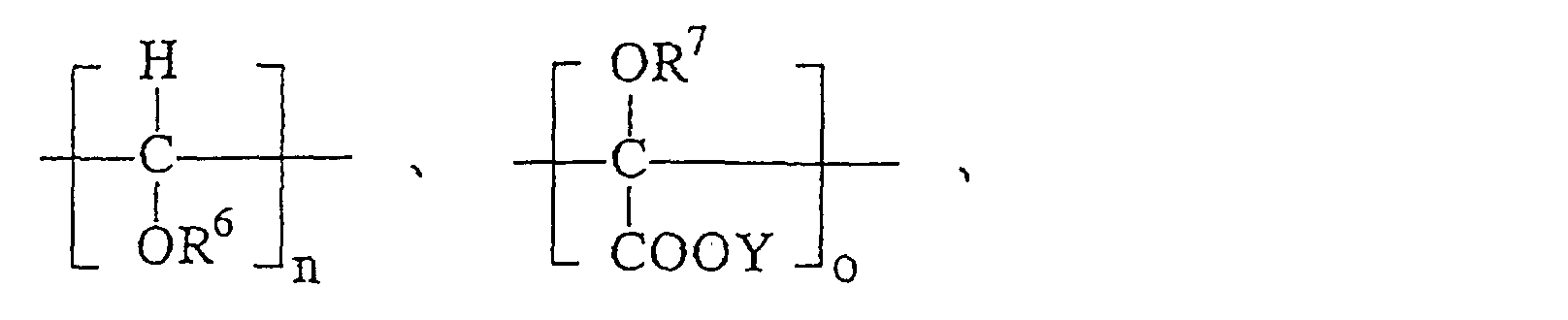
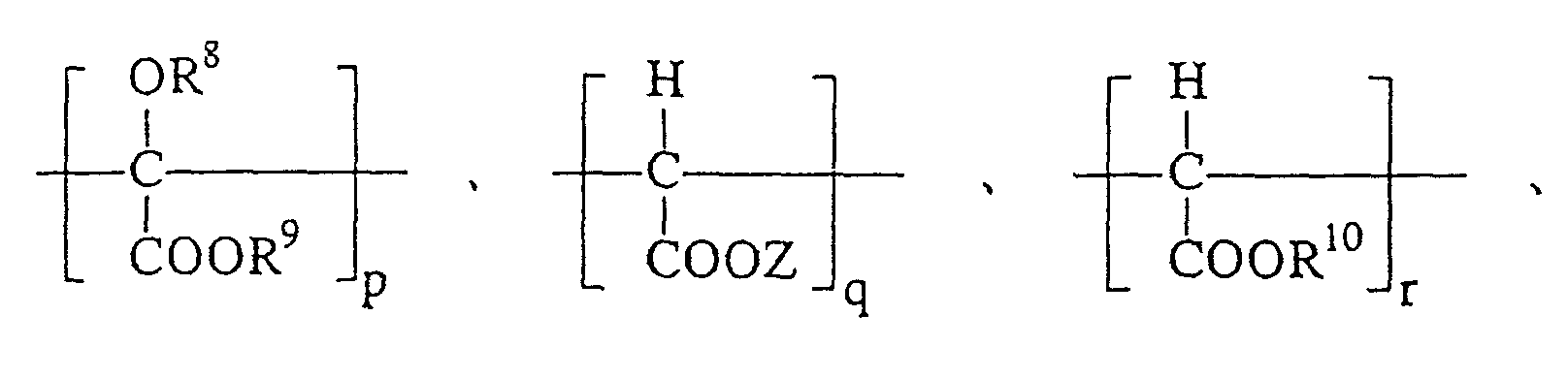
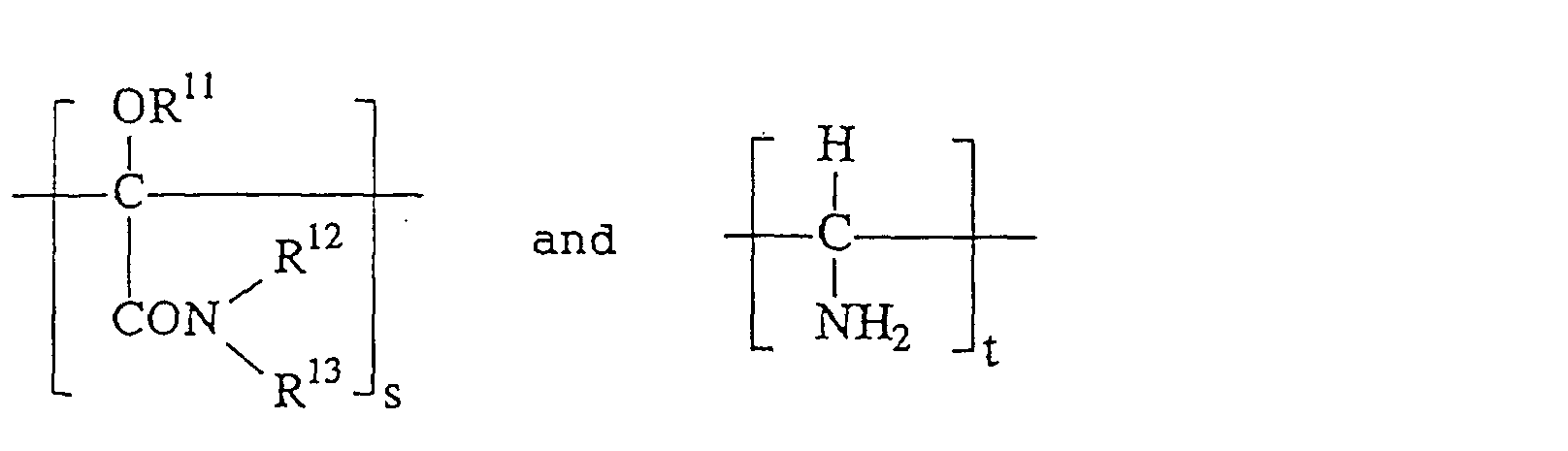 wherein each of X, Y and Z represents independently a hydrogen atom or a counter ion,each of R1, R4 and R9 represents independently a hydrocarbon group having 1 to 30 carbon atoms,R5 is a group selected from
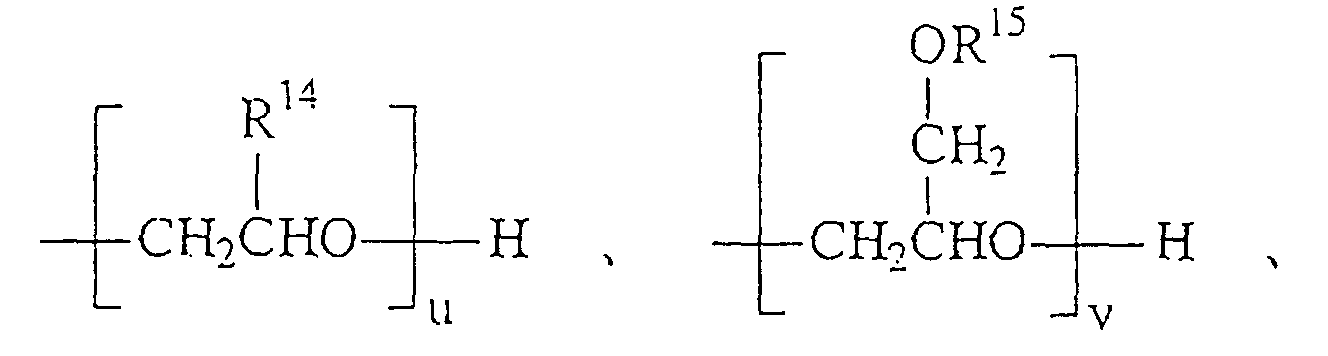 a hydrocarbon group having 1 to 30 carbon atoms and an acyl group having 1 to 30 carbon atoms, andeach of R2, R3, R6, R7, R8, R10, R11, R12, R13, R14 and R15 represents independently a hydrogen atom or a hydrocarbon group having 1 to 30 carbon atoms,a is zero or a number selected from 1 or more,each of l, m, n, o, p, q, r, s and t represents independently a number selected from zero to 10,each of u and v represents independently a number selected from 1 to 50; which are selected so that a group containing 1 to 30 carbon atoms may be bonded to at least one of the functional groups in the molecule; when both of A and C are groups selected from -R4 , -OH and -OR5, B is not a group selected from -(CH2)1-, -(CH=CH)m-,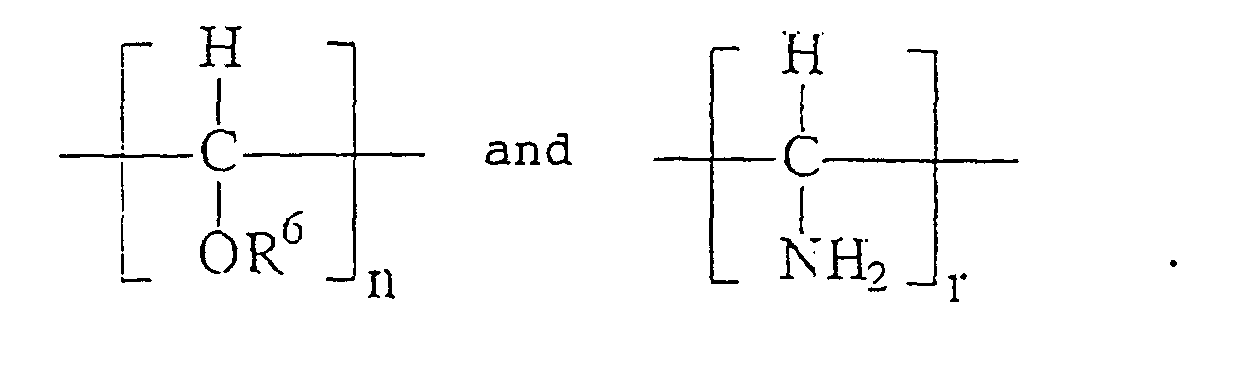
- The plant-activating agent as claimed in the claim 2, wherein the organic acid has at least one hydroxyl group as a functional group.
- The plant-activating agent as claimed in the claim 1, which is the compound (2) represented by the formula (II) wherein n is zero to 20; R represents an alkyl or alkenyl group having 13 to 21 carbon atoms, X represents a hydrogen atom, an alkyl or acyl group having 1 to 22 carbon atoms, an alkenyl group having 2 to 22 carbon atoms, or a counter ion (when n is not zero, the counter ion is excluded).
- The plant-activating agent as claimed in the claim 1, which is the glycerol derivative (3) and which is selected from the group consisting of an ester of glycerol and an acid, an ether of glycerol and a hydroxyl group-containing compound, a condensate of glycerol or a derivative thereof, and glyceric acid or a derivative thereof.
- A plant-activating composition comprising a plant-activating agent as claimed in the claim 1 and at least one of a fertilizer agent, a surfactant and a chelating agent.
- The composition as claimed in the claim 6, wherein the surfactant is selected from a nonionic surfactant, an anionic surfactant and an amphoteric surfactant.
- A method of activating a plant by applying a plant-activating agent as defined in the claim 1 to the plant.
- Use of a plant-activating agent as defined in the claim 1 for activating a plant.
Priority Applications (1)
| Application Number | Priority Date | Filing Date | Title |
|---|---|---|---|
| EP05003897.5A EP1570735B1 (en) | 2000-04-28 | 2001-04-27 | Plant-activating agent |
Applications Claiming Priority (6)
| Application Number | Priority Date | Filing Date | Title |
|---|---|---|---|
| JP2000131667 | 2000-04-28 | ||
| JP2000131668 | 2000-04-28 | ||
| JP2000131667A JP3768378B2 (en) | 2000-04-28 | 2000-04-28 | Plant vitality agent |
| JP2000131669A JP3768380B2 (en) | 2000-04-28 | 2000-04-28 | Plant vitality agent |
| JP2000131668A JP3768379B2 (en) | 2000-04-28 | 2000-04-28 | Plant vitality agent |
| JP2000131669 | 2000-04-28 |
Related Child Applications (1)
| Application Number | Title | Priority Date | Filing Date |
|---|---|---|---|
| EP05003897.5A Division EP1570735B1 (en) | 2000-04-28 | 2001-04-27 | Plant-activating agent |
Publications (3)
| Publication Number | Publication Date |
|---|---|
| EP1151667A2 true EP1151667A2 (en) | 2001-11-07 |
| EP1151667A3 EP1151667A3 (en) | 2003-01-29 |
| EP1151667B1 EP1151667B1 (en) | 2005-06-29 |
Family
ID=27343289
Family Applications (2)
| Application Number | Title | Priority Date | Filing Date |
|---|---|---|---|
| EP01110052A Expired - Lifetime EP1151667B1 (en) | 2000-04-28 | 2001-04-27 | Plant-activating agent |
| EP05003897.5A Expired - Lifetime EP1570735B1 (en) | 2000-04-28 | 2001-04-27 | Plant-activating agent |
Family Applications After (1)
| Application Number | Title | Priority Date | Filing Date |
|---|---|---|---|
| EP05003897.5A Expired - Lifetime EP1570735B1 (en) | 2000-04-28 | 2001-04-27 | Plant-activating agent |
Country Status (4)
| Country | Link |
|---|---|
| US (2) | US7829500B2 (en) |
| EP (2) | EP1151667B1 (en) |
| DE (1) | DE60111676T2 (en) |
| ES (2) | ES2429897T3 (en) |
Cited By (6)
| Publication number | Priority date | Publication date | Assignee | Title |
|---|---|---|---|---|
| WO2002049429A1 (en) | 2000-12-20 | 2002-06-27 | Kao Corporation | Herbicide potentiators |
| EP1421849A4 (en) * | 2001-08-30 | 2004-11-10 | Kao Corp | Powdery plant vitalizers |
| WO2010076183A3 (en) * | 2008-12-29 | 2011-05-12 | Basf Se | Agrochemical compositions comprising branched alcooxyalkanoates |
| CN106386038A (en) * | 2016-08-26 | 2017-02-15 | 横县宋家庄东明农业发展有限公司 | A kind of cultivation method of dragon fruit |
| CN106416661A (en) * | 2016-08-26 | 2017-02-22 | 横县宋家庄东明农业发展有限公司 | A row type high-quality and high-yield planting method of dragon fruit |
| WO2020193817A1 (en) * | 2019-03-27 | 2020-10-01 | Fertinagro Biotech, S.L. | Fertilising composition which includes a plant-assimilable phosphorus and calcium potentiator and use thereof. |
Families Citing this family (16)
| Publication number | Priority date | Publication date | Assignee | Title |
|---|---|---|---|---|
| US7587857B2 (en) * | 2003-06-13 | 2009-09-15 | Milliken & Company | Method of treating plant growth media with multi-branched wetting agents |
| US20060166939A1 (en) * | 2005-01-21 | 2006-07-27 | Chen Chi-Yu R | Fertilizer-compatible composition |
| US9919979B2 (en) * | 2005-01-21 | 2018-03-20 | Bayer Cropscience Lp | Fertilizer-compatible composition |
| TW200733880A (en) * | 2005-09-09 | 2007-09-16 | Suntory Ltd | Method for low light cultivation and plant growth-promoting agent |
| TWI415571B (en) * | 2007-06-20 | 2013-11-21 | Valent Biosciences Corp | Germination acceleration |
| CL2008001830A1 (en) * | 2007-06-20 | 2009-03-06 | Valent Biosciences Corp | Method to accelerate germination in canola or rape by applying gibberellin 4/7 to canola or rapeseed seeds. |
| US20110100079A1 (en) * | 2007-08-31 | 2011-05-05 | Masatoshi Kamei | Method for imparting stress tolerance to plant |
| US8450090B2 (en) | 2009-10-06 | 2013-05-28 | The Regents Of The University Of Colorado, A Body Corporate | Compositions and methods for promoting fatty acid production in plants |
| WO2012162680A1 (en) * | 2011-05-25 | 2012-11-29 | Envirosource, Inc. | Systems and methods for processing glycerol |
| RU2539217C2 (en) * | 2011-08-01 | 2015-01-20 | Ильшат Ахатович Гайсин | Formulation for crop growth stimulation and development |
| BR112018068079B1 (en) | 2016-04-11 | 2023-04-25 | Kao Corporation | METHOD FOR GROWING A PLANT |
| US11279877B2 (en) | 2016-04-11 | 2022-03-22 | Kao Corporation | Method for improving soil |
| FR3069756B1 (en) | 2017-08-07 | 2020-01-10 | Innovi | NON-IONIC SURFACTANT AS BIOSTIMULANT |
| FR3069757B1 (en) * | 2017-08-07 | 2021-07-23 | Innovi Production | COMPOSITION BASED ON STEROLS |
| IT201900019739A1 (en) * | 2019-10-24 | 2021-04-24 | Strigolab S R L | Biostimulant composition and its use in agriculture |
| WO2024194047A1 (en) | 2023-03-22 | 2024-09-26 | Mbp 4 Life Sl | Elicitation method for stimulating an immune system response in plants |
Family Cites Families (32)
| Publication number | Priority date | Publication date | Assignee | Title |
|---|---|---|---|---|
| JPS5516116B2 (en) | 1974-03-18 | 1980-04-28 | ||
| US4394149A (en) * | 1978-02-24 | 1983-07-19 | Szoka Jr Francis C | Plant nutriment compositions and method of their application |
| JPS55100304A (en) | 1979-01-24 | 1980-07-31 | Japan Synthetic Rubber Co Ltd | Plant growth regulator |
| HU183354B (en) | 1981-03-06 | 1984-04-28 | Magyar Asvanyolaj Es Foeldgaz | Paraffin-based emulsion of high activity containing food-materials diminishing transspiration |
| DE3203849A1 (en) * | 1982-02-02 | 1983-08-11 | Schering Ag, 1000 Berlin Und 4619 Bergkamen | FERTILIZER WITH CONTROLLED START OF NUTRIENT DELIVERY |
| GB2118158B (en) | 1982-03-03 | 1985-09-11 | Biochemical Marketing Corp | Plant growth stimulators comprising metal ions and long-chain alkyl carboxylic acids and salts and derivatives thereof |
| DE3234610A1 (en) | 1982-09-16 | 1984-03-22 | Schering AG, 1000 Berlin und 4709 Bergkamen | Benzyl ether derivatives of glycerol, processes for the preparation of these compounds, and plant-growth-regulating agents containing them |
| JPS60149510A (en) | 1984-01-13 | 1985-08-07 | Kao Corp | Agent for promoting activity of biocide |
| GB8412049D0 (en) * | 1984-05-11 | 1984-06-20 | Unilever Plc | Treatment |
| US4625277A (en) * | 1984-06-04 | 1986-11-25 | Physio-Control Corporation | Blood pressure measuring device having adaptive cuff deflation rate |
| JPS611602A (en) * | 1984-06-12 | 1986-01-07 | Kanesho Kk | Plant growth regulator |
| US4570378A (en) | 1984-07-10 | 1986-02-18 | Fats And Proteins Research Foundation, Inc. | Method of promoting seedling emergence of field-planted, small-seeded crops |
| DK8601707A (en) | 1986-04-14 | 1987-10-16 | ||
| DE3724595A1 (en) * | 1987-07-24 | 1989-02-02 | Cham Biotechnik Btc | Process for improving the photosynthesis rate of plants and their defence mechanism against parasites of weak plants |
| HU201218B (en) * | 1989-03-08 | 1990-10-28 | Egyesuelt Vegyimuevek | Composition for improving compatibility of liquide fertilizers and plant-protecting compositions |
| JPH0431382A (en) | 1990-05-24 | 1992-02-03 | Koei Kagaku Kogyo Kk | Utilizing agent for phosphoric acid compound immobilized in soil |
| CA2081652C (en) * | 1991-10-31 | 2002-09-10 | Yuichi Hioki | Agricultural chemical composition |
| JPH05148102A (en) * | 1991-11-27 | 1993-06-15 | Sumitomo Chem Co Ltd | Pesticide composition |
| FI93947C (en) | 1993-07-15 | 1995-06-26 | Kemira Oy | Fertilizers that improve the ability of plants to absorb phosphorus |
| US5418211A (en) | 1994-04-21 | 1995-05-23 | Great Lakes Chemical Corporation | Methods of regulating plant growth with polyhydric alcohols |
| JPH08157819A (en) * | 1994-12-08 | 1996-06-18 | Lion Corp | Surfactant for soil improving material |
| DE4445546A1 (en) * | 1994-12-20 | 1996-06-27 | Bayer Ag | Use of lauric acid esters as substances that increase activity |
| US5674897A (en) * | 1995-10-20 | 1997-10-07 | Mycogen Corporation | Materials and methods for controlling nematodes |
| US20010019728A1 (en) * | 1997-08-28 | 2001-09-06 | Basinger William H. | Methods and compositions for protecting plants and crops |
| AU4903599A (en) | 1998-07-10 | 2000-02-01 | Cognis Deutschland Gmbh | Plant growth enhancement against phytopathogenic fungi and/or soil borne pests |
| MY123201A (en) * | 1998-11-06 | 2006-05-31 | Kao Corp | Plant-activating agent |
| AU2001236906A1 (en) * | 2000-02-11 | 2001-08-20 | The Ohio State University Research Foundation | Methods of inducing production of isoflavones in plants using nuclear receptor ligands |
| DE10190743D2 (en) * | 2000-02-28 | 2003-05-15 | Miklos Ghyczy | Composition for use in plants |
| JP2001316204A (en) * | 2000-04-28 | 2001-11-13 | Kao Corp | Plant vitalizer |
| JP4137492B2 (en) * | 2002-04-11 | 2008-08-20 | 花王株式会社 | Plant vitality agent |
| ITMI20021734A1 (en) * | 2002-08-01 | 2004-02-02 | Ausimont S P A Ora Solvay Solexis Spa | PROCESS FOR THE PREPARATION OF PERFLUOROPOLYETERS WITH ALDEHYDIC, ALCOHOLIC, AMINE TERMINALS THROUGH CATALYTIC REDUCTION. |
| JP4031382B2 (en) | 2003-03-05 | 2008-01-09 | 帝人ファイバー株式会社 | Thermal adhesive composite fiber for airlaid nonwoven fabric |
-
2001
- 2001-04-27 EP EP01110052A patent/EP1151667B1/en not_active Expired - Lifetime
- 2001-04-27 EP EP05003897.5A patent/EP1570735B1/en not_active Expired - Lifetime
- 2001-04-27 DE DE60111676T patent/DE60111676T2/en not_active Expired - Lifetime
- 2001-04-27 ES ES05003897T patent/ES2429897T3/en not_active Expired - Lifetime
- 2001-04-27 US US09/842,896 patent/US7829500B2/en not_active Expired - Fee Related
- 2001-04-27 ES ES01110052T patent/ES2240273T3/en not_active Expired - Lifetime
-
2008
- 2008-02-01 US US12/024,292 patent/US20080139391A1/en not_active Abandoned
Cited By (11)
| Publication number | Priority date | Publication date | Assignee | Title |
|---|---|---|---|---|
| WO2002049429A1 (en) | 2000-12-20 | 2002-06-27 | Kao Corporation | Herbicide potentiators |
| EP1421849A4 (en) * | 2001-08-30 | 2004-11-10 | Kao Corp | Powdery plant vitalizers |
| US7820593B2 (en) | 2001-08-30 | 2010-10-26 | Kao Corporation | Powdery plant vitalizers |
| WO2010076183A3 (en) * | 2008-12-29 | 2011-05-12 | Basf Se | Agrochemical compositions comprising branched alcooxyalkanoates |
| CN102271500A (en) * | 2008-12-29 | 2011-12-07 | 巴斯夫欧洲公司 | Agrochemical composition comprising branched alkoxyalkanoate |
| CN106386038A (en) * | 2016-08-26 | 2017-02-15 | 横县宋家庄东明农业发展有限公司 | A kind of cultivation method of dragon fruit |
| CN106416661A (en) * | 2016-08-26 | 2017-02-22 | 横县宋家庄东明农业发展有限公司 | A row type high-quality and high-yield planting method of dragon fruit |
| WO2020193817A1 (en) * | 2019-03-27 | 2020-10-01 | Fertinagro Biotech, S.L. | Fertilising composition which includes a plant-assimilable phosphorus and calcium potentiator and use thereof. |
| CN113677649A (en) * | 2019-03-27 | 2021-11-19 | 费尔蒂纳格罗生物技术有限公司 | Fertilizer composition containing plant assimilable phosphorus and calcium synergist and application thereof |
| EP3950648A4 (en) * | 2019-03-27 | 2022-11-16 | Fertinagro Biotech, S.L. | FERTILIZING COMPOSITION COMPRISING AN ACTIVATOR OF PHOSPHORUS AND CALCIUM ASSIMILABLE BY PLANTS AND USE THEREOF |
| AU2019438265B2 (en) * | 2019-03-27 | 2025-06-26 | Fertinagro Biotech, S.L. | Fertilising composition which includes a plant-assimilable phosphorus and calcium potentiator and use thereof. |
Also Published As
| Publication number | Publication date |
|---|---|
| US20080139391A1 (en) | 2008-06-12 |
| EP1570735A1 (en) | 2005-09-07 |
| EP1151667A3 (en) | 2003-01-29 |
| DE60111676T2 (en) | 2006-05-18 |
| US20020039971A1 (en) | 2002-04-04 |
| US7829500B2 (en) | 2010-11-09 |
| ES2429897T3 (en) | 2013-11-18 |
| DE60111676D1 (en) | 2005-08-04 |
| EP1570735B1 (en) | 2013-09-04 |
| EP1151667B1 (en) | 2005-06-29 |
| ES2240273T3 (en) | 2005-10-16 |
Similar Documents
| Publication | Publication Date | Title |
|---|---|---|
| EP1151667B1 (en) | Plant-activating agent | |
| EP0998850B1 (en) | Plant-activating agent | |
| JP3545661B2 (en) | Plant vitalizer | |
| US6884759B2 (en) | Plant-activating agent | |
| EP1366663A1 (en) | Method of improving crop | |
| EP0934917B1 (en) | Fertilizer composition and use thereof | |
| JP2002265305A (en) | Agricultural crop increase agent | |
| US7820593B2 (en) | Powdery plant vitalizers | |
| JP3768379B2 (en) | Plant vitality agent | |
| JP3768378B2 (en) | Plant vitality agent | |
| JP2002265306A (en) | Agricultural crop quality improver | |
| JP2002265307A (en) | Low temperature tolerance improver for crops | |
| US7718571B2 (en) | Method of cultivating fruit vegetables in an increased yield | |
| JP3768380B2 (en) | Plant vitality agent | |
| EP0078514B1 (en) | Improvement to biostimulating compositions for plants |
Legal Events
| Date | Code | Title | Description |
|---|---|---|---|
| PUAI | Public reference made under article 153(3) epc to a published international application that has entered the european phase |
Free format text: ORIGINAL CODE: 0009012 |
|
| AK | Designated contracting states |
Kind code of ref document: A2 Designated state(s): AT BE CH CY DE DK ES FI FR GB GR IE IT LI LU MC NL PT SE TR |
|
| AX | Request for extension of the european patent |
Free format text: AL;LT;LV;MK;RO;SI |
|
| PUAL | Search report despatched |
Free format text: ORIGINAL CODE: 0009013 |
|
| AK | Designated contracting states |
Designated state(s): AT BE CH CY DE DK ES FI FR GB GR IE IT LI LU MC NL PT SE TR |
|
| AX | Request for extension of the european patent |
Extension state: AL LT LV MK RO SI |
|
| 17P | Request for examination filed |
Effective date: 20030613 |
|
| 17Q | First examination report despatched |
Effective date: 20030728 |
|
| AKX | Designation fees paid |
Designated state(s): DE ES FR GB IT NL |
|
| GRAP | Despatch of communication of intention to grant a patent |
Free format text: ORIGINAL CODE: EPIDOSNIGR1 |
|
| GRAS | Grant fee paid |
Free format text: ORIGINAL CODE: EPIDOSNIGR3 |
|
| GRAA | (expected) grant |
Free format text: ORIGINAL CODE: 0009210 |
|
| AK | Designated contracting states |
Kind code of ref document: B1 Designated state(s): DE ES FR GB IT NL |
|
| REG | Reference to a national code |
Ref country code: GB Ref legal event code: FG4D |
|
| REF | Corresponds to: |
Ref document number: 60111676 Country of ref document: DE Date of ref document: 20050804 Kind code of ref document: P |
|
| REG | Reference to a national code |
Ref country code: ES Ref legal event code: FG2A Ref document number: 2240273 Country of ref document: ES Kind code of ref document: T3 |
|
| ET | Fr: translation filed | ||
| PLBE | No opposition filed within time limit |
Free format text: ORIGINAL CODE: 0009261 |
|
| STAA | Information on the status of an ep patent application or granted ep patent |
Free format text: STATUS: NO OPPOSITION FILED WITHIN TIME LIMIT |
|
| 26N | No opposition filed |
Effective date: 20060330 |
|
| PGFP | Annual fee paid to national office [announced via postgrant information from national office to epo] |
Ref country code: ES Payment date: 20140311 Year of fee payment: 14 |
|
| PGFP | Annual fee paid to national office [announced via postgrant information from national office to epo] |
Ref country code: GB Payment date: 20140423 Year of fee payment: 14 |
|
| PGFP | Annual fee paid to national office [announced via postgrant information from national office to epo] |
Ref country code: FR Payment date: 20140409 Year of fee payment: 14 Ref country code: NL Payment date: 20140308 Year of fee payment: 14 Ref country code: IT Payment date: 20140415 Year of fee payment: 14 Ref country code: DE Payment date: 20140430 Year of fee payment: 14 |
|
| REG | Reference to a national code |
Ref country code: DE Ref legal event code: R119 Ref document number: 60111676 Country of ref document: DE |
|
| GBPC | Gb: european patent ceased through non-payment of renewal fee |
Effective date: 20150427 |
|
| REG | Reference to a national code |
Ref country code: NL Ref legal event code: MM Effective date: 20150501 |
|
| PG25 | Lapsed in a contracting state [announced via postgrant information from national office to epo] |
Ref country code: IT Free format text: LAPSE BECAUSE OF NON-PAYMENT OF DUE FEES Effective date: 20150427 Ref country code: DE Free format text: LAPSE BECAUSE OF NON-PAYMENT OF DUE FEES Effective date: 20151103 Ref country code: GB Free format text: LAPSE BECAUSE OF NON-PAYMENT OF DUE FEES Effective date: 20150427 |
|
| REG | Reference to a national code |
Ref country code: FR Ref legal event code: ST Effective date: 20151231 |
|
| PG25 | Lapsed in a contracting state [announced via postgrant information from national office to epo] |
Ref country code: FR Free format text: LAPSE BECAUSE OF NON-PAYMENT OF DUE FEES Effective date: 20150430 |
|
| PG25 | Lapsed in a contracting state [announced via postgrant information from national office to epo] |
Ref country code: NL Free format text: LAPSE BECAUSE OF NON-PAYMENT OF DUE FEES Effective date: 20150501 |
|
| REG | Reference to a national code |
Ref country code: ES Ref legal event code: FD2A Effective date: 20160526 |
|
| PG25 | Lapsed in a contracting state [announced via postgrant information from national office to epo] |
Ref country code: ES Free format text: LAPSE BECAUSE OF NON-PAYMENT OF DUE FEES Effective date: 20150428 |